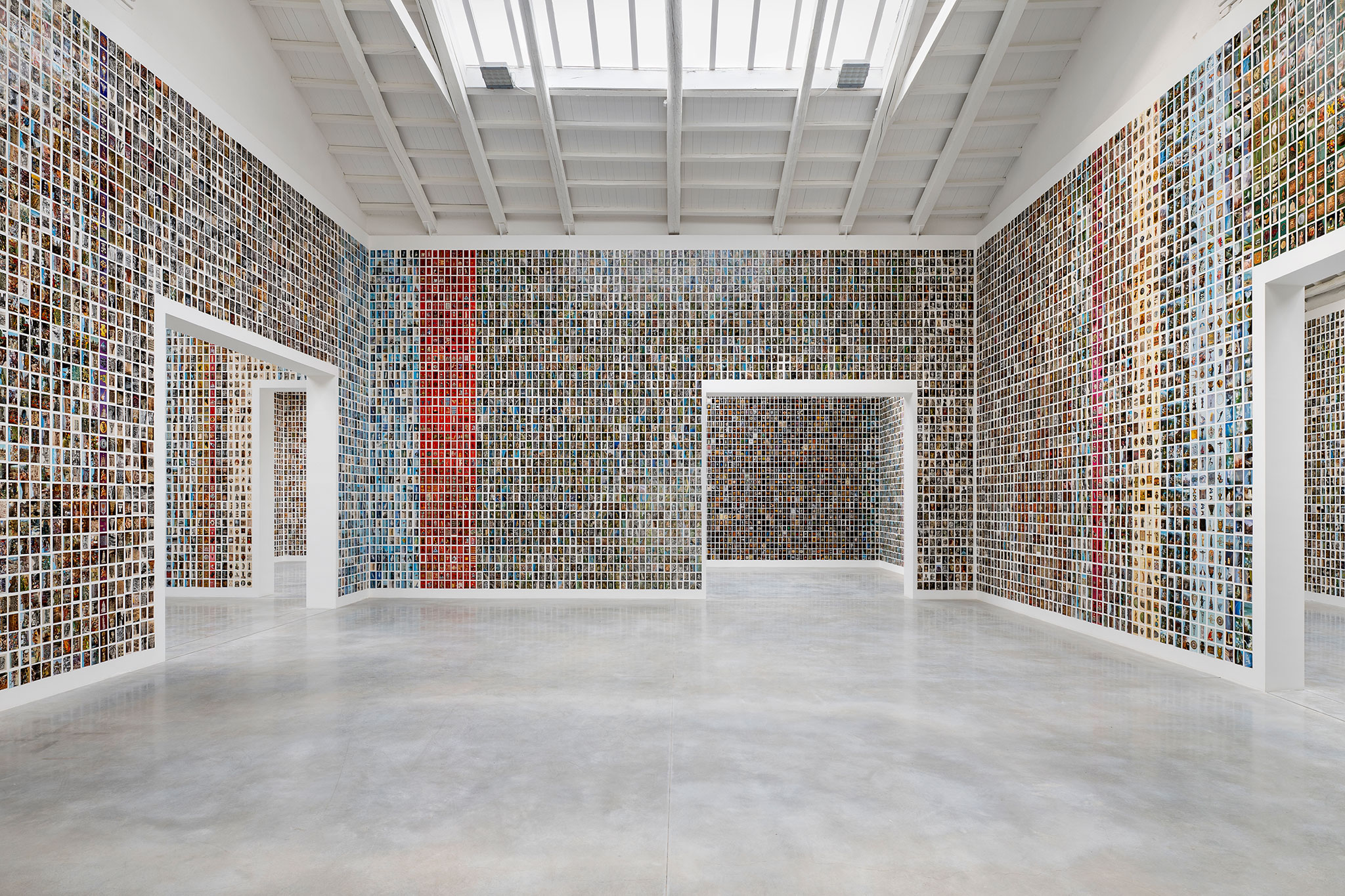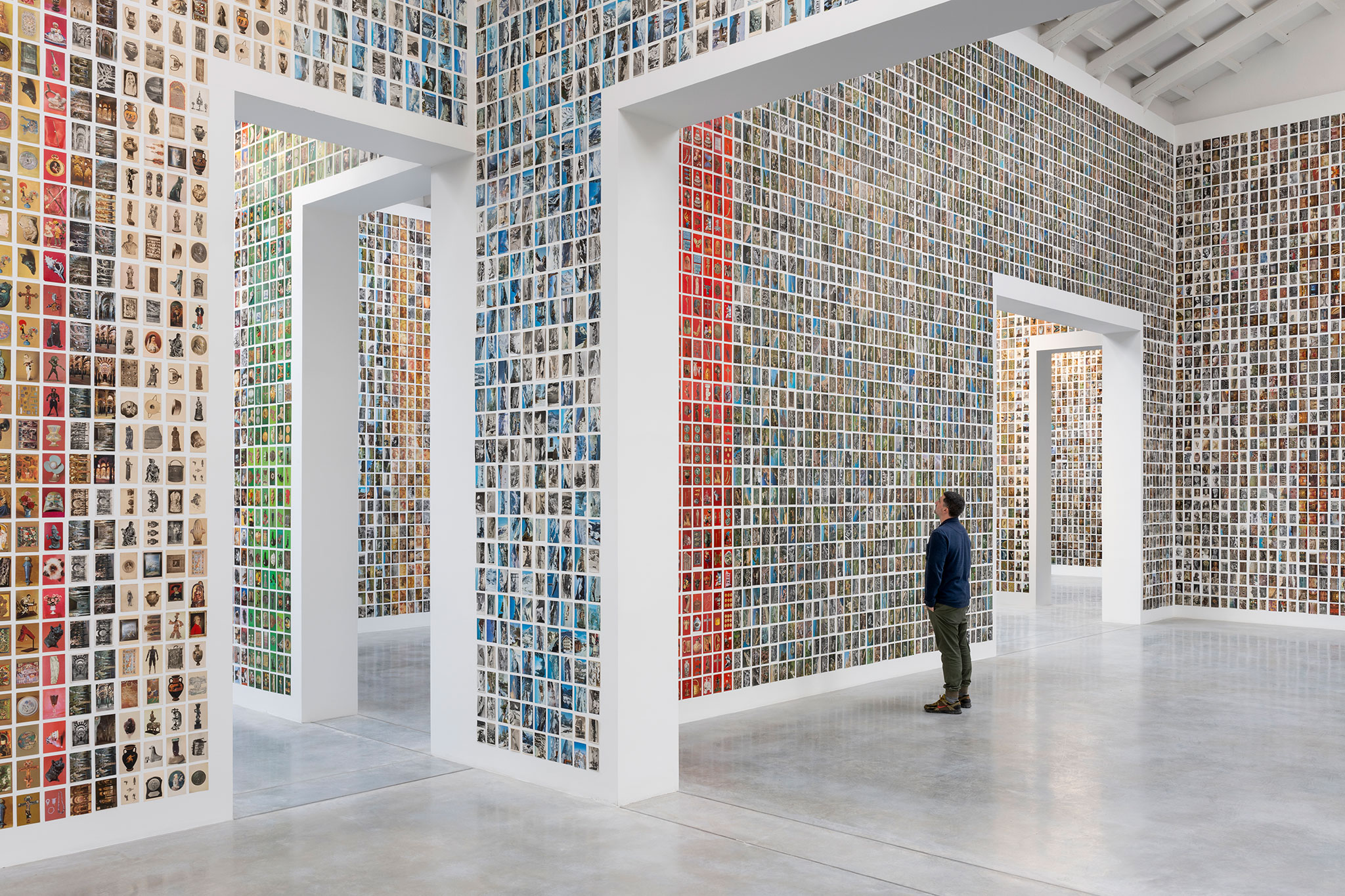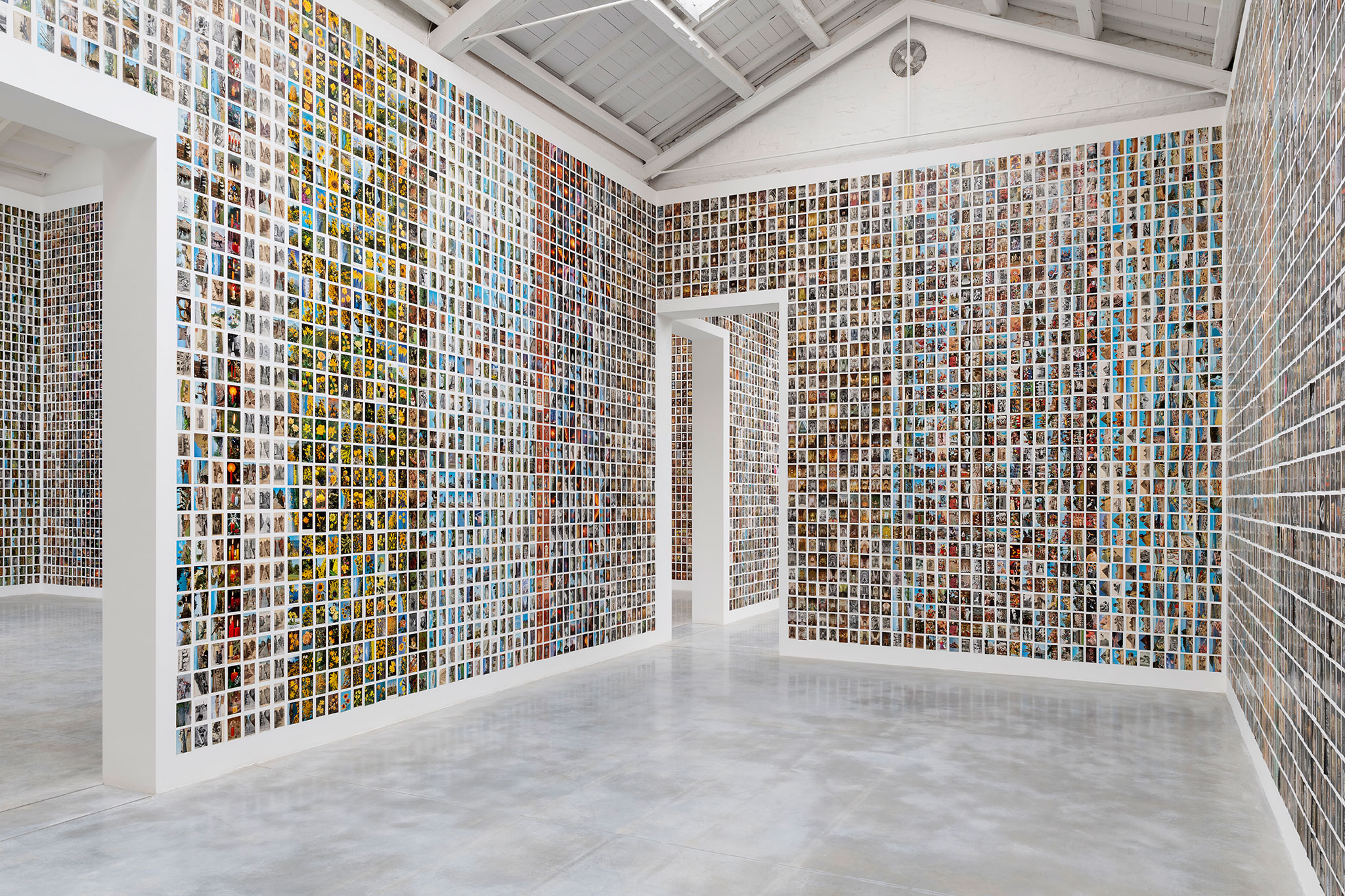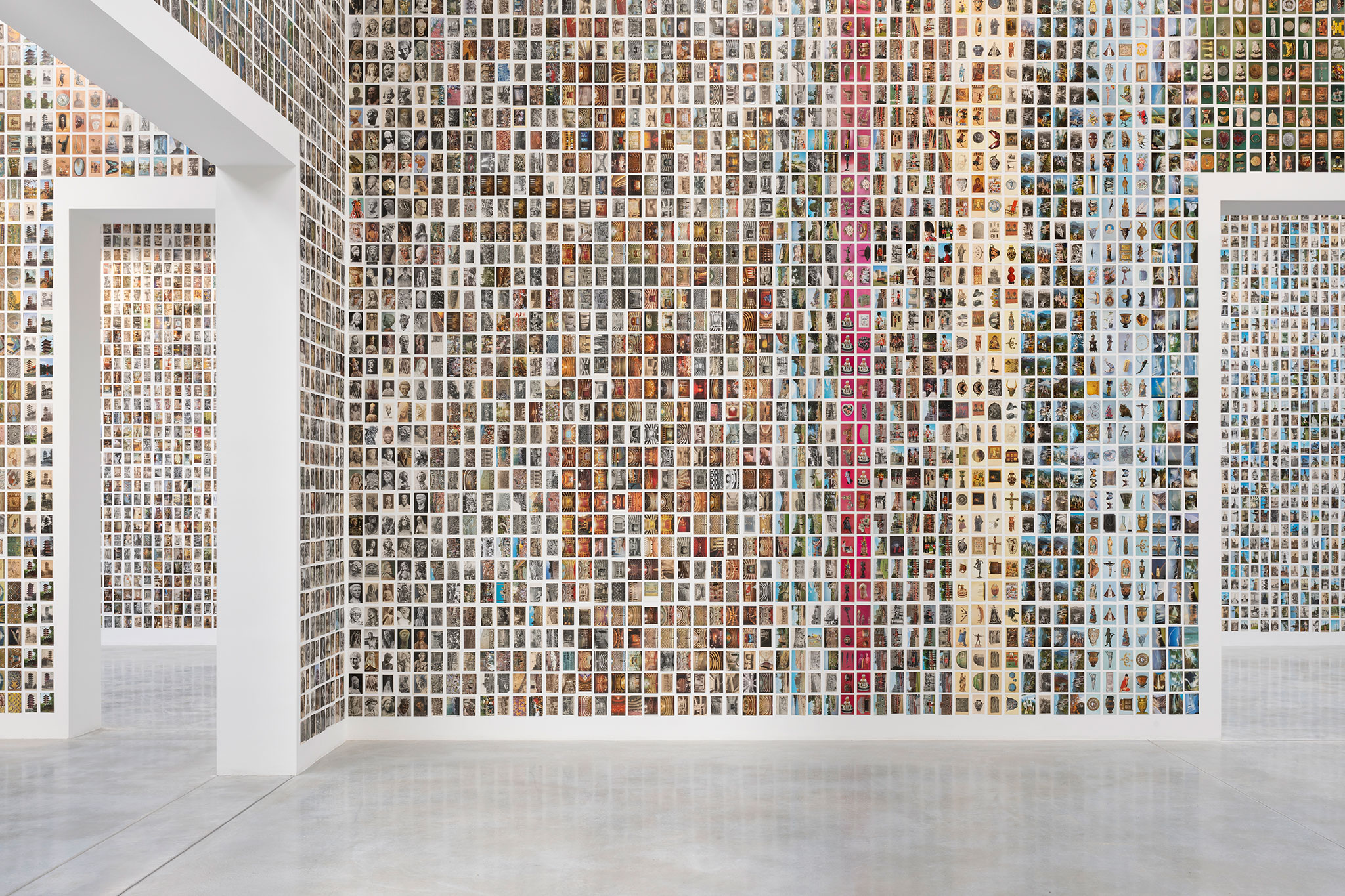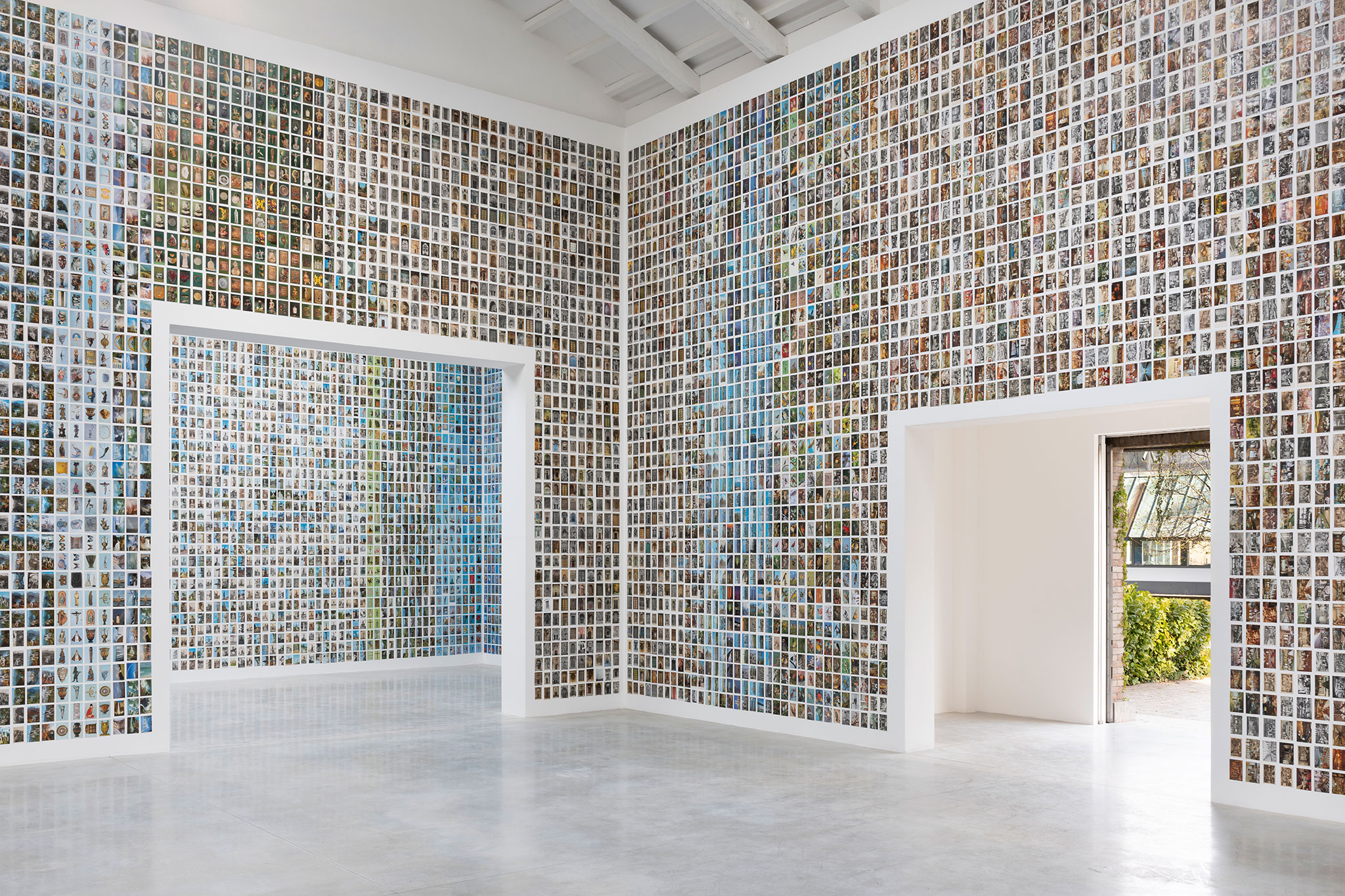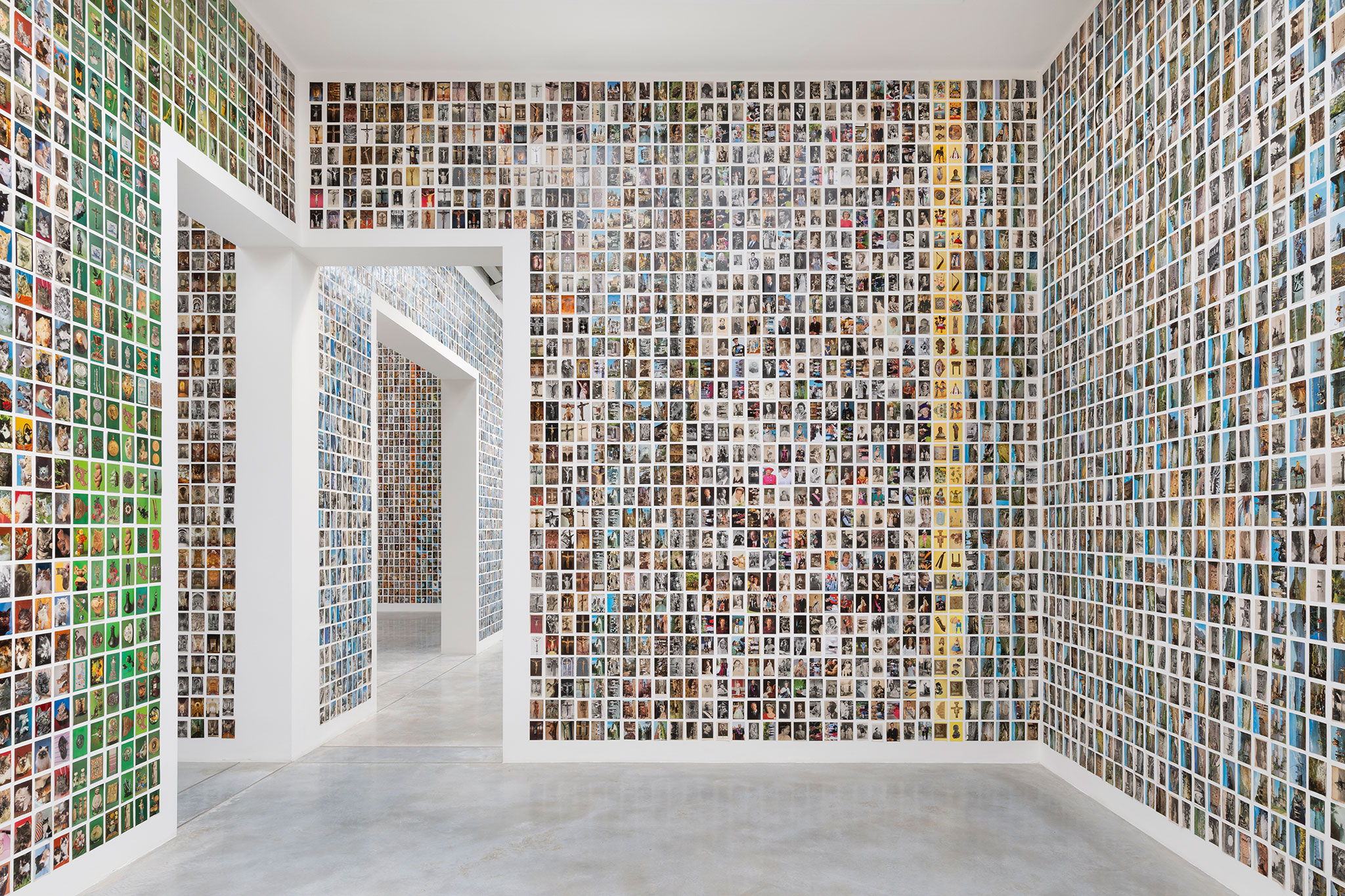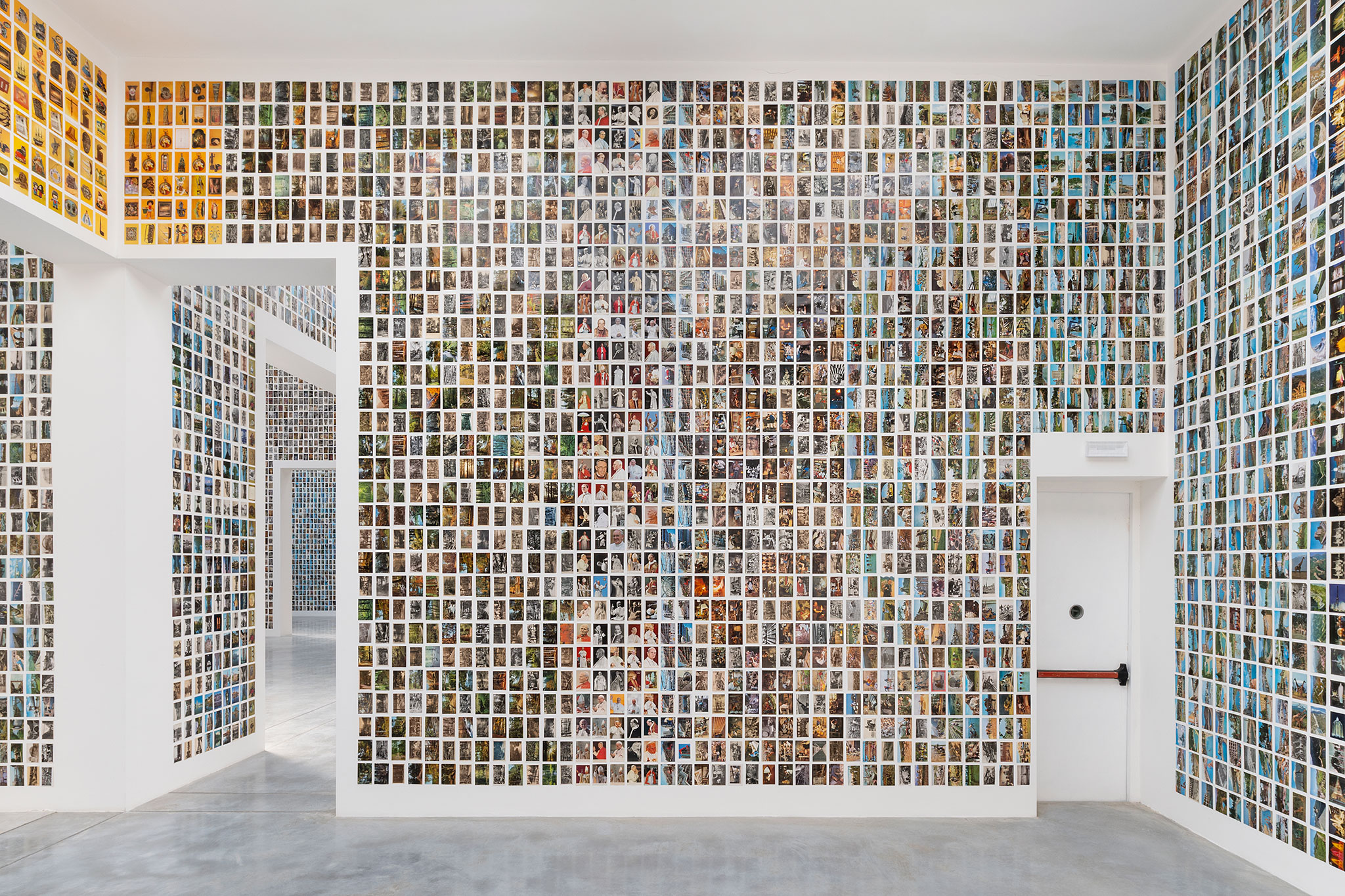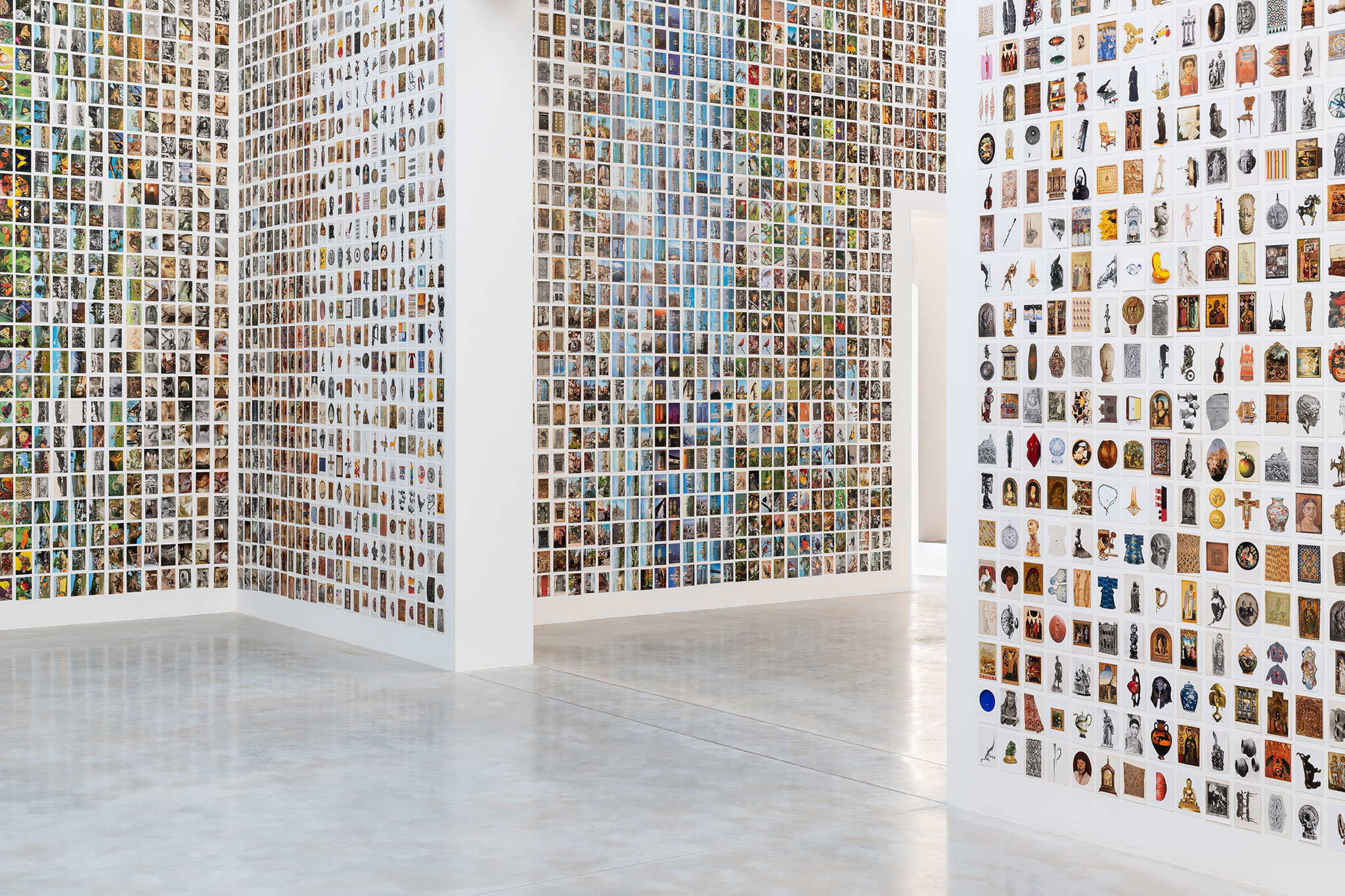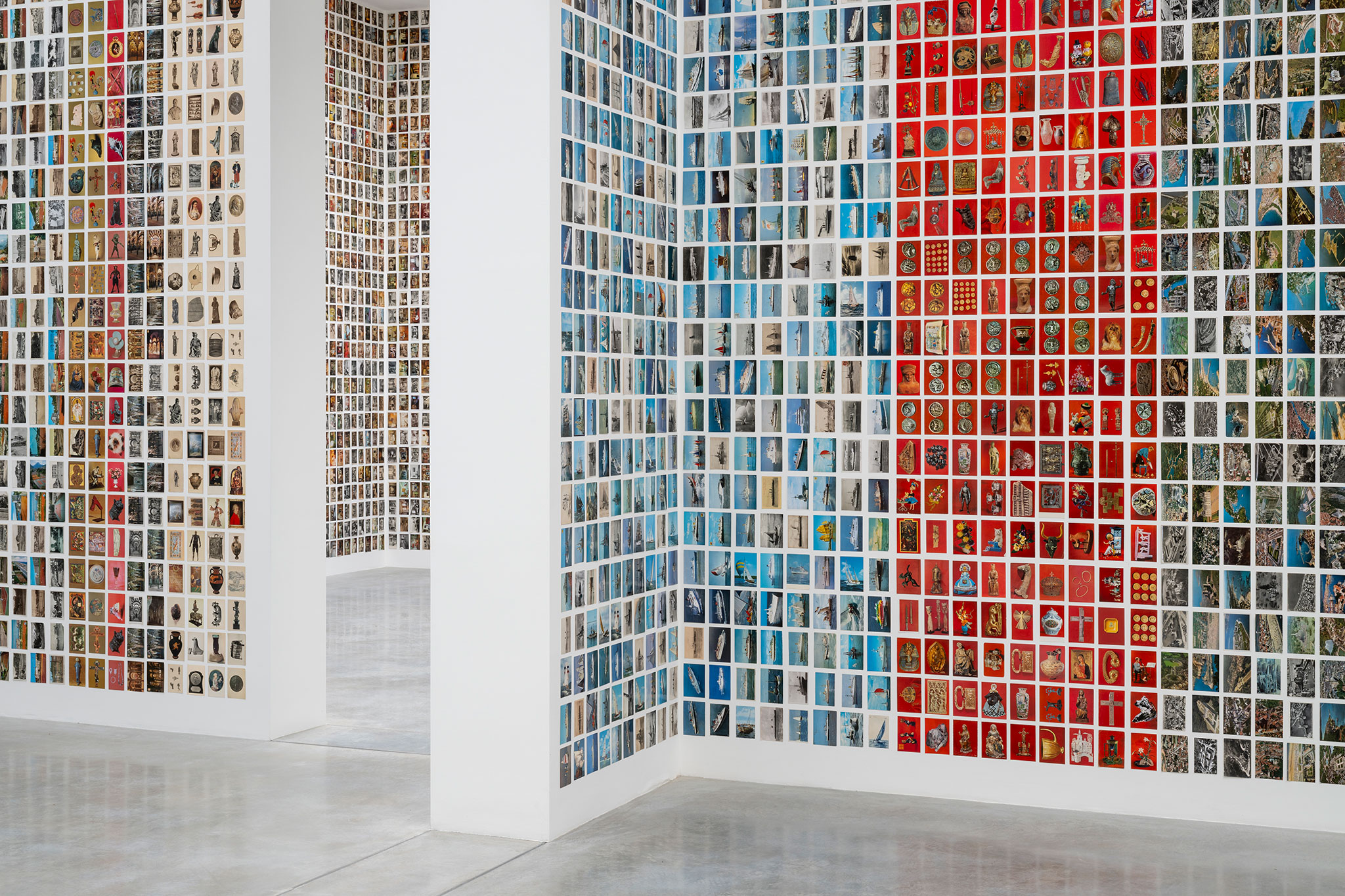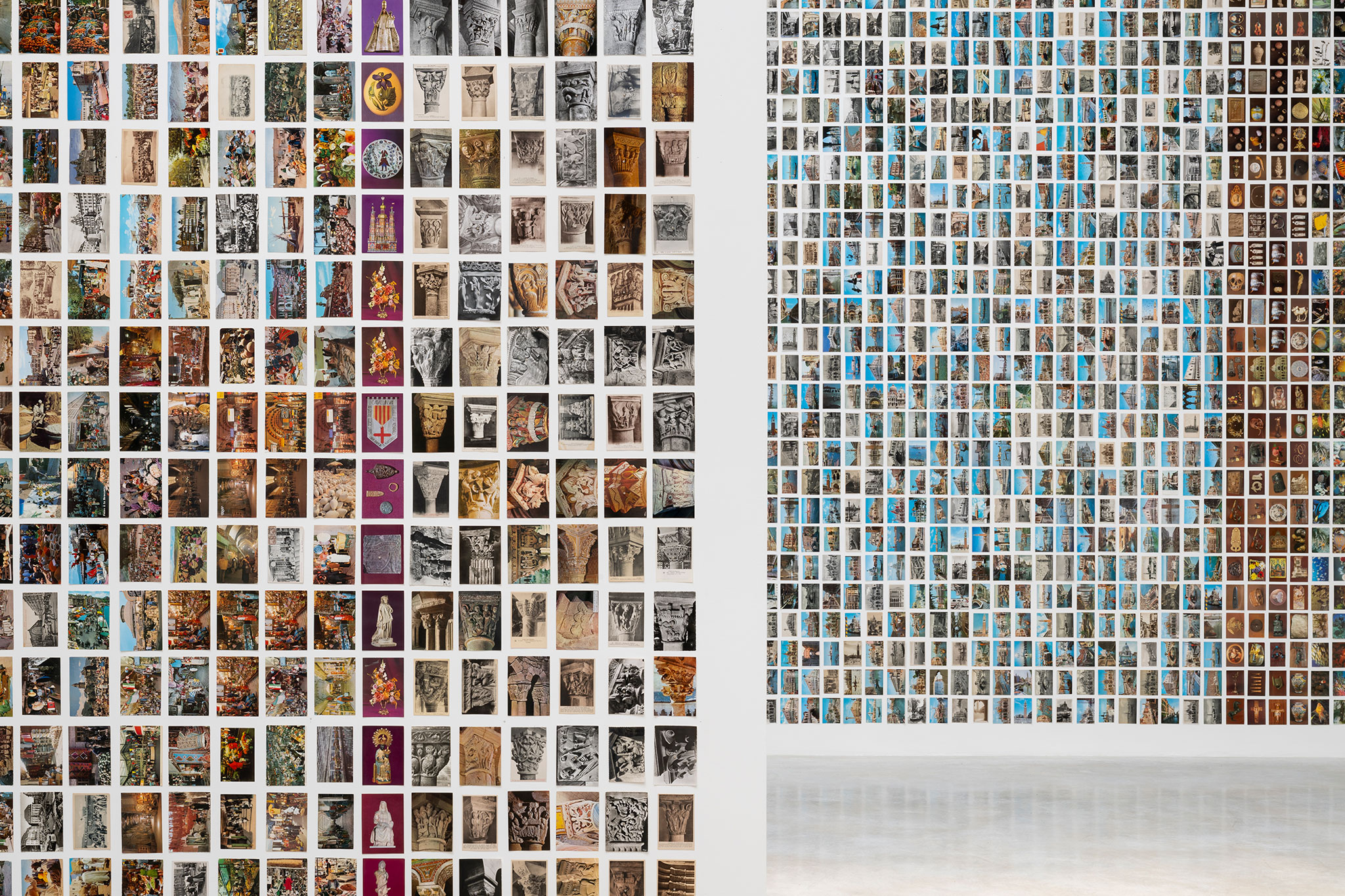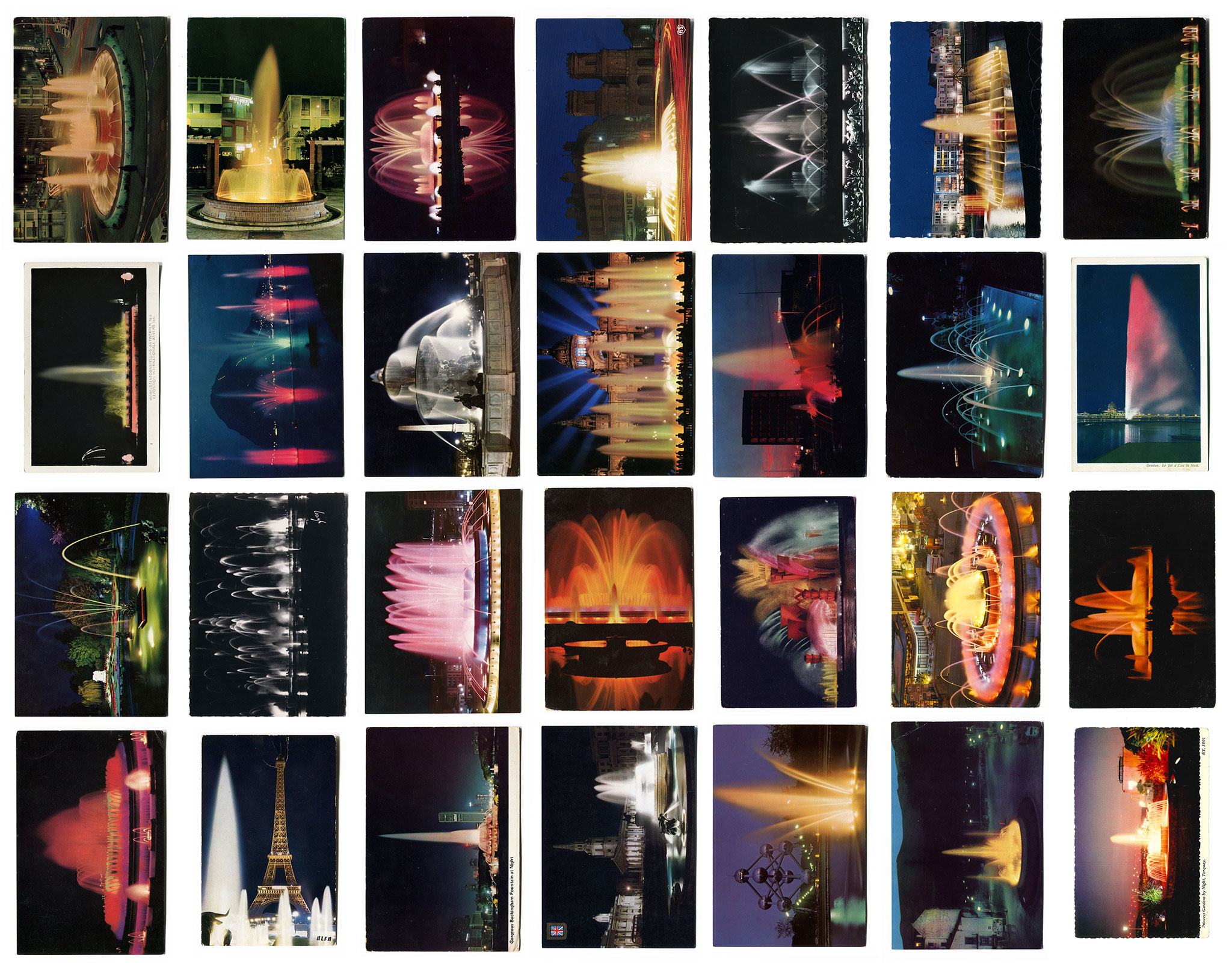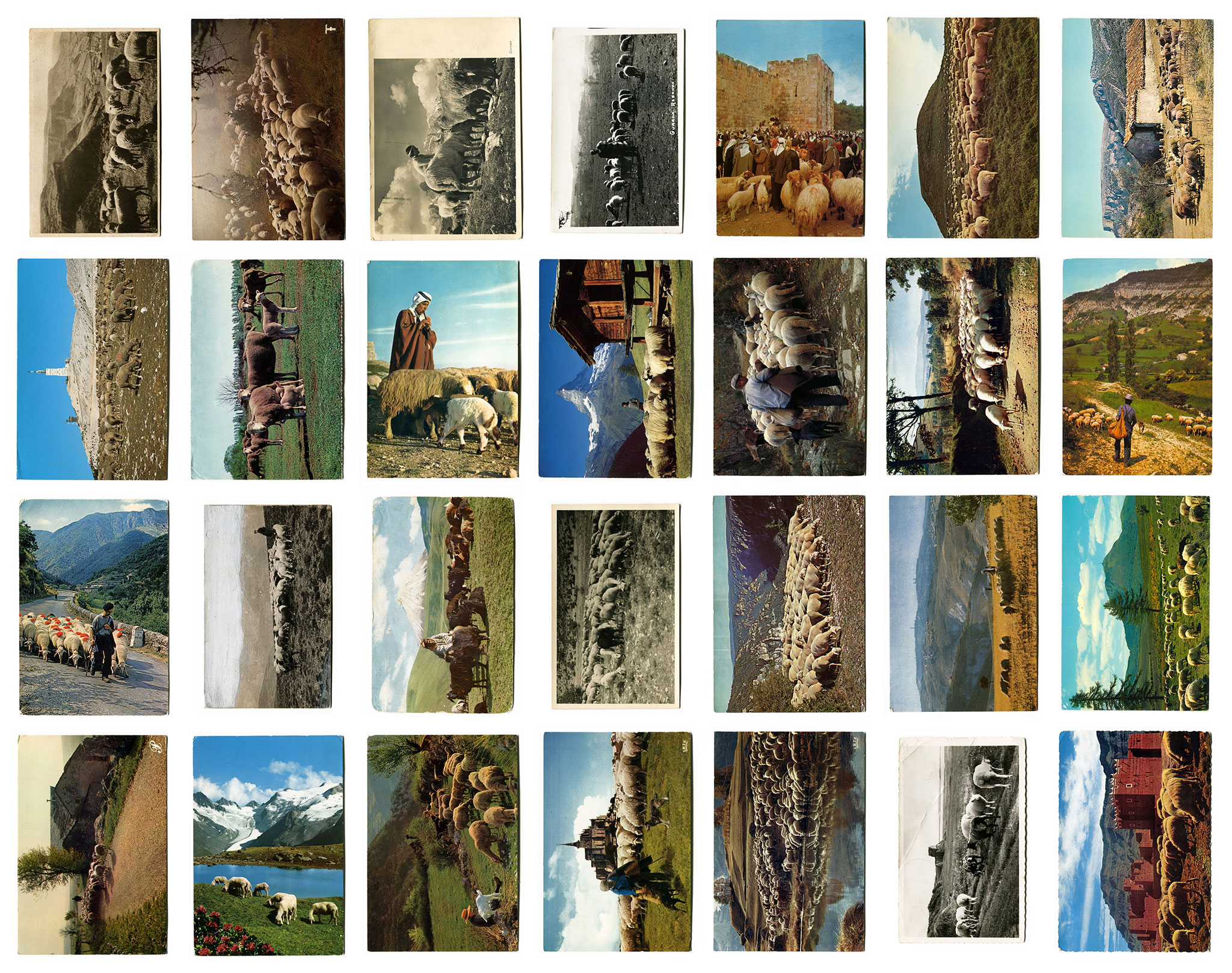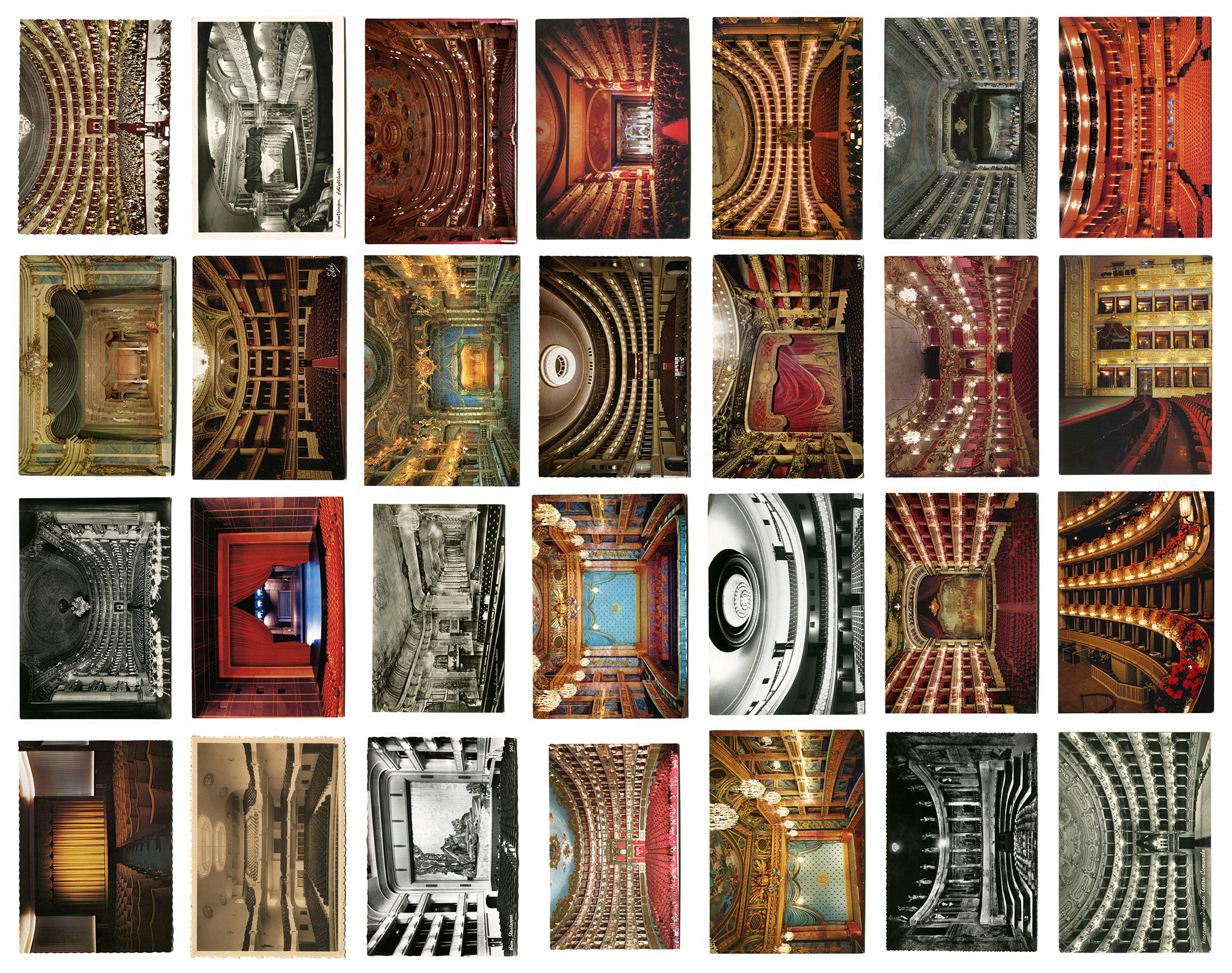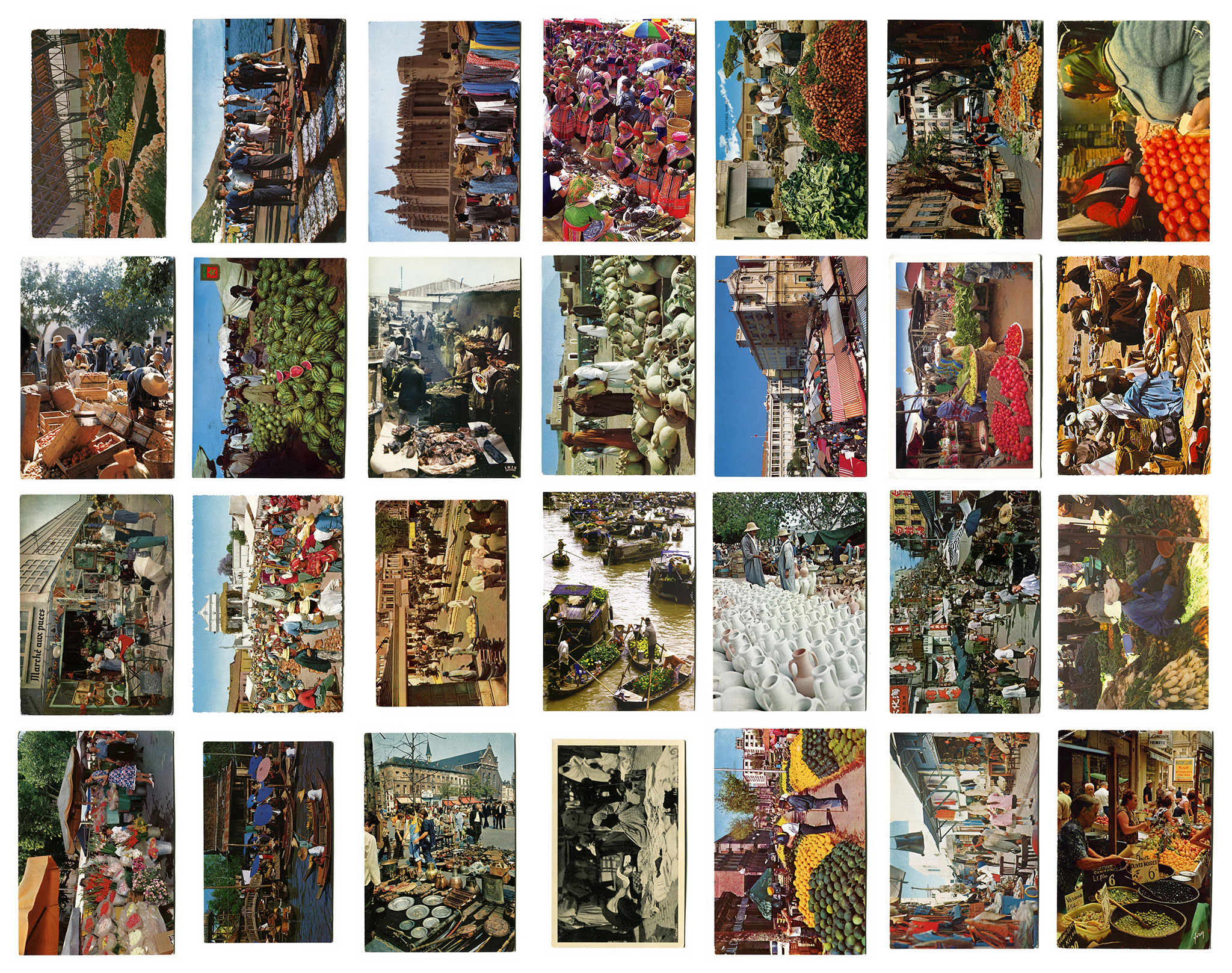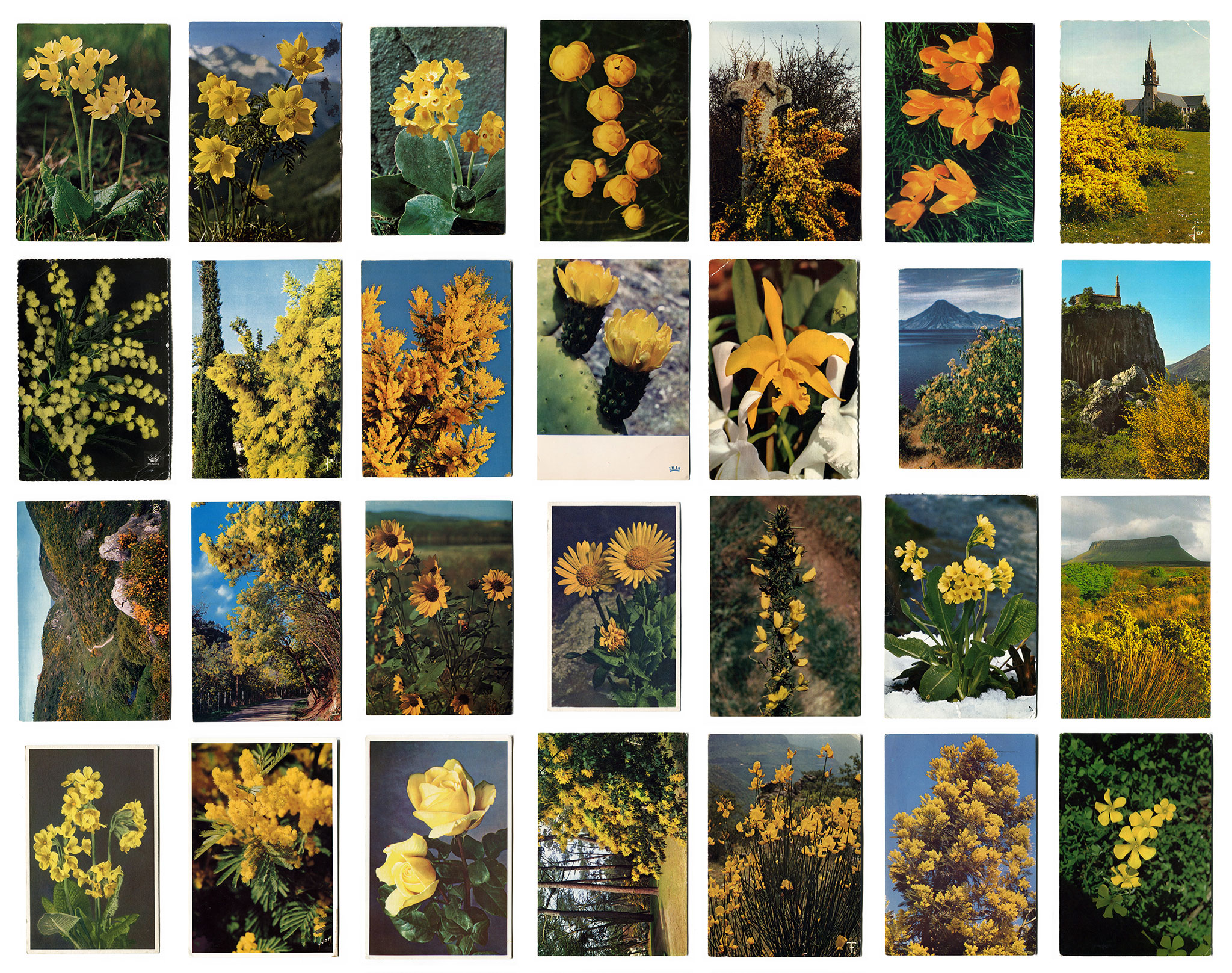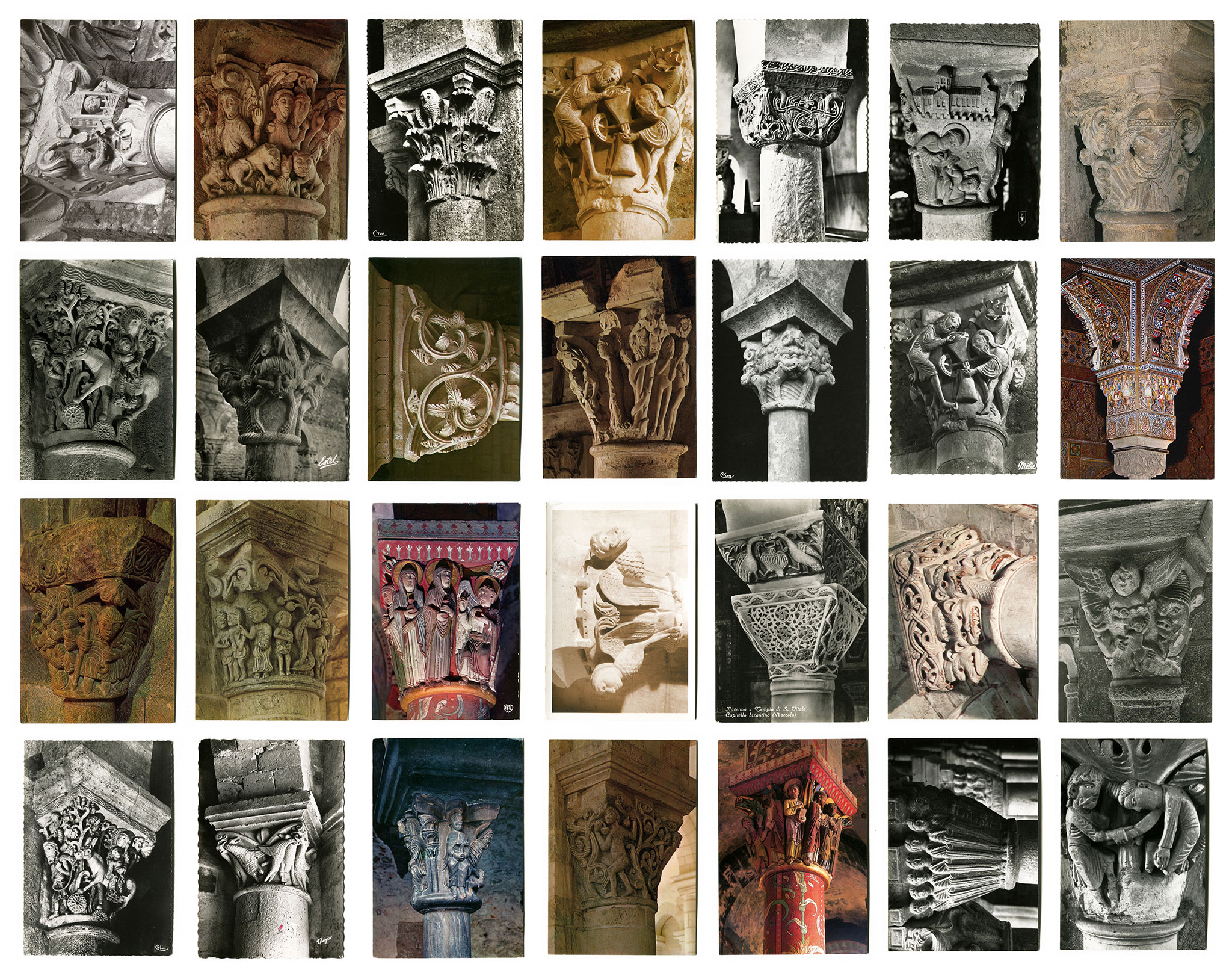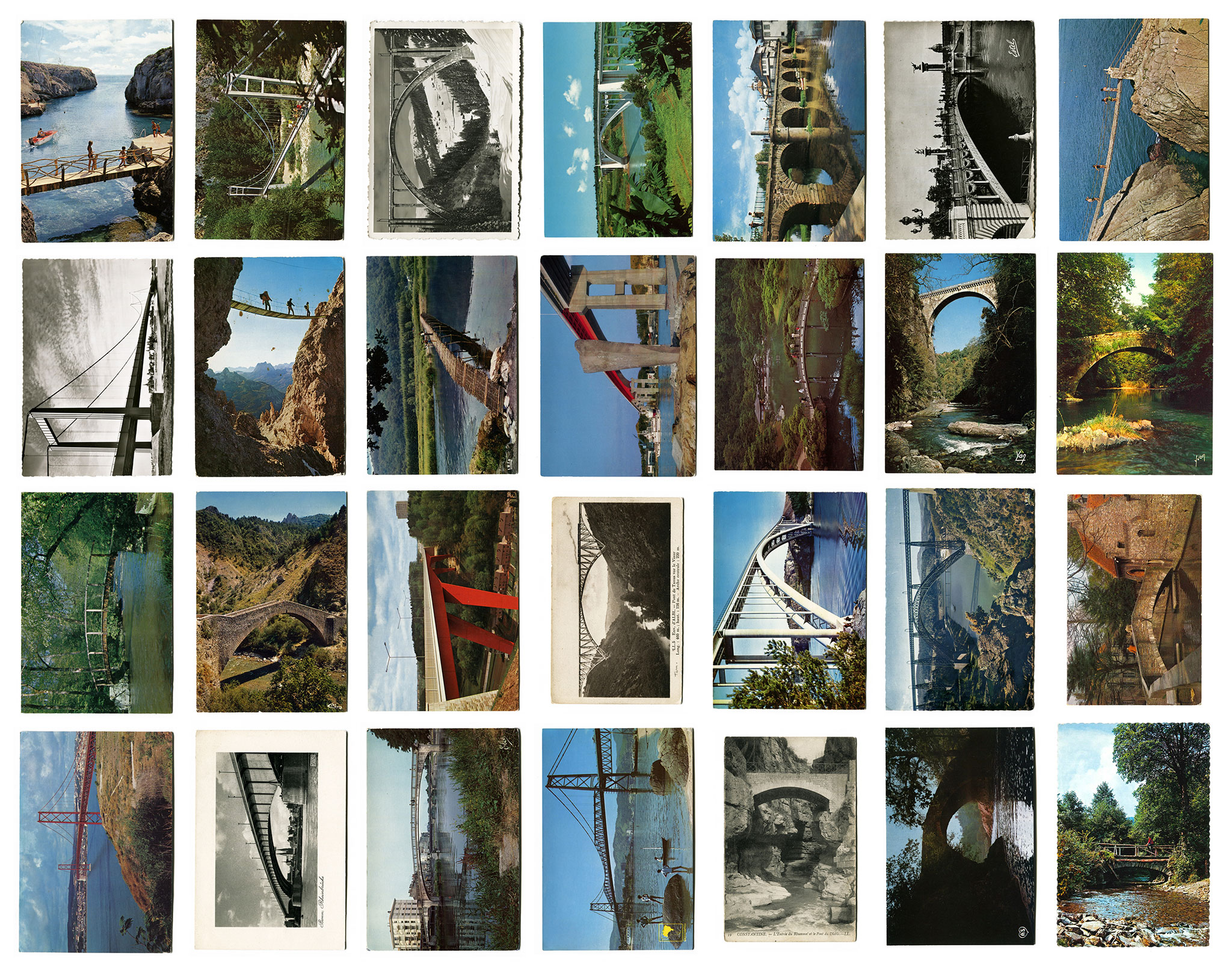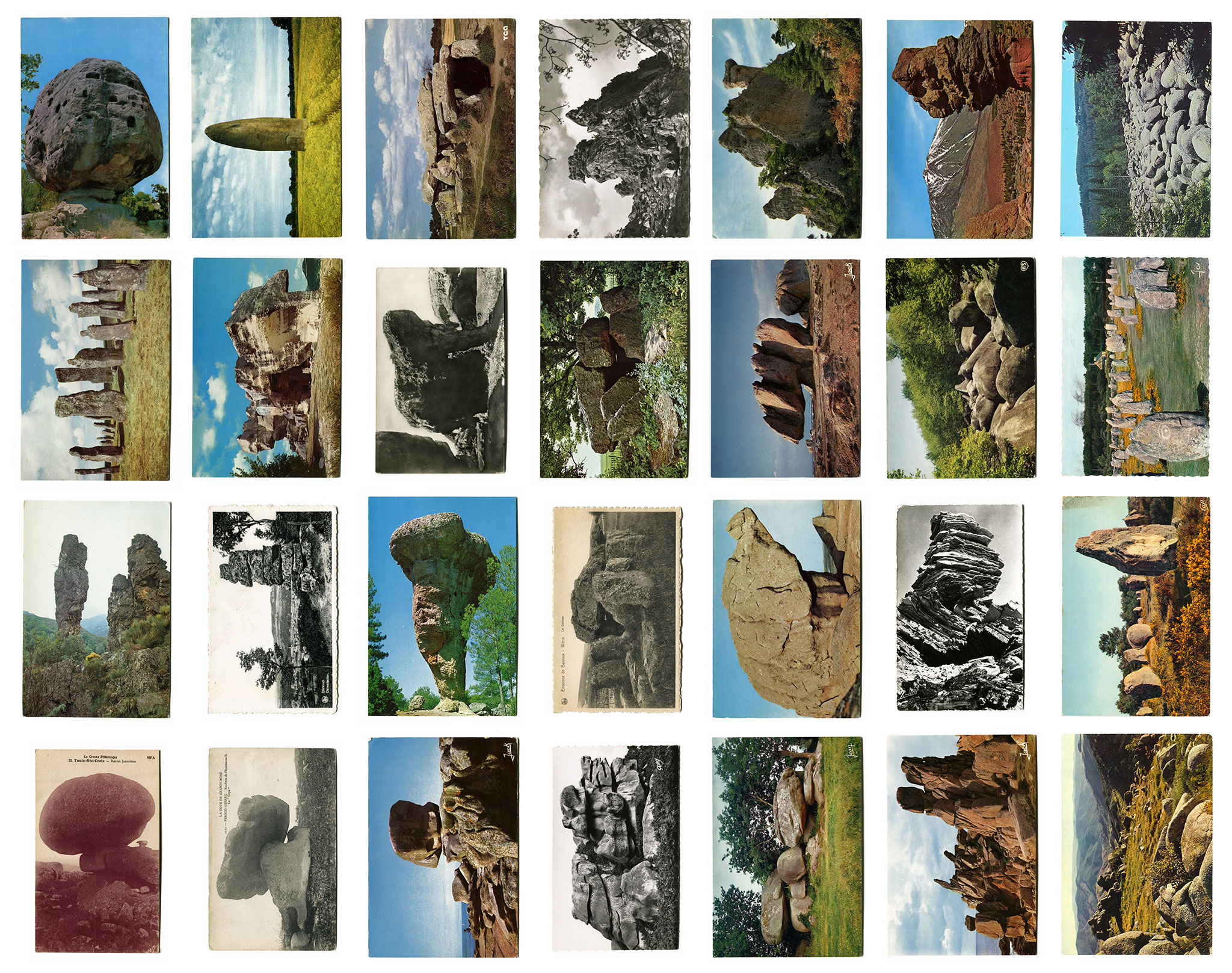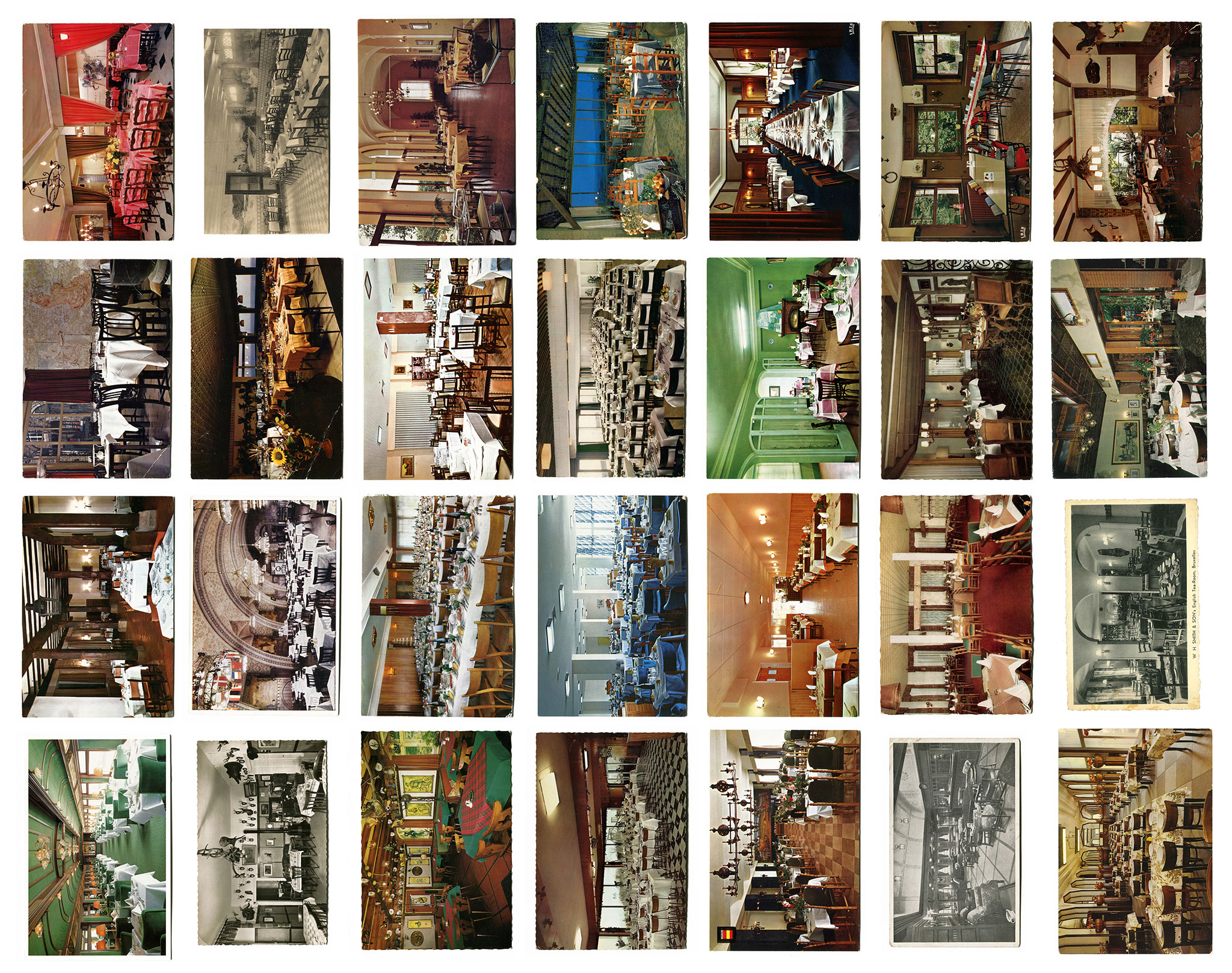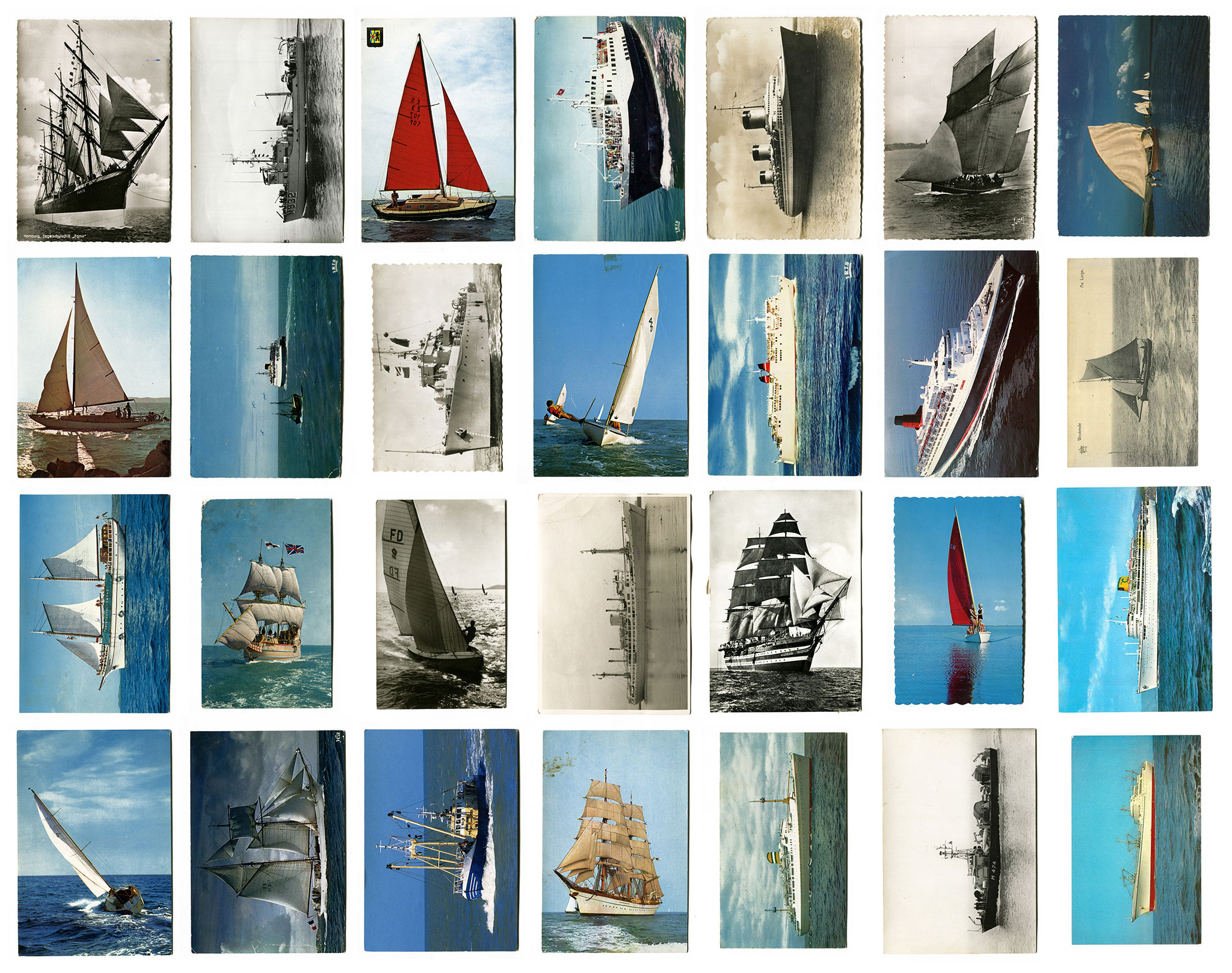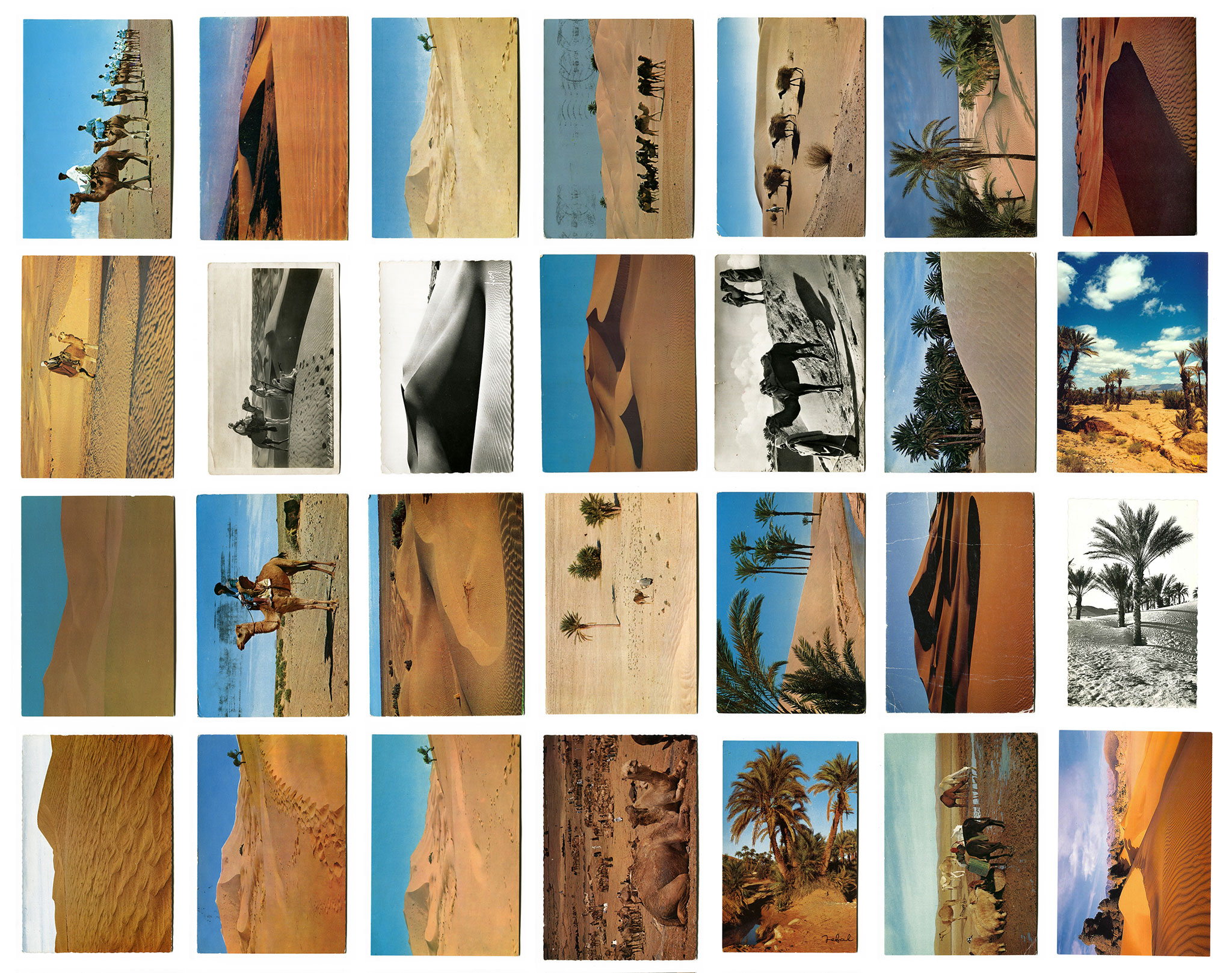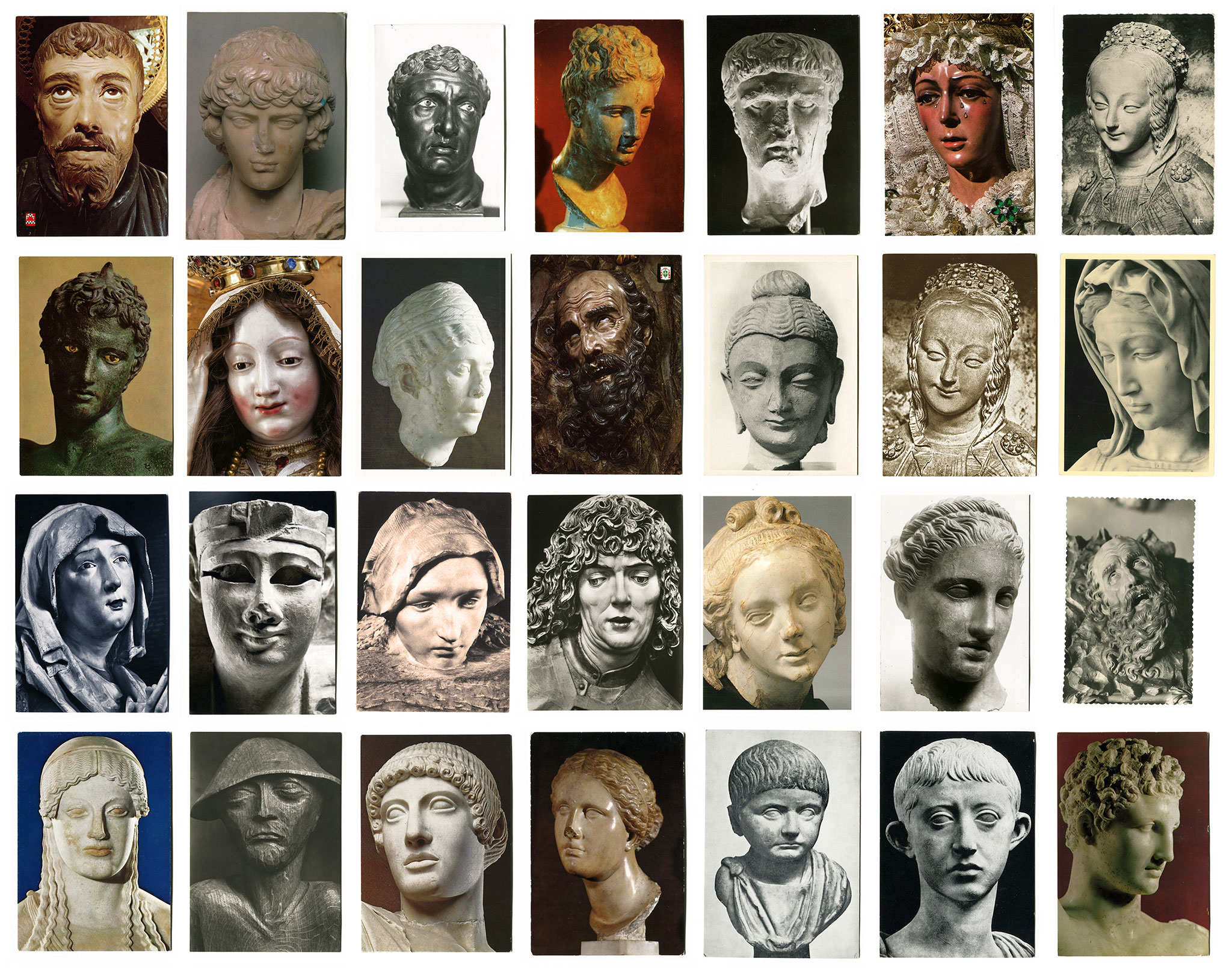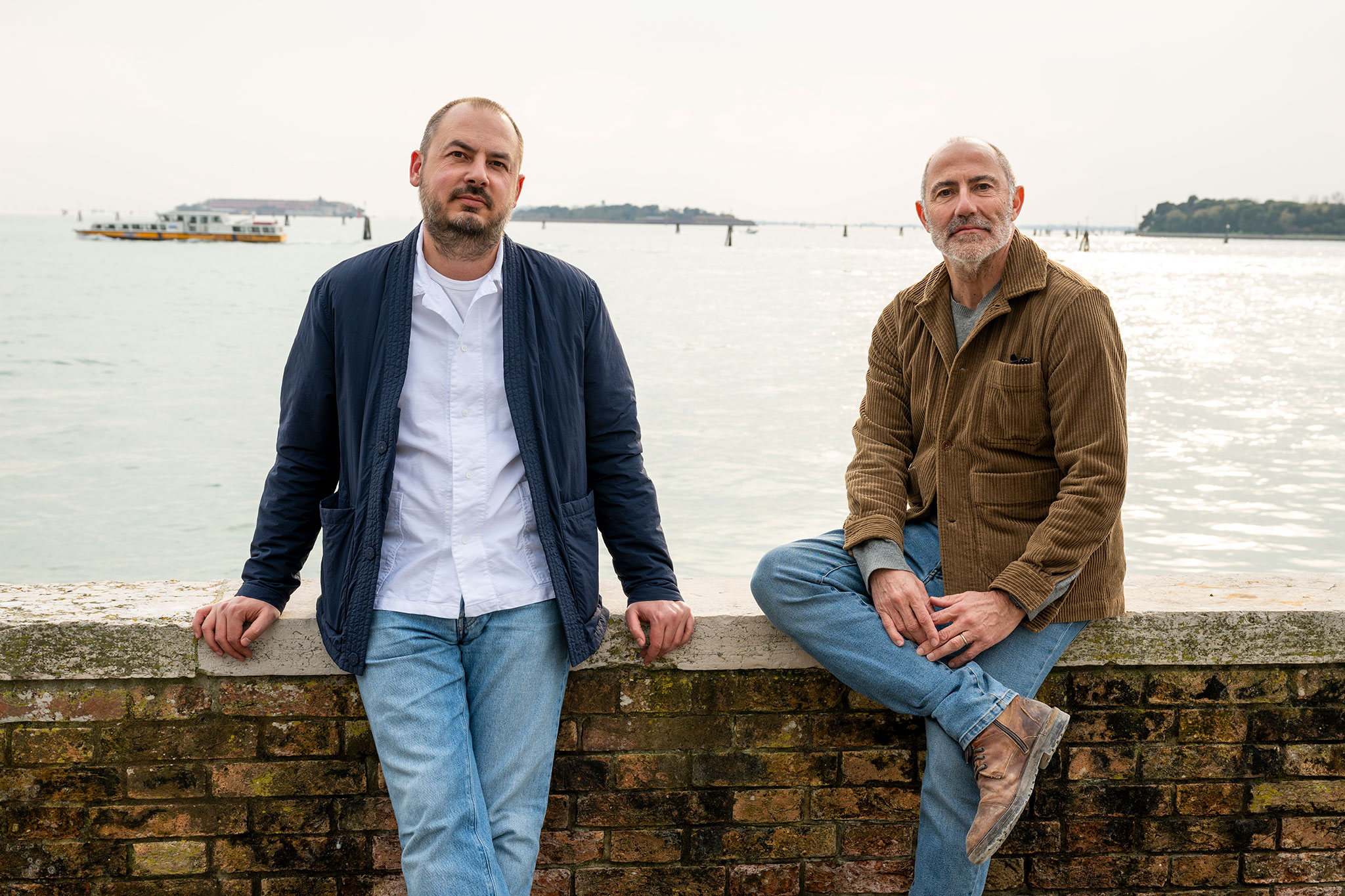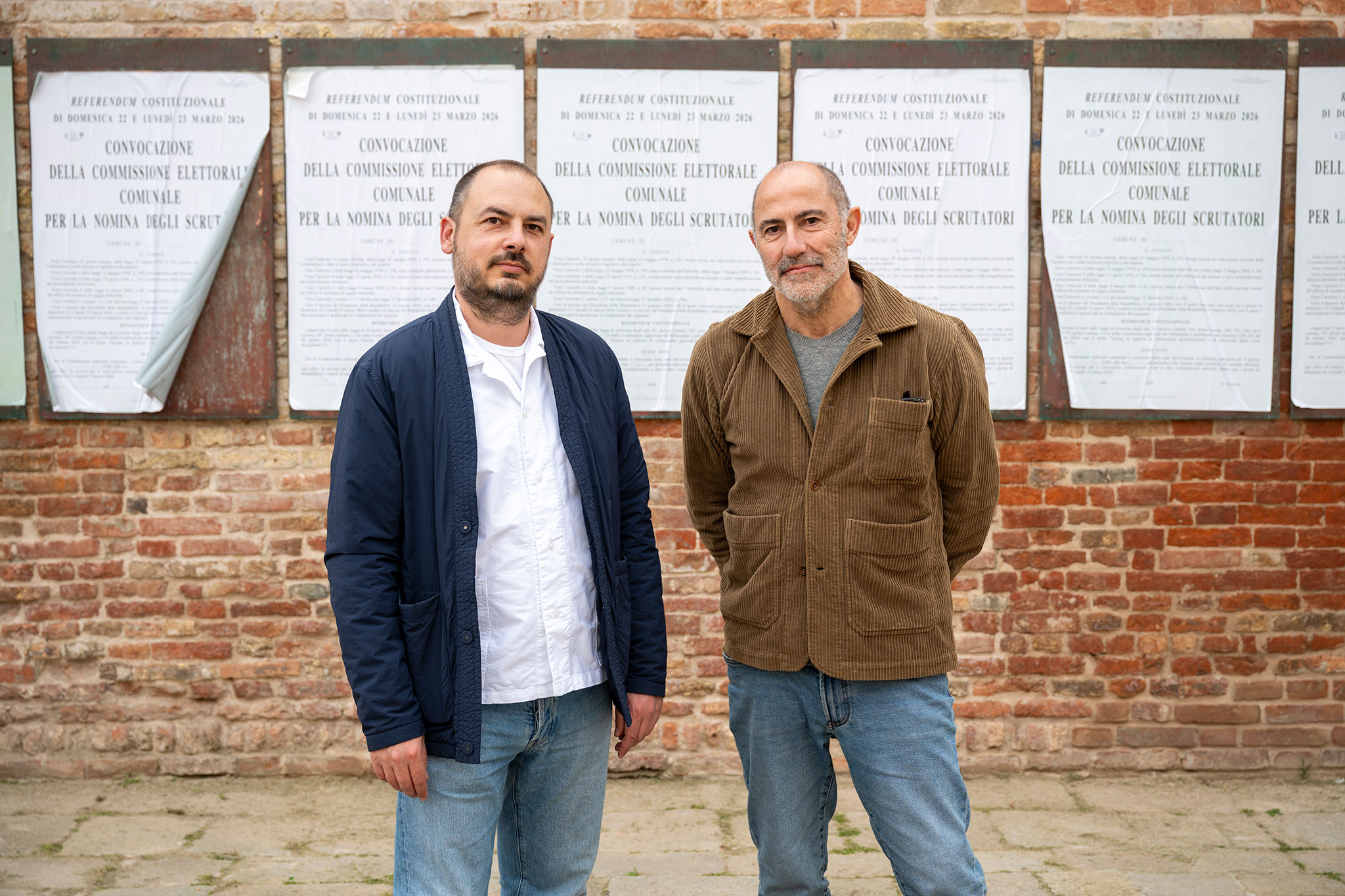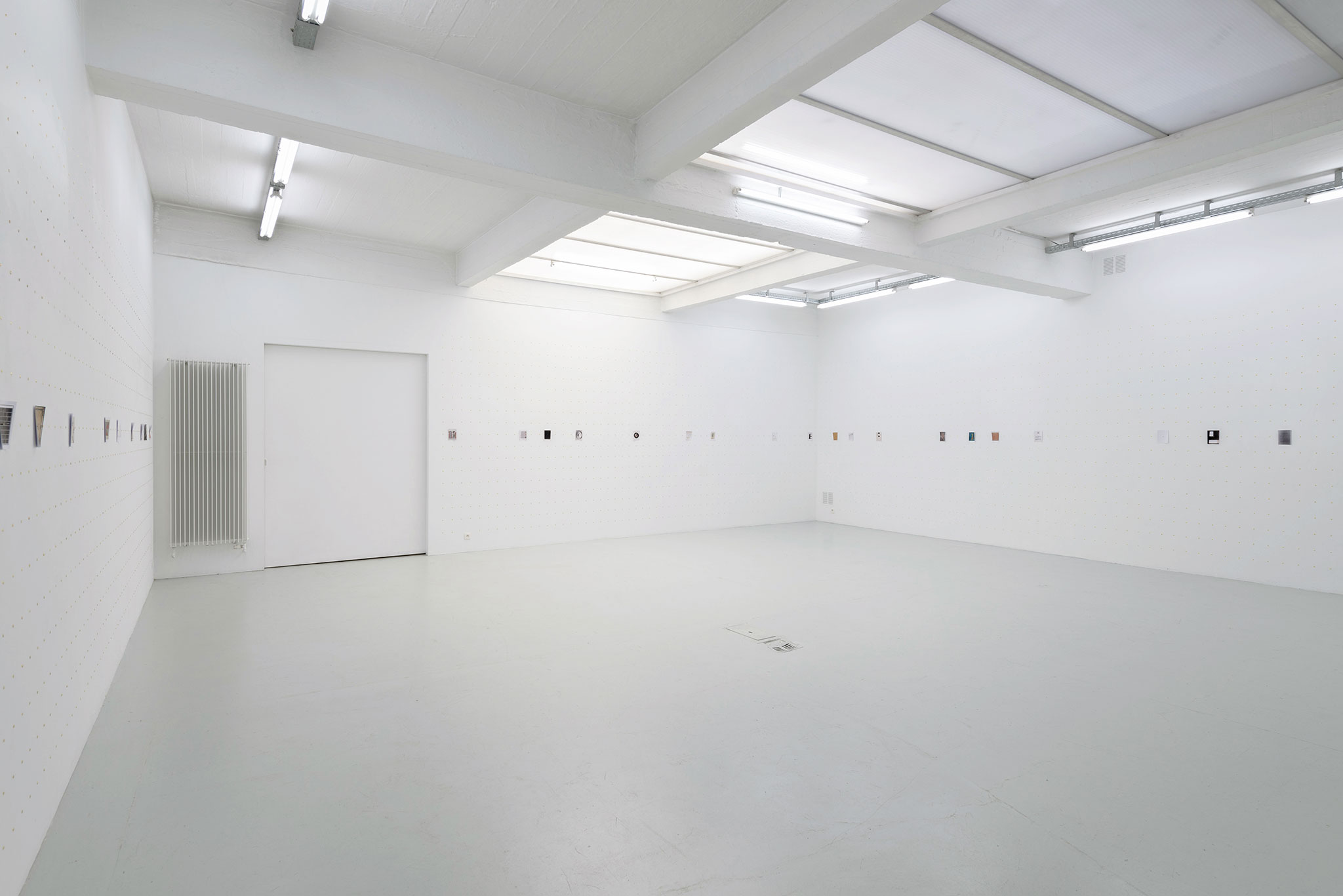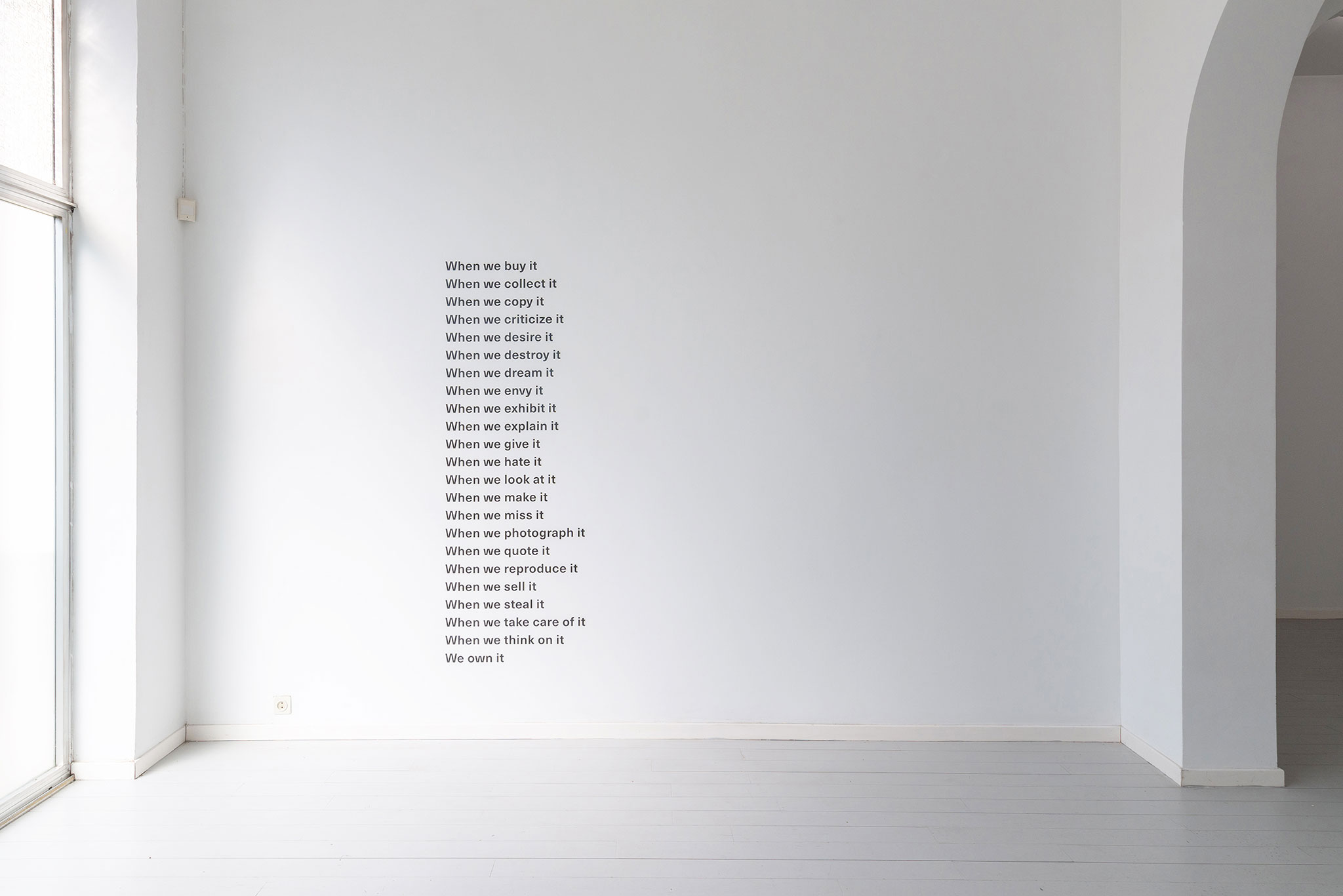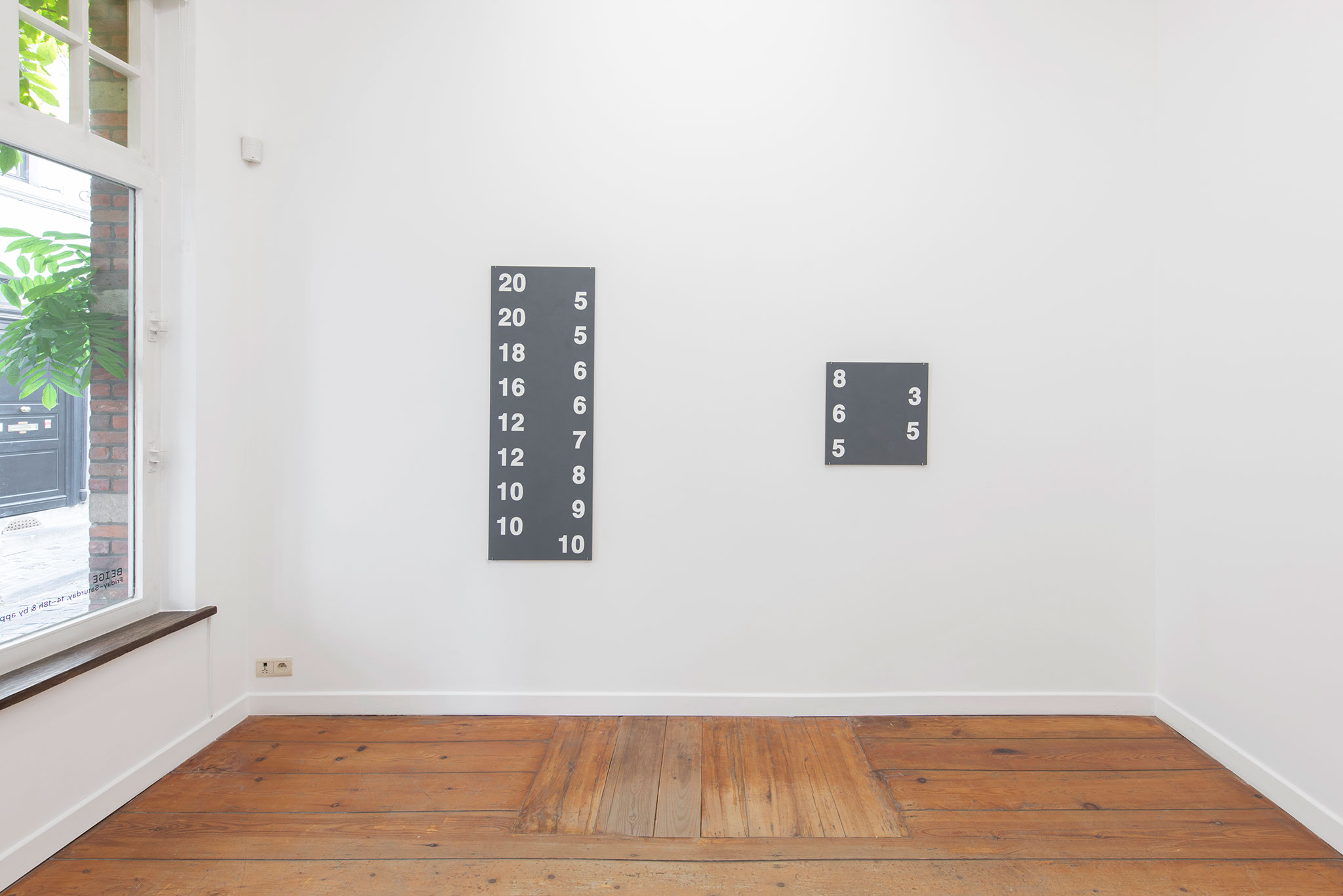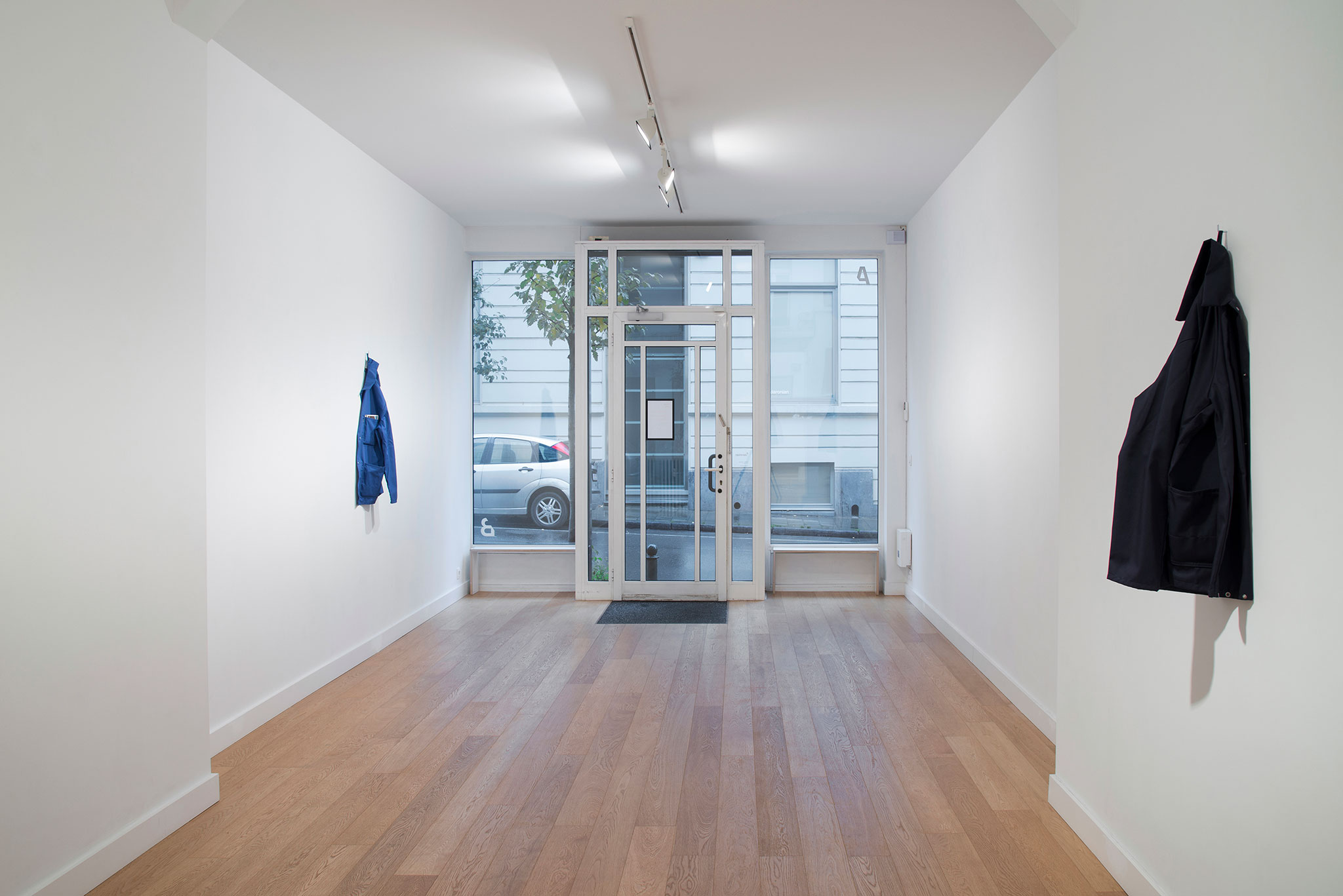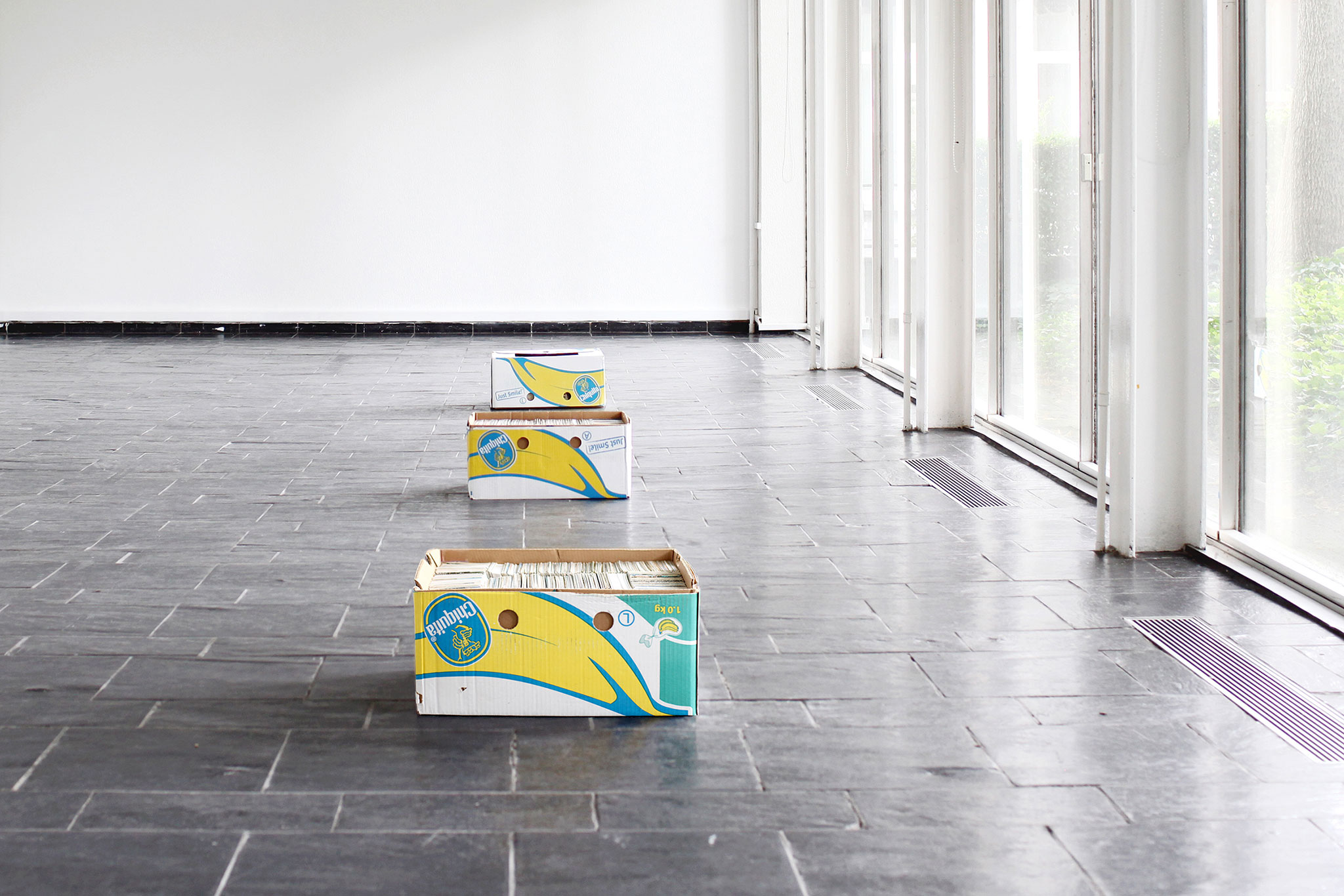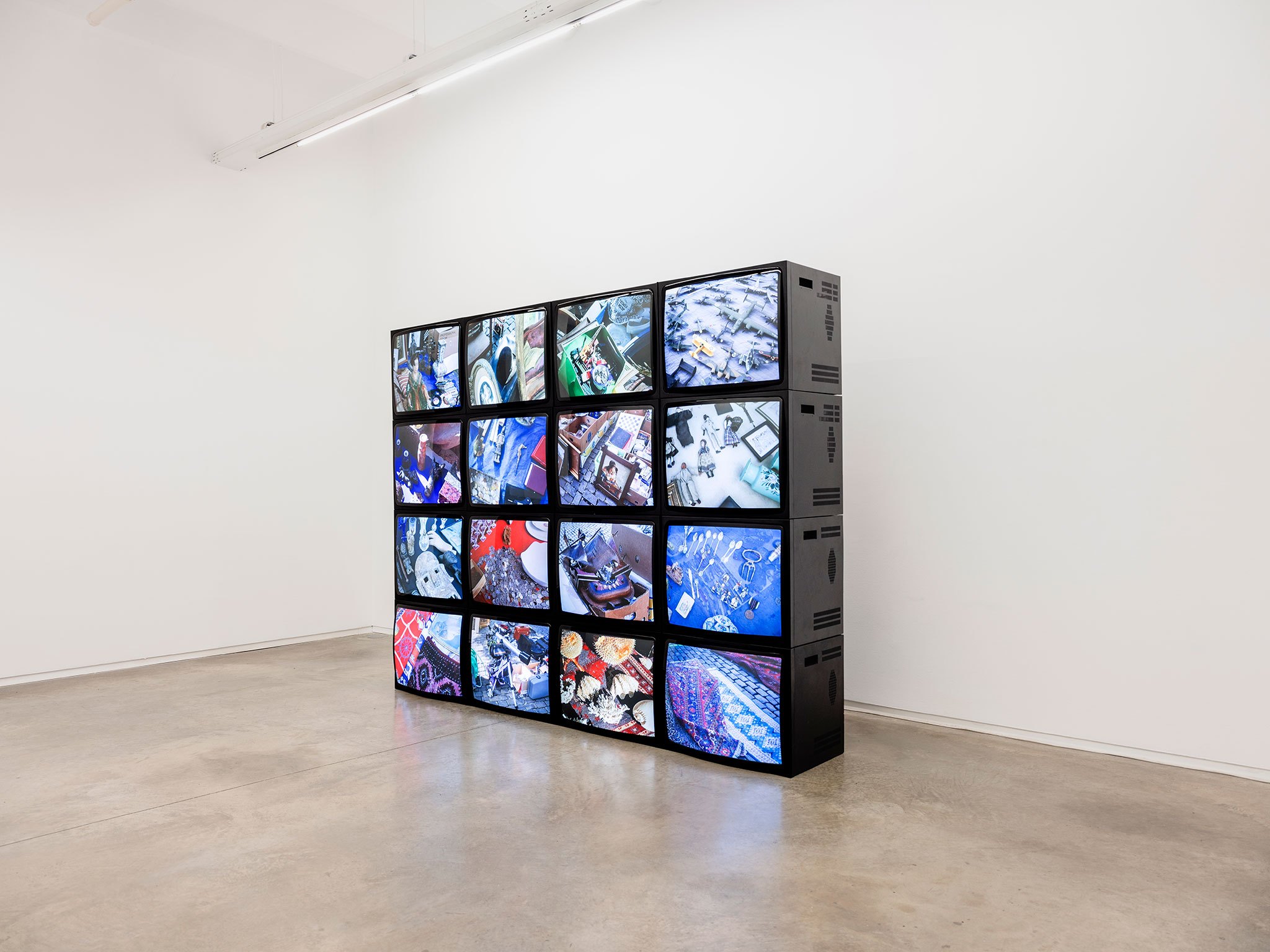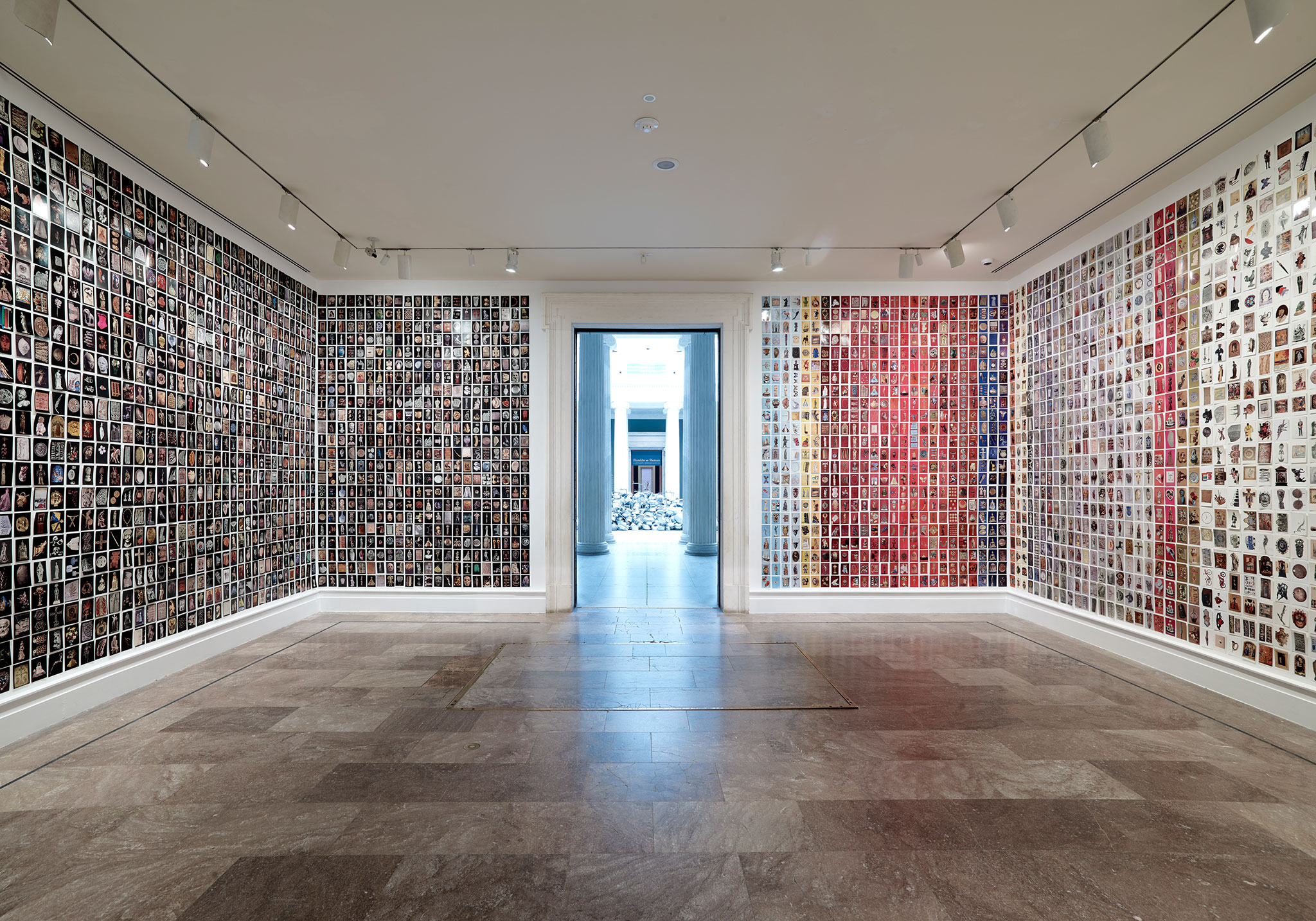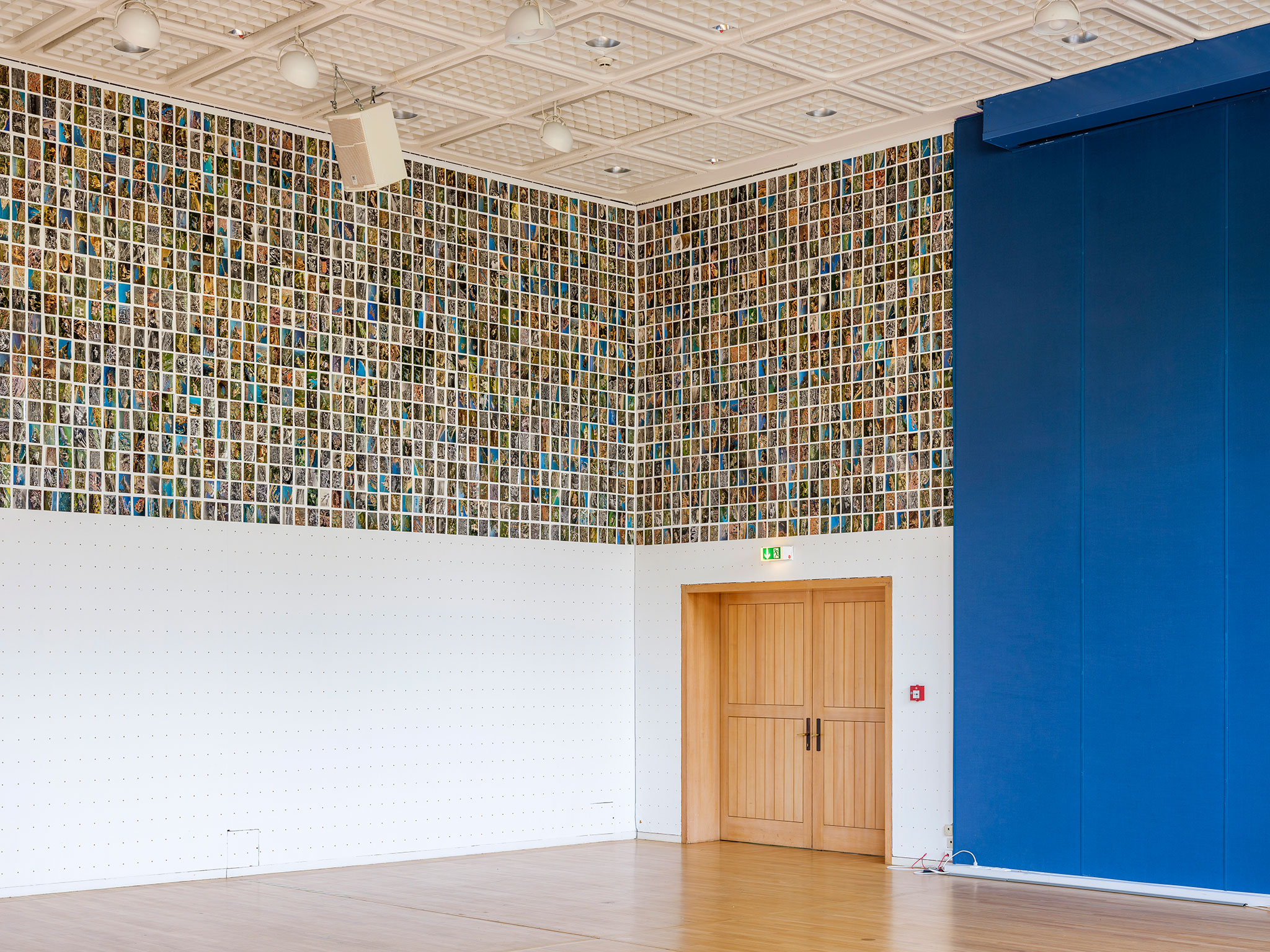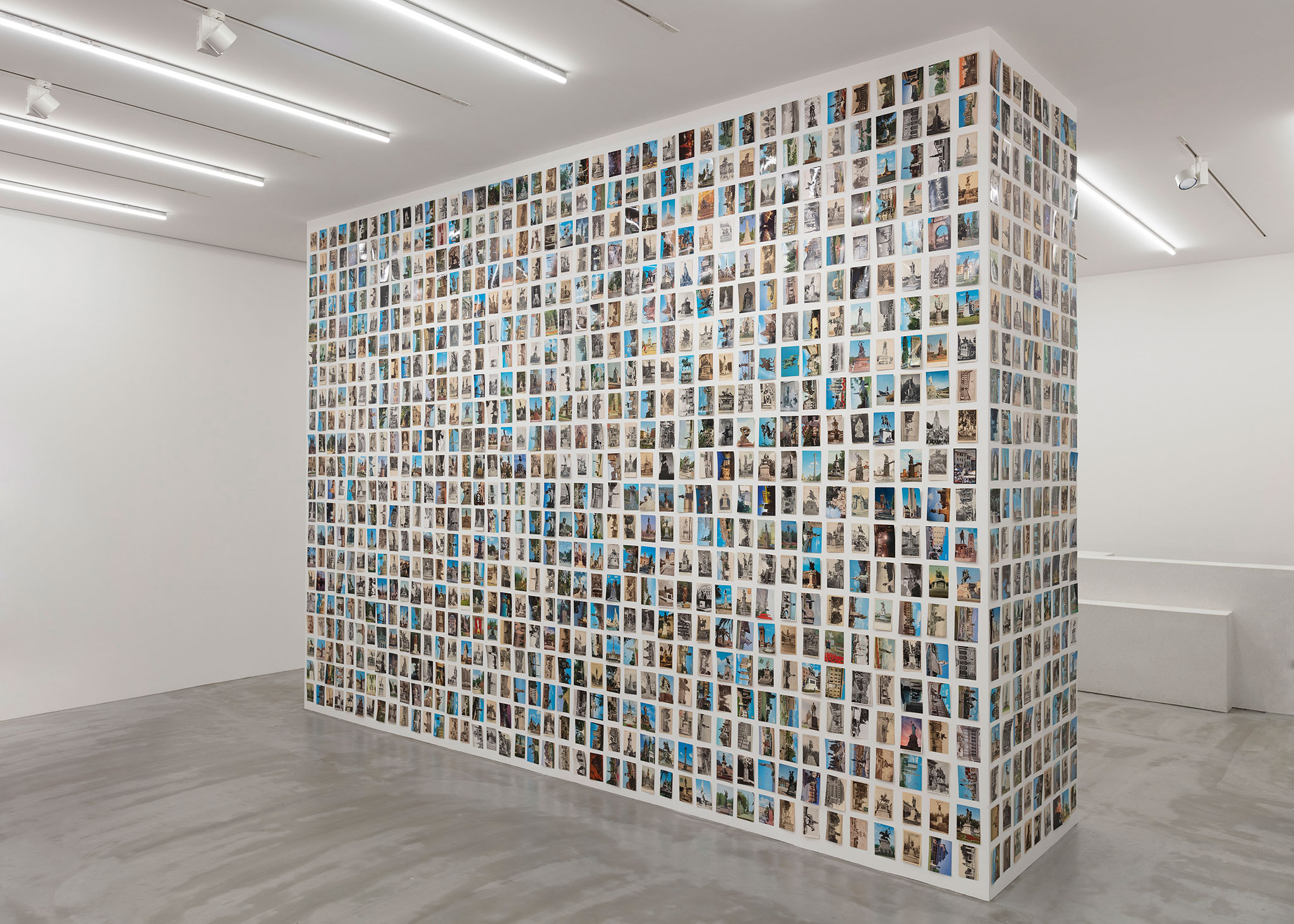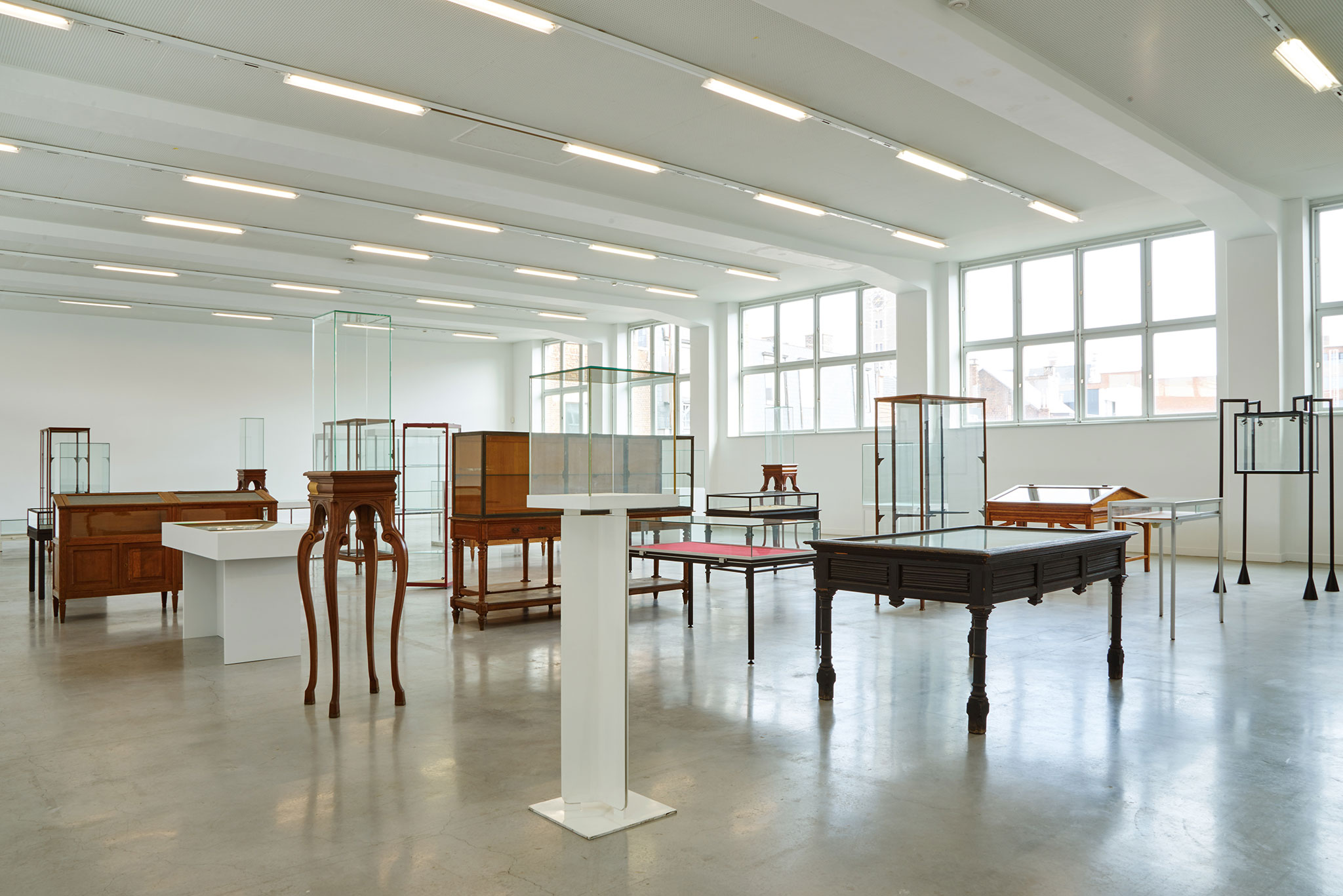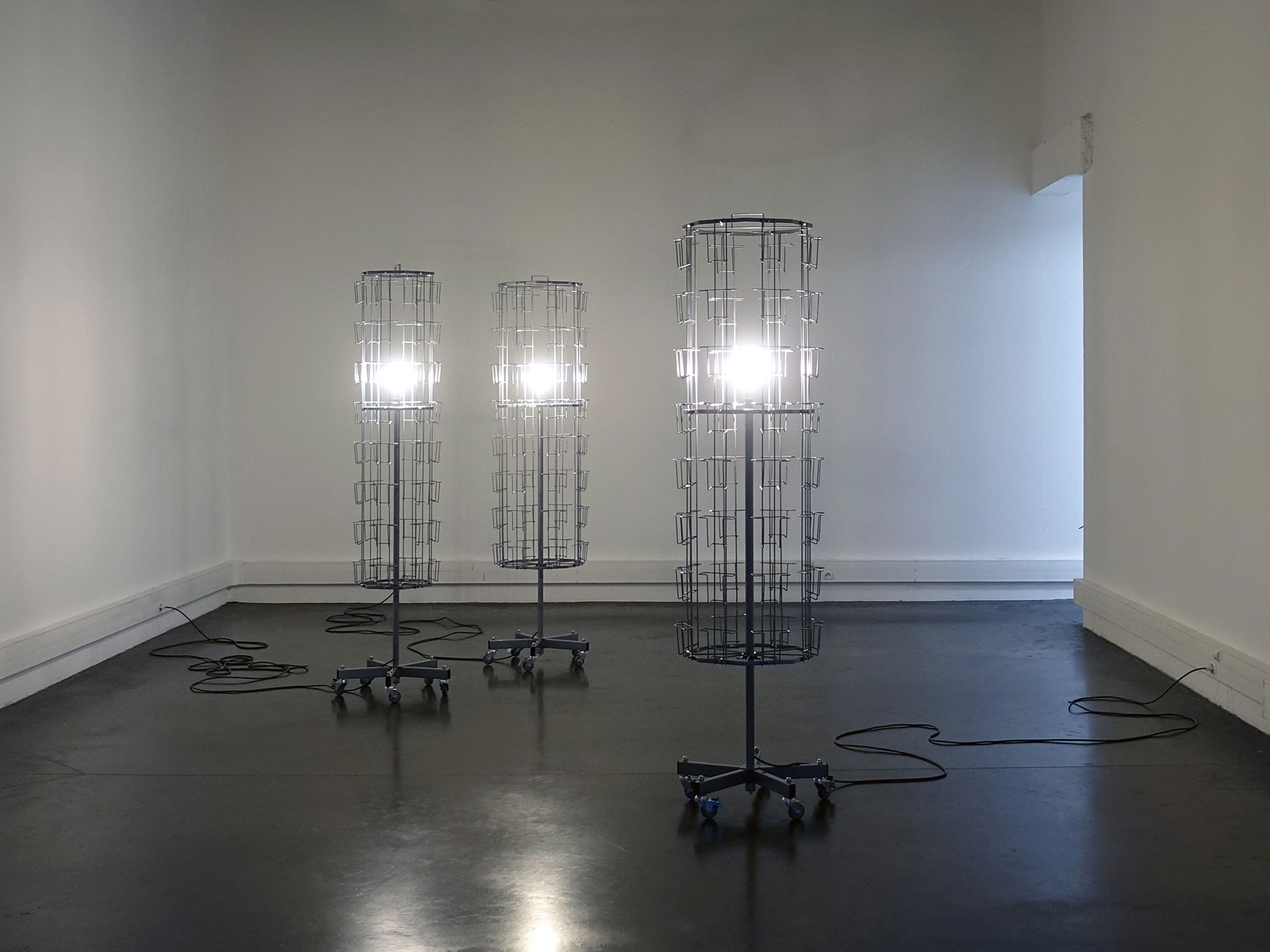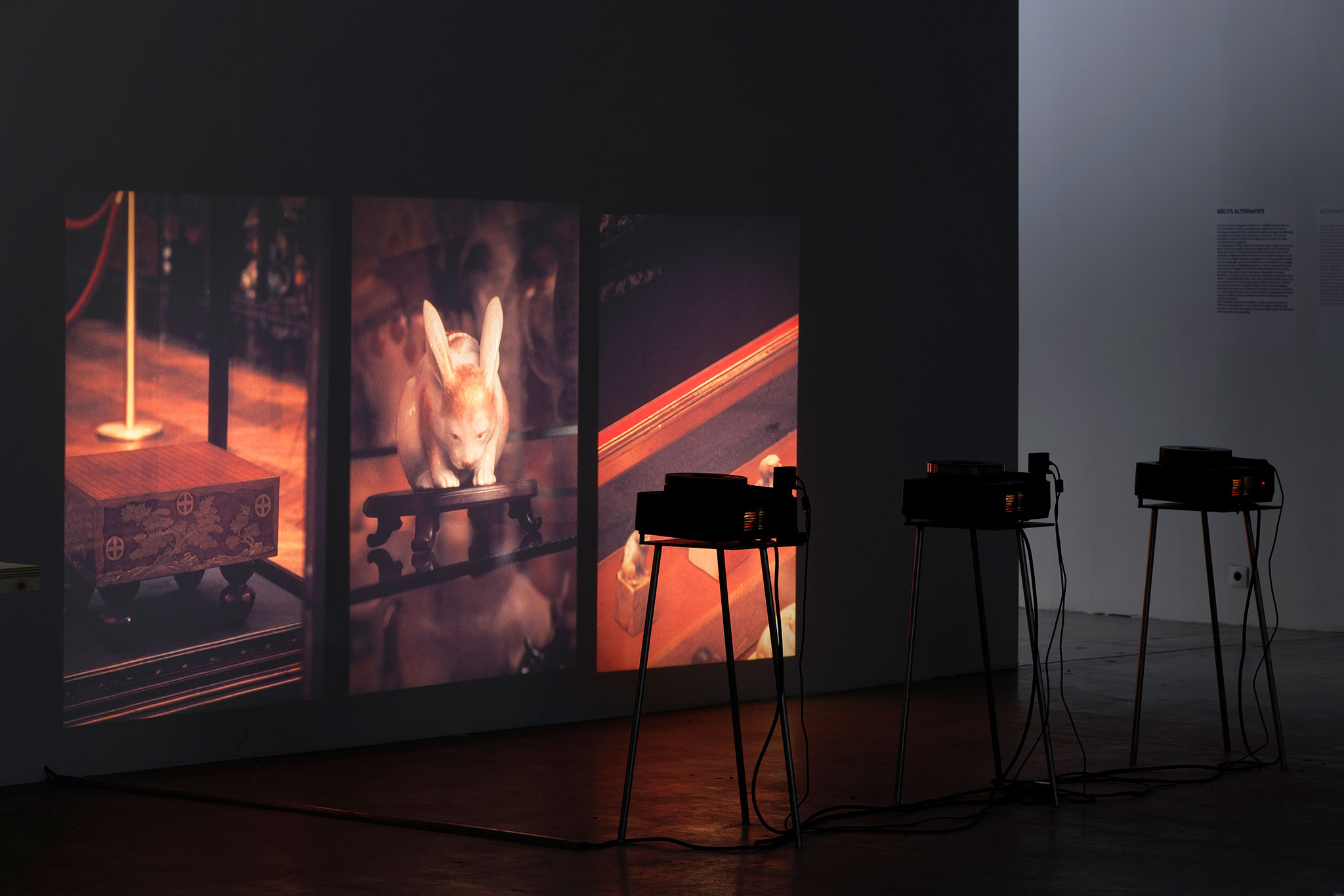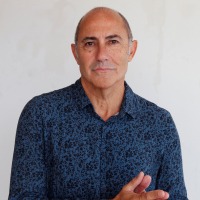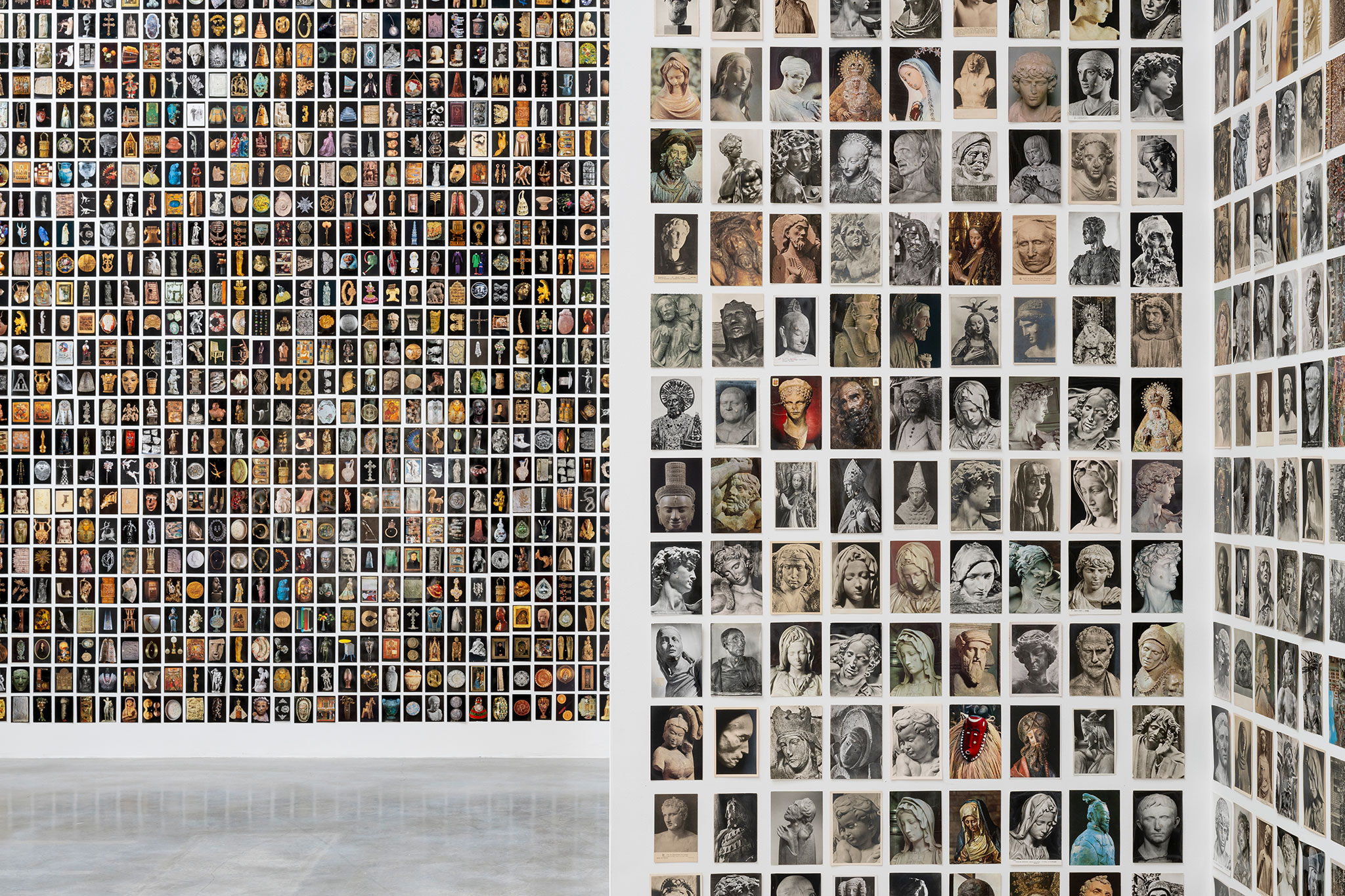
The installation by artist Oriol Vilanova, curated by Carles Guerra, transforms postcards into unstable documents, marked by circulation and loss, composed of a shifting constellation of fragments that resists narrative closure.
Installed in the Pavilion as a non-hierarchical device, the work avoids both a chronological reading and a rigid classification. Its logic is iterative and open, privileging duration over closure. In this sense, "The Remains" does not operate exactly as an exhibition, but as a process in flux, in which collection, arrangement, and re-presentation emerge as forms of thought.
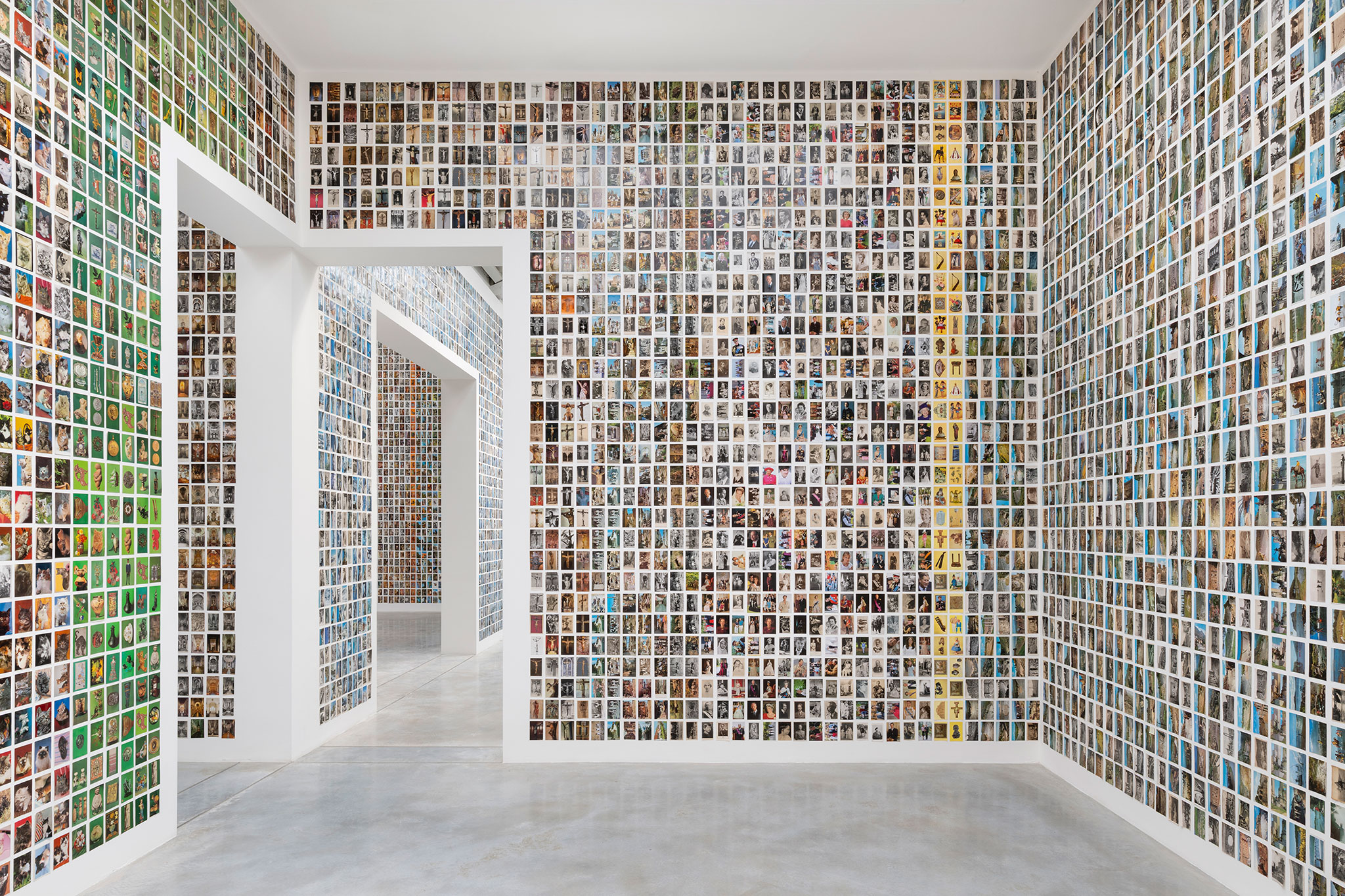
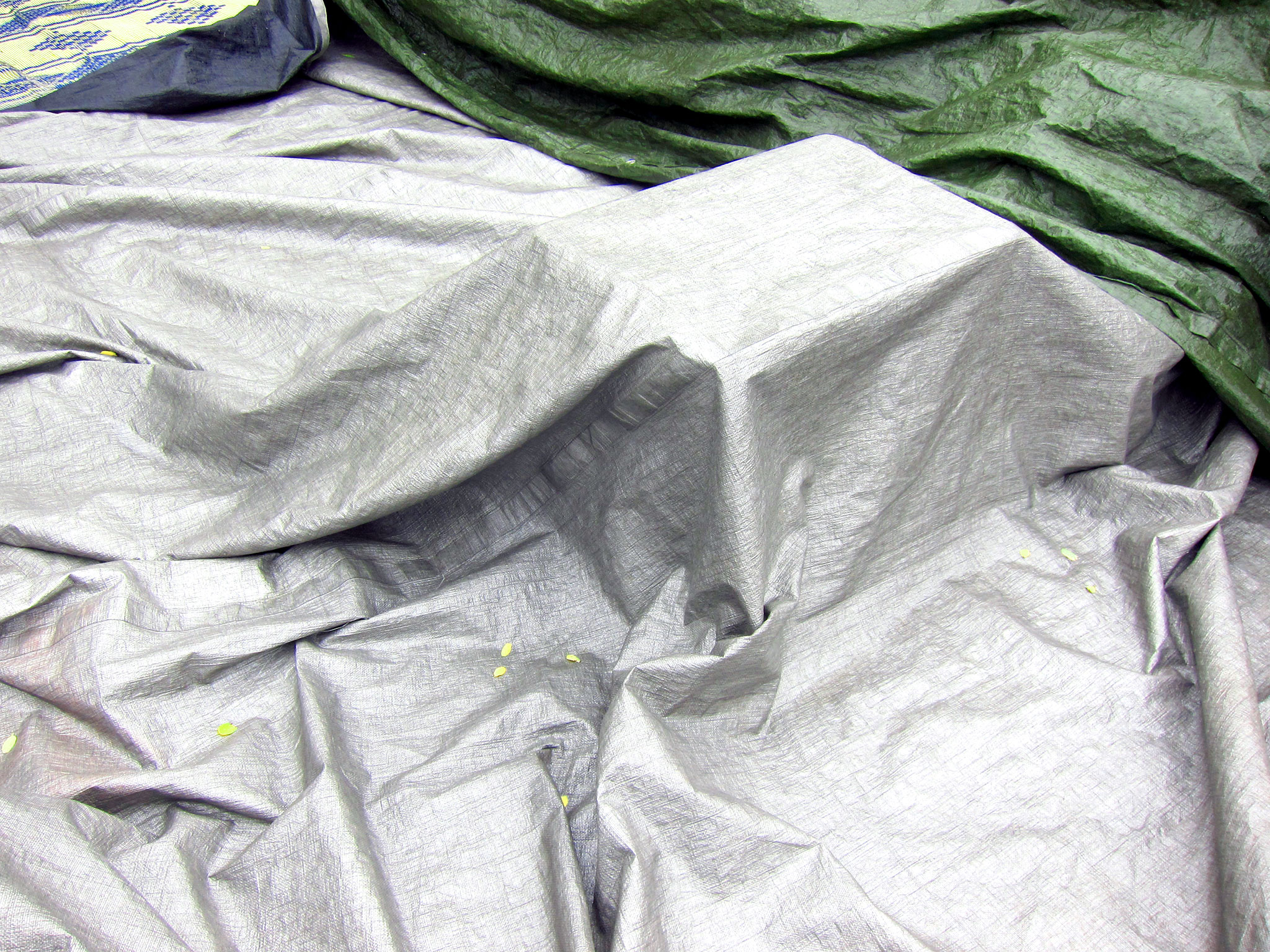
"Los restos." Spanish Pavilion by Oriol Vilanova and Carles Guerra. Photograph by Roberto Ruiz.
Here, the recurring themes in the artist's work—related to value, memory, and the circulation of images—are intensified. Collecting is presented as an activity that questions the distinctions between the private and institutional spheres, as well as between affective attachment and systematic classification, based on repetition, care, and contingency.
Furthermore, "The Remains" unfolds through additional iterations with a book produced by Zak Group featuring texts by Carles Guerra, Catherine Mayeur, Pedro G. Romero, Joëlle Tuerlinckx, and Oriol Vilanova, which functions as both a document and a work of art. By combining critical essays with an extensive visual sequence of postcards, the publication reformulates the project in book format, revisiting its modular logic and presenting the archive as a speculative and portable device.
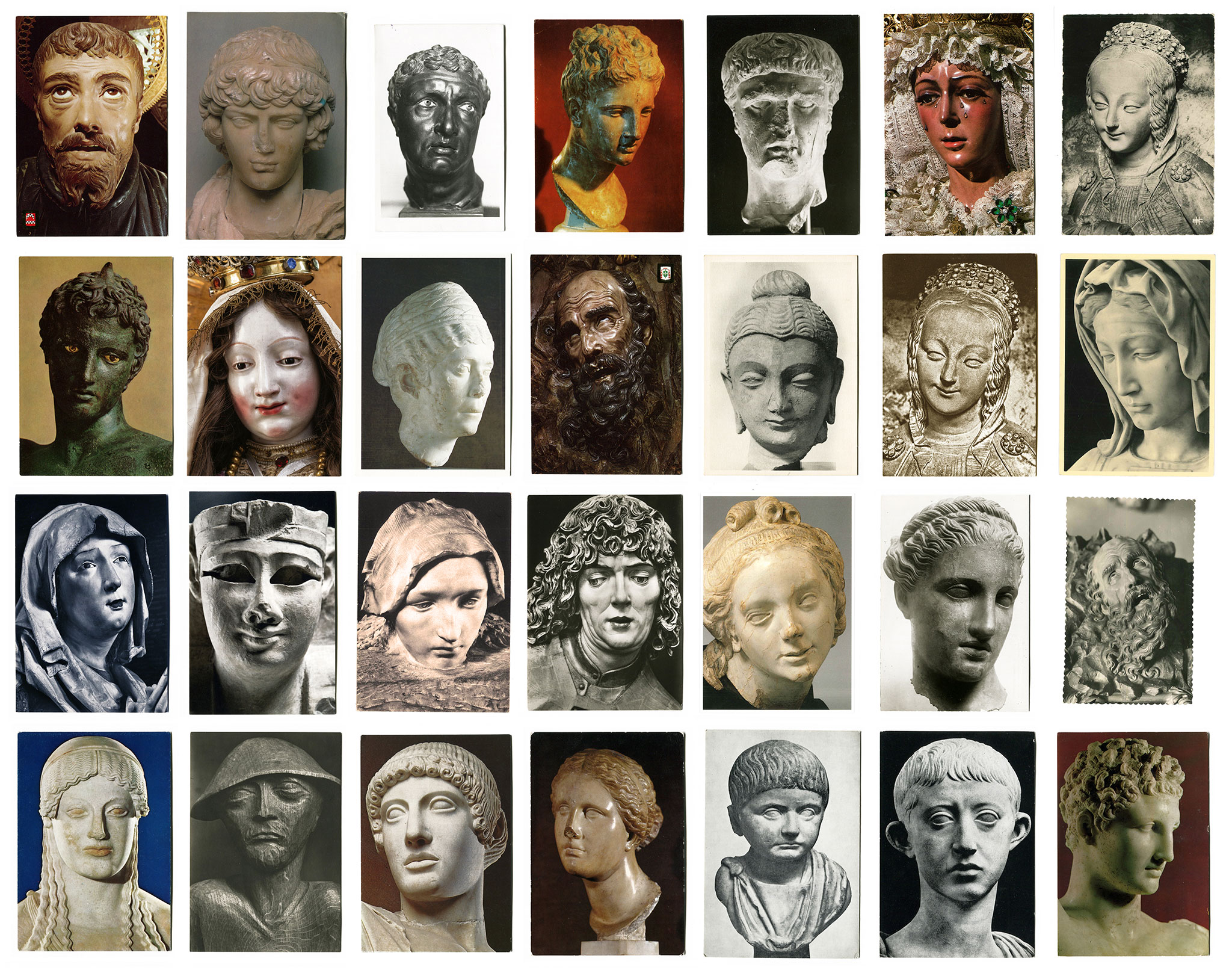
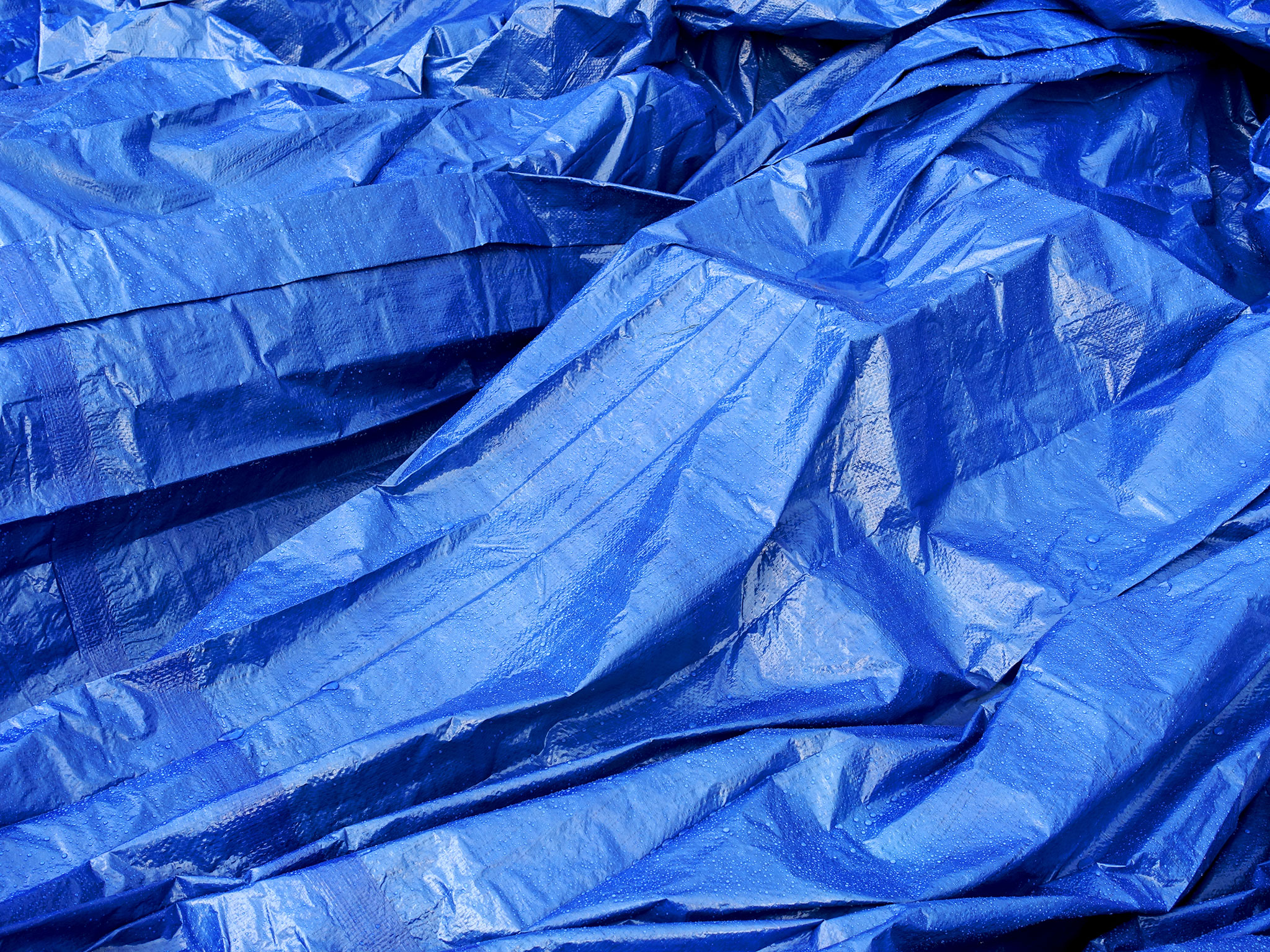
"Los restos." Spanish Pavilion by Oriol Vilanova and Carles Guerra. Photograph by Oriol Vilanova.
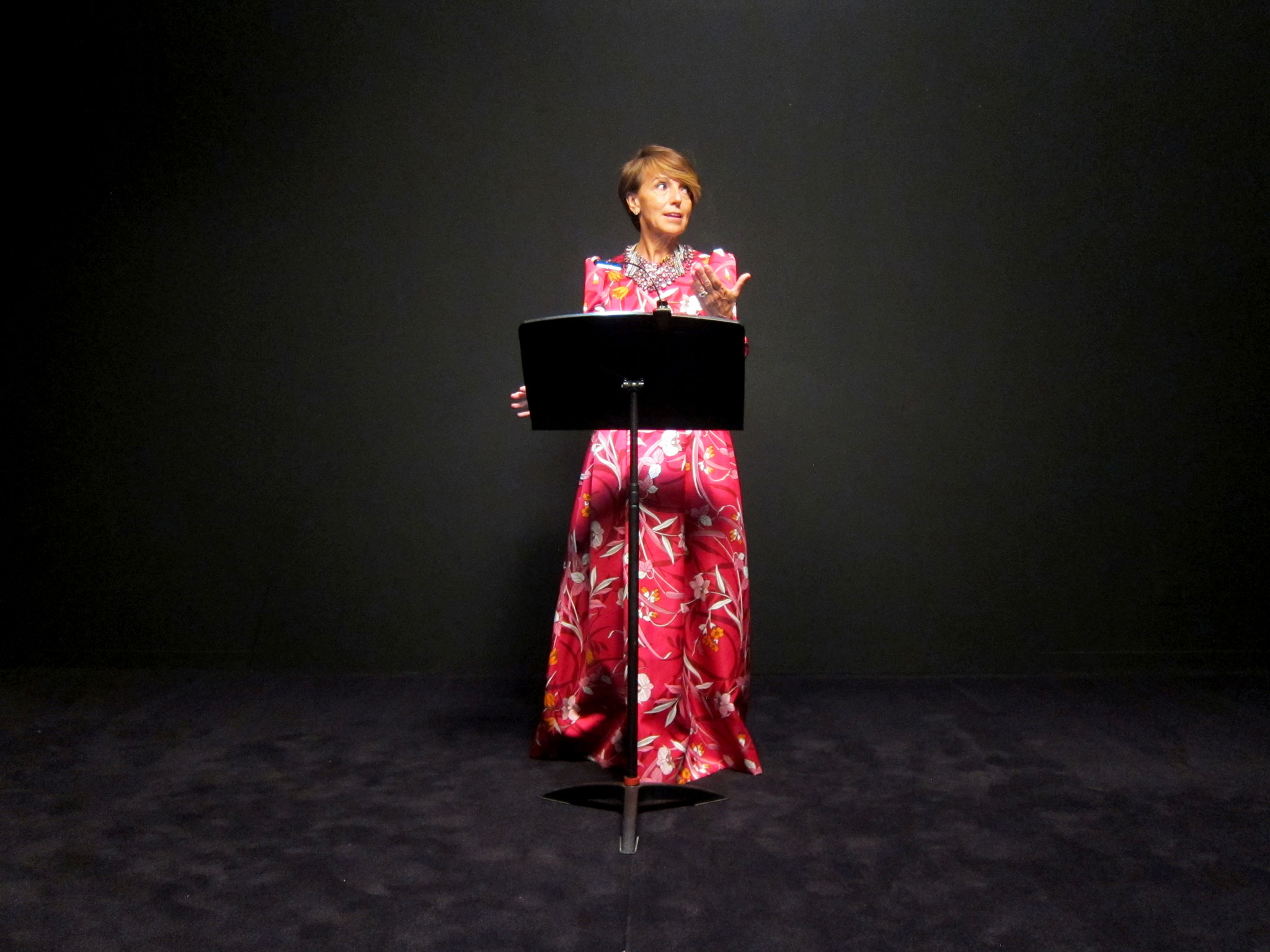
In addition, during the 2026 Biennale Arte, the project extends beyond the installation through "The Phantom of Liberty (2026)," a performative installation.