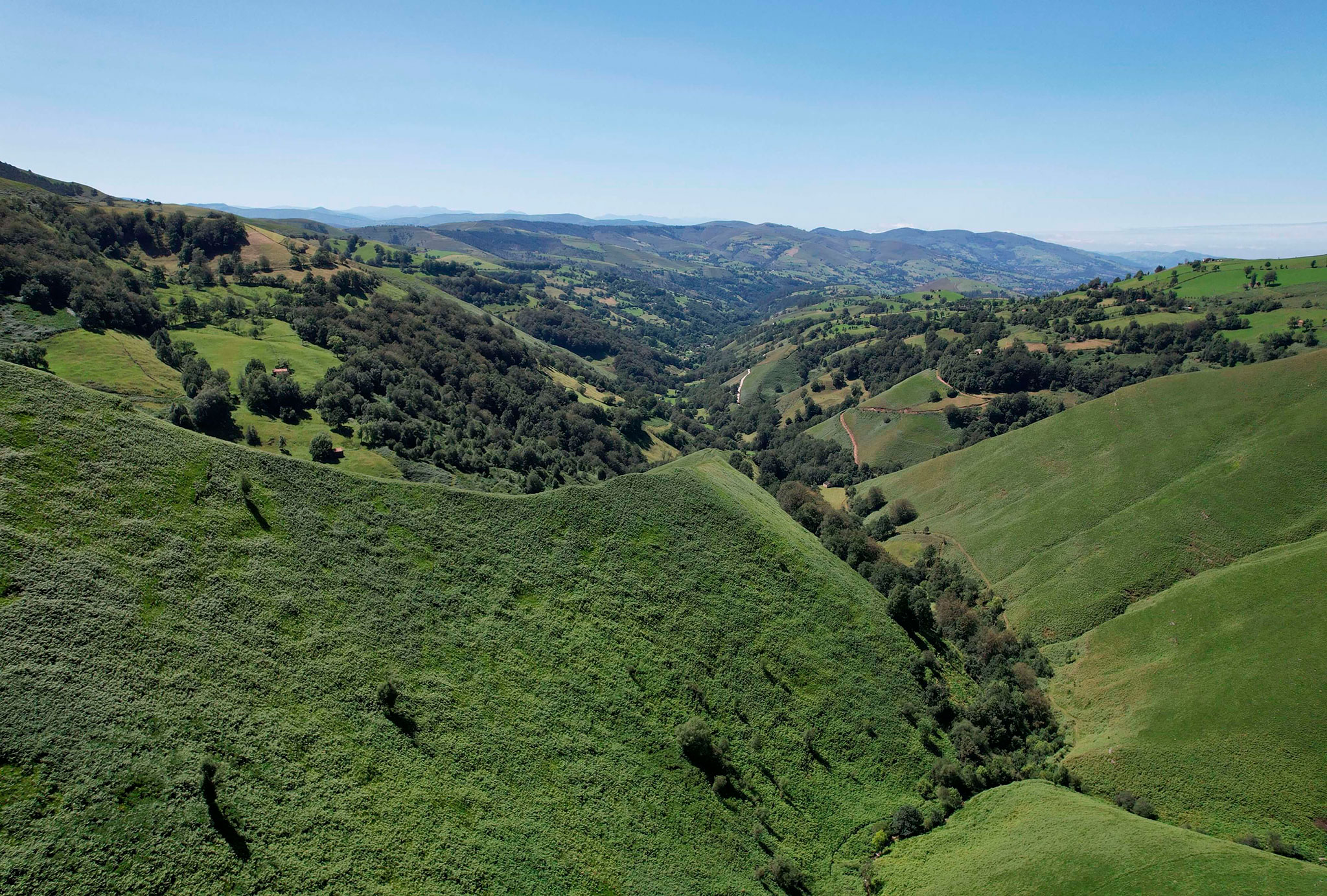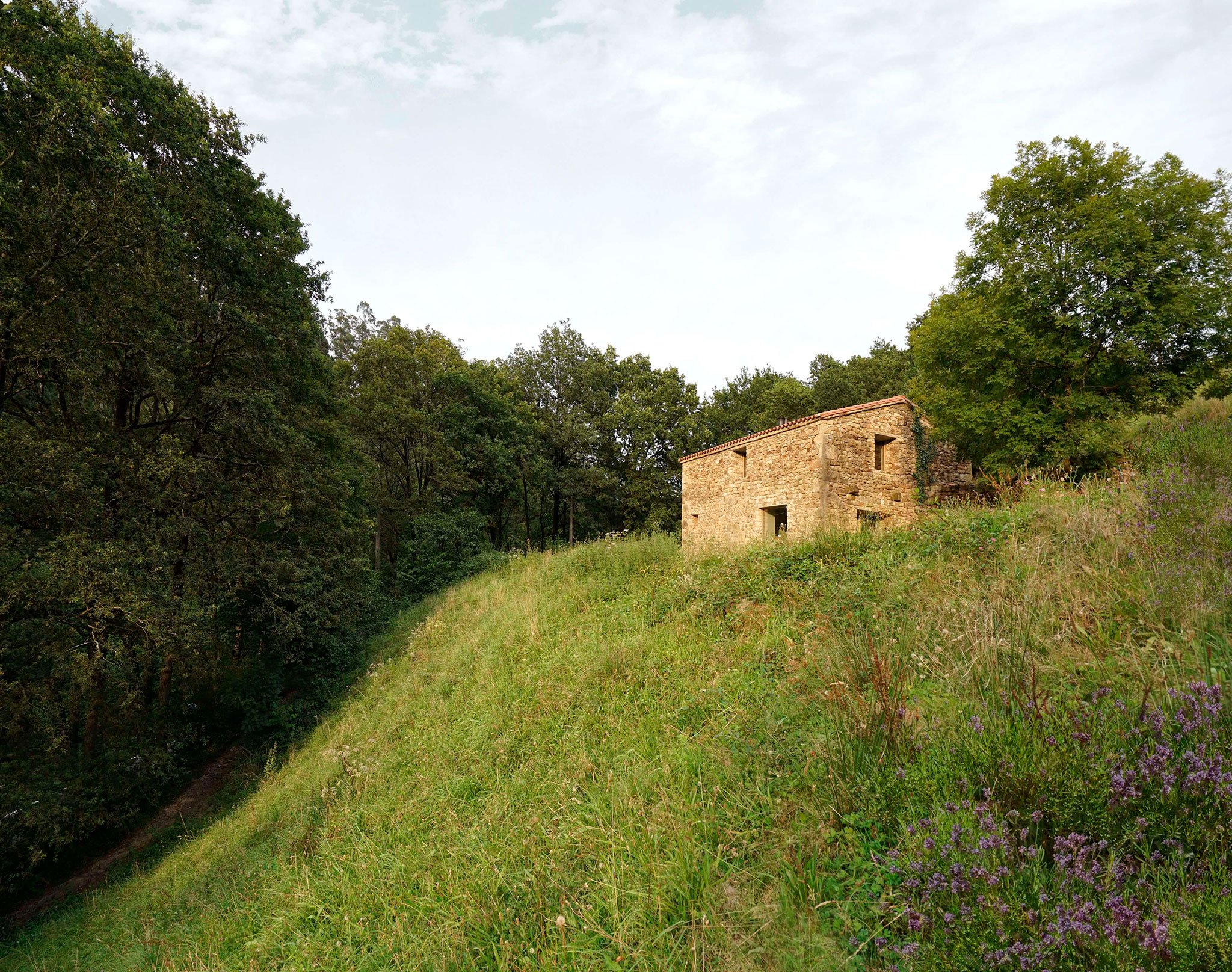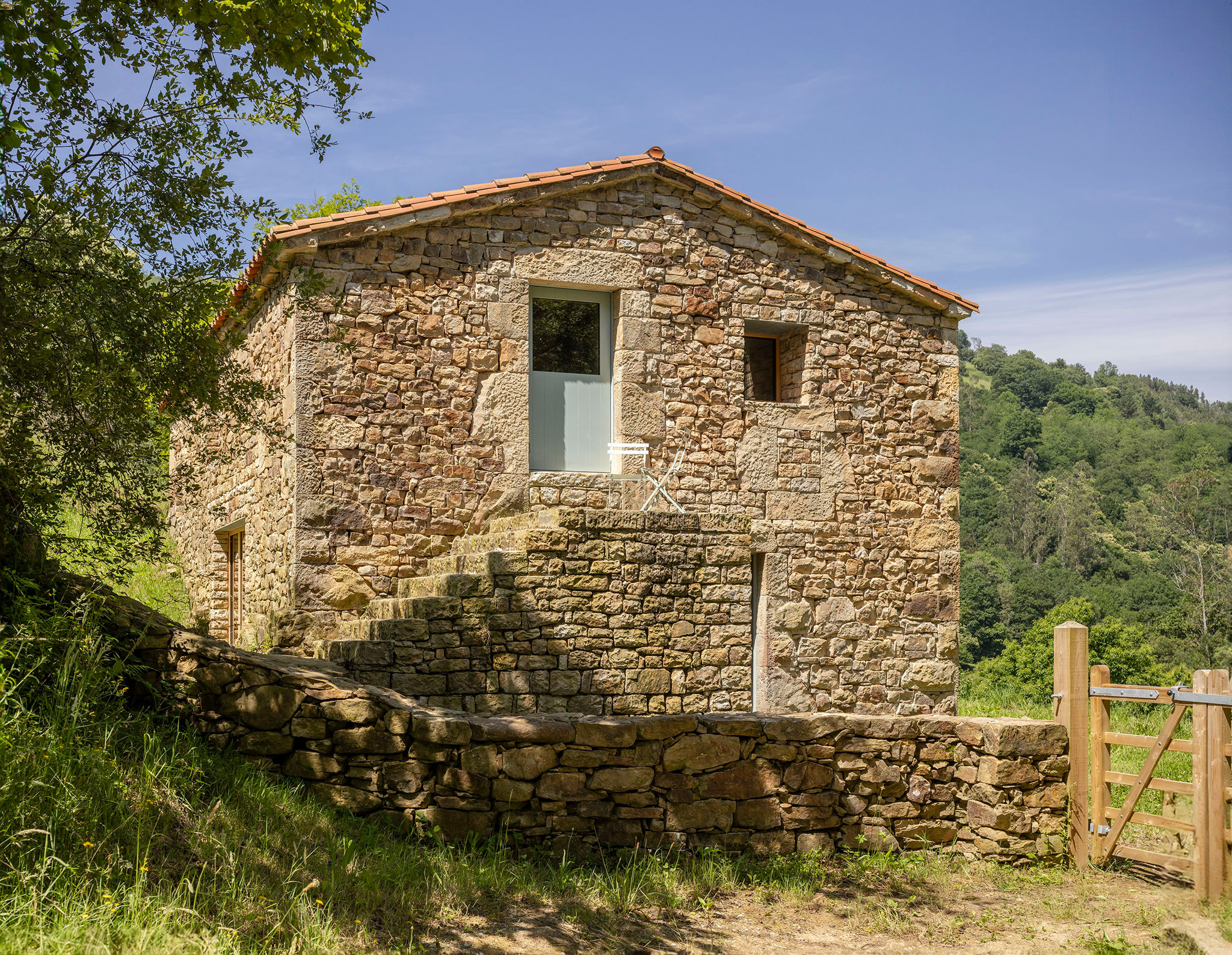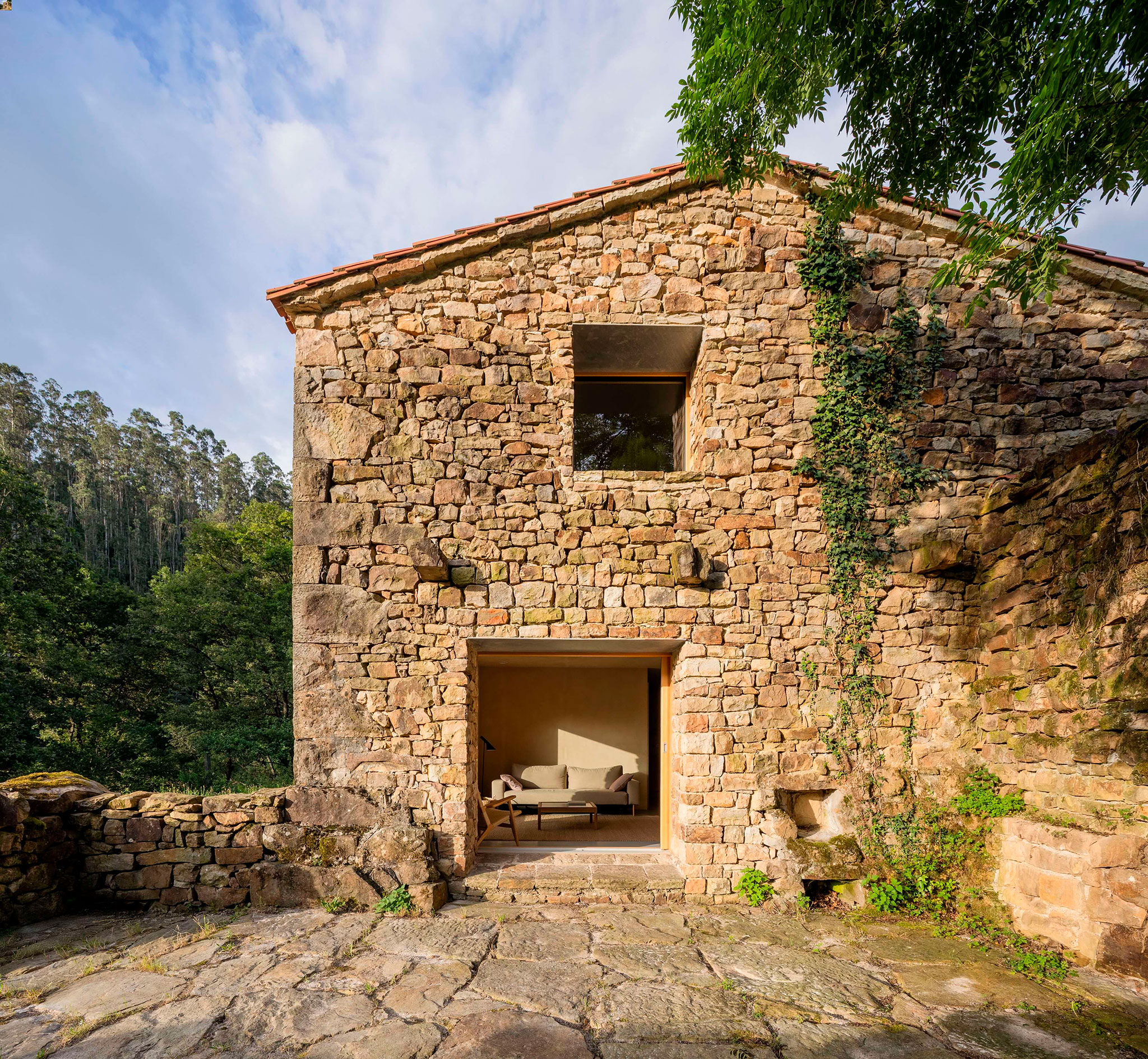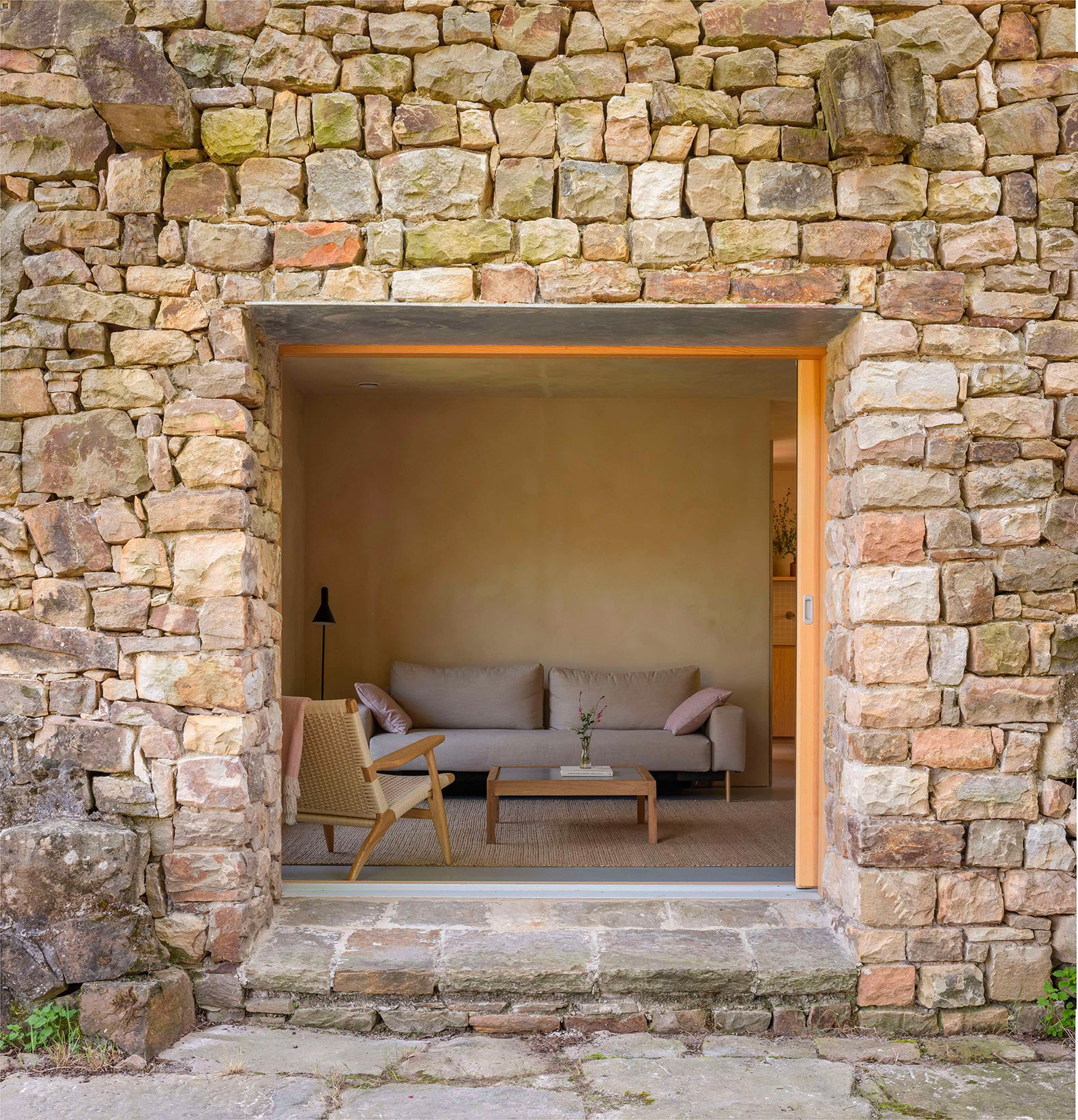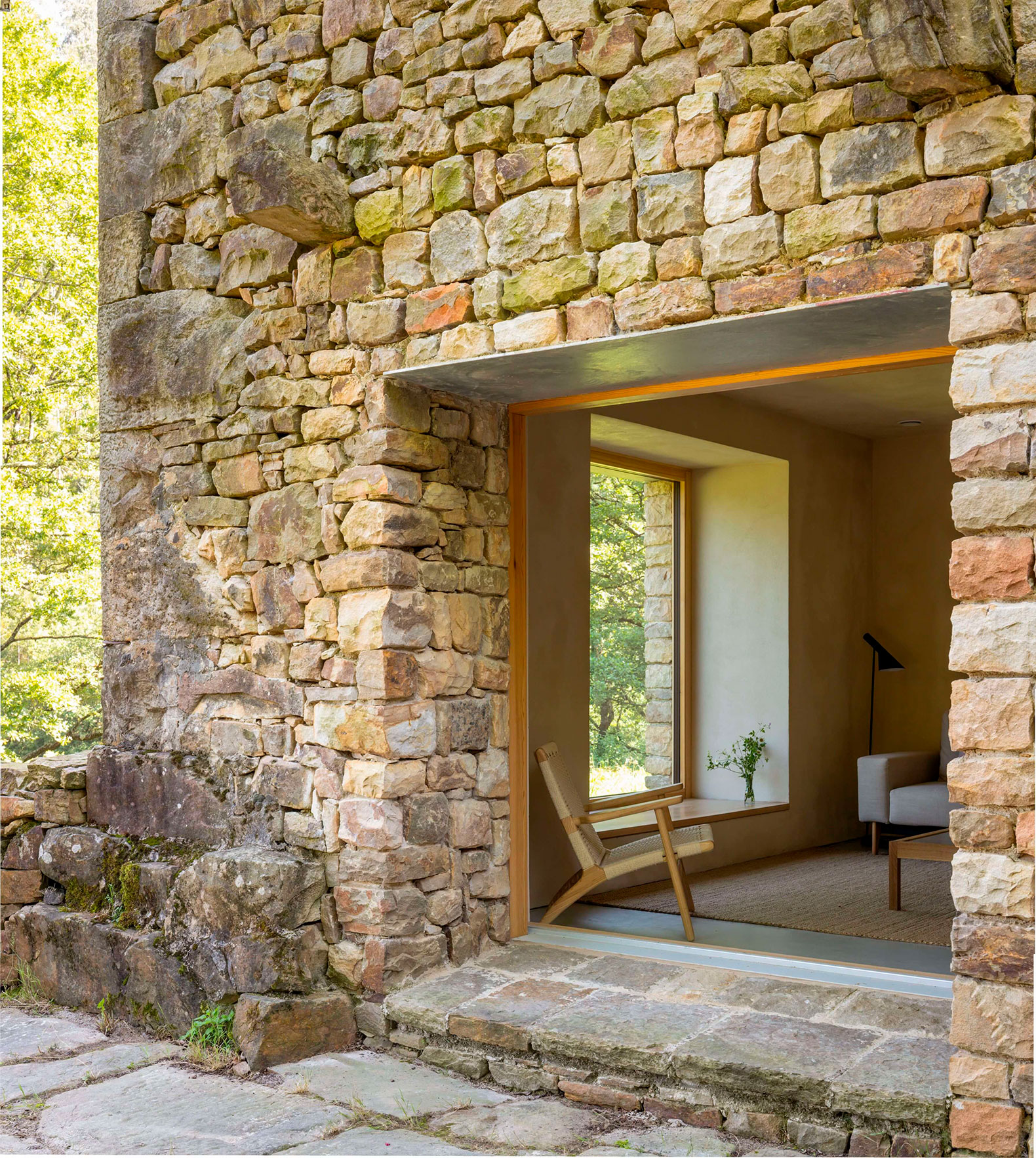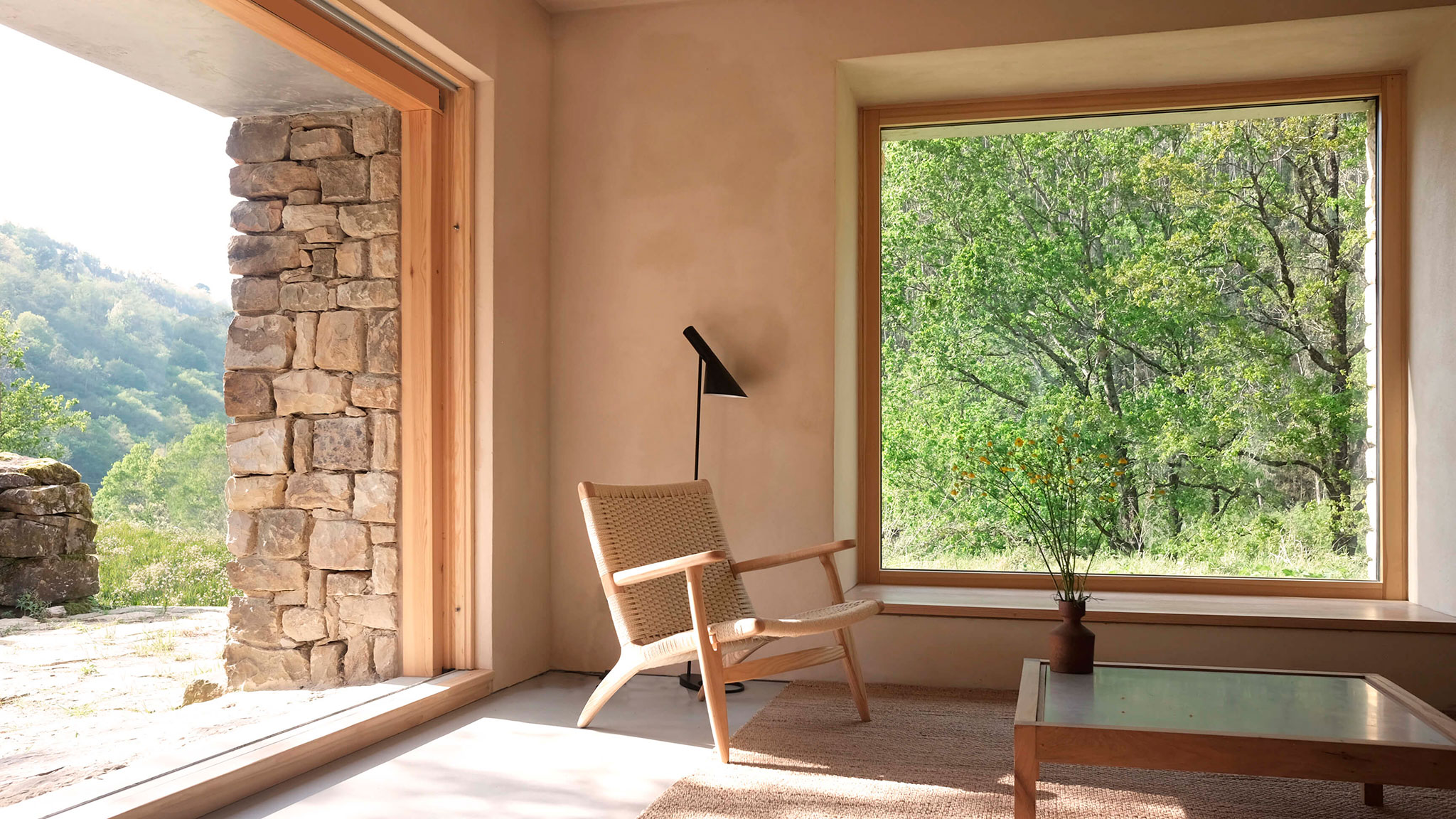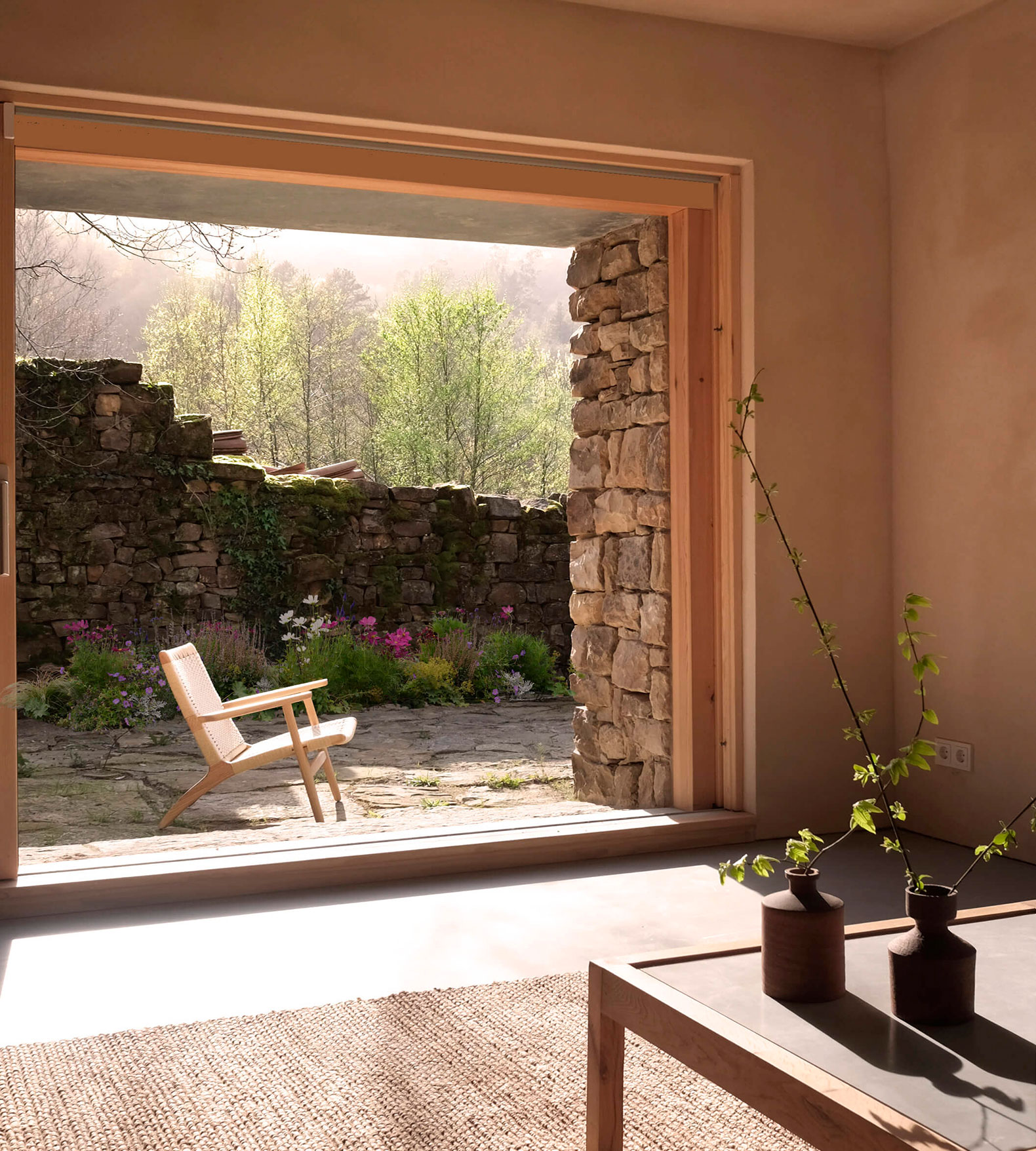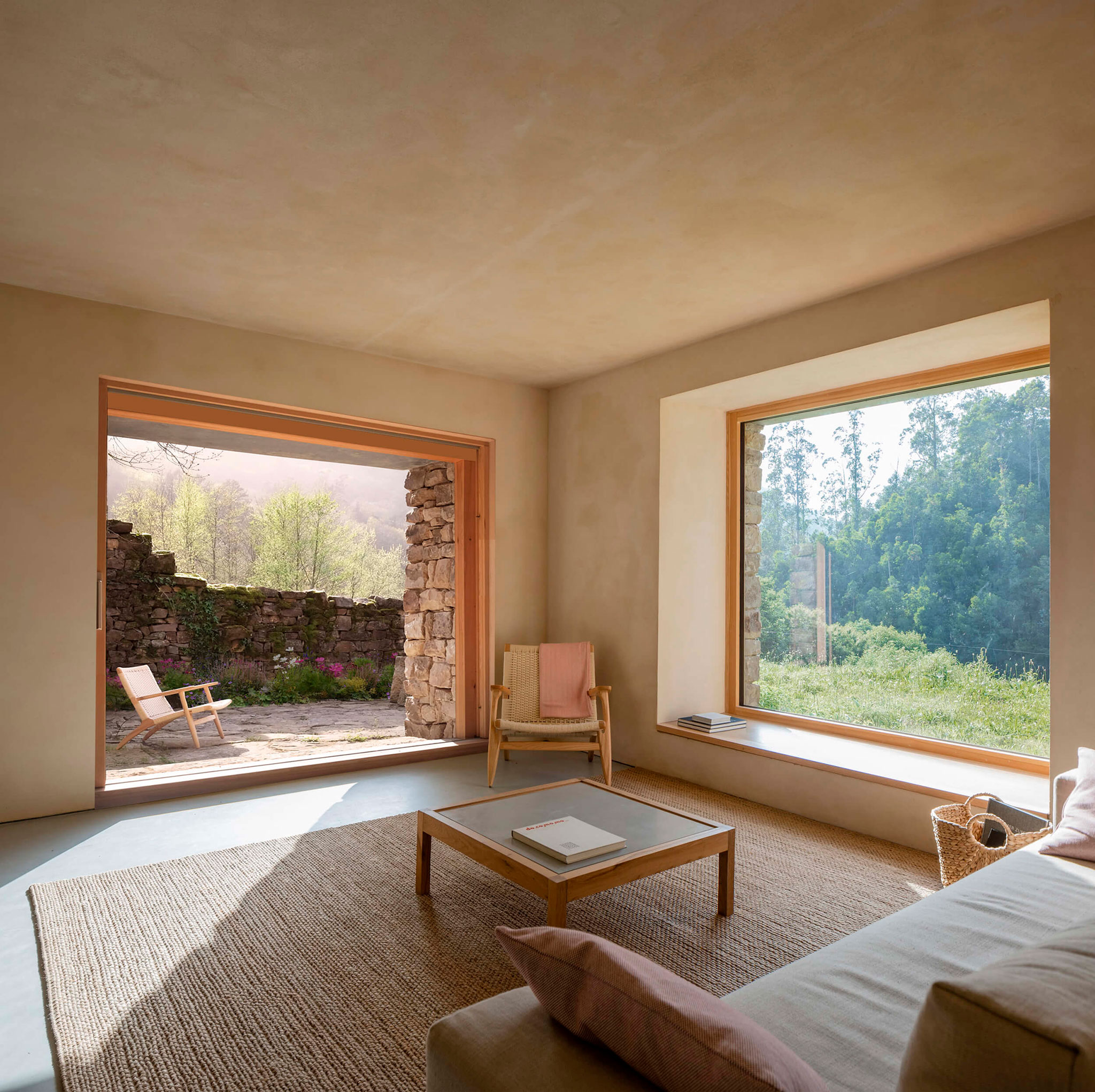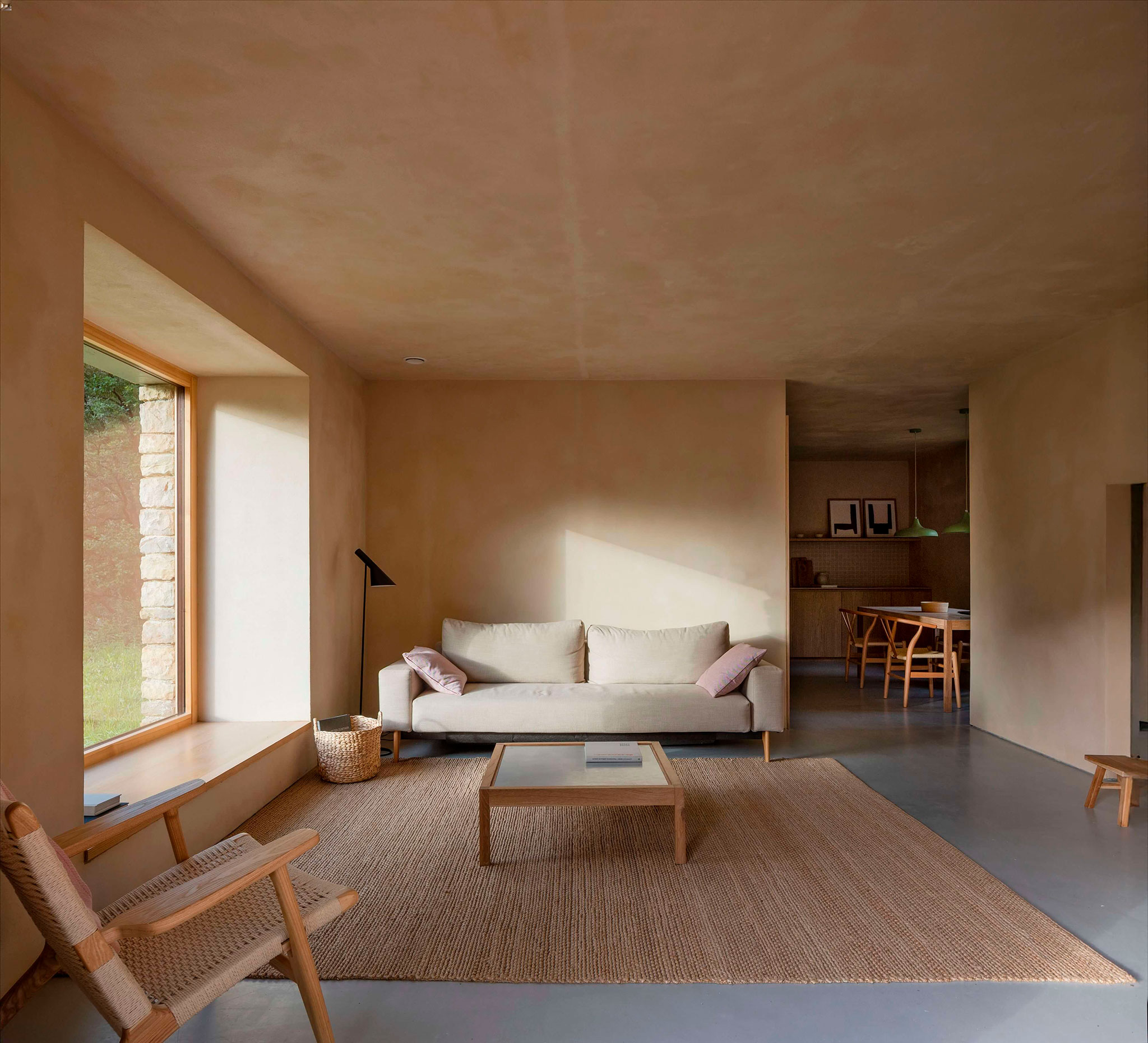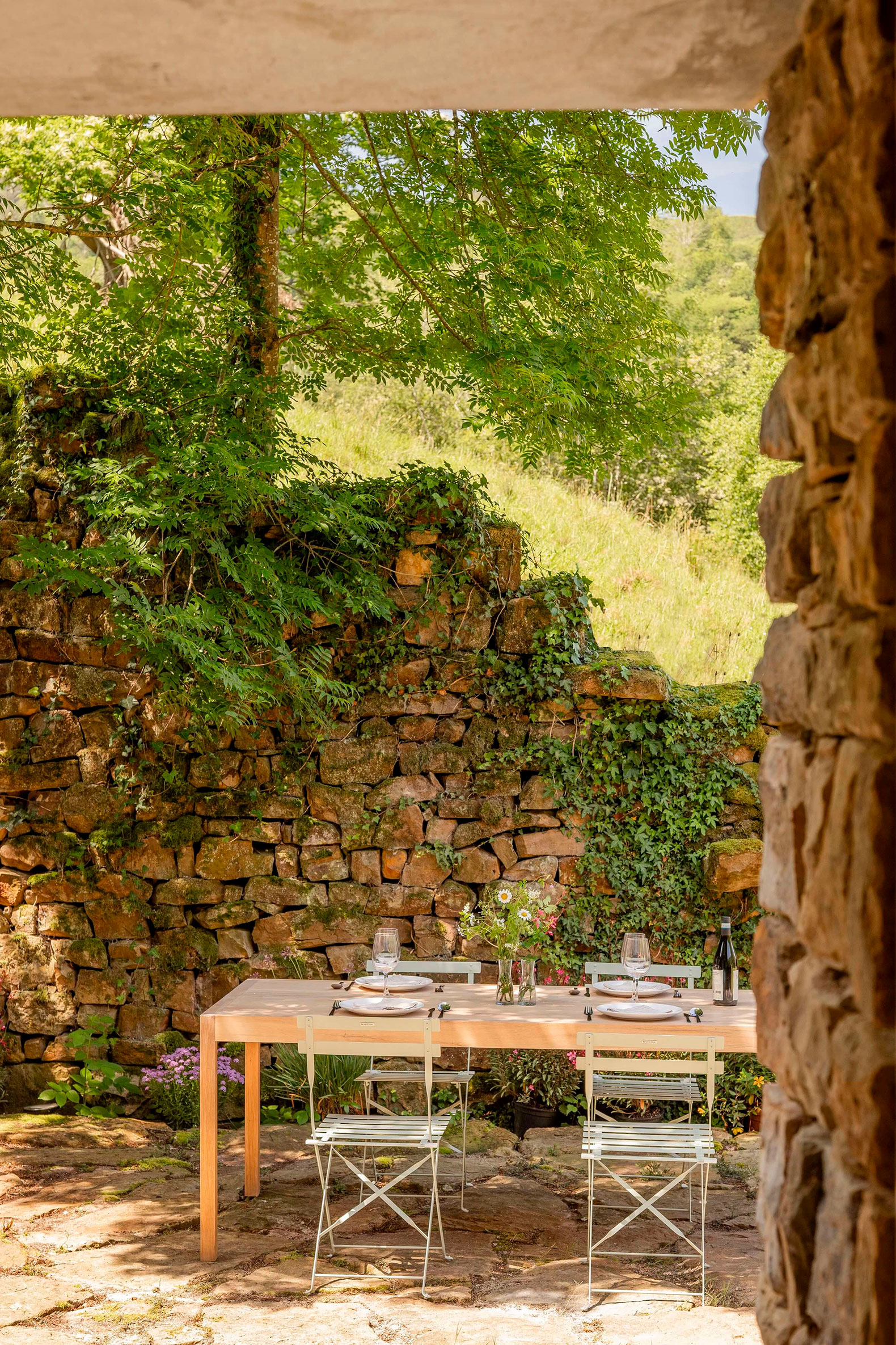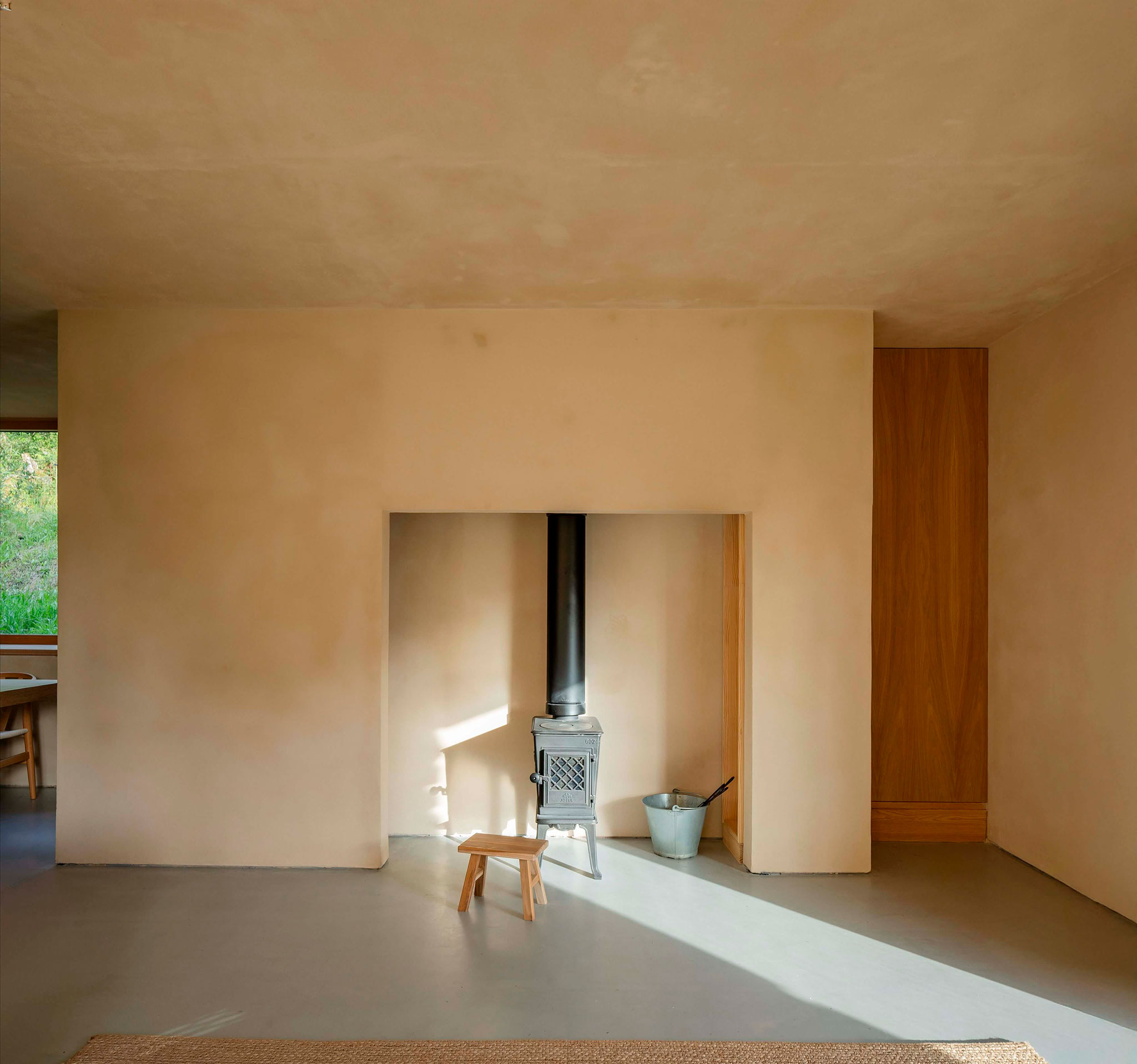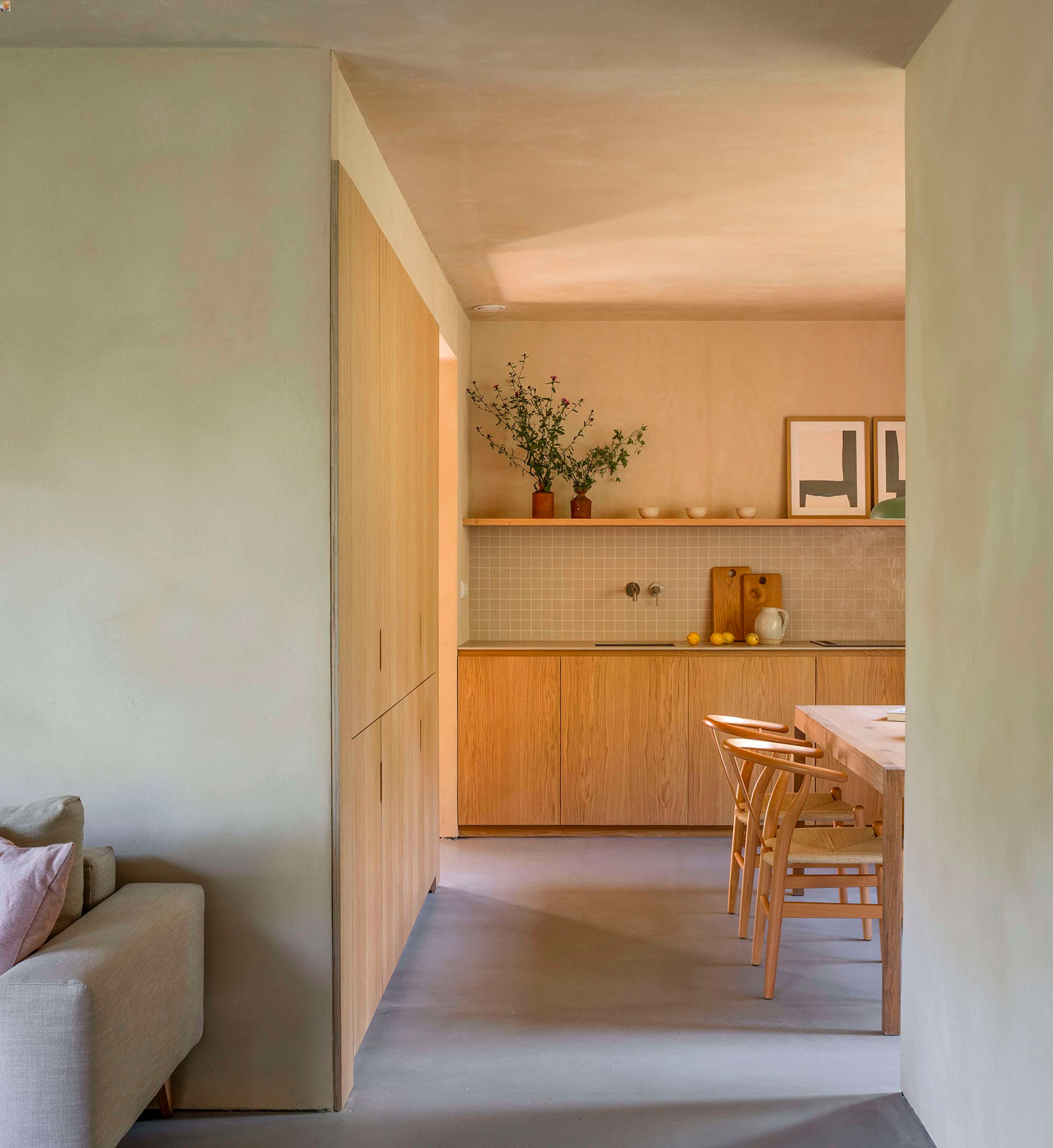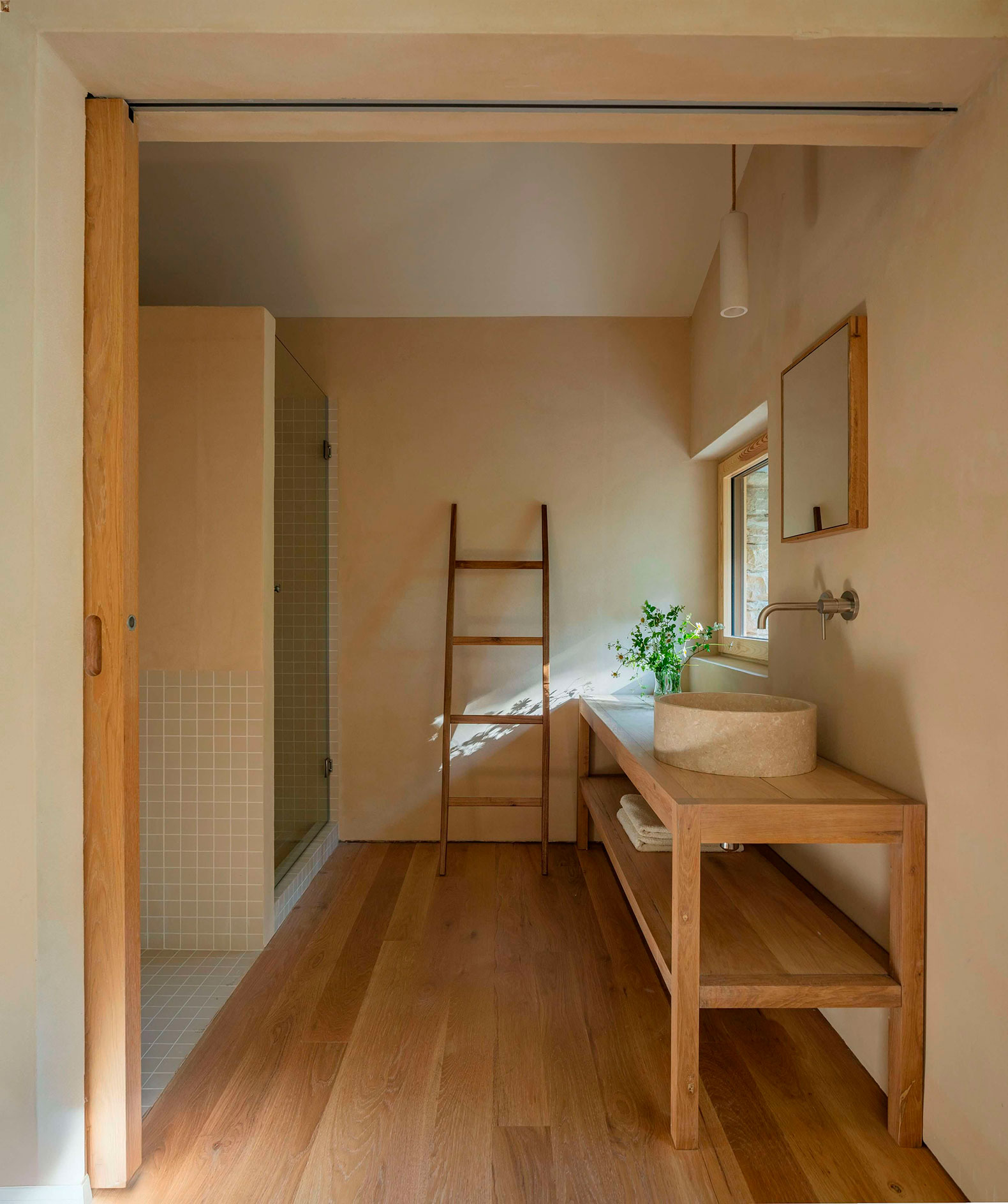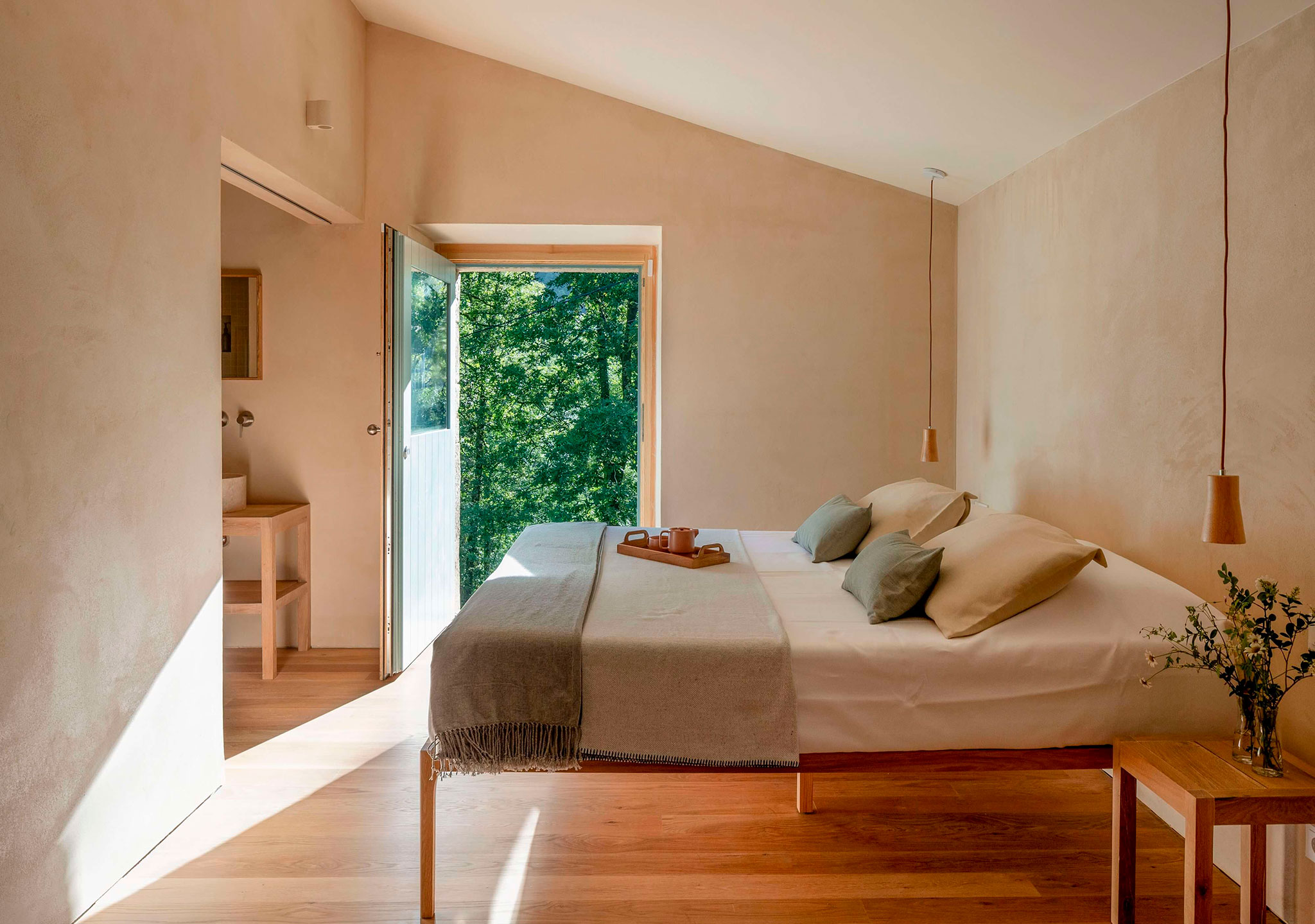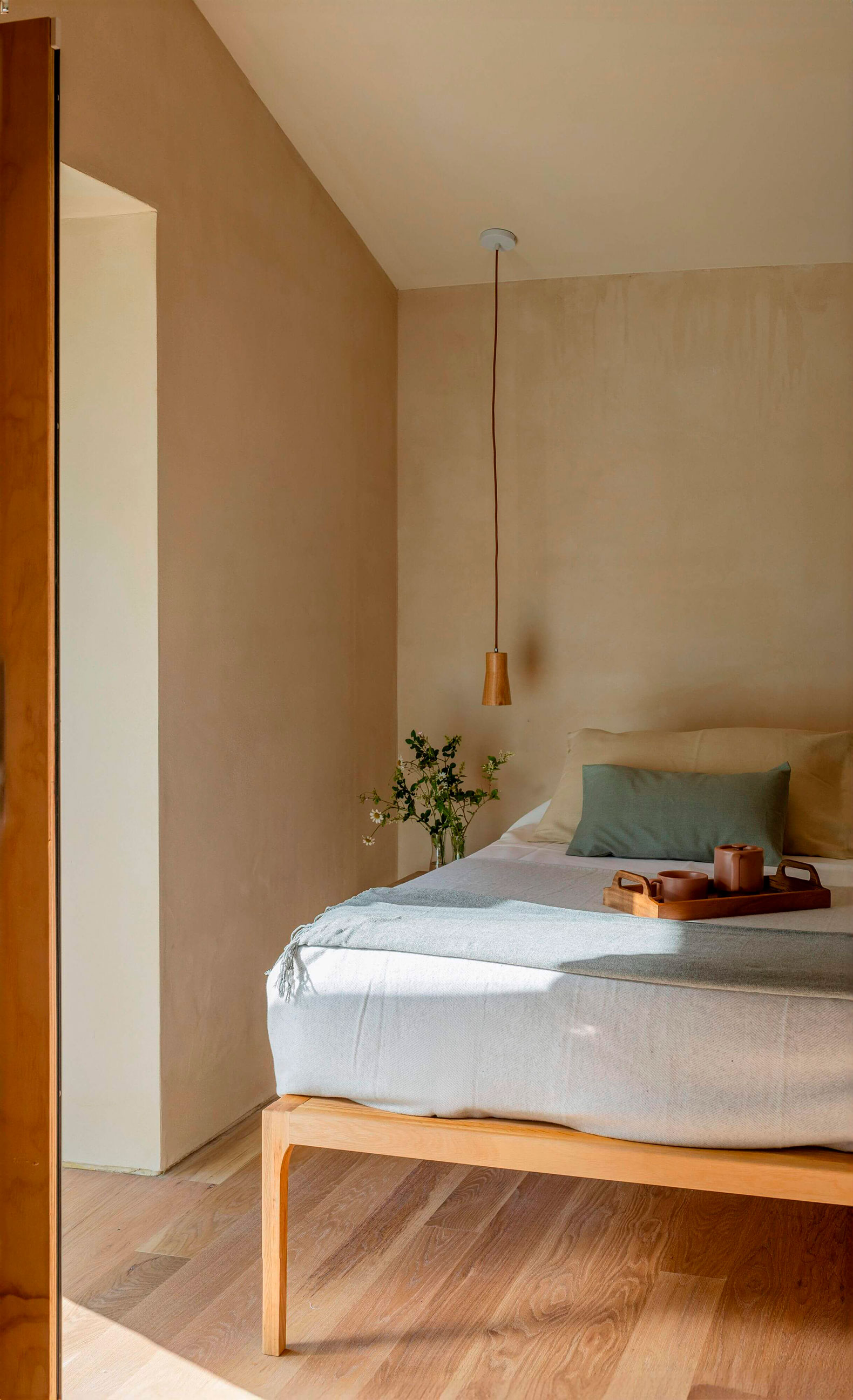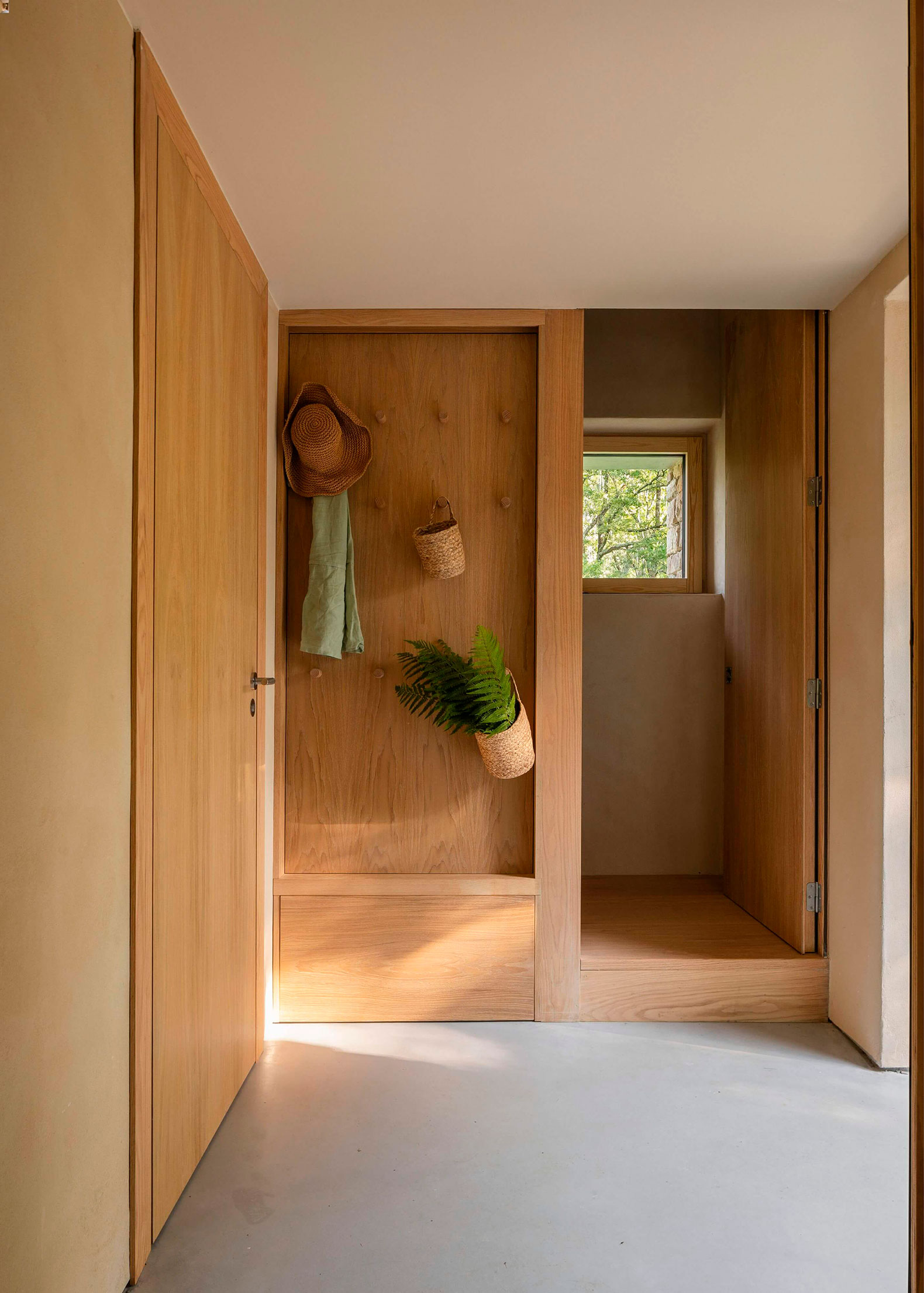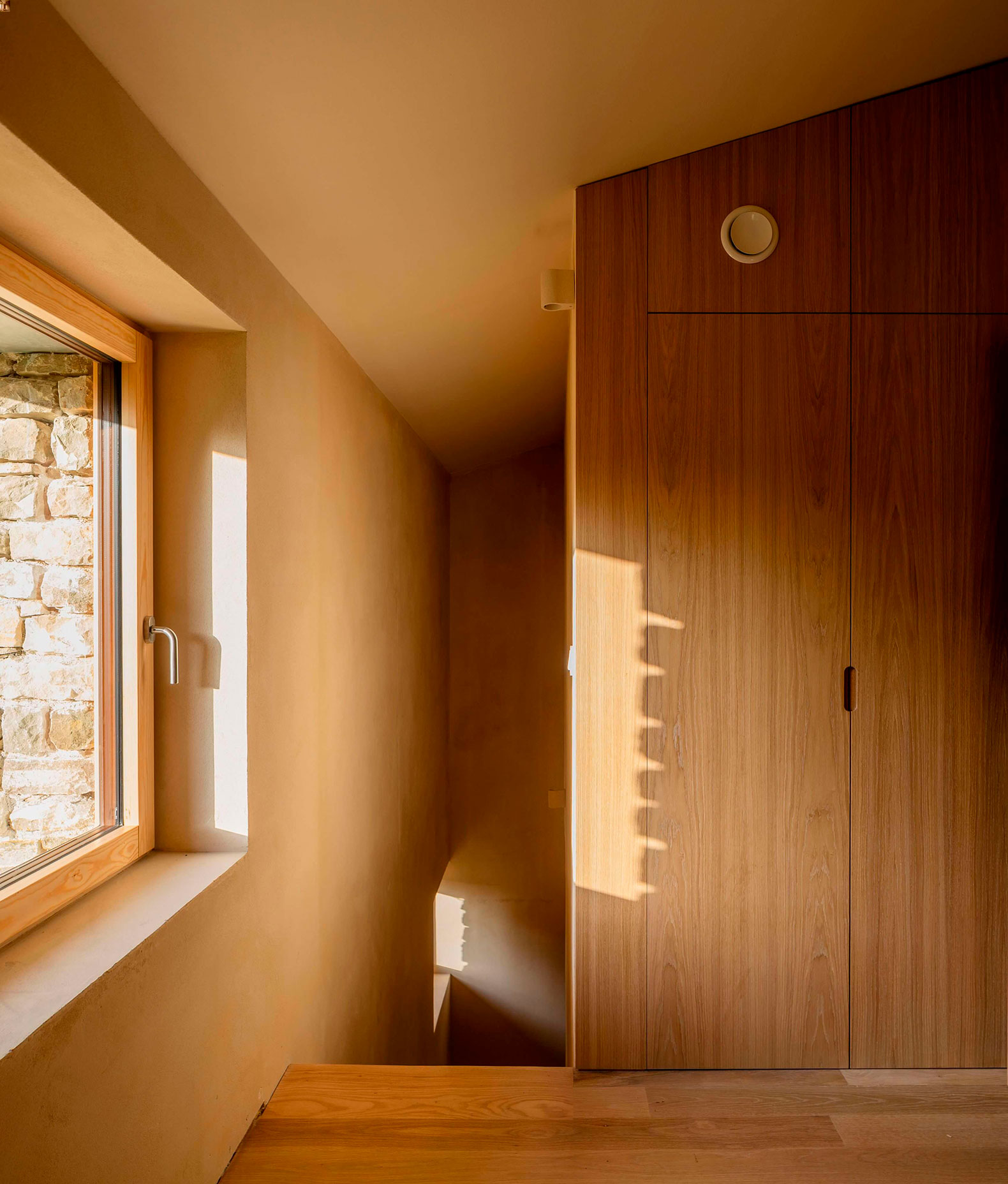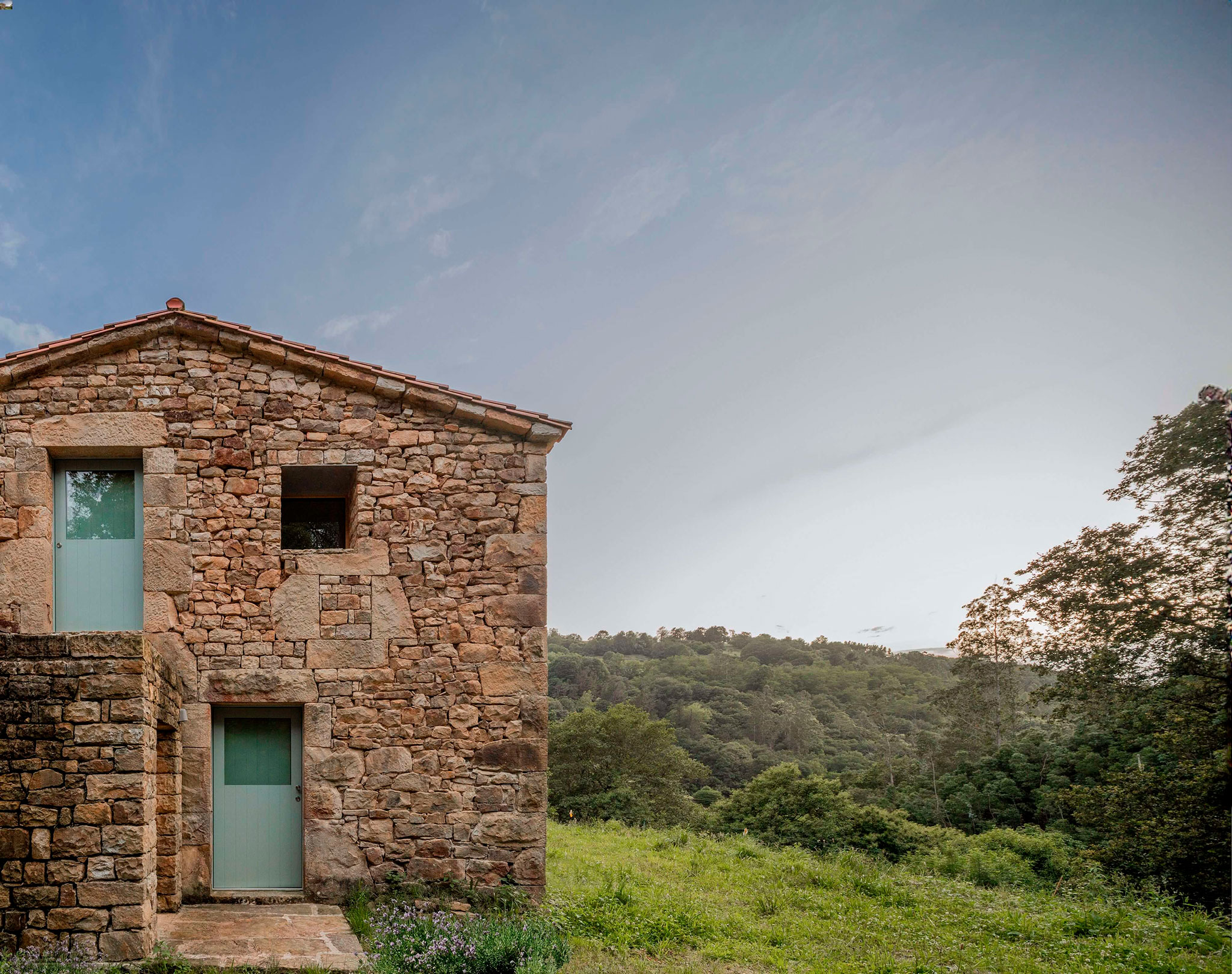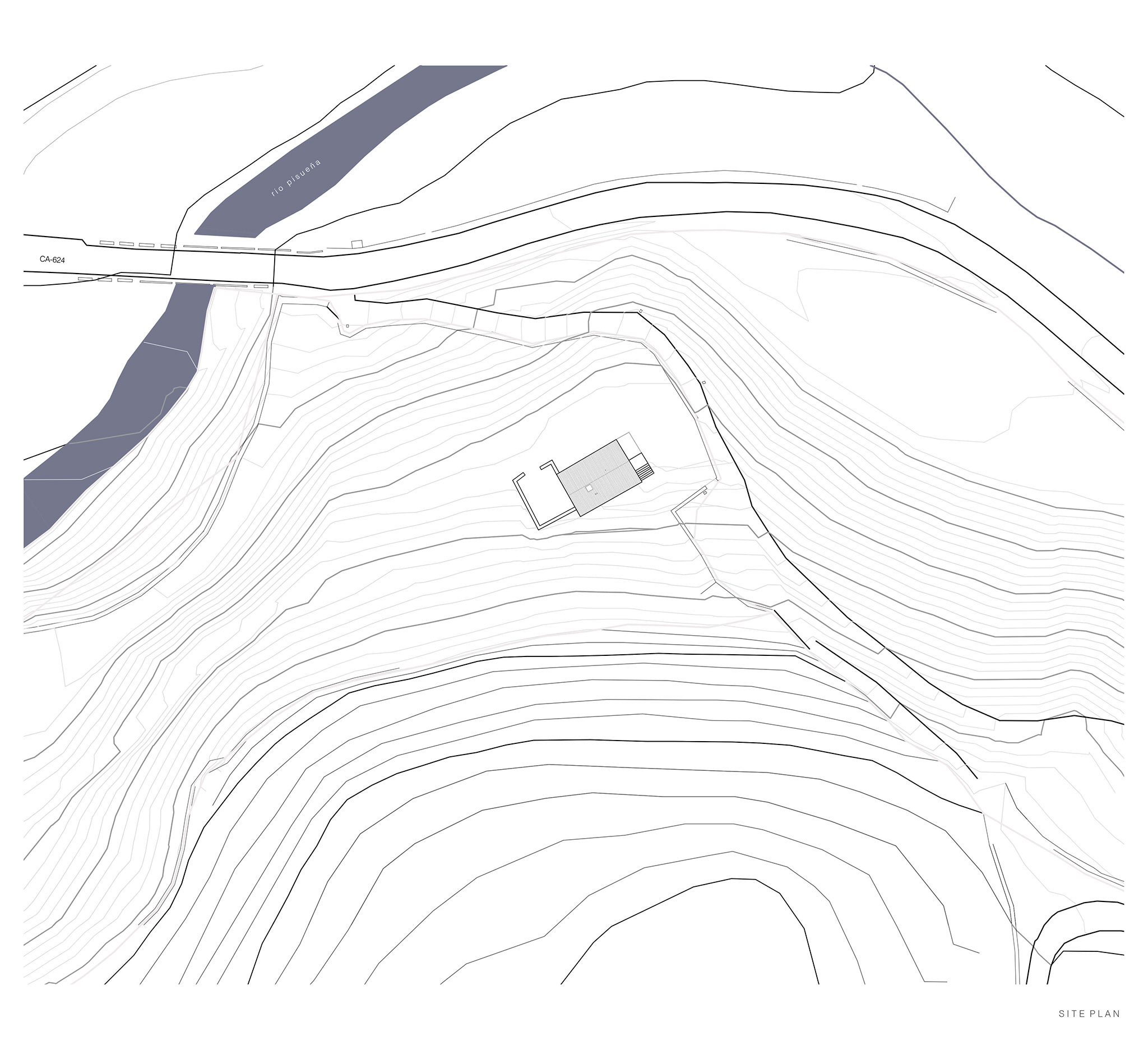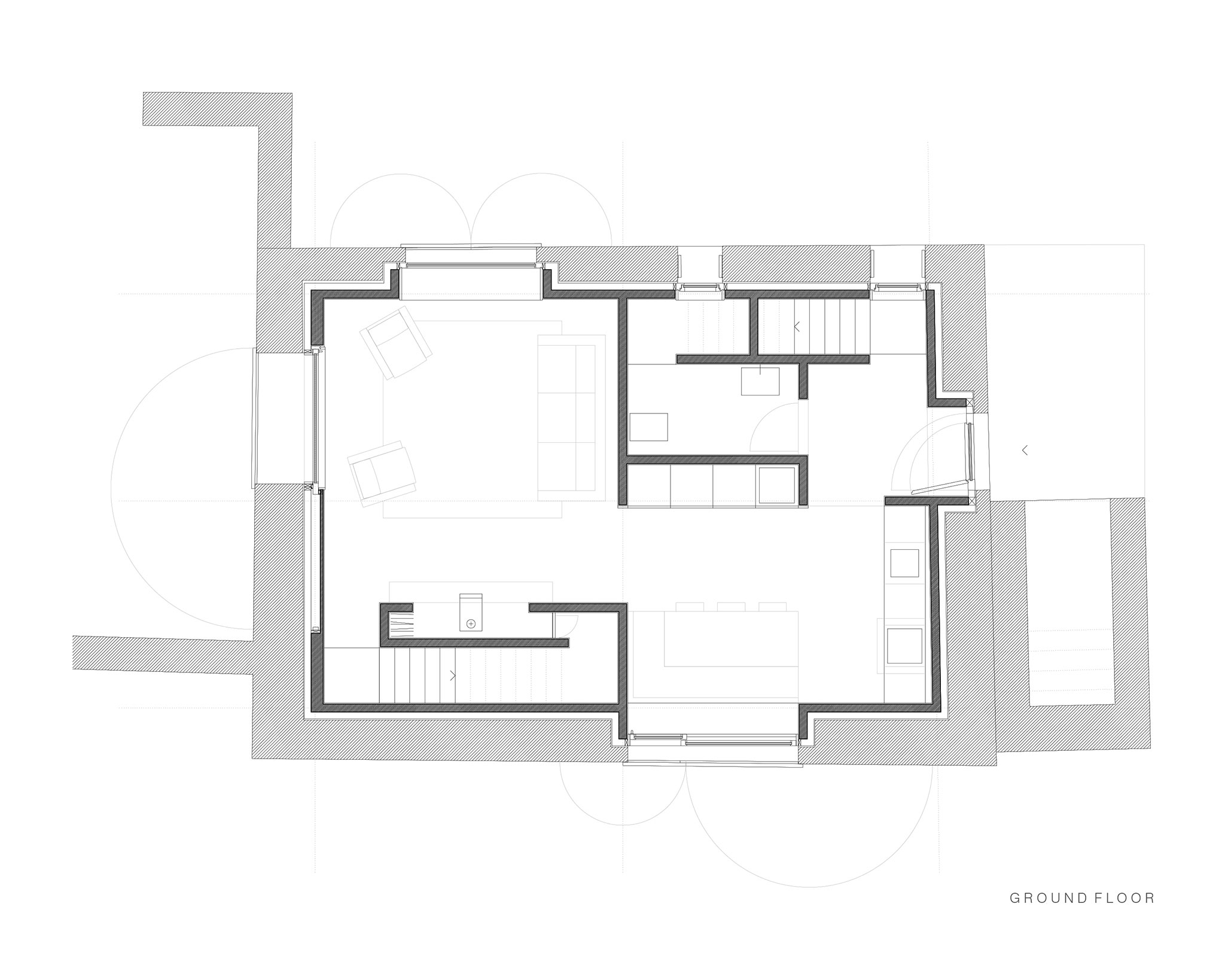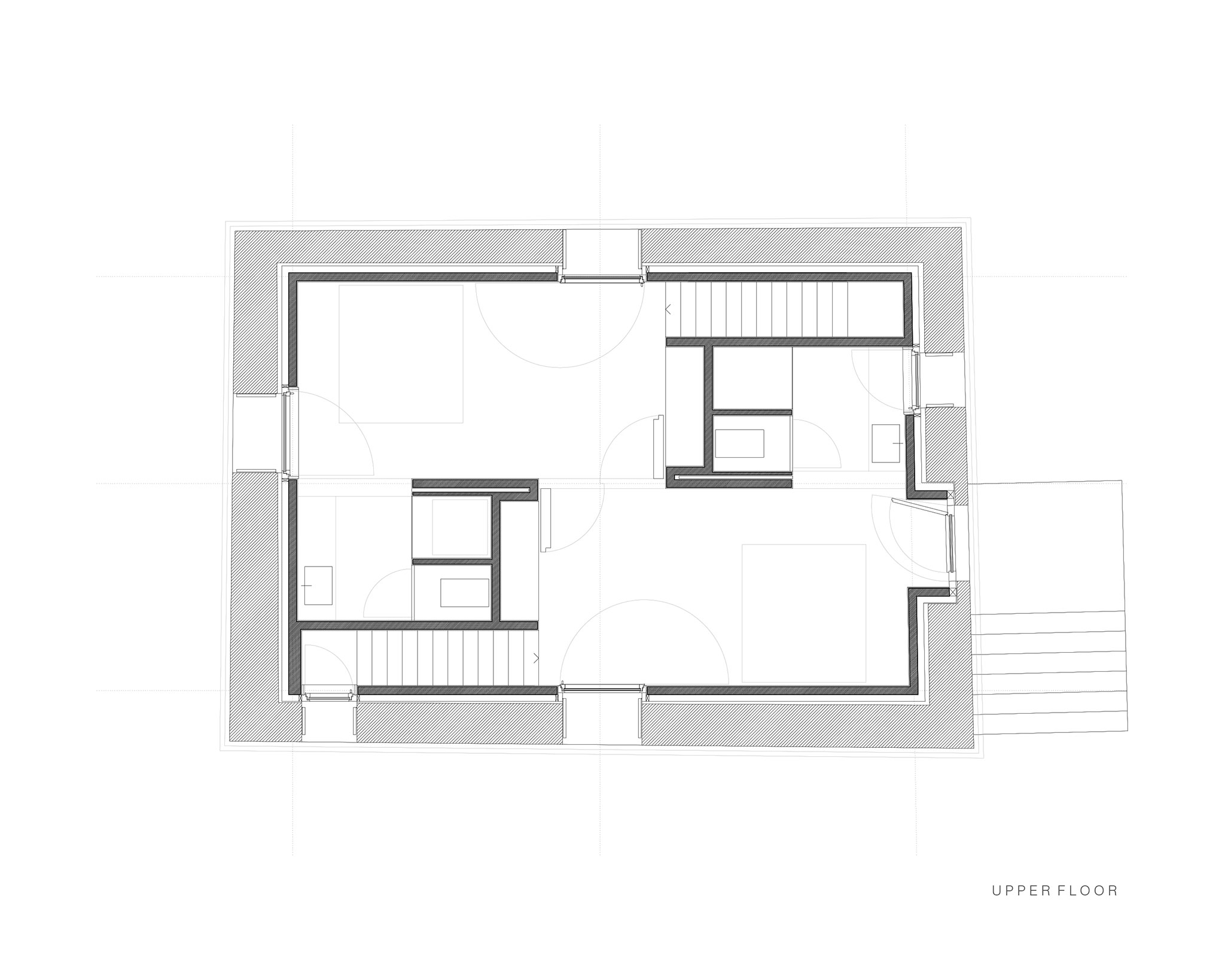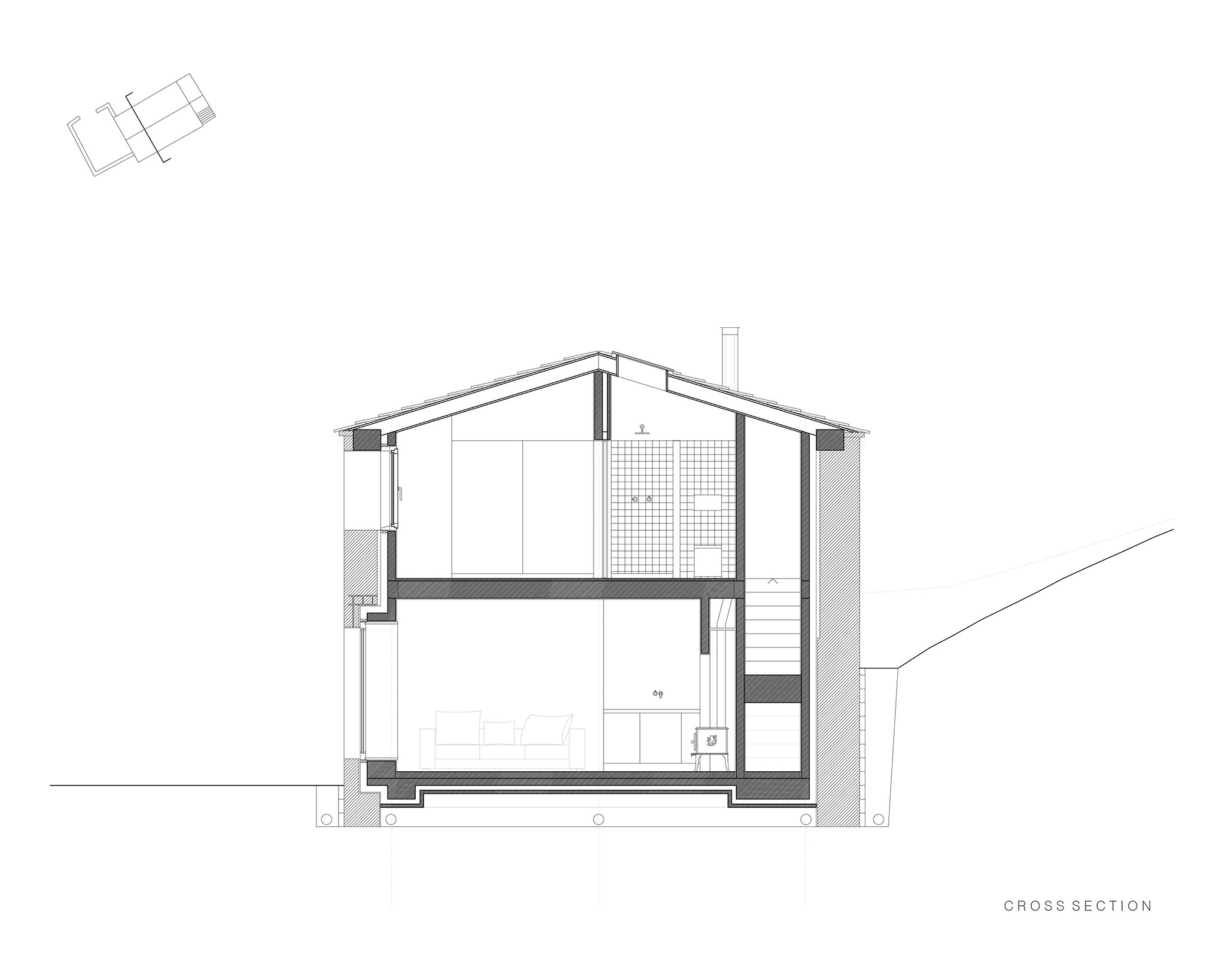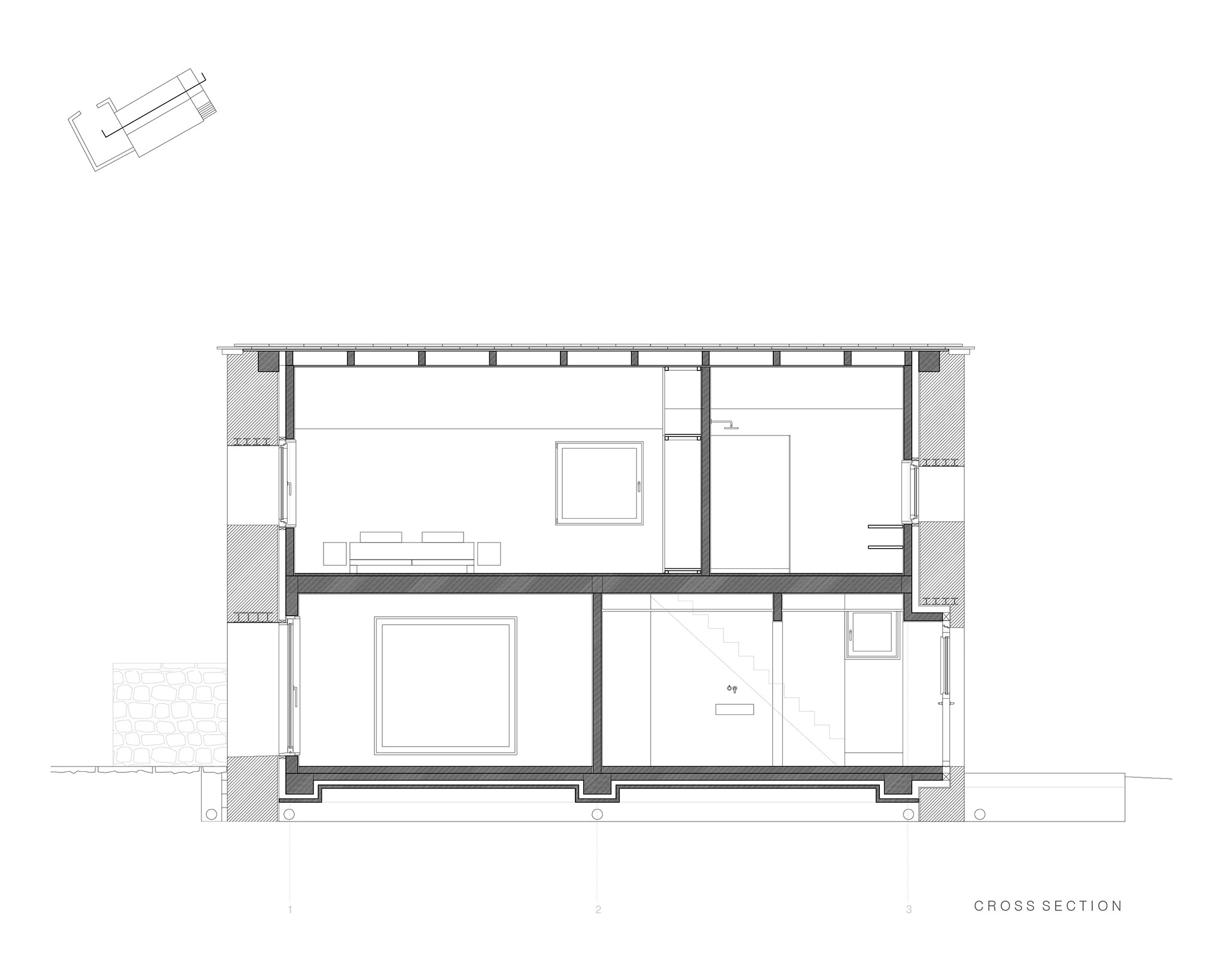
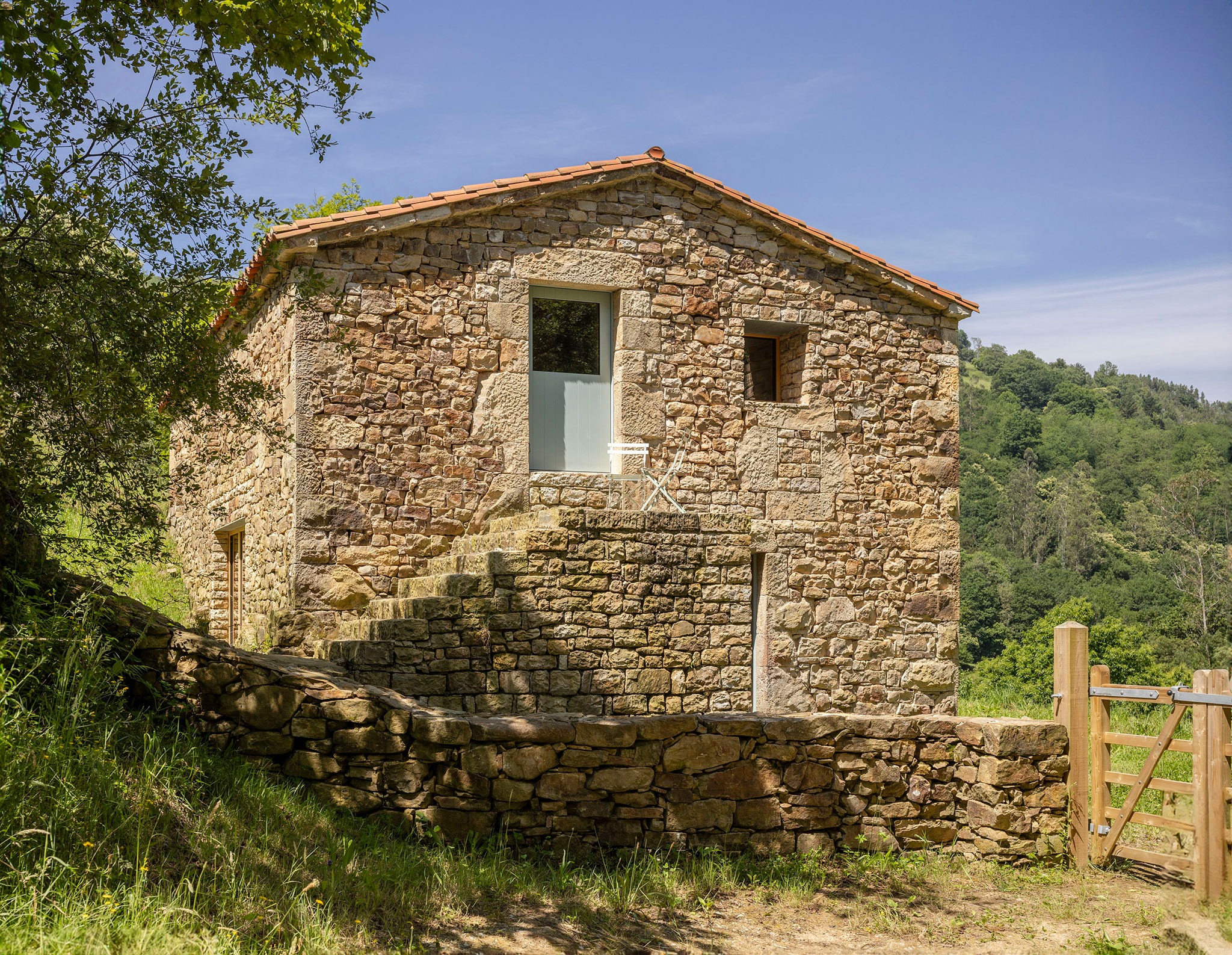
Estudio Mínima has reorganized the interior space of Casa Mínima. On the ground floor, where the stable once stood, the kitchen, dining room, and living room are now arranged on a single open-plan level. Connected to this space, a courtyard has been redefined using the original flagstones. On the upper floor, the traditional layout of the Pasiega-style cabins has been preserved, with direct access from the outside.
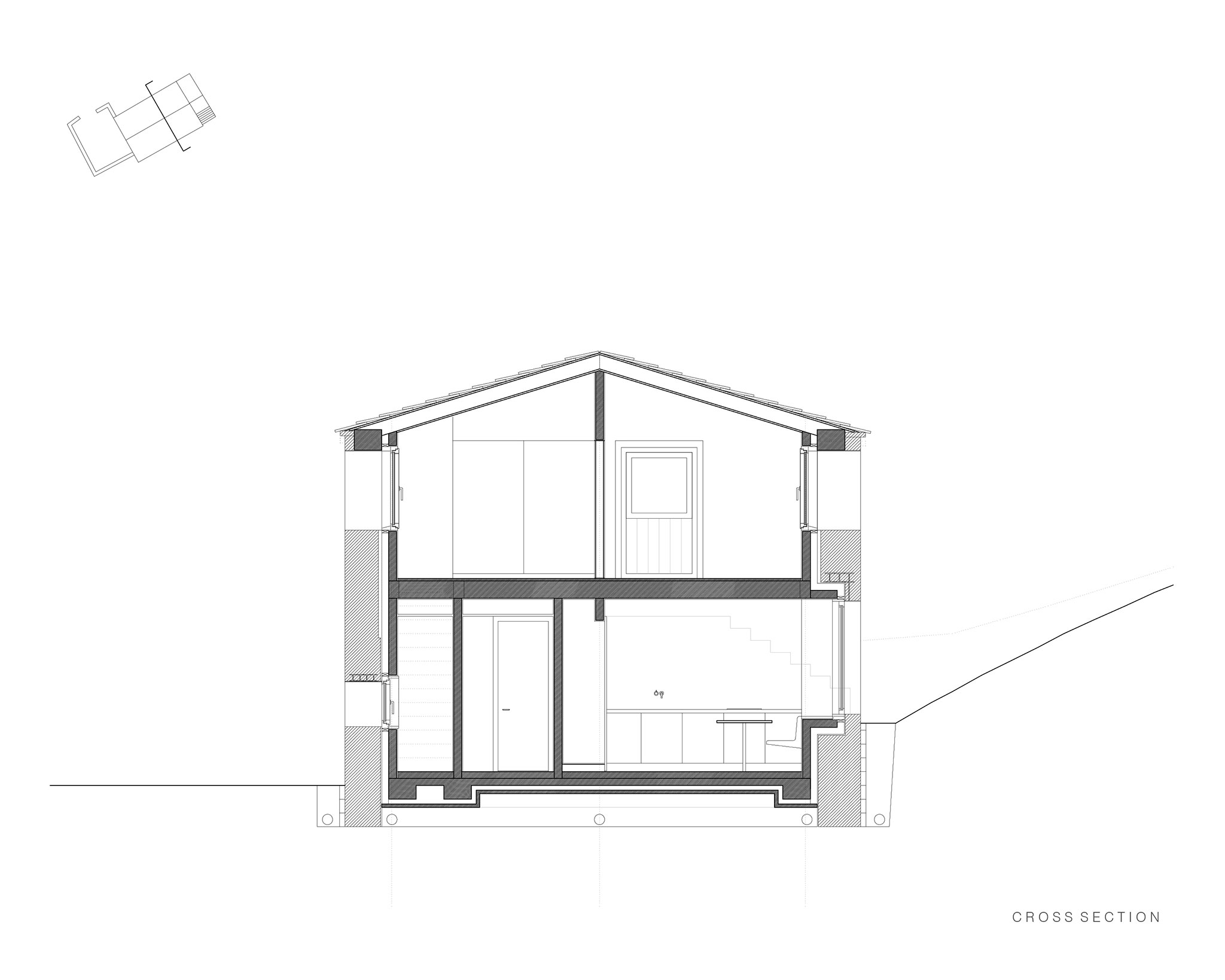
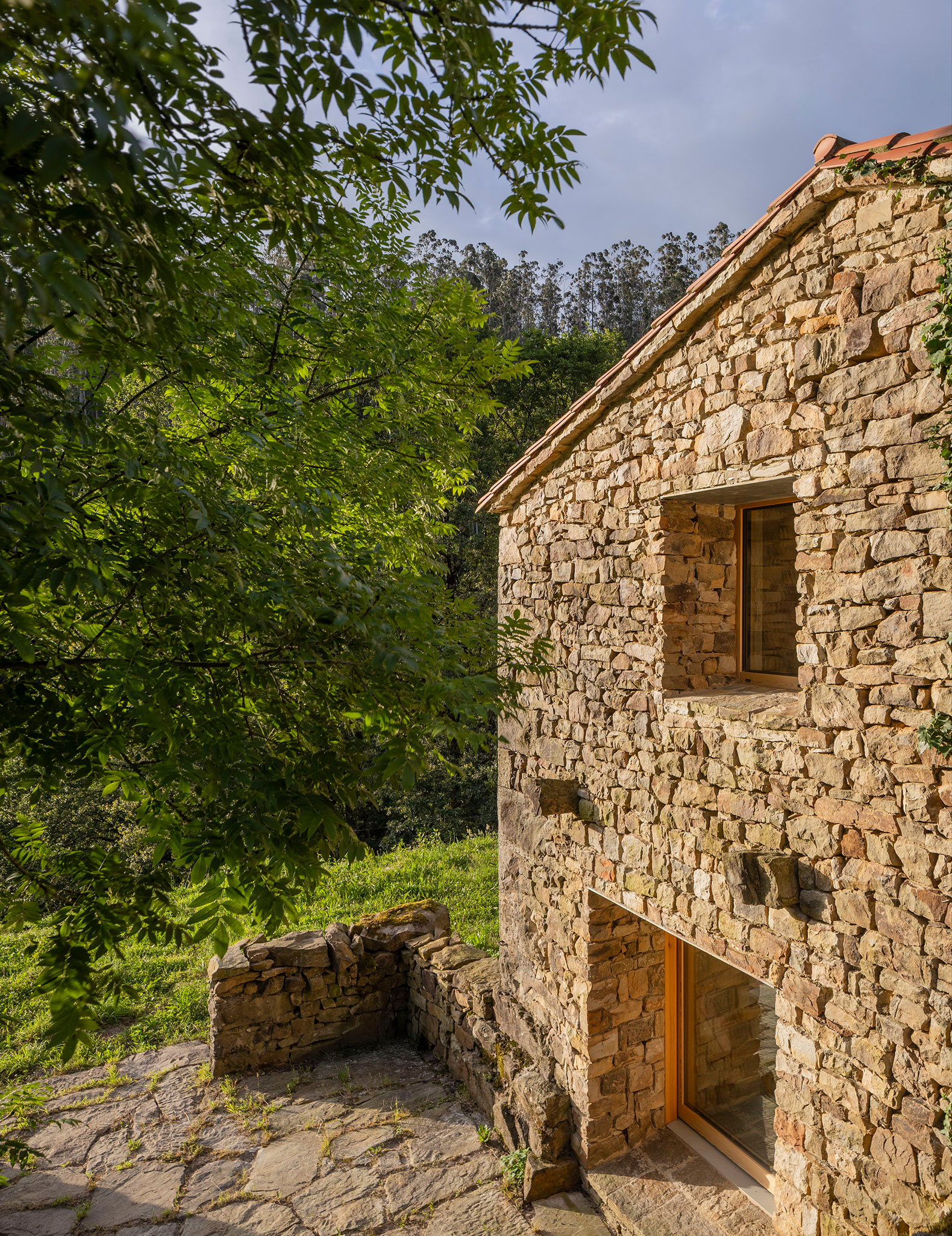
The design preserves the original stone walls, up to 80 cm thick, the sloped roof, and the exterior stone staircase, focusing the transformation on the interior. The historic identity within the landscape remains intact, and the renovation was carried out with the primary goal of radically improving the building’s energy efficiency without altering its exterior materials or appearance, creating a second interior skin.
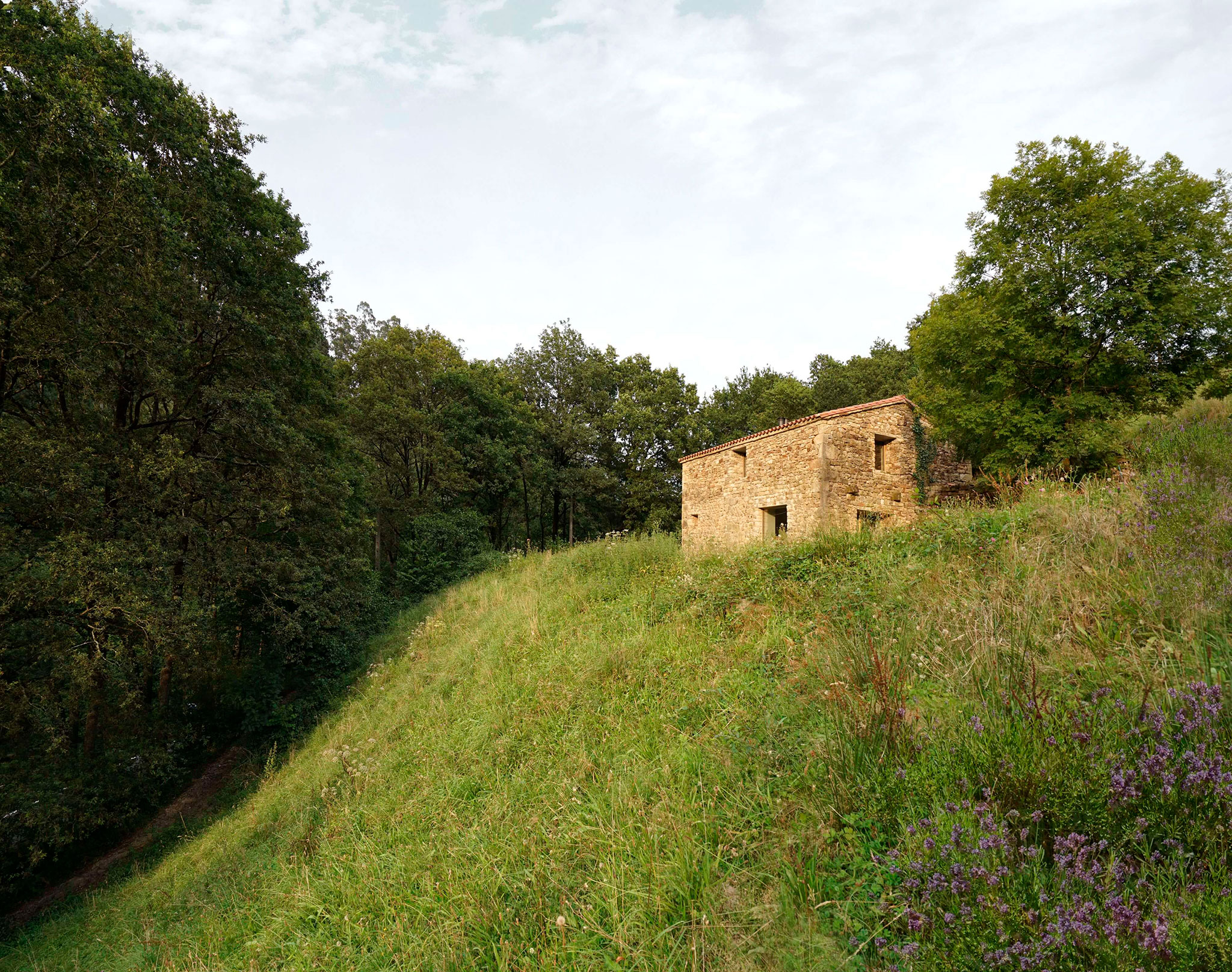
"Casa Mínima" by Estudio Mínima. Photograph by Biderbost Photo.
Project description by Estudio Mínima
1. A high-performance second skin
The energy strategy is grounded in the creation of a high-performance interior envelope that improves the building’s thermal behaviour without touching the historic façade. Built up as a layered interior skin — organic insulation, brick and lime plaster applied against the existing 80 cm stone walls — it ensures a high level of airtightness, minimises energy loss and maintains a stable indoor temperature year-round with a very low residual heating demand.
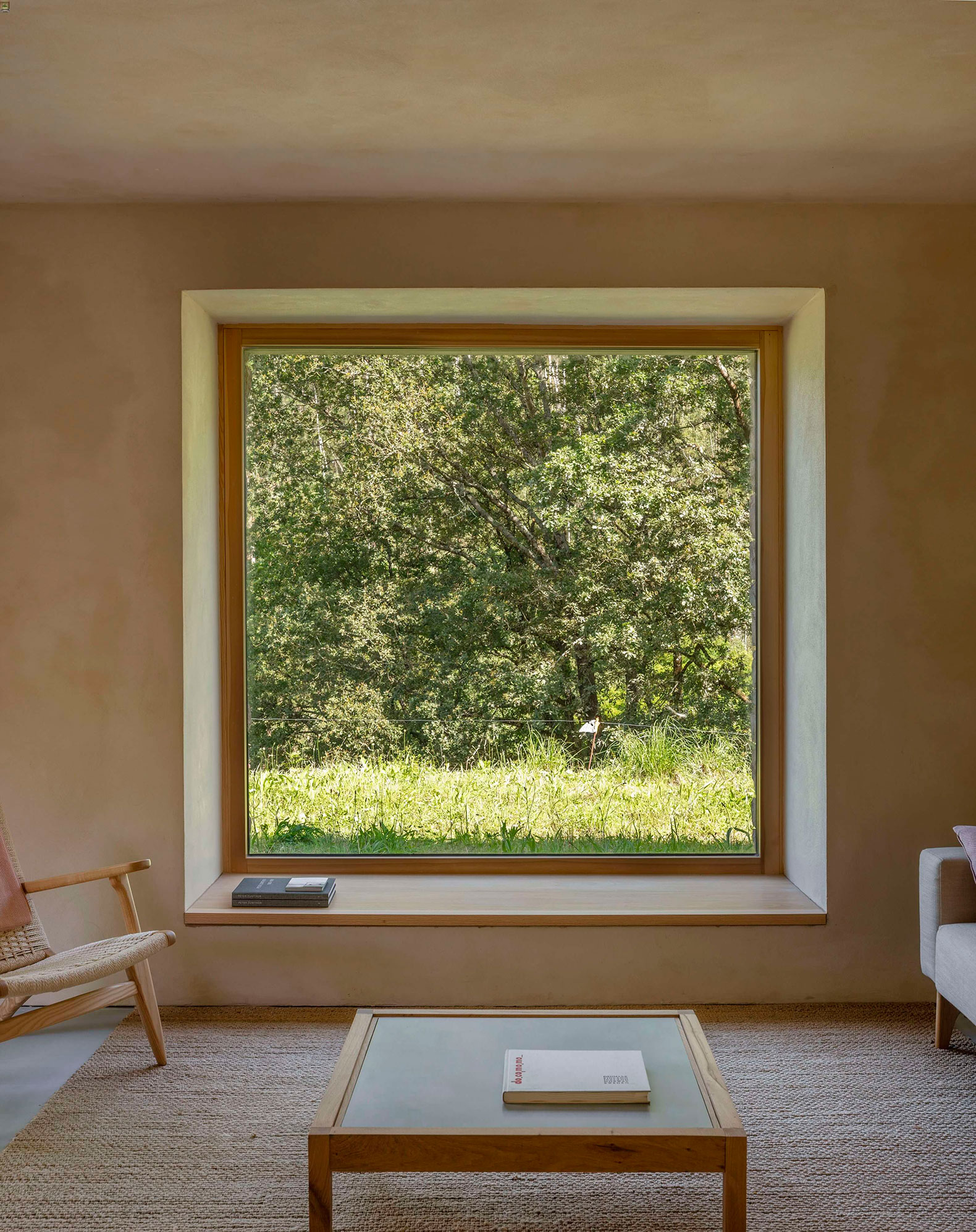
The system is completed by mechanical ventilation with heat recovery (Orkli PKOM 4) and an integrated heat pump, which together guarantee consistent air quality and cover all heating, cooling and domestic hot water needs with minimal energy consumption. During the coldest periods, a wood-burning stove provides supplementary thermal input. Triple passive glazing throughout further limits thermal loss while maintaining visual continuity with the landscape.
All installations and ductwork are fully integrated within the architecture, so that technology remains invisible and the experience of the space is defined by silence and thermal stability.
2. Respect for origins and historical continuity
The Pasiegan cabin is a typology bound to the semi-transhumant way of life of the region since the sixteenth century, combining agricultural and domestic uses in an architecture deeply embedded in its territory.
The intervention takes as its starting point the recognition of this cultural and material value, framing the retrofit around the conservation of the building’s identity and the extension of its life. The original dry-stone exterior masonry is preserved intact, addressed only from within, while the spatial organisation is adapted to contemporary use in full respect of the original geometry.
The project allows the memory of the place to remain legible, integrating past and present in a precise balance between conservation and transformation.
3. Materiality and relationship with the landscape
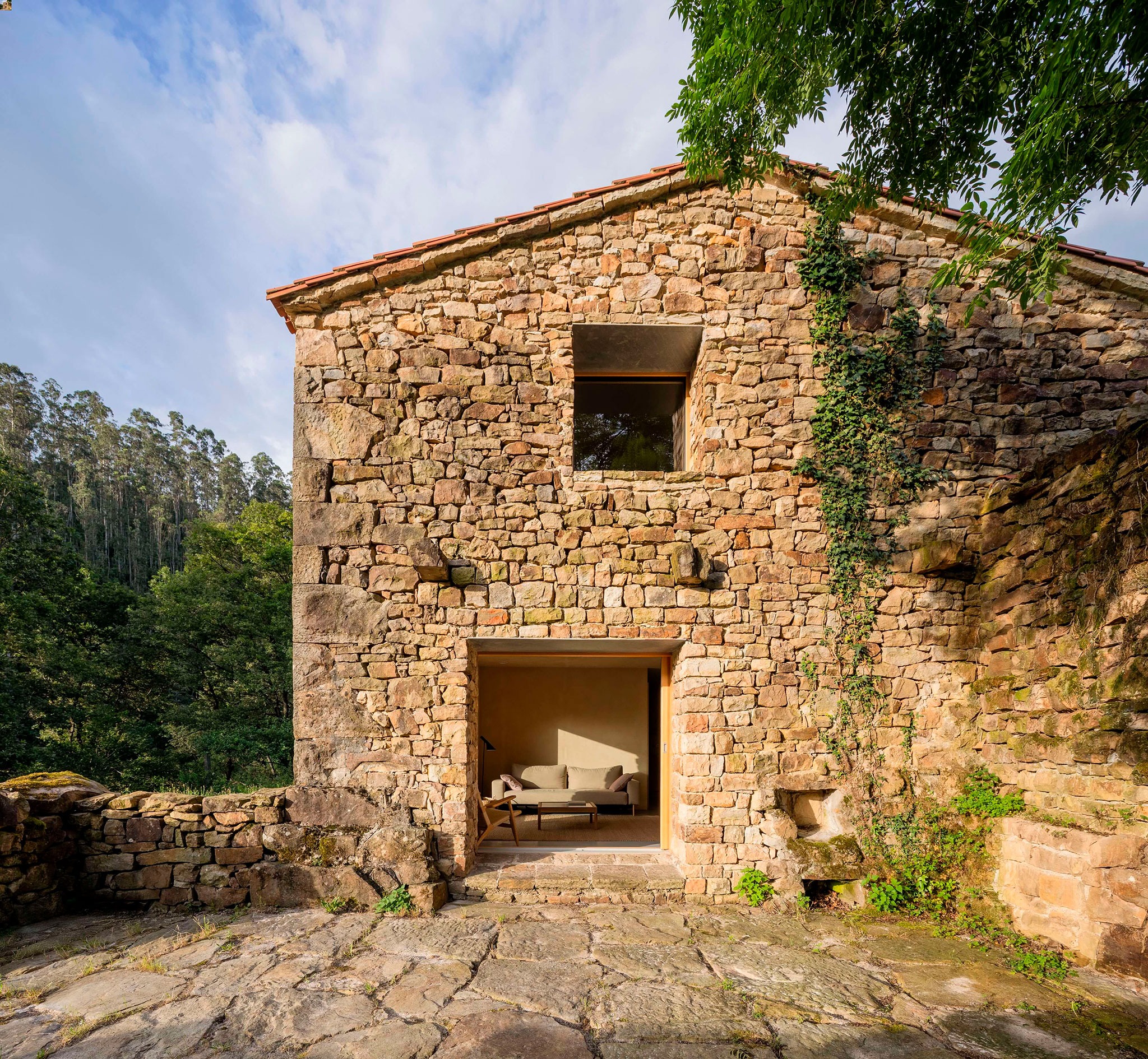
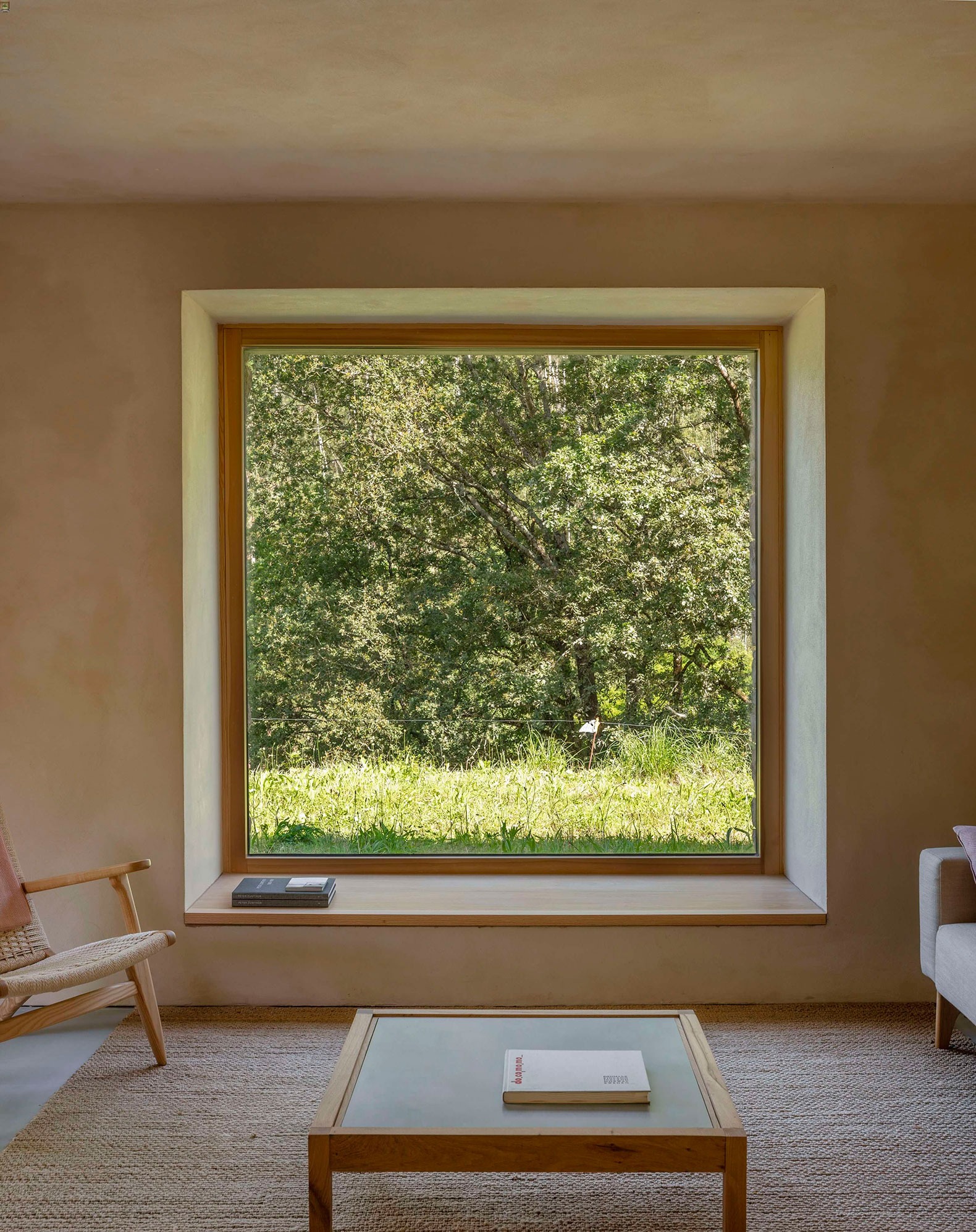
The project draws on natural, locally sourced materials — lime mortar, oak timber, original stone and ceramic — reinforcing the existing constructive logic.
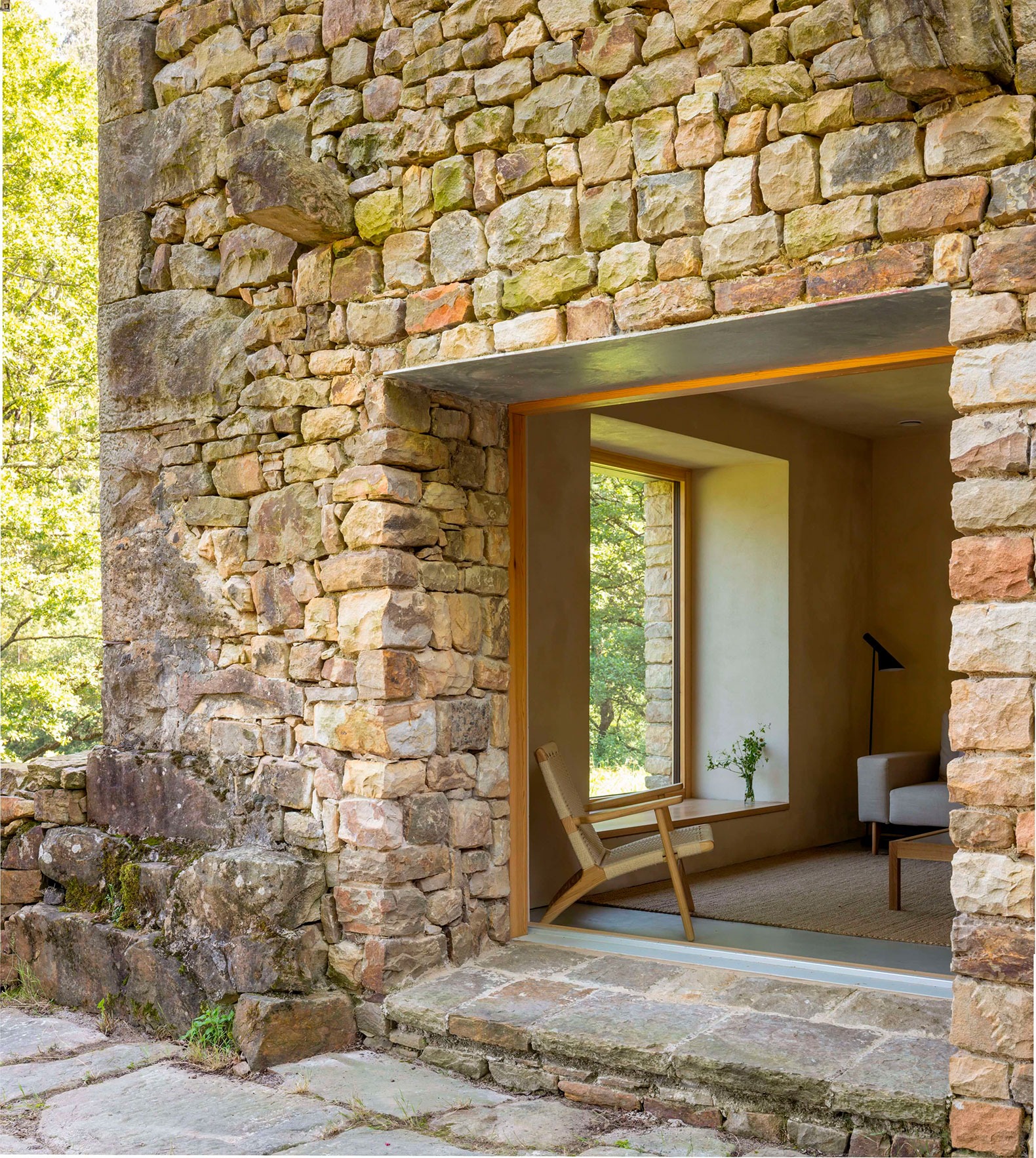
The intervention establishes a precise dialogue between the pre-existing and the newly introduced, avoiding mimicry and allowing each constructive phase to be clearly read. The stone is consolidated and remains visible; new elements are introduced with restraint, defined by reversible systems and discreet technical solutions.
The intervention strengthens the relationship between architecture and territory through material continuity and climatic responsiveness, without recourse to additional formal gesture.
4. Architecture as a form of permanence
Casa Mínima frames retrofit as a form of permanence. The intervention does not impose a new architecture but activates the spatial and constructive capacities of the existing building through precise technical decisions.
The project demonstrates that vernacular architecture can be brought up to contemporary standards of comfort and efficiency without losing identity — understanding sustainability as a practice of care toward the built, the landscape and time.
5. A destination for living architecture
Beyond its role as a private residence, Casa Mínima functions as a tourist accommodation, offering guests the direct experience of the project’s spatial, environmental and material qualities.
With capacity for six, the house proposes a way of inhabiting in which comfort, quiet and relationship with the surroundings are intrinsic to the architecture itself. More than a built object, it is conceived as a place to be lived in, where the principles of sustainability are perceived through everyday use.
6. Spaces
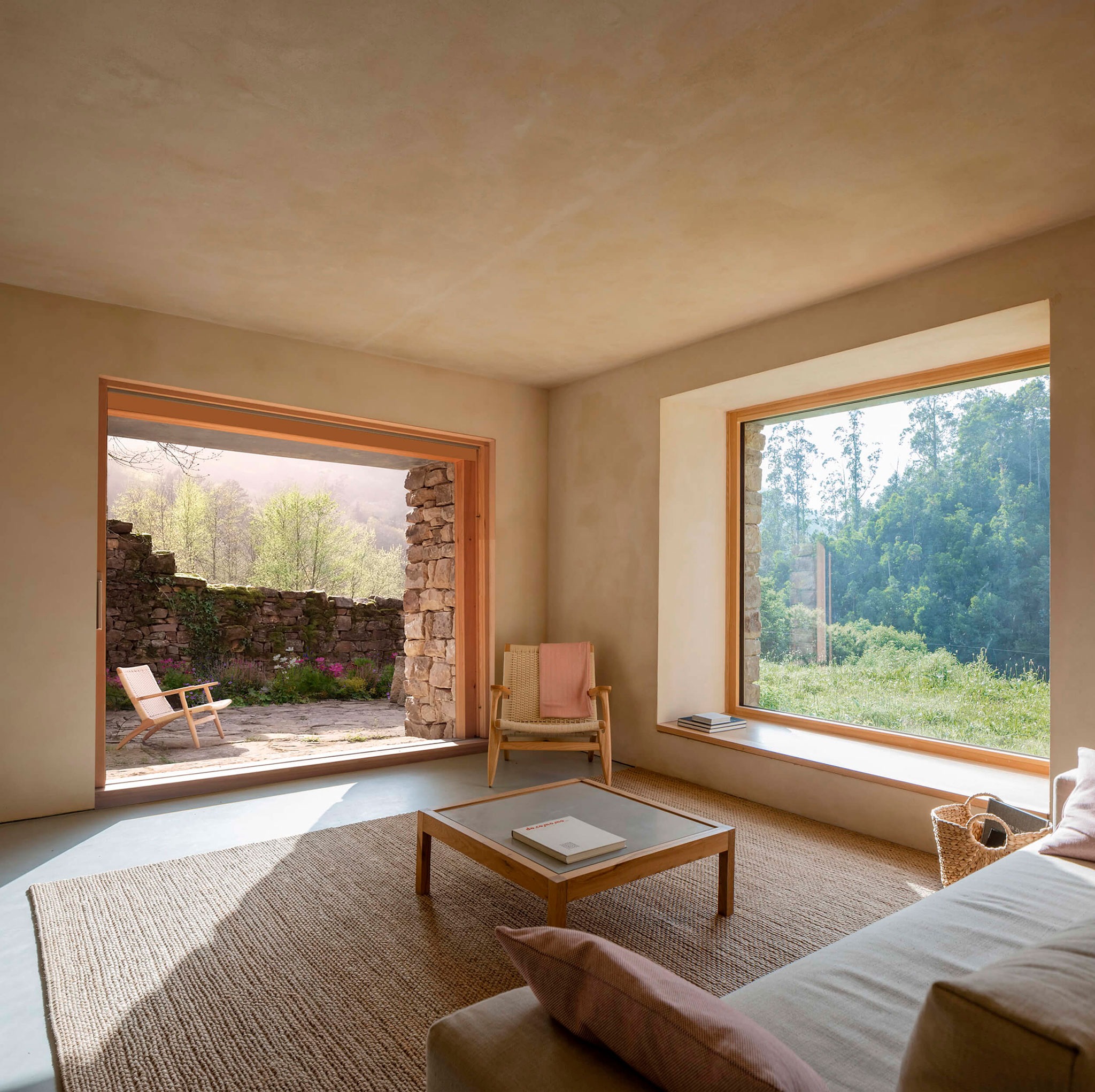
Originally, the entire ground floor was given over to the cattle shed: a continuous space tied to agricultural use, defined by thick stone walls. The intervention transforms this level into the main living area of the house, integrating kitchen, dining and living room in a single open sequence where natural light and new openings establish a direct relationship with the landscape.
Connected to this level, the old outdoor enclosure associated with the cattle shed — a semi-enclosed space bounded by large stone walls, formerly used as a dung heap and overgrown with vegetation — has been recovered. After clearing, it is redefined as a courtyard, paved with the original slabs that once covered the shed floor, some still bearing the grooves carved to facilitate their upkeep. The new courtyard acts as a direct extension of the interior, incorporating the material memory of its former use into its new domestic condition.
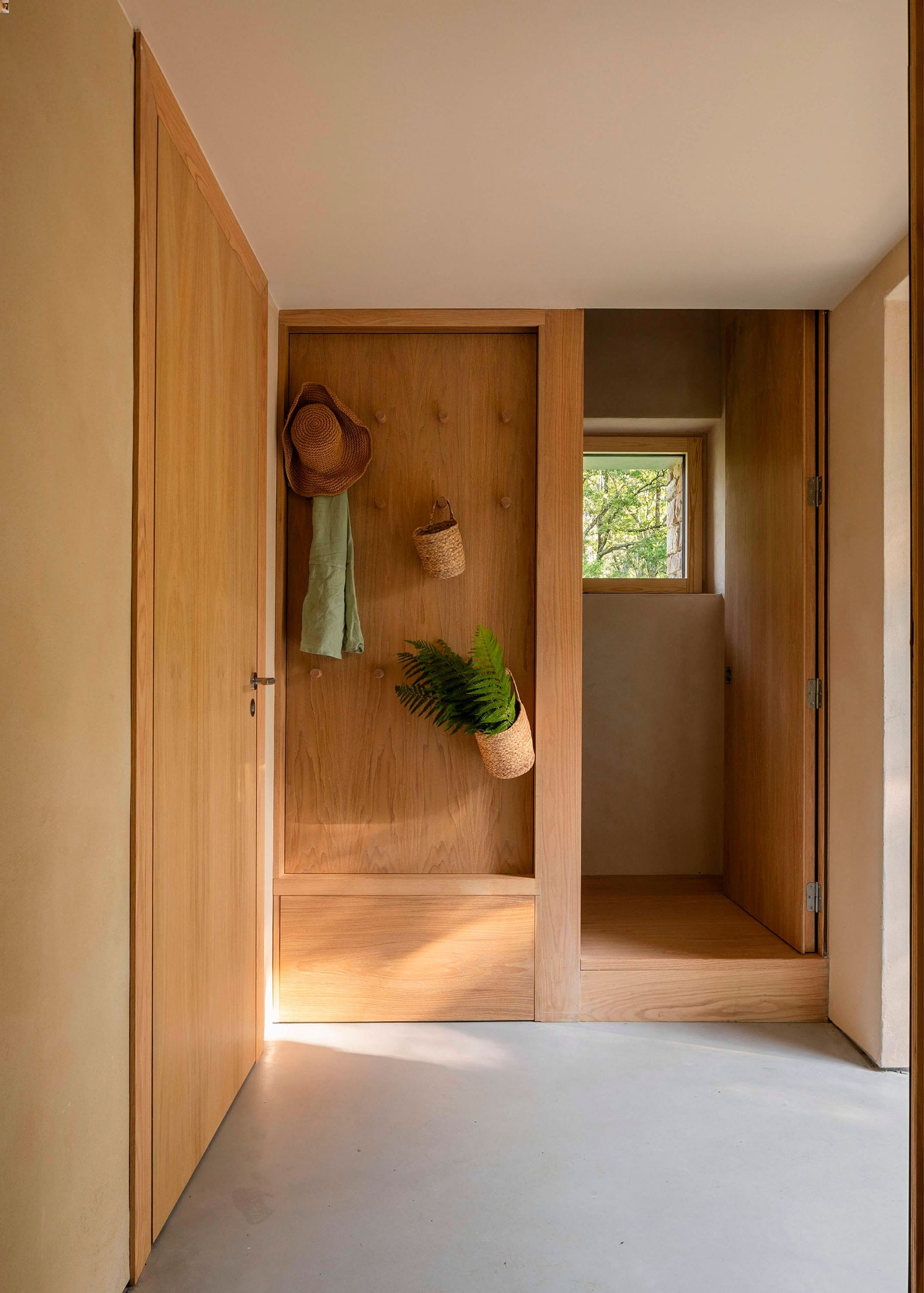
On the upper floor, the traditional configuration of the Pasiegan cabin is maintained, with direct external access via the existing stone staircase that once led to the living quarters above the cattle shed. Two oak-lined bedrooms form spaces for rest where proportion, materiality and light generate a contained atmosphere. The layout thus preserves the original logic of circulation and the relationship between architecture and traditional way of life.
All technical systems are fully integrated, reinforcing the spatial clarity and constructive coherence of the whole.