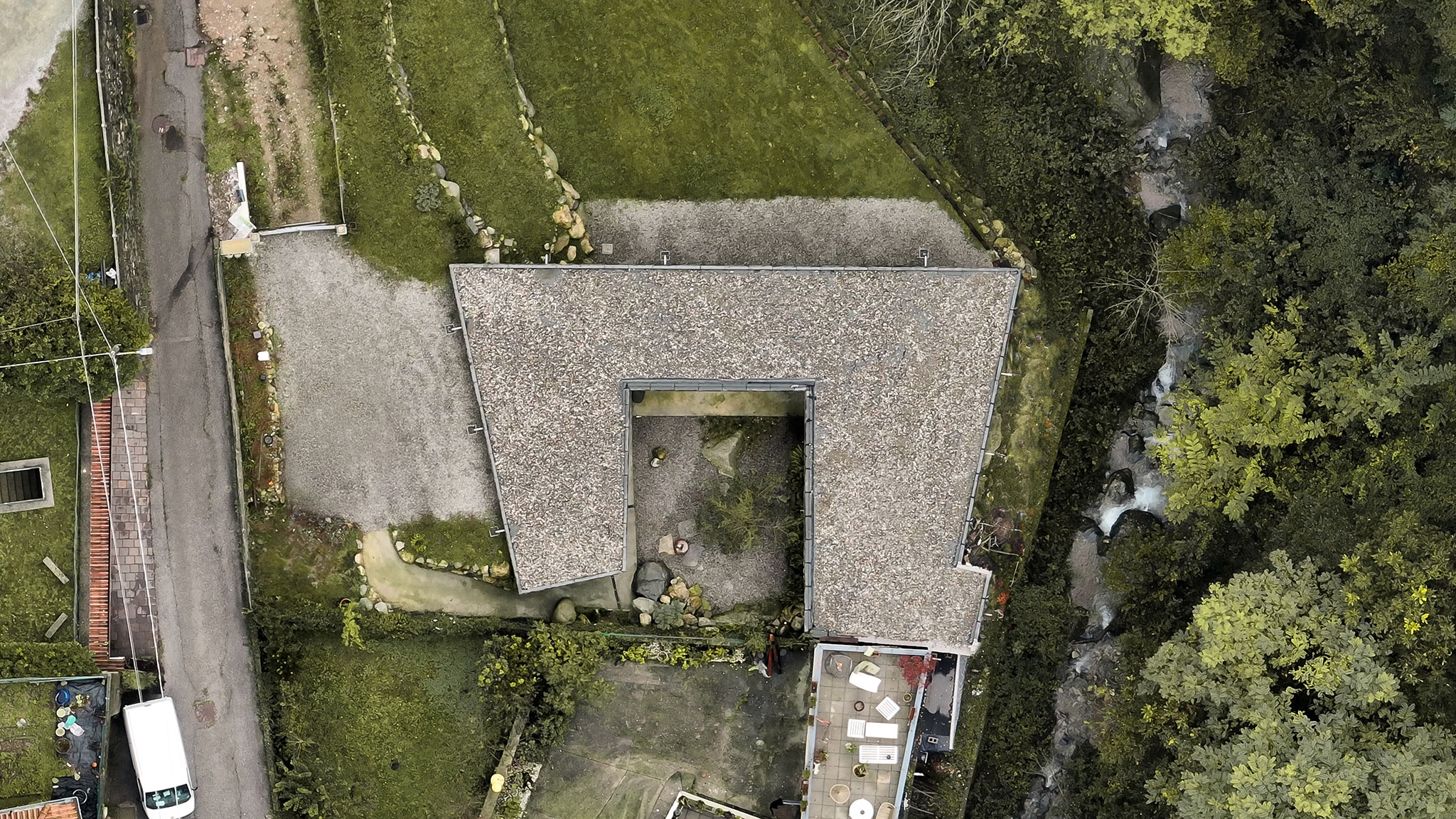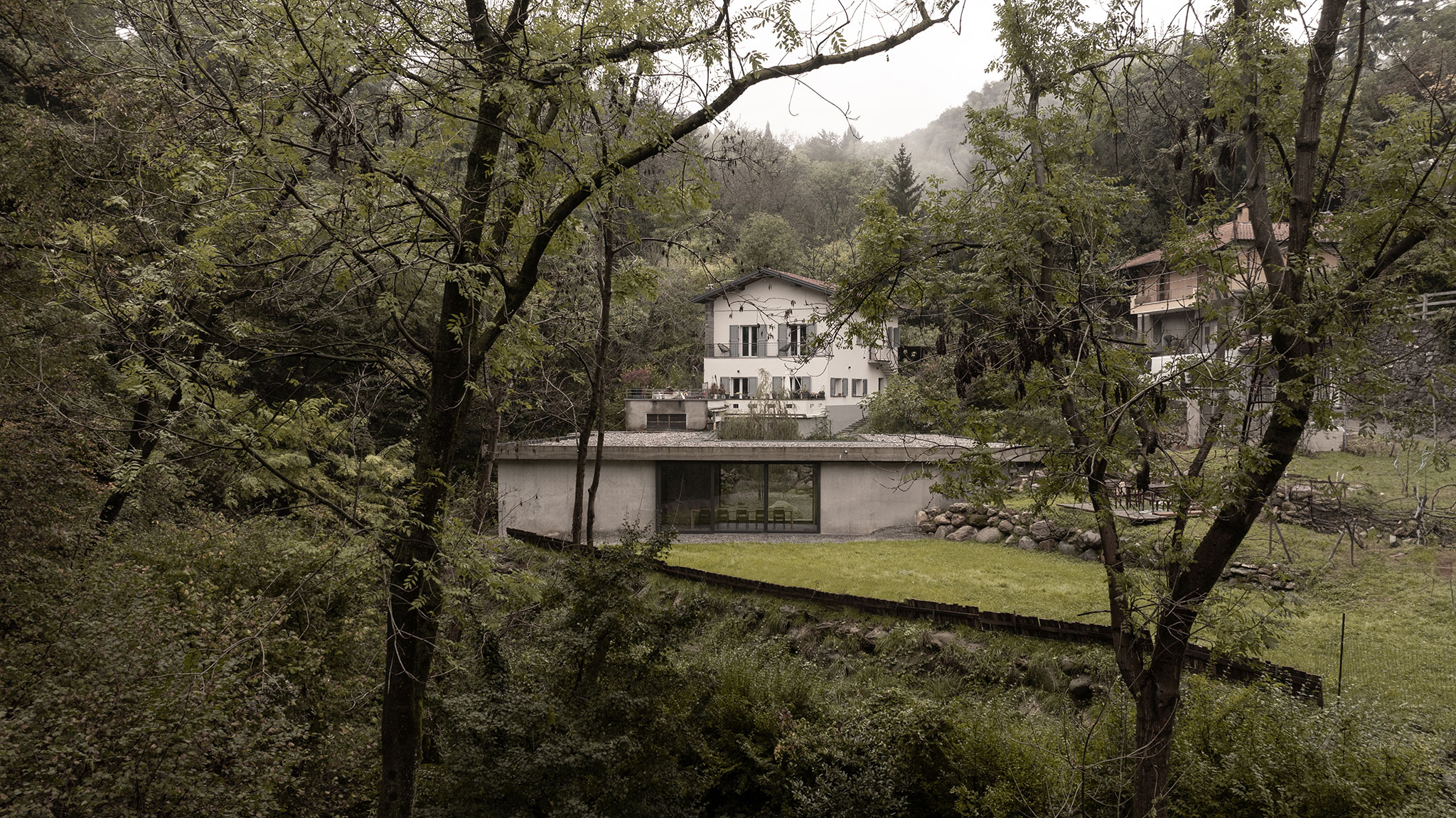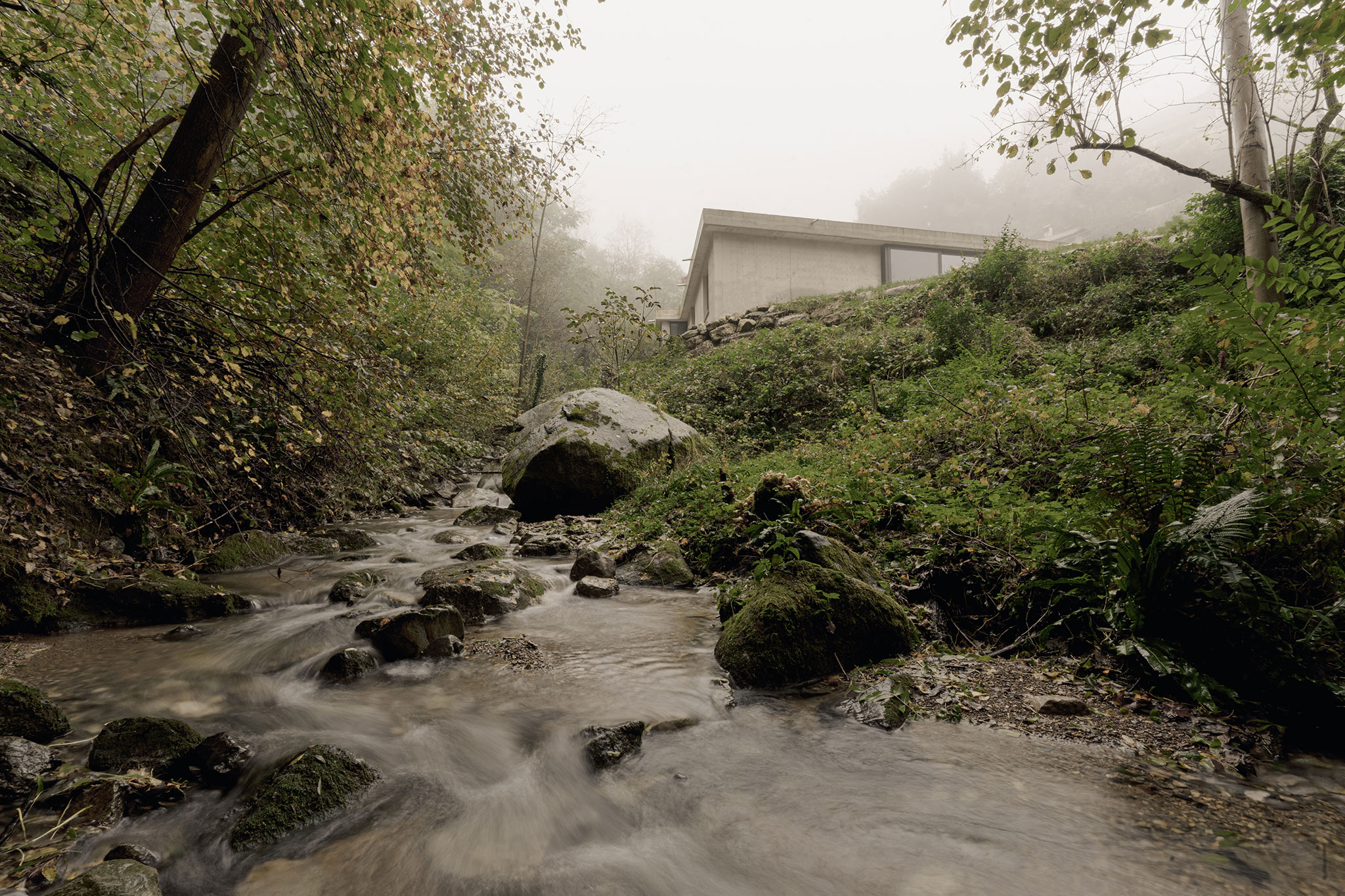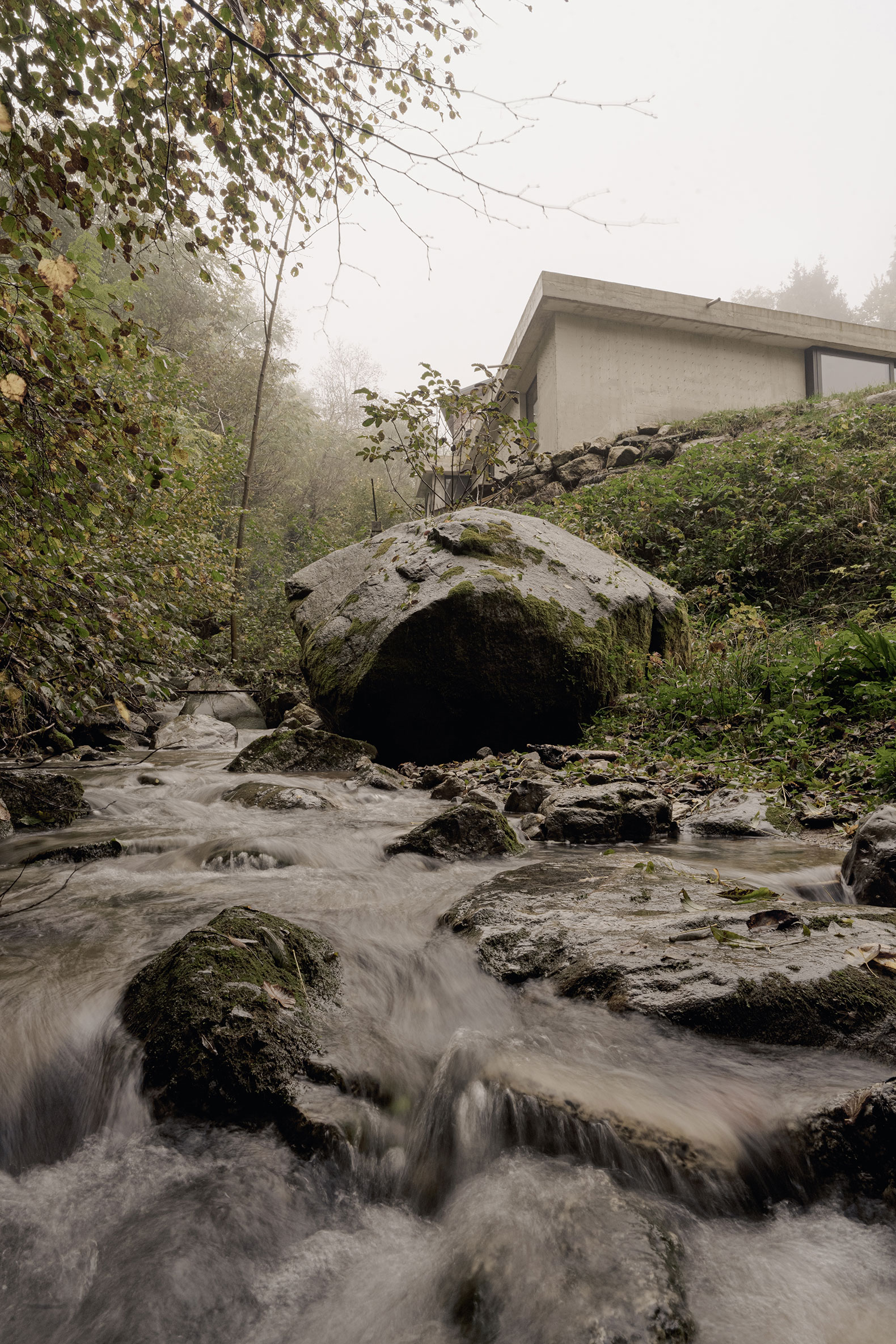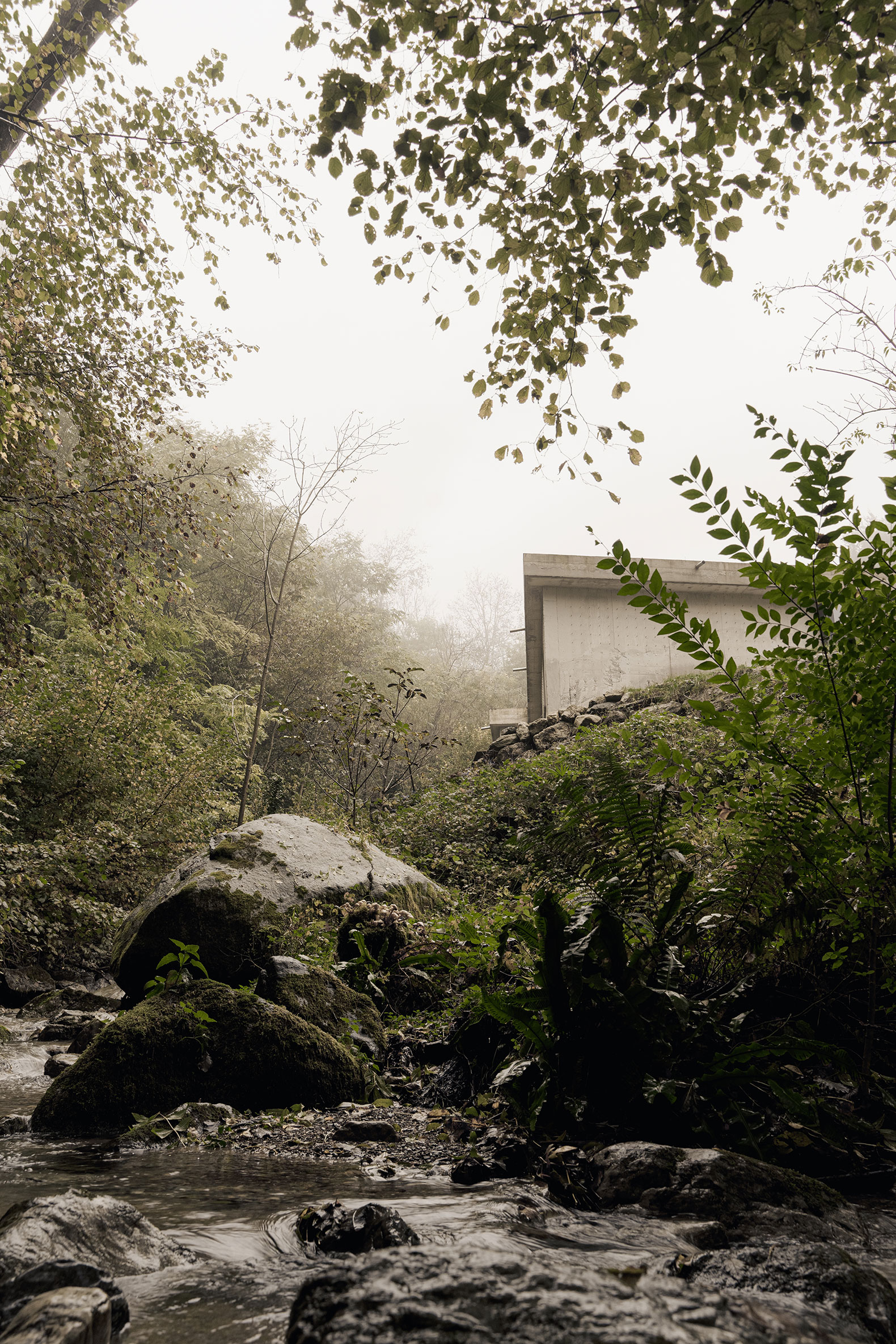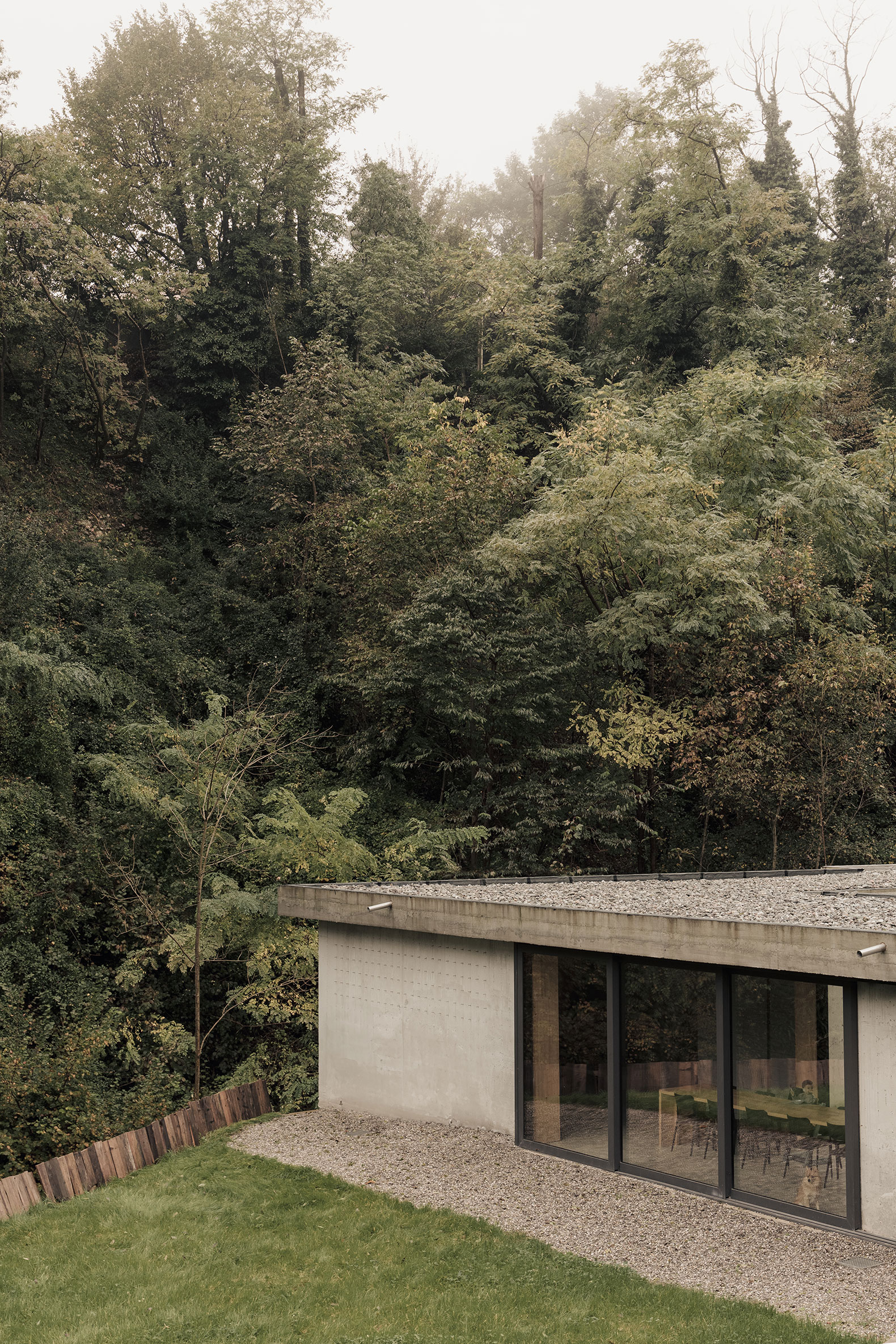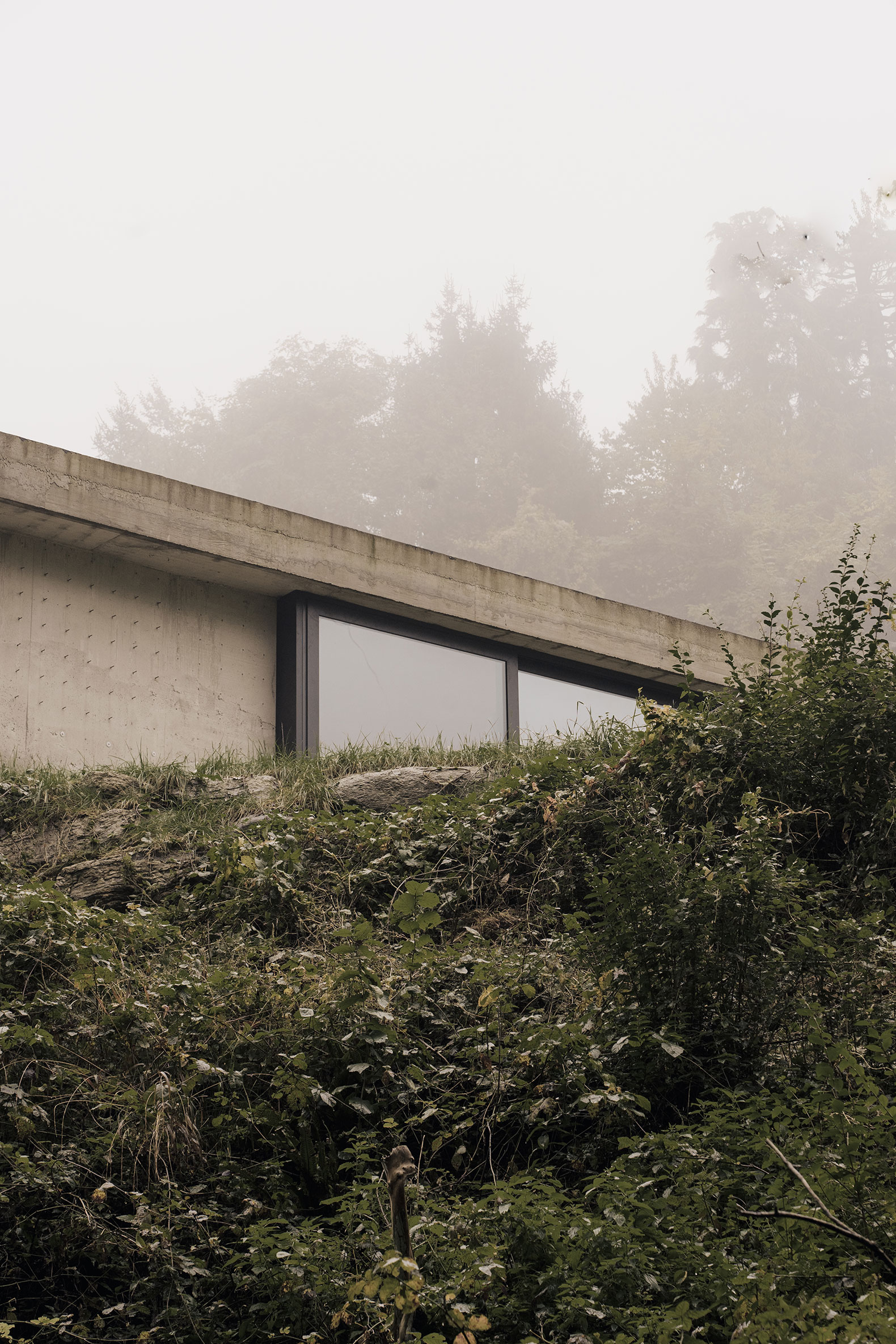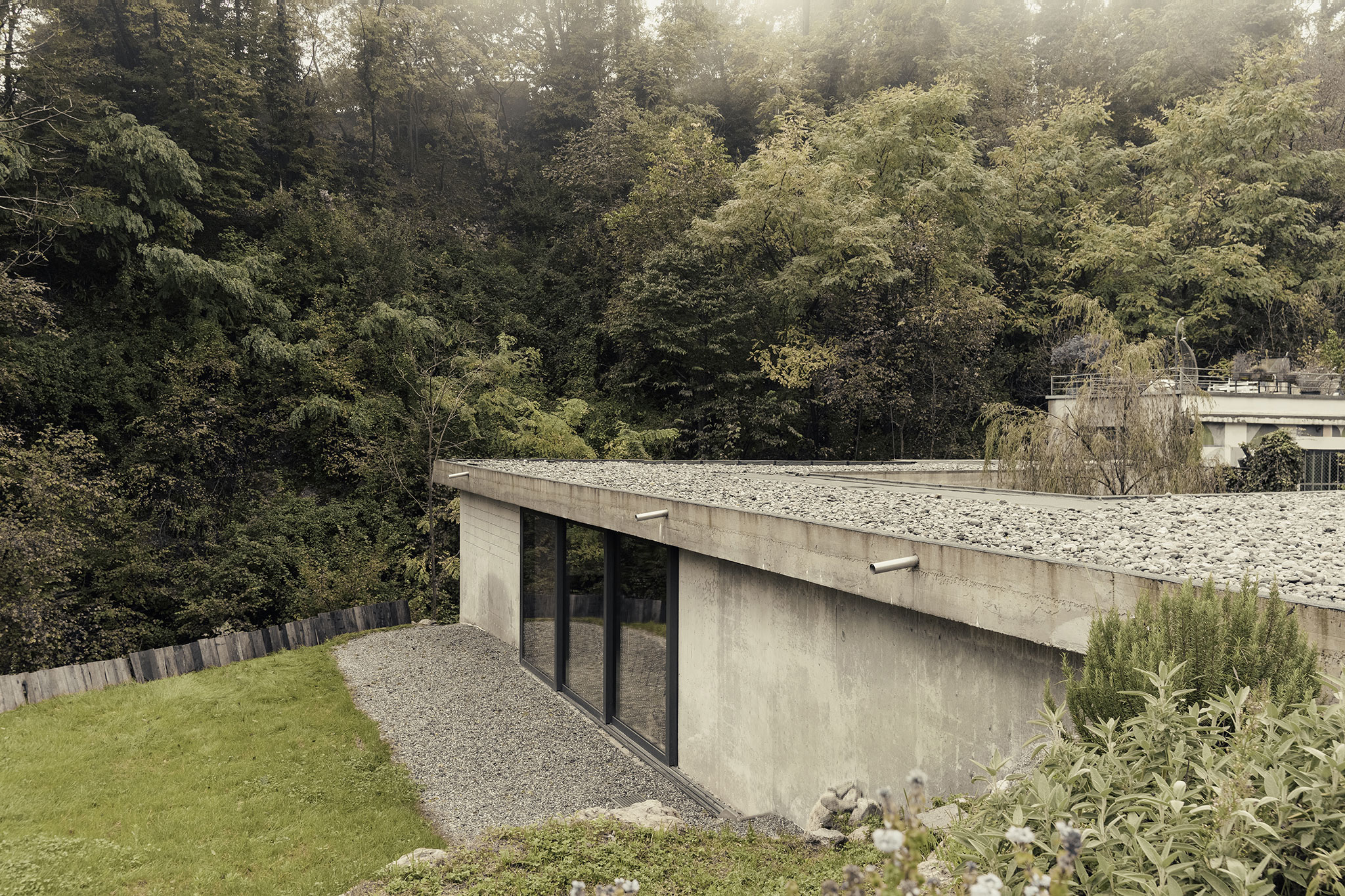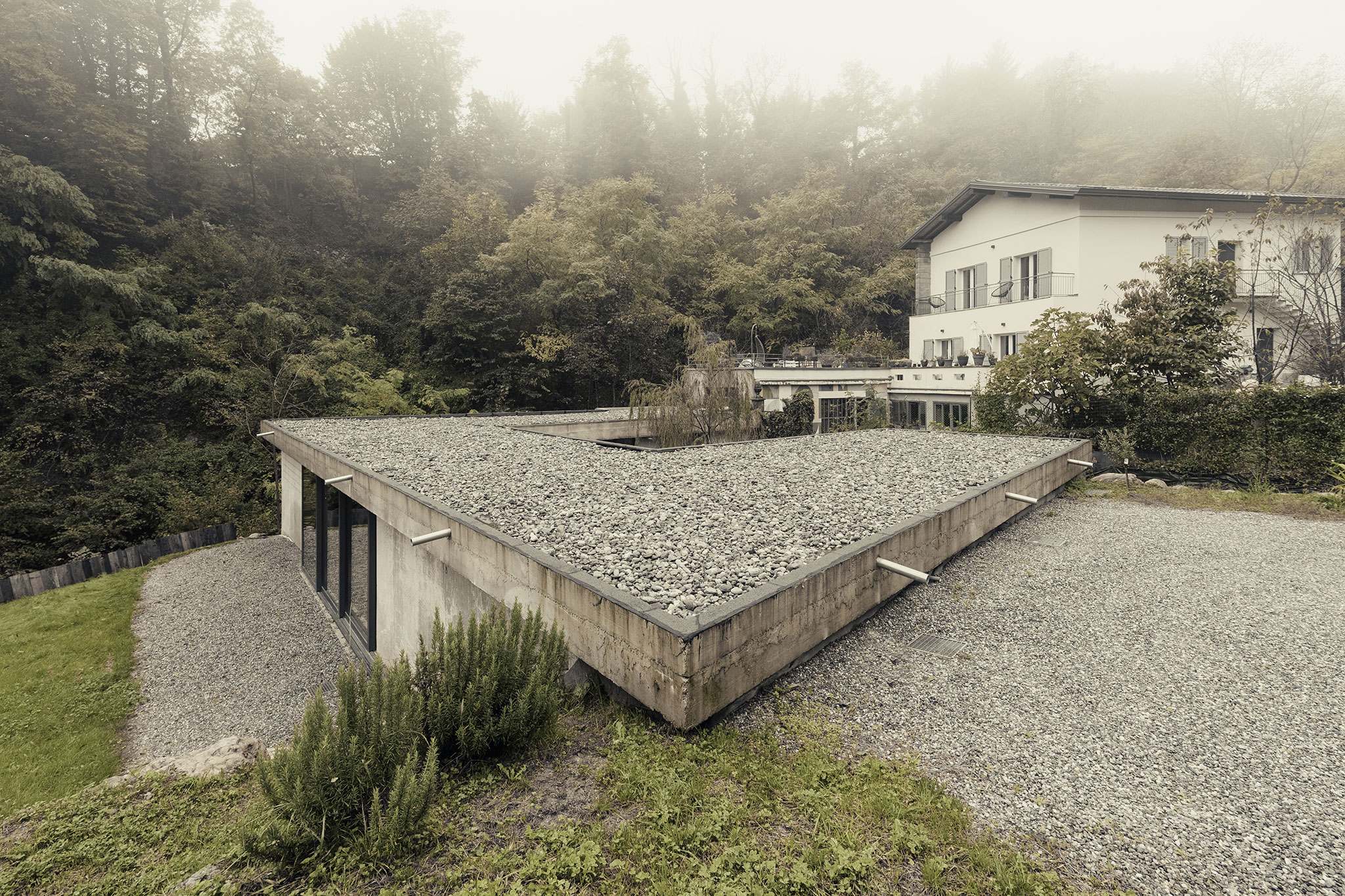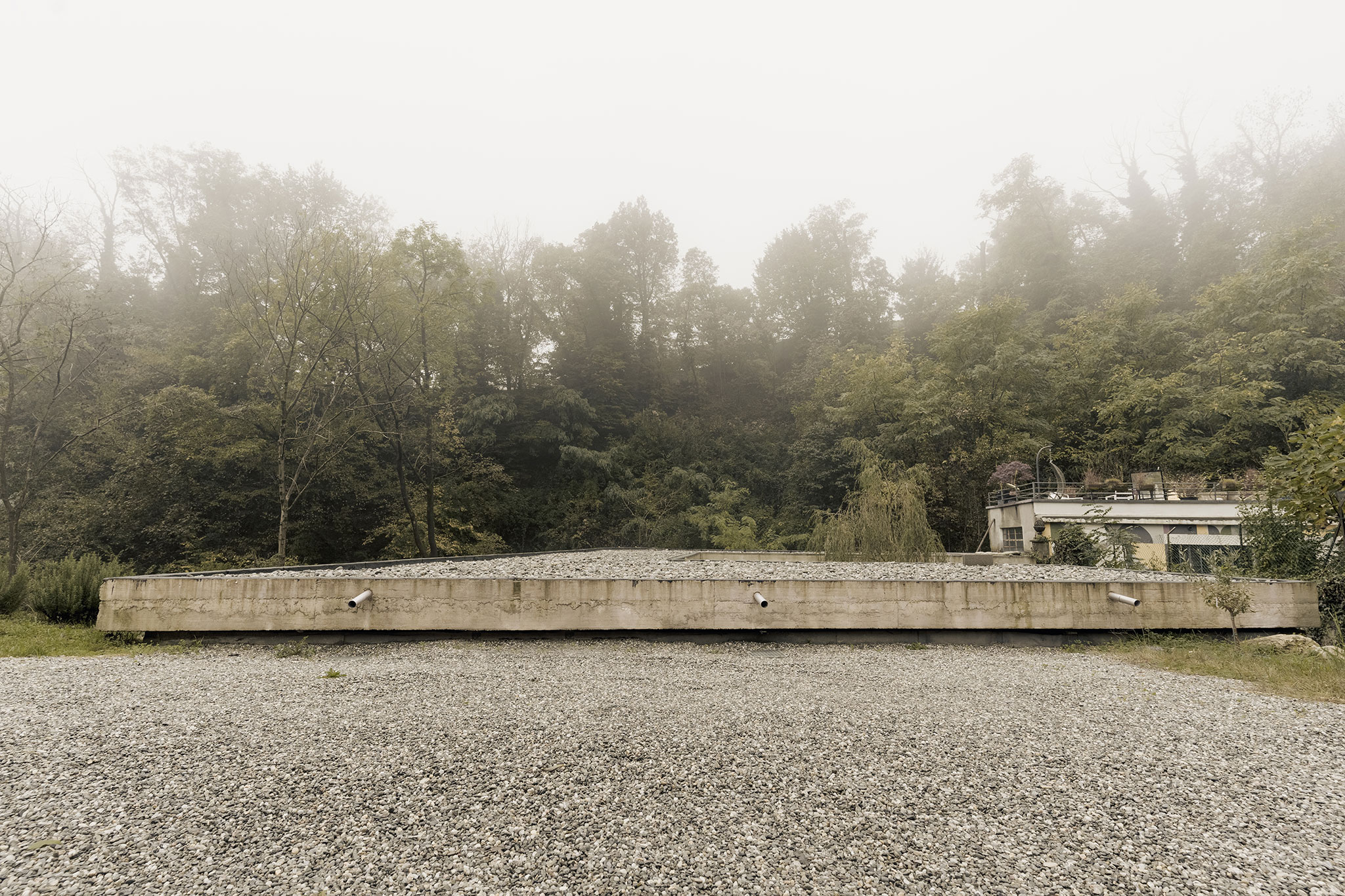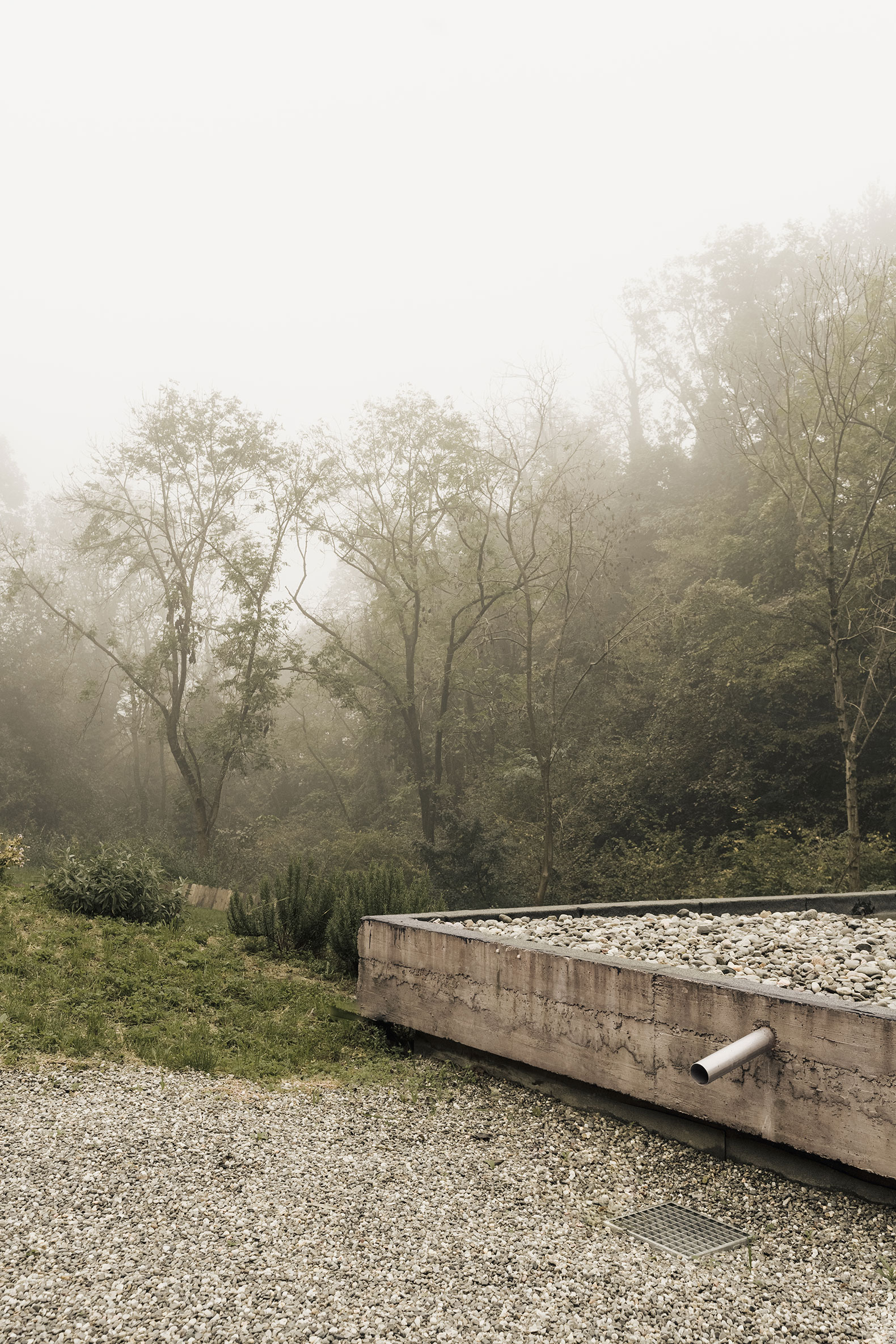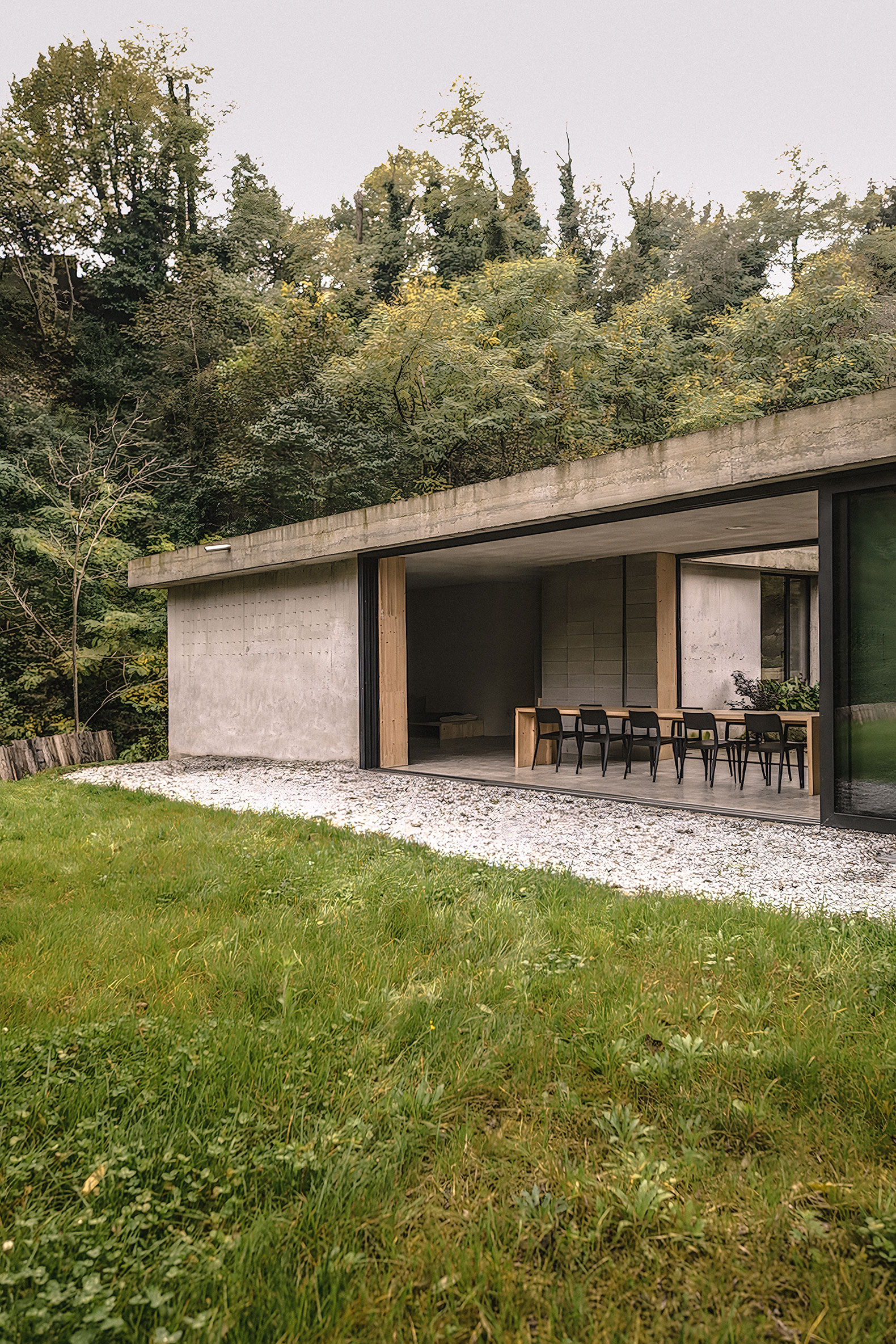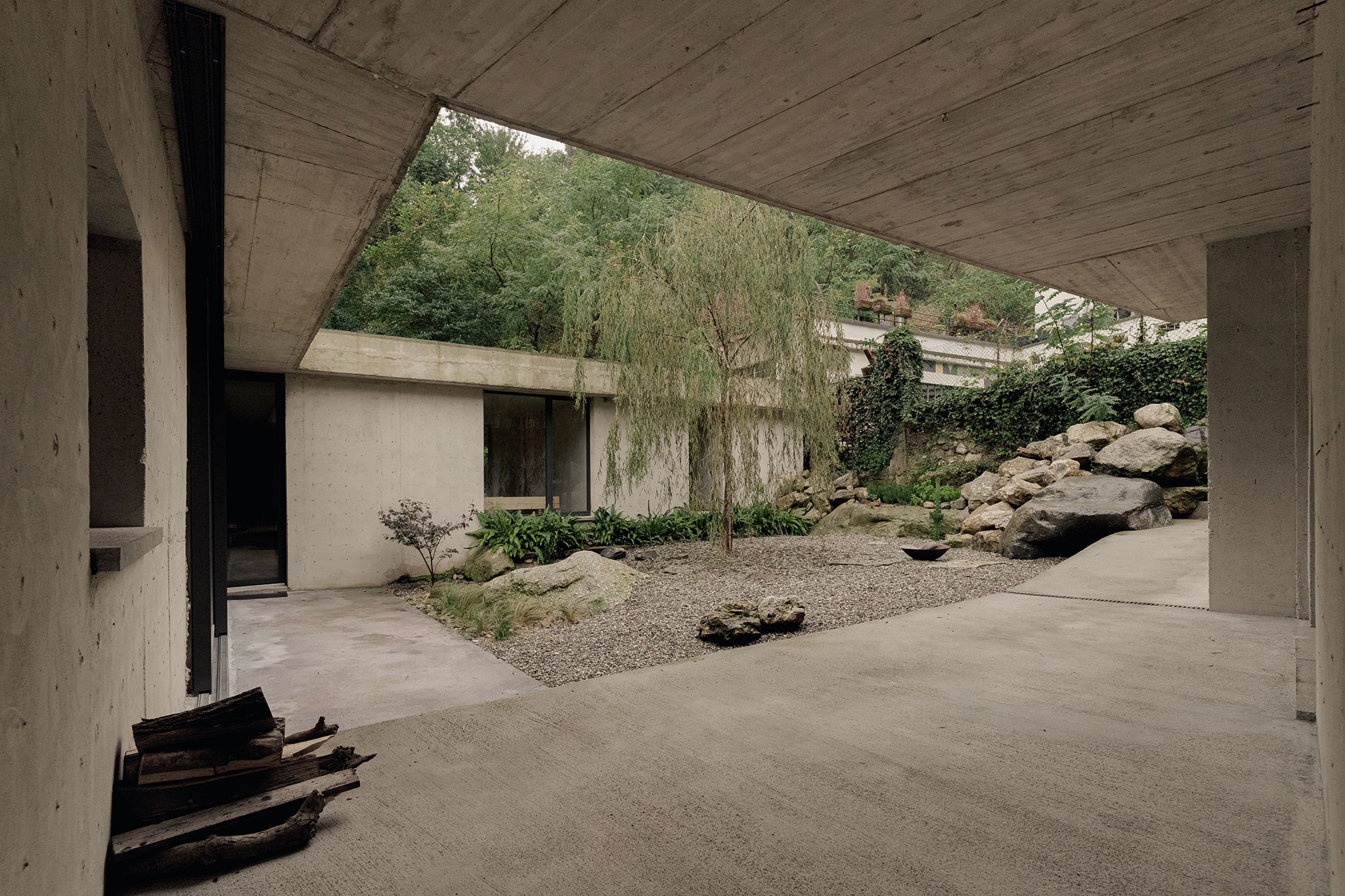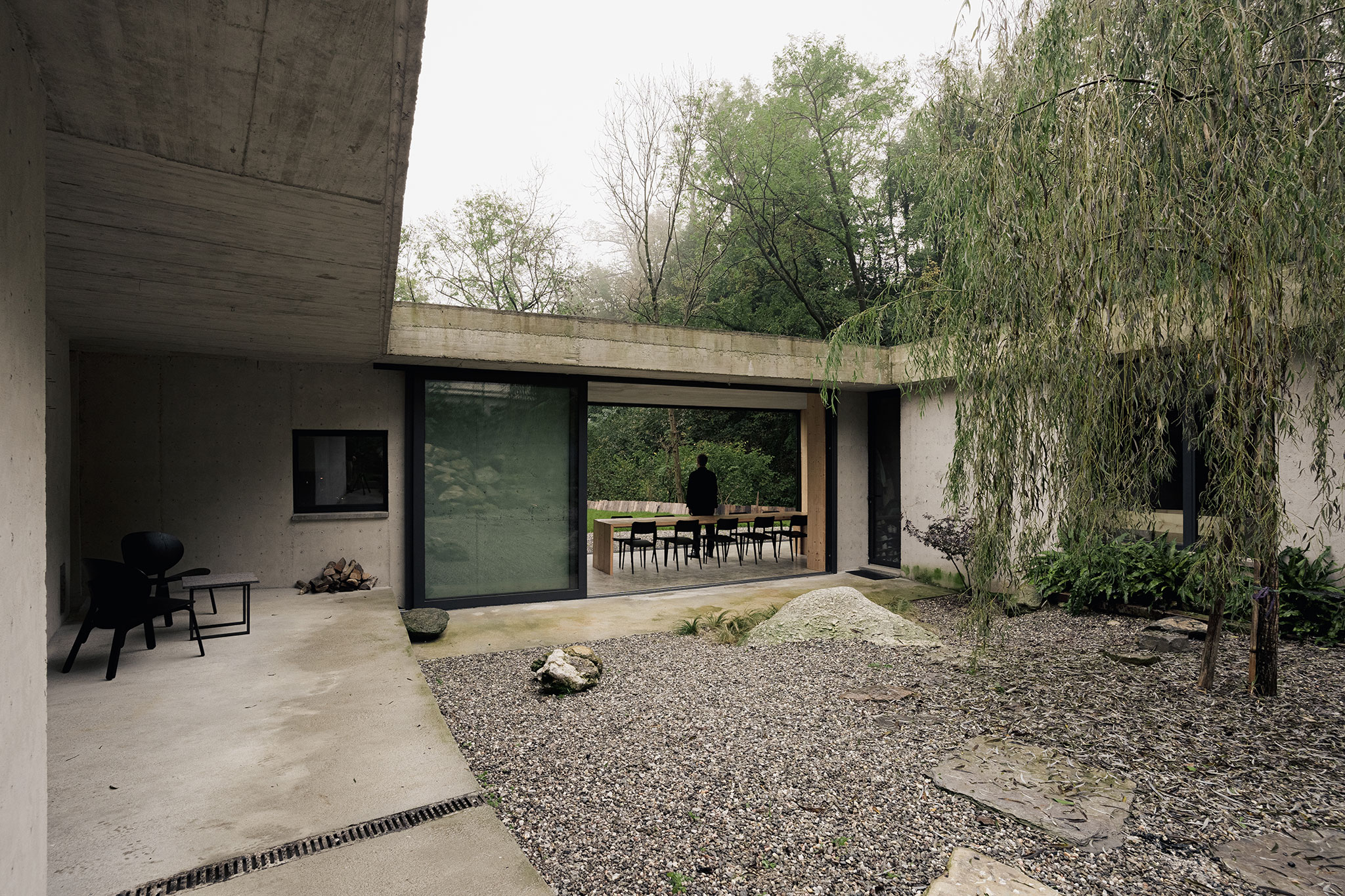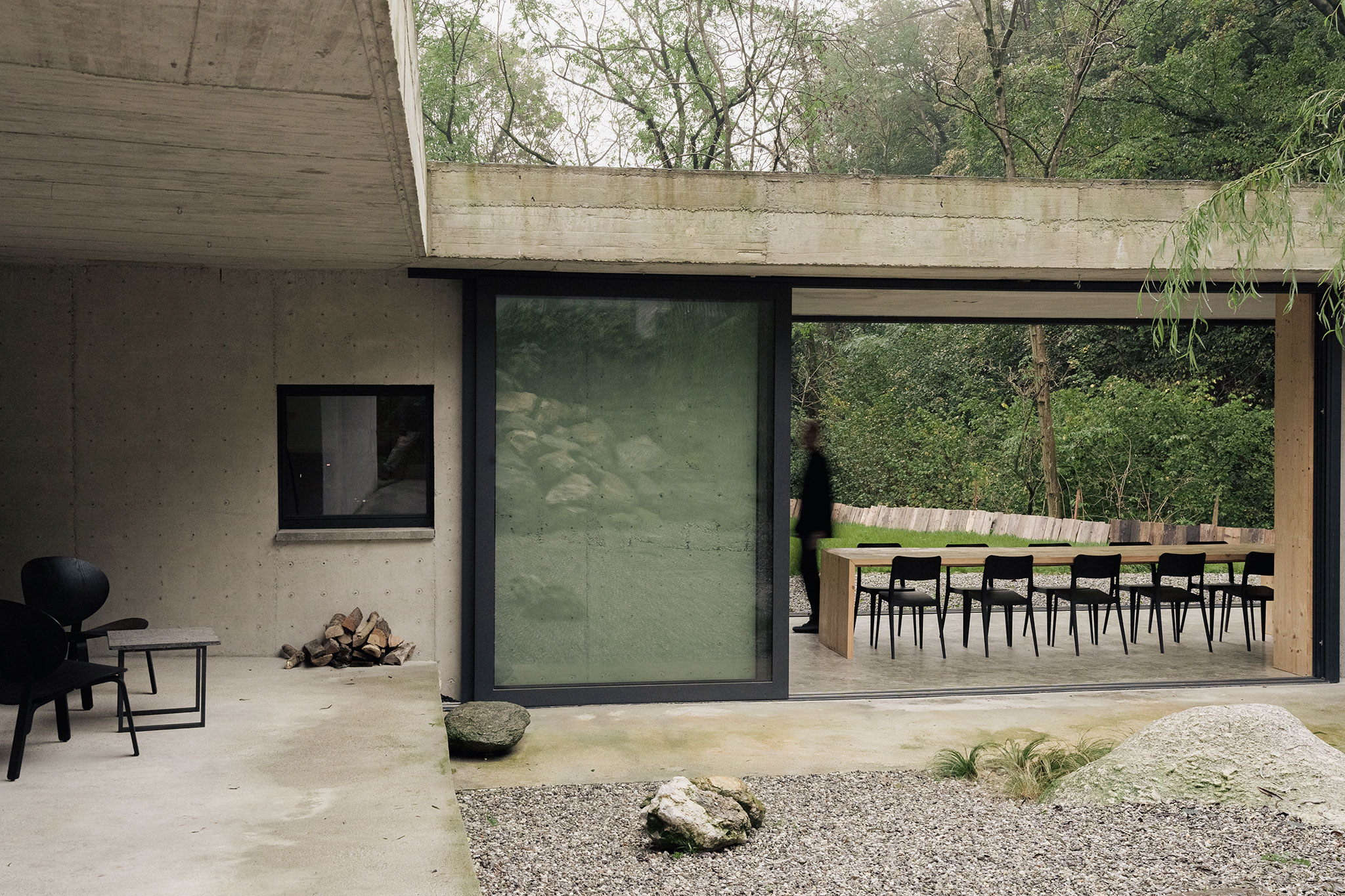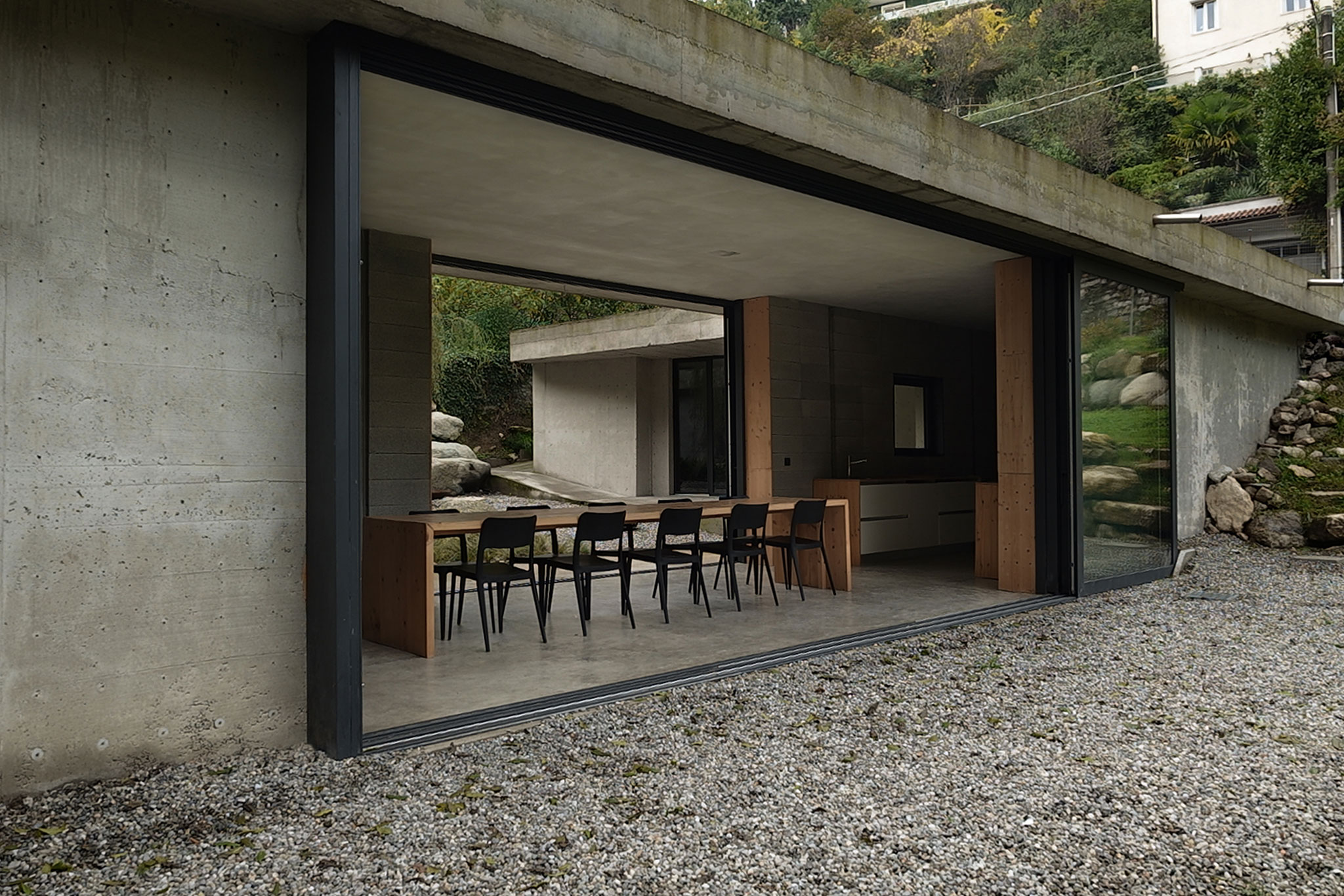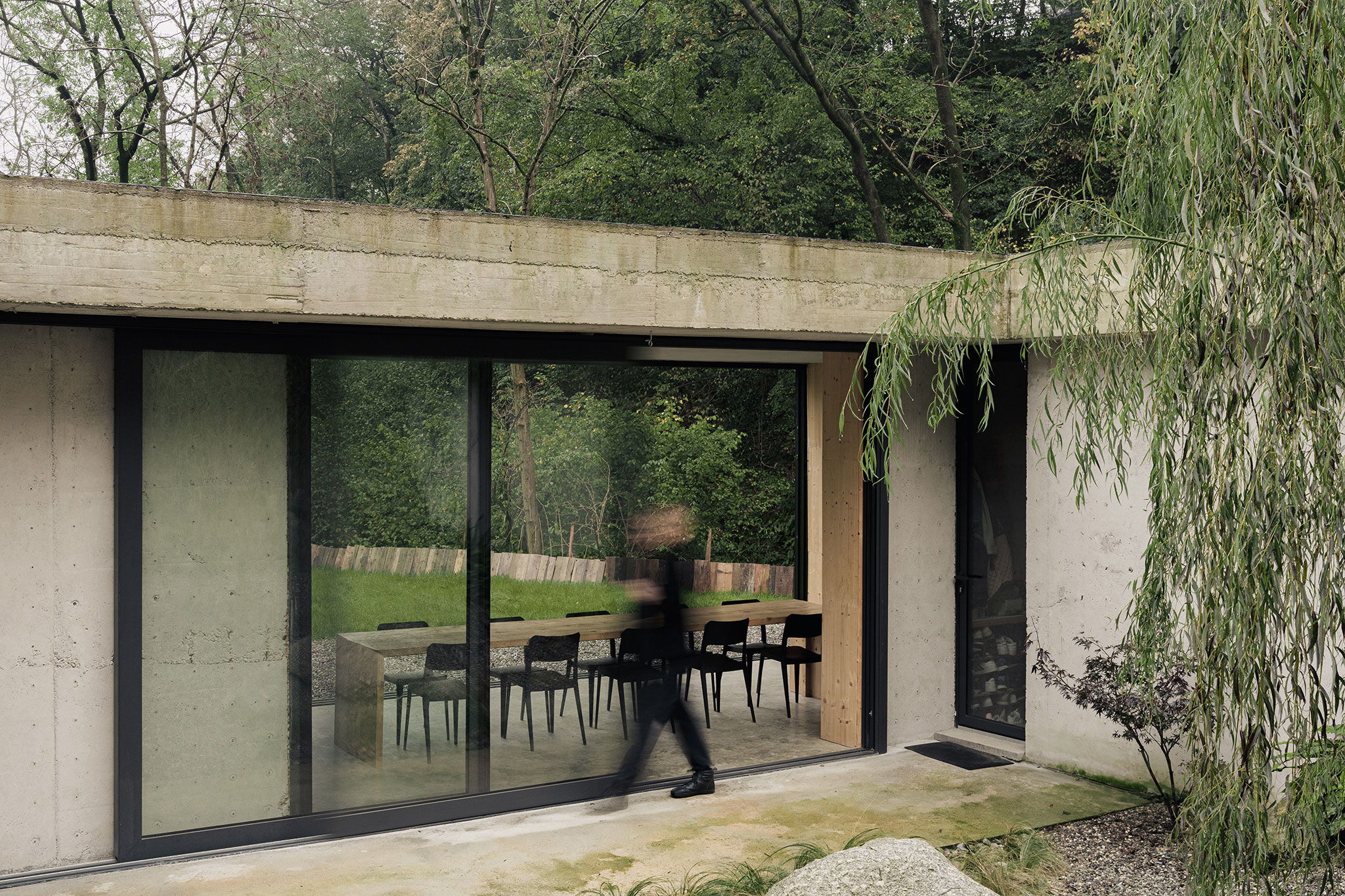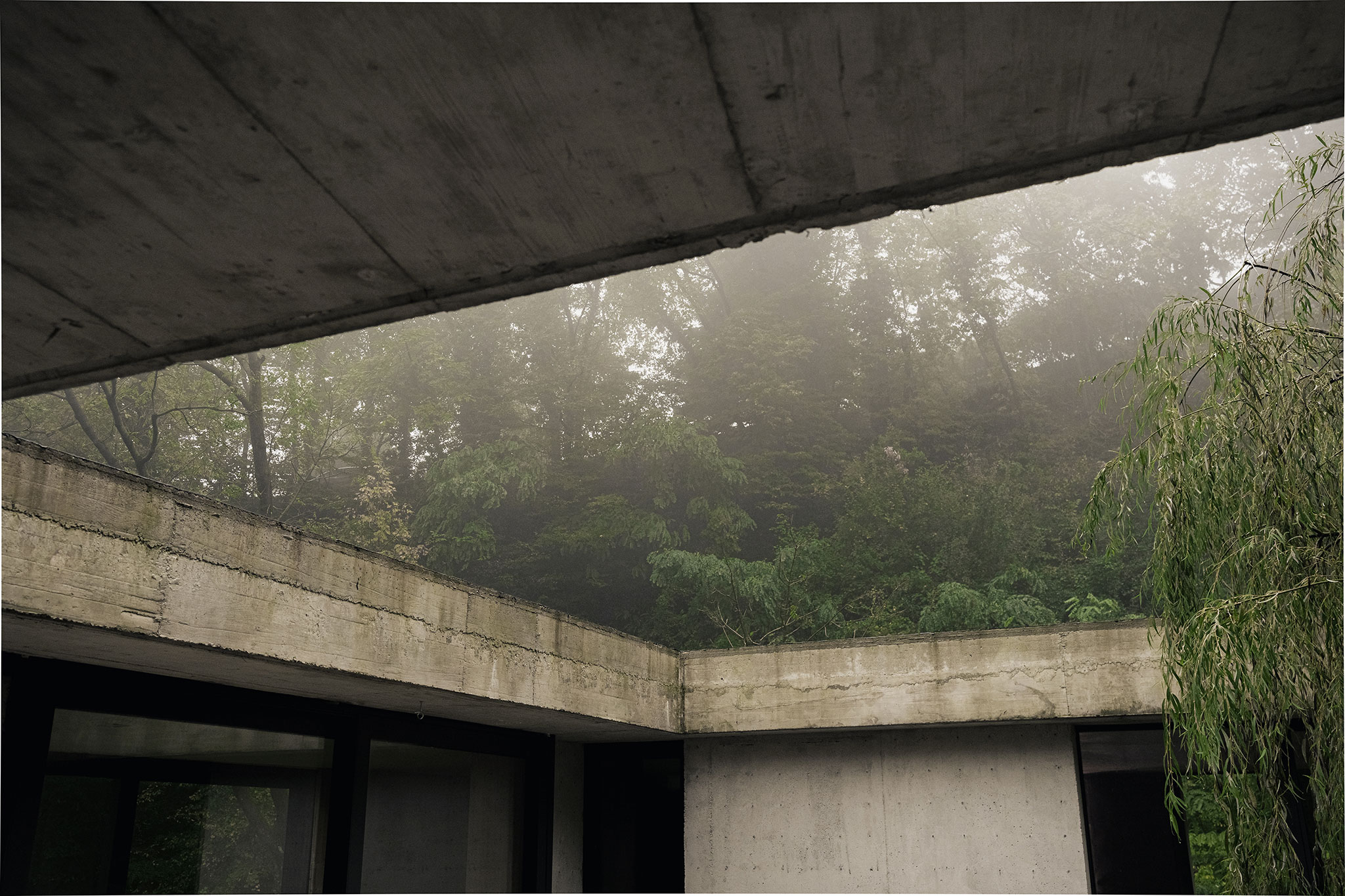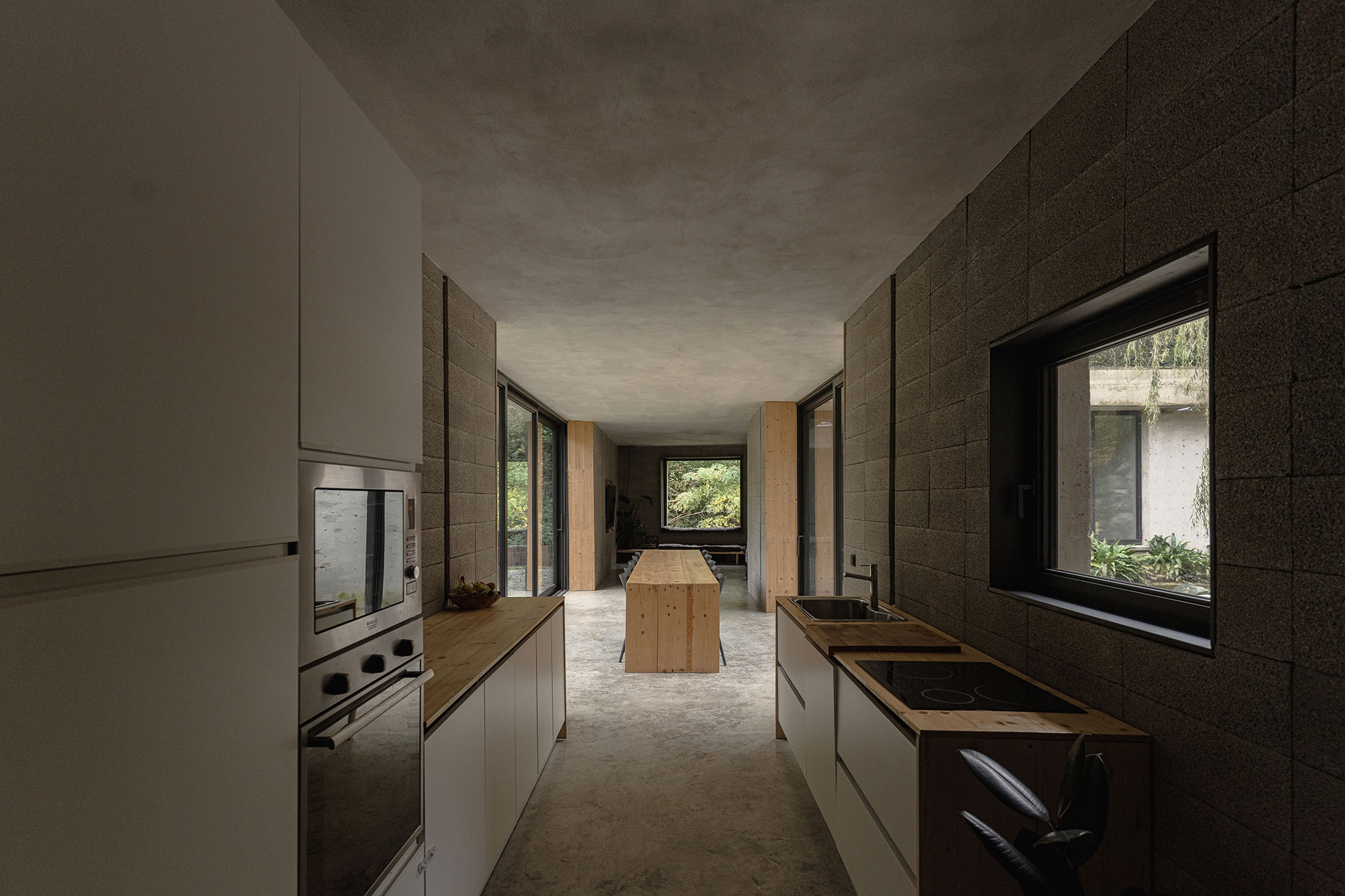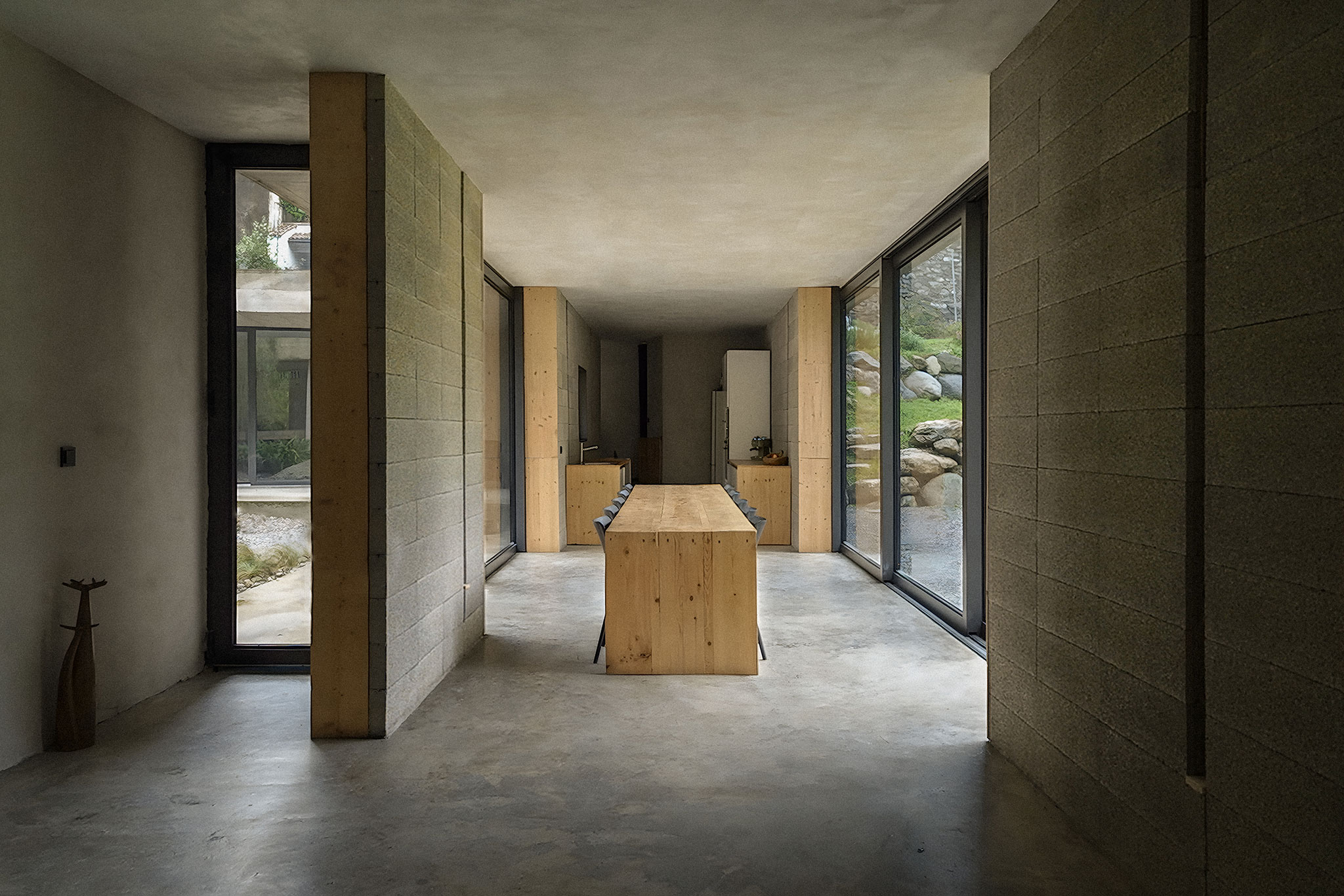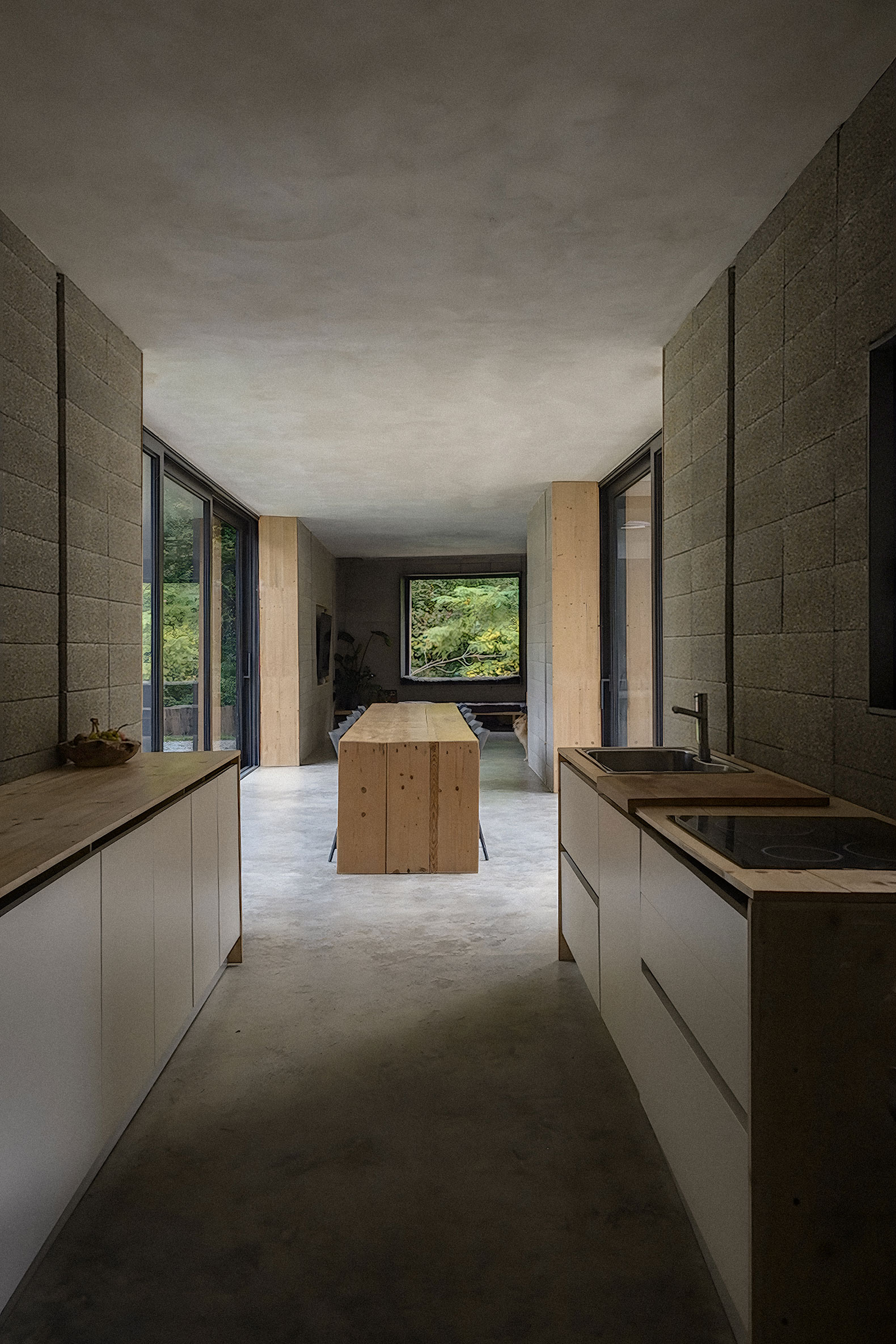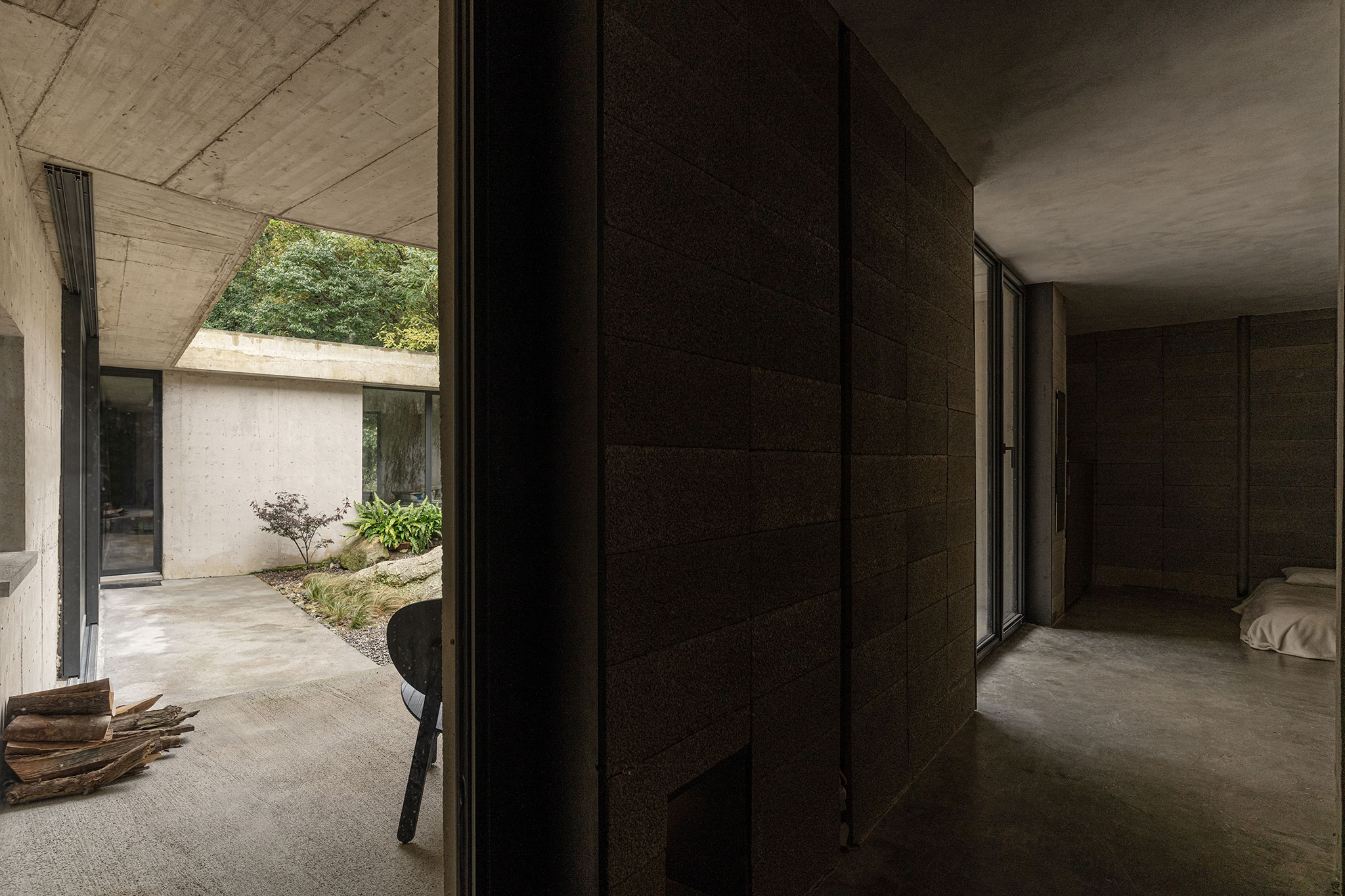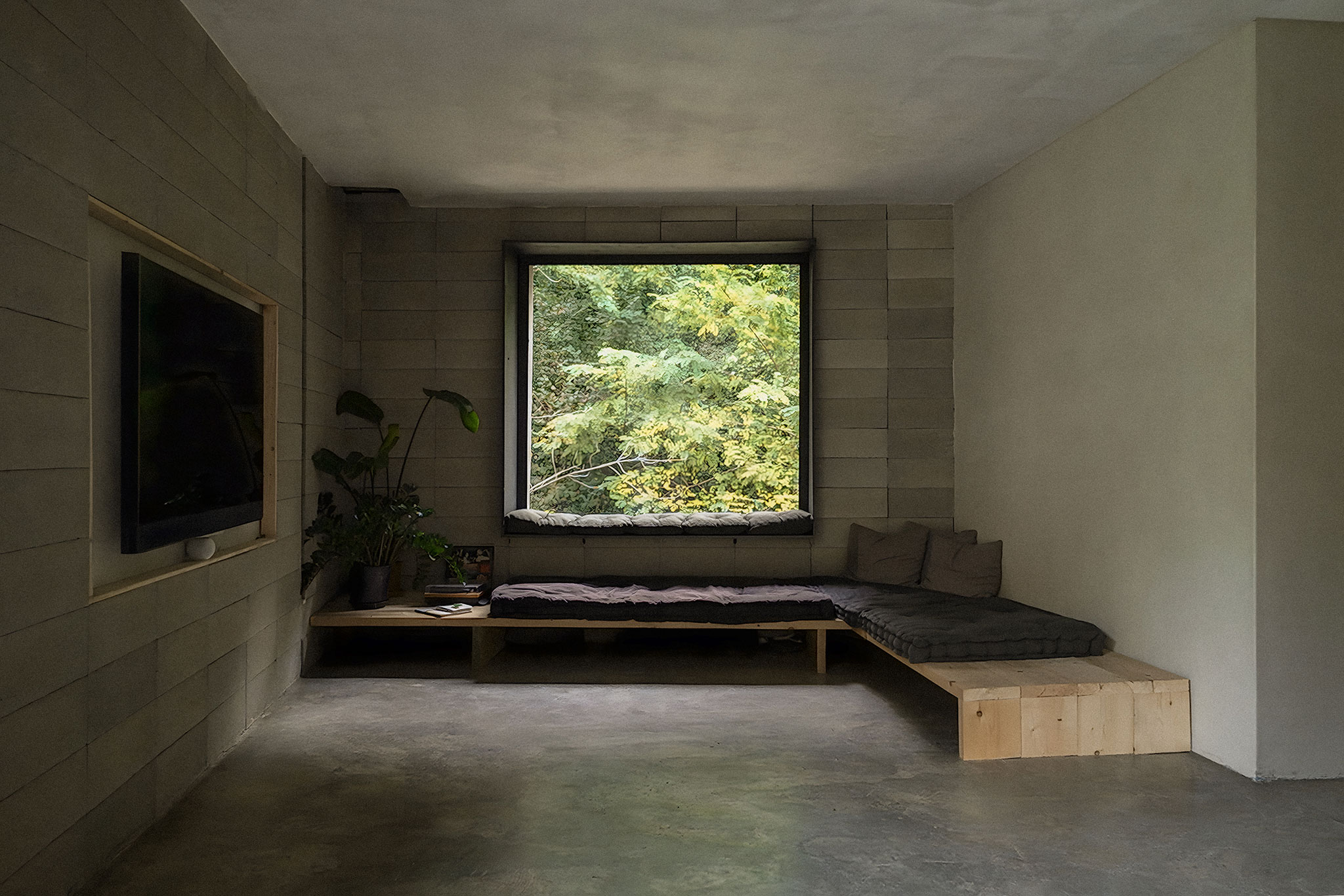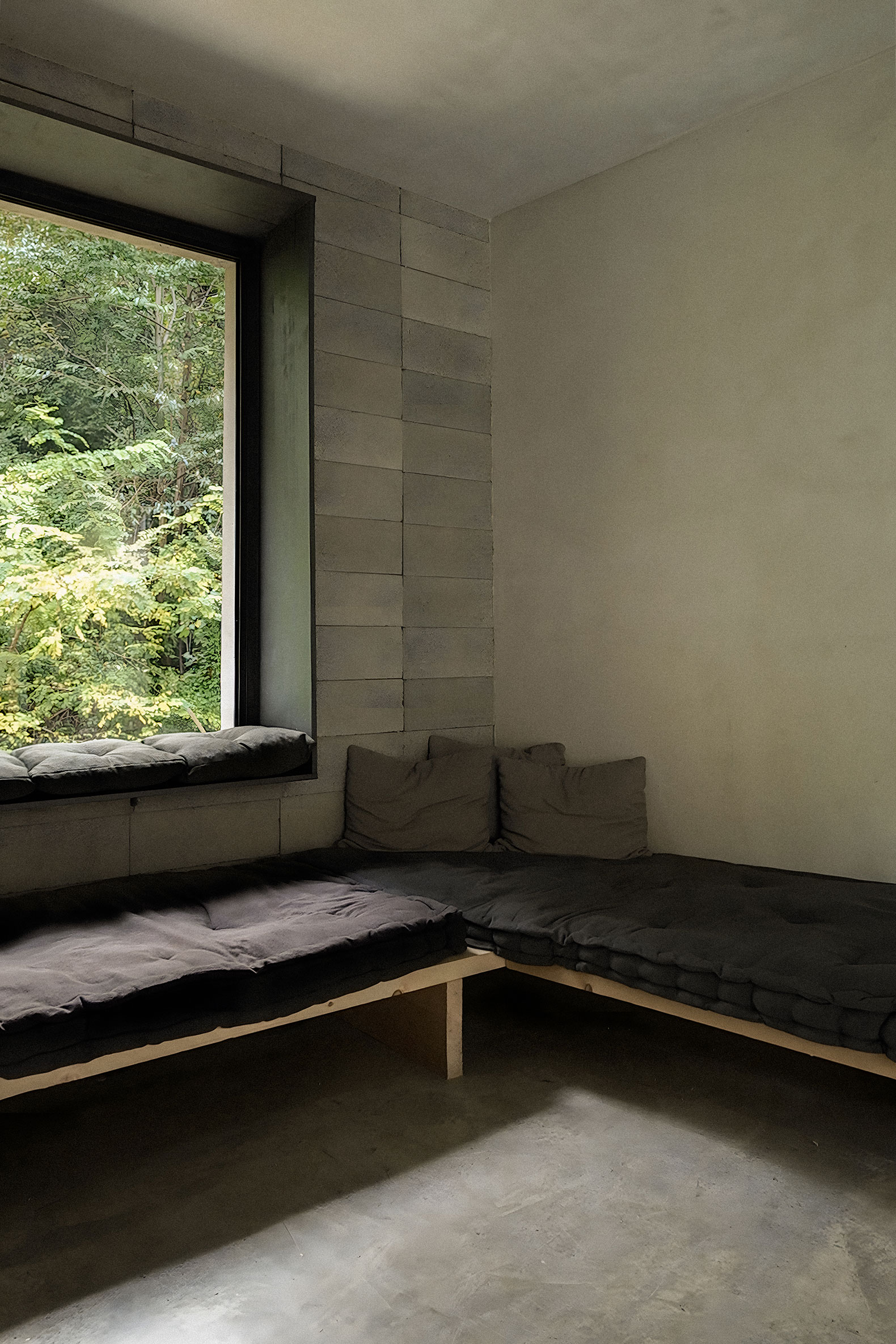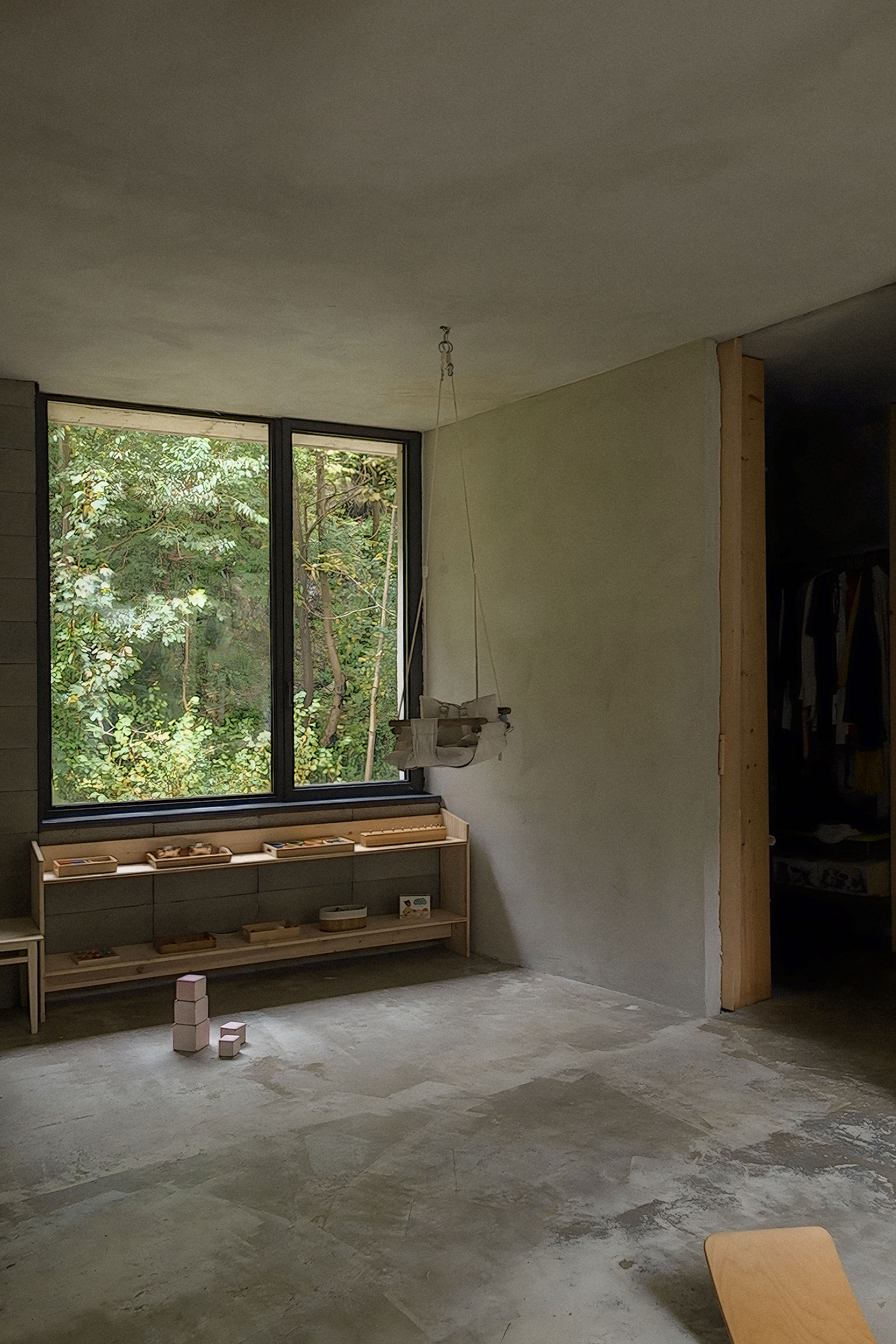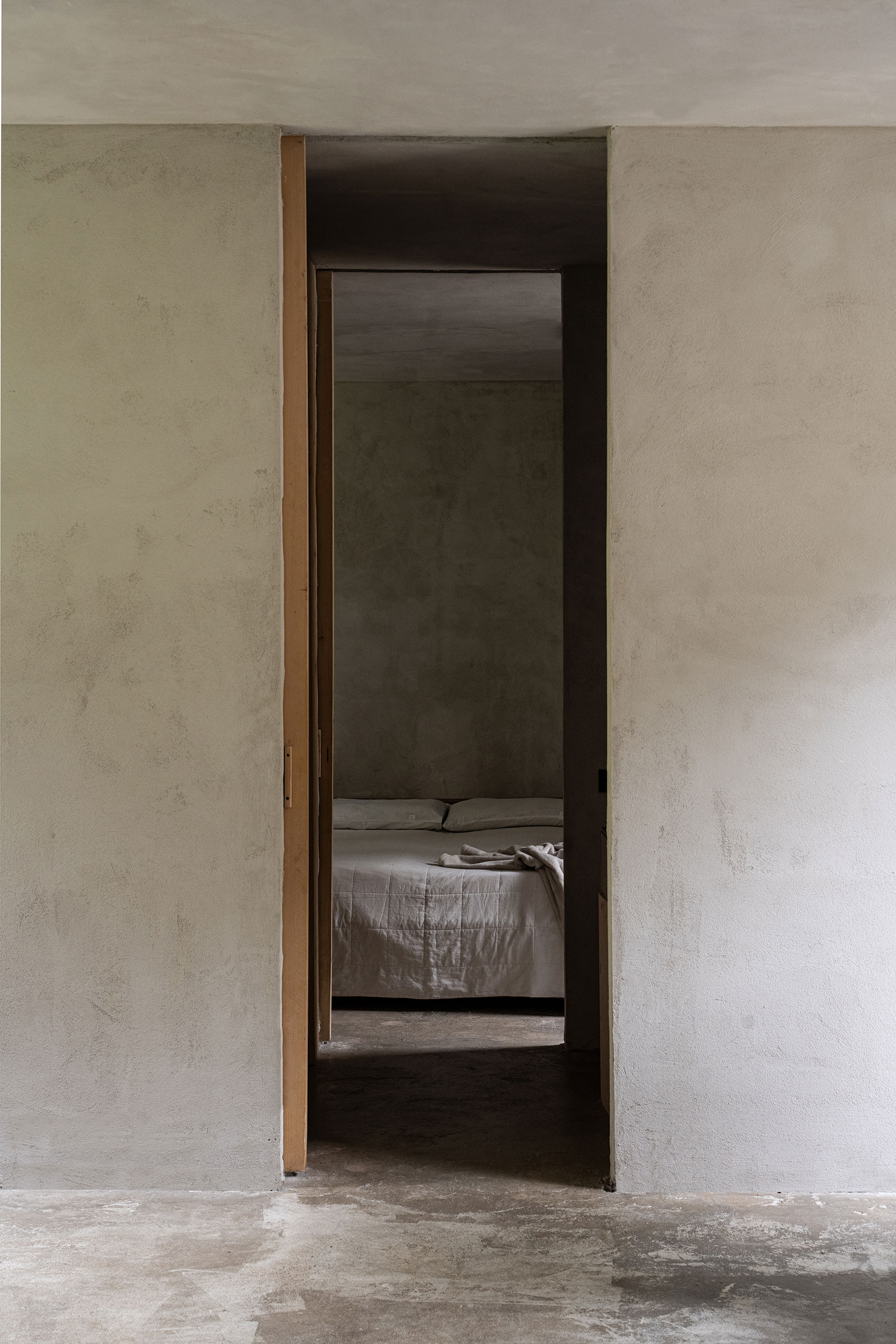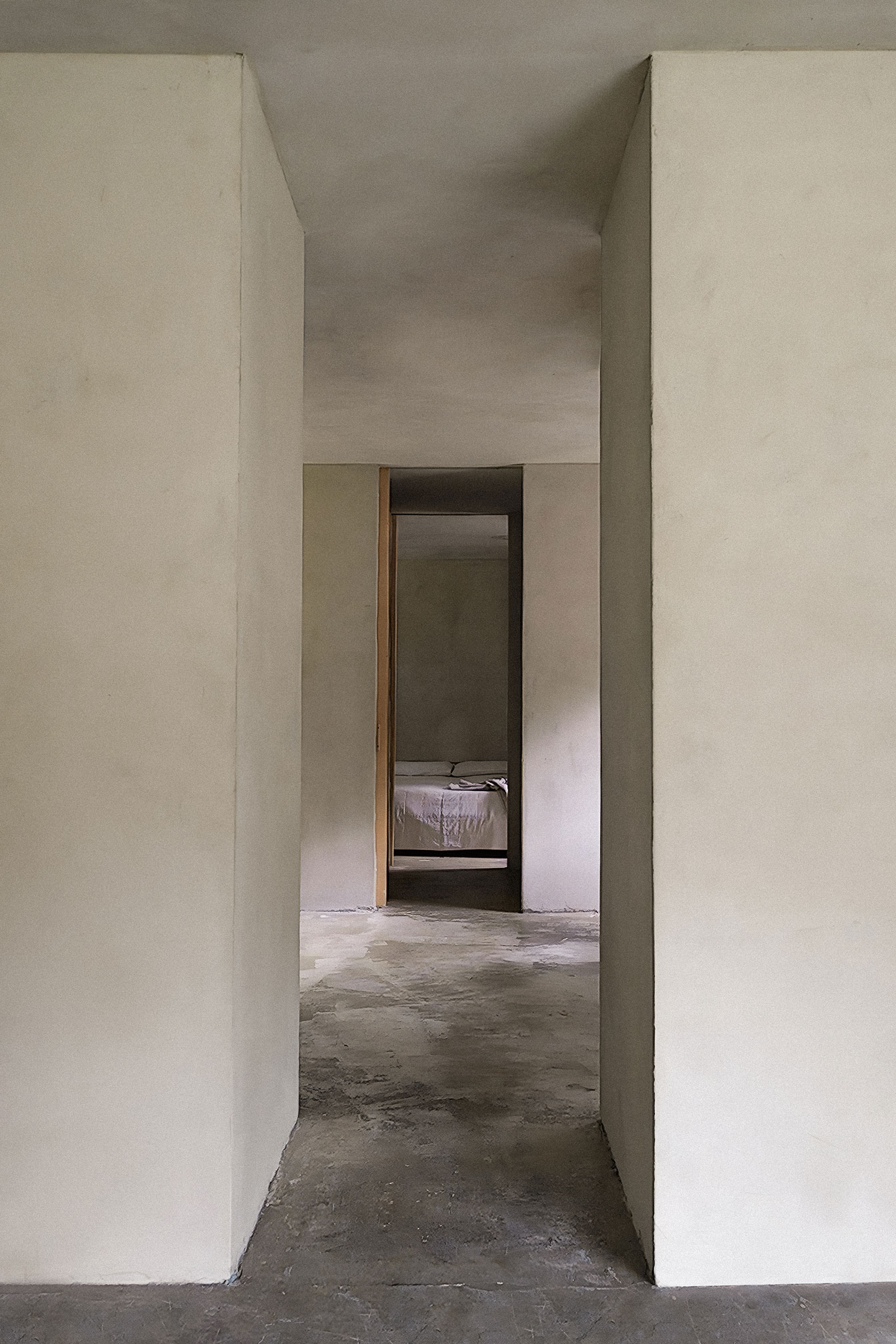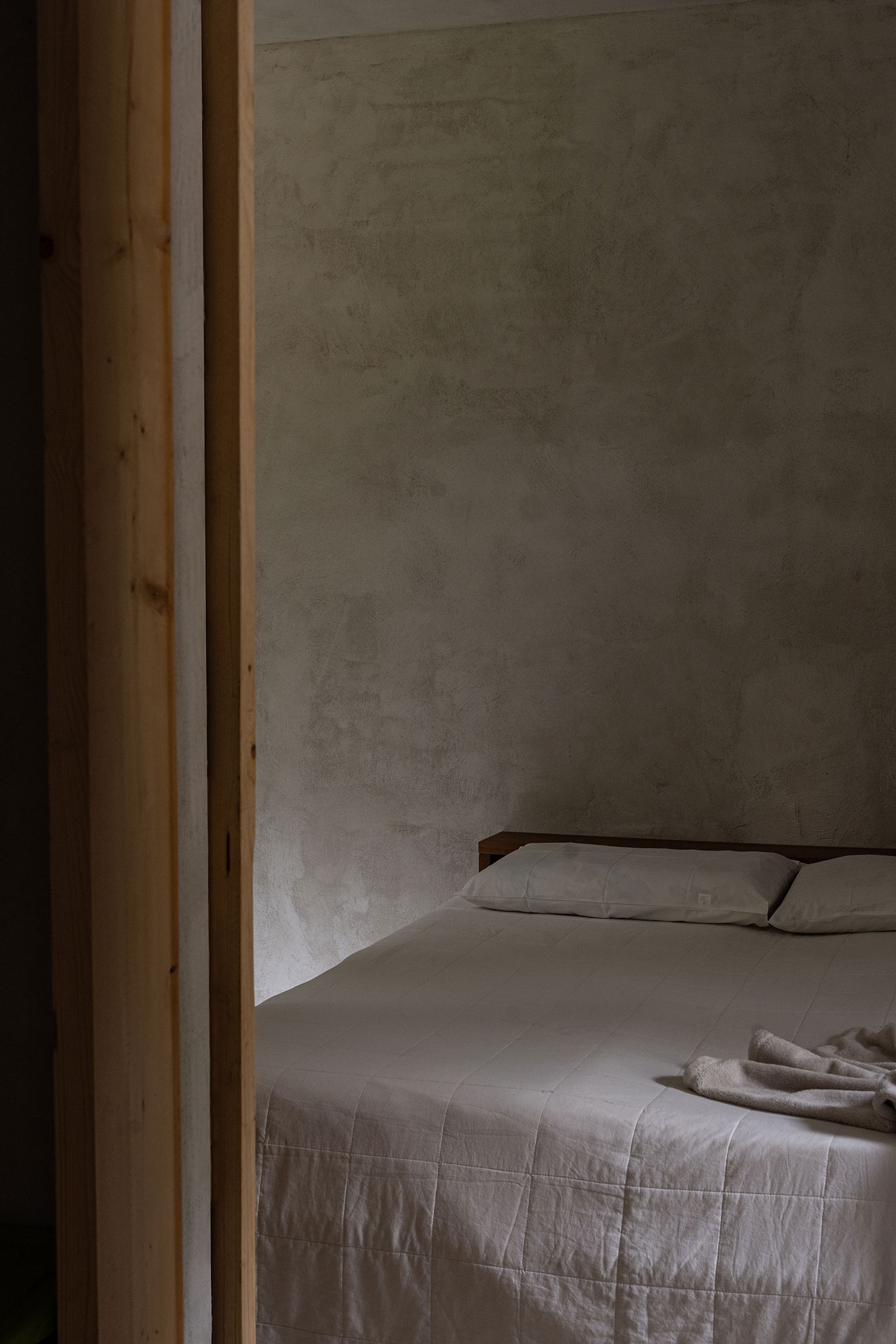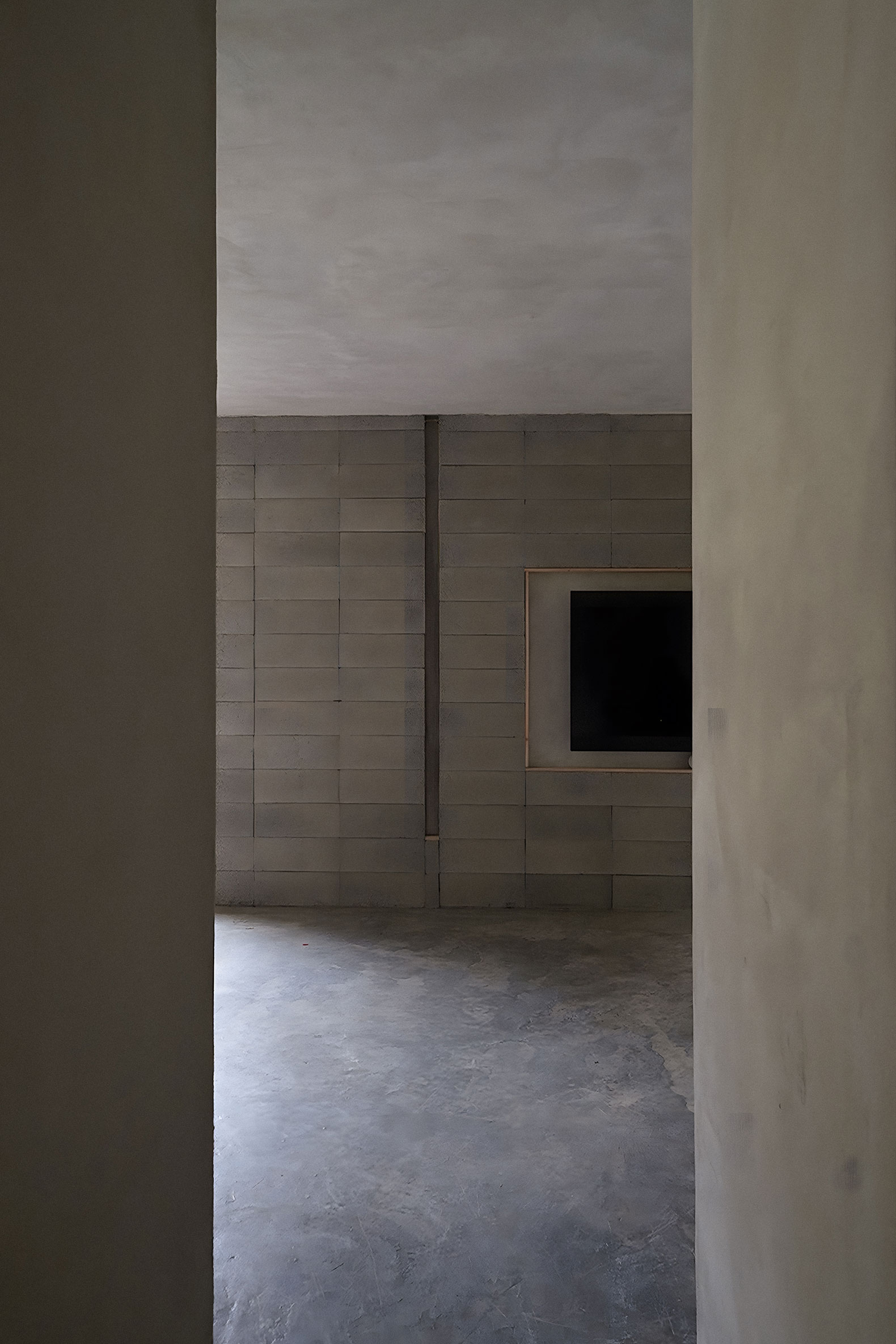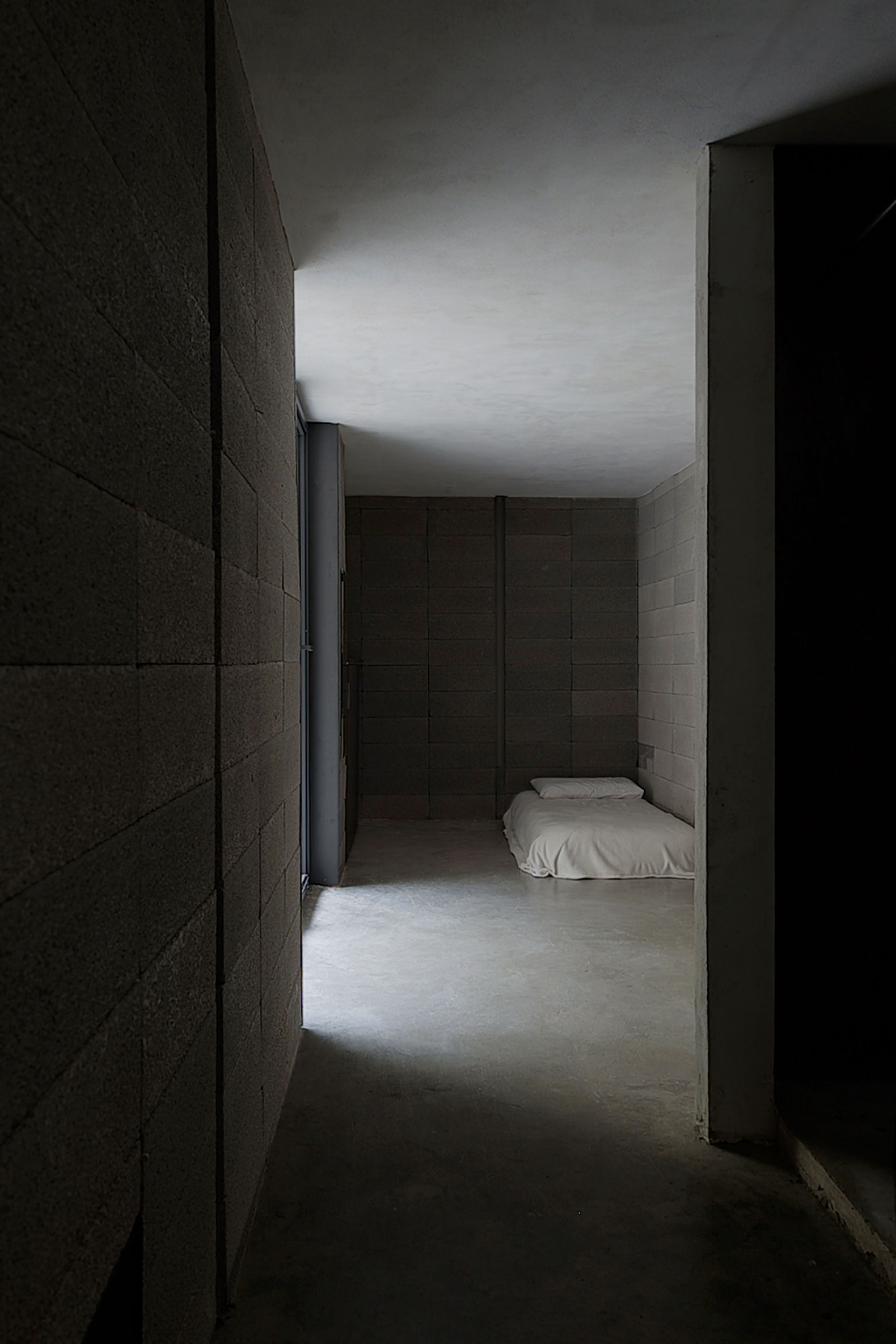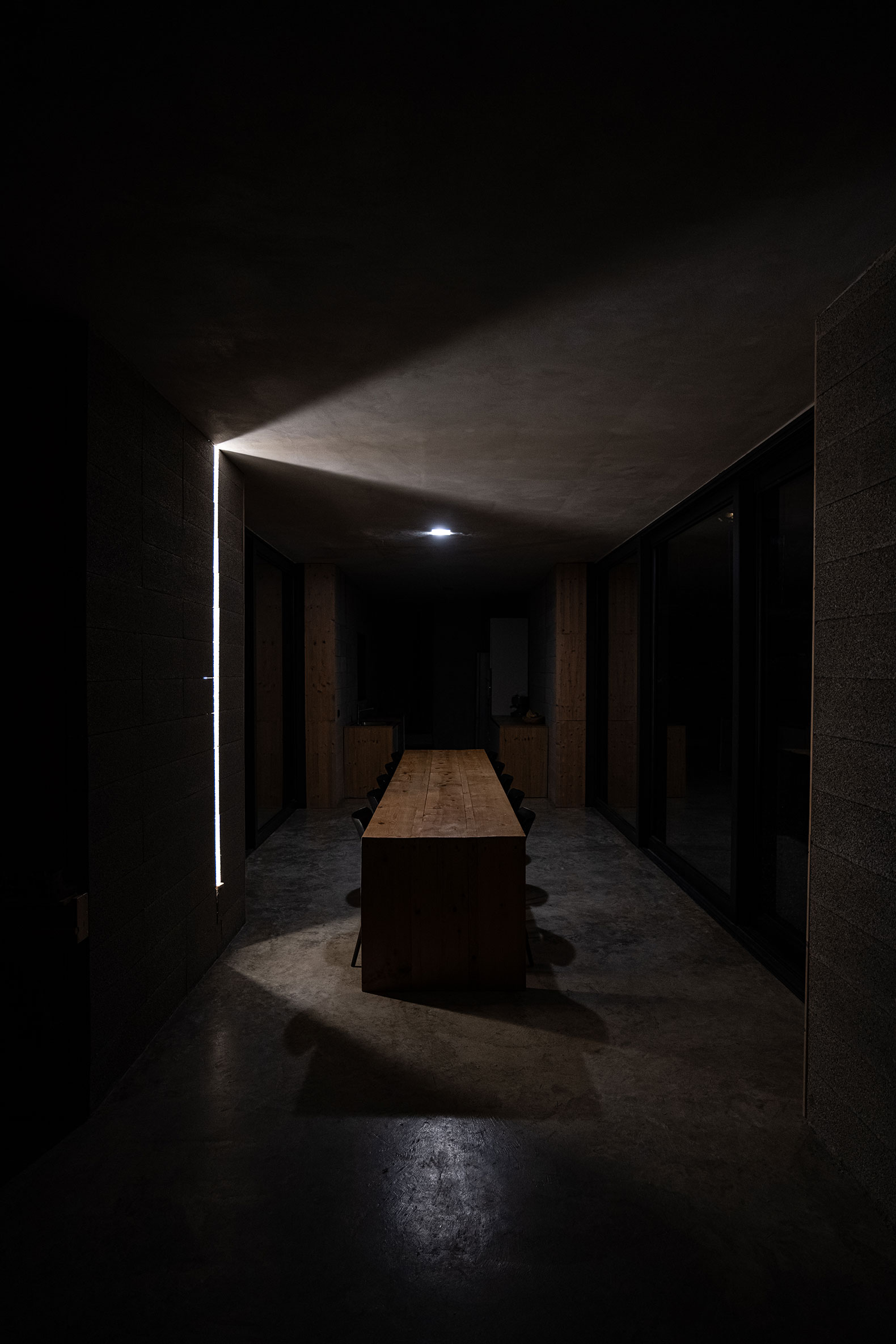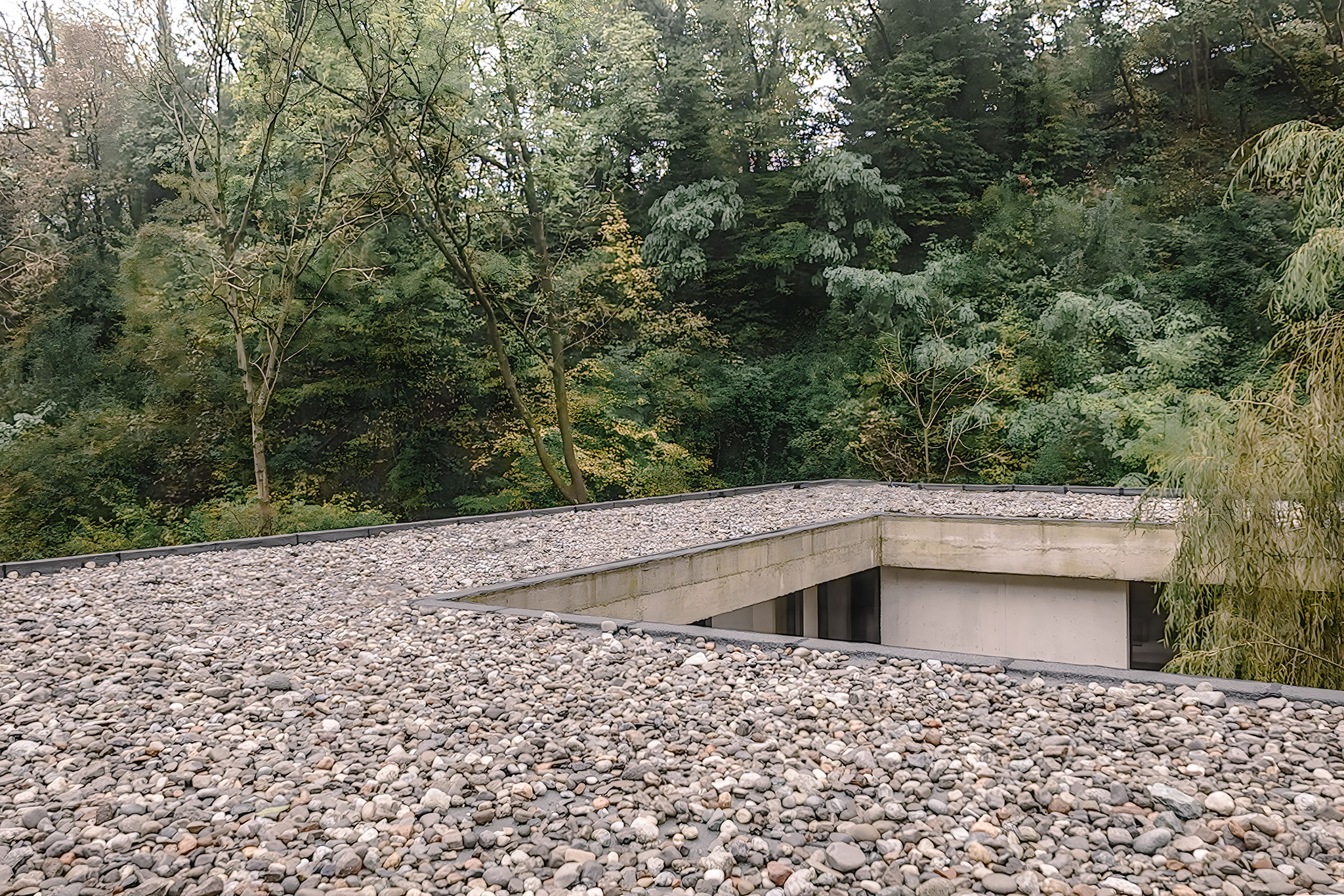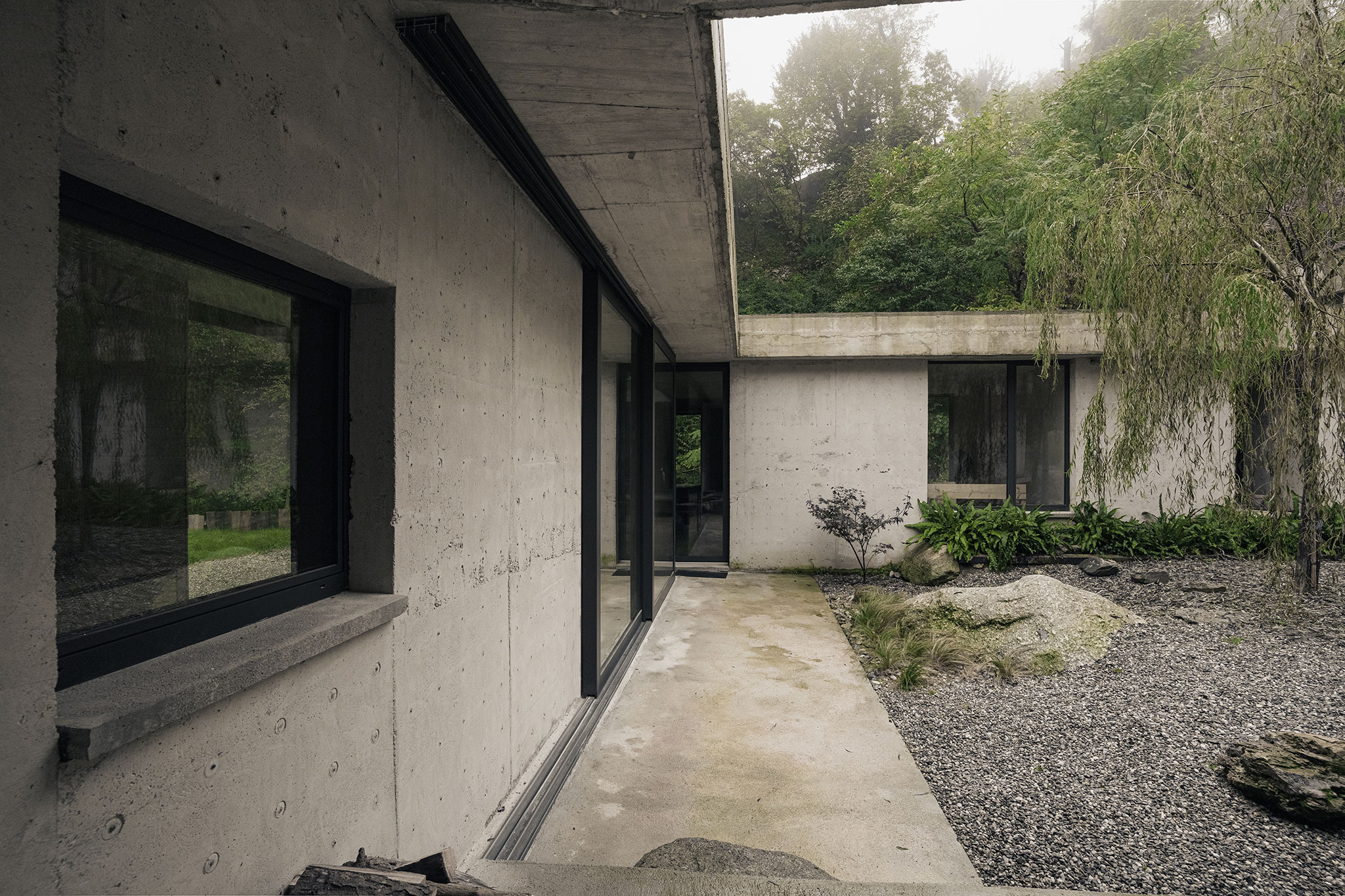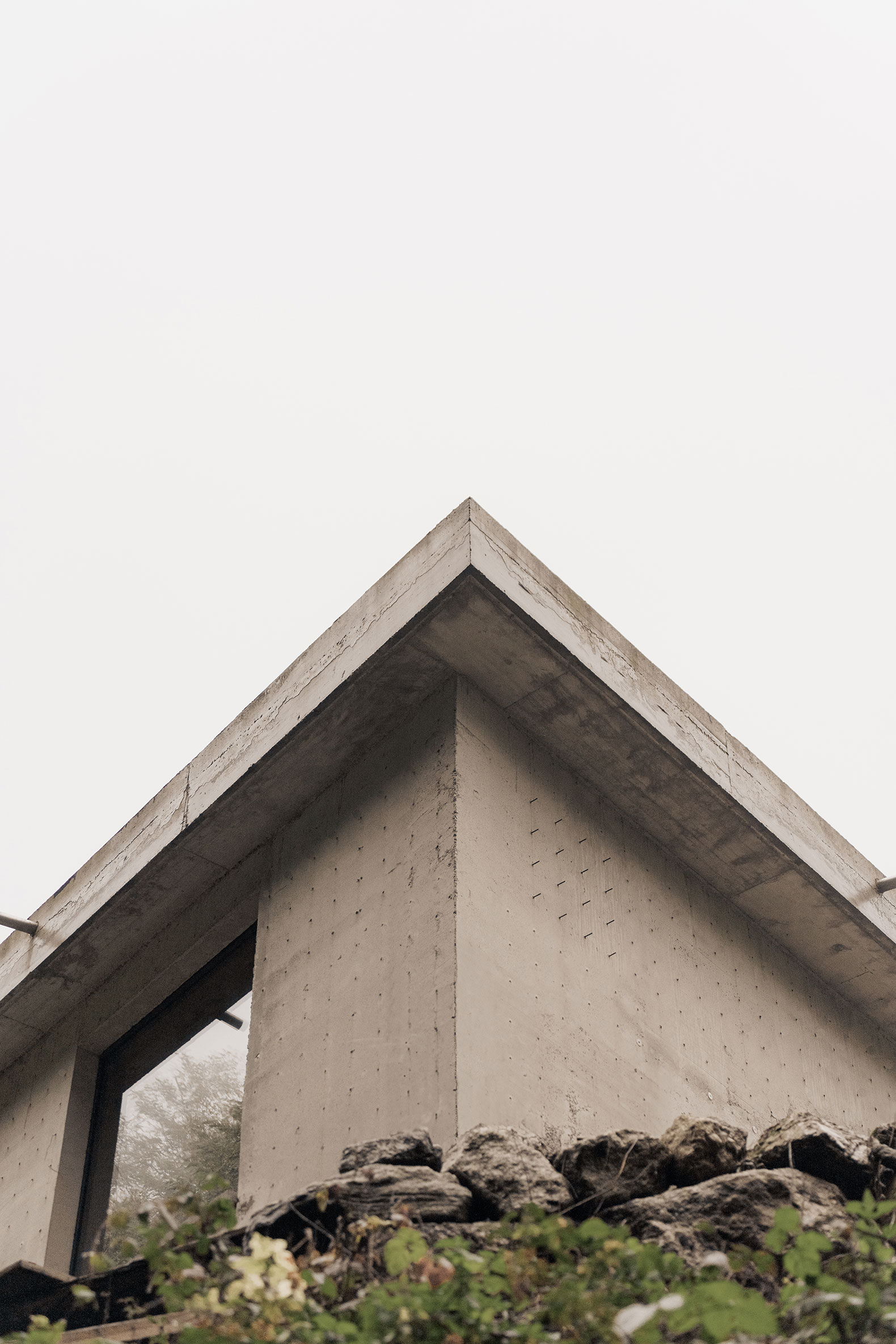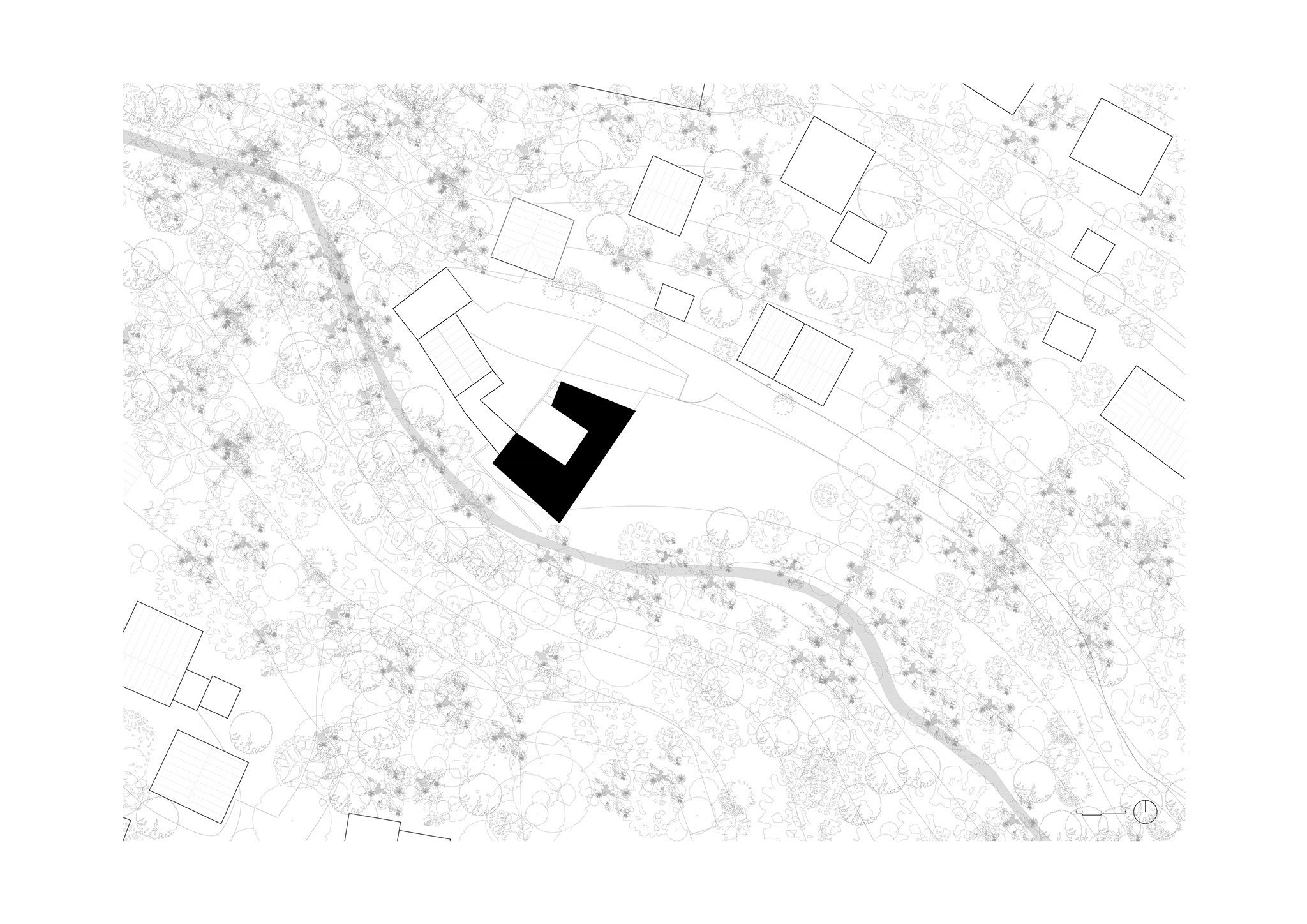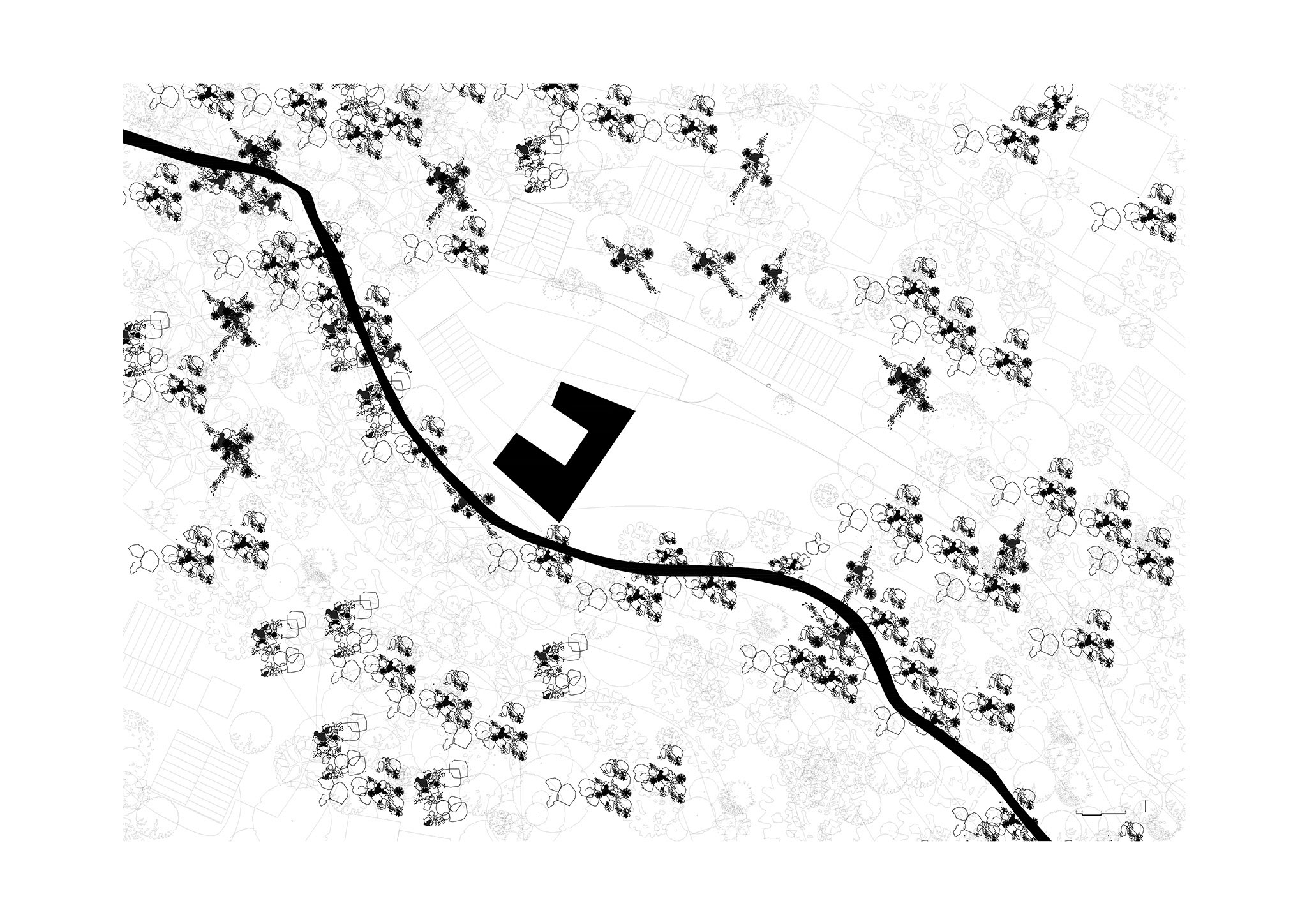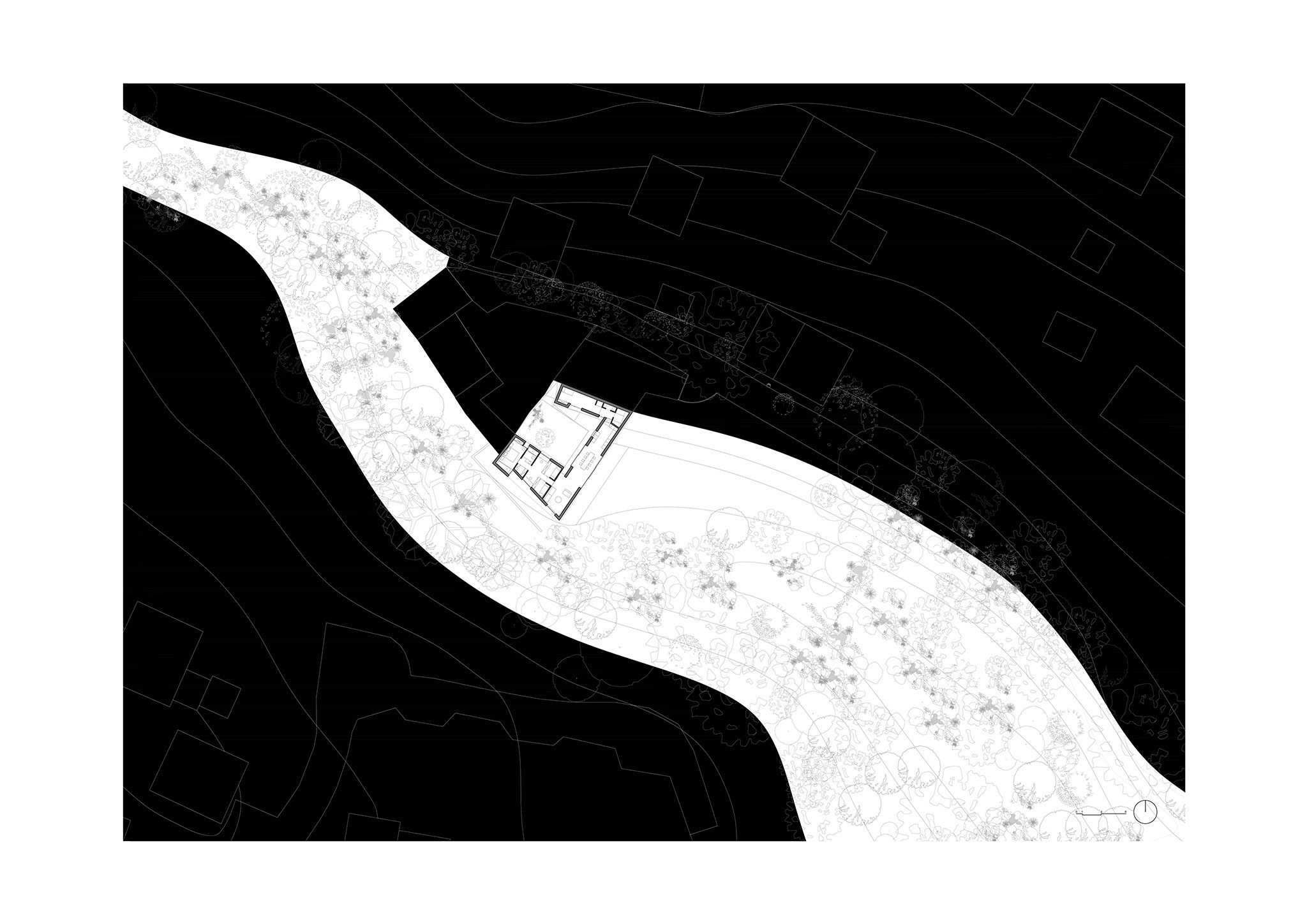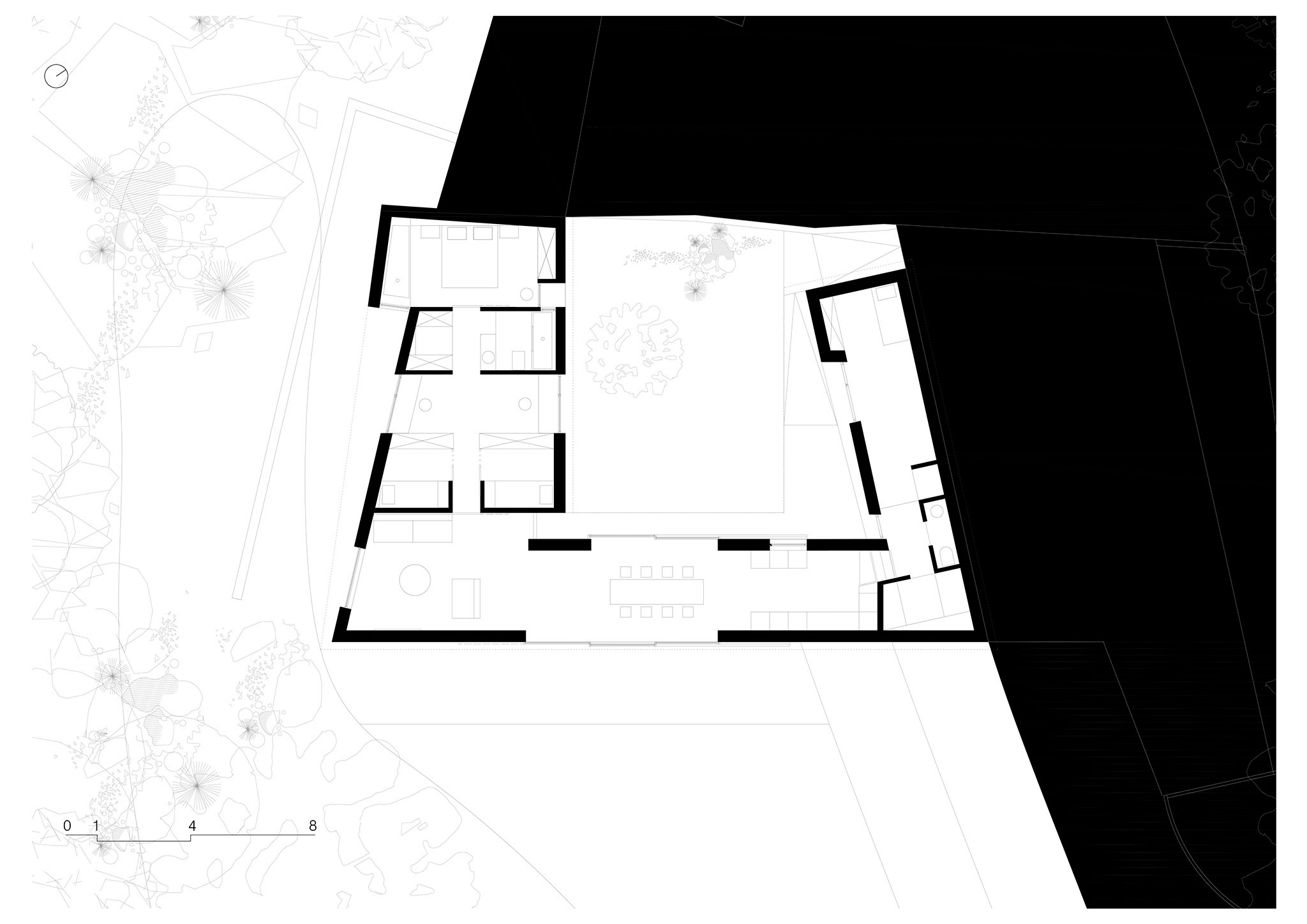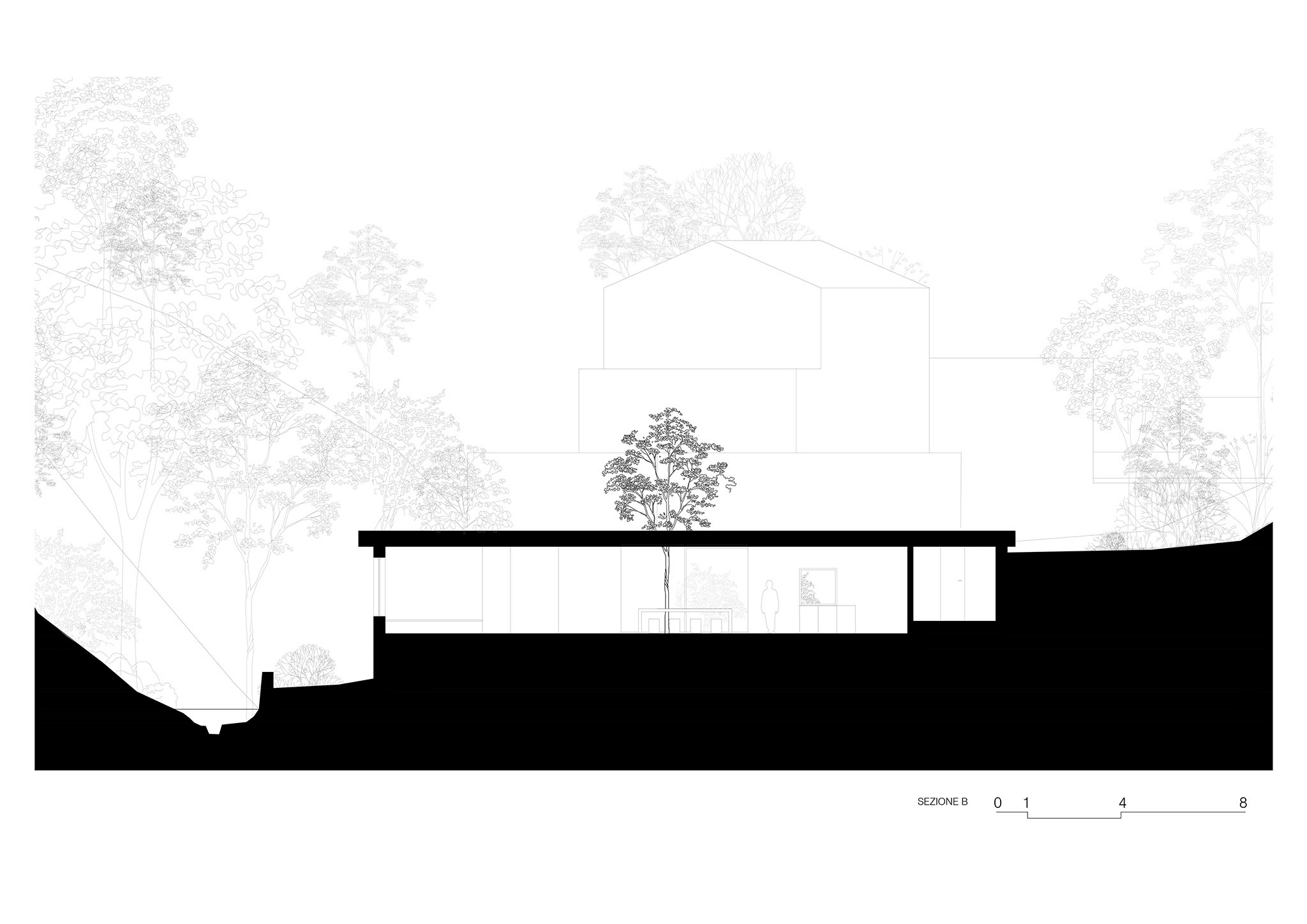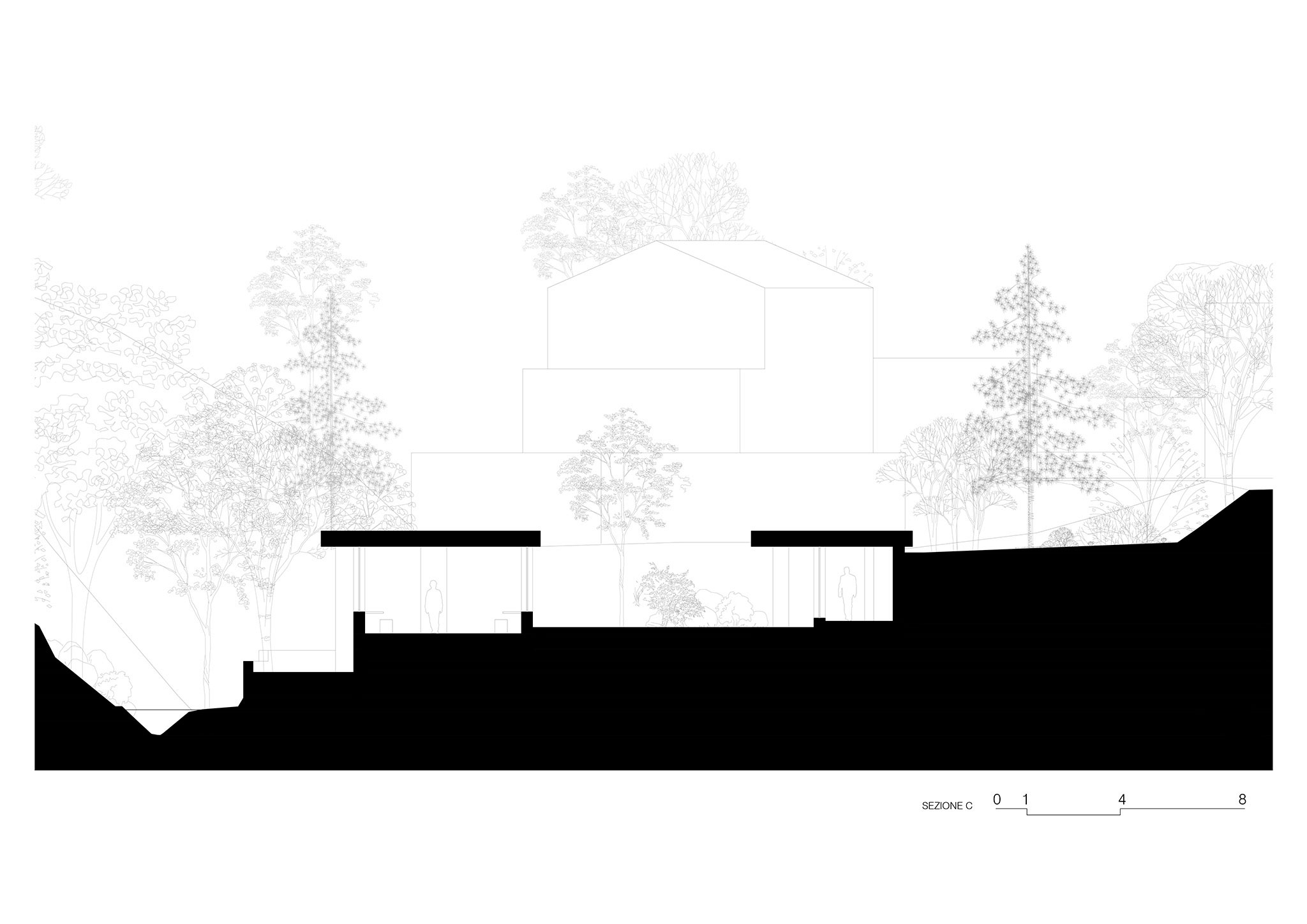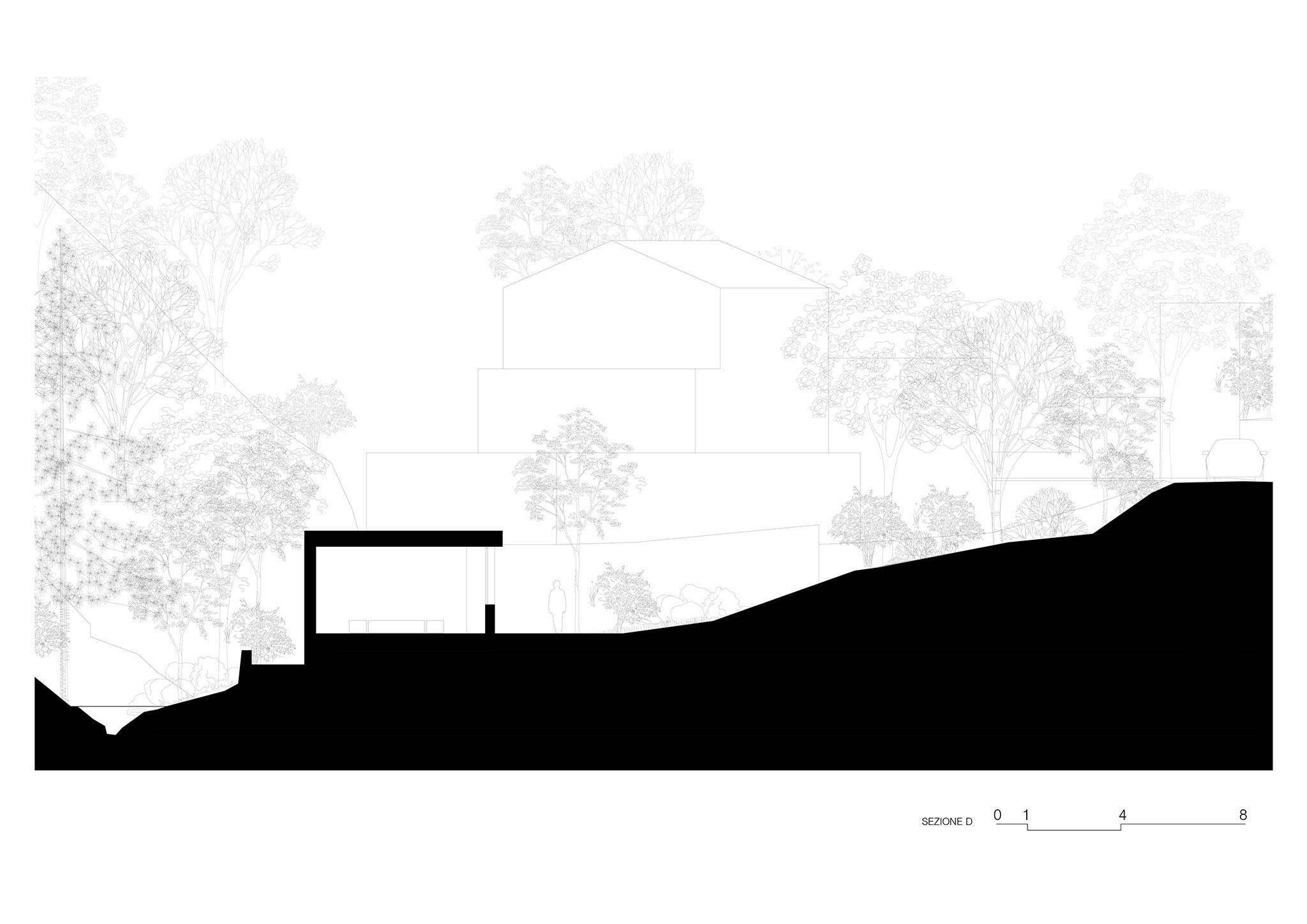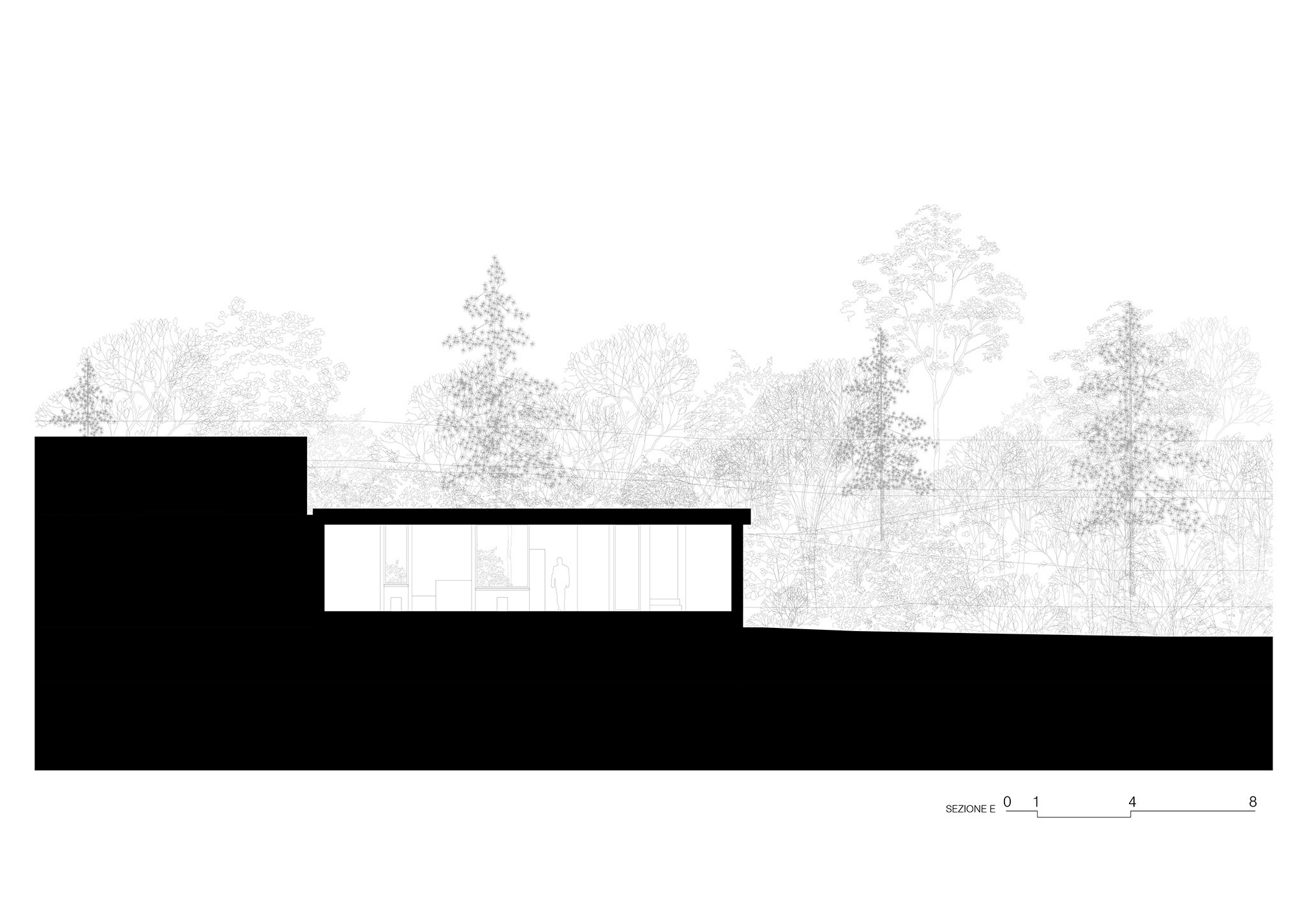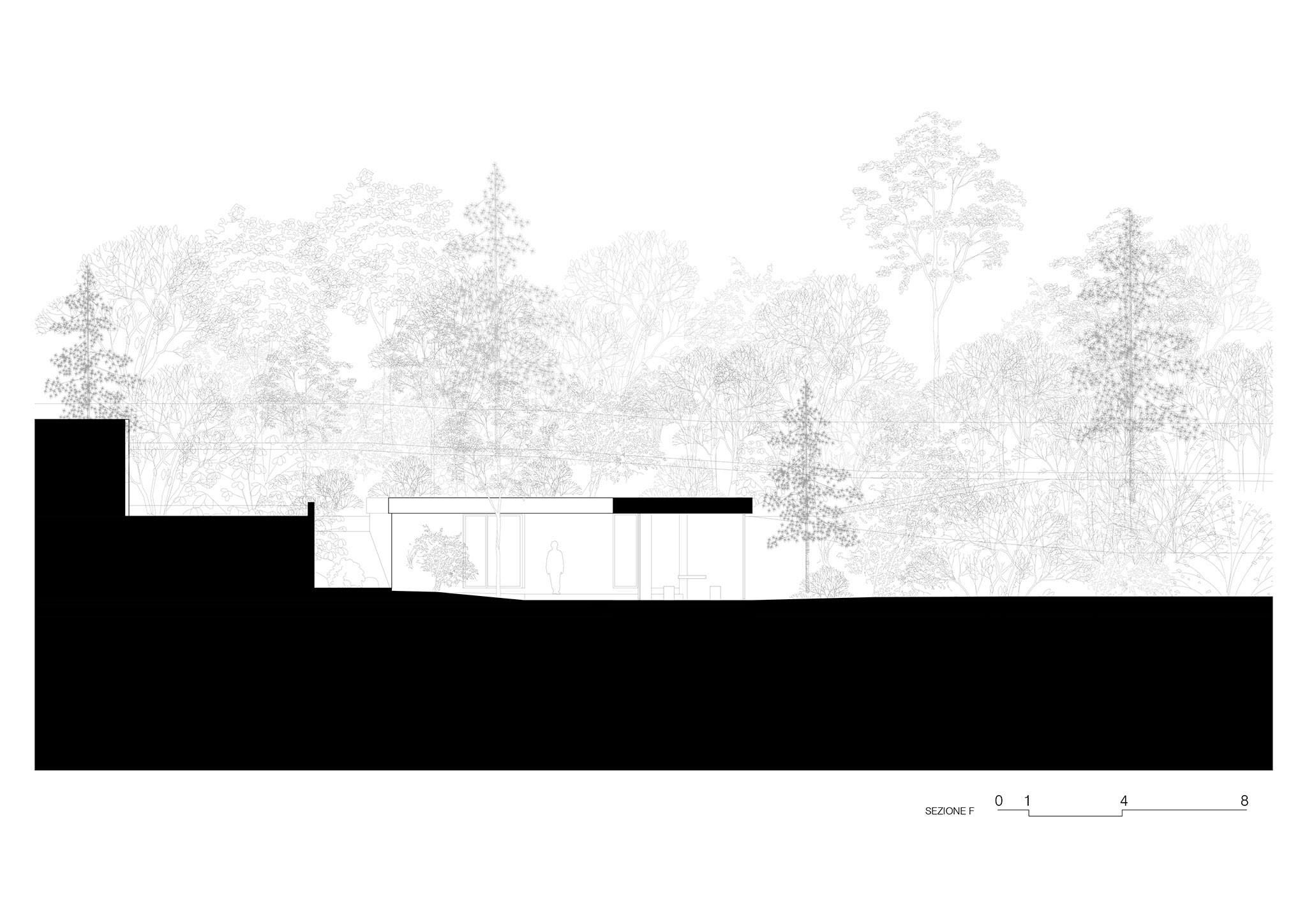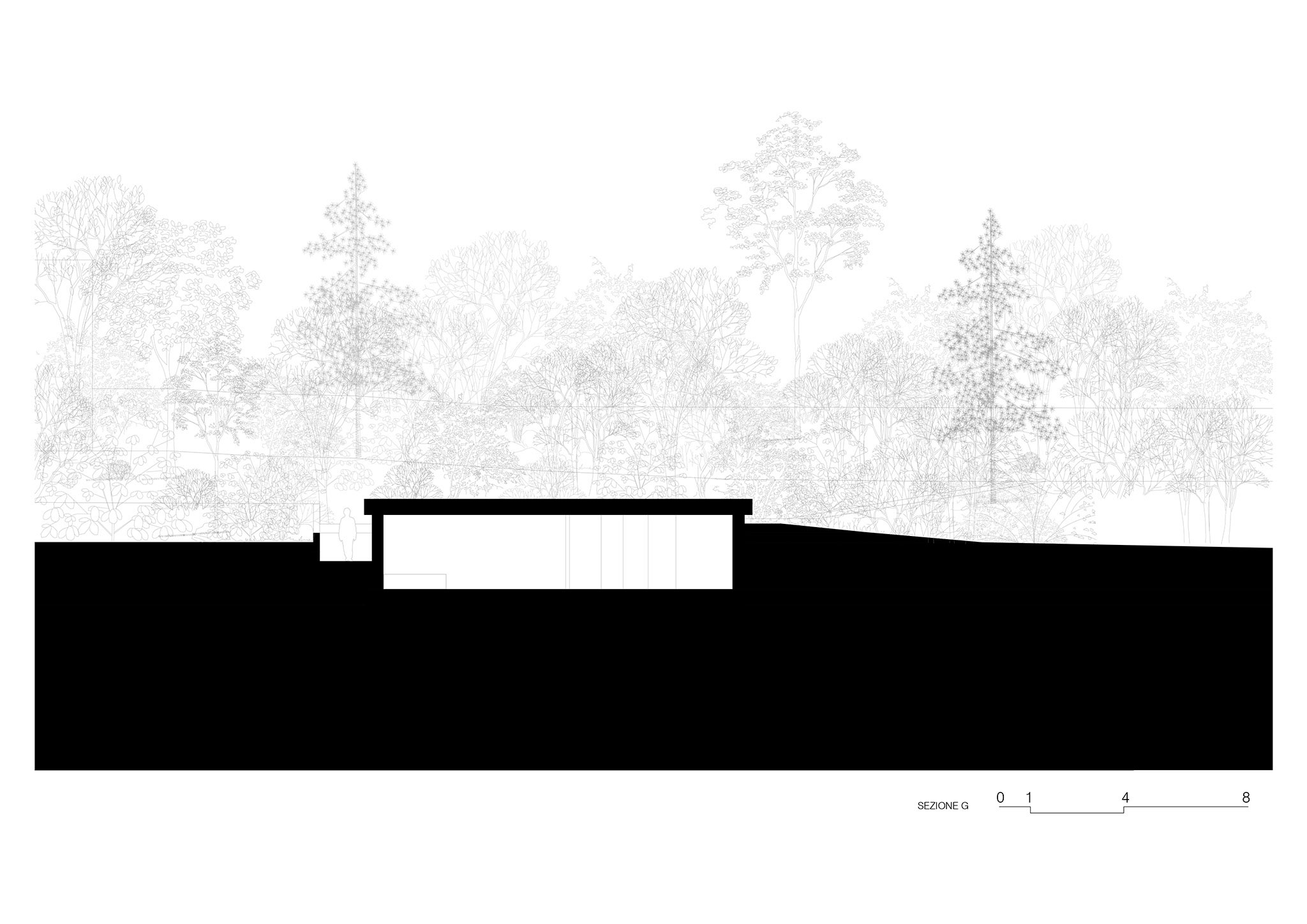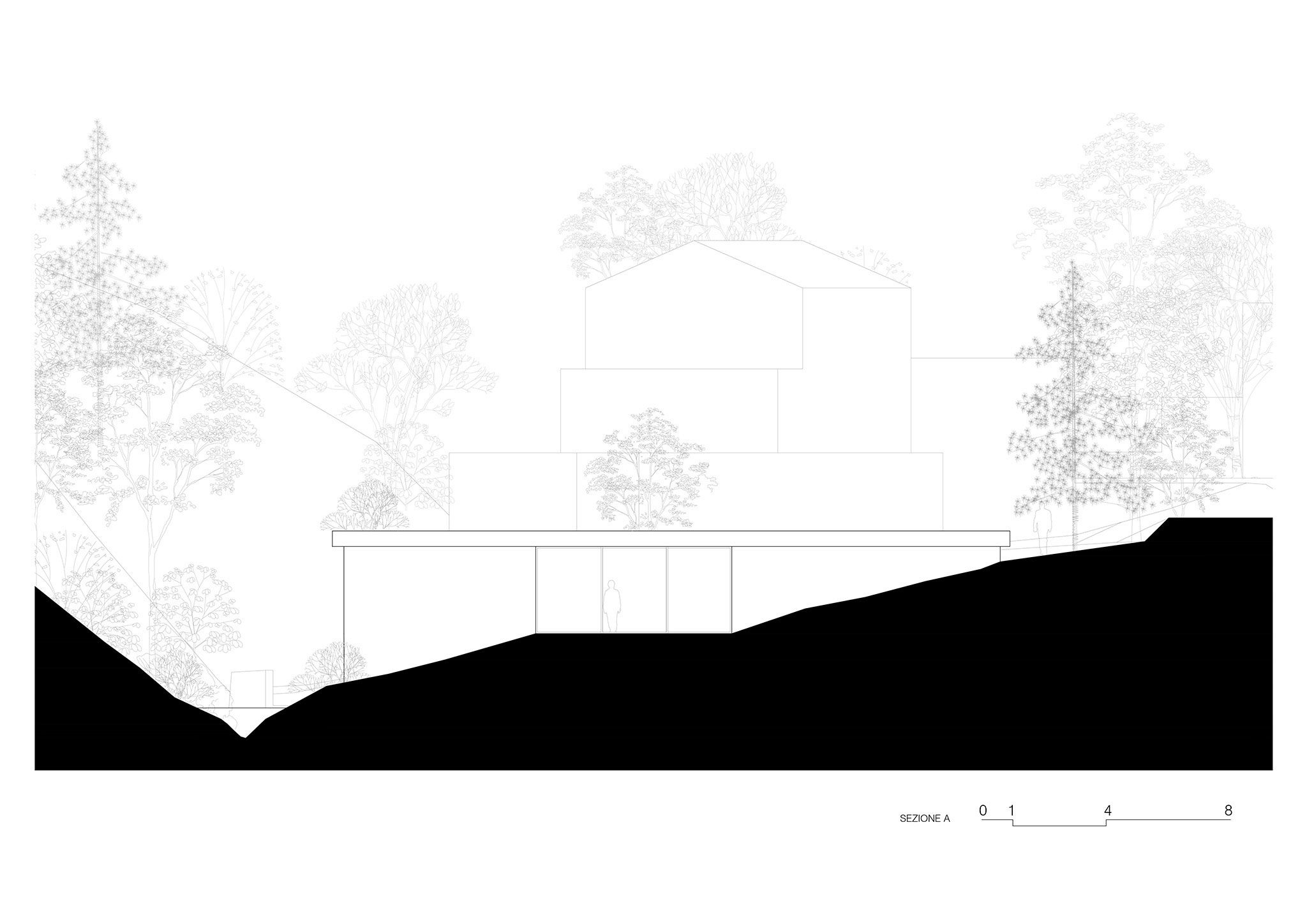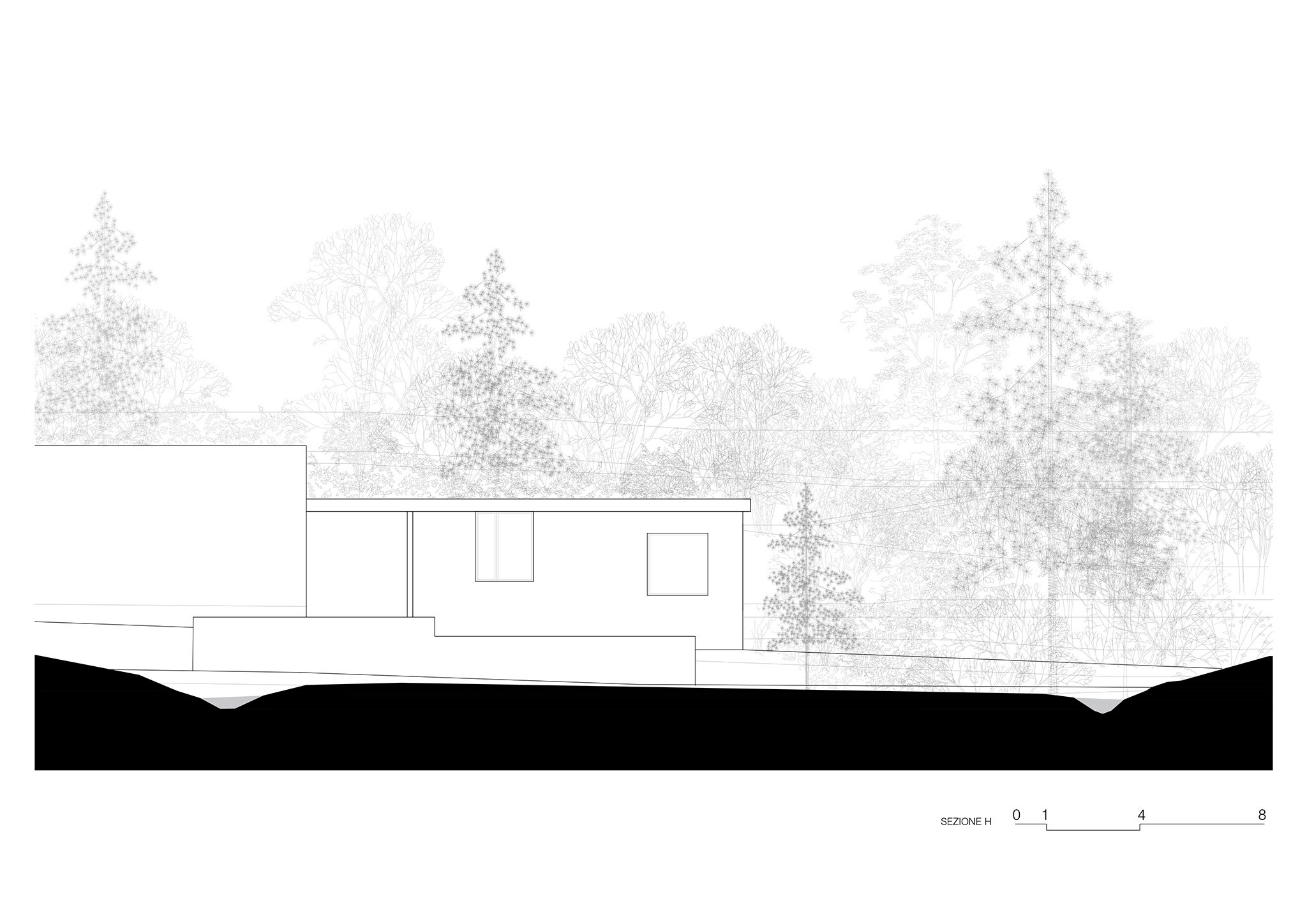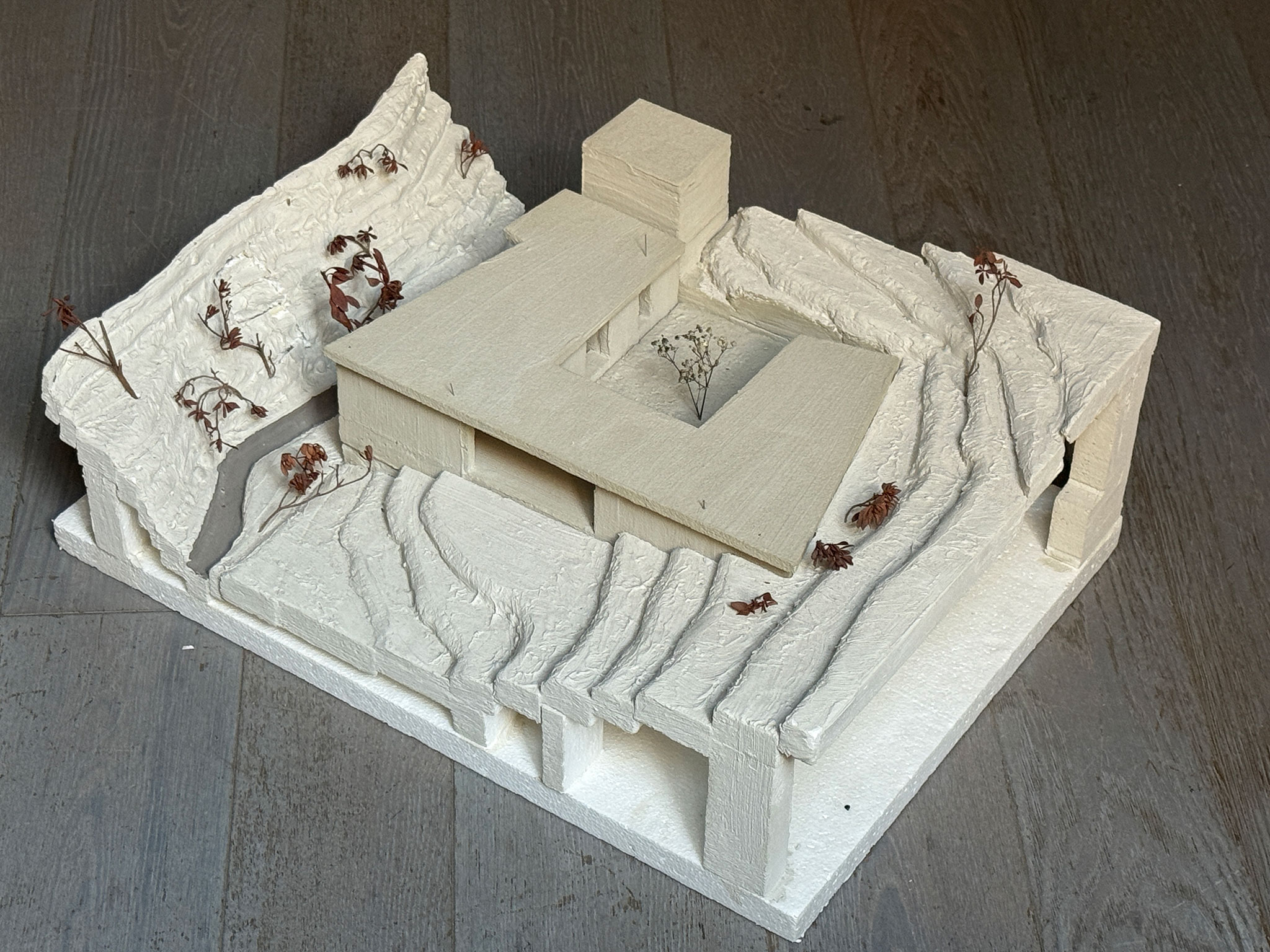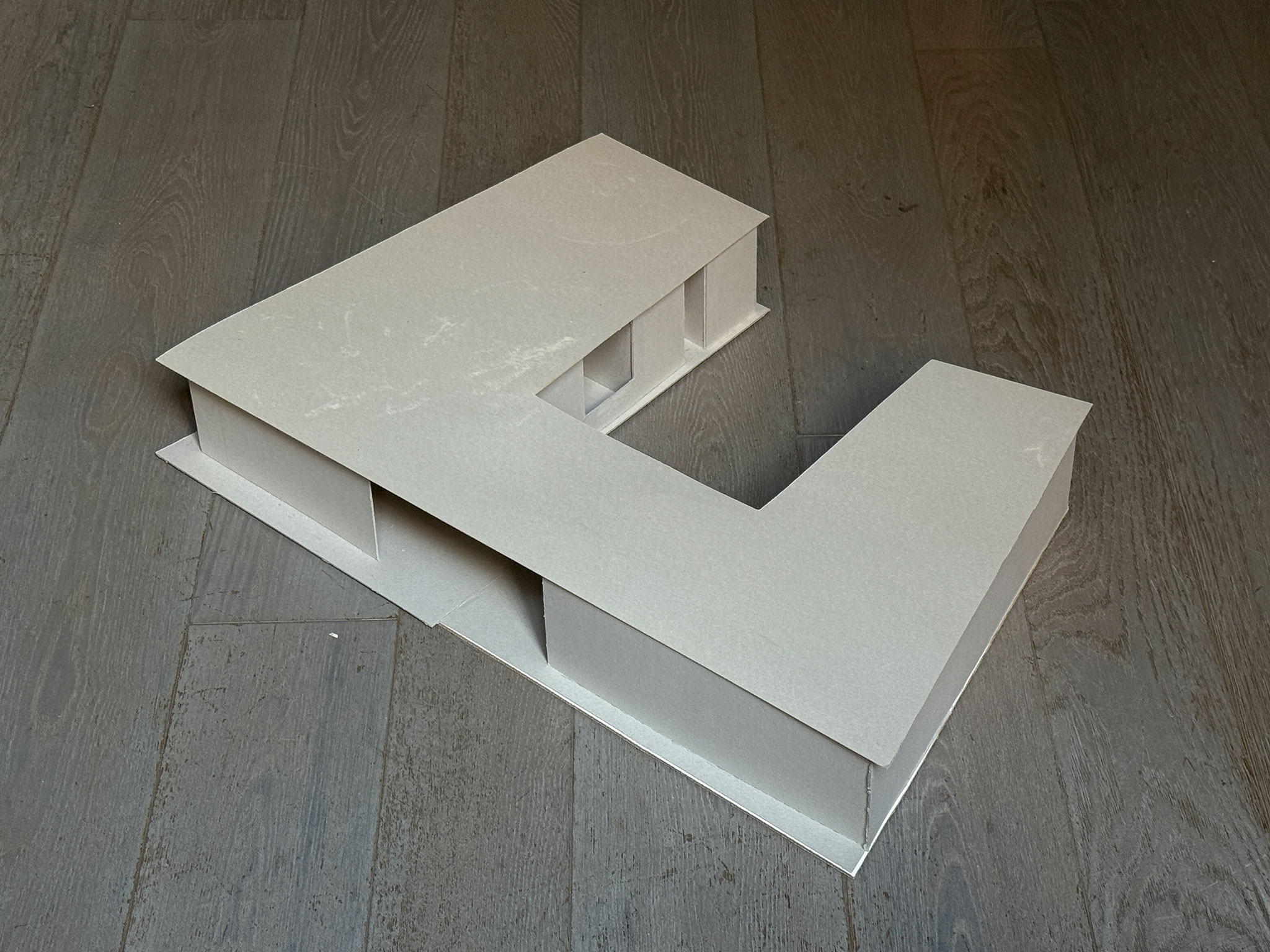

The house, designed by Lorenzo Guzzini Architecture, aims to provide a high-quality living space whose value is not determined by economic privilege. Situated along a riverbed, it transforms a former garage and chicken coop into a single dwelling. The building's volume unfolds along a narrow, winding floor plan with expansive openings, where natural light plays a fundamental role, generating an interior atmosphere that constantly shifts throughout the day.
Cost reduction was the central challenge of this project: a demonstration that architects, through technical expertise and creative invention, can effectively reduce construction costs by designing innovative structural details.
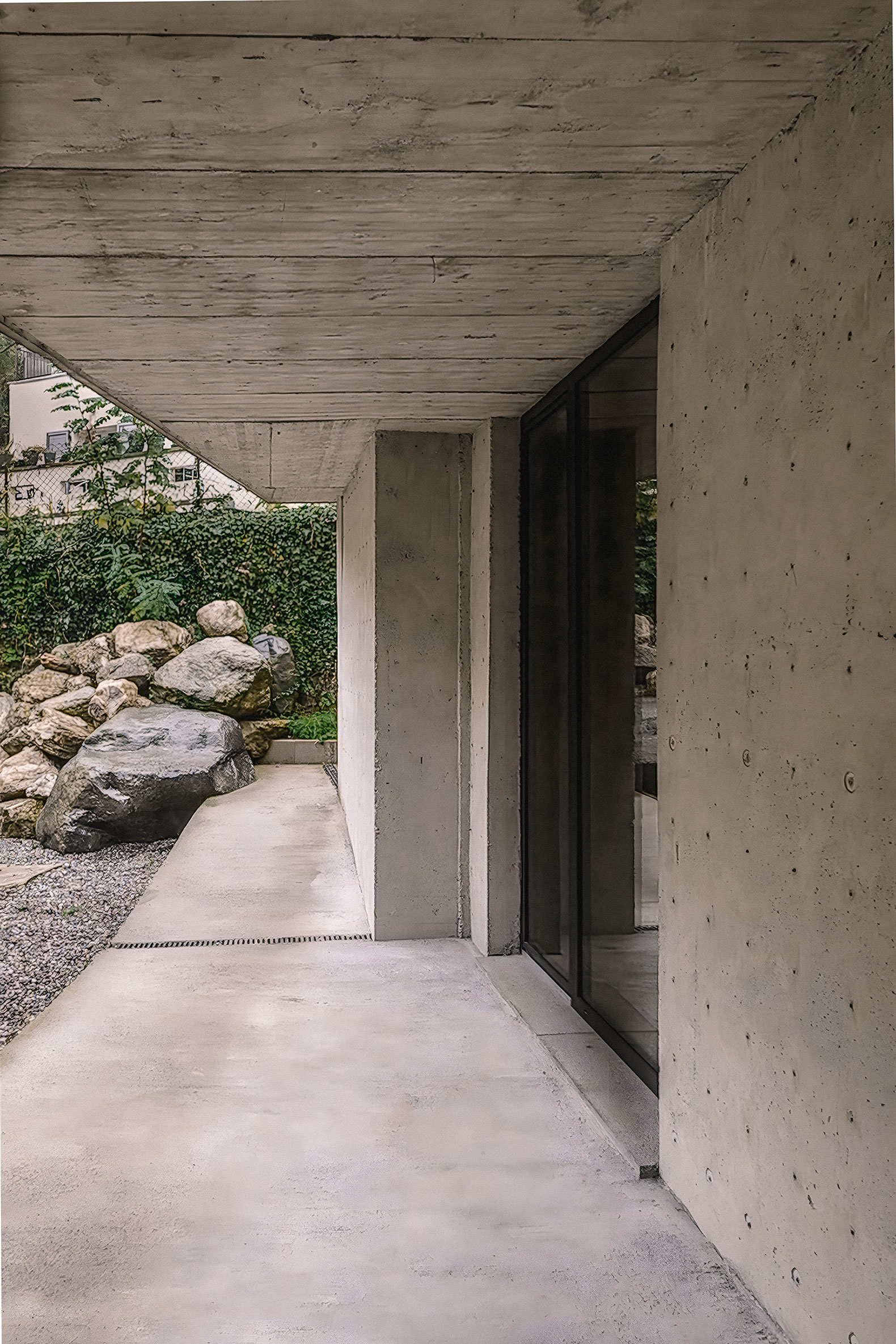
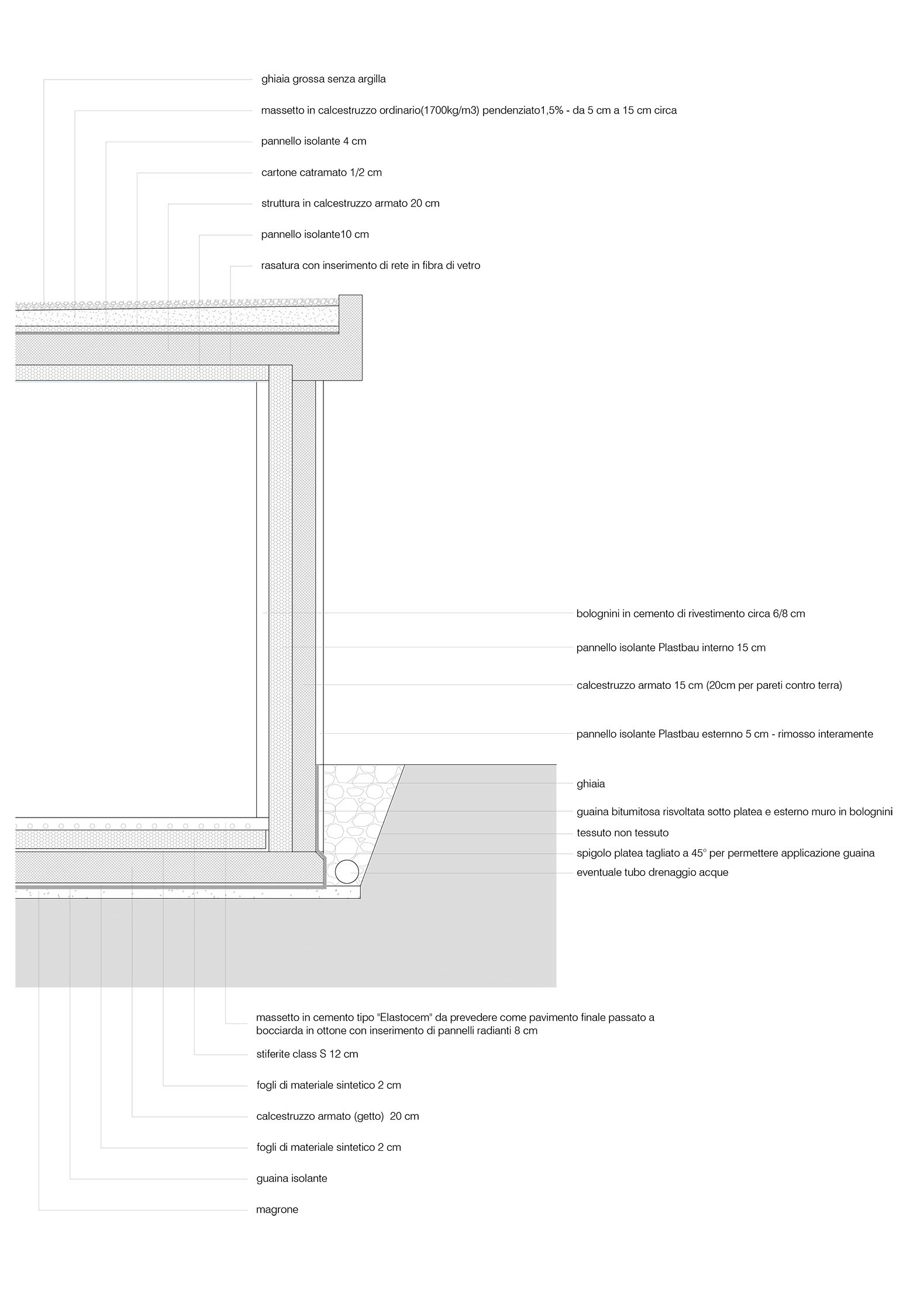
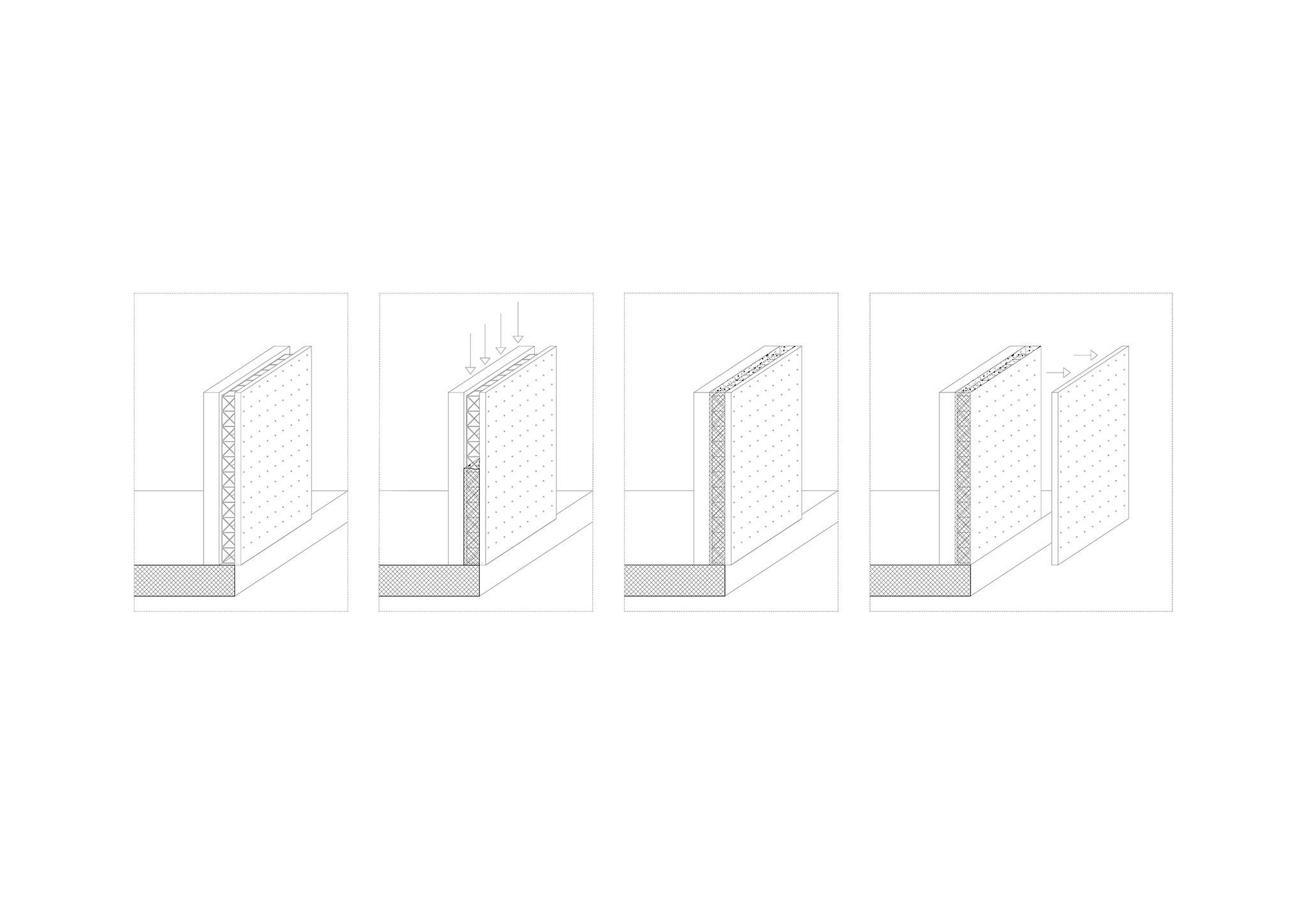
The load-bearing perimeter walls are erected using a traditional construction technique that employs permanent formwork made of two expanded polystyrene panels. The inner layer maintains a greater thickness for thermal performance, while the outer layer is treated with a release agent.
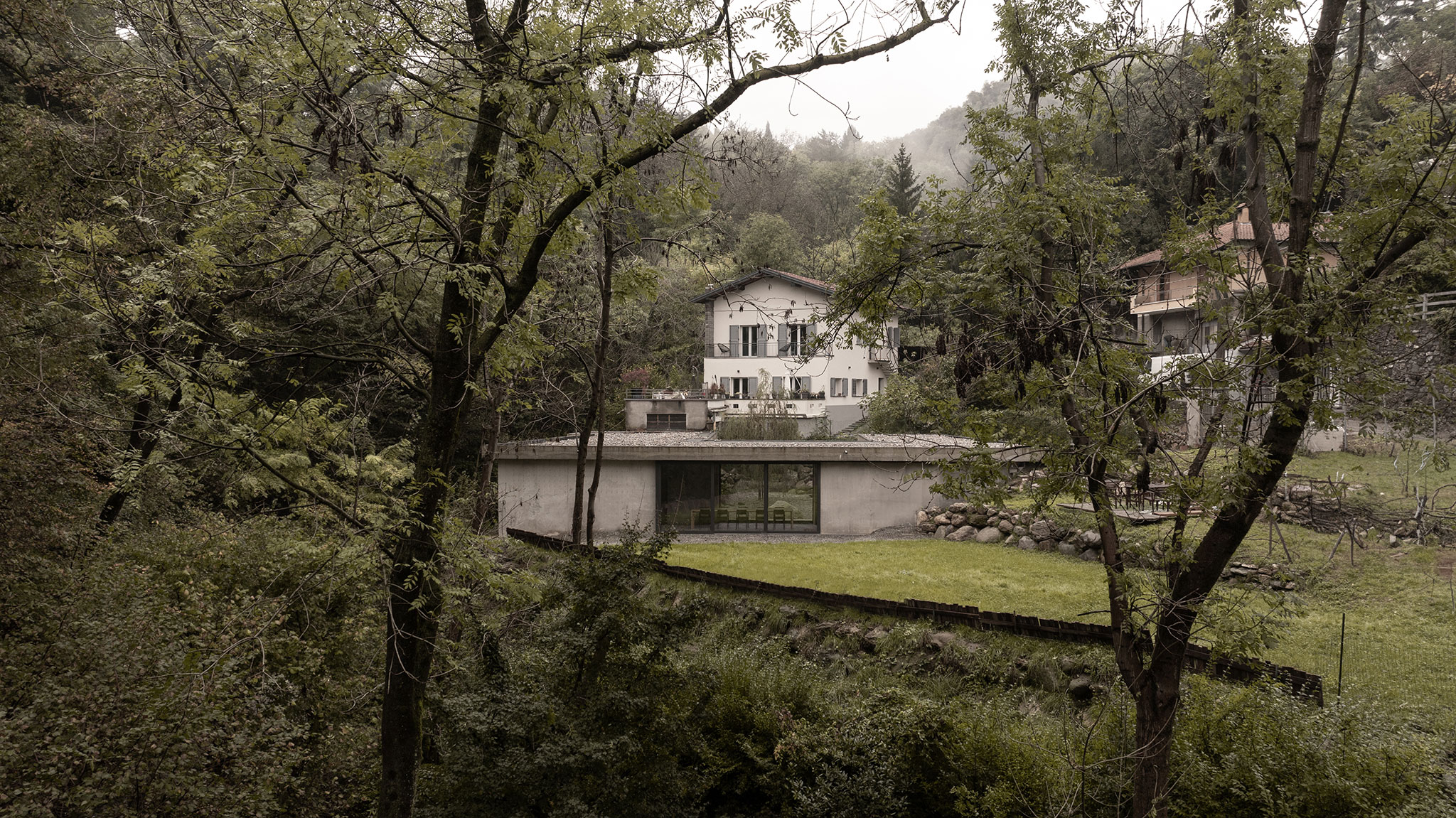
Narrow house by Lorenzo Guzzini Architecture. Photograph by Alessio Fantinato.
Project description by Lorenzo Guzzini Architecture
One of the main challenges in the architectural profession is the reinterpretation of the architect’s role as a process manager. In this specific project, that role is expressed through the development of spatial details that both respond to the surrounding context and act as key tools for simplifying construction processes in order to reduce costs.
Cost reduction was the central challenge of this work — a demonstration that the Architect, through technical knowledge and creative invention, can effectively lower building expenses by designing innovative construction details. This ap-proach makes it possible to create contemporary living spaces at significantly low-er prices compared to market standards, which too often sacrifice architectural quality to speculation.
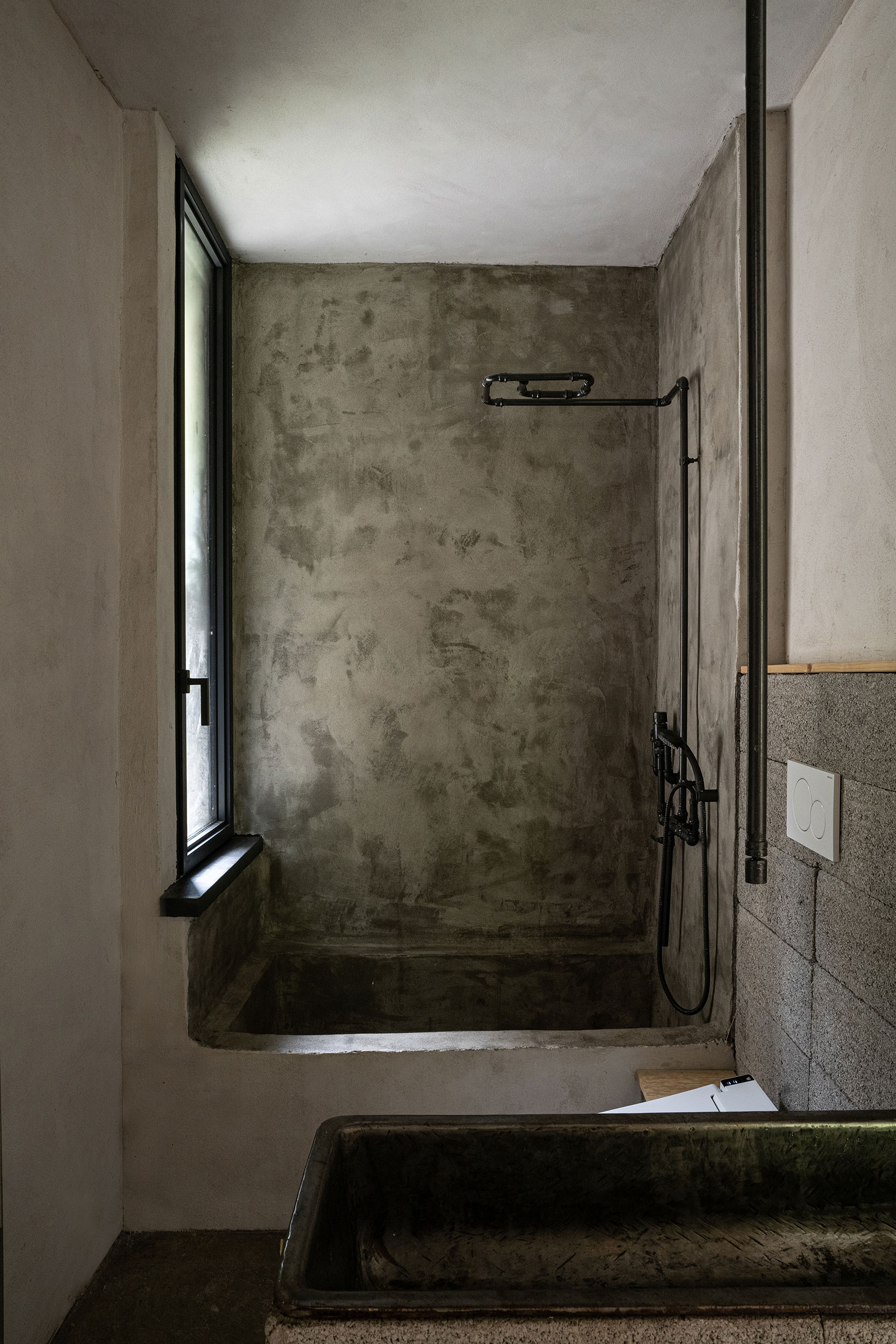
Living itself becomes the project’s essential goal — inhabiting a high-quality space whose value is not determined by economic privilege. Here, a forgotten site comes back to life through the reuse of a derelict plot and decaying volumes, brought back to purpose by employing genuinely recycled materials, sometimes recovered from other contexts and reintroduced into a new cycle of use.
In this sense, even an art installation (“Superbonus” for LOG Magazine, 2022, Dropcity, Milan Design Week, by SuperVoids) can be dismantled, reimagined, and saved from the end of its intended lifecycle to serve as thermal insulation. Within this virtuous process, discarded panels become dignified as reclaimed window sills, while recycled plastic fibers are reprocessed into an innovative reinforced underfloor screed.

Through a series of deliberate strategies, the space opens up and interacts with its surroundings, embodying the hope that the culture of building can once again restore real meaning to the word space.
This project — made possible only through the courage of a very young and for-ward-thinking client who chose to trust and invest in the value of architectural design — transforms a former garage and a chicken coop into a single dwelling unit. The existing structures, positioned along a riverbed, develop tightly and sin-uously, entwining with each other as they progress, constantly mutating and en-suring a dynamic, ever-changing interaction with the environment.

In such a narrow house, the exterior spaces actively animate the interior atmos-phere; as sunlight shifts, the perception of the interiors continually changes — no moment feels the same. The alien becomes domestic, and the given form evolves according to a logic of gradual transformation that reaches down to the smallest construction detail.
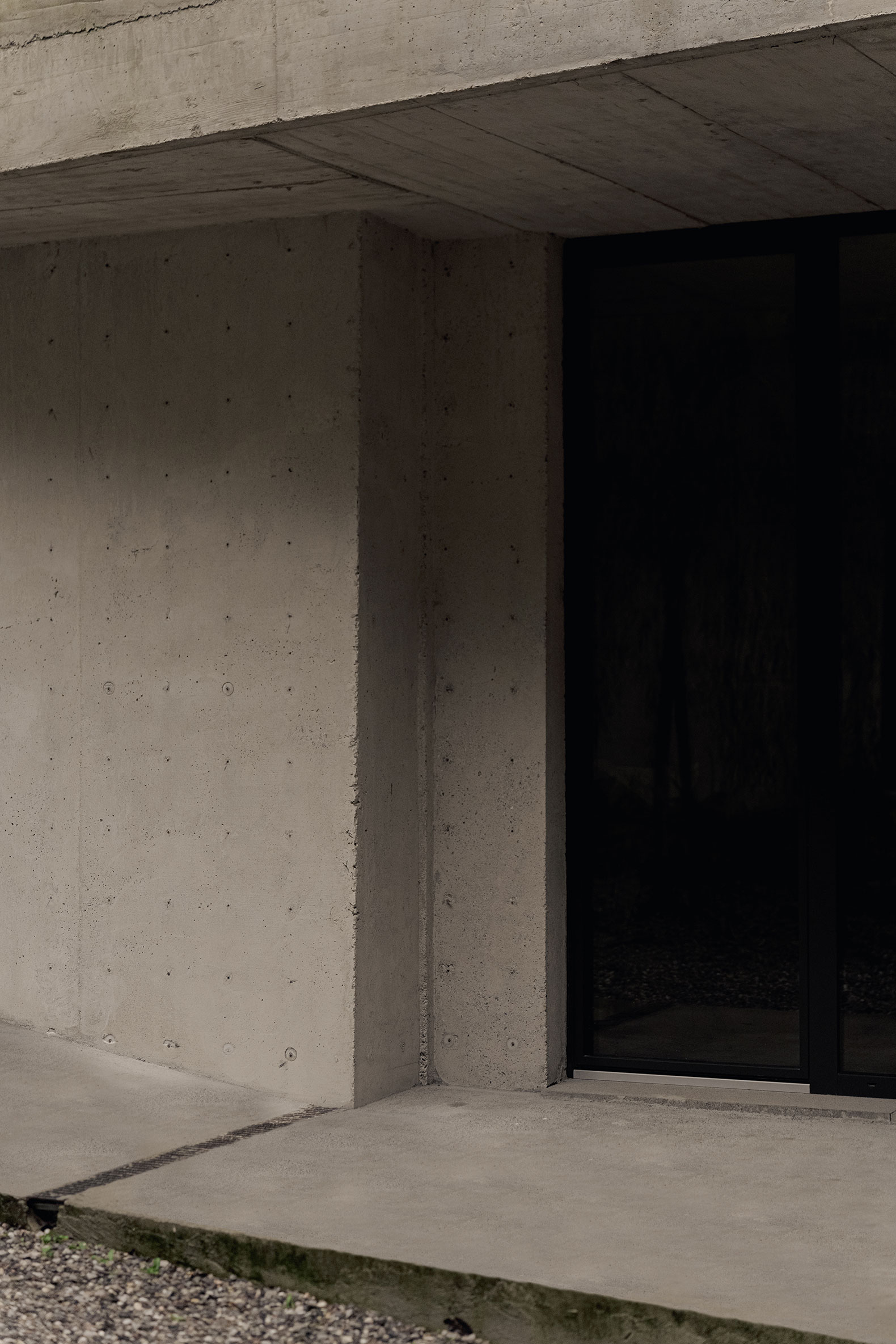
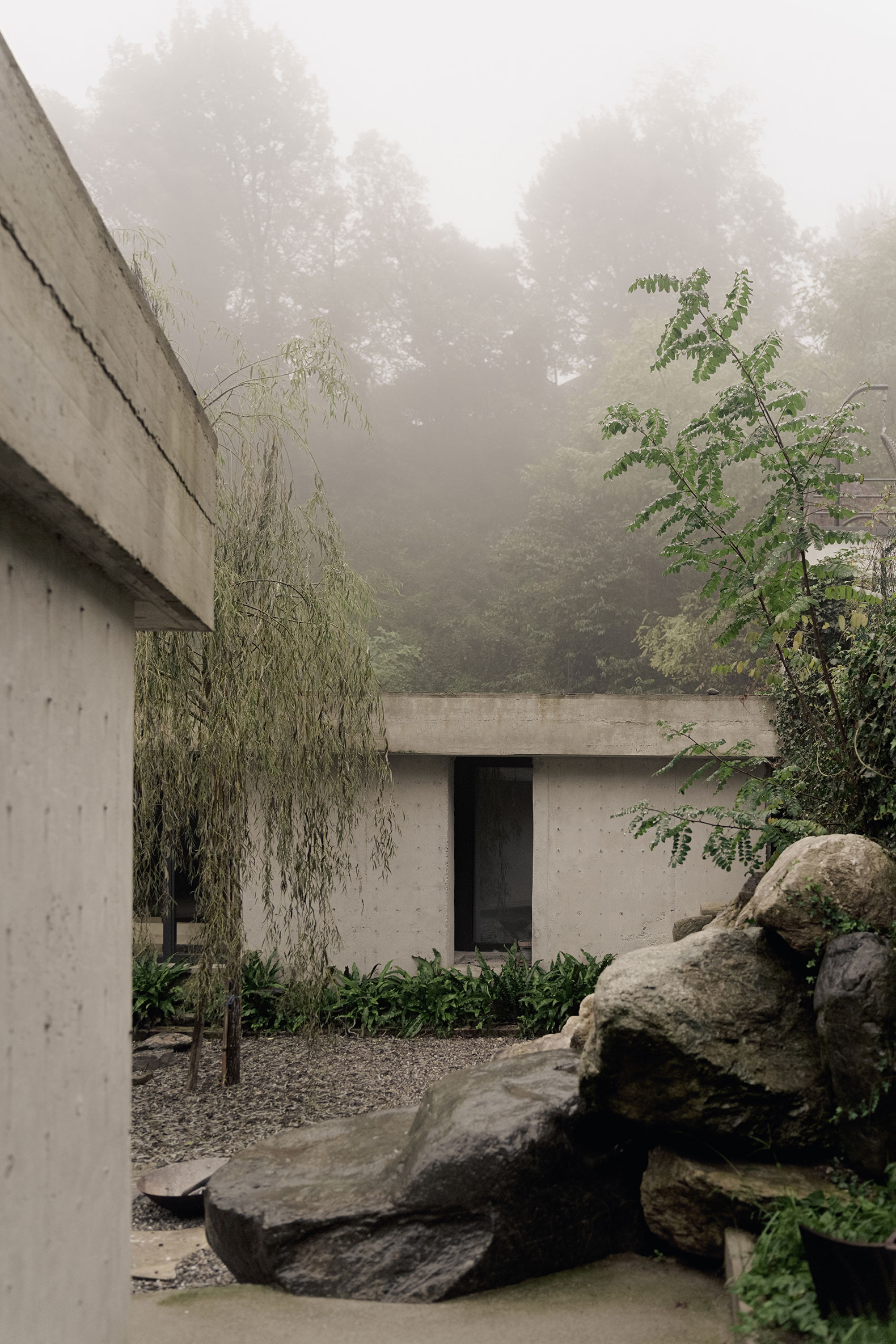
The design of the load-bearing perimeter walls draws from a traditional construc-tion technique using a permanent formwork composed of two EPS (expanded polystyrene) panels. By unbalancing the insulation — increasing mass toward the interior while reducing it on the exterior — the inner layer maintains greater thickness for thermal performance, whereas the thinner outer layer is treated with a release agent. Once the concrete is poured, this thinner formwork can be dismantled and reused on the roof, leaving exposed architectural concrete walls.

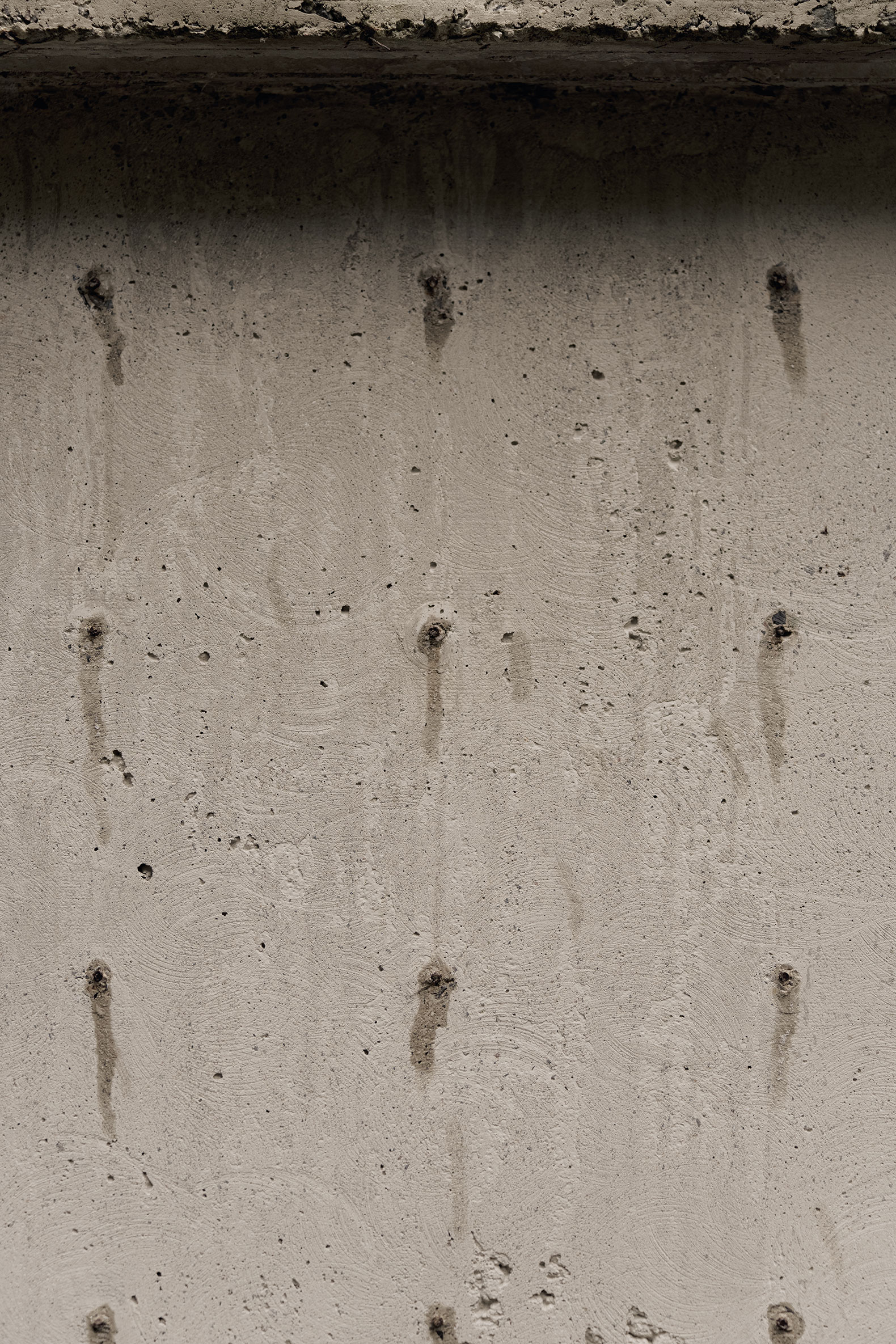
The reinforced concrete façade participates in this process and embodies a sense of transformation — a transfiguration of place. The small steel ties that once held the perimeter formwork are exposed to the river’s humidity and naturally cor-rode over time. The structure “weeps” rust; its tears stain the material. The archi-tecture lives — it ages, it gathers experience. This seemingly decorative feature is, in truth, a dynamic acknowledgment of site, achieved by reinterpreting a conven-tional building technique through an understanding of chemical reaction and a sensitivity to the inherent characteristics of place.
Belonging to place thus blossoms through an active dialogue between context and construction material — an interaction through which human presence both per-ceives and generates architectural value.