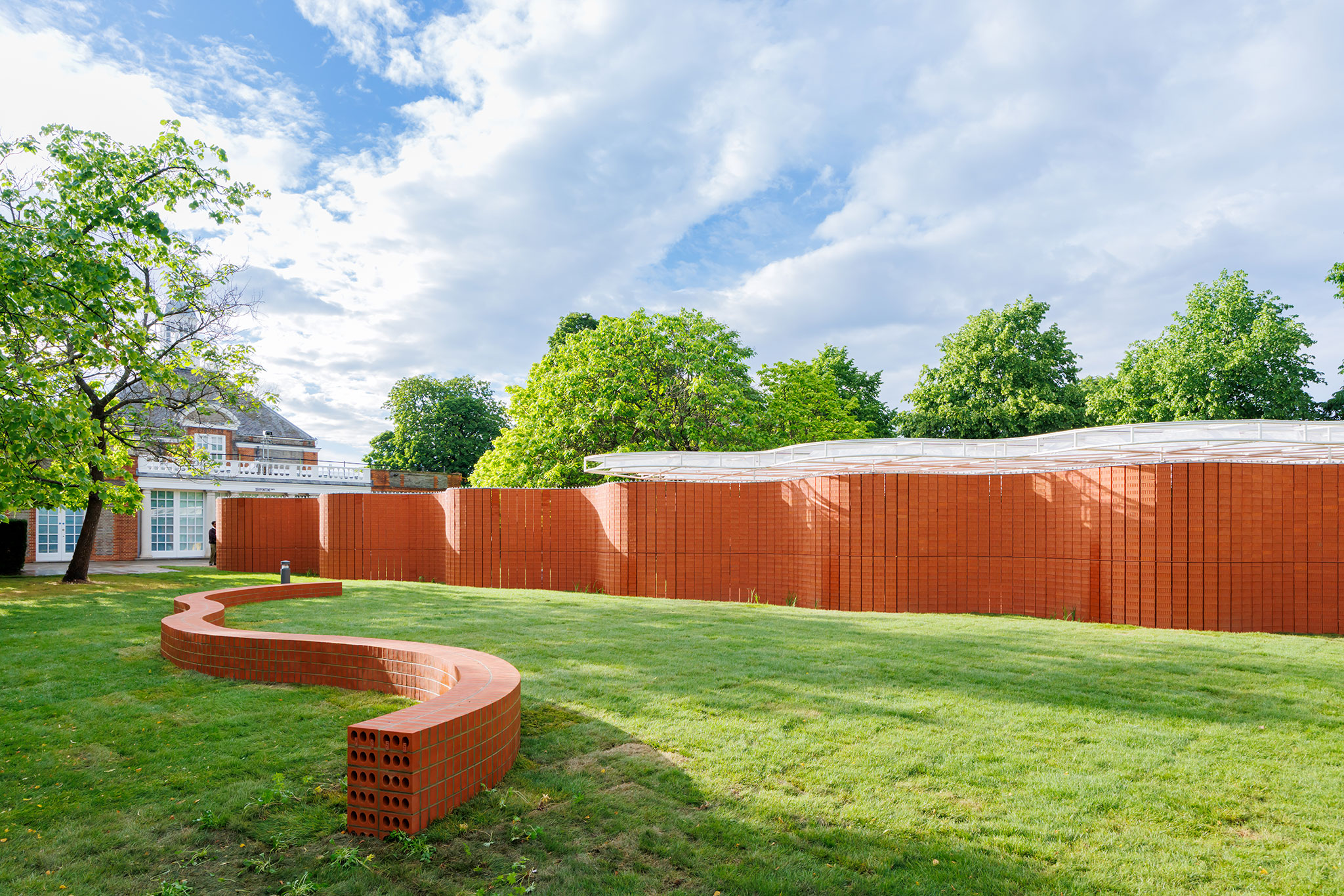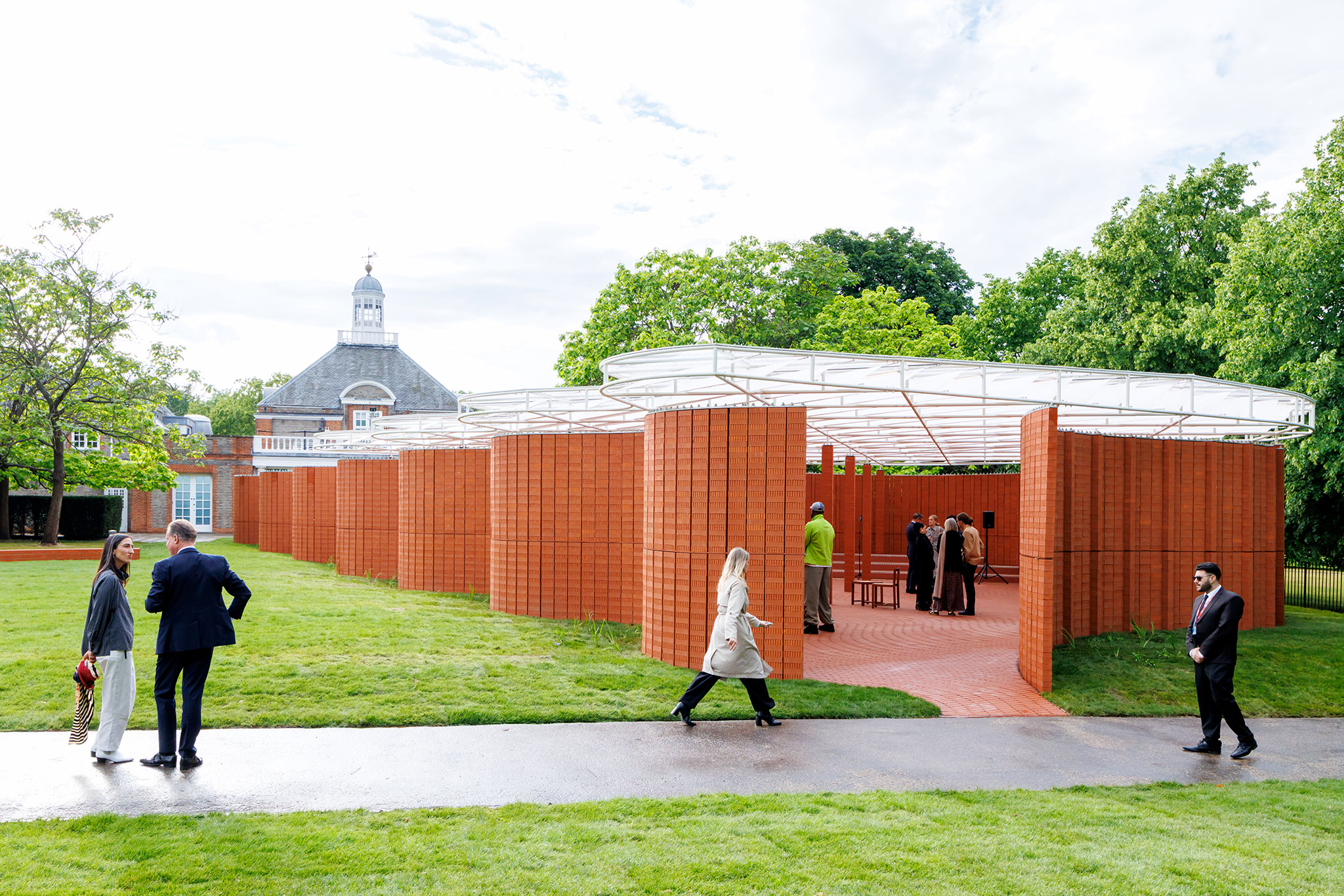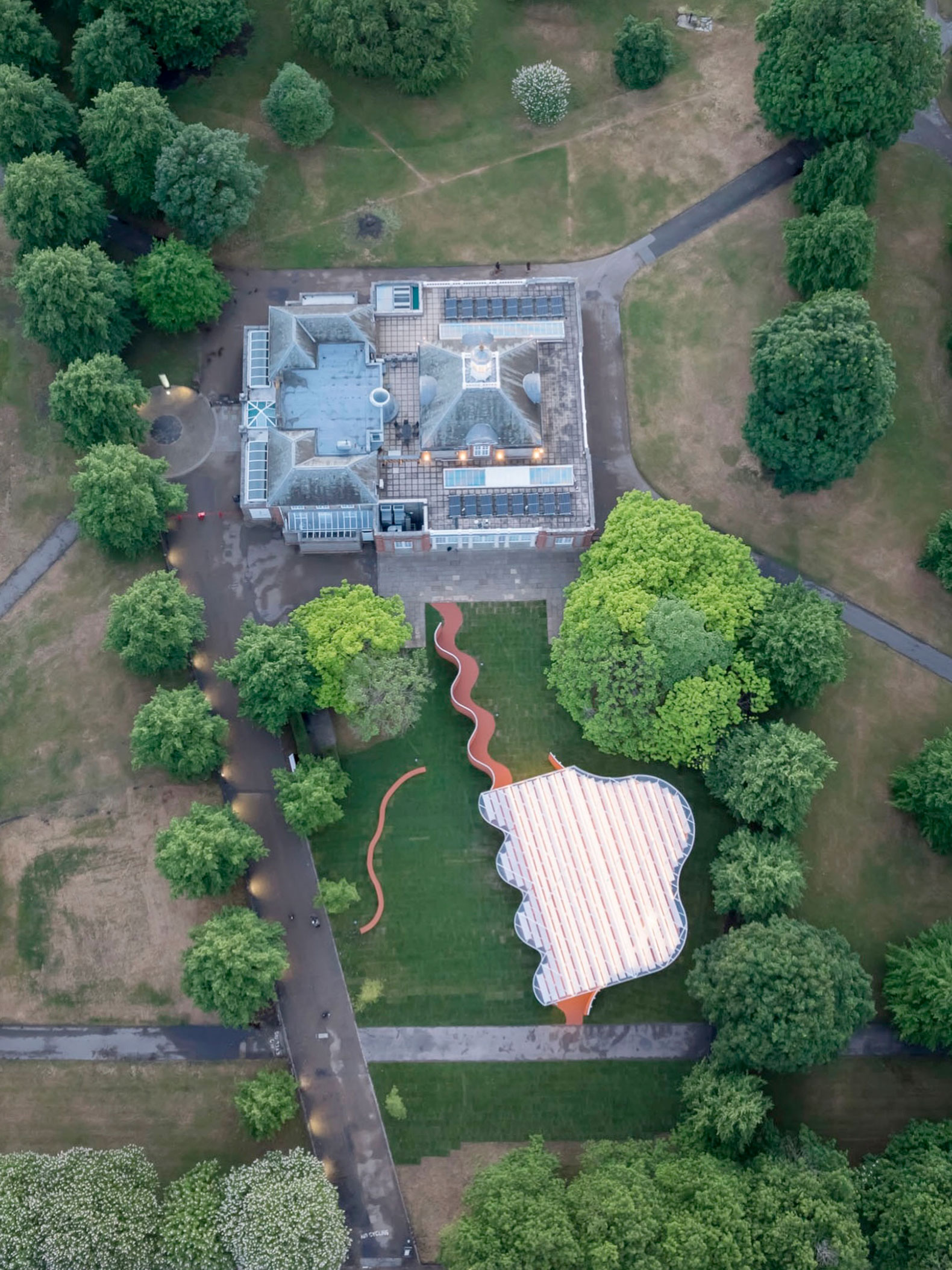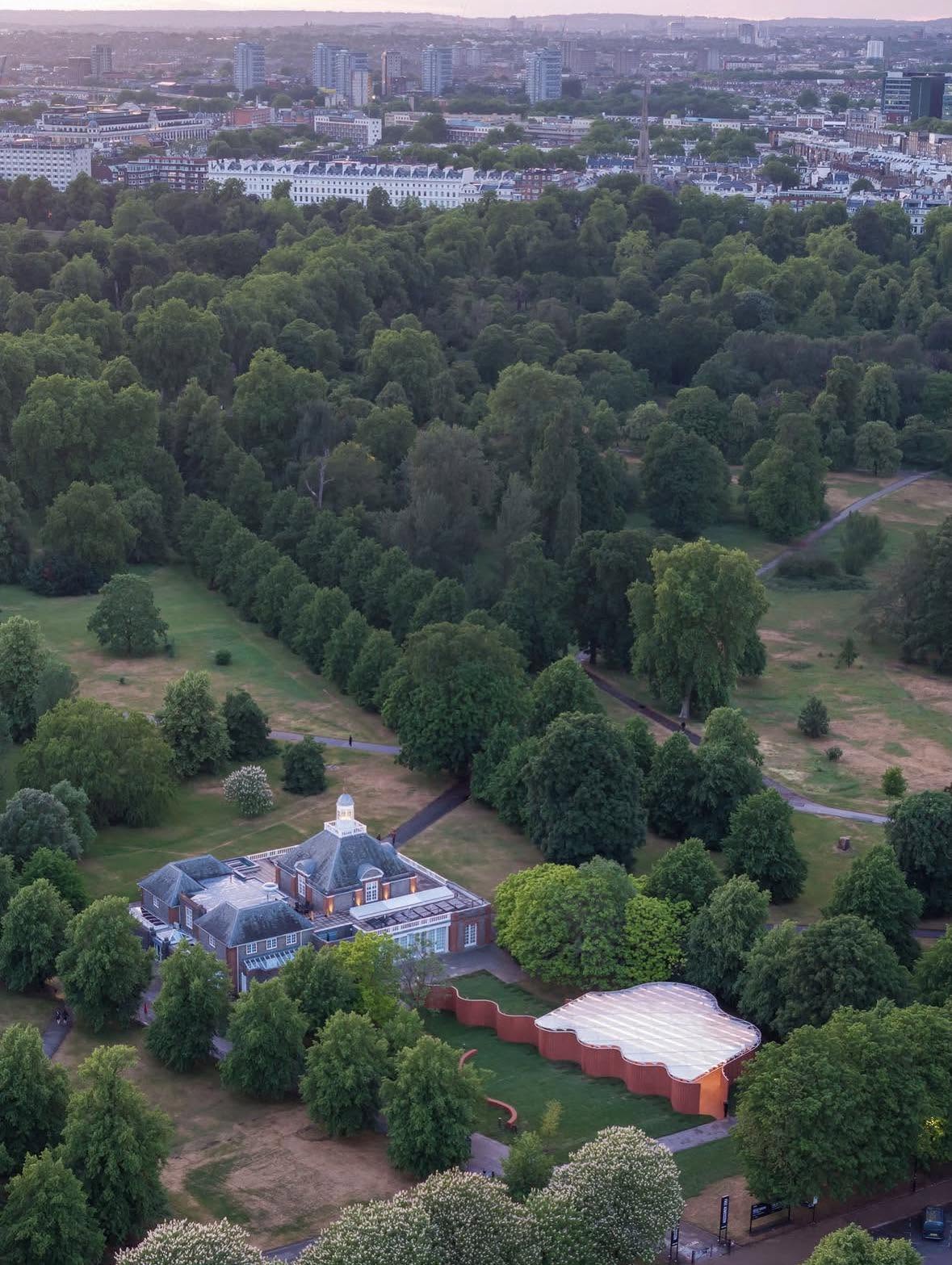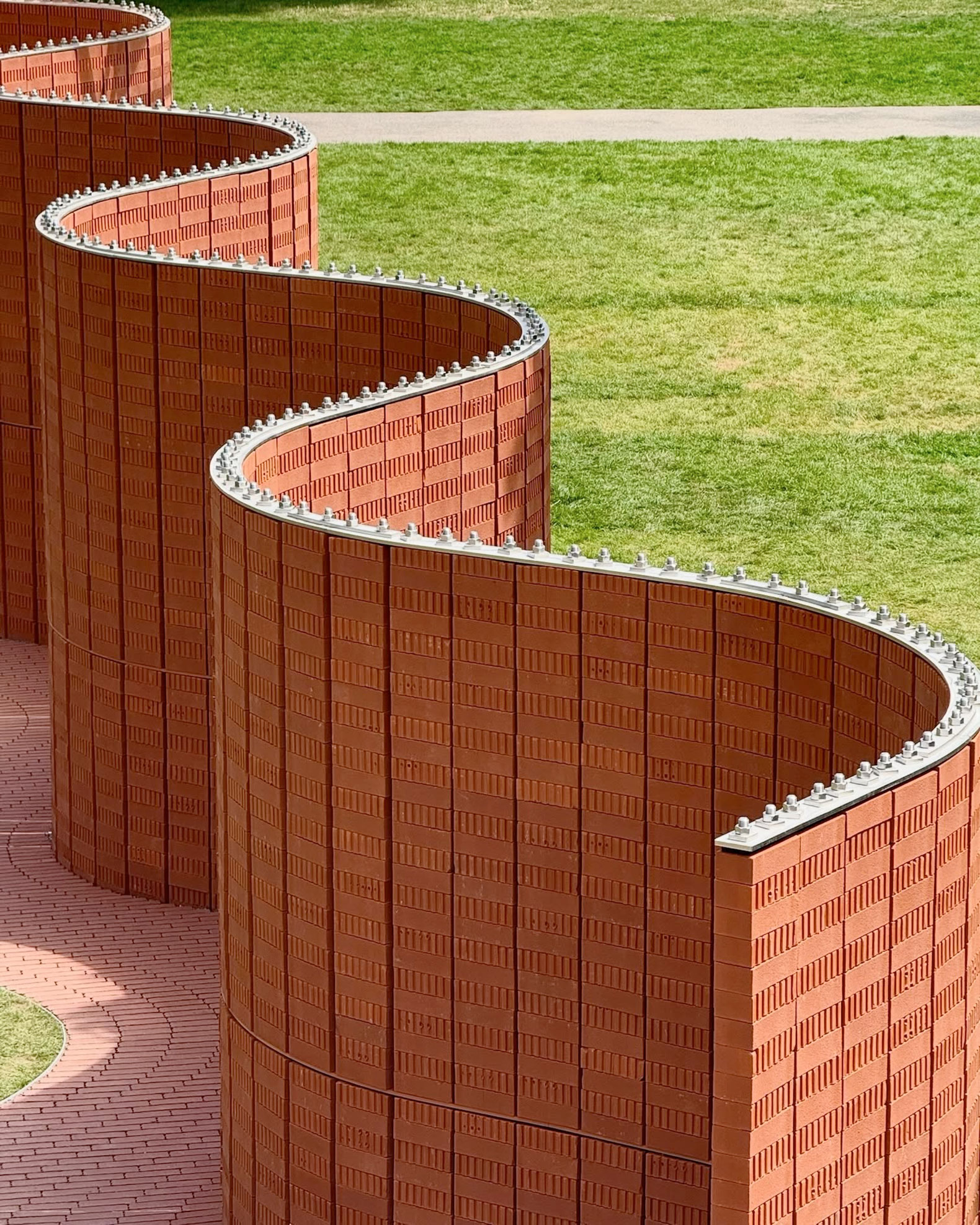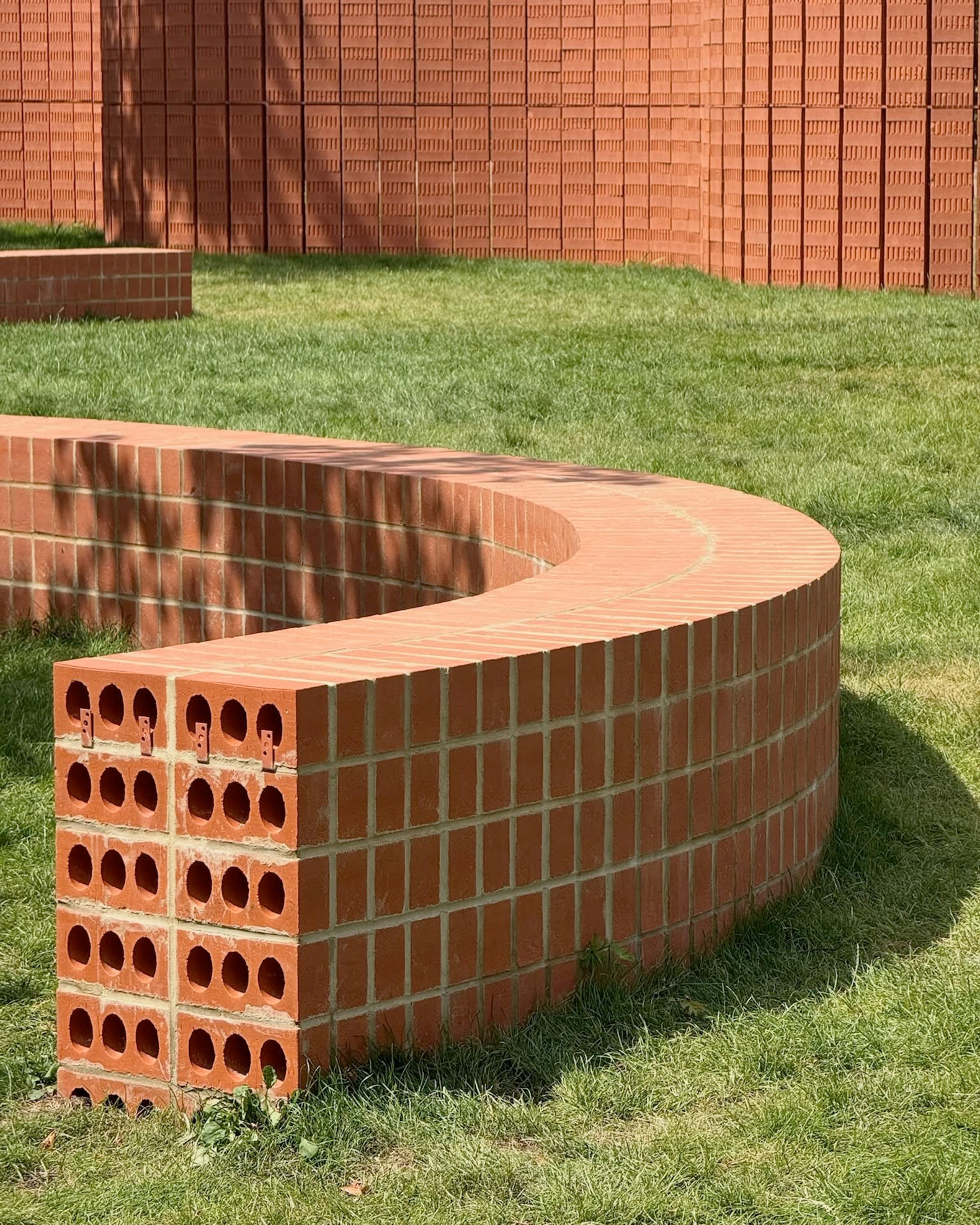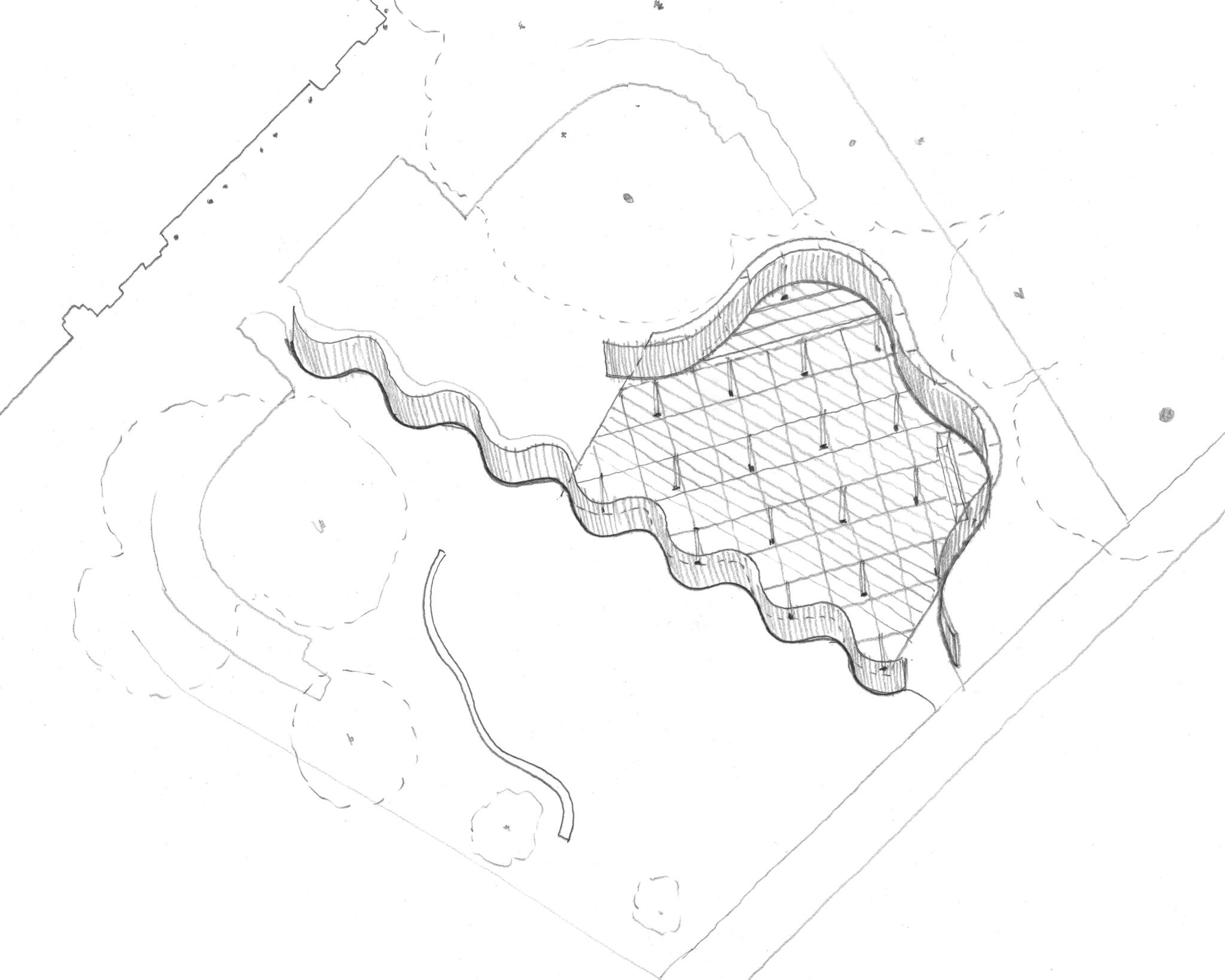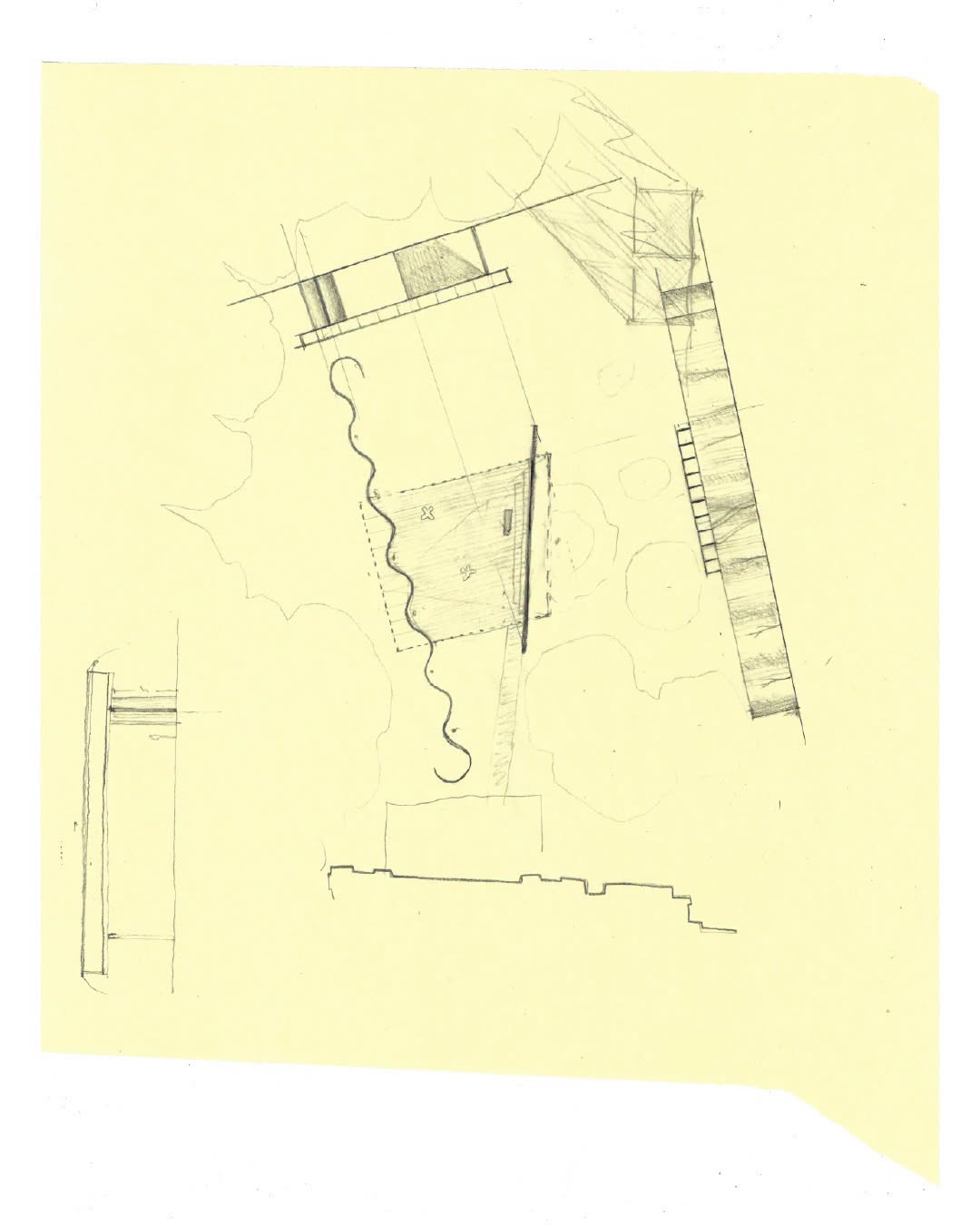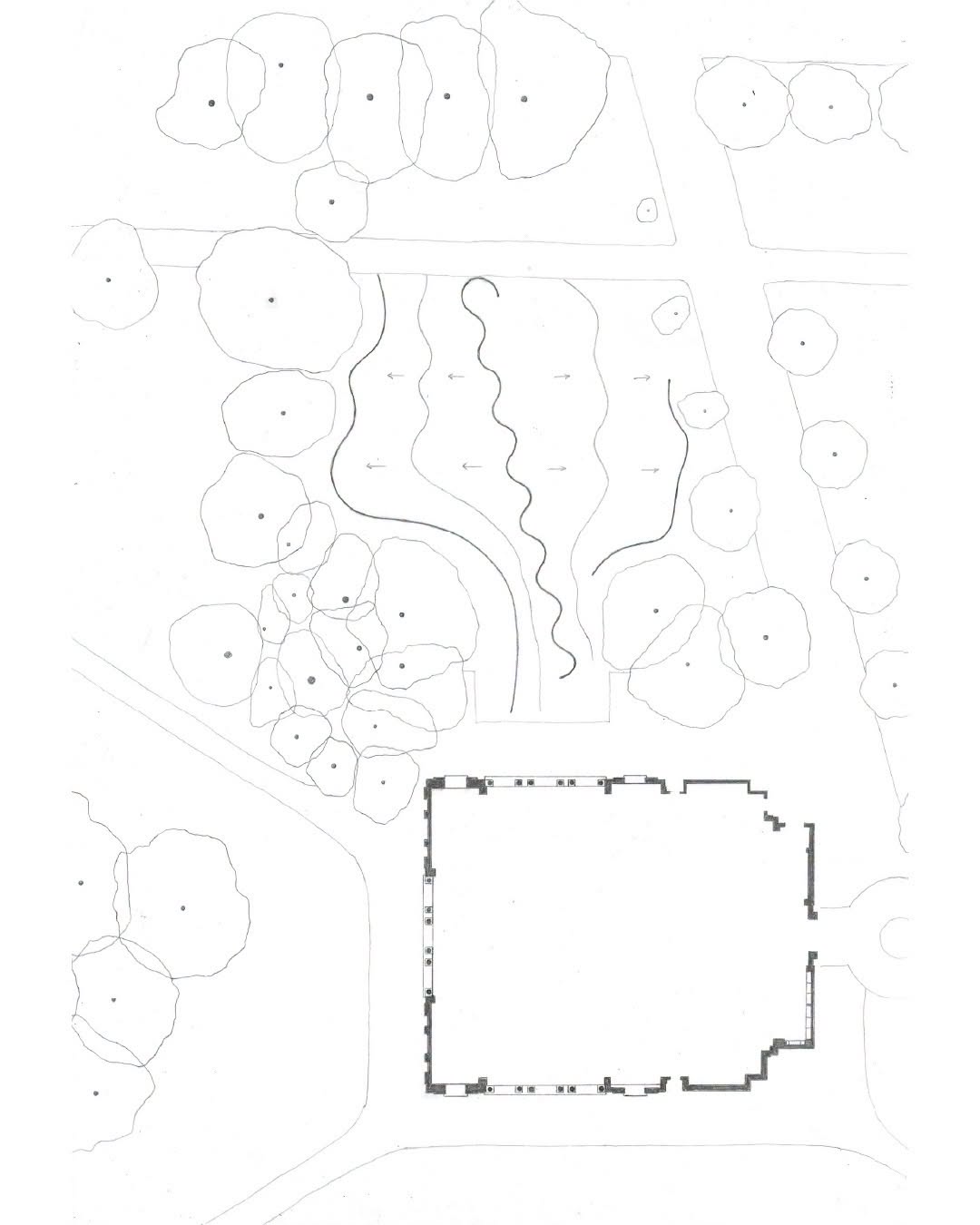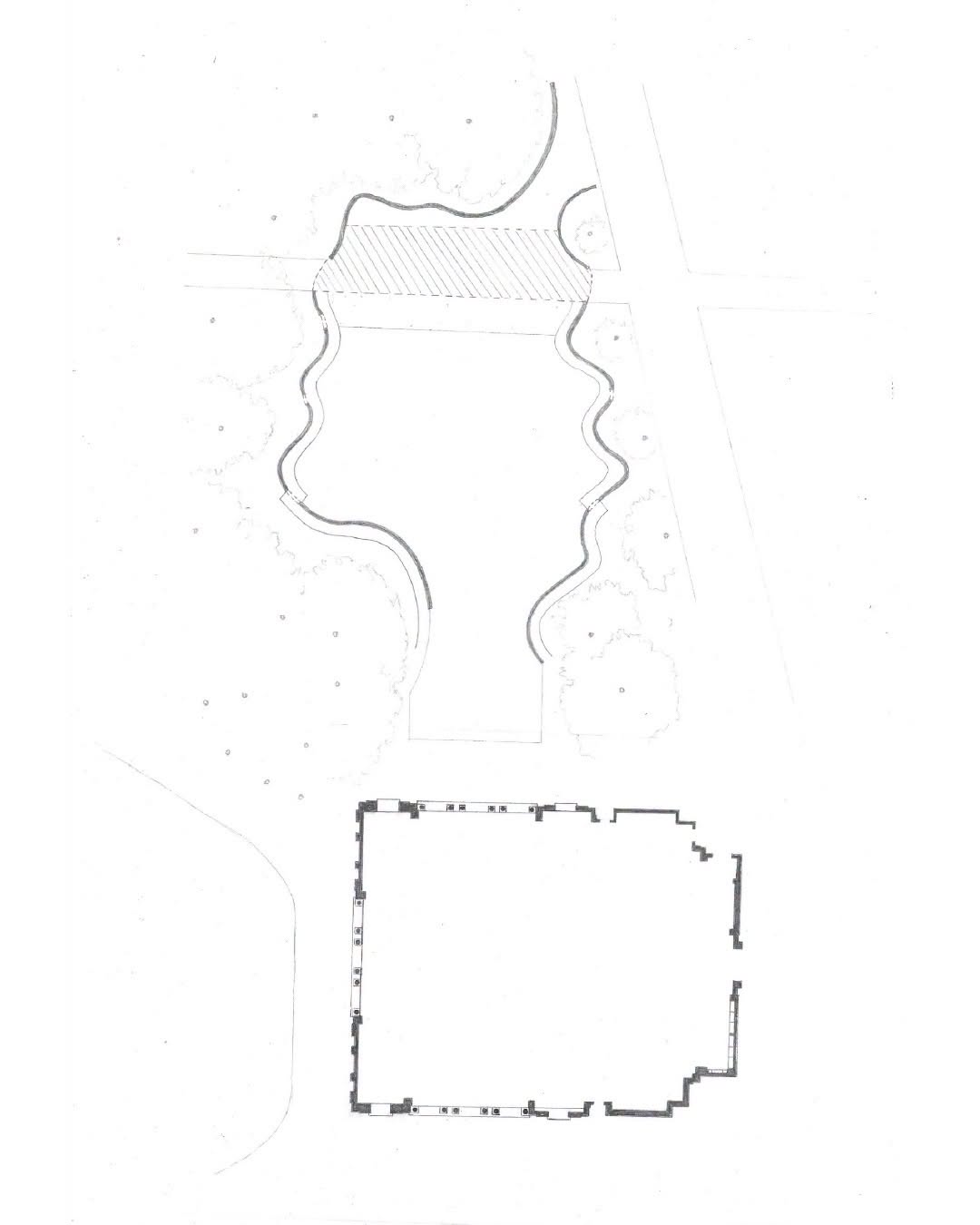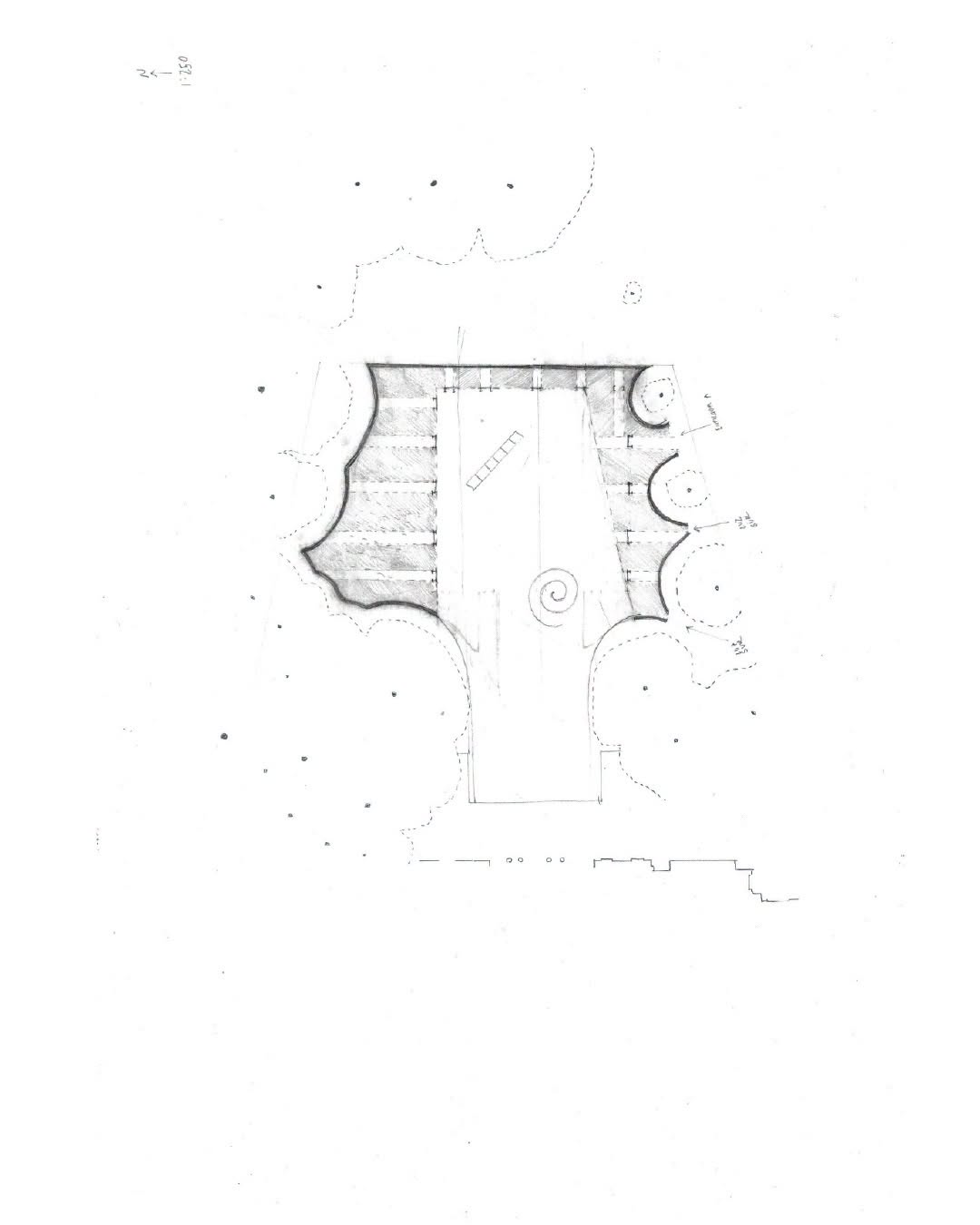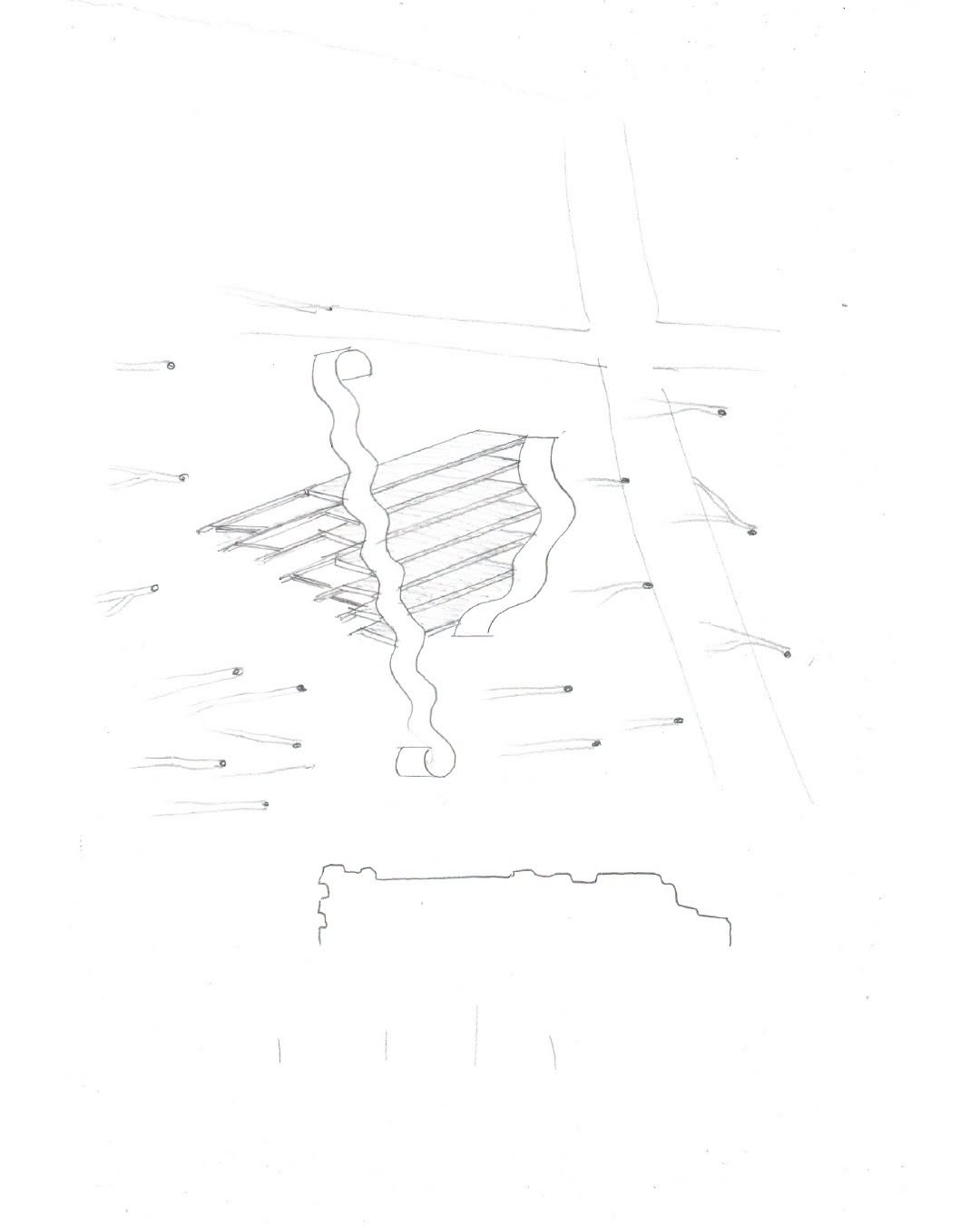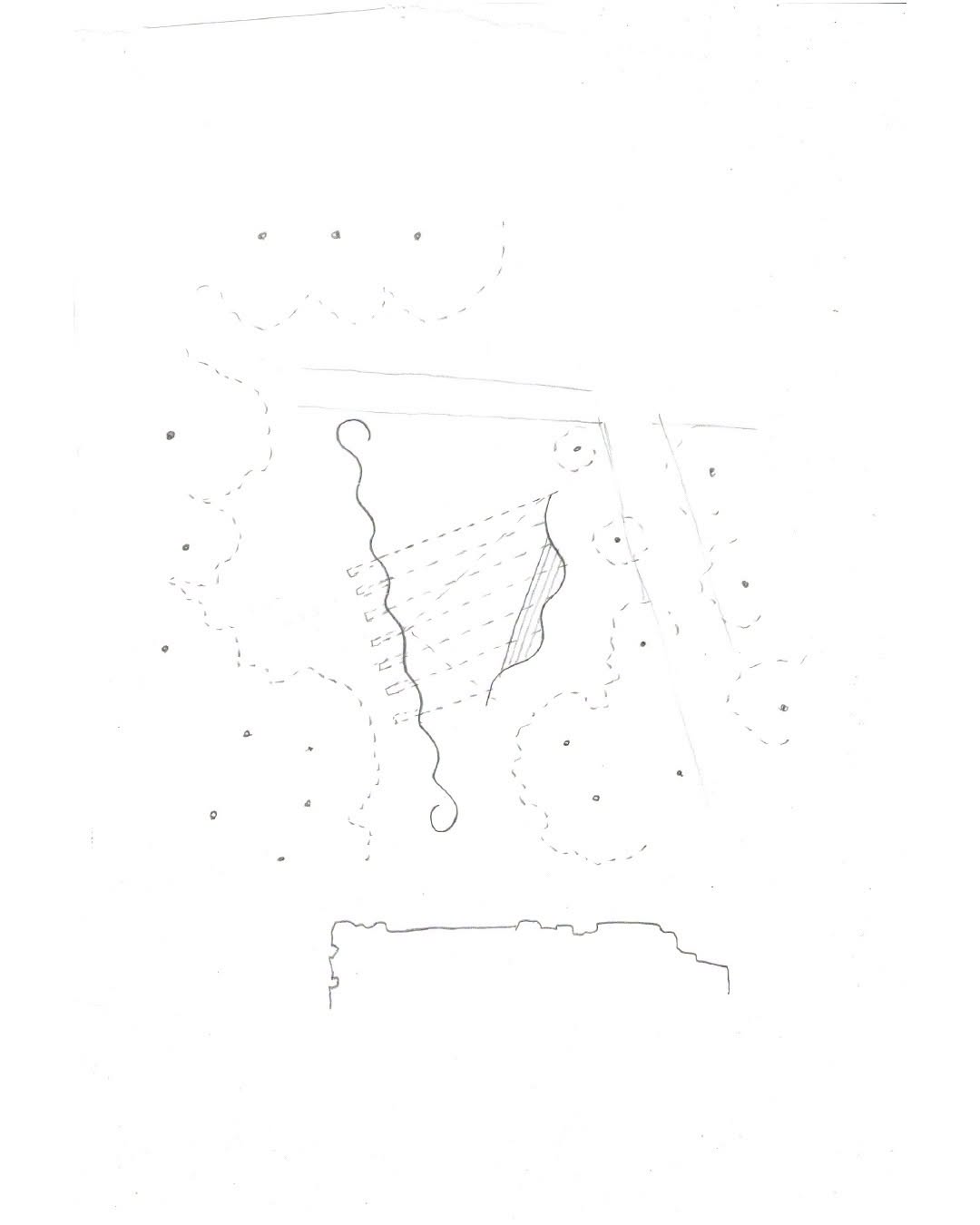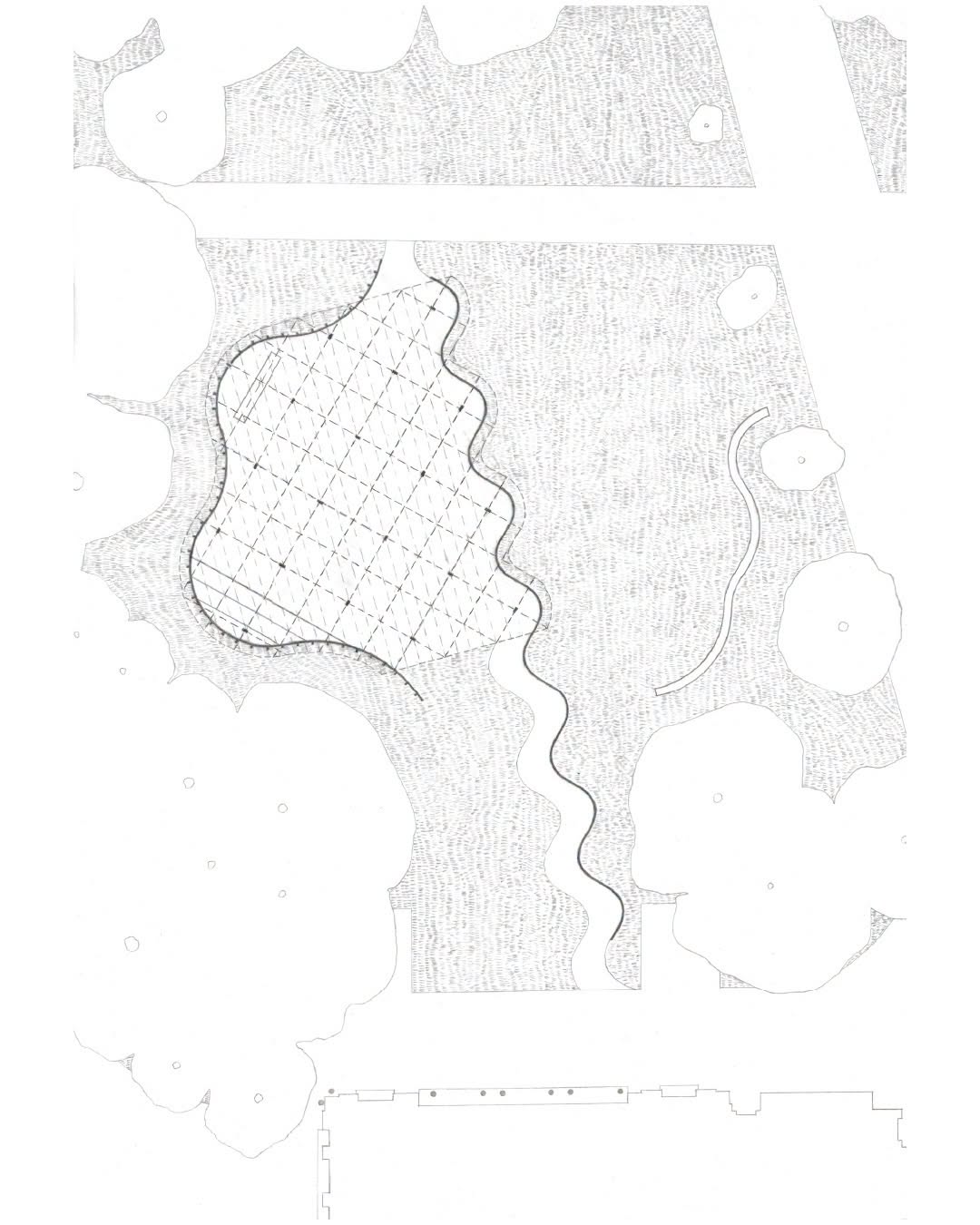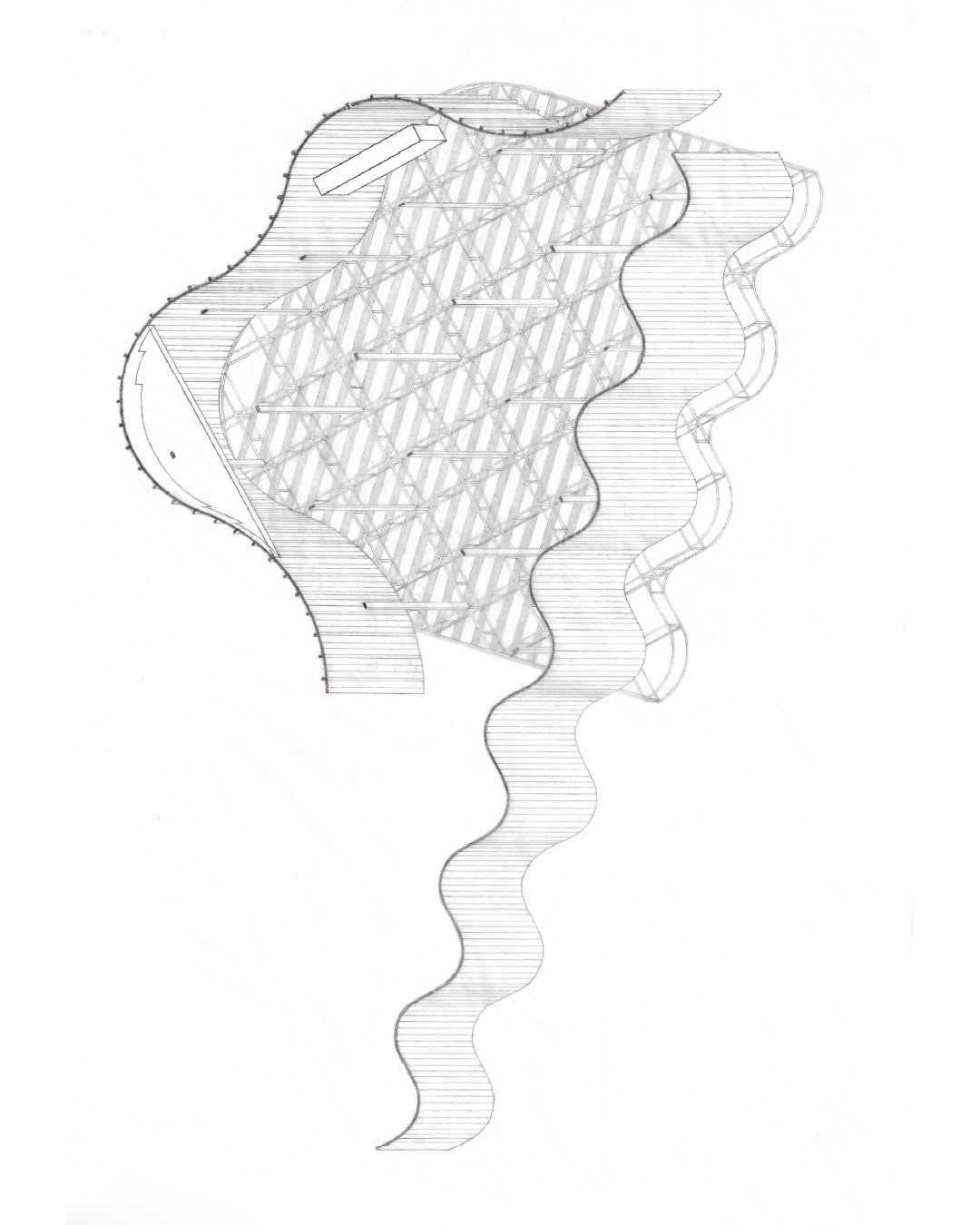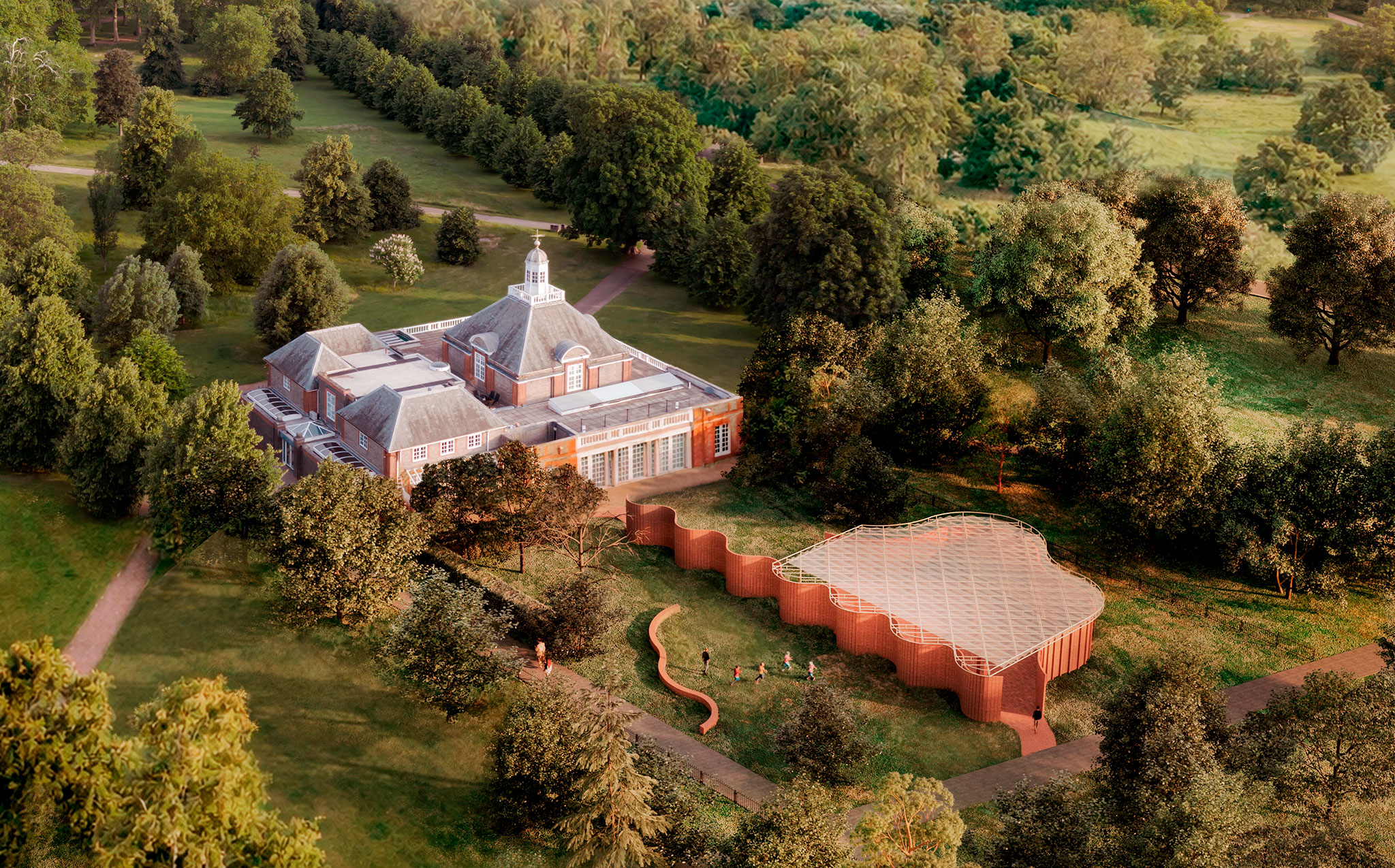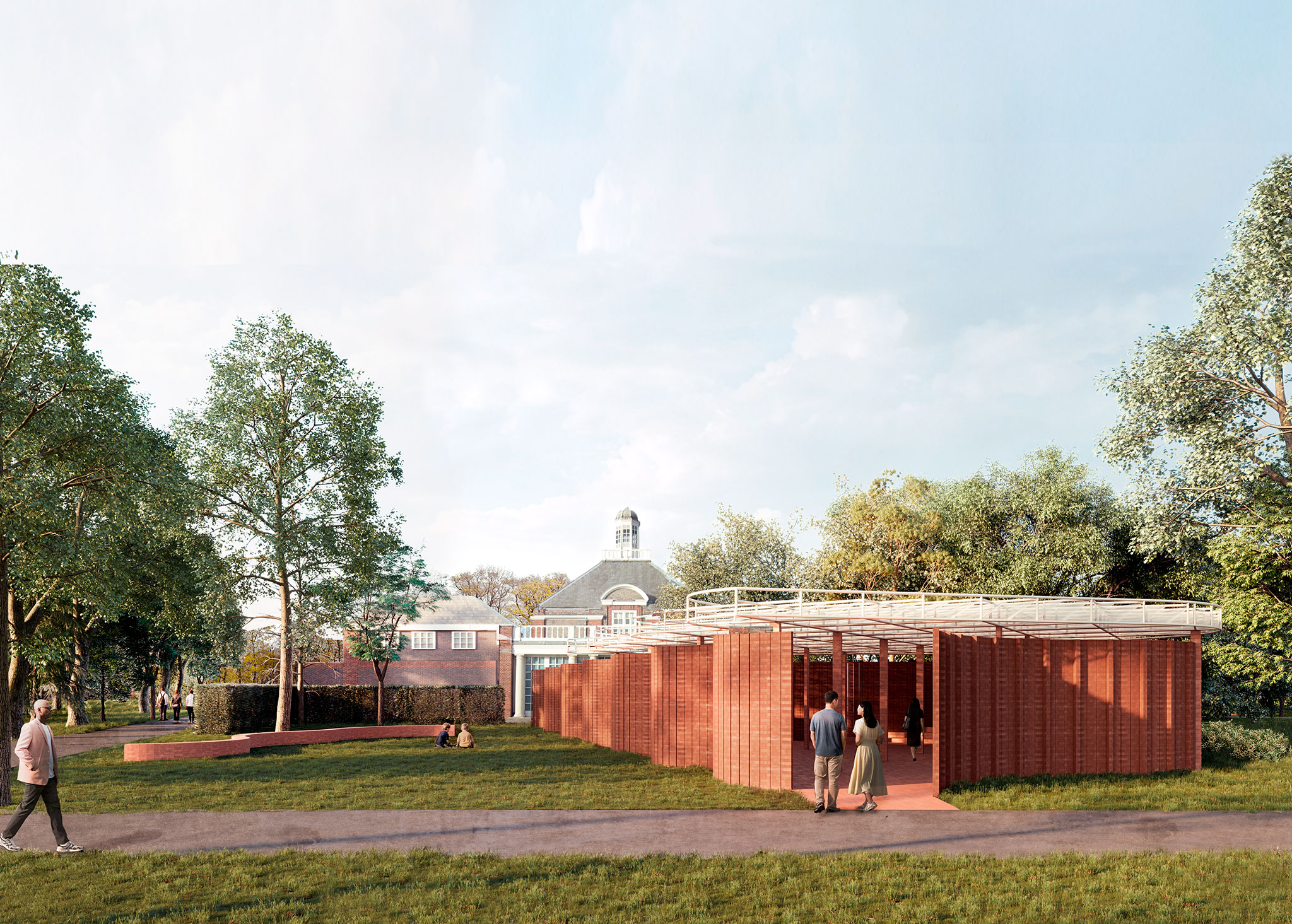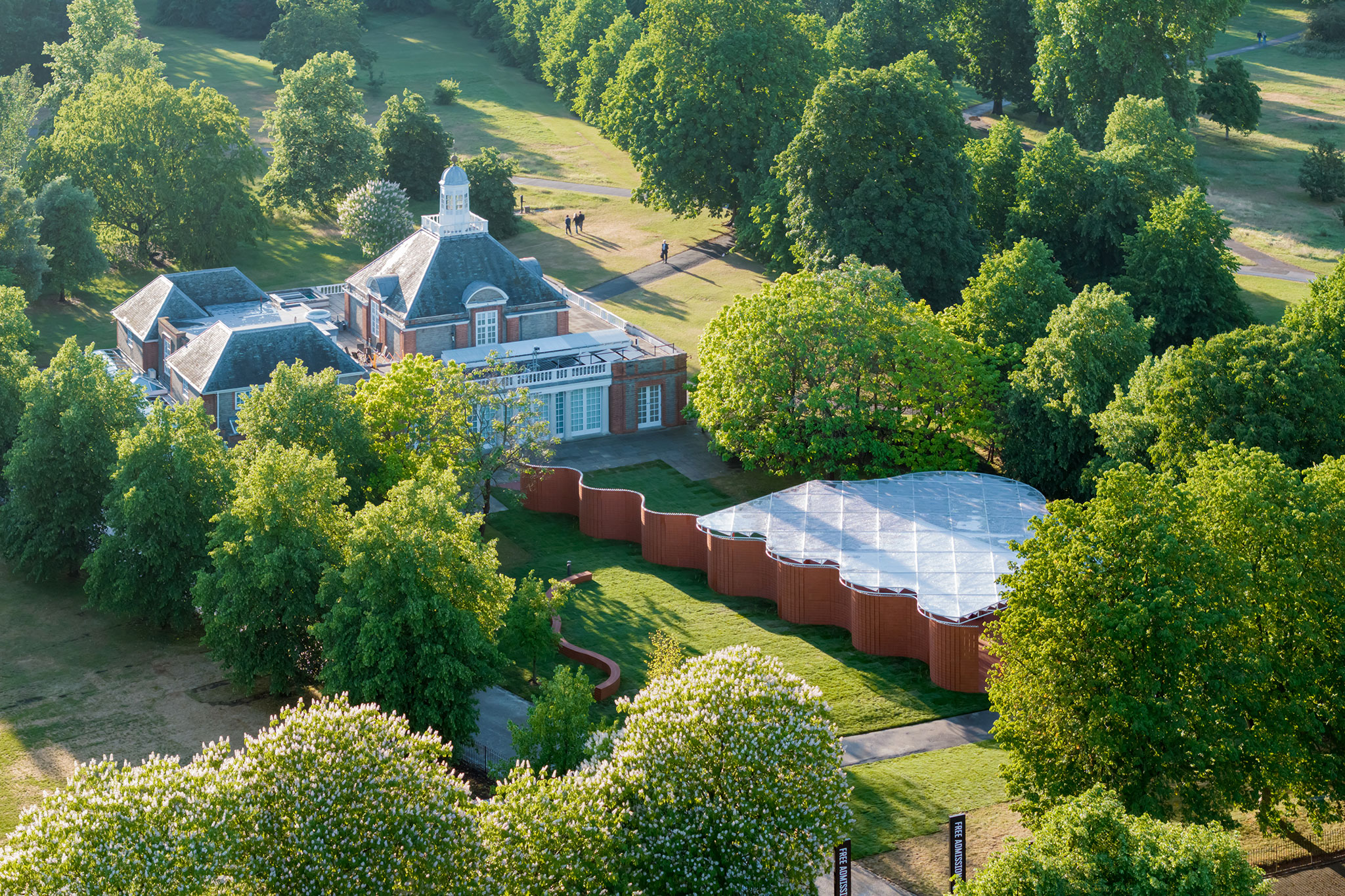
For its 2026 Serpentine Pavilion, LANZA atelier draws inspiration from the serpentine wall, a distinctive architectural typology characterised by its undulating form, which defines one of the pavilion’s principal boundaries. Commonly found in the English county of Suffolk, this brick construction technique has origins in ancient Egypt and was later introduced to Britain by Dutch engineers.
Its sinuous geometry provides structural stability through lateral support, allowing the wall to be built with fewer bricks than a conventional straight wall. The reference extends to the project’s title, which also evokes the nearby Serpentine lake, named for its gently curving shape.
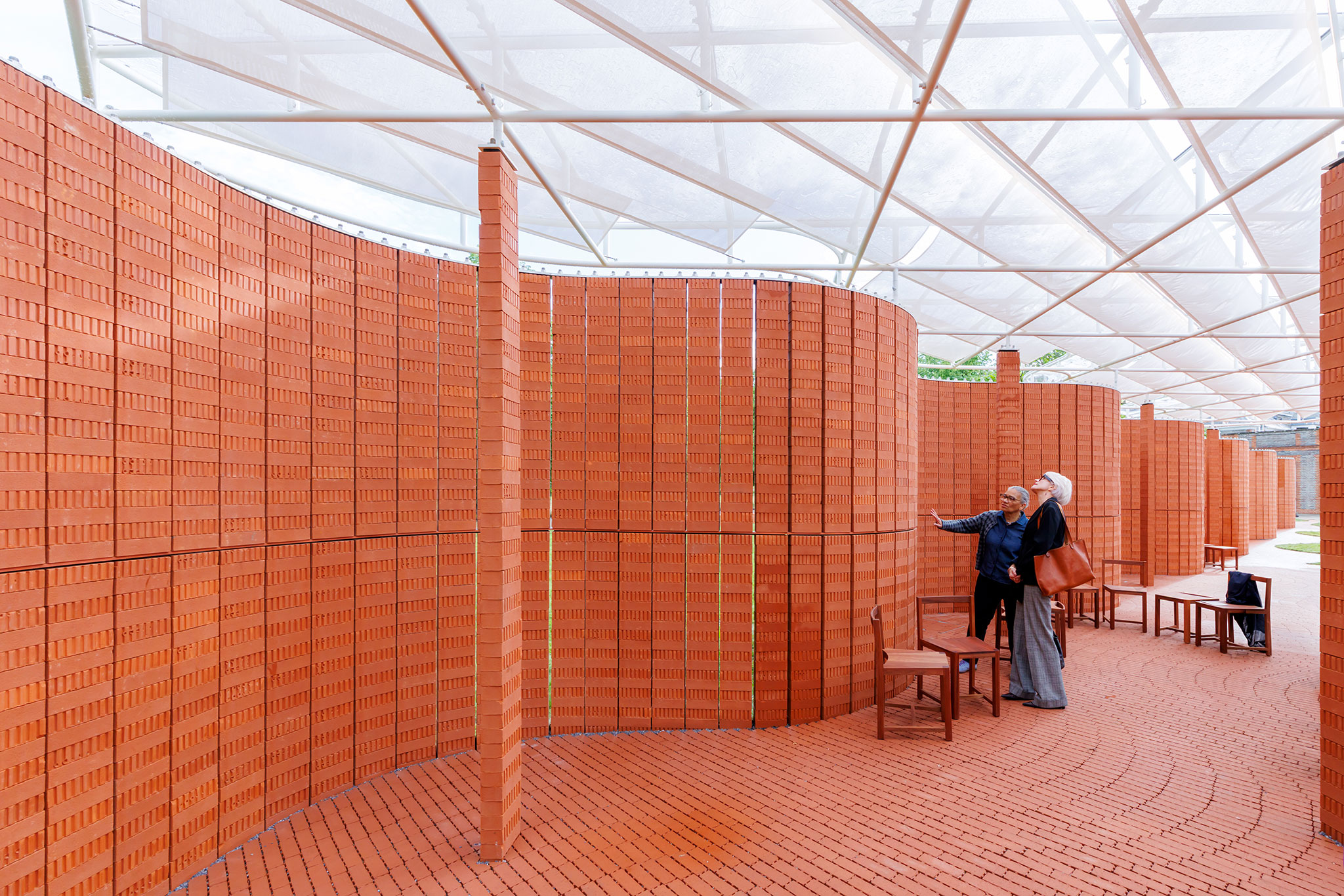
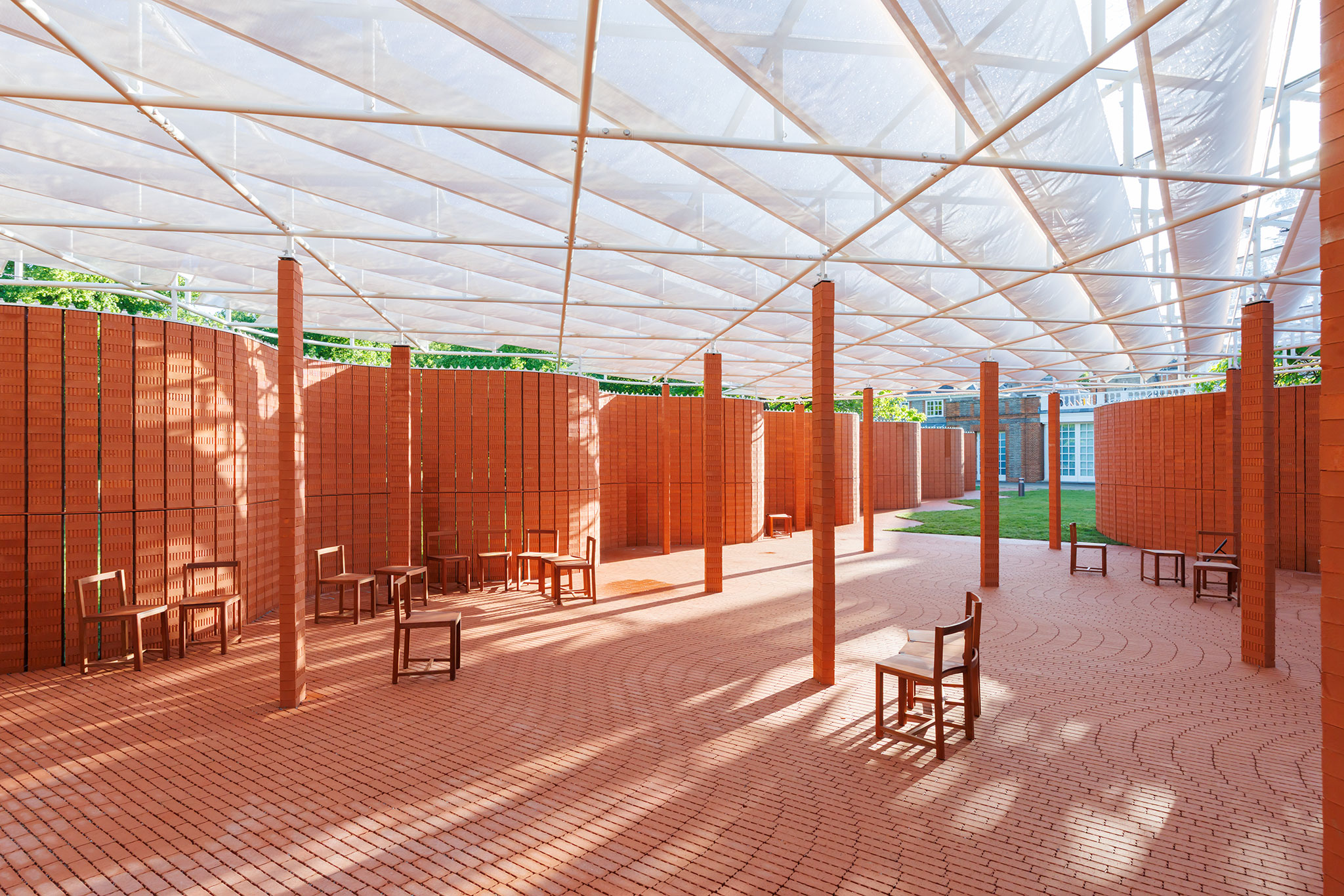
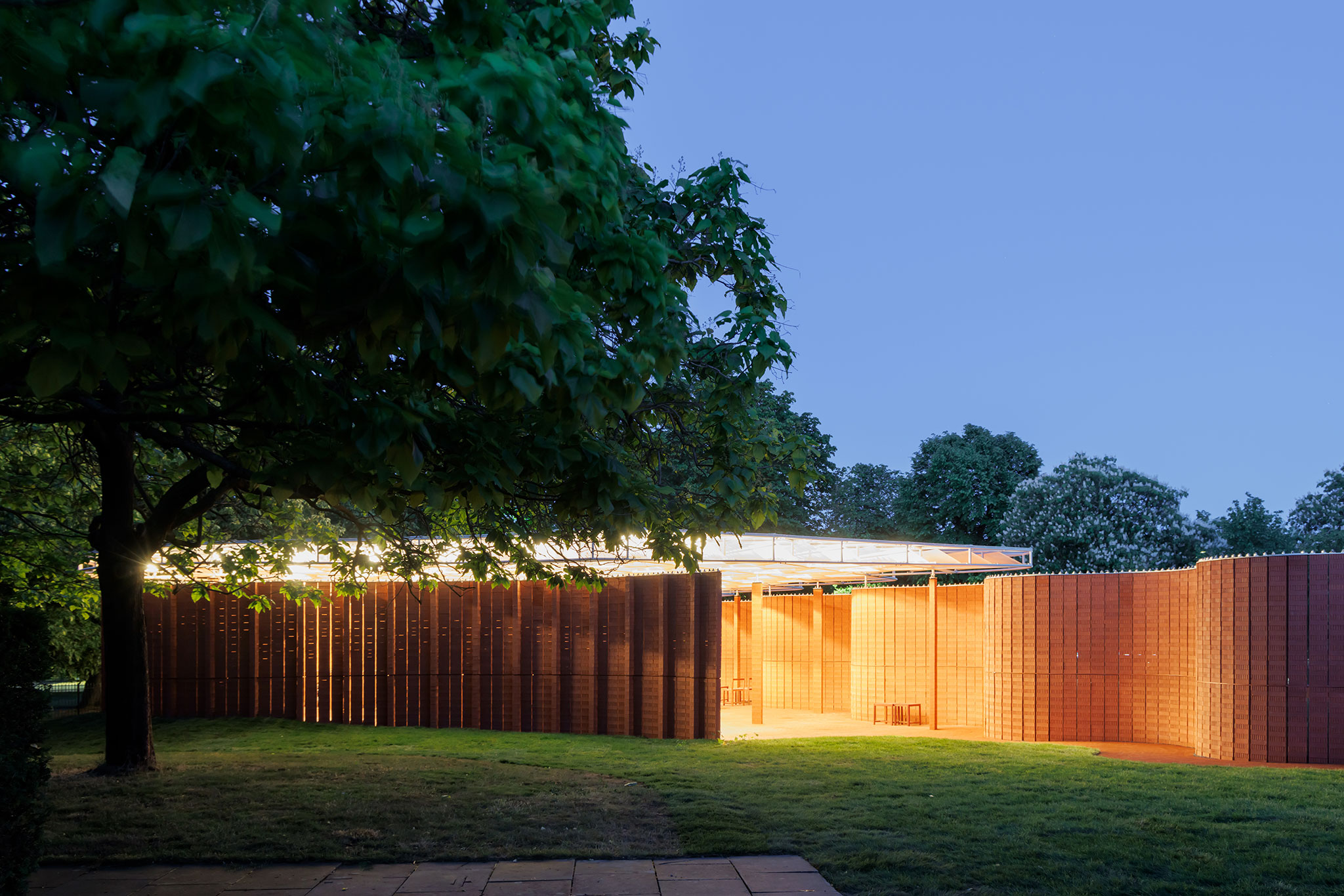
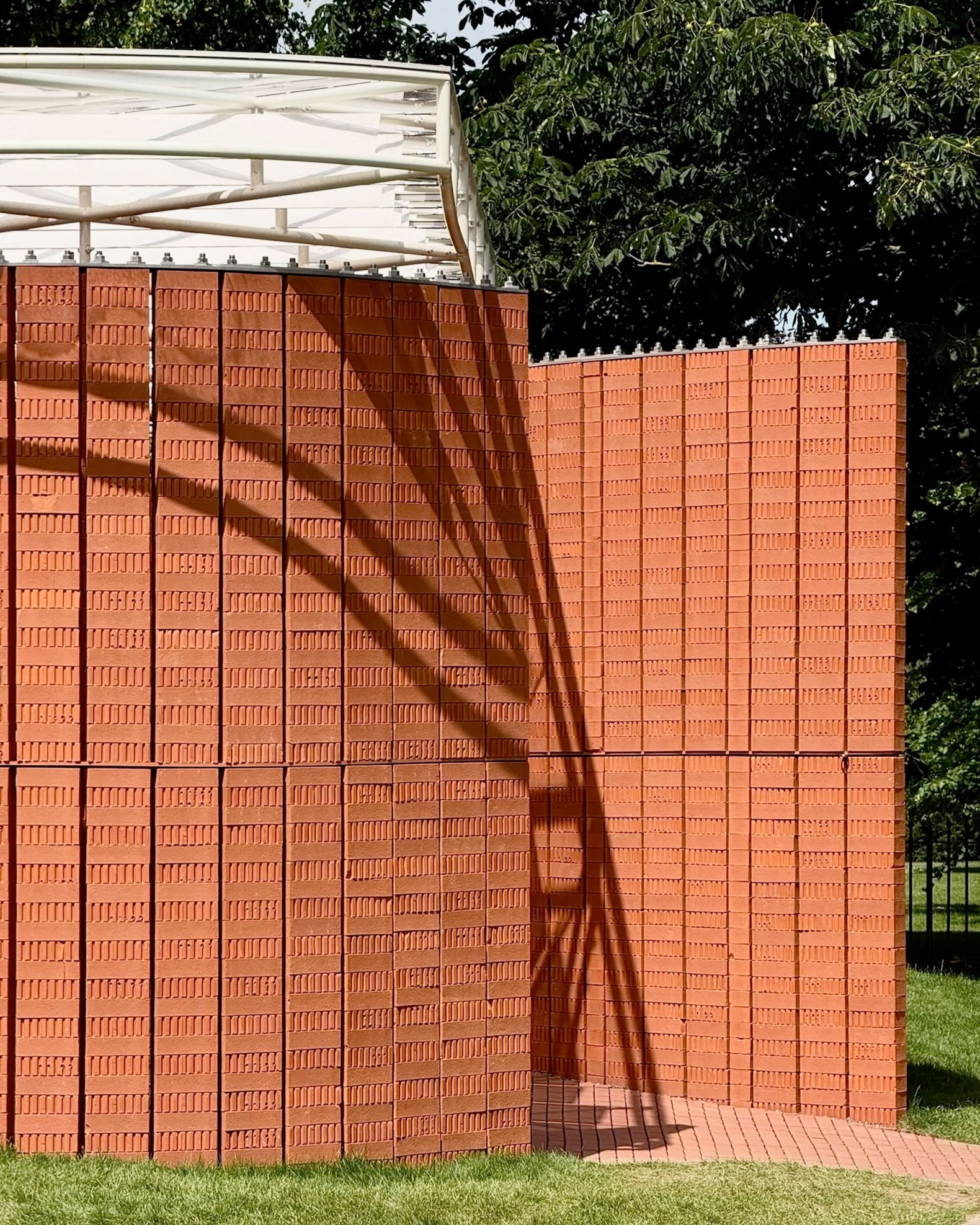
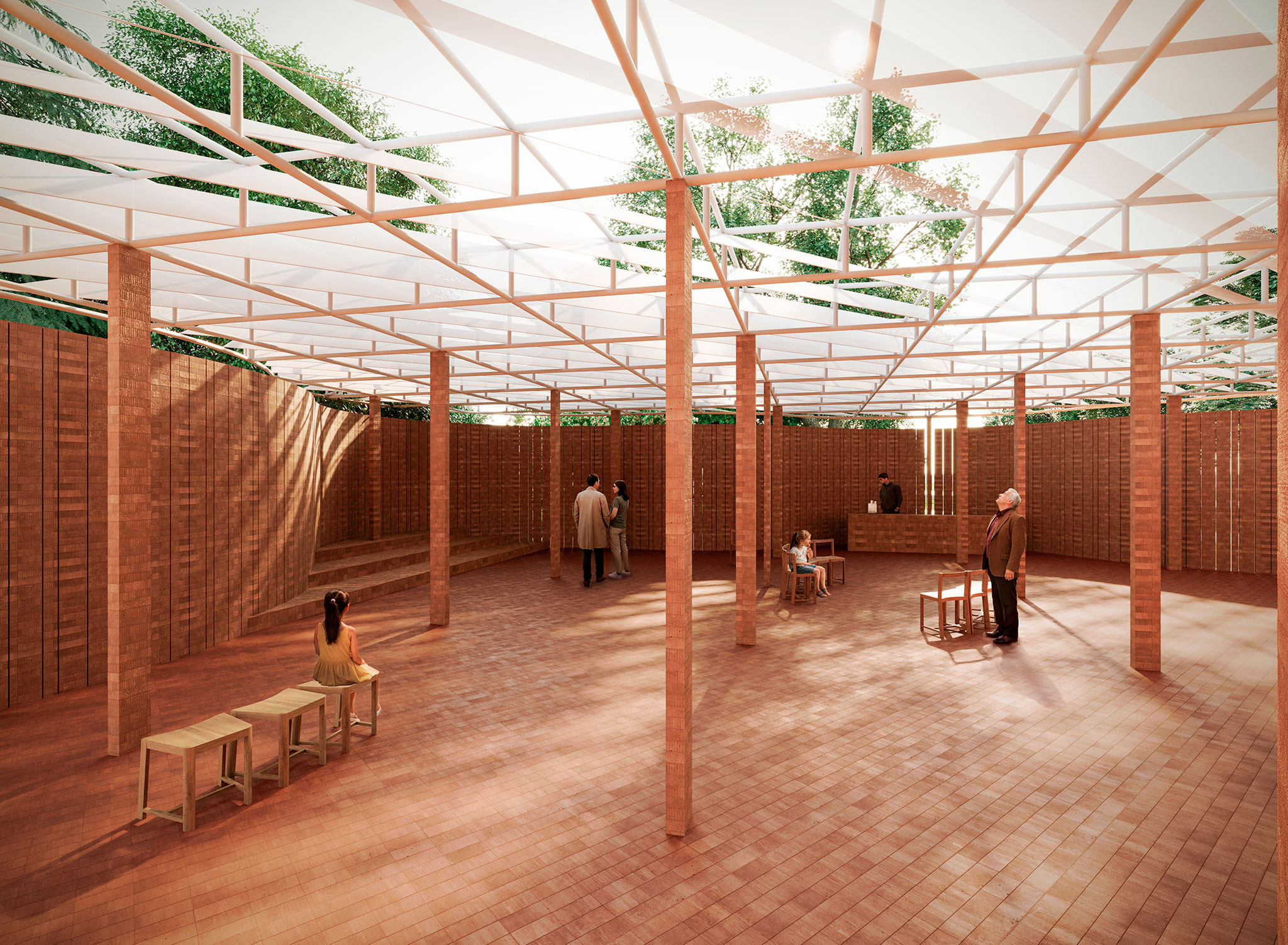
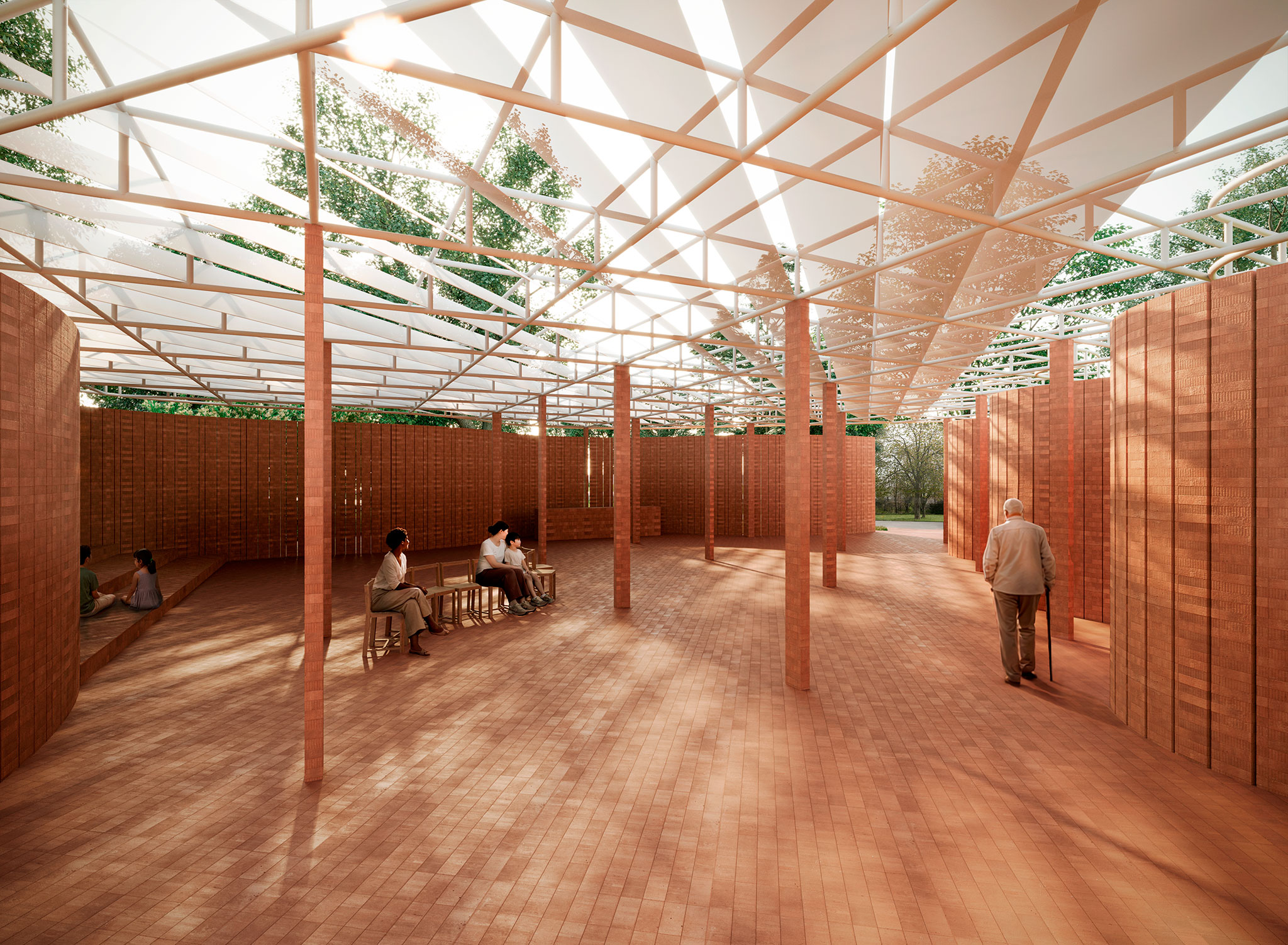
The scheme is further organised around a second wall that traces the canopy line of the surrounding trees, integrating with the landscape while preserving the existing vegetation. The pavilion’s main structure occupies the northern edge of the site and is sheltered by a translucent roof supported by a series of brick columns arranged like a grove of trees. This composition creates a highly permeable environment in which daylight and natural ventilation move freely through the space, blurring the distinction between enclosure and openness and fostering a close relationship with the surrounding parkland.
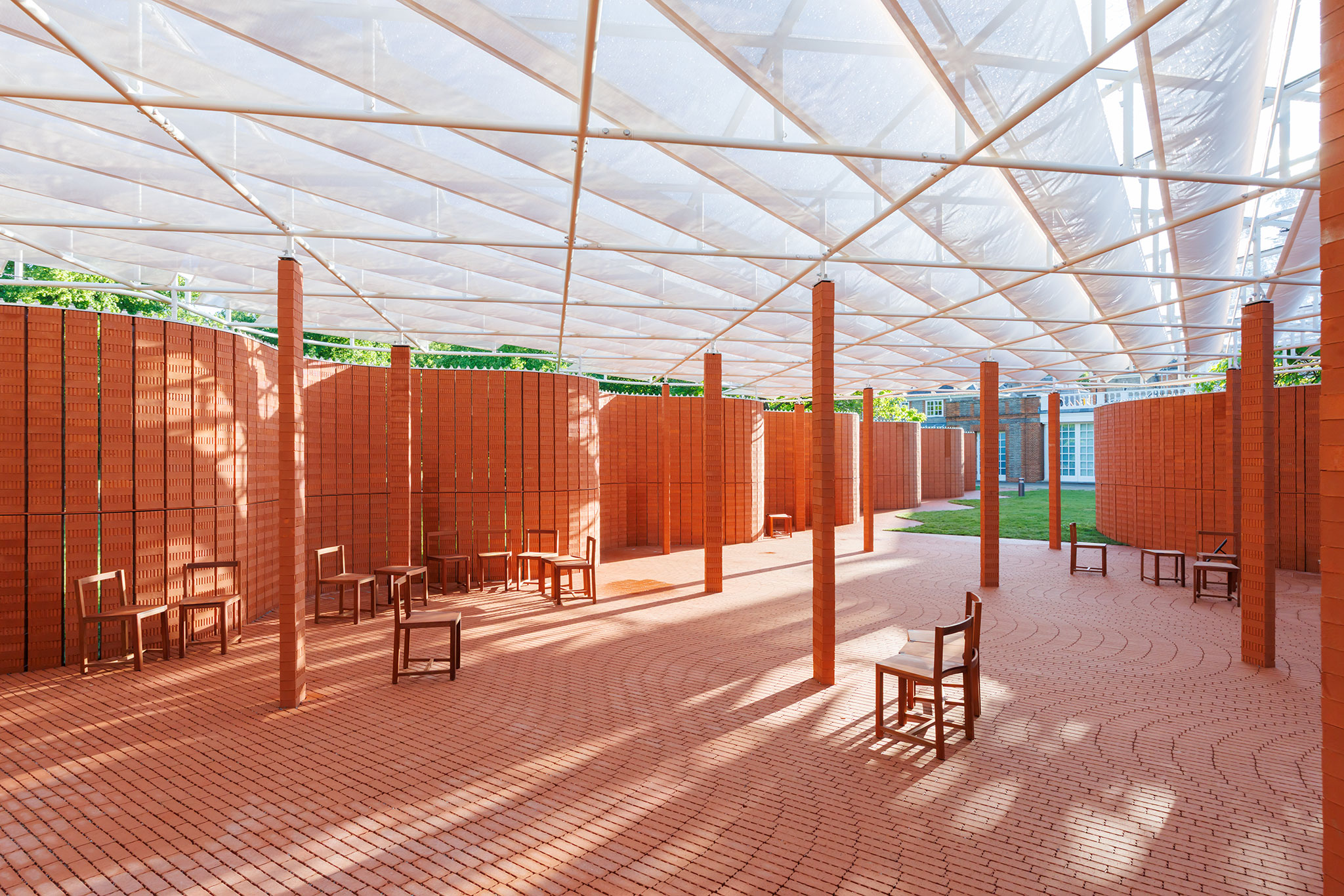
A serpentine by LANZA atelier. Serpentine Pavilion 2026. Photograph by Iwan Baan.
“It is an honour to be selected as the architects of the 25th Serpentine Pavilion, a milestone year for the commission. We are deeply grateful for the opportunity to share our work with a wider public and to contribute to the Pavilion’s ongoing legacy of spatial experimentation and collective encounter. Set within a garden, an evocation of the natural world, the project takes the form of a serpentine wall, conceived as a device that both reveals and withholds; shaping movement, modulating rhythm, and framing thresholds of proximity, orientation and pause.
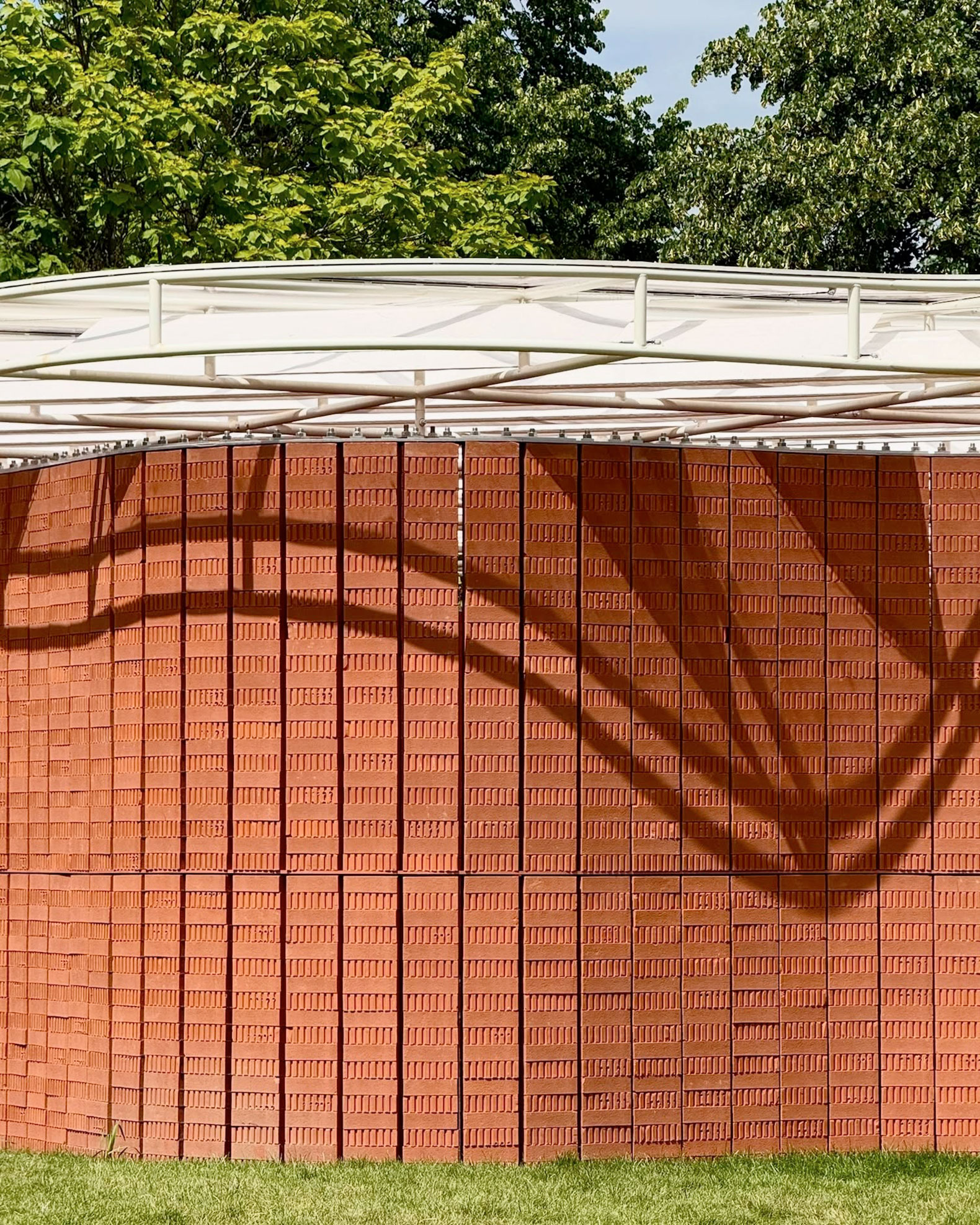
Inspired by the figure of the serpent as a generative and protective force, we draw a parallel with England’s winding fruit walls, which are structures that temper climate, create shelter, and enable growth. From this idea emerges a pavilion built of simple clay brick, foregrounding vernacular craft and the elemental capacity of architecture to bring people together. The 2026 Pavilion proposes built forms that are permeable, shaped and held by a gentle geometry, and continually responsive to those who move through it.”
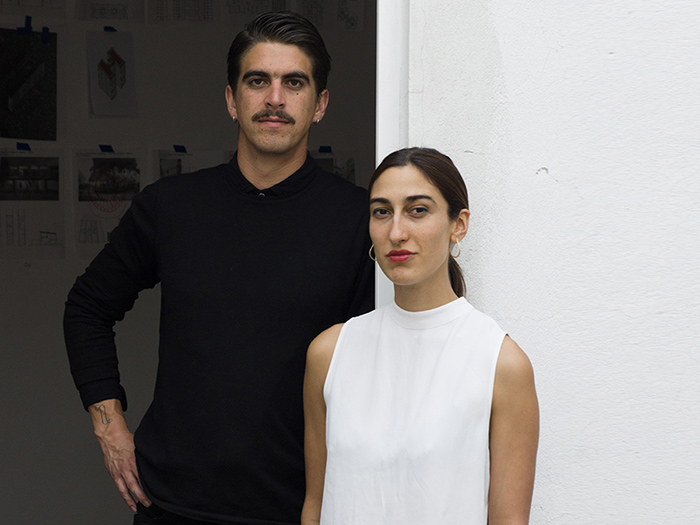
LANZA atelier.
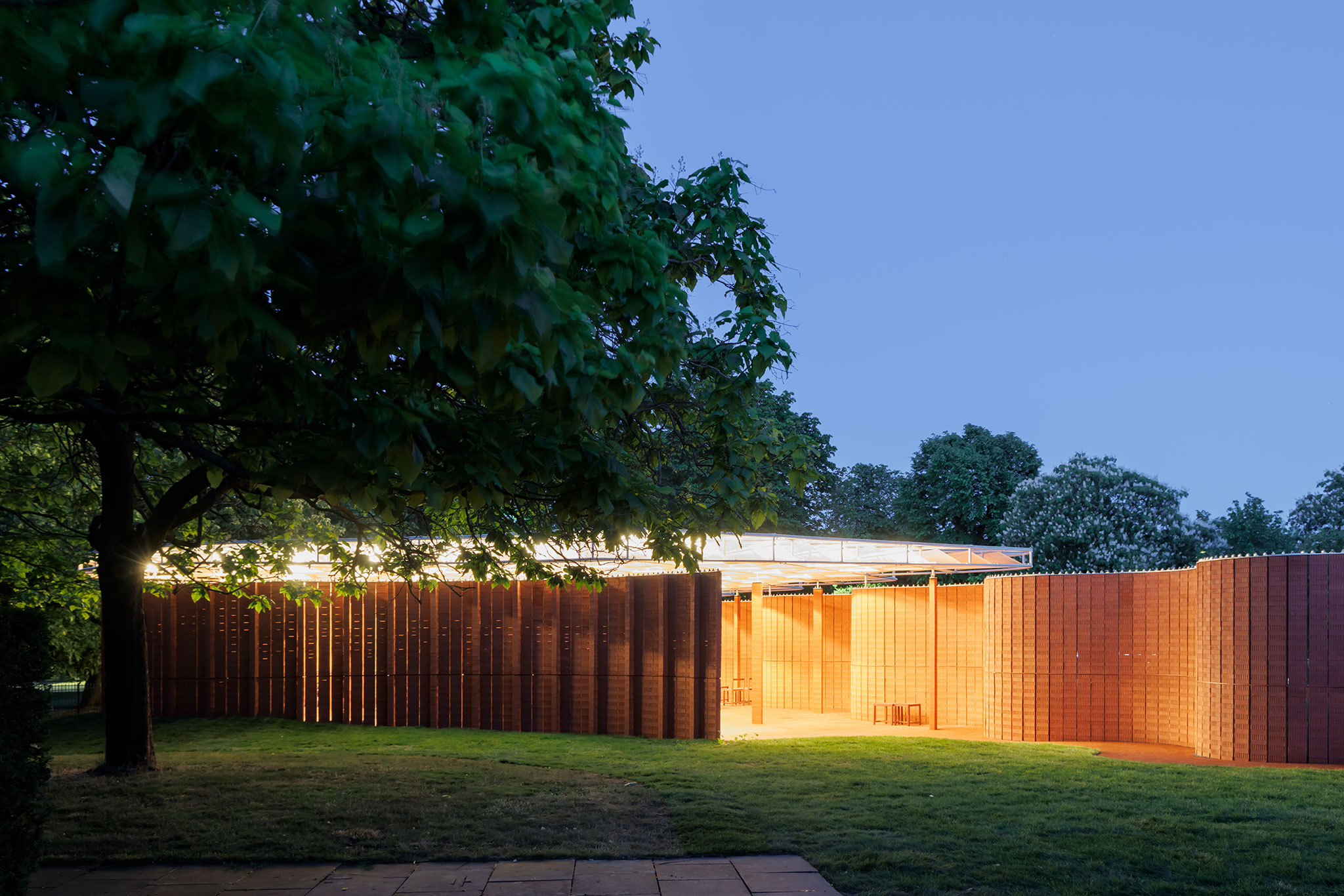
A serpentine by LANZA atelier. Serpentine Pavilion 2026. Photograph by Iwan Baan.
LANZA atelier chose brick as the primary material to celebrate the English garden tradition and establish a conversation with the existing brick façade of the Serpentine South Gallery, once a tea pavilion itself. Constructed from a rhythmic repetition of brick columns that transform the wall from opaque to permeable, the Pavilion challenges the idea of walls as features of division and instead invites connection as it allows visitors to see through.
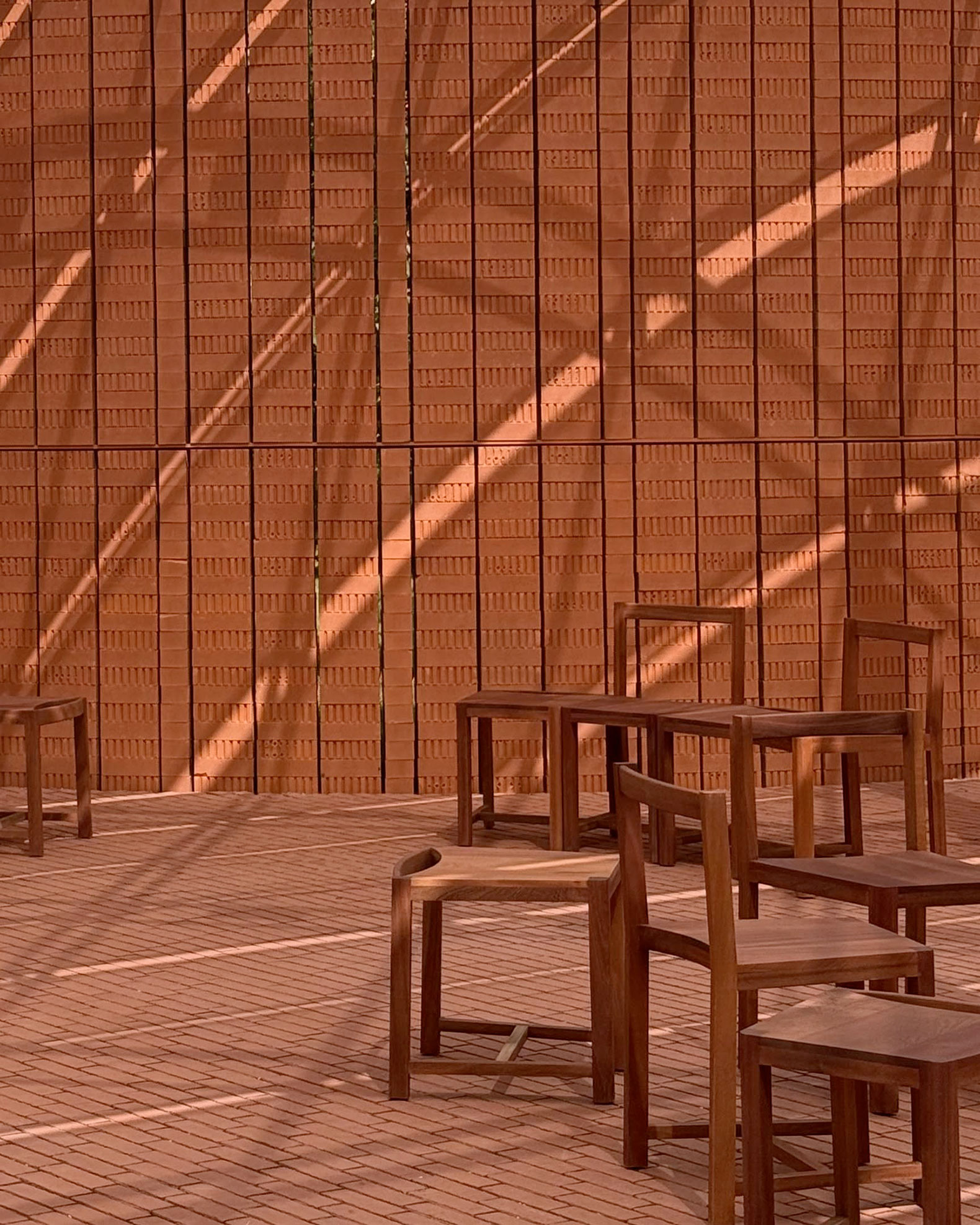
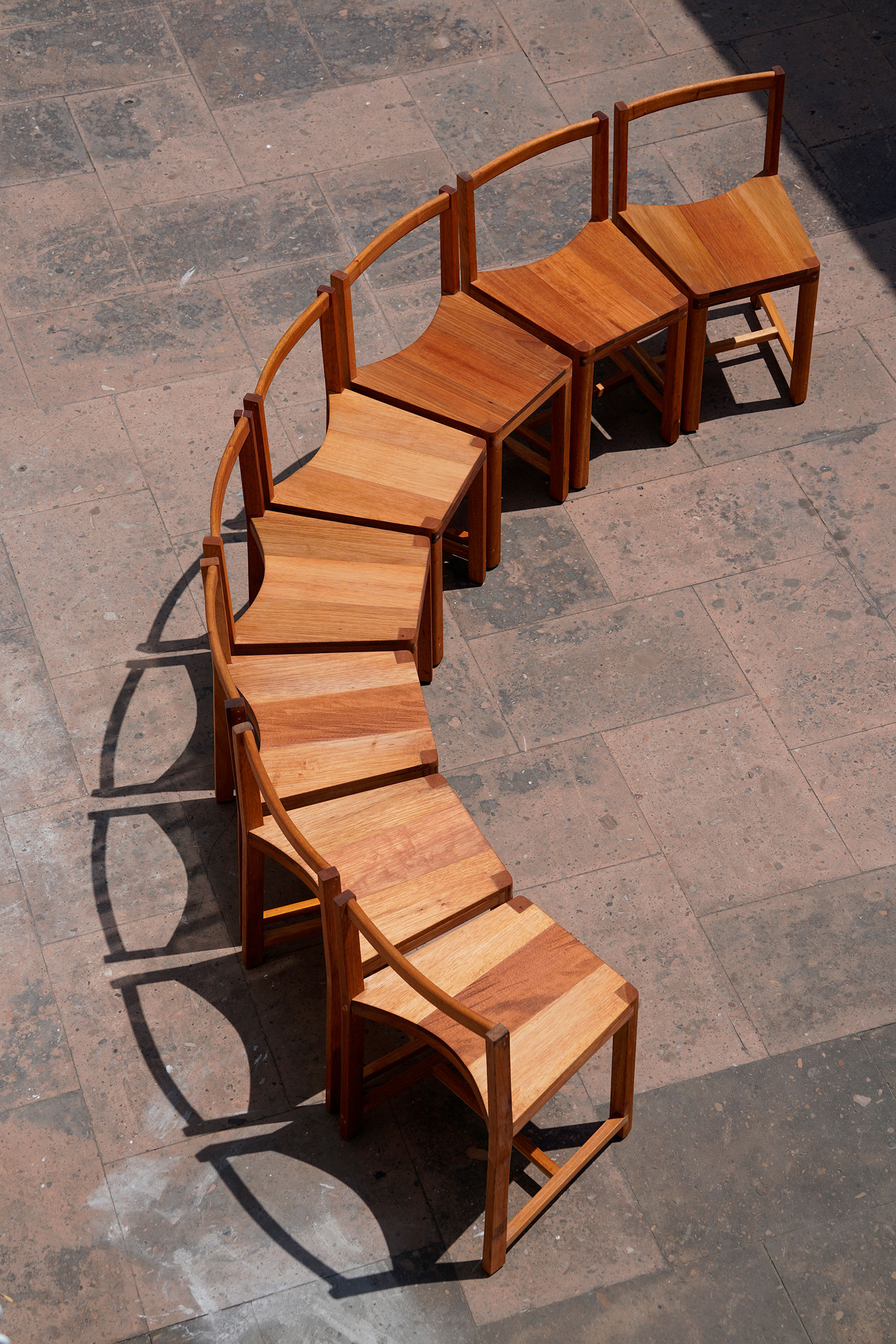
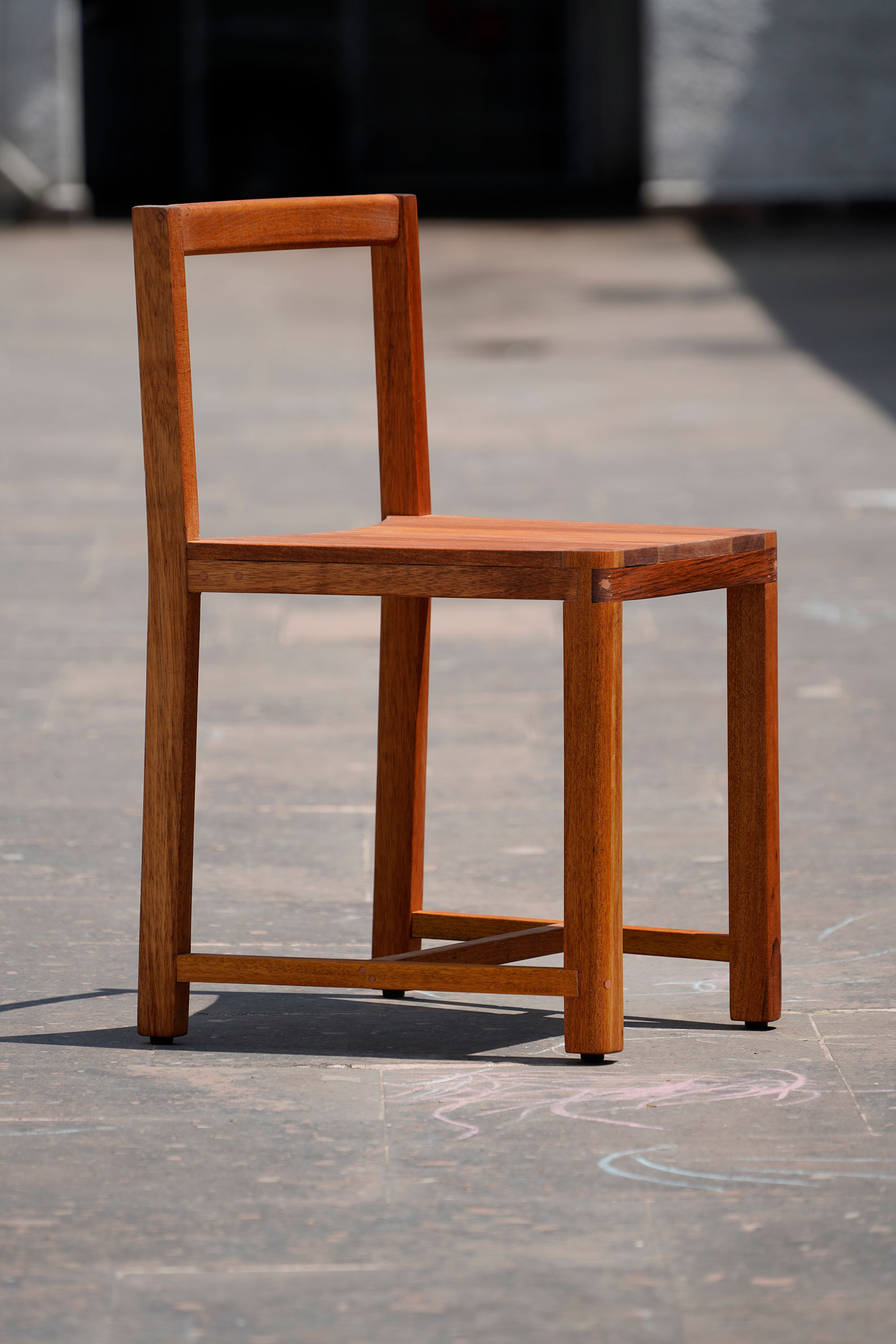
LANZA also designed the chairs and stools for the pavilion, continuing their practice of viewing furniture and architecture as part of the same design process but at different scales. Constructed from sapele hardwood, the chairs and stools are made locally.