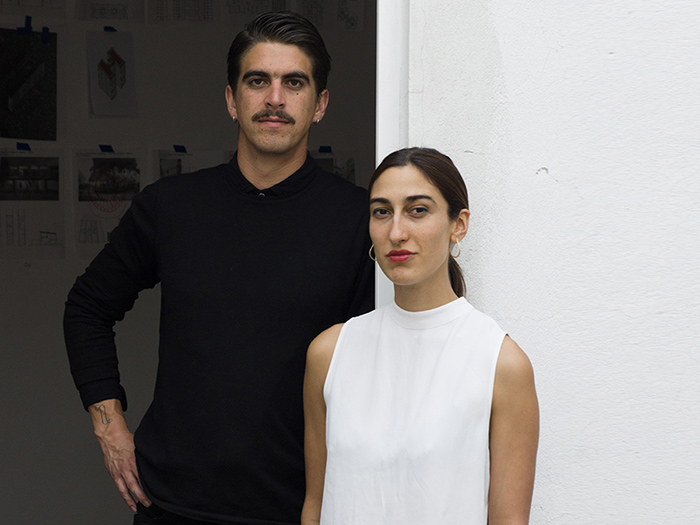
LANZA Atelier, led by Isabel Abascal and Alessandro Arienzo, designed their first residential project located away from the urban agglomerations of the big capital of Mexico, the property is a quiet home for a young family: the husband, an engineer who specializes in the construction of tunnels, the wife, and their two daughters.
Casa Jajalpa pays attention to natural context creating an undulating and organic wall that adapts to the positions of pre-existing trees and that sometimes operates as a corridor and sometimes as a lattice that delimits an area within nature. The wall also connects two buildings, a one-story family home and a smaller two-story guest house on the outskirts of the city of Ocoyoacac, Mexico.
The house is built with artisanal brick exposed for walls and concrete slabs curved to let the morning light into all spaces of the house. The design creates abstract relationships with the landscape, the light, and outside spaces, "fragments of the landscape through the patios, windows and doors so that nature is always present."
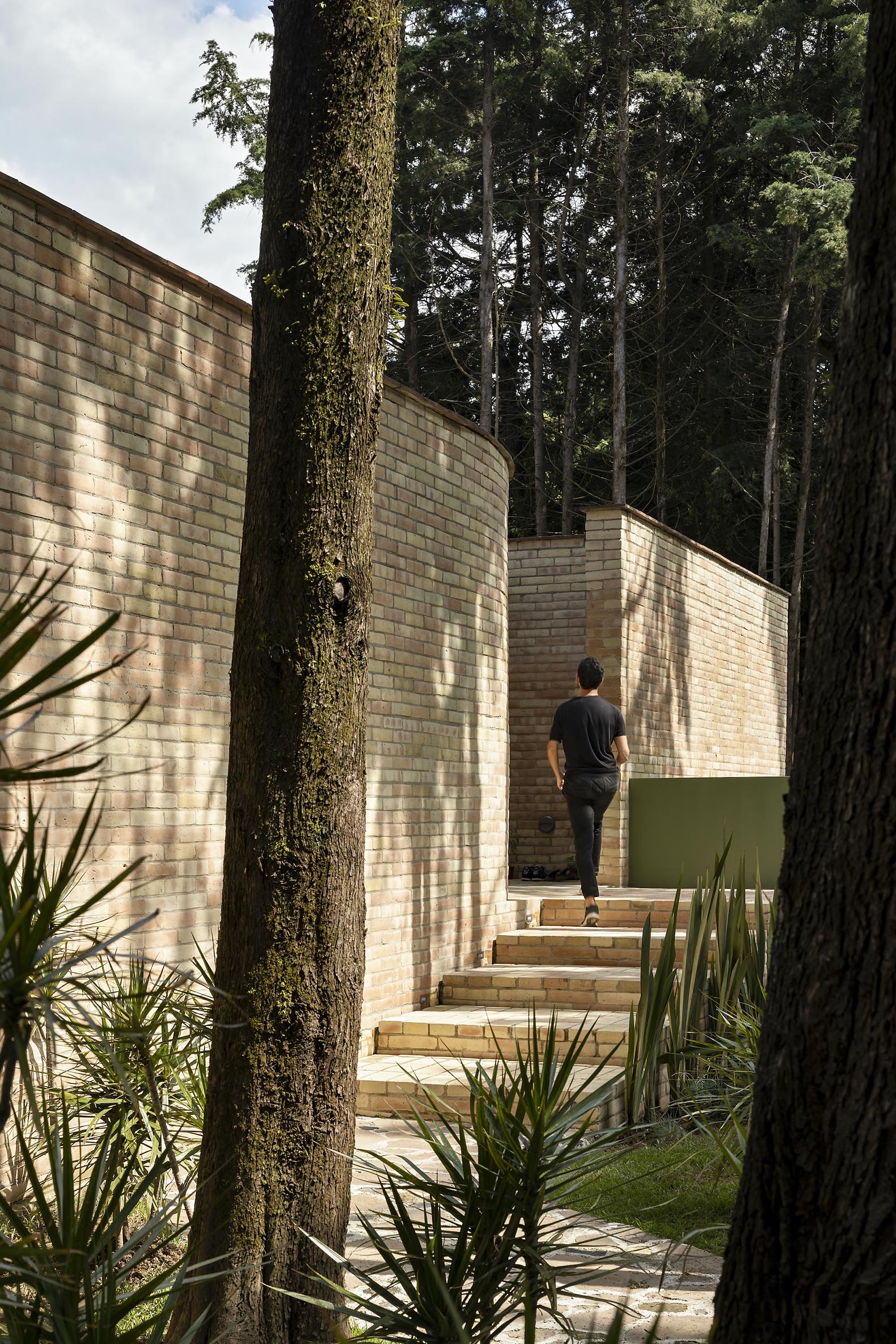
Jajalpa House by LANZA Atelier. Photograph by Dane Alonso.
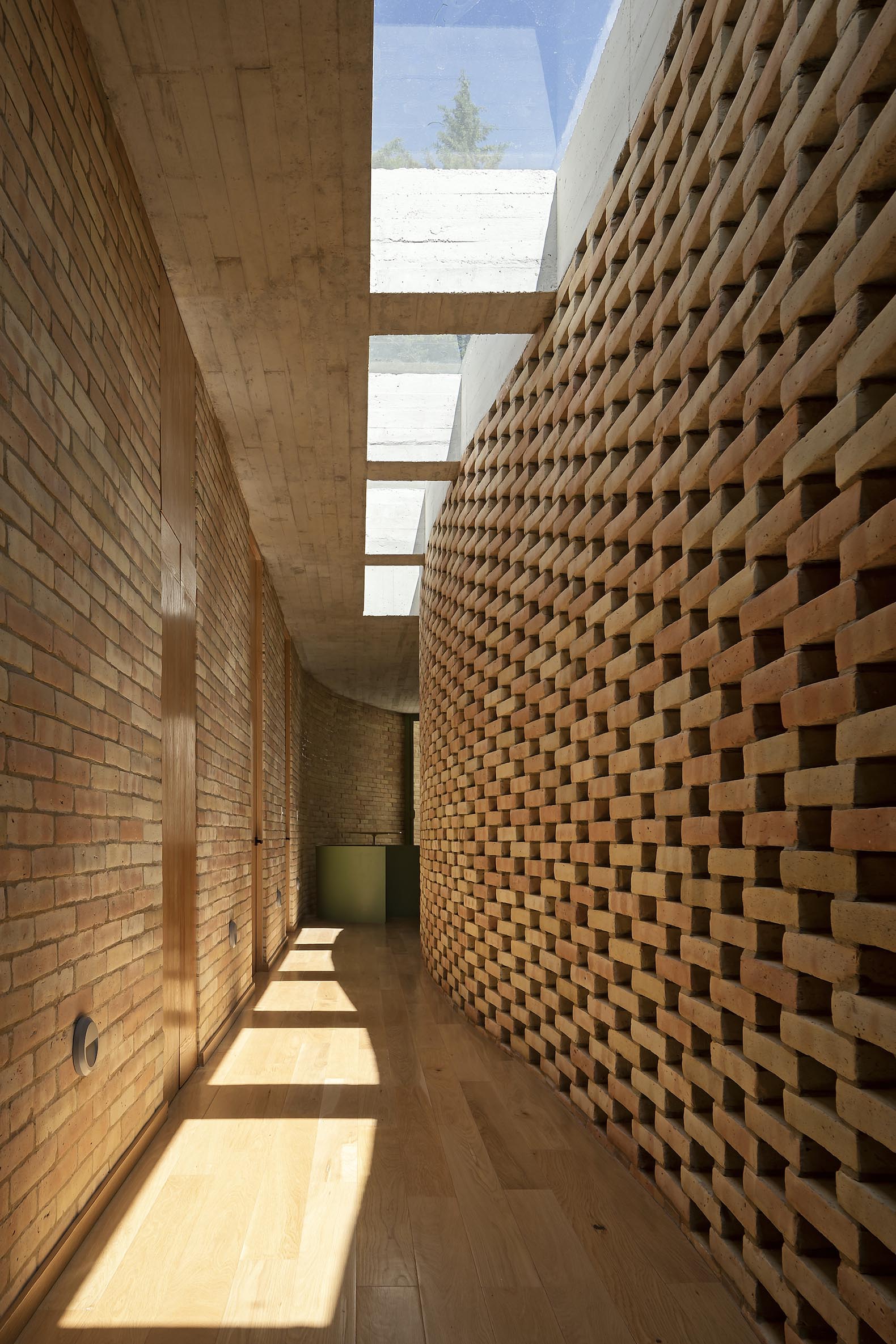
Jajalpa House by LANZA Atelier. Photograph by Dane Alonso.
Project description by LANZA Atelier
Forest House is located in a pine forest near Mexico City. The initial intention was to domesticate a piece of that forest to make it part of the house. An organic wall that adapts to the positions of pre-existing trees and that sometimes operates as a corridor and sometimes as a lattice delimits an area within nature. The rooms of the house, a one-storey volume for the family and a two stories volume for guests, are related to this wall, either joining or being crossed by it. Thus, they turn towards the interior forest, leaving outside the noise of the neighbouring road and the presence of other neighbours.
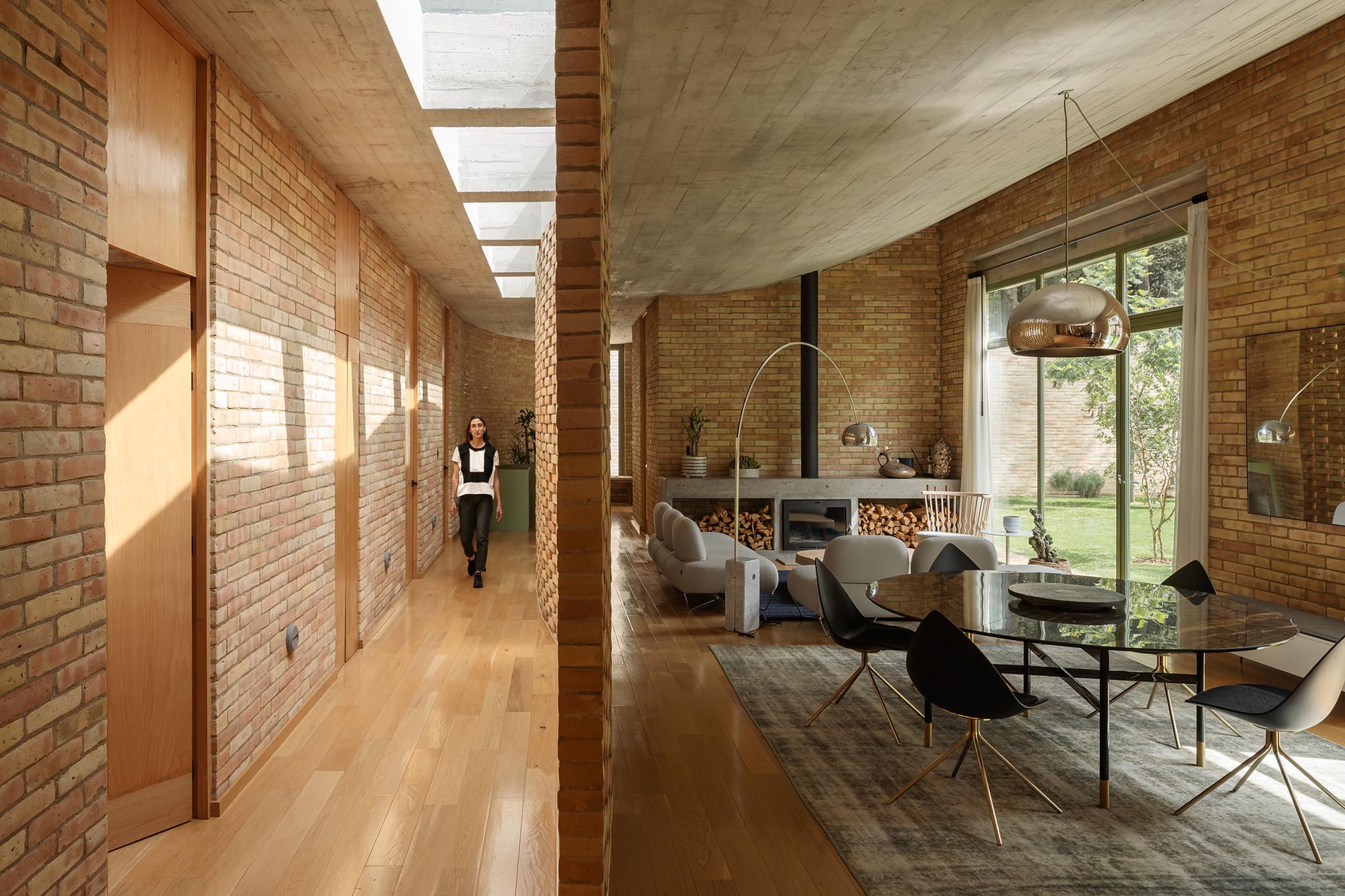
Jajalpa House by LANZA Atelier. Photograph by Dane Alonso.
The house is built with artisanal brick, which remains exposed in most cases. The concrete slabs of the main volume are curved to let the morning light into all the rooms of the house. A relationship is created with abstract fragments of the landscape through the patios, windows and doors so that nature is always present.