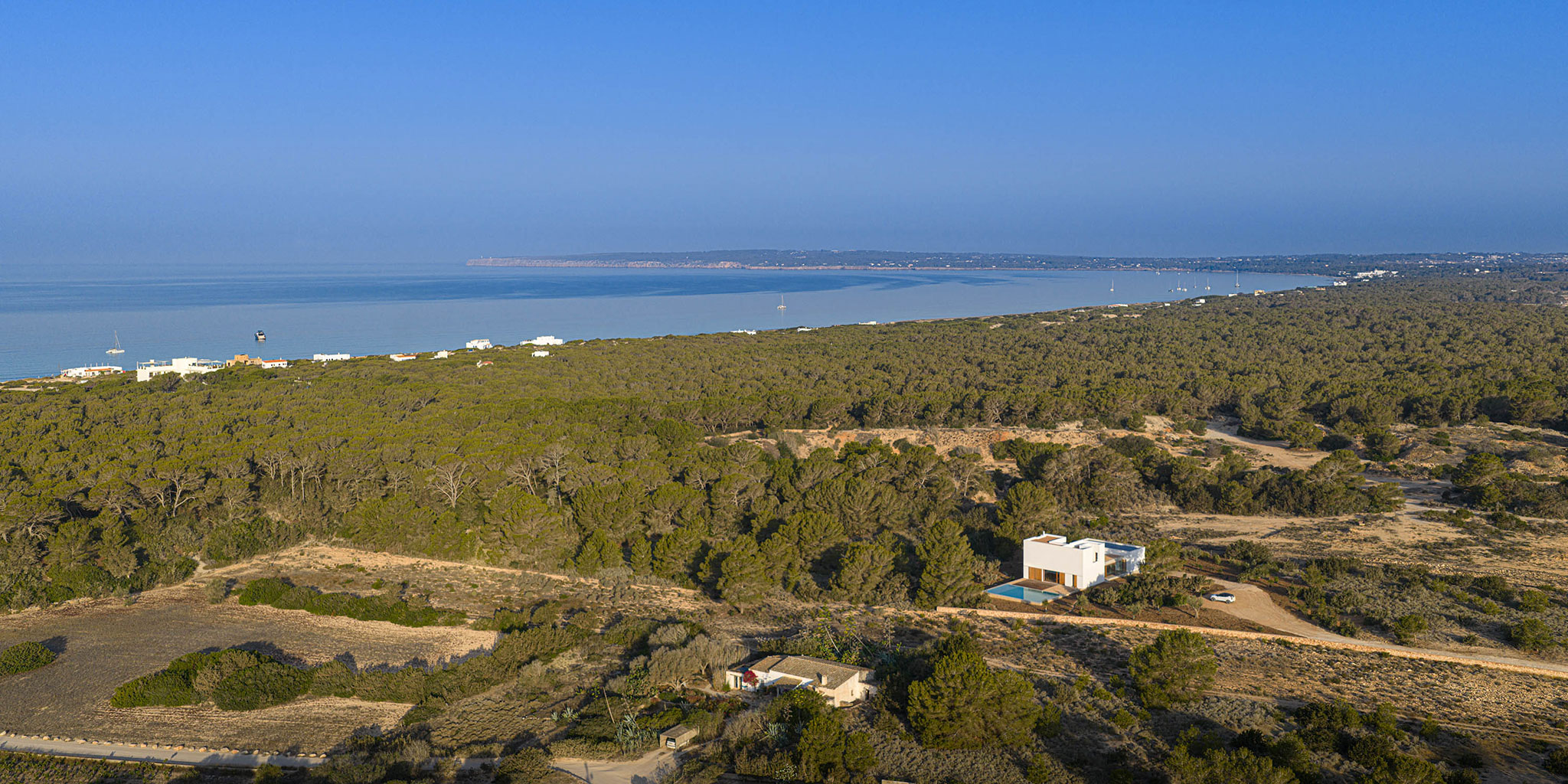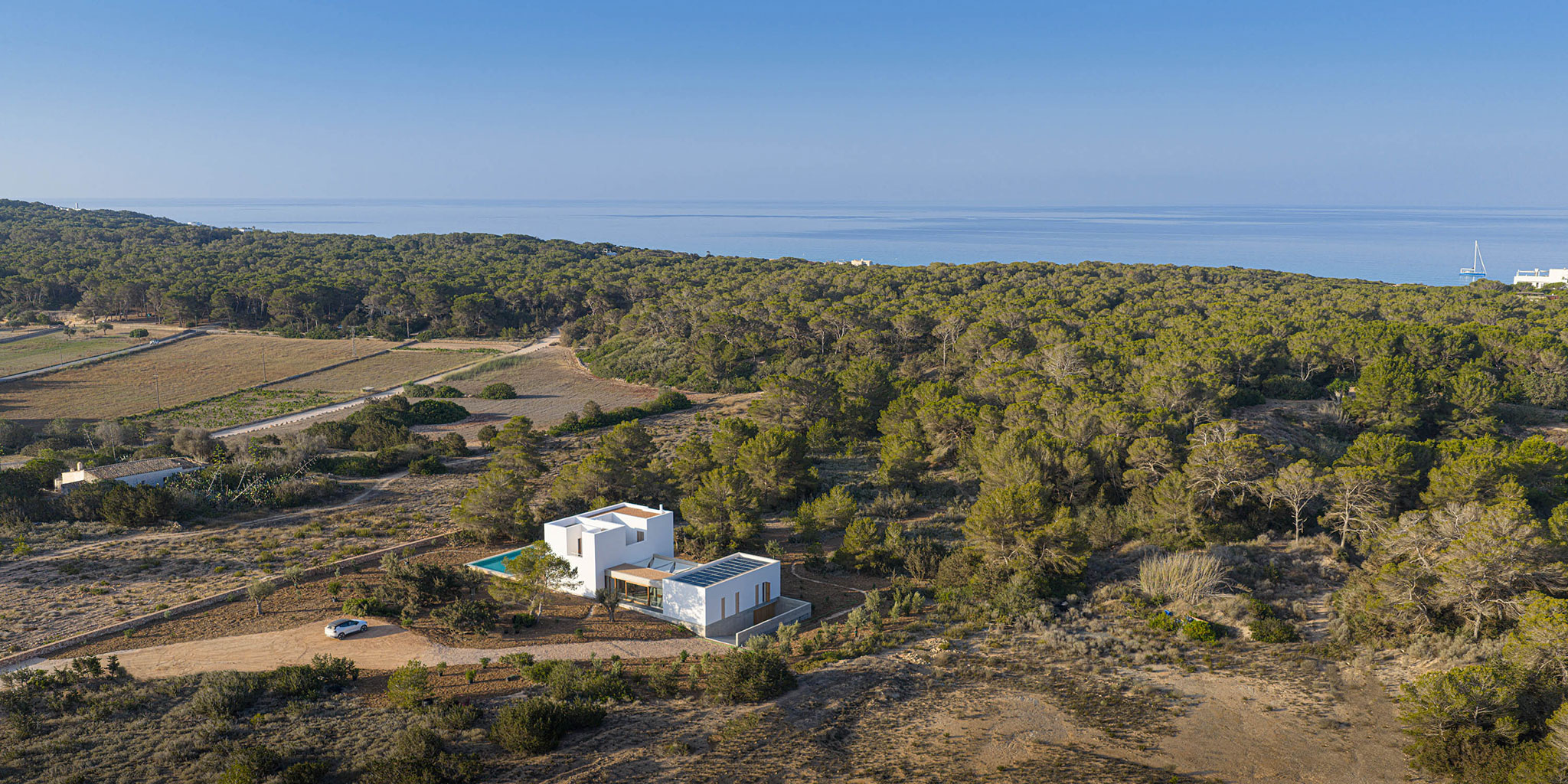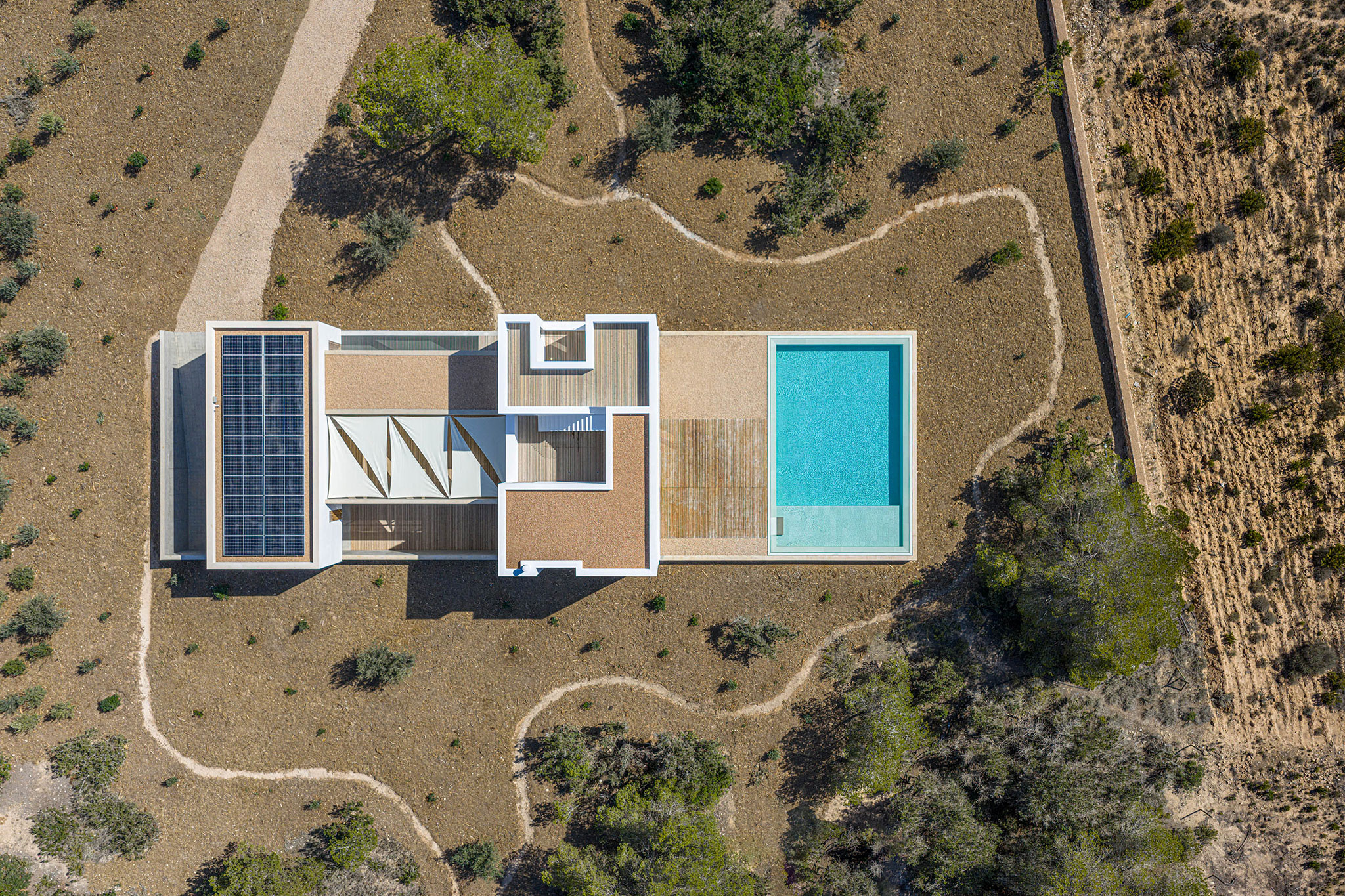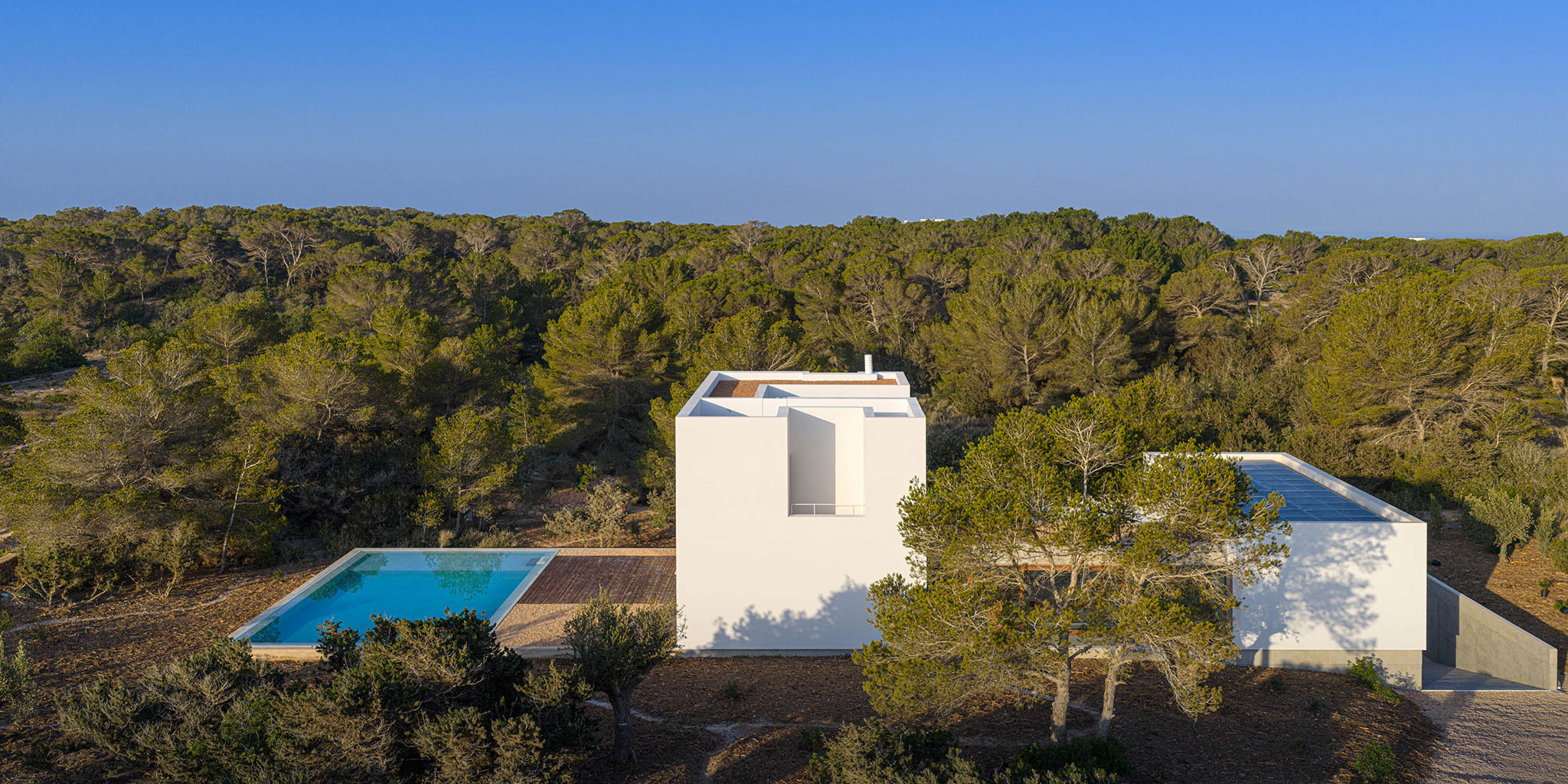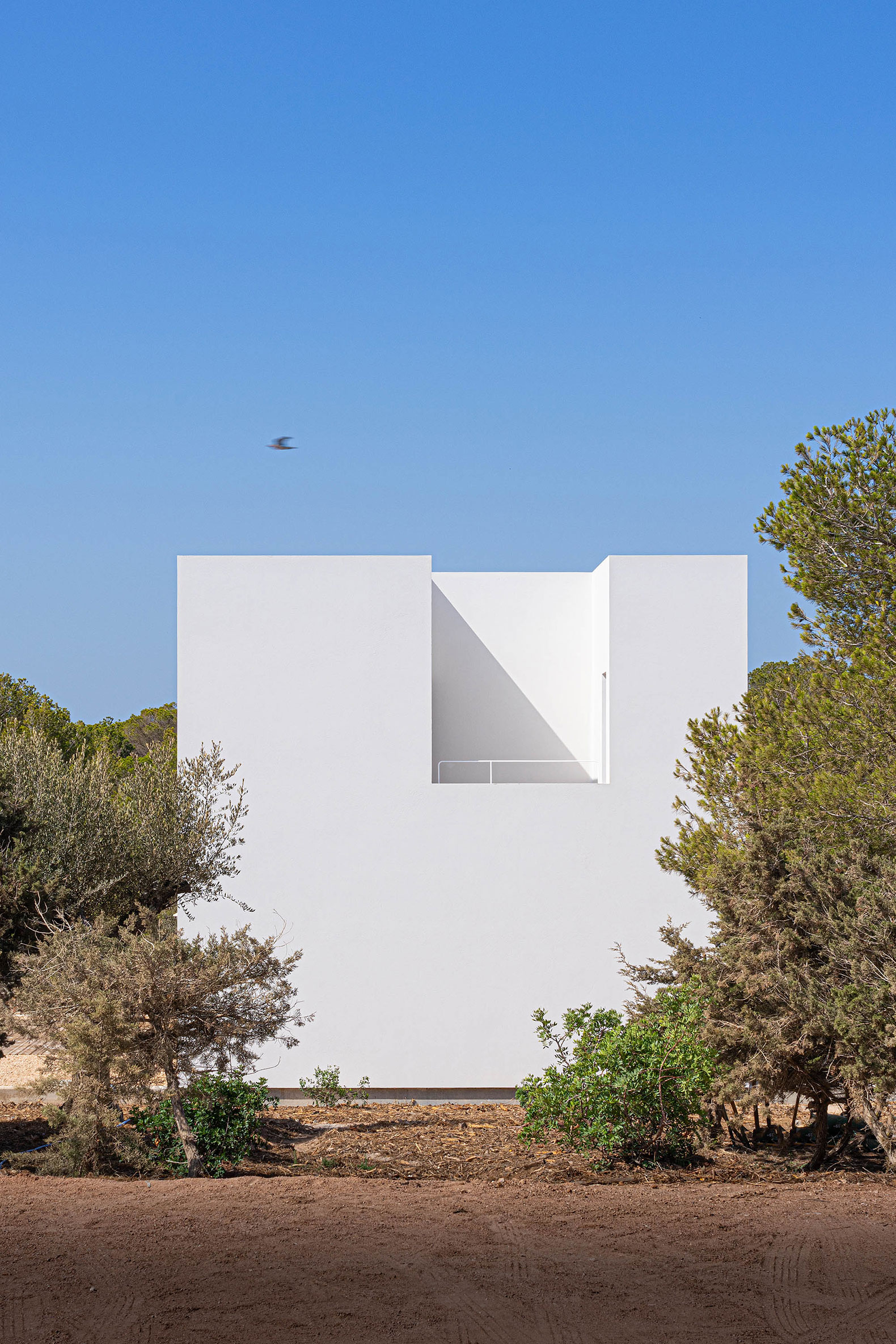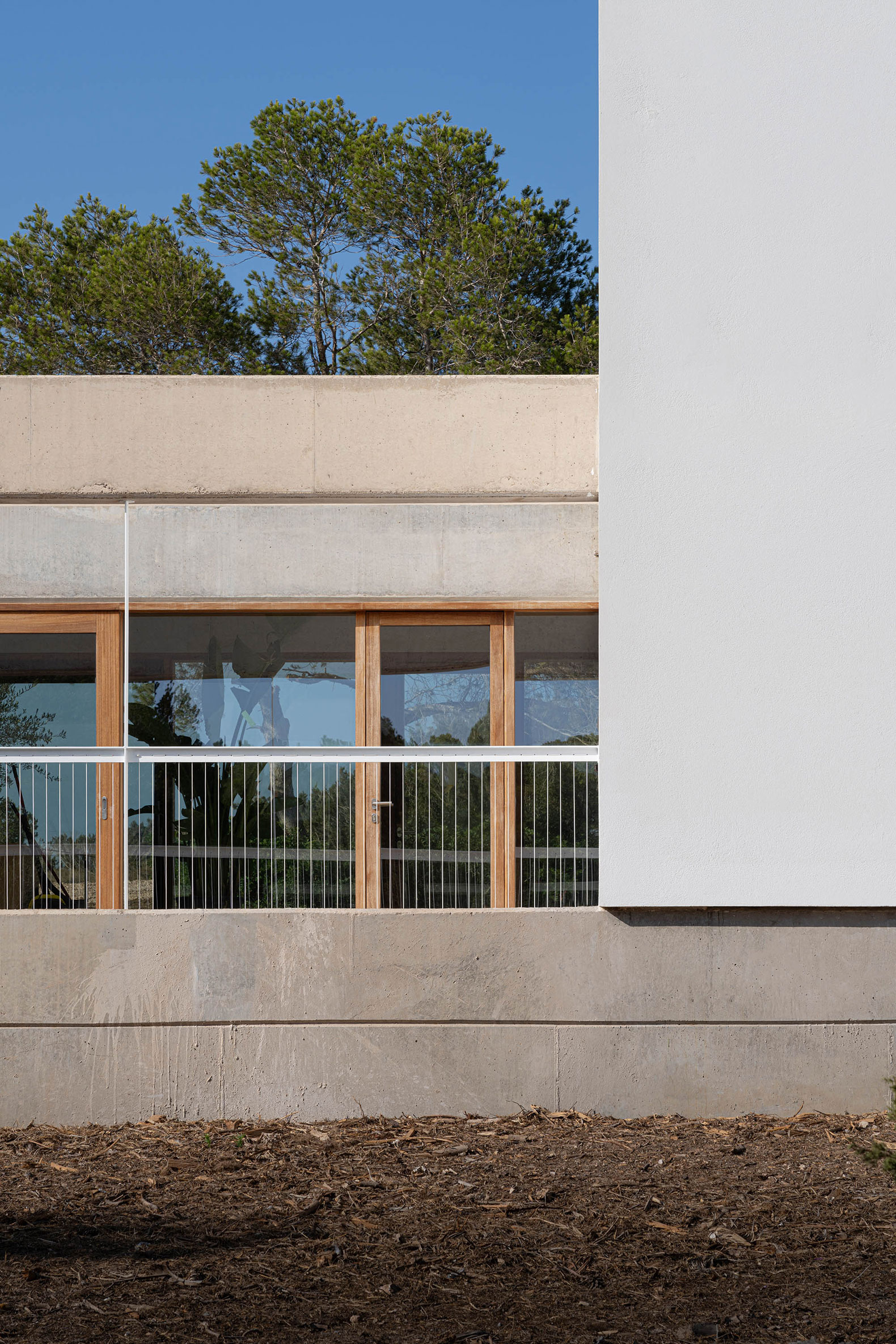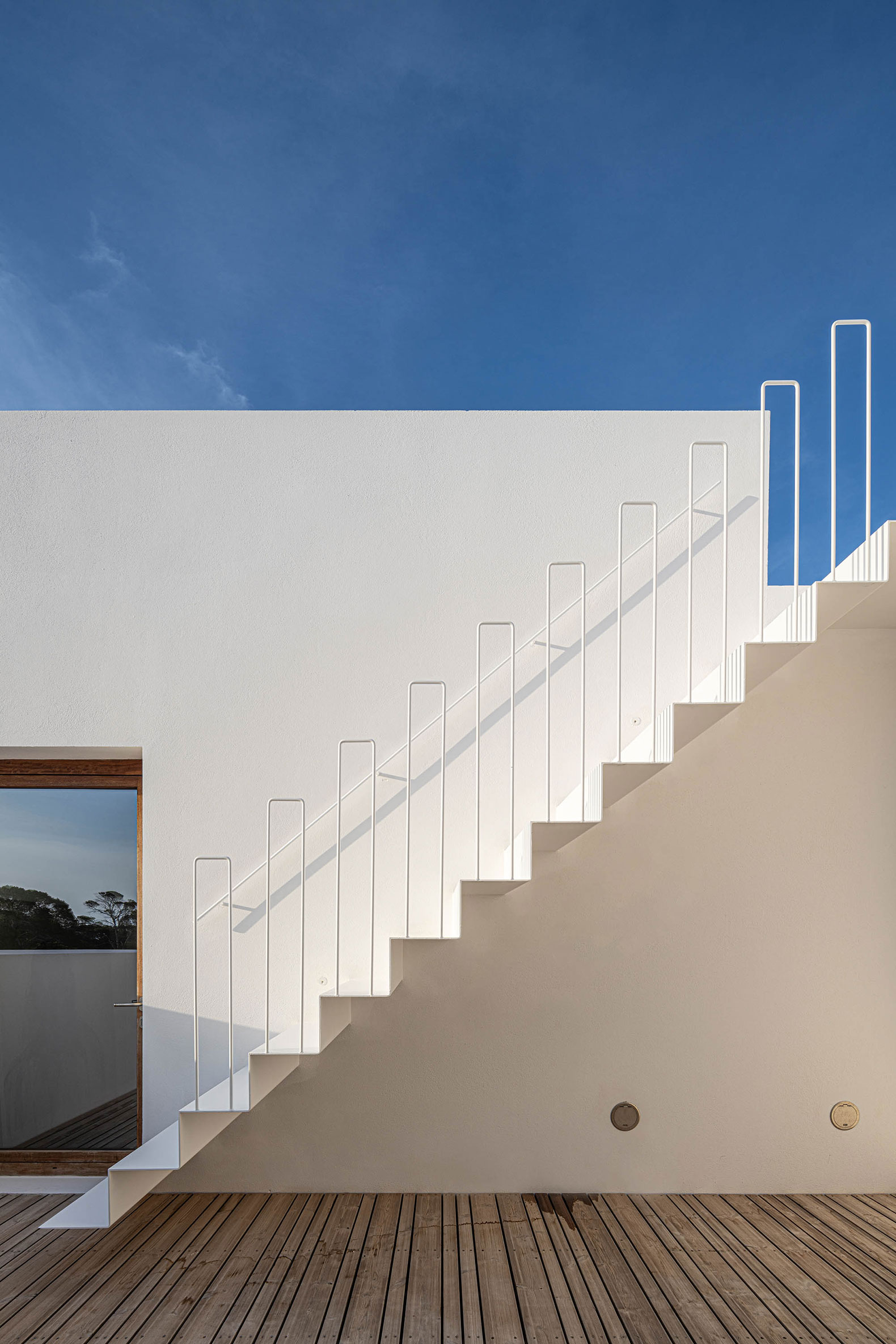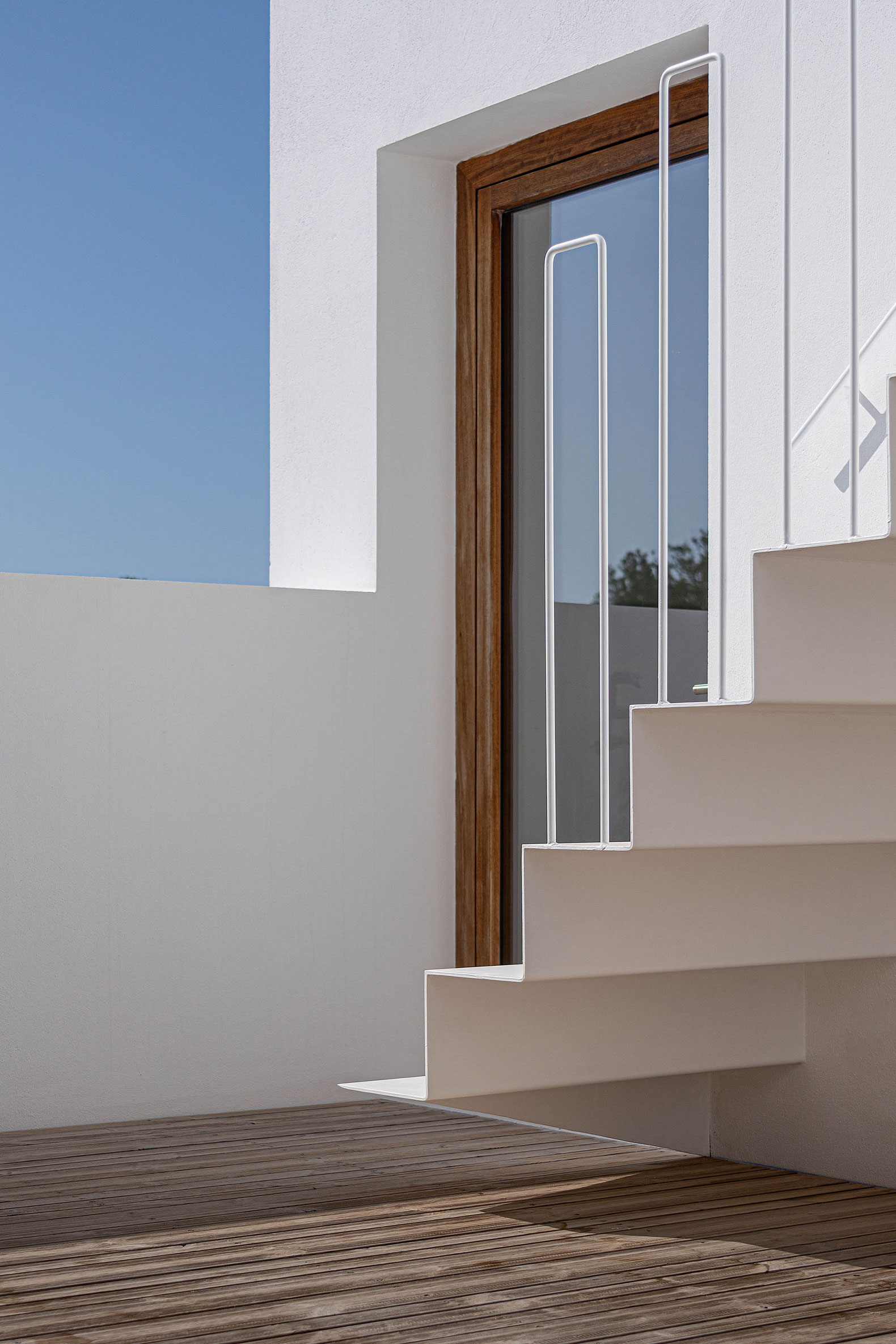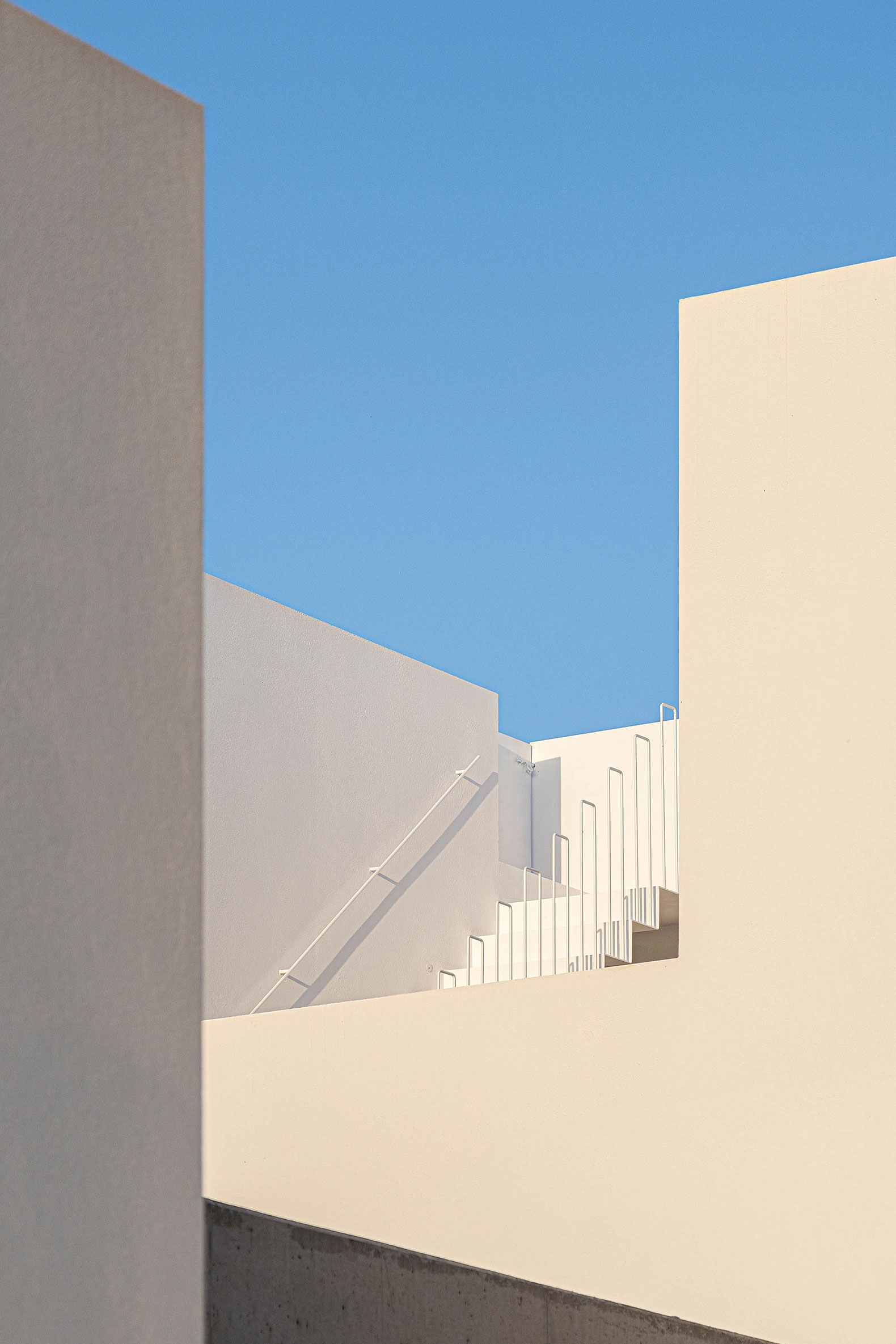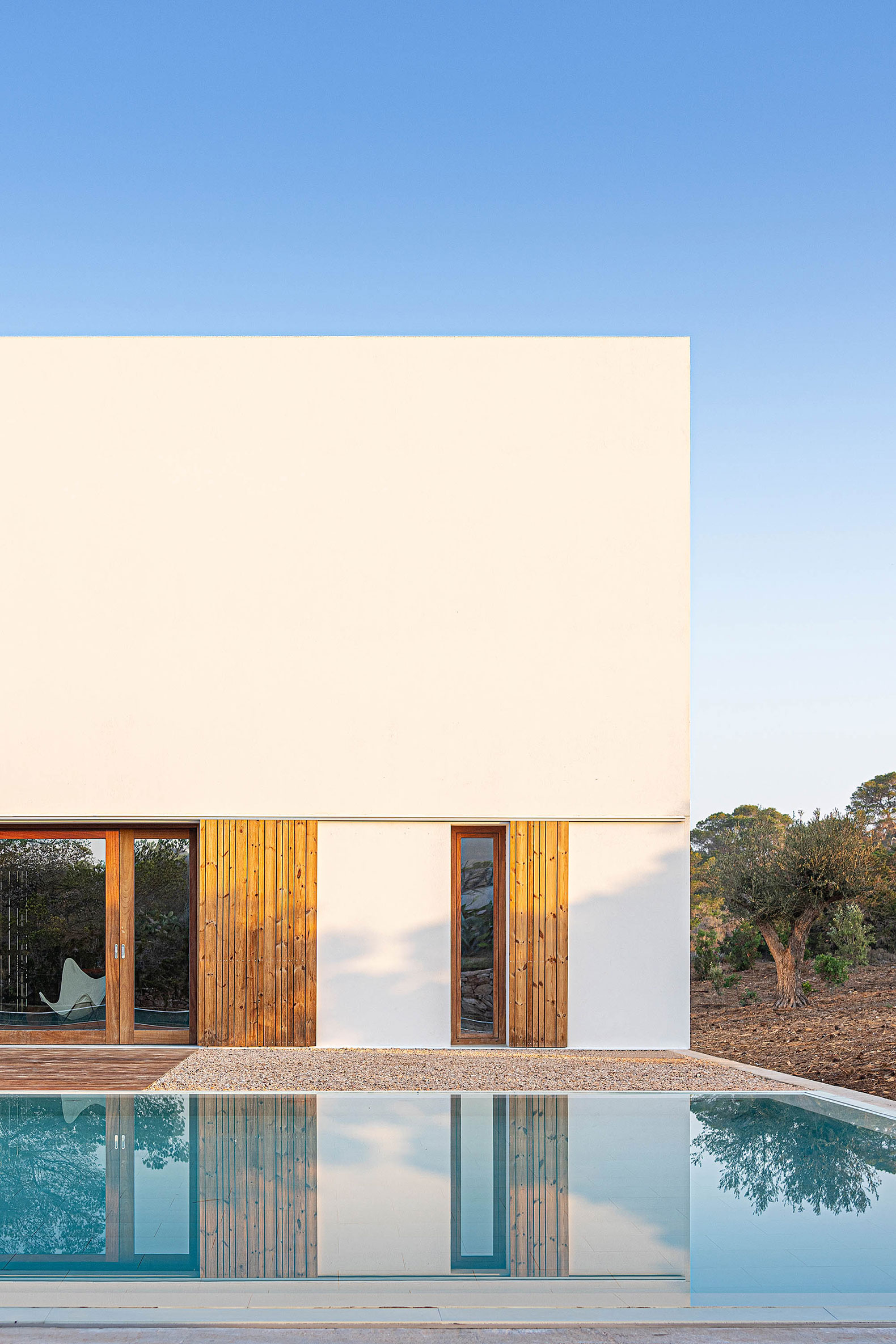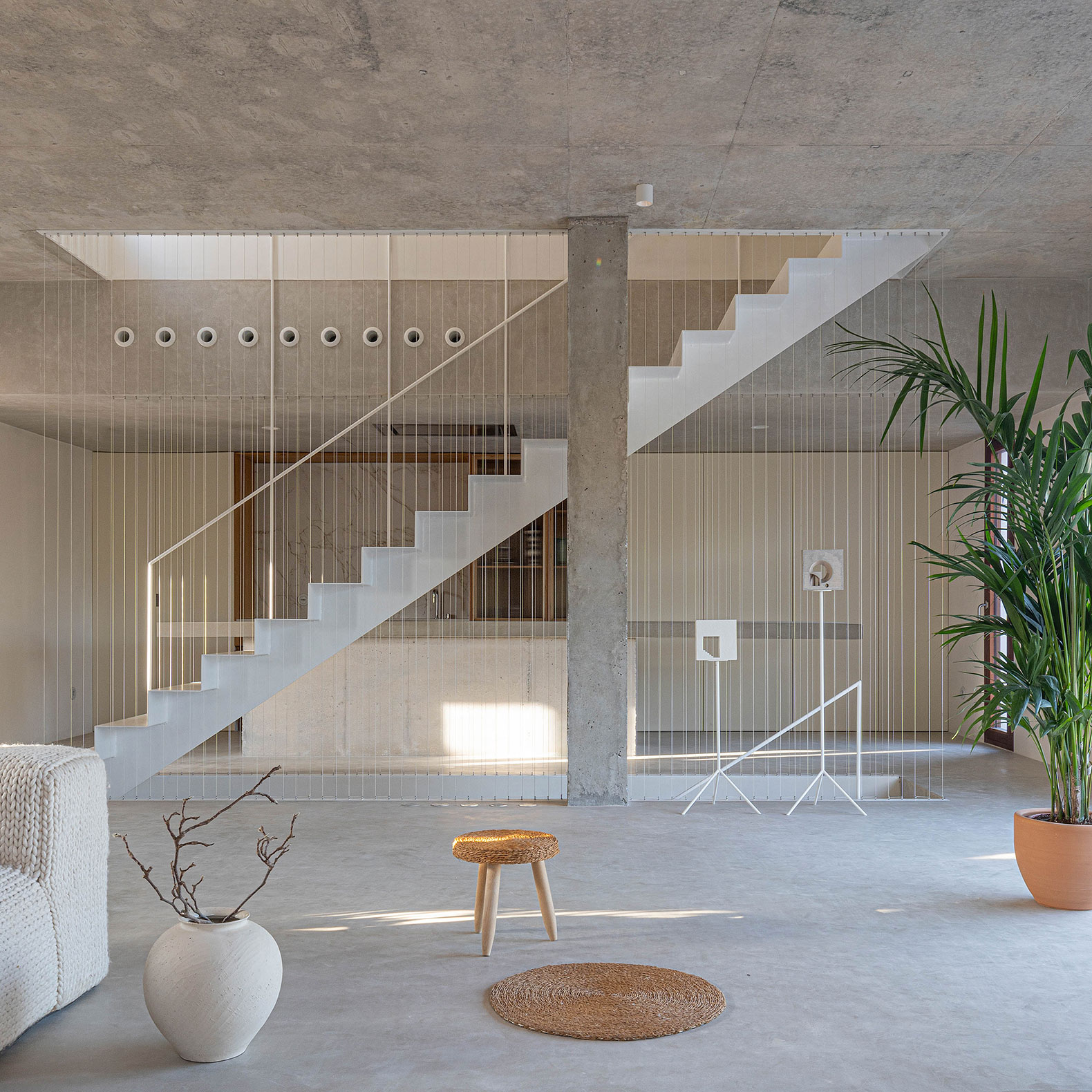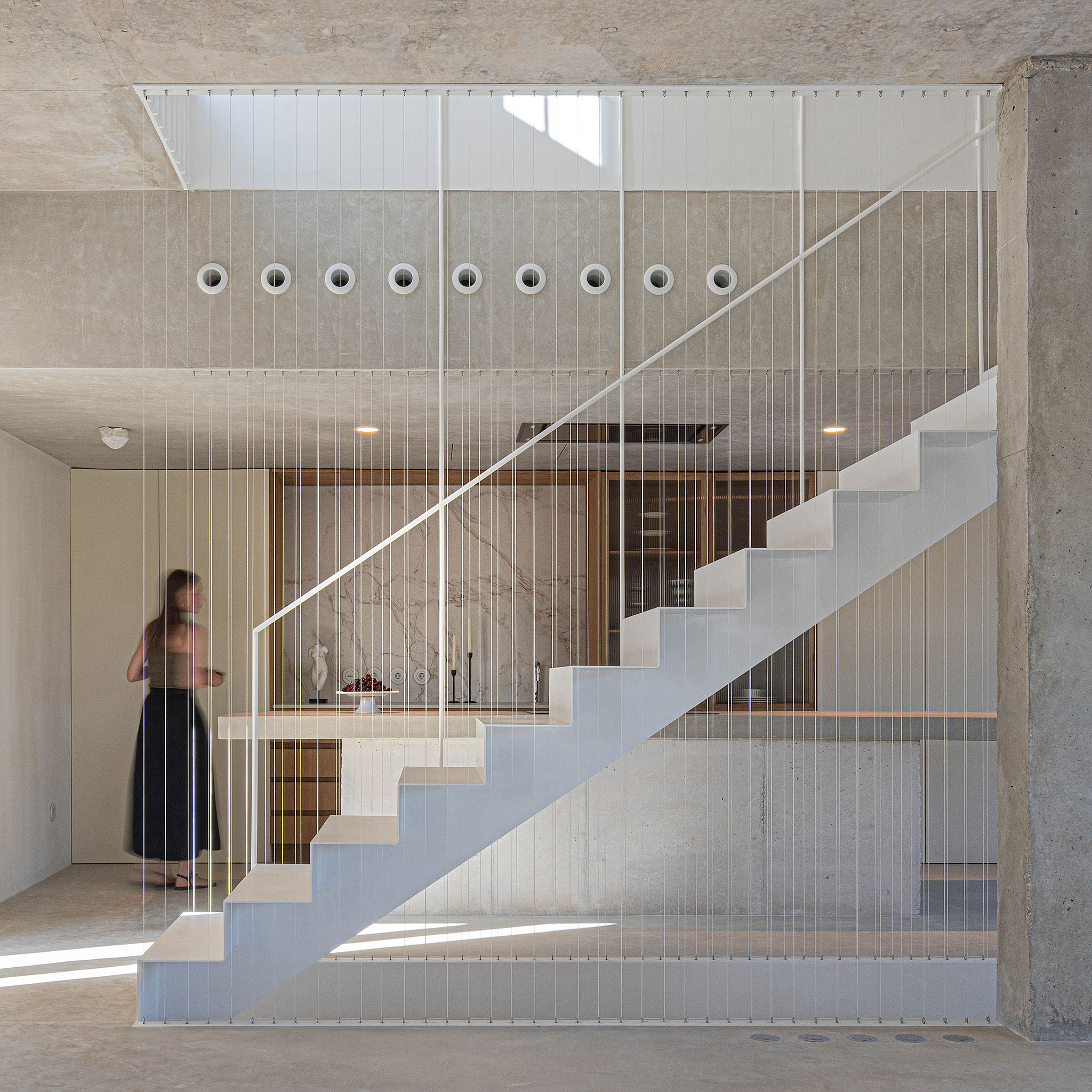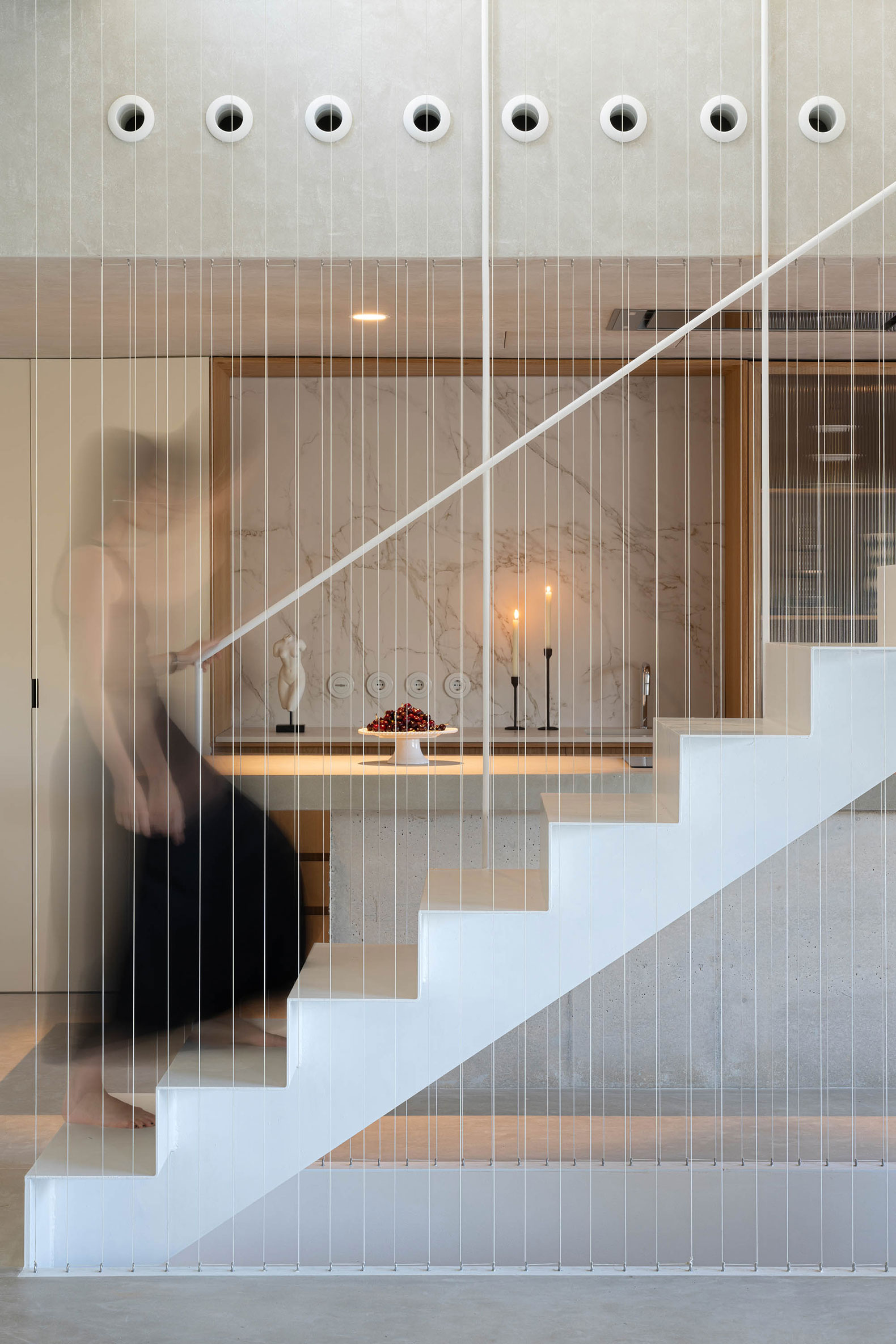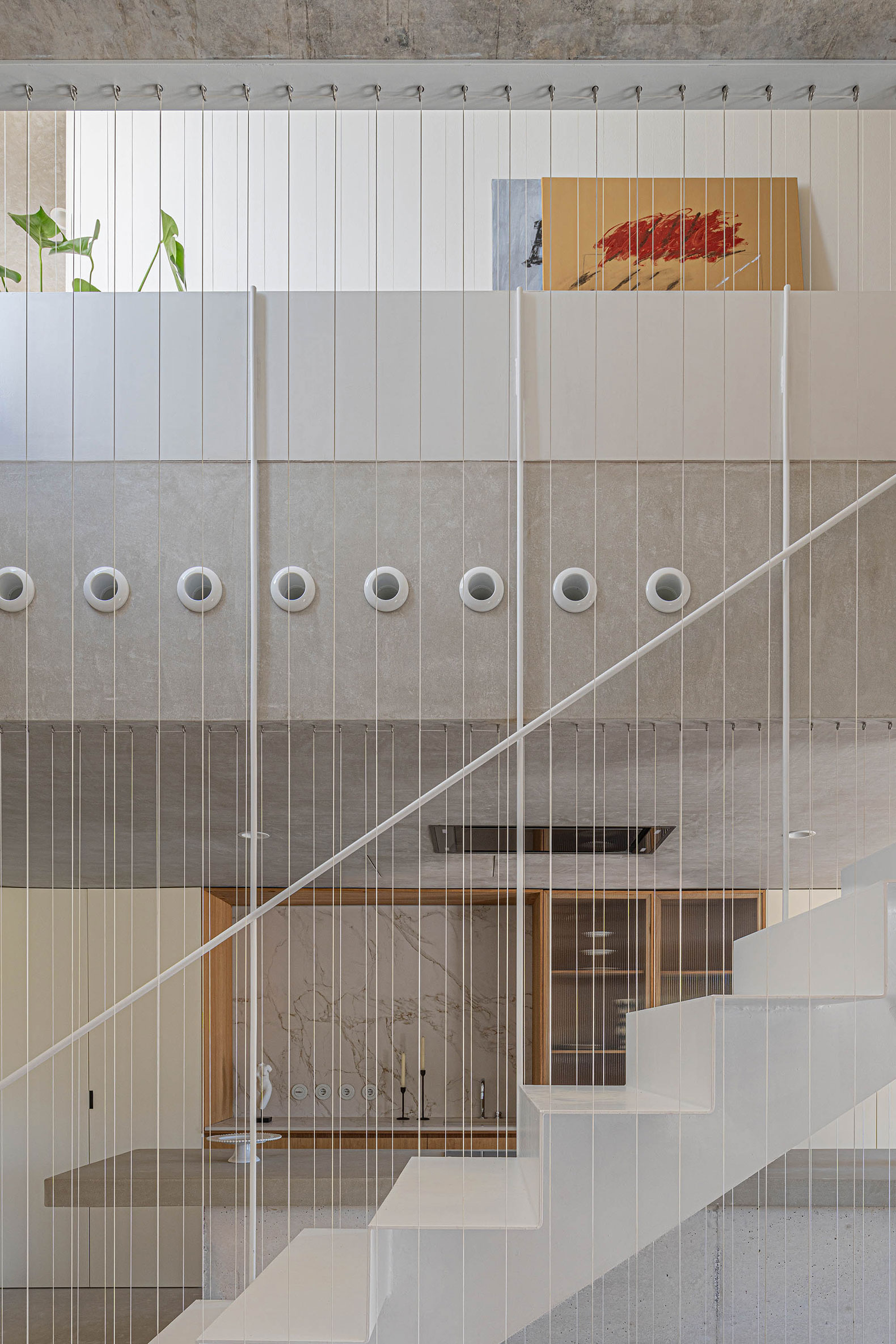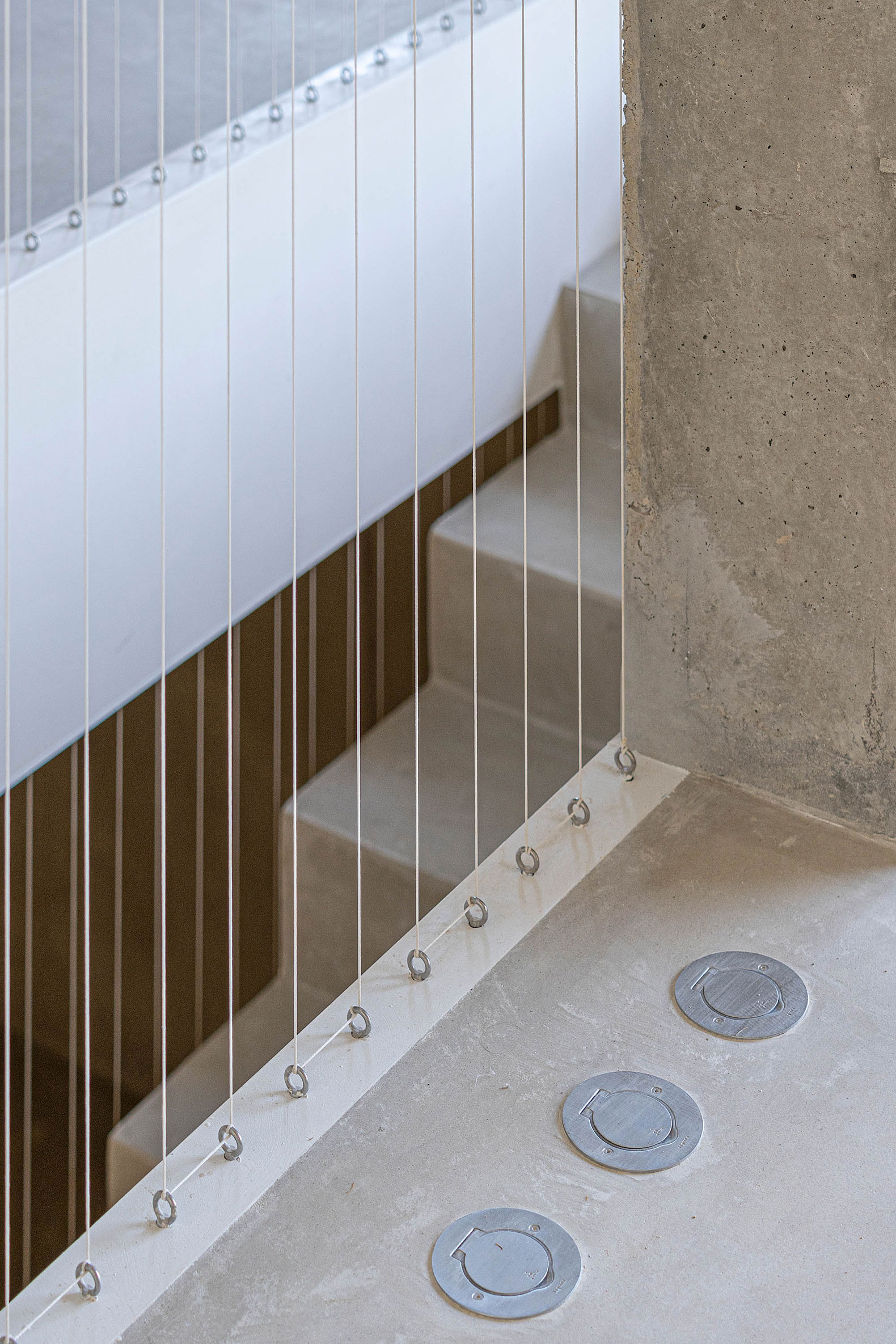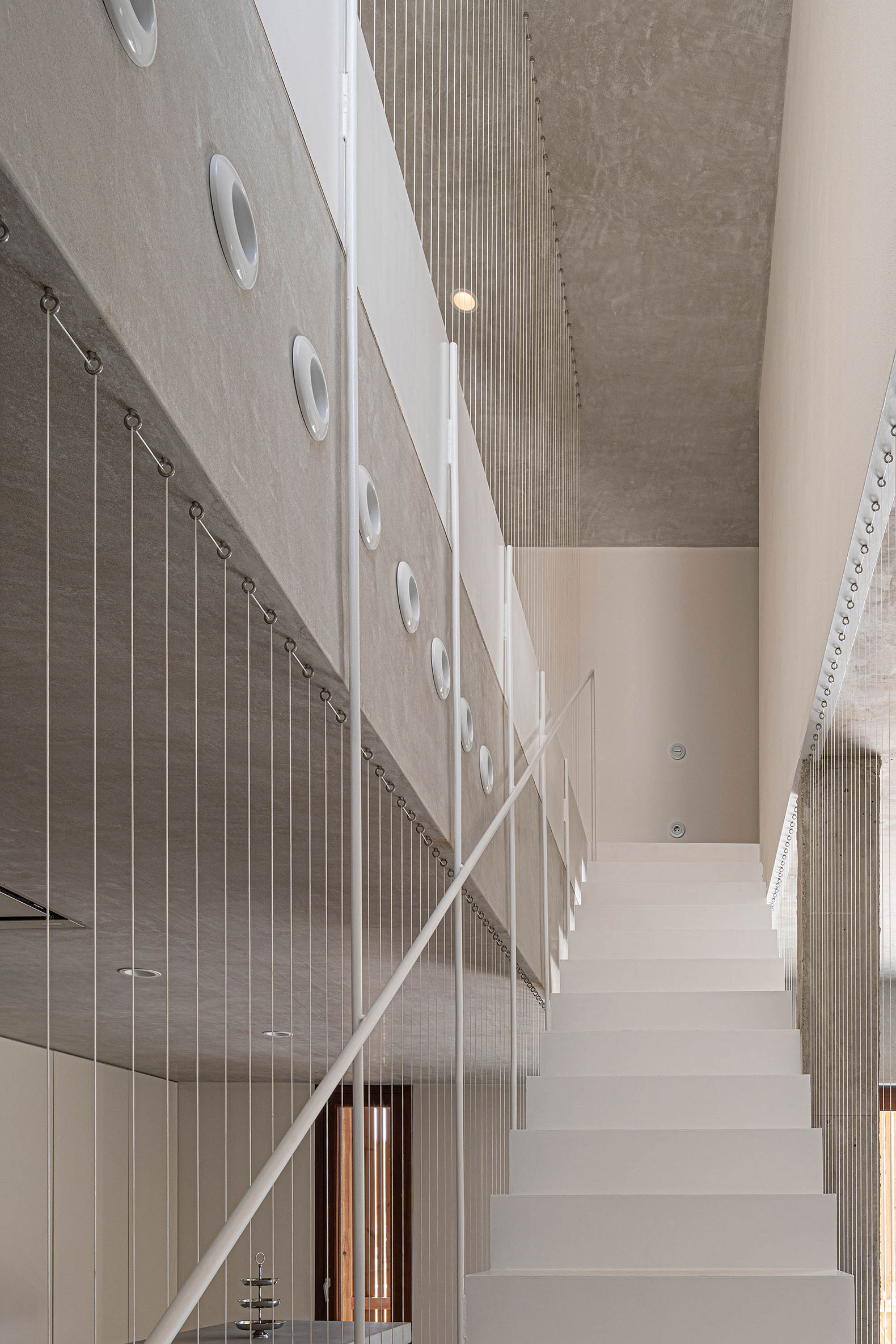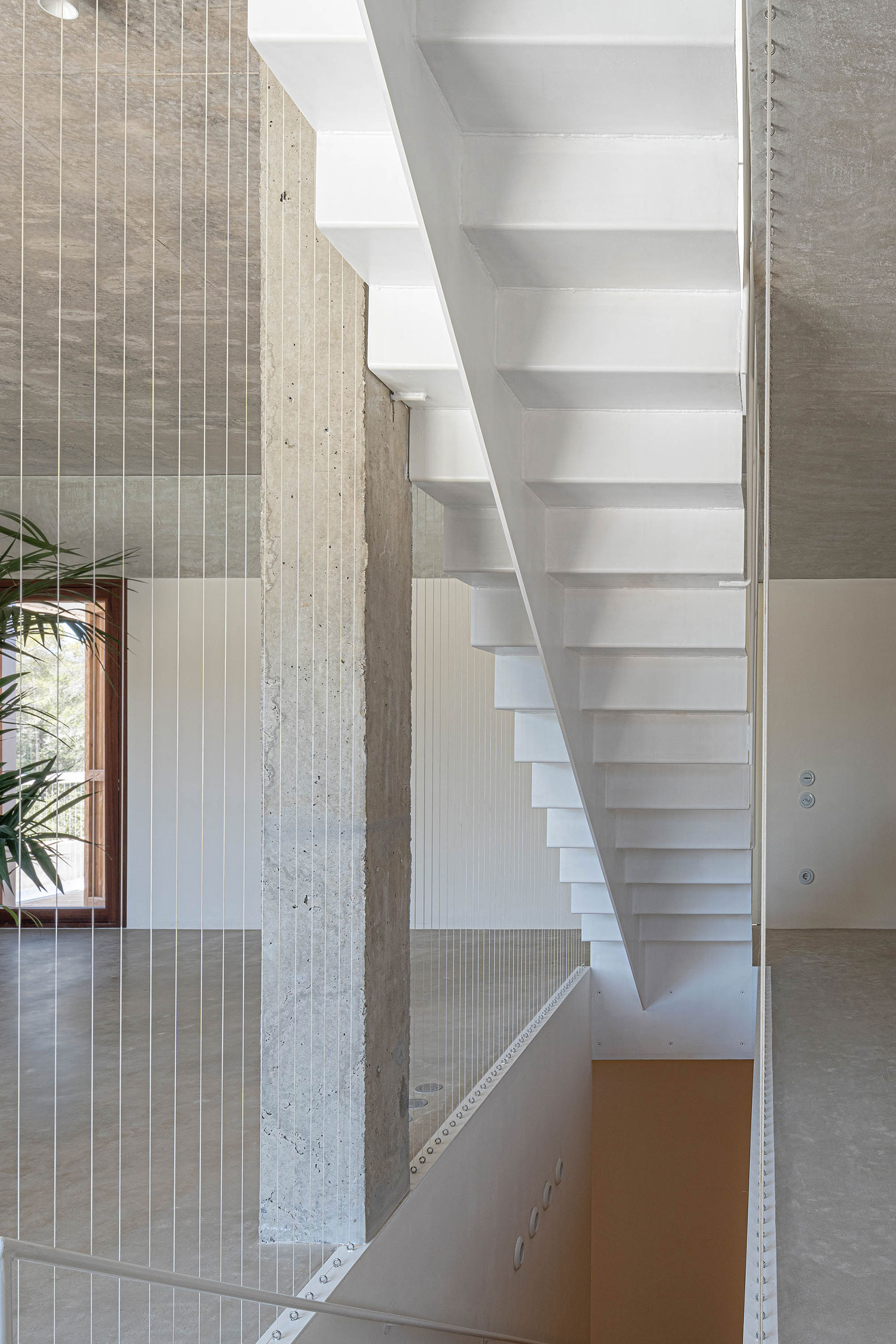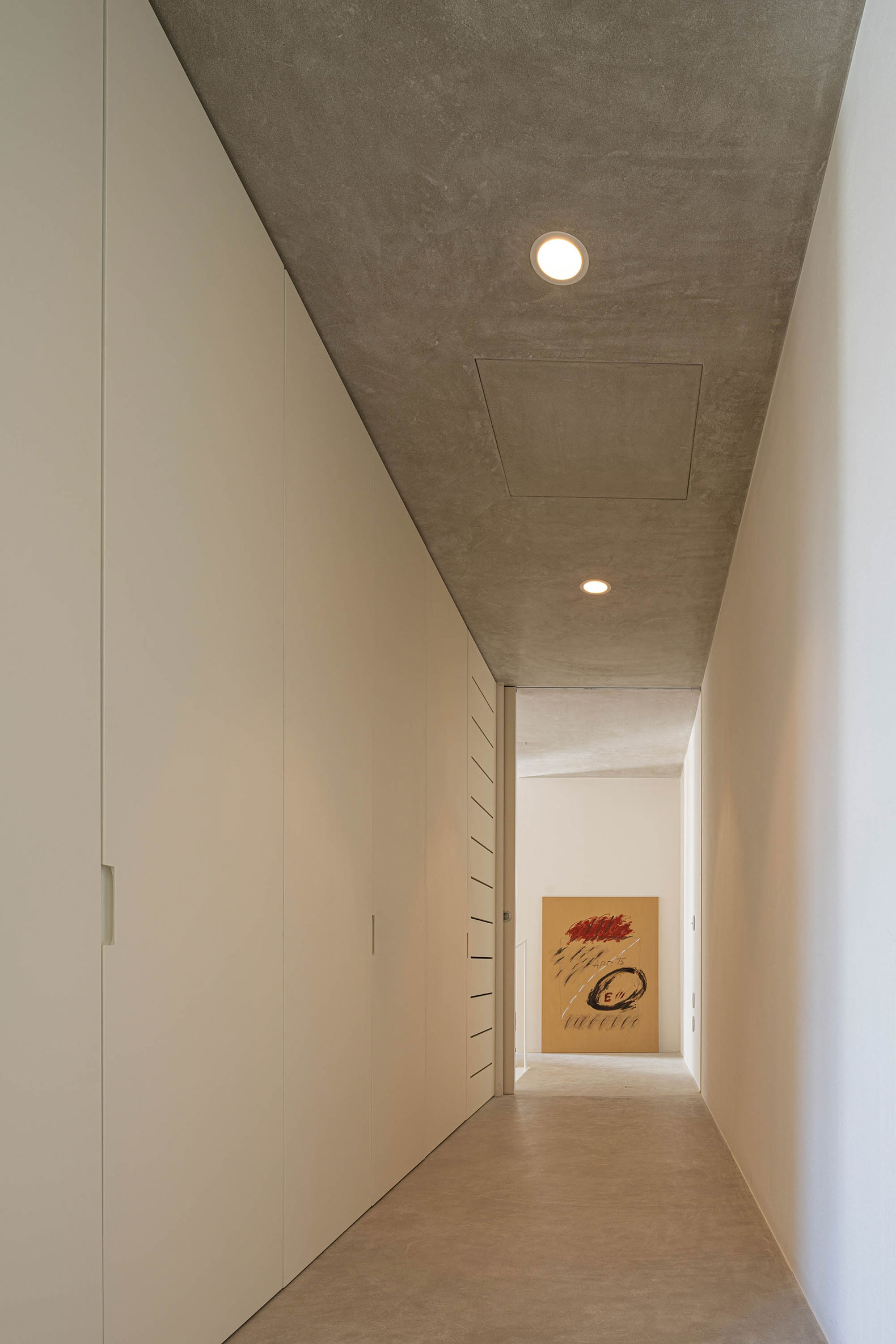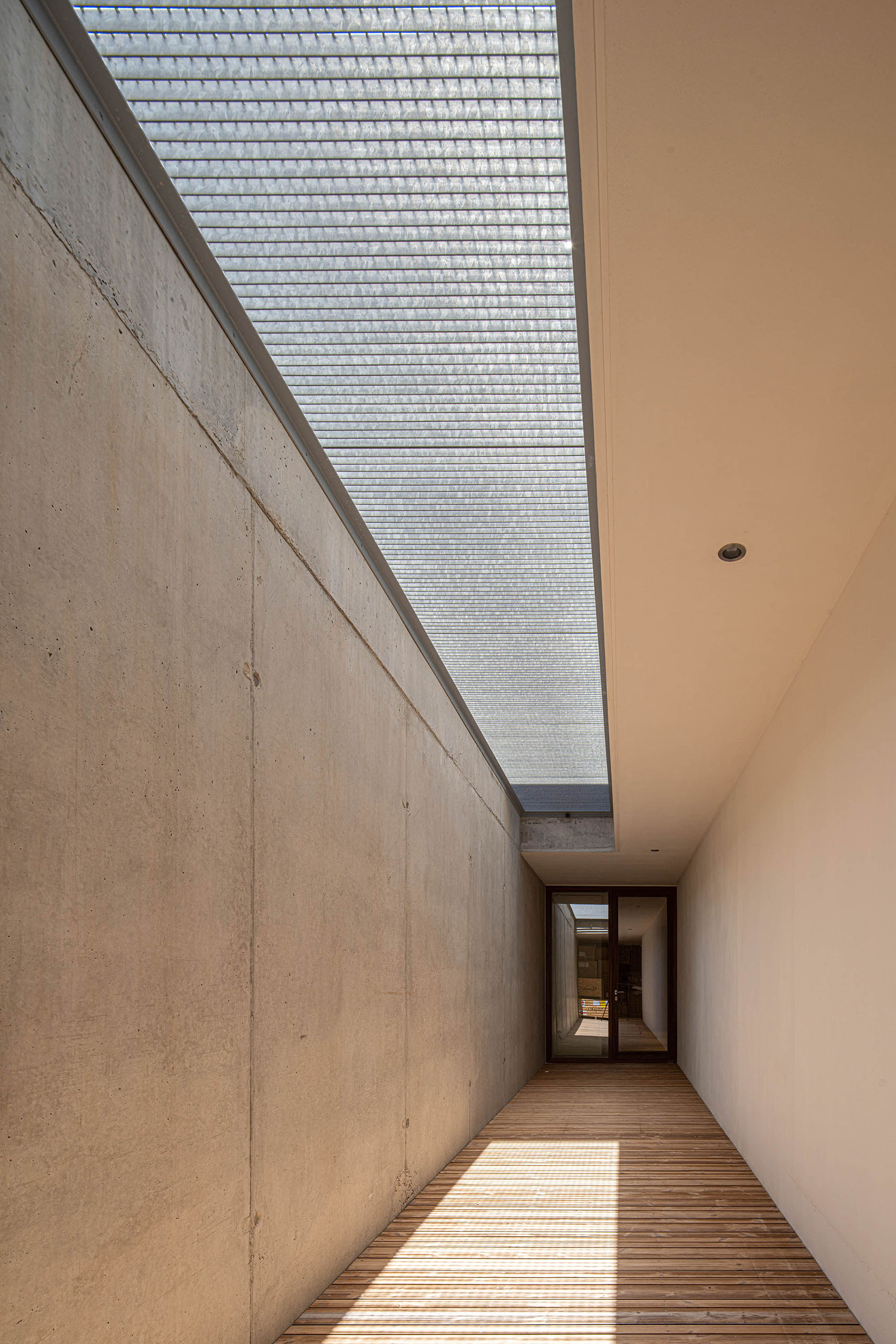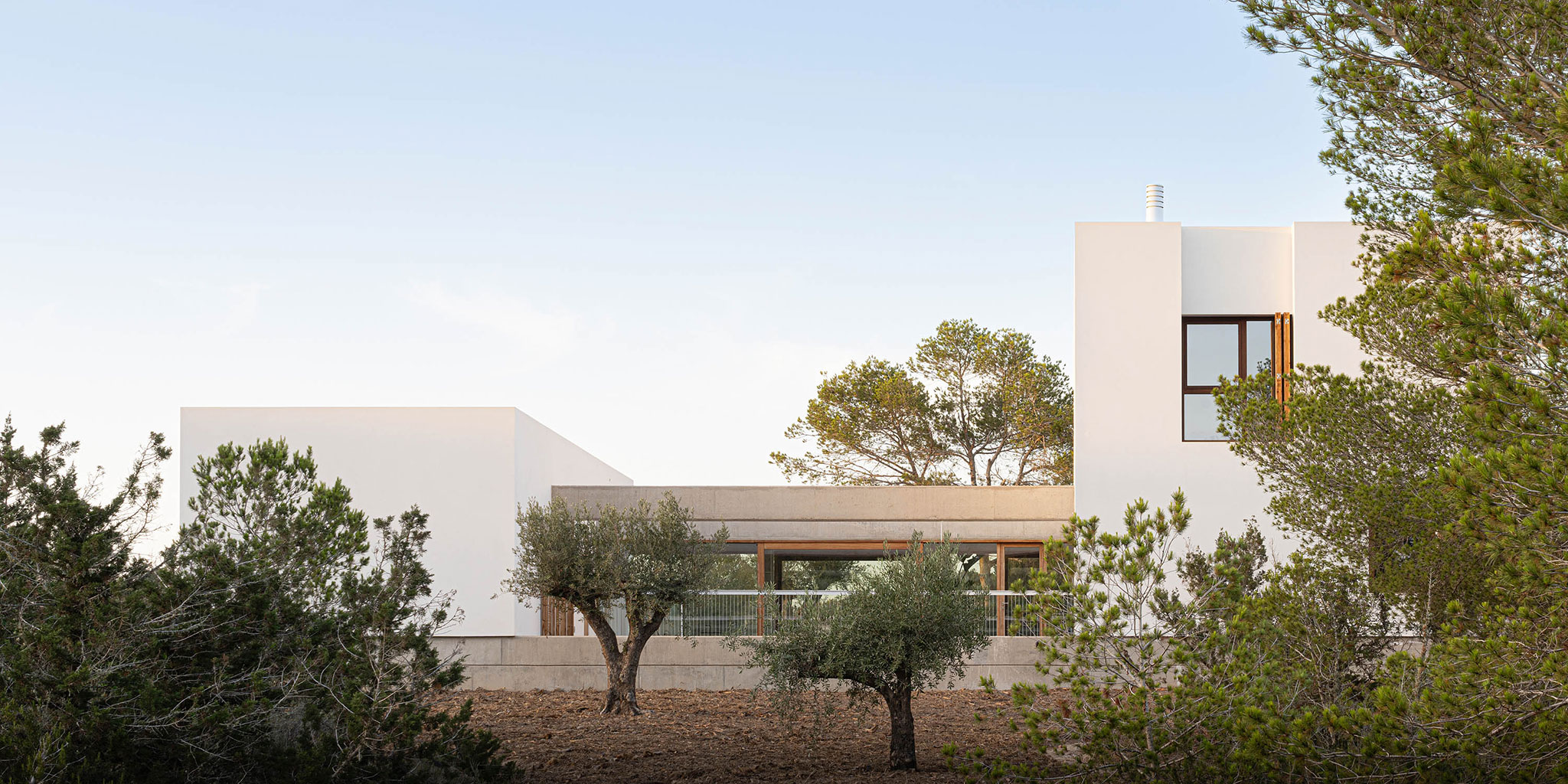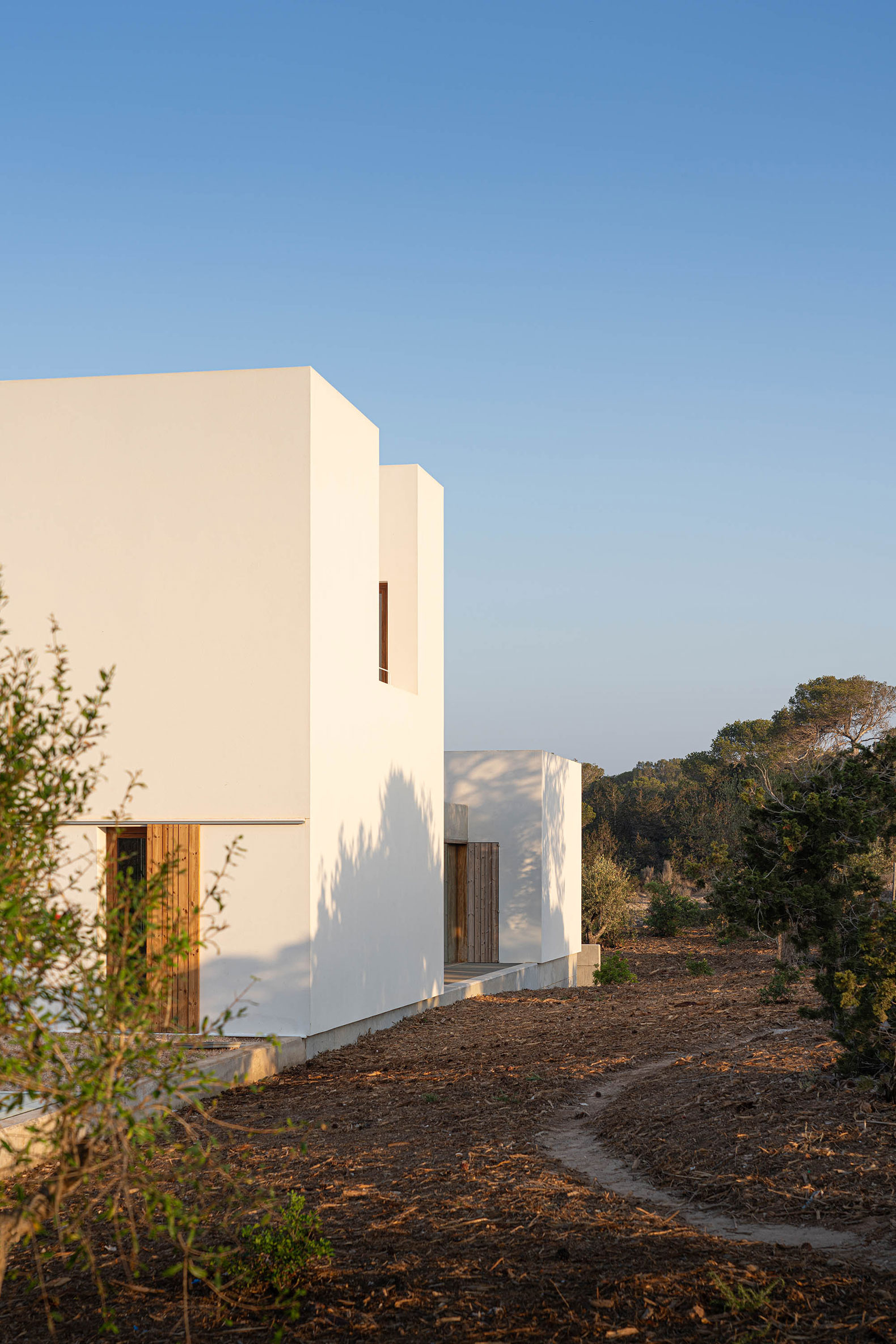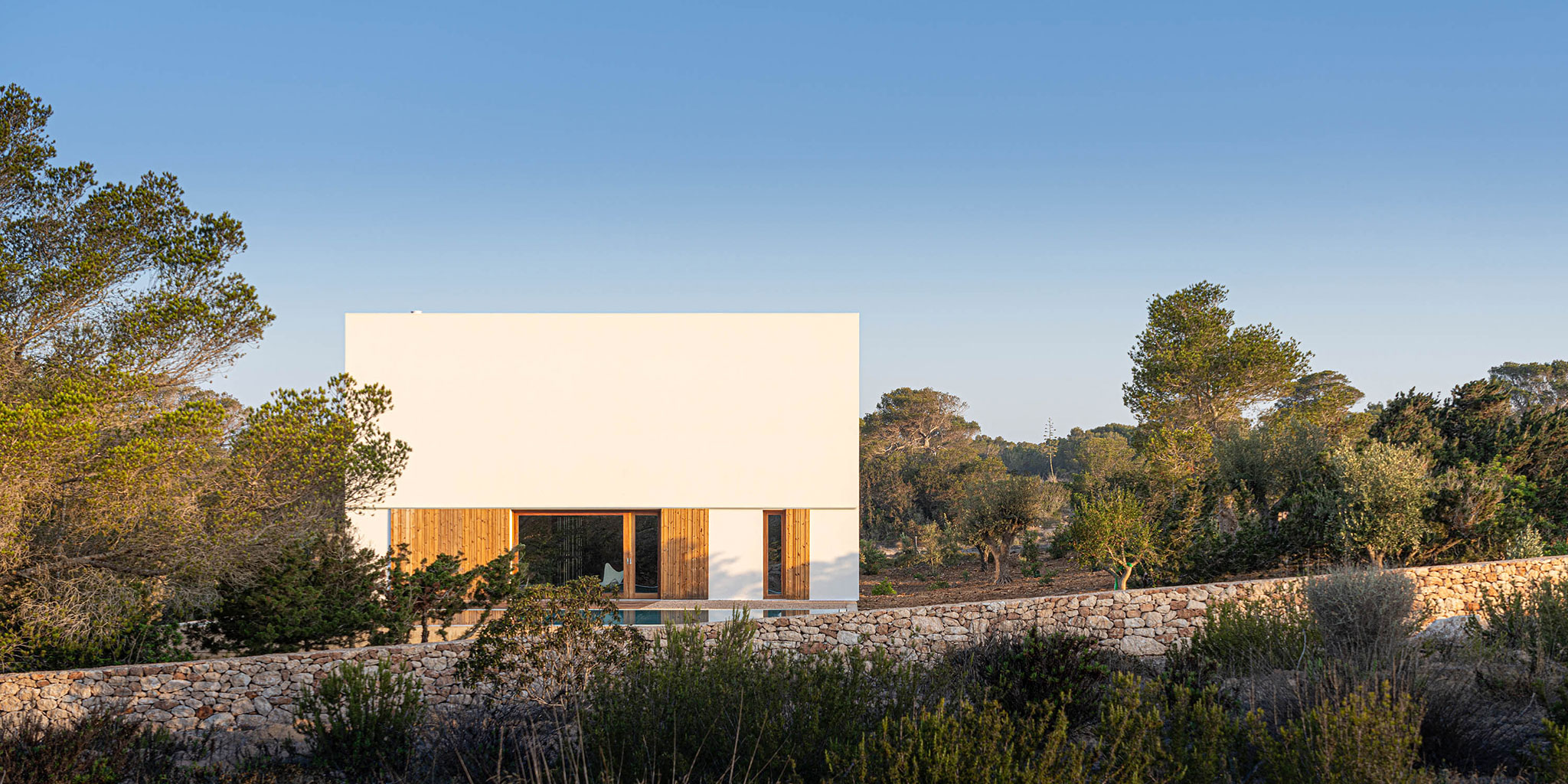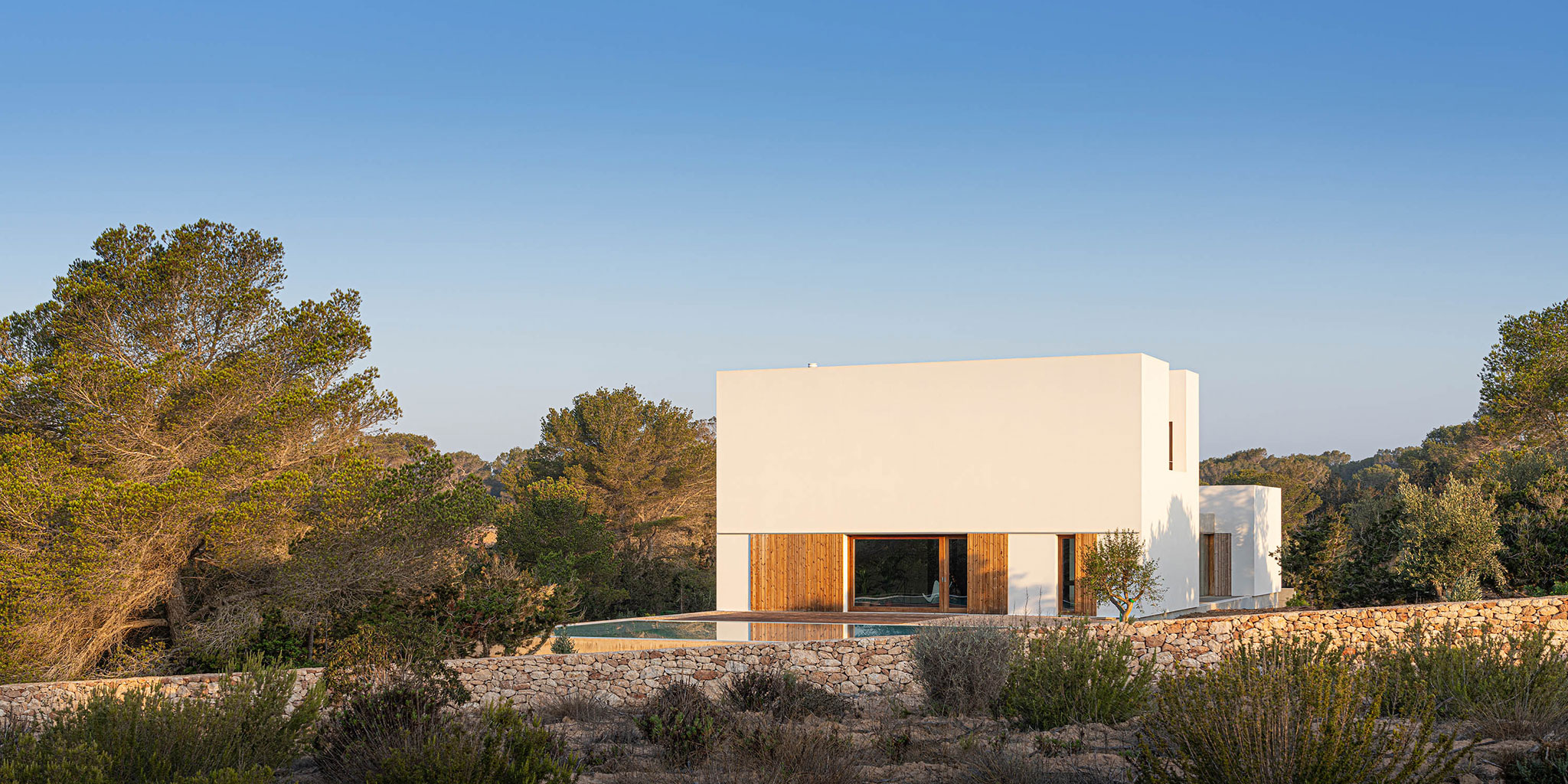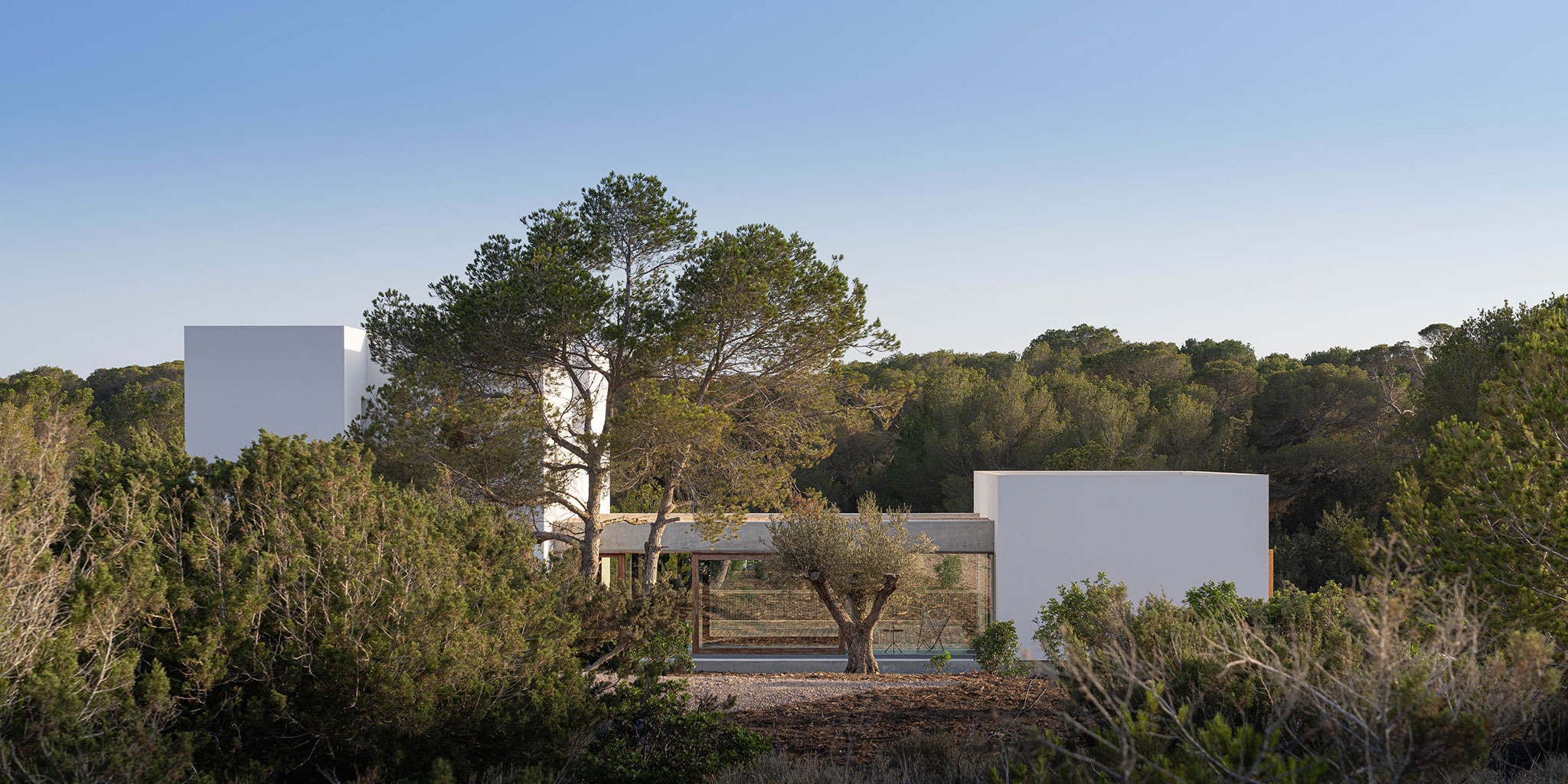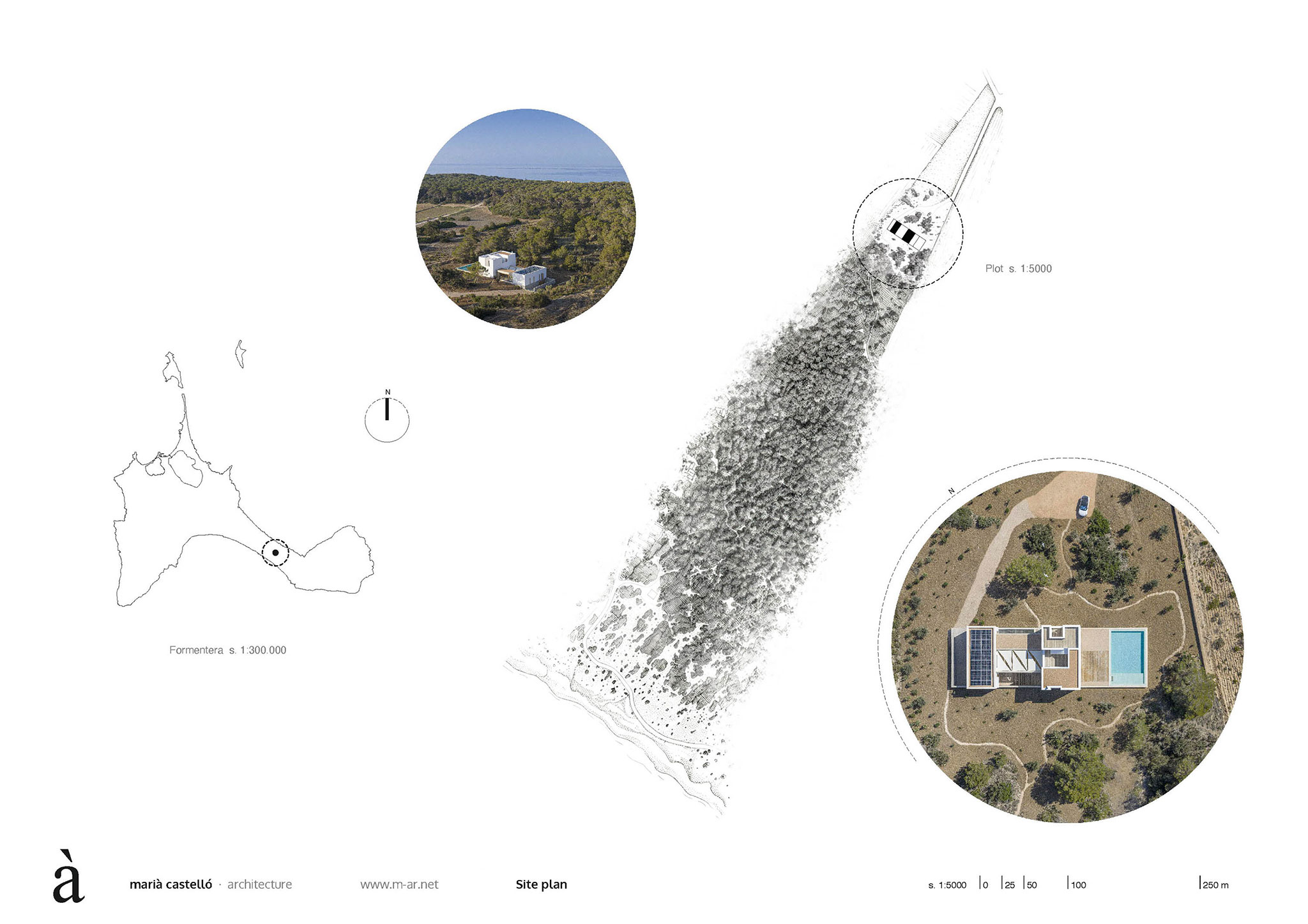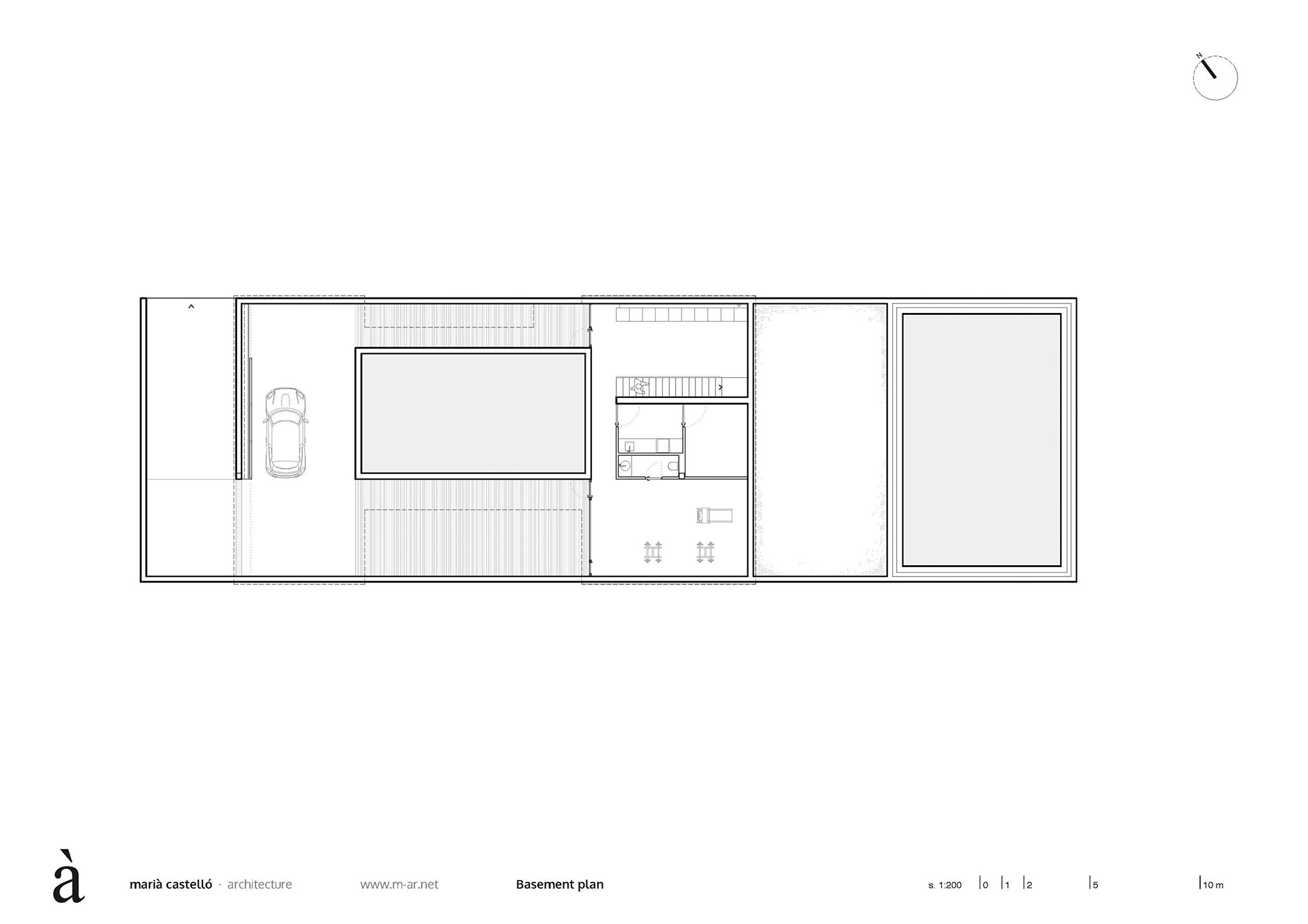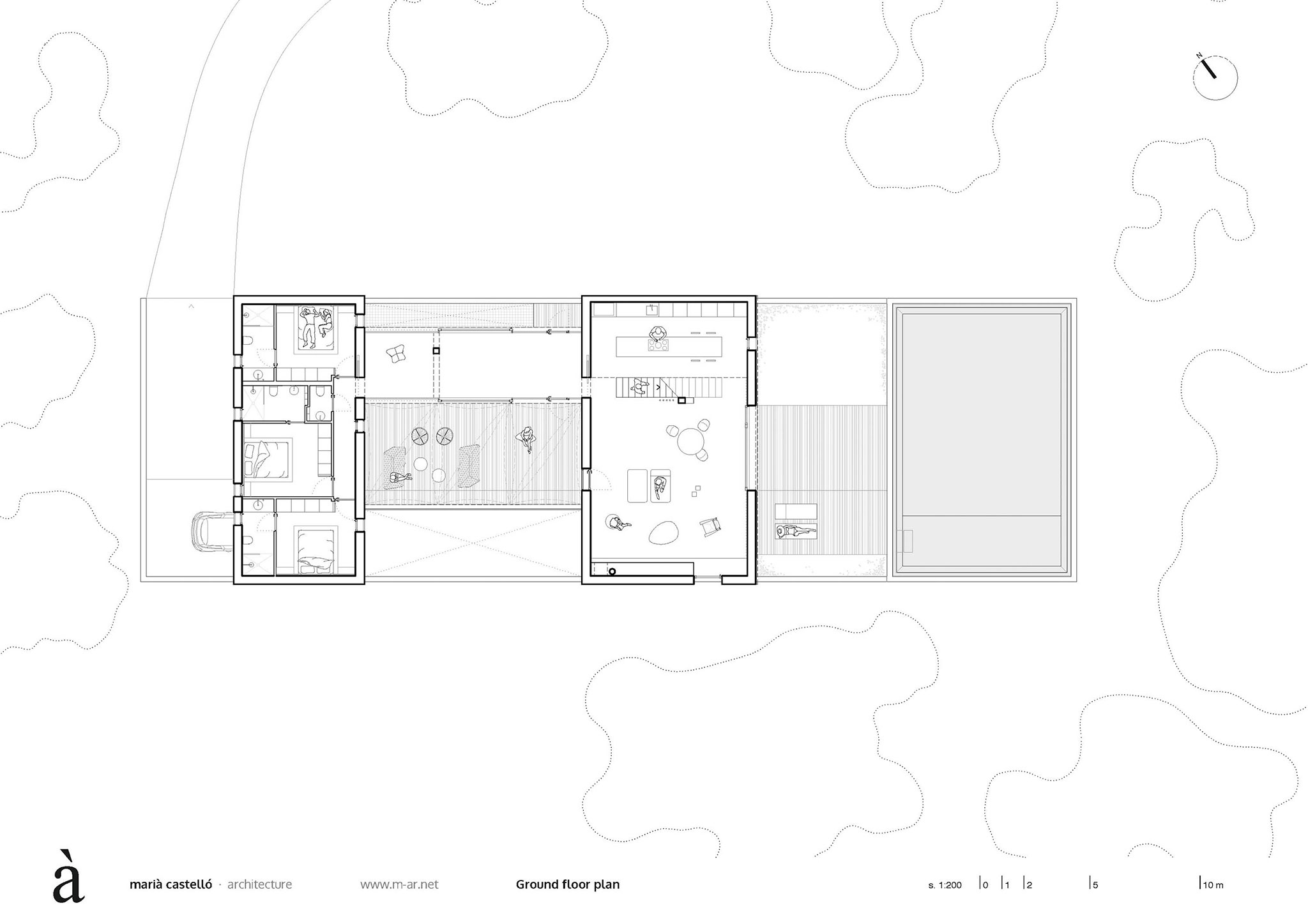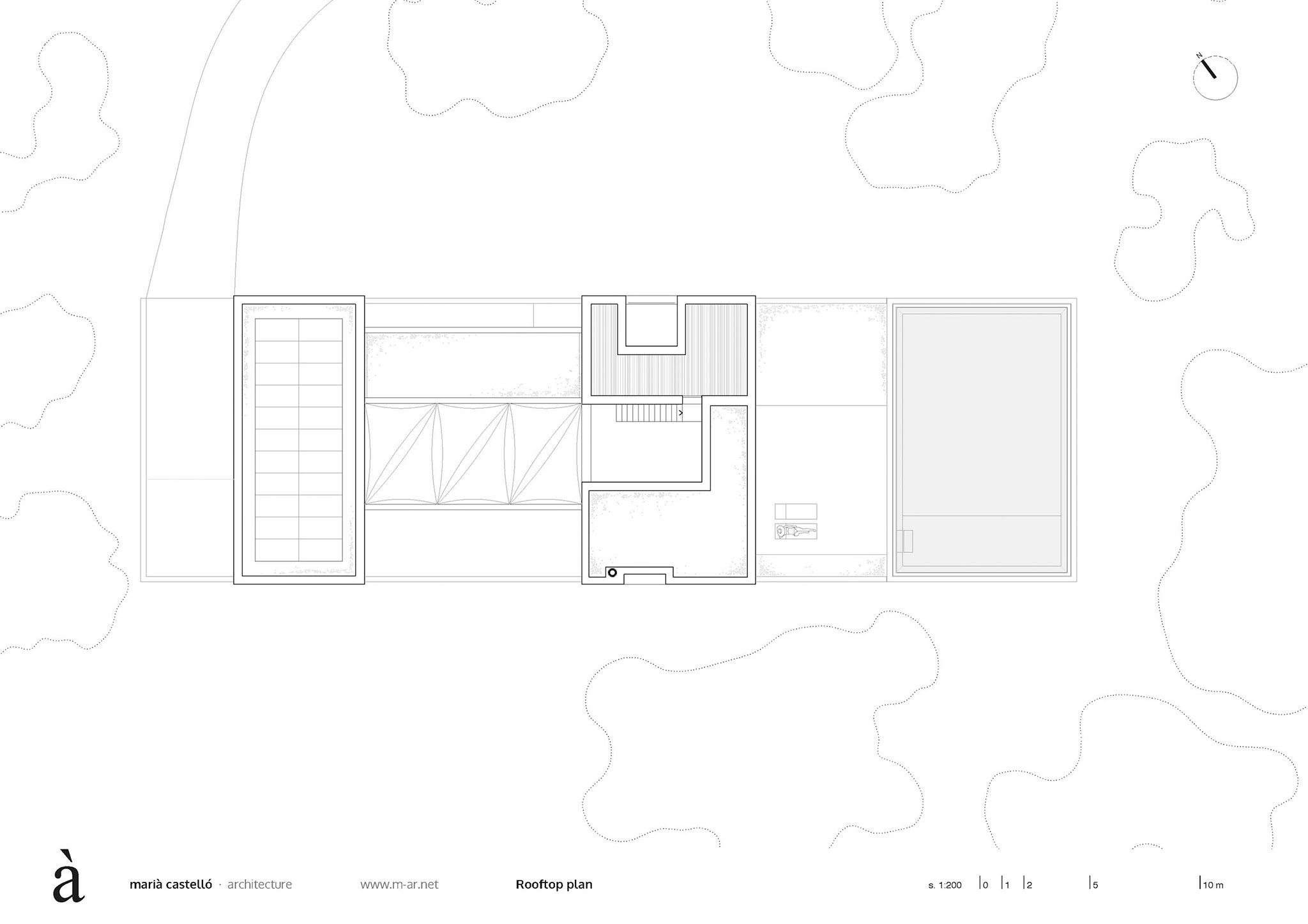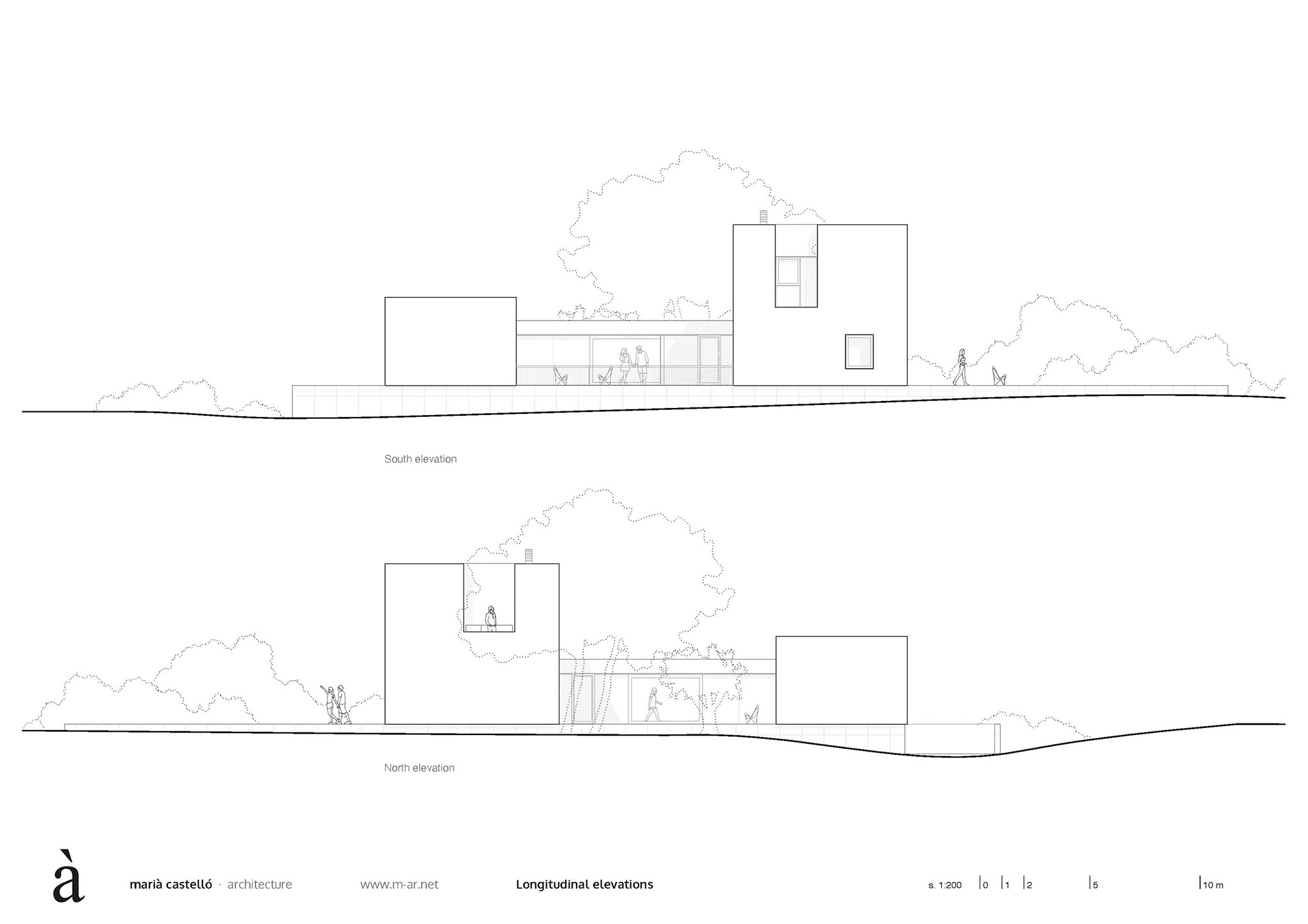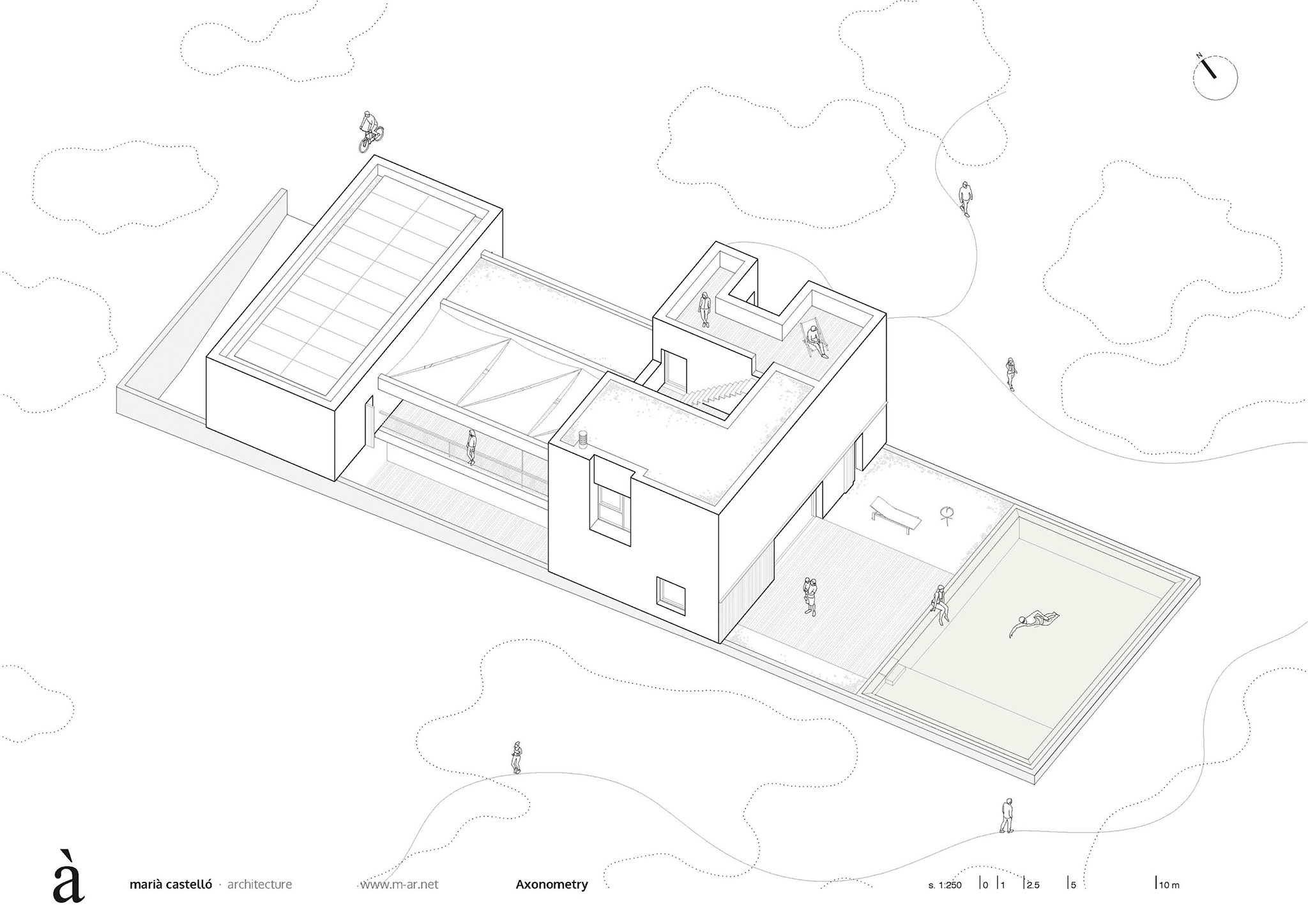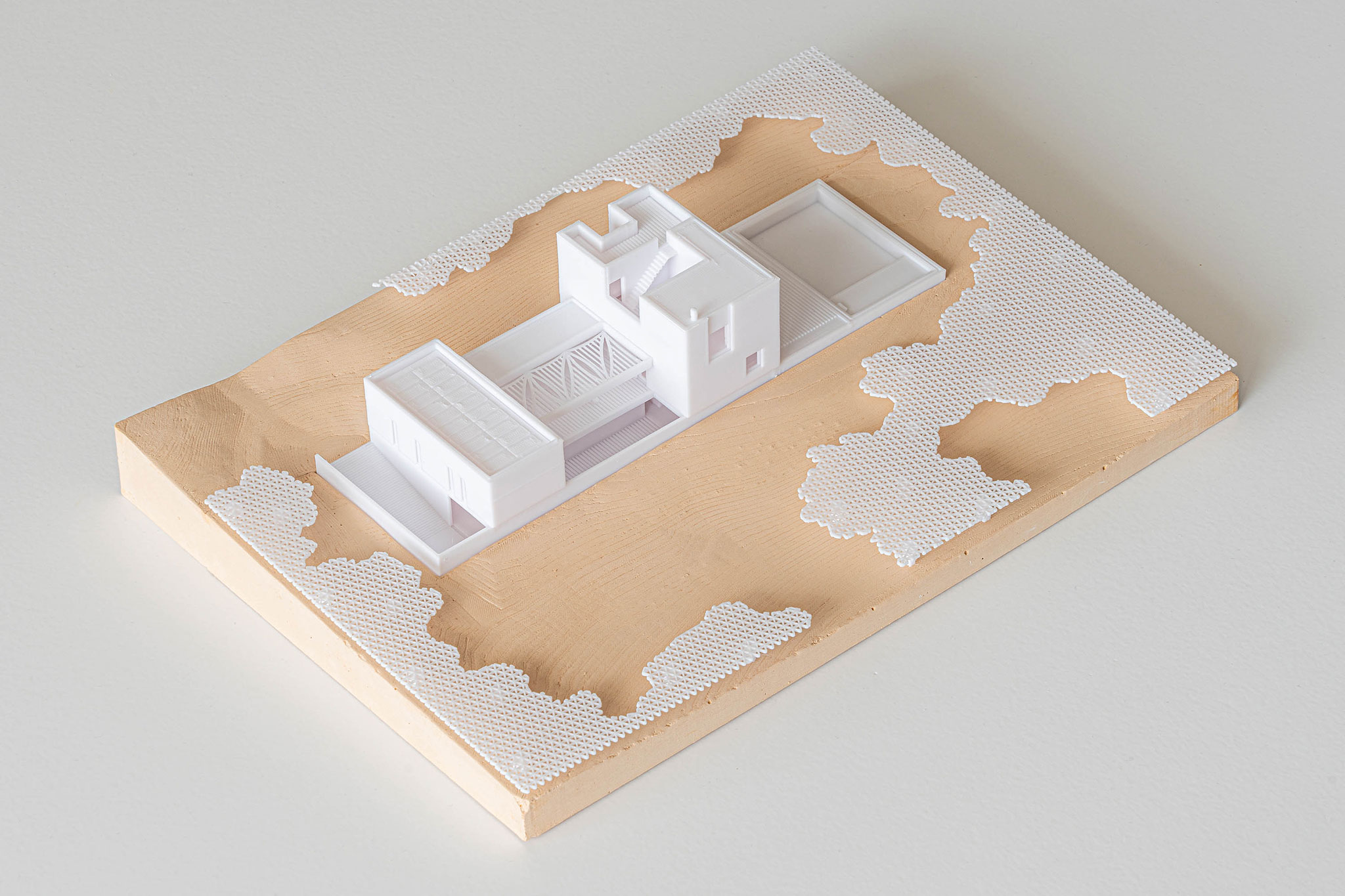
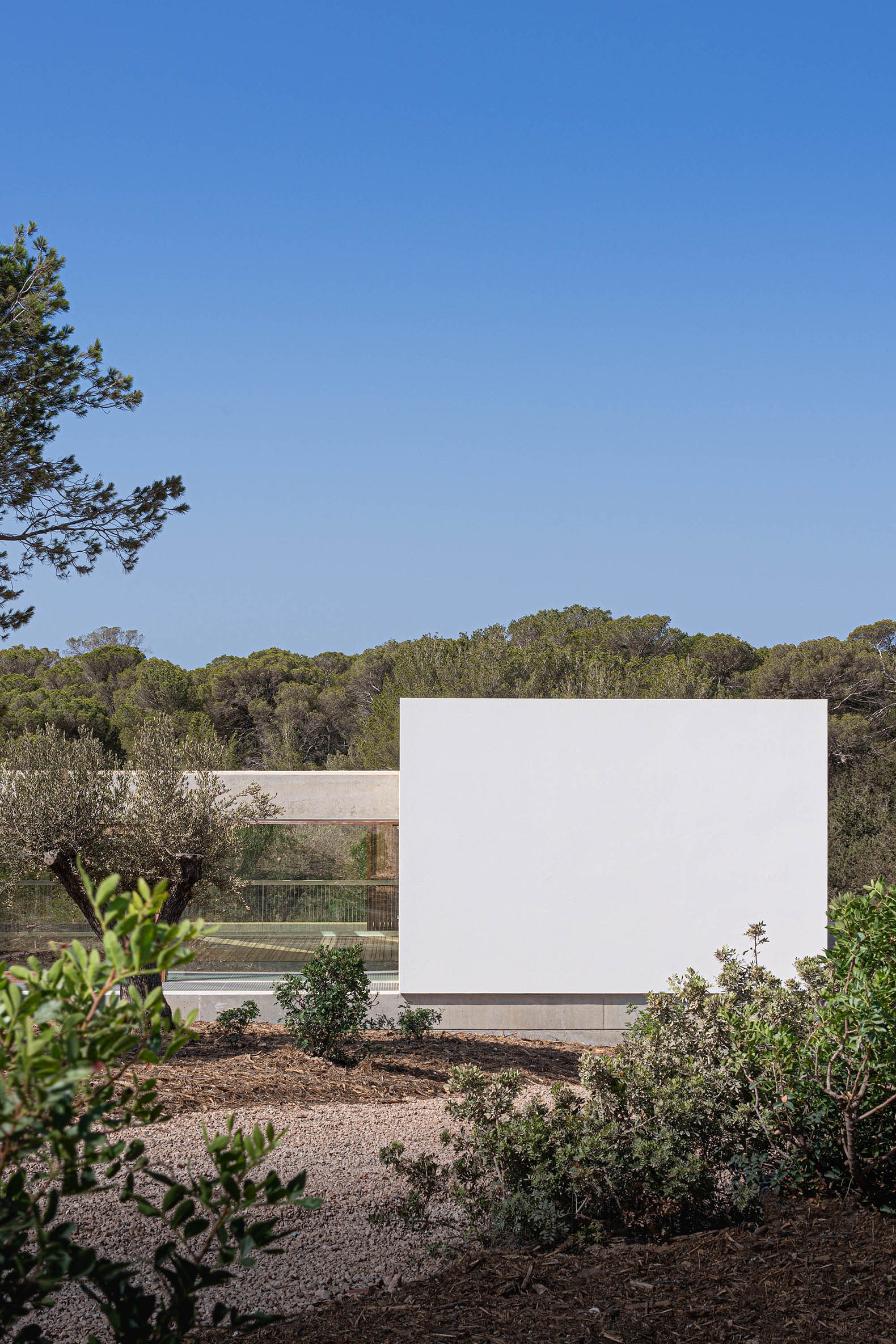
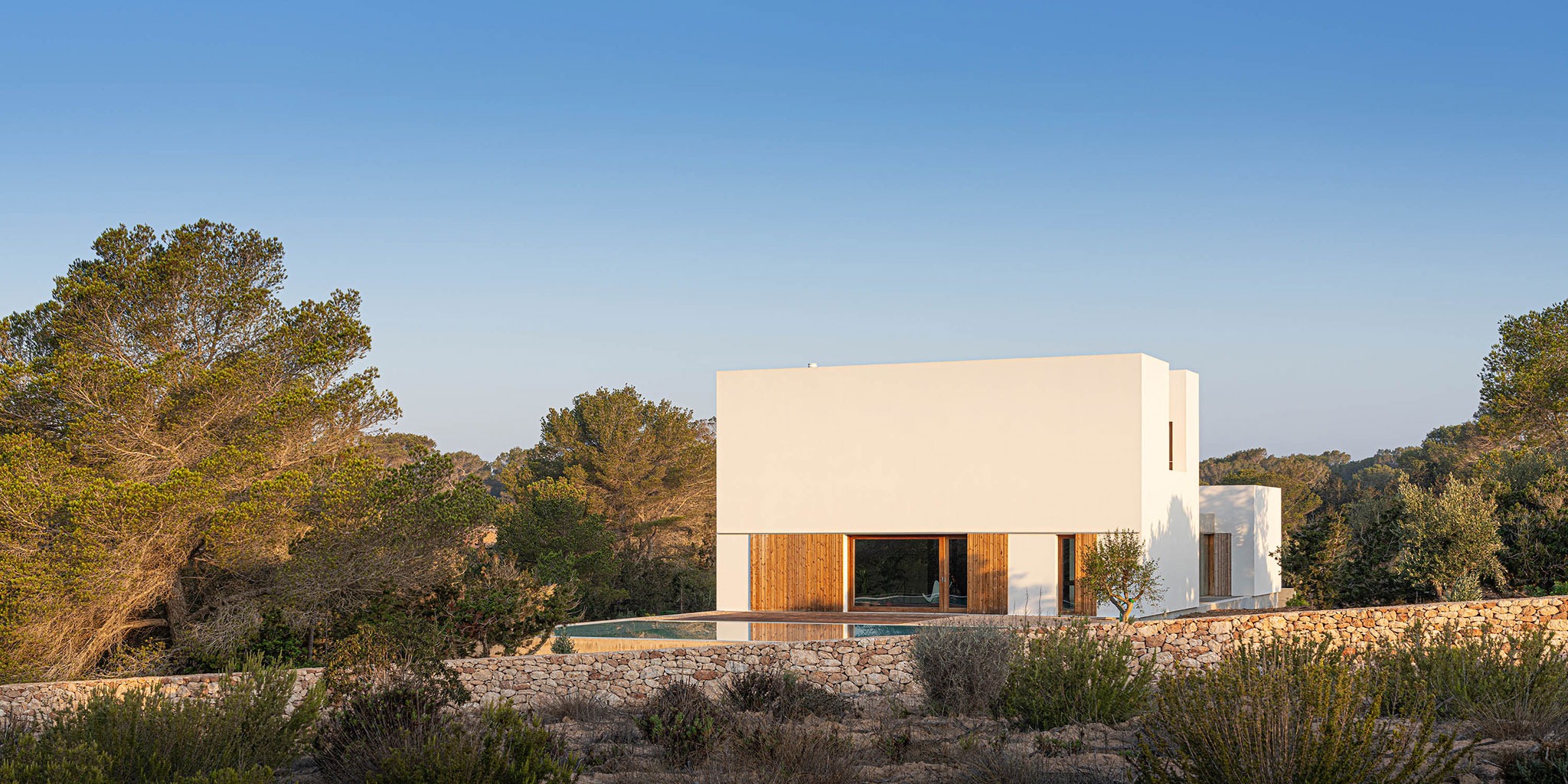
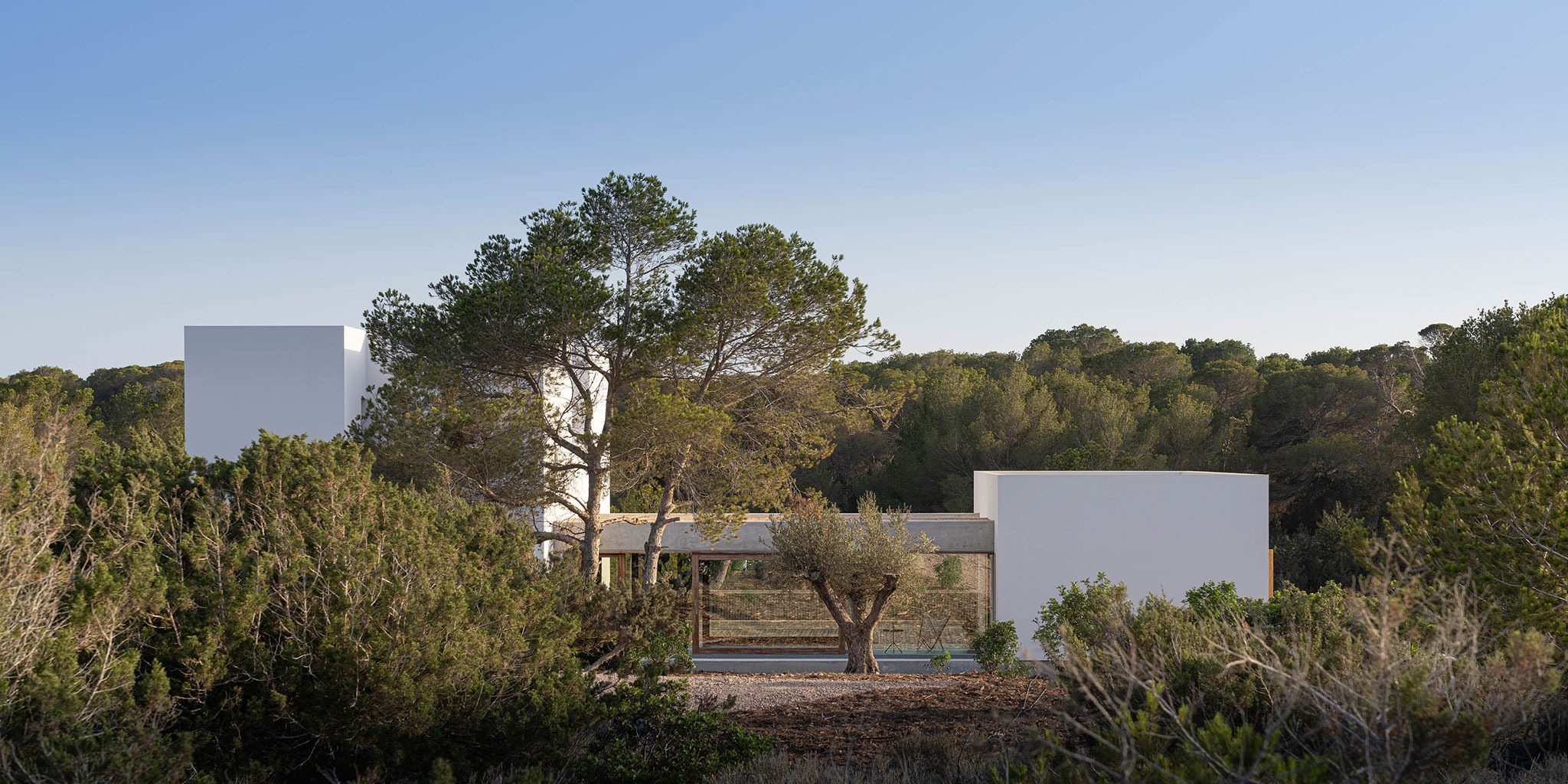
Marià Castelló's proposal for Ses Clotedes comprises three volumes resting on a concrete podium, with one embedded in the earth to become water. The tallest volume, an autonomous living unit, is eroded by a constellation of patios that render it porous. The smallest, most compact, and opaque volume houses three double en-suite bedrooms. Between them, a permeable link, a porch, and a gallery that changes with the seasons. In the basement, the landscape is reflected in reverse; illuminated by patios, it contains a library, gym, and service area.
The design follows the traditional architecture of Formentera, where the management of natural resources has historically been a matter of survival. The house is designed with a compact footprint and a highly precise geometry that minimizes its occupation and impact on the fragile ecosystem, prioritizing the use of natural materials. Climate comfort is maximized through cross-ventilation, solar protection, and the transitional space functioning as a thermal buffer. Rainwater management is central to the project, with a collection system on all roofs that channels the water to a large cistern in the basement.
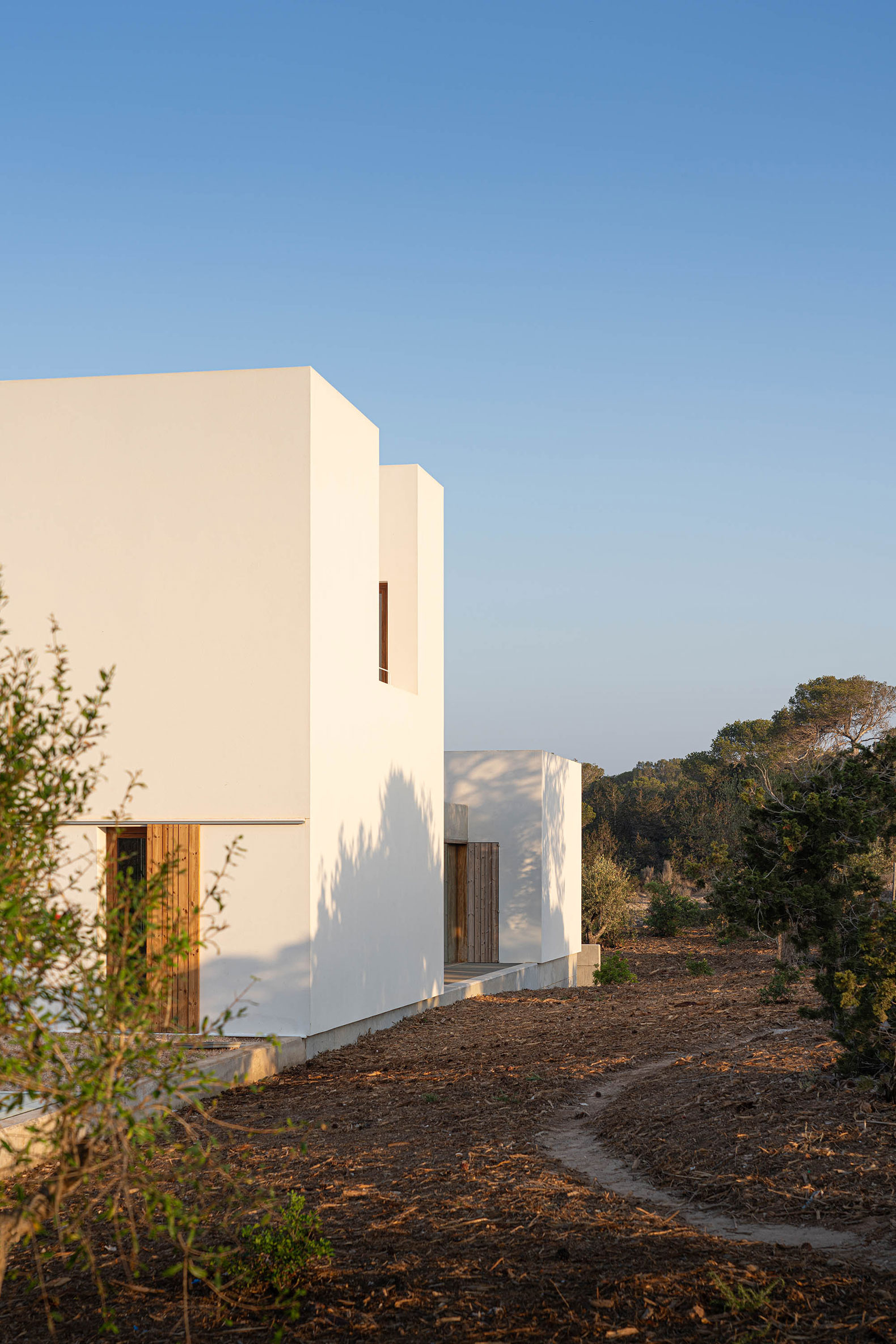
Ses Clotades by Marià Castelló. Photograph by Marià Castelló.
Project description by Marià Castelló
Territory and Landscape Integration
Ses Clotades is an area located on the isthmus that connects La Mola to the rest of Formentera. Its landscape is shaped by the hollows that dip between small sand dunes. It could be defined as a changing topography, a play of rises and falls, the result of the slow consolidation of a vast dune system now largely covered by a significant forest.
On this threshold between the pine forest and the cultivated fields, the house emerges, adopting the language of its surroundings: a dialogue of opposites—addition and subtraction, ascent and descent, solidity and permeability, light and shadow. Three volumes rest on a concrete podium: two structures of different heights that house the living spaces, and a third that is embedded in the earth to become water.
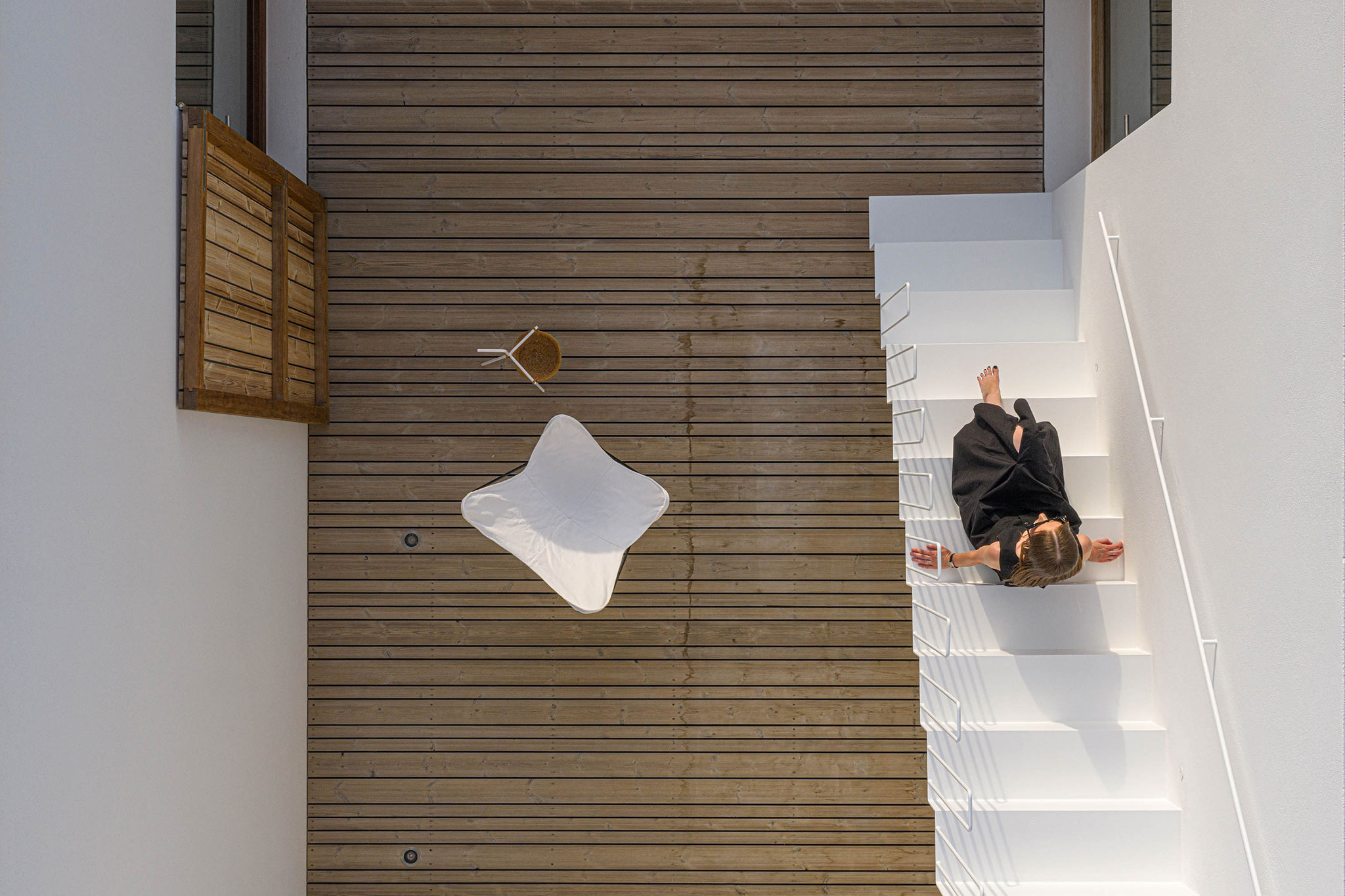
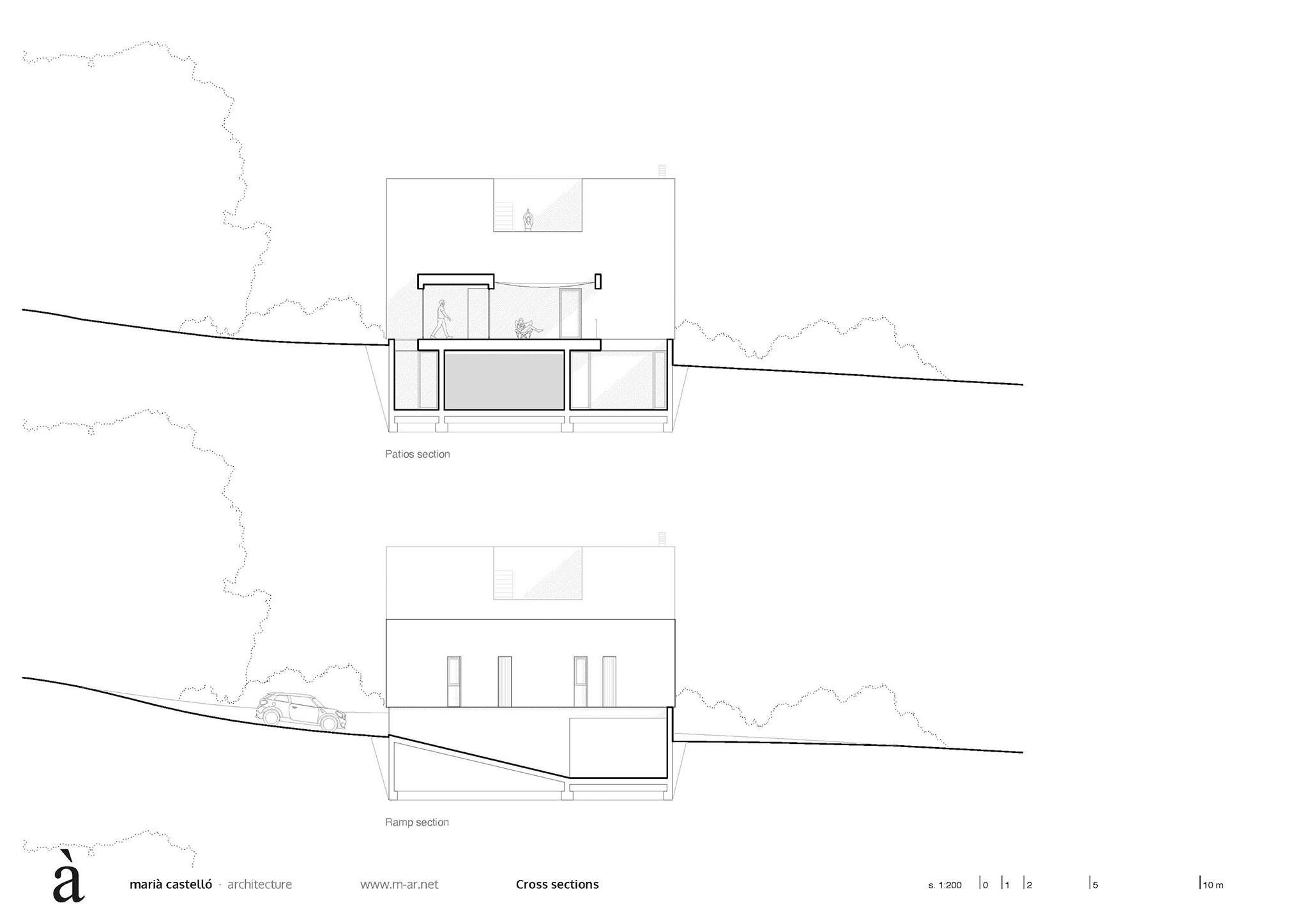
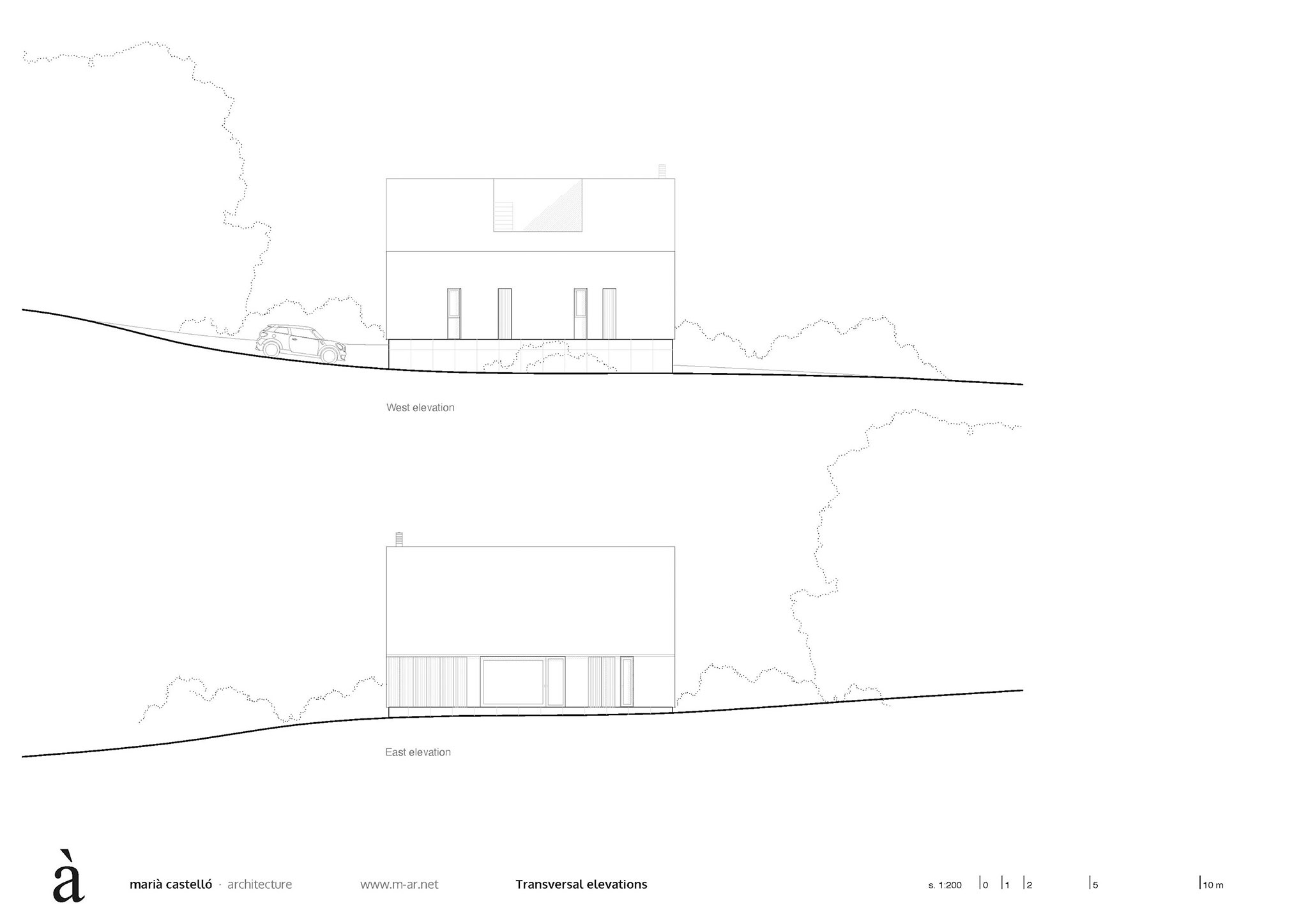
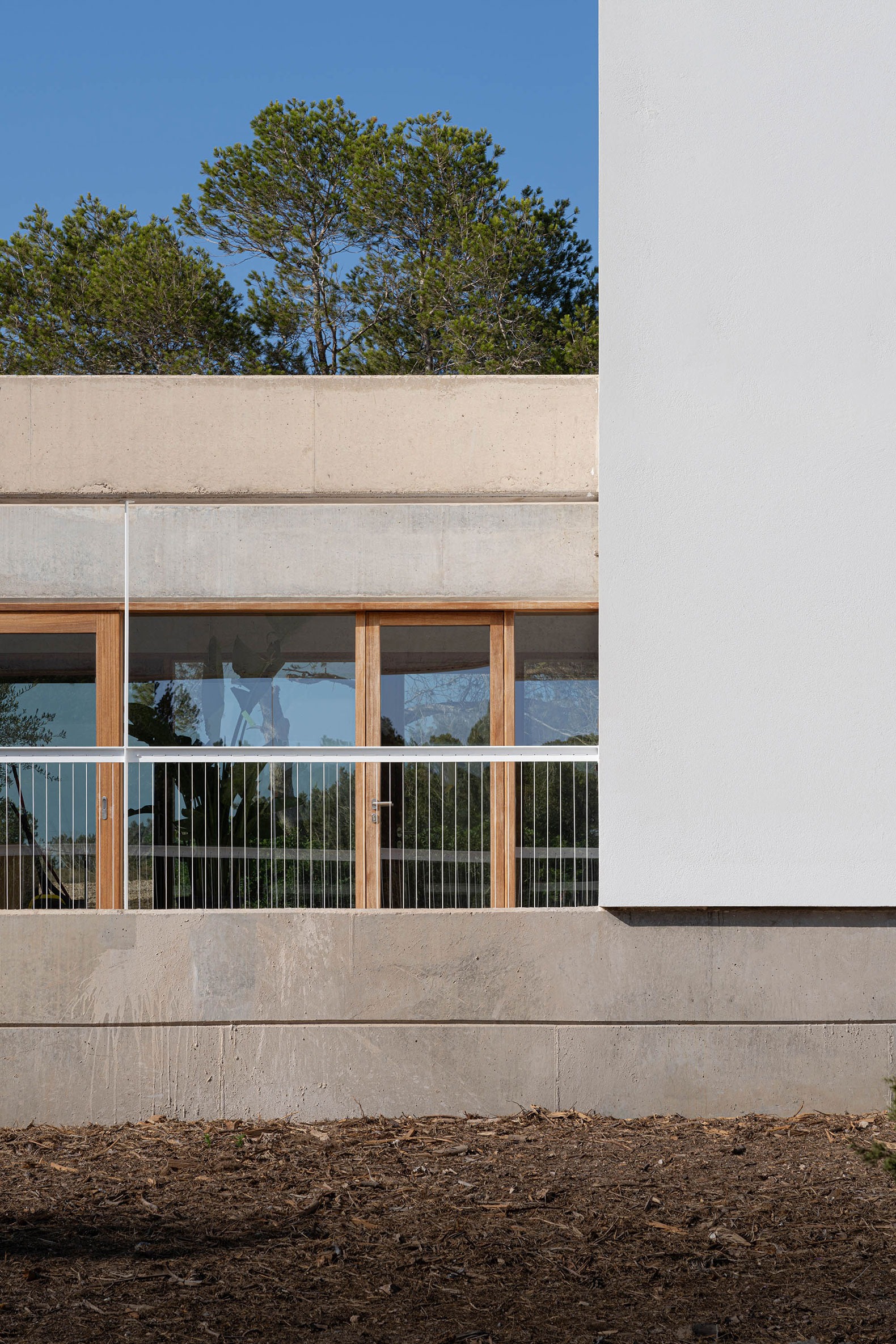
The tallest volume is hidden among the nearest pine trees, where its mass is lightened by a constellation of patios that erode it and make it porous. Beside it, the smaller volume stands compact and opaque. Between the two extends a permeable connection, simultaneously a porch and a gallery, which changes with the seasons. On the lower level of the platform, the landscape is reflected in reverse: a basement illuminated by strategically placed patios, where the interplay of light and shadow evokes an atmosphere of quiet monumentality.
Program and Spatial Arrangement
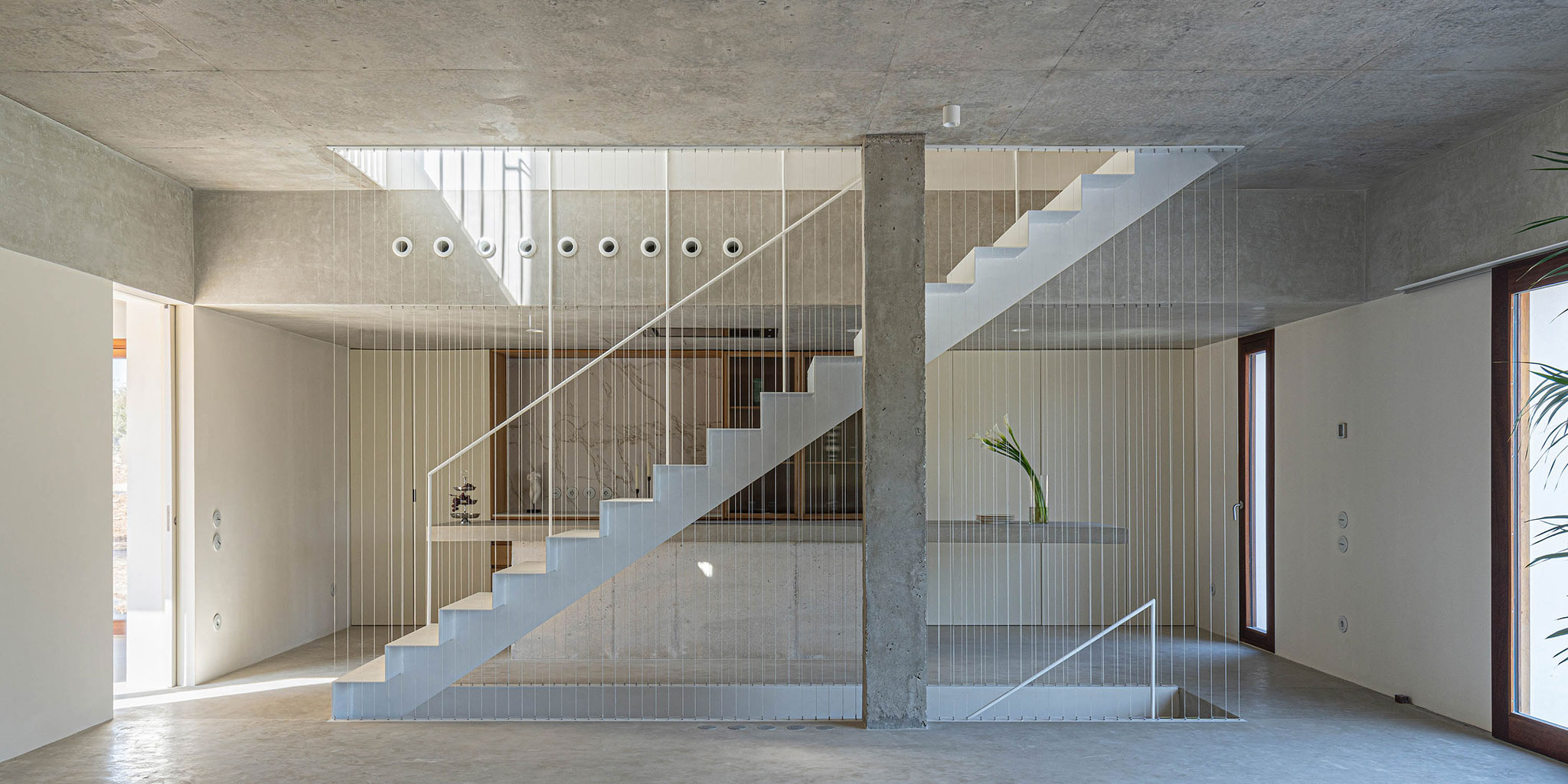
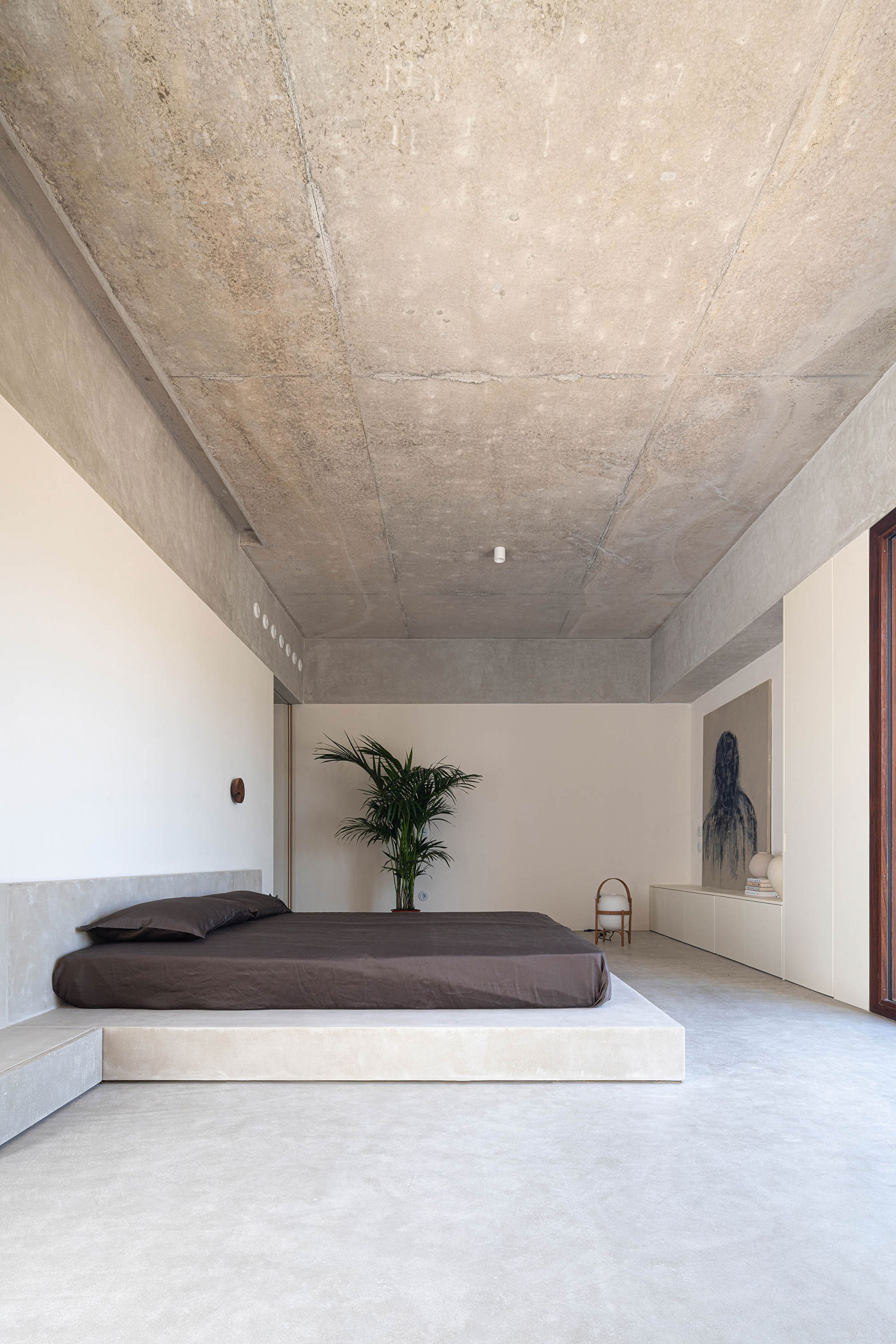
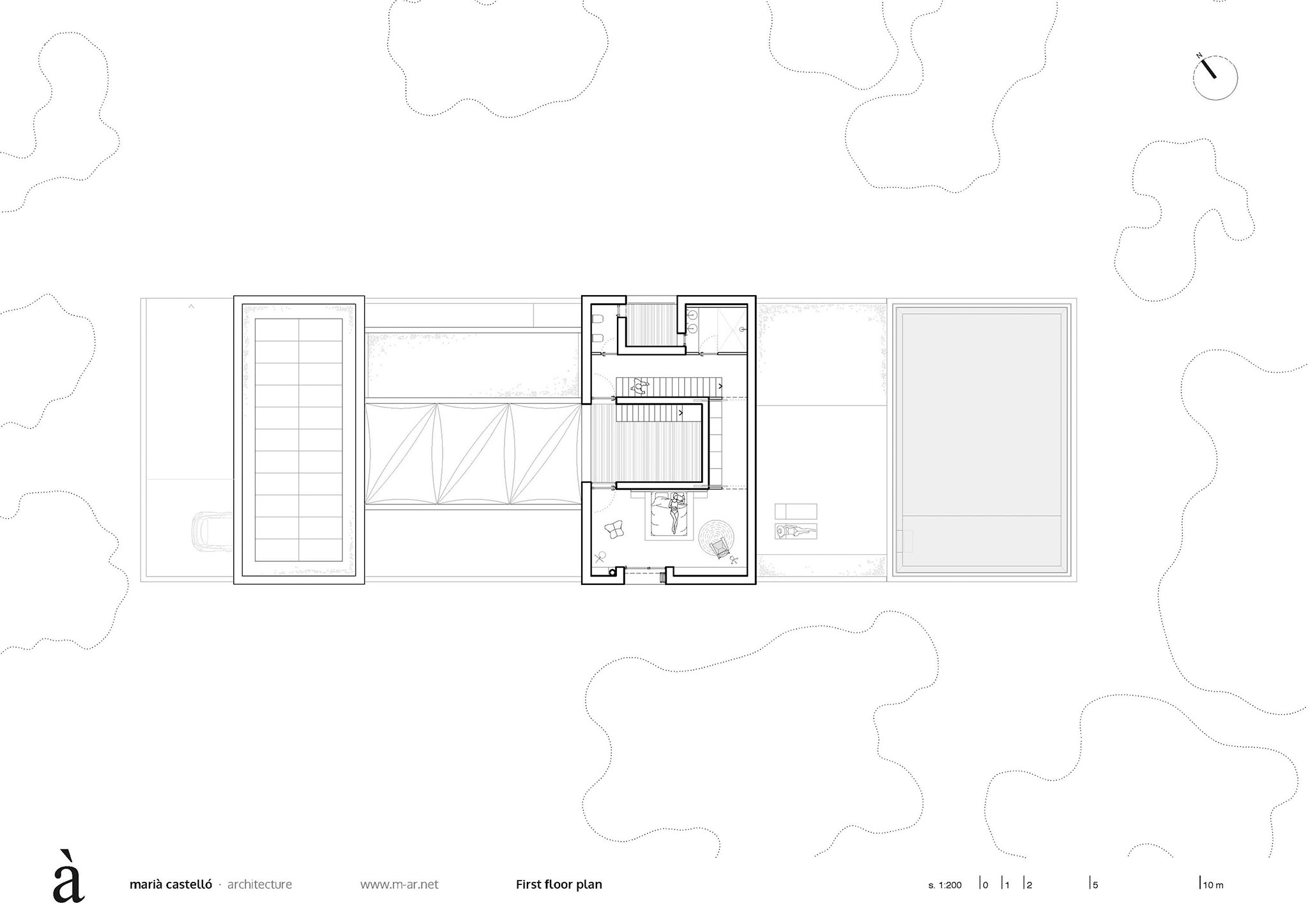
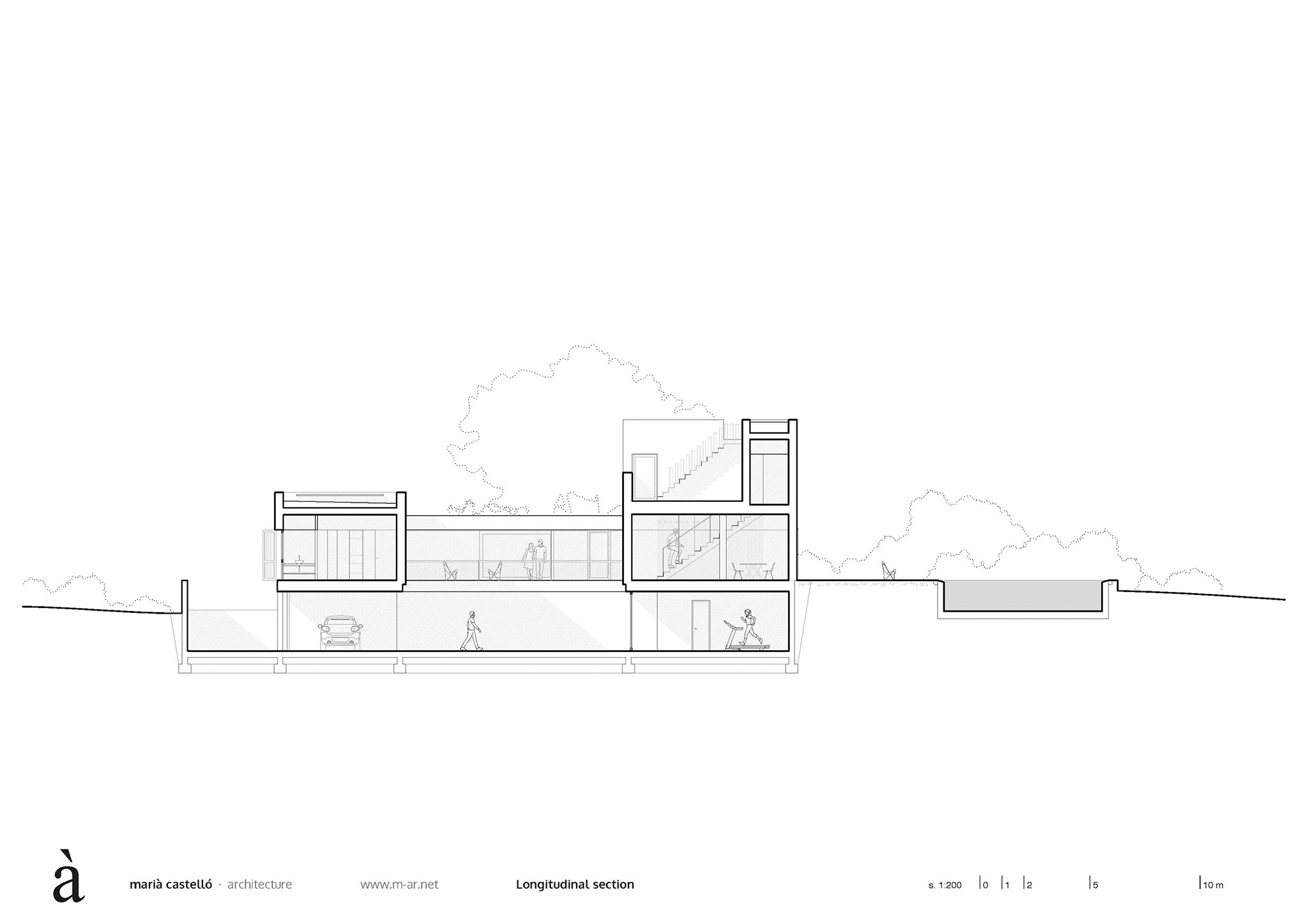
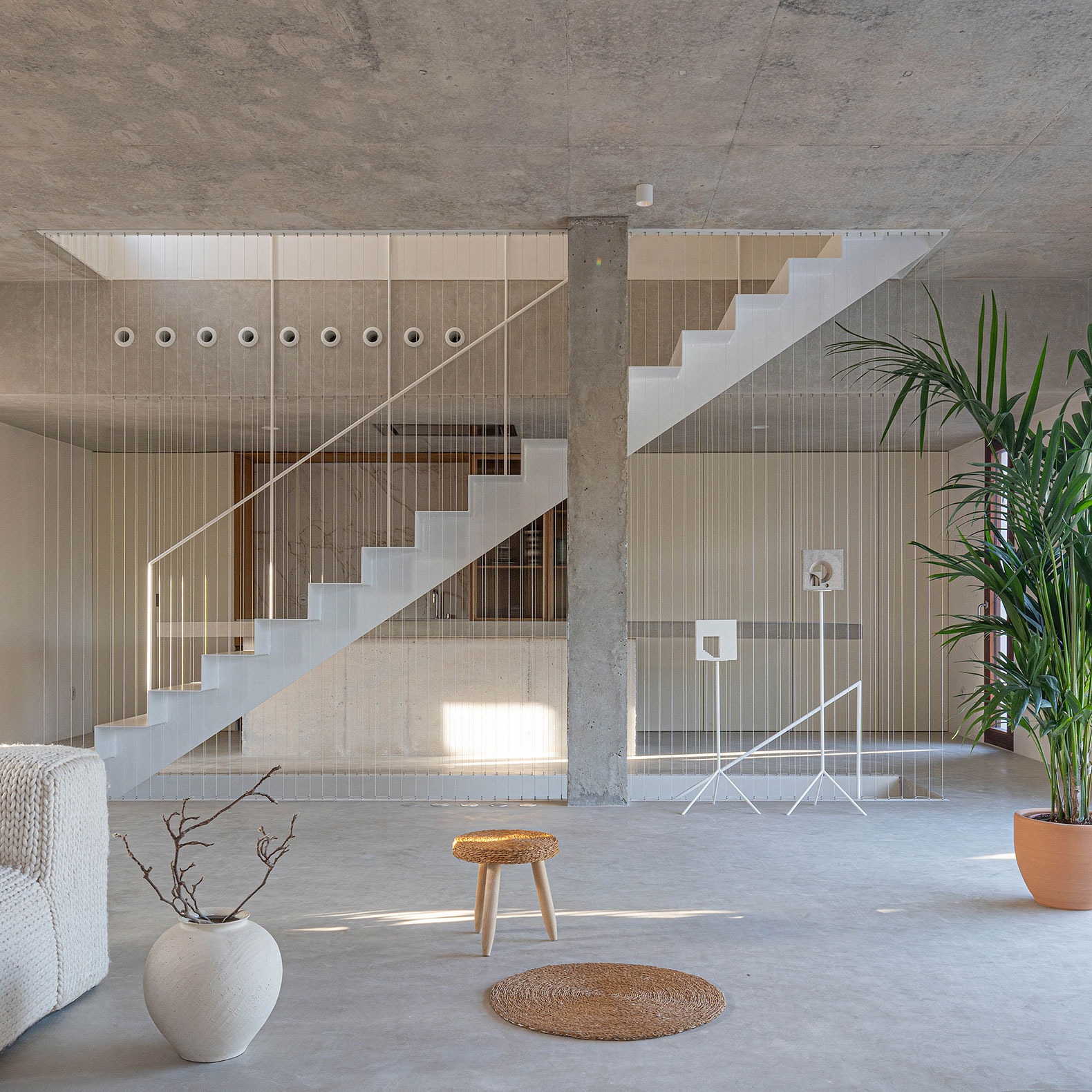
The interior layout of Ses Clotades is not only a functional response but also a physical translation of the exterior volume, where each architectural element assumes a specific role in the fabric of daily life. The taller volume is conceived as a complete living unit, capable of functioning autonomously when the house is inhabited by a single person or a couple. On its ground floor, an open-plan social space integrates the living room, kitchen, and dining room. This space seeks continuity with the exterior, allowing life to extend onto the terraces. The first floor is reserved for the master bedroom, a secluded space that includes a dressing room and private bathroom, elevated above the pine forest to ensure privacy. The journey culminates on the roof terrace, transformed into a solarium-viewpoint that acts as a privileged vantage point overlooking the landscape, offering sweeping views to the south of Ibiza and the imposing silhouette of La Mola.
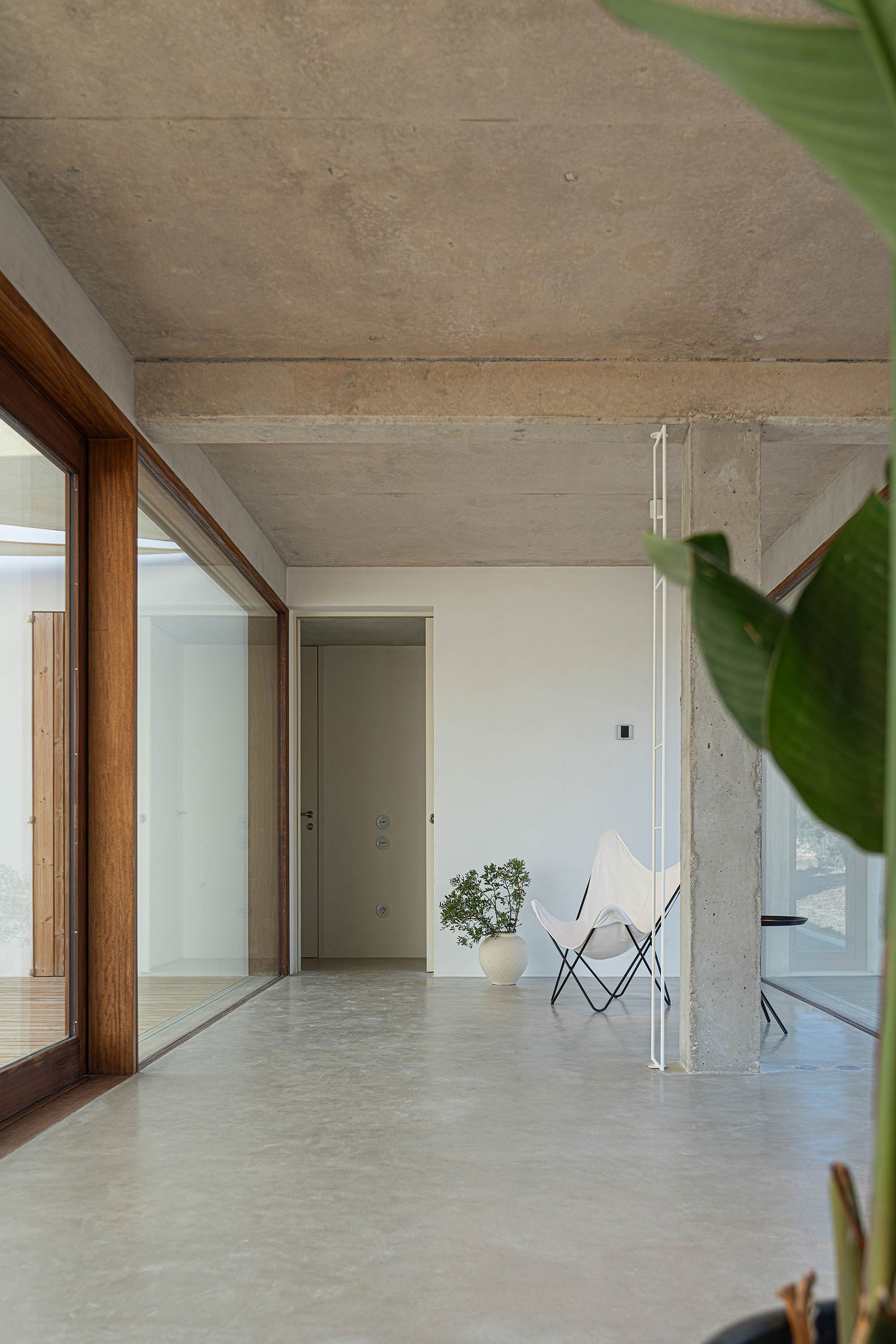
Clearly distinguished by its more compact and opaque character, the second volume houses three double en-suite bedrooms and a guest bathroom. This physical separation allows for independent privacy management depending on the occupancy of the house. Between the two volumes lies the connecting element, a key piece that functions as a hinge and entrance hall. This multifunctional space is the true heart of the house: a permeable gallery that connects the more intimate spaces with the exterior and whose character shifts with the seasons.
The project subverts the traditional basement concept through a strategy of voids and patios that flood the lower levels with natural light. On this level is the private entrance, which leads to a diverse program: a library that also functions as a screening room, a gym, and the service areas (laundry and utilities). Here, the interplay of light and shadow created by the courtyards evokes an atmosphere of quiet monumentality, where the architecture seems to embrace the earth. We also find the parking area and a large cistern that stores rainwater for the home's self-sufficiency.
The entire building rests on a platform that not only regulates its connection to the topography but also creates high-quality intermediate spaces:
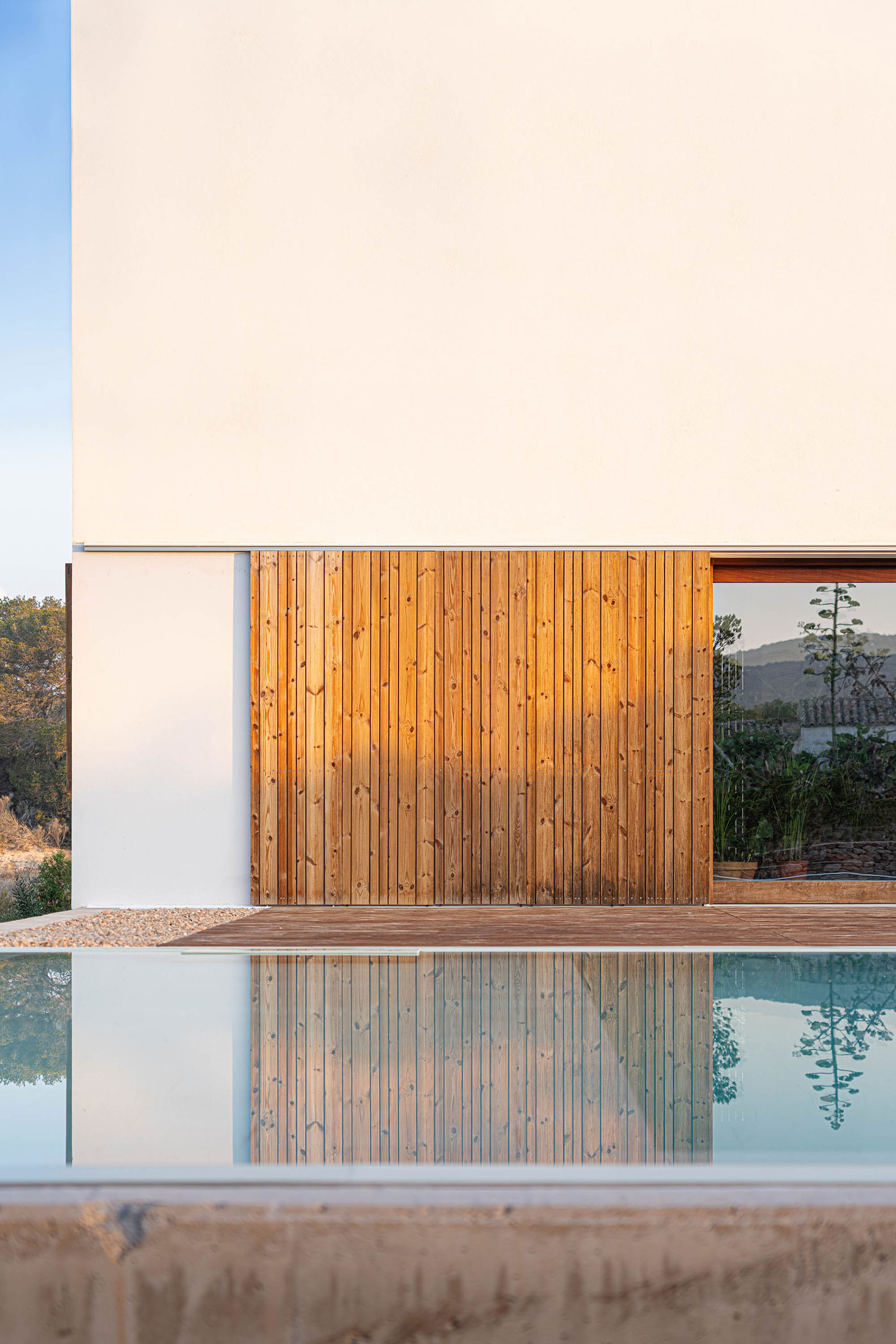
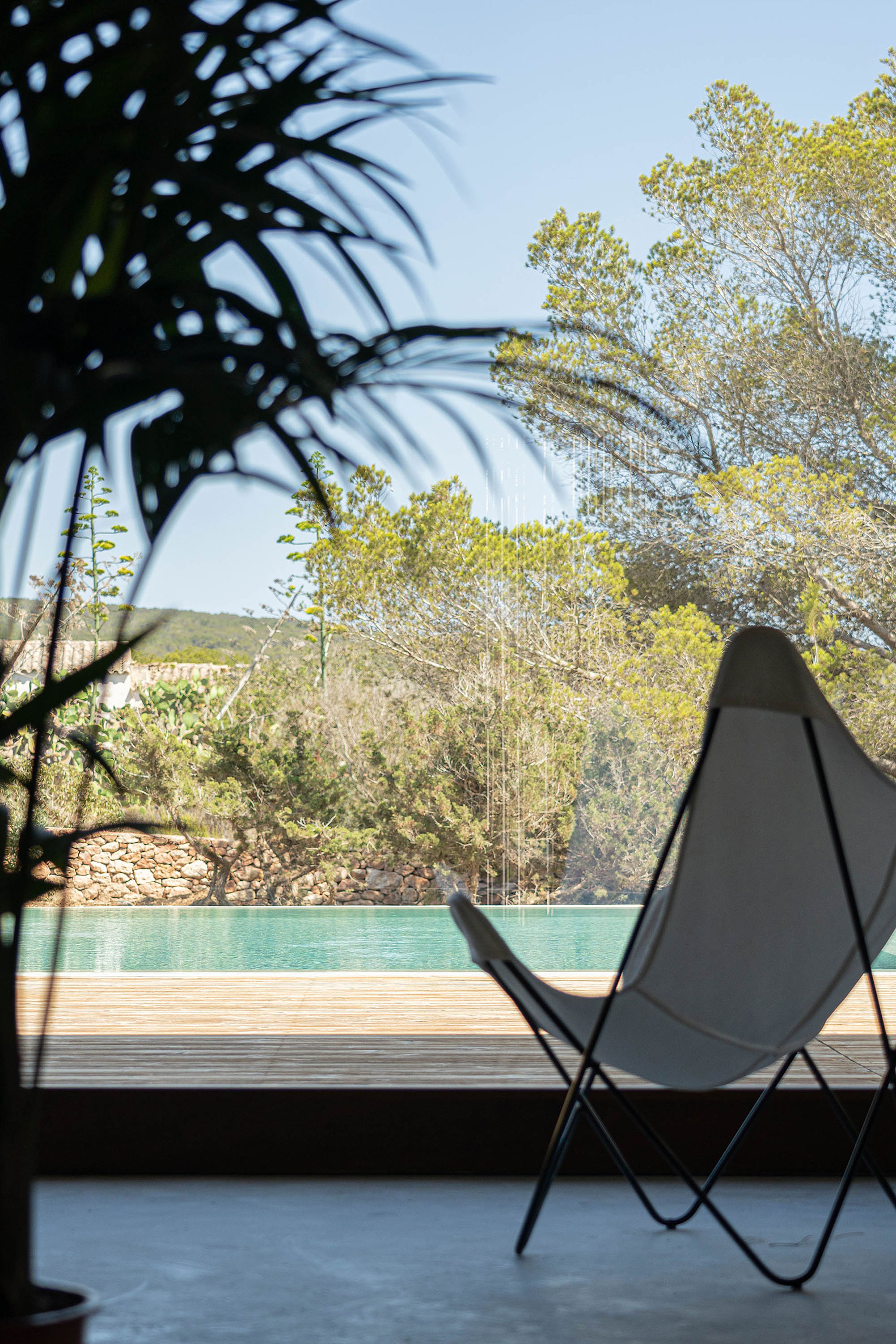
-To the east: The main terrace opens up, also housing the swimming pool and becoming the quintessential outdoor gathering space.
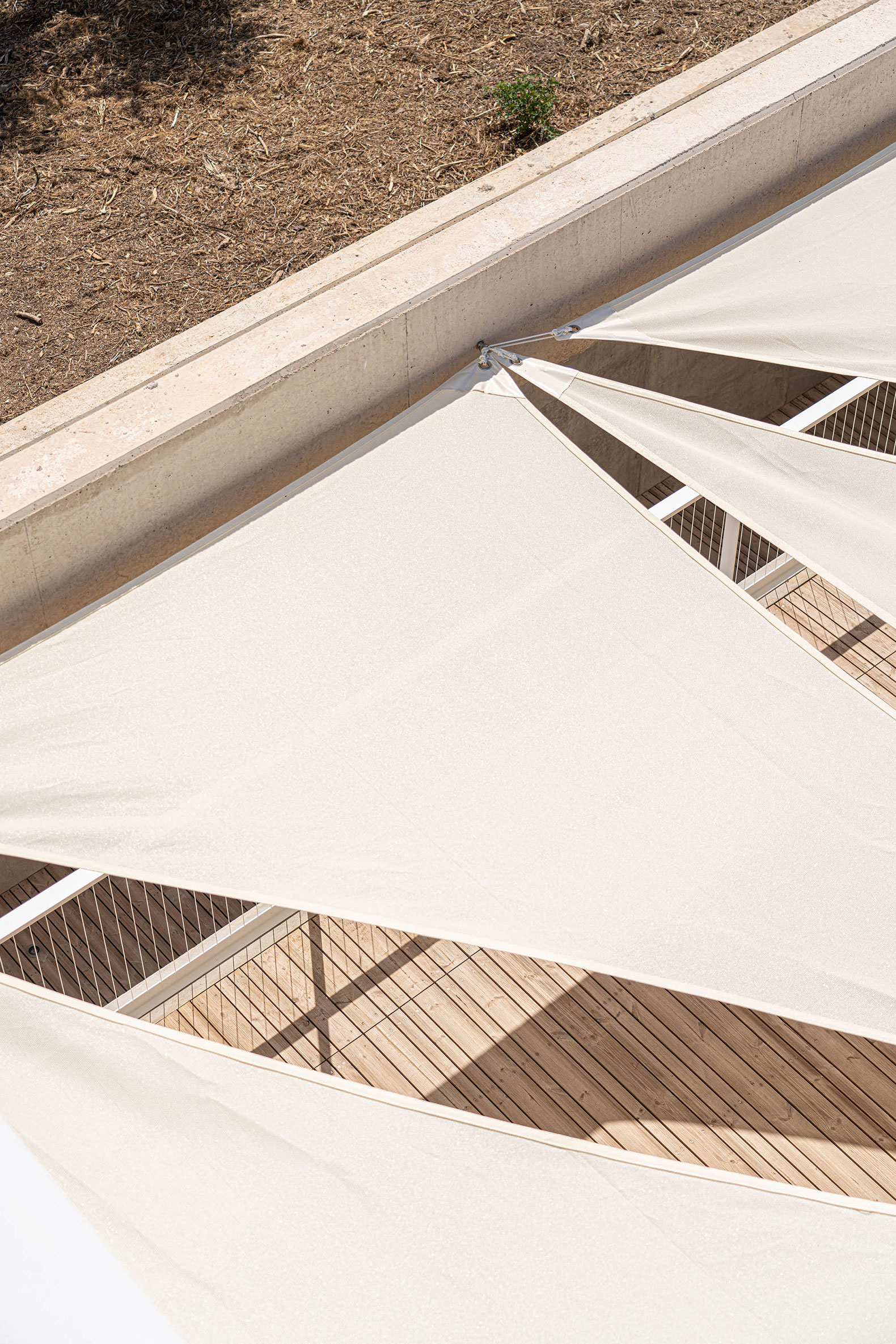
-To the south (Migjorn) and sheltered from the wind: A terrace protected by a system of lightweight sails offers a refuge of shade and tranquility.
-Vehicle access: A ramp integrated into the geometry of the podium allows vehicles to enter the lower level without disrupting the overall landscape harmony.
Self-sufficiency, sustainability, and bioclimatic systems
The environmental strategy of Ses Clotades transcends the simple implementation of technology, becoming a manifesto that prioritizes ethics over aesthetics. Despite its size, the house has been designed with a compact footprint and precise geometry that minimizes its occupancy and impact on the fragile ecosystem in which it is located. This comprehensive approach integrates self-sufficiency solutions that draw direct links to the traditional architecture of Formentera, where the management of natural resources has historically been a matter of survival.
The design is structured to maximize climate comfort without relying exclusively on active systems:
-Optimized cross ventilation: The size and orientation of the openings have been carefully studied to ensure a constant airflow that naturally cools the interior.
-Dynamic solar protection: The use of sliding or folding panels allows for control of sunlight depending on the time of day and season.
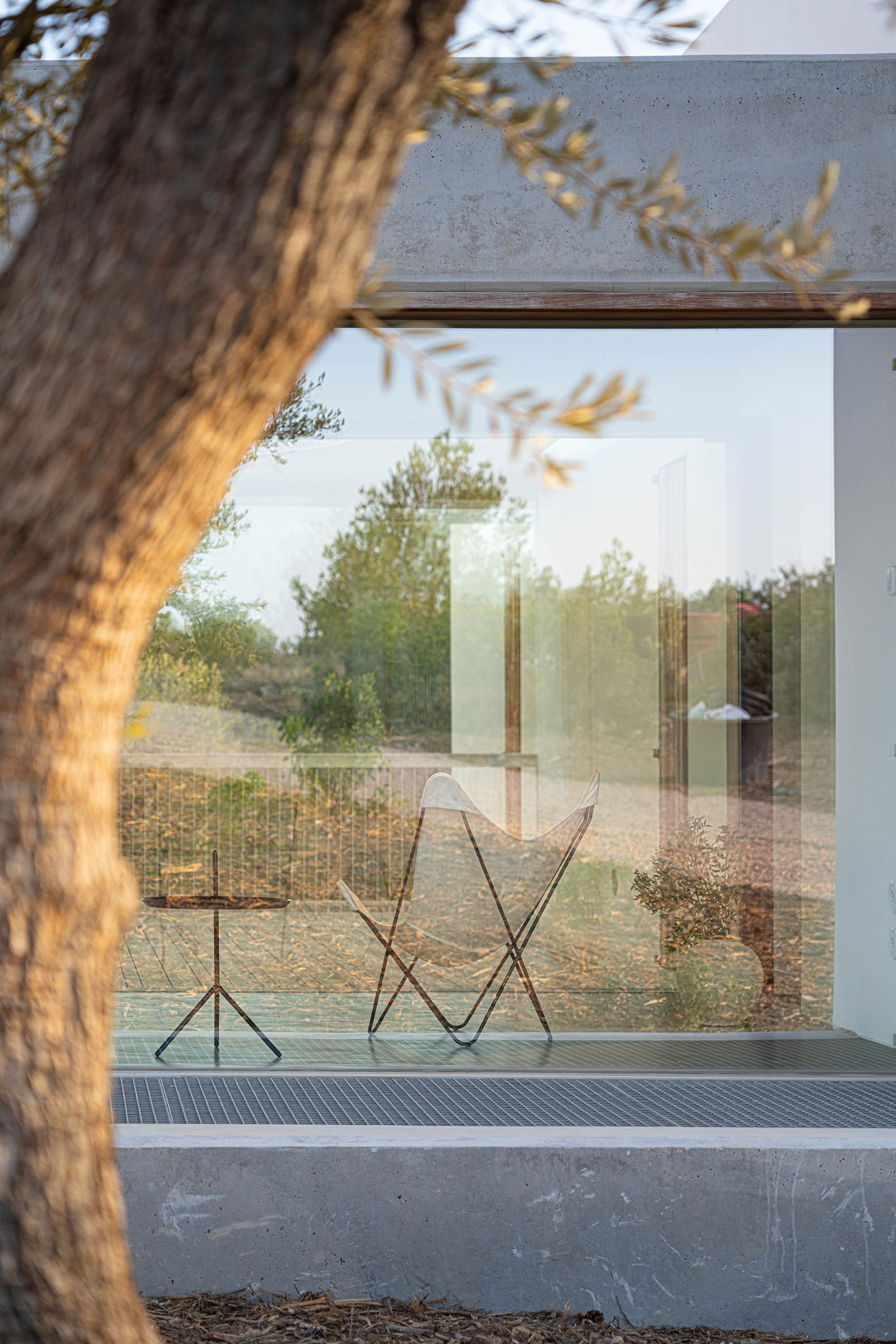
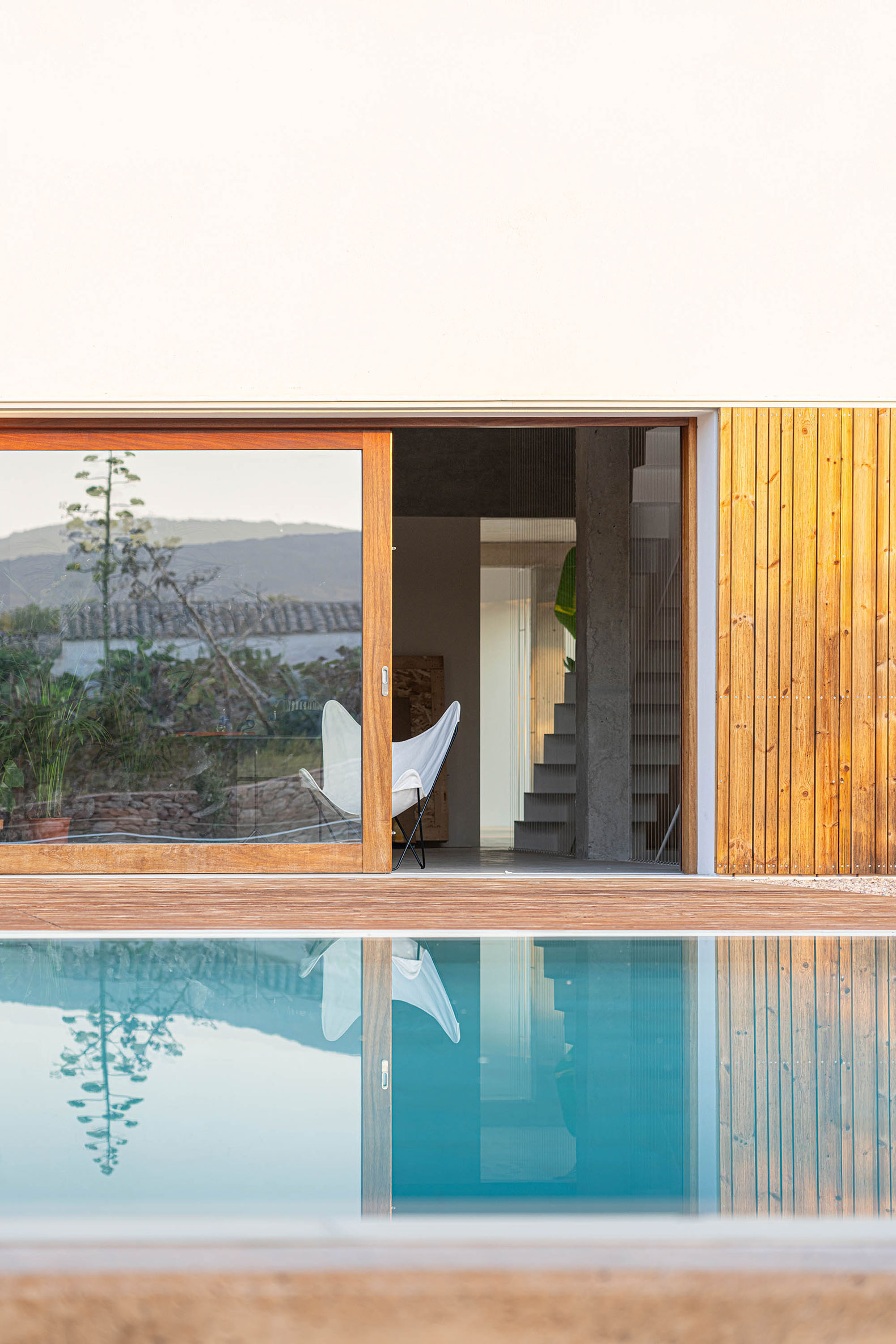
-The central hub as a thermal buffer: The glazed transition space acts as a reversible bioclimatic mechanism. In summer, large sliding doors transform it into a fully ventilated porch, protected from direct sunlight by a system of light shades. In winter, this same space is enclosed to become a greenhouse-like solar collector that distributes heat to the rest of the house.
Energy and light management
The strategic placement of the patios is not only an aesthetic feature but also a tool for reducing electricity demand. These voids erode the built mass, allowing natural light and ventilation to reach even the lower levels, creating luminous atmospheres that challenge the typical darkness of basements. Furthermore, the roof of the lowest volume has been used to integrate a photovoltaic system that significantly contributes to the building's energy self-sufficiency.
The Water Cycle and the Natural Envelope
On an island with water scarcity like Formentera, rainwater management is central to the project. The house has a collection system on all the roofs that channels the water to a large-volume cistern located in the basement, ensuring an independent water supply. Finally, the building envelope reinforces this efficiency through the use of materials with excellent hygrothermal properties, such as sprayed natural cork insulation and lime binder, which allow for optimal breathability and a low ecological footprint.
Art and Set Design
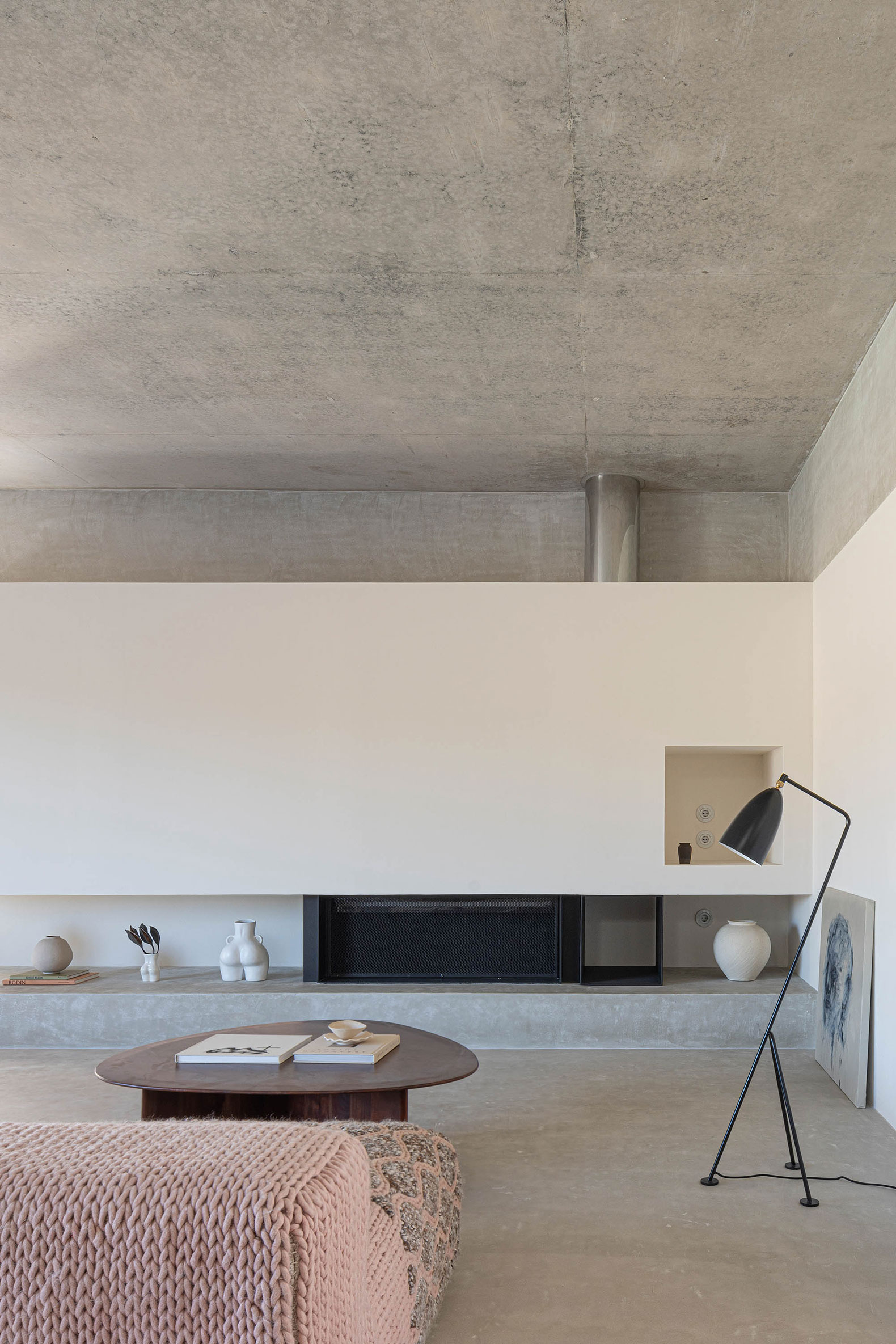
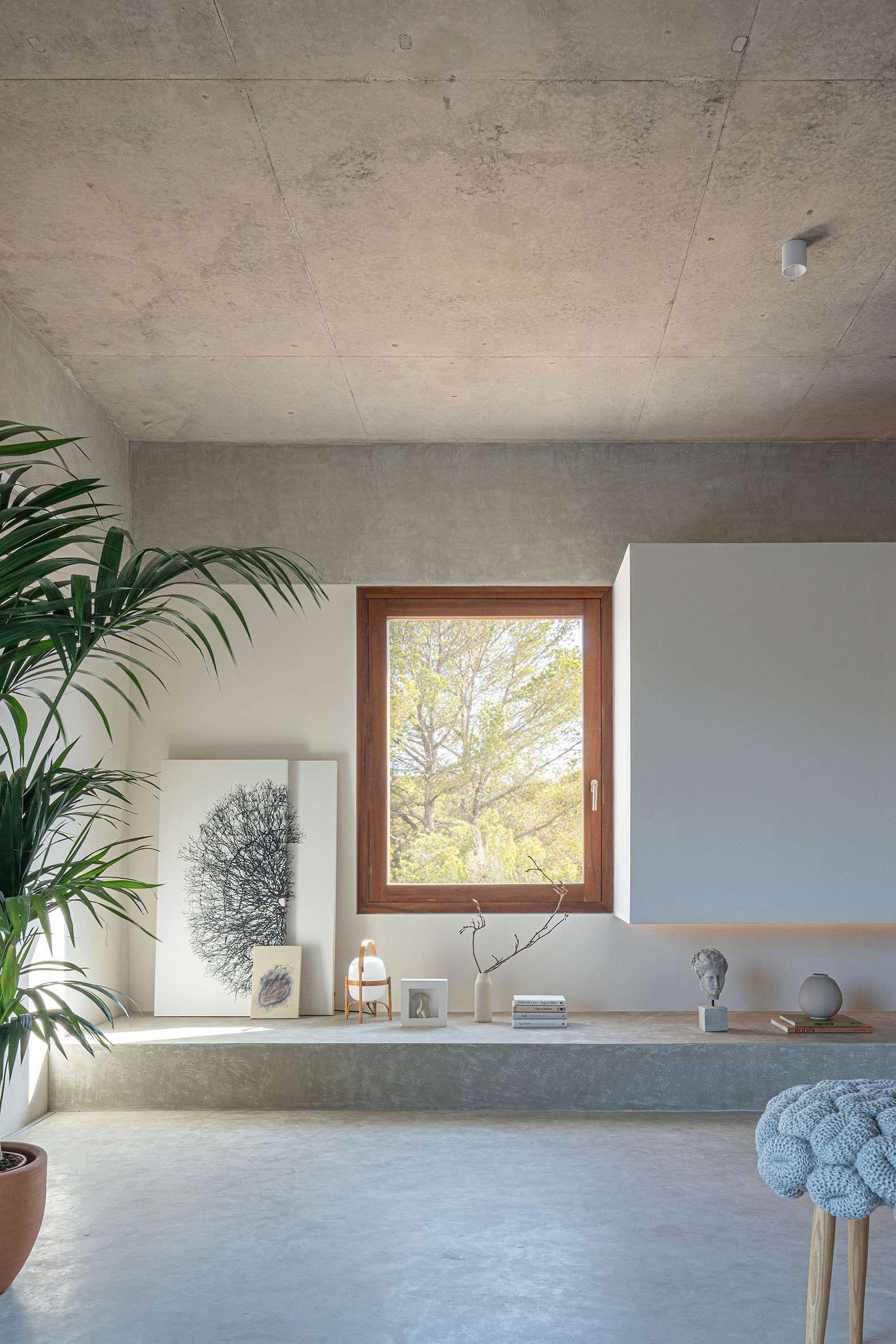
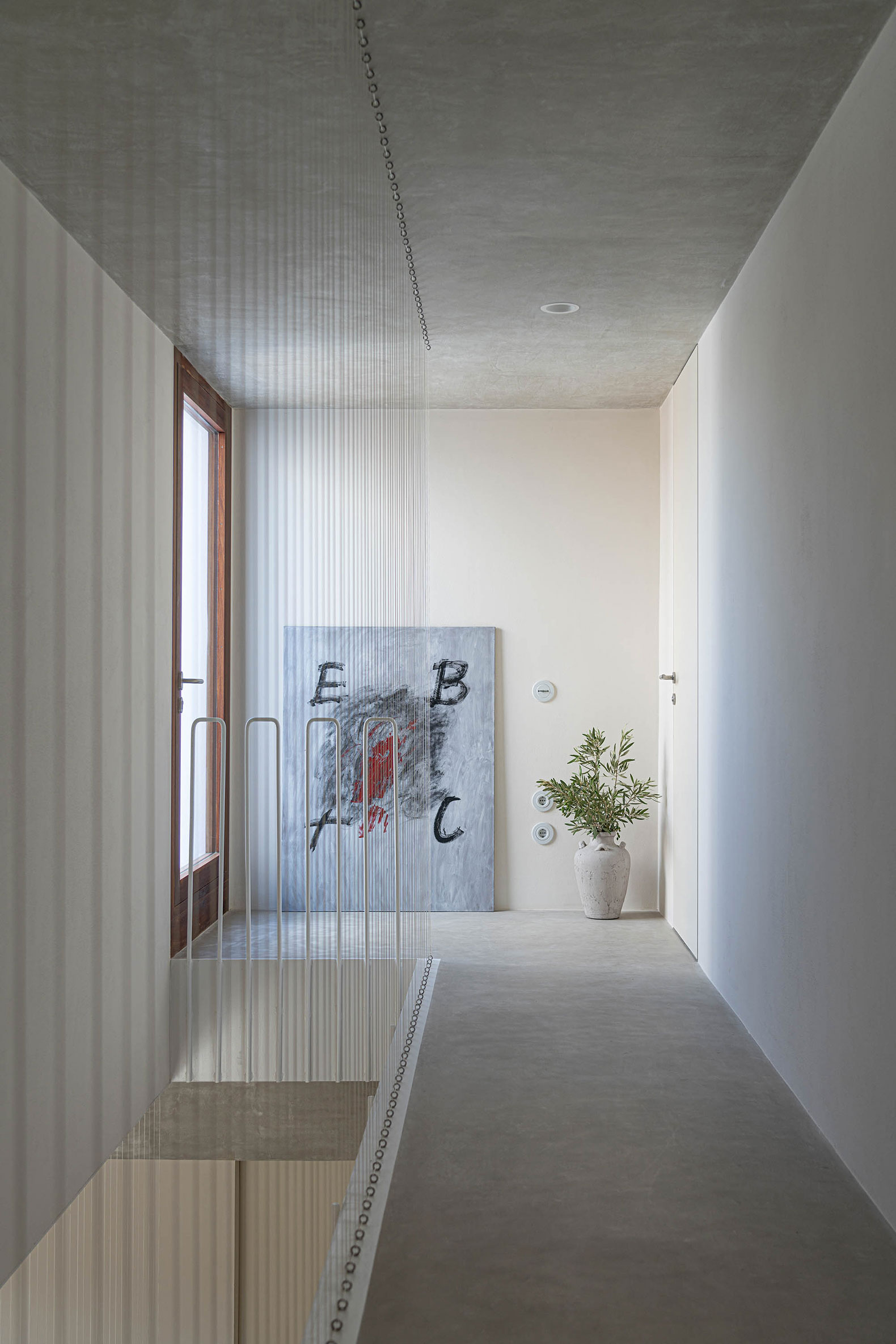
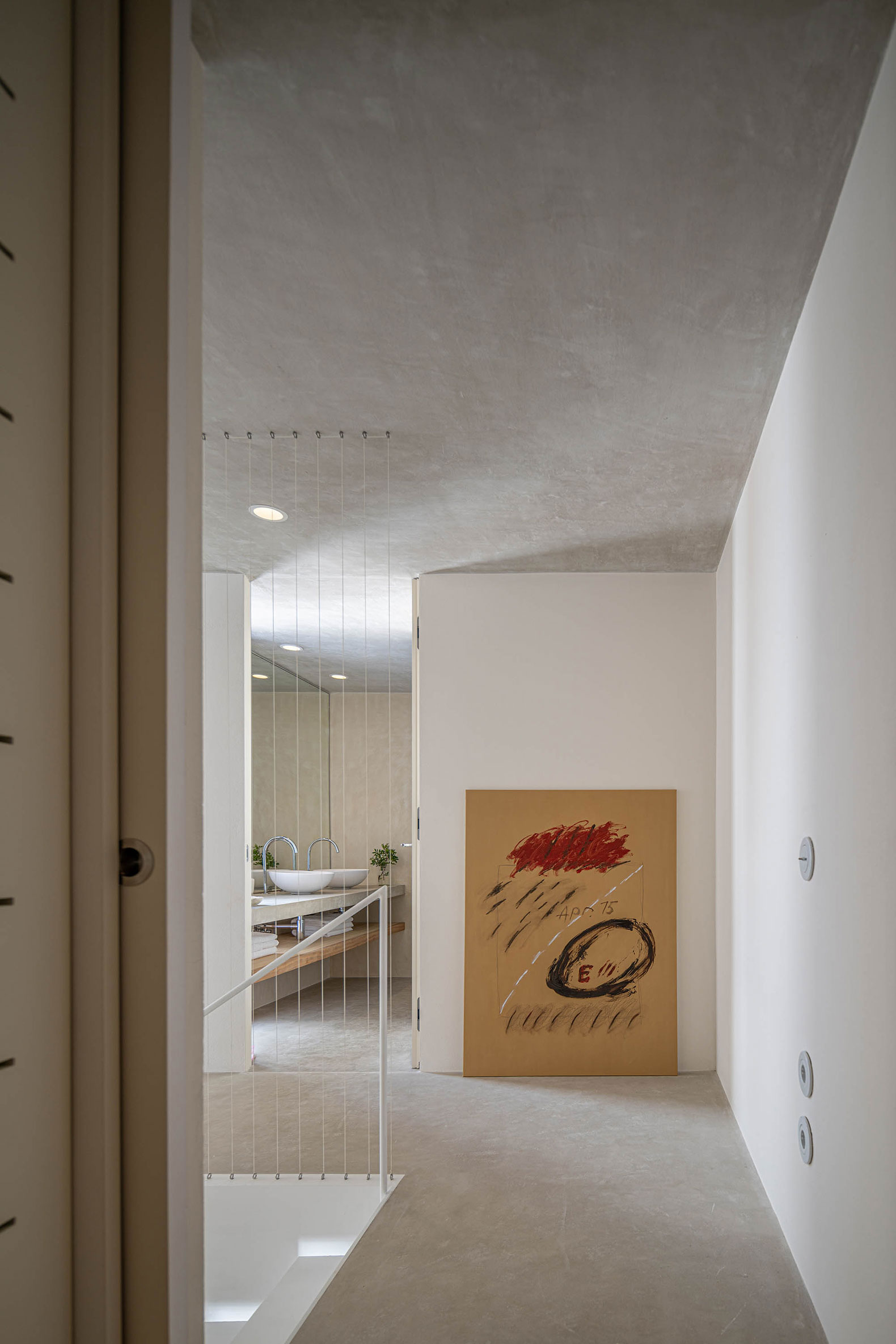
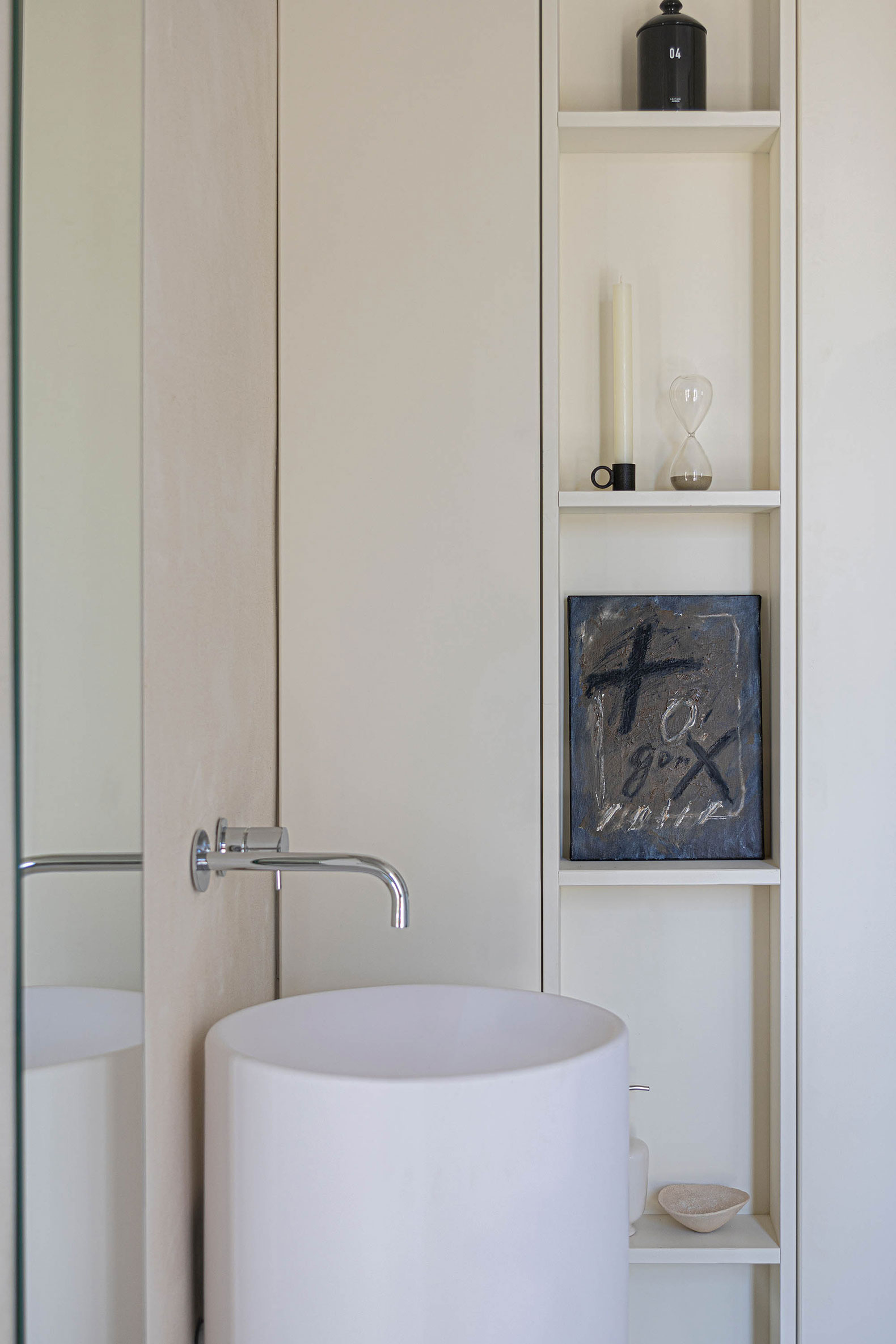
The architecture of Ses Clotades is understood not only as a physical structure, but as a narrative stage where space and objects engage in an intimate dialogue. In this process, the contribution of the artist Elena Vinyàrskaya has been essential in imbuing the house with a layer of conscious domesticity, acting not only as an artist but also as a curator of the set design.
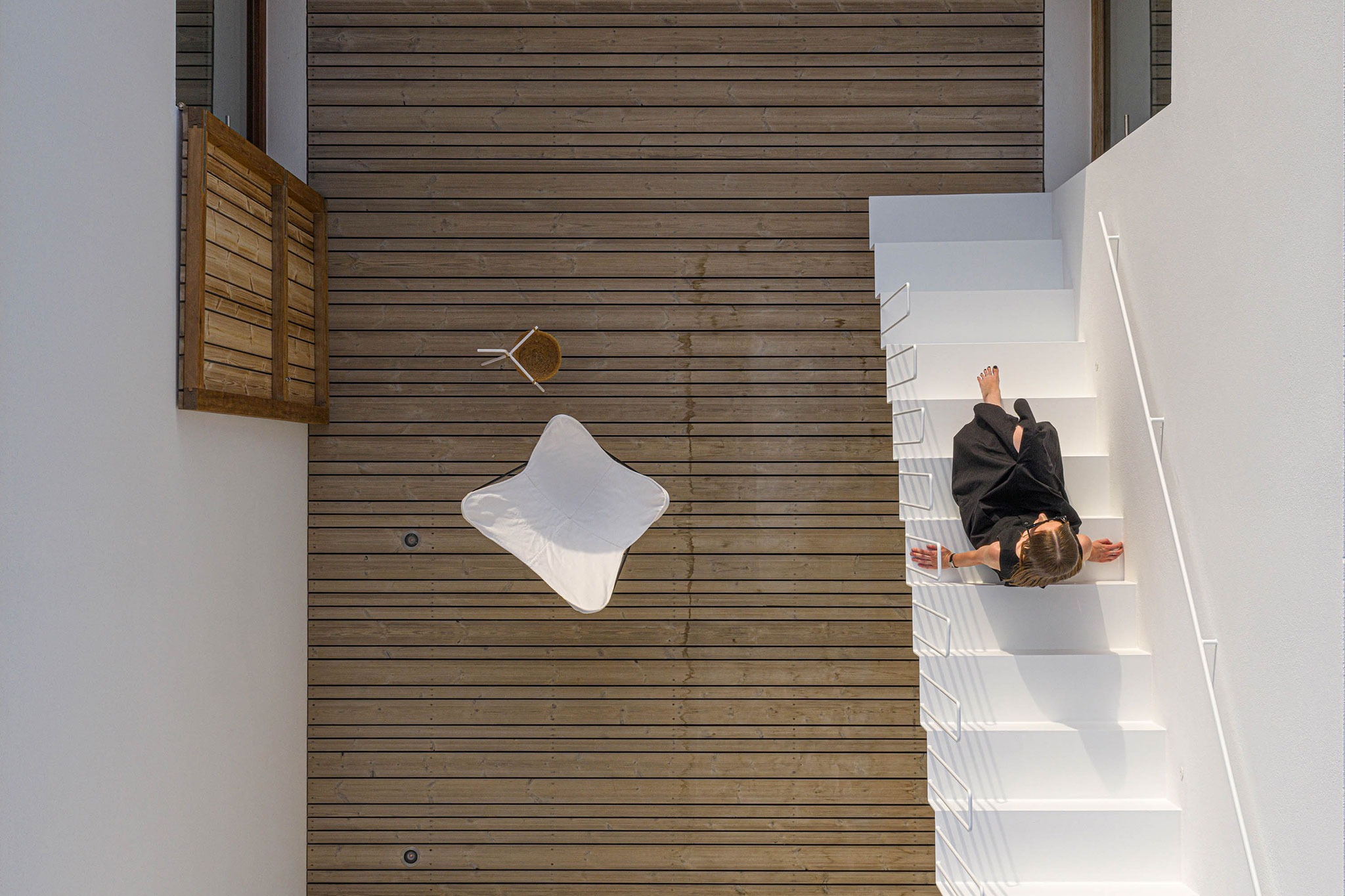
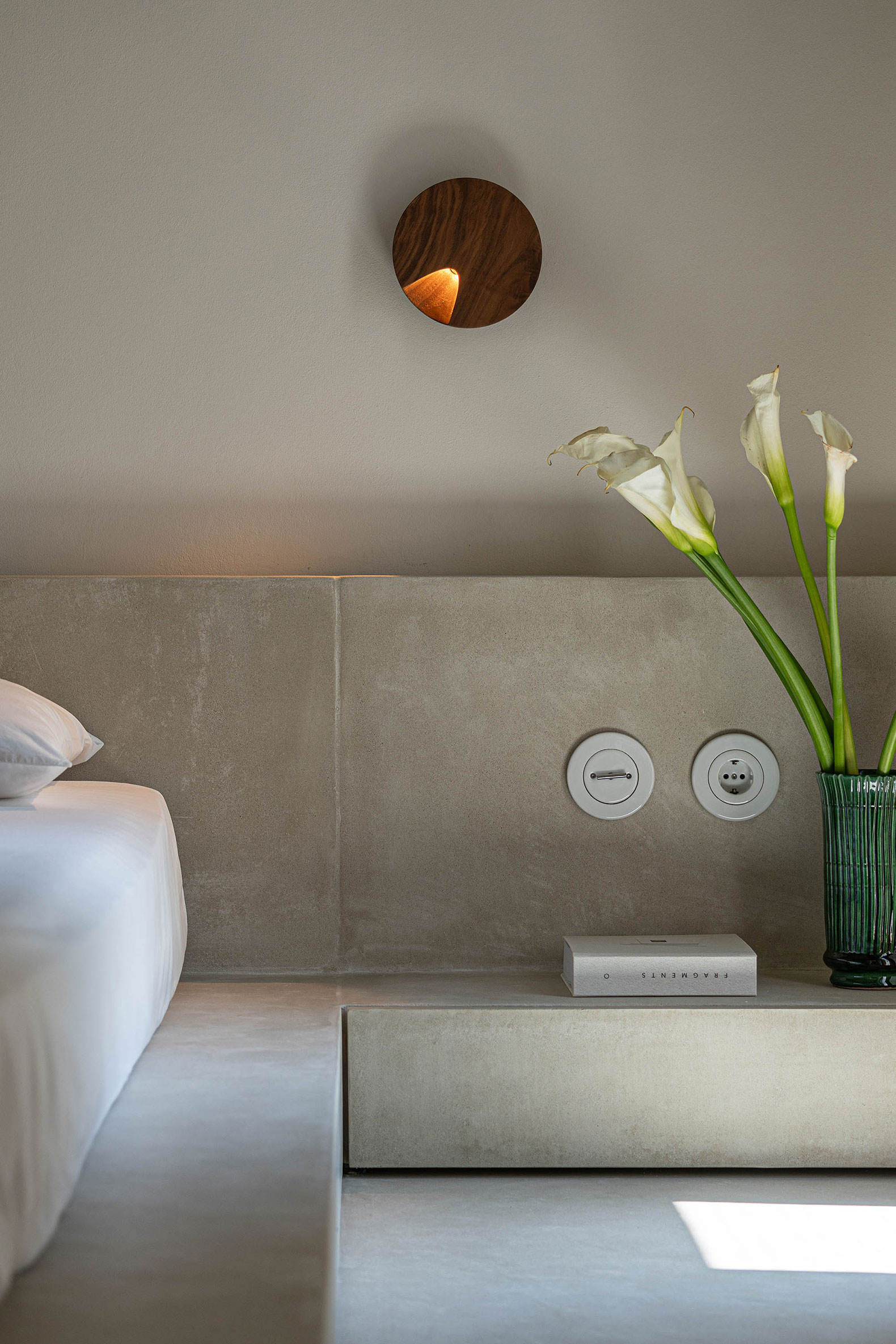
Vinyàrskaya's intervention is an extension of the architecture through other means. Through a careful selection of her own artworks, designer furniture pieces, and objects with a history, the interior ceases to be a mere container and becomes a stage of textures and meanings. The fabrics, ceramics, and chosen props seek a balance between the formal purity of the house and the warmth necessary for it to be inhabited, ensuring that each corner tells a unique story of well-being and shelter.
Materials and Details
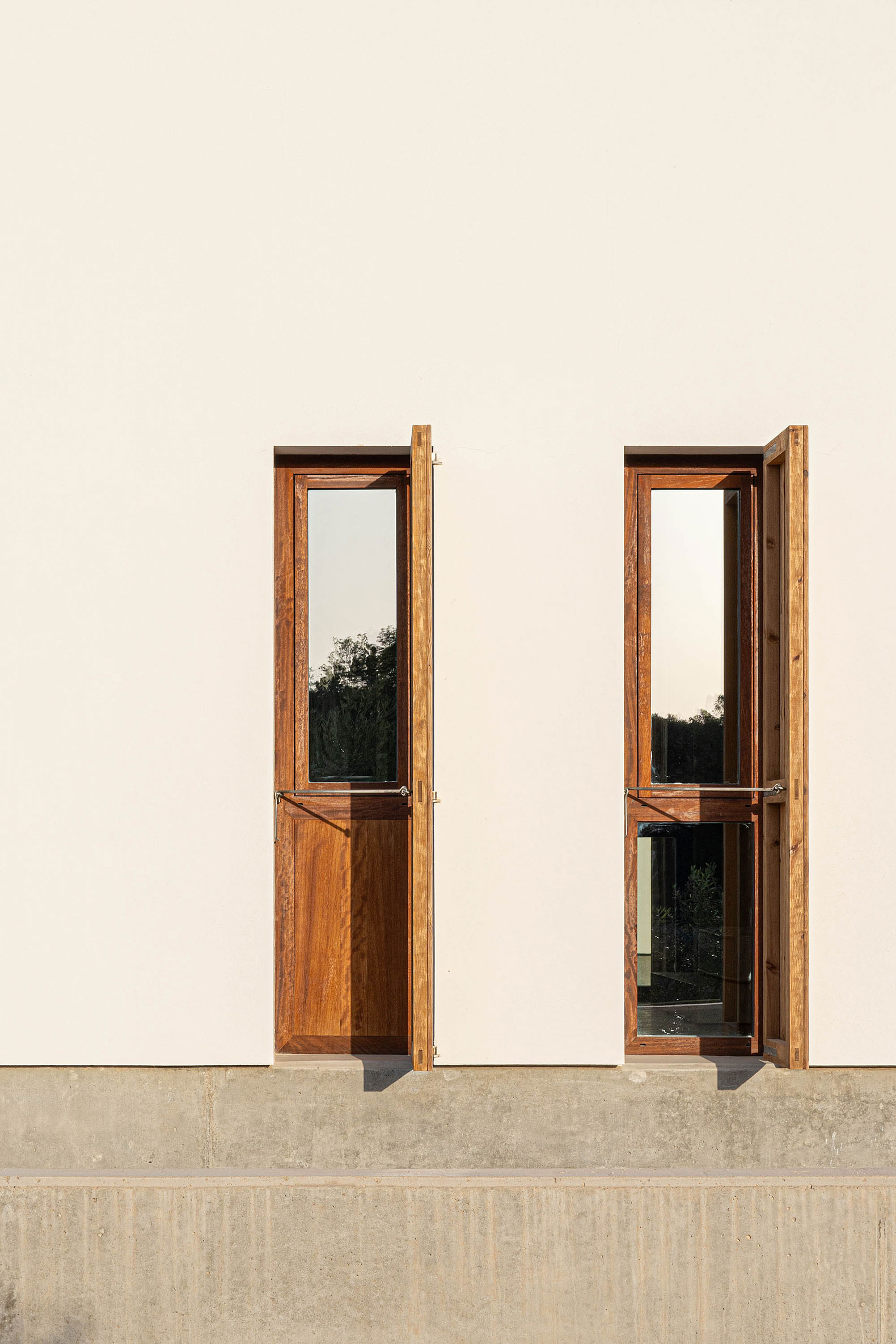
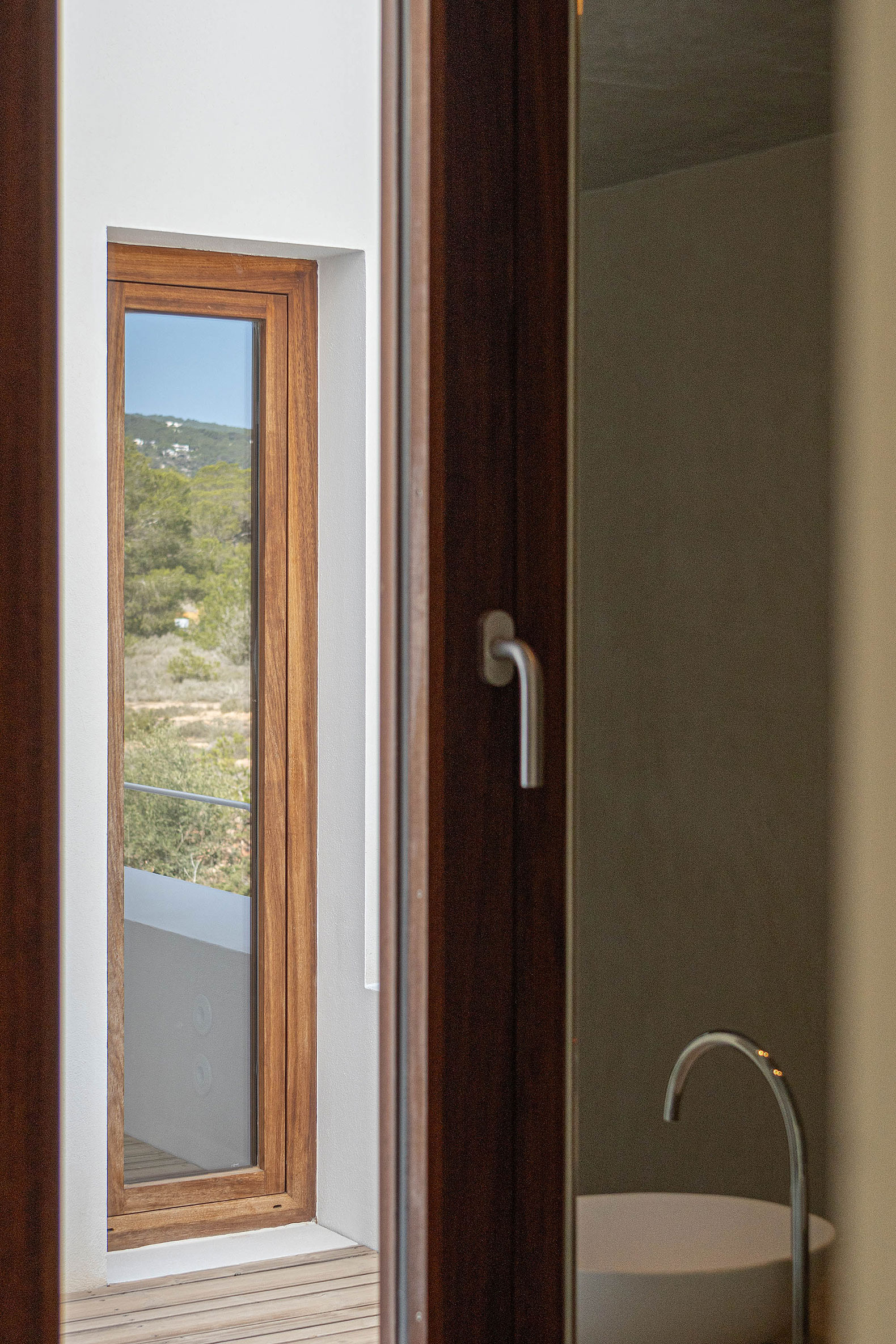
The materiality of Ses Clotades is an exercise in coherence and restraint. The use of natural materials that age gracefully with the surrounding landscape has been prioritized. The woodwork and shutters, crafted from iroko and pine, lend a tactile warmth that contrasts with the starkness of the concrete.
This constructive honesty is also evident in the almost invisible yet vital technical details for the building's efficiency: sprayed natural cork and lime binder have been used for the insulation of the perimeter walls—materials with a minimal ecological footprint that allow the house to breathe and integrate organically into the cycle of its environment.
Many of the furniture pieces have been custom-designed and integrated into the architecture itself (such as the D12 collection for Diabla), and other details have been conceived to enhance the coherence between landscape, architecture, and interior design, highlighting the wisdom and experience of the local artisans who participated. The result is a work where the precision of geometry and the imperfection of natural materials coexist in a silent equilibrium.