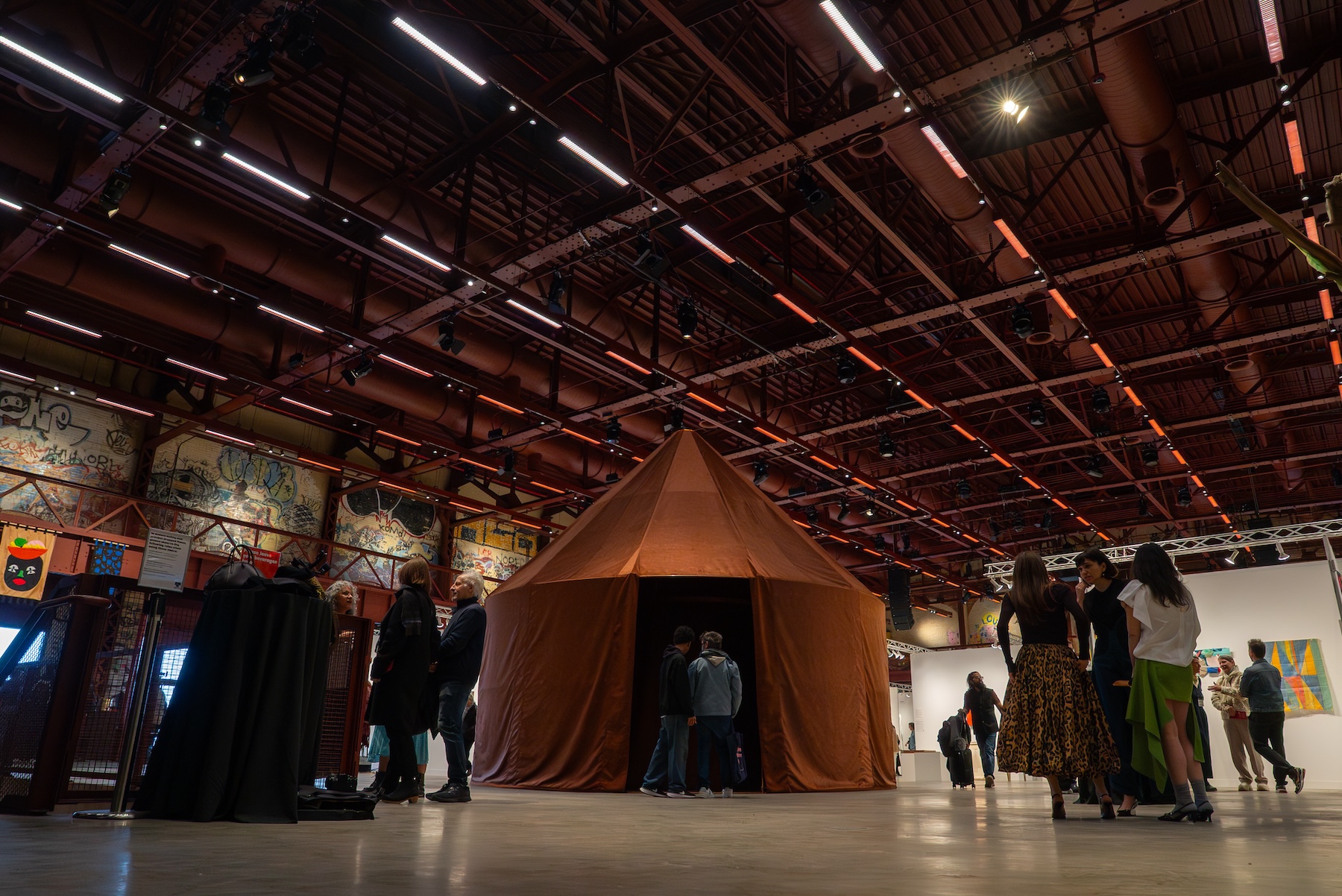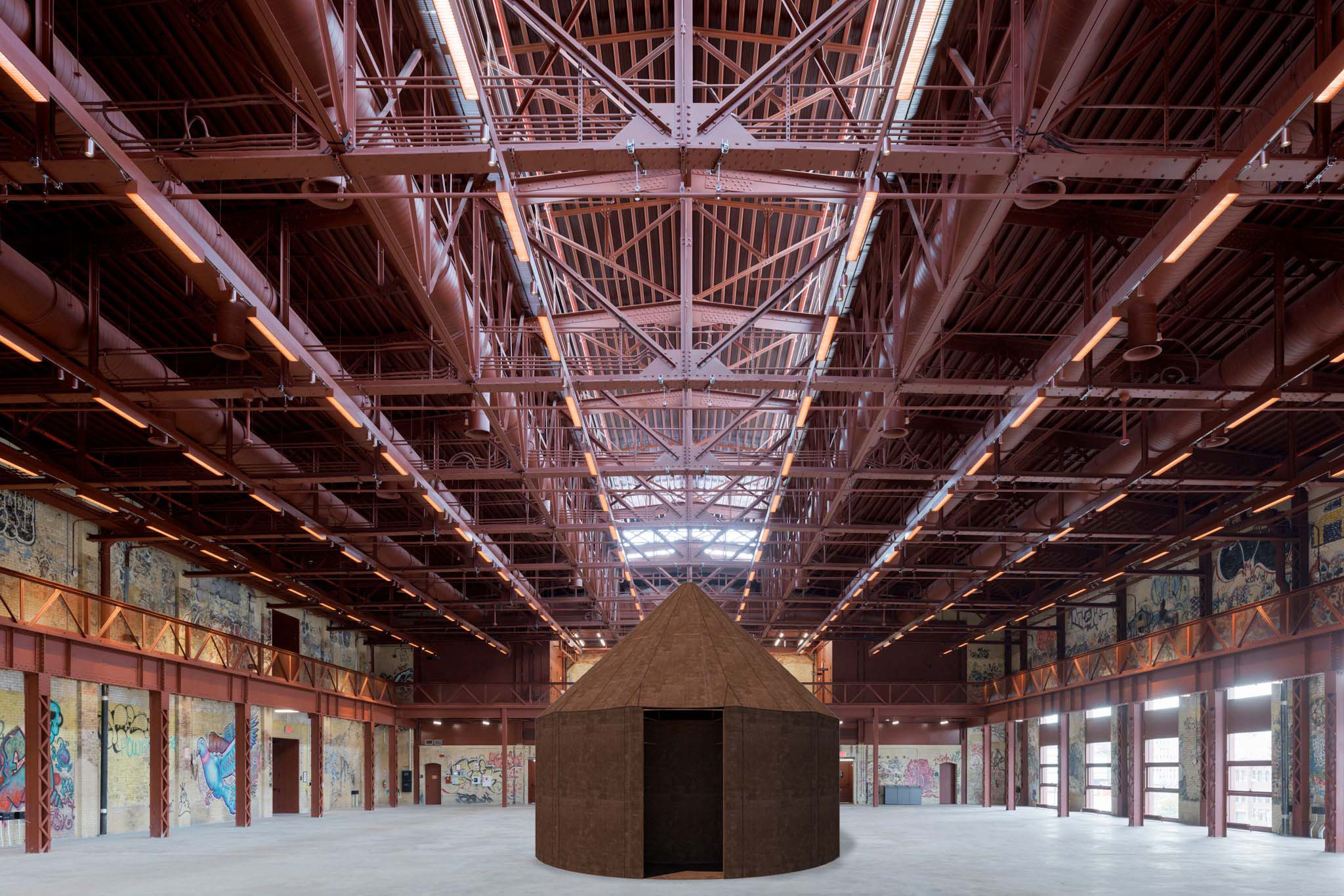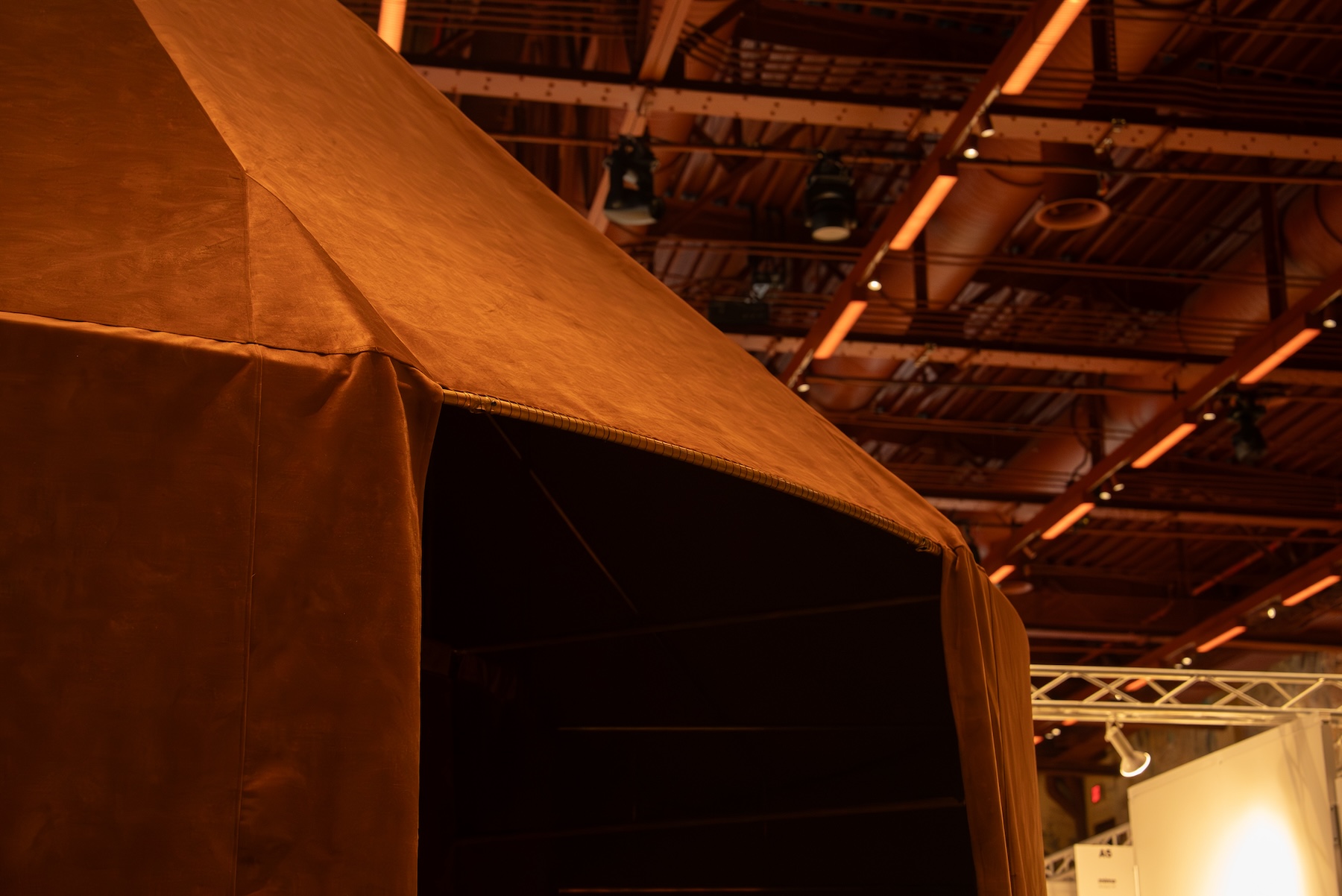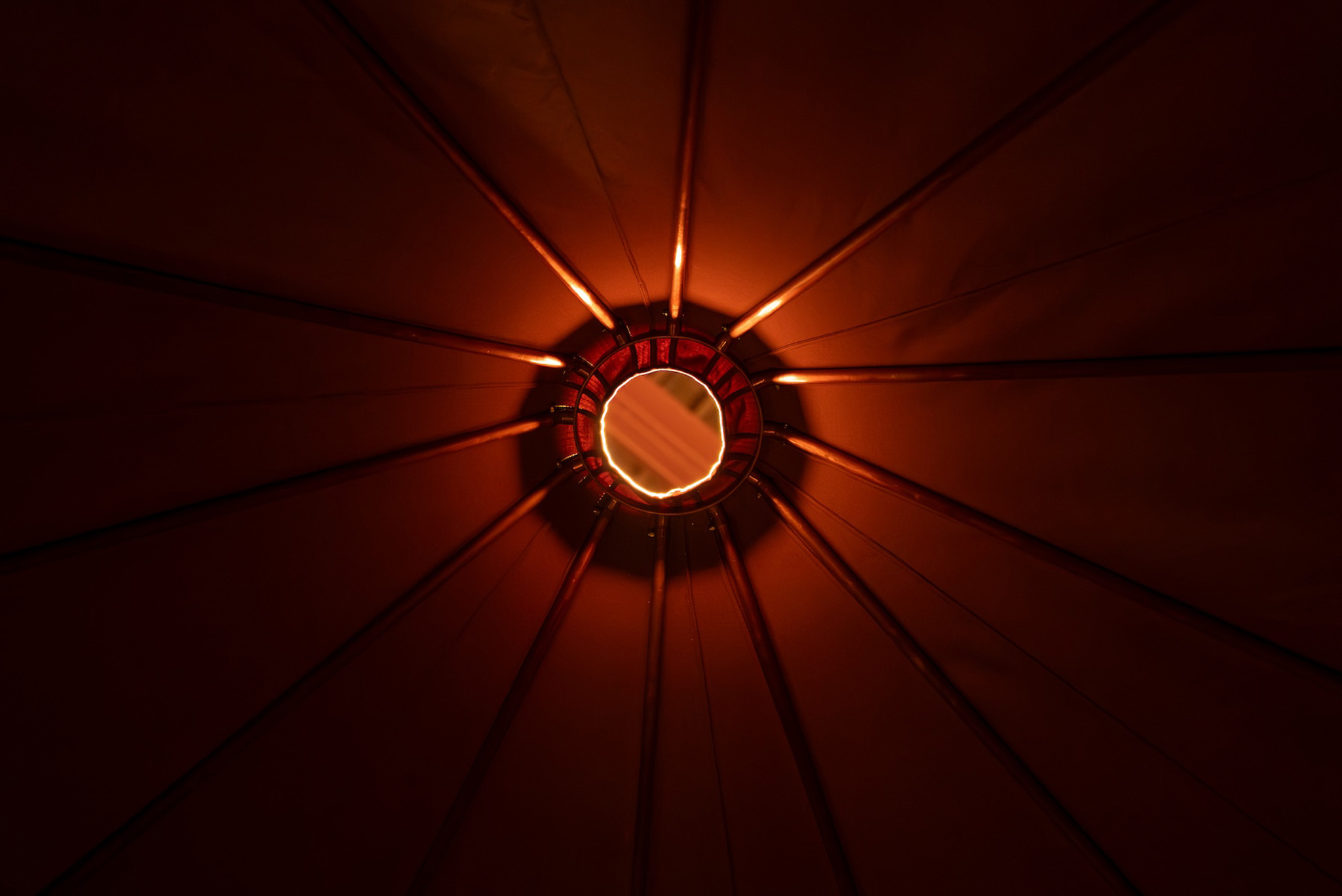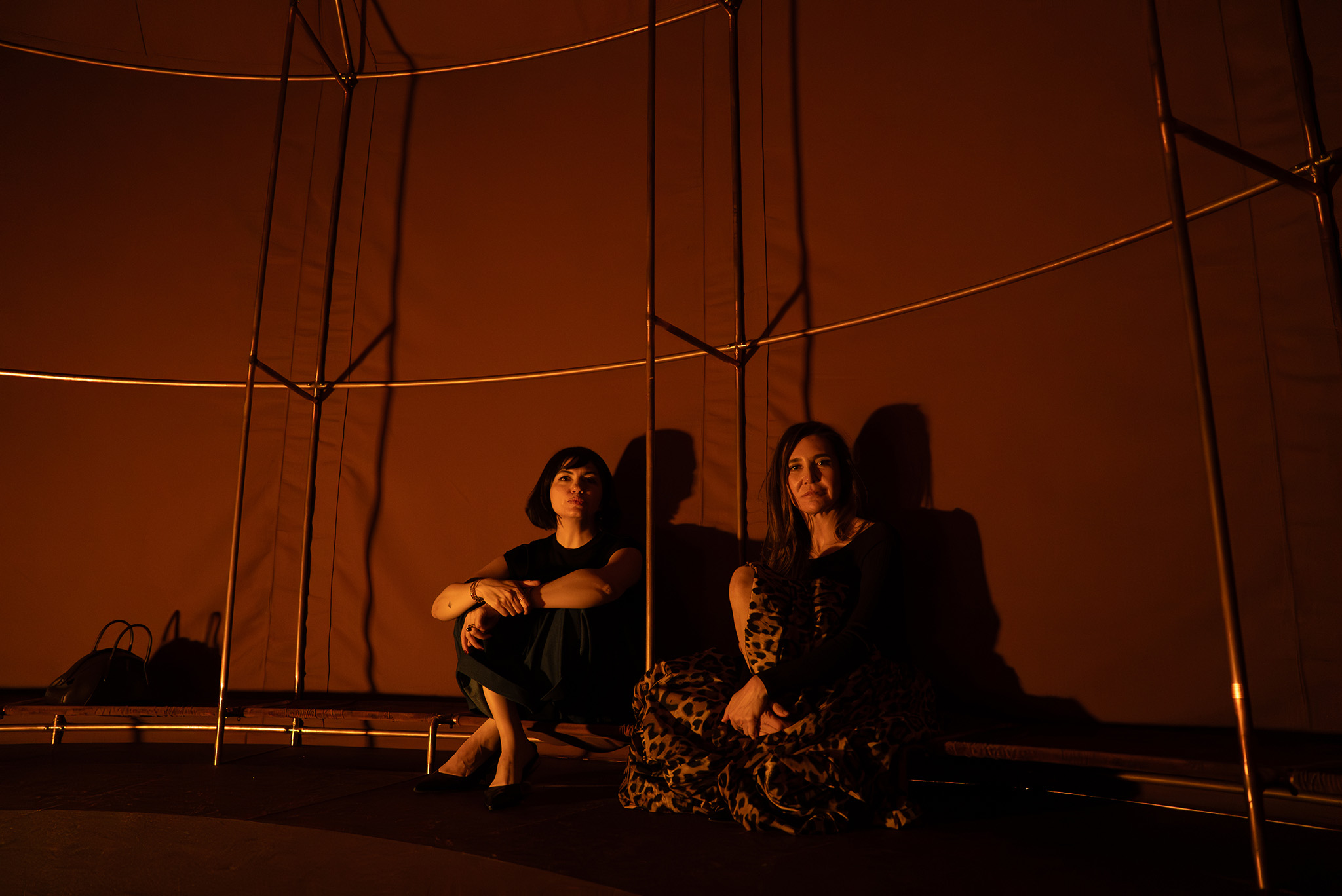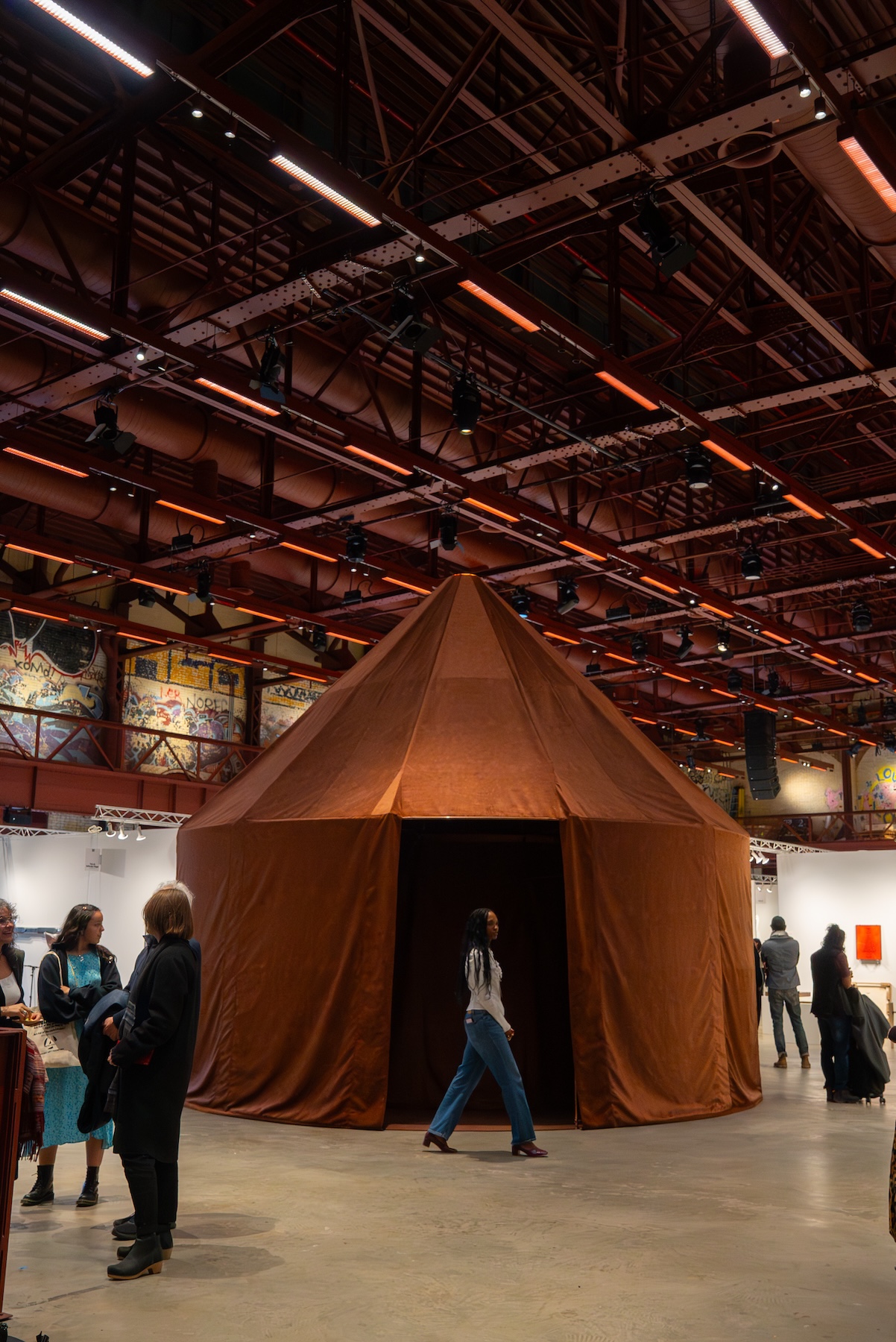
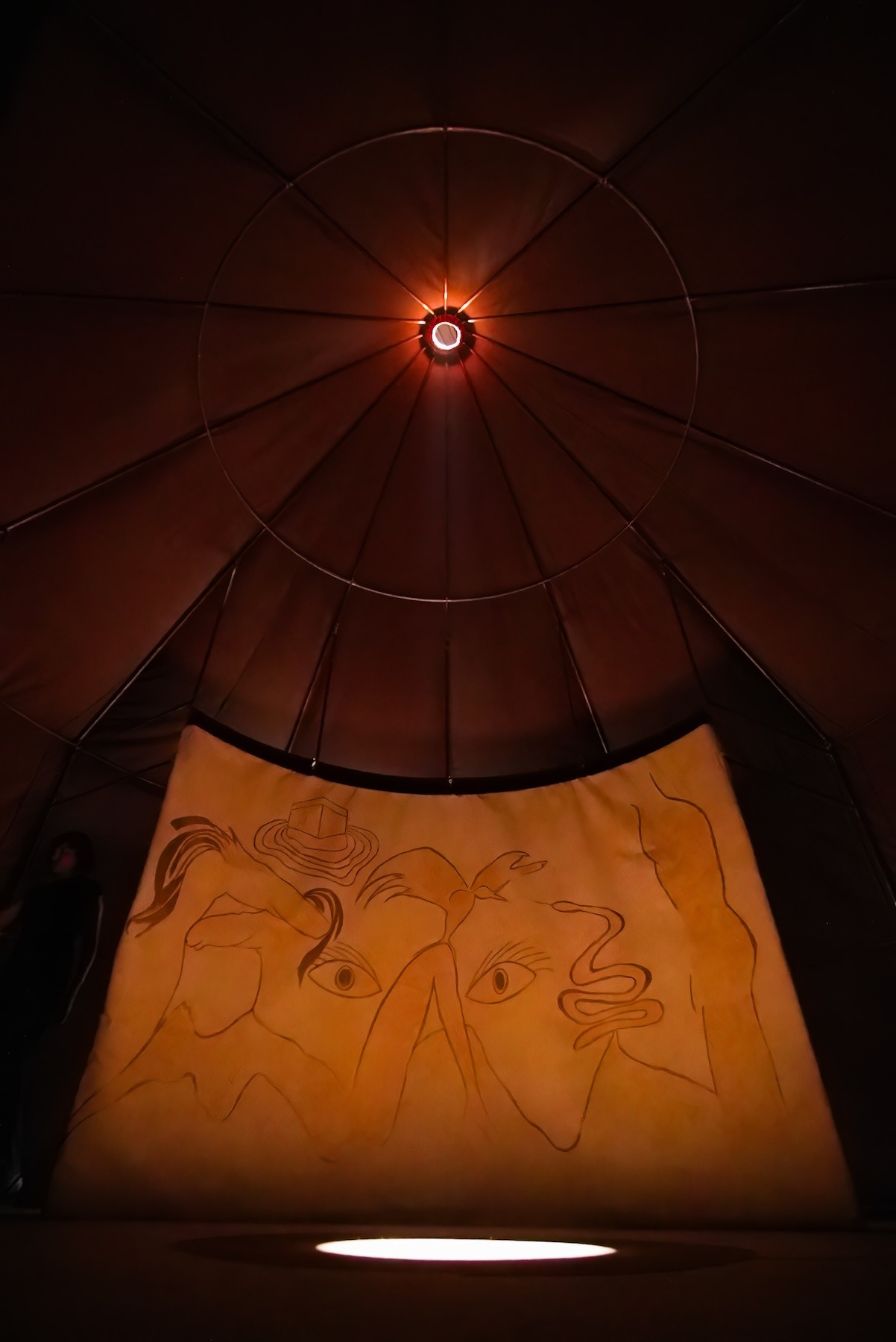
The journey begins by crossing a dark and silent threshold that leads to a central room designed to isolate the visitor from outside noise and foster an experience of collective contemplation.
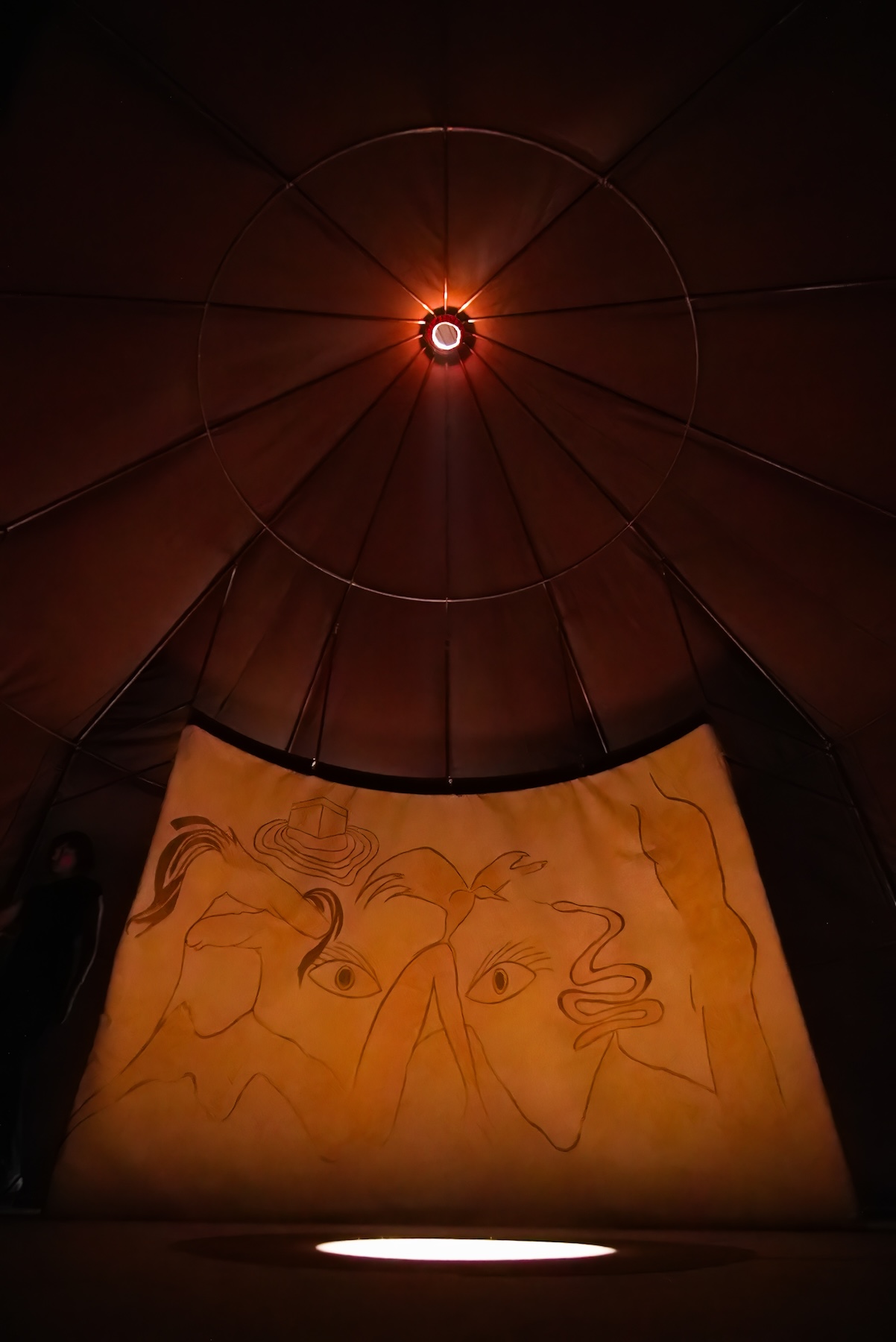
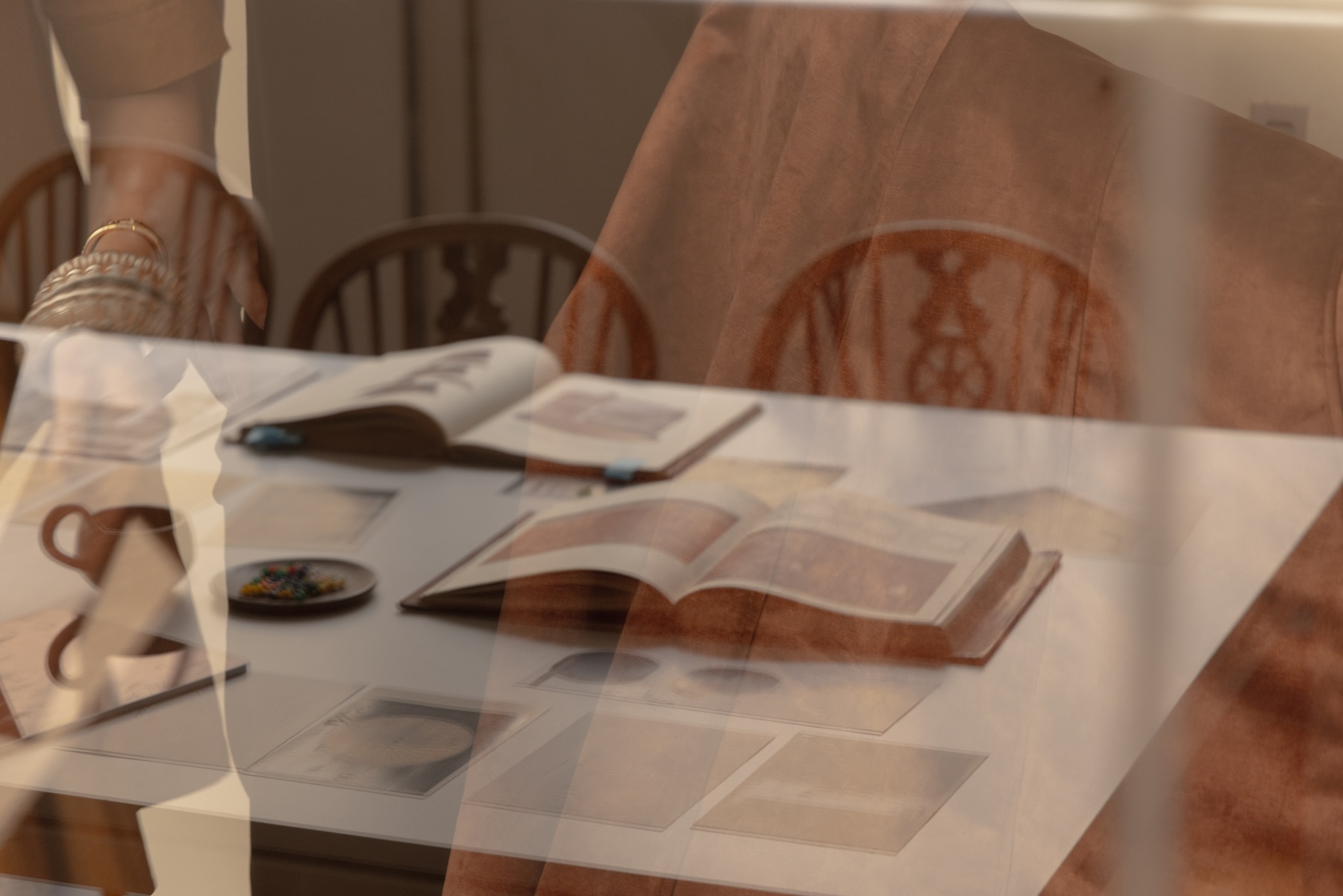
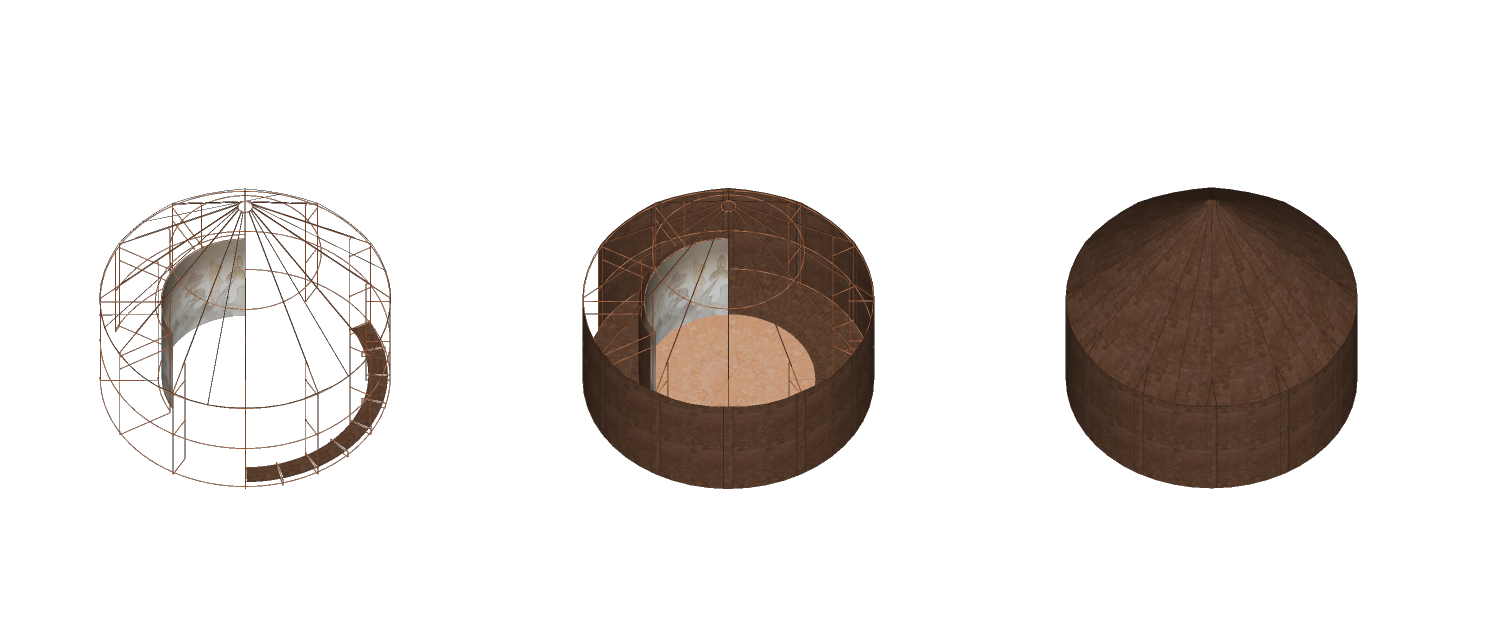
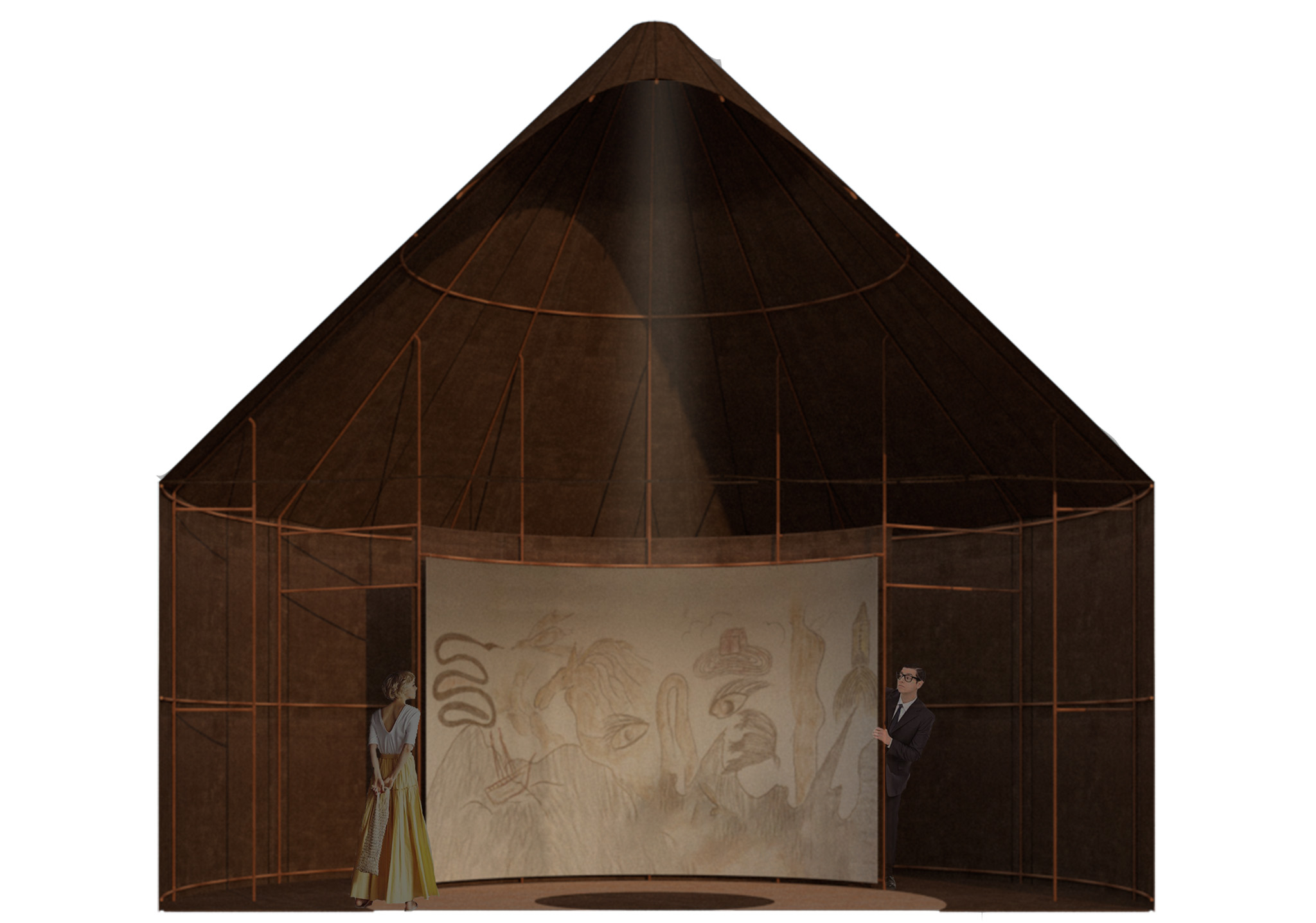
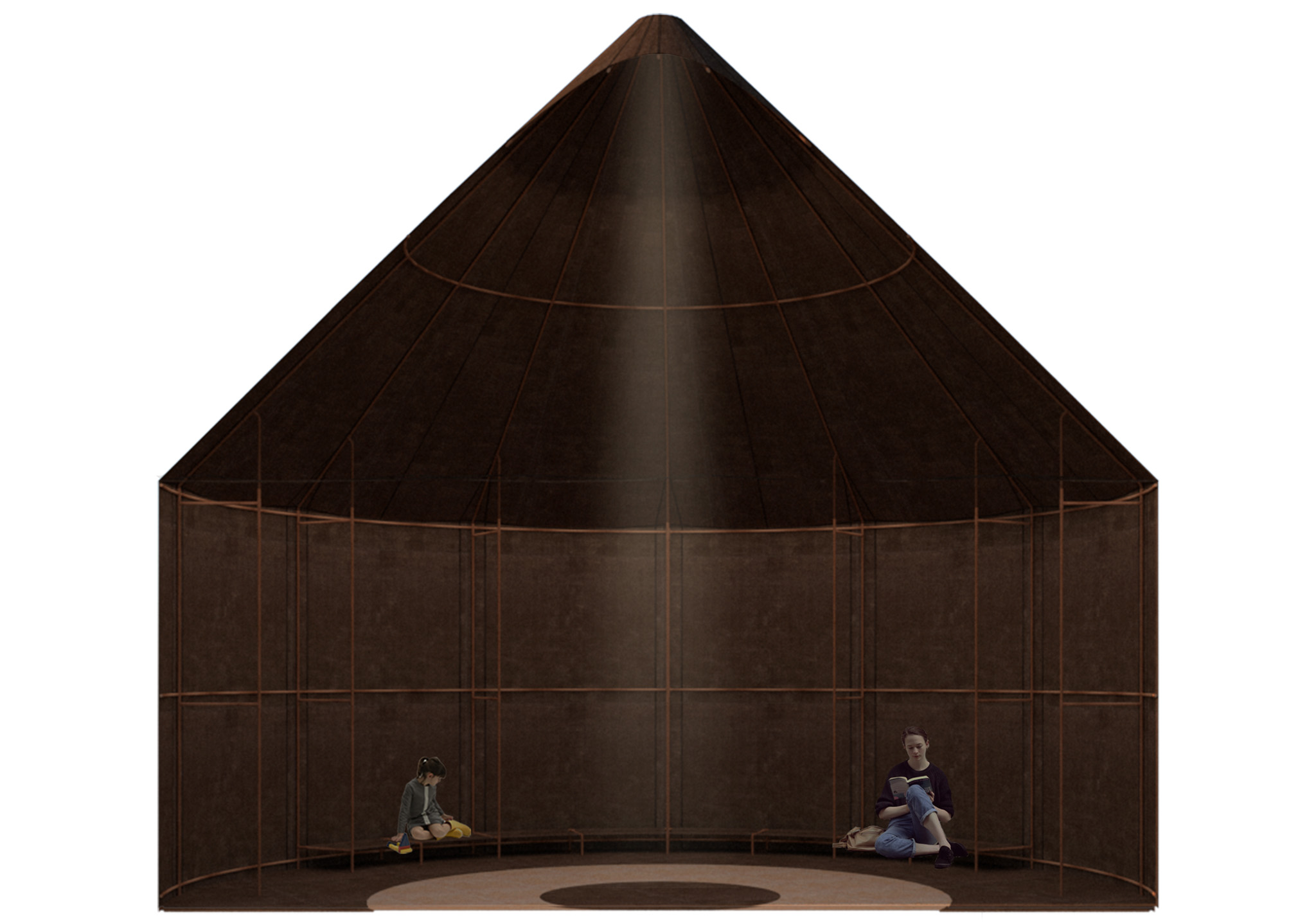
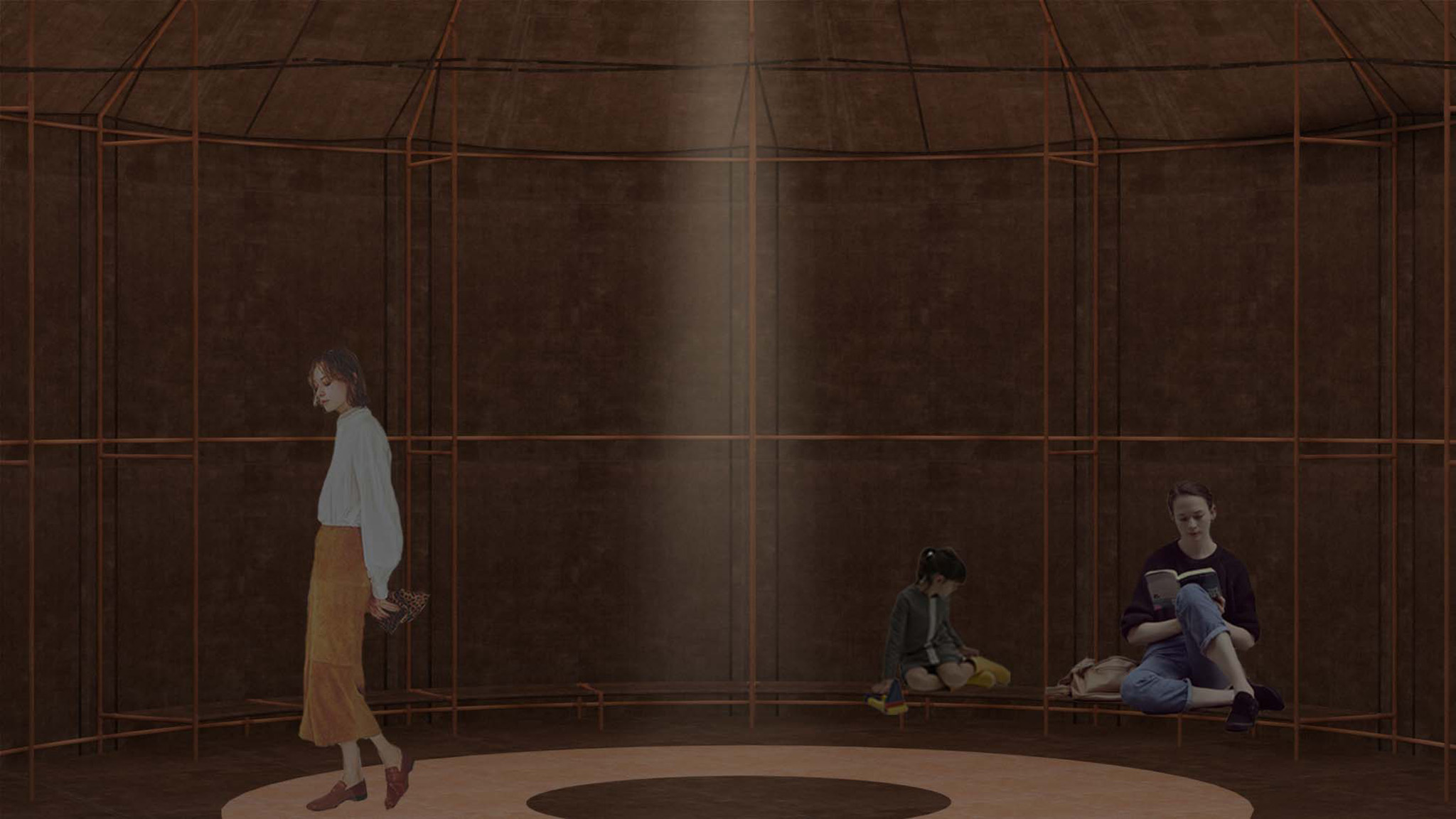
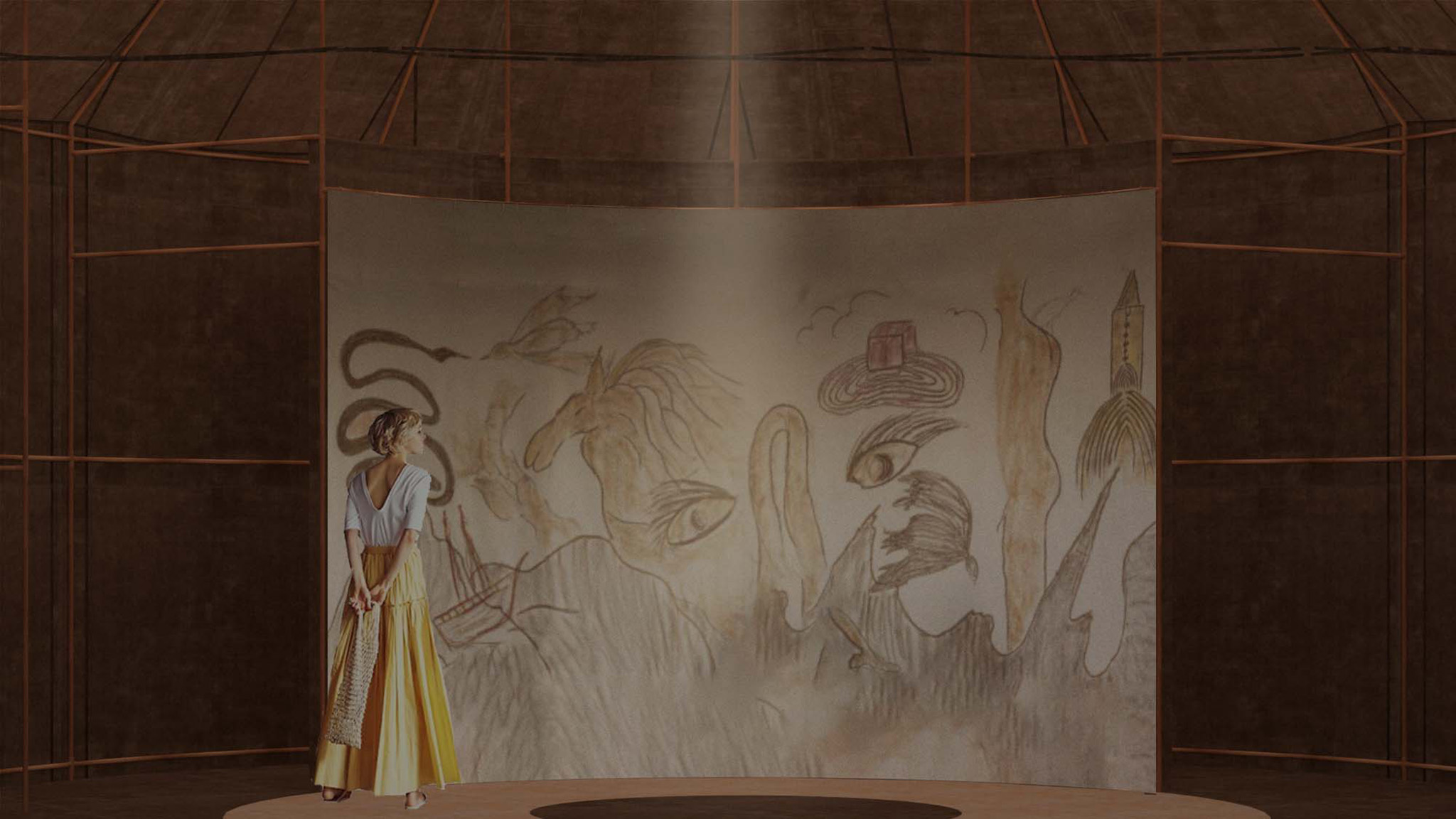
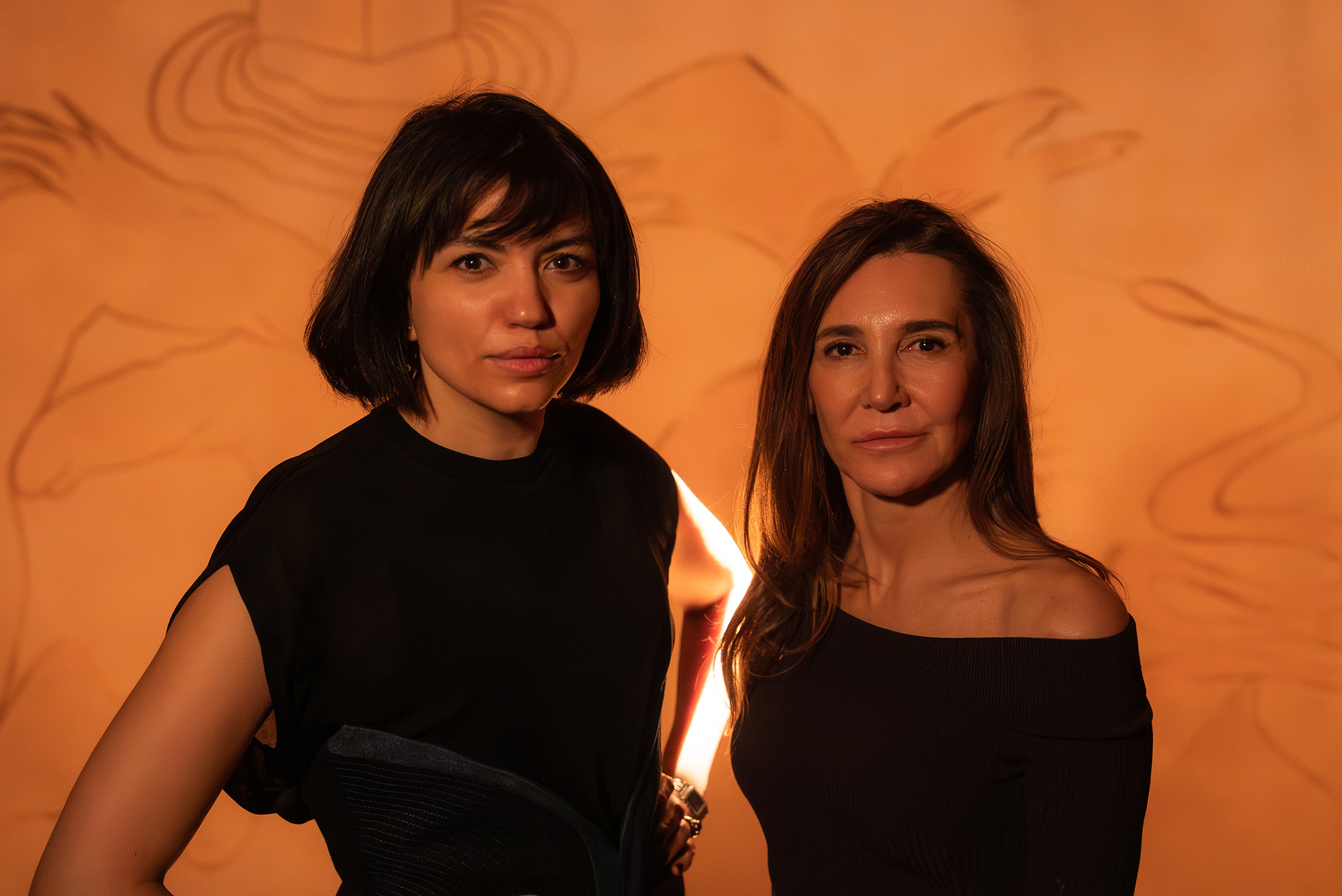
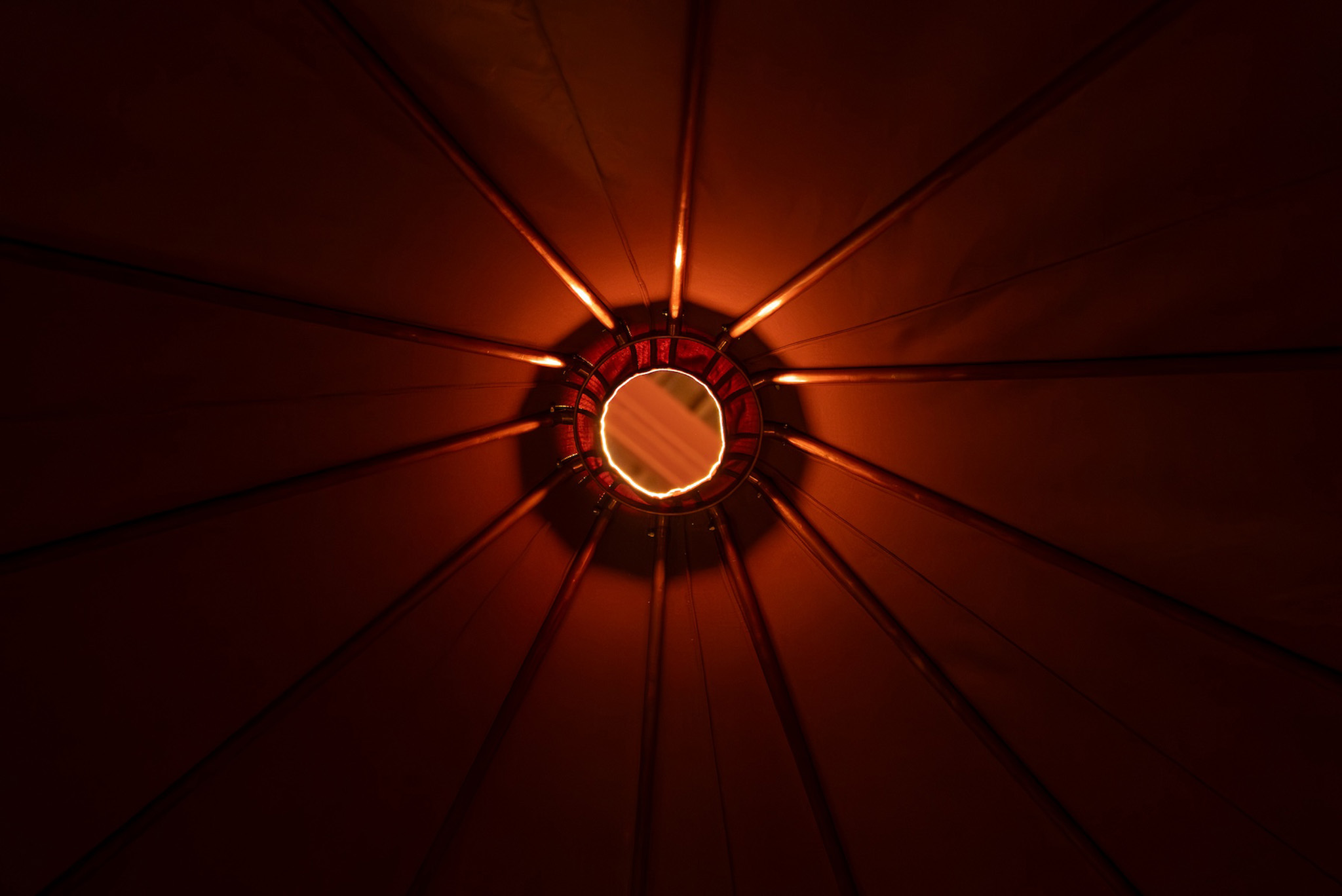
The materials chosen by Sana Frini and Vuslat play a fundamental role in creating this atmosphere. The space is composed of felt, raw linen, metal structures, and handcrafted textiles developed in collaboration with Mexican artisans. The materials absorb sound and soften the spatial perception, while a skylight introduces natural light as a symbolic element connecting the interior and exterior. At the center of the installation hangs a large-format textile piece, embellished with pastel and charcoal, evoking traces of memory and sensitive imprints.
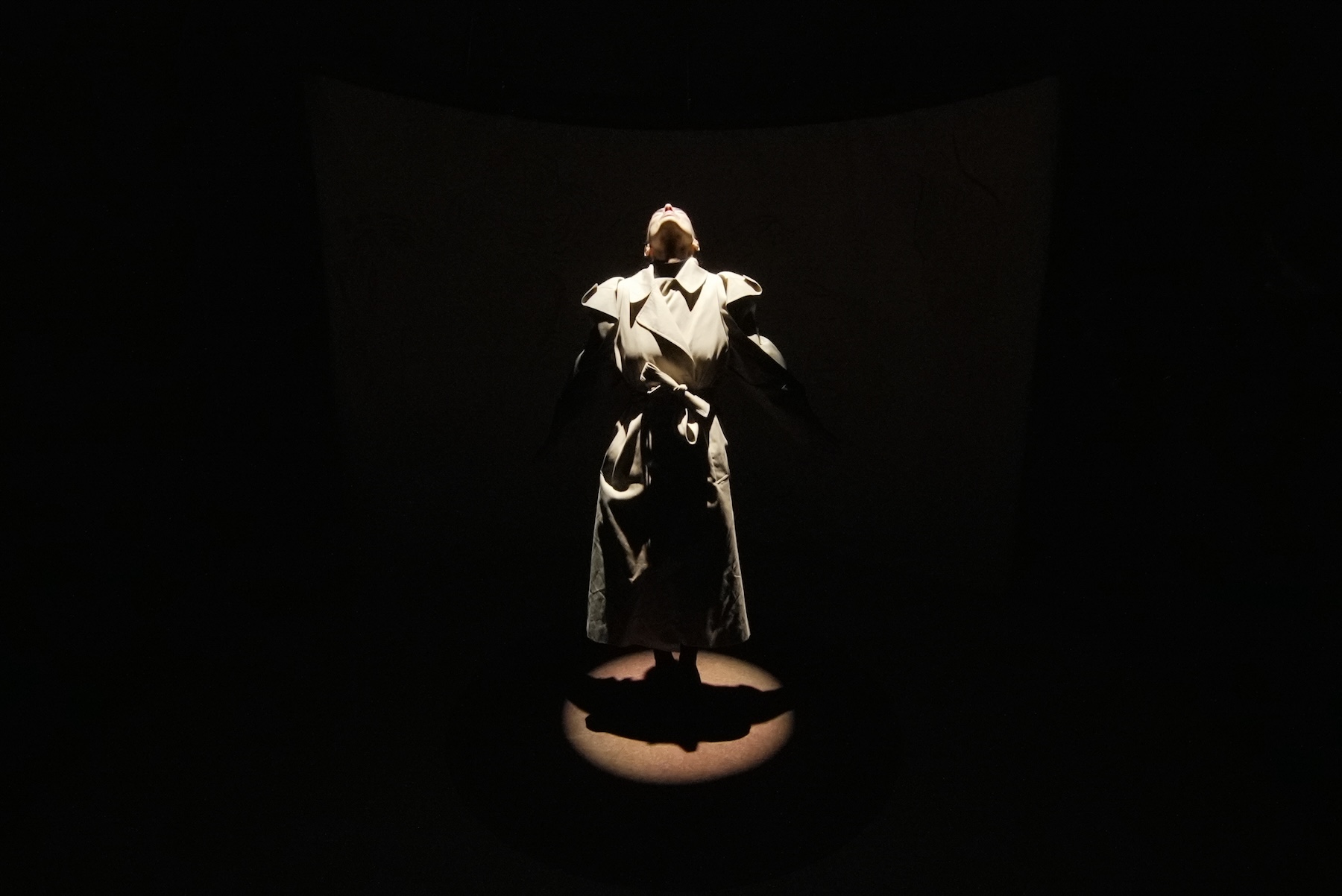
The poetic dimension of the work is built through silence, listening, and memory as forms of personal and collective reconnection. The installation incorporates performative interventions where aroma, sound, and stillness activate sensory and emotional experiences. Conceived as a nomadic and adaptable architecture, "The House of Silence" proposes a reflection on home understood not as a physical place, but as an inner state linked to trust, care, and belonging.
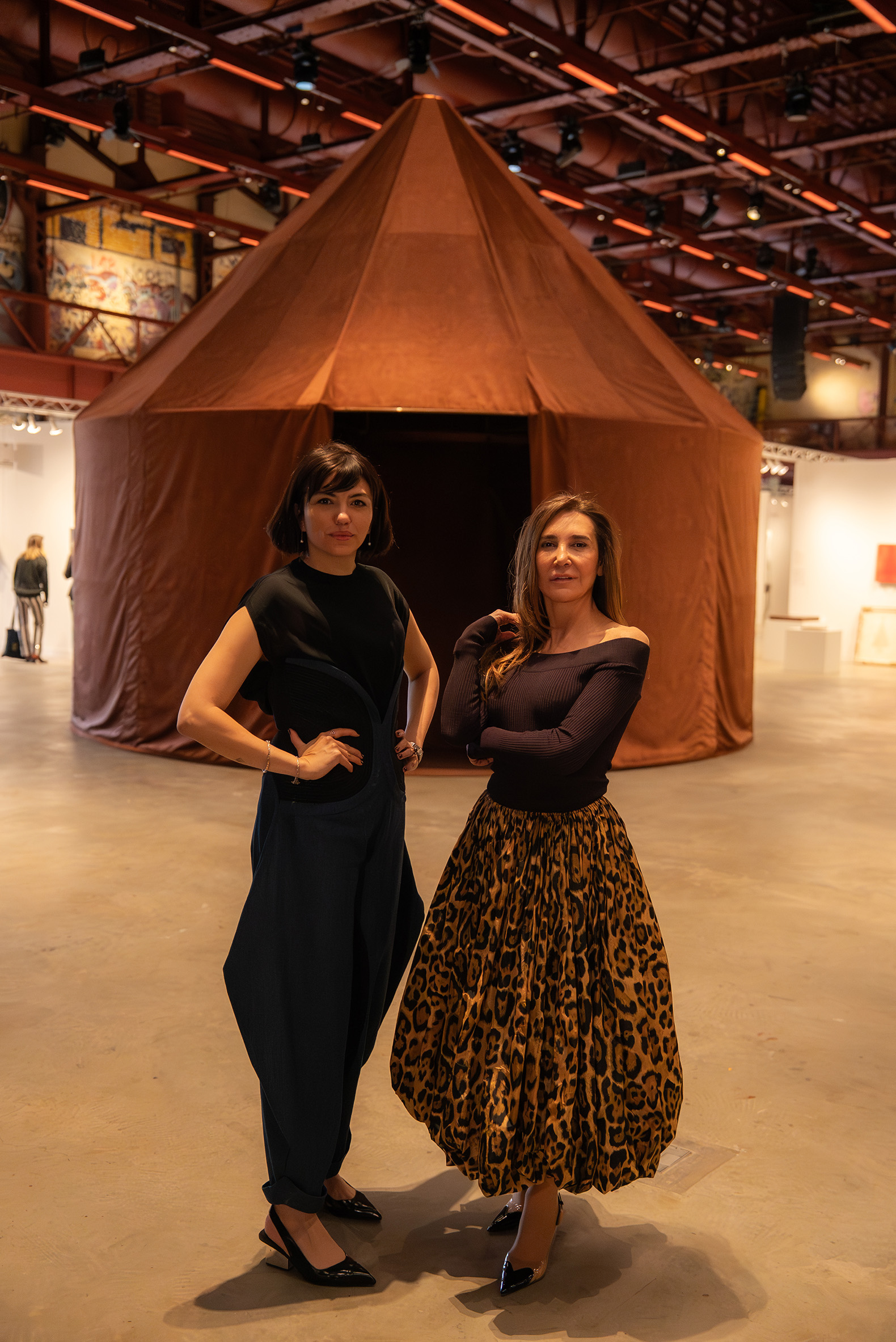
"House of Silence" by Sana Frini + Vuslat. Photograph by Derrick Belcham.
Project description by Sana Frini + Vuslat
Where is home when the world won't stop moving? That is the question at the heart of House of Silence, an installation by artist Vuslat and architect Sana Frini that proposes something radical in an age of constant acceleration: to stop, enter silence, and discover that home is not a place — but something we have always carried within.
Vuslat is a multidisciplinary artist whose practice — spanning drawing, sculpture, ceramics, and installation — revolves around the concept of Emanet: a framework through which she investigates trust, guardianship, memory, and collective consciousness. After nearly two decades of working privately, she presented her first solo exhibition in 2022 and has since exhibited at institutions including the Troy Museum and the Baksi Museum.
In 2020 she founded Generous Listening, a global initiative exploring listening as an ethical and social practice — a gesture that defines her art-making as well: from silence, outward. Sana Frini is a Tunisian architect and co-founder of LOCUS, based in Mexico City. Her practice focuses on architectural processes in the Global South — neovernacular systems, climate resilience, and the reintegration of local knowledge. She has exhibited at the Venice Biennale, the Versailles Biennale, and the Lisbon Architecture Triennale, and has led projects as grounded as the first zero-waste restaurant in Latin America. Two distinct trajectories, one shared sensibility: building from the essential.
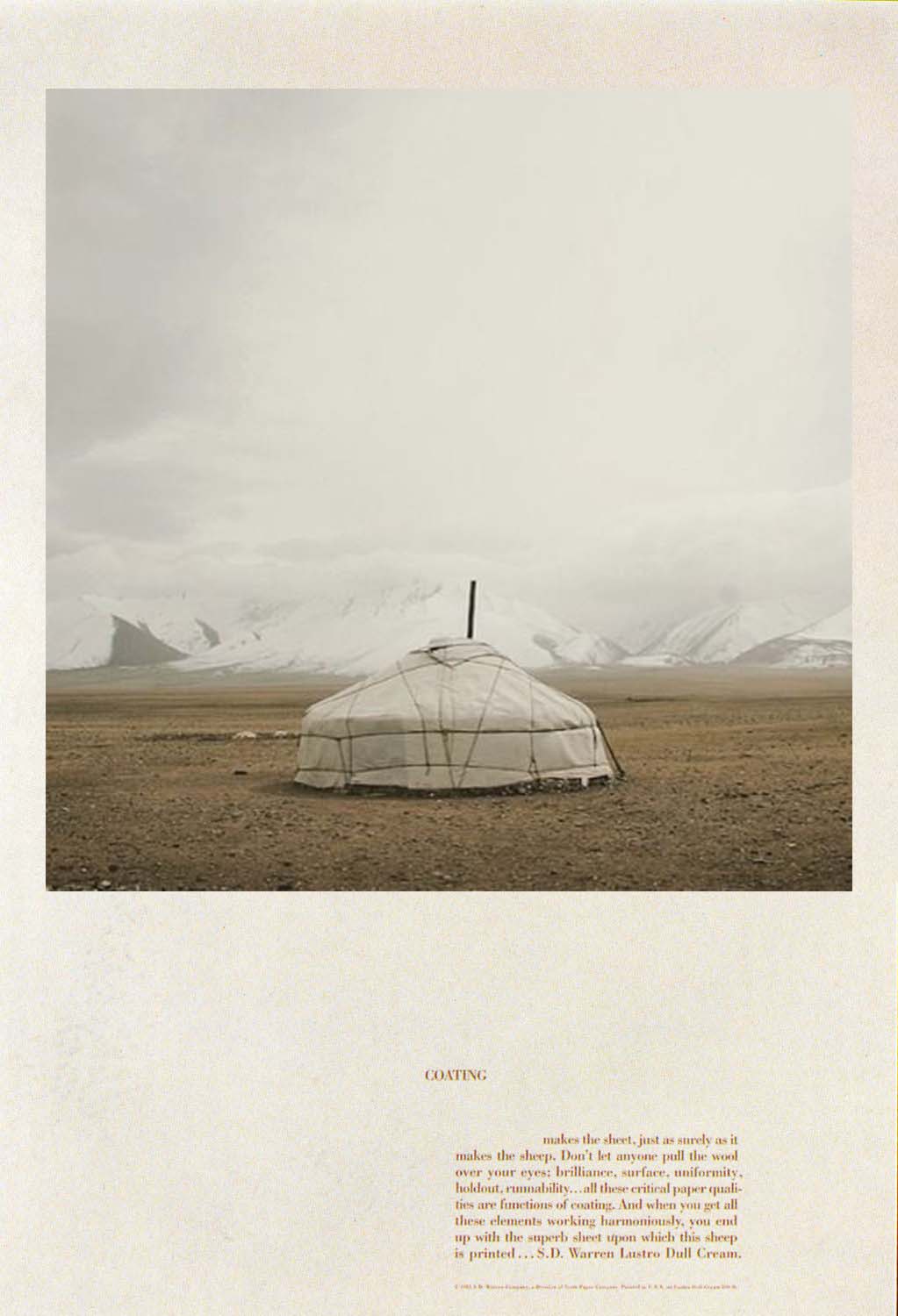
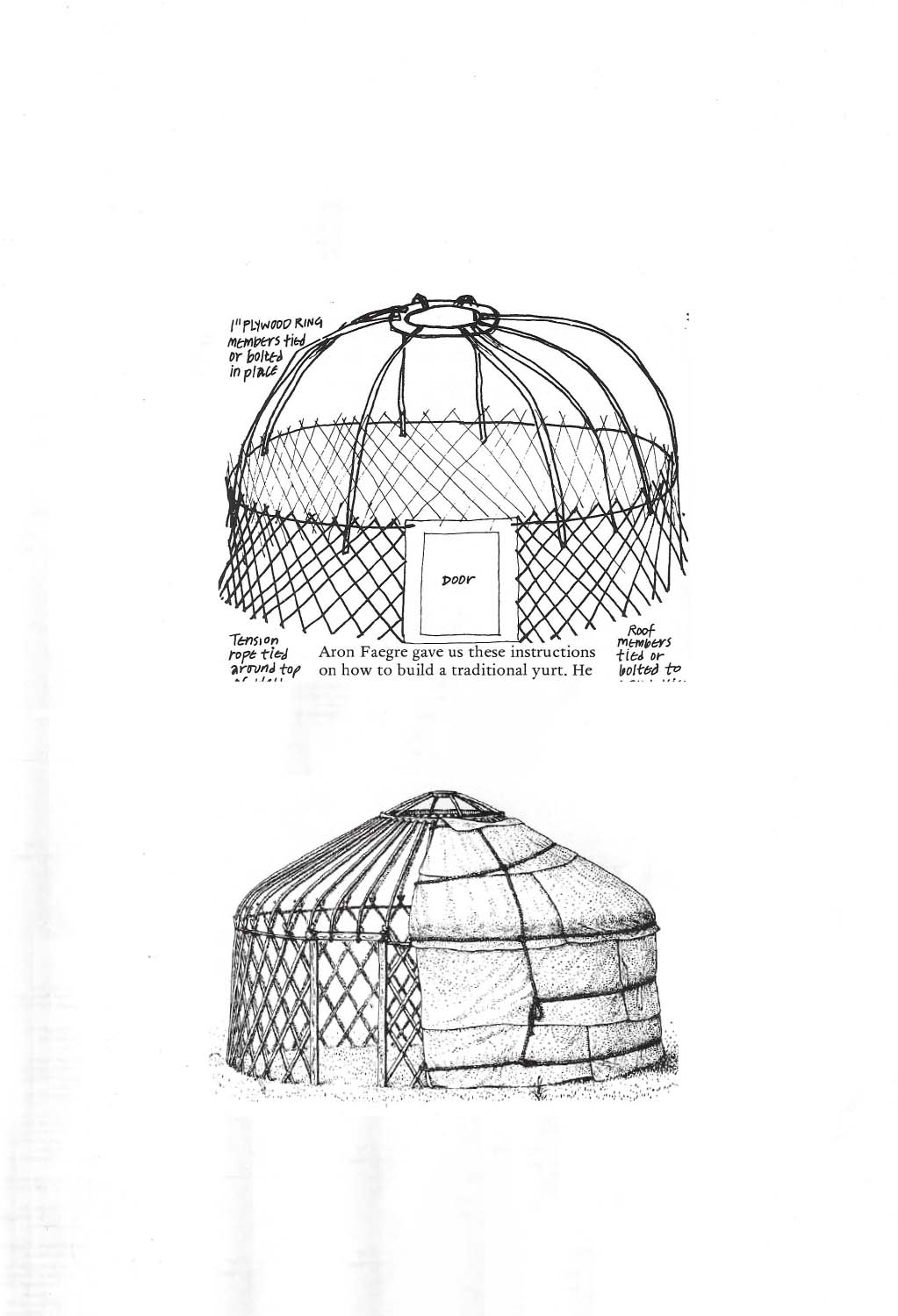
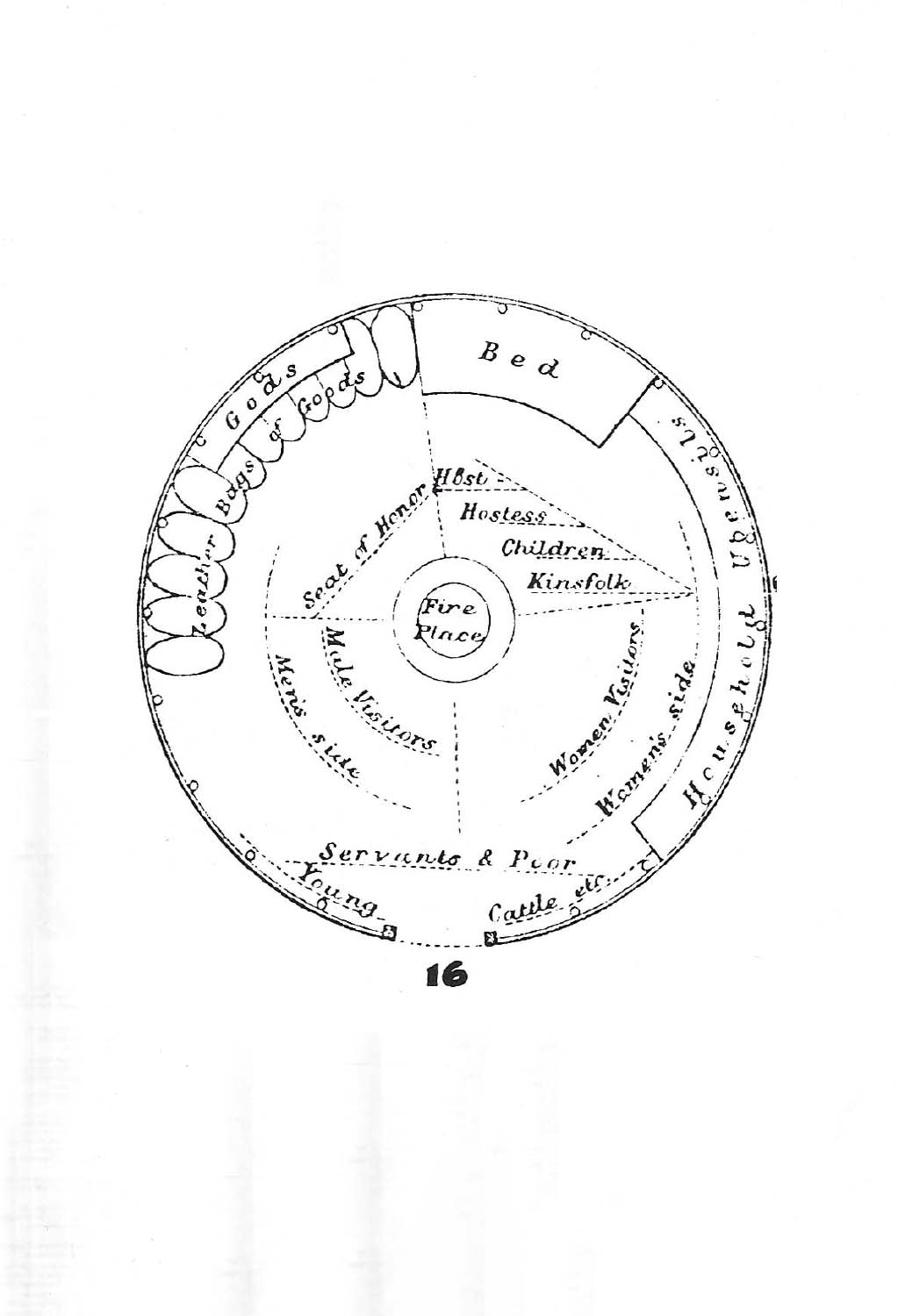
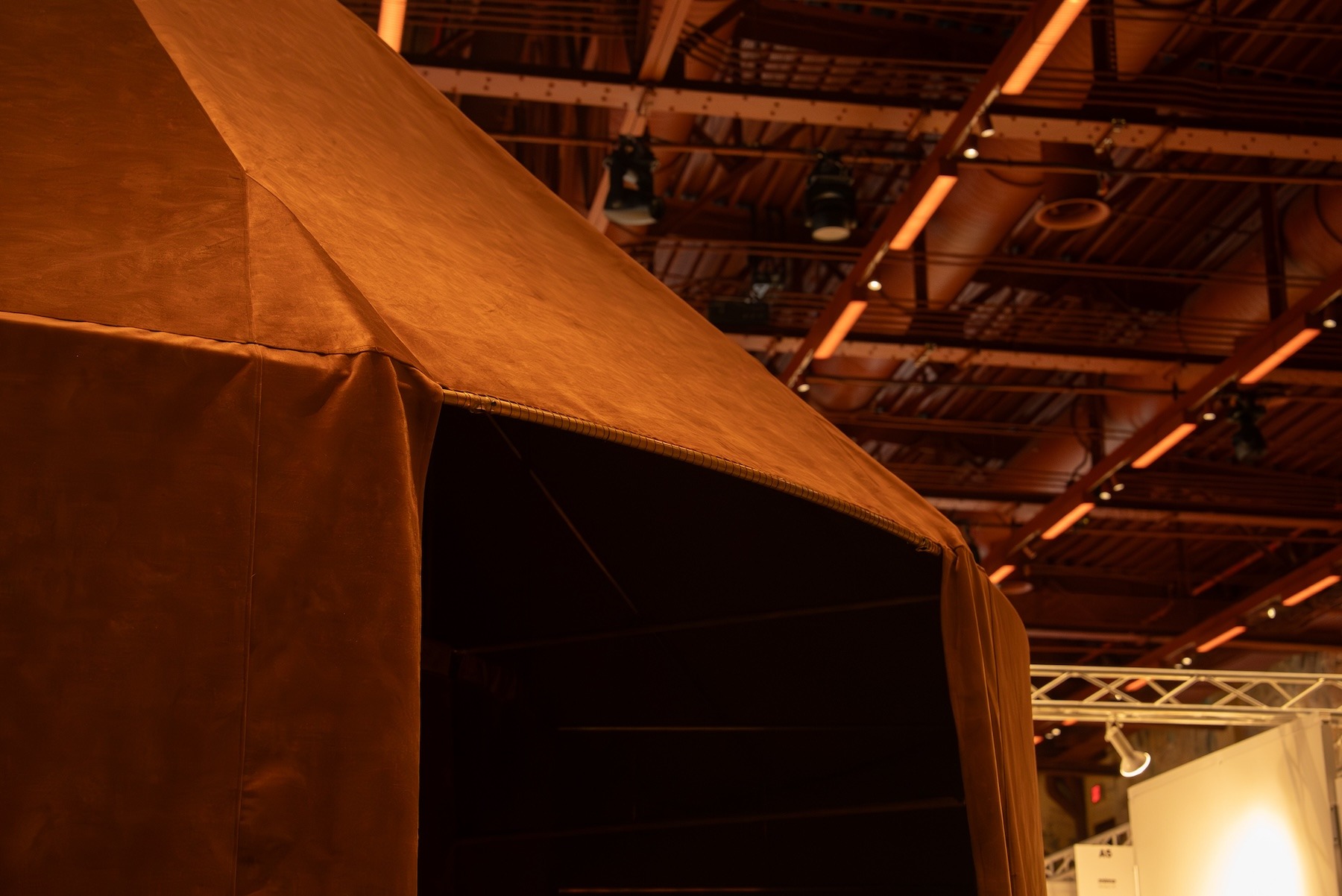
The work draws inspiration from the yurt, the ancient nomadic shelter — circular, portable, designed to move with its inhabitants across vast landscapes. While the outer world shifts and transforms, the yurt protects an inner center: a place of gathering, memory, and return. That is precisely the gesture House of Silence extends to its visitors.
The experience begins with an act of surrender: shoes are removed, and one passes through a dark corridor — a threshold between the noise of the world and what lies within. At the end, the space opens: a circular room of 36 square meters and nearly five meters in height, hushed by felt and lit from above by a zenithal opening that draws light down like a thread connecting interior to sky. The floor absorbs sound; the materials soften the acoustic environment.
Everything has been designed to create a bubble of silence — a deliberate contrast to the rhythm of the city and the fair. At the center, almost like a heart, hangs My Home in Silence: a large piece of raw linen painted with pastel and charcoal, tied with felt-blend ropes. Its marks evoke something between cave paintings and memory maps — fragments, traces, sensations the body recognizes before the mind can name them.
The installation also incorporates performative moments: brief daily interventions where the scent of roses, sound, and collective silence converge to activate memory involuntarily. Because memory, in this work, is not nostalgia — it is the primary tool for finding one's way back to oneself.
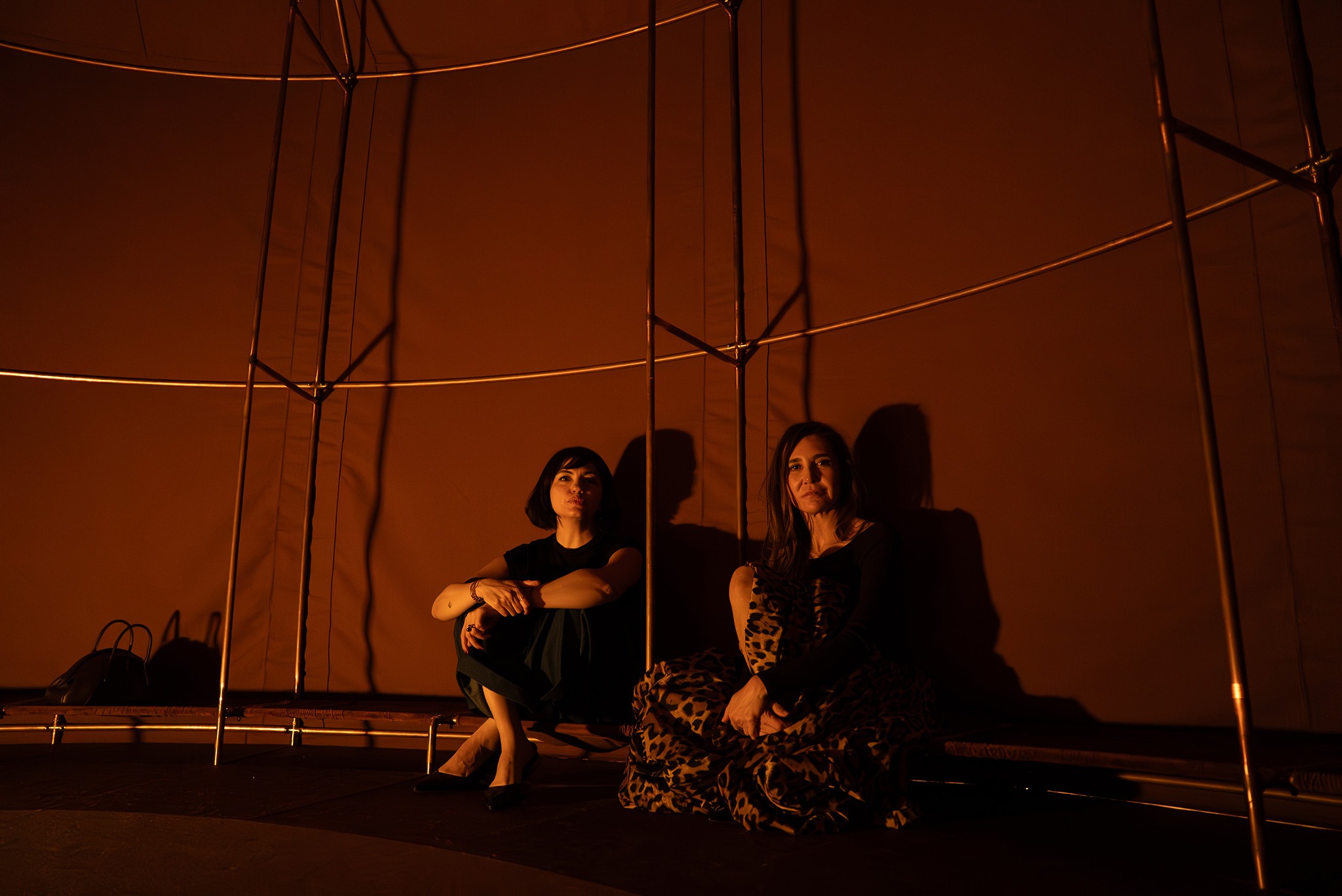
The collaboration between Vuslat and Sana was born from exactly that place: they met at a moment when silence was necessary for both — as a form of repair, as a way of taking distance. One comes from Turkey, the other from Tunisia. Both know what it means to build a sense of home from the condition of being in multiple places at once, and nowhere entirely. The installation was also built in dialogue with Mexican artisans — the structural ironwork of Pablo Reyes'workshop in the State of Mexico, and the textile craft of seamstress Martha Cedillo in Hidalgo — honoring manual skill as a foundation of identity and collective memory.
House of Silence is conceived as nomadic: it can travel, adapt, and this is only the first chapter of an expanding series. What visitors carry with them as they leave is difficult to name — perhaps a question about what home means to them, perhaps trust: in themselves, in others, in life. Both creators prefer not to say too much. It is something to be discovered, not explained. And that, in a world saturated with words, is already an act of courage.