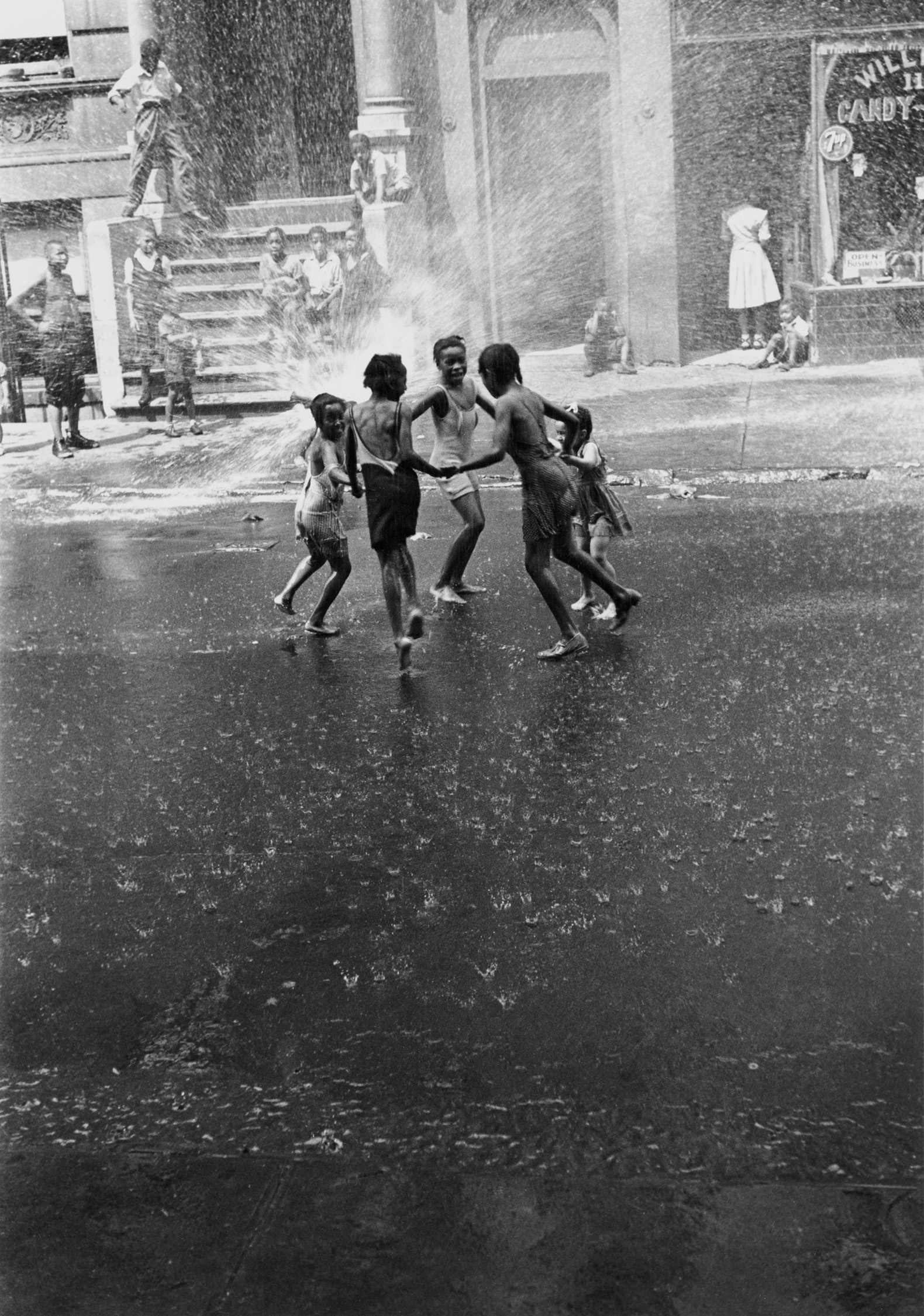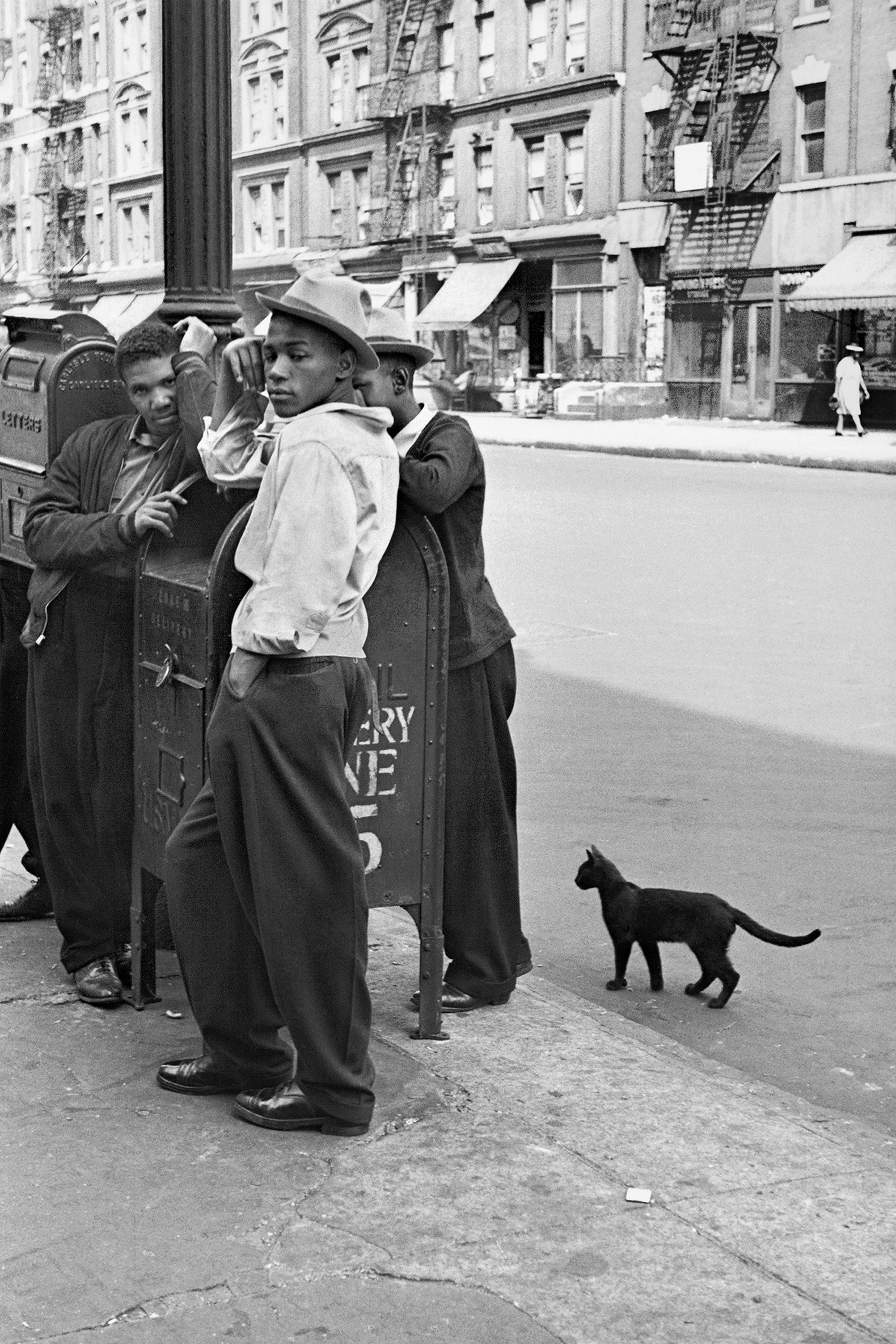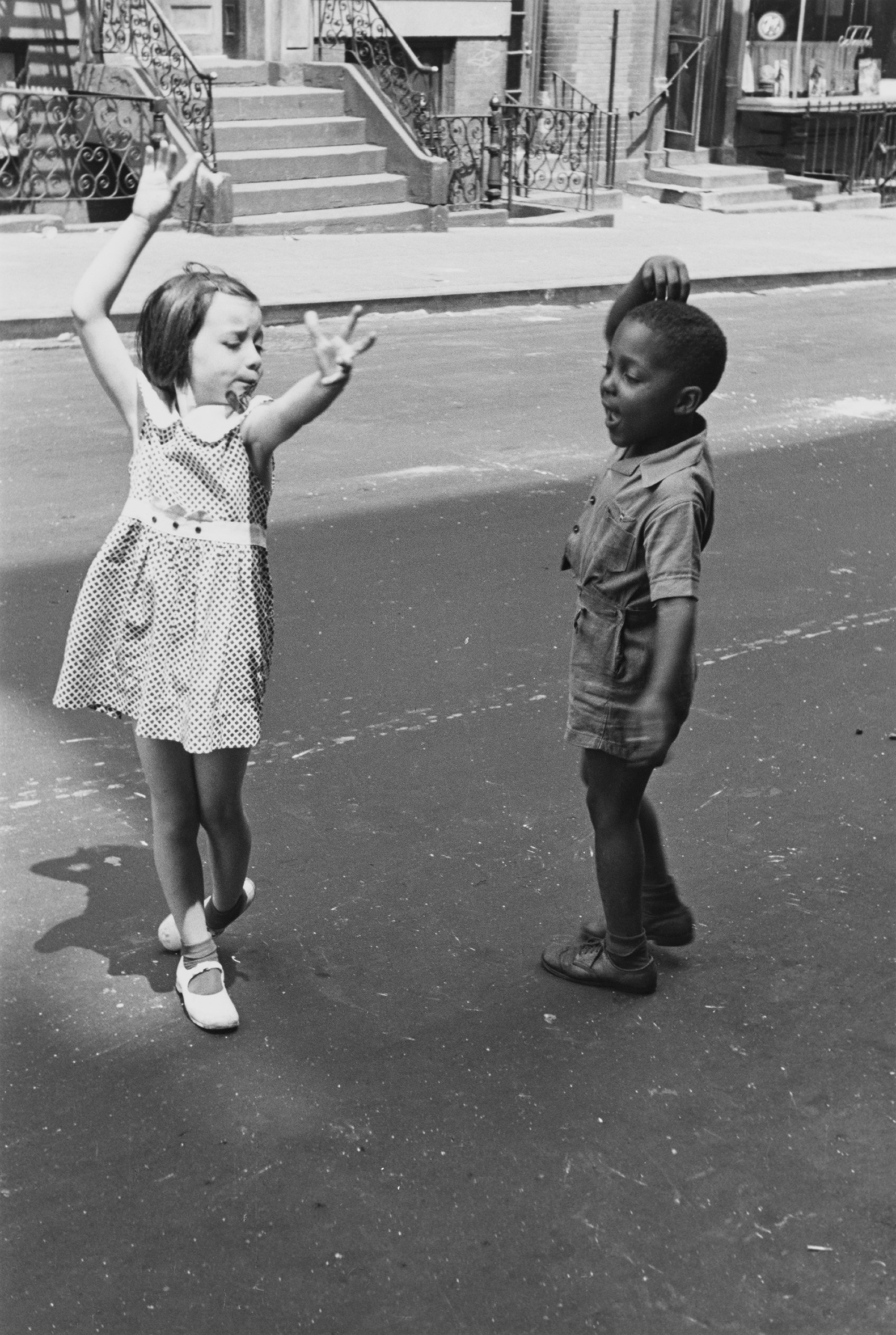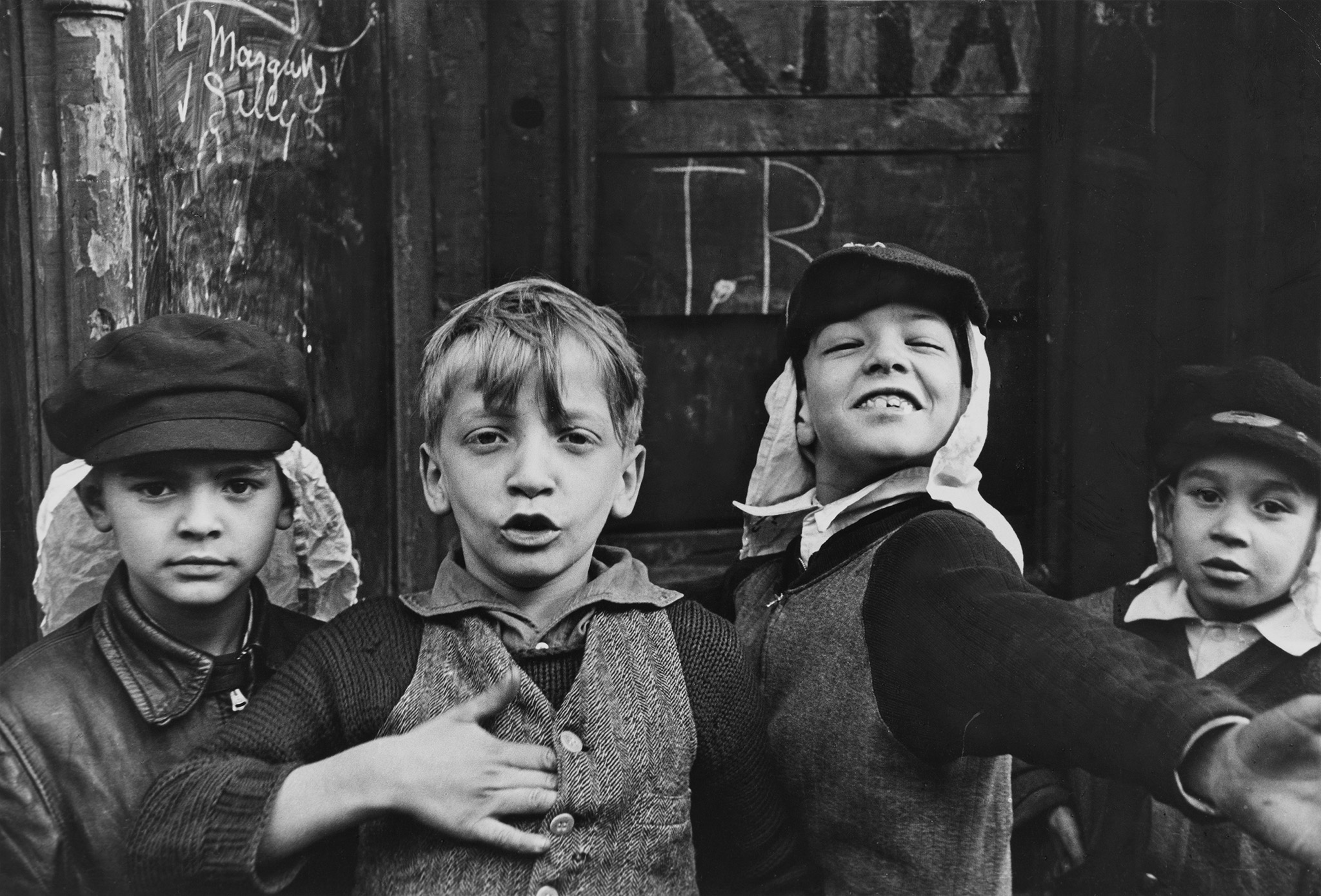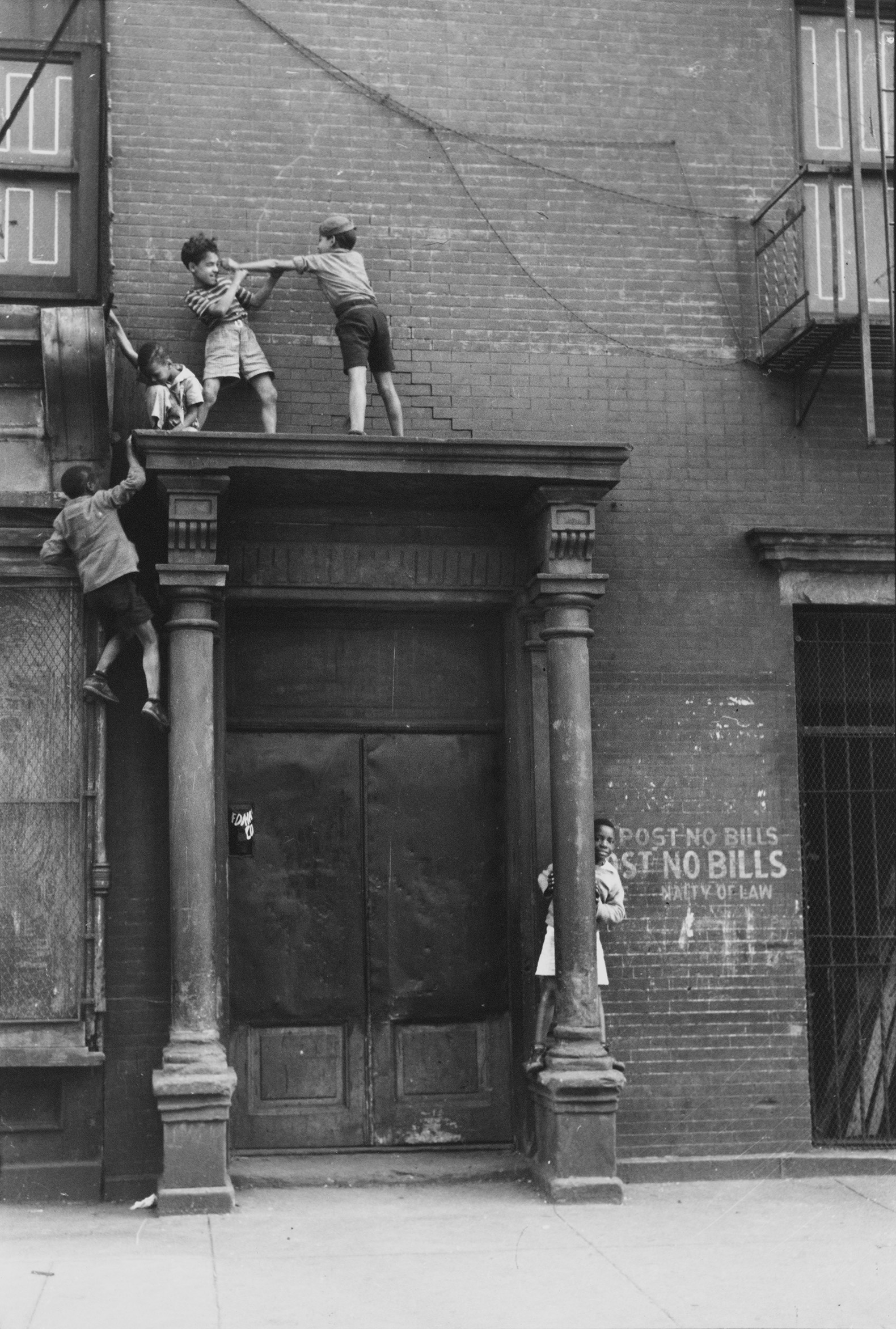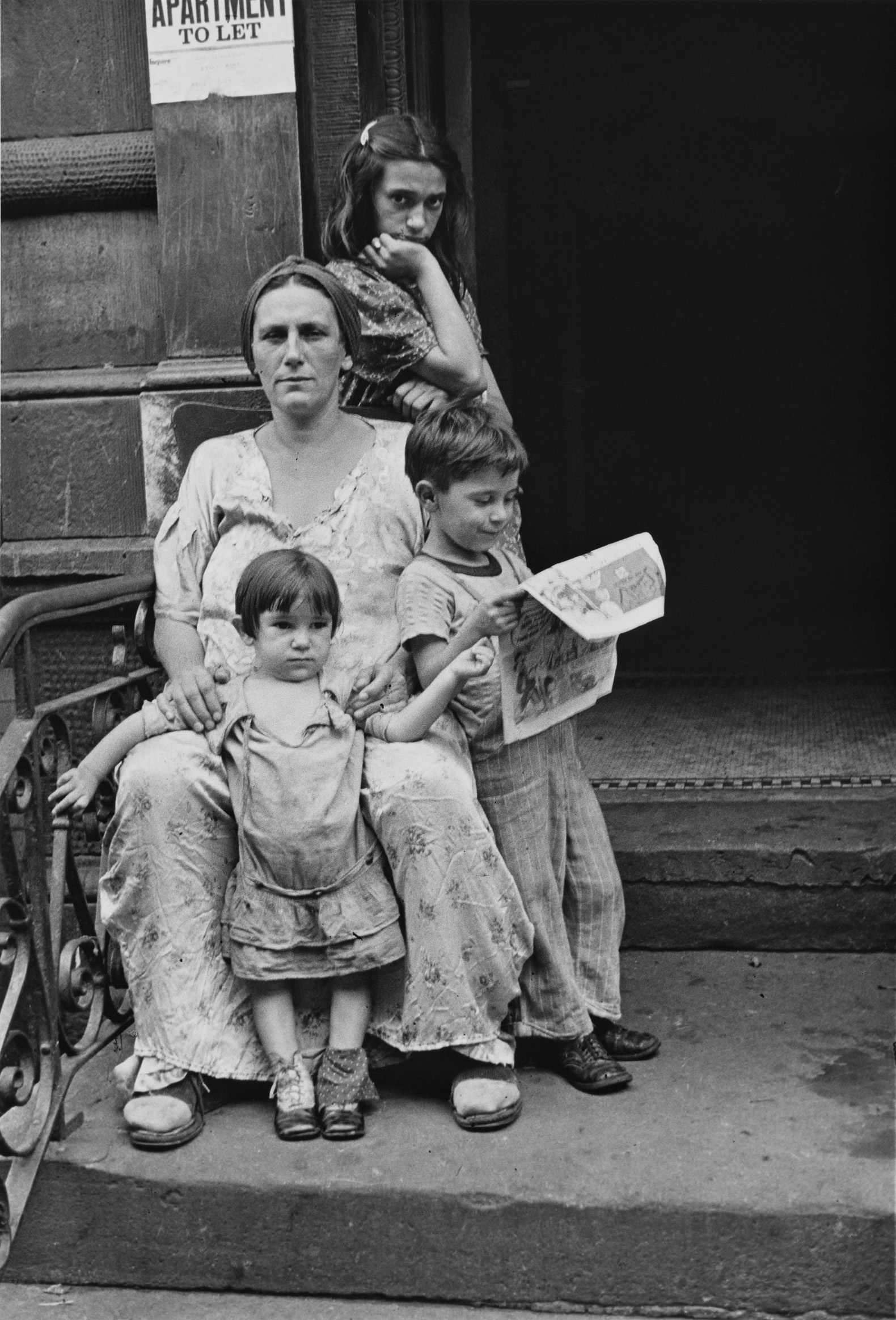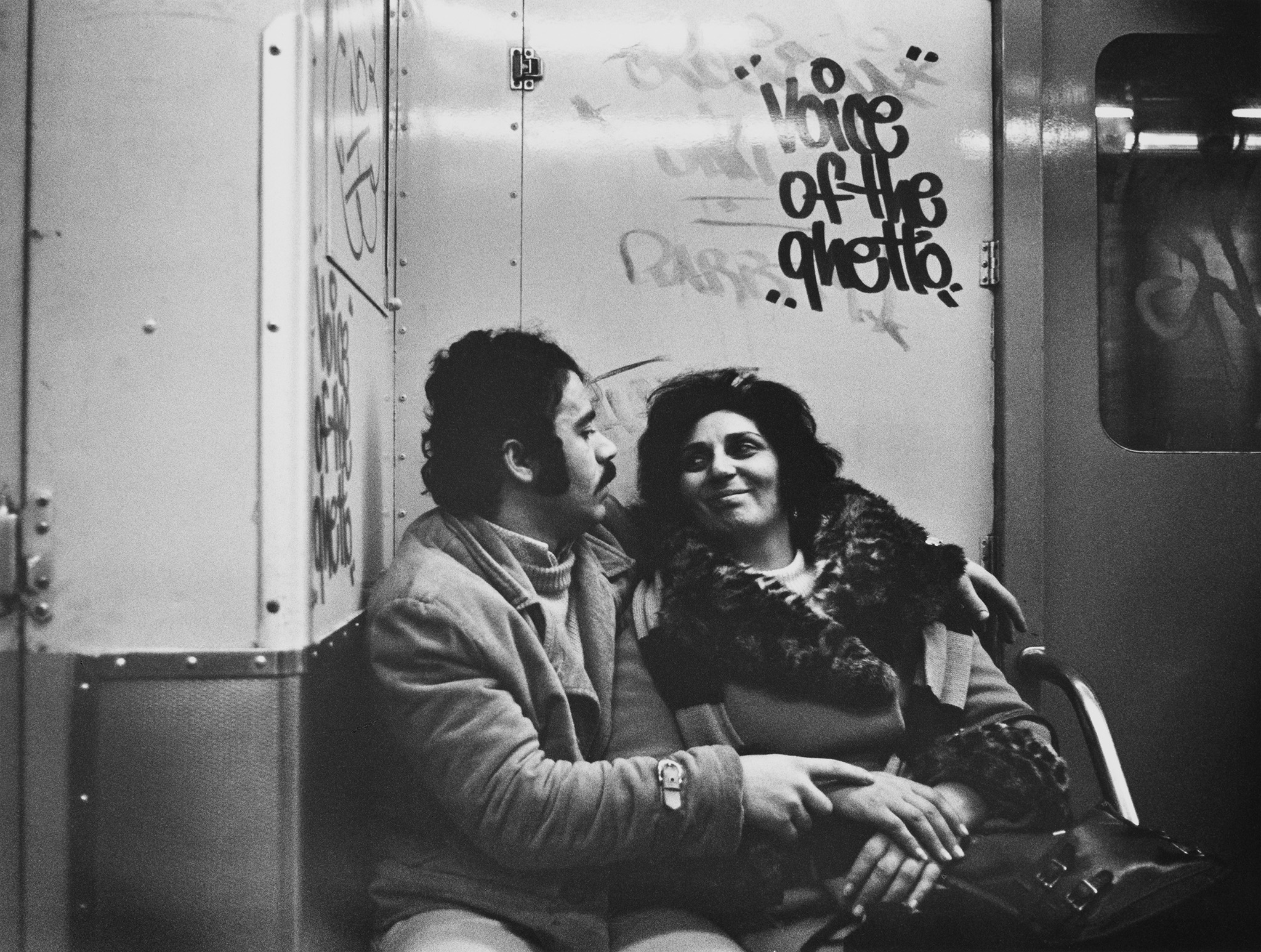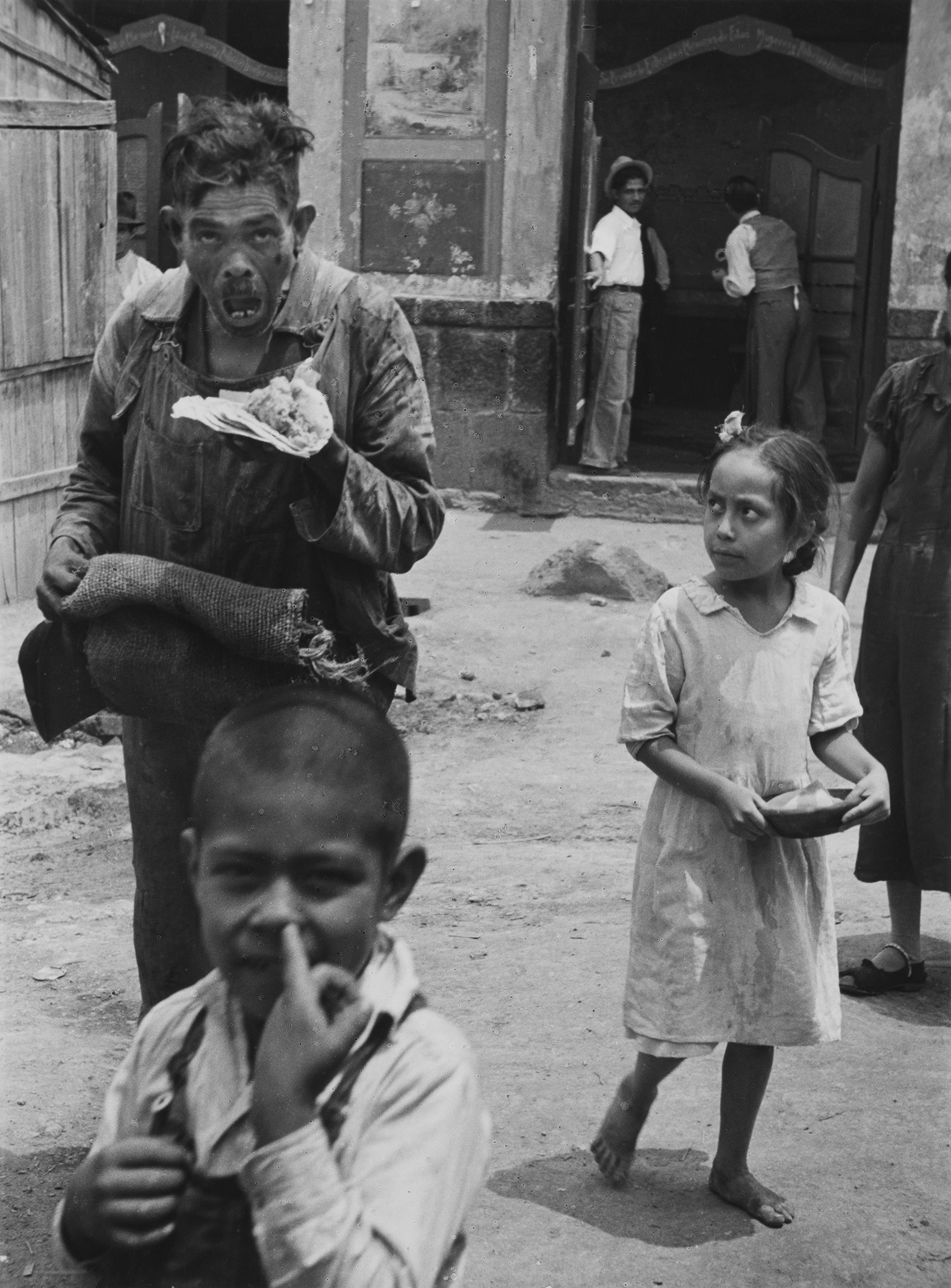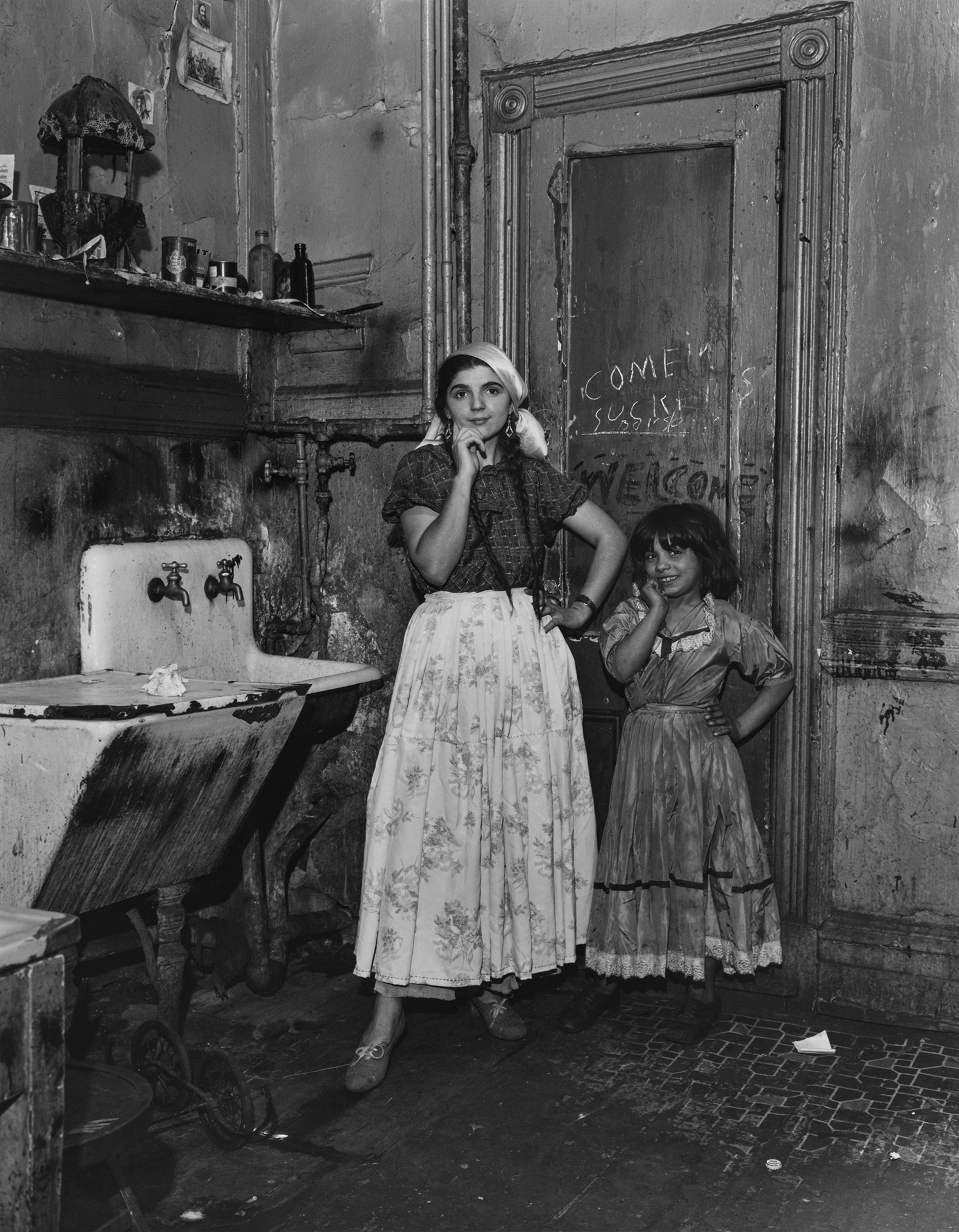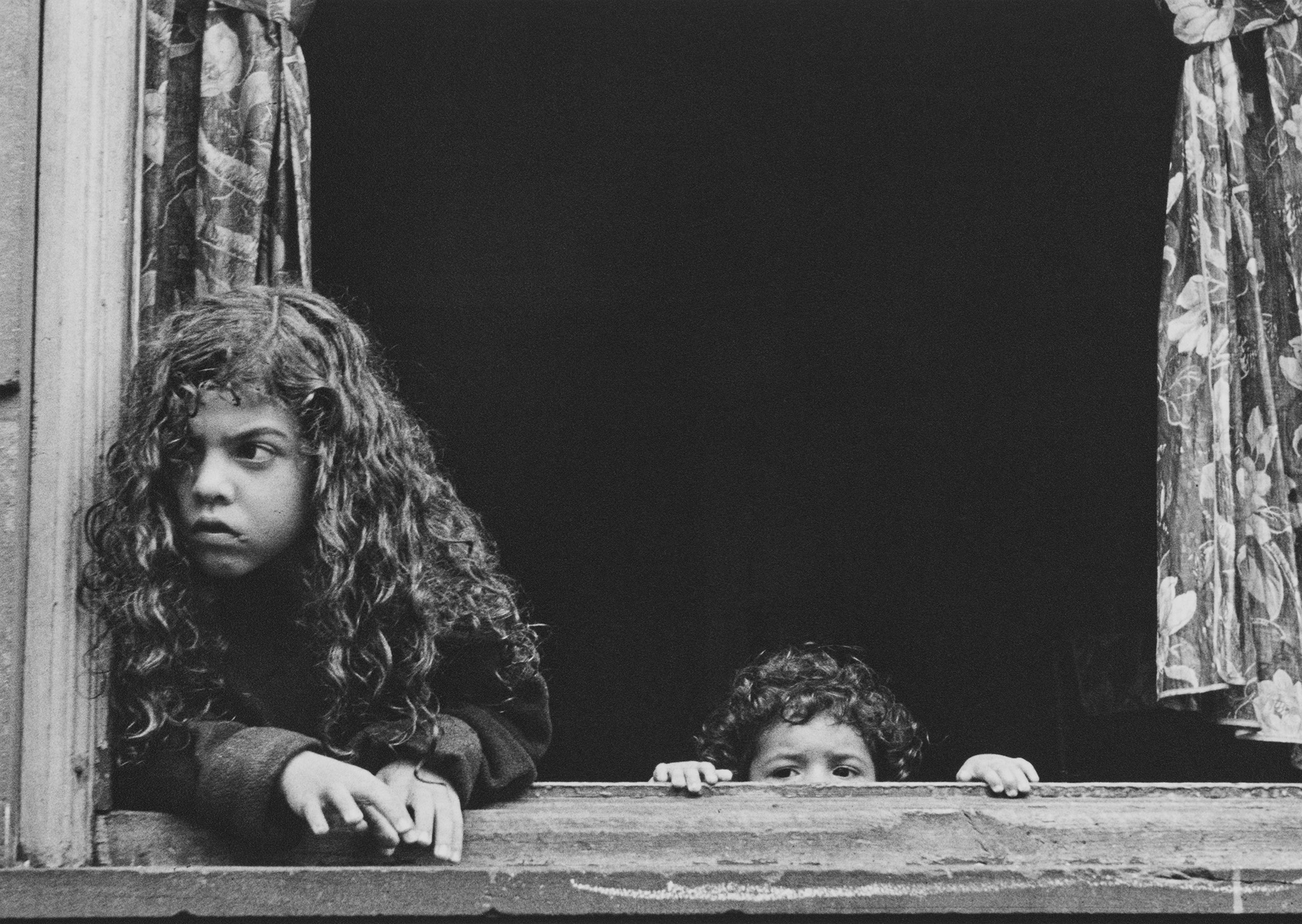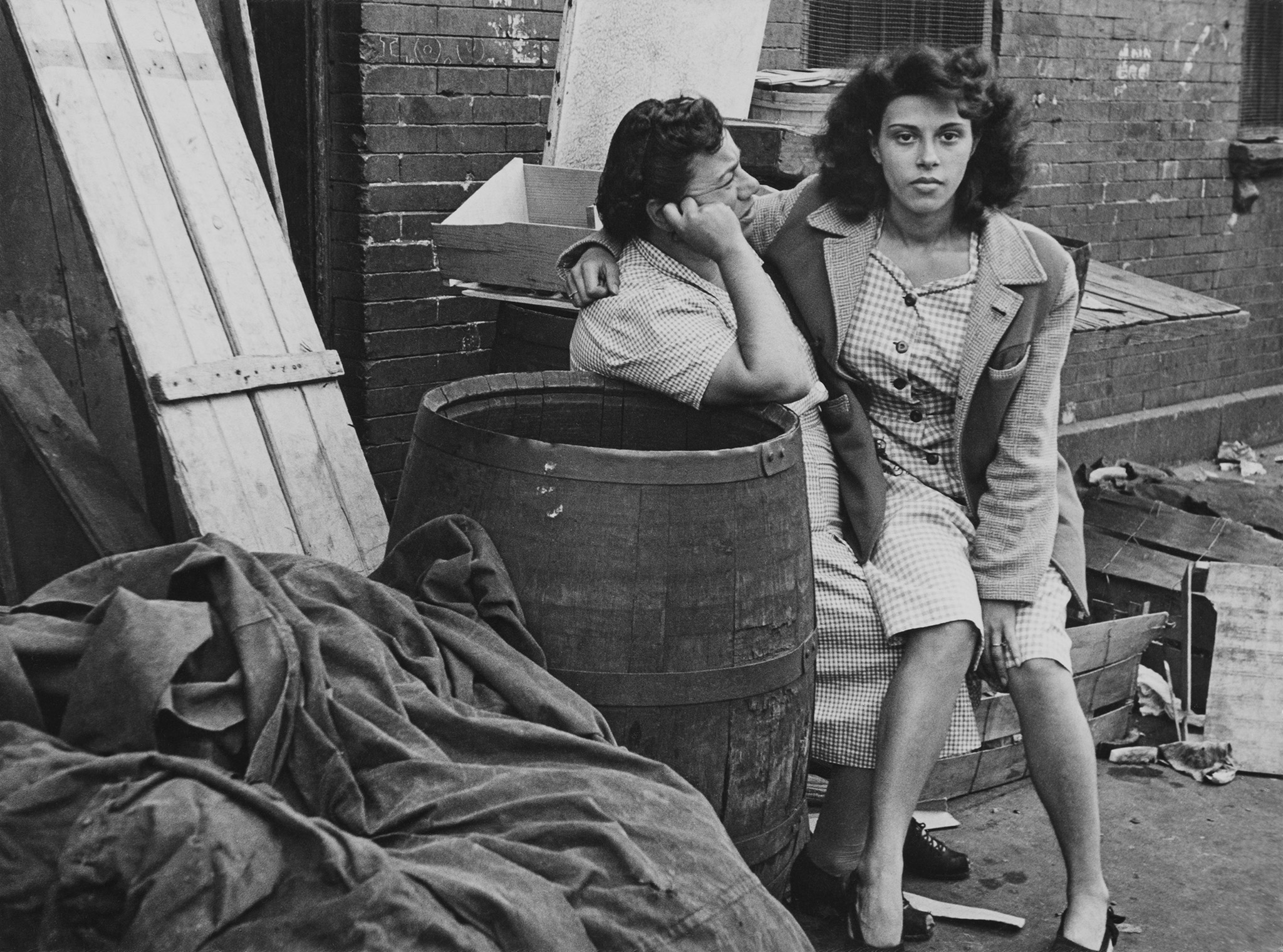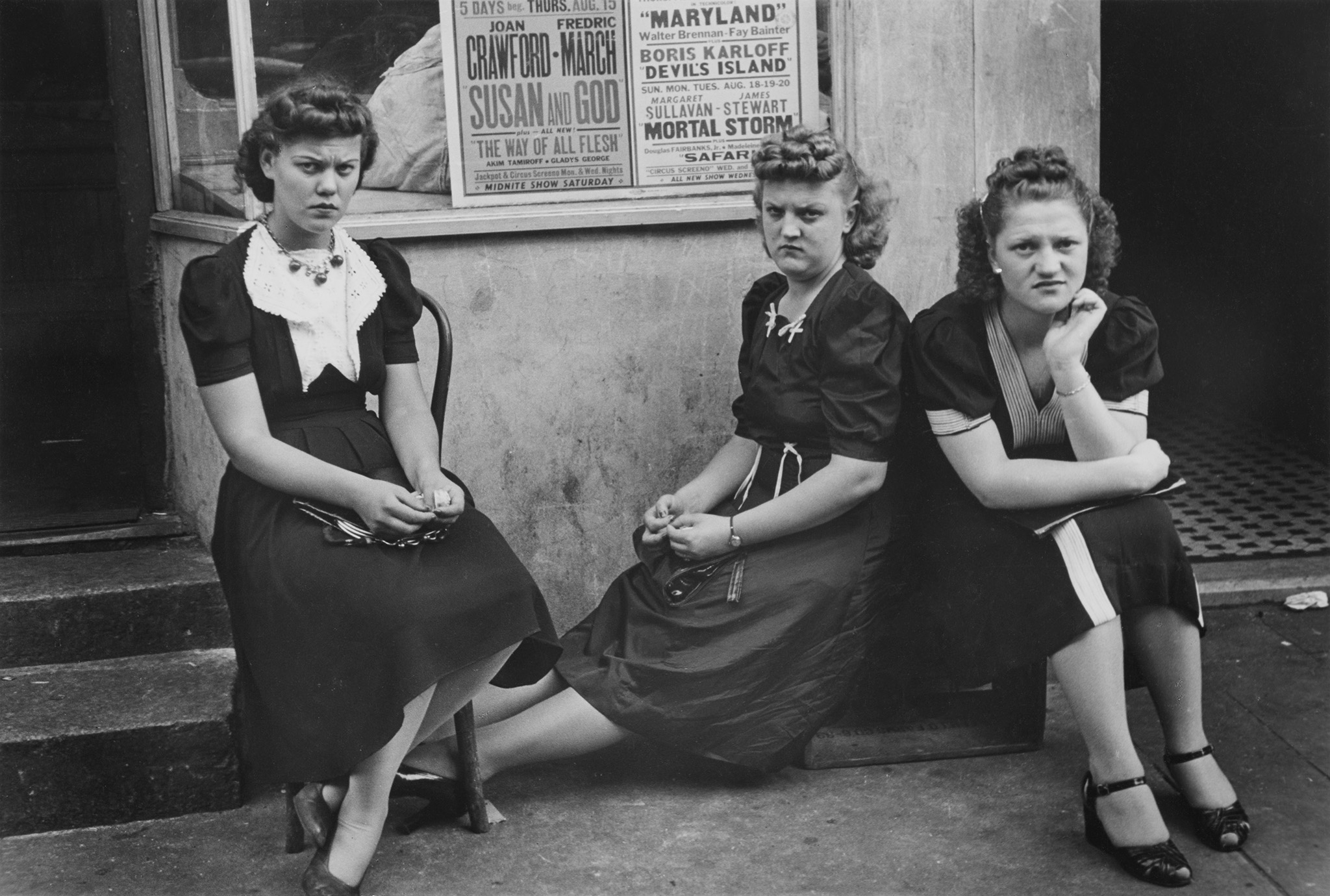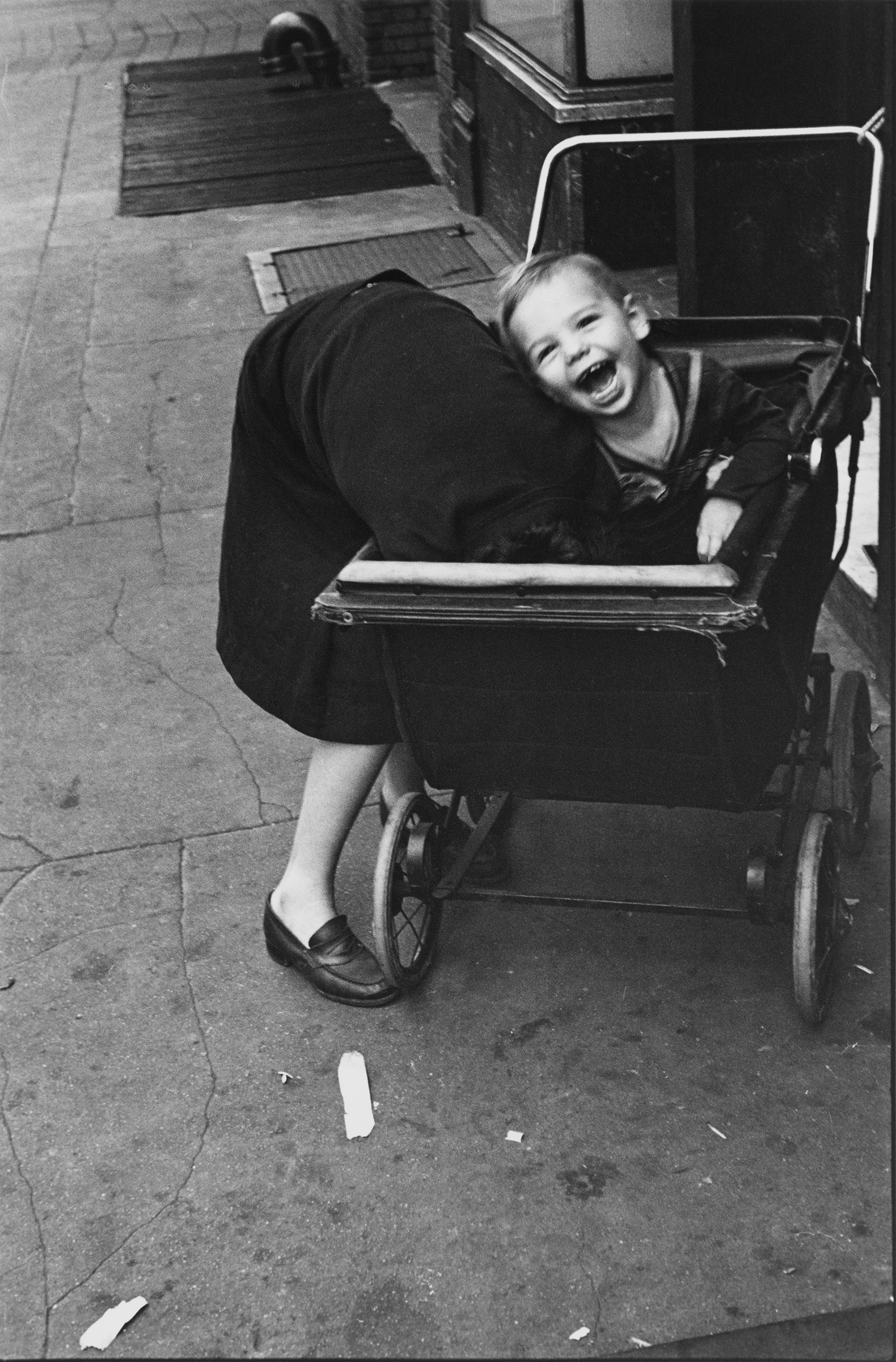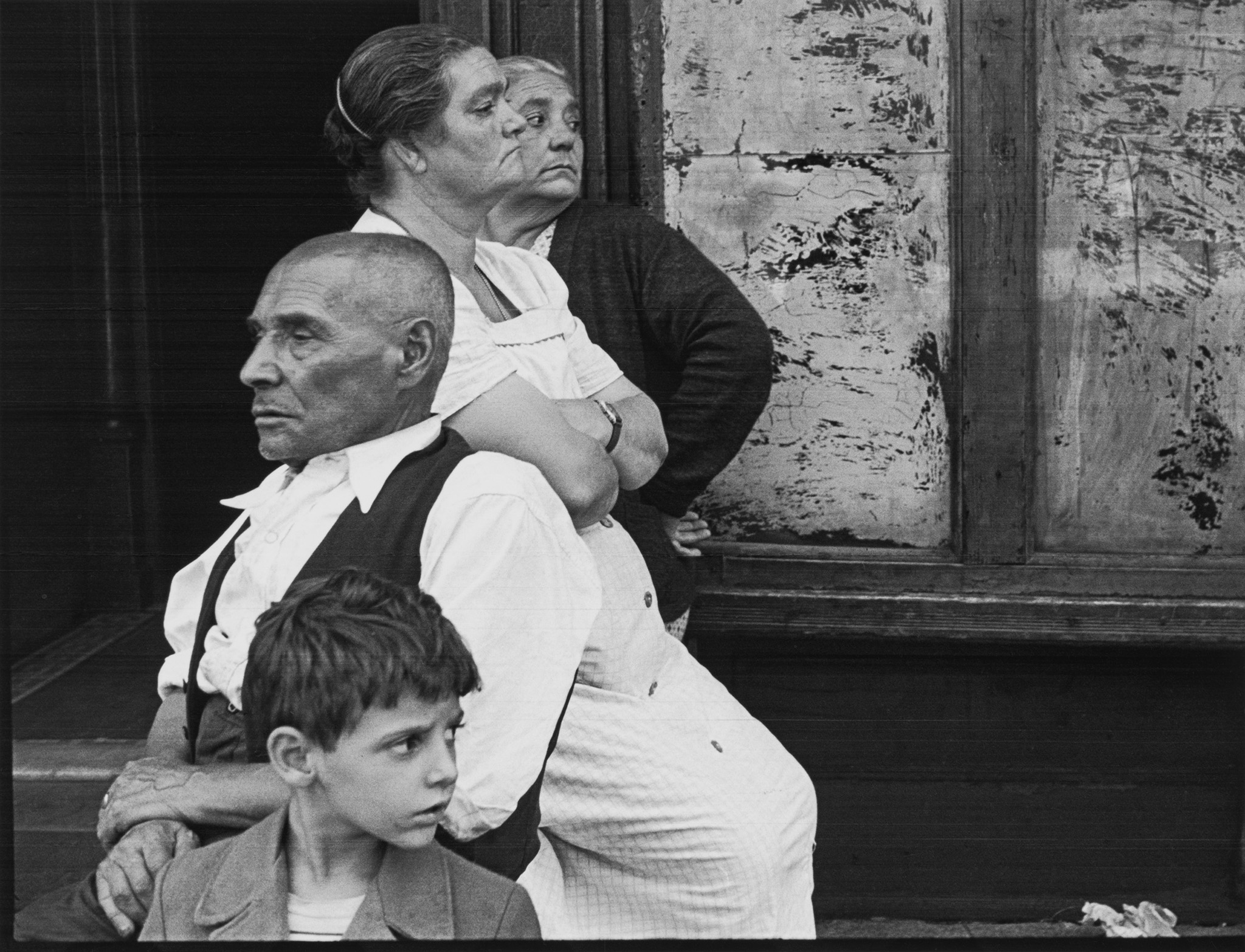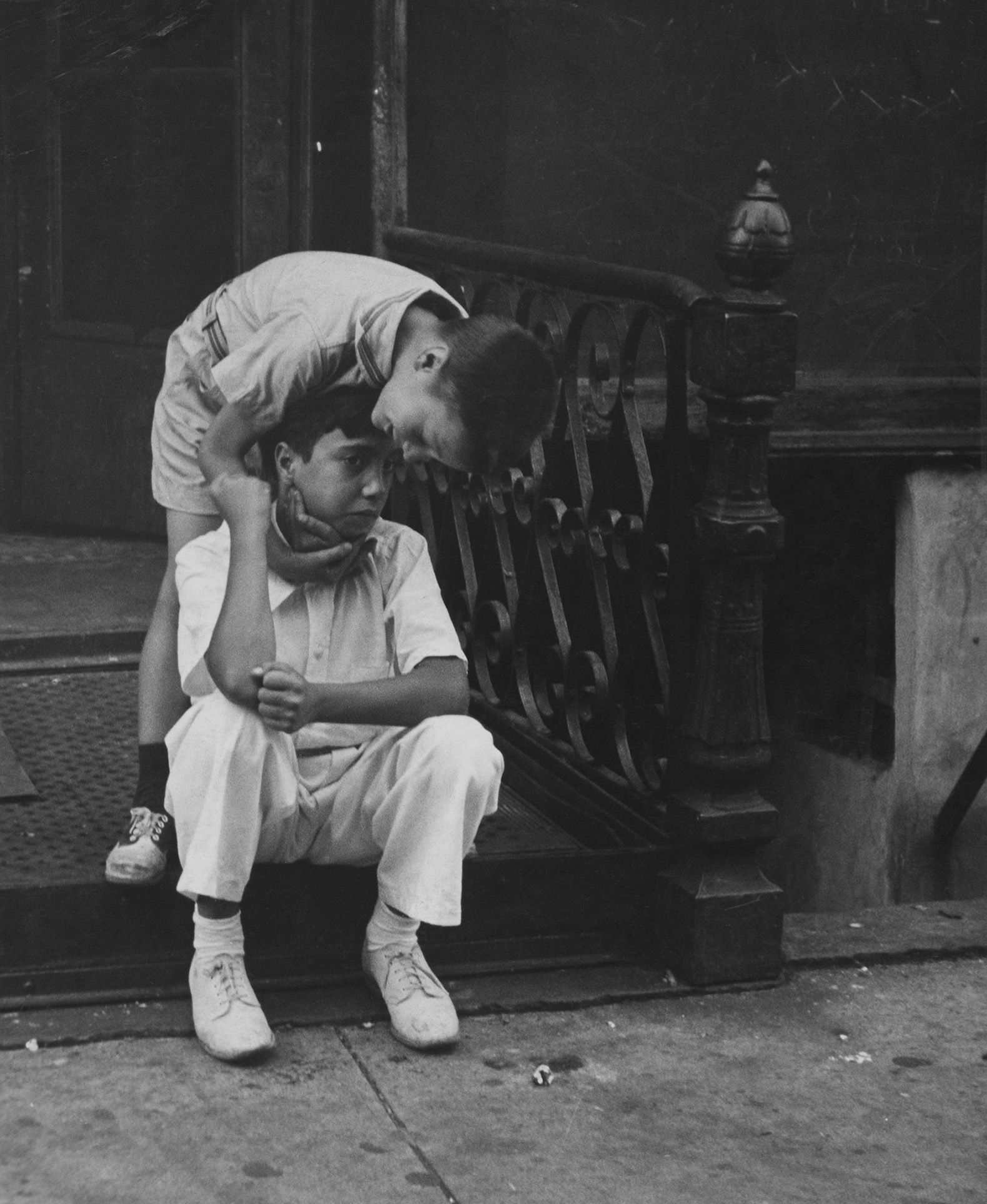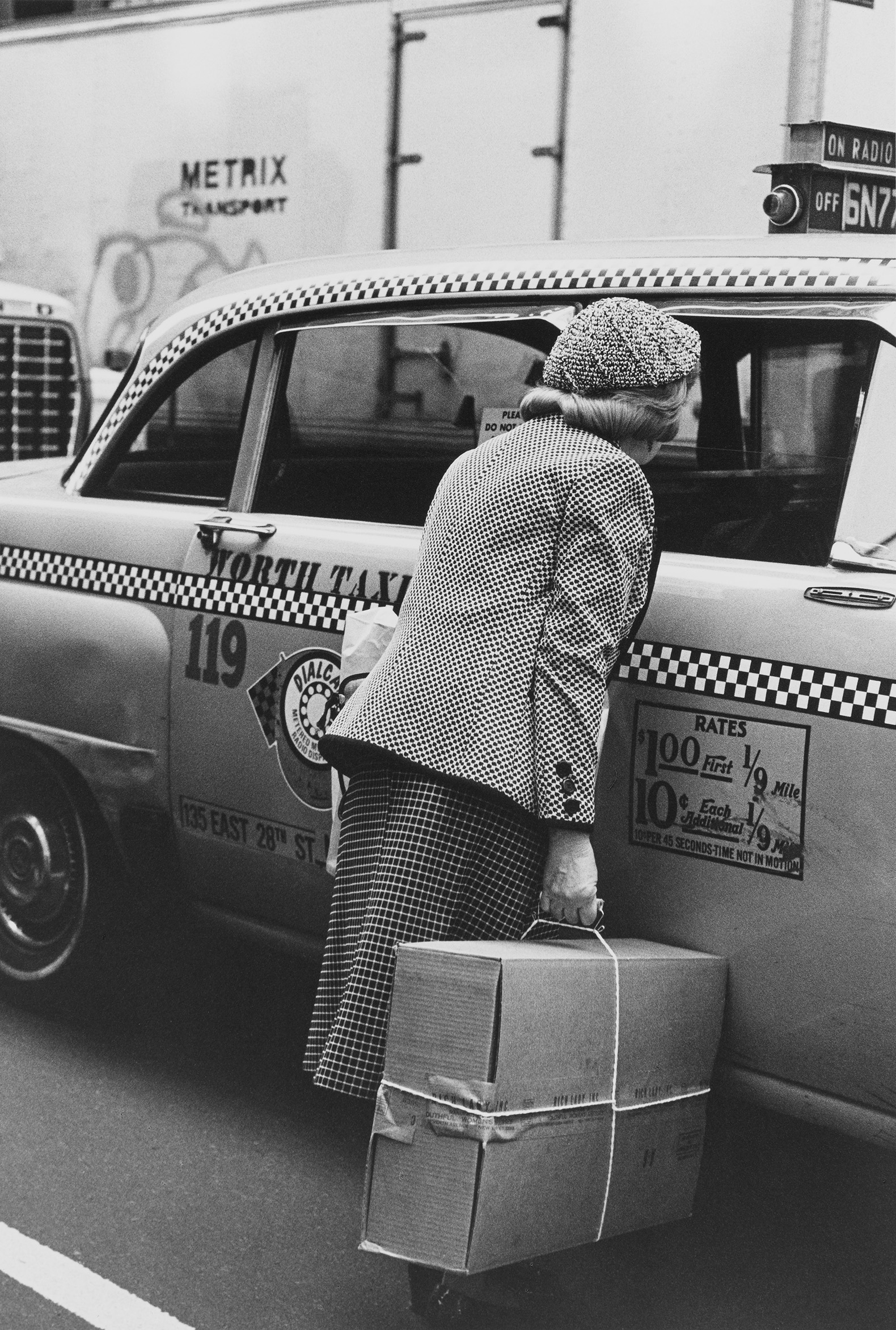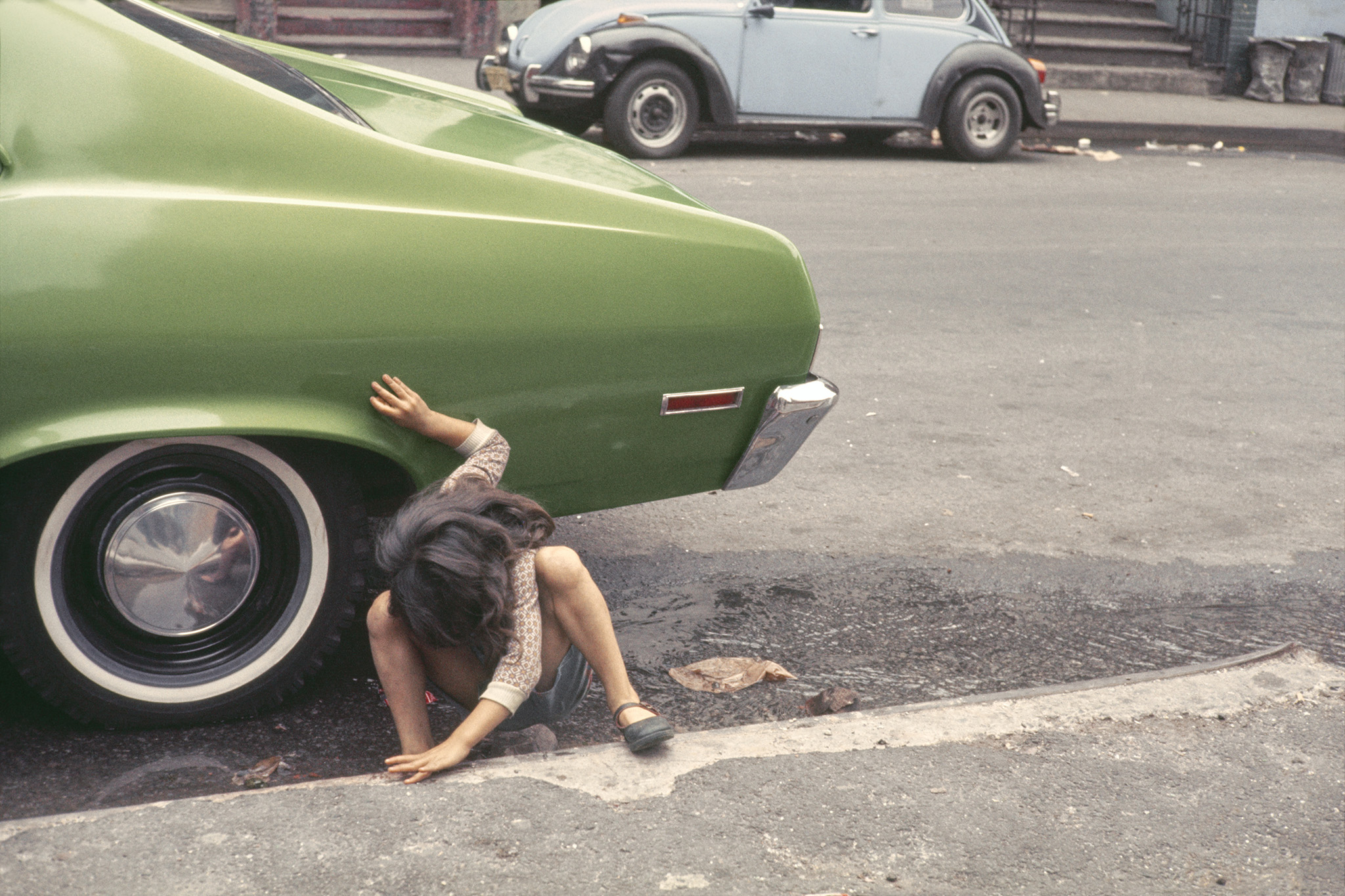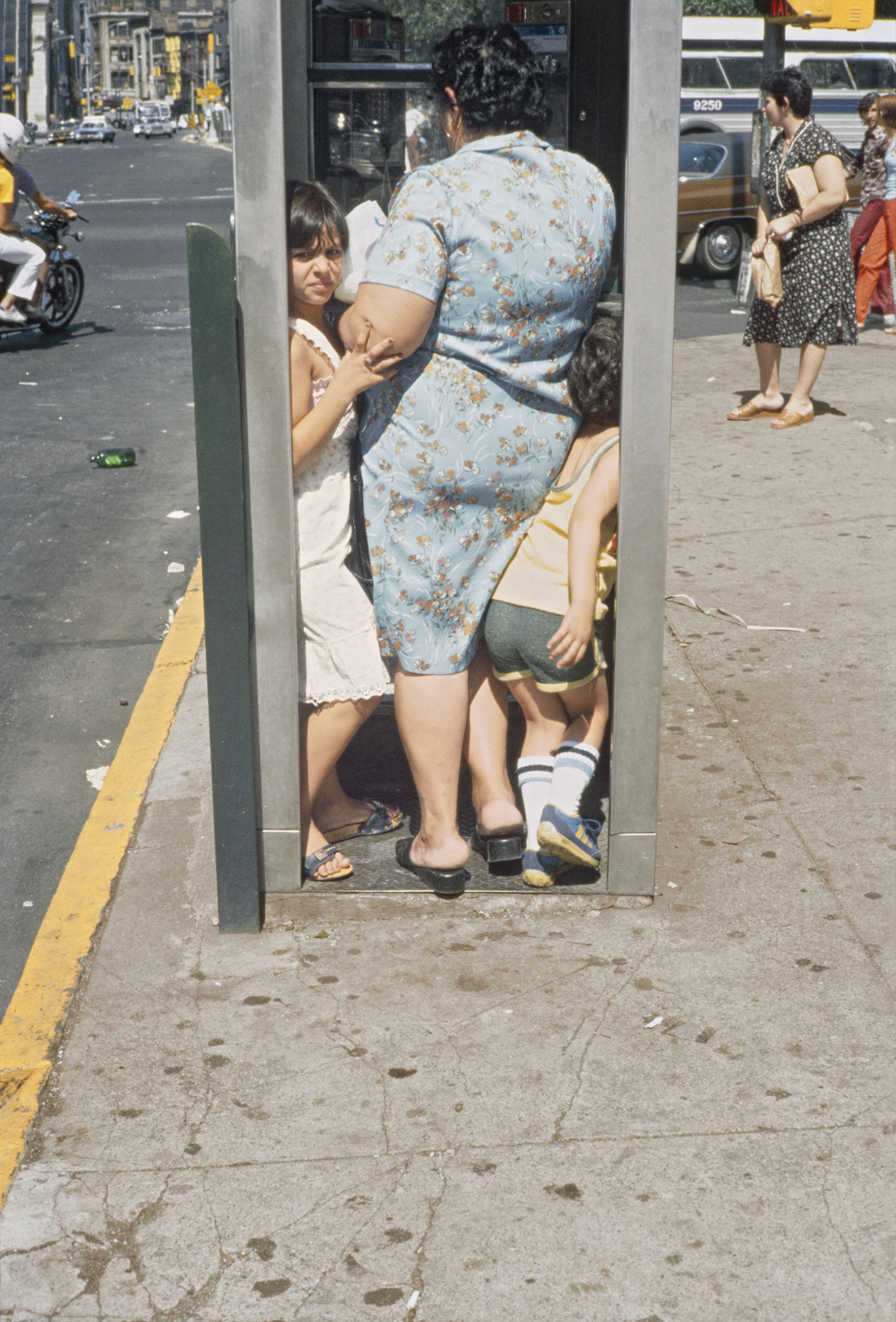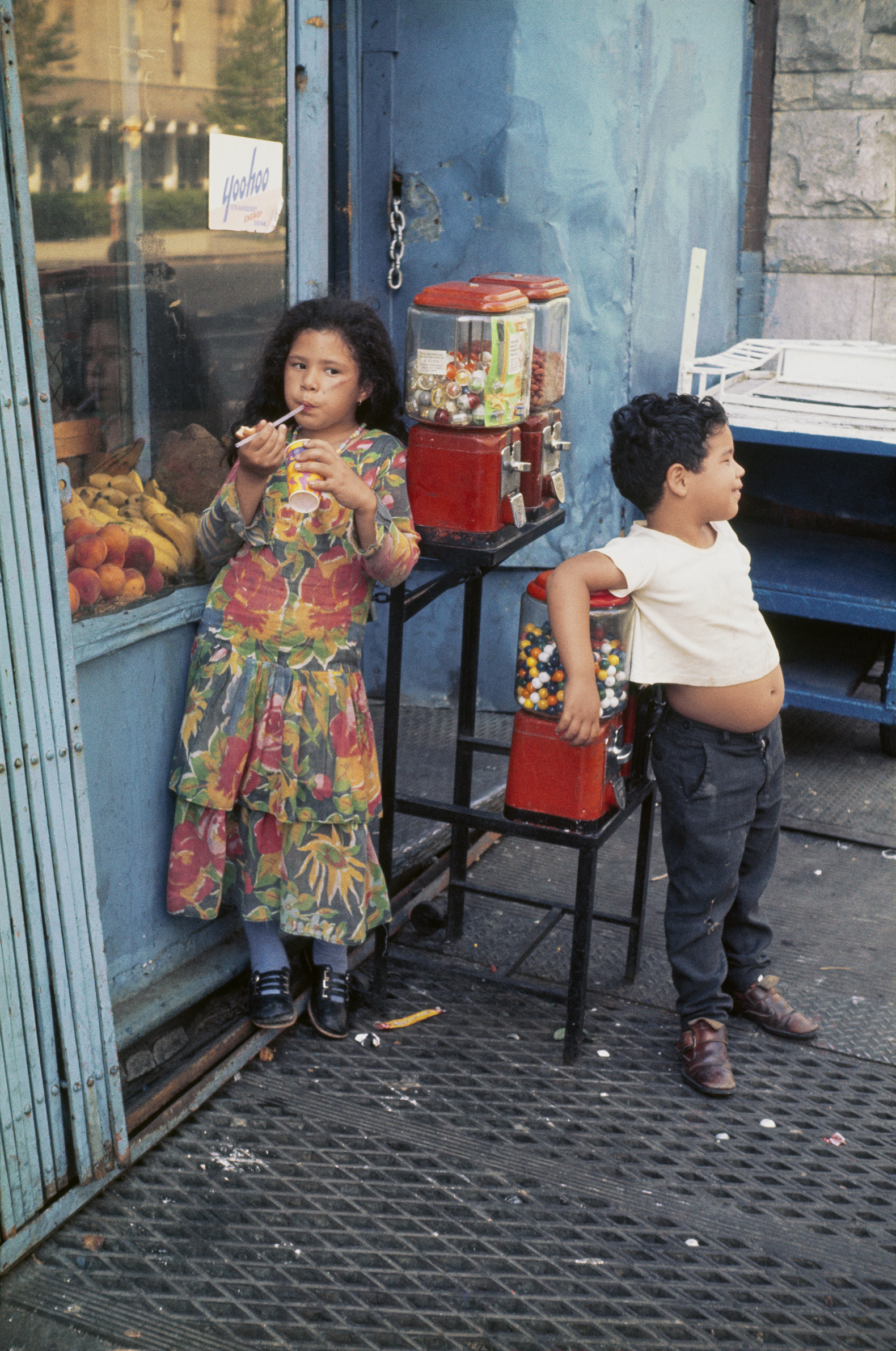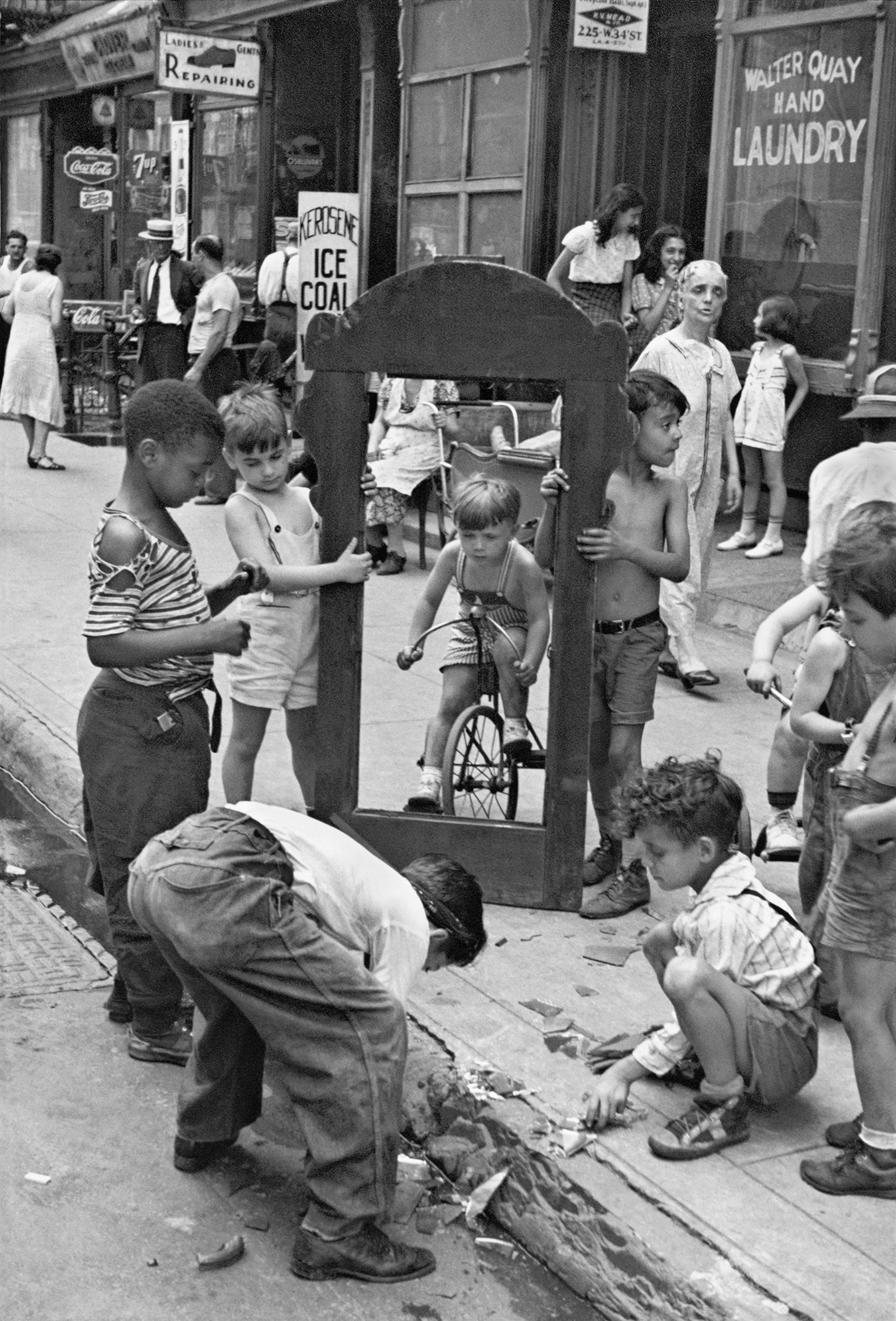
The exhibition focuses on the exploration of everyday life on the streets of New York, a central theme in Levitt's work. Her images capture spontaneous scenes such as children playing, informal conversations, and intimate encounters, with a sensitive eye that stands out for its subtle humour and attention to the most ordinary gestures.
This retrospective highlights Helen Levitt's influence on the history of photography, especially at a time when the medium was still seeking recognition as an art form. Despite her importance, the artist always maintained a discreet stance, letting her images speak for themselves and becoming a silent reference for subsequent generations.
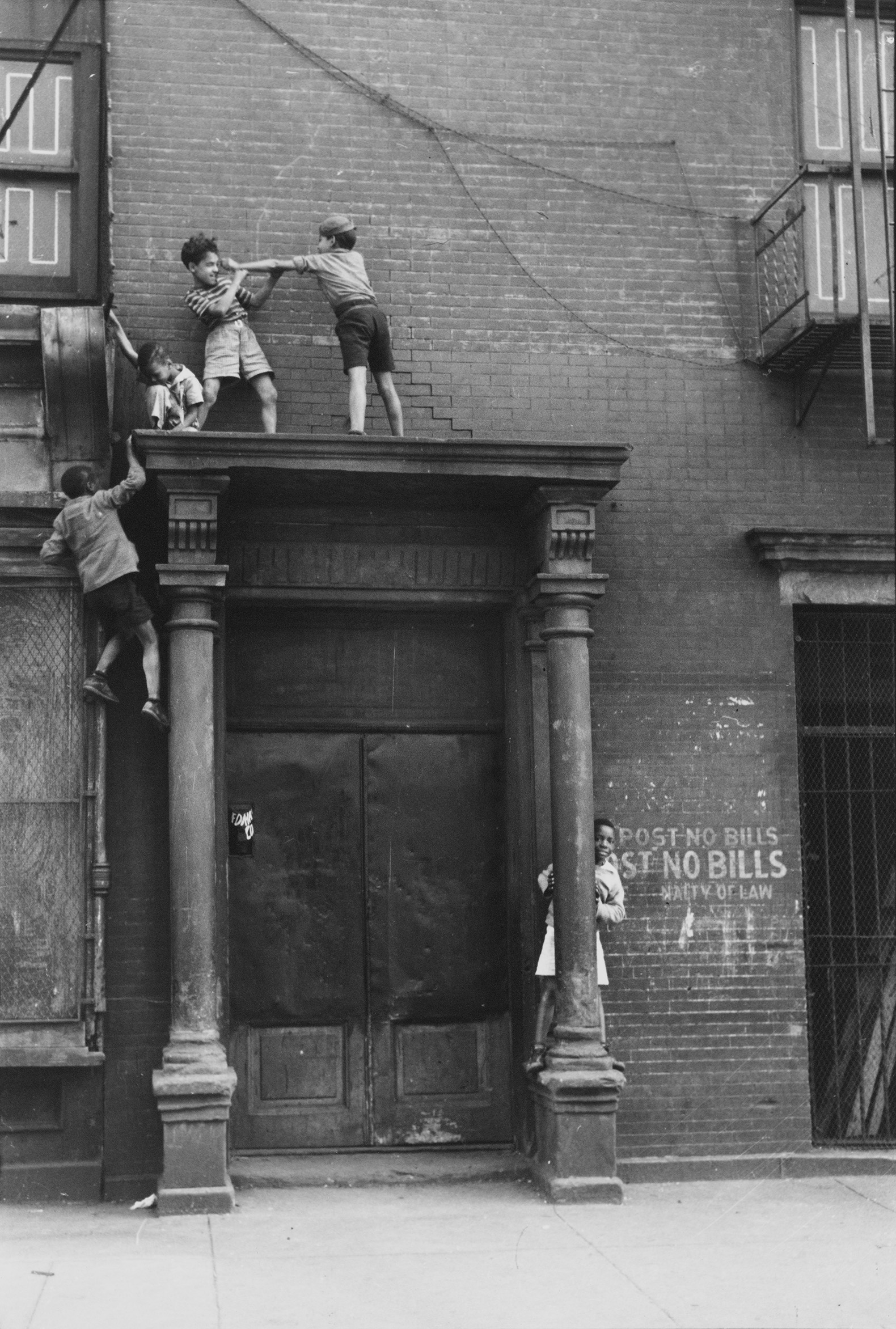
Helen Levitt, N.Y., ca. 1939. Courtesy of Film Documents LLC, via Zander Galerie.
Early Years
In the 1930s, Helen Levitt began photographing spontaneous scenes of everyday life in neighbourhoods like Harlem and the Lower East Side, developing an intimate and direct perspective. During this period, she established relationships with key figures such as Henri Cartier-Bresson and Walker Evans, who influenced her approach and introduced her to artistic circles where she would begin important collaborations.
Chalk Traces
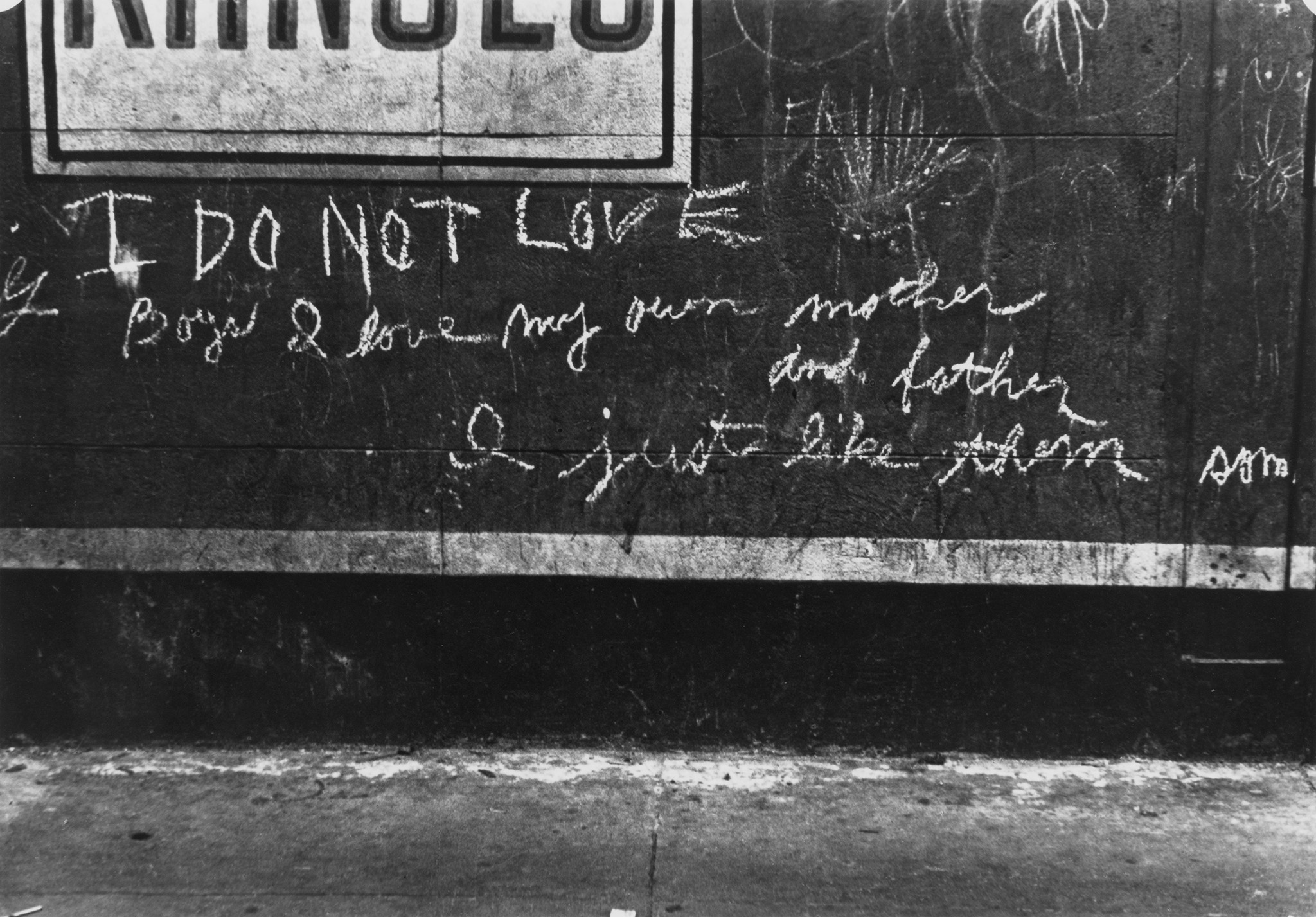
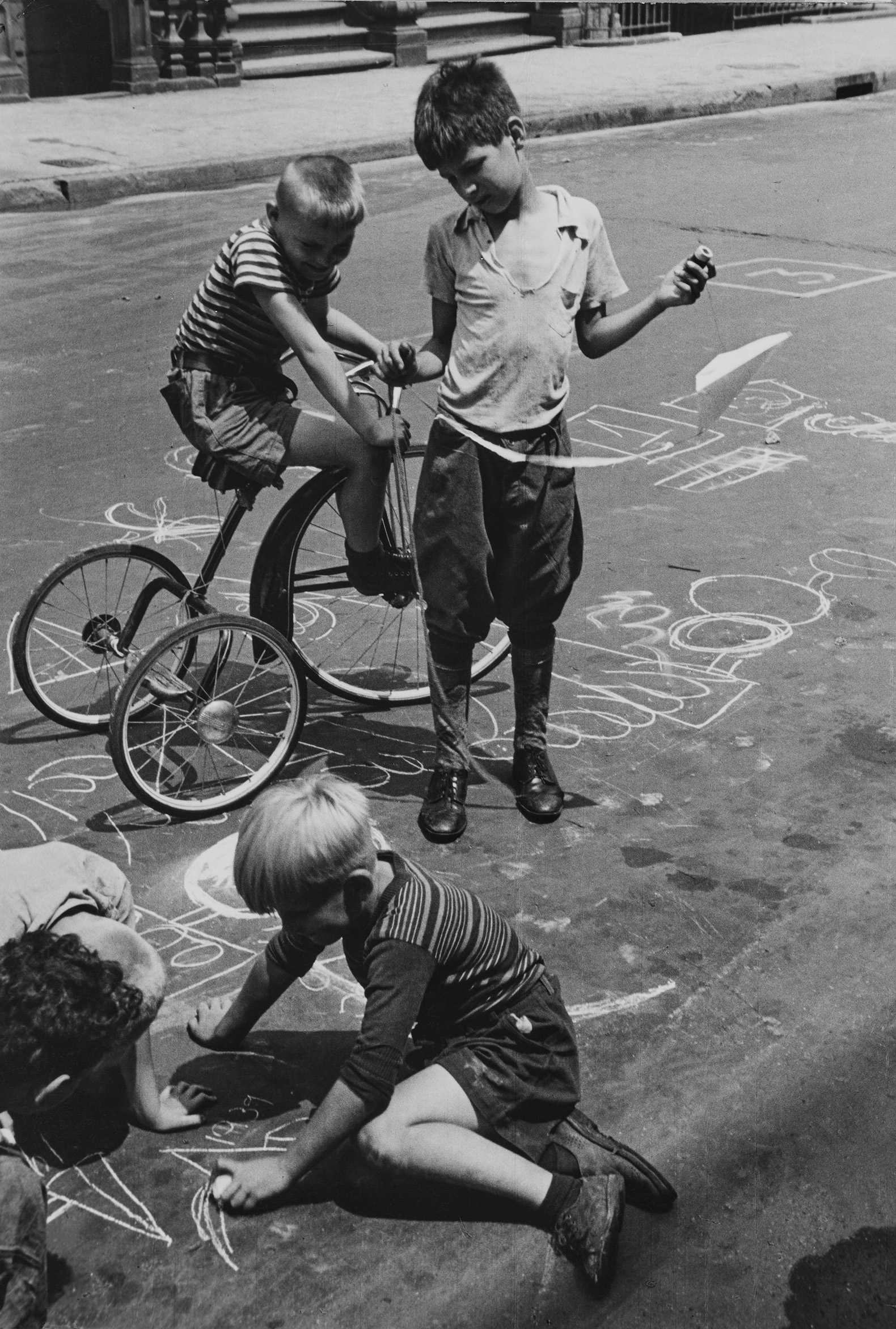
In 1937, while working as a teacher in East Harlem within a federal program, Levitt began photographing children's drawings in the streets, as well as the children themselves and their family environments. These images, focused especially on marginalized communities, reflect a particular sensitivity toward childhood and everyday life.
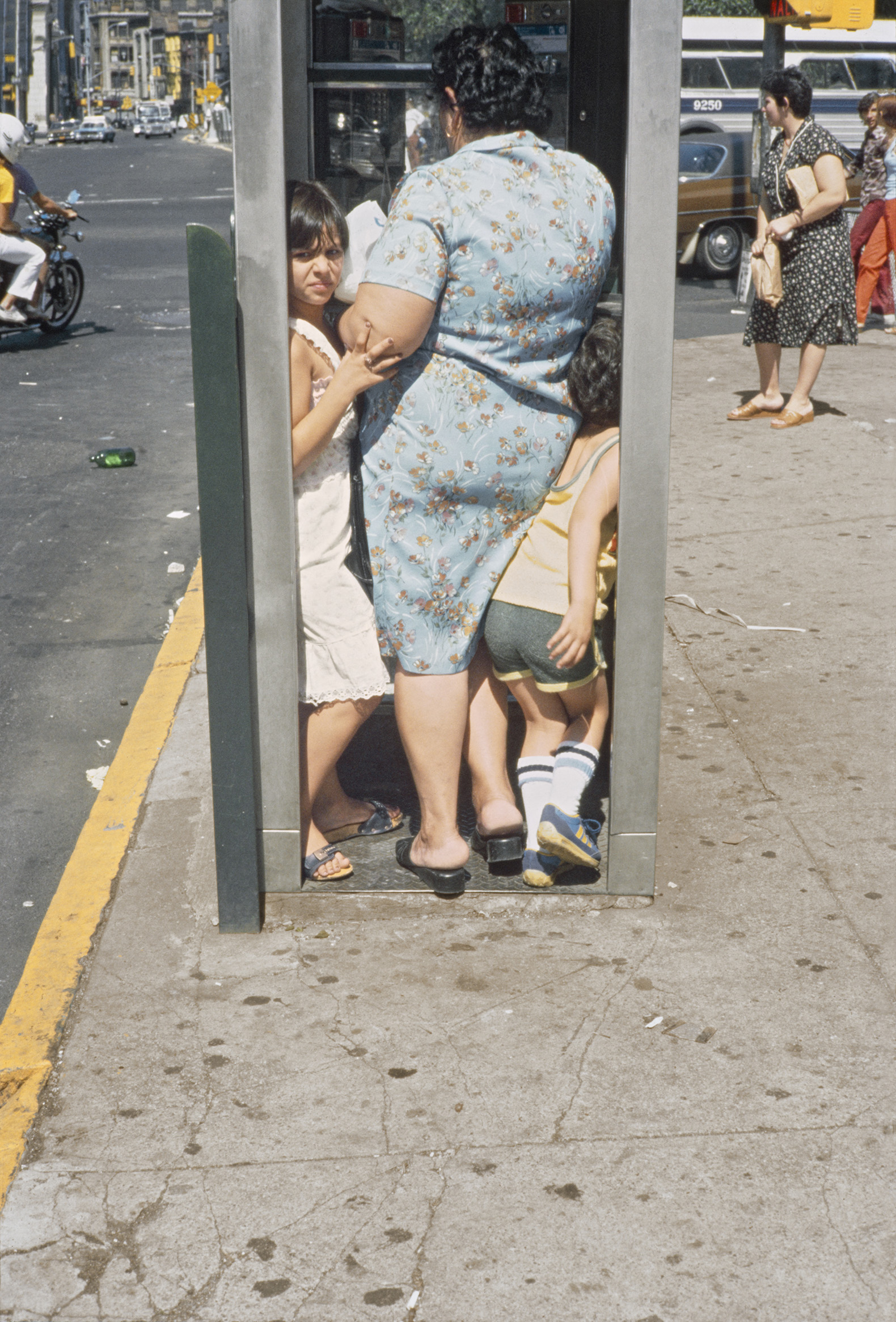
Helen Levitt, N.Y., 1988. Courtesy of Film Documents LLC, via Zander Galerie.
Determined Gaze
Between 1938 and 1940, she consolidated her style, using technical resources that allowed her to photograph undetected, capturing natural and unprepared scenes. In 1941, she travelled to Mexico City, where her gaze became more raw and direct, incorporating themes such as poverty and social inequality.
Film and Books
In the mid-1940s, she collaborated on the short film "In the Street," considered a precursor to cinéma vérité, and on the book "A Way of Seeing," published in 1965. Both works broadened the scope of her work, offering a more explicit interpretation of her photographic universe.
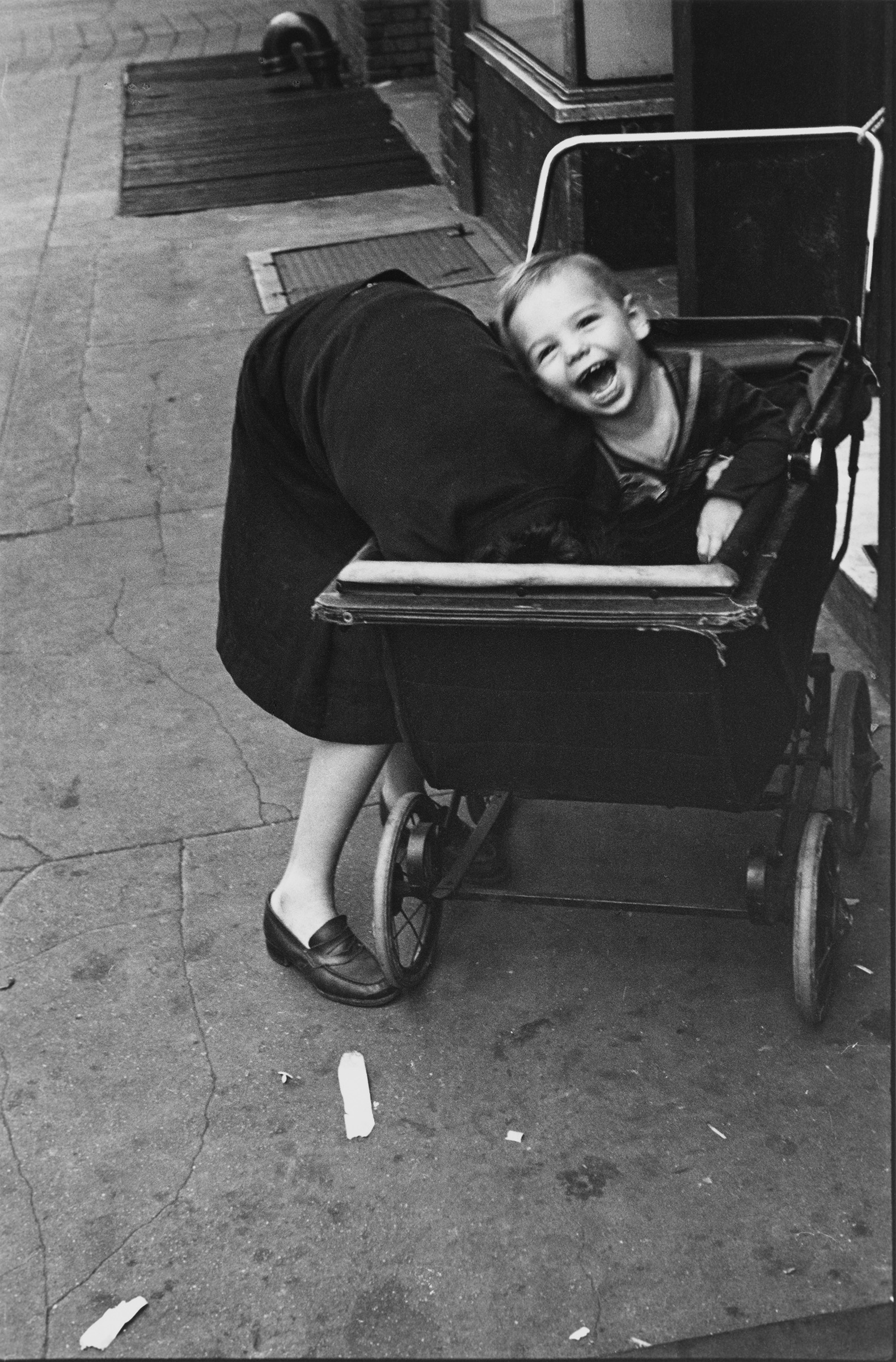
Helen Levitt, N.Y., ca. 1942. Courtesy of Film Documents LLC, via Zander Galerie.
The Decision to Use Colour
In the late 1950s, Levitt began working in colour, challenging the conventions of the time. Thanks to a Guggenheim Fellowship, she developed a body of work in which colour was integrated as an essential compositional element, especially in her images from the 1960s to the 1990s.
The Subway and Her Later Years
In the 1970s, she returned to photographing the New York subway, capturing the urban transformation without losing her interest in everyday gestures. From the 1980s onward, she reduced her output, although she remained active until she died in 2009, leaving a fundamental legacy in street photography.