Snøhetta's "The Ring and Greenhouse" project is part of a collaborative intervention in architecture, urban planning, and landscape design, in partnership with internationally renowned architects MVRDV and Bjarke Ingels Group. Each practice has been responsible for a section of the Ion Riva master plan, as well as a landmark building with a social program that will become the cornerstone of its respective district.

This first phase comprises nearly 1,000 homes, 100,000 m² of biodiverse green spaces, a new school, and cultural, commercial, hospitality, and wellness facilities. Snøhetta's Greenhouse area includes The Ring and approximately 400 residences, along with selected retail and office spaces. The Ring will be complemented by three other distinctive houses that, together, will define the character of Ion Riva.

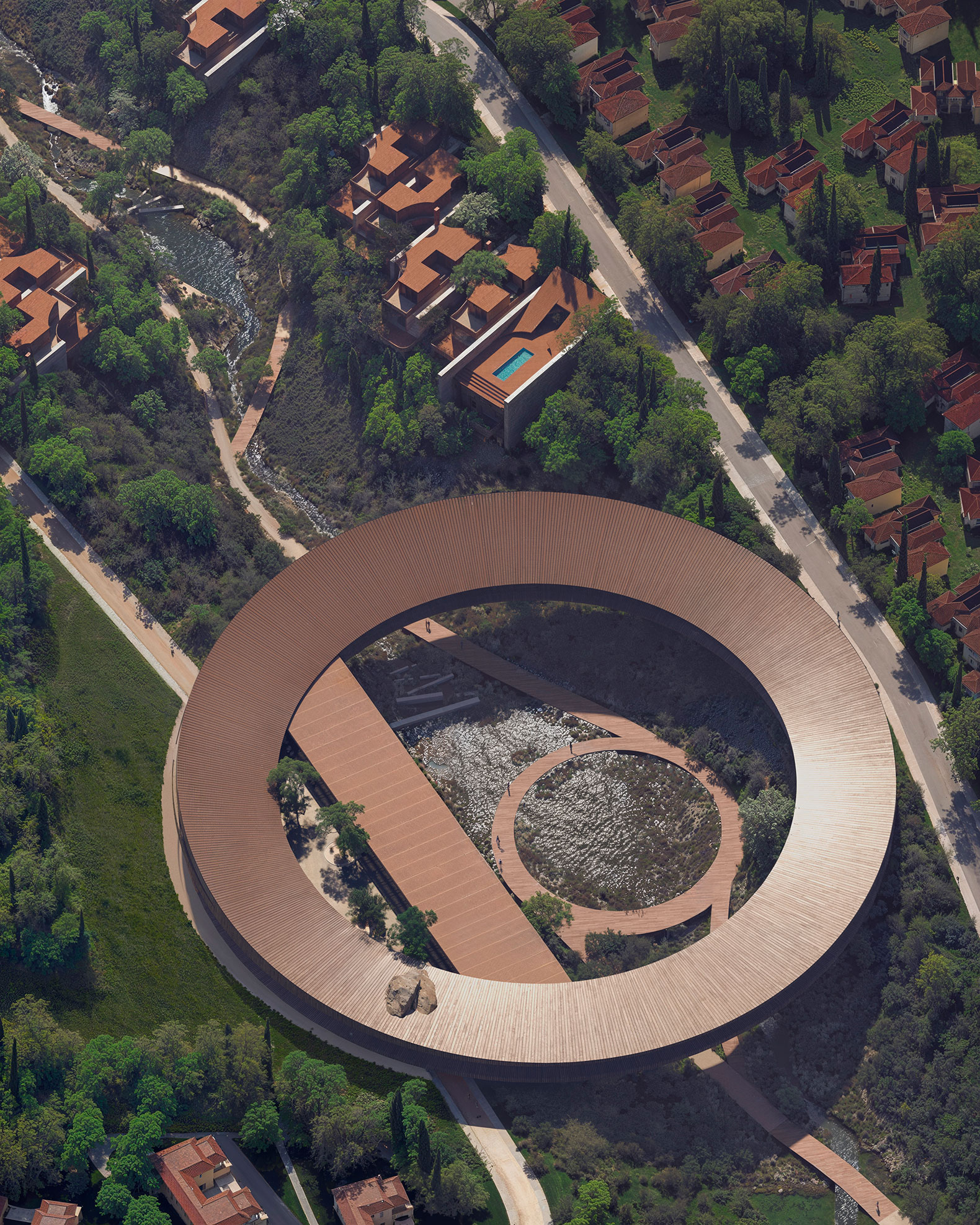
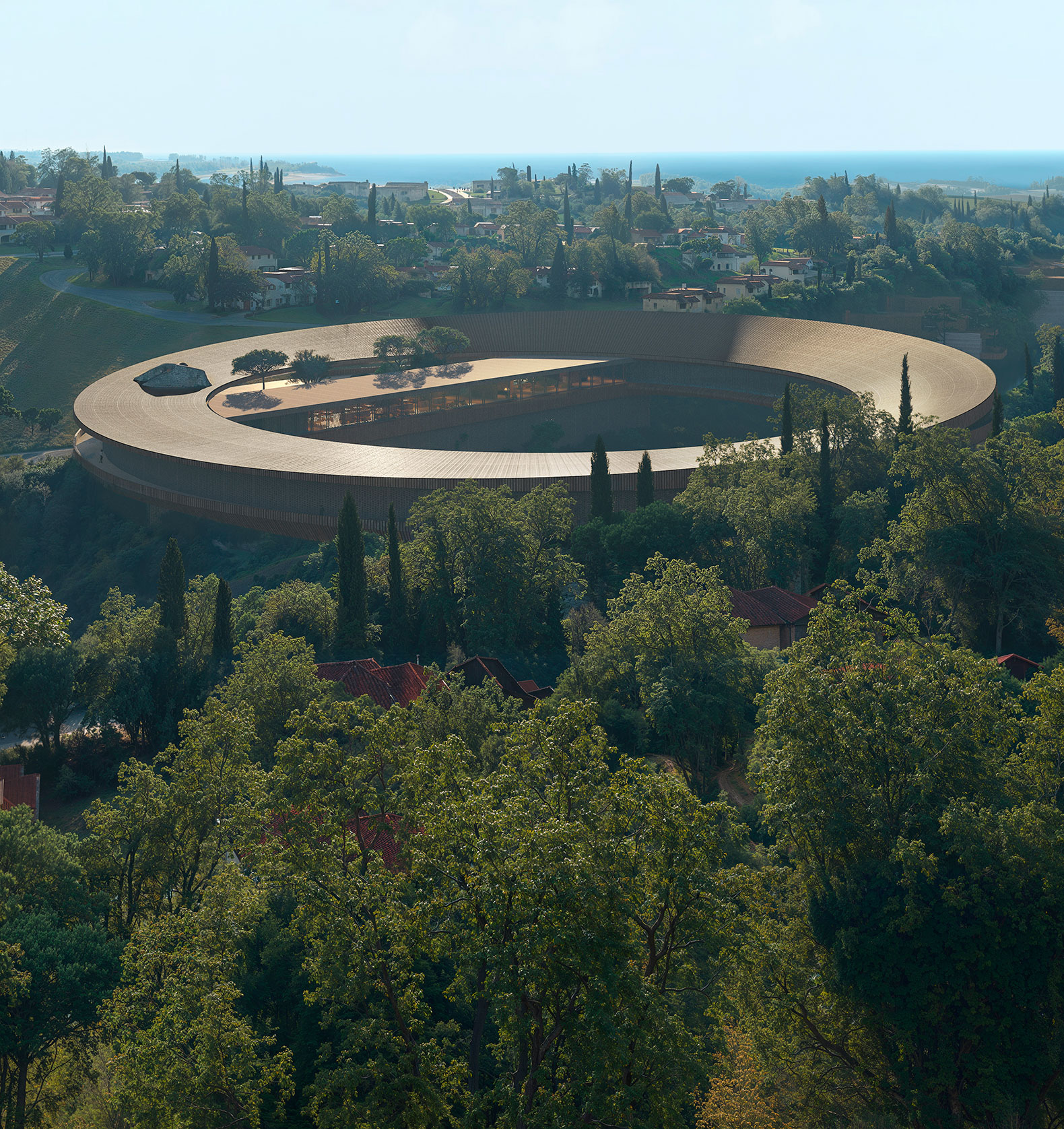
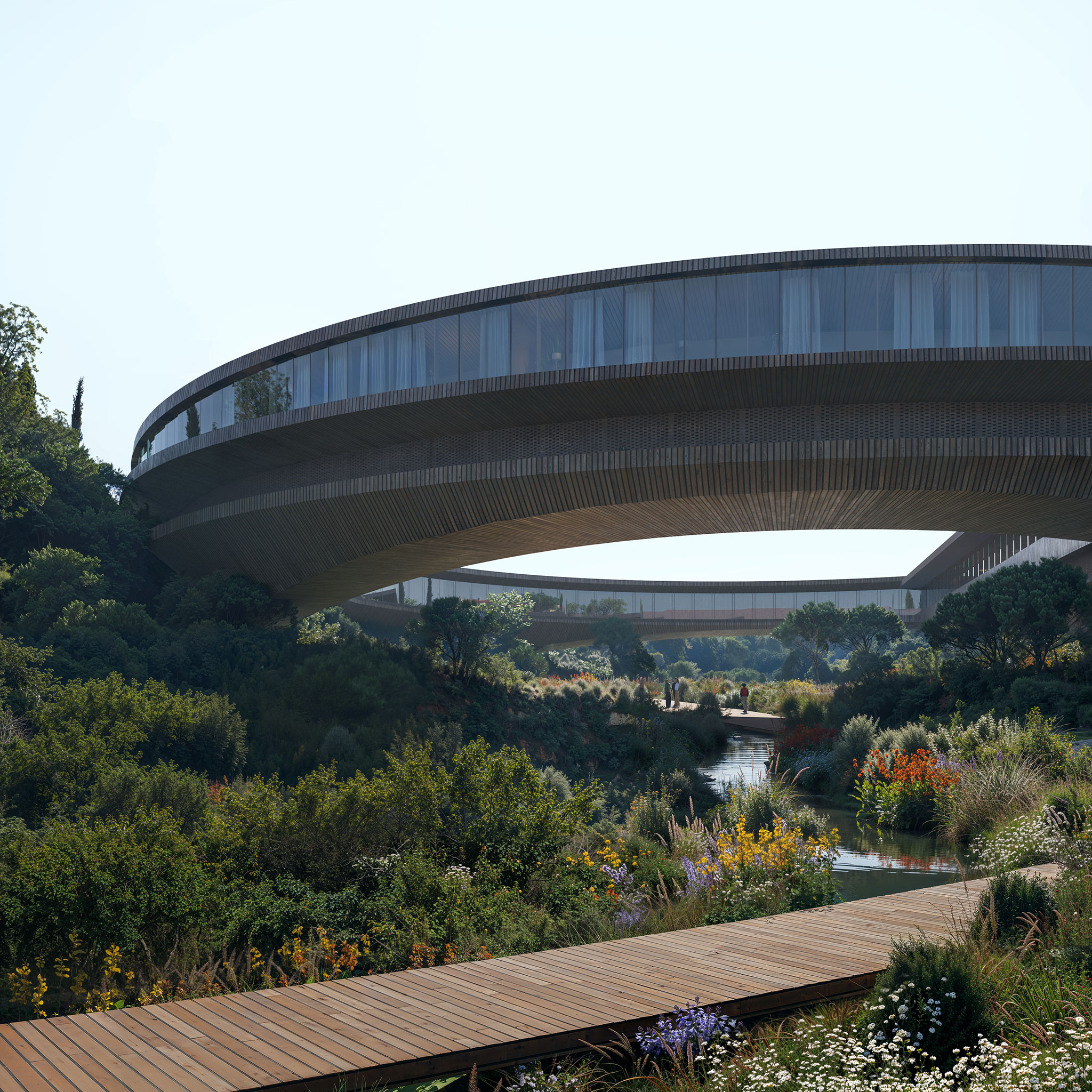
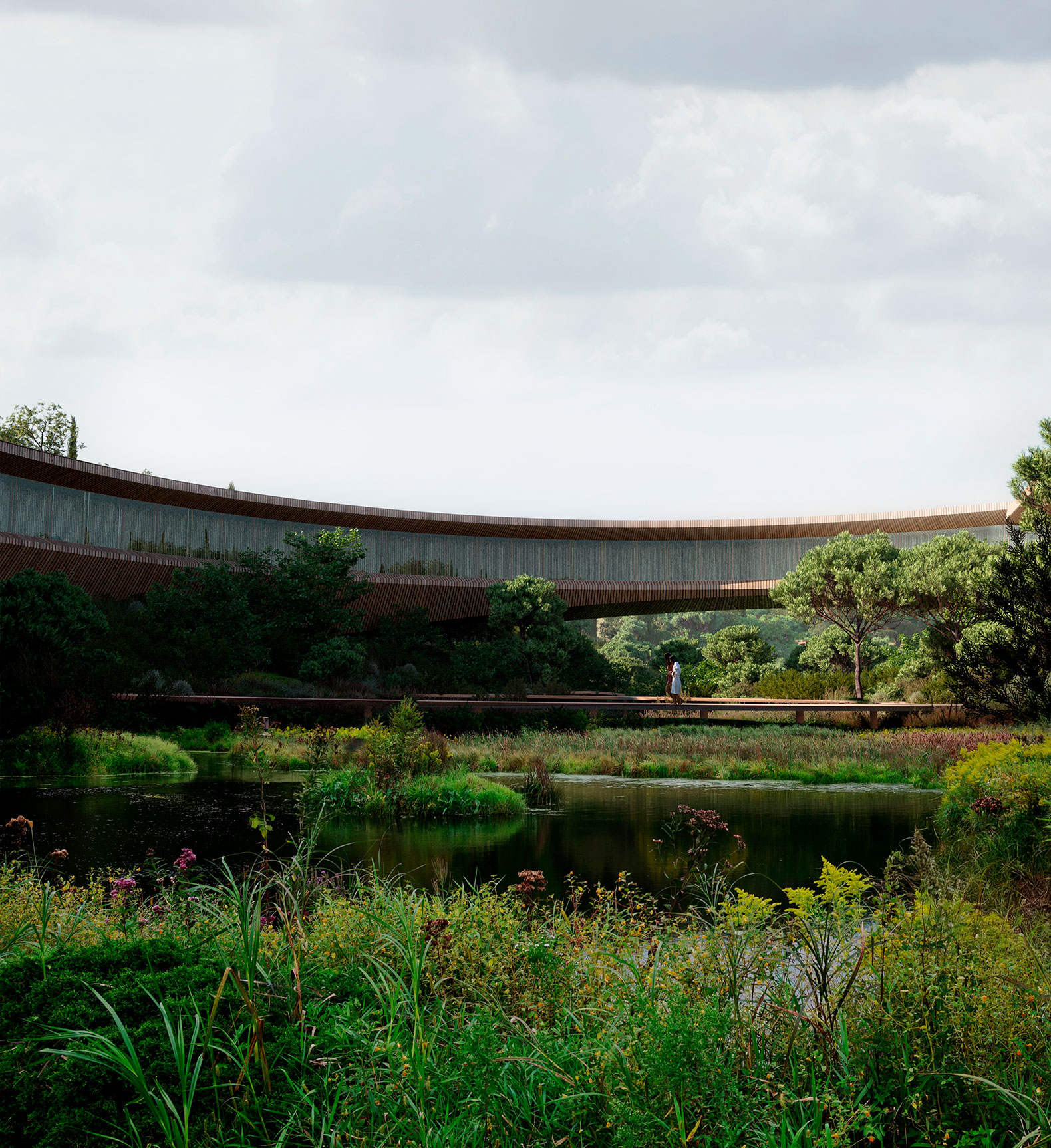
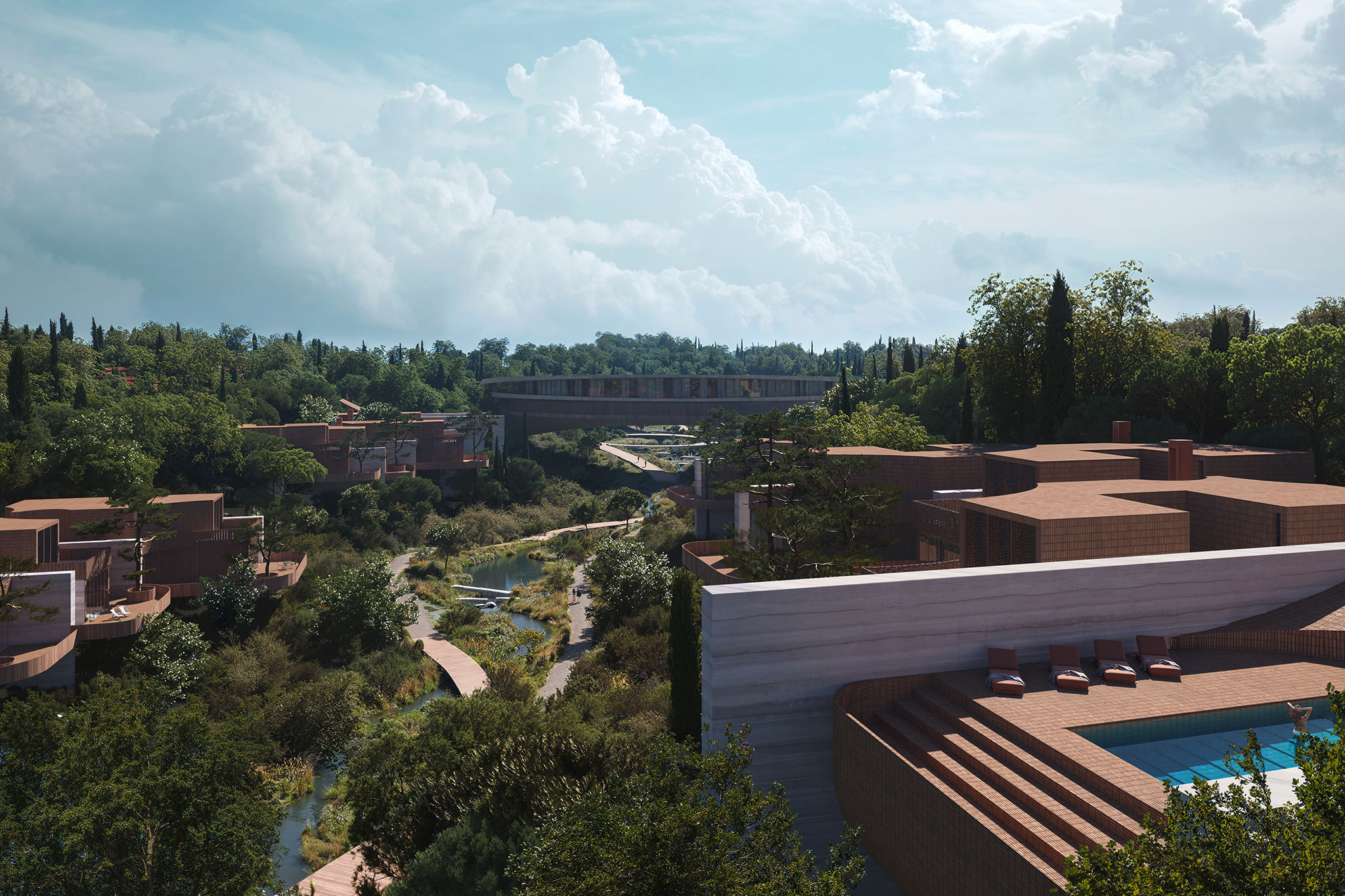
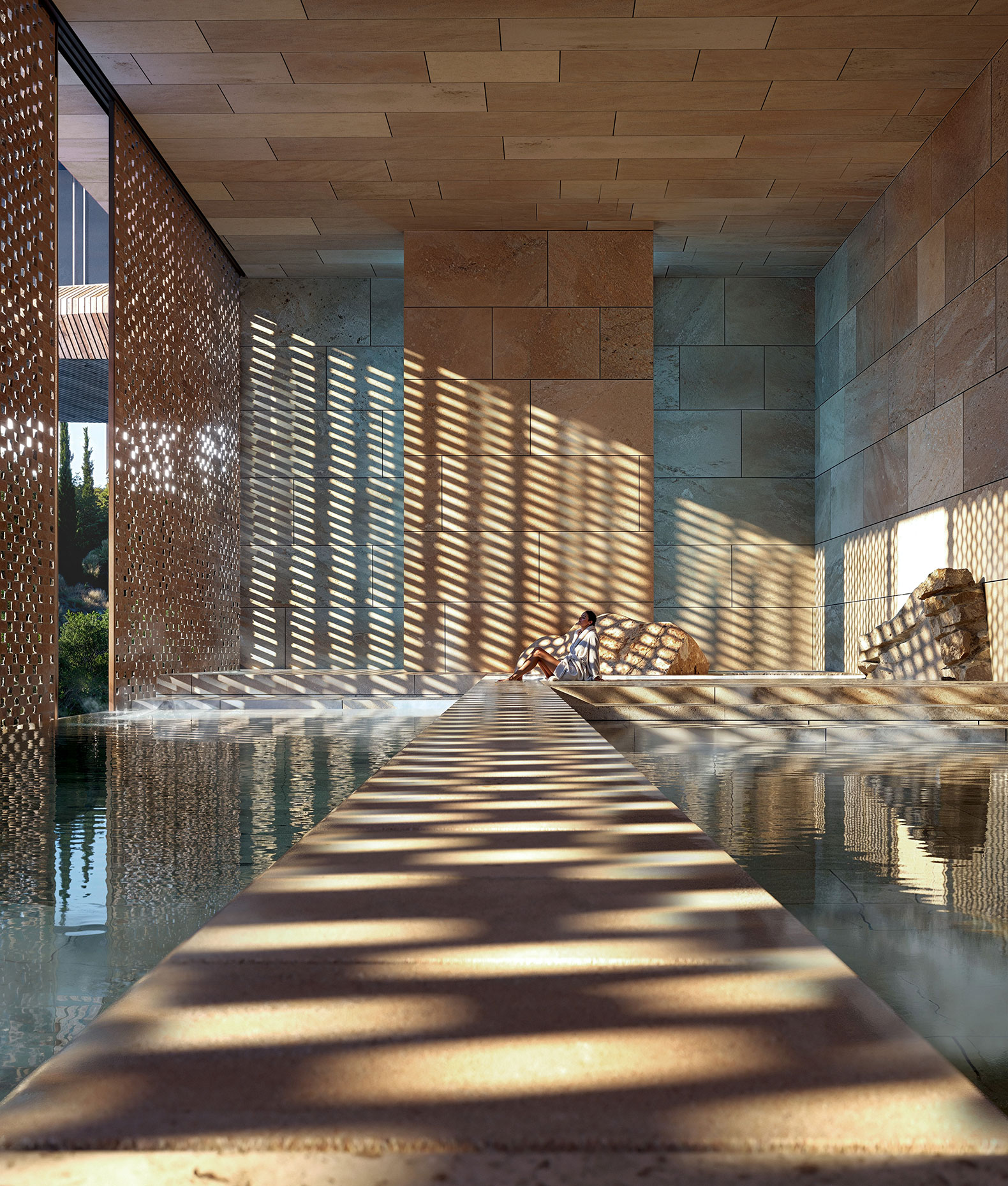
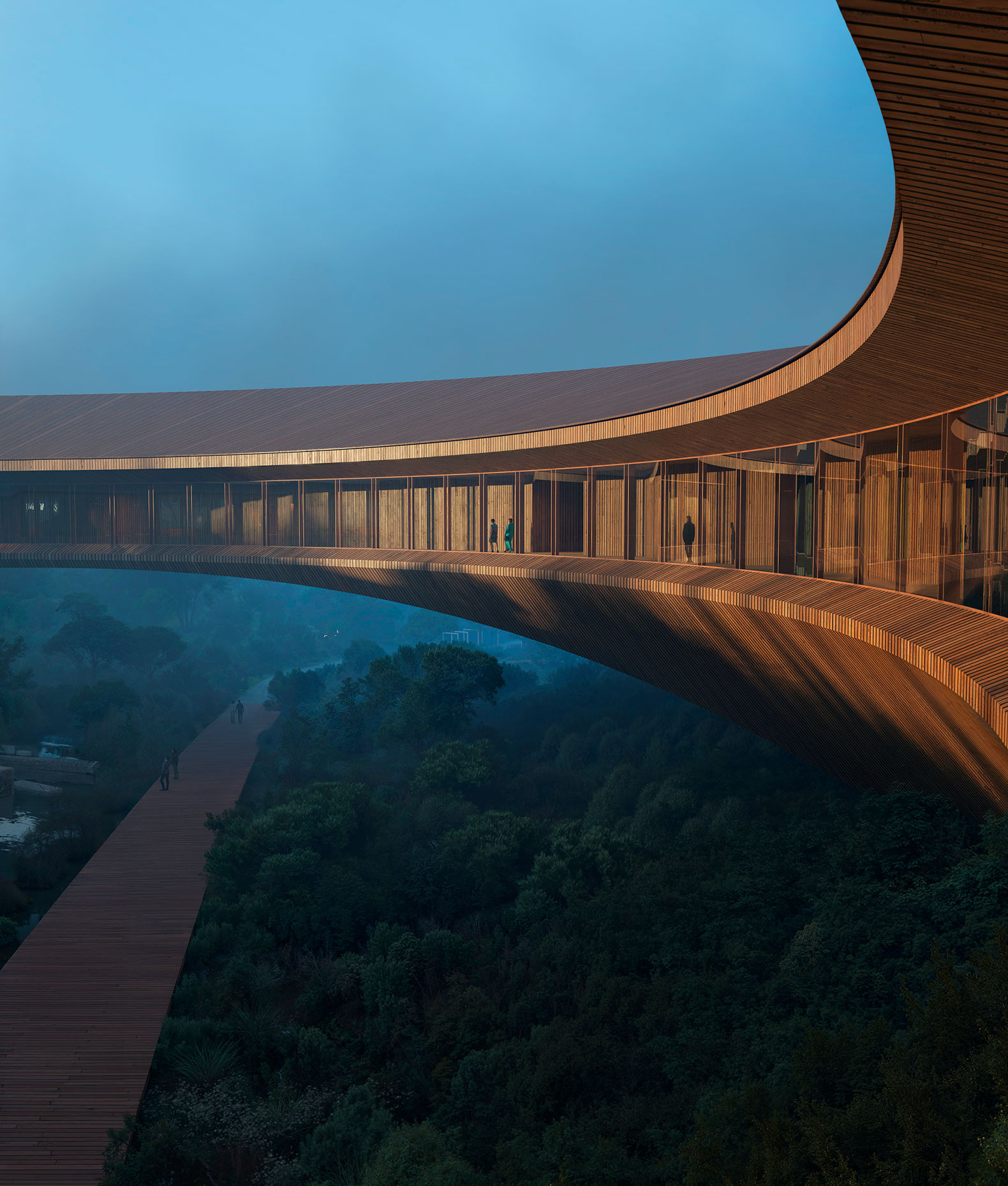
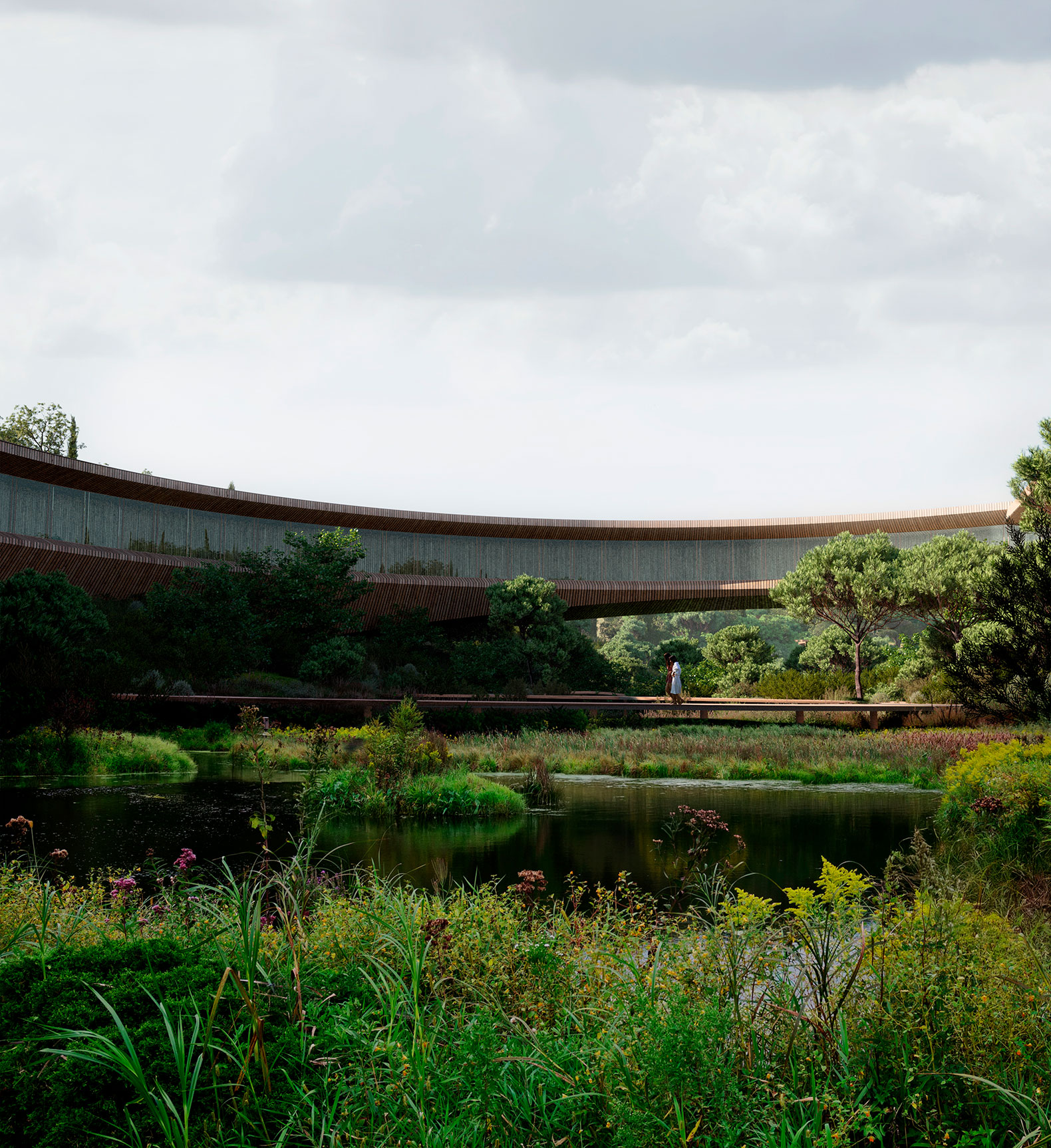
Snøhetta's proposal for this nature sanctuary, "The Ring and Greenhouse," takes its name from its spectacular circular form, which appears to float above the river, offering a haven of peace in close contact with nature. Extending along the valley in a perfect circle, The Ring presents a model of sustainable living, from the wellness practices of its Longevity Center to its minimalist architecture. Stables and vegetable gardens are located alongside the river, fostering ecological learning and local food systems.

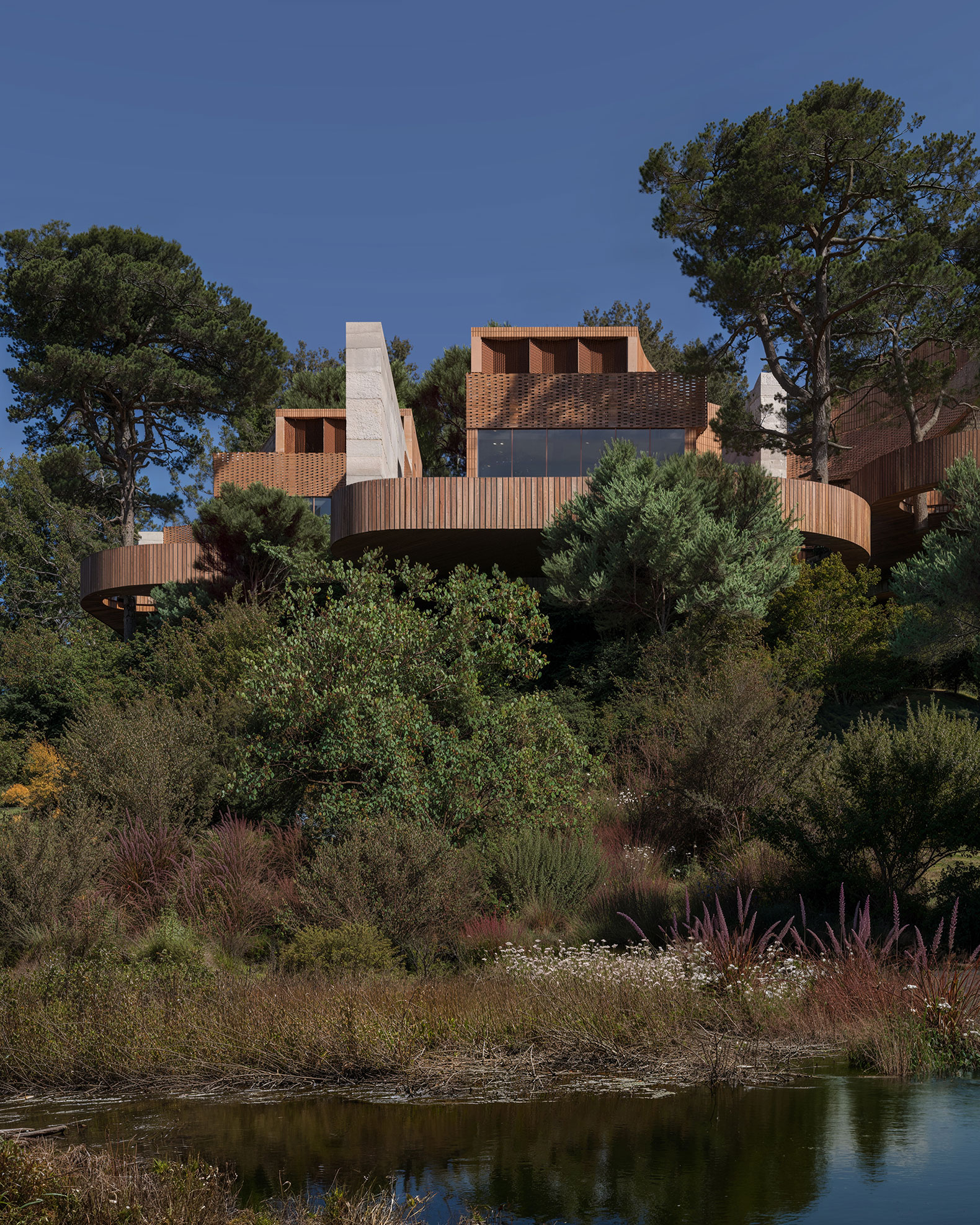
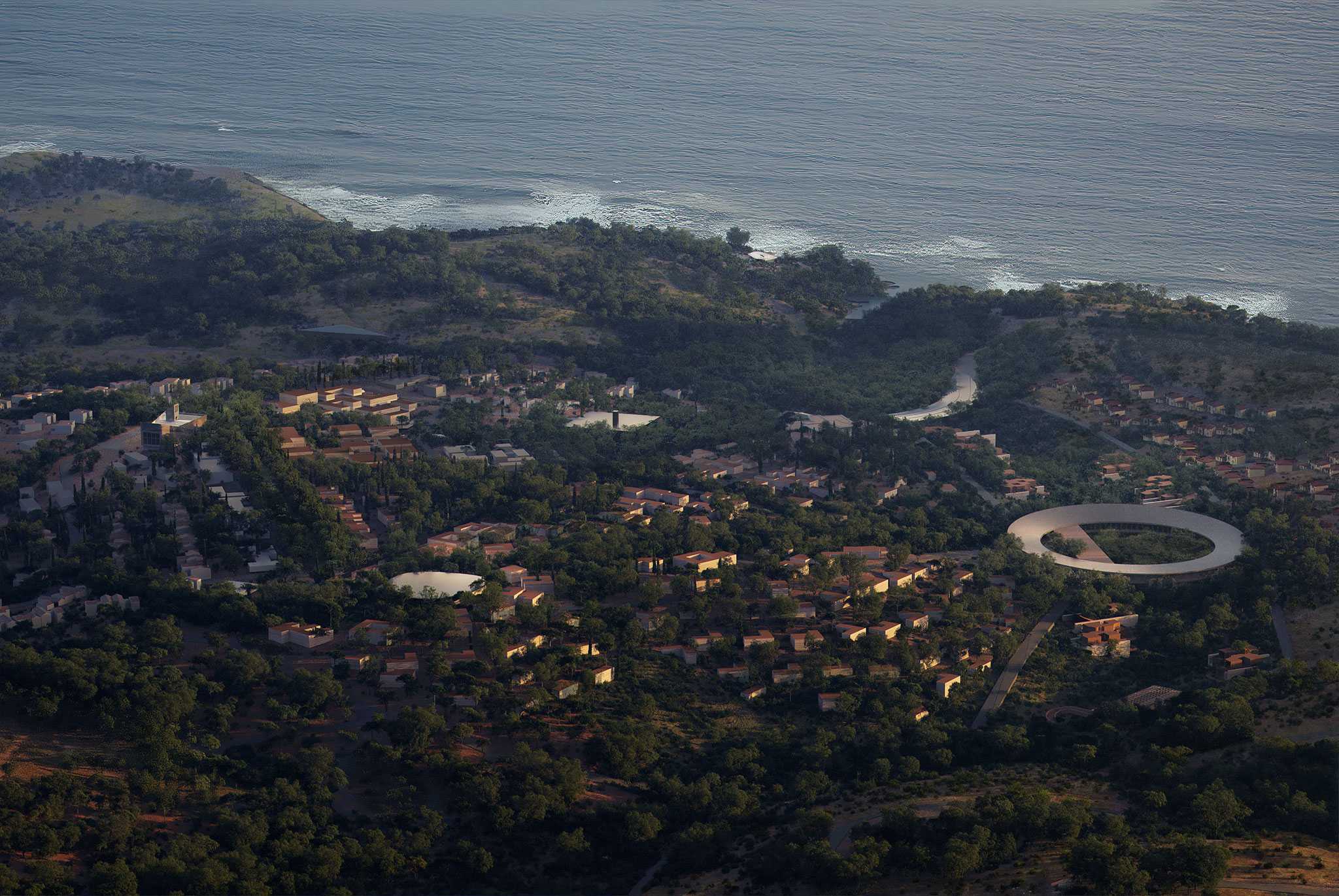
The associated residences include a variety of sizes and types, all focused on interaction with nature and the community. These are divided into five smaller communities of between 50 and 80 residences, each defined by the unique characteristics of its landscape and the combination of its programs. However, all the residences reflect the architectural heritage of the region. All the smaller communities have shared amenities, such as recreational facilities, open to all residents and visitors. Digital systems are integrated throughout the neighborhood to provide convenience, efficiency, and long-term sustainability.
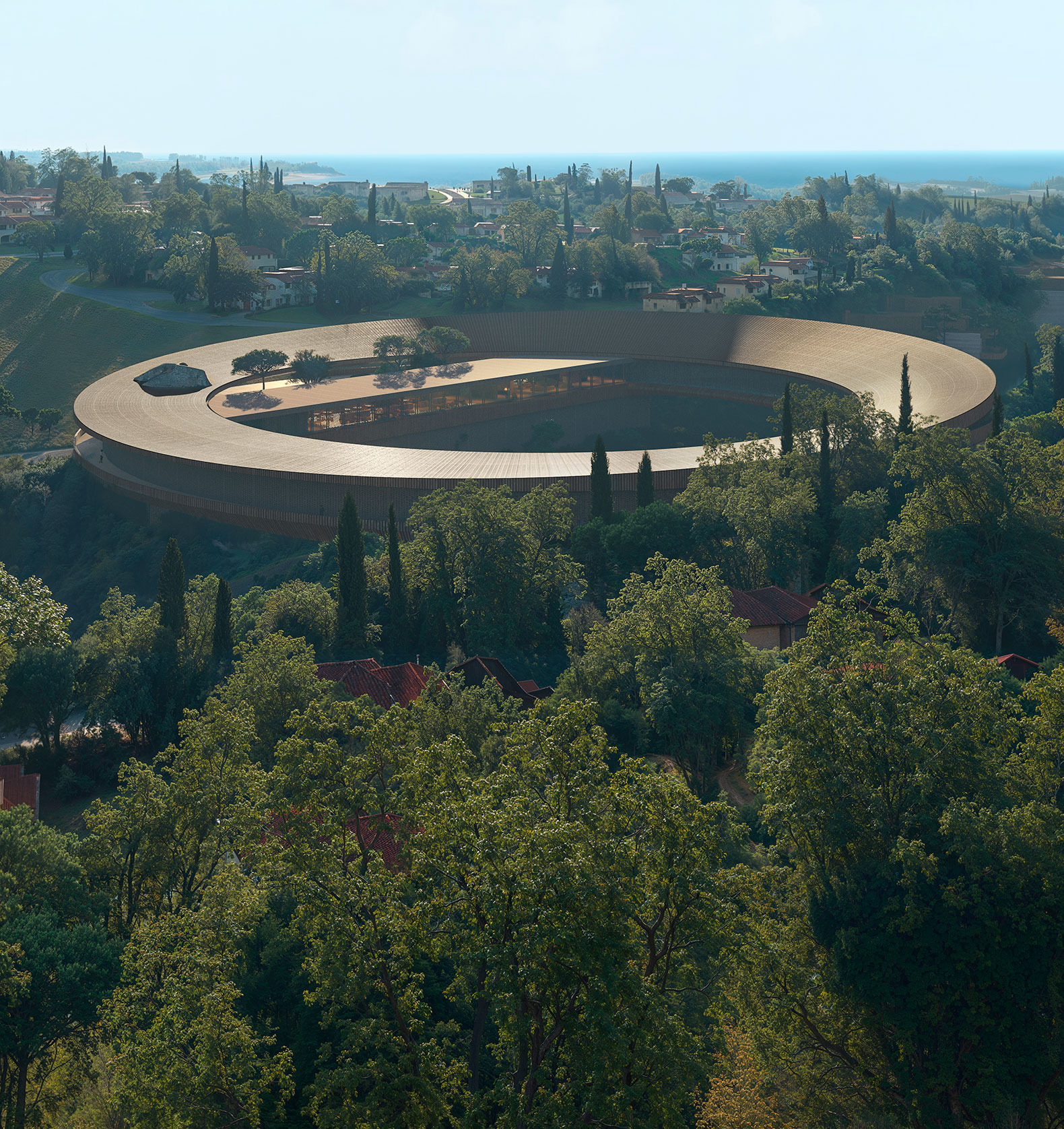
"The Ring and Greenhouse" by Snøhetta. Rendering by Proloog.

"The Ring and Greenhouse" by Snøhetta. Rendering by Proloog.

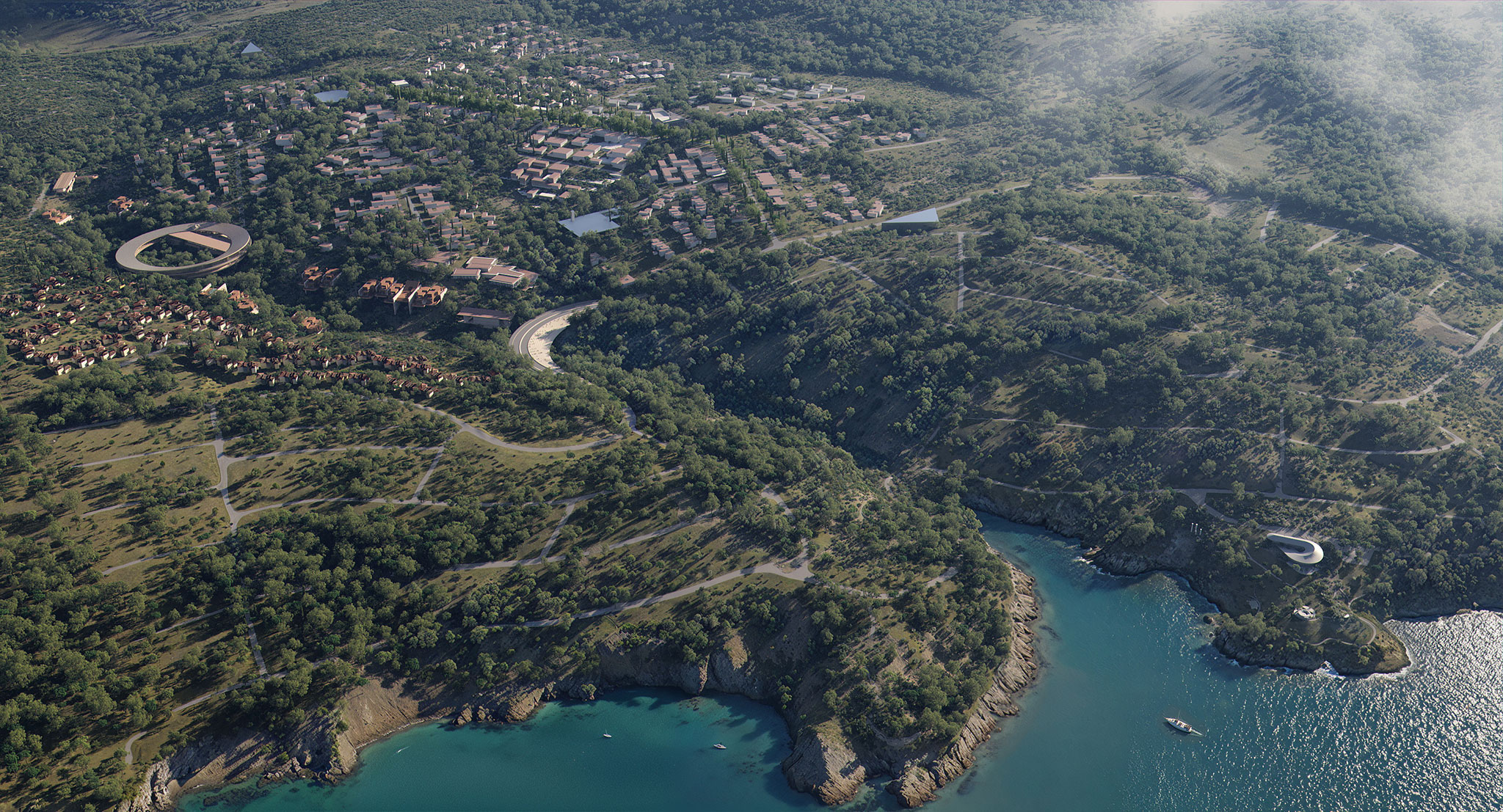
Ion Riva's master plan draws inspiration from the site's natural ecology, where forest, river, and sea converge. Homes and public spaces follow the contours of the land, maximizing views of the coast and valley while minimizing intervention. The selection of materials prioritizes locally sourced stone and wood, and modular construction allows for efficient delivery and a reduced carbon footprint for all homes.

"At Ion Riva, we have worked with the landscape as our primary architect. The confluence of forest, river, and sea creates a natural framework, and our task has been to enhance these conditions rather than alter them. The Ring emerges from this context. It is a place for learning, cultivation, and everyday encounters, shaped by the rhythms of the river valley and the community that will inhabit it. Here, architecture is not an object, but a set of relationships between people and nature that evolve over time." 

Kjetil Thorsen, Founding Partner of Snøhetta.
"The Ring and Greenhouse" by Snøhetta. Rendering by Proloog.

"The Ring and Greenhouse" by Snøhetta. Rendering by Proloog.

The low-impact approach is maintained through the use of on-site renewable energy, including grid-connected solar panels, and green infrastructure that regulates microclimates and improves air quality. Rainwater harvesting and greywater recycling systems are designed to reduce potable water demand by 50% and are integrated into a low-water-consumption landscaping.

Walkability is central to the neighborhood design, with homes and everyday amenities connected by short, landscape-following routes. Shaded pathways and biodiverse green corridors connect the site, creating a seamless experience of movement, nature, and community. Recreation, play, and well-being are encouraged through a network of parks, green spaces, trails, and sports facilities integrated throughout the master plan.
More information

Label
Architects
Text

Snøhetta. Lead architects.-  Craig Dykers and Kjetil Thorsen.

+ + copy Created with Sketch.
- + copy Created with Sketch.
Label
Developer
Text

Ion.

+ + copy Created with Sketch.
- + copy Created with Sketch.
Label
Dates
Text

2025 - ongoing.

+ + copy Created with Sketch.
- + copy Created with Sketch.
Label
Location
Text

Beykoz, Istanbul, Türkiye.

+ + copy Created with Sketch.
- + copy Created with Sketch.
Label
Rendering
Text
+ + copy Created with Sketch.
- + copy Created with Sketch.

Snøhetta is an architecture, landscape, and interior design studio with offices in Oslo, Norway, and New York City, USA. Founded in 1989, it is led by Craig Dykers and Kjetil Thorsen. The studio, named in honour of Mount Snøhetta, the highest peak in the Dovrefjell mountains of Norway, has approximately 100 collaborators working on large-scale international projects across a wide range of typologies. Their approach is deeply collaborative and transdisciplinary, bringing together architects, designers, engineers, and landscape professionals to explore multiple perspectives depending on the nature of each project.

Snøhetta has completed a series of world-renowned cultural and landmark projects, including the Bibliotheca Alexandrina in Egypt, the Oslo Opera House and Ballet, and the Lillehammer Art Museum in Norway. Current projects include the National Pavilion of the September 11 Memorial Museum at the World Trade Center site in New York, as well as urban and landscape developments that aim to merge local identity, sustainability, and public experience.

In 2004, Snøhetta was awarded the Aga Khan Award for Architecture, and in 2009, the Mies van der Rohe Award. The studio is the only practice to have won the World Architecture Award for Best Cultural Building twice in consecutive years: in 2002 for the Bibliotheca Alexandrina and in 2008 for the Oslo Opera House and Ballet, consolidating its international prestige.

Kjetil Trædal Thorsen (born 1958 on the coastal island of Karmøy, Norway) is a co-founder of the studio and a multiple award-winning architect. He is a visionary and humanist designer who has redefined the boundaries of contemporary practice. Under his leadership, Snøhetta has produced iconic, sustainable structures that are highly sensitive to their cultural context, combining technological innovation with a profound environmental awareness. Thorsen’s work is recognized for its focus on social interaction, sustainability, and the creation of spaces that foster human connection and sensory experience, establishing a benchmark in contemporary global architecture.

Craig Dykers (born 1961 in Frankfurt, Germany) is also a co-founder of the studio and director of its New York office. Snøhetta has earned a reputation for maintaining a deep integration of landscape, architecture, and urban experience across all its projects. Key works include the Bibliotheca Alexandrina in Egypt, the Oslo Opera House and Ballet, the National Pavilion of the September 11 Memorial Museum in New York, and the redesign of Times Square. Professionally and academically active, Dykers has been a member of the Norwegian Association of Architects (NAL), the American Institute of Architects (AIA), and the Royal Society of Arts in England. He has served as a diploma juror at the Architectural College in Oslo and as a distinguished professor at City College, New York. He has delivered numerous lectures across Europe, Asia, and the Americas, and has undertaken public art installation projects, many of which explore the interplay between context, landscape, and human experience.

Read more
Published on: May 12, 2026
Cite:
metalocus, ELVIRA PARÍS FERNÁNDEZ
"Nature as sanctuary. "The Ring and Greenhouse" by Snøhetta" METALOCUS. Accessed
<https://www.metalocus.es/en/news/nature-sanctuary-ring-and-greenhouse-snohetta> ISSN 1139-6415
Loading content ...
Loading content ...
Loading content ...
Loading content ...
Loading content ...
Loading content ...
Loading content ...
Loading content ...
Loading content ...
Loading content ...
Loading content ...
Loading content ...
Loading content ...
Loading content ...
Loading content ...
Loading content ...
Loading content ...
Loading content ...
Loading content ...
Loading content ...
Loading content ...
Loading content ...
Loading content ...
Loading content ...
Loading content ...
Loading content ...
Loading content ...
Loading content ...
Loading content ...
Loading content ...
Loading content ...
Loading content ...
Loading content ...
Loading content ...
Loading content ...
Loading content ...
Loading content ...
Loading content ...
Loading content ...
Loading content ...
Loading content ...
Loading content ...
Loading content ...
Loading content ...
Loading content ...
Loading content ...
Loading content ...
Loading content ...
Loading content ...
Loading content ...
Loading content ...
Loading content ...
Loading content ...
Loading content ...