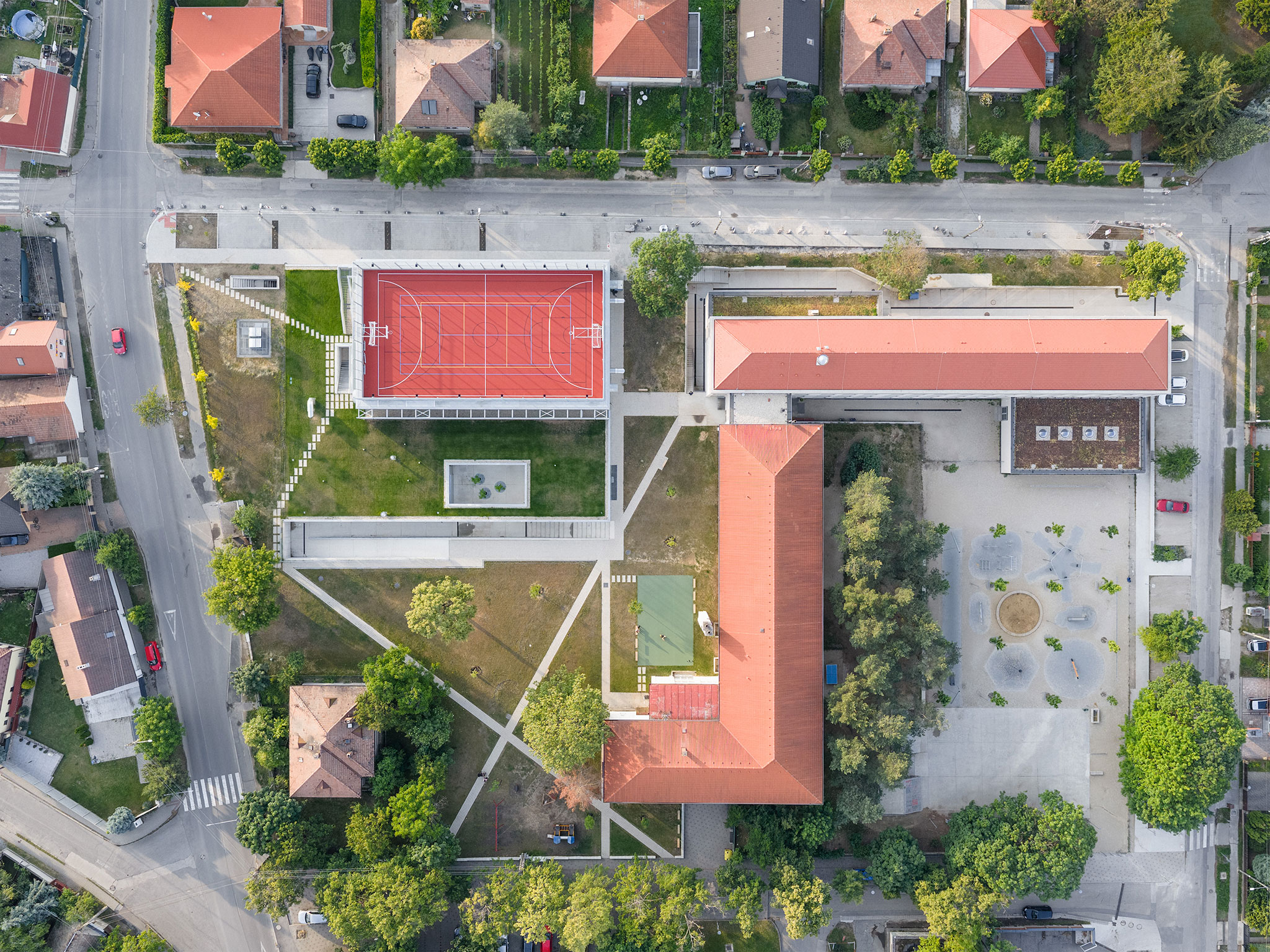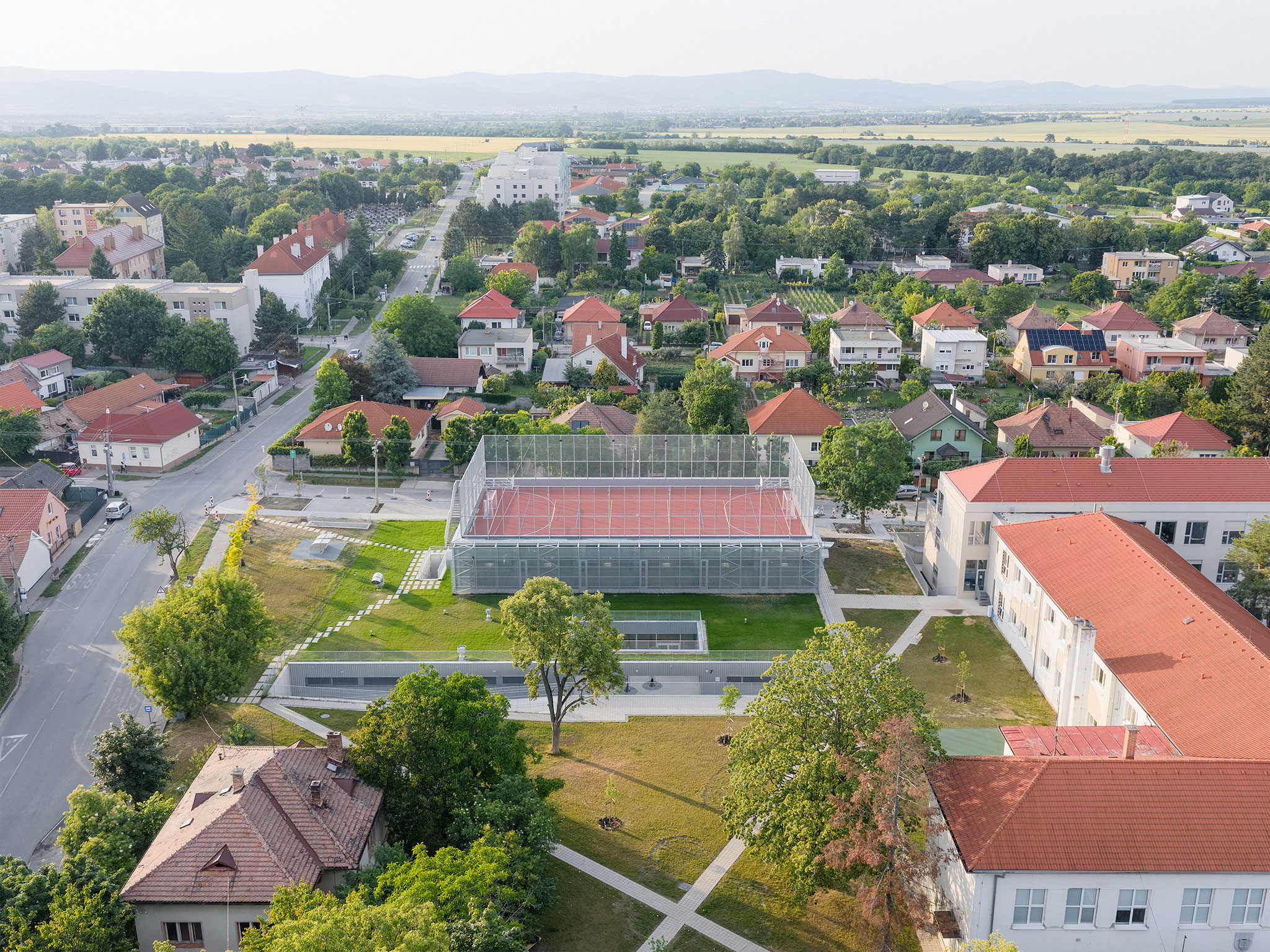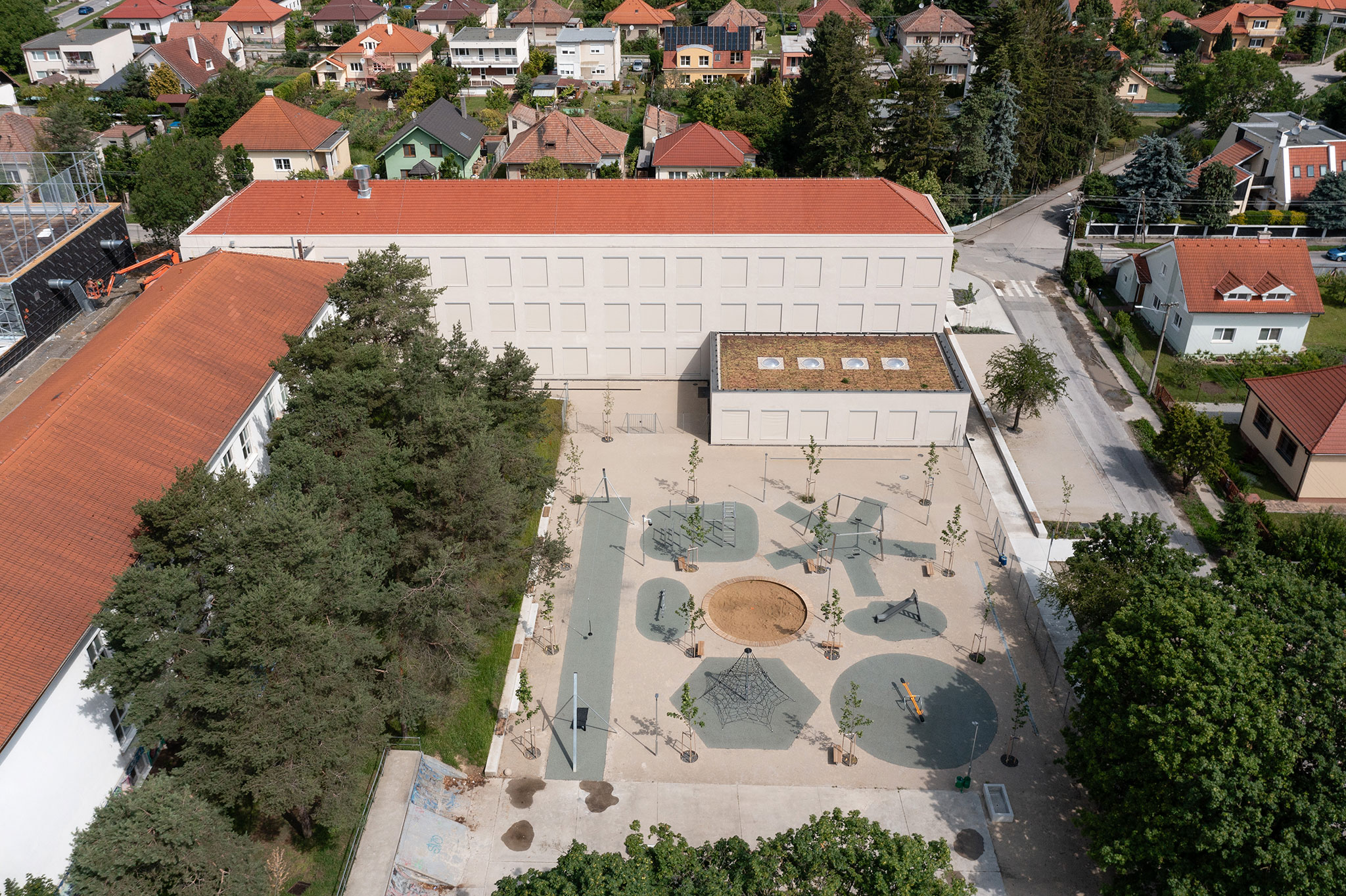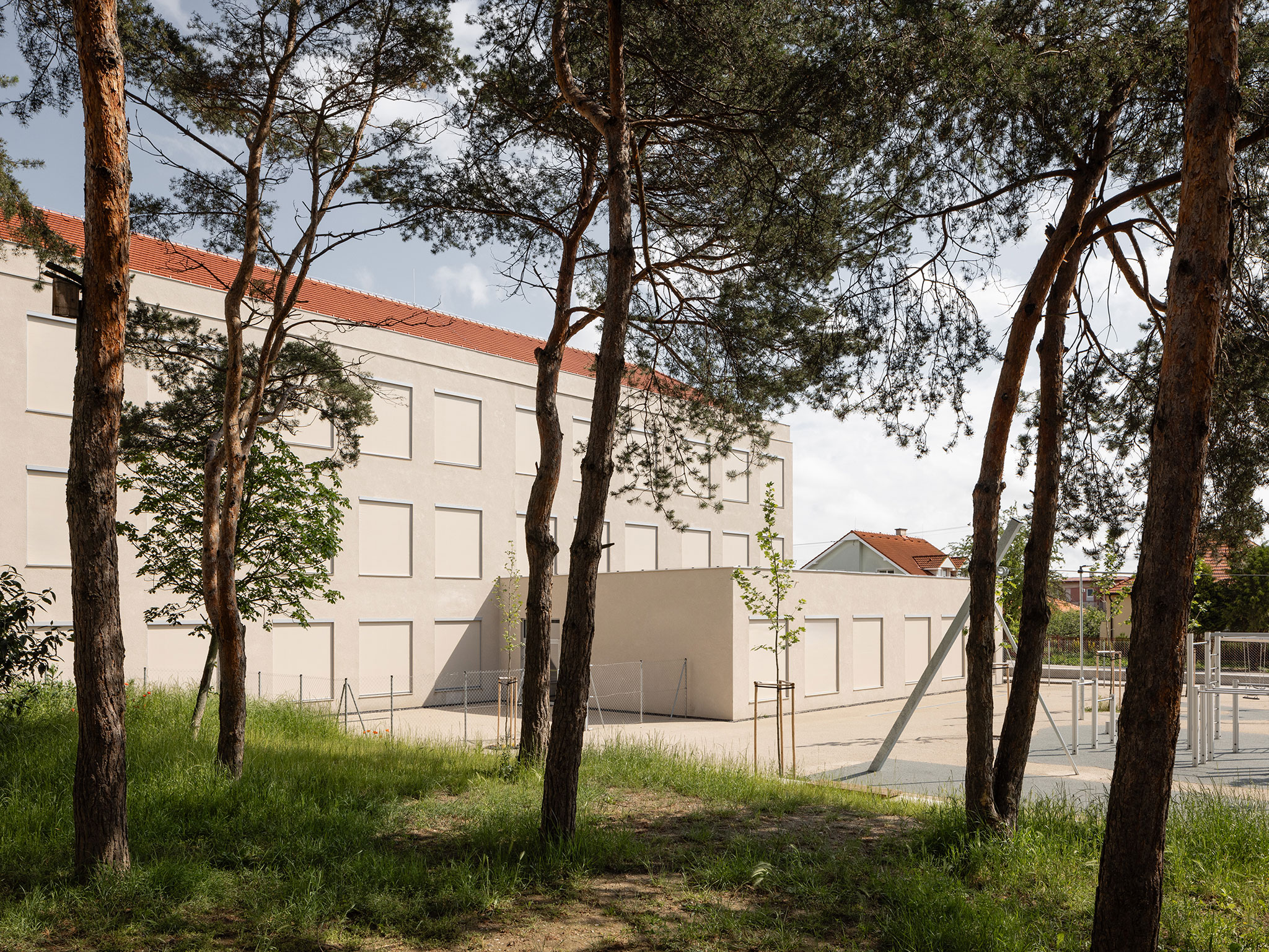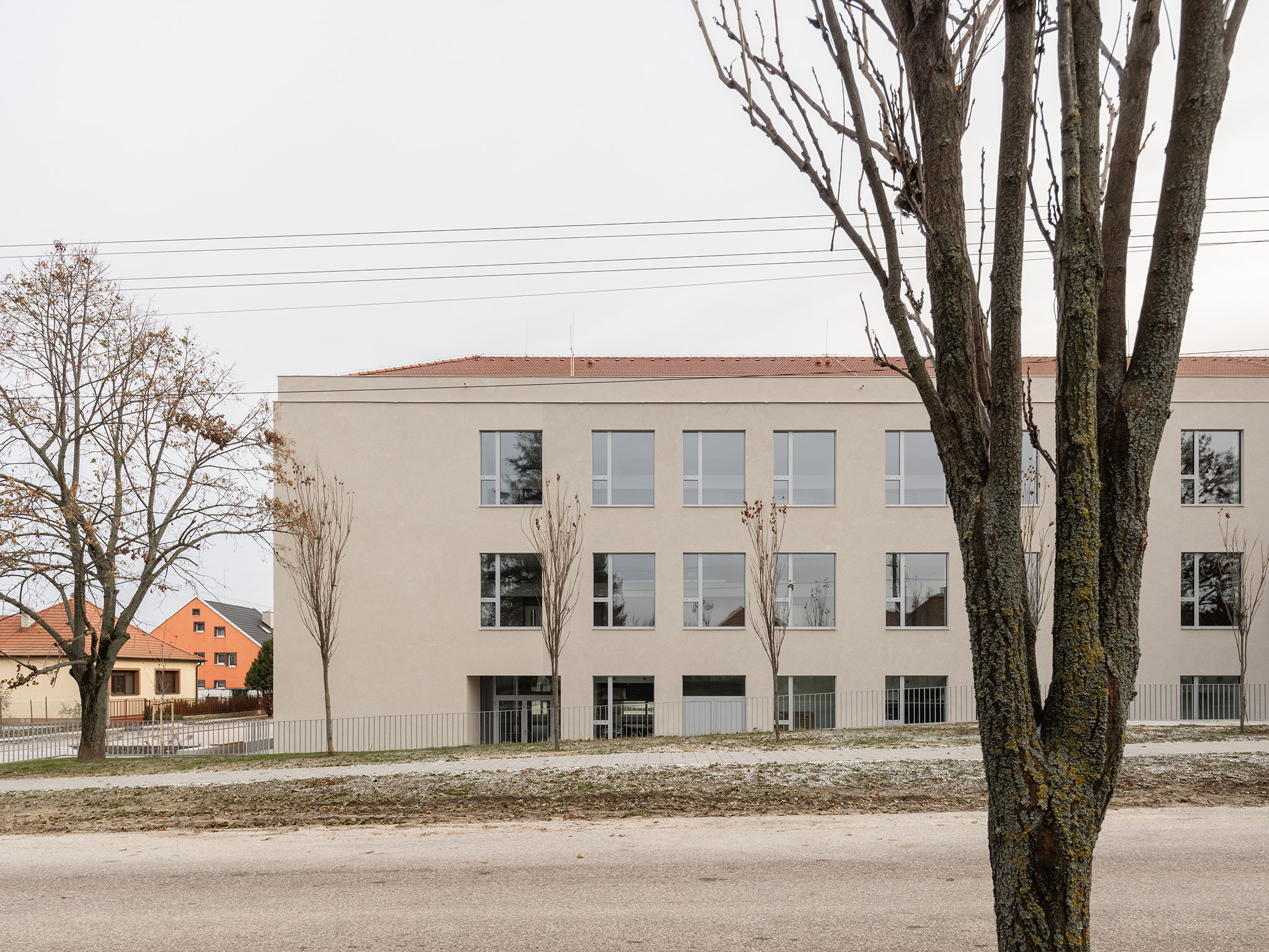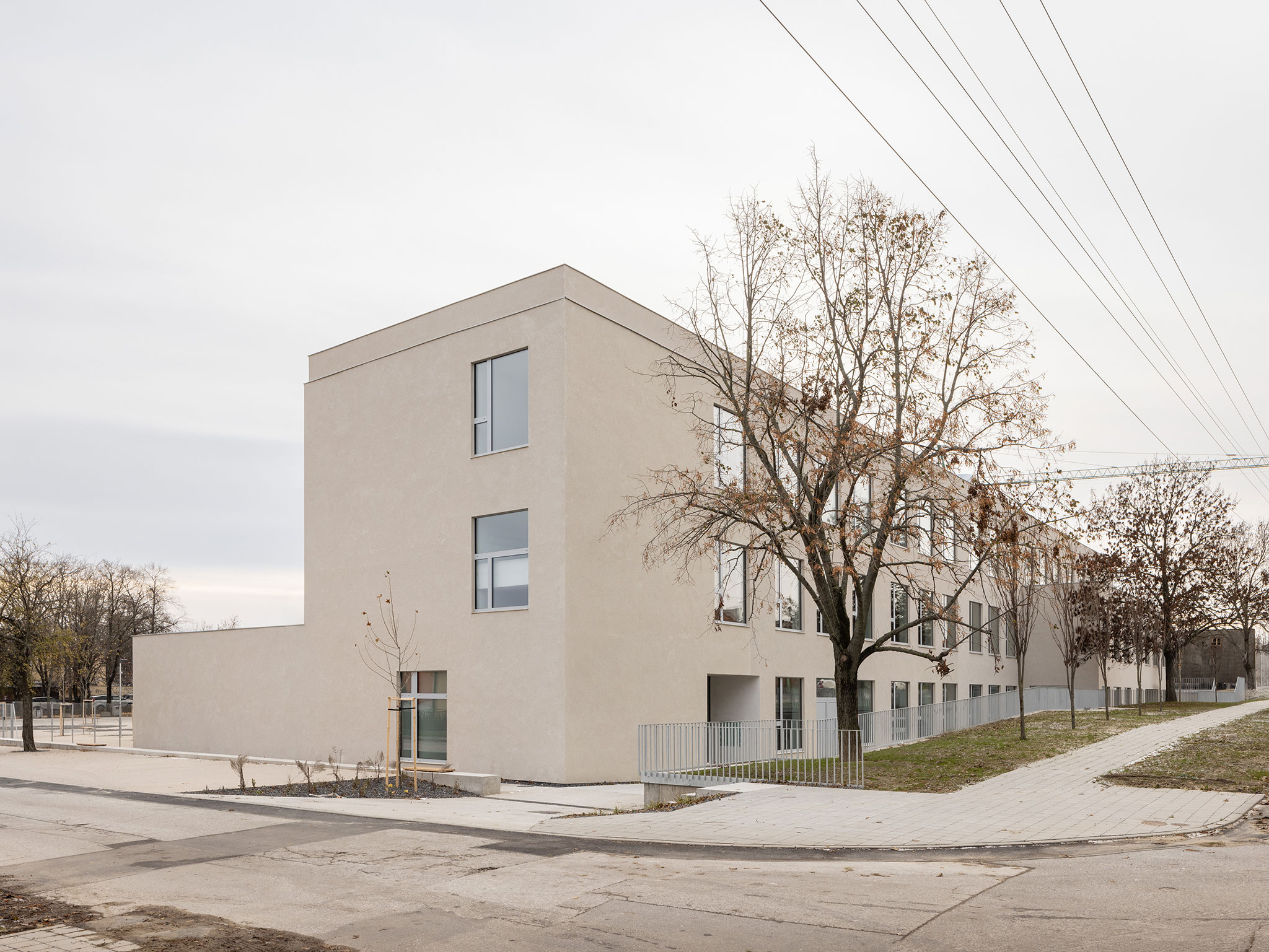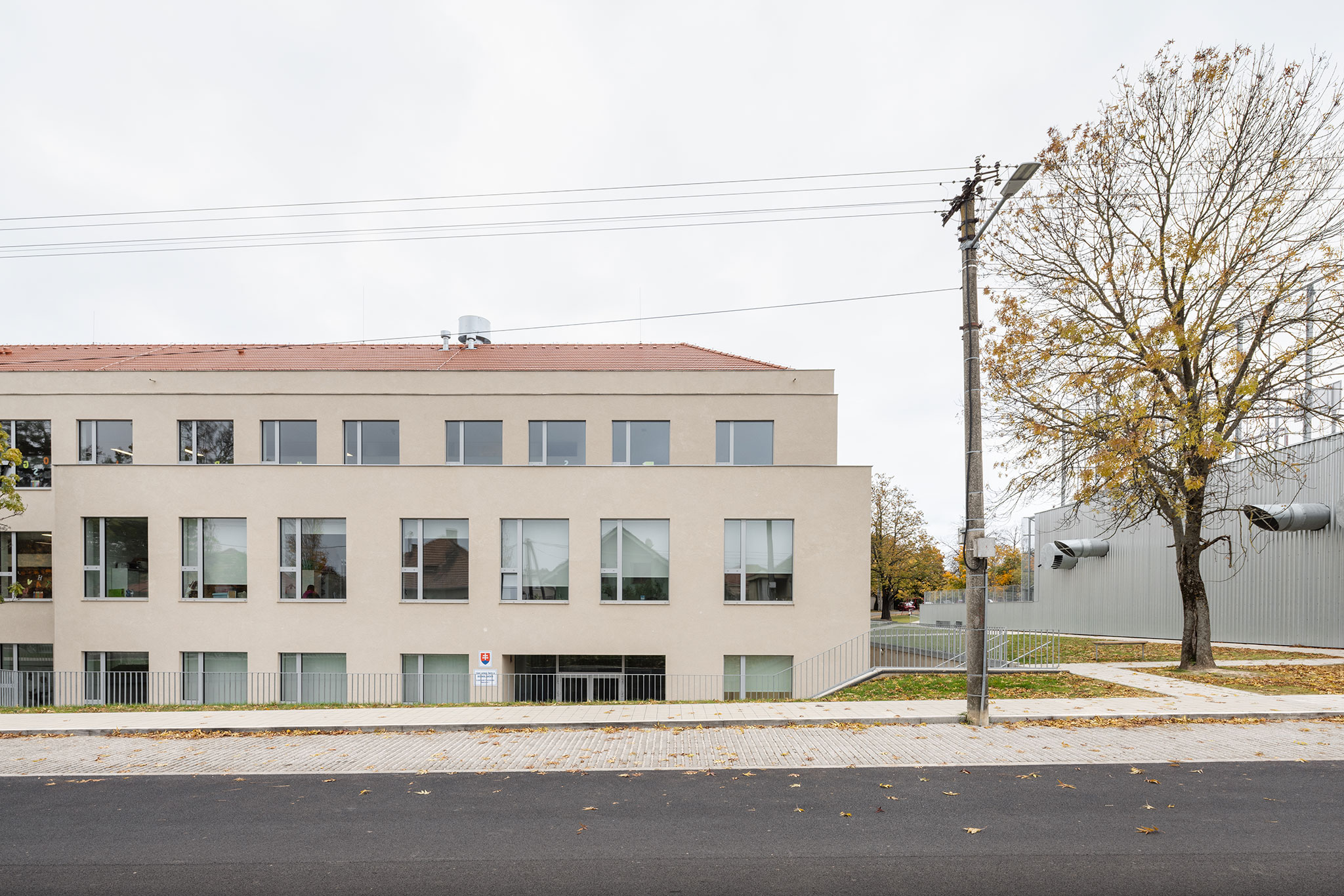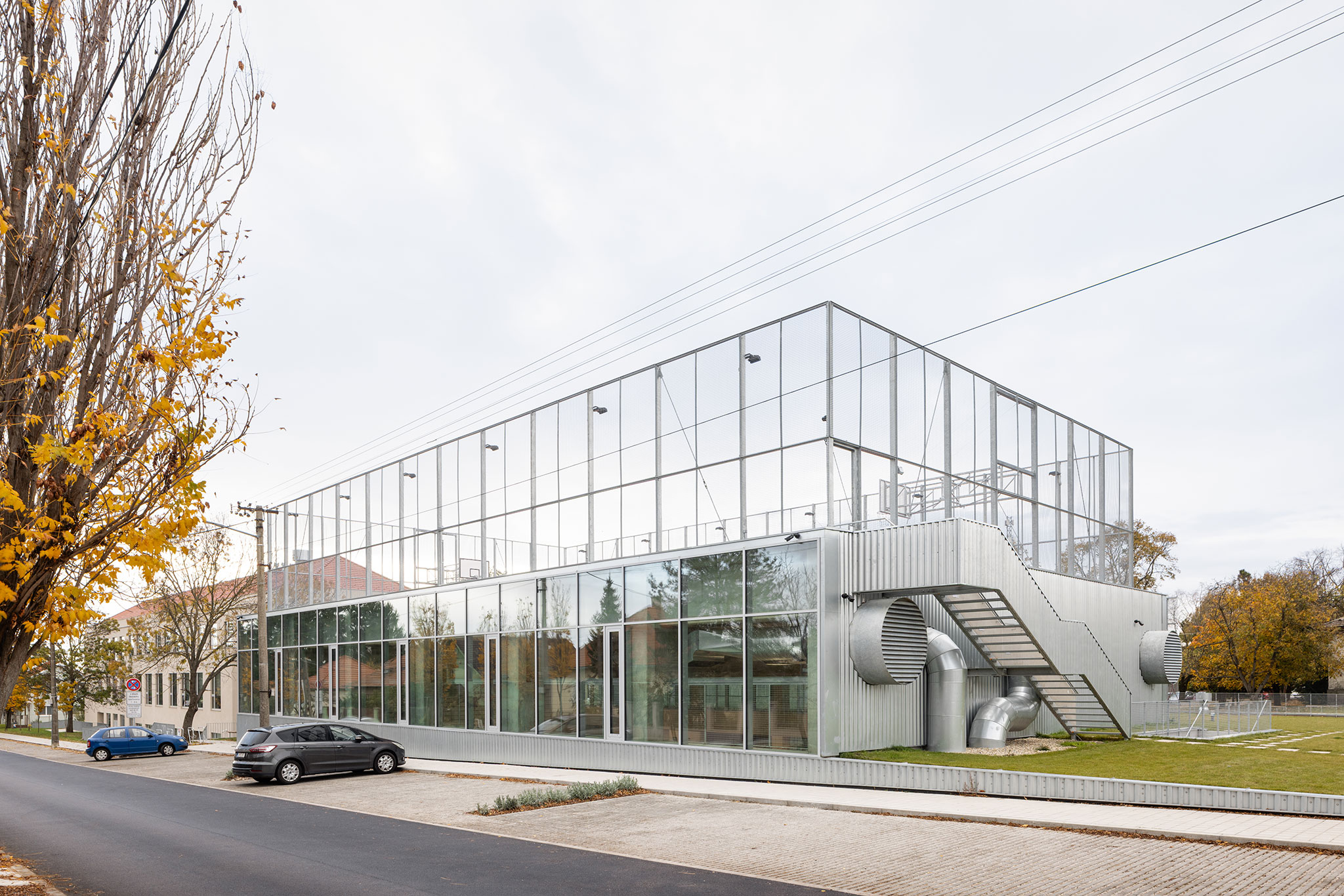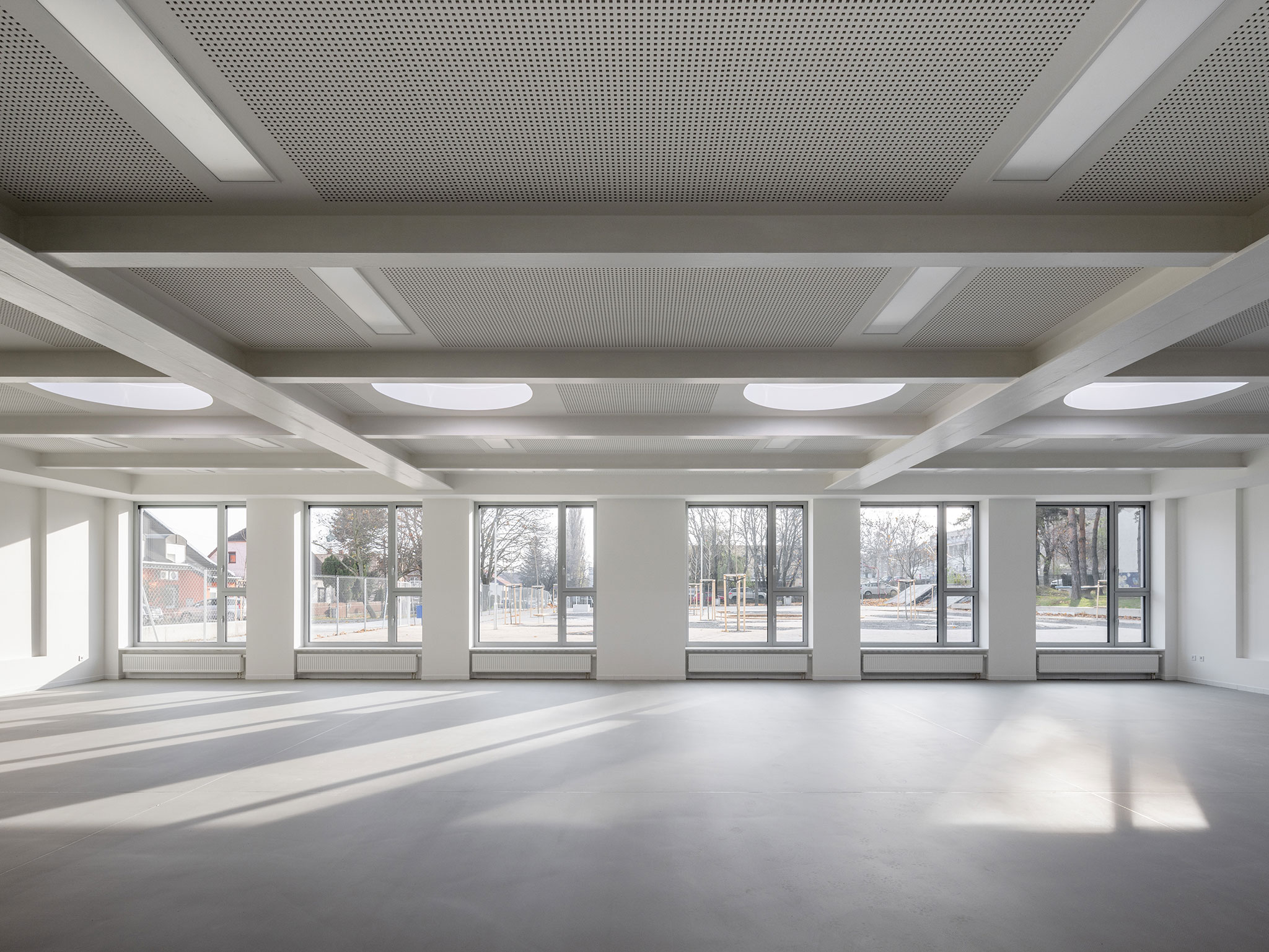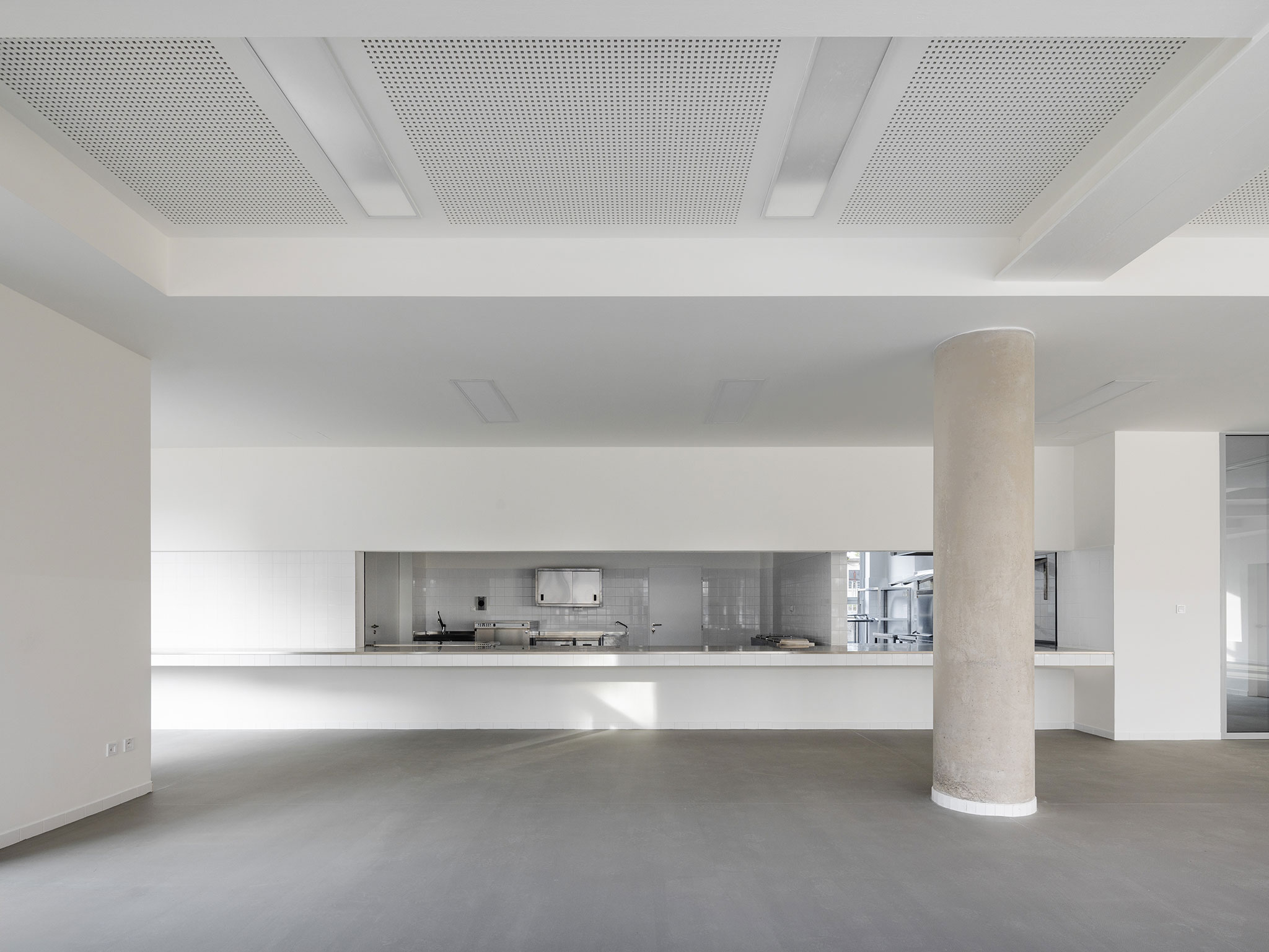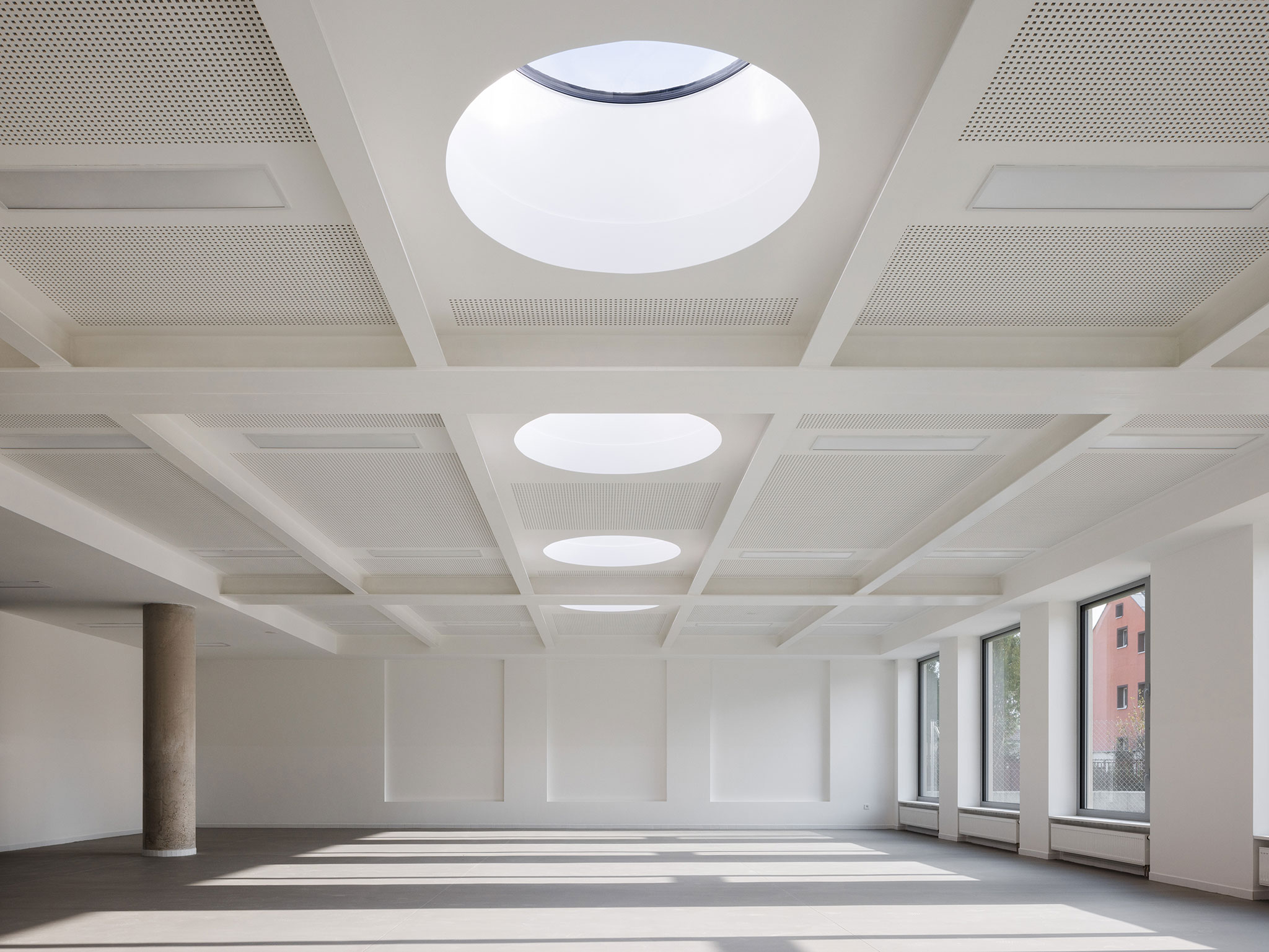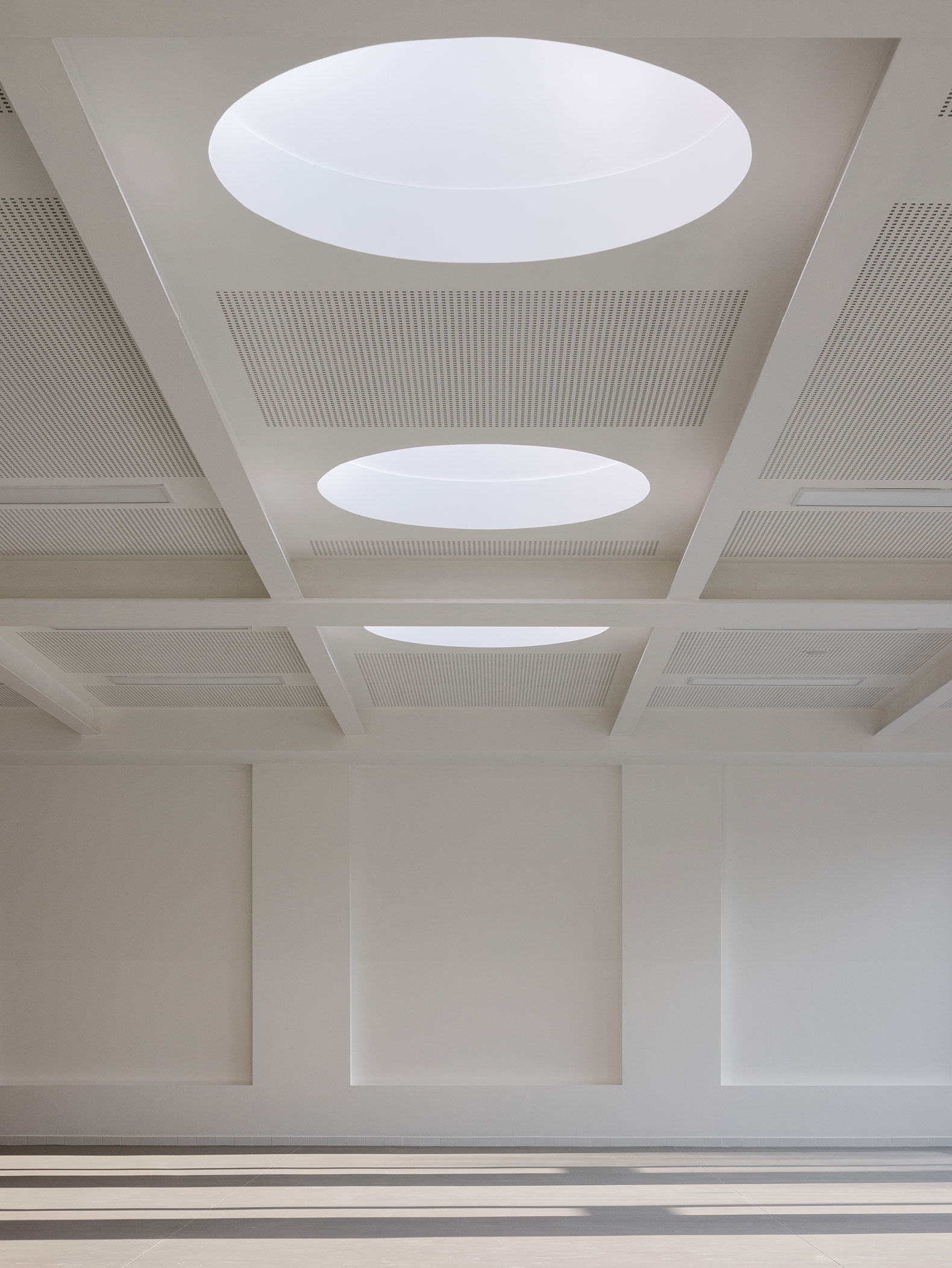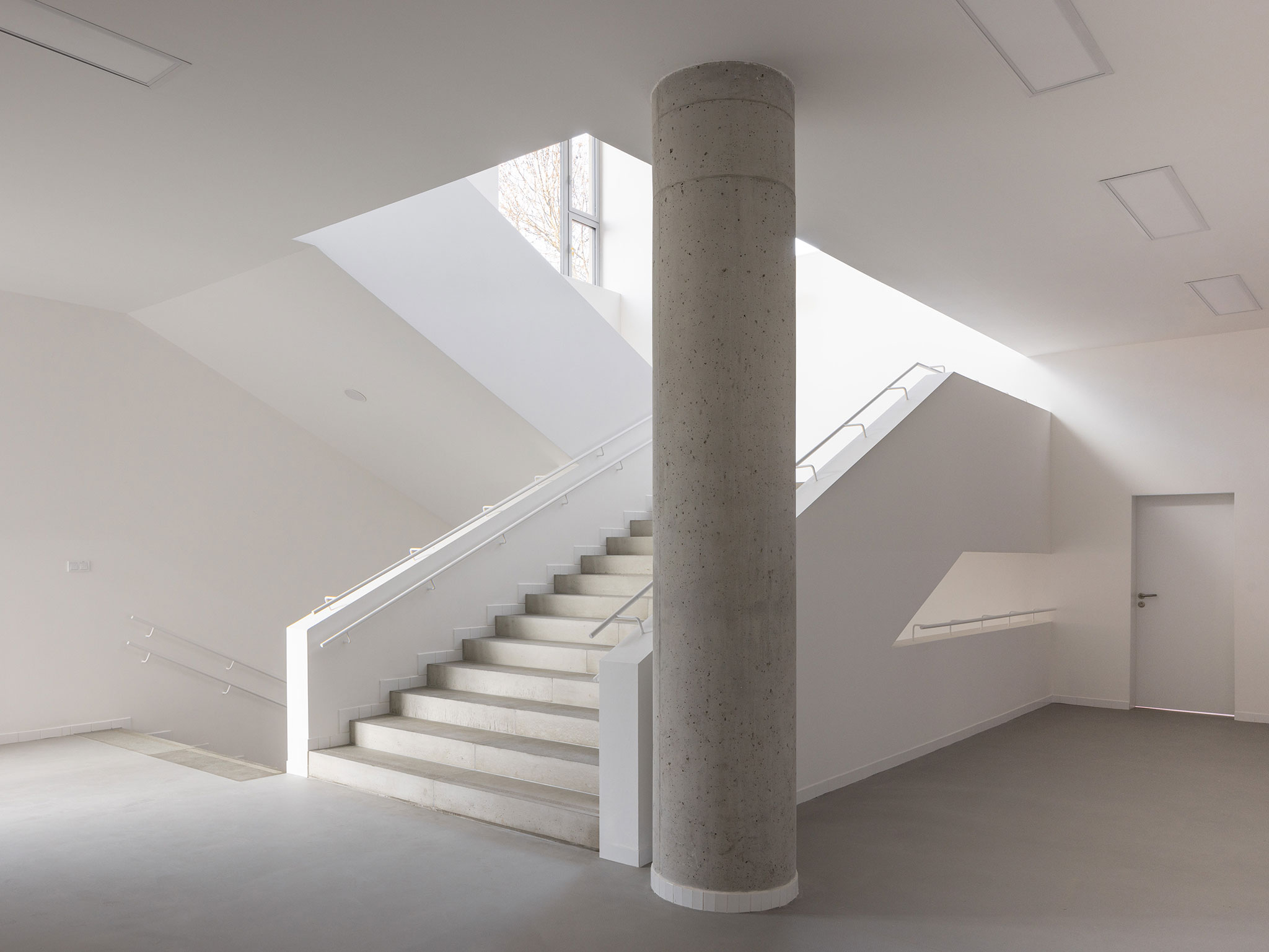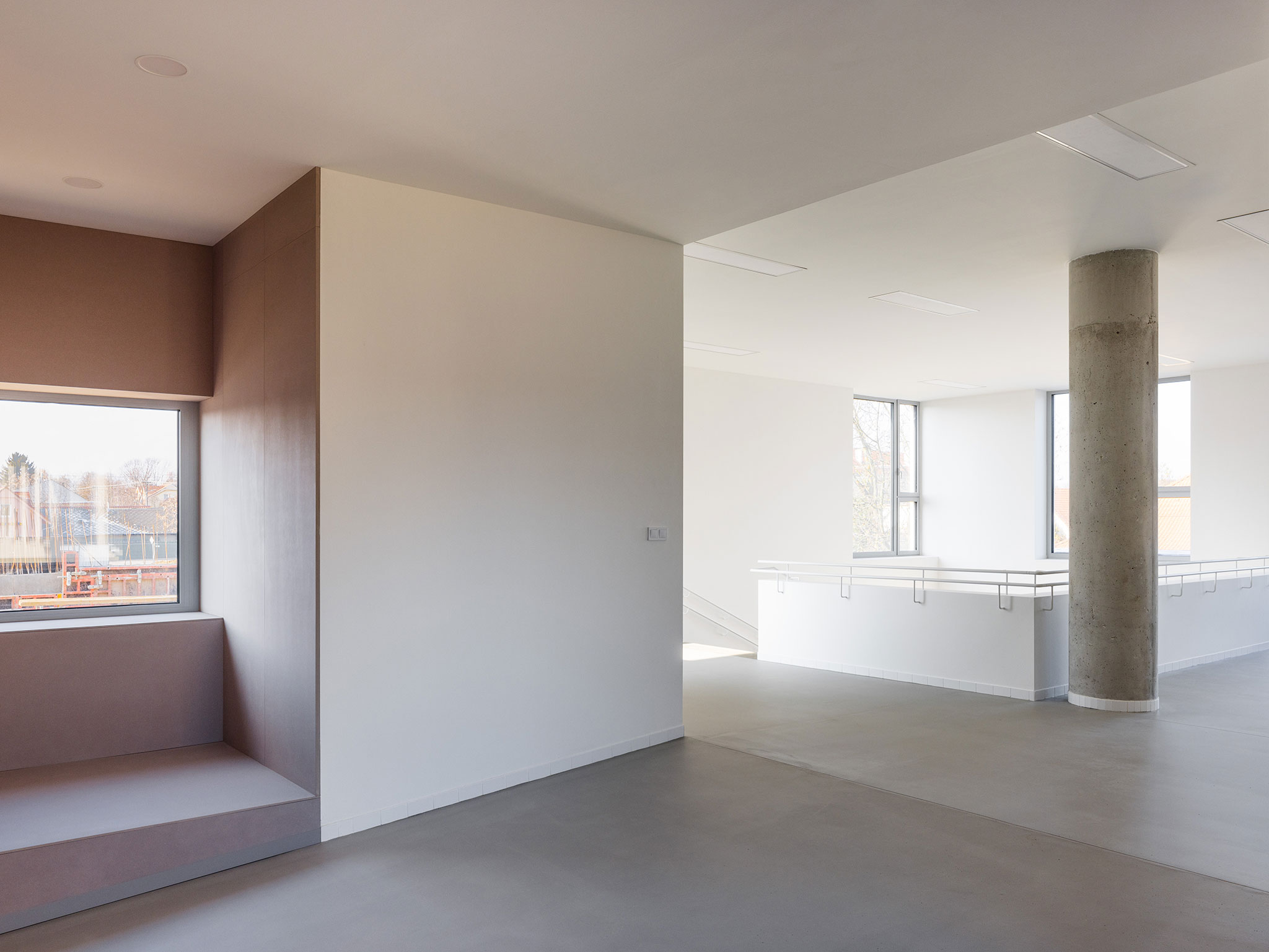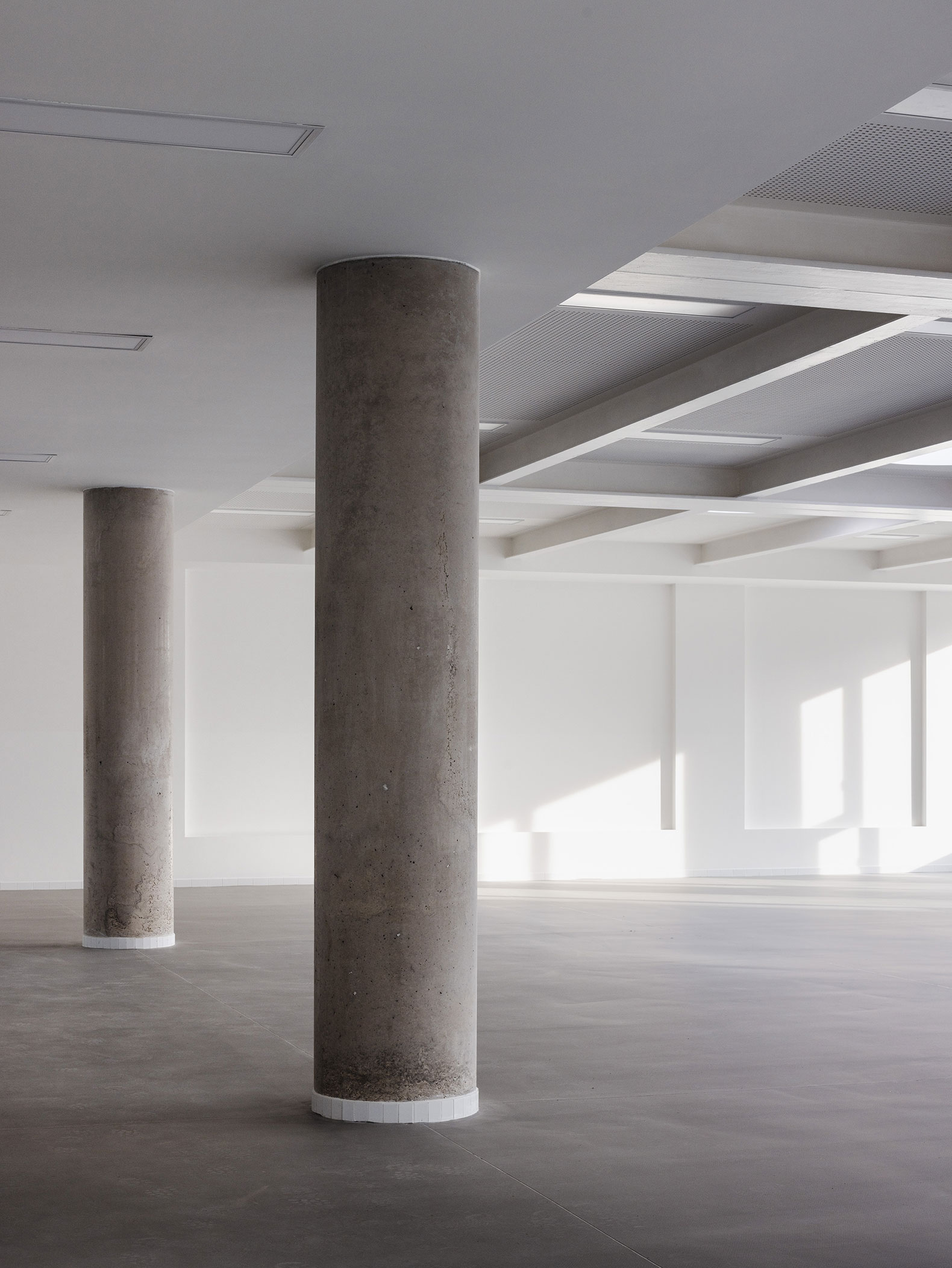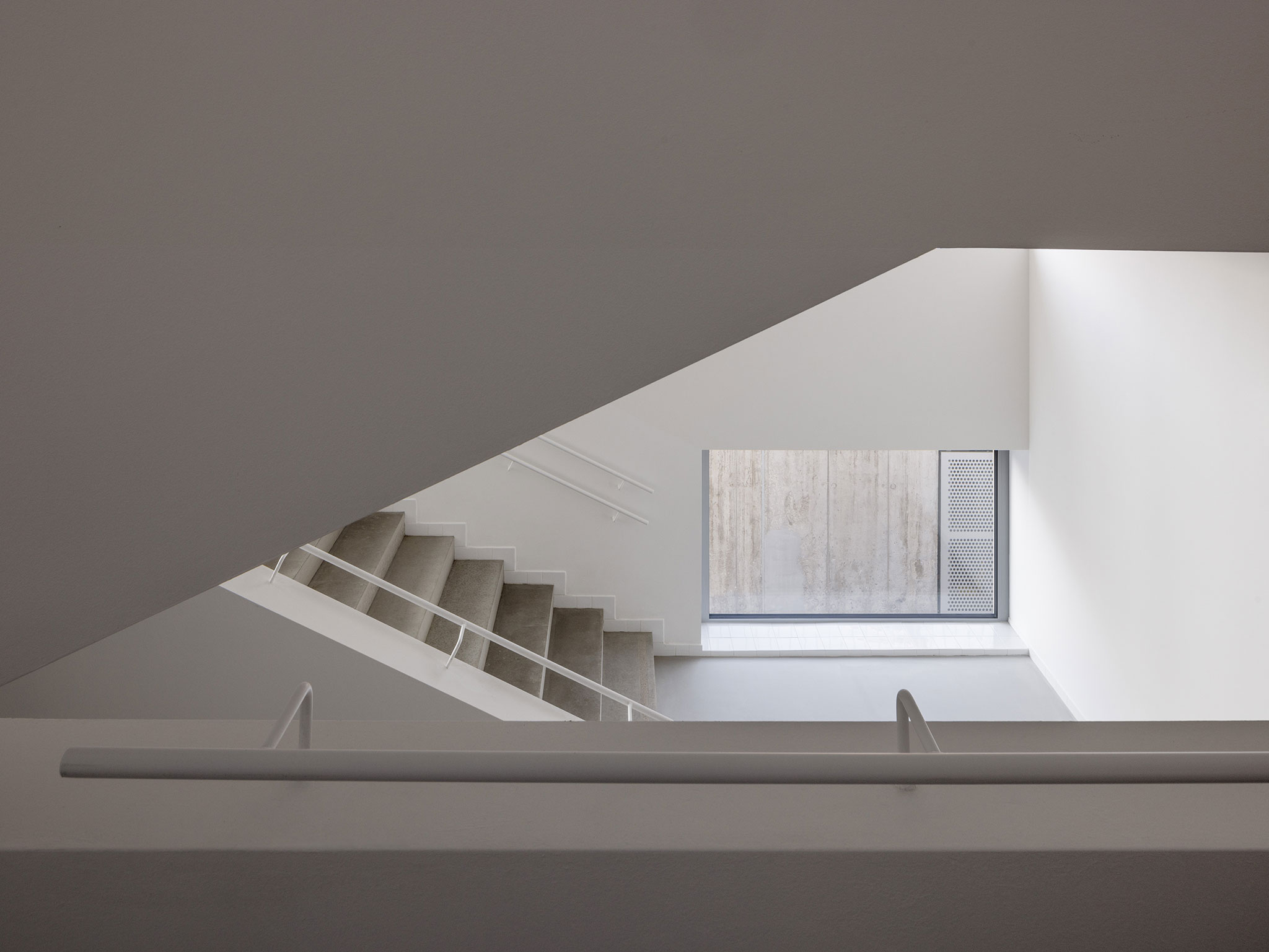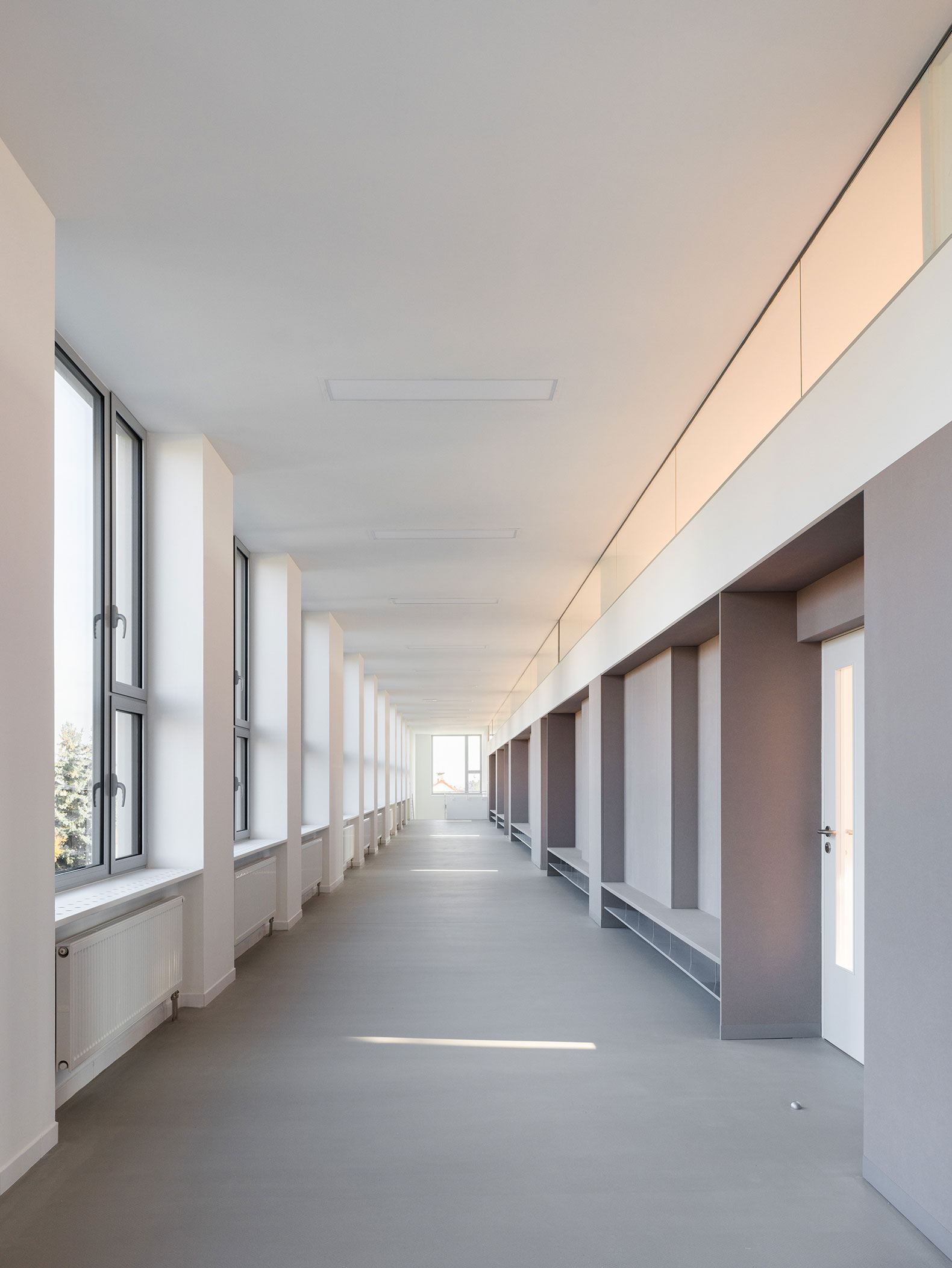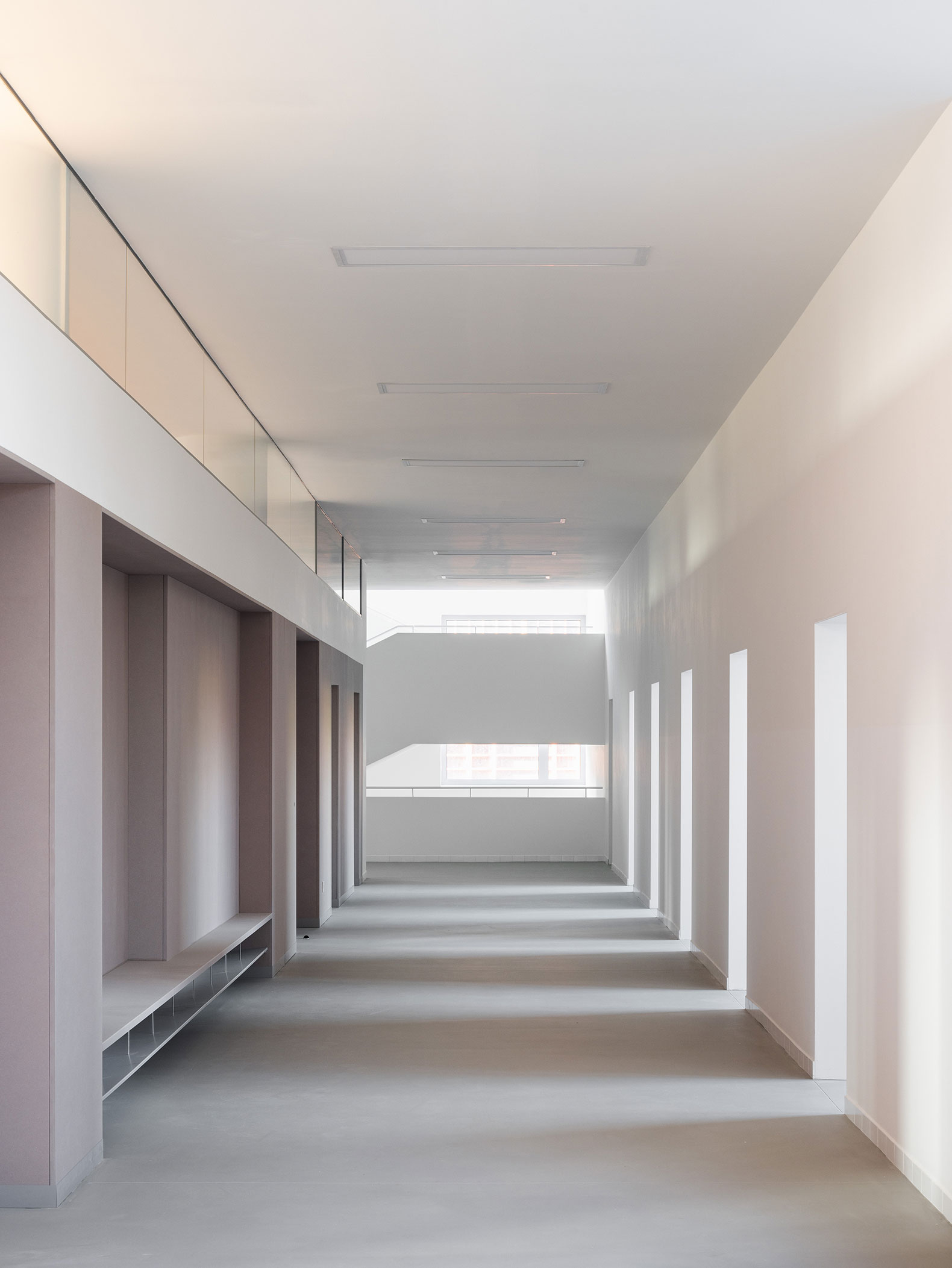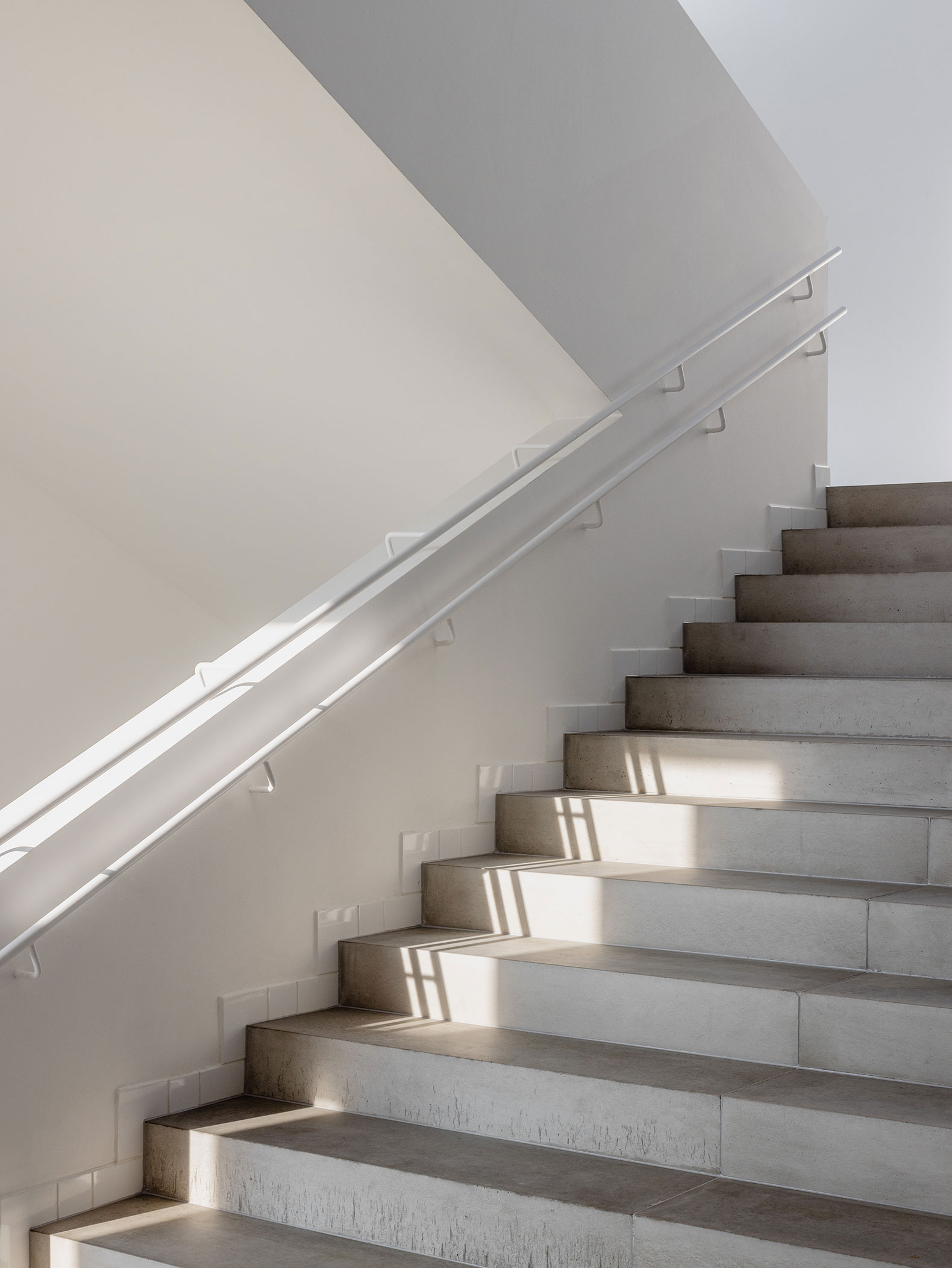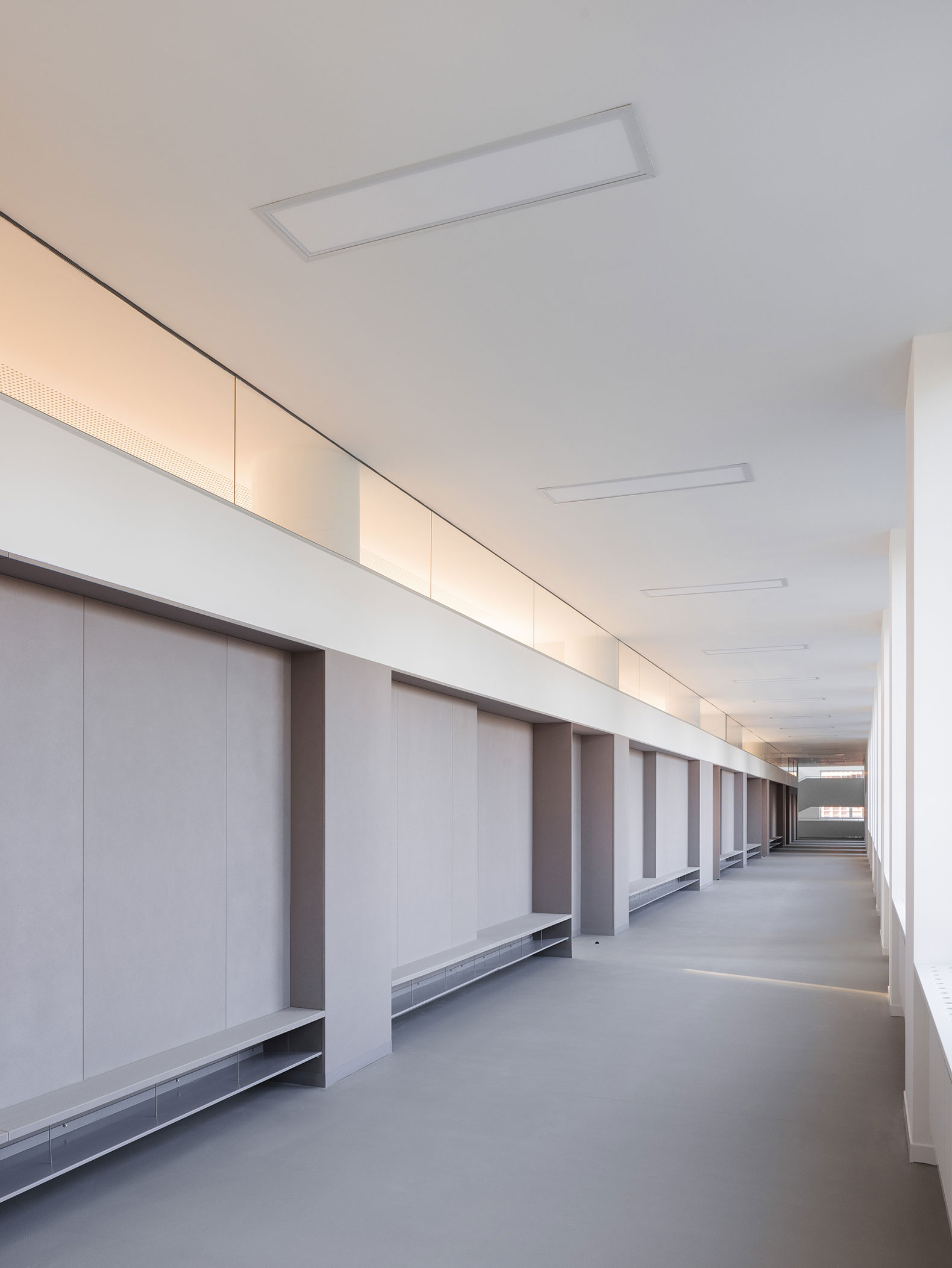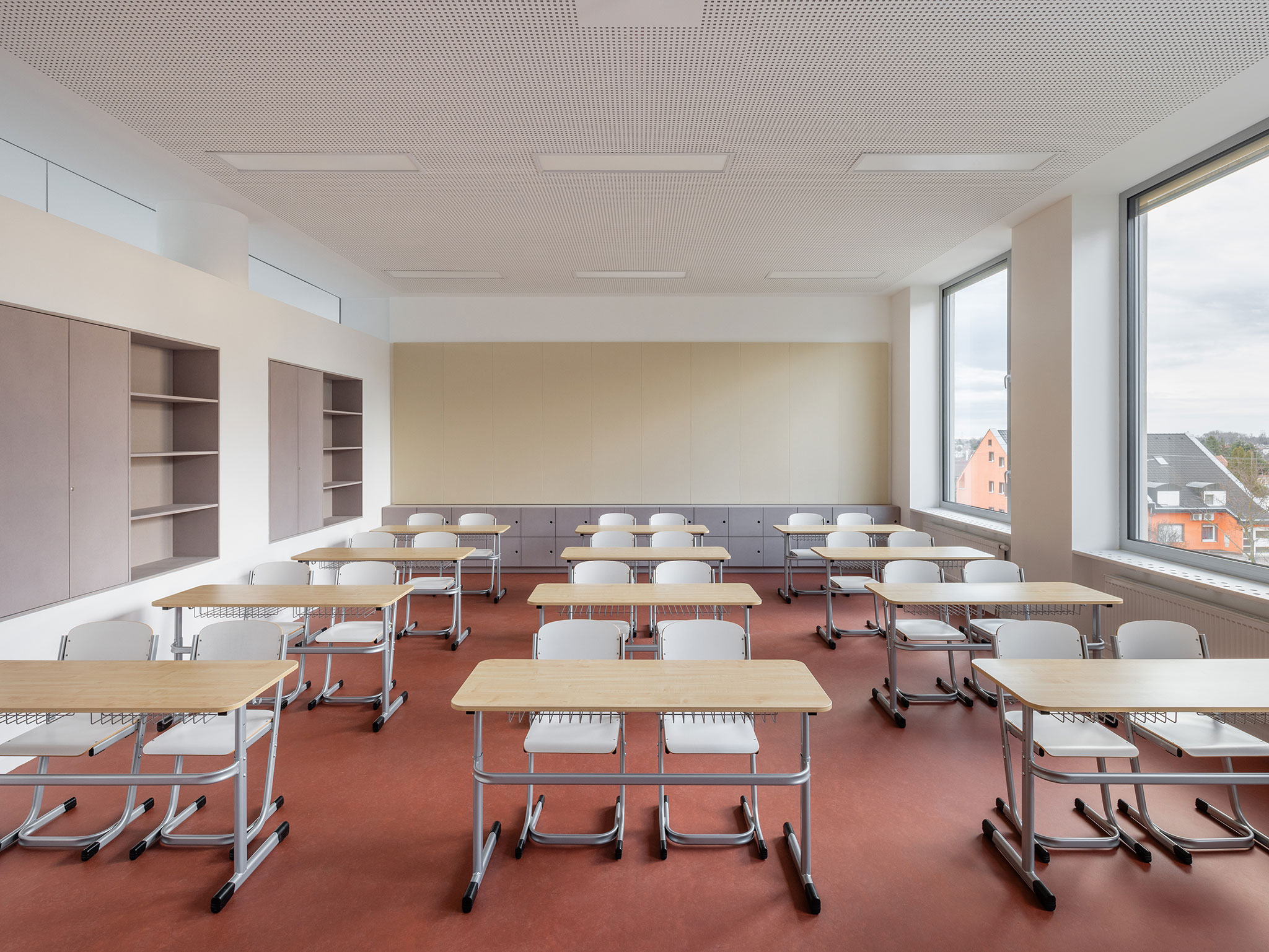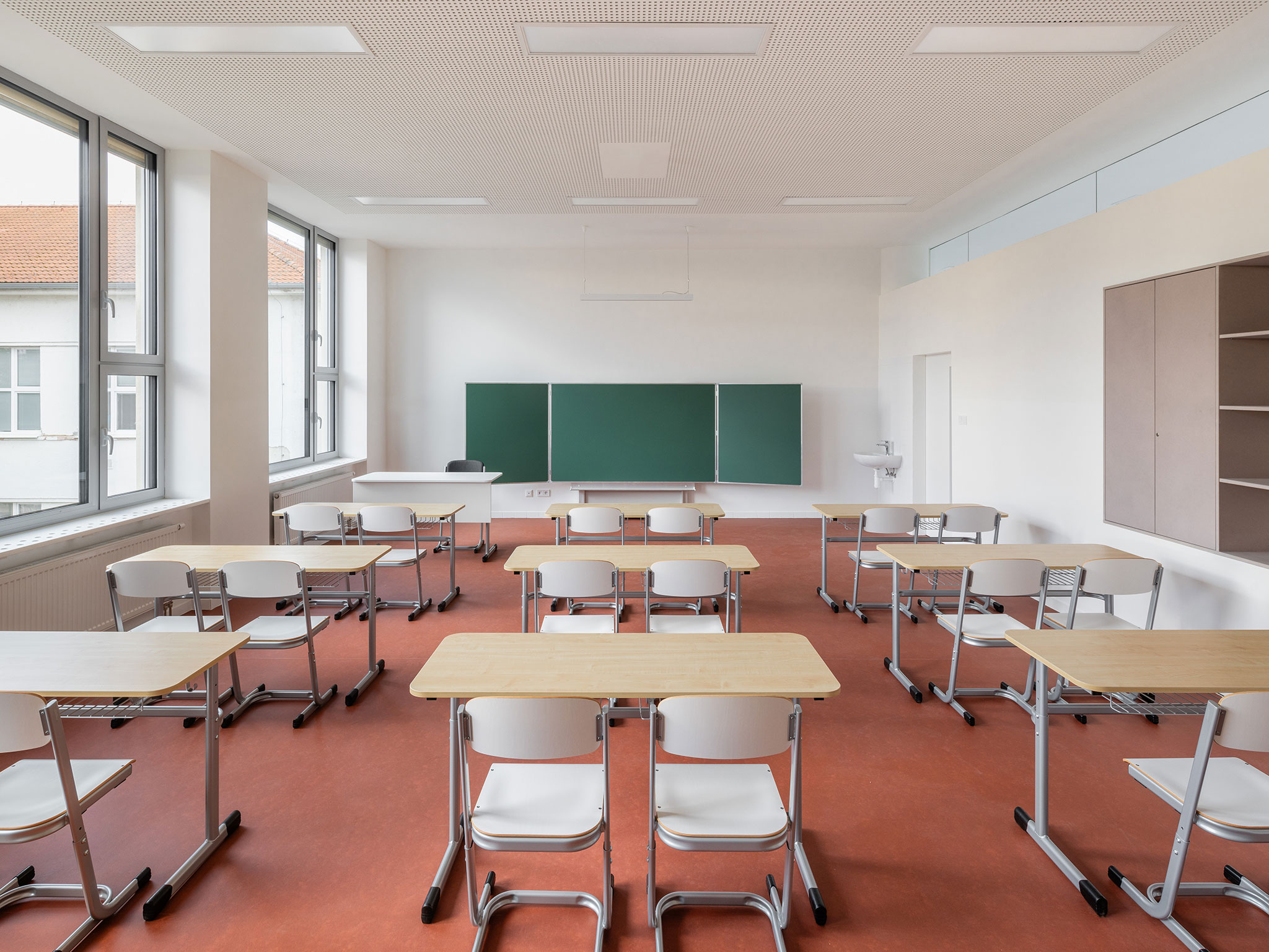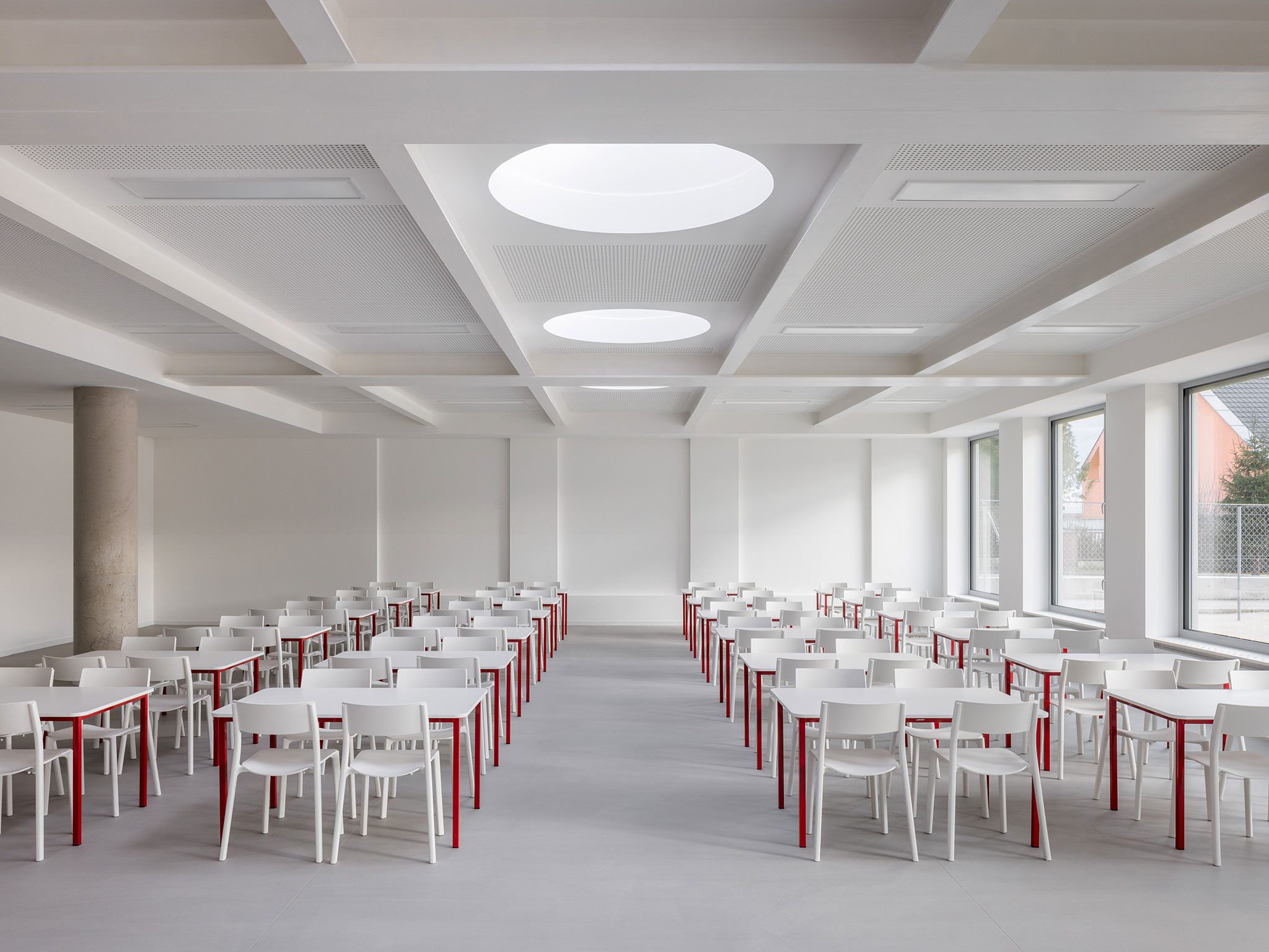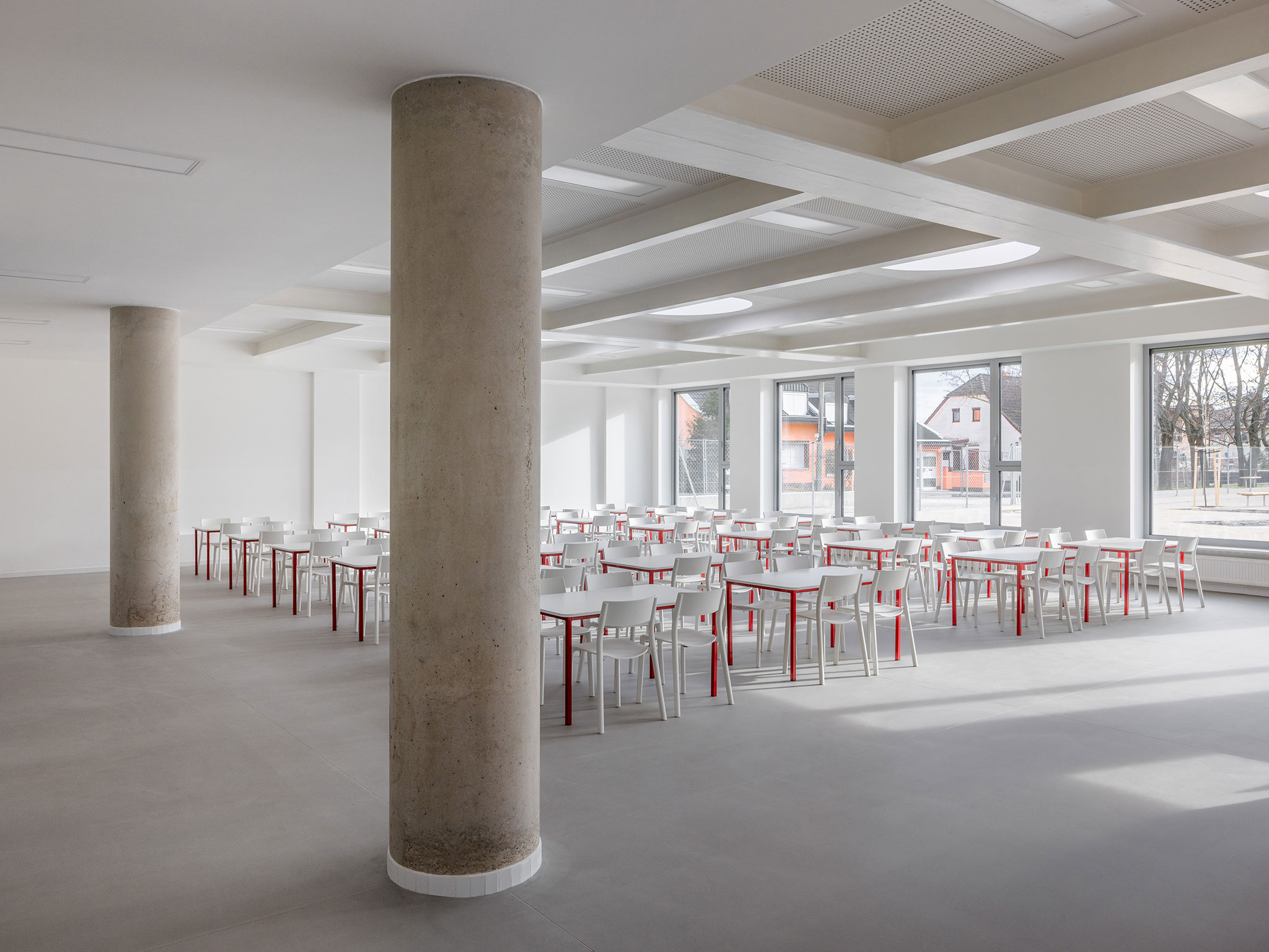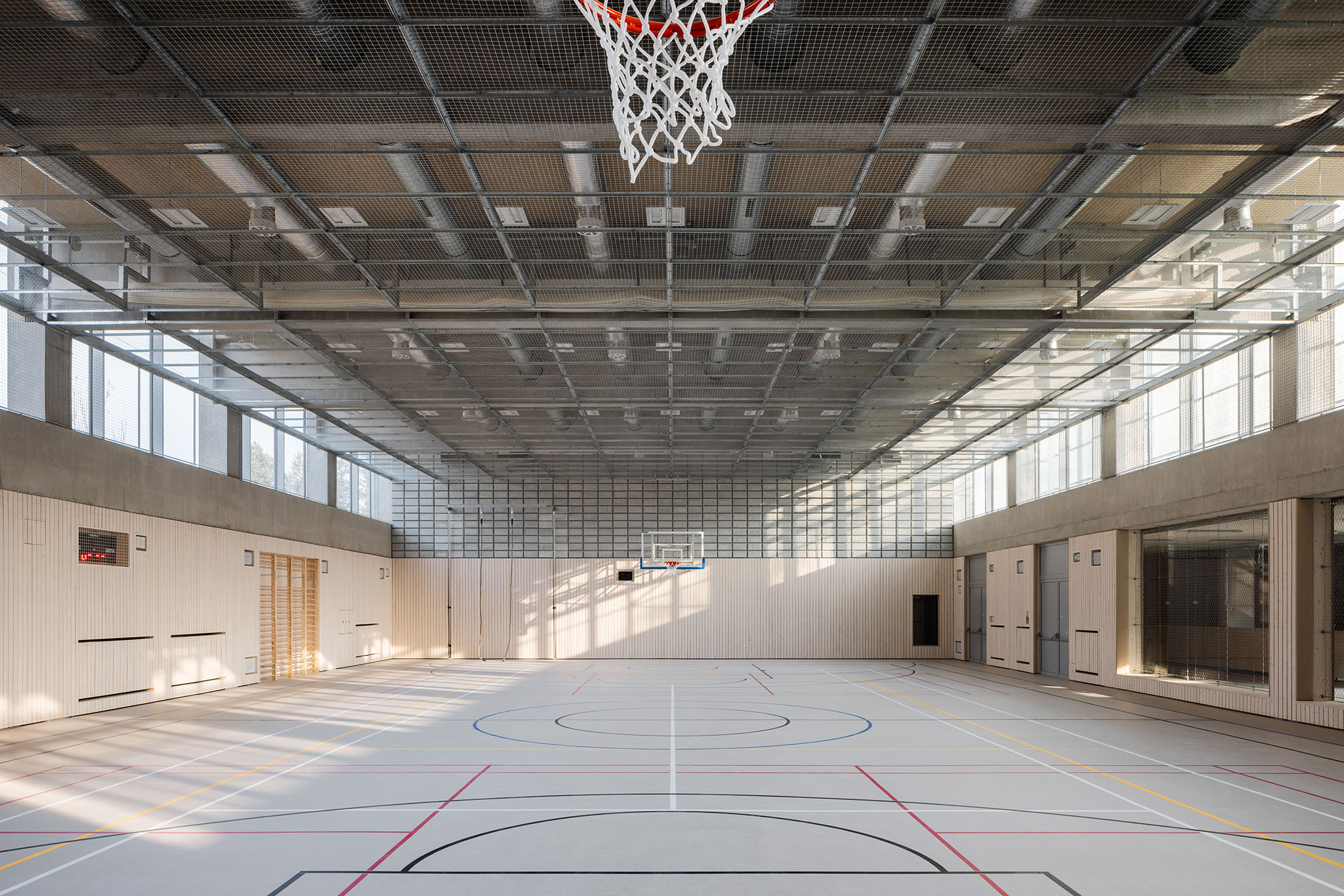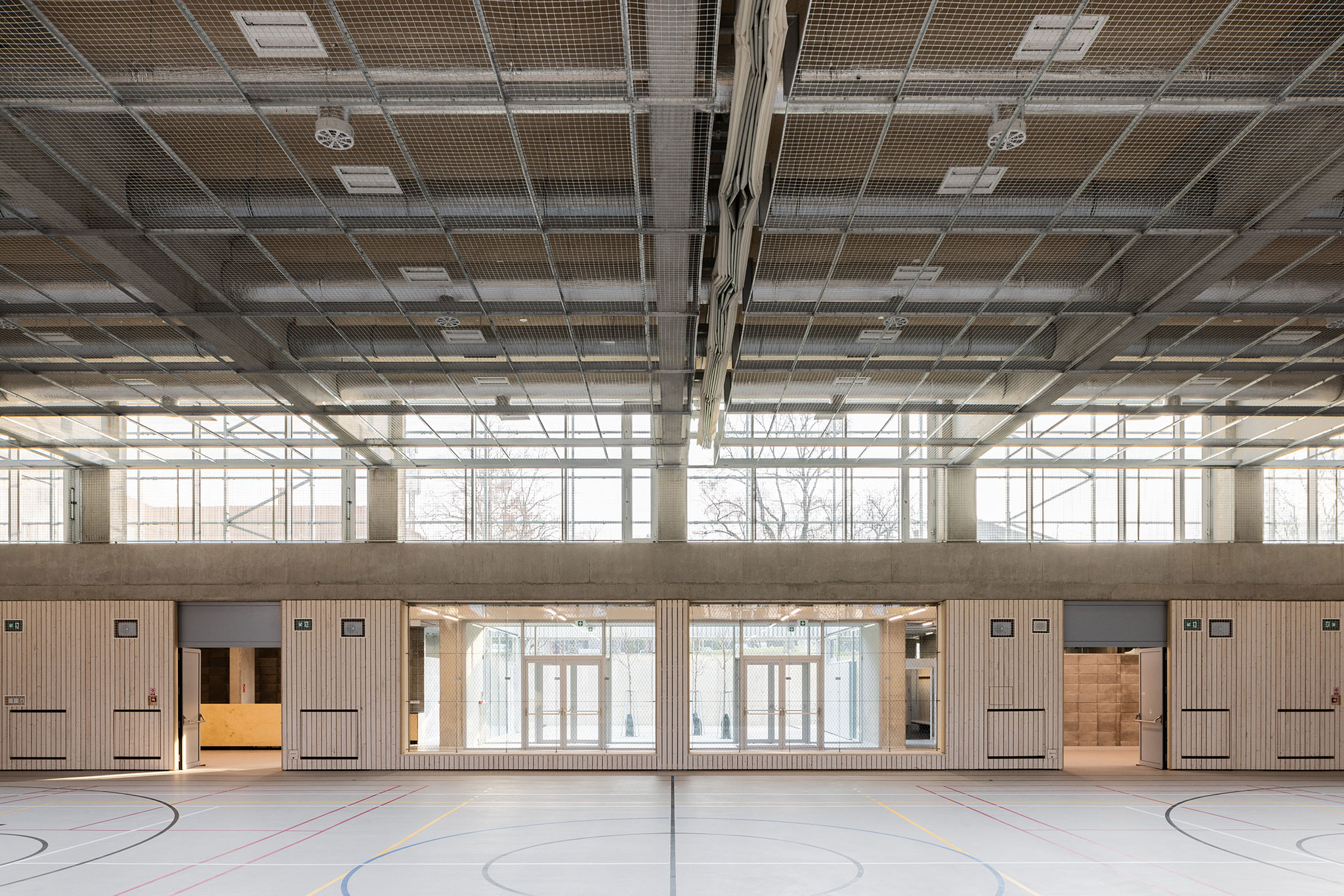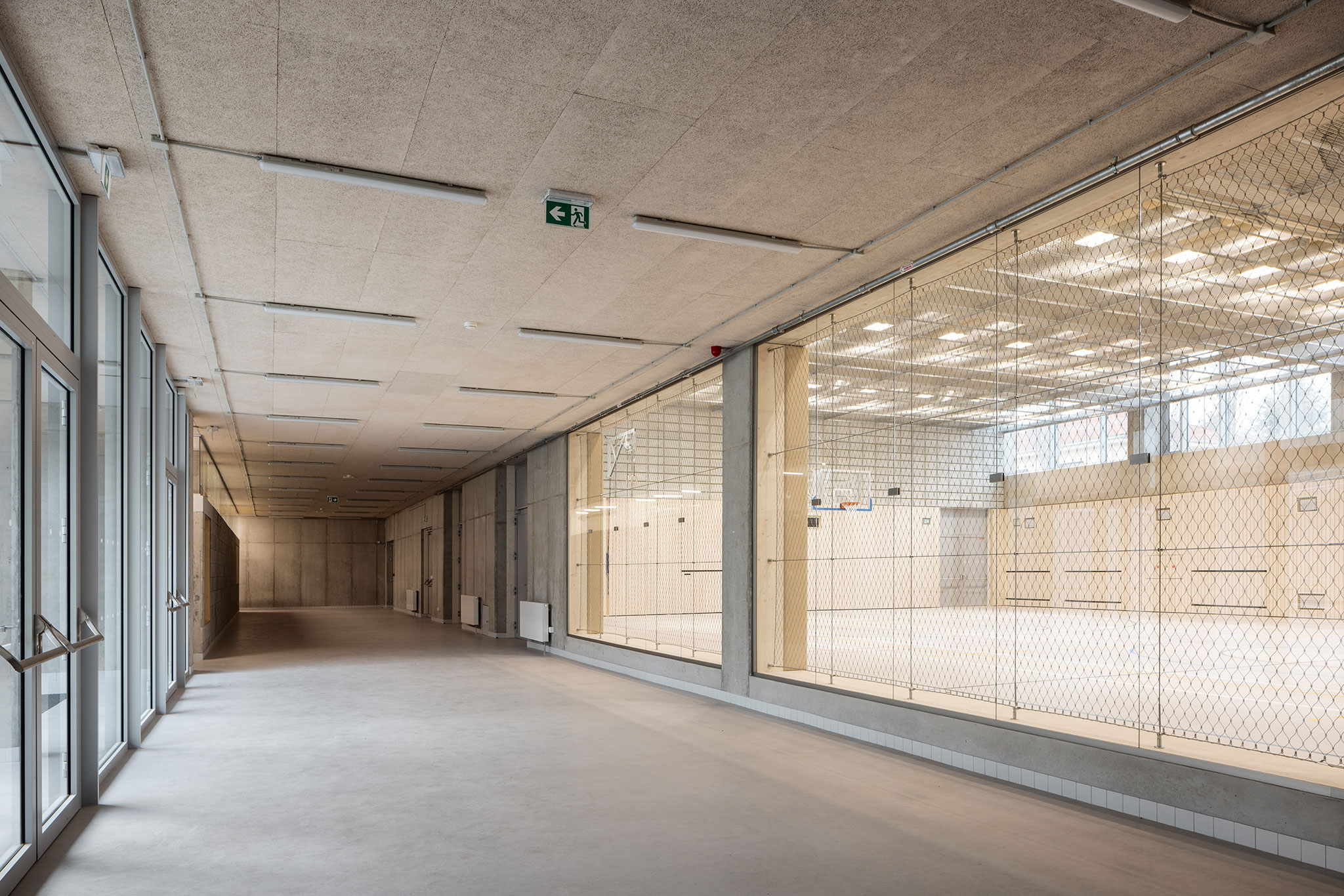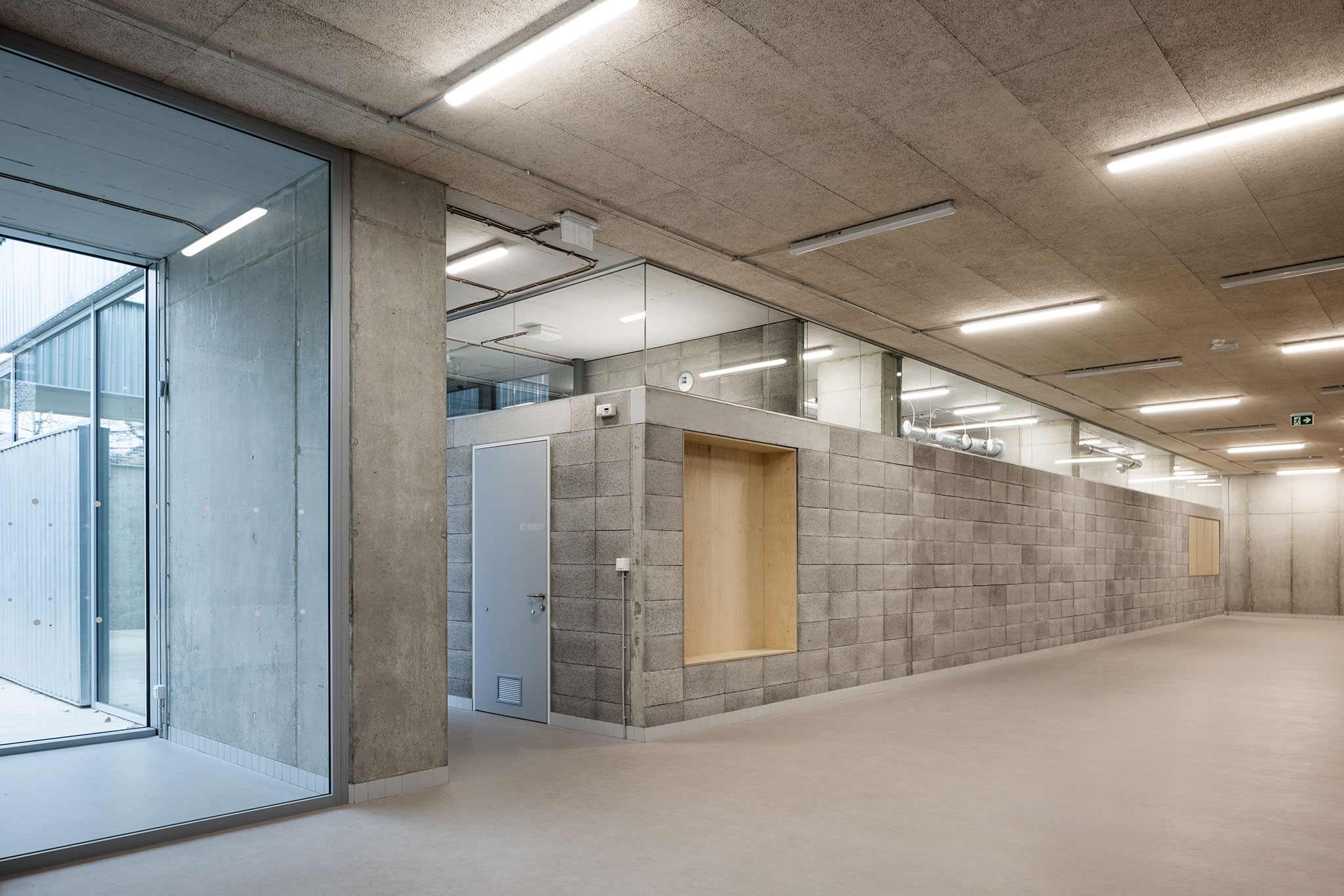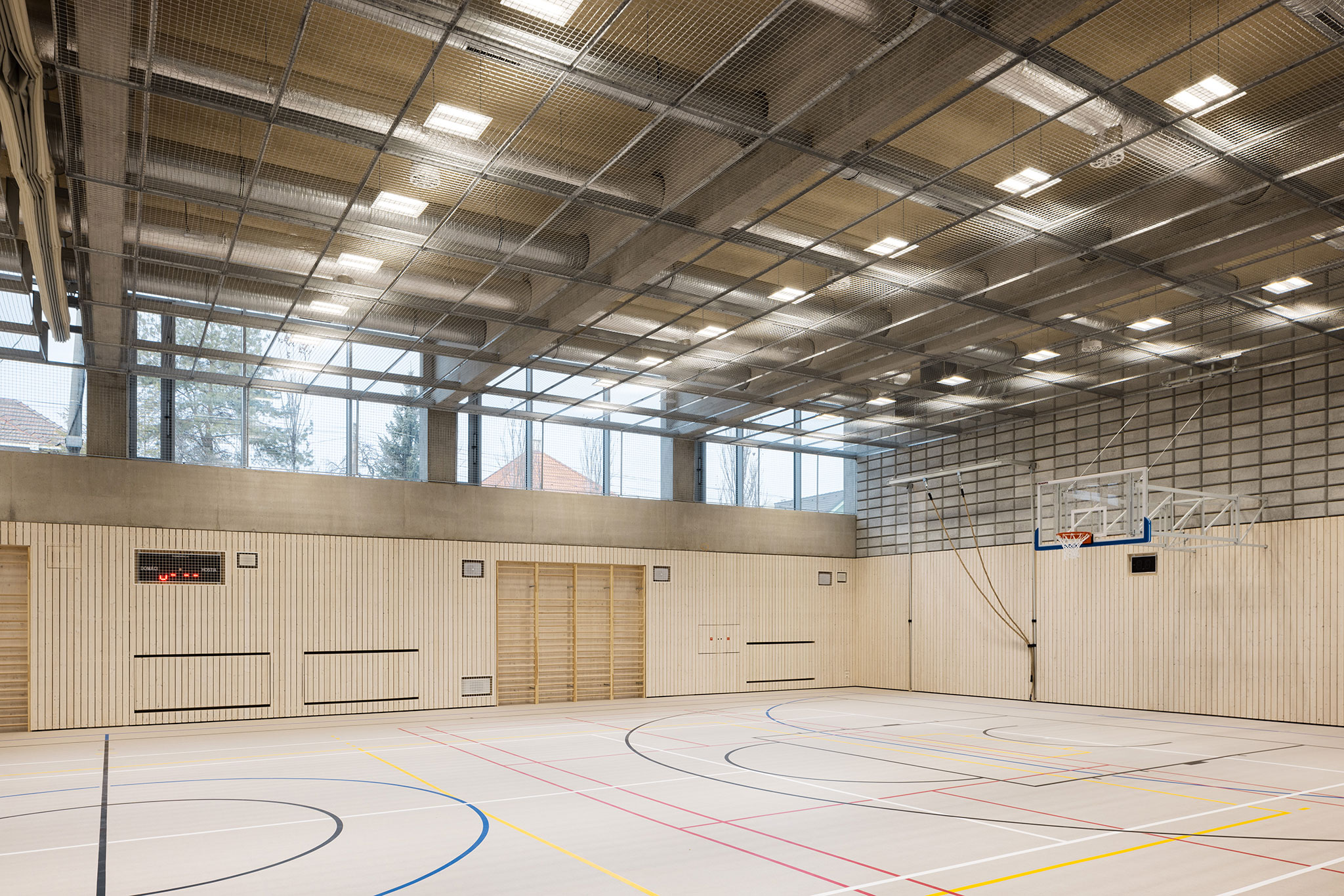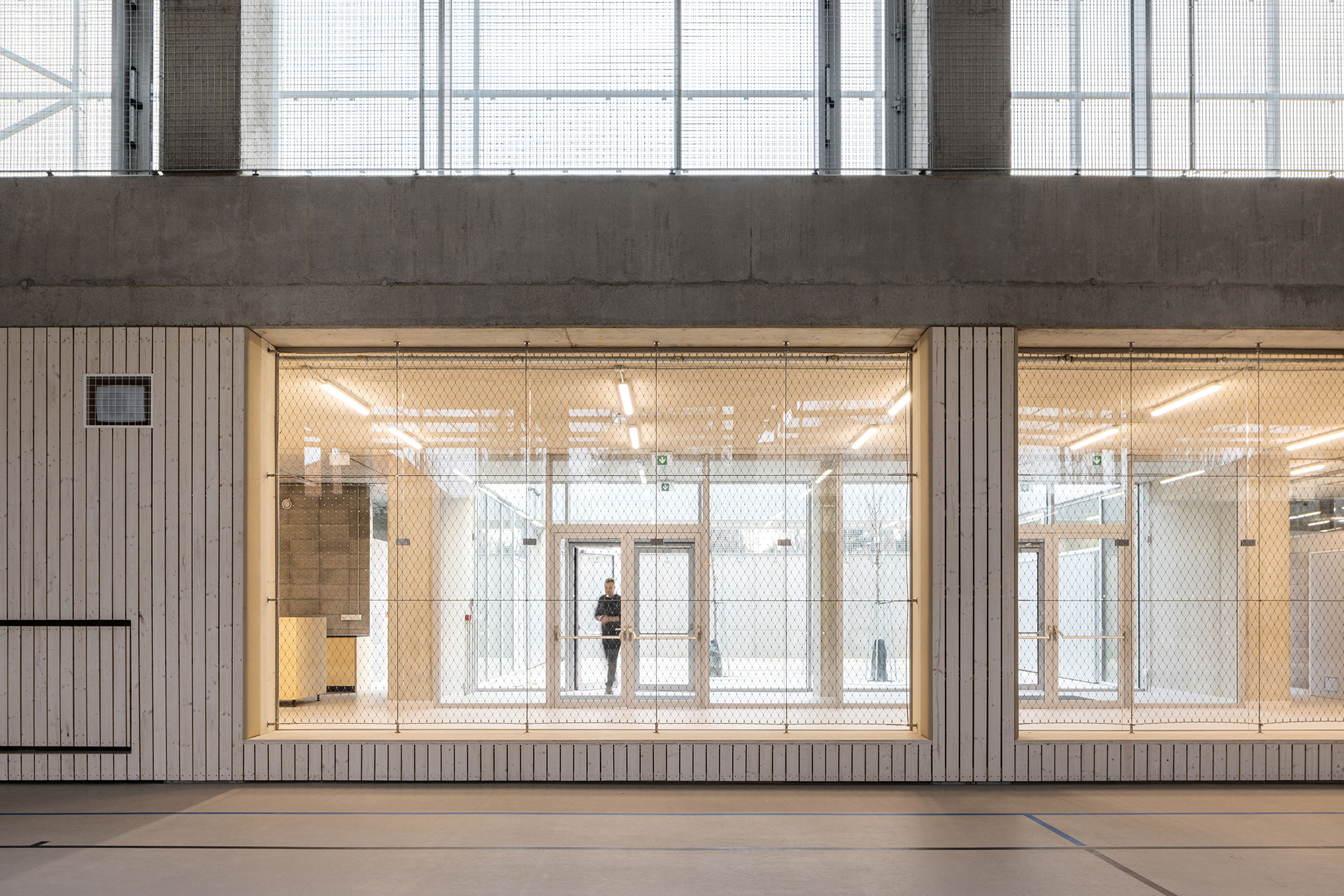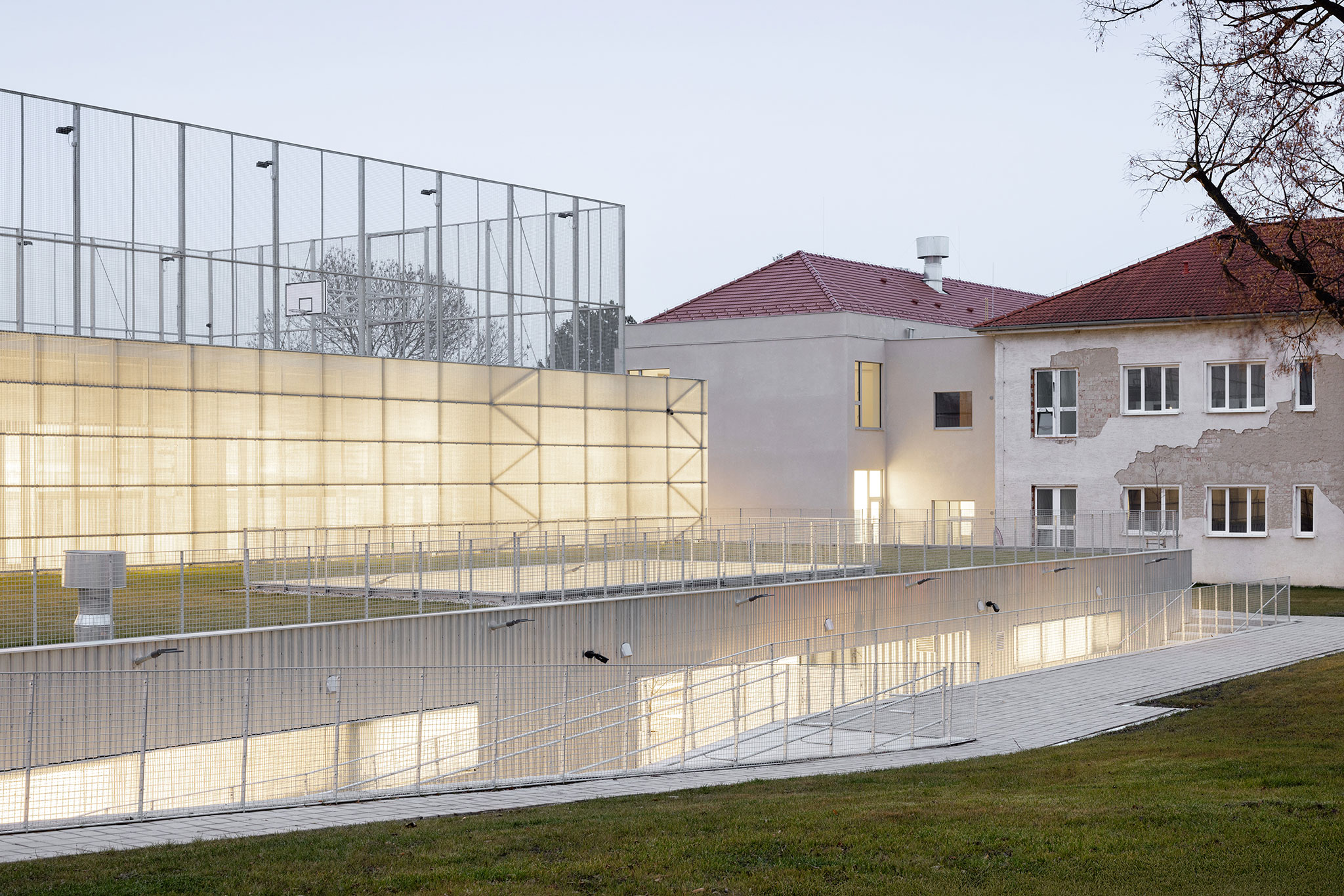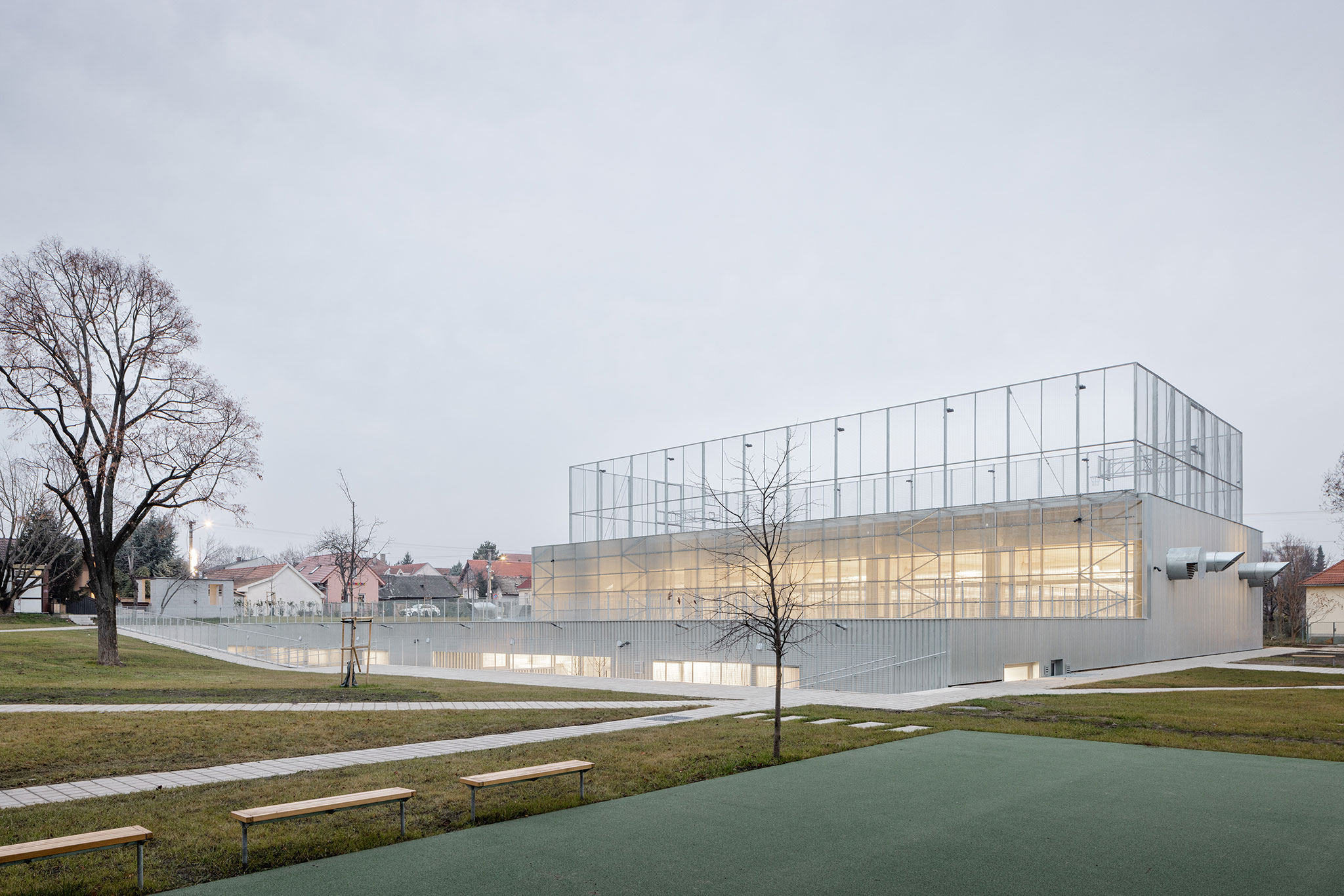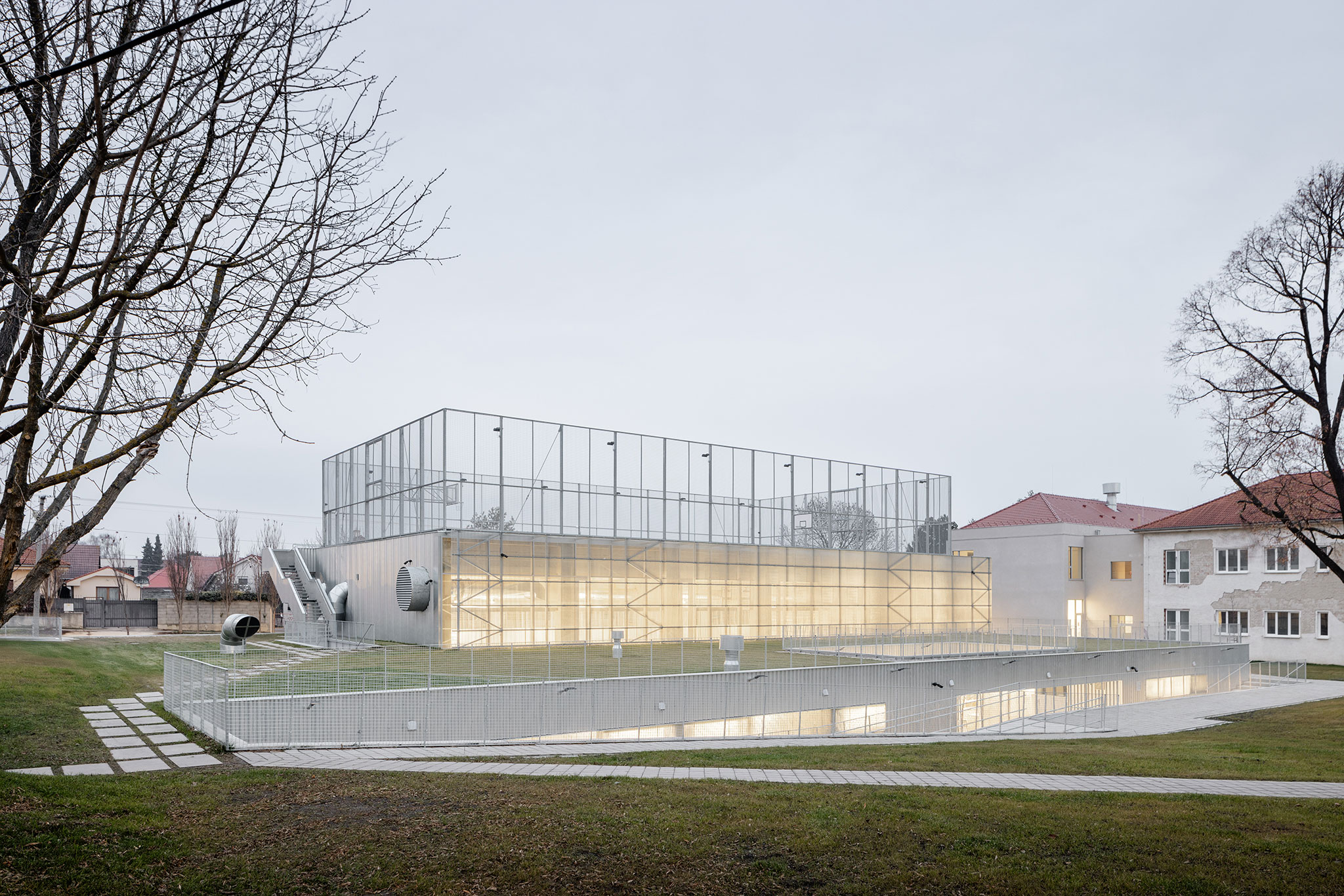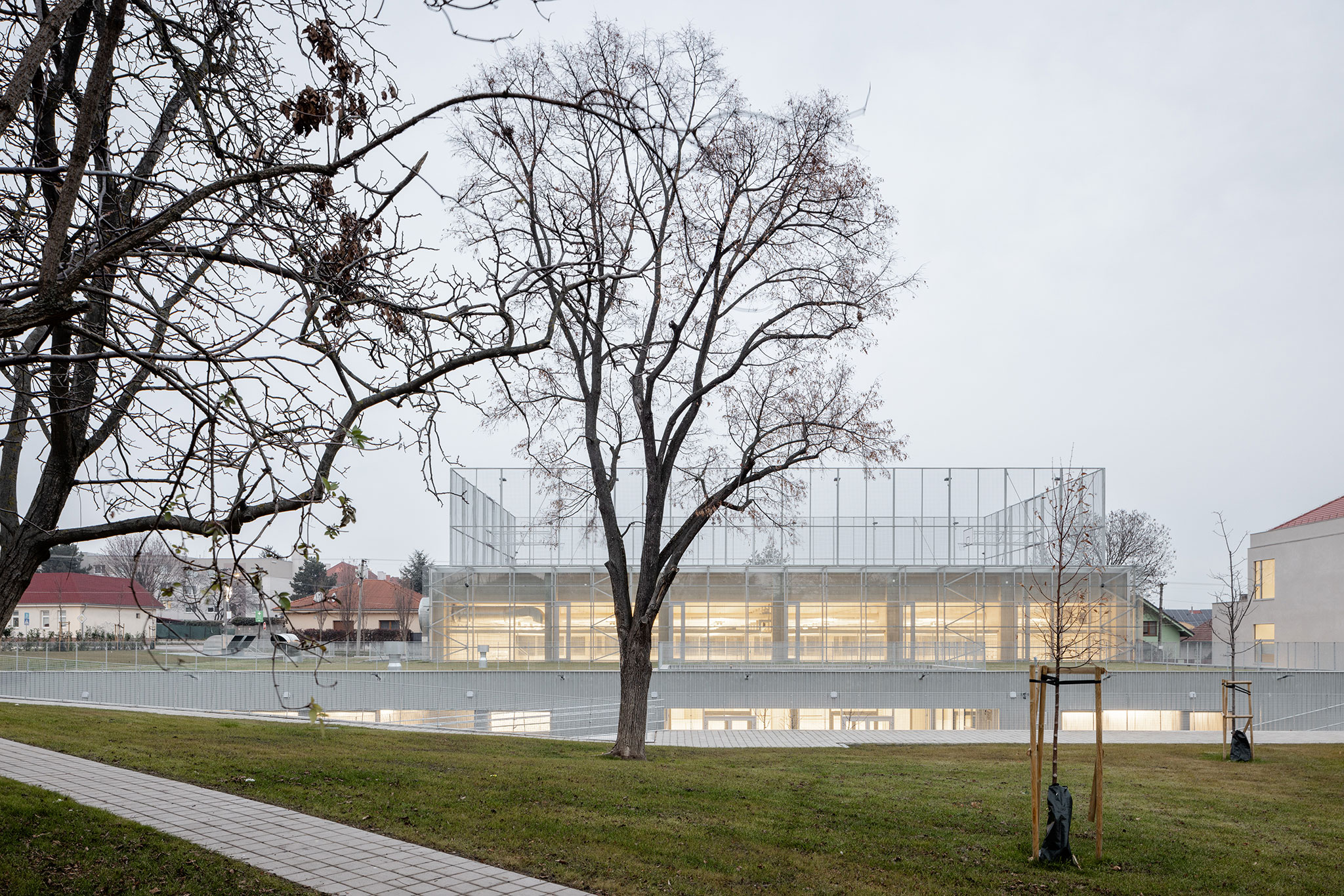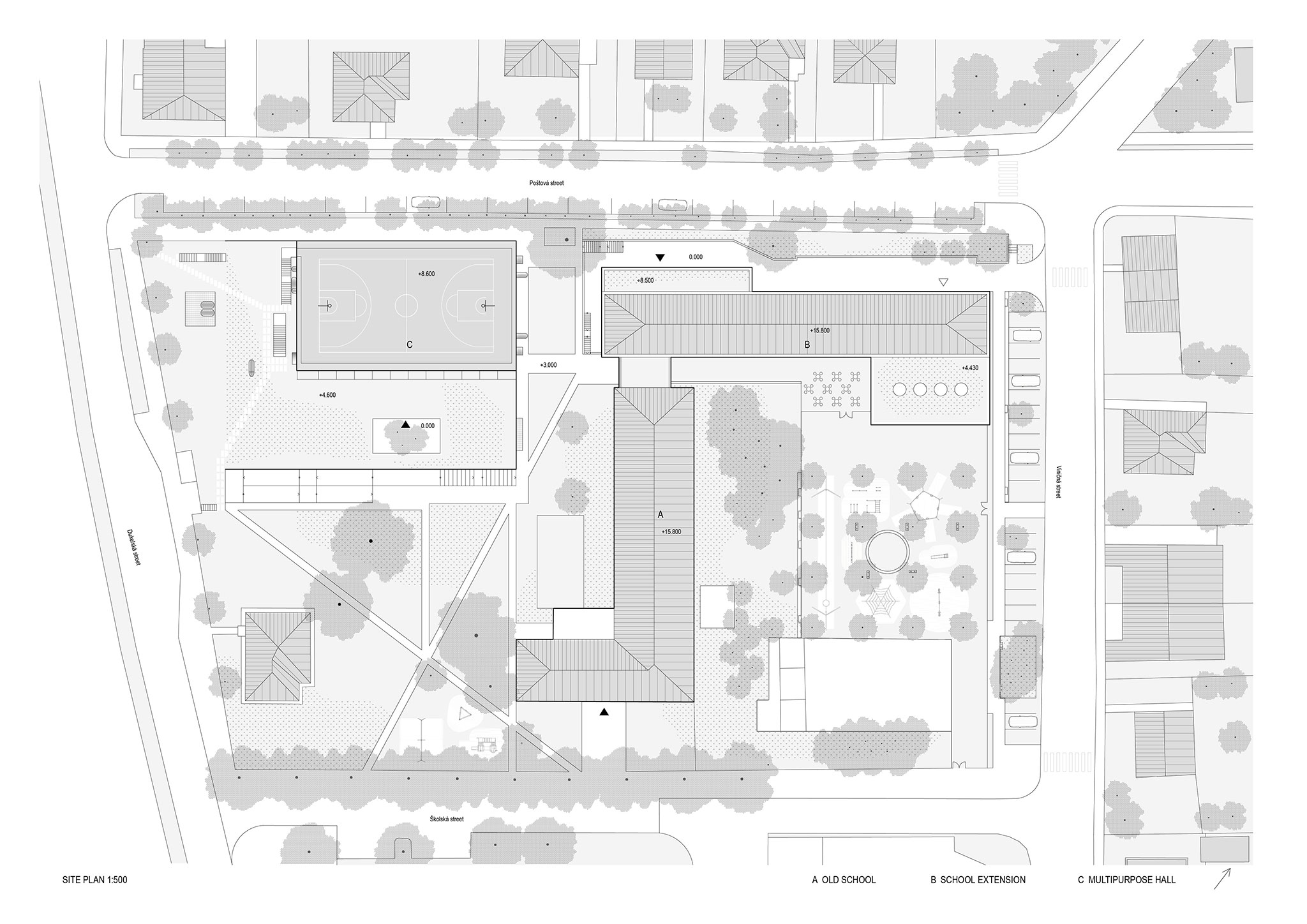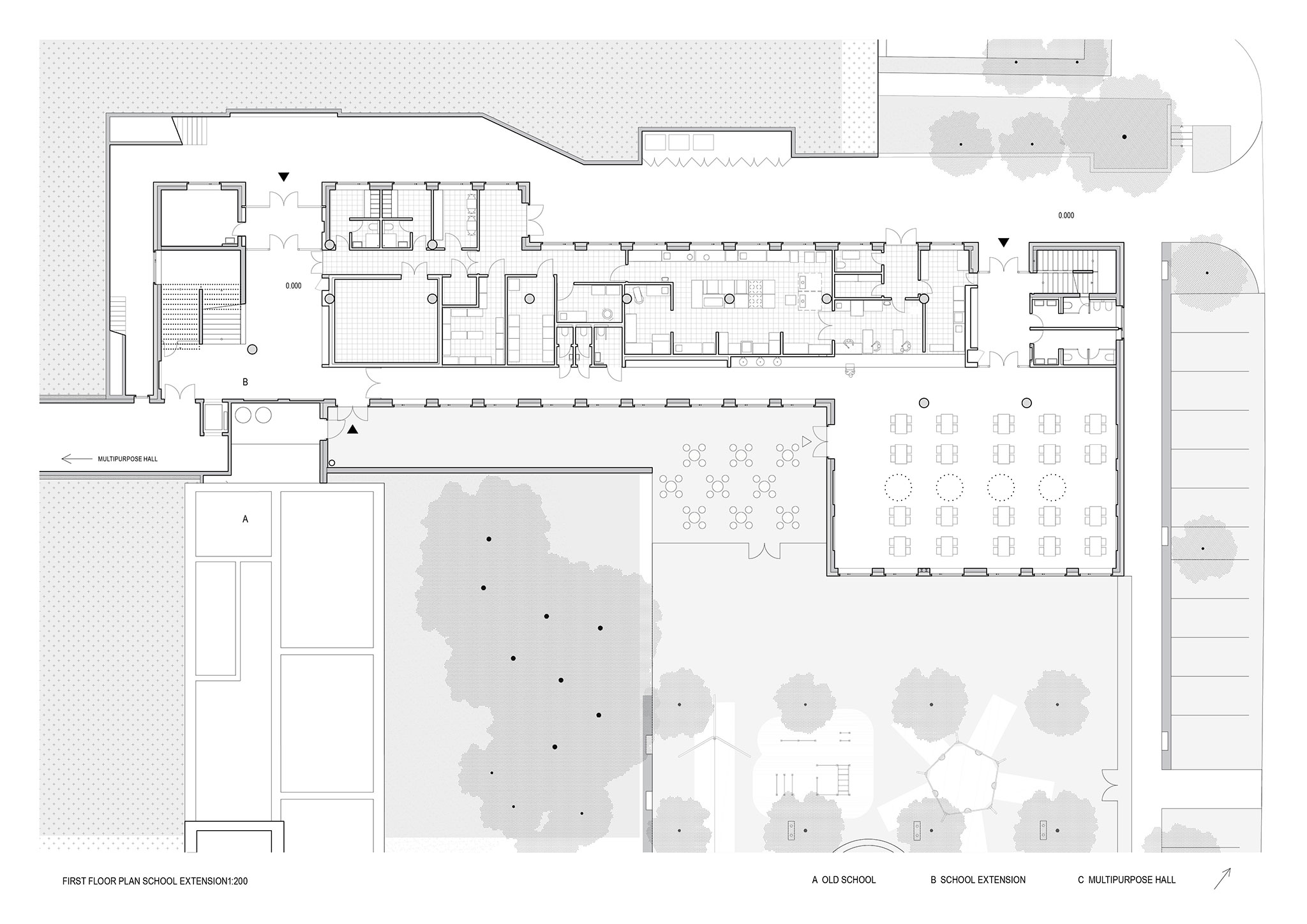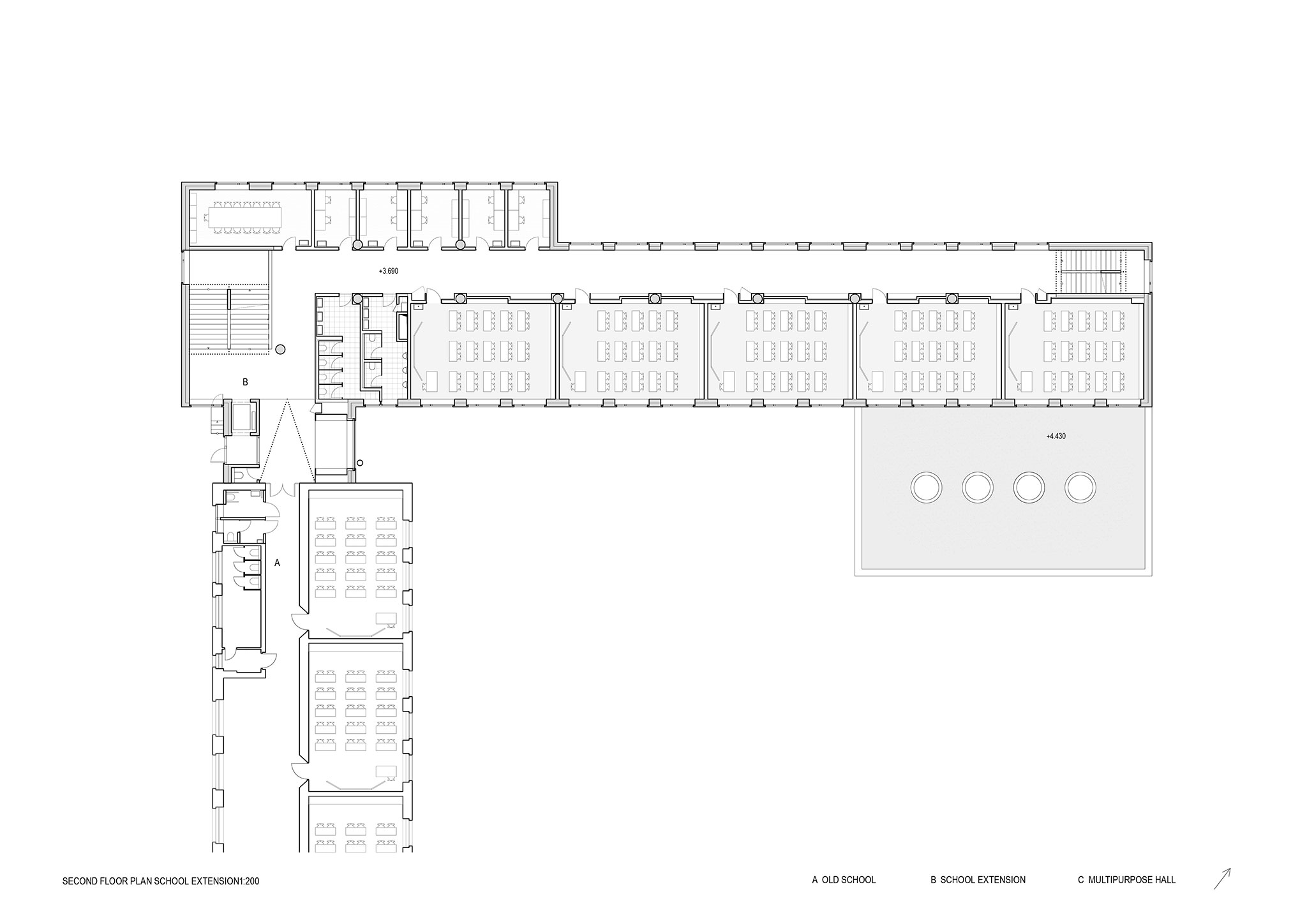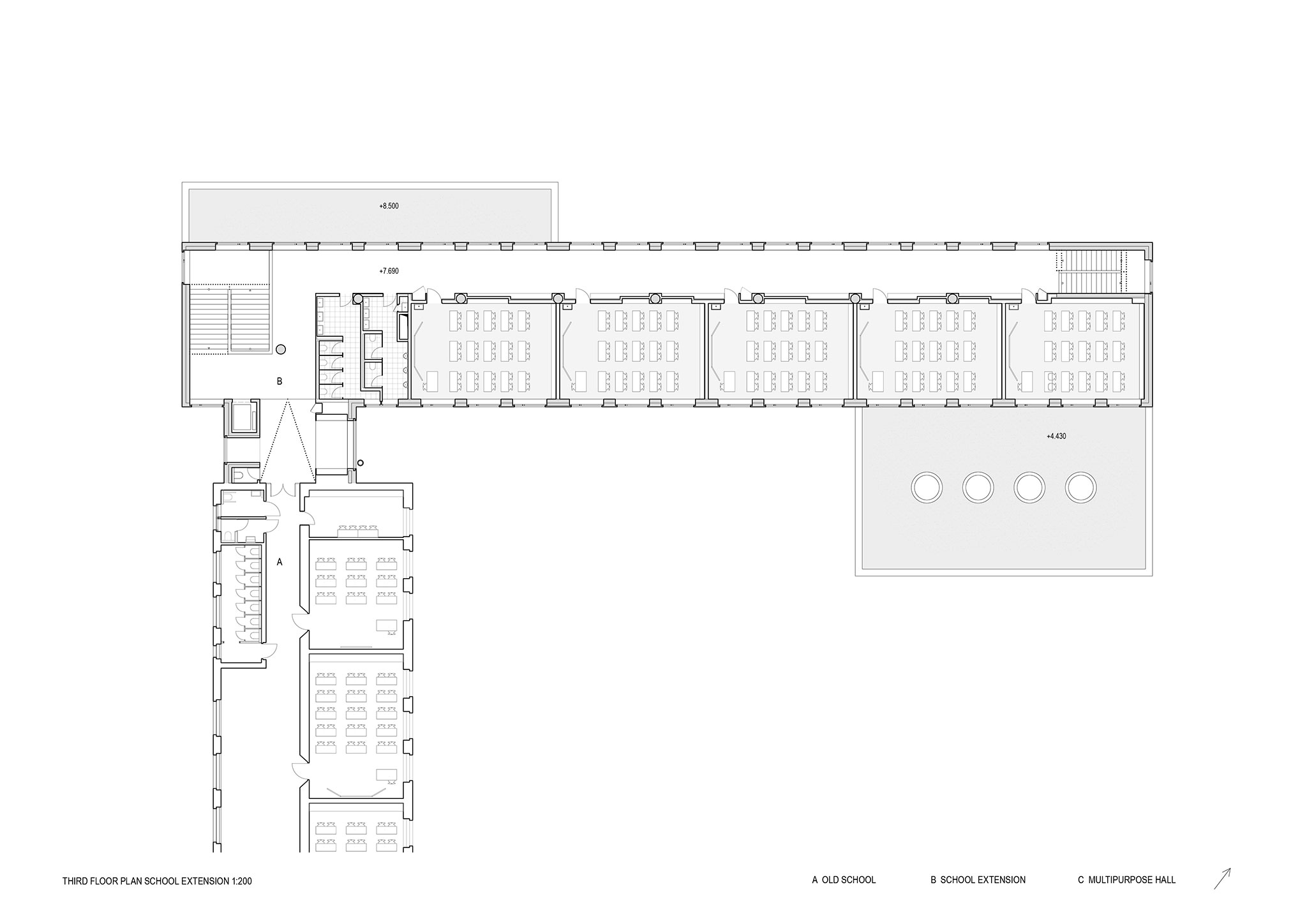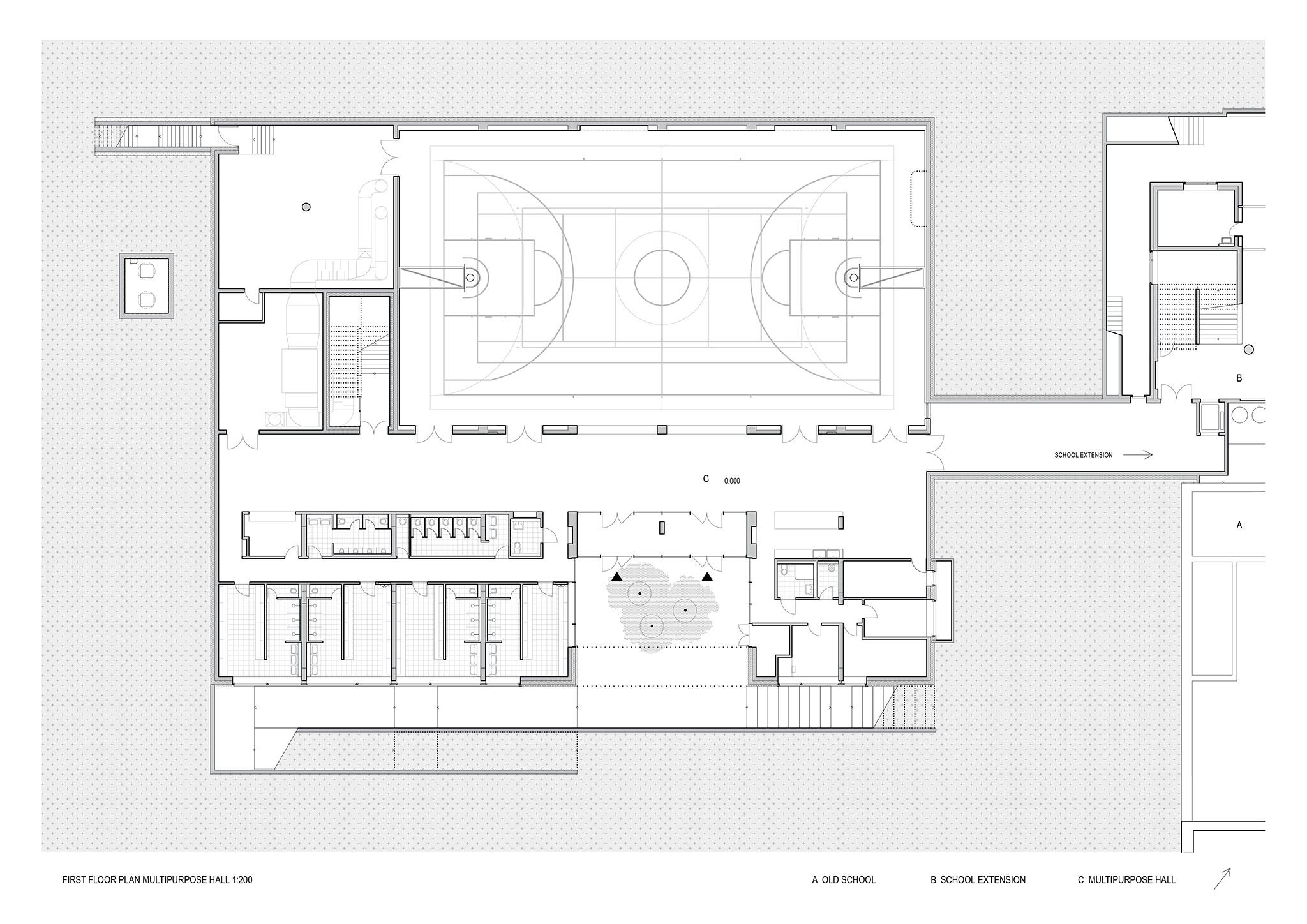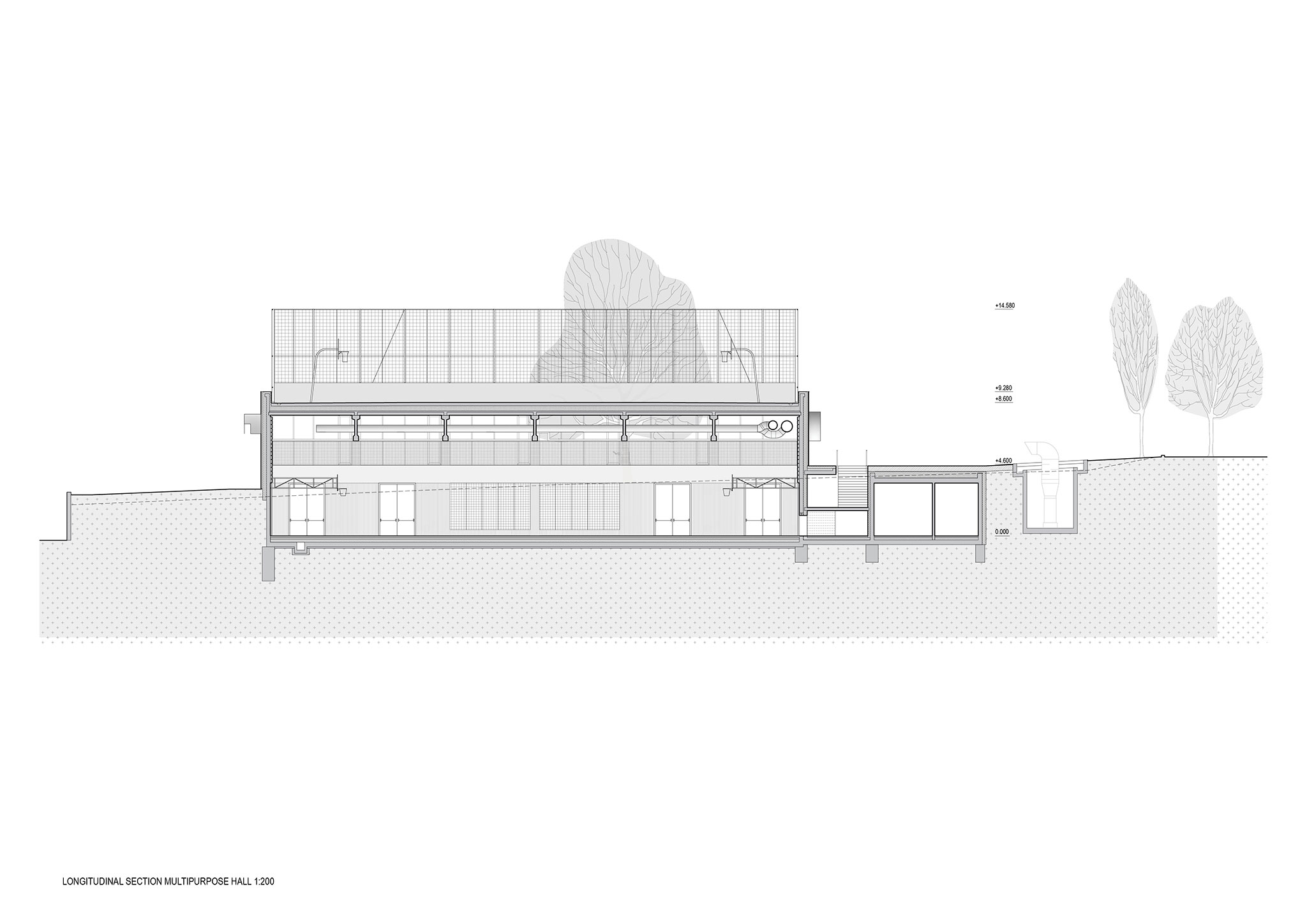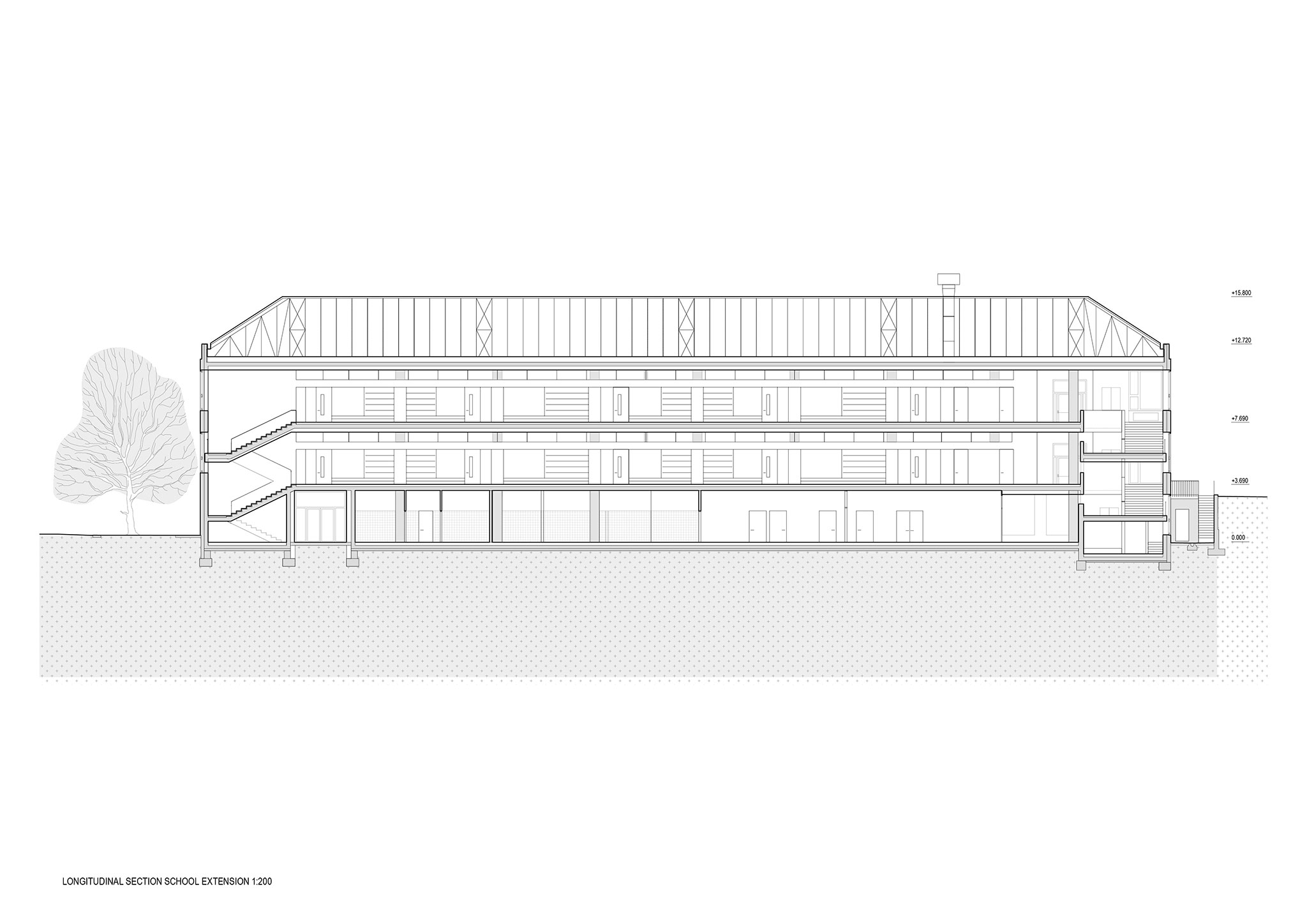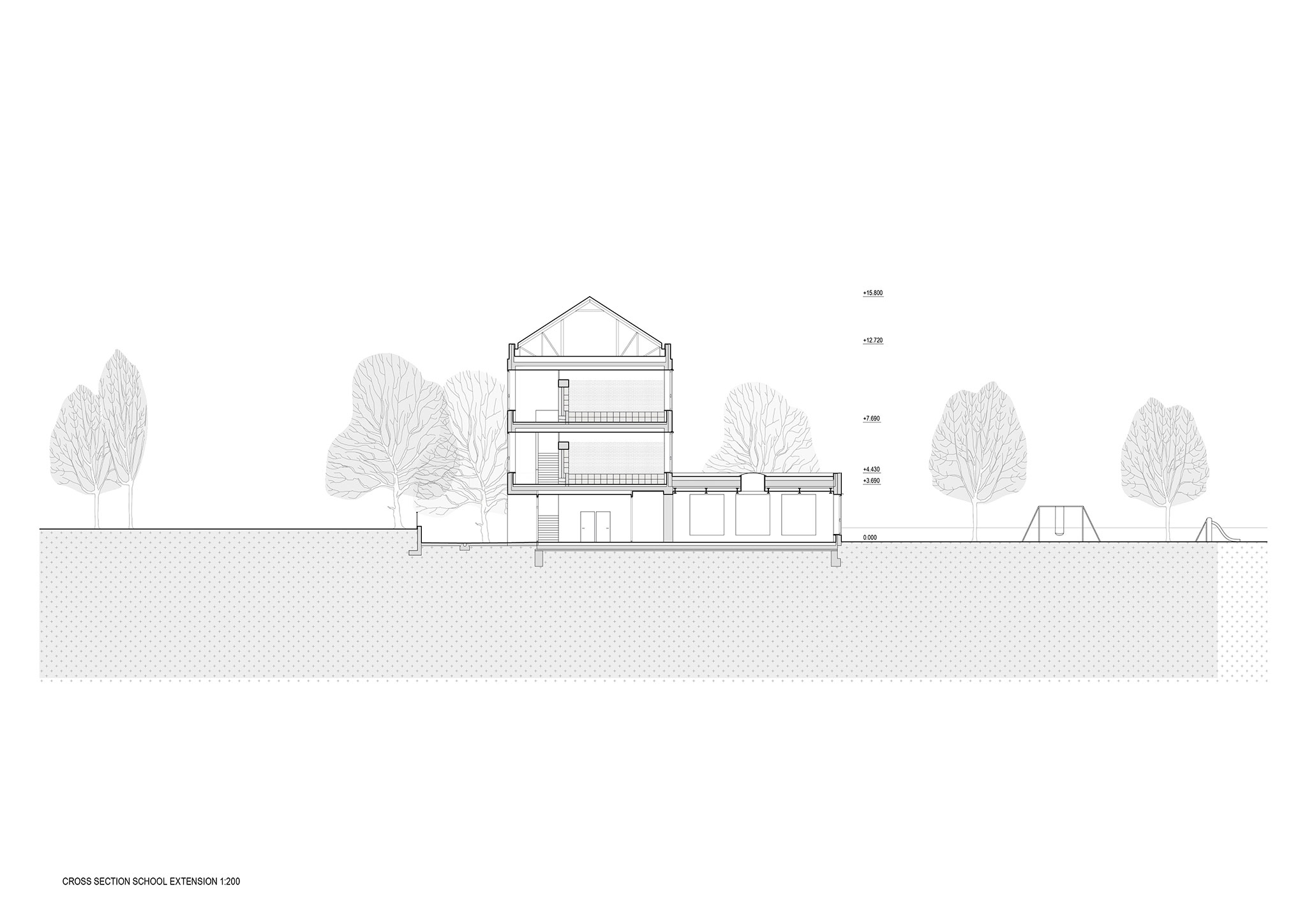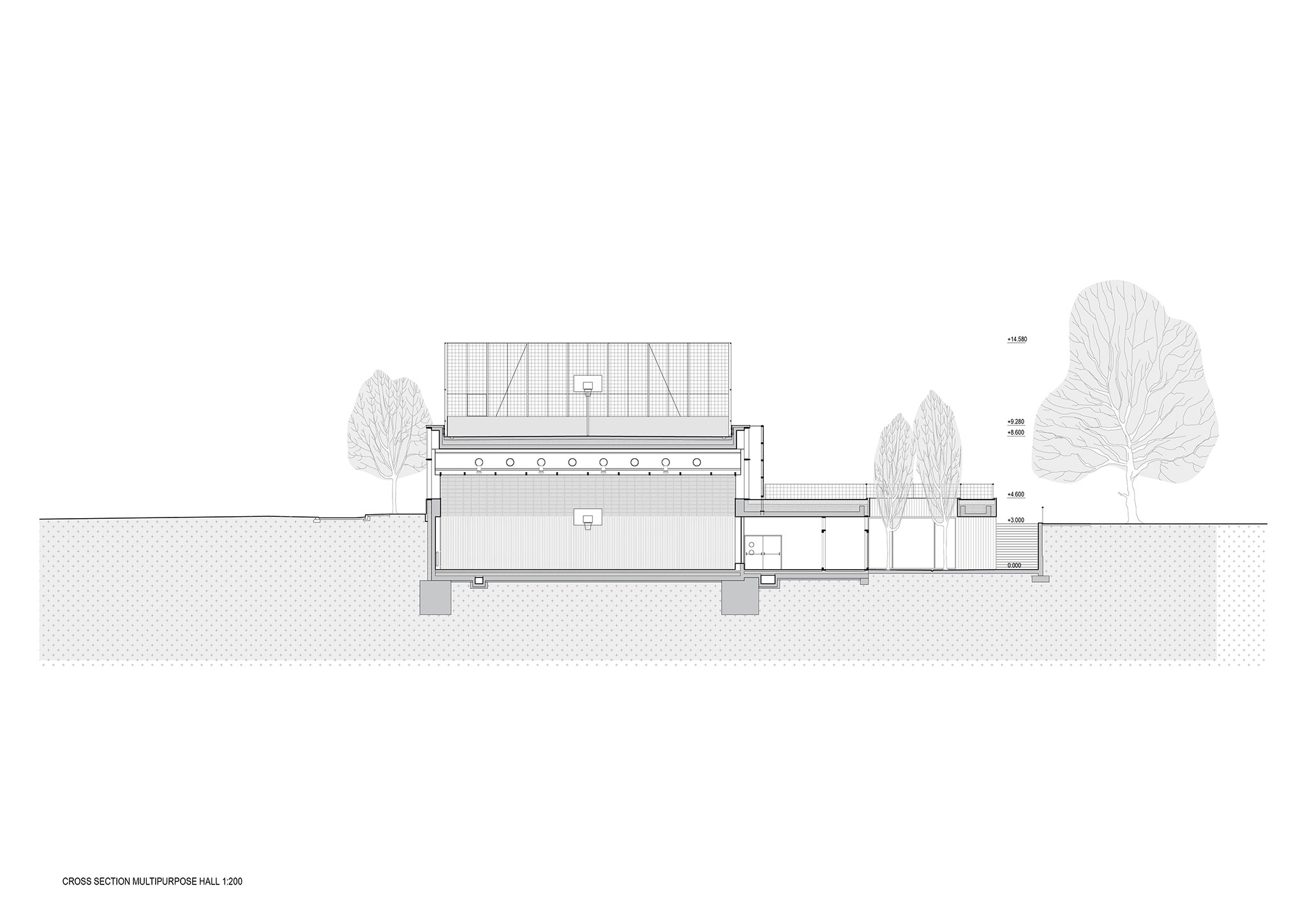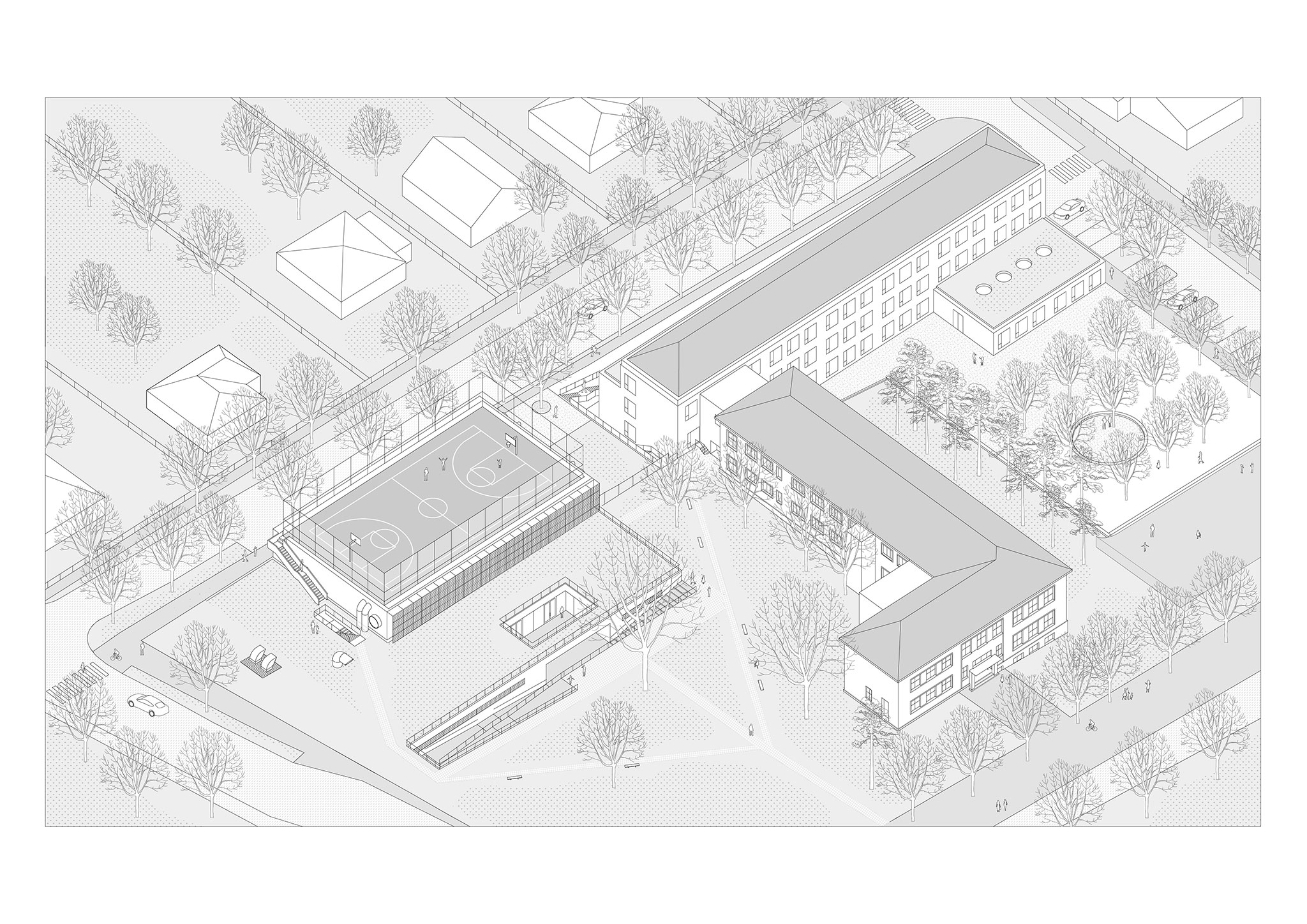
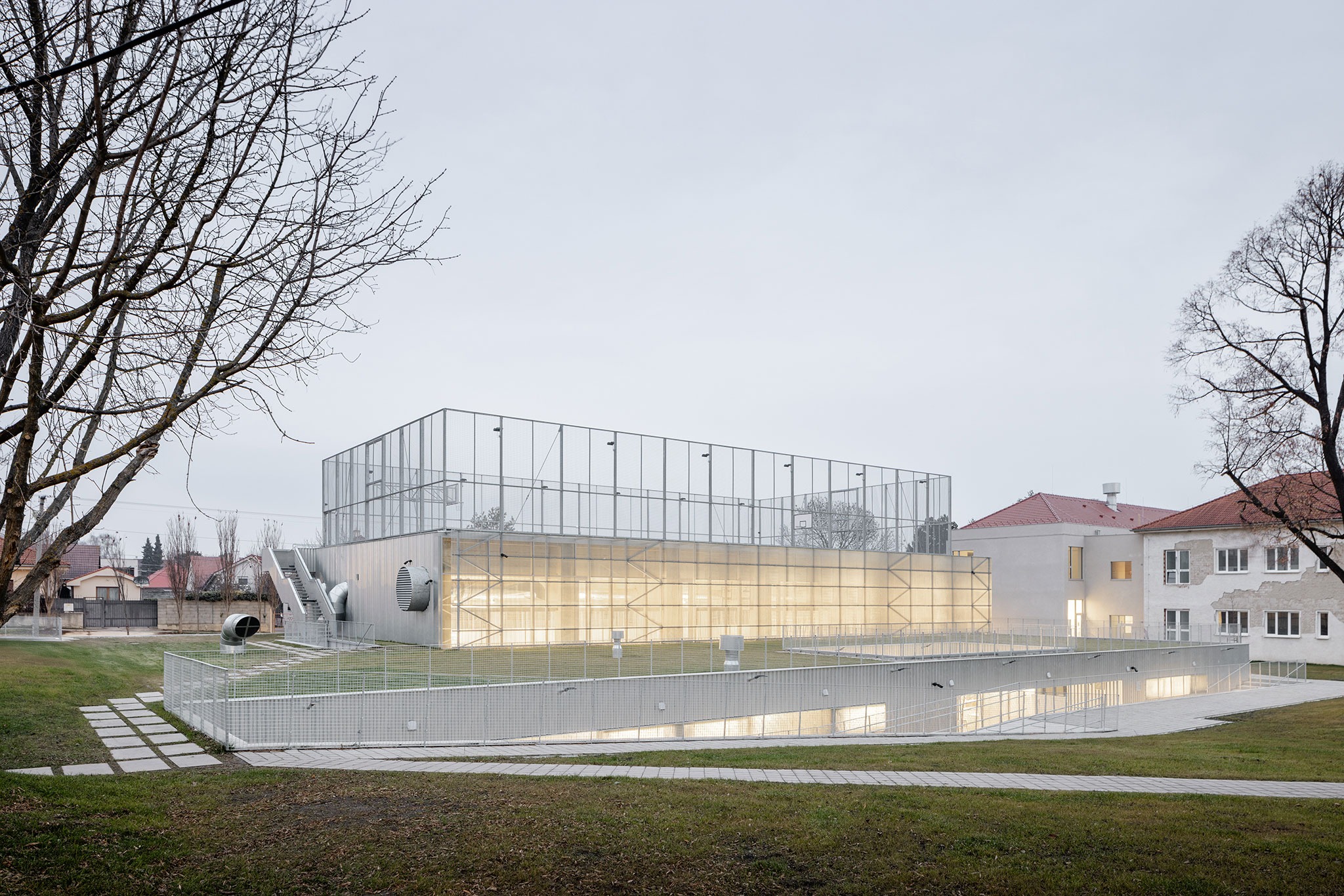
The extension to the primary school, designed by Bakyta Architekti, comprises an L-shaped building containing classrooms, a spacious corridor for student life, and two smaller volumes housing the teachers' offices and the cafeteria. To the north of the site is the multipurpose hall, connected to the school buildings by an underground passageway and characterized by its permeability and open public access.
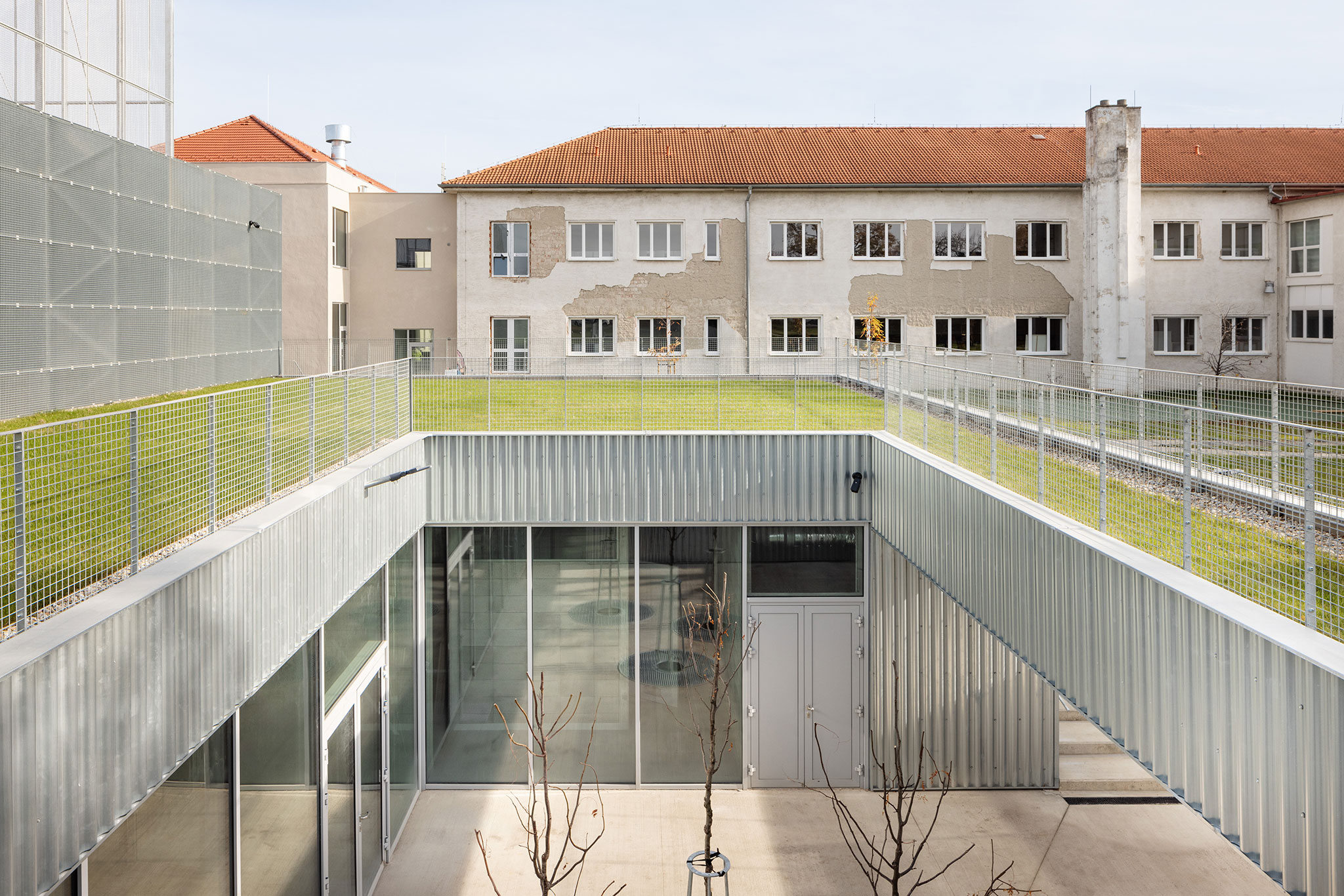
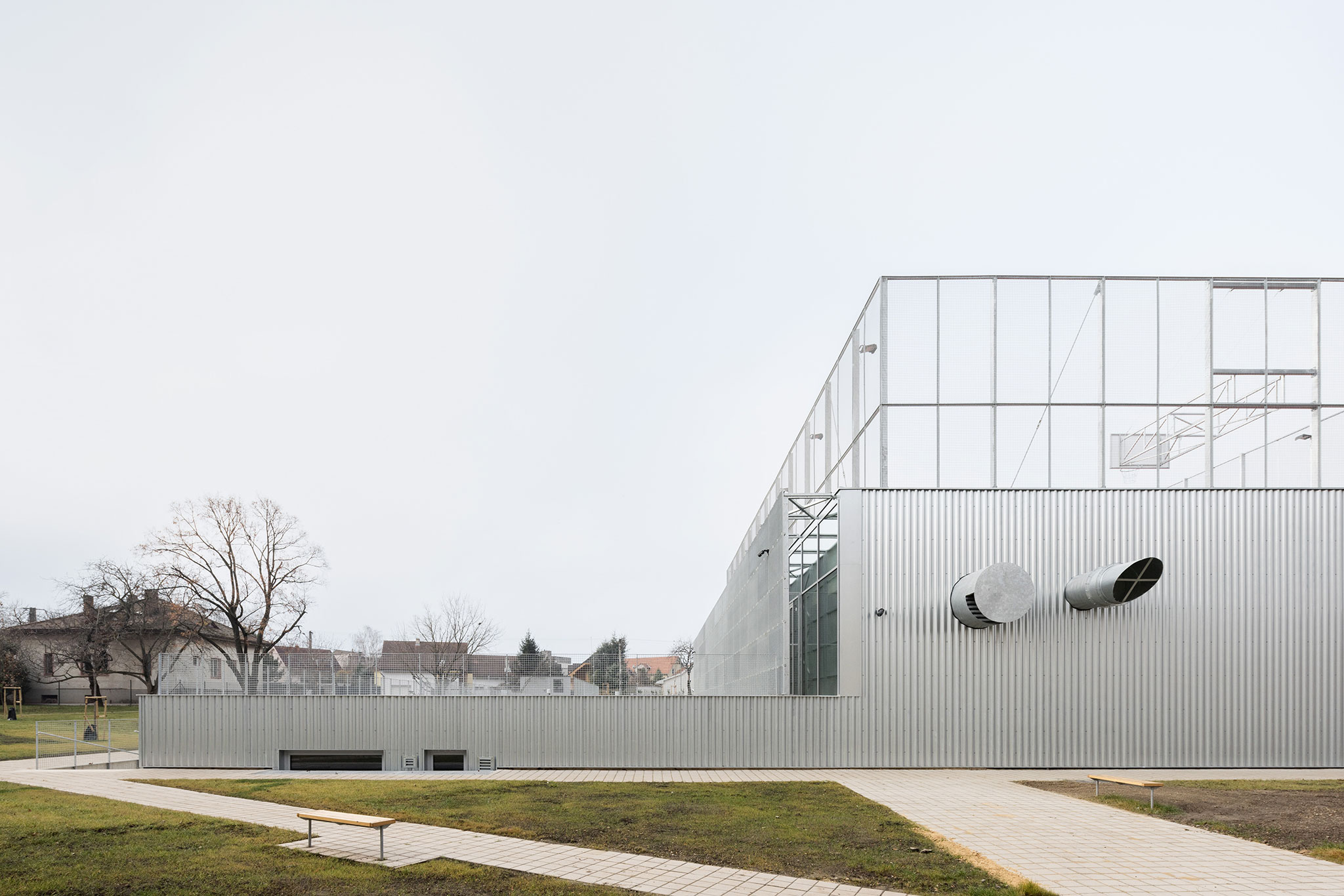
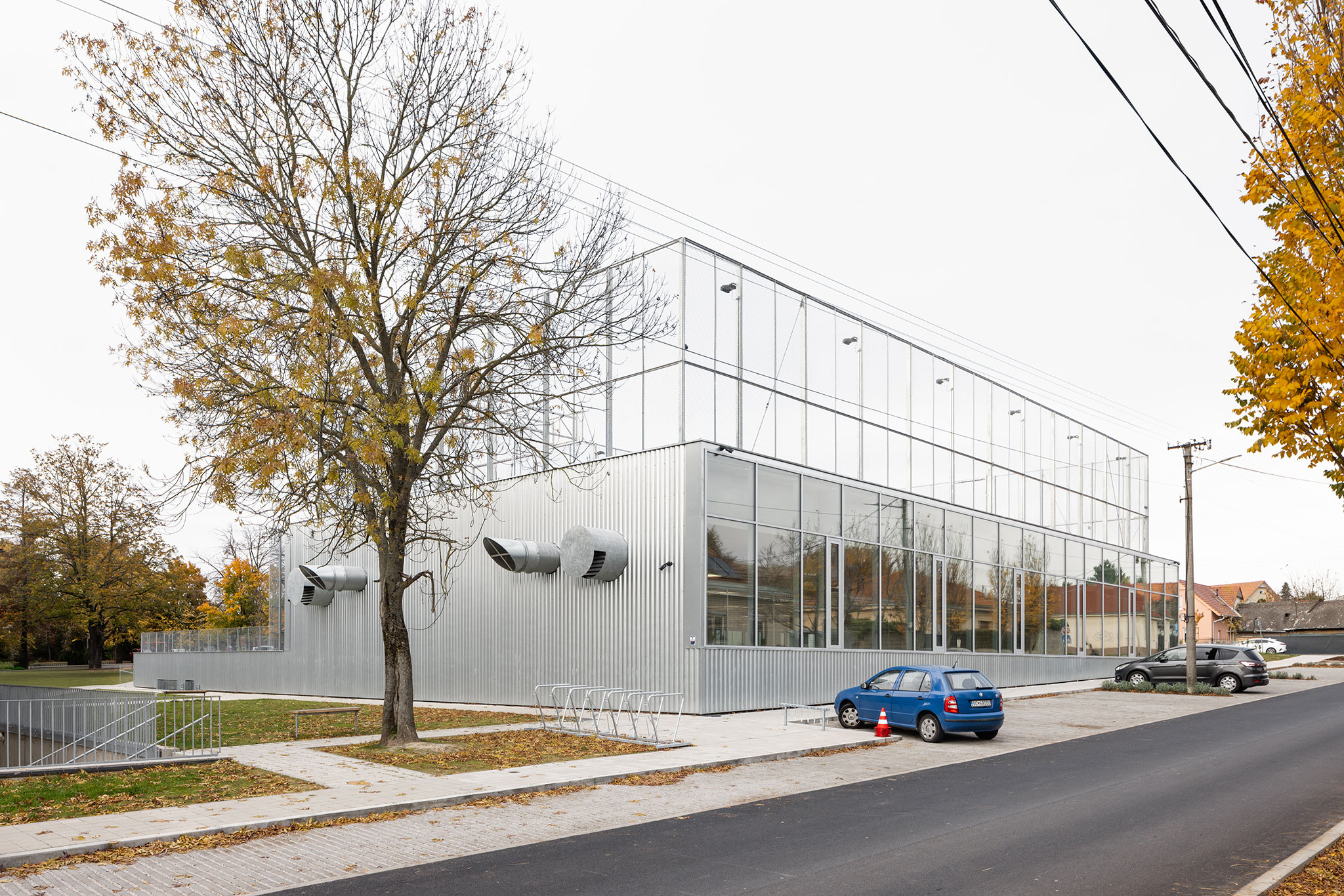
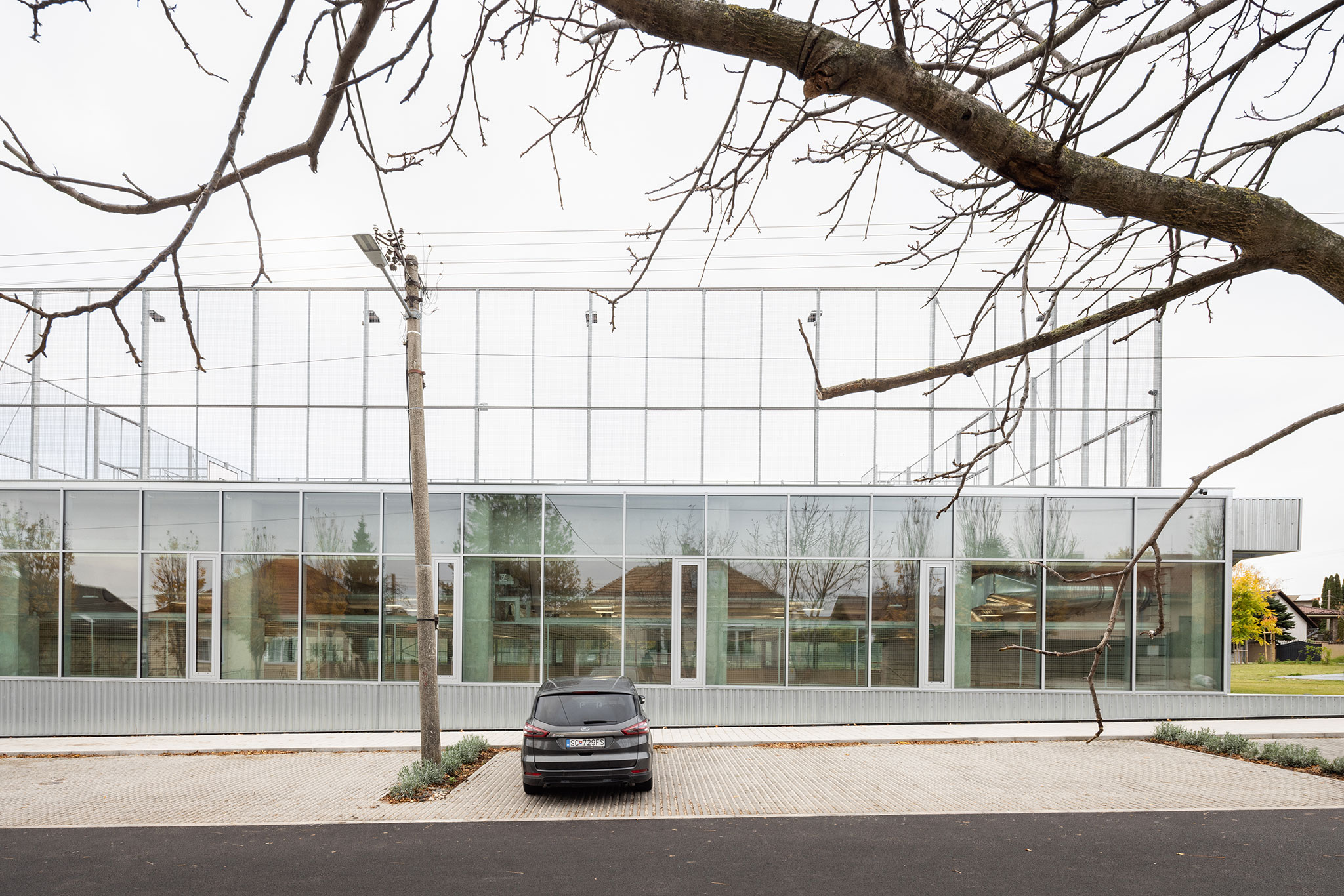
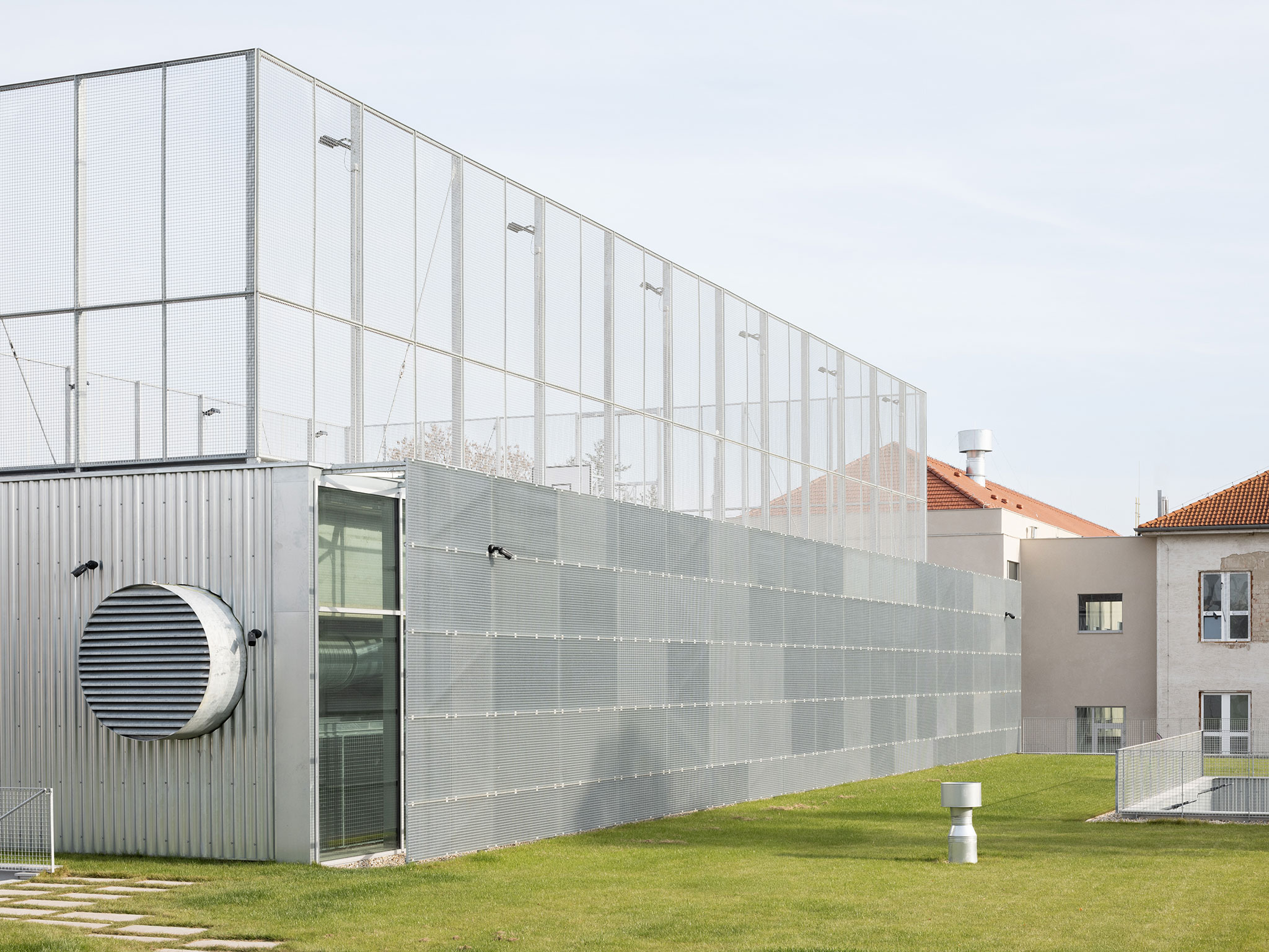
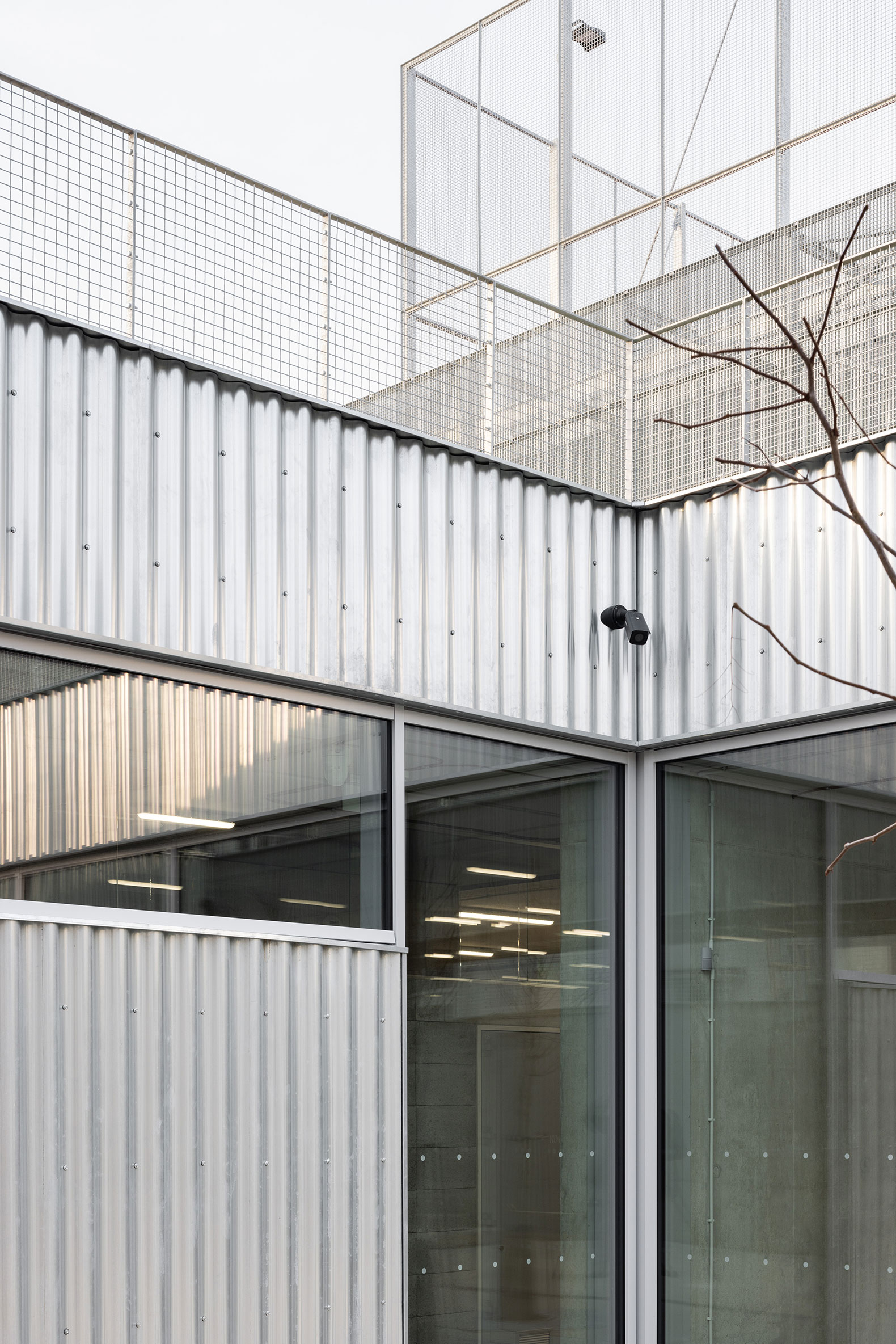
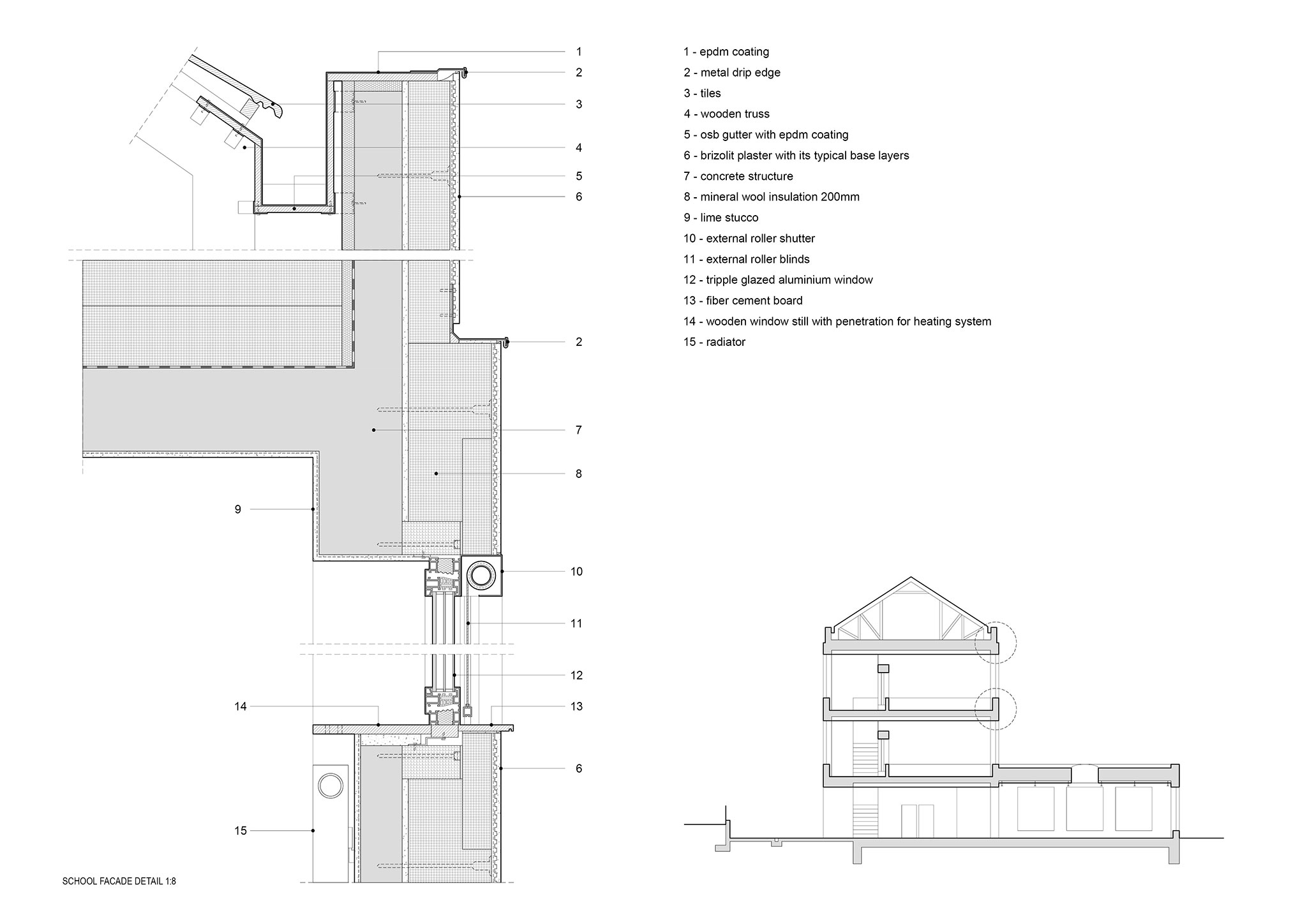
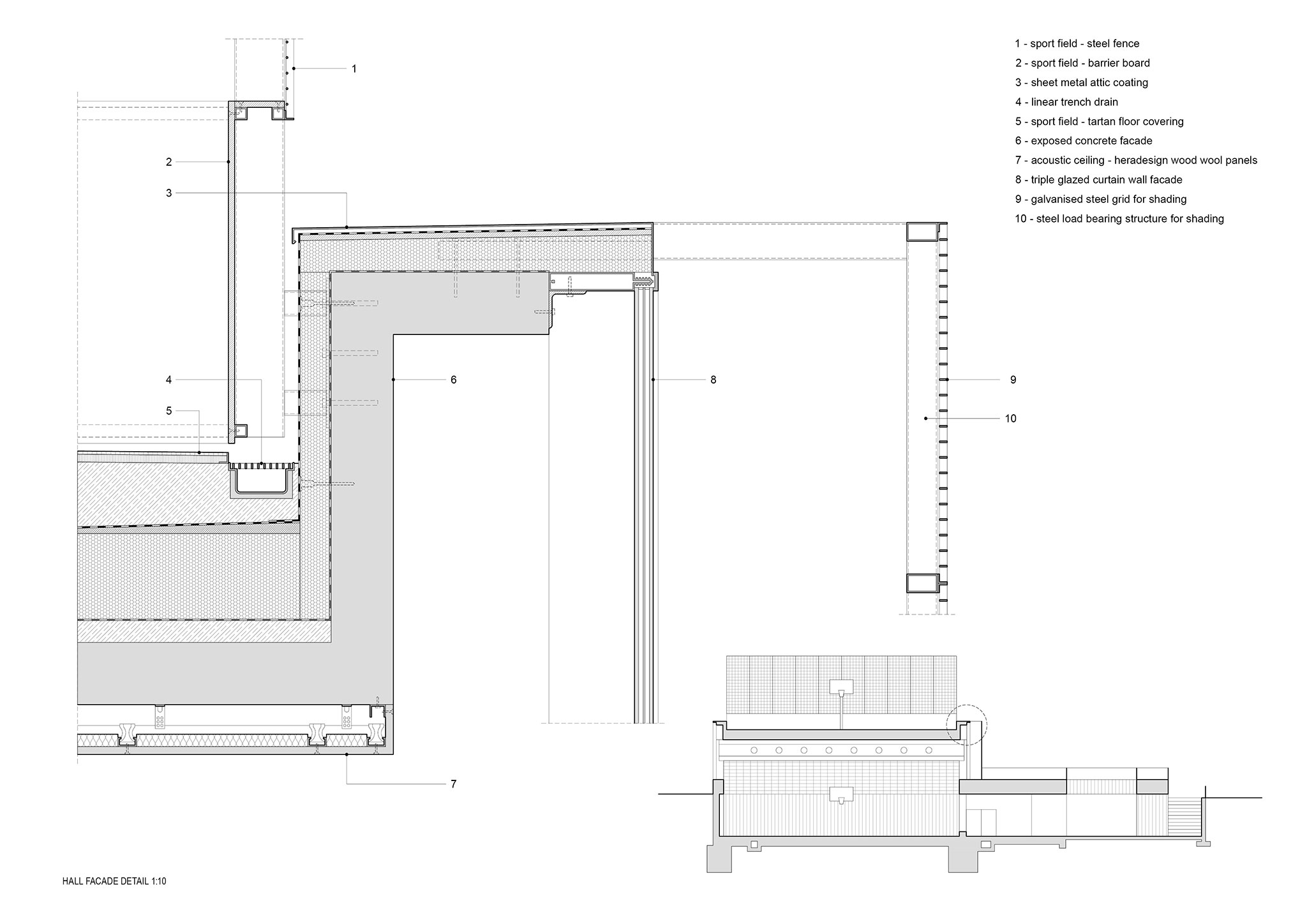
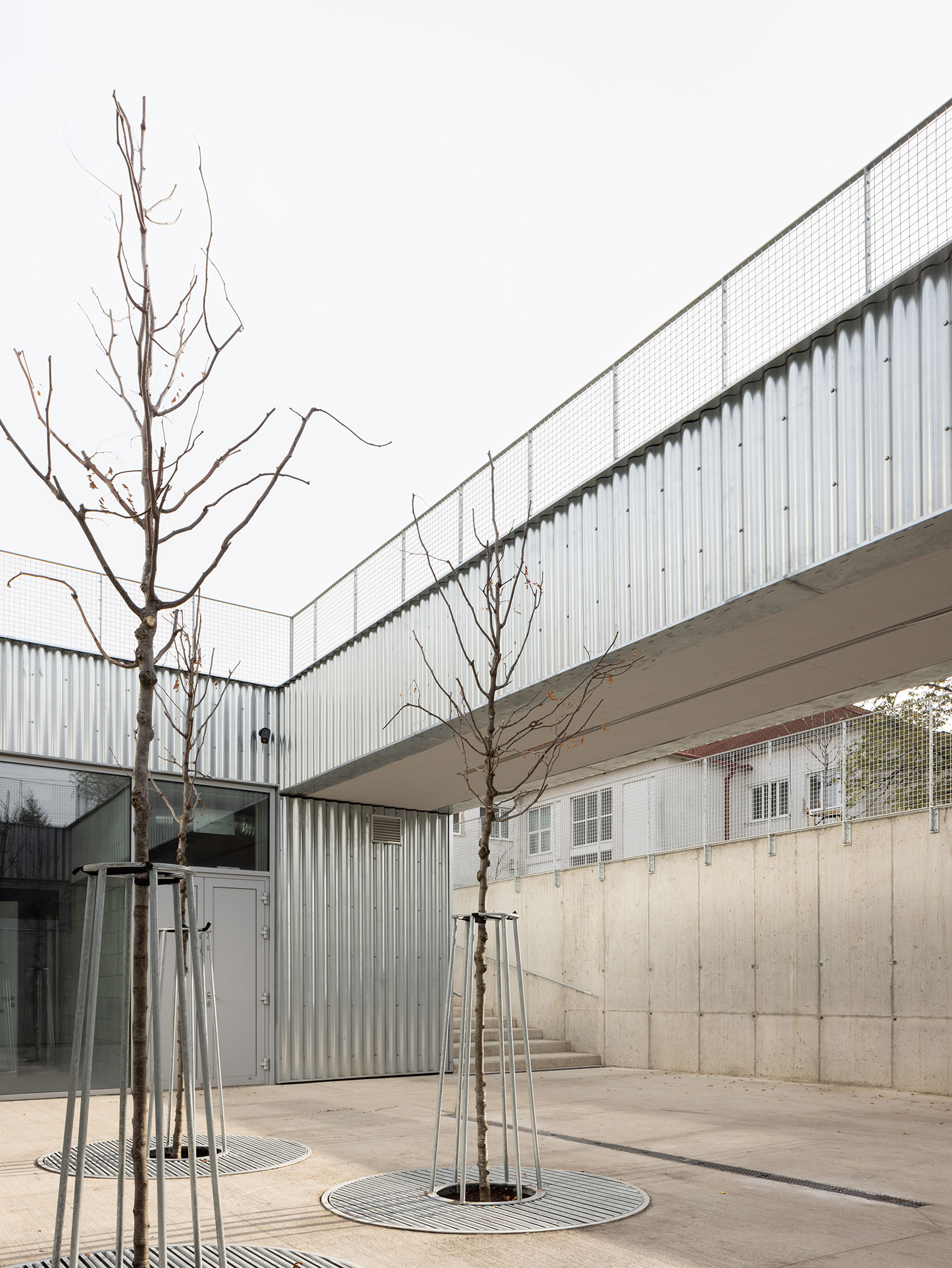
The new buildings were constructed with a reinforced concrete structure. The roof of the new school building is built with wooden trusses covered in tiles, maintaining the aesthetic of the original building. The multipurpose hall features an industrial style, with a corrugated metal facade that retains its natural color and texture.
The project is one of the 40 selected for the EUmies / Mies van der Rohe Awards 2026.
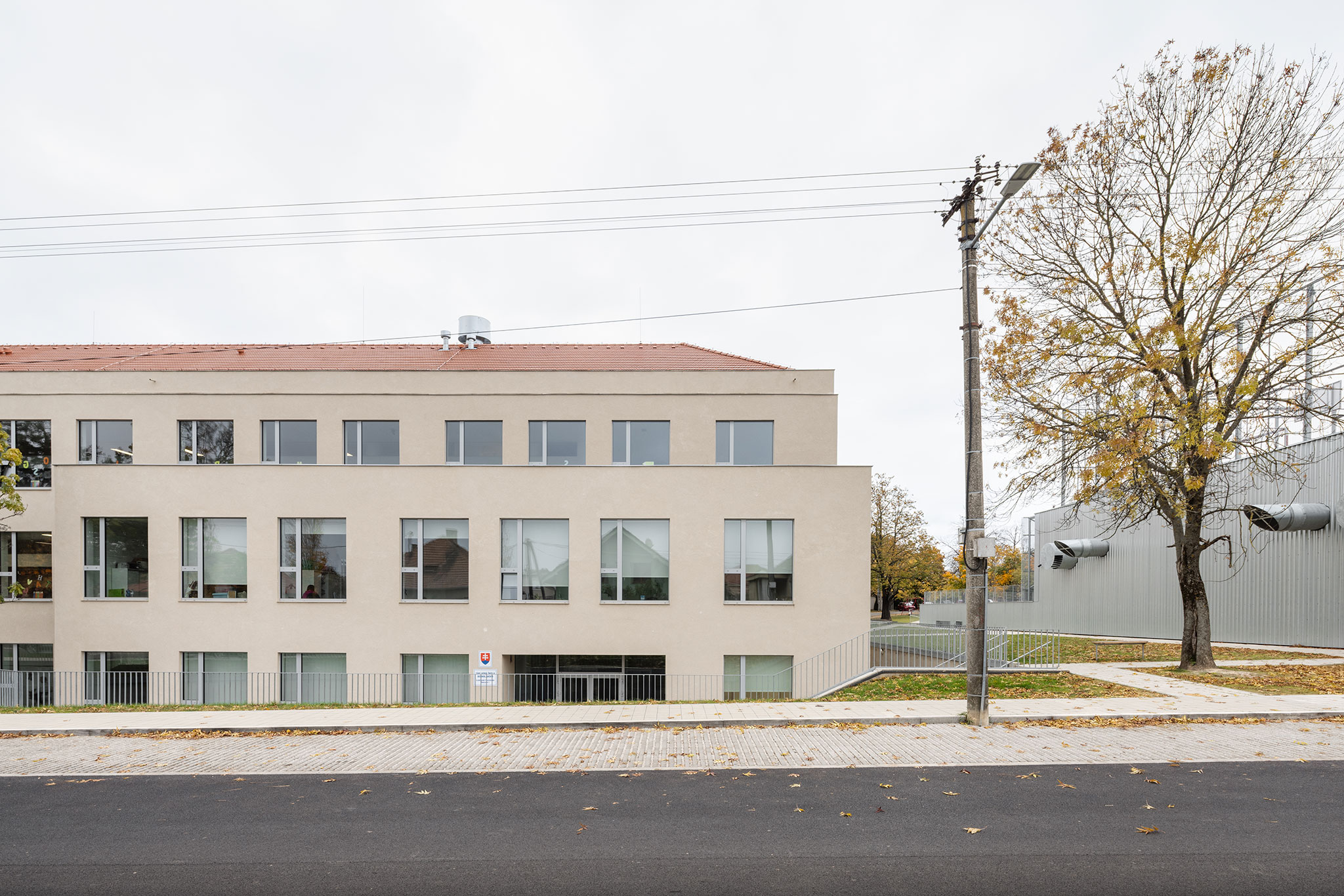
Primary school extension by Bakyta Architekti. Photograph by Matej Hakár.
Project description by Bakyta Architekti
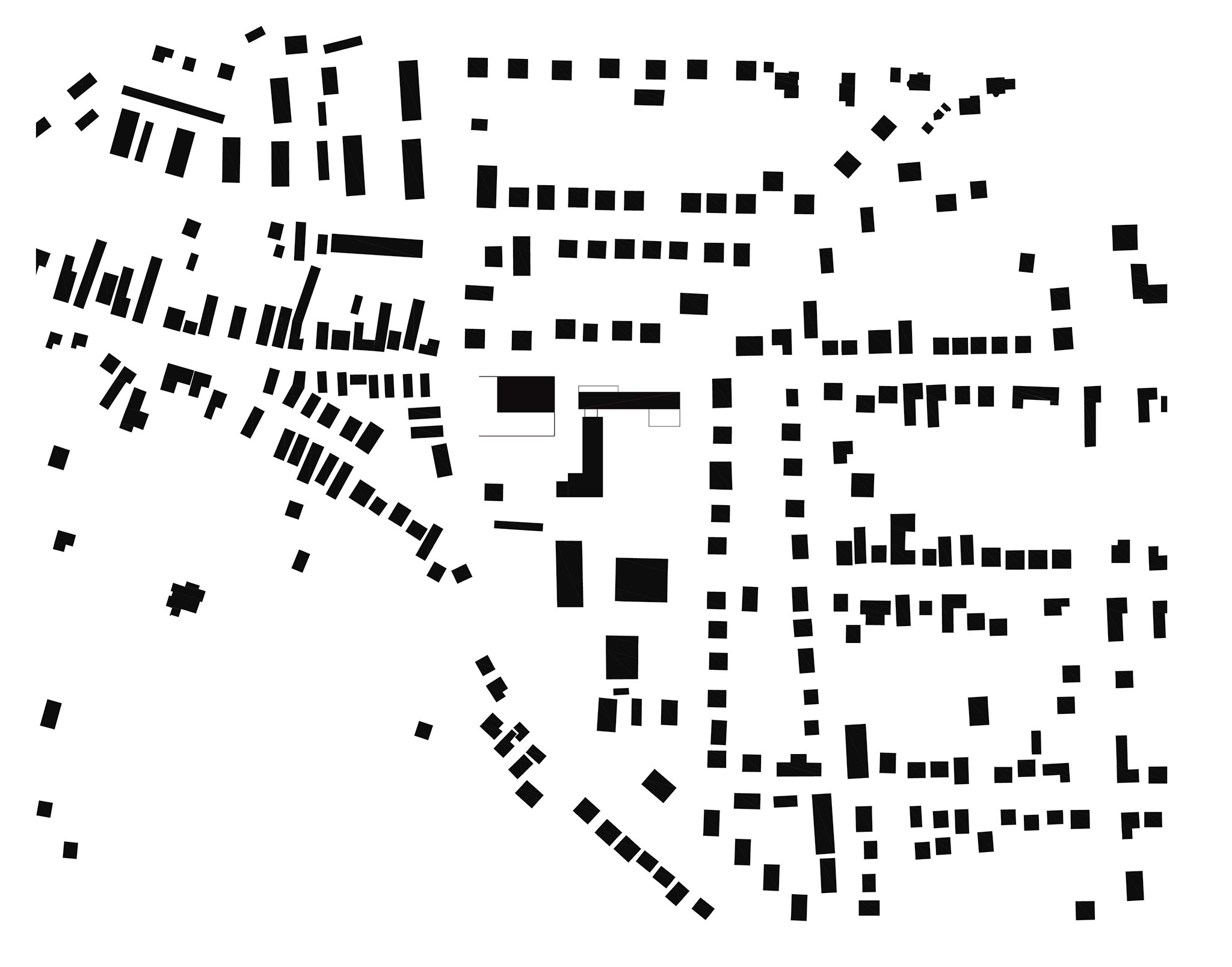
The village center itself consists of public buildings, such as the library, town hall, and old school. The campus is located on the edge of the center, facing the typical urbanism of family houses. The program of both phases of the school extension generates large volumes, which contrast with the scale of family houses. The immersion of the mass into the terrain reflects the intention to minimize the volume in contact with the those tiny structure, and maximize the free green area in front the south facades.
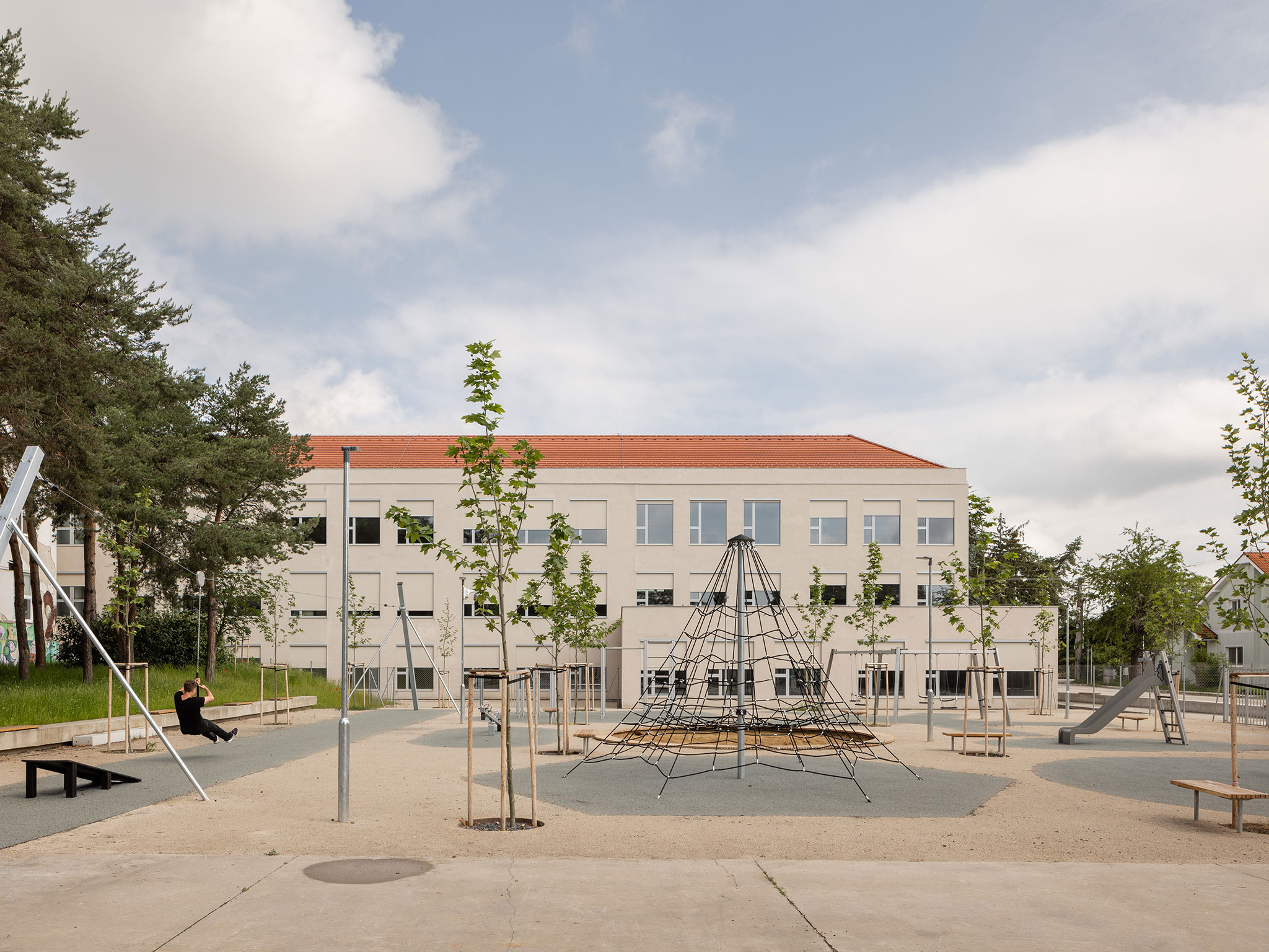
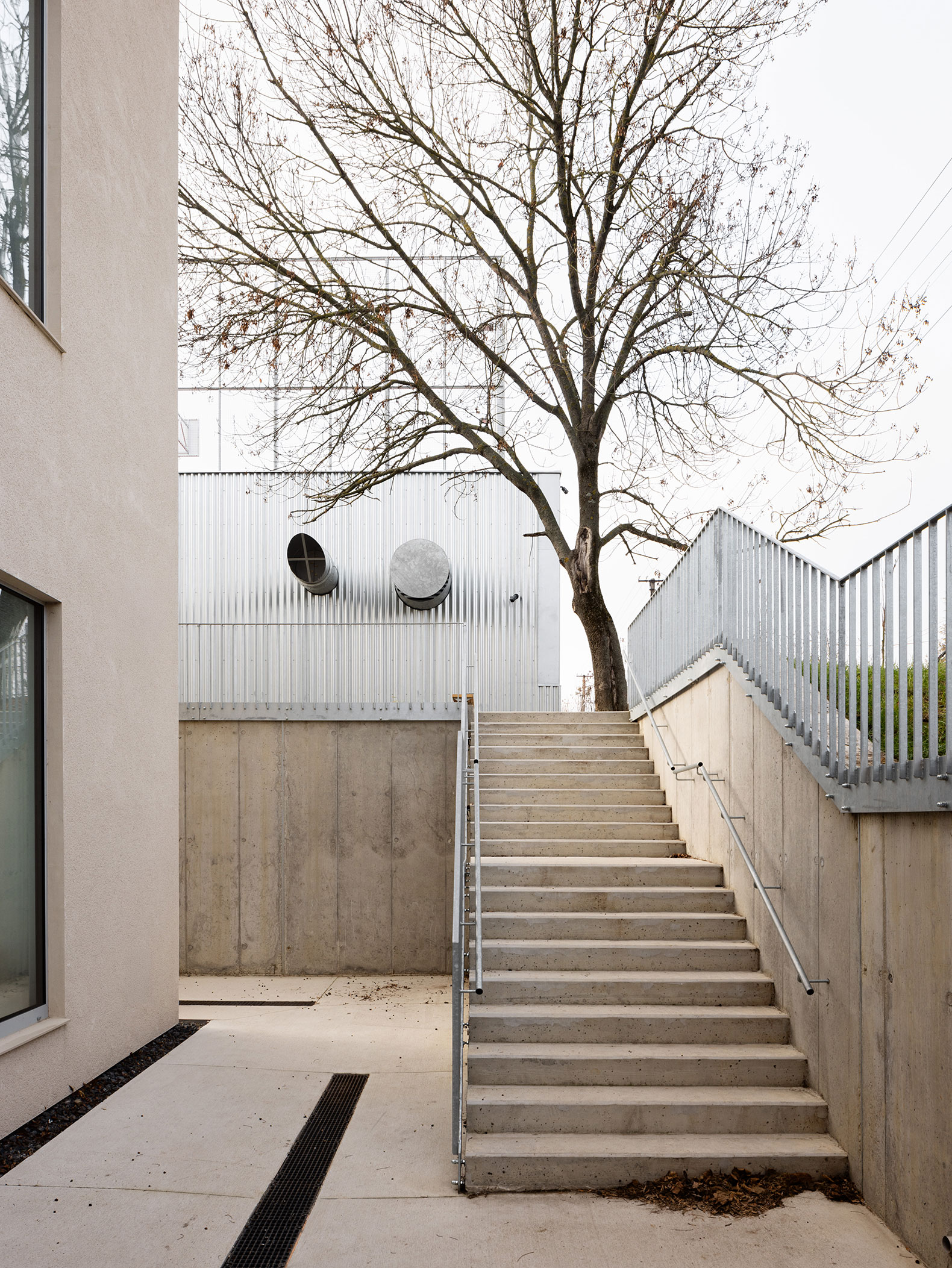
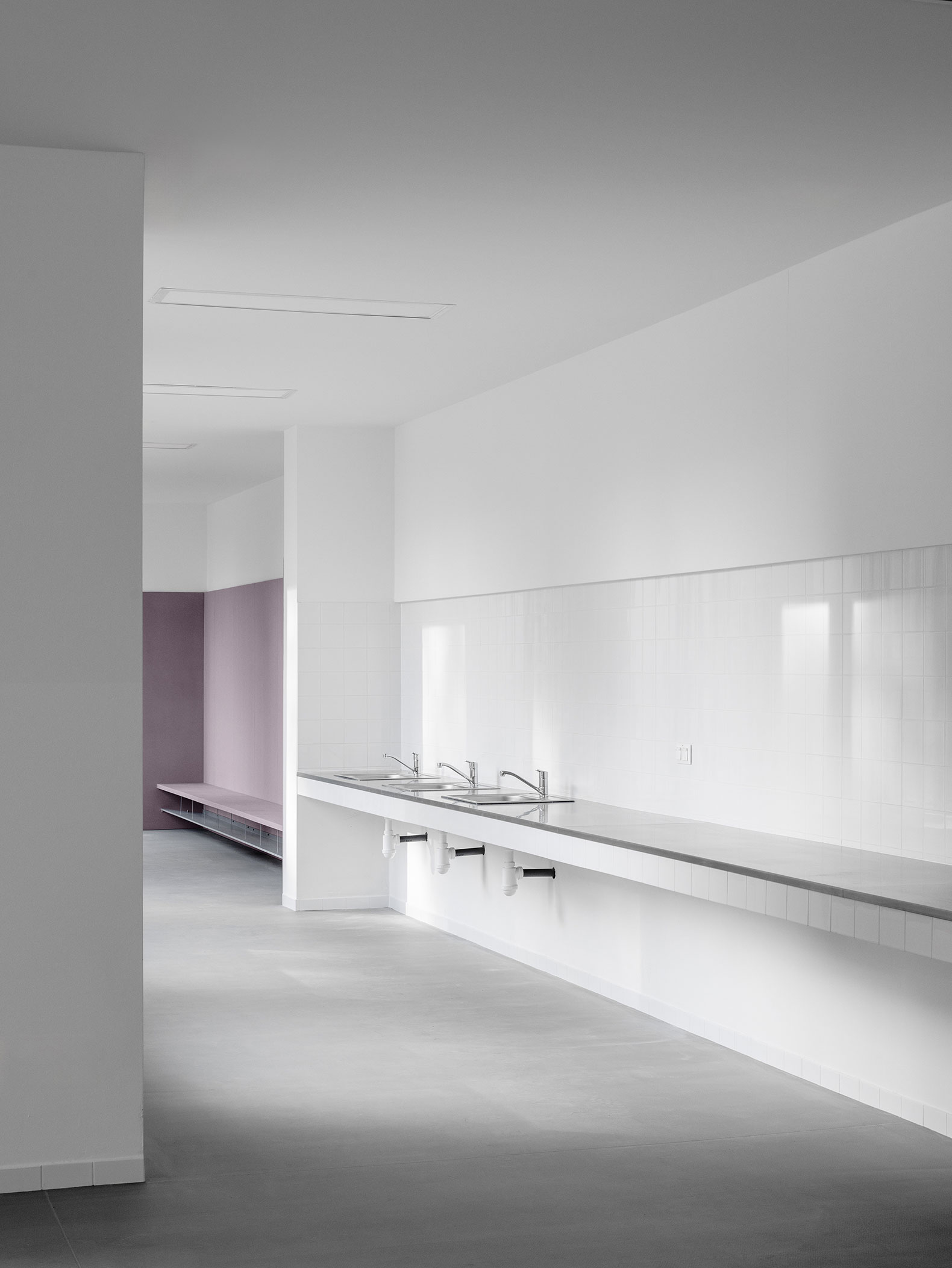
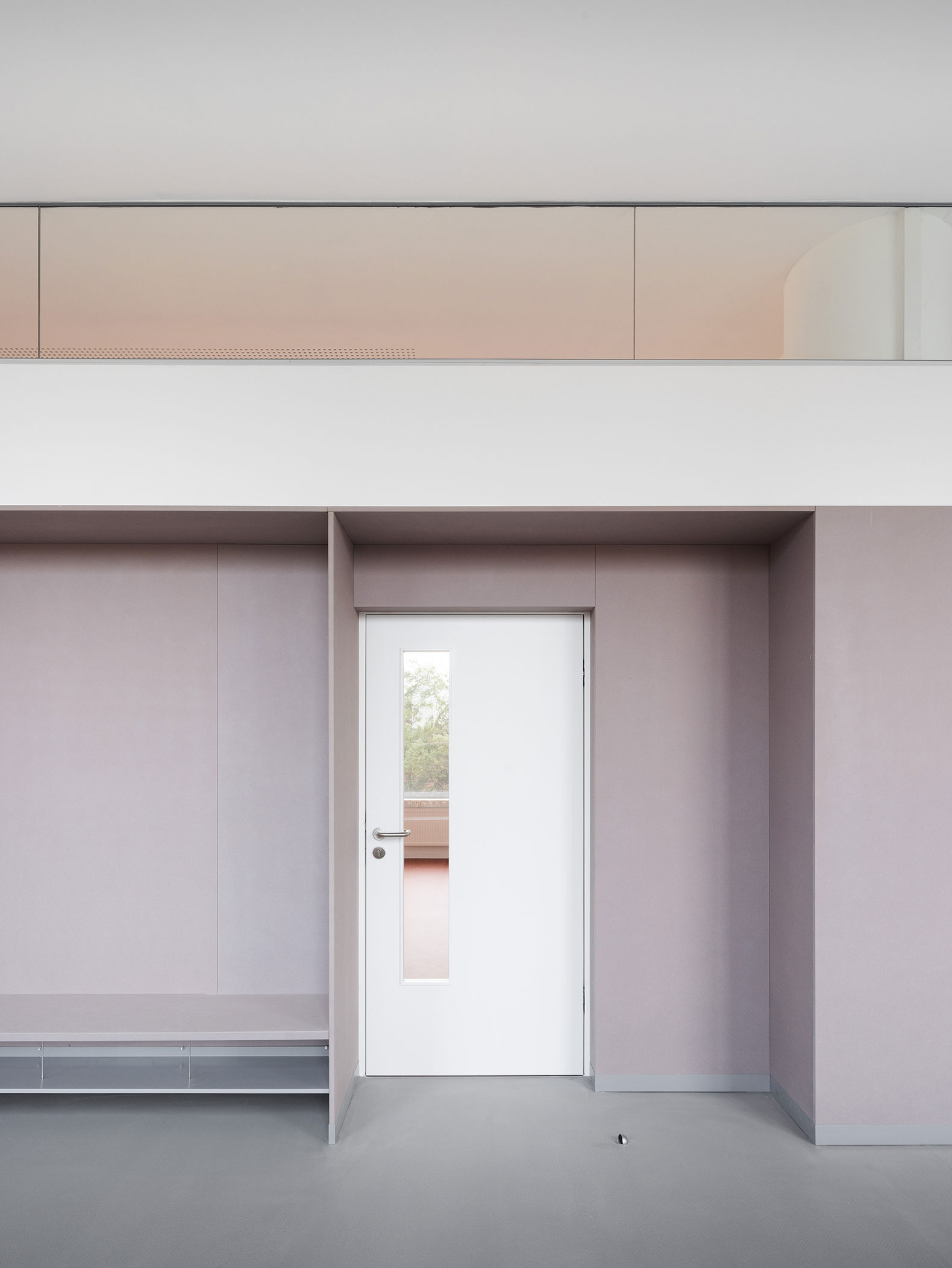
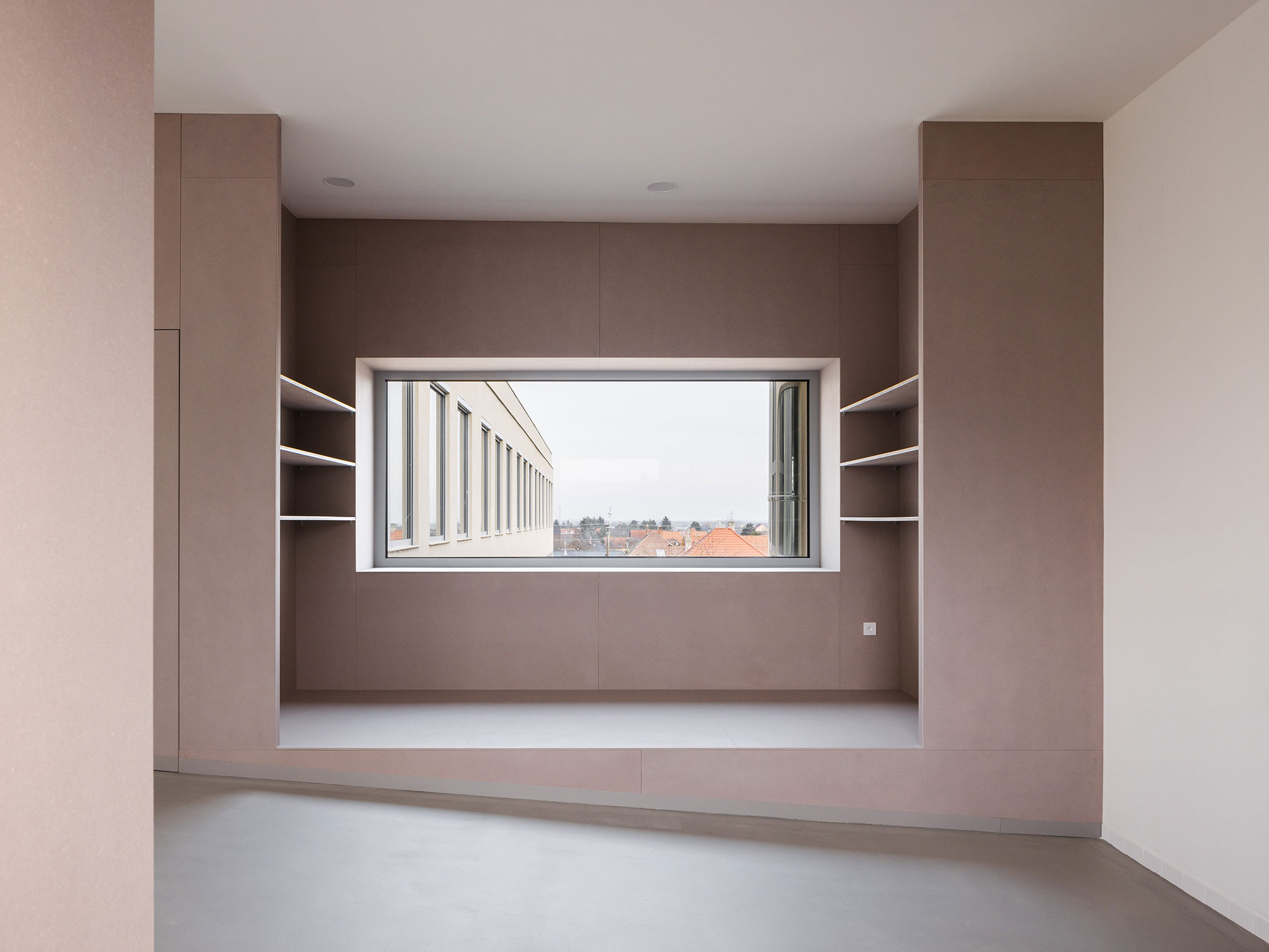
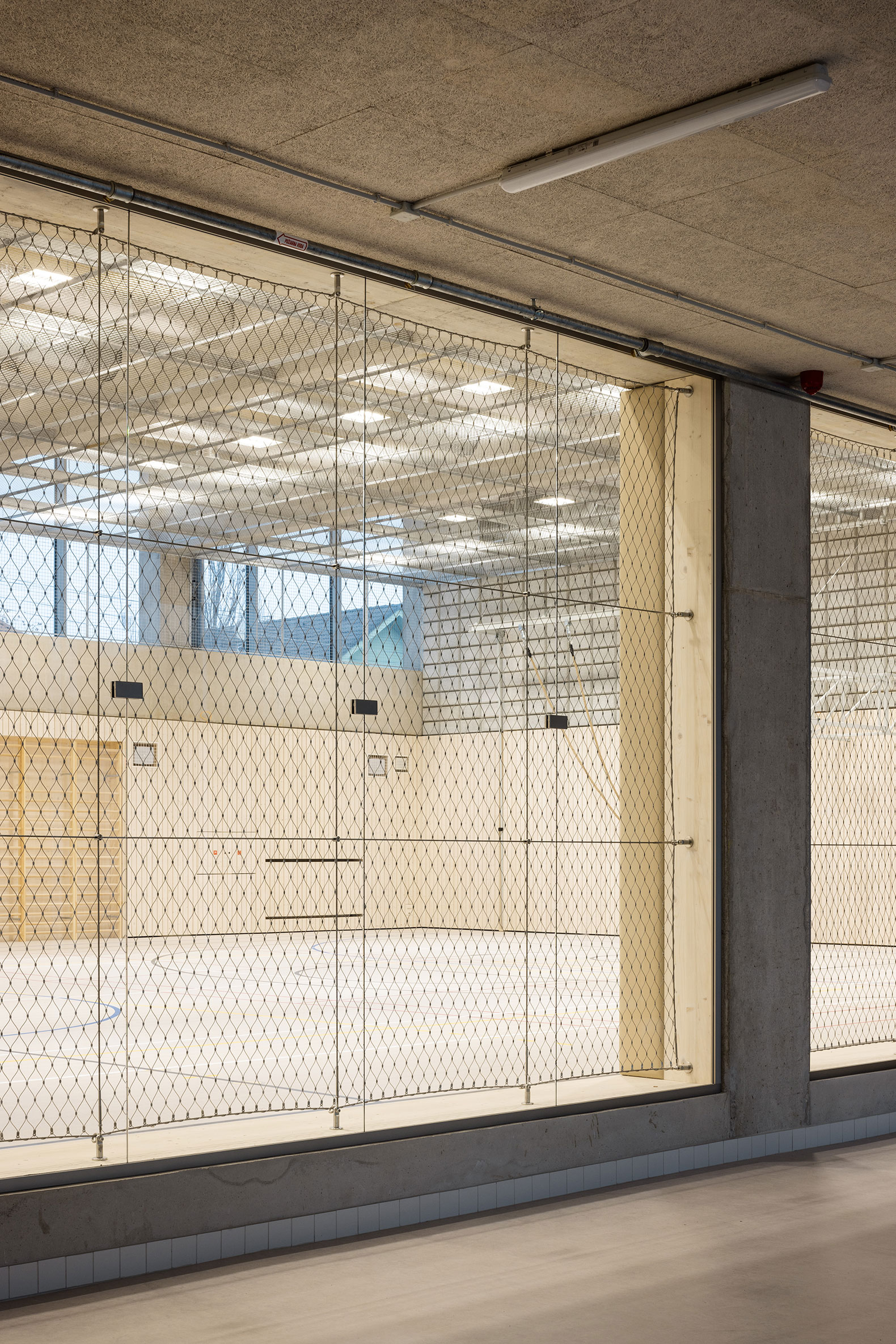
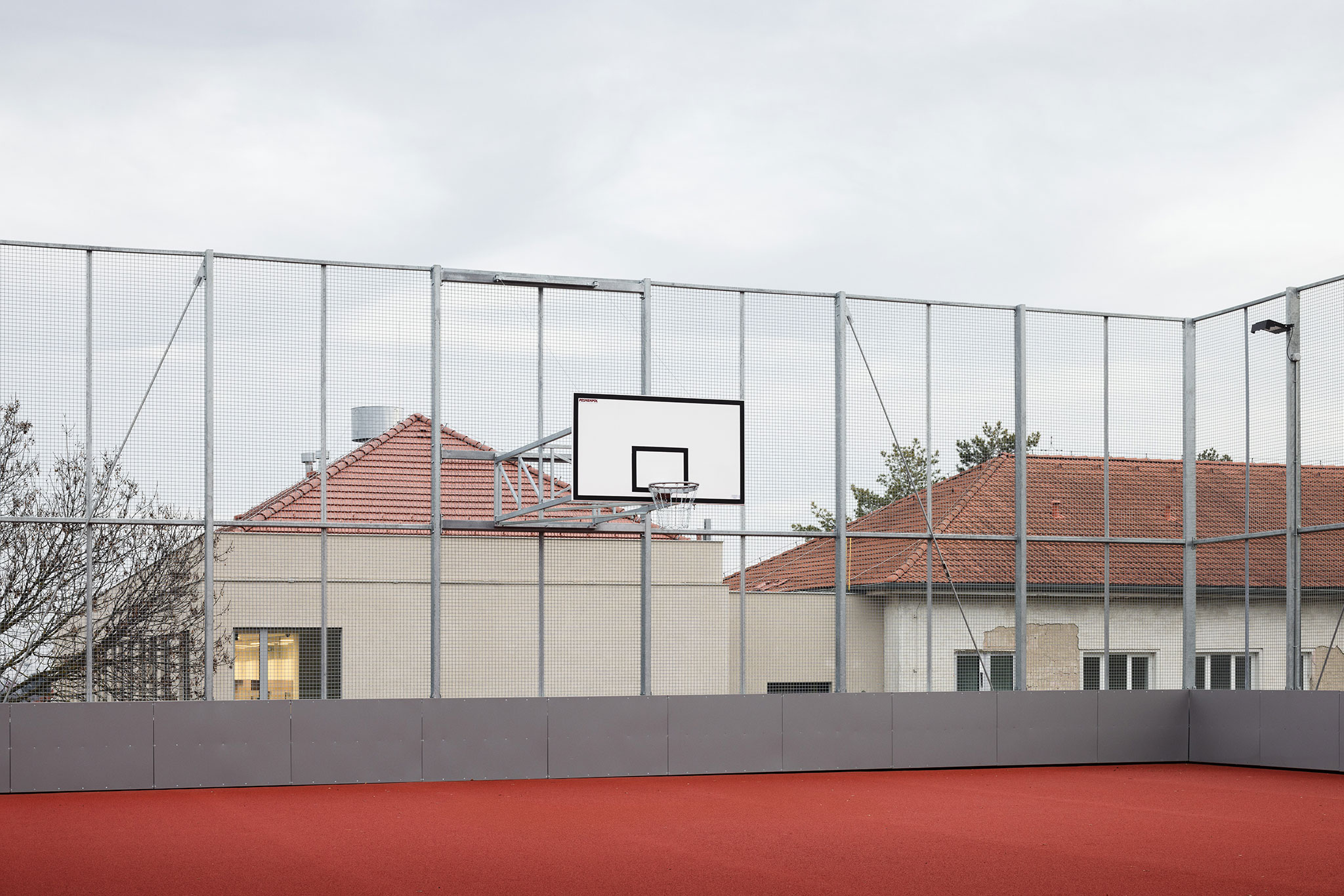
The L-shaped composition of a new with the original school figure creates a new public space - a park with a playground. The figure of new pavilion has a simple layout formed by a generous corridor and classrooms. Two smaller volumes, canteen and teachers' offices, are added to the basic prism. The corridor serves as a living space for students during breaks and also as a cloakroom. A horizontal skylight between the classroom and the corridor allows afternoon winter light to penetrate into the classrooms. The multipurpose hall is located on the northern part of the plot as well, so southern part is left free for greenery. The newly created public space is clearly defined. The hall is connected with school pavilions by an underground corridor, so there is no barrier on the ground, and the cluster is fully open to the public and permeable. A green roof and rooftop playground are also available for residents. New pavilions defines the northern boundary of the village center.
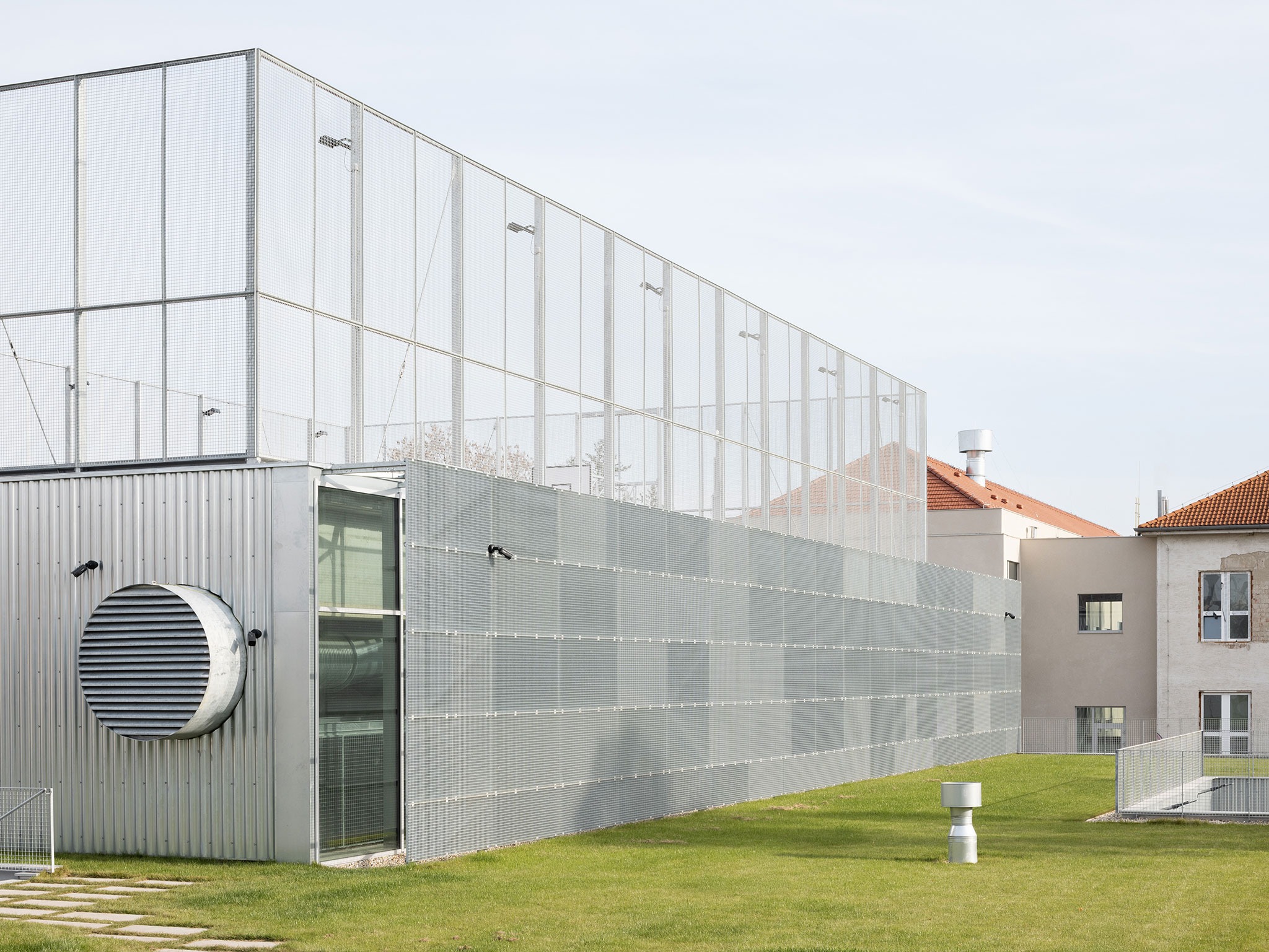
Both new buildings are built of reinforced concrete skeletons which are flexible. The internal partitions are non load-bearing, which is practical, especially for a school. The hall is roofed with prestressed concrete beams that are stiff enough to handle the function of the playground. The new school roof is constructed by wooden trusses covered with tiles, just like the original building, whose figurative and material features it takes over - especially the group of three windows and traditional plaster (on mineral wool insulation) called Brizolit. The intention with school design was to appear quiet - similar to old building, without fashionable manners, while the period of its construction is evident from the nature of the contemporary details. The hall figure is separated and therefore its facade is different - industrial - made of corrugated sheet metal. All materials of the hall are left in their natural color and texture. Its green roof is irrigated with collected rainwater.