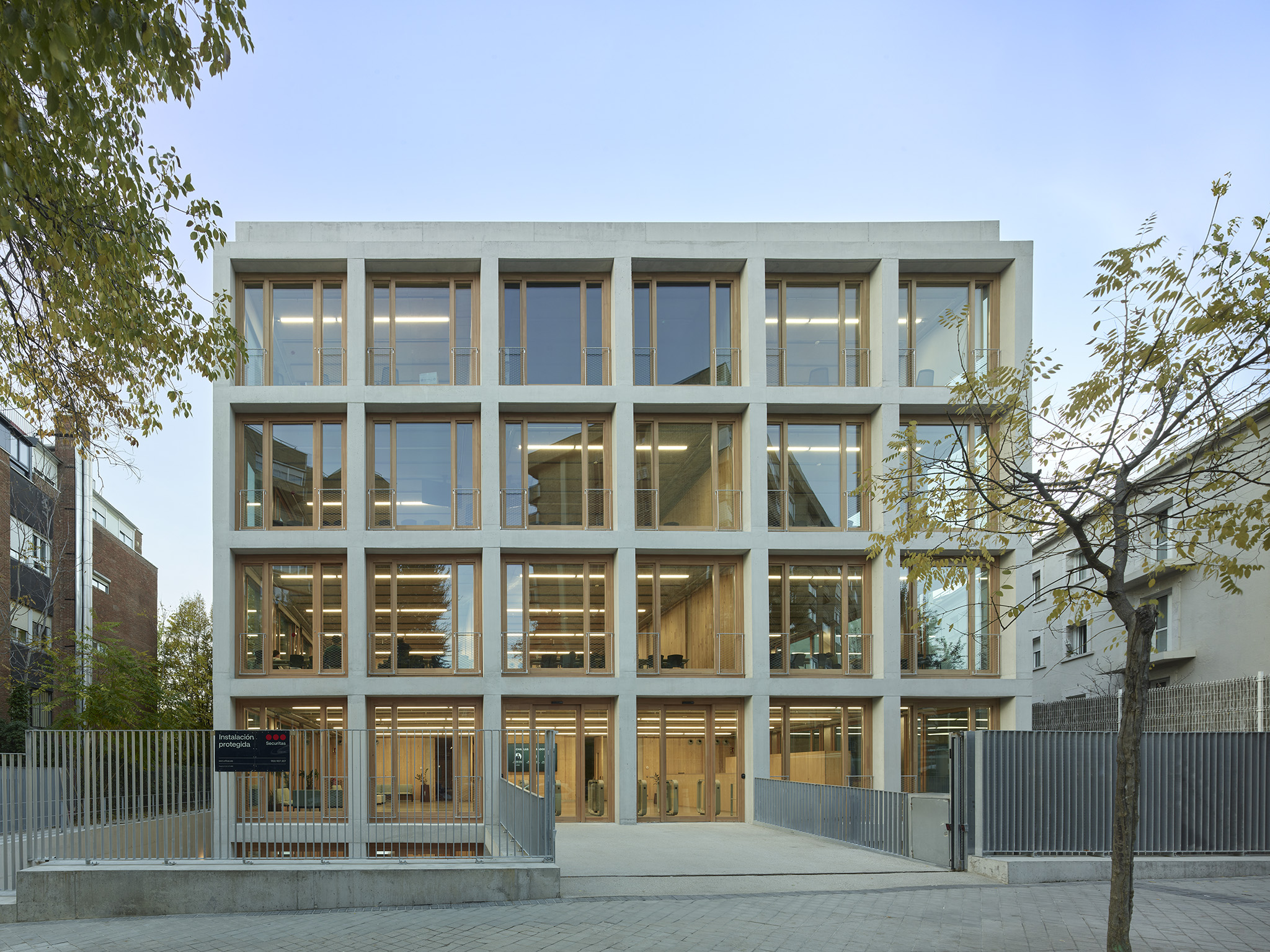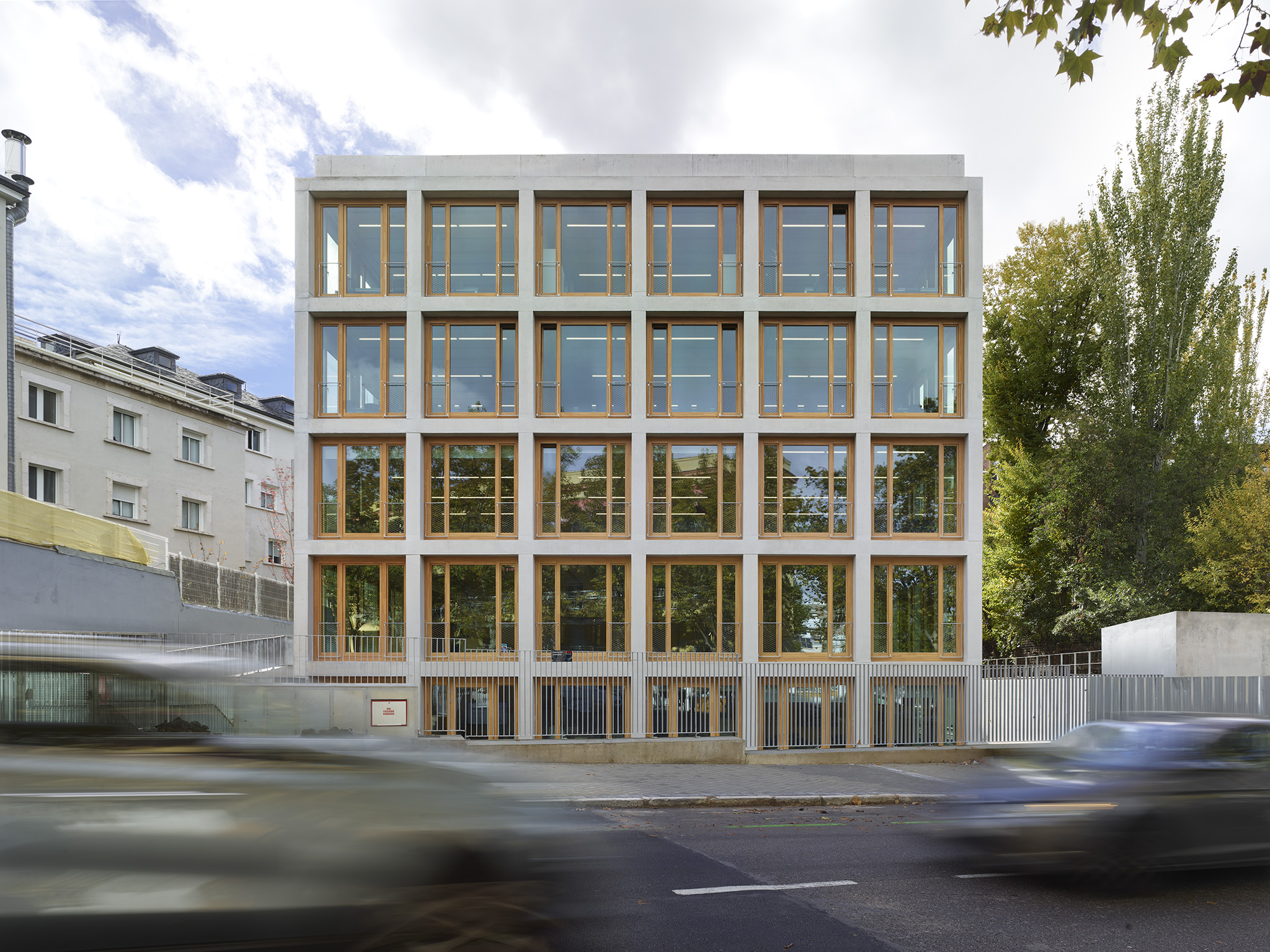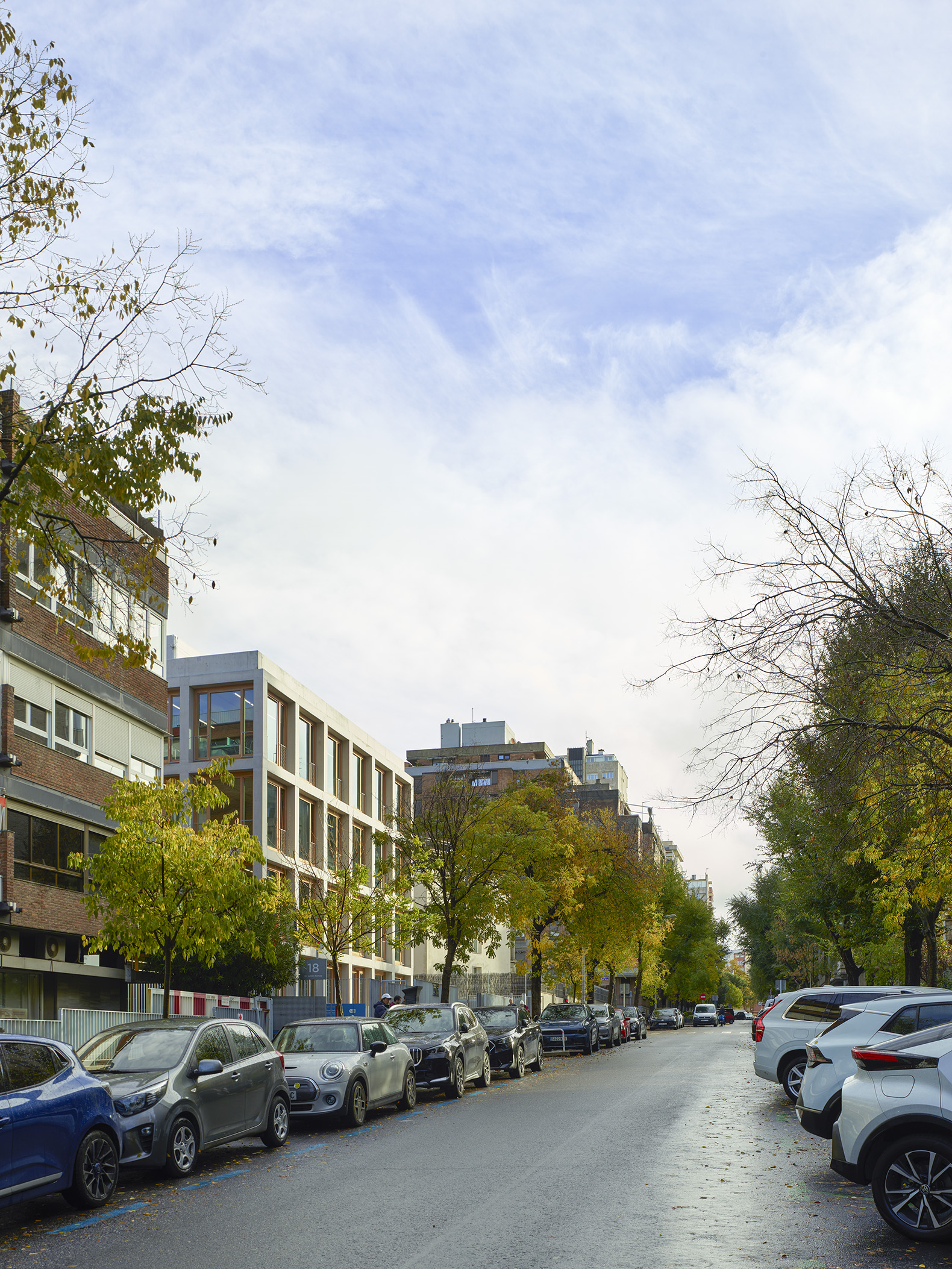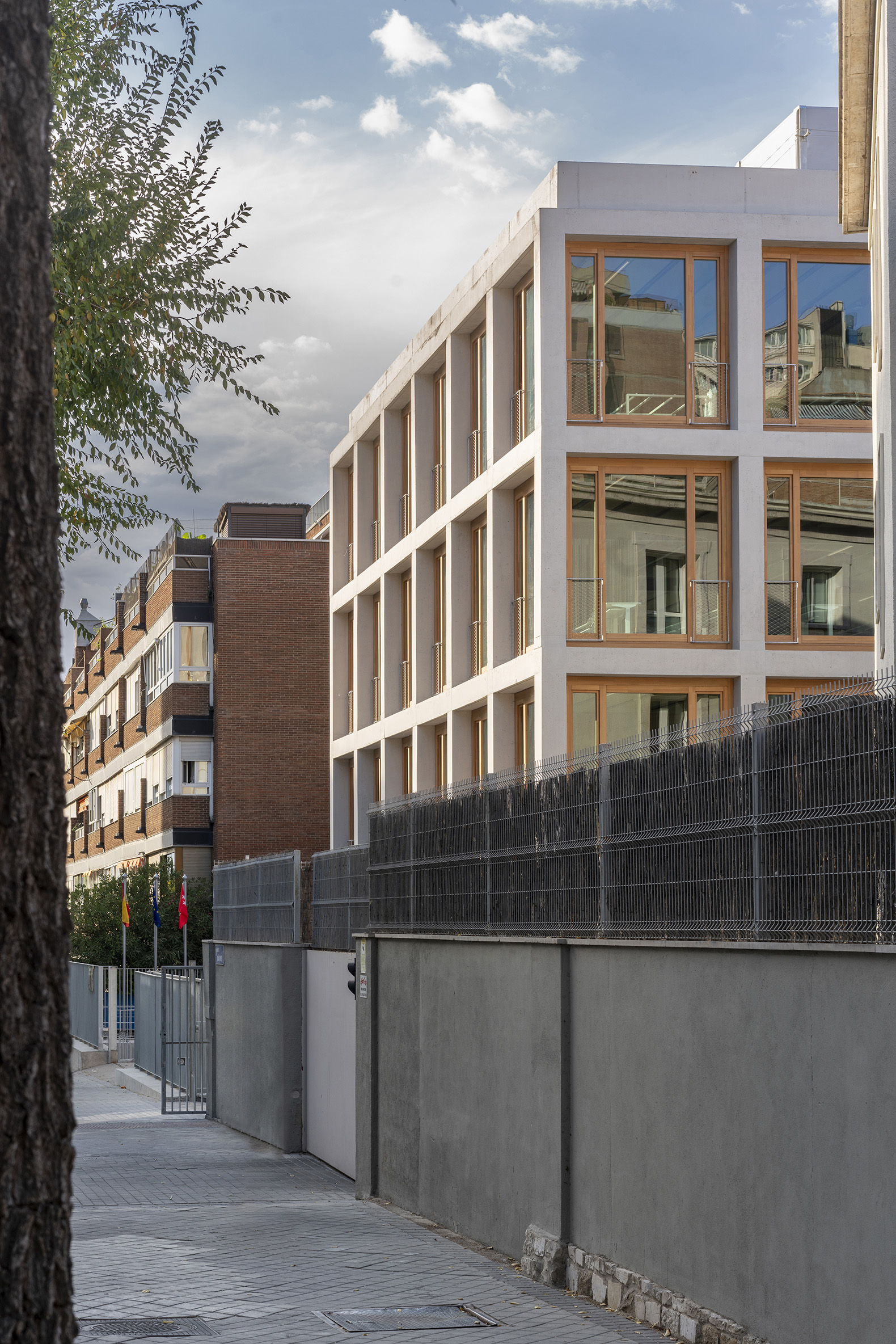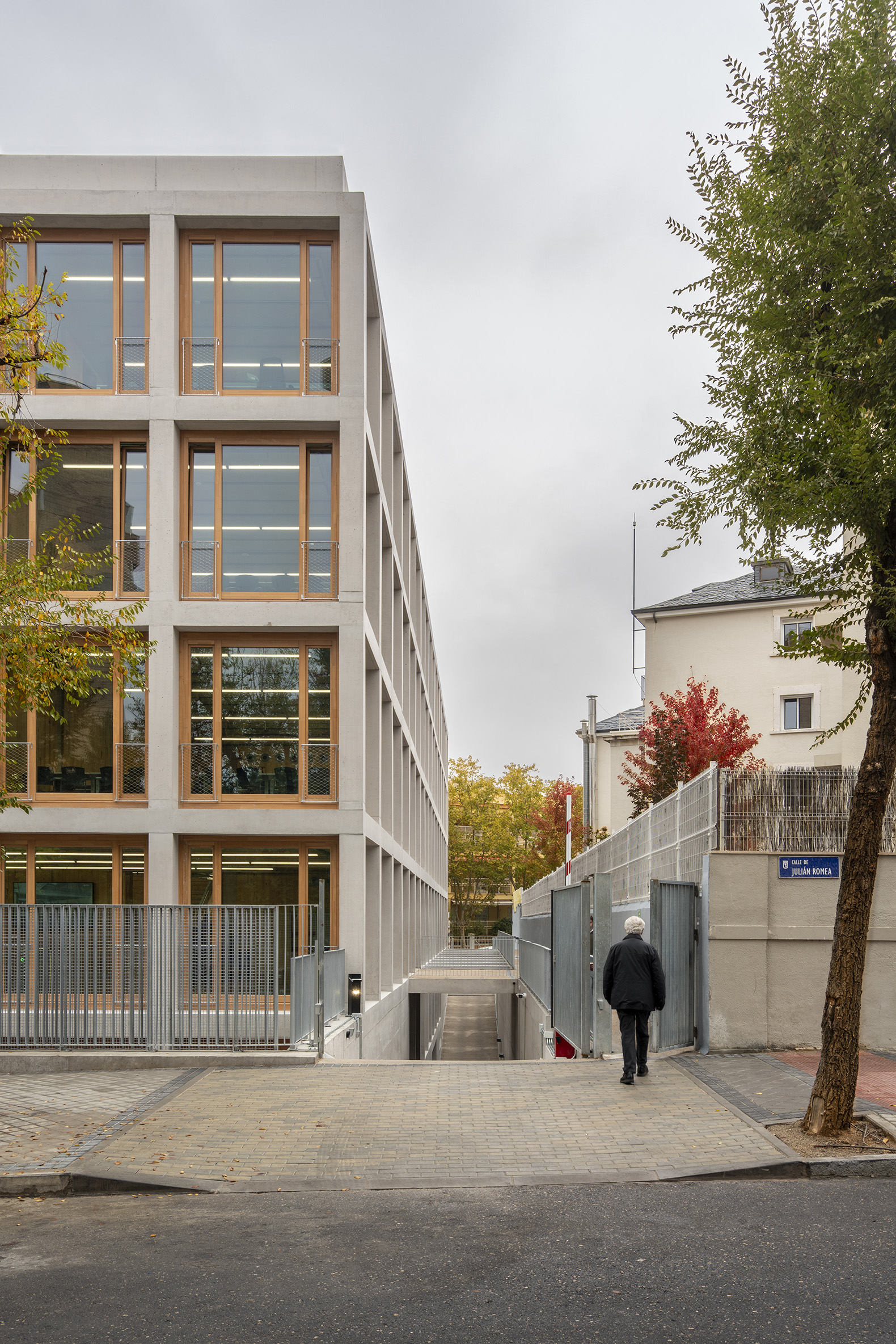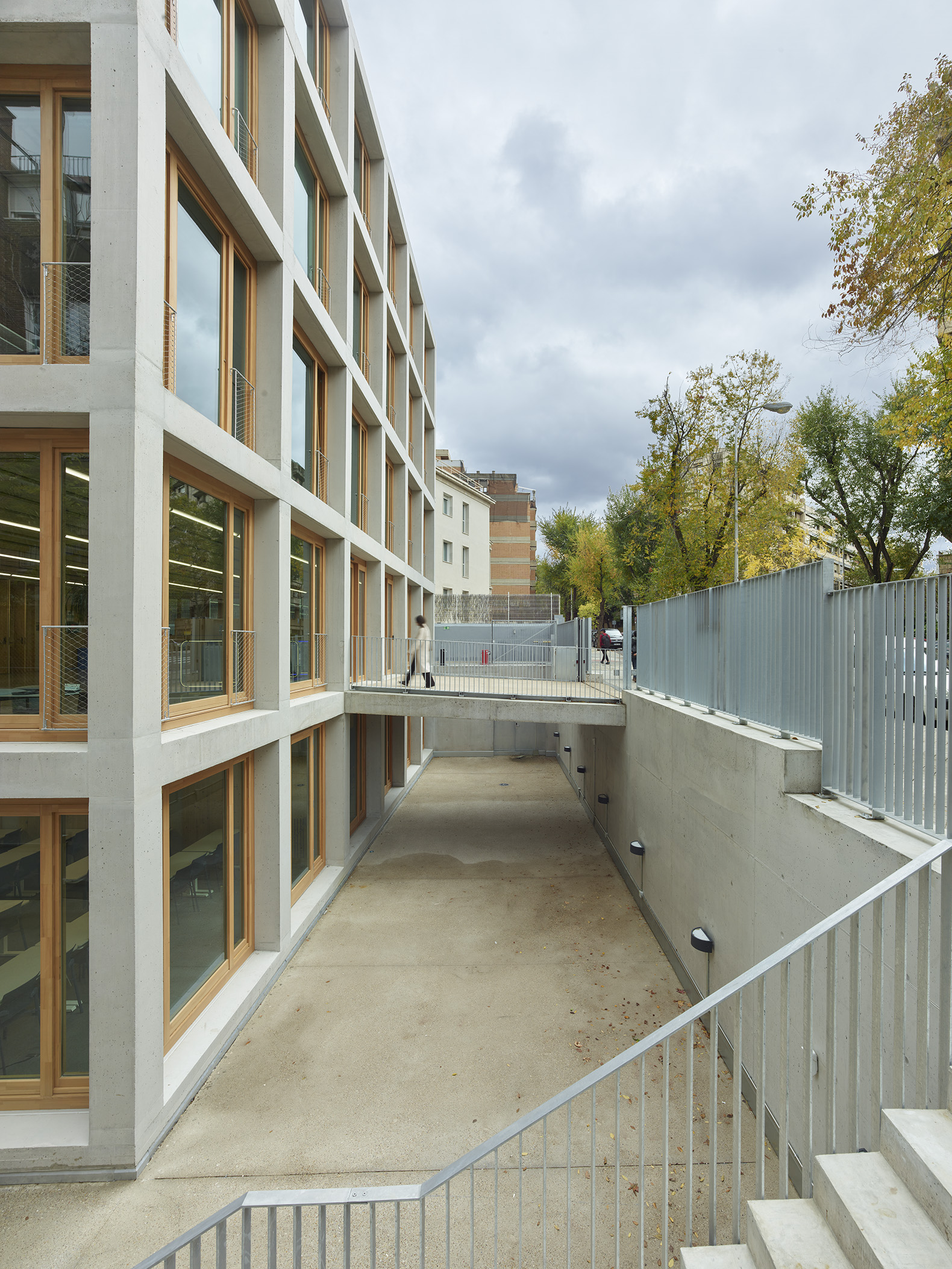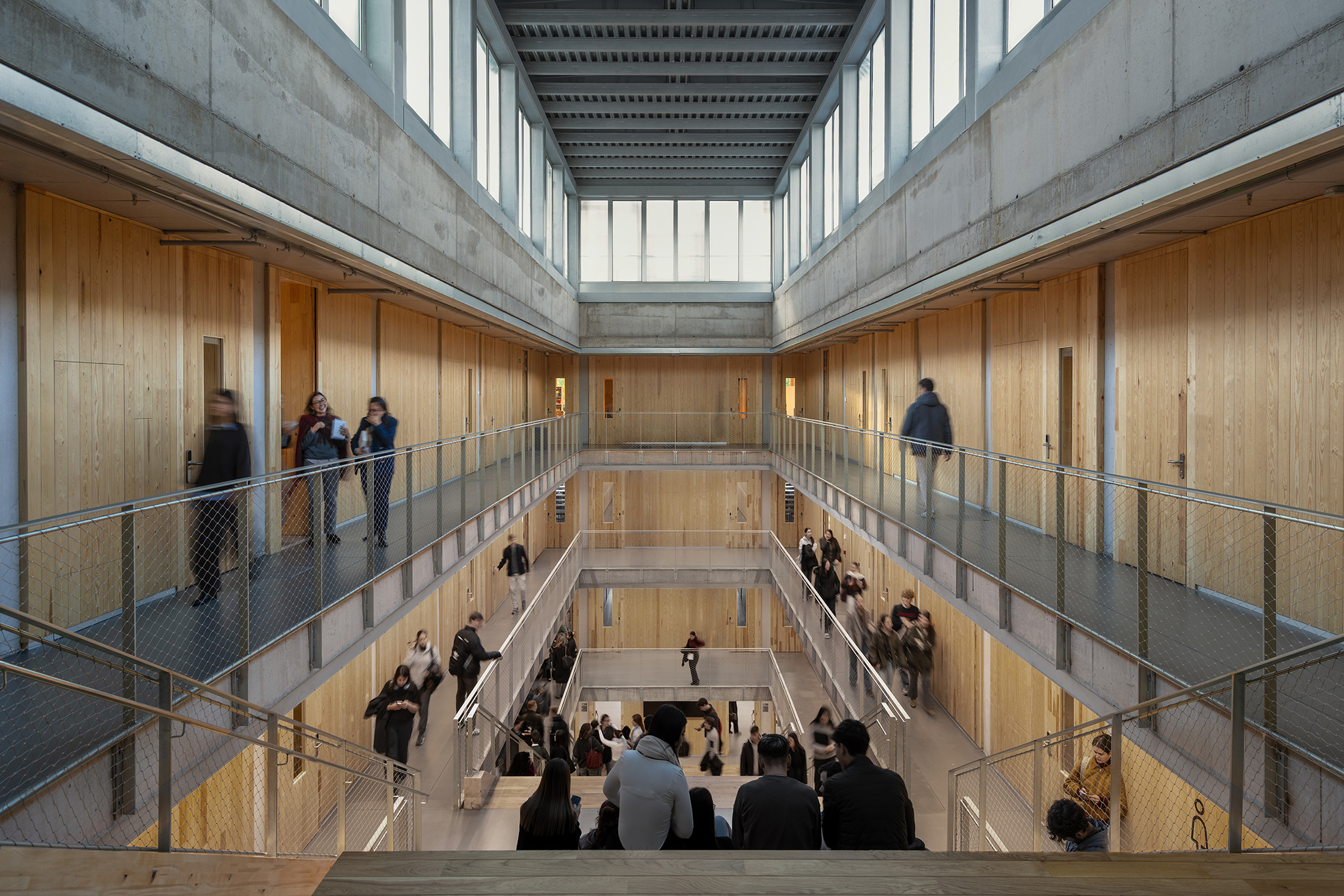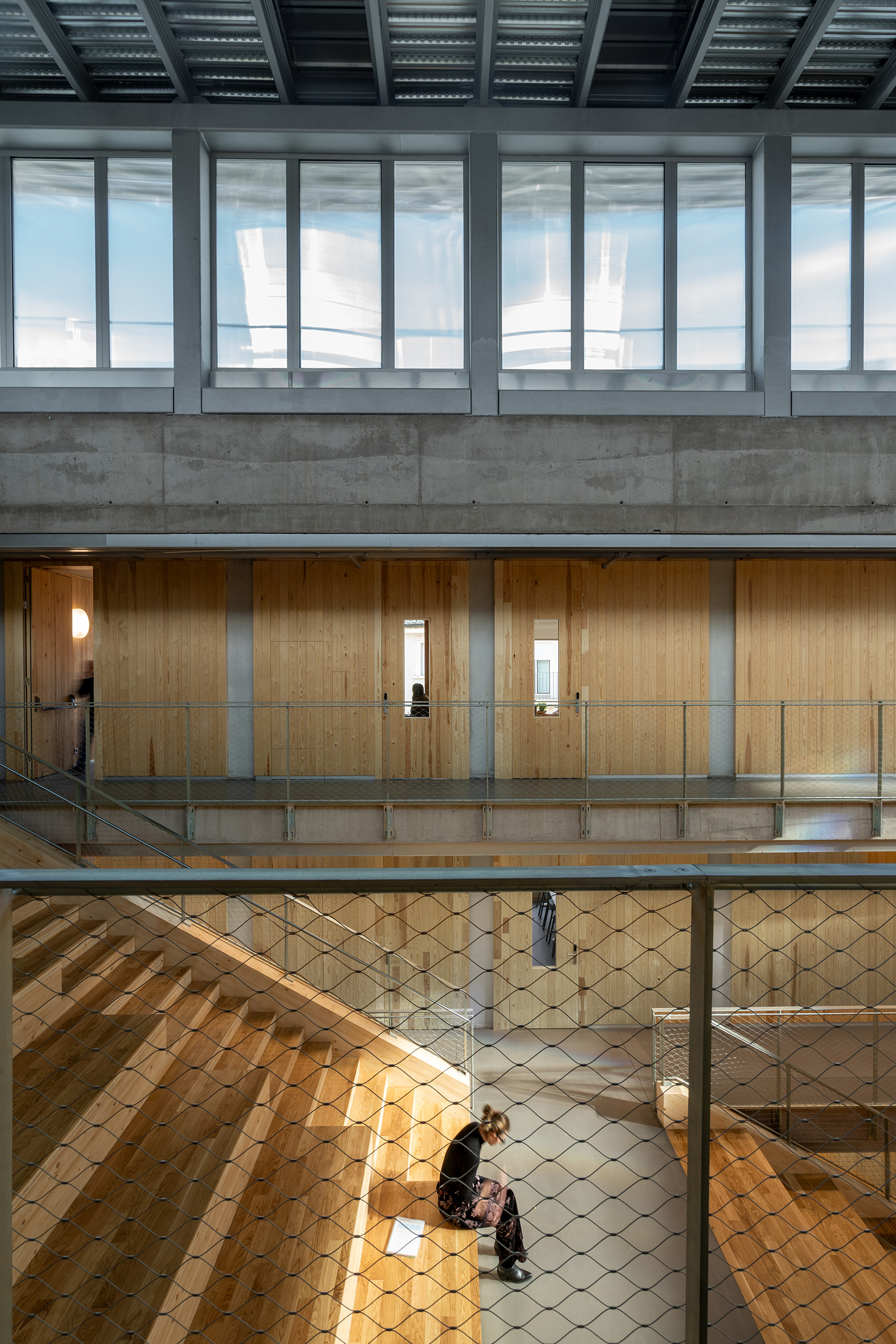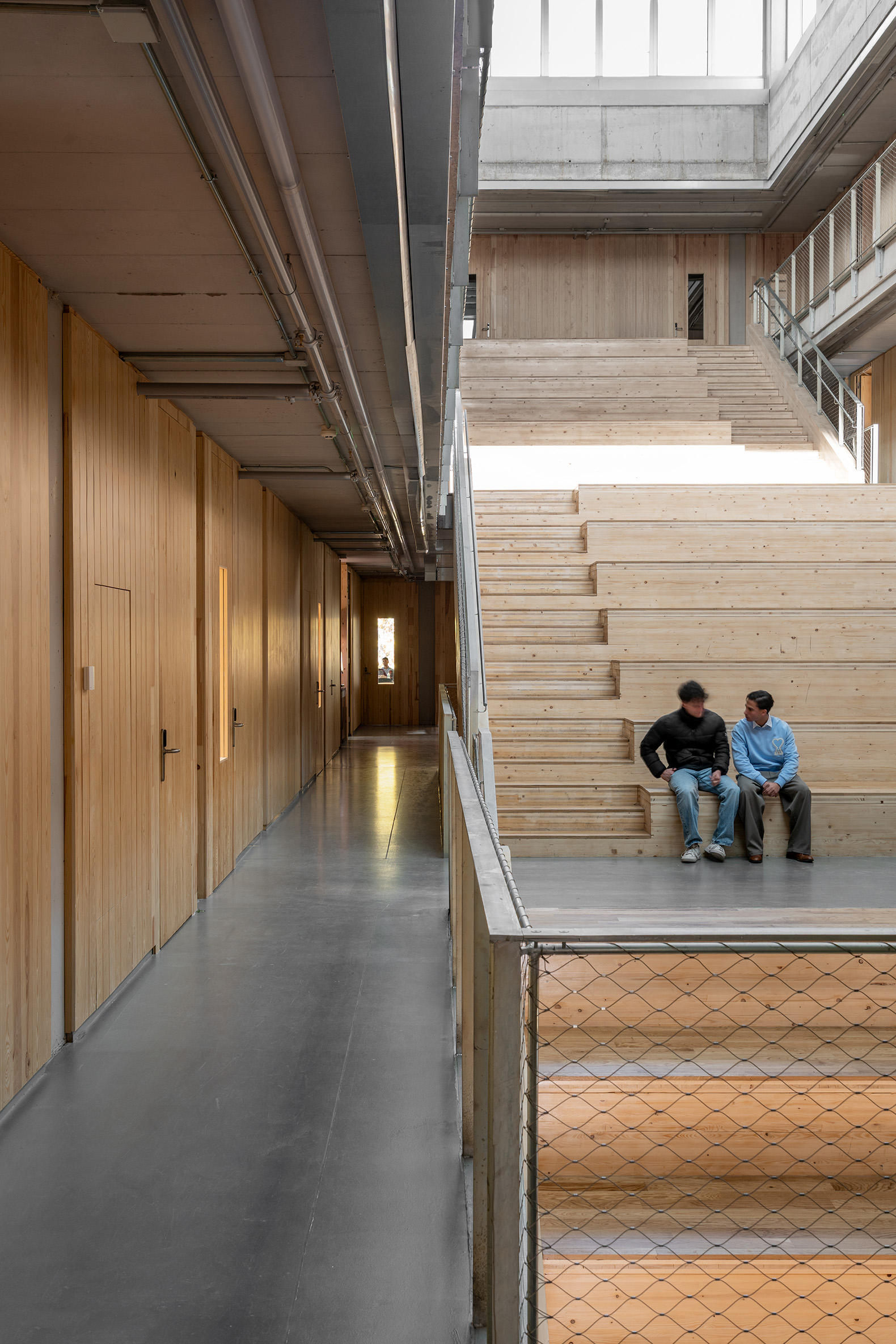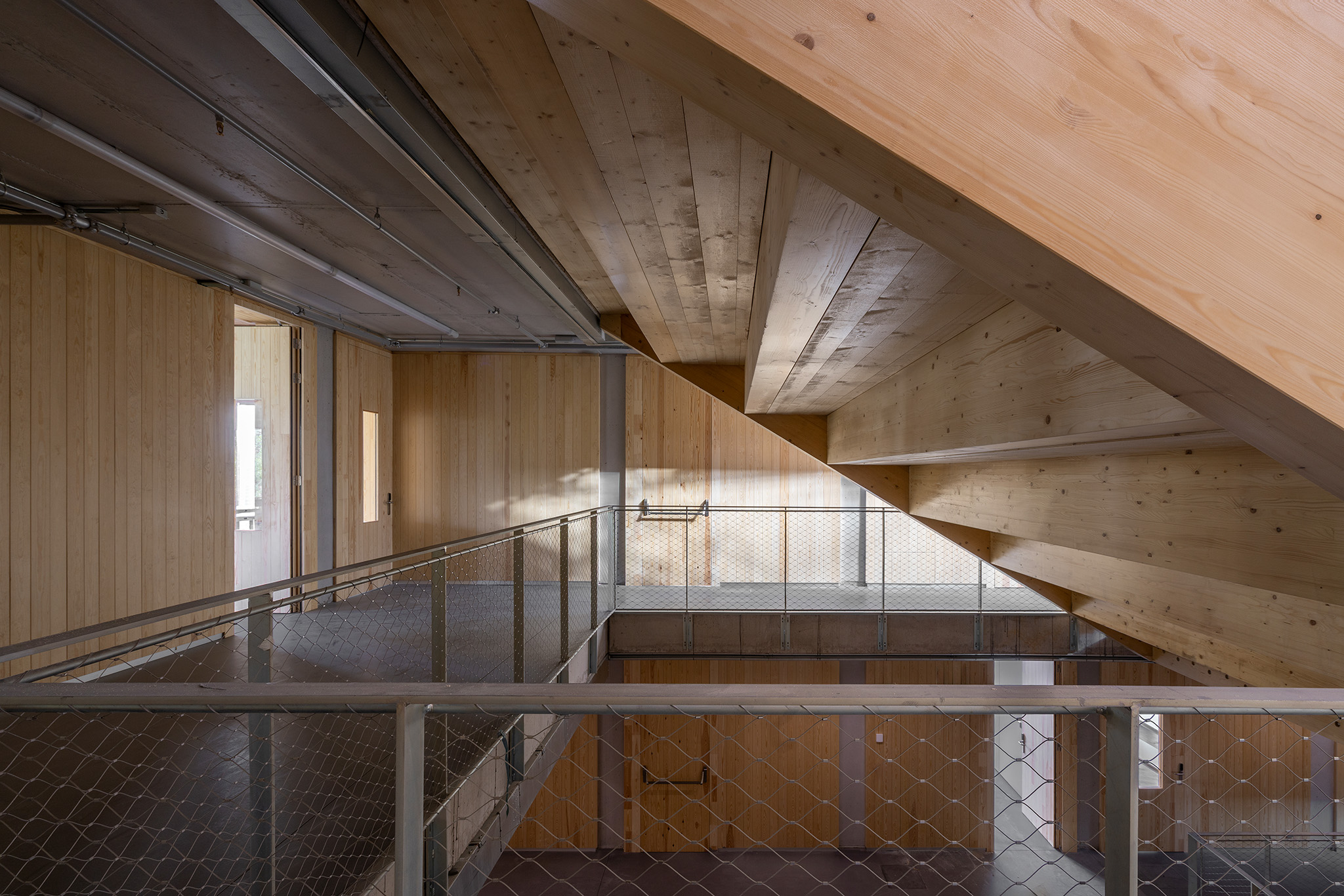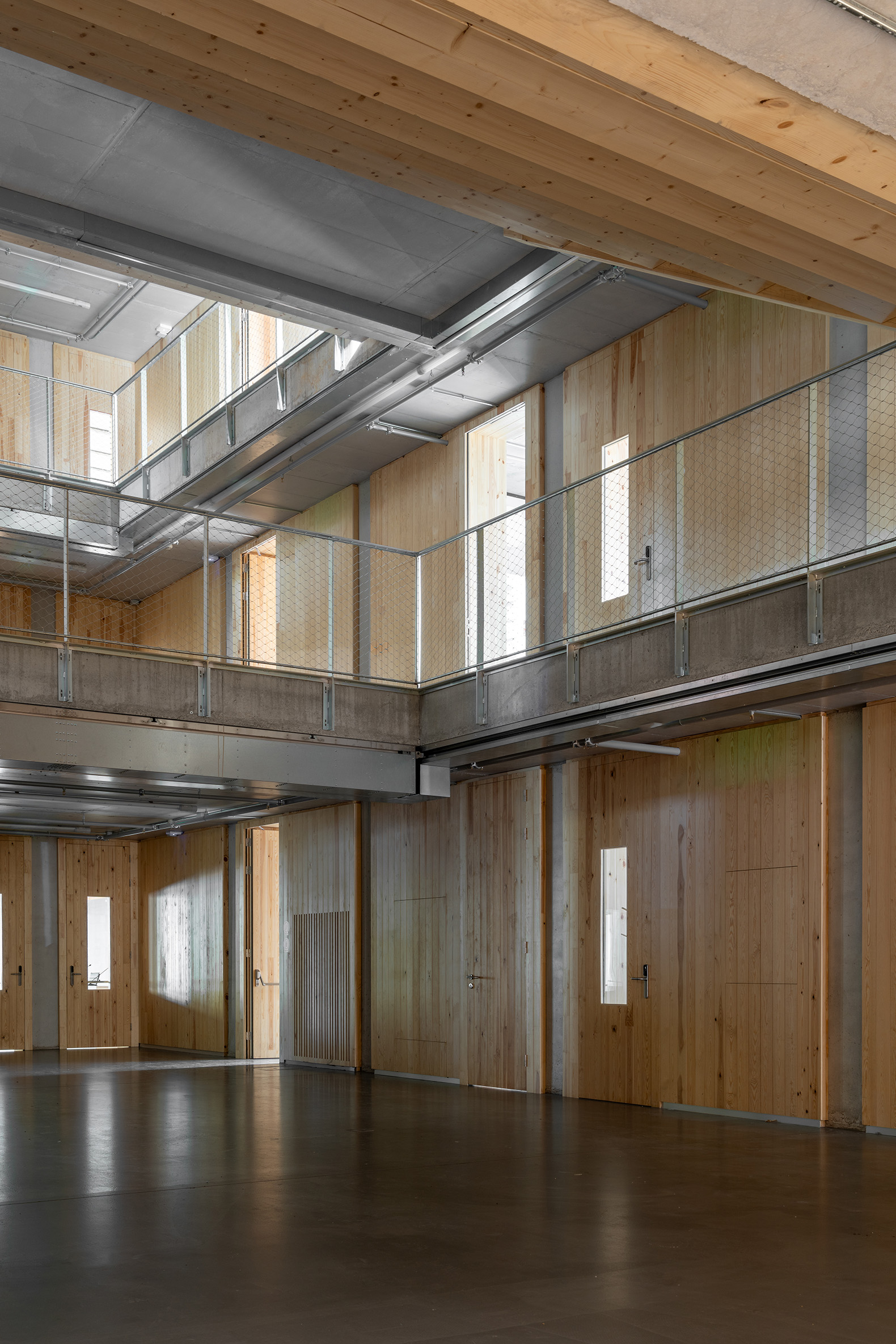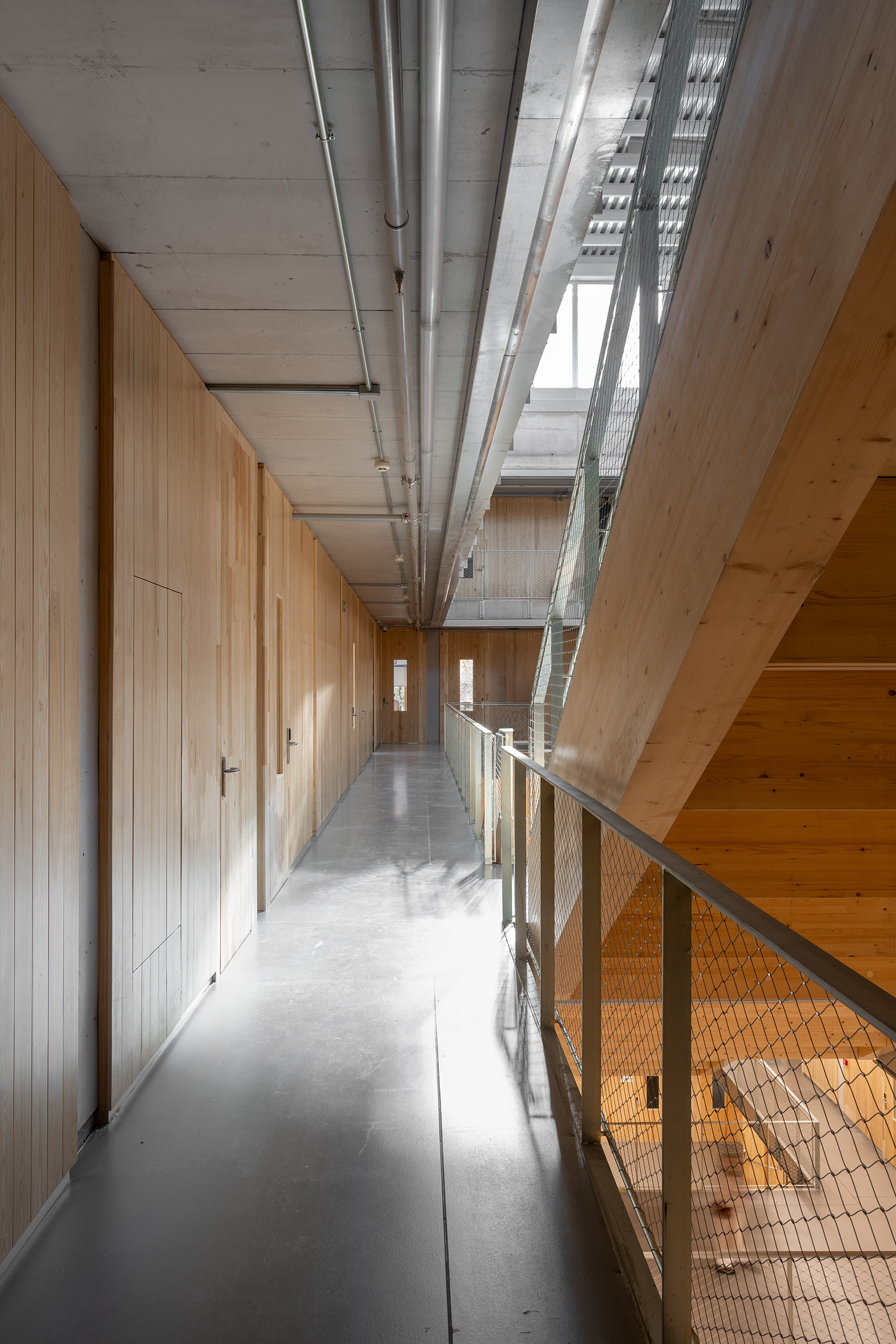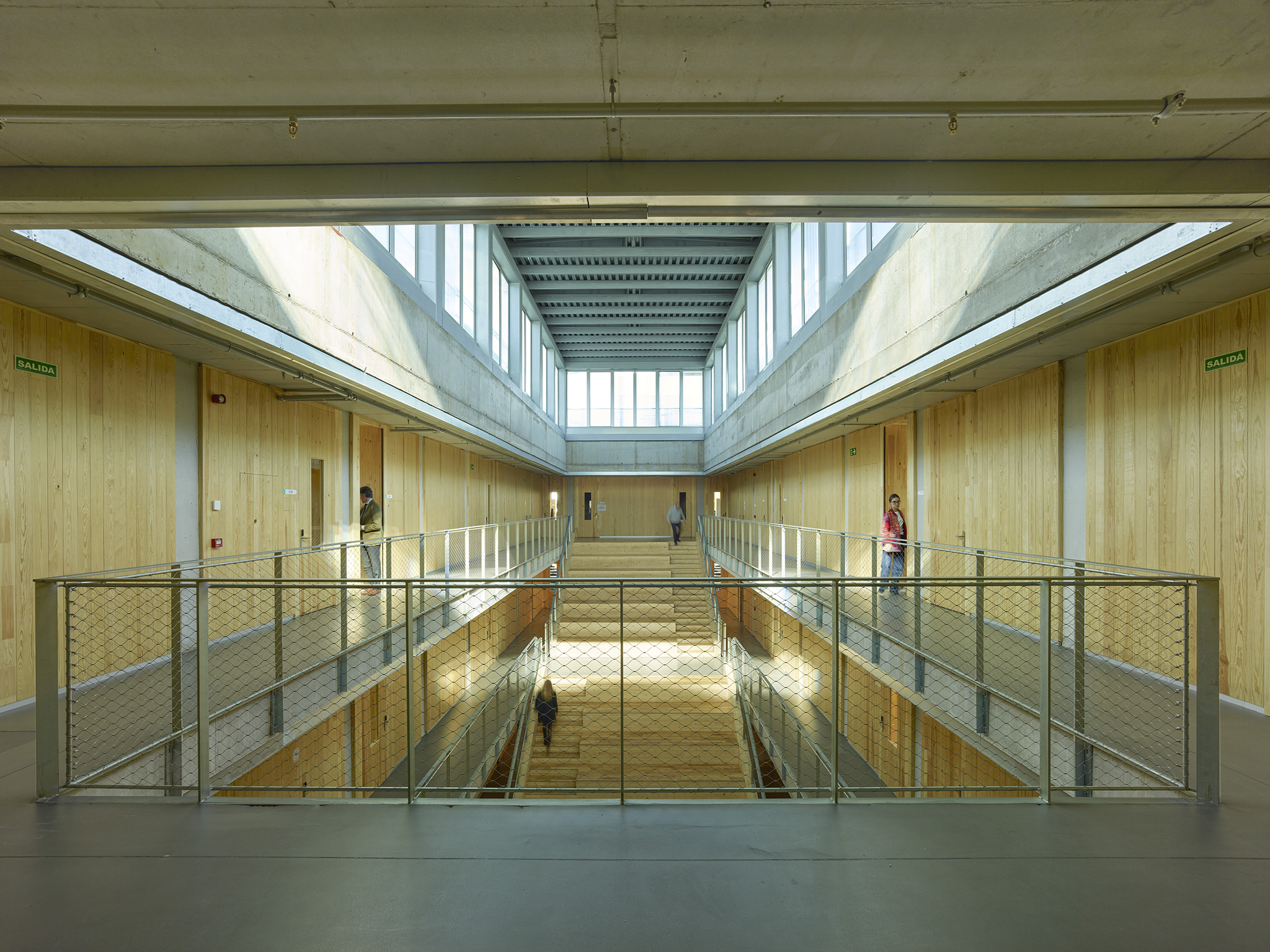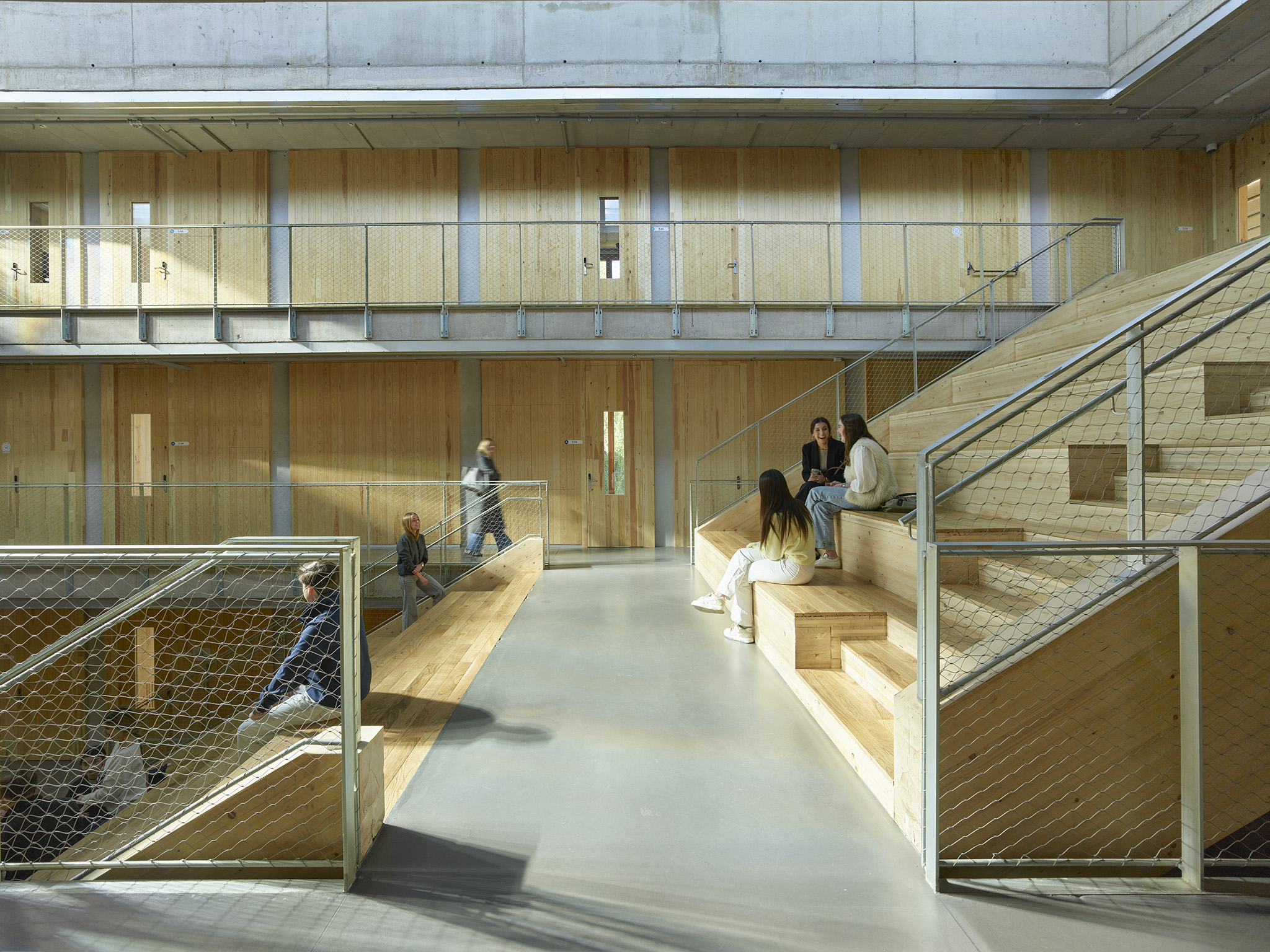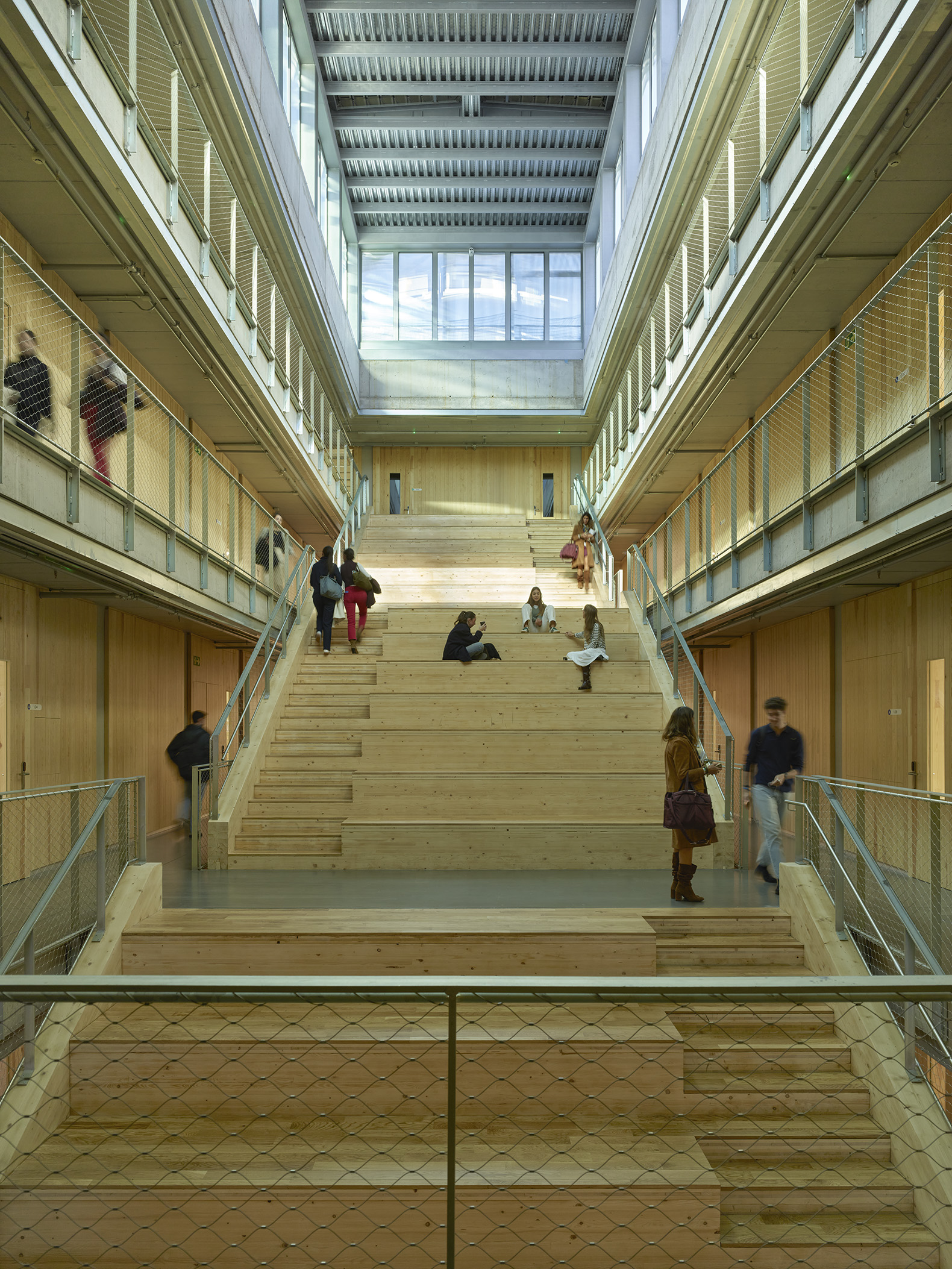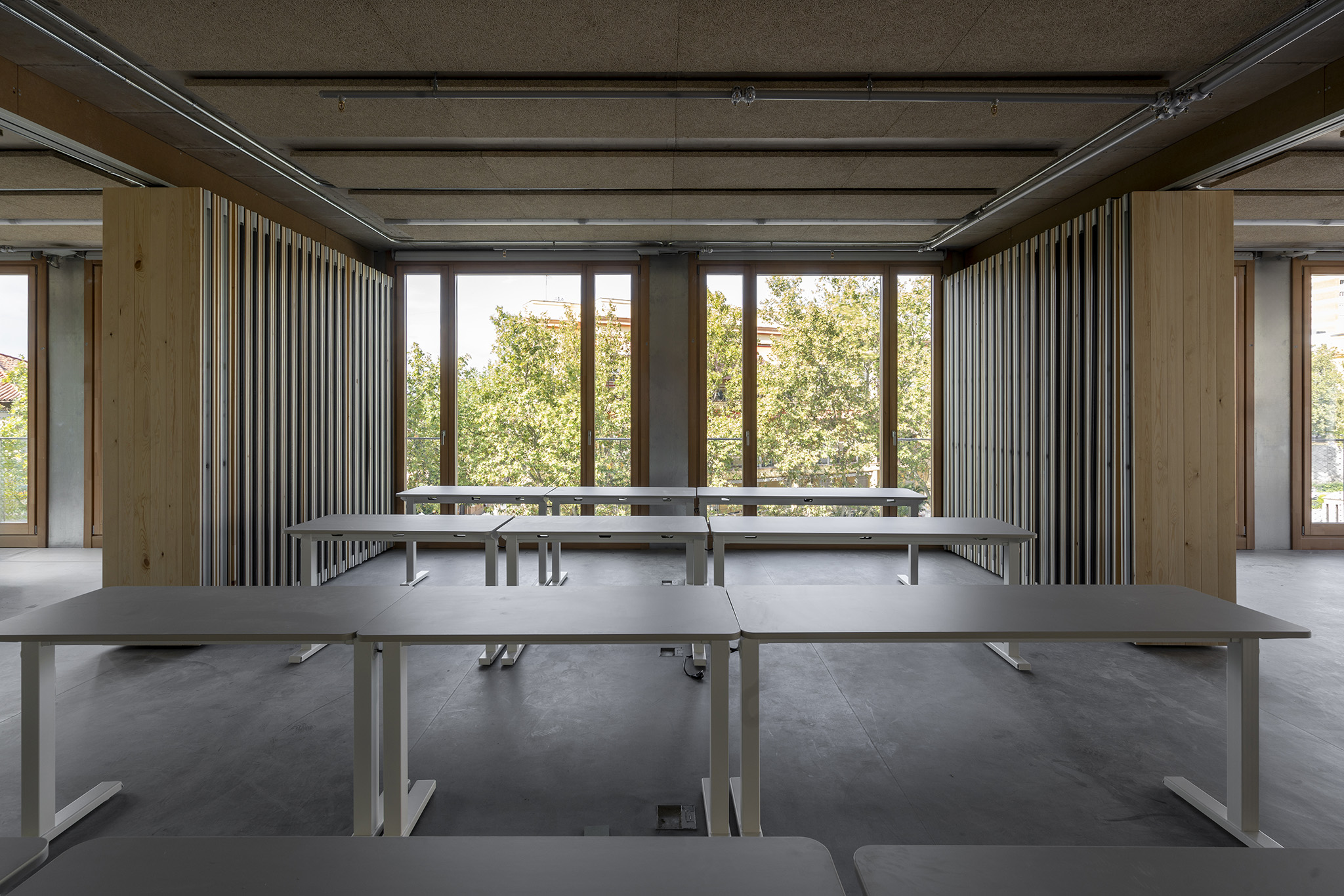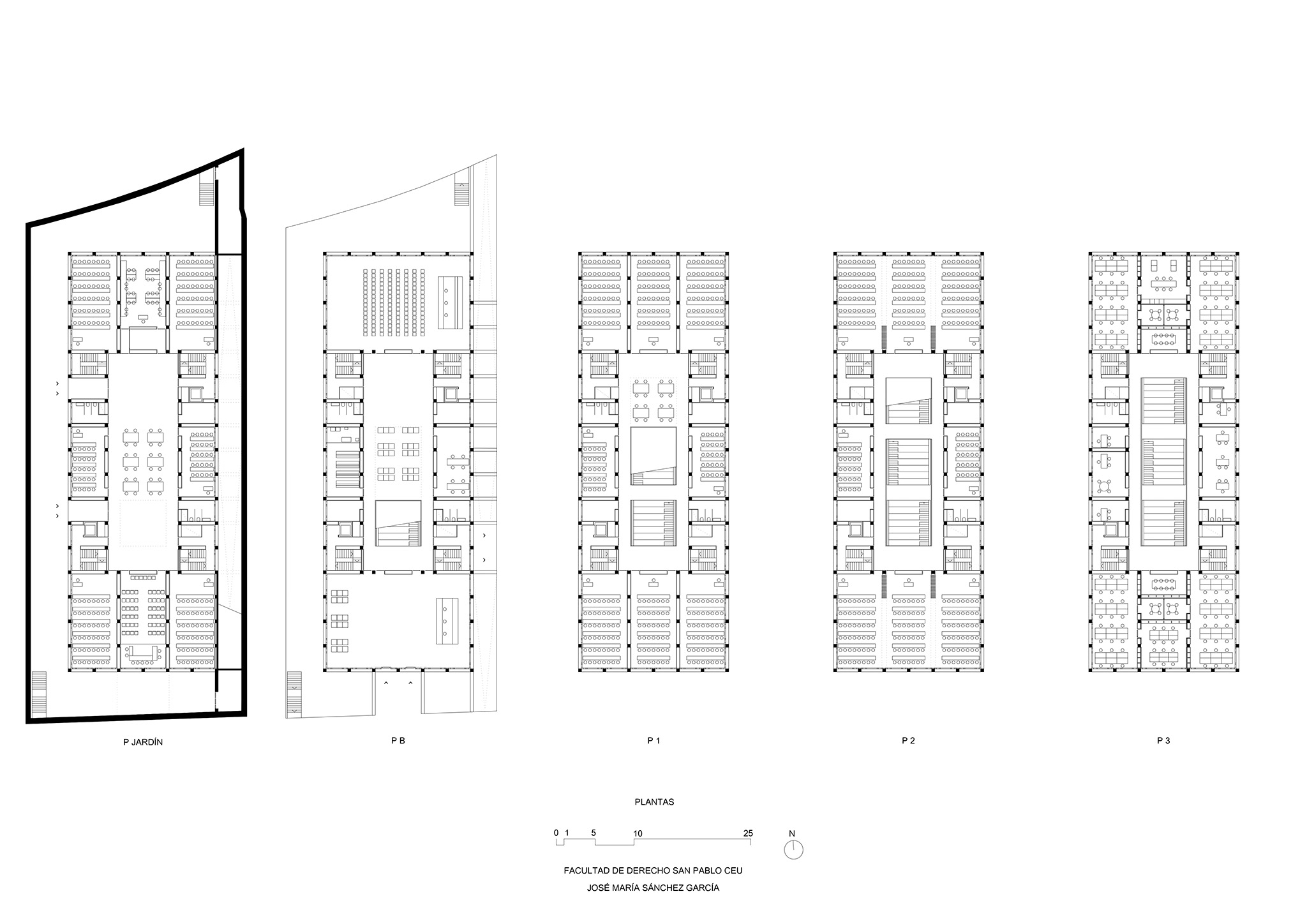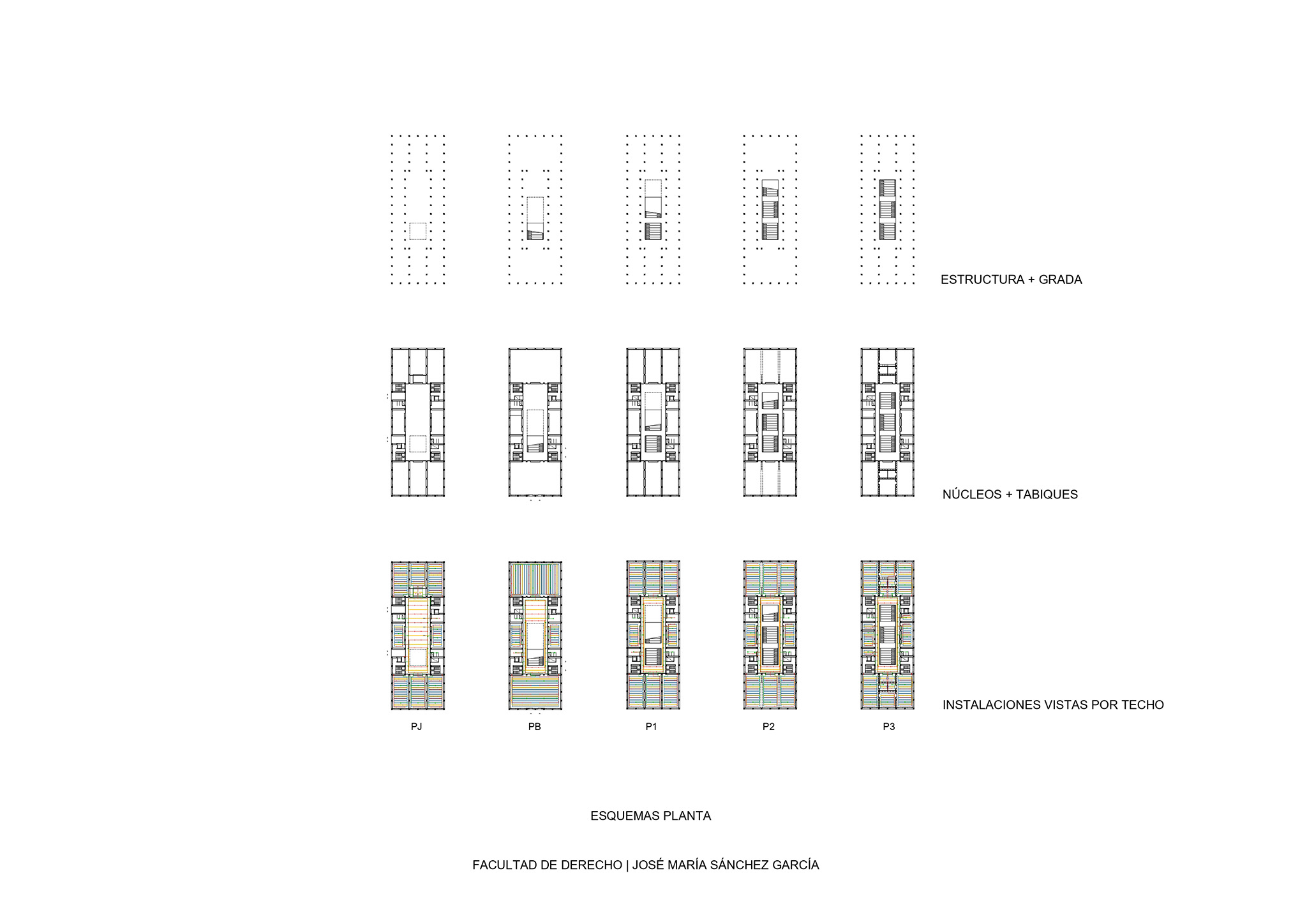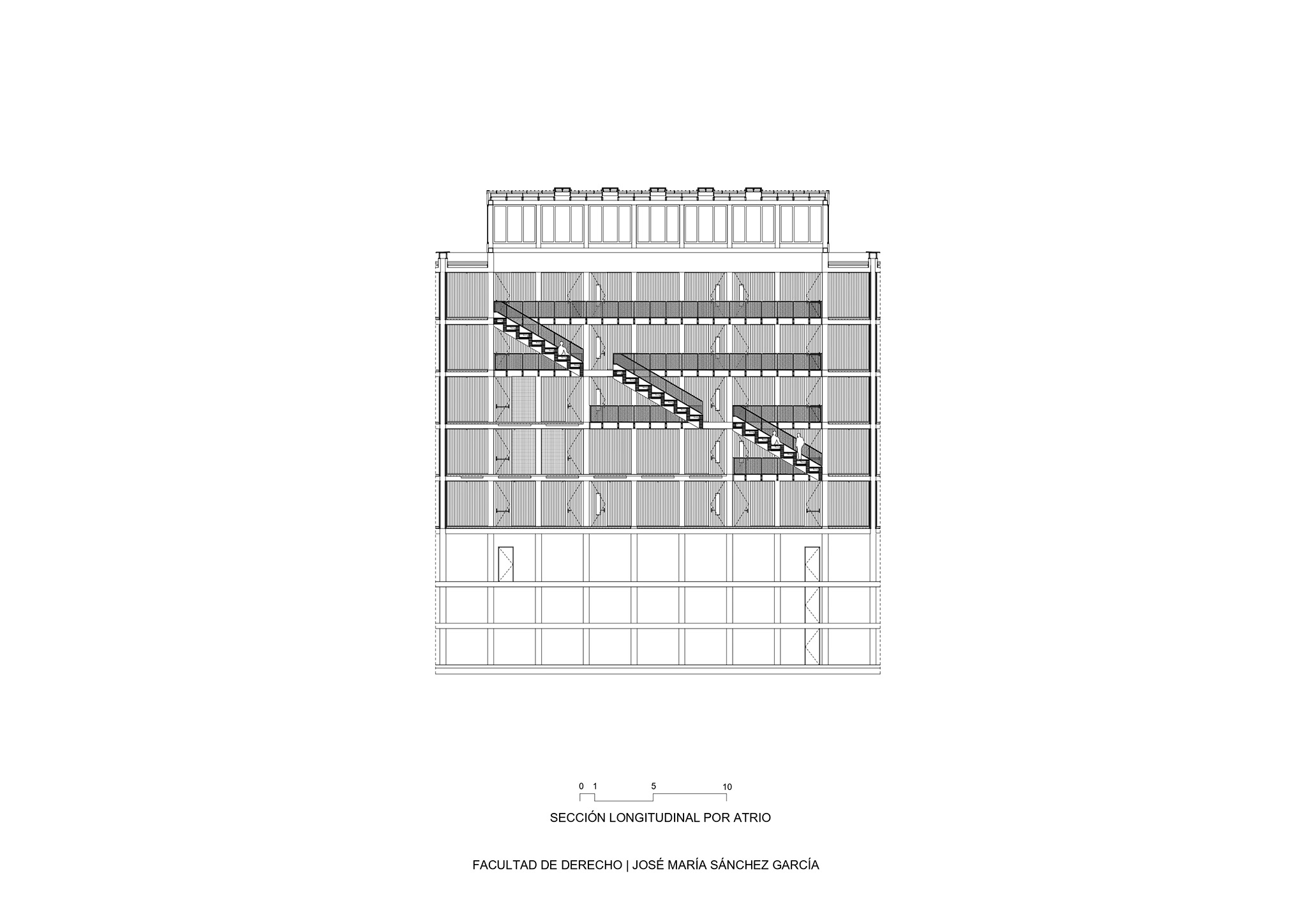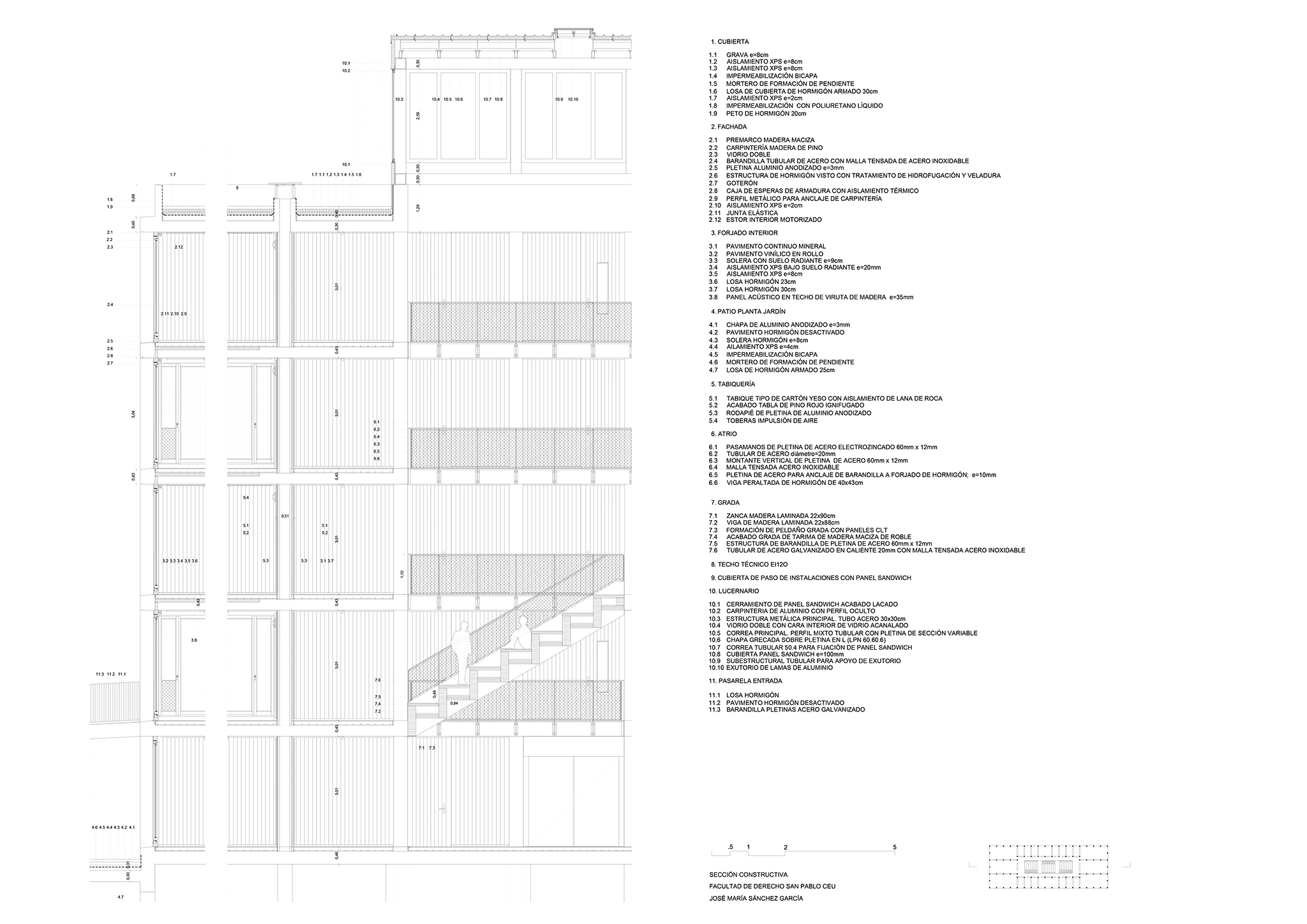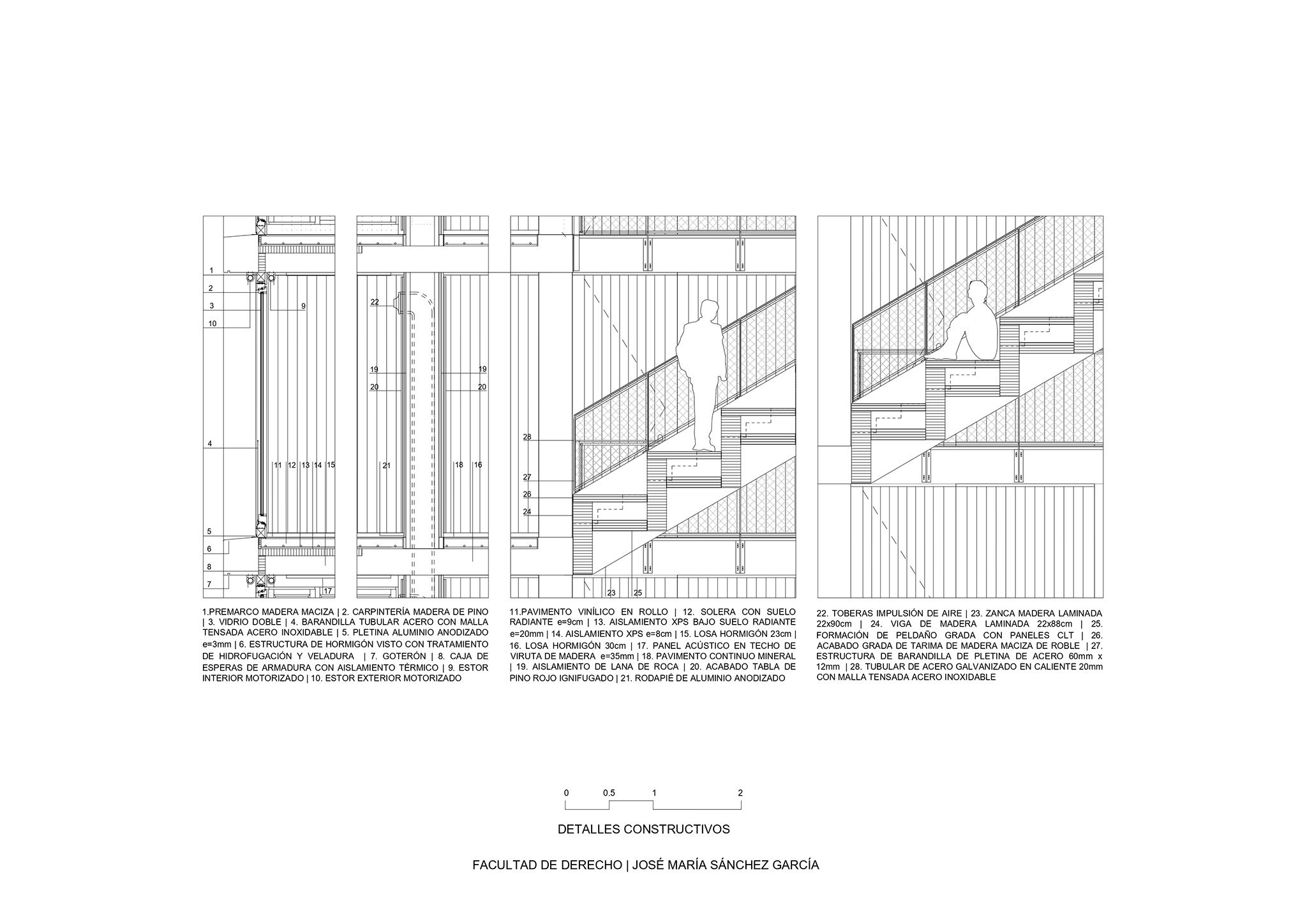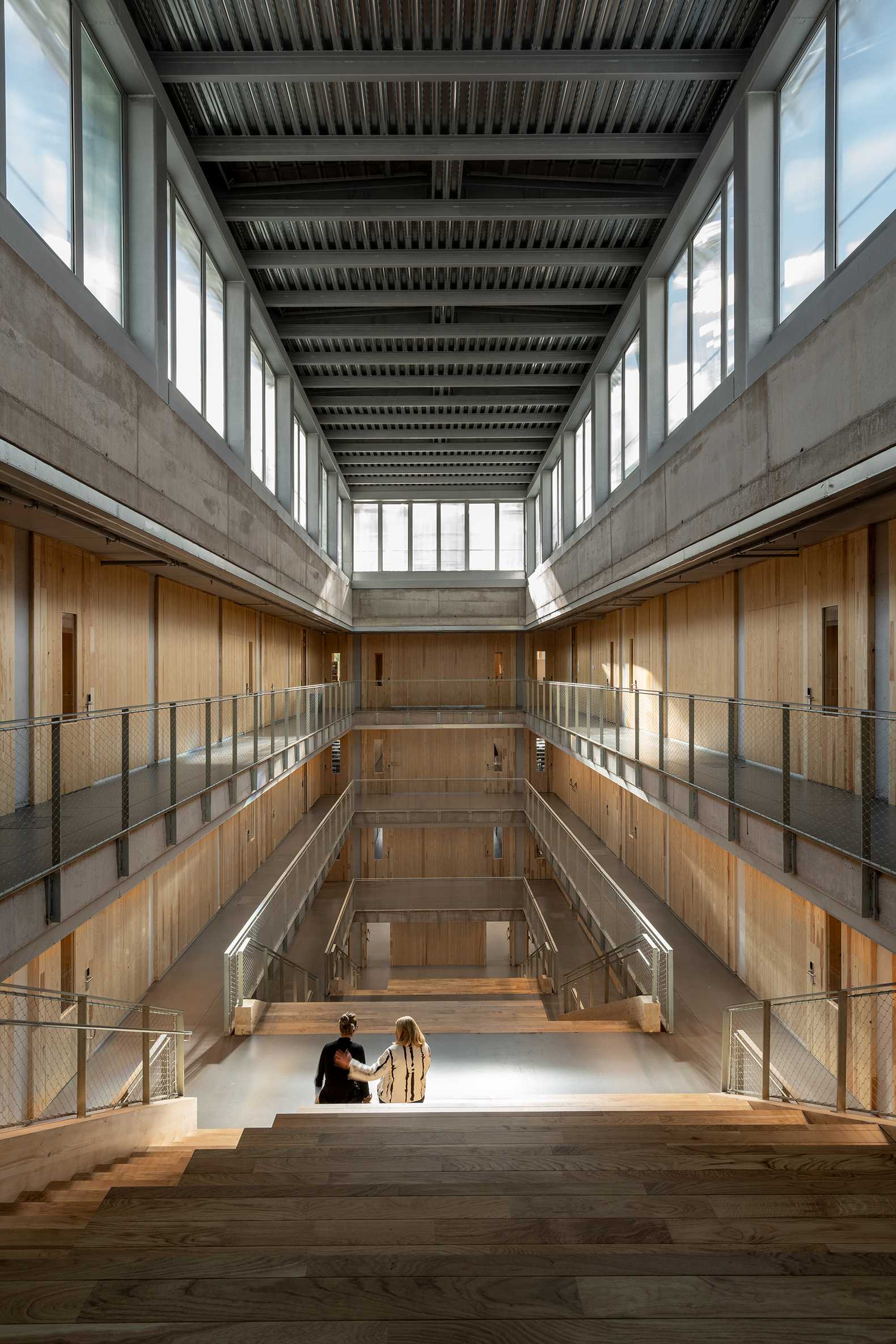
The building, designed by José María Sánchez, is organized around a large central atrium that visually and physically connects all levels. This space is arranged with wooden tiers that create multiple uses, encouraging spontaneous interaction. The program is clearly distributed: public areas on the ground floor, classrooms on the intermediate floors, and teaching spaces on the top floor, all linked by a series of vertical cores and perimeter walkways that reinforce the relationship between users.
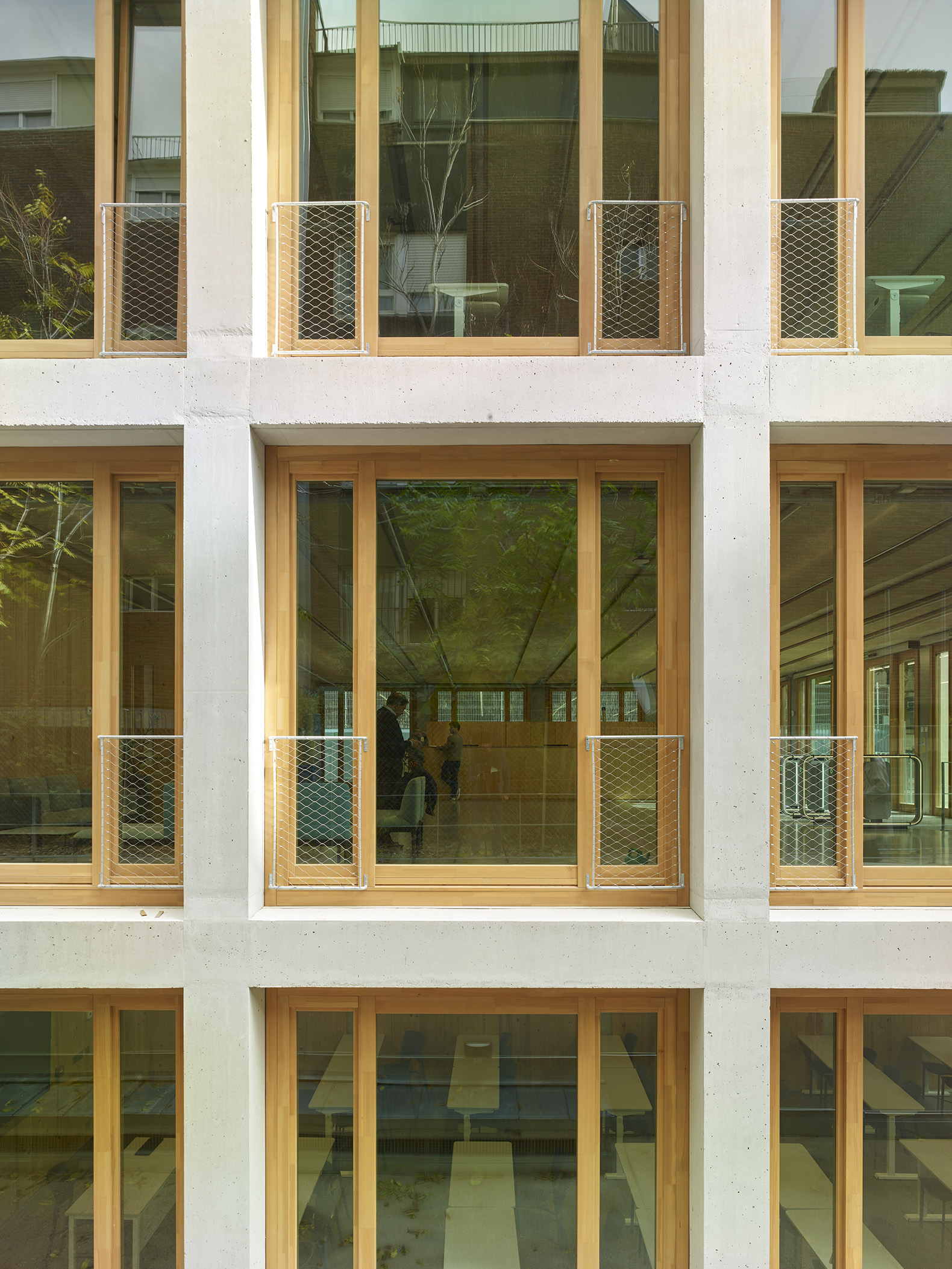
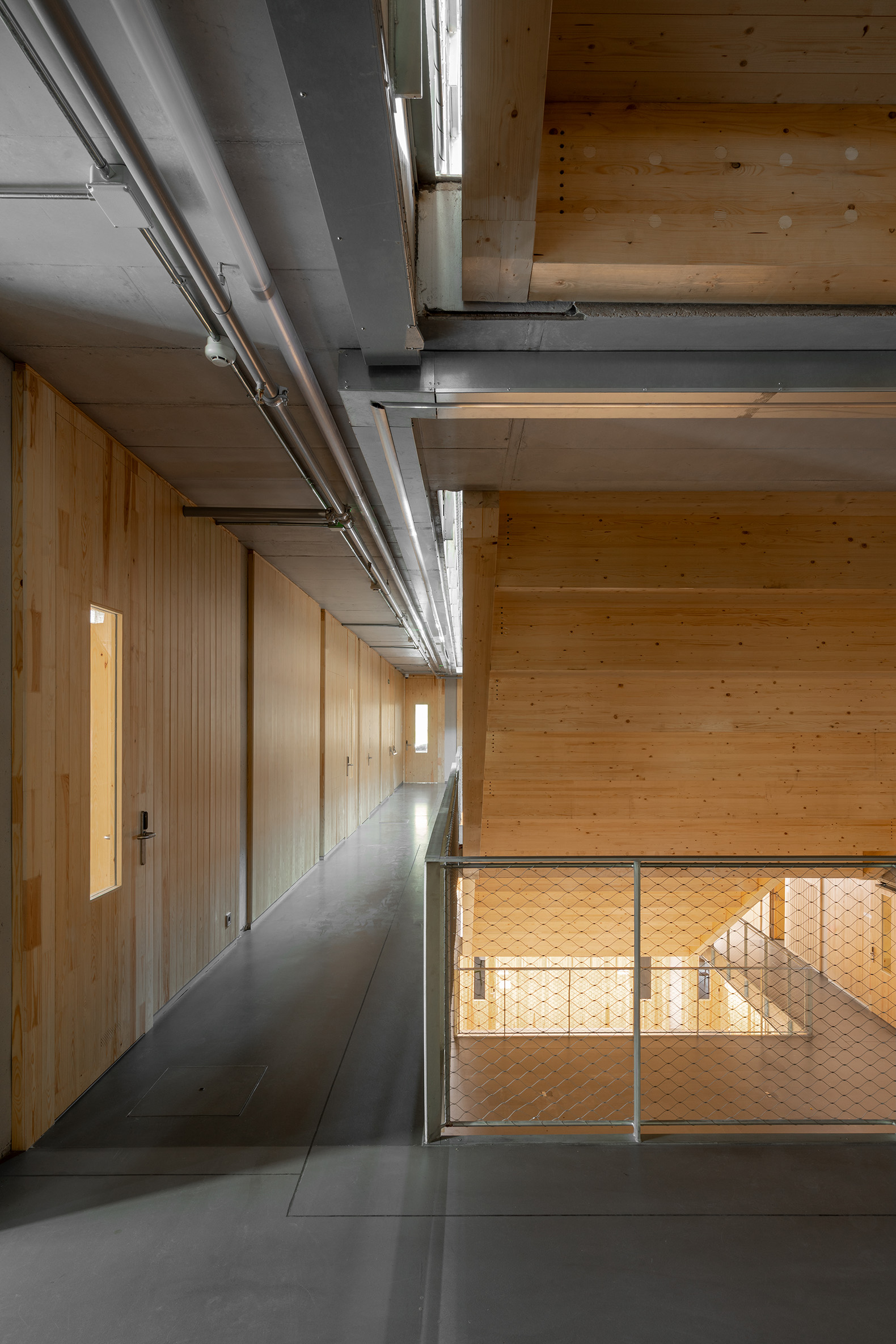
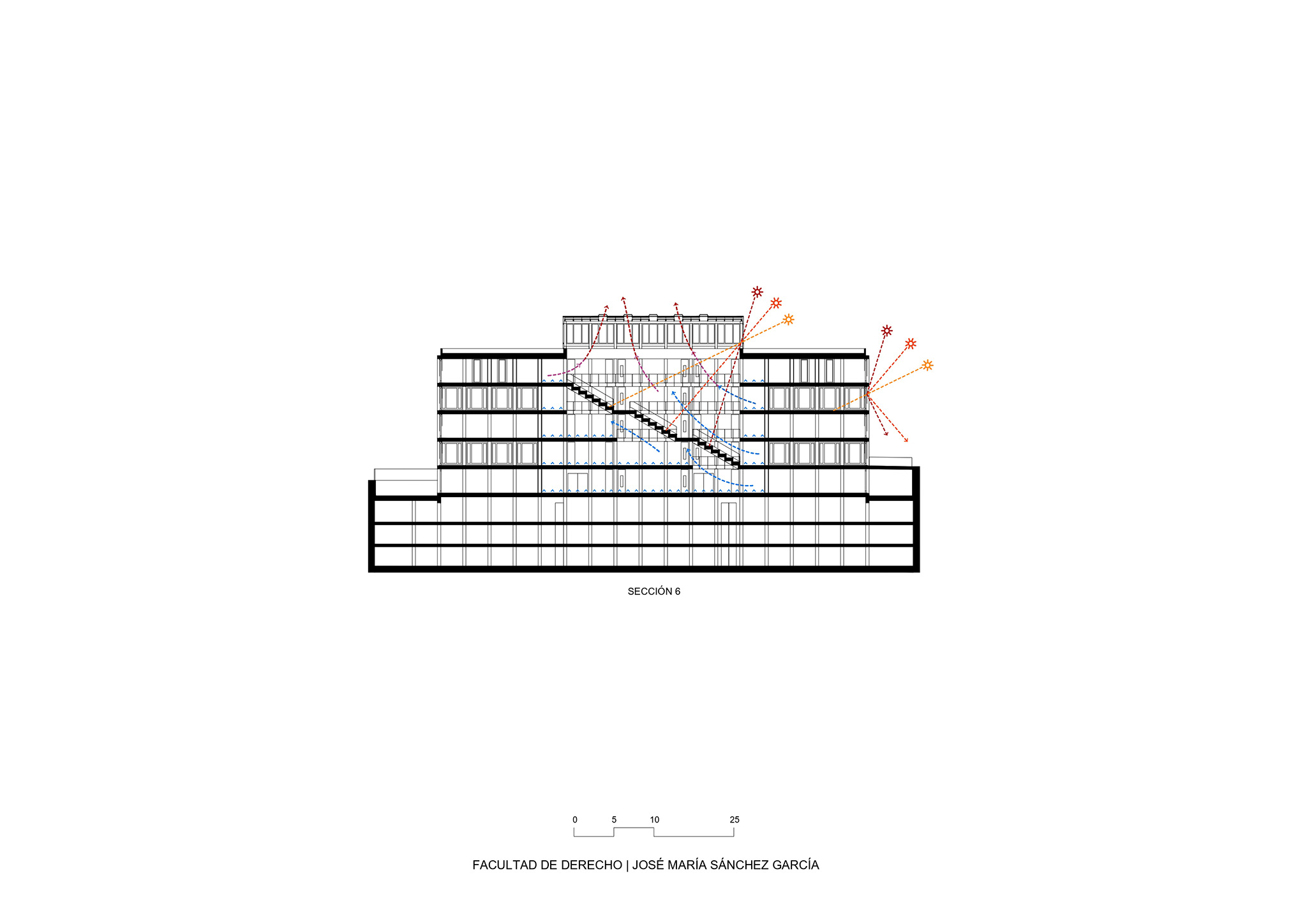
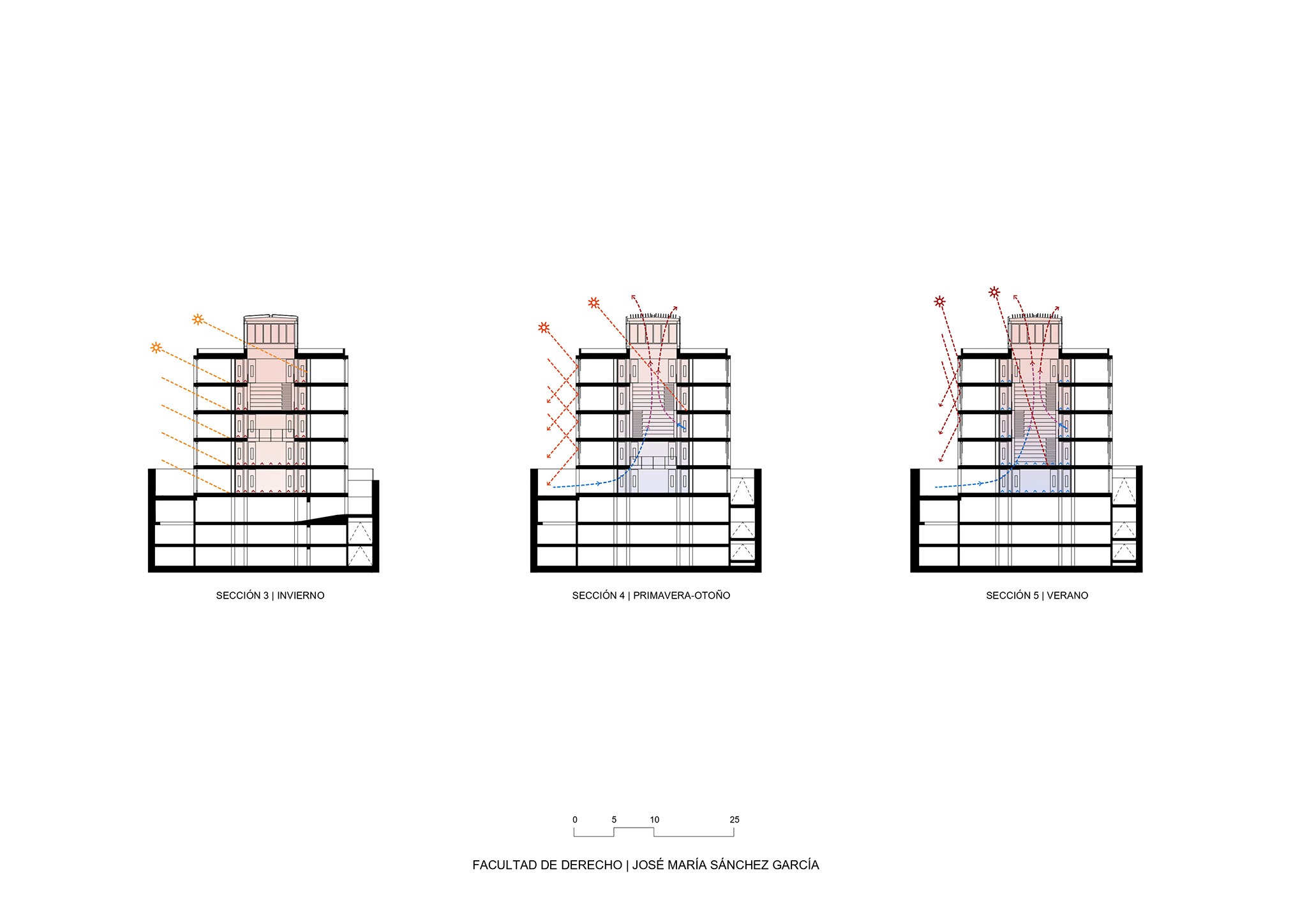
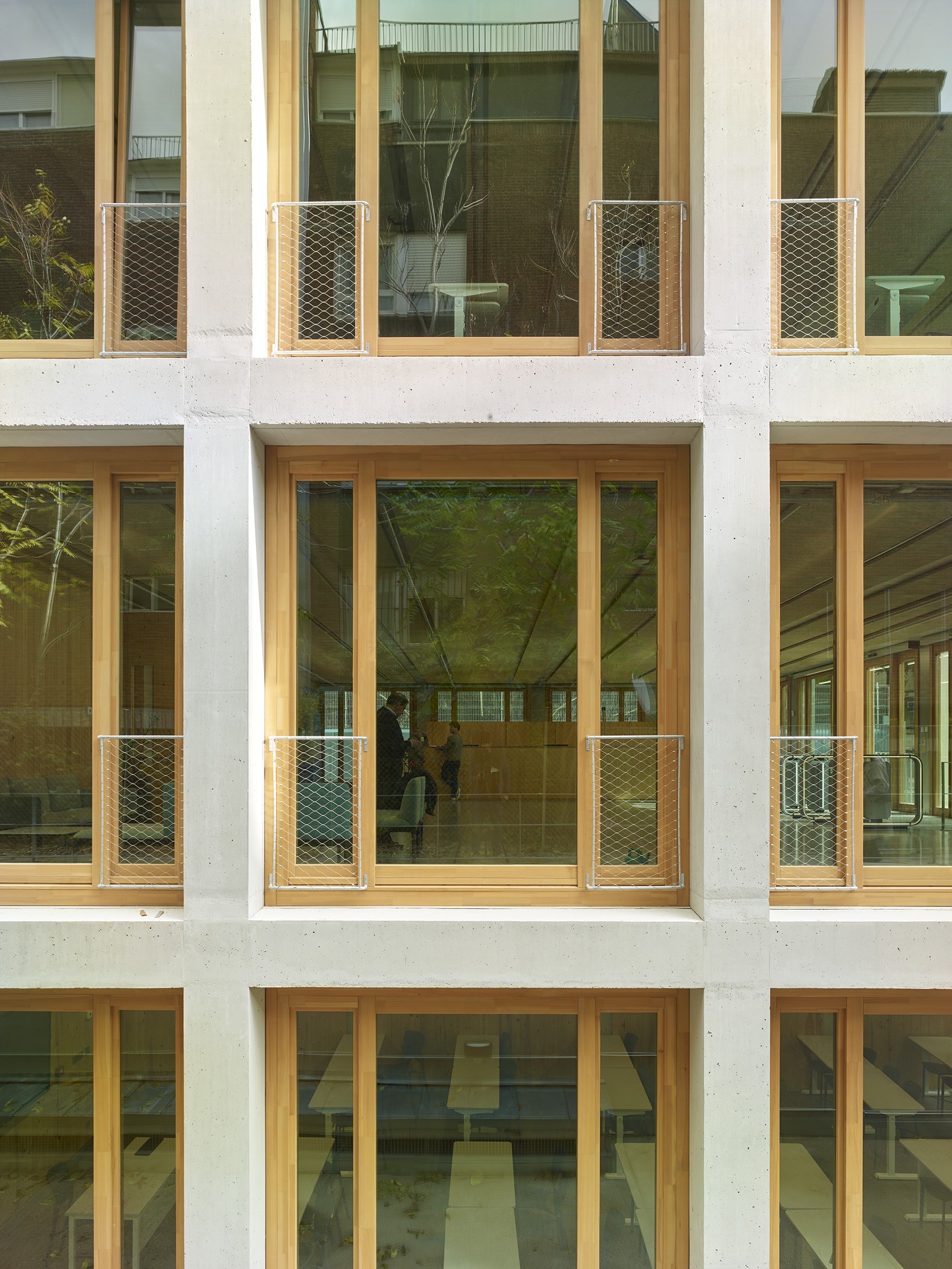
For its construction, the building system combines a cast-in-place concrete grid structure with prefabricated cross-laminated timber (CLT) elements. This hybrid solution optimizes construction time through industrialized processes and simultaneous work on-site and in the workshop. Furthermore, the incorporation of Vierendeel trusses allows for large spans, resulting in more flexible spaces. From an environmental perspective, the building relies on natural ventilation through the atrium and vertical systems, avoiding false ceilings and leaving the building services exposed as part of the architectural language.
Overall, the CEU San Pablo Law School building presents itself as a large container that articulates within its structure the precision of the structural elements, the fluidity of the walkways, and the presence of support spaces designed to encourage interaction and engagement among the entire educational community.
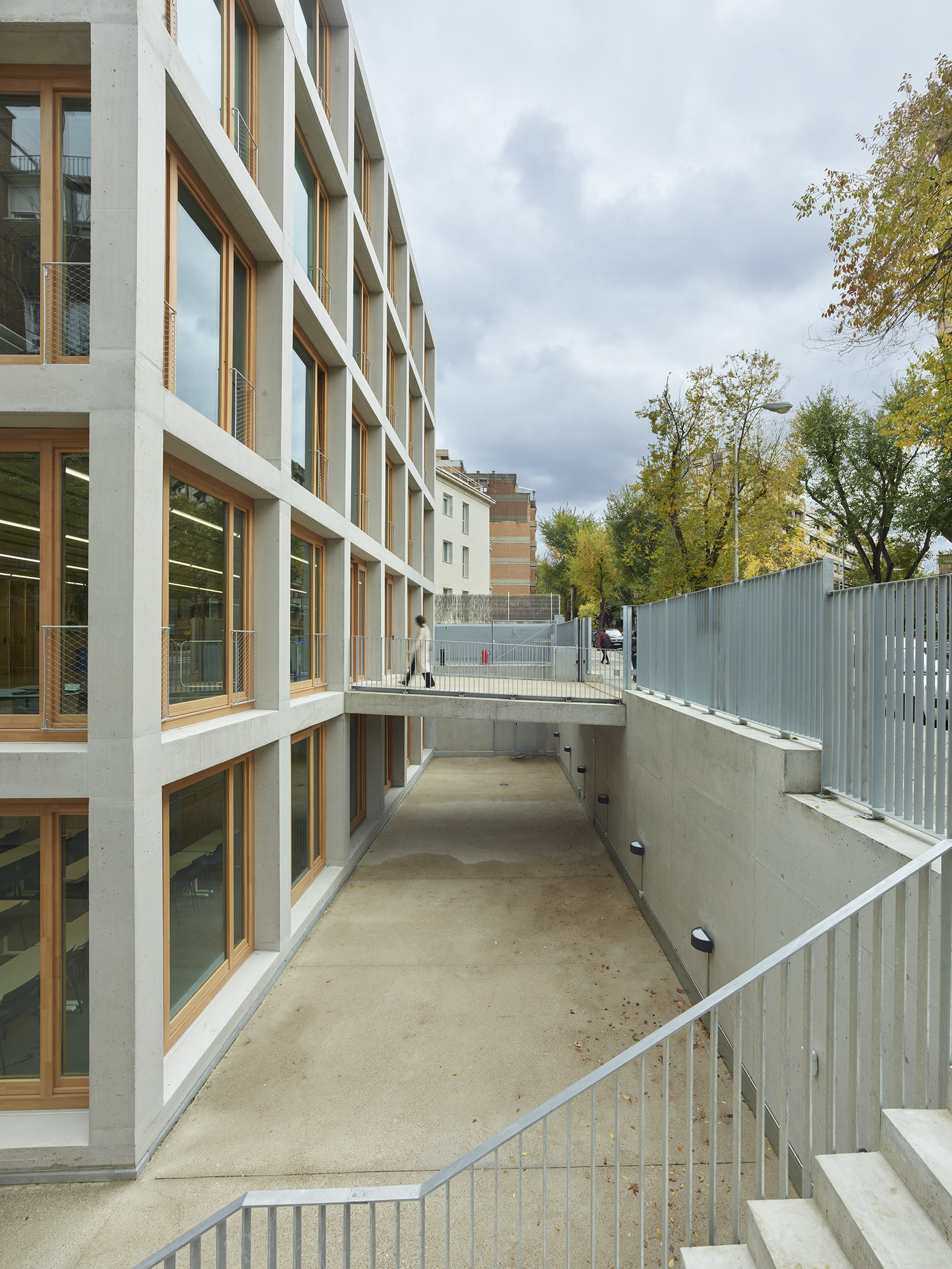
CEU San Pablo Faculty of Law by José María Sánchez Arquitectos. Photograph by Roland Halbe.
Project description by José María Sánchez García.
“If anything characterizes the floor plan, it is the nature of human relationships, for the elements it depicts—walls, doors, windows, and staircases—are used first to divide and, later, to selectively bring together the inhabited space. But what is generally absent, even in the building illustrated in the greatest detail, is how the human figures will occupy that space.”
Robin Evans, Figures, Doors, and Passages.
The primary aim of the project for the new San Pablo CEU Law School is to reflect on human relationships and how they define a shared space. The spaces for circulation and interaction are reimagined, becoming places of opportunity.
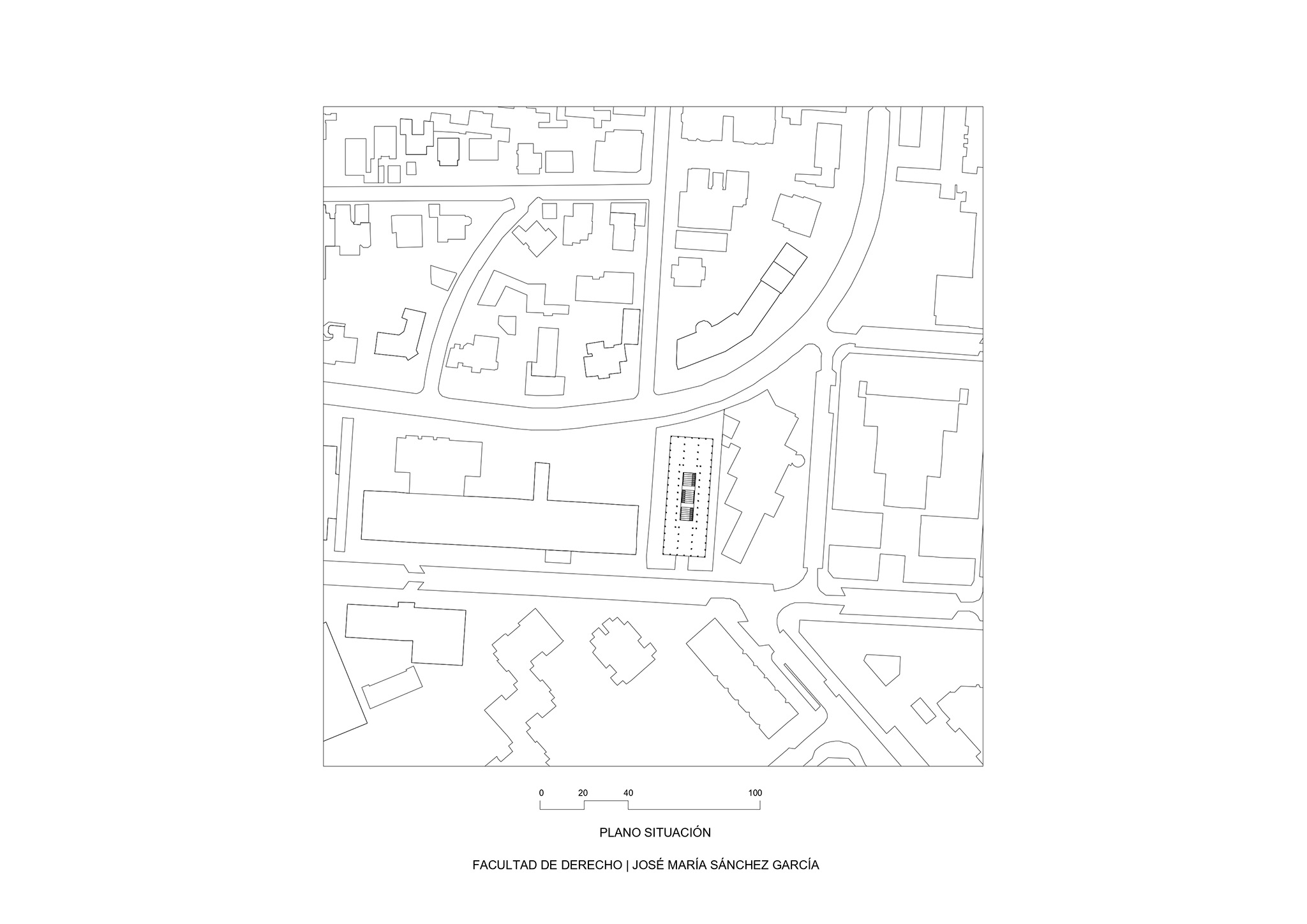
The project is based on a compact volume organized around a perimeter courtyard, which integrates the educational program and ensures adequate natural lighting and ventilation in all spaces. Thus, the building’s layout strategy begins with excavating the site to create a new garden level, surrounded by an outdoor living space. This approach defines the main entrance to the building, which is accessed via a walkway over the courtyard connecting Julián Romea Street to the ground floor.
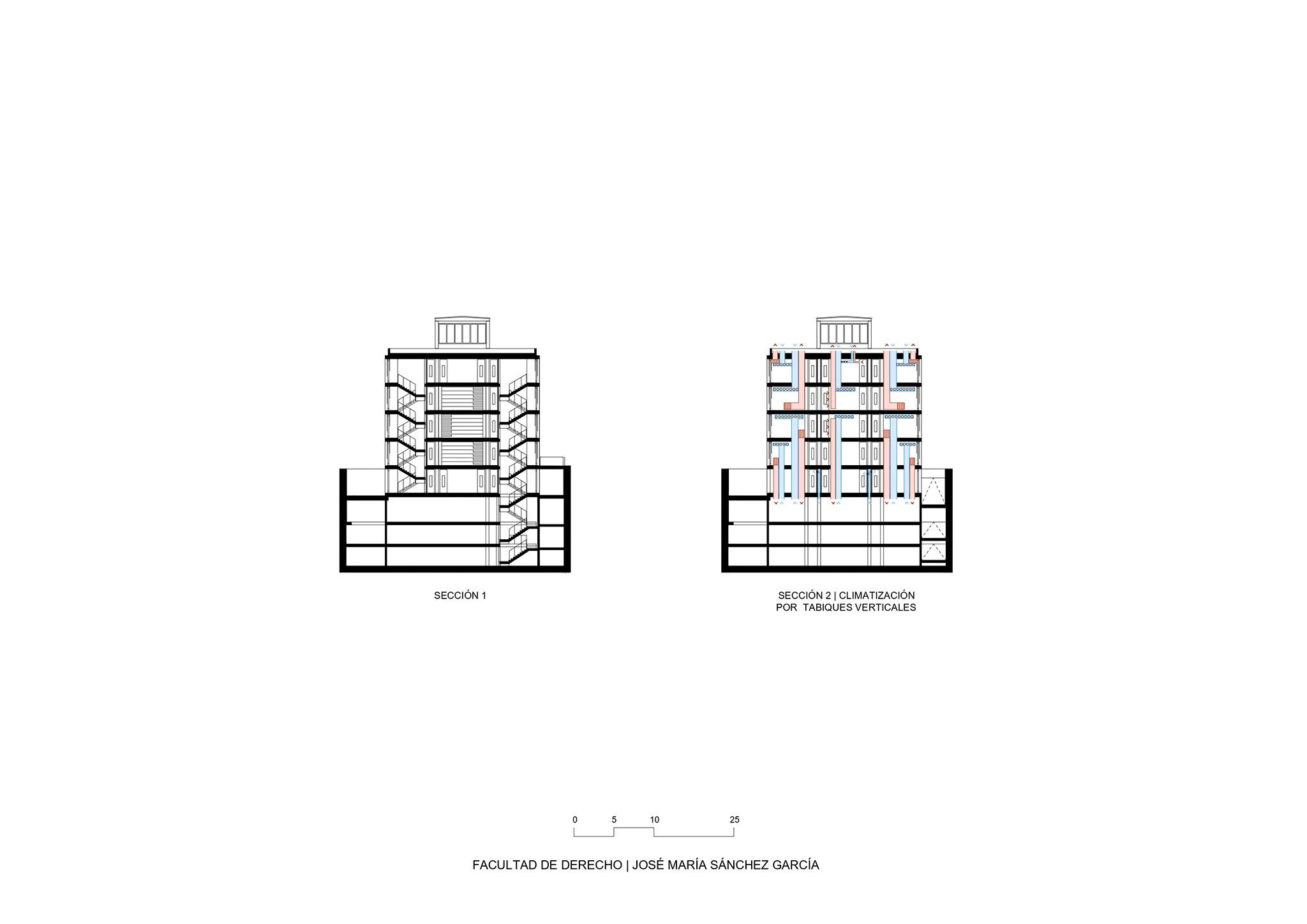
A large central void connects the different floors via a series of cross-laminated timber terraces. In this way, a sequence of communal spaces—both on and beneath the terraces—facilitates spontaneous interaction among users. The atrium acts as a large heat exchanger, enabling natural air exchange; roof vents allow for natural ventilation during the spring and summer months.
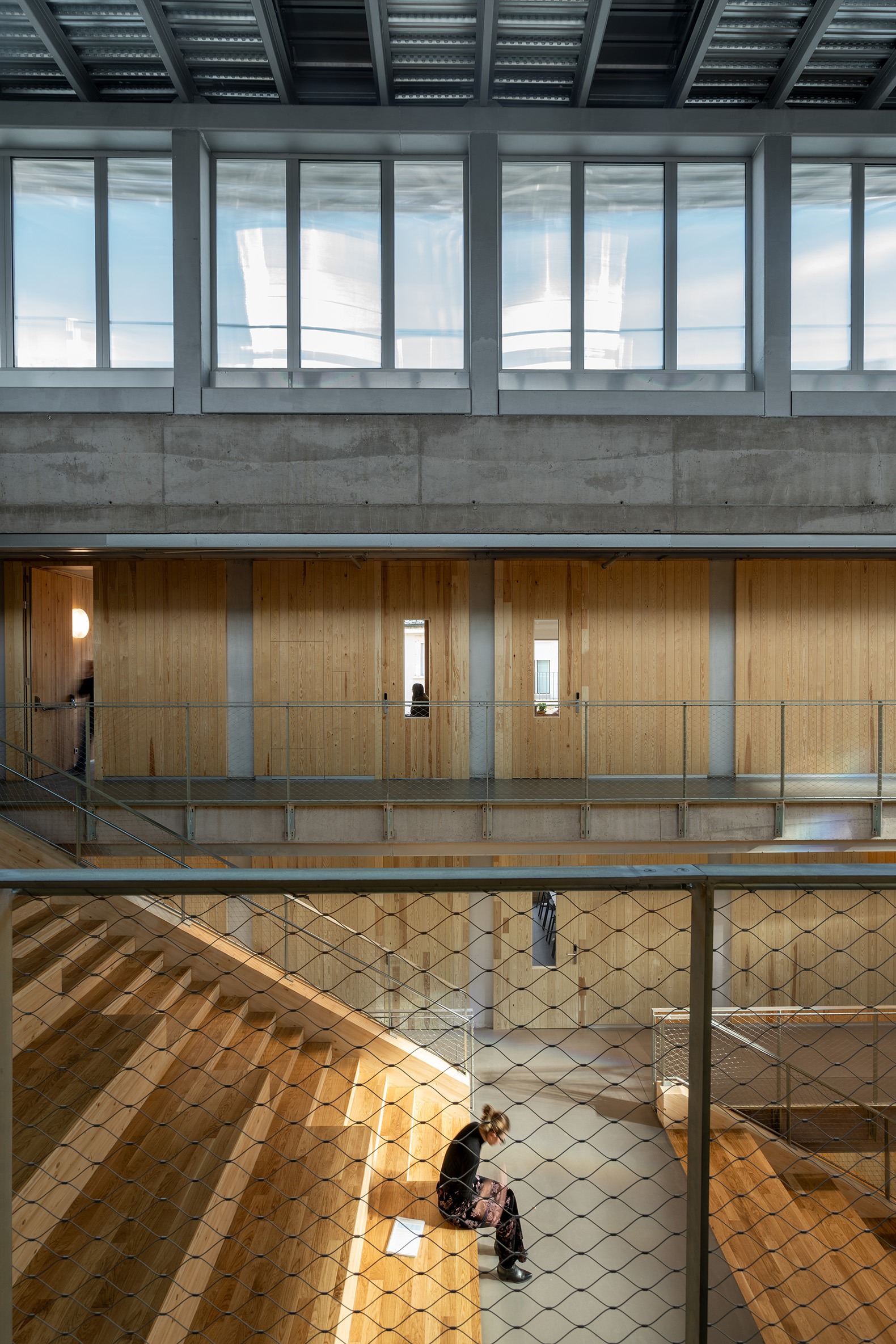
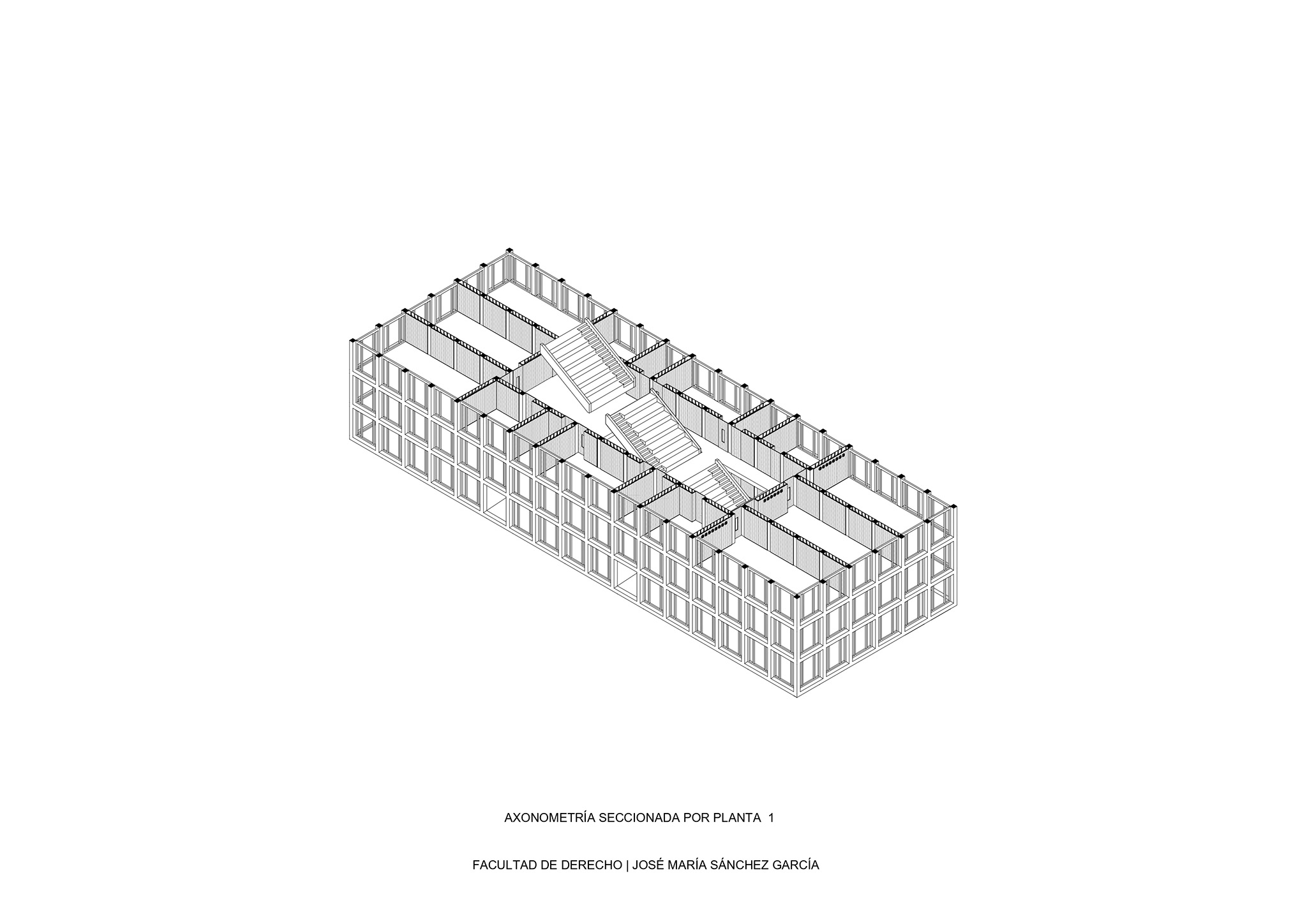
The program is organized around four vertical circulation cores and a series of corridors surrounding the atrium. The ground floor houses the most public spaces; the garden, first, and second floors contain all the classrooms; and the top floor is home to the faculty areas and faculty offices.
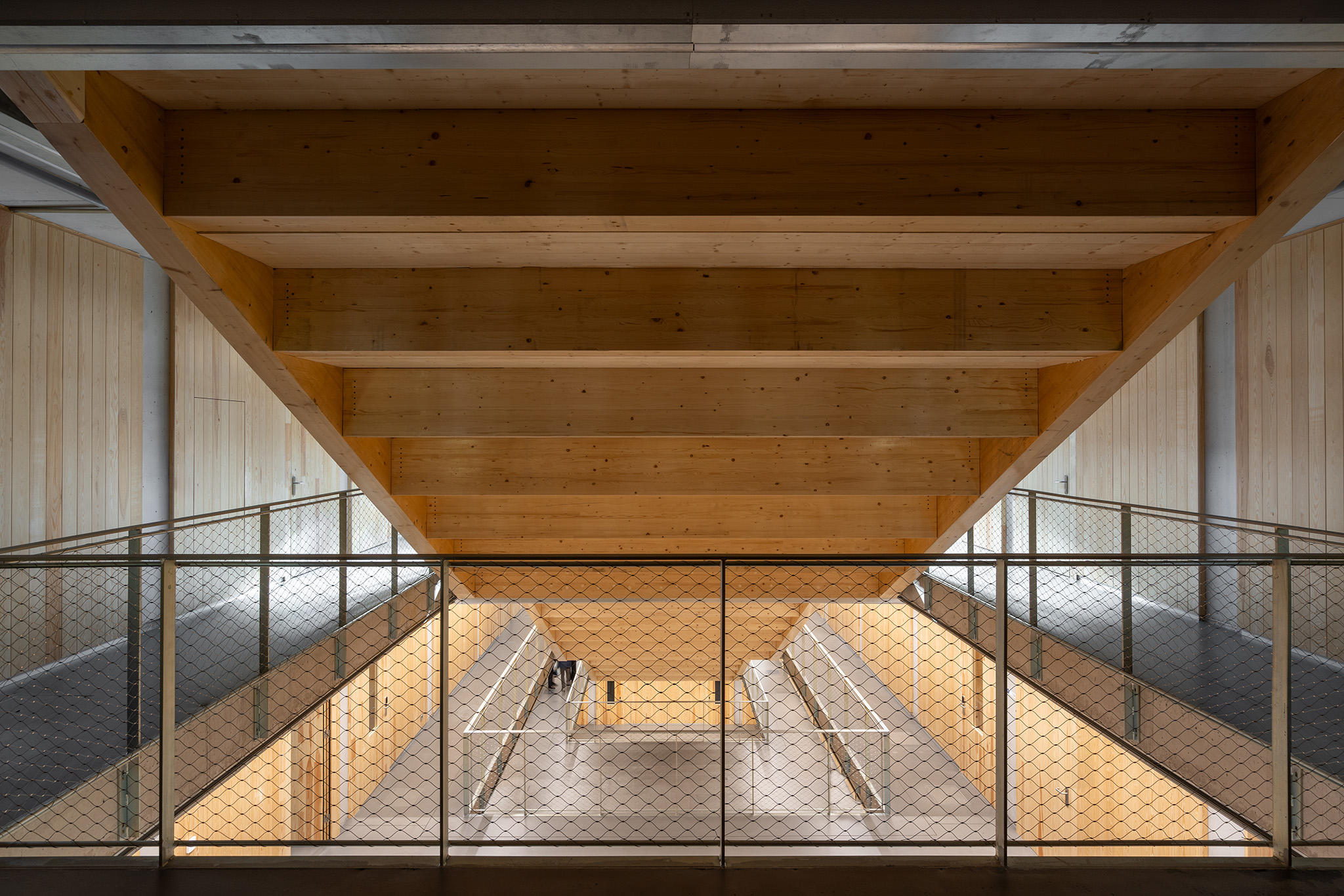
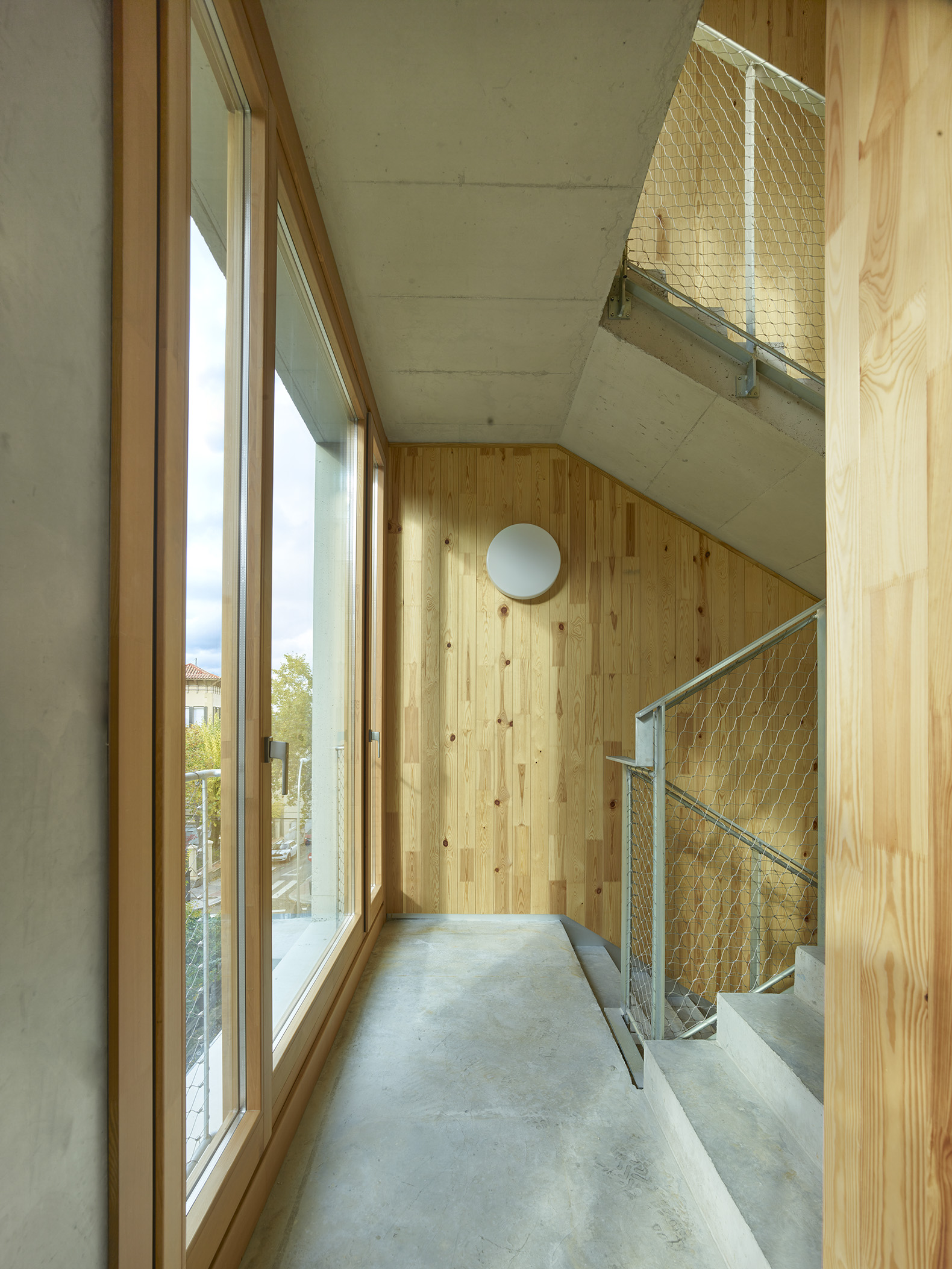
Structurally, the project employs a hybrid system consisting of a cast-in-place concrete grid structure and a series of prefabricated cross-laminated timber (CLT) elements—staircases and vertical panels—that define the building’s interior.
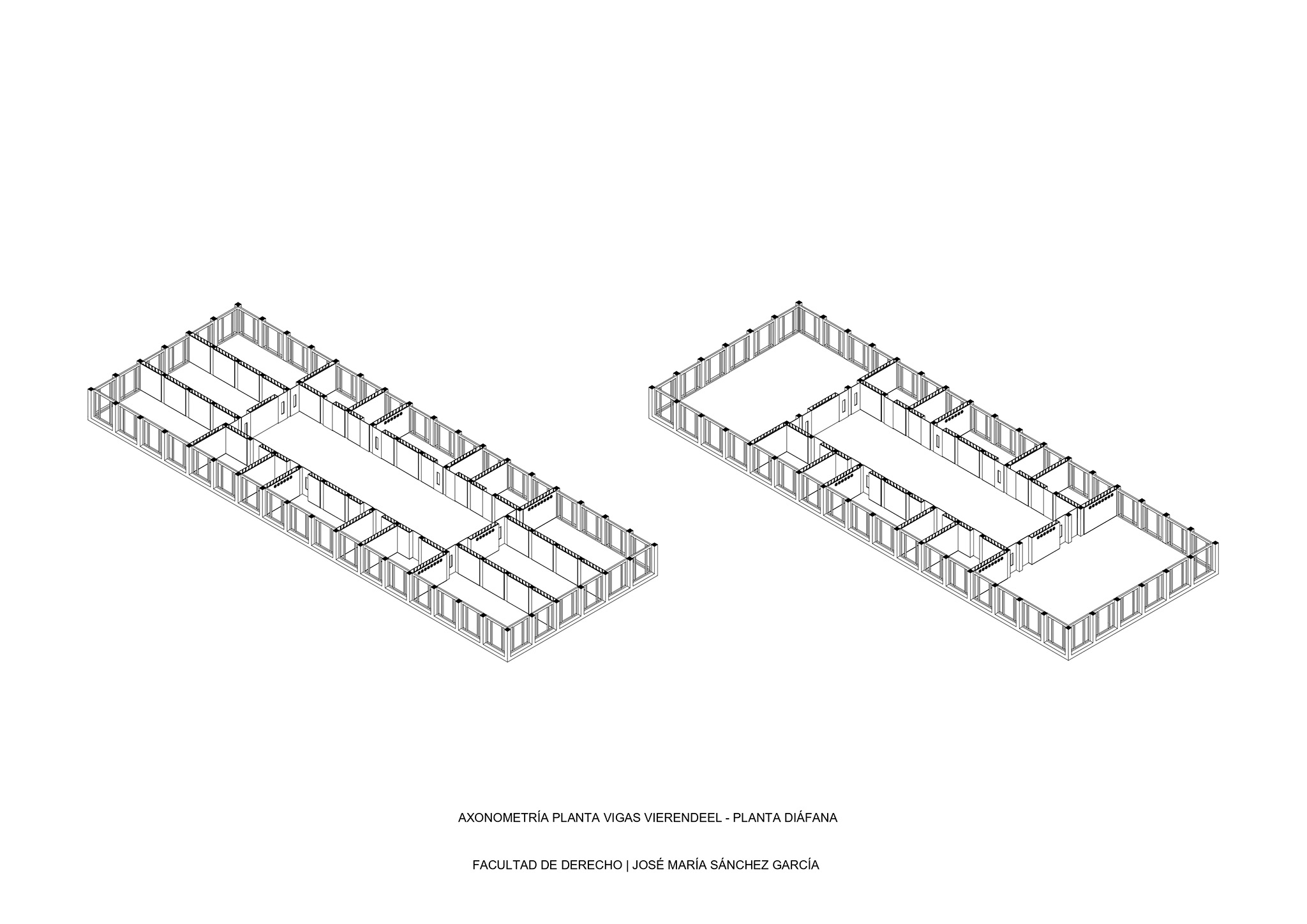
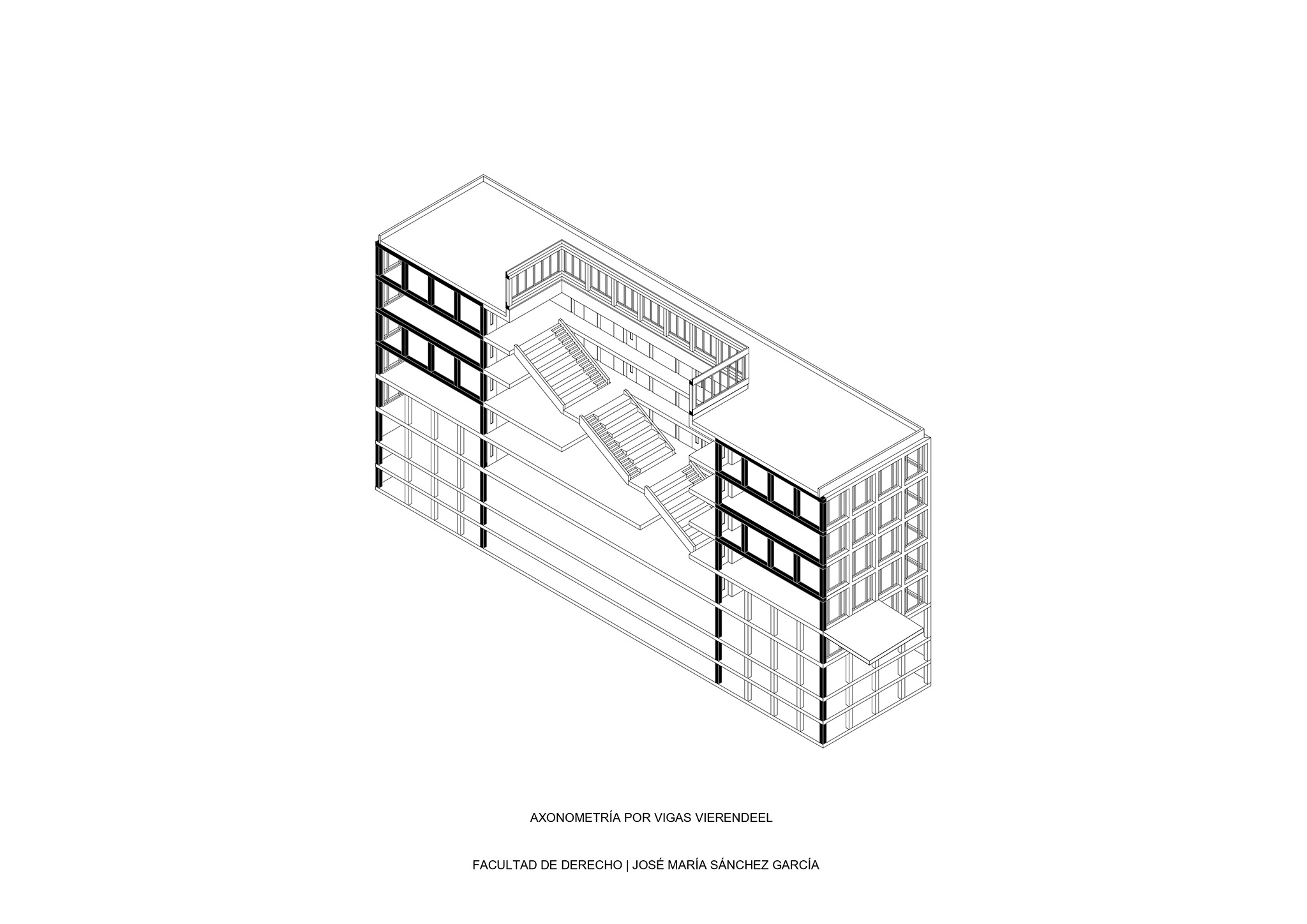
The industrialization of the process allowed work to proceed simultaneously on-site and in the workshop, shortening construction timelines. This duality is also evident on the façade, where the exterior wooden joinery is assembled onto the structure. The order of the structural grid is occasionally disrupted by the introduction of a series of composite-section Vierendeel beams, located on alternate floors, which free up column-free, more open spaces housing the main auditorium, the entrance lobby, and classrooms with movable partitions.
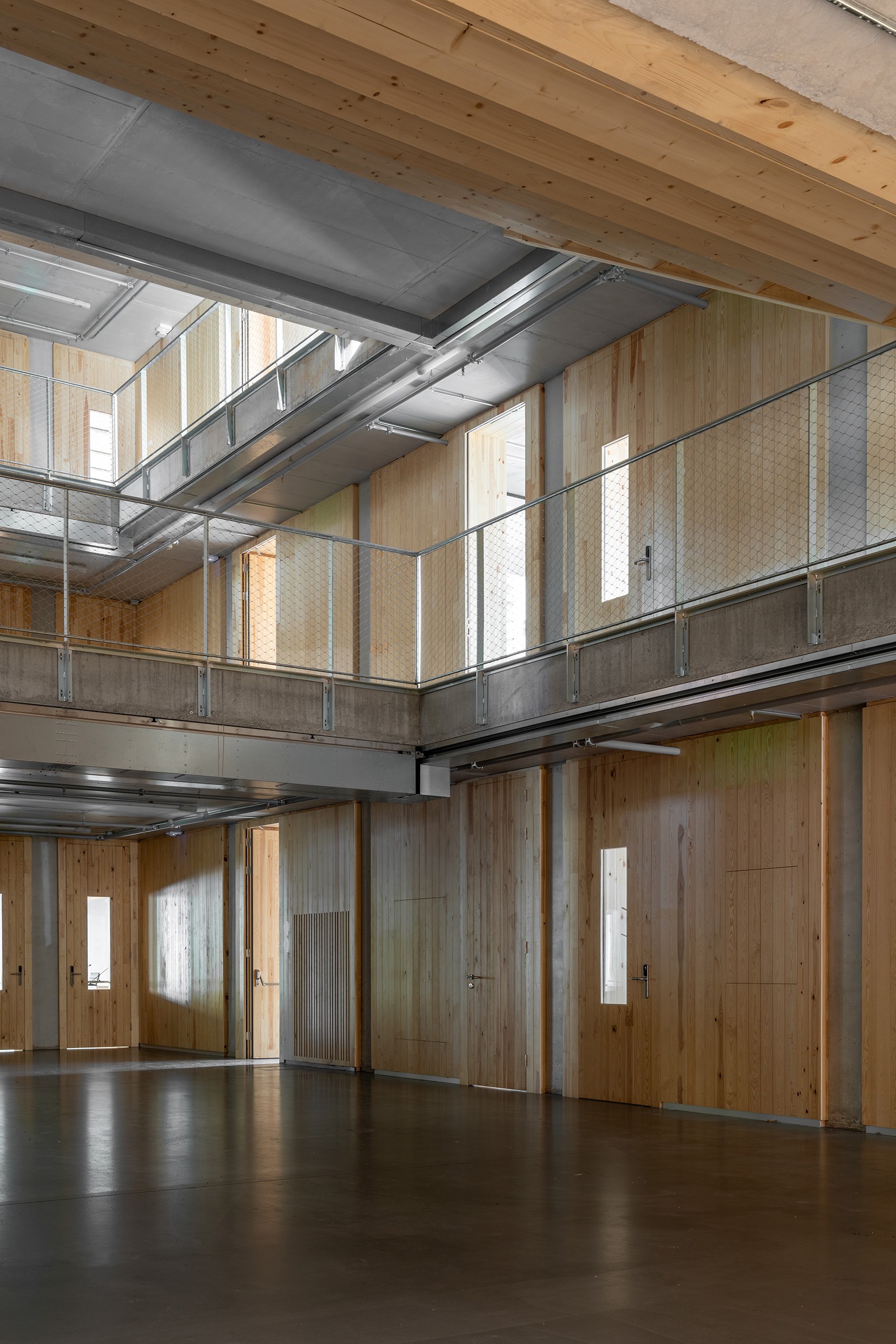
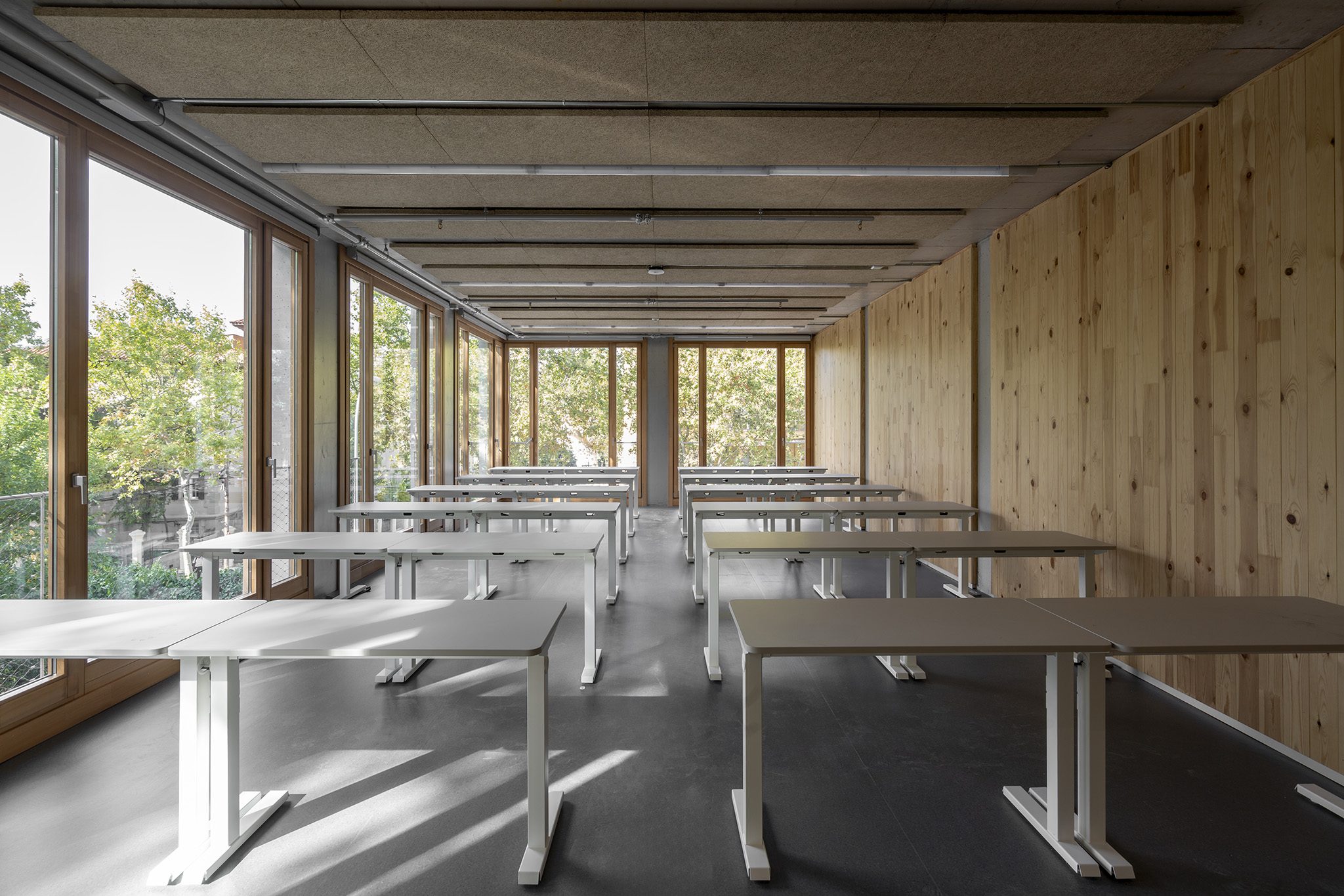
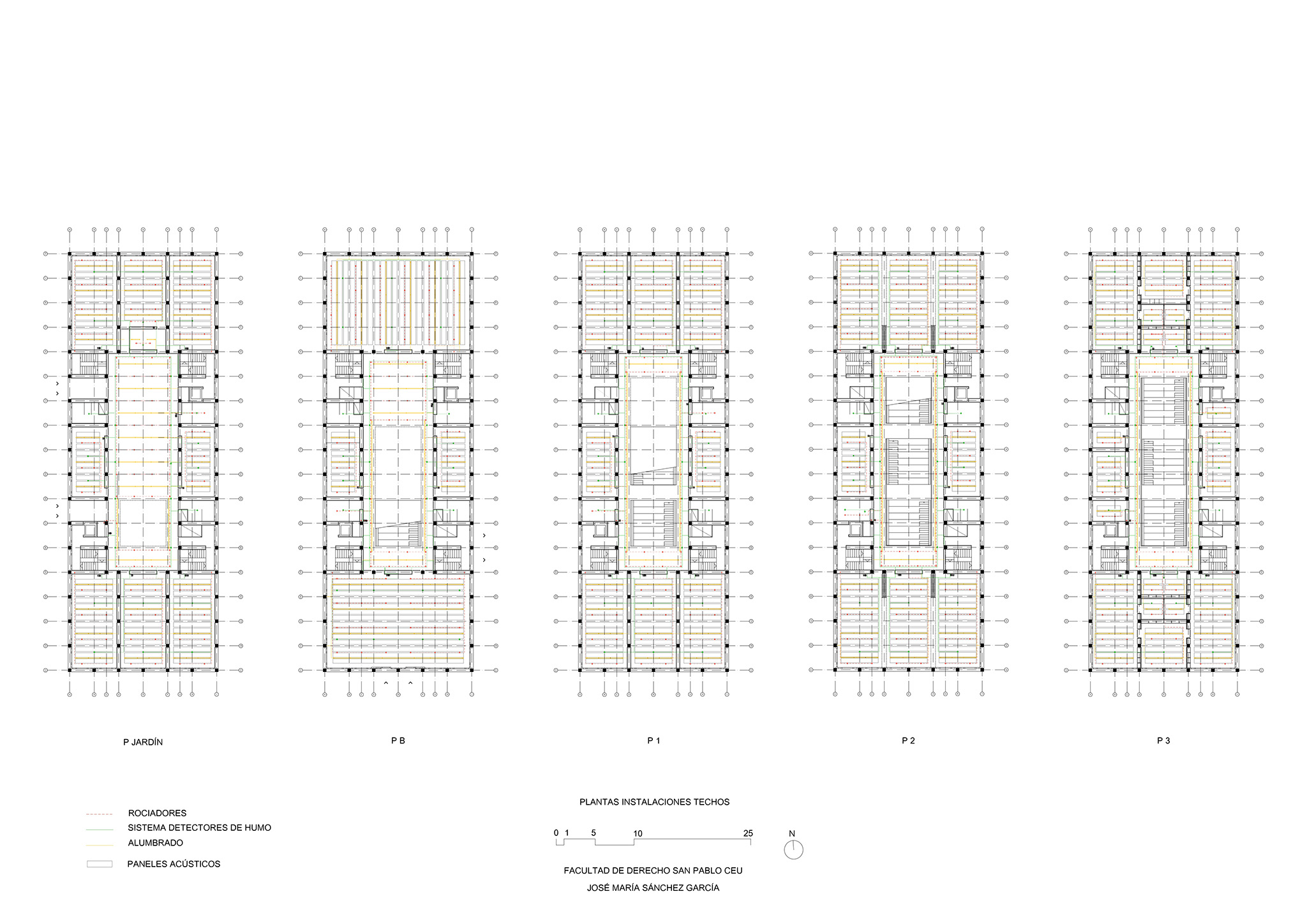
In addition to the large energy chimney, which forms the central atrium, a series of vertical elements is incorporated to house ventilation and air supply for the classrooms, avoiding horizontal ducts and the need for drop ceilings, with the mechanical systems and acoustic panels left exposed.