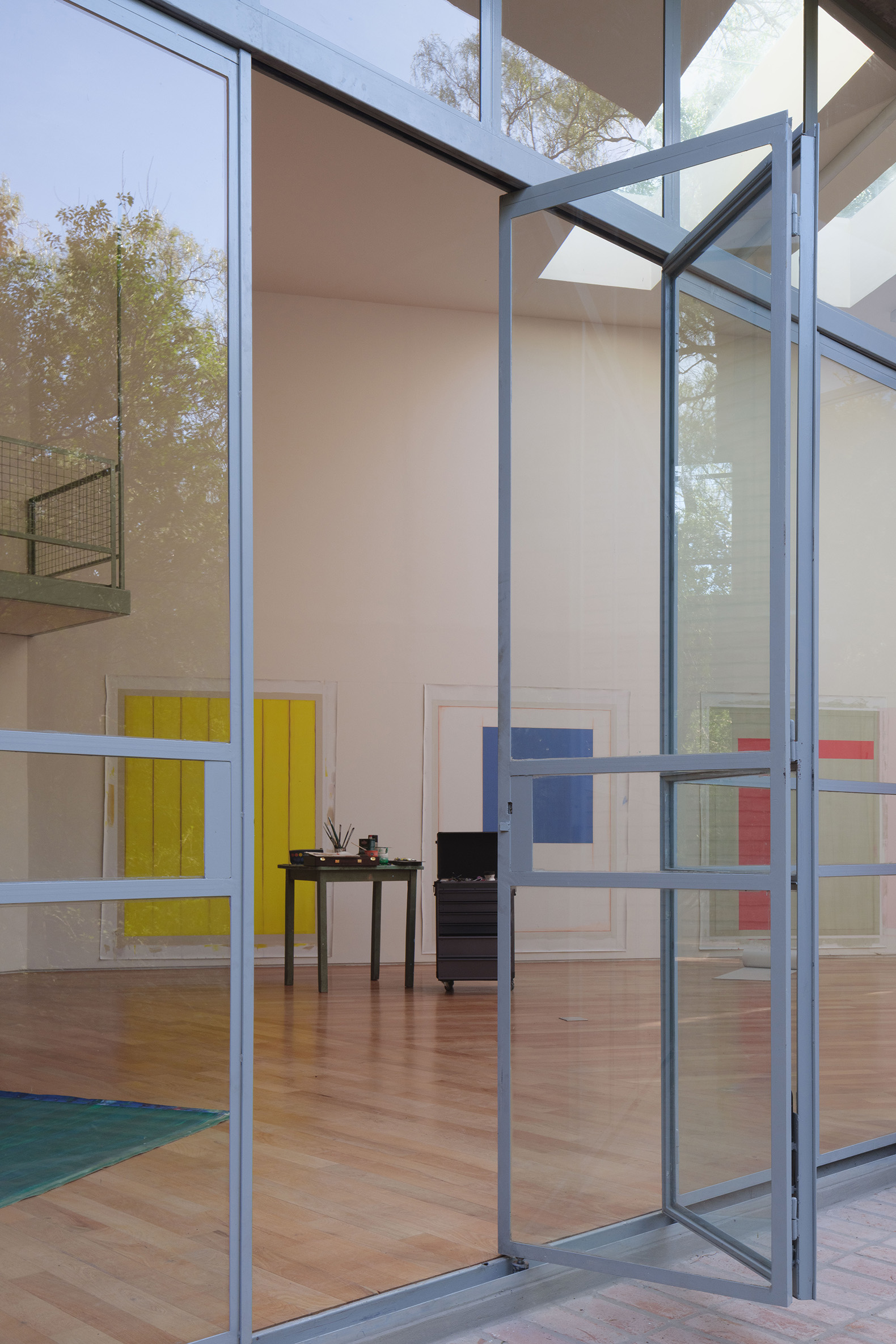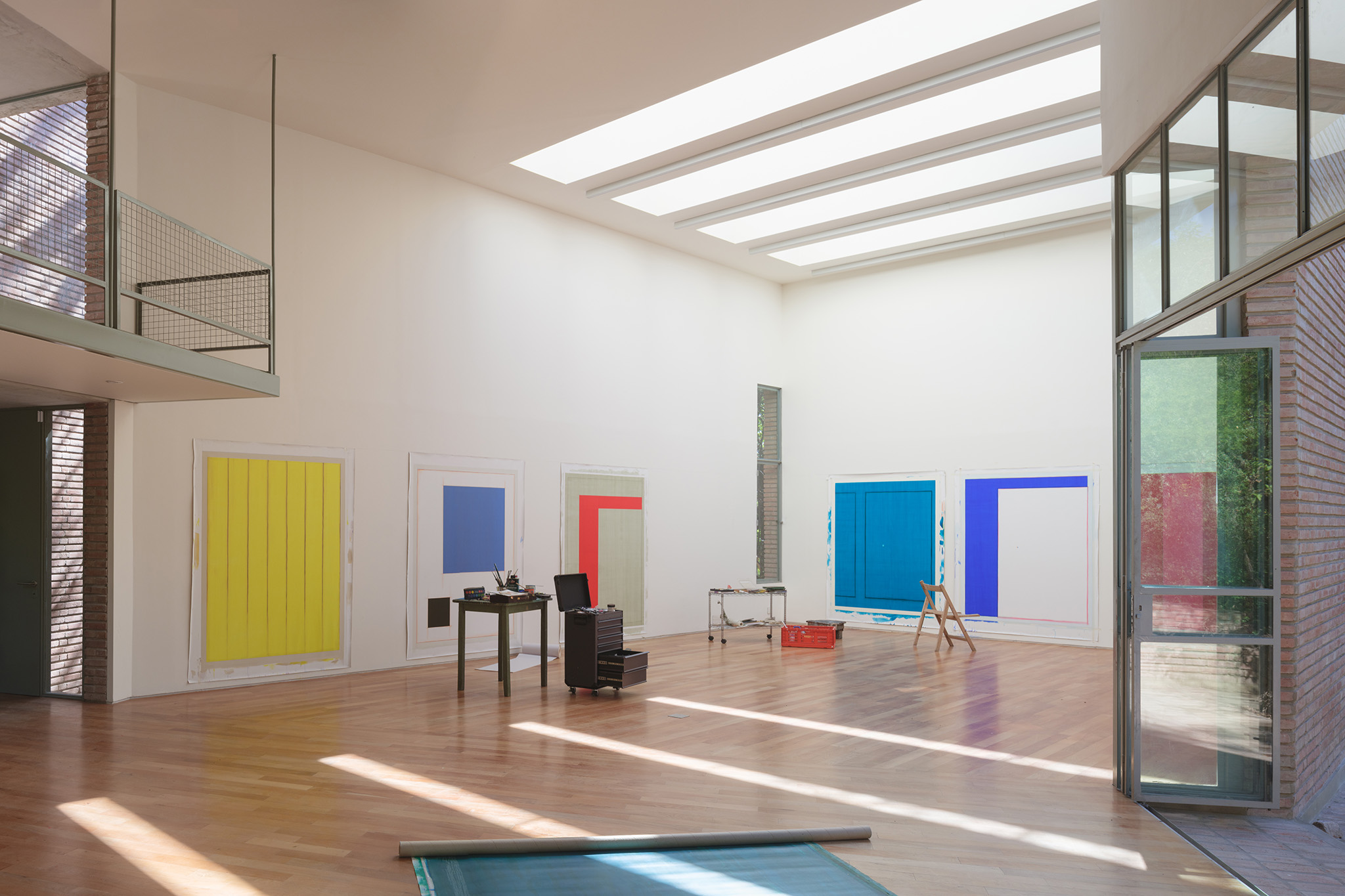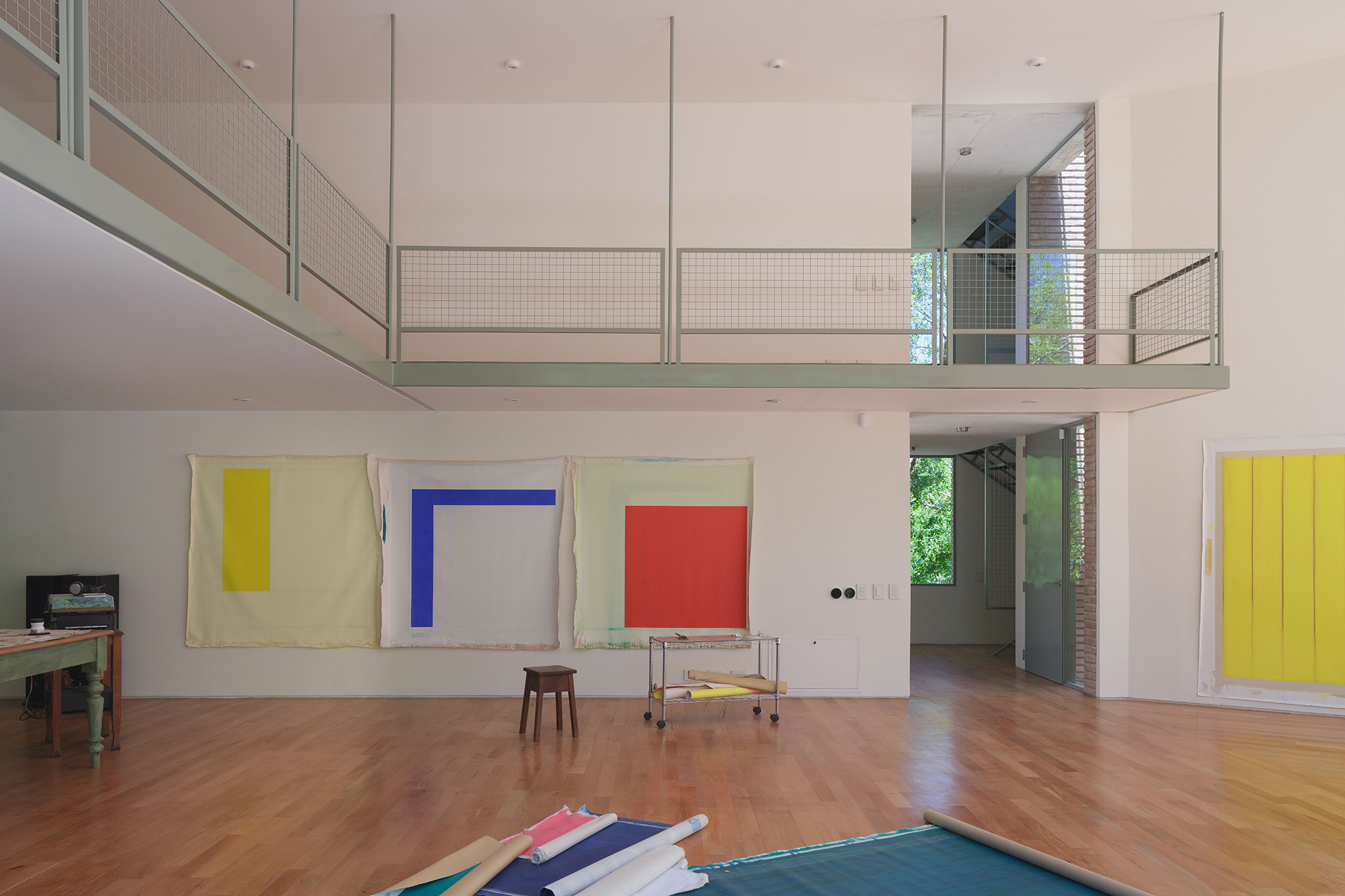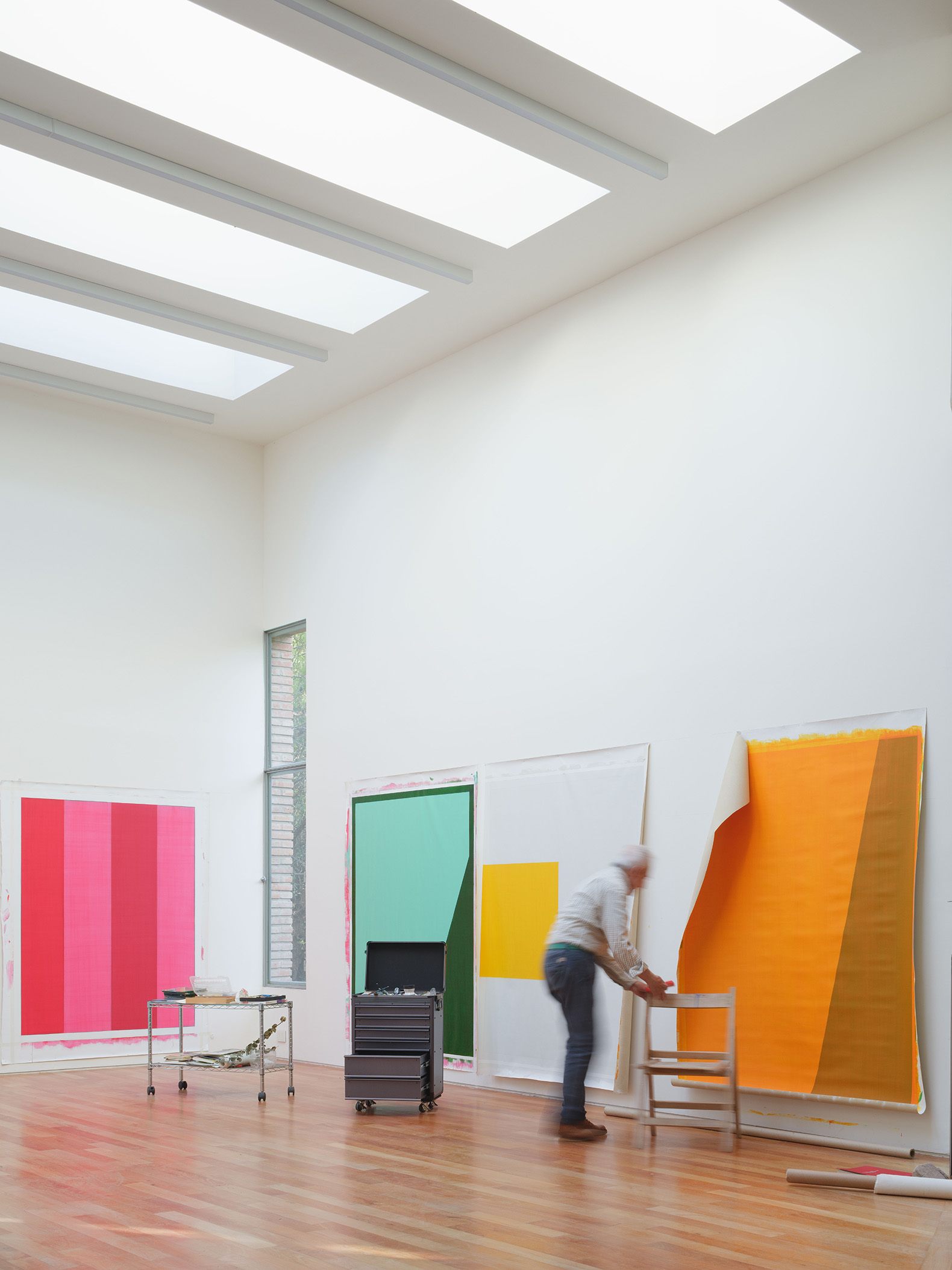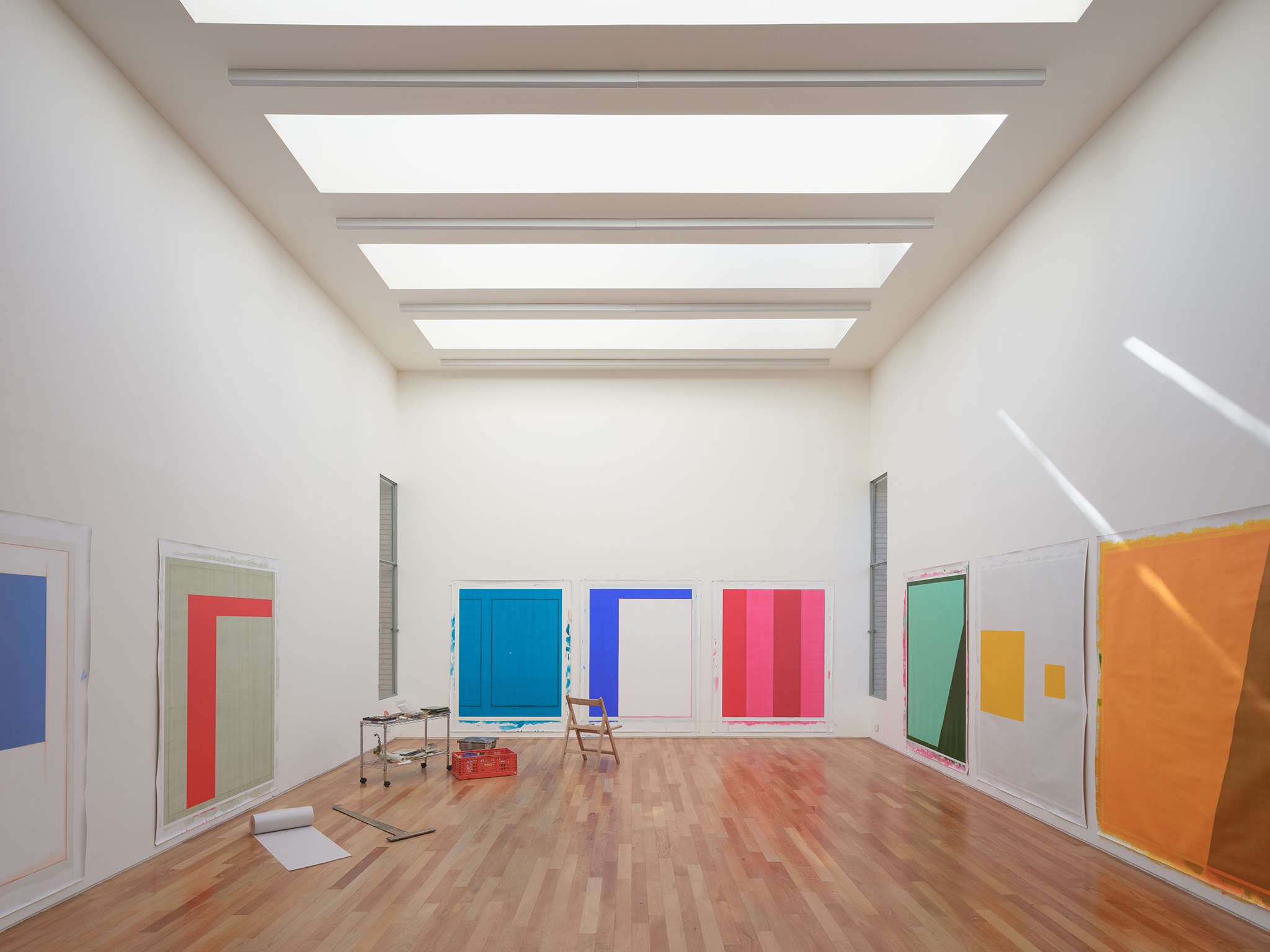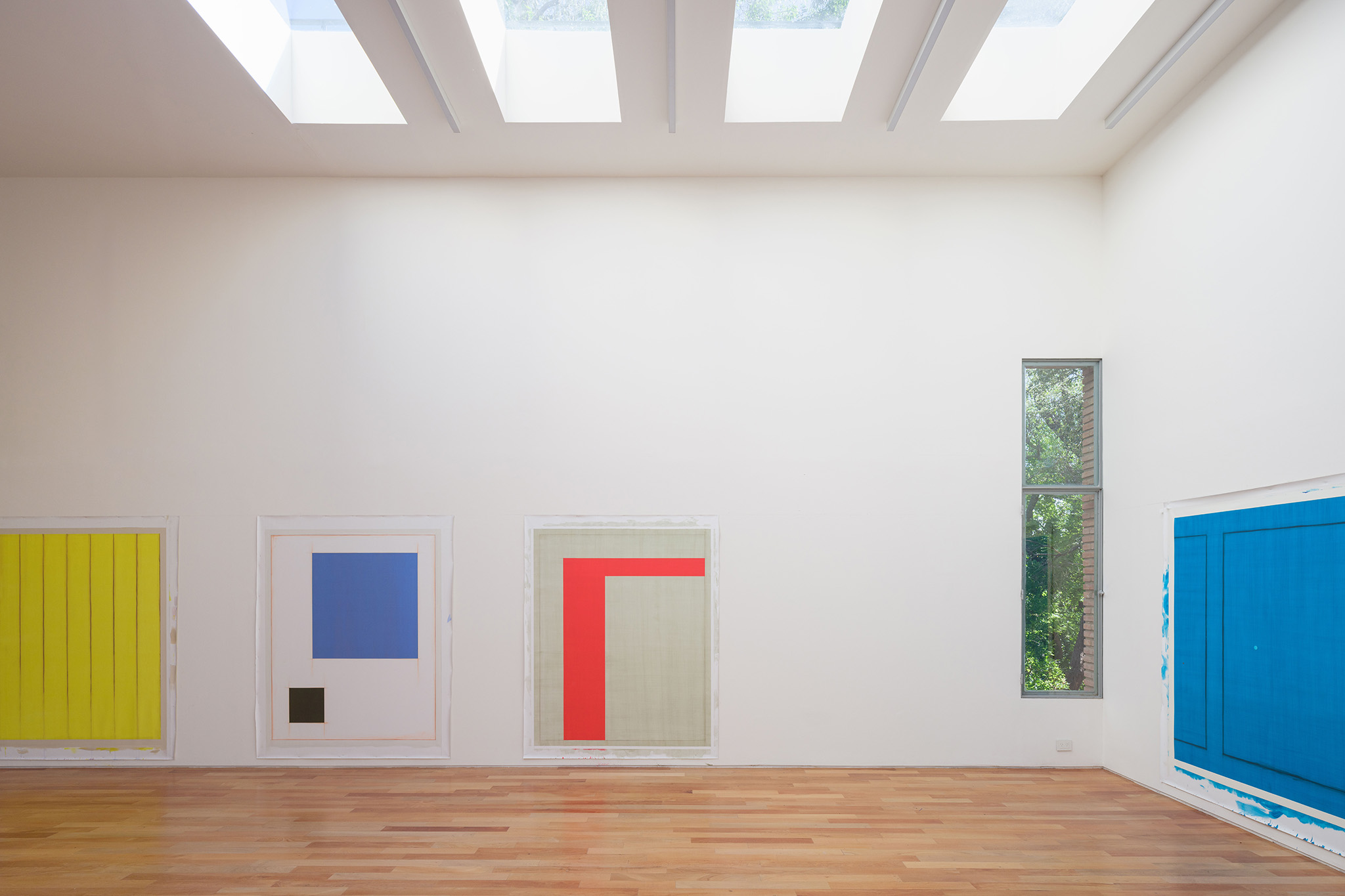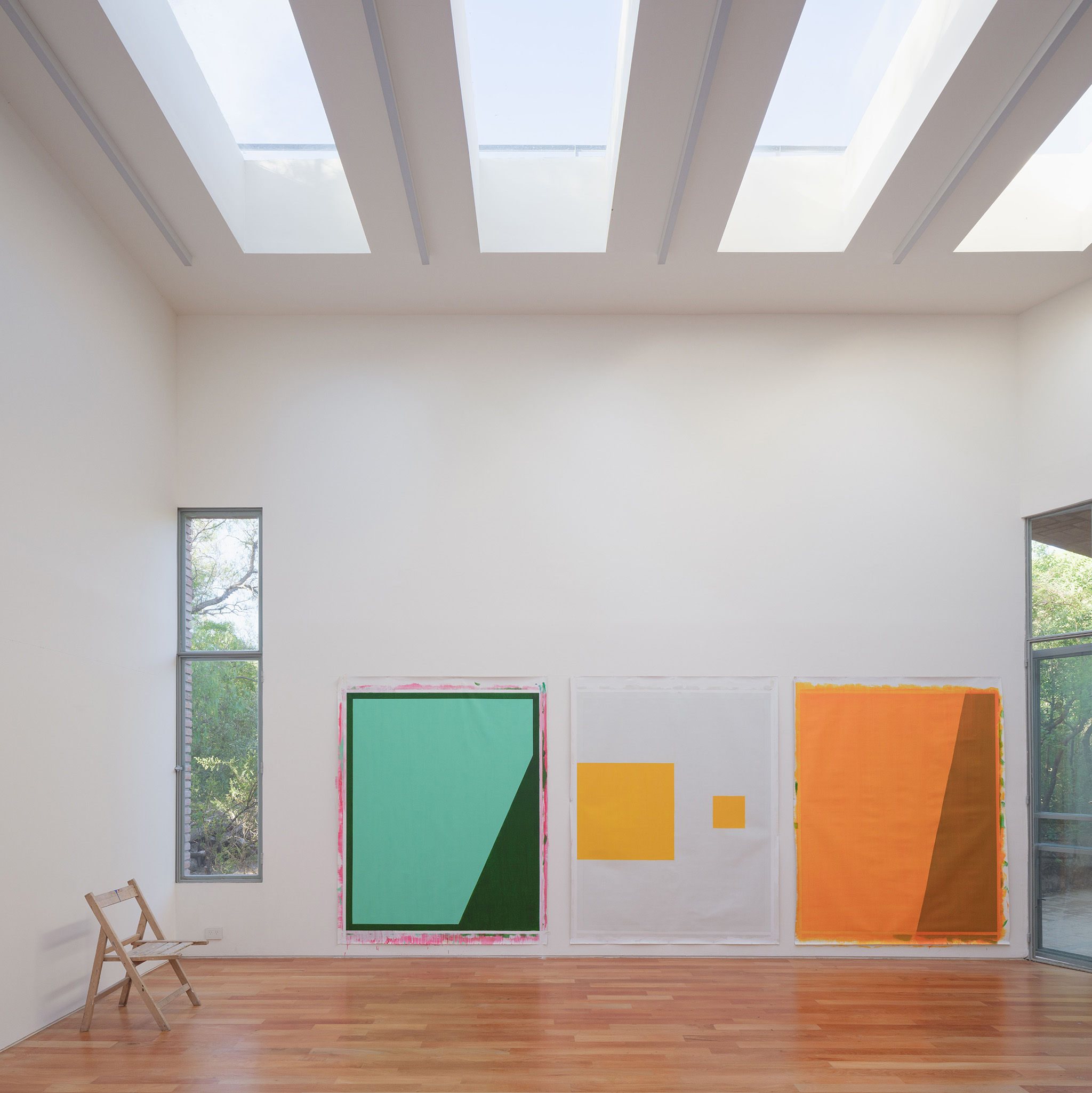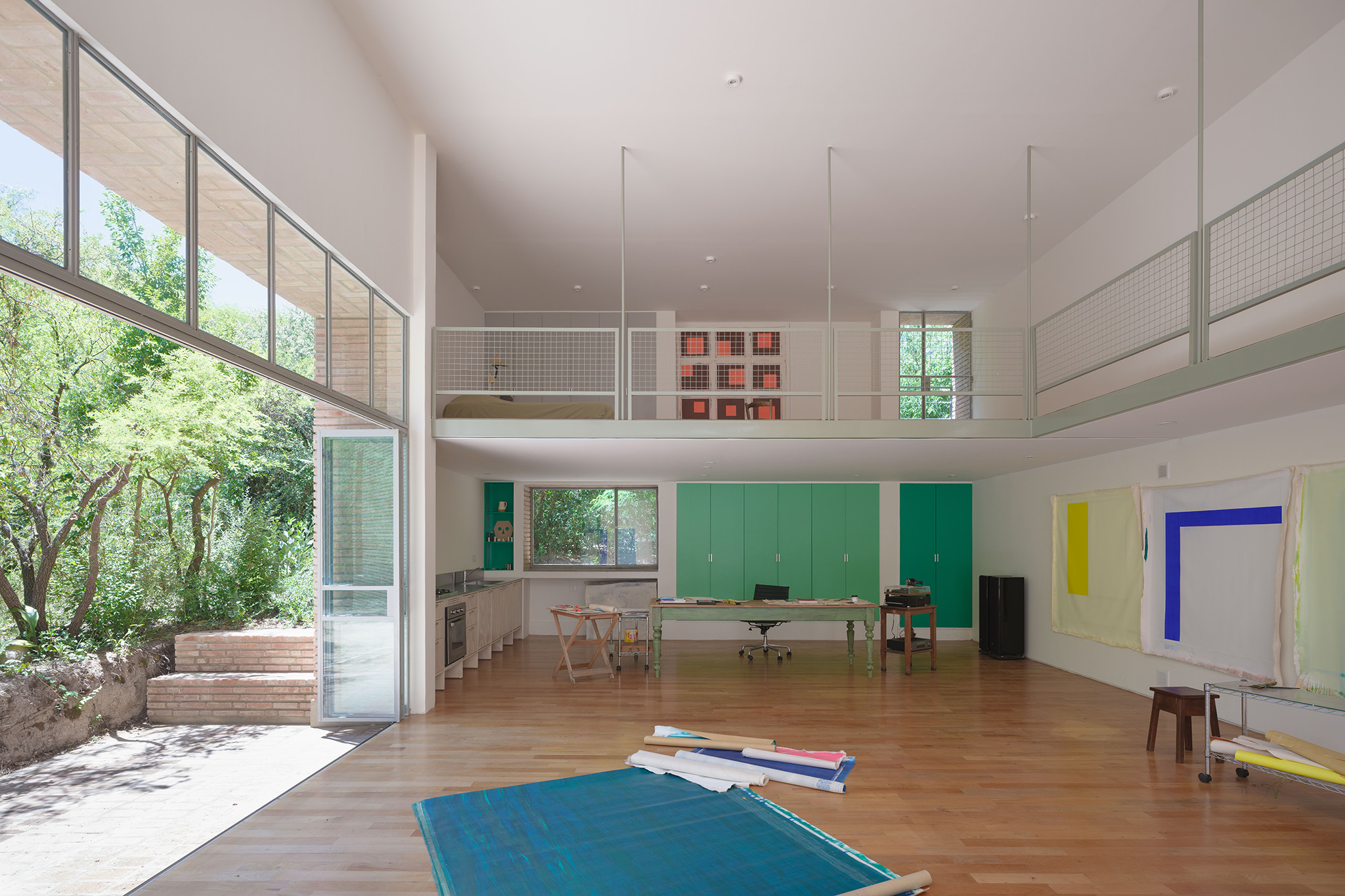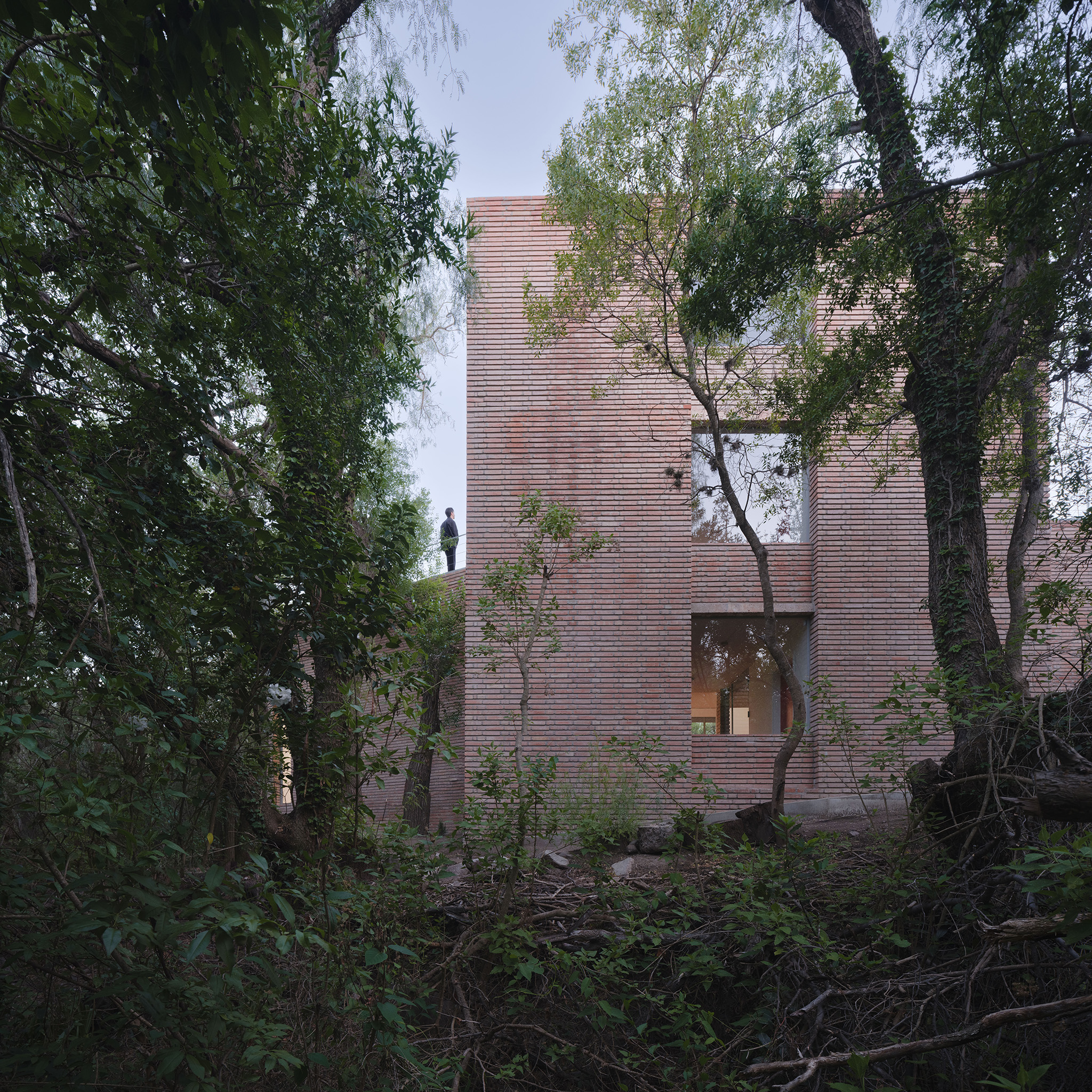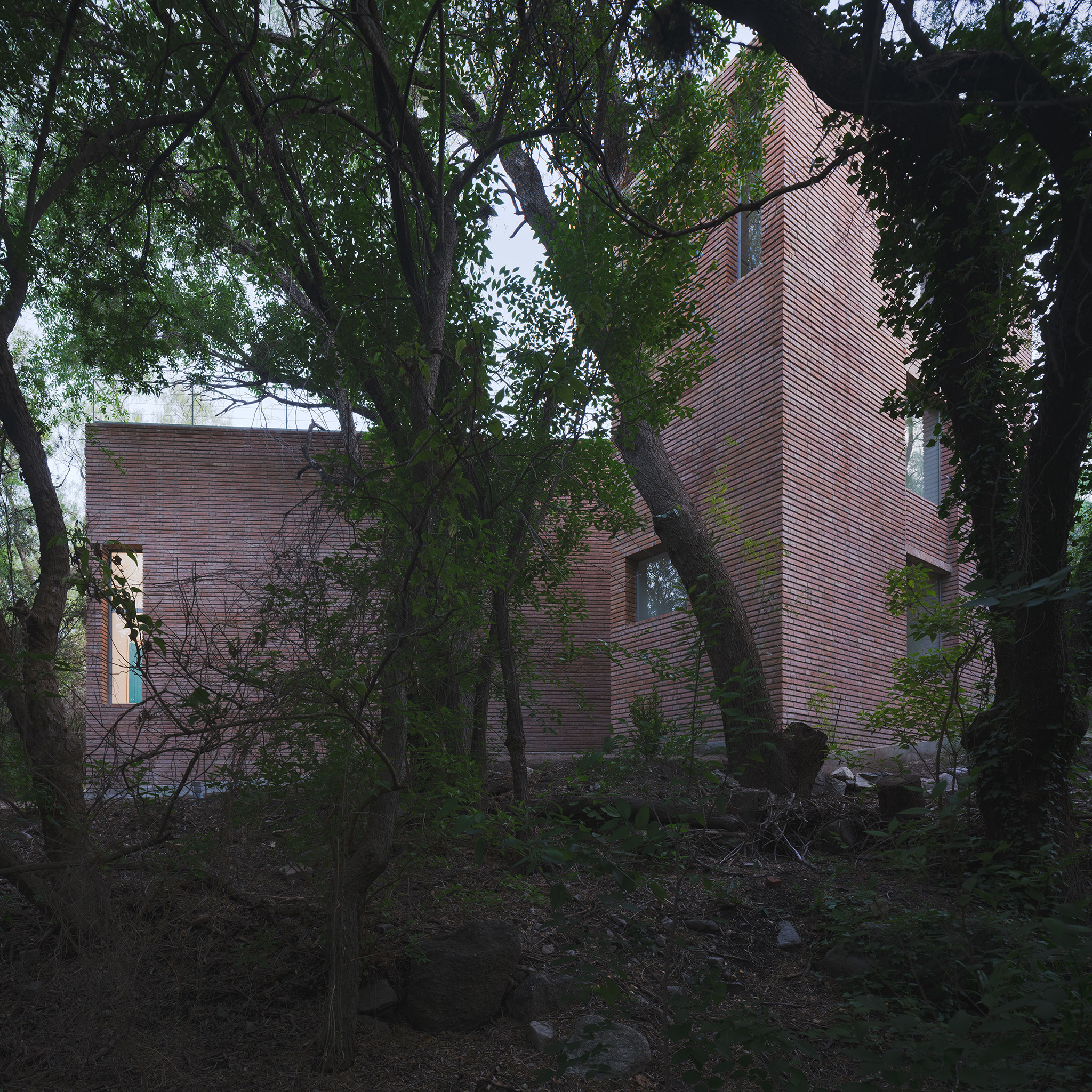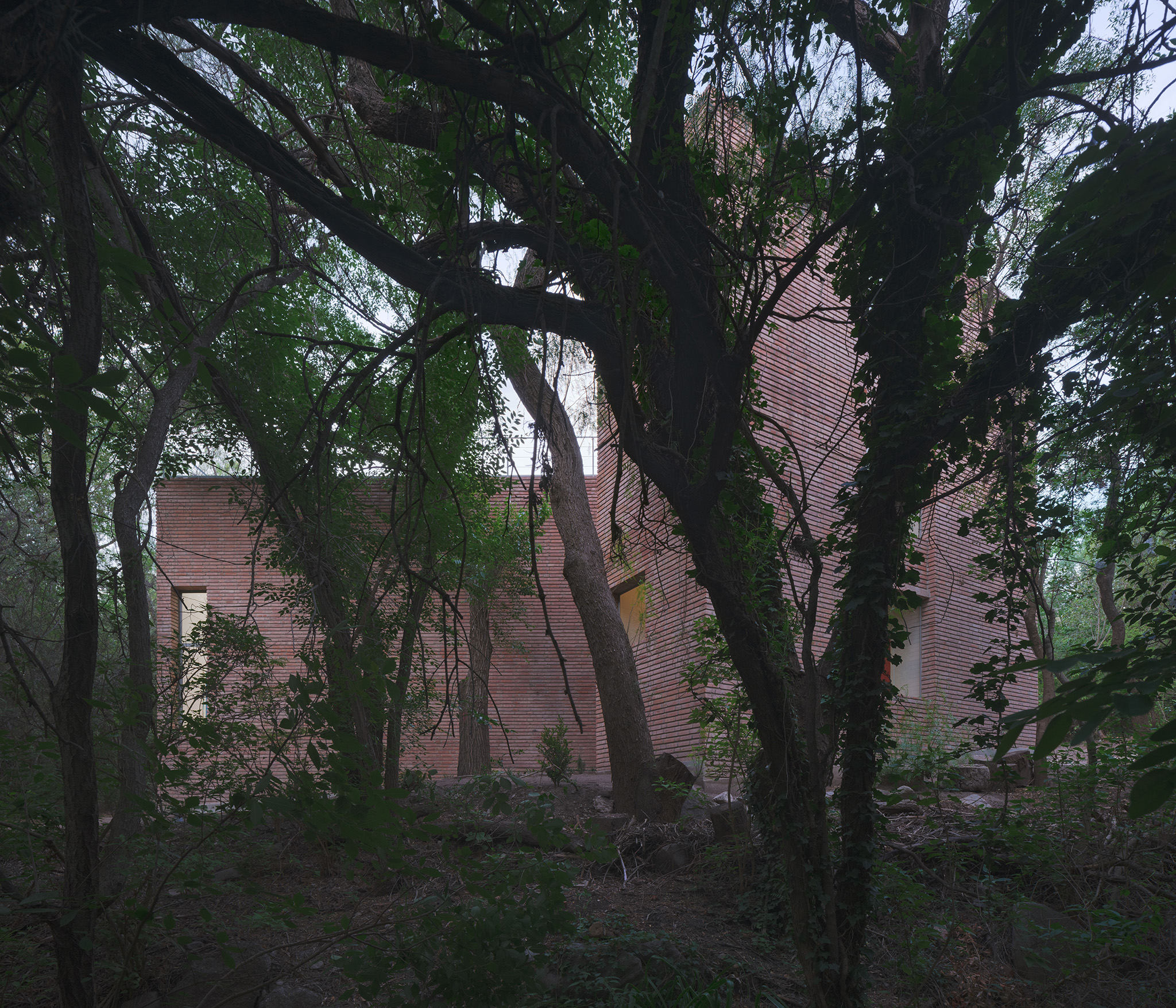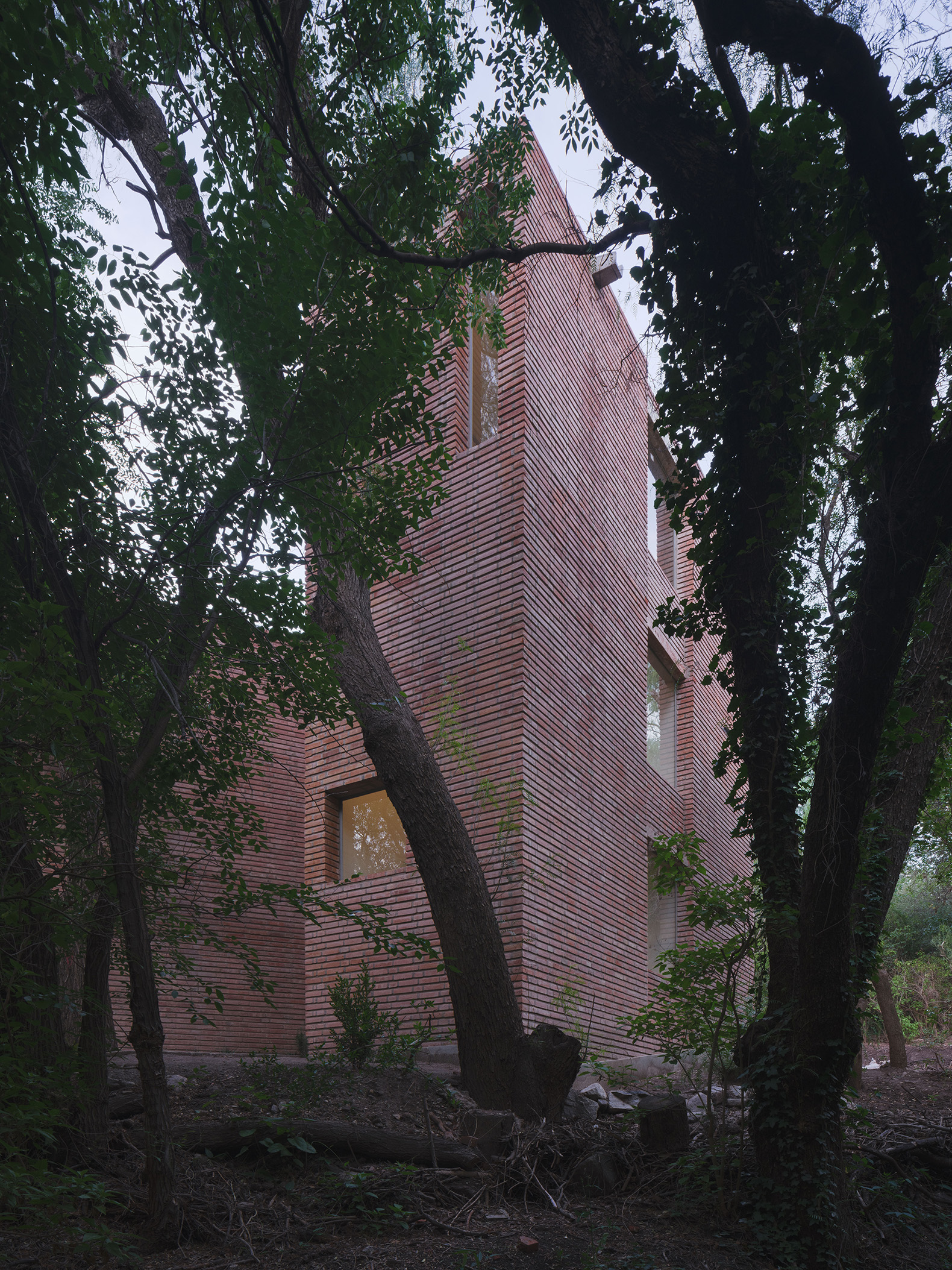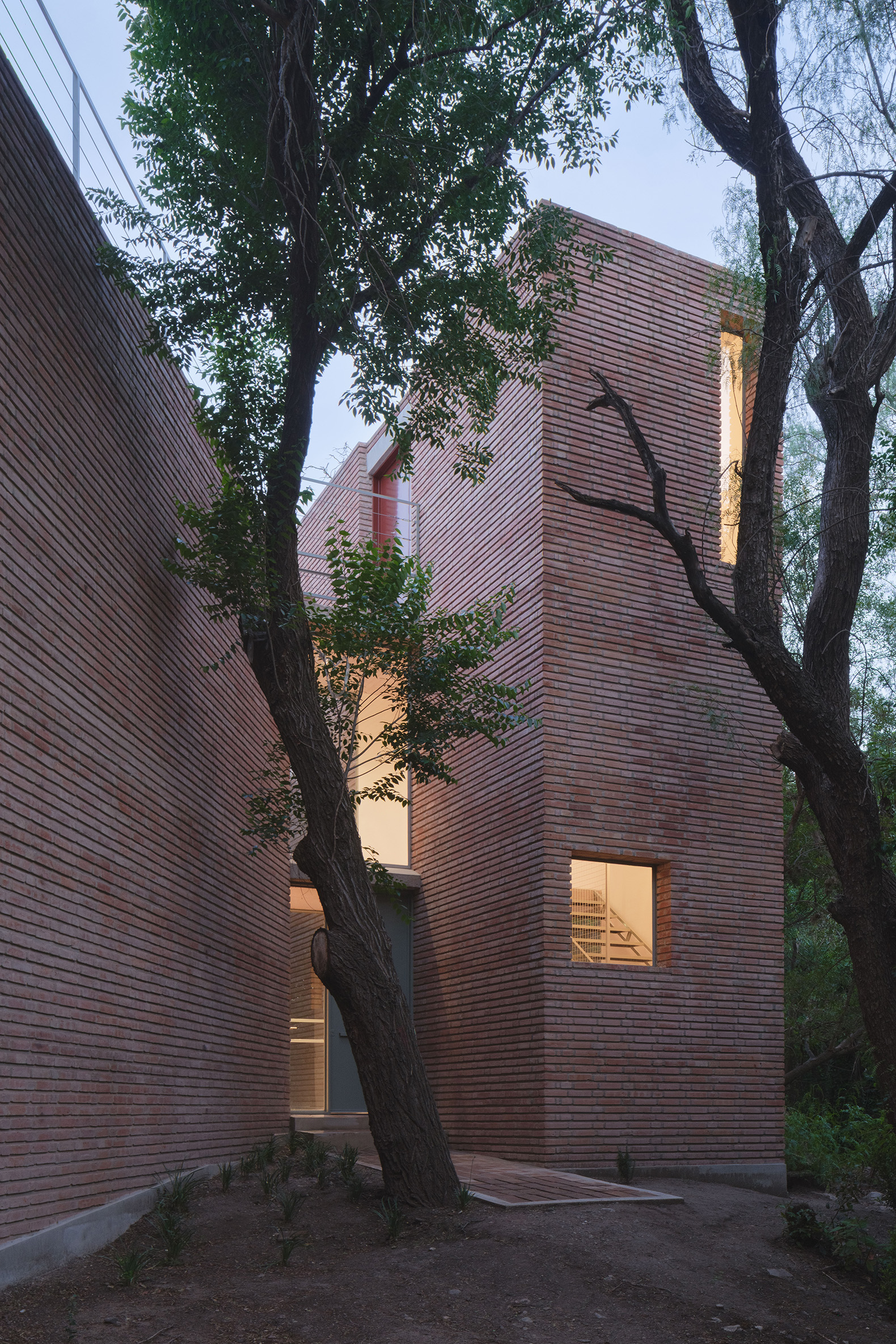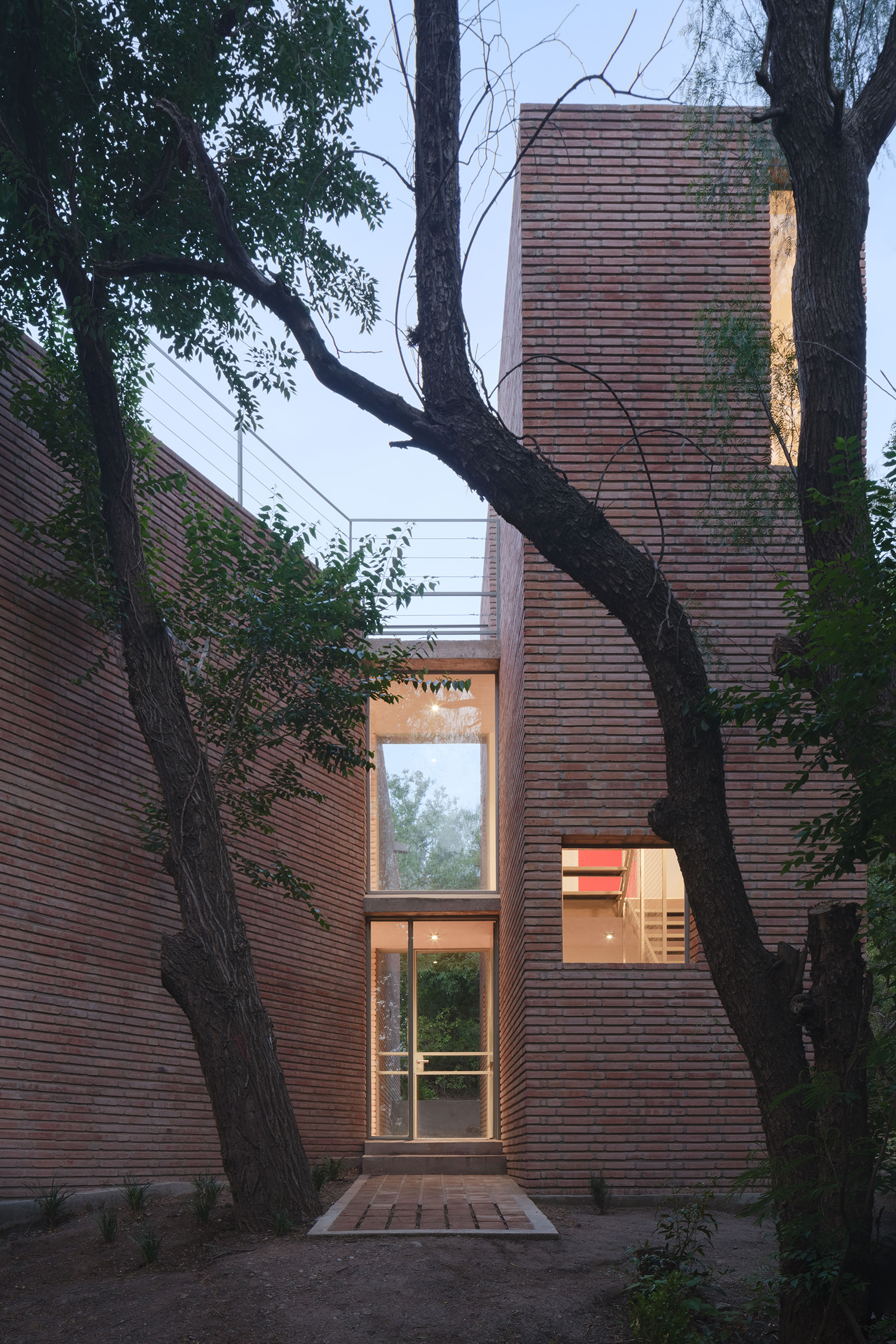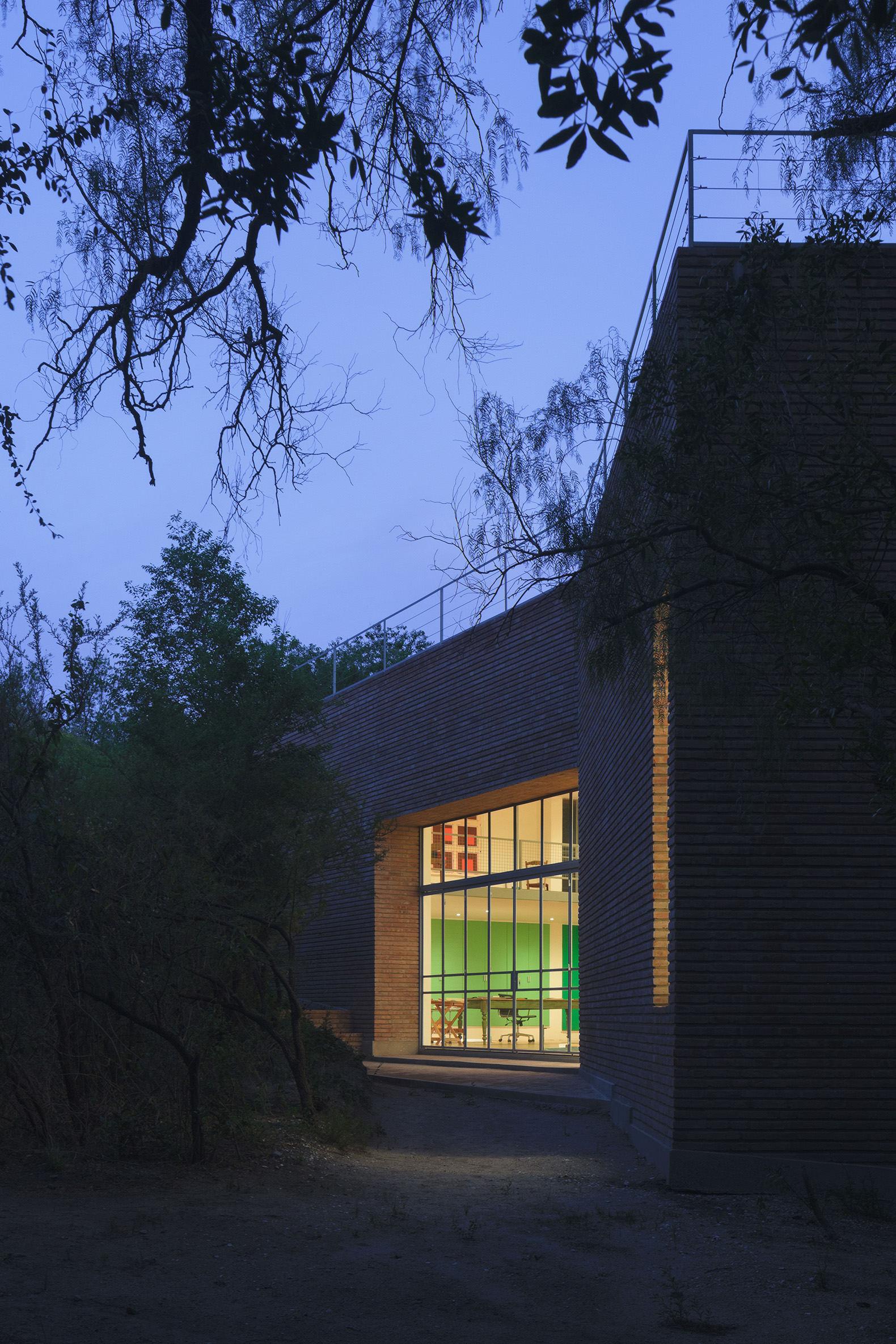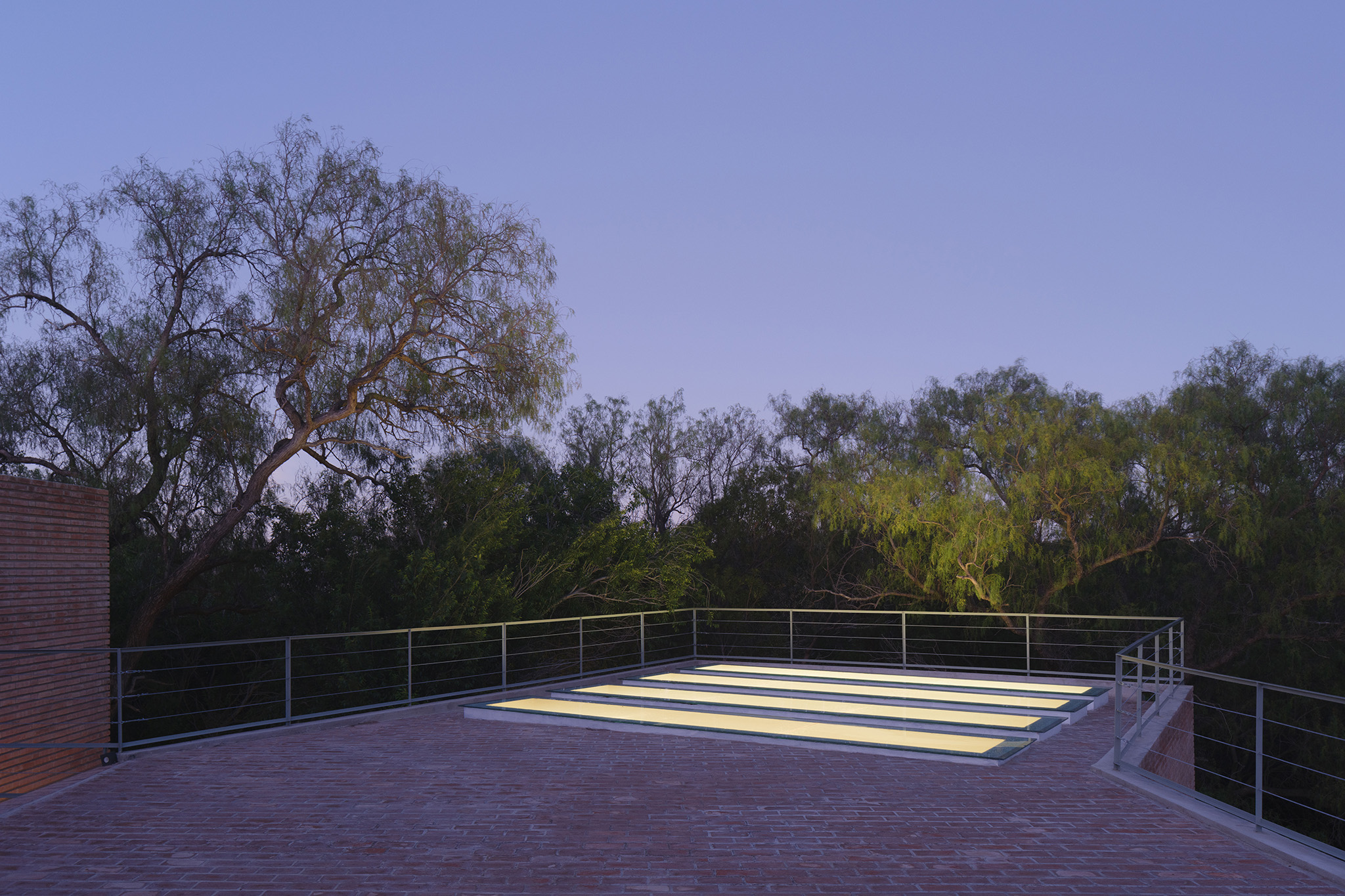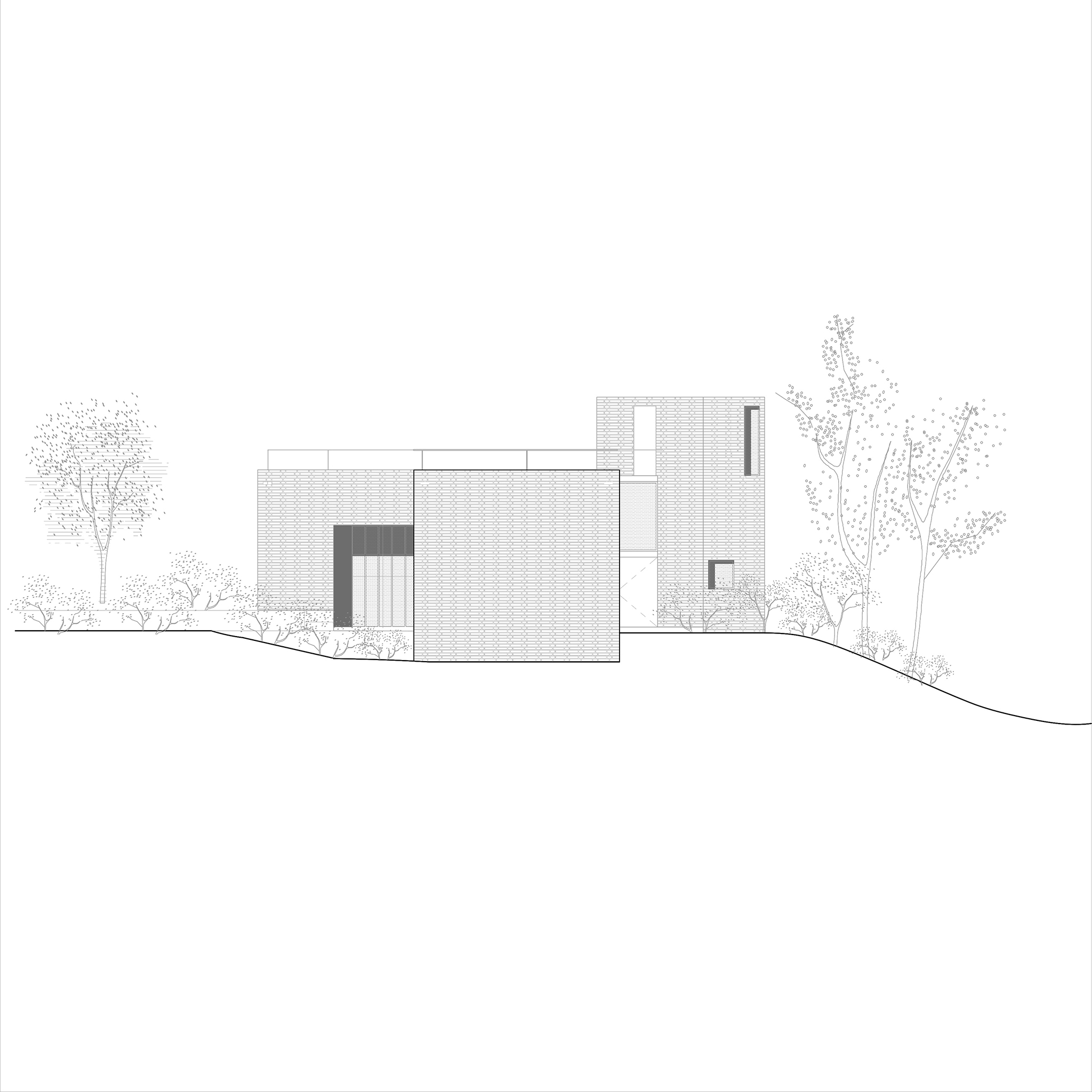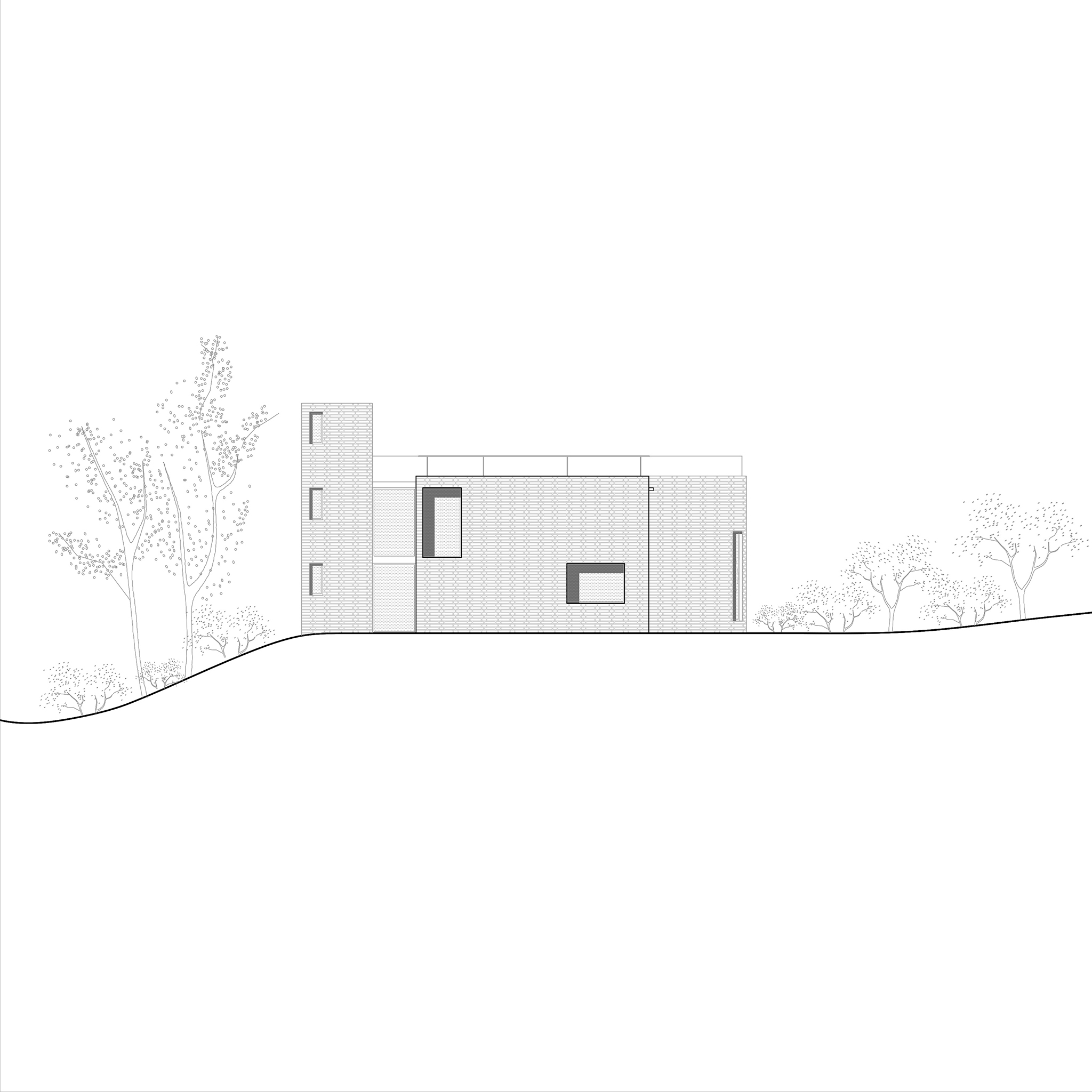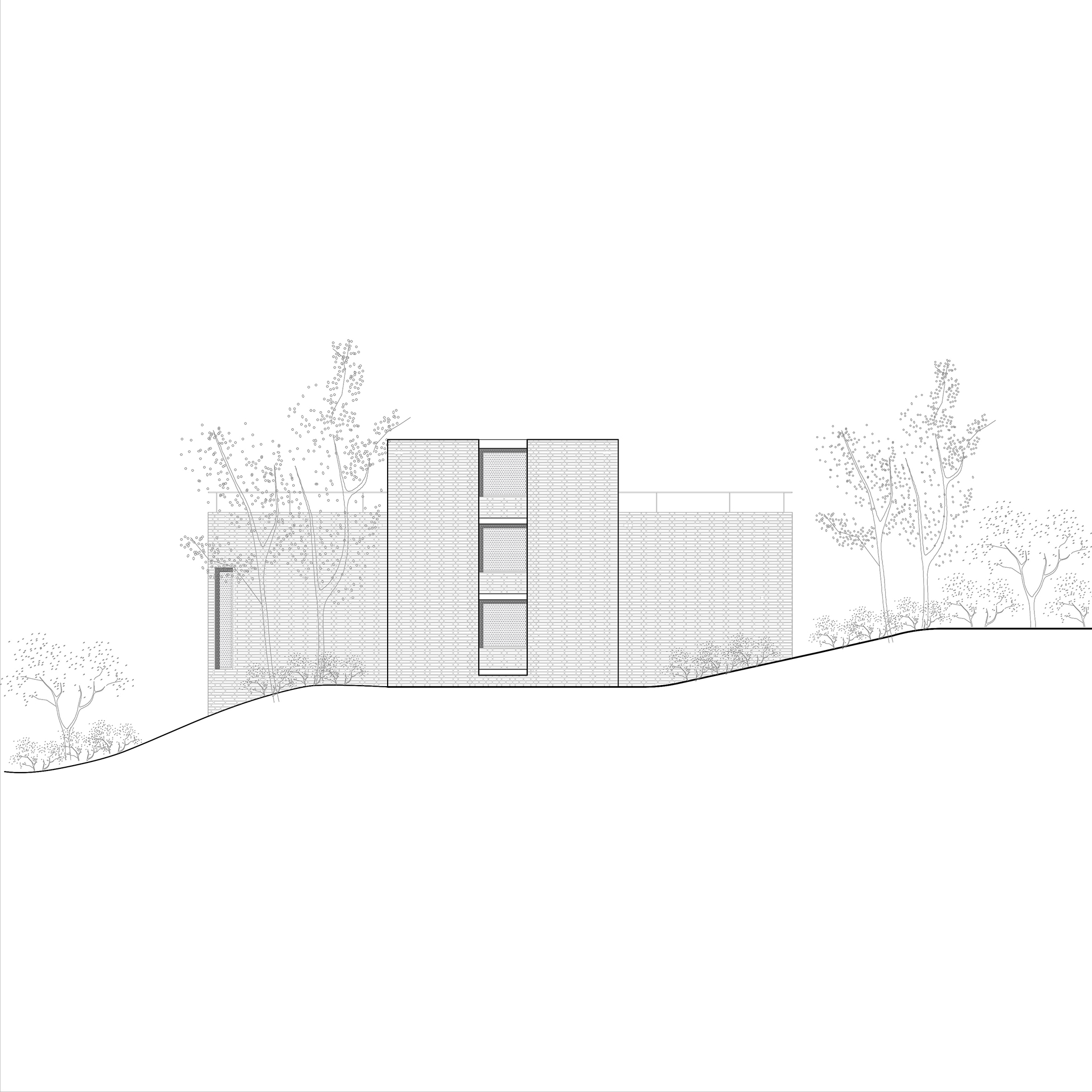
The objective of the project developed by Esteras Perrote is to create a neutral and flexible space that fosters artistic production, conceived as a "blank canvas" illuminated from above. The strategy focuses on guaranteeing optimal working conditions that seamlessly integrate daily life and artistic practice.
The materials used are primarily reddish-toned exposed brick, a local material that anchors the architecture to the land and engages with the colors of the landscape. In contrast, the white interior, combined with homogeneous lighting from skylights, enhances the neutrality of the space and transforms it into an active support for creation. The wood used for flooring, as well as the metal used for the joinery and structure, complement an austere palette that balances weight and lightness.
The sustainability of the design is based on passive strategies and the use of locally sourced materials. The thermal inertia of the walls, cross ventilation, and solar radiation control ensure adequate interior comfort. In turn, the decision to preserve the natural environment, avoiding the felling of species and reusing water for irrigation, reinforces the essence of the project: a sensitive architecture, integrated and respectful of the landscape, where living and creating are part of the same gesture.
Atelier Cambre by Esteras Perrote. Photograph by Javier Agustín Rojas.
Project description by Esteras Perrote
Introduction
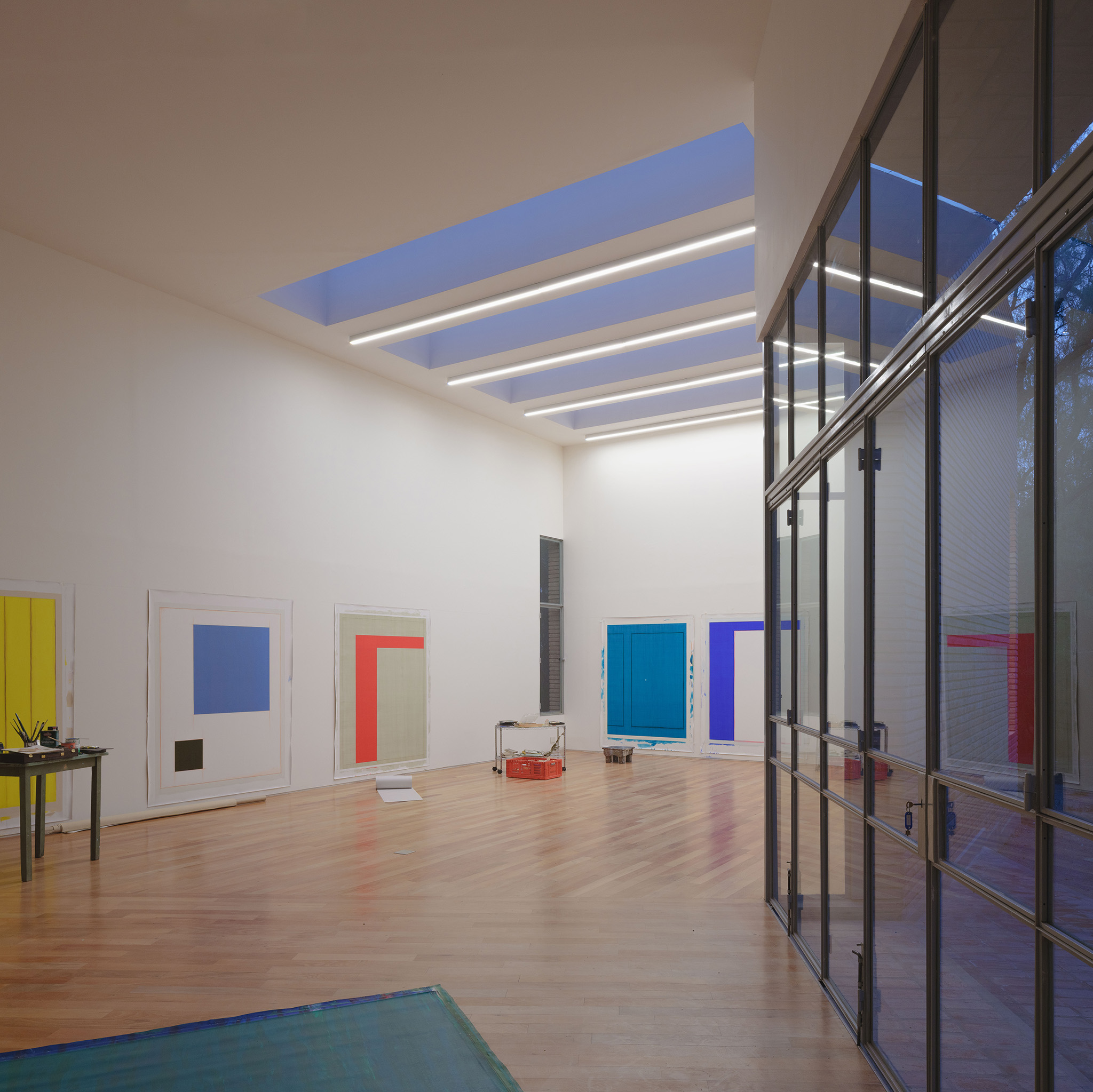
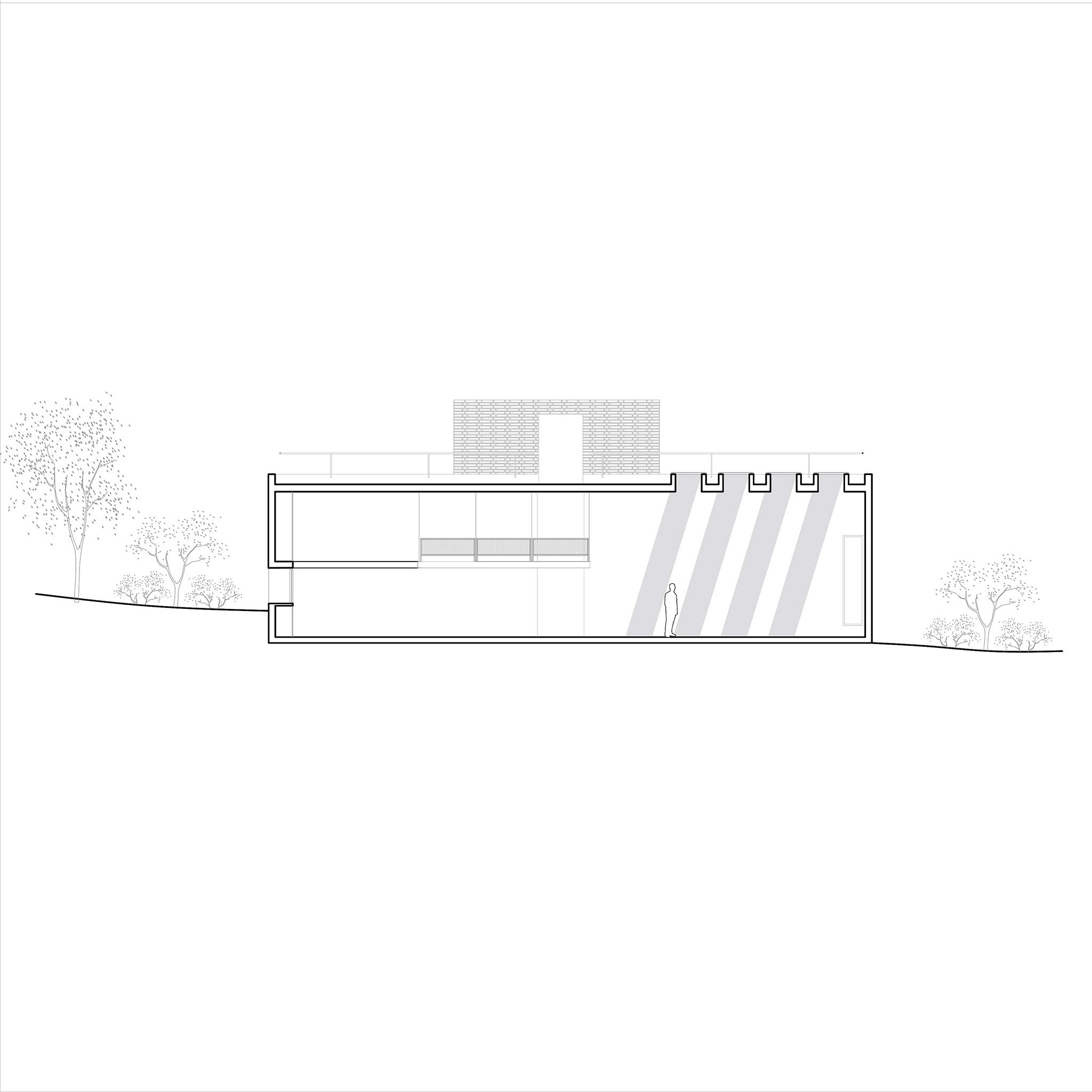
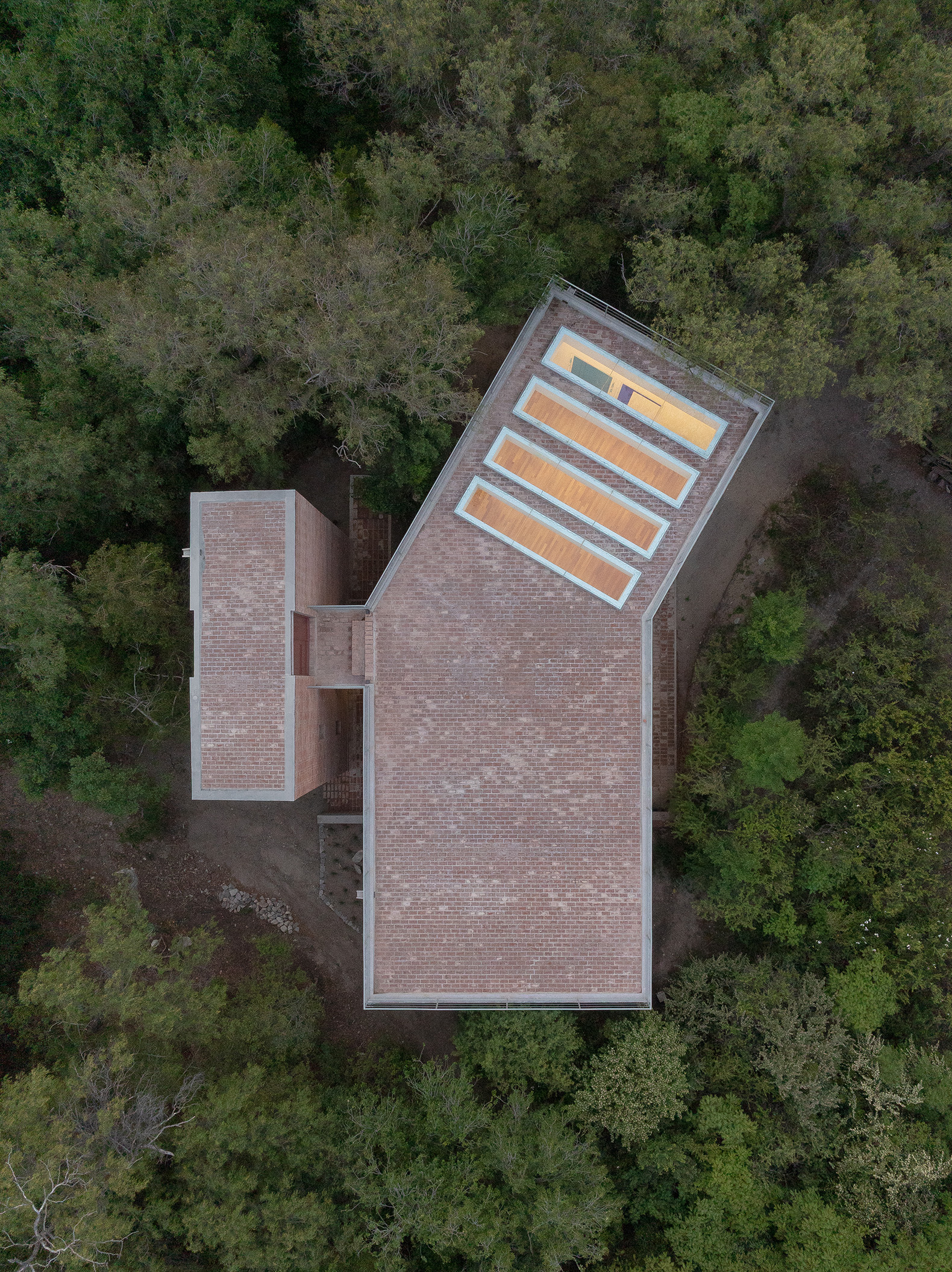
The height of the mountain and the irregularity of the forest define the form. The colour and texture of the brick reinforce the character of its geometry. A large, silent space beneath the sunlight entering through the skylights allows one, from within, to see the sky, take up the brush, and transform the space.
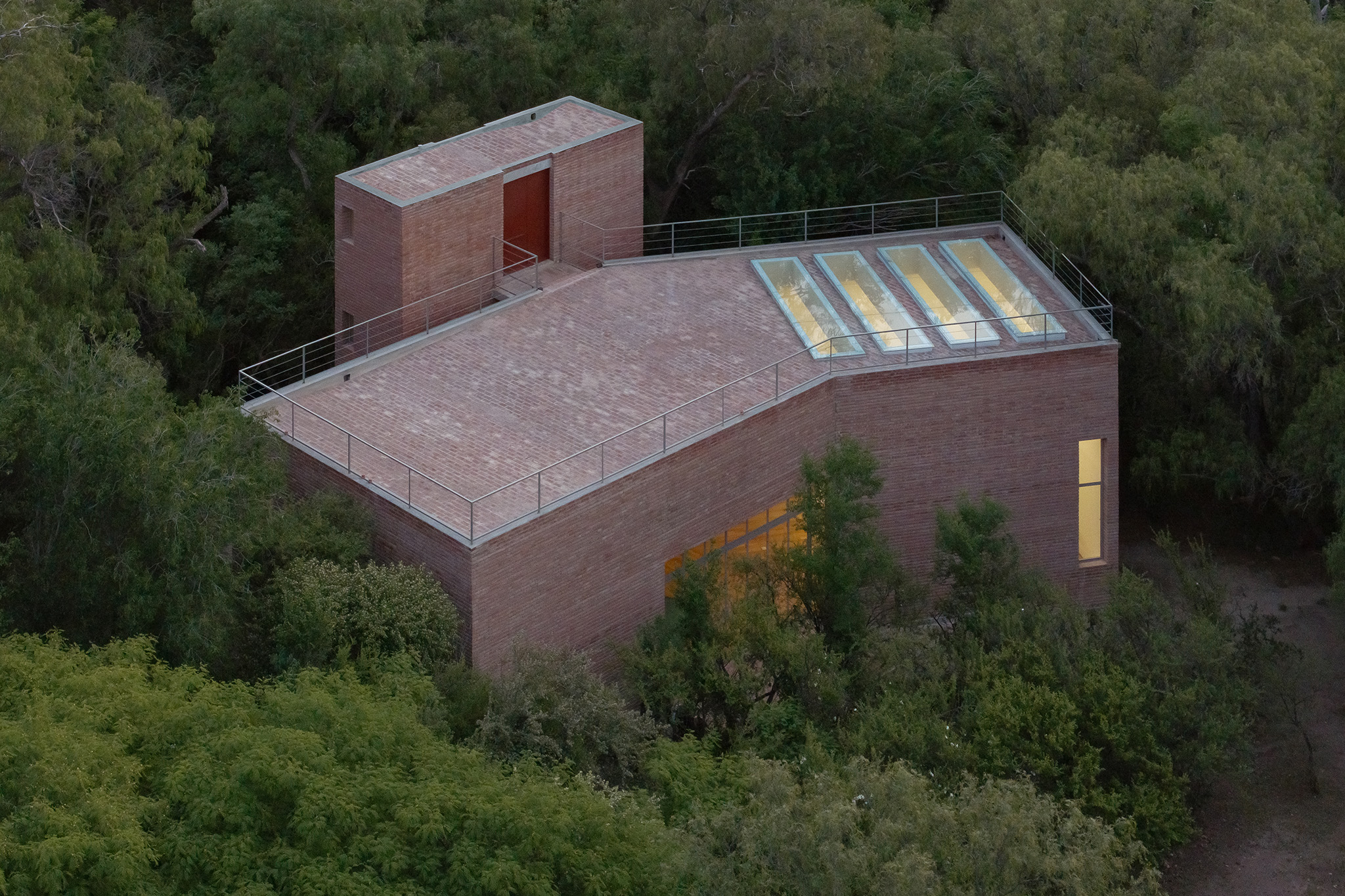
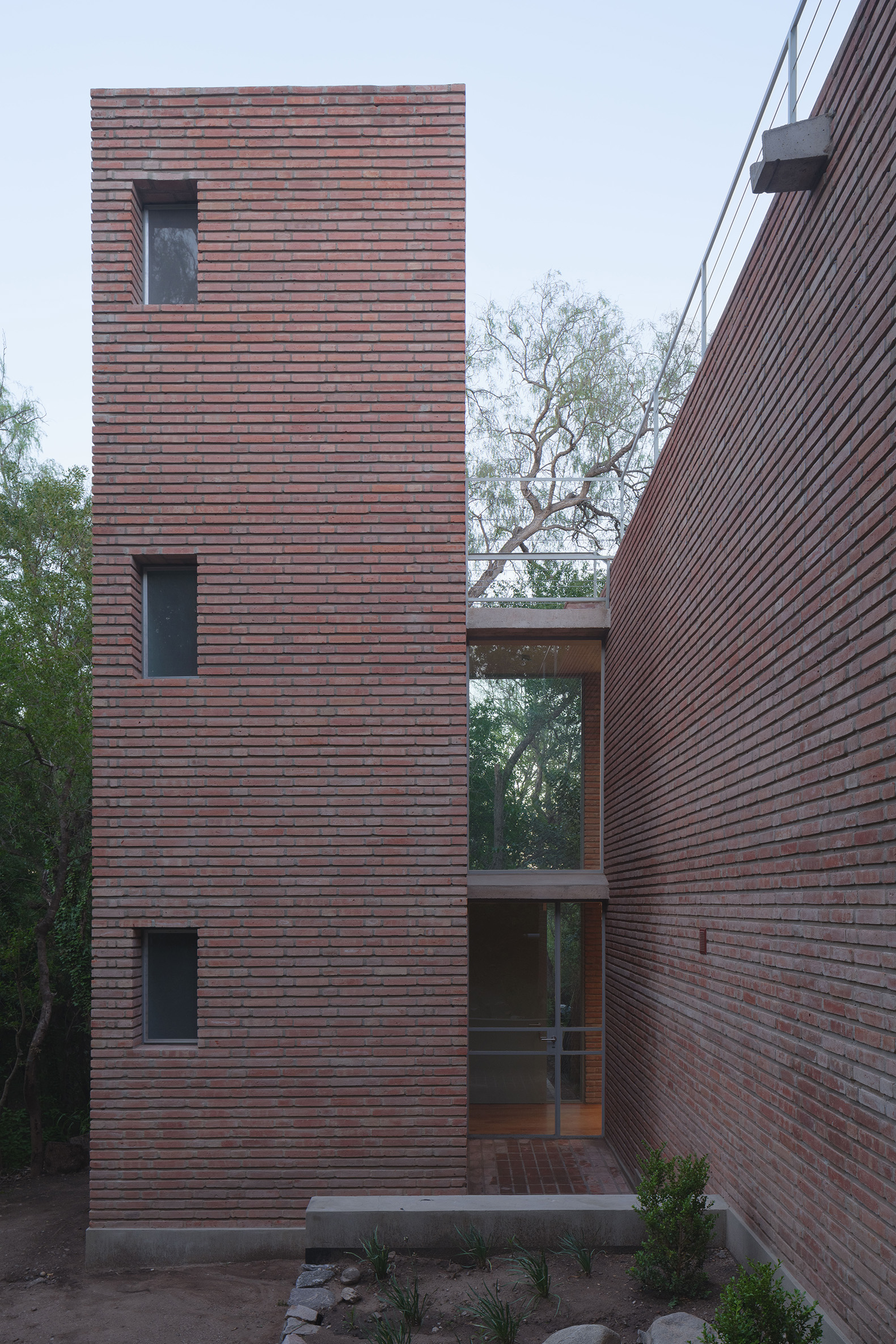
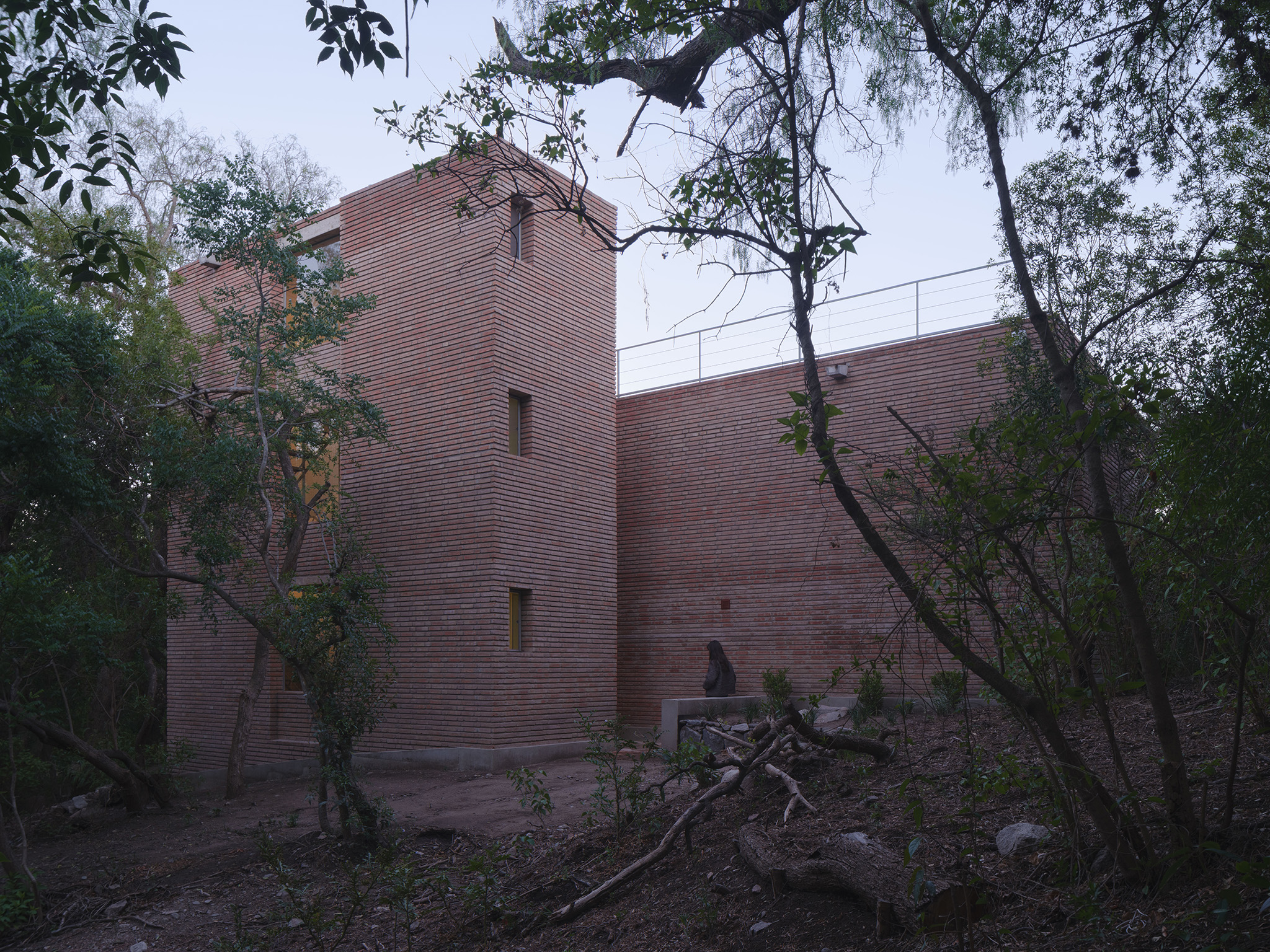
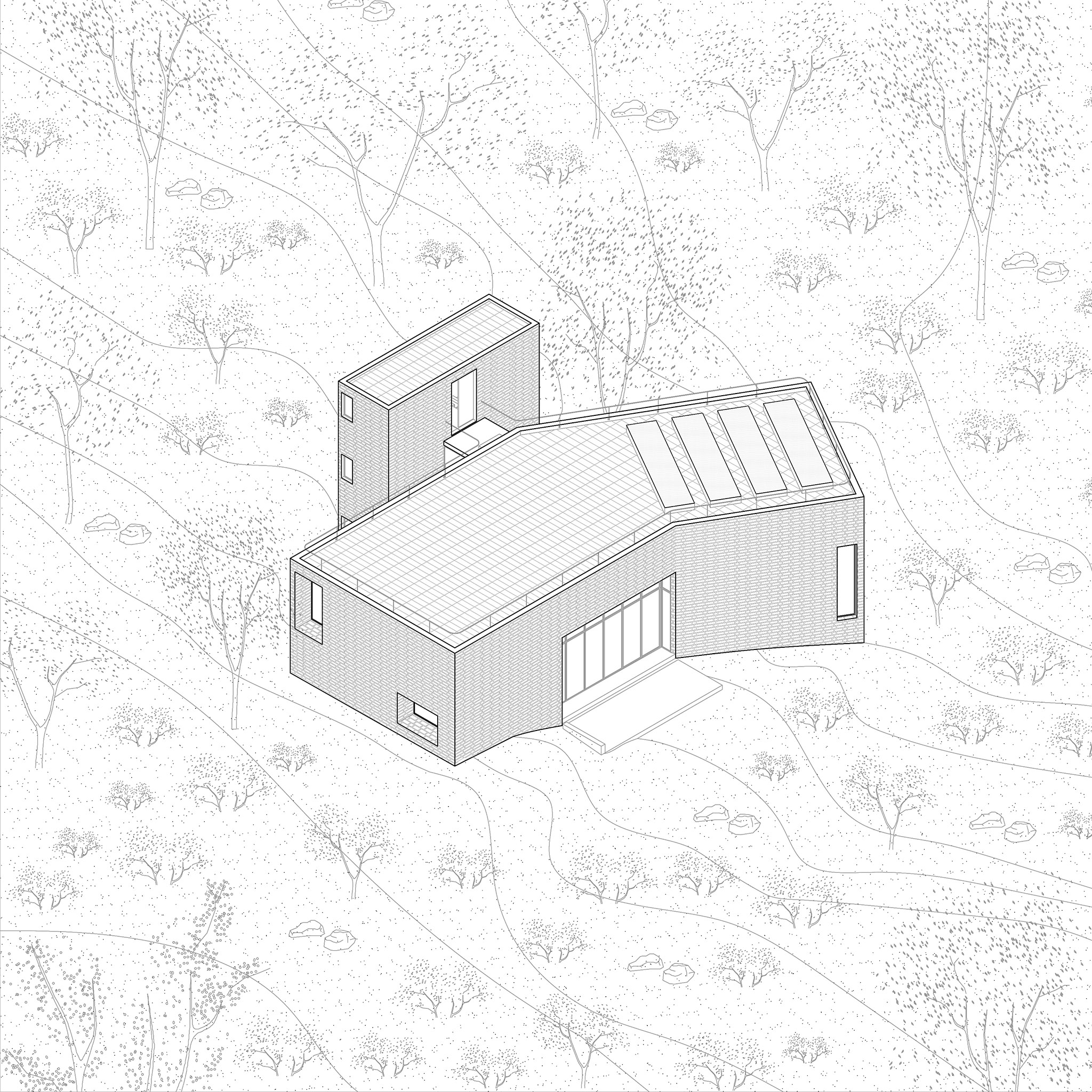
Architecture as enclosure: a space that gathers and enables under natural light. The geometry is composed of two rectangular prisms that overlap and interlock, forming a single volume capable of transformation over time. A pure geometry, built from austere materials in coexistence with the forest.
The space, like a large blank sheet, becomes, under the light entering from above, the place of ideas, thought, and creative work. The artist is the protagonist.
The Place: between the coconut tree and the carob tree
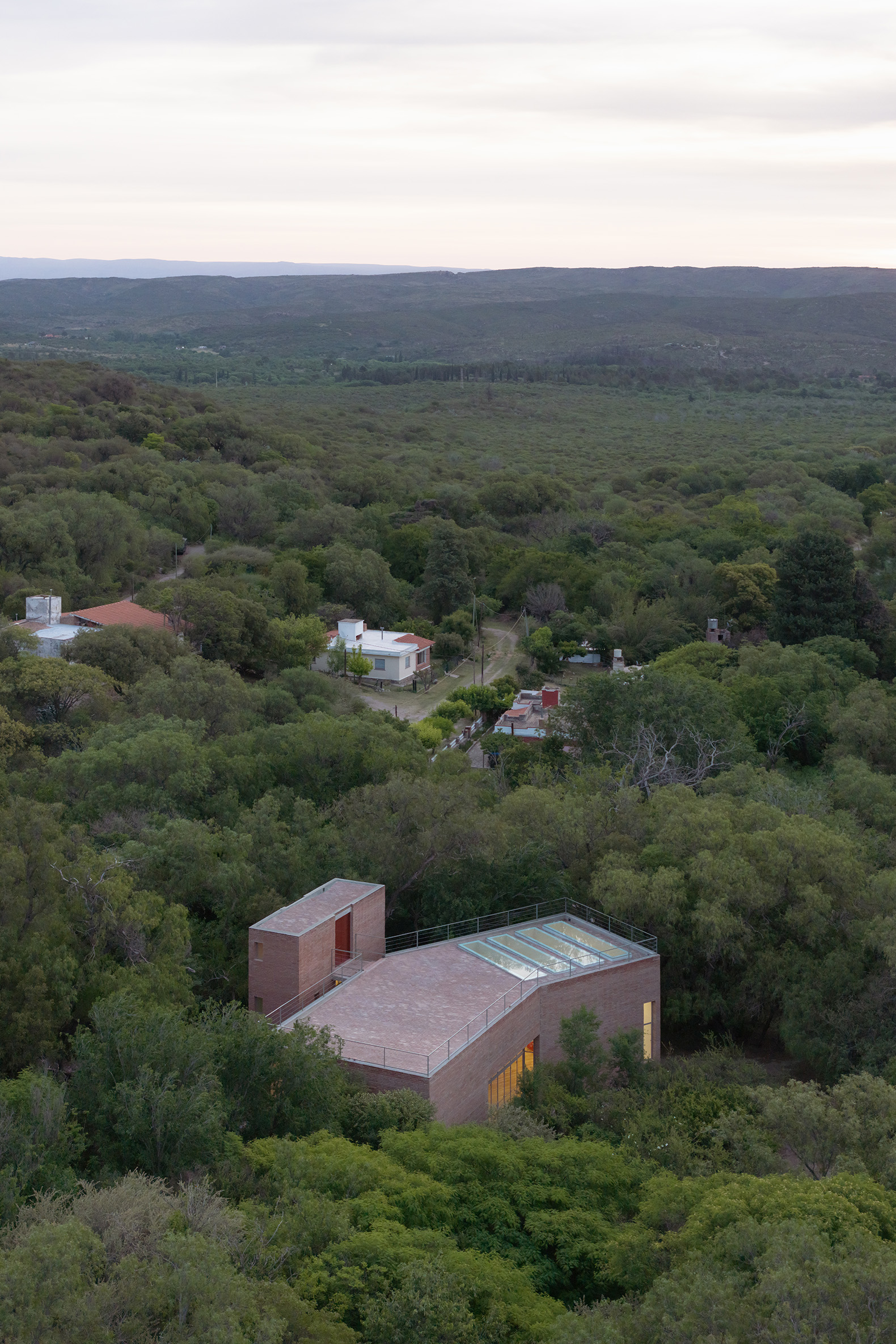
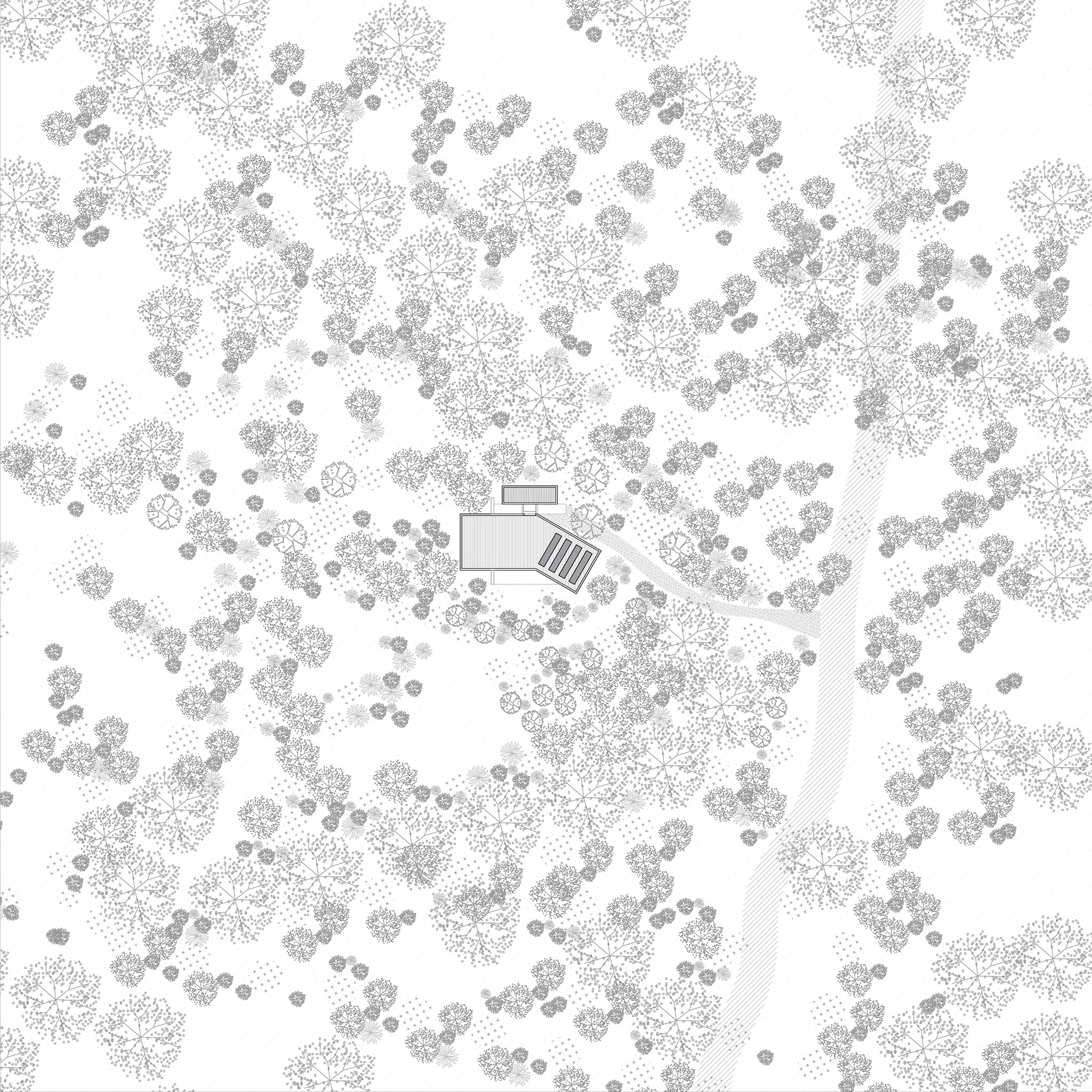
Juan José Cambre’s atelier is located in the Punilla Valley, in the small mountain town of Los Cocos, Córdoba Province, Argentina, at 1,200 meters above sea level.
The site lies in an area locally known as the swamp, a lower sector of the town crossed by two mountain watercourses which, although usually dry, generate a particular environmental condition. The native vegetation that develops in this part of the site is distinctive within the region, shaping a singular landscape within the mountain context.
The insertion of the program arises from a prior recognition of the place, identifying a natural clearing in the forest where architecture, art, and nature can coexist. As if it had always been there, between the coconut tree and the carob tree. Two fundamental layout axes coincide with the opposite edges of the red brick volume, consolidating its implantation in the terrain.
The Project: between papers, drawings, and colours
Designing a studio for an artist requires understanding the technical conditions necessary so that production and ideation are not constrained by spatial composition but instead supported by it.
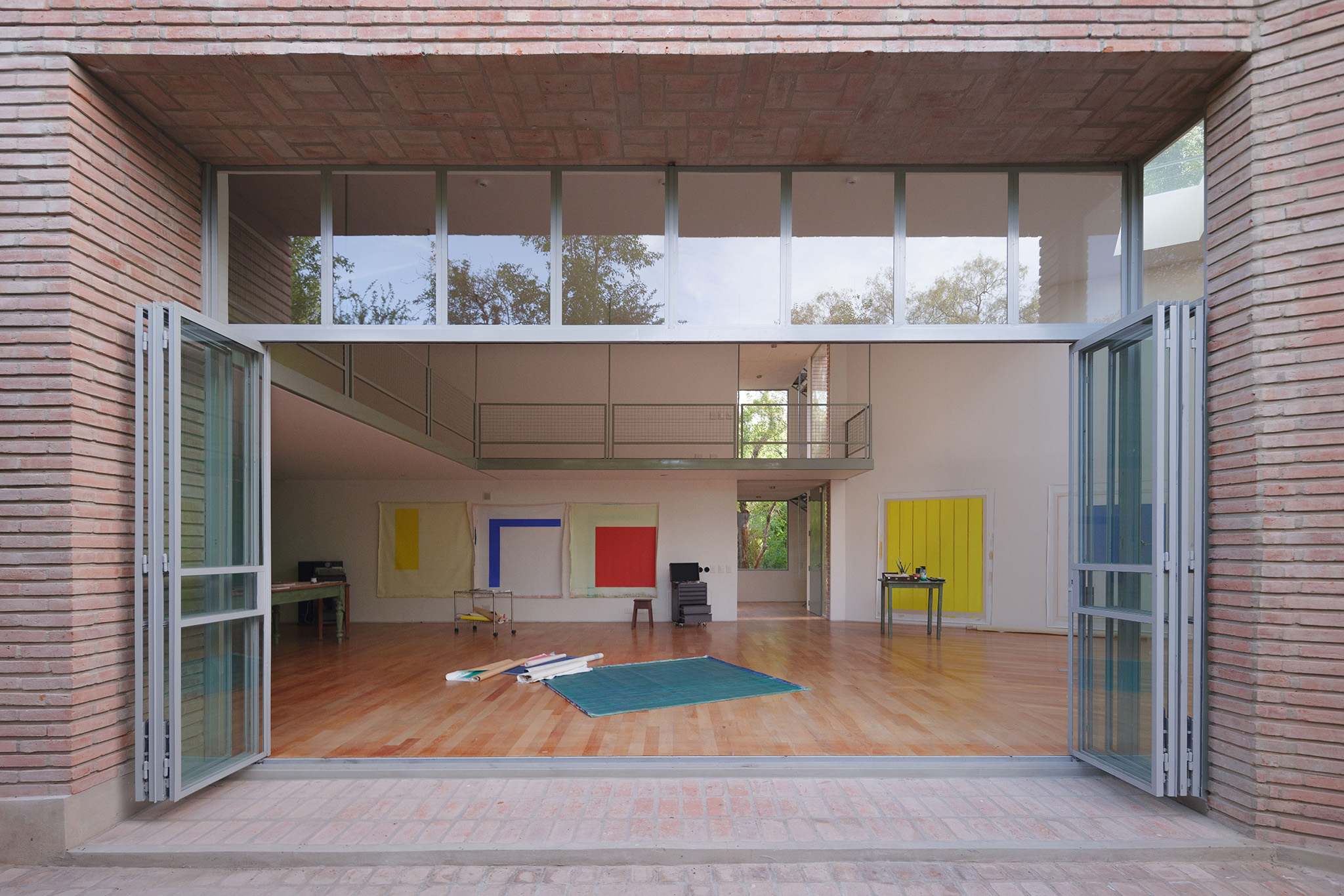
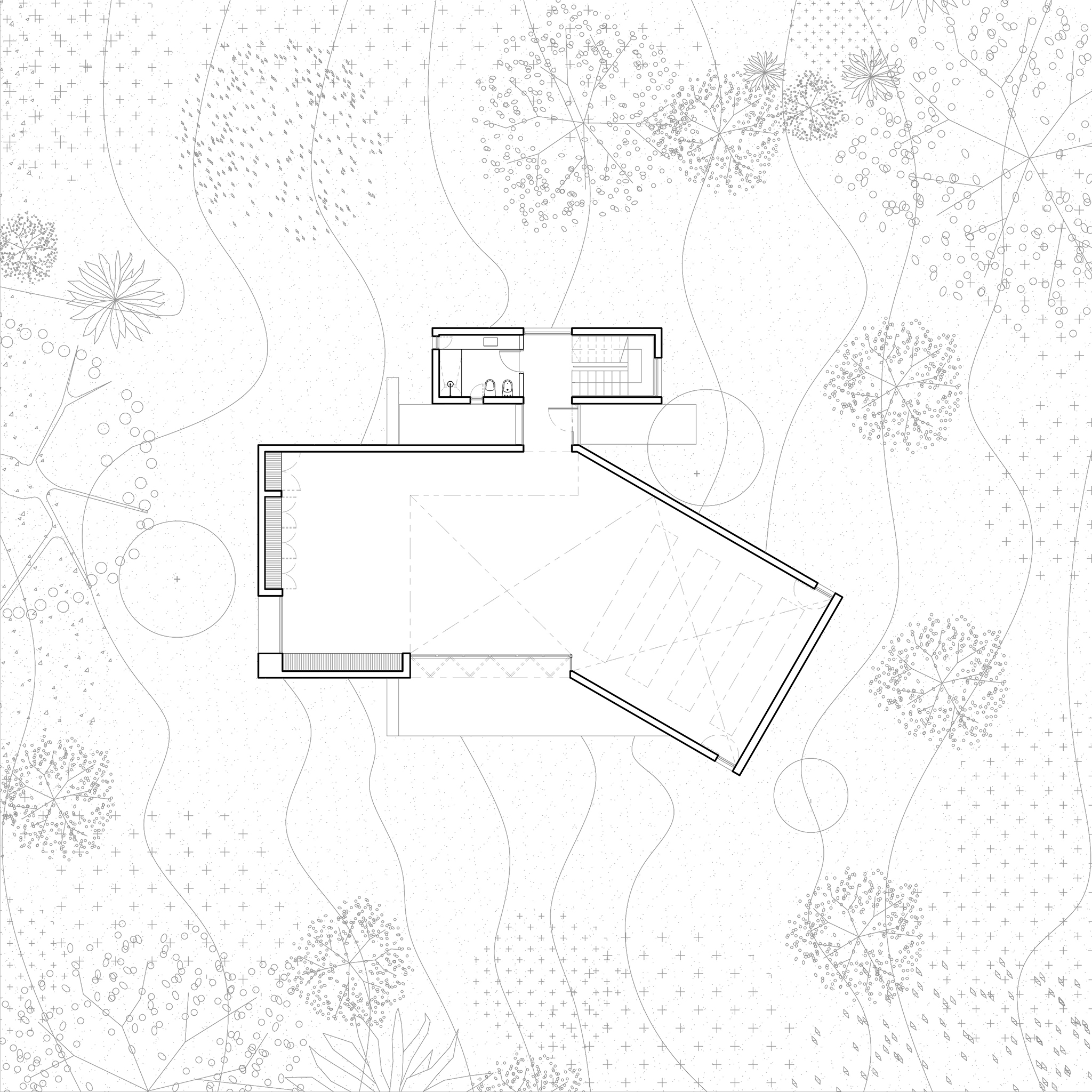
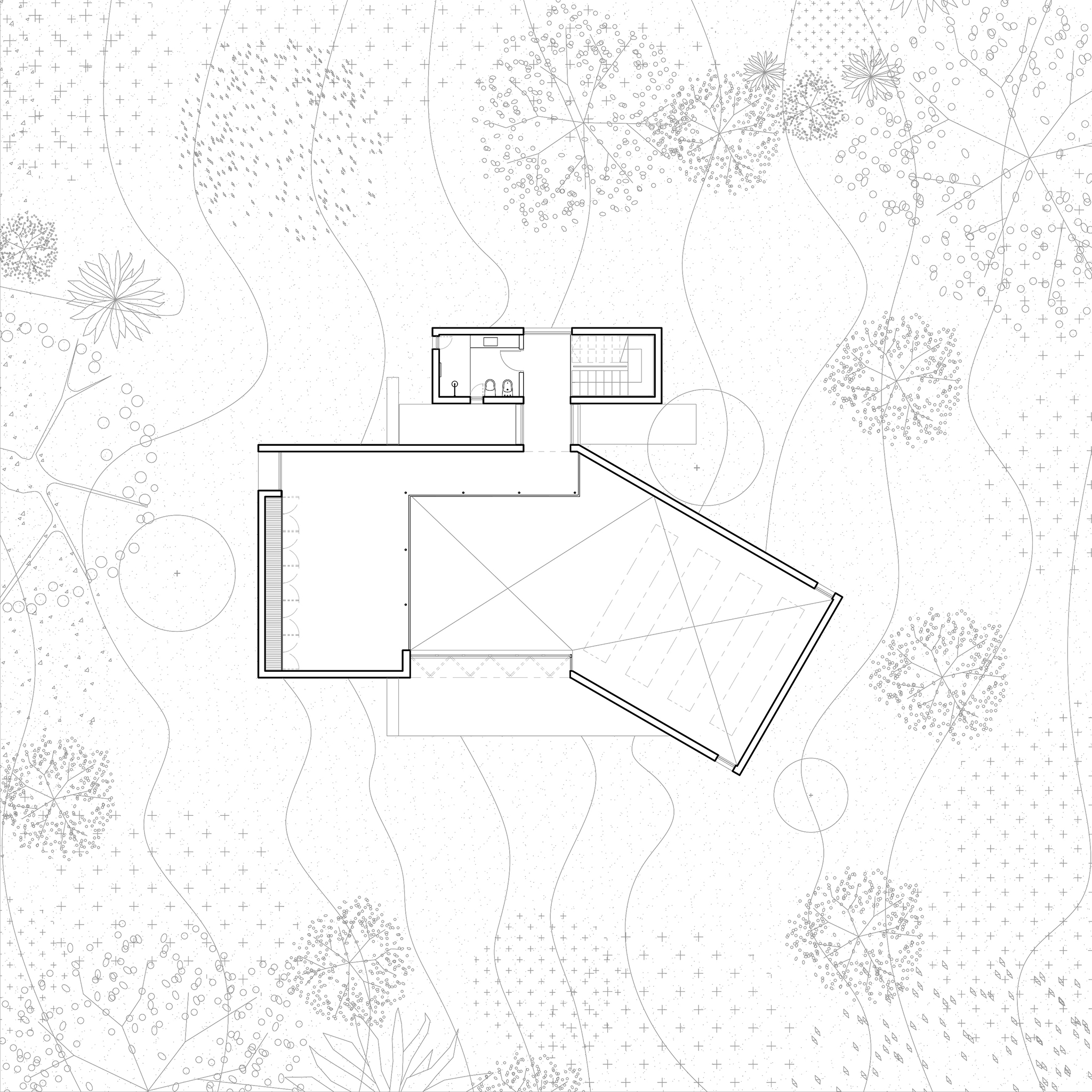
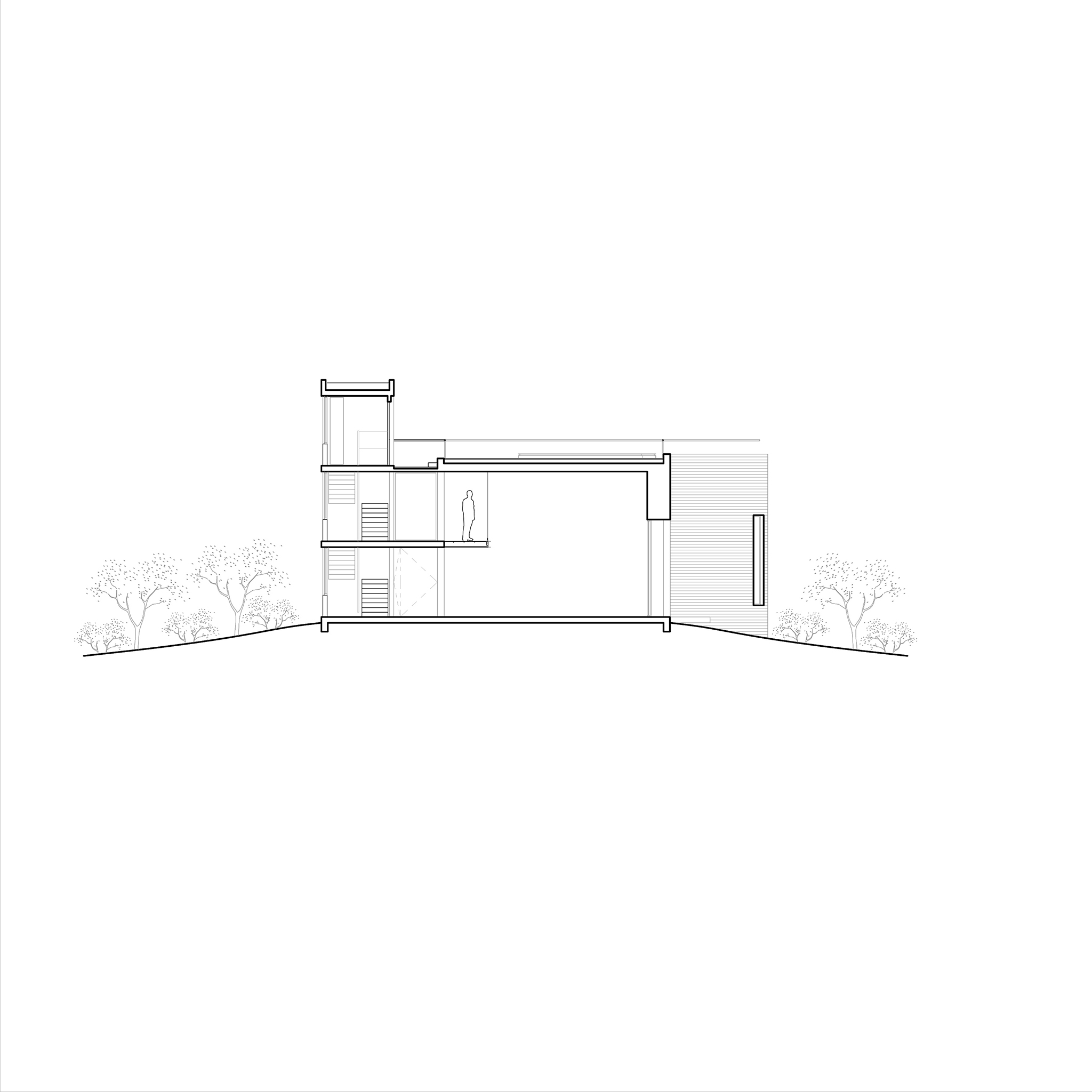
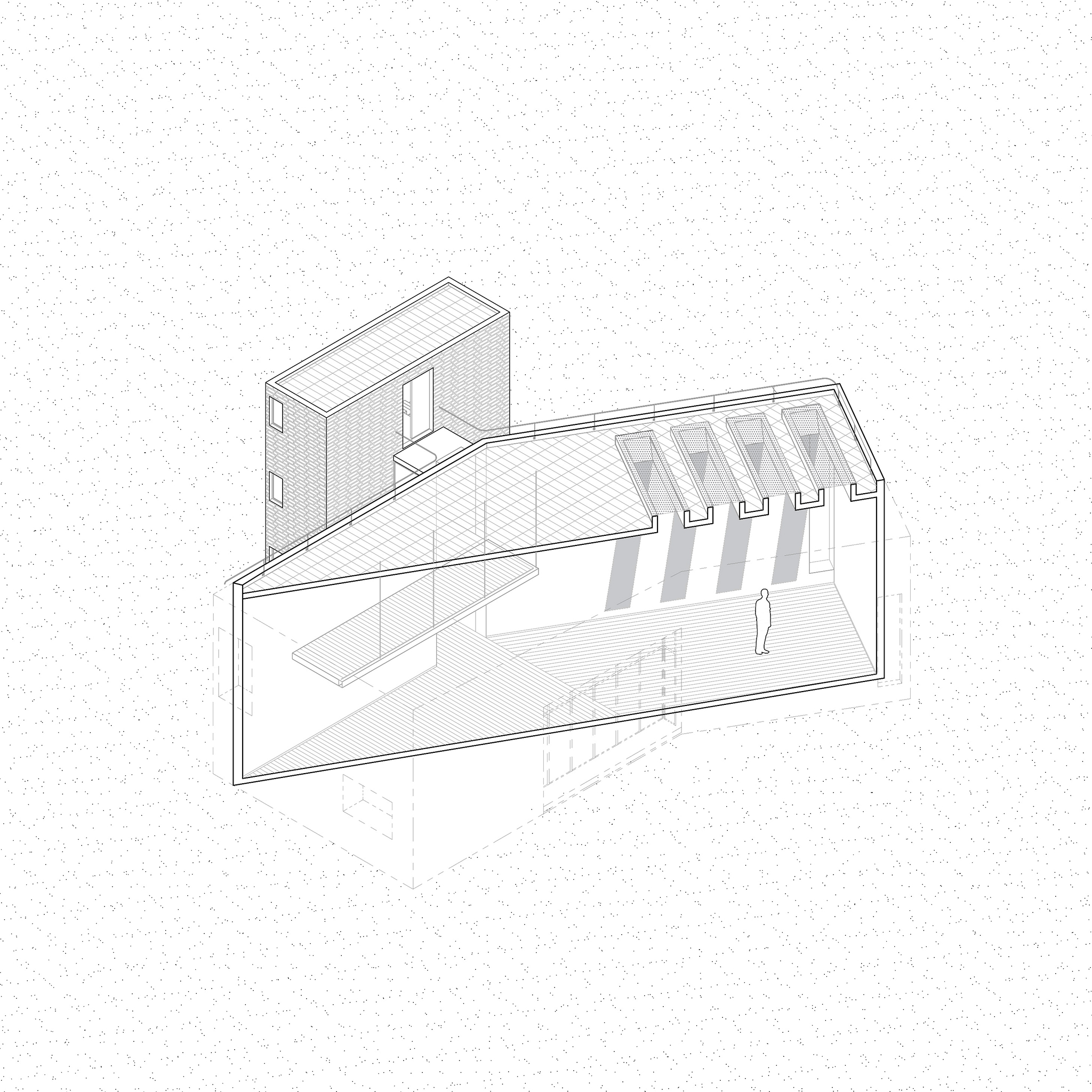
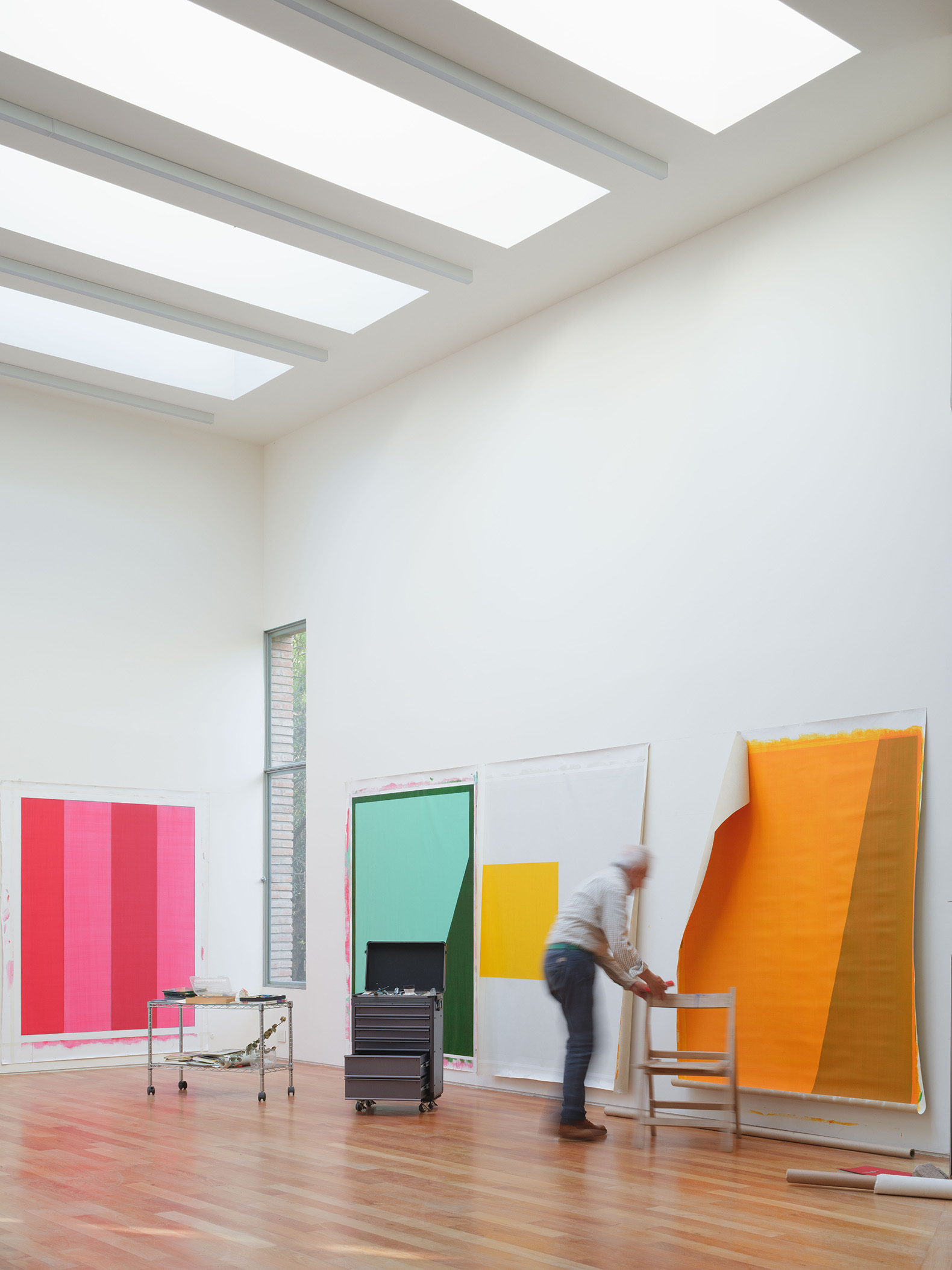
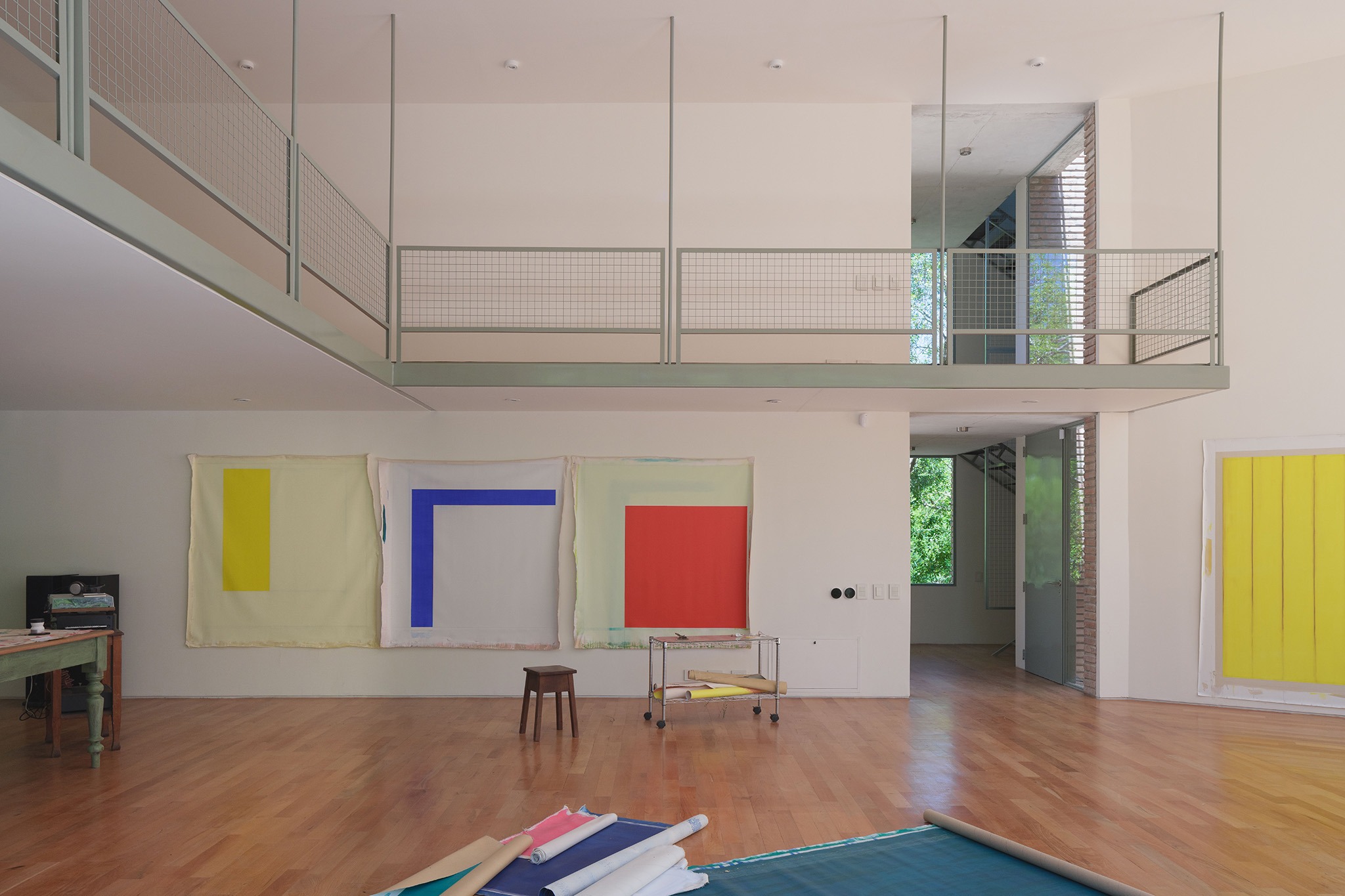
The main space is organized around a work plane oriented east, running north–south, with a height of 5 meters. Its depth doubles its width, ensuring an adequate critical viewing distance. The walls completing this 10-meter-long rectangle function as support surfaces for serial and simultaneous production.
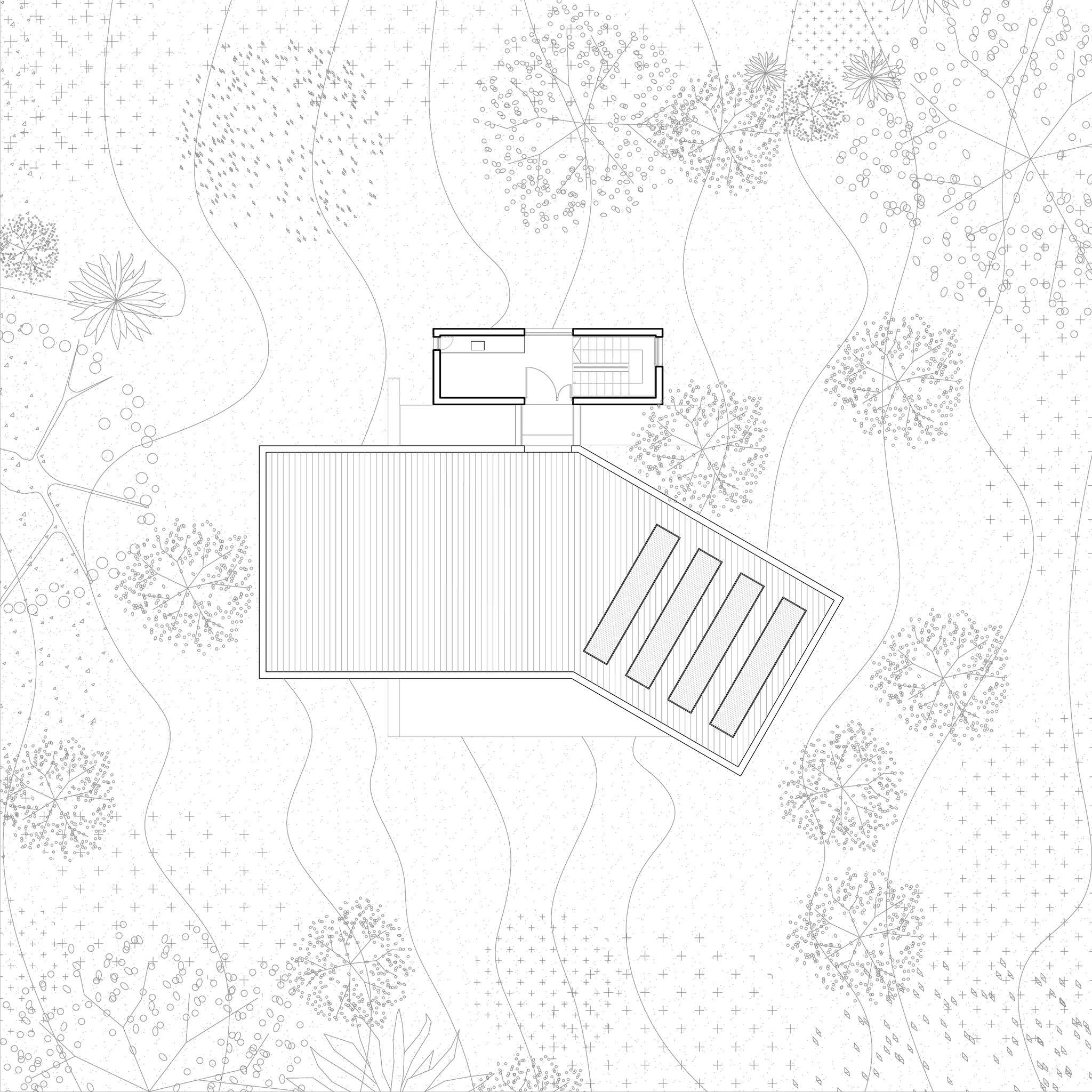
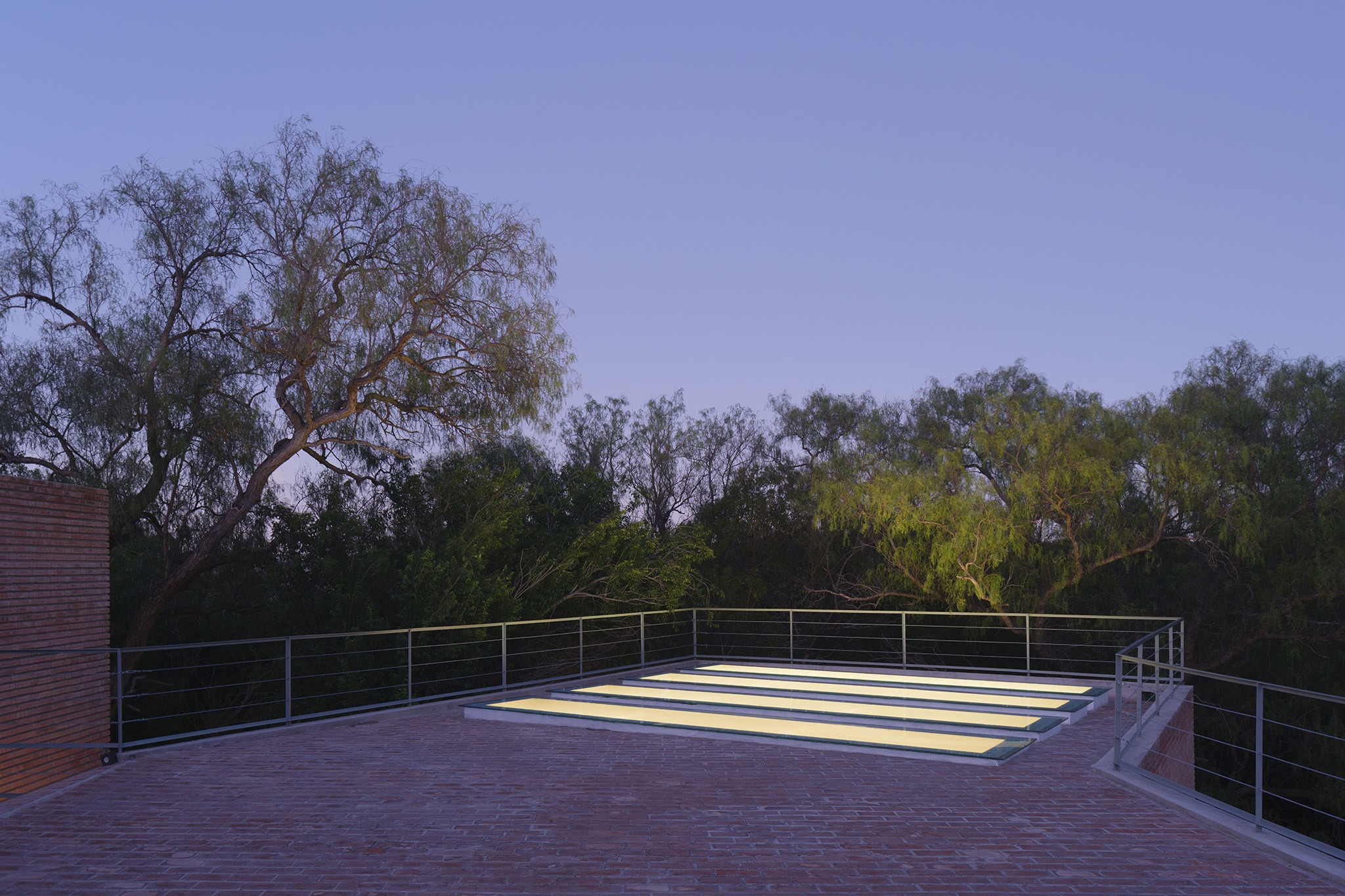
The intention of painting under the sky, between white walls that contain forms and colours, precedes the technical decision to introduce zenithal light. In a closed space where walls assume the role of working support, uniform and constant overhead lighting guarantees neutrality and continuity. Two vertical rectangular openings at the ends of the long walls organize and separate the work areas while also enabling north–south cross ventilation to optimize the drying process.
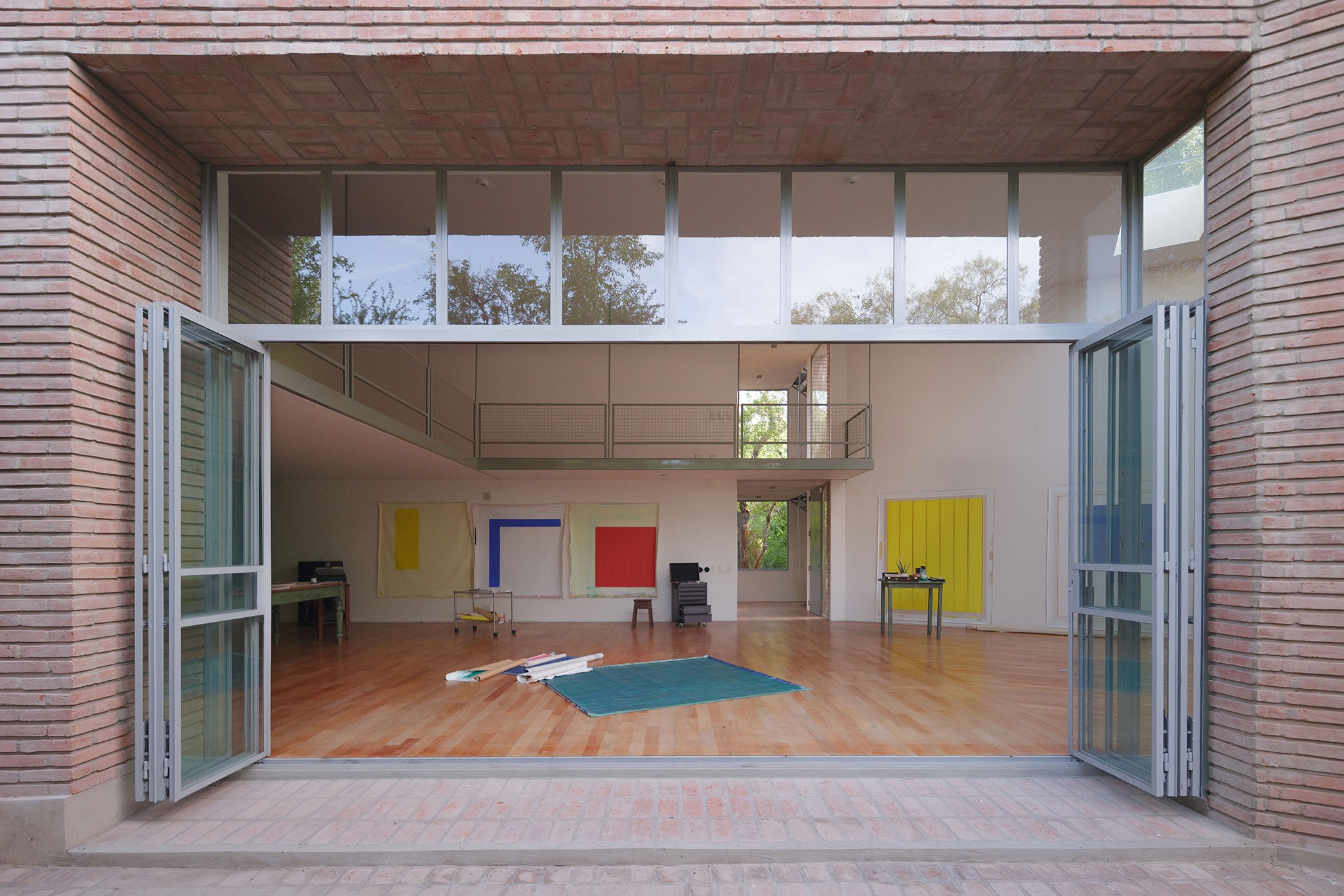
Integrated with the production area, the live-work program coexists within a single volume: a rectangular space that contains the kitchen, storage, and a long worktable, and incorporates an open mezzanine above that functions as a bedroom overlooking the main double-height space.
Form and Spatial Strategy: addition and subtraction
Two rectangles rotate inward from a fixed point, embracing the landscape and generating a natural transition between interior and exterior. From the subtraction of their overlap emerges a second, tangential volume.
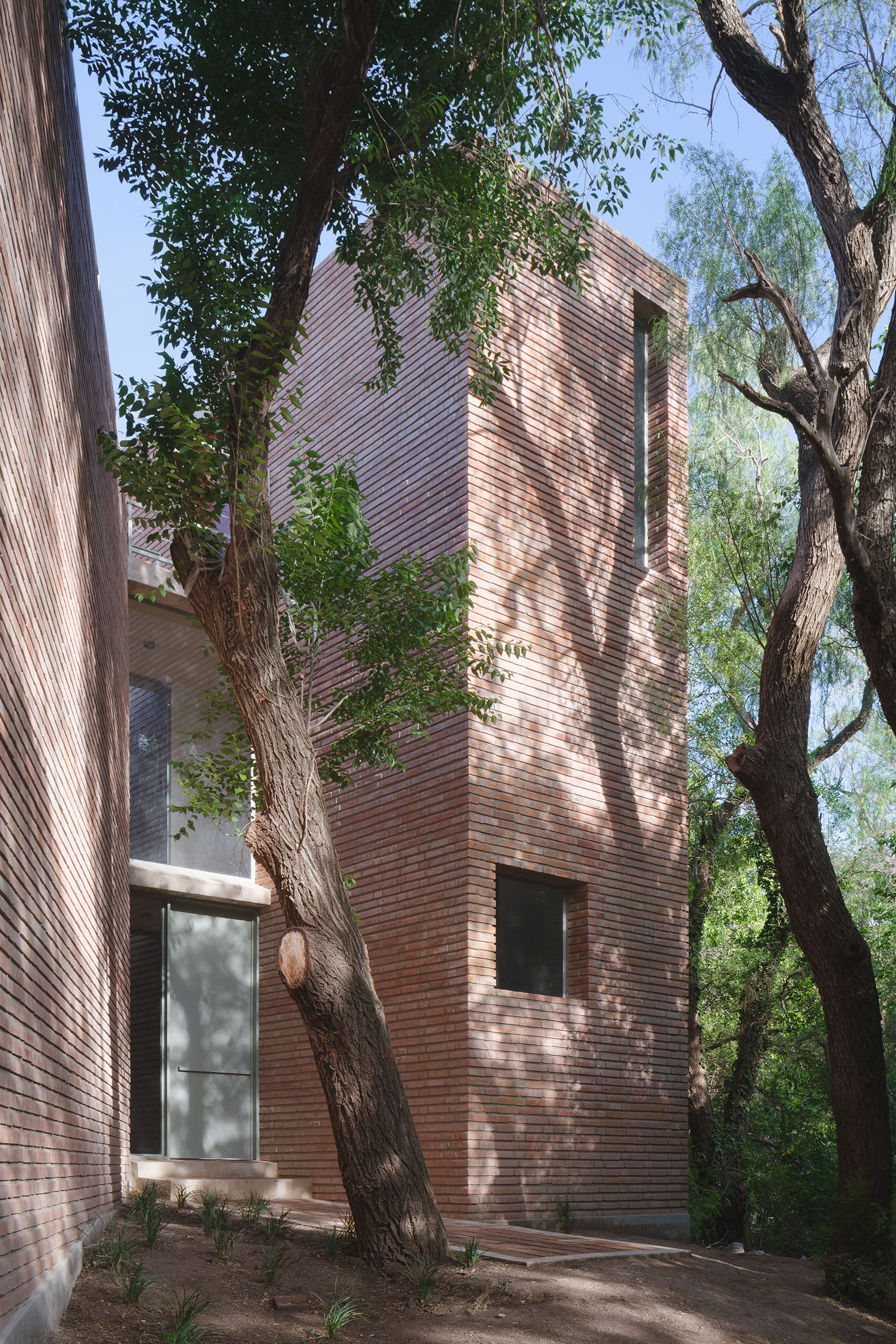
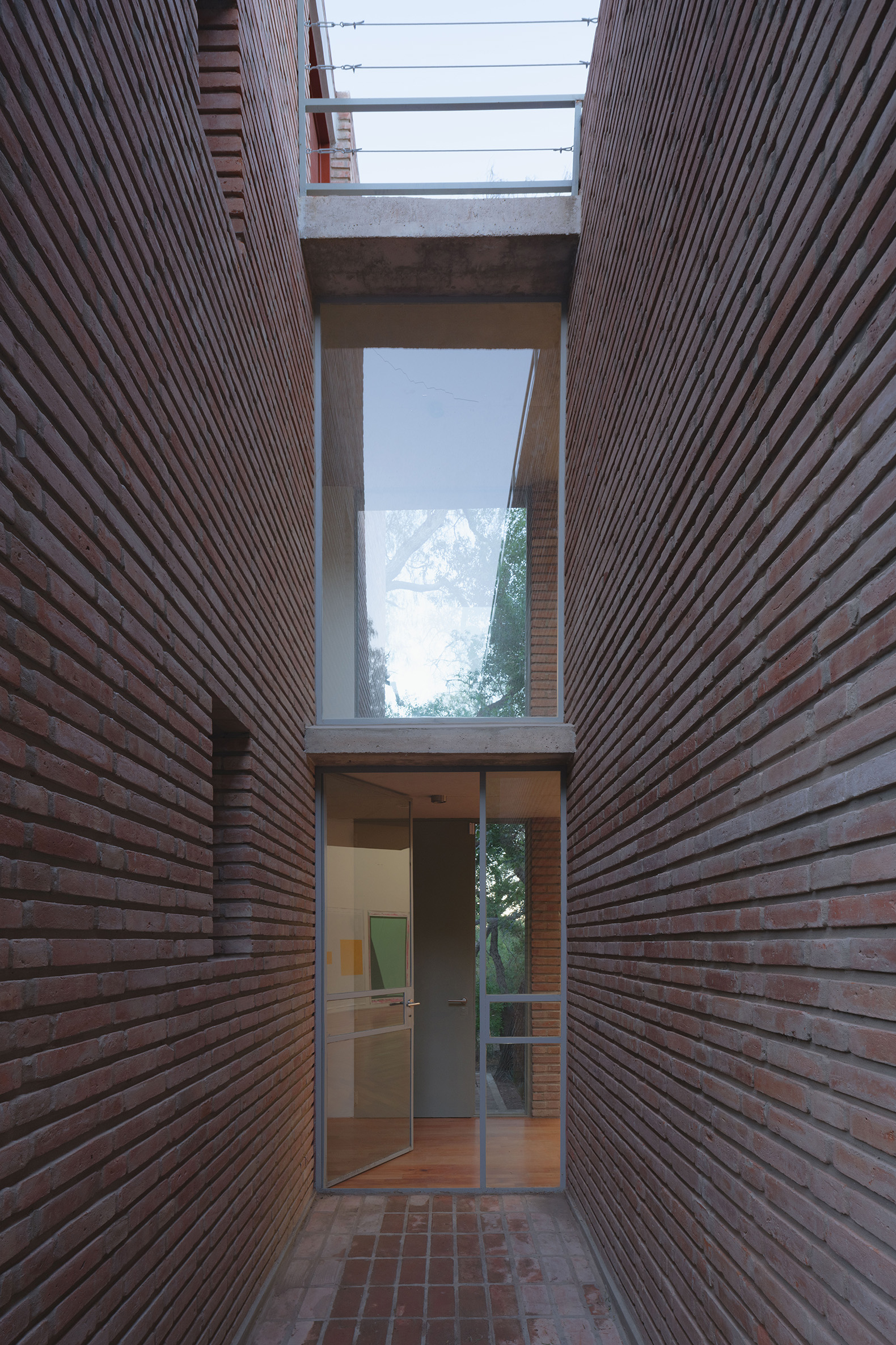
This detached volume houses services and circulation systems, operating independently from the main space. Its addition configures the entrance and, through the act of separating and uniting, constructs a path that o5ers multiple readings of the central volume. It also provides access to the walkable terrace, connecting the ground plane with an elevated plane open to views of the Punilla Valley and the surrounding mountain range.
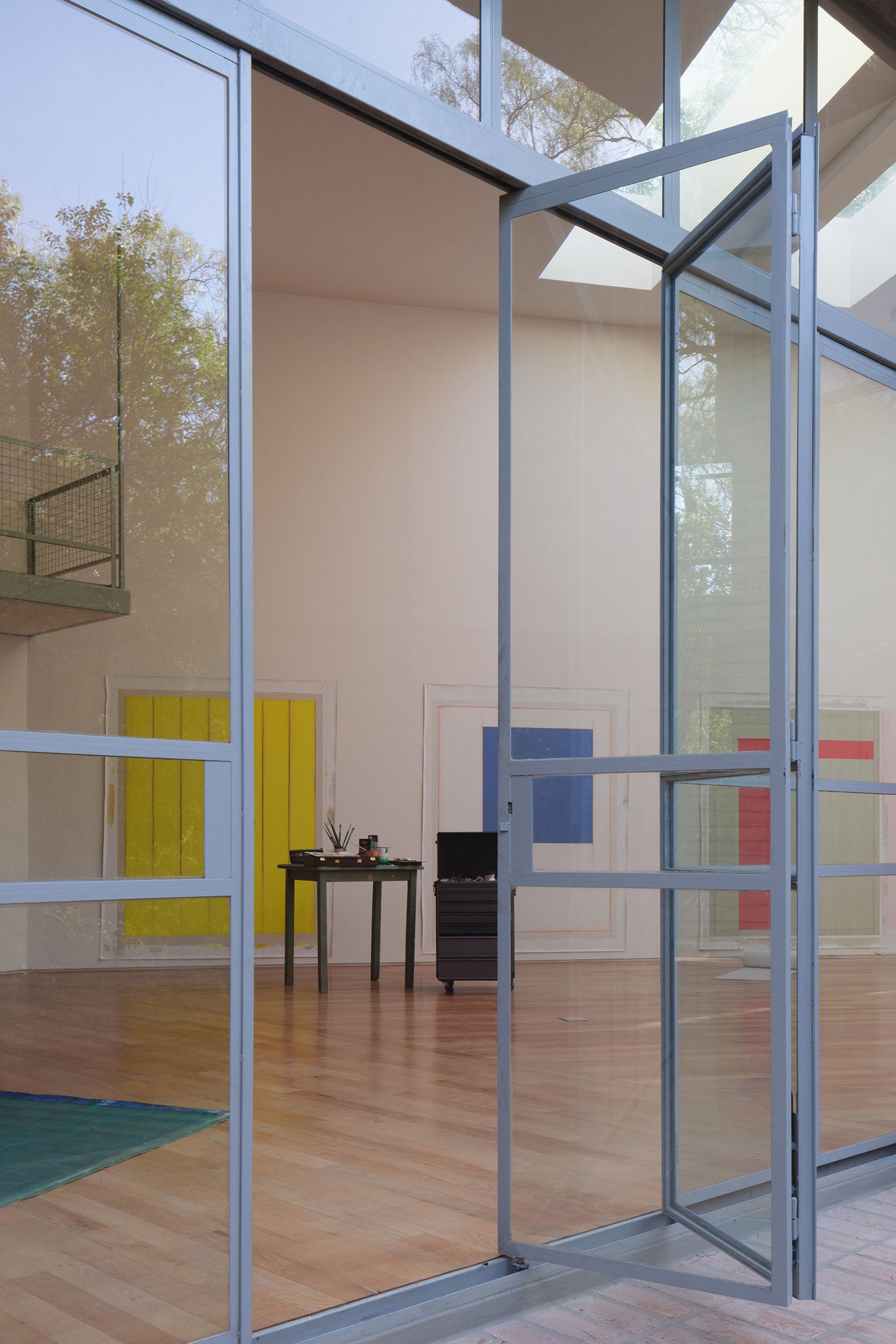
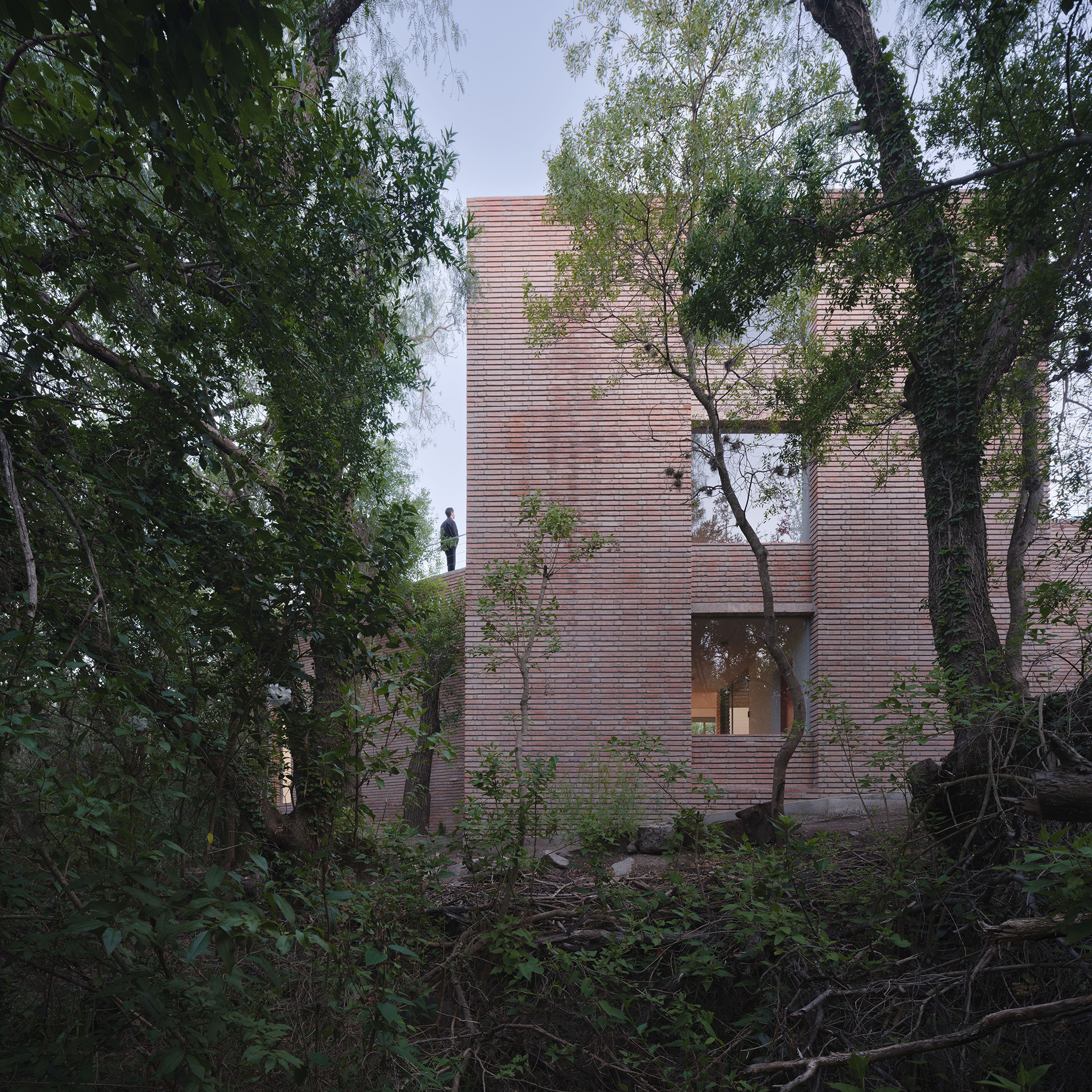
The idea of lived space unfolds through movement: exiting to re-enter, descending and ascending, constantly redefining the relationship with the exterior. The windows respond to this logic, the window as the archetype of looking outward. Subtracting to see: nature is framed in a rhythmic sequence throughout the space.
Material Composition: the weight of matter and the lightness of space
Native to the place, rooted in craft and tradition, the rural dwelling and its adobe walls serve as a materially and environmentally sustainable archetype. Reflection on the weight of building and inhabiting a natural environment finds in earth, transformed into brick, an act of coexistence between architecture and landscape.
The red of the brick contrasts with the green of the mountains and continuously transforms according to time of day, sunlight, humidity, water, and the passage of time.
Inside, white turns the walls into canvases gradually occupied by colour, maintaining a continuous, living space in constant transformation. The floor is entirely made of natural wood; the transition between living and working areas is expressed through a change in the orientation of the boards, coinciding with the geometric rotation of the whole.
Railings, carpentry elements, and circulation systems are resolved through metal structures of varying types and sections, articulated both in their configuration and in their finishes and colours.
Natural Intelligence: comfort and sustainability
Passive strategies shape the interior environment, cross ventilation and thermal mass walls that retain and transmit heat, while their thickness and insulation mediate climatic variations.
The mass and height of the space are articulated through the study of openings and orientation, enabling controlled thermal gains and minimizing heat loss.
Sustainability is also understood as a productive decision. Working with locally sourced materials reduces transportation and environmental impact, while fostering employment and sustaining traditional crafts as a way of life.
To interfere with the ecosystem as little as possible, the building was placed within a natural clearing of the forest, avoiding the removal of native species. As a final gesture, water returns to the ground through irrigation in large beds of native vegetation, completing the cycle.