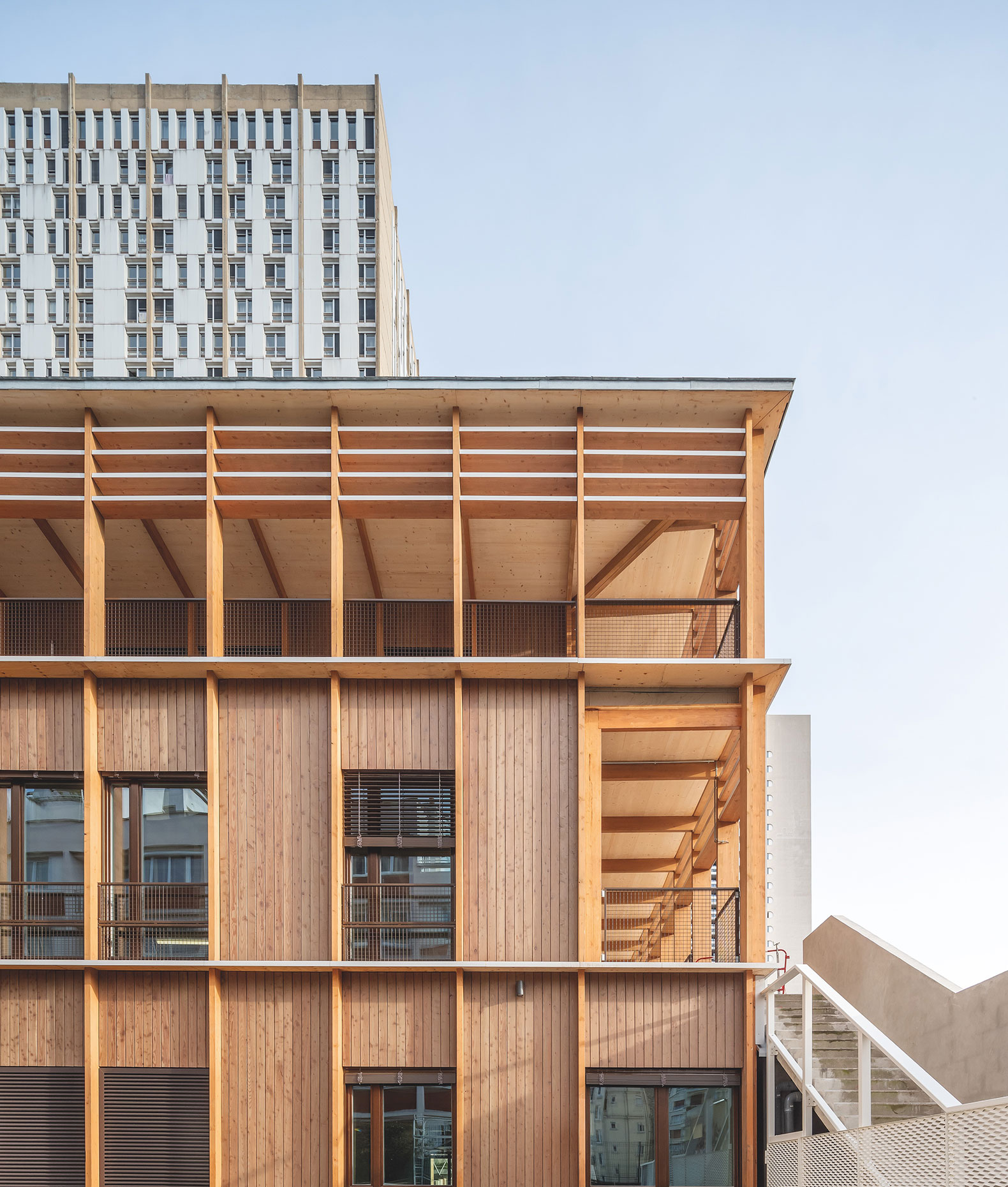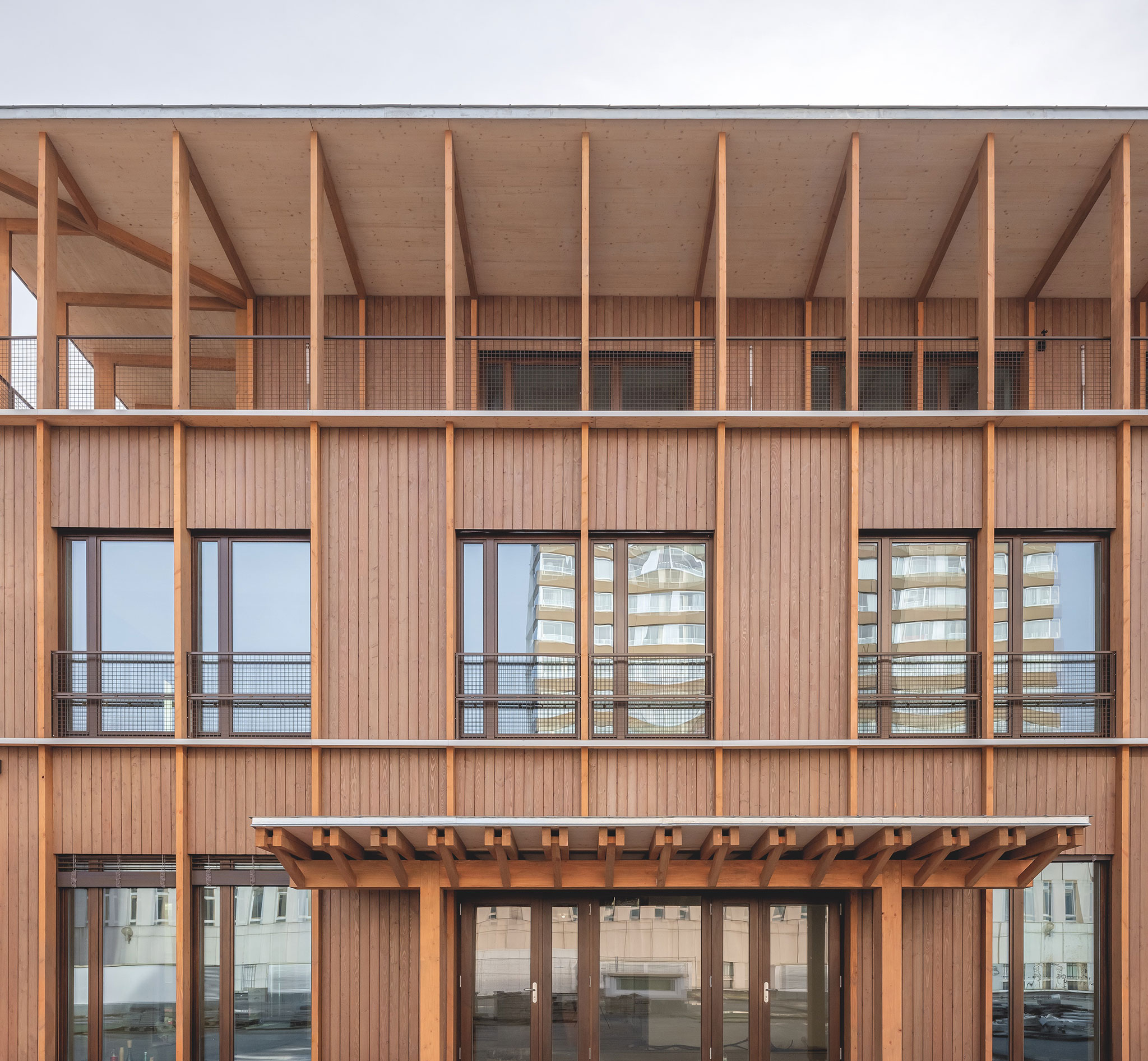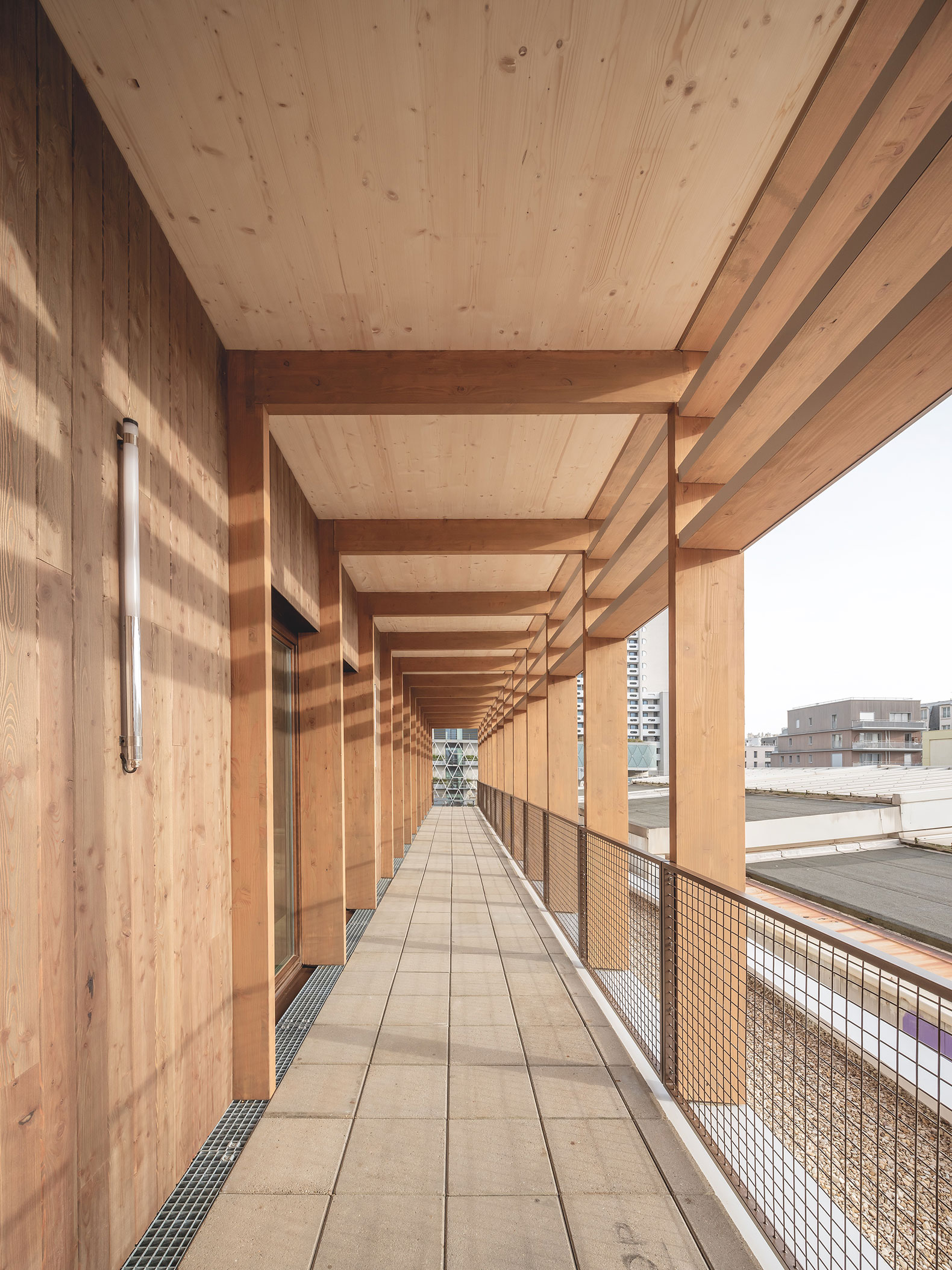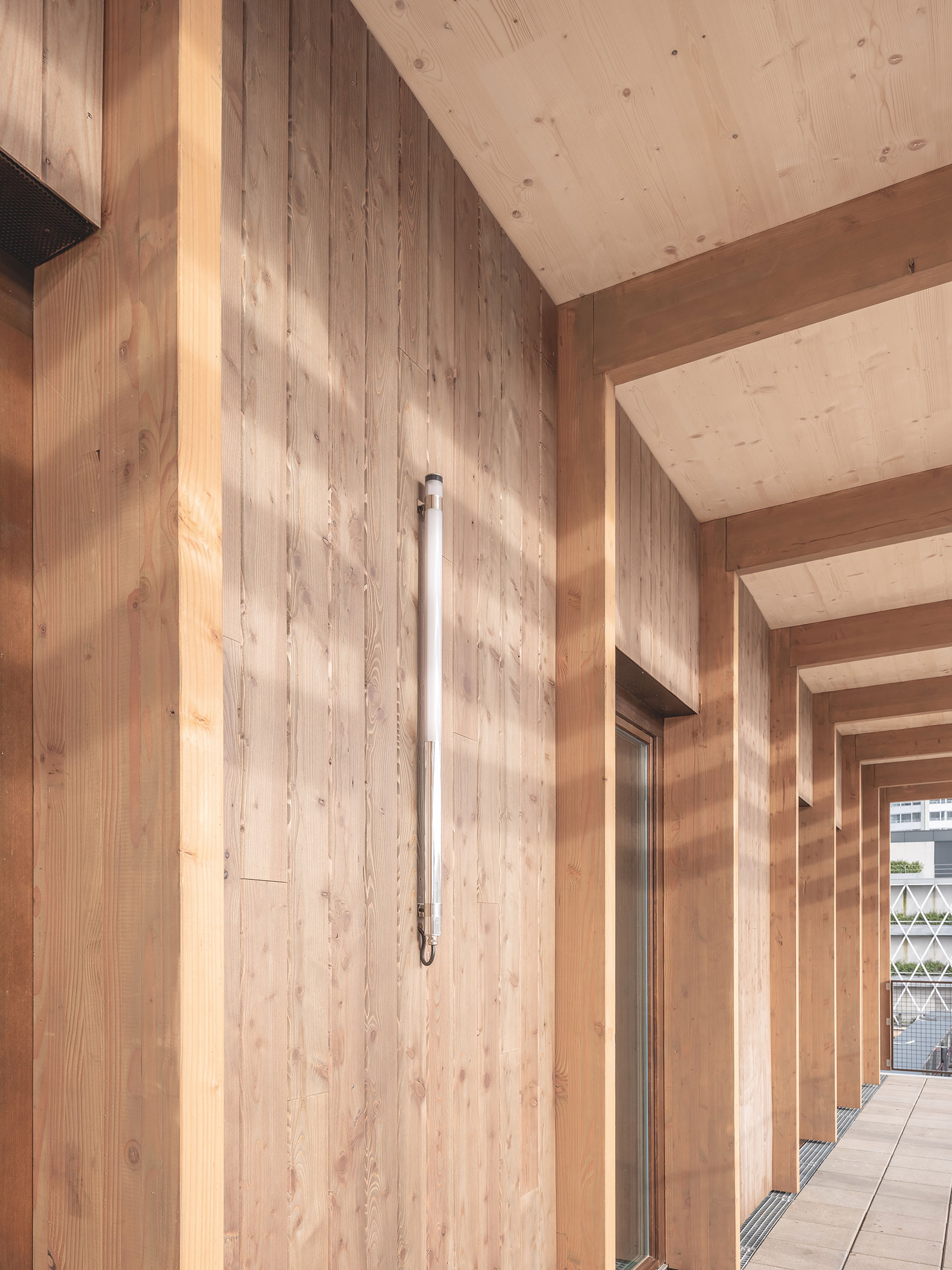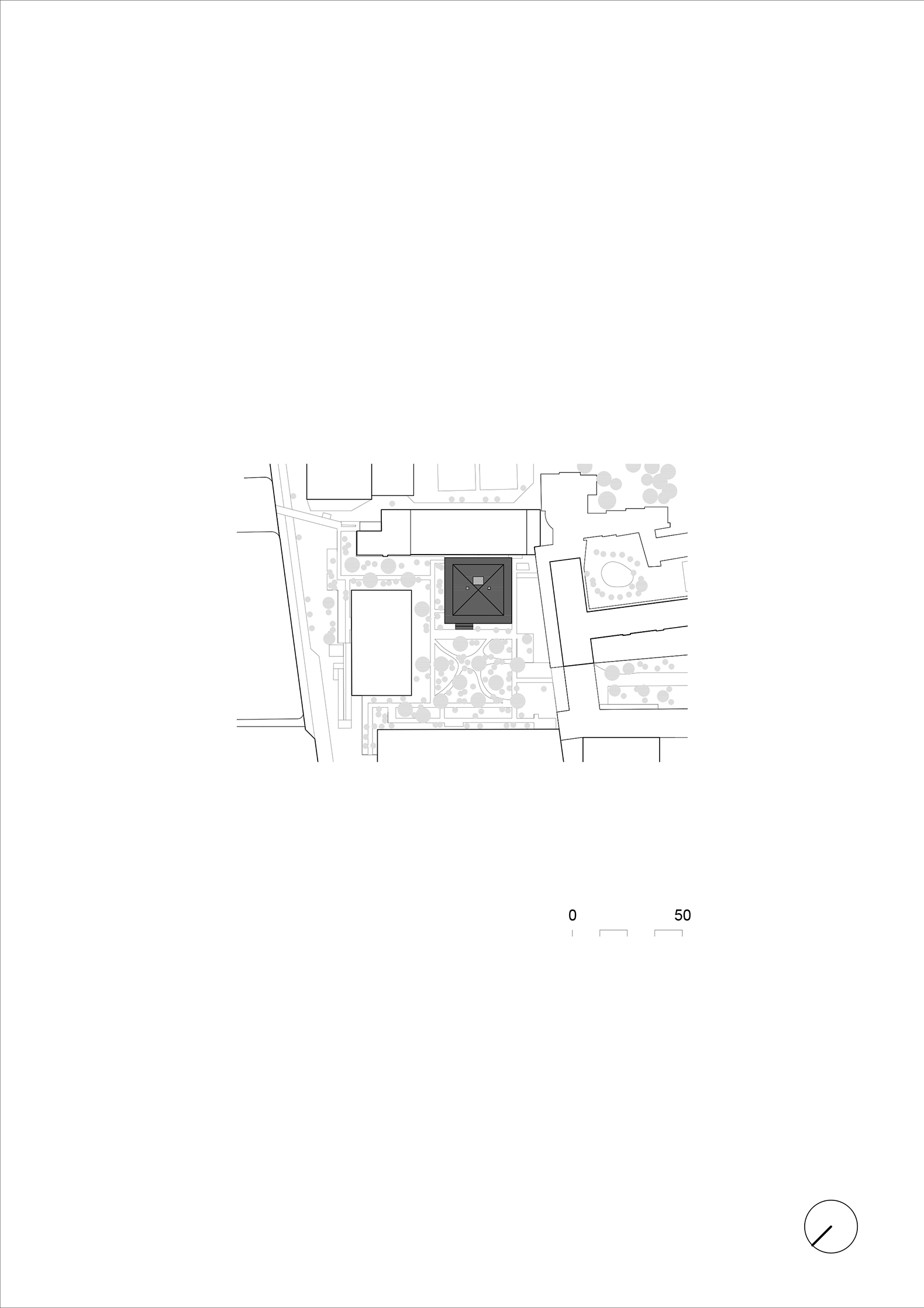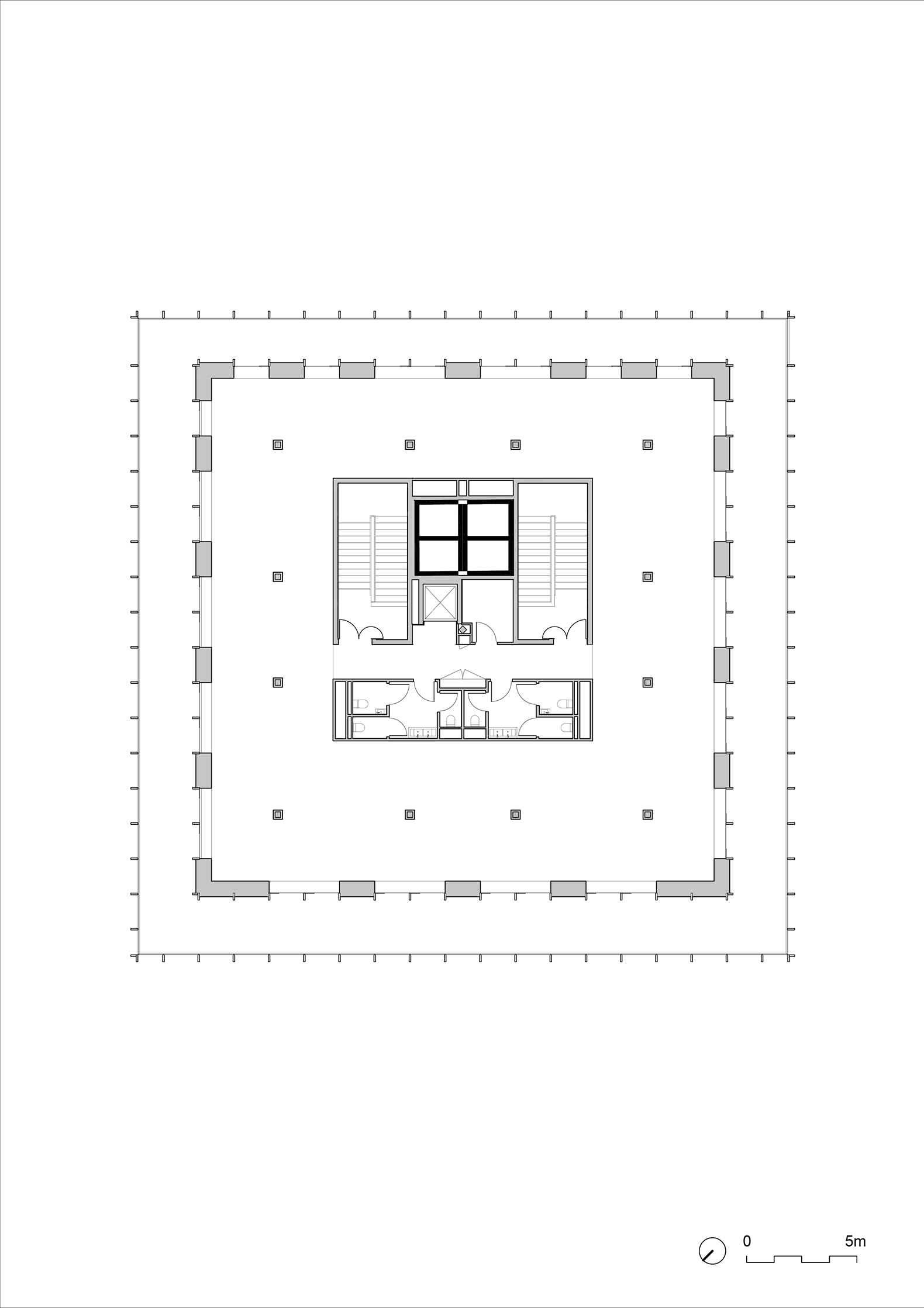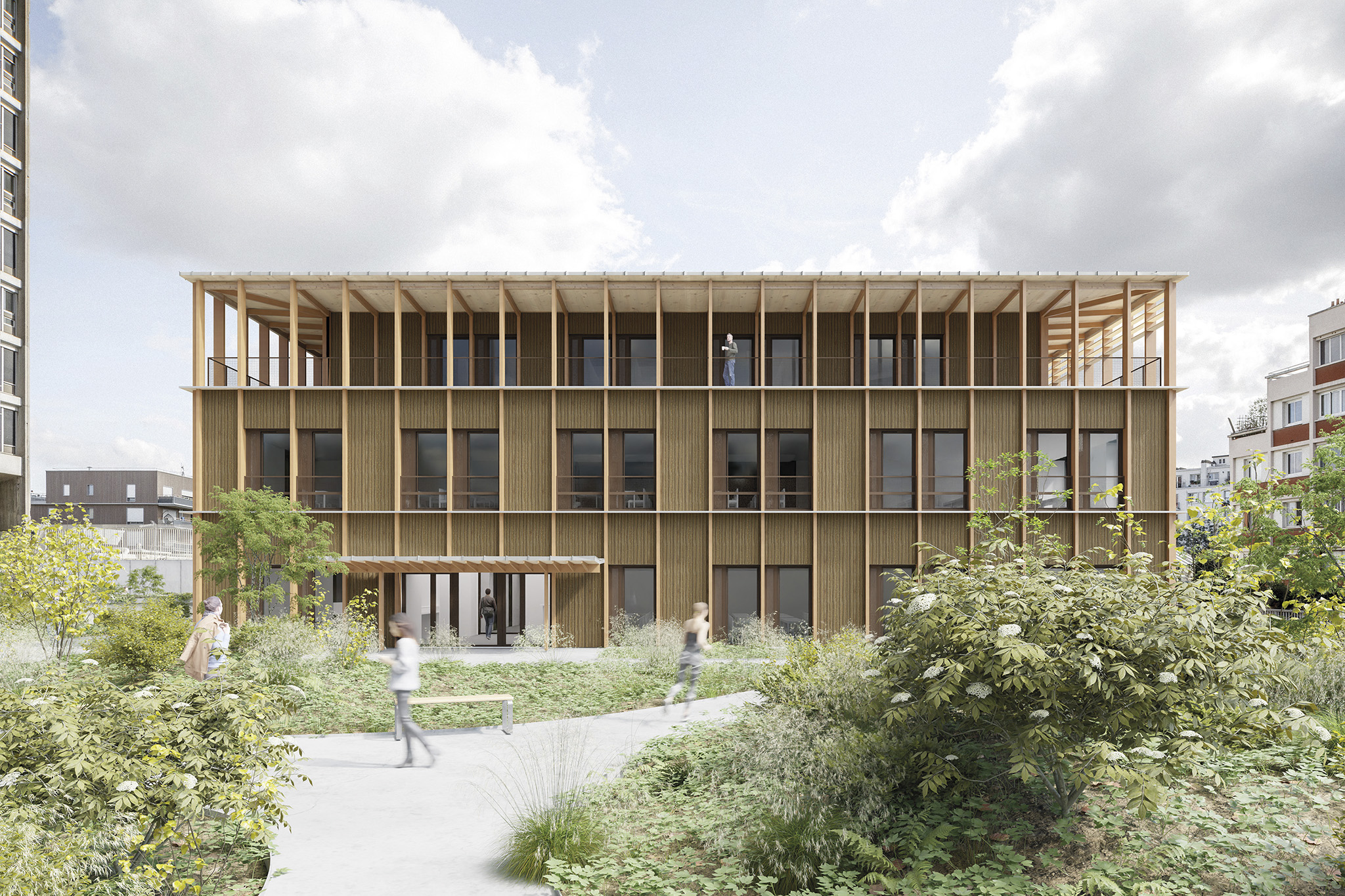
Architecture studio nunc architectes was commissioned to design the "Keller Pavilion," a project that forms part of a comprehensive redevelopment of a group of buildings constructed in the 1960s, located in the Beaugrenelle district, a residential and commercial neighbourhood in Paris.

The project meets the highest standards of energy efficiency and quality by maintaining an environmental approach that uses only recycled materials, incorporates a passive envelope with locally sourced and bio-based materials, preserves the original structures, and promotes the circular economy. 

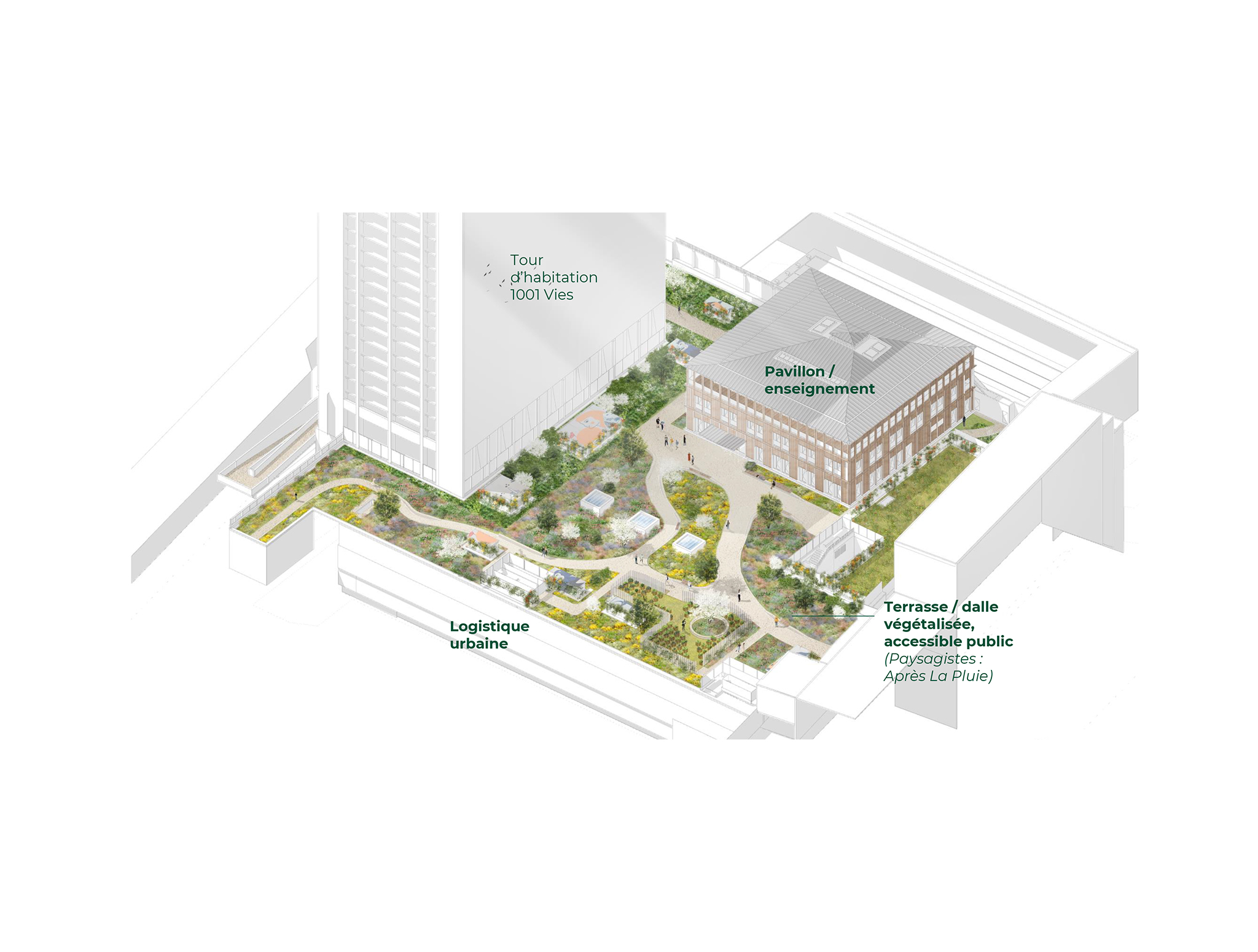
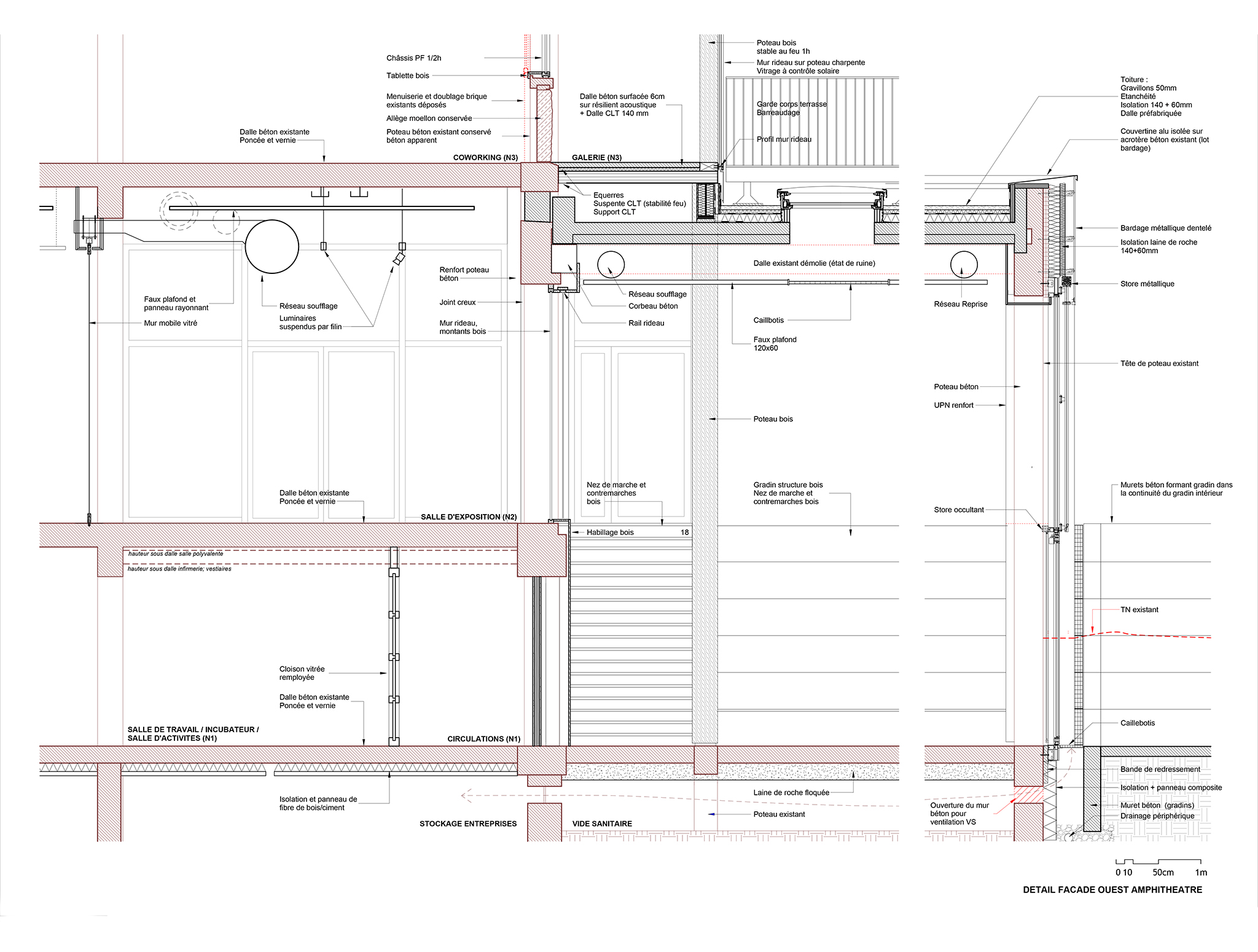
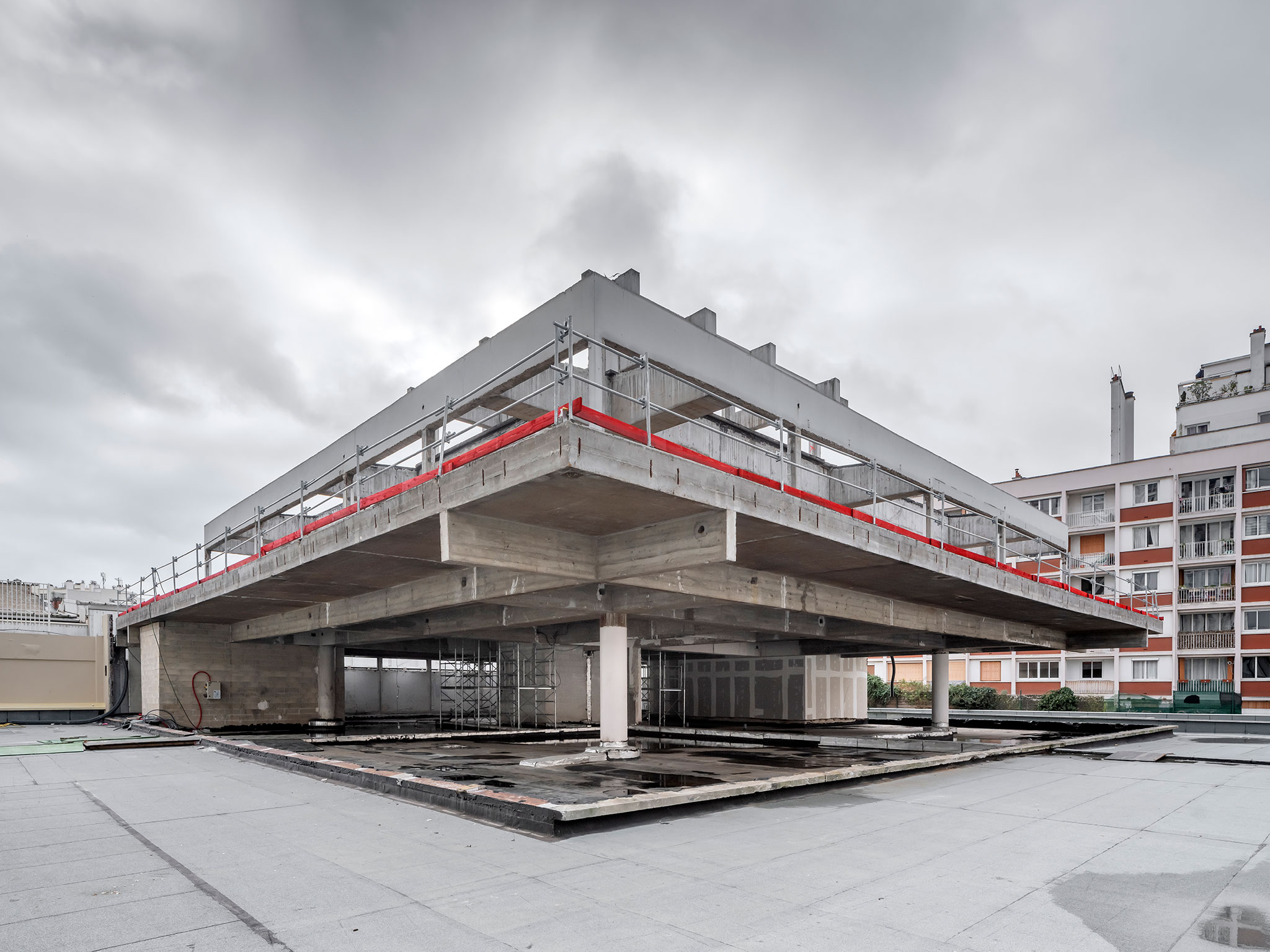
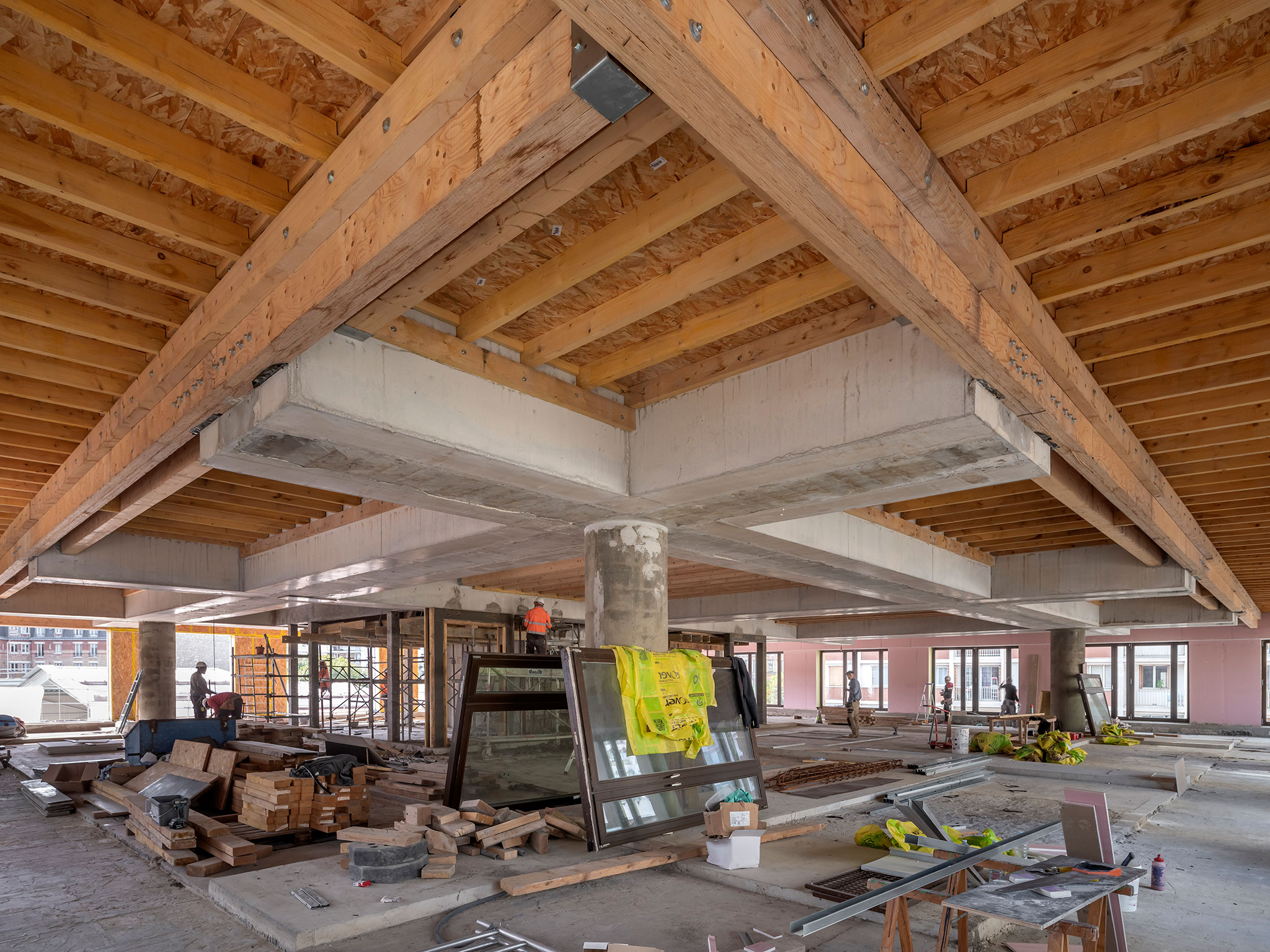
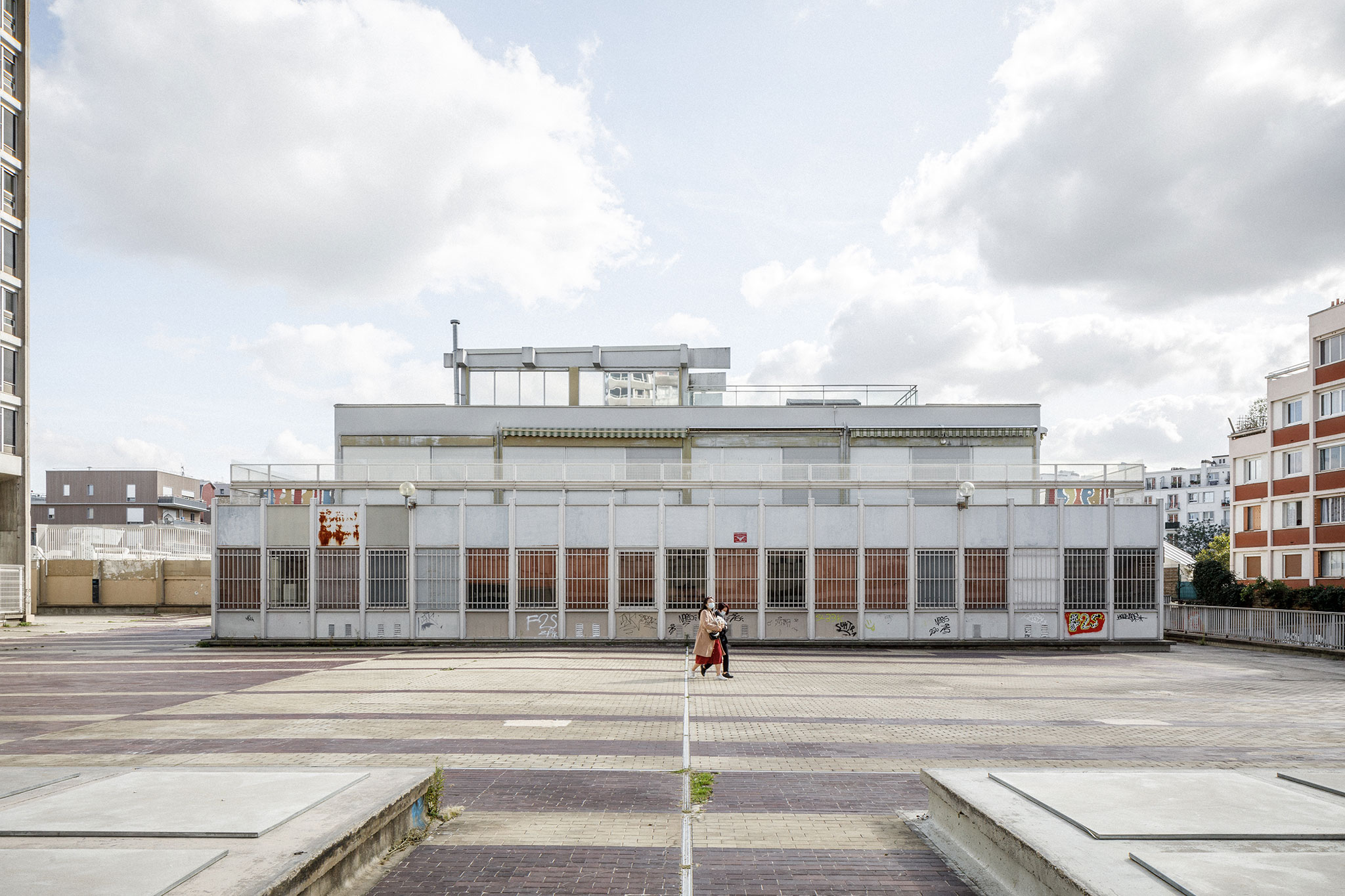
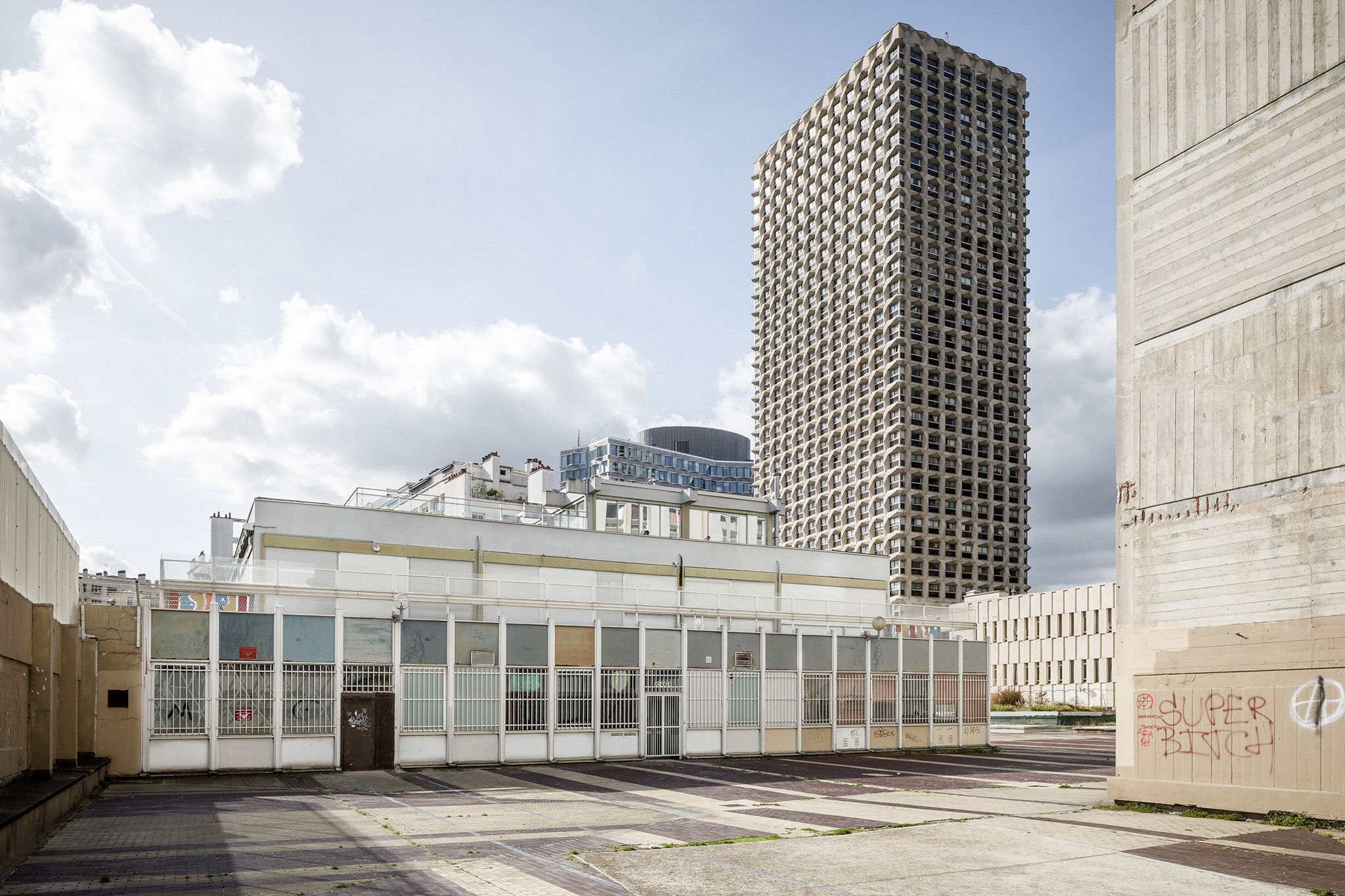
The "Keller Pavilion," designed by nunc architectes, was conceived to be flexible and reconfigurable for future projects, initially intended to house a higher education institution. For its development, the original concrete structure and elements such as the concrete terrace slab, the interior wooden joinery, and the railings were preserved.

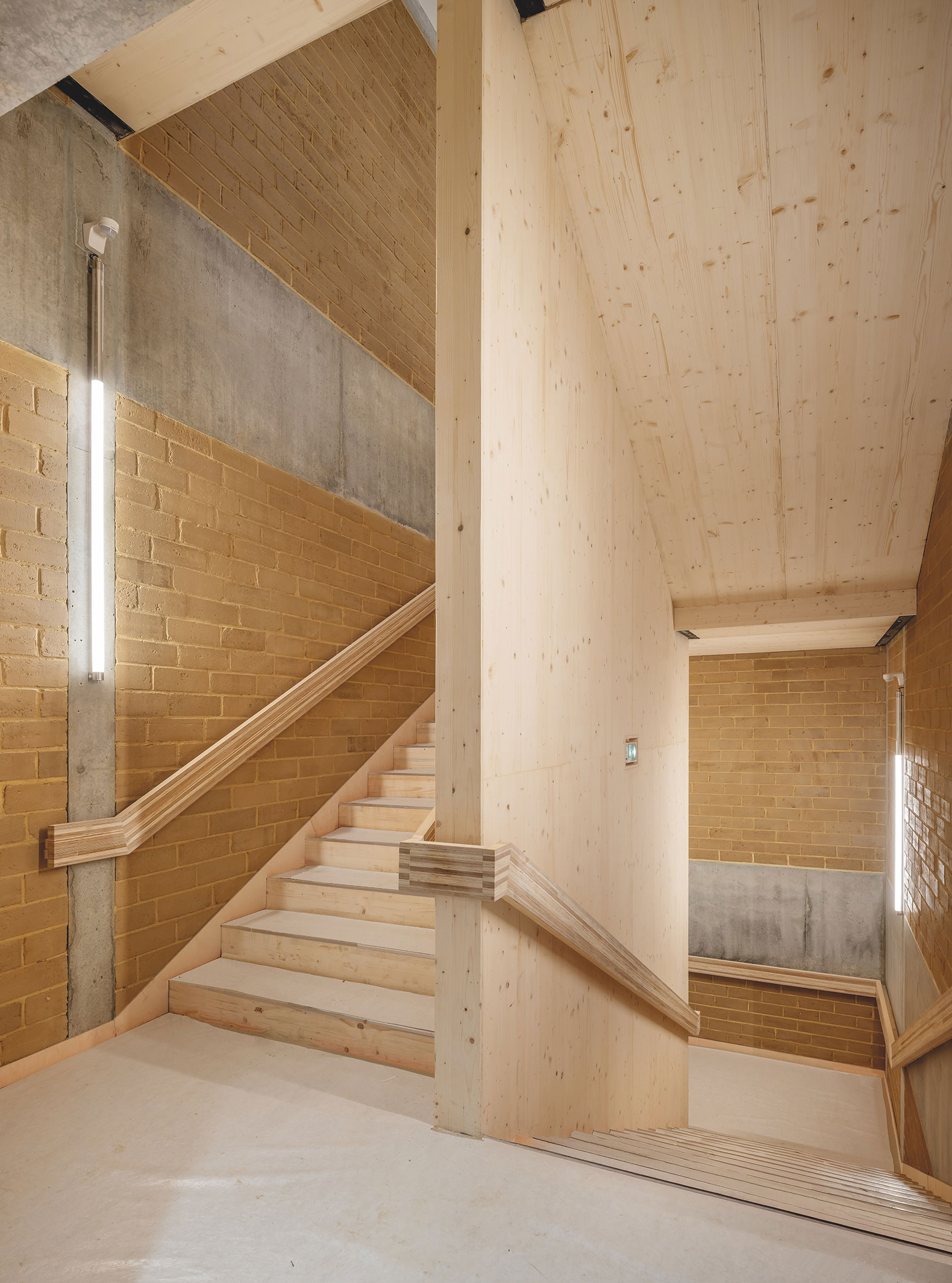
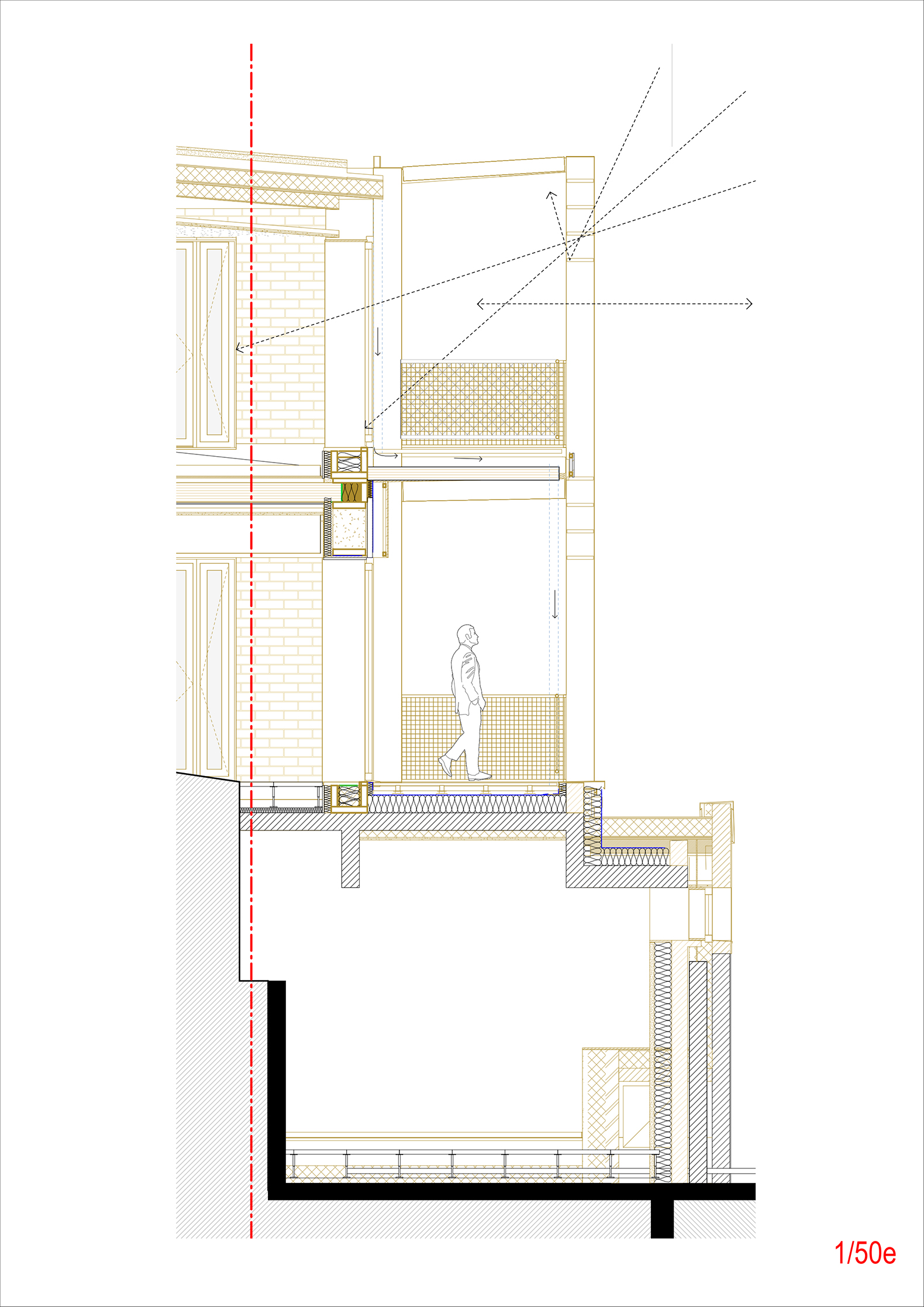
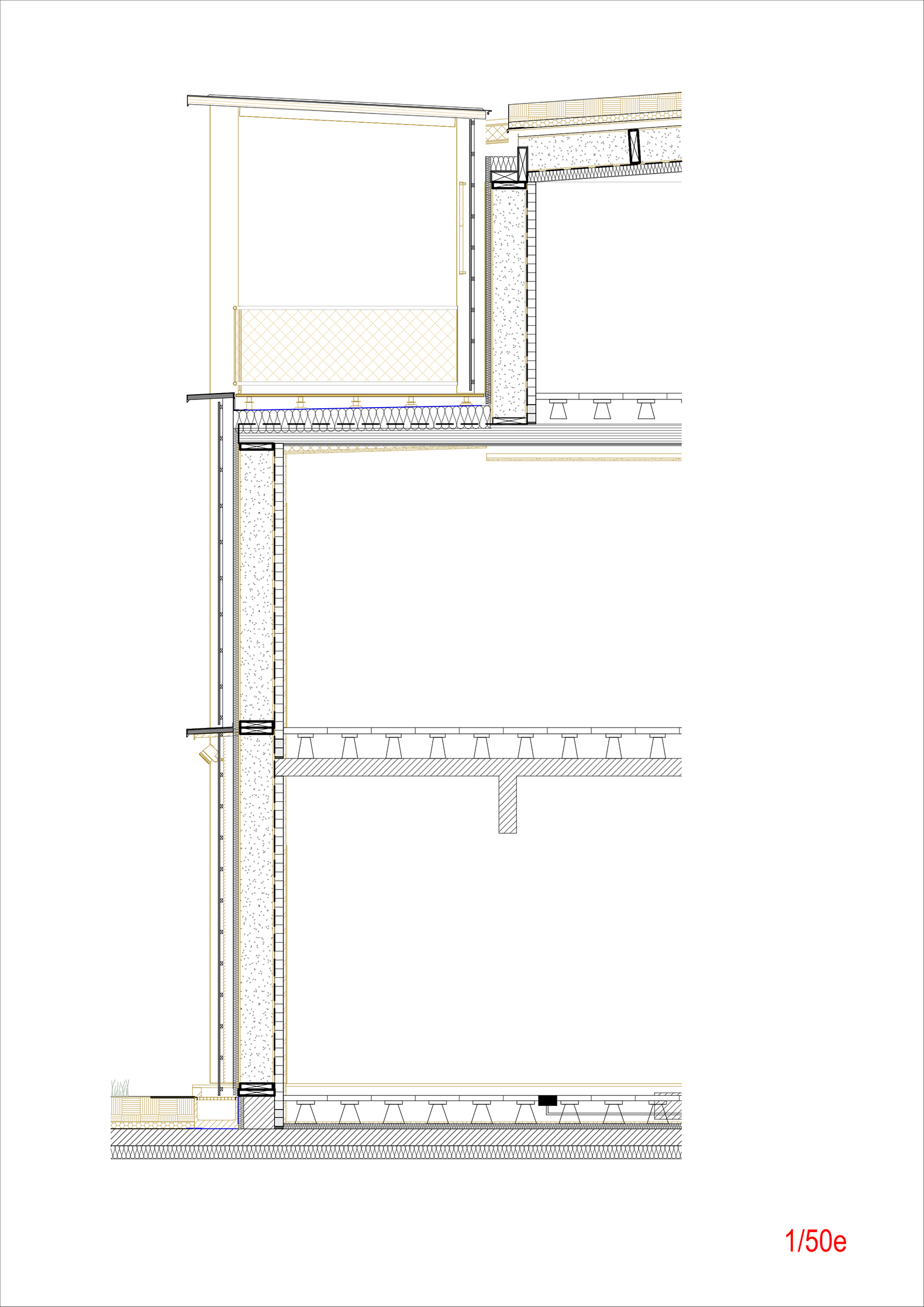
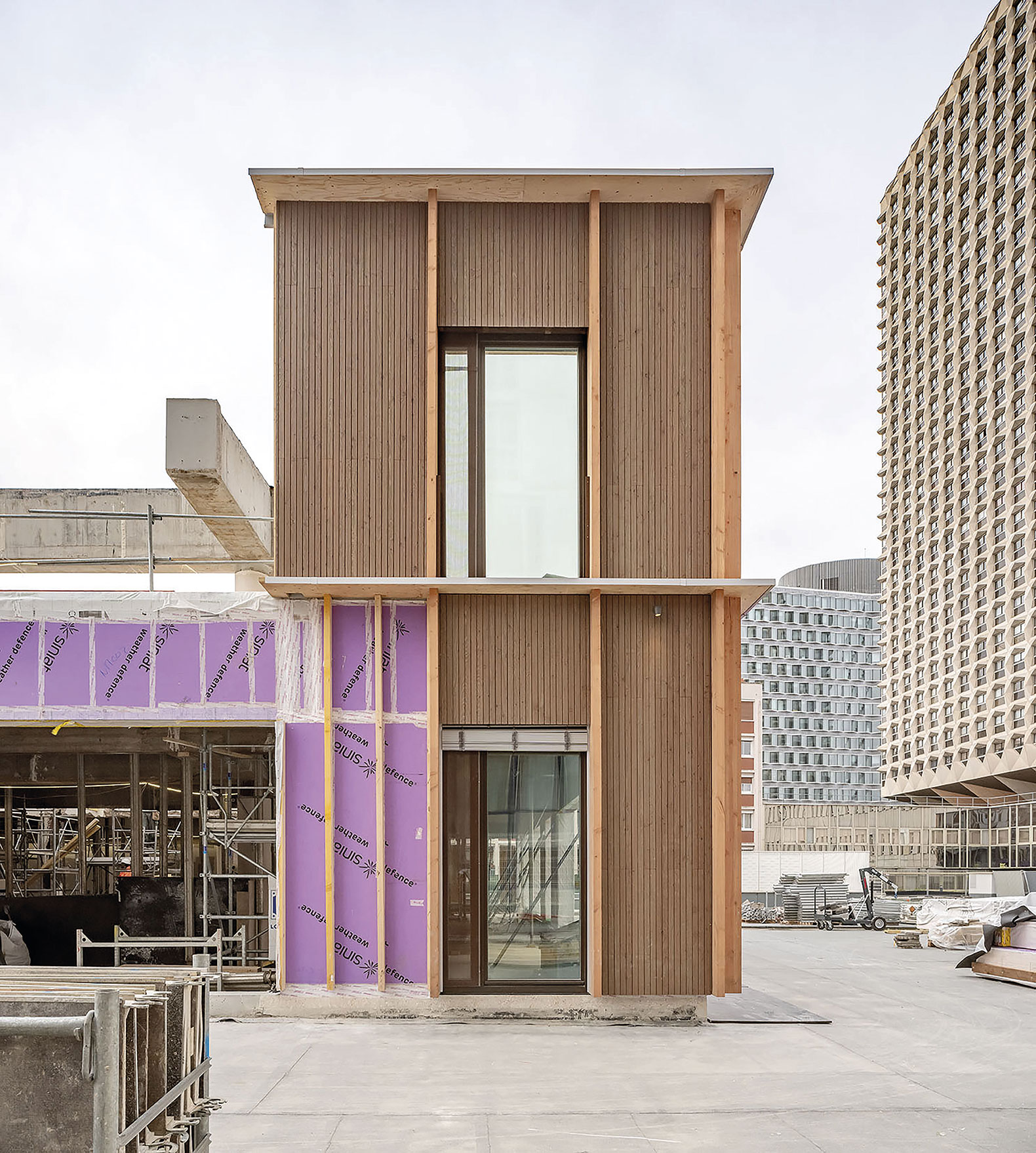
The "Keller Pavilion" also incorporates a range of bioclimatic systems, including natural ventilation, the use of straw bales and wood fiber for thermal insulation of the facades, adobe bricks for the interior partition walls, and a green roof that mitigates the urban heat island effect.
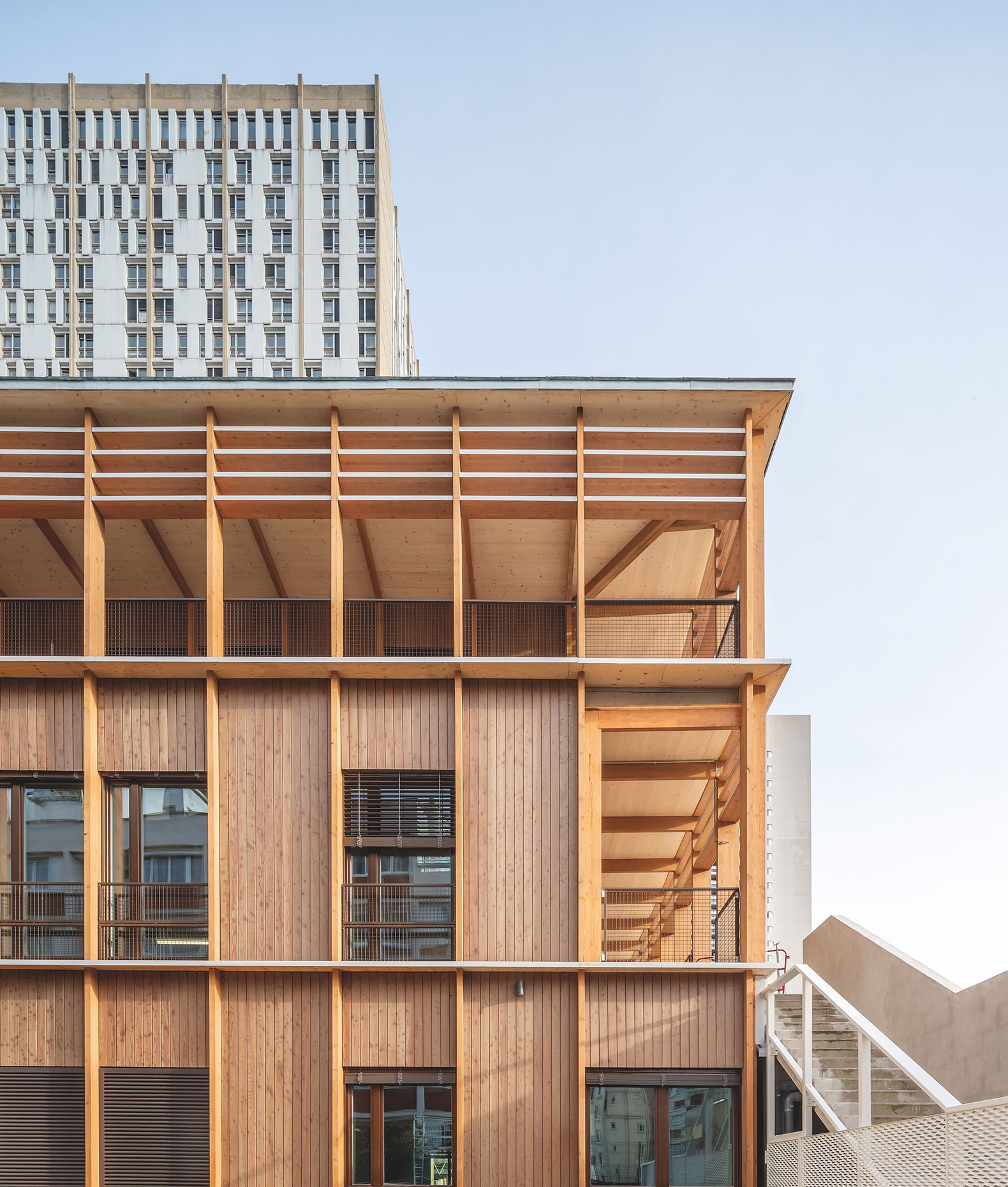
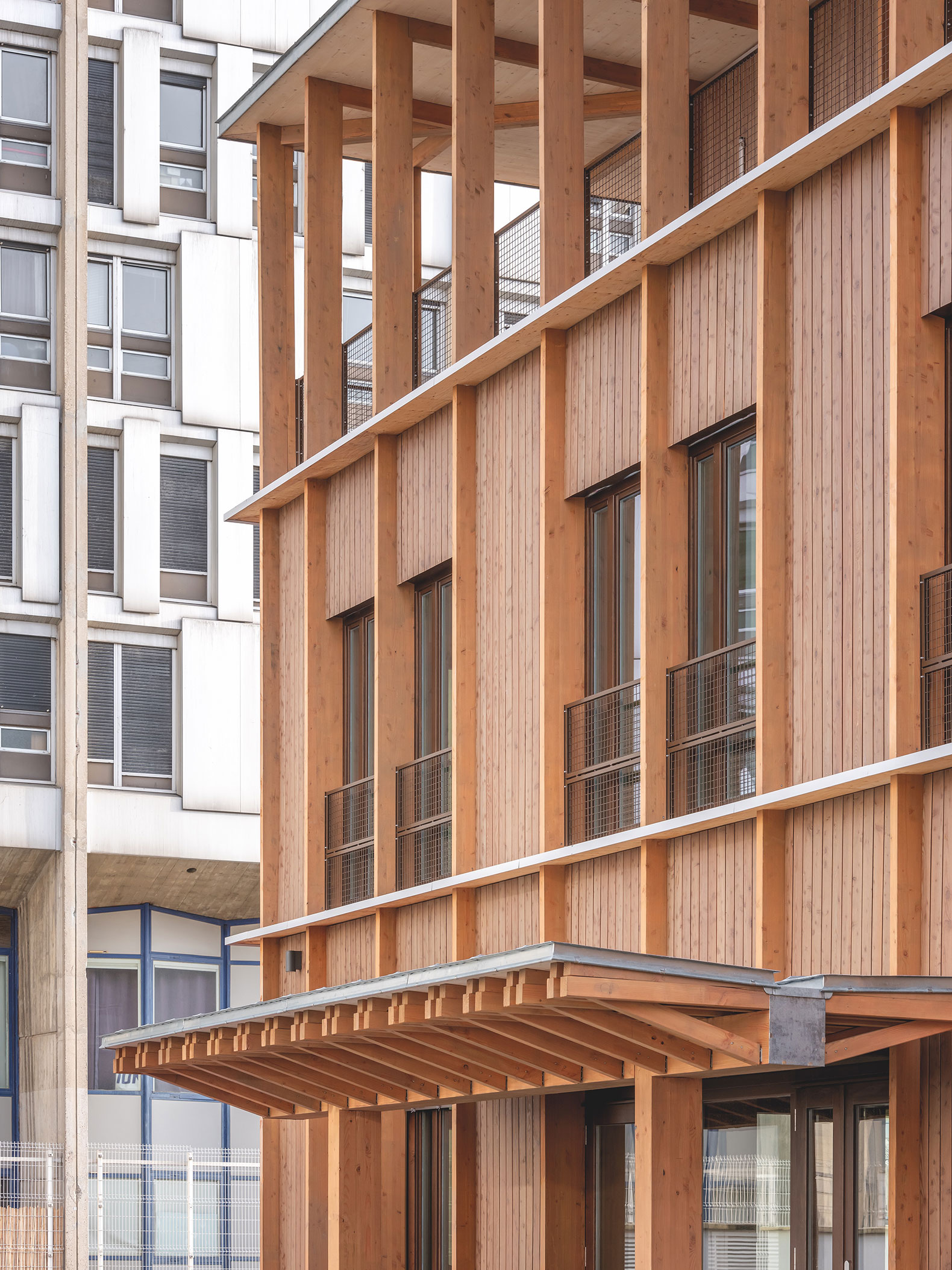
Keller Pavilion by nunc architectes. Photograph by Luc Boegly

Pabellón Keller por nunc architectes. Fotografía por Luc Boegly.

Descripción del proyecto por nunc architectes 

La Poste Immobilier amplía su cartera inmobiliaria transformando edificios emblemáticos en espacios contemporáneos de alto rendimiento. El proyecto del Pabellón Keller, obra de nunc architectes, ejemplifica el compromiso del Grupo con la renovación, la conservación de las estructuras y la promoción de la economía circular. Este enfoque cumple con los más altos estándares de eficiencia energética y calidad.

Una nueva era para el Pabellón Keller
El pabellón forma parte de un proyecto integral de reurbanización de un conjunto de edificios construidos en la década de 1960 en el distrito de Beaugrenelle, que incluye una plataforma ajardinada abierta al público y dos niveles inferiores que conforman una plataforma logística urbana.

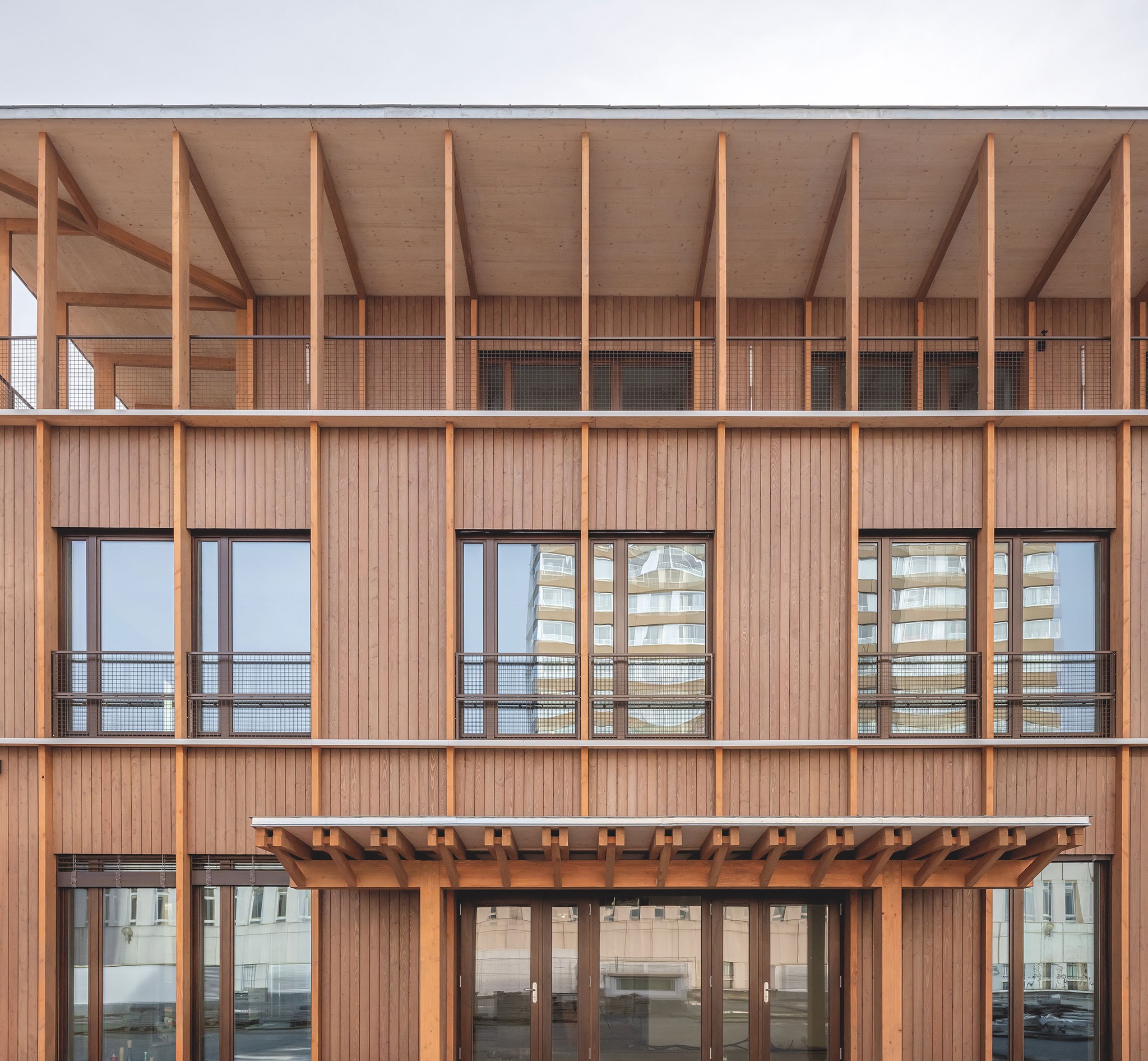
Keller Pavilion by nunc architectes. Photograph by Luc Boegly
Pabellón Keller por nunc architectes. Fotografía por Luc Boegly.

Materiales ejemplares
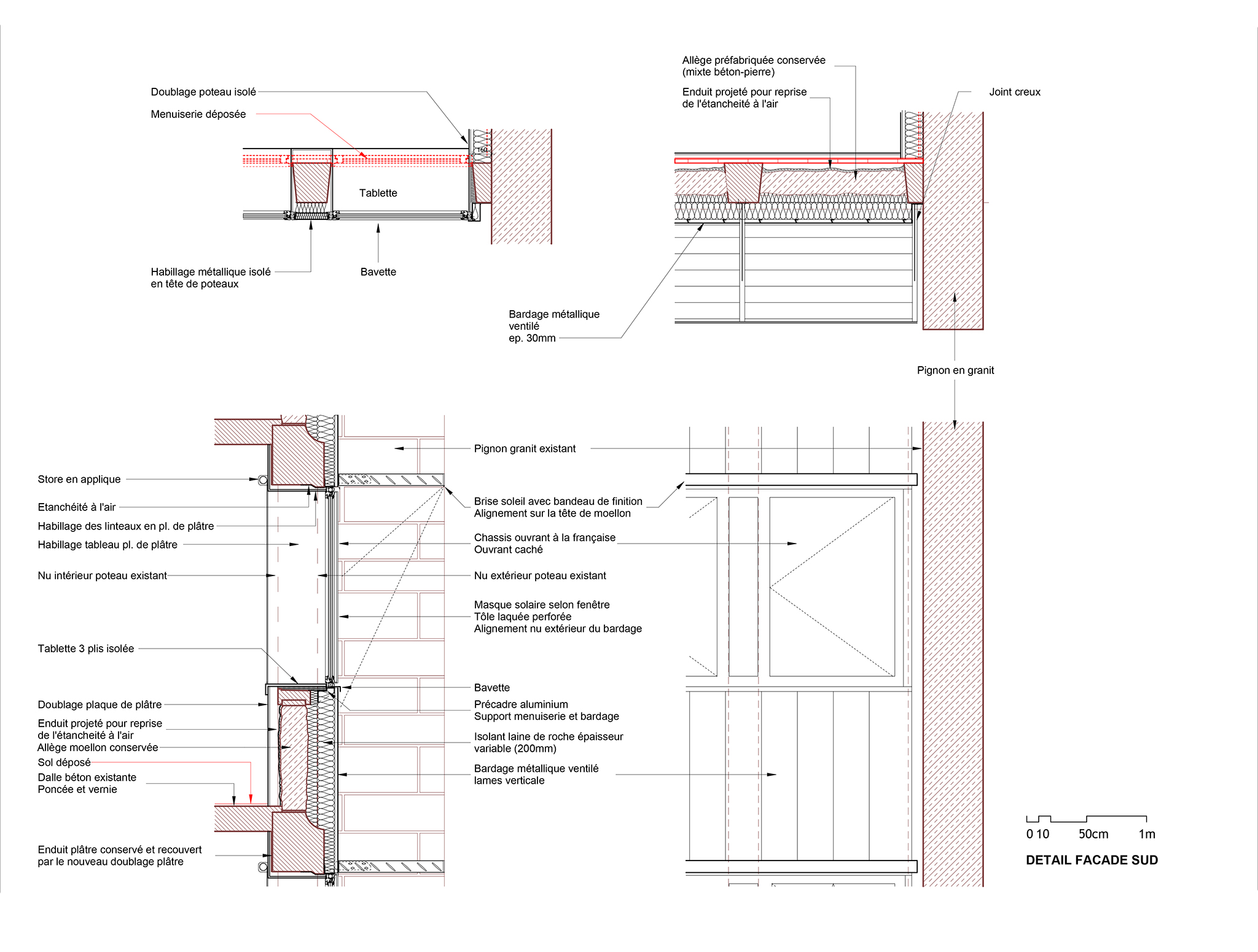
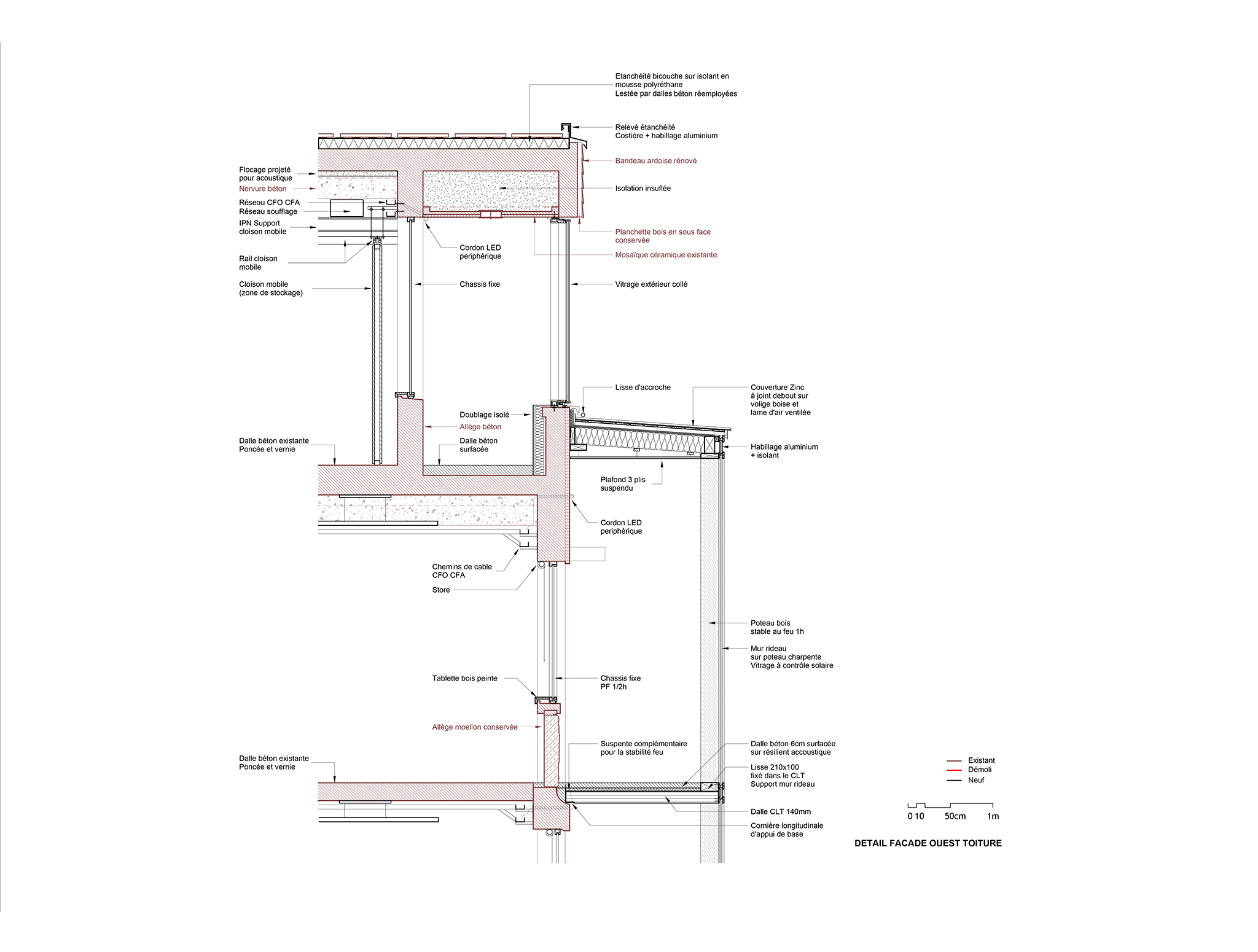
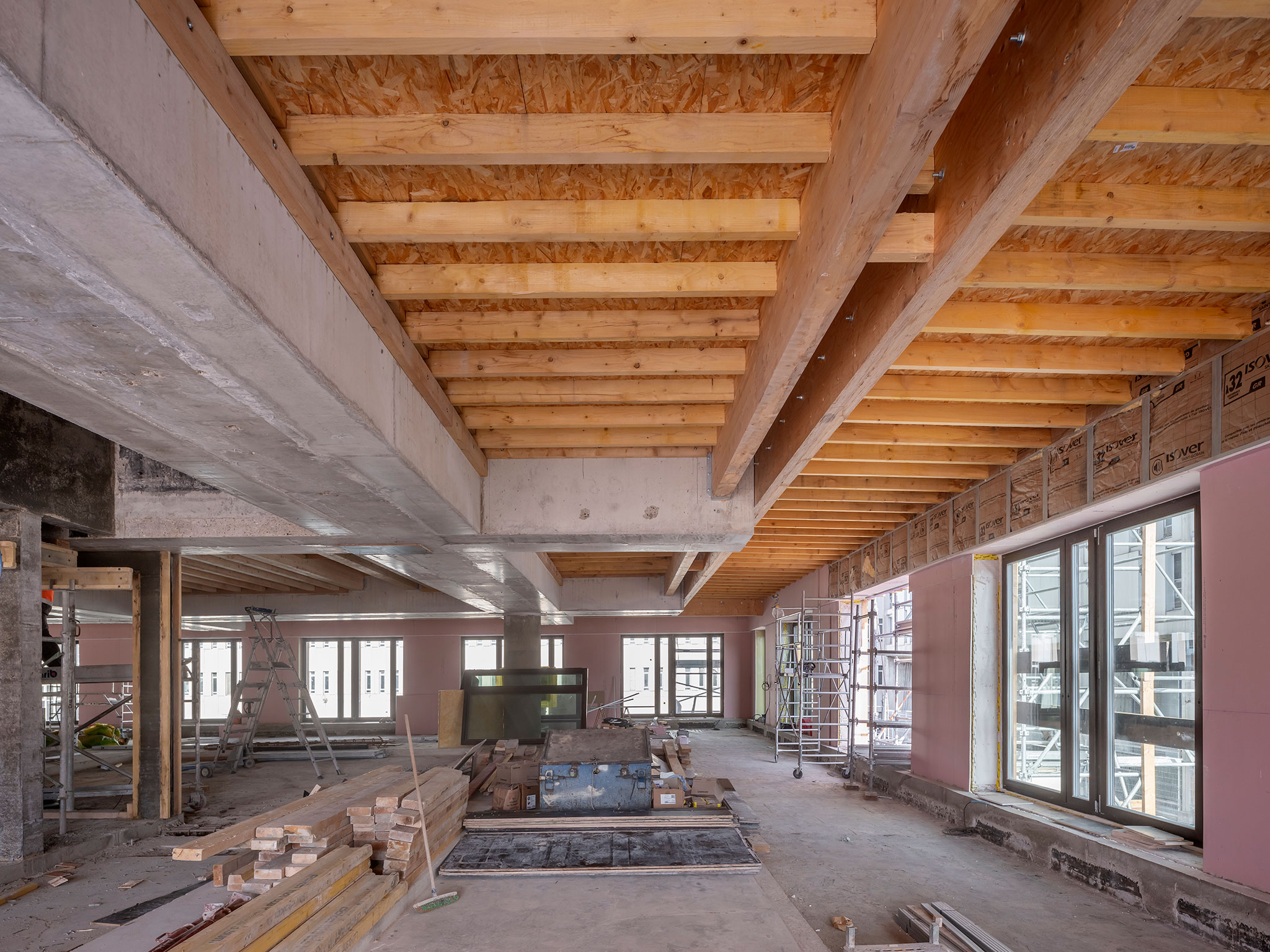
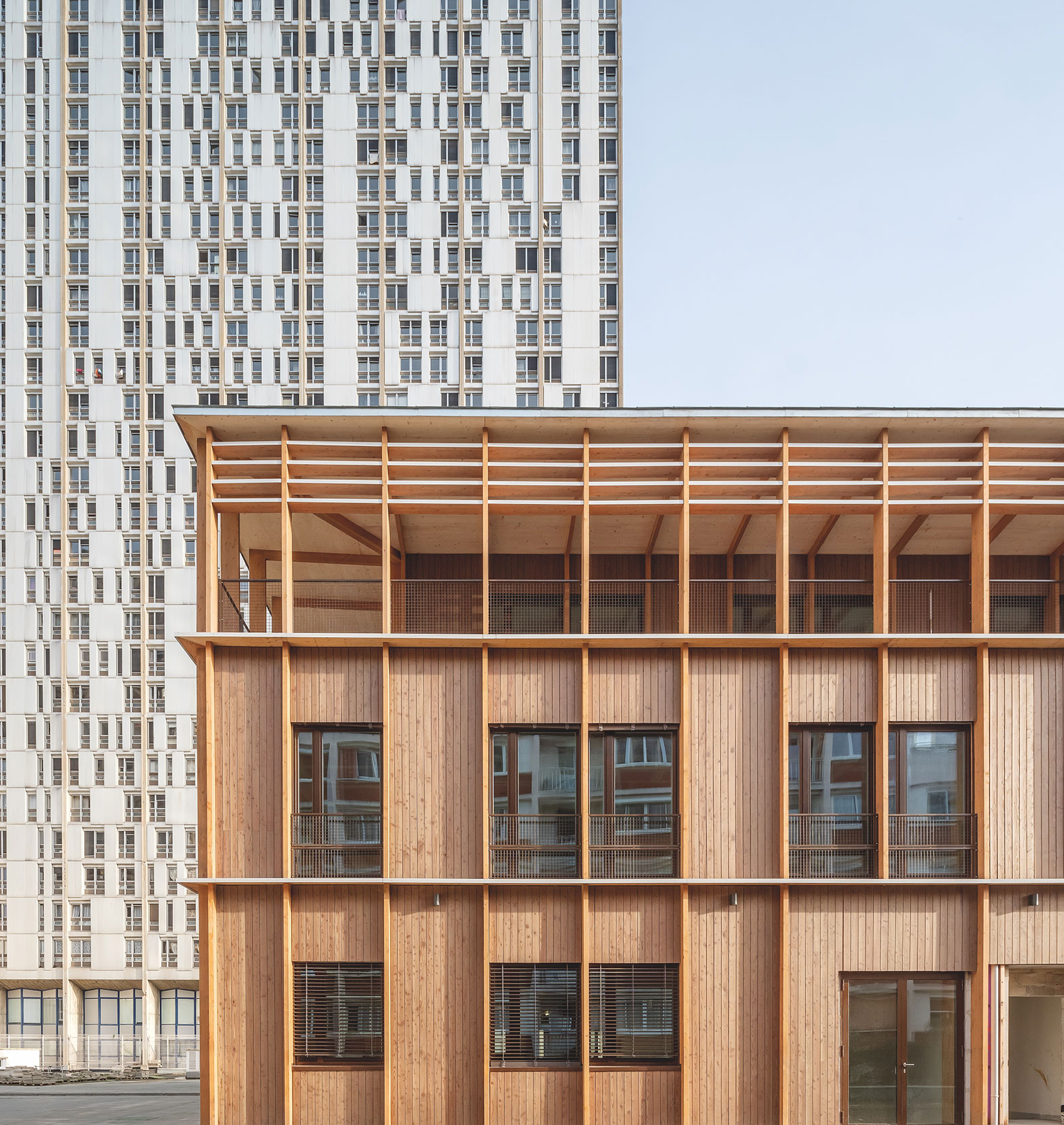
Desde el principio, La Poste Immobilier se fijó el ambicioso objetivo de utilizar únicamente materiales reciclados y de origen biológico para este proyecto. El enfoque ambiental de Nunc architectes incluye la reutilización de materiales desmantelados y la creación de una envolvente pasiva con materiales de origen biológico y geológico local. La estructura original de hormigón se conservó y revistió con madera pre-grisificada. Elementos como las barandillas, la losa de hormigón de la terraza y la carpintería interior de madera también se reutilizaron.

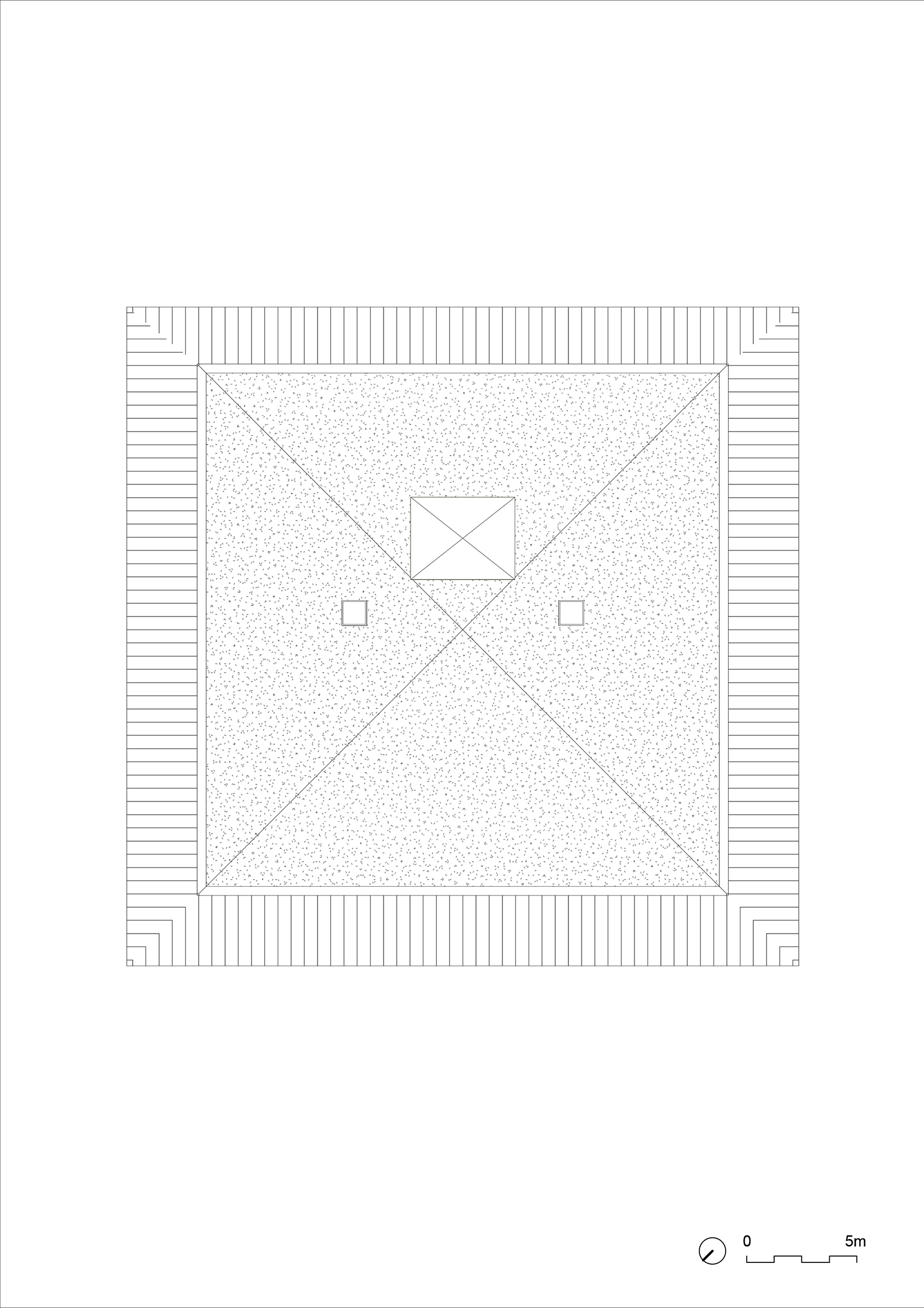
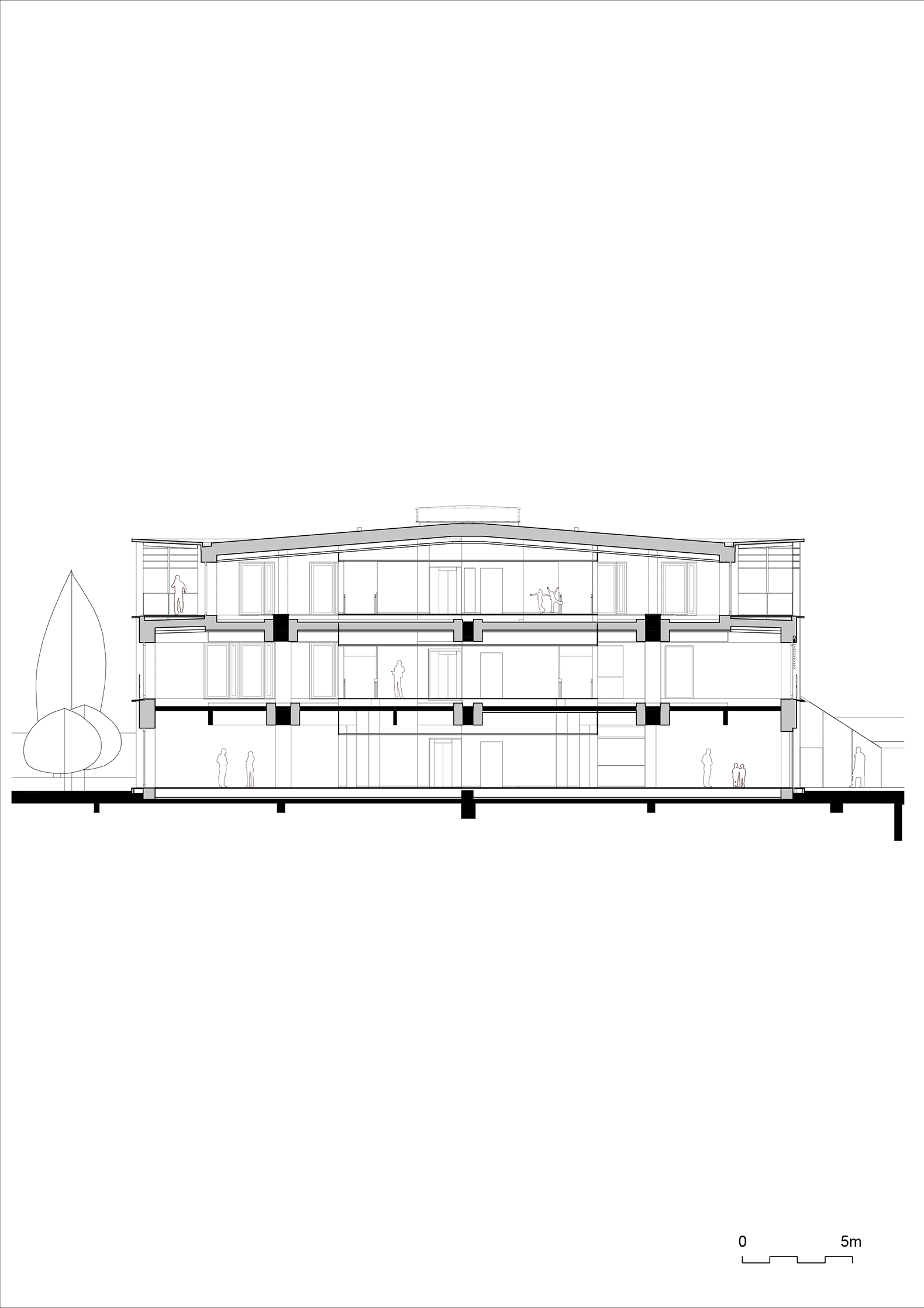
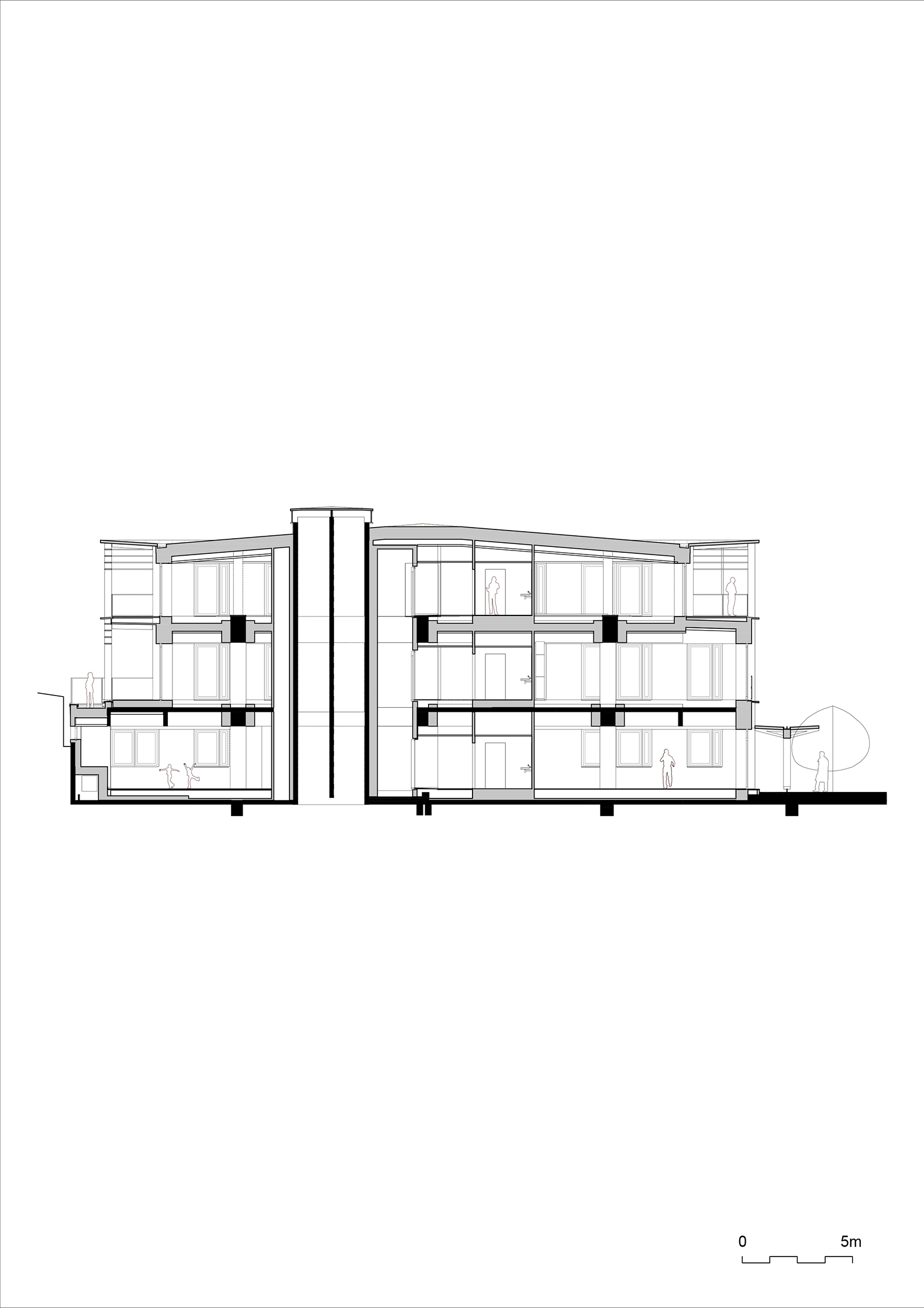
Un conjunto de sistemas bioclimáticos, como la ventilación natural, optimiza el confort de los usuarios y cumple con los estándares de construcción pasiva sin necesidad de aire acondicionado. El aislamiento térmico de las fachadas y los espacios del techo se compone de balas de paja y fibra de madera. El tabique interior de las fachadas está hecho de ladrillos de adobe. El techo se ha ajardinado, reduciendo el efecto isla de calor y limitando el flujo de agua de lluvia hacia el sistema de alcantarillado pluvial.
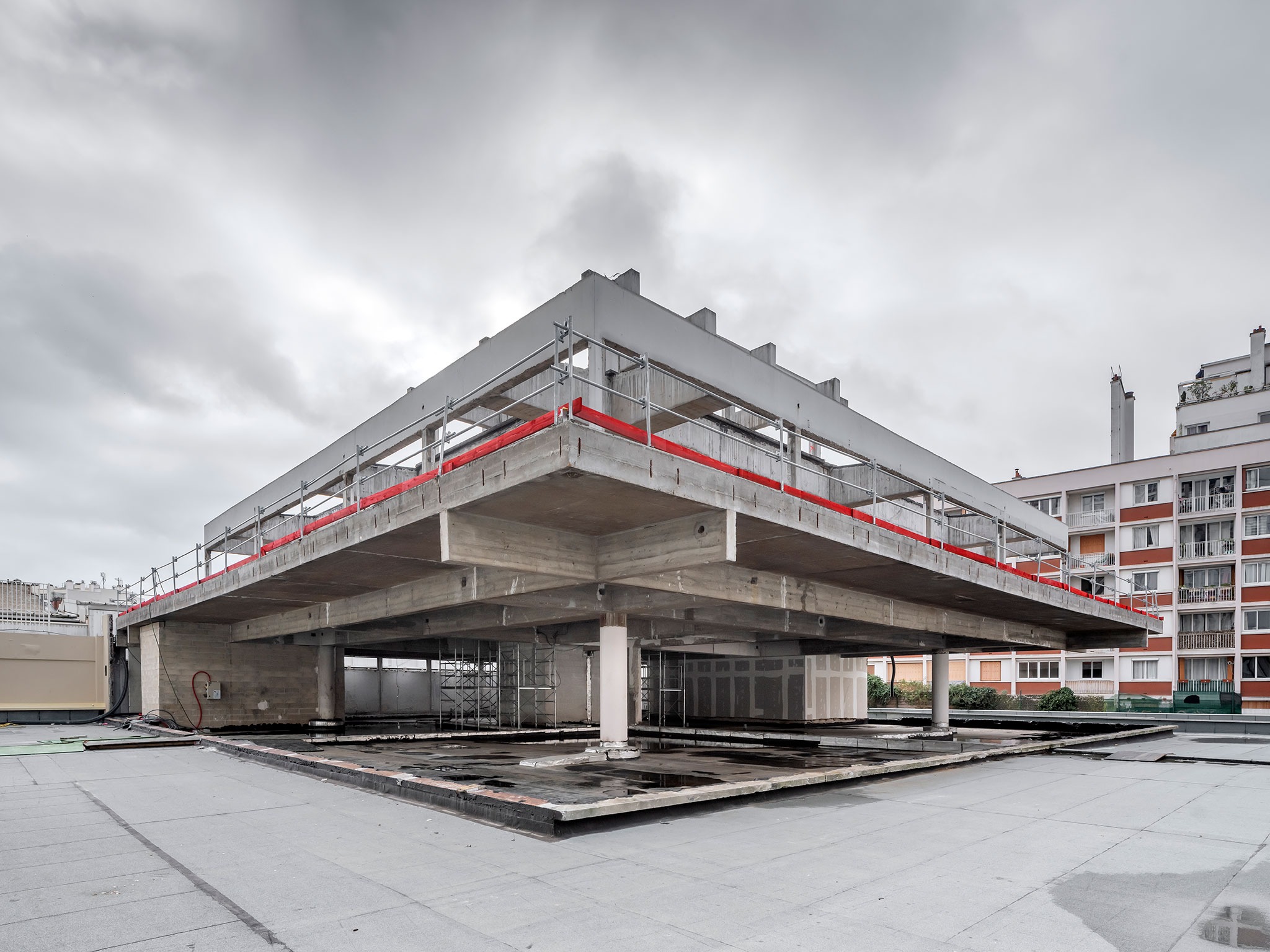
Pabellón Keller por nunc architectes. Fotografía por Luc Boegly.

Estructura de larga duración
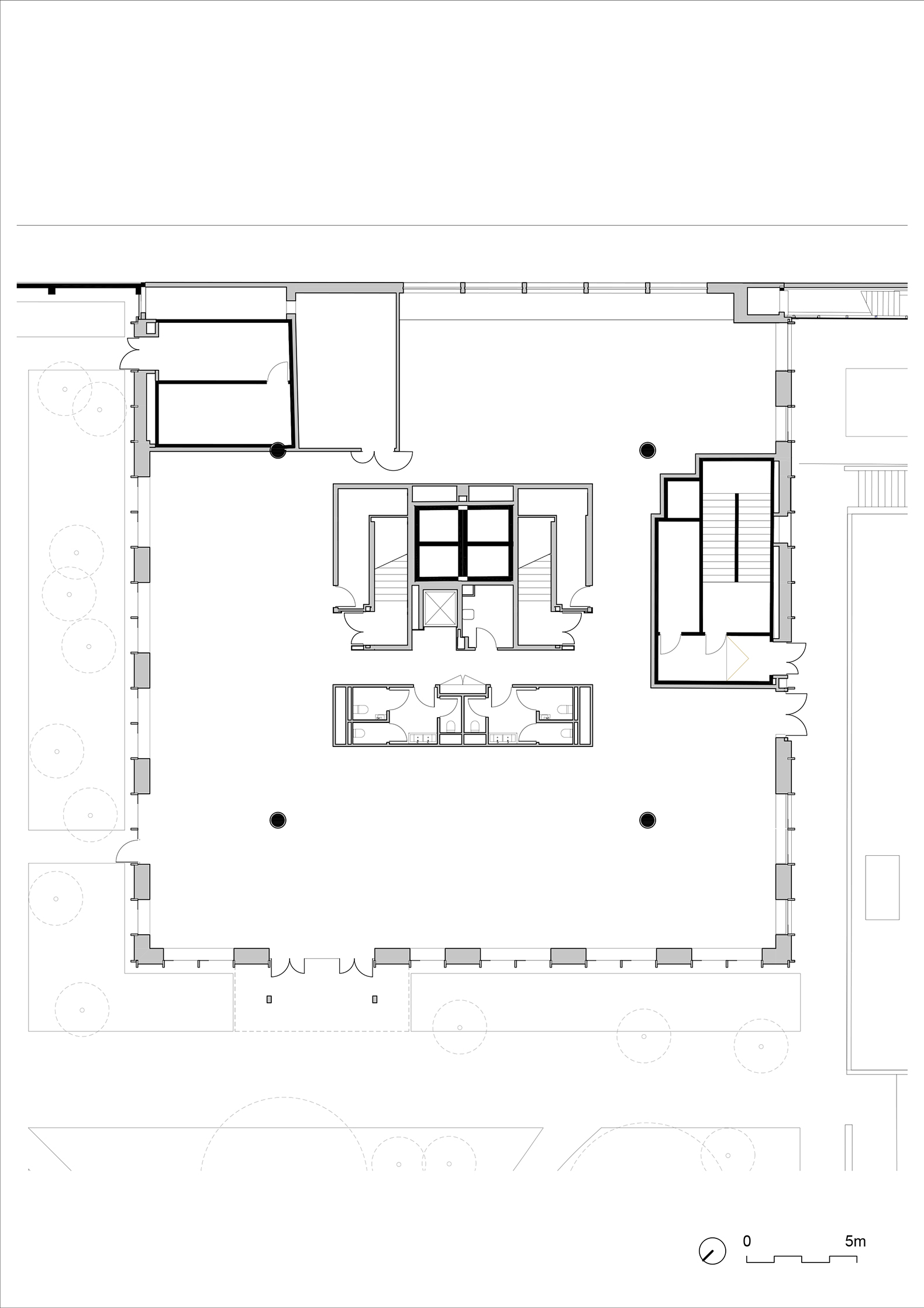
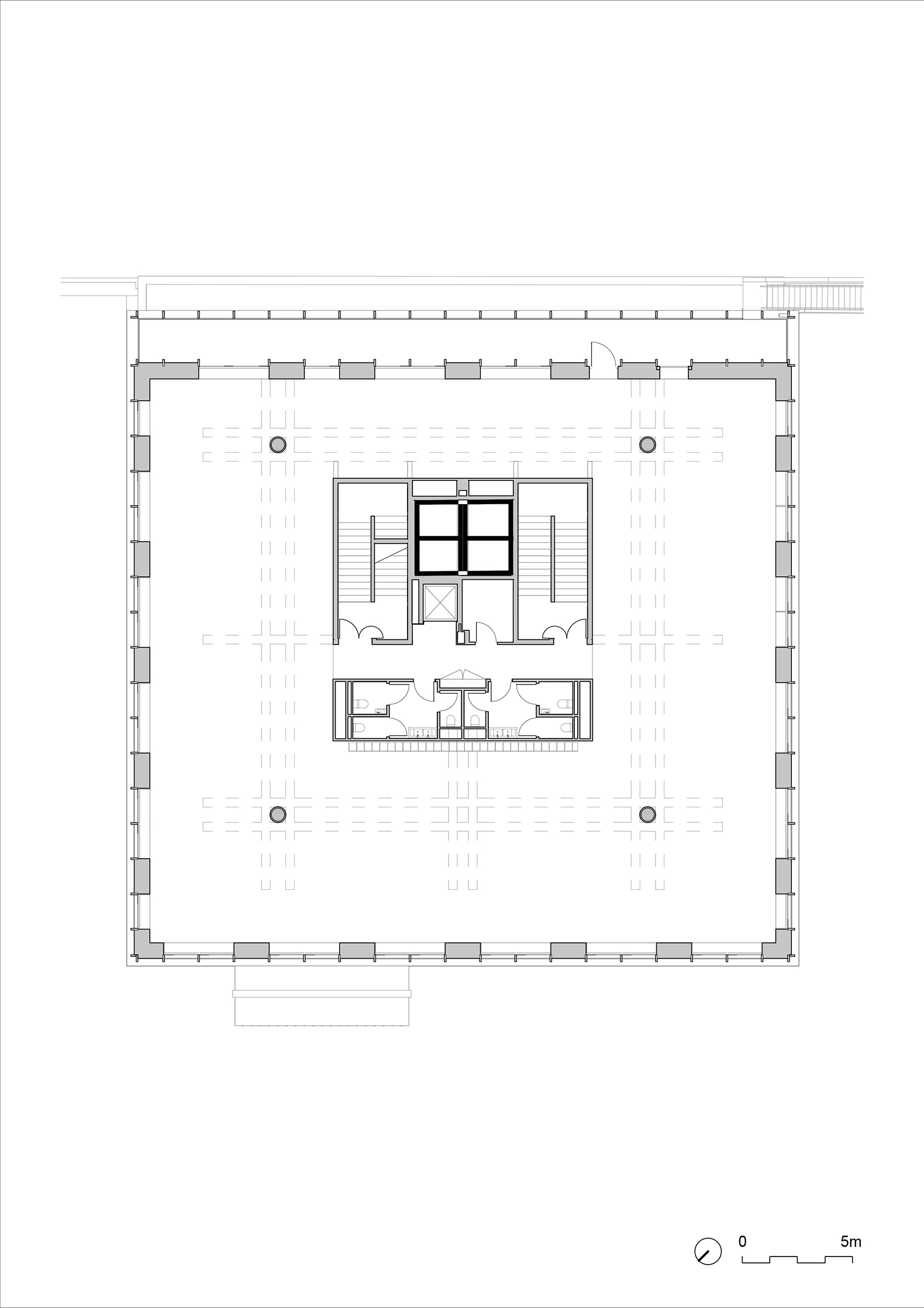
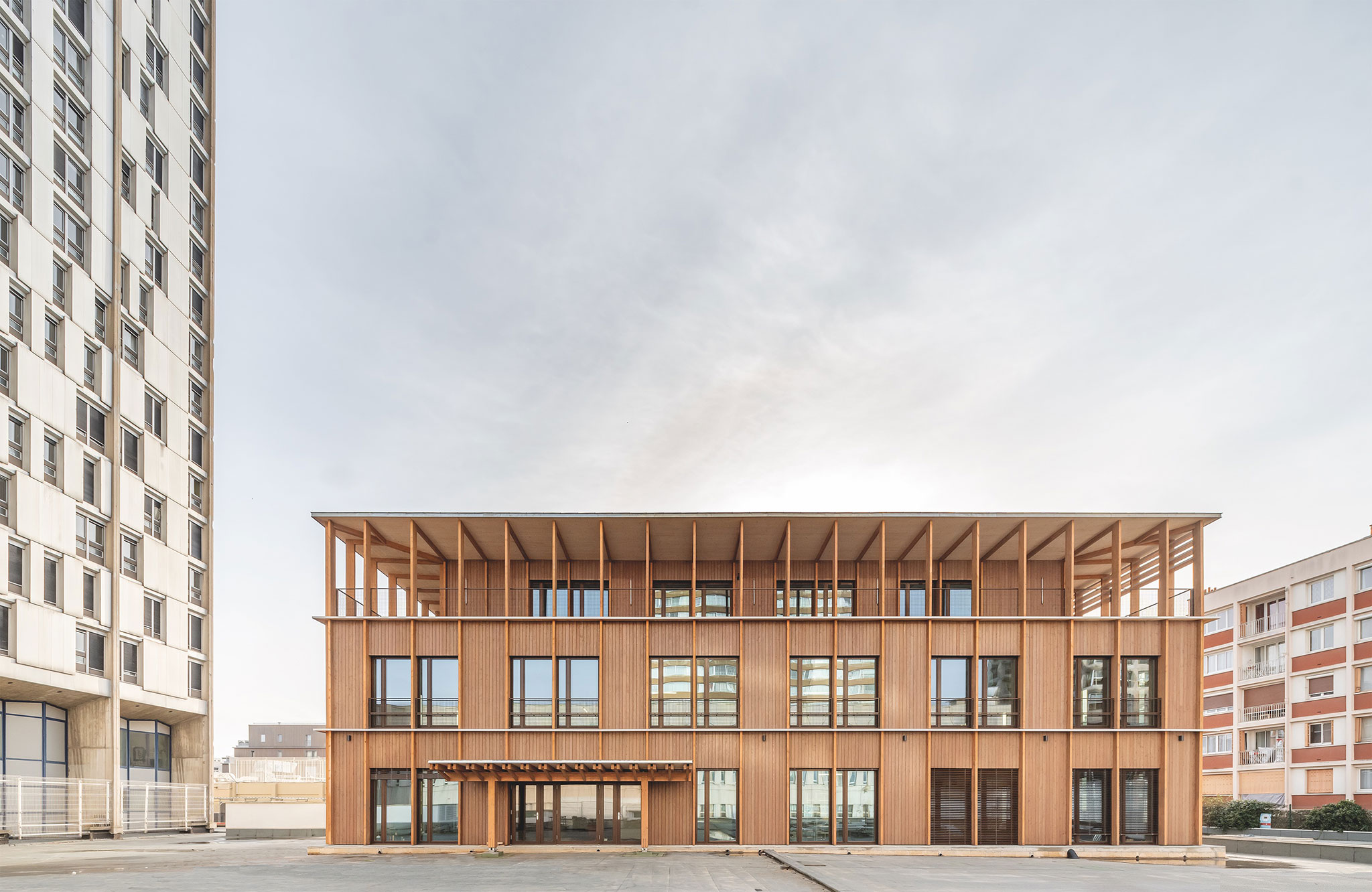
Cuando se inició el proyecto, aún no se había decidido la empresa que lo gestionaría. El pabellón se diseñó, por lo tanto, para ser flexible y reconfigurable, con pisos falsos, aseos apilados, tabiques reducidos y una fachada con infinitas posibilidades de reconfiguración, lo que permite adaptar los pisos a diversos proyectos futuros.

Está prevista la instalación de una institución de educación superior. Recibirá su primera promoción en septiembre de 2026.
More information

Label
Architects
+ + copy Created with Sketch.
- + copy Created with Sketch.
Label
Collaborators
Text

Engineering consultant.- Terramano, Mizrahi, Solares Bauen, Bellastock Link acoustique, IPC.
Entreprises.- Aequo, Care, Méha, Plam, Charpentier,Altelec, MGN, SRS, Pougat, Fain.

+ + copy Created with Sketch.
- + copy Created with Sketch.
Label
Contractor
Text

La Poste Immobilier.

+ + copy Created with Sketch.
- + copy Created with Sketch.
Label
Area
Text

1,840 sqm.  

+ + copy Created with Sketch.
- + copy Created with Sketch.
Label
Dates
Text

January 2025.

+ + copy Created with Sketch.
- + copy Created with Sketch.
Label
Location
Text

12 rue de l’ingénieur Robert Keller, Paris 75015, France.

+ + copy Created with Sketch.
- + copy Created with Sketch.
Label
Budget
Text

€ 5.6 mill.

+ + copy Created with Sketch.
- + copy Created with Sketch.
Label
Photography
+ + copy Created with Sketch.
- + copy Created with Sketch.

nunc architectes is a French architecture firm founded in 1989 by architects Pierre Béout, Louis Piccon, and Vincent Rey-Millet. From its inception, the collective adopted a decentralized and cooperative structure, establishing a presence in several regions—Alsace, Brittany, Savoy, and Paris—with the aim of sharing knowledge, methodologies, and experiences related to contemporary architectural practice.

The name "nunc," a Latin adverb meaning "now," expresses the firm's commitment to working from a position attentive to the present and to the cultural, environmental, and social transformations of each context. The group's collective organization is explicitly inspired by the collaborative ideas of Walter Gropius and the TAC (The Architects Collaborative) collective, advocating a practice based on critical exchange among peers and the creative autonomy of each associated architect.

The Parisian headquarters of nunc architectes is currently located in Montrouge, in the Paris metropolitan area. It is led by architects such as Jakub Jakubik, Adrienne Fabre, and Antoine Wojtowski, among others, and develops projects for collective housing, cultural, educational, and commercial facilities.

For over three decades, the studio has developed an architecture characterized by attention to site, a focus on materiality, and an early environmental approach. In 2012, it created "nunc ingénierie," its own energy and environmental research unit designed to integrate bioclimatic and sustainability criteria from the earliest stages of a project.

Among its most recognized works are educational and cultural facilities, social housing, and rehabilitation projects in various regions of France. Some notable projects include the "5ème Lieu" in Strasbourg, the Dehlingen Archaeological Heritage Interpretation Center, several housing complexes in Paris and Strasbourg, and the recent Keller Pavilion in Beaugrenelle, Paris, where the studio explores strategies for structural reuse, bio-sourced materials, and natural ventilation.

The work of nunc architectes is situated within a contemporary architectural tradition sensitive to territorial and climatic dimensions, avoiding autonomous formal gestures and prioritizing constructive coherence, the responsible use of resources, and programmatic adaptation. This position has been presented in various exhibitions, including "sessions nunc," held at the Galerie d'Architecture in Paris in 2022, where the collective reflected on the evolution of architectural practice in a context of climate crisis and resource scarcity.

Read more
Published on: May 13, 2026
Cite:
metalocus, SARA GENT
"High-performance space. The Keller Pavilion by nunc architectes" METALOCUS. Accessed
<https://www.metalocus.es/en/news/high-performance-space-keller-pavilion-nunc-architectes> ISSN 1139-6415
Loading content ...
Loading content ...
Loading content ...
Loading content ...
Loading content ...
Loading content ...
Loading content ...
Loading content ...
Loading content ...
Loading content ...
Loading content ...
Loading content ...
Loading content ...
Loading content ...
Loading content ...
Loading content ...
Loading content ...
Loading content ...
Loading content ...
Loading content ...
Loading content ...
Loading content ...
Loading content ...
Loading content ...
Loading content ...
Loading content ...
Loading content ...
Loading content ...
Loading content ...
Loading content ...
Loading content ...
Loading content ...
Loading content ...
Loading content ...
Loading content ...
Loading content ...
Loading content ...
Loading content ...
Loading content ...
Loading content ...
Loading content ...
Loading content ...
Loading content ...
Loading content ...
Loading content ...
Loading content ...
Loading content ...
Loading content ...
Loading content ...
Loading content ...
Loading content ...
Loading content ...
Loading content ...
Loading content ...