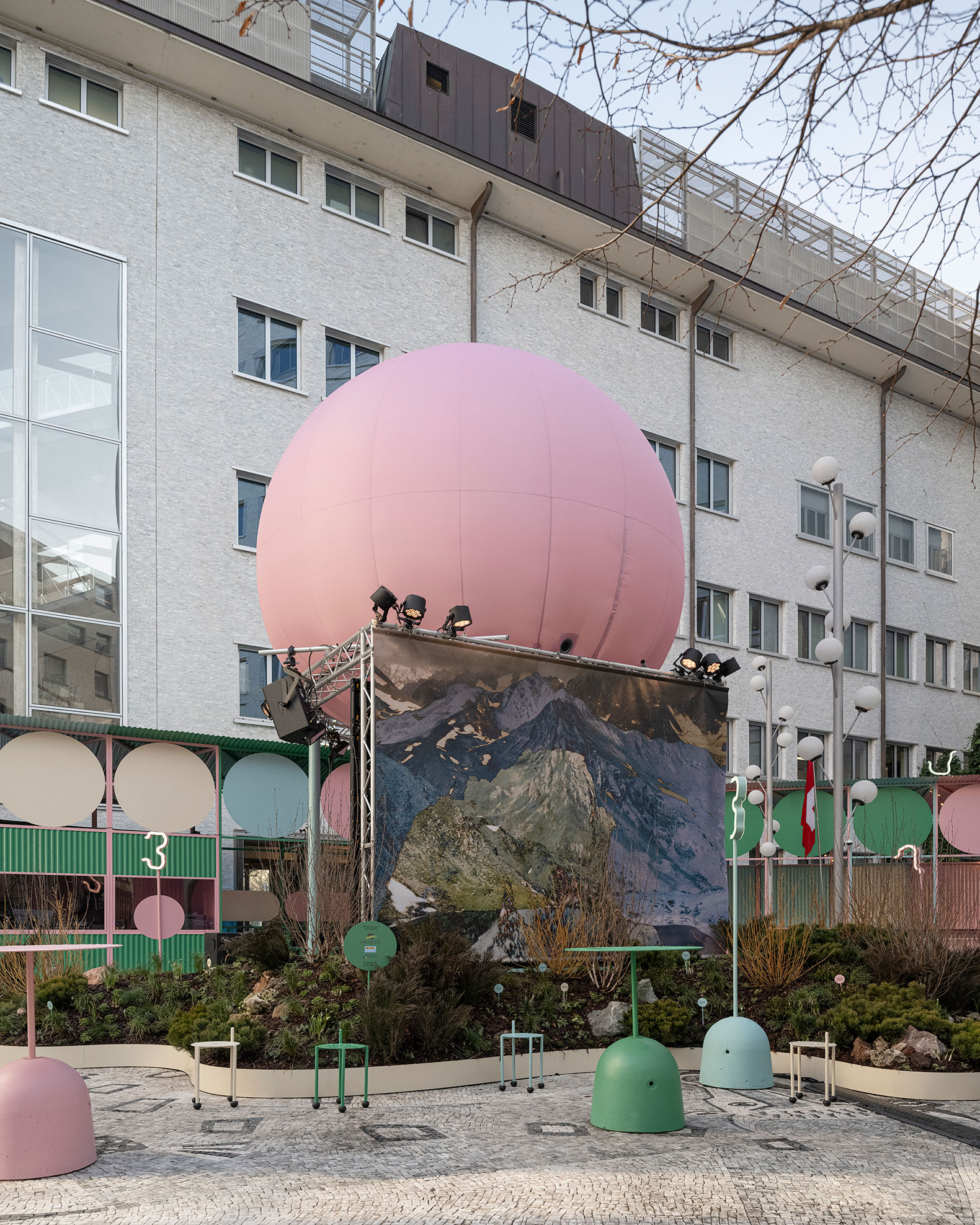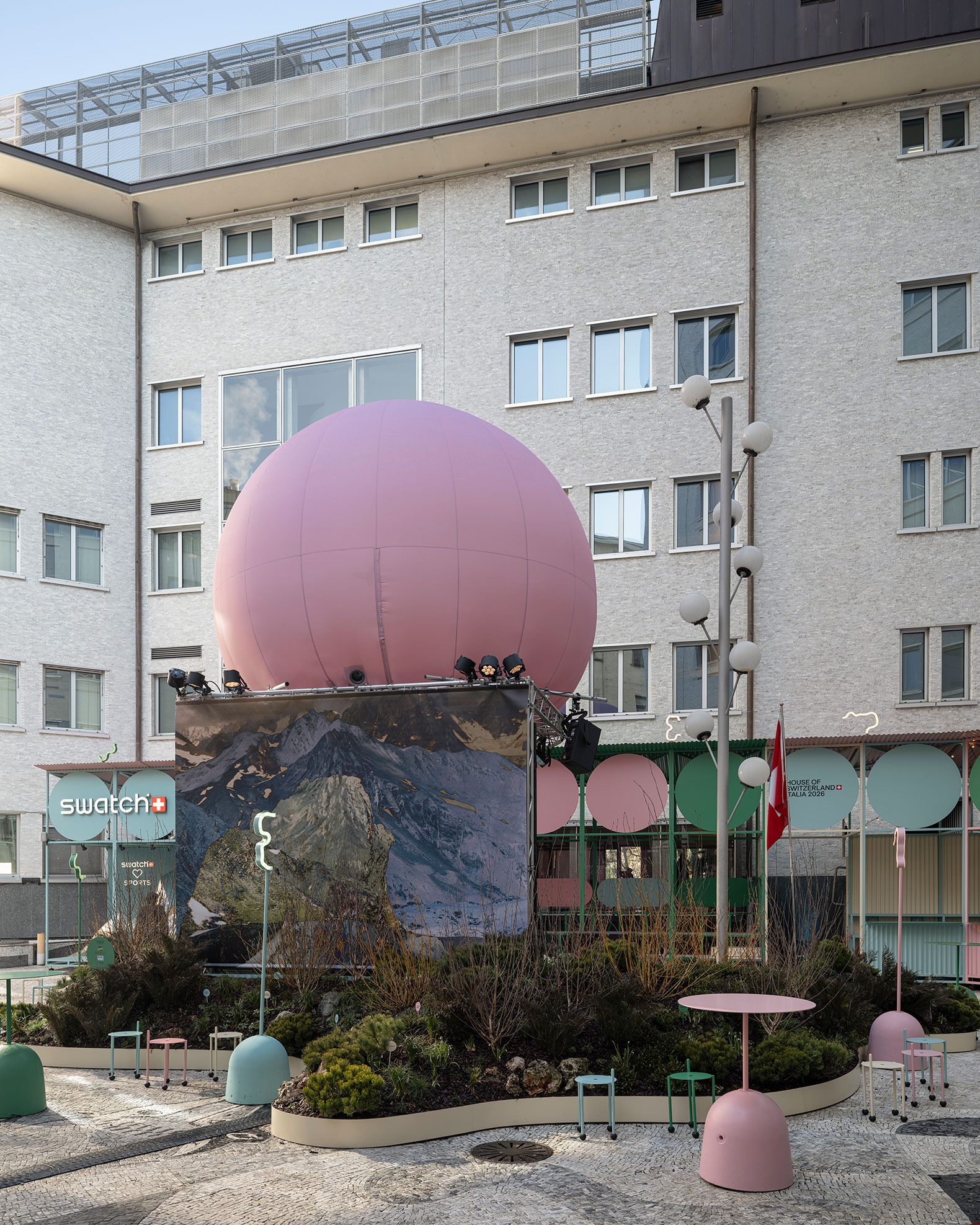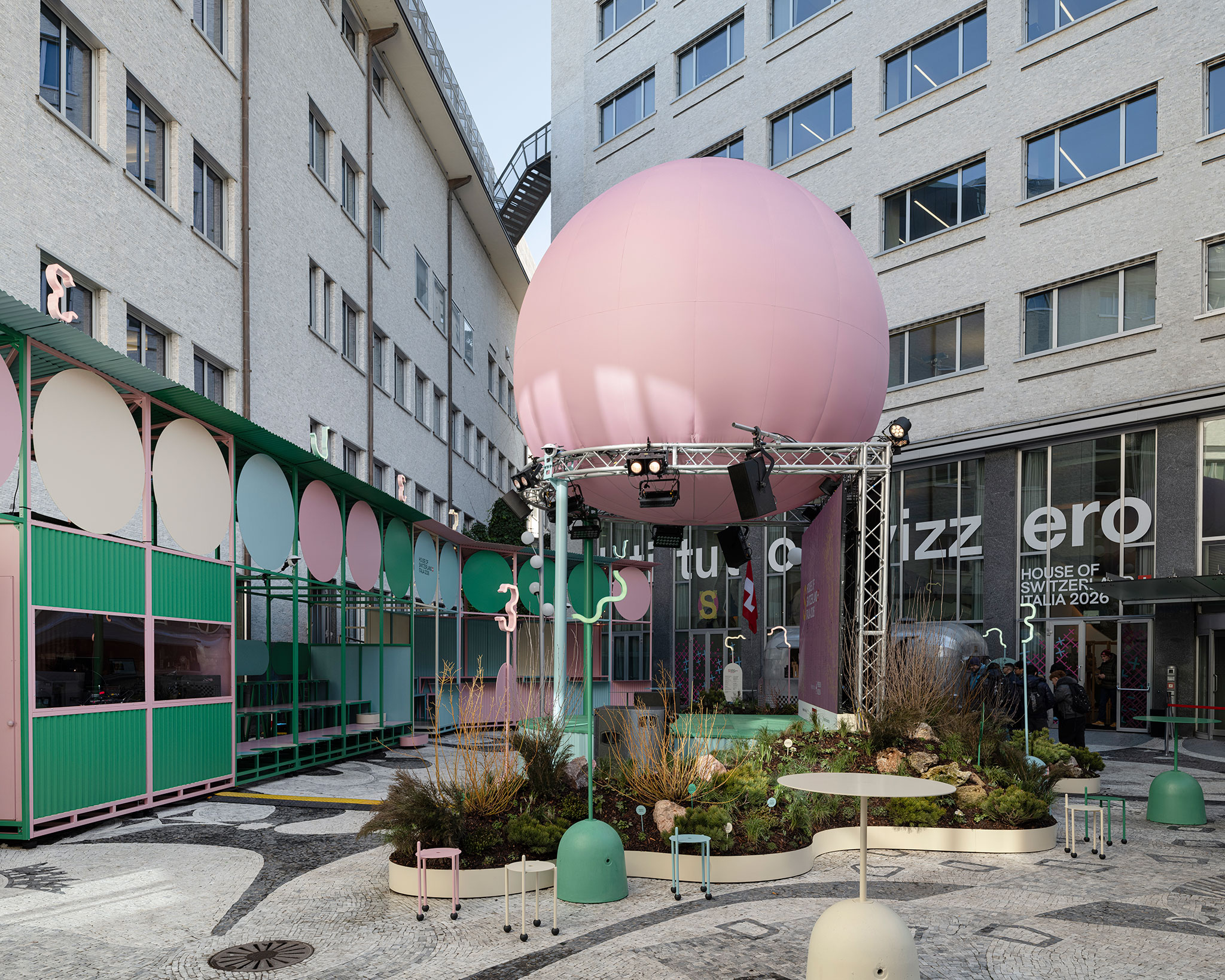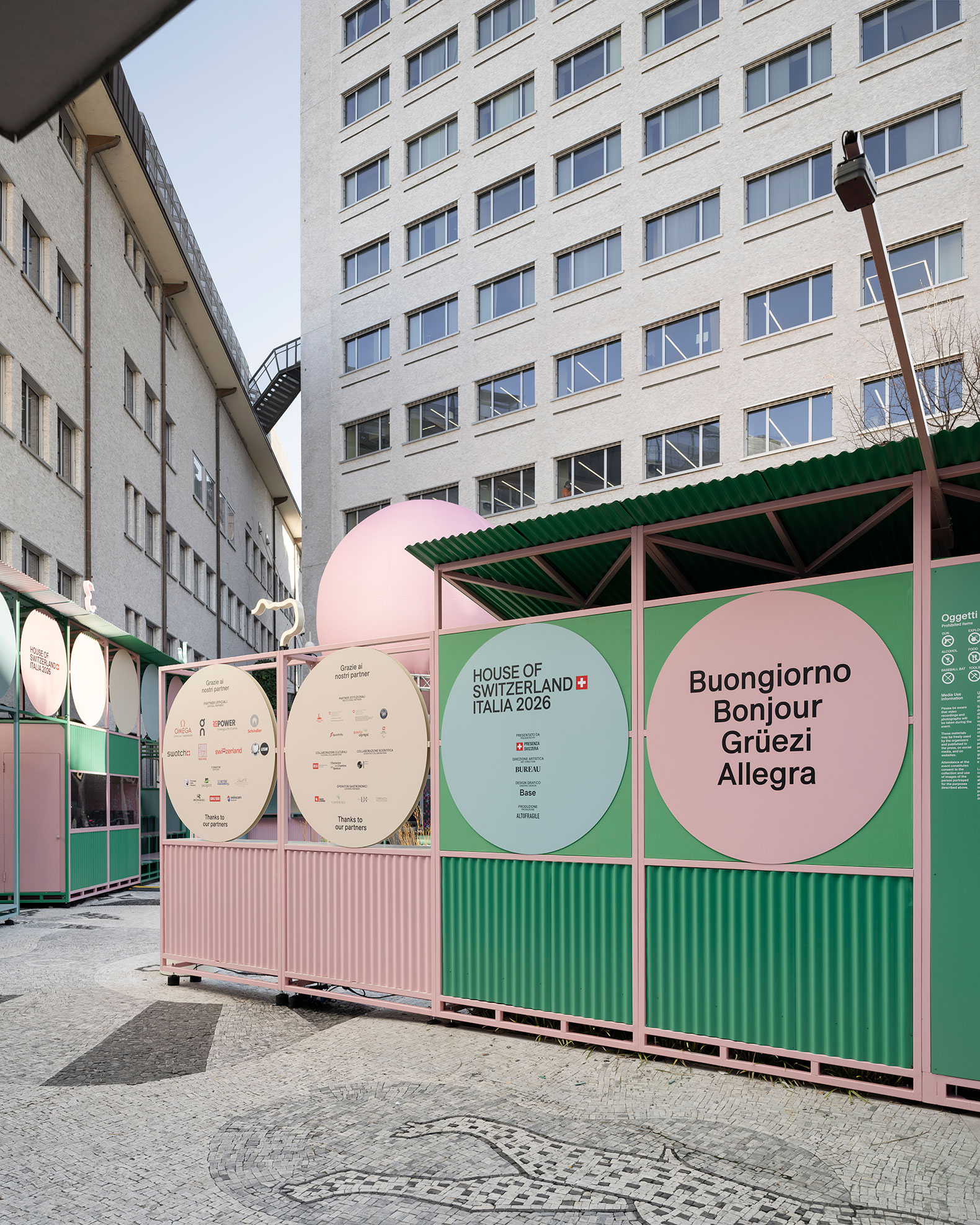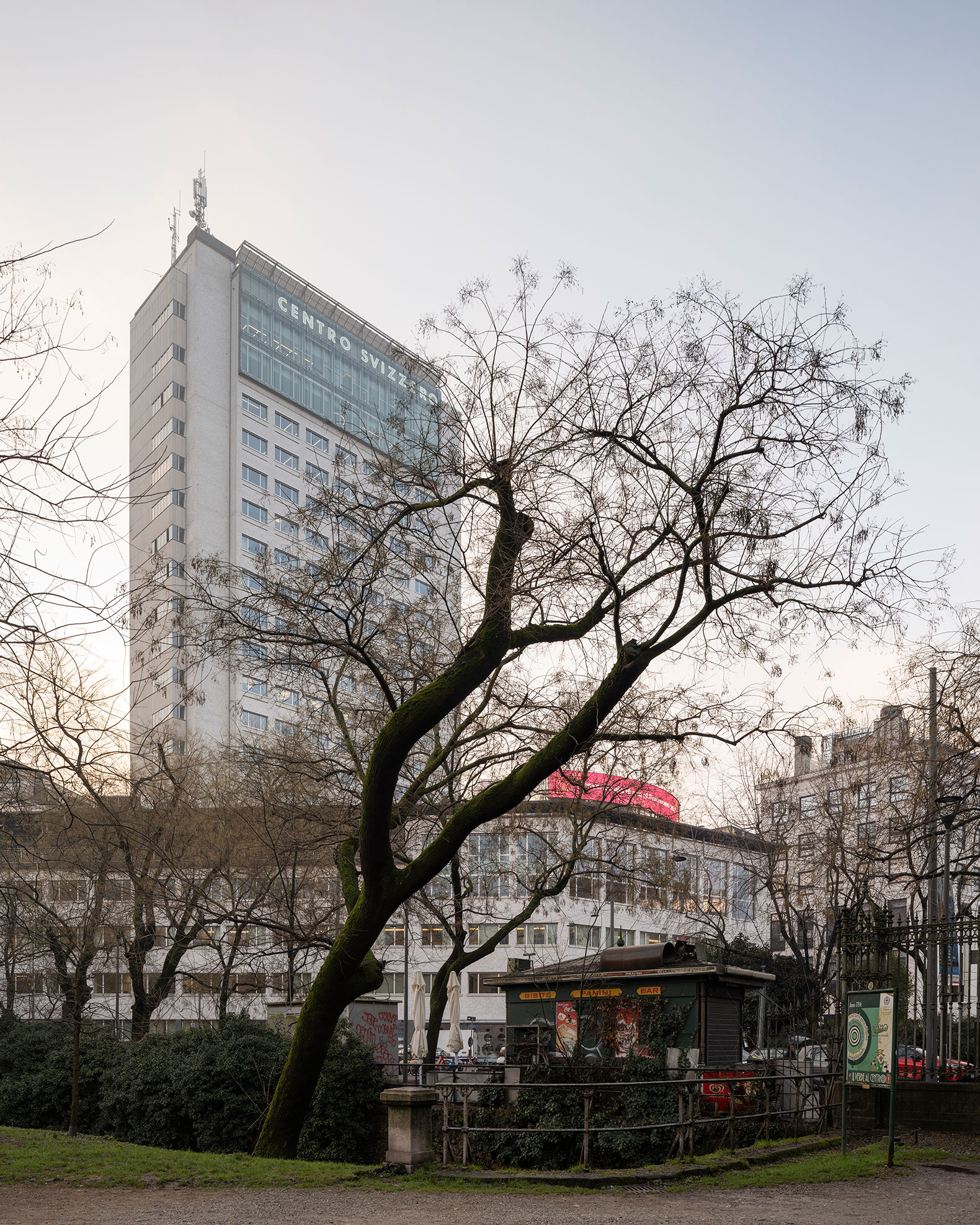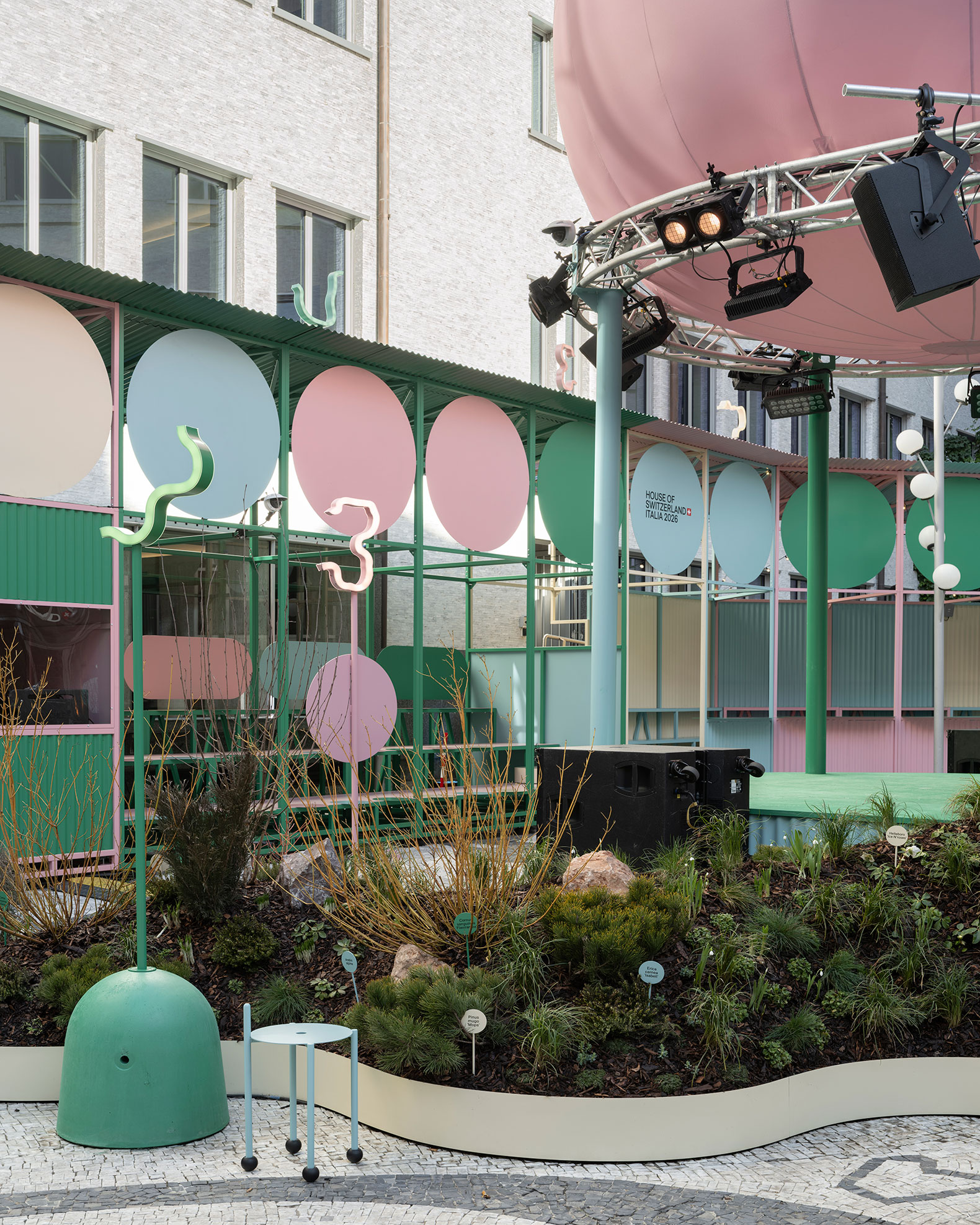
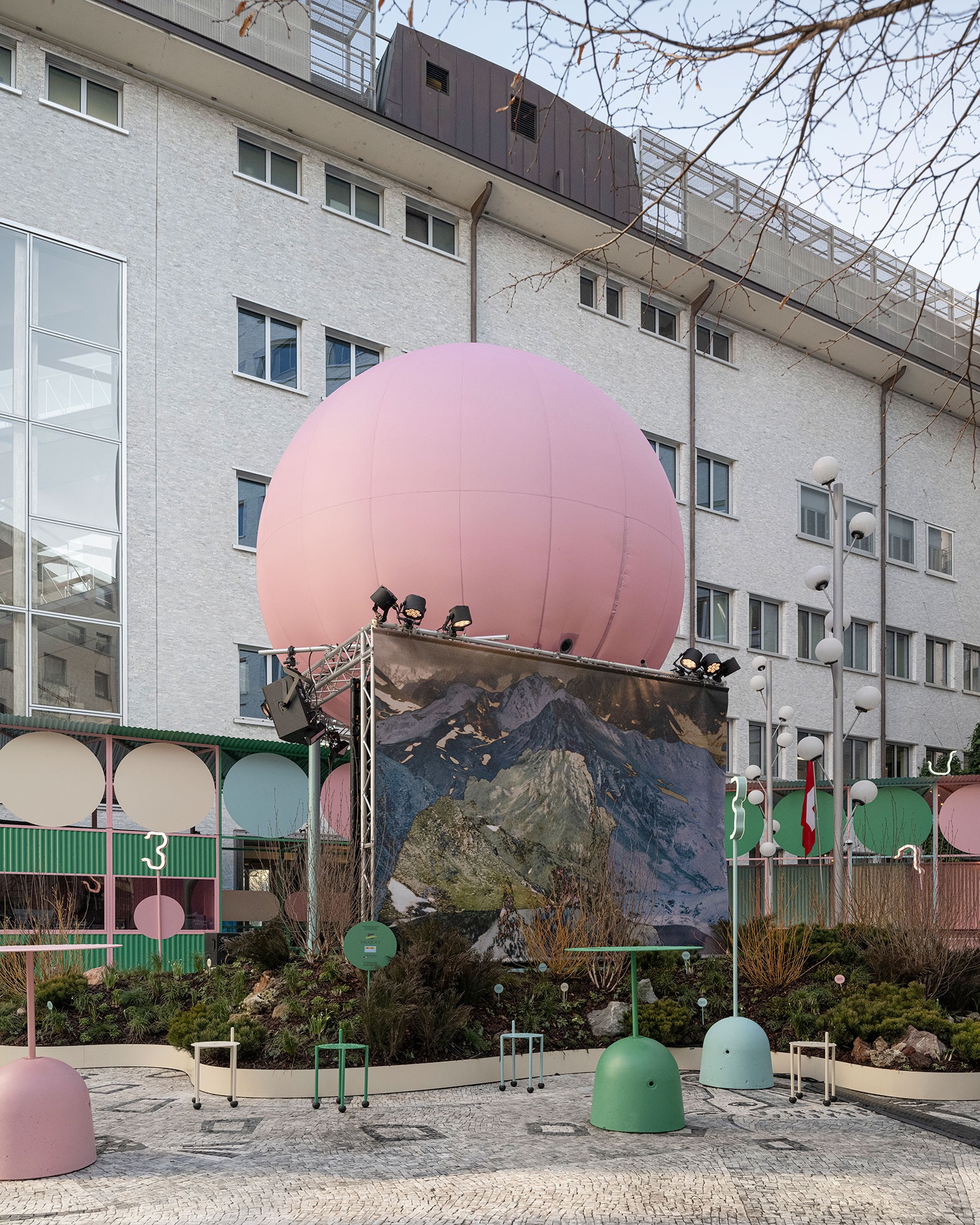
Architecture practice BUREAU has been commissioned to create "Flora Alpina," a set design and furniture project for the "Casa della Svizzera" (House of Switzerland) at the Milan-Cortina 2026 Winter Olympic and Paralympic Games. The design is located in the courtyard of the "Centro Svizzero," the heart of the Swiss presence in Italy.

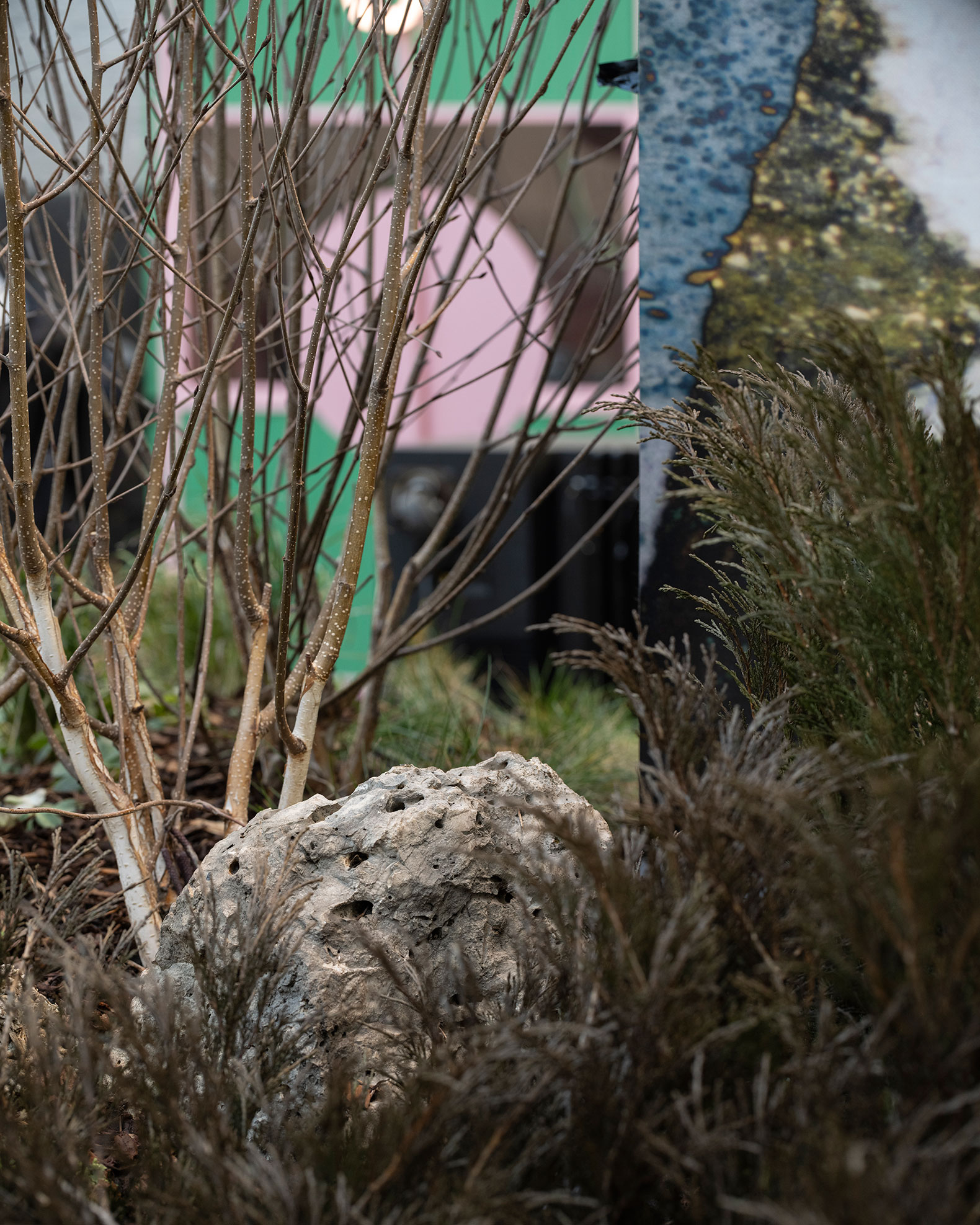
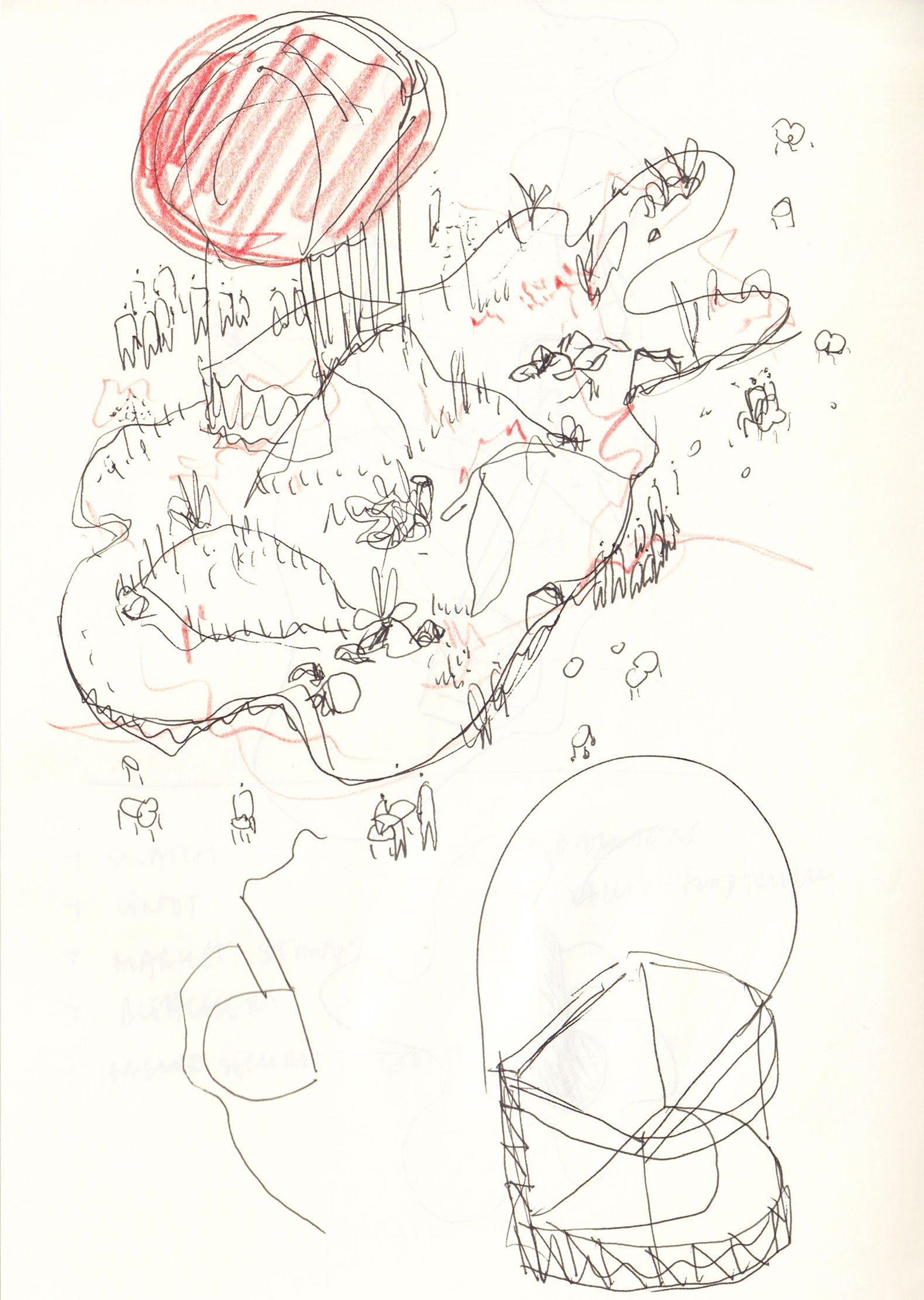
The design evokes the idea of ​​a garden: a space with well-defined boundaries, yet porous and open to the elements, to the life that flows in and out, to the weather, the wind, the sun, and the rain. Most cultures have developed gardens as representative fragments of the world, with numerous cultural variations of this type of human-shaped landscape.

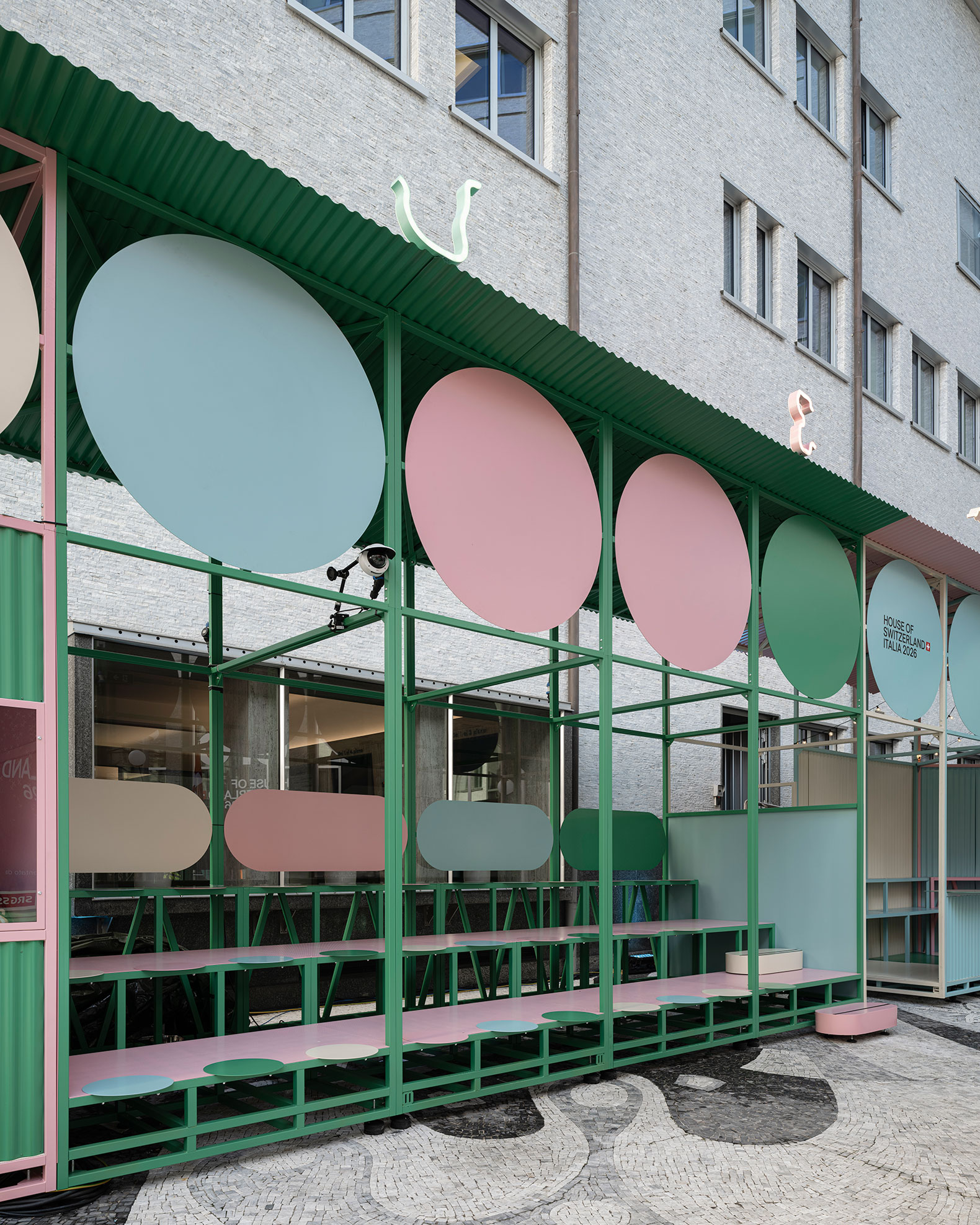
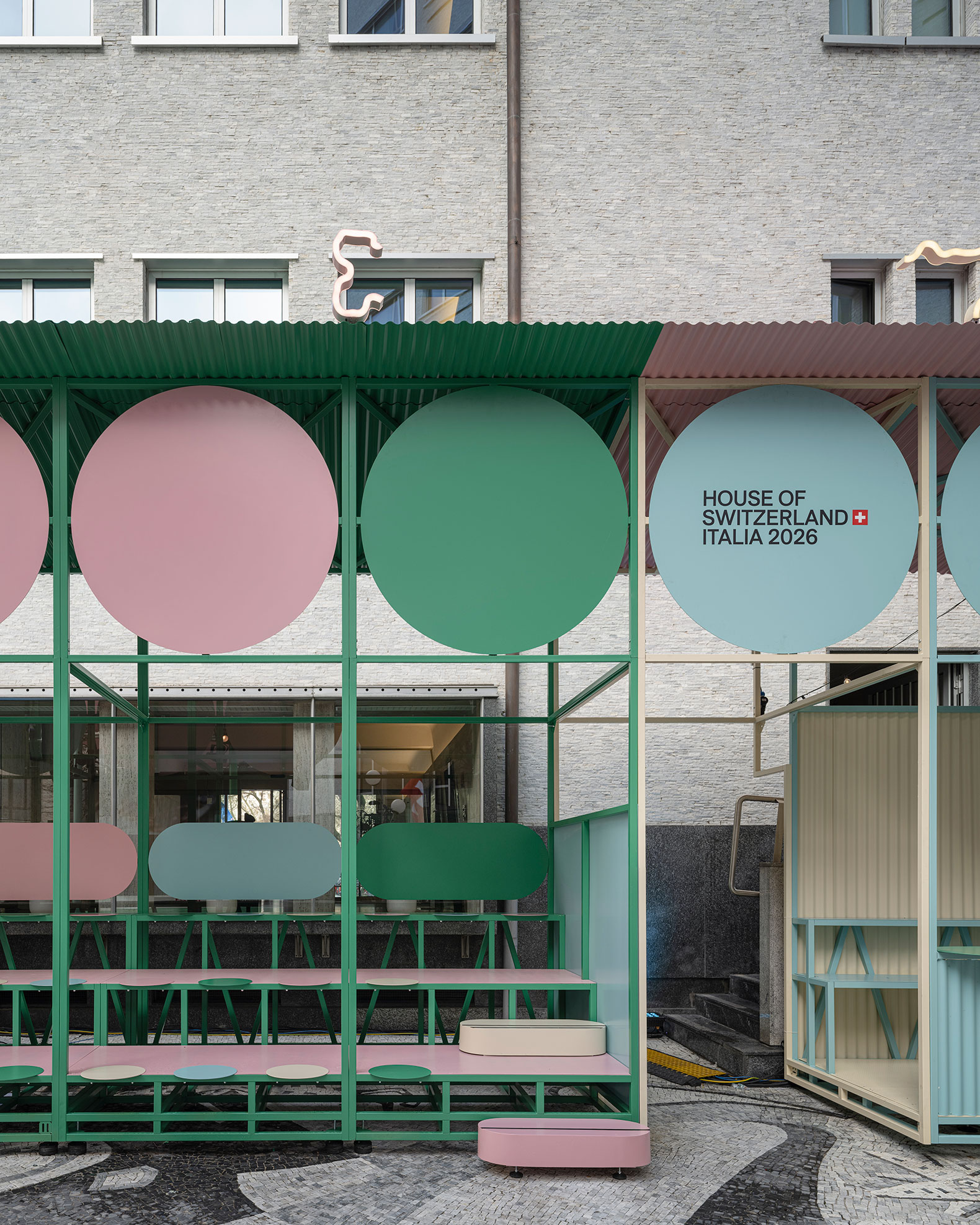
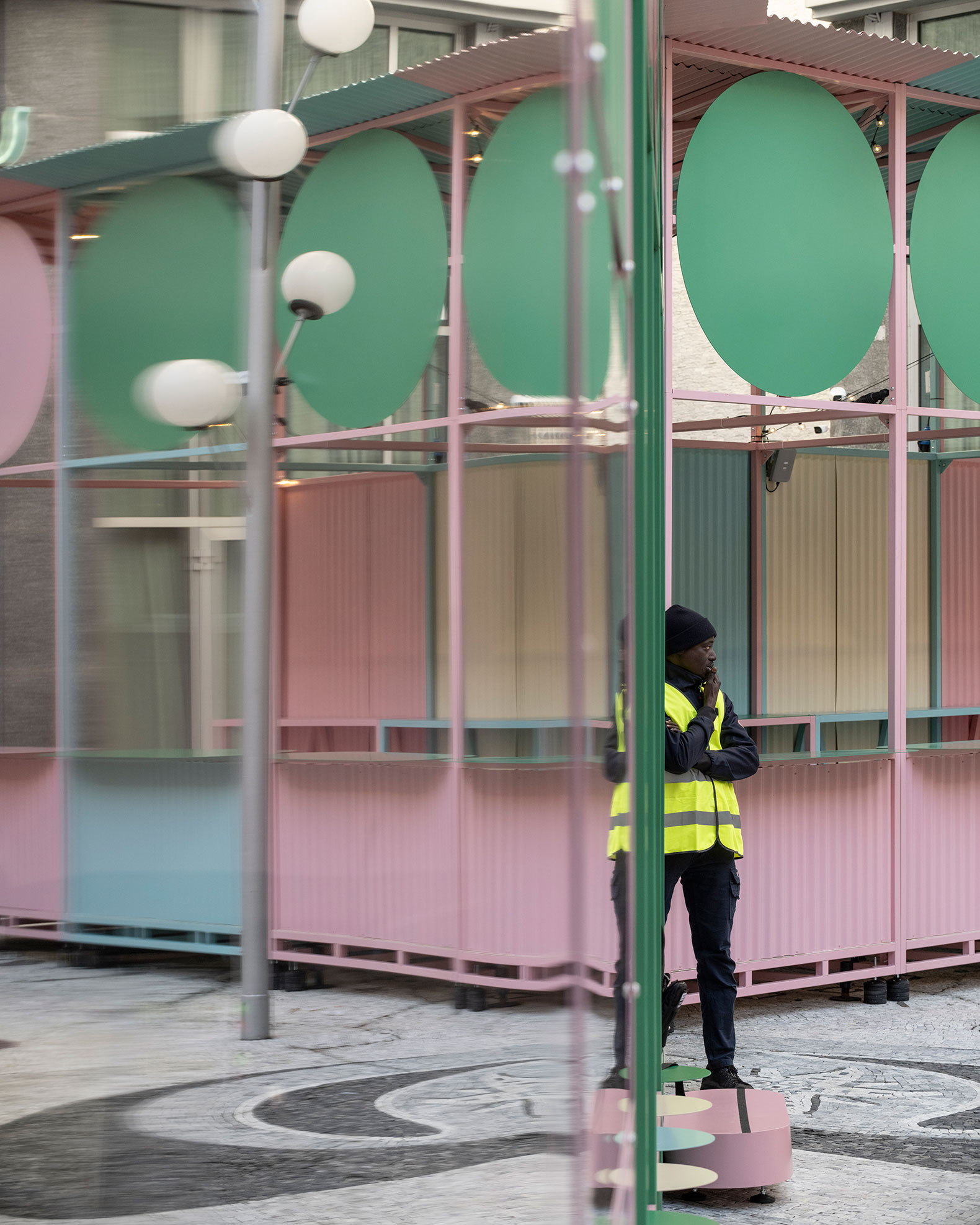
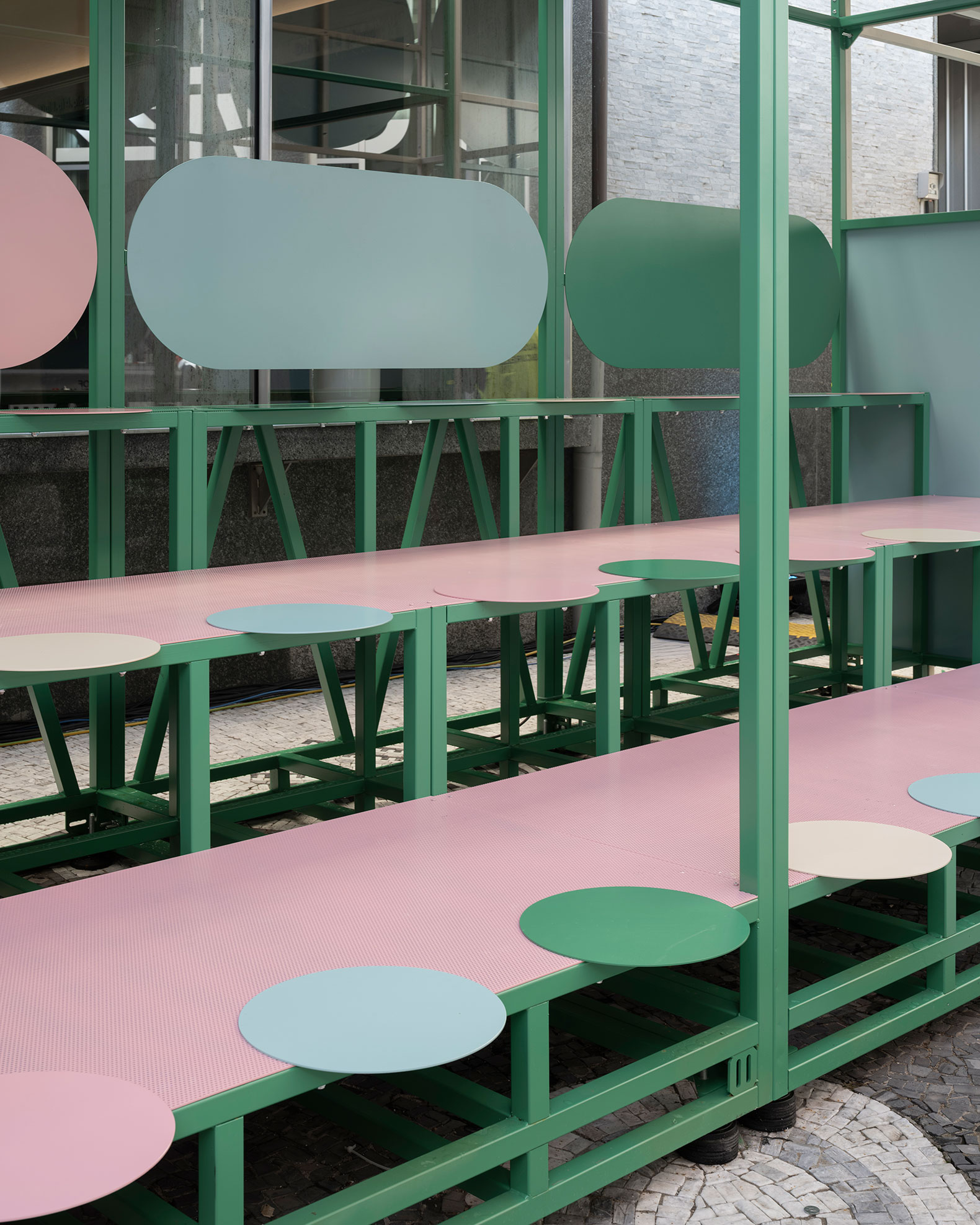
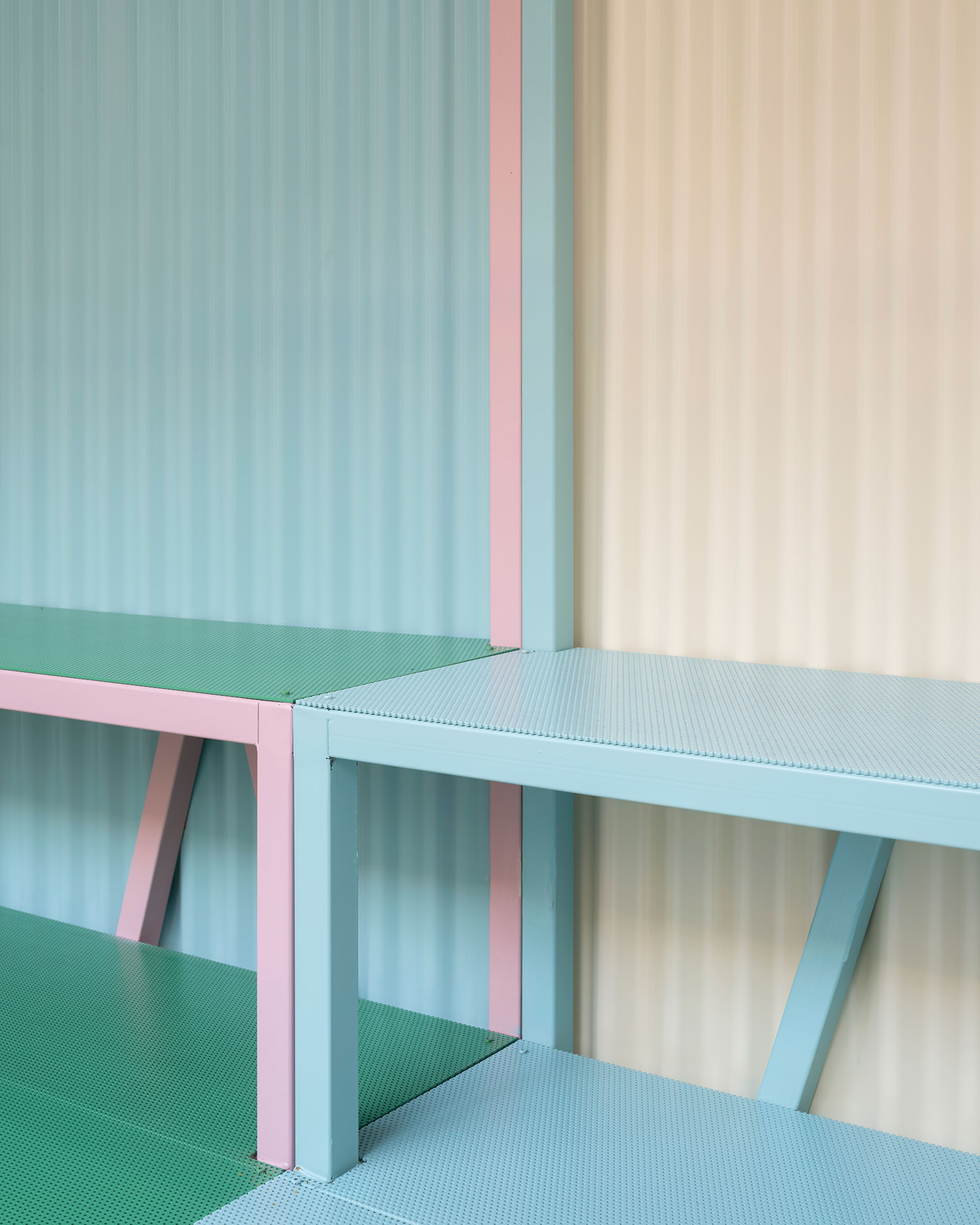
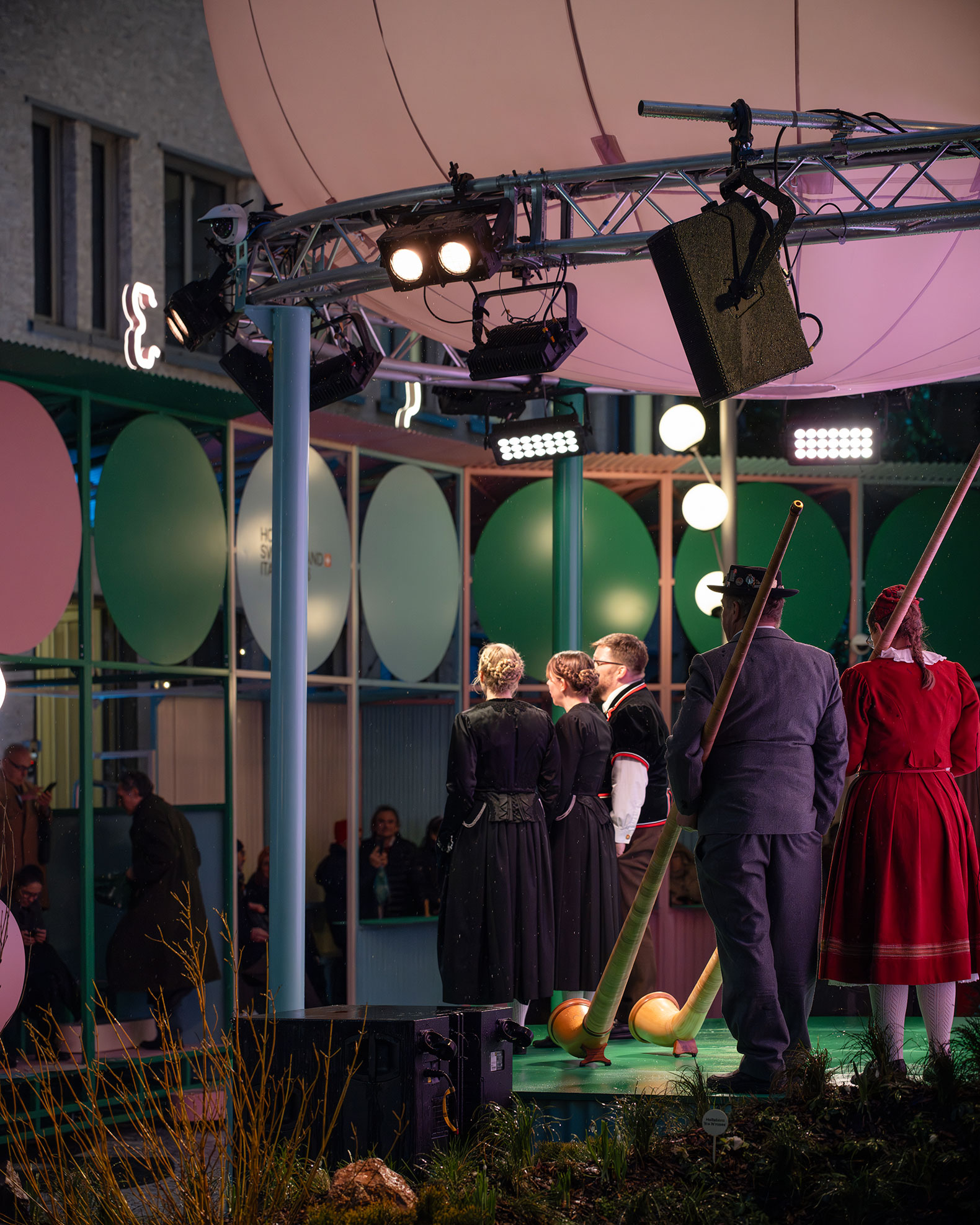
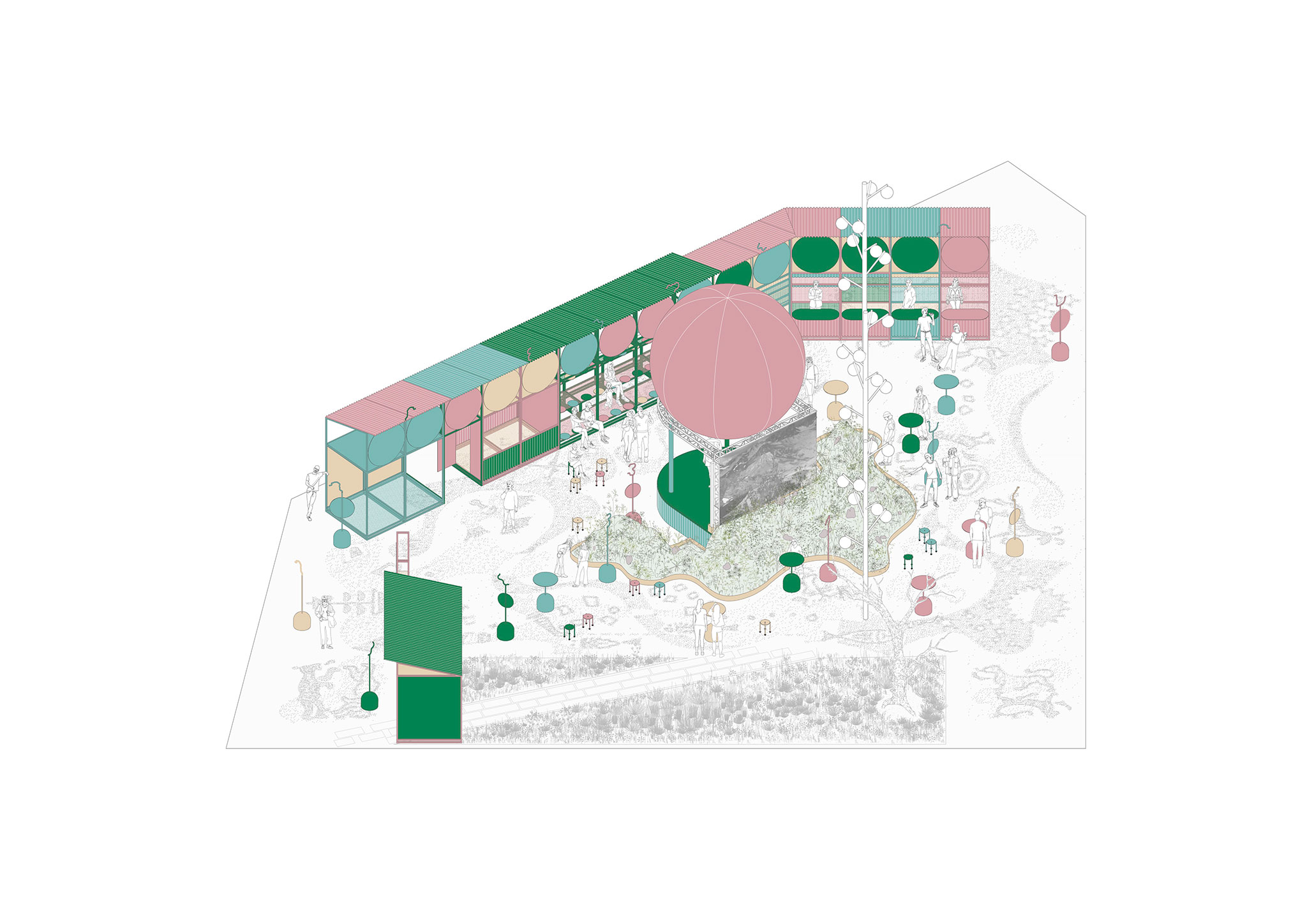
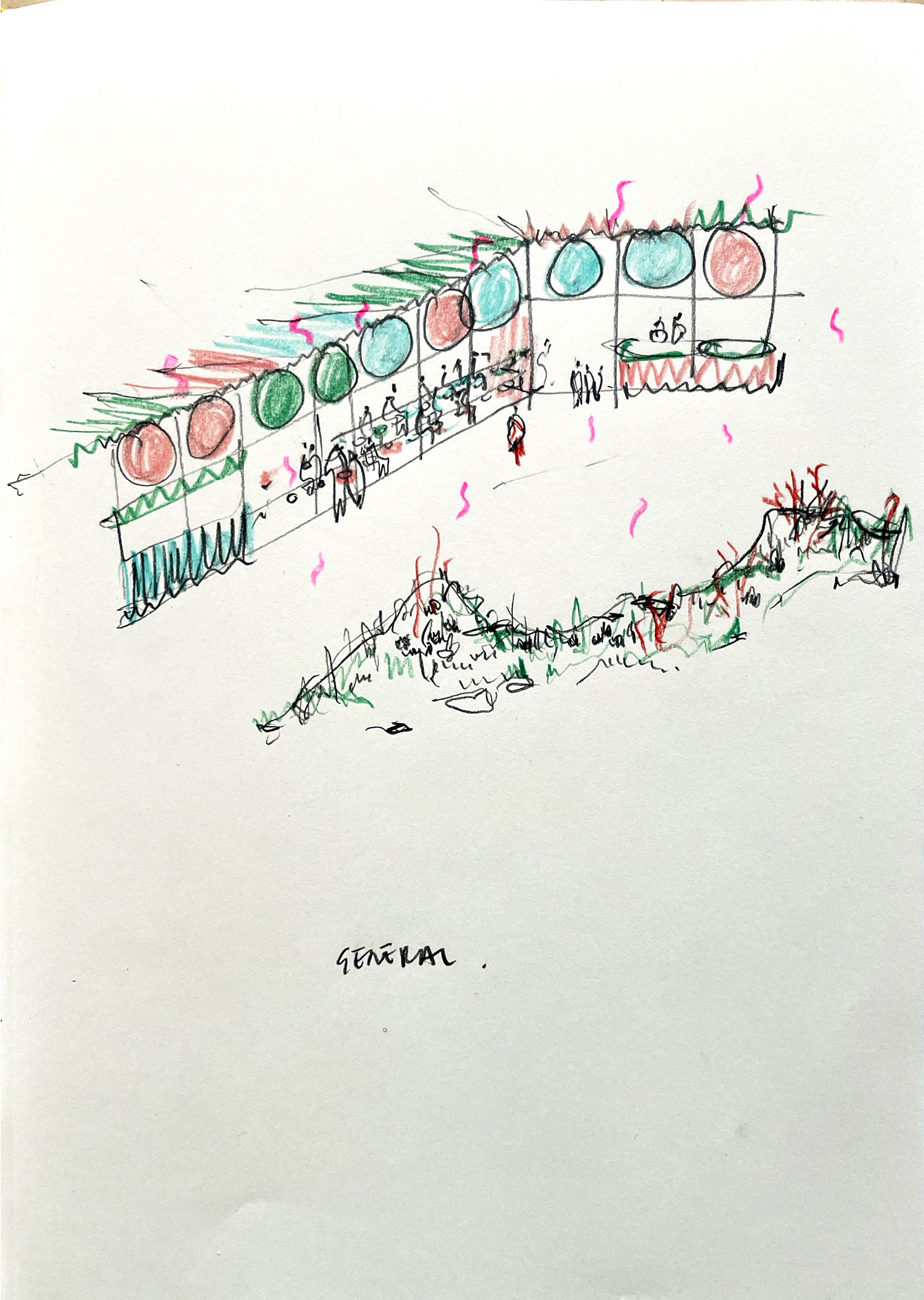
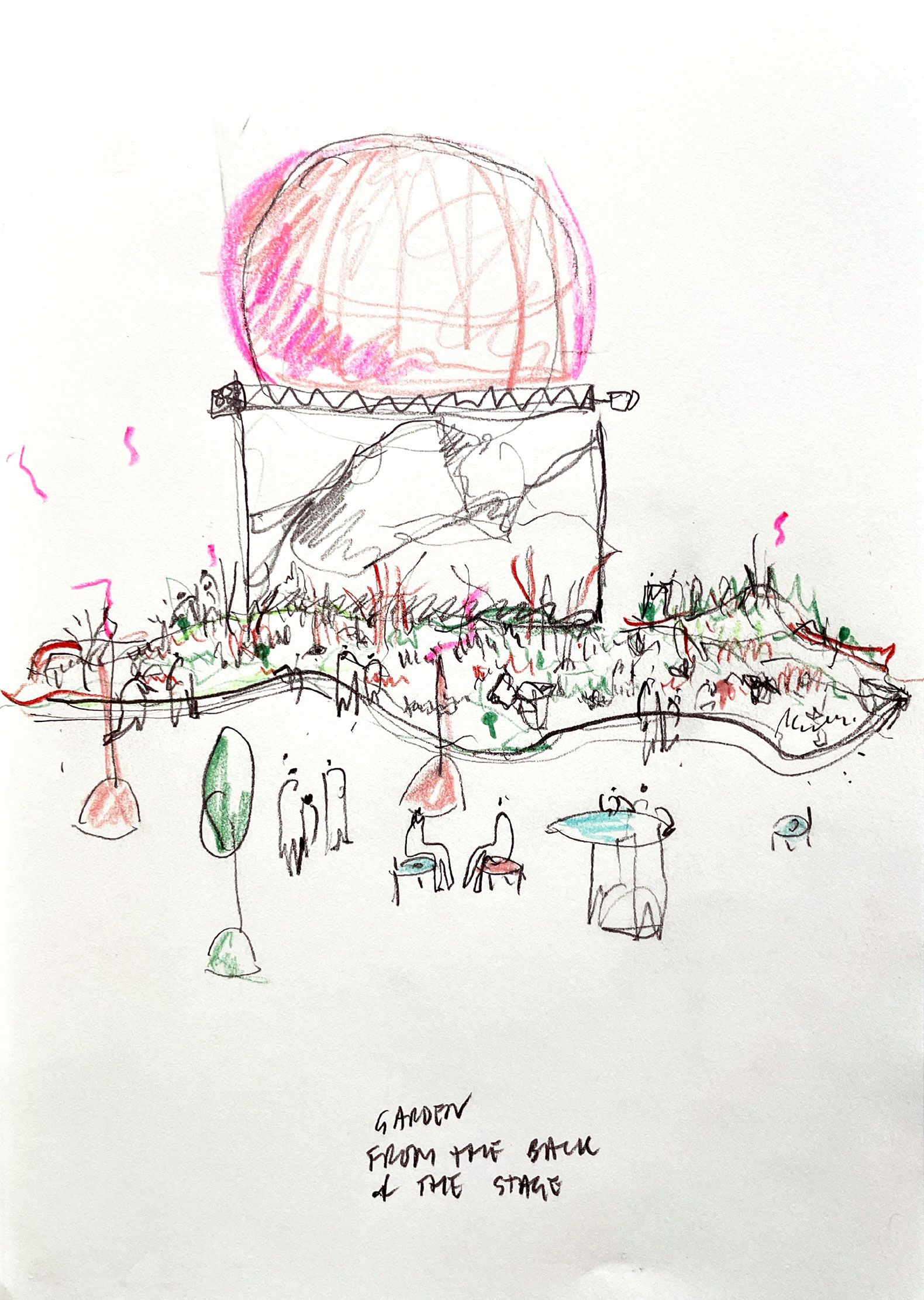
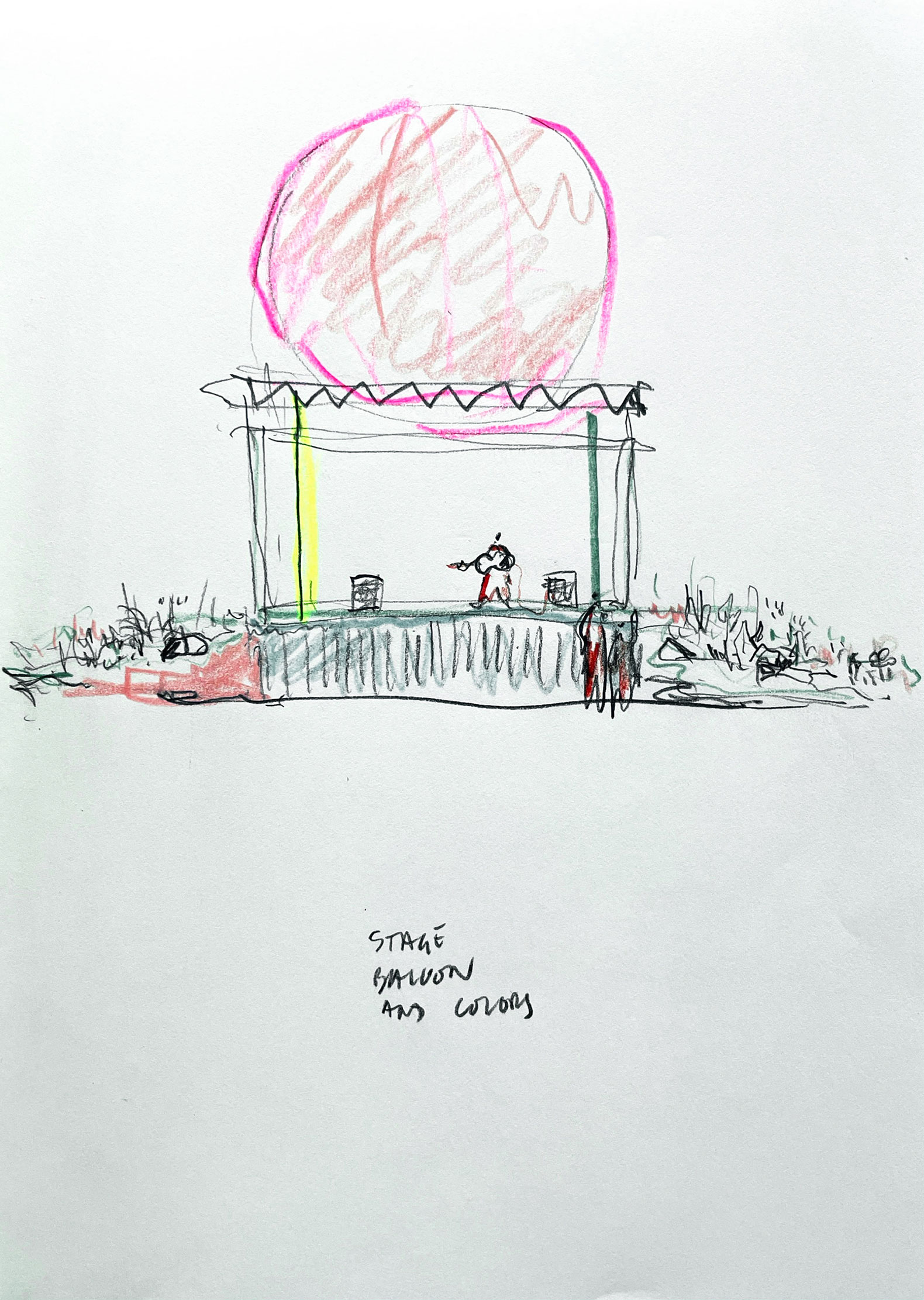
BUREAU draws on this historical typology to materialize "Flora Alpina," a living garden designed to generate specific experiences. These living elements coexist with inert, modular structures—stages, stands, bleachers, and kiosks—creating a festive and welcoming atmosphere.

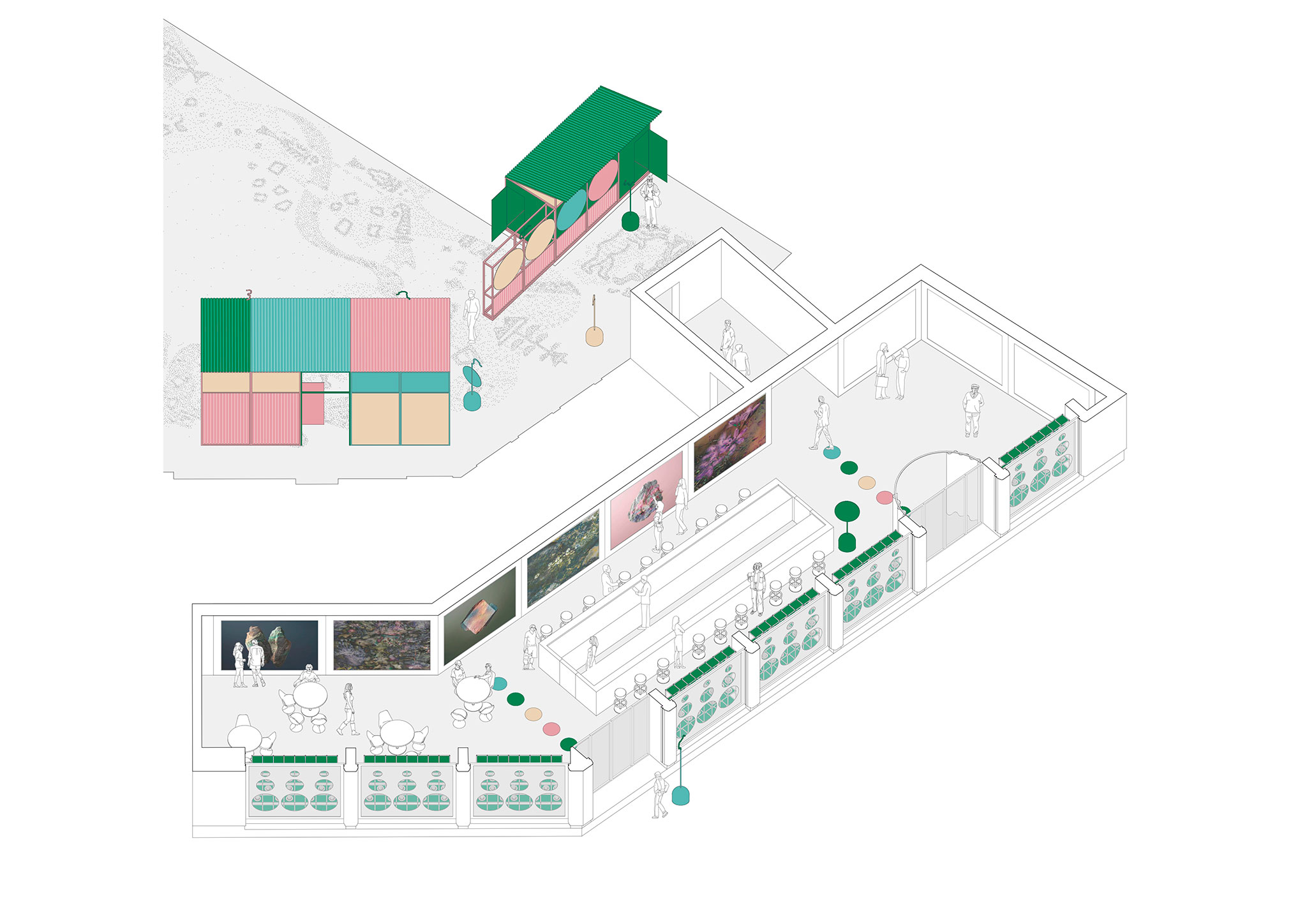
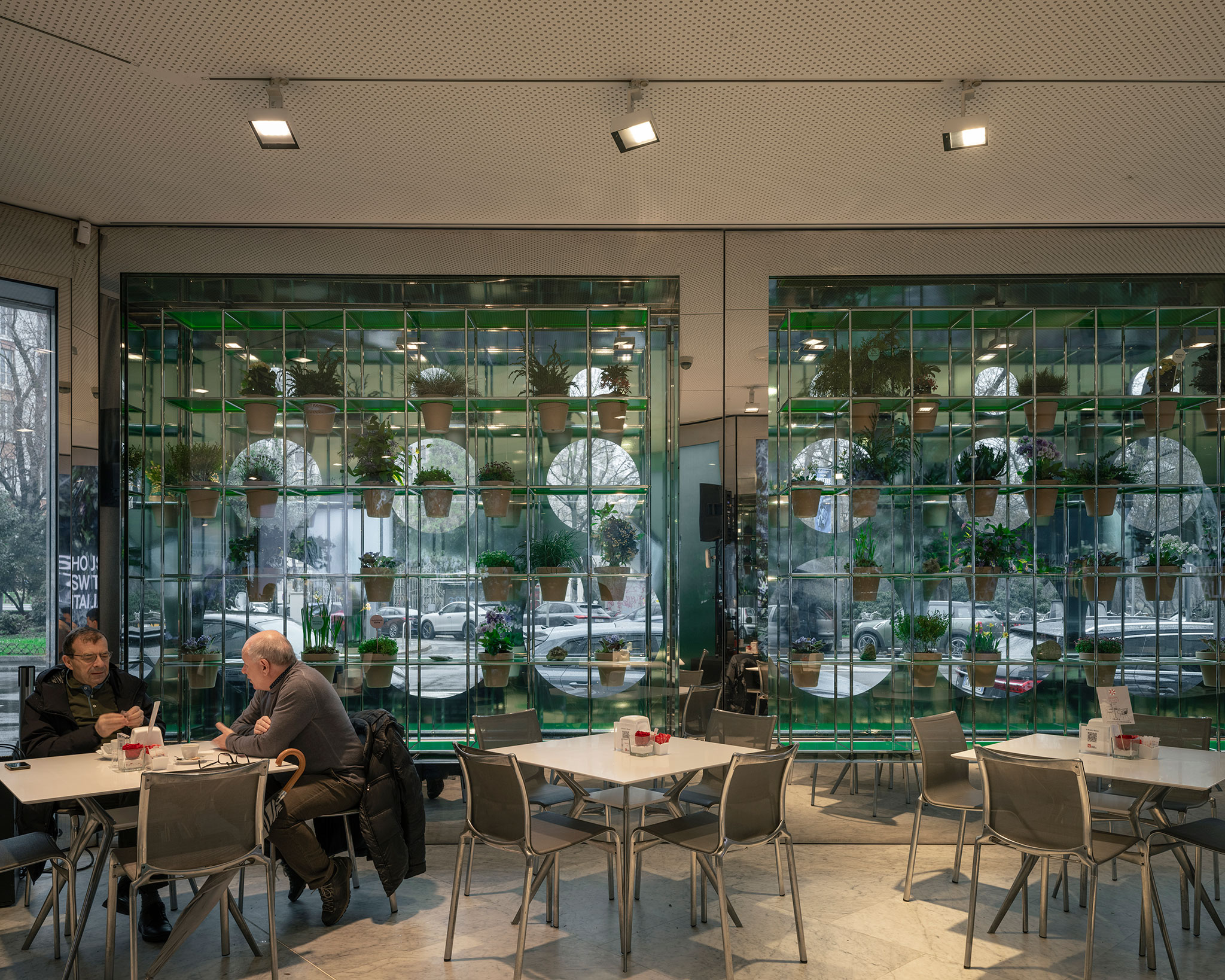
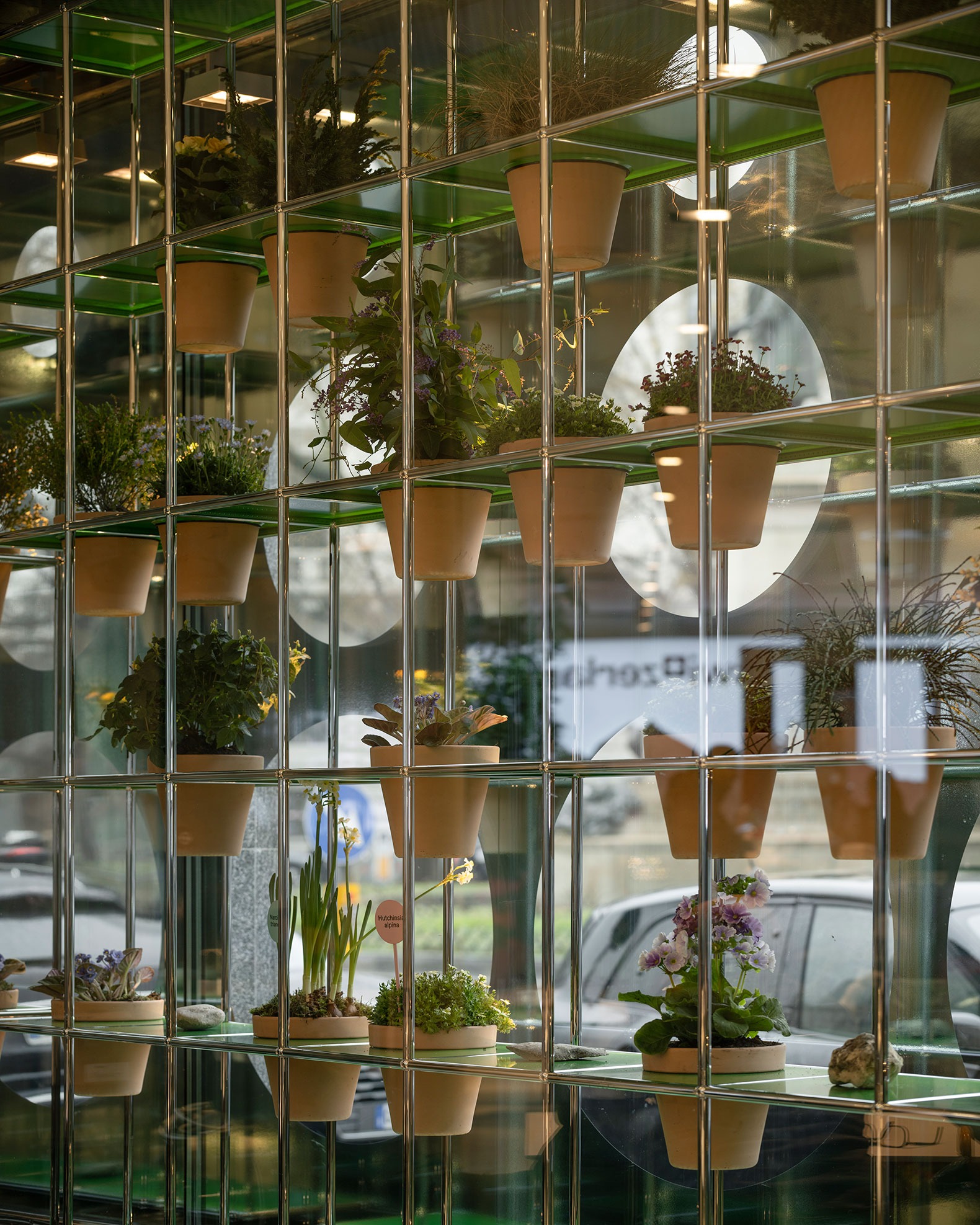
The garden-house, the heart of the Swiss community at the Games, extends into the "Swiss Corner" restaurant, where the scenography envelops visitors in an atmosphere of light boxes, rock fragments, and floral arrangements that celebrate the vital role of plants in sport, medicine, and culture.
"Flora Alpina" by BUREAU. Photograph by Dylan Perrenoud.

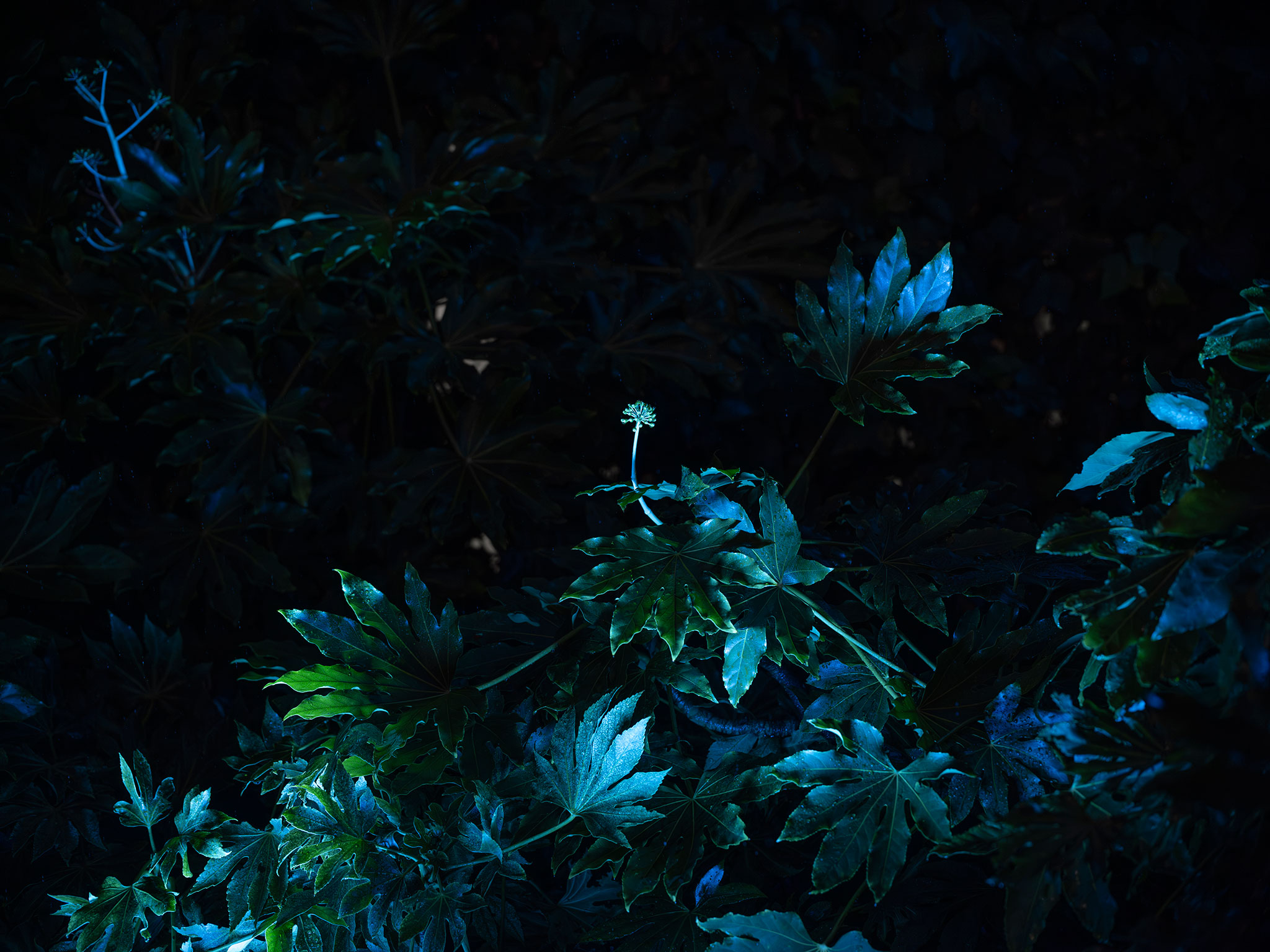
"Flora Alpina" by BUREAU. Photograph by Dylan Perrenoud.

Project description by BUREAU 

Switzerland is a garden. If we consider that the political borders are the real edge of a country, then Switzerland can accept the definition of an "Hortus Conclusus" the Latin term that defines the garden origin in occident. As any garden, it has limits, it is well defined yet porous and open to the elements, to life coming in and out of it, to climate, wind, sun, rain.

Most cultures have developed gardens as representational fragments of the world. If the most well known in occident are Japanese, French and English, there are numerous cultural variations of this historic typology.

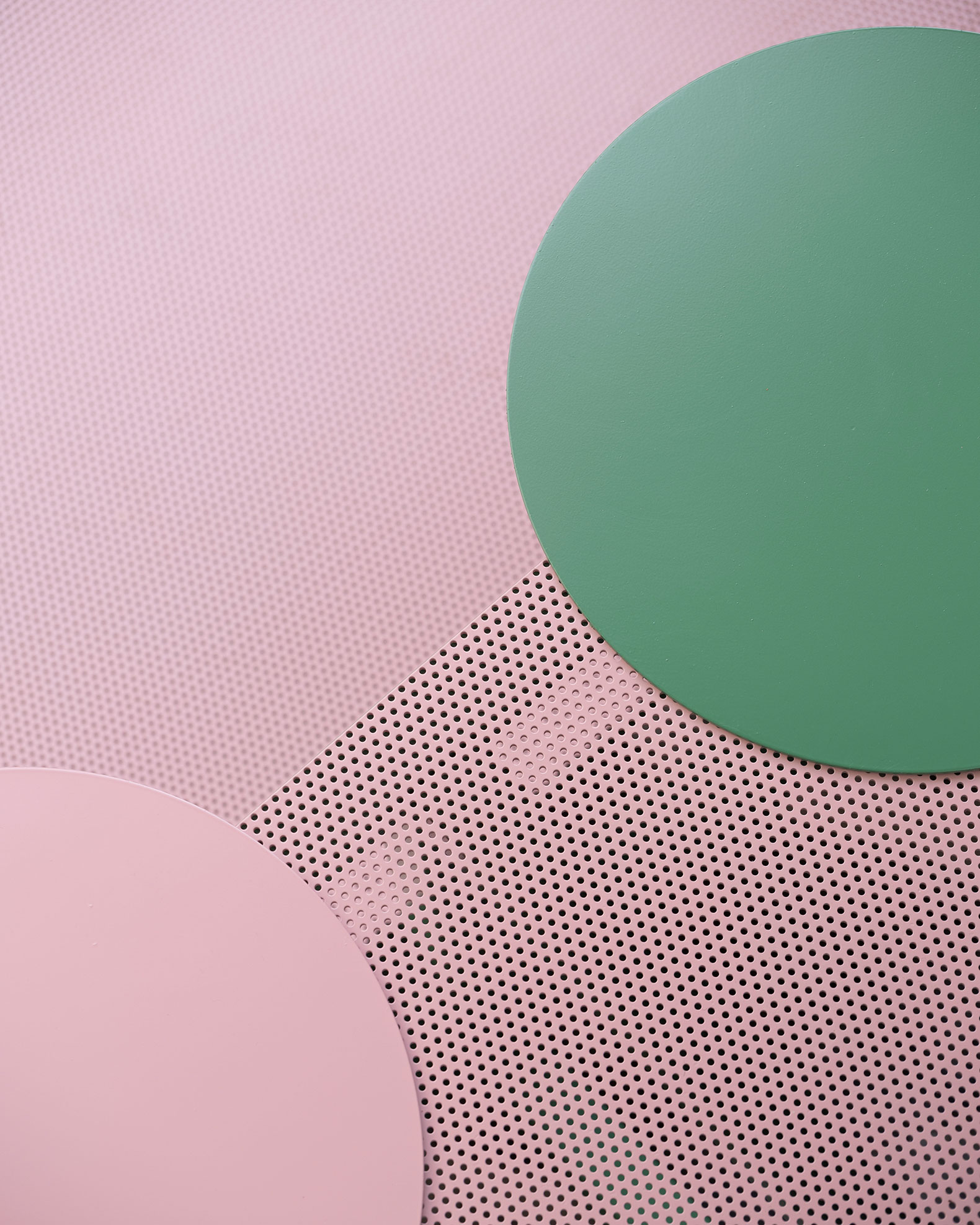
"Flora Alpina" by BUREAU. Photograph by Dylan Perrenoud.

Gardens are about gathering a certain group of plants to create compositions and experiences in a precise and living environment. But not only. As a precise representation of the world, they gather living and non-living features. Rocks and architectural follies, for example, are very well-known characters of different garden cultures. These follies exist to accompany the experience, enhance or articulate certain moments, sceneries and create small shelter that can trigger imaginary moments.

As a three-dimensional representation, gardens have a very strong relation to the art world with the particularity of an art that has to dialogue with living creatures, the world of plants. These porous enclosed spaces appeal the imaginary, as they are an extract of the world, yet they create a distance from it, to meditate, reflect, observe differently, as a small step aside.
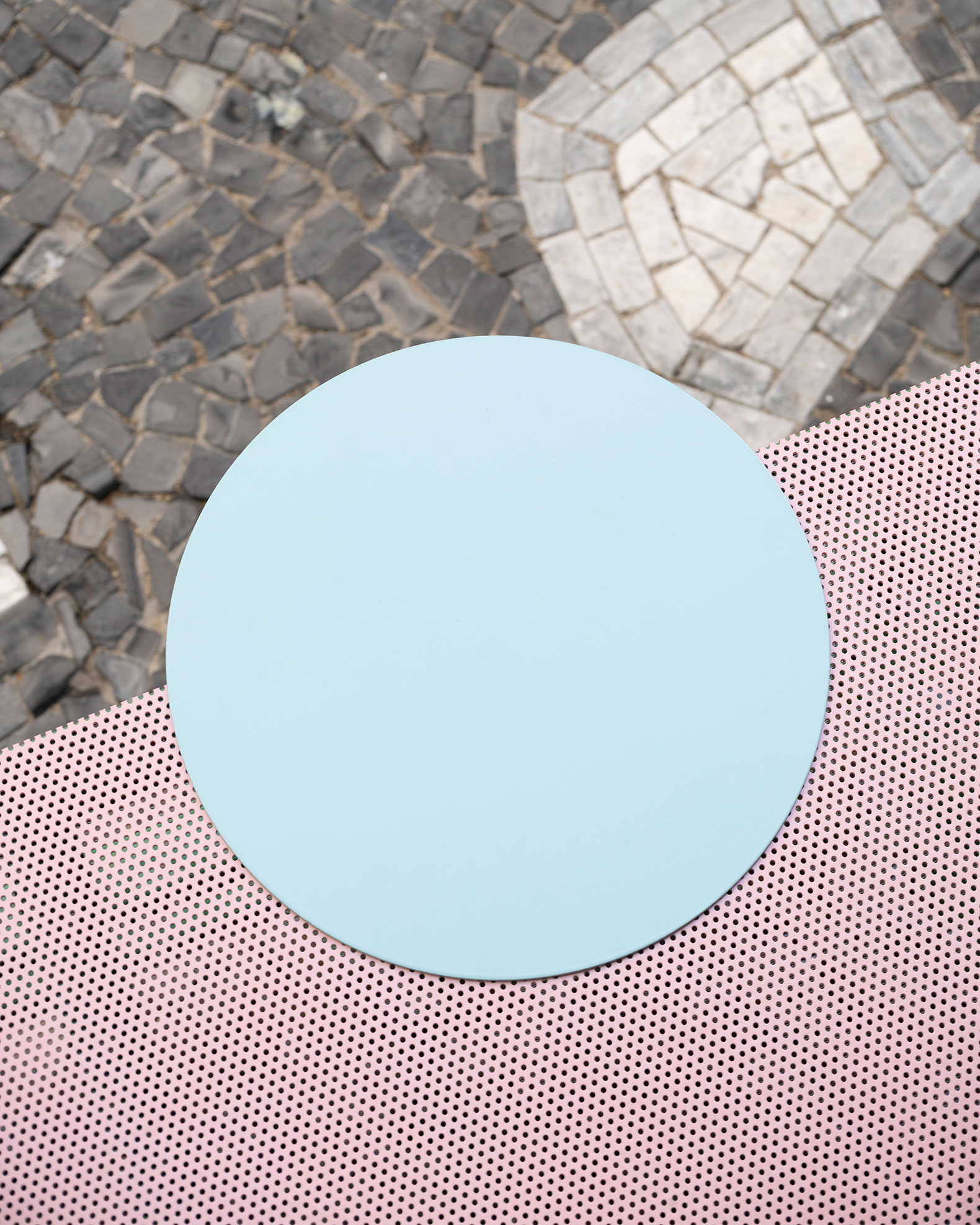
"Flora Alpina" by BUREAU. Photograph by Dylan Perrenoud.

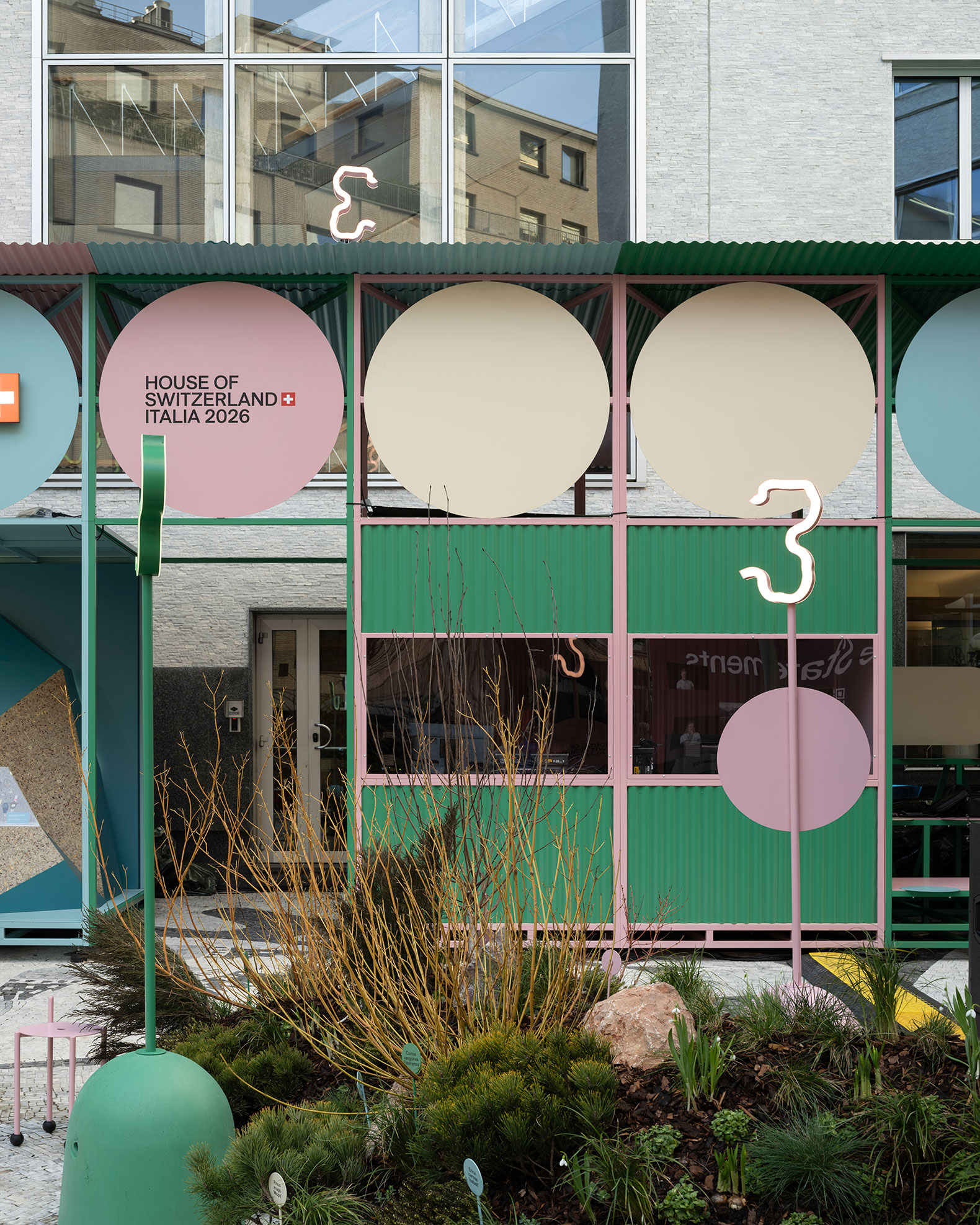
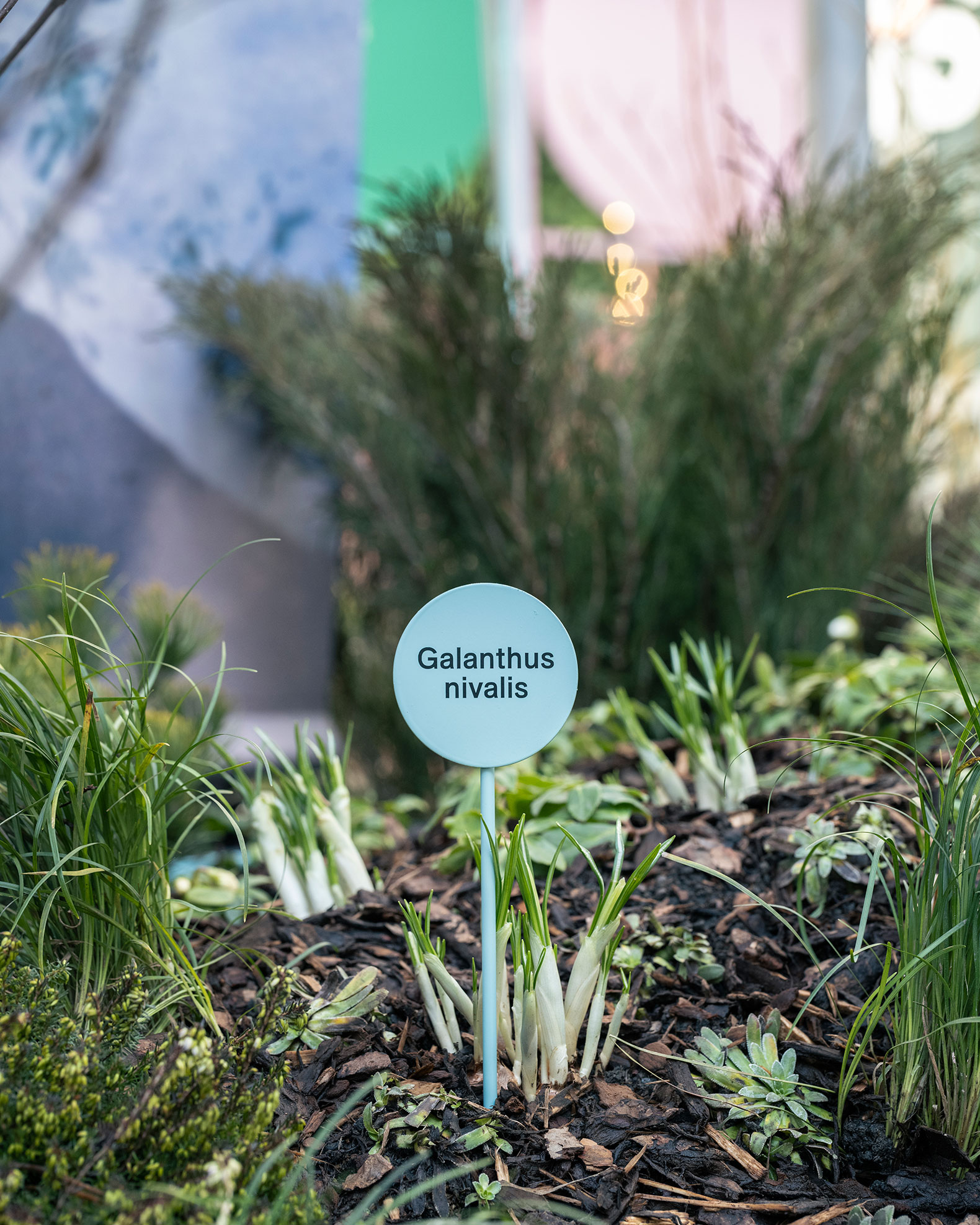
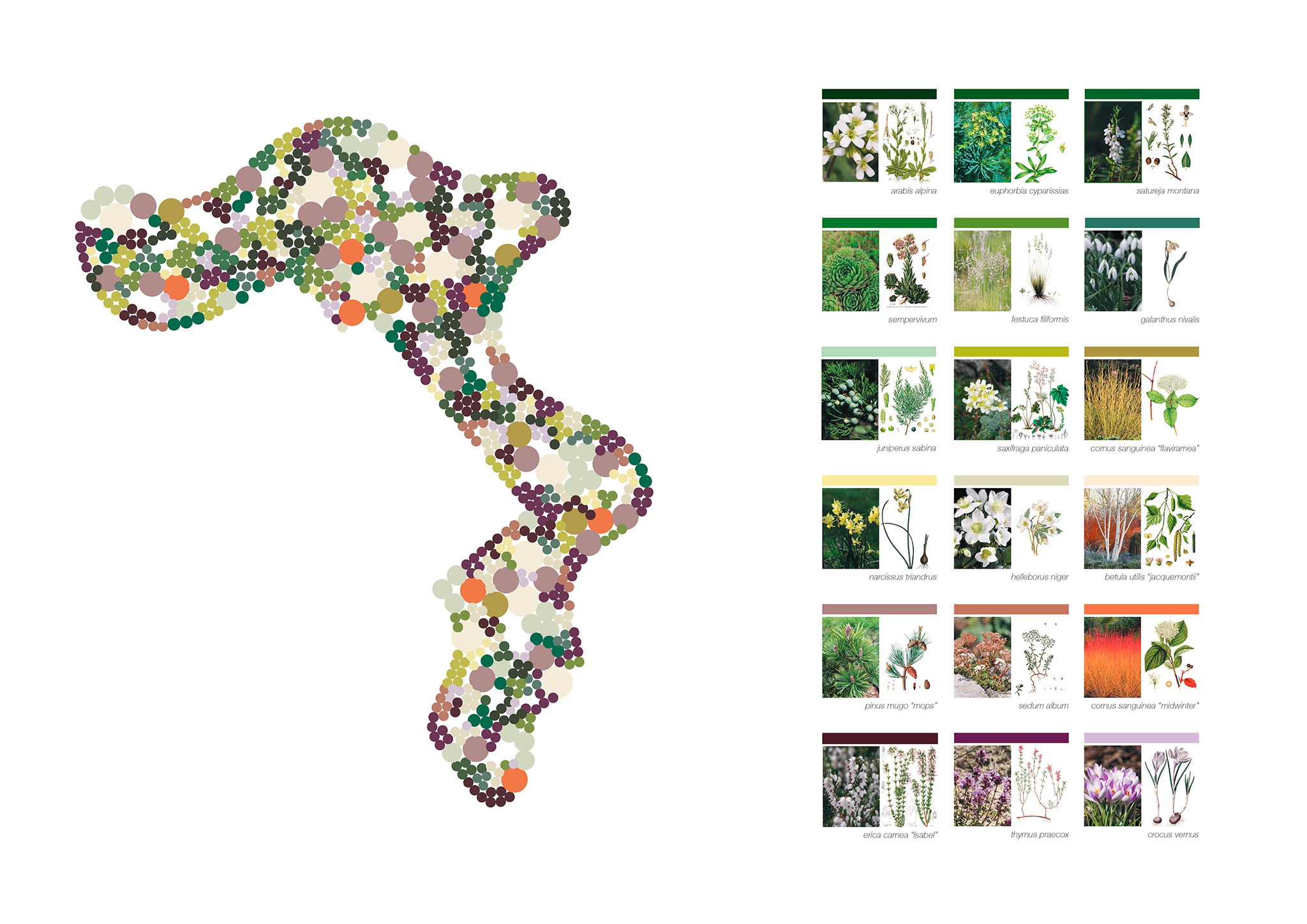
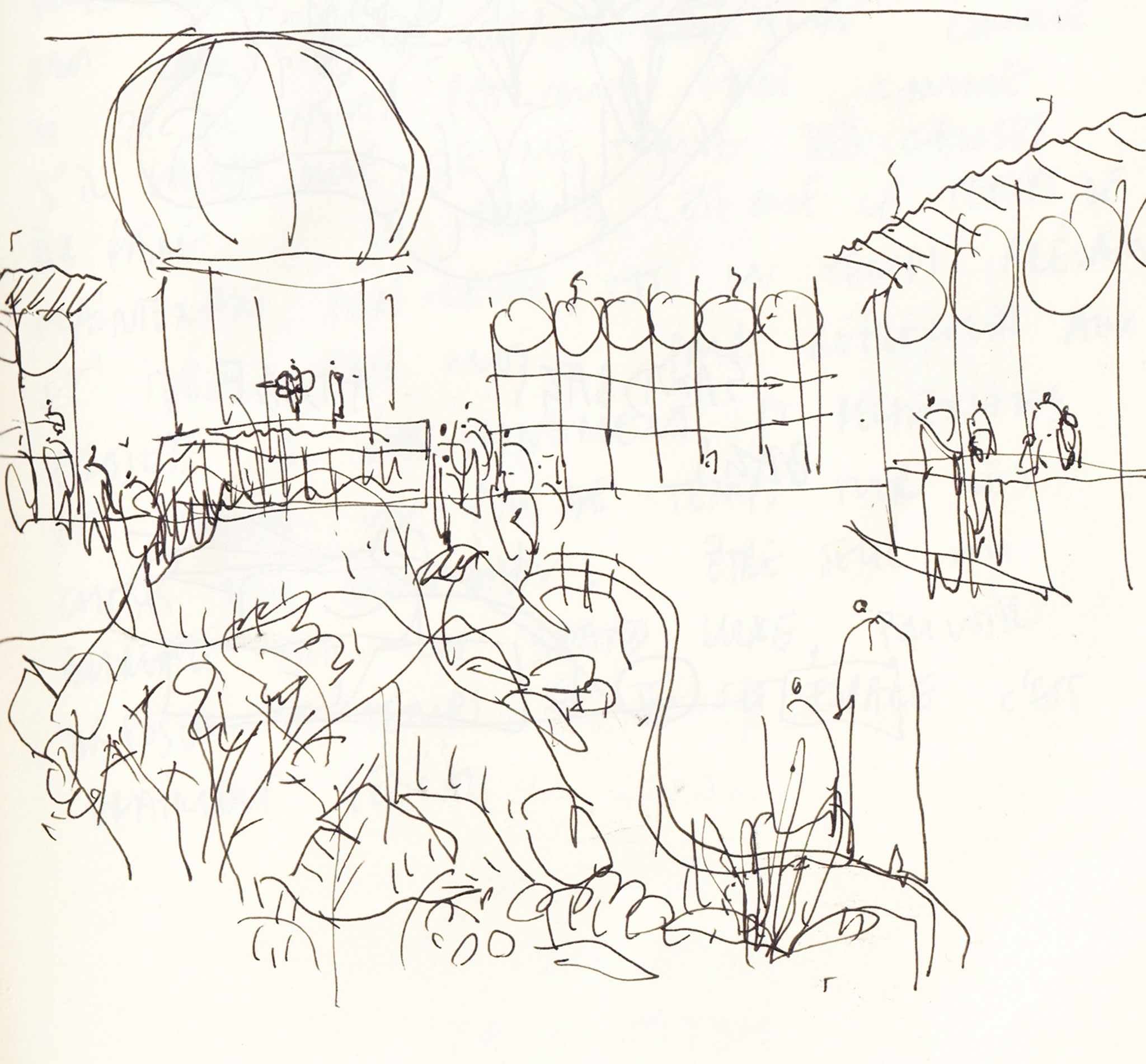
It is following this understanding of gardens that the Flora Alpina garden emerges. Within the Centro Svizzero’s courtyard, an alpine garden is at the heart of the installation of the House of Switzerland. Symbolically, it addresses the alpine culture that links two countries, Switzerland and Italy, as many others. Through this thematic approach, it proposes an experience to be lived during the Winter Olympic and Paralympic games.

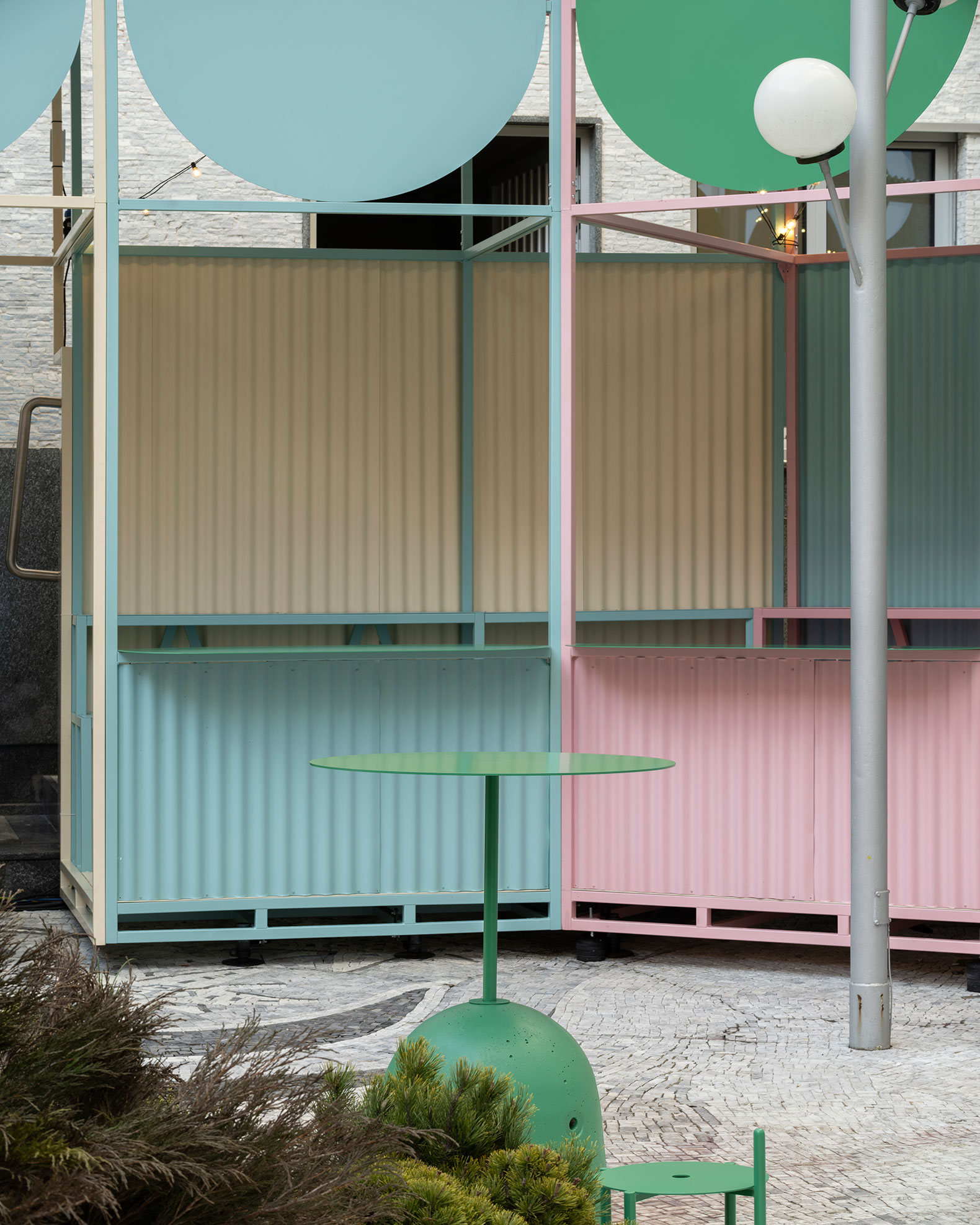
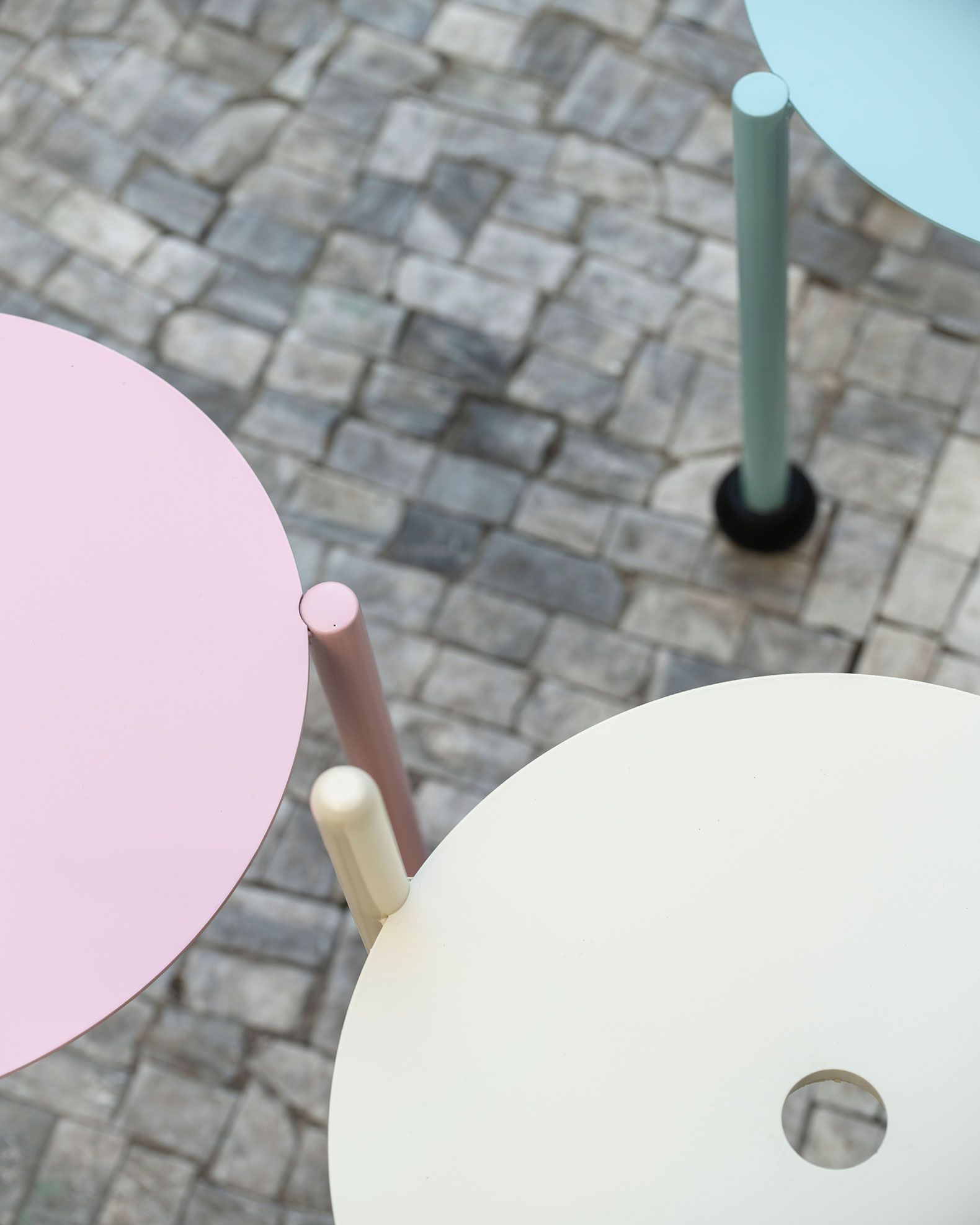
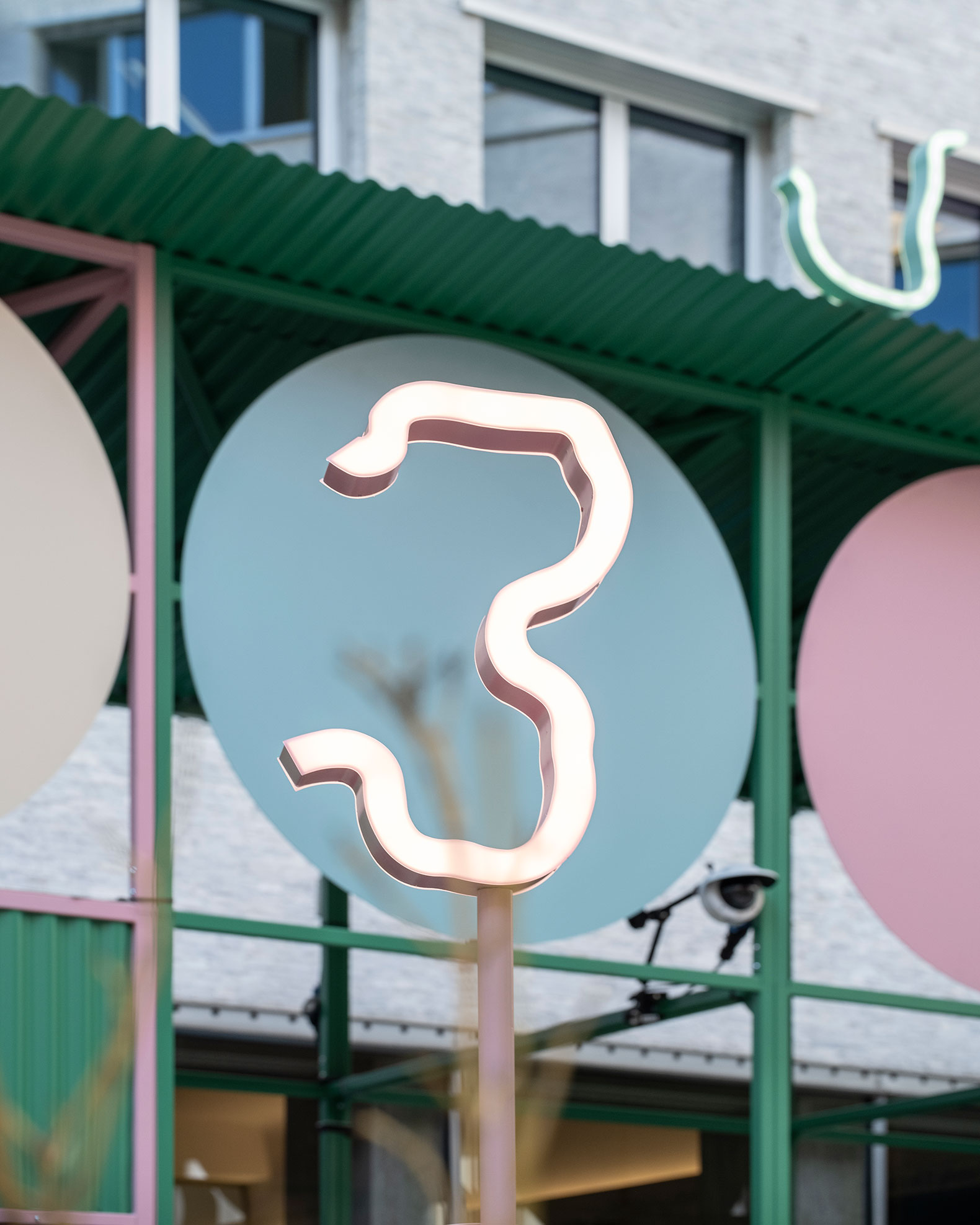
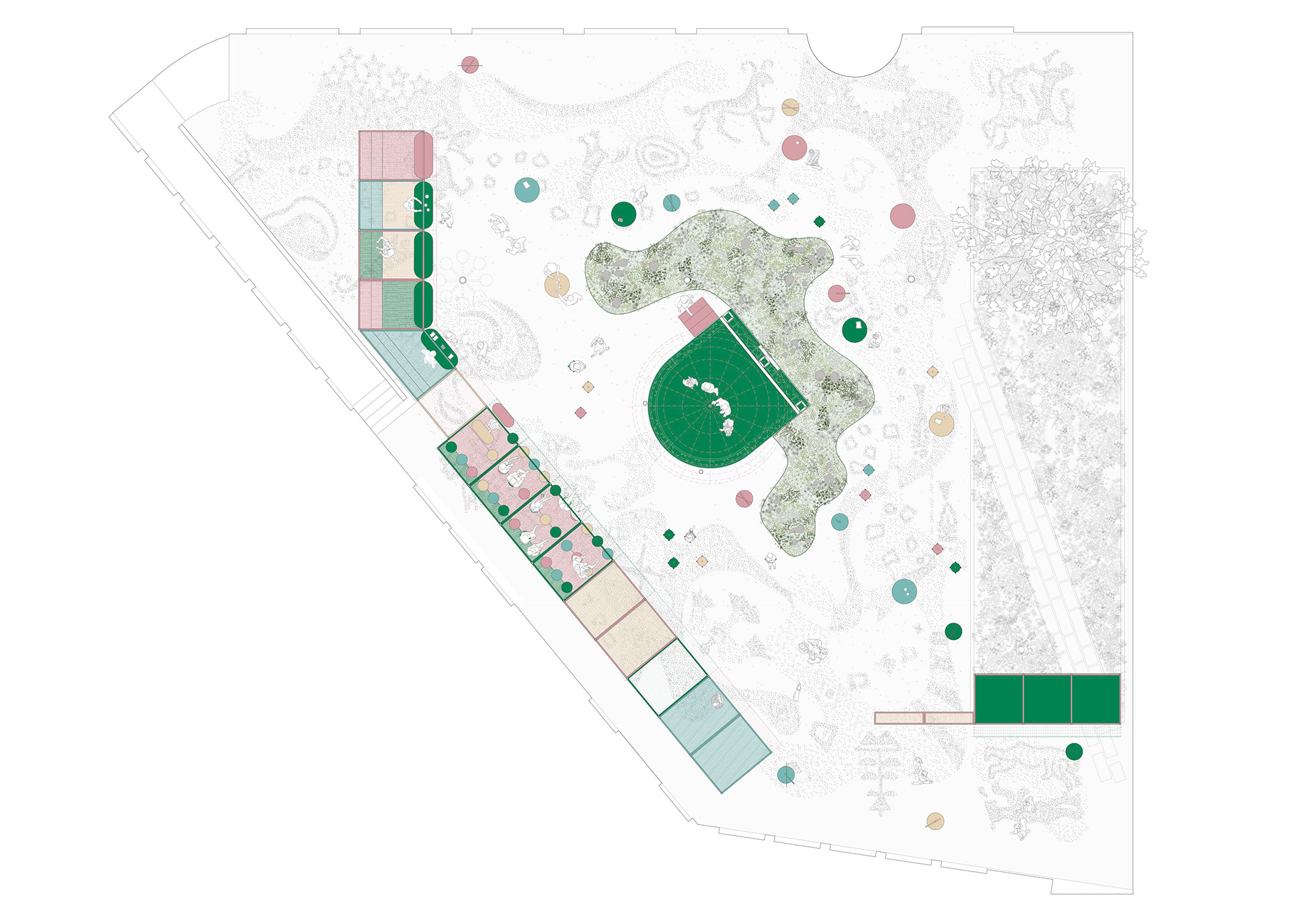
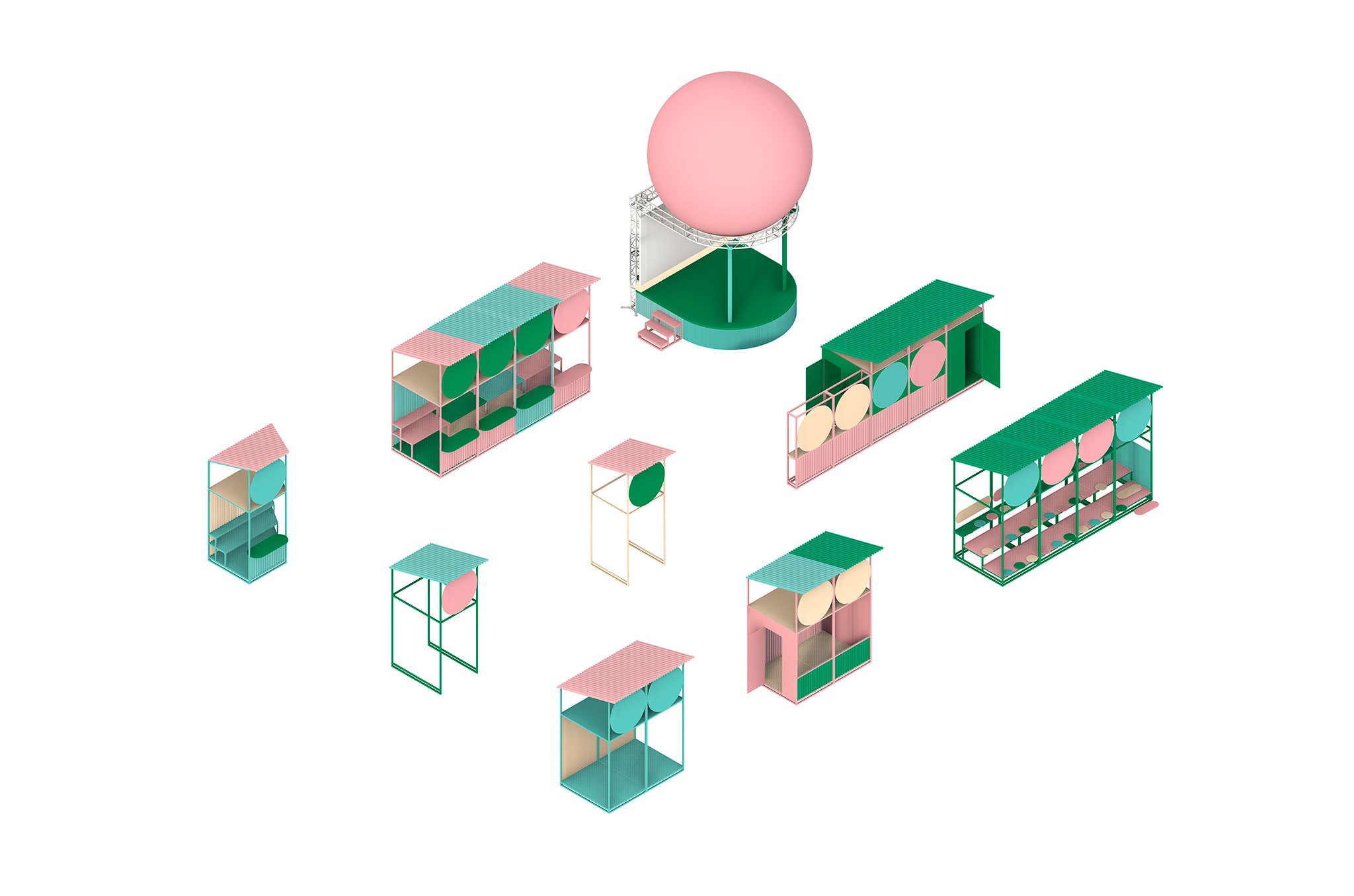
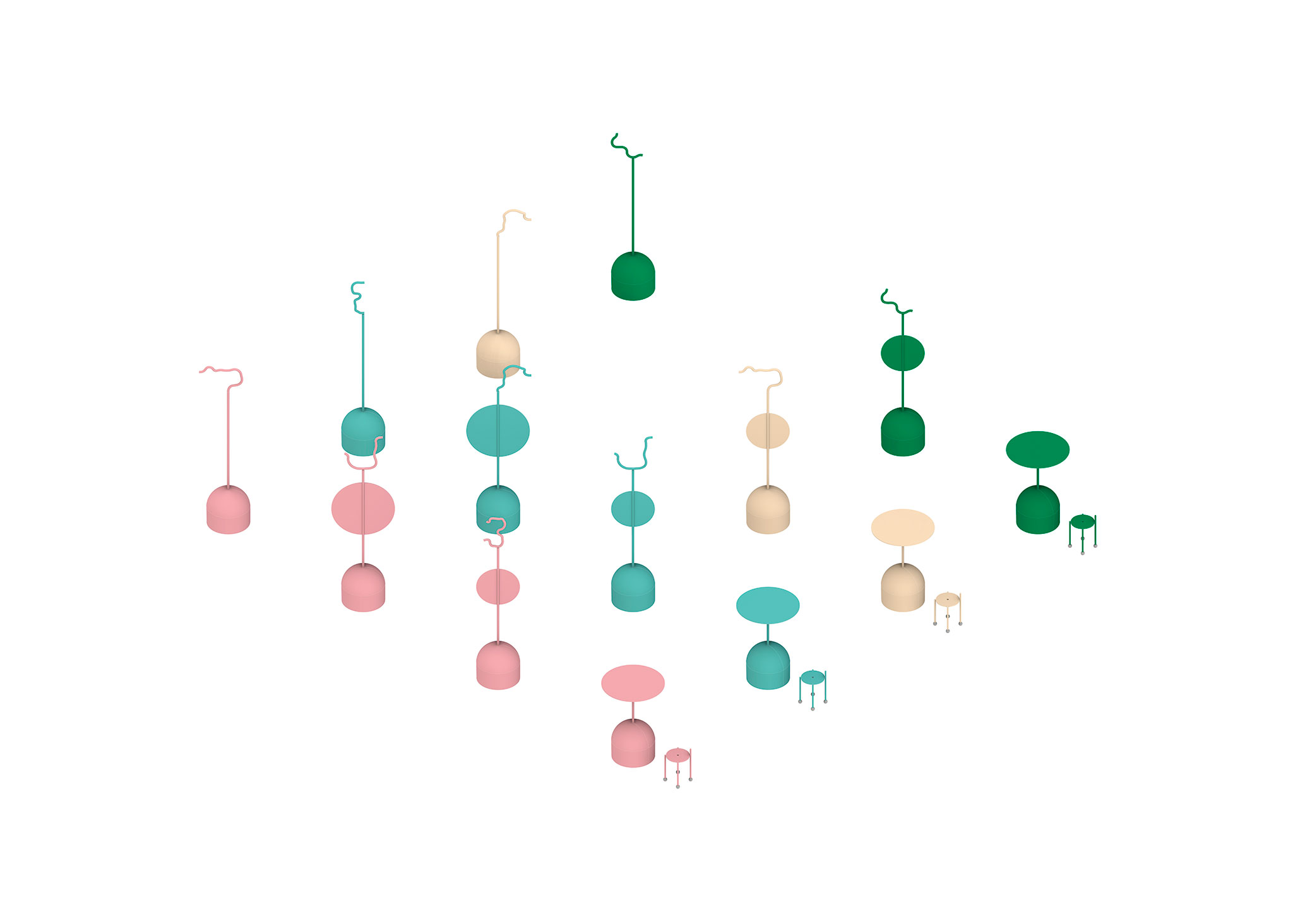
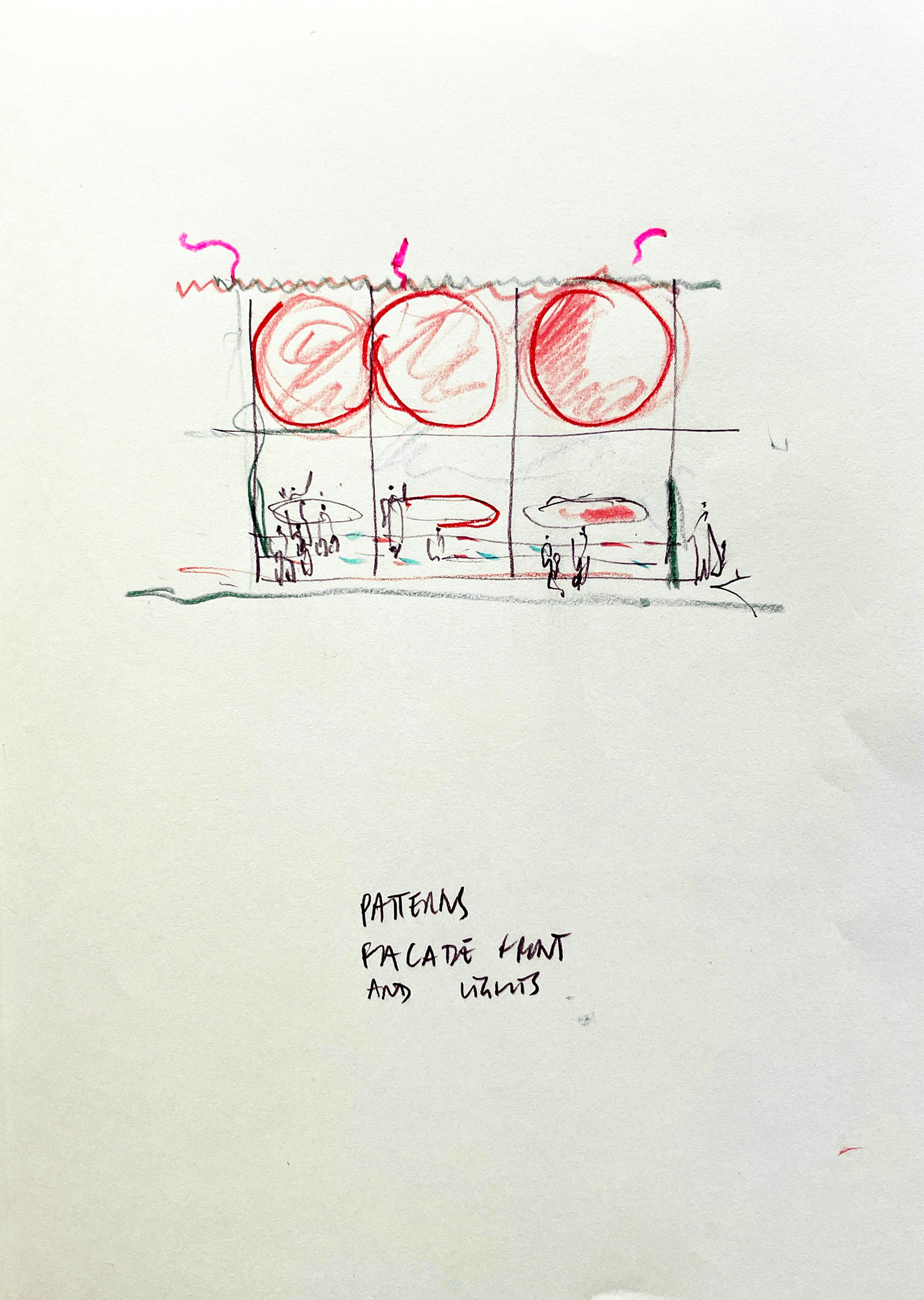
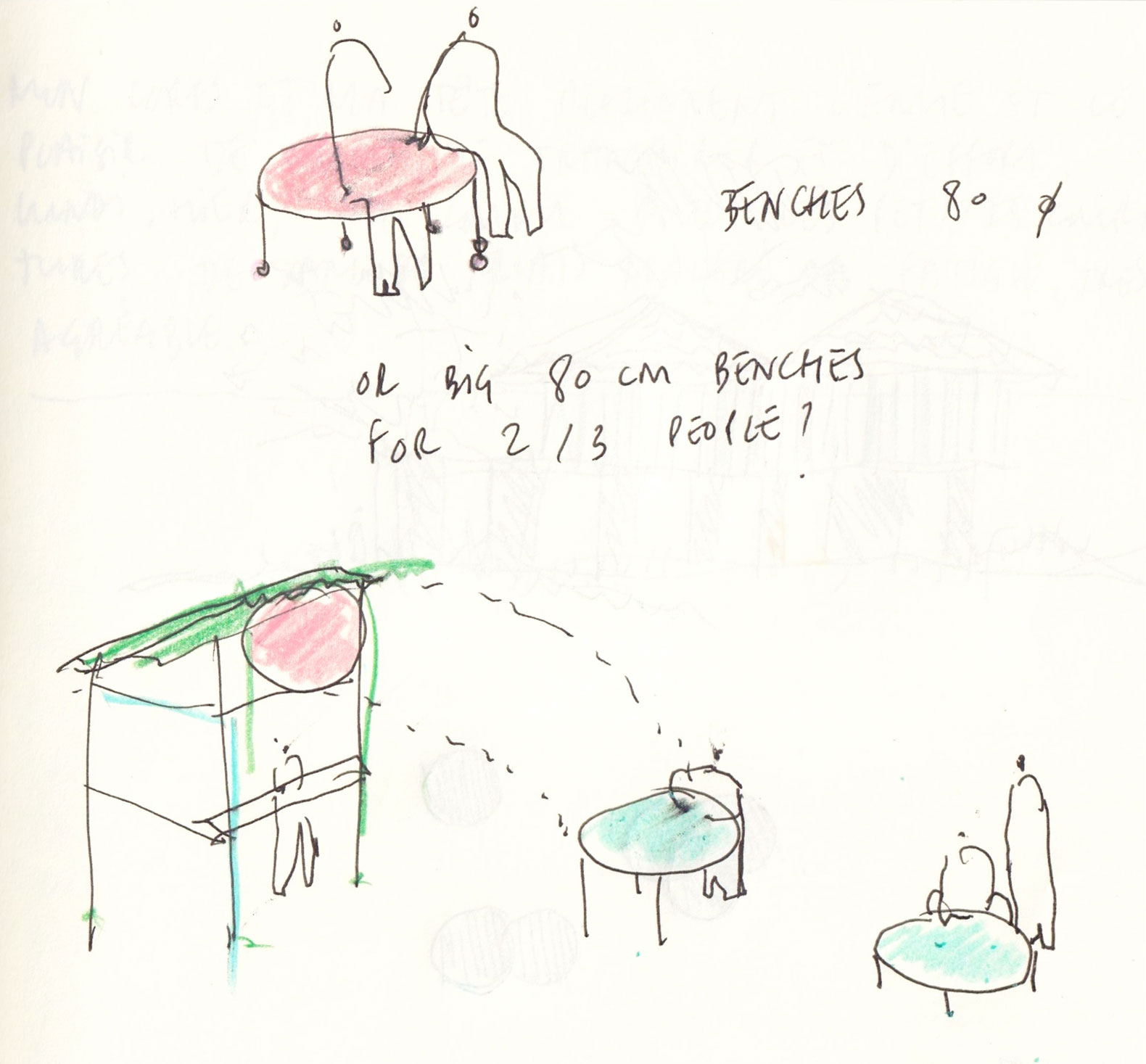
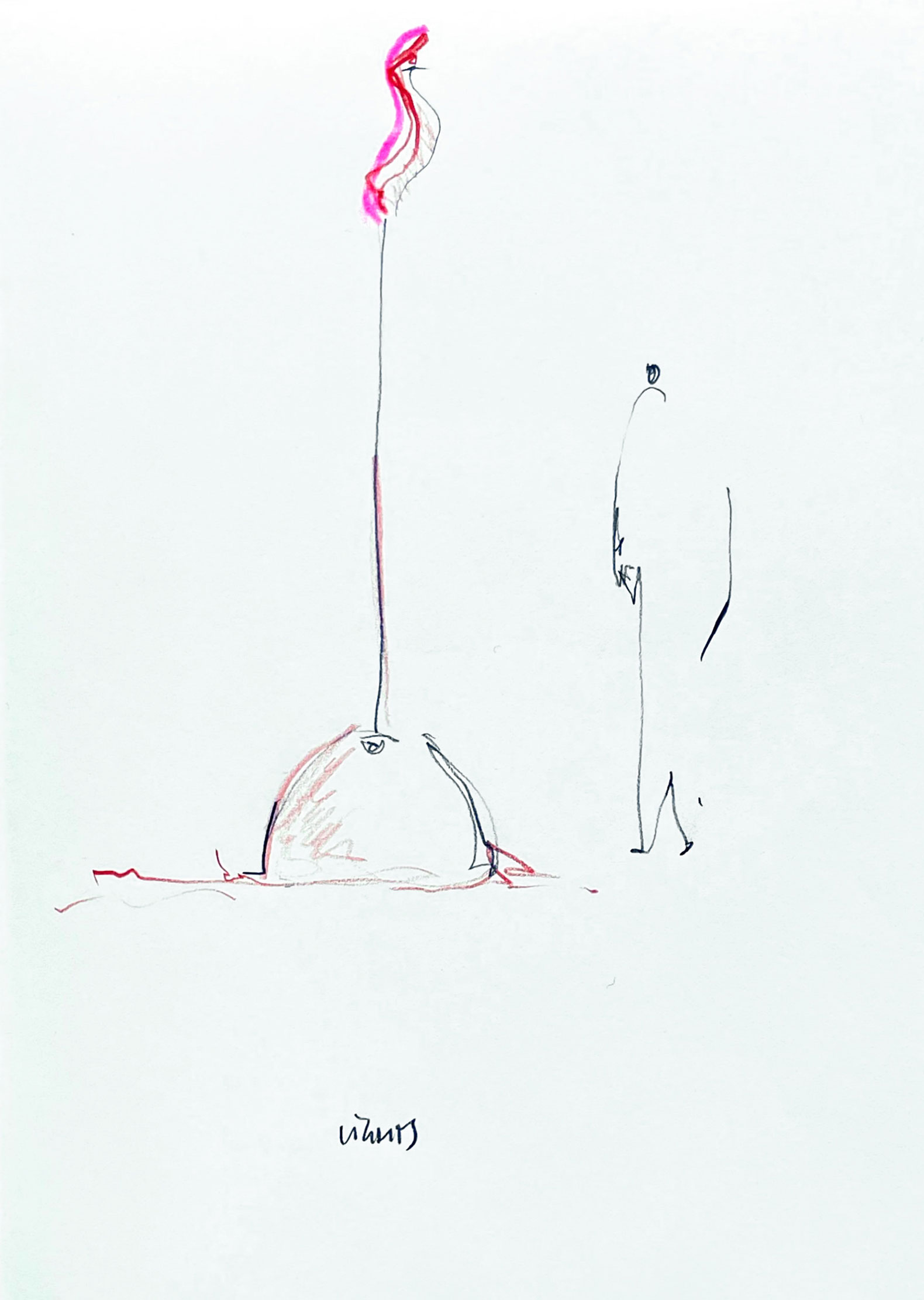
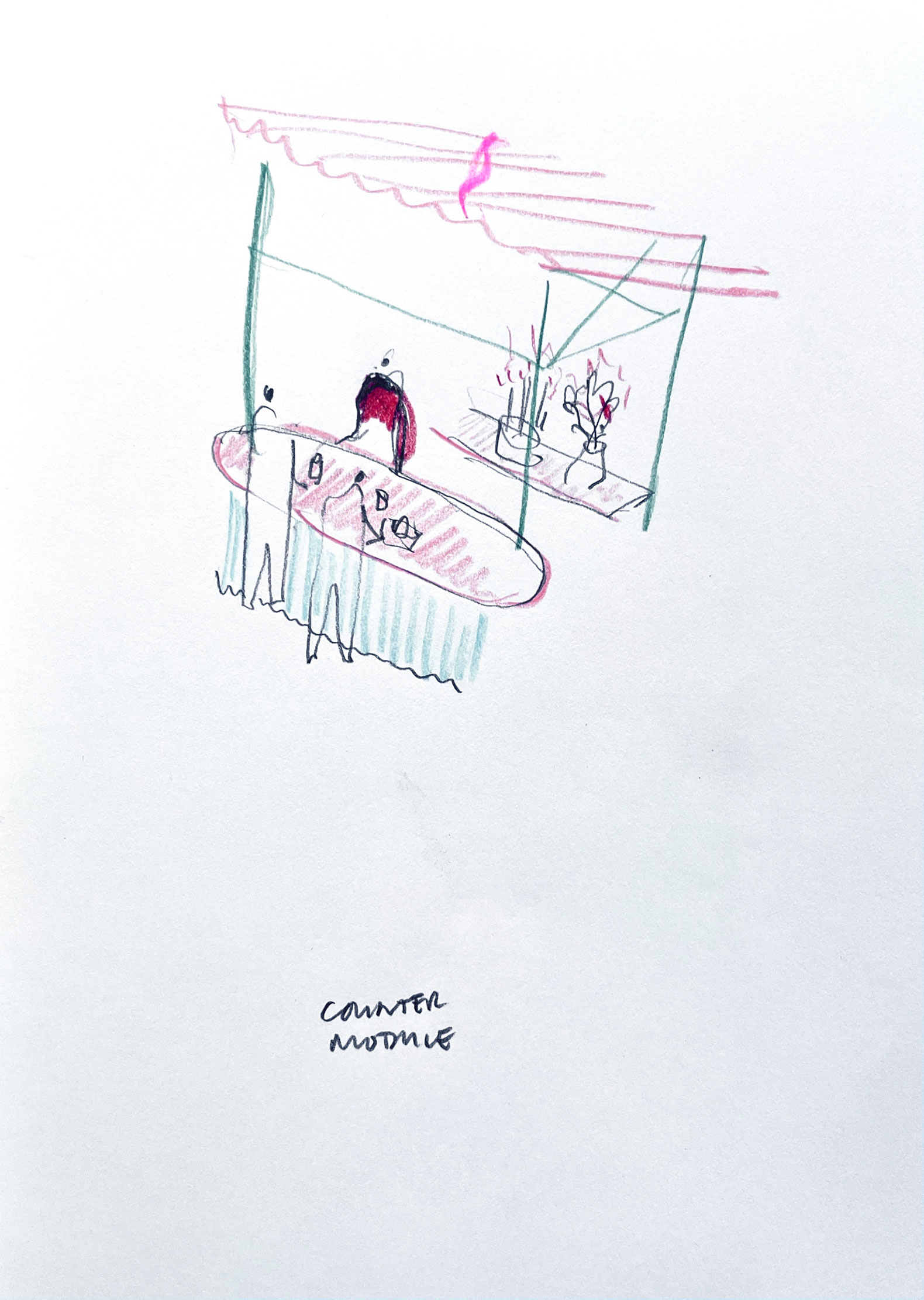
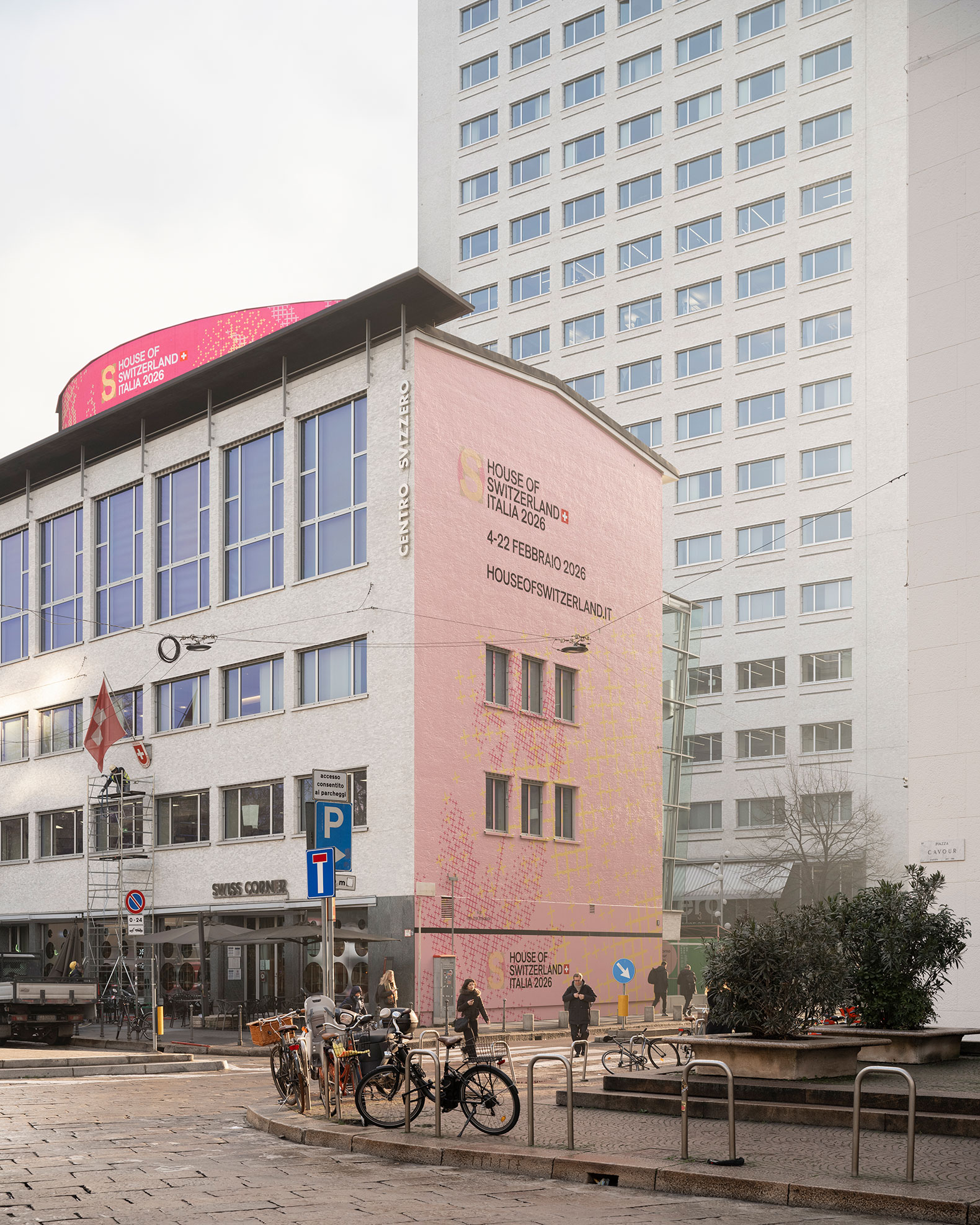
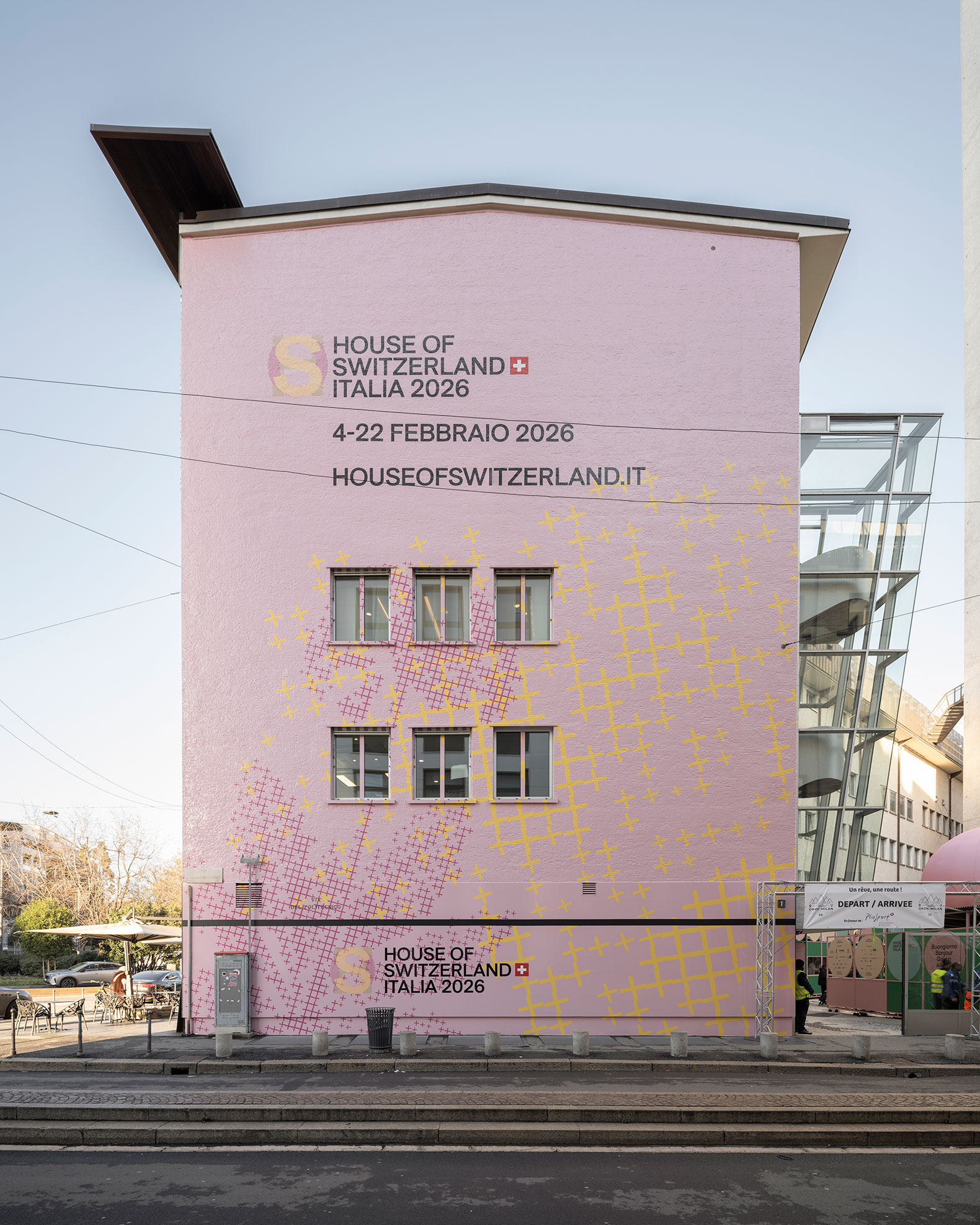
House of Switzerland is a garden. For a short moment, two weeks, it will be the center of a variable community that comes to celebrate the games or just to hung around and live this singular moment in the center of Milano before they find another place to stay. This other life is imbedded in the design process. The garden-house proposes a certain mood, rather gay, for a welcoming moment. Precis décor and patterns, colored modules that host diverse functions: stage, tribunes, bleachers, kiosks, market stalls. Other freely drawn patterns become lighting features, supported by the famous Milano street panettones that the town knows so well. They are part of a family of furniture: seating stools, tables, signage support.
"Flora Alpina" by BUREAU. Photograph by Dylan Perrenoud.

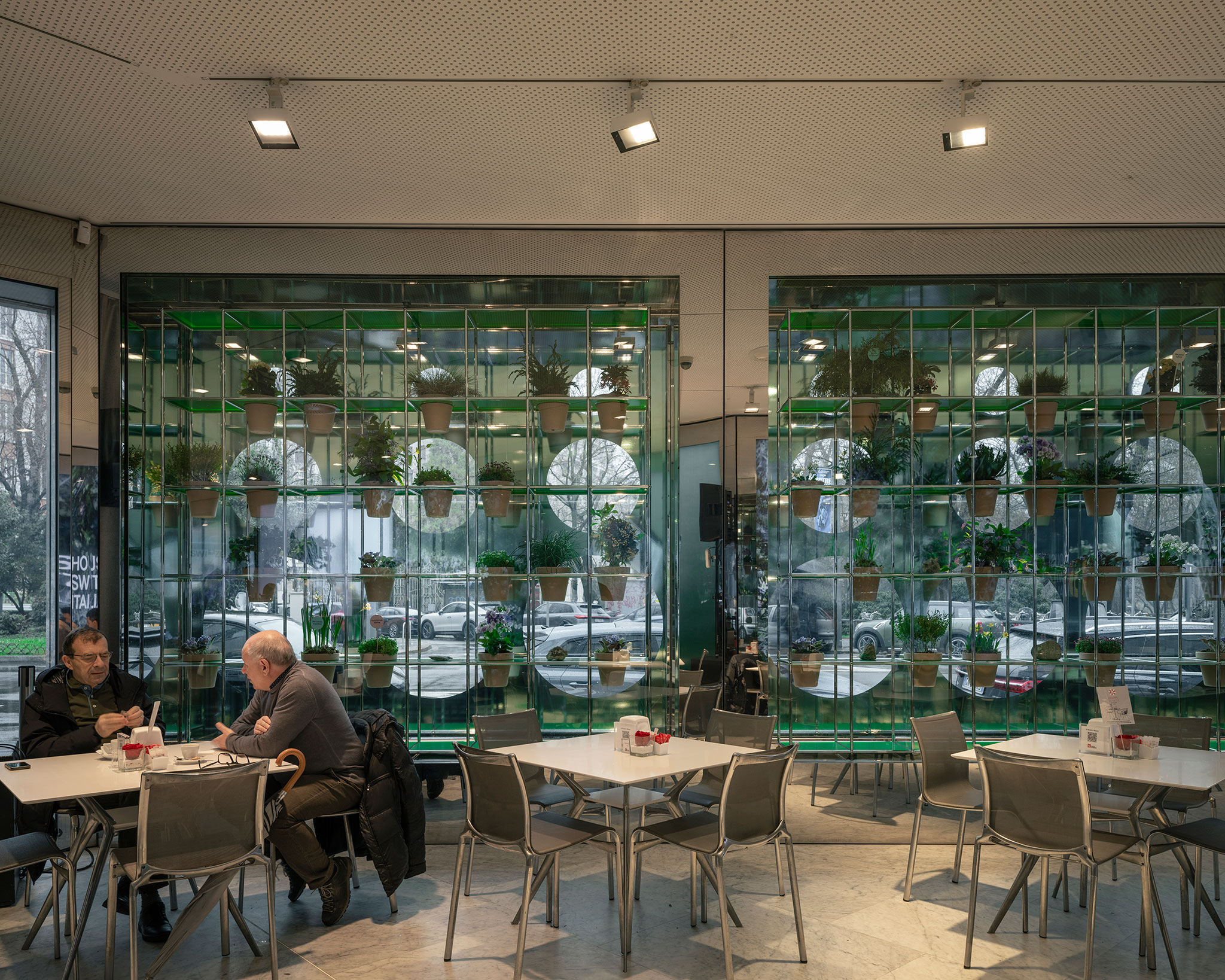
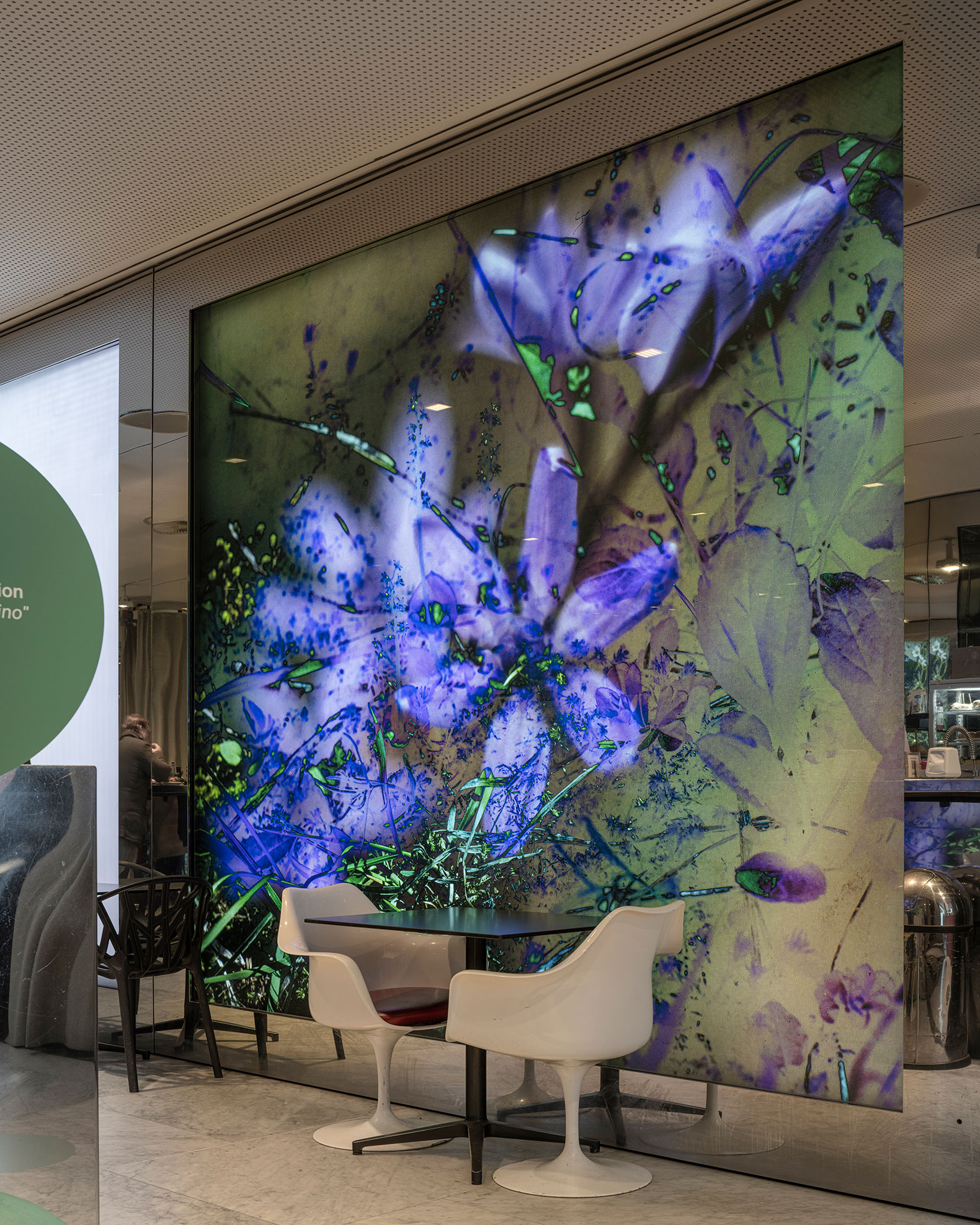
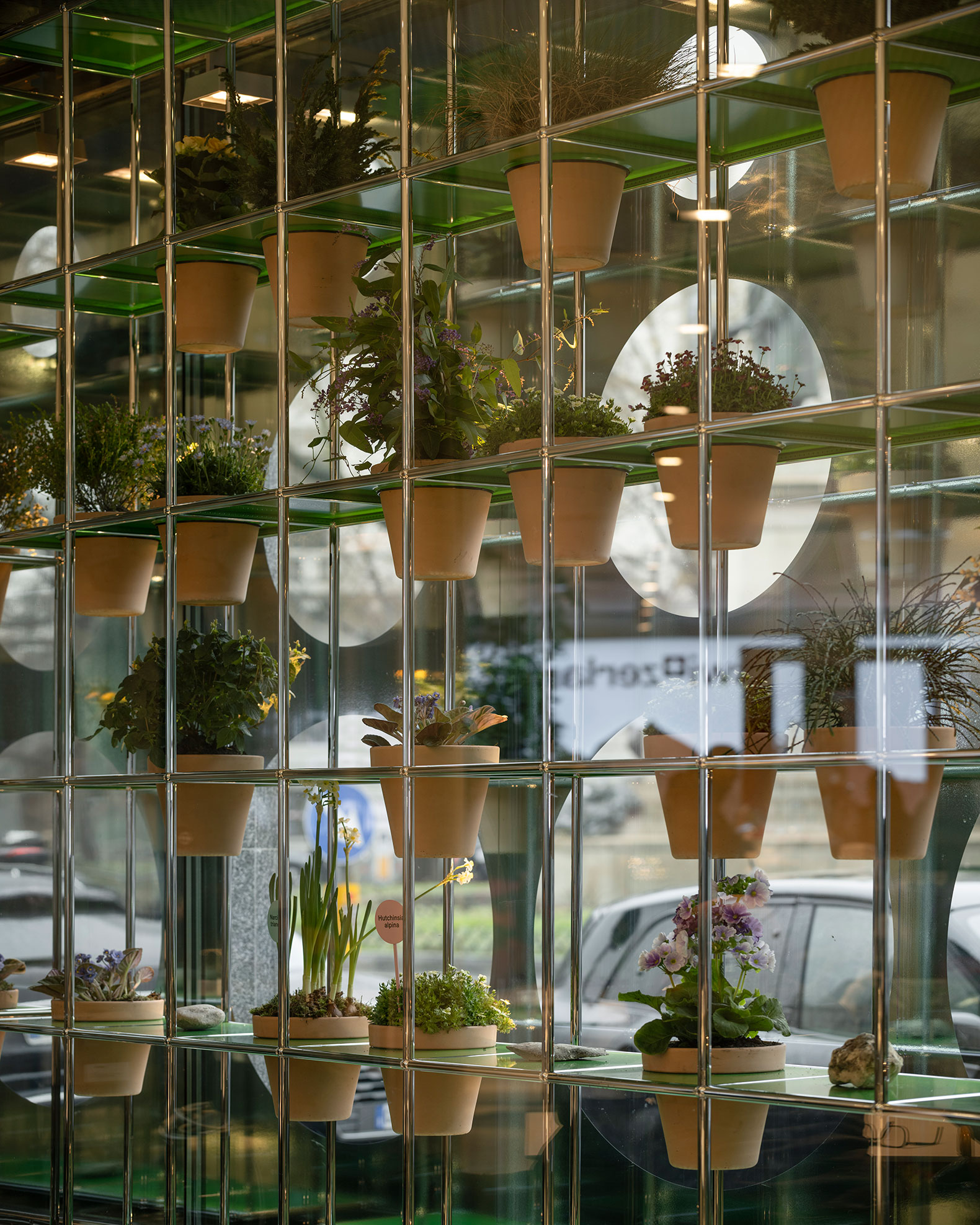
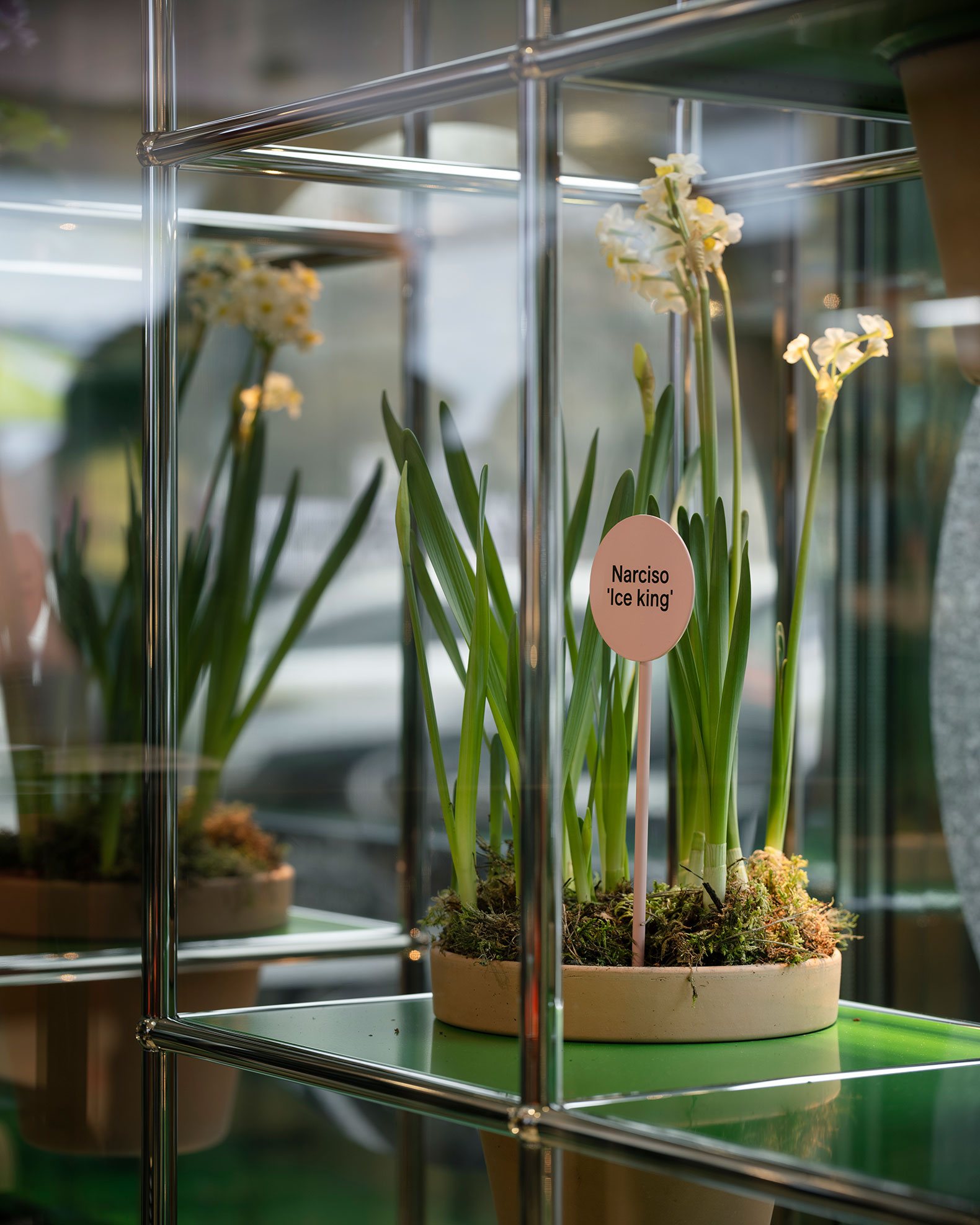
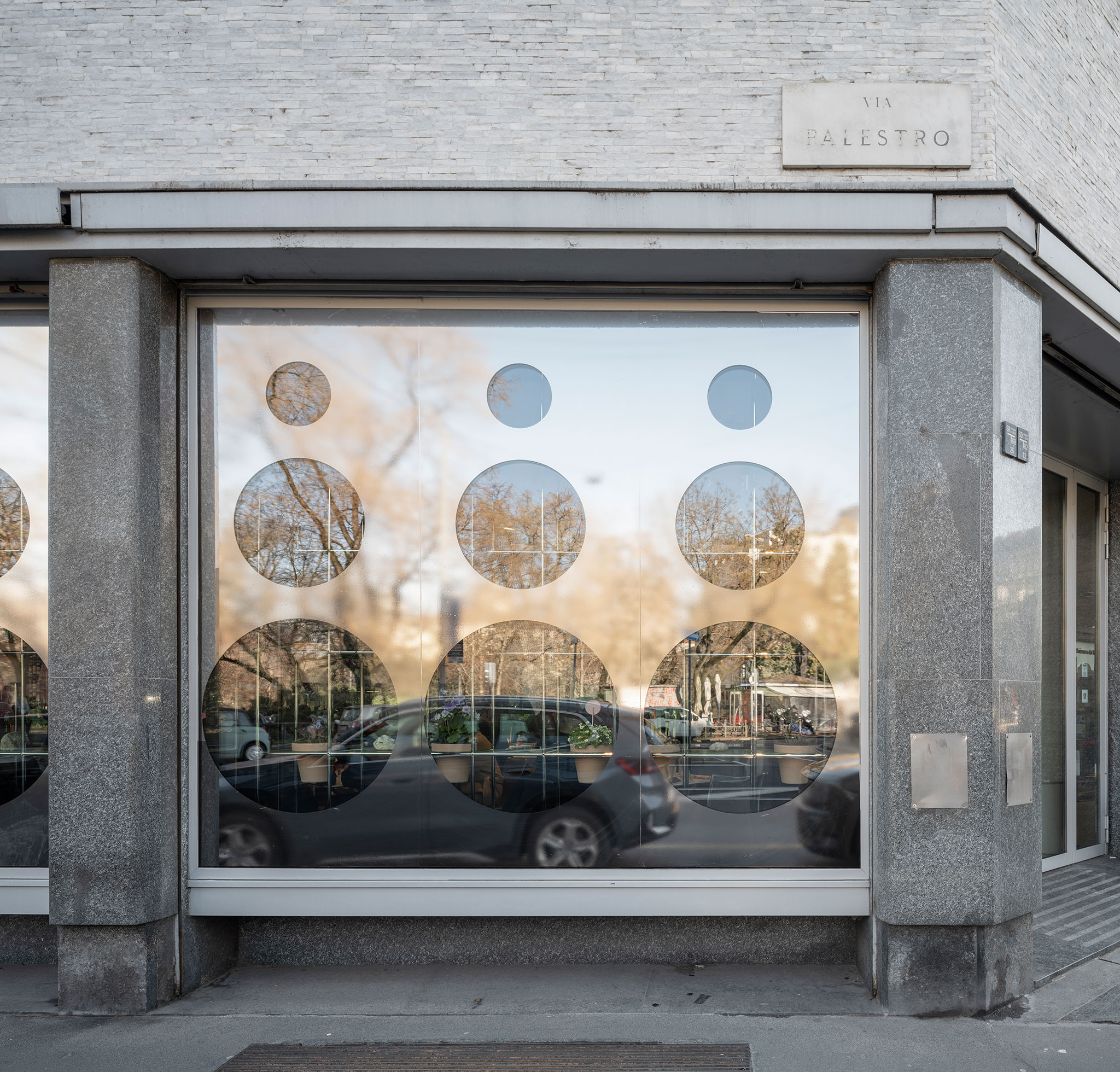
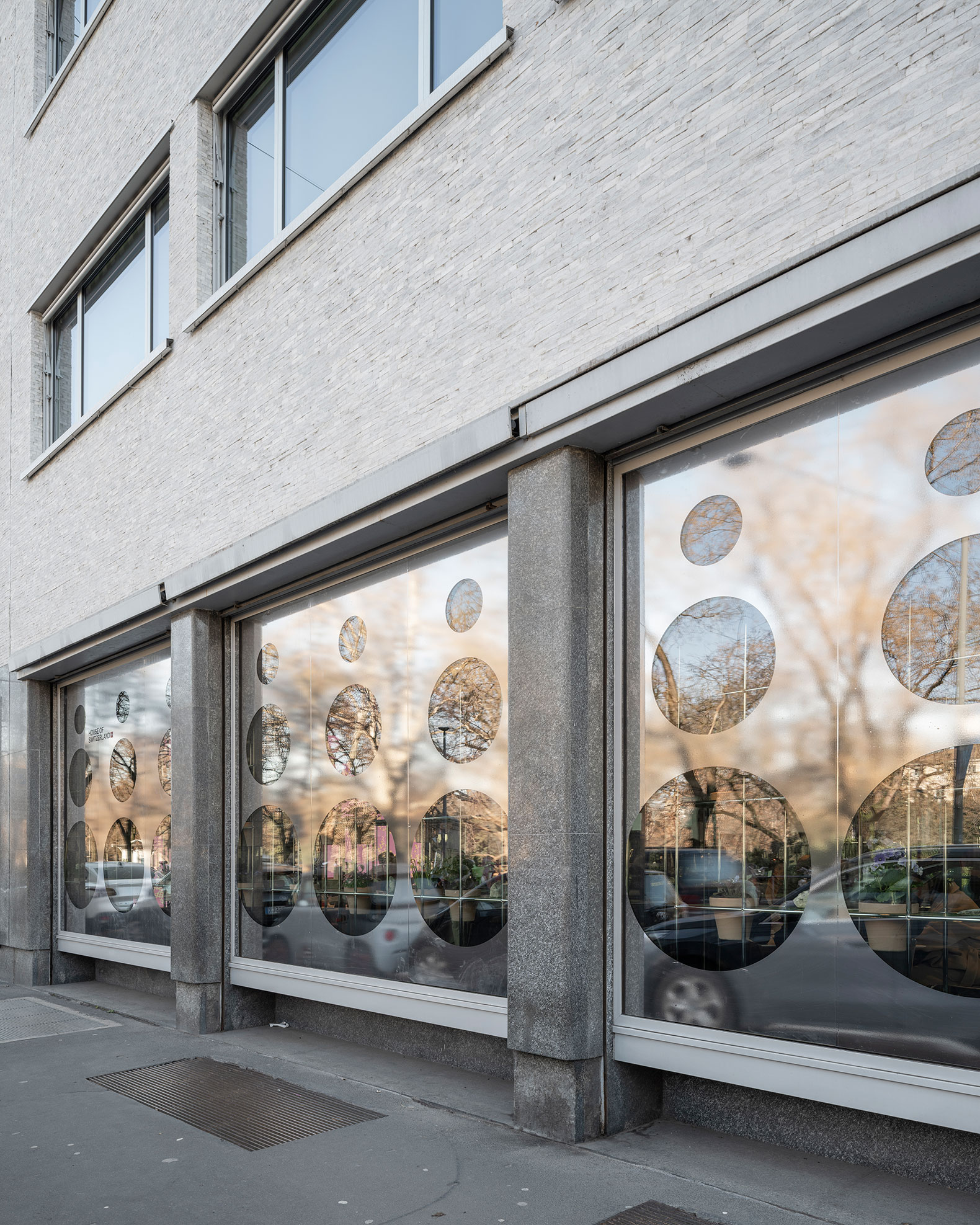
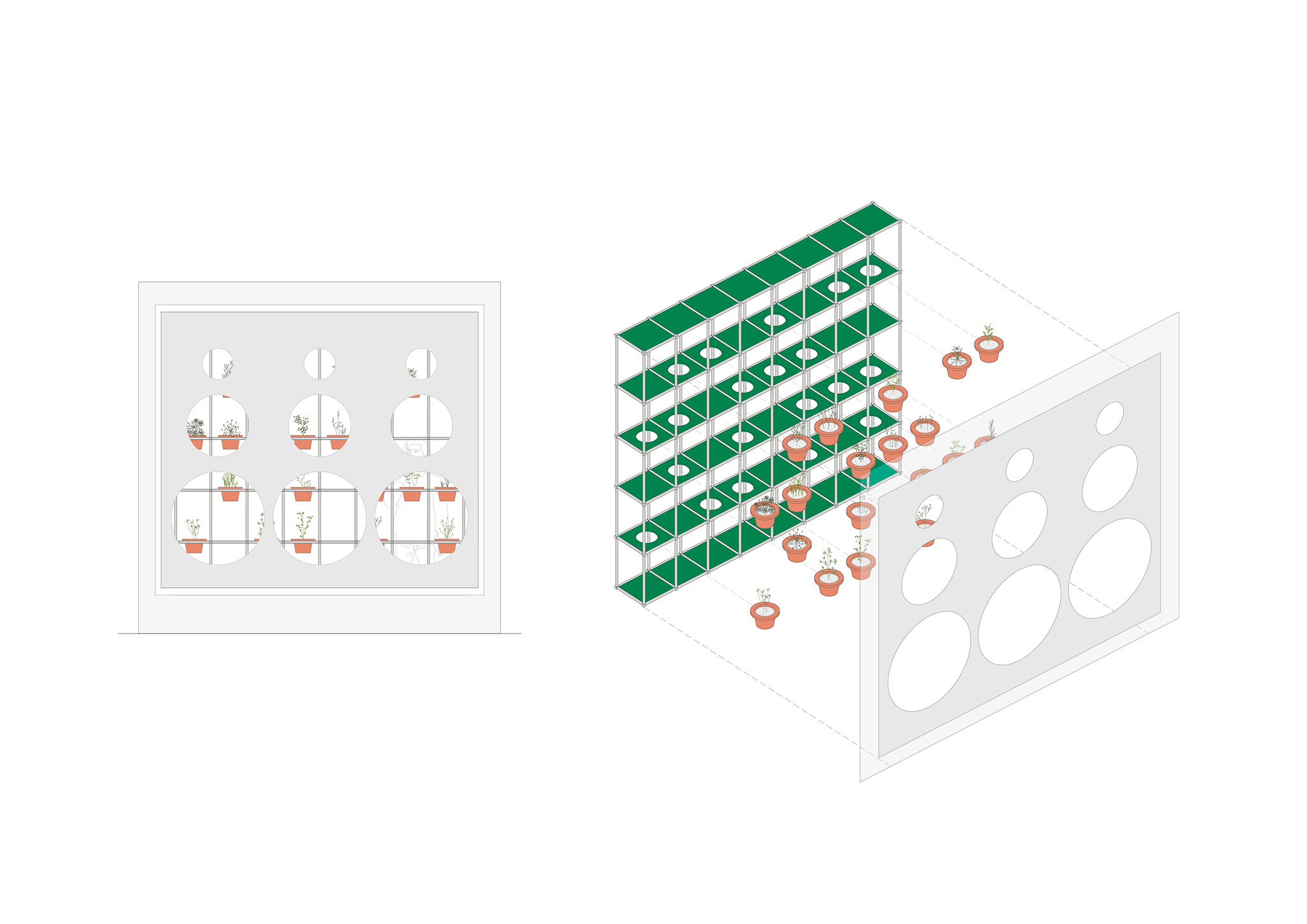
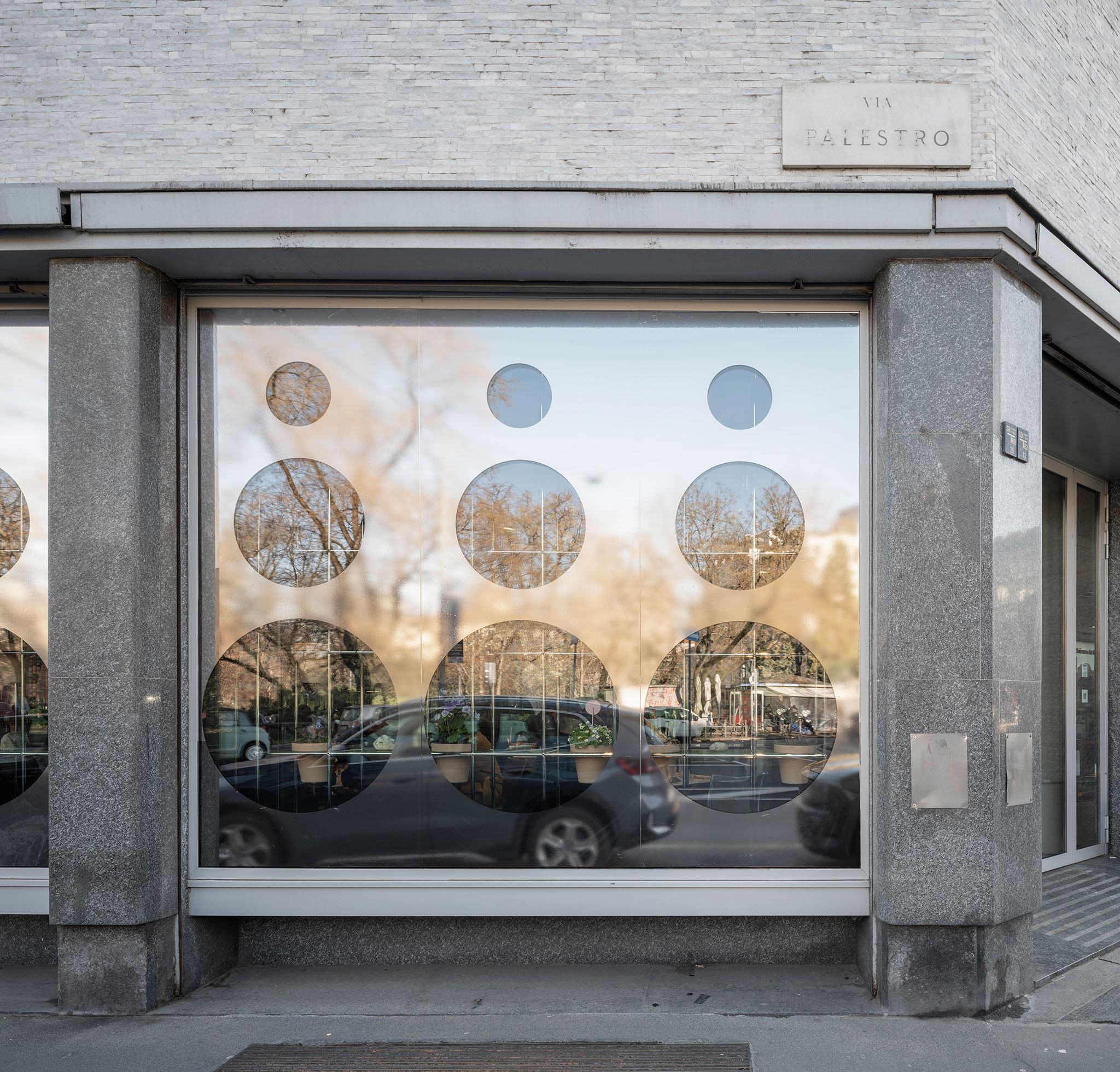
The garden also develops inside, within the existing restaurant space, the Swiss Corner. The photographic artwork of Dylan Perrenoud embraces the visitor with a series of lightboxes showing mysterious rock pieces and composed flora universes coming from an ancient collection of slides of the 1980s. Facing the lightboxes, a collection of 140 potted physical flowers is displayed within the depth of the show windows. The existing character of the space helps to create a multiplicity of reflexions that are pushed further to the exterior façade where the relation to the street is redefined.

"Flora Alpina" is designed for seamless adaptability, drawing inspiration from the vital role of flowers in sports, medicine, and culture. Plants are healing, plants and flowers are Olympic signatures, celebrative and discreet. They accompany medals and smiles of achievement. They help us rejoice, live and breathe.
More information

Label
Architects
Text

BUREAU. Lead architects.- Daniel Zamarbide, Carine Pimenta, Galliane Zamarbide.
+ + copy Created with Sketch.
- + copy Created with Sketch.
Label
Collaborators
Text

Concept design.- Daniel Zamarbide, Carine Pimenta.
Competition.- Finia Sonderegger, Valentin Racine, Beatriz Duarte, Carla Stein.
Project execution.- Daniel Zamarbide | Carine Pimenta (project managers), Niklas Schuknecht, Beatriz Duarte, Maria do Mar Cavaleiro.
Construction supervision.- Daniel Zamarbide, Carine Pimenta, Galliane Zamarbide, Maria do Mar Cavaleiro.
Publication drawings.- Yannis Tsourlos, Beatriz Duarte.
Producer.- Altofragile.
Graphic design.- BASE design.

+ + copy Created with Sketch.
- + copy Created with Sketch.
Label
Client
Text

Presence Switzerland.

+ + copy Created with Sketch.
- + copy Created with Sketch.
Label
Area
Text

825 sqm. 

+ + copy Created with Sketch.
- + copy Created with Sketch.
Label
Dates
Text

Completed.- February 2026.

+ + copy Created with Sketch.
- + copy Created with Sketch.
Label
Location
Text

Milano, Italy.

+ + copy Created with Sketch.
- + copy Created with Sketch.
Label
Photography
+ + copy Created with Sketch.
- + copy Created with Sketch.

BUREAU, is the new project by Daniel Zamarbide. The practice hides under its generic name a variety of research activities. BUREAU makes things as an urge to react to the surrounding physical, cultural and social environment with a critical standpoint and with an immersive attitude. BUREAU is (in 2017) a furniture series, an editorial project, a design team, they are architects.

Daniel Zamarbide obtains his master degree at the Institut d’Architecture de l’Université de Genève (IAUG) in 1999. During his studies he followed the workshops of Christian Marclay, Philippe Parreno and Catherine Queloz at the École Supérieure des Beaux Arts in Geneva.

In the year 2000 he becomes one of the founding members of group8, an architectural practice that has acquired an important national and international recognition.


Daniel Zamarbide has developed through the years a particular interest in the protean aspects of his discipline and nourishes his work and research through other domains like philosophy, applied and visual arts as well as cinema.

As a guest lecturer and jury he has been invited at a diversity of international schools and institutions to present and discuss his work and research.

Since 2003 his interest in research and education has led him to be invited as an assistant in the École Polytechnique Fédérale de Lausanne (EPFL) and as a professor (2000-14) at the Haute École d’Art et de Design (HEAD) in Geneva. In 2014, he integrates the team of ALICE Lab (Dieter Dietz) at the École Polytechnique Fédérale de Lausanne (EPFL) as a guest professor and research director.

In 2012, Daniel leaves group8 to start a new practice with Leopold Banchini, architect. Their practice, BUREAU A has explored during 5 years the possibilities of architectural making in a great variety of formats, opening the practice to work in the fields of art, garden and landscape architecture, exhibition design, temporary architecture and object making.

In 2017, following the dissolution of BUREAU A, Daniel Zamarbide pursues his more personal research interests under the name of BUREAU. This new entity produces architecture in the continuity of BUREAU A and incorporates to his already prolific activities furniture design (with a design brand of the same name) and an editorial project, which launches the first publication in June 2017.

Read more
Published on: February 19, 2026
Cite:
metalocus, SARA GENT, ELVIRA PARÍS FERNÁNDEZ
"Permeable to life. "Flora Alpina" by BUREAU" METALOCUS. Accessed
<https://www.metalocus.es/en/news/permeable-life-flora-alpina-bureau> ISSN 1139-6415
Loading content ...
Loading content ...
Loading content ...
Loading content ...
Loading content ...
Loading content ...
Loading content ...
Loading content ...
Loading content ...
Loading content ...
Loading content ...
Loading content ...
Loading content ...
Loading content ...
Loading content ...
Loading content ...
Loading content ...
Loading content ...
Loading content ...
Loading content ...
Loading content ...
Loading content ...
Loading content ...
Loading content ...
Loading content ...
Loading content ...
Loading content ...
Loading content ...
Loading content ...
Loading content ...
Loading content ...
Loading content ...
Loading content ...
Loading content ...
Loading content ...
Loading content ...
Loading content ...
Loading content ...
Loading content ...
Loading content ...
Loading content ...
Loading content ...
Loading content ...
Loading content ...
Loading content ...
Loading content ...
Loading content ...
Loading content ...
Loading content ...
Loading content ...
Loading content ...
Loading content ...
Loading content ...
Loading content ...