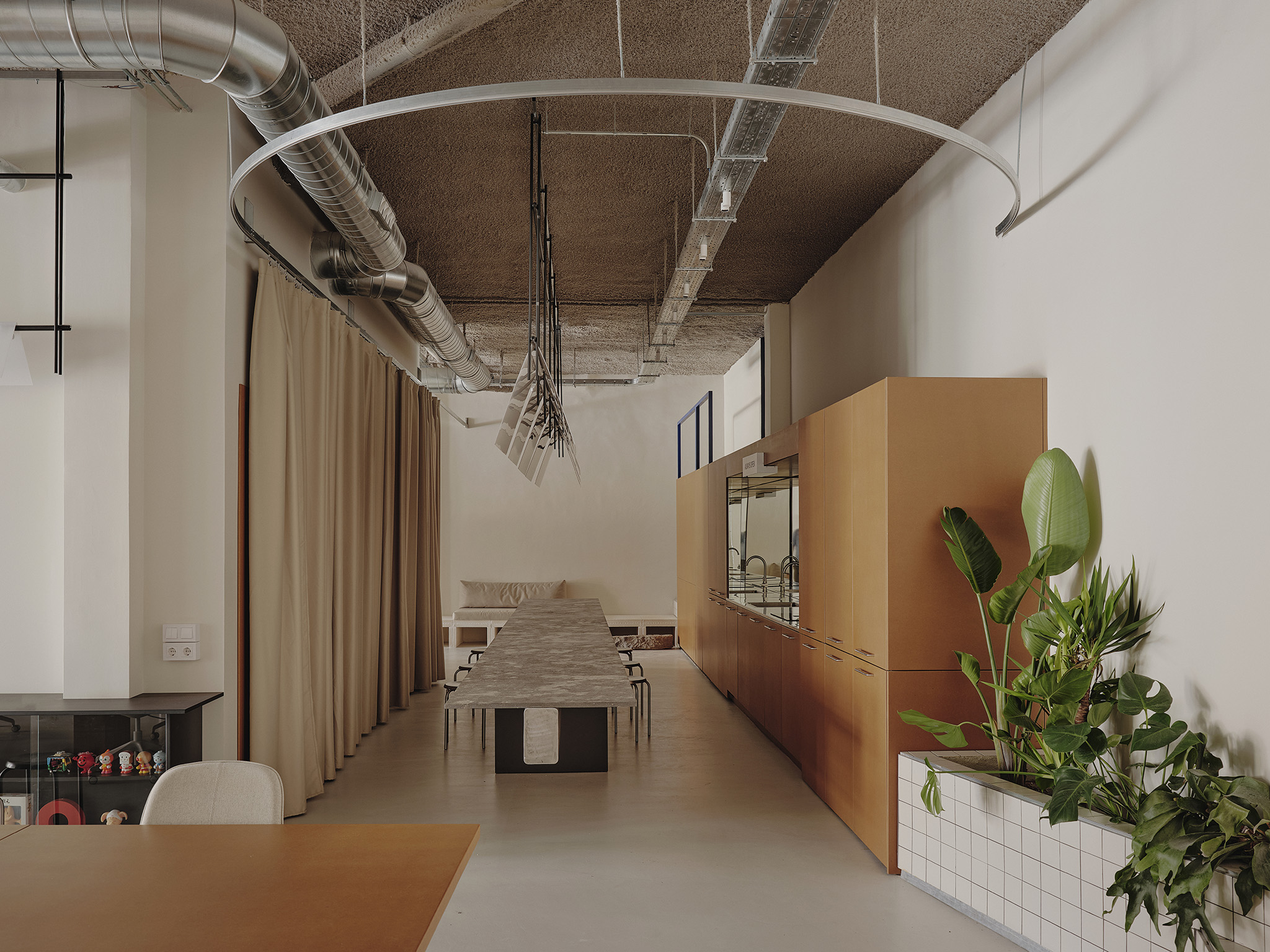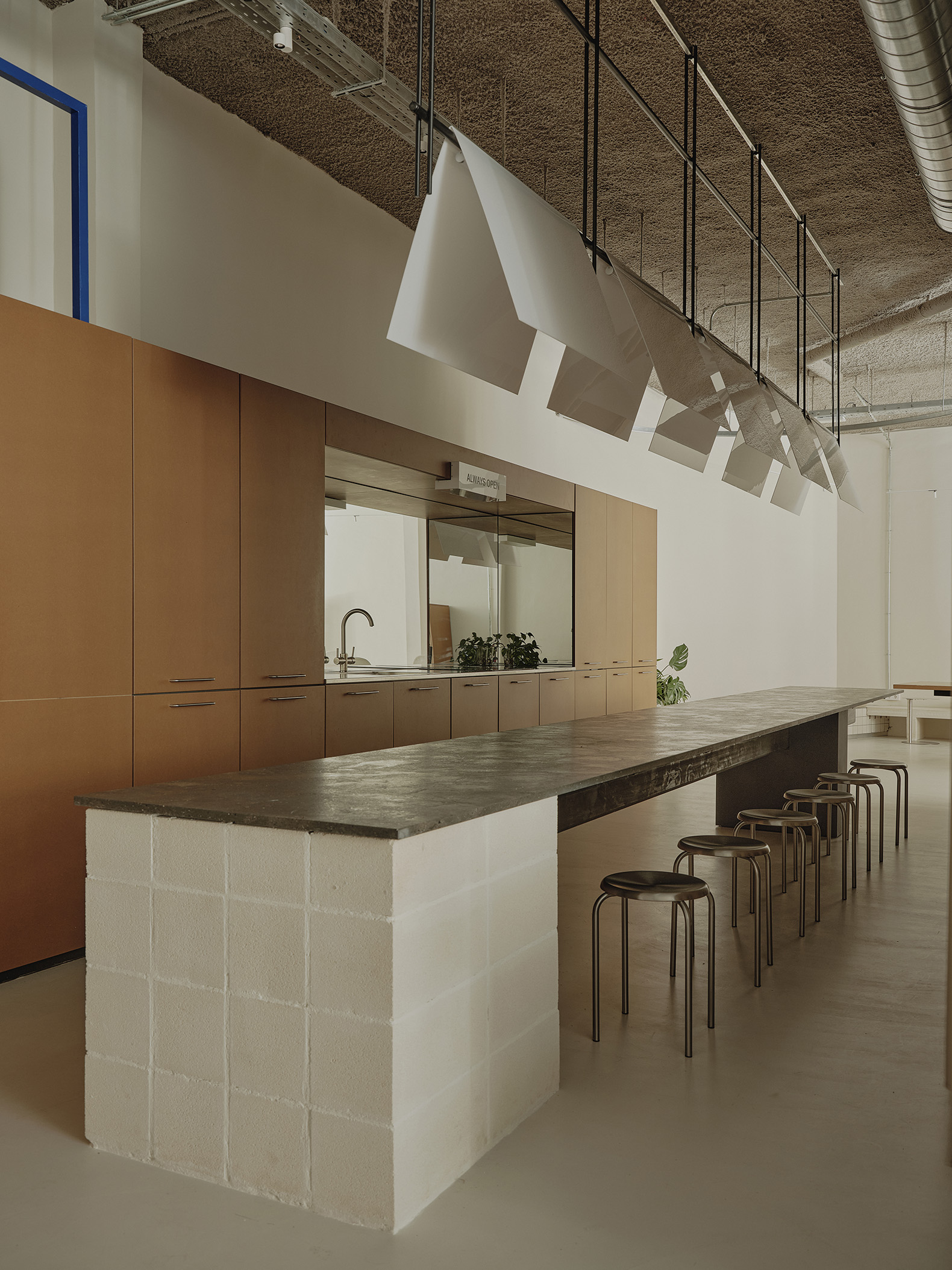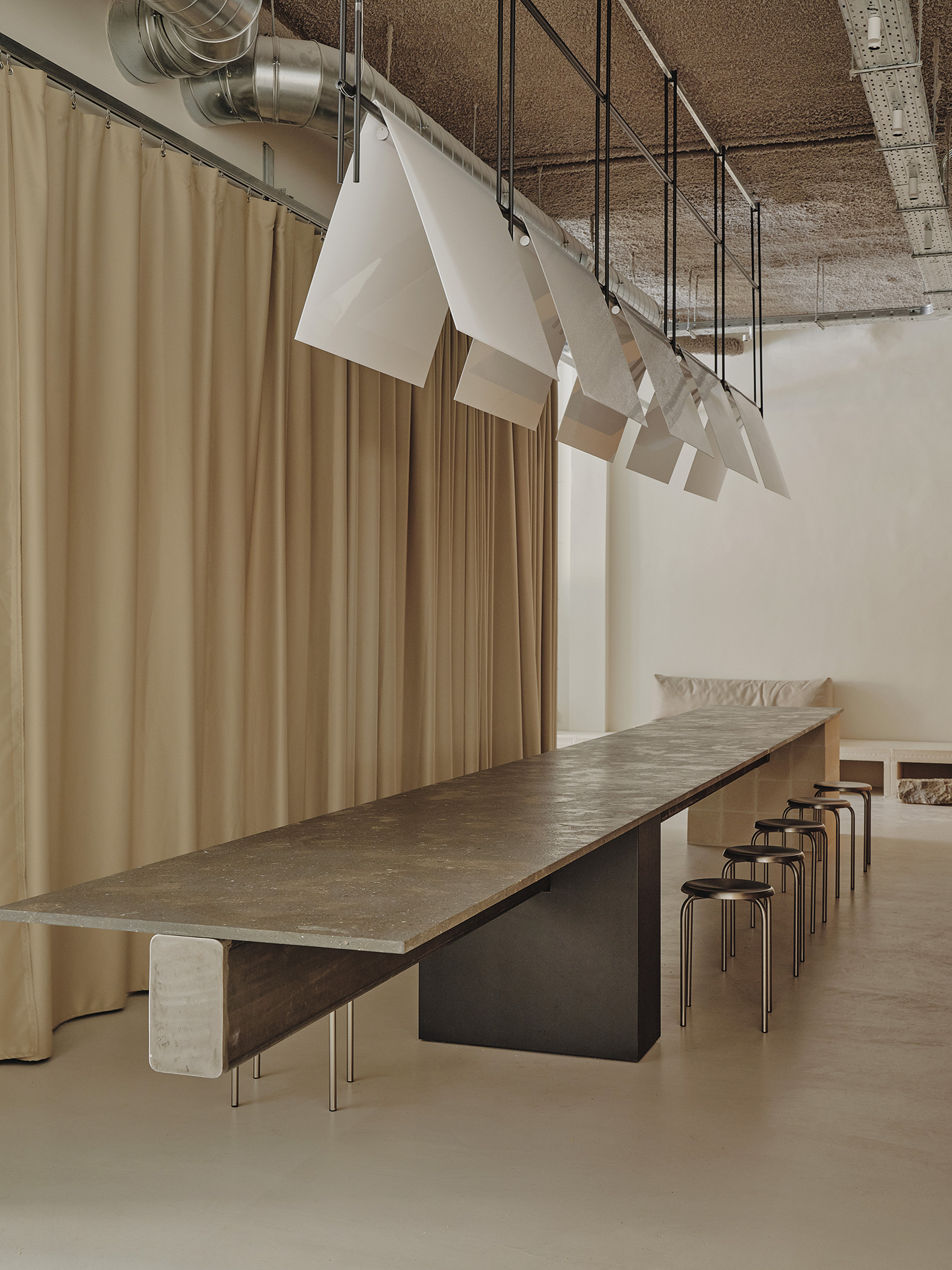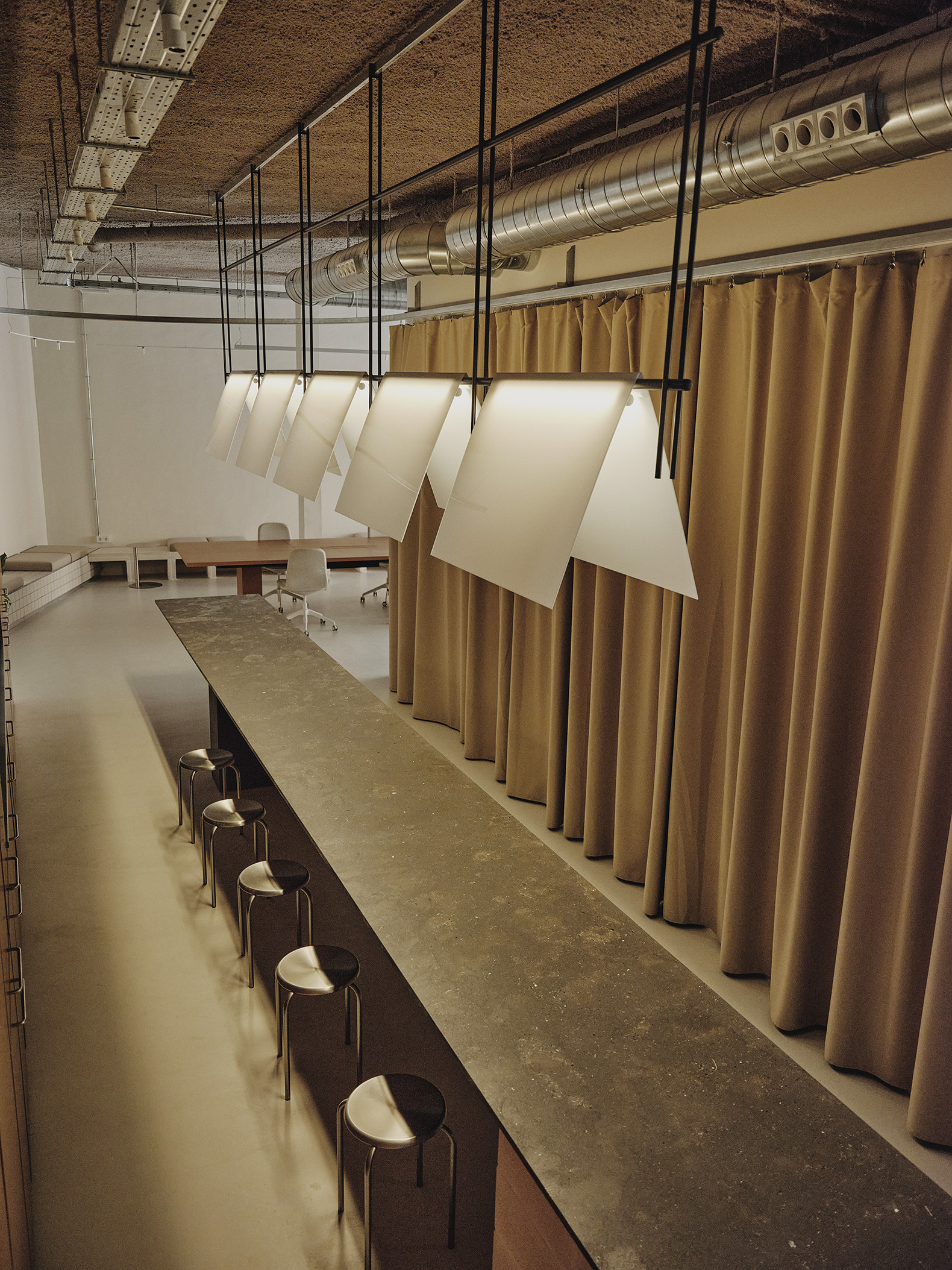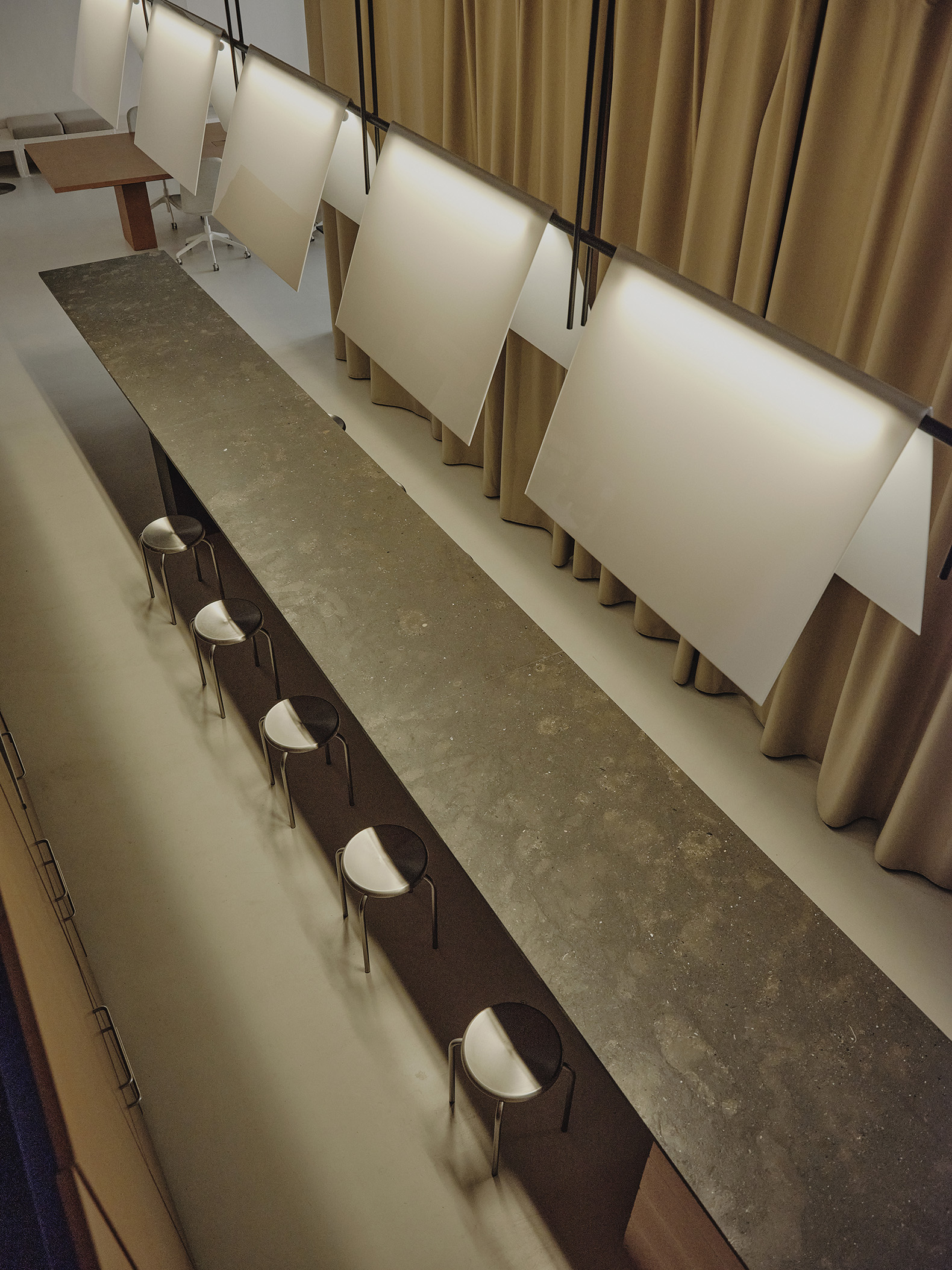
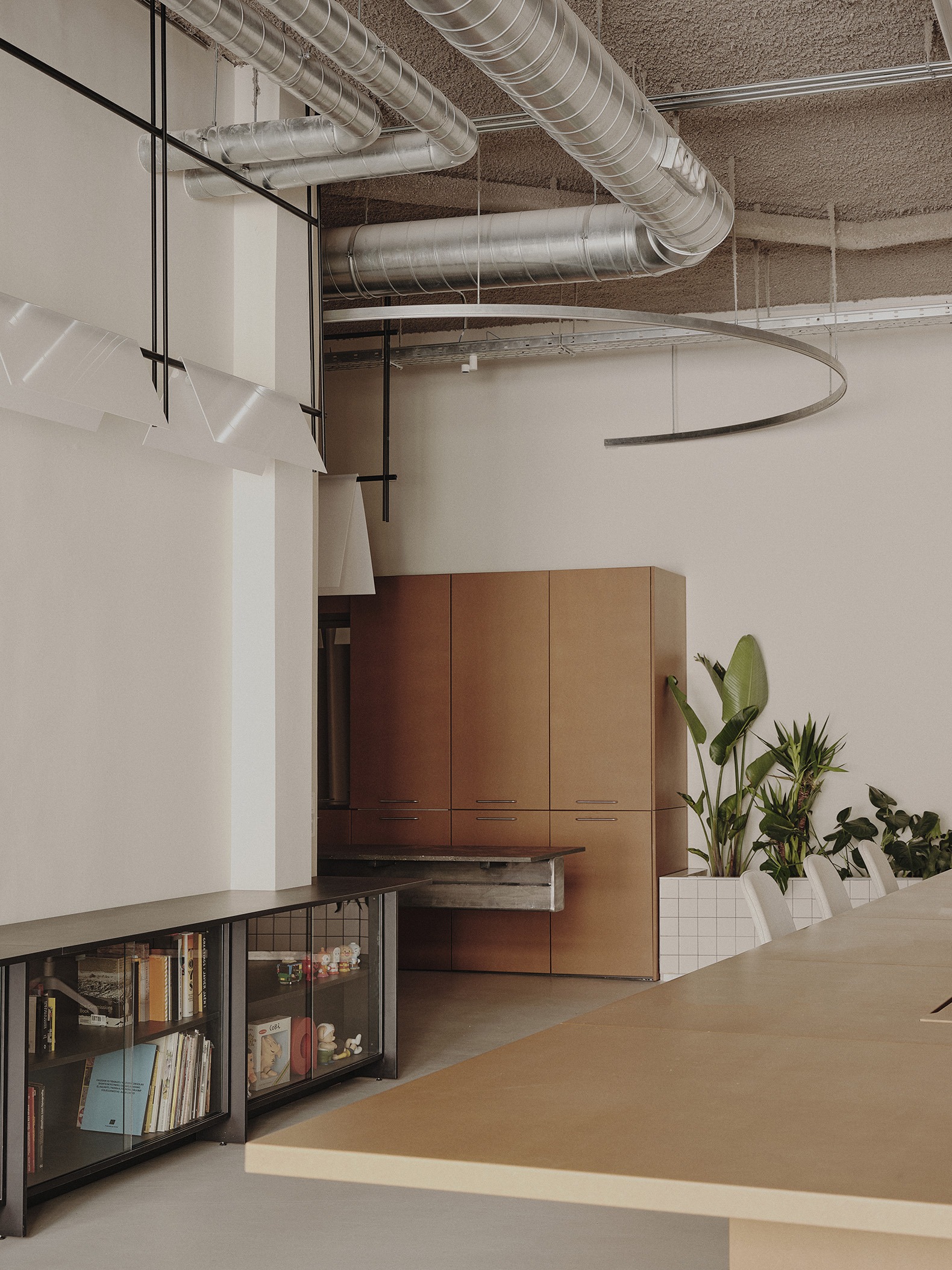
Conceived as a space capable of fostering the coexistence of diverse disciplines, working methods, and creative expressions, the project developed by Paloma Bau and T.O.T. proposes a flexible spatial and material structure, designed to adapt to different uses without requiring complex interventions. At the heart of the design, a wide, longitudinal bar functions simultaneously as a shared workspace, exhibition space, and social hub.
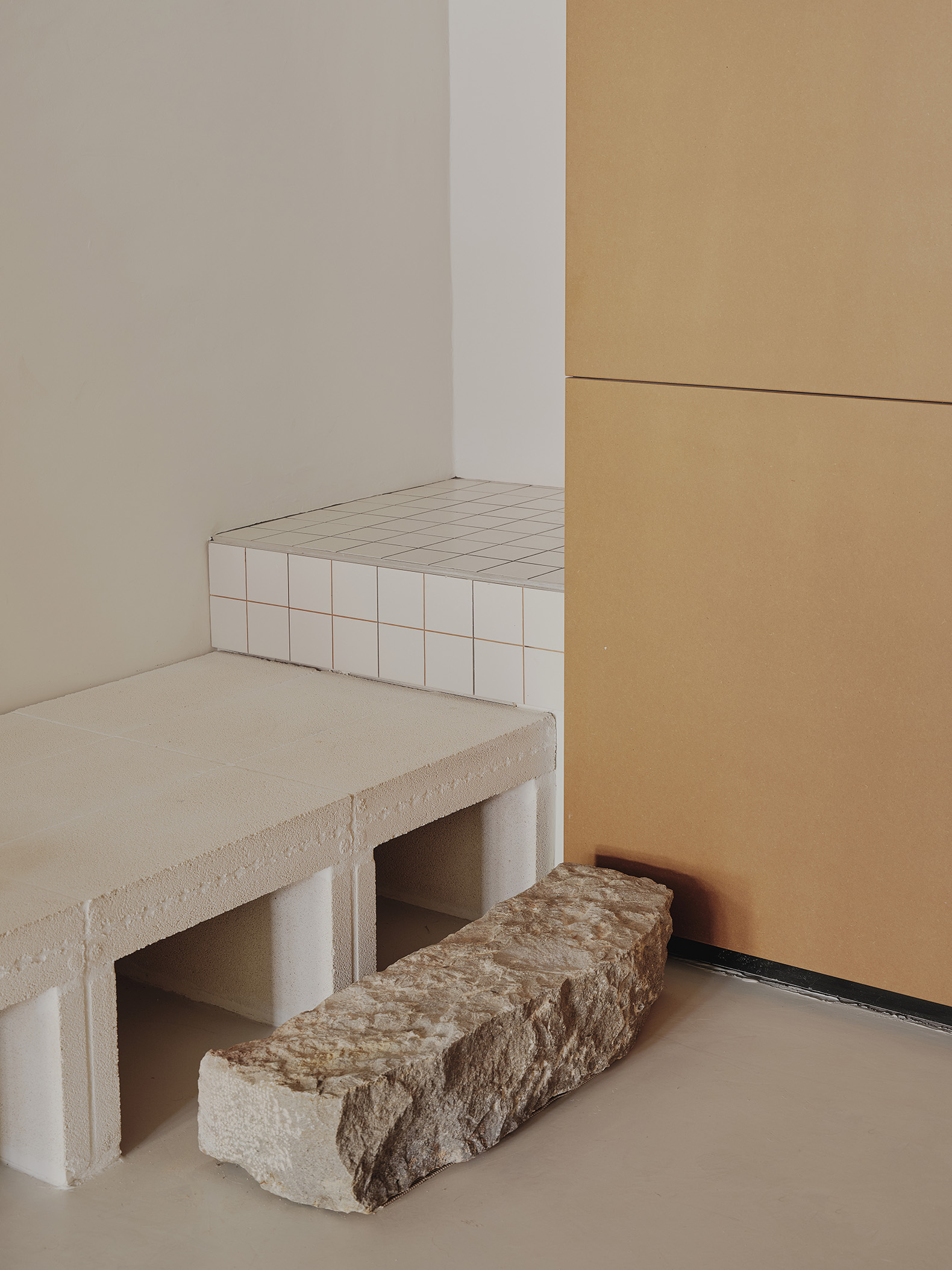
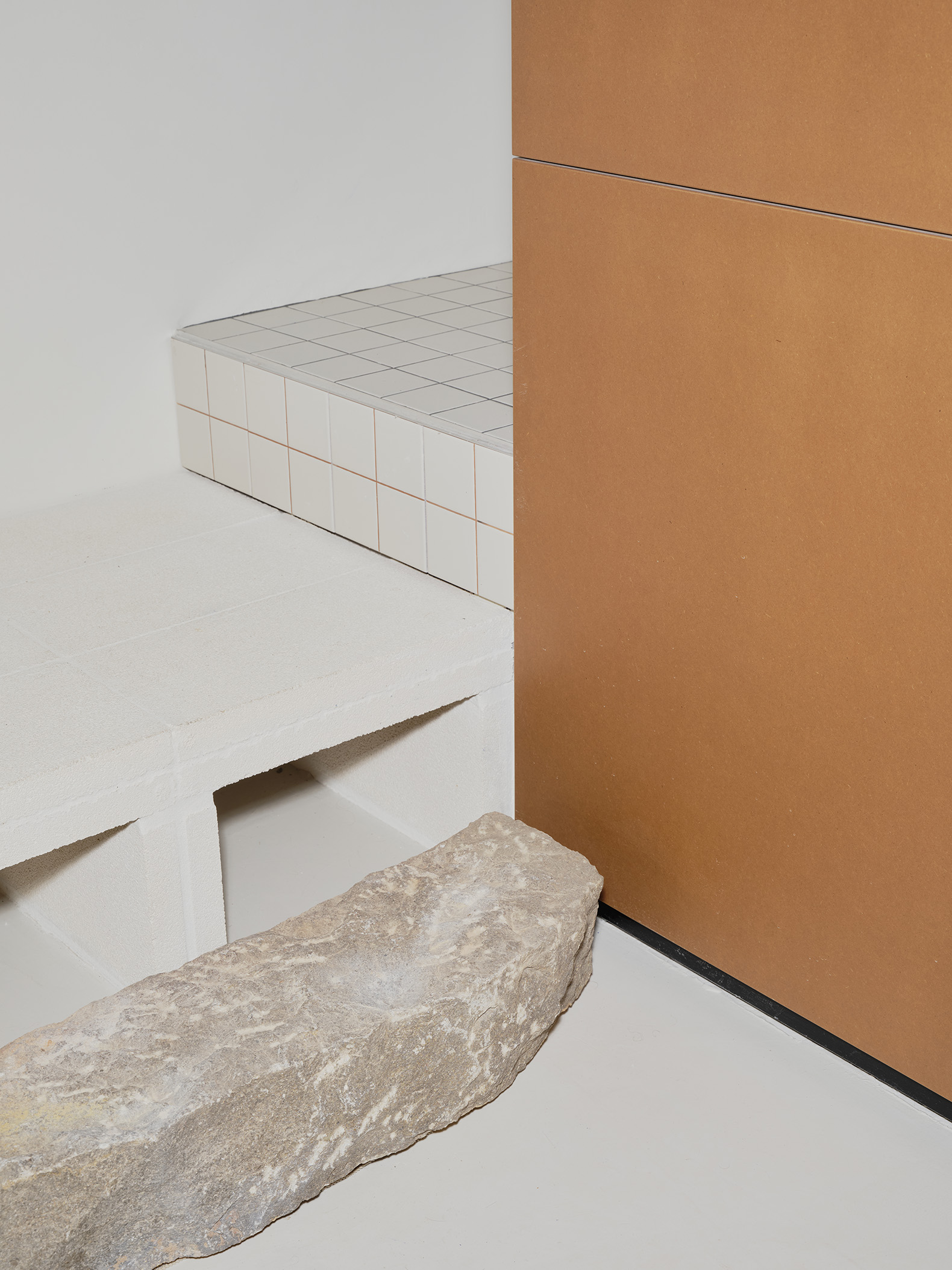
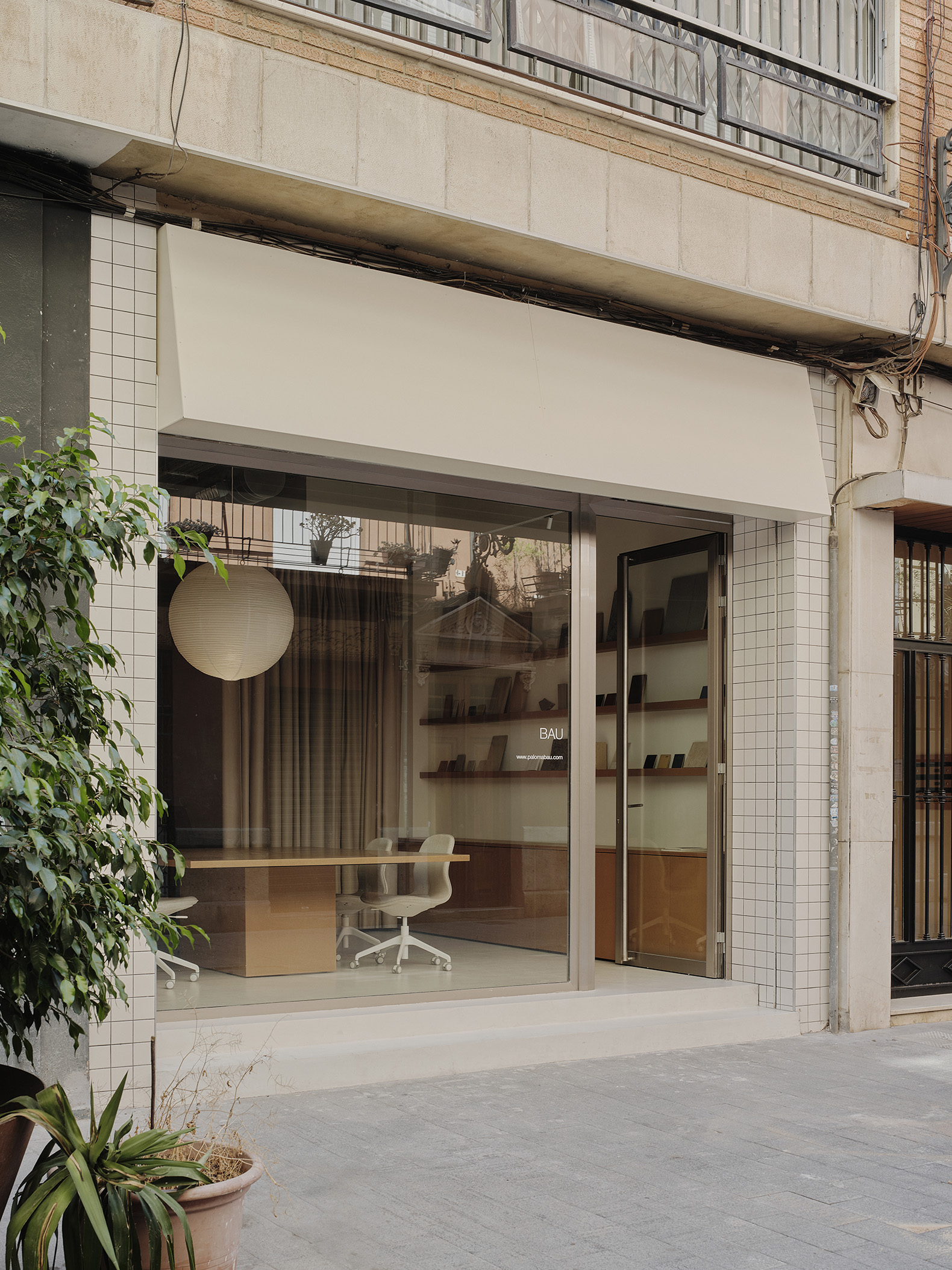
The choice of materials and the furniture design evoke the constructive logic present in many urban architectures of Tokyo. The white tile that frames the entrance reappears in various areas of the interior, establishing itself as a narrative element of the space. Meanwhile, the continuous light-toned microcement flooring unifies the flow and reinforces a luminous and serene atmosphere.
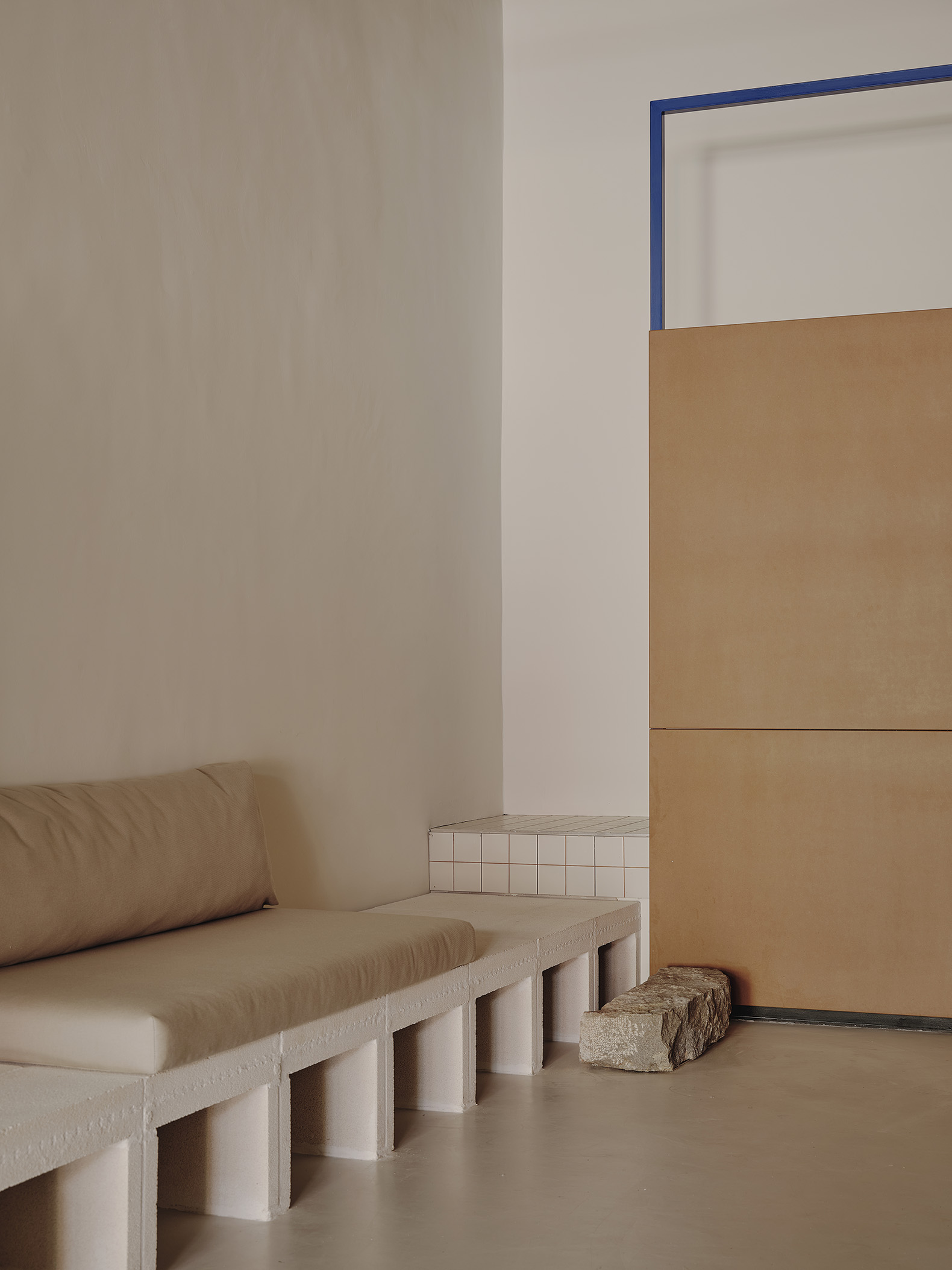
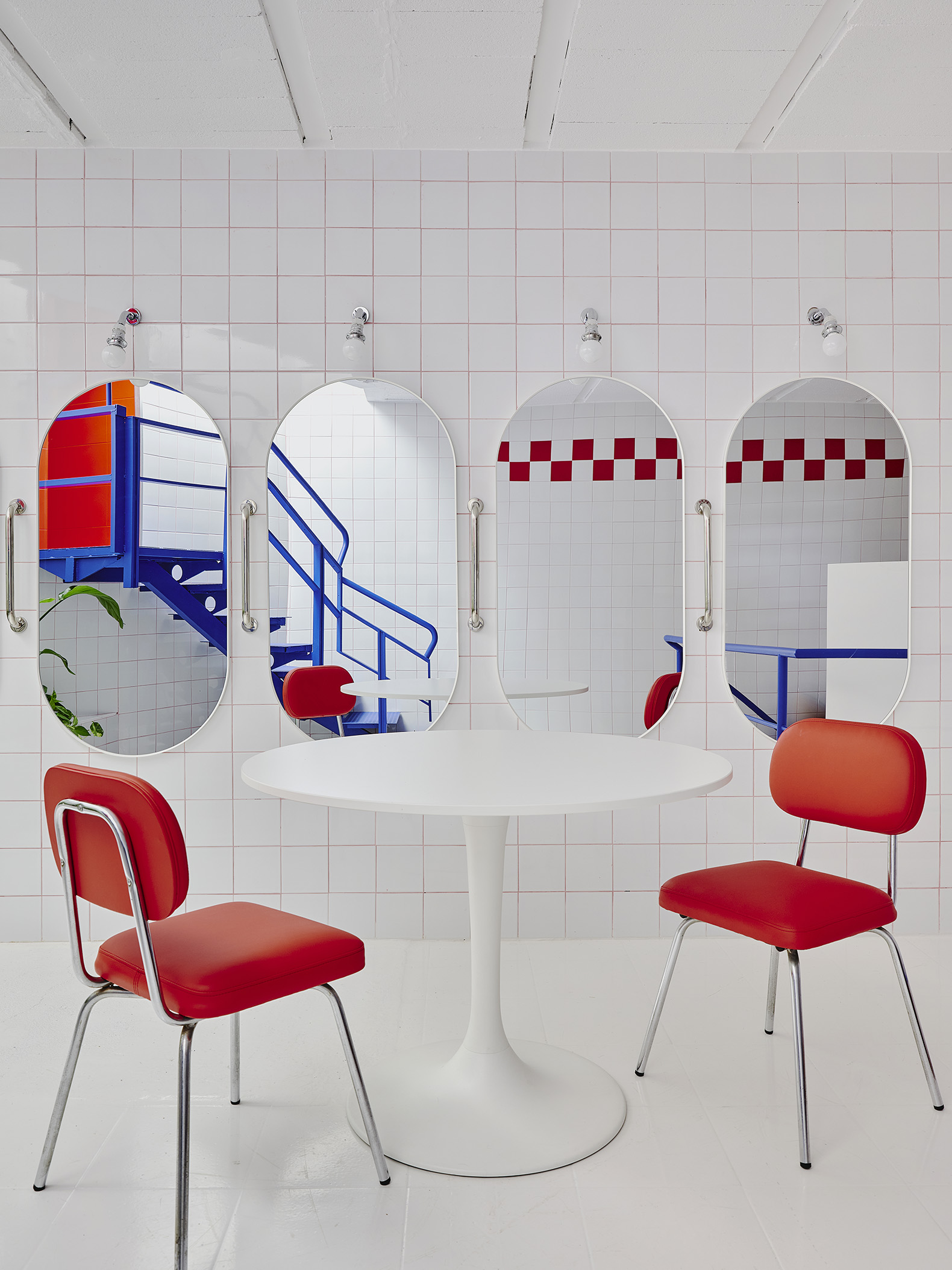
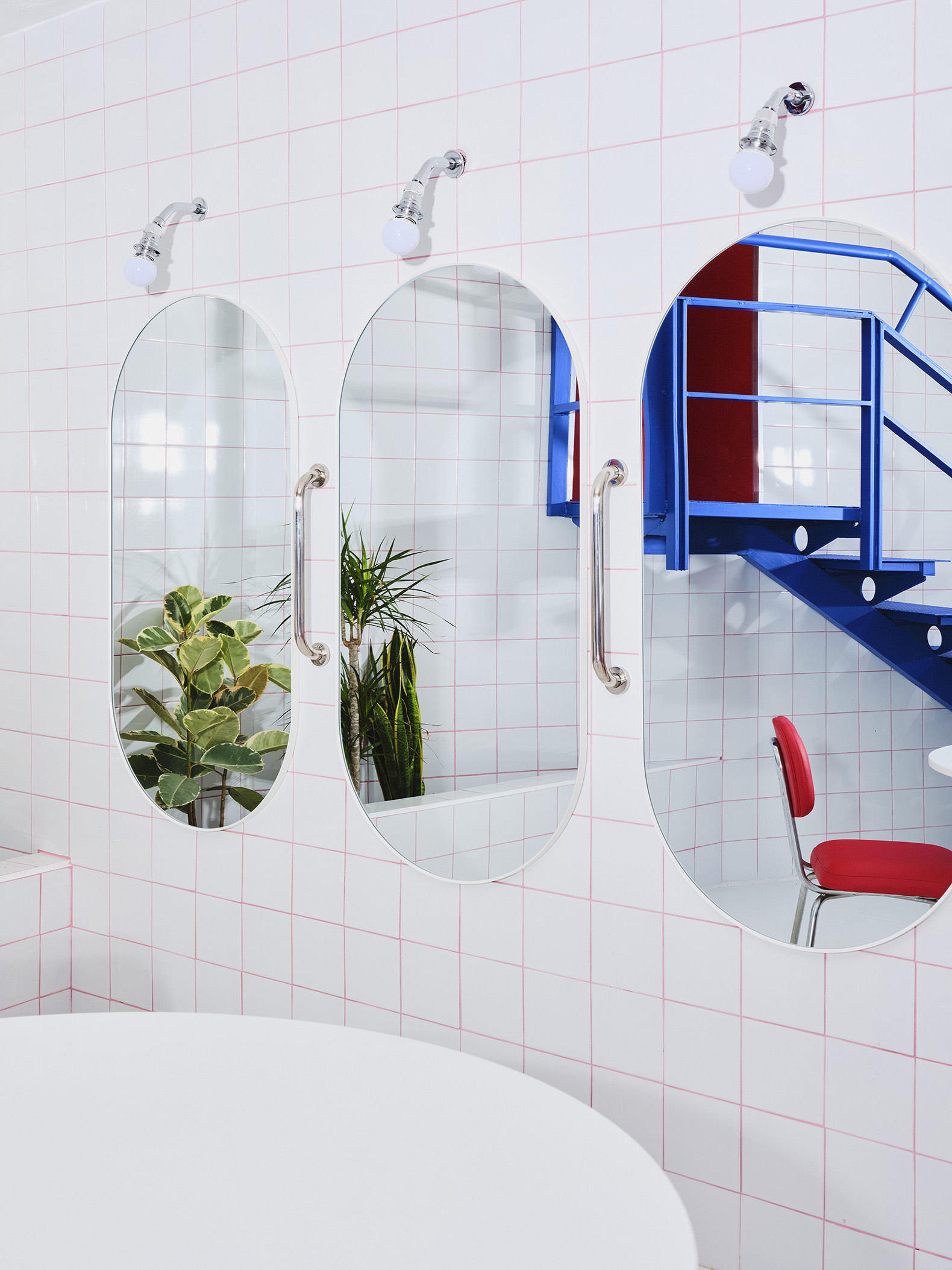
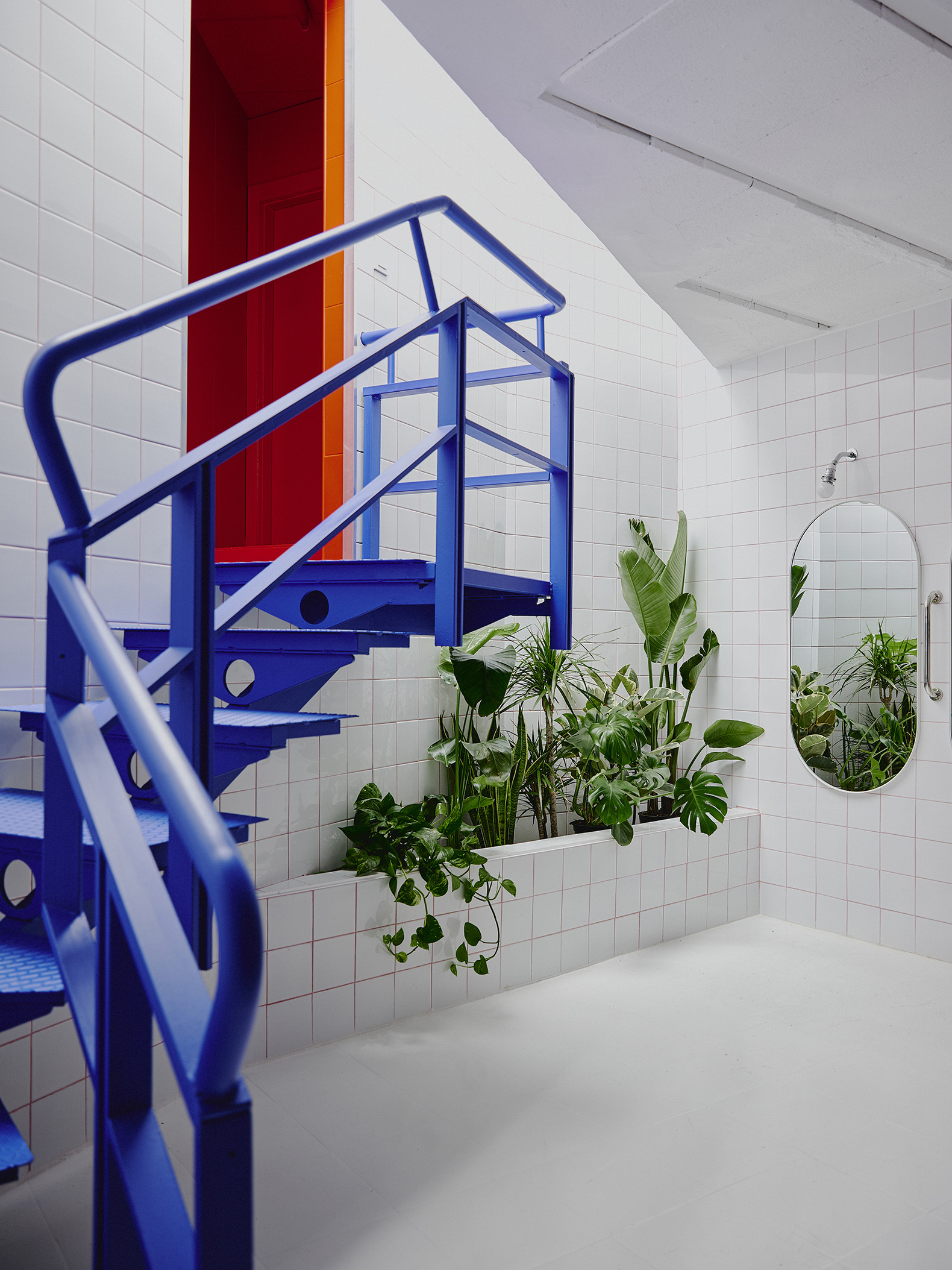
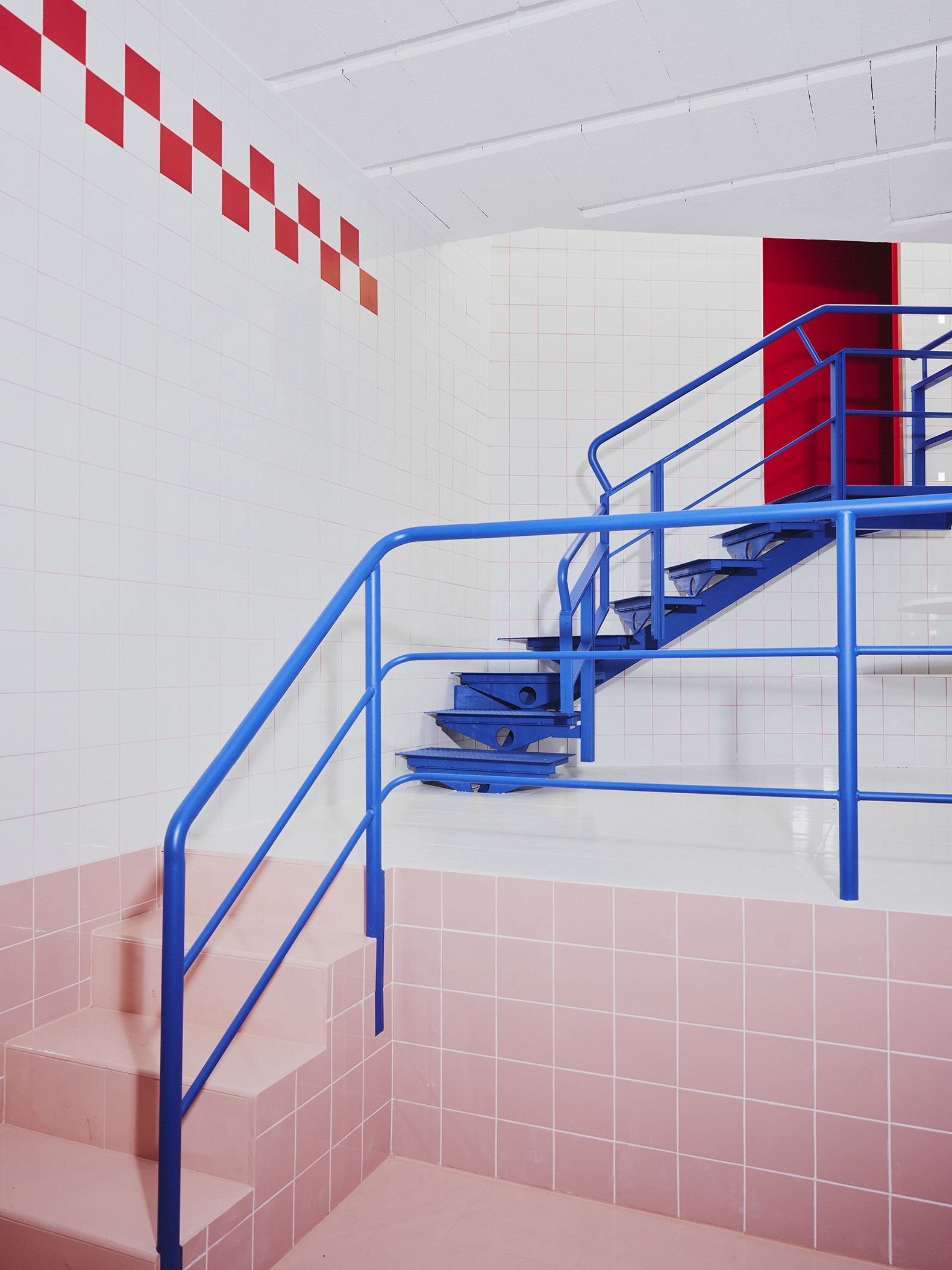
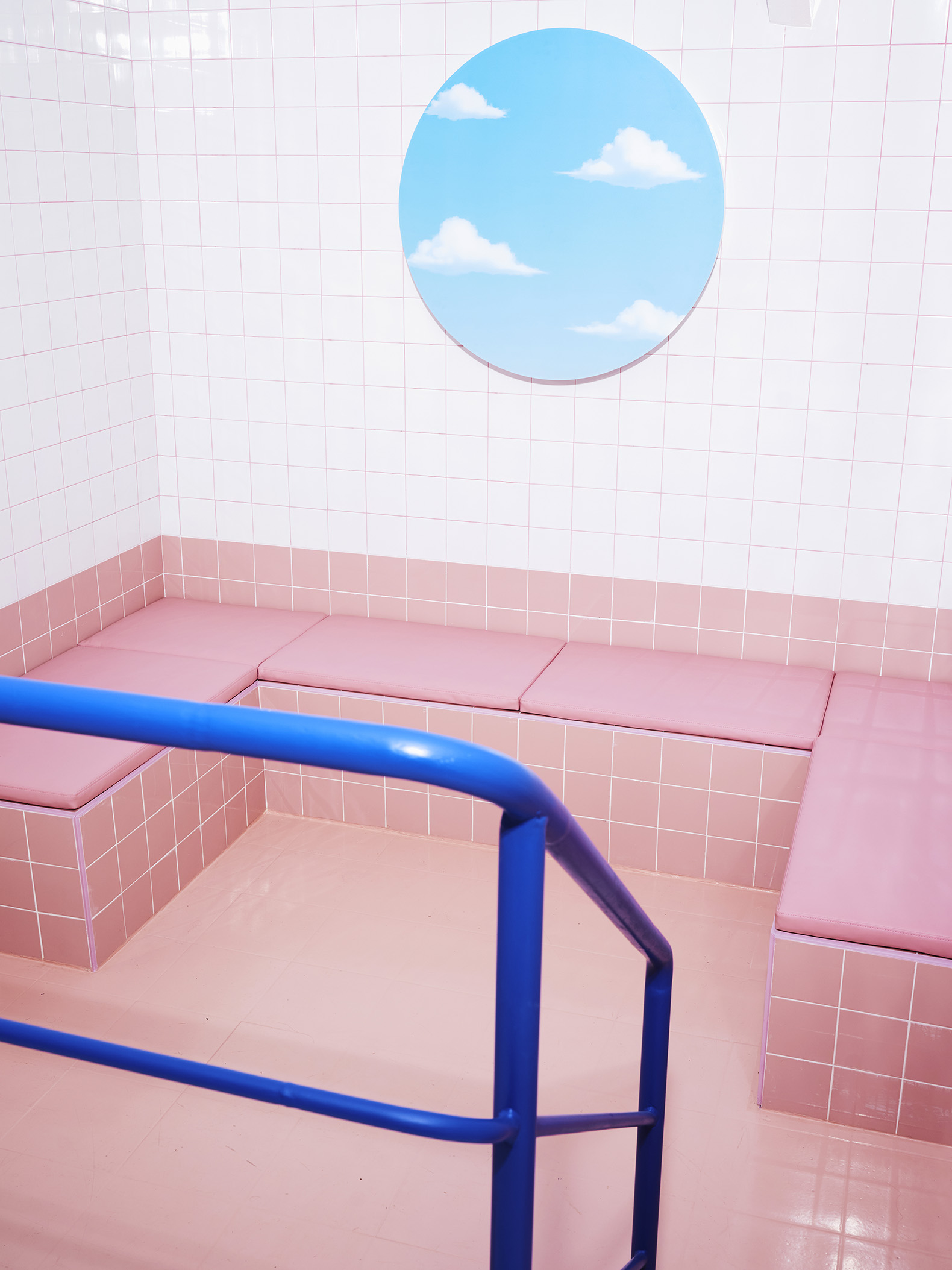
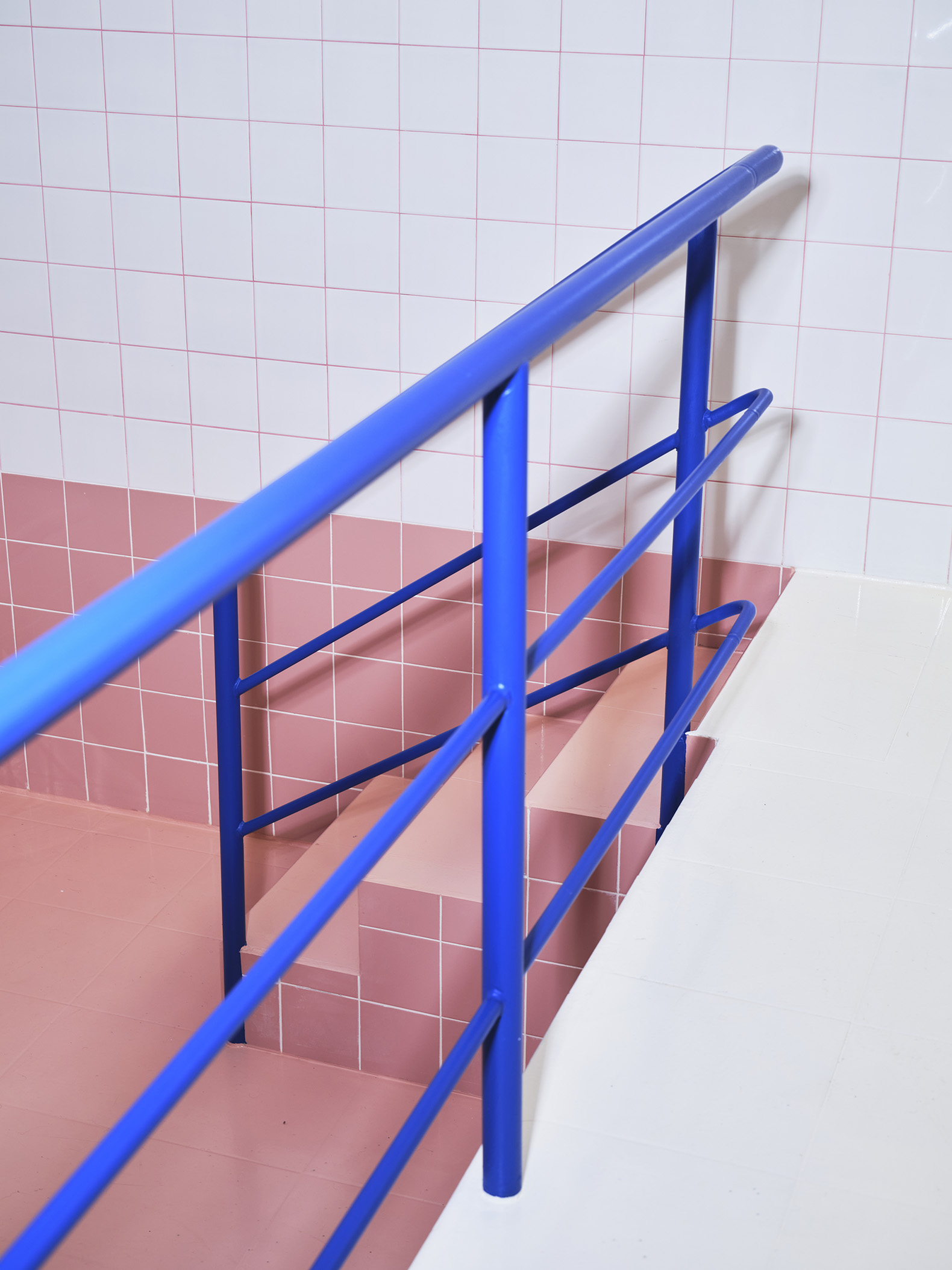
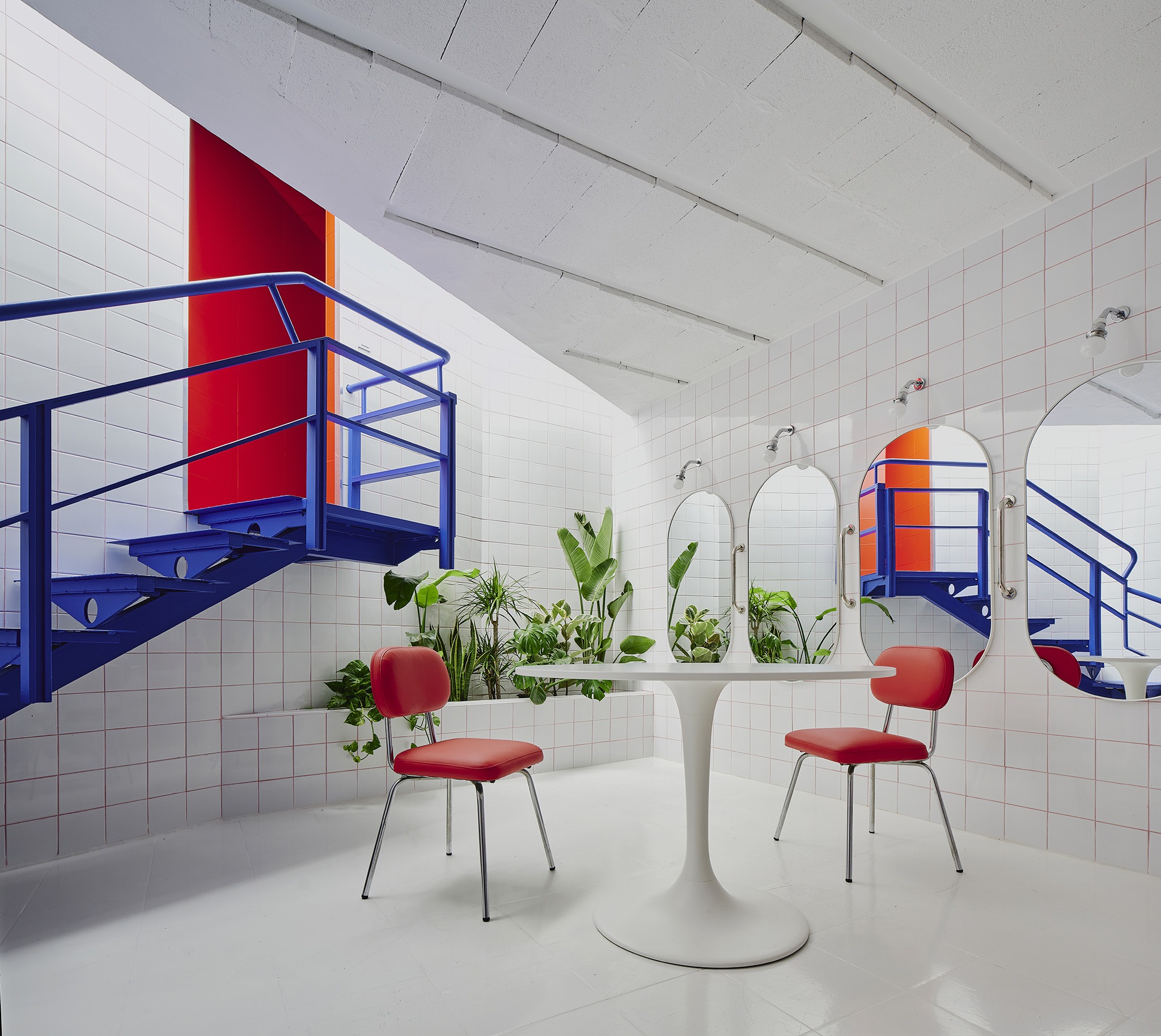
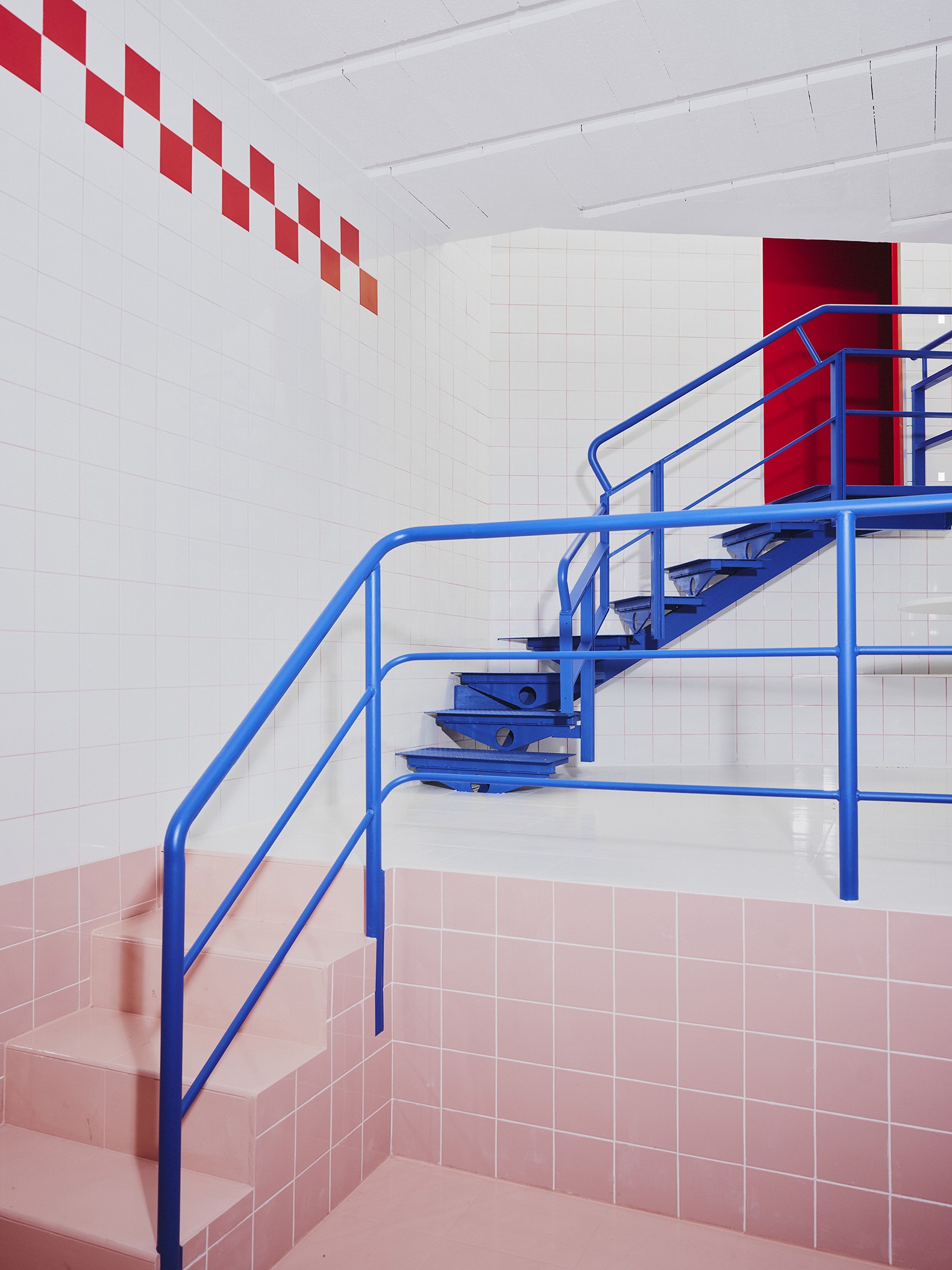
In contrast to the restrained materiality of the main space, the meeting room draws inspiration from onsen—traditional Japanese hot spring baths—and is conceived as an independent, purely sensory environment. Access, through a small door, leads to a Klein blue-clad staircase that hints at a dramatic change in atmosphere. Complementing this, the perimeter tatami mats allow for multiple configurations: from seating and meetings to becoming informal areas during events, reflecting the dynamic, hybrid, and constantly evolving nature of the workspace.
Sornells 21 by Paloma Bau + T.O.T Studio. Photograph by David Zarzoso.
Project description by Paloma Bau y T.O.T Studio
Context and Concept
From the outset, T.O.T. took on the conceptual development of the project, while Paloma Bau's team handled its architectural realization. This division reflects the essence of both studios: T.O.T.'s speculative and strategic approach and Paloma Bau's ability to make a concept tangible through materials, geometry, and detail. The starting point was articulated around a simple yet powerful idea: to reinterpret some of their favorite everyday places in Tokyo and translate their atmosphere to a flexible workspace in Valencia. The aim was not a literal thematization, but rather an architectural translation of three recognizable situations in the Japanese city: the ceramic-clad street, the izakaya bar, and the relaxed ambiance of the onsen.
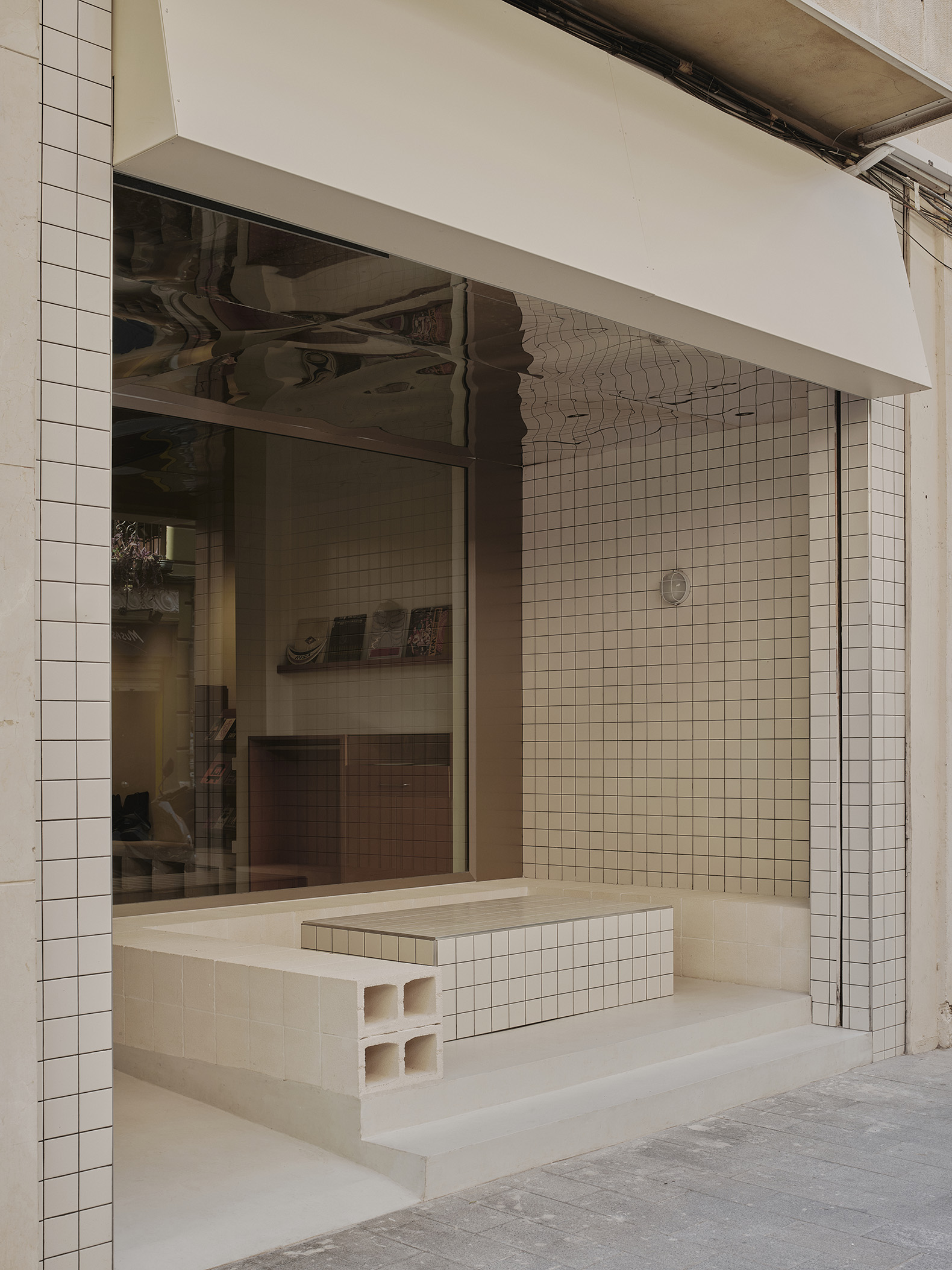
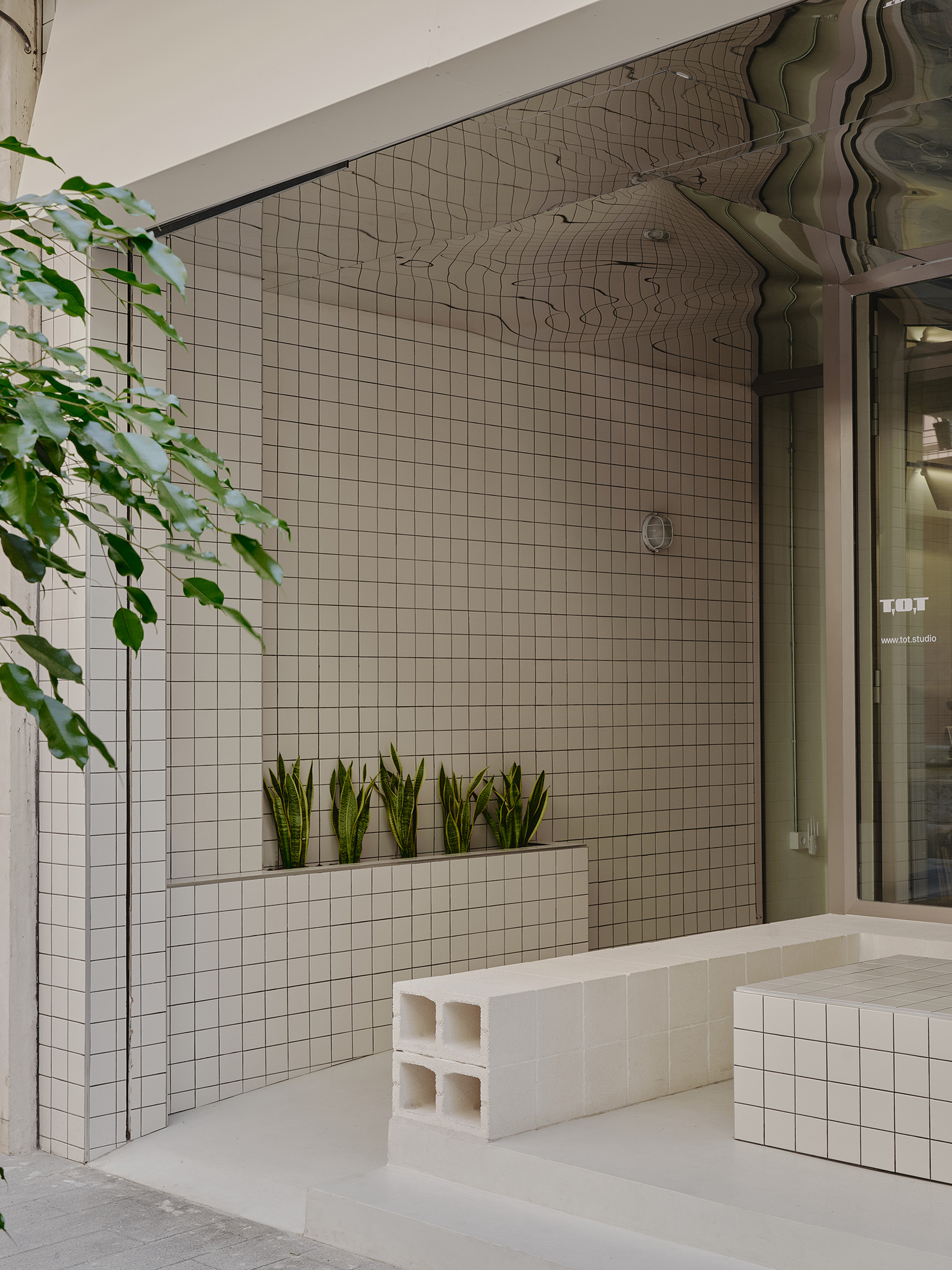
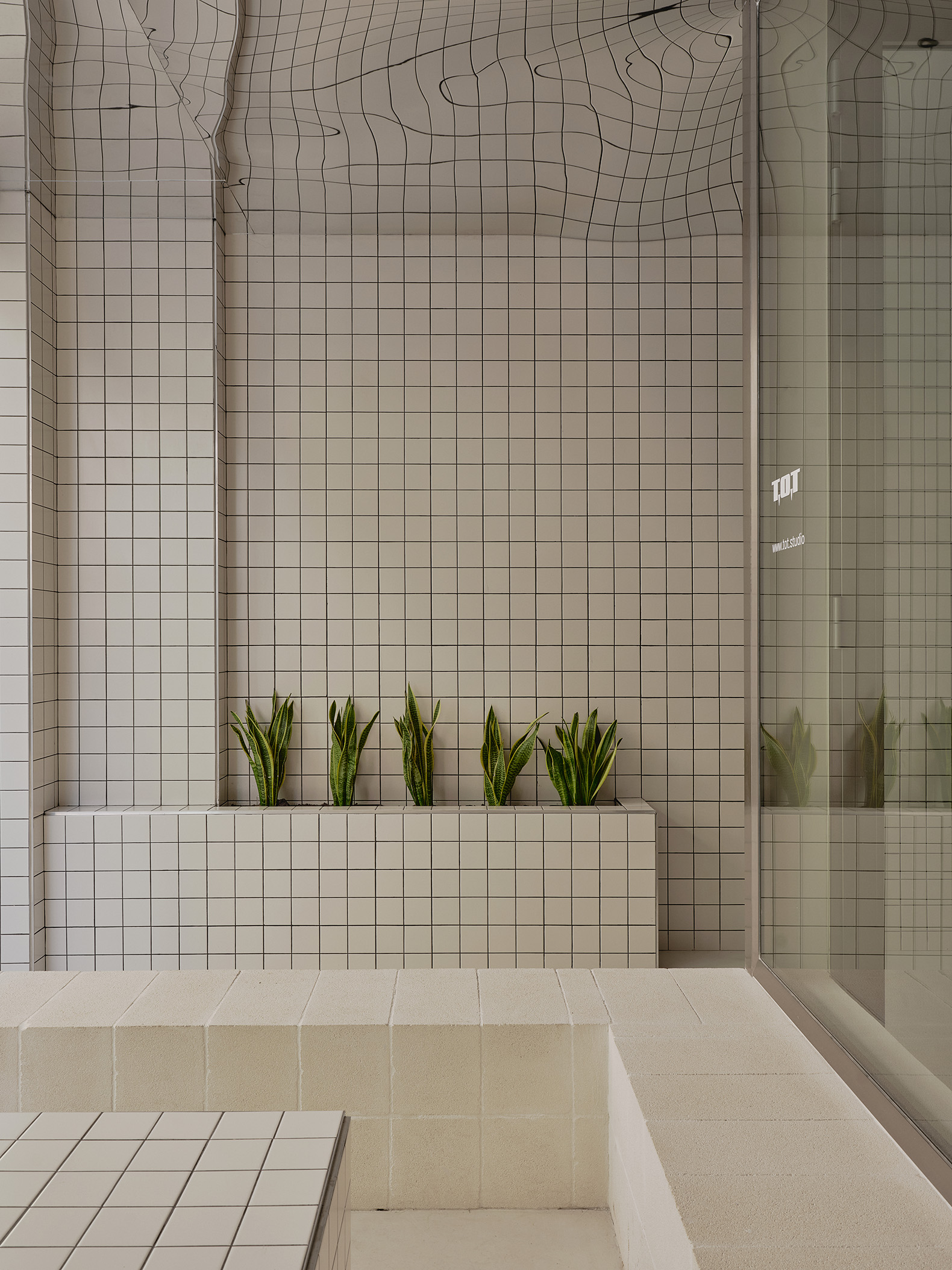
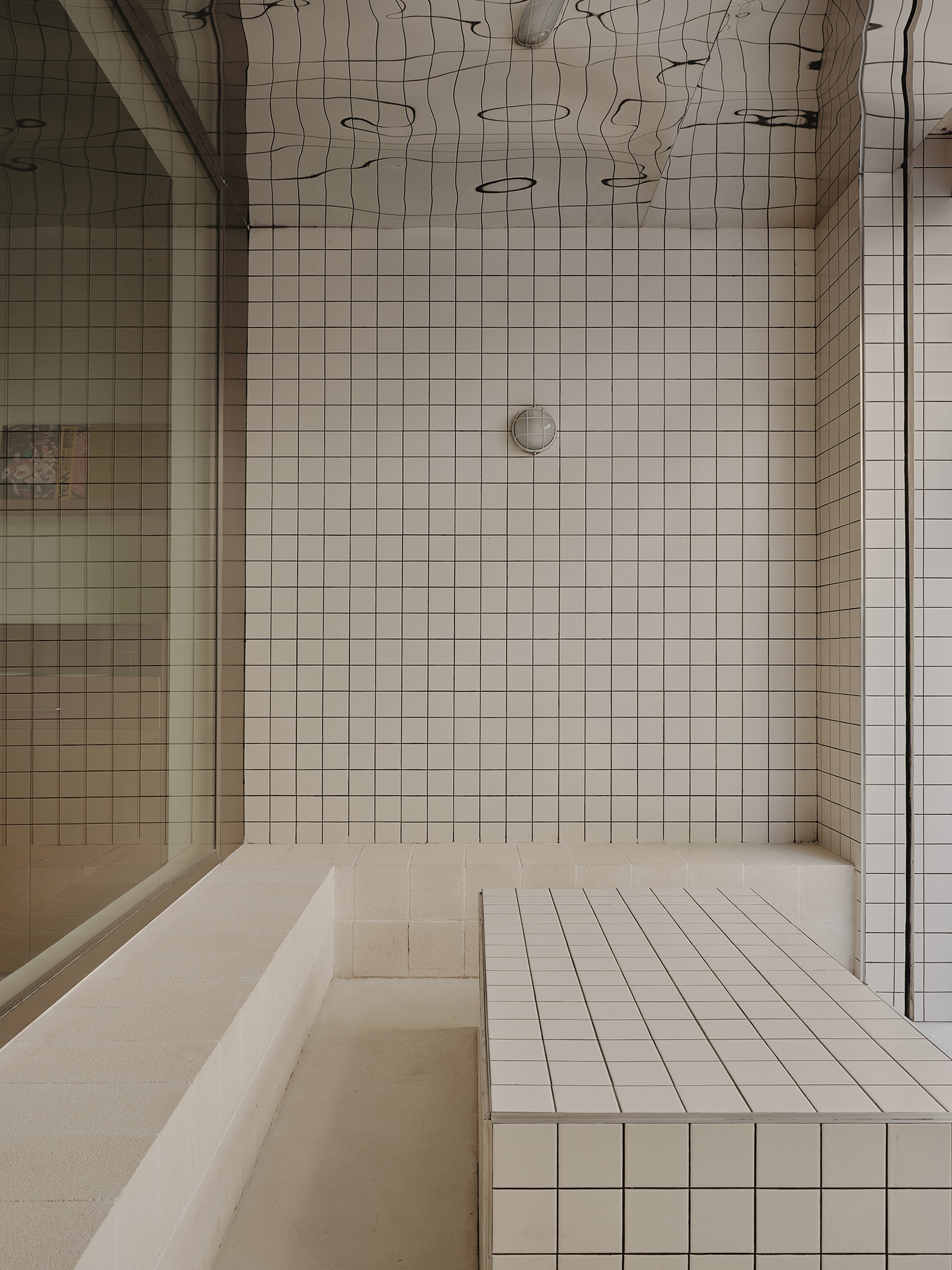
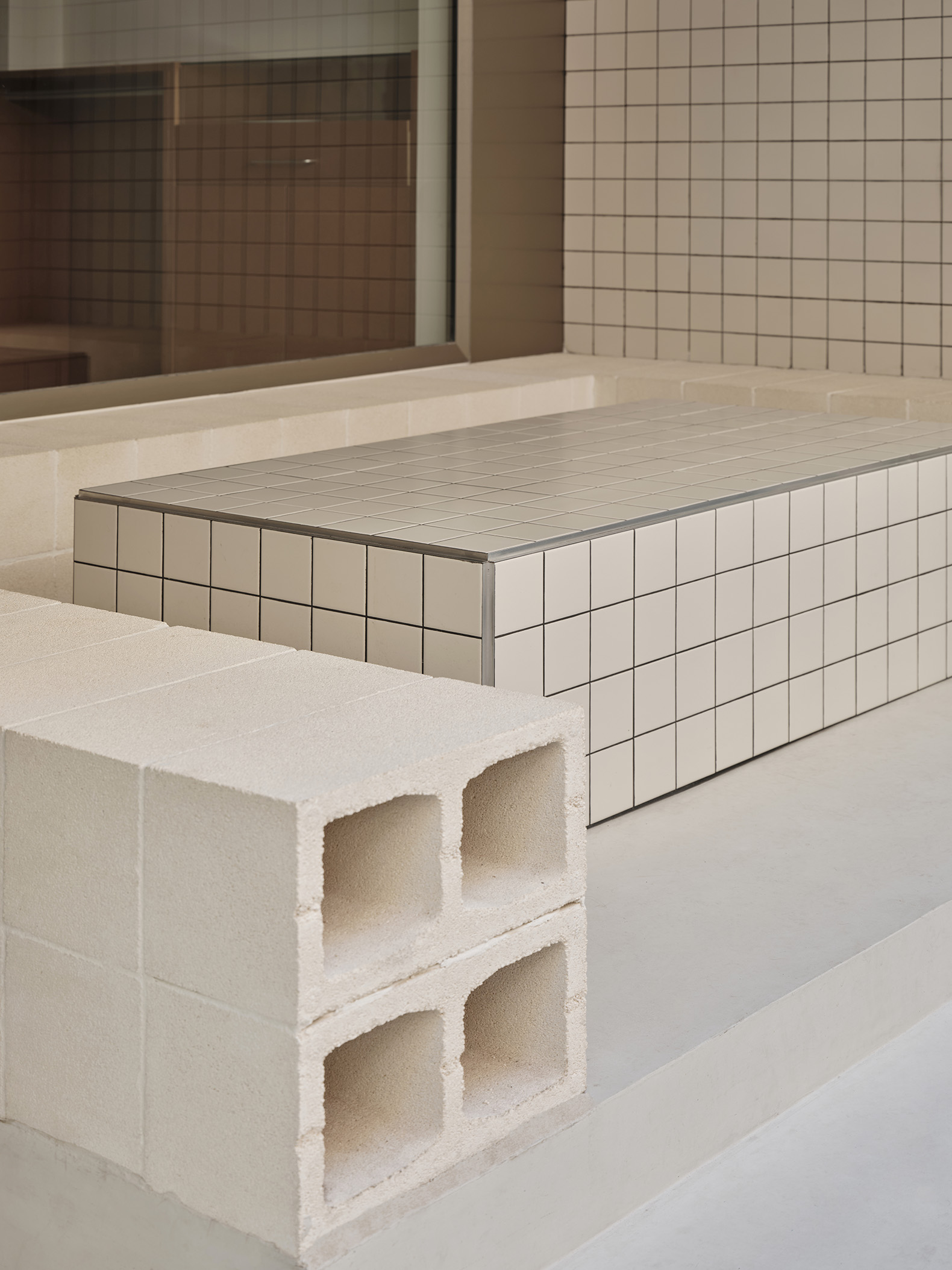
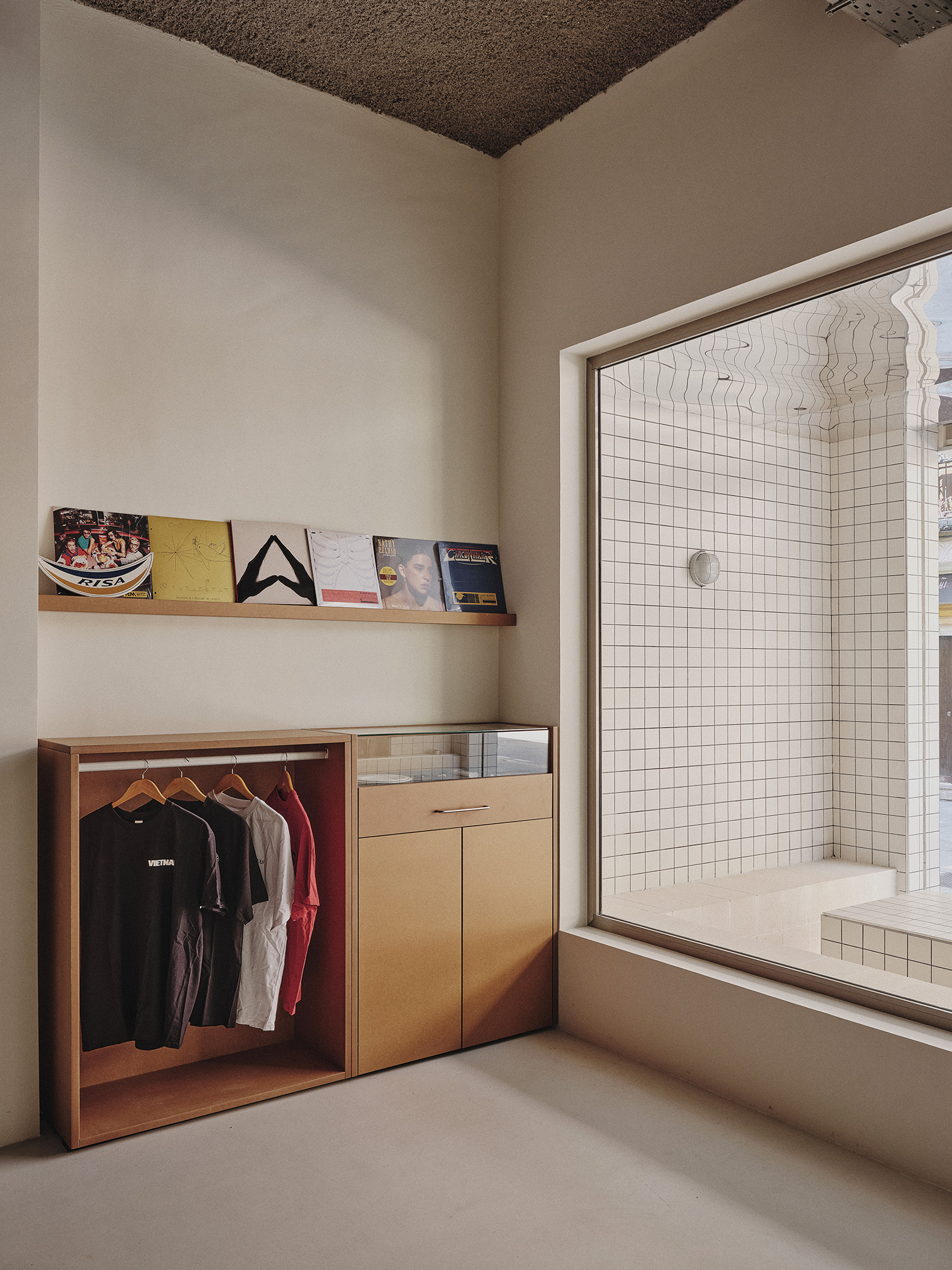
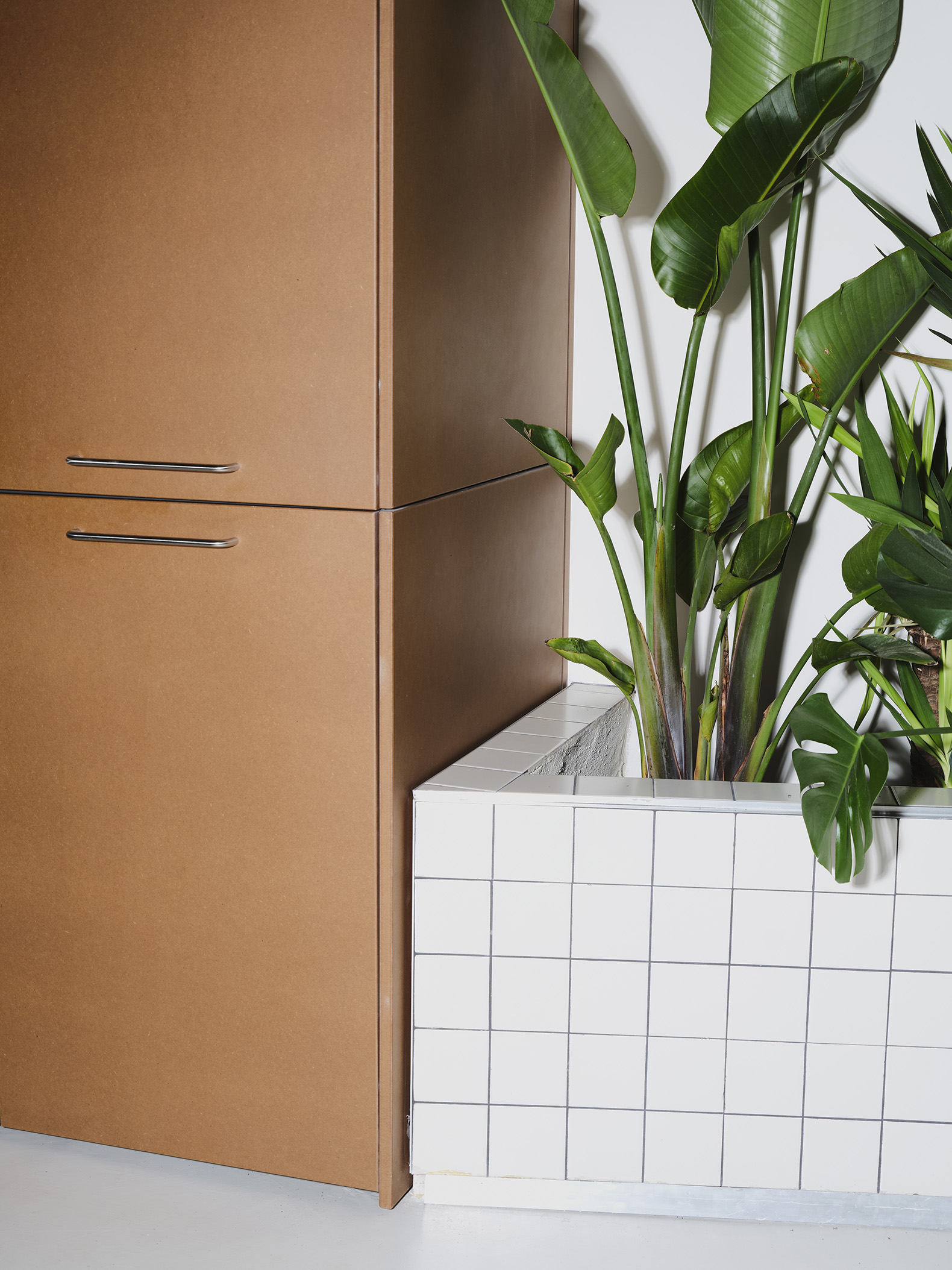
The arrival at the studio is conceived as the conceptual starting point. The entrance replicates the material logic of many urban architectures in Tokyo, where 10x10 white tiles cover entire facades. Here, the same tile creates a clean, almost exterior threshold, reinforced by a large mirror on the ceiling that doubles the space and alters the room's proportions. This feature generates the sensation that the visitor remains outside even after entering, blurring the boundary between street and studio. A white concrete block bench introduces one of the materials that is subsequently repeated in various parts of the project, foreshadowing its structuring function.
Space and Organization
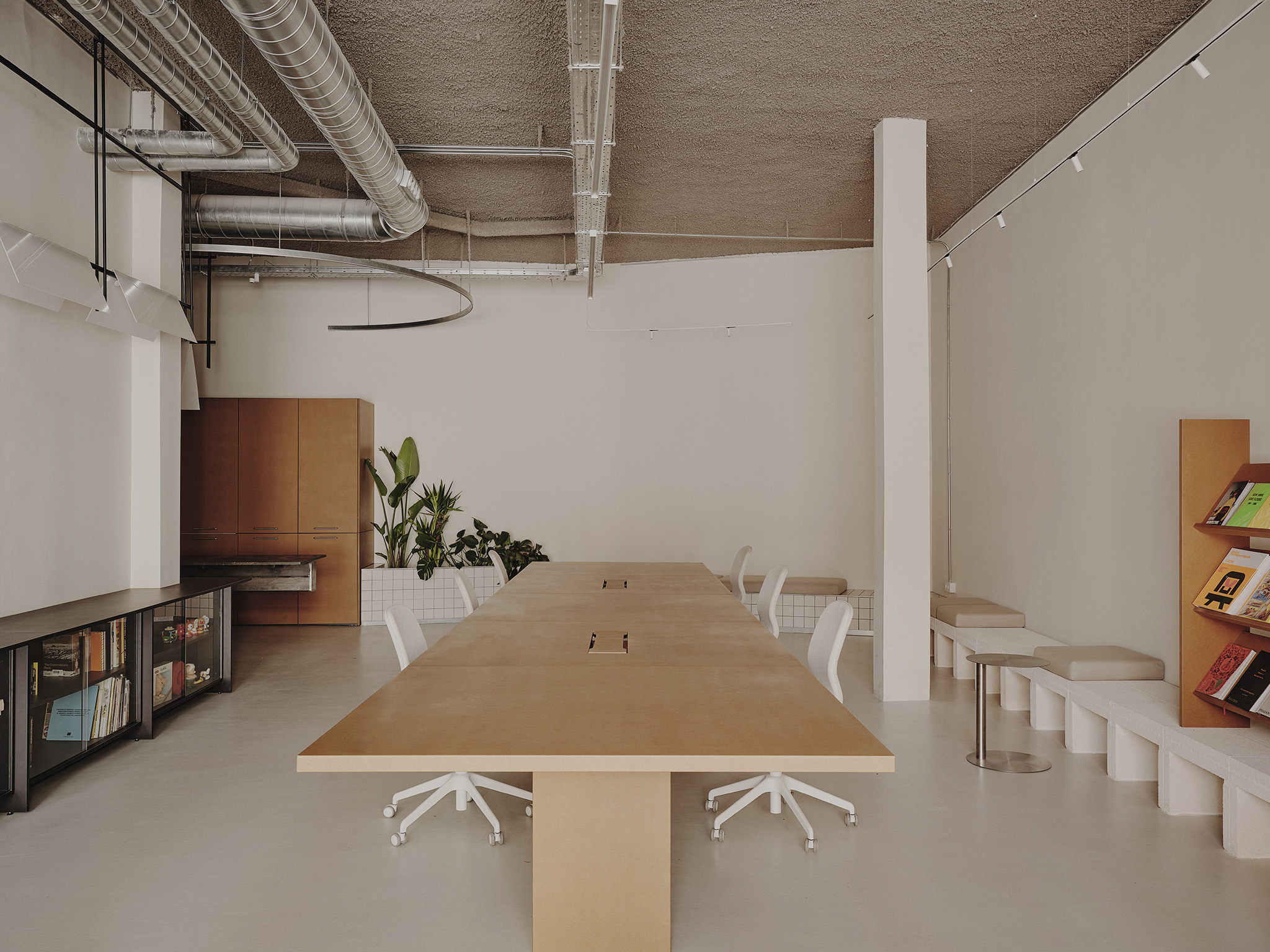
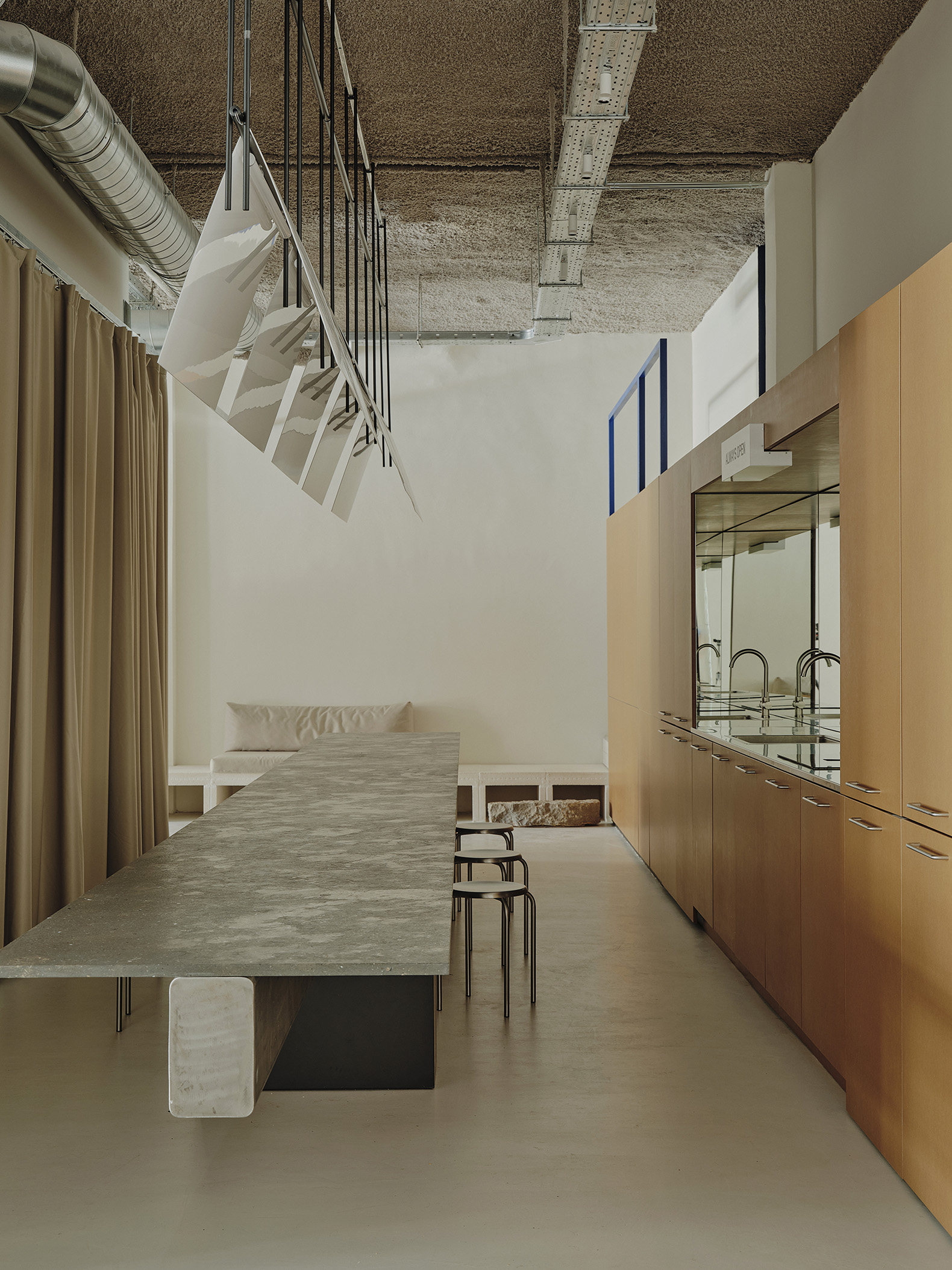
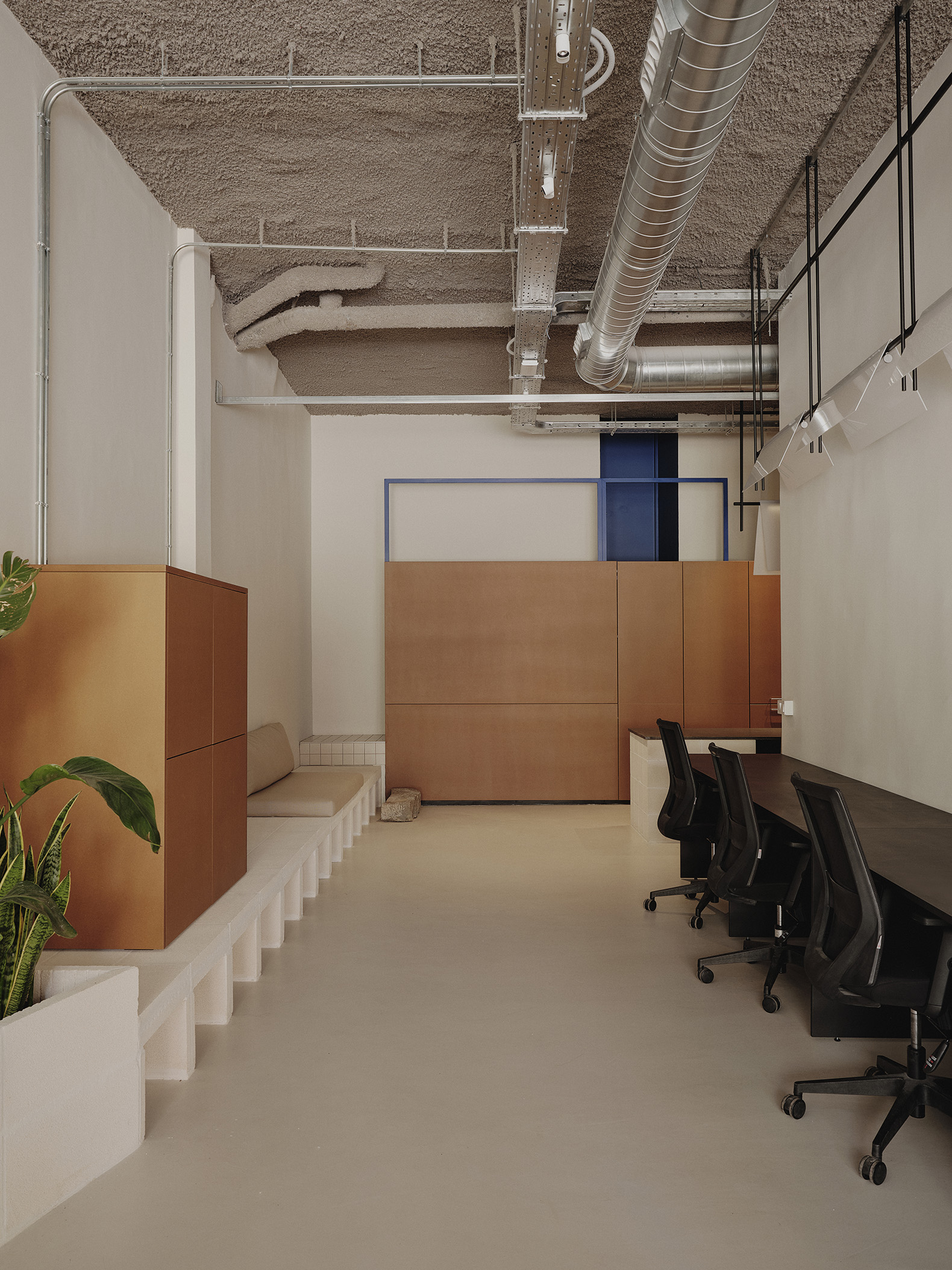
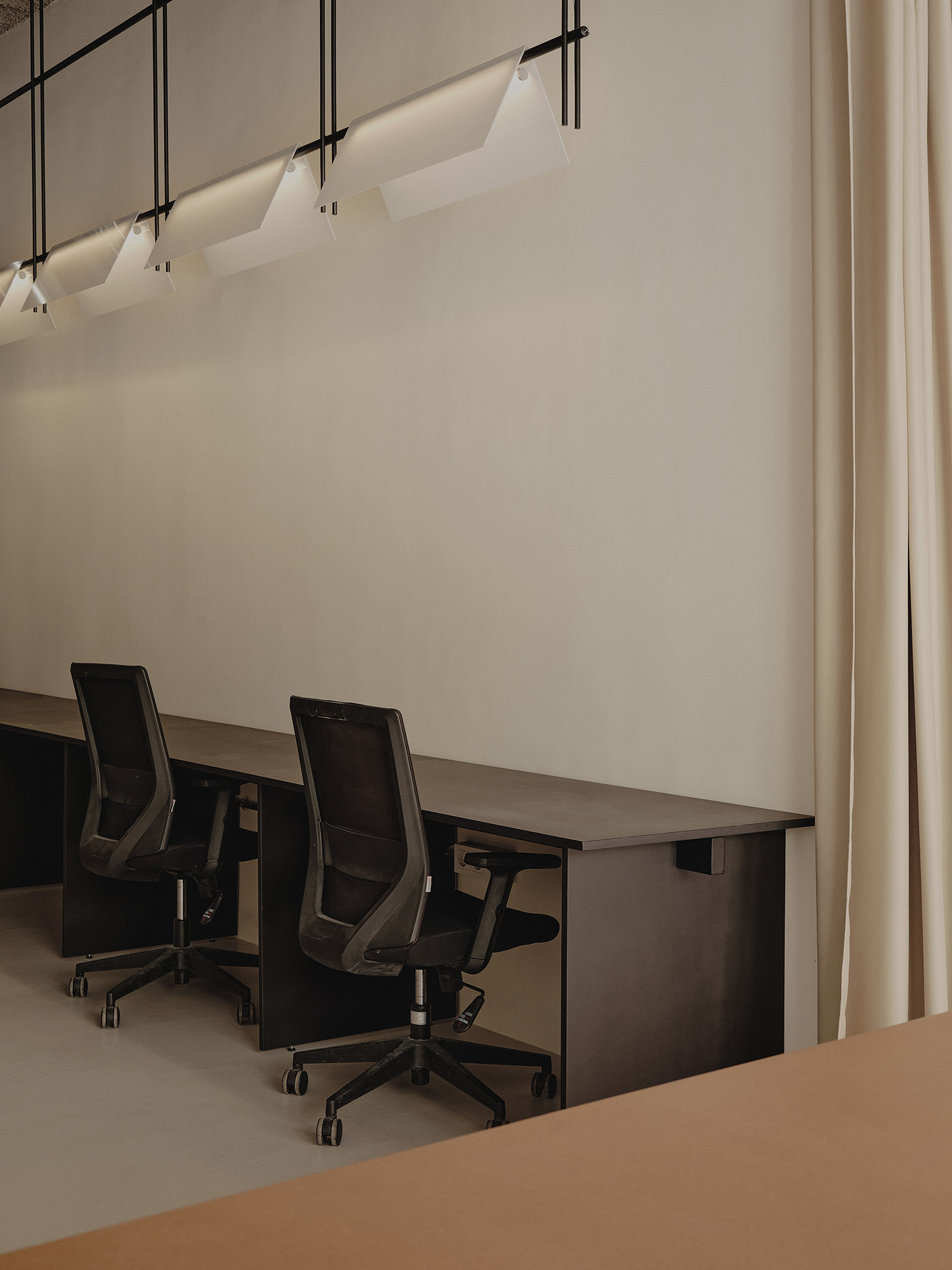
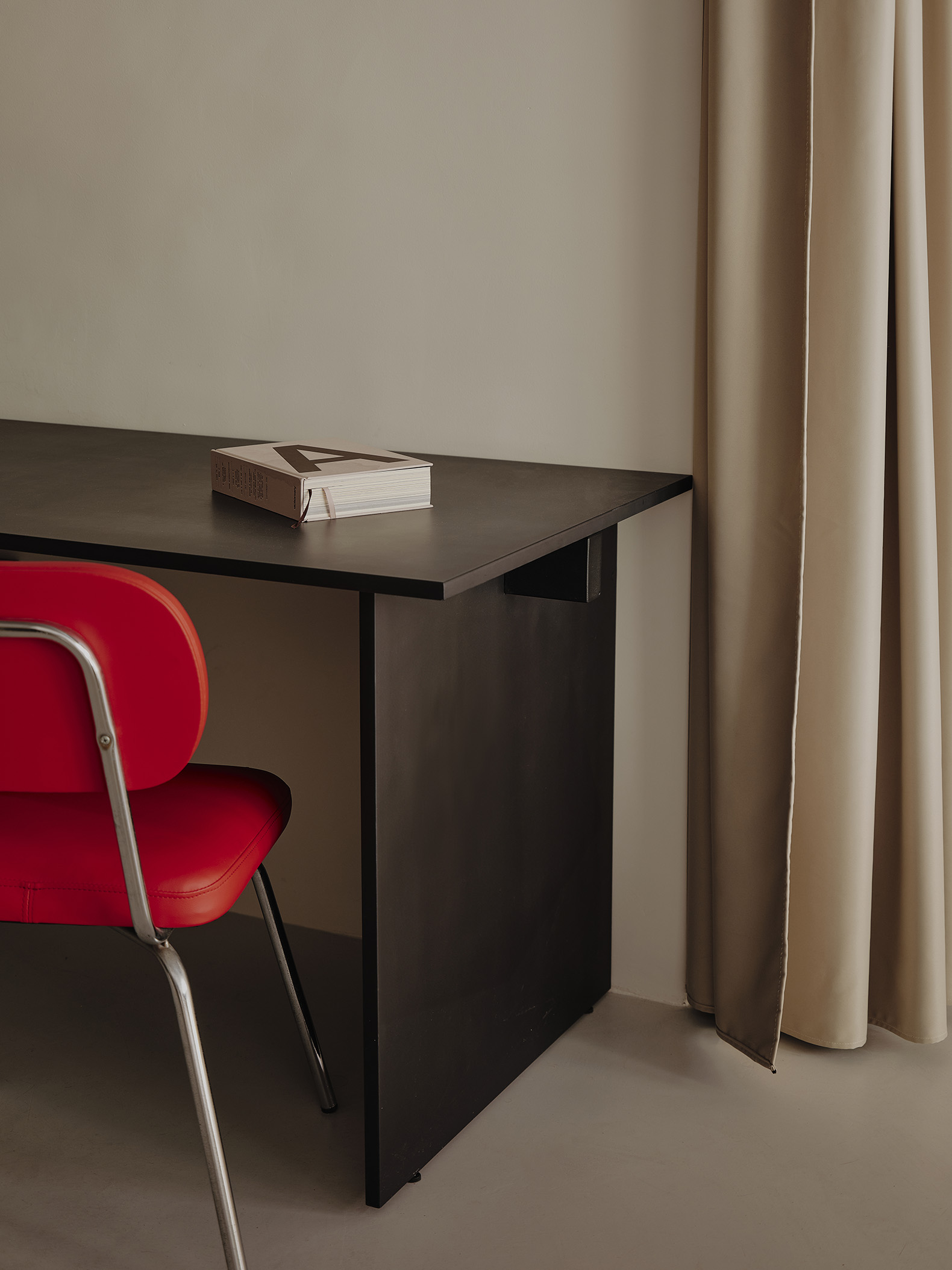
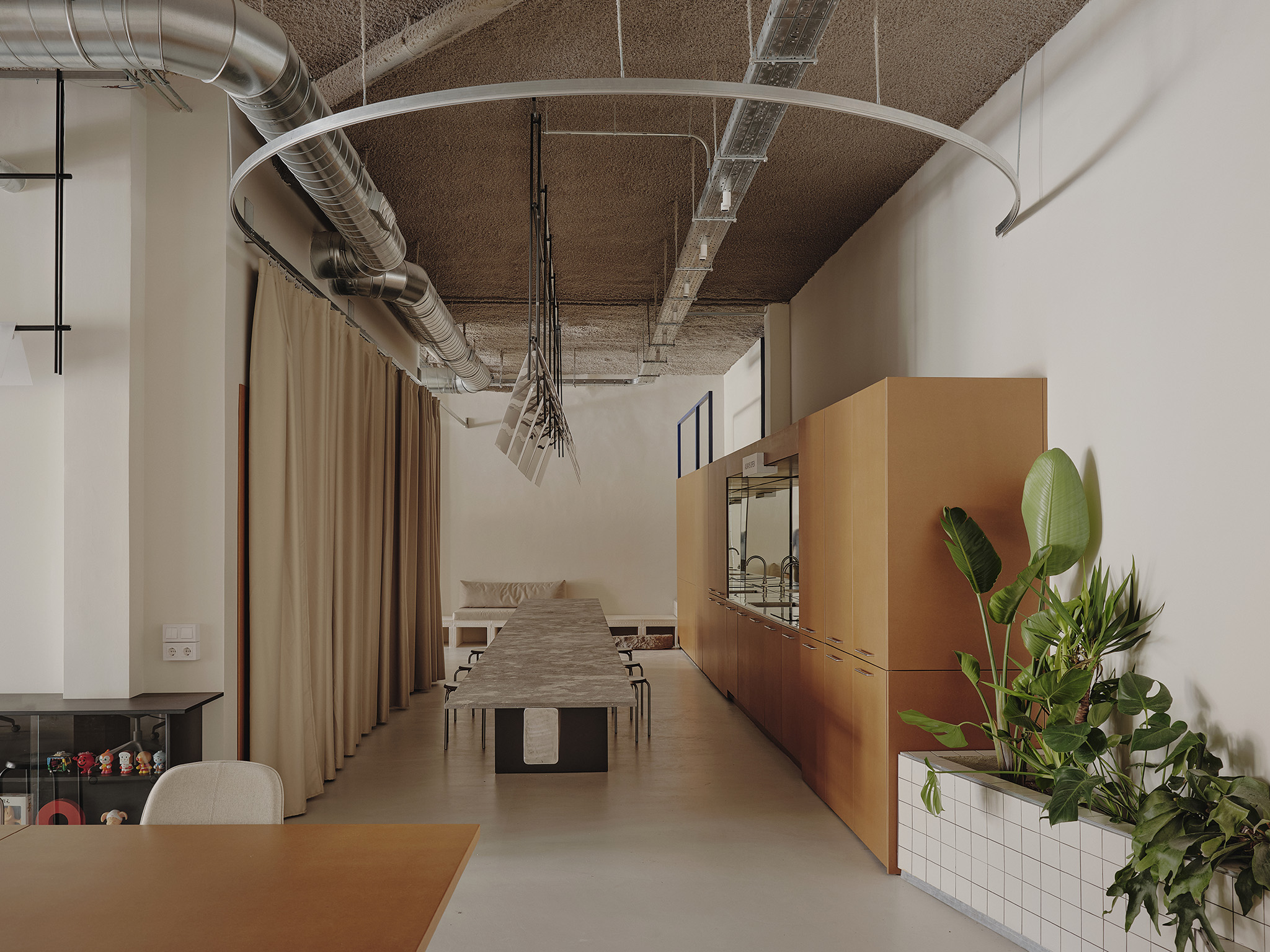
Beyond this threshold, the space is articulated around its central element: a large bar that runs the length of the space in a U-shape. Made of black-tinted MDF, colored throughout to preserve the material's inherent texture, this piece organizes uses and circulation. The bar functions simultaneously as a workspace for coworkers, a display case, and a social area. The central section incorporates a 7.20-meter partially cantilevered table constructed with an iron structure, San Vicente black stone, and a sculptural white block leg.
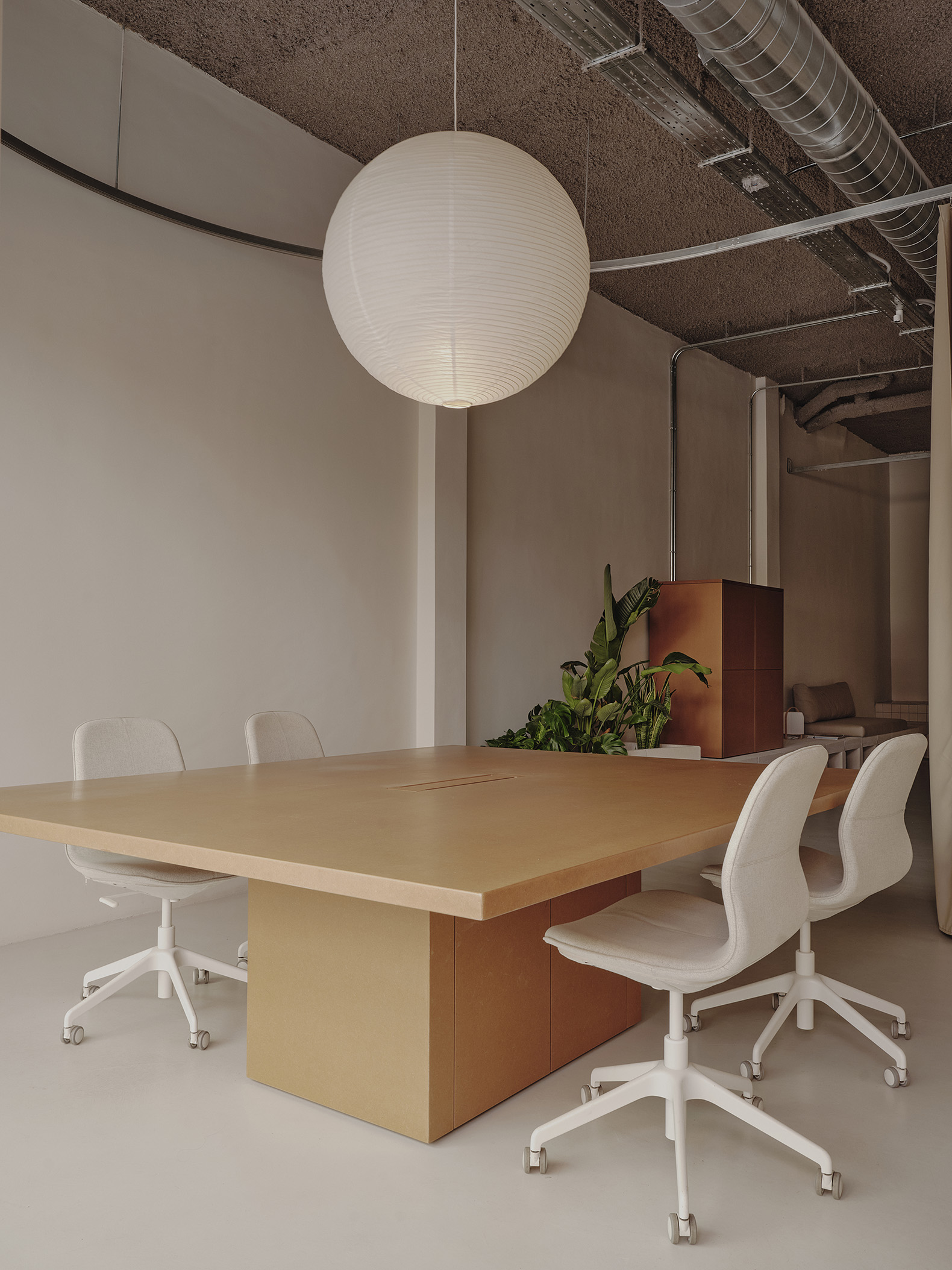
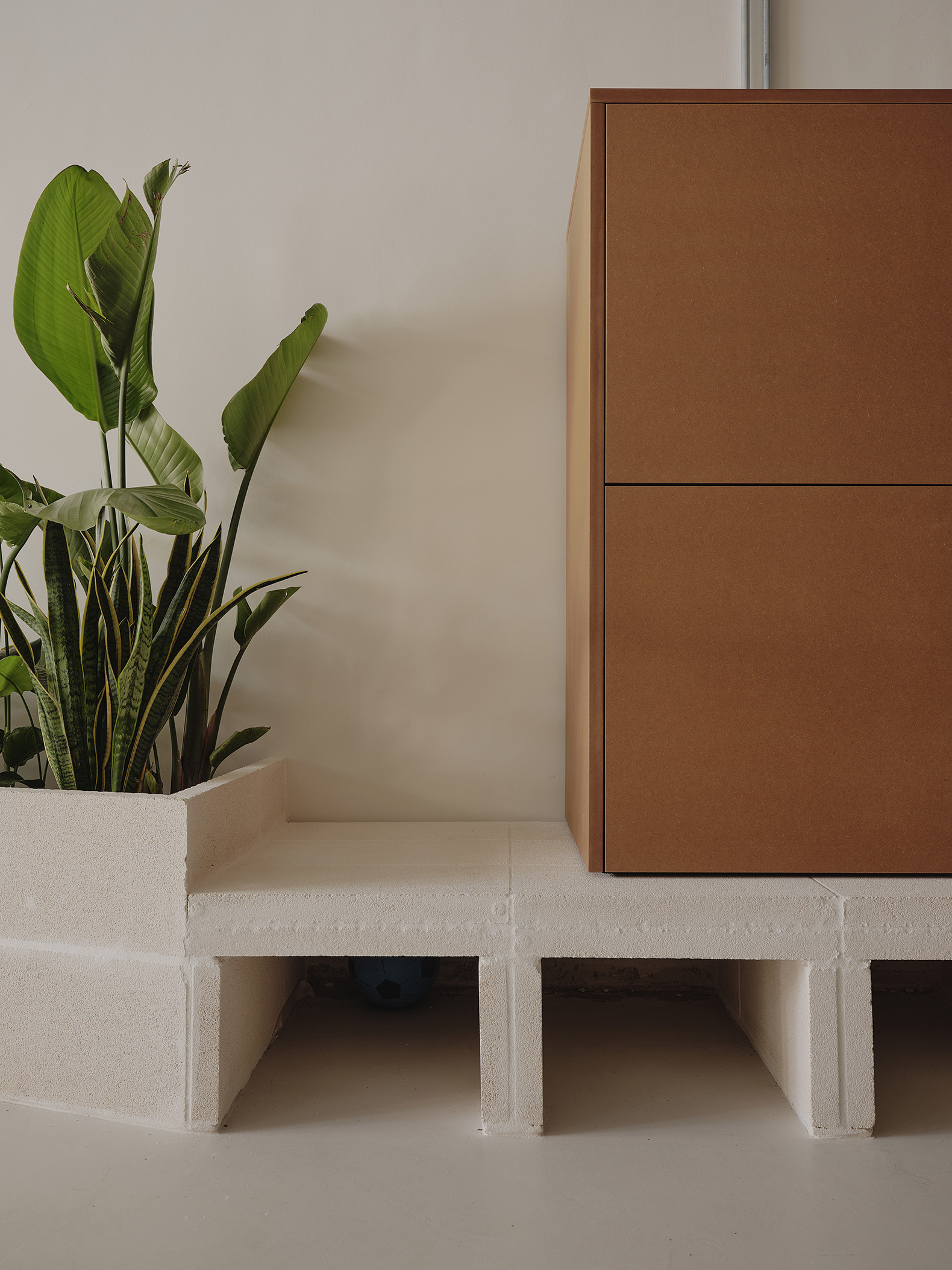
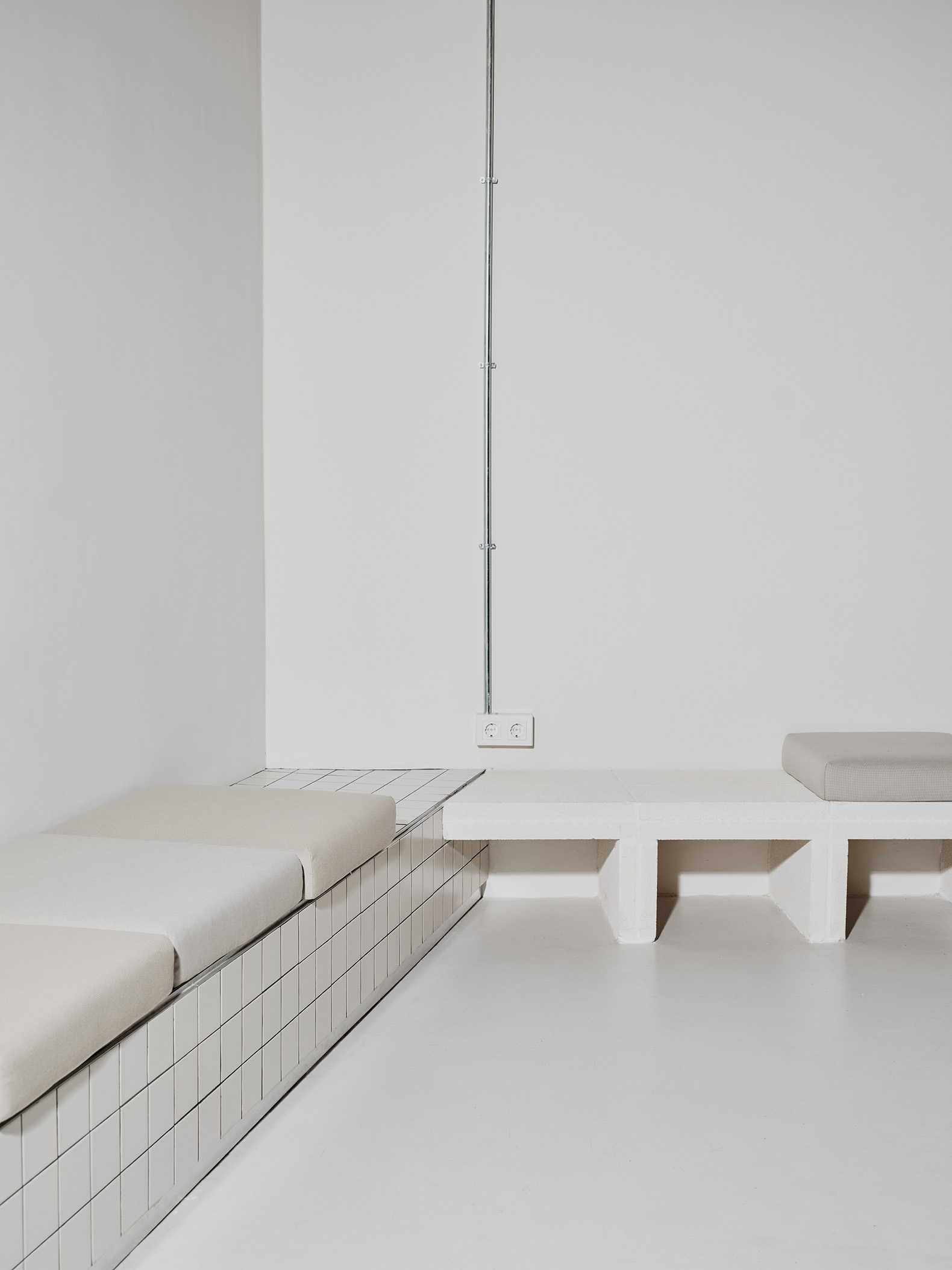
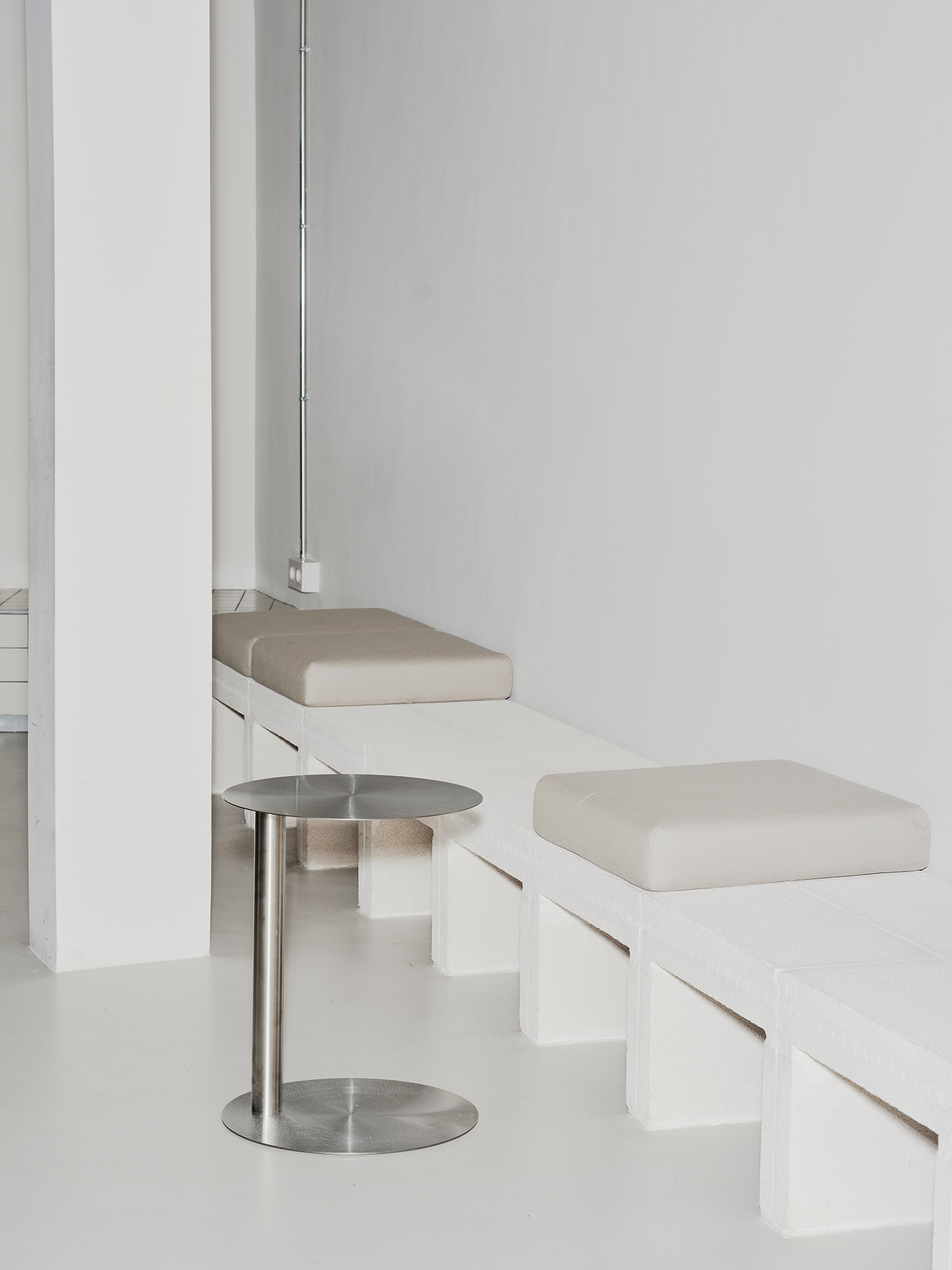
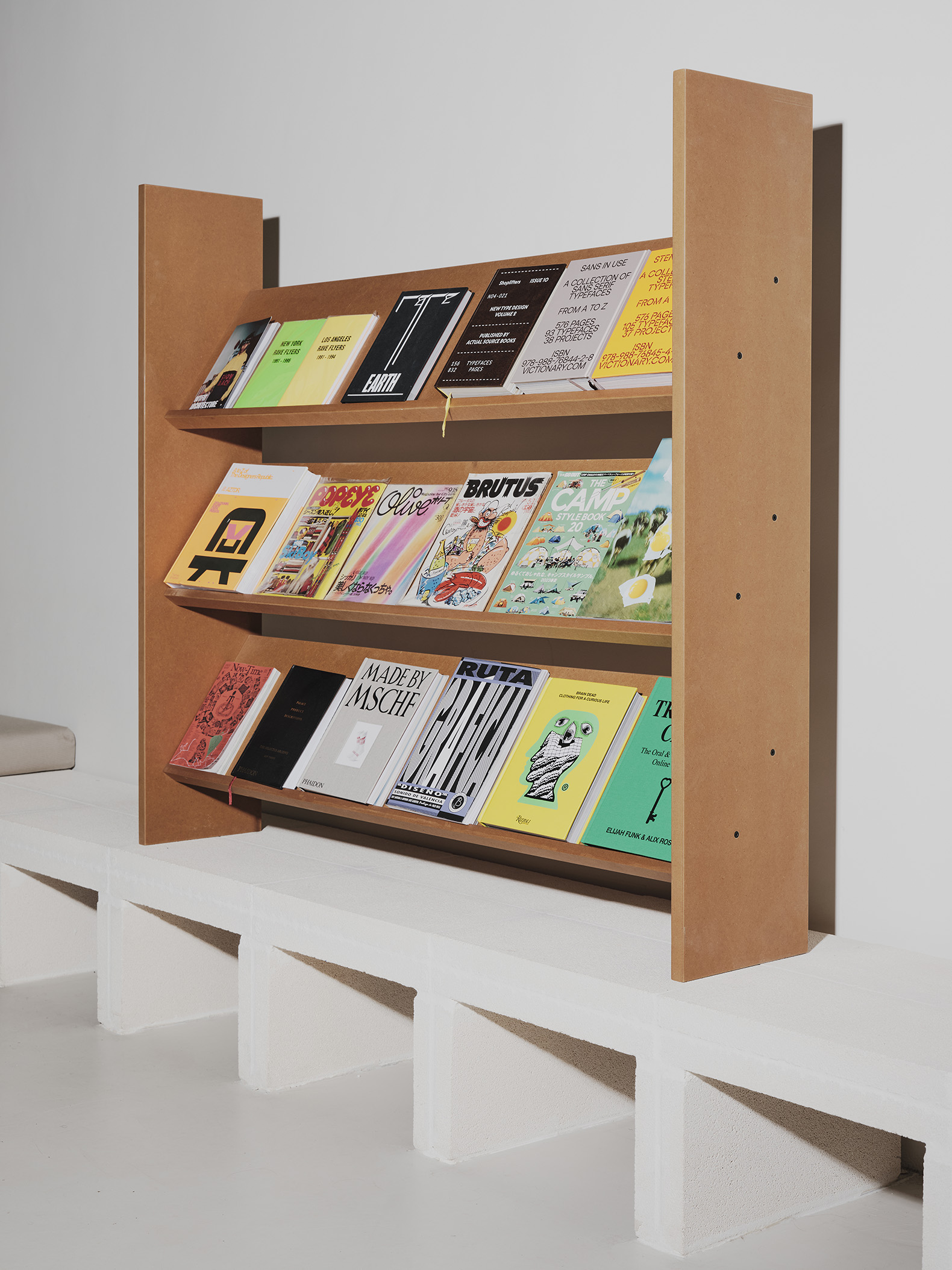
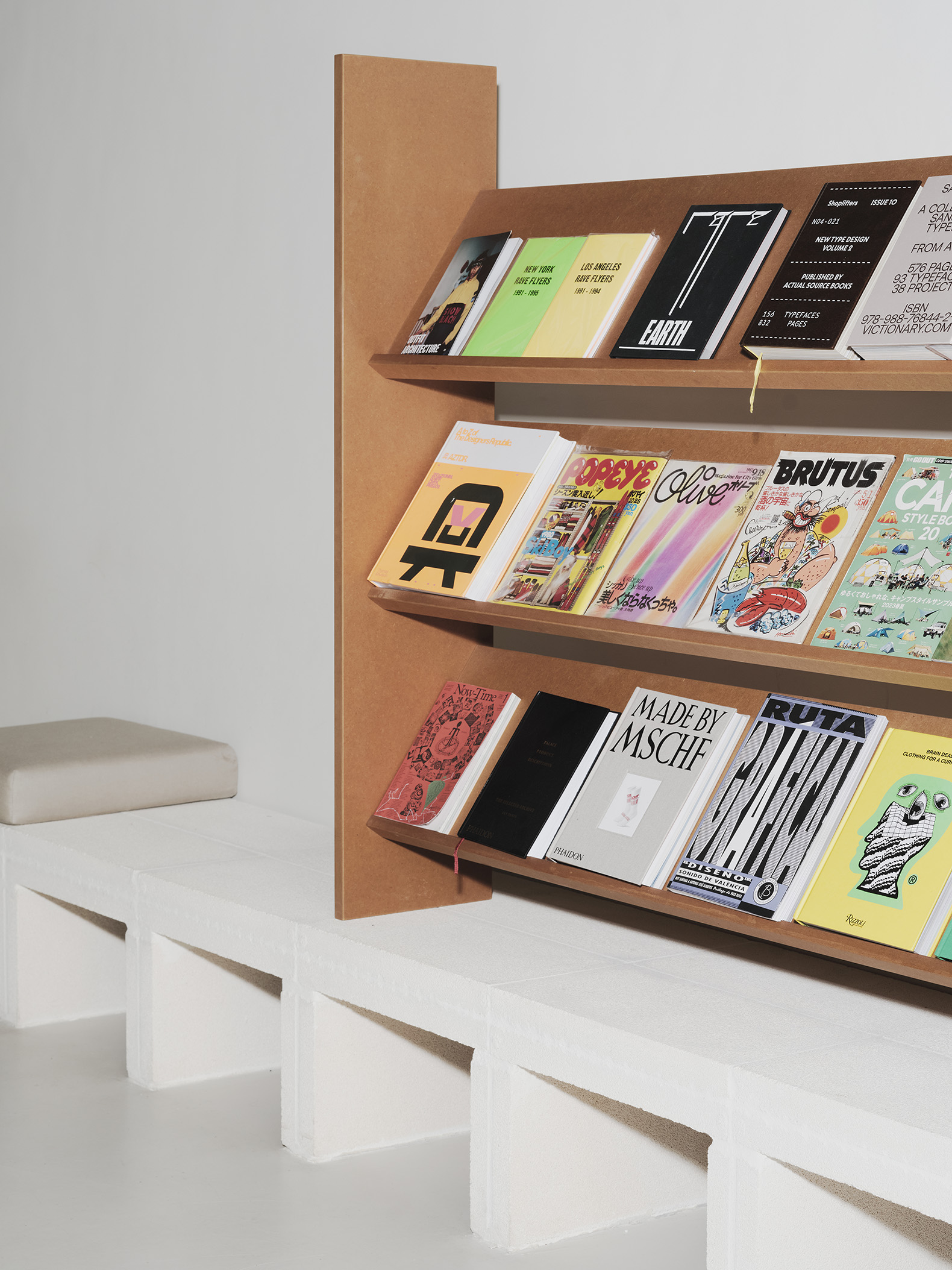
This table, designed to accommodate nearly twenty people, is also the central piece that allows the studio to easily transform into a dining area, tasting room, presentation space, or professional meeting room. Furthermore, the perimeter bench in white block form and the rail system installed around the entire perimeter allow the space to also function as an exhibition area, facilitating the flexible and continuous display of artwork and graphic pieces.
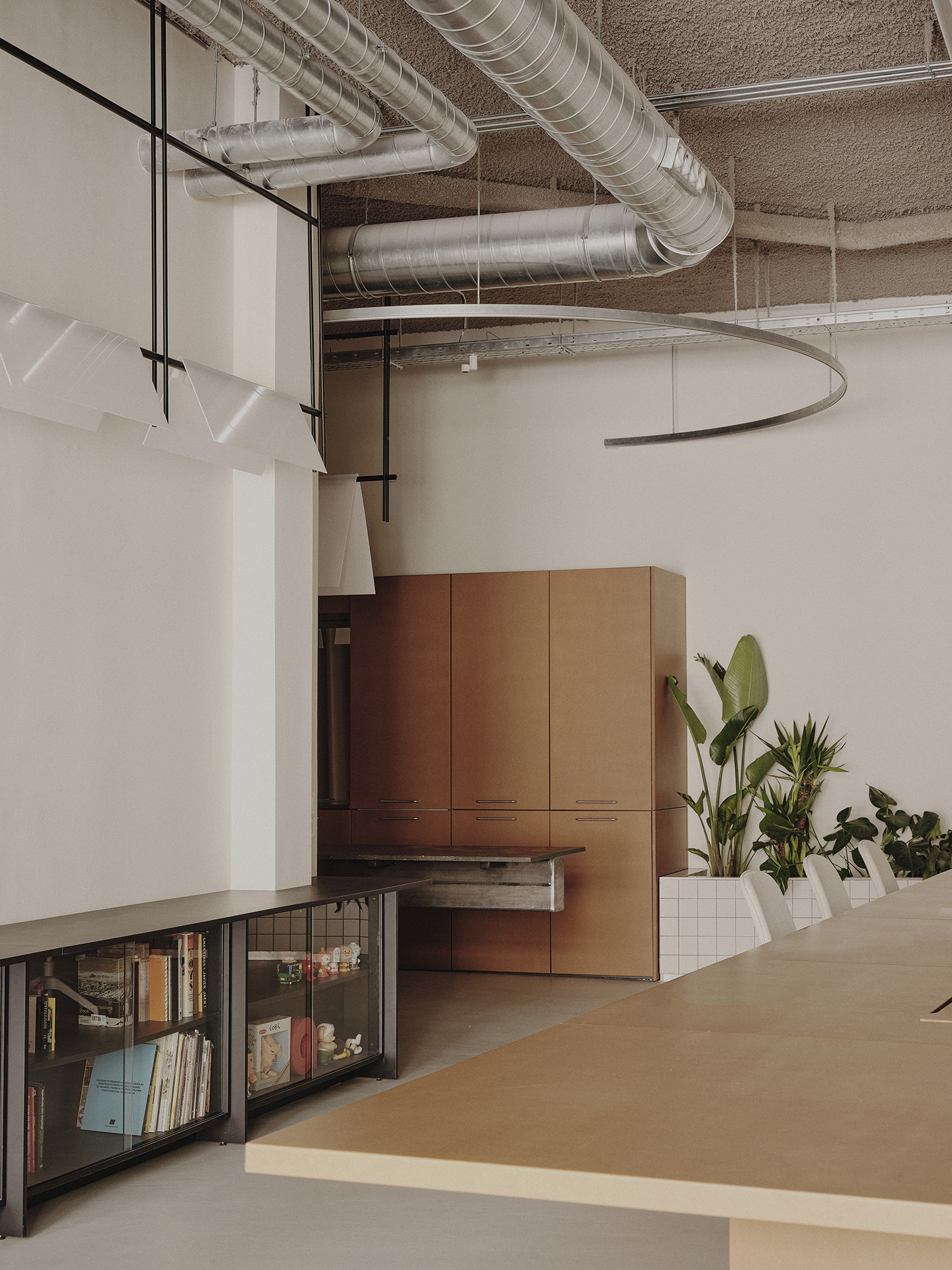
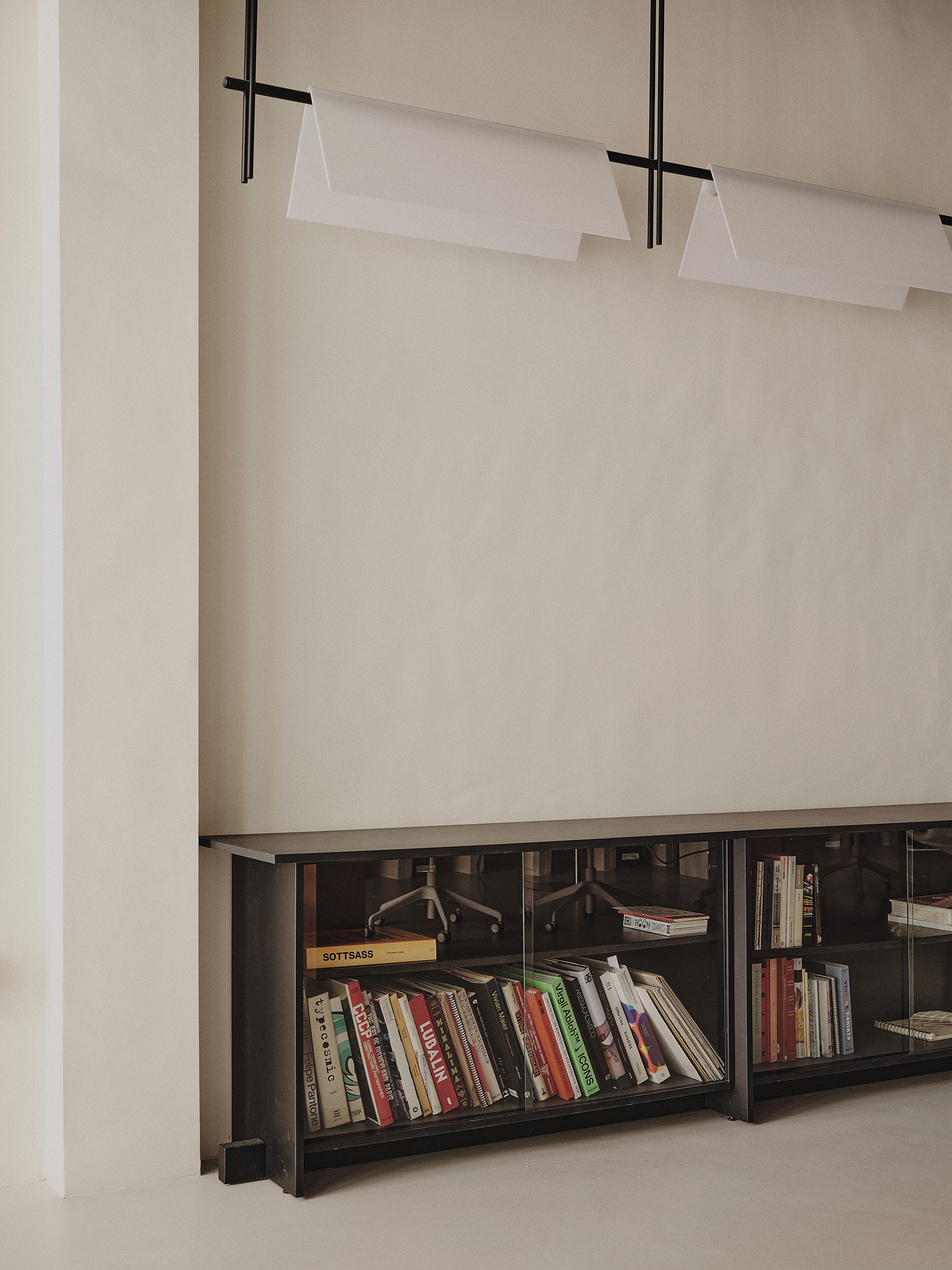
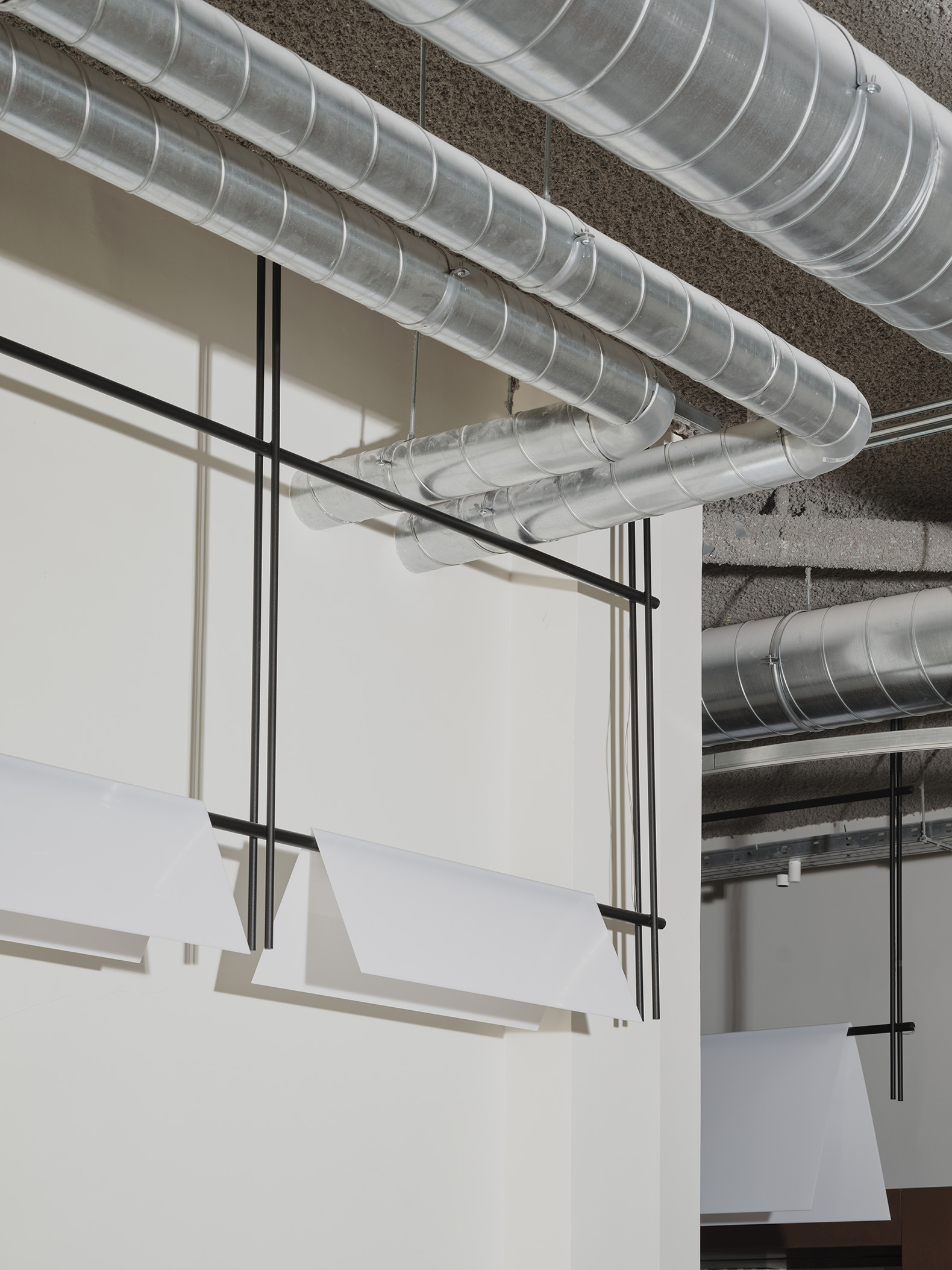
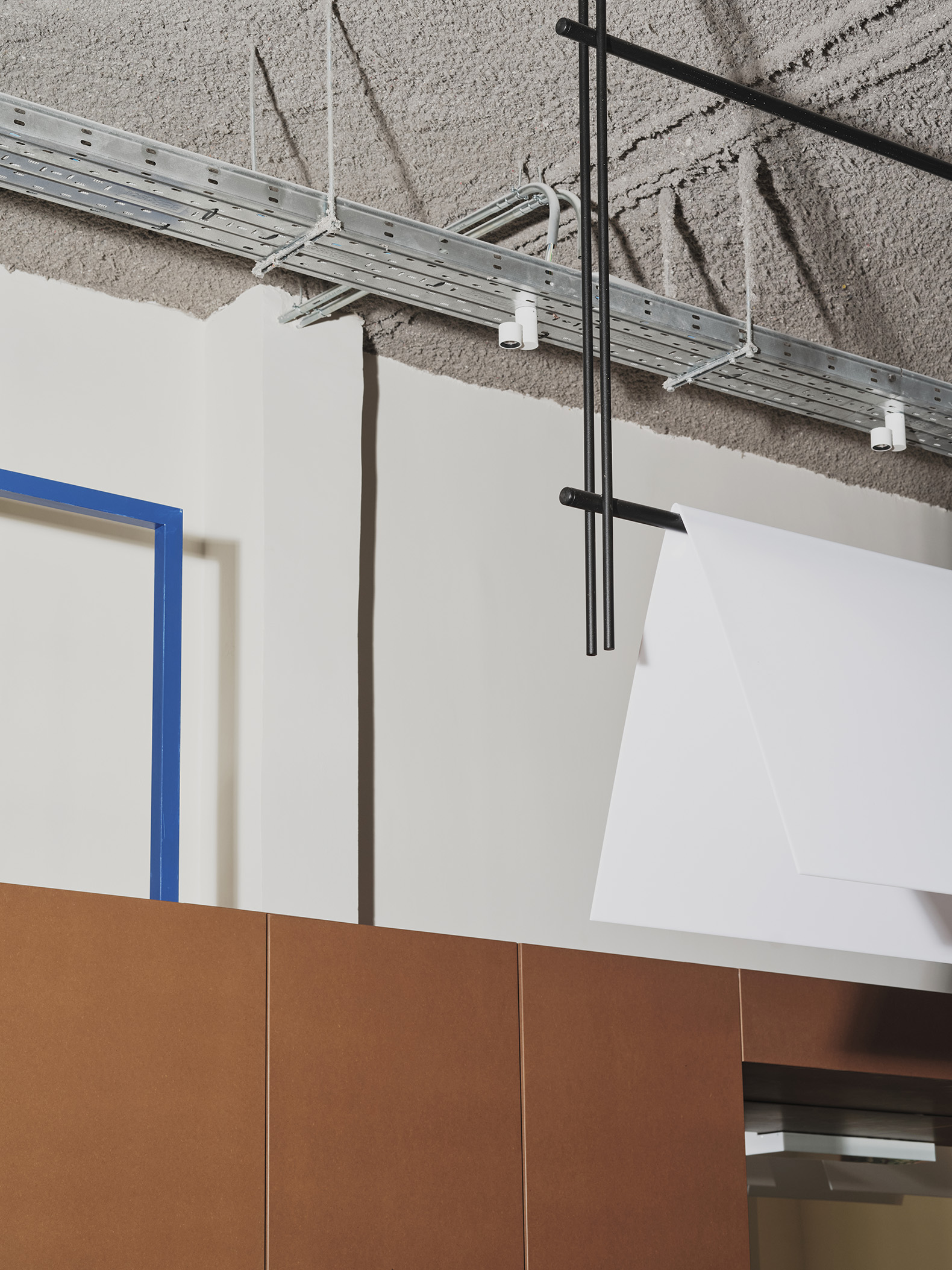
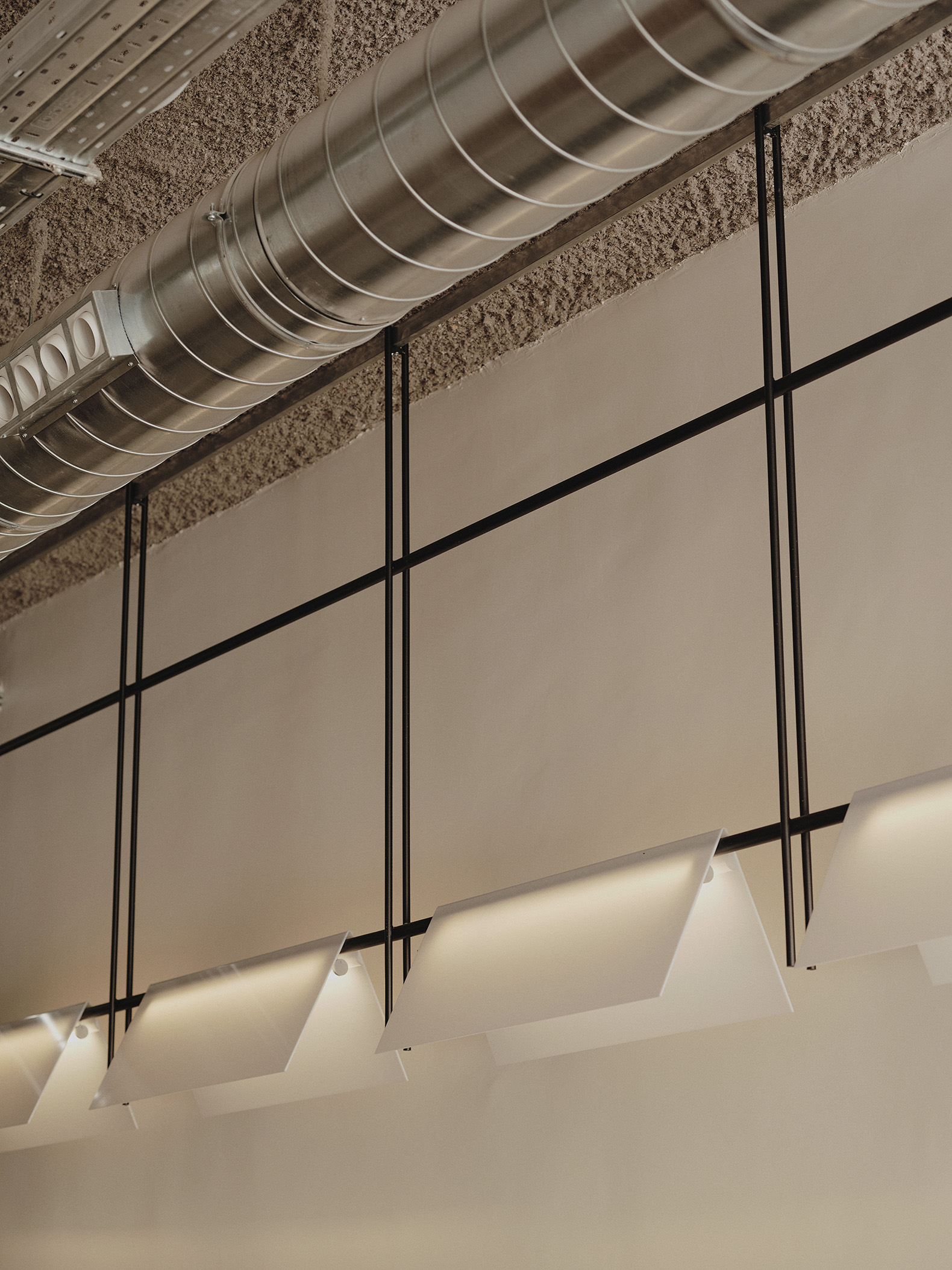
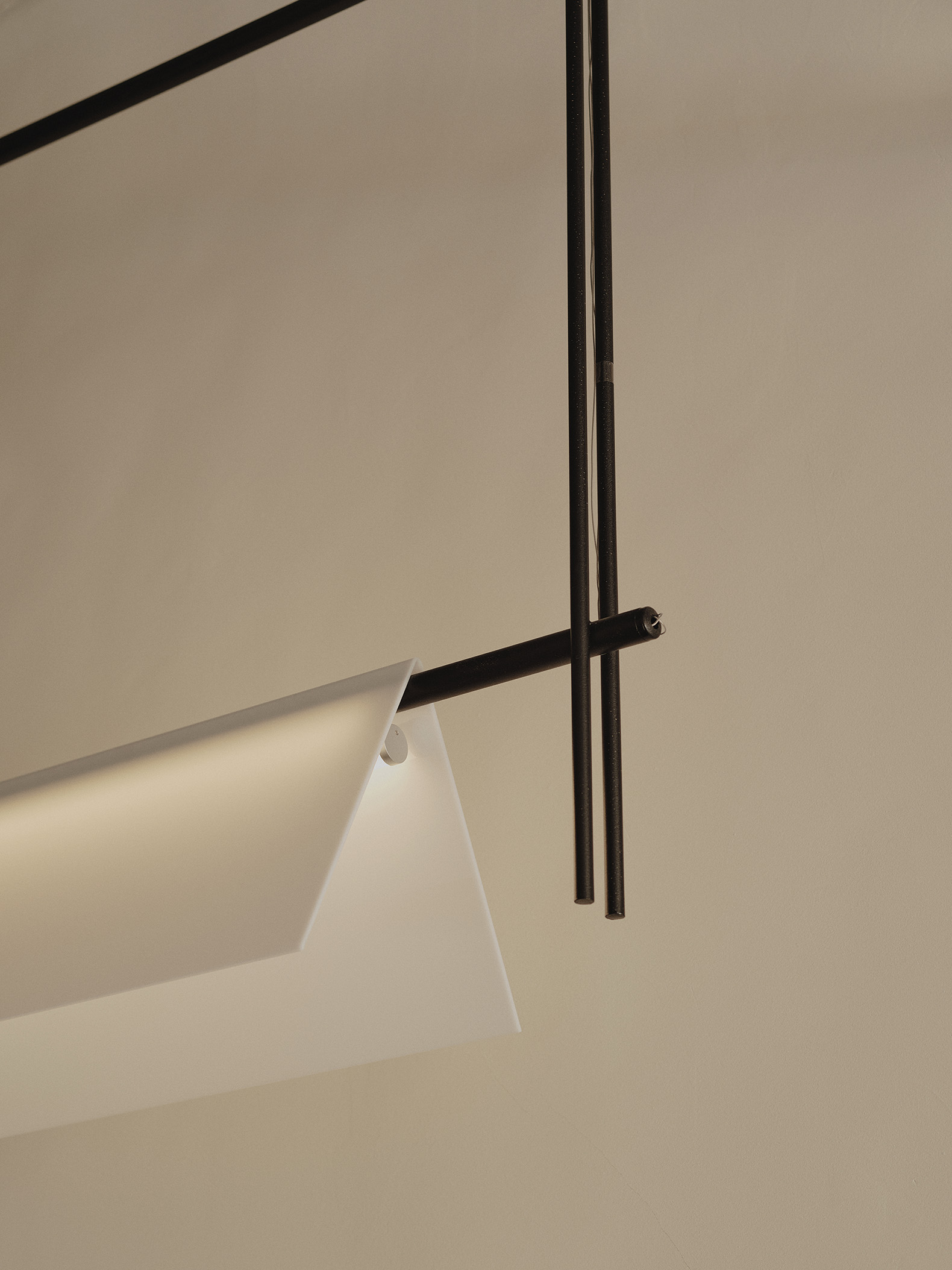
The bar is complemented by a longitudinal light fixture designed specifically for the project, inspired by noren, those textile pieces that often mark the threshold of Japanese taverns and restaurants. The presence of this lamp, suspended along the entire length of the bar, introduces a horizontal rhythm that complements the scale of the space and contributes to its warm and intimate atmosphere.
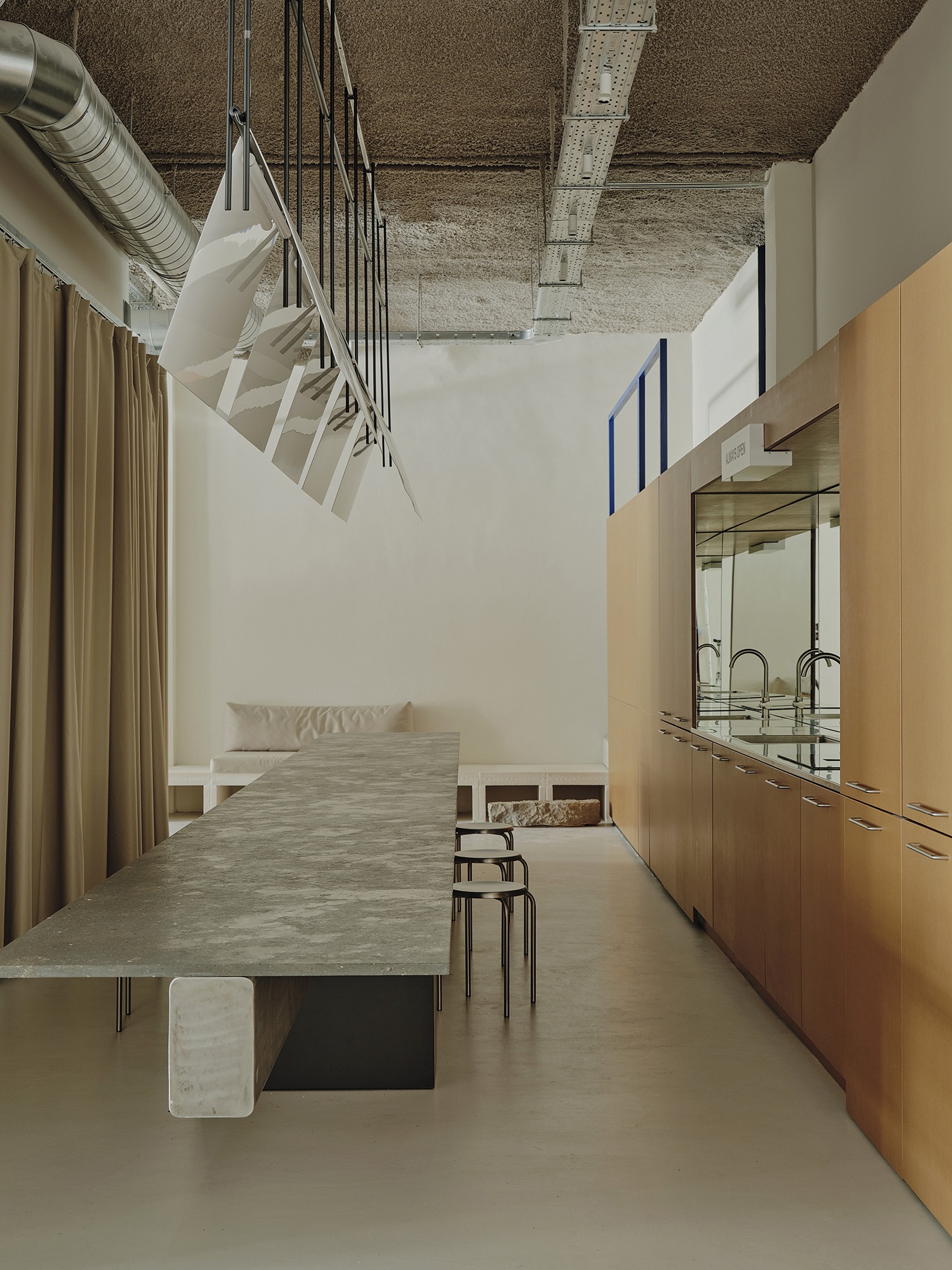
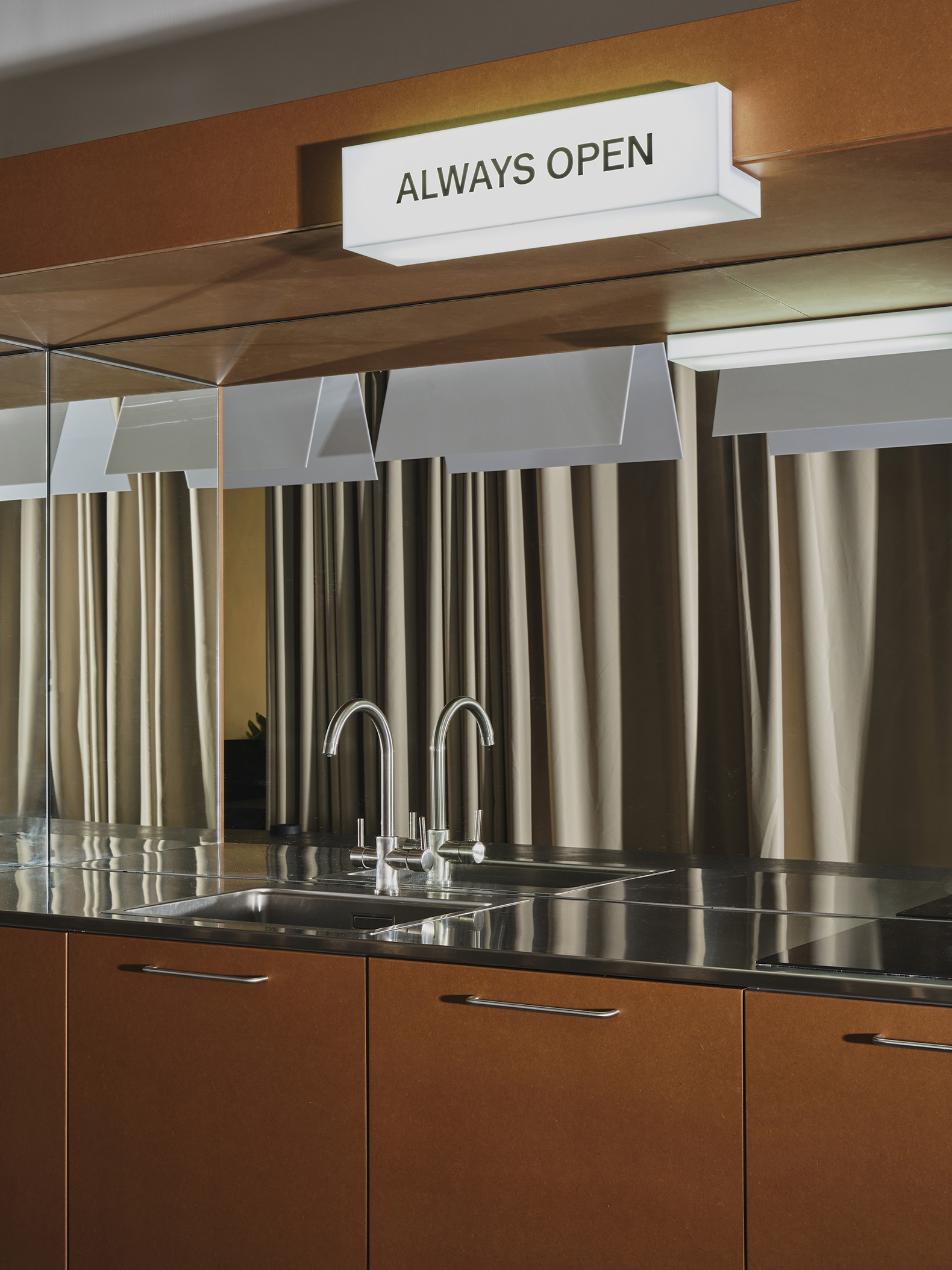
One of the project's most unique decisions is to place the kitchen outside the bar, reversing the typical layout of an izakaya. To reconcile this apparent incongruity, a mirror has been placed opposite the kitchen, reflecting the chef and symbolically returning their presence to the bar. This decision, along with the mirror at the entrance, is part of a perceptual game that runs throughout the project, where small inversions of the usual order generate unexpected yet coherent situations.
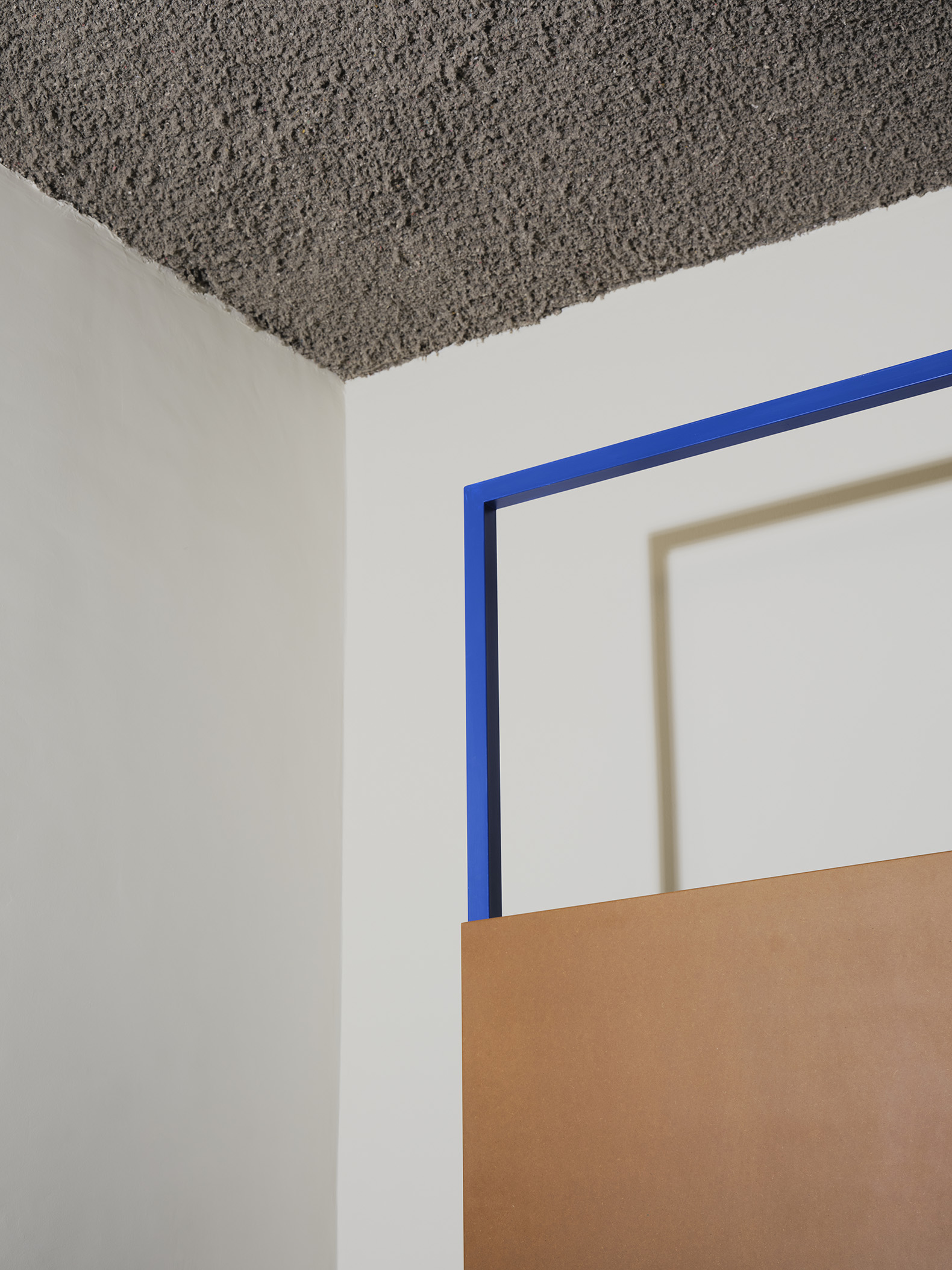
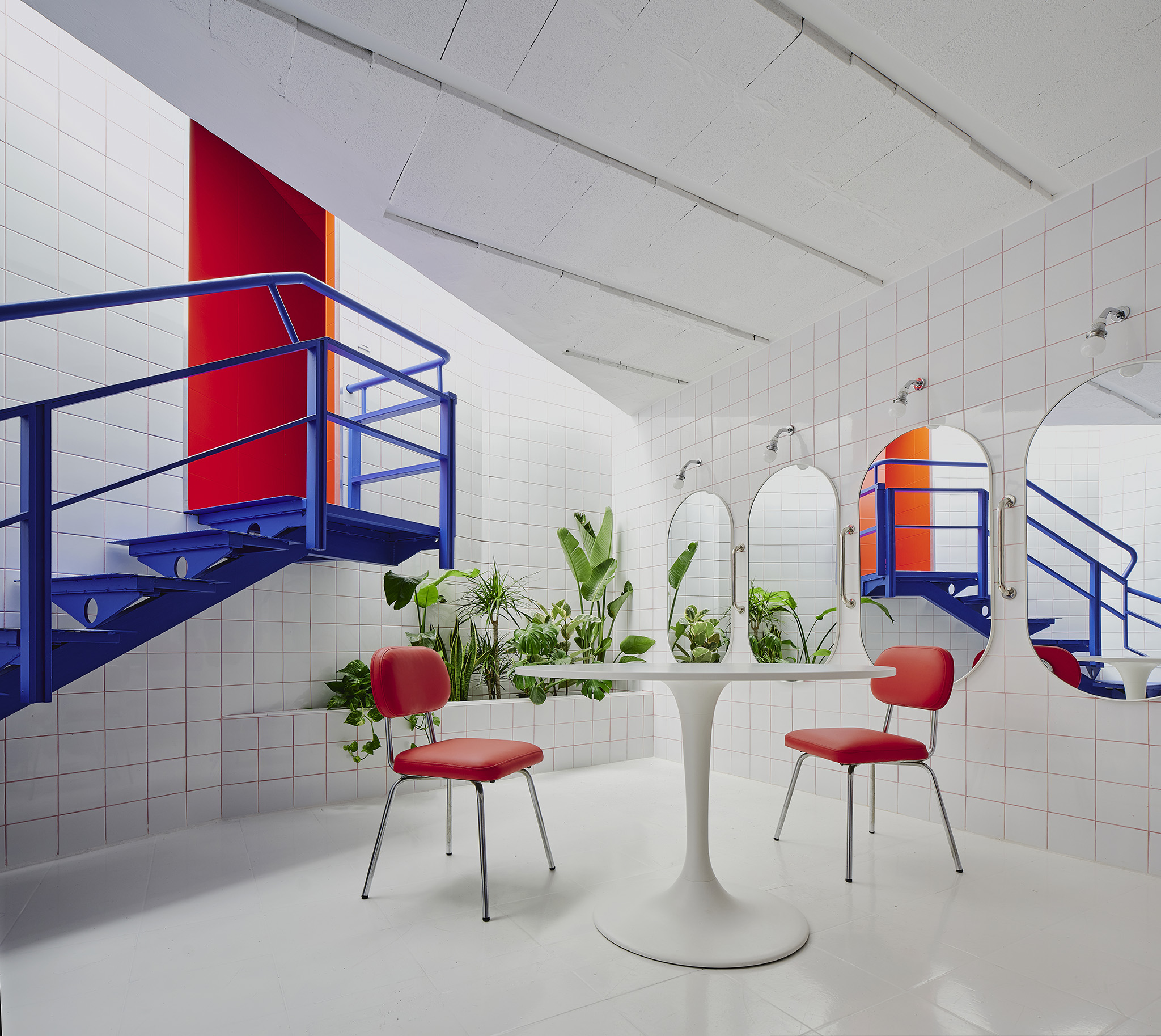
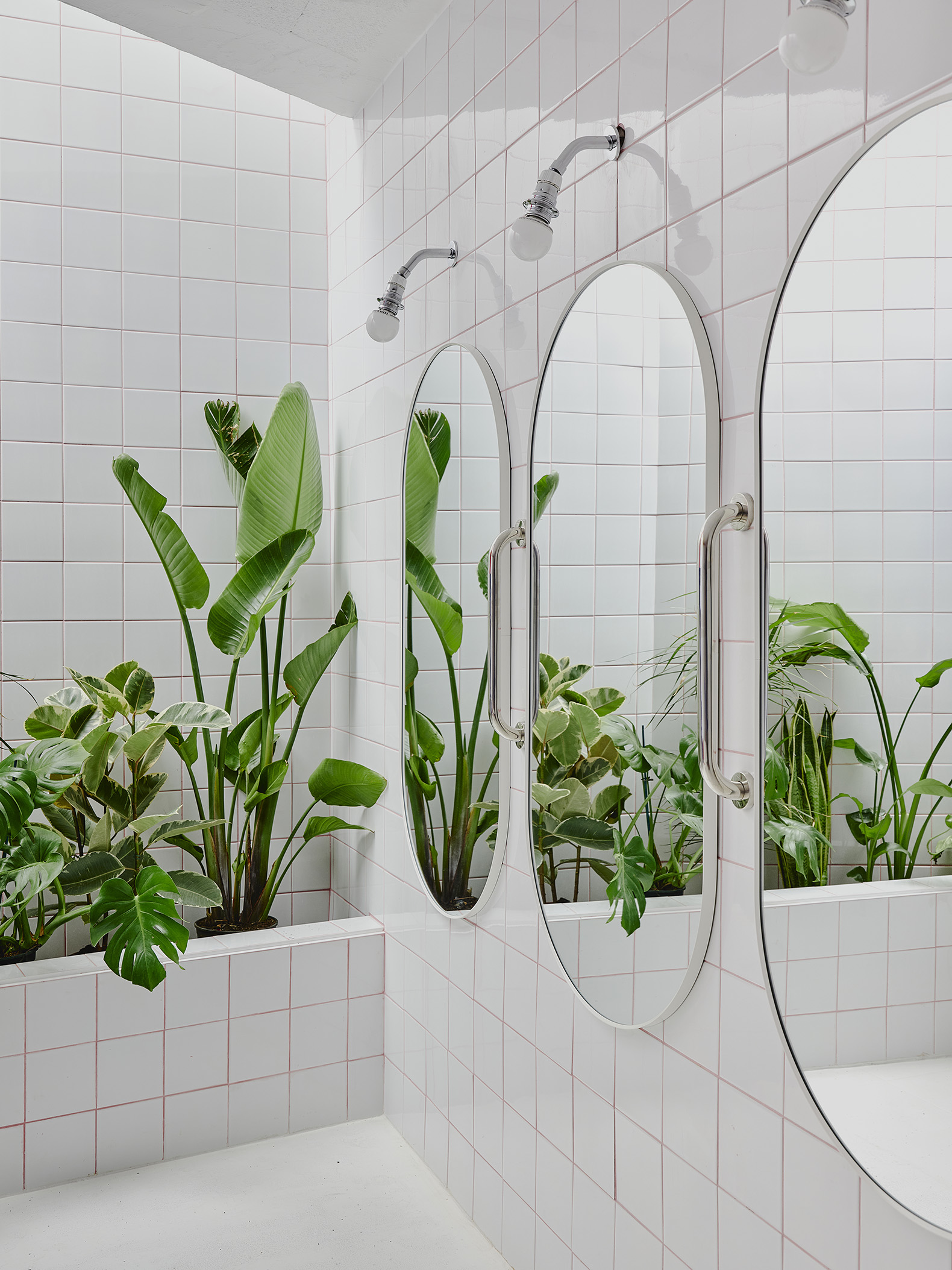
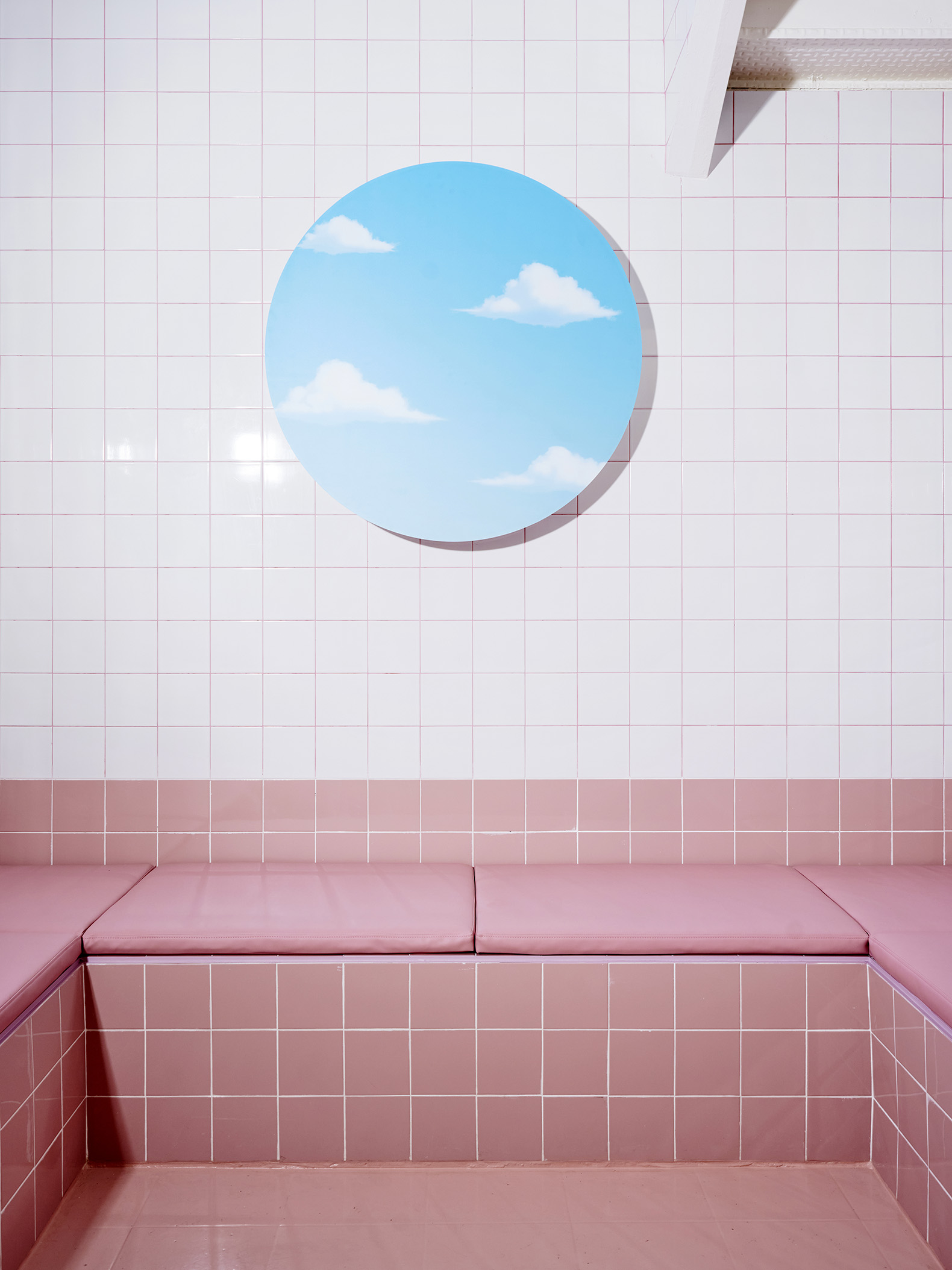
The second conceptual area of the project is located in one of the space's original alcoves and functions as a meeting room. Inspired by onsen (hot springs), this space is conceived as an independent environment that deliberately breaks with the studio's overall austerity. Access is via a small staircase hidden in the kitchen paneling, where a Klein blue door hints at the change in atmosphere.
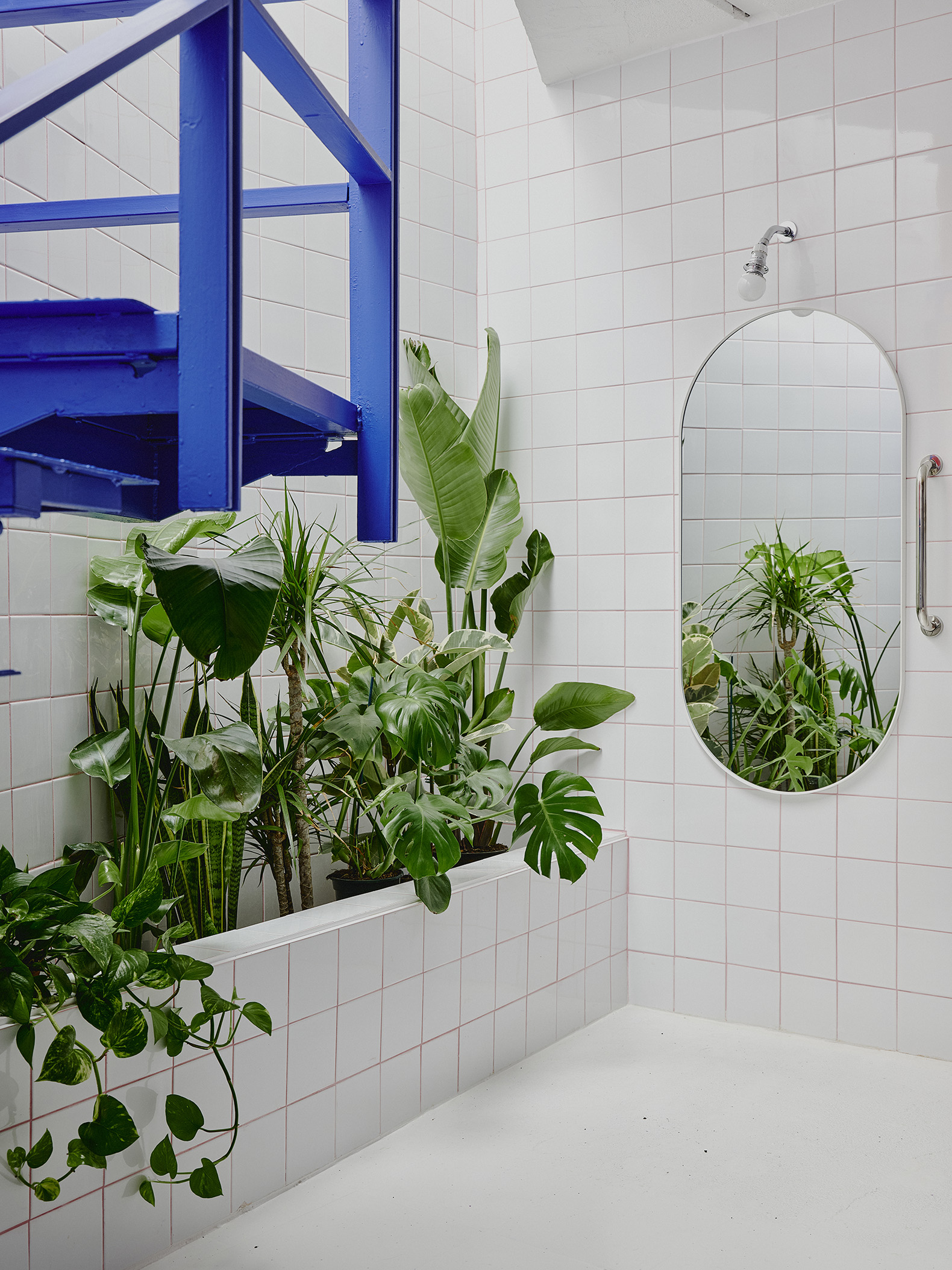
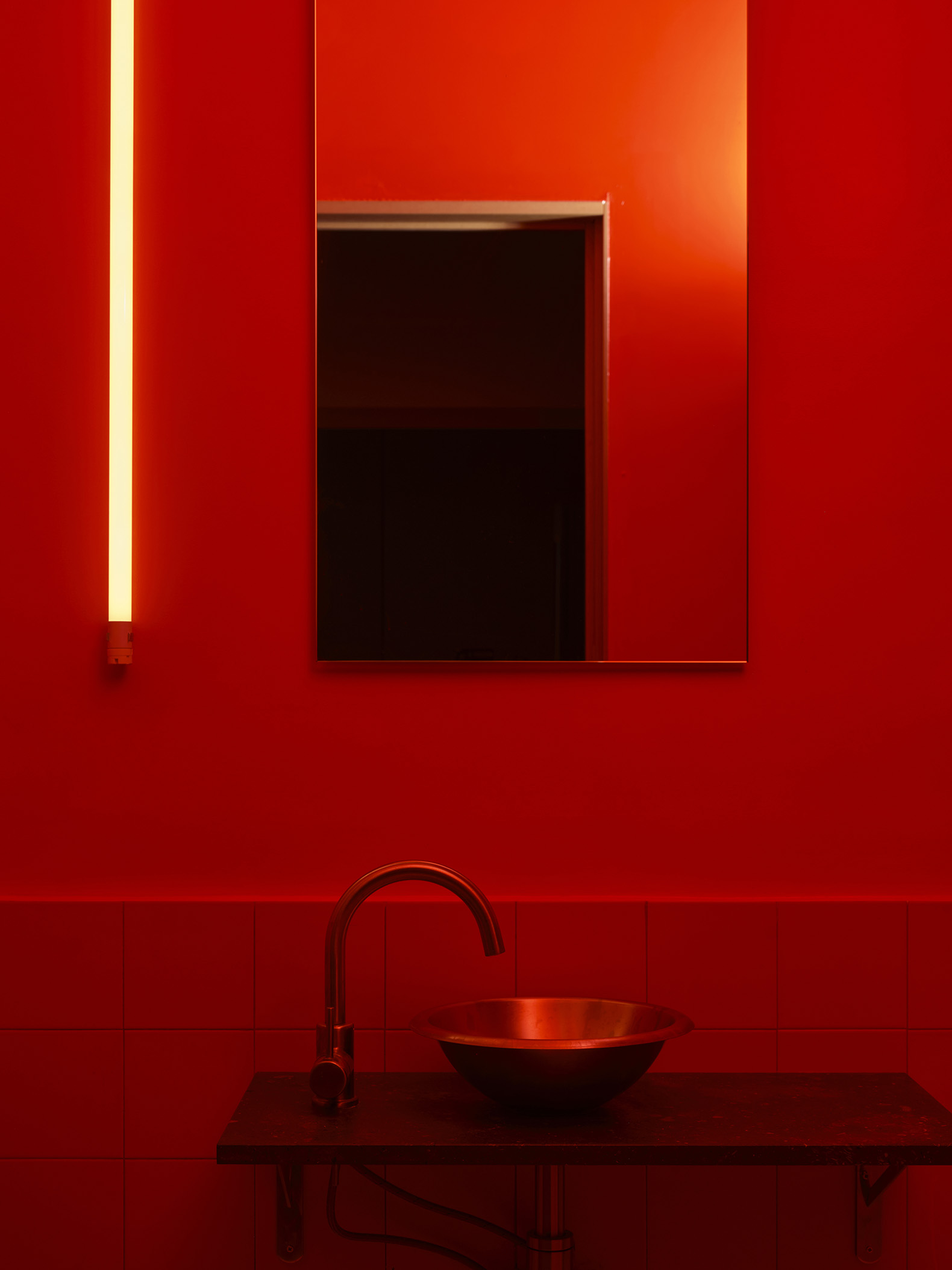
One of the perimeter tatami mats serves as a threshold and is complemented by a granite piece, a nod to the traditional entrances of Japanese homes. Inside, the vibrant colors, the light fixtures made from shower heads, the mirrors with grab bars typical of bathroom areas, and a faux skylight with a small planter create a more playful and experimental atmosphere. Even a neon sign depicting a sky ironically replaces the usual Mount Fuji found in many onsen (hot springs). In addition to the element of surprise this space generates, the adjacent bathrooms, finished in a deep red, reinforce this contrast and add a slightly provocative touch.
Materiality
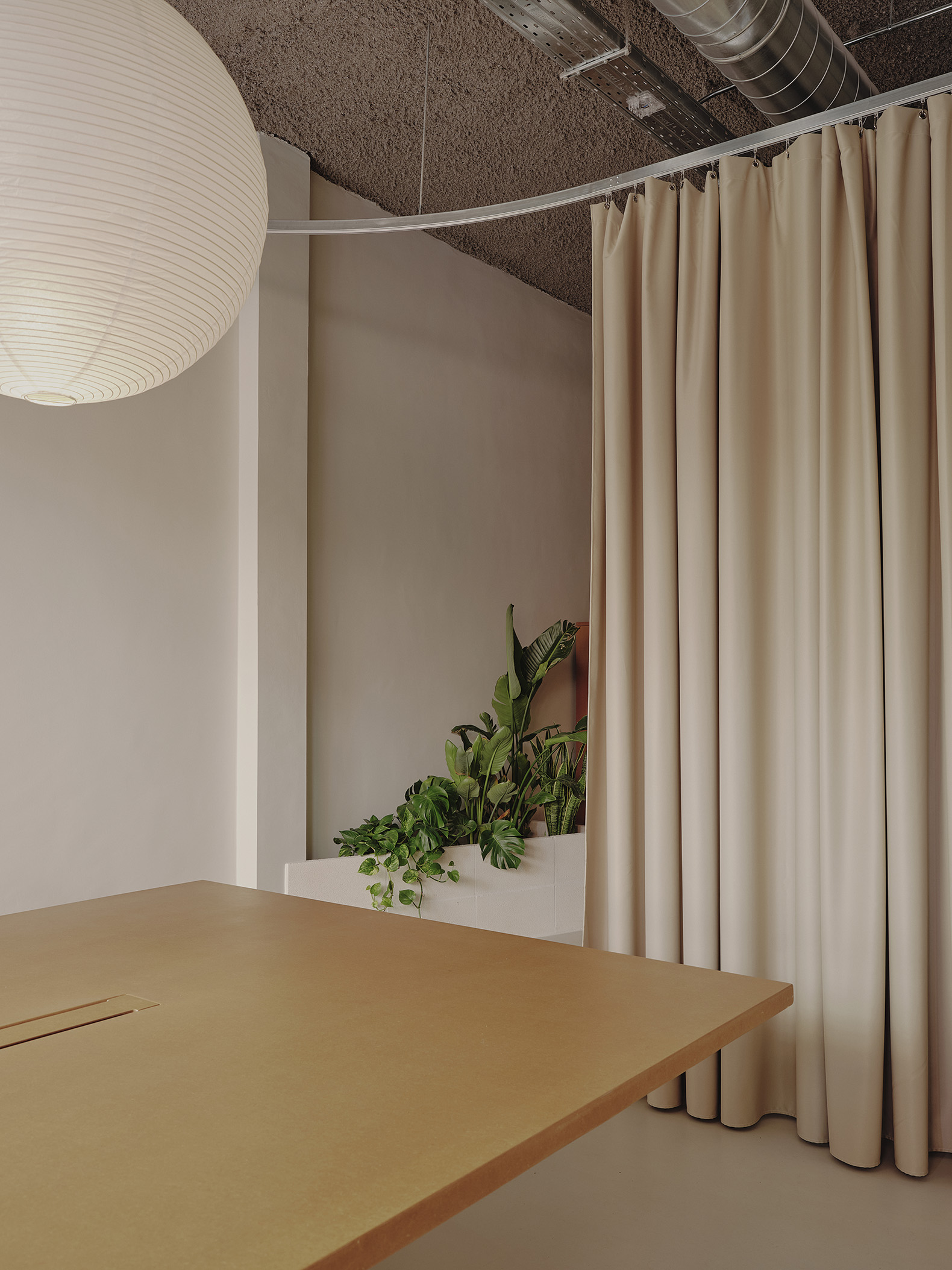
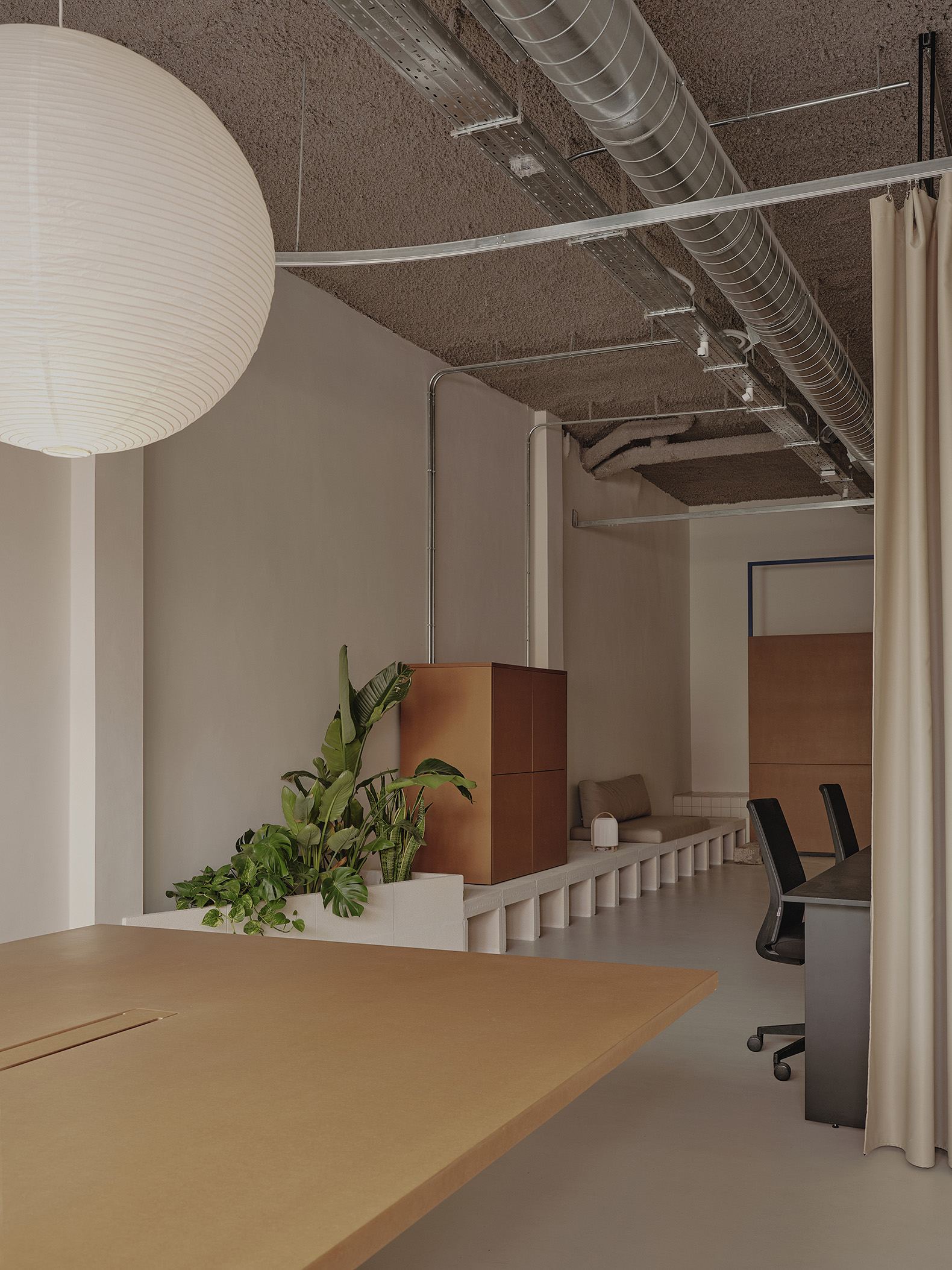
The materiality of the project follows a logic of coherence and repetition, characteristics common in Paloma Bau's work. The light microcement flooring unifies the entire space and provides homogeneous luminosity. The sprayed cellulose ceiling acts as a technical and sound-absorbing surface, leaving the raw installations and the tracks that allow the space to be divided by curtains exposed. These curved lines introduce a more dynamic and nuanced reading, subtly breaking with the overall order of the space.
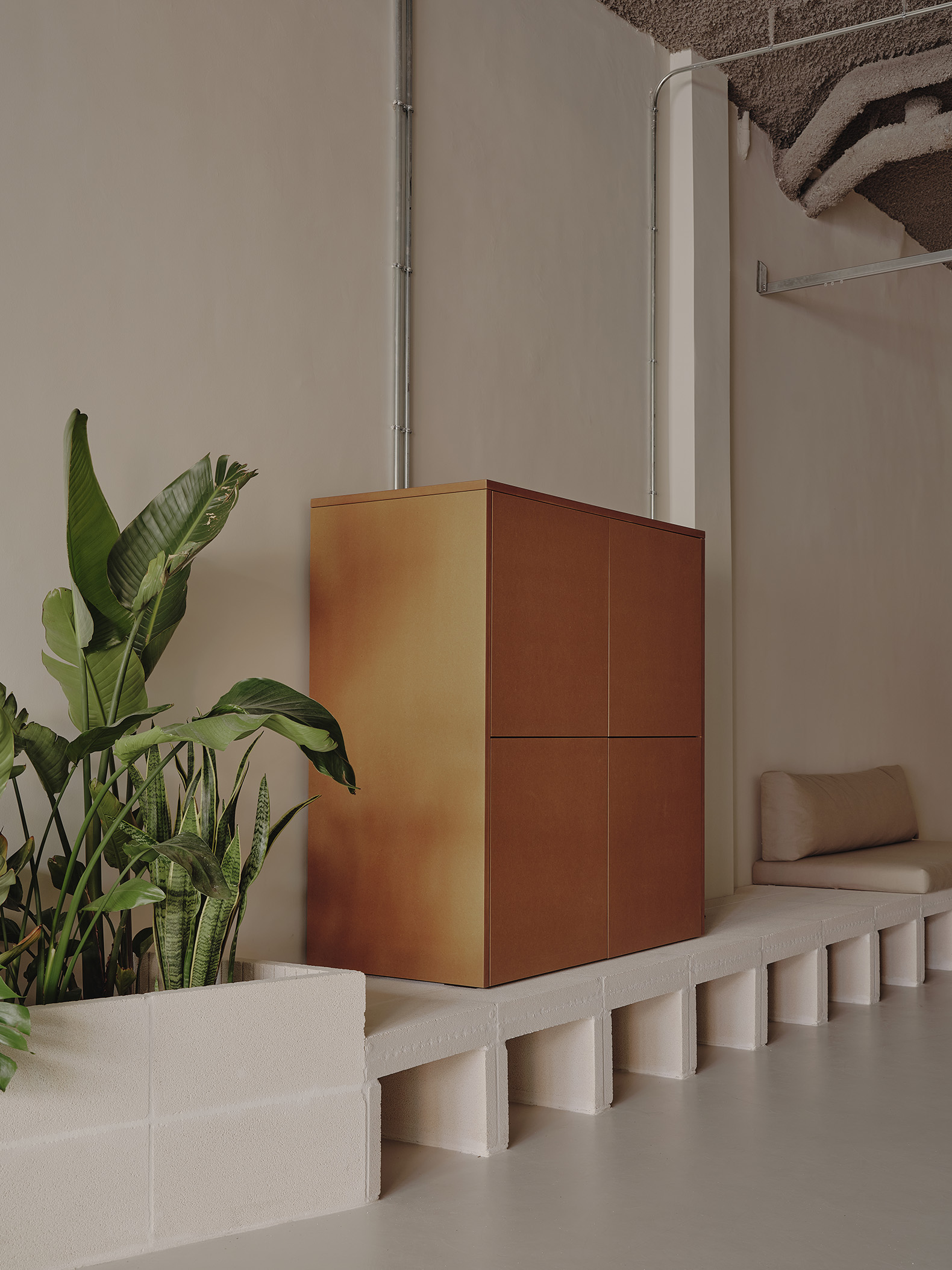
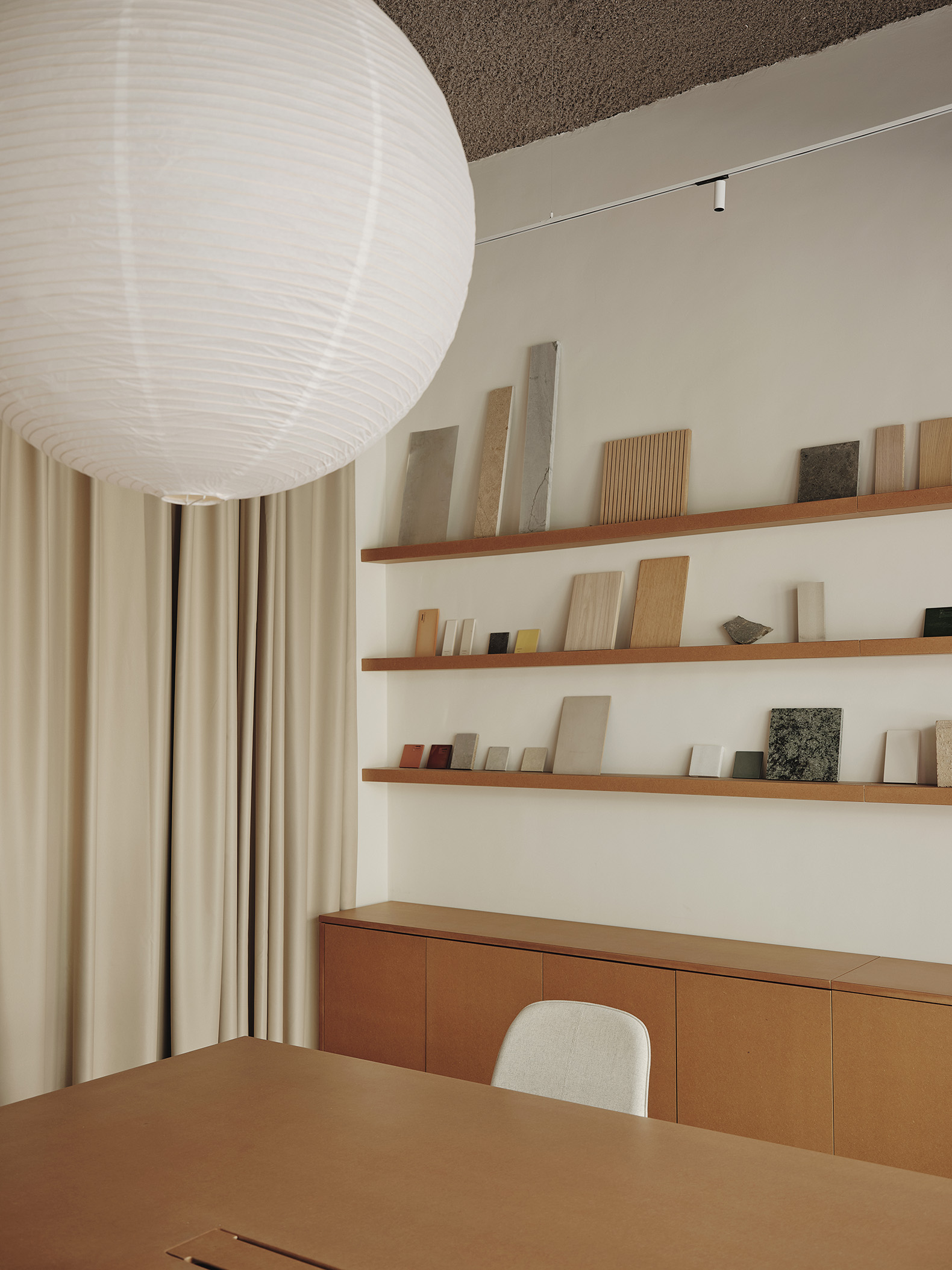
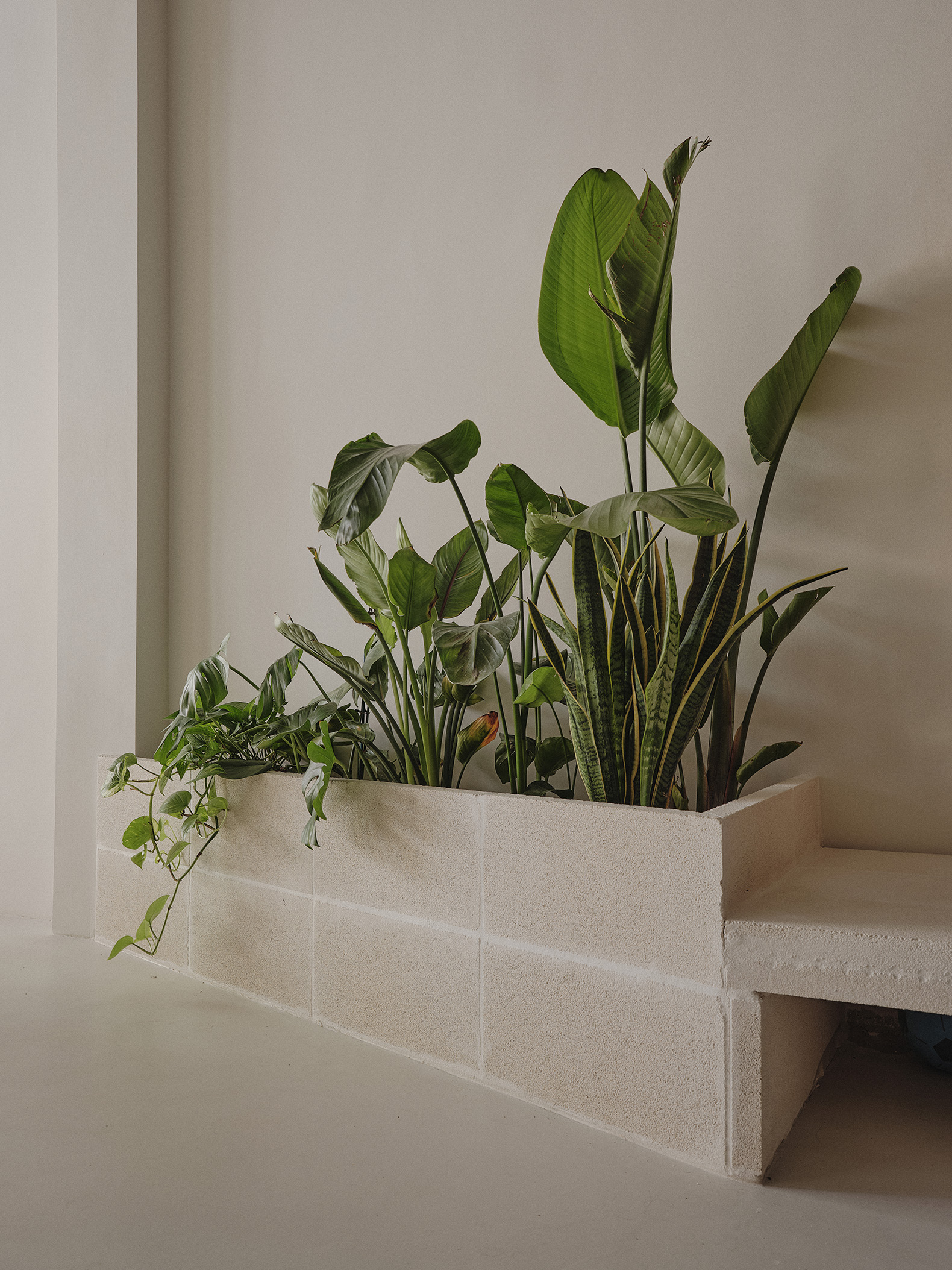
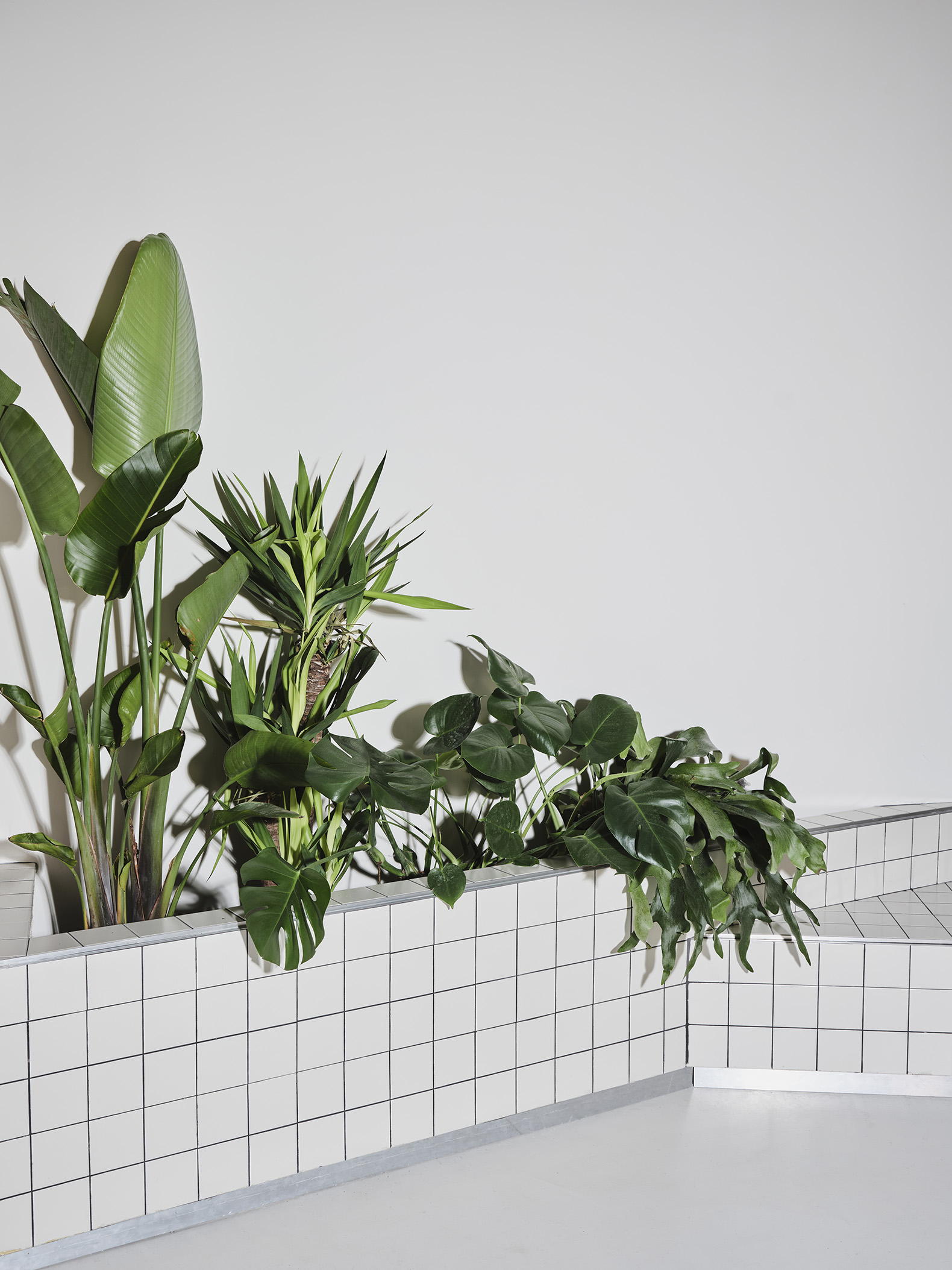
The perimeter tatami mats, made of white blocks, allow for seating, gatherings, or can be transformed into informal areas during internal events. In some places, they also function as planters, reinforcing the idea of an active and multifaceted space. The work furniture, such as tables, kitchen units, and storage, is made of raw MDF using a simple and clean construction system, designed to coexist with the permanent fixtures and the exhibition-like nature of the space. All the custom-made pieces were manufactured by the Valencian firm Lebrel Furniture.
Lighting and Furniture
The lighting combines technical pieces from Arkoslight, a brand featured in numerous projects by the studio, with decorative luminaires in rice paper and specific solutions such as the stainless steel lamp developed for T.O.T. This balance between technical precision and diffused warmth contributes to a harmonious and welcoming atmosphere. The furniture, mostly custom-designed, integrates seamlessly into the project's material narrative and reinforces its flexible nature, allowing for simultaneous uses and natural transitions without altering the space's main structure.
A Multifunctional Creative Space
Sornells 21 is not just an architecture and design studio. It is a new space in Valencia conceived for working, collaborating, meeting, and celebrating. Its spatial and material configuration allows for different uses to coexist without the need for complex transformations. It is a project that, through architecture, fosters the idea of a creative community and transforms an irregularly shaped space into a flexible setting where daily professional life blends with meetings and shared moments.