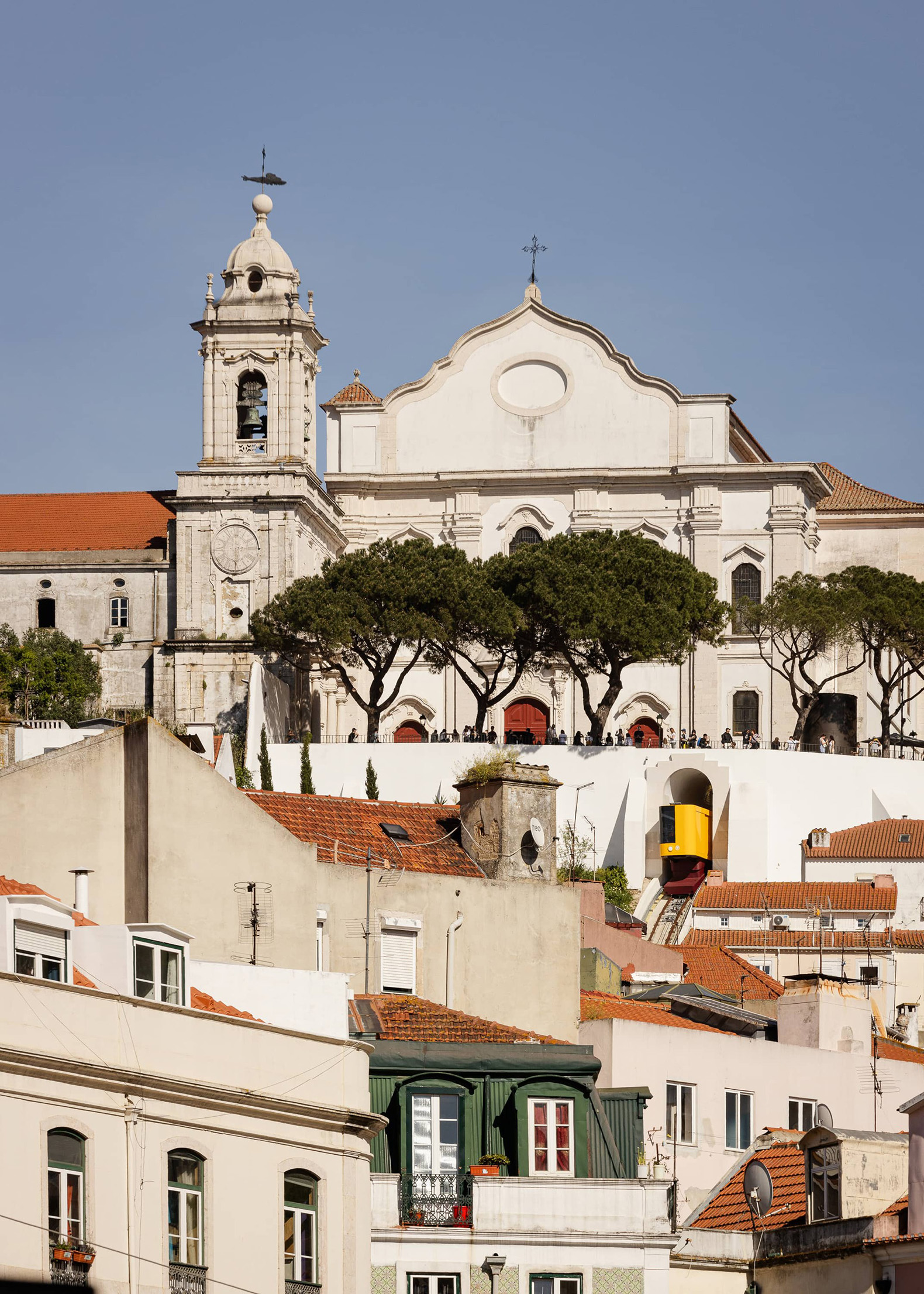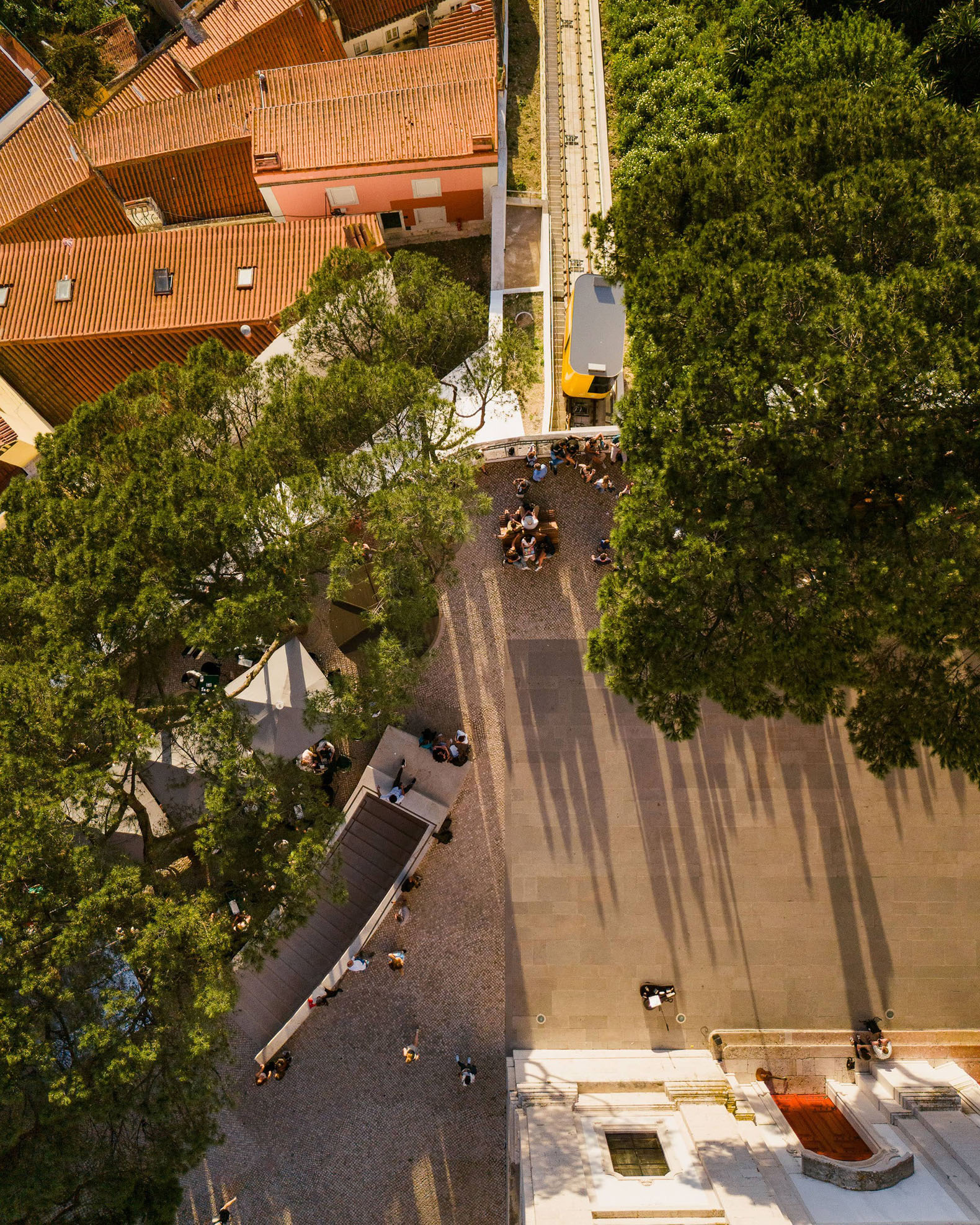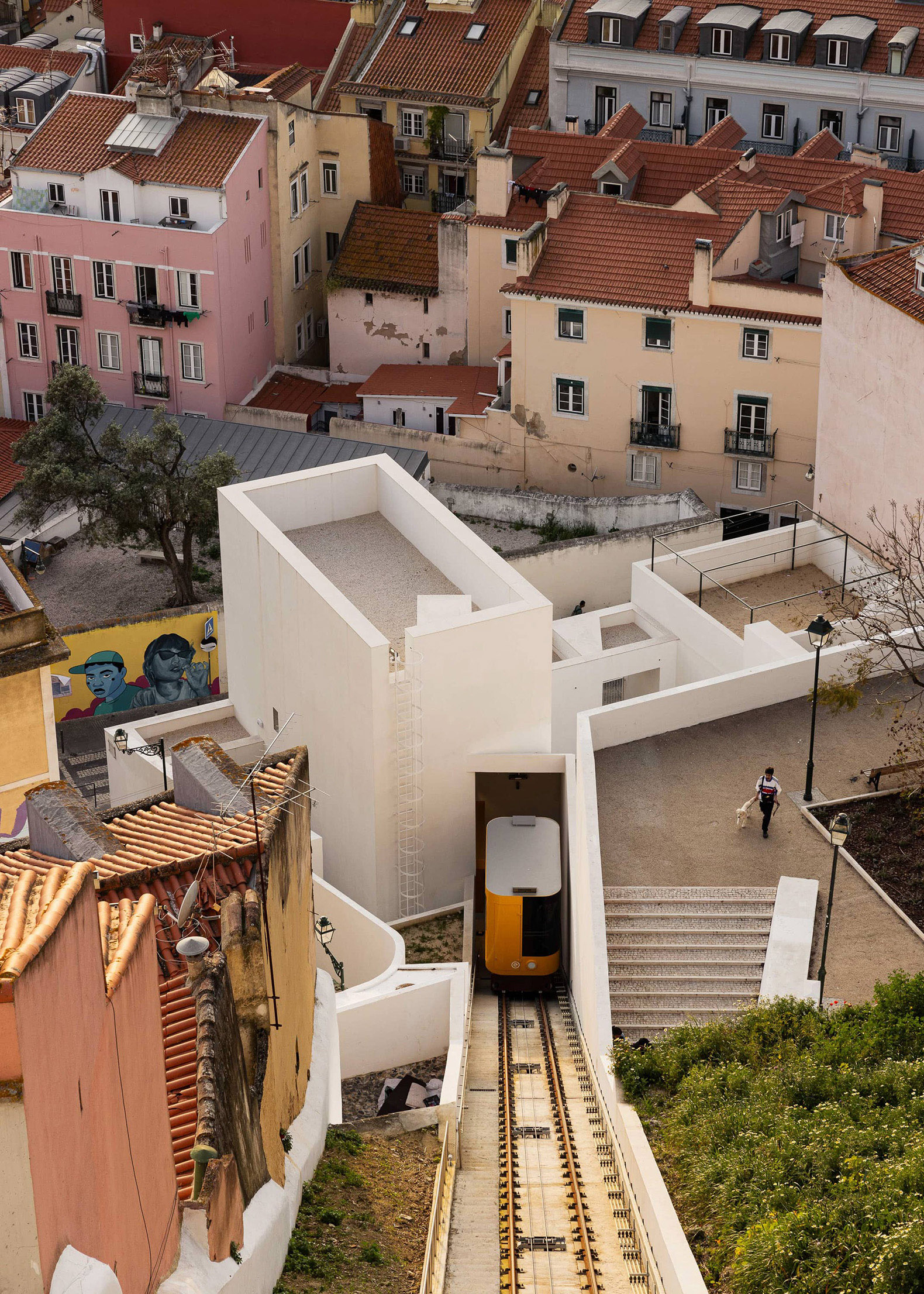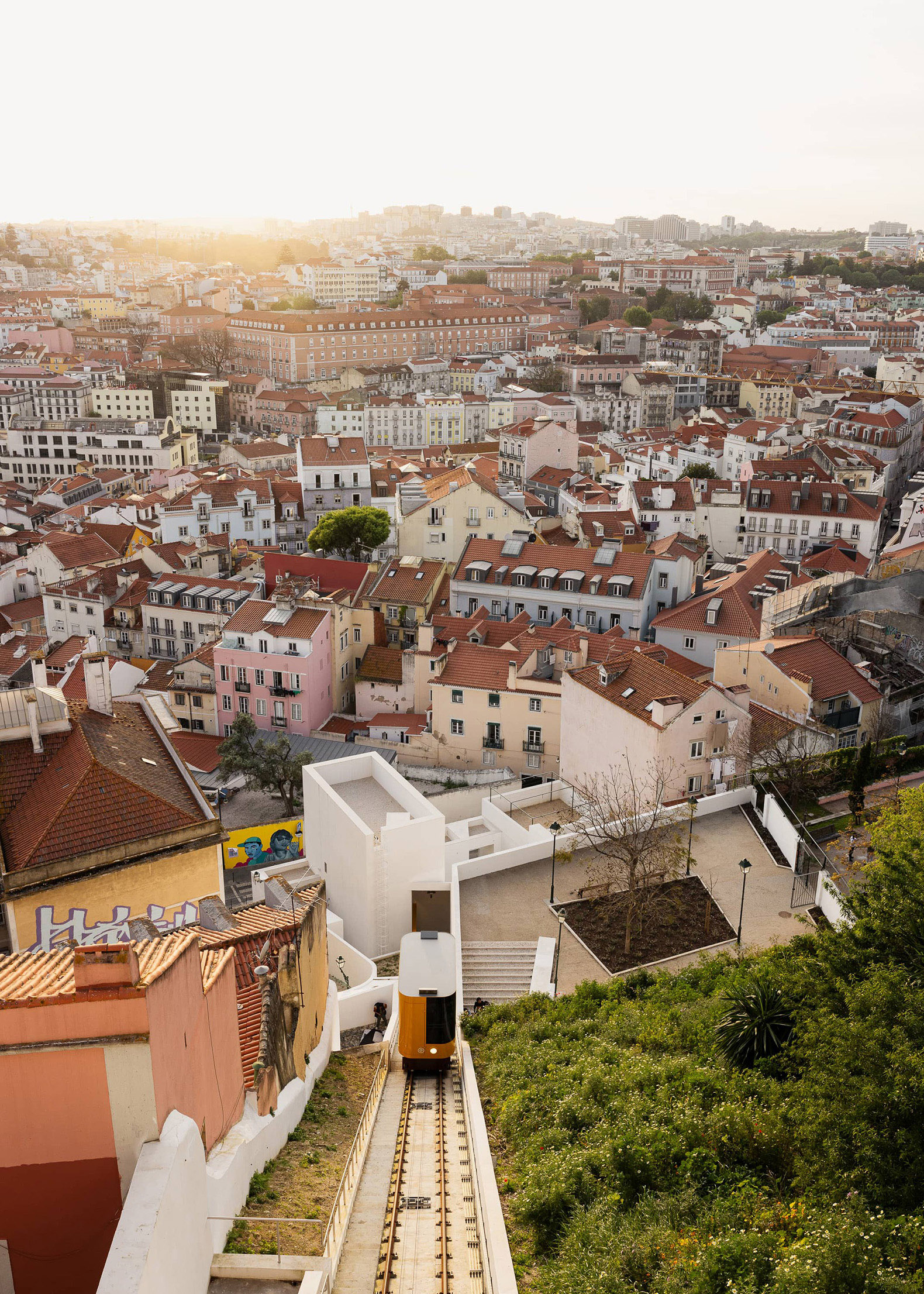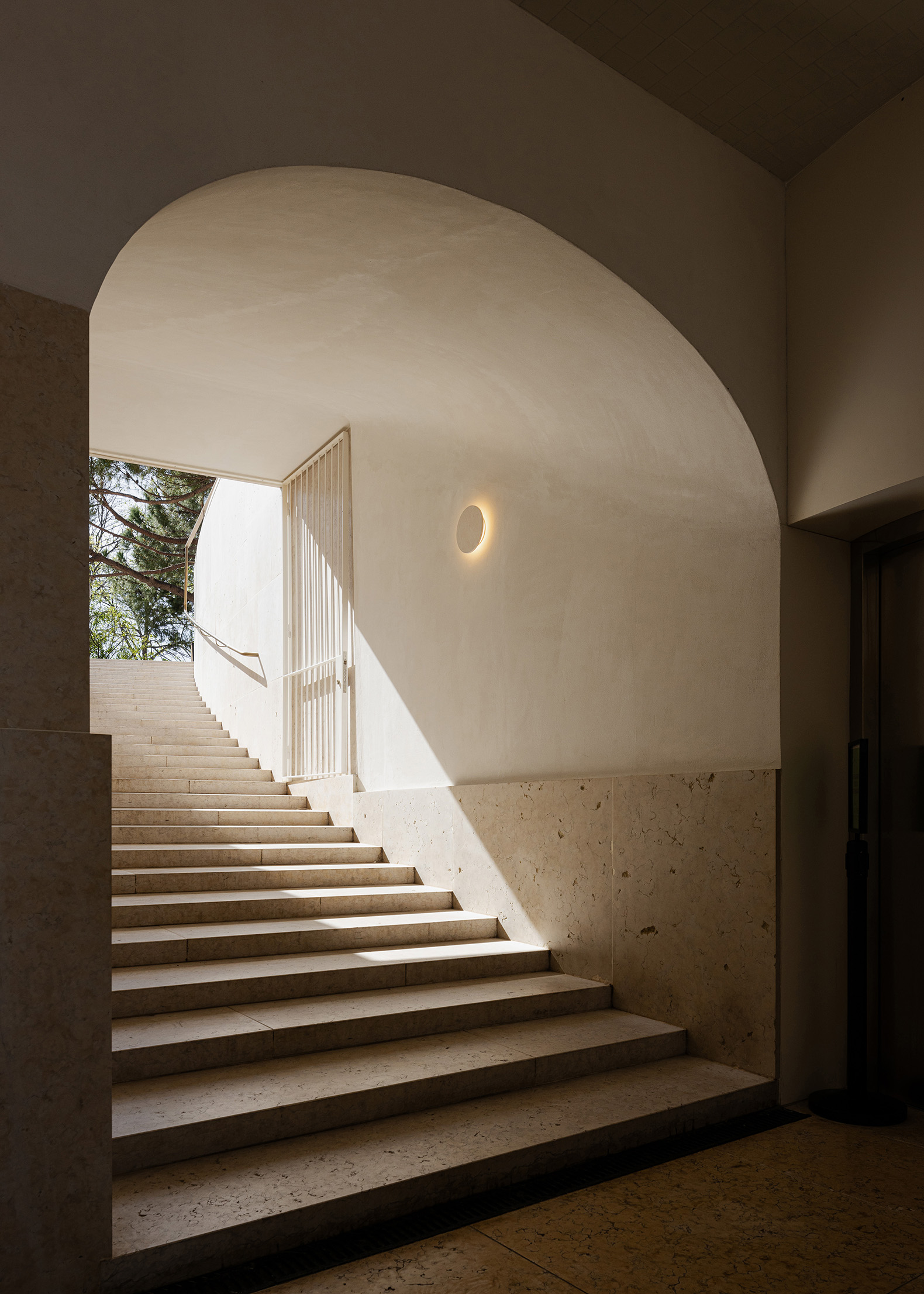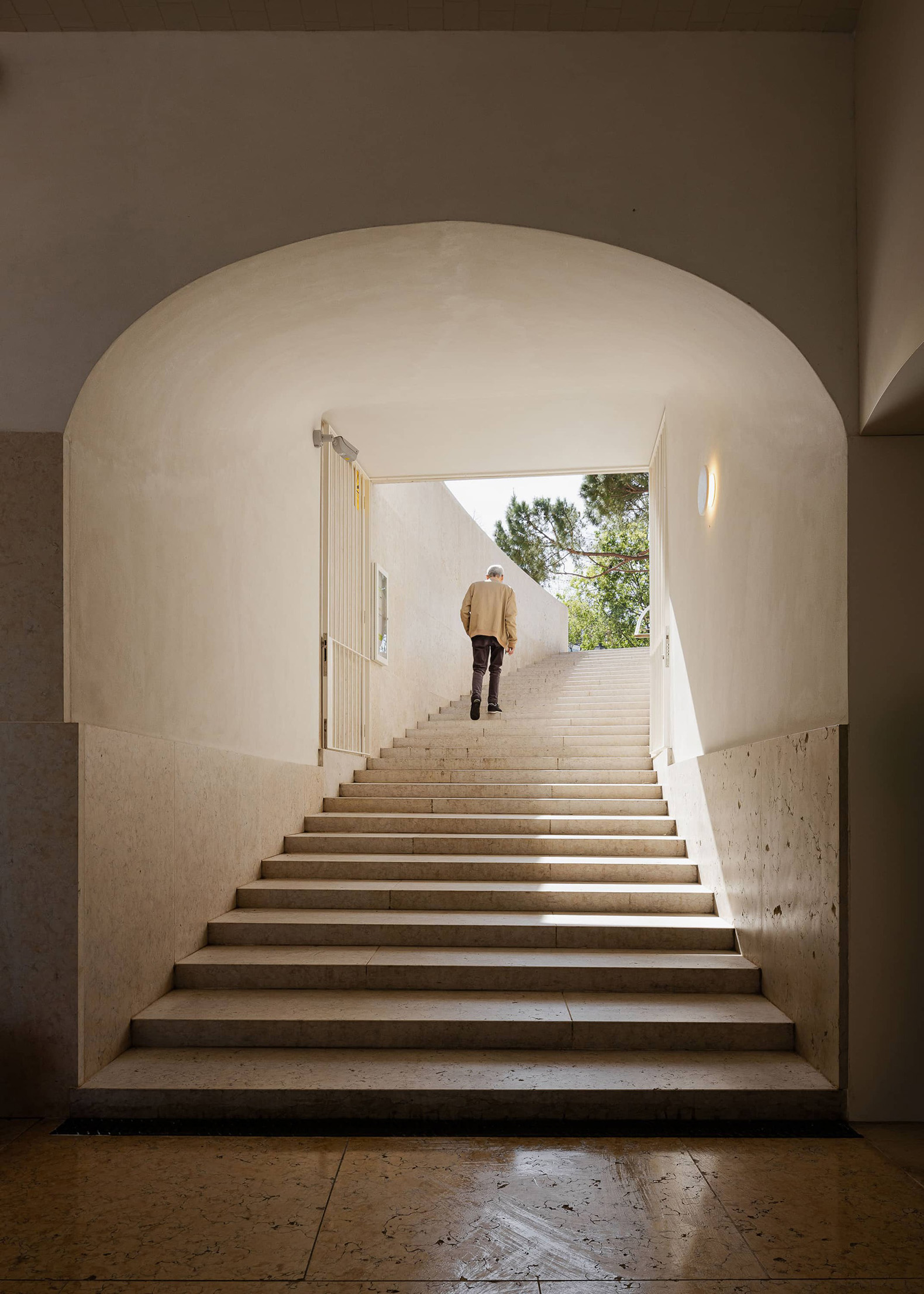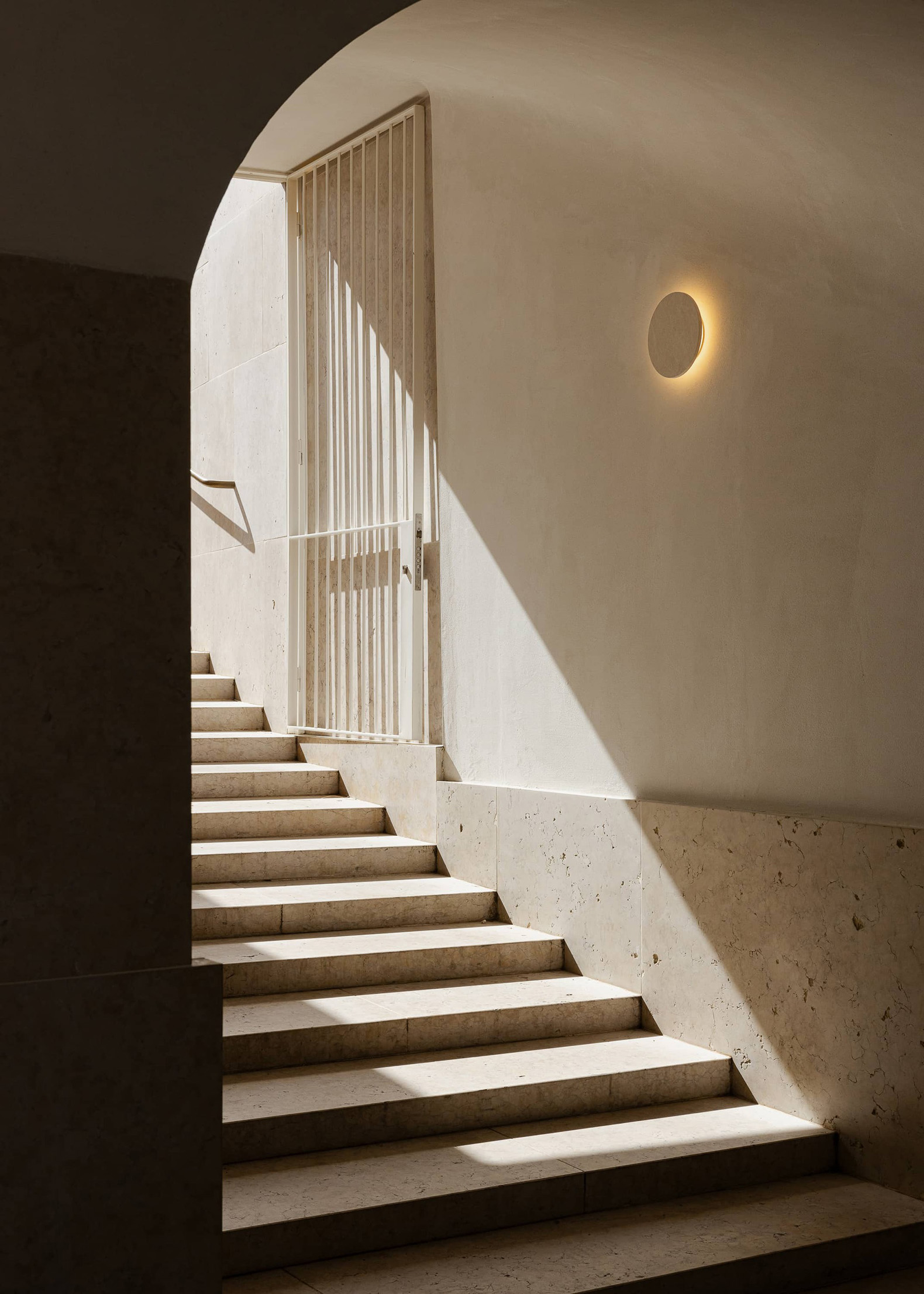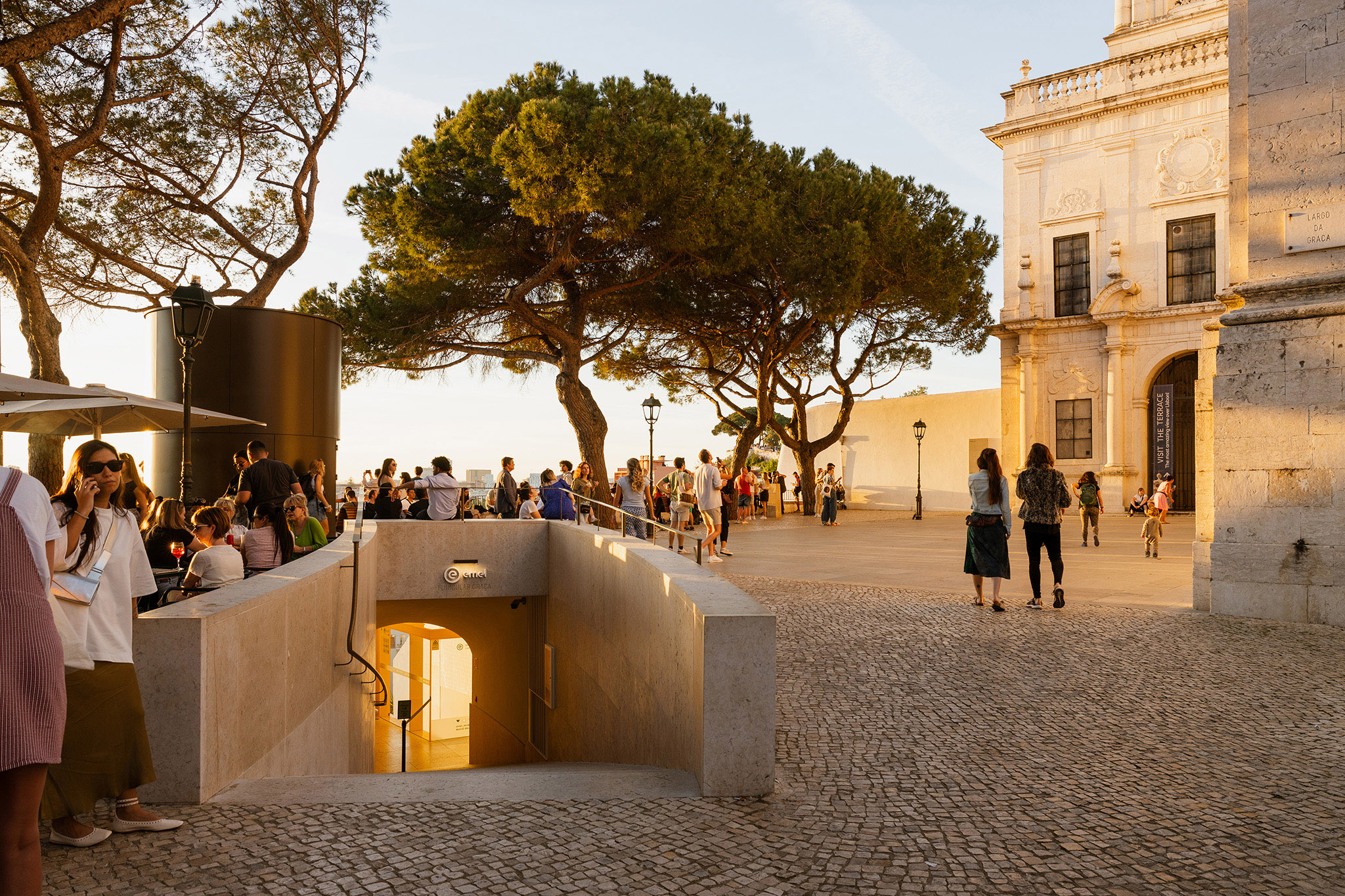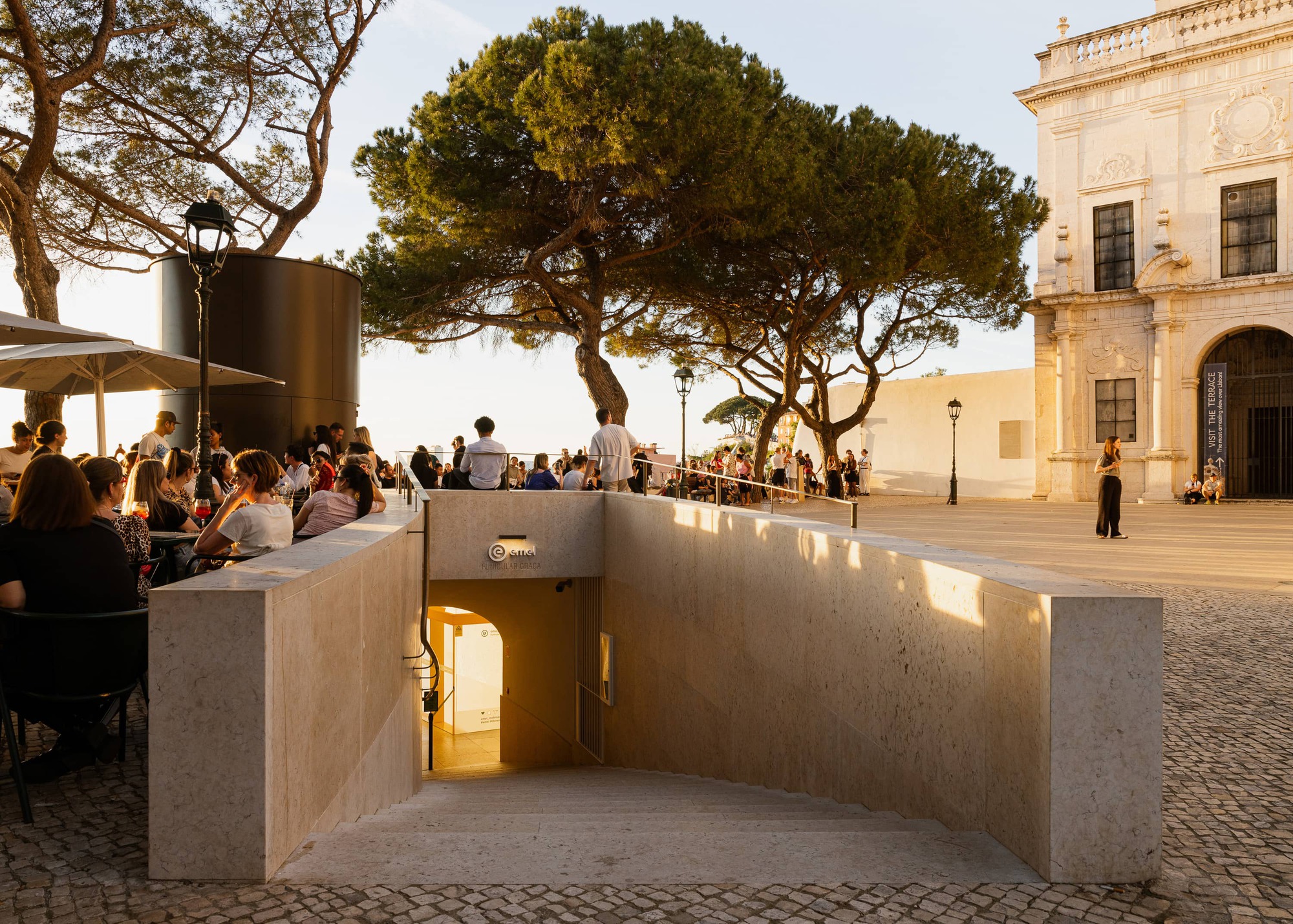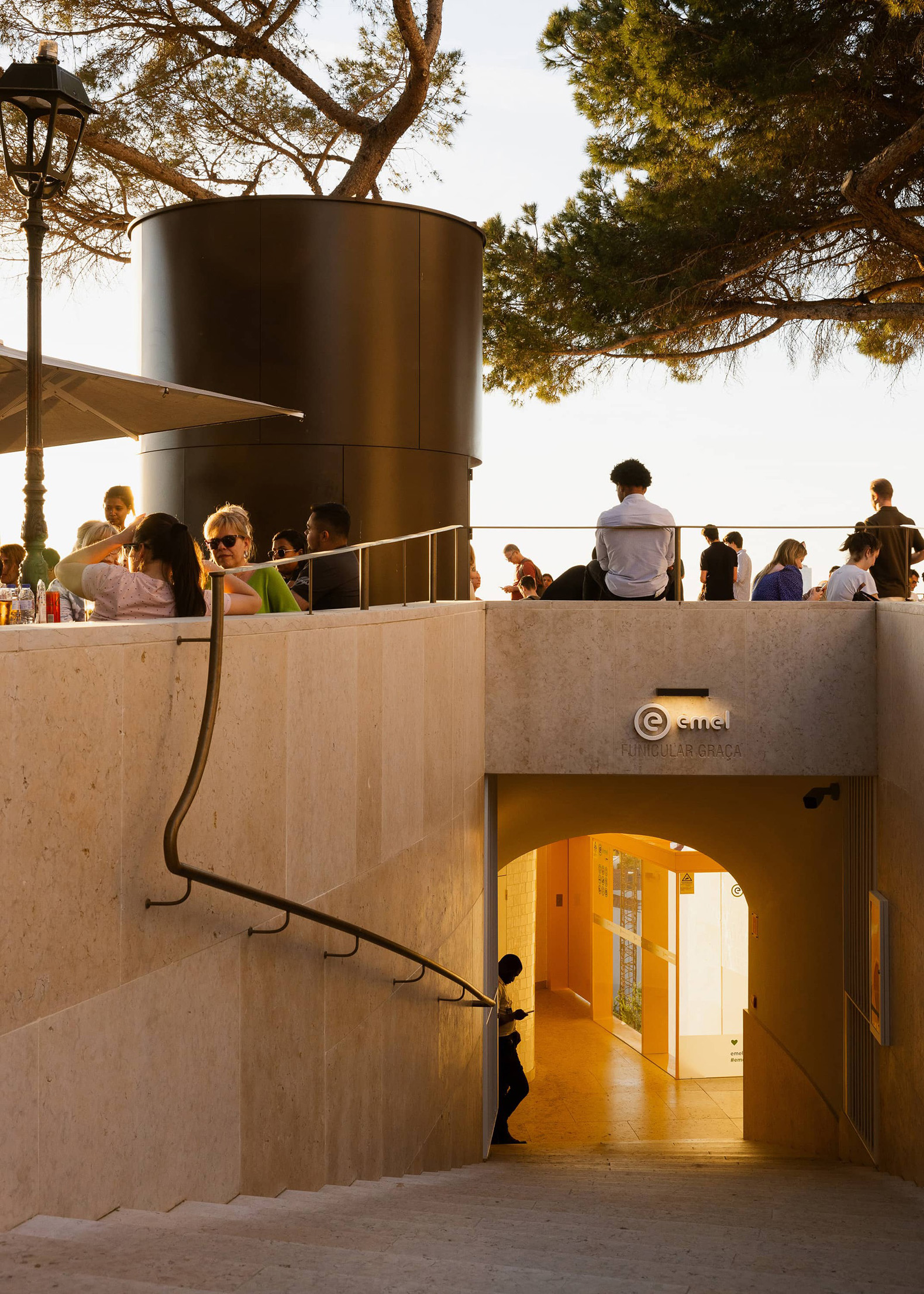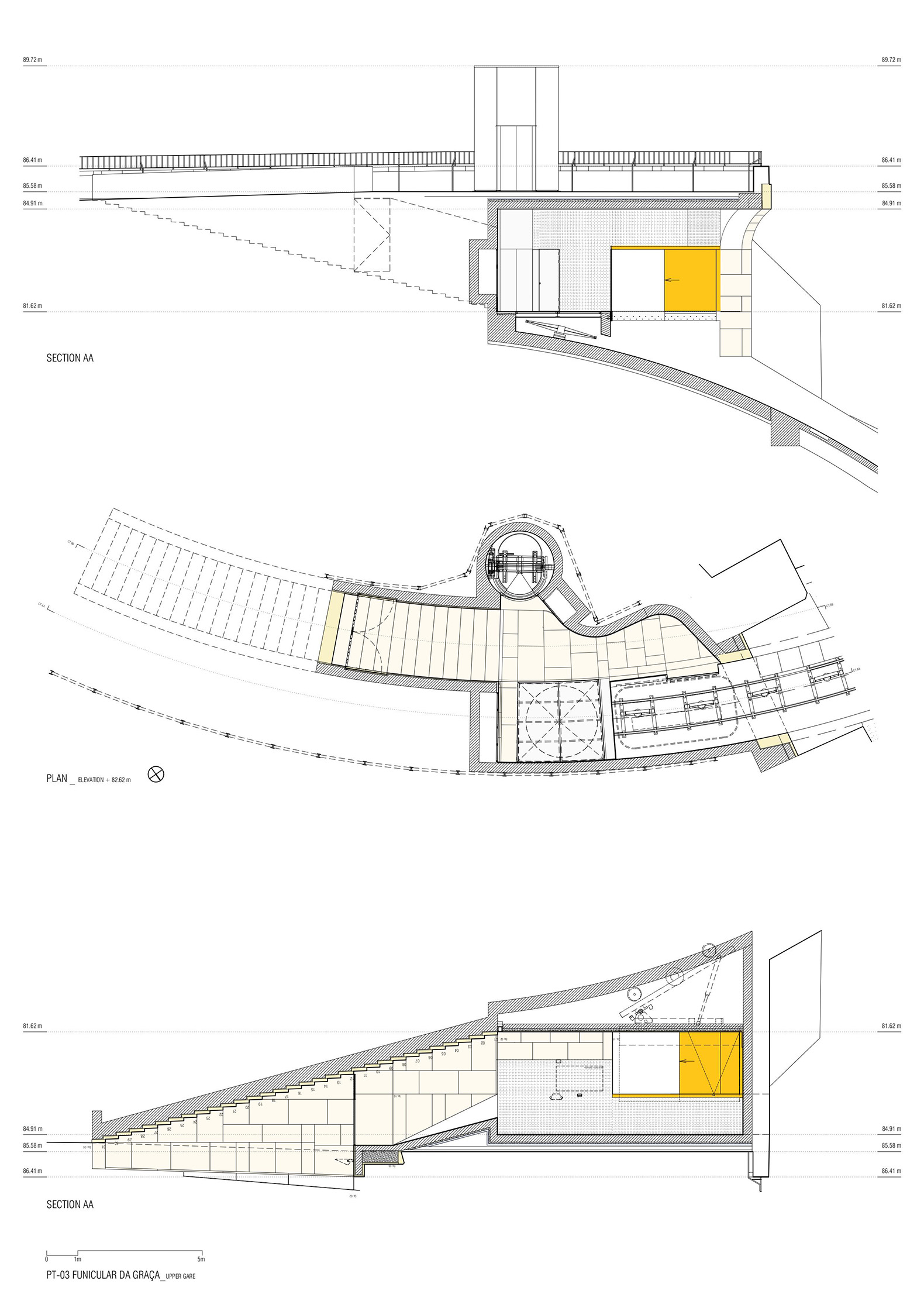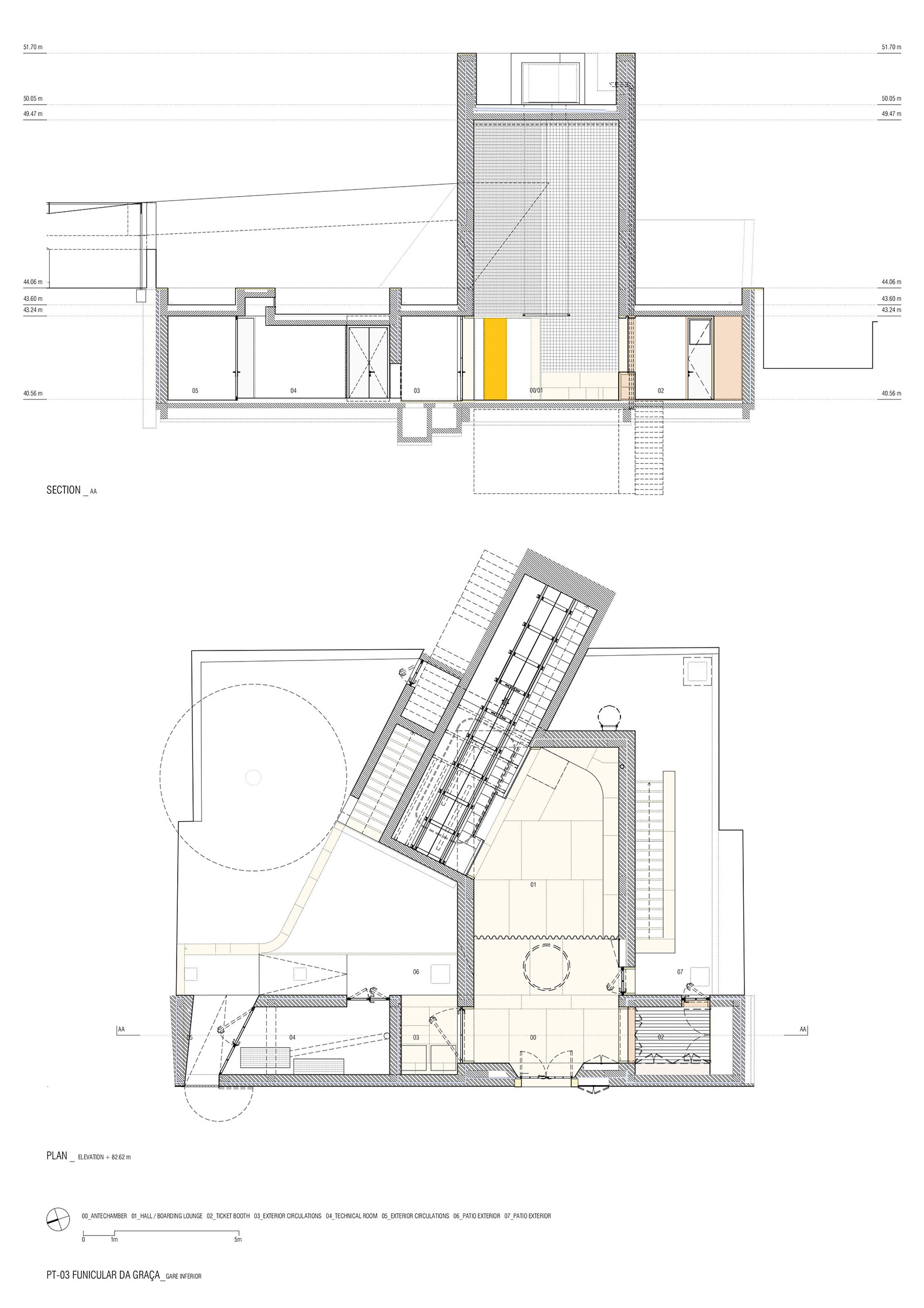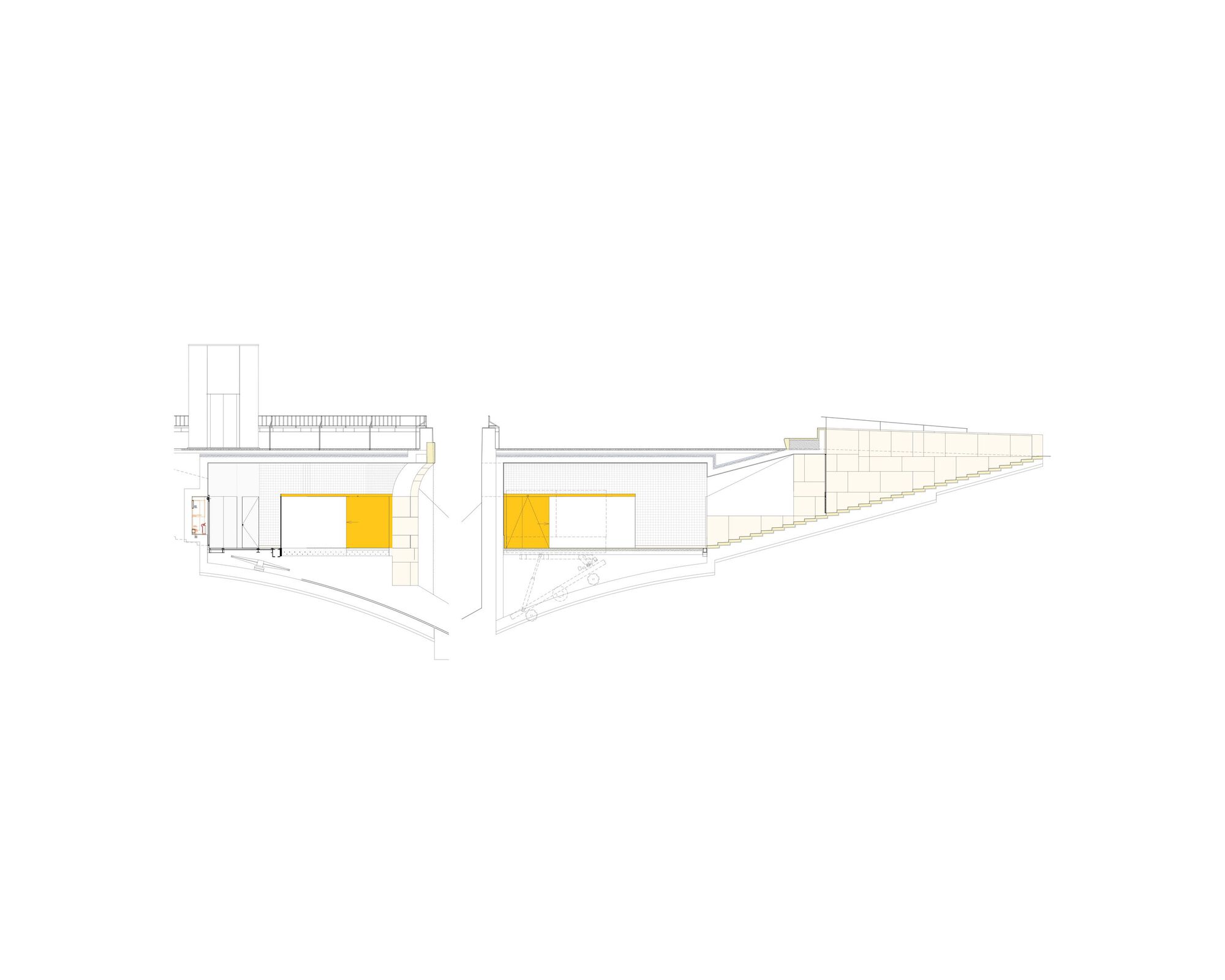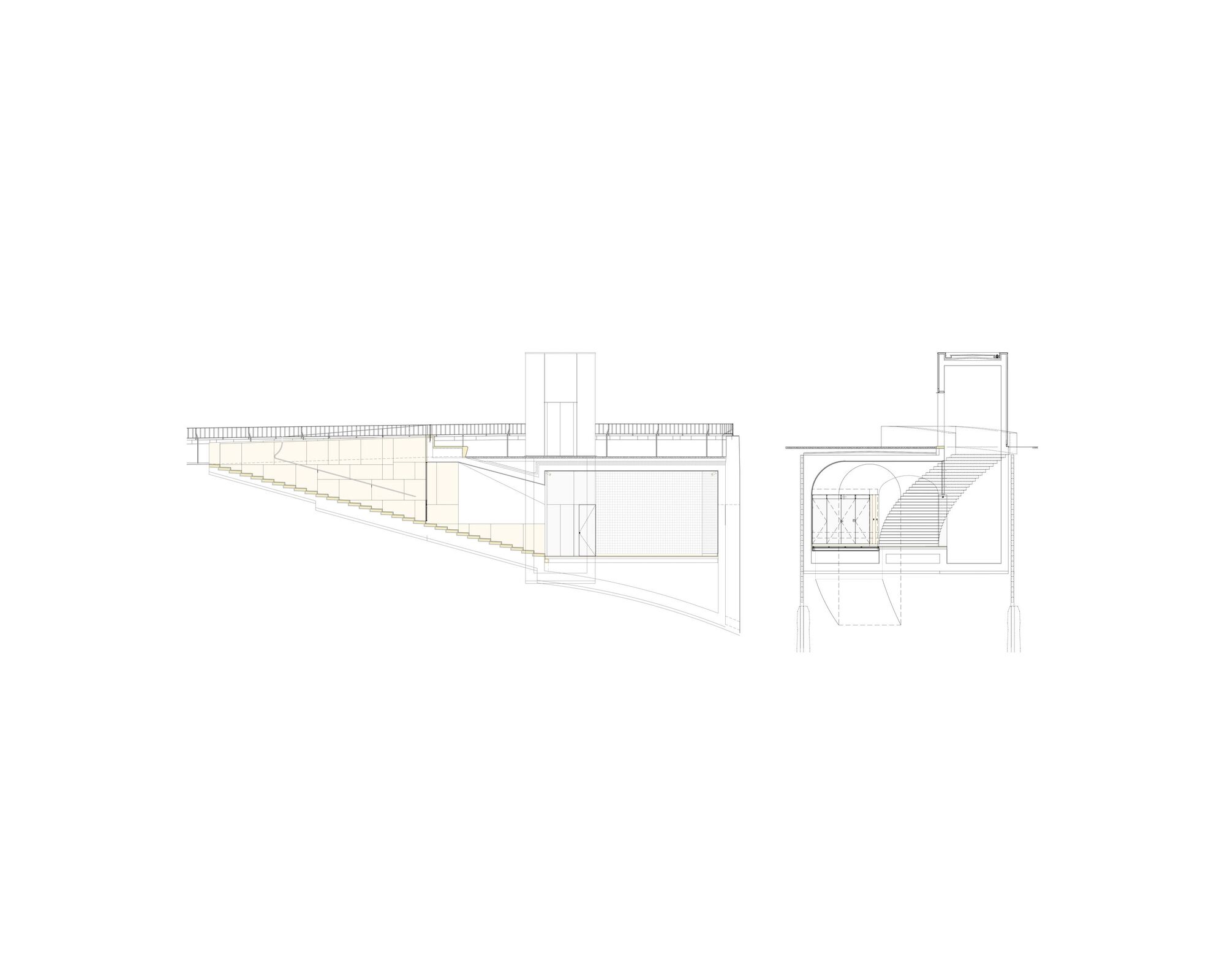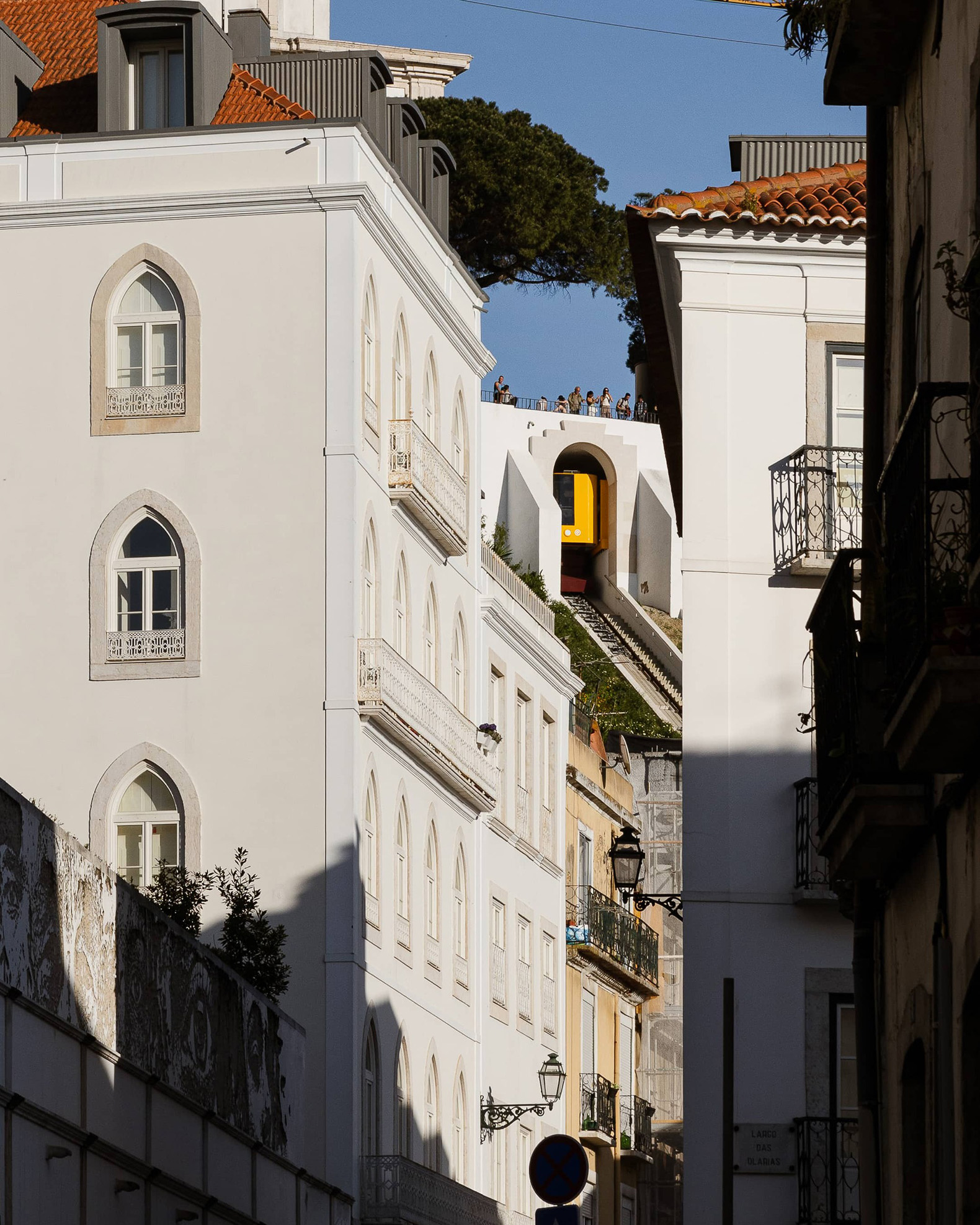
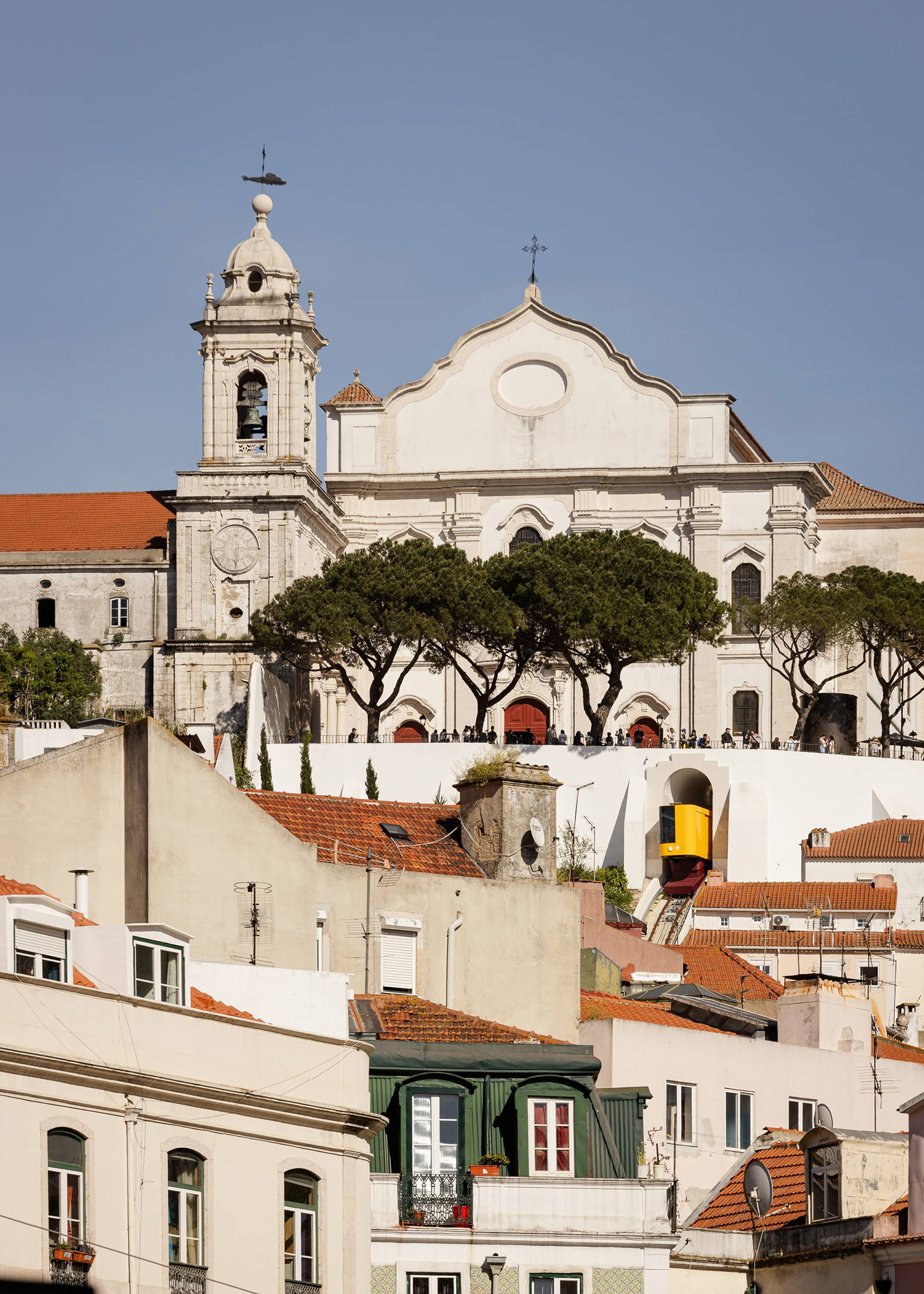
Establishing a dialogue with Lisbon's traditional ascent mechanisms, the Graça Funicular, designed by Atelier Bugio, integrates seamlessly into the Lisbon cityscape. The city, characterized by its diverse transportation systems adapted to its topography, incorporates this mechanical design, which connects to the Graça hill and takes its typological inspiration from the renowned Ascensor da Bica.

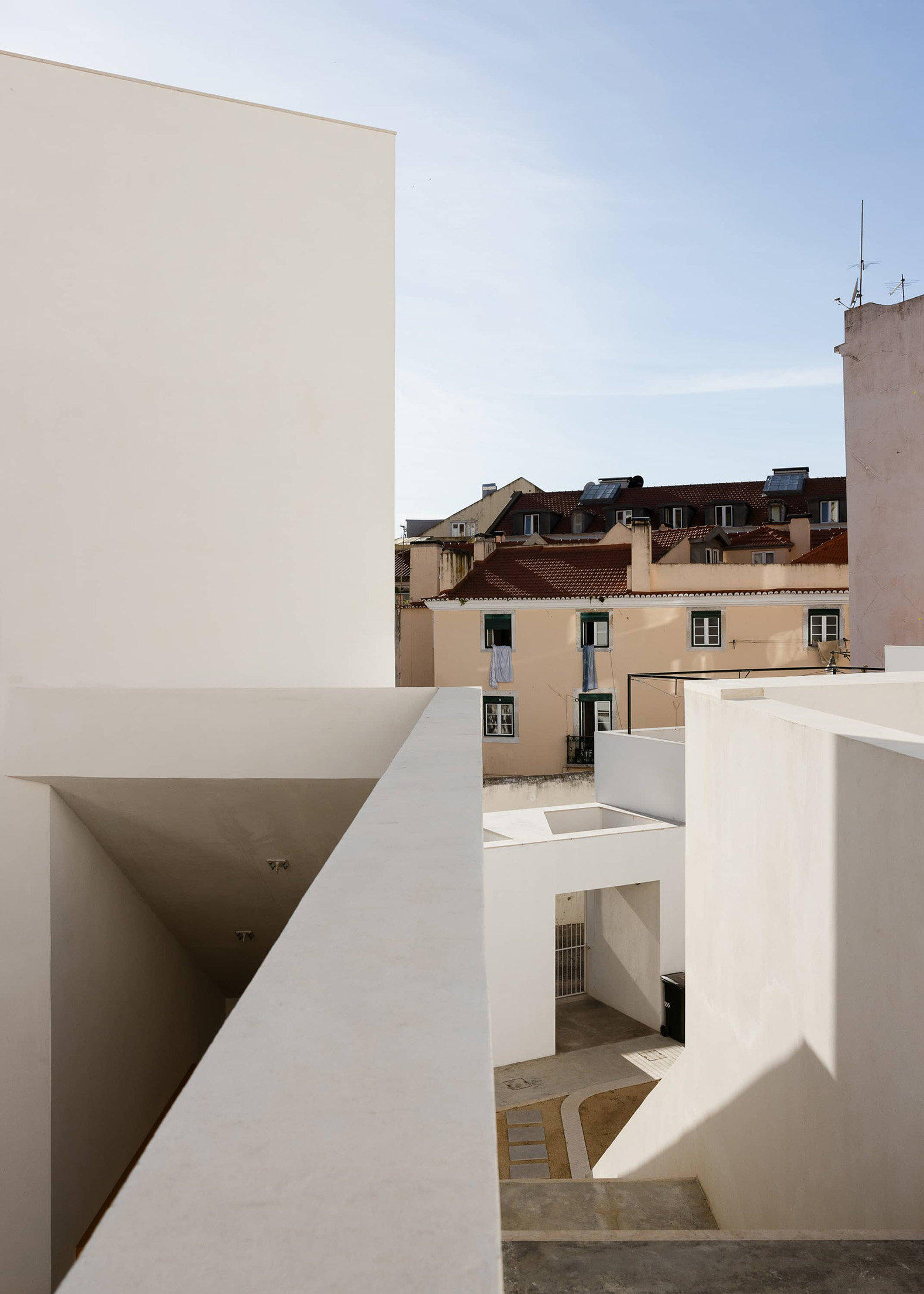
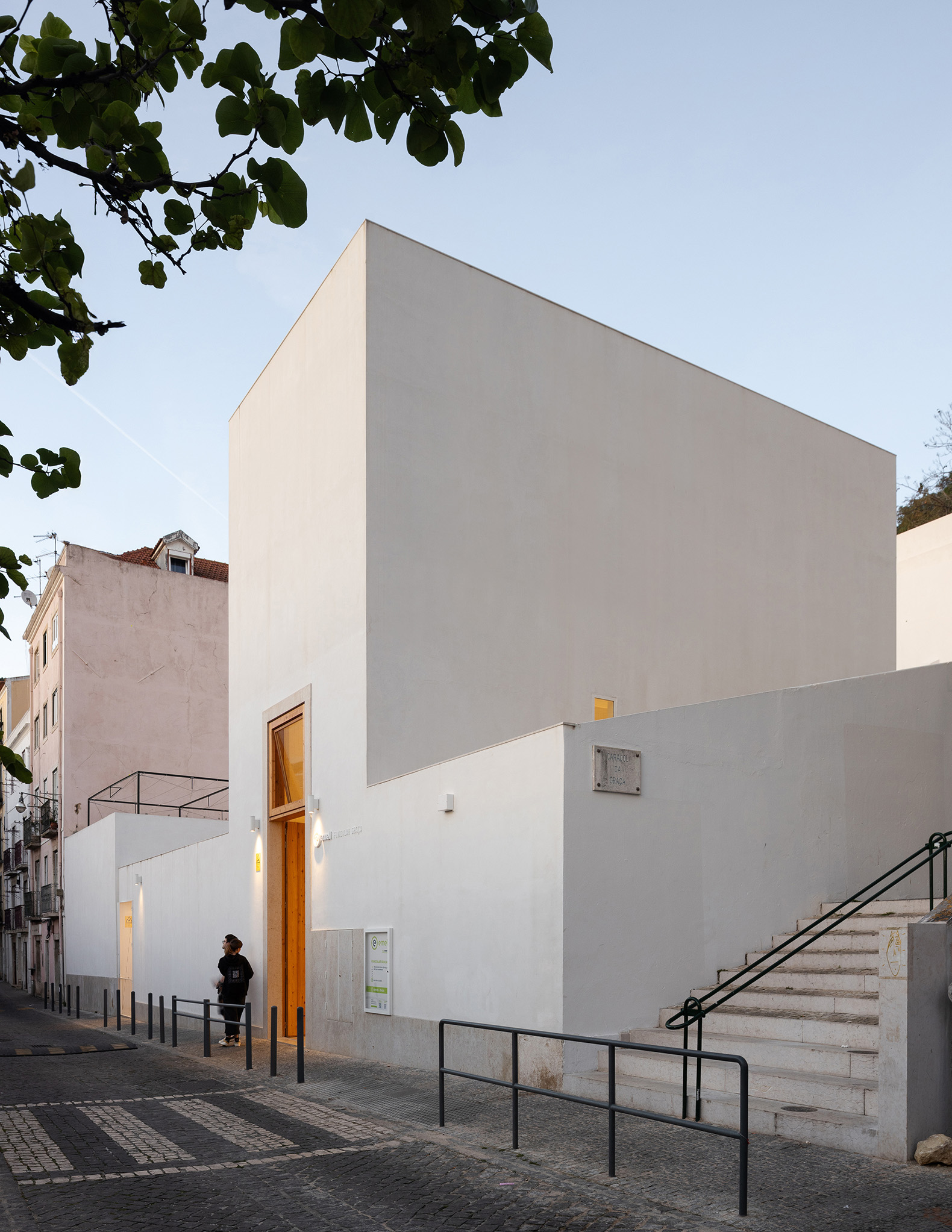
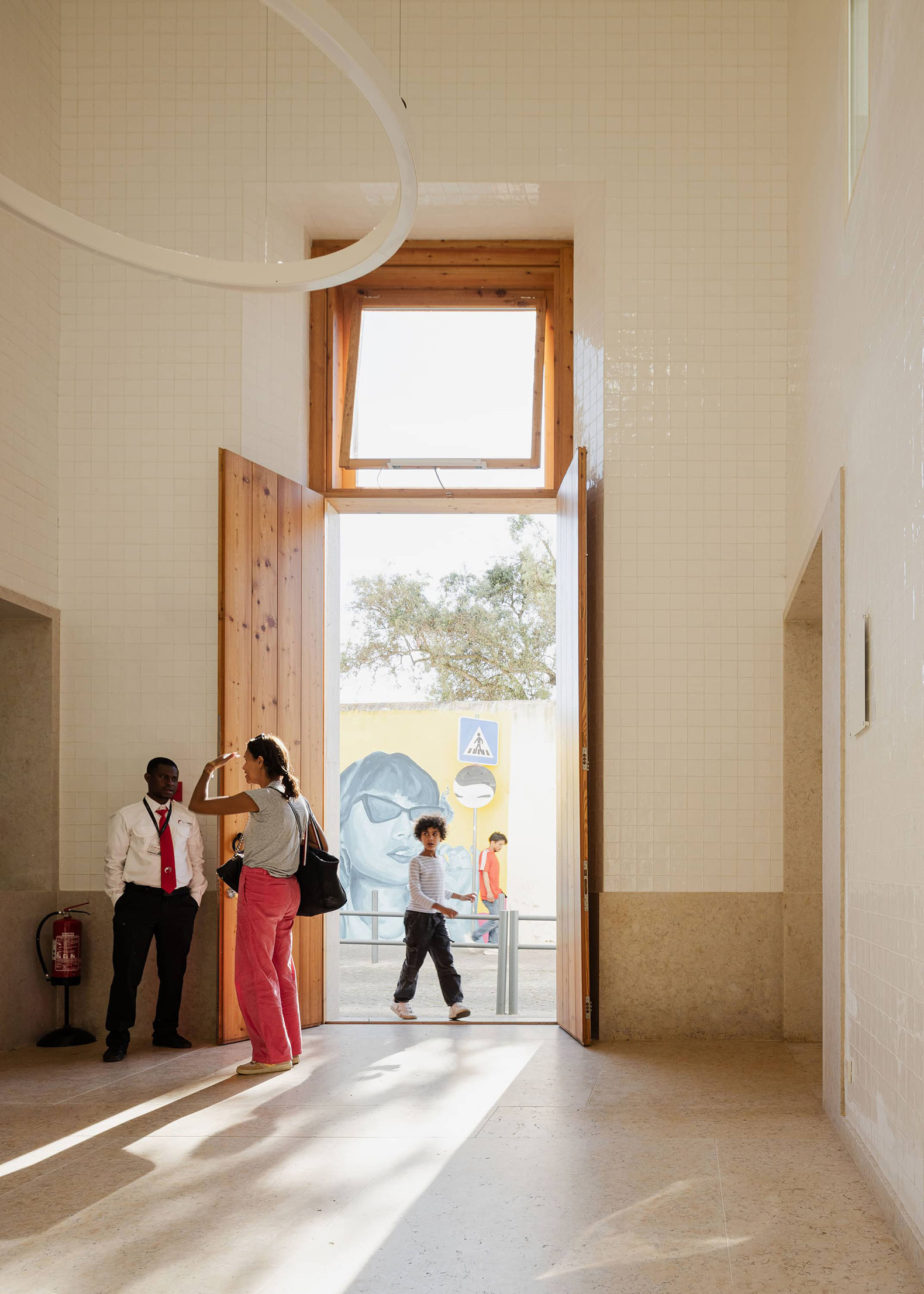
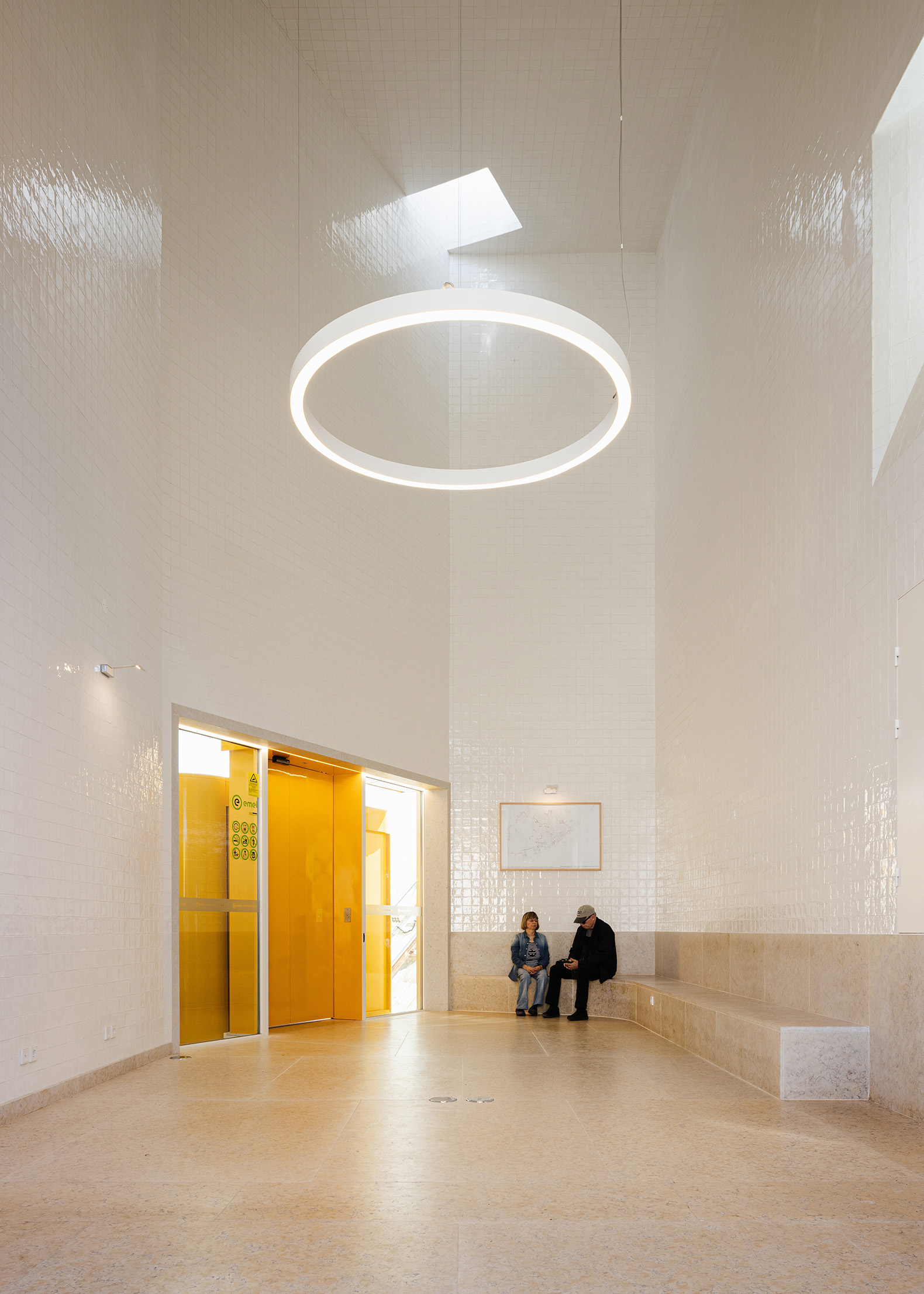
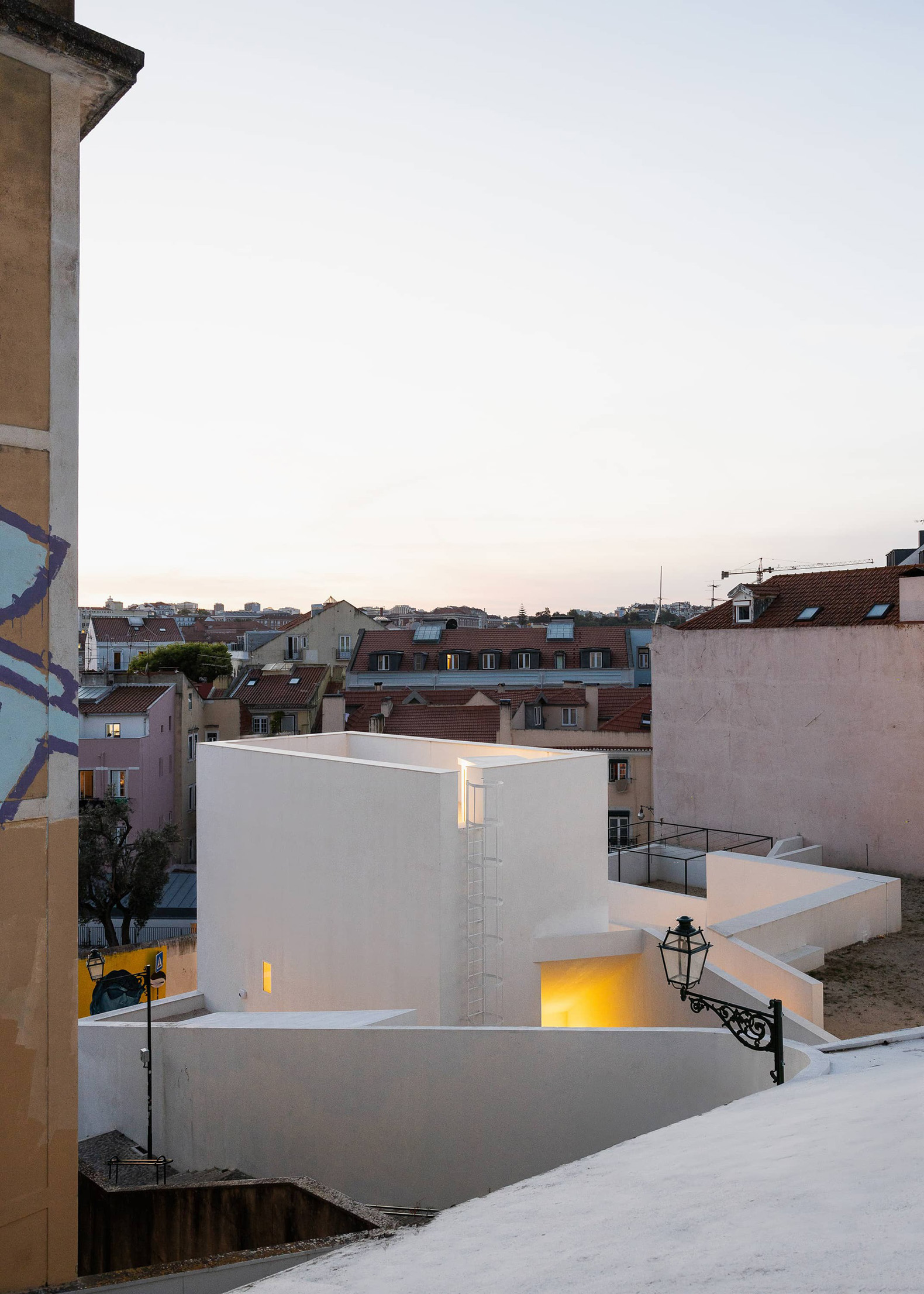
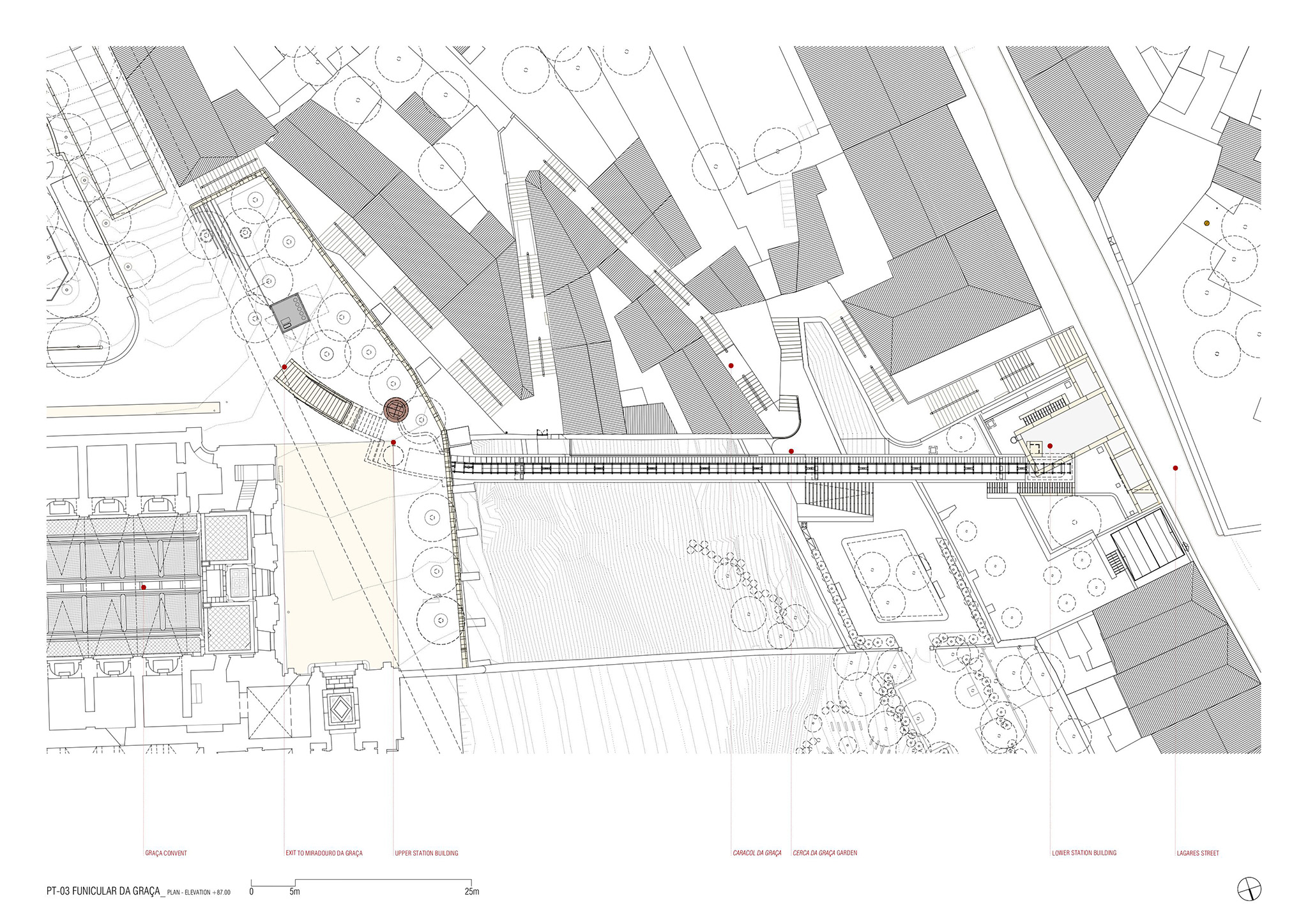
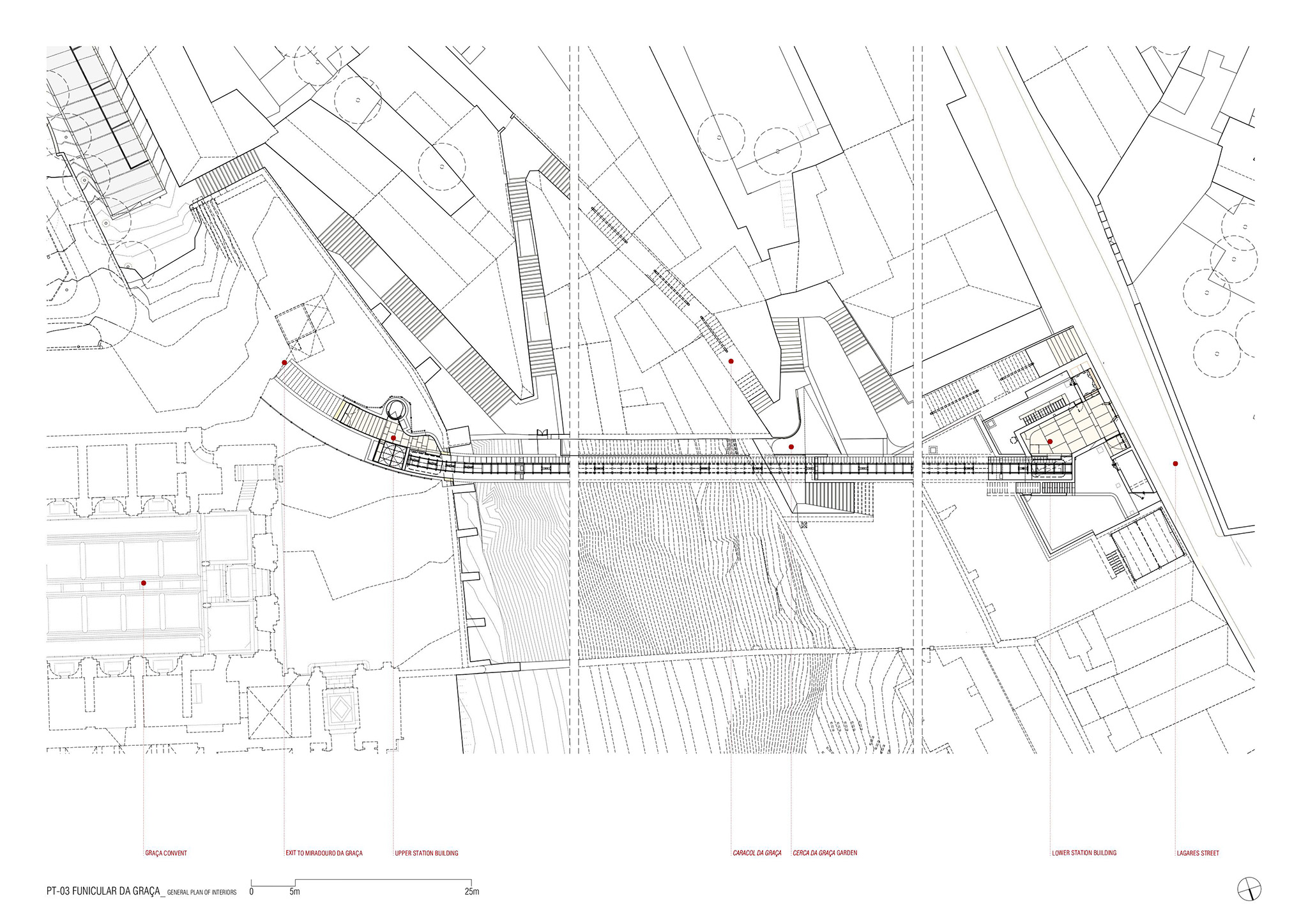
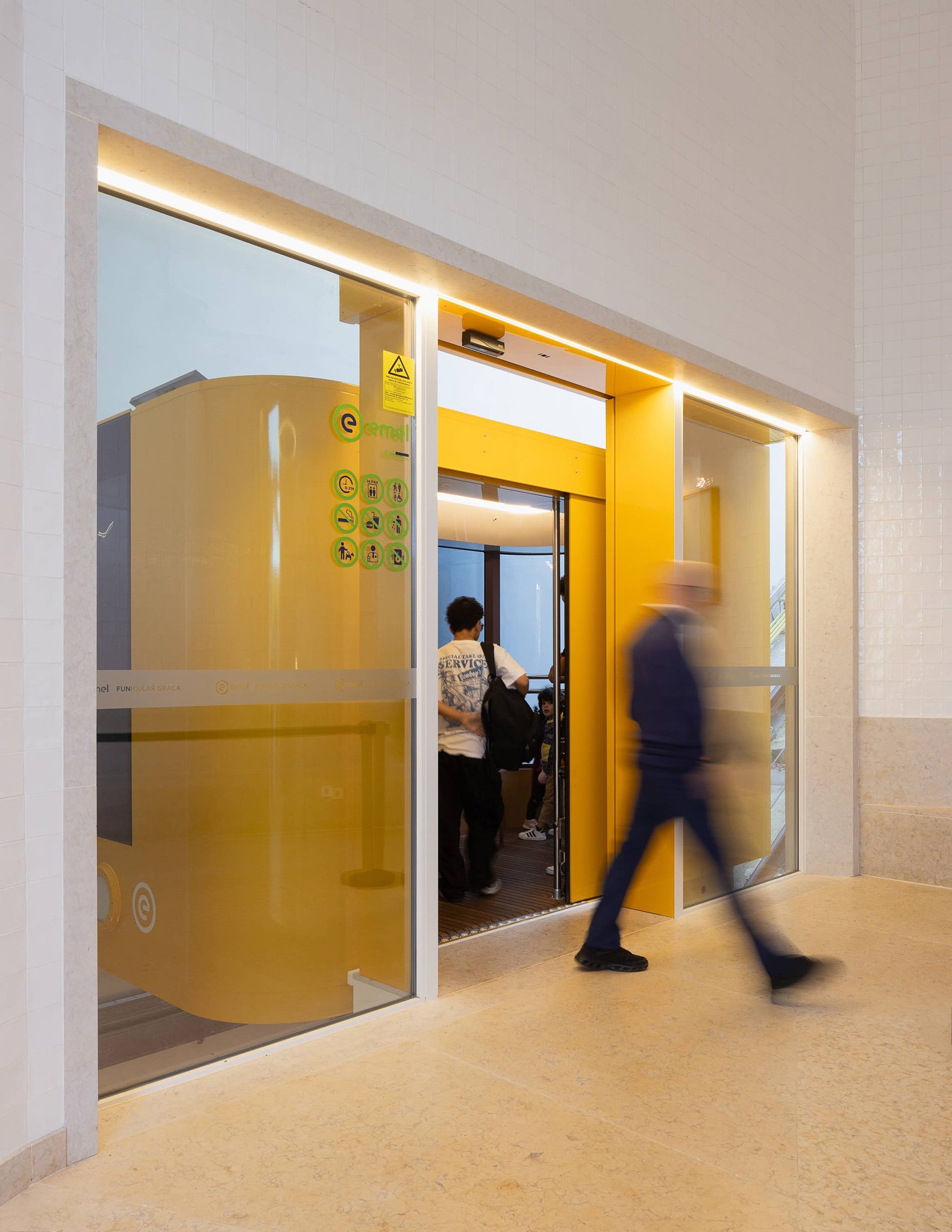
Before beginning the journey, like a "gateway to Graça" located on the ground floor at the level of Rua dos Lagares, the building opens to the surrounding area through a double-height space. This public access station allows for a direct connection between the street and the funicular via a passenger reception area, which also serves as a storage space when not in use.

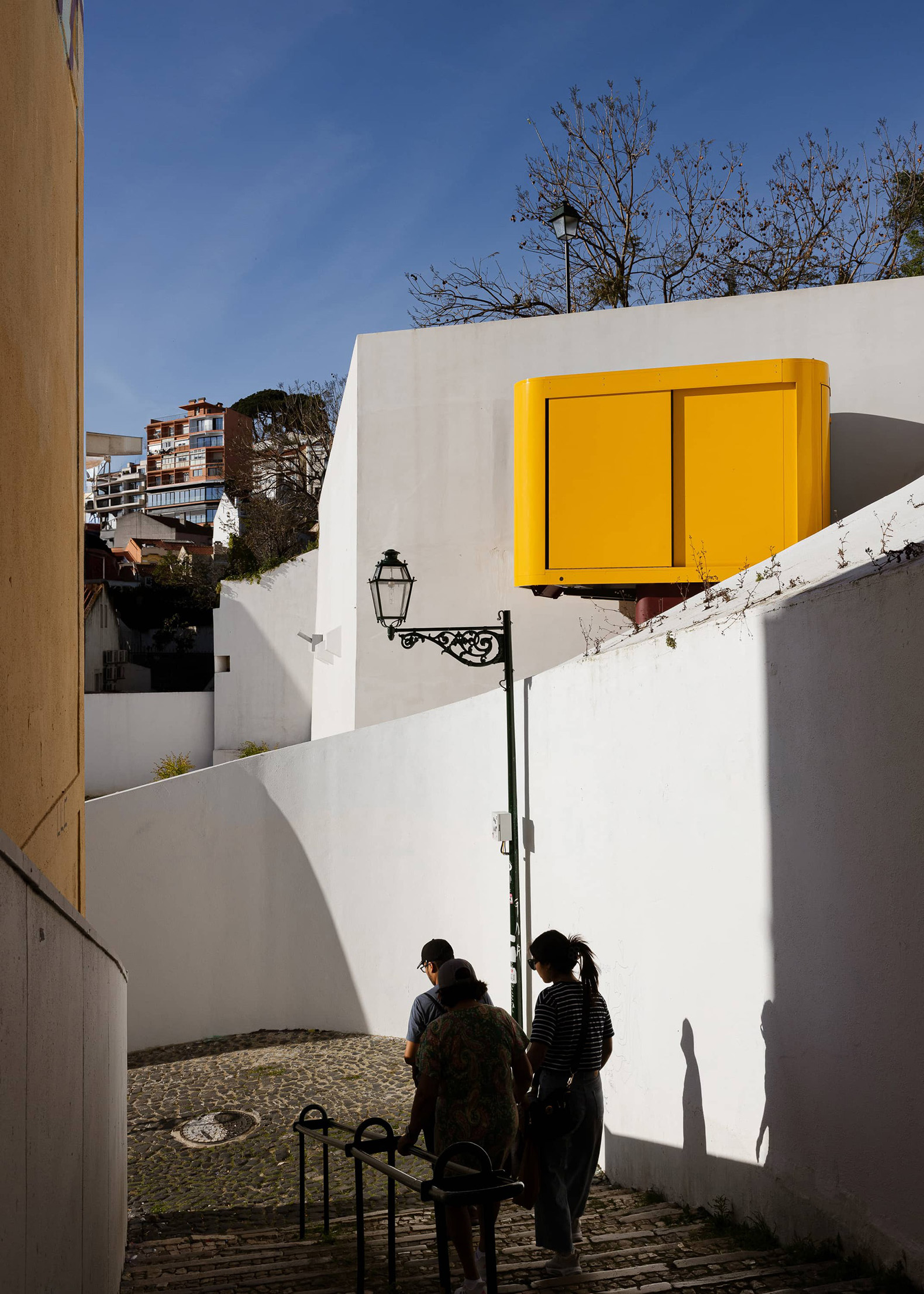
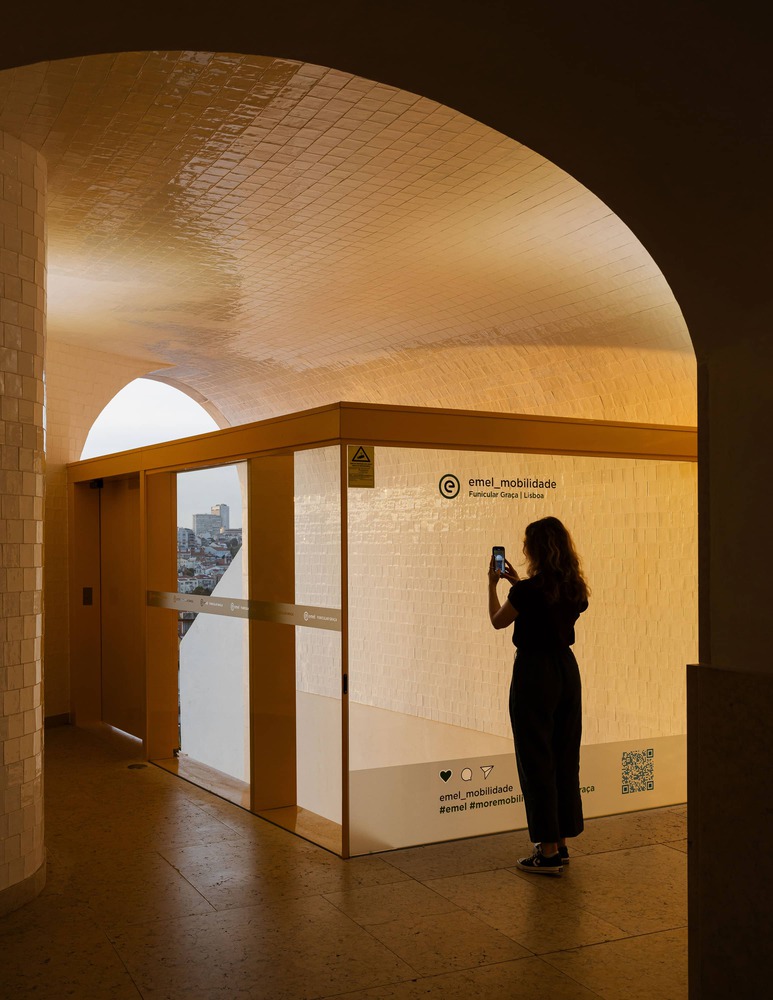
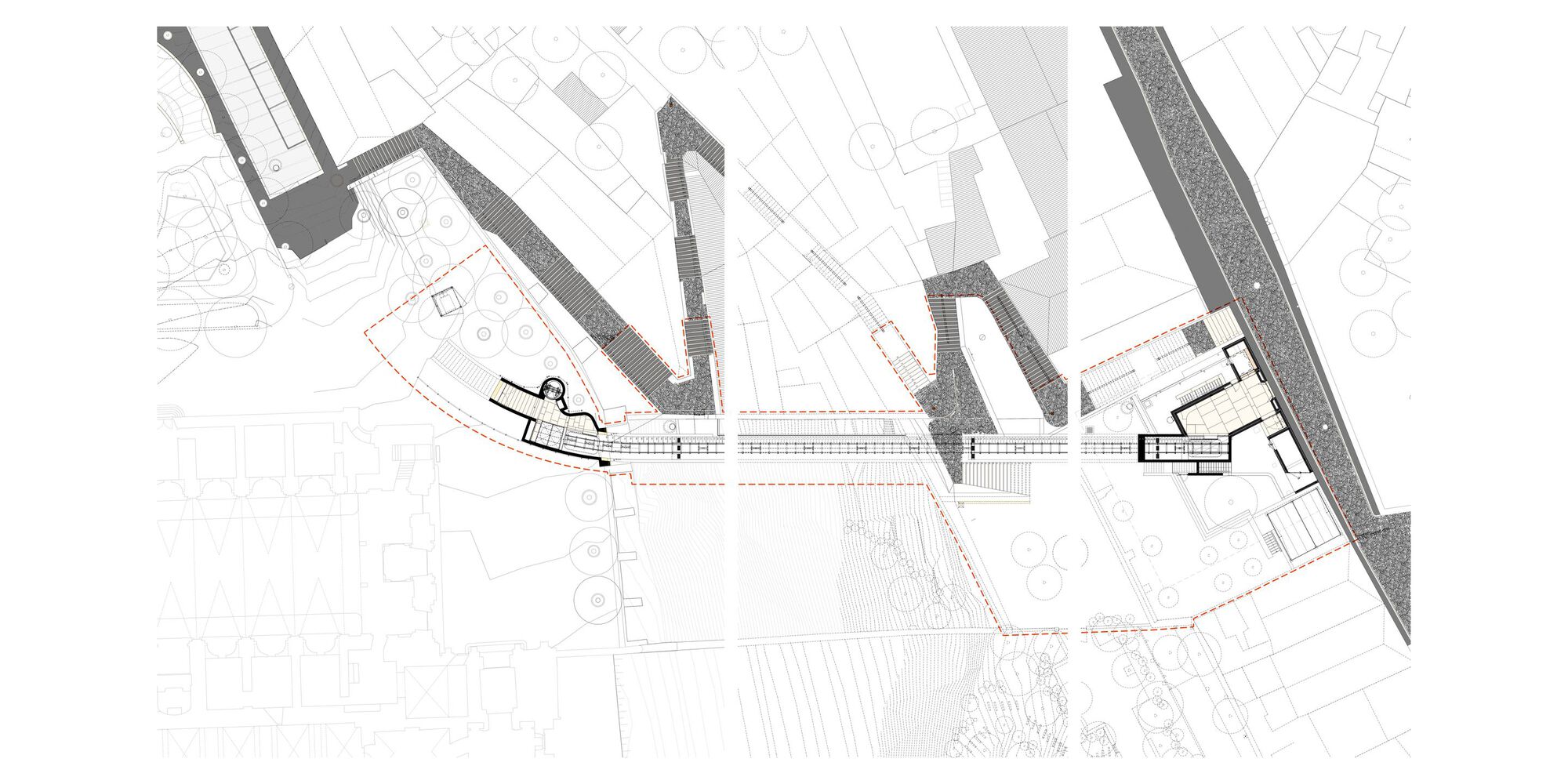
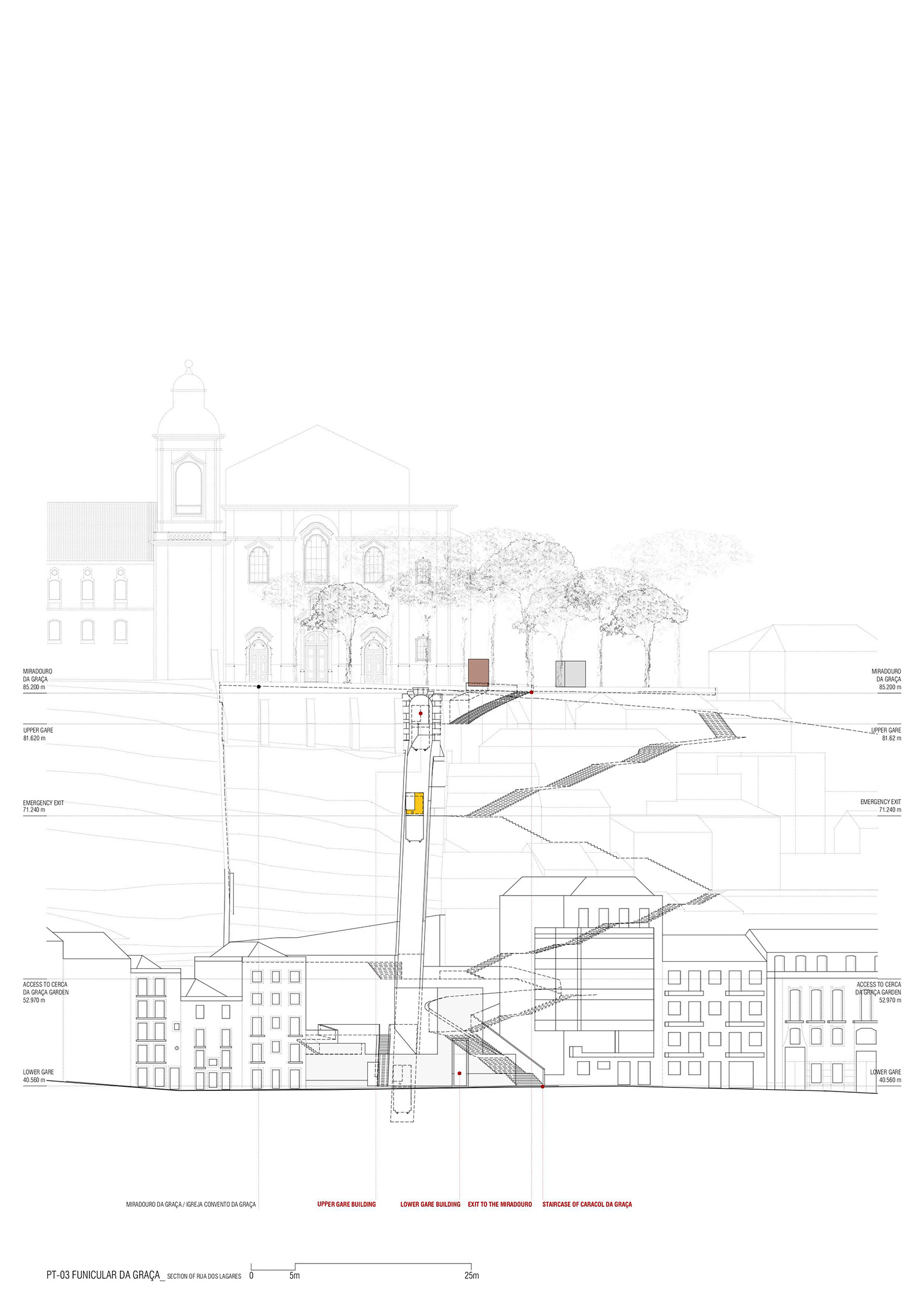
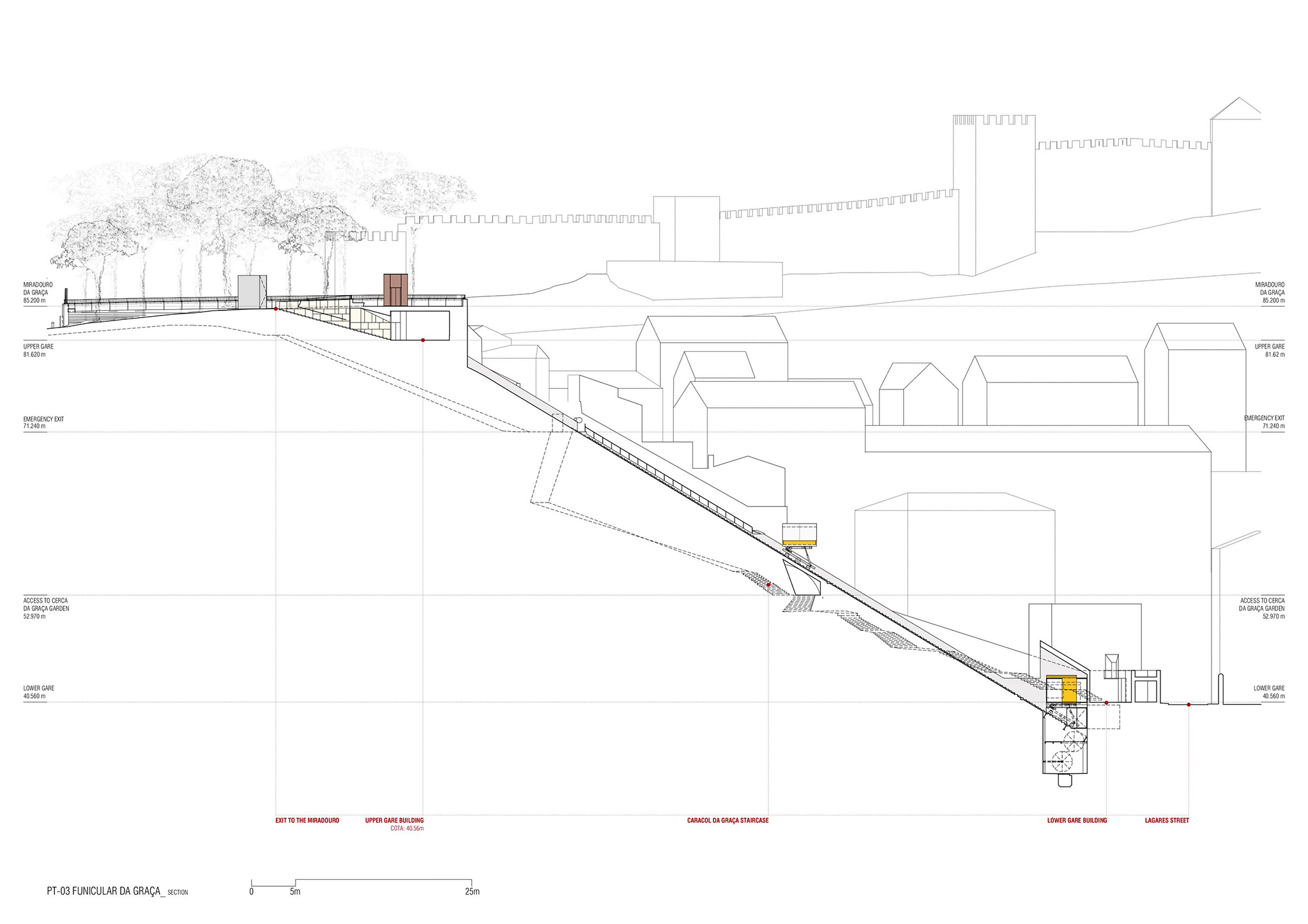
The project developed by Atelier Bugio comprises only two stops, thus ensuring an efficient flow of people. On the ground floor, Rua dos Lagares marks the beginning of the journey; on the upper floor, at the end of Calçada da Graça, is the final station, located slightly below the viewpoint level. This arrangement allows the funicular to pause on the street before beginning its descent, in a gesture similar to that of the Ascensor da Bica.

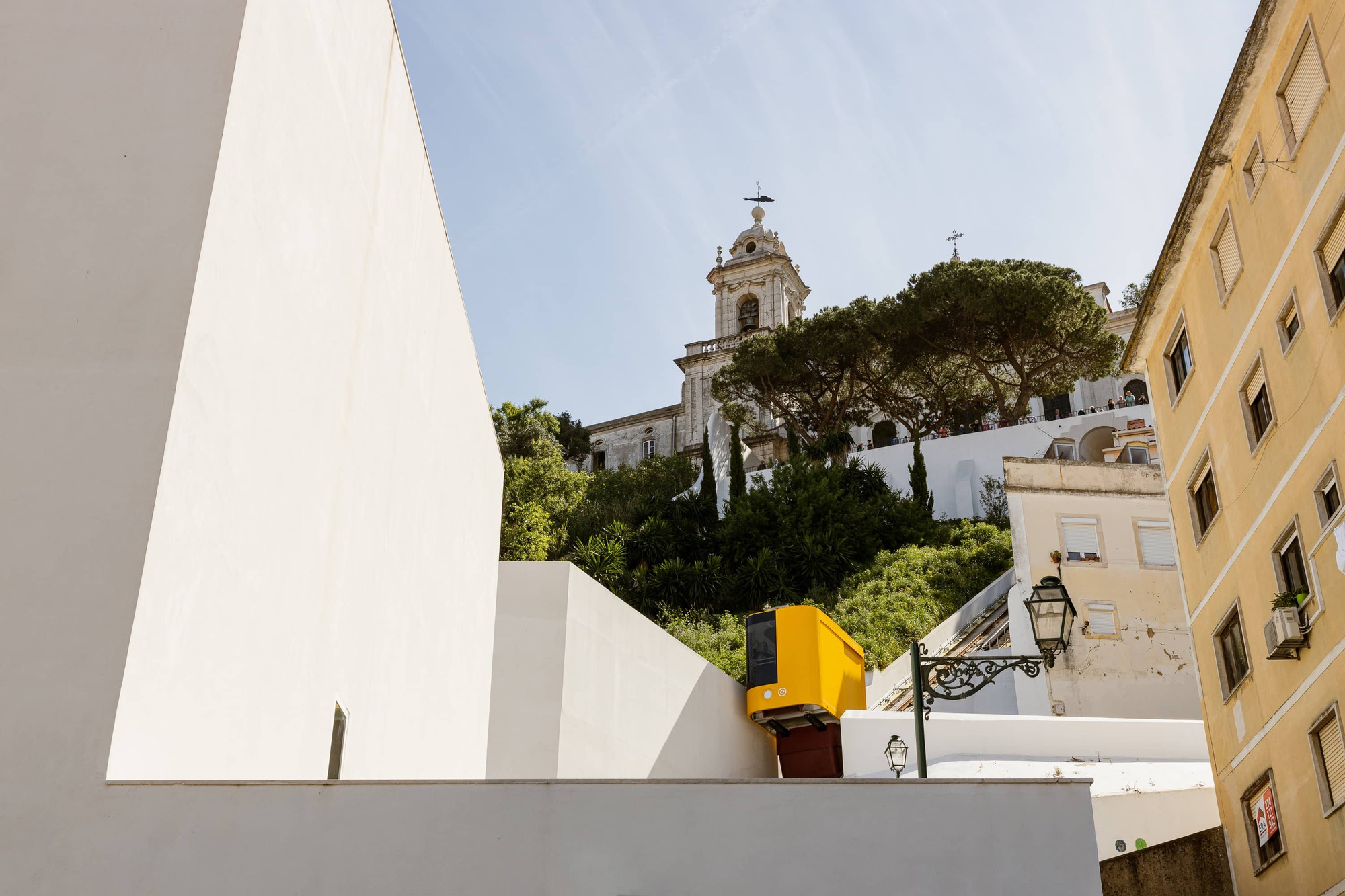
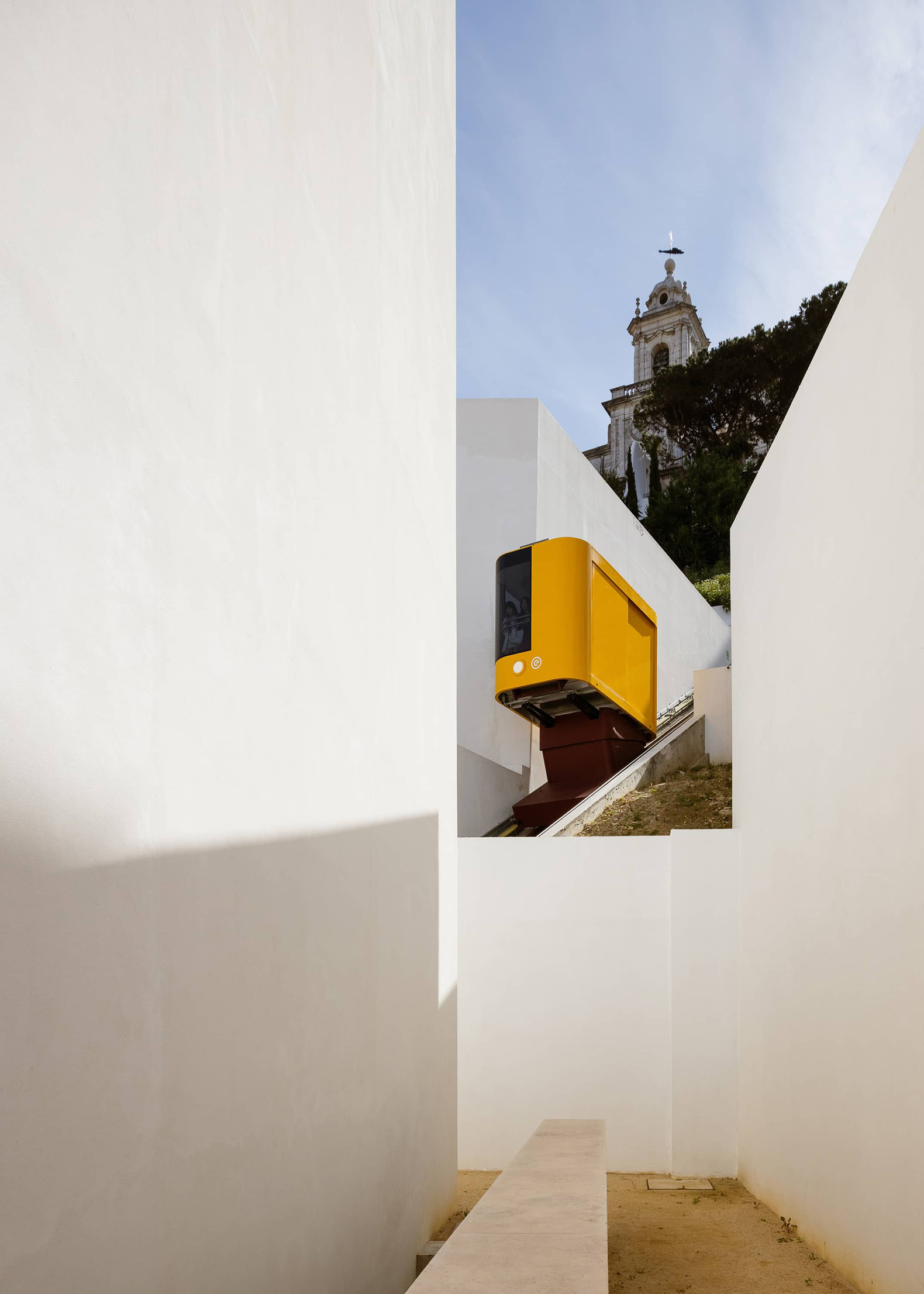
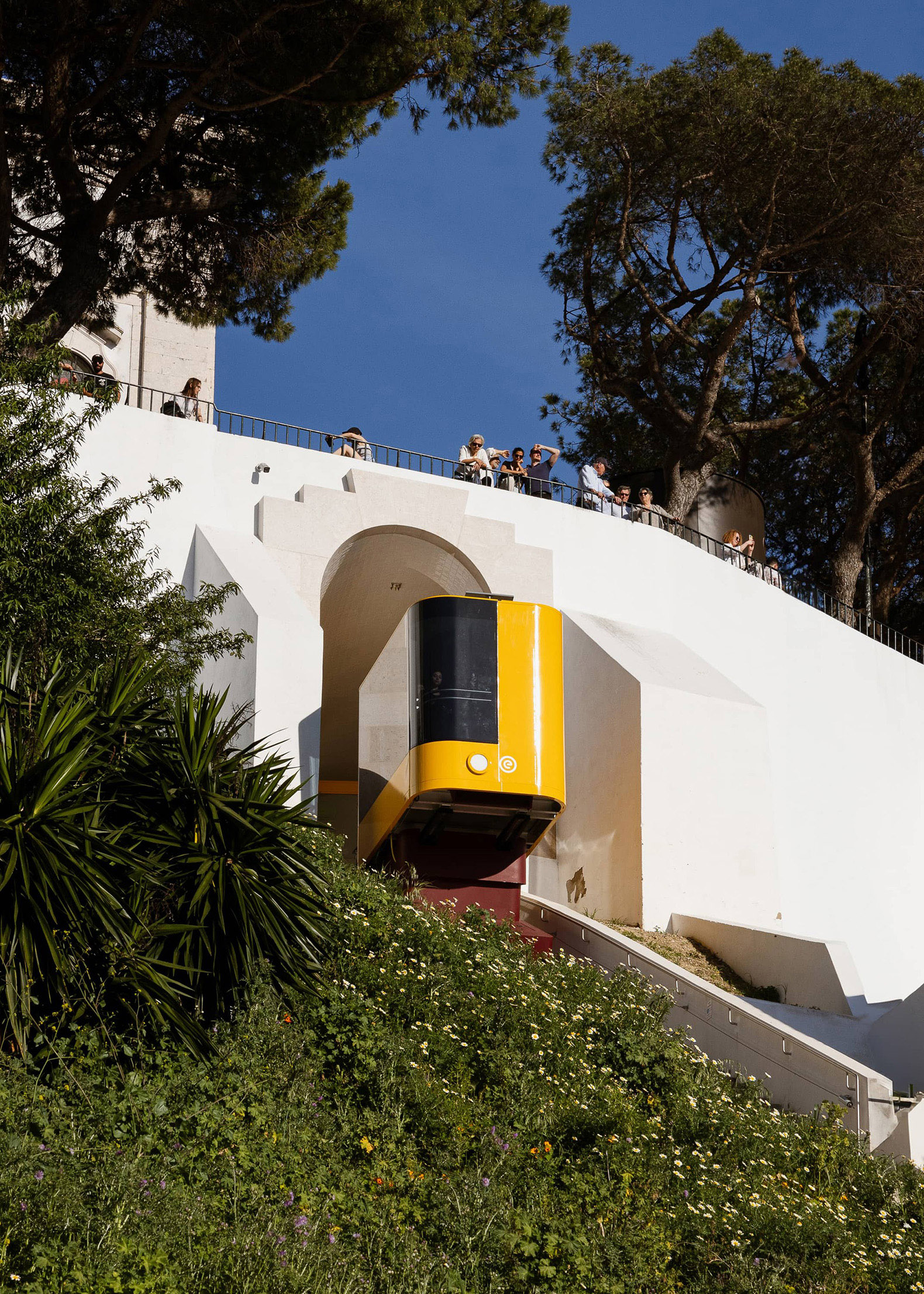
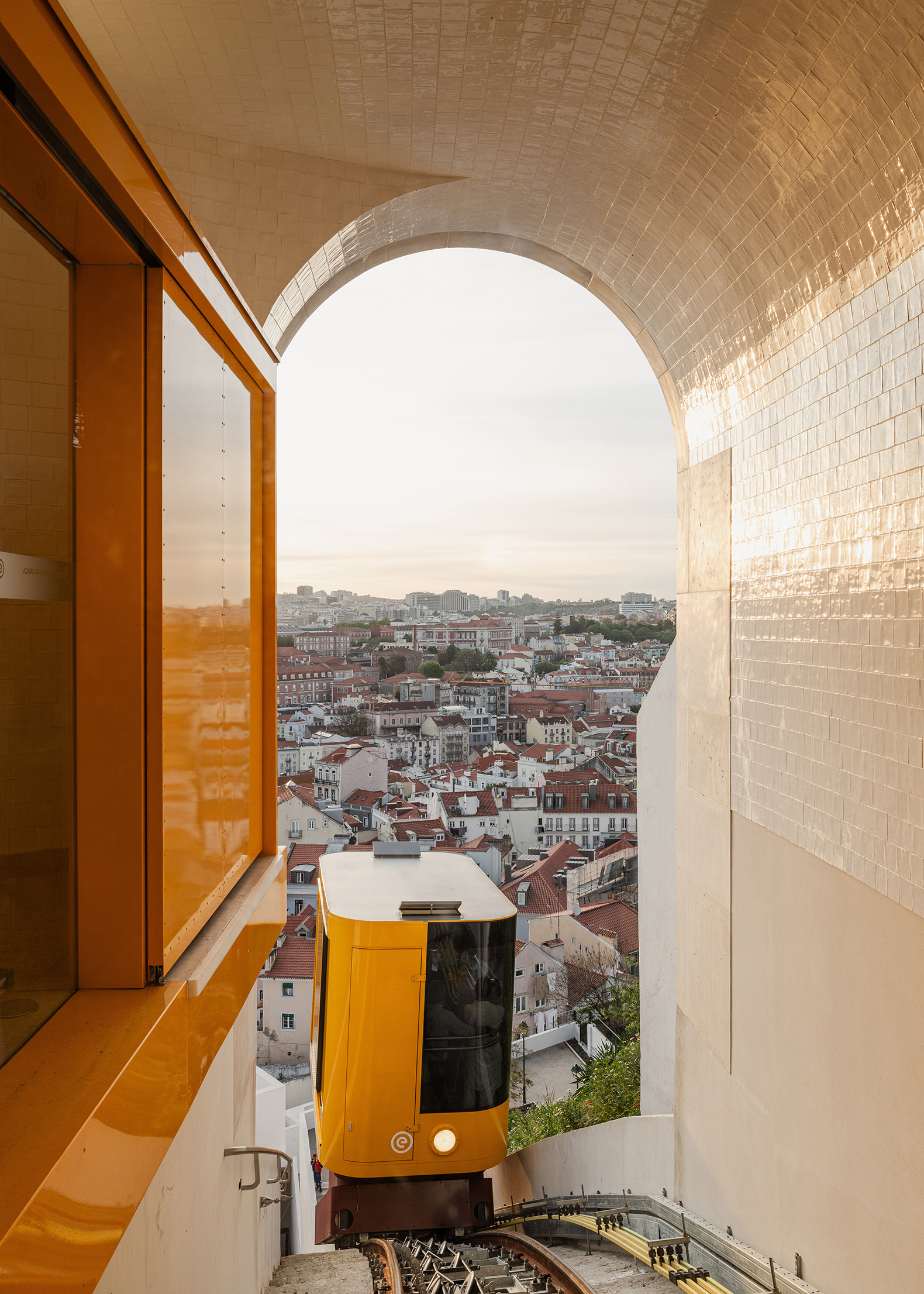
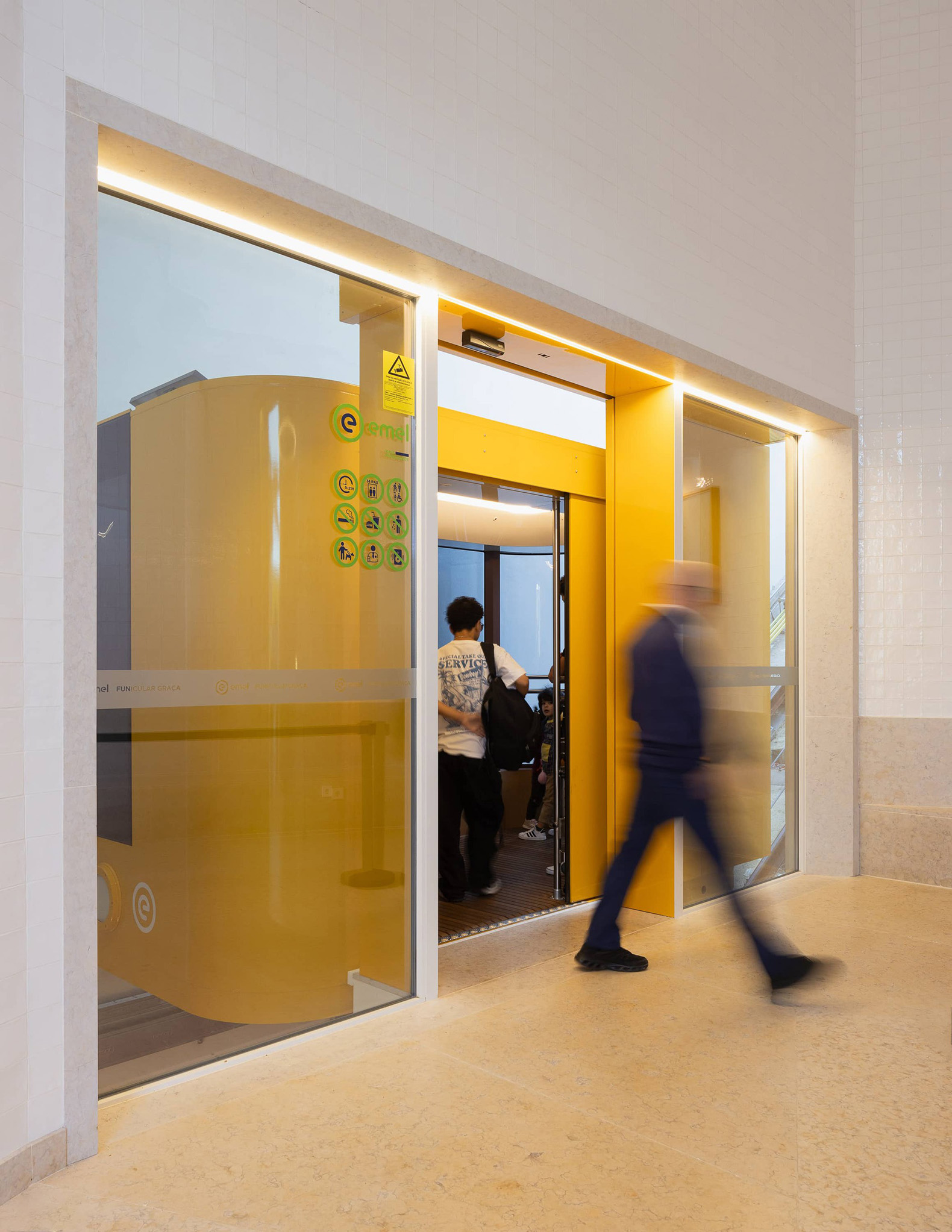
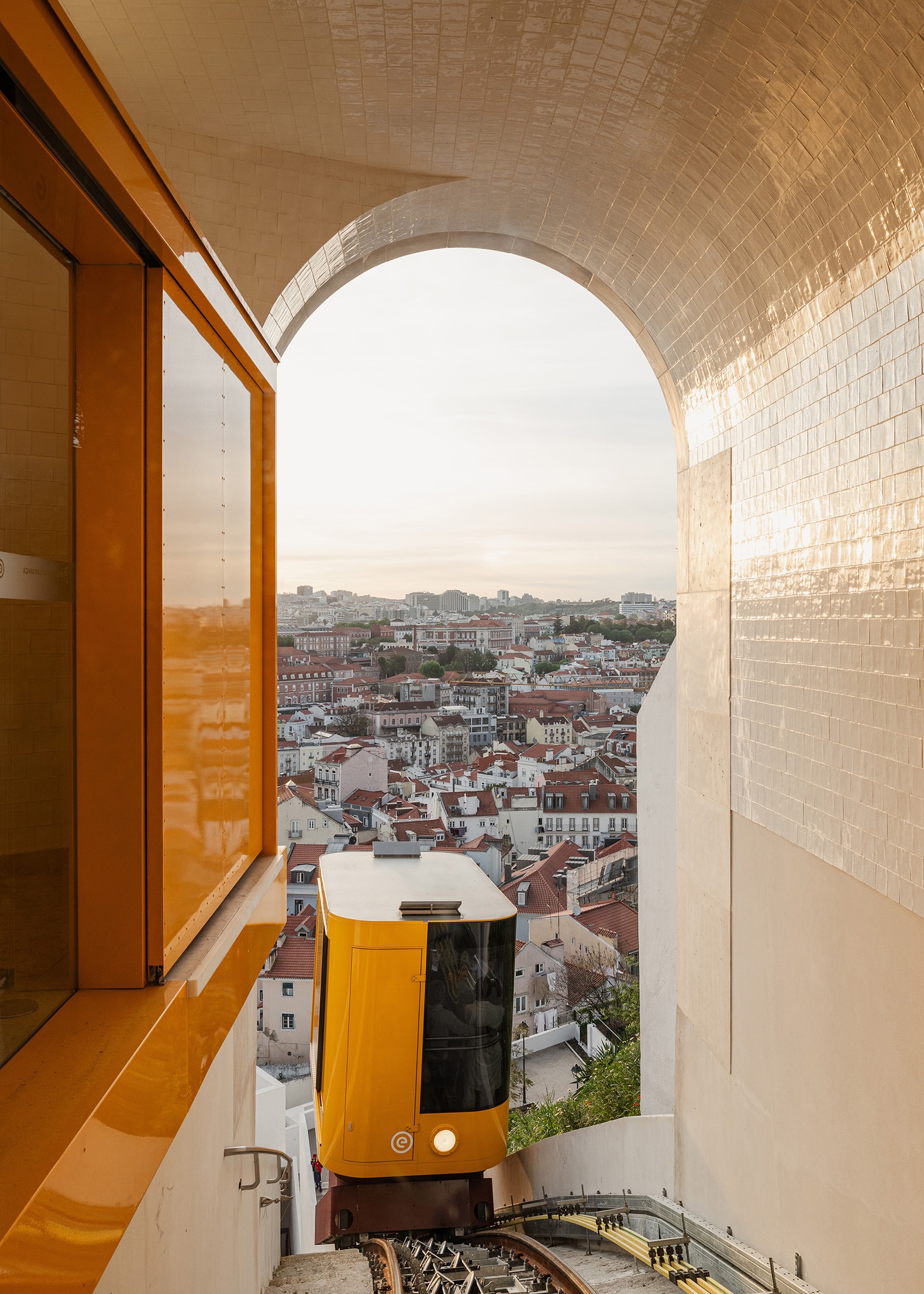
The design of the cabin incorporates two contrasting yet complementary spatial situations. An opaque section houses the two doors, one for emergencies and the other for passenger access, while the transparent section allows for continuous contact with the outside, offering views of the neighboring convent throughout the entire journey.

Graça Funicular by Atelier Bugio. Photograph by Alexander Bogorodskiy.

Graça Funicular by Atelier Bugio. Photograph by Alexander Bogorodskiy.

Project description by Atelier Bugio

Following a logic of typological continuity, the mechanical solution of the funicular establishes the connection to the Graça hill. Lisbon's hills have a tradition of transport mechanisms for people, most of them electric, such as various elevators—both vertical and inclined—and, more recently, escalators, like the one connecting Rua Garrett to Largo do Carmo.

The typological reference for this funicular was, in many aspects, the Bica Elevator, which provided answers to many of the questions we posed regarding this equipment. At the lower level, continuing the façade of Rua dos Lagares, a building opens a large door onto the street. This public entrance allows access between the street and the funicular through a "station" building, where the equipment is stored when not in use and where passengers are received before beginning their journey.

Graça Funicular por Atelier Bugio. Fotografía por Alexander Bogorodskiy.
Graça Funicular by Atelier Bugio. Photograph by Alexander Bogorodskiy.

The funicular has only two stops to ensure the desired flow: one at the lower level, on Rua dos Lagares, and the other at the upper level, where it meets the end of Calçada da Graça. This upper stop is slightly below the viewpoint level, allowing the funicular to stop on the street—similar to the Bica Elevator—before beginning its descent.

Spatial Sequence
At the lower level, on Rua dos Lagares, a small “station” building continues the street’s façade and connects the funicular route to the street through a double-height space. The building houses the mechanism and creates a "gateway" to Graça. The funicular cabin is designed with an axis that divides it into two sections: the opaque section, which contains two doors—one emergency exit and one for passengers—and the transparent section, which offers passengers a view of the interior of the Convent’s enclosure throughout the journey, as the route runs parallel to it.
Graça Funicular por Atelier Bugio. Fotografía por Alexander Bogorodskiy.
Graça Funicular by Atelier Bugio. Photograph by Alexander Bogorodskiy.

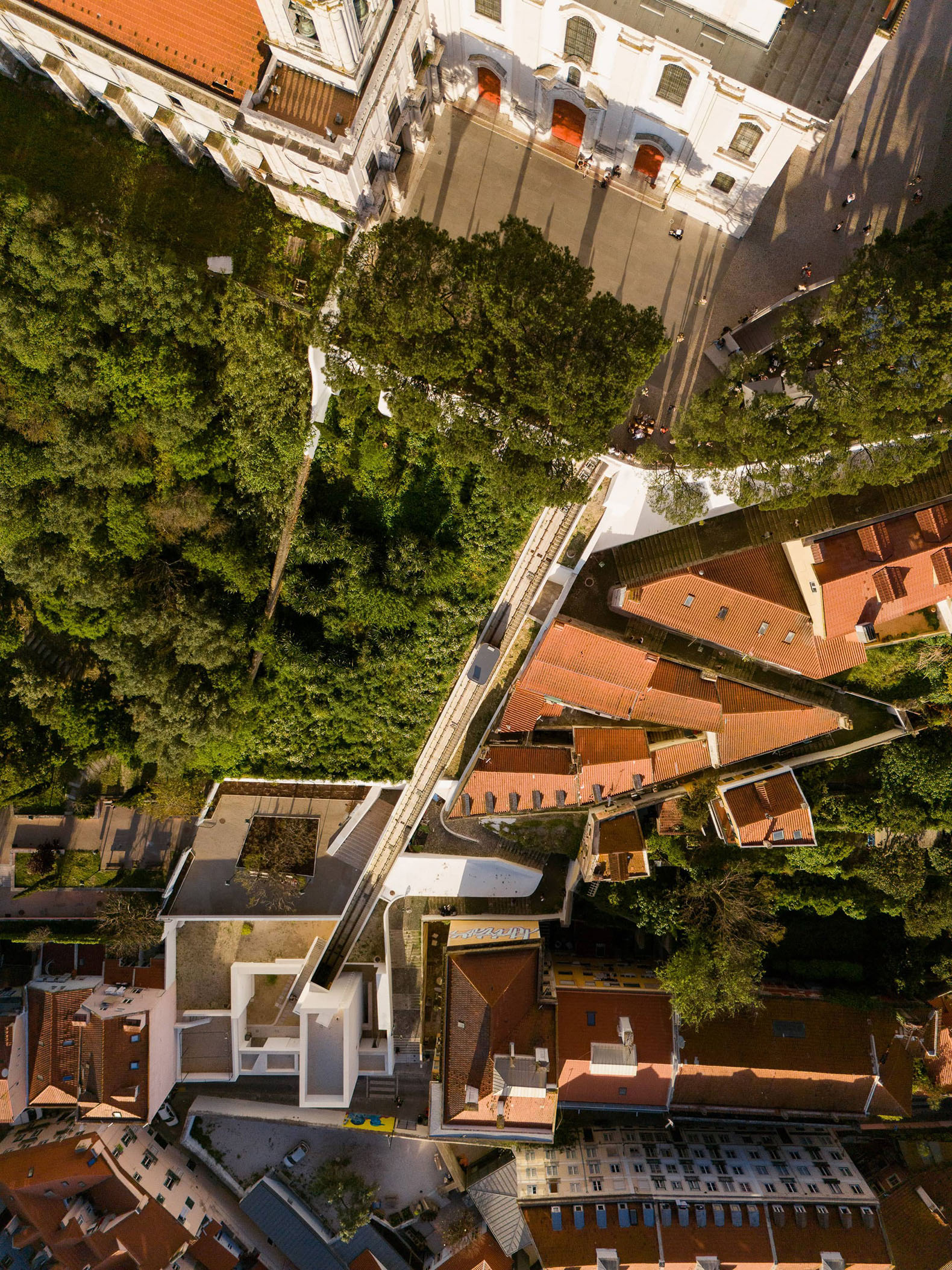
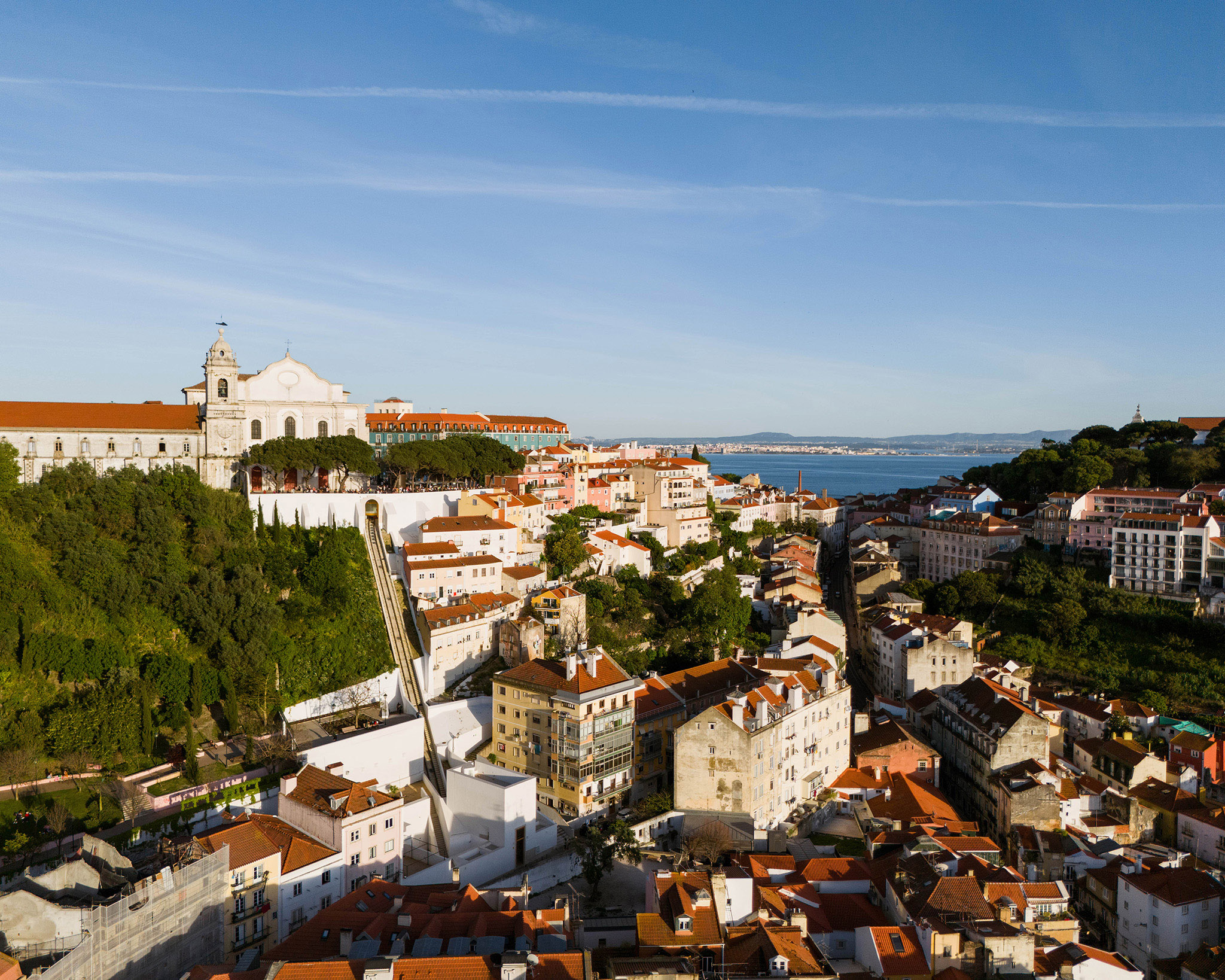
The enclosure is now being transformed into a public garden. The first part of the route runs alongside the enclosure, ascending continuously through the new garden. Then, the funicular enters a small curved tunnel that passes beneath the viewpoint, reaching the connection level with Calçada da Graça. As it emerges onto the street, the funicular “turns its back” to the viewpoint’s retaining wall, opening up to Jardim Augusto Gil and the river, which unfolds on the horizon of Calçada da Graça.

The interior of the fence is now being transformed into a public garden. The first part of the route runs alongside the fence and traverses the new garden in a continuous upward ascent. Then the funicular enters a small curved tunnel that crosses the viewpoint to reach the level connecting to Calçada da Graça. The funicular then appears on the street, turning its "back" to the viewpoint's retaining wall, opening onto the Augusto Gil Garden and the river that can be seen on the horizon of Calçada da Graça.
More information

Label
Architects
Text

Atelier Bugio. Lead Architect.- João Favila Menezes.

+ + copy Created with Sketch.
- + copy Created with Sketch.
Label
Project team
Text

Coordination.- Atelier Bugio - João Favila Menezes.
Urban Design And Global Strategy.- João Favila Menezes, Pedro Domingos, João Simões, Rui Mendes.
Authorship.- João Favila Menezes, Pedro Domingos, João Simões.
Collaboration.- Ana Loureiro, Bruno Oliveira, Fernando Amado, Francesco Mariani, Hugo Amaro, José Cano, José Pinto, Luis Ferro, Marlene Dos Santos, Mauricio Martins, Miguel Antunes, Miguel Mo Reira, Pedro Alves, Ricardo Correia.

+ + copy Created with Sketch.
- + copy Created with Sketch.
Label
Collaborators
Text

Work Supervision.- João Favila Menezes, Francesco Mariani.

+ + copy Created with Sketch.
- + copy Created with Sketch.
Label
Client
Text

Lisbon City Council, Municipal Directorate of Urban Planning, Department of Infrastructure Planning, Division of Road Network Mobility and Parking, Municipal Directorate of Urban Conservation and Rehabilitation.

+ + copy Created with Sketch.
- + copy Created with Sketch.
Label
Developer
Text

EMEL.

+ + copy Created with Sketch.
- + copy Created with Sketch.
Label
Area
Text

163 sqm.

+ + copy Created with Sketch.
- + copy Created with Sketch.
Label
Dates
Text

2024.

+ + copy Created with Sketch.
- + copy Created with Sketch.
Label
Location
Text

Lisbon, Portugal.

+ + copy Created with Sketch.
- + copy Created with Sketch.
Label
Manufacterers
Text

LIFTECH.- Rui Pinheiro.
TECNOPLANO.- Susana Oliveira.
RIOBOCO.- João Victor, João Morais, Eduardo Couto, Pedro Gonçalves, Gil Teixeira, Milton Jamerico, Patrícia Marção, Pedro Vasconcelos, José Nascimento.
ECOCIAF.- Miguel Pereira, João Cabral, Nuno Serrano.
BETAR.- Miguel Villar, Fernando Ferreira.
OHMSOR.- João Mira.
CAMPO D’ÁGUA.- Marta Azevedo Pereira, Ricardo Santiago, Vera Martins.
BLUE HORIZON.- Mário Boucinha. 
TOPÓGRAFO.- Rodrigo Basílio
GEO CONTROLE.
TRIBATO.- Ana Cotrim.
ARQUEOHOJE.- Joaquim Garcia, Artur Rocha.

+ + copy Created with Sketch.
- + copy Created with Sketch.
Label
Photography
+ + copy Created with Sketch.
- + copy Created with Sketch.
Published on: February 18, 2026
Cite:
metalocus, AGUSTINA BERTA
"Vertical connection, traditional solution. Graça Funicular by Atelier Bugio" METALOCUS. Accessed
<https://www.metalocus.es/en/news/vertical-connection-traditional-solution-graca-funicular-atelier-bugio> ISSN 1139-6415
Loading content ...
Loading content ...
Loading content ...
Loading content ...
Loading content ...
Loading content ...
Loading content ...
Loading content ...
Loading content ...
Loading content ...
Loading content ...
Loading content ...
Loading content ...
Loading content ...
Loading content ...
Loading content ...
Loading content ...
Loading content ...
Loading content ...
Loading content ...
Loading content ...
Loading content ...
Loading content ...
Loading content ...
Loading content ...
Loading content ...
Loading content ...
Loading content ...
Loading content ...
Loading content ...
Loading content ...
Loading content ...
Loading content ...
Loading content ...
Loading content ...
Loading content ...
Loading content ...
Loading content ...
Loading content ...
Loading content ...
Loading content ...
Loading content ...
Loading content ...
Loading content ...
Loading content ...
Loading content ...
Loading content ...
Loading content ...
Loading content ...
Loading content ...
Loading content ...
Loading content ...
Loading content ...
Loading content ...