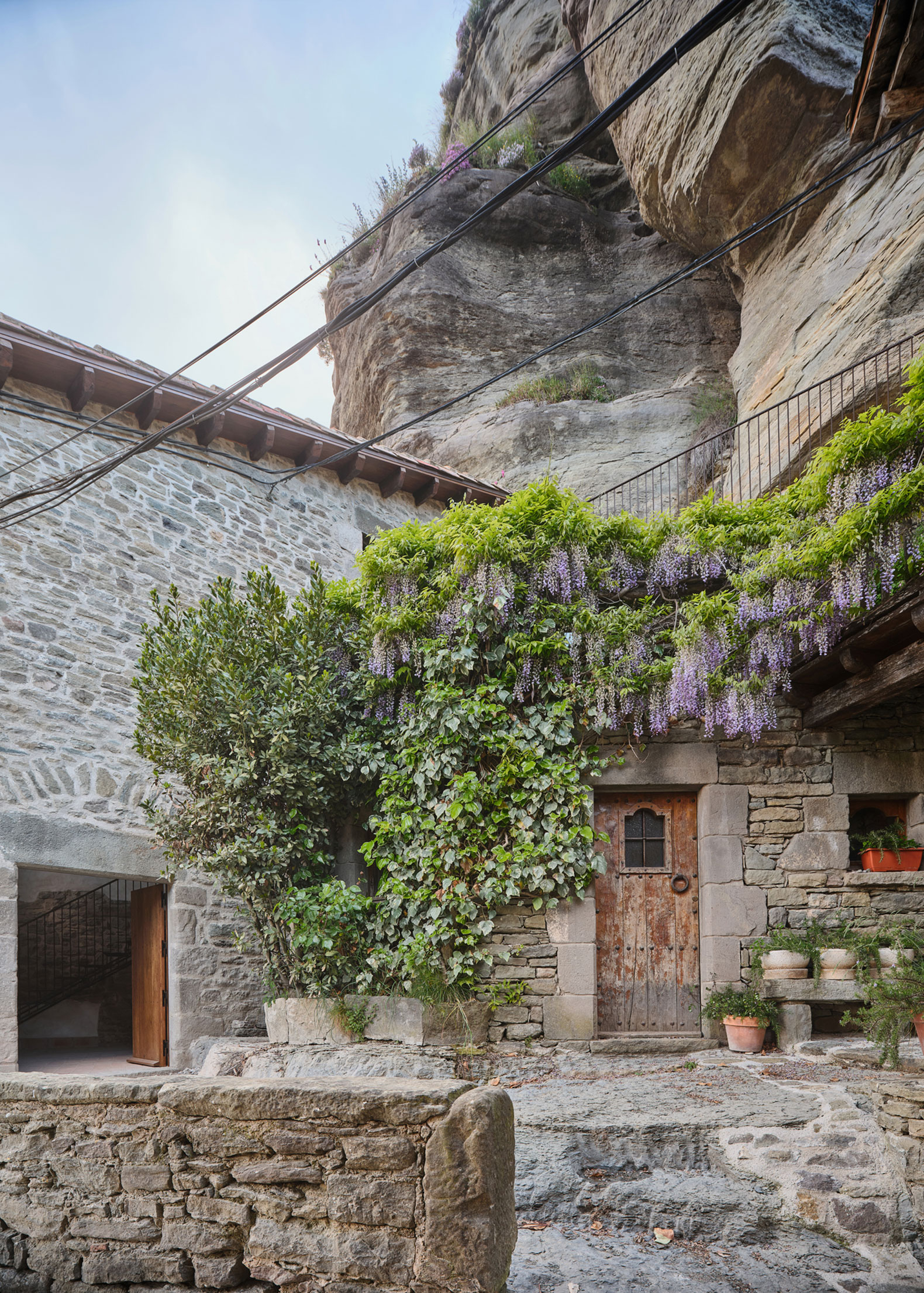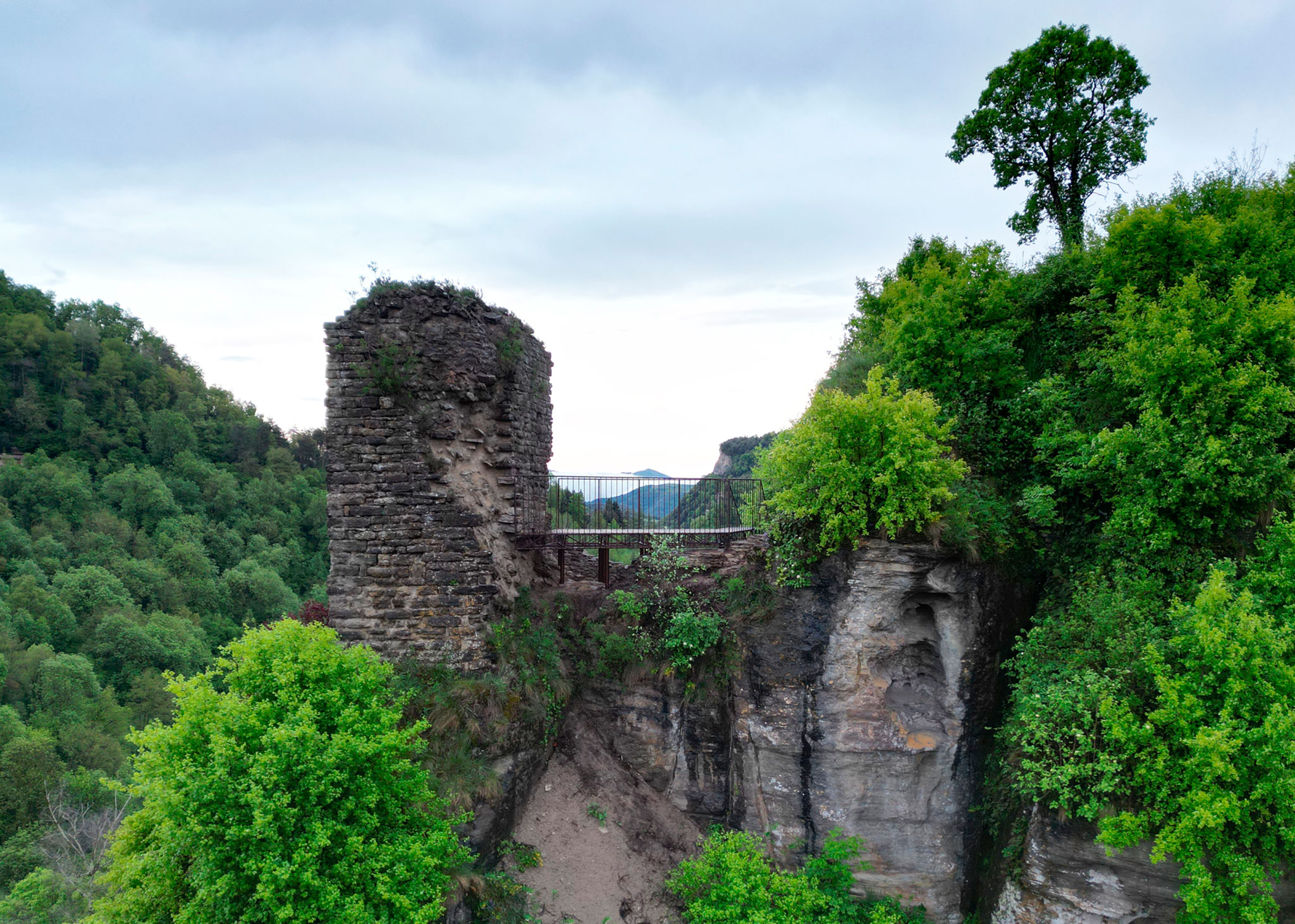
"Can Saltiri" is a project designed by Carles Enrich Studio to improve access to Rupit Castle. Its main objective is to create a safe route among the archaeological remains, carrying out a minimal-impact intervention that highlights both the historical site and its integration into the landscape of the Osona region.

Prior to the project, access to the monument was only possible through a private property and via a via ferrata. To change this, the City Council acquired the "Can Saltiri" estate, located at the foot of the archaeological site, in order to establish a new direct connection between the town and the castle.

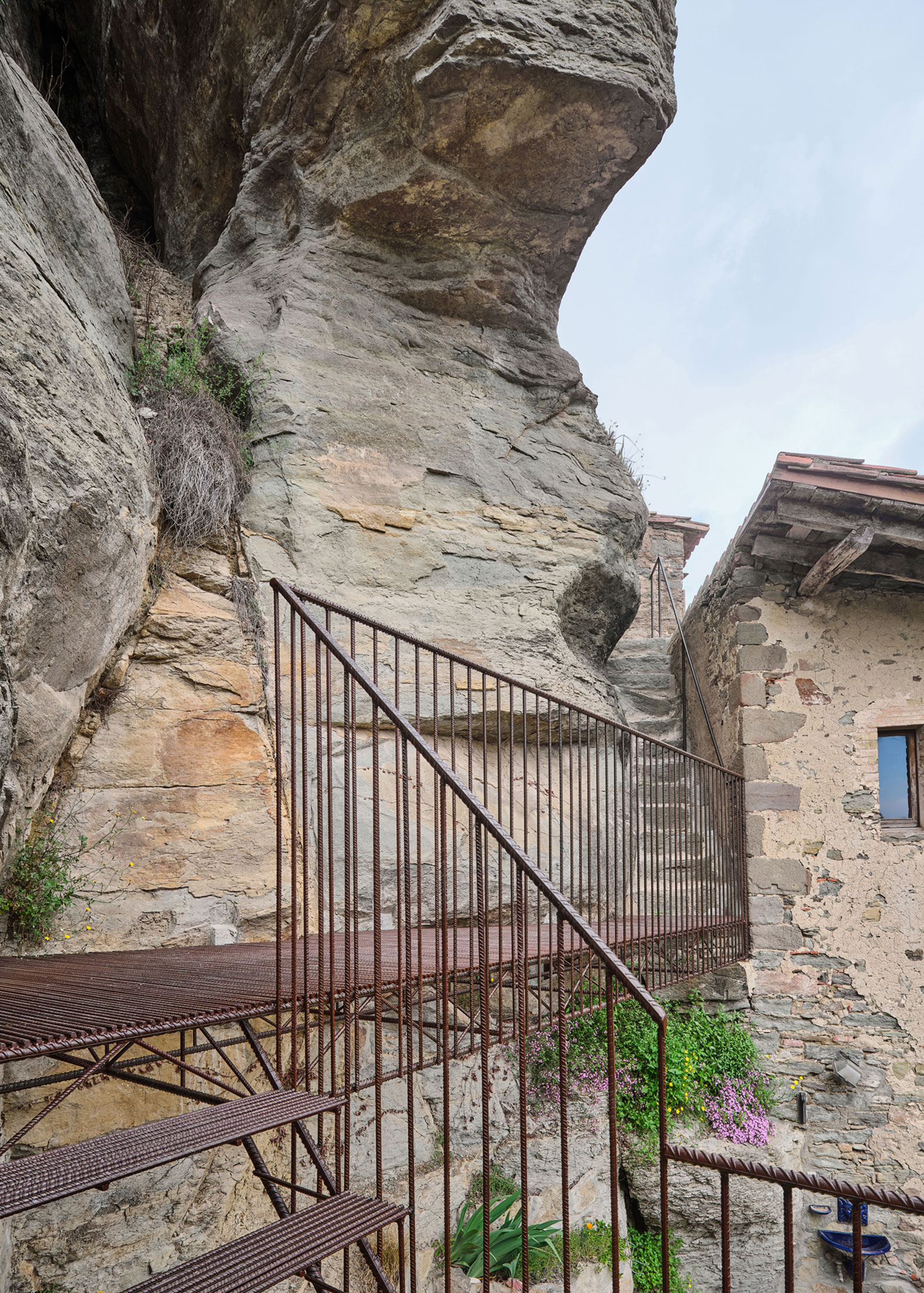
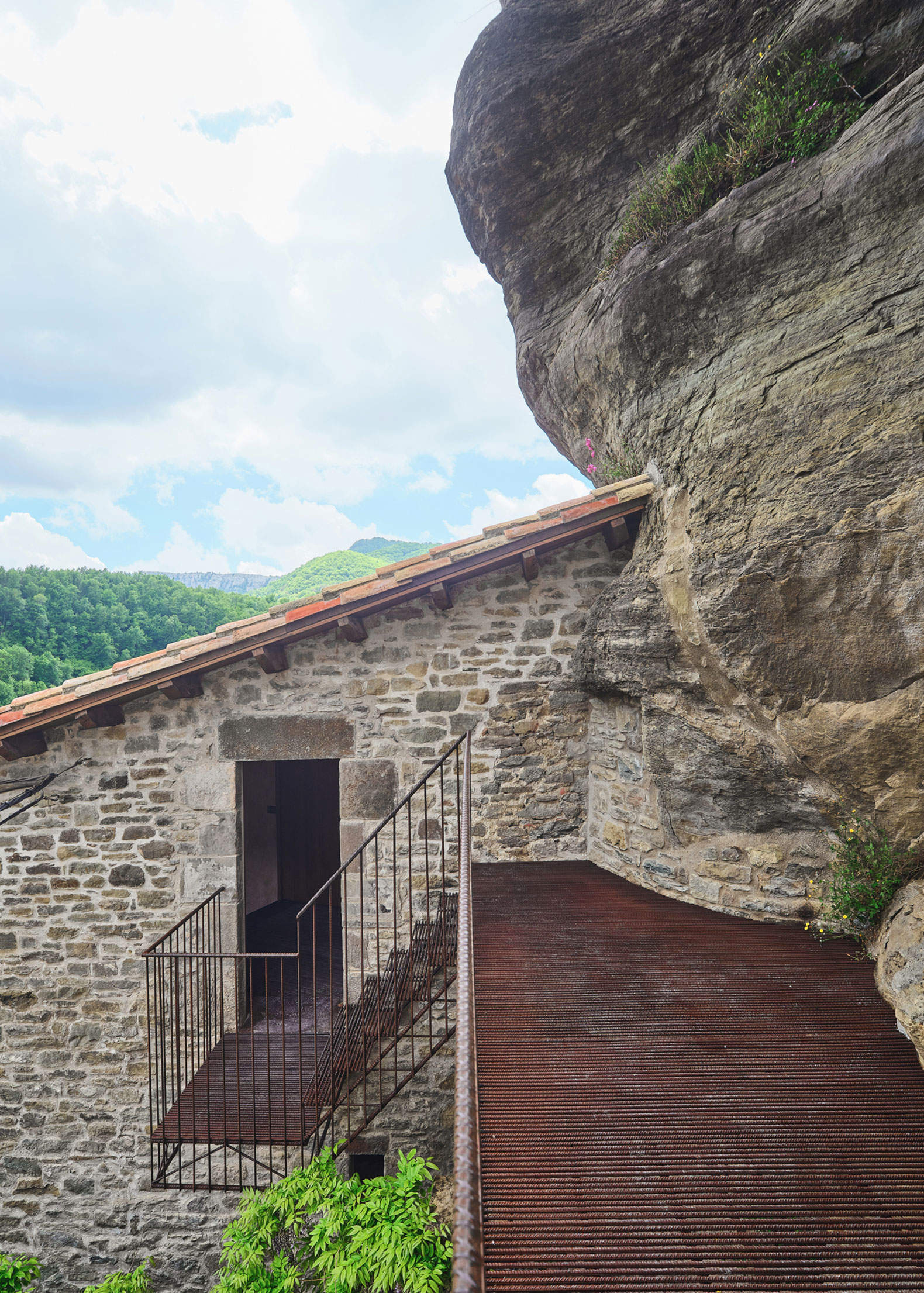
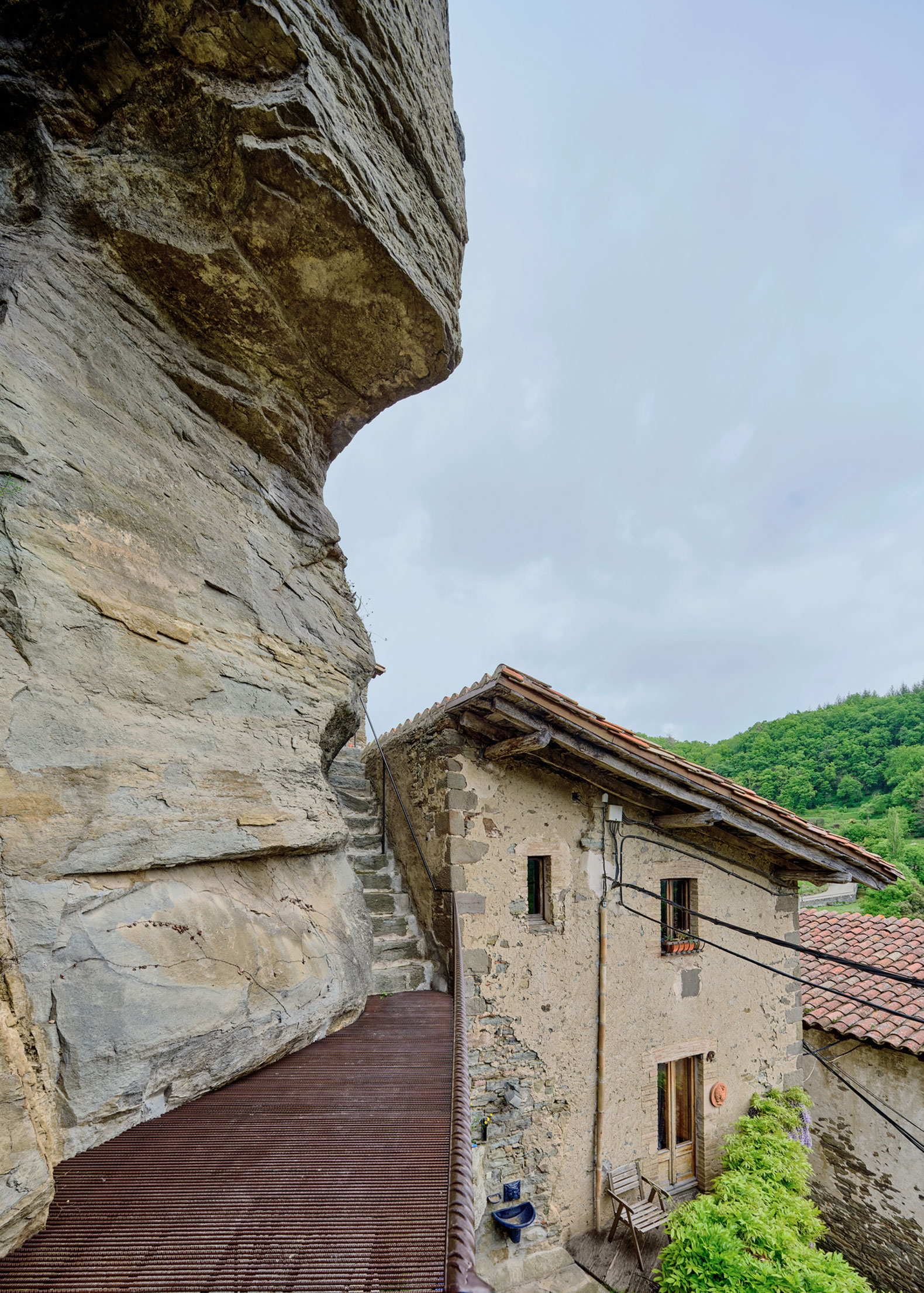
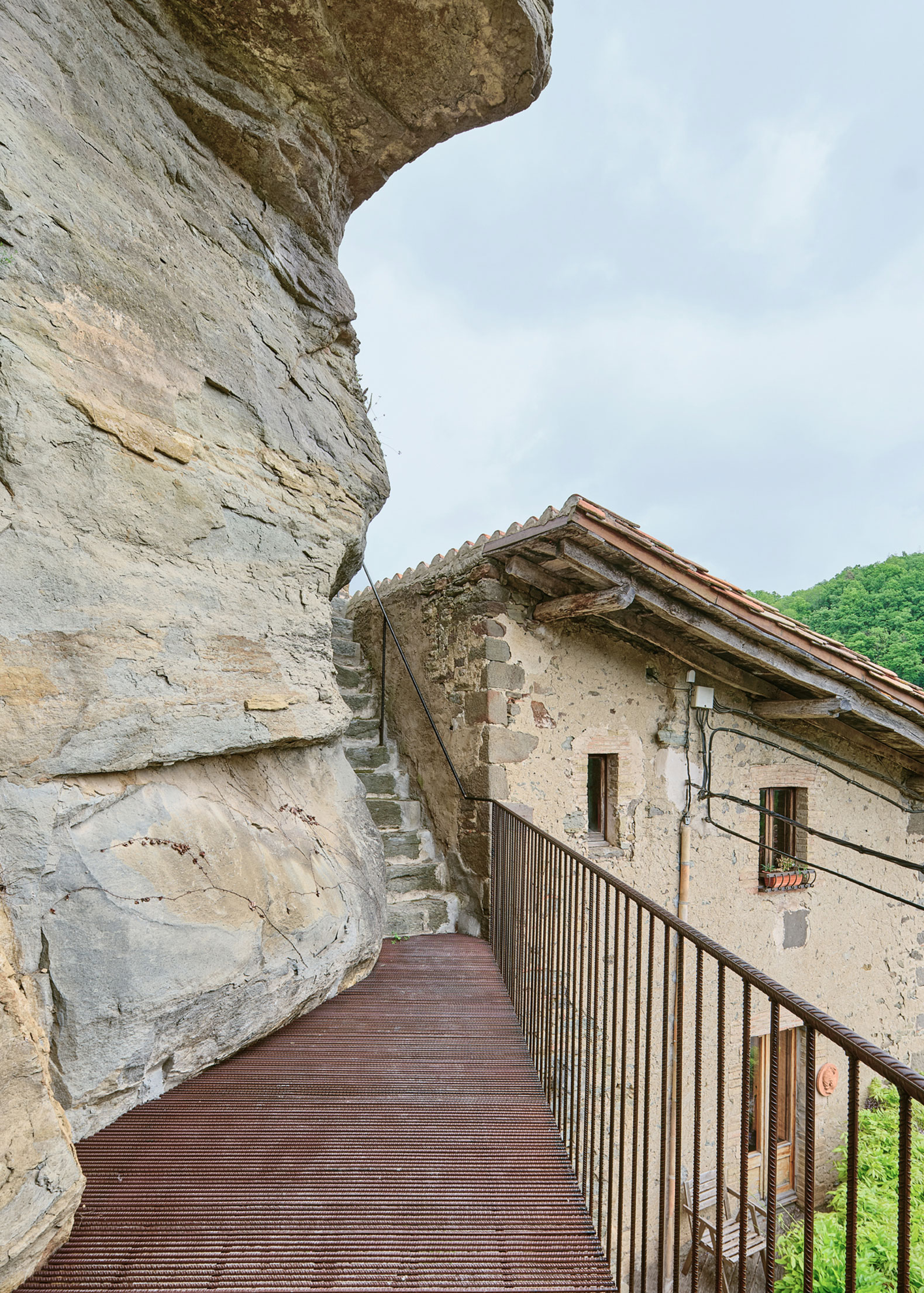
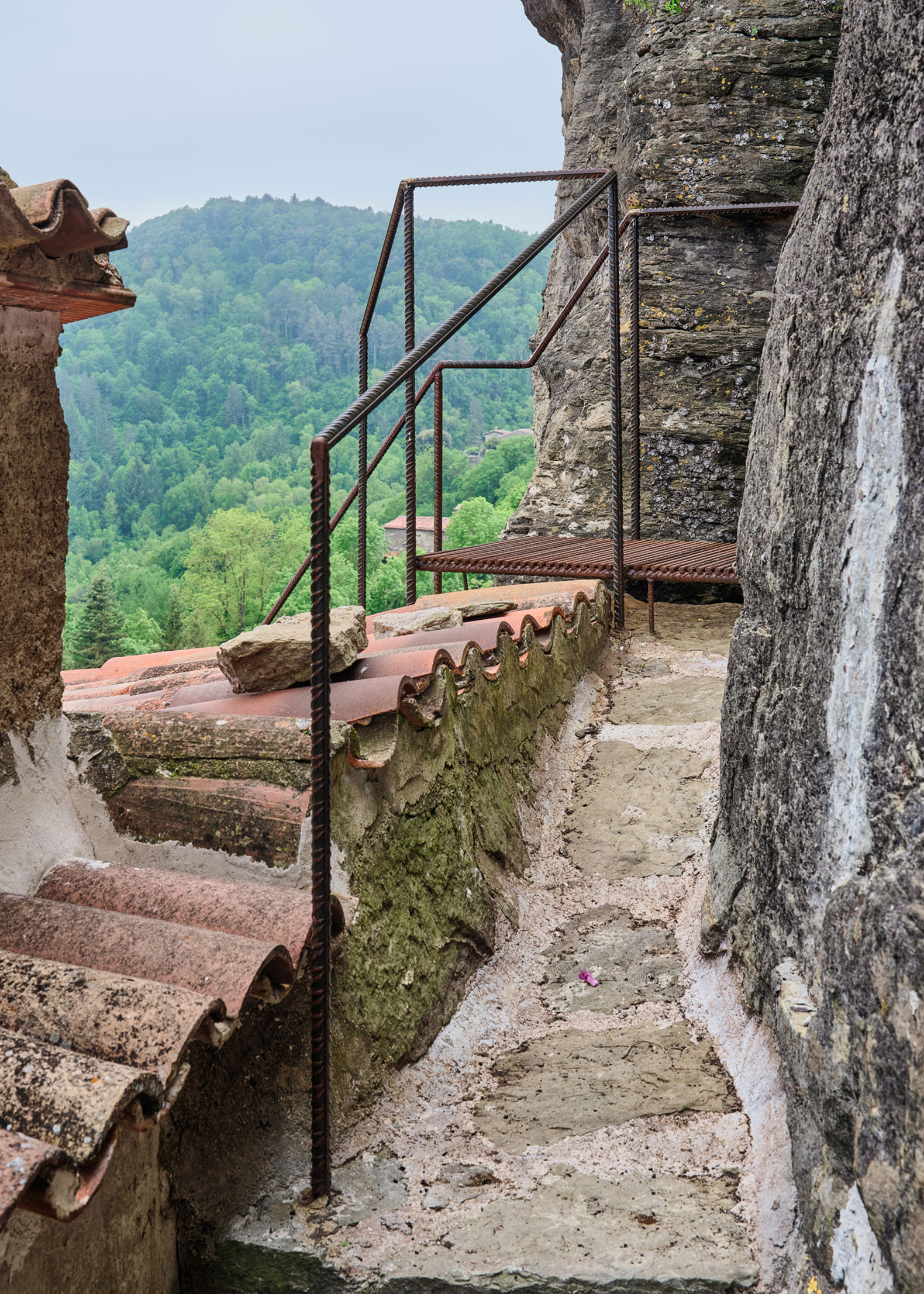
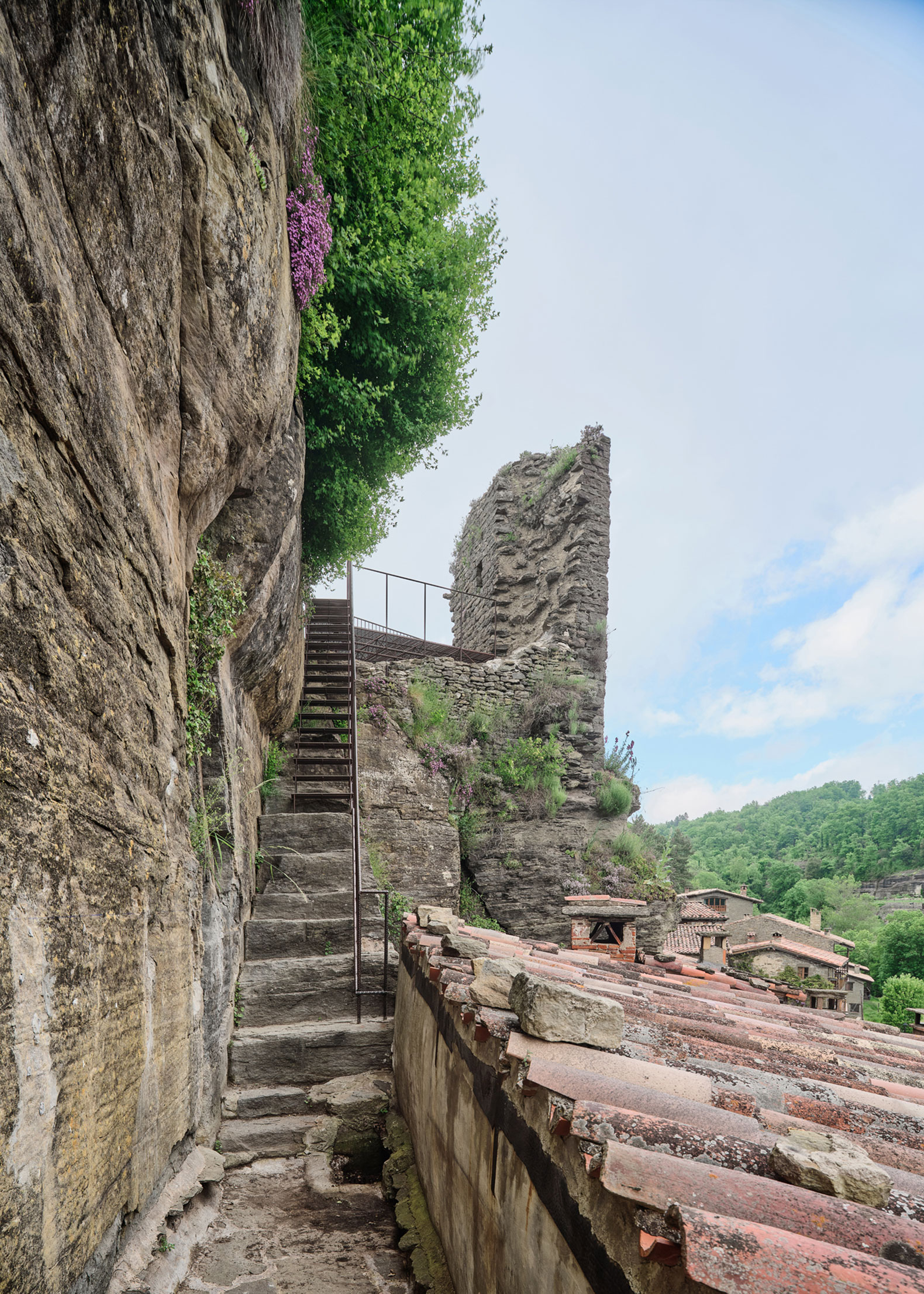
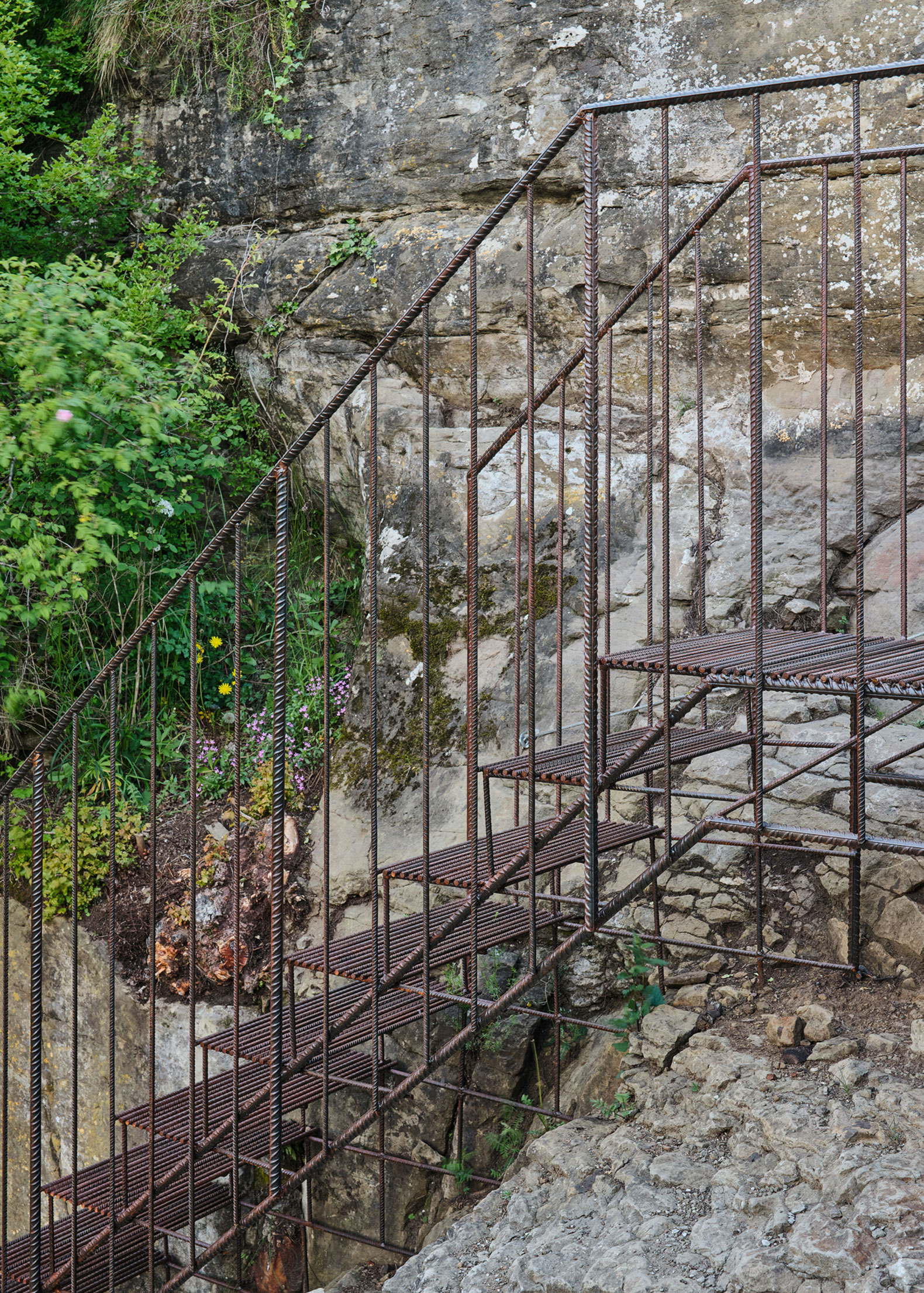
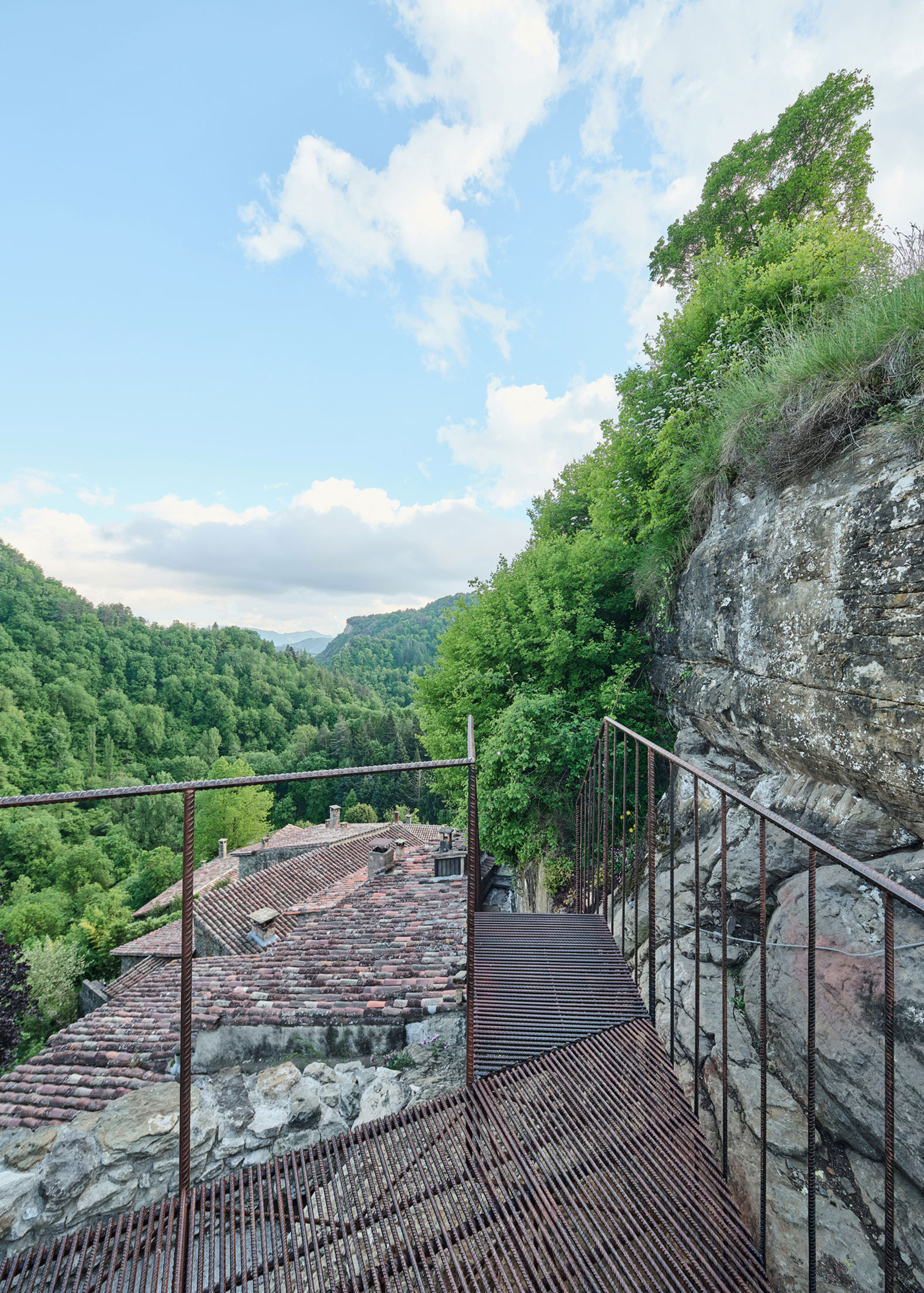
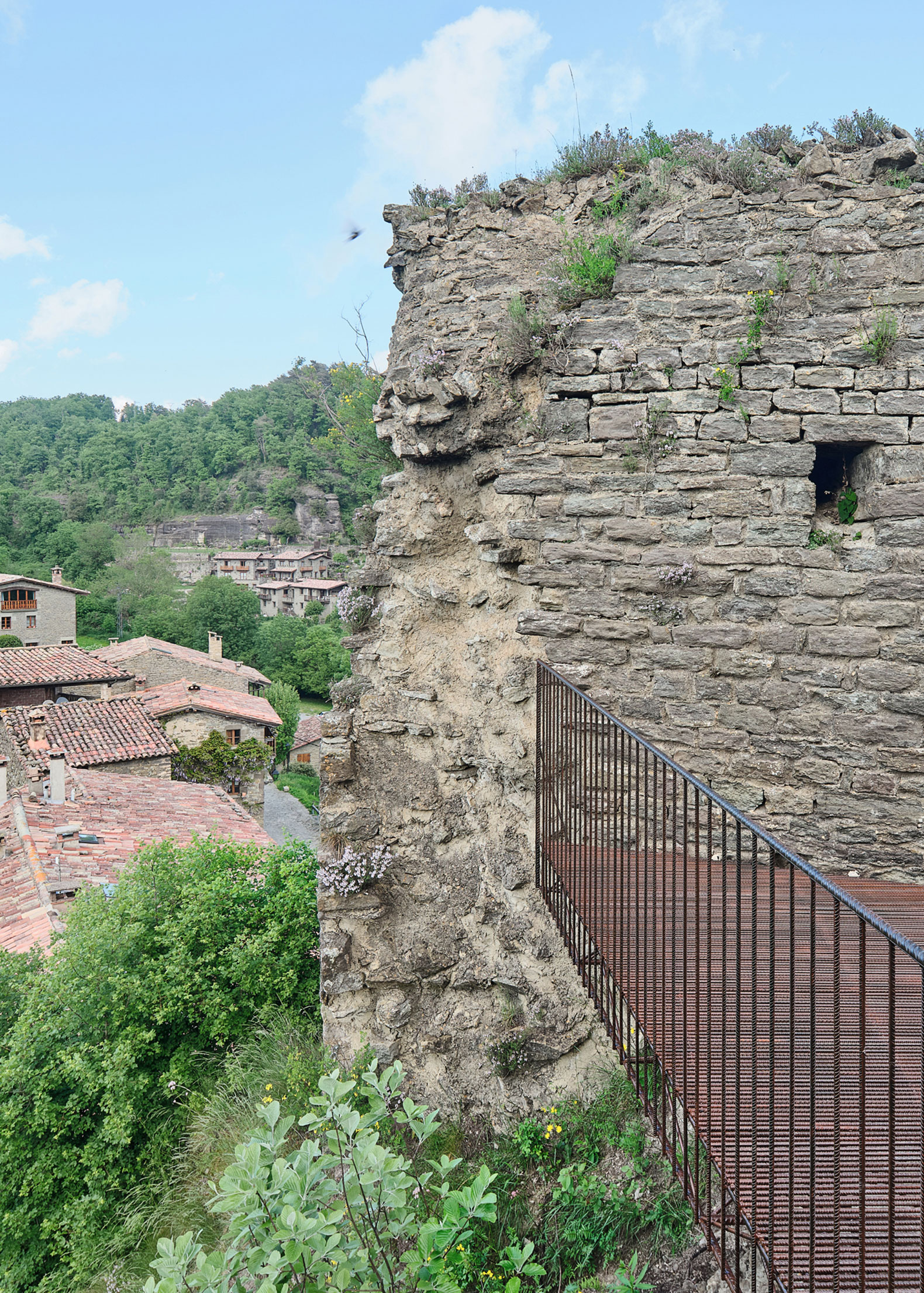
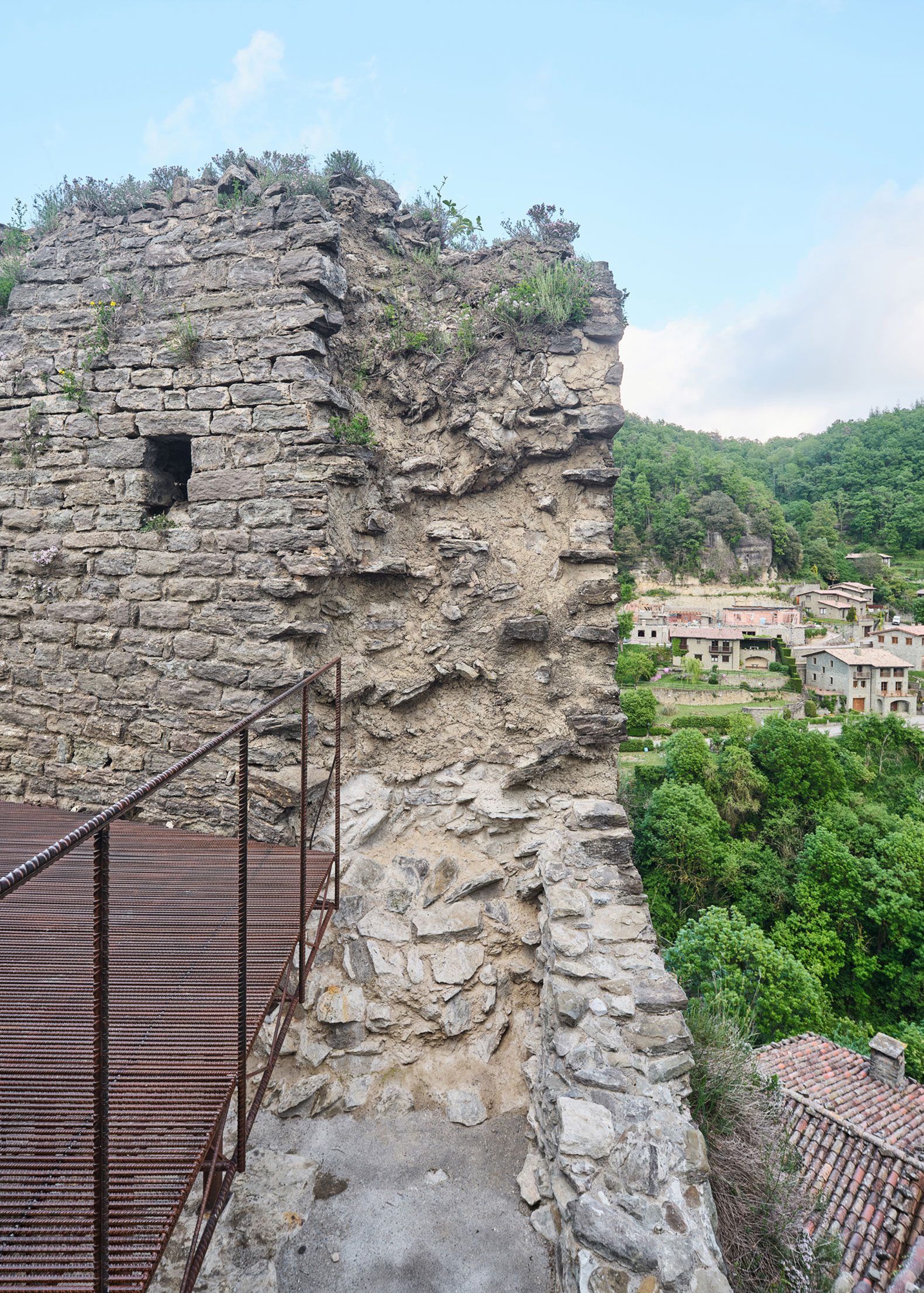
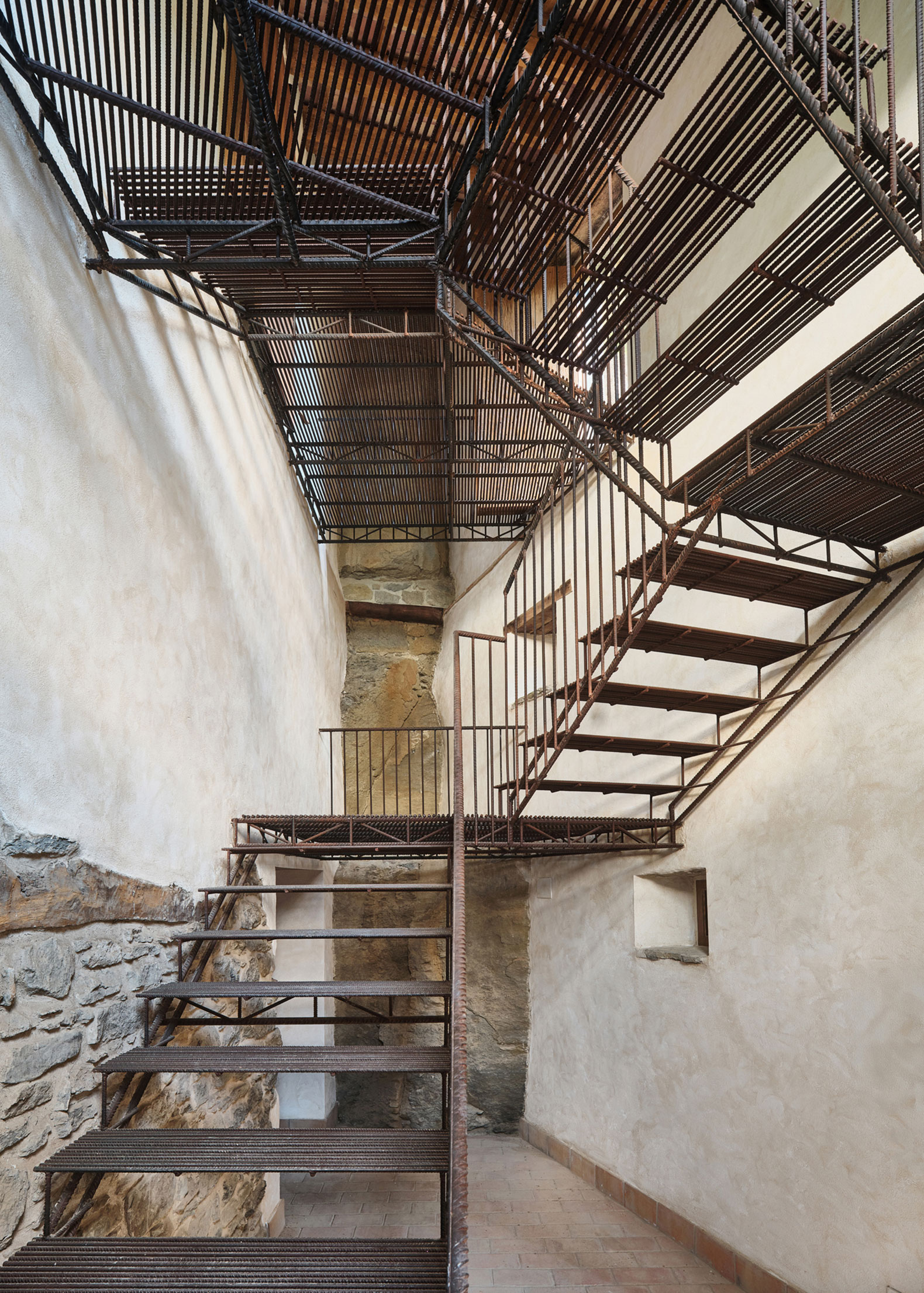
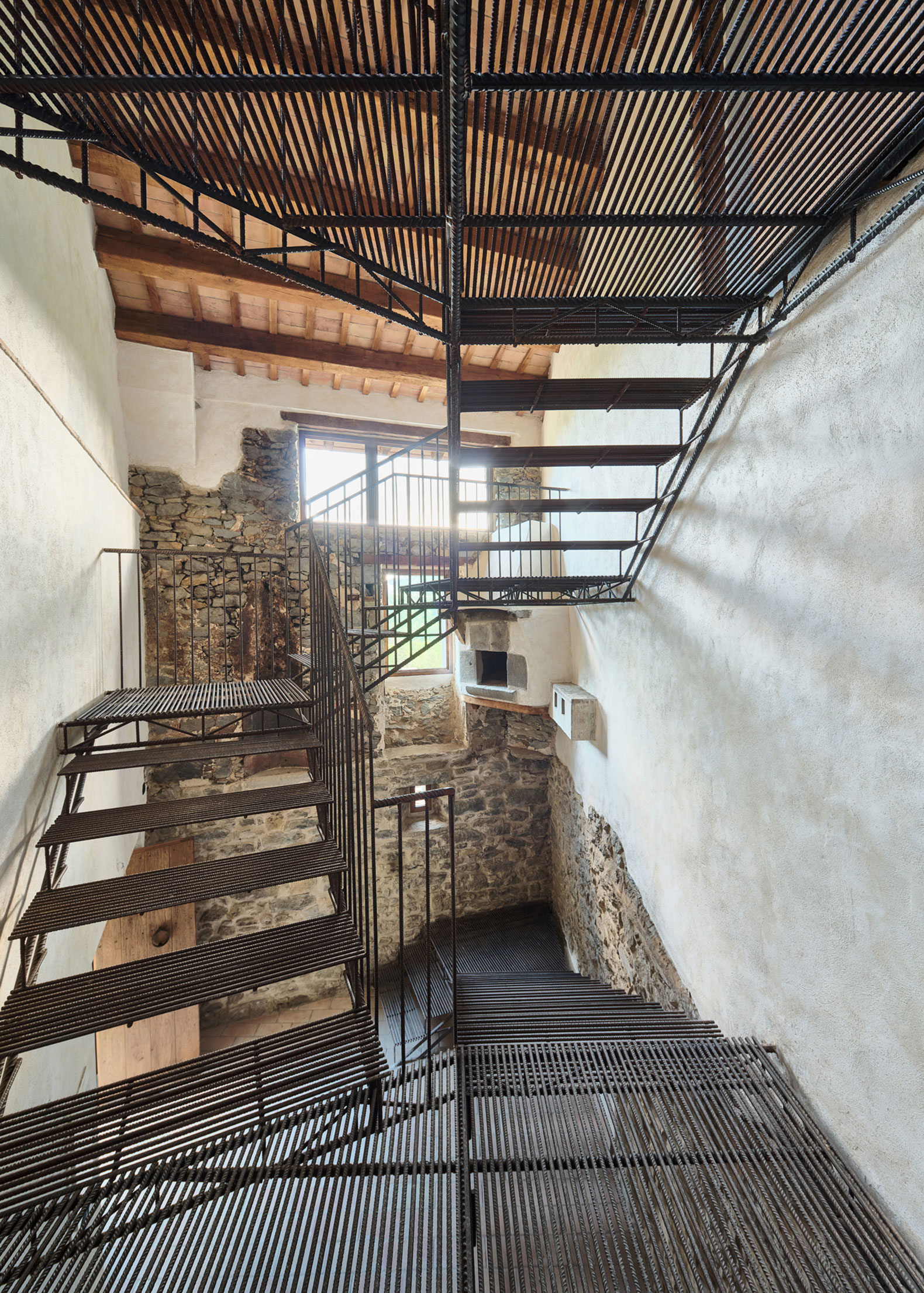
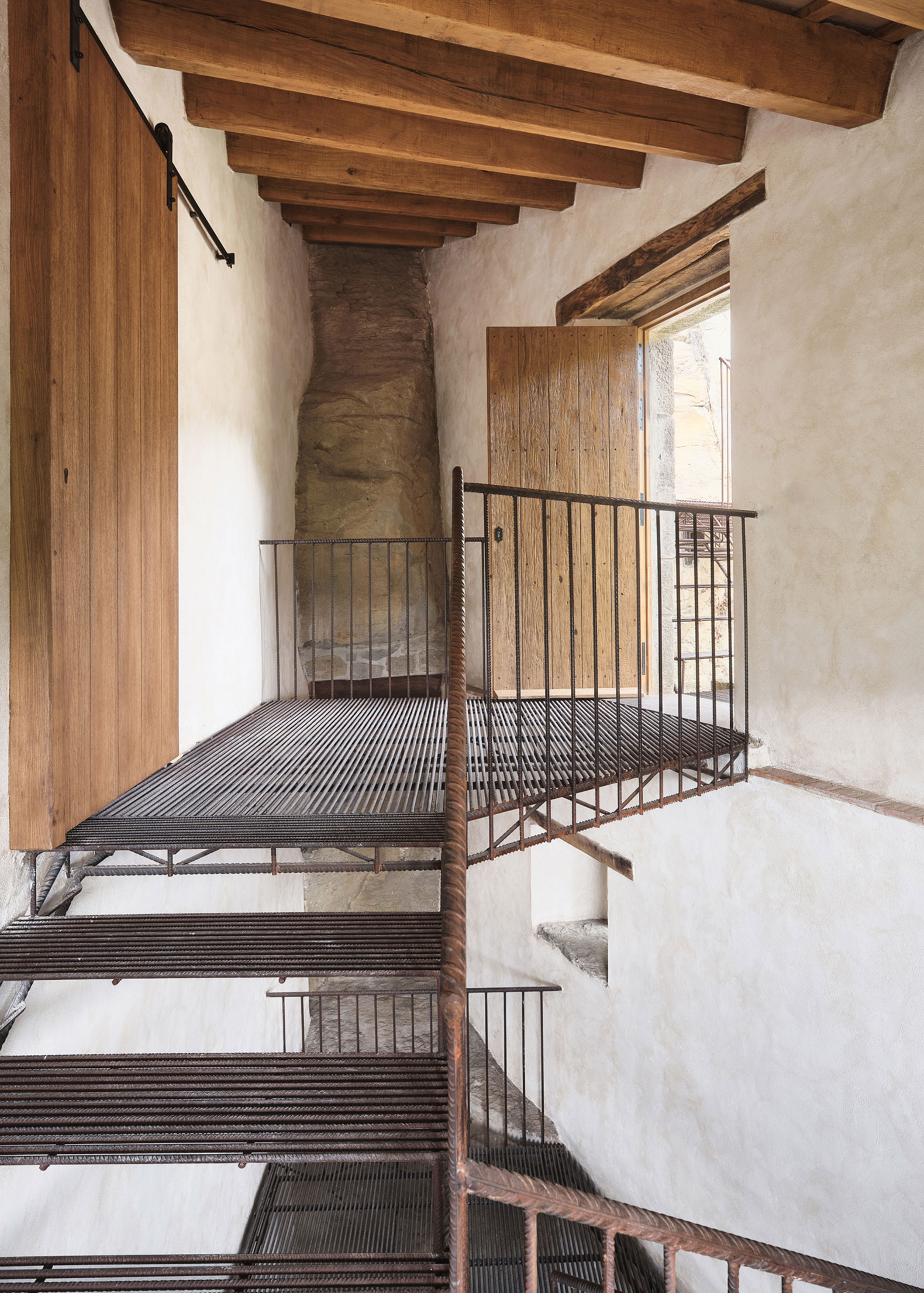
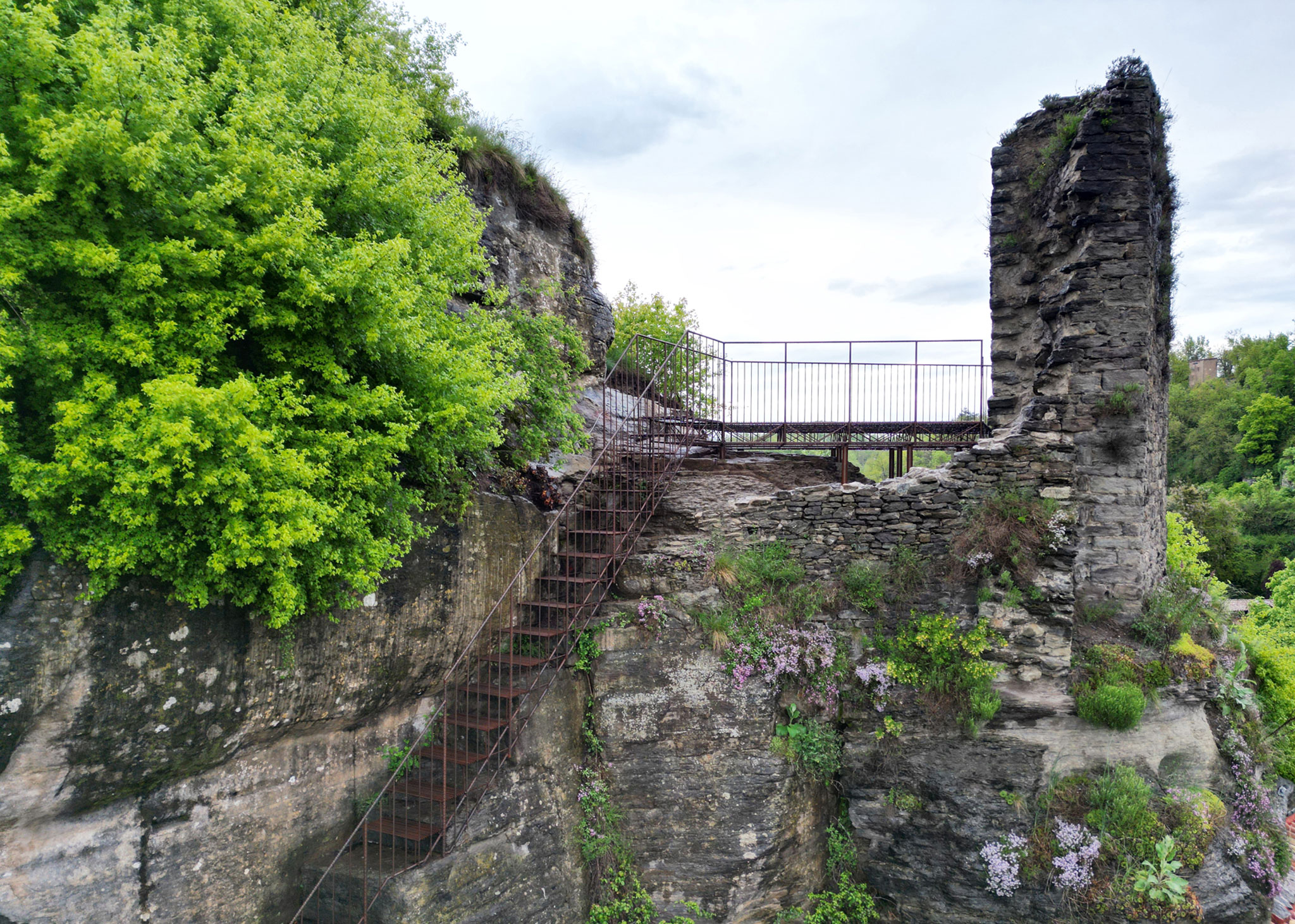
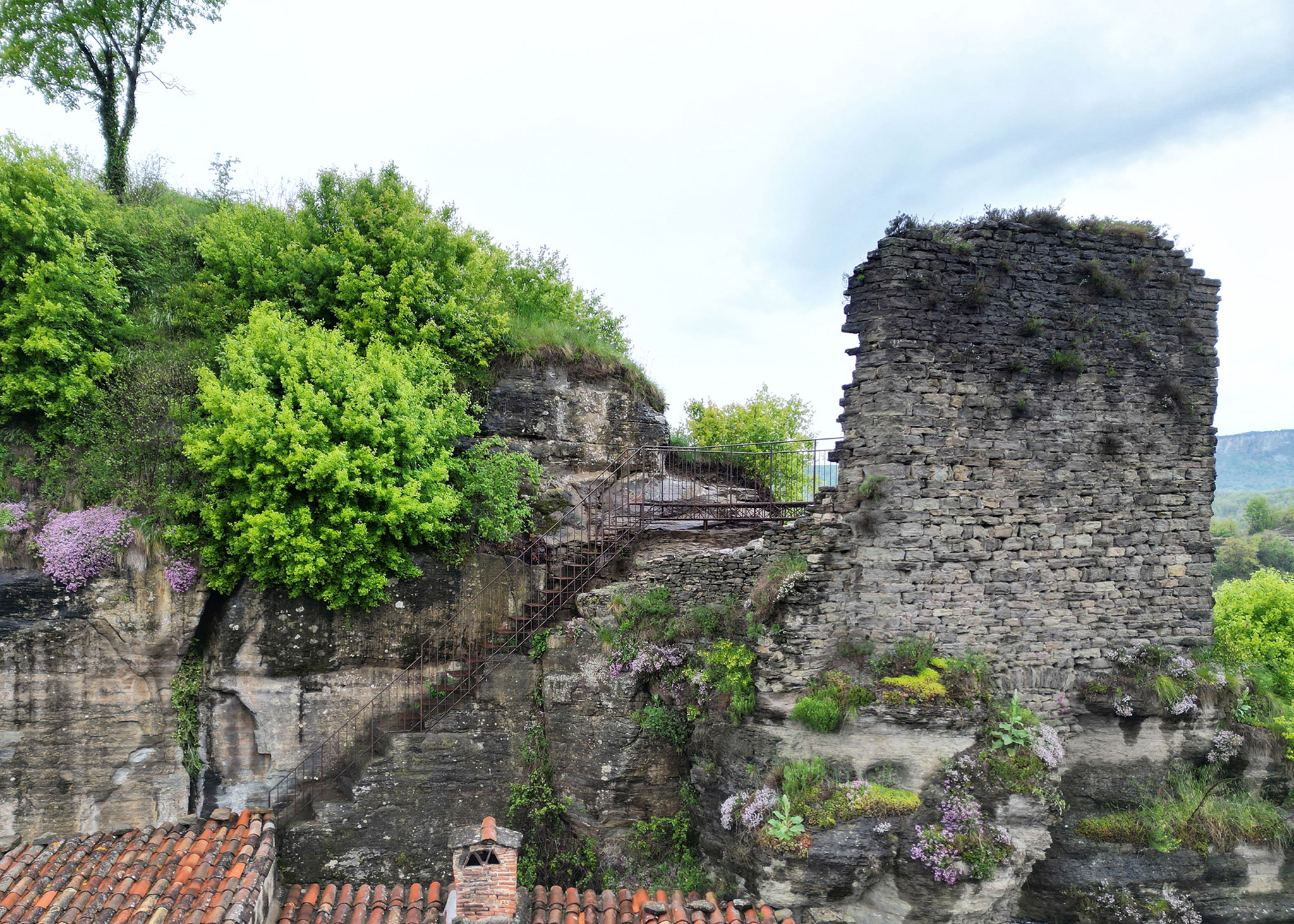
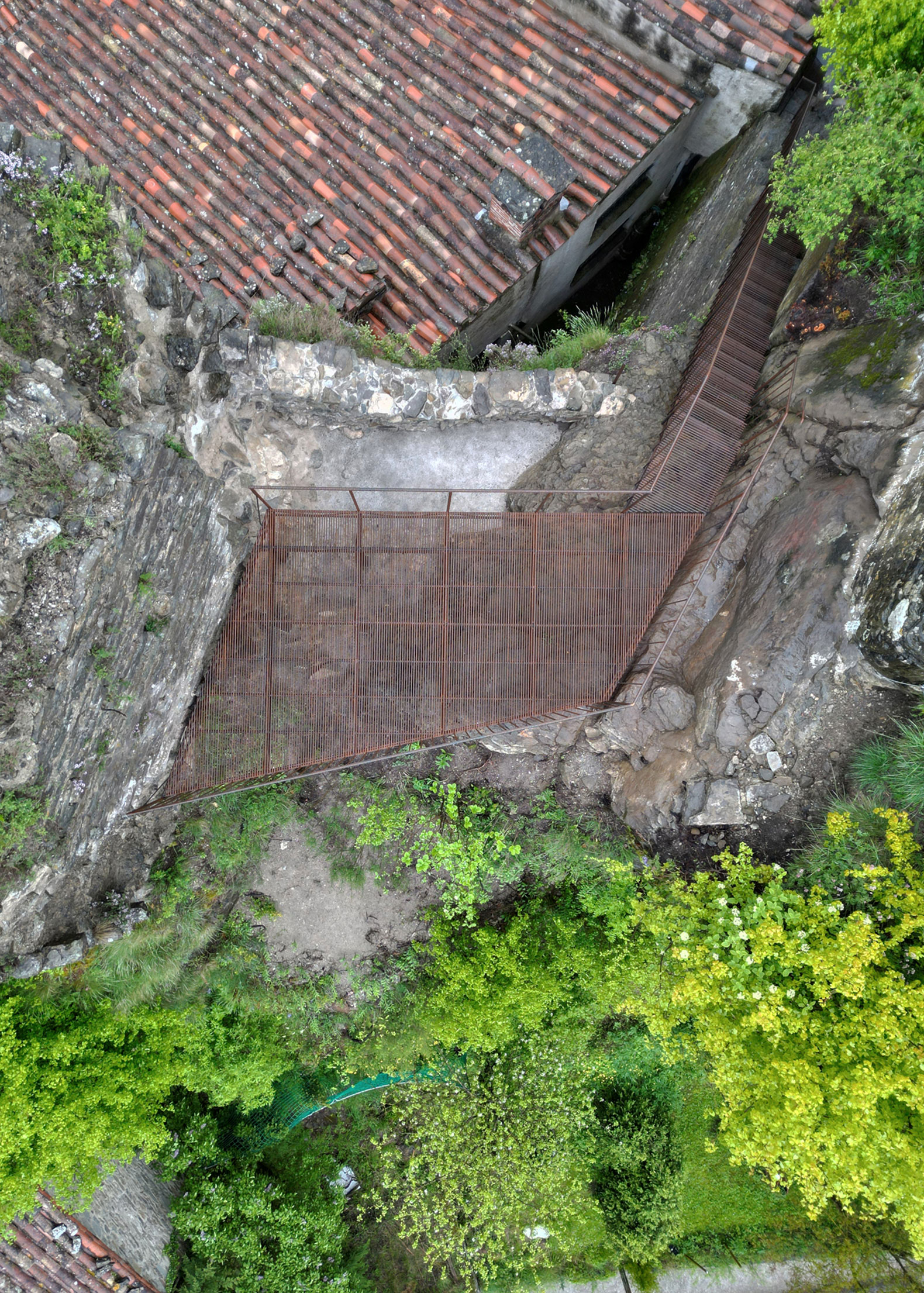
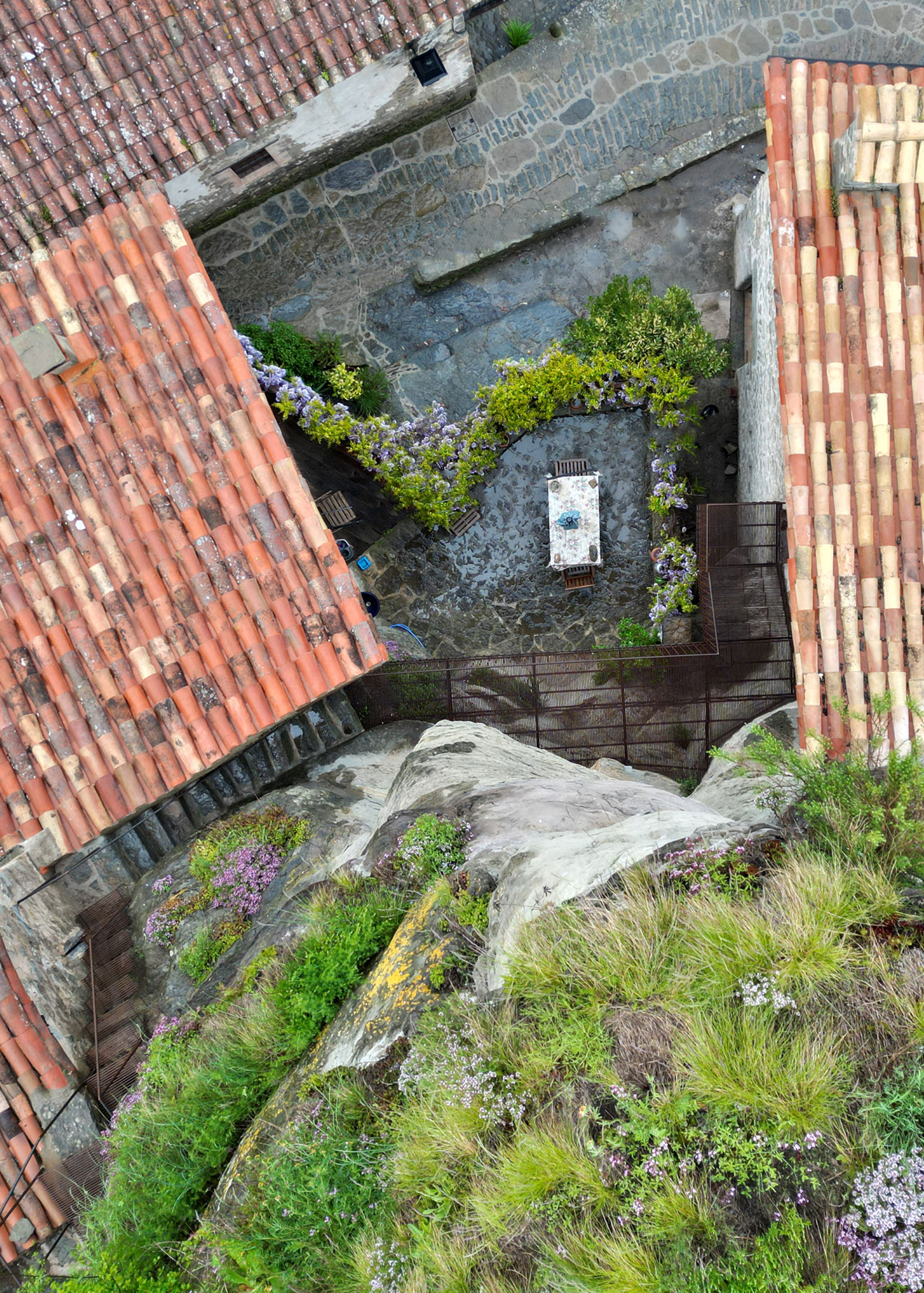
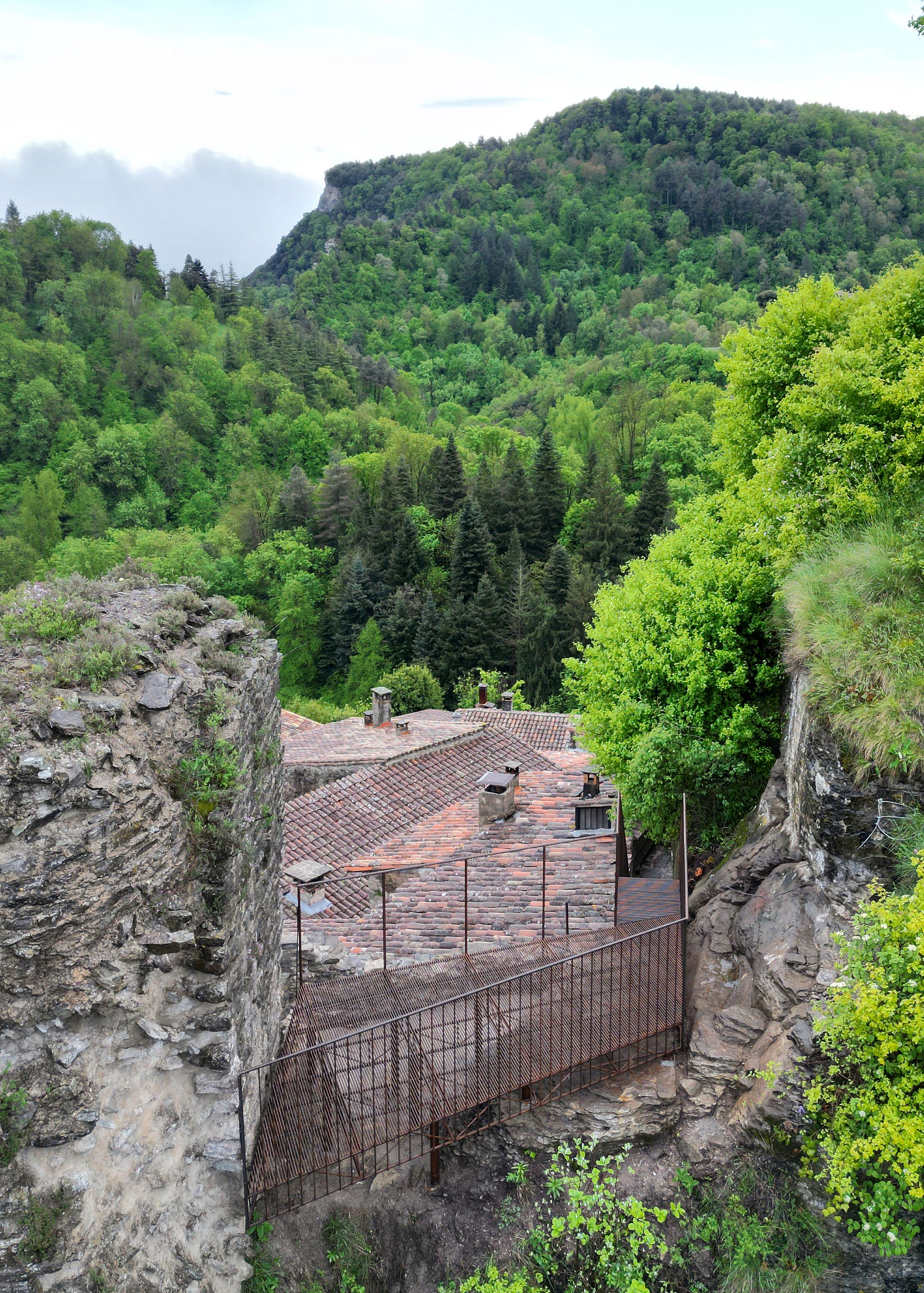
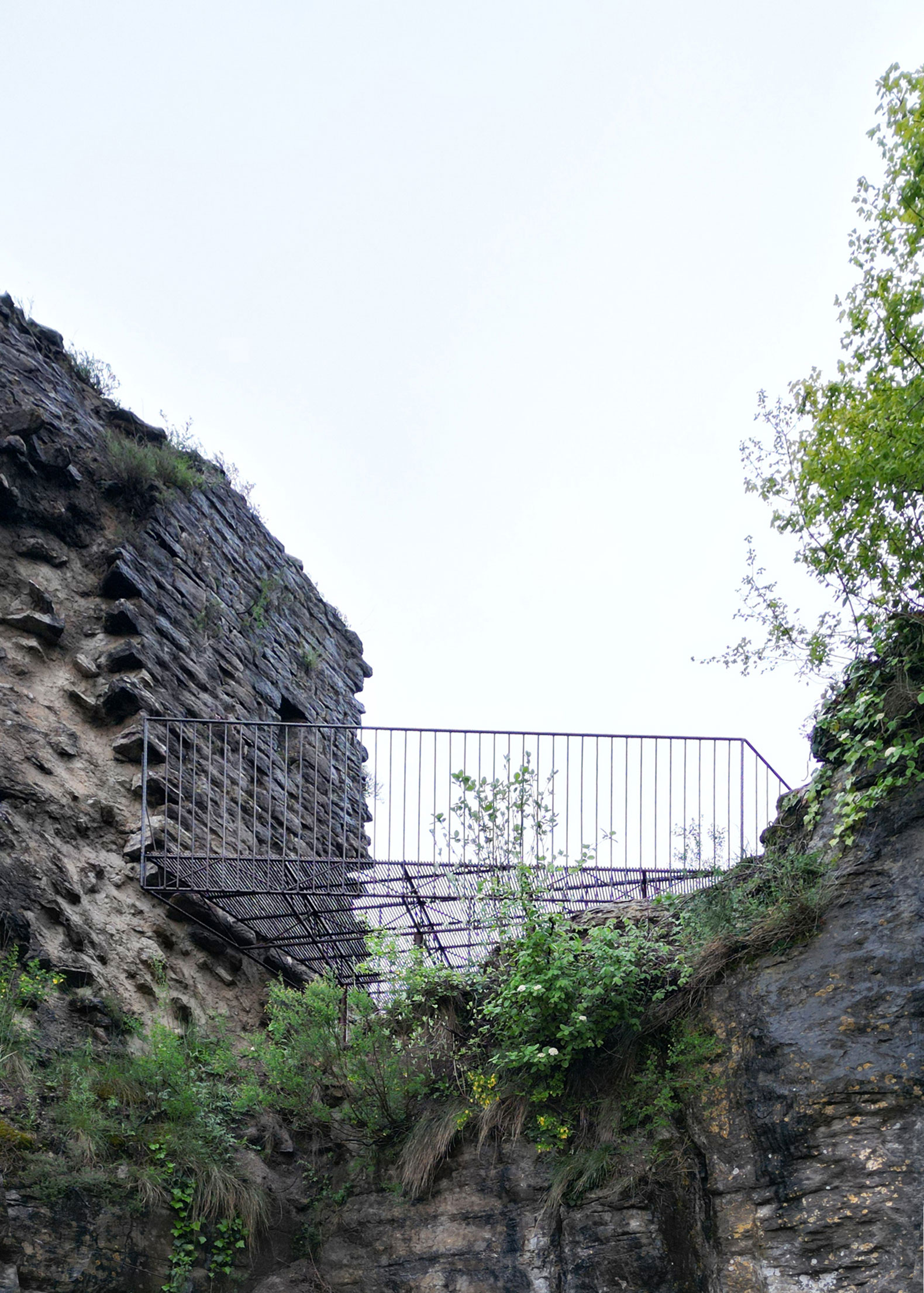
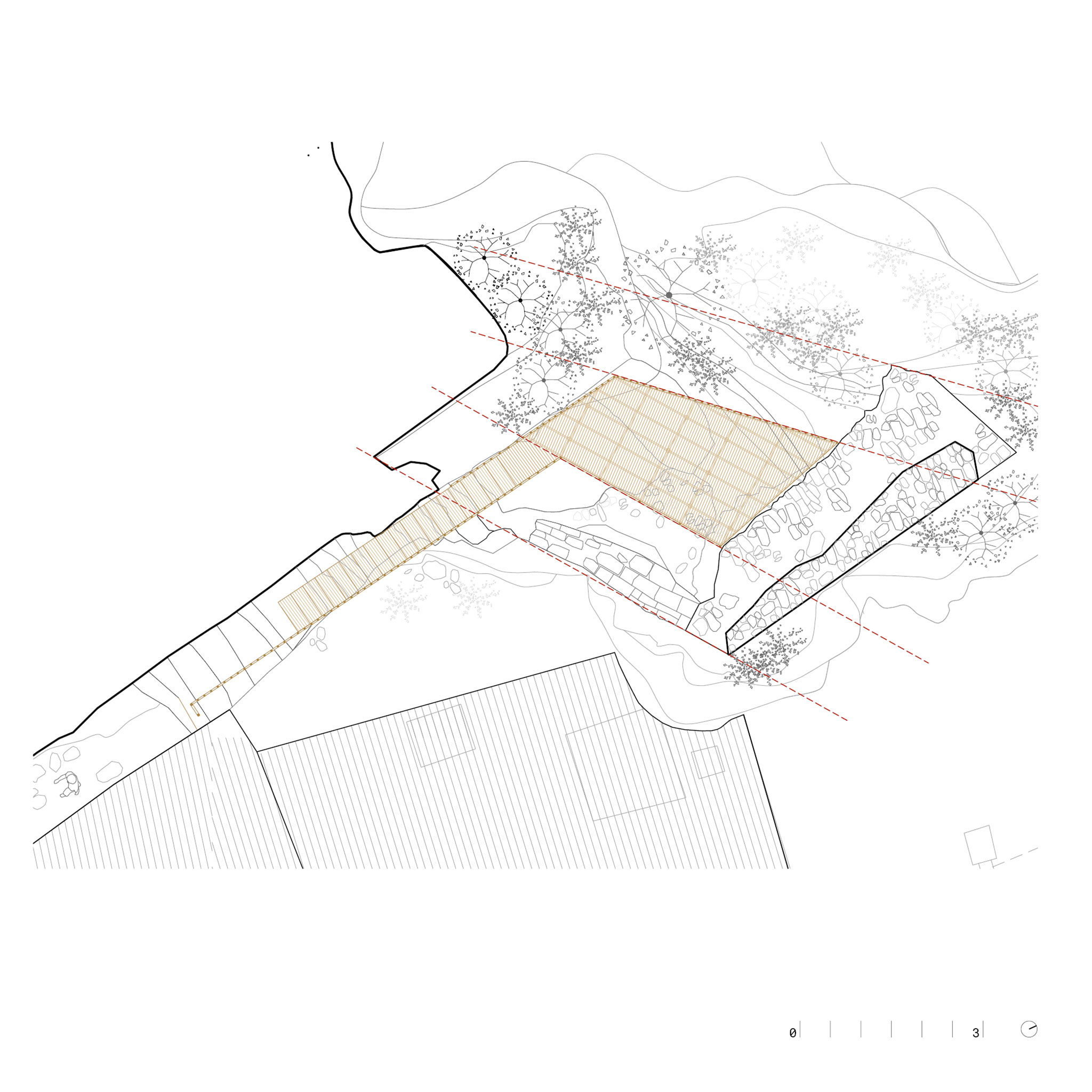
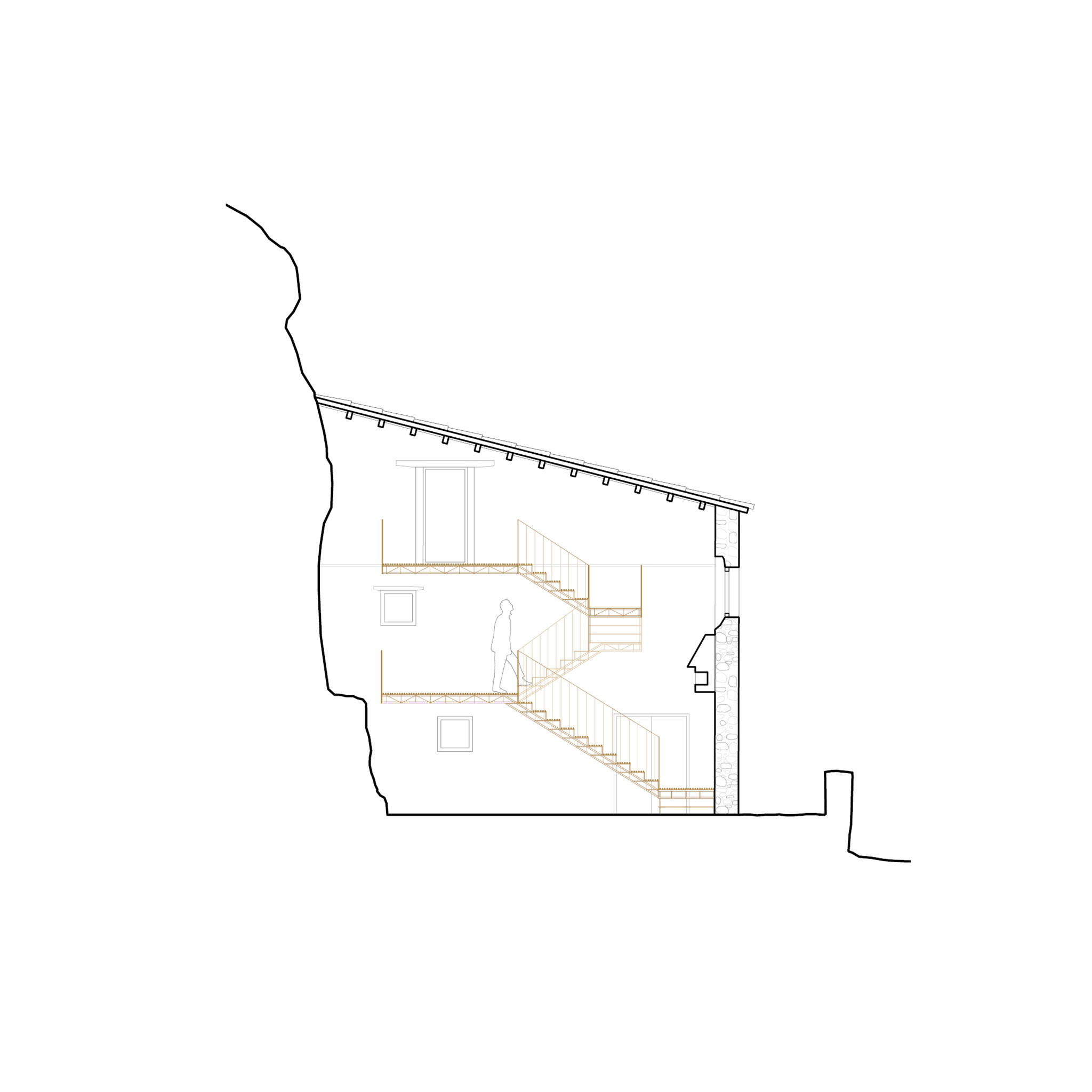
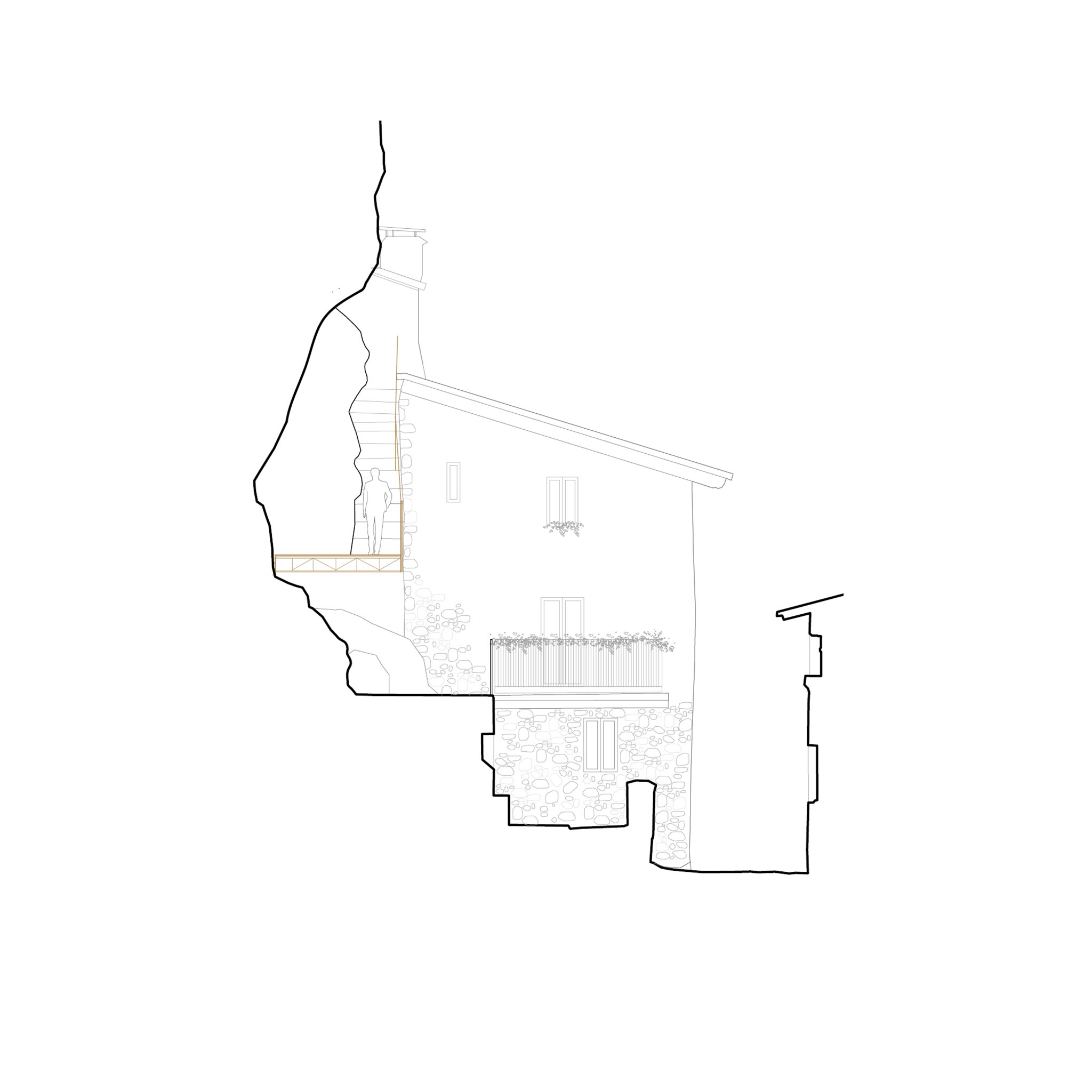
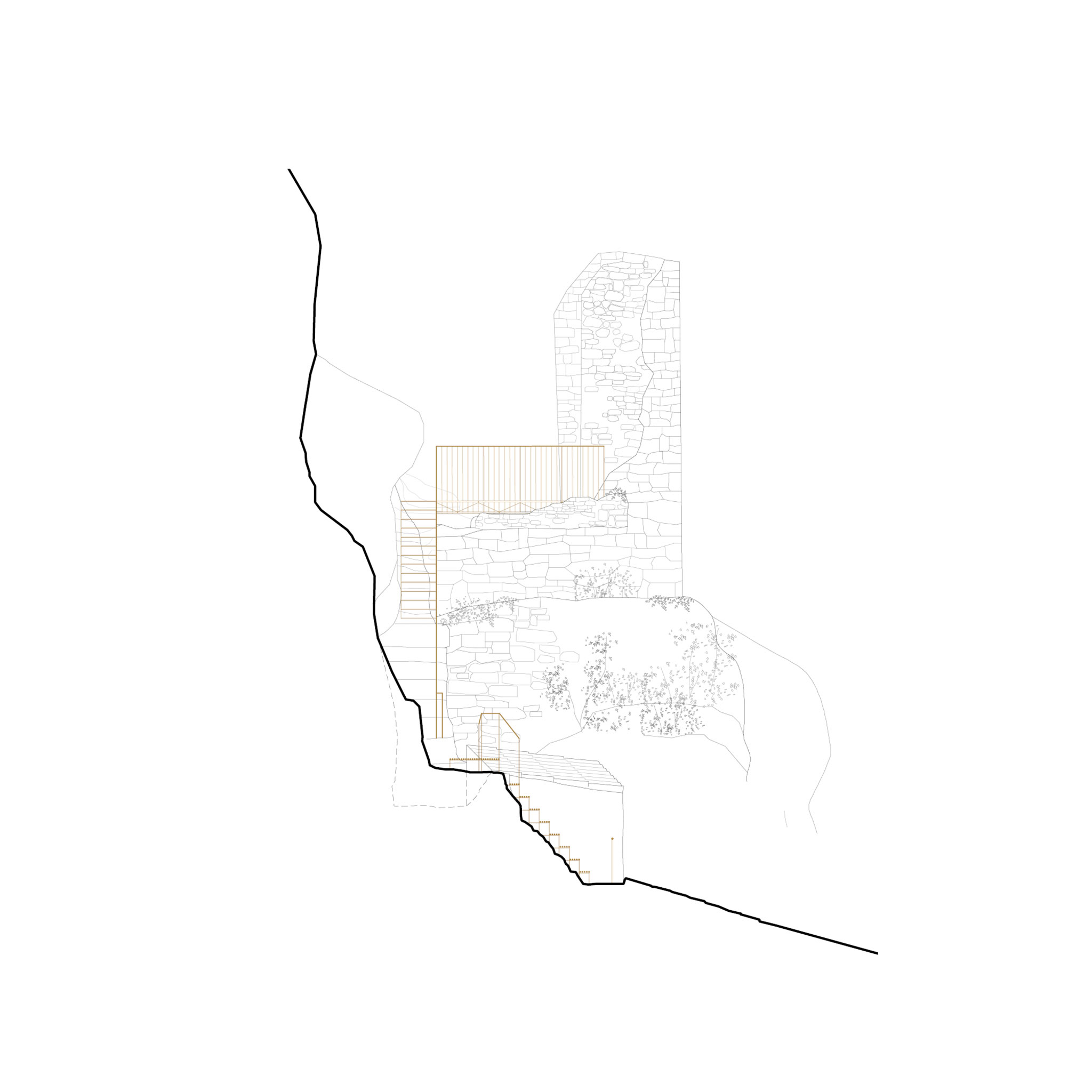
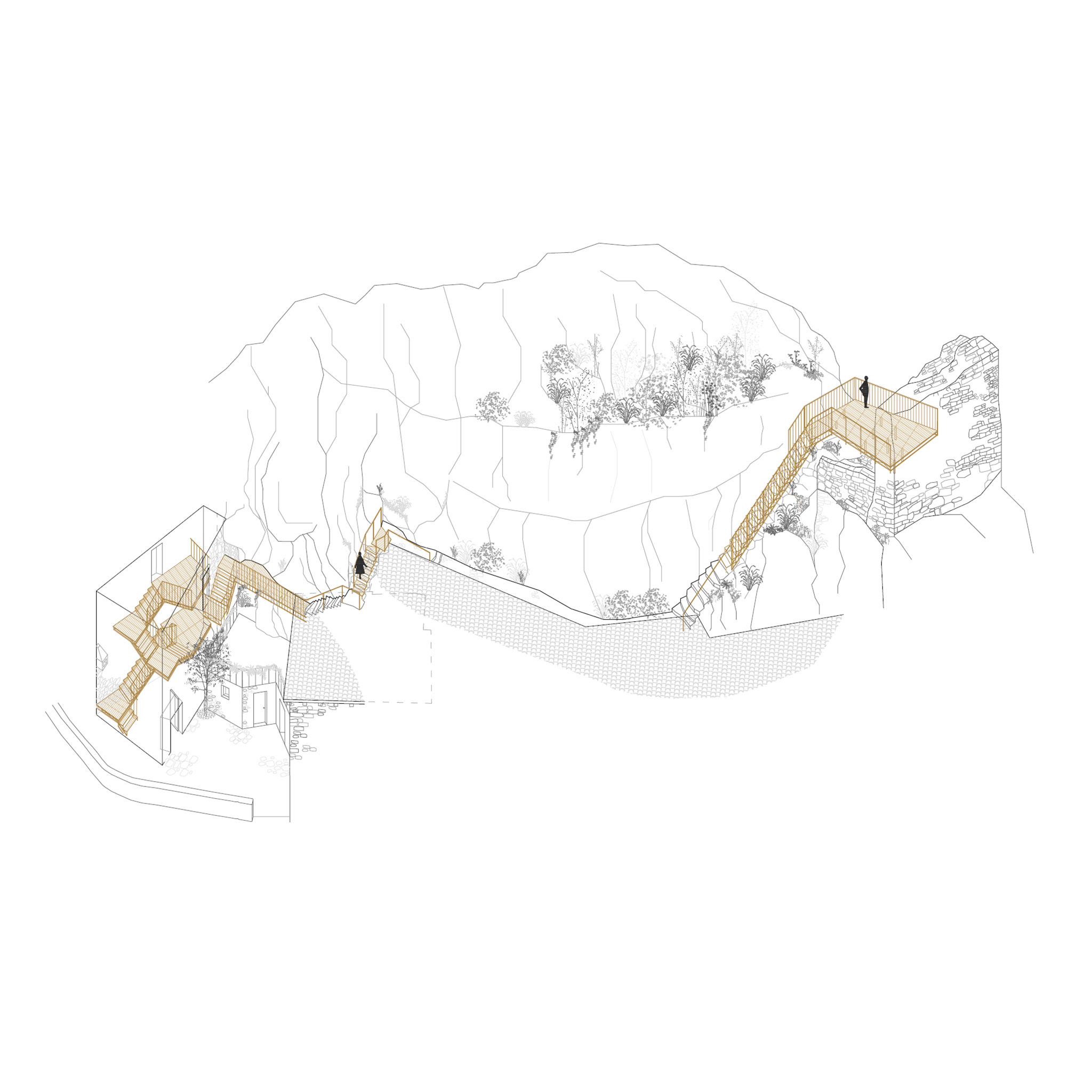
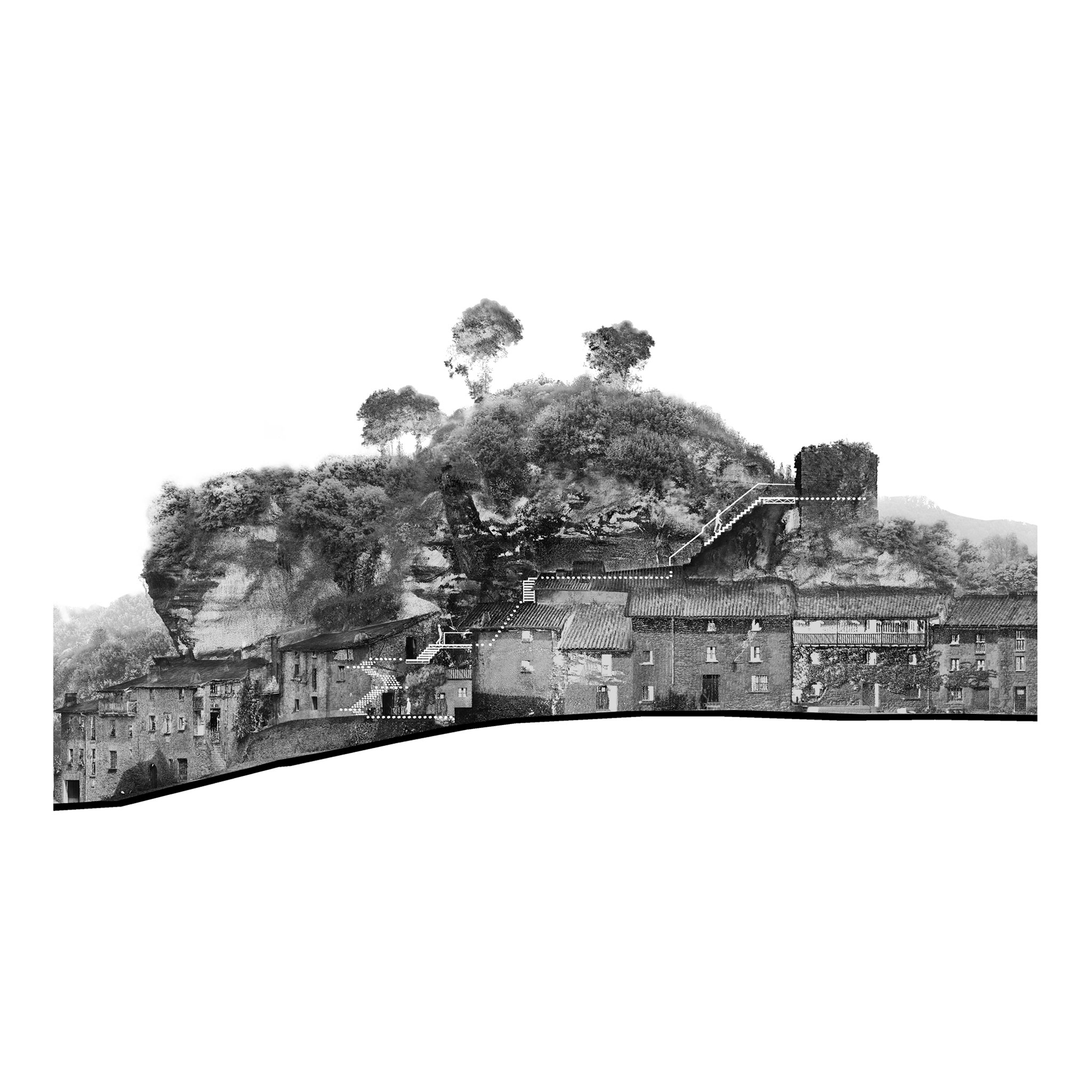
Carles Enrich Studio proposes a subtle intervention for "Can Saltiri," unfolding along four ascending sections that culminate in a viewpoint. A key feature of the route is a cantilevered walkway over the neighboring property, connecting the new entrance with the base of the original stairs carved into the rock.

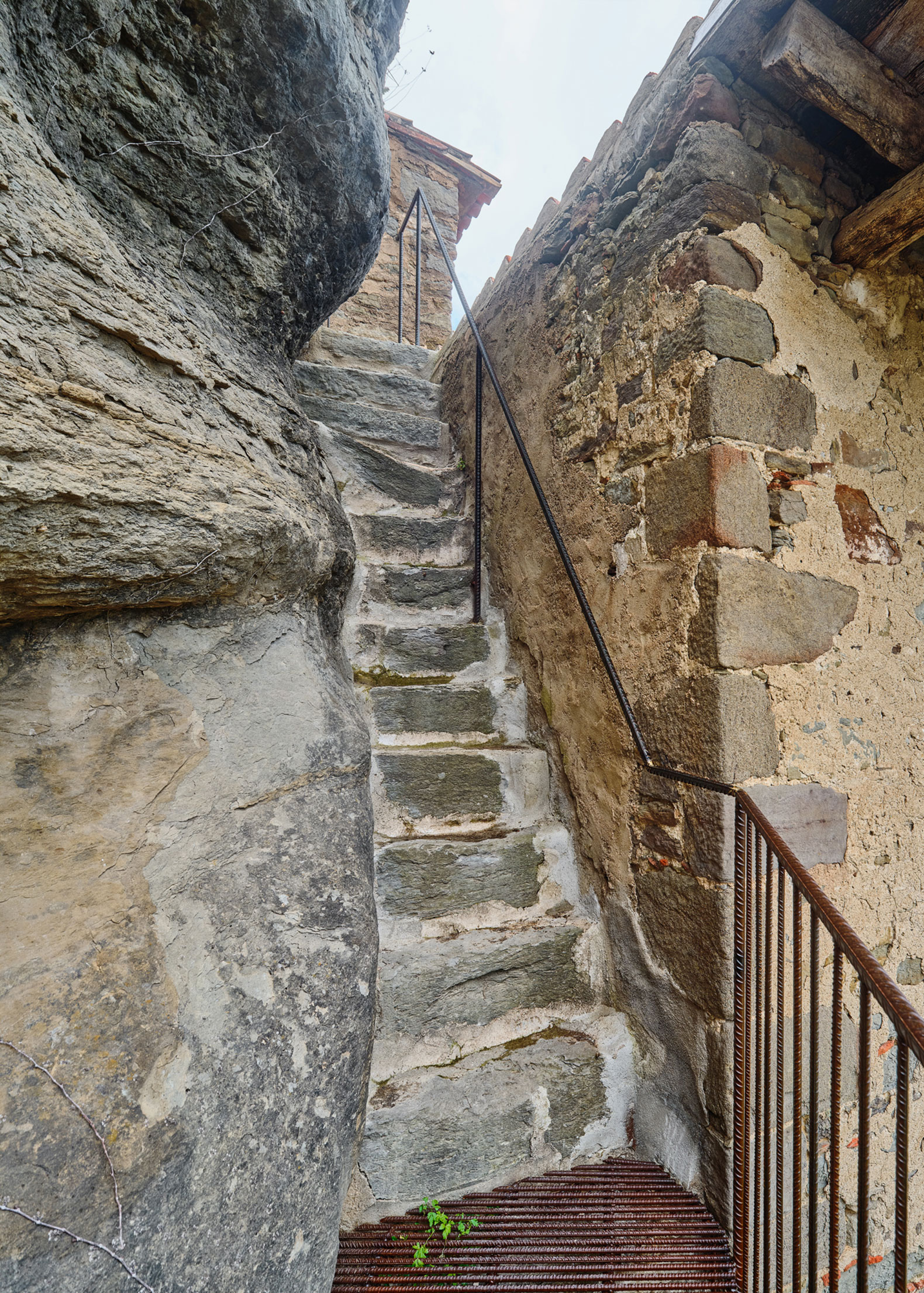
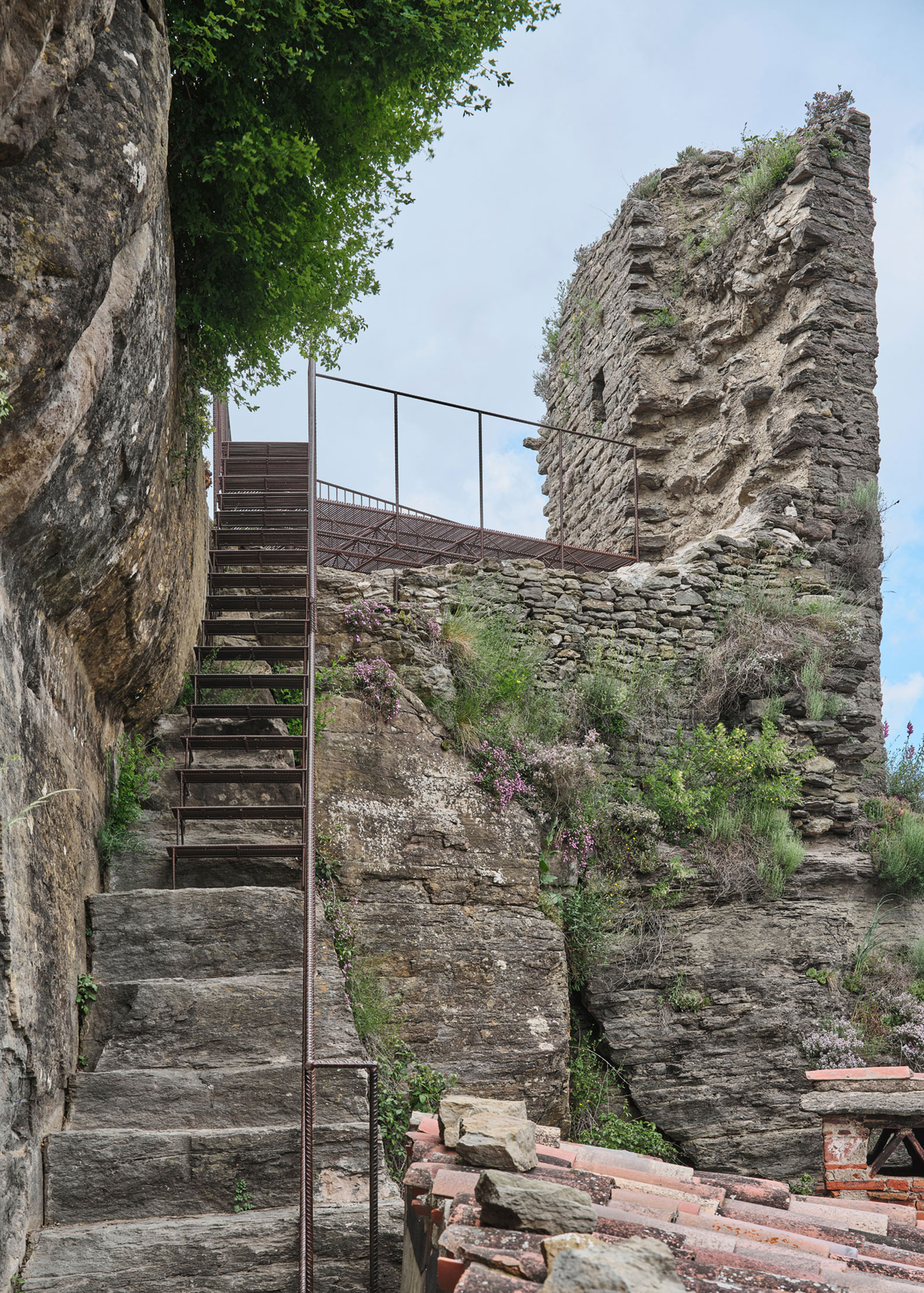
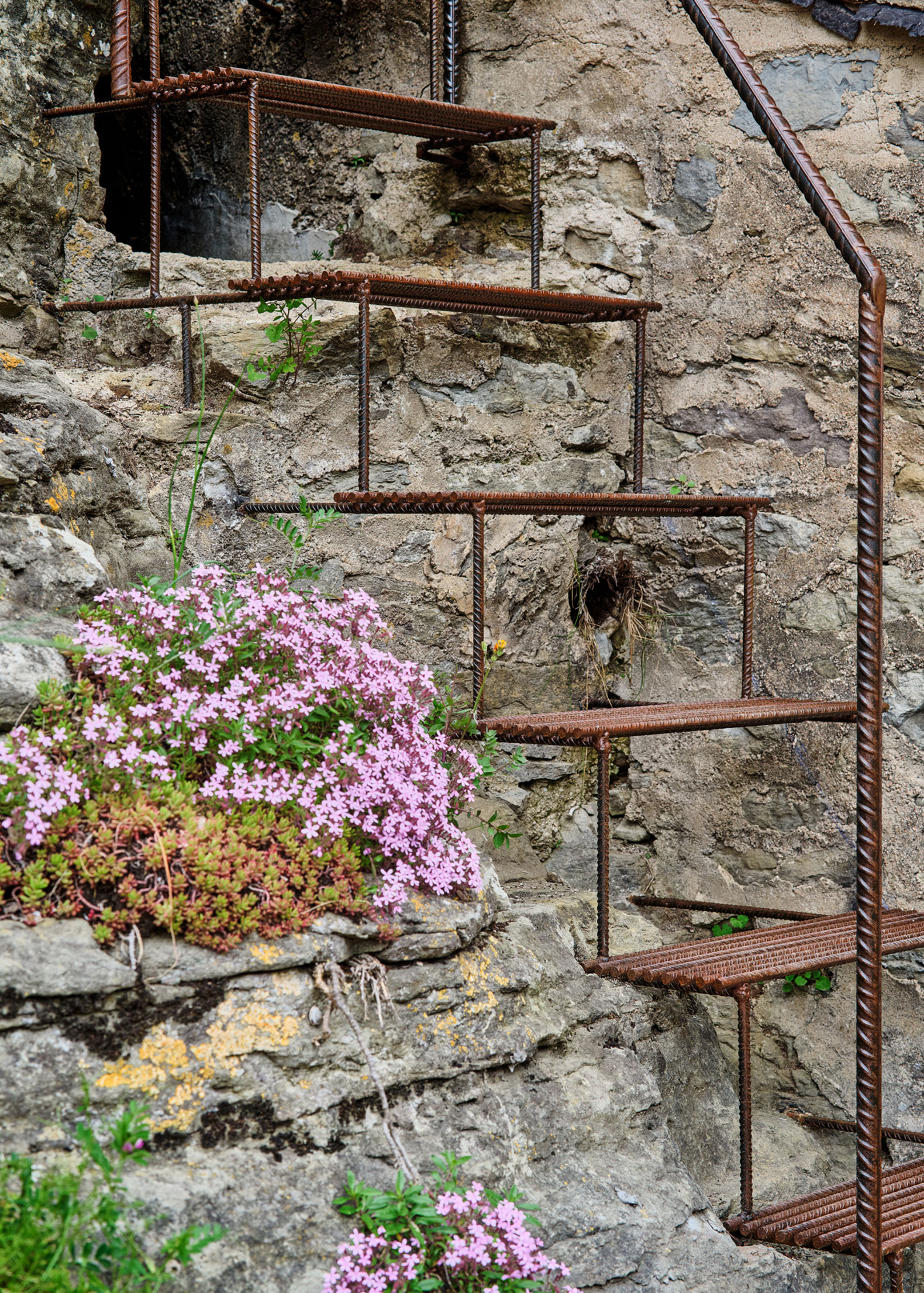
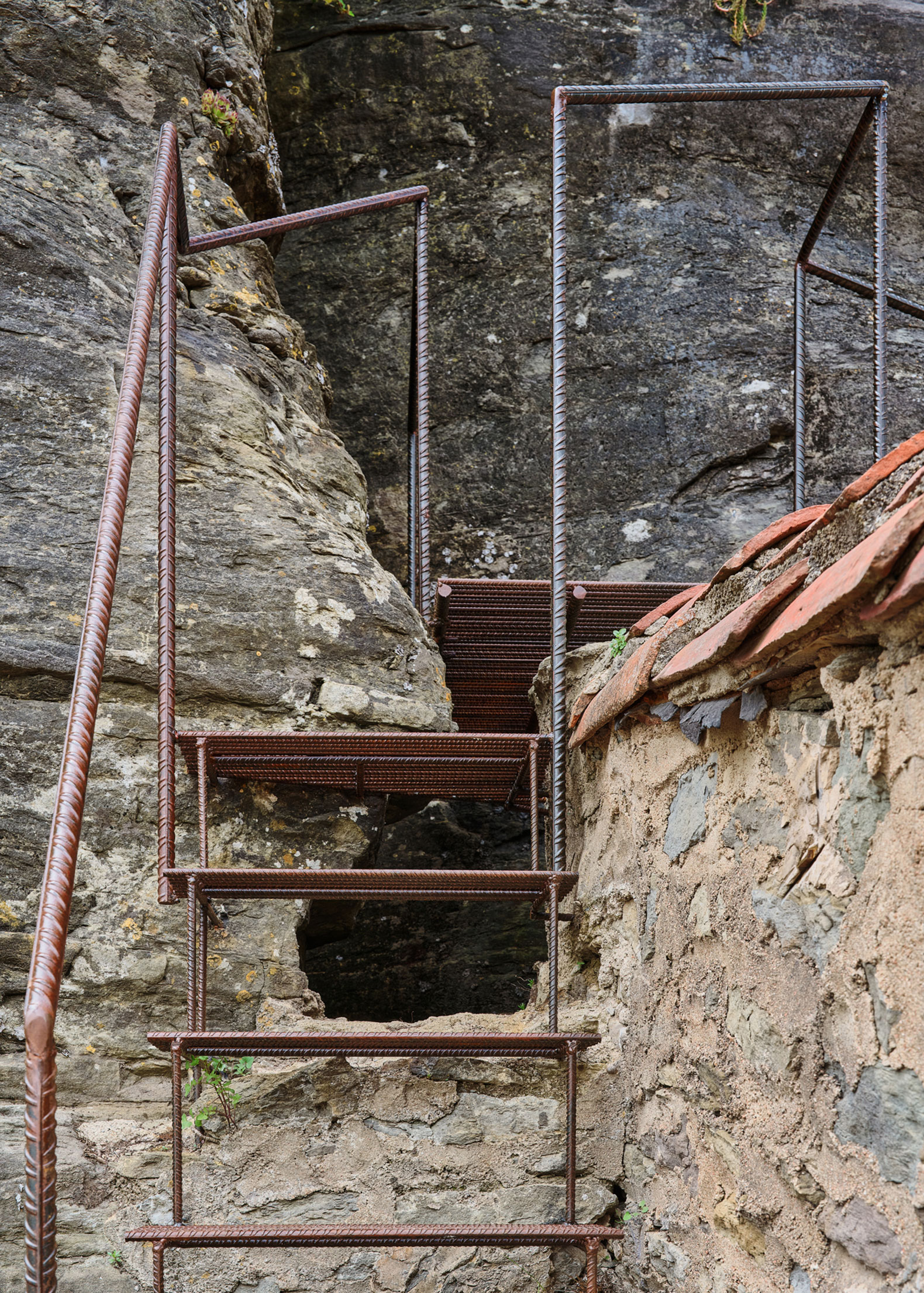
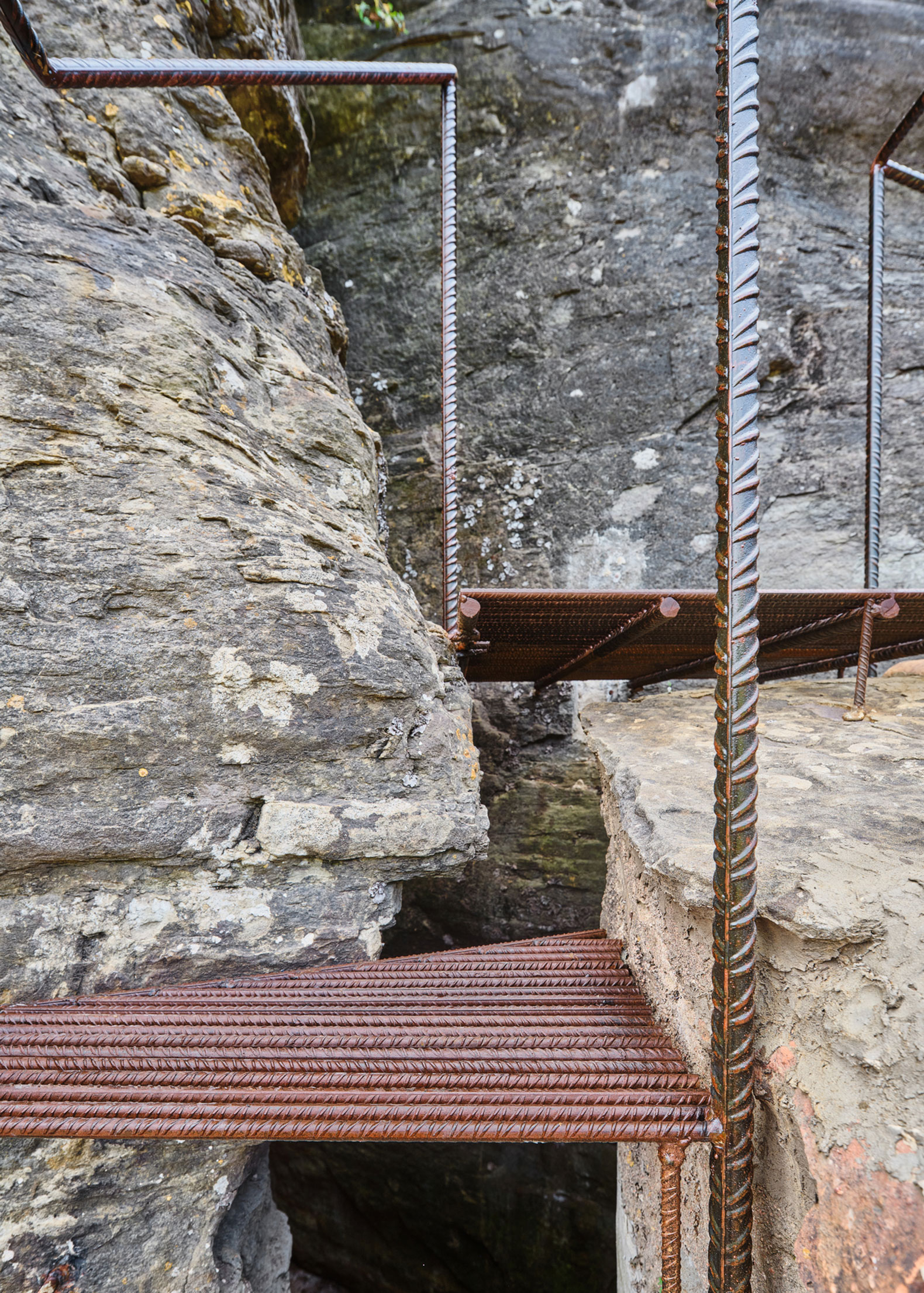
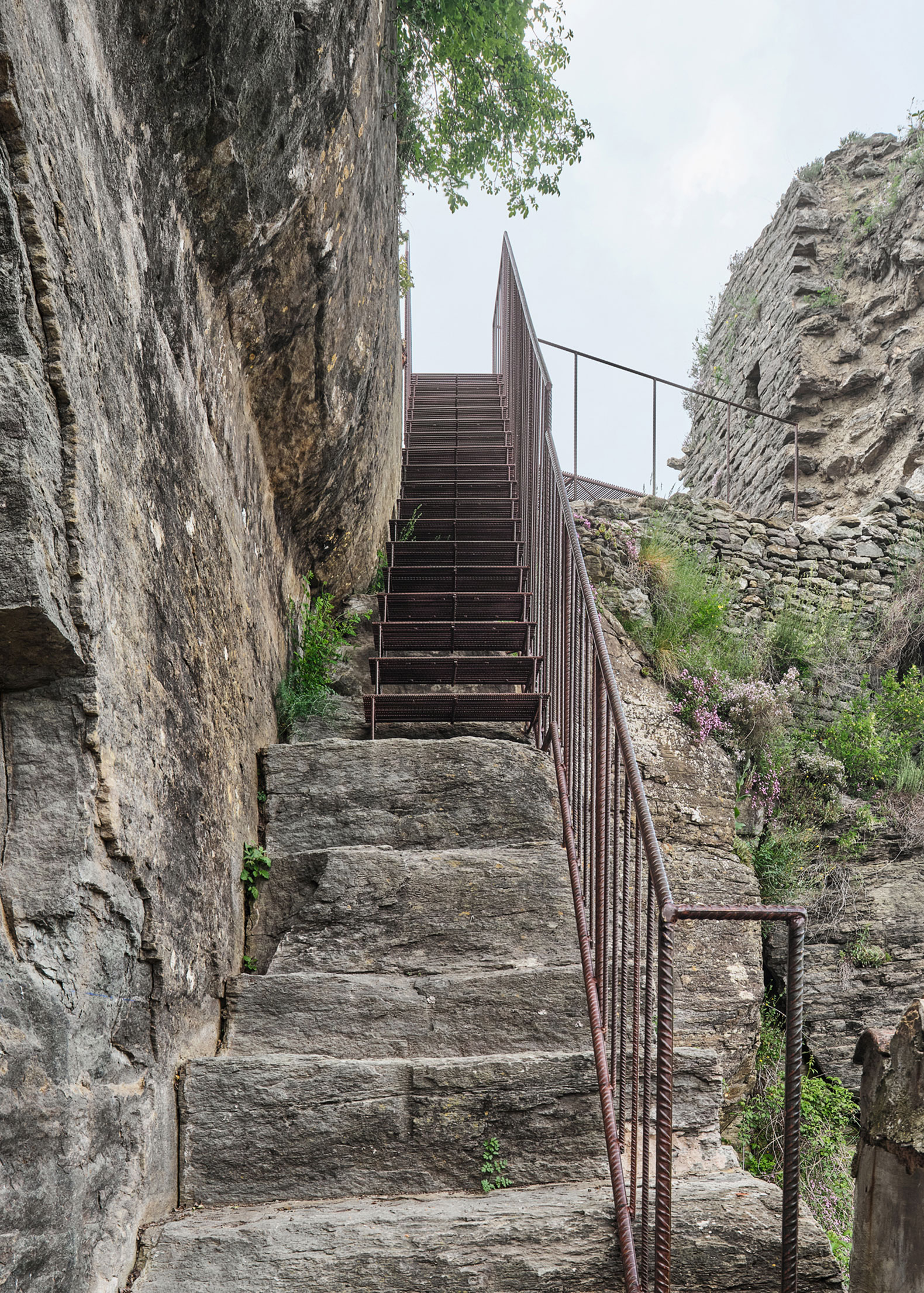
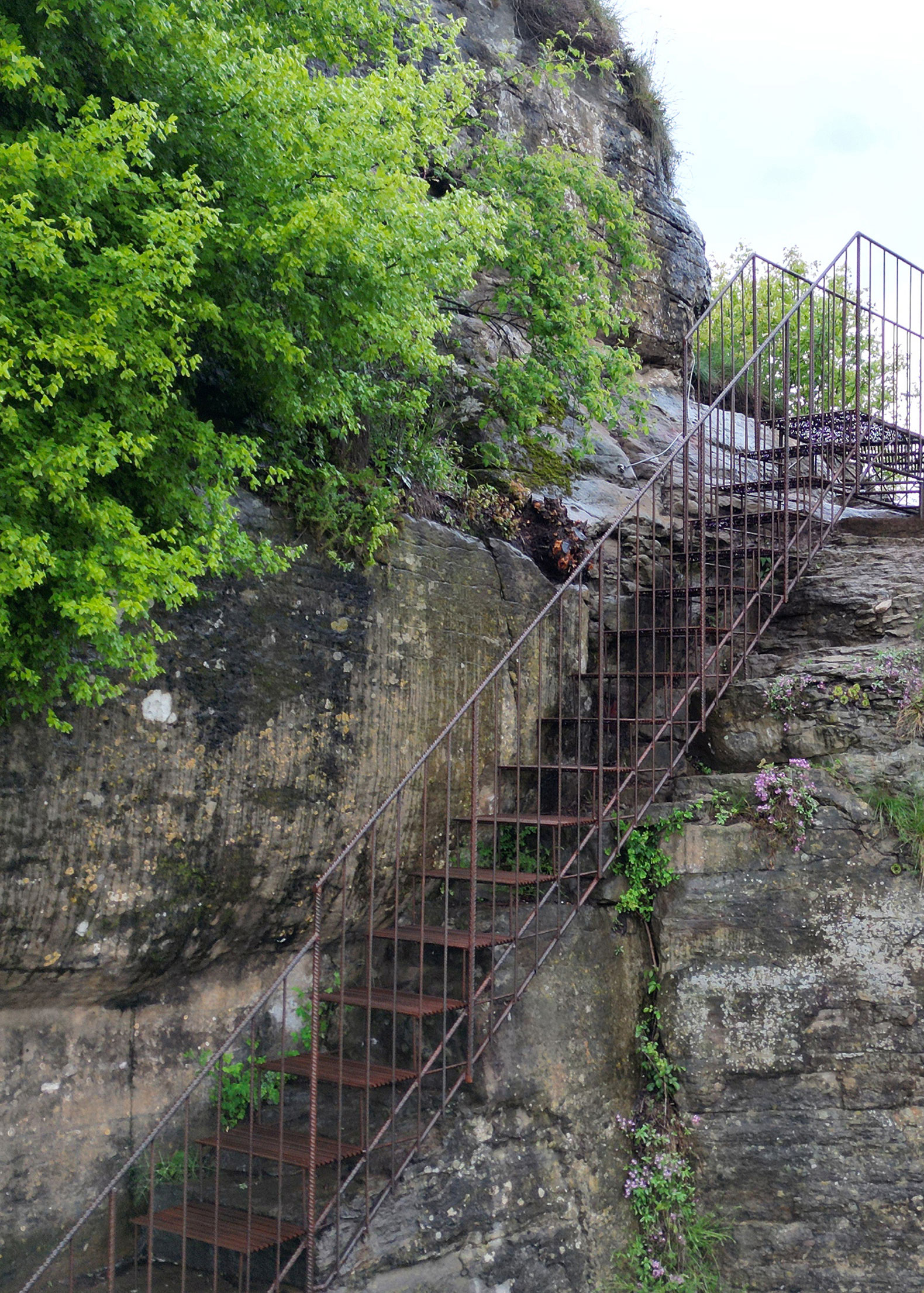
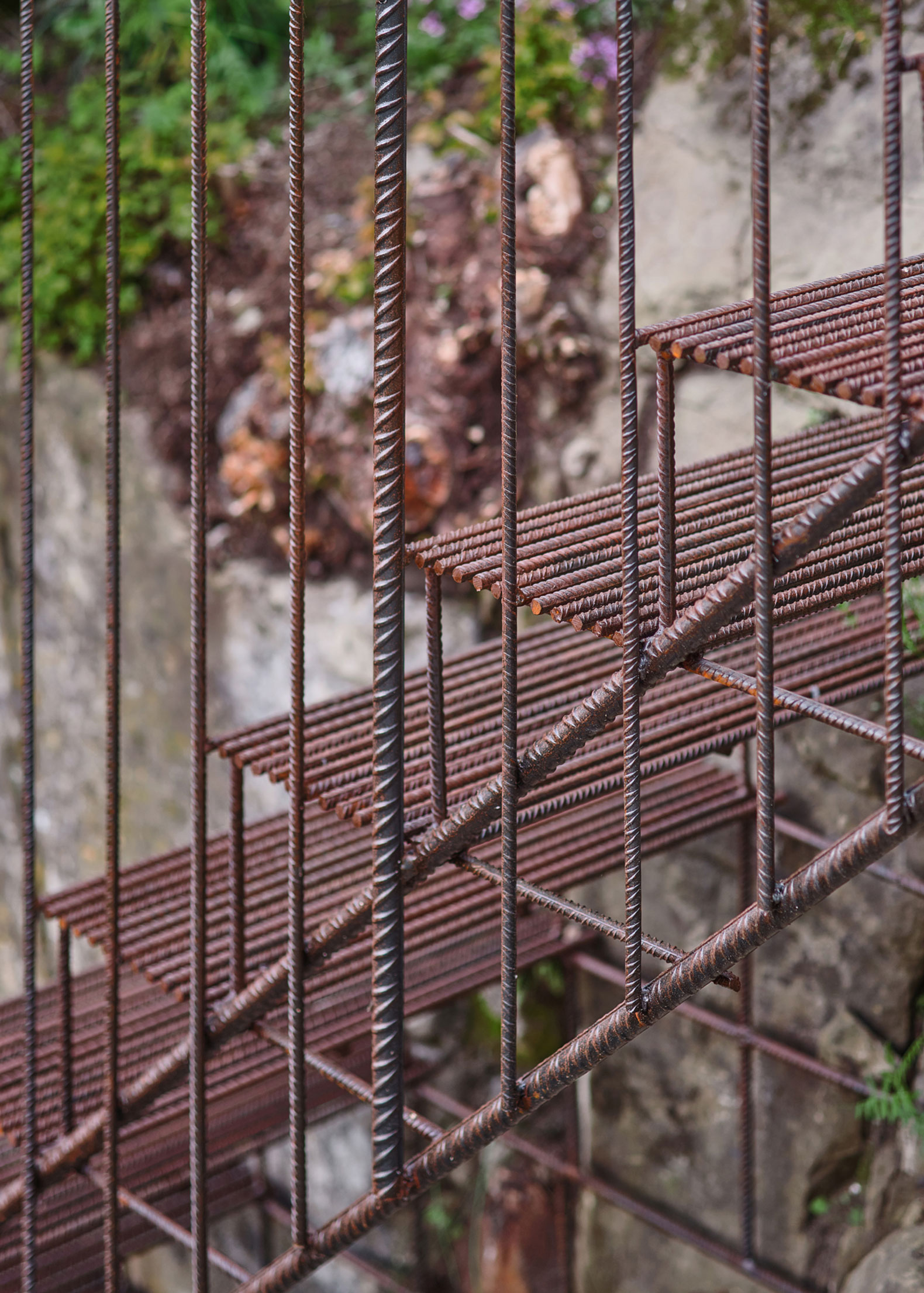
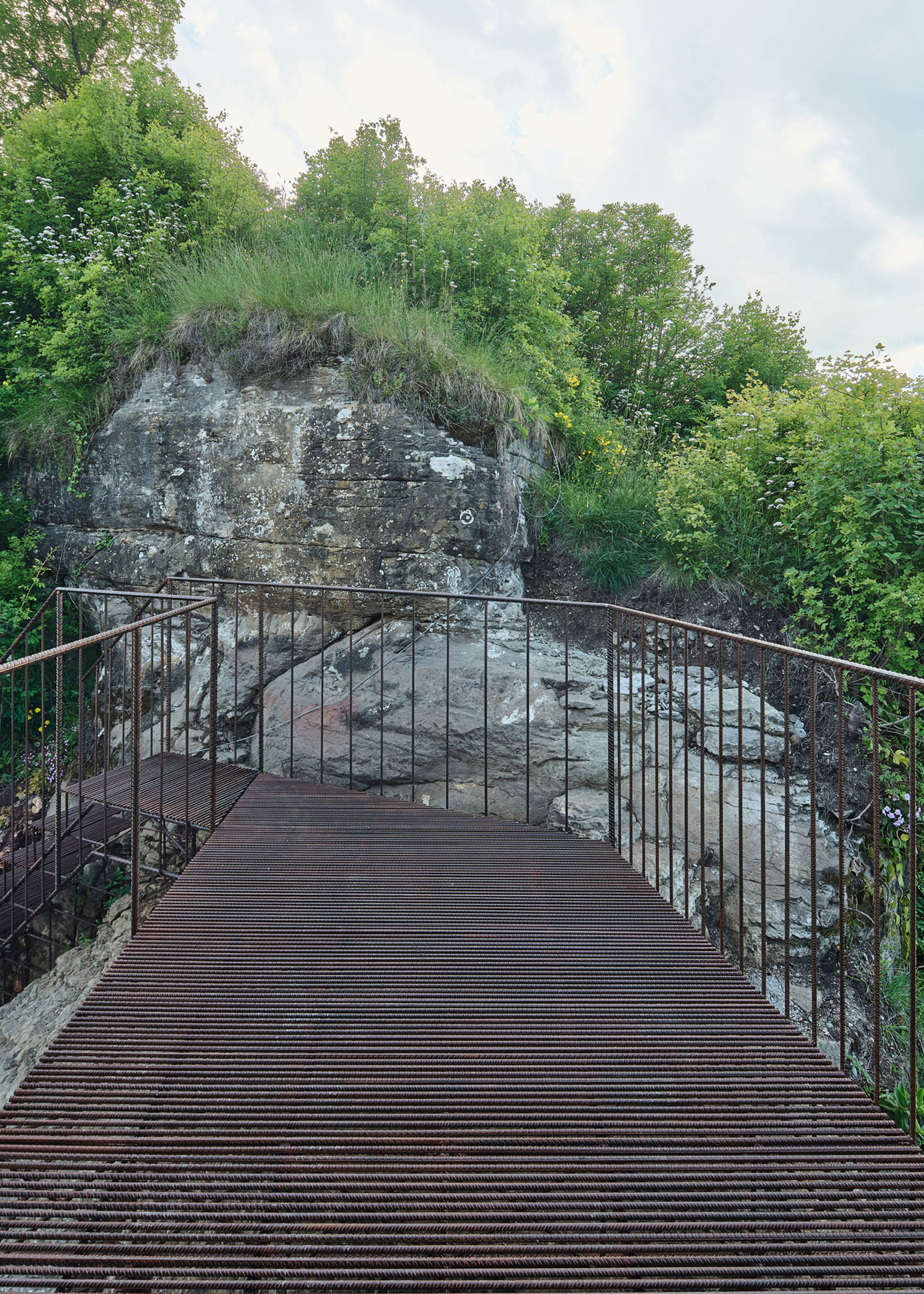
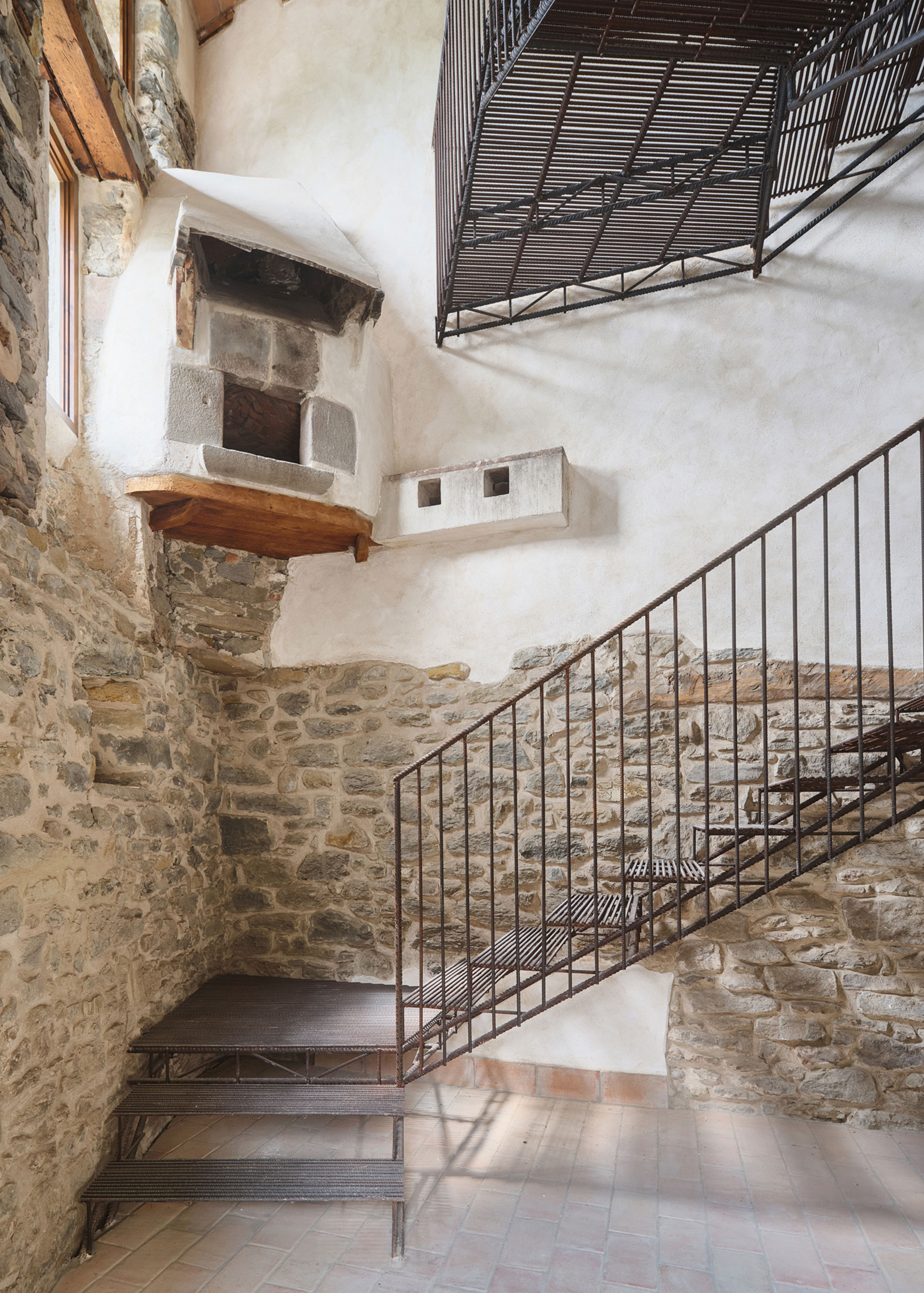
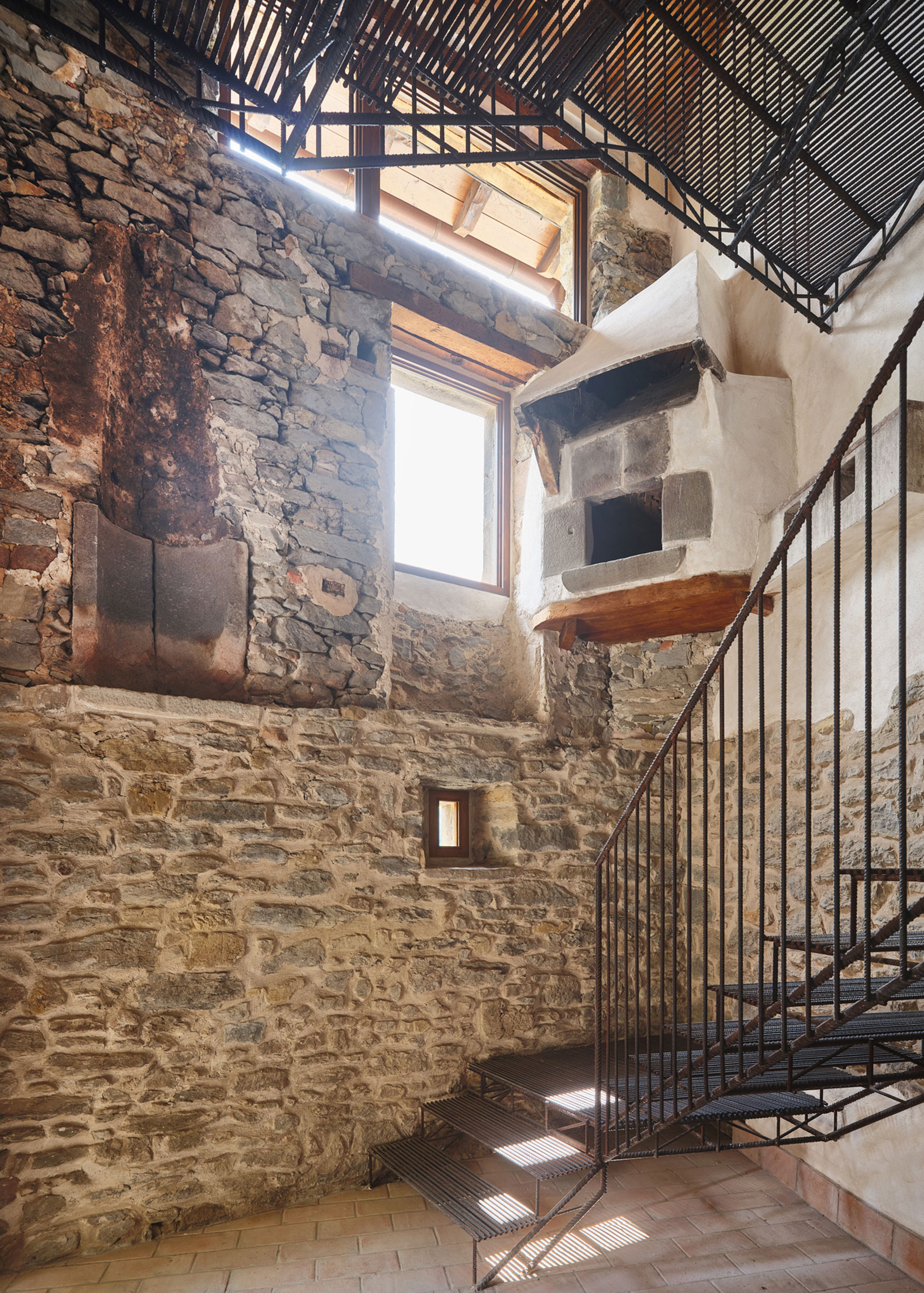
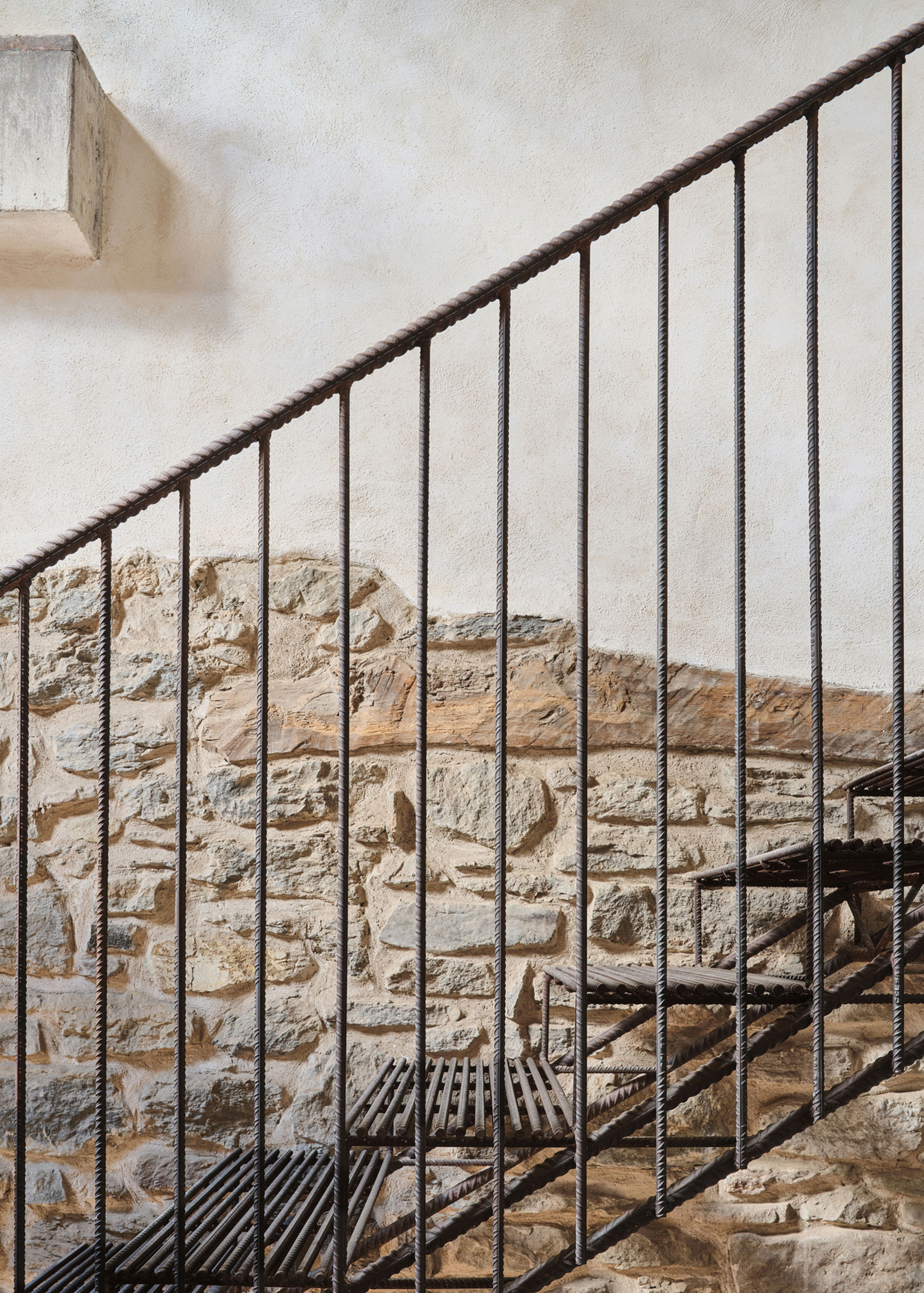
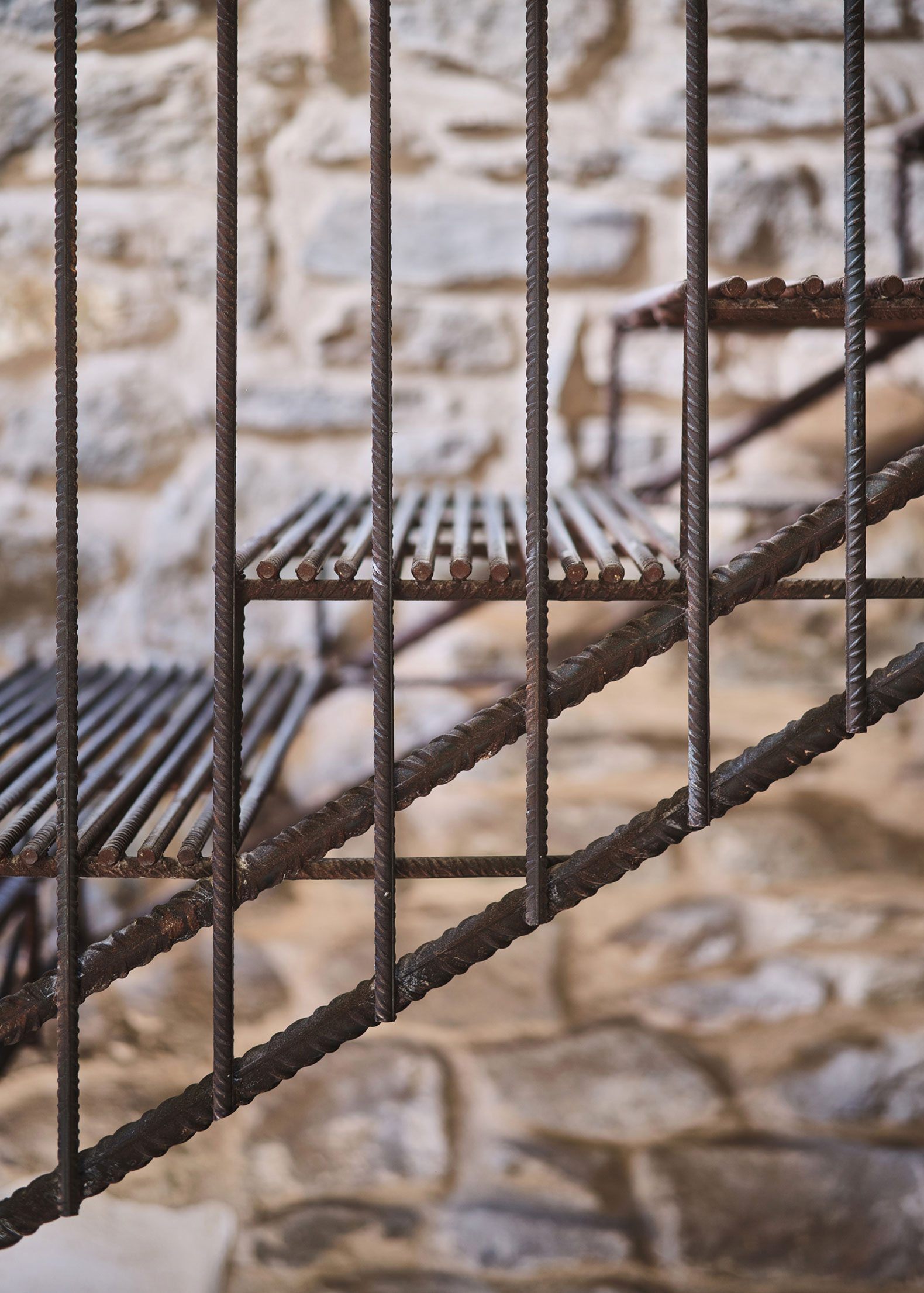
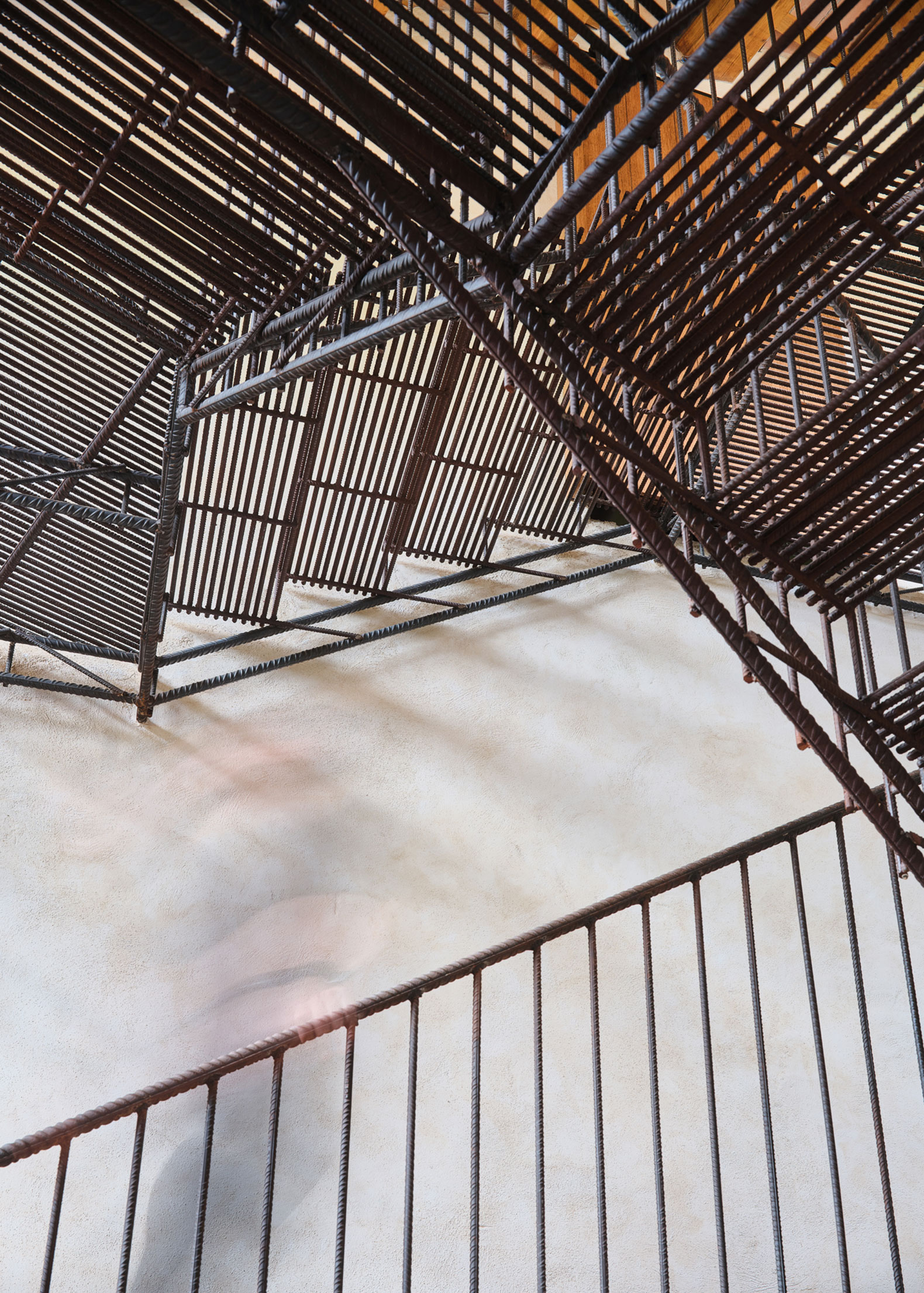
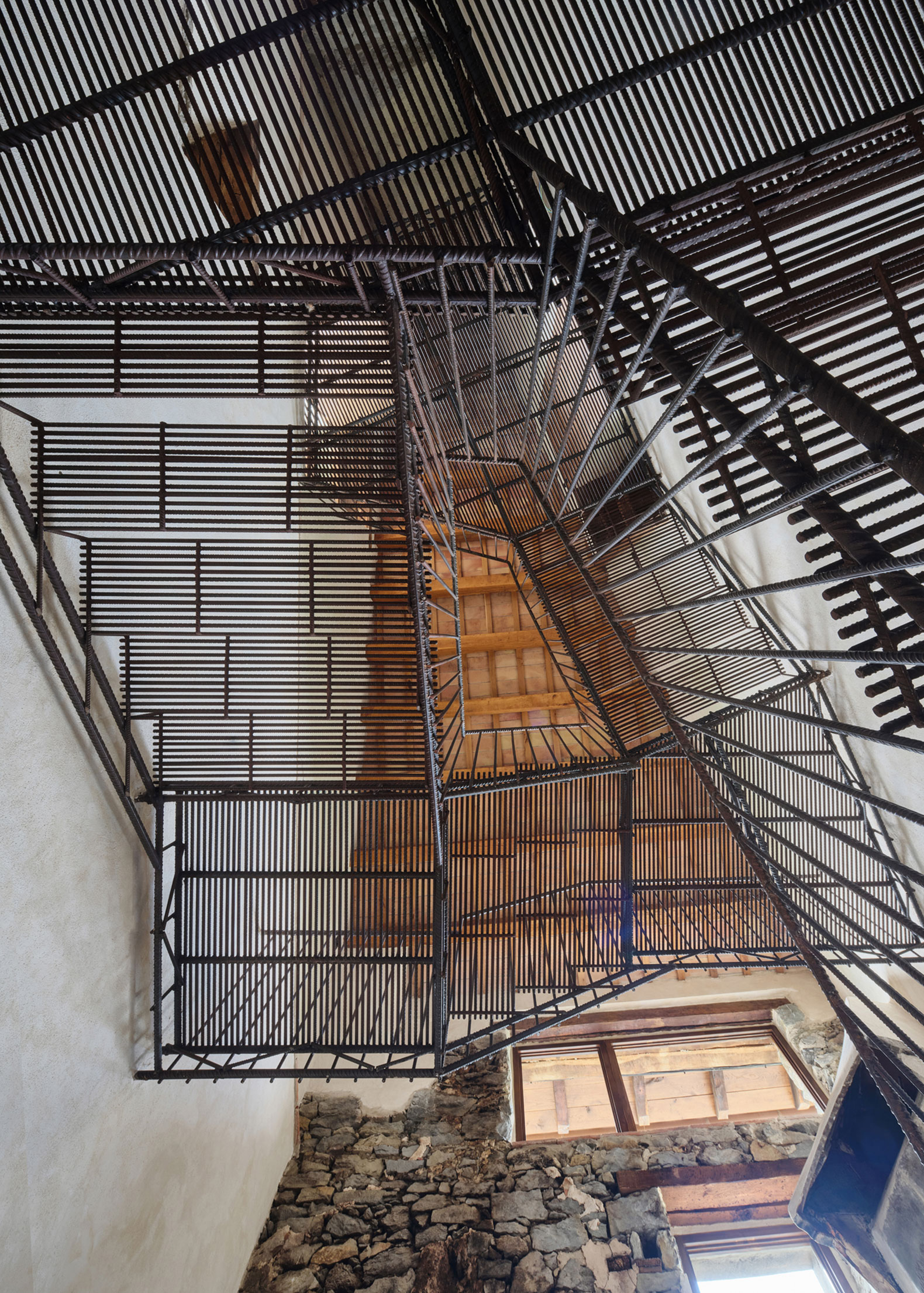
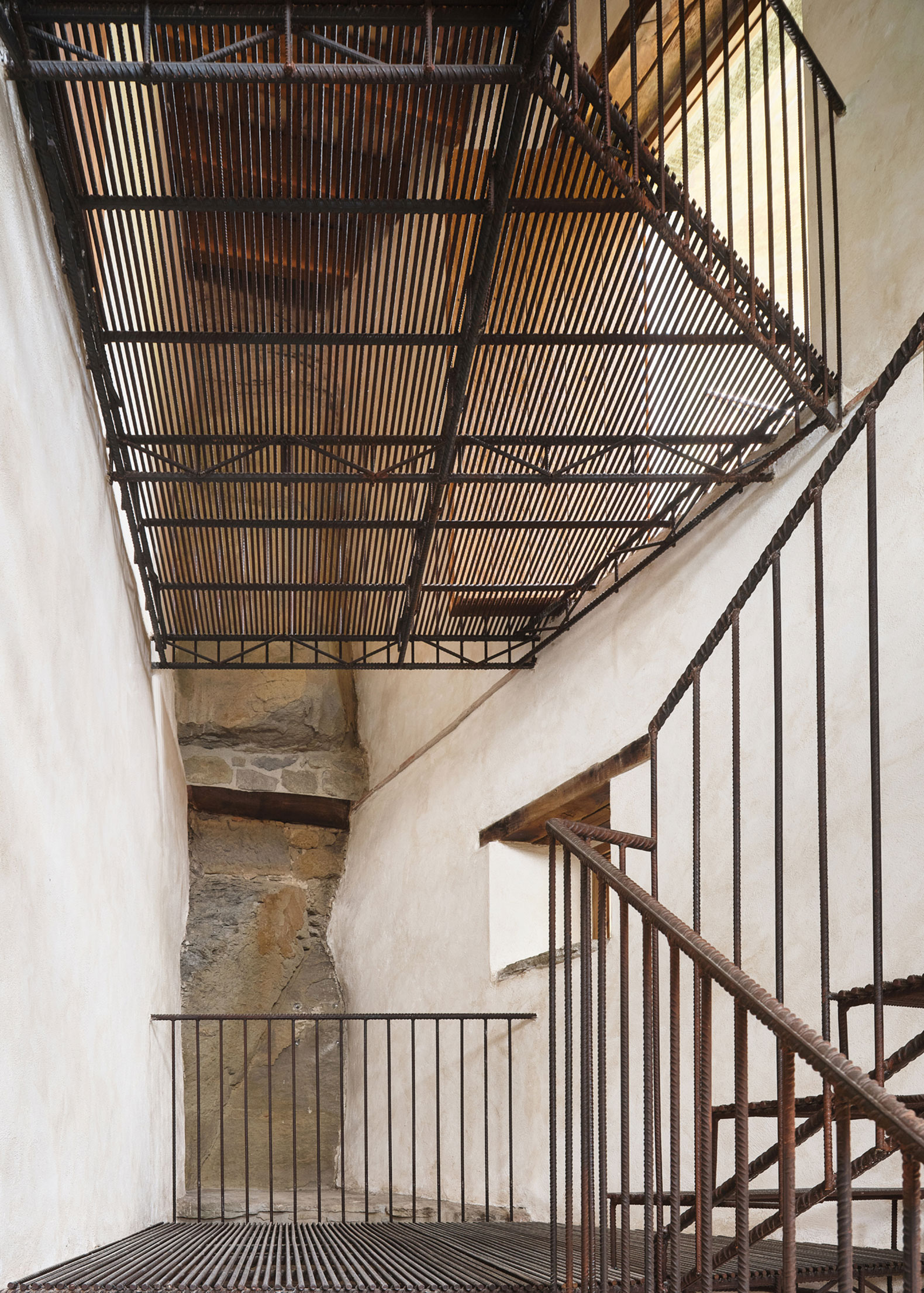
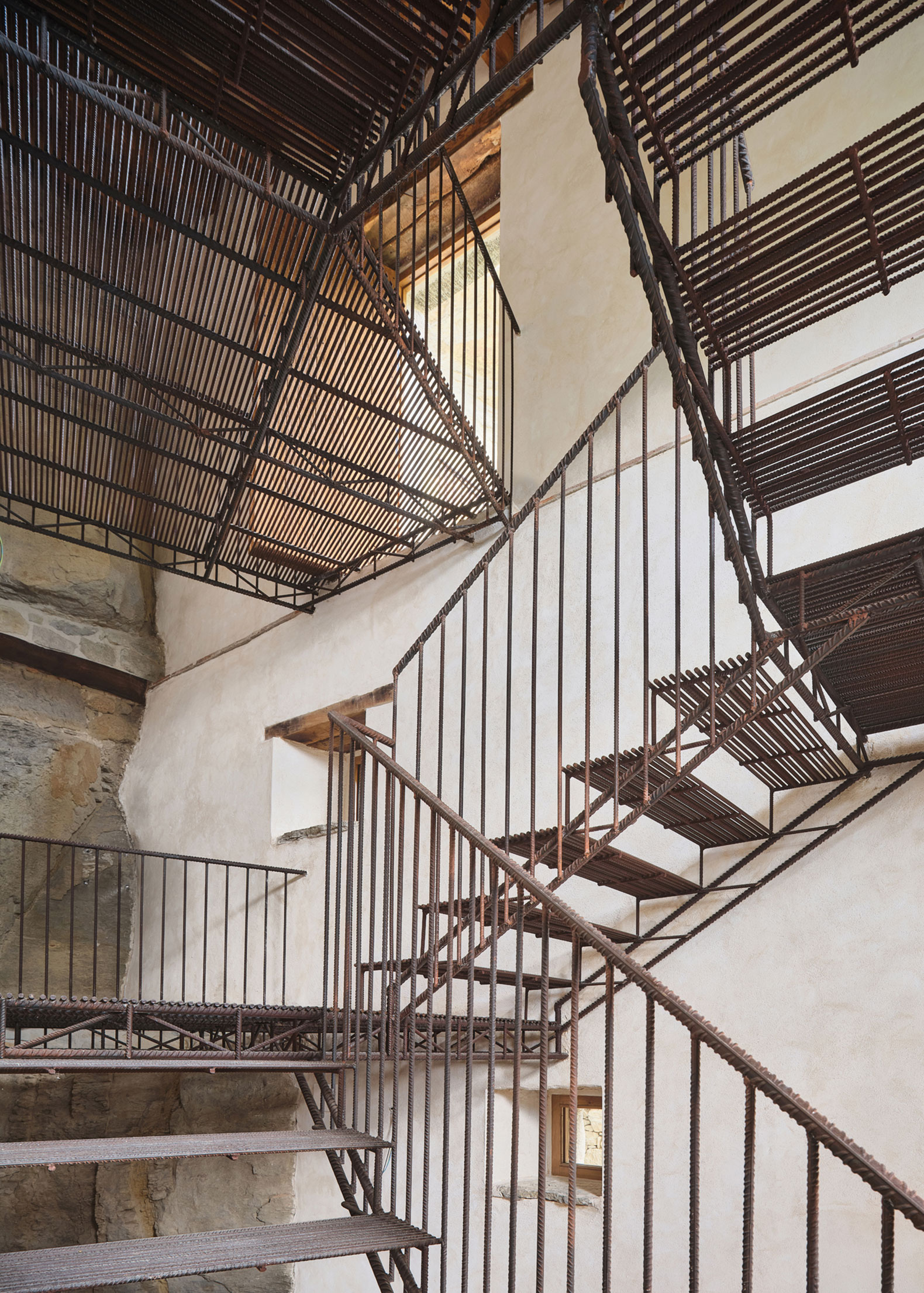
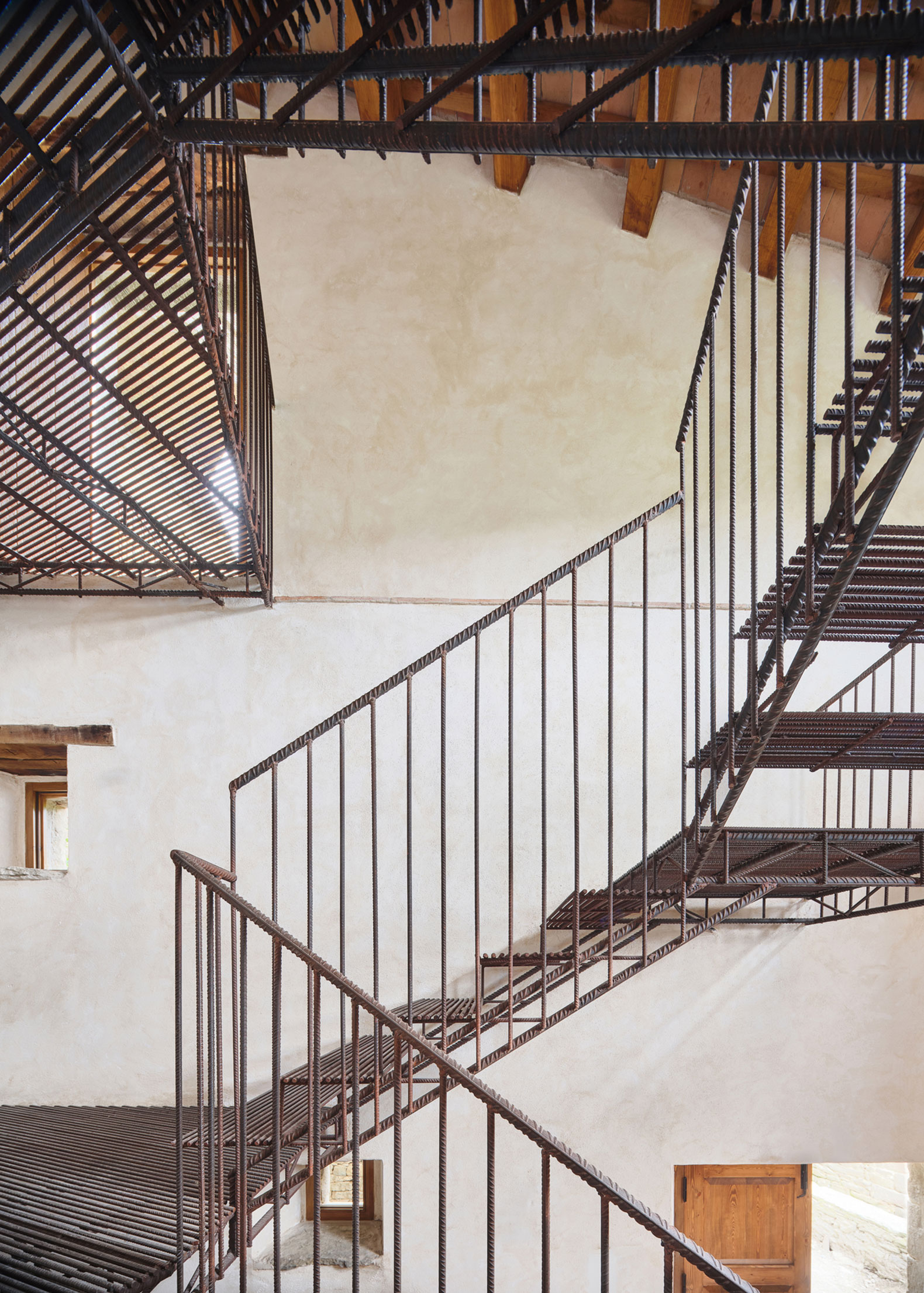
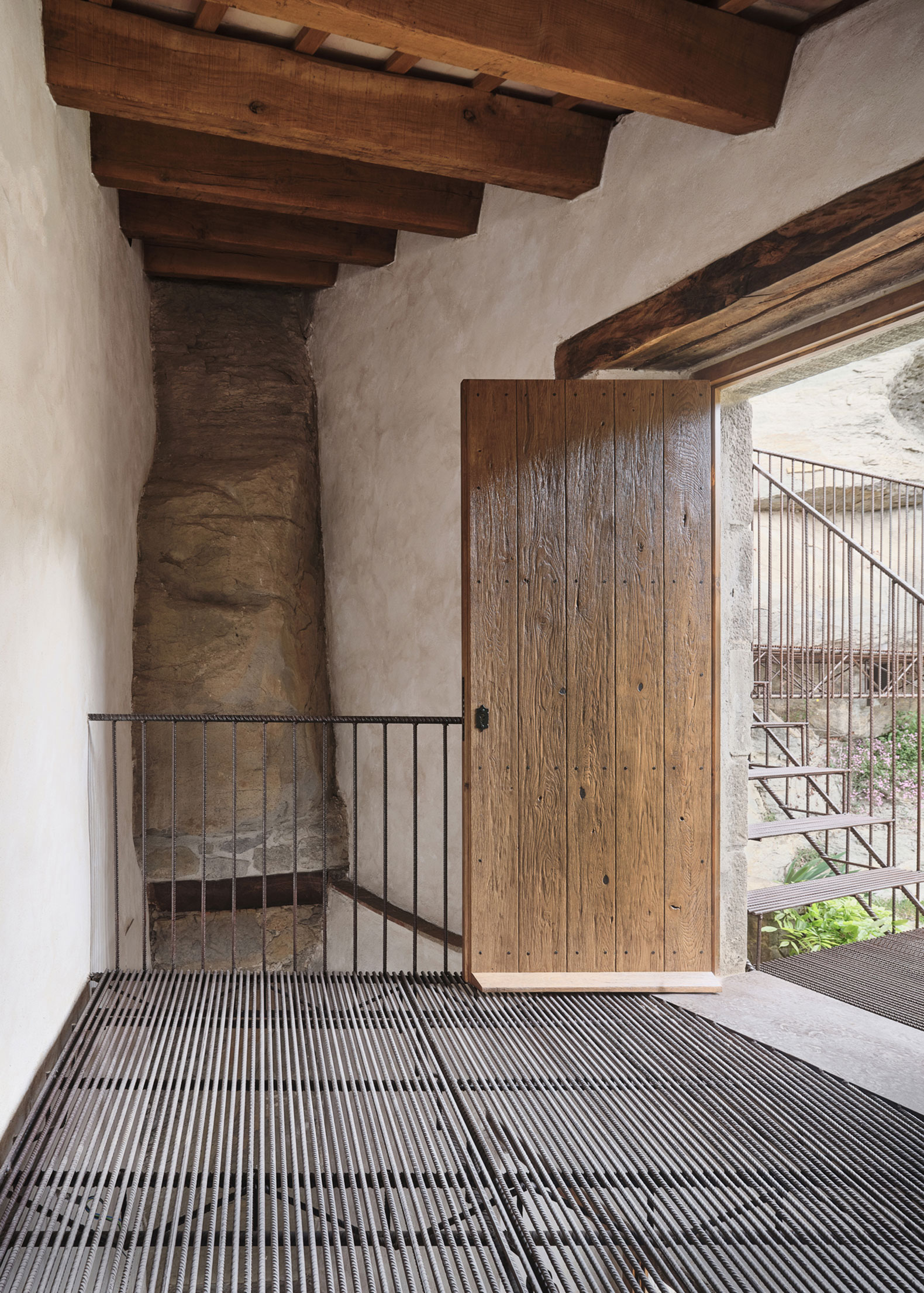
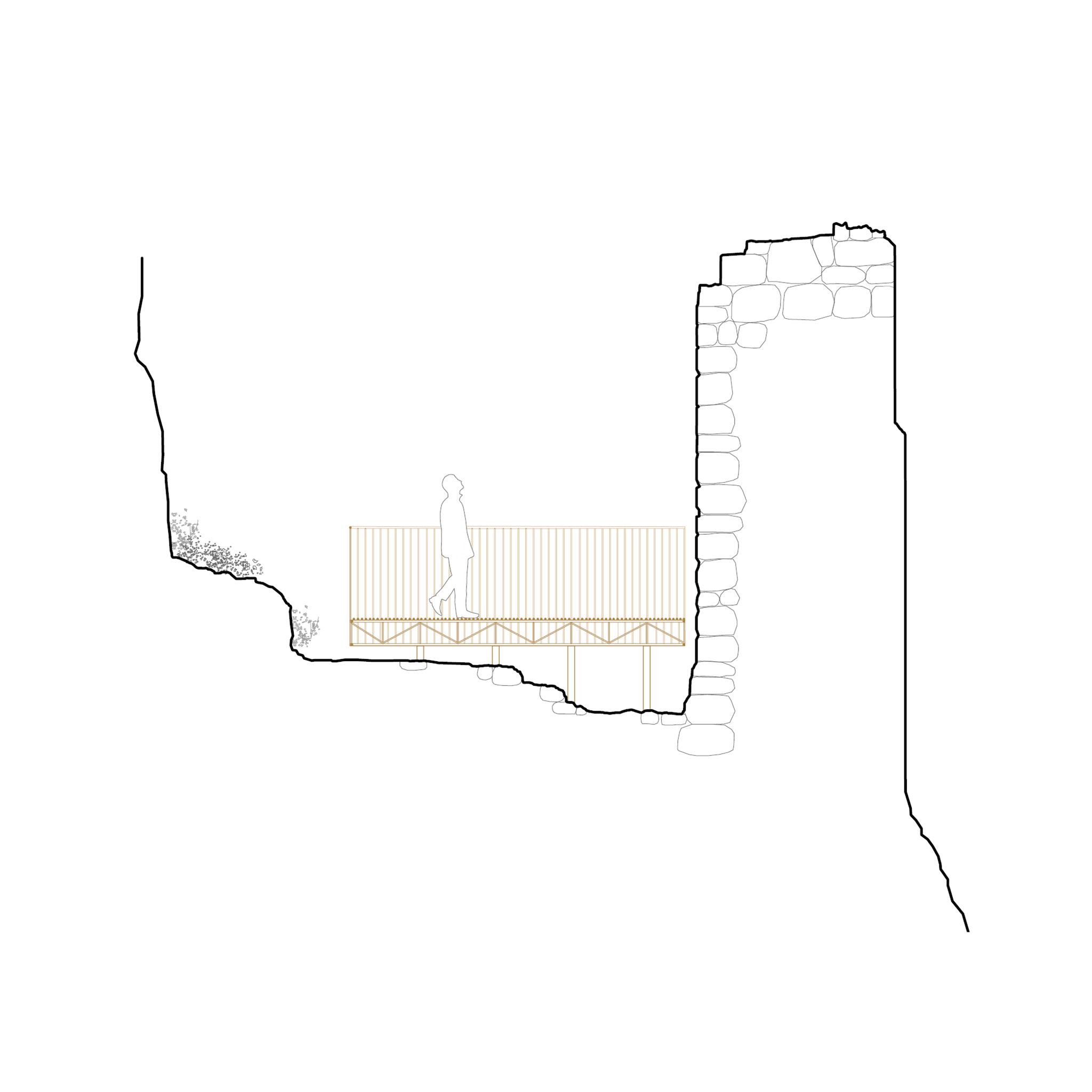
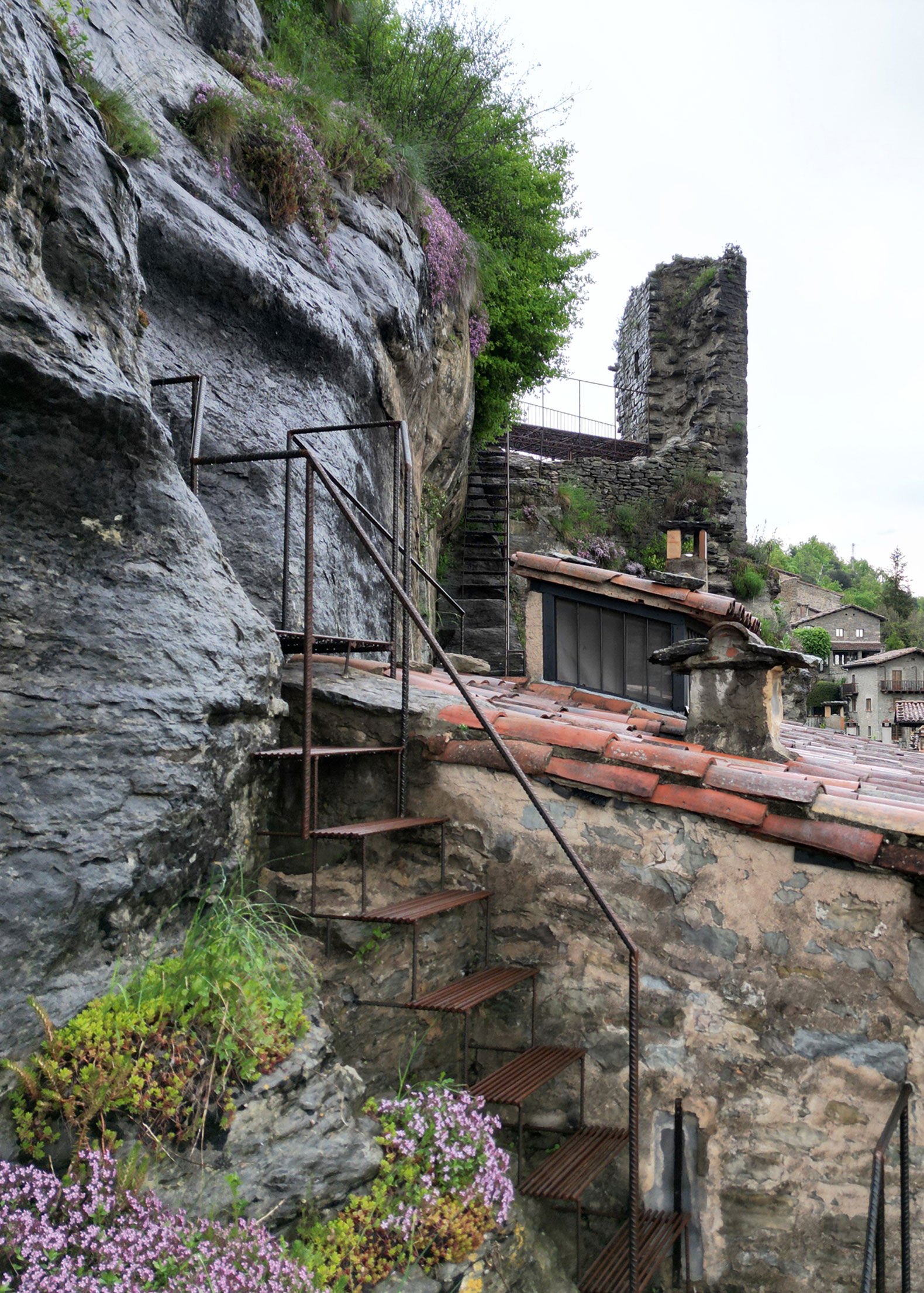
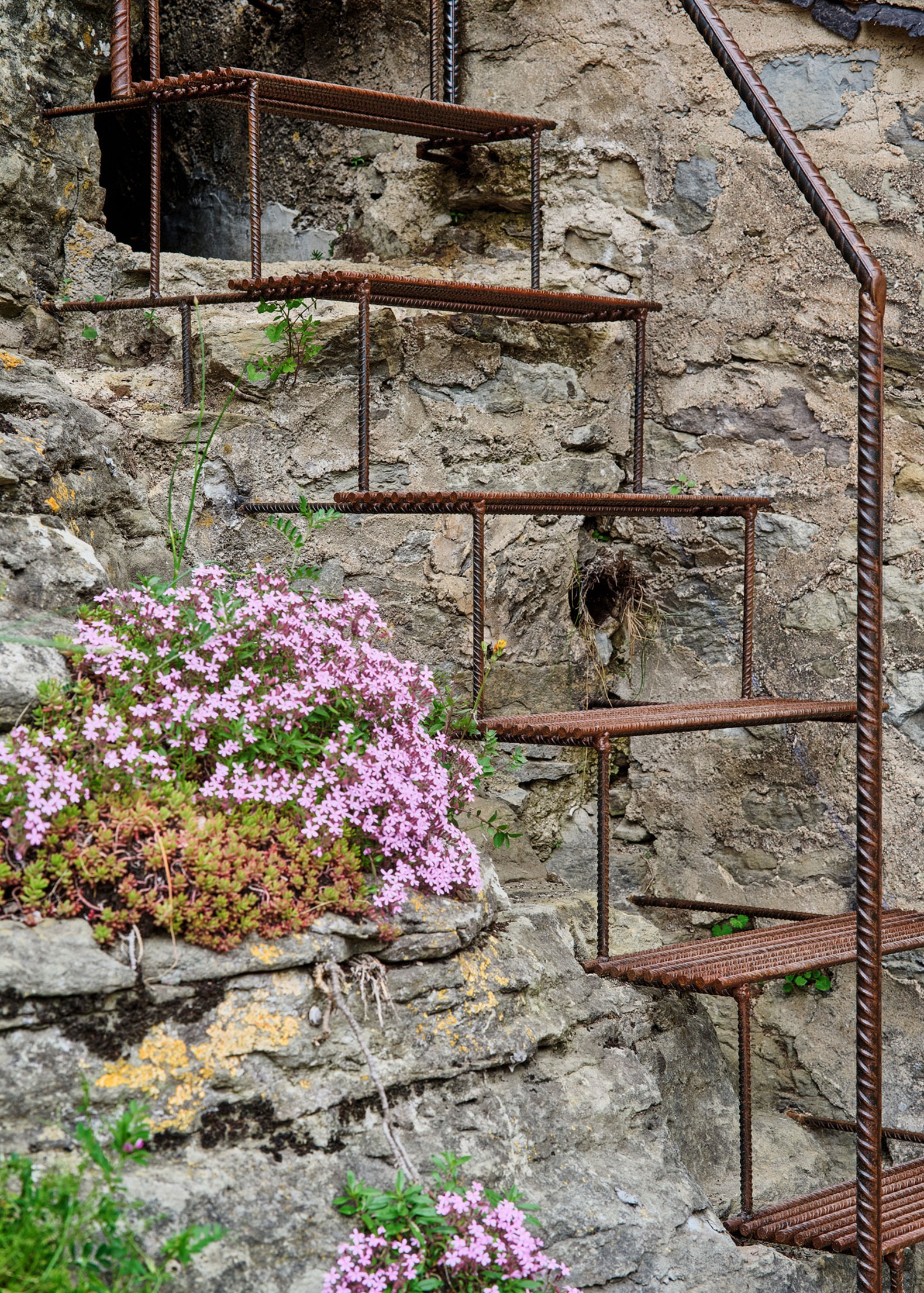
Structurally, the project is notable for its lightweight, discontinuous structure of corrugated steel walkways that adapt to the rocky topography of the site. The route includes a staircase anchored to the stone, respecting the existing structure, and ends at an observation platform located inside the old tower.
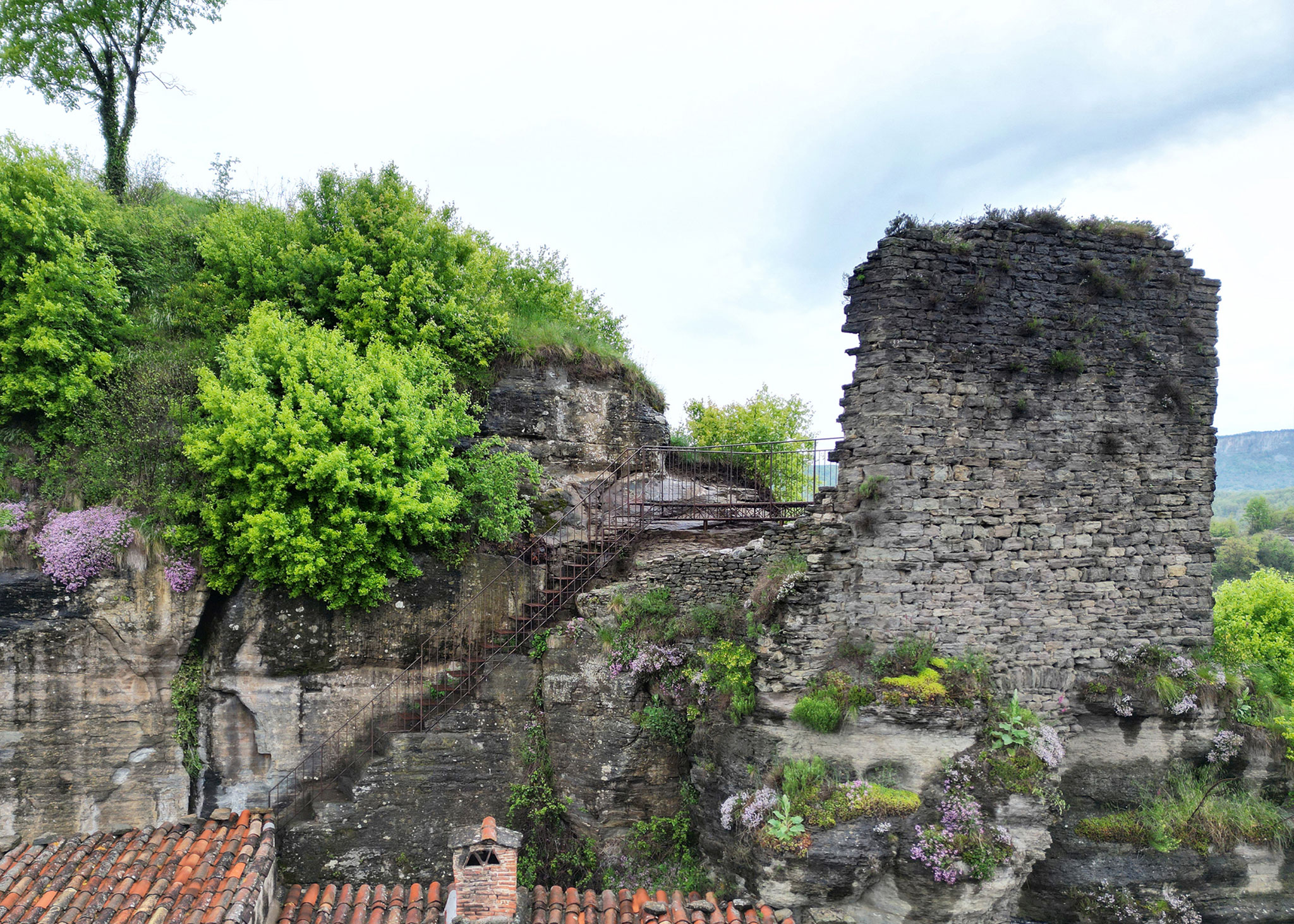
"Can Saltiri" by Carles Enrich Studio. Photograph by Agullola drone Motion.

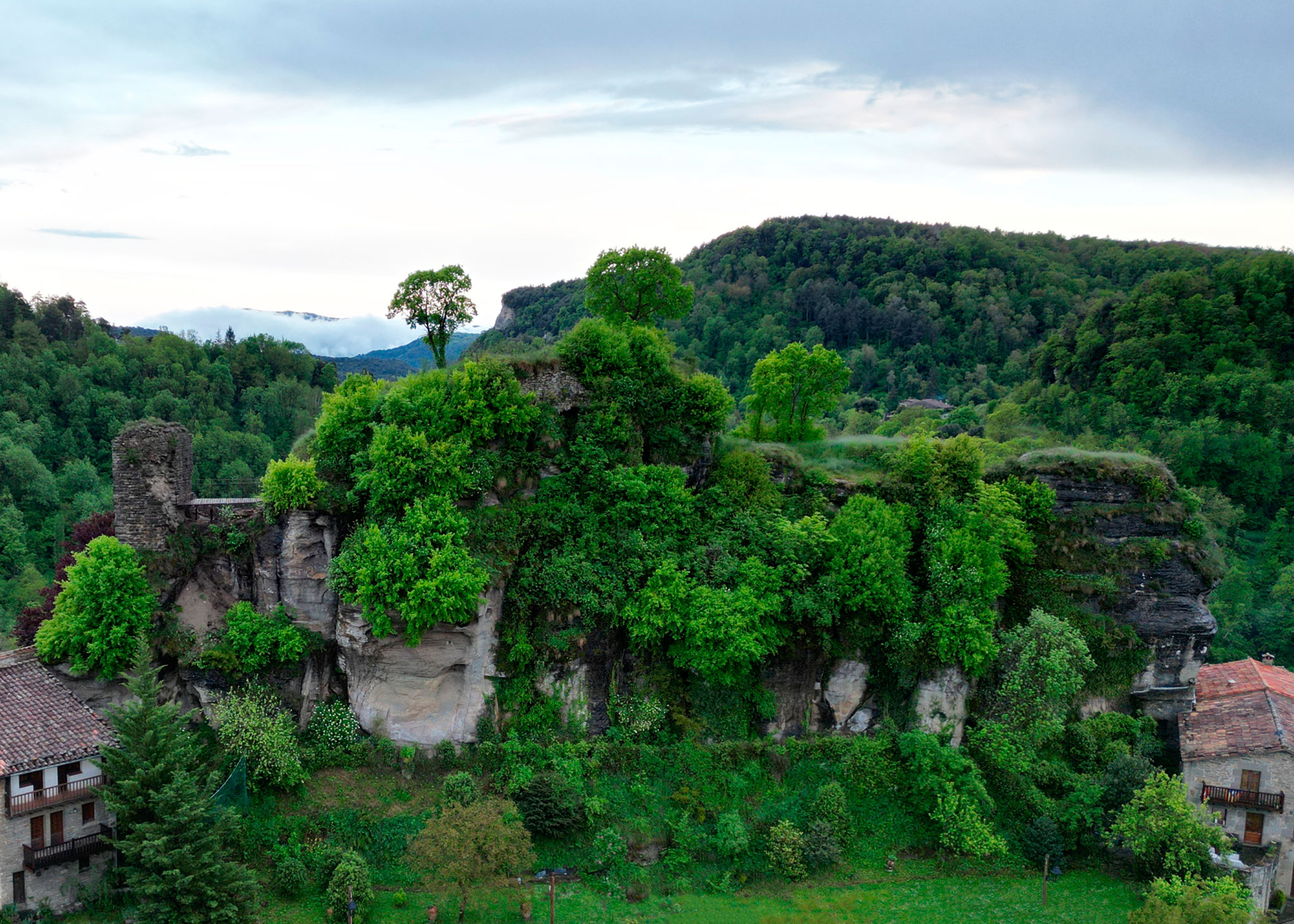
"Can Saltiri" by Carles Enrich Studio. Photograph by Agullola drone Motion.

Project description by Carles Enrich Studio

Layered landscape
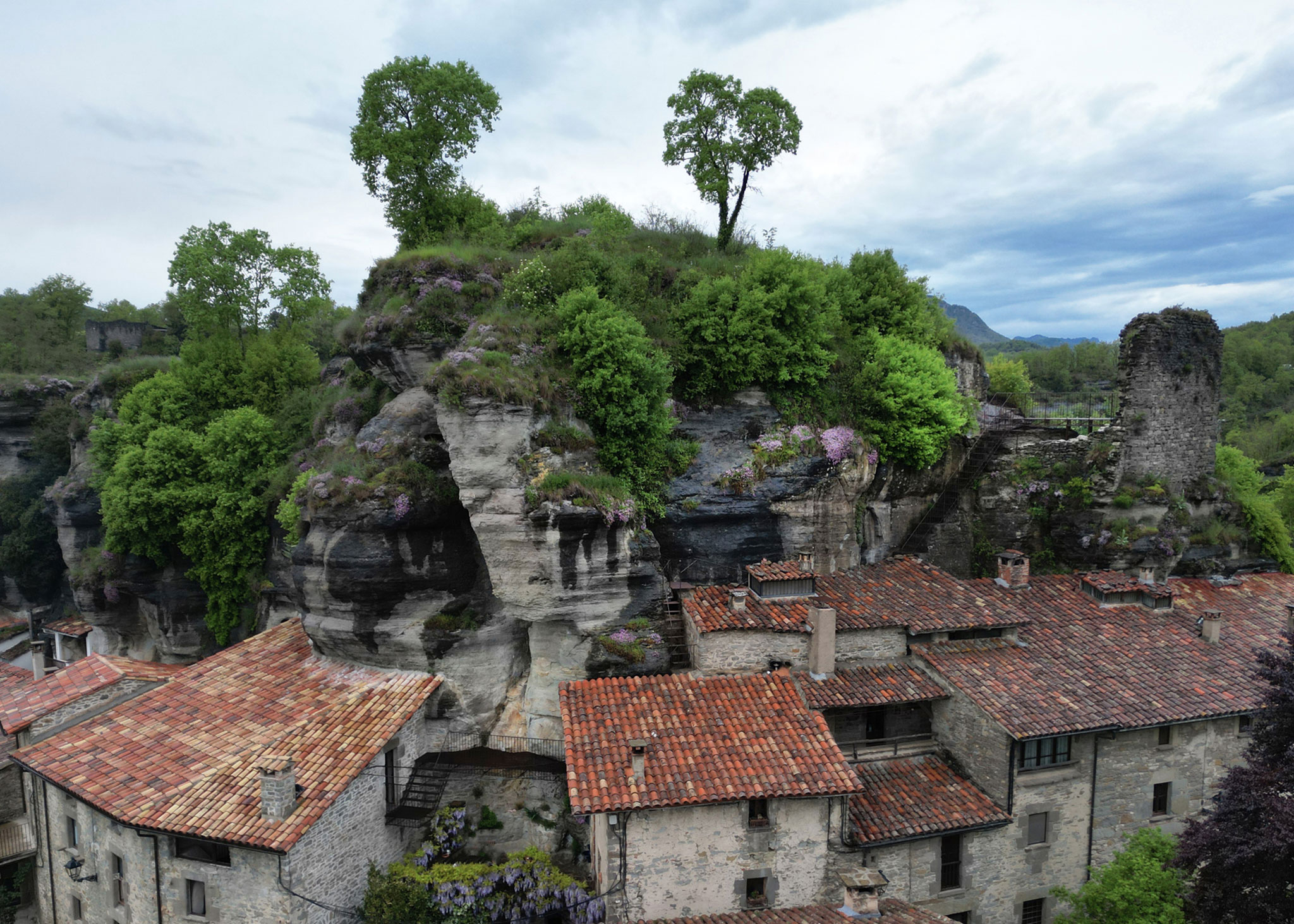
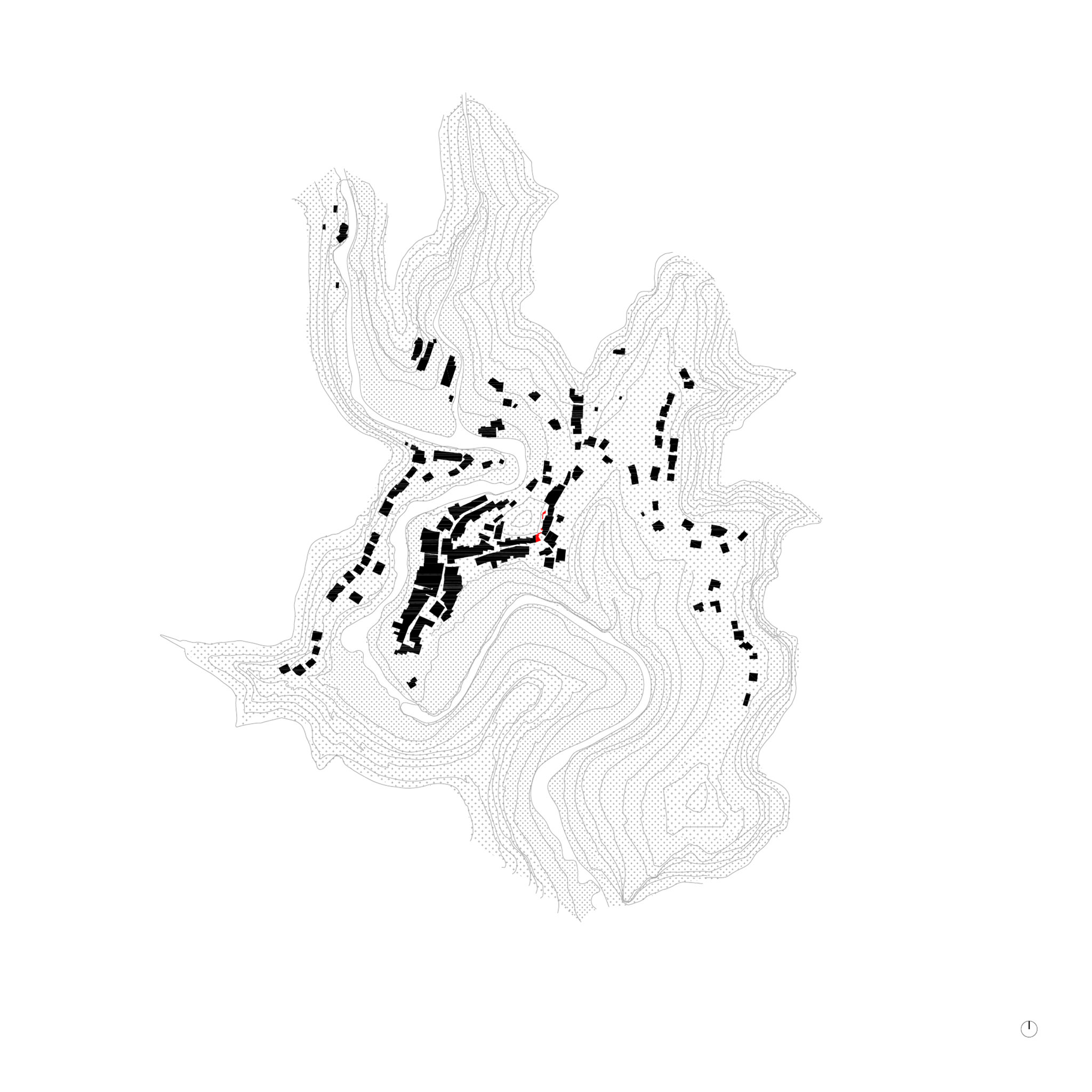
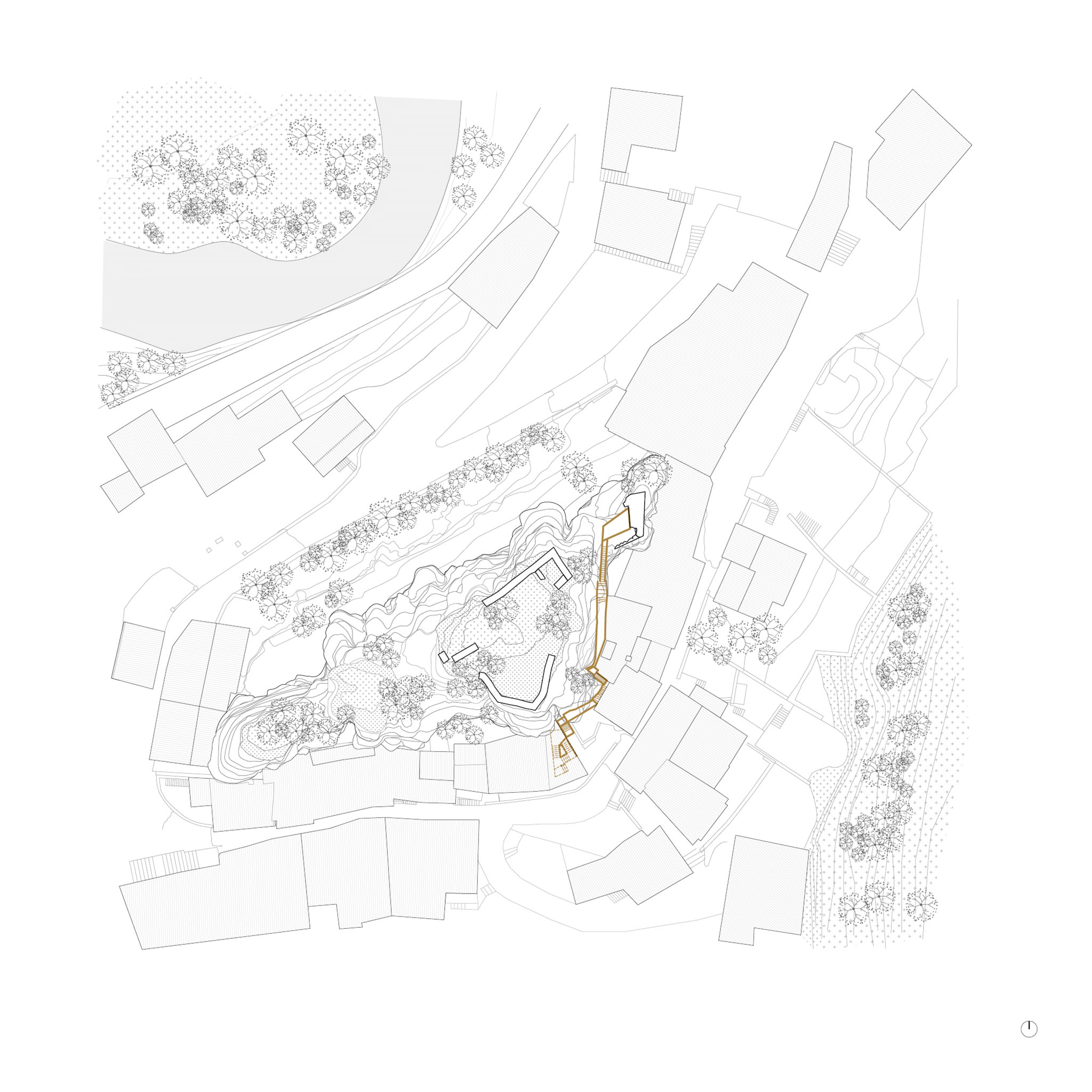
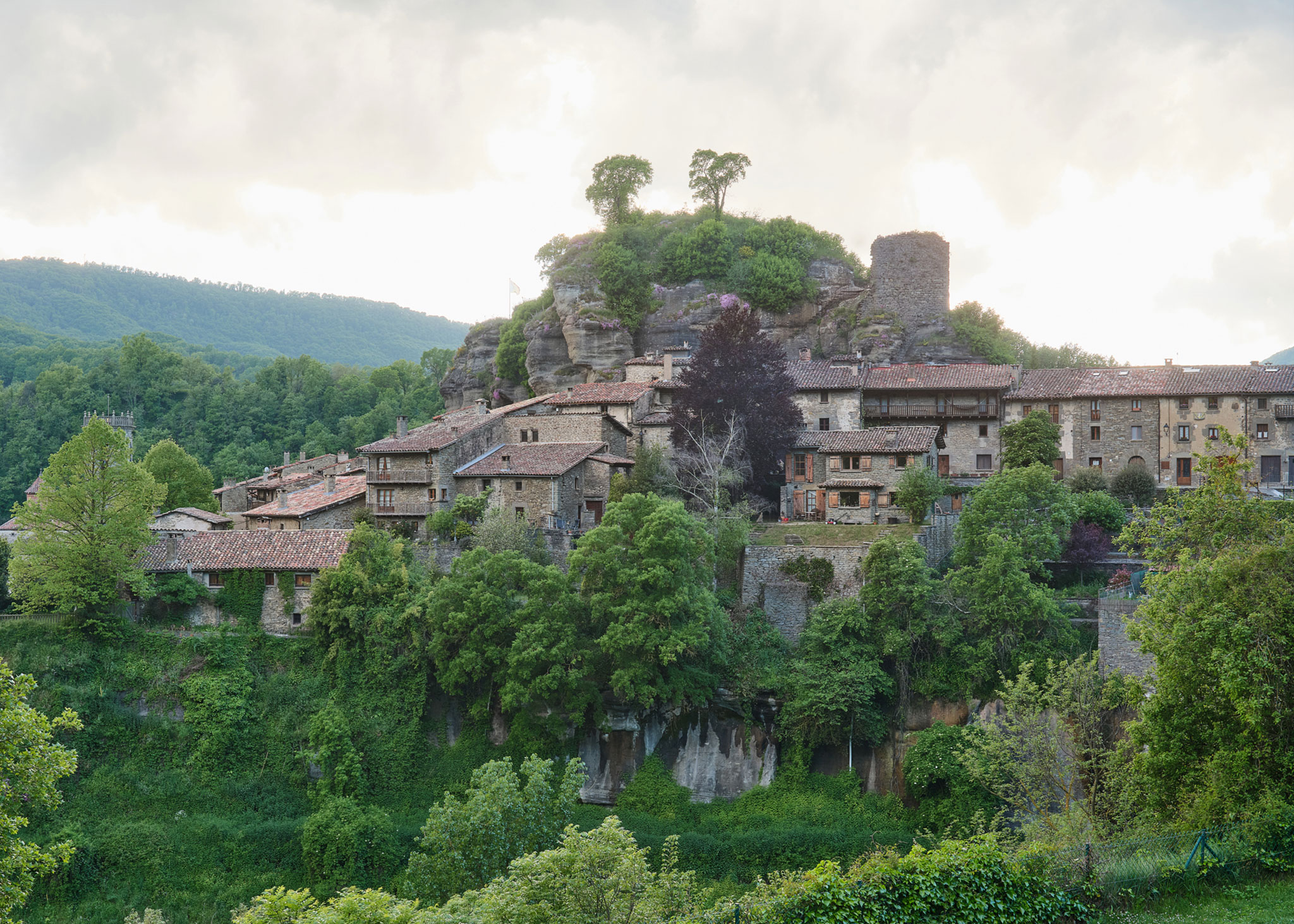
Rupit Castle stands on a rocky outcrop at an elevation of 889 metres, in the centre of the historic core of the municipality of Rupit, in Osona region. The configuration of the village unfolds along the ridge of a peninsula defined by the meander of the Rupit River, with the castle crag as the dominant element. The proximity of the surrounding buildings to the rock face makes access to the remains of the castle notably difficult. At present, access is only possible through the interior of an adjacent private property, a via ferrata that makes use of several existing steps carved into the rock, leading to the remains of the tower located at the northeastern end. The presence of stairways carved directly into the rock suggests that this point corresponds to the original access to the castle.

The castle, listed as a BCIN (Asset of Cultural Interest of National Significance), constitutes one of the main heritage elements of the municipality. In 2019, the Barcelona Provincial Council promoted the drafting of a Master Plan with the aim of establishing intervention criteria to ensure the conservation of the monument and to facilitate its understanding. At present, the remains are in an advanced state of abandonment and present risks associated with their location on the rocky massif, with precarious access, poor condition, and a lack of adequate safety measures. That same year, the Town Council acquired the Can Saltiri property, located at the foot of the castle, with the intention of allocating it for municipal use, thus enabling the proposal of a new relationship between the village and the heritage complex.

"Can Saltiri" by Carles Enrich Studio. Photograph by Adrià Goula.

Minimal Intervention
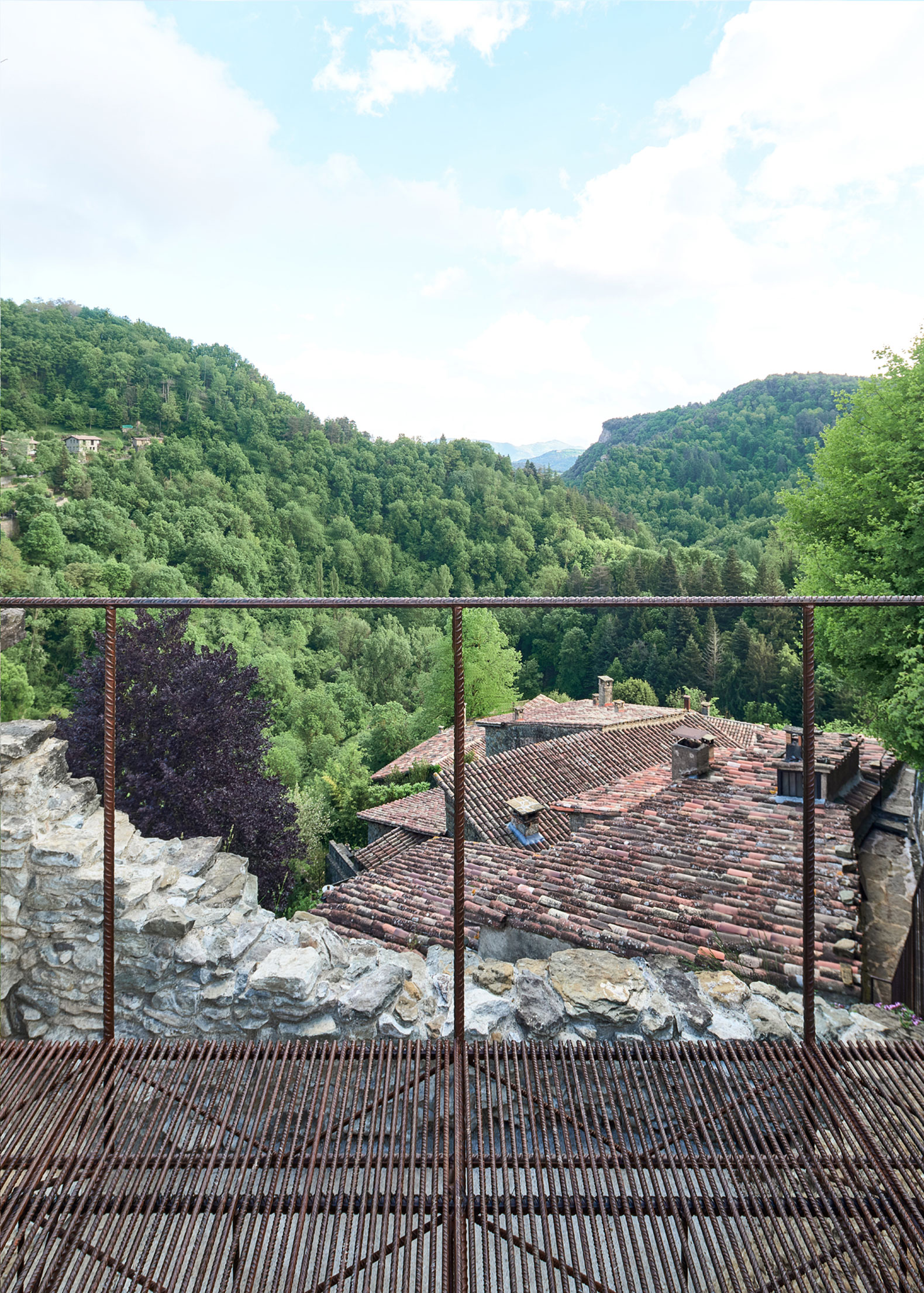
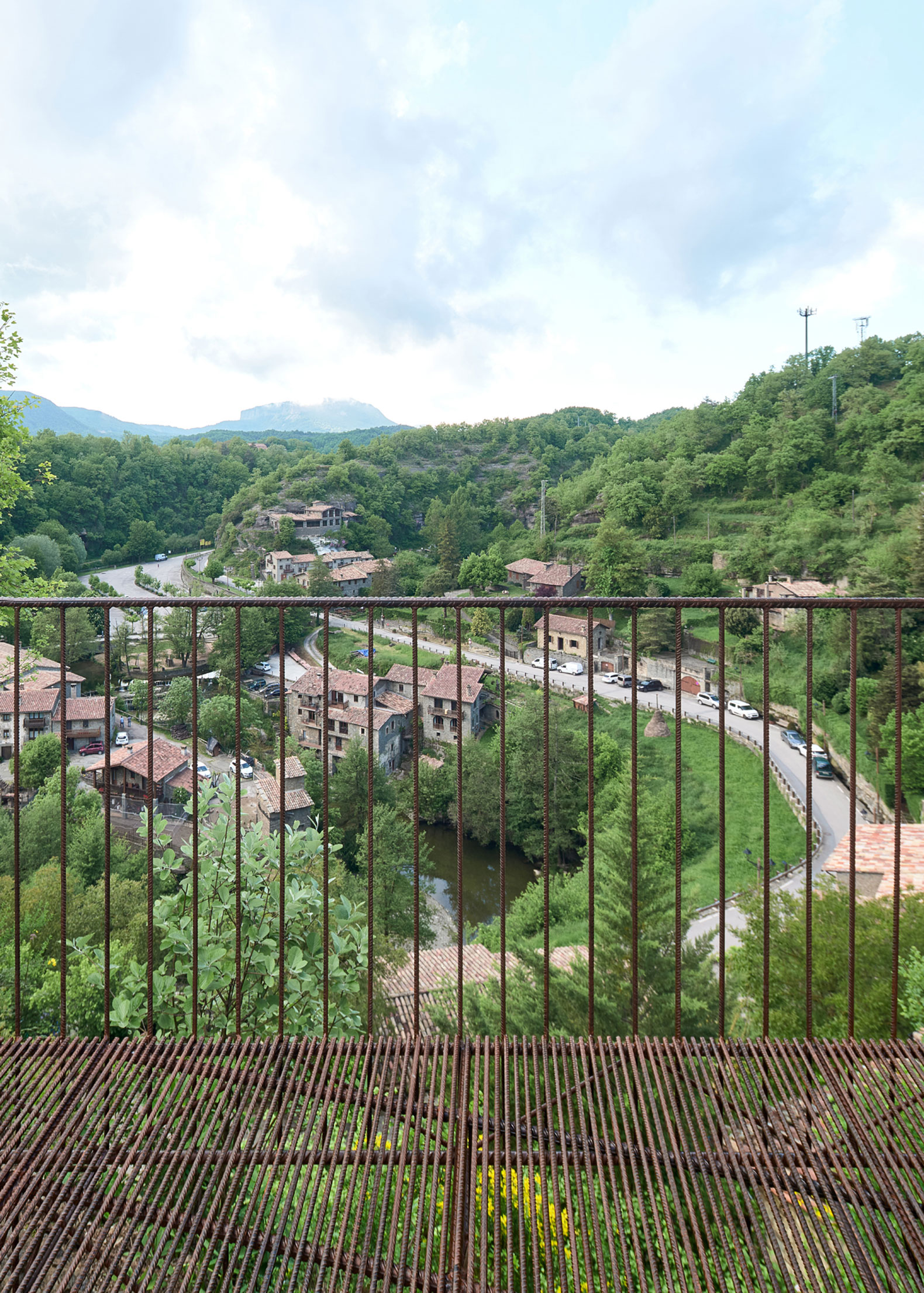
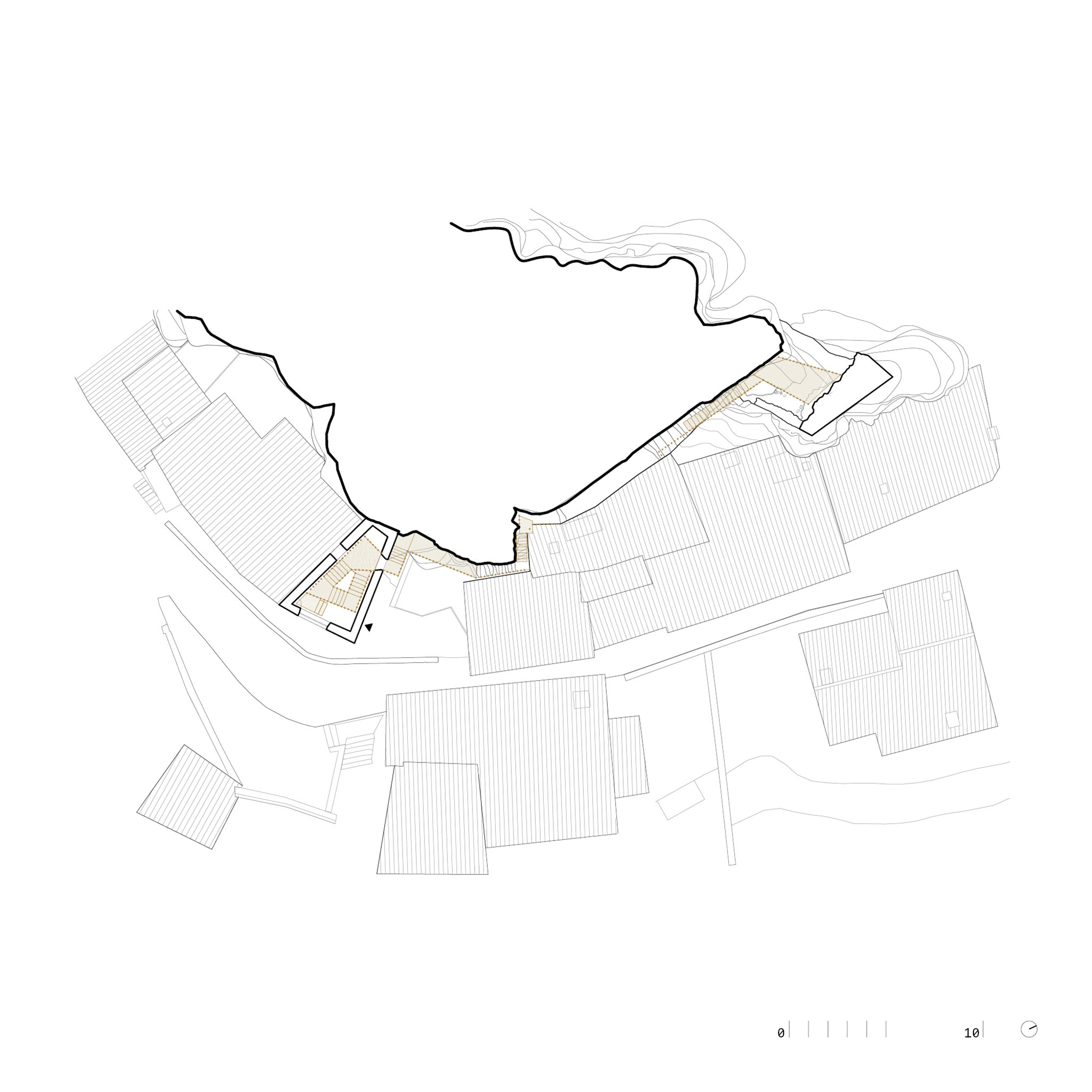
The project aims to improve access to Rupit Castle from the urban centre and to adapt a route through the existing remains, ensuring visitor safety while enhancing the archaeological and landscape value of the site. A respectful, lightweight intervention with minimal impact on the pre-existing elements is proposed, allowing for improved historical understanding of the place and reinforcing its urban integration. The itinerary is developed in four sections that culminate in a viewpoint and is resolved using a single material: ribbed steel bars with diameters of 12 and 25 mm, forming a discontinuous structure of walkways that adapt to the profile of the rock.

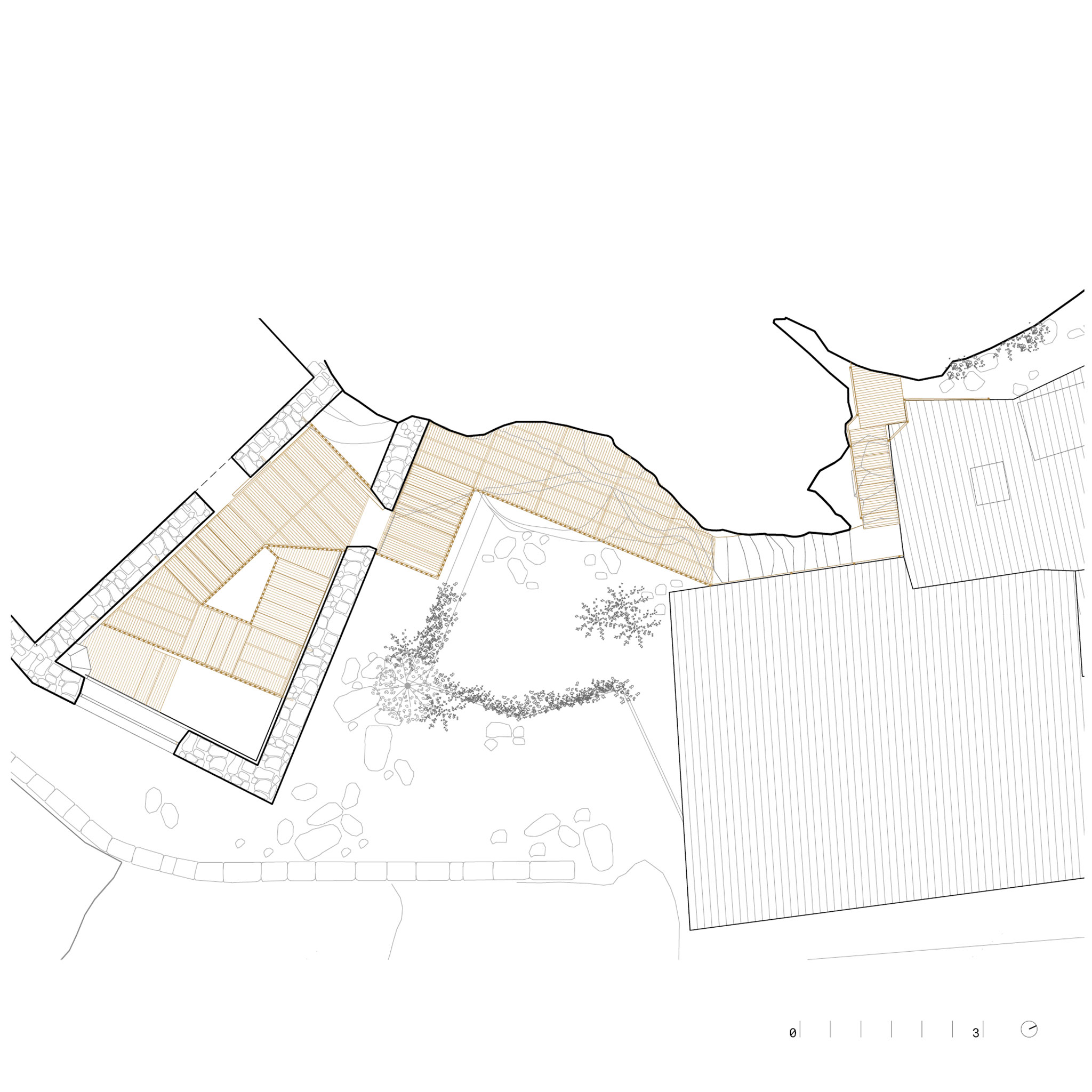
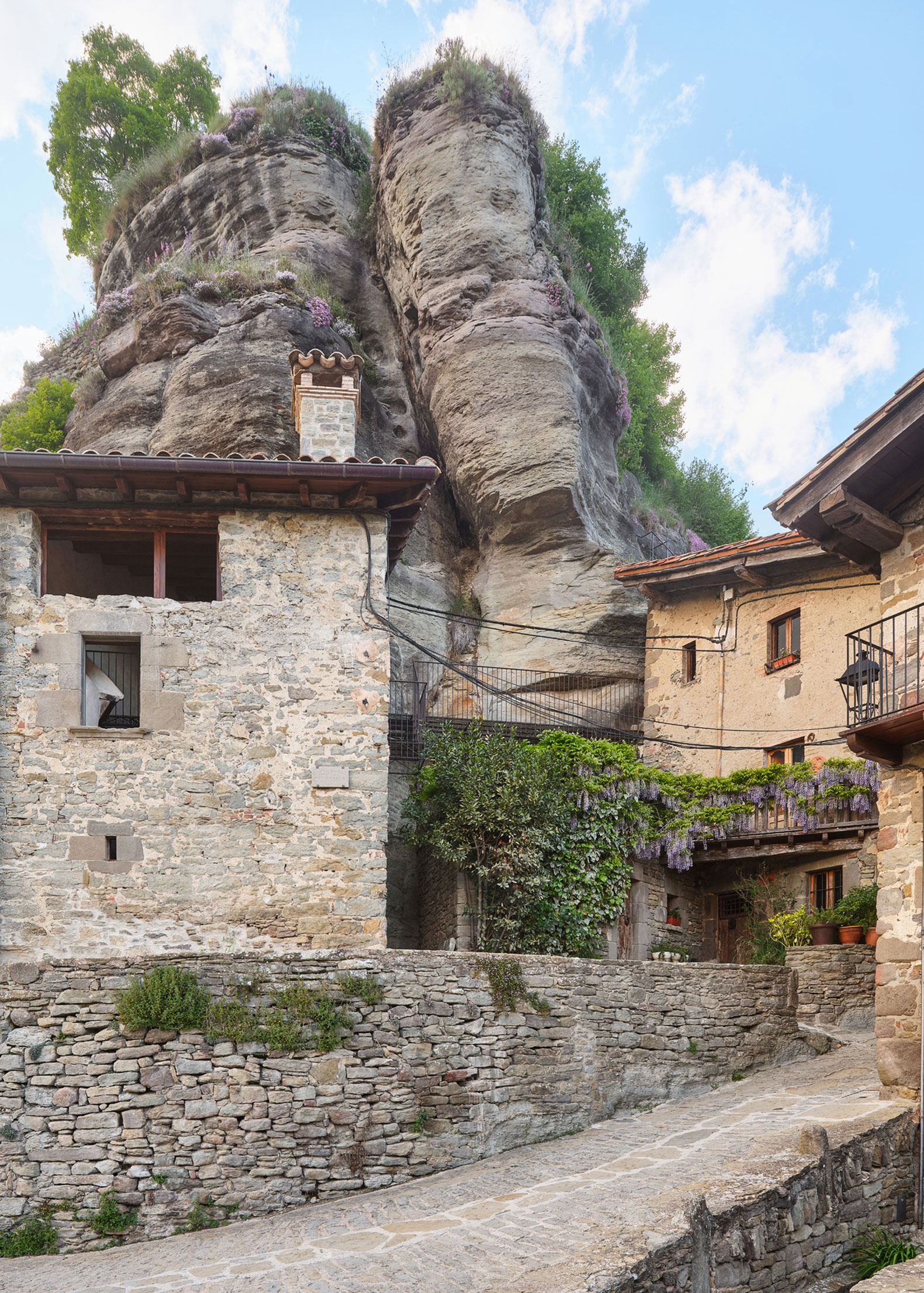
Access is proposed through the Can Saltiri property, which makes it possible to overcome the difference in level between the street and the first preserved step carved into the rock. Through the interior of the property, a staircase is proposed that follows the original levels and highlights pre-existing elements, such as the chimney or the rock of the party wall. The connection to the start of the original stairway is achieved by means of a cantilevered walkway over the neighbouring property. The next change in level, of approximately three metres, is consisting of stairs anchored directly to the rock, providing access to a path located behind the roofs of the adjoining properties. Finally, a last flight of stairs leads to an observation platform situated within the footprint of the walls of the former tower, from which both the archaeological remains and the surrounding landscape of Rupit can be contemplated.
More information

Label
Architects
+ + copy Created with Sketch.
- + copy Created with Sketch.
Label
Collaborators
Text

Technical supervisor.- Miquel Sellès.
Structure.- MASA+AD.
Archeology.- Eduard Píriz.

+ + copy Created with Sketch.
- + copy Created with Sketch.
Label
Builder
Text

Solà Font.

+ + copy Created with Sketch.
- + copy Created with Sketch.
Label
Developer
Text

Pruit i Rupit Town Hall.

+ + copy Created with Sketch.
- + copy Created with Sketch.
Label
Dates
Text

Project.- 2023.
Works.- 2024 to 2025.

+ + copy Created with Sketch.
- + copy Created with Sketch.
Label
Location
Text

Rupit, Barcelona, Spain.

+ + copy Created with Sketch.
- + copy Created with Sketch.
Label
Photography
+ + copy Created with Sketch.
- + copy Created with Sketch.

Carles Enrich (Barcelona, 1980) graduated at the ETSAB in Barcelona in 2005. From the beginning of his career he has combined his professional work with research, and obtained a Master degree in Theory and Practice of Architectural Projects from the UPC where he is currently a PhD Candidate. His thesis deals with the temporary occupations in the public space in Barcelona.

Associate lecturer in Projects at the ETSAB since 2016. From 2008 to 2017, he taught Projects and Urban Design at the Reus School of Architecture and, in 2015, Projects at the ETSAV. He was also visiting professor in the Extra-Local workshop organised by Columbia GSAPP in 2019, has collaborated on international master’s degrees such as the BIARCH in 2012 and the master’s degree in Restoration at the UPC in 2014, and directed the Vertical Workshop at the UIC Barcelona School of Architecture in 2018.

Carles Enrich’s aim of producing practice-based knowledge led him in 2013 to set up Carles Enrich Studio, where he develops projects that cover the entire habitable territory, from the domestic sphere to landscape. The quality and rigour of the practice’s built work are endorsed by consecutive nominations for the European Union Mies Award (2017, 2019) and the Lisbon Triennale Début Award 2016; the Spanish Architecture and Urban Design Biennale Awards in 2016 and 2018, the FAD Opinion Prize in 2016, and the AJAC Awards in 2012, 2016 and 2018. They were also recognised in the studio’s participation in the Venice Architecture Biennale in 2012, with the exhibition Context in “Architectural Rowers” in the Catalan Pavilion and, in 2016, as part of the exhibition Unfinished, which earned the Spanish Pavilion the Biennale’s Golden Lion.

Read more
Published on: February 16, 2026
Cite:
metalocus, ELVIRA PARÍS FERNÁNDEZ
"Subtle ascent to the castle. "Can Saltiri" by Carles Enrich " METALOCUS. Accessed
<https://www.metalocus.es/en/news/subtle-ascent-castle-can-saltiri-carles-enrich> ISSN 1139-6415
Loading content ...
Loading content ...
Loading content ...
Loading content ...
Loading content ...
Loading content ...
Loading content ...
Loading content ...
Loading content ...
Loading content ...
Loading content ...
Loading content ...
Loading content ...
Loading content ...
Loading content ...
Loading content ...
Loading content ...
Loading content ...
Loading content ...
Loading content ...
Loading content ...
Loading content ...
Loading content ...
Loading content ...
Loading content ...
Loading content ...
Loading content ...
Loading content ...
Loading content ...
Loading content ...
Loading content ...
Loading content ...
Loading content ...
Loading content ...
Loading content ...
Loading content ...
Loading content ...
Loading content ...
Loading content ...
Loading content ...
Loading content ...
Loading content ...
Loading content ...
Loading content ...
Loading content ...
Loading content ...
Loading content ...
Loading content ...
Loading content ...
Loading content ...
Loading content ...
Loading content ...
Loading content ...
Loading content ...