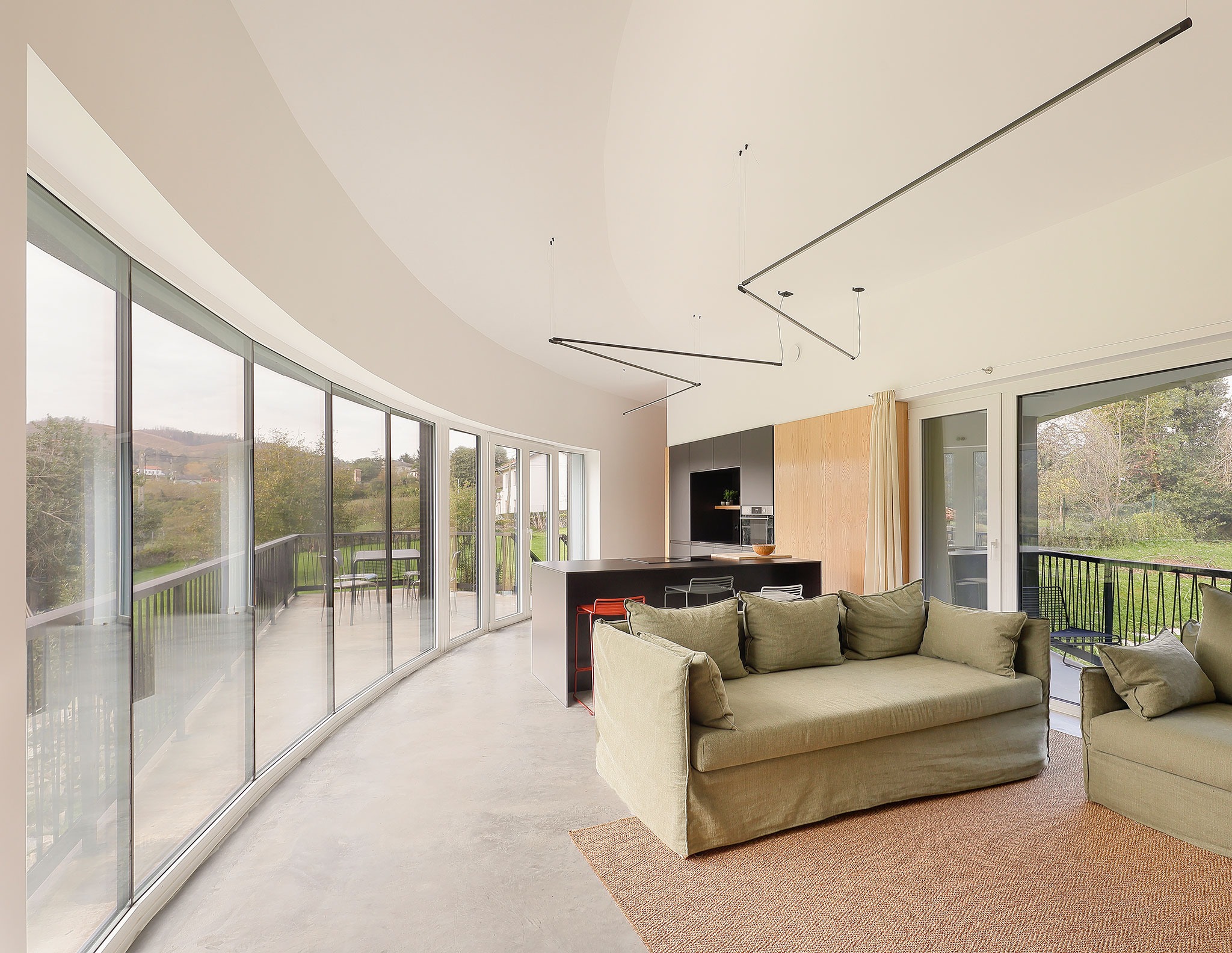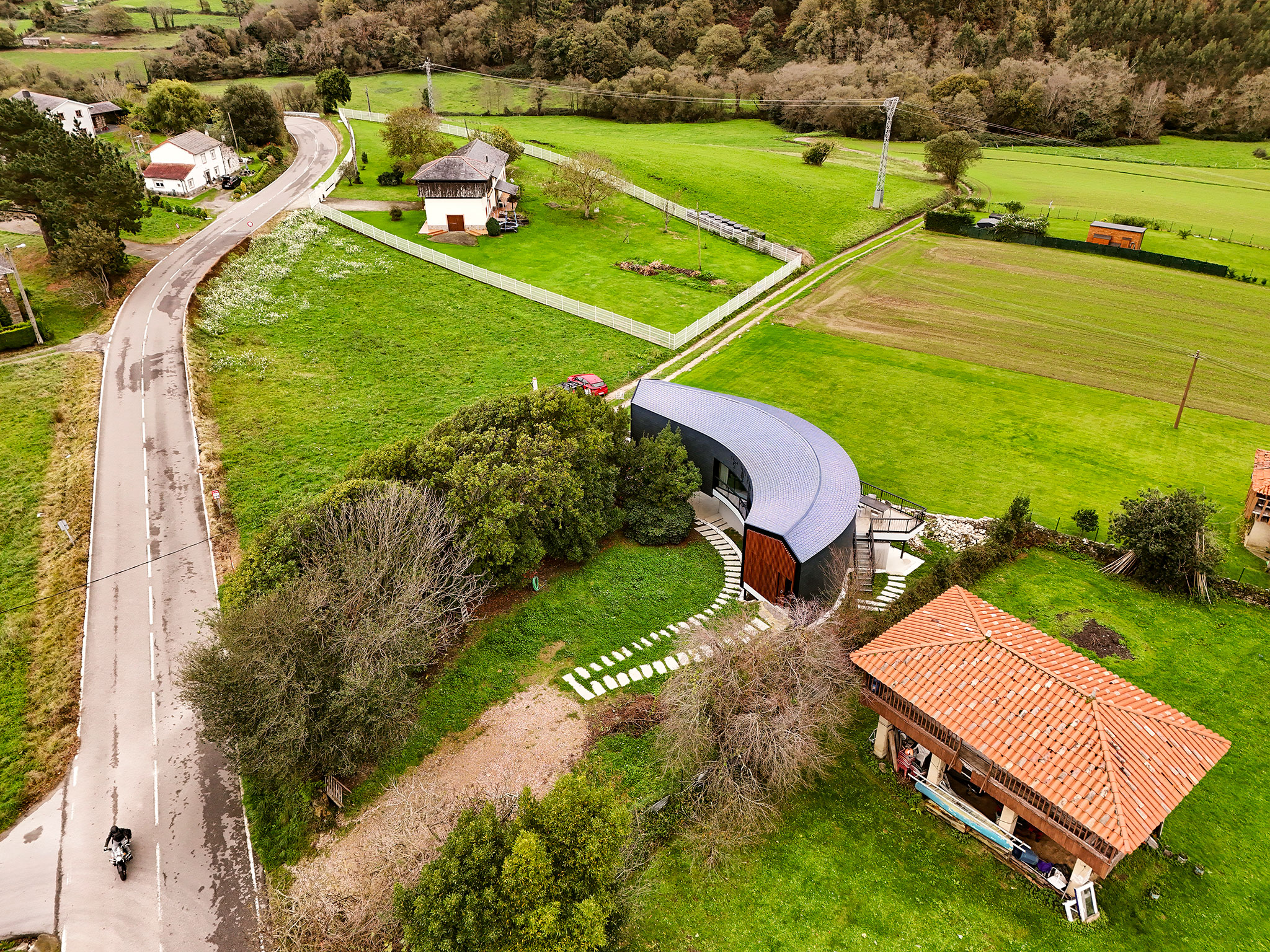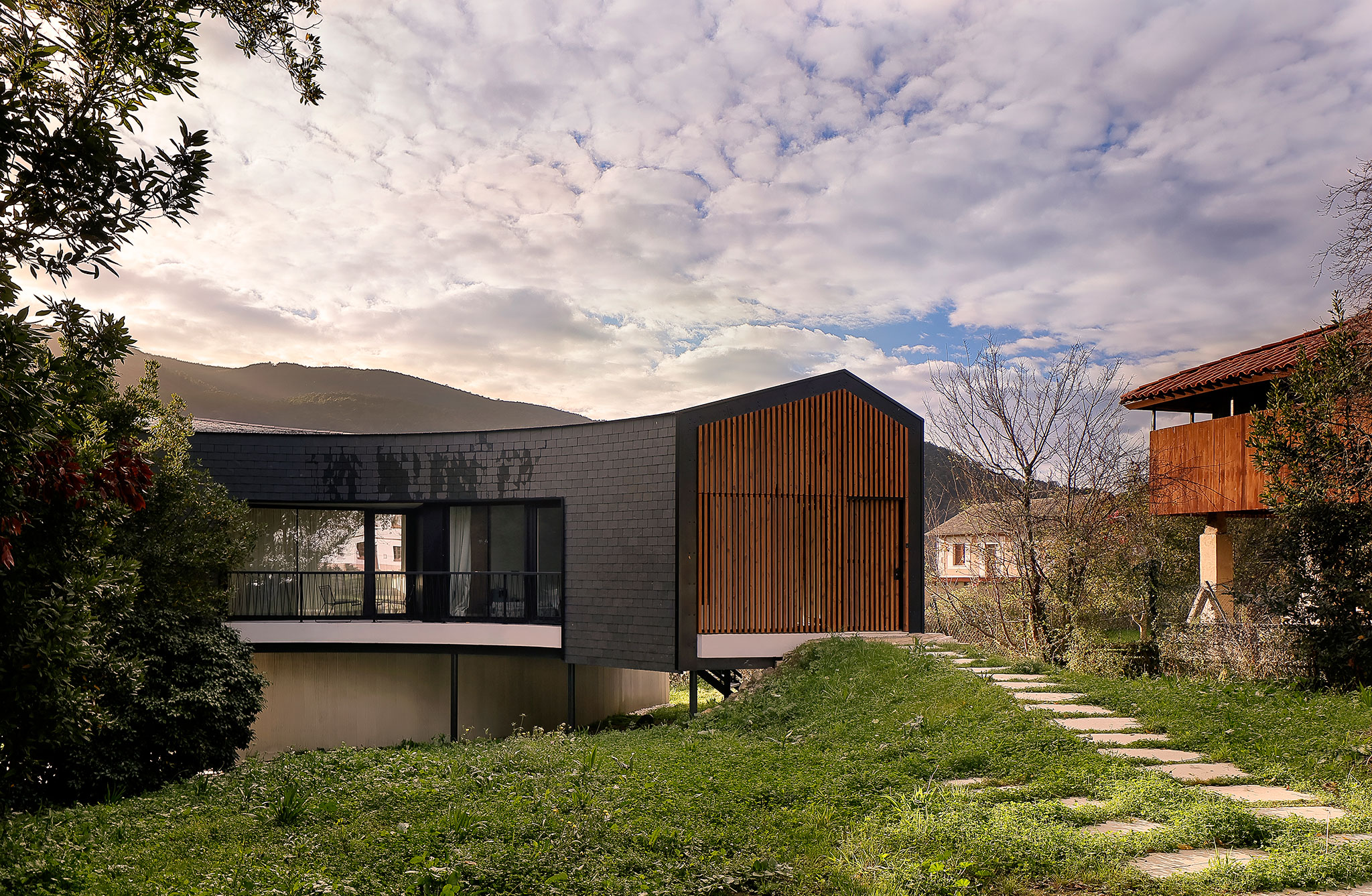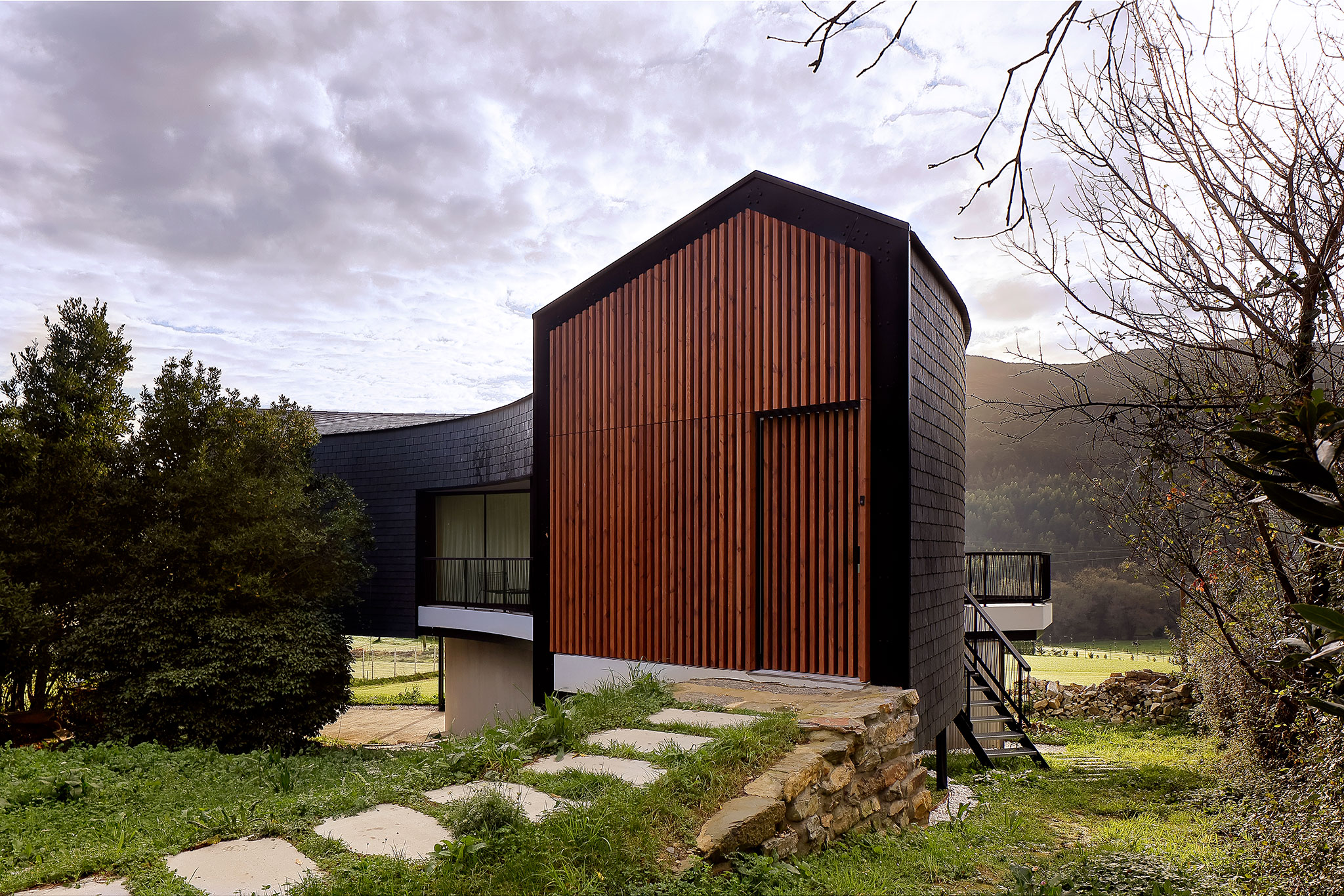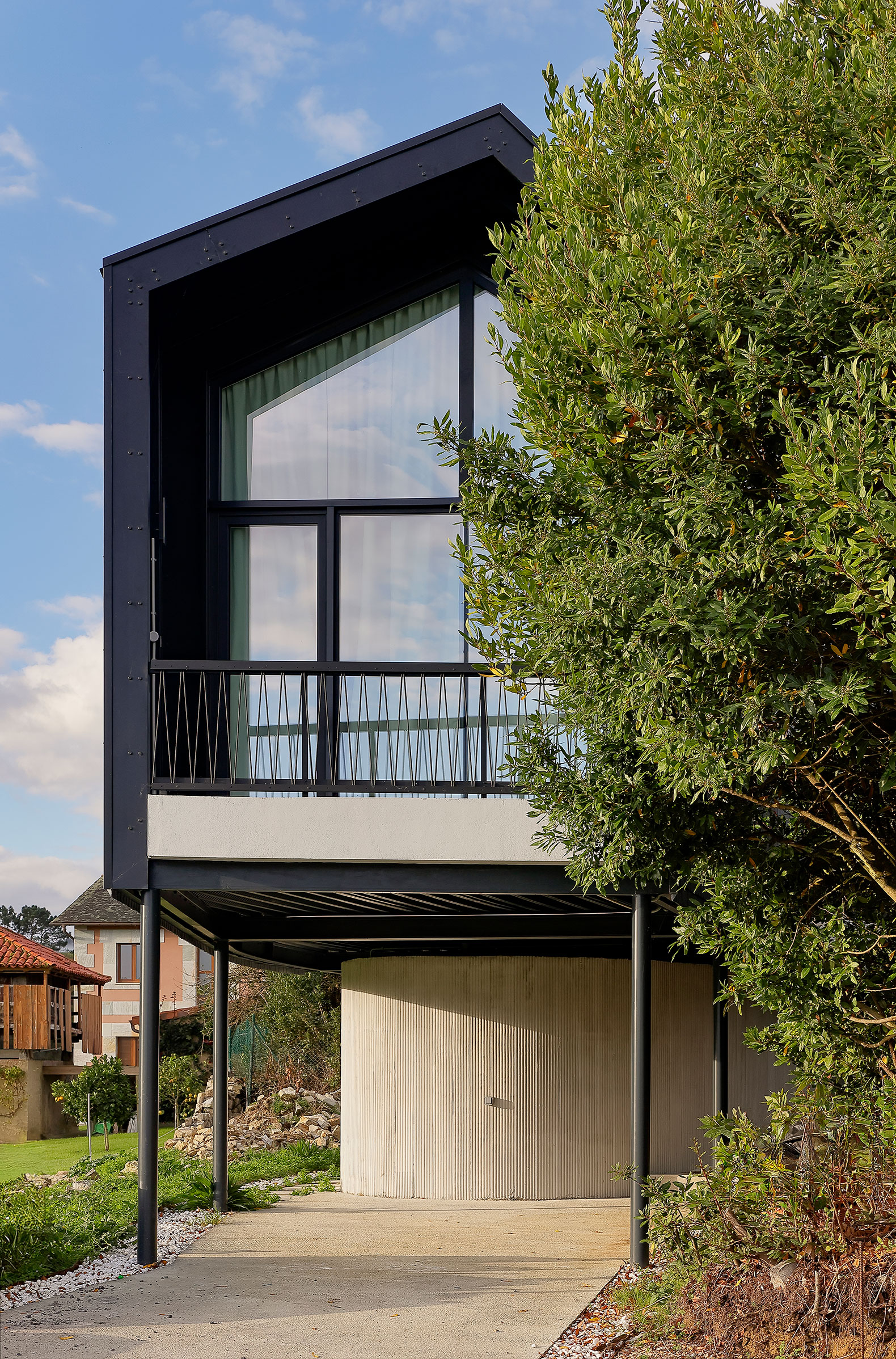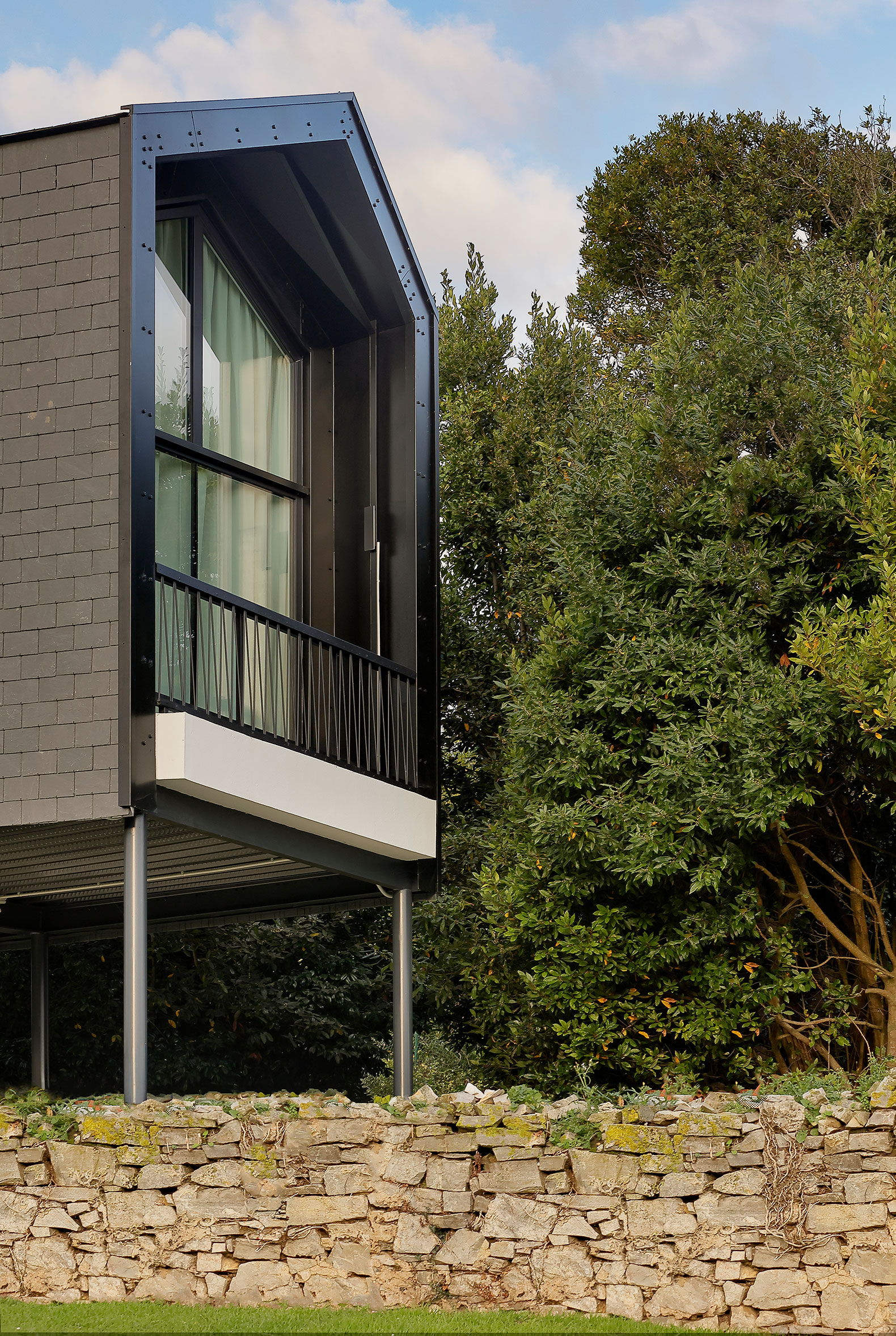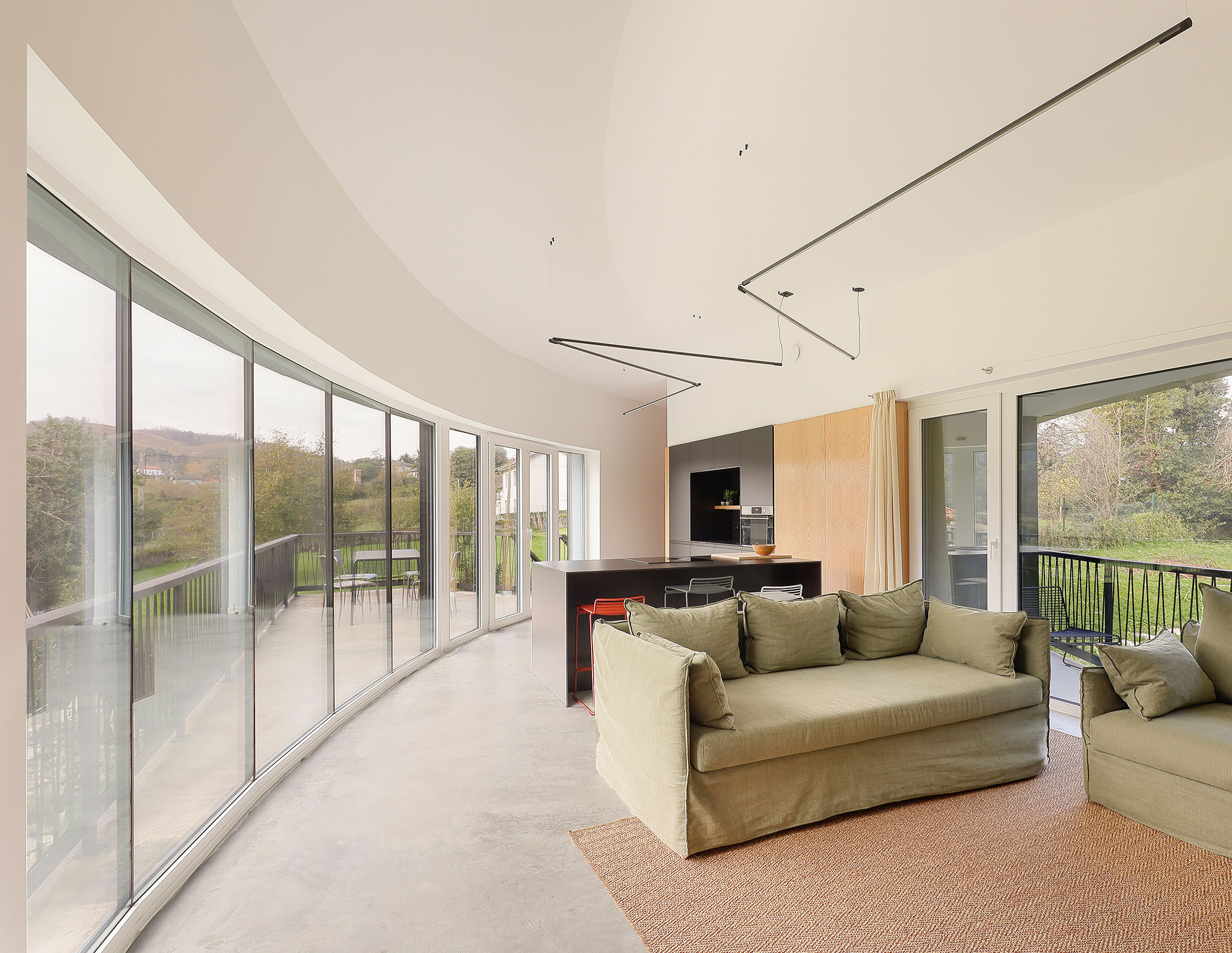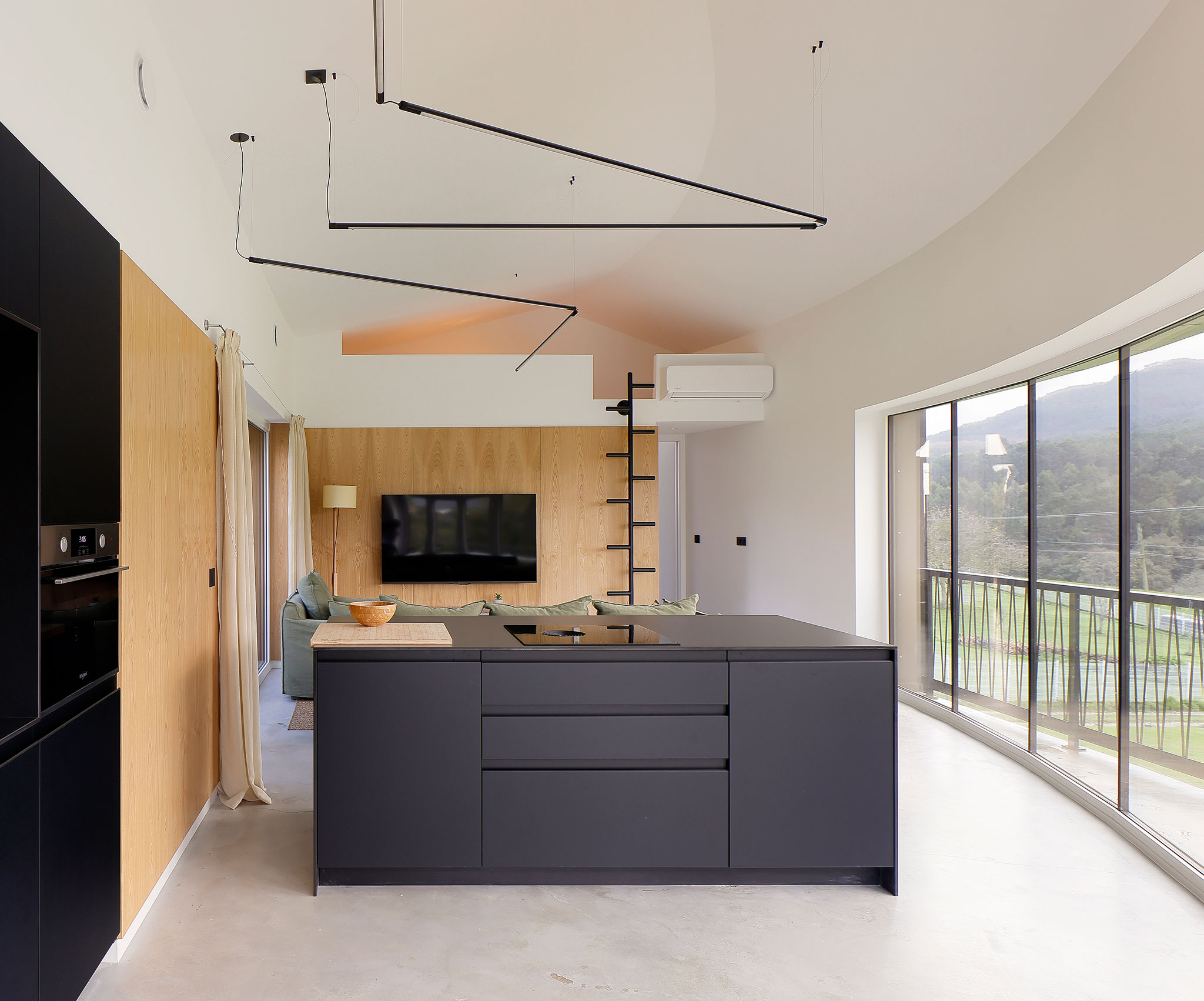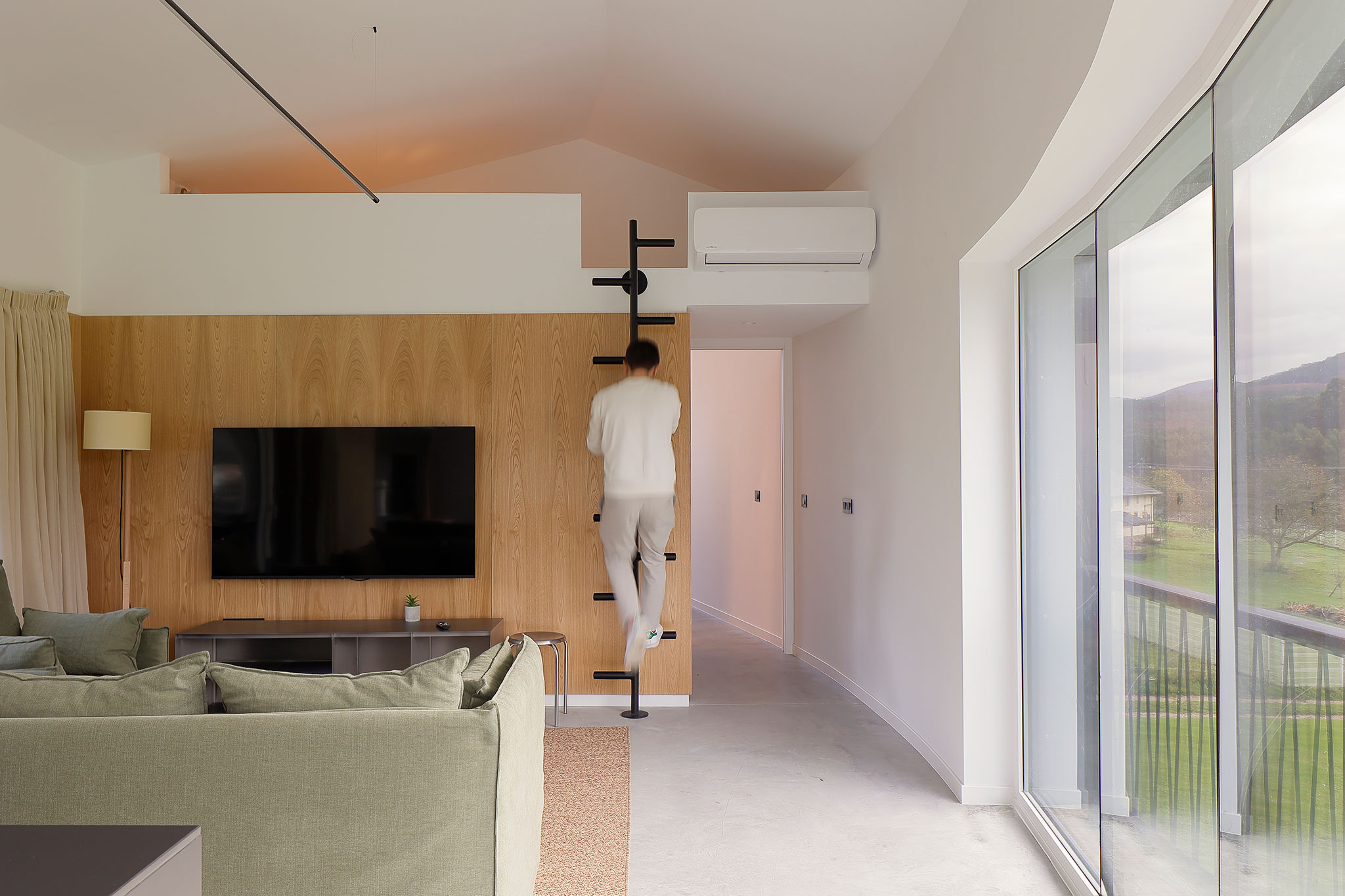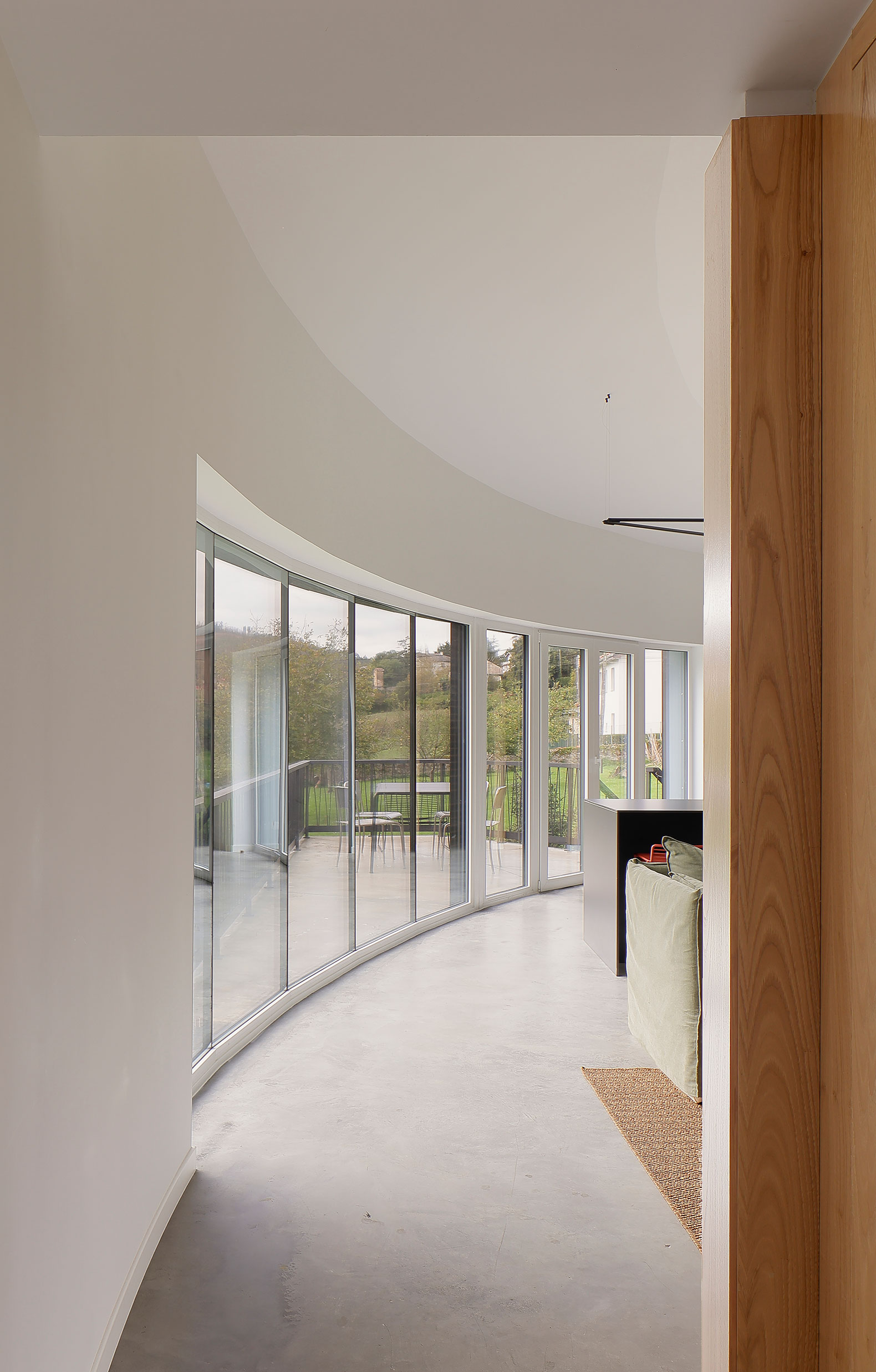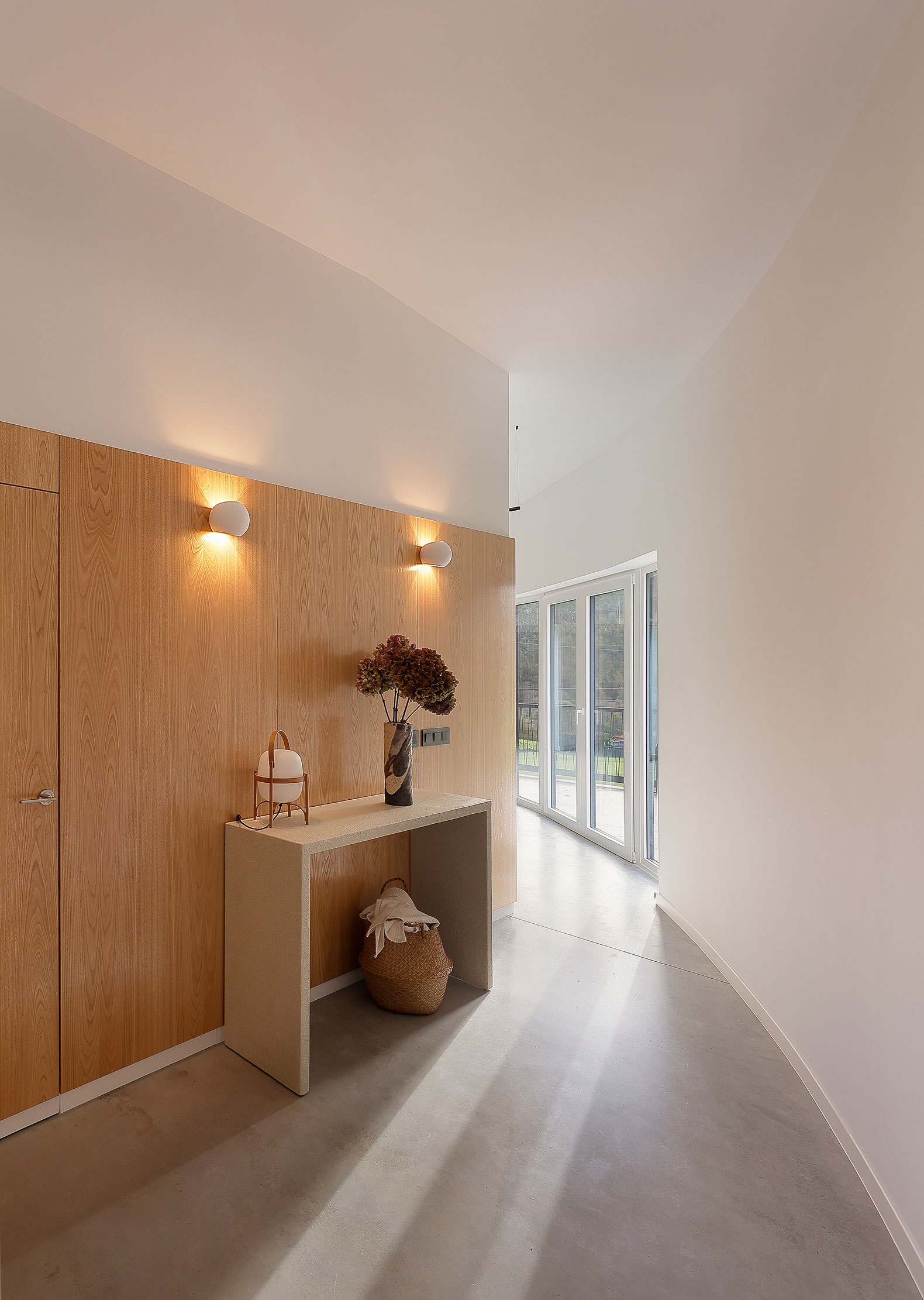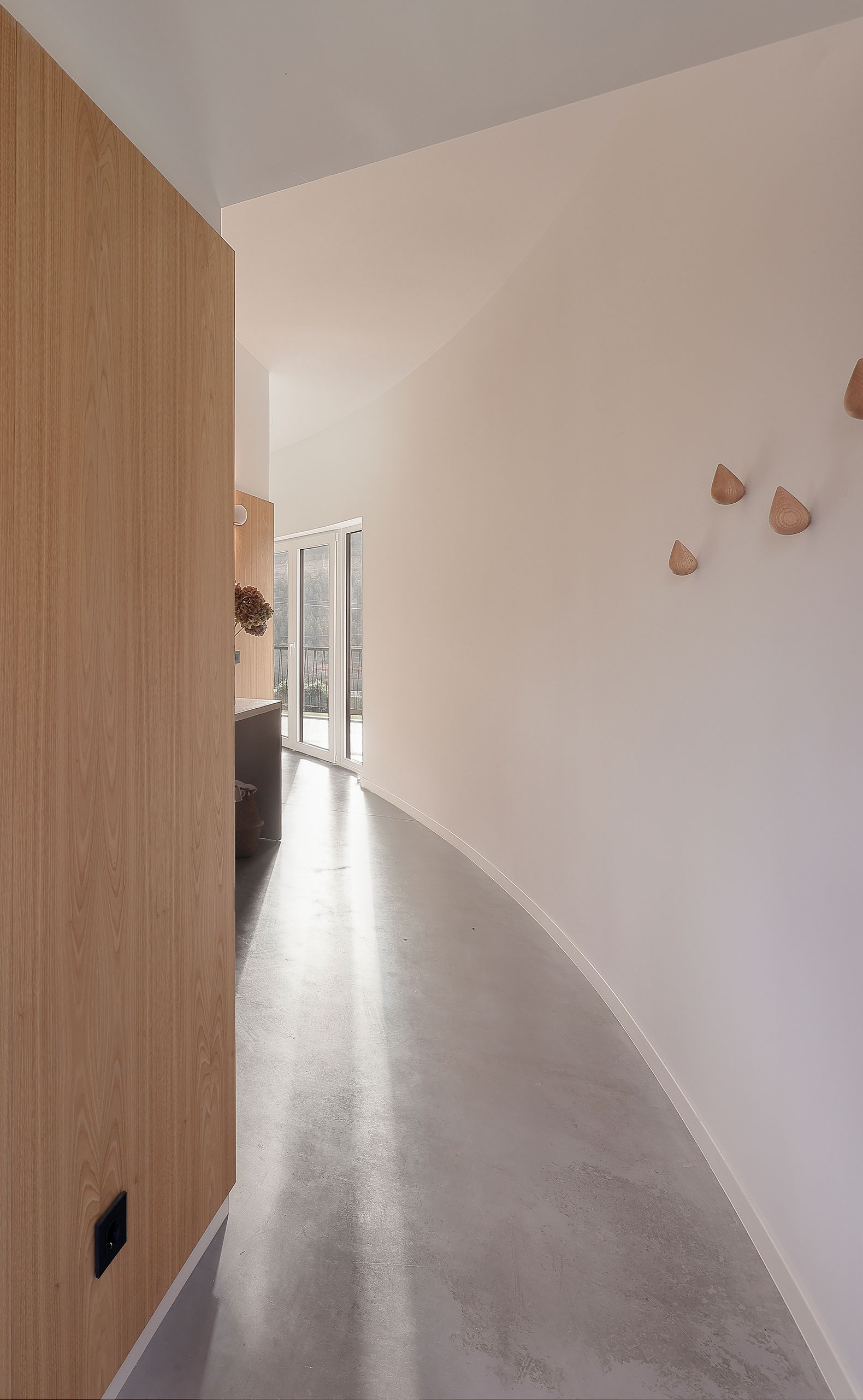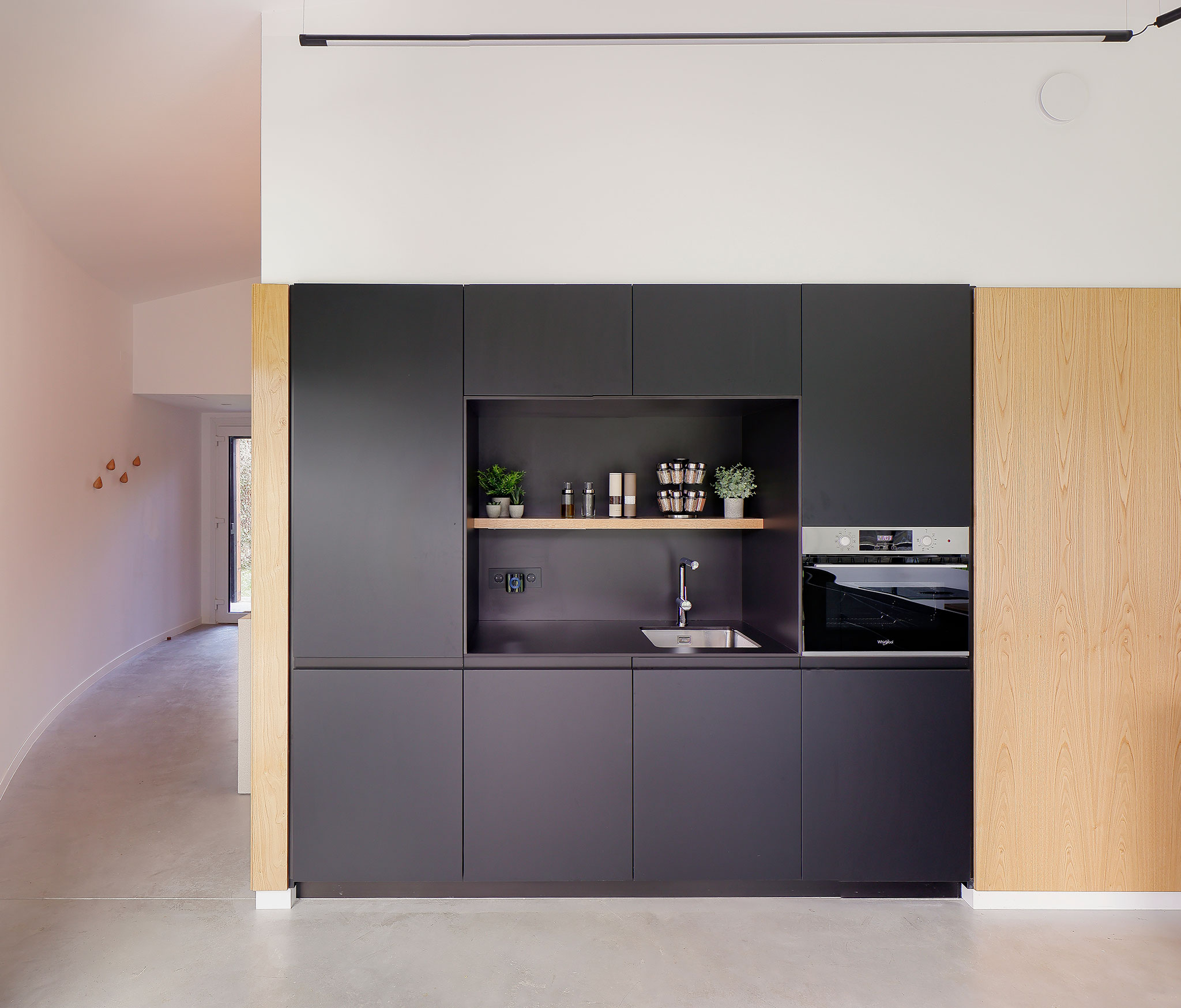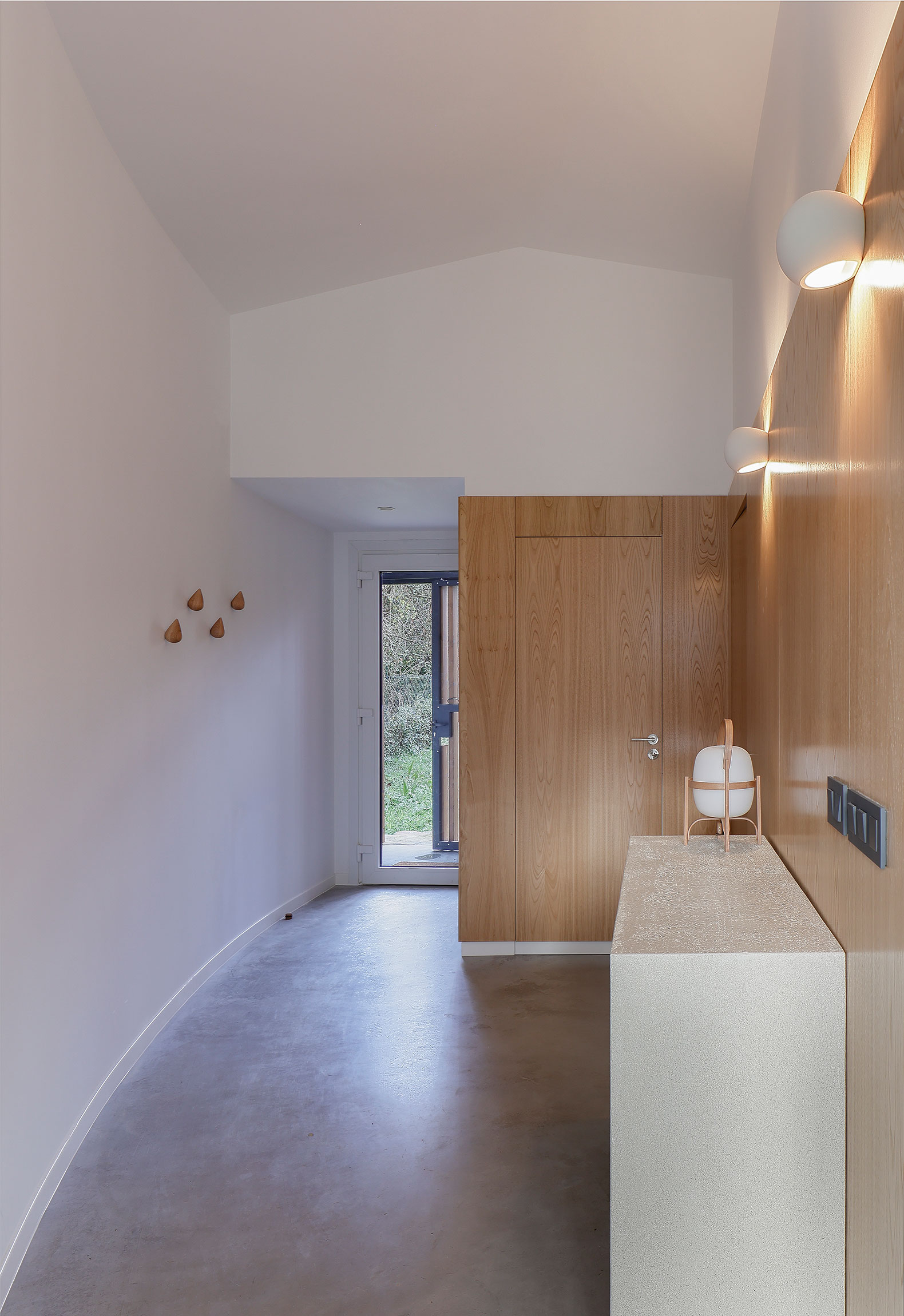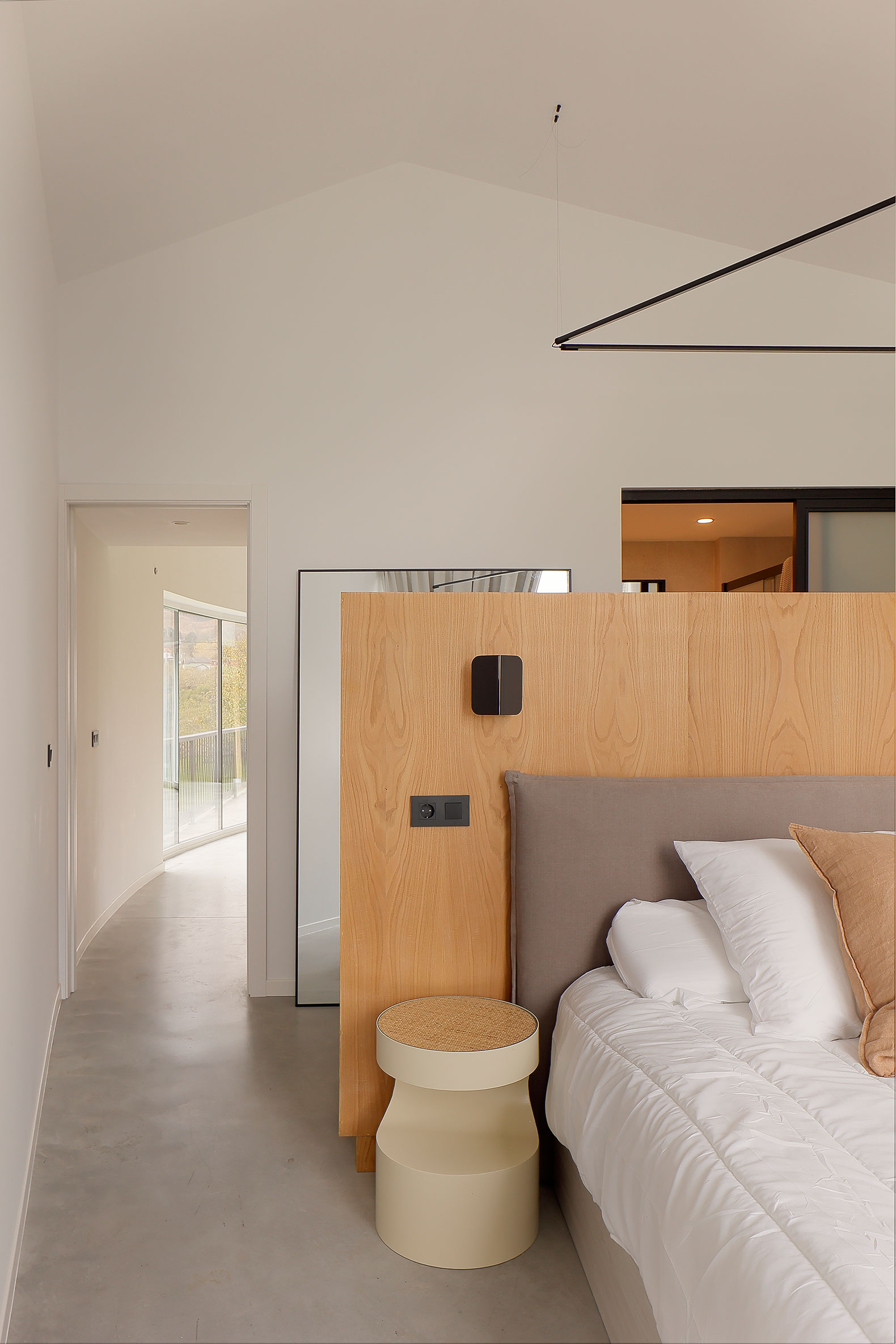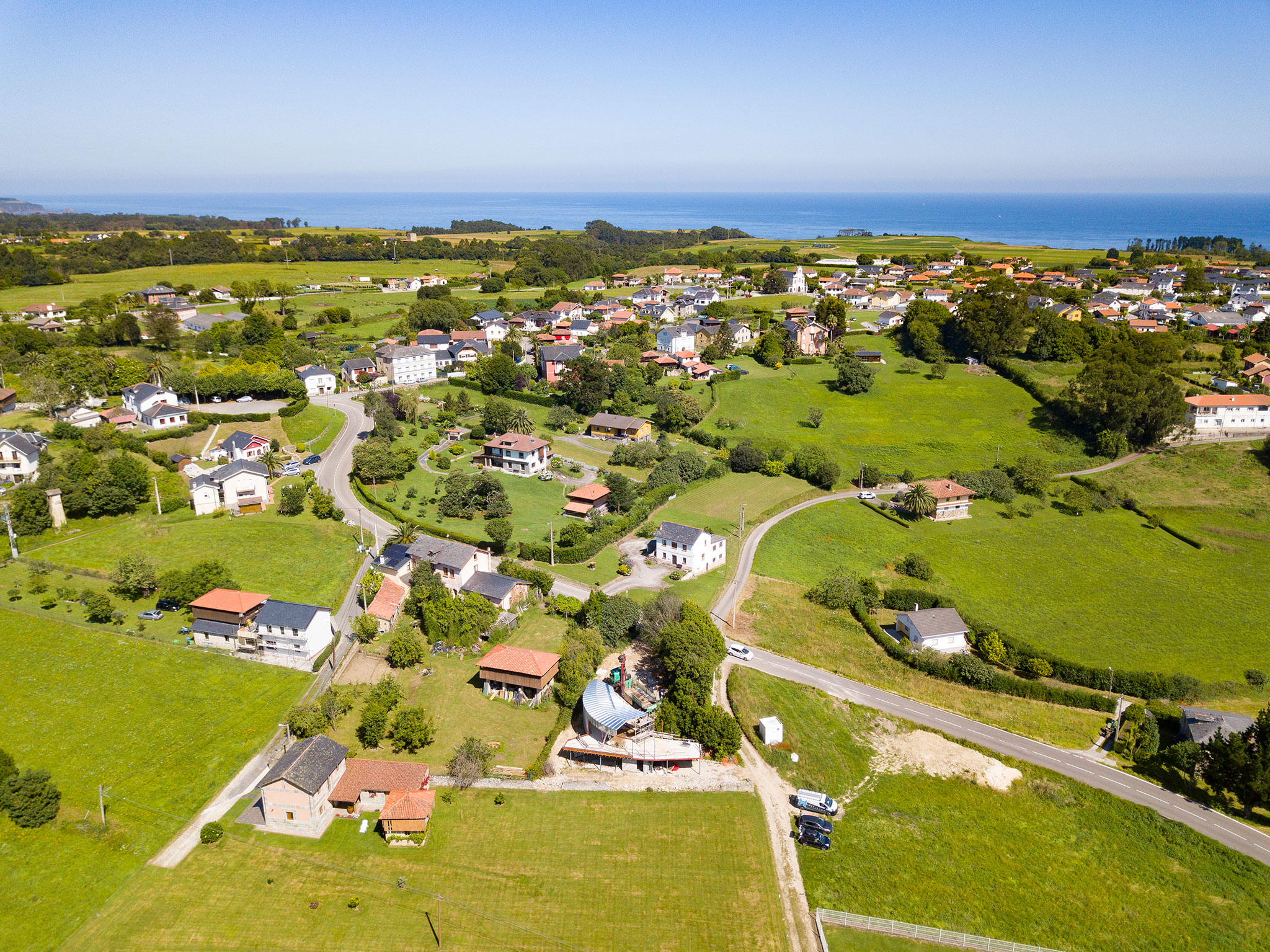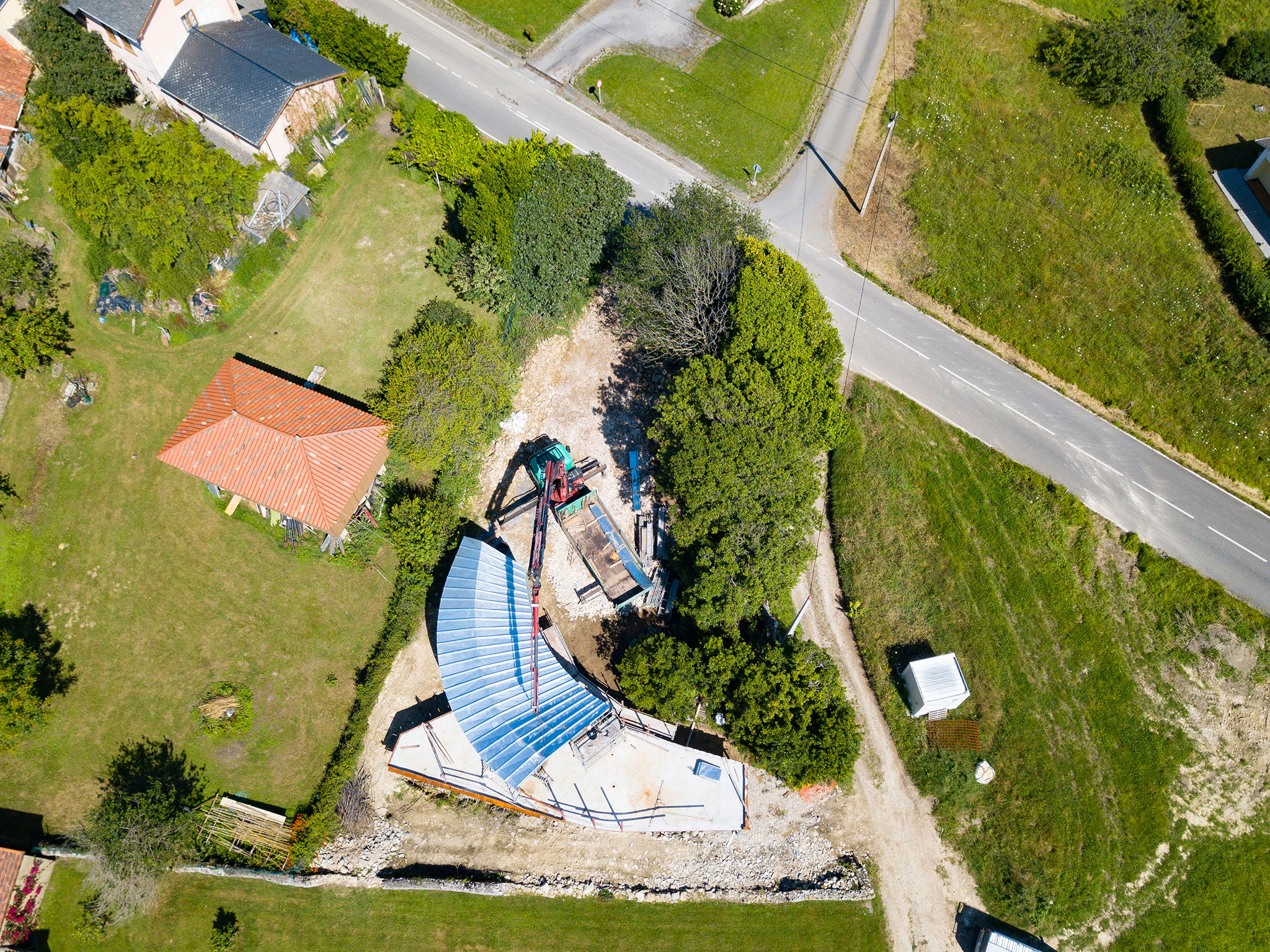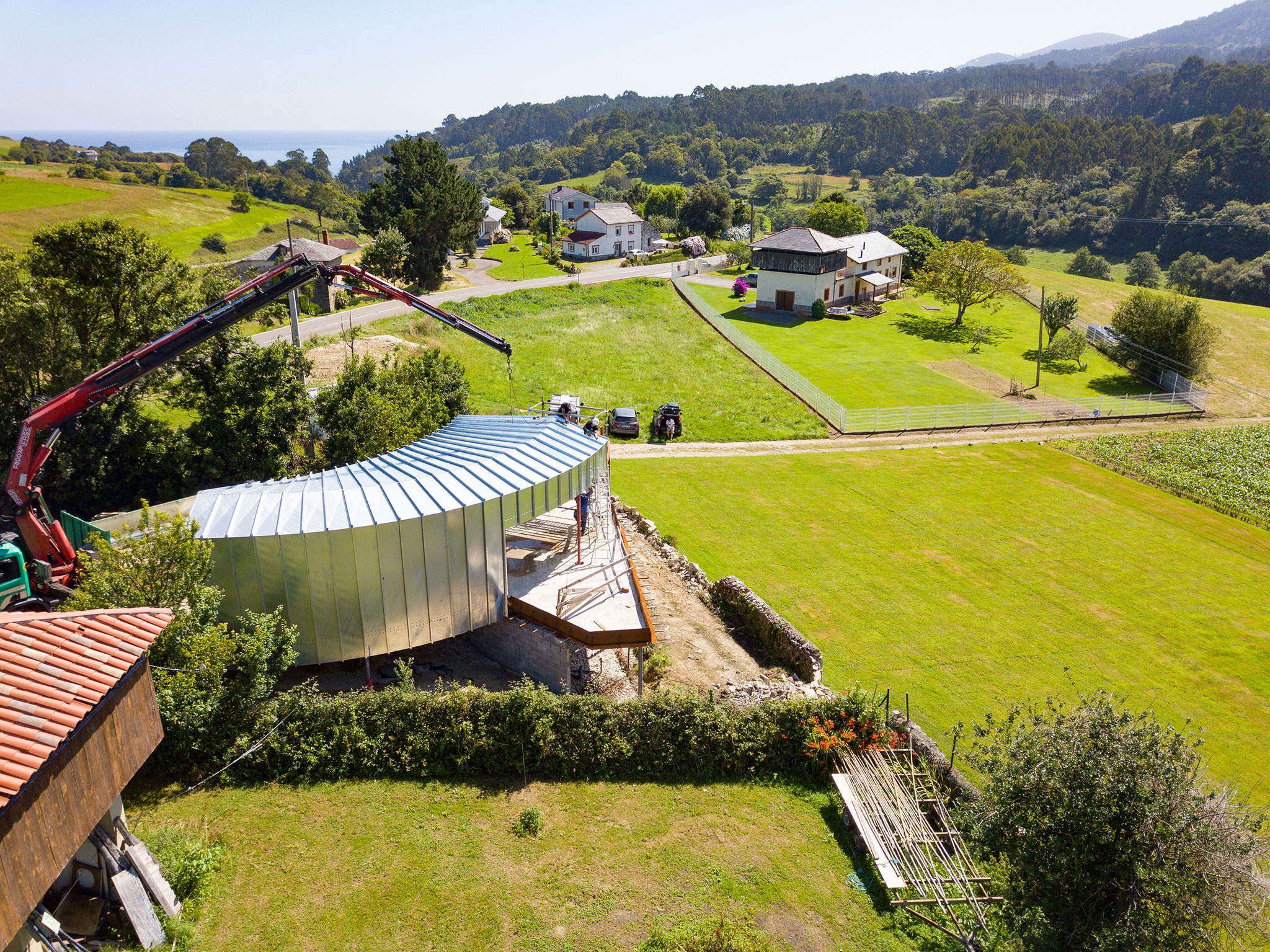
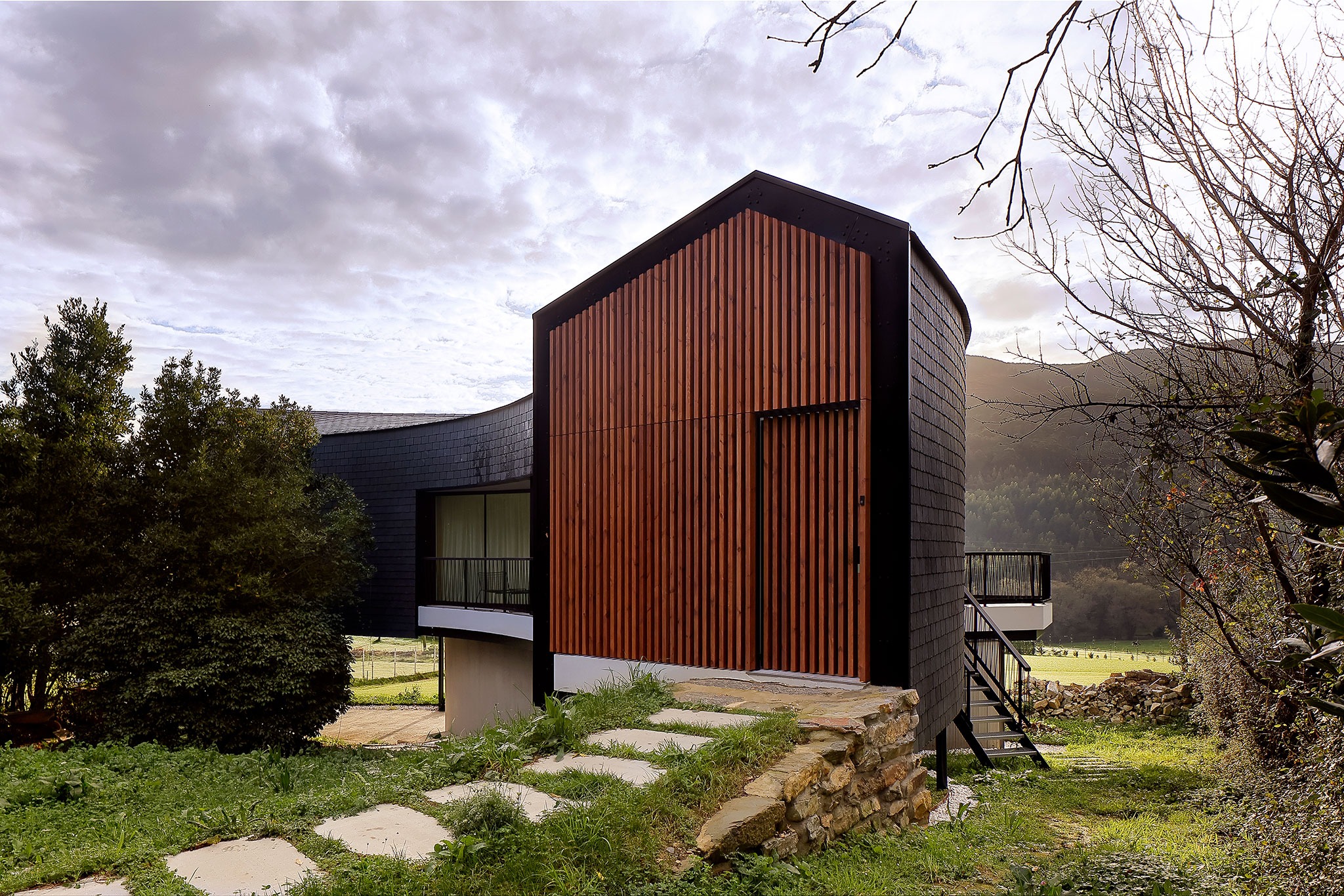
Access to the "Big Fish" house, designed by F5 Proyectos y Arquitectura, is through a vestibule that acts as a threshold to the interior of the home, showcasing a double north-south transparency that visually expands the living room and kitchen space. Meanwhile, the master bedroom, thanks to its elevated position and orientation towards the open horizon of the Cantabrian Sea, boasts exceptional views.
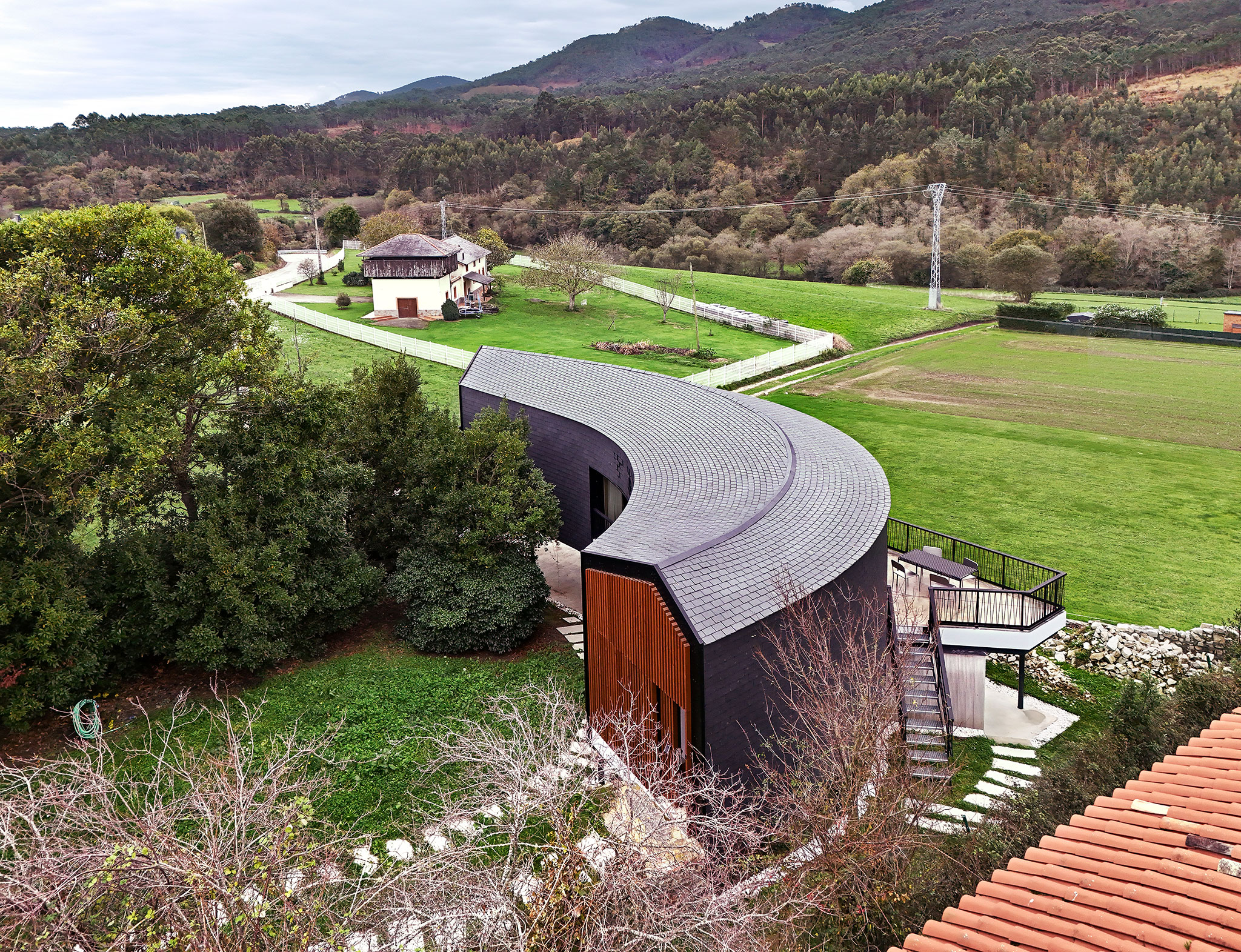
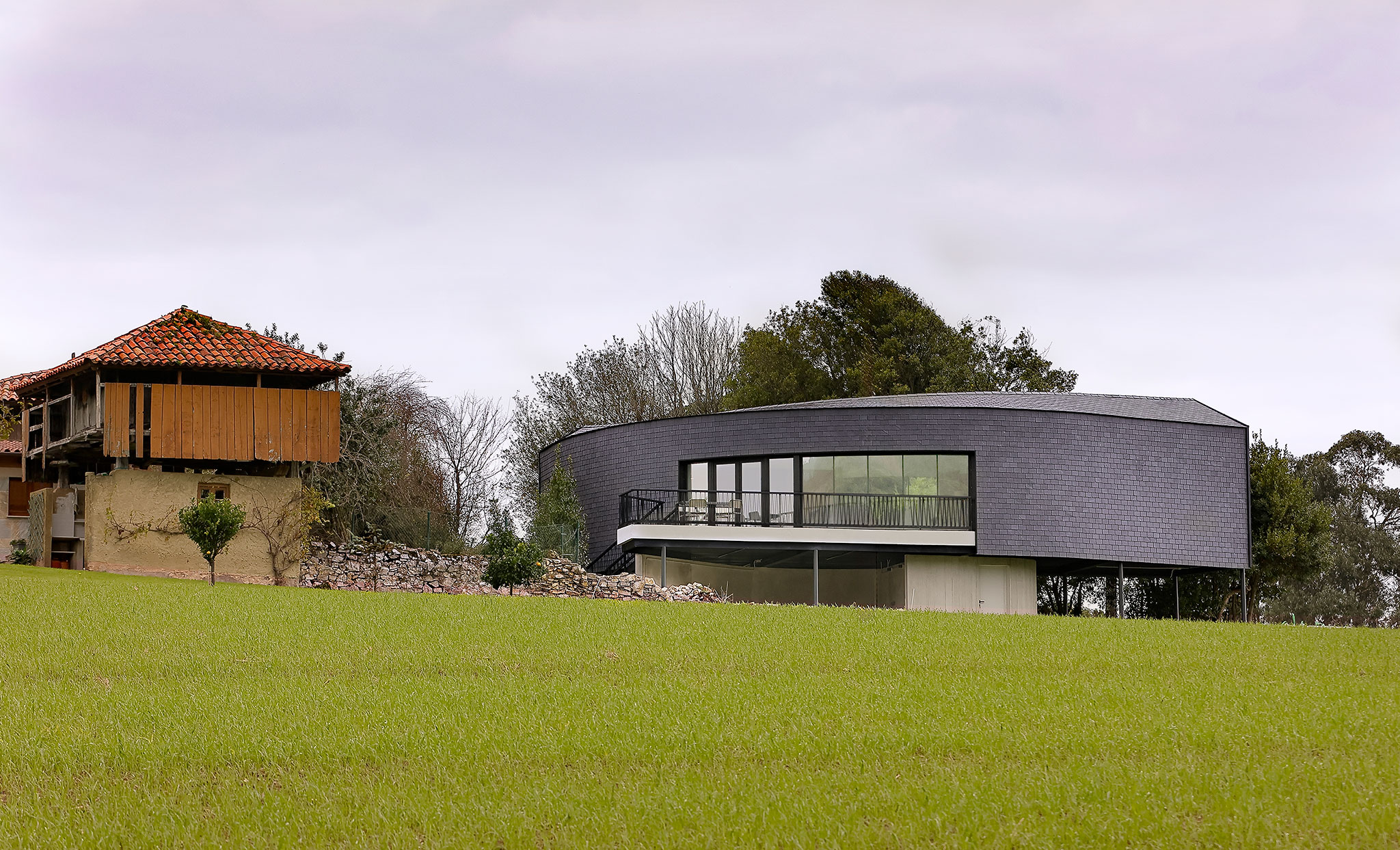
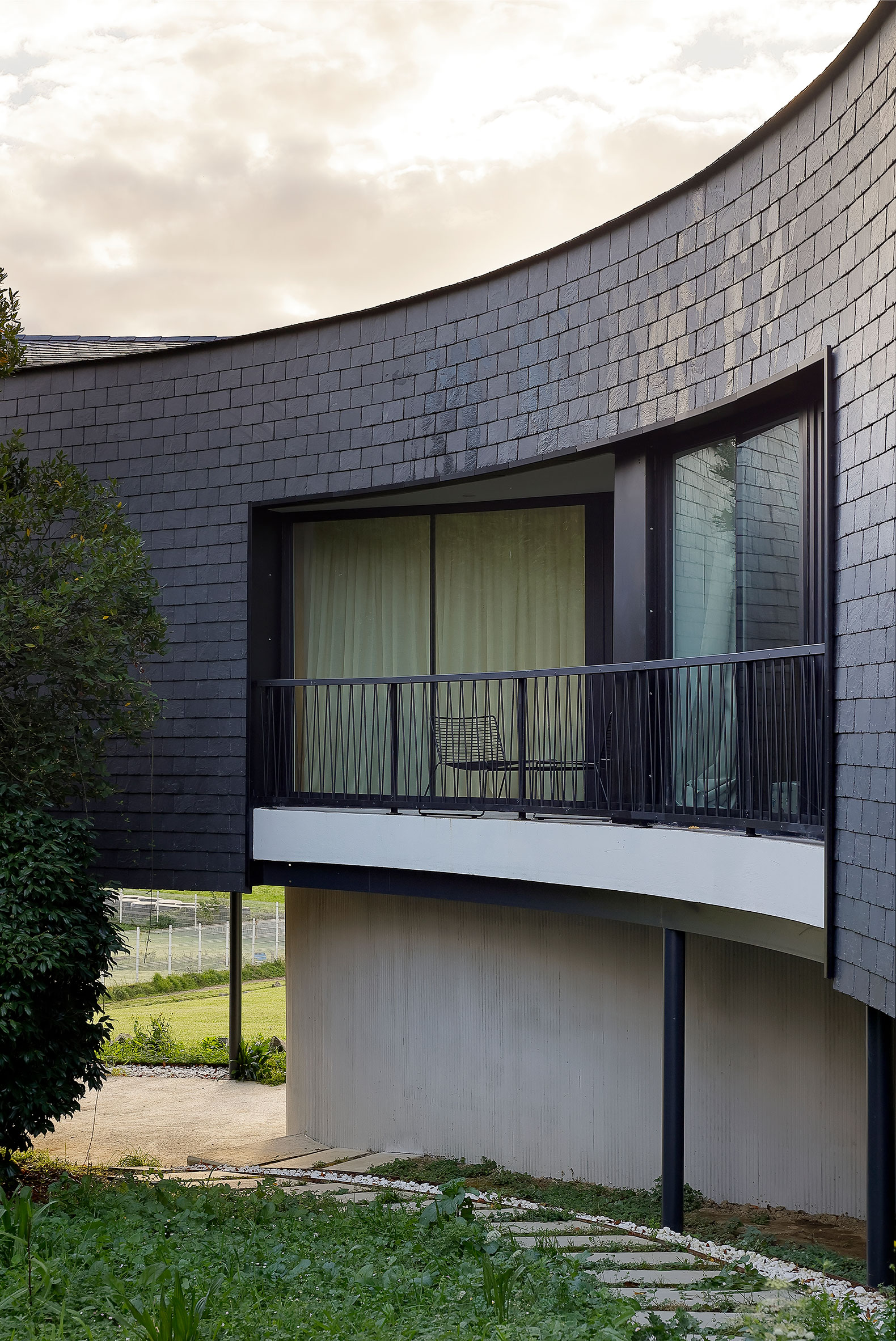
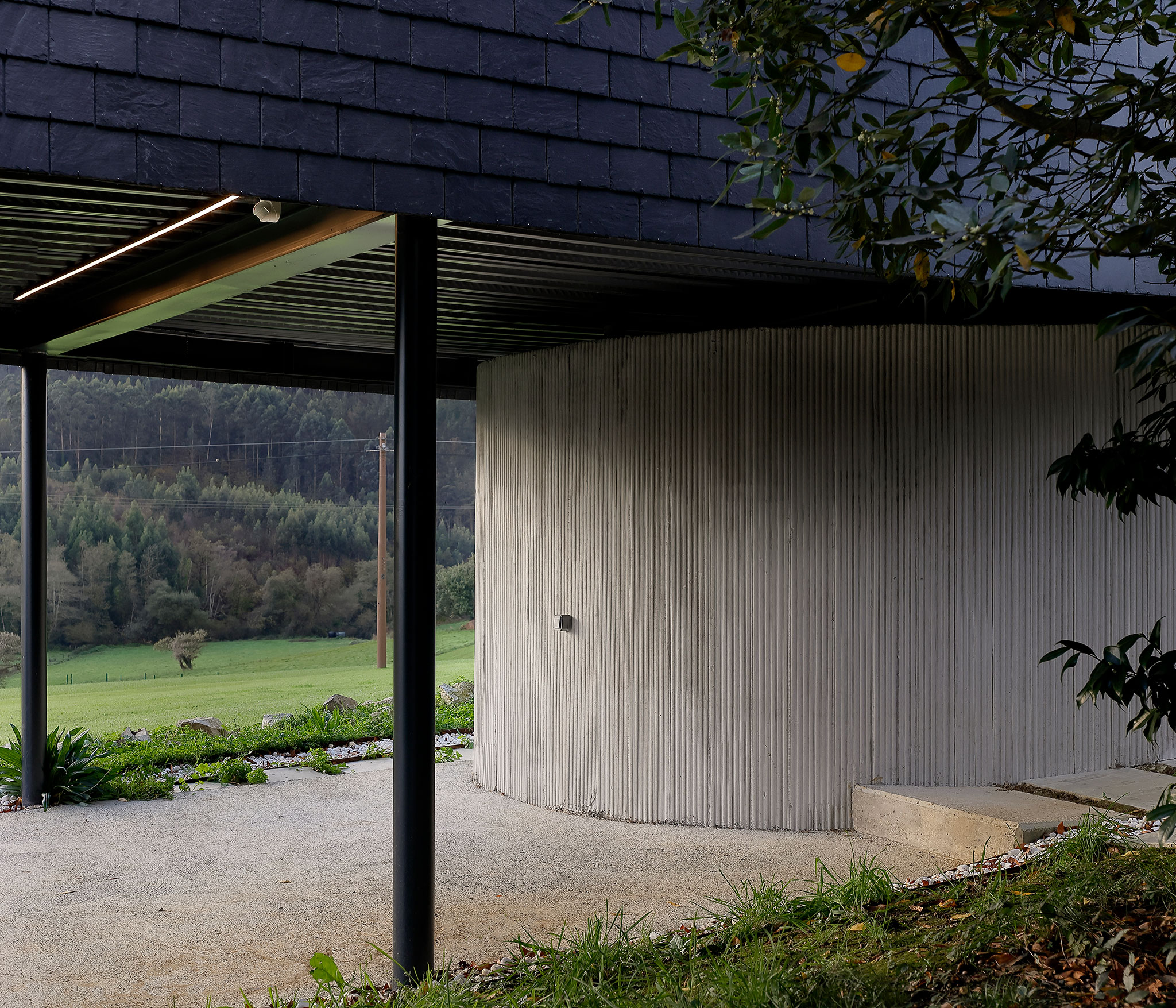
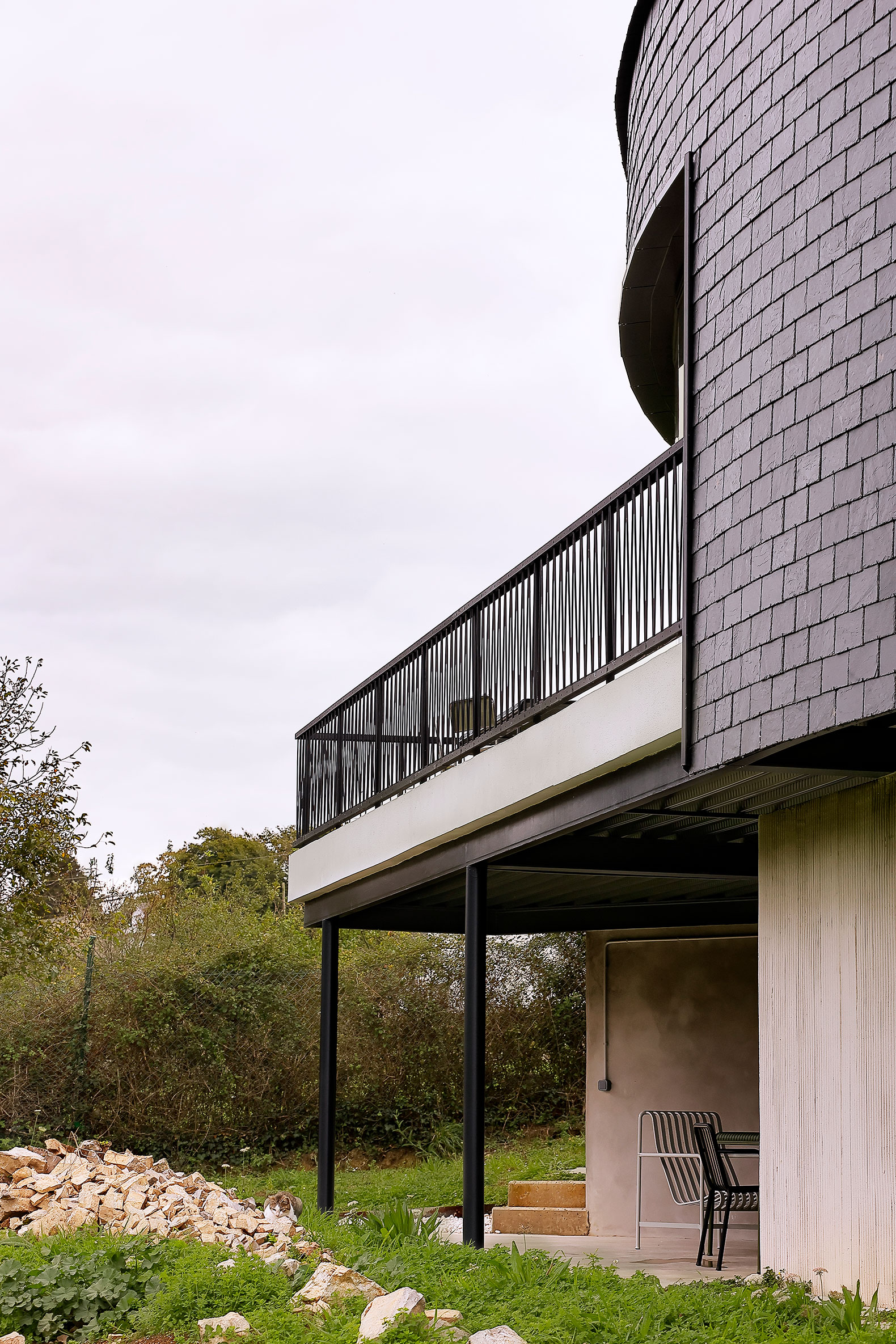
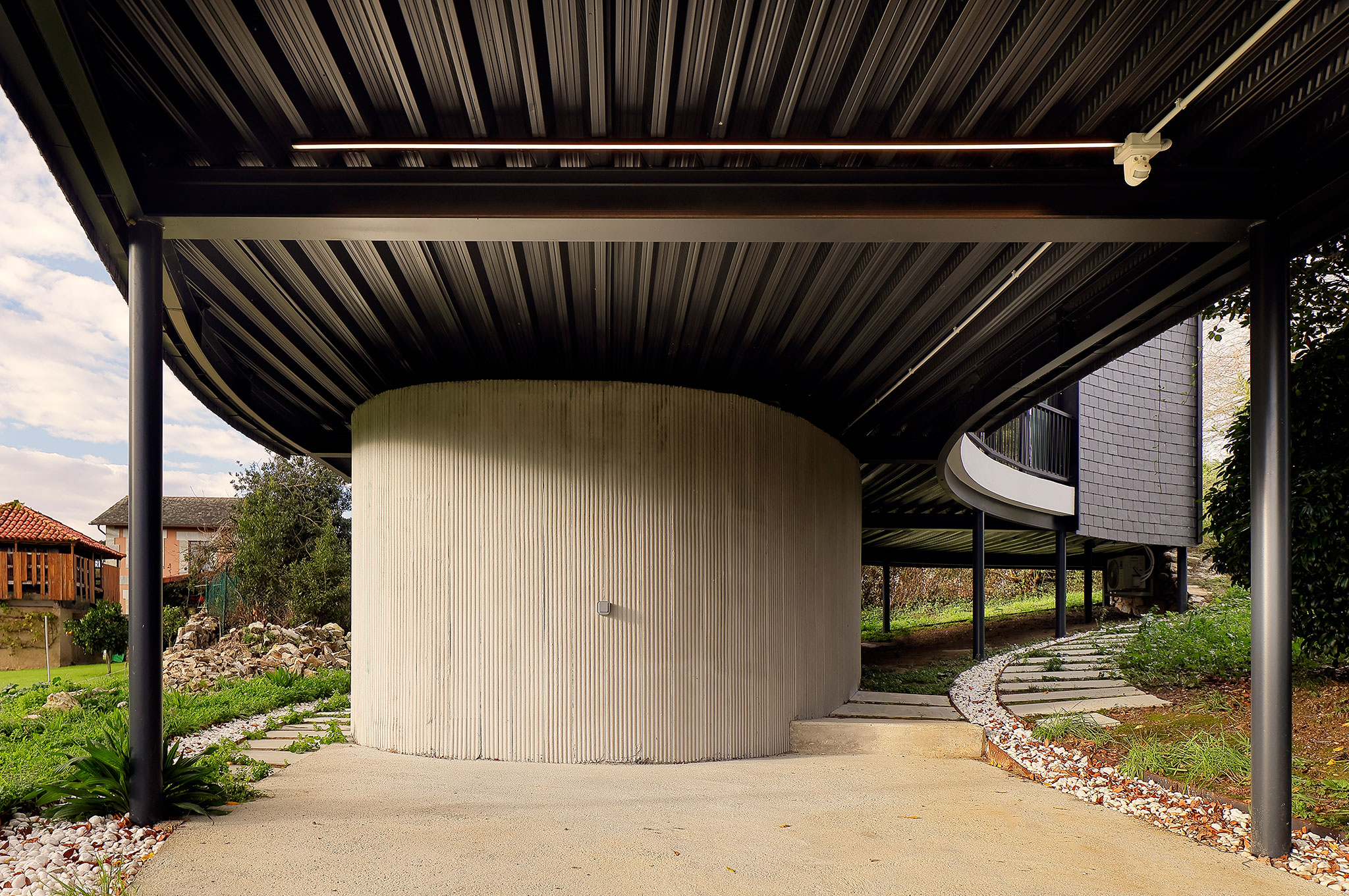
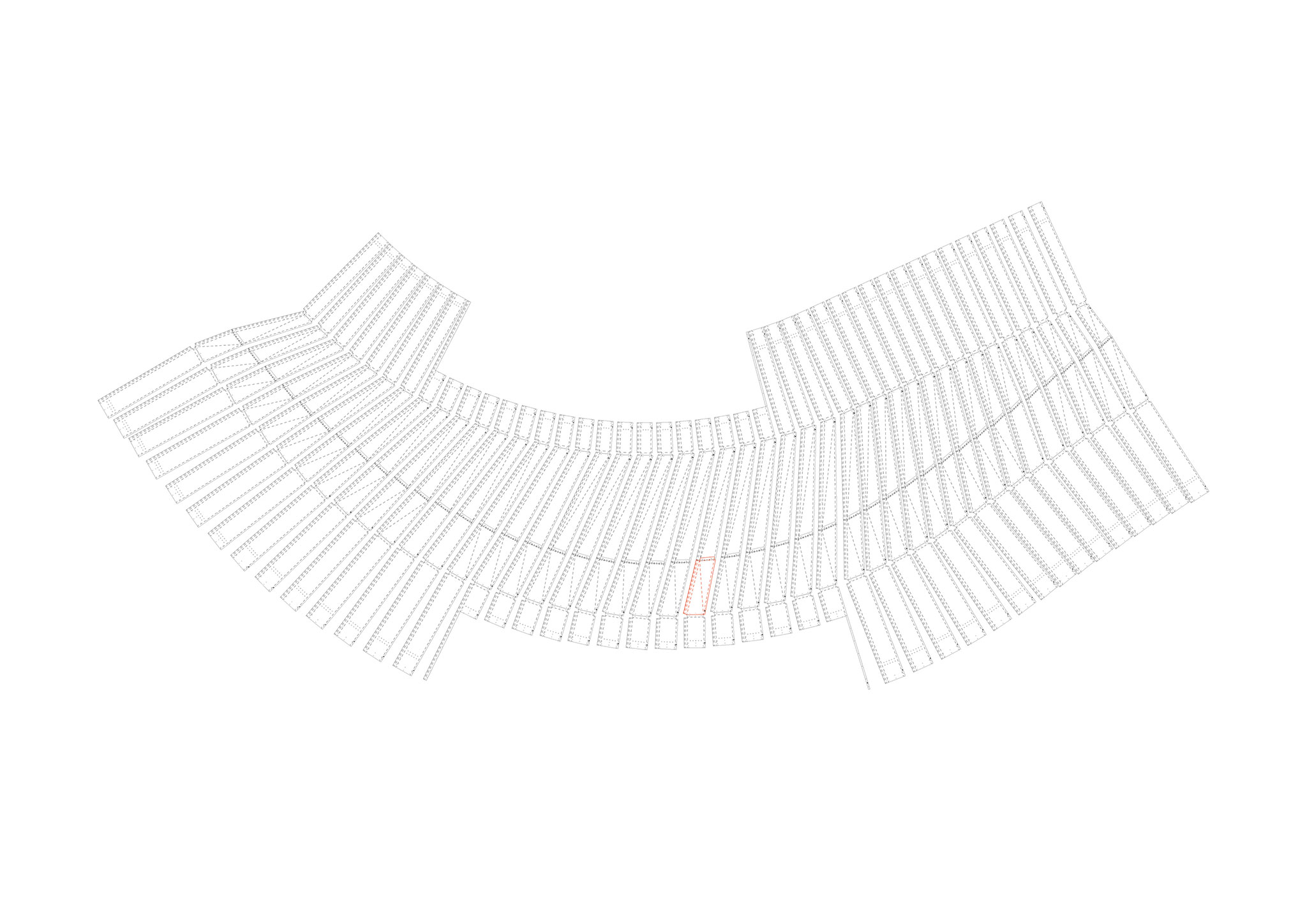
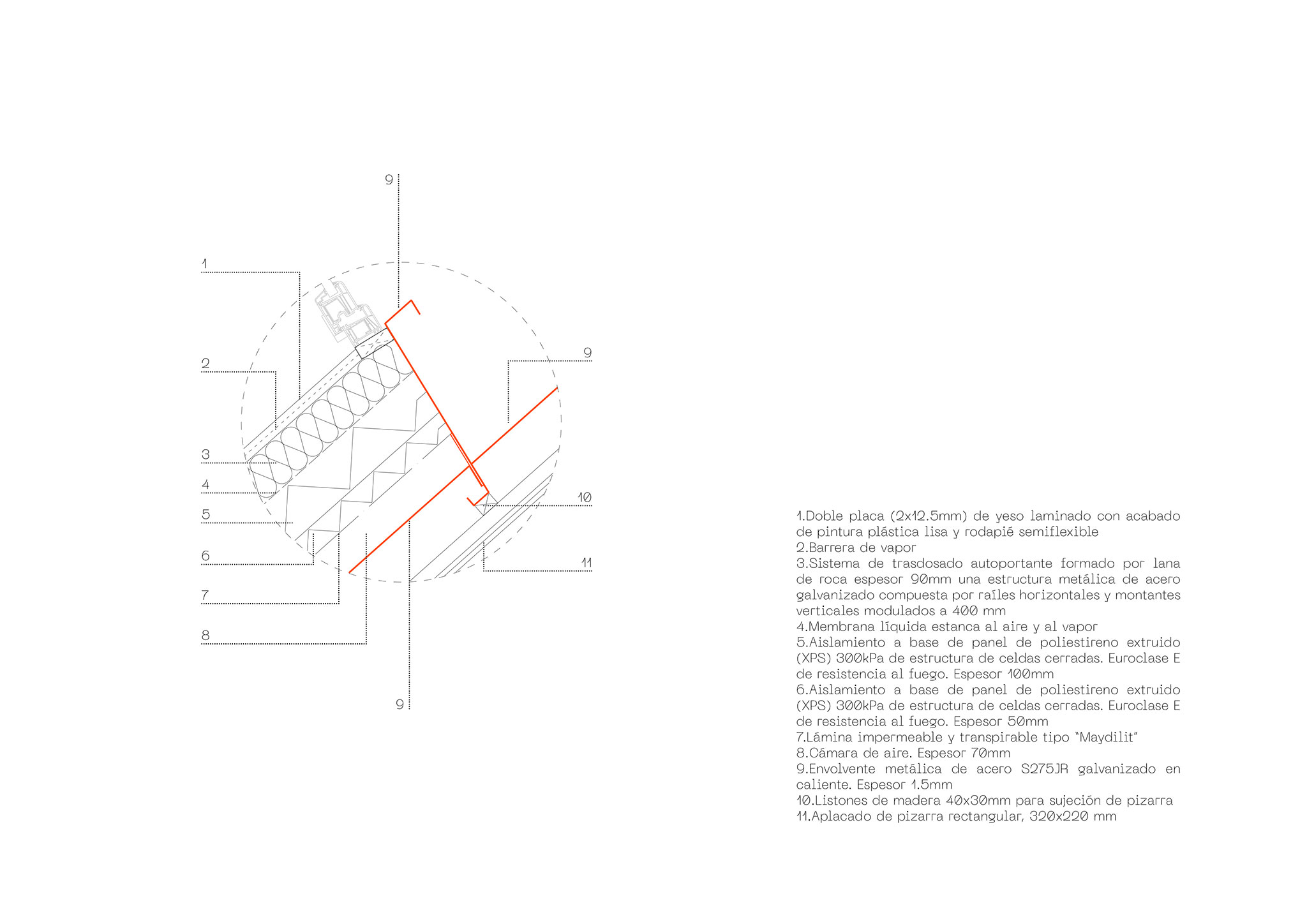
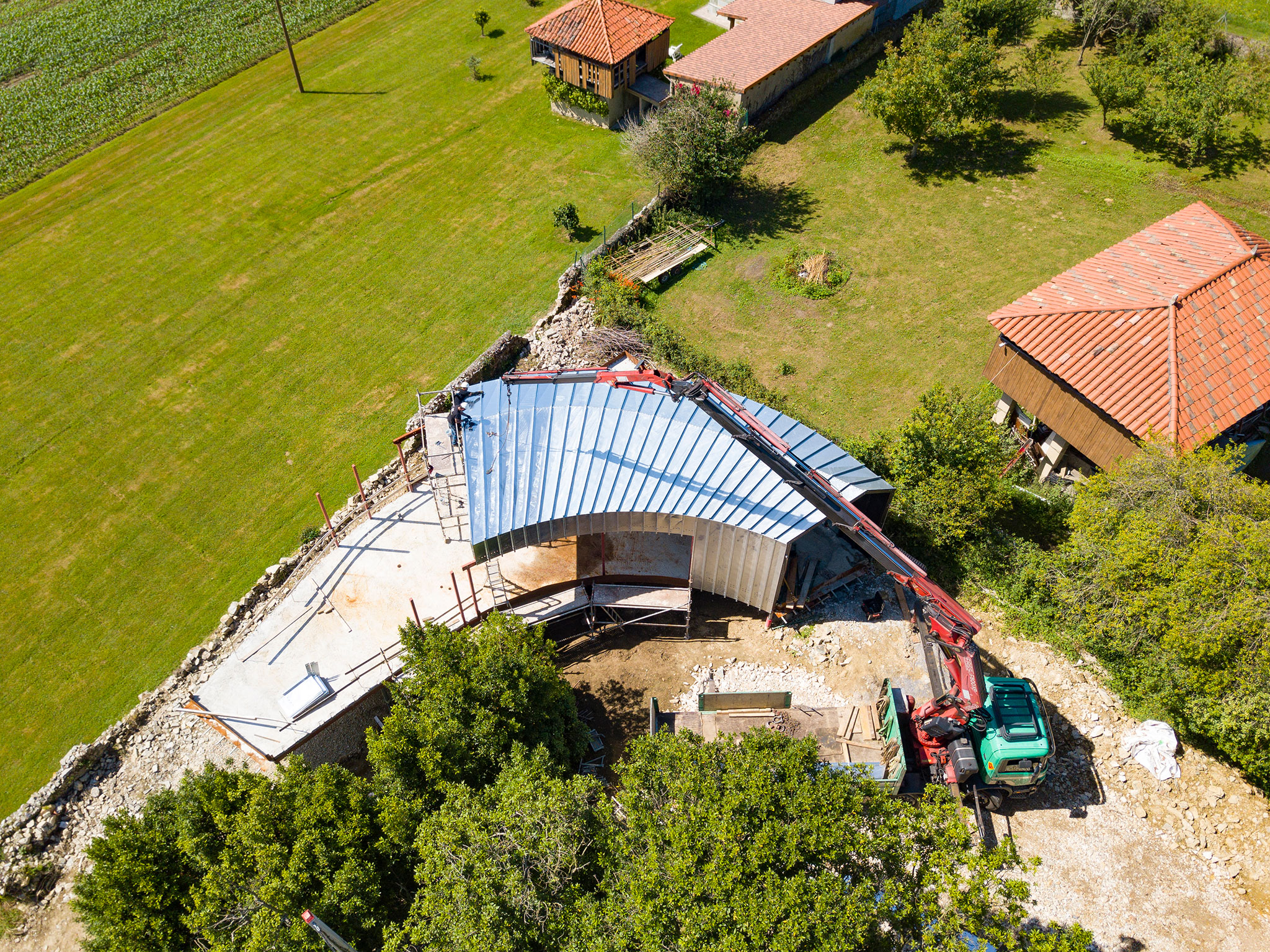
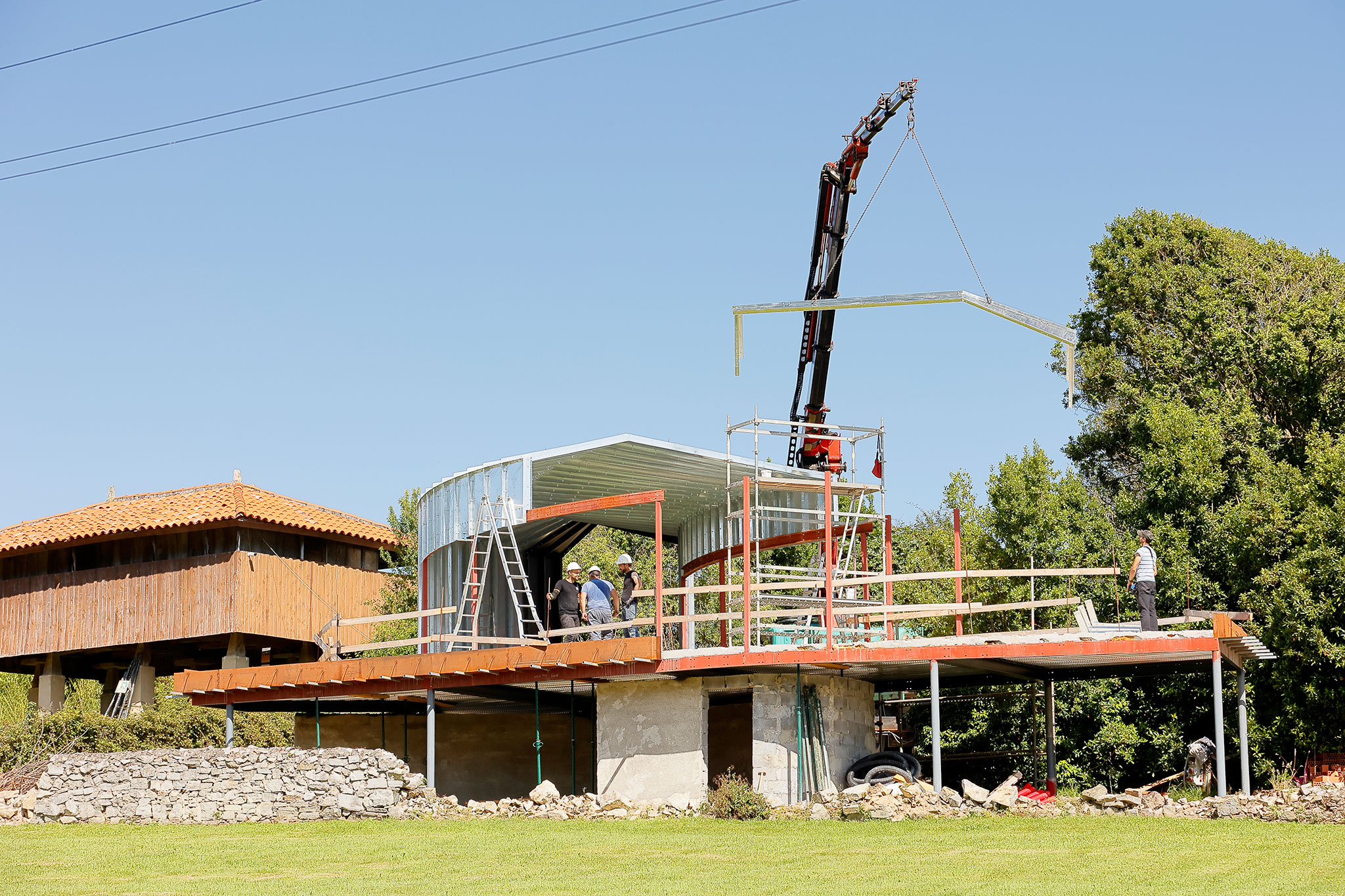
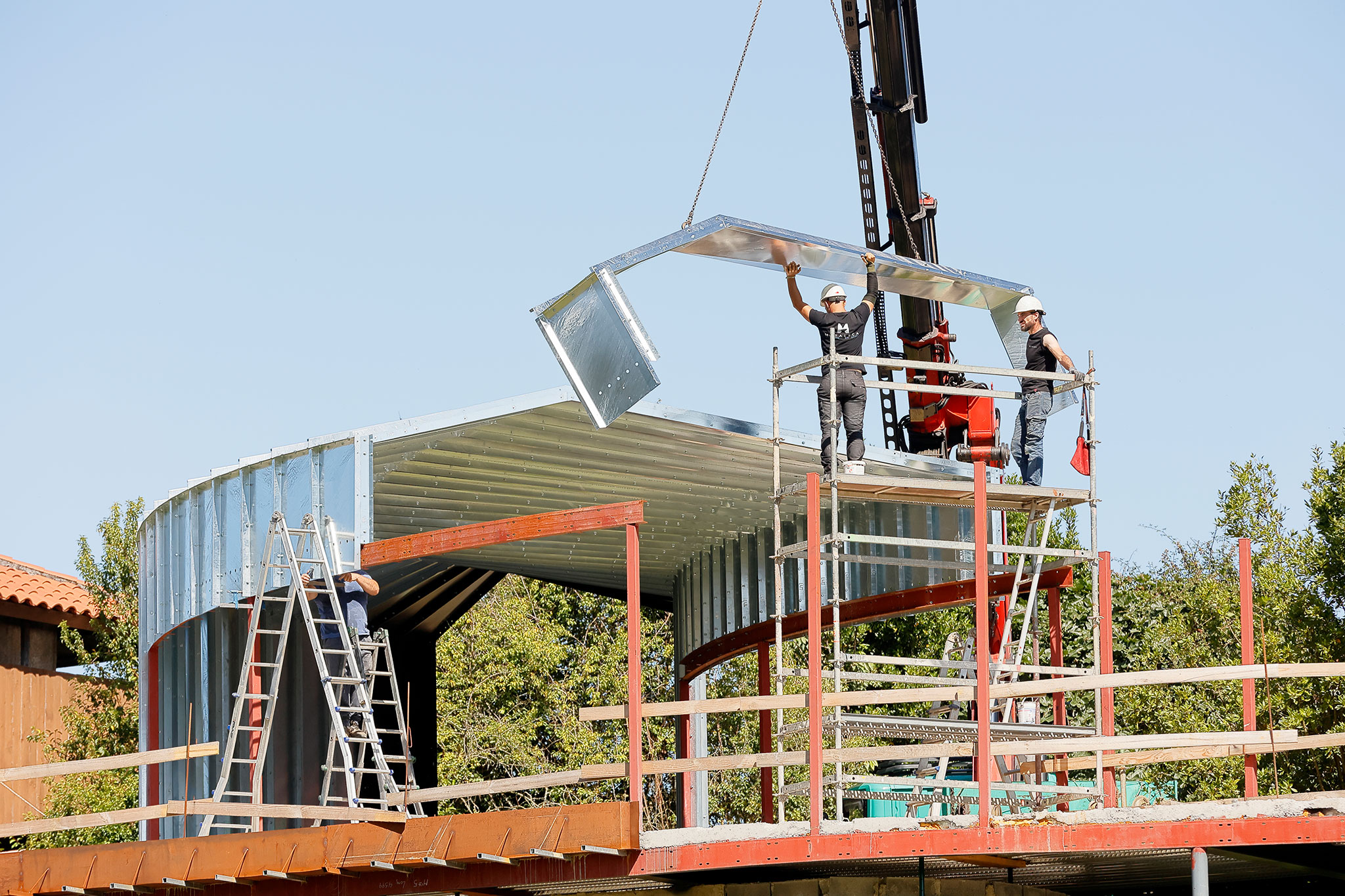
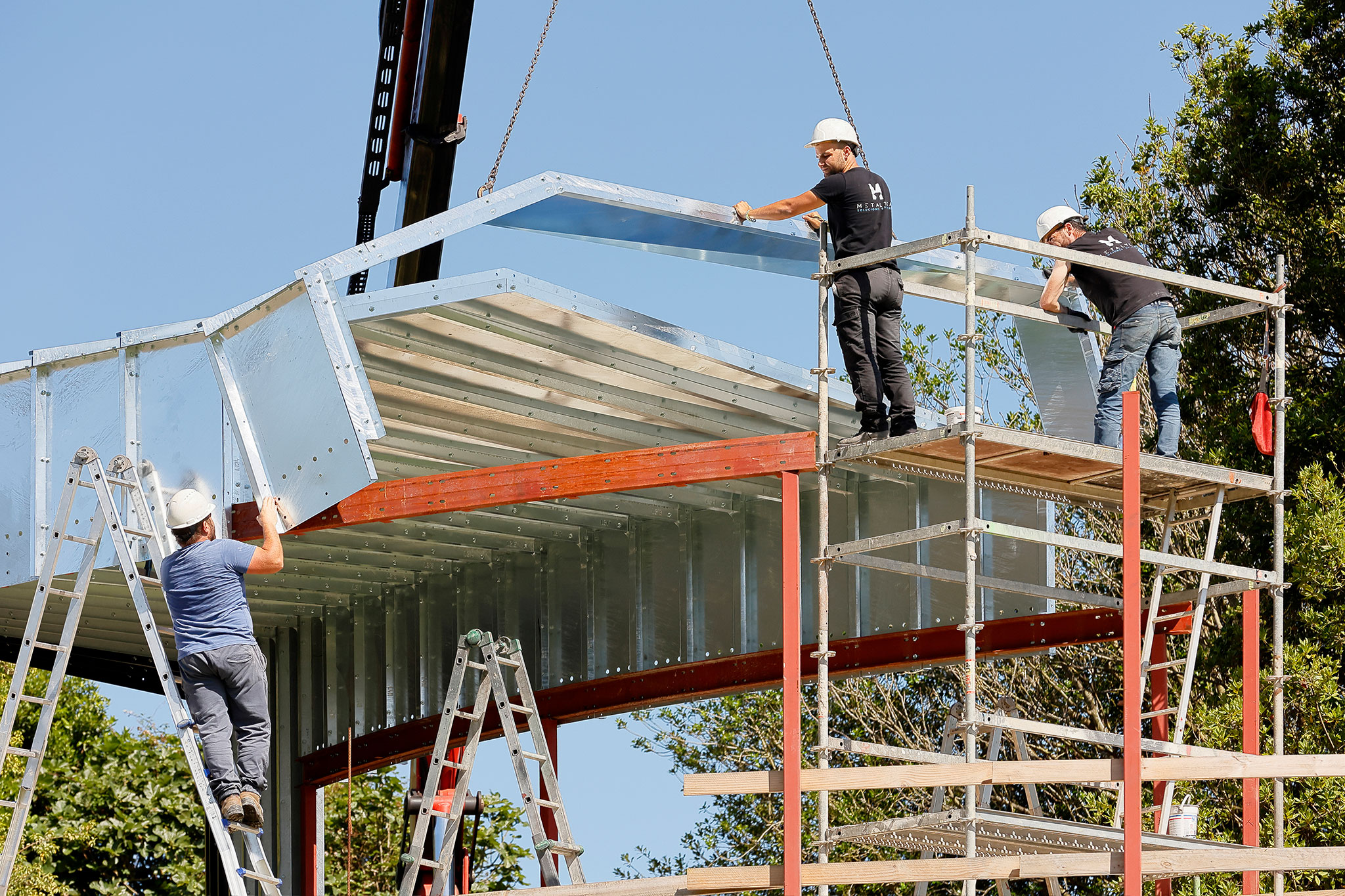
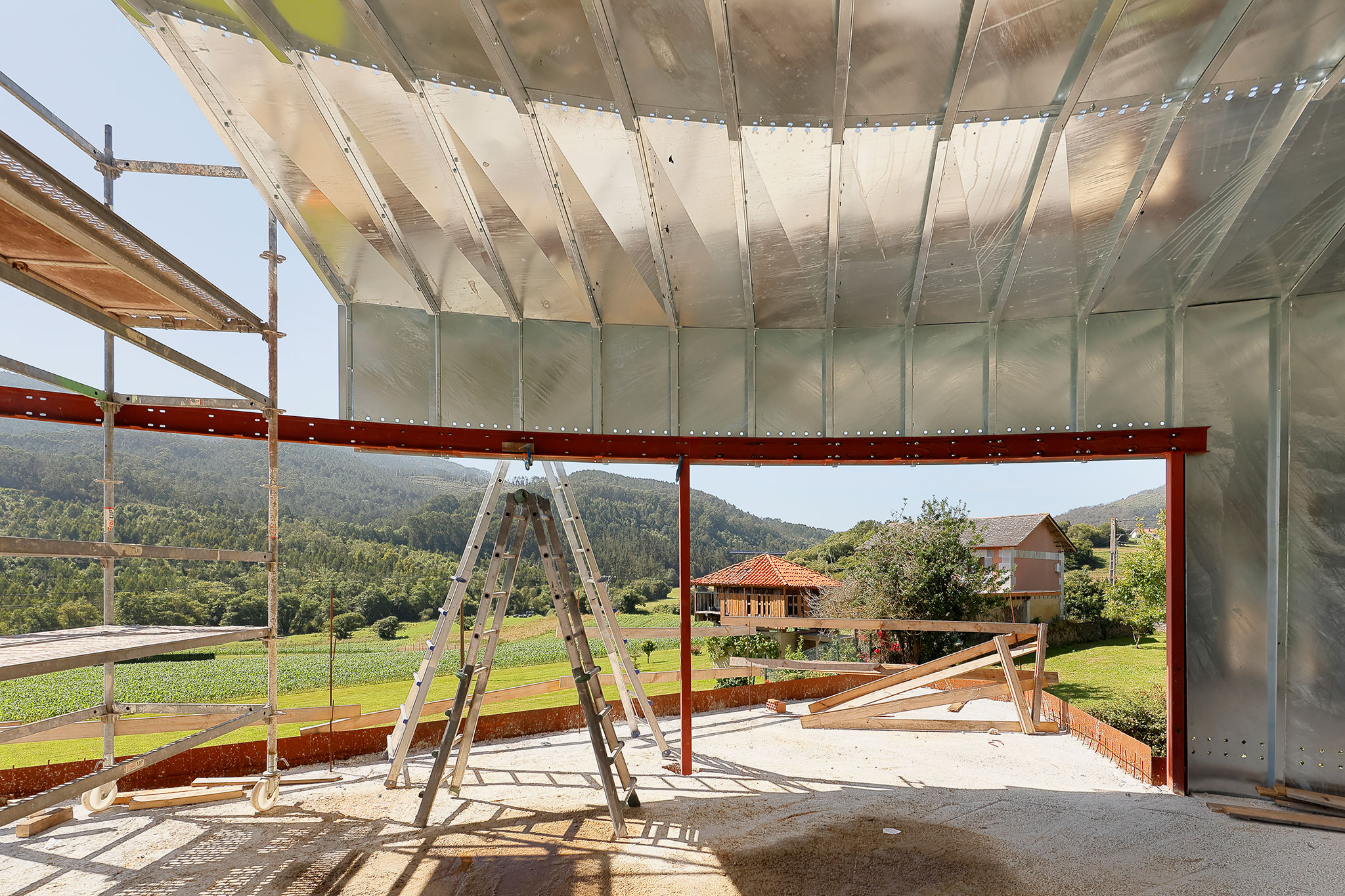
For the construction of the house, a system was developed that allowed for the creation of a load-bearing envelope of 1.5-millimeter-thick S275JR steel, which functions as a rigid, technologically advanced exoskeleton composed of 150 unique pieces. Slate was chosen as the cladding for the structure, a material that, in addition to evoking the vernacular architecture of western Asturias, creates a high-performance ventilated façade.
Reflecting a comprehensive commitment to energy efficiency, the project achieved PHI Low Energy Building Standard certification from the Passivhaus Institute. The project also received the Asturiana de Zinc Special Award for its innovation
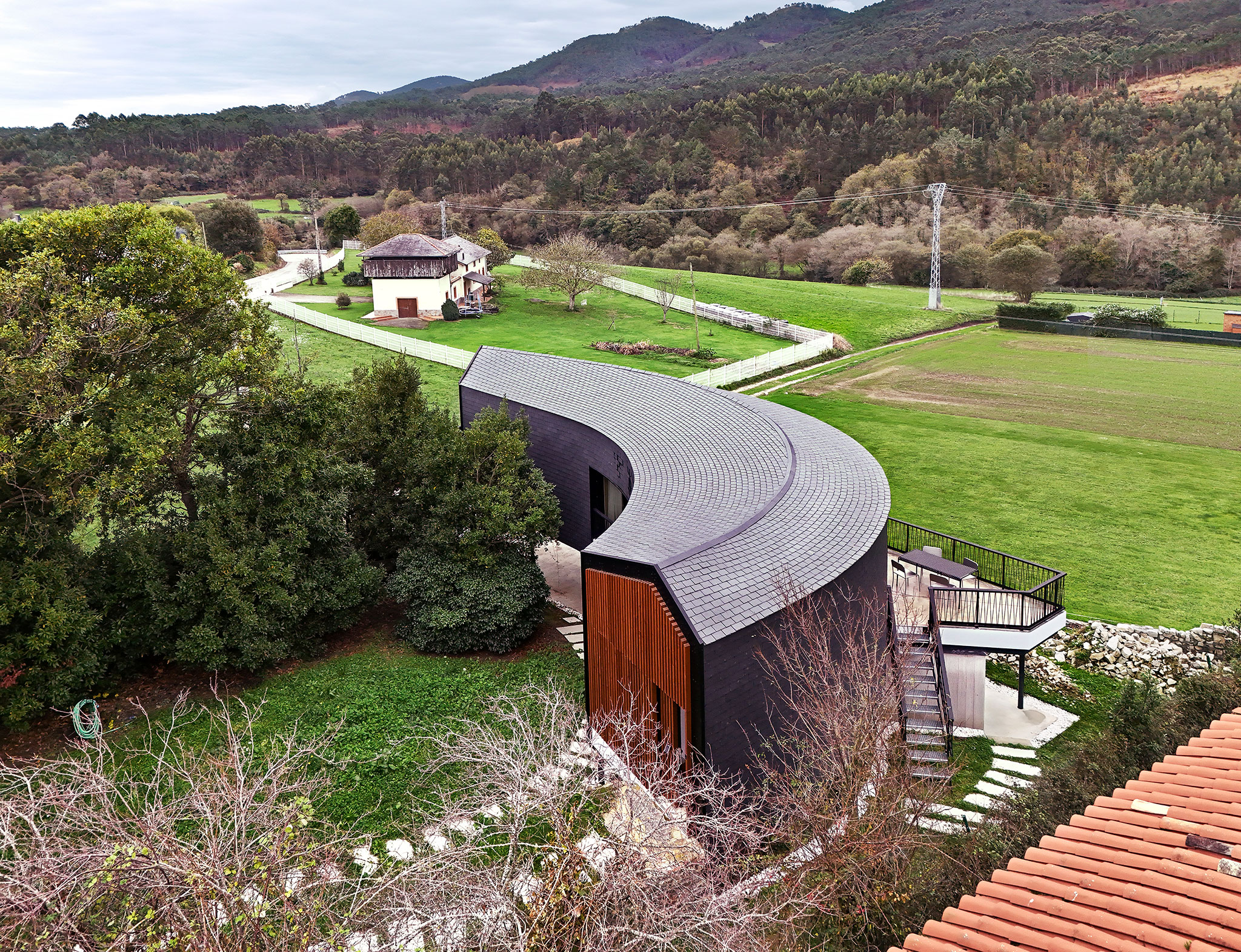
"Big Fish" single-family home by F5 Proyectos y Arquitectura. Photograph by Iván Morán.
Project description by F5 Proyectos y Arquitectura
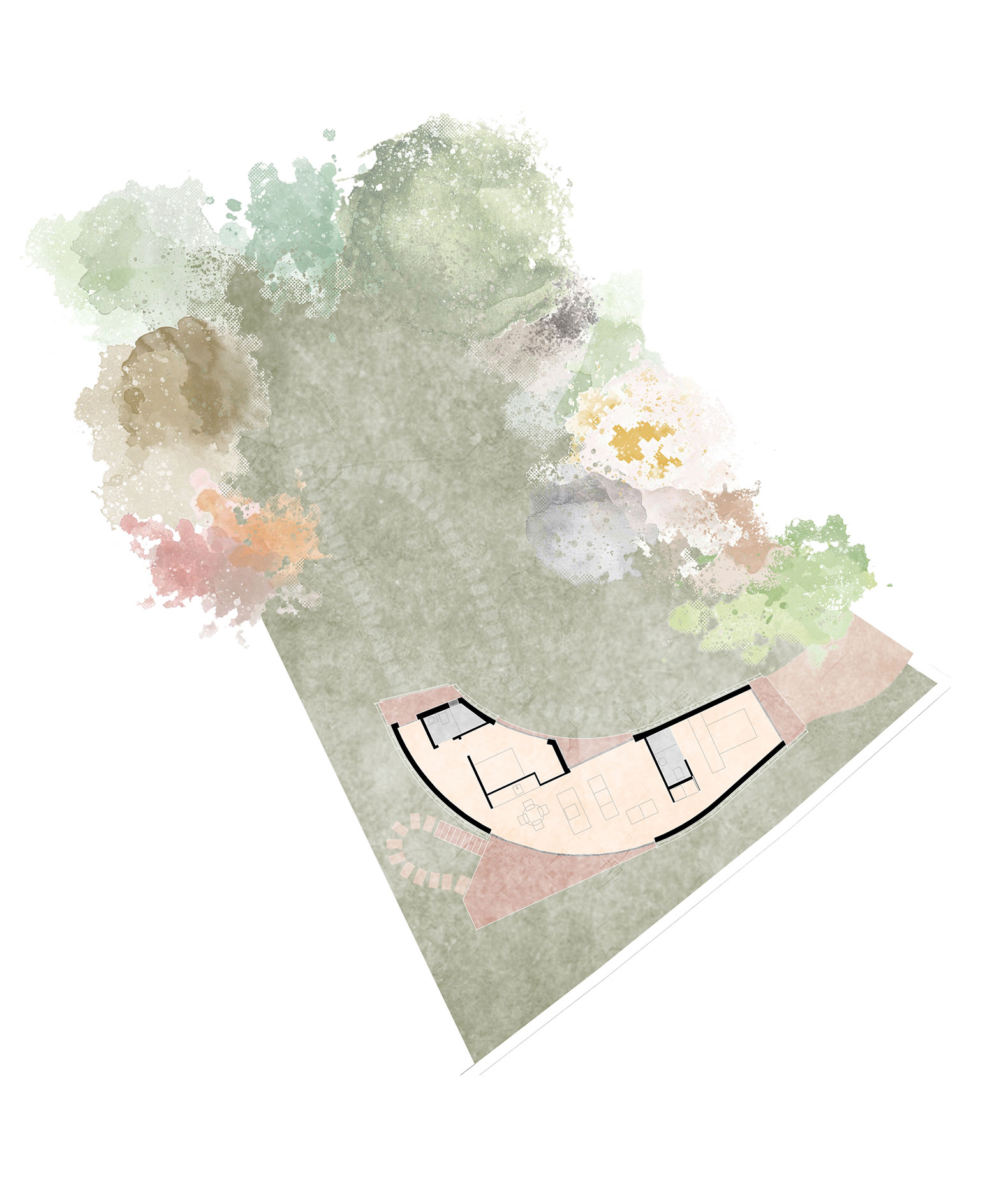
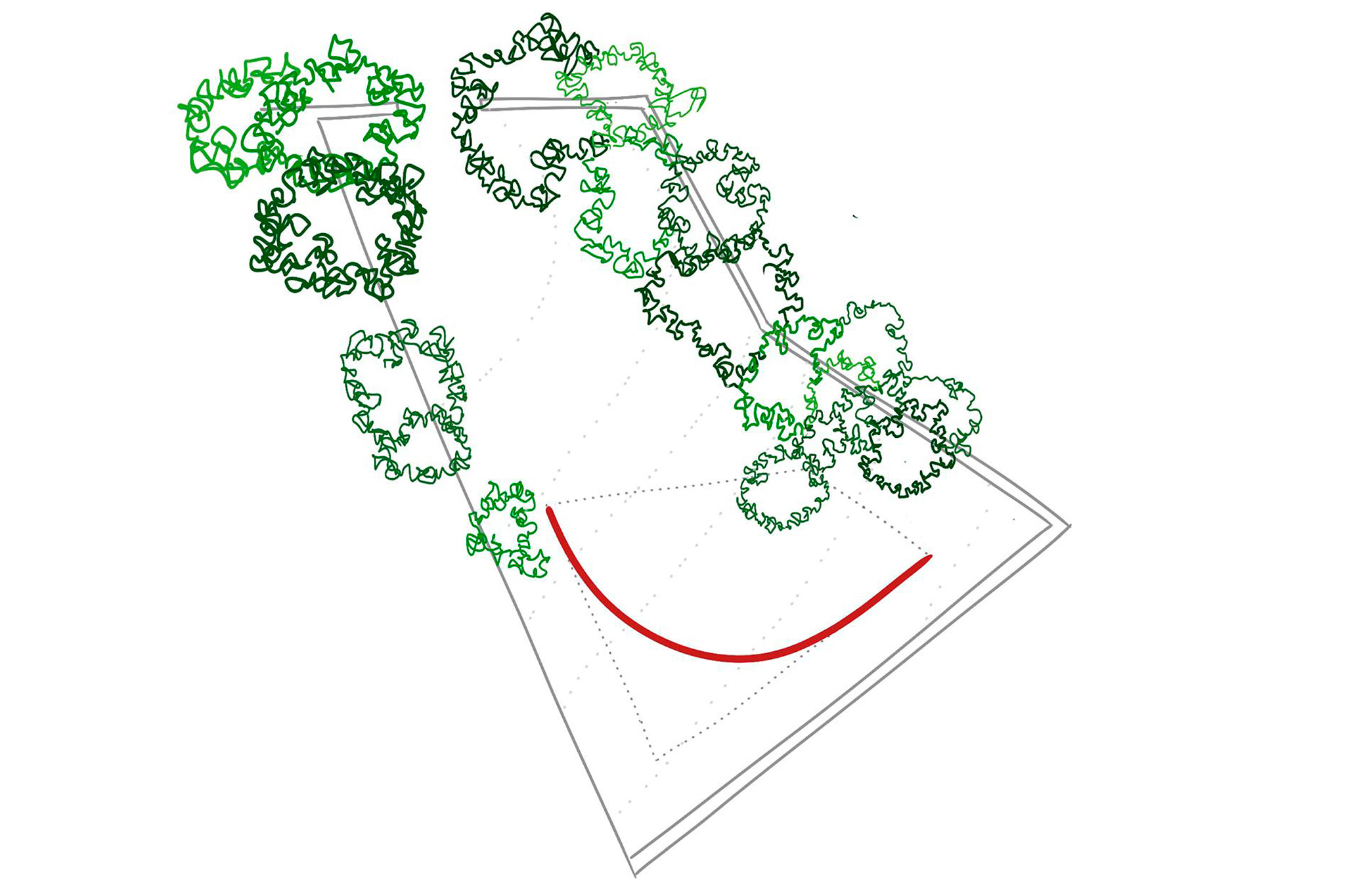
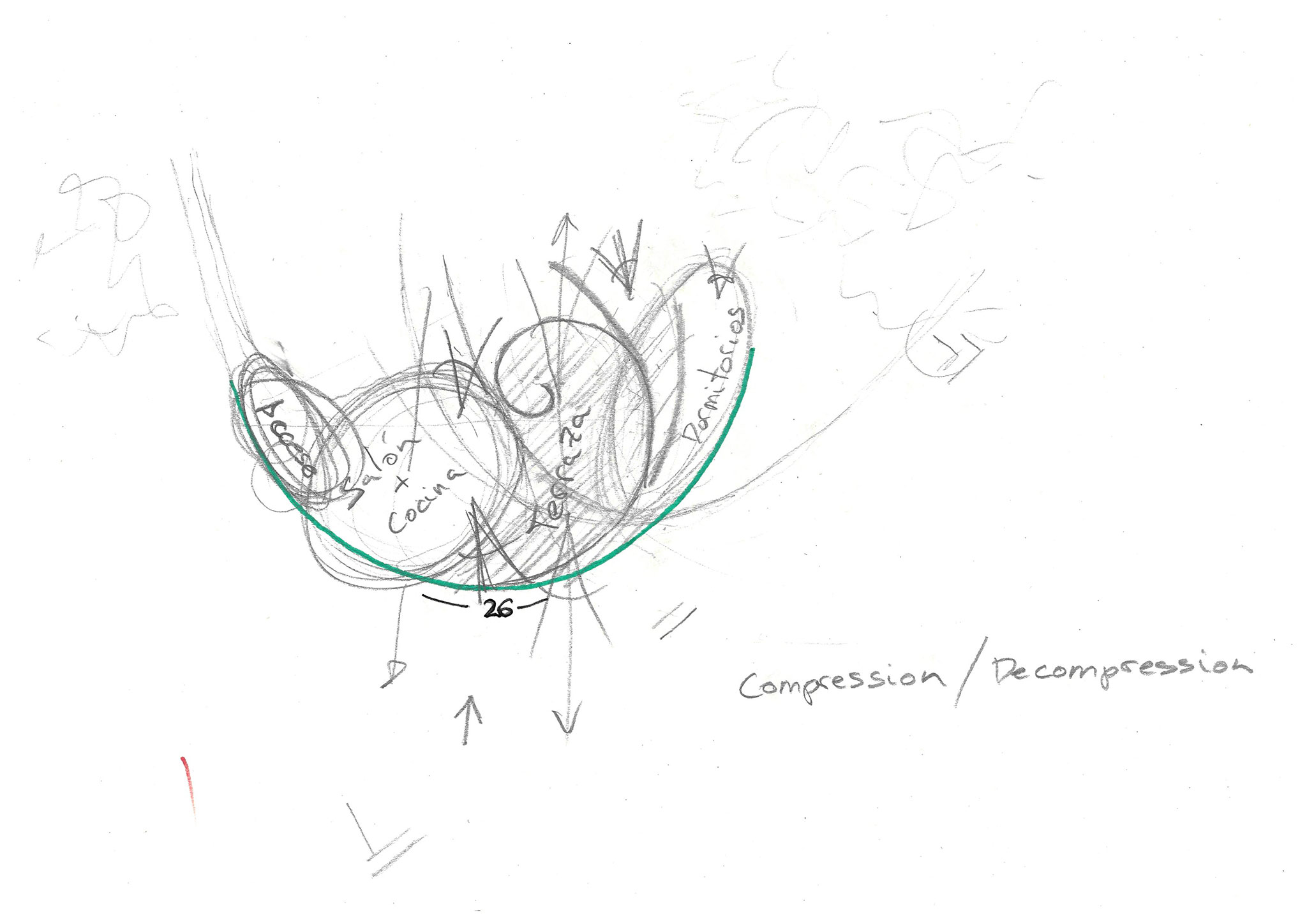
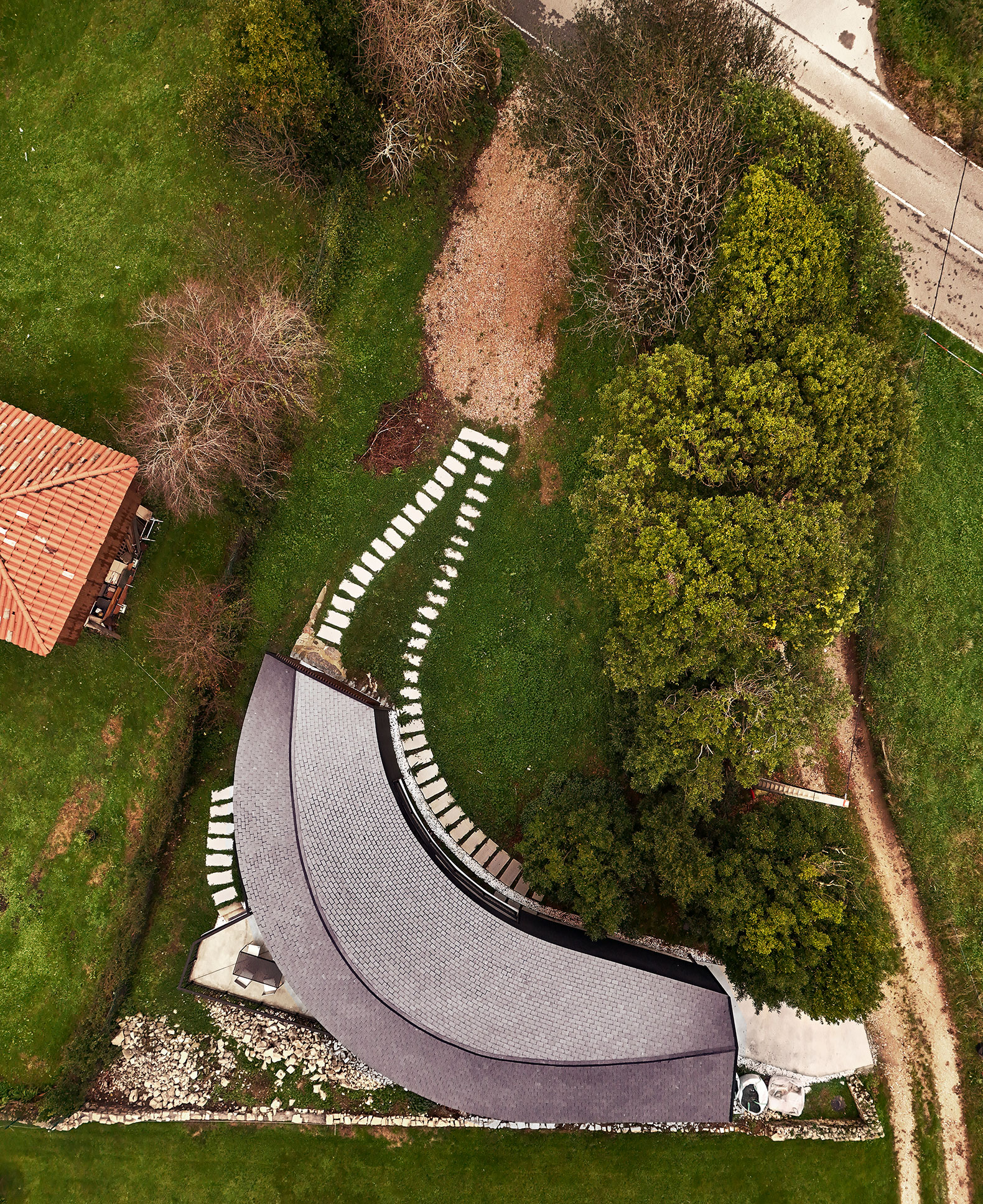
The intervention proposes a harmonious connection between interior and exterior along a pathway. This journey begins in a small vestibule, a threshold to the heart of the home. It is here that the architecture becomes permeable. A double transparency along the north-south axis expands the space shared by the living room and kitchen. The interior thus becomes a transition between the garden and the verdant mountains. The house, instead of interrupting the landscape, frames it and allows it to be contemplated through the interior. The path ends in the most private area: the master bedroom, oriented towards the vastness of the horizon. From this elevated position, the house transcends the surrounding obstacles and projects its gaze towards its final destination: the Cantabrian Sea.
The architecture thus becomes a choreography of sensations. A journey through the scales of the landscape, linking the near with the far. The form responds to this narrative, propelling itself towards the sea like a fish that contracts and relaxes its muscles to move forward. Why this journey? Like in Tim Burton's film, this project illustrates that true life isn't found in a static, unchallenged paradise (the interior garden), but rather in the journey through the real world, with all its complexities (the road, the external "noise," the necessary setbacks...). Settling for an illusory "perfection" is to stop living fully. The house doesn't want to be a big fish in a fishbowl and decides to jump into the sea.
Materializing this vision—that of an object that is both light and complex, flowing with the hydrodynamics of a moving fish—required breaking with conventional systems. How do you build a form that seems to defy its own mass, like a whale leaping out of the water?
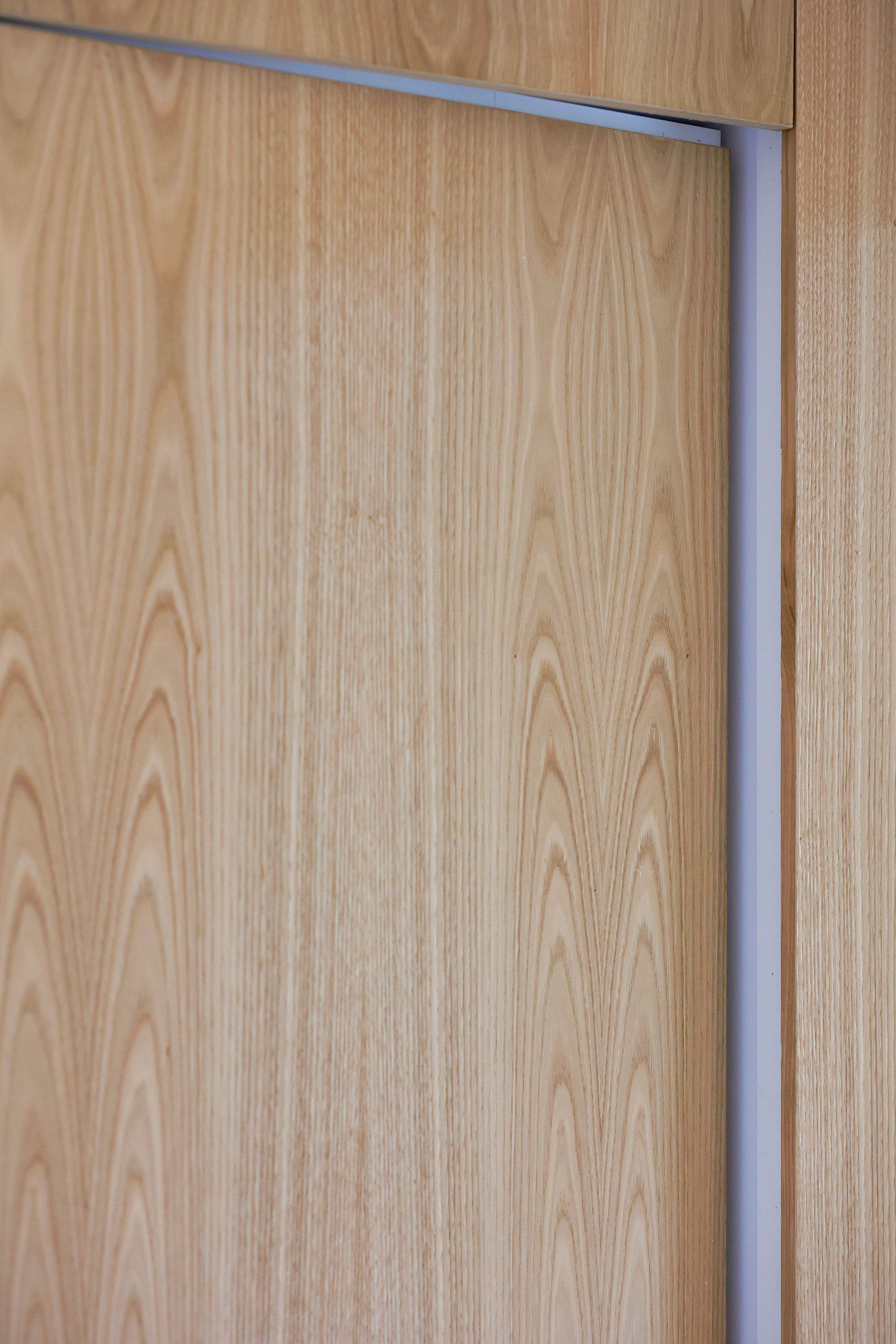
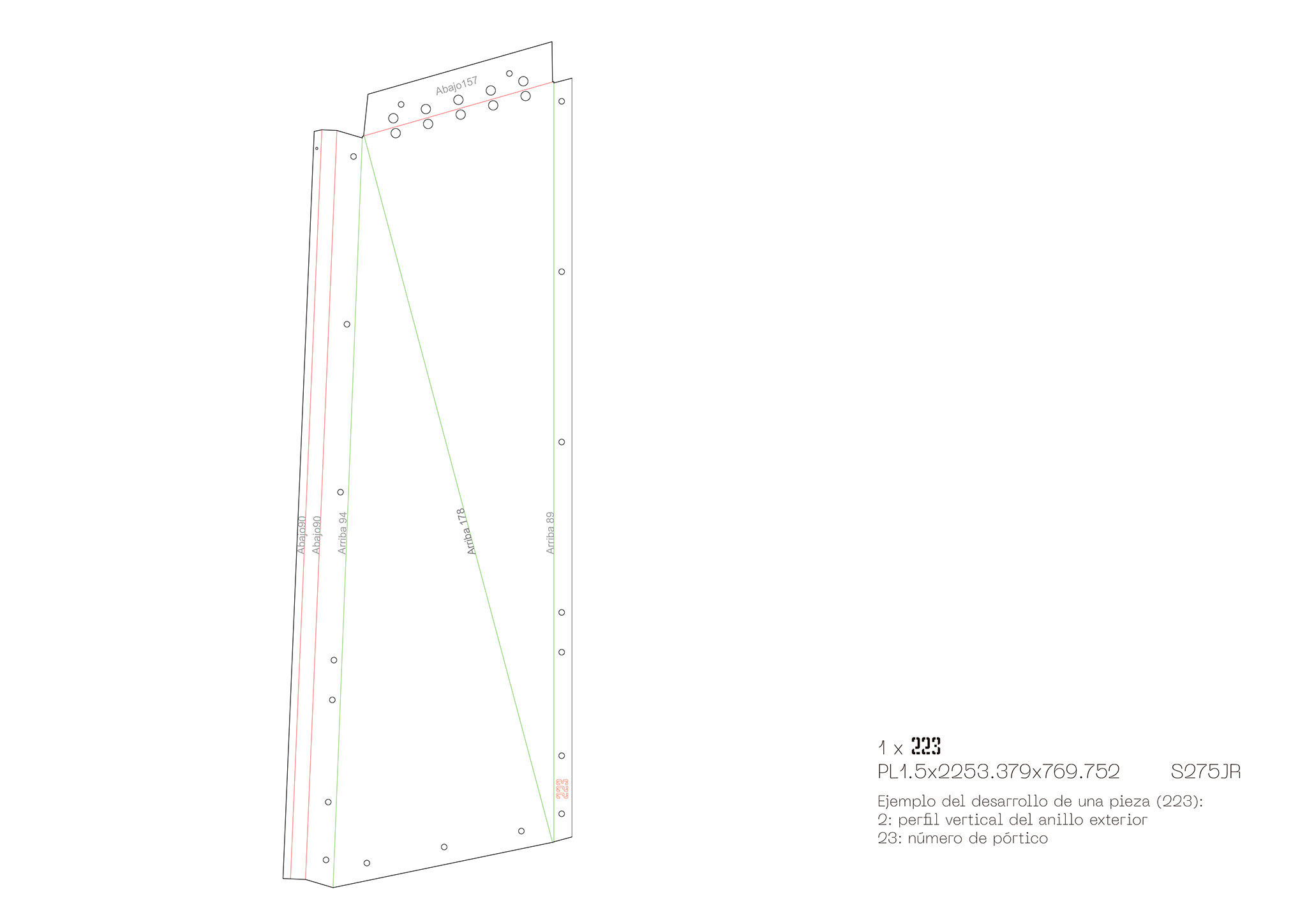
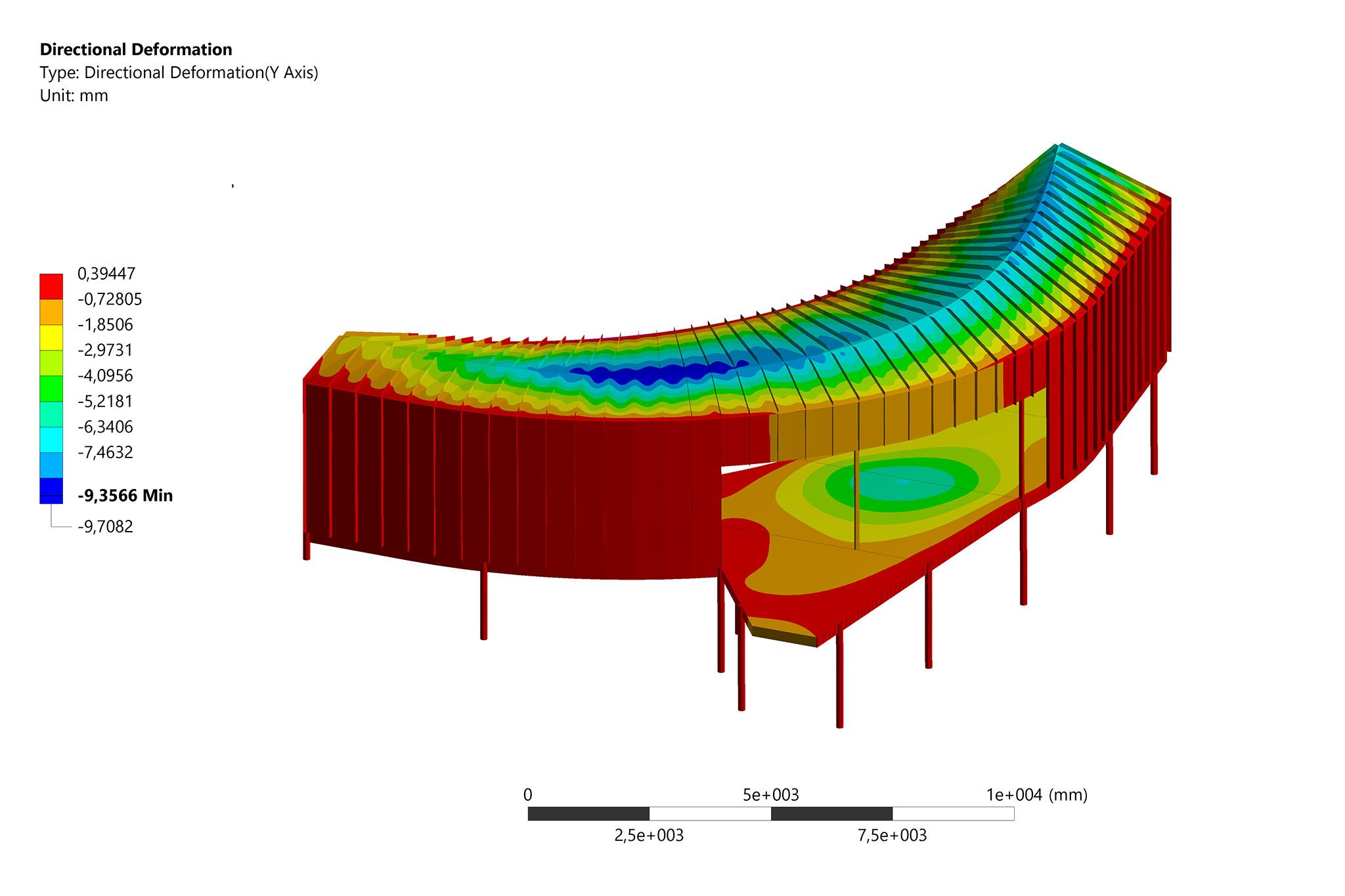
Inspired by origami's ability to endow a simple sheet of paper with incredible strength and load-bearing capacity, we created and developed a system that allows us to generate a load-bearing envelope just 1.5 millimeters thick. This system consists of an S275JR steel exoskeleton, where each fold is precisely designed to give the assembly extraordinary rigidity. It is the invisible heart of the project and is composed of approximately 150 unique pieces. Every fold, every angle, and every perforation was optimized using finite element analysis and modeled in a BIM environment. Manufacturing, through laser cutting and folding, guaranteed a level of accuracy that allowed for a quick, dry, bolted assembly with no margin for error. This process granted us complete formal freedom, allowing us to create the double-curved surfaces that give life to this house.
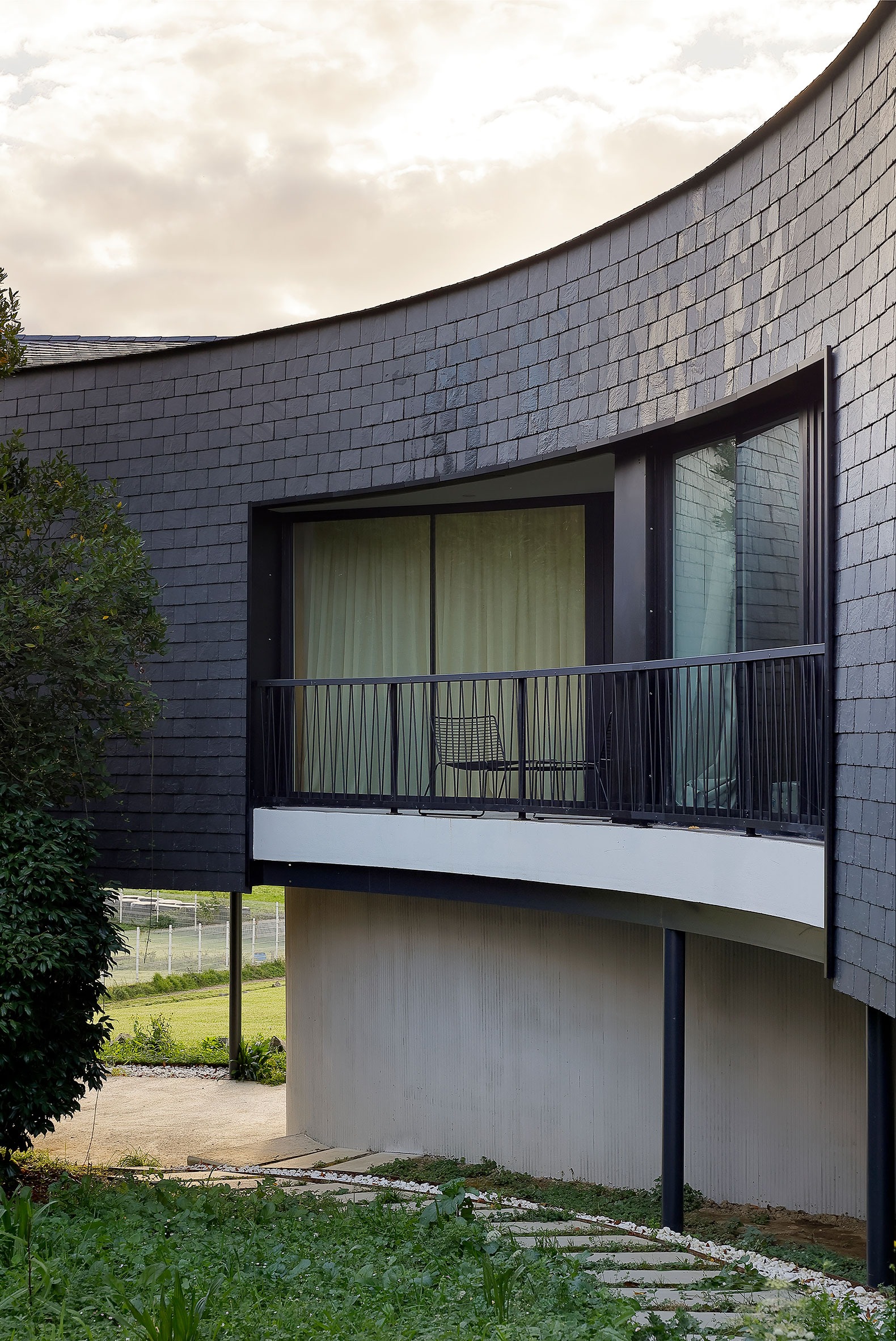
To clad this technological skeleton, we used a material that roots the building to its location: slate, omnipresent in the vernacular architecture of western Asturias. This cladding is not only a tribute to the surroundings; it becomes the skin of the project, where each slate represents one of its scales. This stone skin also creates a high-performance ventilated façade. This strategy is not an isolated decision, but rather part of a comprehensive commitment to energy efficiency, validated by obtaining the PHI Low Energy Building Standard certification from the prestigious Passivhaus Institute.
In the end, the story returns to its origin. The house, like the protagonist of the film that gives it its name, rejects the comfort of a static and unchallenged paradise. It decides to embark on a journey through the complexity of the real world to reach a broader horizon.