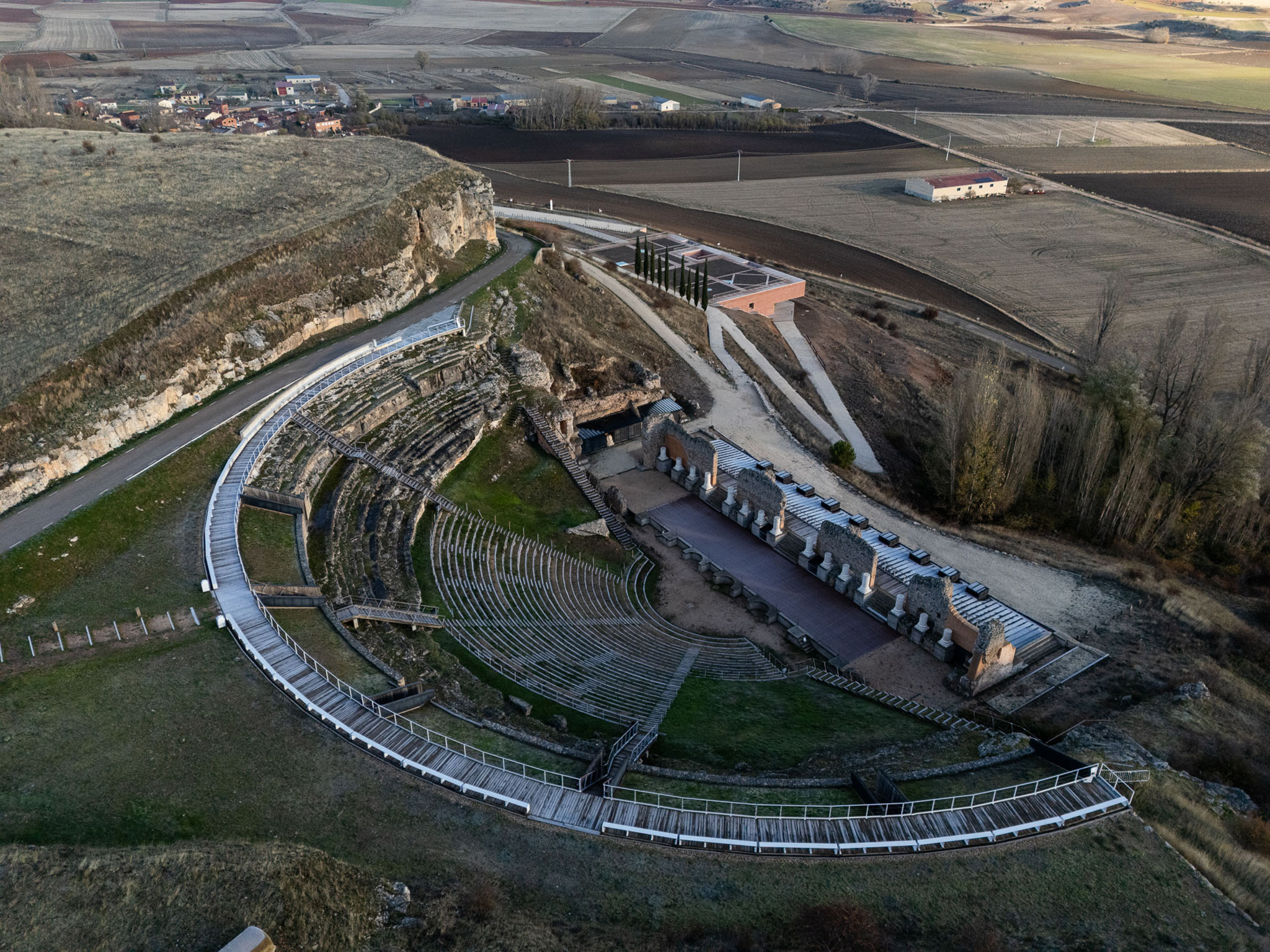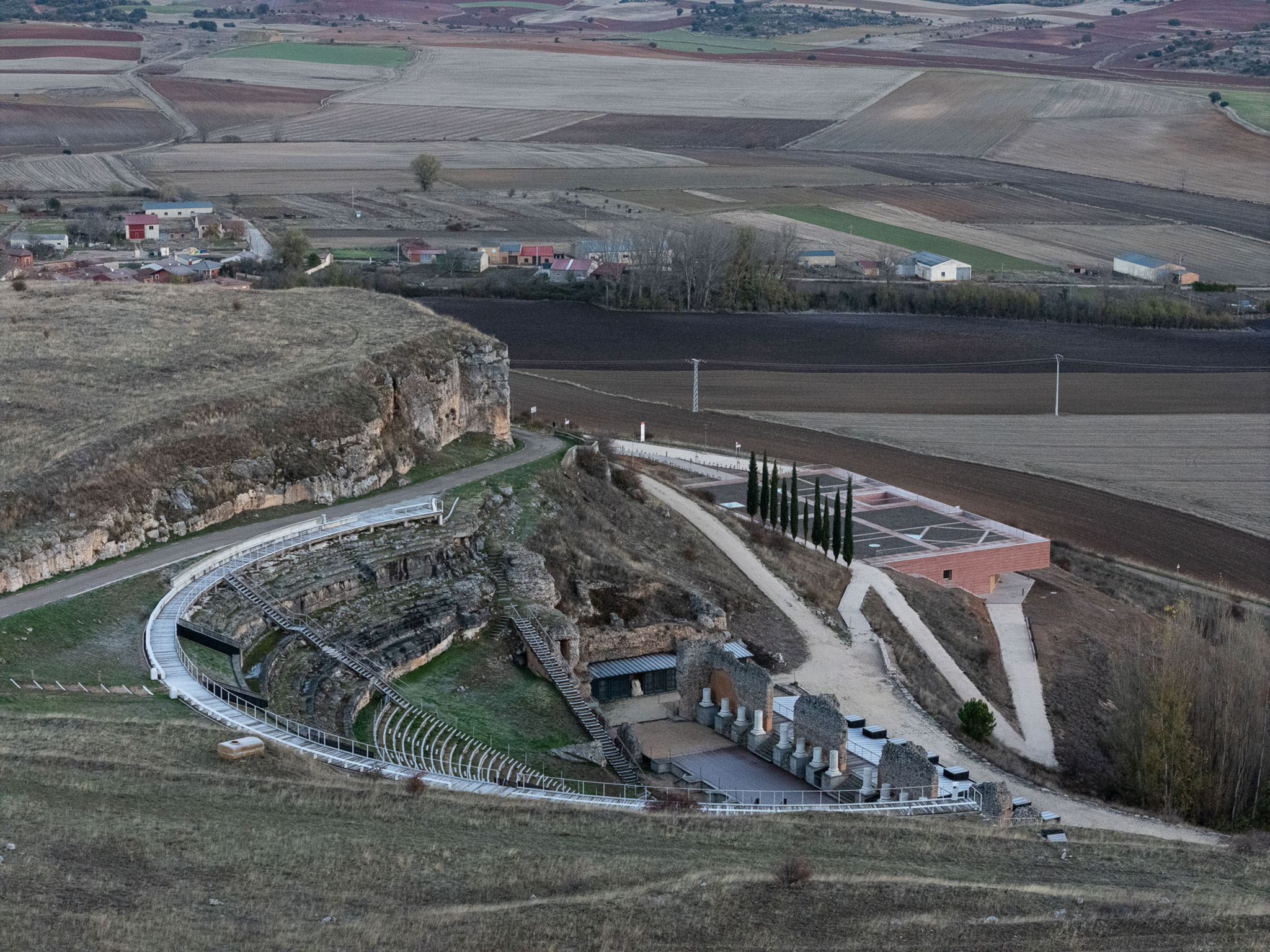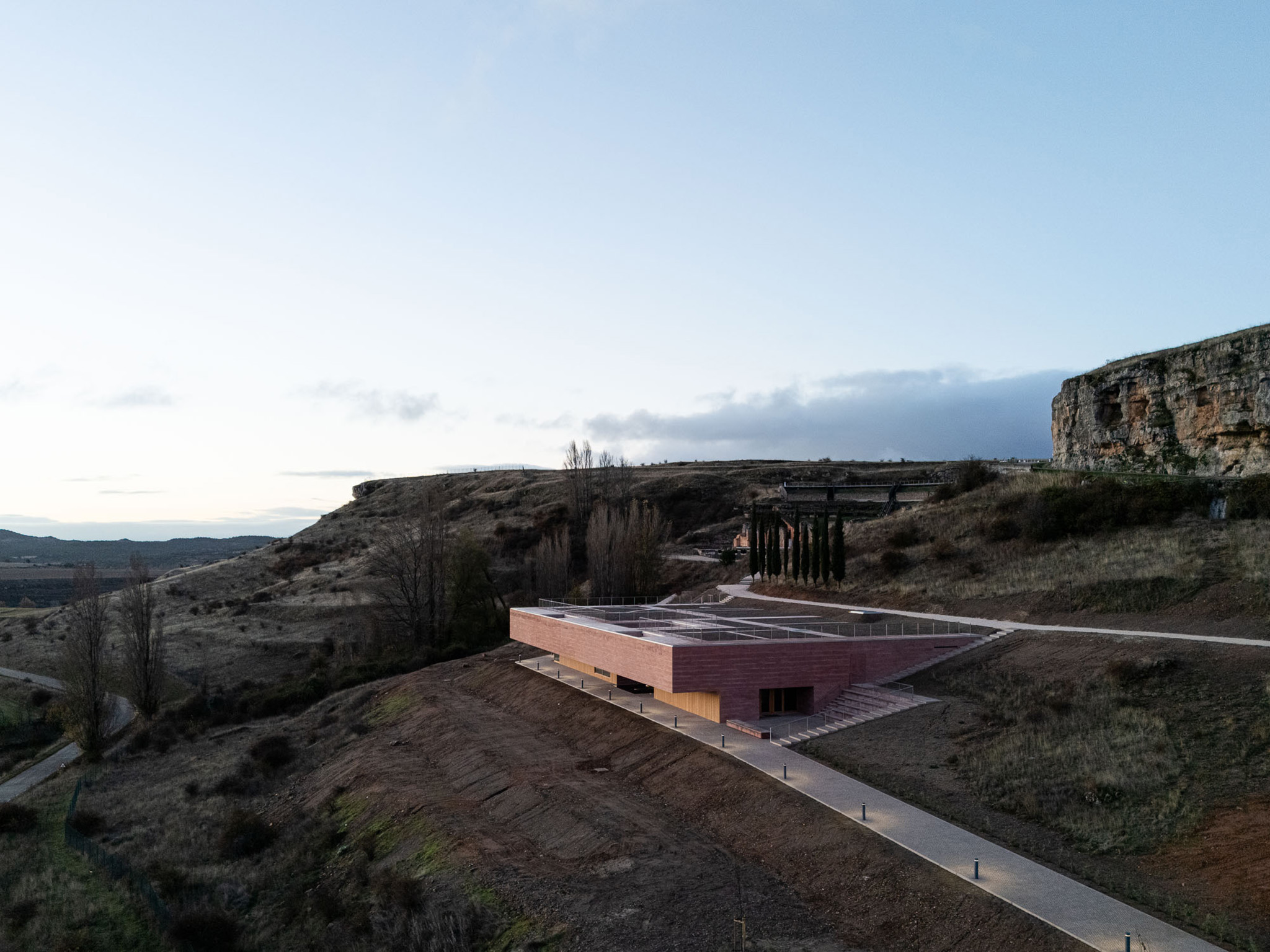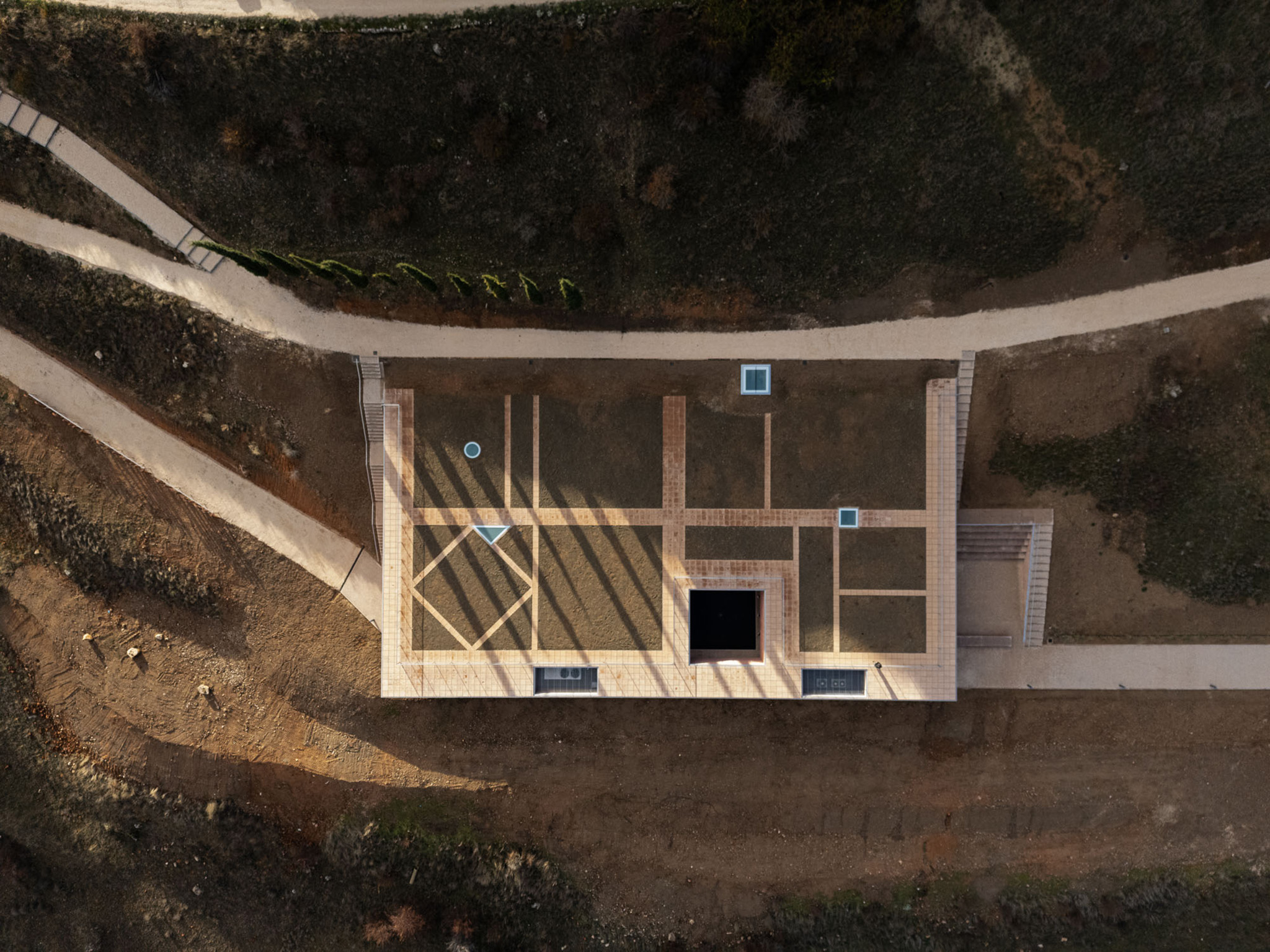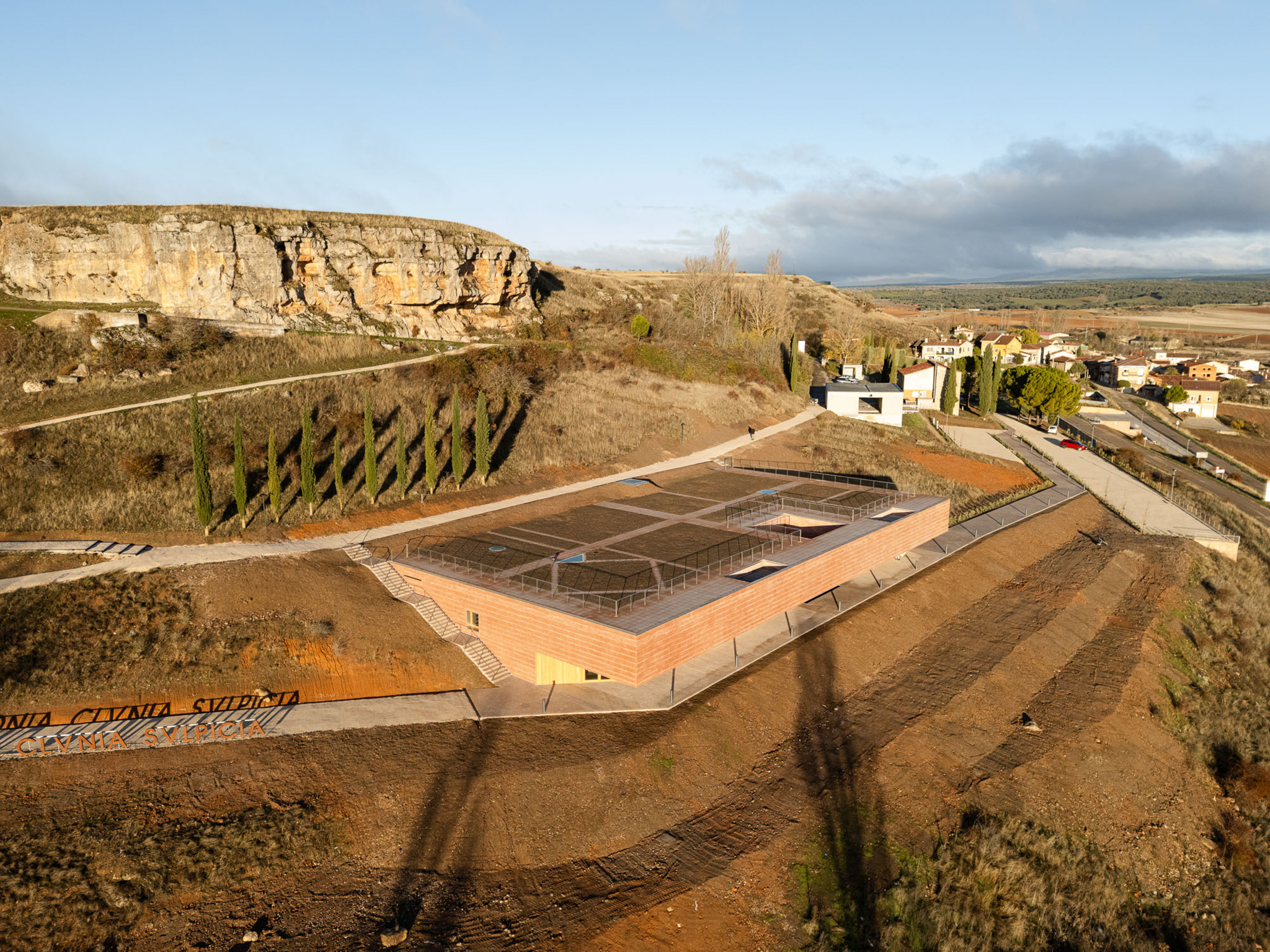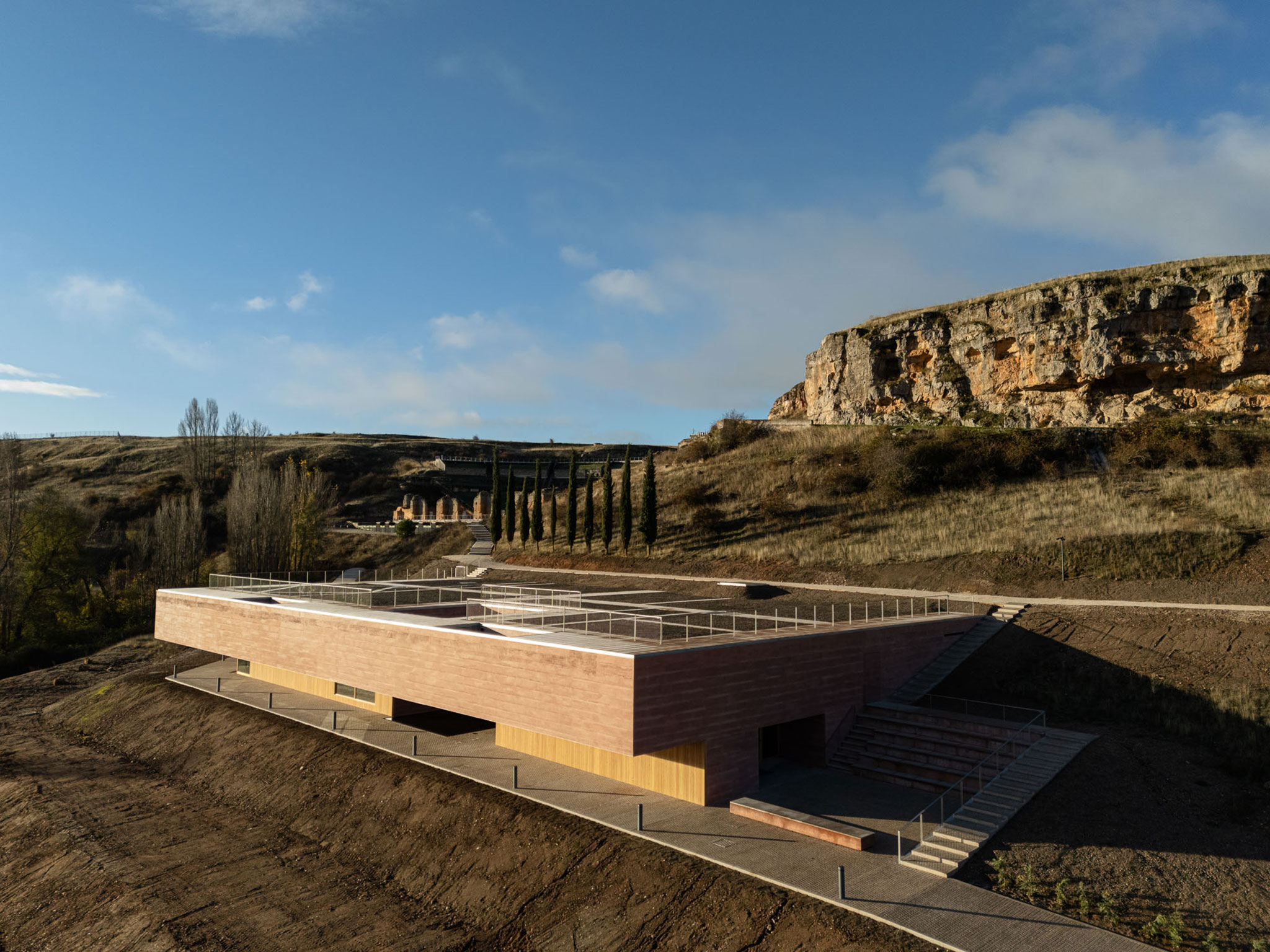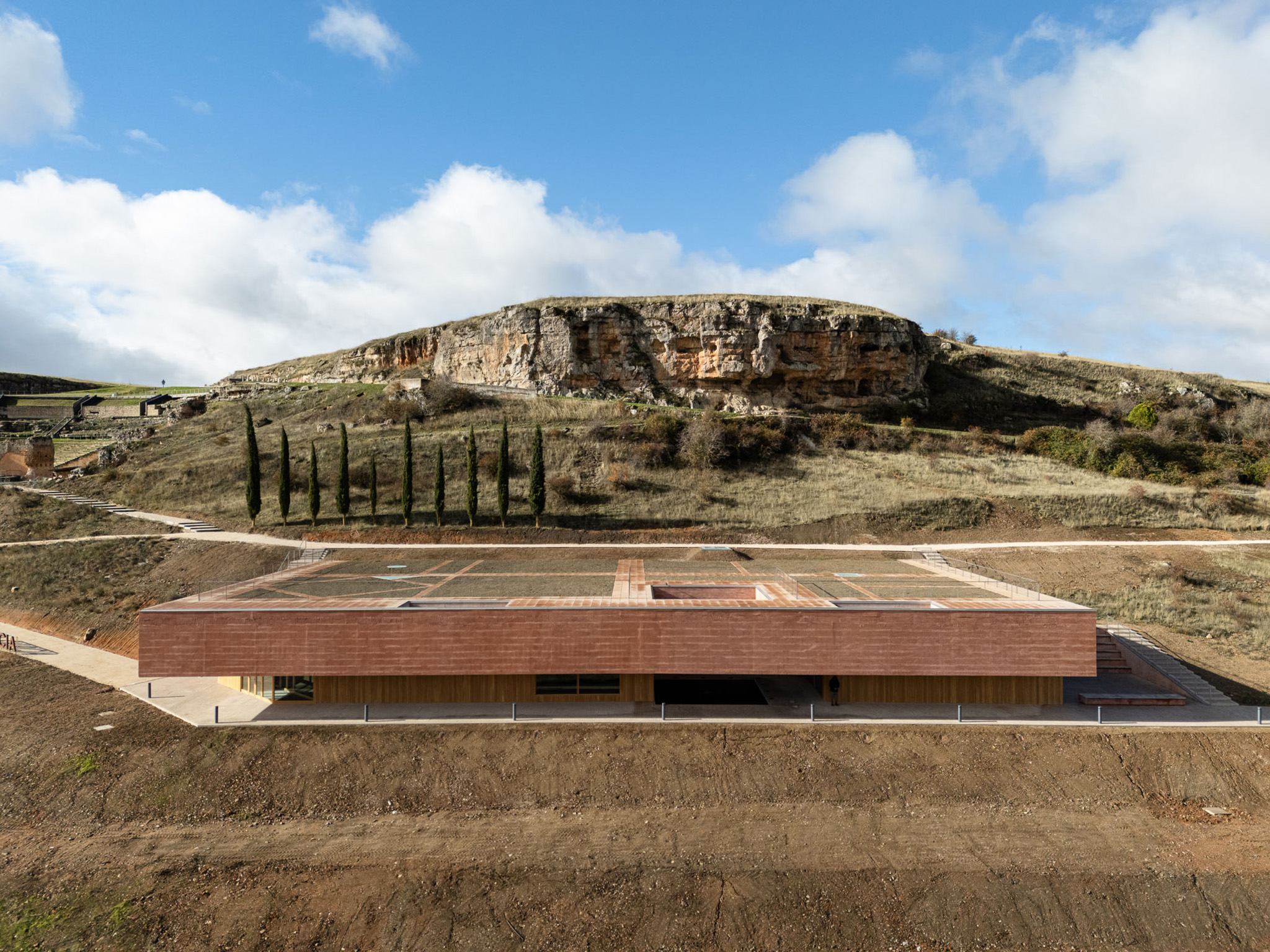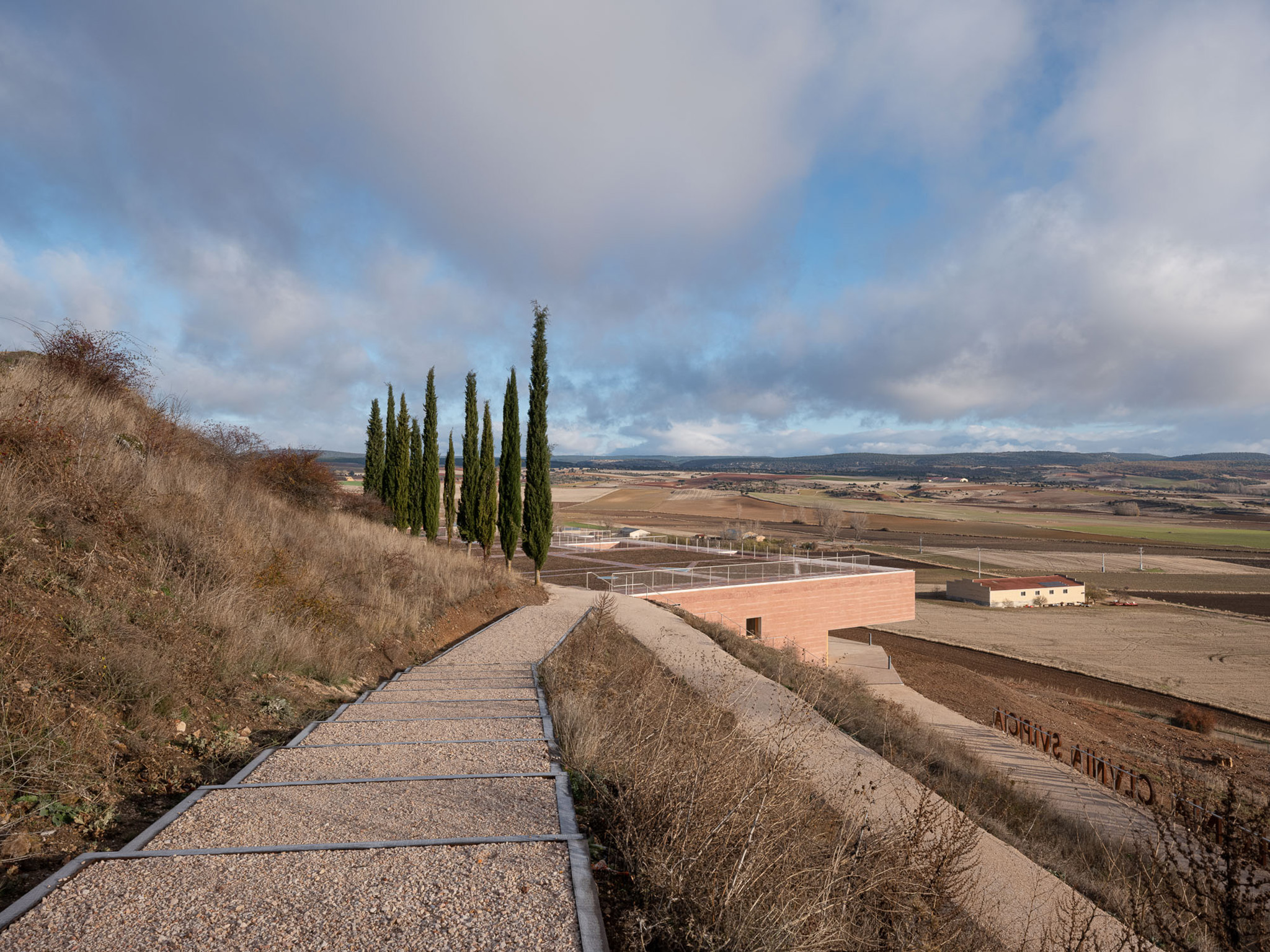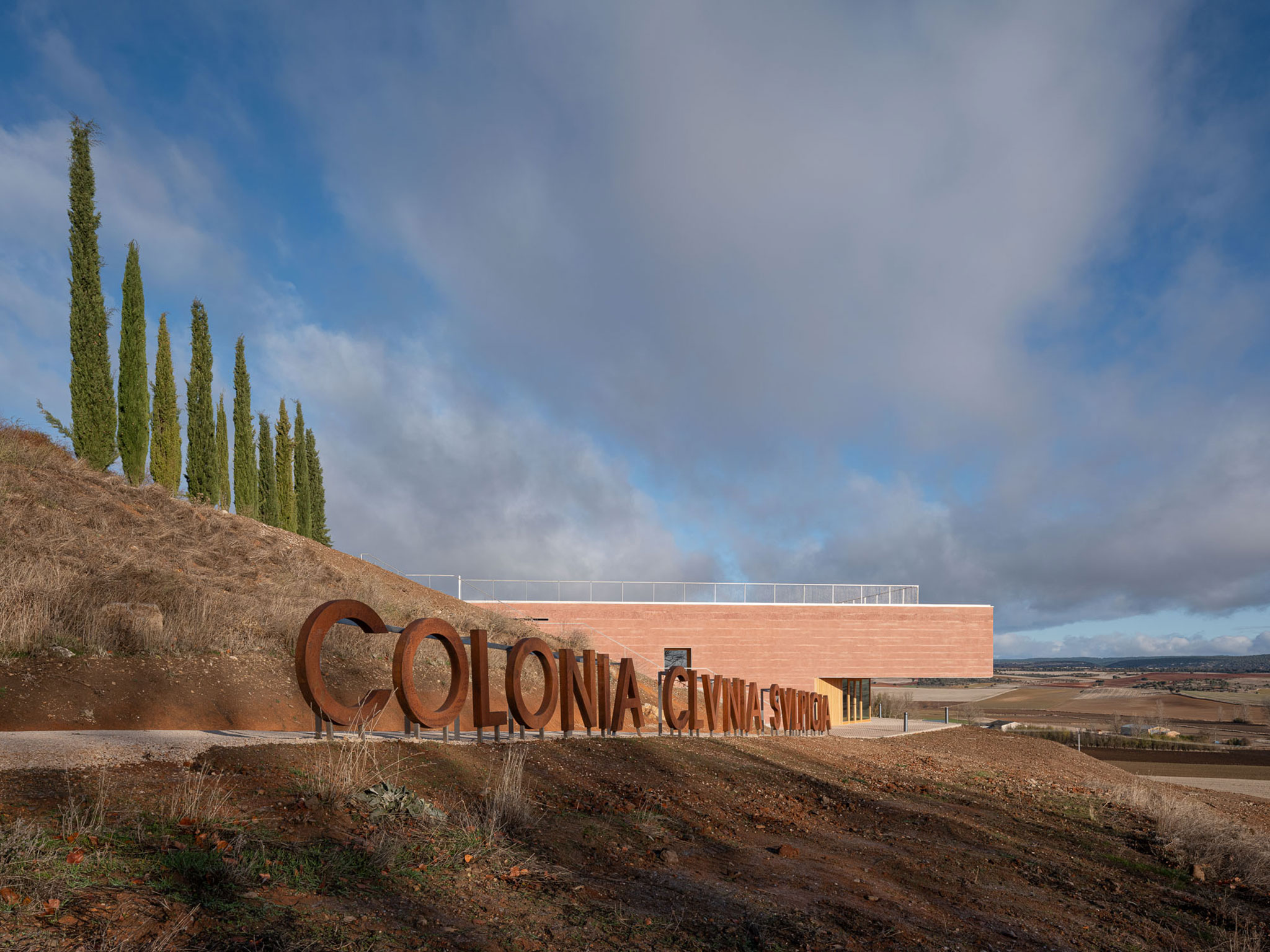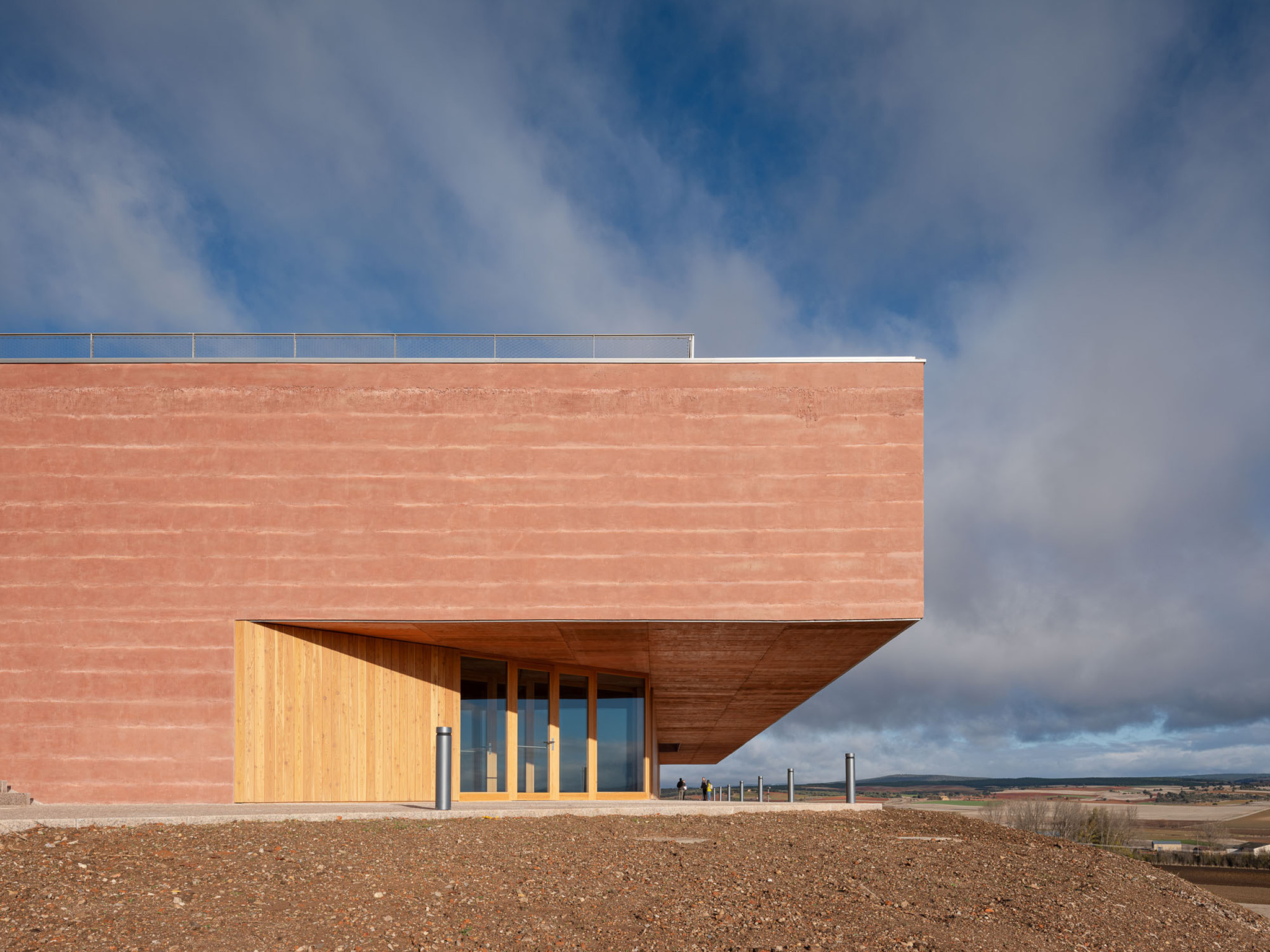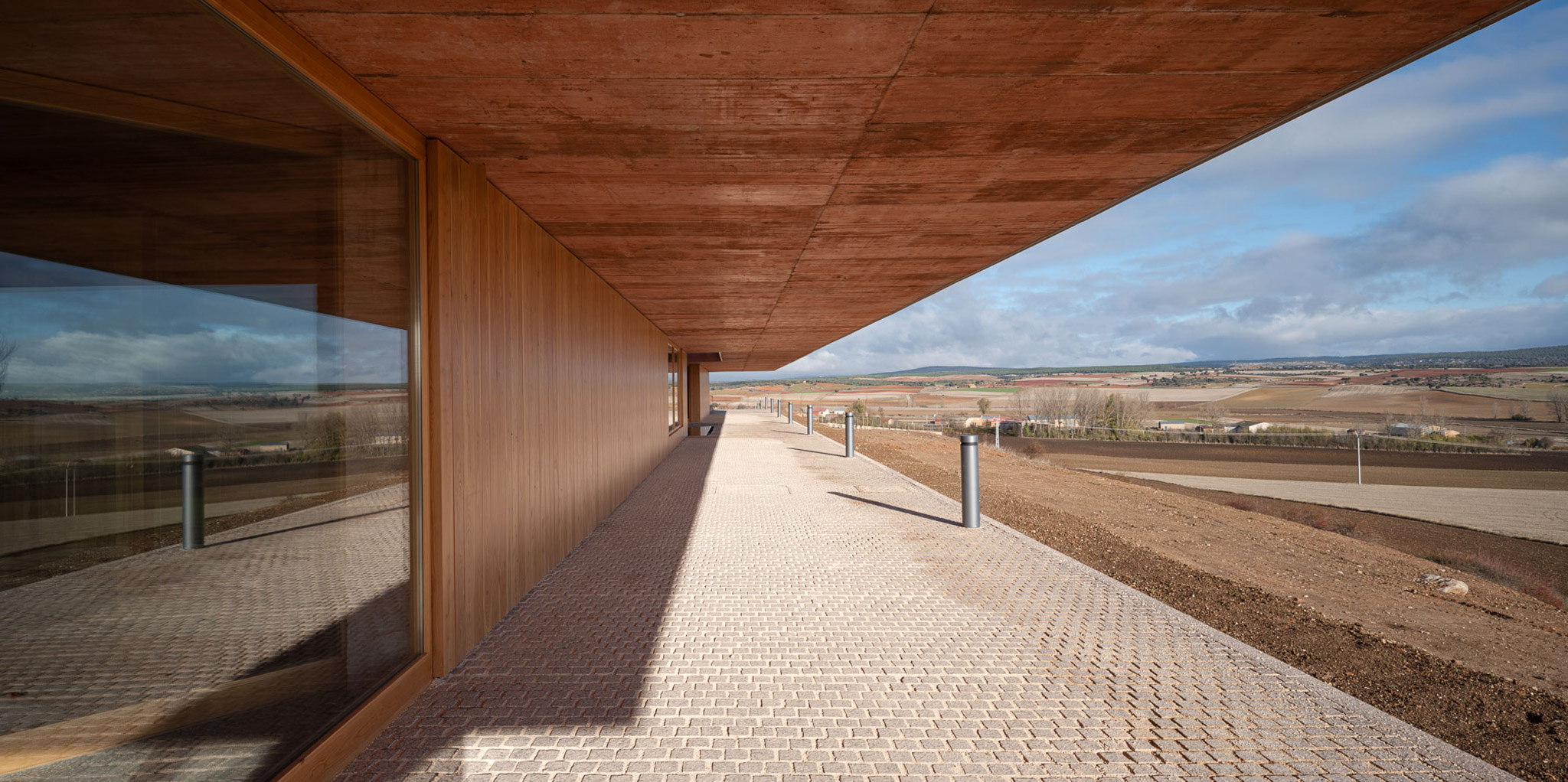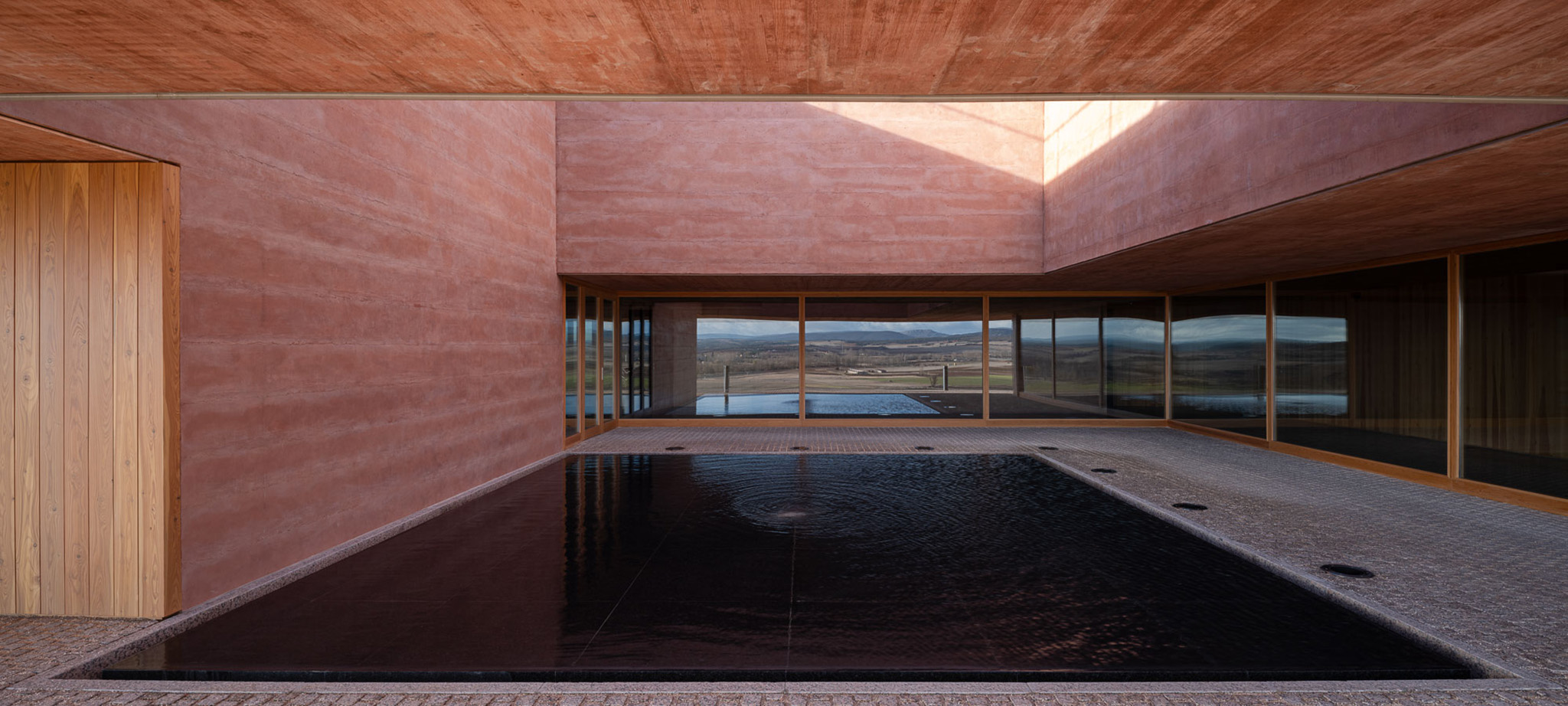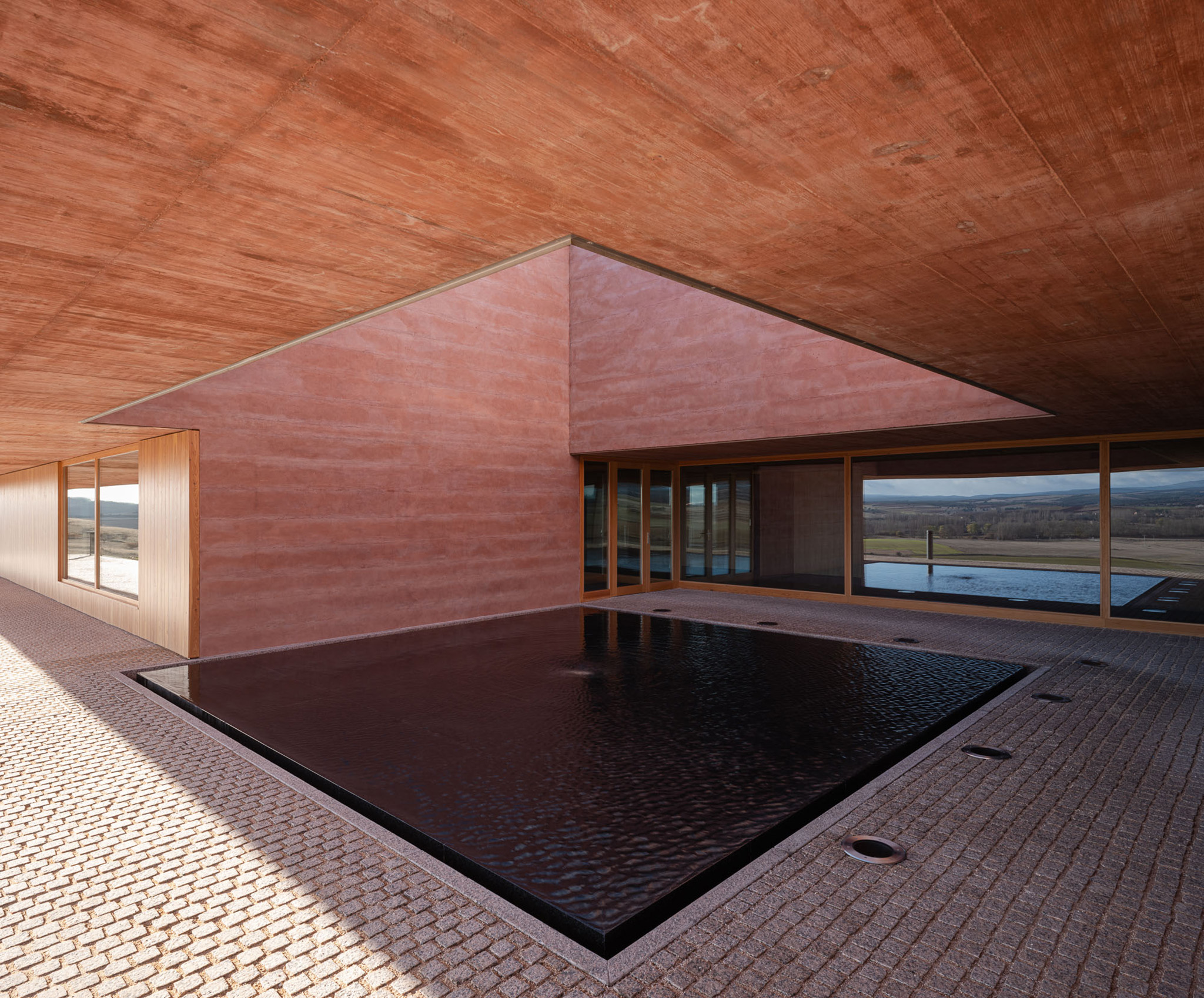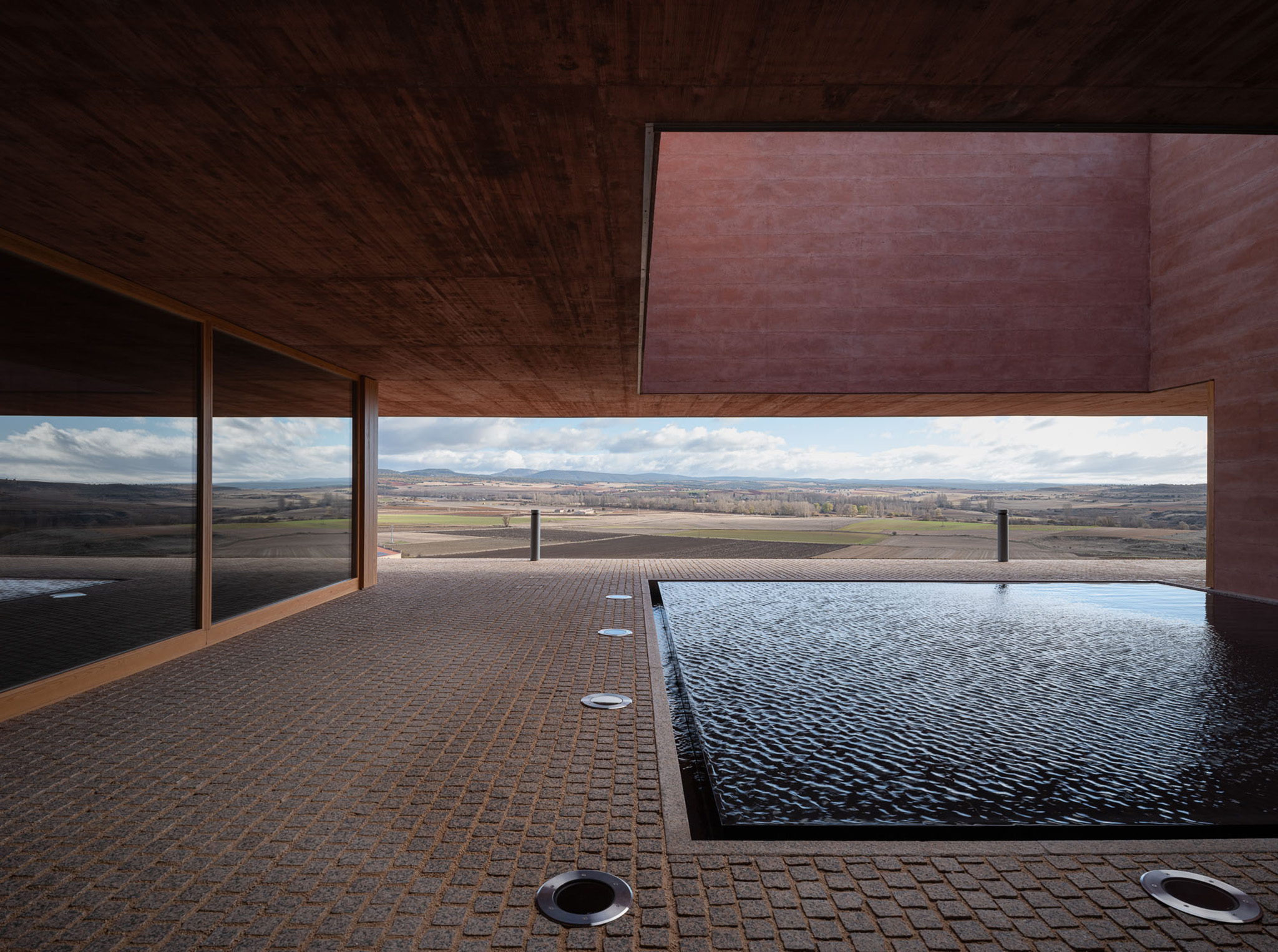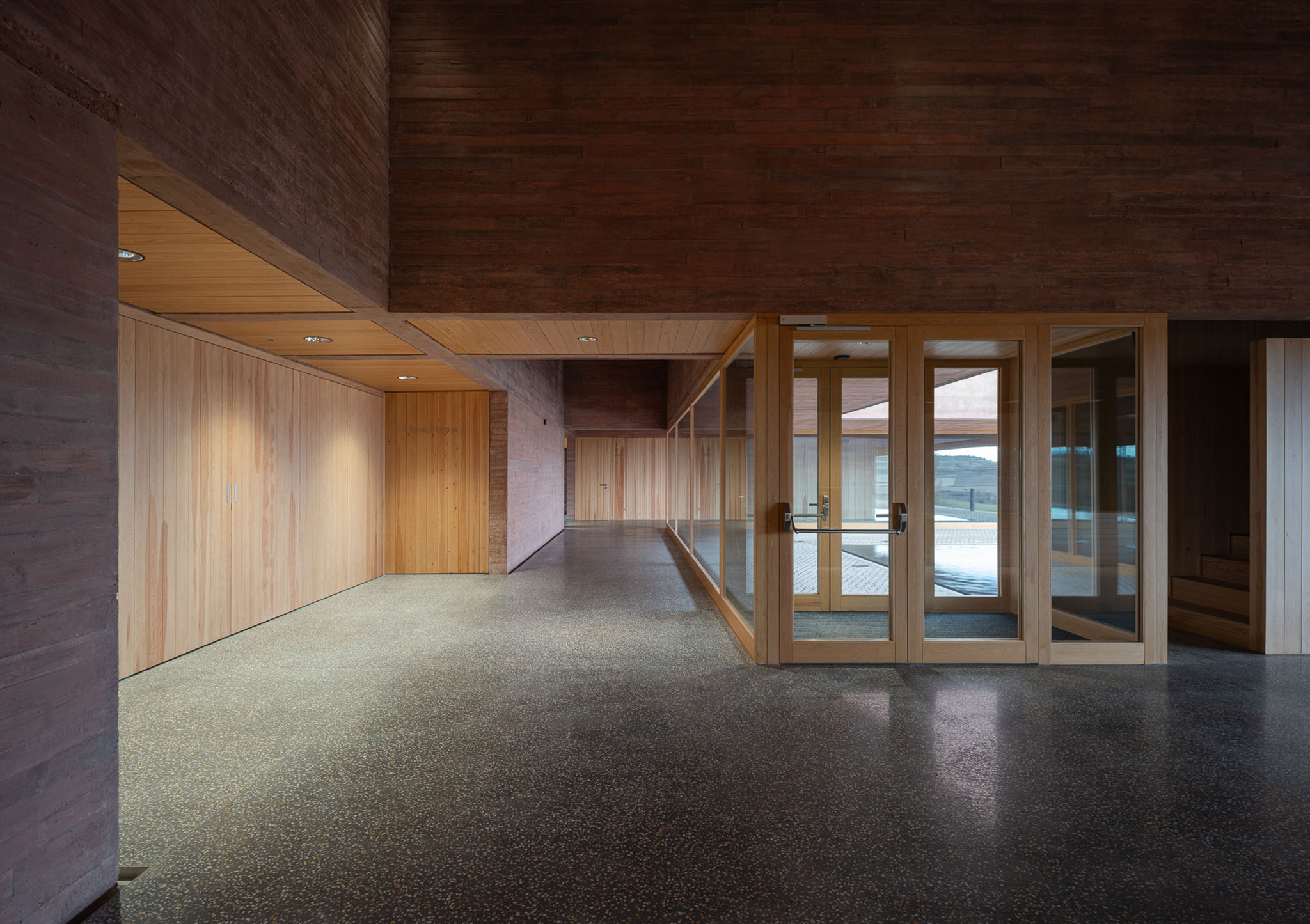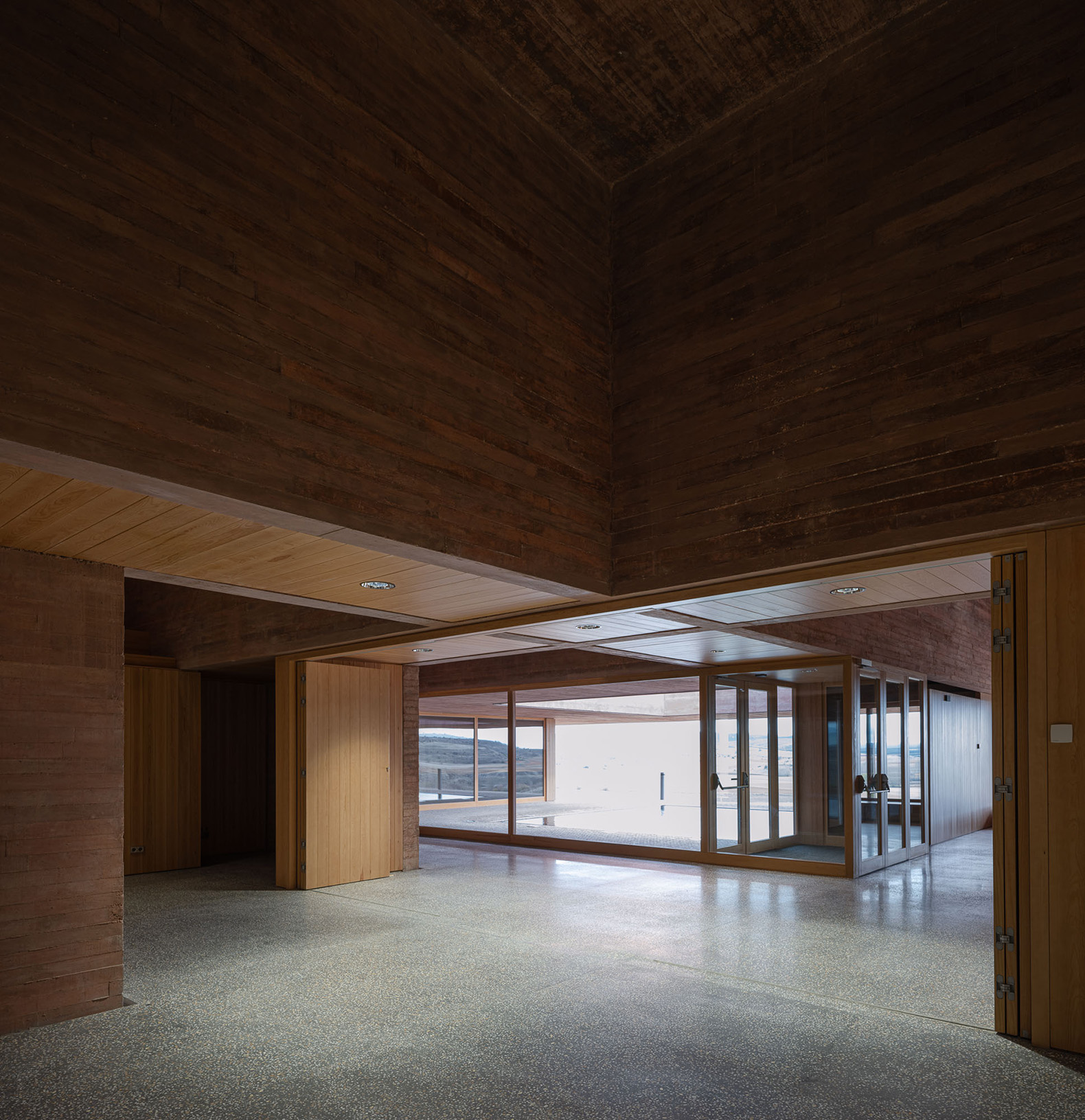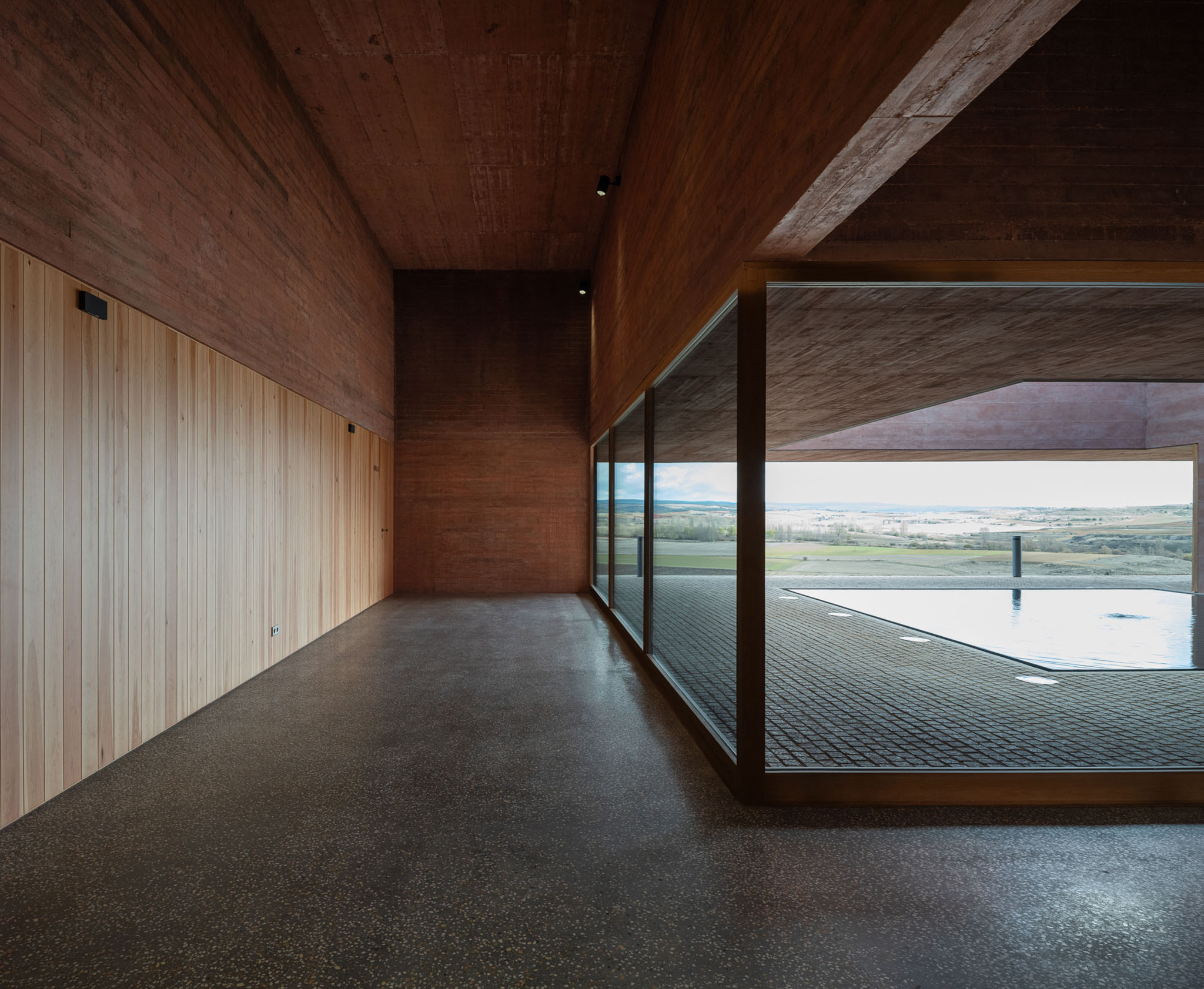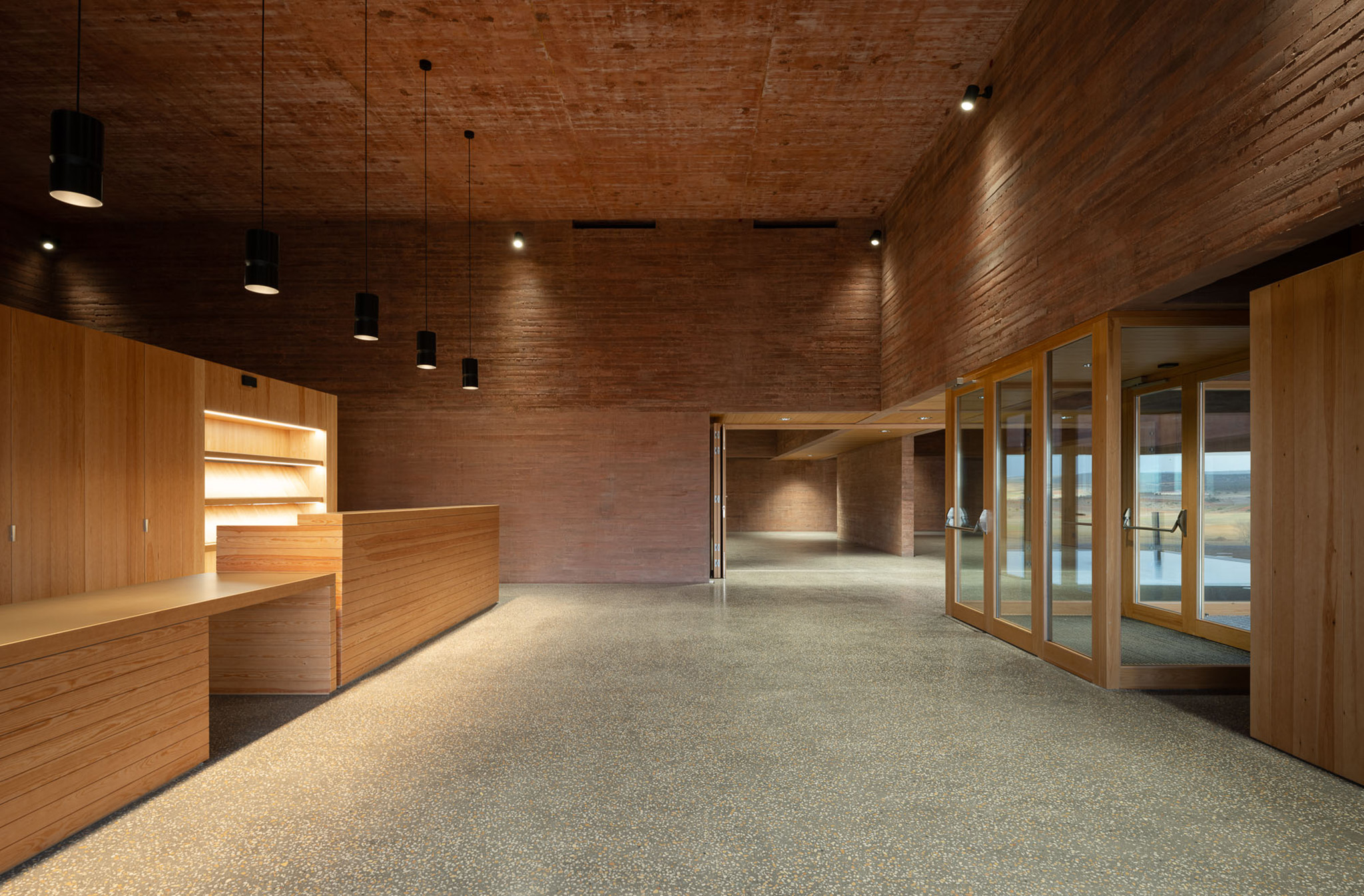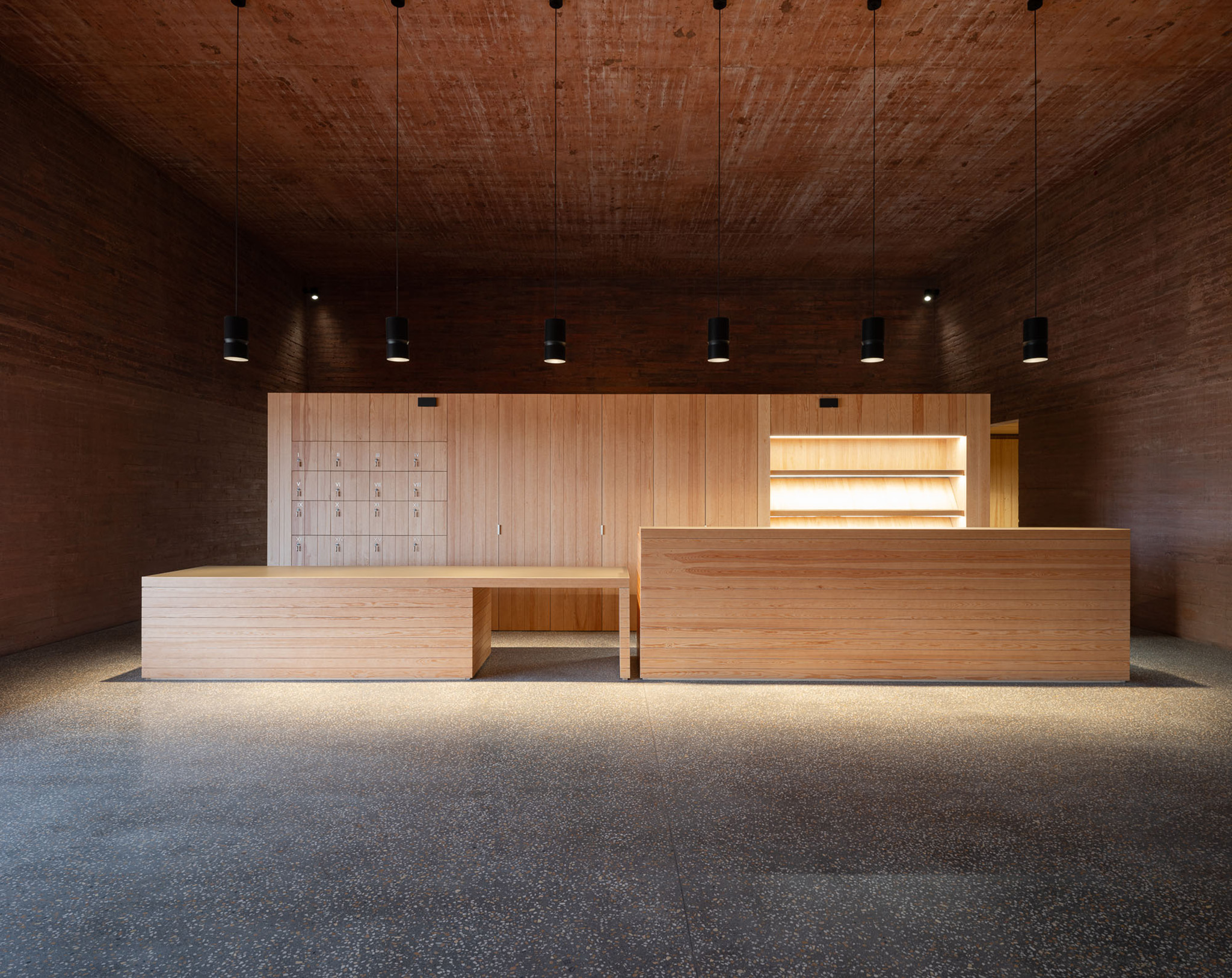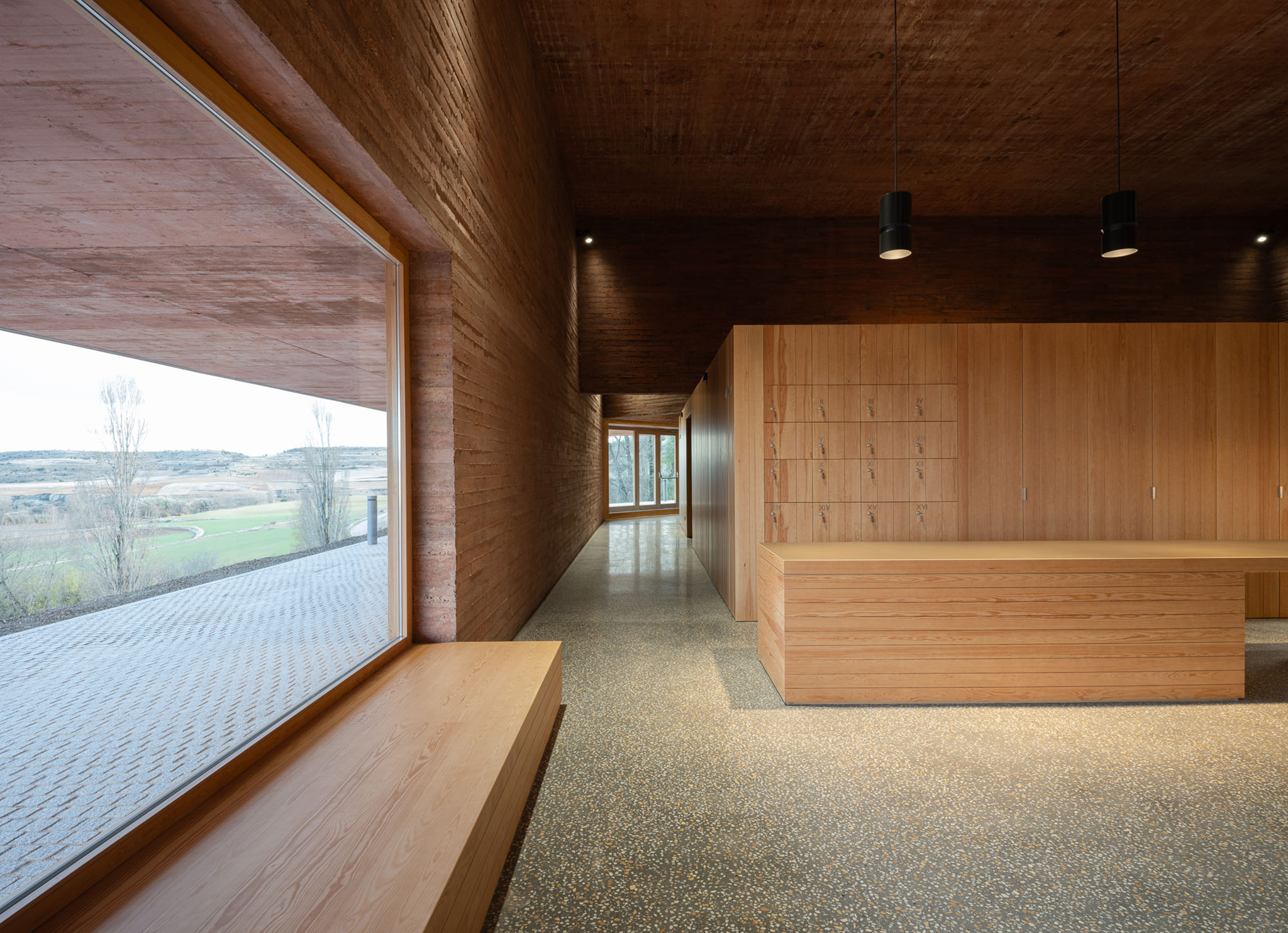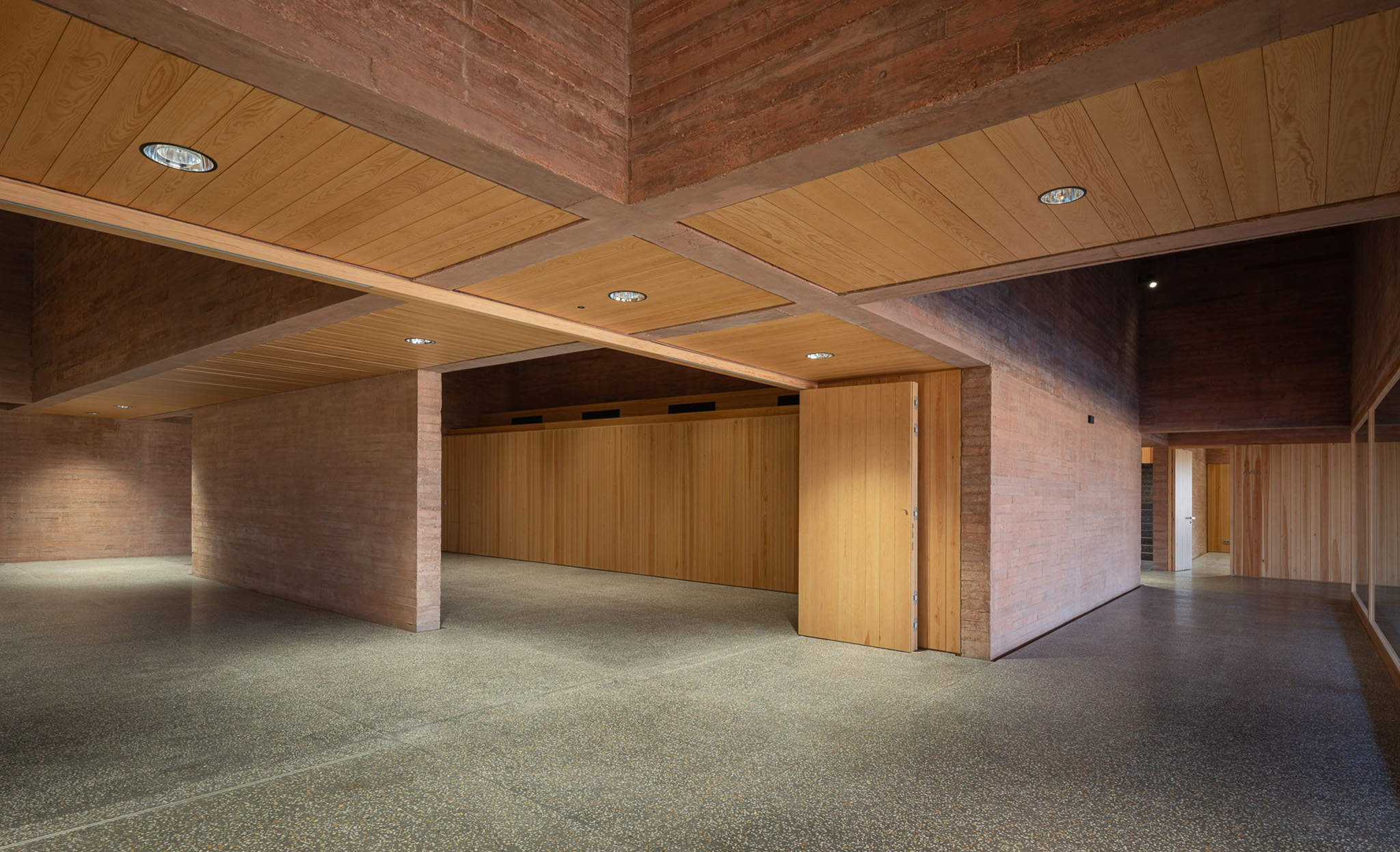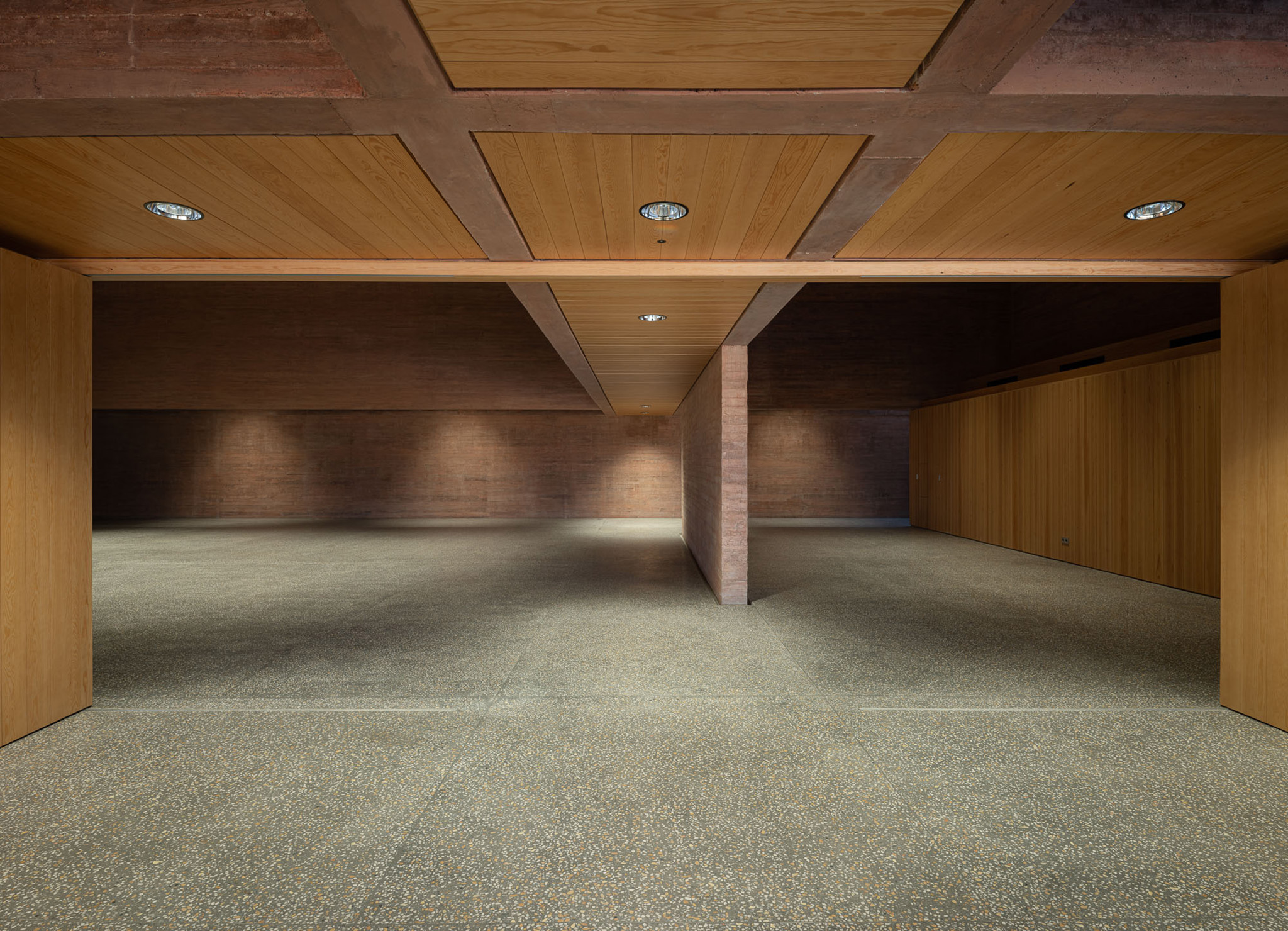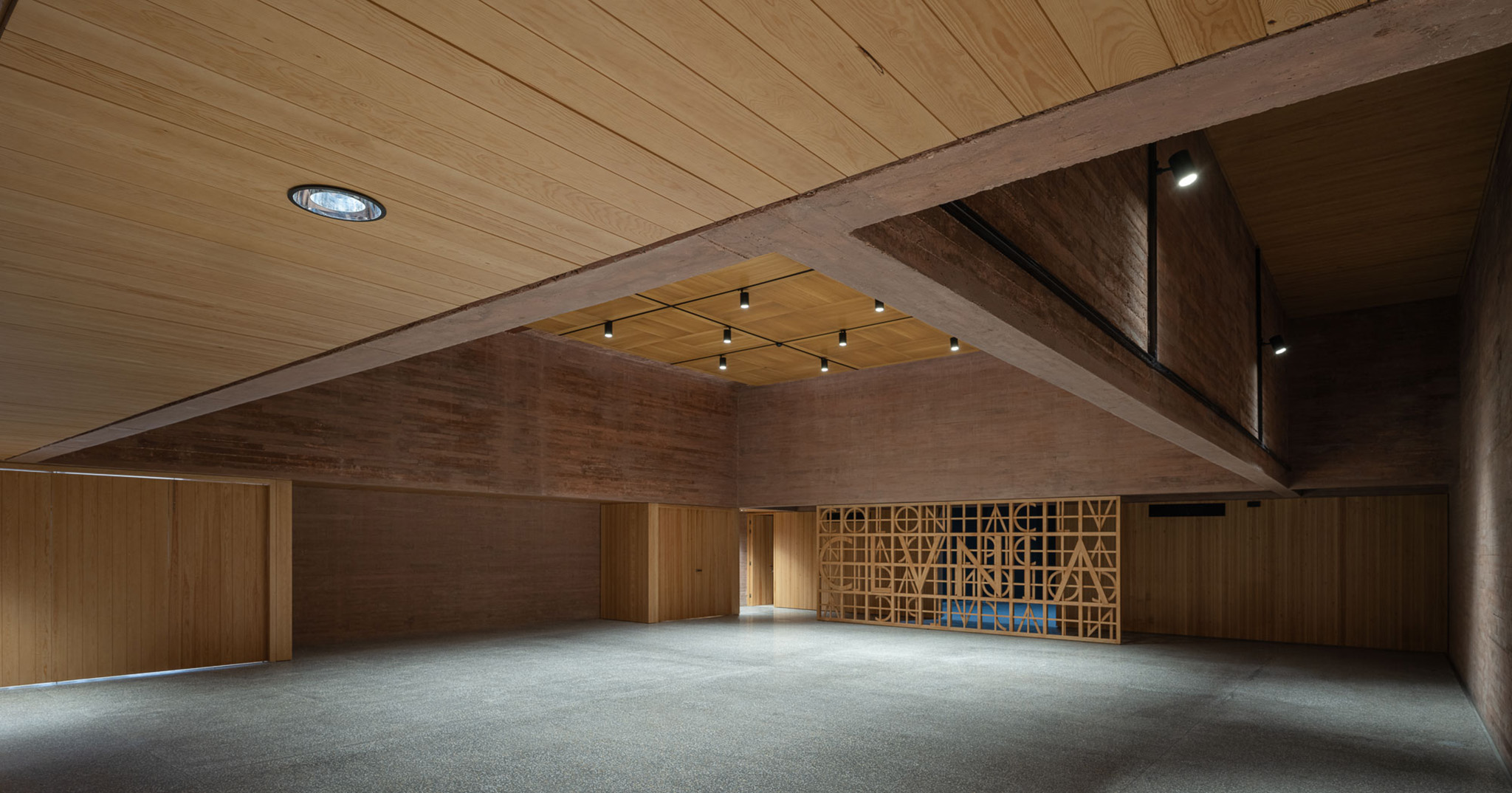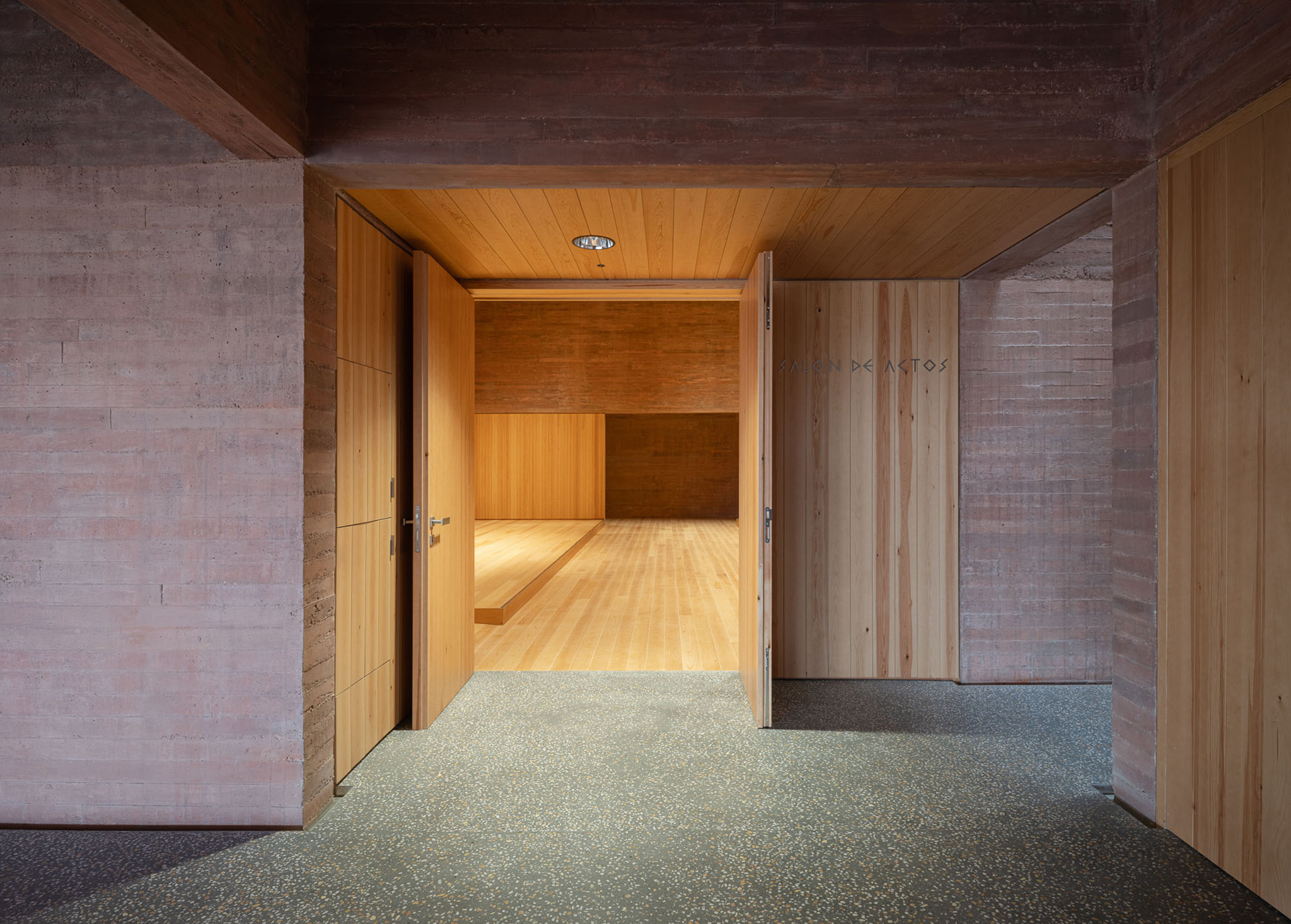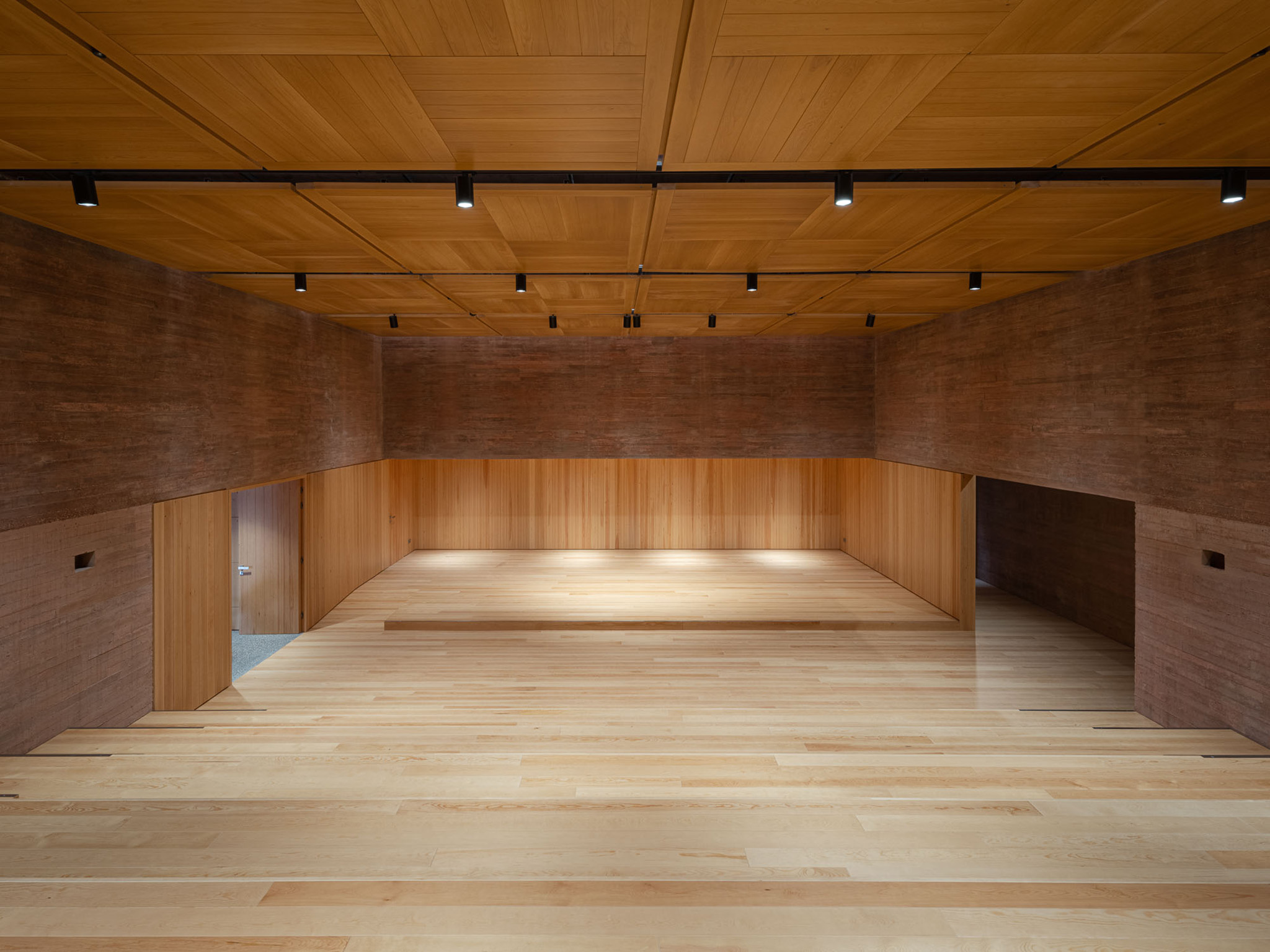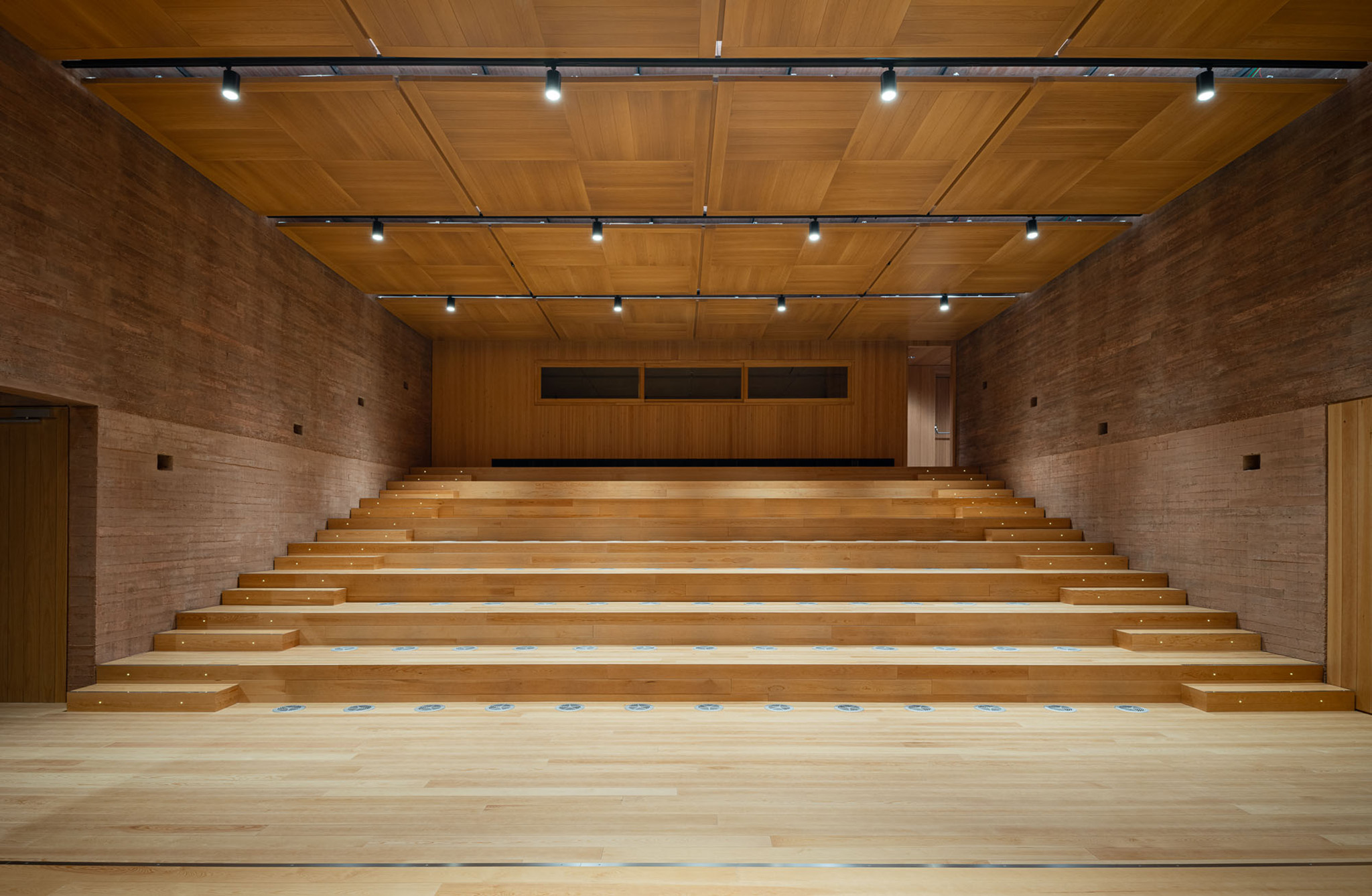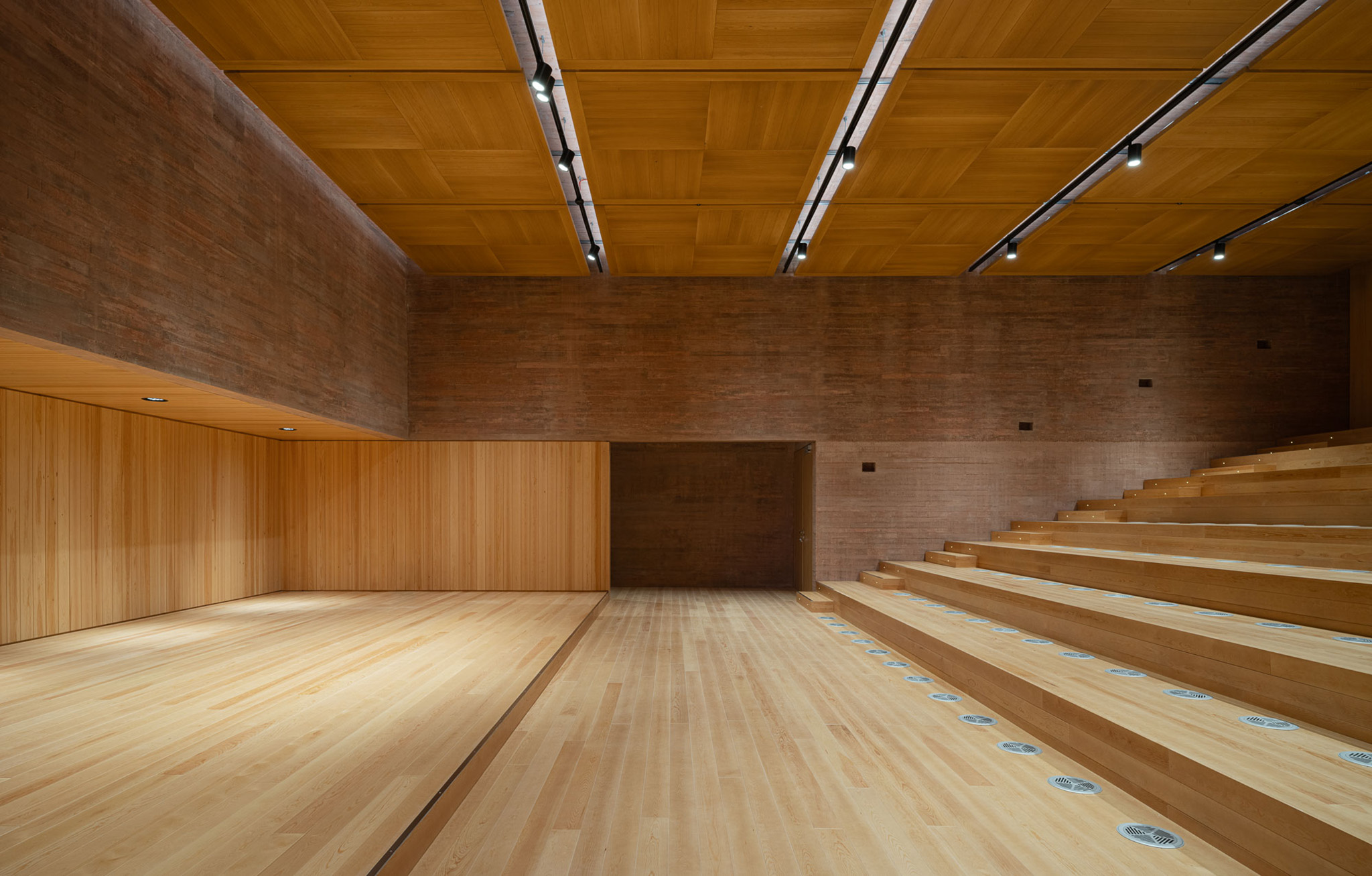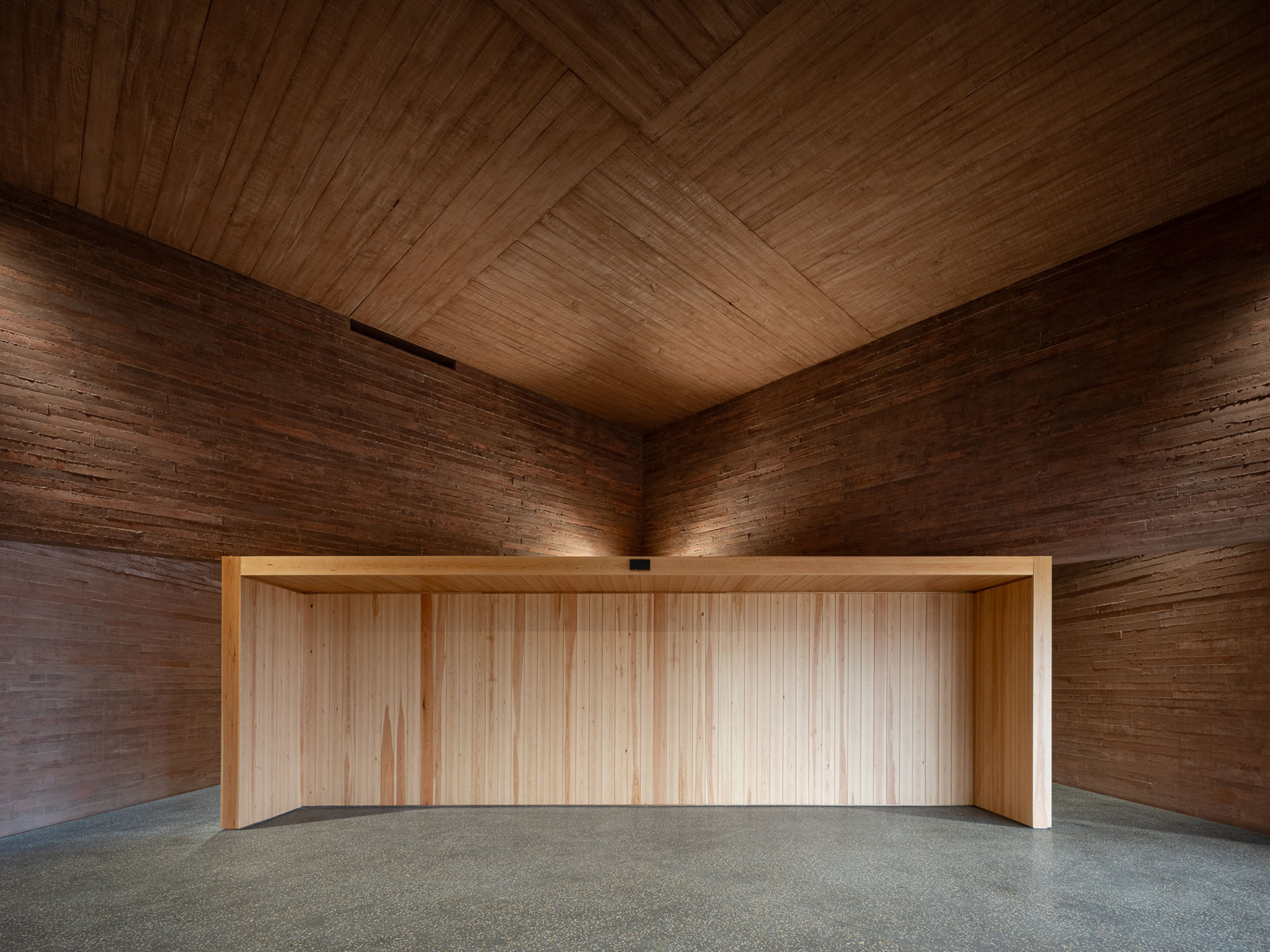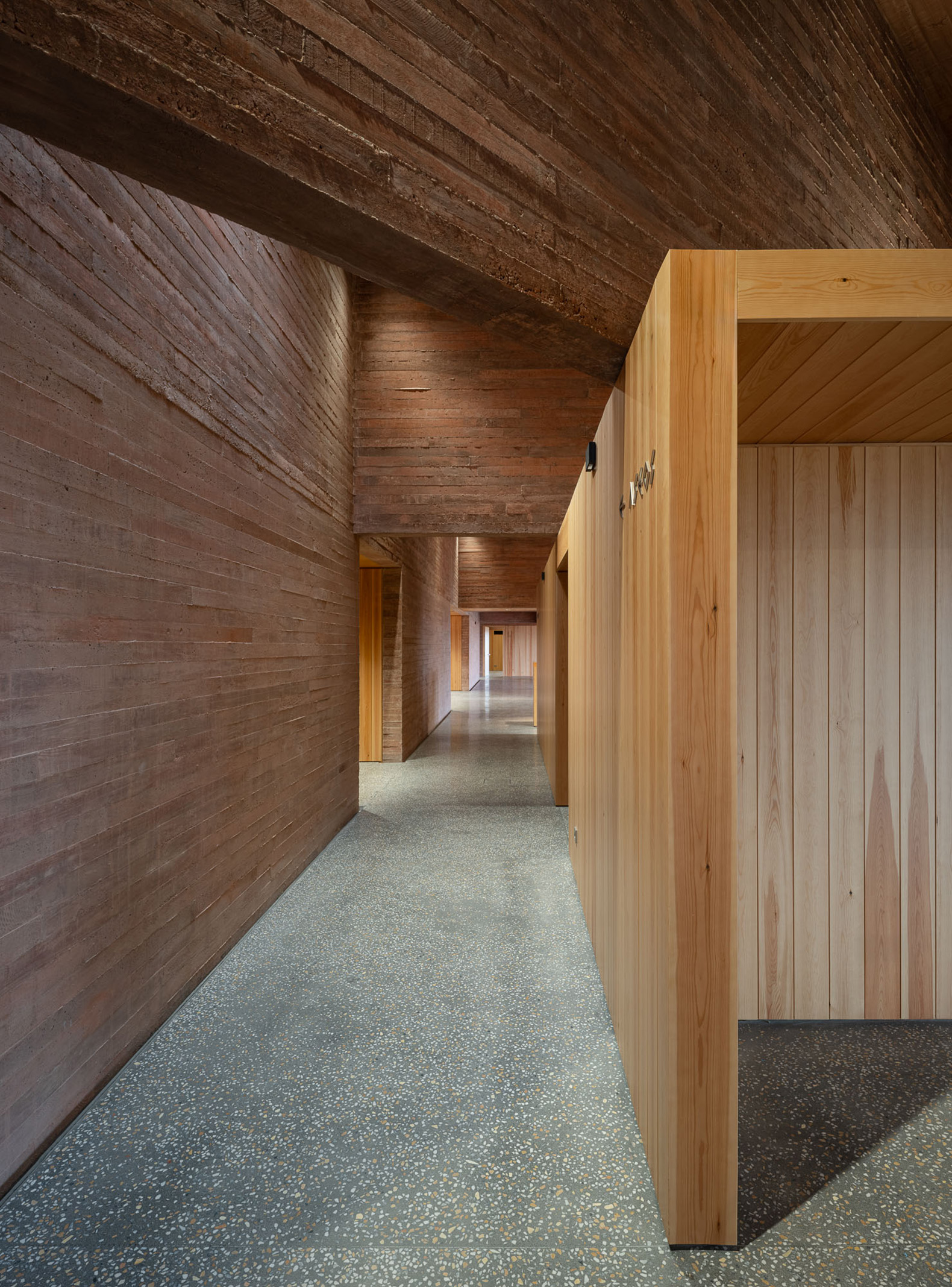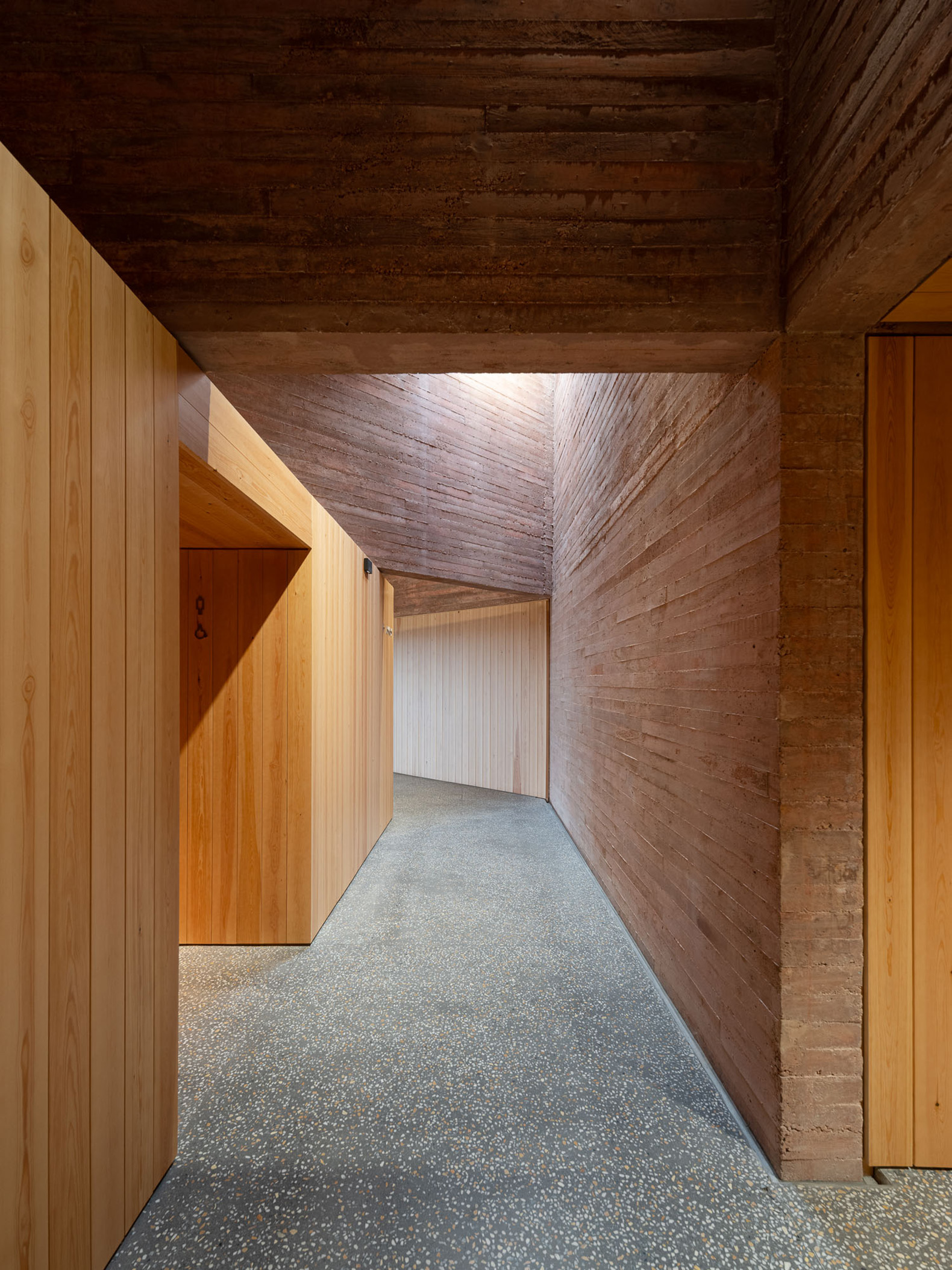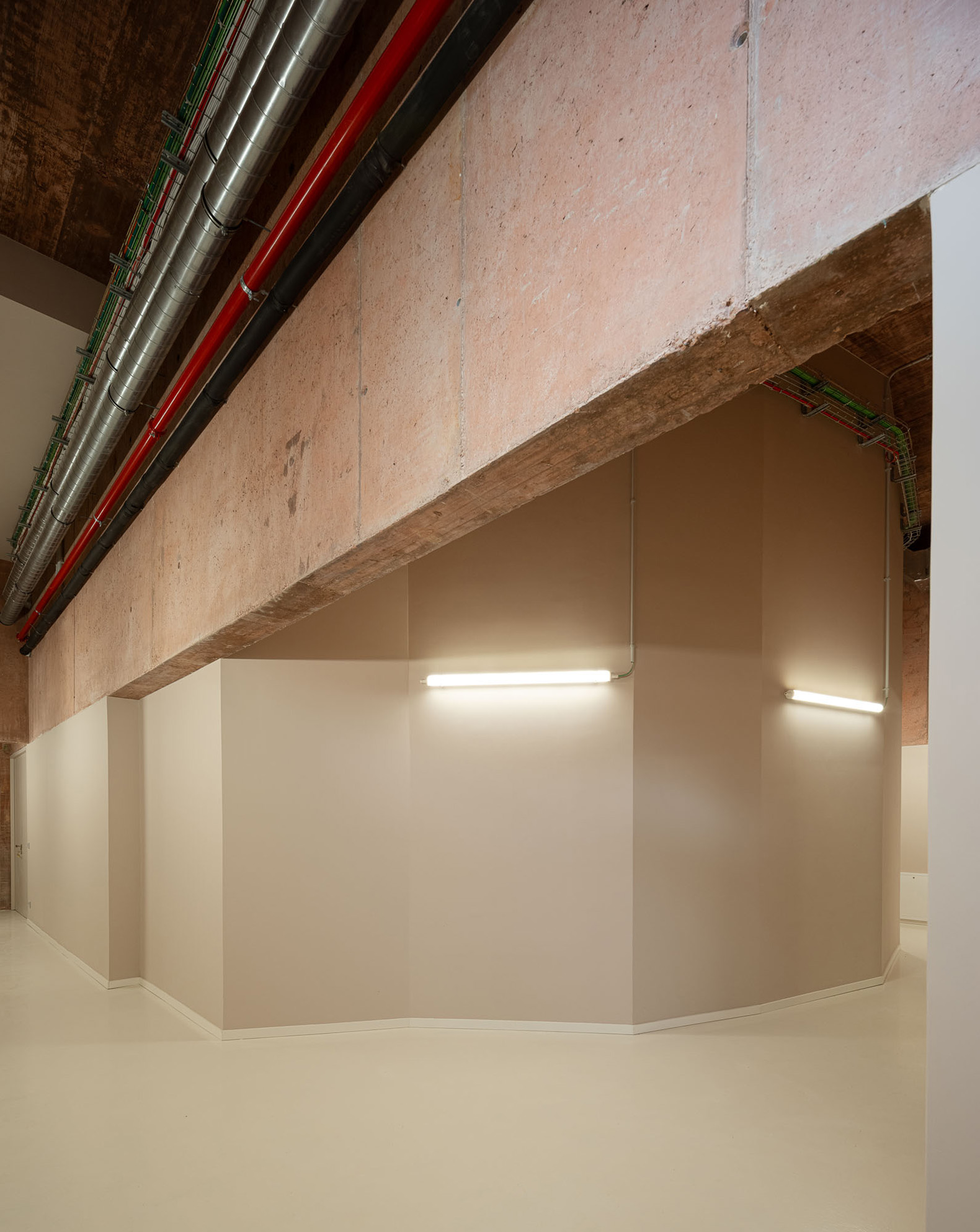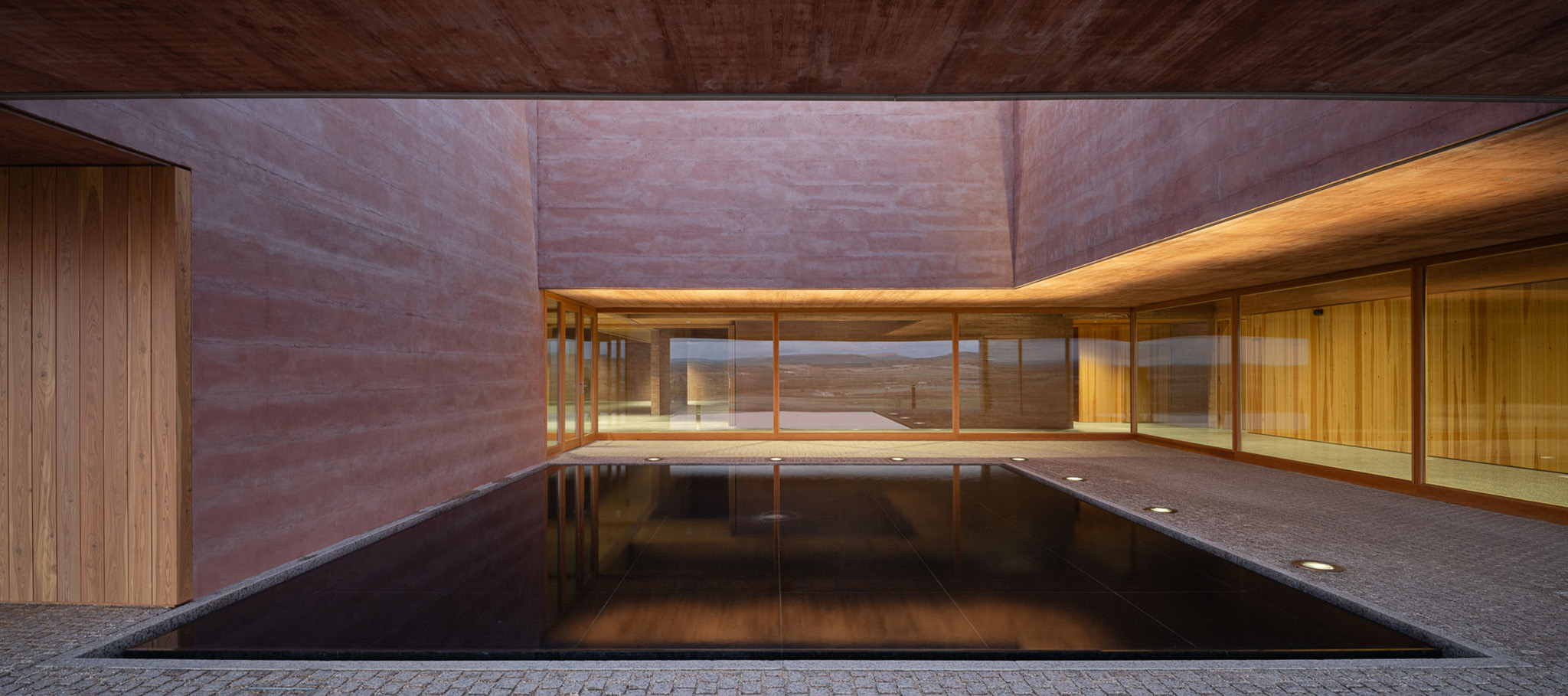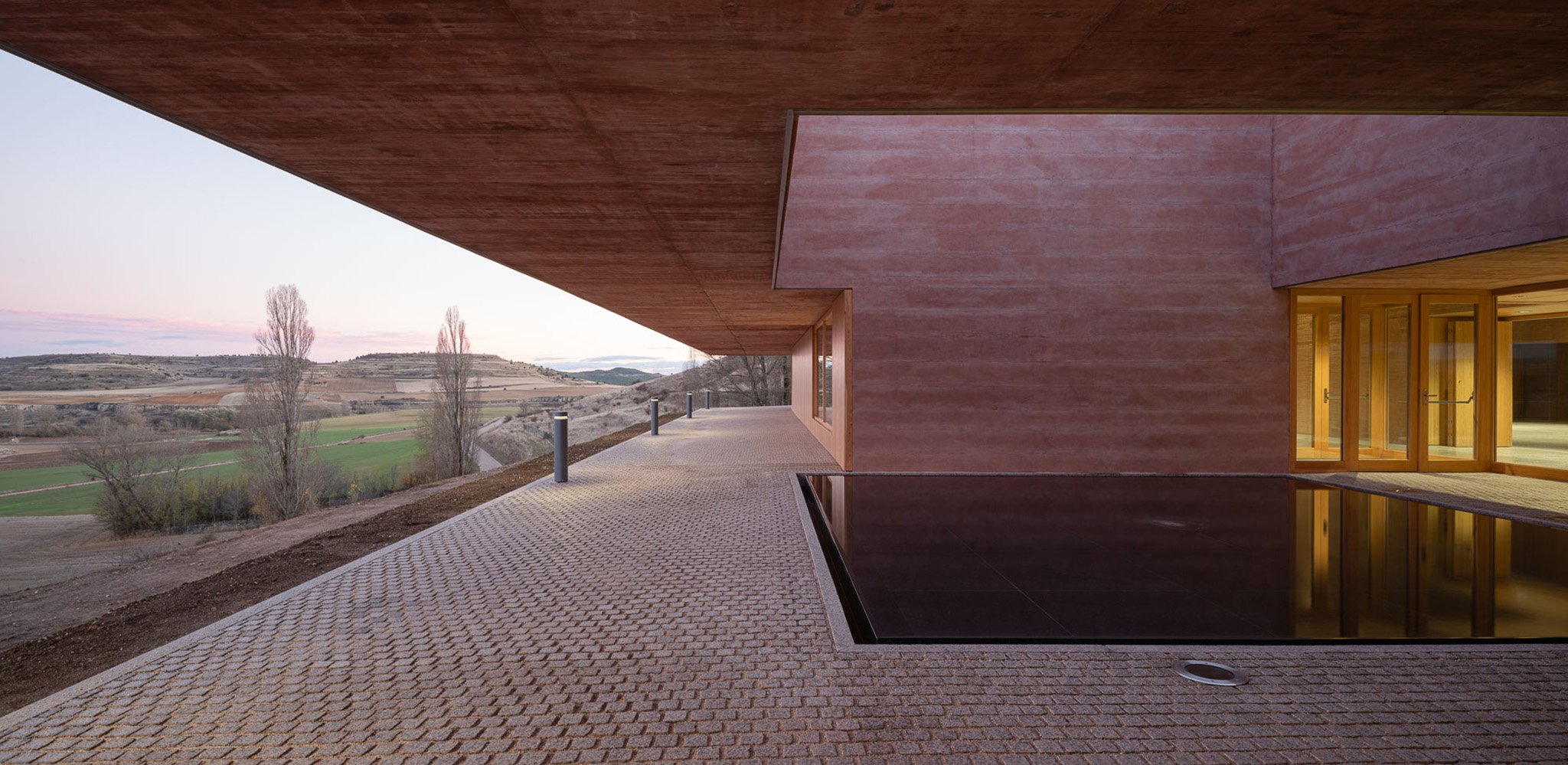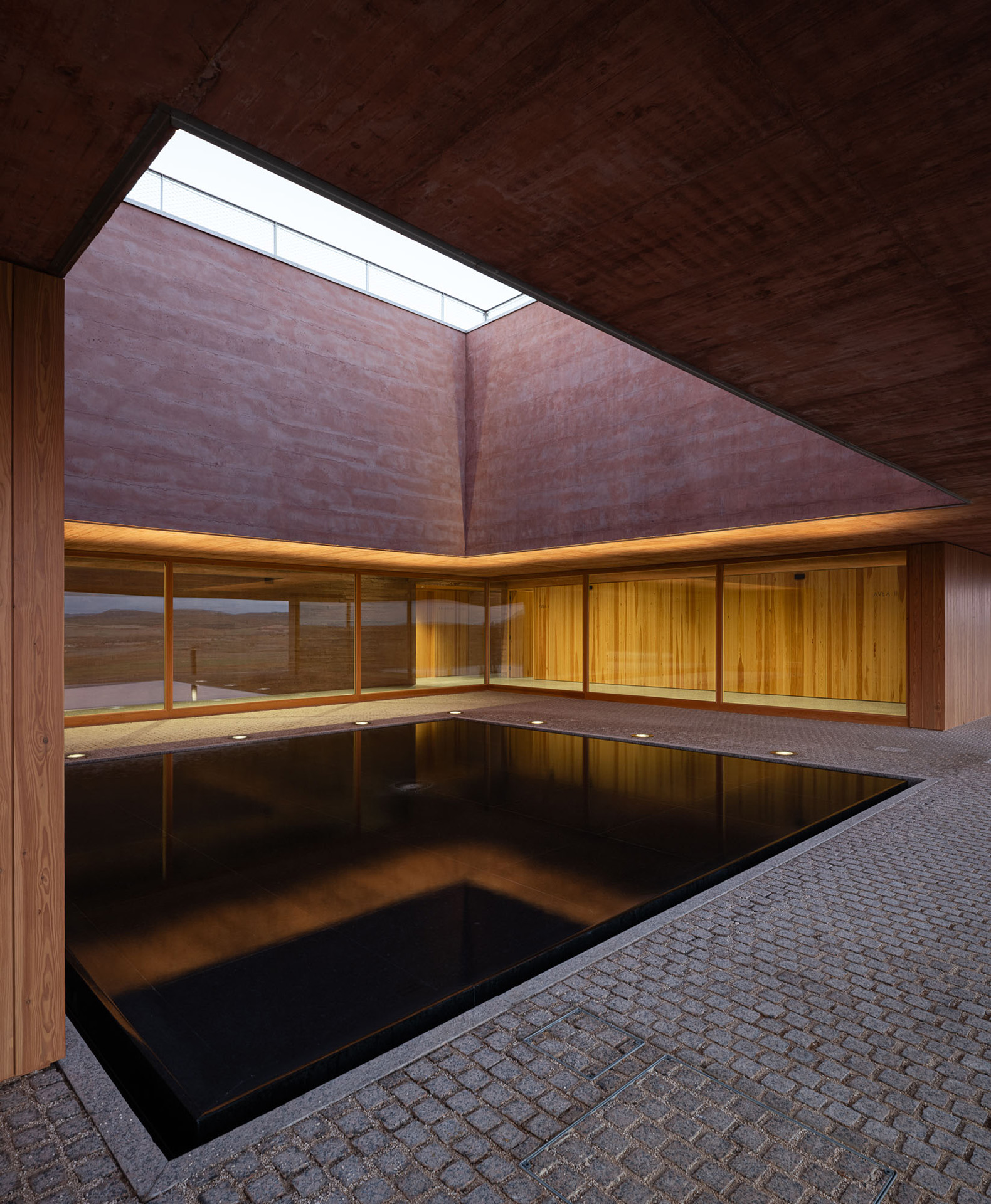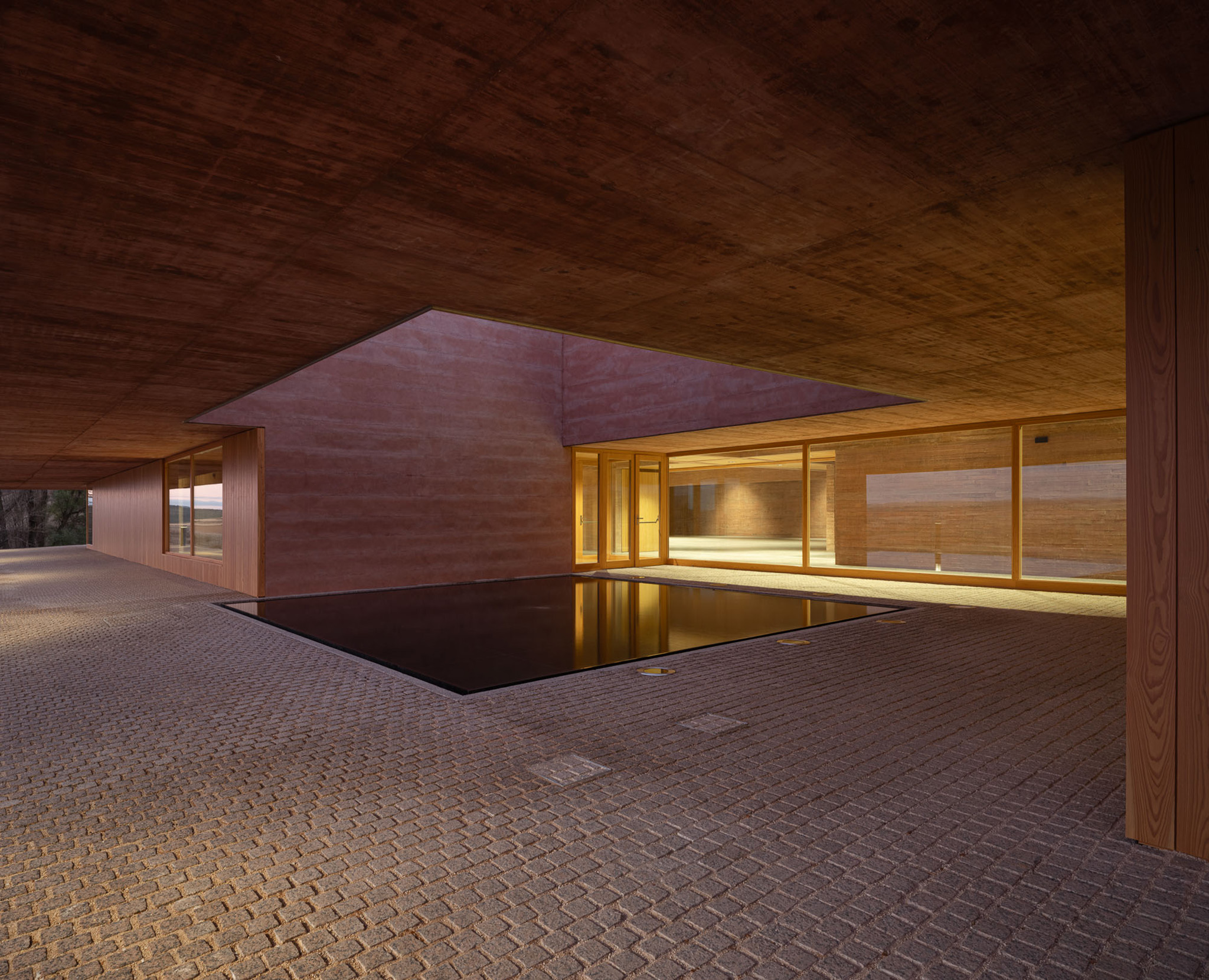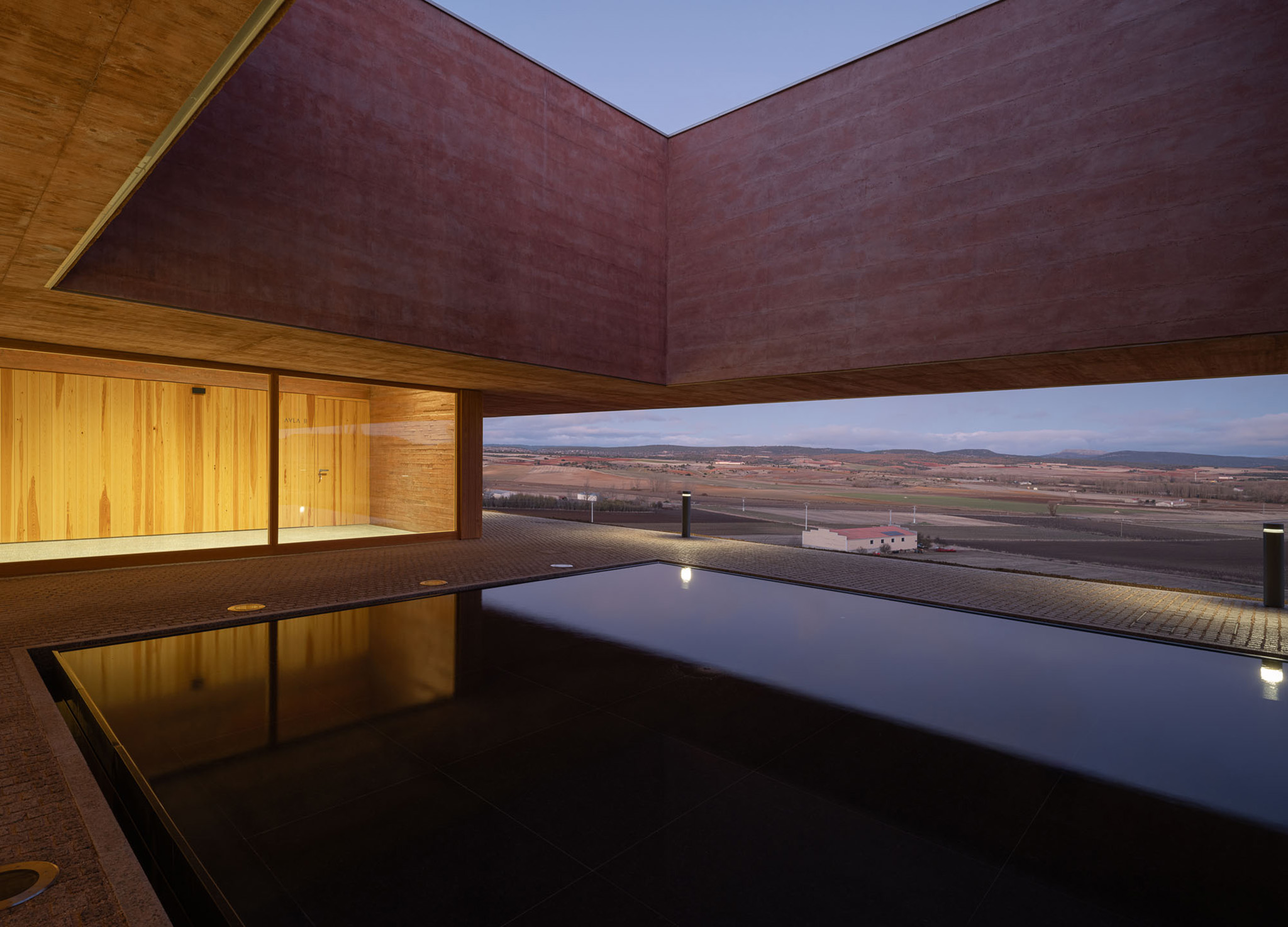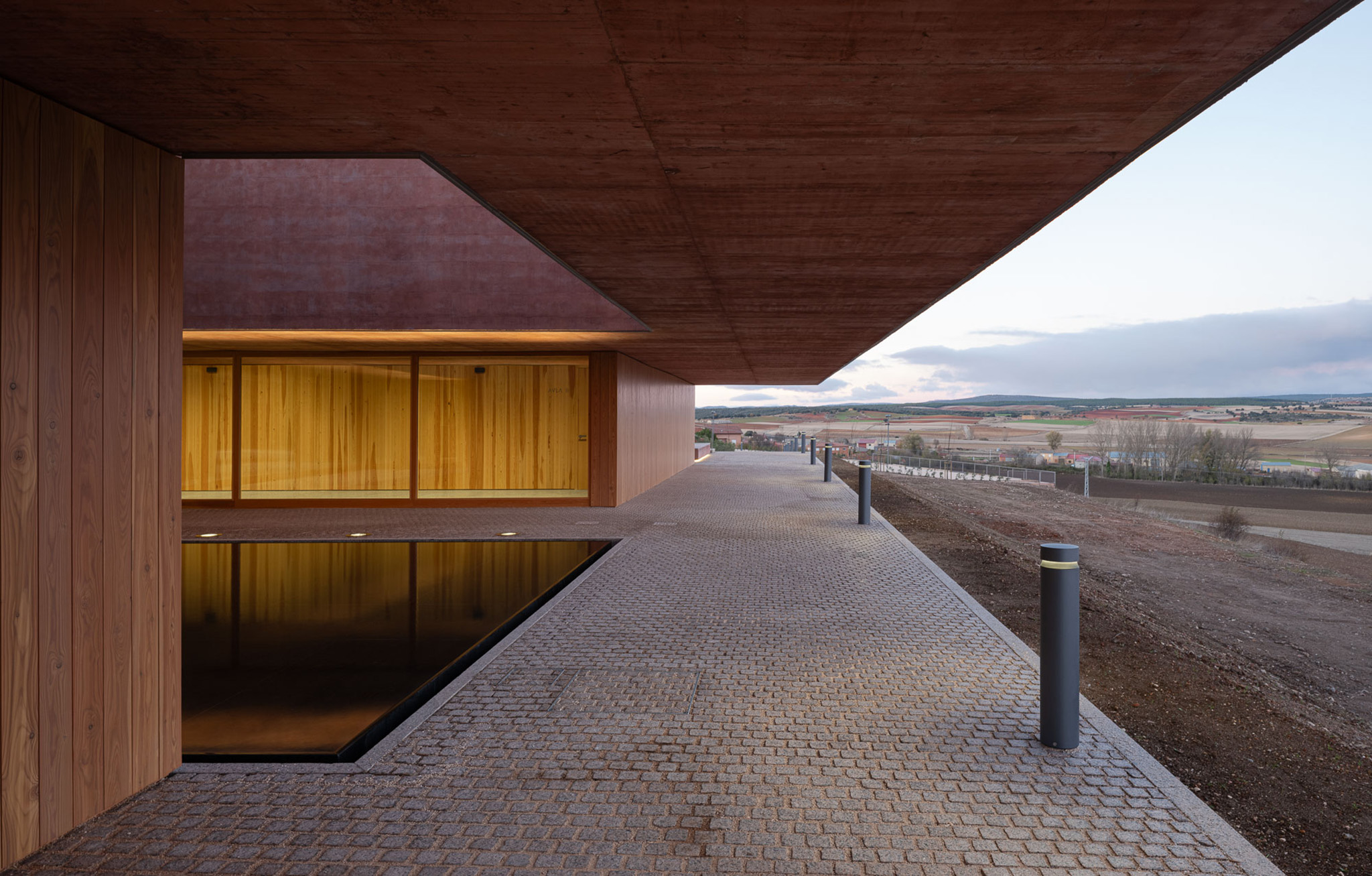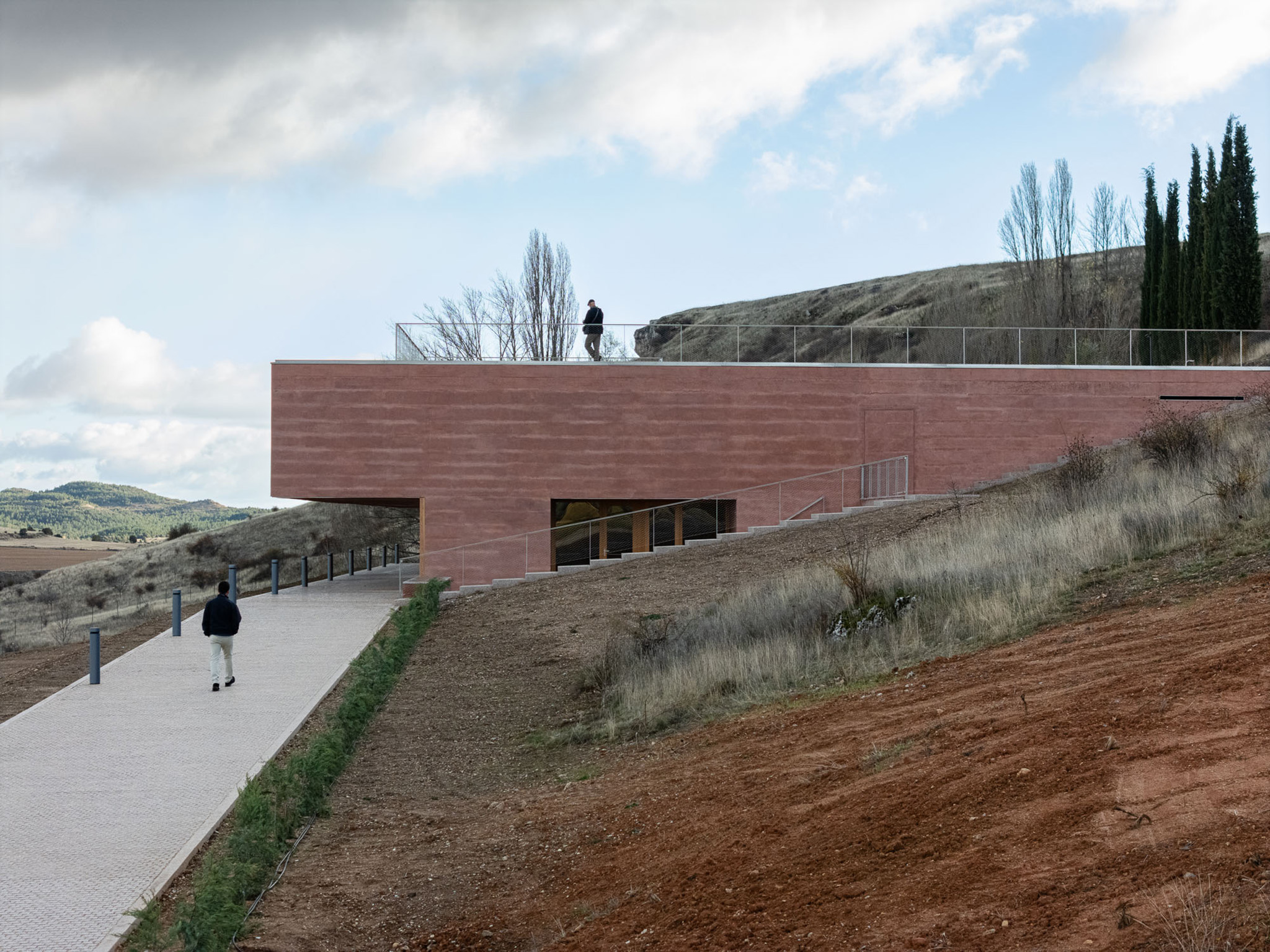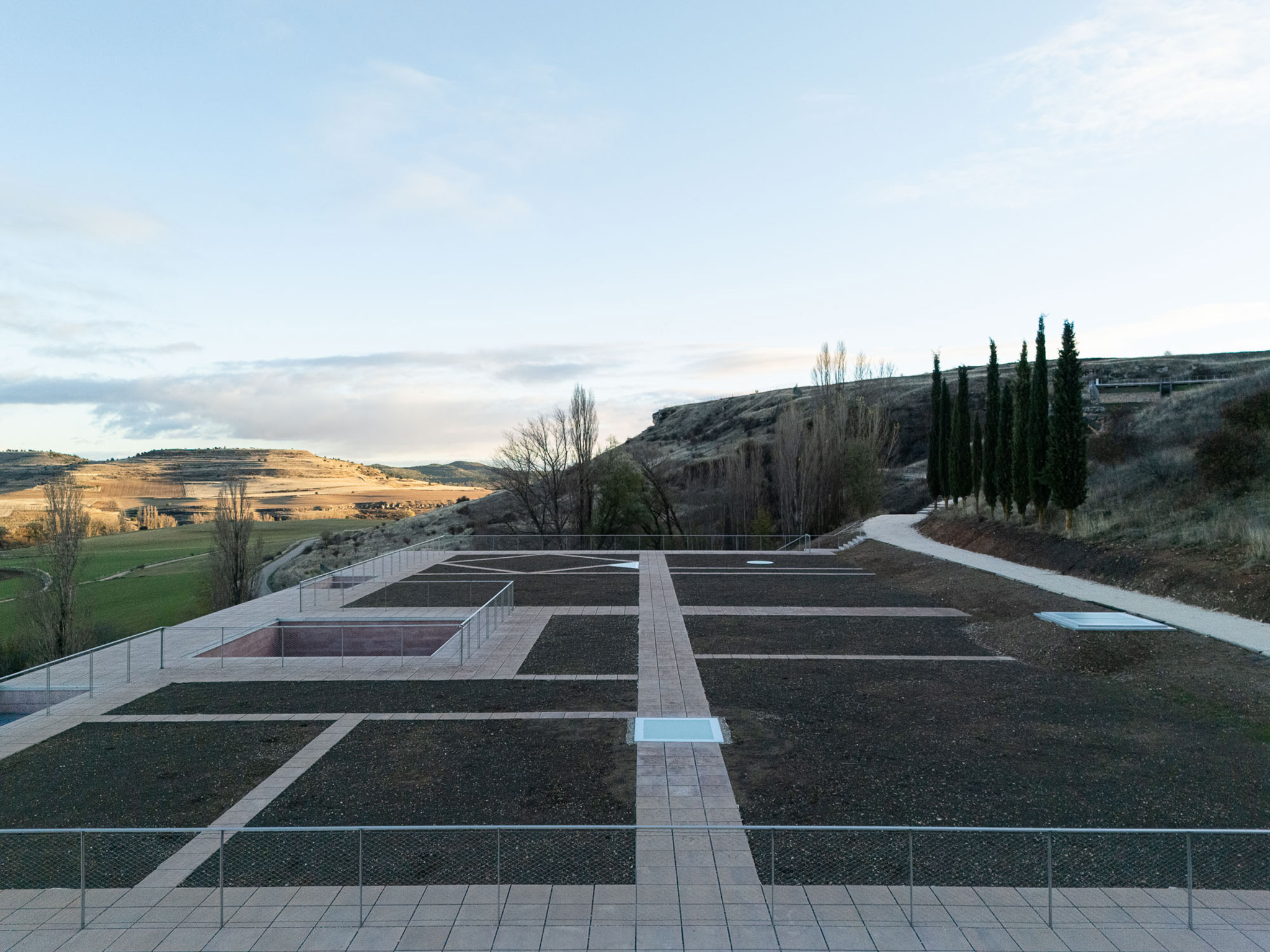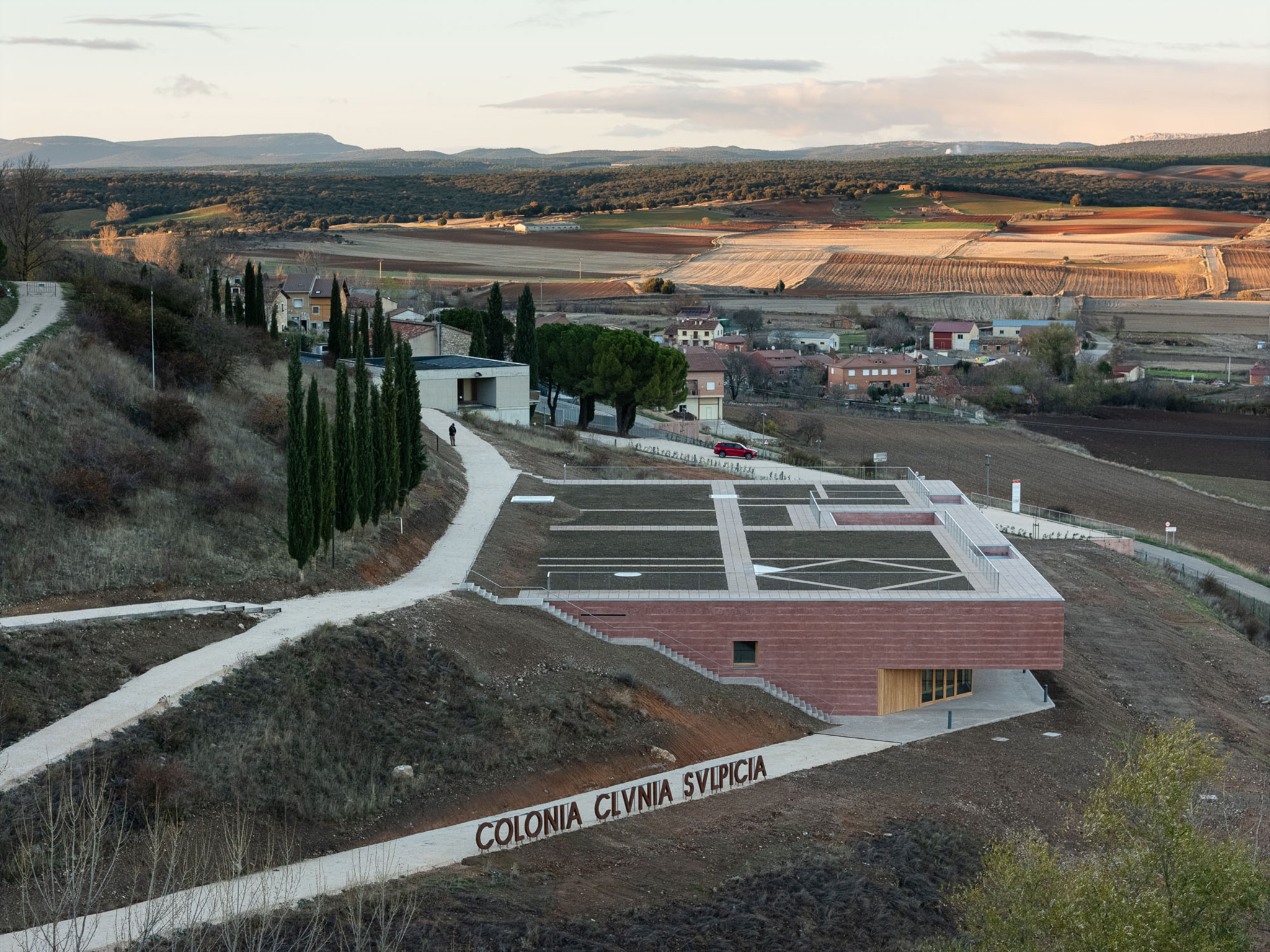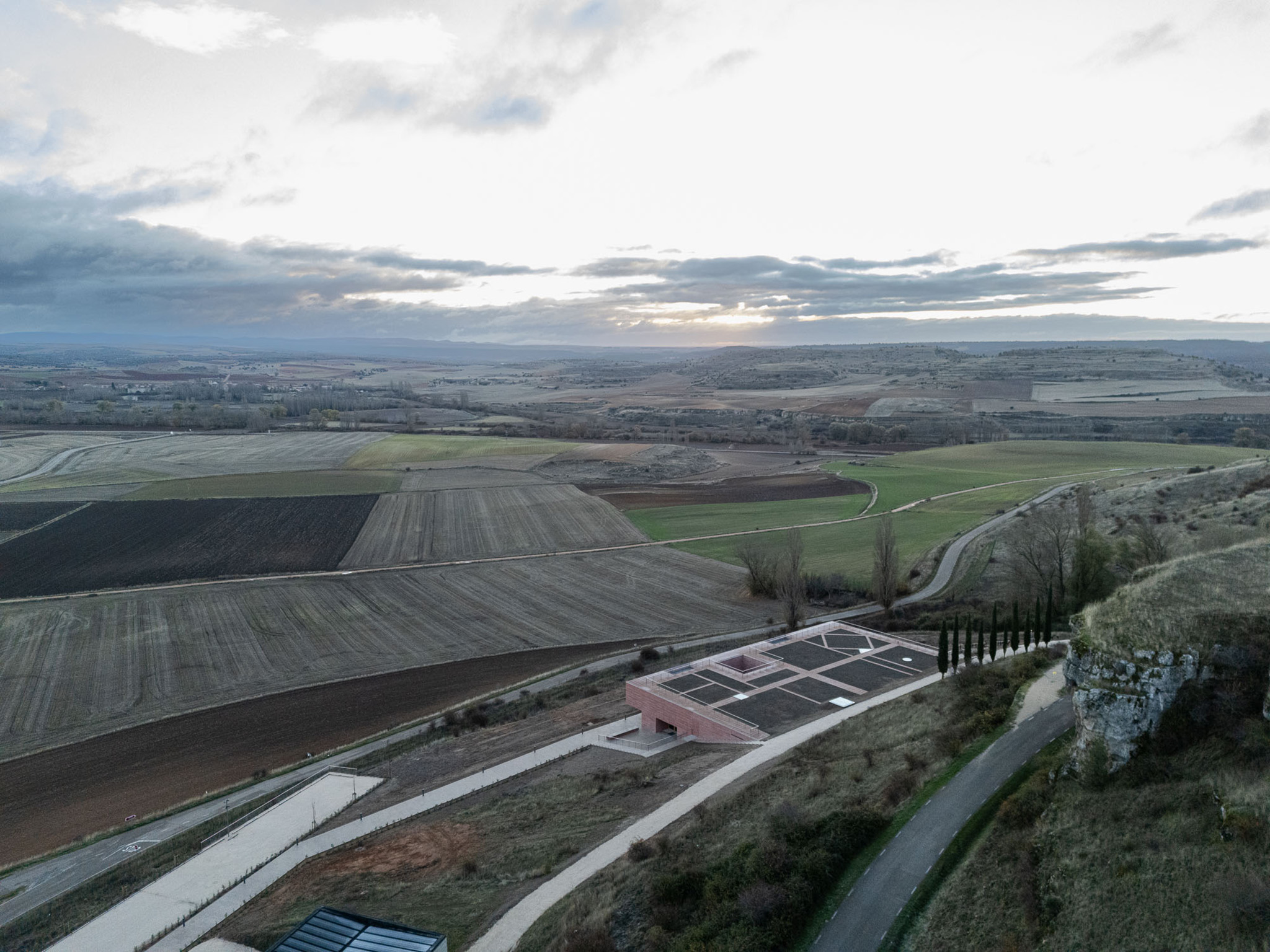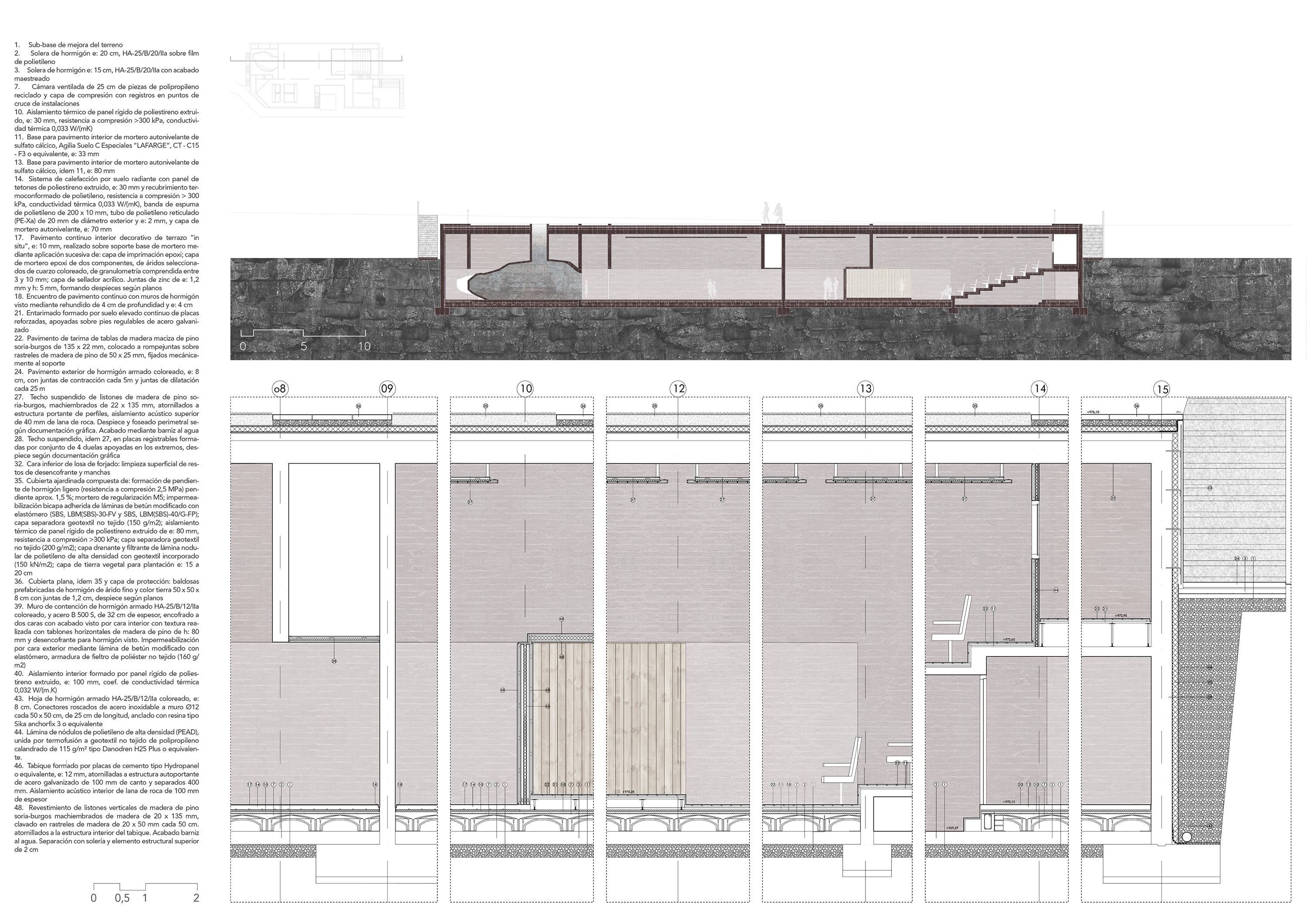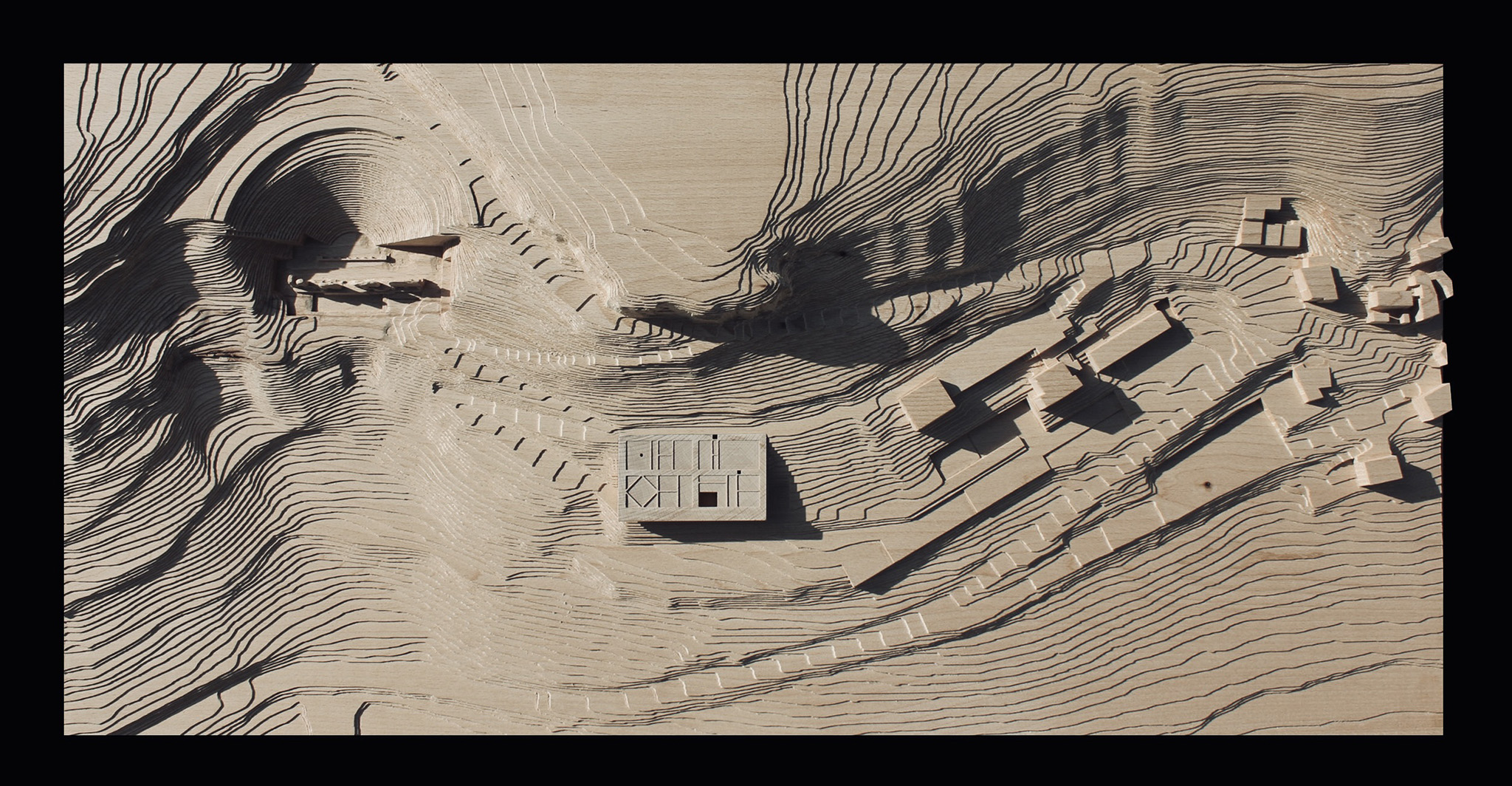
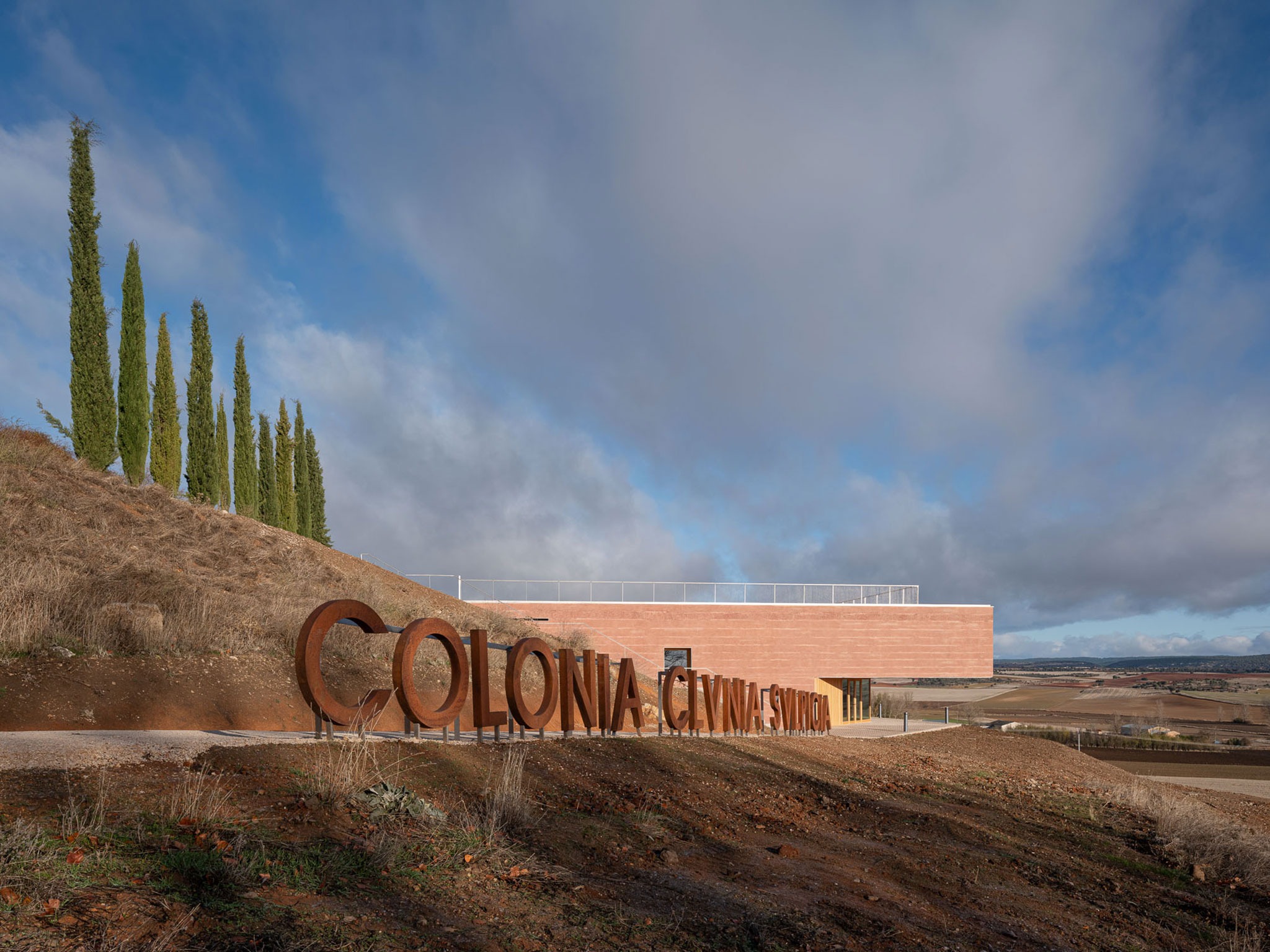
The new Visitor Reception Center at Colonia Clunia Sulpicia, designed by Tejedor Linares Arquitectos, establishes a harmonious relationship with its natural surroundings, integrating the architecture into the landscape. In this sense, the vegetation of the hillside extends onto the roof of the building, functioning as an area for outdoor activities and as an archaeological garden. The project also incorporates the path that connects the pre-existing archaeological structures.
Beyond its continuity with the archaeological and ecological area, the design minimizes environmental impact through the application of various strategies and practices aligned with international sustainability goals. As a subtle geometric exception on the natural slope, the Visitor Reception Center takes advantage of the visibility of the rocky outcrop from a distance to position itself within the landscape and guide visitors approaching Clunia.
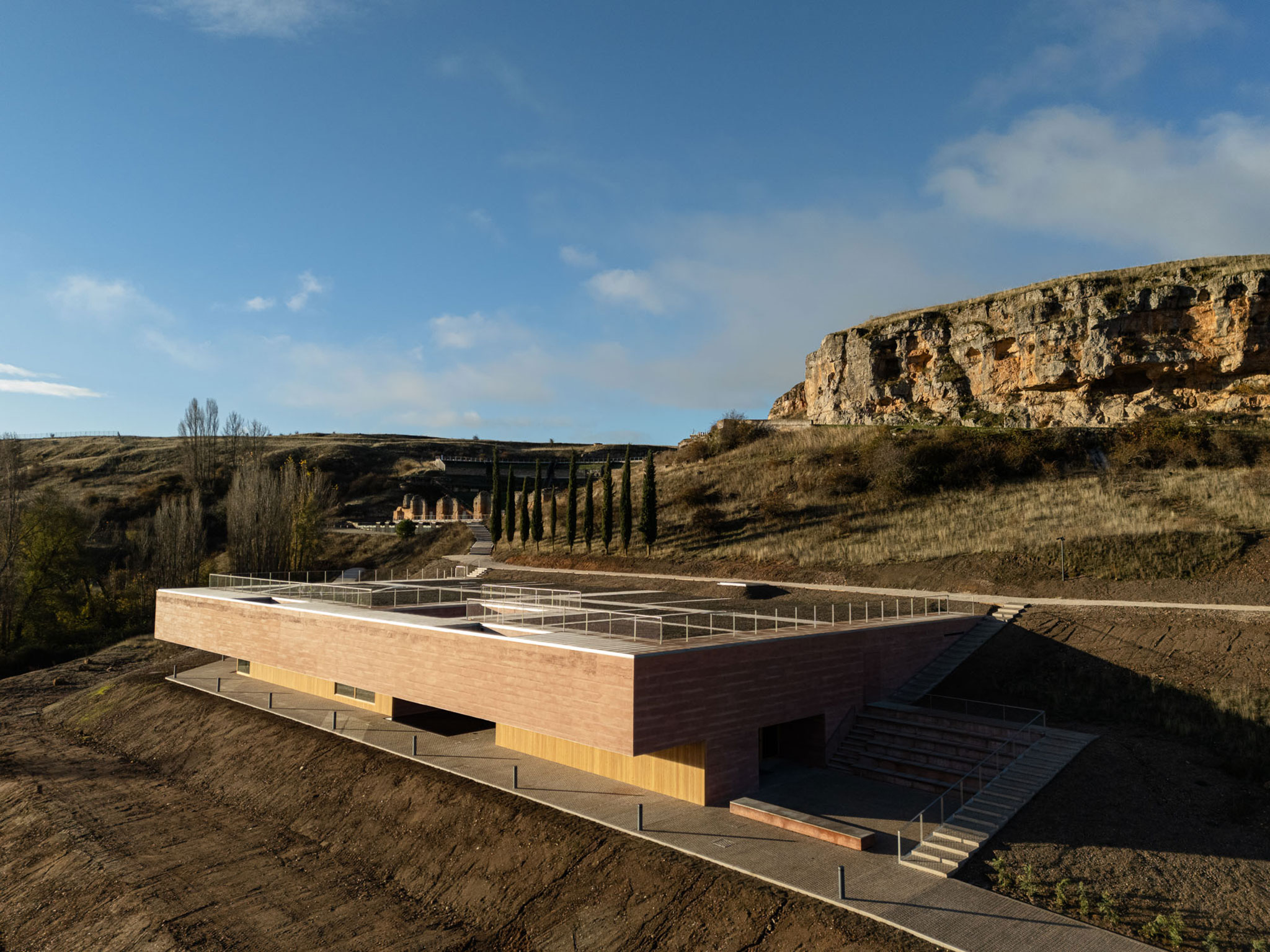
Visitor Reception Center of Colonia Clunia Sulpicia by Tejedor Linares Arquitectos. Photograph by Fernando Alda.
Project description by Tejedor Linares Arquitectos
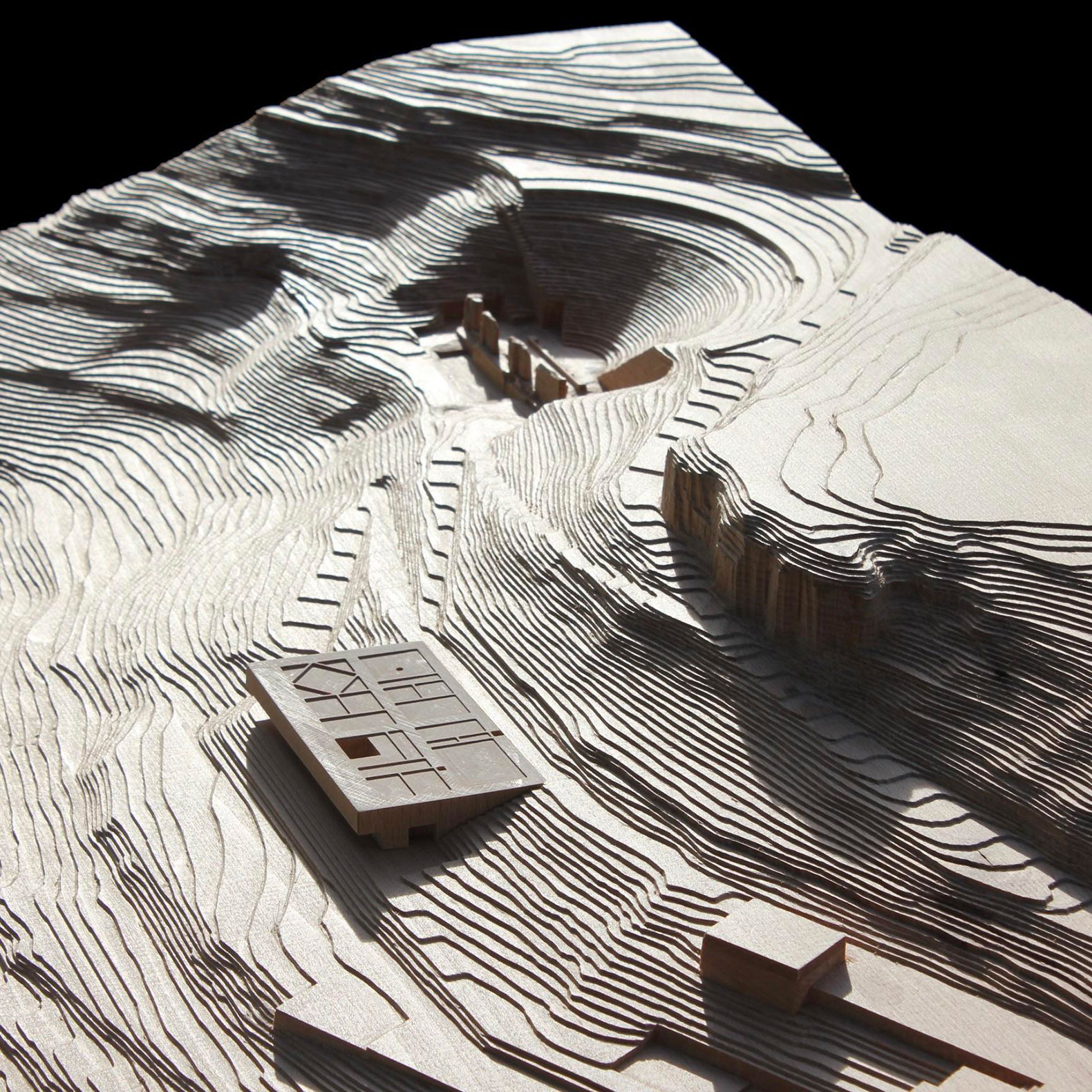
The intervention is, first and foremost, an interpretation of the topography, as was the choice of the Roman site of Clunia itself on Alto de Castro. The structure of the territory establishes the landscape and architectural values that the project seeks to reinforce. The architecture is incorporated into the landscape dominated by Peña Sobaños, to which it is subordinate, and from which it draws its spatial arguments.
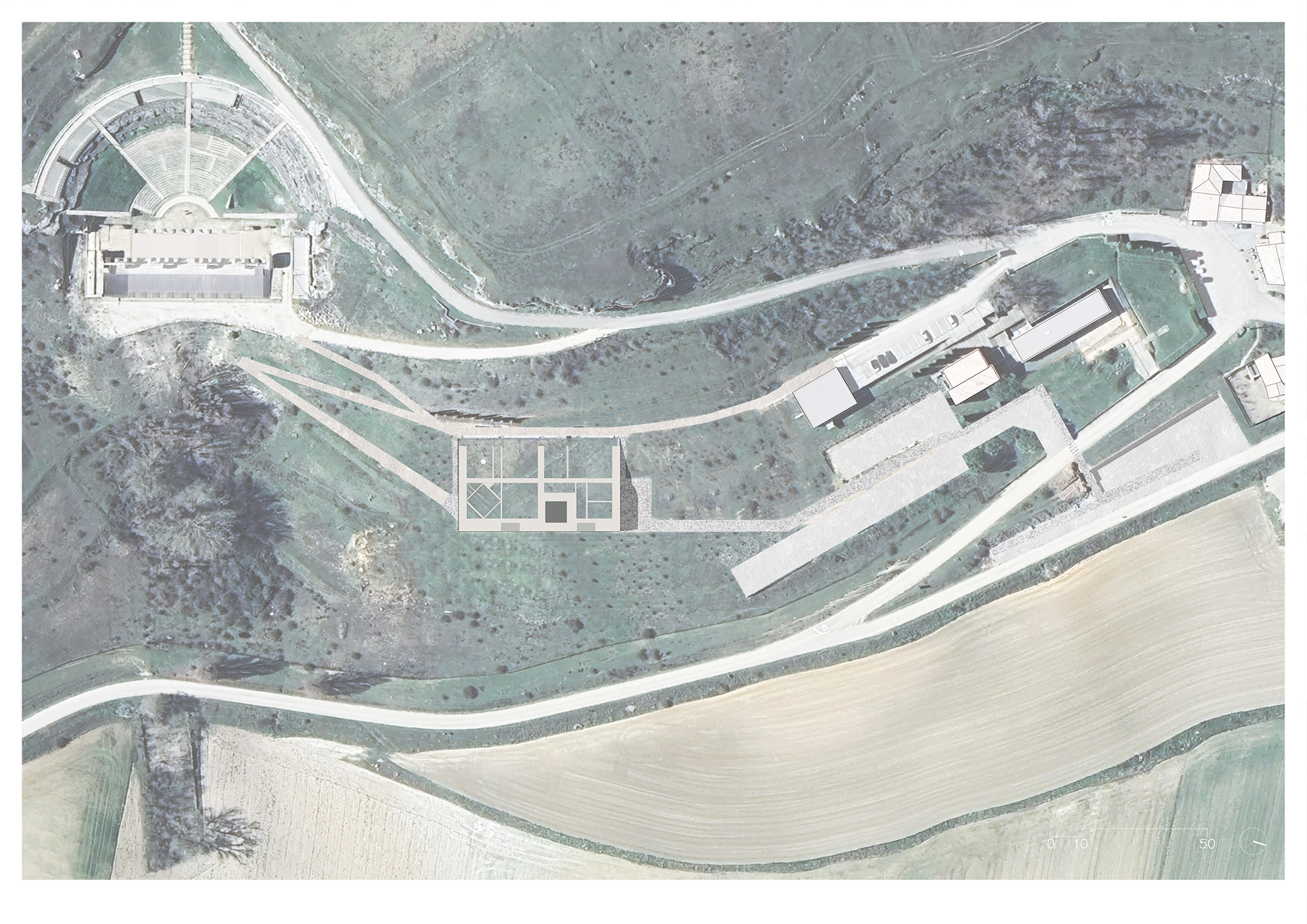
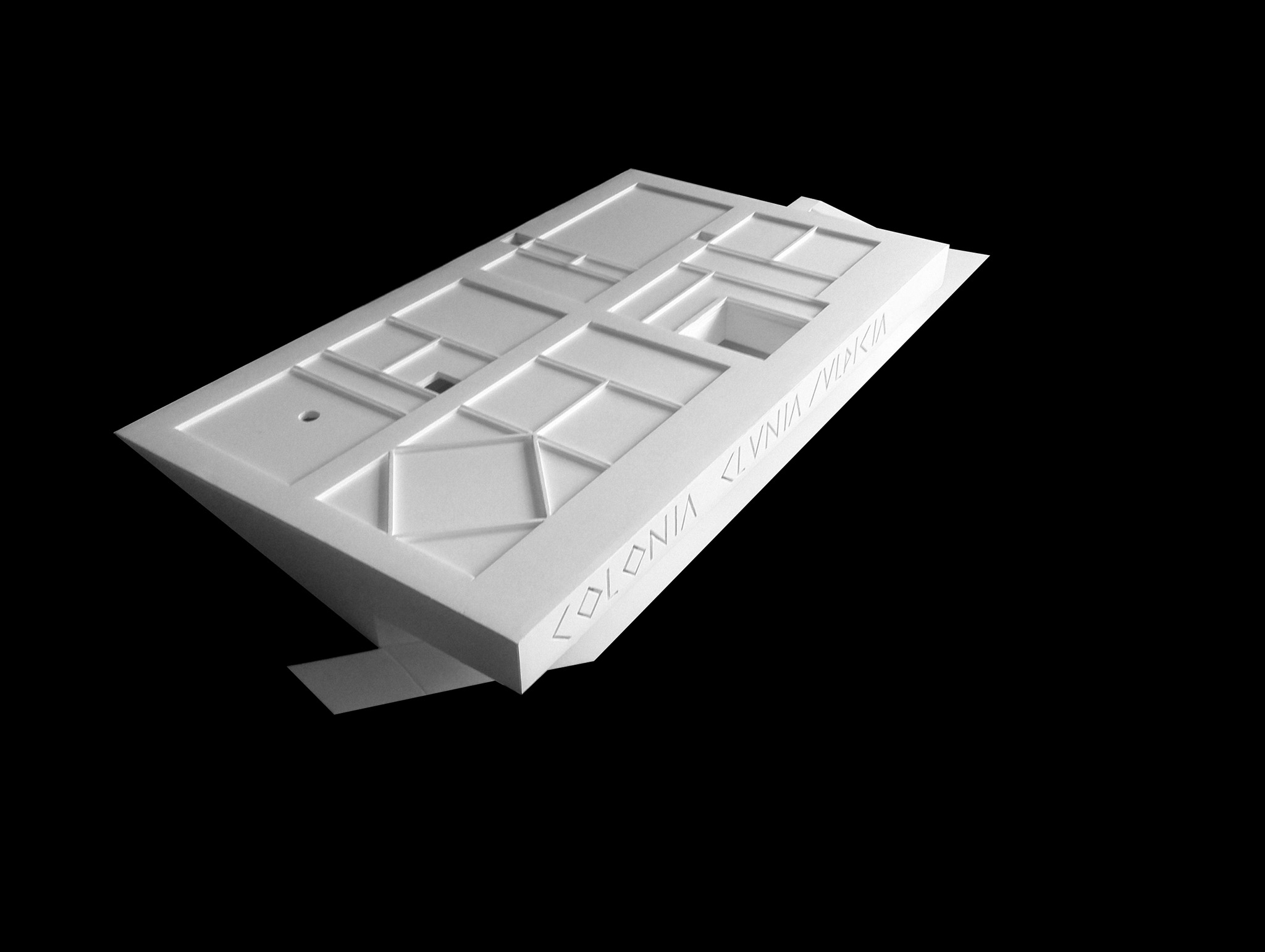
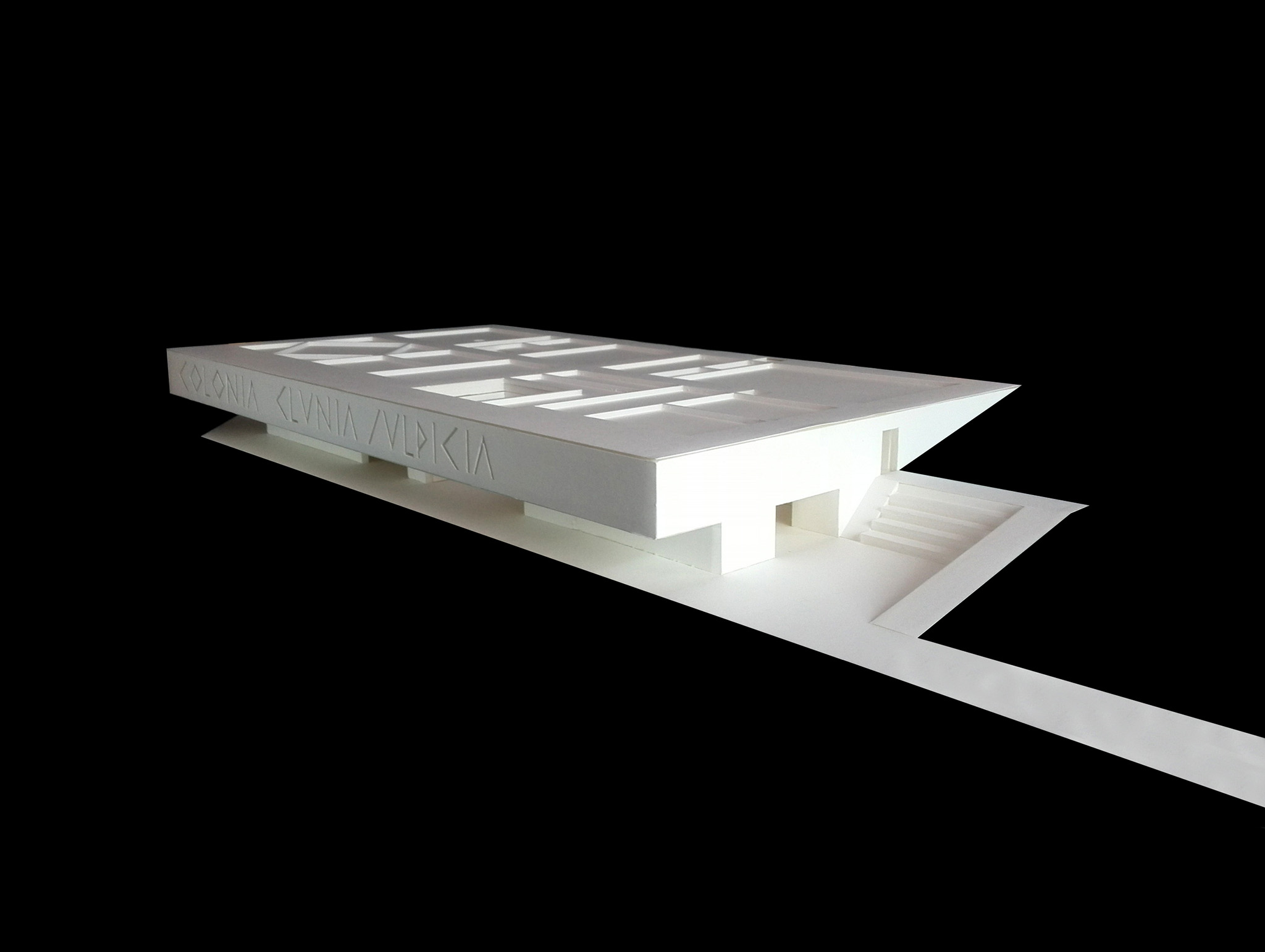
To integrate the new building into the landscape, the vegetation of the hillside extends over the roof of the Visitor Reception Center, which houses the site museum. The rooftop viewpoint, which reflects the internal structure, can be used for outdoor activities and as an archaeological garden. The Visitor Reception Center is situated along the path that connects the pre-existing buildings of the archaeologists with the Roman Theatre and takes advantage of the visibility of the crag from a distance to position itself within the environment and guide visitors approaching Clunia.
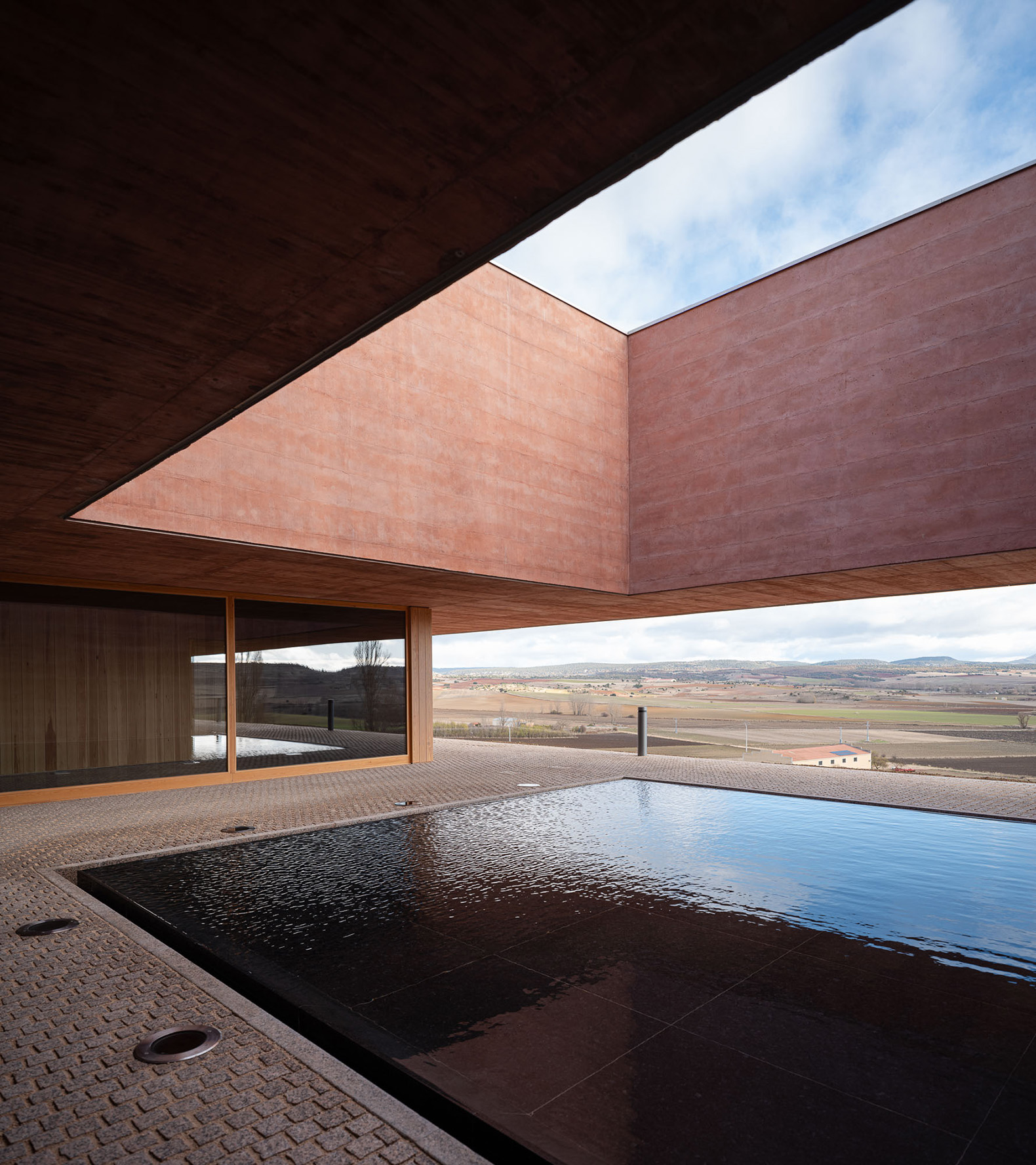
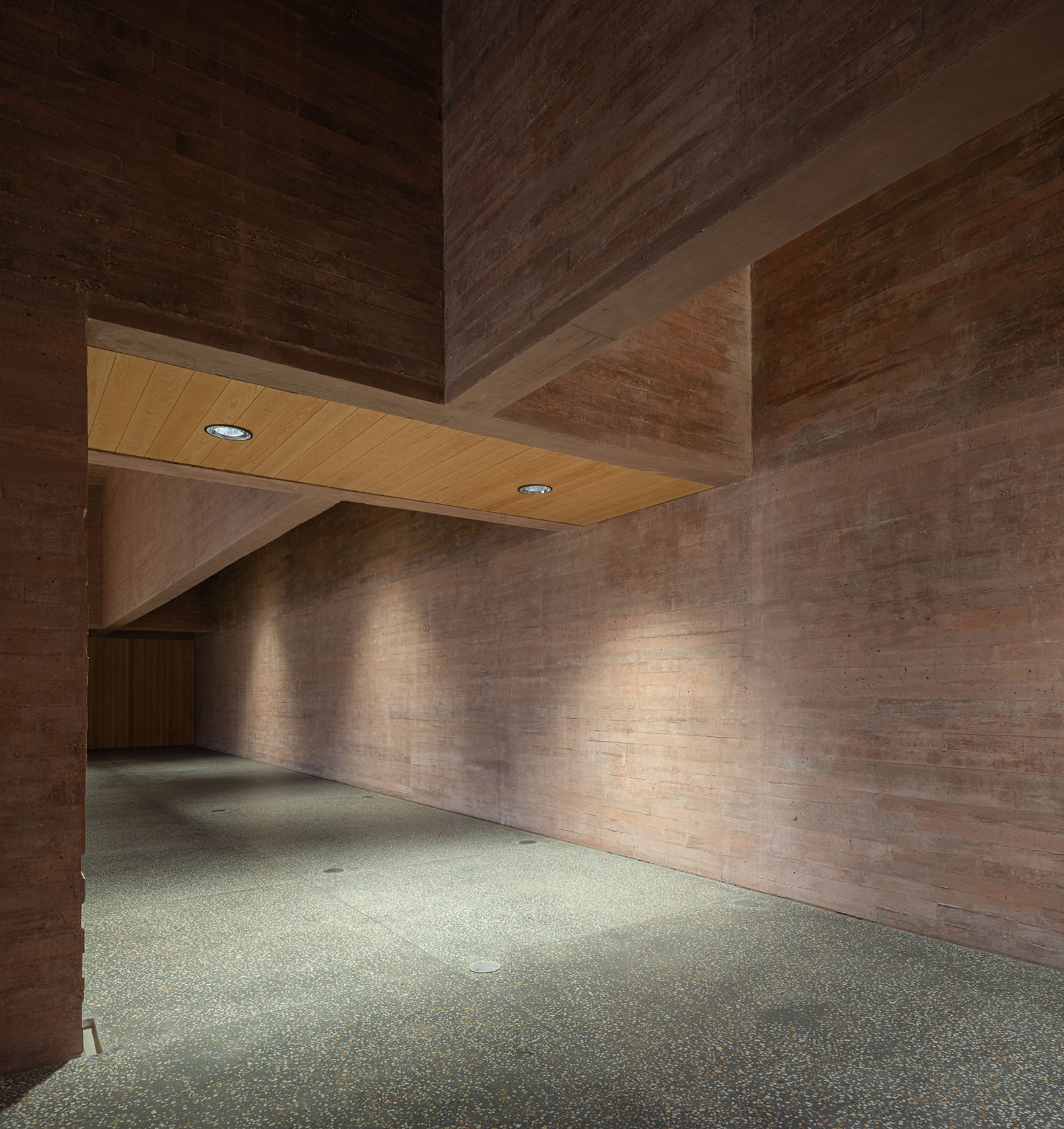
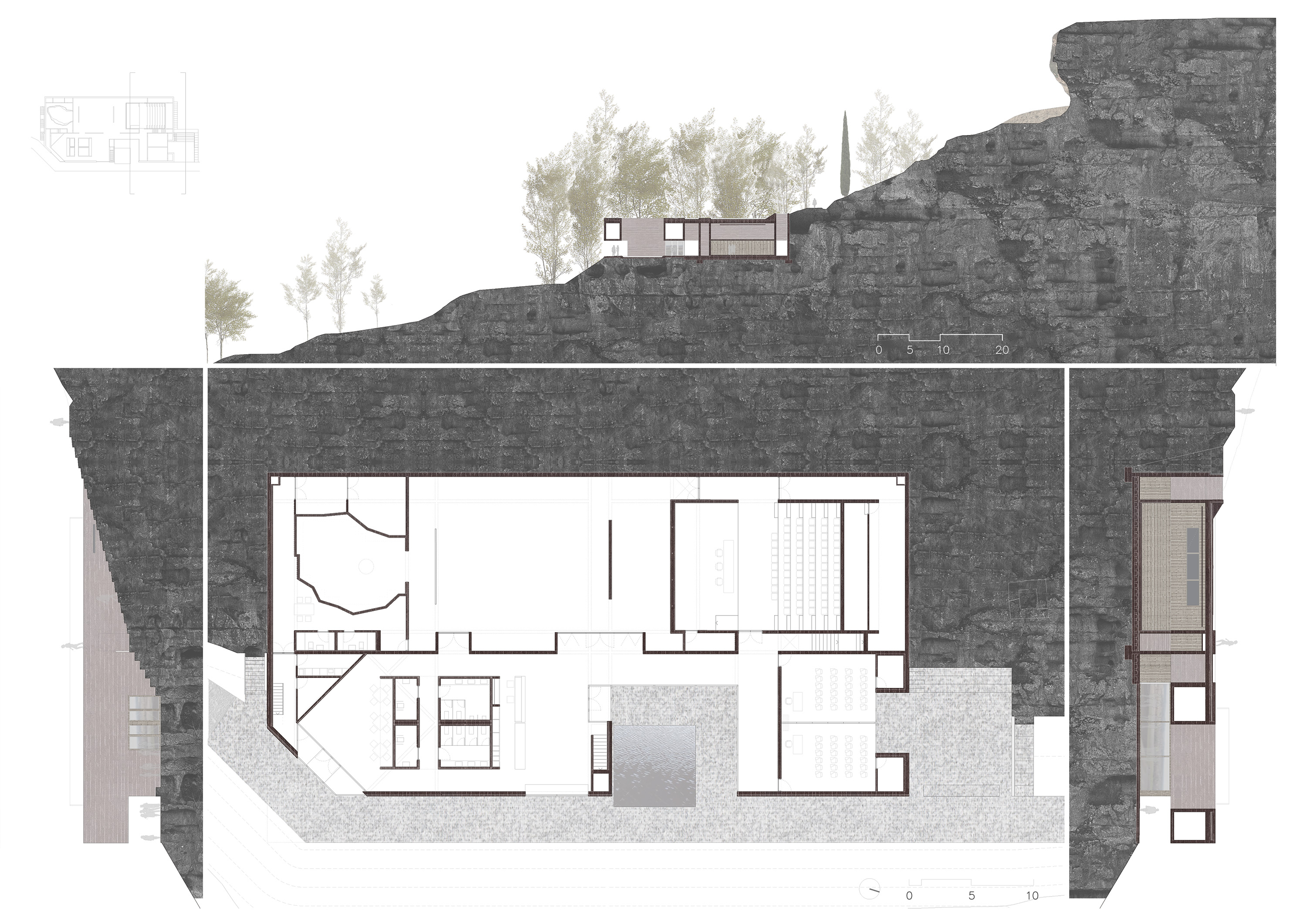
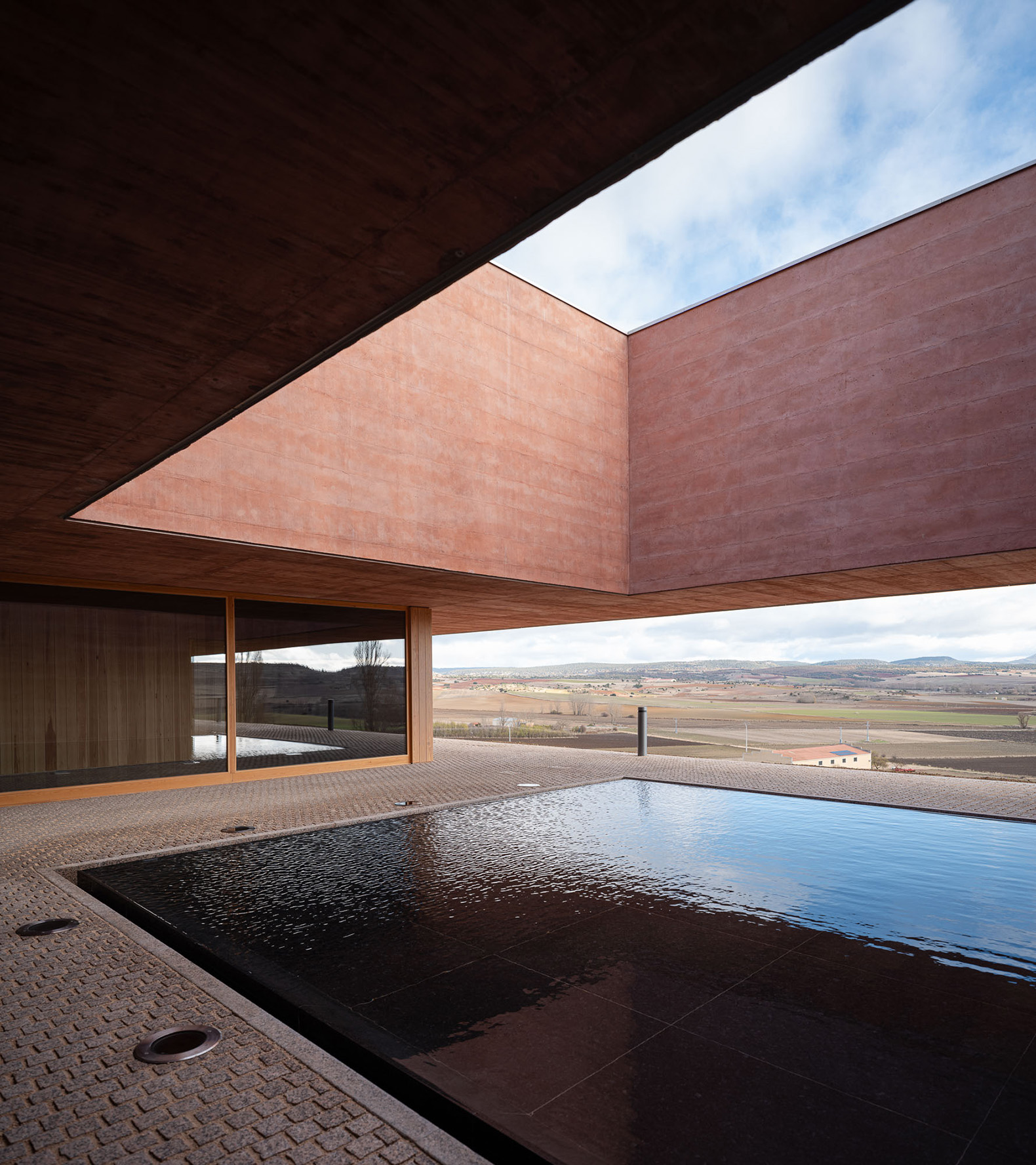
The aim is to transform the arrival, welcome, and initiation of the visit into a territorial, landscape, and architectural device. From a distance, it is perceived as a topographic platform, a geometric exception on the natural slope of the landscape, integrated, appropriable, and accessible. Inside, it is perceived as a space emerging from the earth, a cave or shelter that engages with the underground water that supplied the Roman city.
In addition to pursuing ecological continuity with the hillside and the floodplain of the Argandilla and Dor rivers, the building resolves the connection with the archaeological area by positioning itself at the appropriate elevation to facilitate the visitor's ascent via a gently sloping path to the Roman Theater, the first major landmark of the visit to the Roman city.
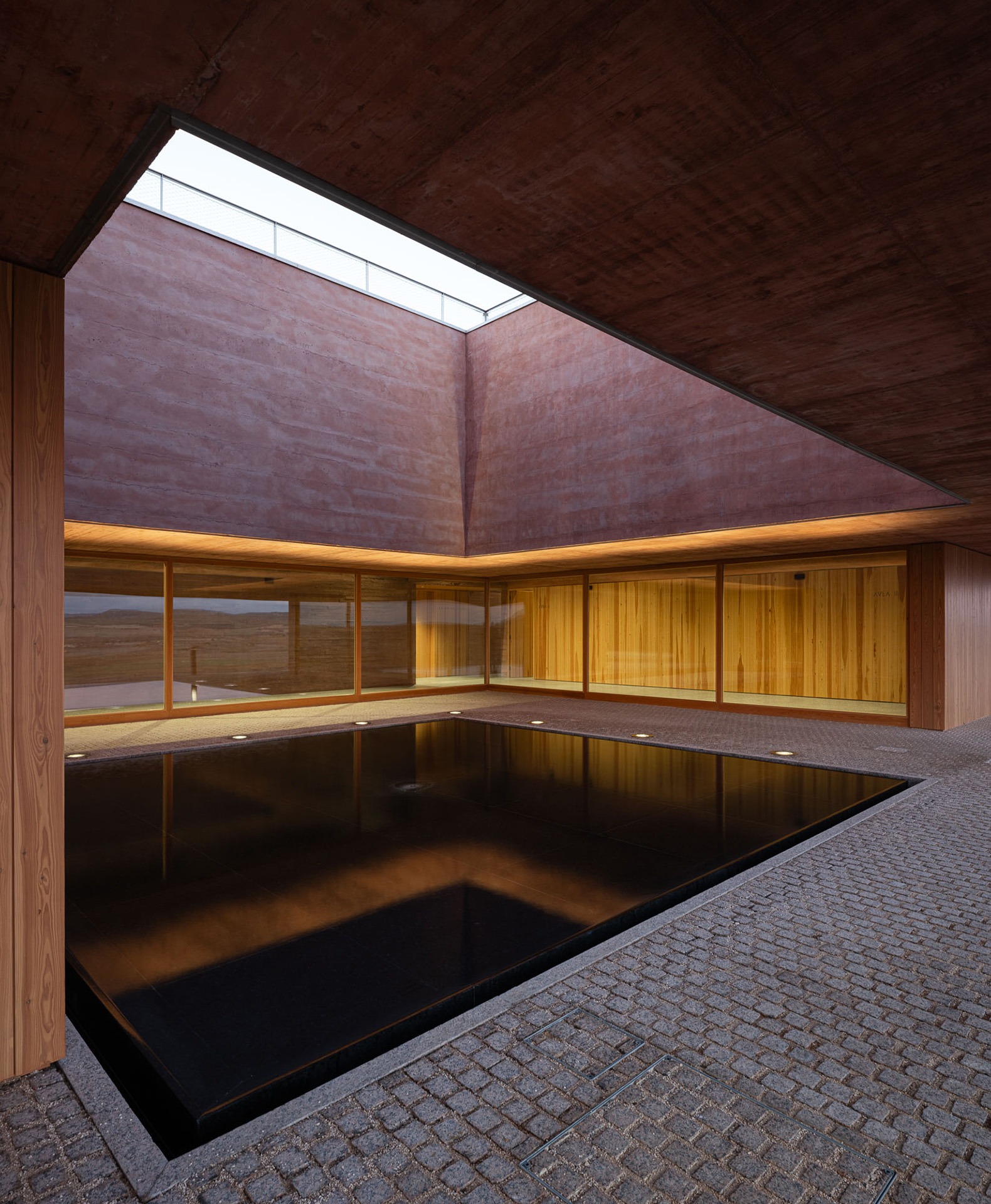
The green roof enhances the building's bioclimatic performance and, given the thickness of the vegetation, allows the surrounding herbaceous species to colonize it.
The new CRV minimizes the environmental impact on the archaeological area while creating harmony with its natural surroundings. From the external disposal of construction waste to the reduction of operational and embodied carbon, the design incorporates various sustainable practices and aligns with the long-term international sustainability goals of COP30. The aim has been for the CRV to achieve high energy efficiency (A rating), reduce and offset carbon impacts, and have a Life Cycle Assessment (LCA) consistent with its architectural characteristics.