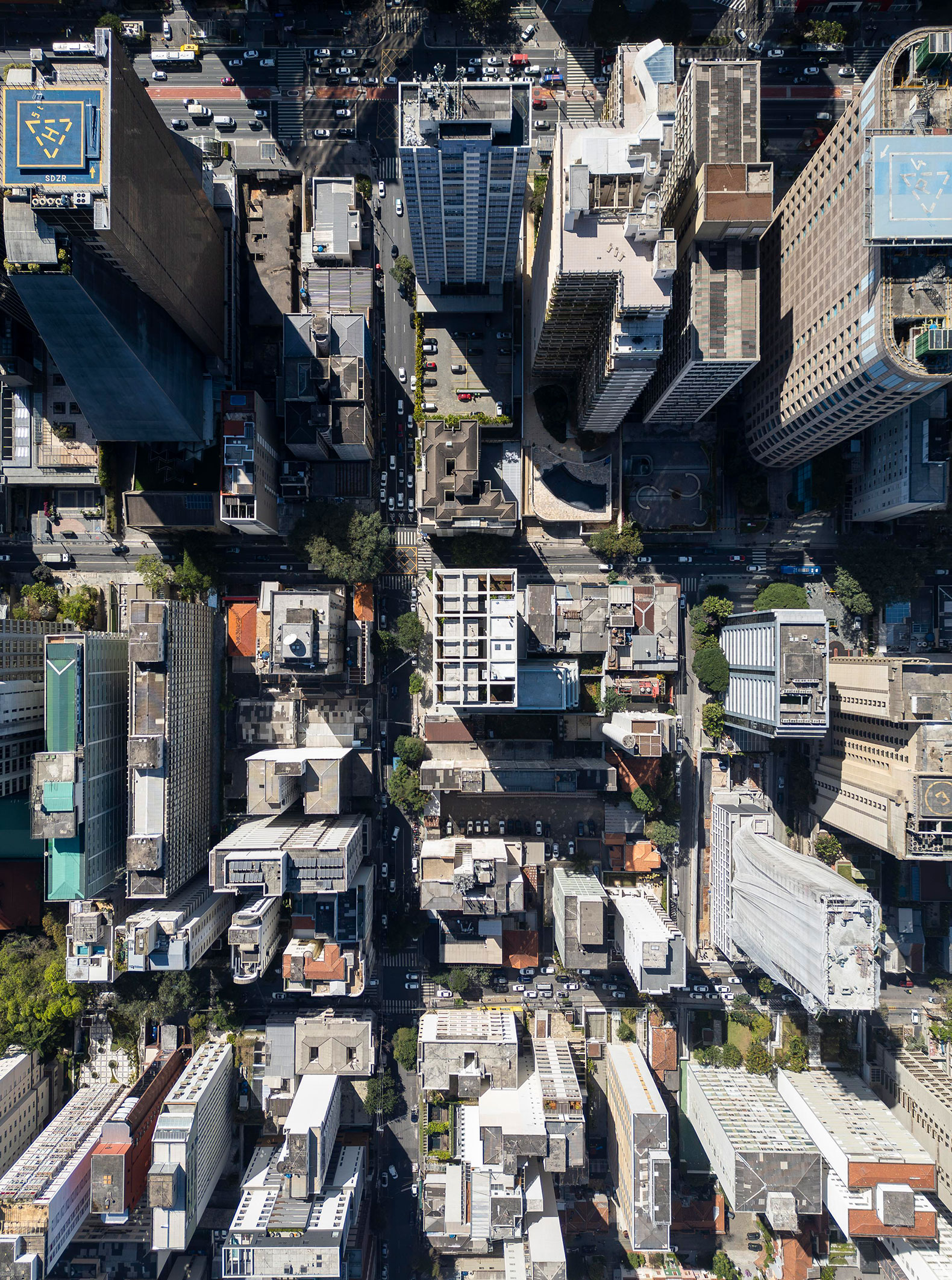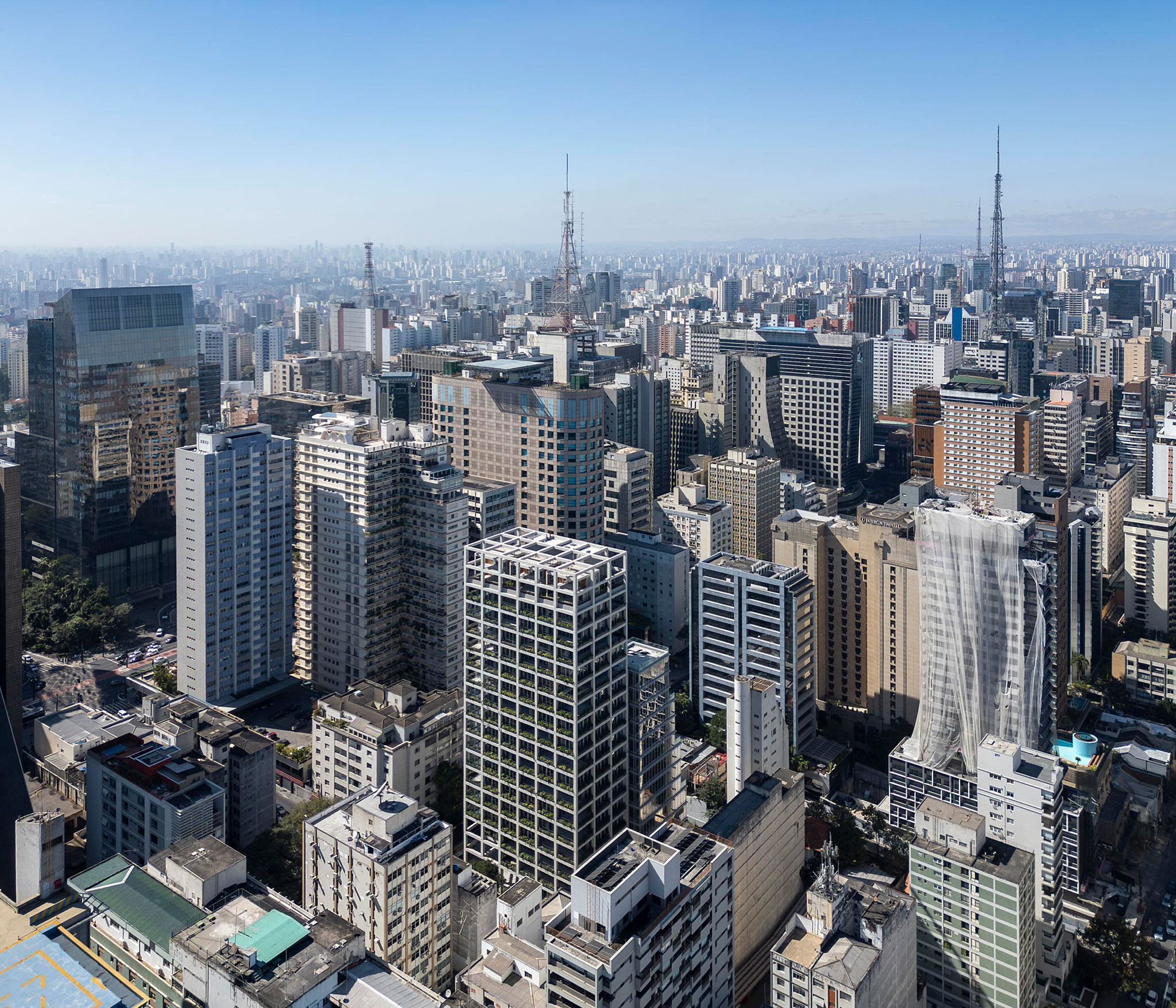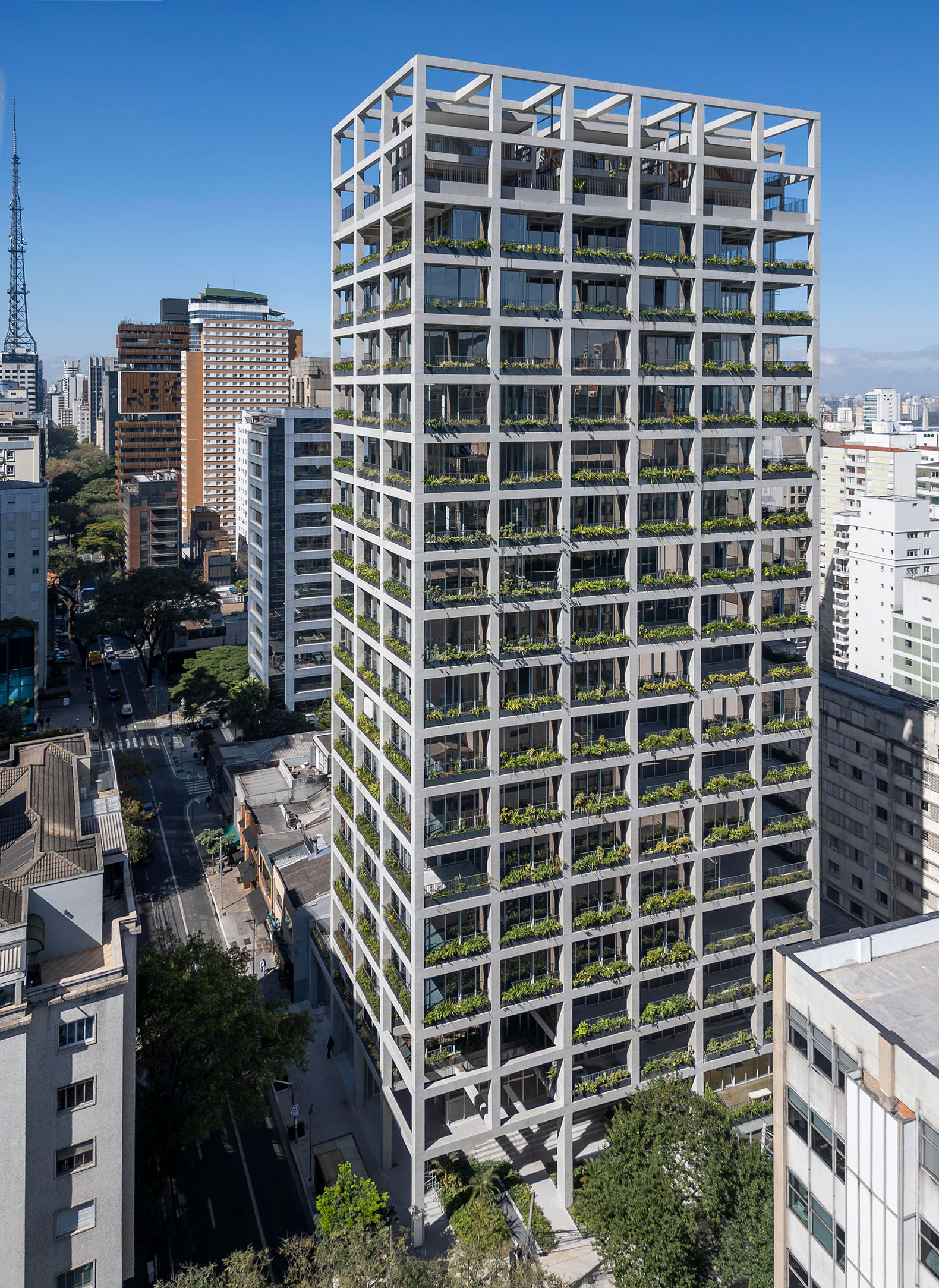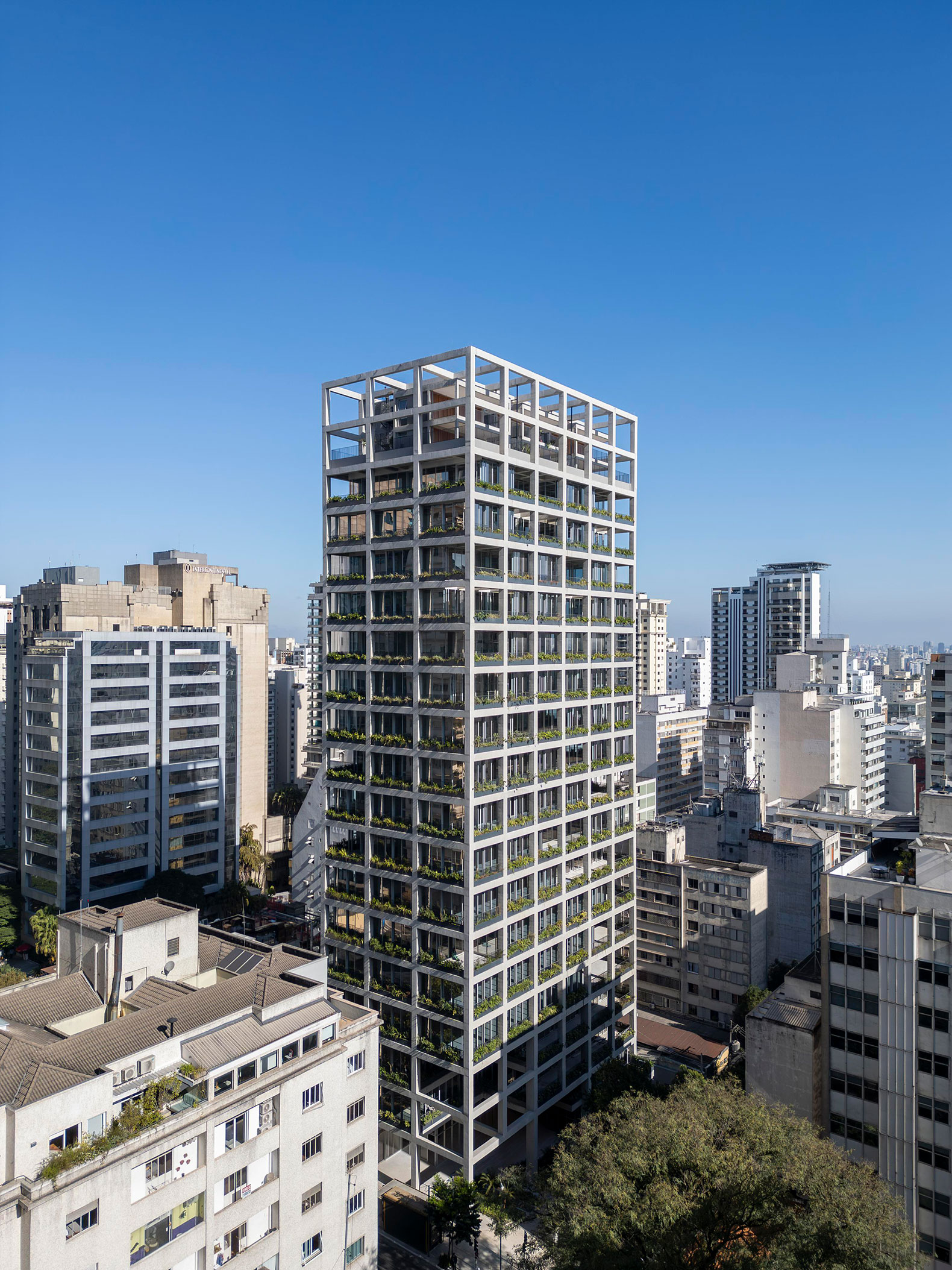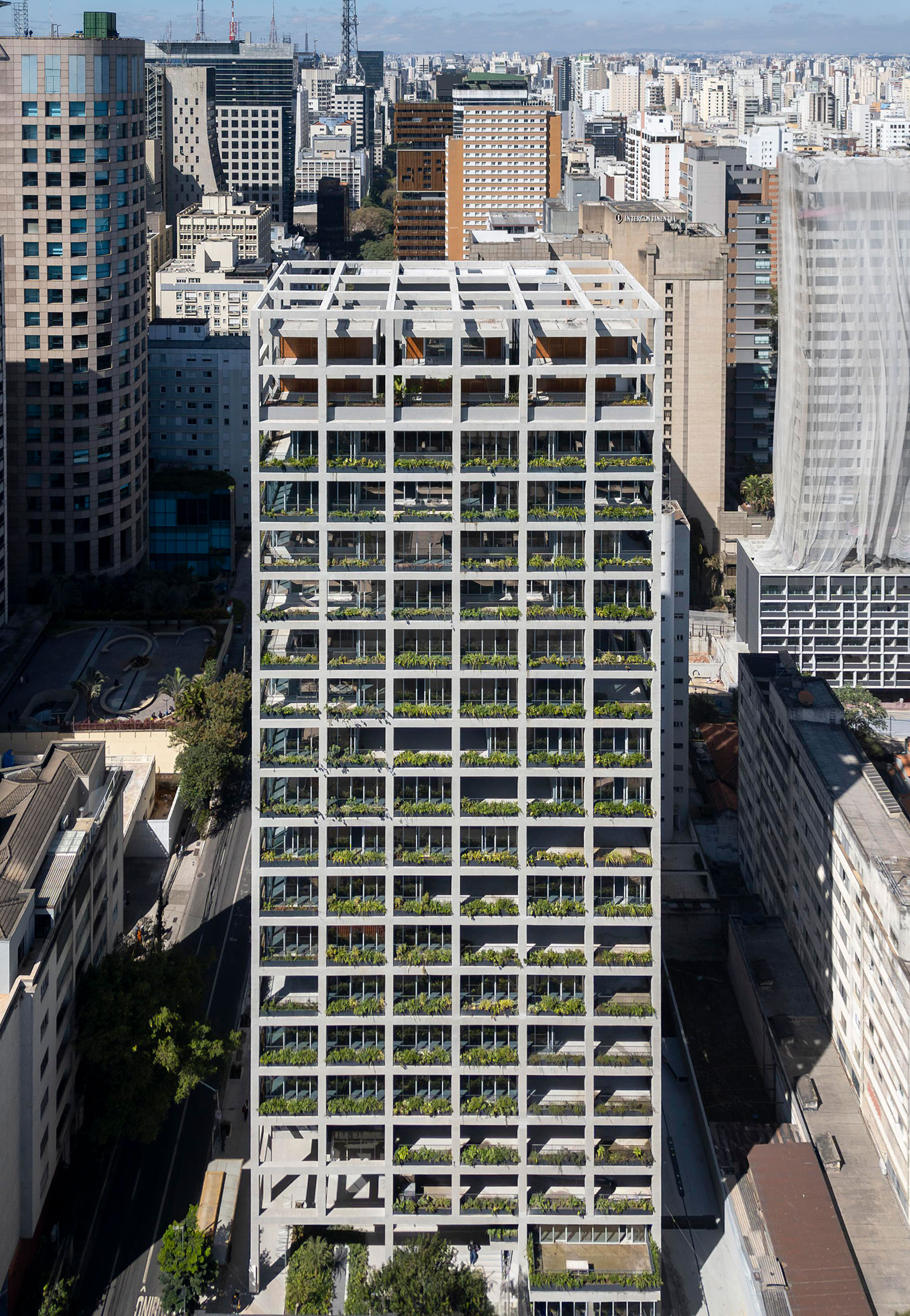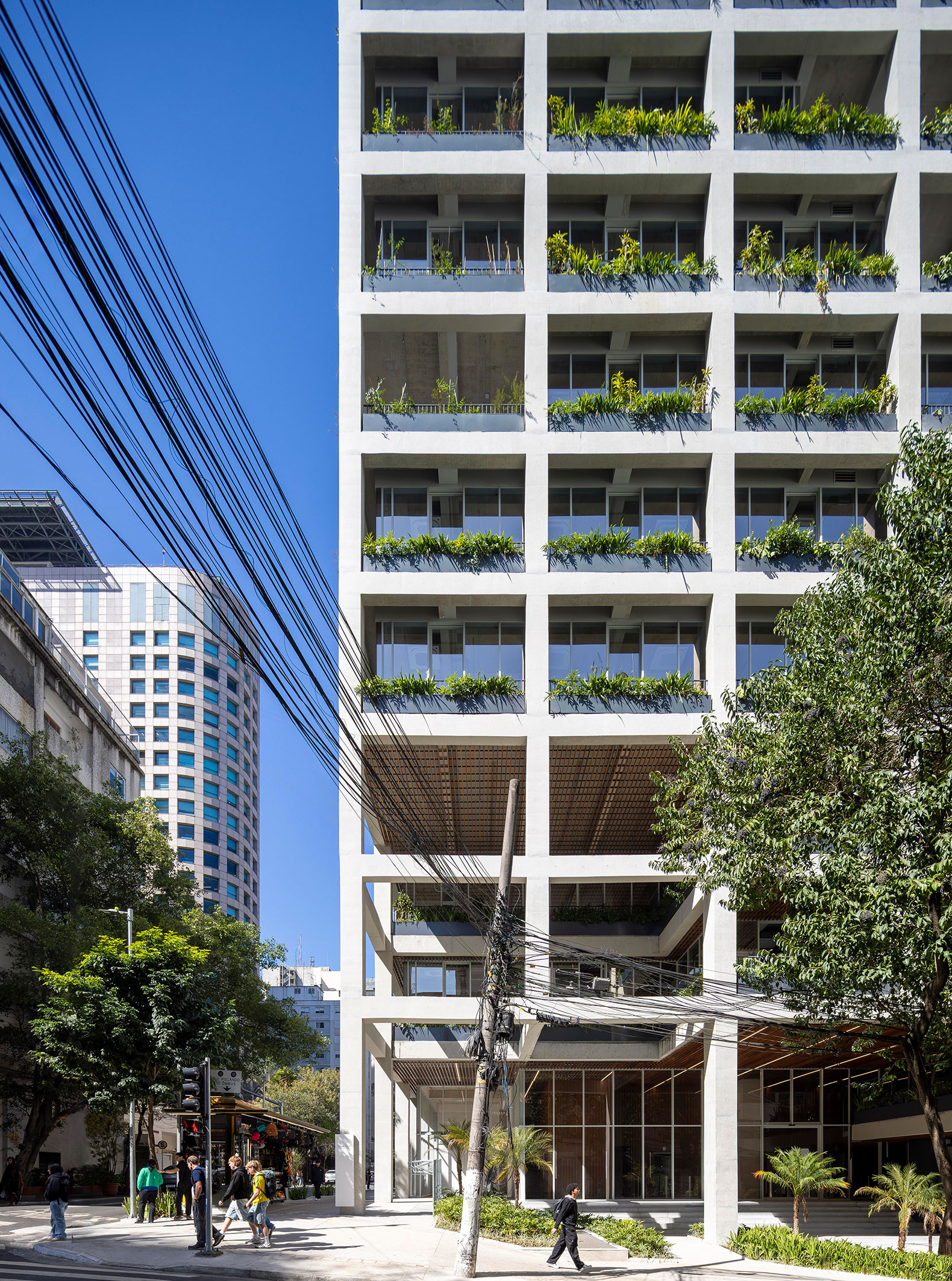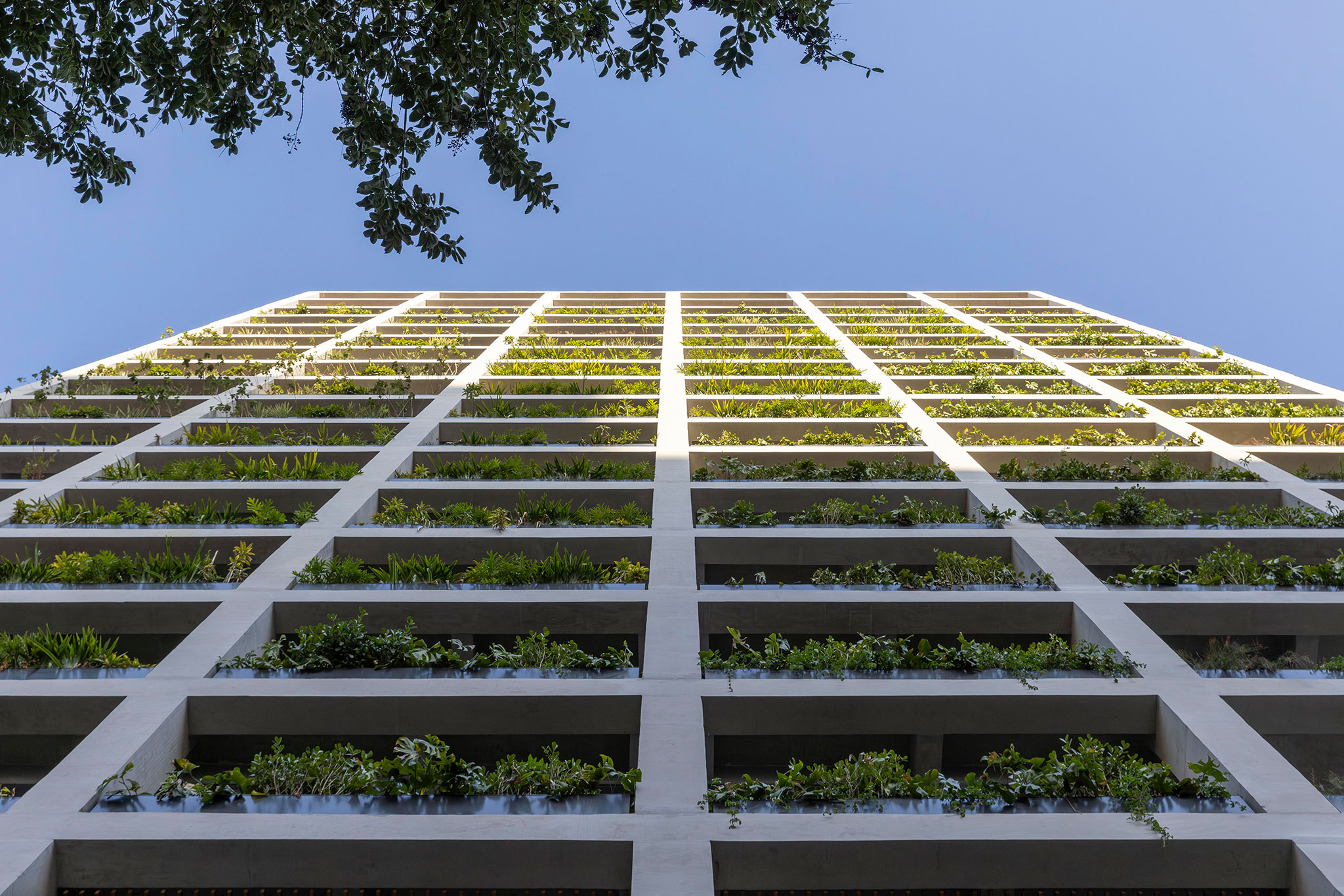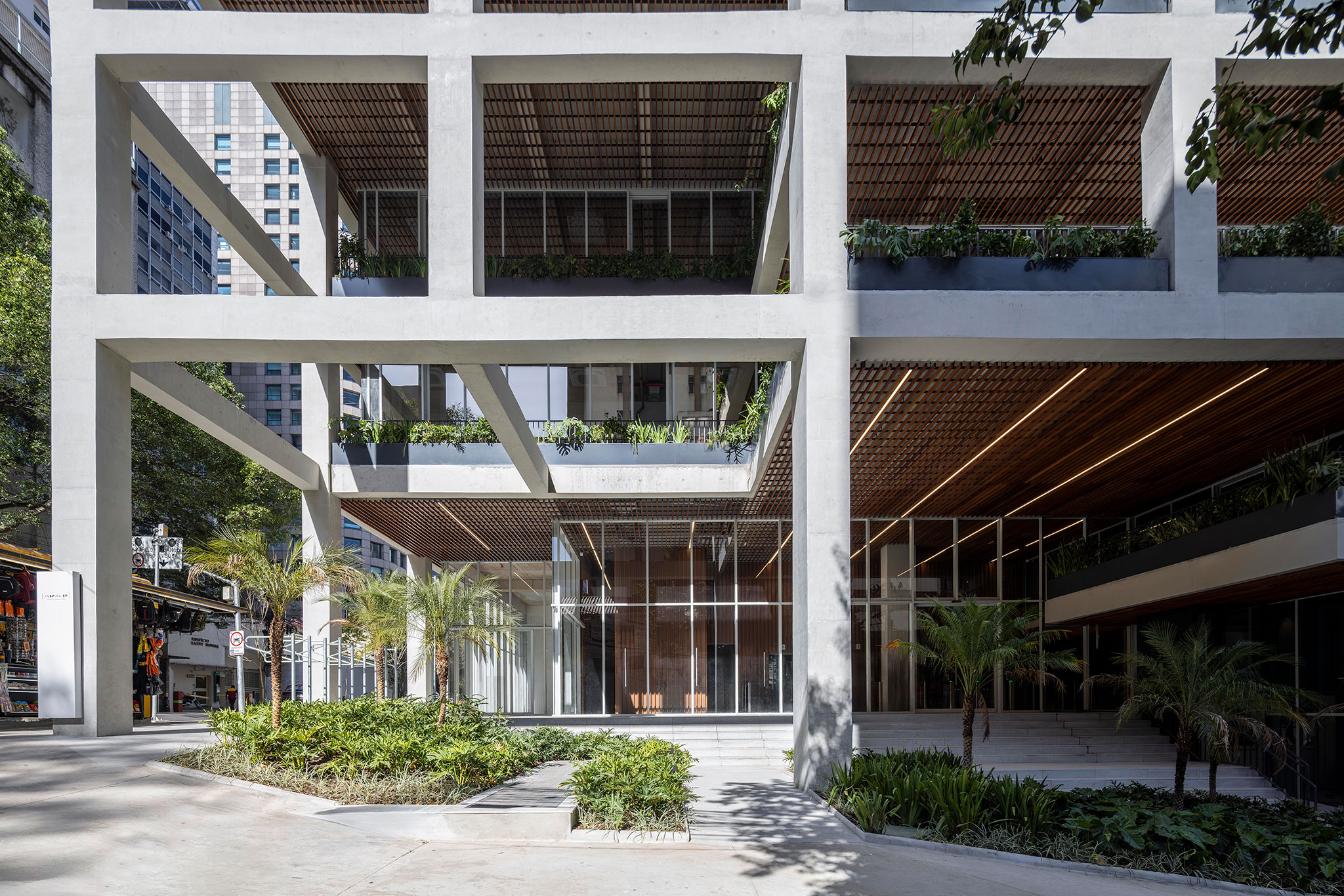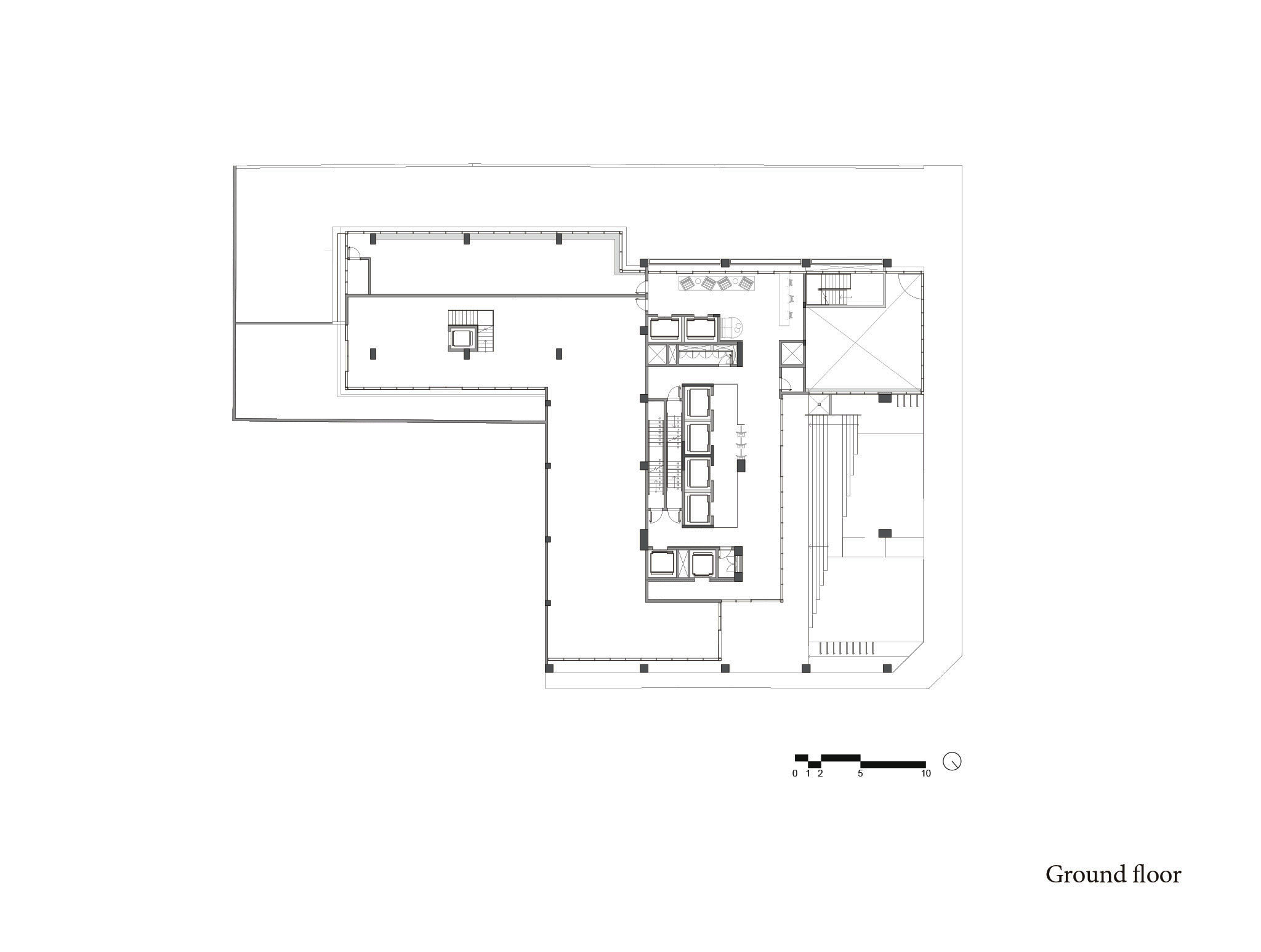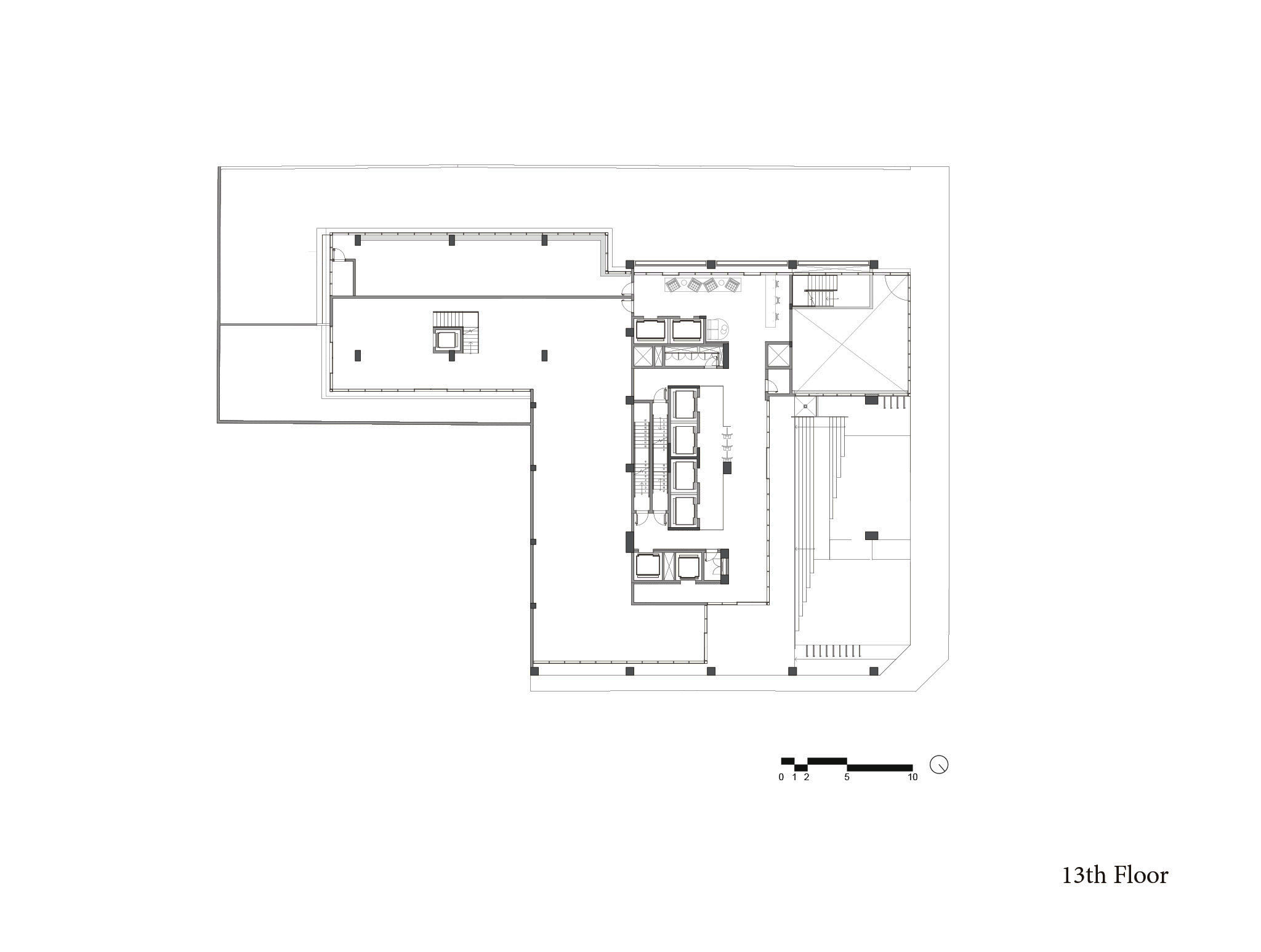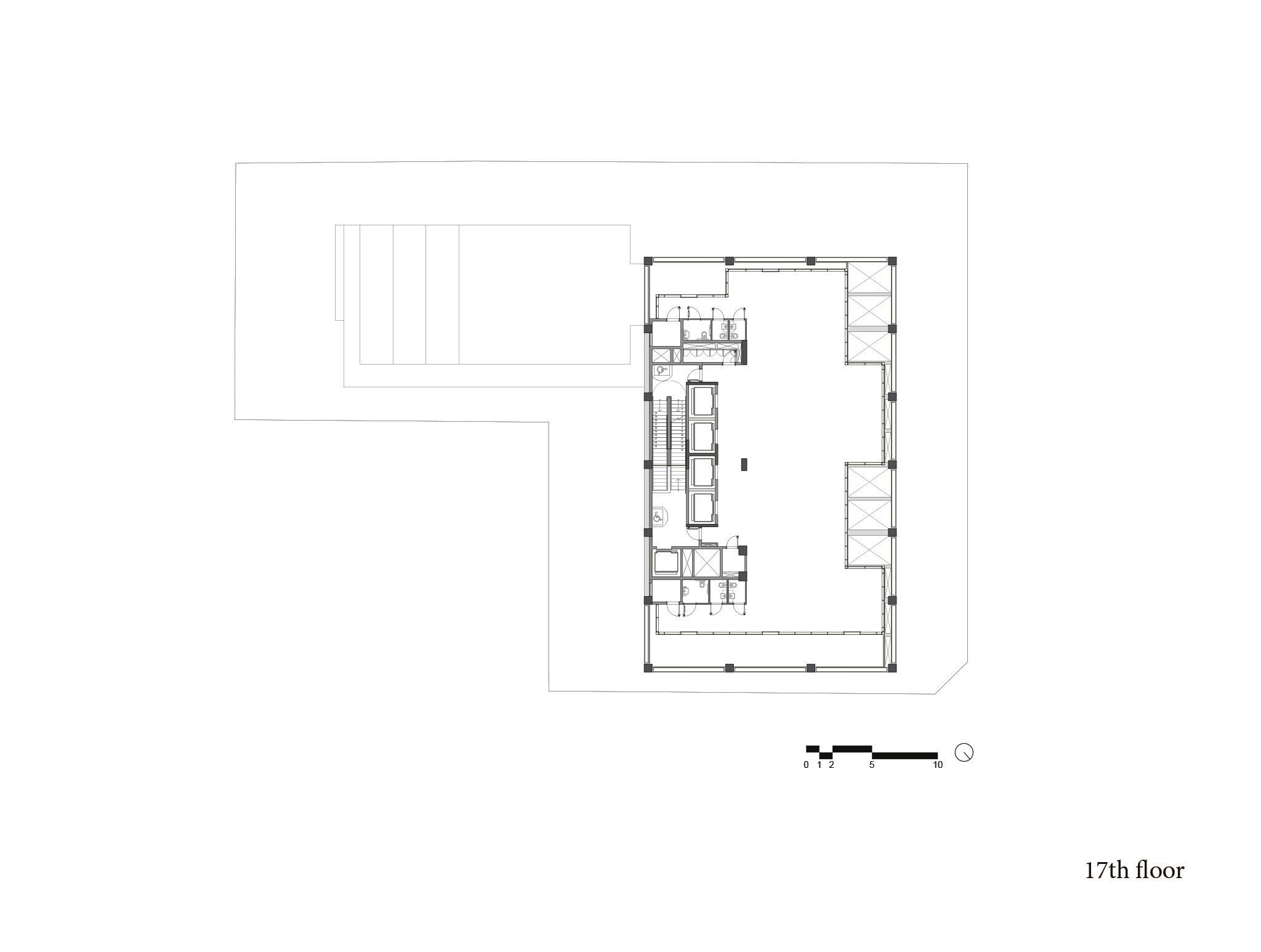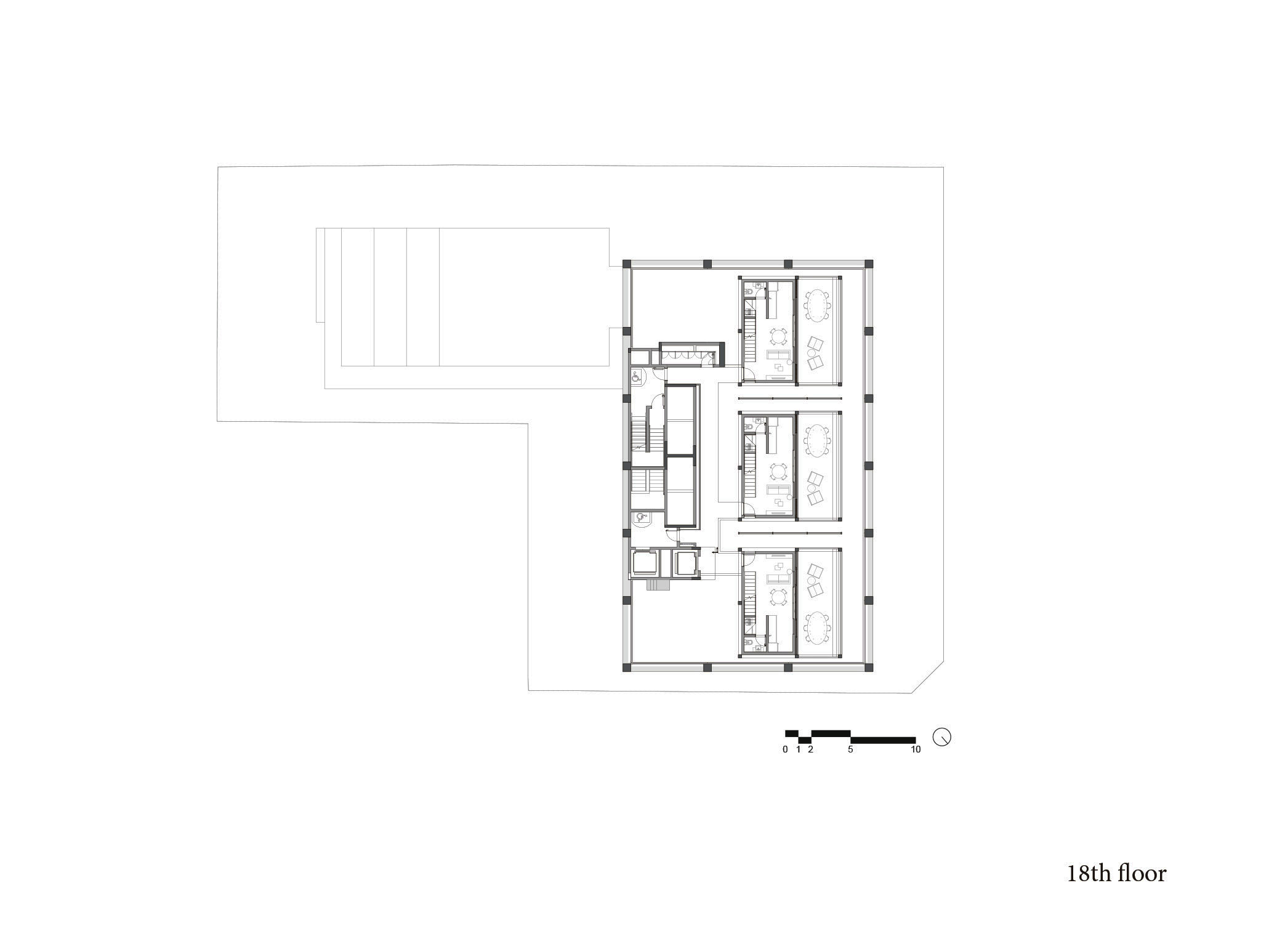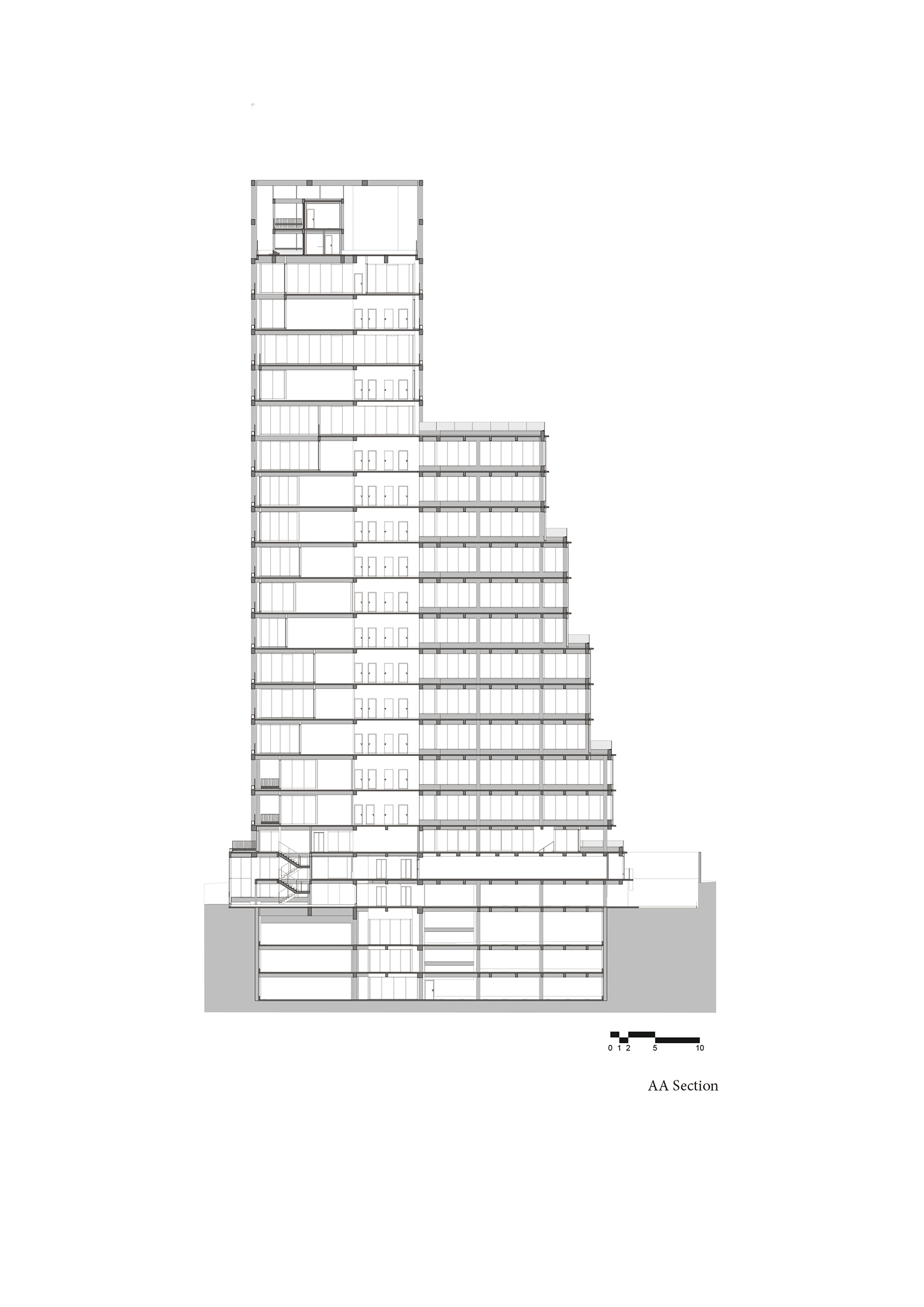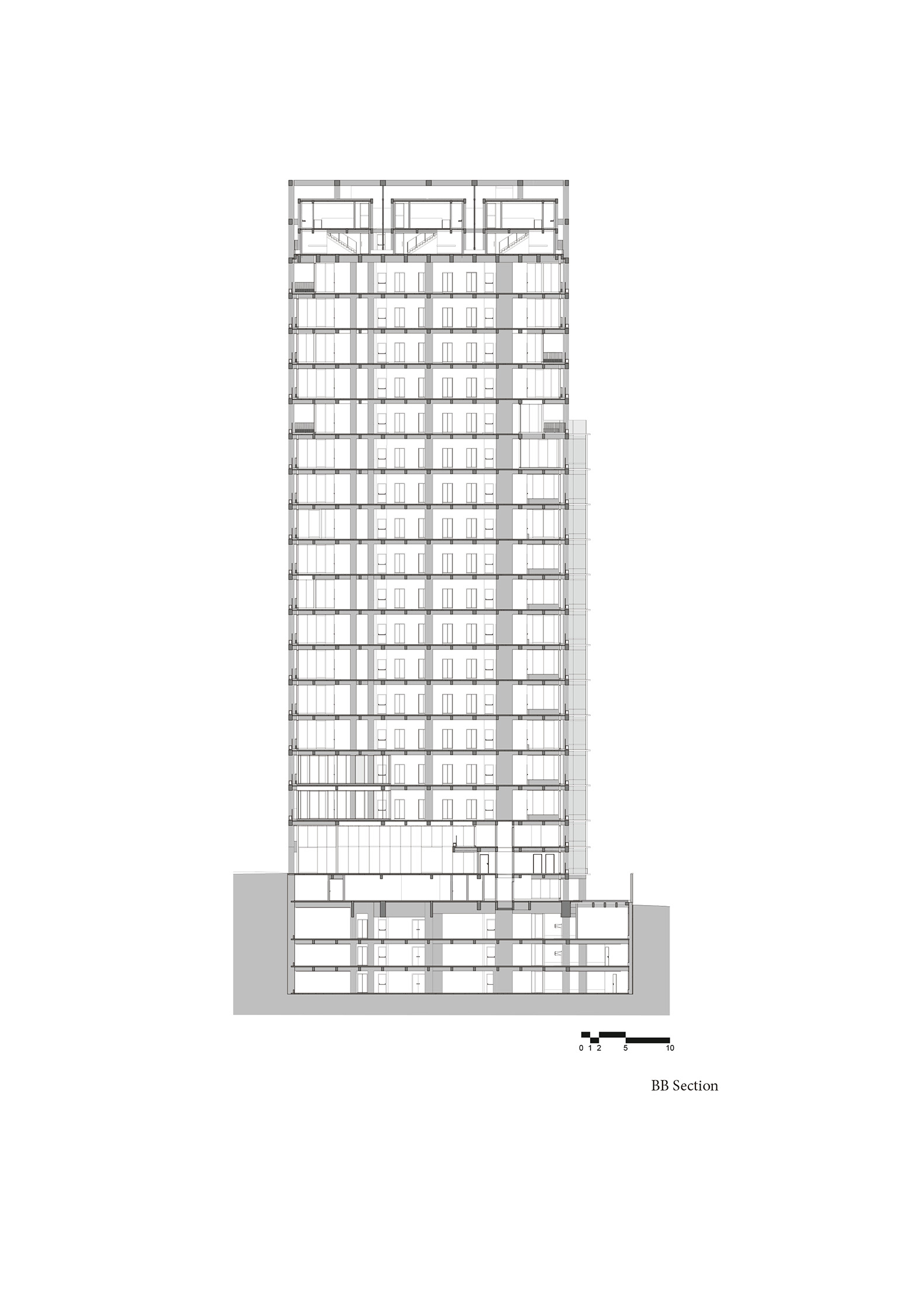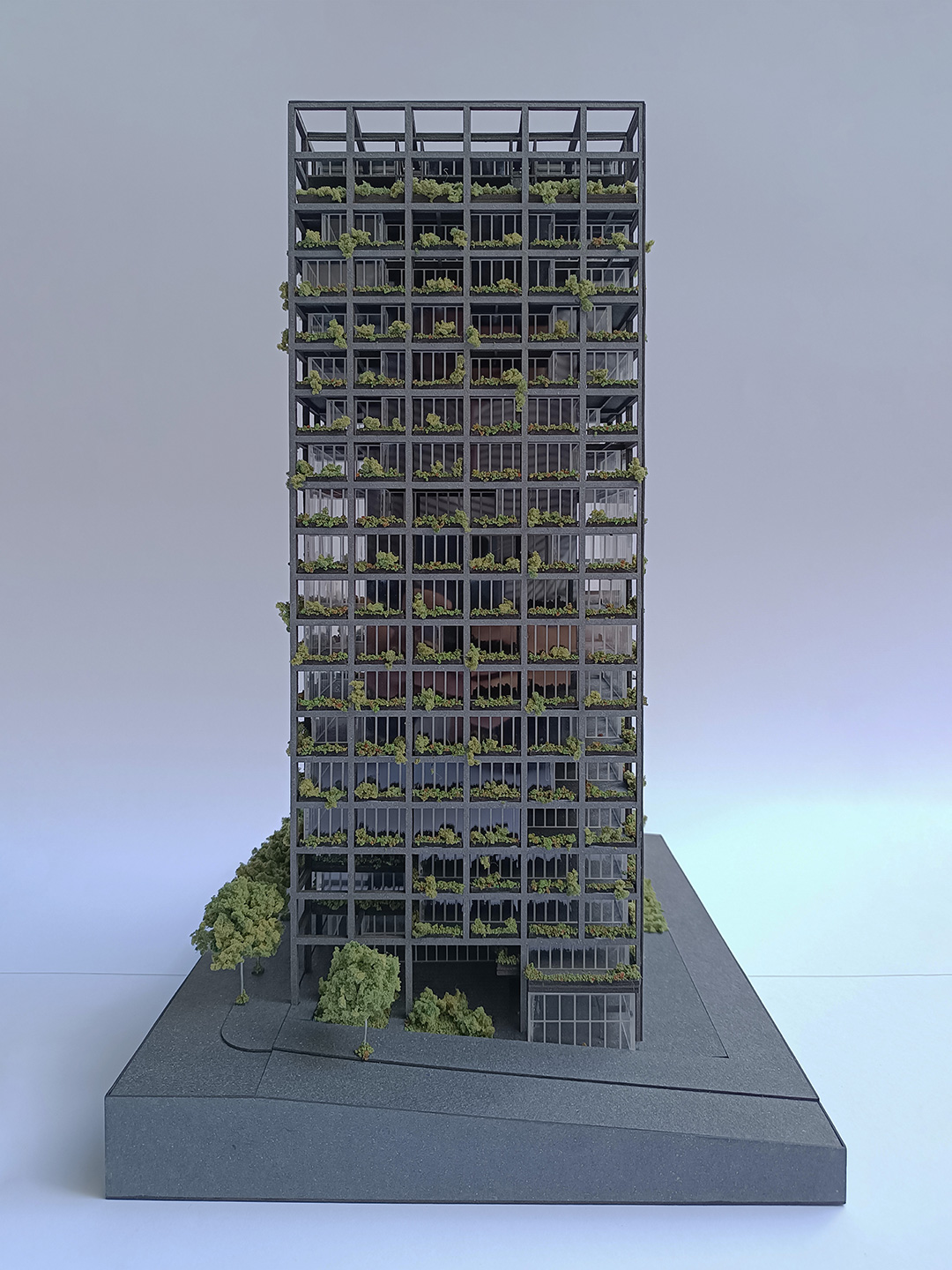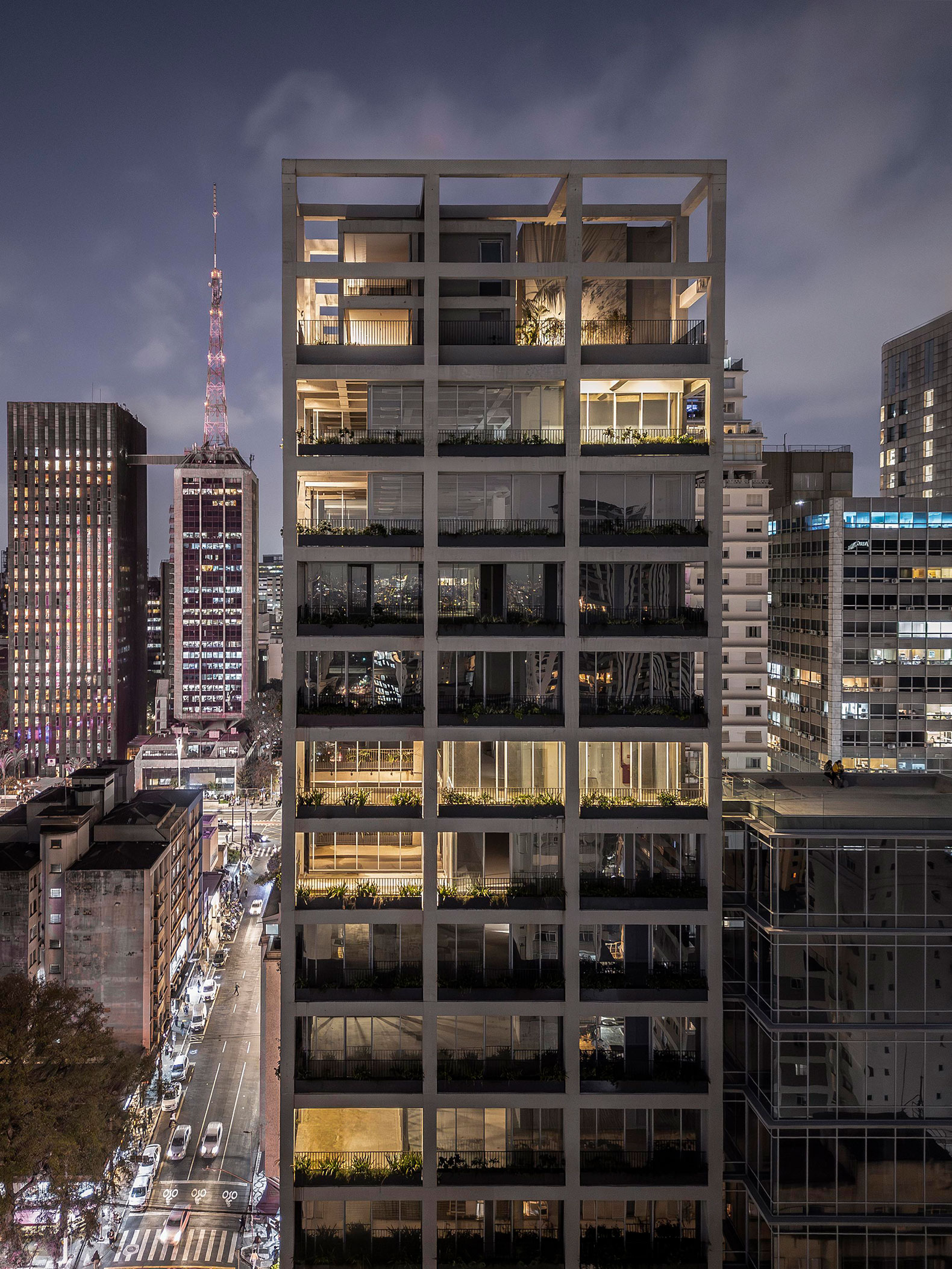
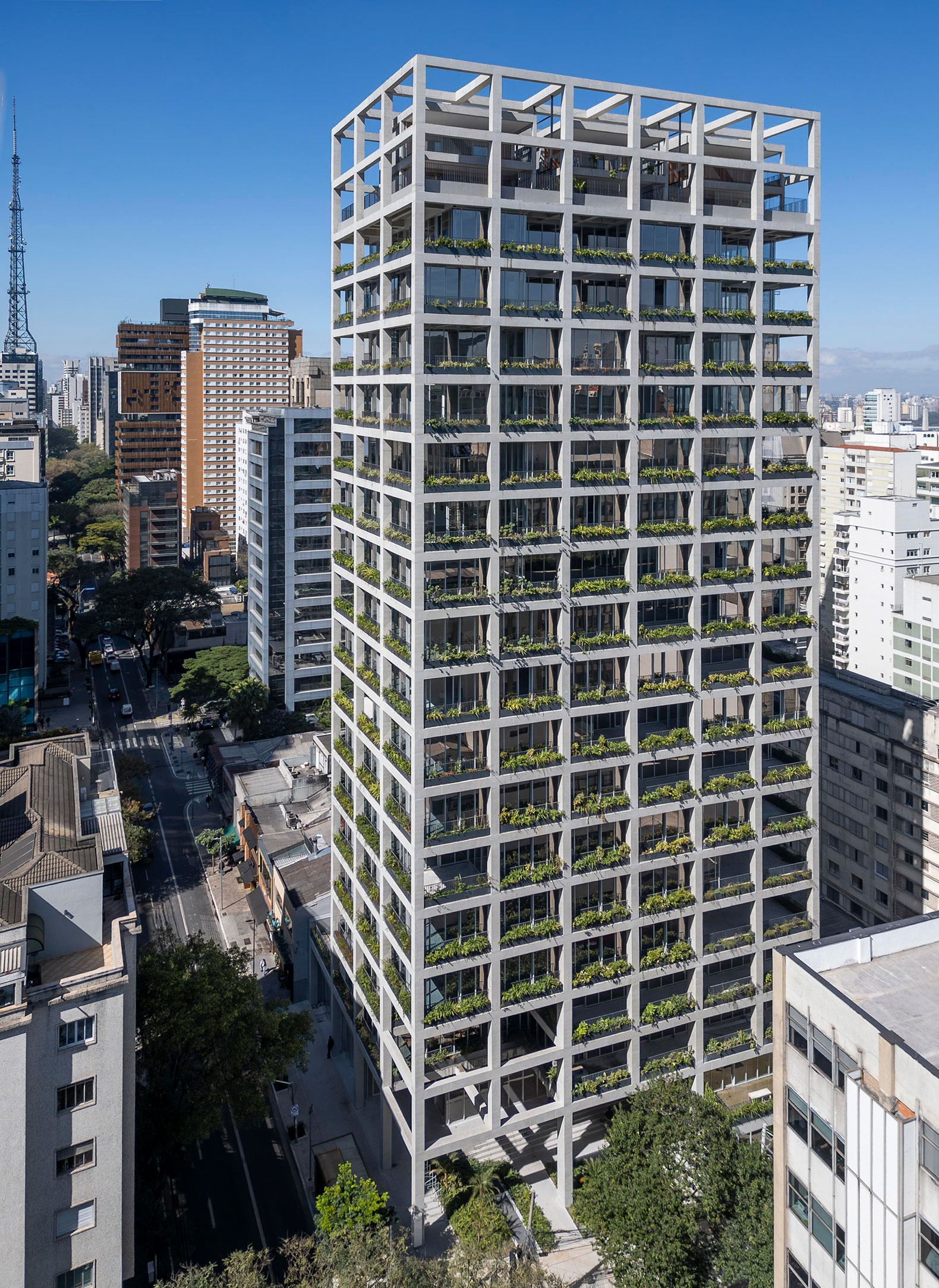
Triptyque's proposal results in an elegant and slender building, using structure as its compositional principle by relying on a structural concrete grid that characterizes the project. This structure, which permeates the exterior envelope, creates a unique image within the surrounding urban landscape. Furthermore, by placing the load-bearing elements on the periphery, the structural grid frees up interior spaces, allowing each floor to be occupied in a free, flexible, and reprogrammable manner.
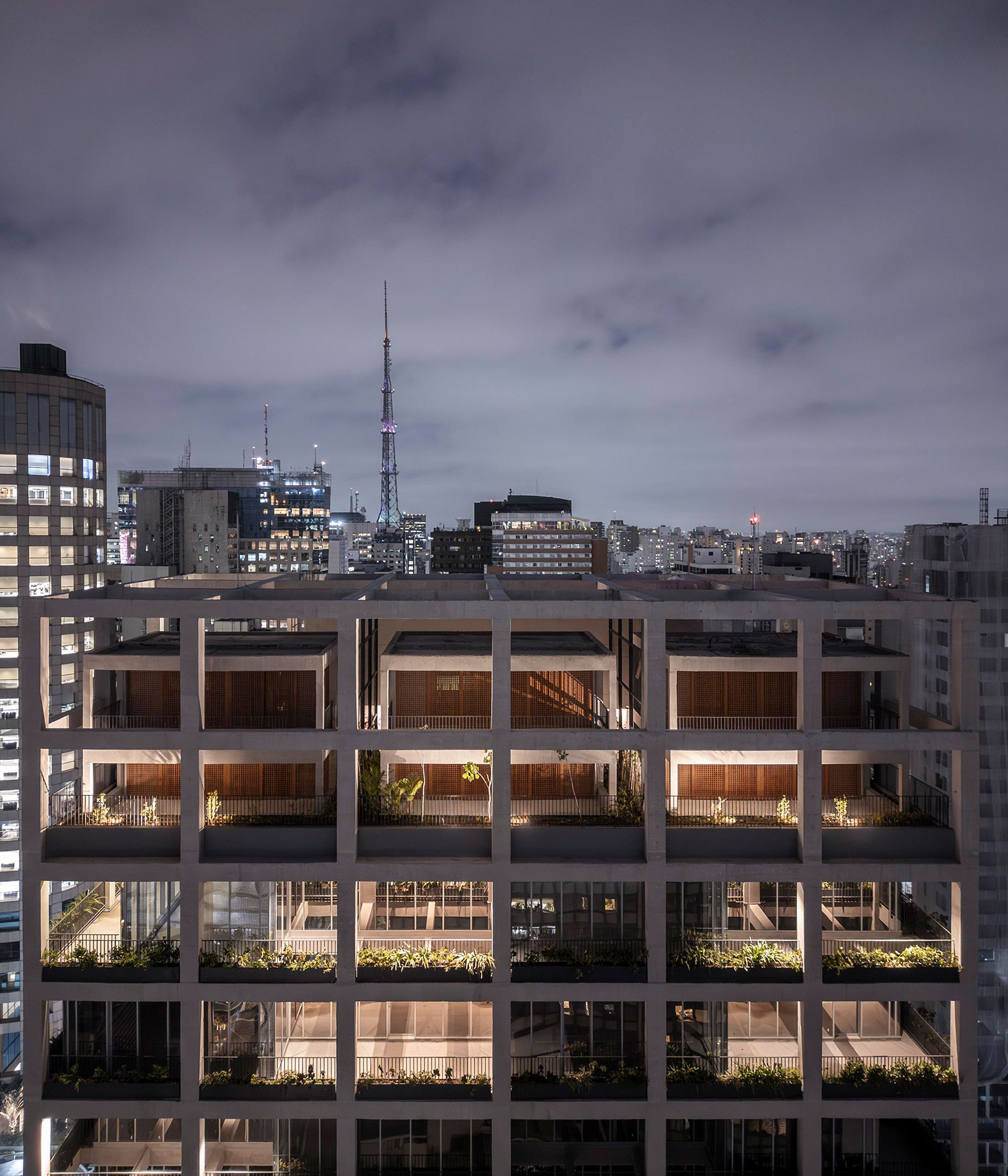
The structure facilitates the creation of gardens on every floor, which, in turn, gives the impression of being a vertical collection of hanging gardens, lending the tower a dynamic and ever-changing dimension. The upper section translates the vertical formal coherence to the horizontal plane, generating a grid from which a small forest emerges, connecting the architecture with the horizon.
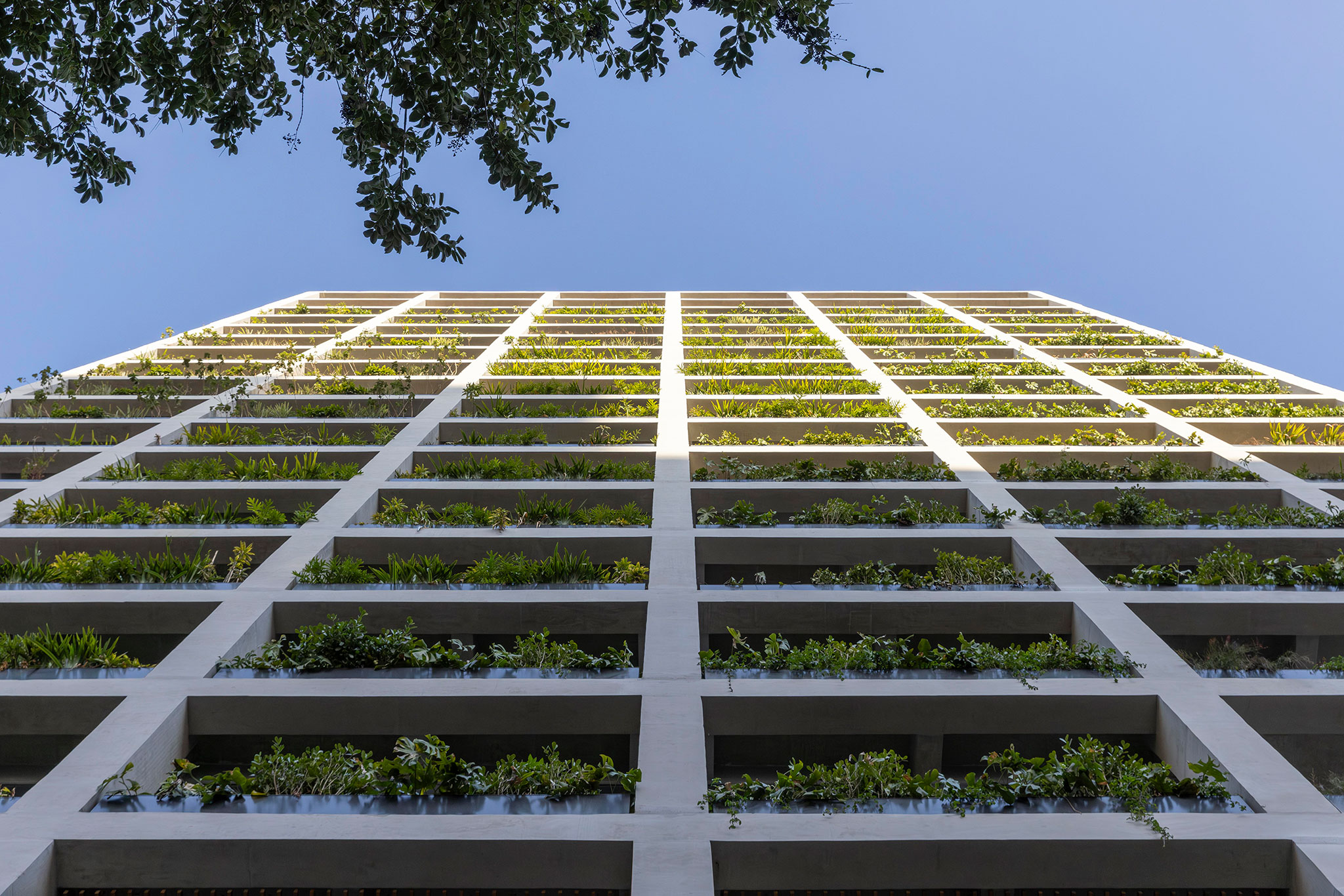
Inspira SP by Triptyque. Photograph by Maíra Acayaba.
Project description by Triptyque Architecture
The Inspira SP building, located in the Paulista Avenue region, emerges as a contemporary response to a consolidated urban context marked by the cultural and corporate intensity of São Paulo.
Structure as principle
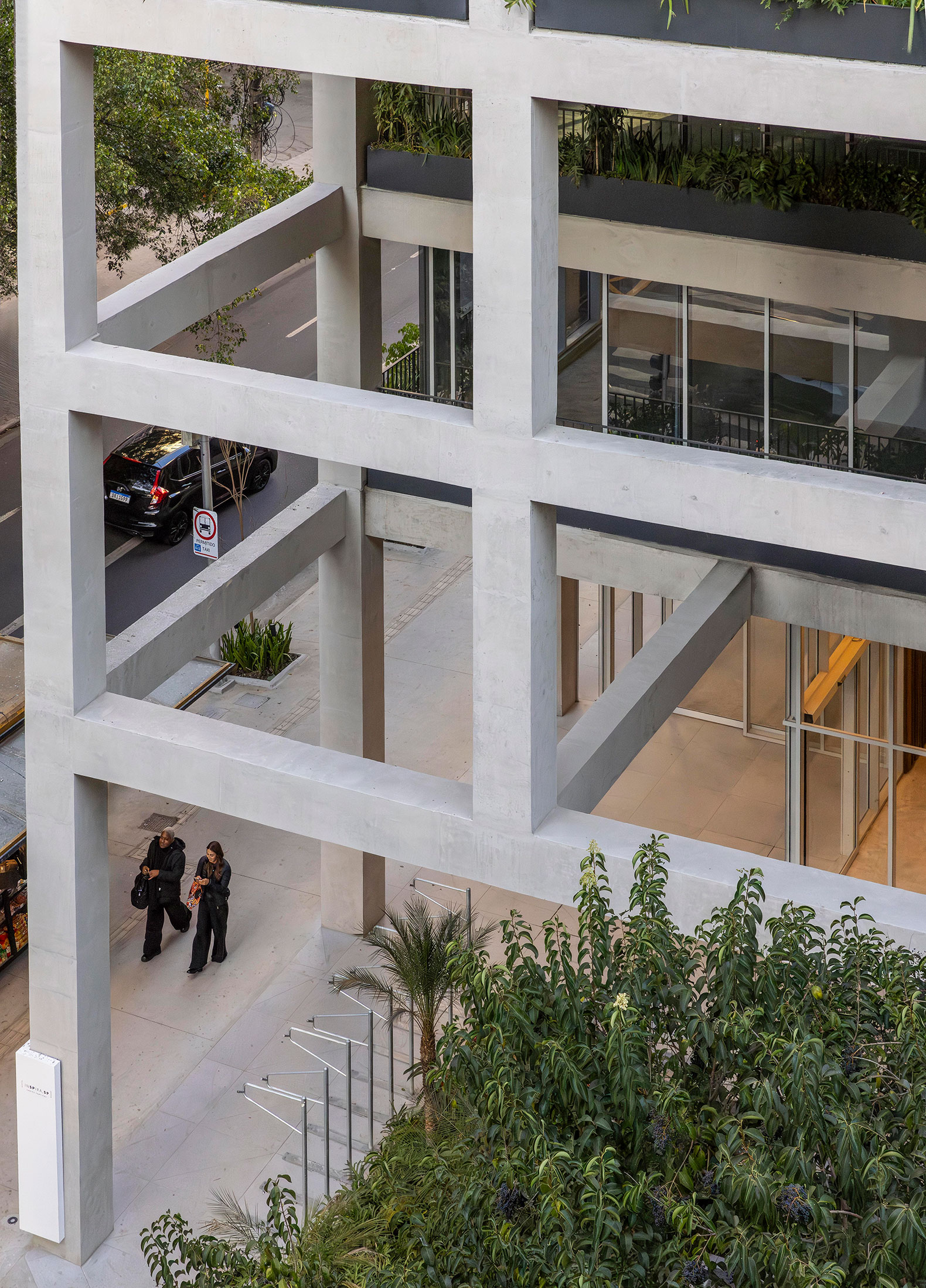
The tower is designed based on a peripheral structural grid in concrete, which is the project’s primary feature. This permanent, stable, and powerful structure addresses the city as the first architectural order, affirming its presence in the urban landscape.
Free and reprogrammable spaces
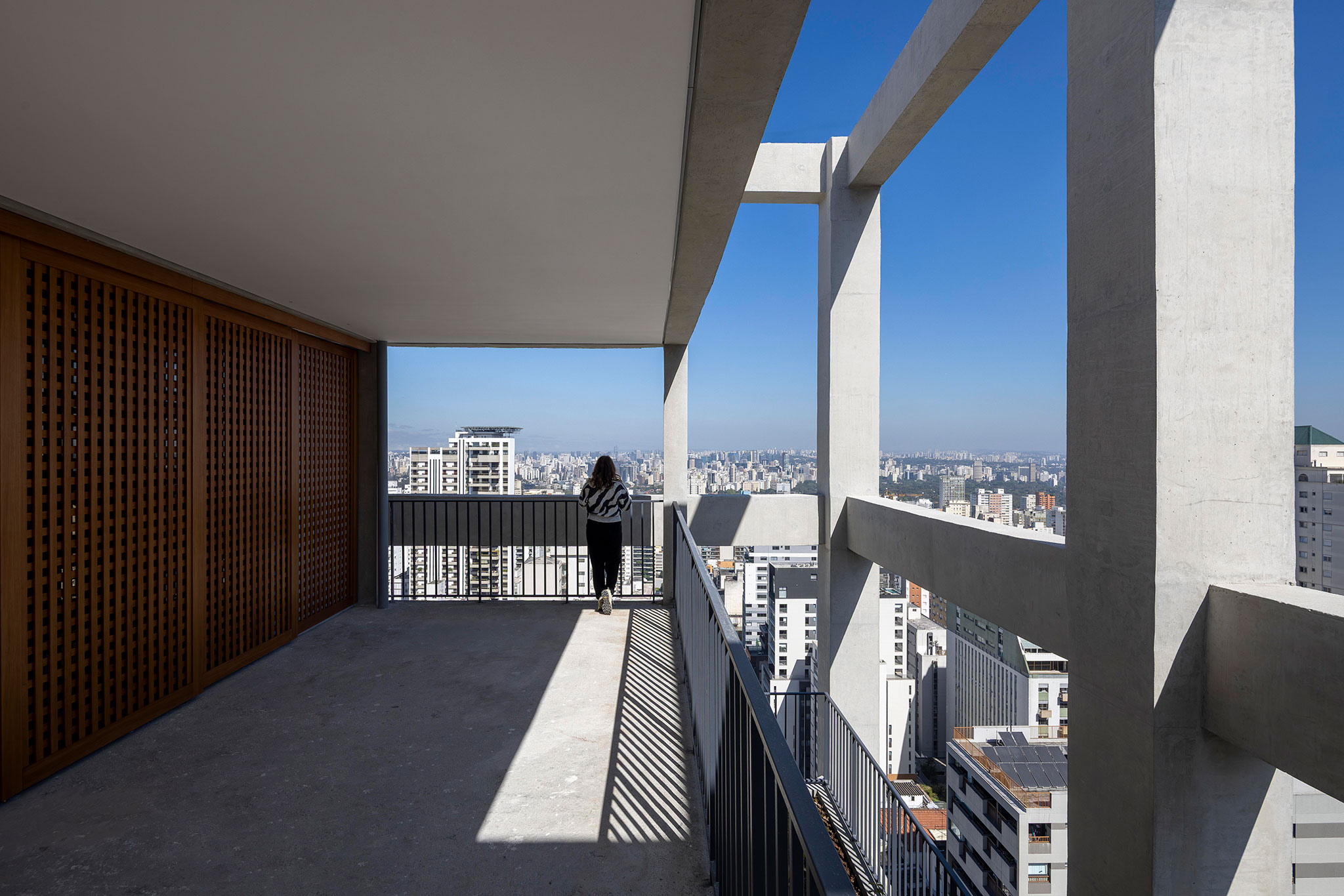
By moving the load-bearing elements to the periphery, the structural grid frees up the internal spaces, allowing each floor to be occupied in a free, flexible, and reprogrammable manner. This condition ensures longevity of use and adaptability for different programs over time.
Vegetation infrastructure
More than just a building, Inspira becomes a green infrastructure. A continuous system of planters, integrated into the concrete structure, allows vegetation to colonize and contradict the authoritarian geometry of the building.
Between the neutral and the artificial, greenery spreads, recomposes the native biome, and gives the tower a mutable and dynamic dimension. The building thus becomes an active support for a changing landscape, introducing new layers of use, perception, and enjoyment.
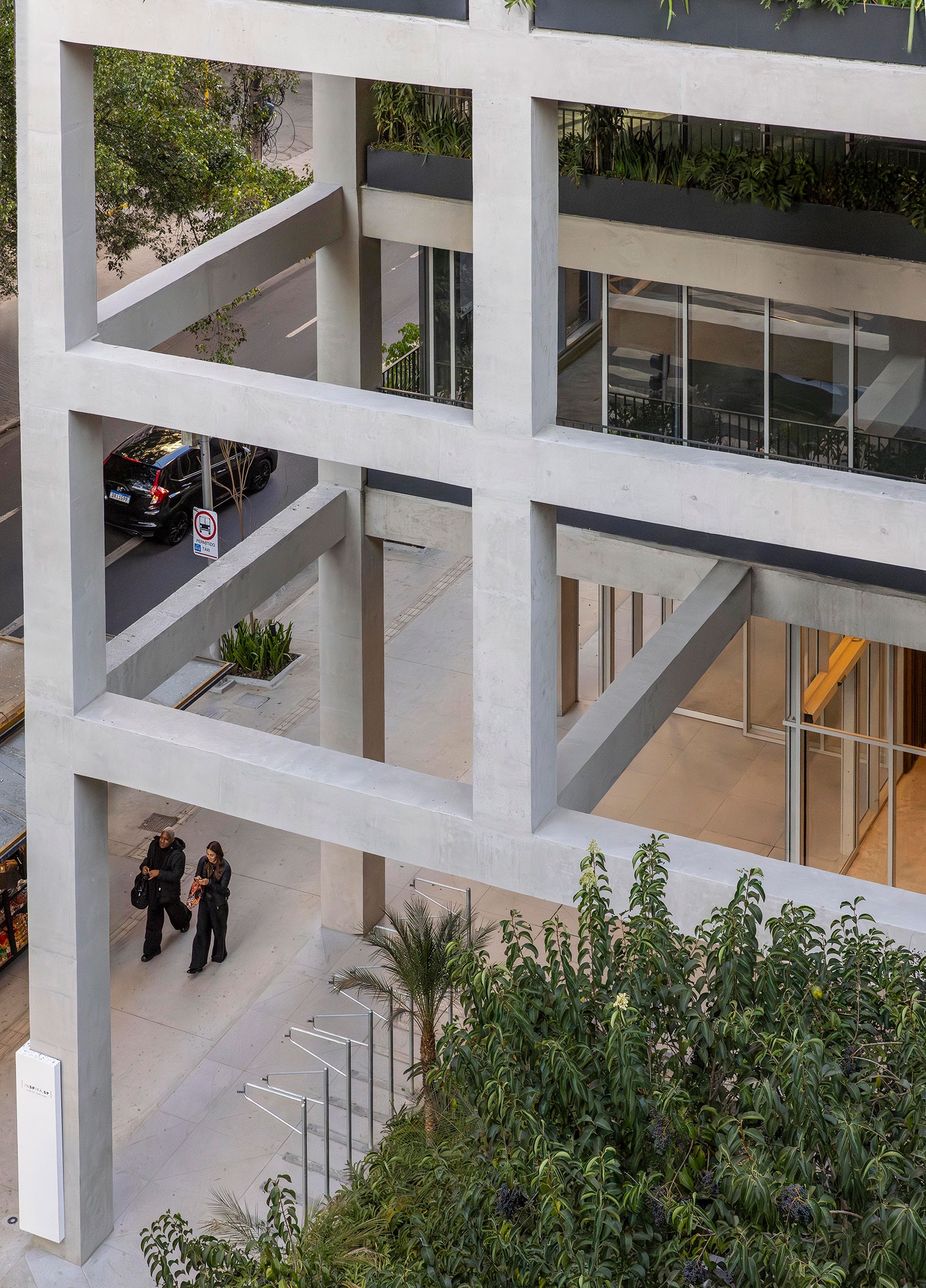
In relation to the city
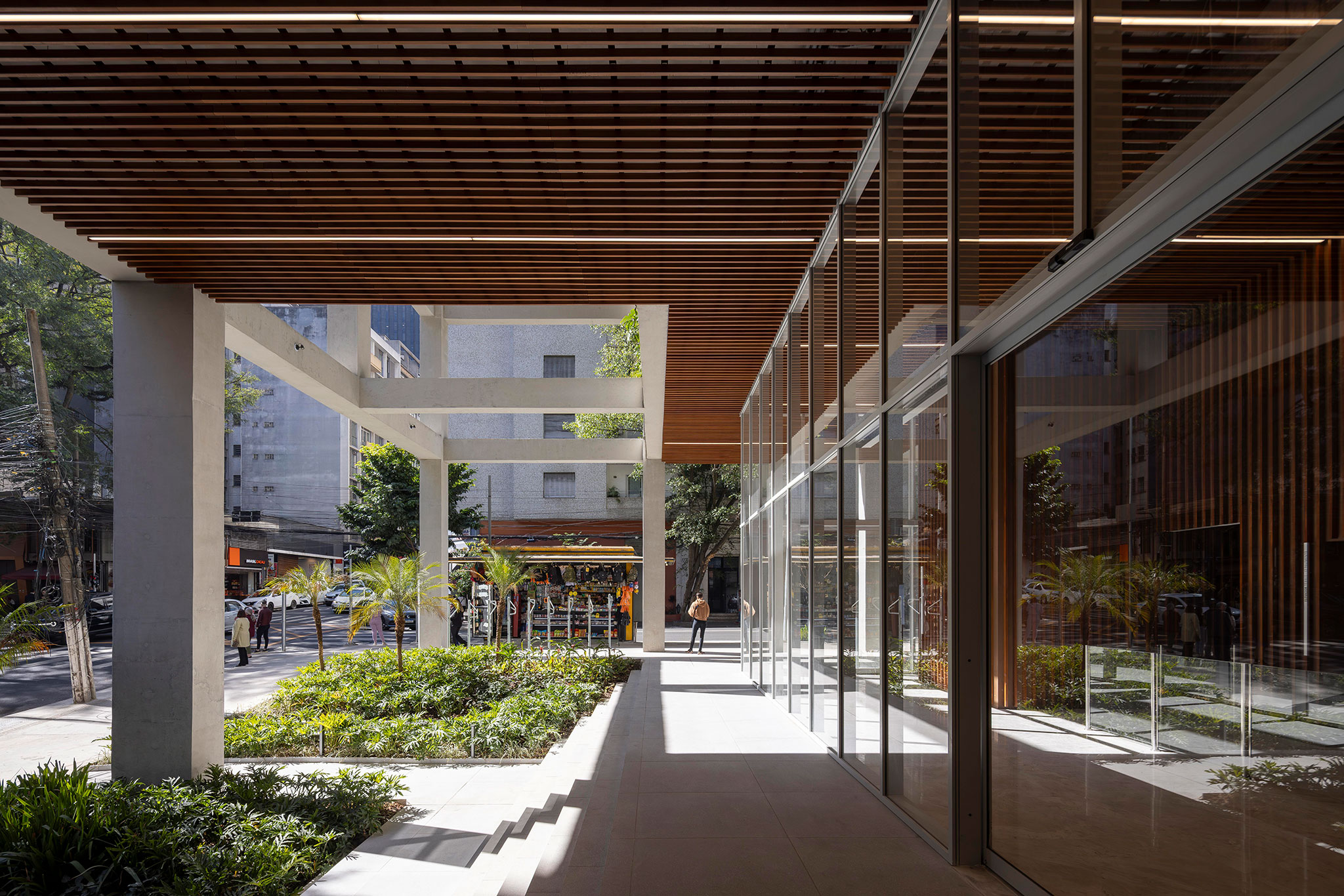
The building establishes a delicate relationship with the ground and the sky, understood as the diluted extremities of its construction system. On the ground floor, the tower opens up to the city through a public grandstand and a lush garden, dissolving the boundary between building and urban space.
At the top, the structural grid folds horizontally, completing the architectural gesture and serving the building perfectly. On this elevated plane, a small forest connects the architecture to the horizon, transforming the roof into a continuous expanse of vegetation. Thus, Inspira presents itself as an elegant and slender building, but always in dialogue with the two dimensions that anchor it: collective life on the ground and the open vastness of the sky.