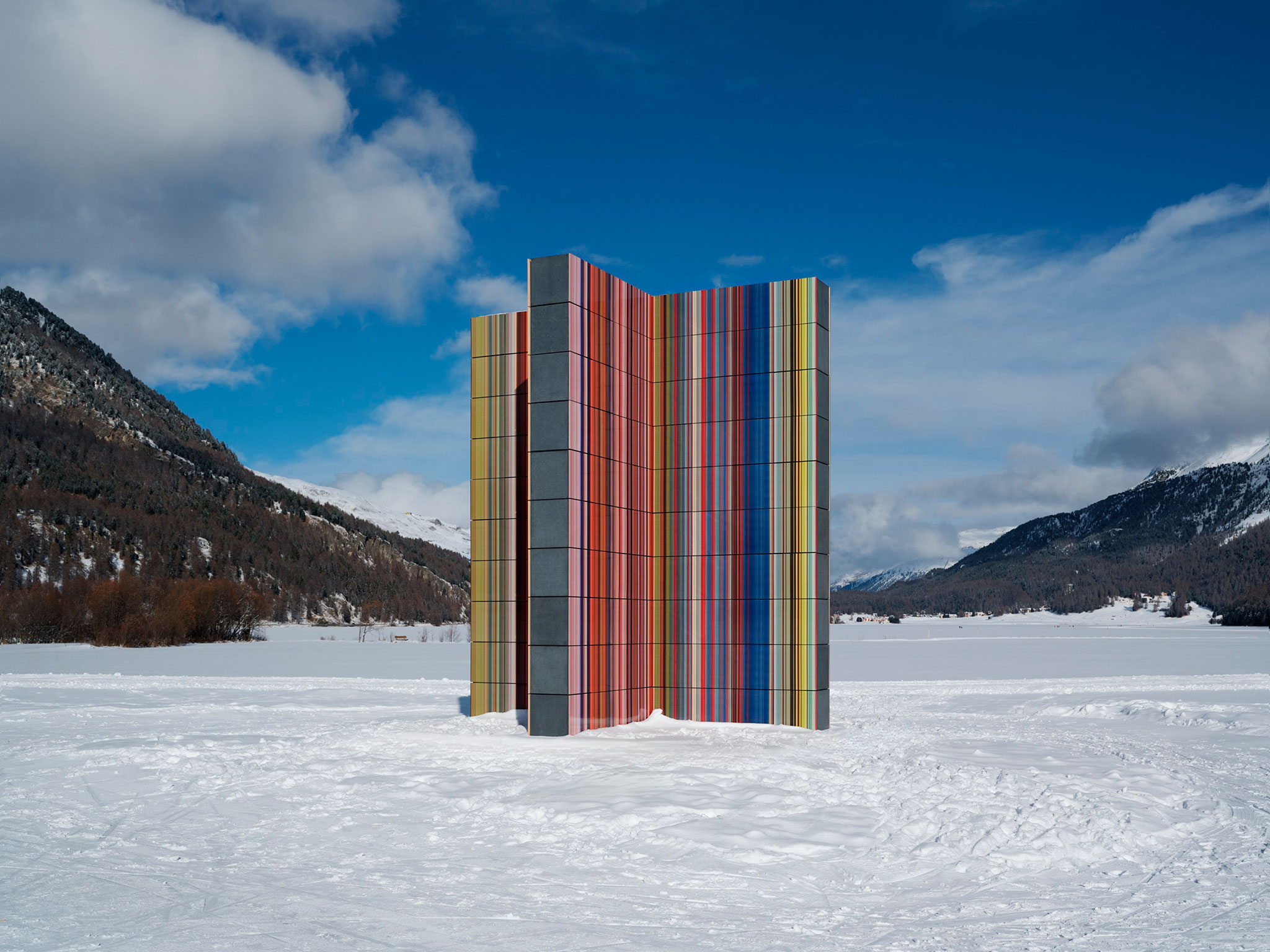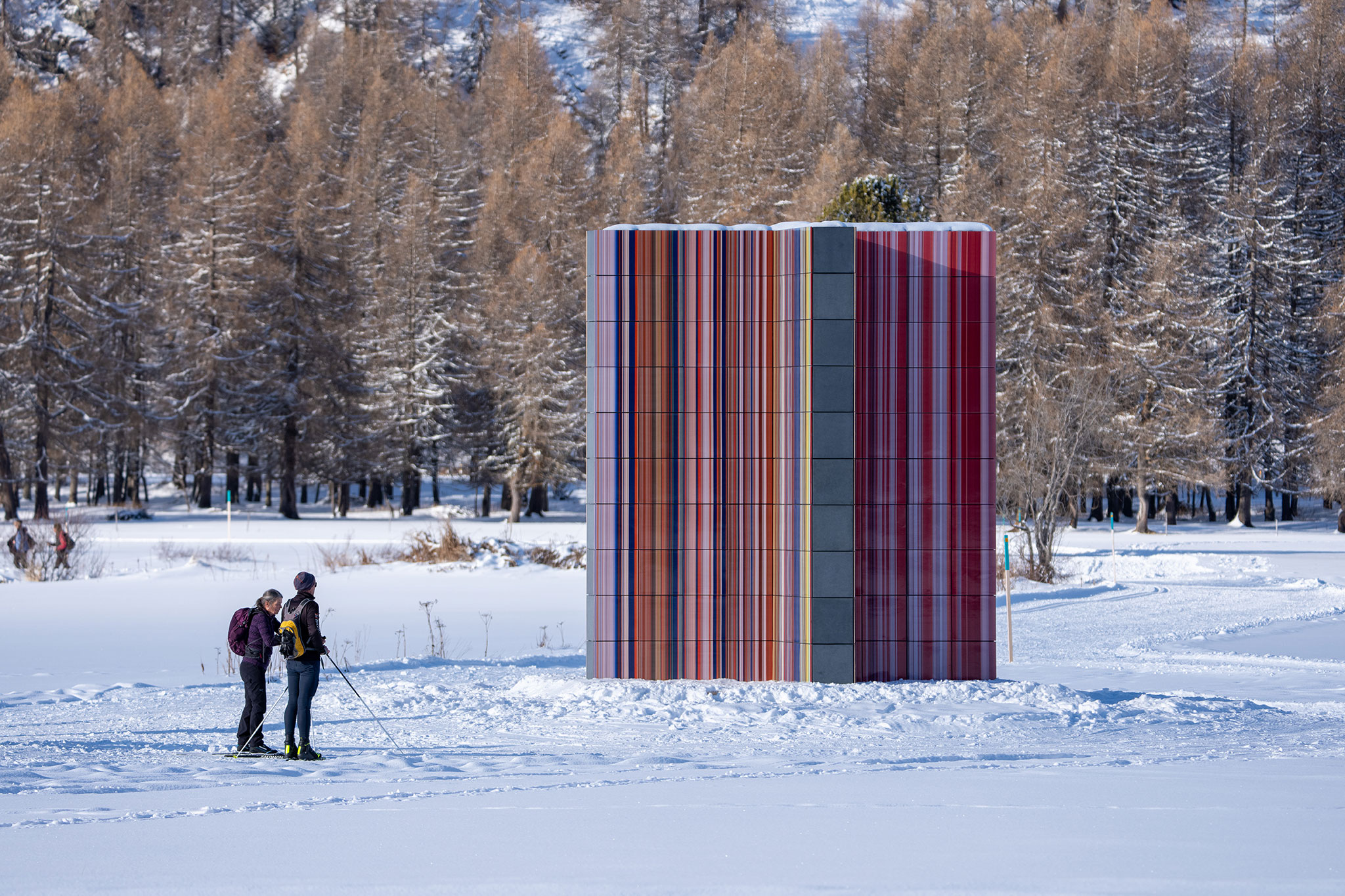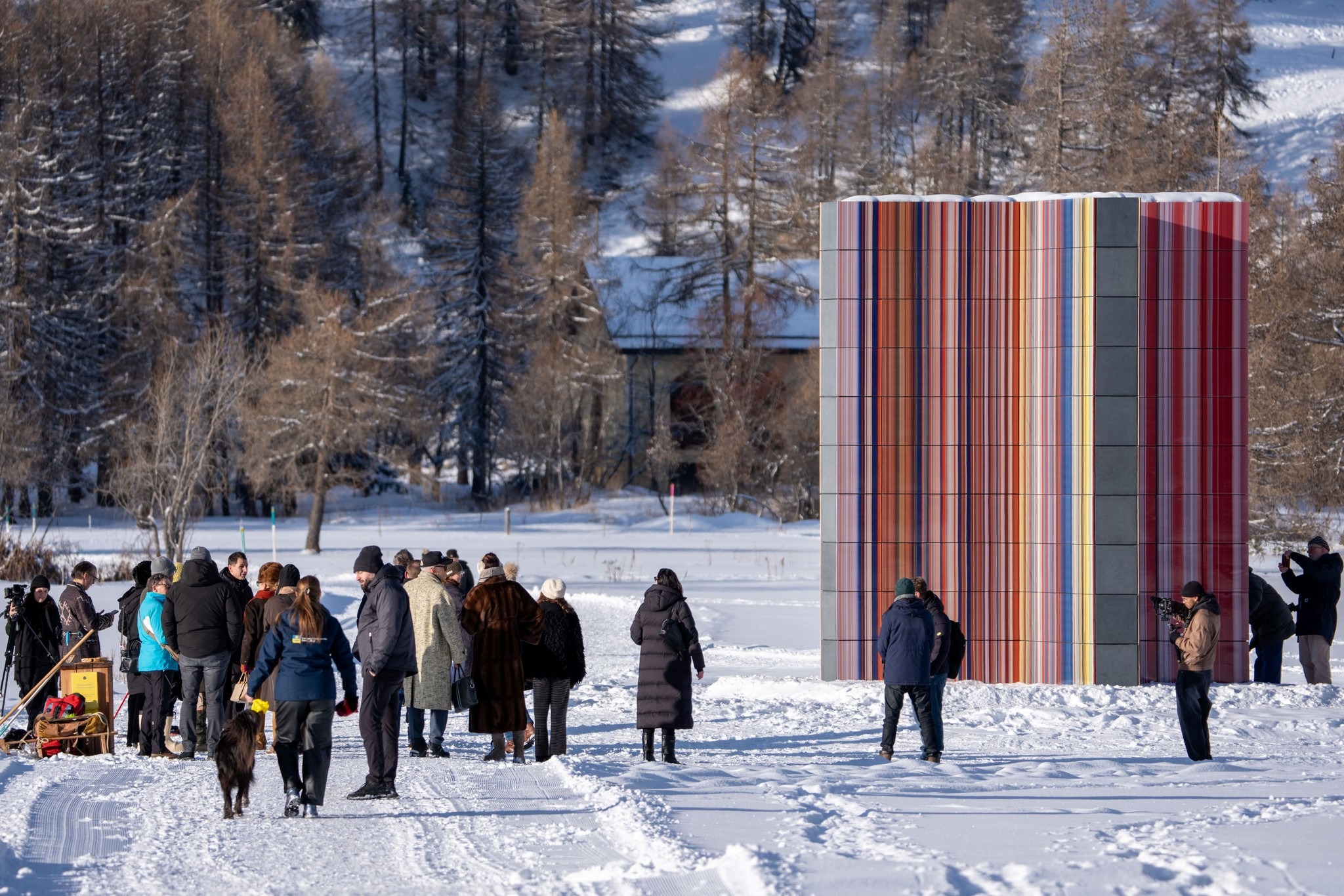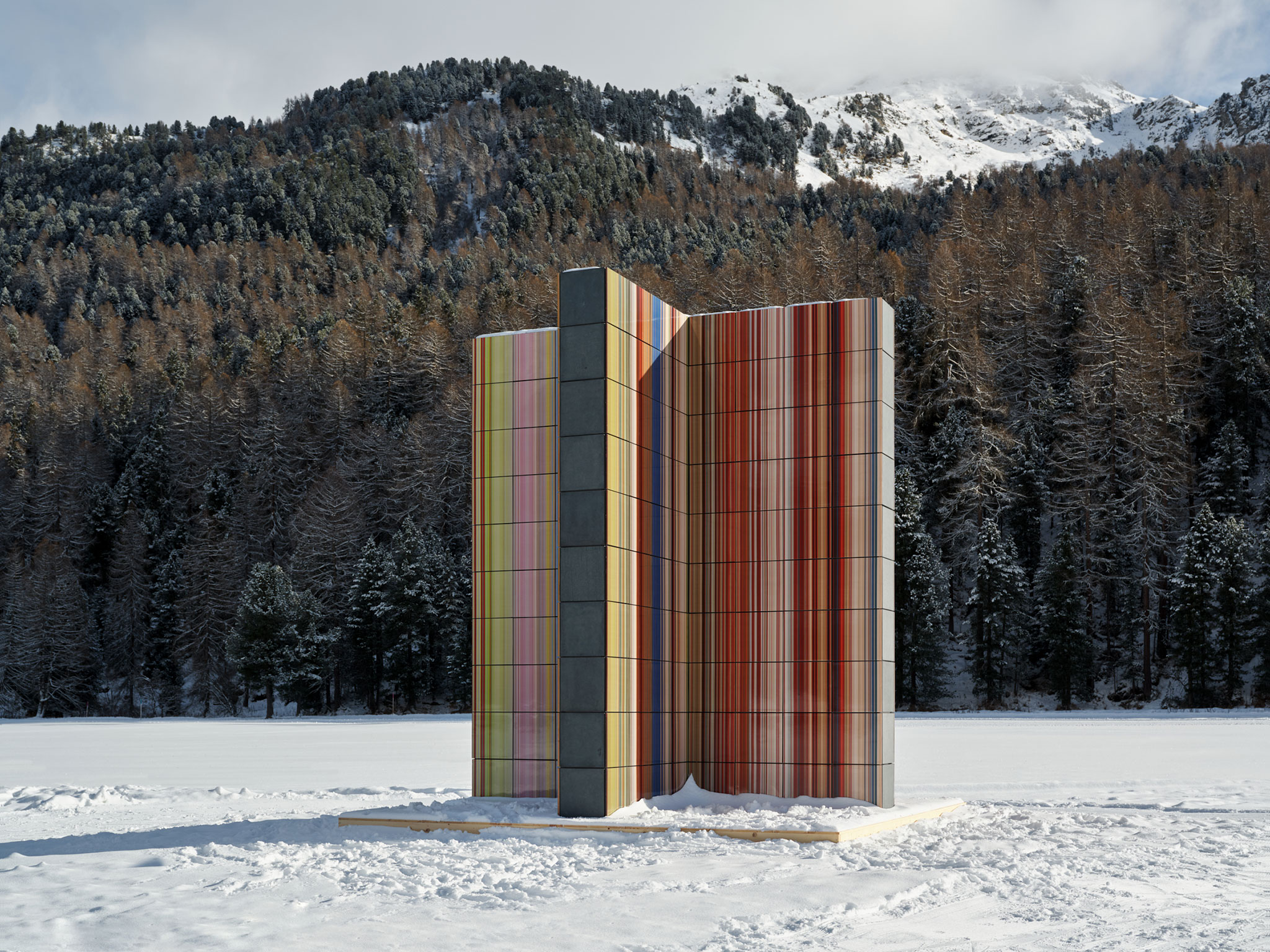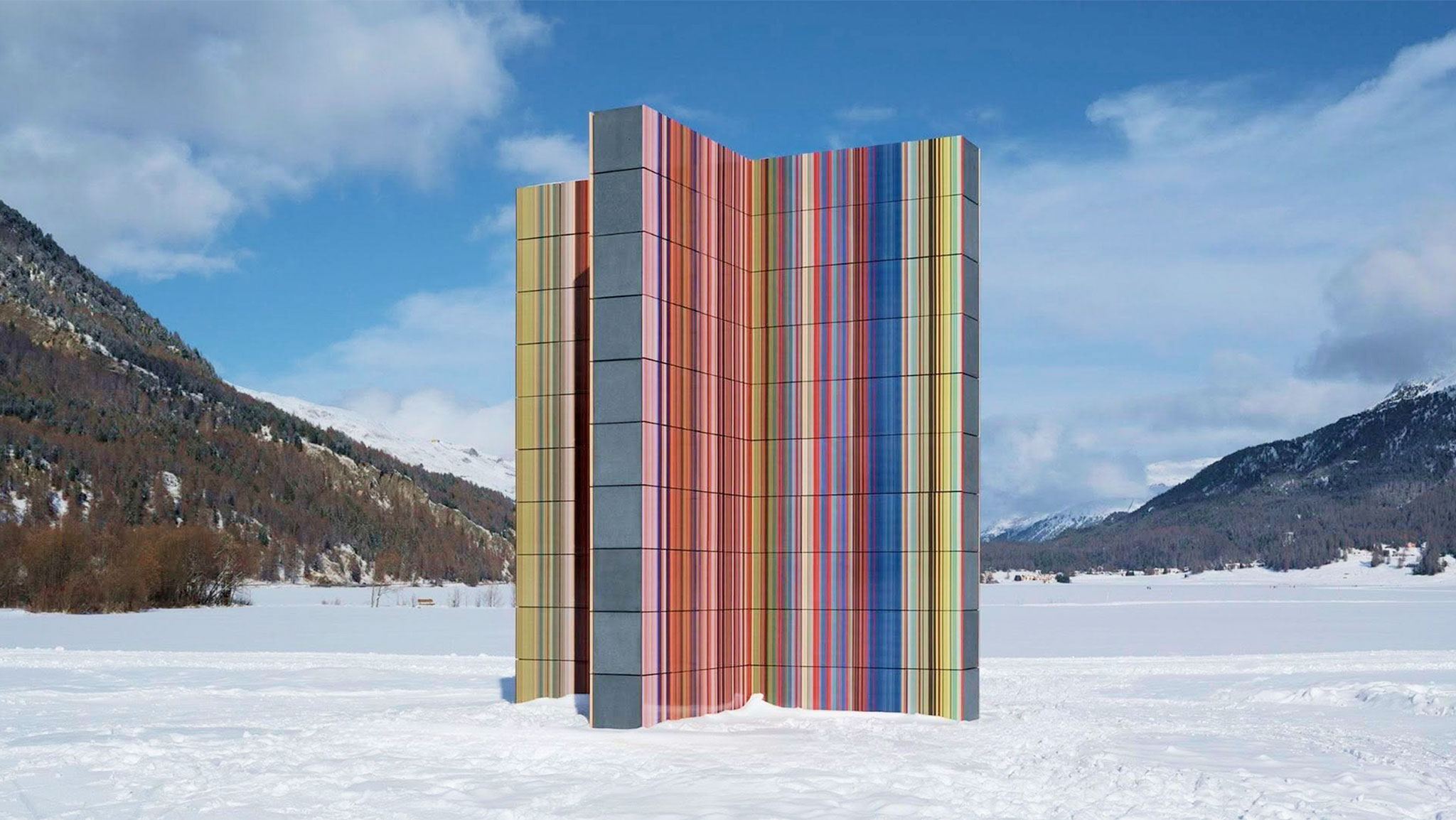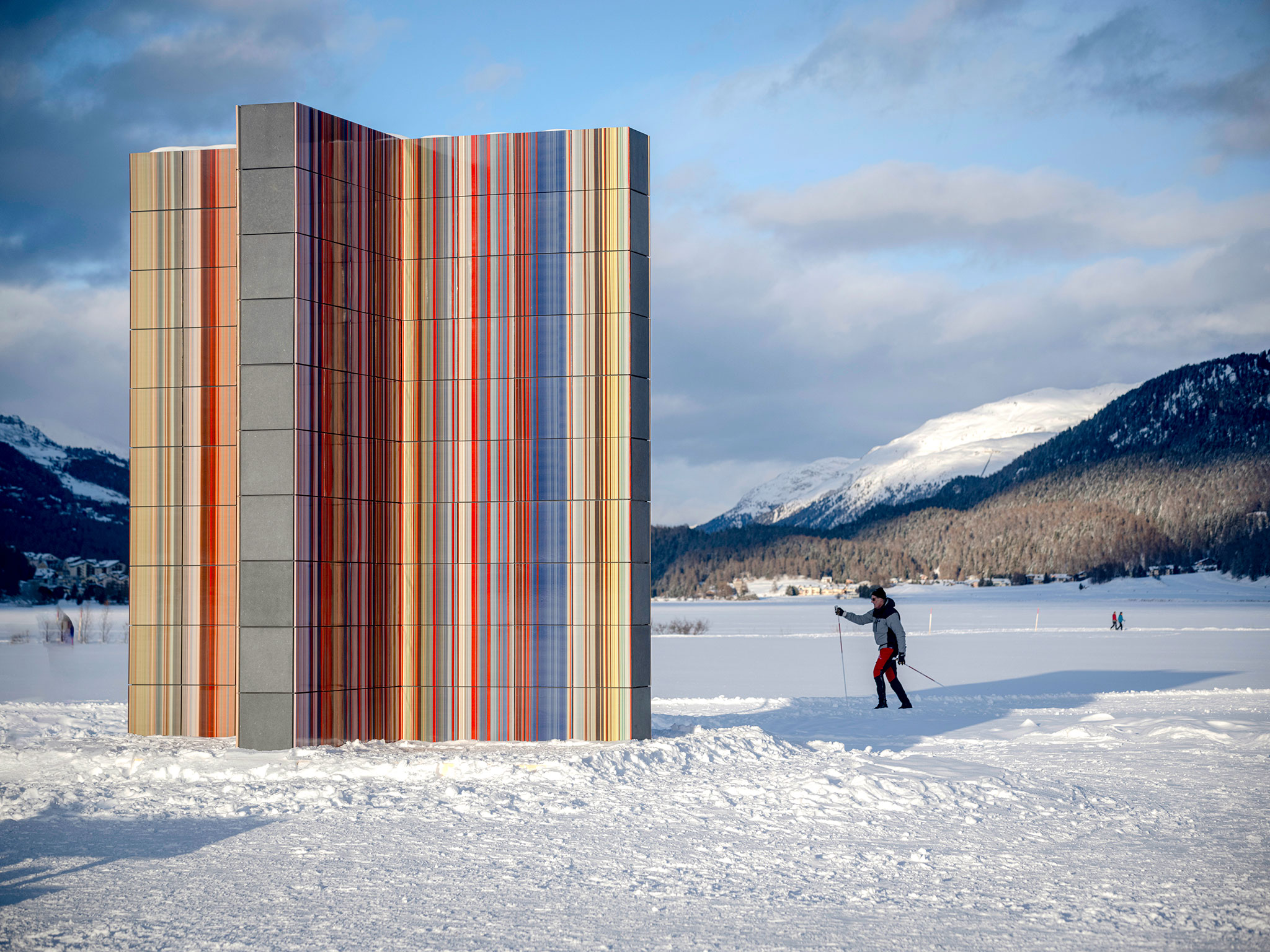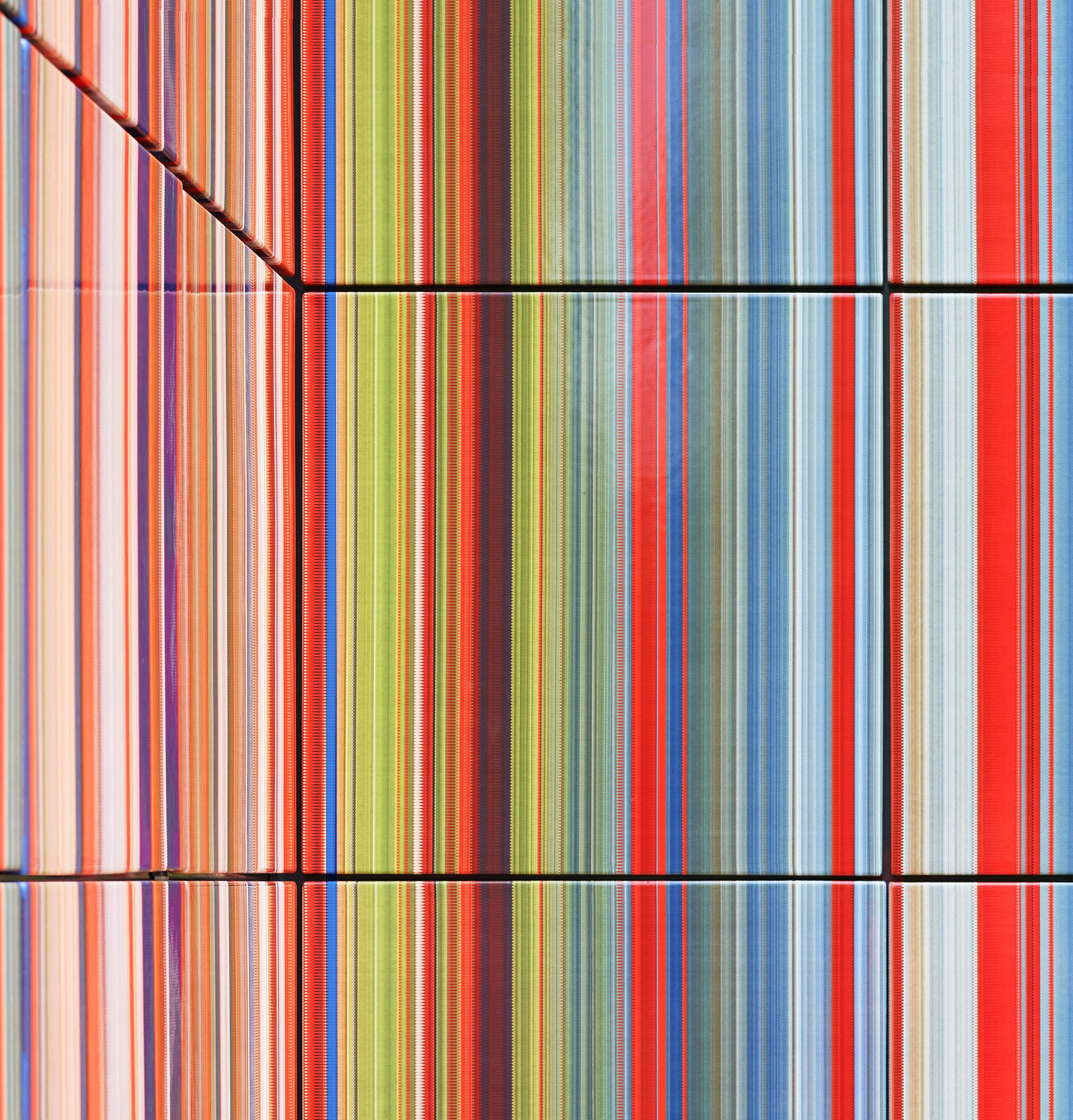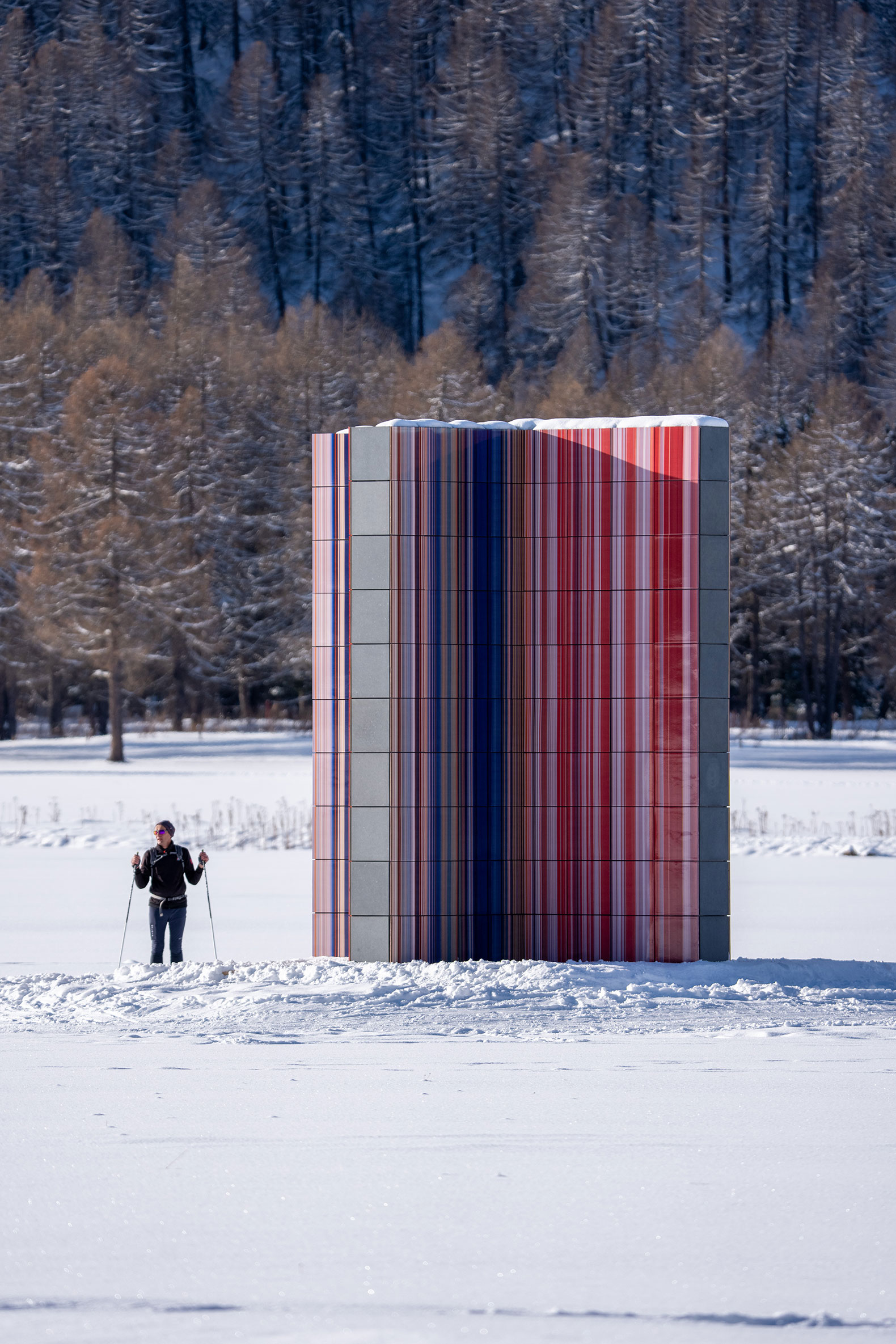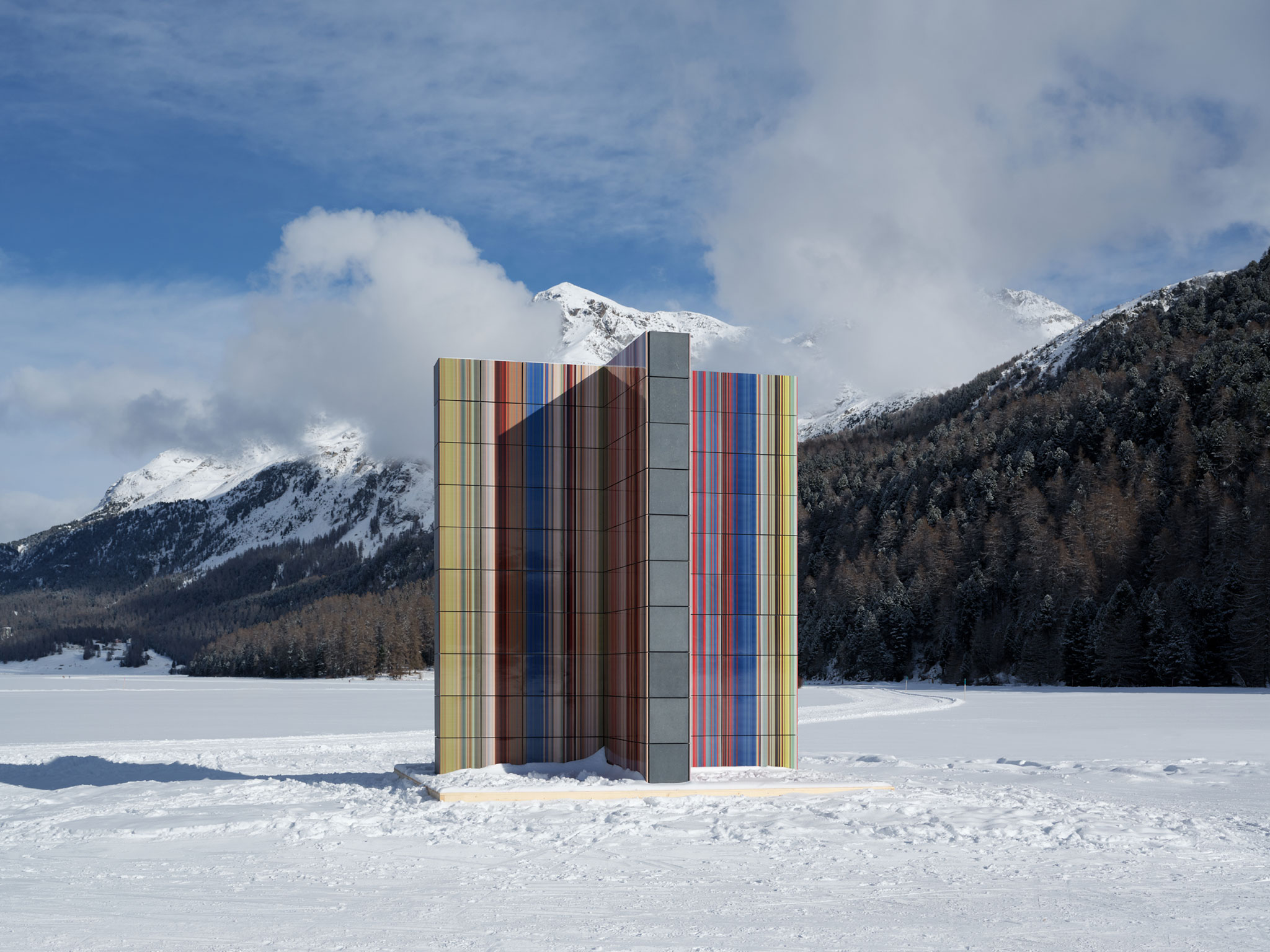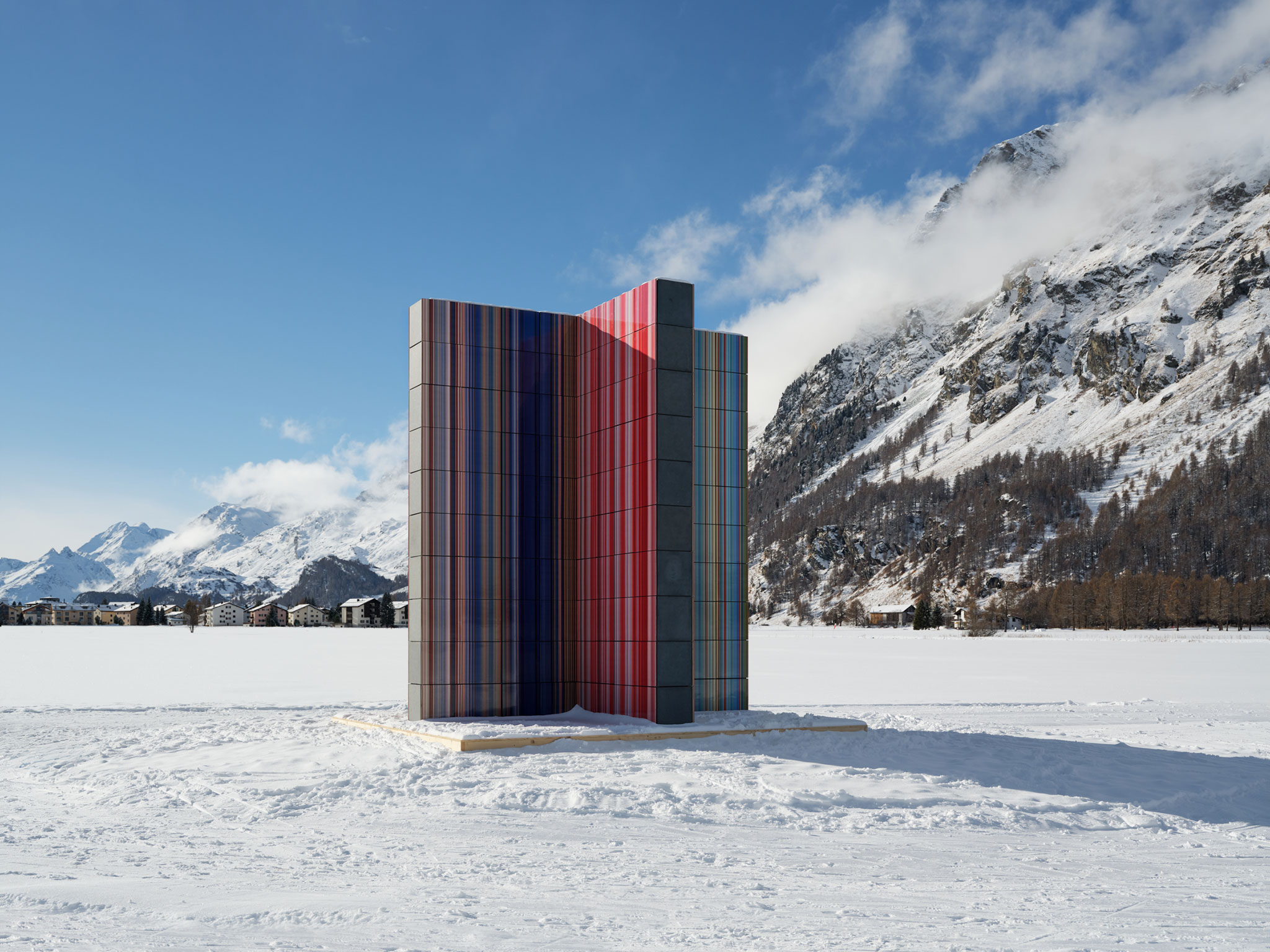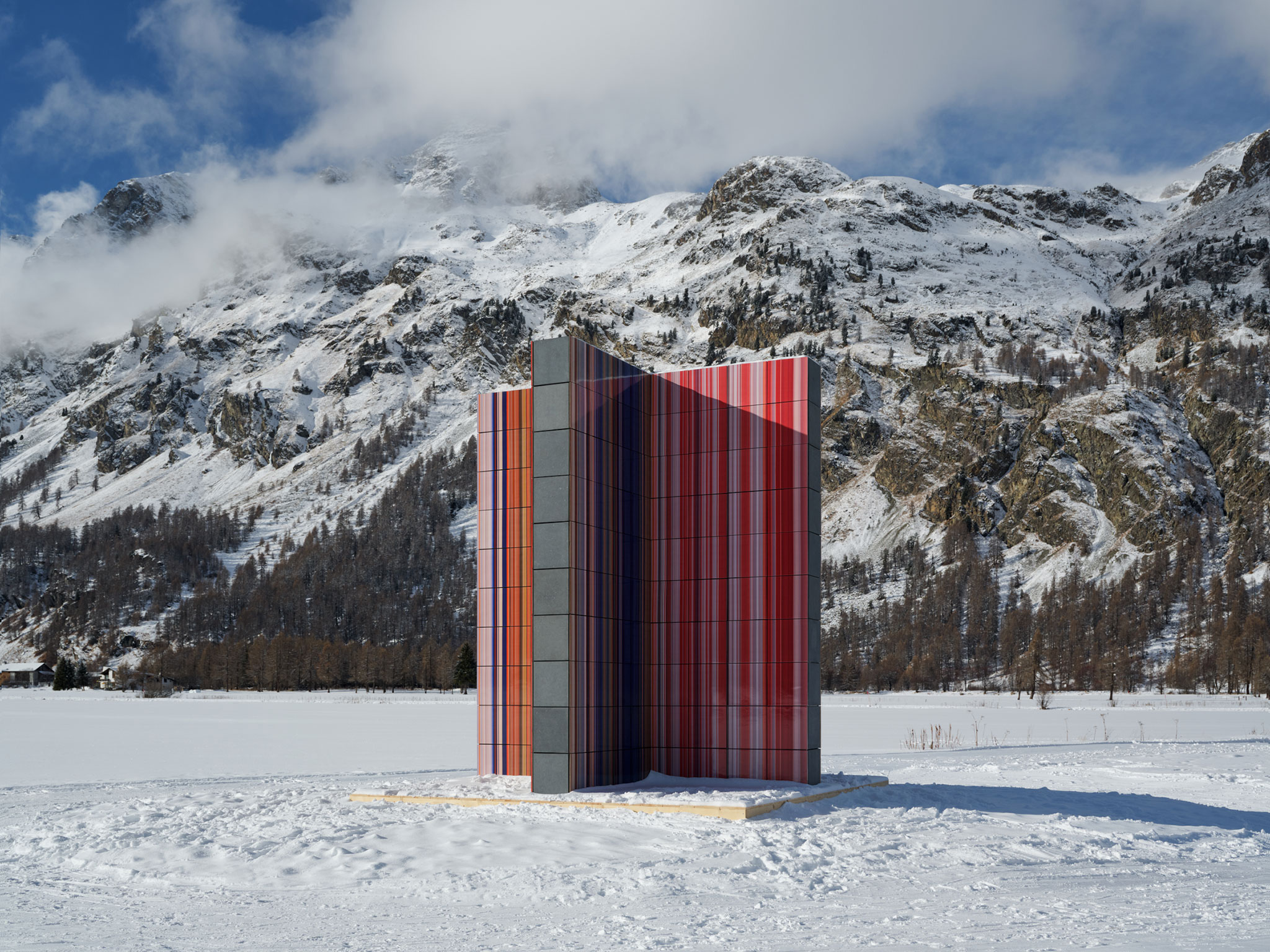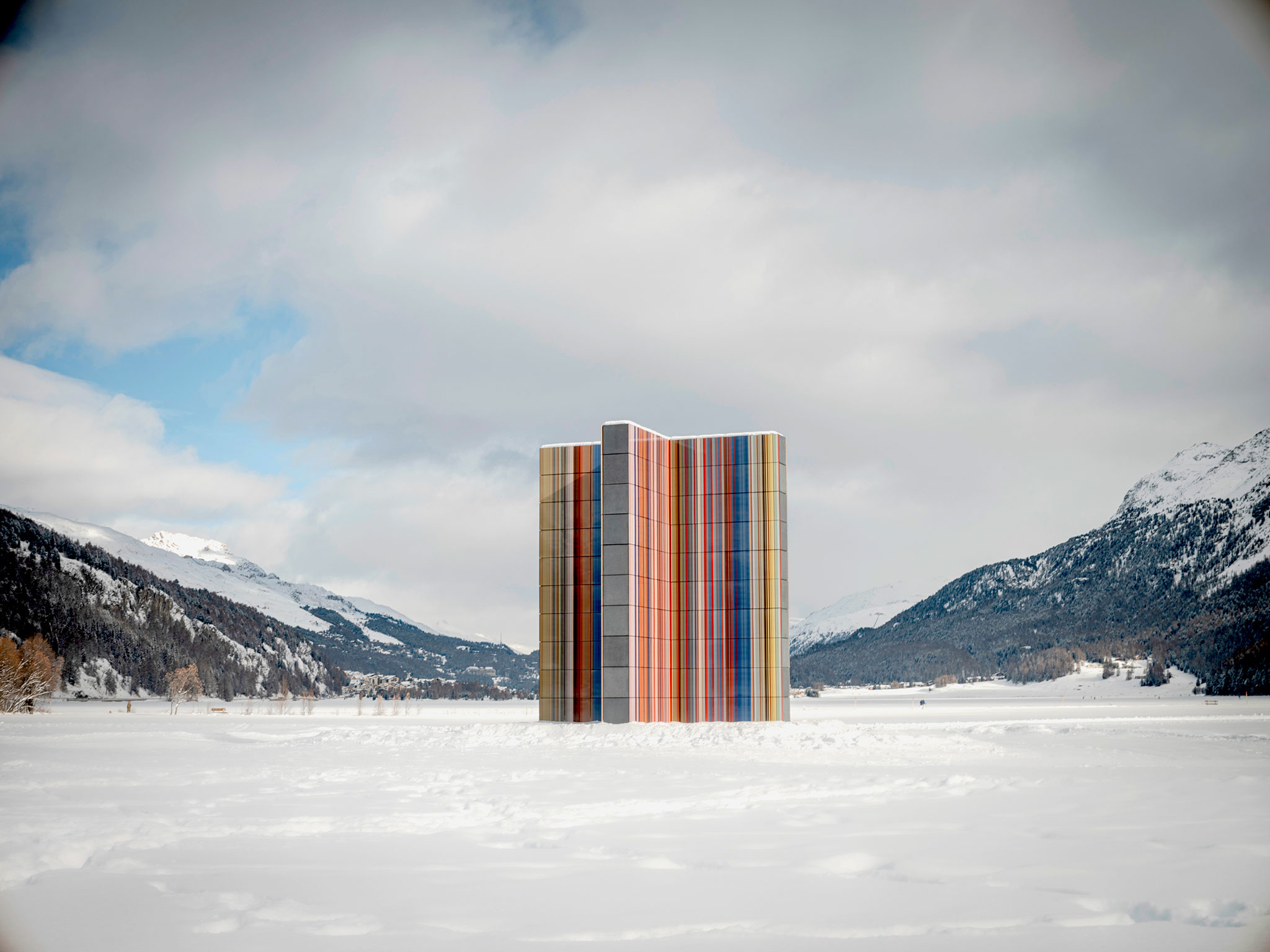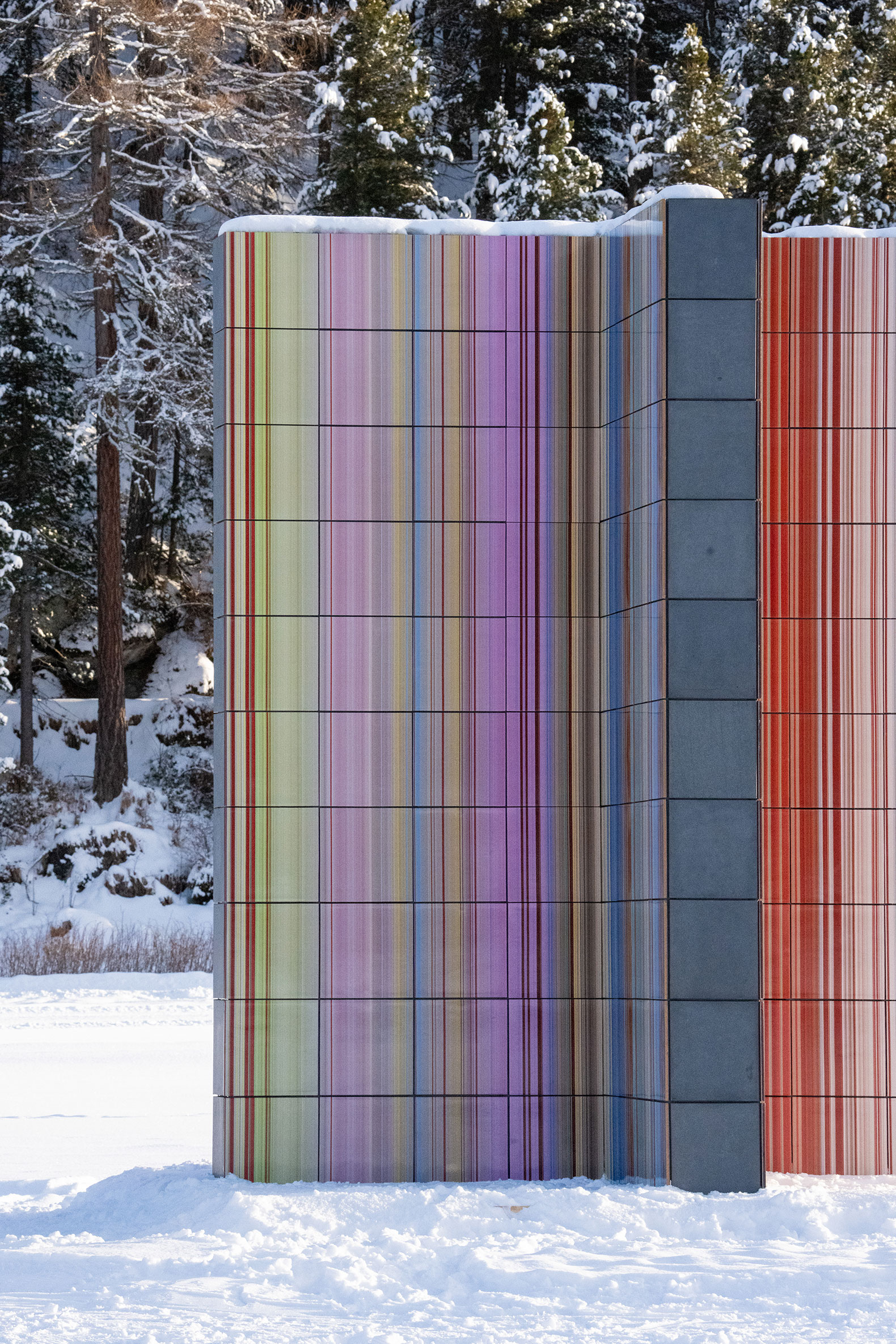
With Strip Tower (962), Gerhard Richter translates over six decades of research into painting, photography, digital processes, and abstraction into three-dimensional space. The work derives from the Strip Paintings series, begun in 2010, which originated with the squeegee painting Abstract Painting 724-4 (1990). Those compositions were photographed, scanned, and digitally manipulated, then successively fragmented into two, four, eight, sixteen, and thirty-two vertical strips, which were later stretched horizontally and materialized on Perspex-coated aluminum.
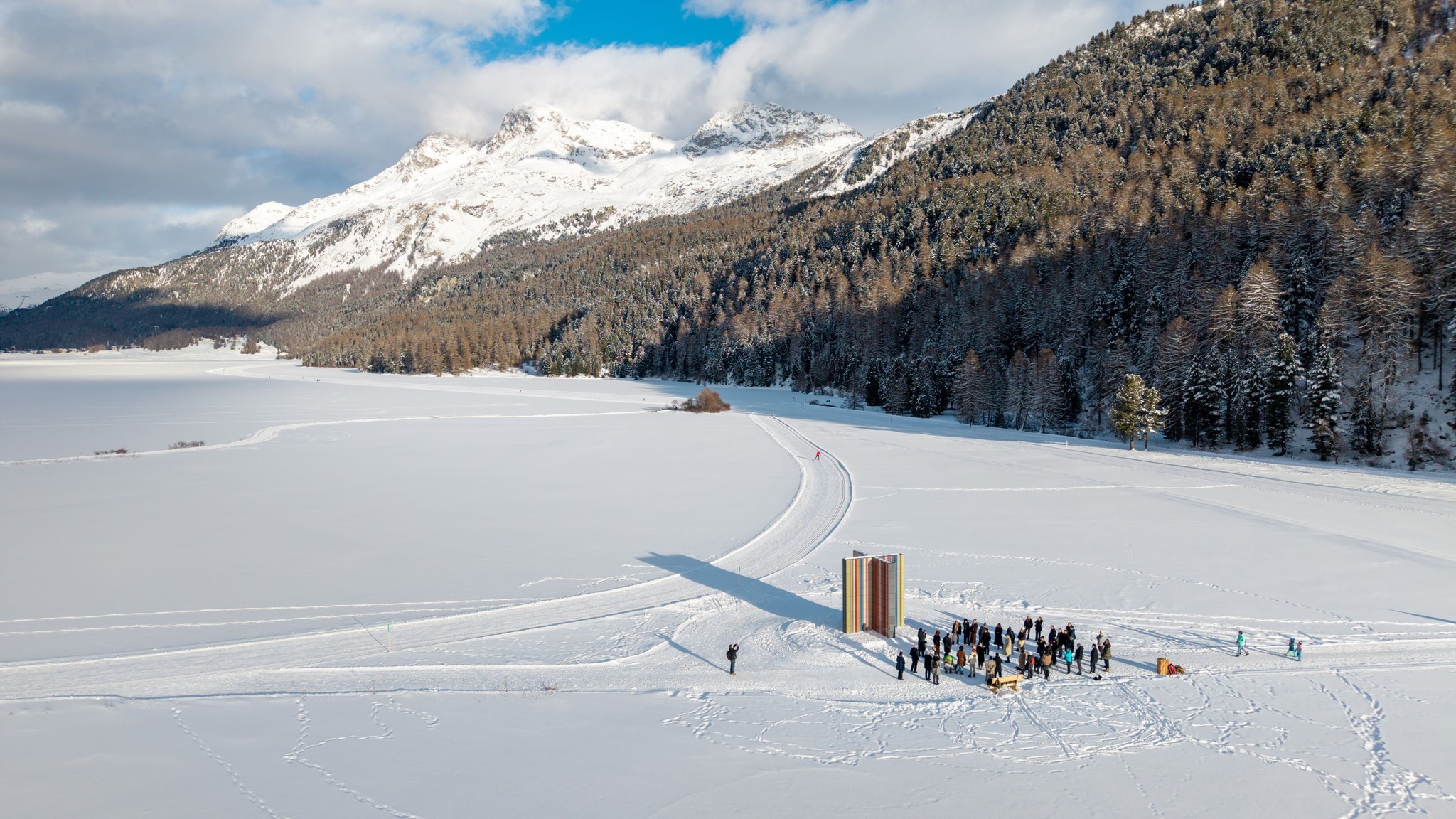
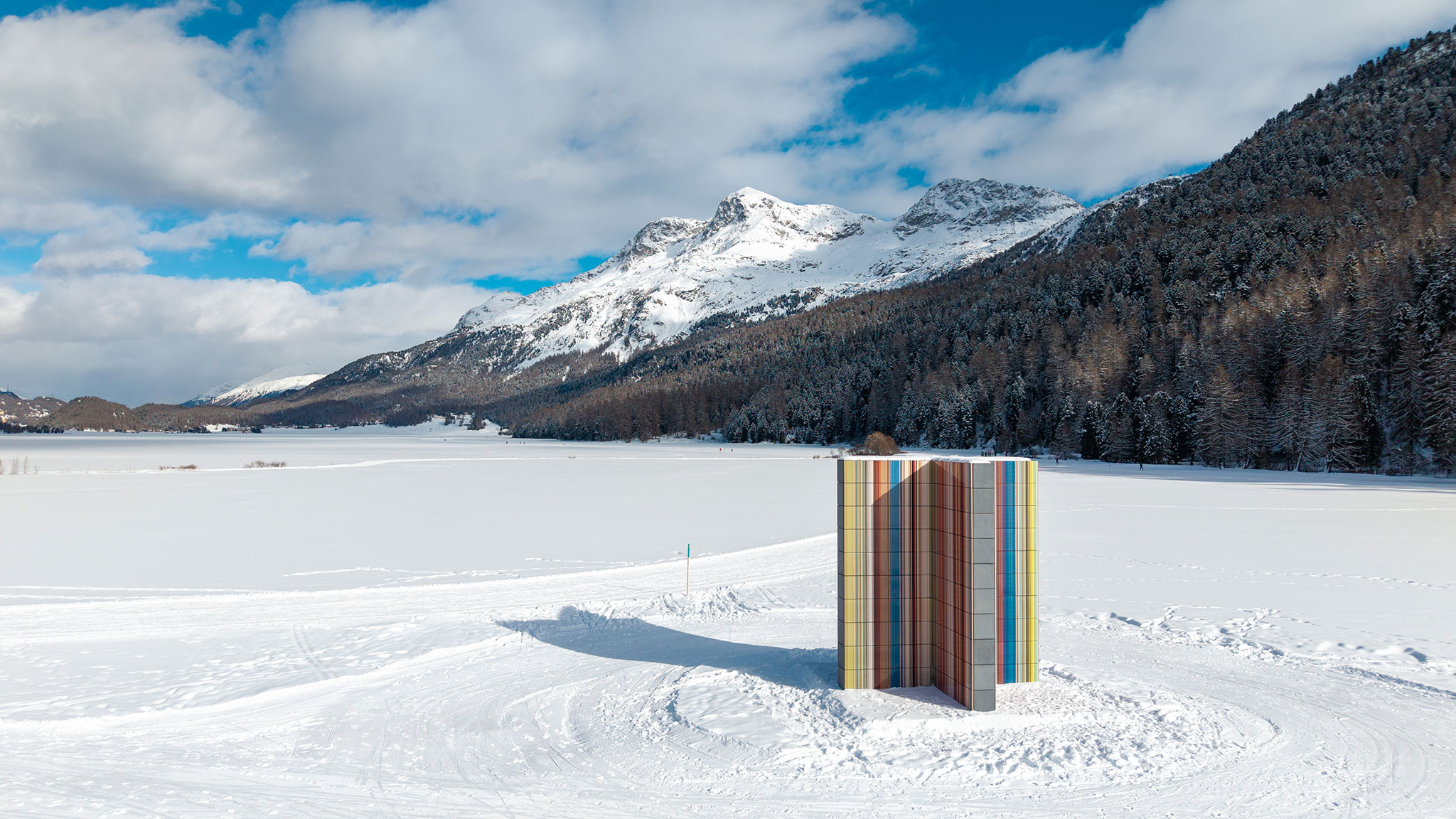
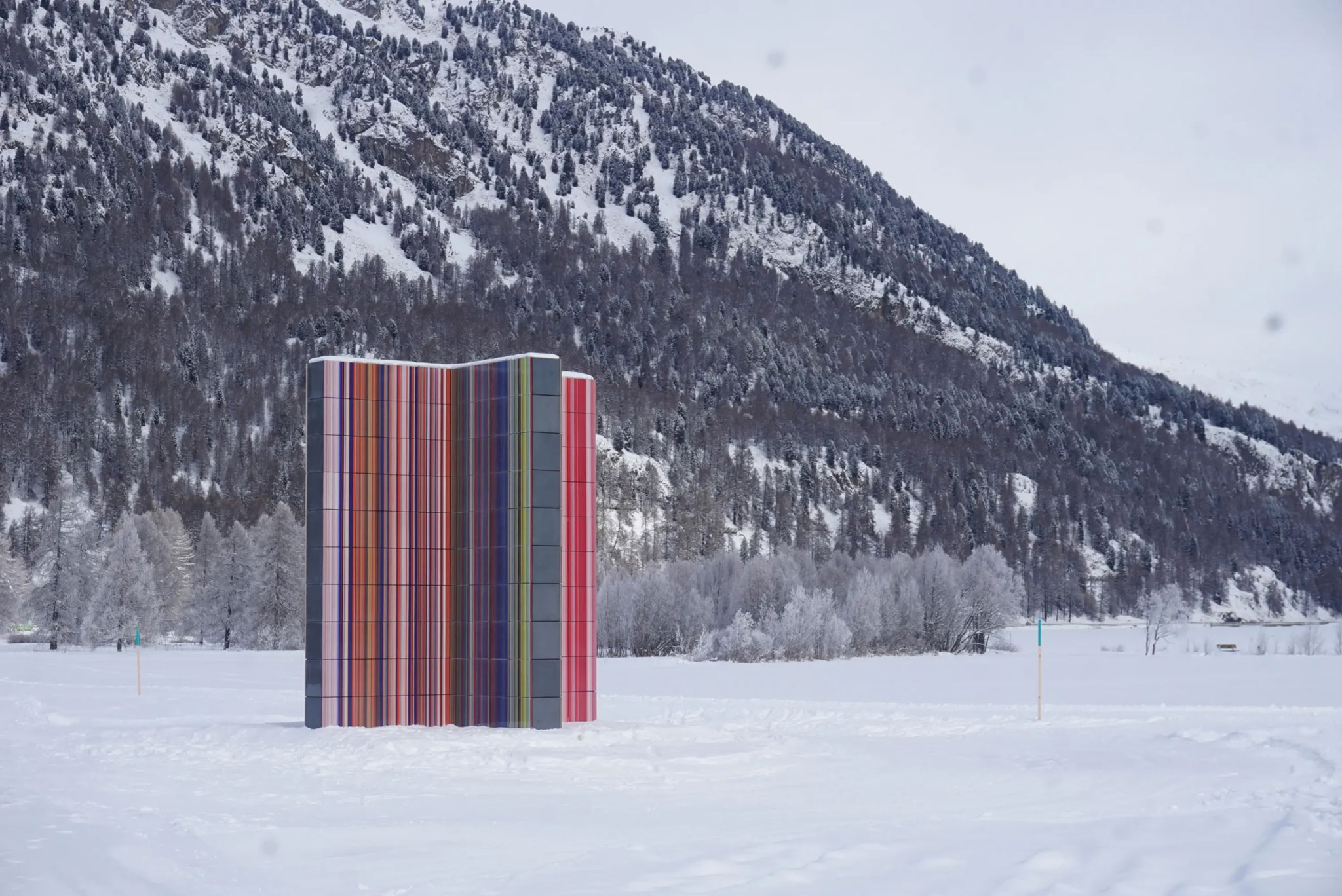
In its sculptural configuration, eight interlocking vertical panels, clad in ceramic tiles with intense chromatic stripes, rise to over five meters, creating a dense and layered composition. The intersection of the elements forms a cross-shaped interior space that the public can enter, becoming immersed in ever-changing variations of color and light. Abstraction thus acquires a spatial and experiential dimension, activating perception, materiality, and the surrounding alpine environment—a territory to which Richter has frequently returned since 1989, drawn by the crystalline clarity of its light, the power of its topography, and its contemplative atmosphere. STRIP TOWER (962) unfolds as a sustained public experience, inviting prolonged attention and a heightened awareness of the place.
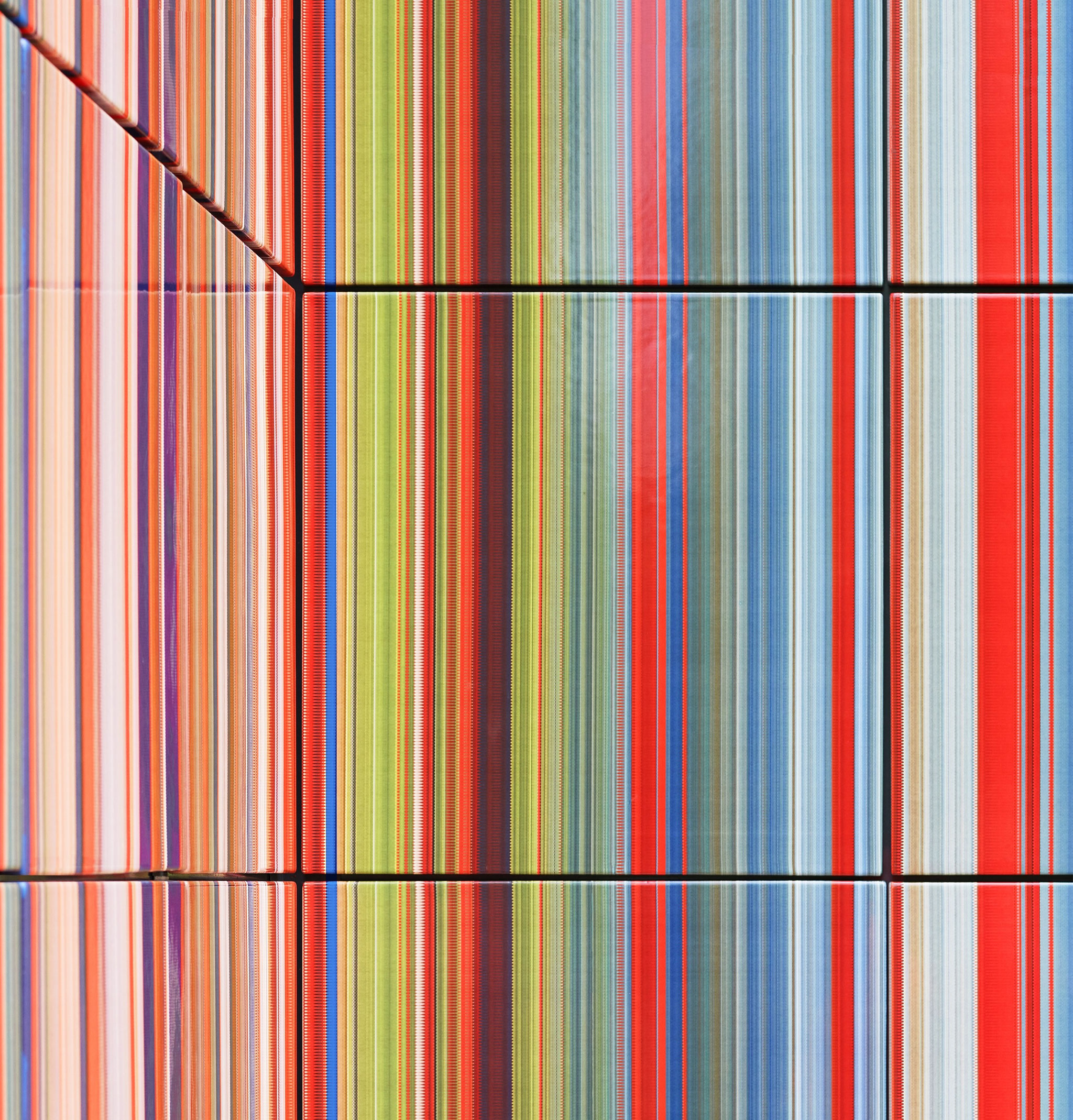
Gerhard Richter, STRIP TOWER (962), 2023. Sils Maria, Switzerland, 2026. Courtesy of Gerhard Richter Kunststiftung and Luma Foundation. Photograph by Schaub Stierli Fotografie.
Since 2014, Elevation 1049, conceived and produced by the Luma Foundation, has positioned the Swiss Alps as a stage for ambitious contemporary art projects that transcend institutional frameworks. Initially developed in Gstaad and Saanenland and expanded in 2022 to St. Moritz, the project understands the alpine landscape as a dynamic intellectual and ecological field, promoting site-specific commissions that engage with geography, climate, history, local communities, and global cultural debates. Through these initiatives, the Alps are configured as a living and reflective environment in which art contributes to shaping our way of perceiving, inhabiting and caring for the world.