In the mid-1950s, Rauschenberg began creating what he called combine paintings (1954–1964), works that integrated painting, sculpture, collage, and found objects, mostly from the realm of consumer society. In 1962, under the influence of Andy Warhol, he began experimenting with commercial silkscreen printing, a technique that would decisively mark his later work, as it allowed him to enlarge, reiterate, and superimpose photographic images taken from his personal archive or from print media onto the canvas, thus shaping his unique visual imagery.
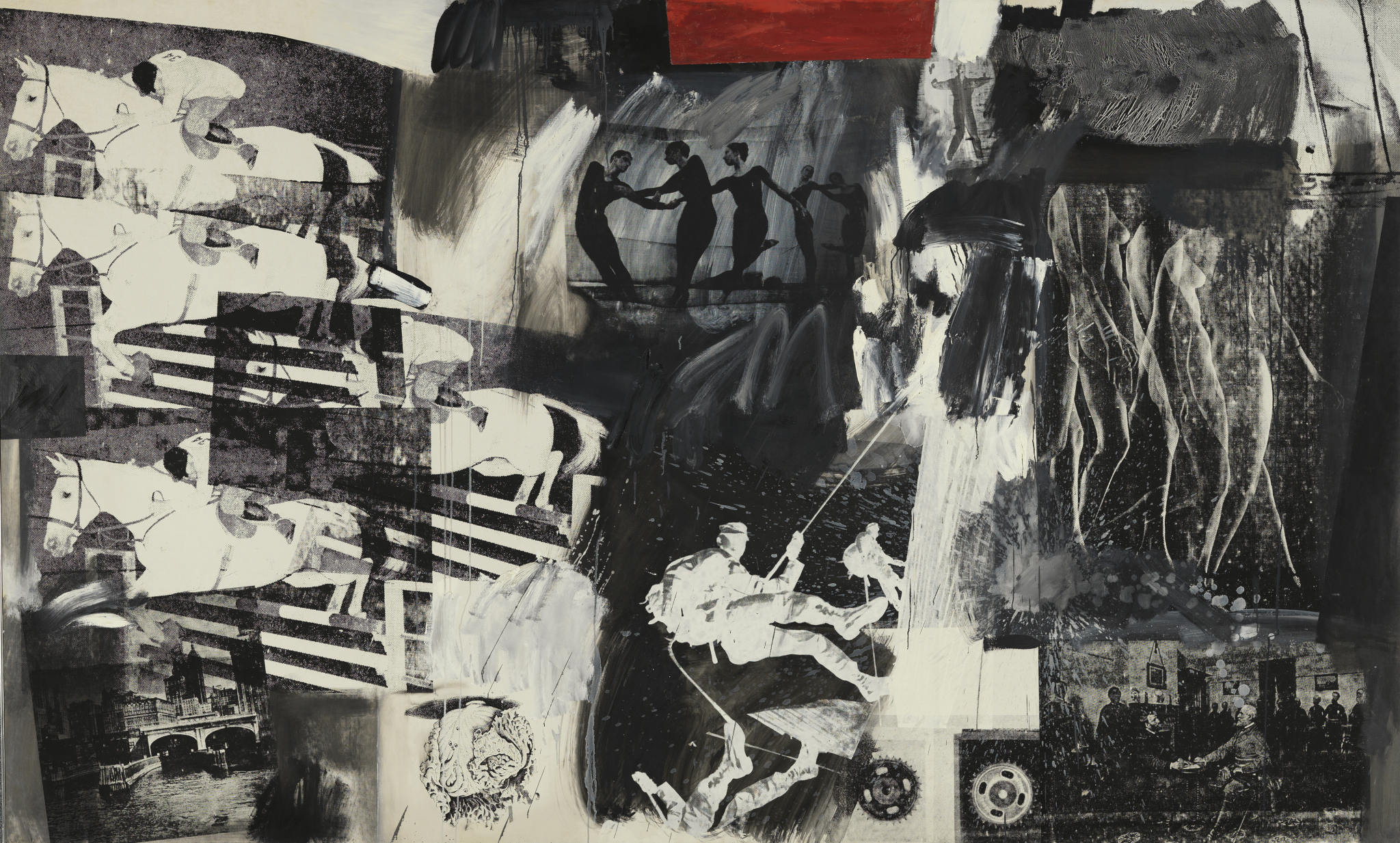
Express belongs to this group of silkscreened works. The photographic images that comprise it evoke the dynamism and speed of contemporary society, and many of them explicitly allude to movement: the rider jumping a fence, the dancers, the climber, the wheels, or the nude figure descending a staircase, among others.
The exhibition, located in room 48 of the permanent collection, proposes a reconstruction of his working method, which began with the selection of photographs. Numerous examples of these images are displayed in a glass case, some from his personal archive and, in most cases, from American magazines and newspapers such as the New York Daily News and Life Magazine, which served as the starting material for the canvas.
Once selected, Rauschenberg sent the photographs to a specialized workshop for the creation of large silkscreen screens. He applied ink to these screens, which he then transferred to the canvas, finally adding painterly gestures made with brushes, rags, or directly with his hands.
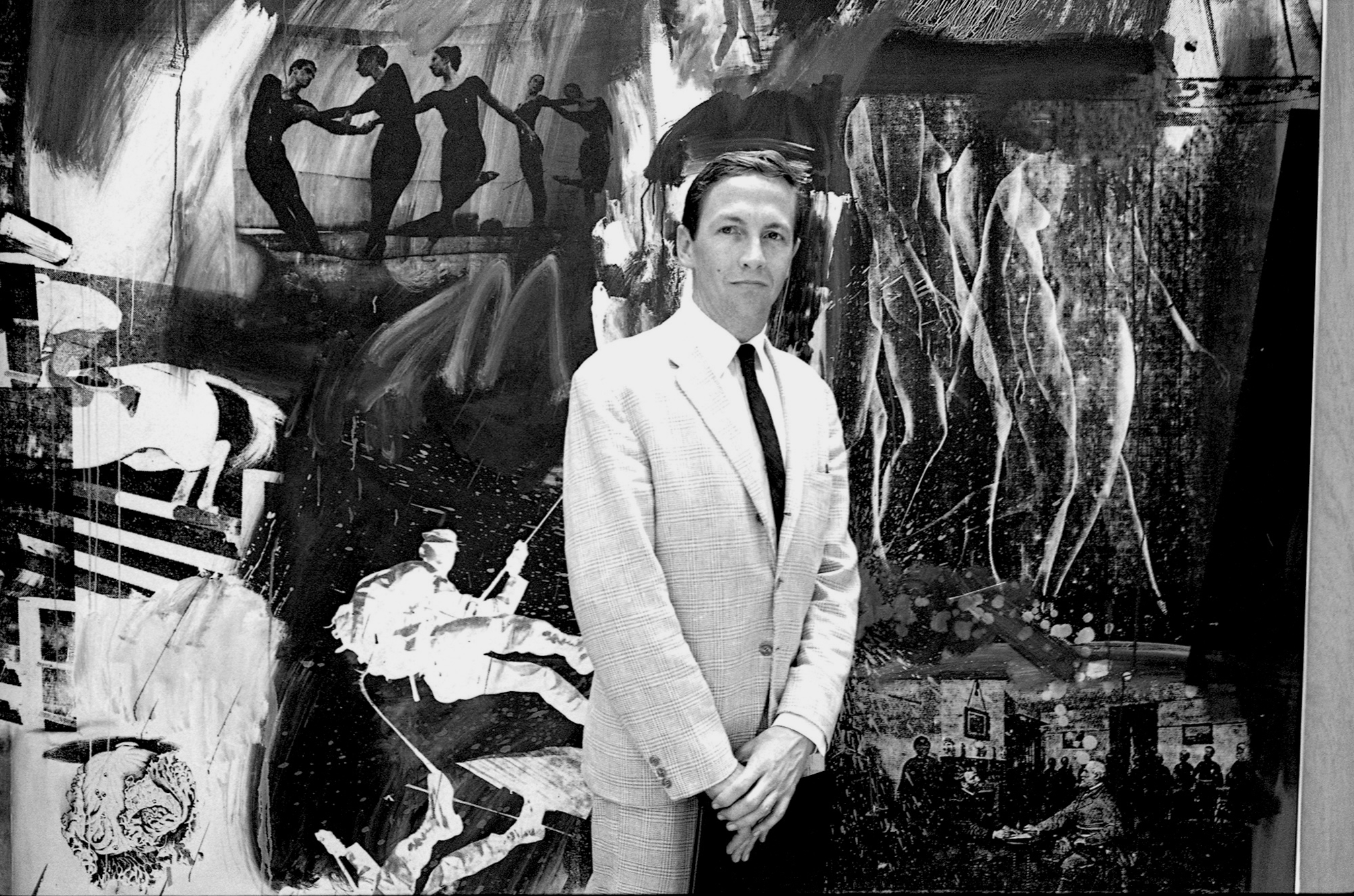
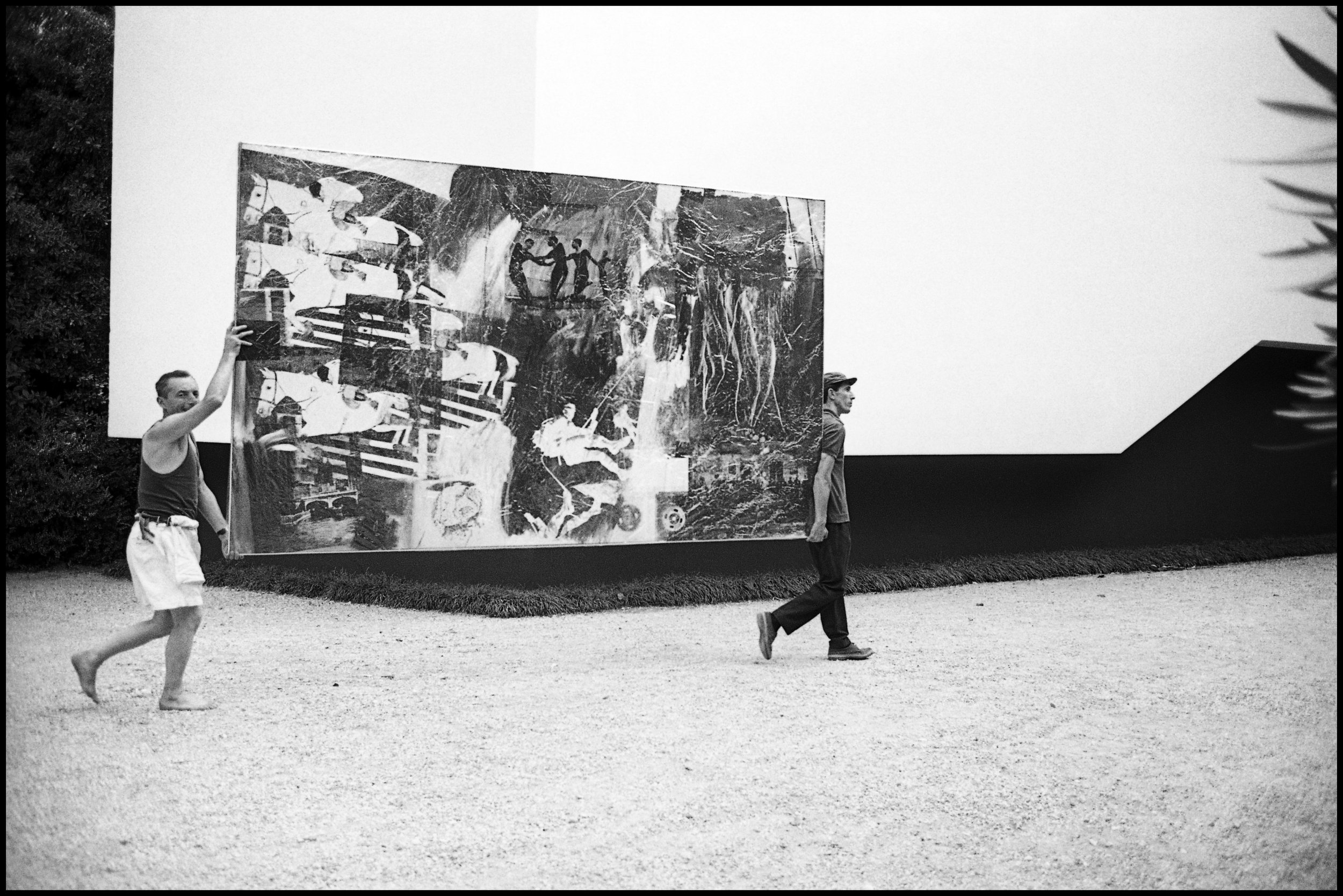
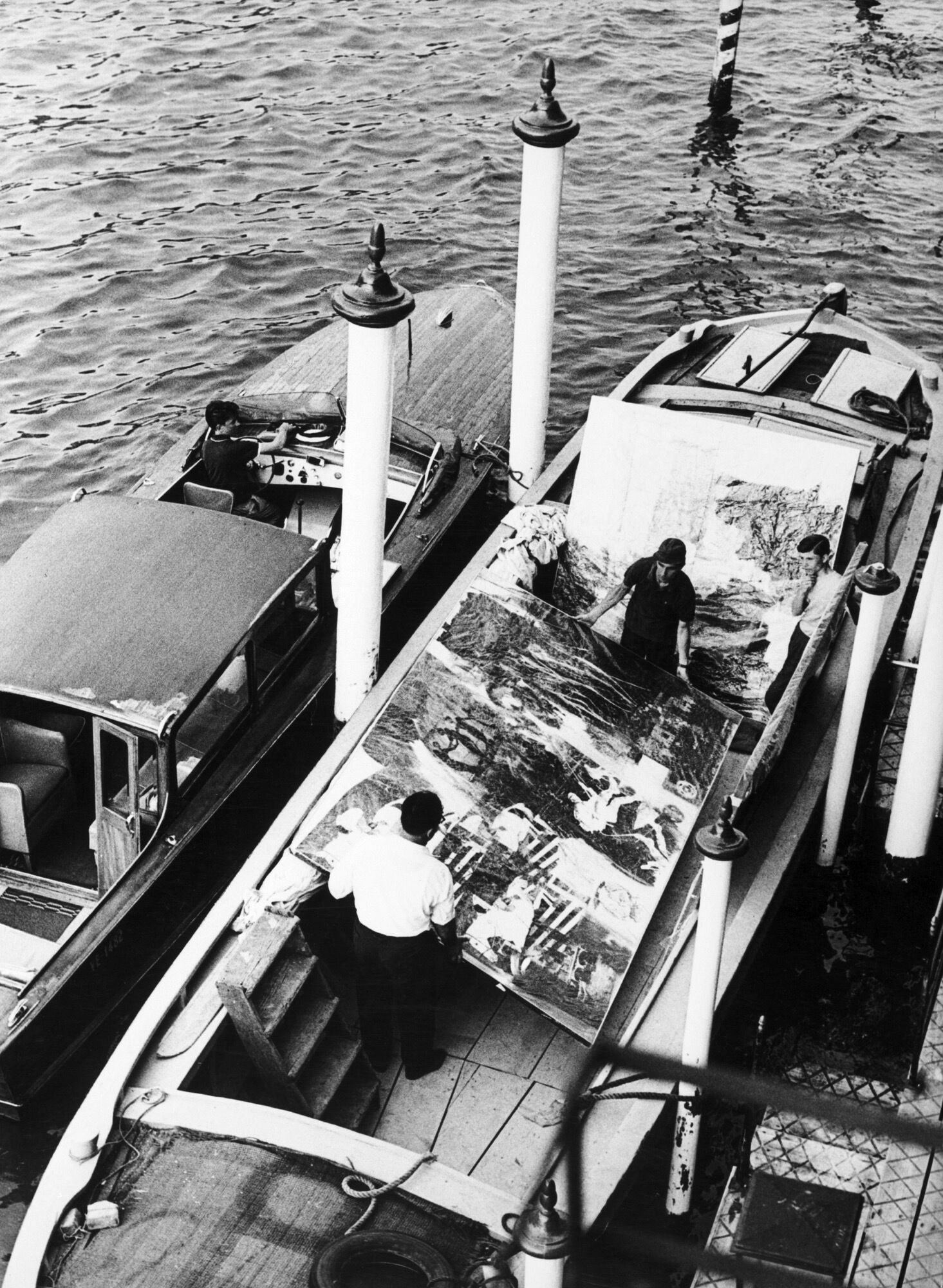
This painting was also one of the works presented by the United States at the 1964 Venice Biennale, where Rauschenberg won the Grand Prize for Painting, becoming the first American artist to receive it. Given the space limitations of the American pavilion, most of his work was exhibited in a palace on the Grand Canal; however, following the jury's decision, some pieces were moved to the official venue. The current installation includes five photographs taken at that time by the Italian photographer Ugo Mulas, among them two documenting the transport of the works by boat along the canals, along with the general catalogue of the Biennale and the catalogue of the American pavilion.
The presentation is completed with a video projection featuring footage of the artist working on Barge (1962–1963), one of his first paintings created using silkscreen printing, as well as Pelican, his first choreography, which premiered in 1963.