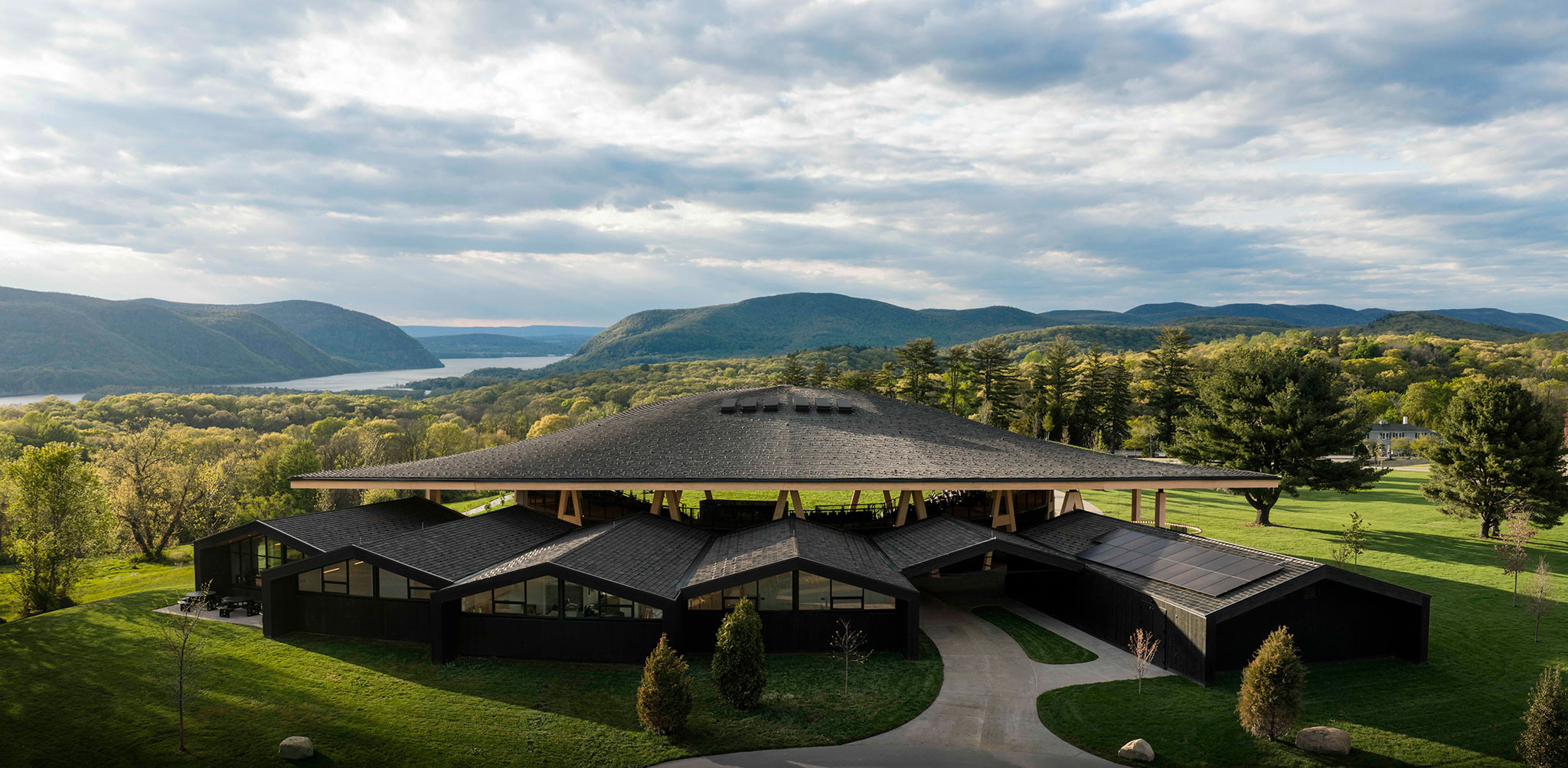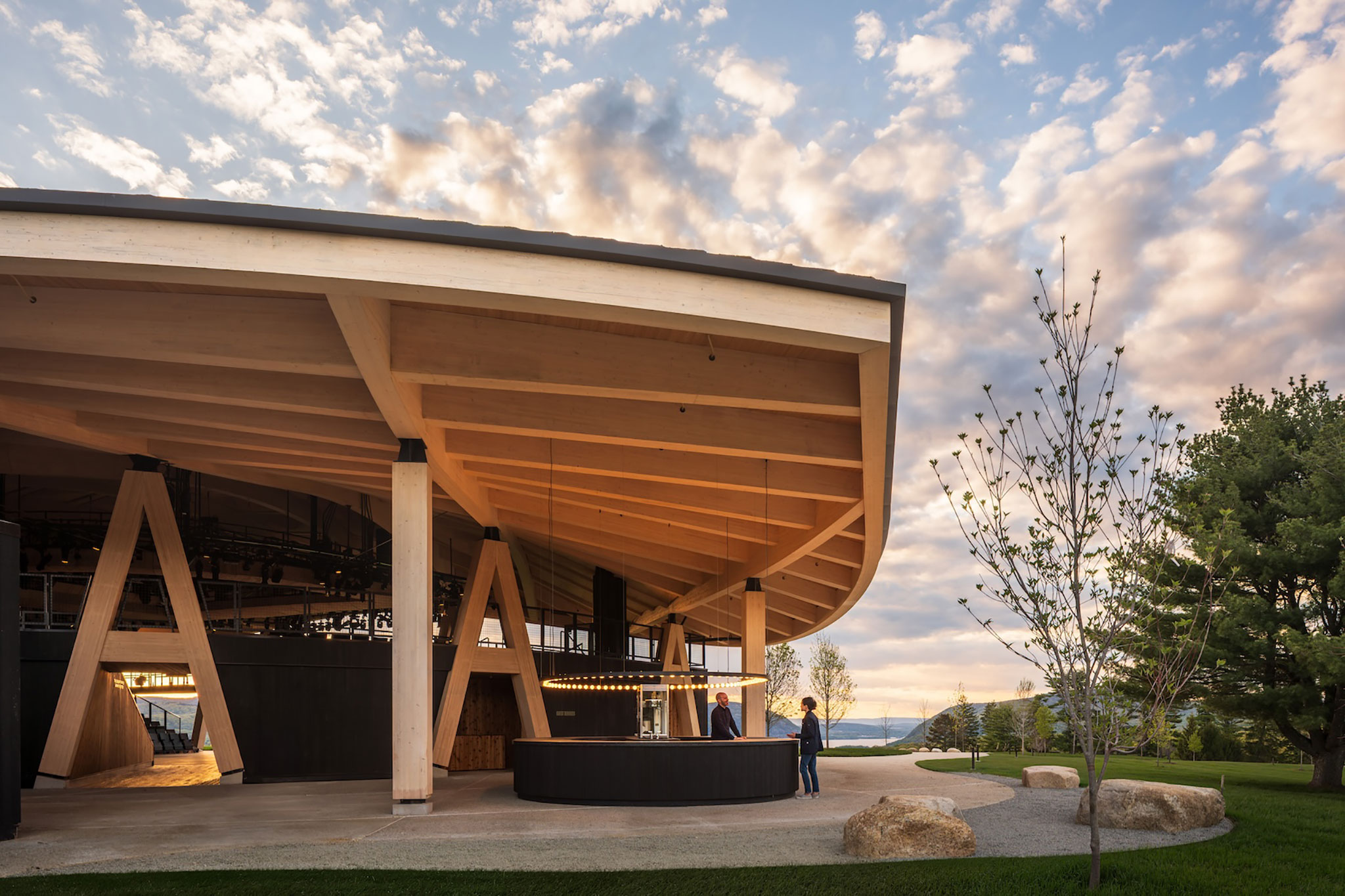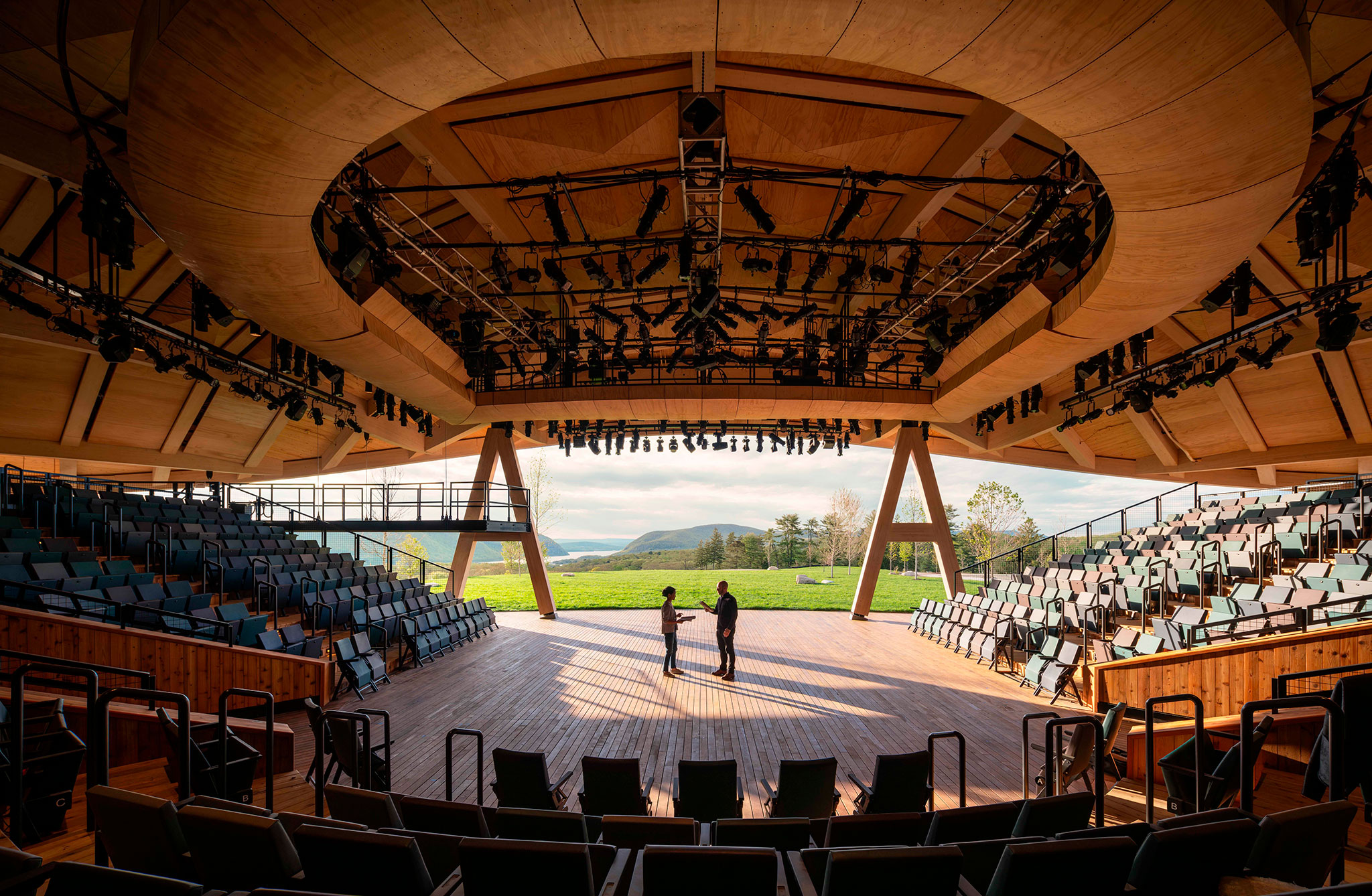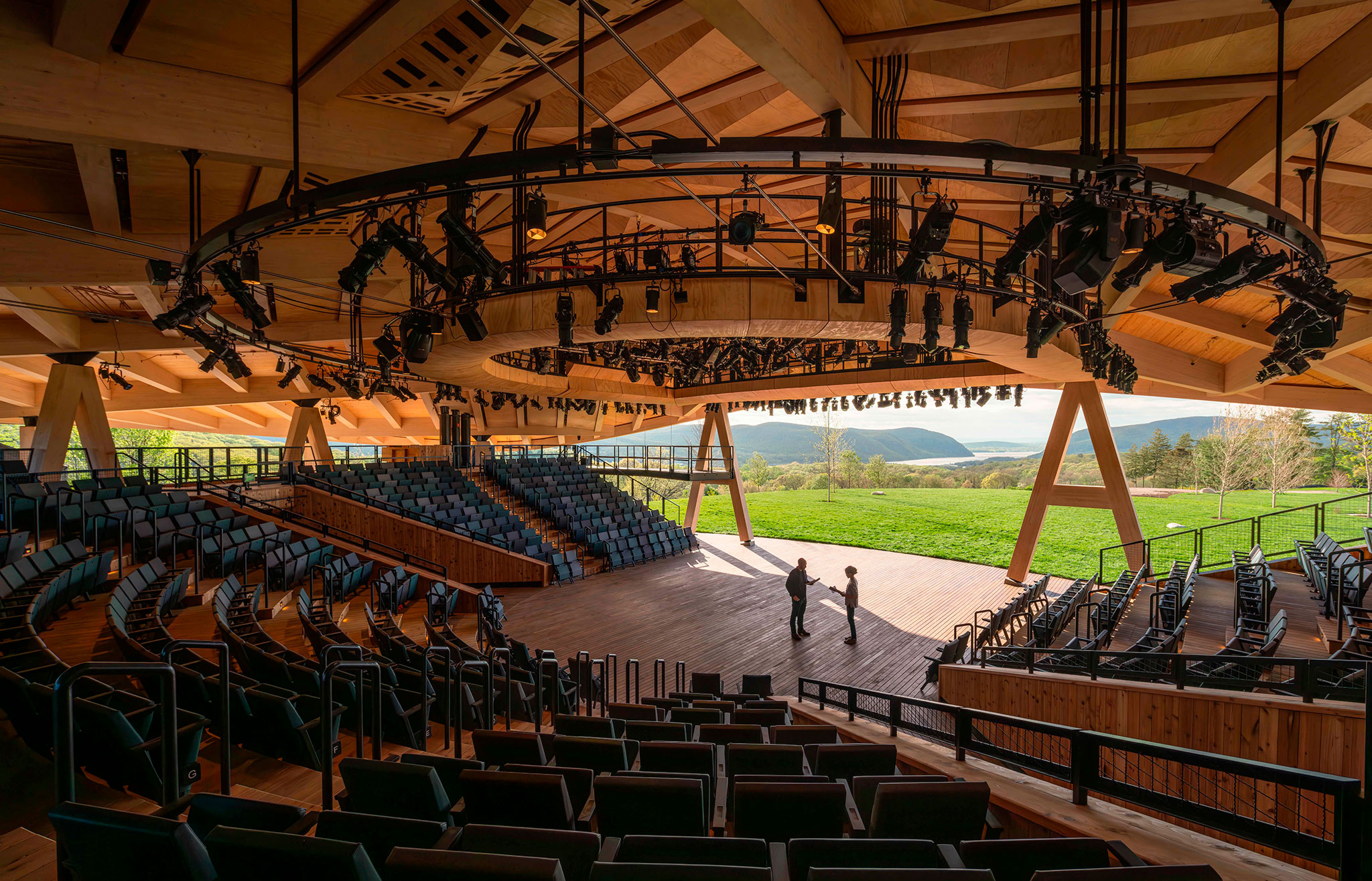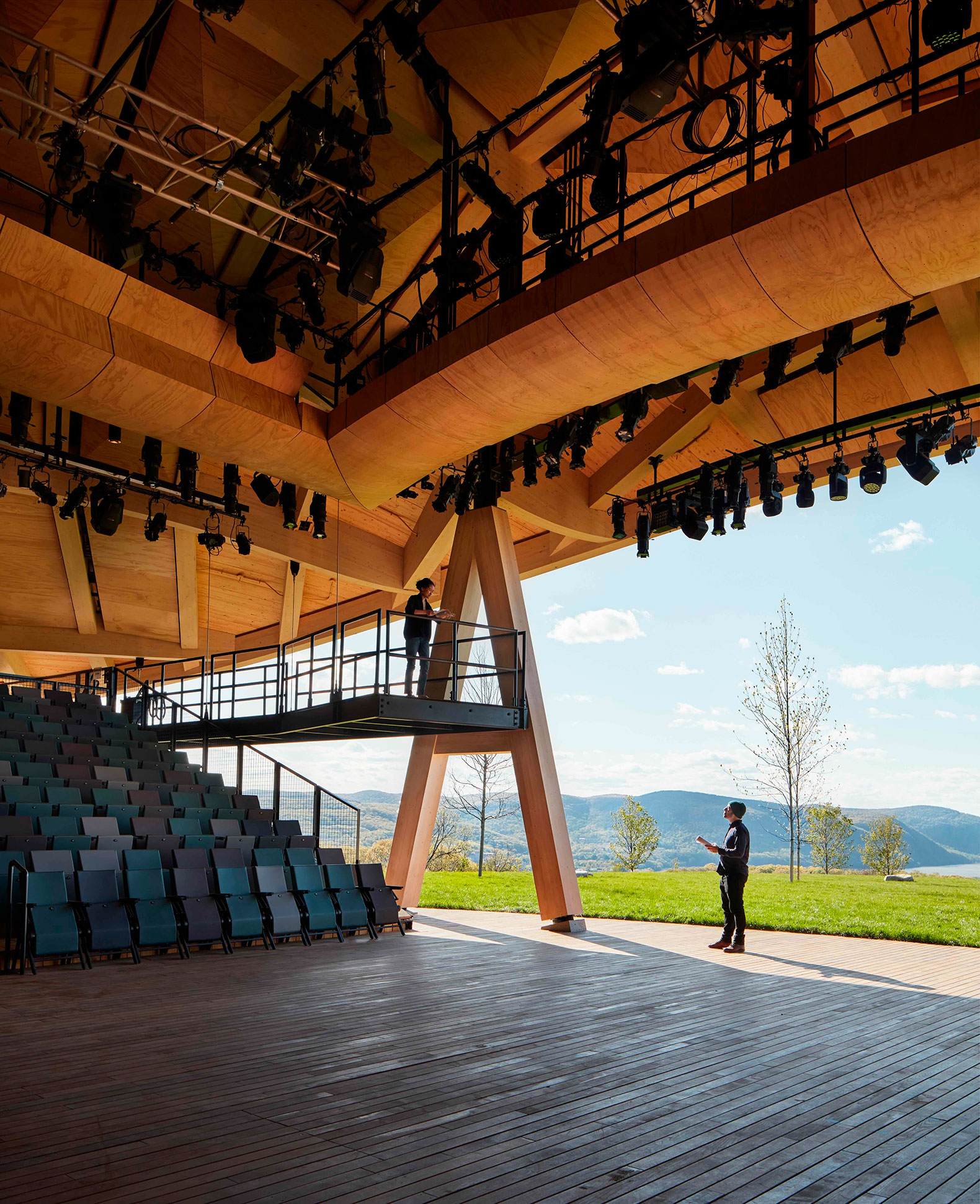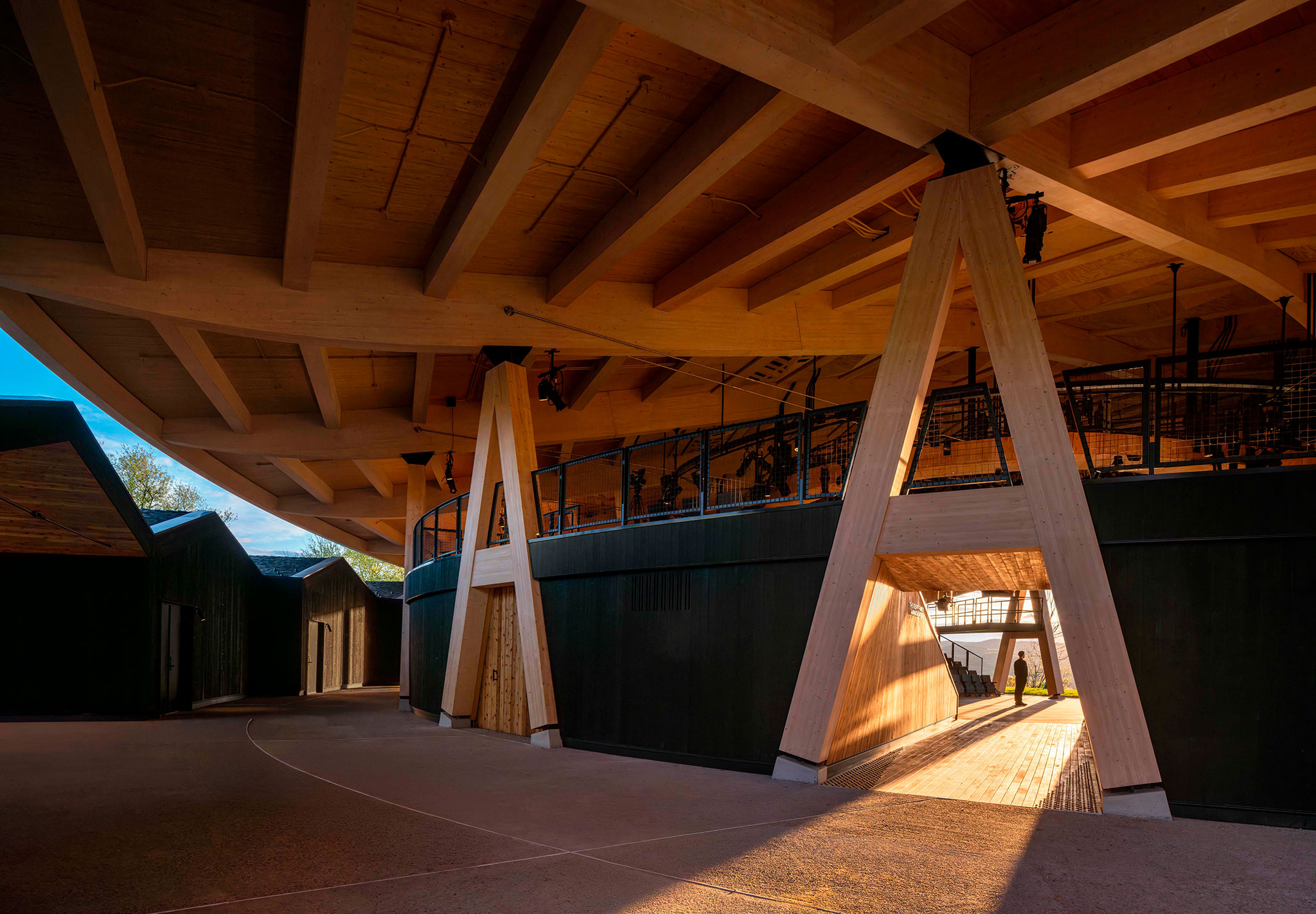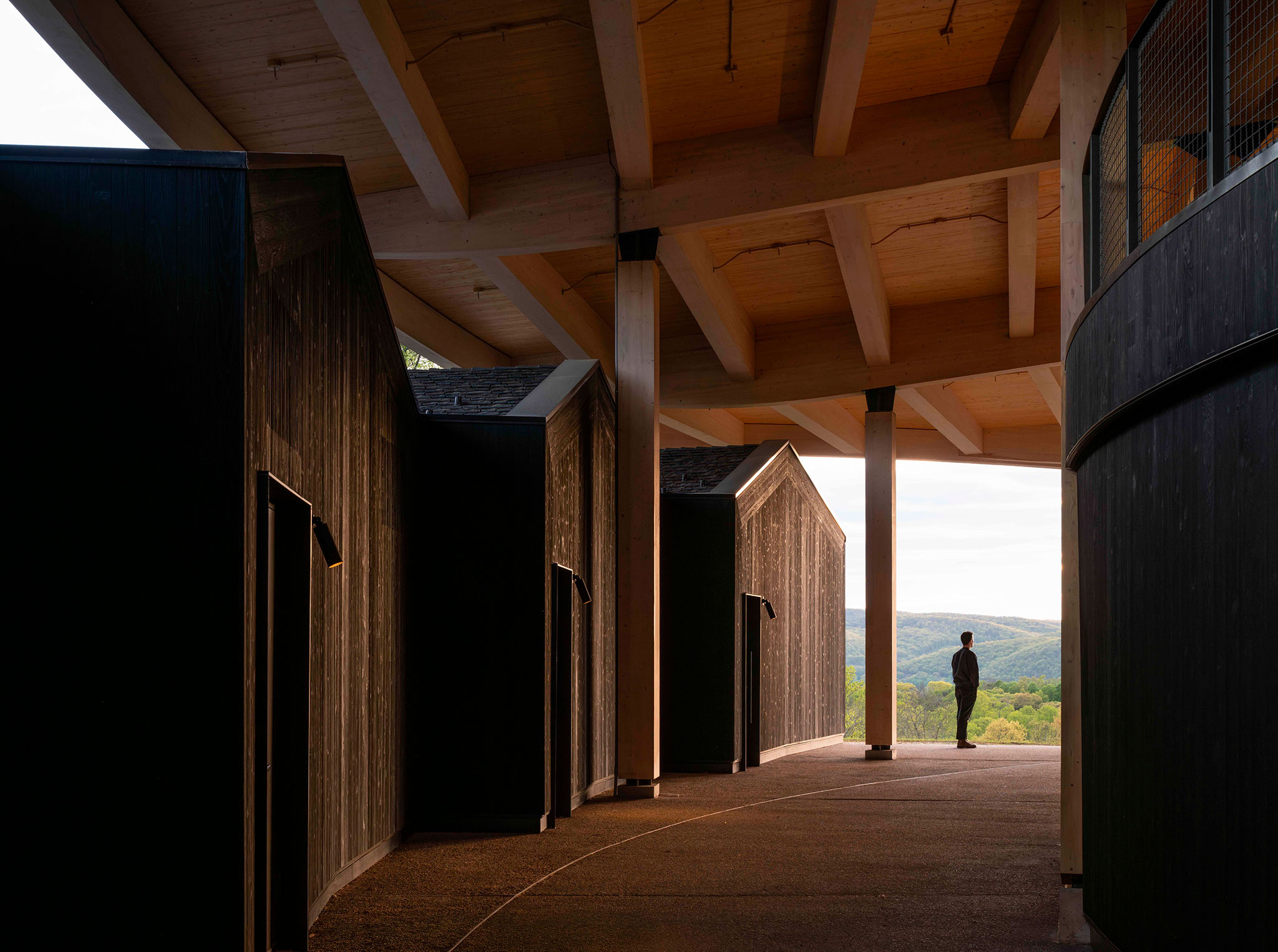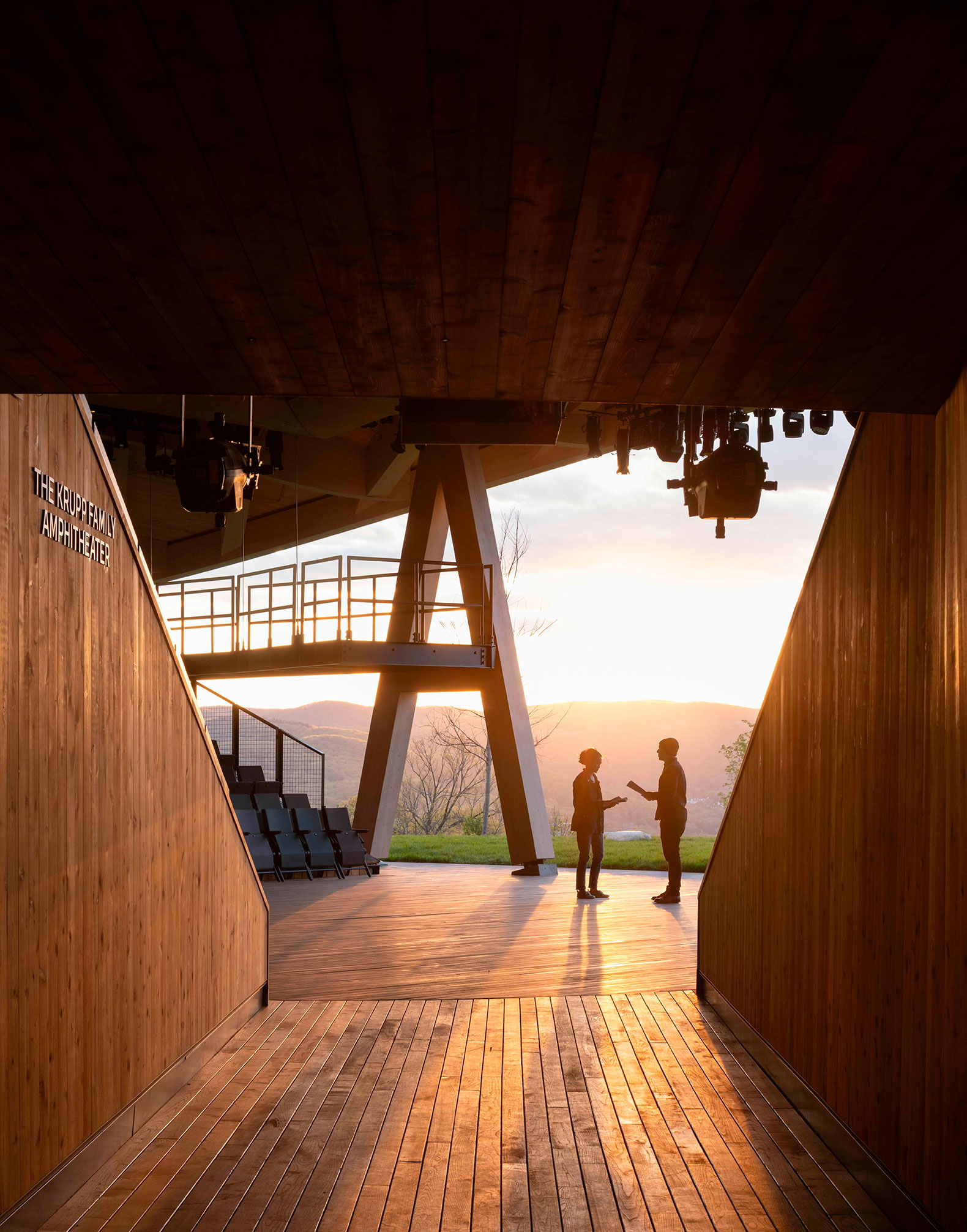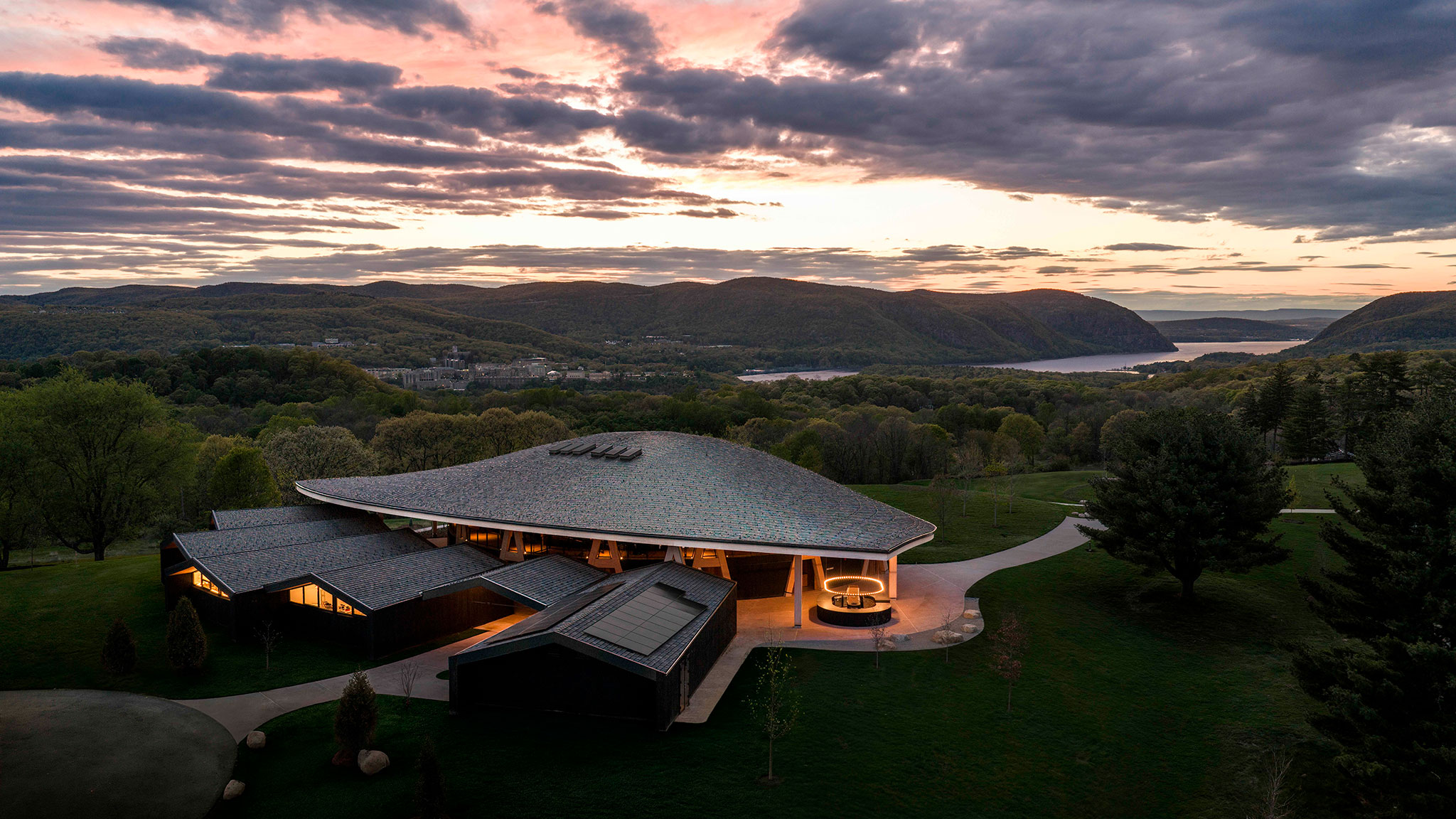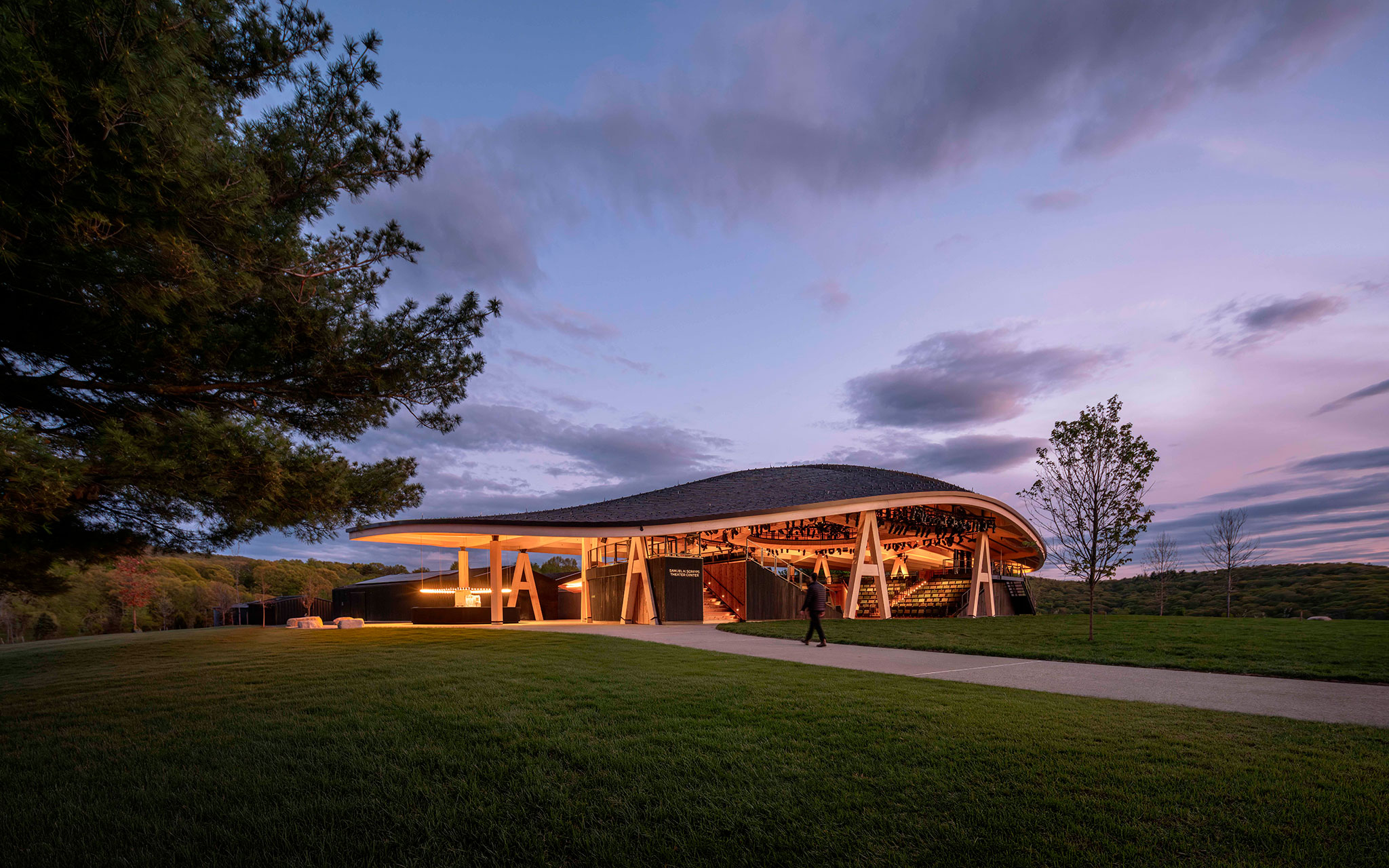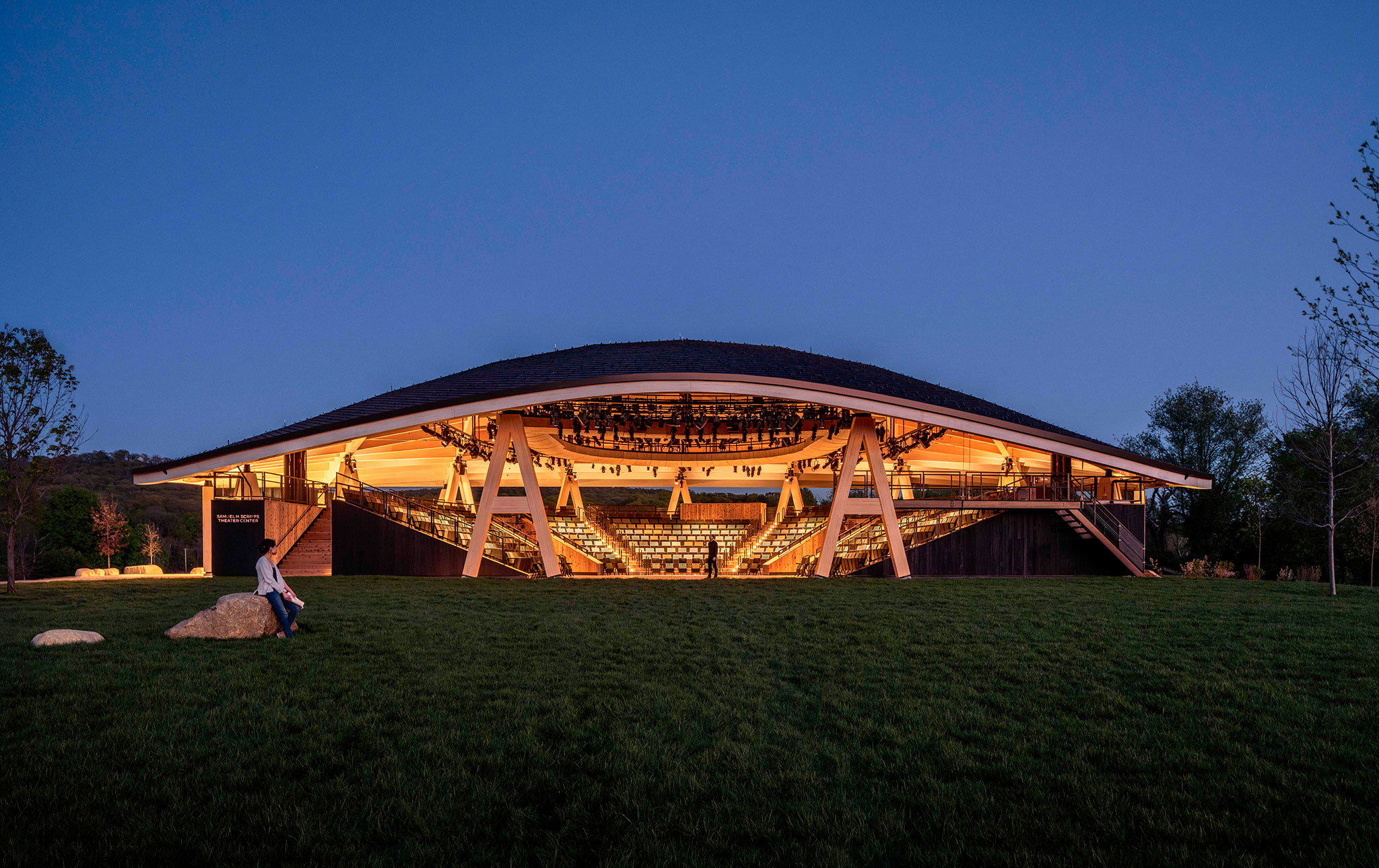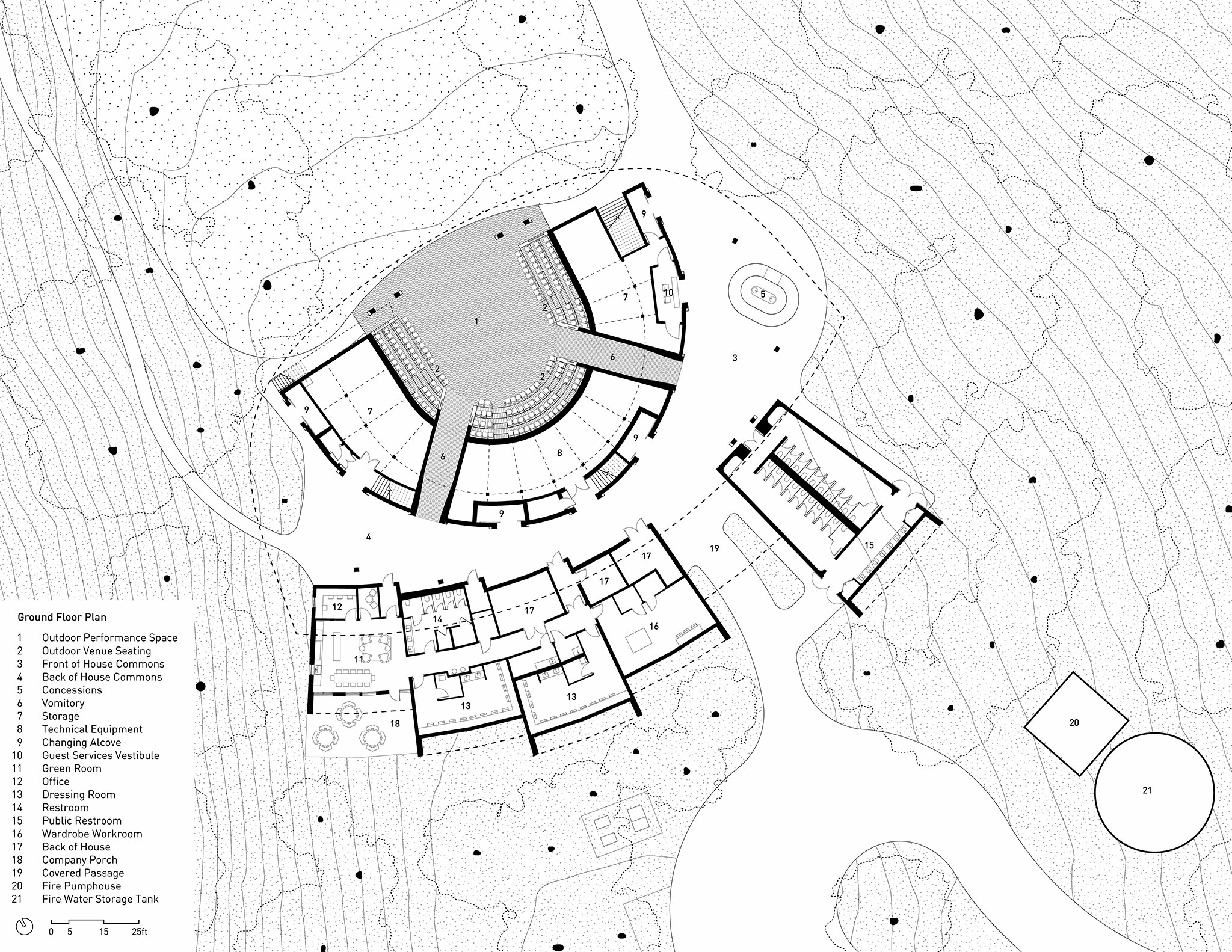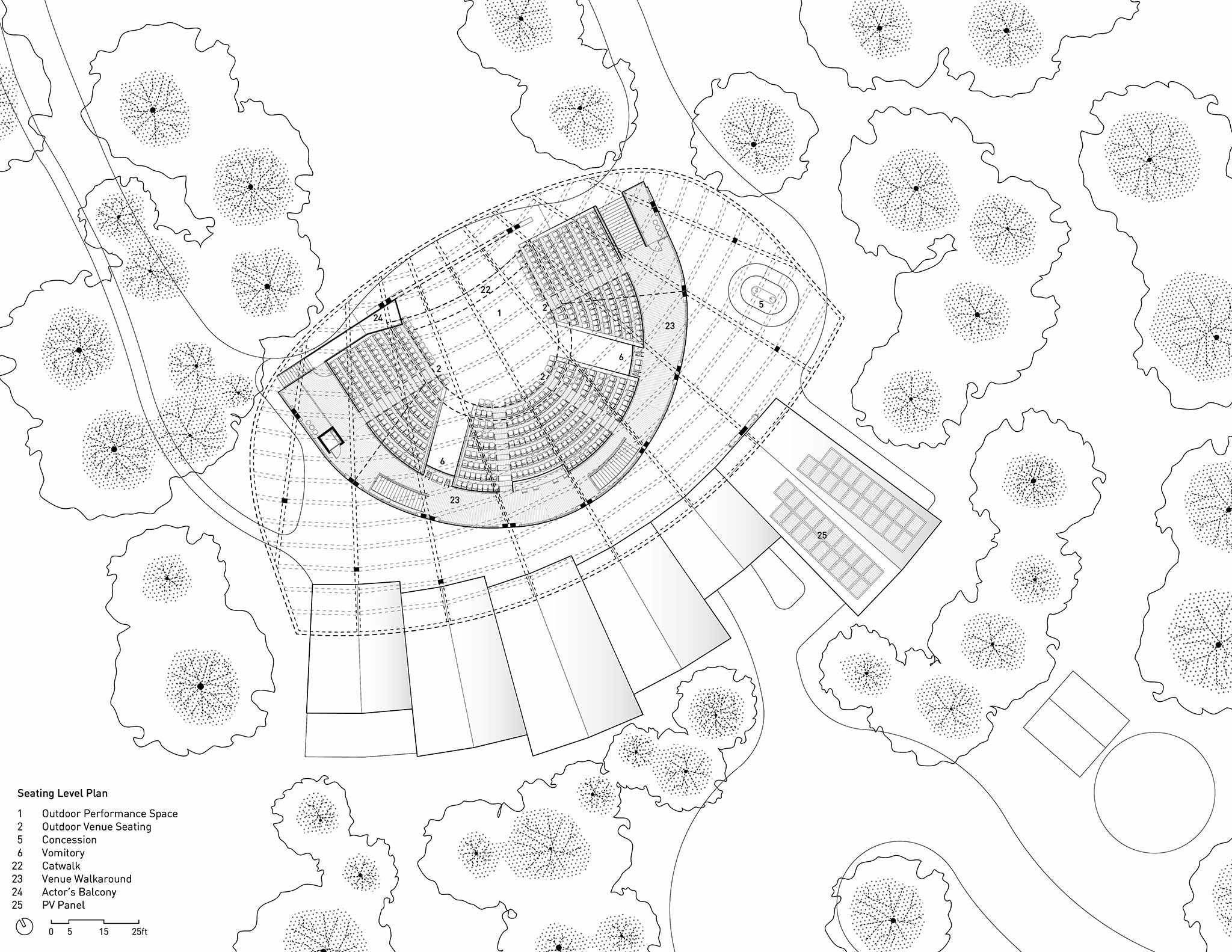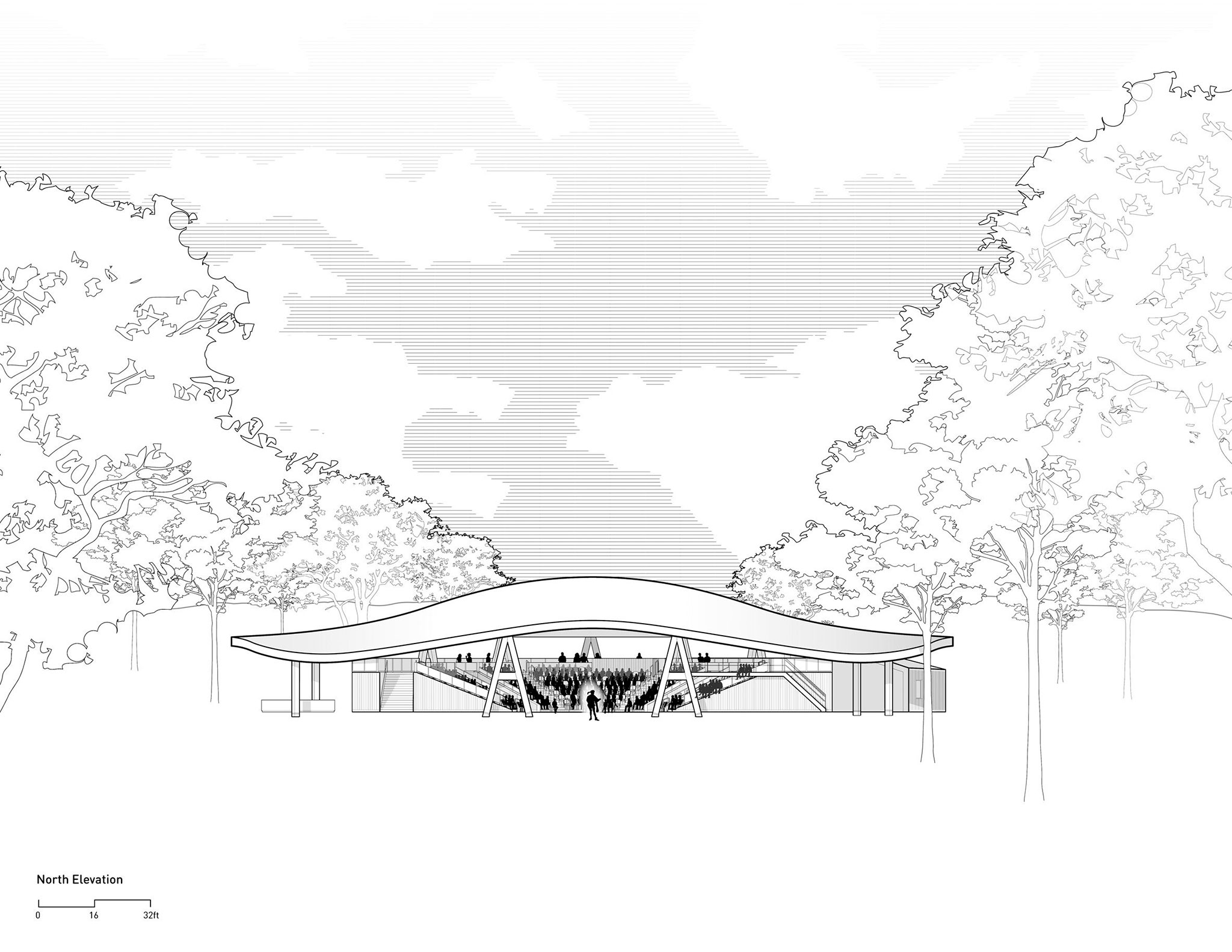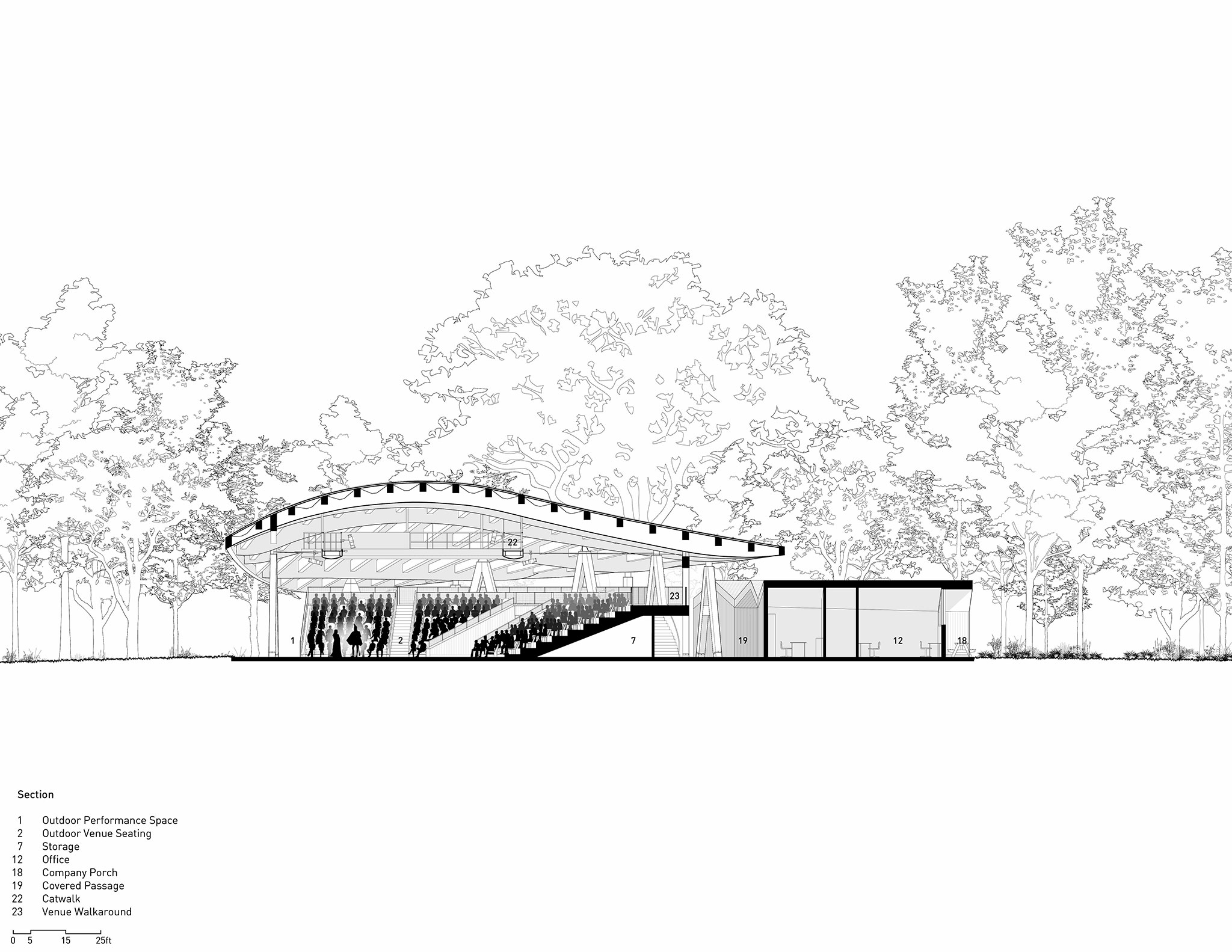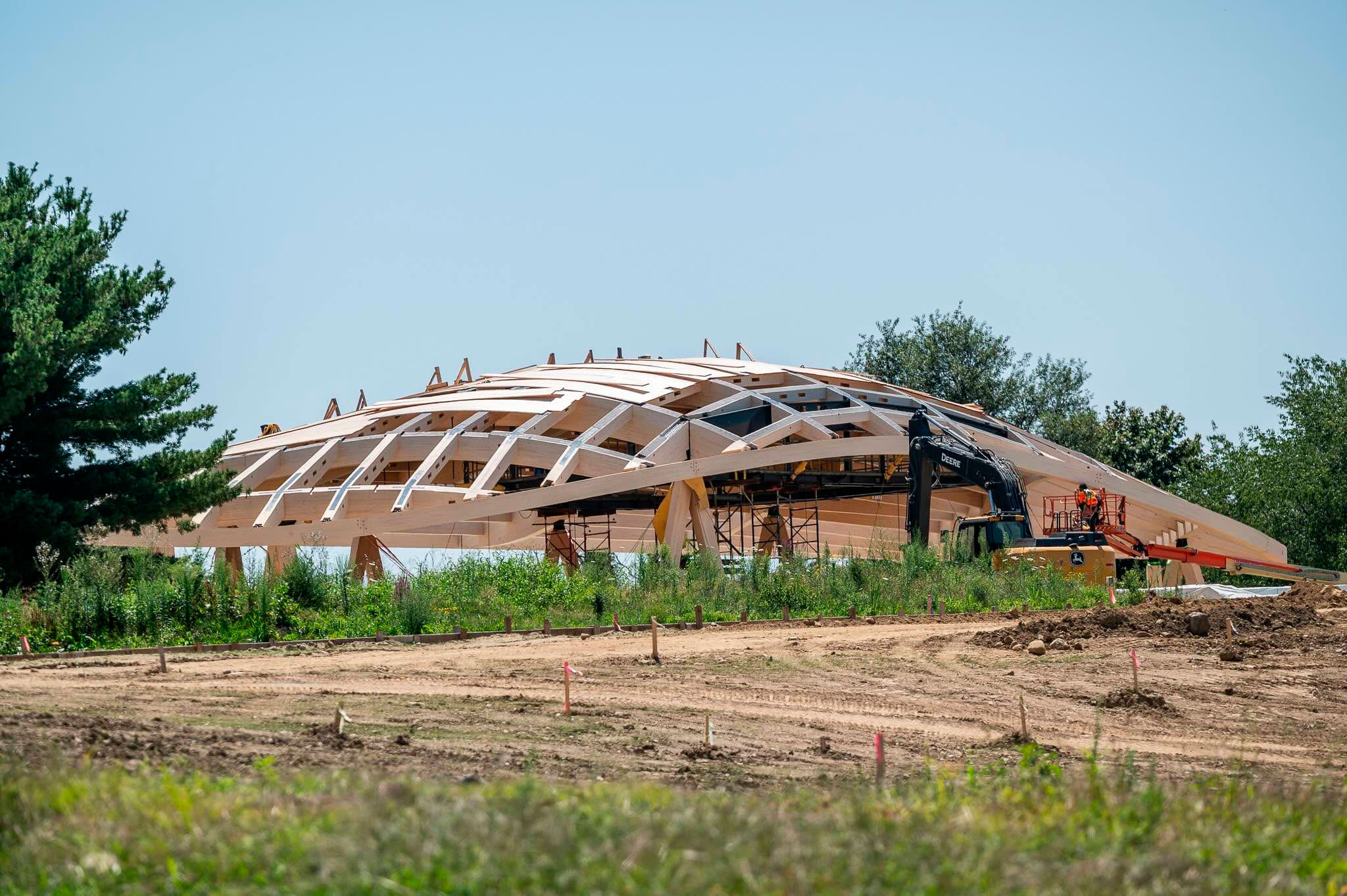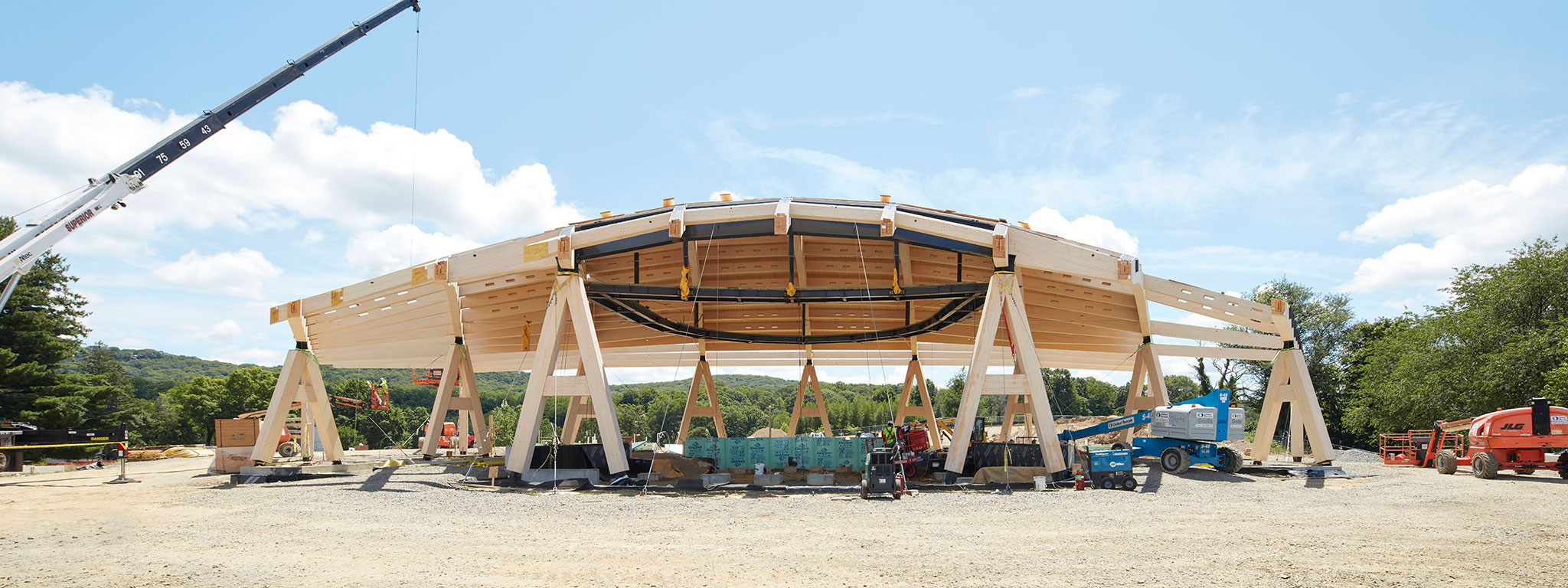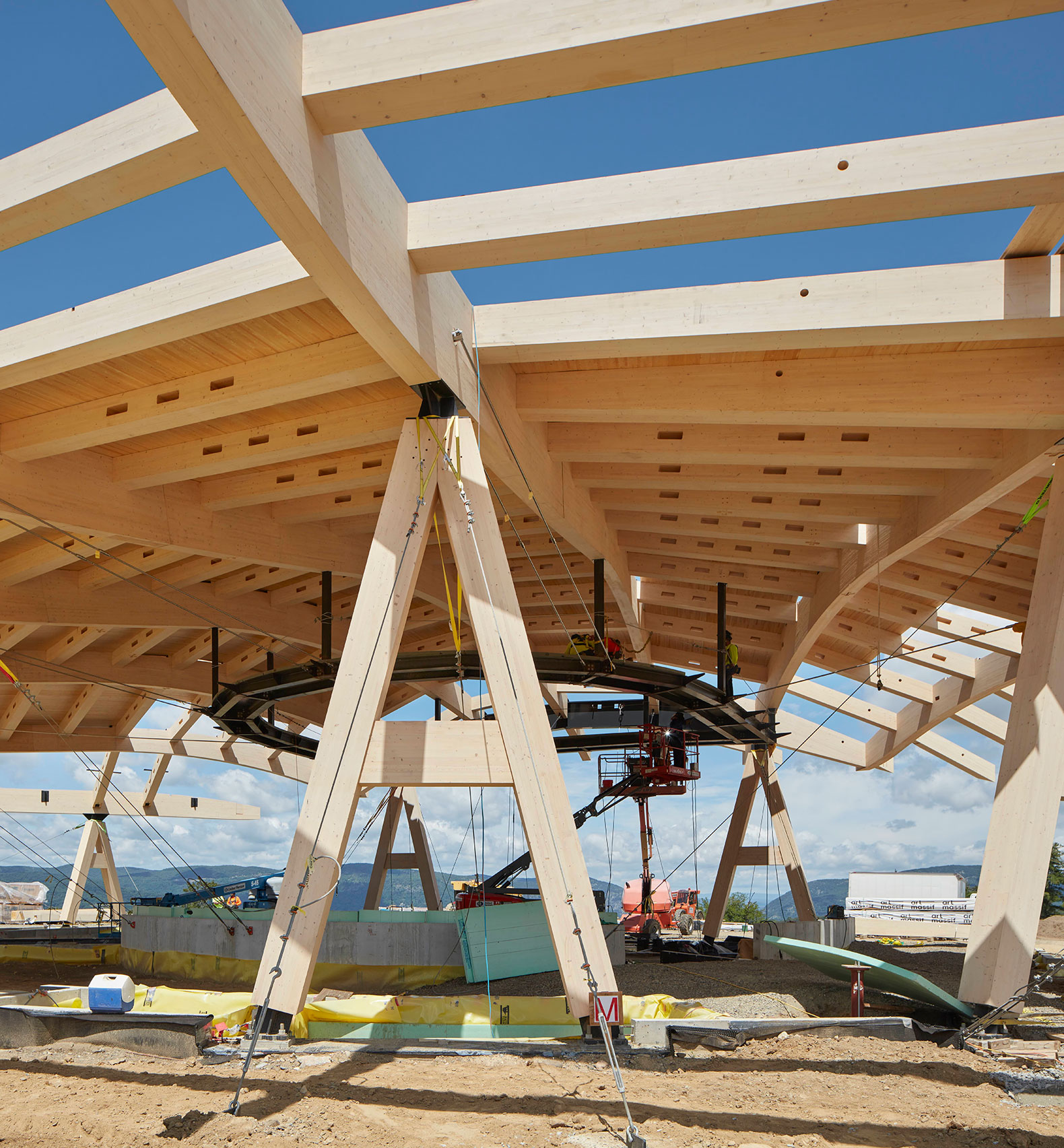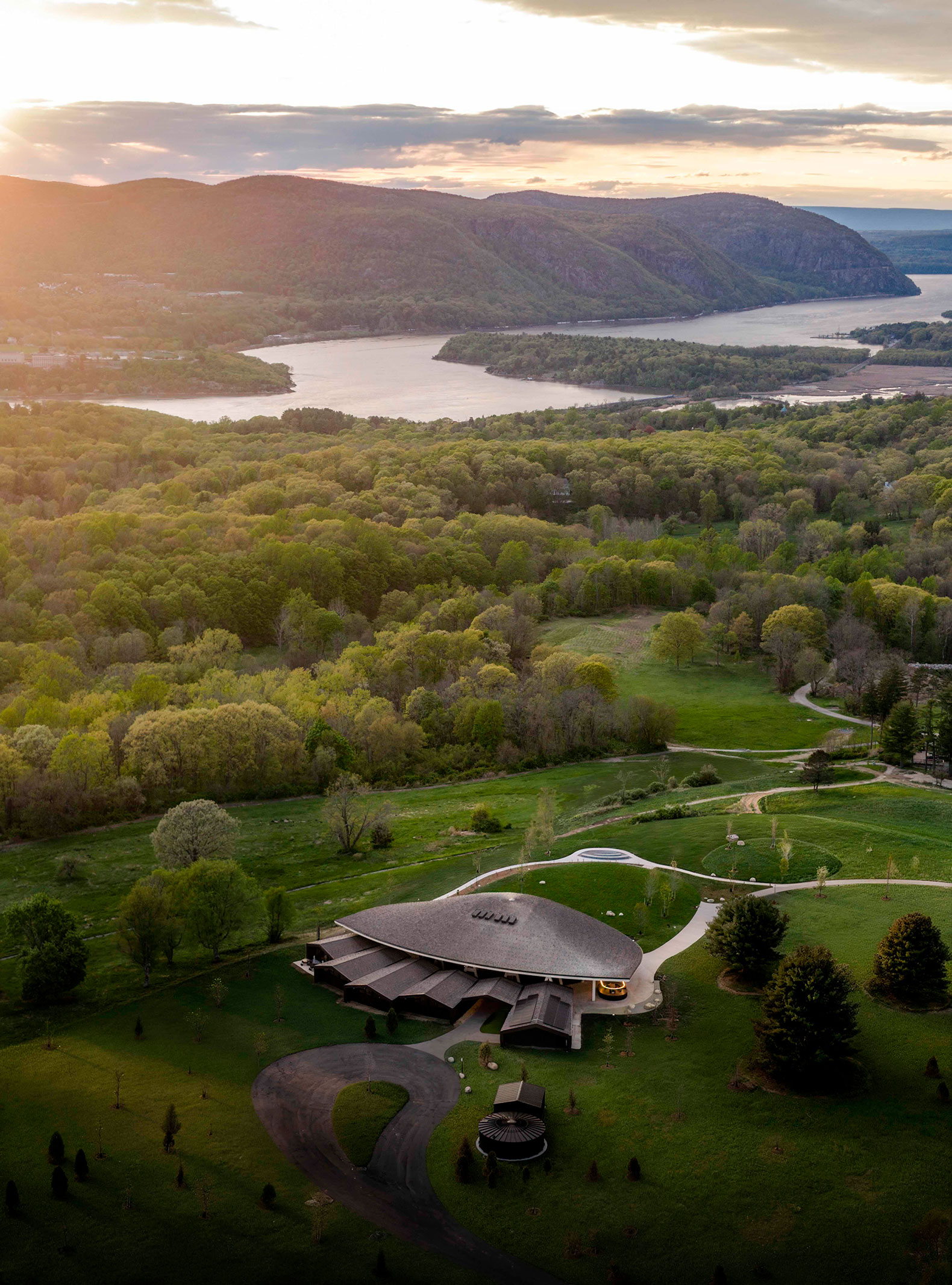
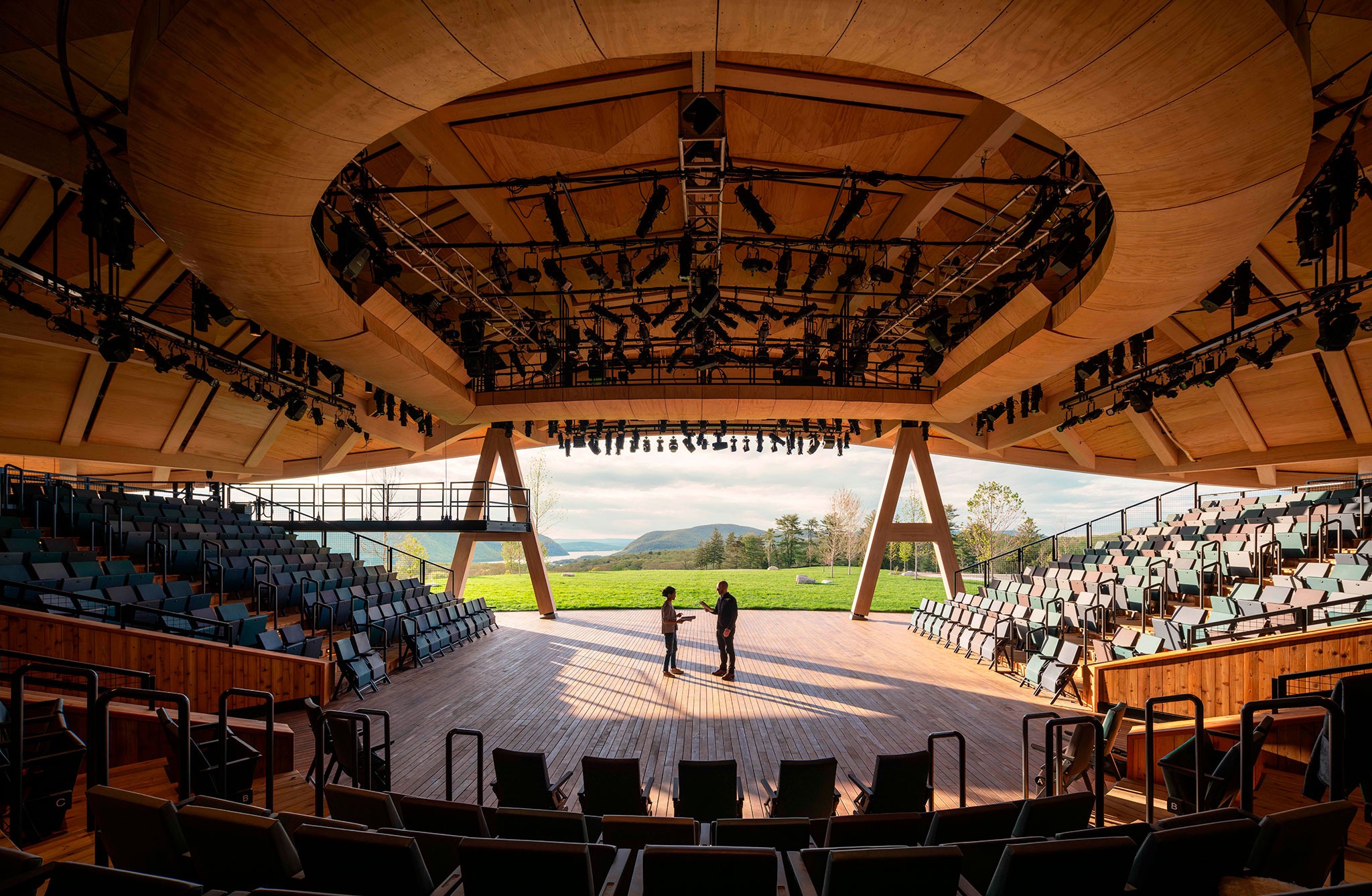
The project developed by Studio Gang will give rise to a greater variety of cultural, educational, and community programs. Formally and structurally, the proposal engages with and harmoniously integrates into its landscape: the proscenium arch opens directly onto nature, while the building's palette of natural materials and its gently curving timber frame help it settle into the undulating terrain.
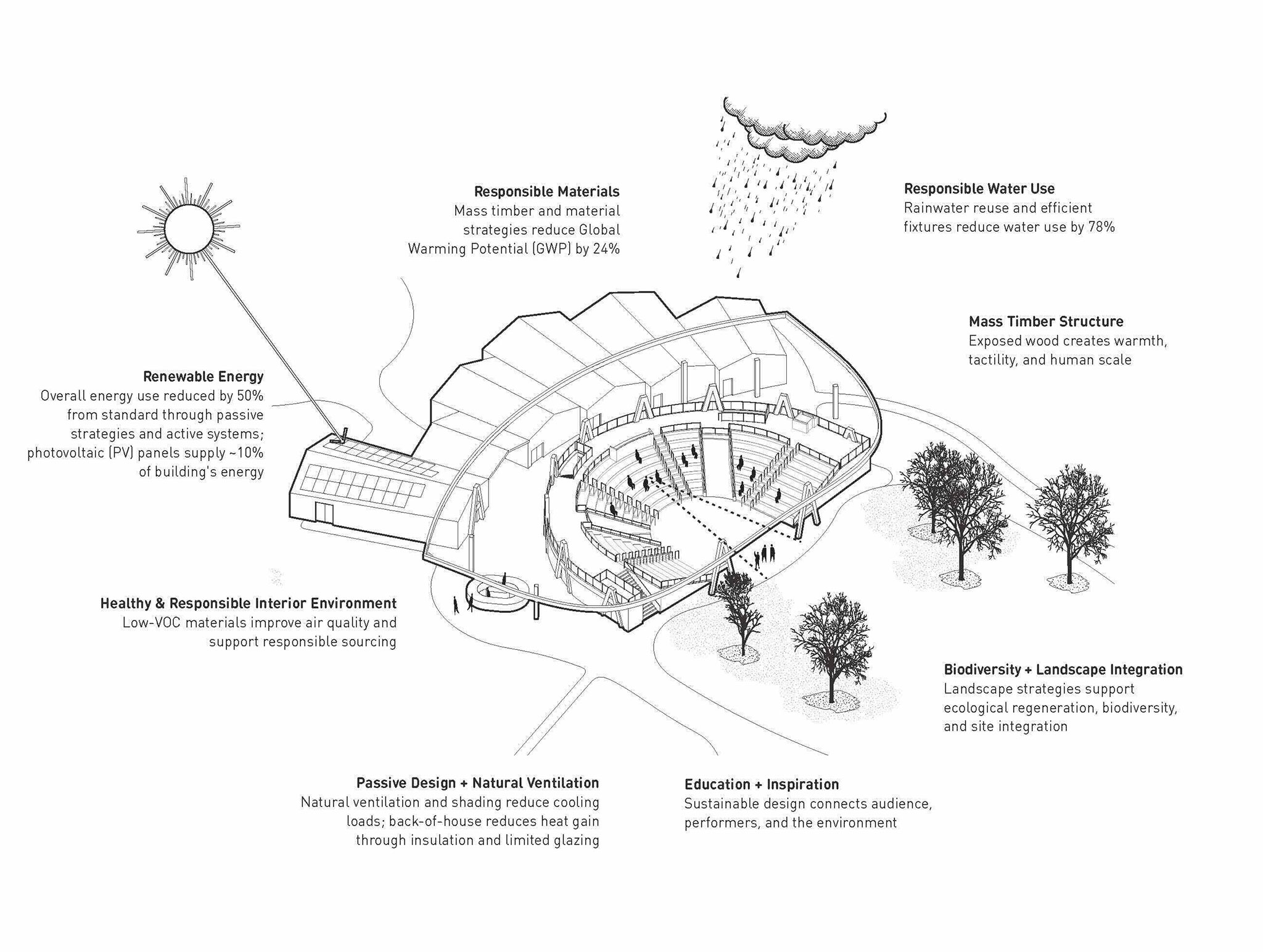
A series of passive climate control initiatives, the implementation of low-carbon laminated timber, and the use of photovoltaic panels complete the proposal, resulting in a project committed to the environment and the planet as a whole.
Architecture and nature unite to create a transformative new destination for New York and the performing arts community in general.
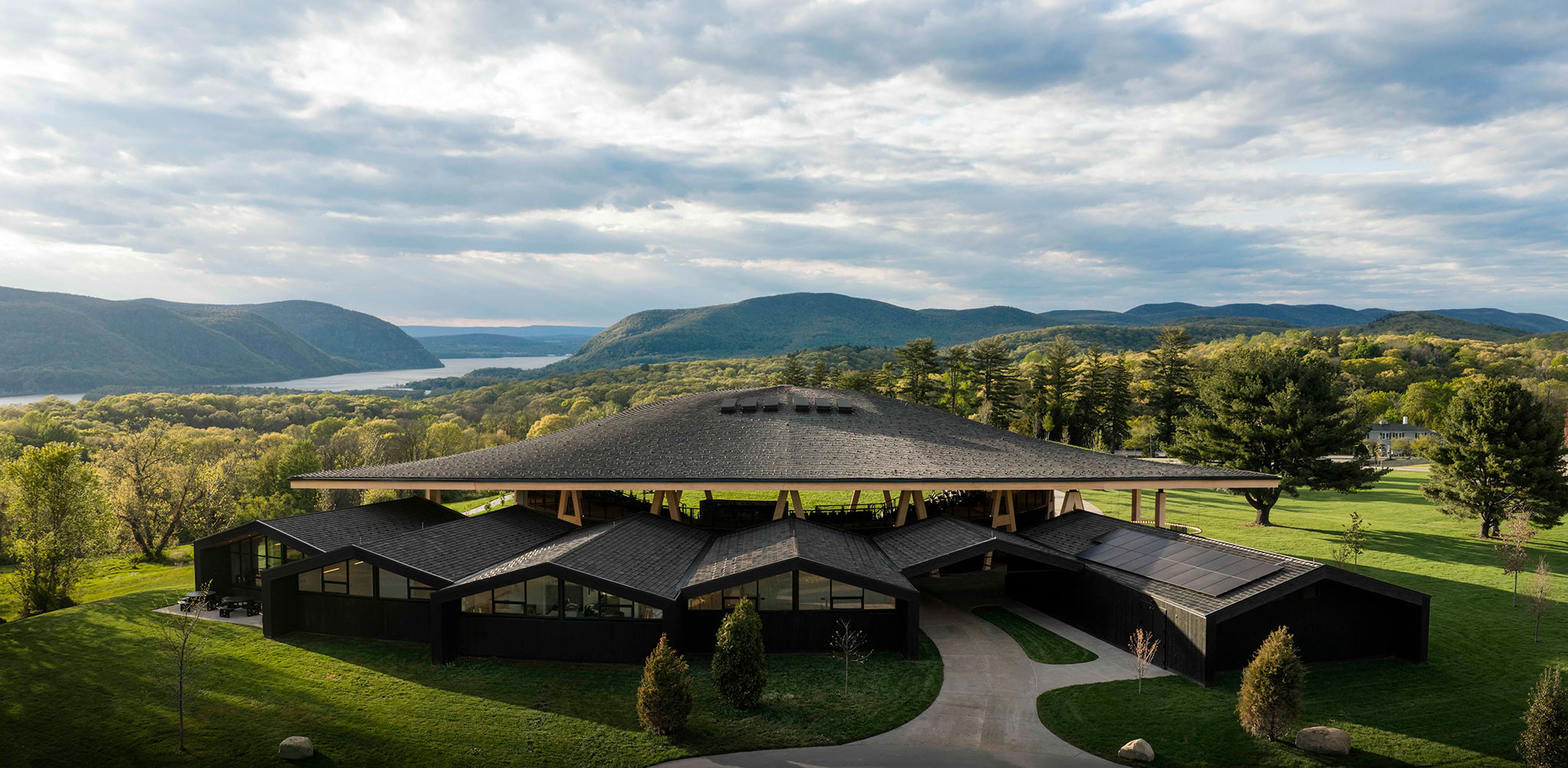
Samuel H. Scripps Theater Center by Studio Gang. Photograph by Jason O'Rear.
Project description by Studio Gang
The new Samuel H. Scripps Theater Center at Hudson Valley Shakespeare (HVS), one of New York’s most beloved regional professional theater companies, establishes a permanent home and more versatility for its actors, audience, and back-of-house. The gently curved, timber-framed grid shell improves year-round functionality while evolving HVS’s tradition of immersive, open-air performances, connecting directly to the revitalized landscape and framing views of the highlands along the Hudson River. Architecture and nature work together to create a transformative new cultural destination for New York and the wider performing arts community.
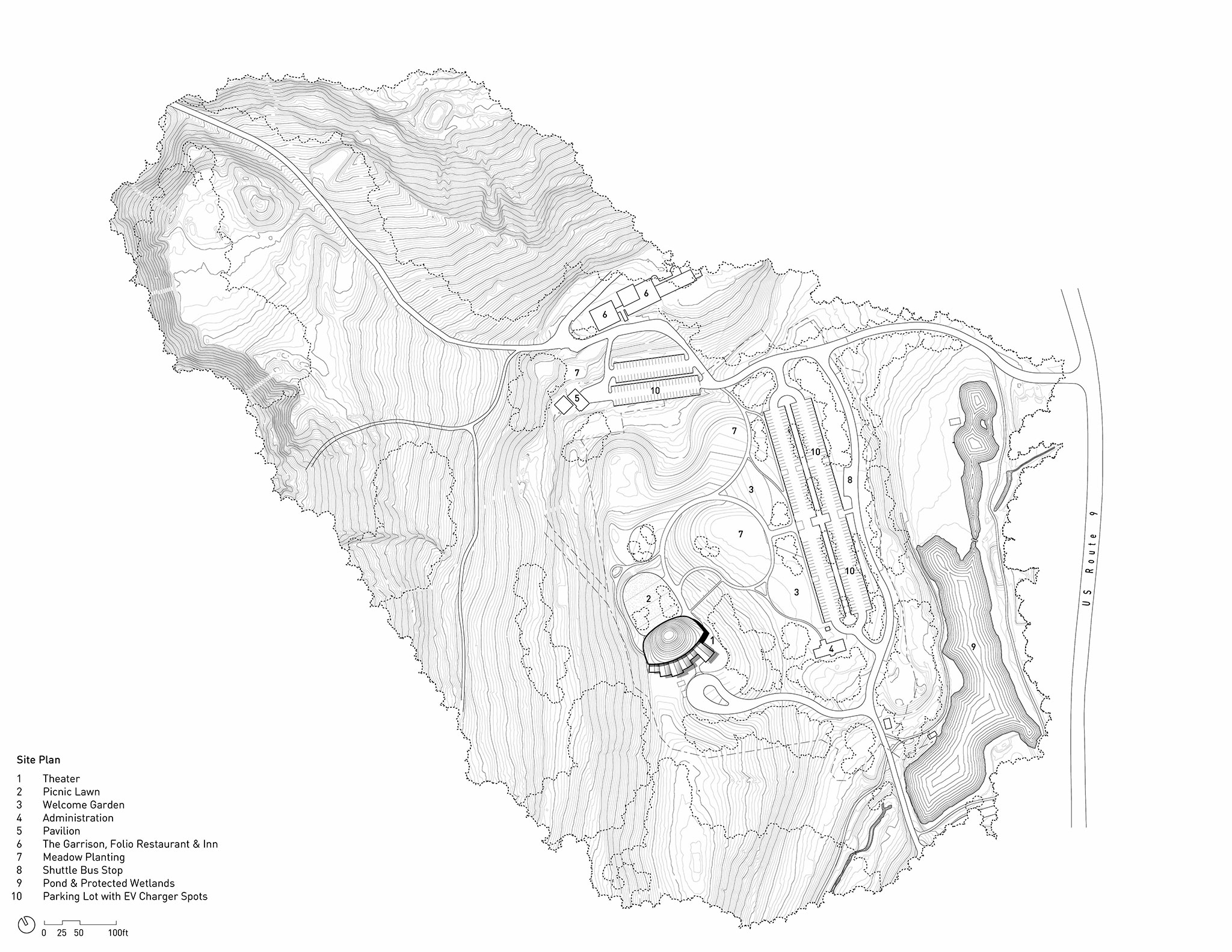
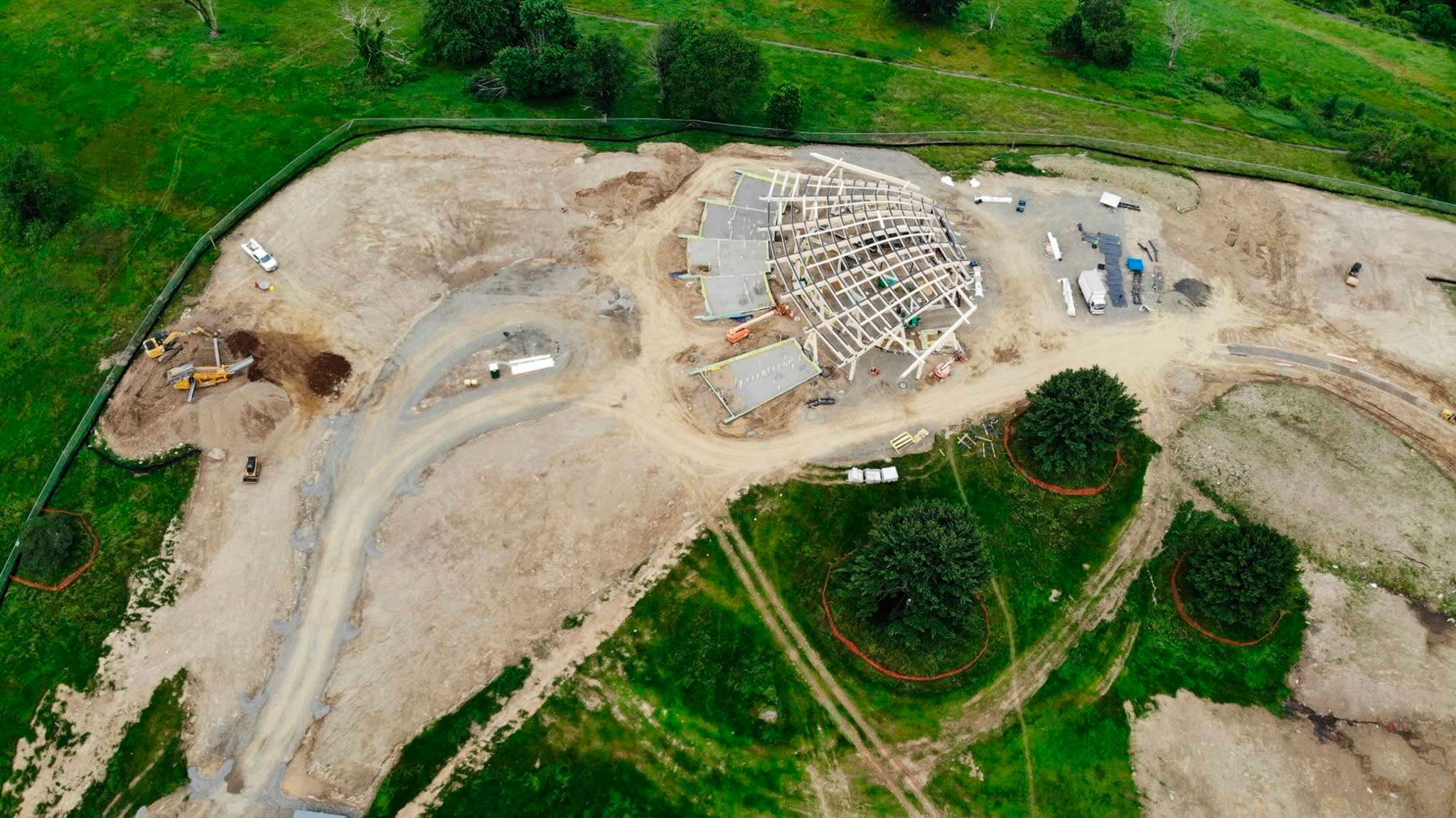
Since its first season in 1987, HVS’s productions have been staged in a seasonal tent at Boscobel House and Gardens overlooking the Hudson River. The new design on a nearby site remains open to the elements but elevates the overall theatrical experience for both actors and visitors through improved rehearsal, performance, and amenity spaces; expanded accessibility for more diverse audiences; and technical additions that open up new opportunities for HVS productions. The landscape design replaces the site’s water-intensive former golf course with restored native grasses and wetlands that support biodiversity and decrease resource use.
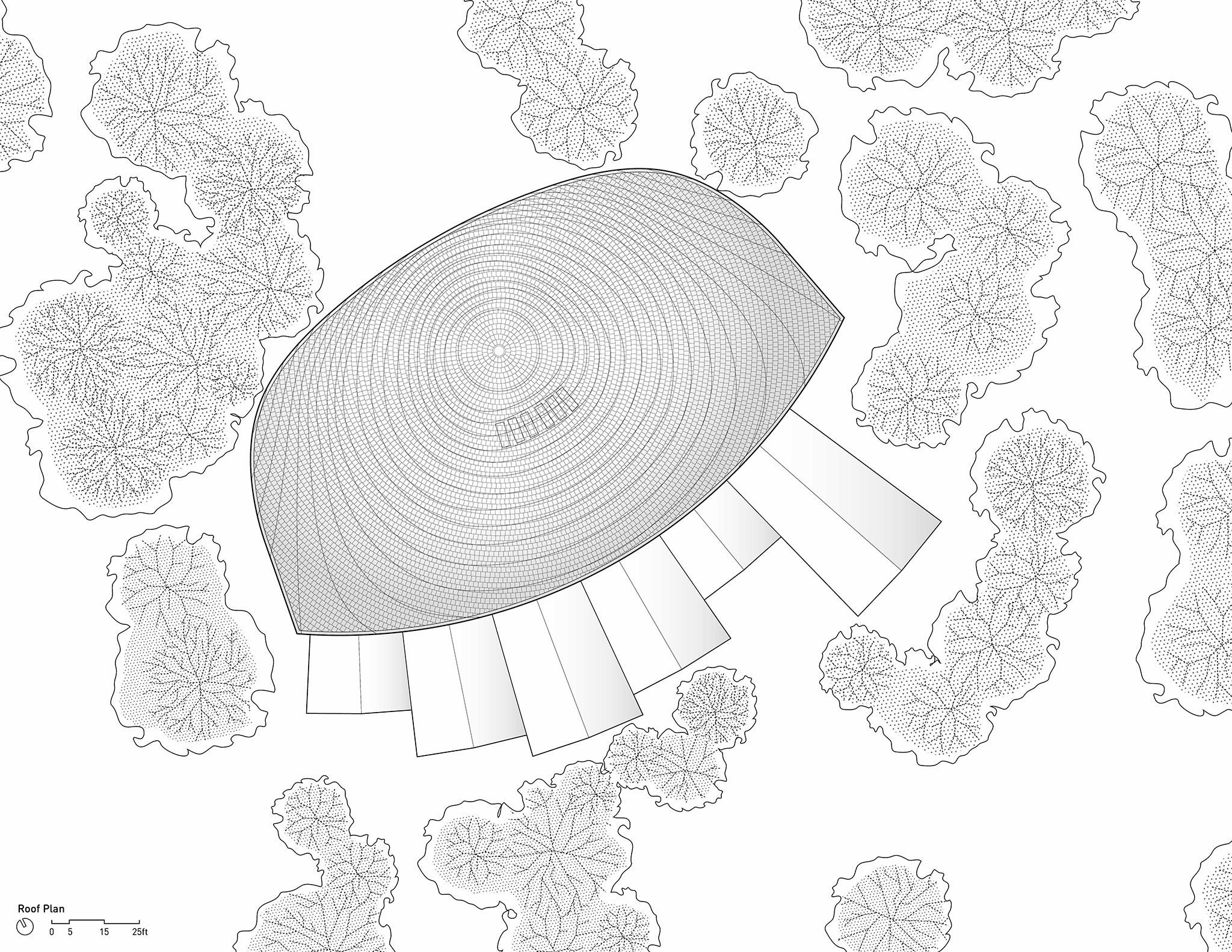
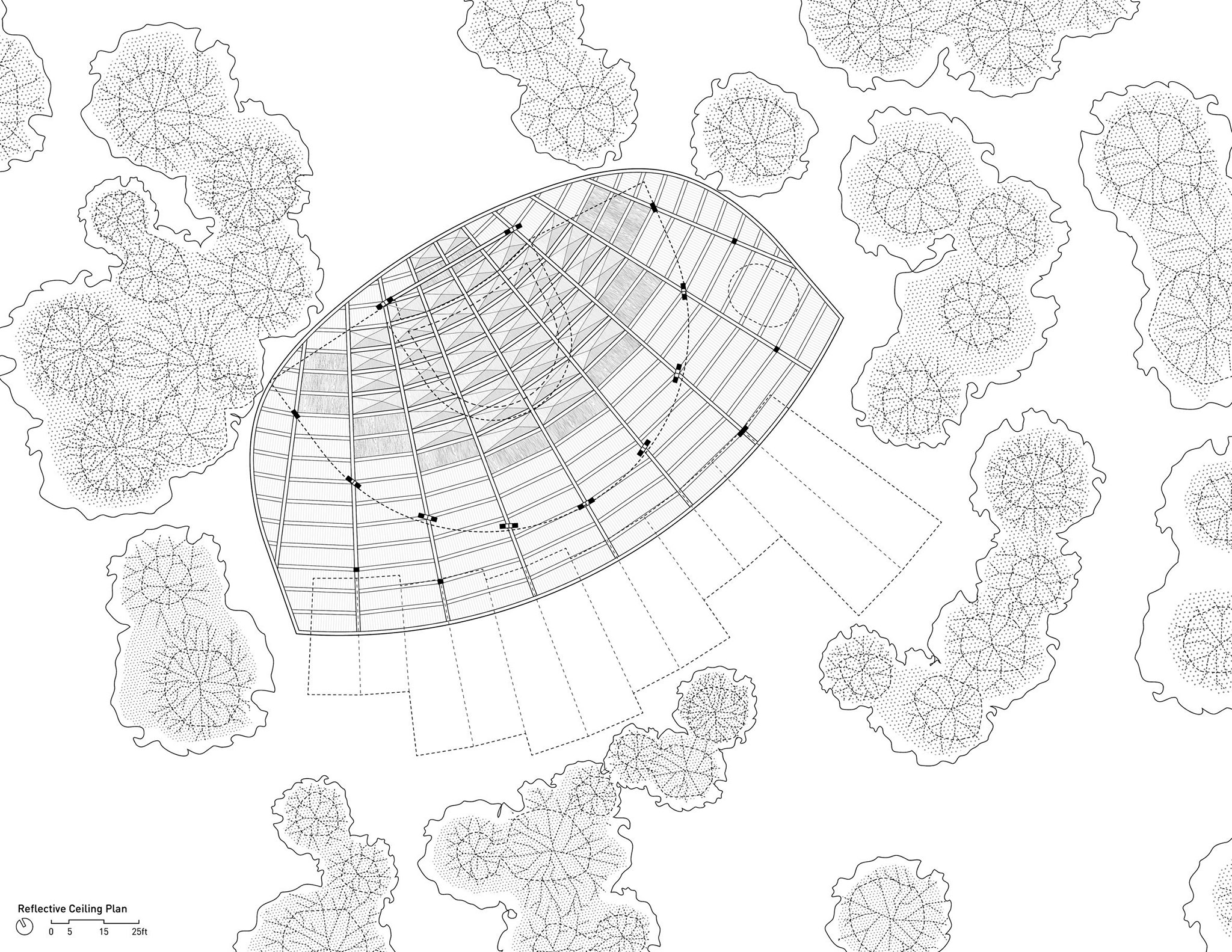
Conceived as a single, fluid gesture, the design encompasses the theater’s disparate functions, vastly improving circulation between spaces and across the site and enabling a wider range of cultural, educational, and community programming. Supported by exposed timber A-frame columns, the building’s natural material palette and curved shade structure help the design blend into the rolling terrain.
The proscenium arch opens directly onto the landscape, positioning nature at the forefront of the company’s open-air performances. Picnic lawns on the hill around the theater encourage visitors to gather before and after shows to enjoy sweeping views.
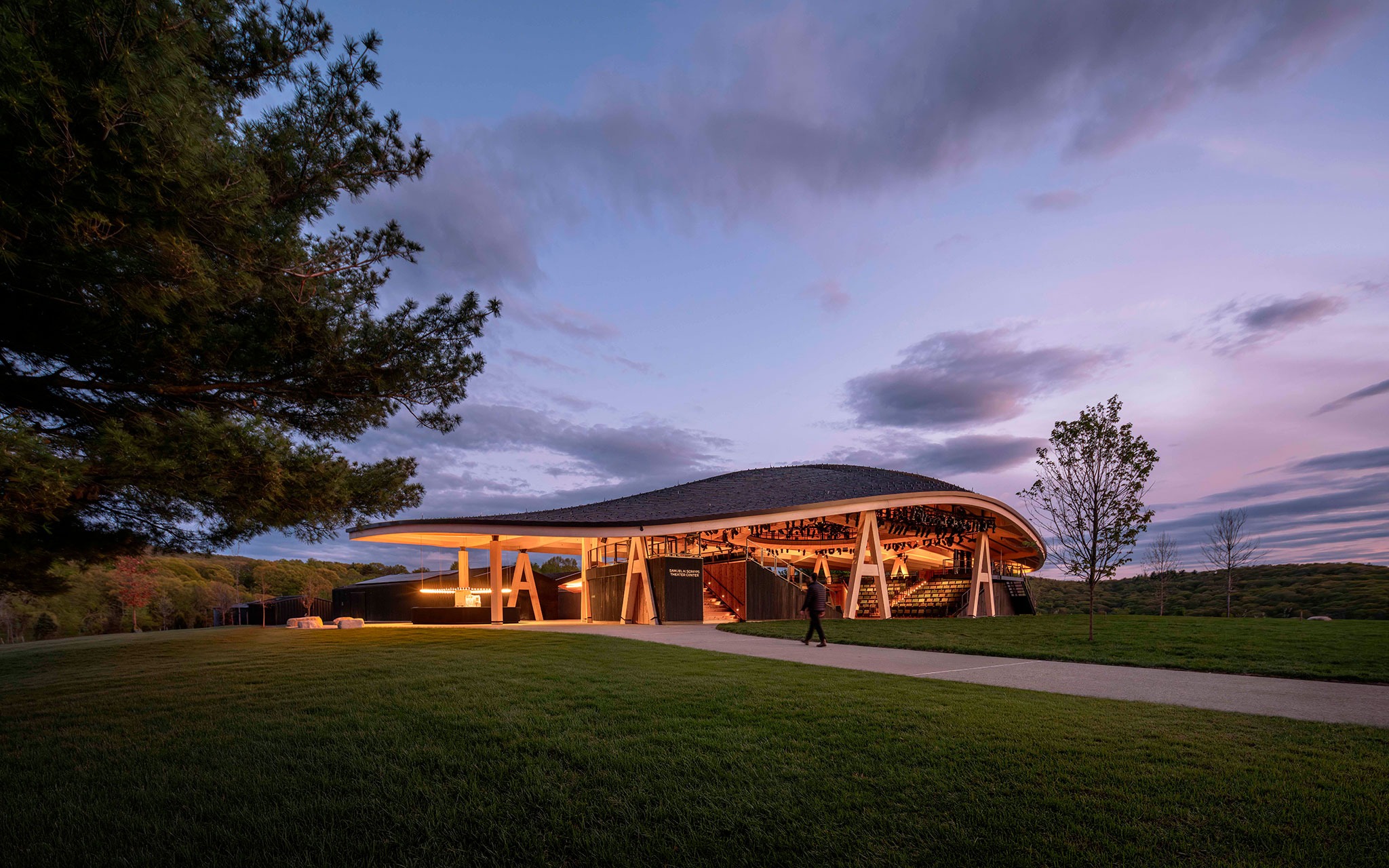
Natural ventilation and solar shading around the roof’s perimeter help passively cool the building. They work in tandem with the project’s other green strategies, including low-carbon mass timber, photovoltaic panels, rainwater harvesting and reuse, and increased biodiversity, to target LEED v4 Platinum — the first such certification for a purpose-built US theater. Through its care for the environment, and the planet more broadly, the design aims to ensure the company’s productions and the diversity of the natural world remain center stage for many seasons to come.