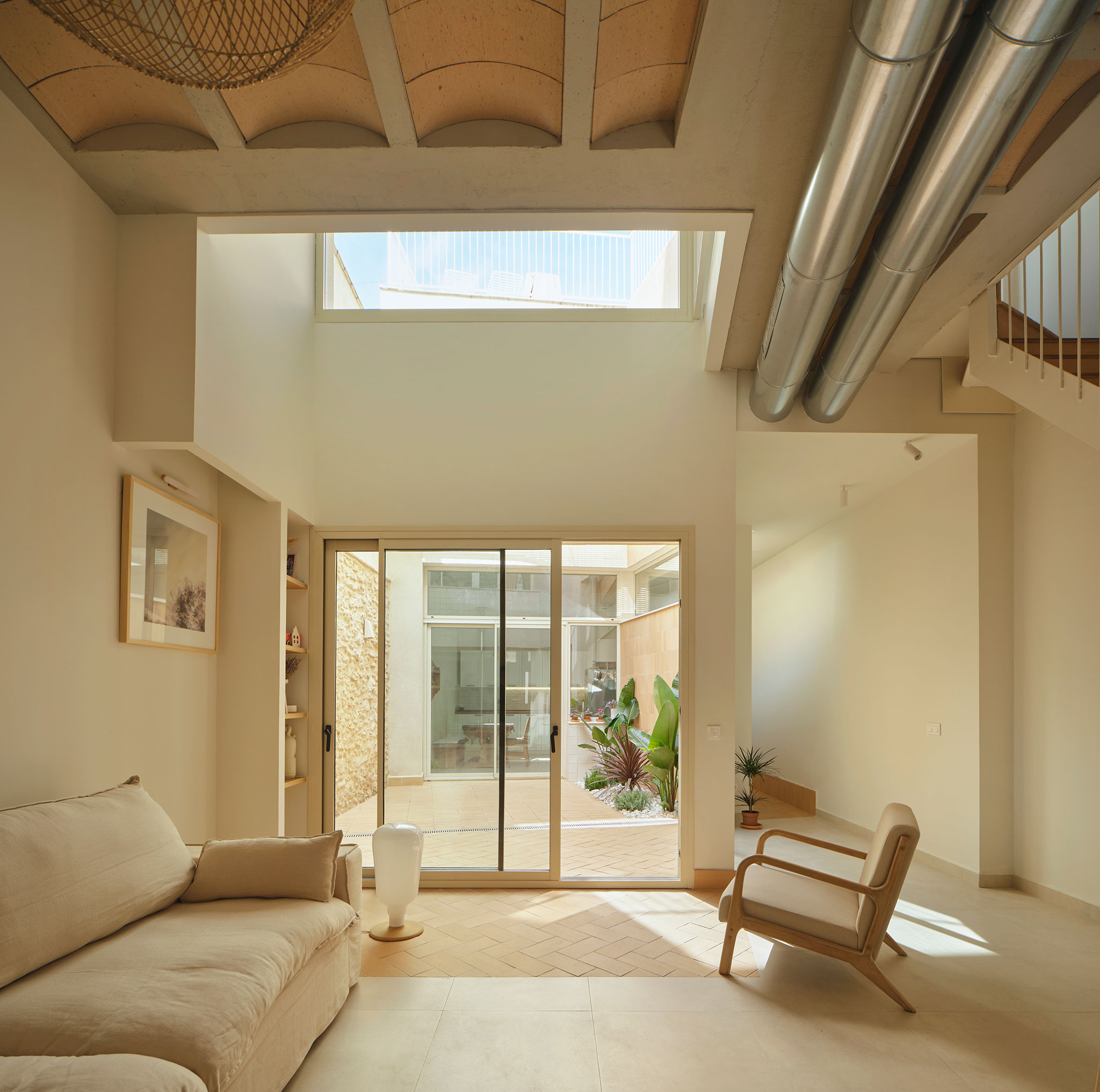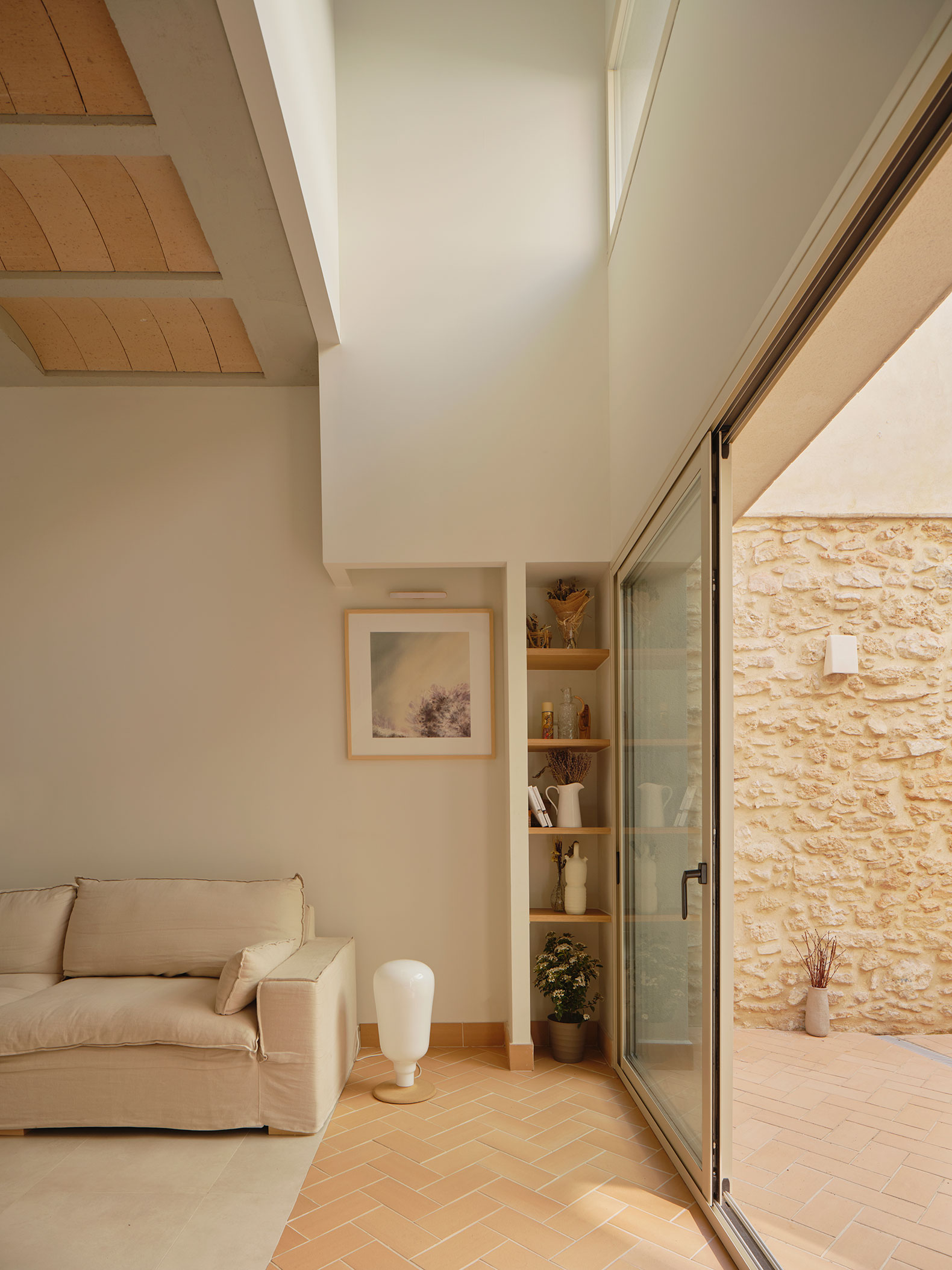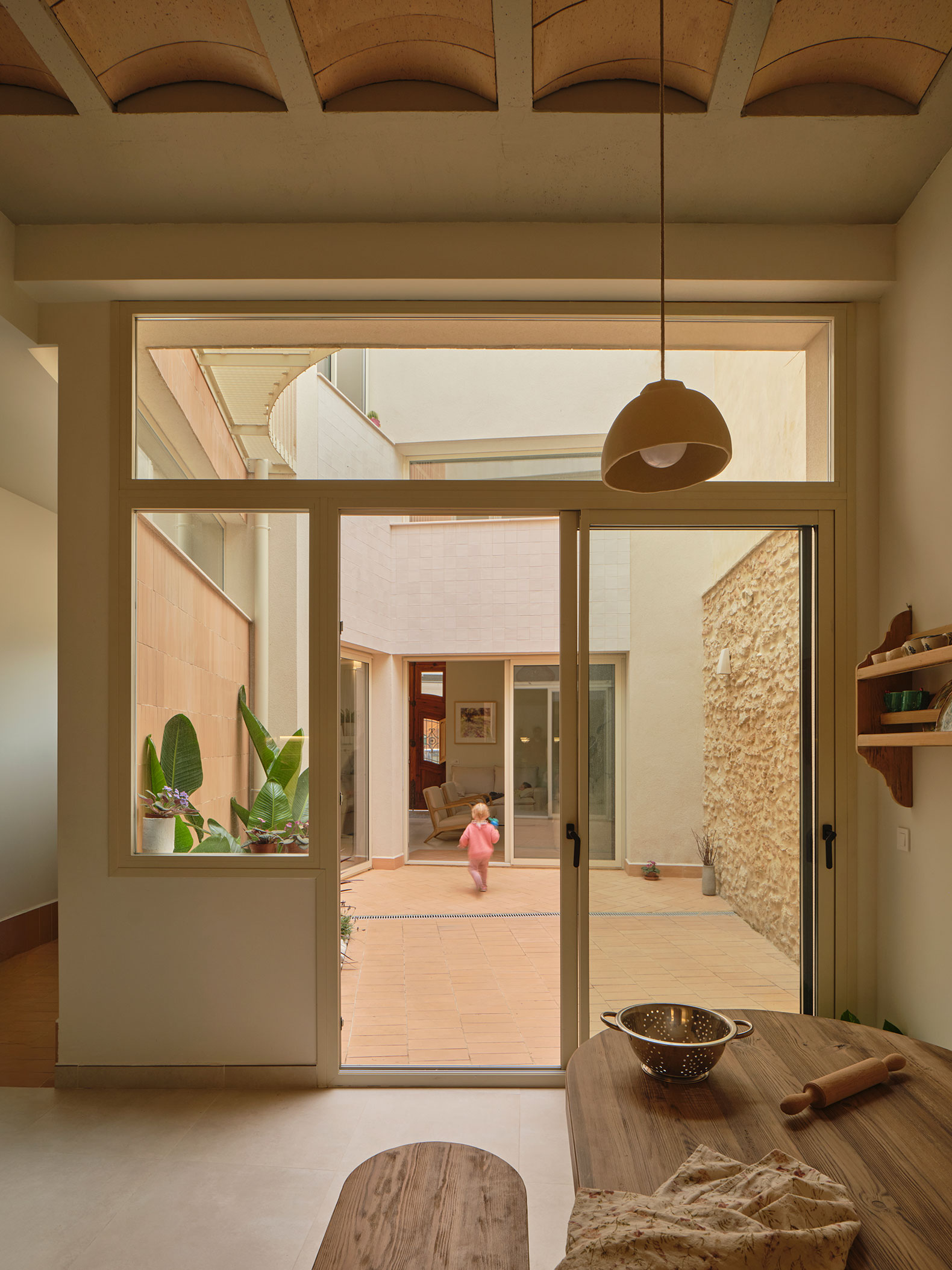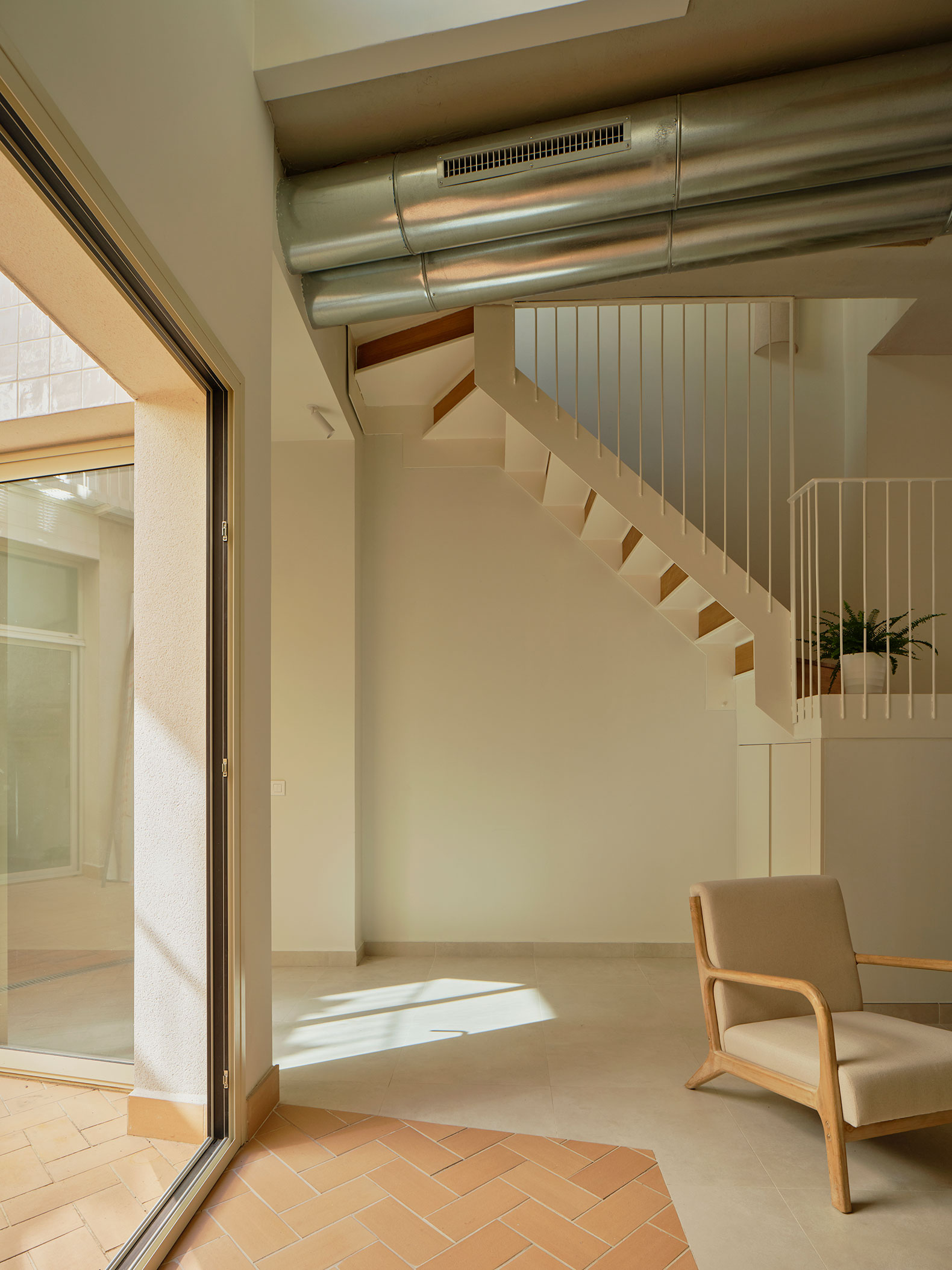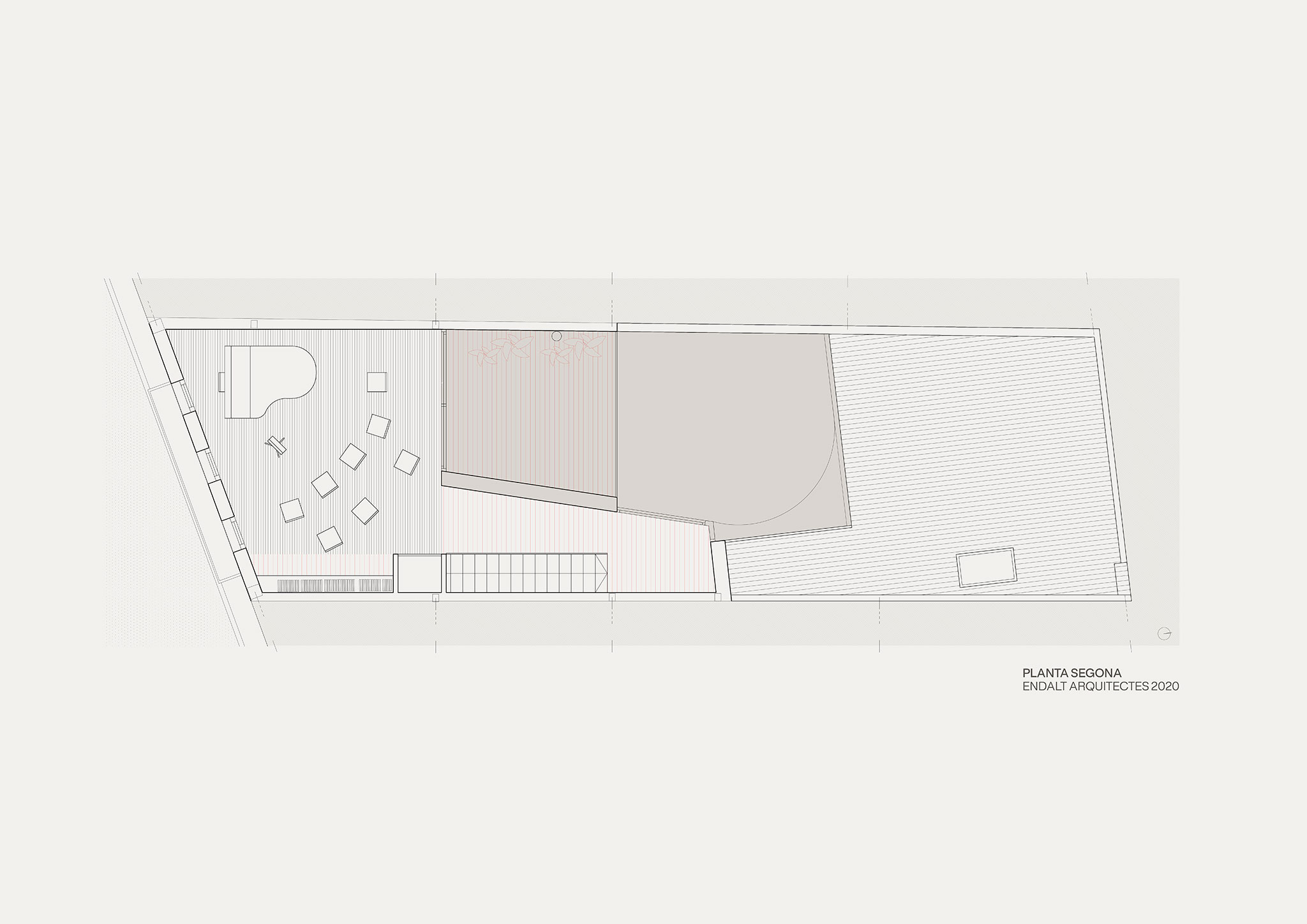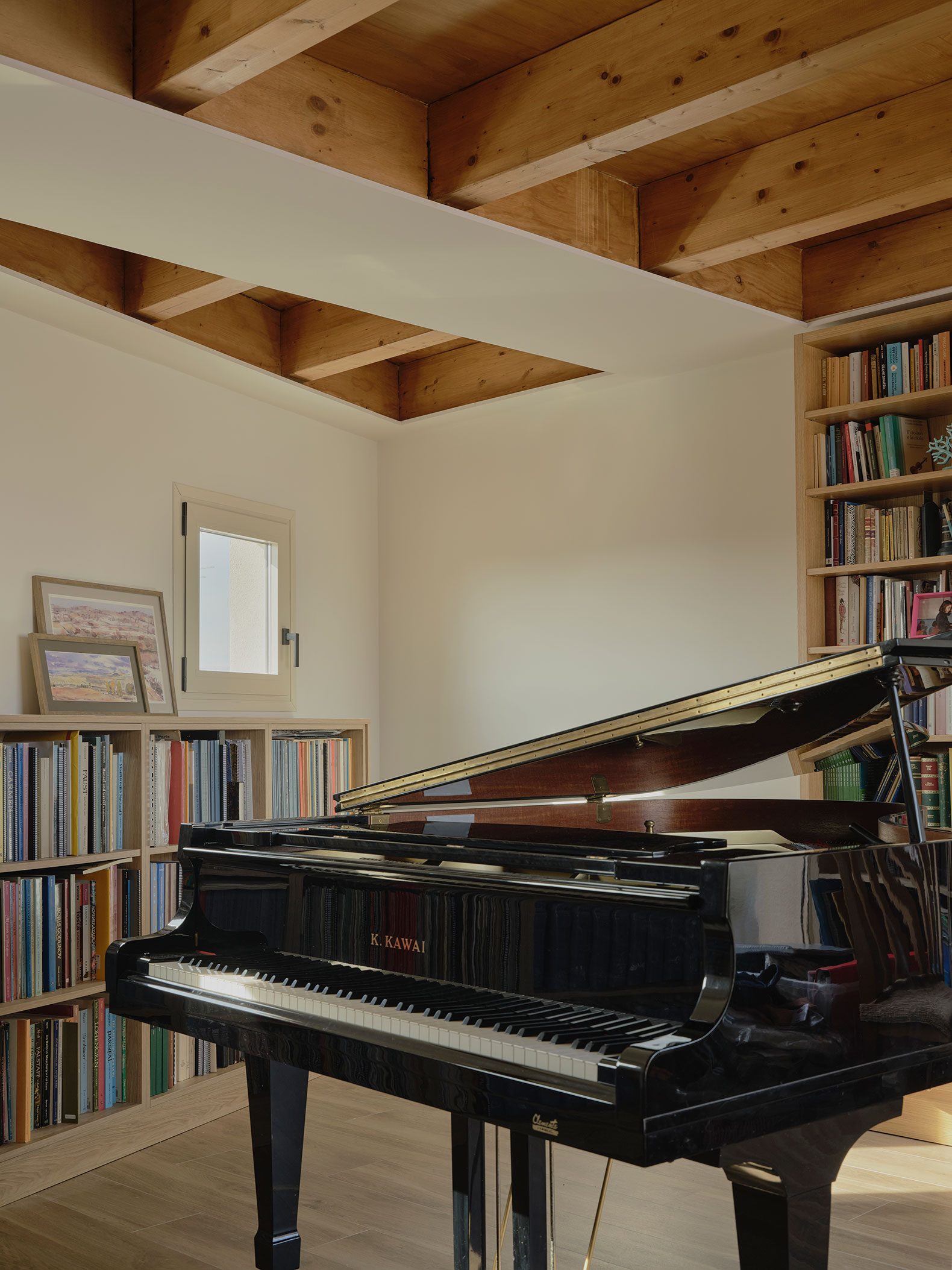
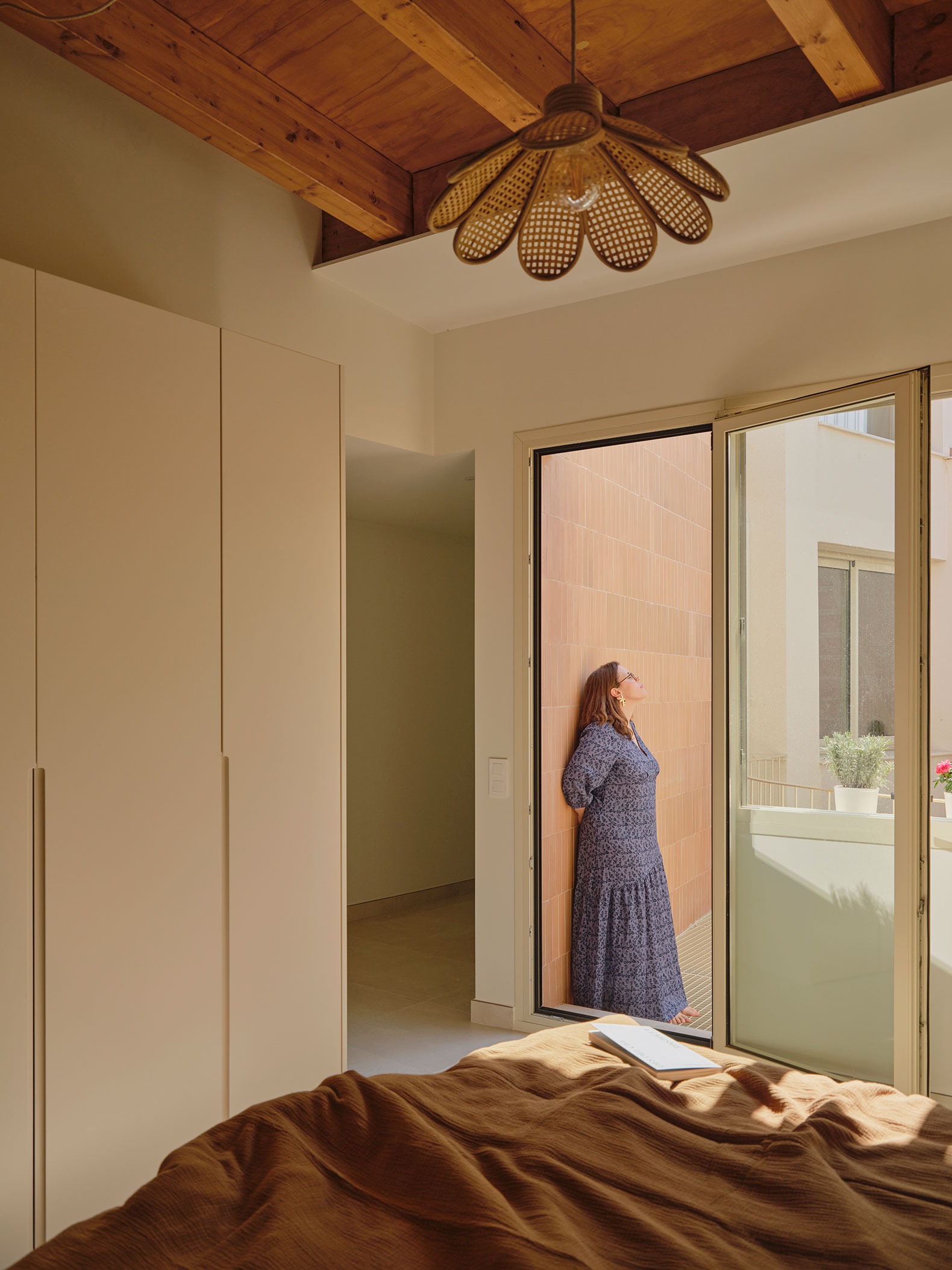
ENDALT Arquitectes and Josep Eixerés offer a new interpretation of the original house's duality in "Casa per a piano i violí" (House for Piano and Violin). The original house featured a palliza (a type of attic) and an andana (a raised platform), but the new inhabitants, professional musicians, integrate production, teaching, and rehearsal into their daily lives, alluding to this duality and influencing the incorporation of specific spaces for musical practice. On the ground floor, next to the entrance, a studio allows for receiving students. On the second and top floor, with wooden beams that improve the acoustics, the space is dedicated to the piano, visually opening onto the patio while maintaining a connection to the heart of the house.
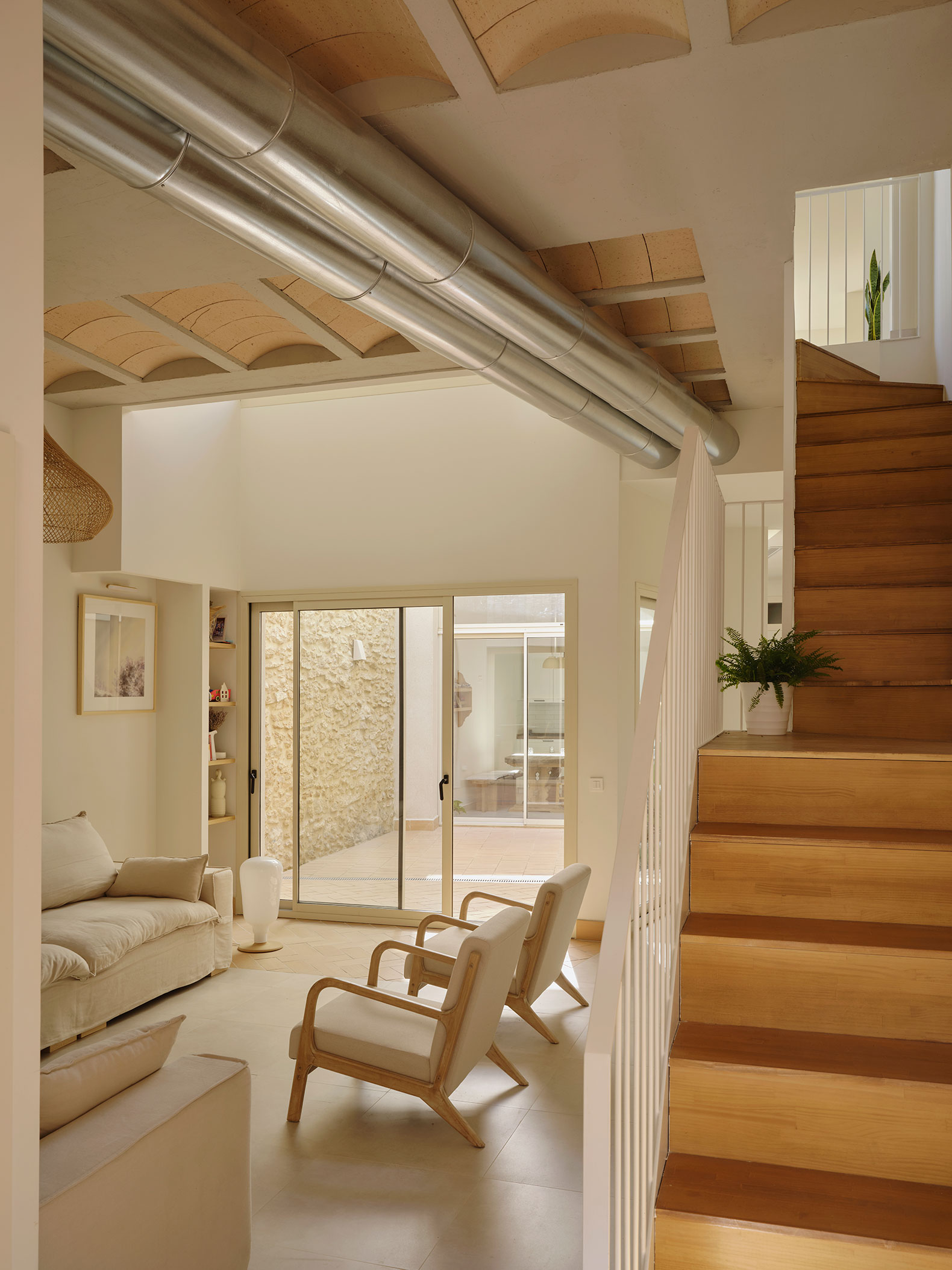
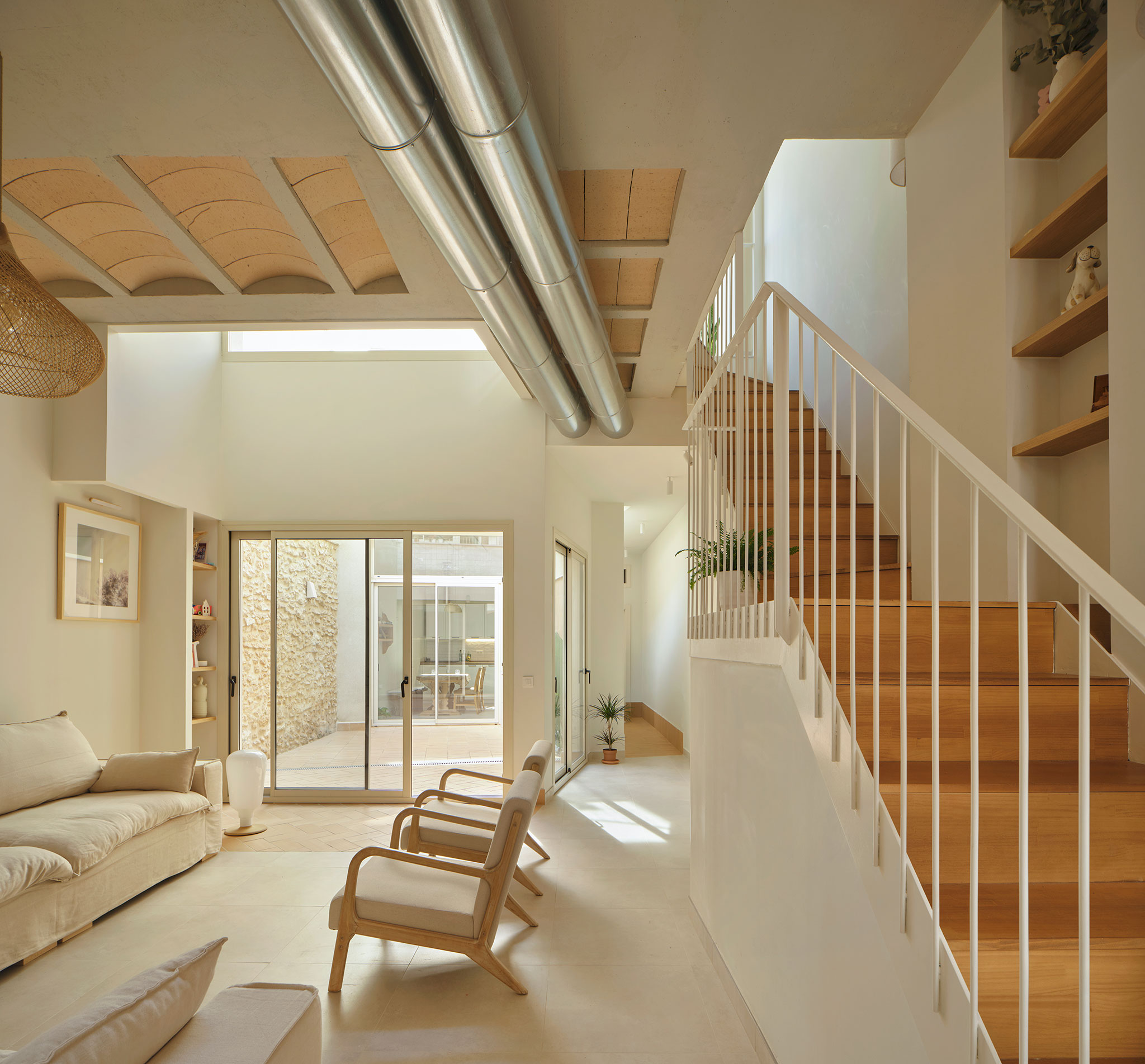
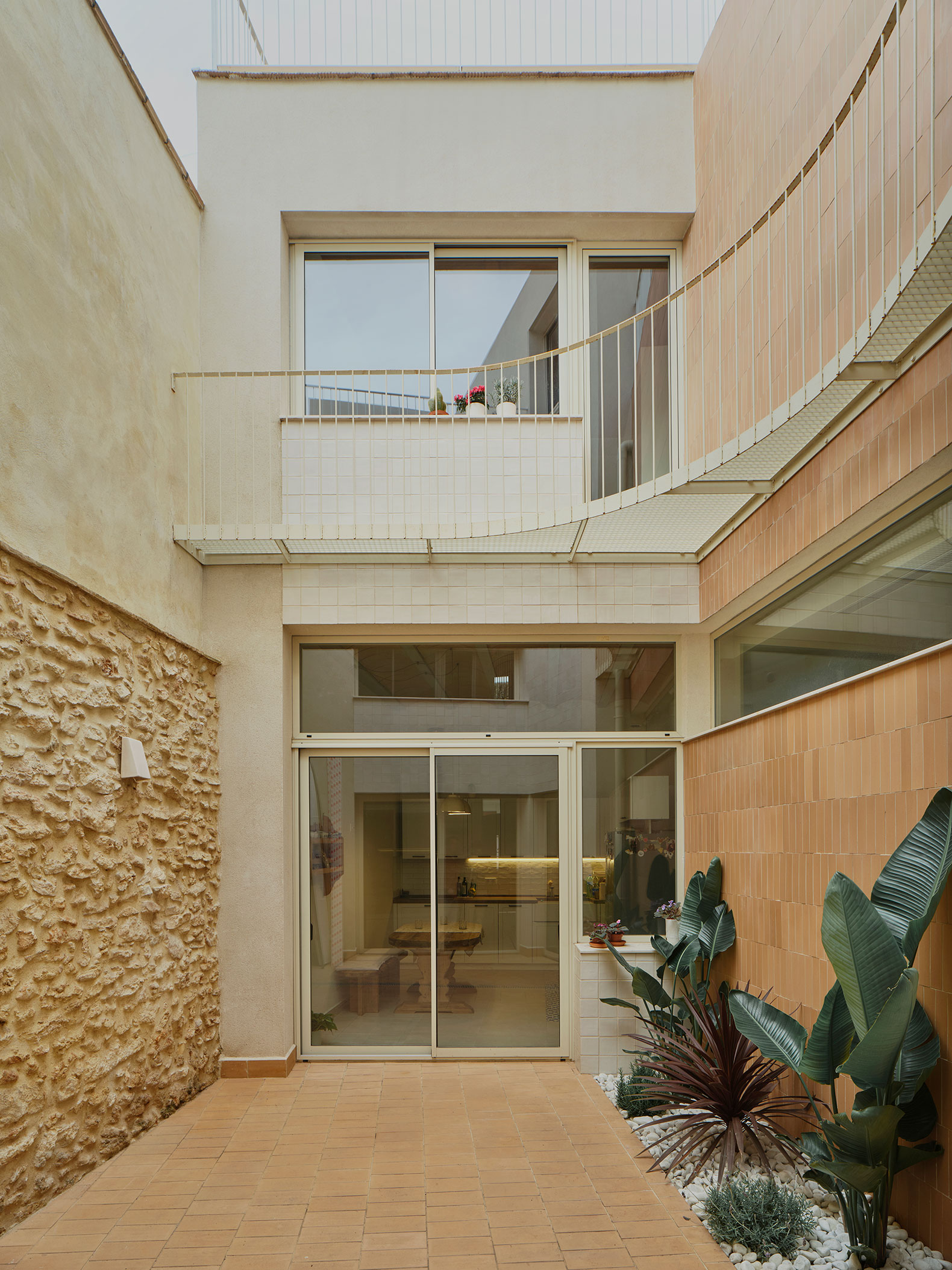
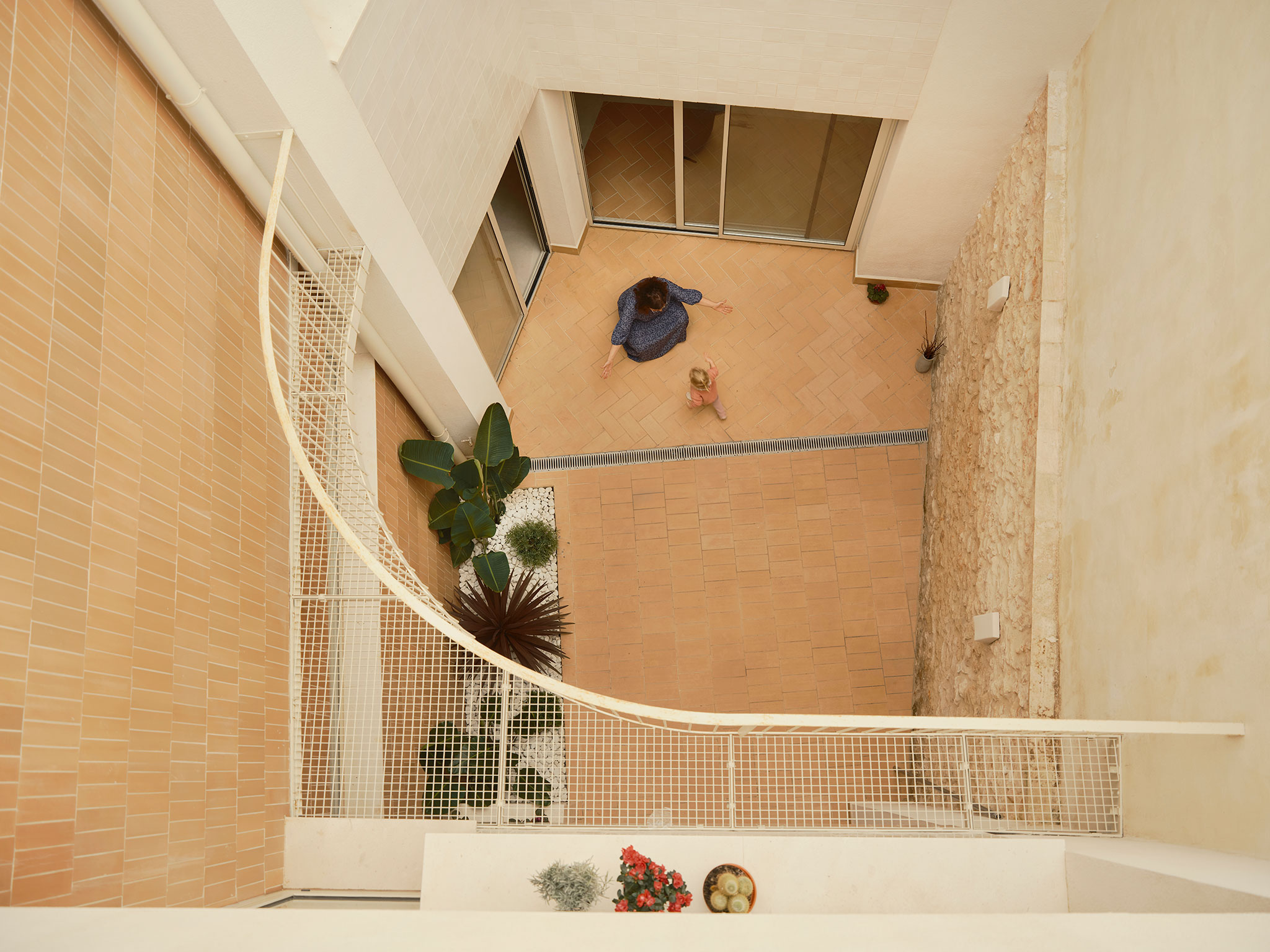
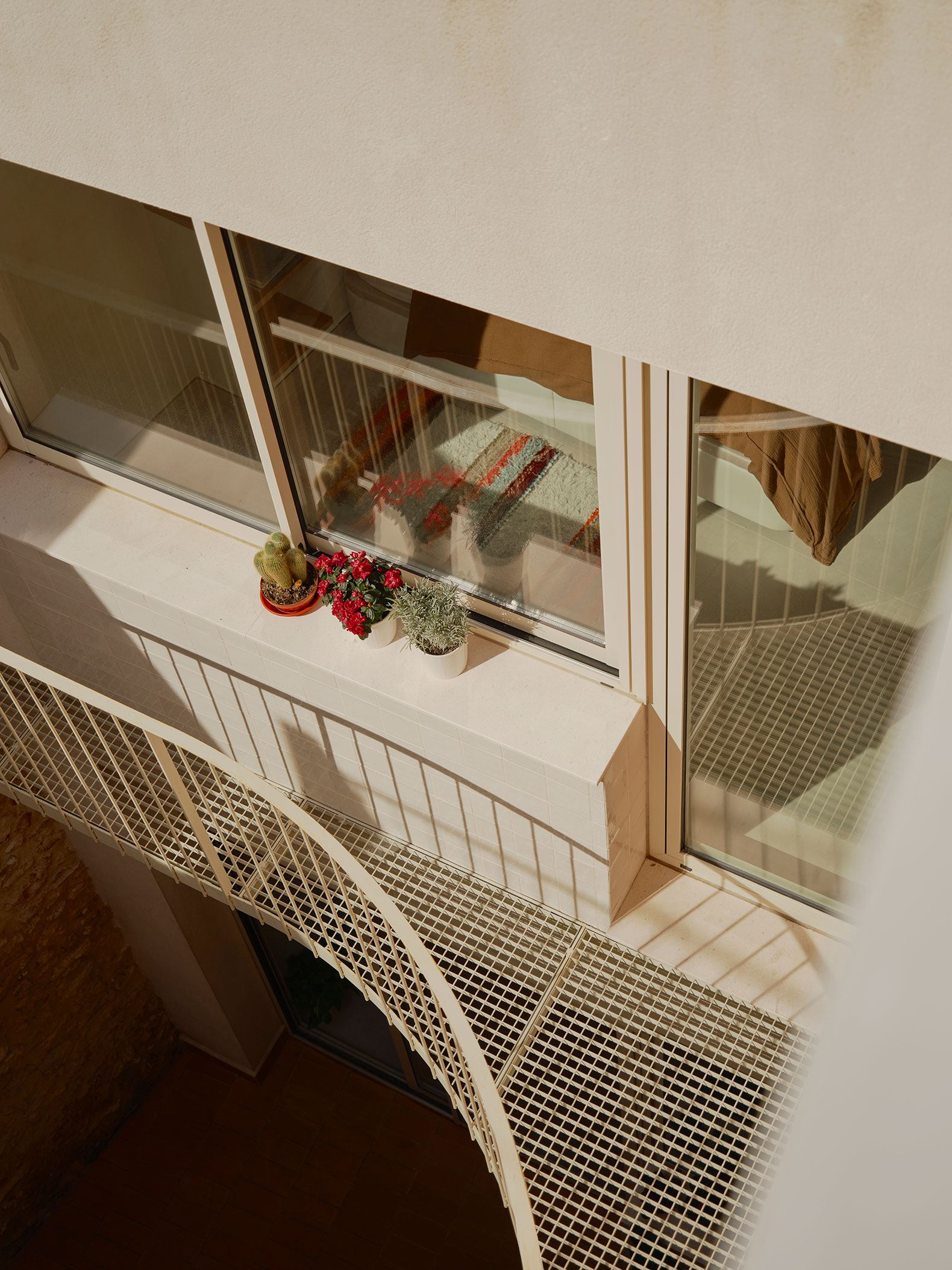
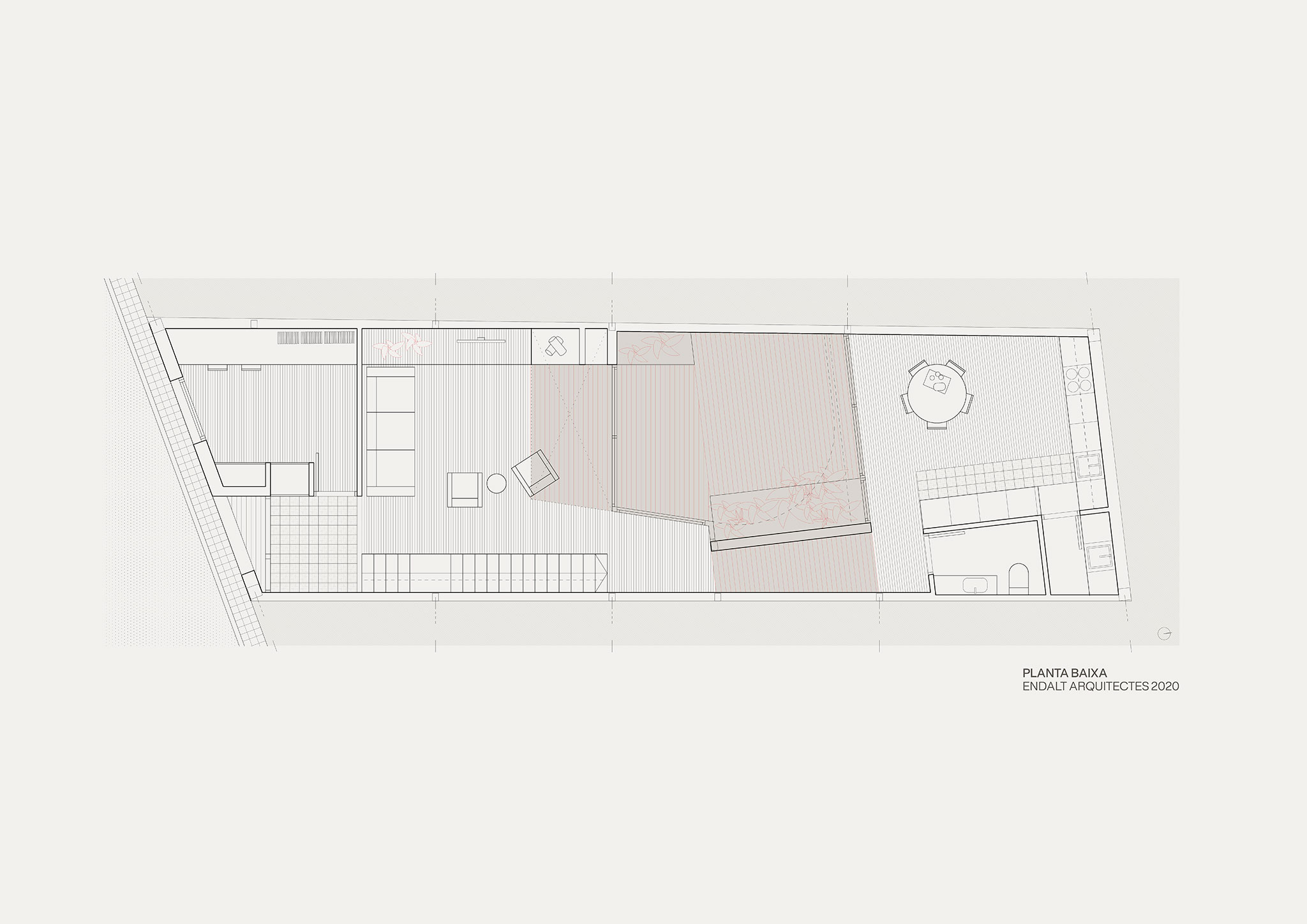
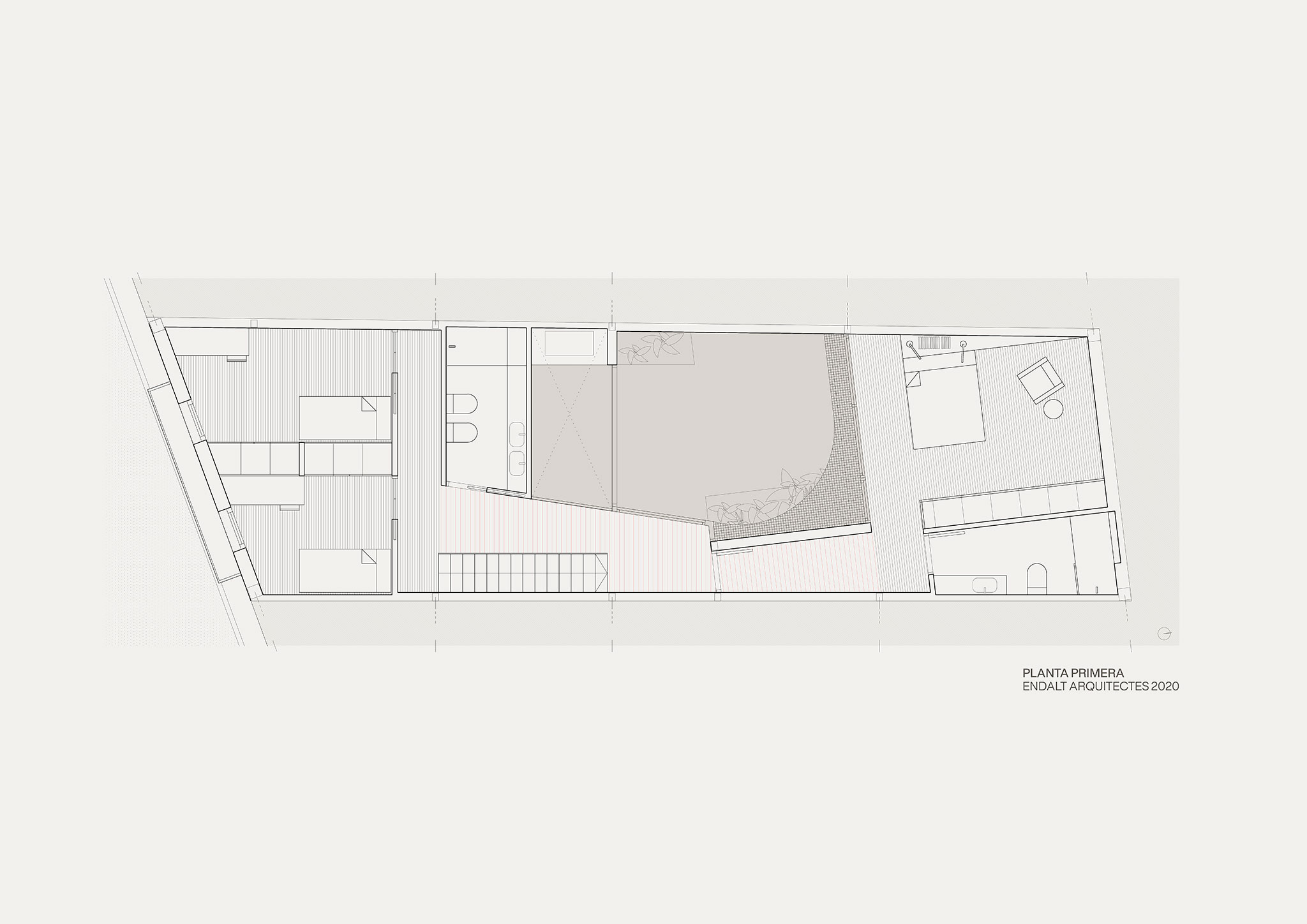
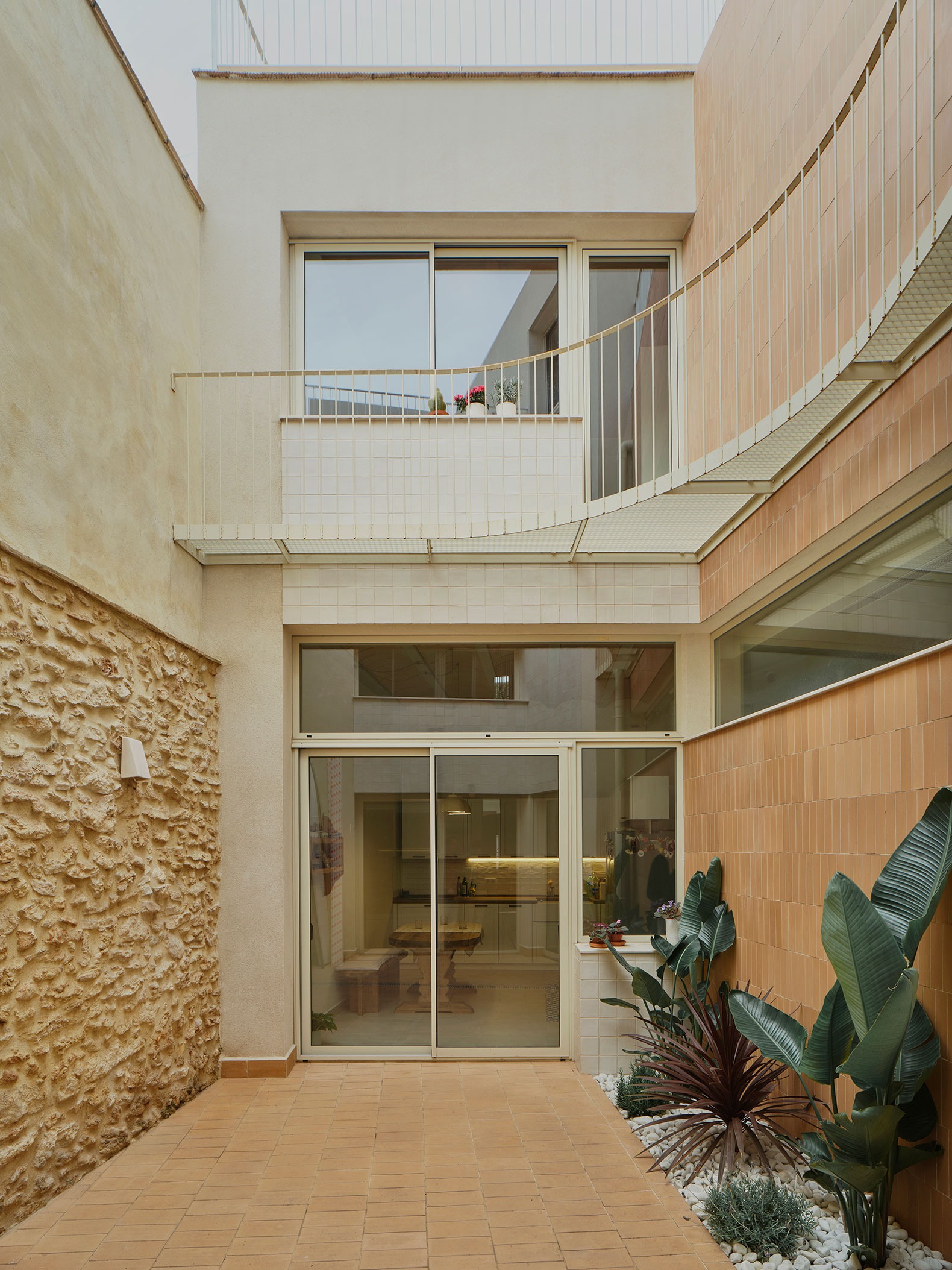
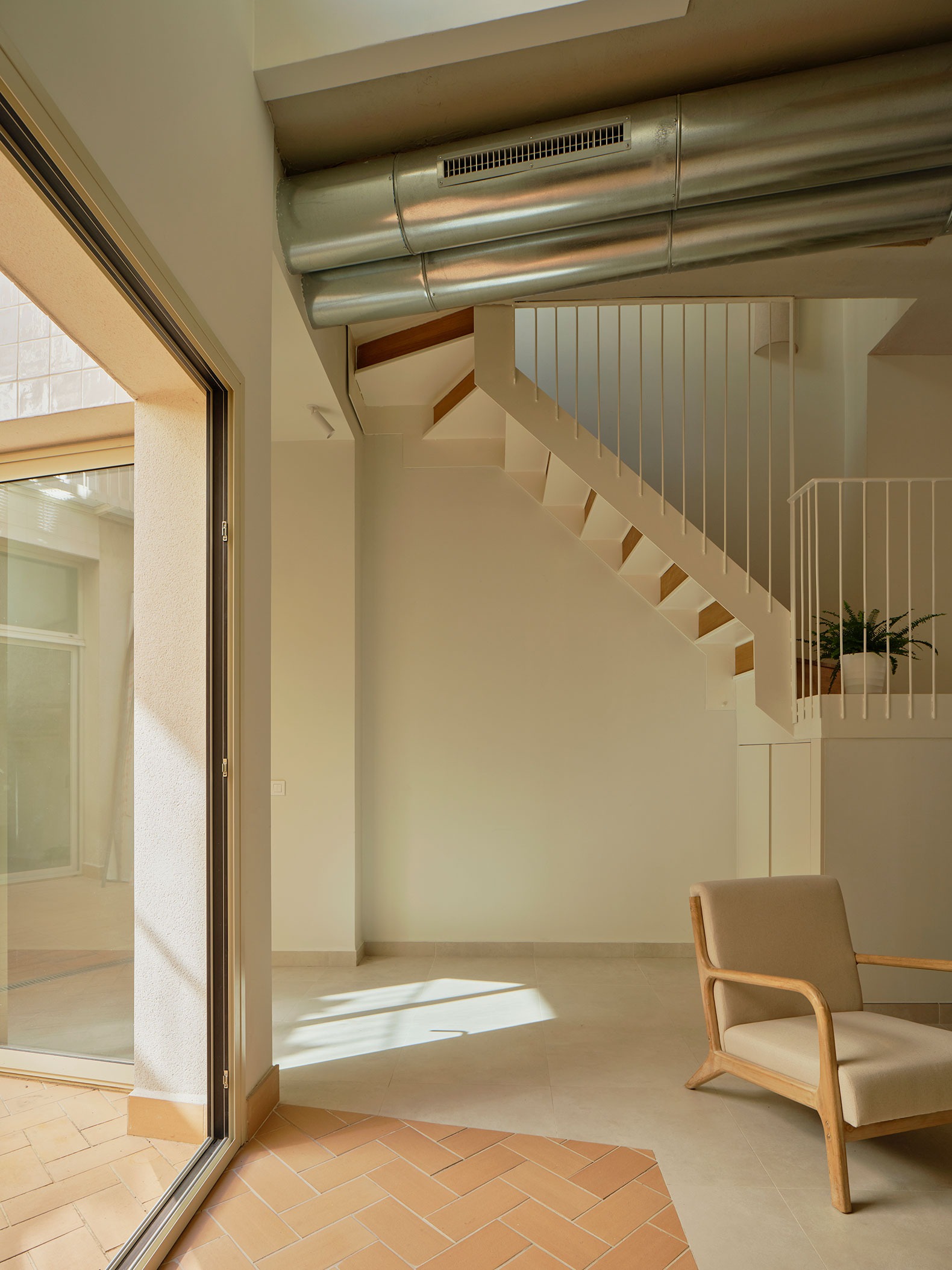
In this house of complex geometry, orthogonality is transferred to the living spaces, displacing irregularity towards the circulation areas and the central patio. This geometric richness is reflected in the section, where double-height spaces, flat and pitched roofs, terraces, and balconies create a spatial sequence around the courtyard, articulating the tensions between inhabiting and producing, remembering and transforming.
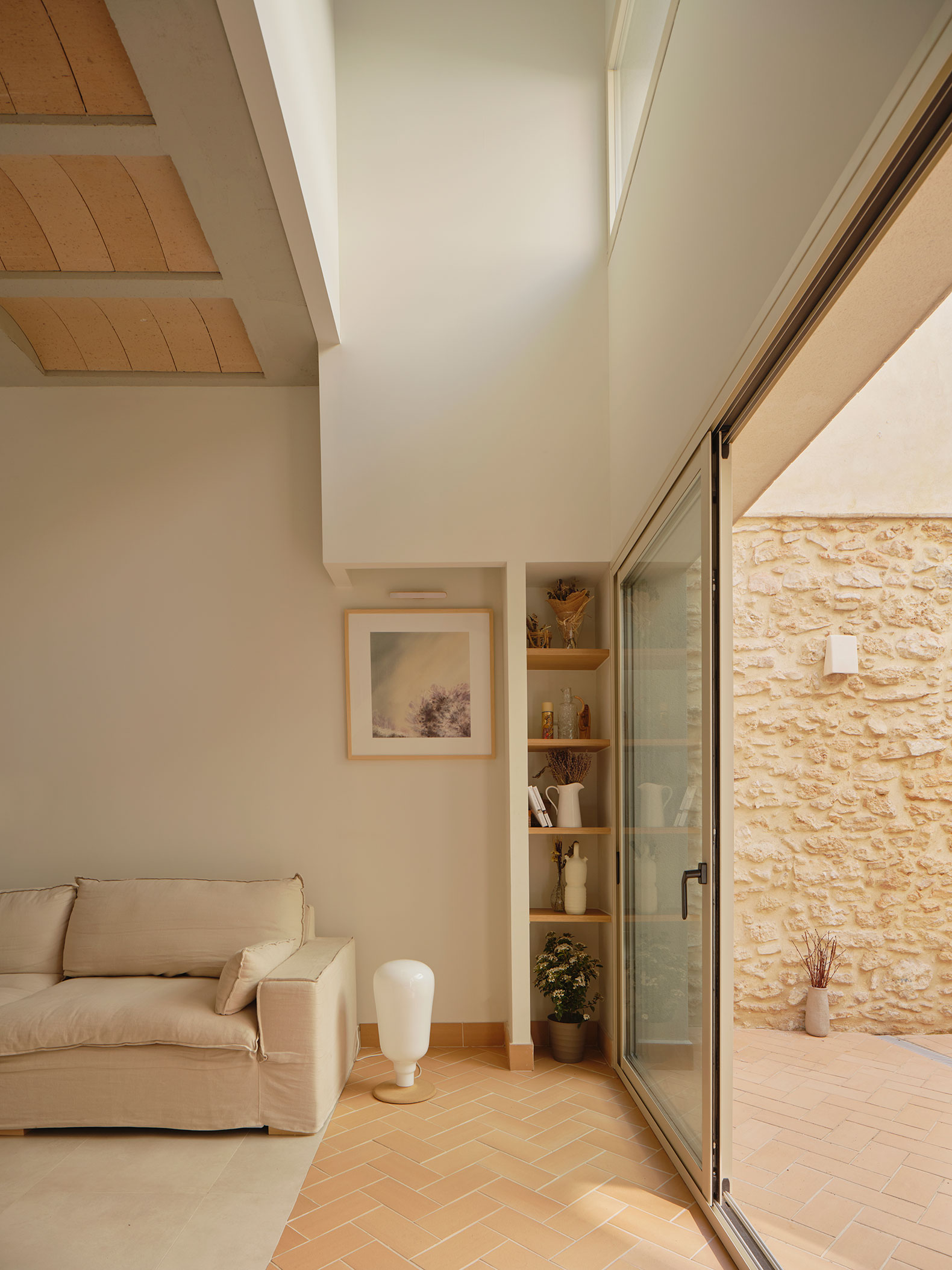
"Casa per a piano i violí" by ENDALT + Josep Eixerés. Photograph by David Zarzoso.
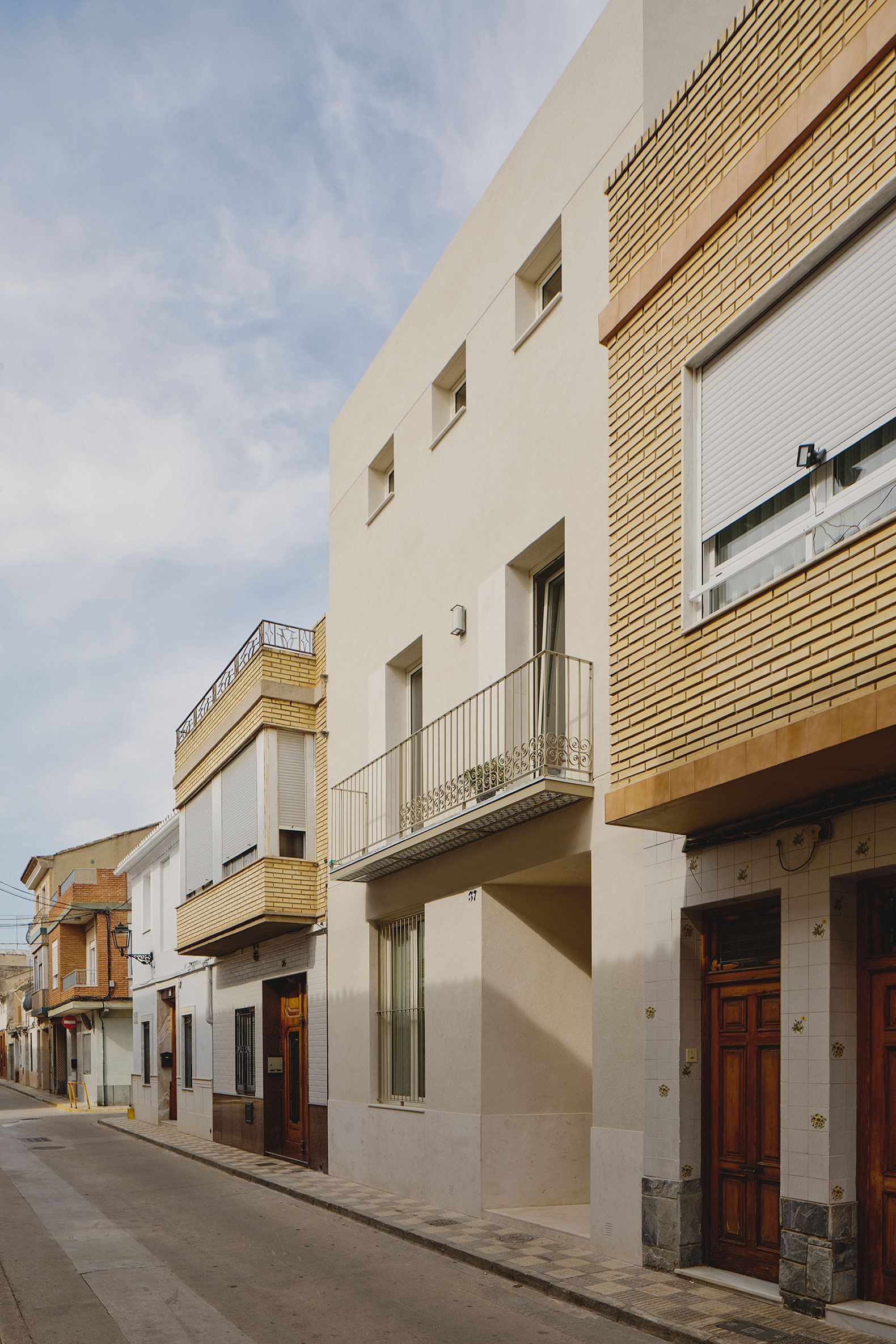
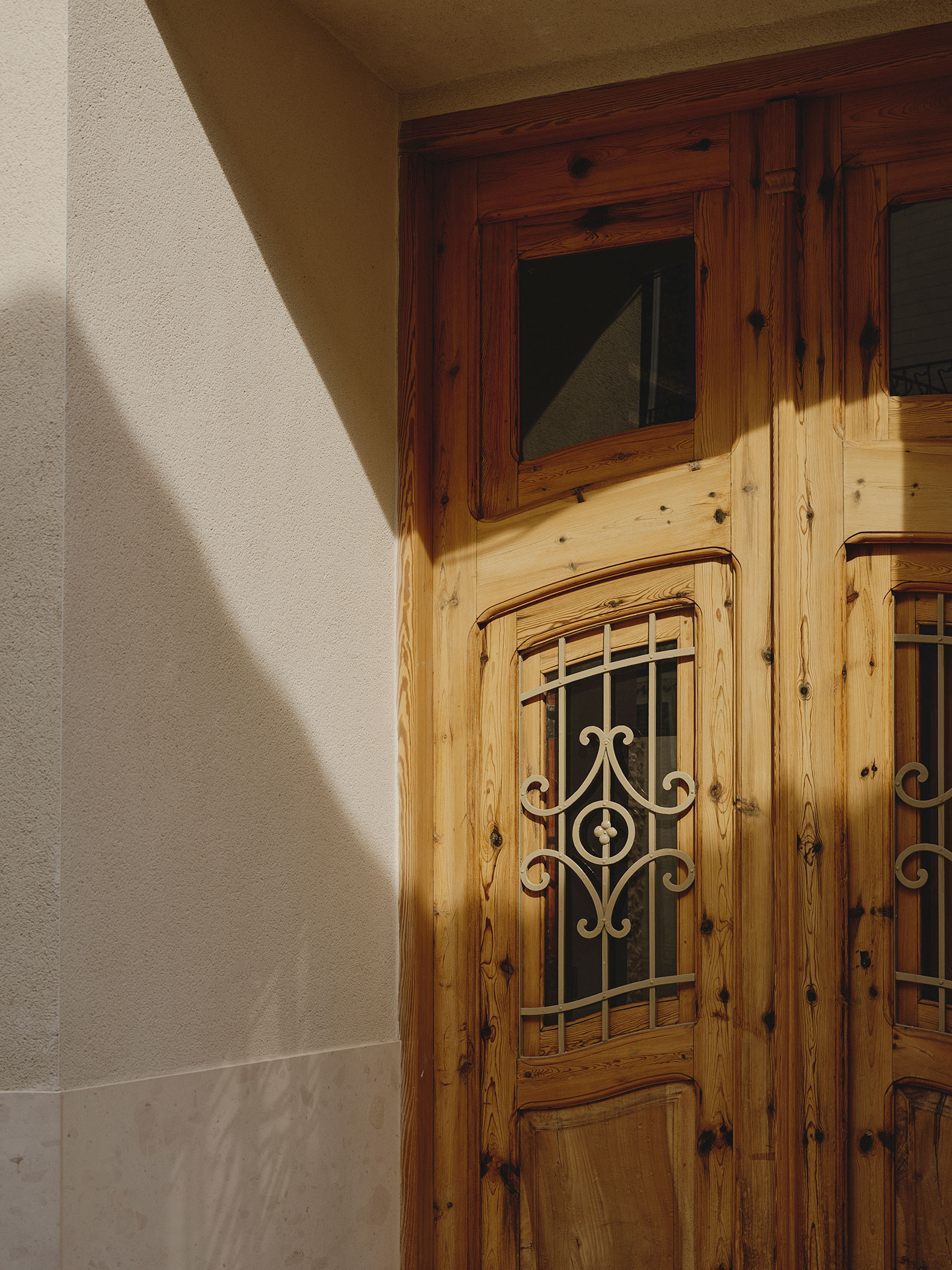
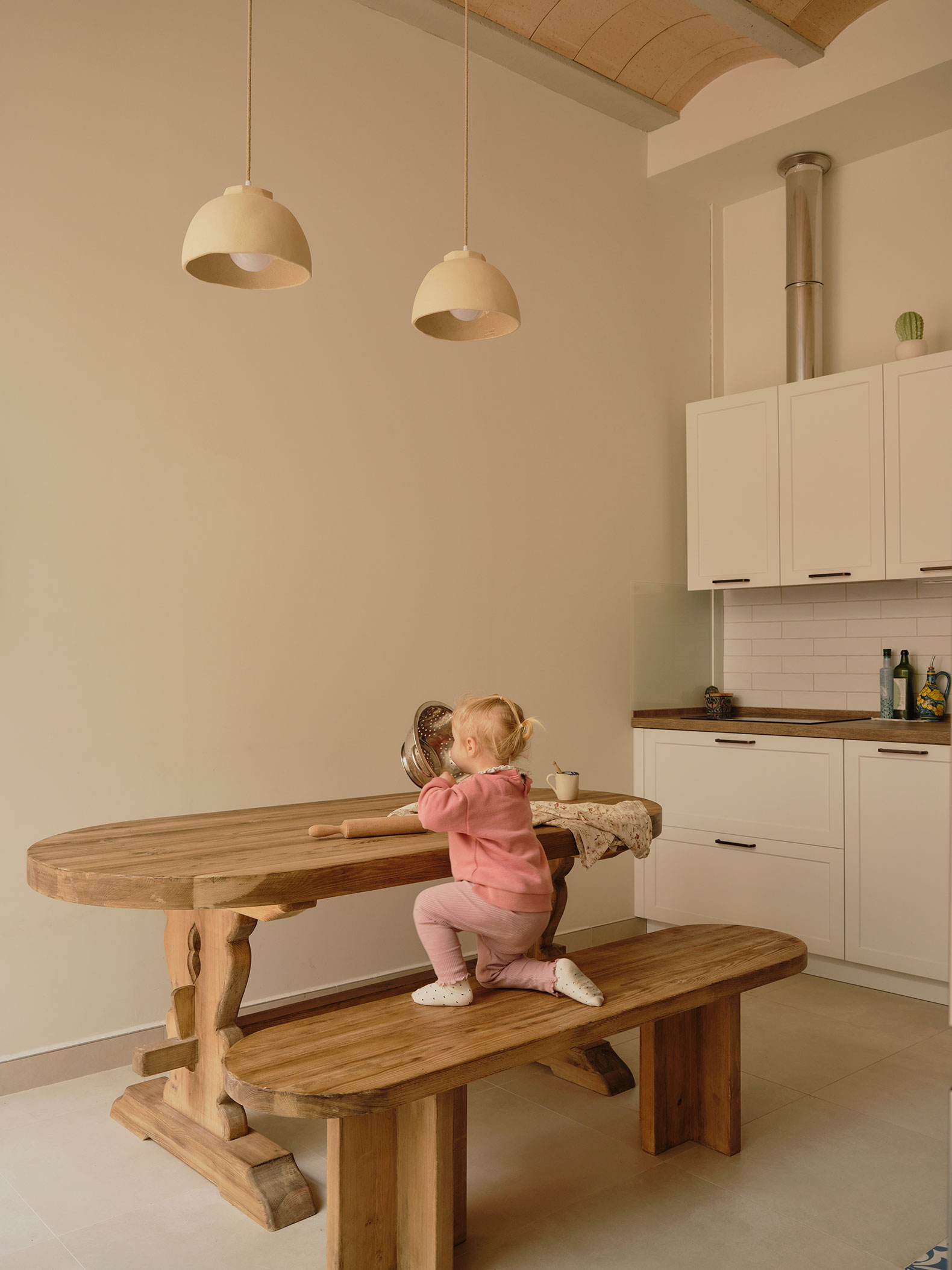
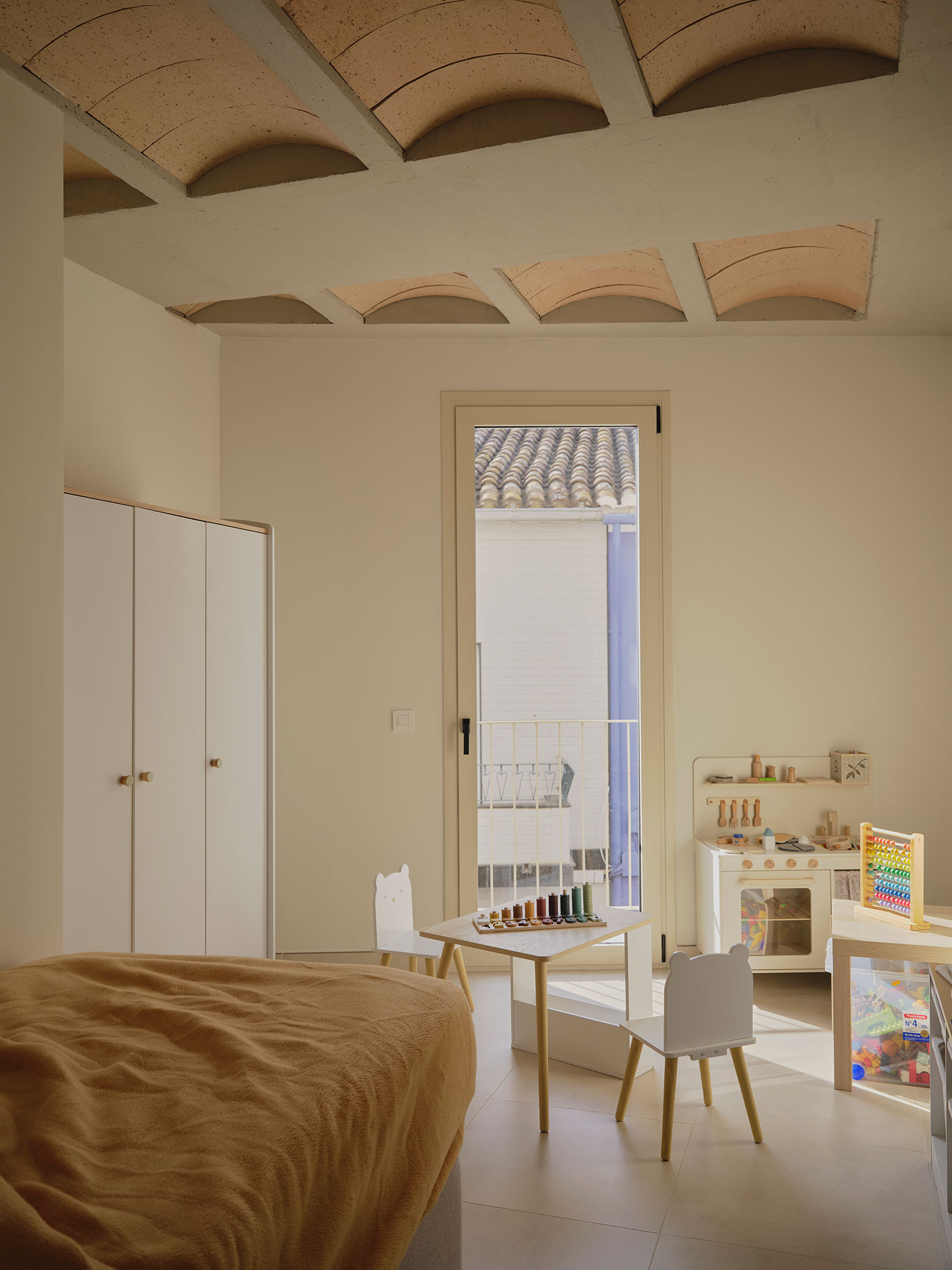
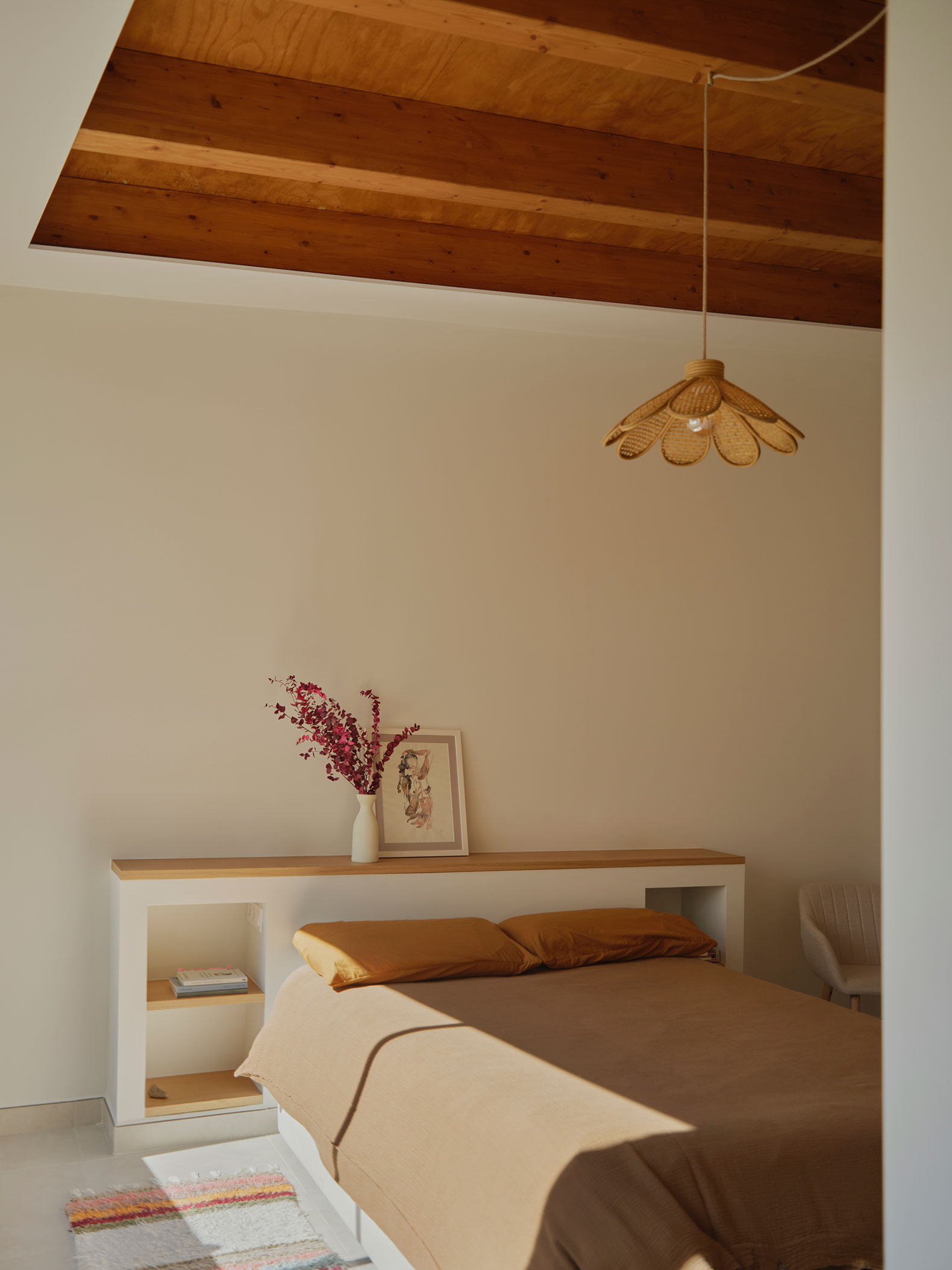
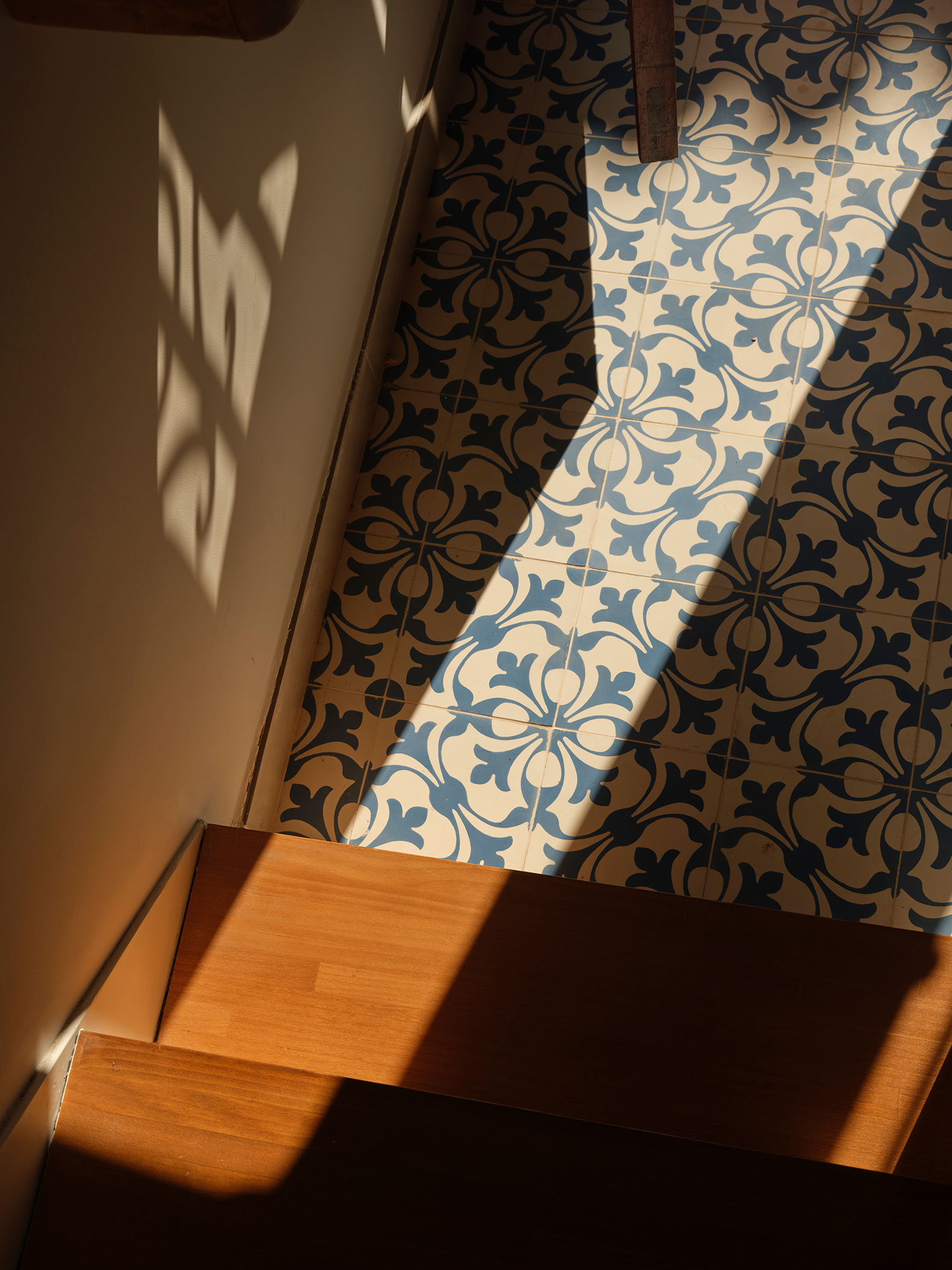
The building's structural systems—vaulted ceilings and pitched roofs with wooden beams—are incorporated into this project, which has evolved, been corrected, and adjusted over time, recognizing that architecture is a living reality in constant transformation. The façade, built with traditional elements, reflects a desire for permanence, with a simple composition and geometry that evoke the historic center of Alcàsser. A hydraulic tile with blue motifs introduces a subtle contrast, incorporating an intimate gesture that refers to the personal memories of one of the developers.
Project description by ENDALT and Josep Eixerés
The decision to demolish an existing building is always a difficult one. Before making such a choice, the circumstances that might tip the balance one way or another must be carefully assessed; the possibilities of the existing structure, its condition, and the needs of those who will inhabit the space must all be considered.
In this case, the need to accommodate an extensive program forced us to confront a certain contradiction. Does it make sense to preserve a building that cannot meet the needs of its future occupants? Might this, in fact, lead to its abandonment and, ultimately, its disappearance?
The decision to demolish the small 1930 house that once occupied the site not only involved questioning a prior position, but also opened up the possibility of exploring how contemporary architecture can draw from the principles of traditional architecture. Perhaps what should be preserved is not only the built object itself, but the knowledge that underpins it: its relationship with the territory, the use of resources, and the techniques passed down through generations.
Thus, the genesis of this project lies in the desire to reinterpret, from a contemporary perspective, a typology deeply rooted in its context. Beyond the recovery of construction systems such as revoltón floor slabs or pitched roofs with timber joists, the initial reflection focused on understanding the relationship between living spaces and productive spaces.
In the original dwelling, as in many others, the pallisa housed animals and the andana stored the harvest. Today, this duality finds a new reading: the inhabitants of the house are professional musicians, and their daily life integrates production, teaching, and rehearsal in an inseparable way. This condition led to the incorporation of specific spaces for musical practice. On the ground floor, next to the entrance, a studio allows students to be received without interfering with domestic privacy. On the top floor, the piano room, built with timber floor structures to enhance acoustic quality, opens visually onto the courtyard, maintaining a connection with the heart of the home.
Formally, the house reflects the complex geometry of a plot in which right angles disappear. Rather than imposing a rigid order, the project embraces this condition and translates it into the program: the orthogonality of the served spaces—bedrooms and main living areas—shifts irregularity towards circulation spaces and, especially, towards the central courtyard.
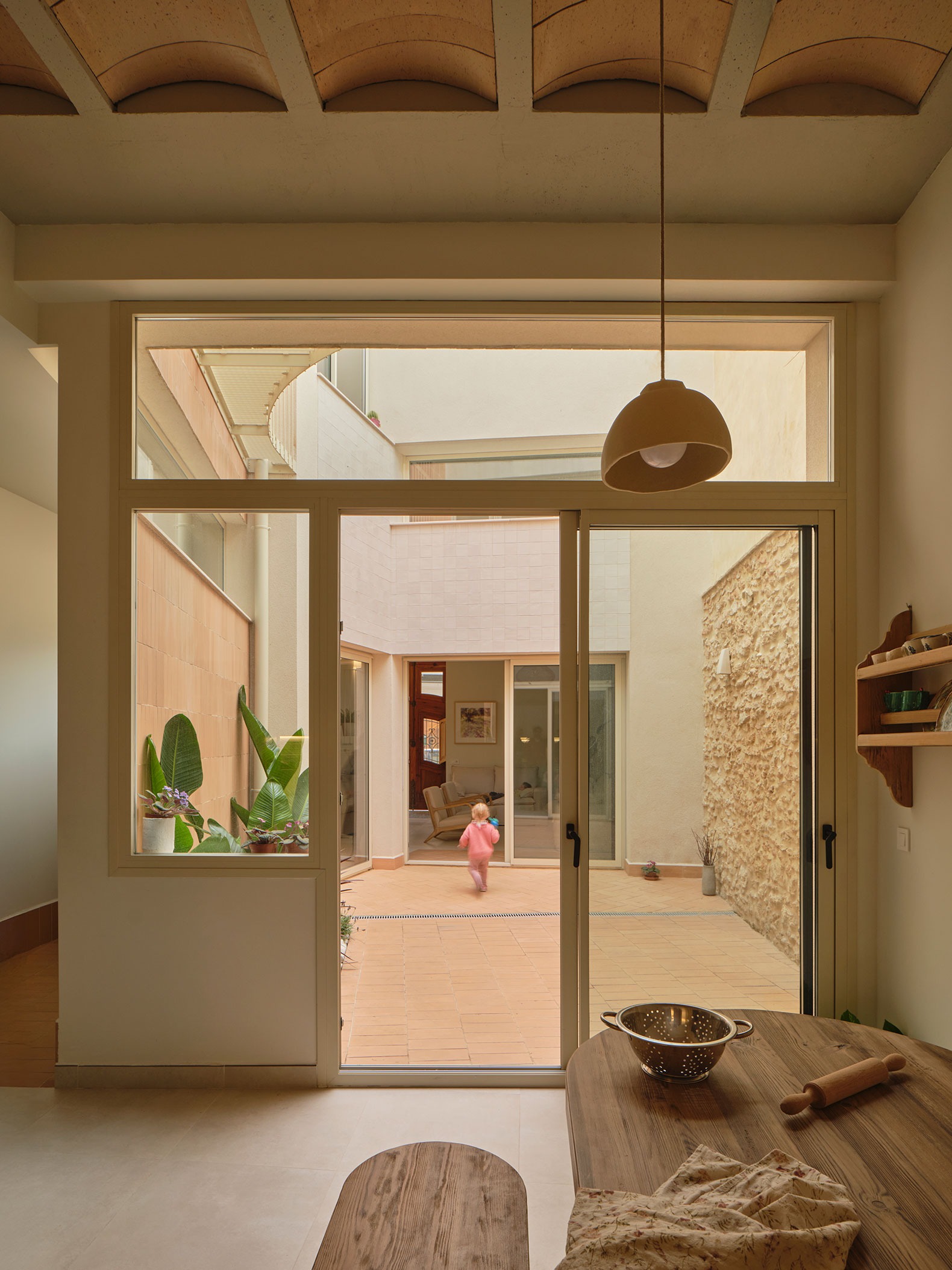
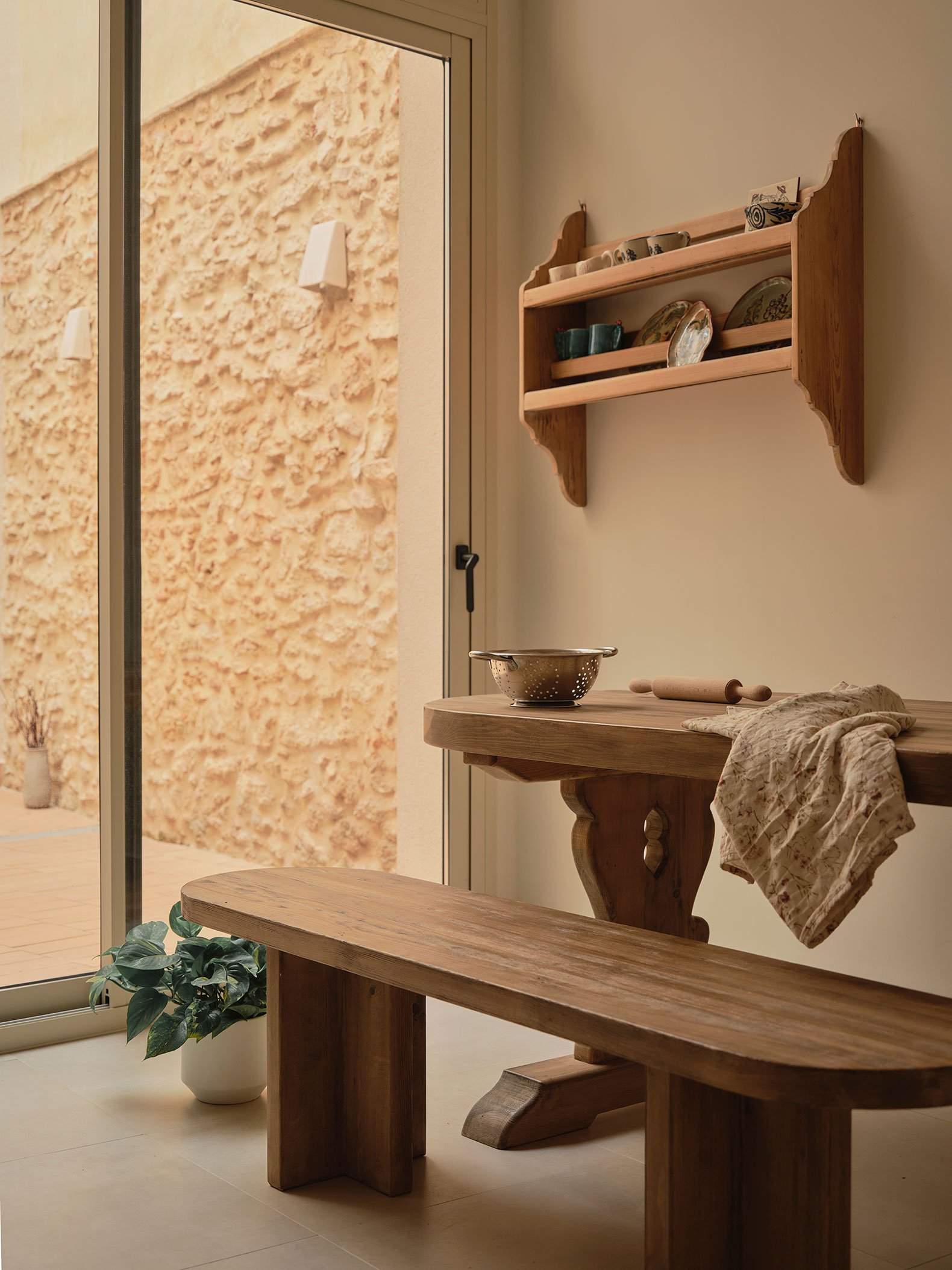
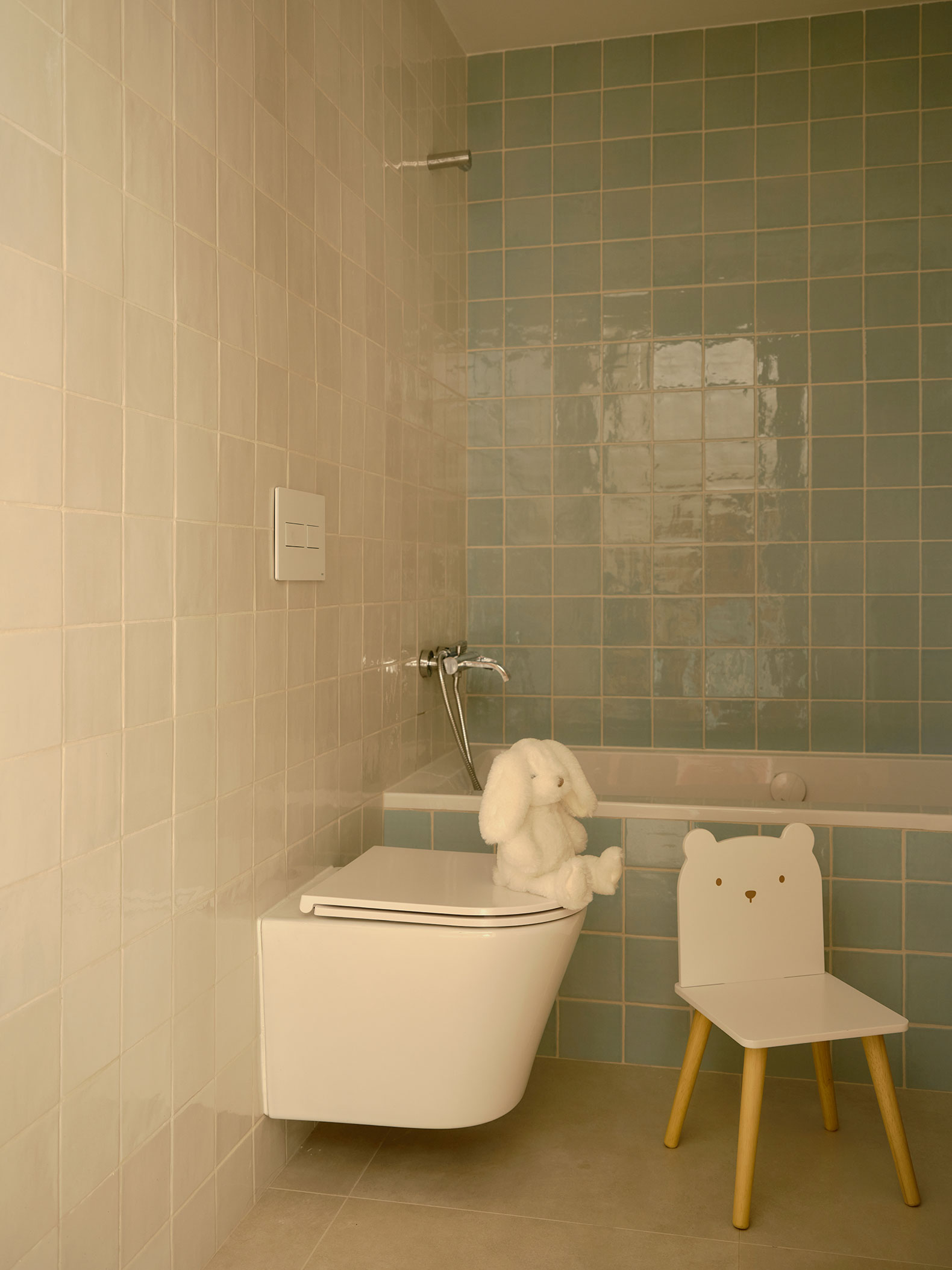
The courtyard, the true core of the house, is conceived as a reinterpretation of the street: a heterogeneous, geometrically complex space, constructed through the combination of raw, local materials—rasilla tiles, glazed ceramics, and traditional renders—that evoke the surroundings while reinforcing both its domestic and collective character.
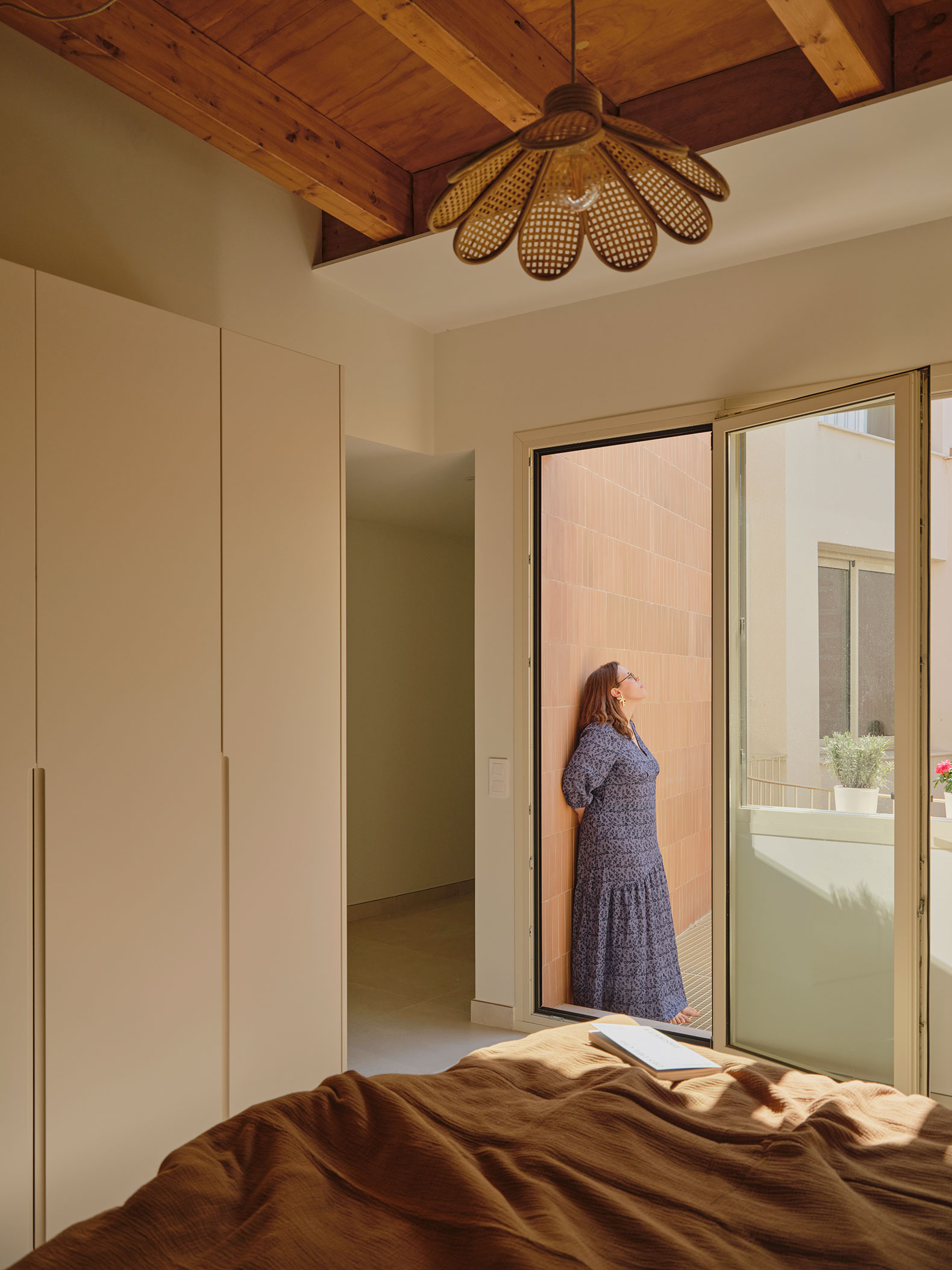
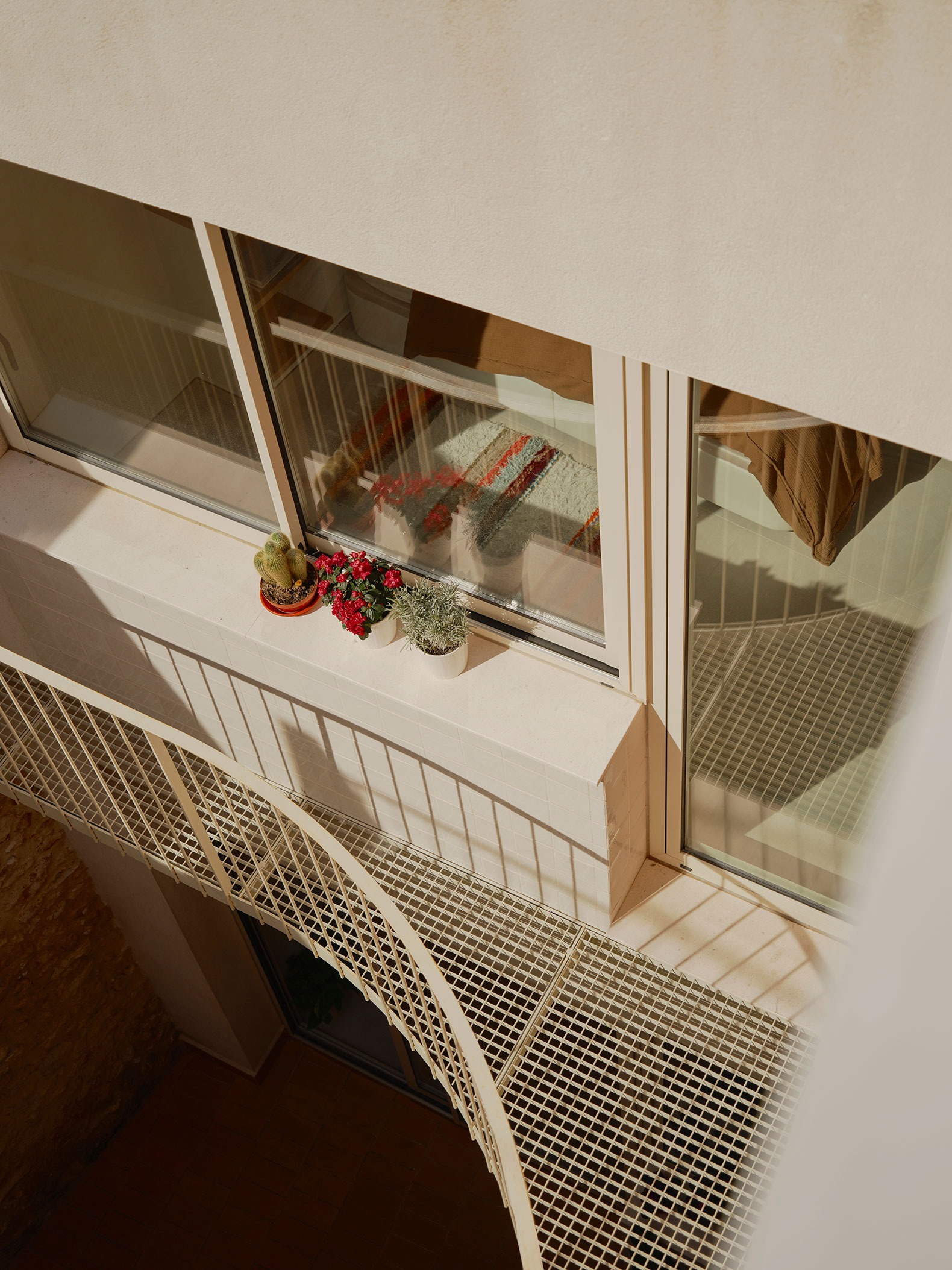
This geometric richness is also expressed in section, where double heights, flat and pitched roofs, terraces, and balconies create a spatial sequence around the courtyard. On the ground floor, the living room, dining area, and kitchen open onto this central space; the balcony of the main bedroom introduces an echo of the street into the interior; and the upper-floor terrace, linked to the music studio, helps refine the courtyard’s proportions and enhances the entry of light.
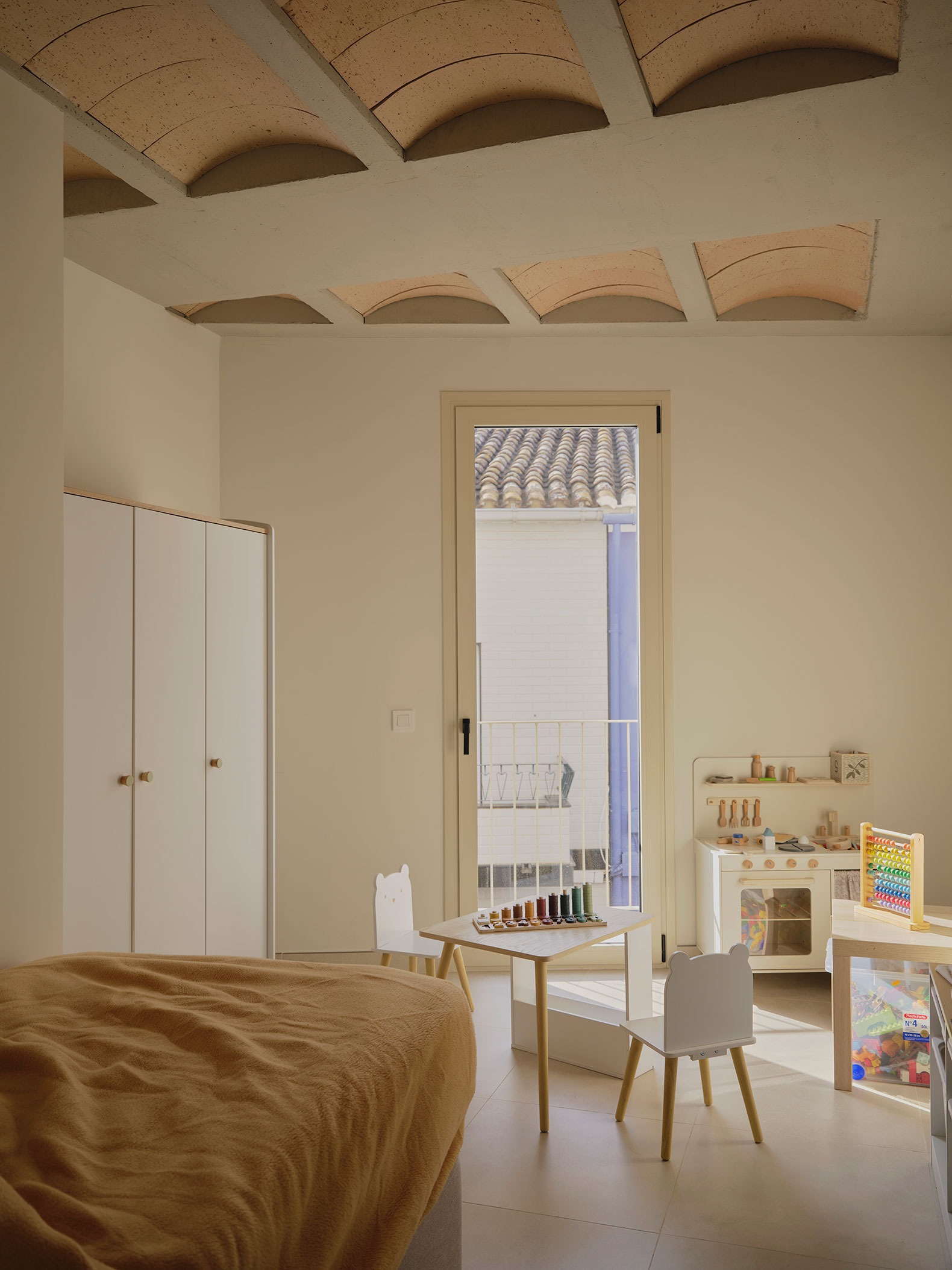
From the first visit in 2020 to the completion of the construction in 2025, the lives of its inhabitants have evolved, and with them, the project itself. Fernando, a violinist, and Aida, a pianist, have seen how their domestic environment needed to adapt not only to their professional requirements but also to the changes inherent in everyday life. Far from being a linear process, the house has been gradually completed, corrected, and adjusted over time, acknowledging that architecture is not a closed object, but a living reality in constant transformation.
Intervening in a historic center inevitably entails responsibility. It is not merely about building a house, but about acting within a fabric rich in memory, where every decision has an impact beyond the individual. Rather than seeking to stand out or impose itself, this project adopts a quieter attitude: one of integration, of yielding prominence to the whole.
The façade, in this sense, responds to this desire to belong. Its composition is deliberately simple, built from traditional elements and a geometry that echoes the houses of Alcàsser’s historic core. Any superfluous ornament is avoided, understanding that true continuity with the surroundings is not achieved through literal imitation, but through scale, proportion, and materiality.
Living and producing, remembering and transforming: the house articulates these tensions around a courtyard that acts as the domestic heart. A quiet reinterpretation of the historic fabric.
Only one element introduces a slight dissonance: a hydraulic tile with blue motifs, incorporated as an intimate gesture that refers to the past of one of the clients. A minimal detail that, without altering the overall reading, establishes a link between personal memory and collective memory.
In this way, the house does not seek to be a singular object, but rather to become part of a landscape built over time. An architecture that, rather than asserting itself, chooses to accompany.