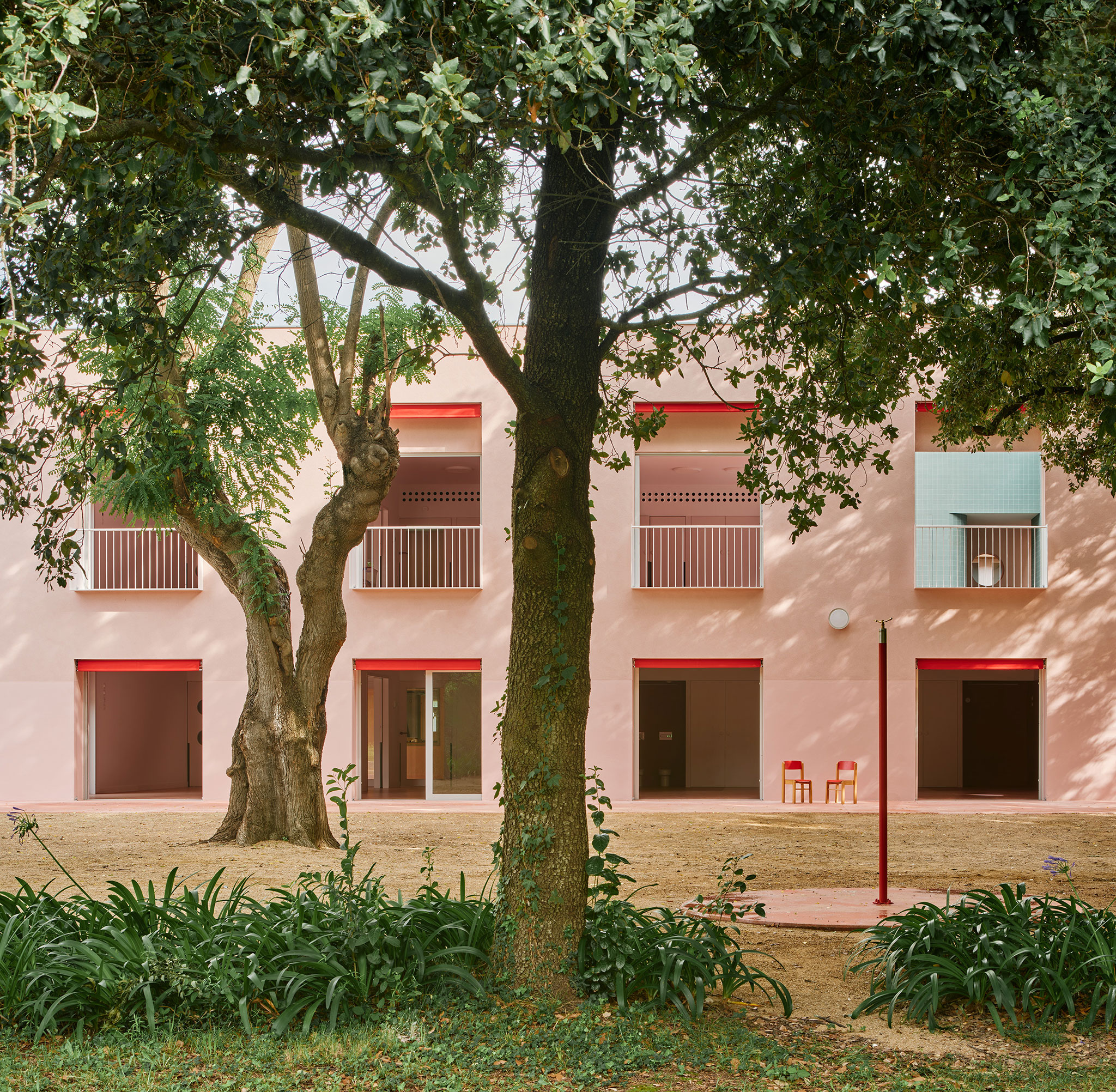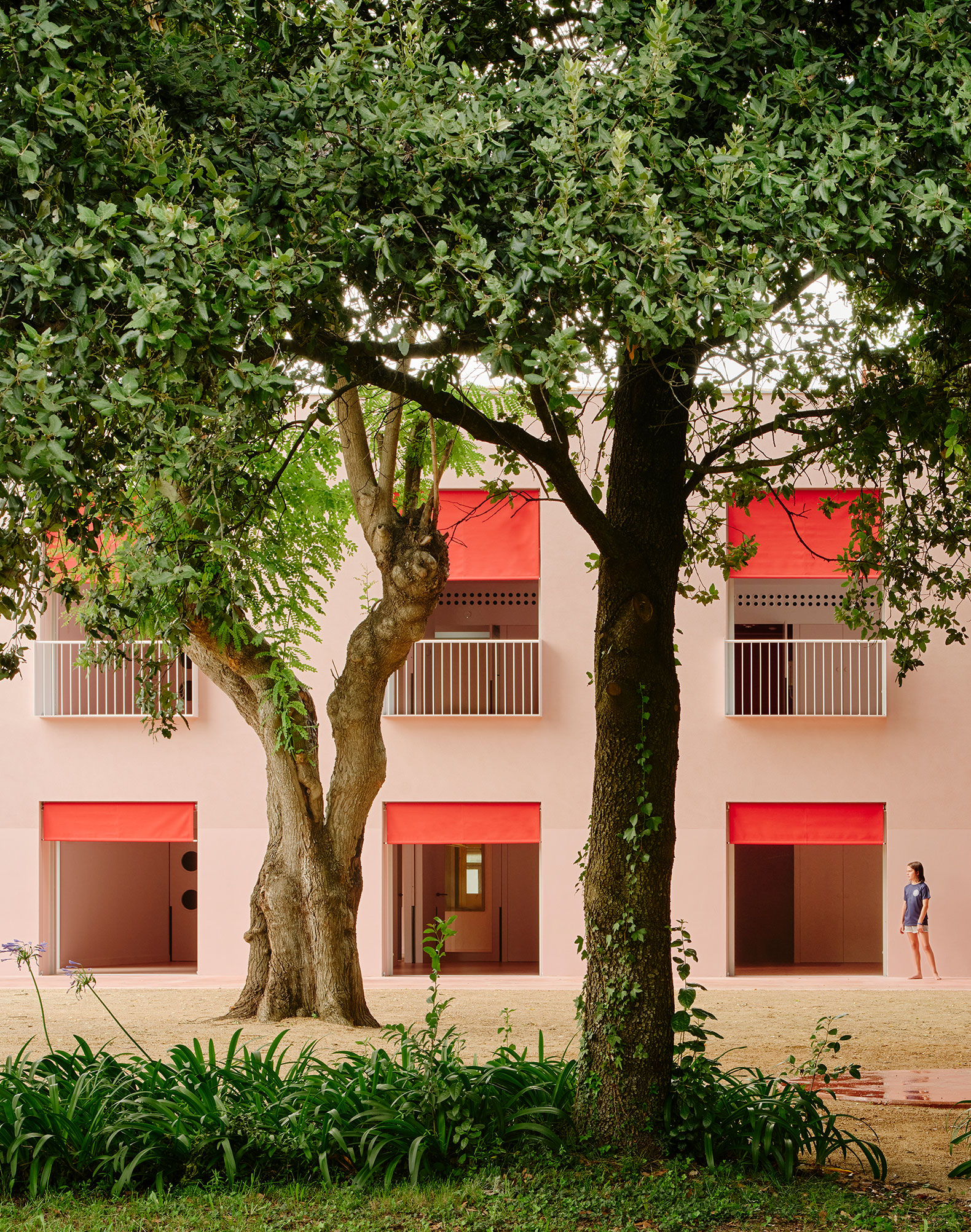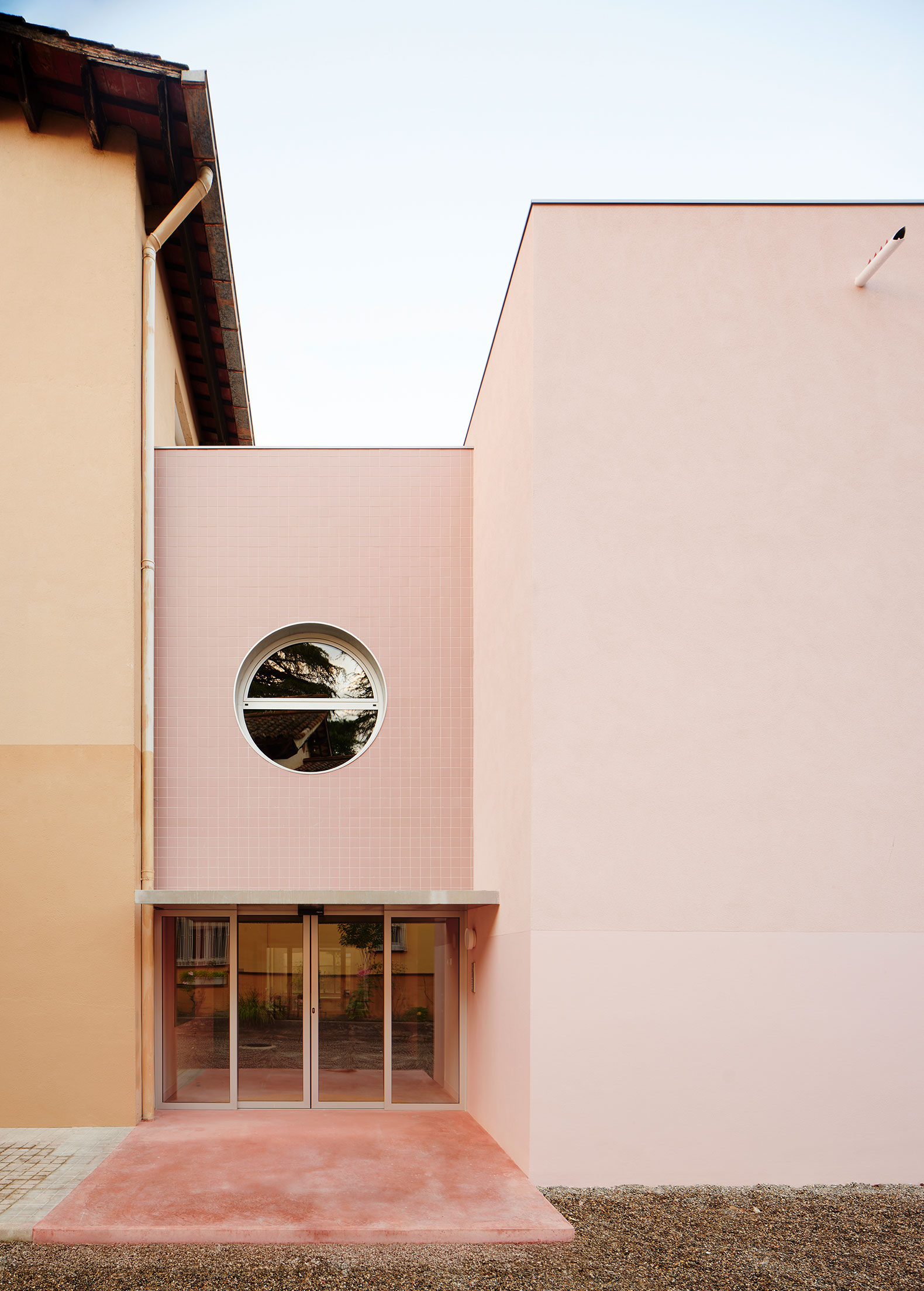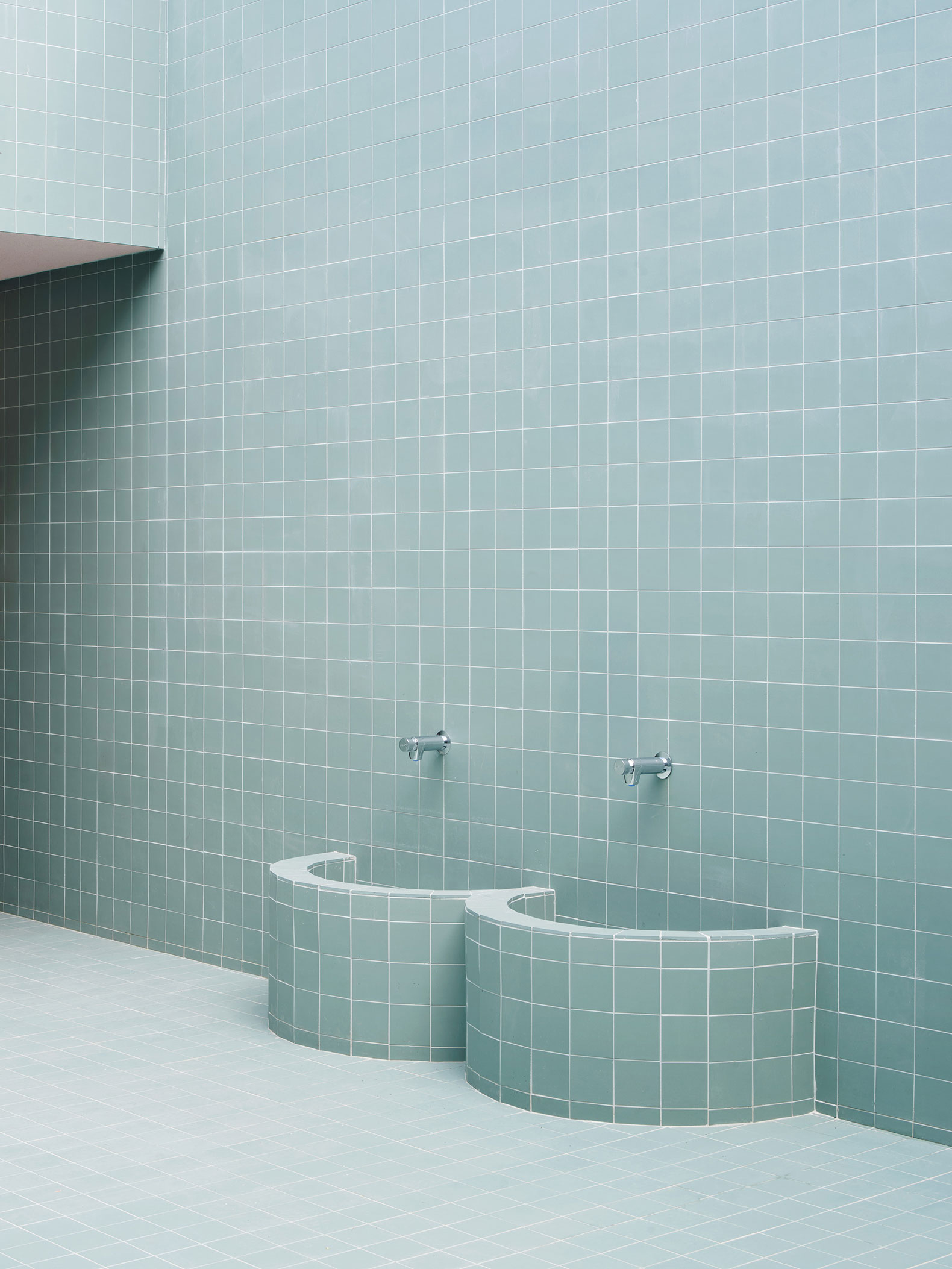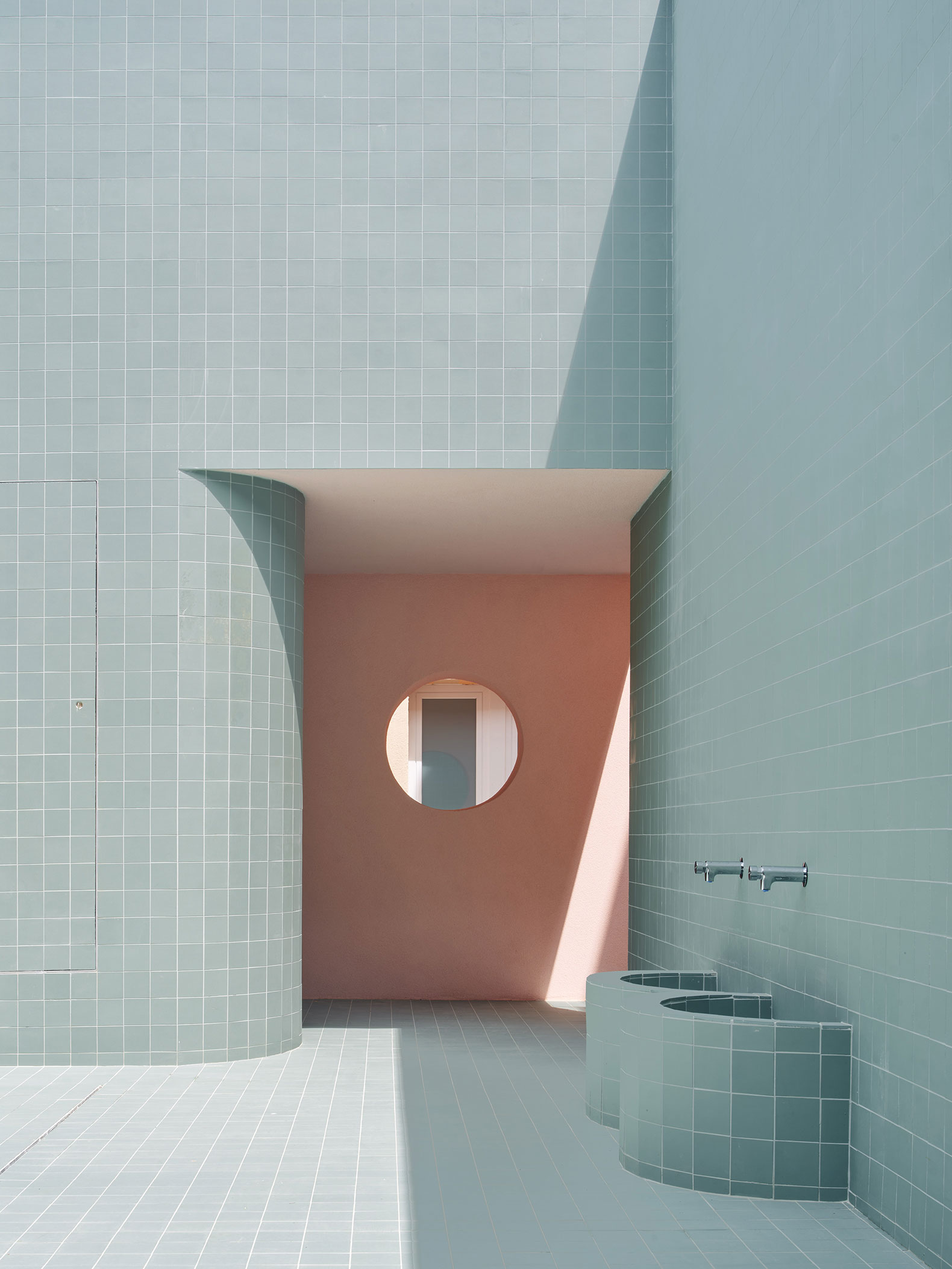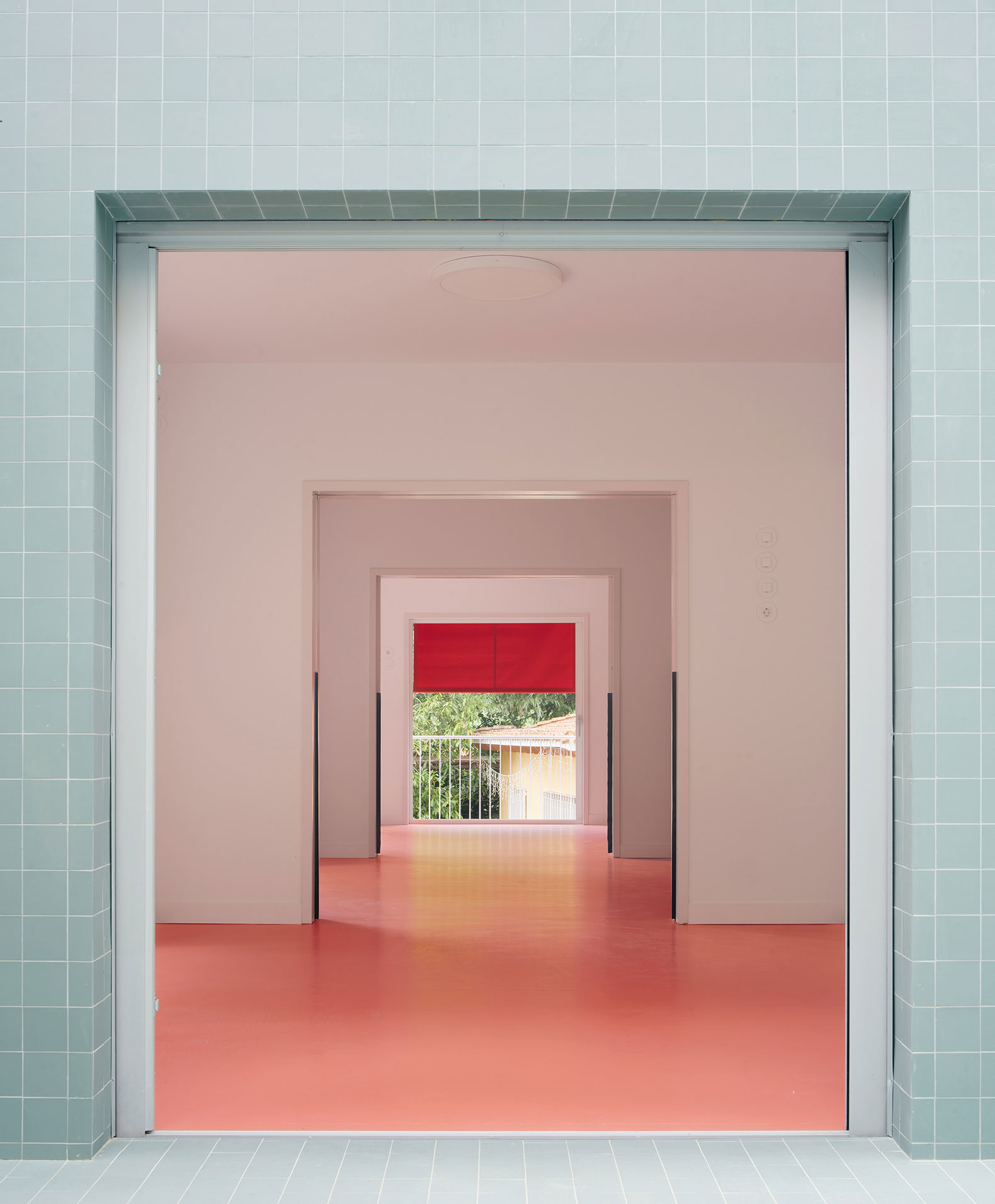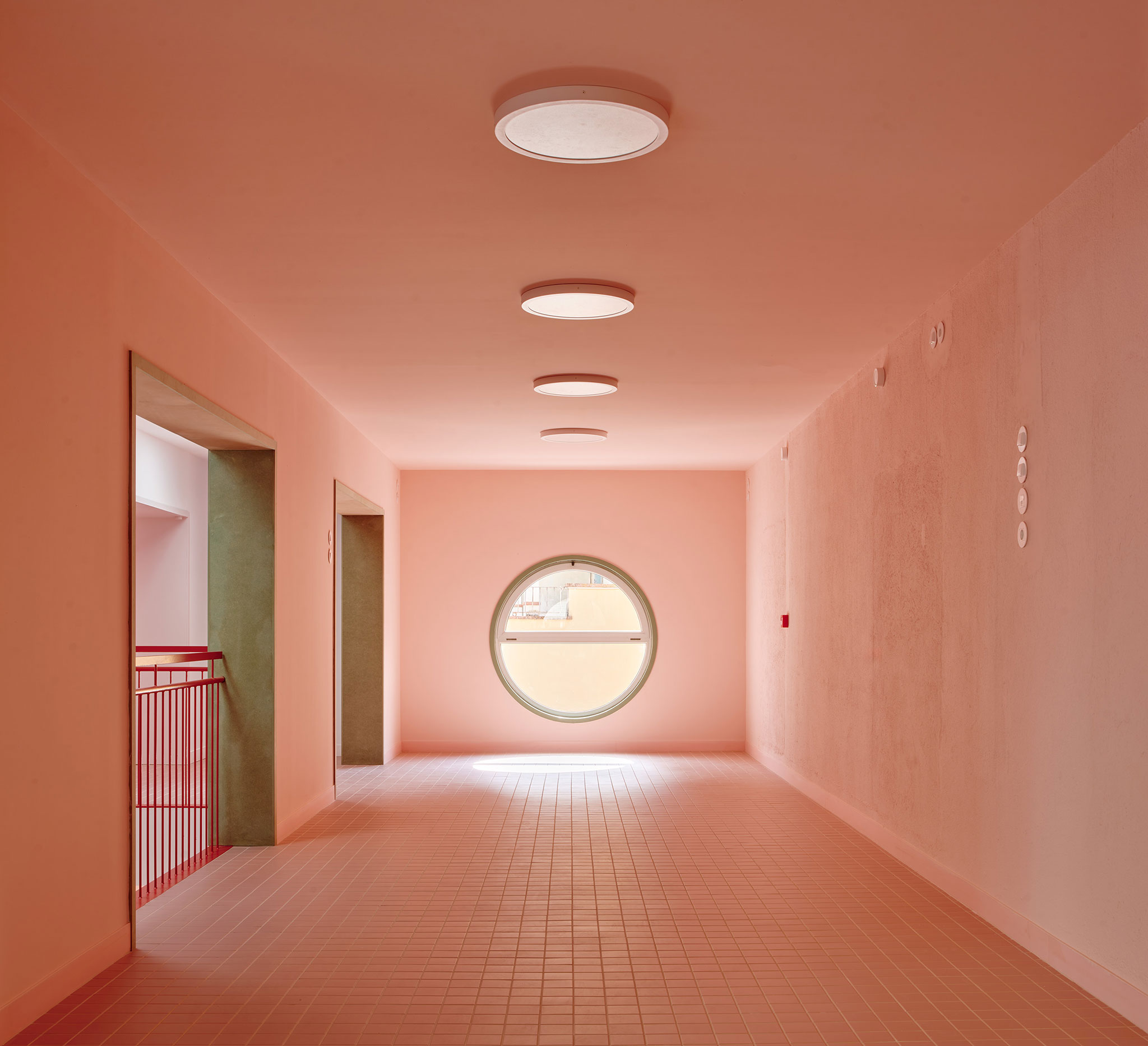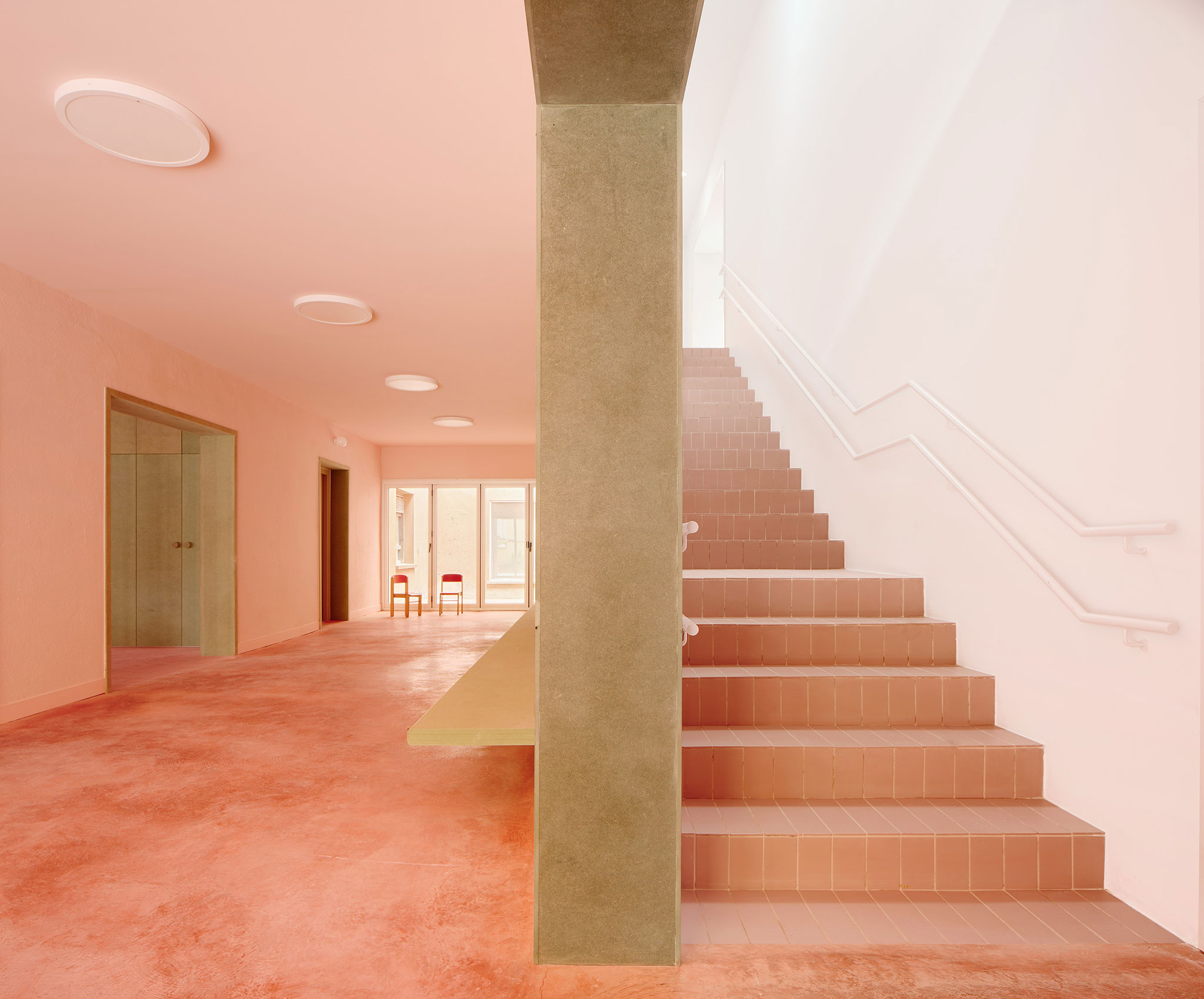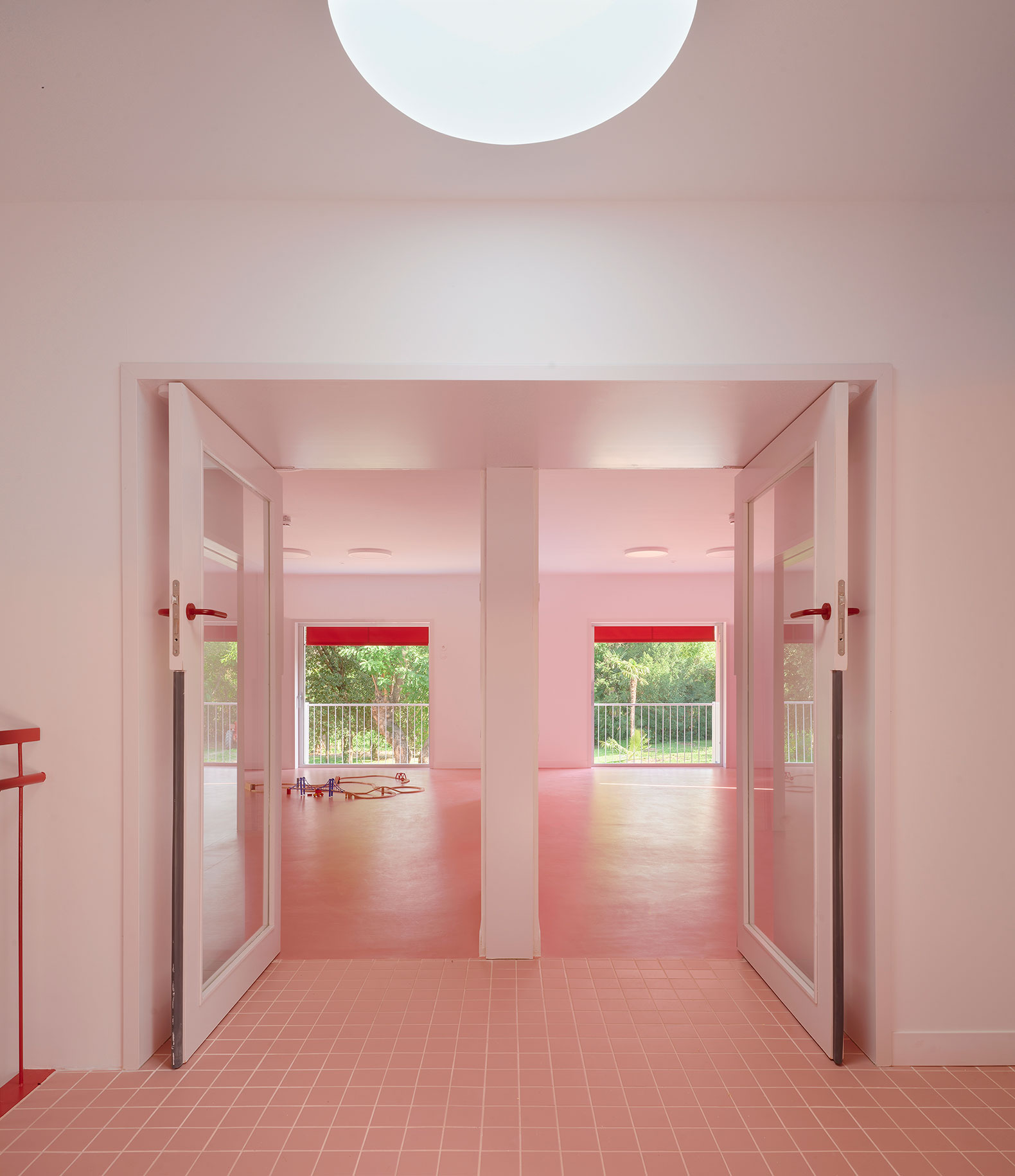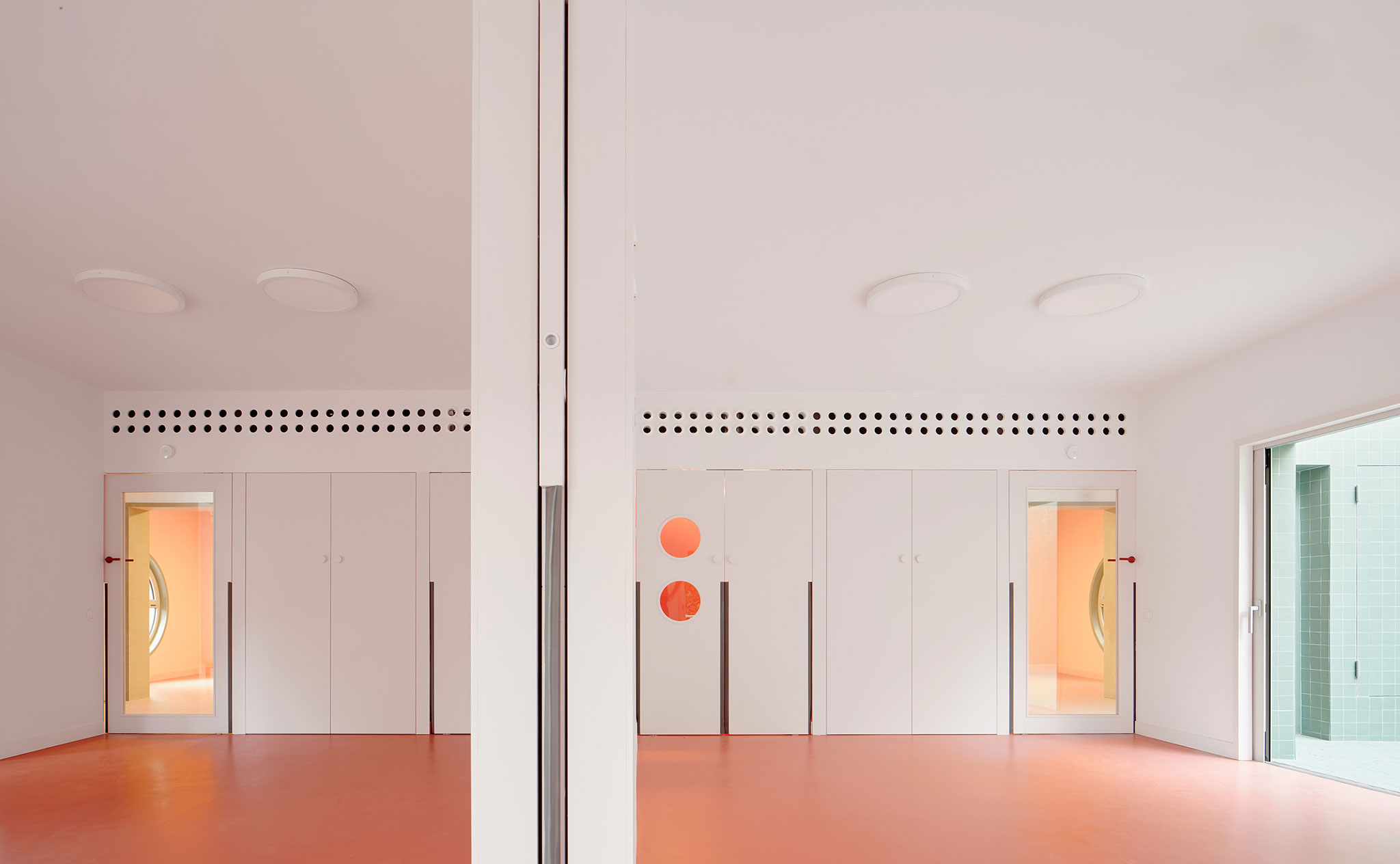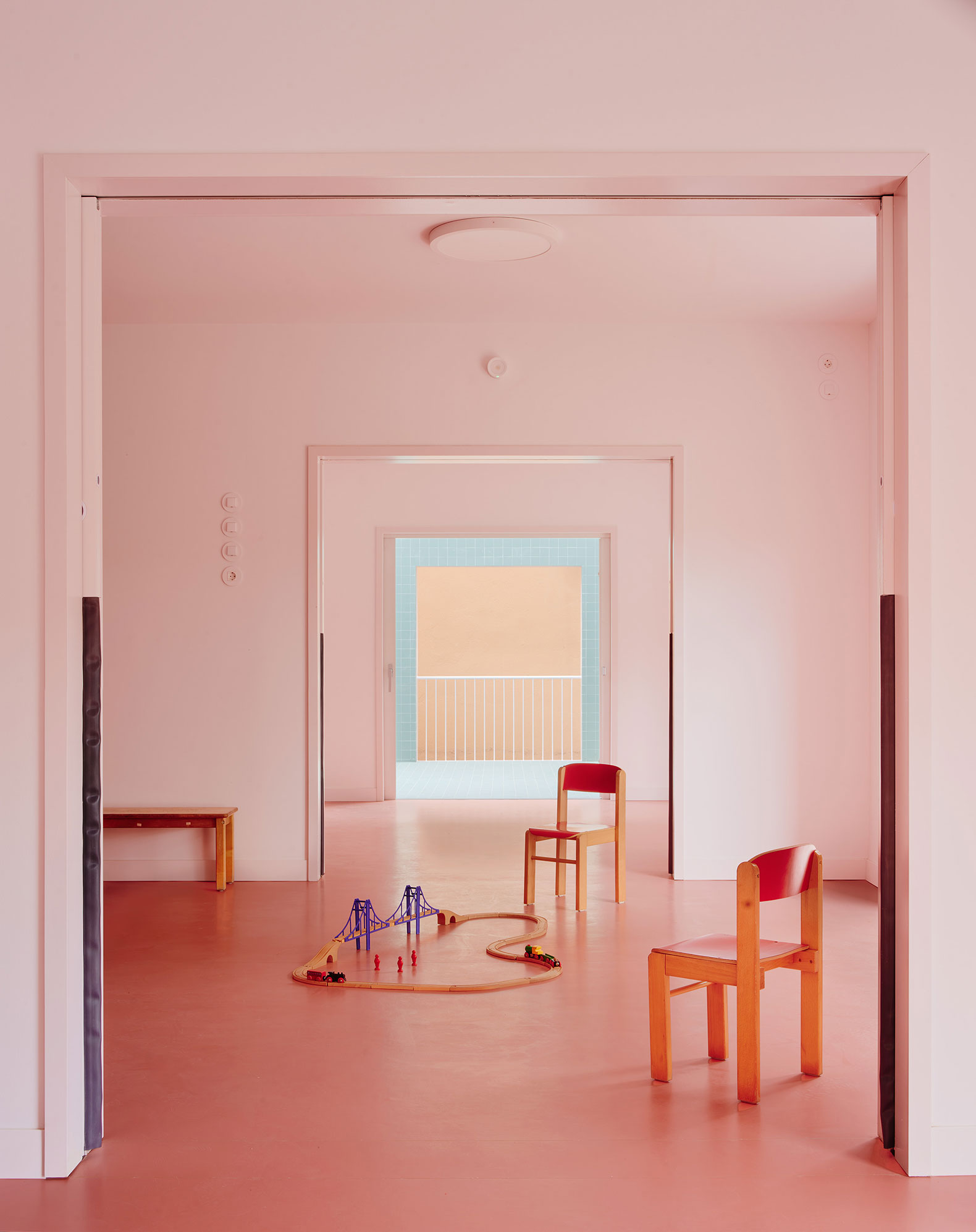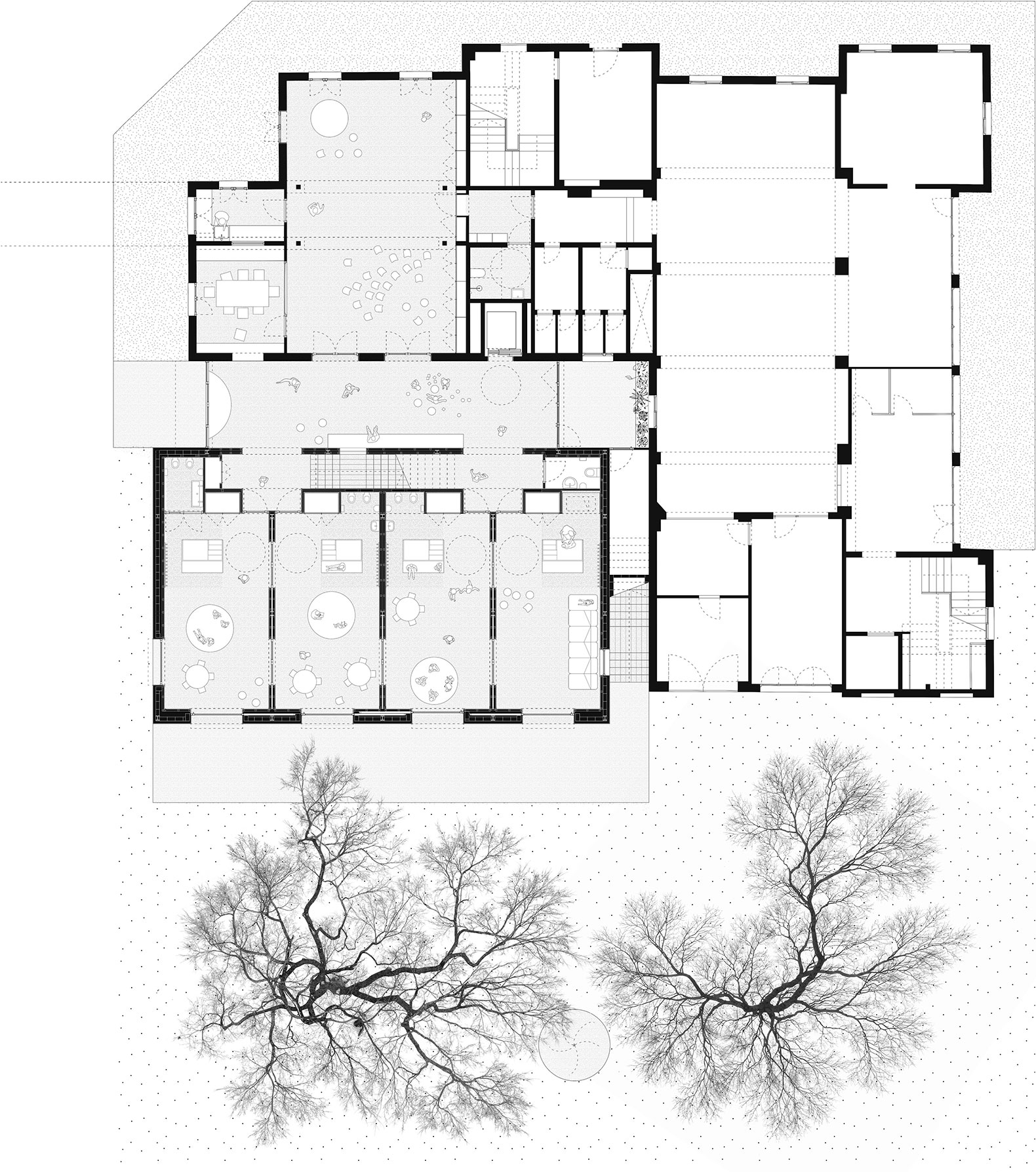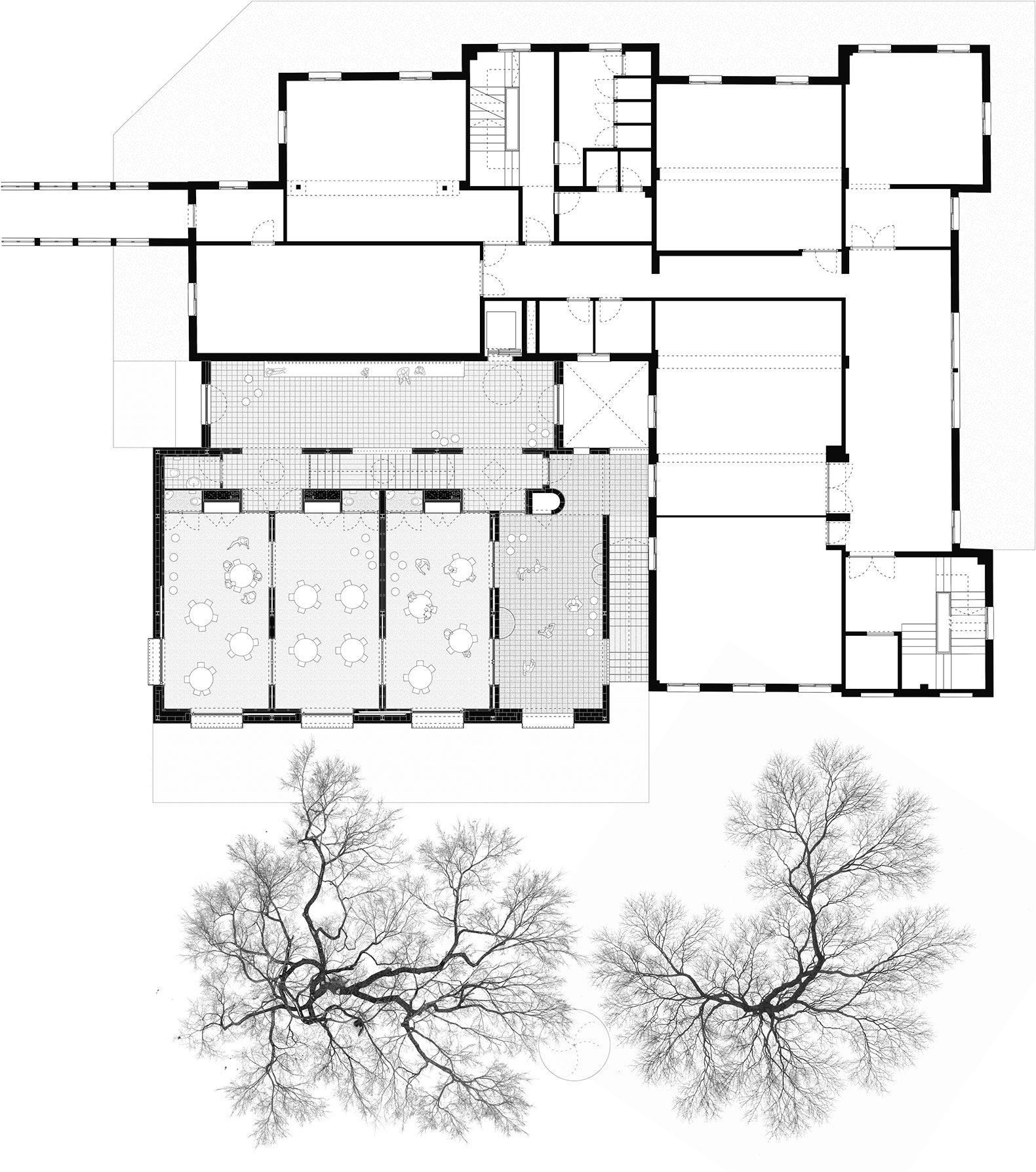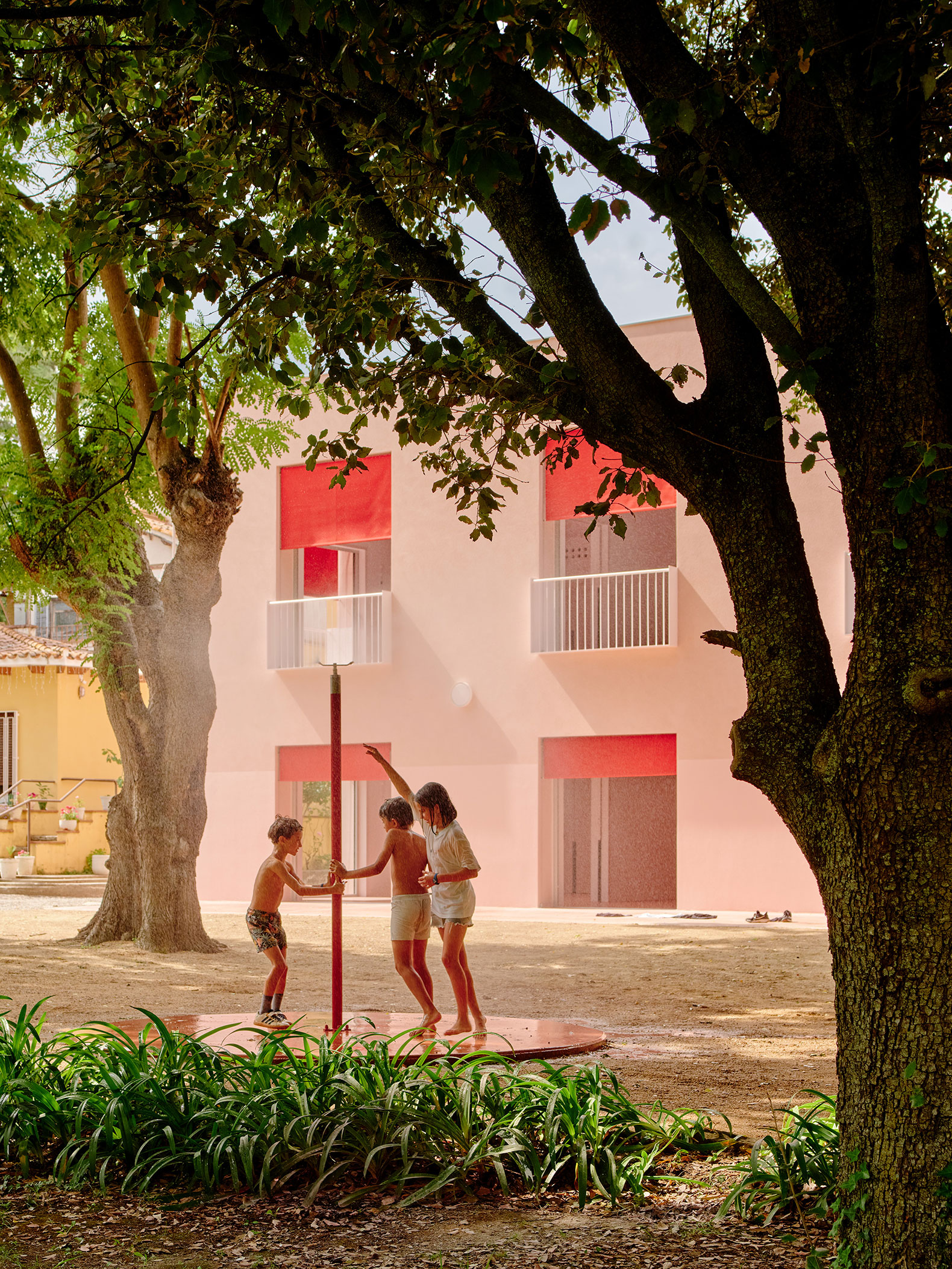
The "Casa Nostra" Kindergarten, designed by Sarquella Torres and Marc Riera, is built on the footprint of an existing building whose volume is subject to urban planning regulations. The space is structured around a wide access corridor, an intermediate space that functions as an extension of the classrooms, prioritizing movement and shared activities.
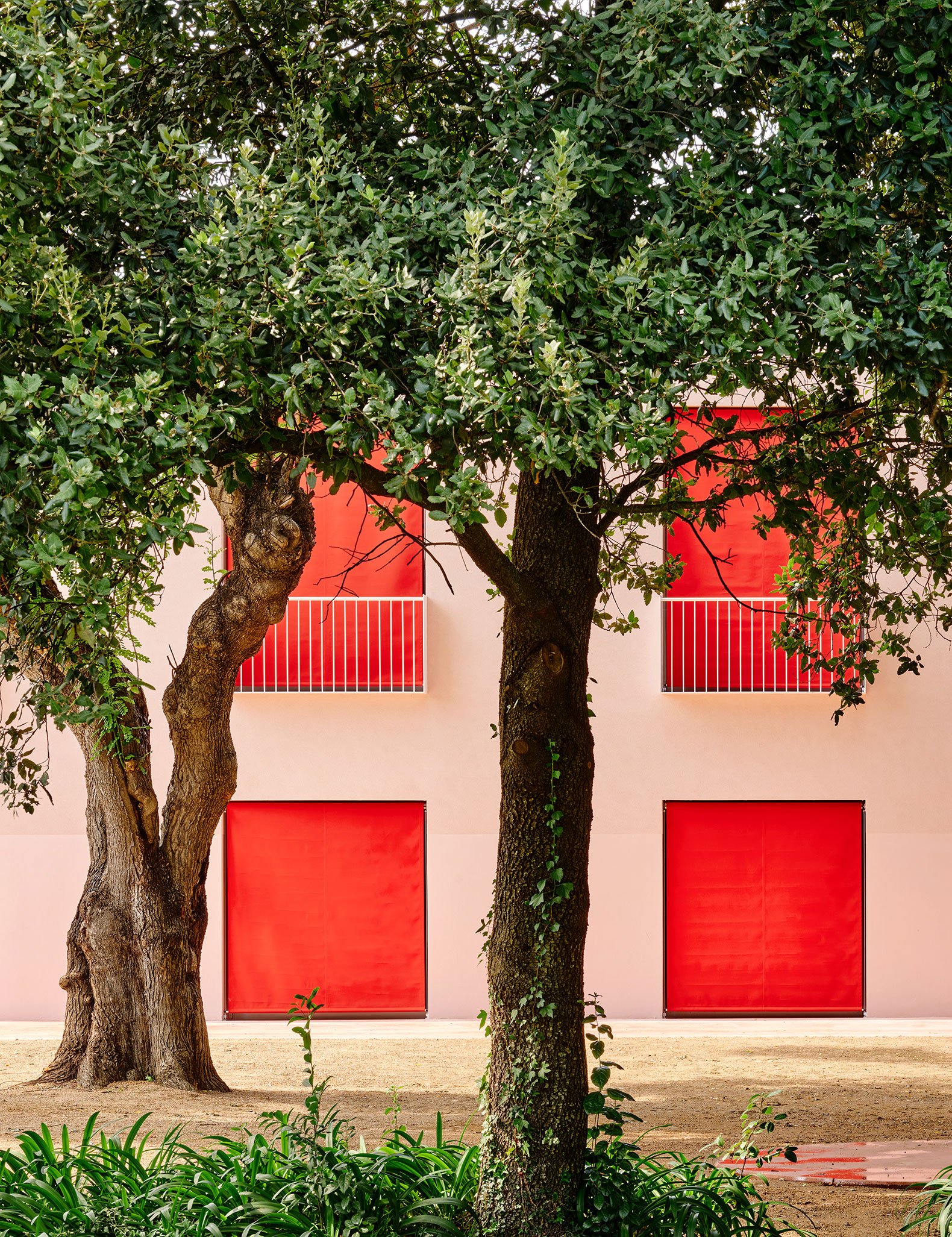
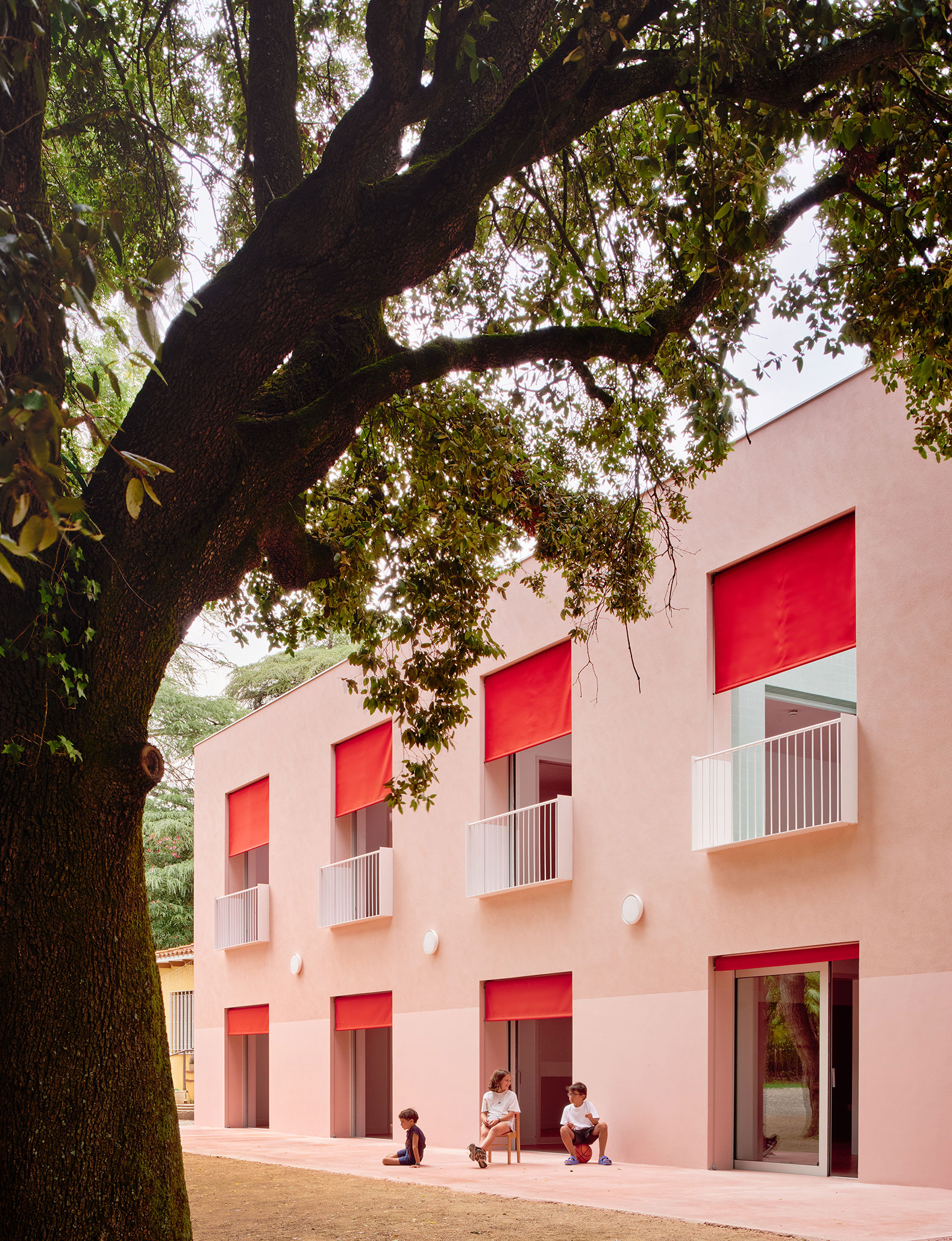
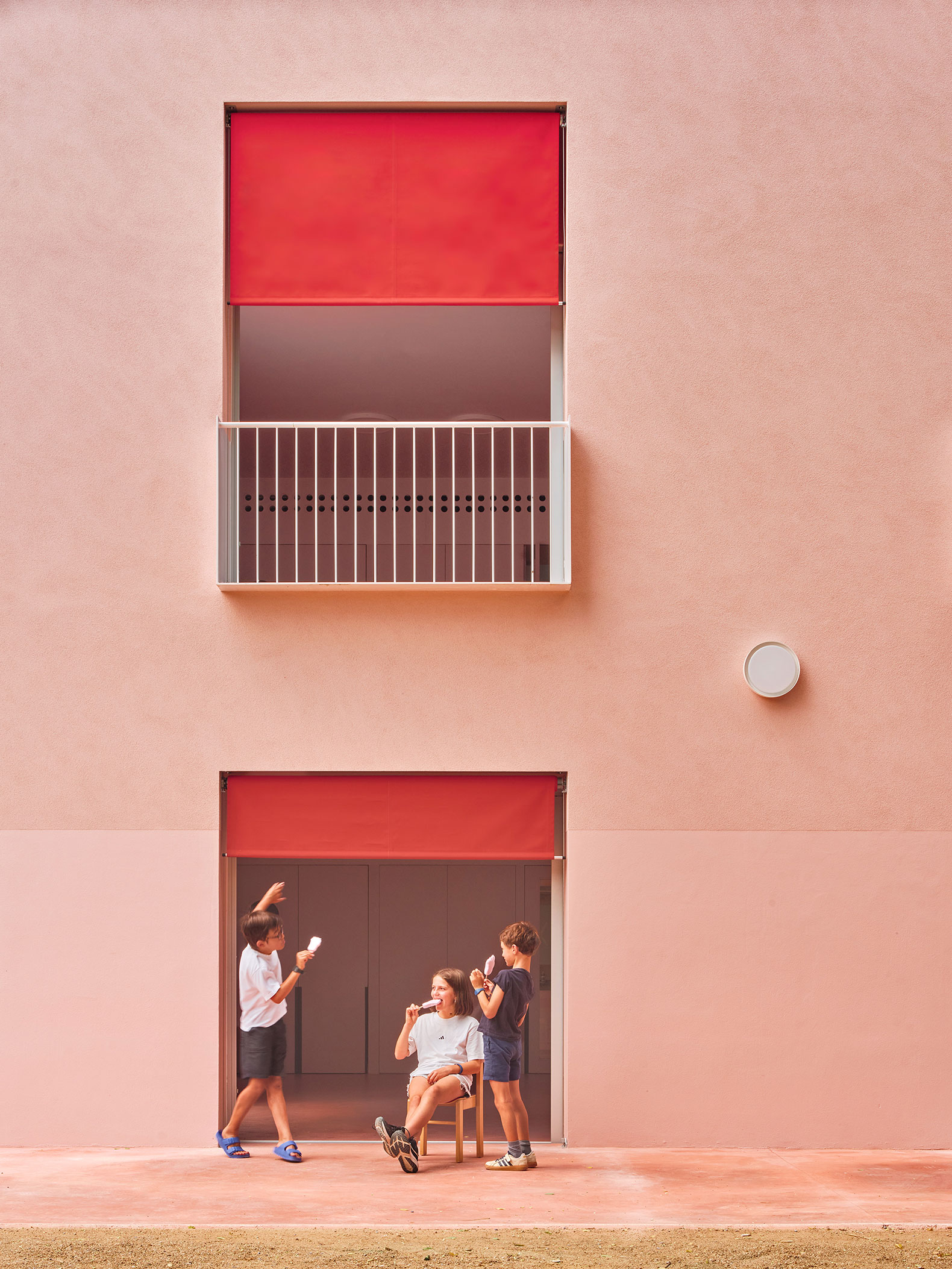
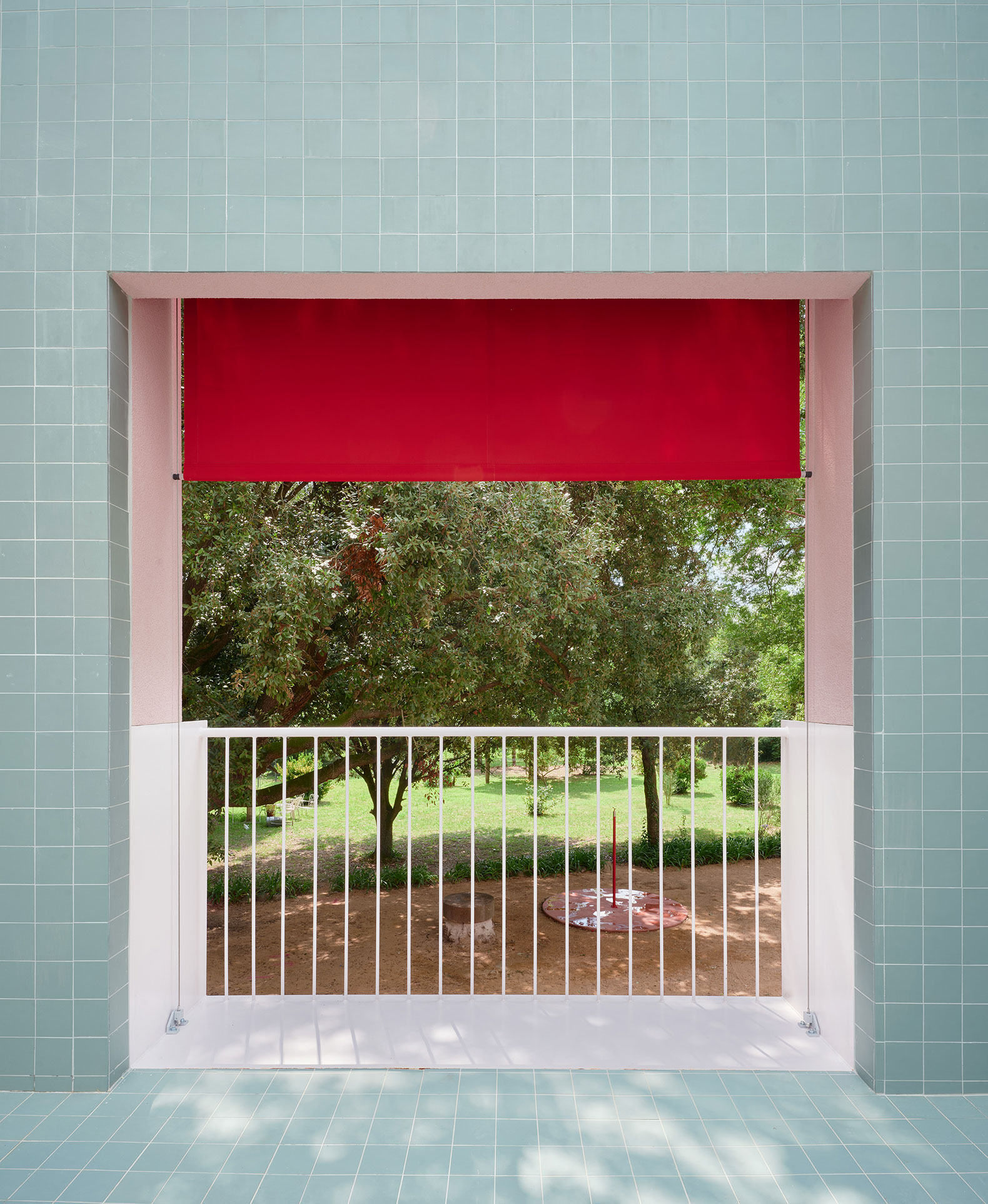
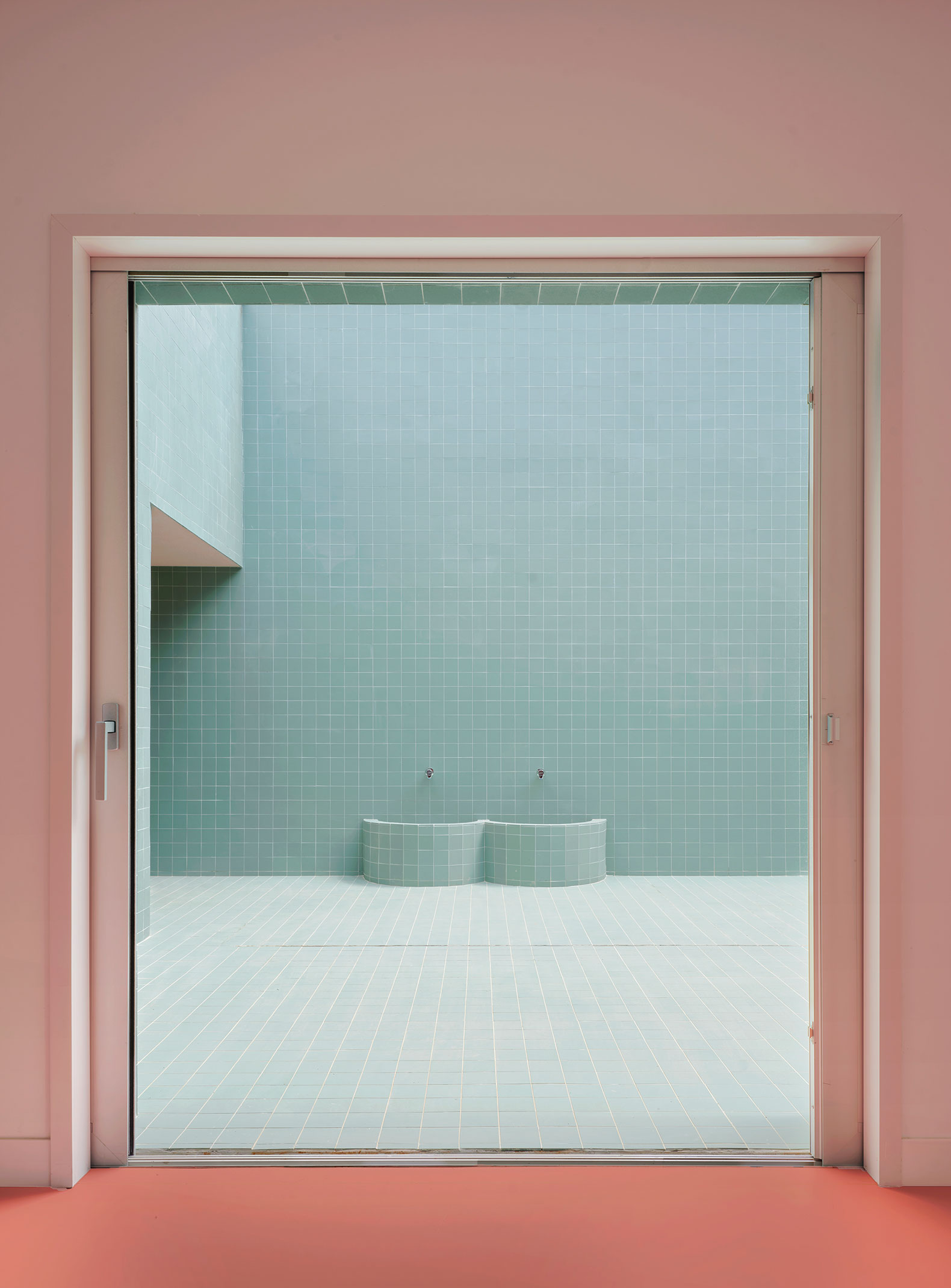
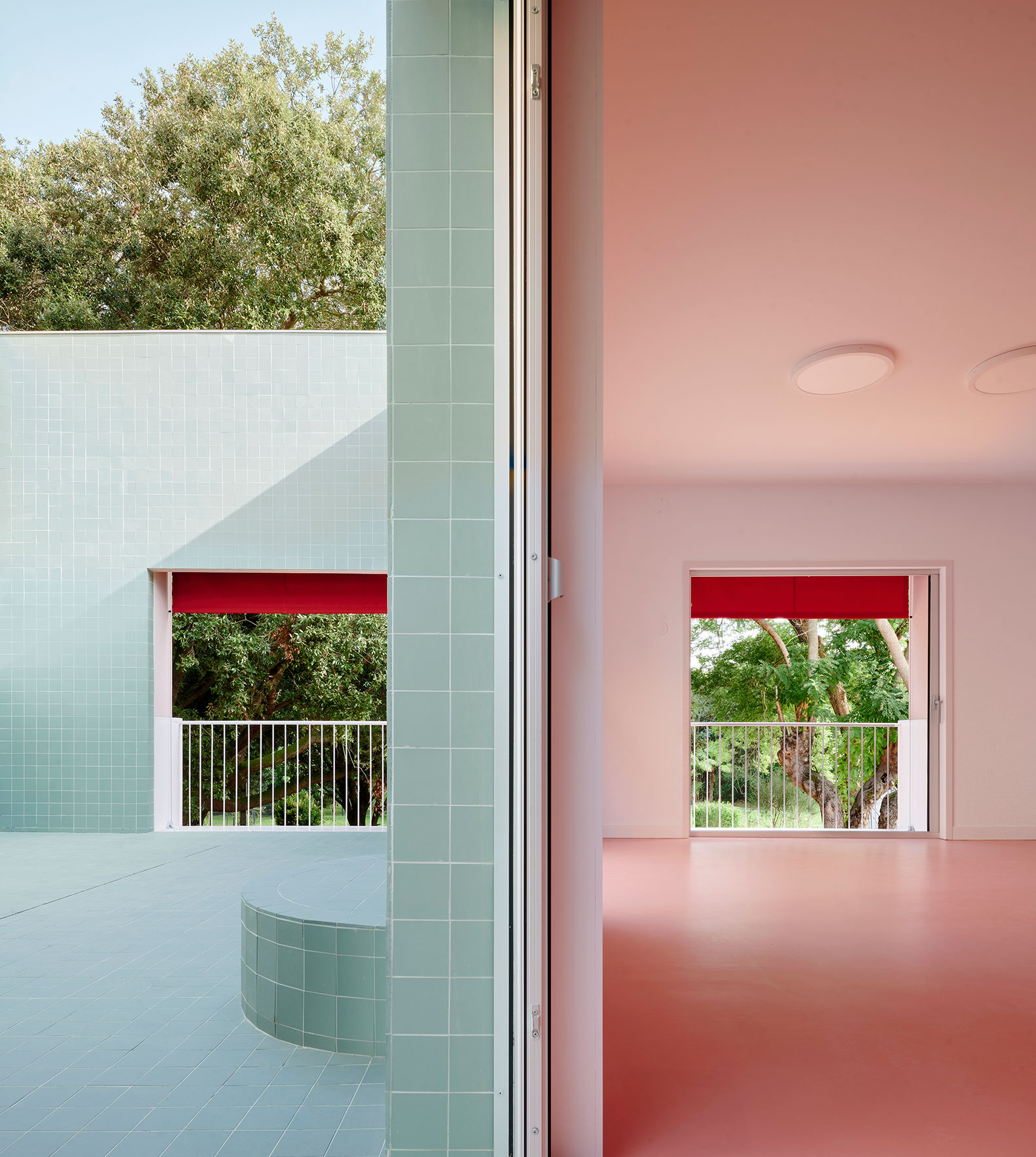
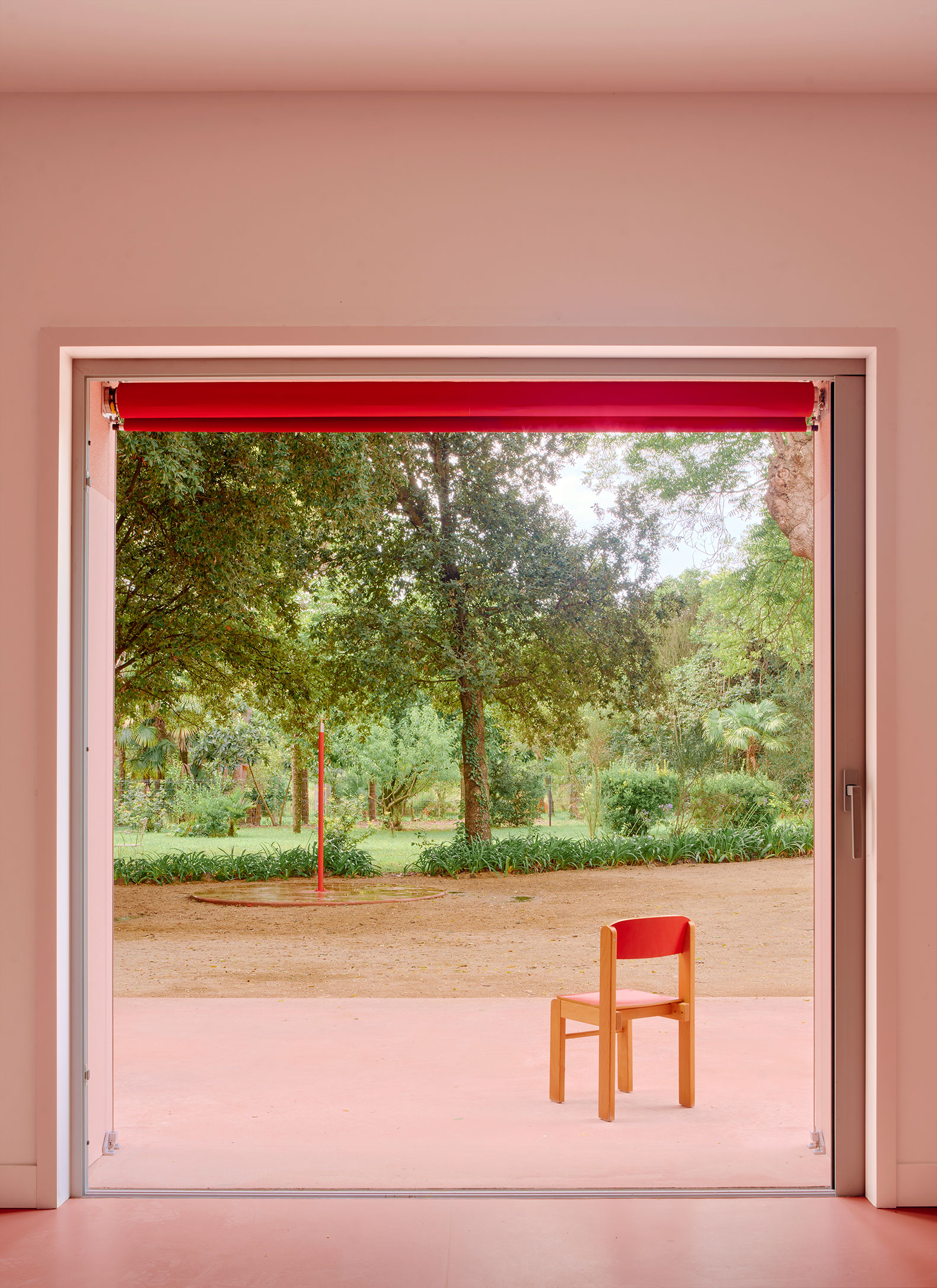
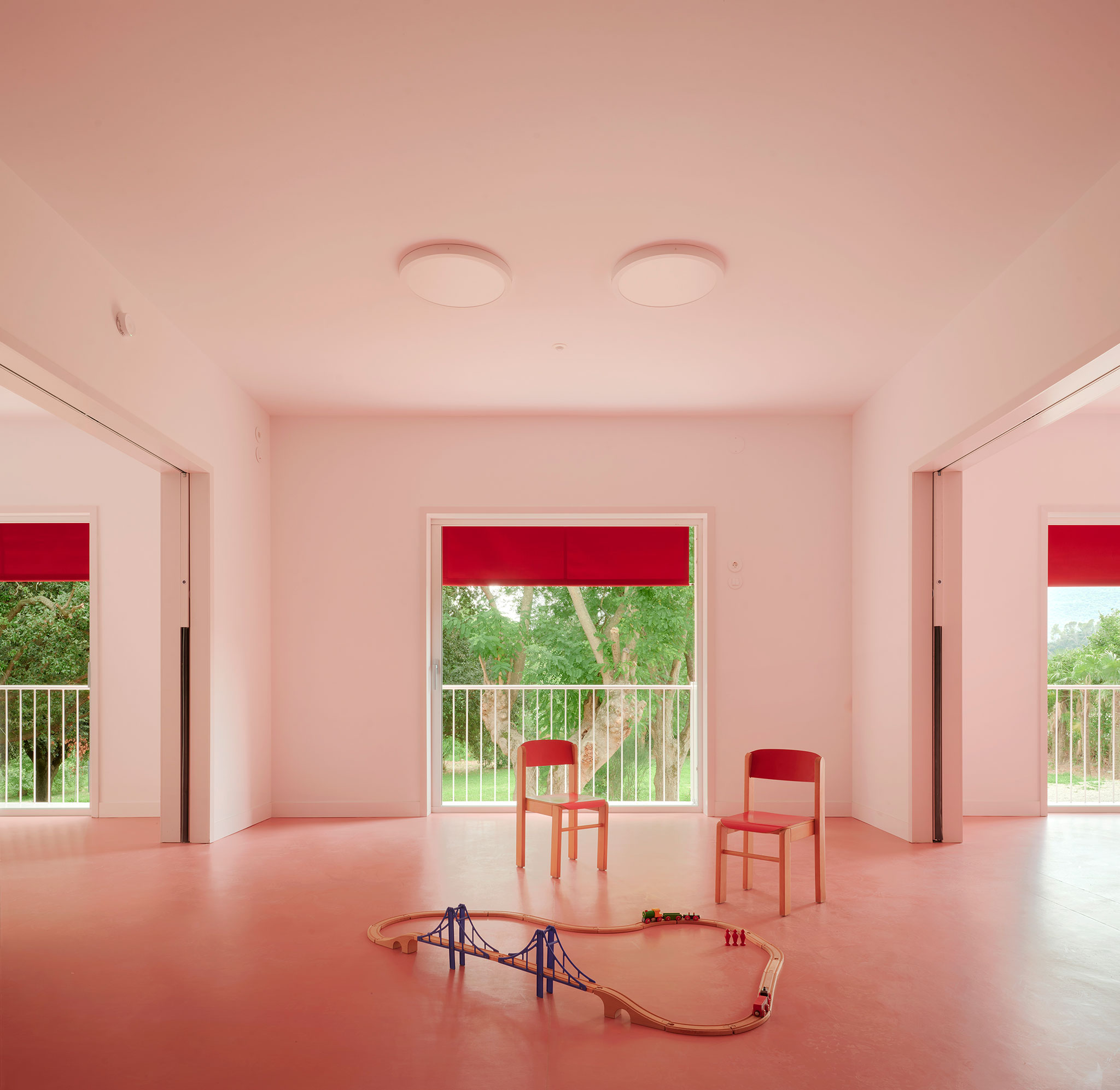
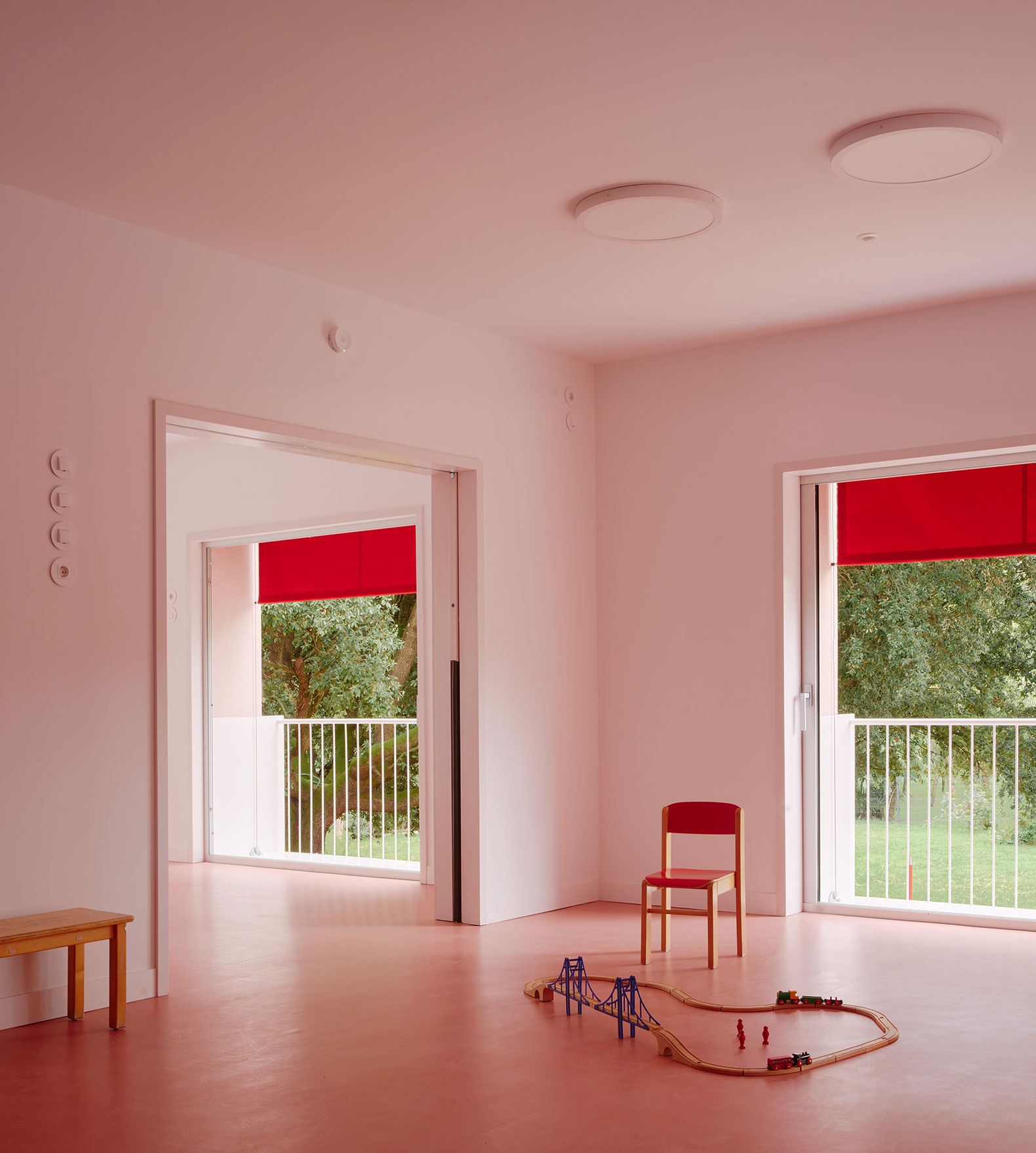
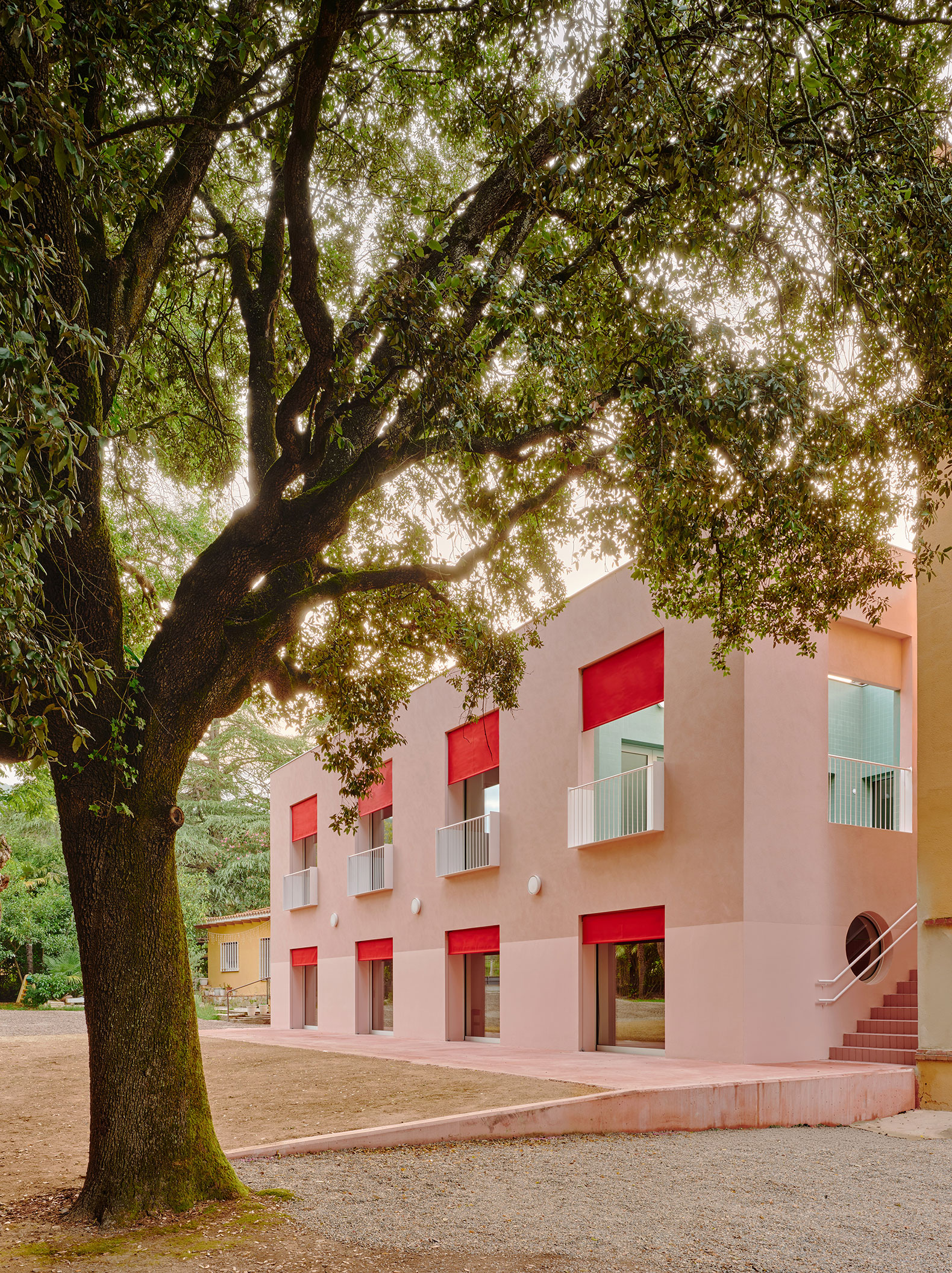
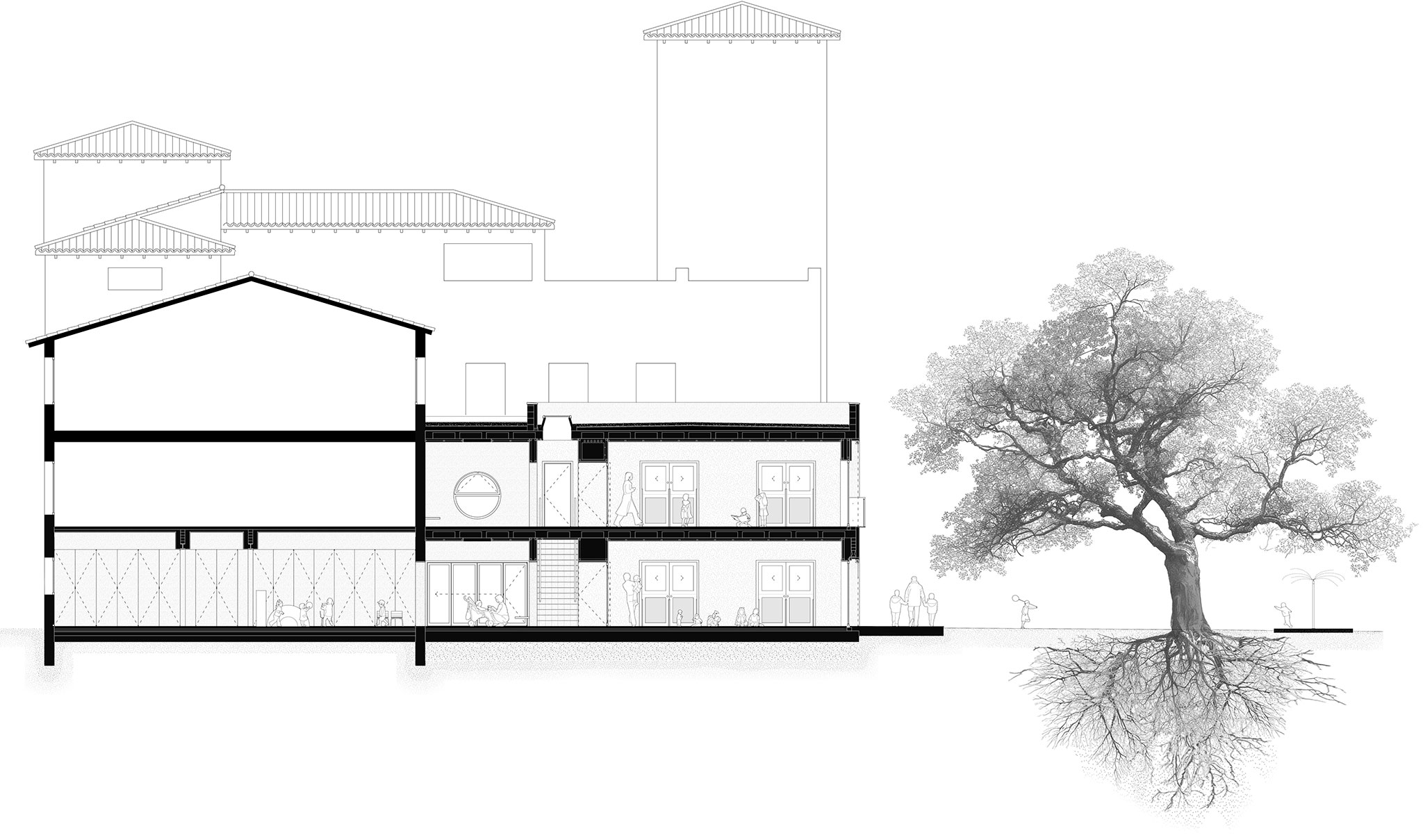
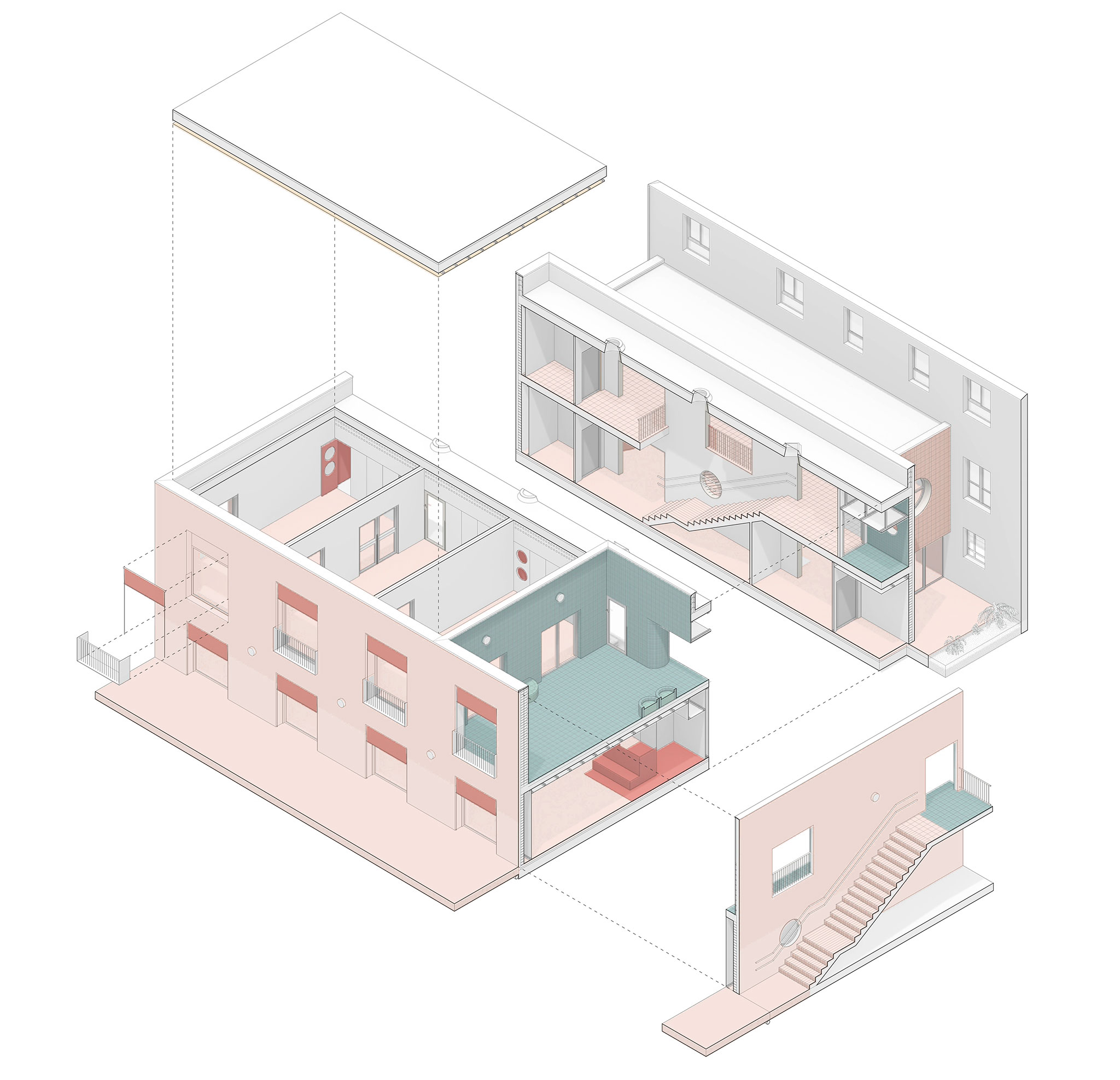
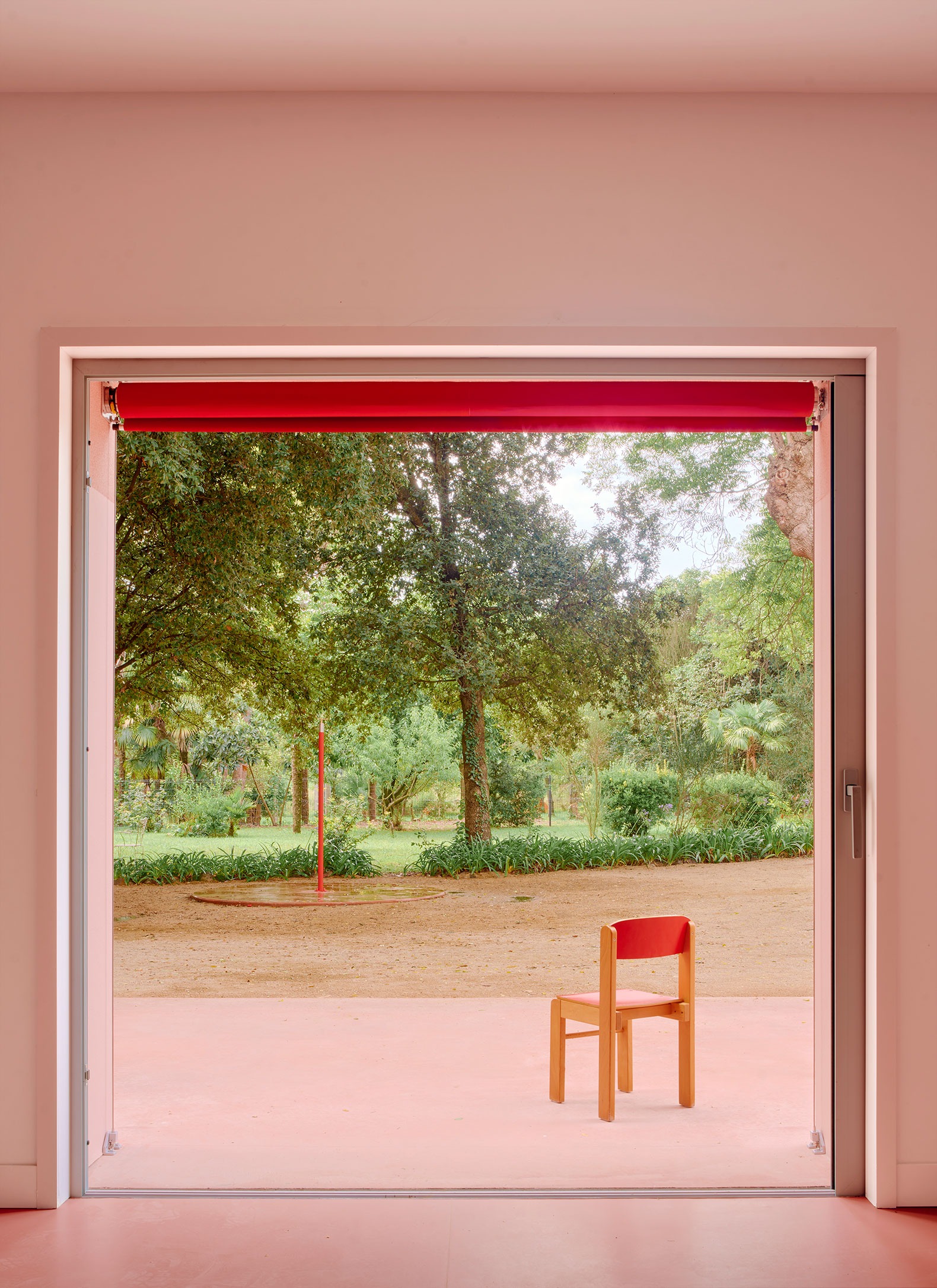
The facades adopt the compositional logic of the surrounding buildings through large openings that frame views of the landscape and encourage interaction with the outdoors, a privileged environment. The south-facing classrooms feature large sliding glass doors that extend the activity into the playground and its entrance.
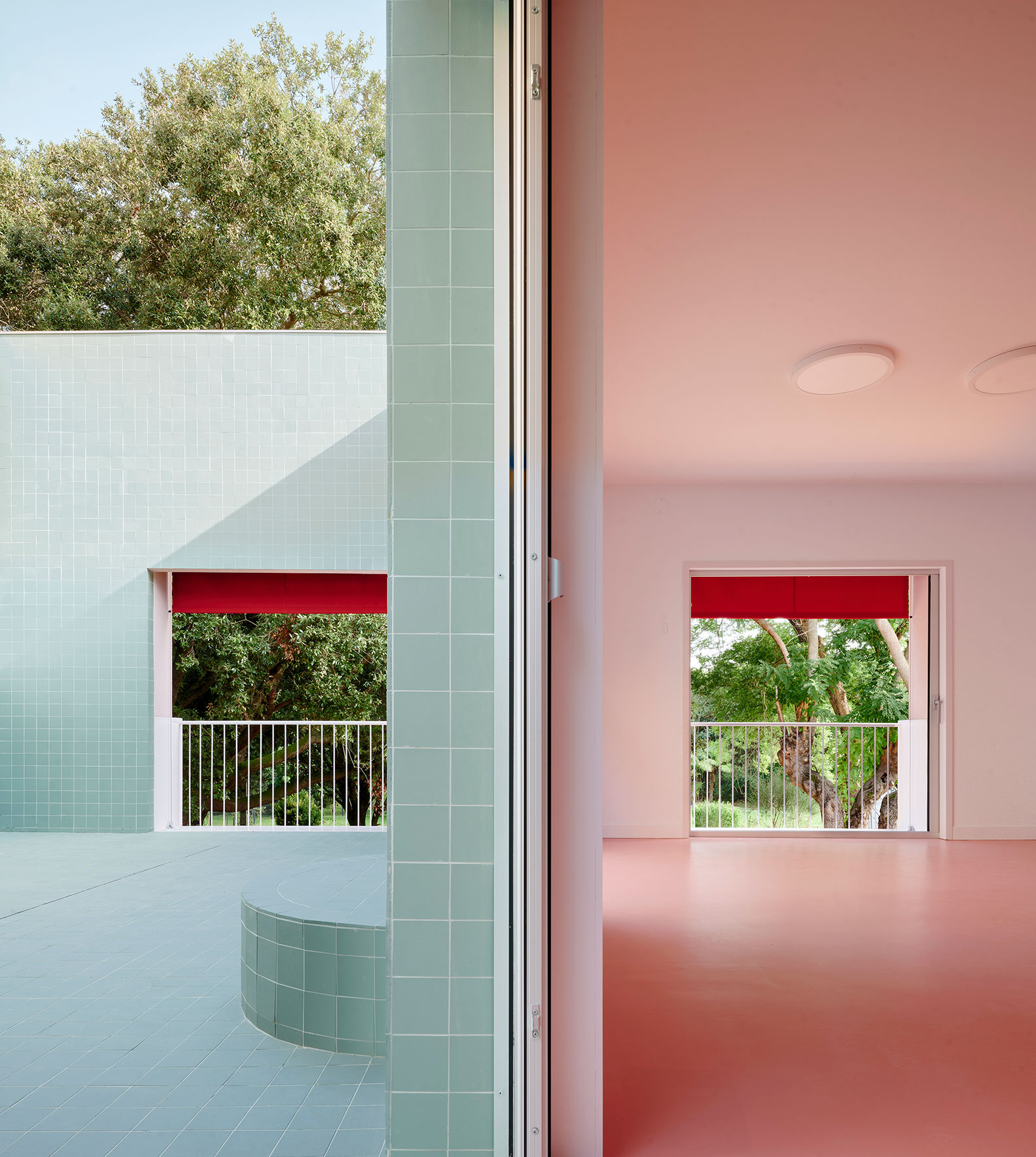
"Casa Nostra" Kindergarten by Sarquella Torres + Marc Riera. Photograph by José Hevia.
Project description by Sarquella Torres + Marc Riera
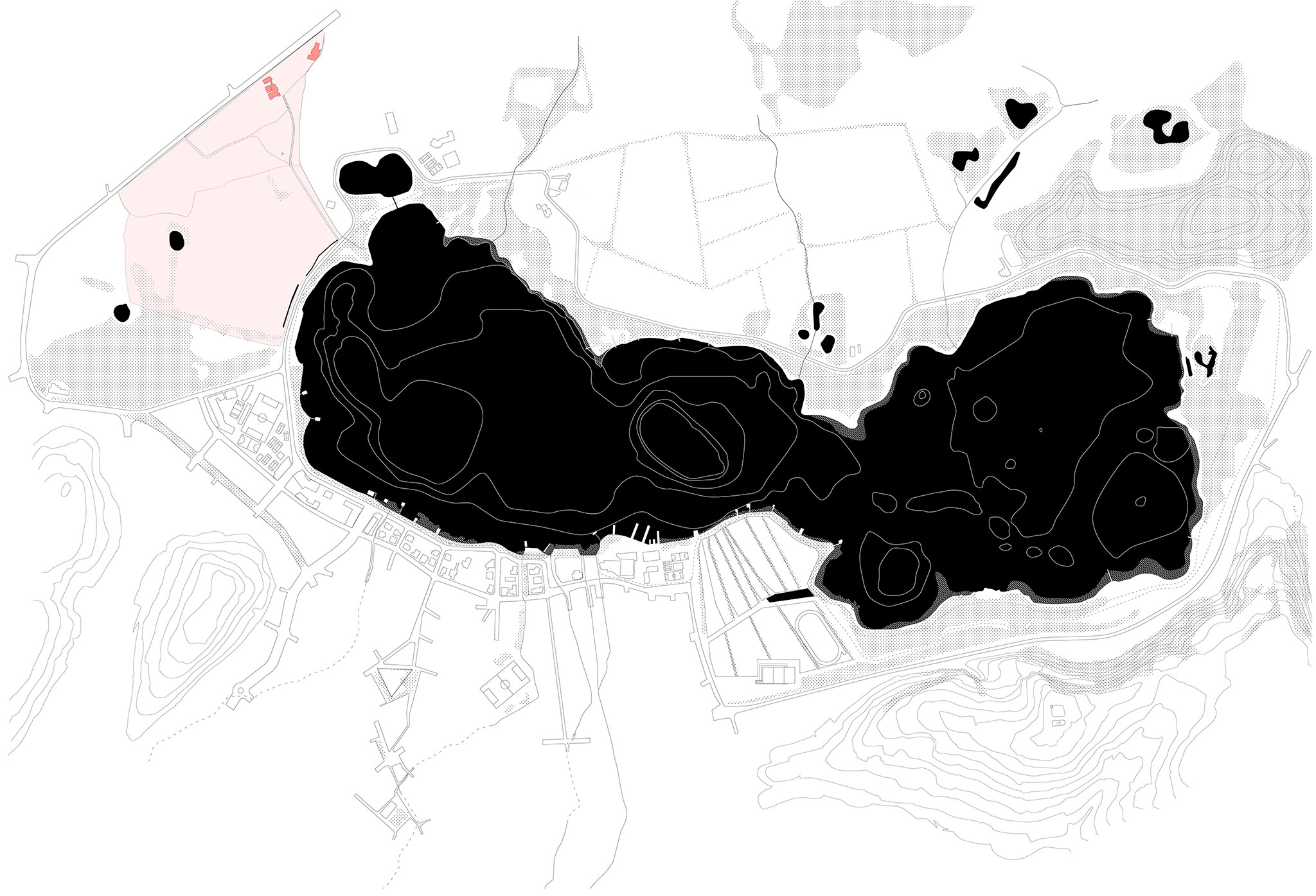
Set on the southern edge of Banyoles Lake, La finca de Casa Nostra occupies a site of exceptional environmental sensitivity. Acquired in 1926 by Magdalena Aulina’s Cultural Institution, the property has supported educational activities for nearly a century. Over time, these have accumulated in the form of a small campus, a constellation of buildings constructed incrementally and shaped by the landscape as much as by institutional need.
Within this existing ensemble, a new nursery school consolidates a programme previously dispersed in the city centre. The project is realised on the footprint of a former building and is constrained to its volume by planning regulations. Rather than treating these limits as a restriction to be overcome, the design embraces them as a framework within which spatial openness must be carefully constructed.
The building’s organisation is structured around a generously scaled access corridor that connects it to the rest of the complex. More than a passage, this intermediate space operates as an extension of the classrooms themselves, accommodating play, informal learning and collective use. Sliding partitions between classrooms allow spaces to expand, overlap and adapt, privileging movement and shared activity over fixed layouts.
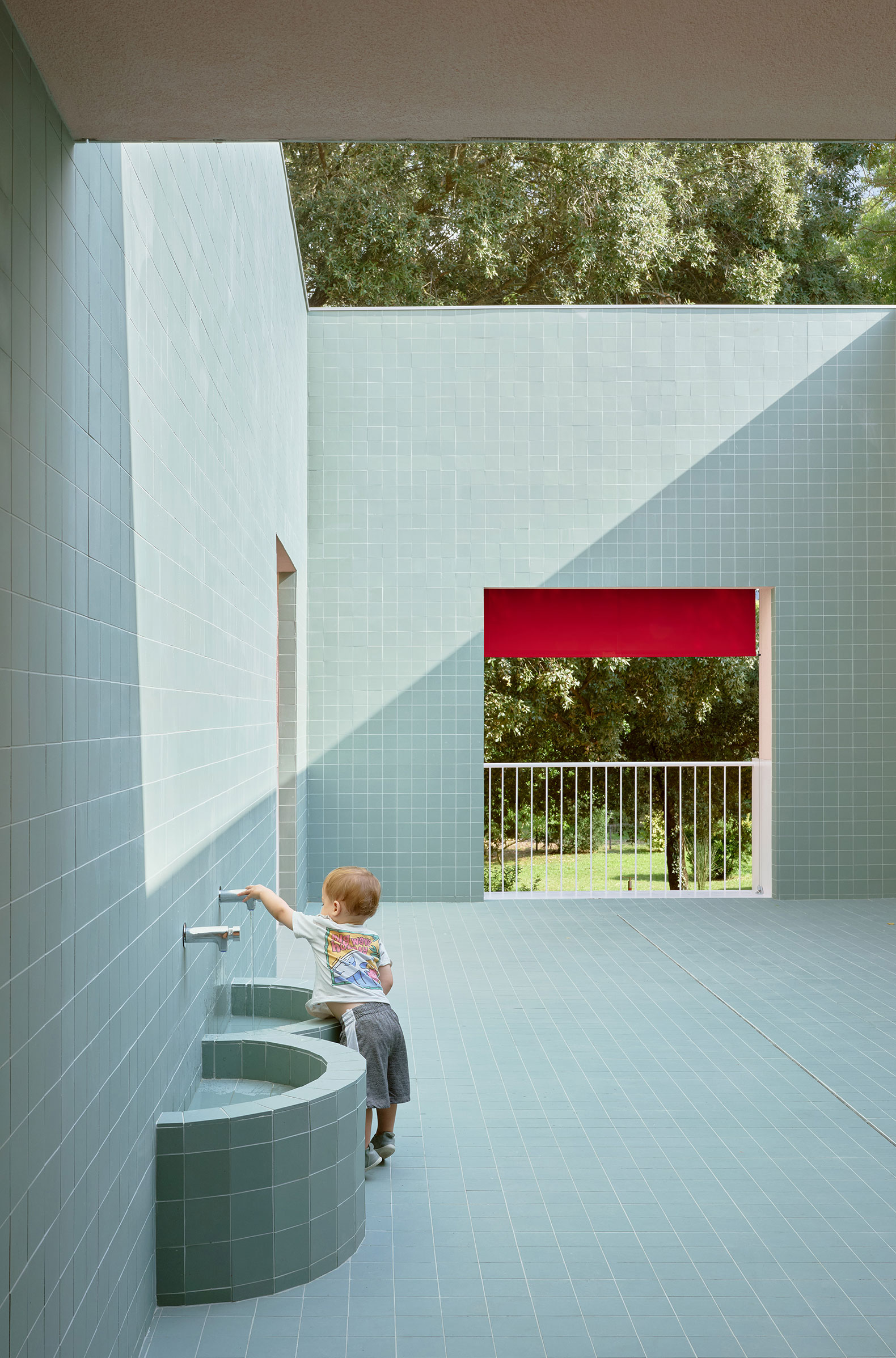
With the maximum permissible built area already reached, learning space extends outdoors. An open-air classroom functions as an eighth room, conceived as an additional learning space that complements the interior rooms.
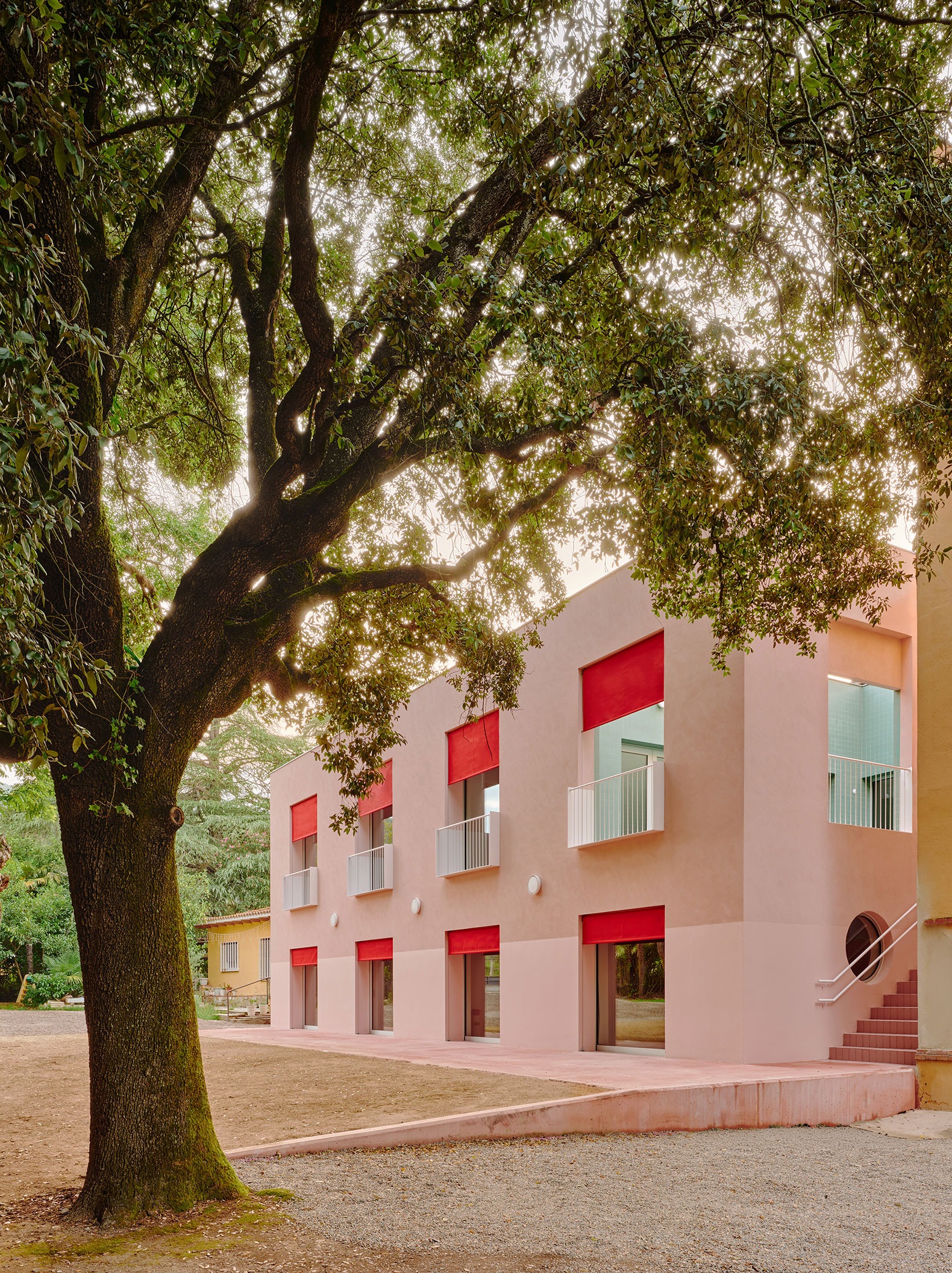
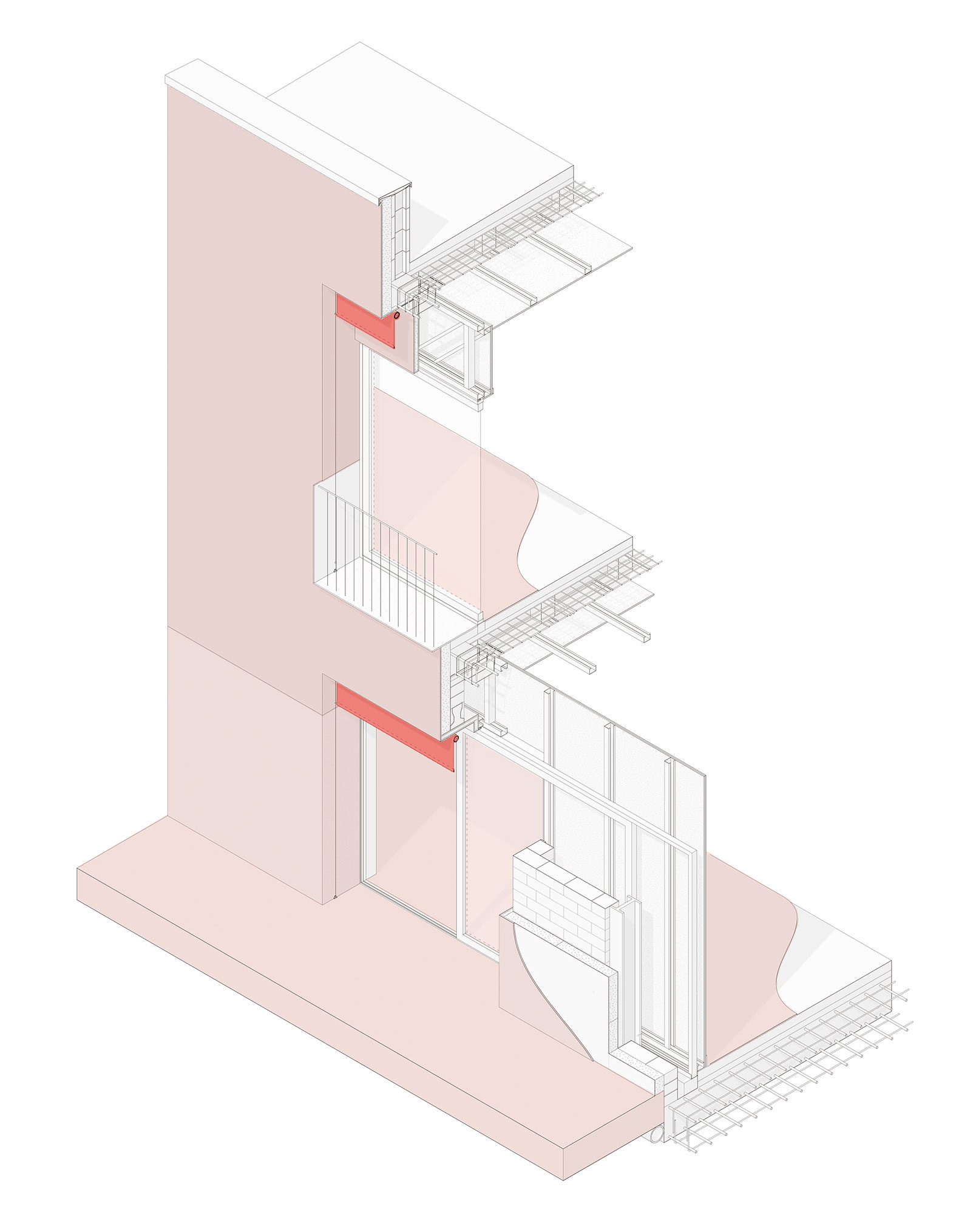
The façades adopt the compositional logic of the surrounding buildings and reinterpret it through large openings, conceived to frame views of the landscape and intensify everyday engagement with the exterior. Assuming the setting as a privilege, the south-facing classrooms incorporate large glazed enclosures that slide into the thickness of the wall and can disappear entirely in mild weather, giving the building an almost porch-like condition. When fully open, they extend daily activity into the courtyard and its shaded threshold beneath the acacia tree, mediating comfort and reinforcing the continuity between interior space and landscape.