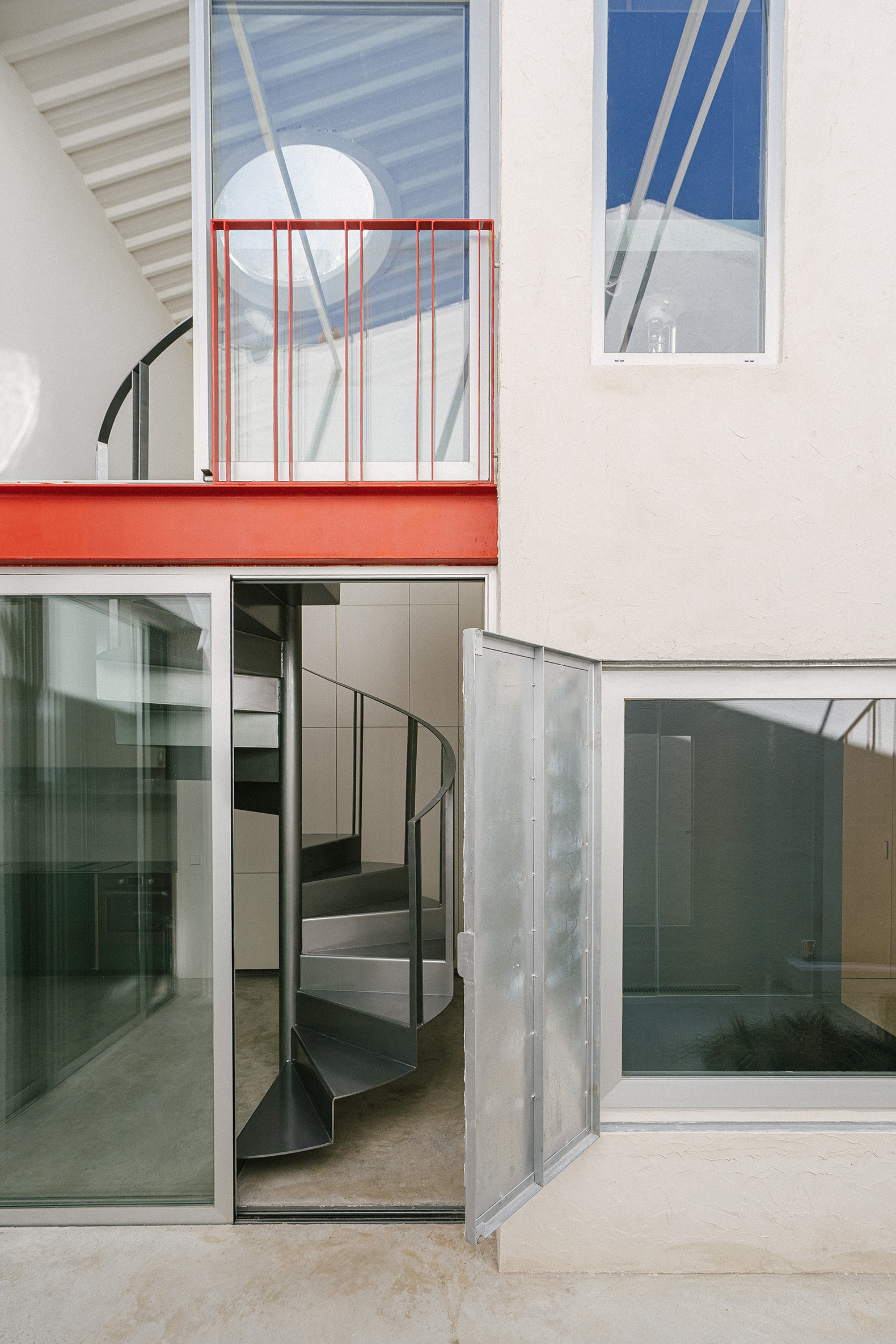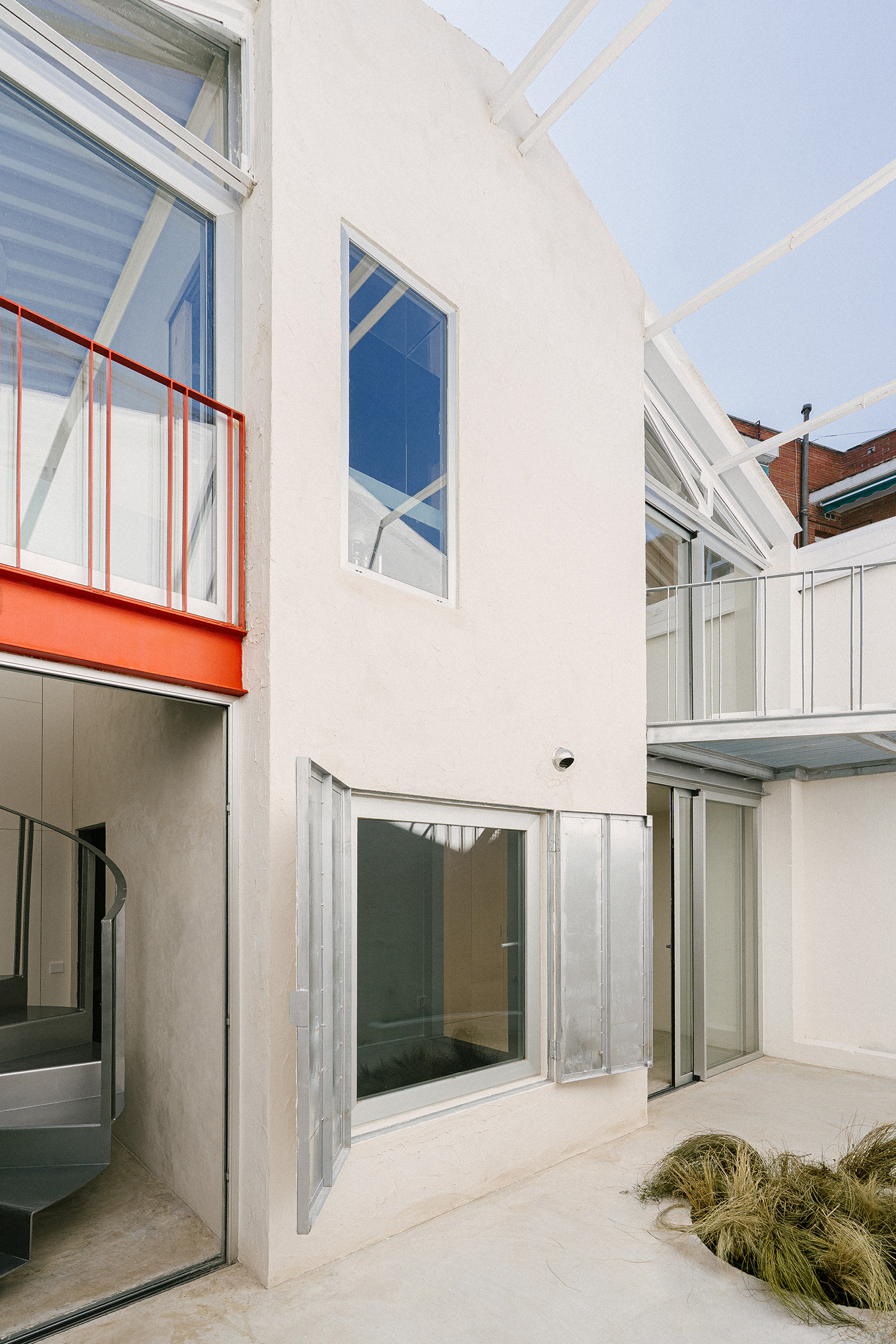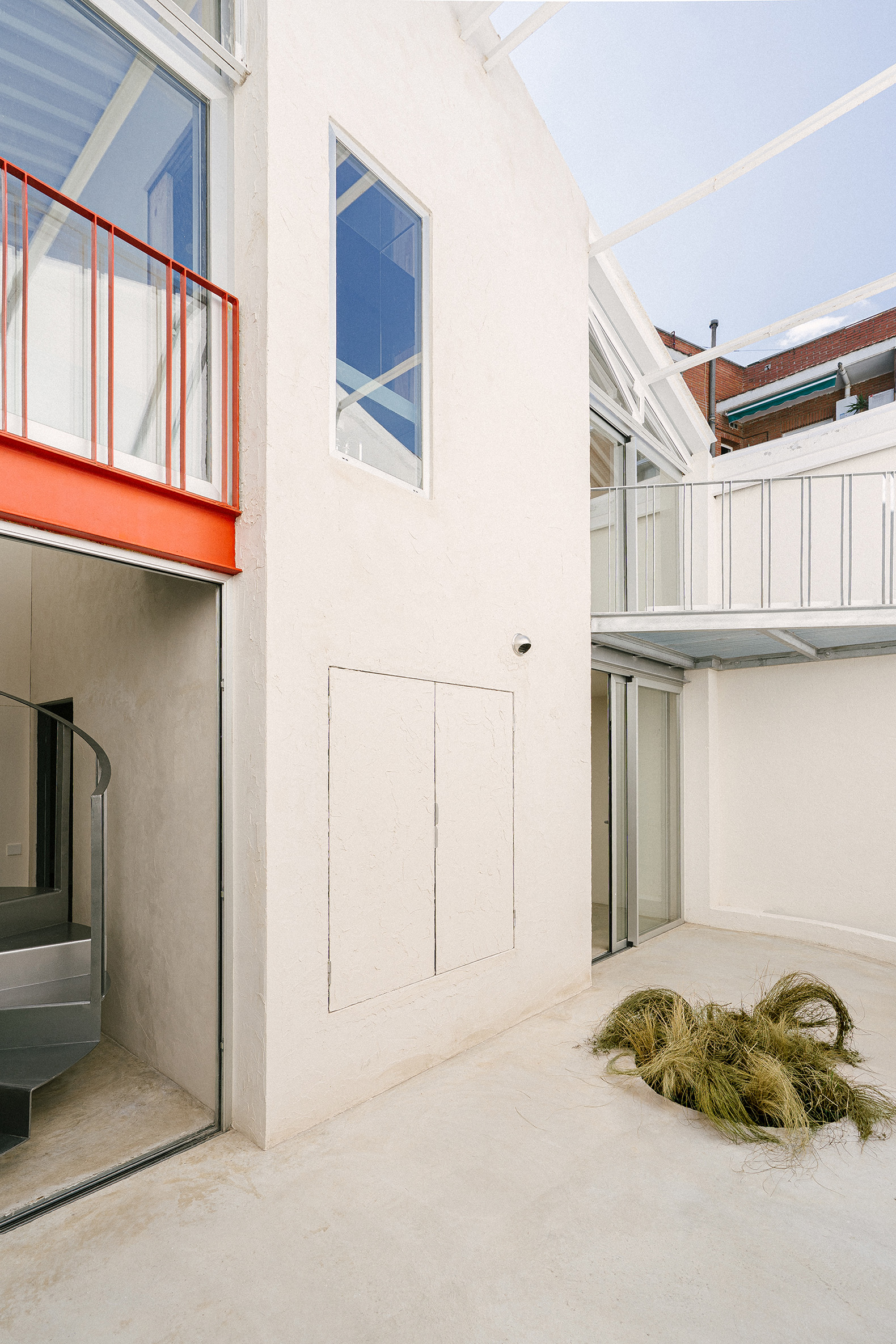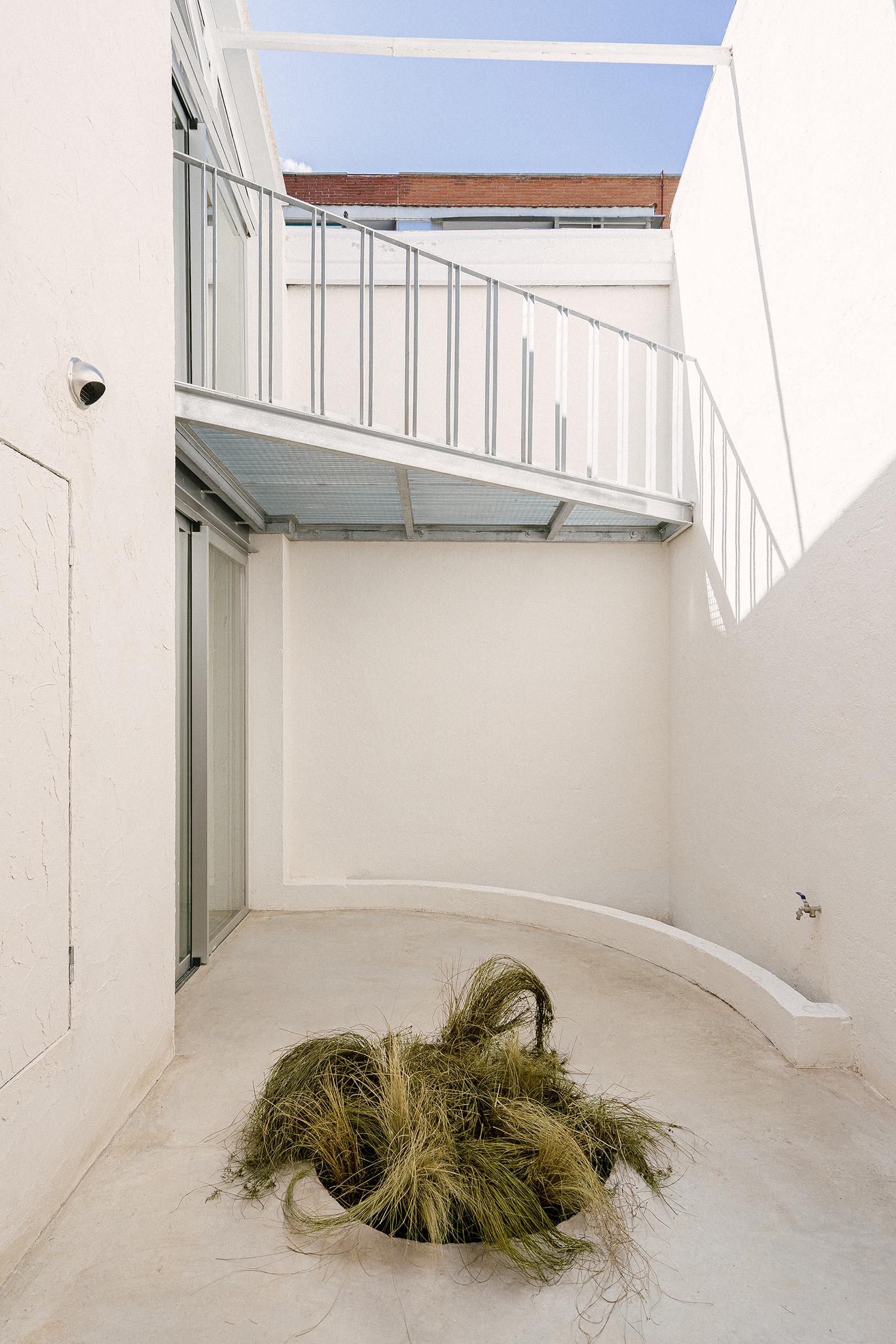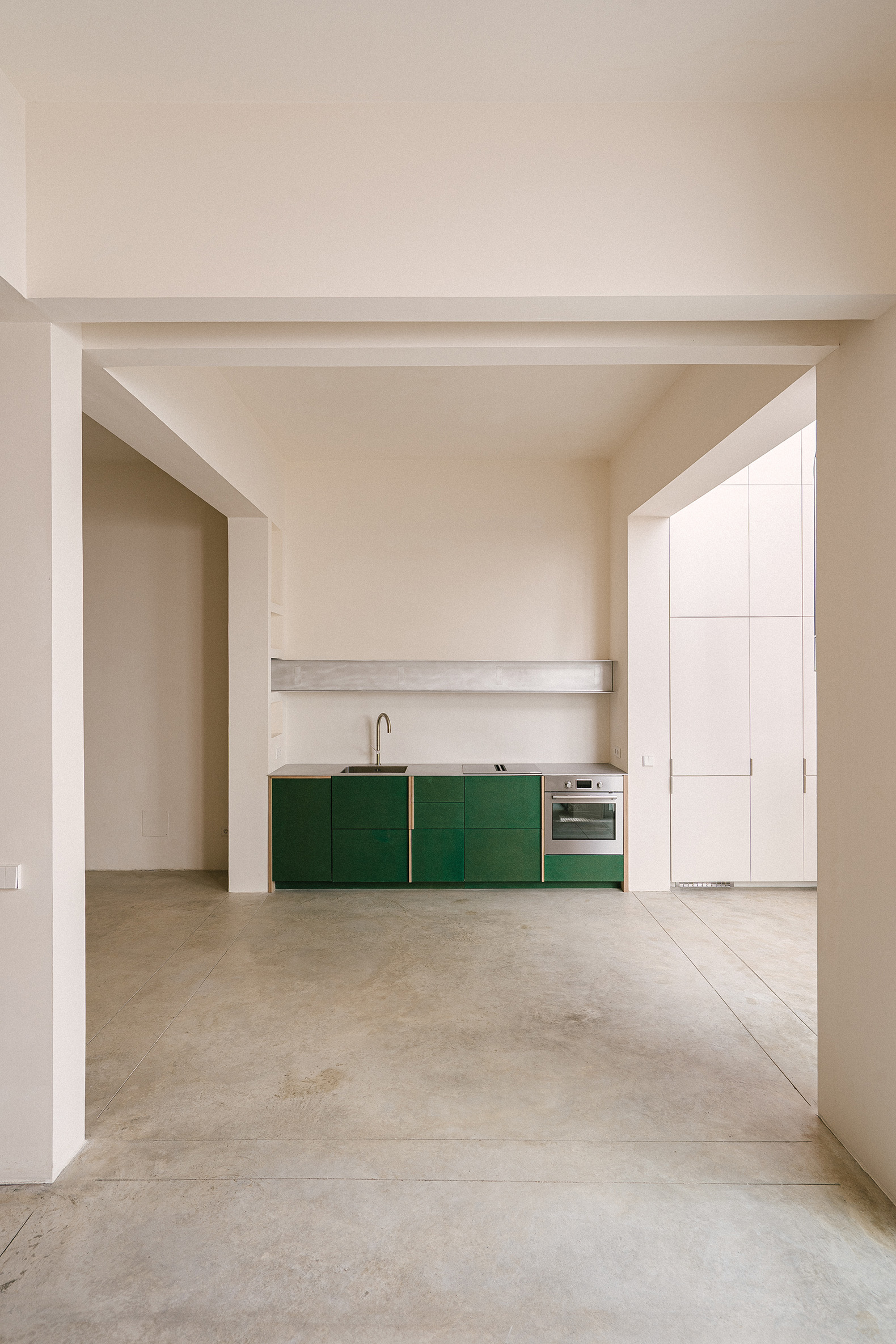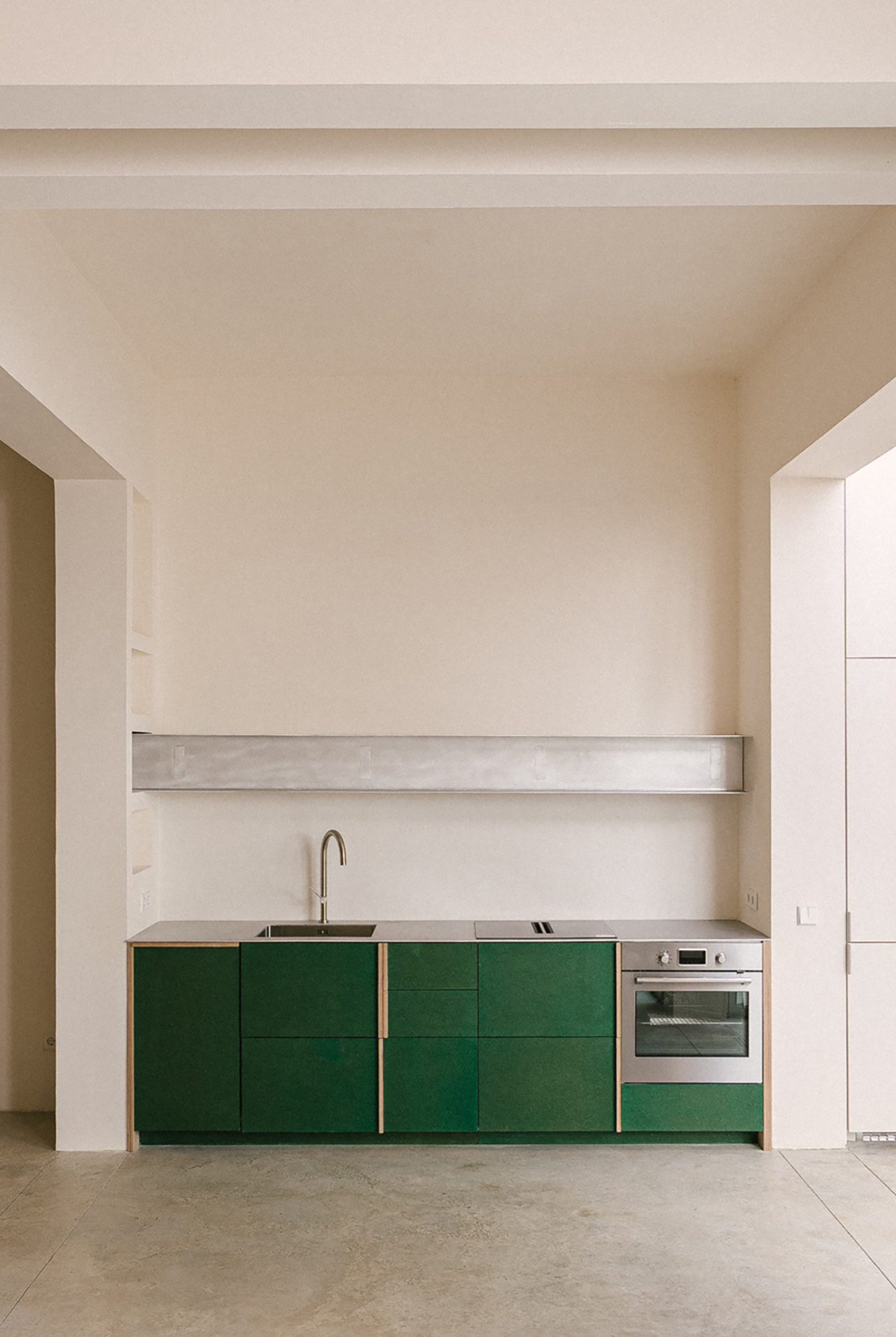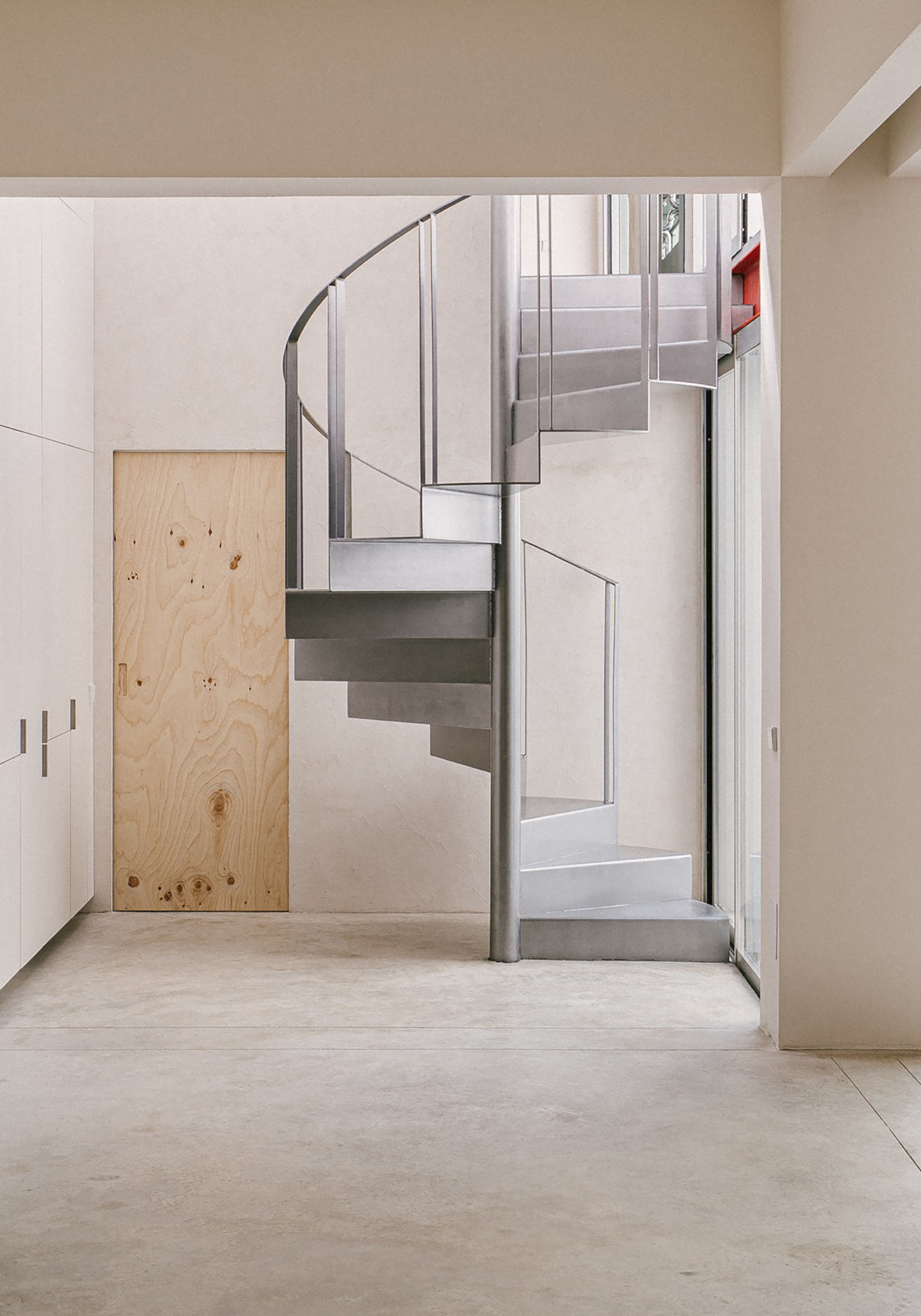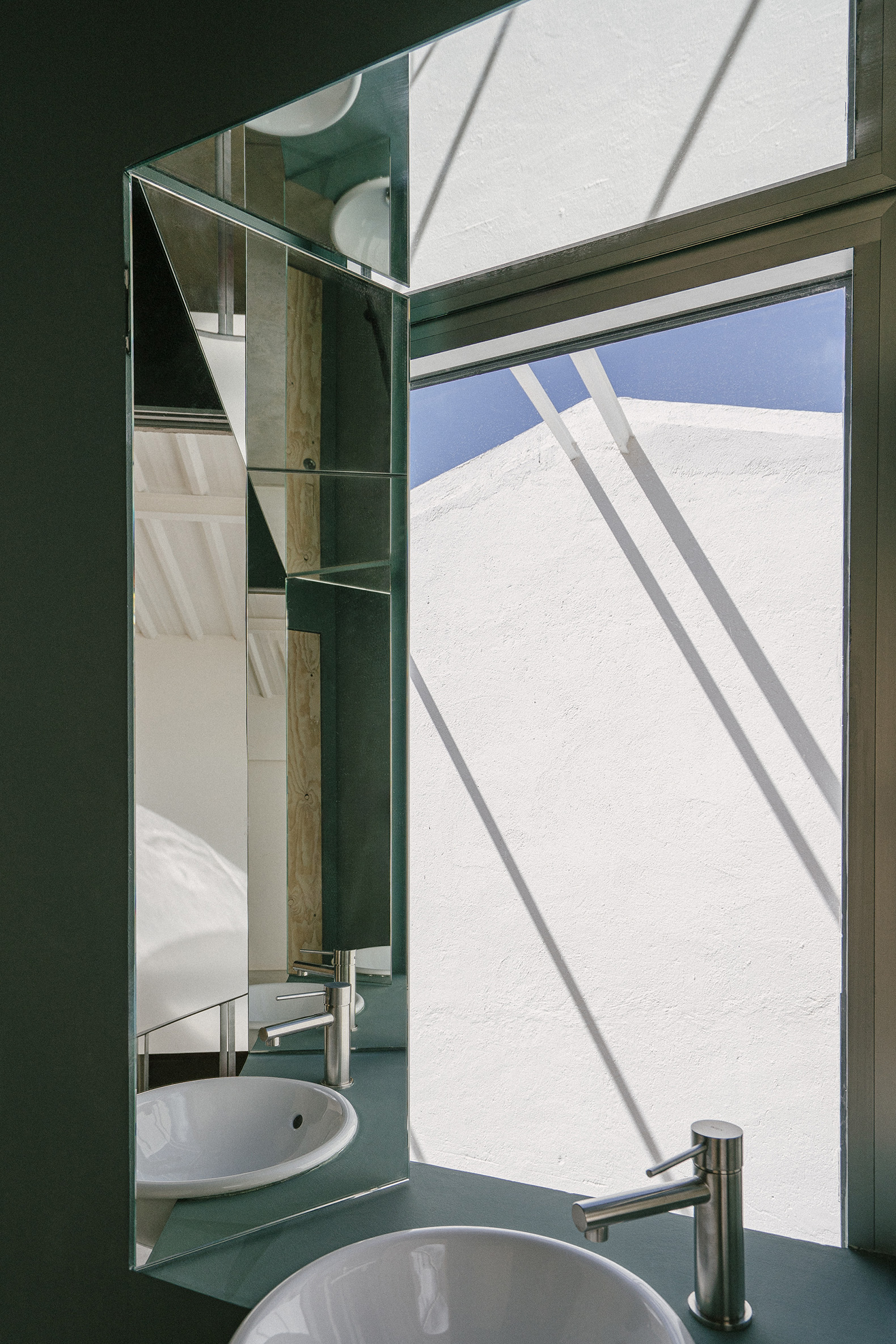
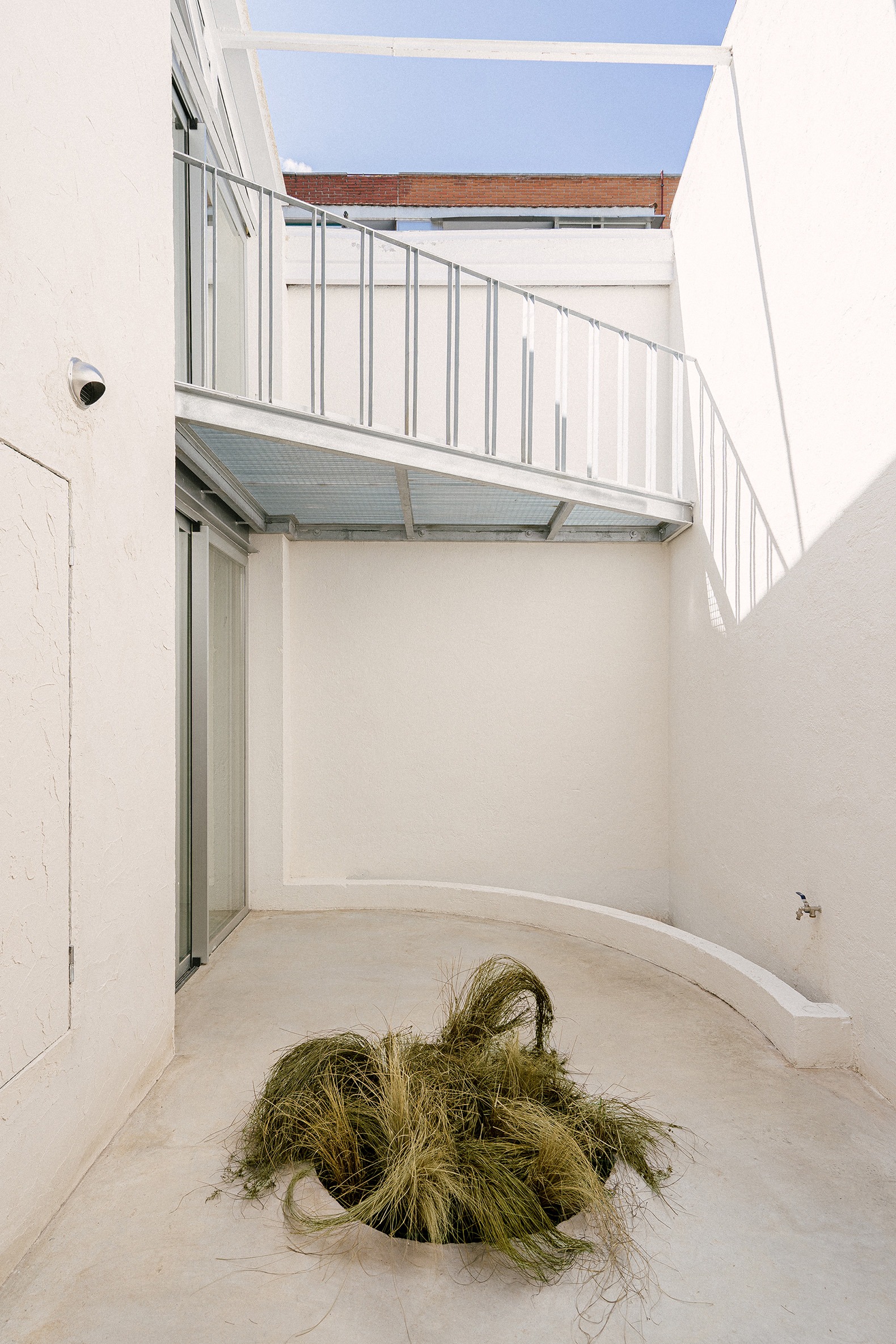
The industrial building, renovated by the Madrid-based studio ba-rro, adopts a typology reminiscent of New York lofts from the 1960s and 70s. A constellation of objects, in different materials and colors, organizes and guides the daily order of domestic life without imposing rigid hierarchies.
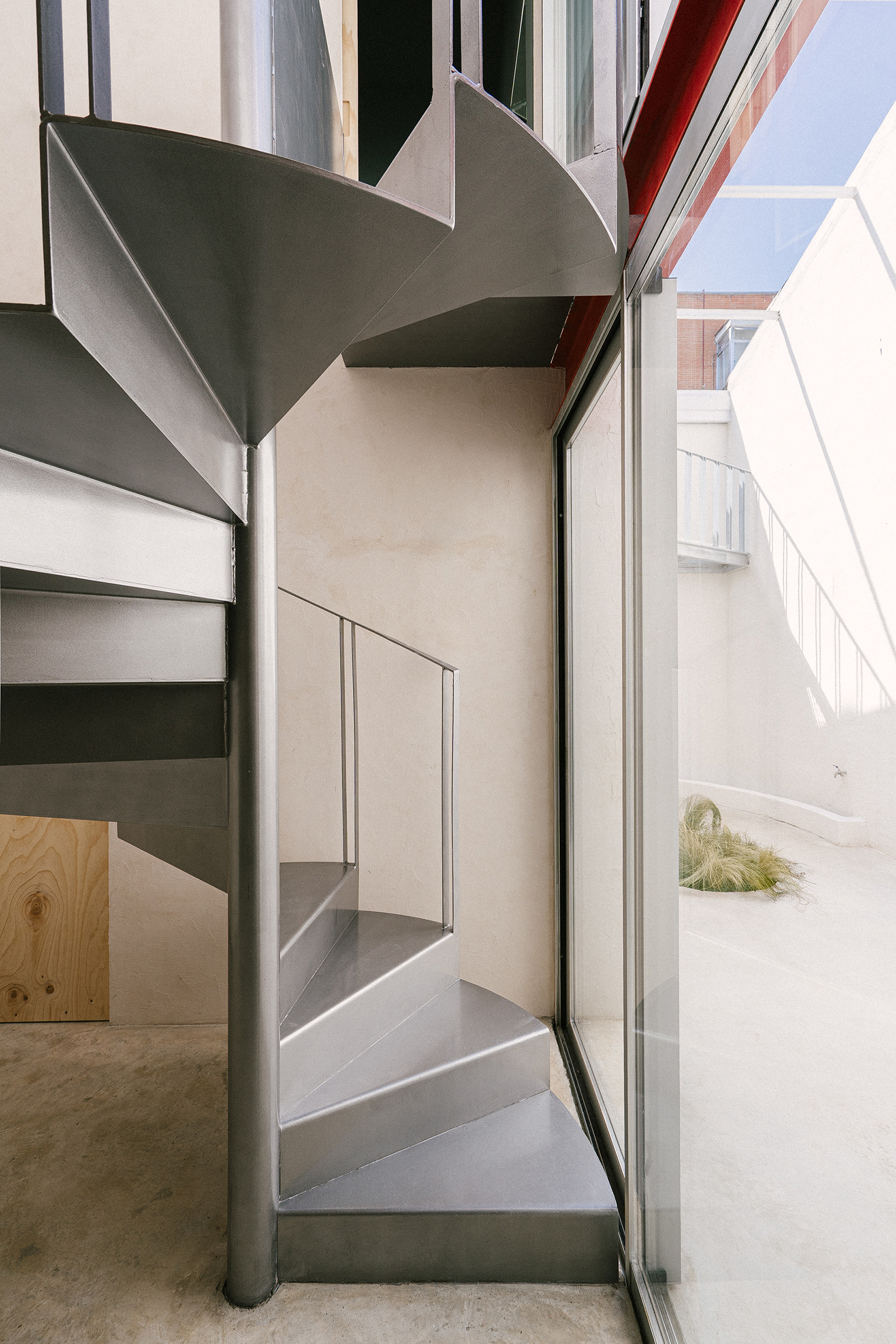
Towards the exterior, an ephemeral façade, composed of a metal and a glass enclosure, regulates the dialogue between the dwelling and its surroundings: sometimes it opens completely, at other times it filters light from above. Inside, a house of phenomenological character emerges, which, through diffused boundaries and indeterminate spaces, invites us to imagine other forms of contemporary domestic life.
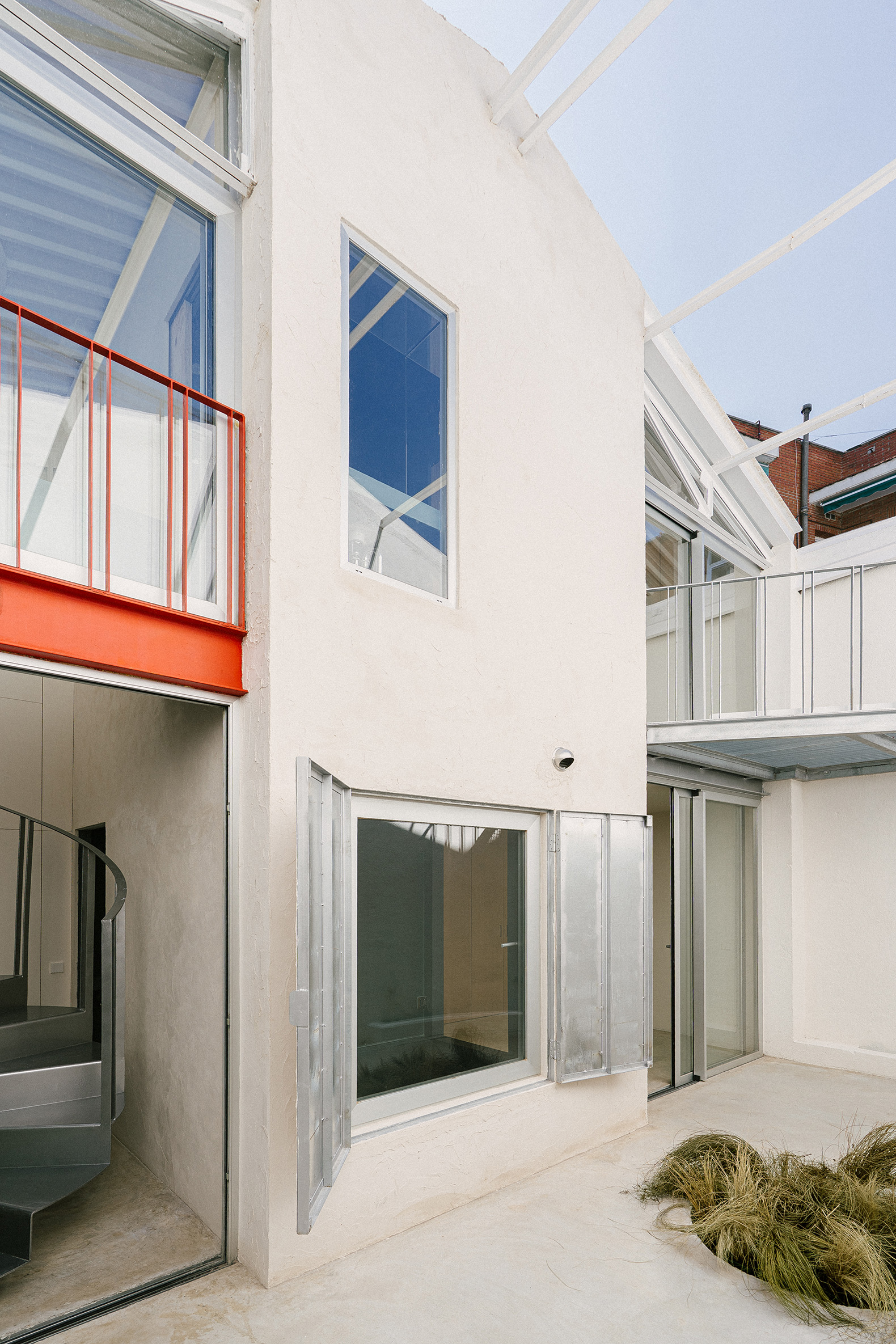
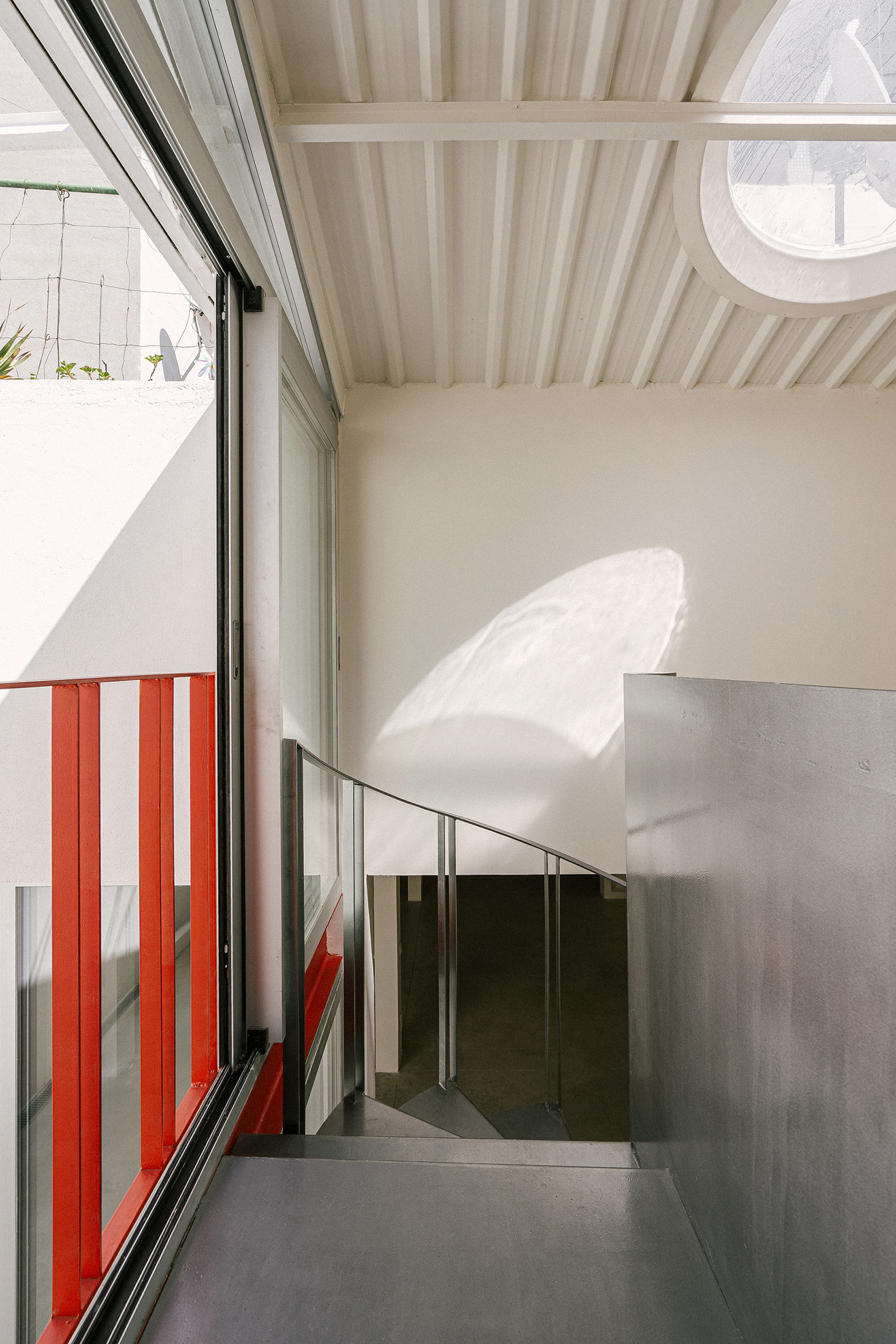
DRZ, an industrial building rehabilitated by ba-rro. Photograph by Maru Serrano.
Project description by ba-rro
An industrial building in Carabanchel (Madrid) has been renovated. From a car wash to what could be a new architectural archetype. Spaces that blend domestic life with uses that let the street in, such as an art studio, an office or perhaps a small café, maybe a venue for exhibitions or events. The house is no longer understood as a place just for privacy and intimacy but a place that opens up to the city. A place where inhabitants build their social identity. A transformation that does much more than adapting a neglected space to contemporary needs.
This project is used as a case study of a context, not only physical, urban and architectural, but also conceptual, economic, social and cultural. To extend the function of typology to the social context, requires being aware of what is really happening. Aware of the surrounding productive ecosystem. Assimilating an existing framework to incorporate it to a new one.
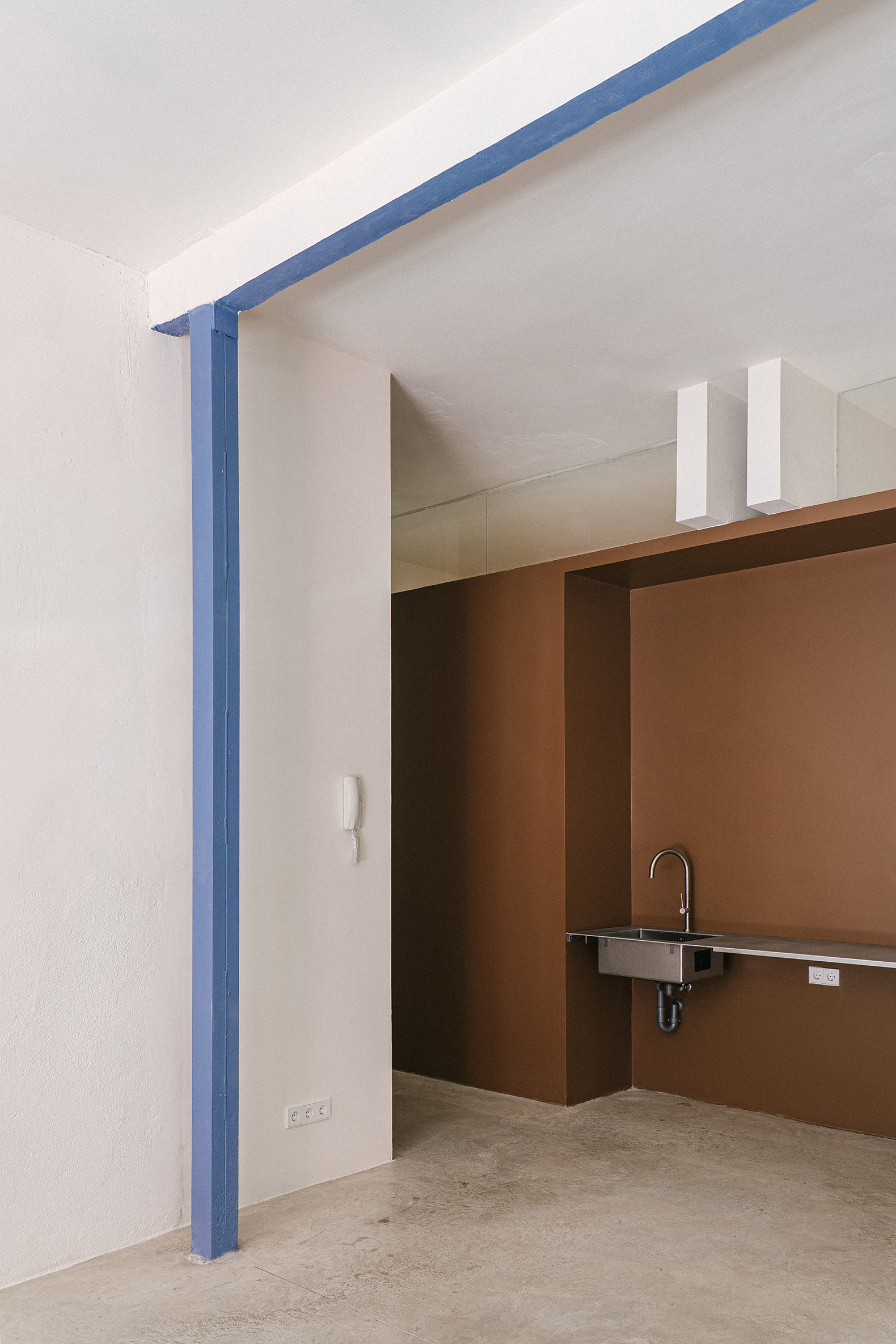
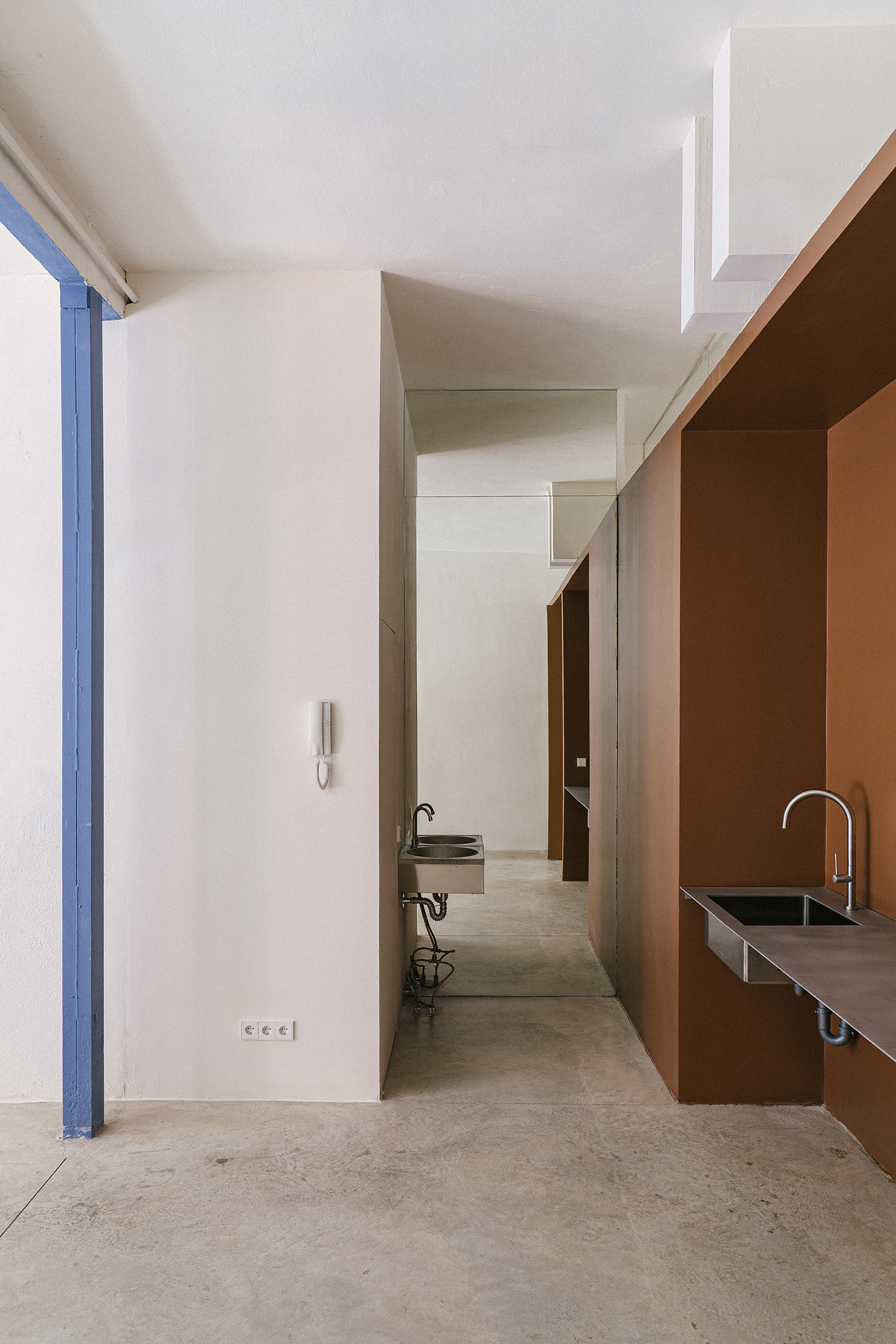
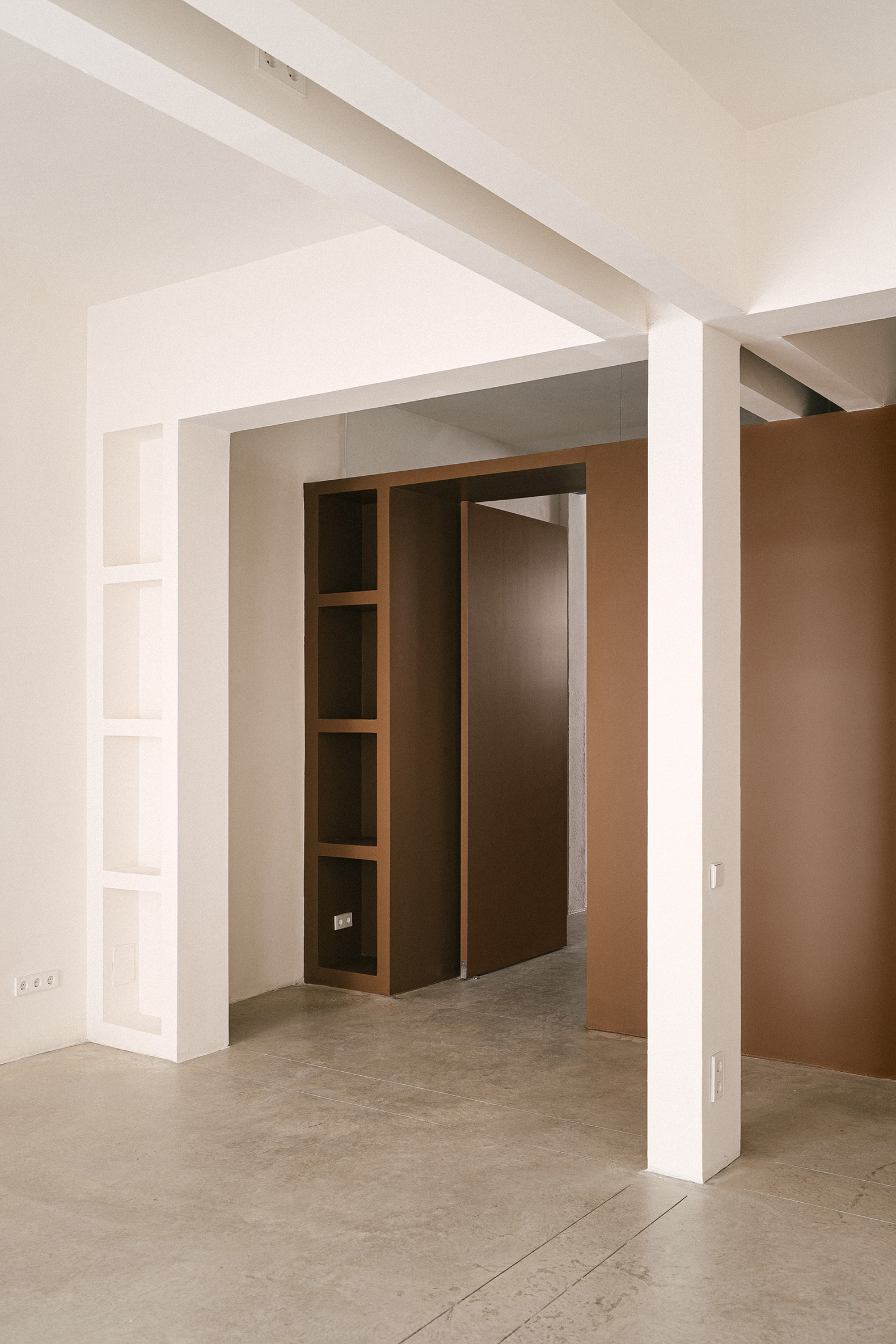
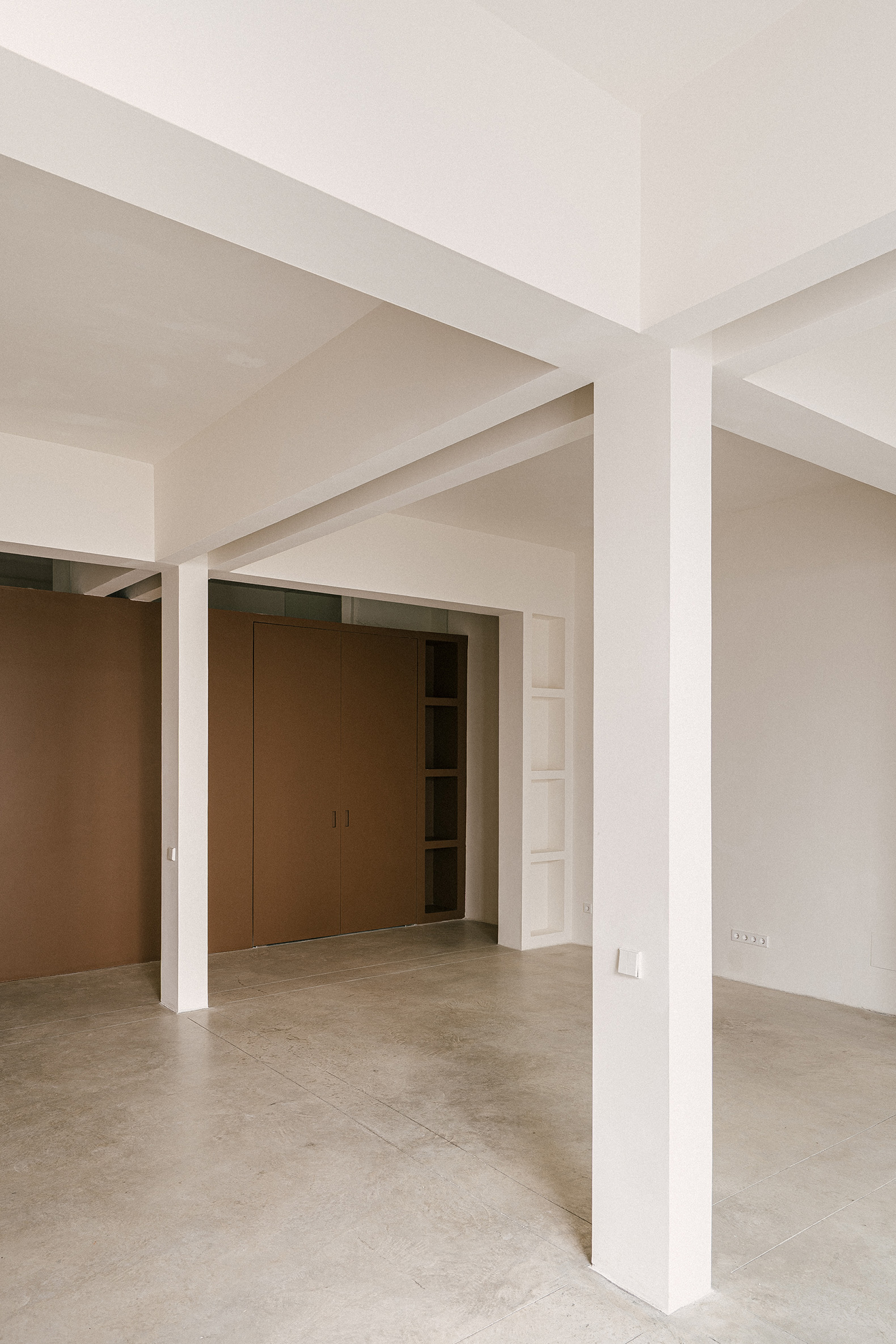
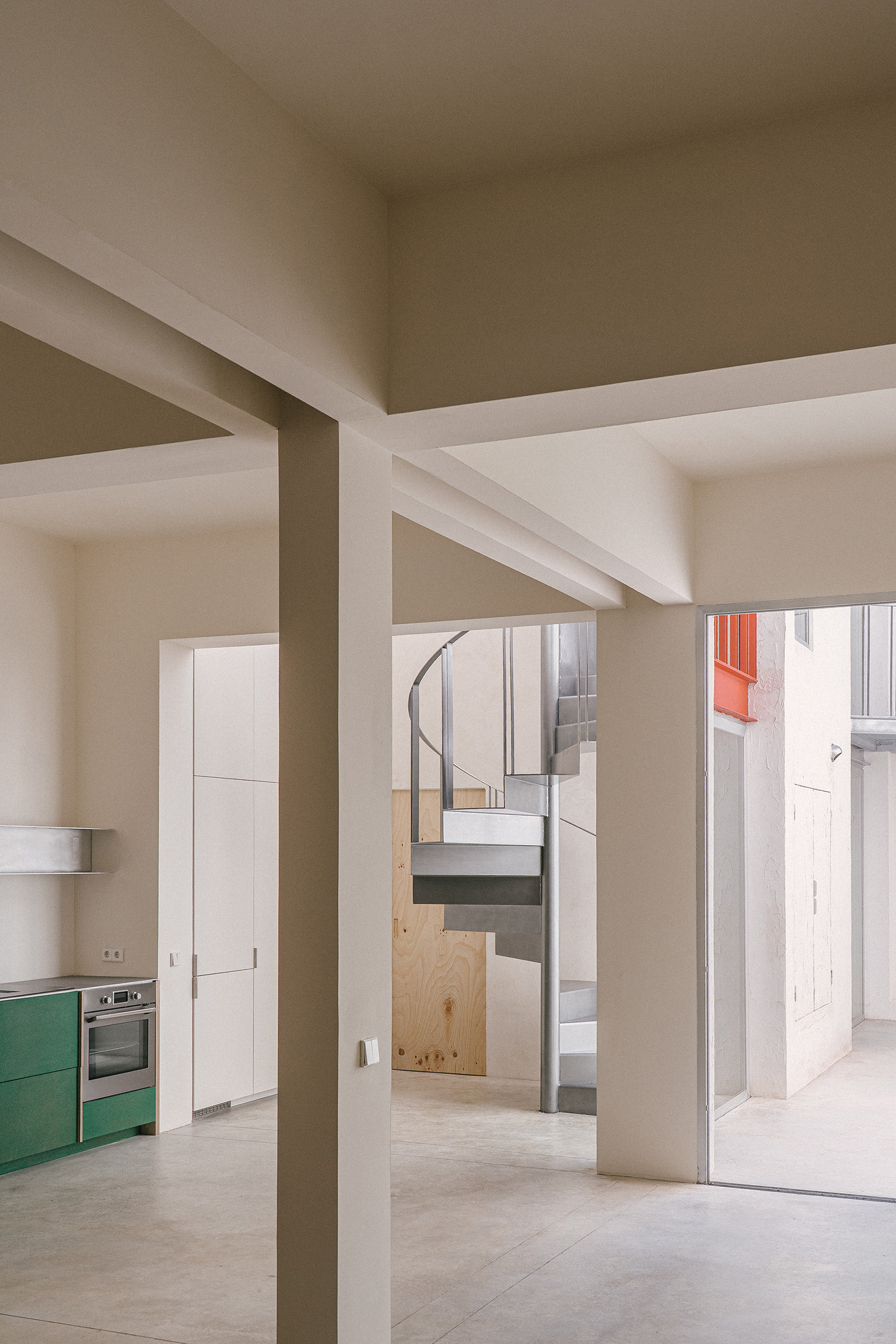
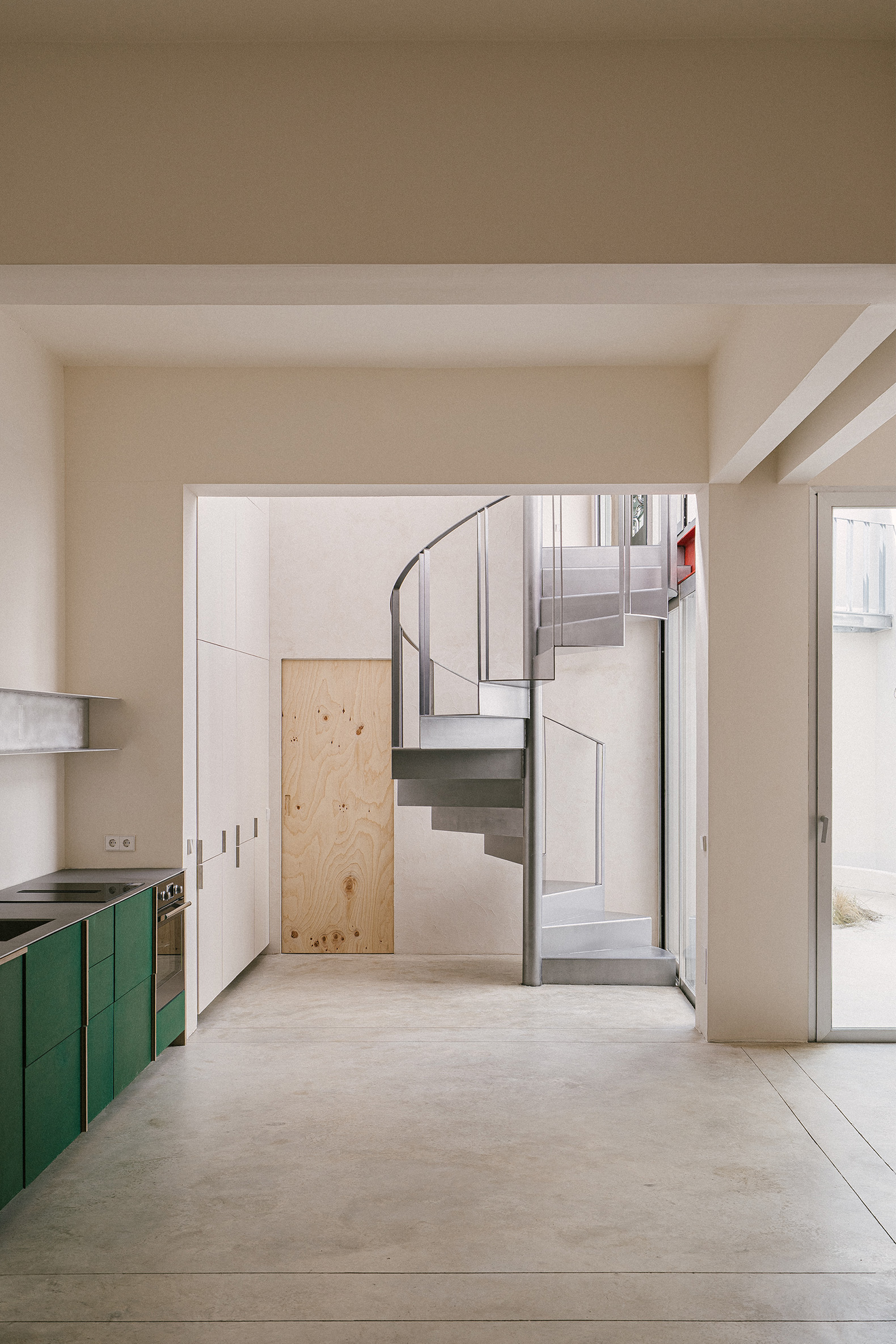
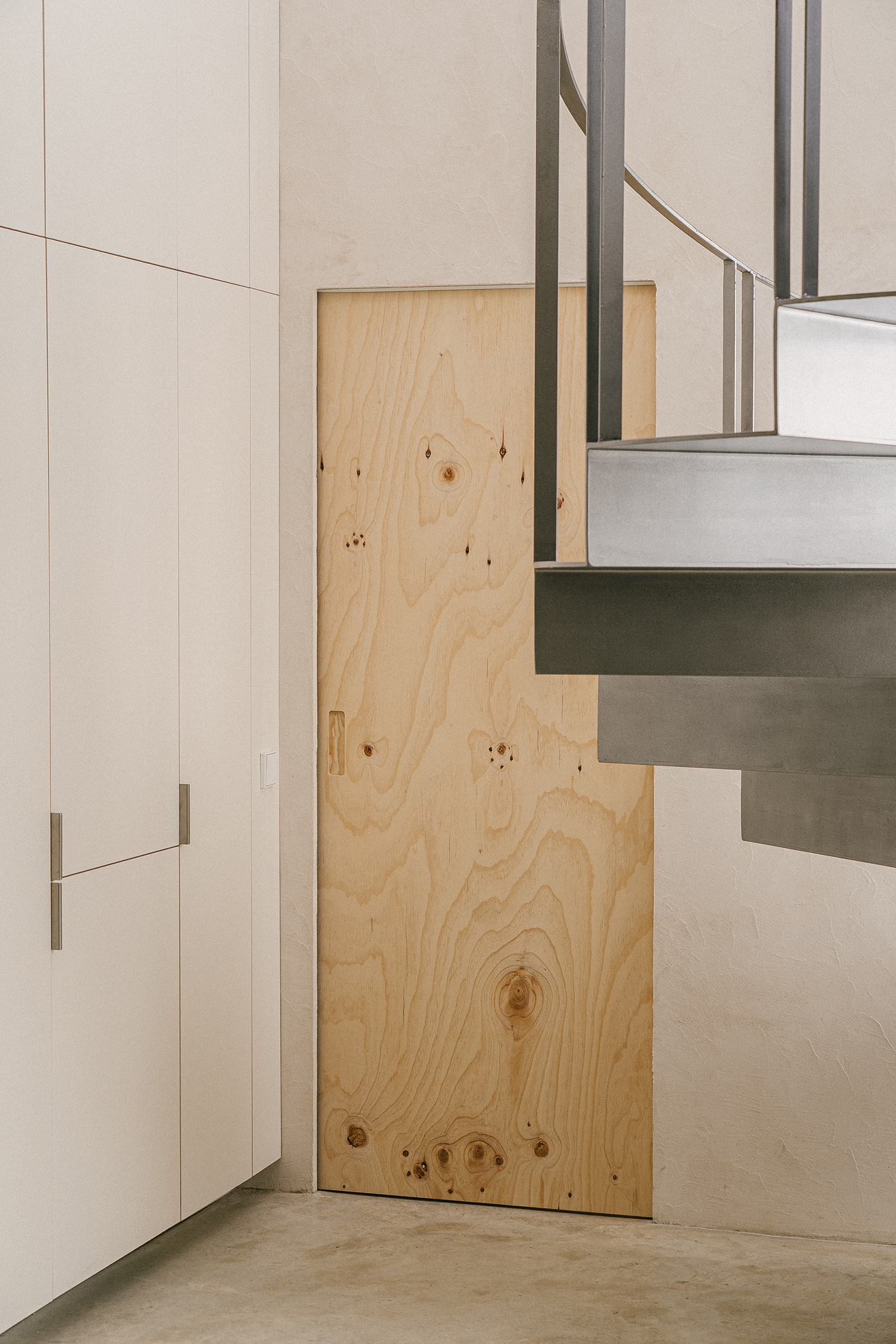
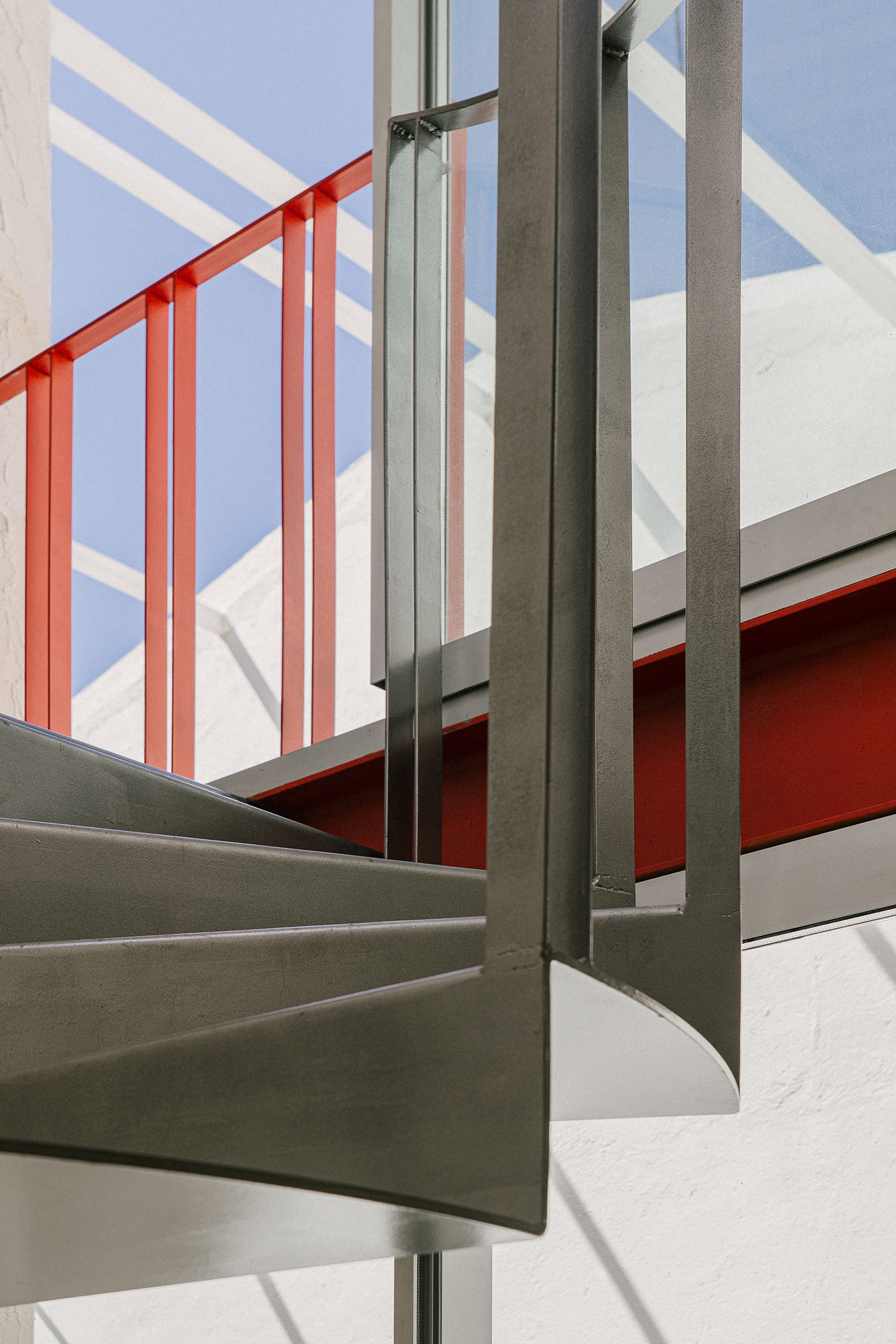
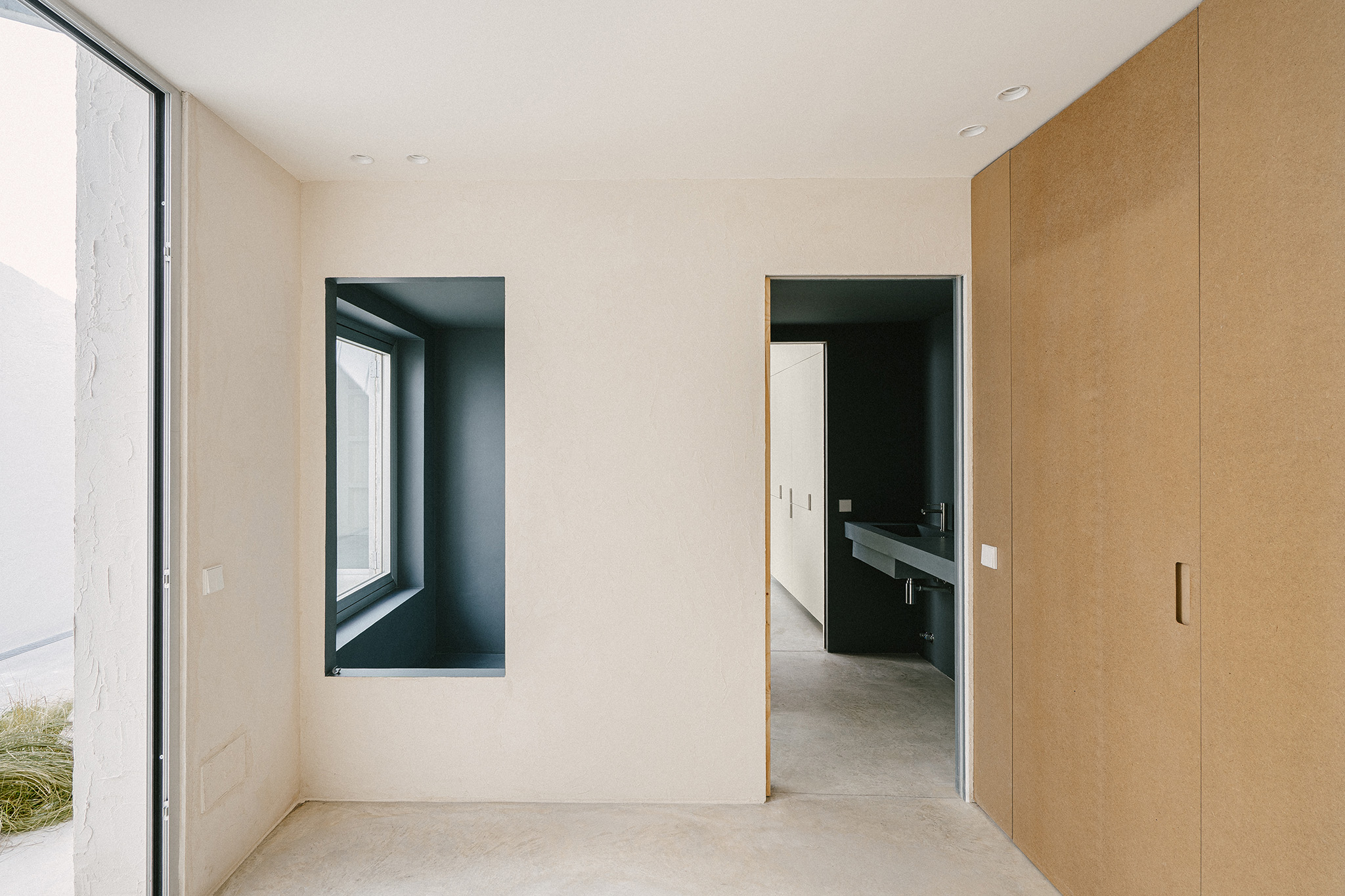
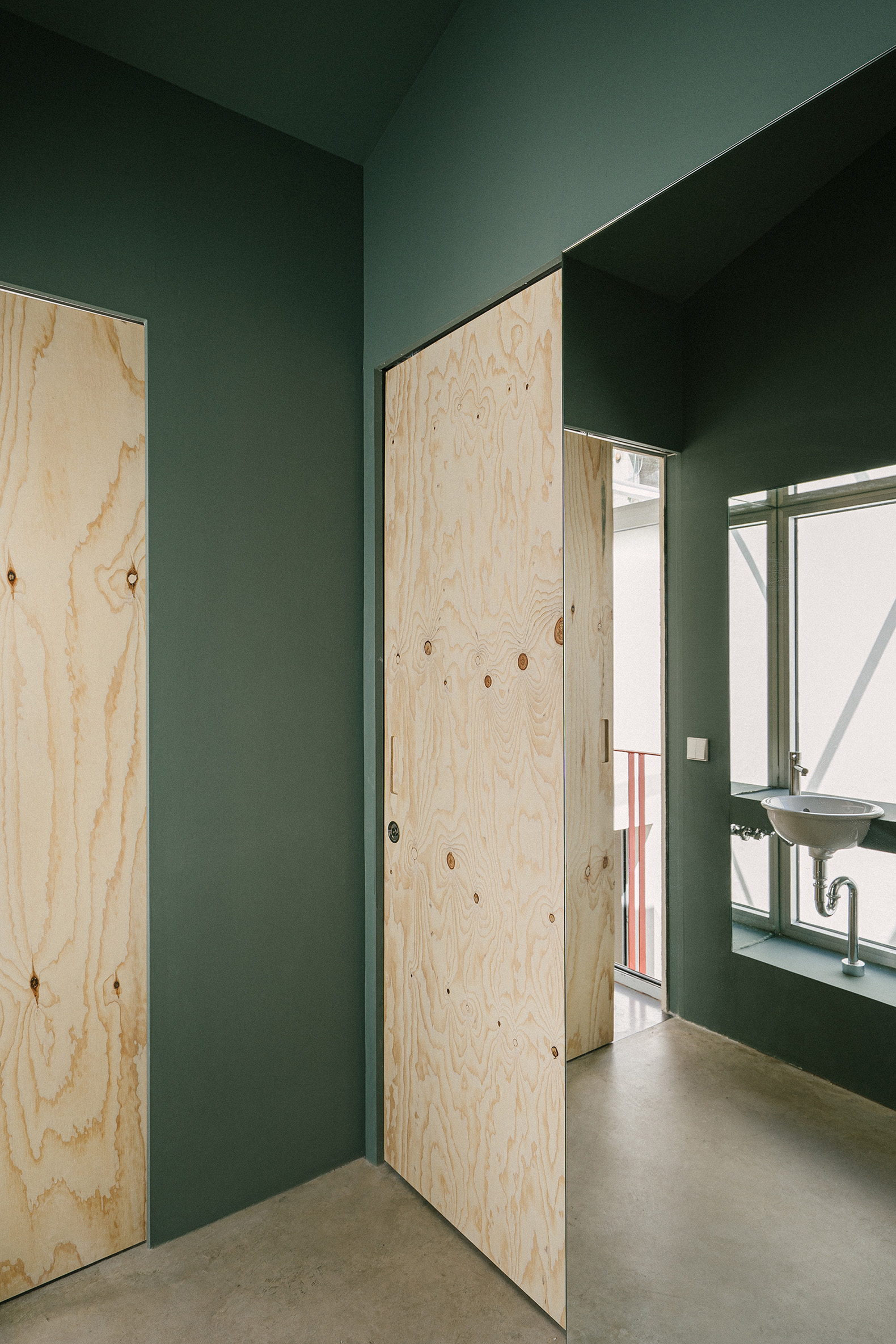
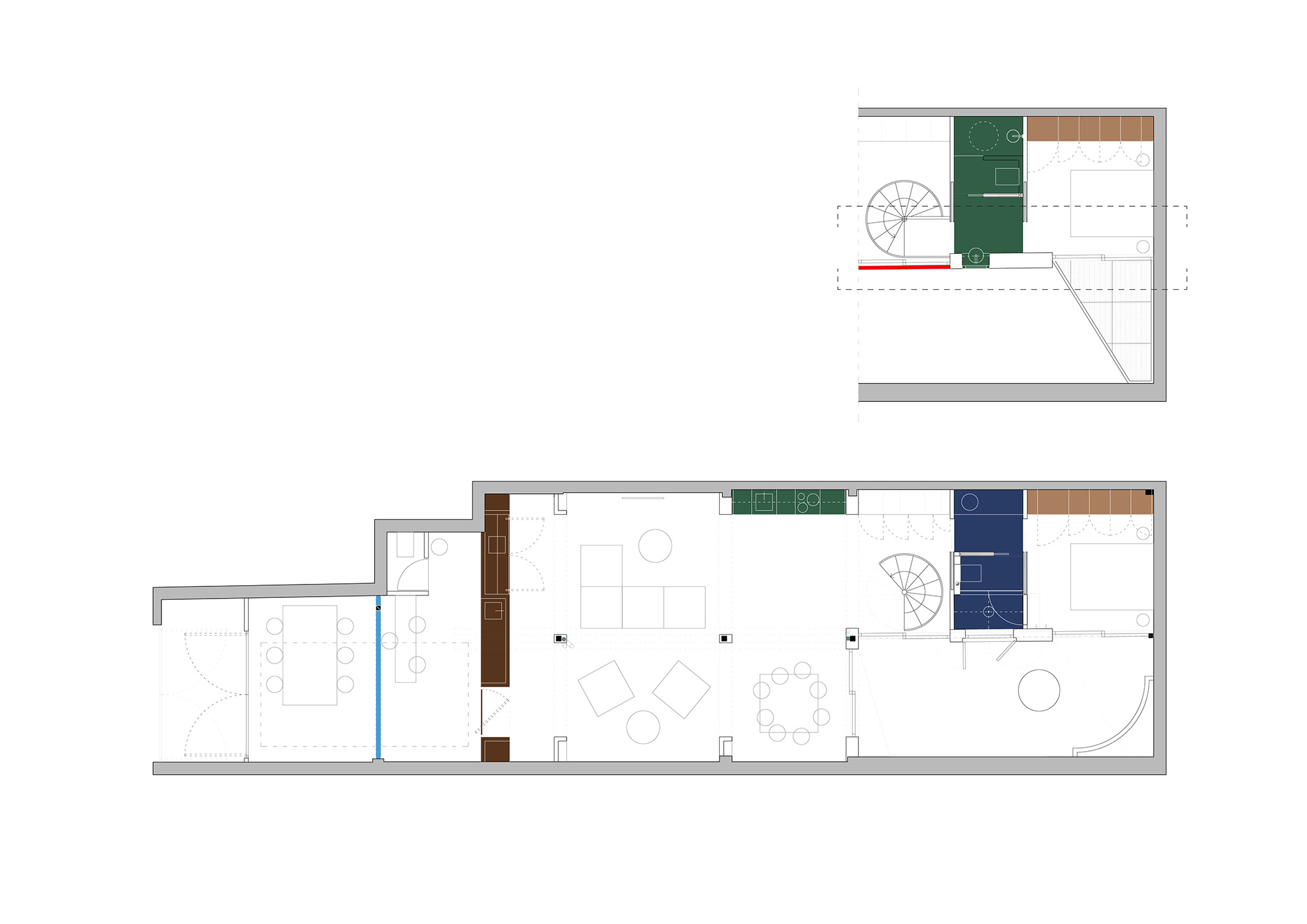
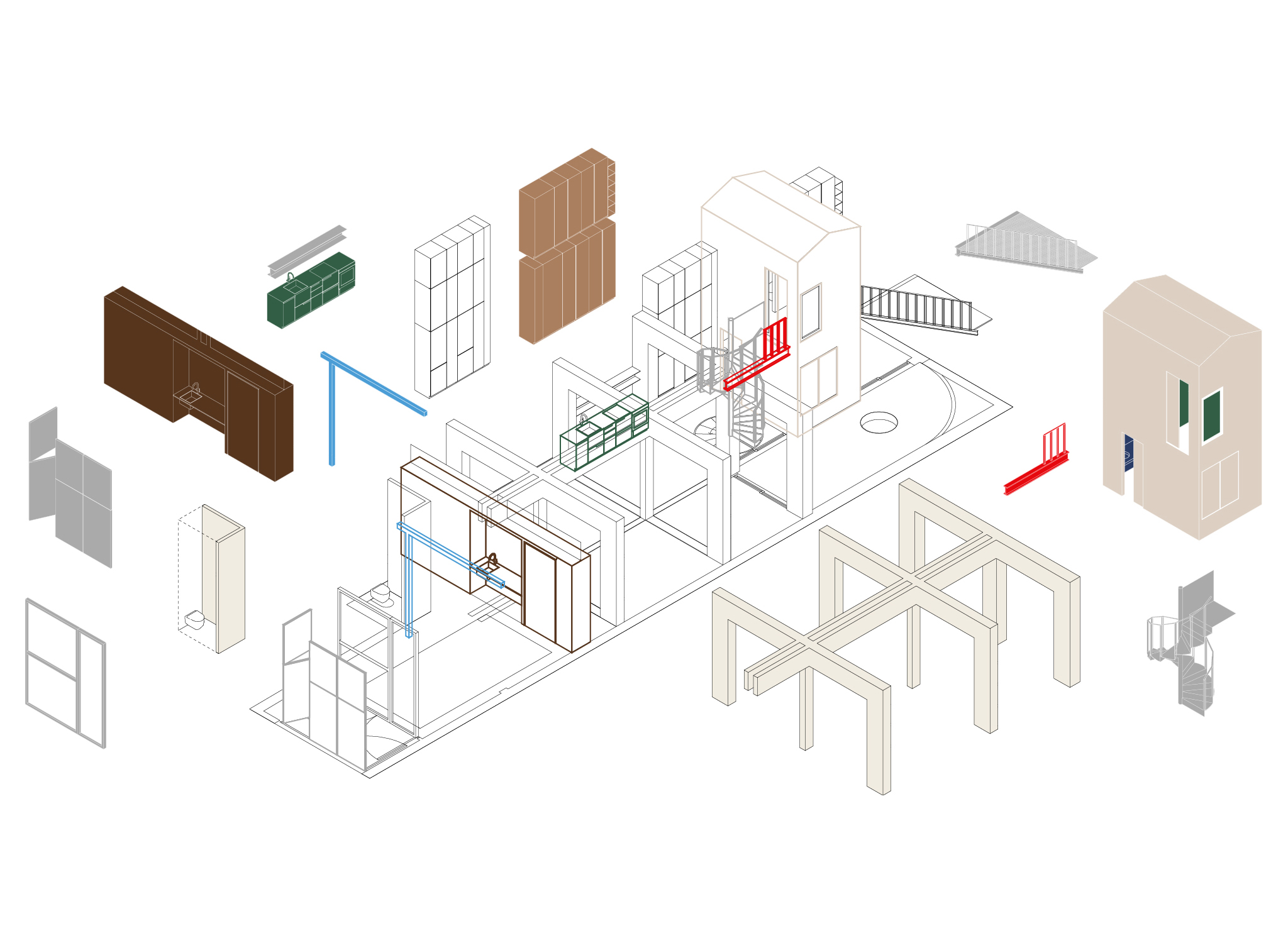
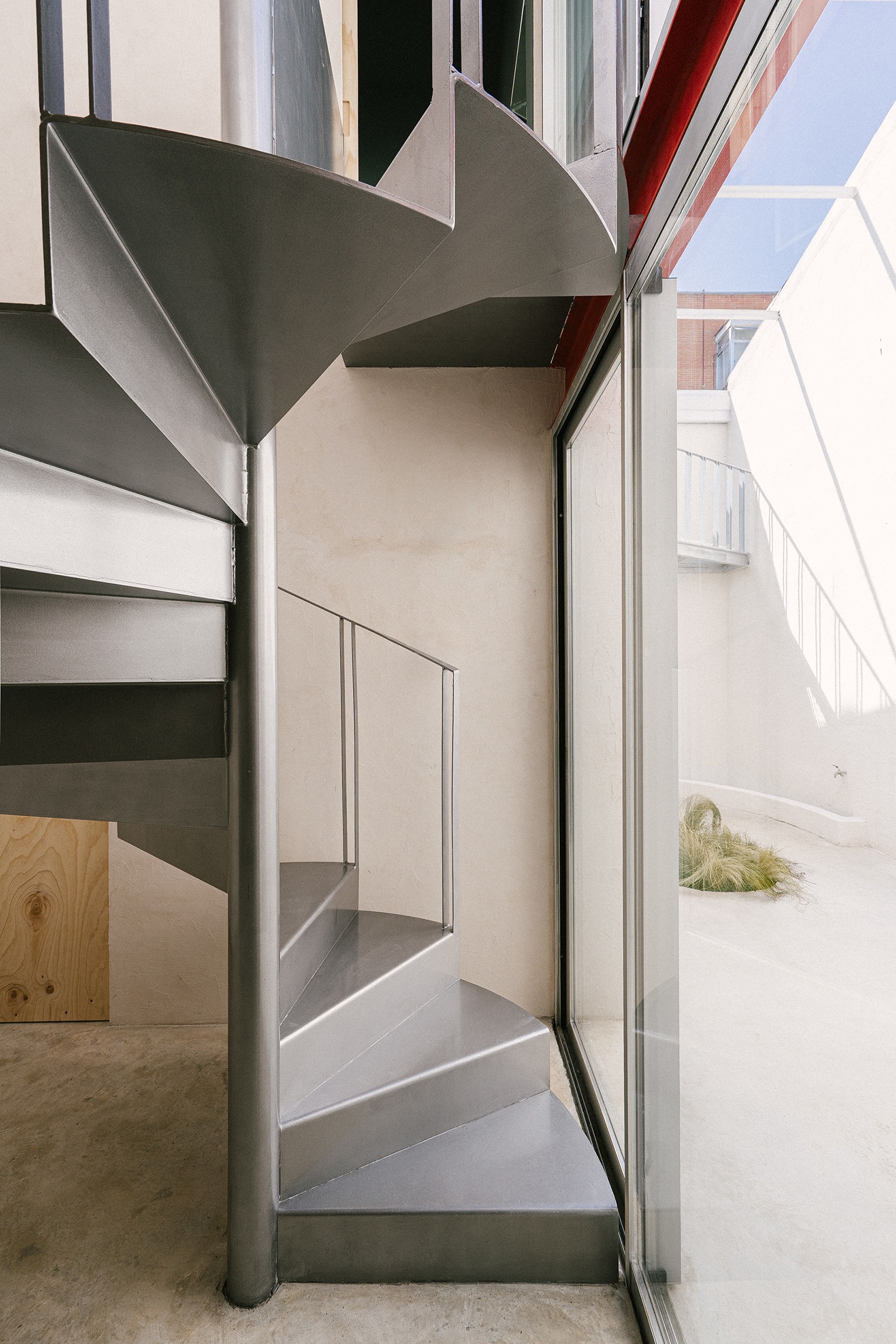
In the phenomenological house, the act of appropriating space is what sets the irregular rhythm of the loft. The New York lofts of the 1960s and 70s were nothing but space and air—pure openness, isotropy, cubic meters without predefined functions. Here, the continuous interiors are interrupted only by unfound objects: walls, doors, furniture, balconies, railings, shutters, pillars, beams... Elements that mark the first signs of a slow colonization of space.
A changing, improvised and unpredictable appropriation—experimental and playful. The memory of the loft appears in the seeming visual disorder of the objects with different materials and colors, objects that mask the underlying functional order of daily life.
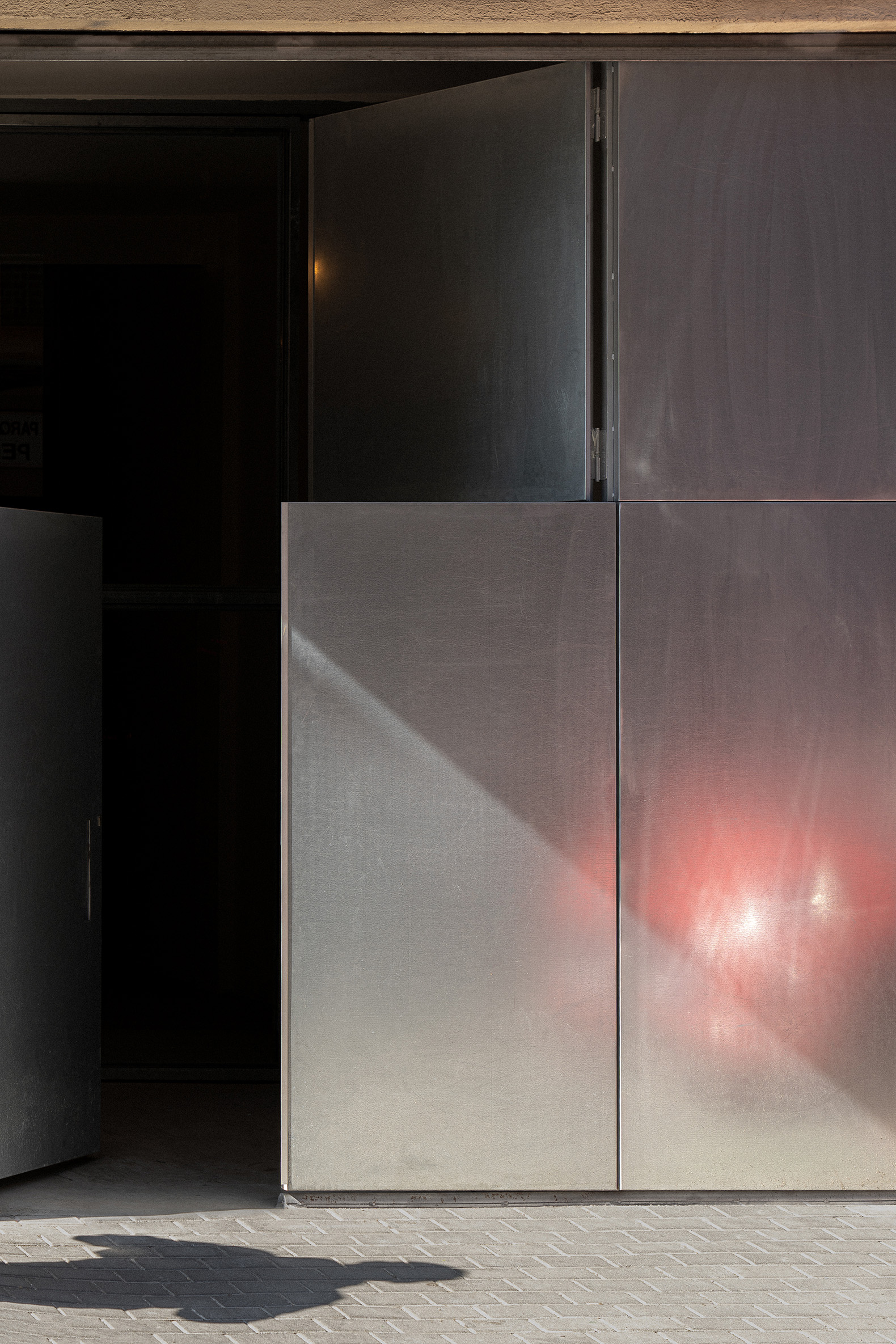
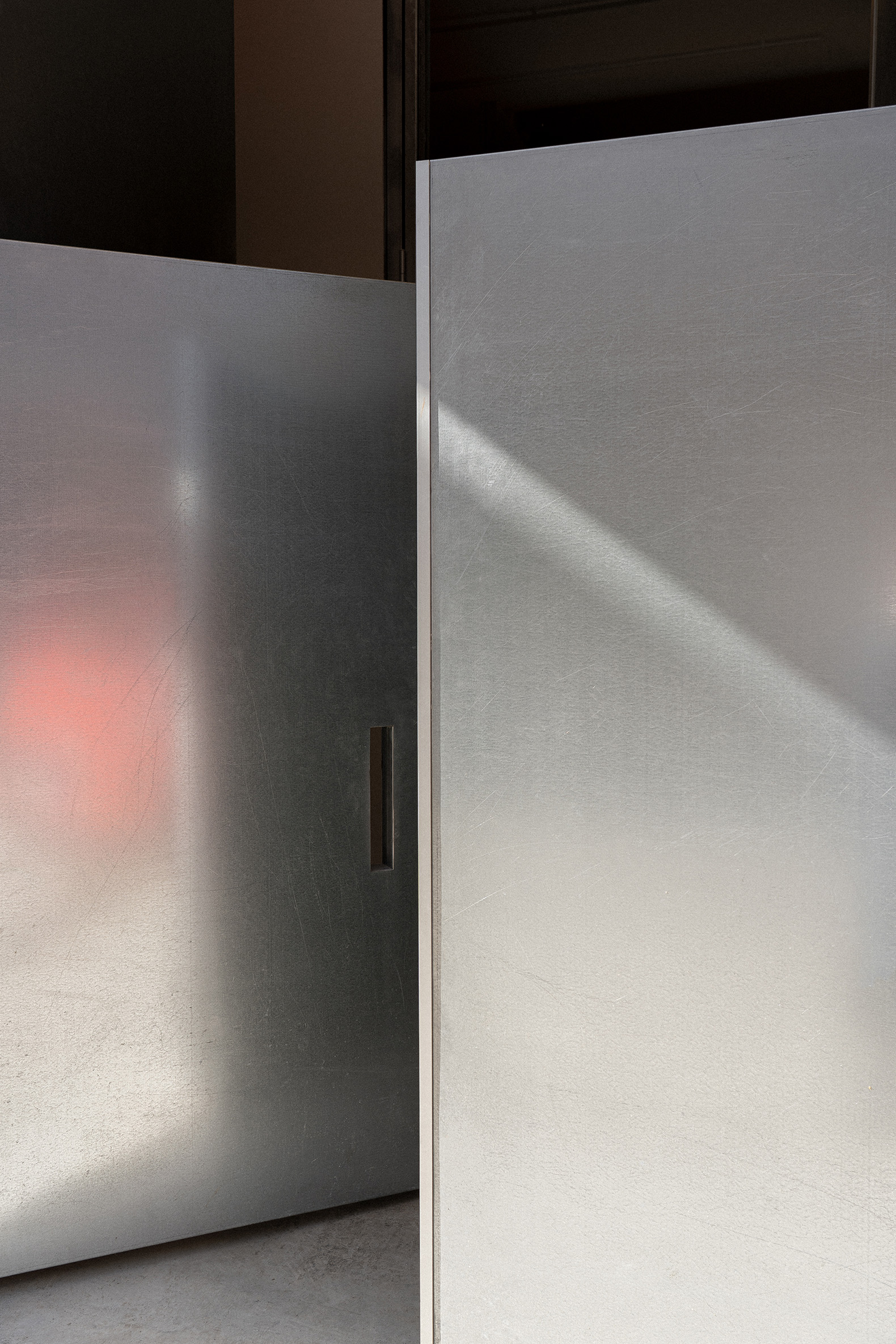
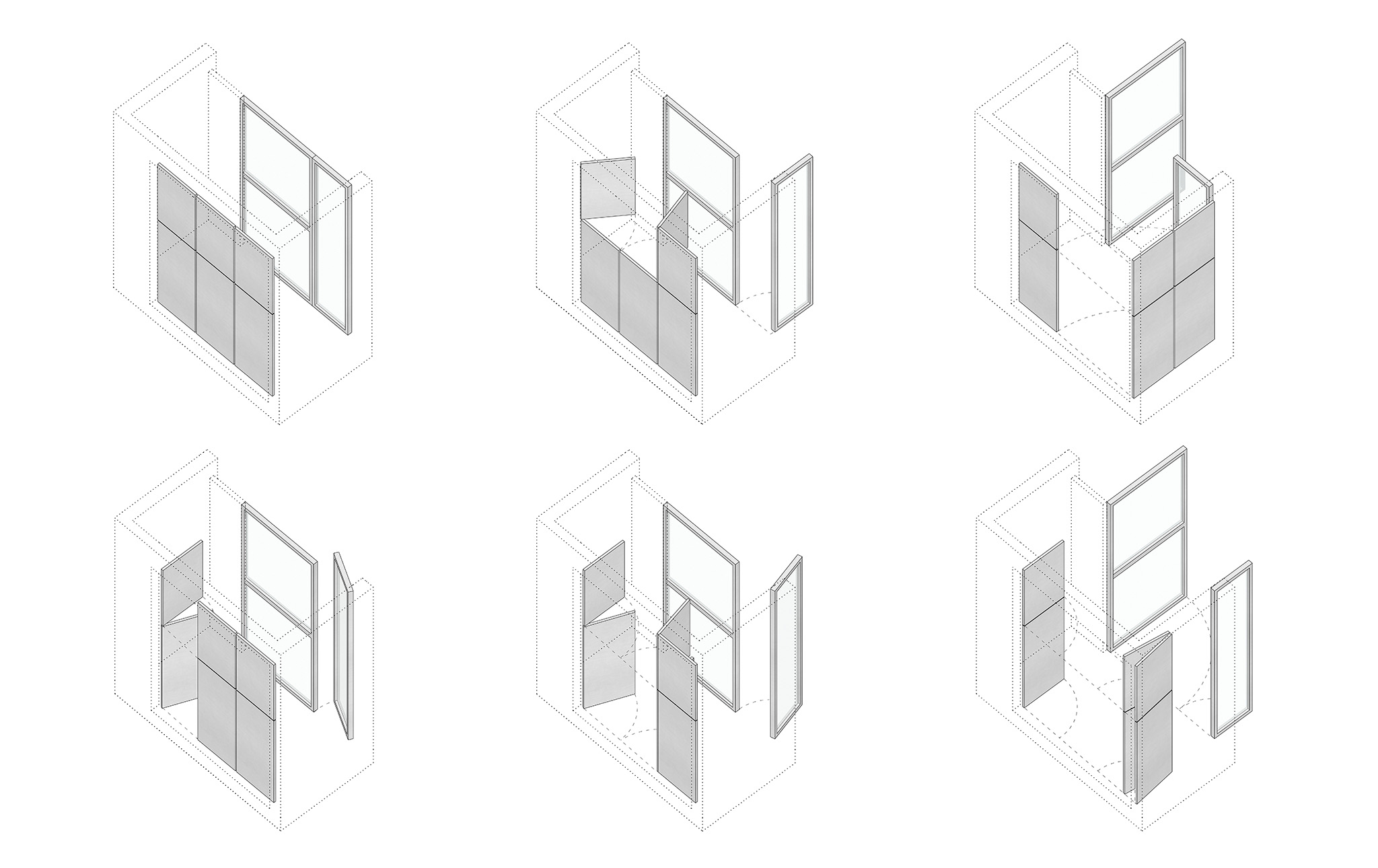
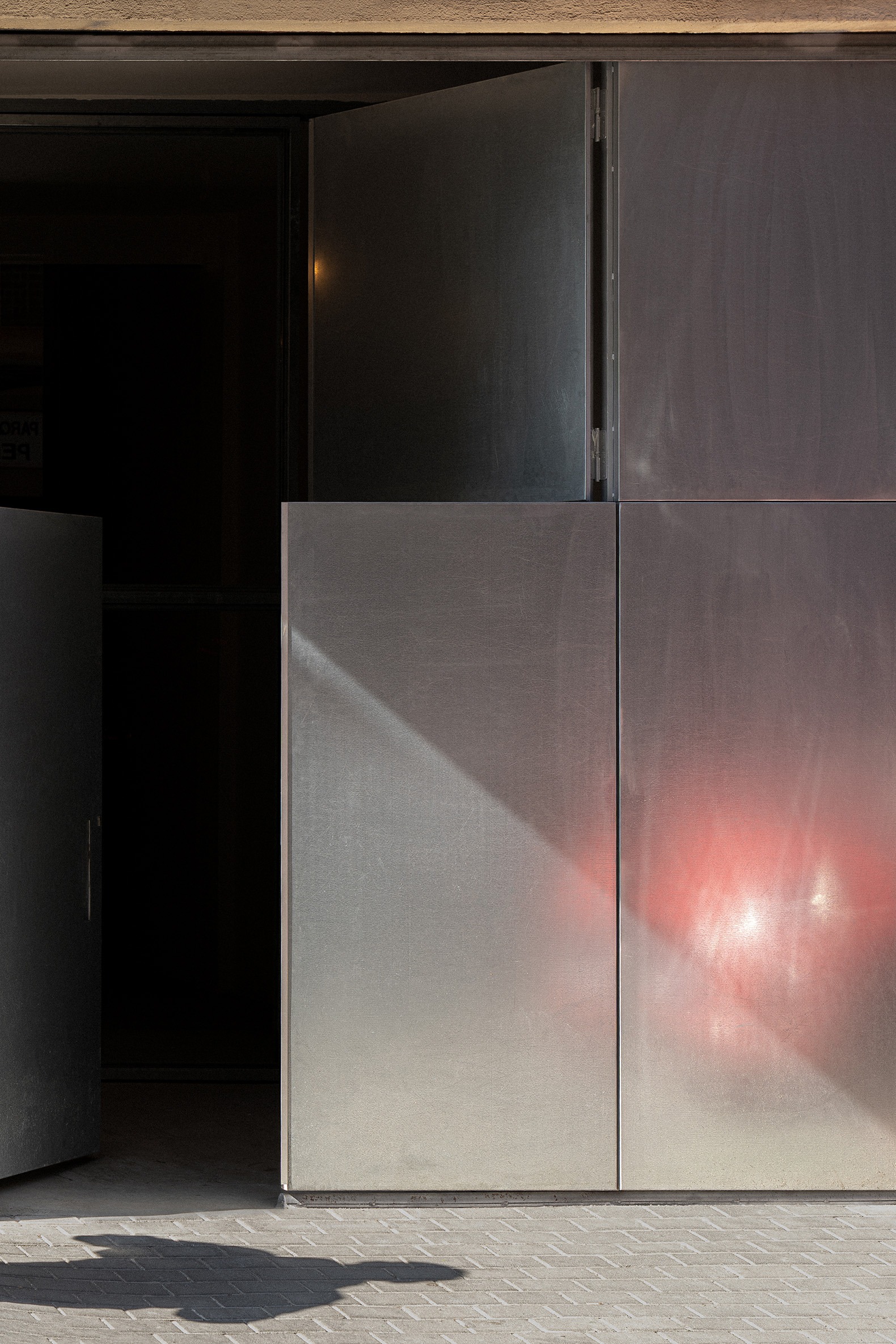
Looking at that window towards the street, in the search for light and ventilation, distance is paradoxically created through grilles and blinds. From that window to an ephemeral façade, a façade built from a metal door like the ones found in the same street, but capable of folding open and closing back on itself. A façade that frames the exterior and also allows the gaze inward. It can open wide to the city, or keep the lower part closed so that only light enters from above. Behind it lies another layer: a glass door. Different layers of the epidermis through which this typology regulates its exposure to the world.
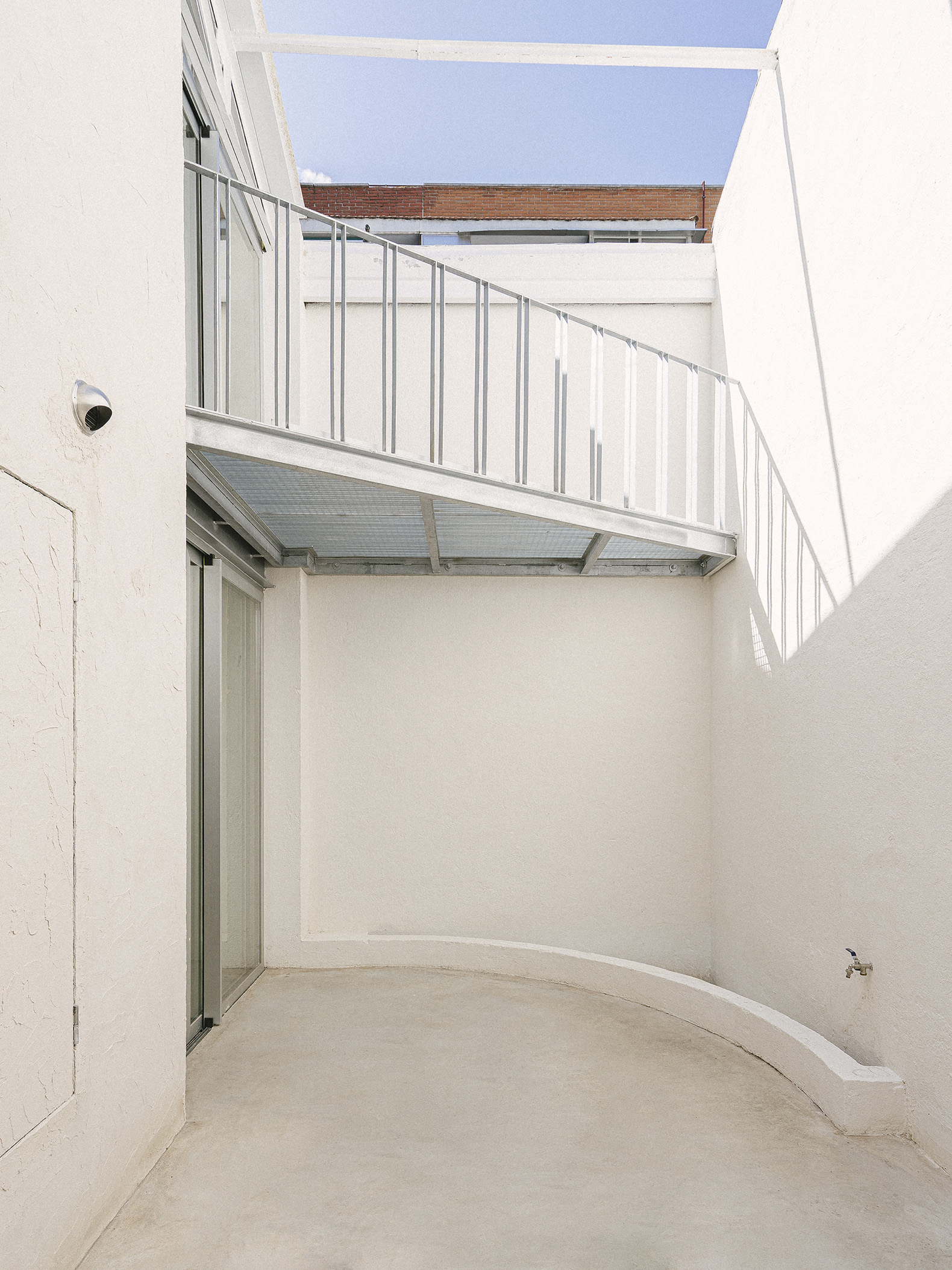
In the new courtyard we find a classical façade, with windows and shutters that open and close to control the intimacy of the deeper and more private spaces.
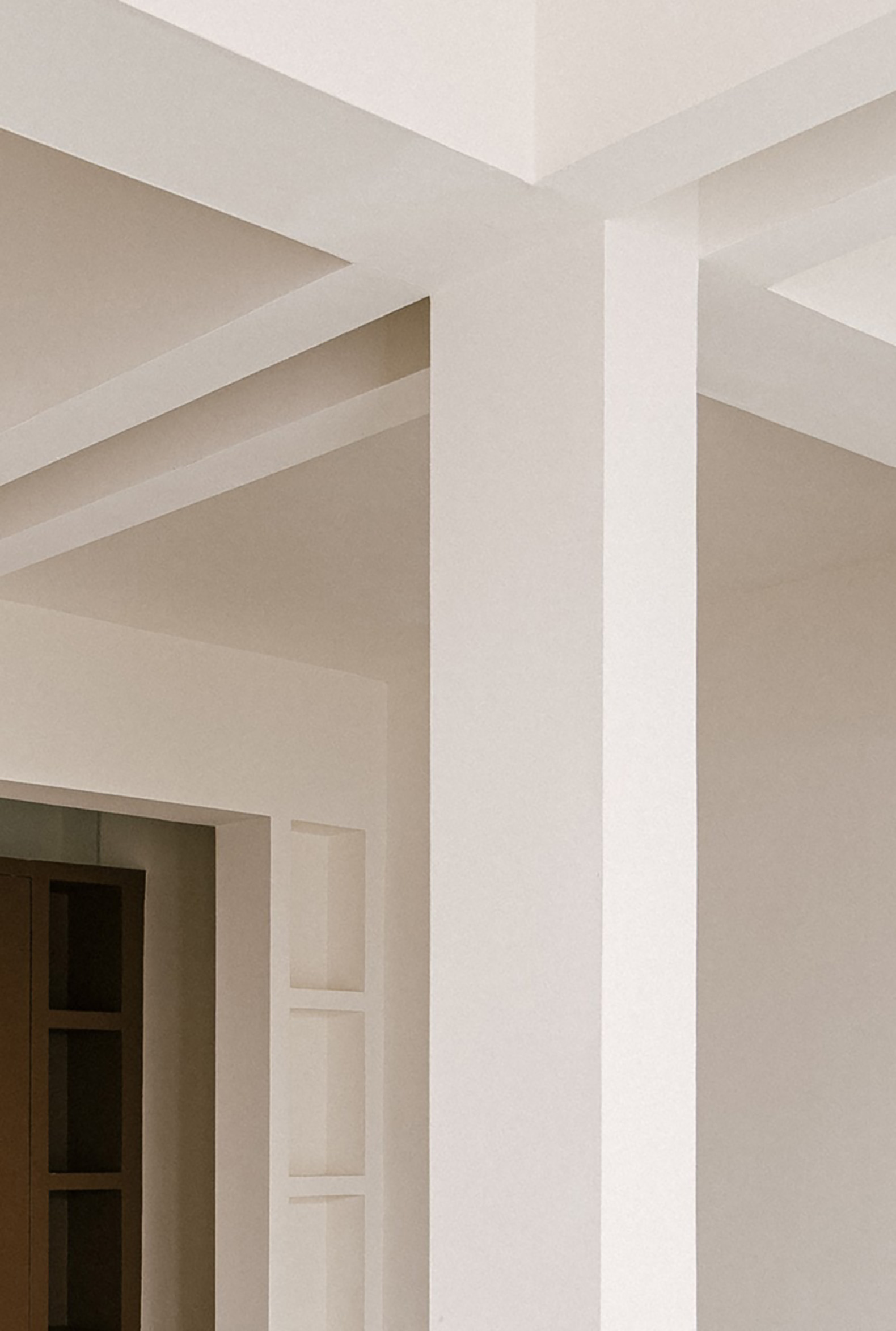
In between, the celebration of a problem. A sequence of false structural frames hide installations and structural irregularities, restoring a sense of rhythm to the interior—still fluid but now outlined, one space or five spaces, boundaries that blur, undefined territories waiting to be inhabited.
The archetype becomes a tool for imagining other forms of contemporary ways of living and inhabiting the city. Other ways of building the urban and social life.