The level and quality of engagement with service users and providers were extremely impressive, and the judges applaud the idea of a project deeply rooted in place. The solution applies design intelligence to tap into and join up local support networks – with tangible and visible results.”
"At Shelter, we witness the devastating impact of homelessness and housing insecurity every day, which the cost of living crisis has only made worse. Currently over a quarter of a million people are homeless in England, including more than 120,000 children. There are 1.6 million people on the social housing waiting list.
It’s therefore more important than ever that we are working together to find genuine solutions that can help us achieve housing justice. Helping Hands is a worthy winner as it is a great example of how a diverse group from different walks of life can come together to design a project with serious potential human benefit. These small pieces of land exist everywhere so this will be an inspiring example to many others across the country and I hope this can be realised throughout the country.”
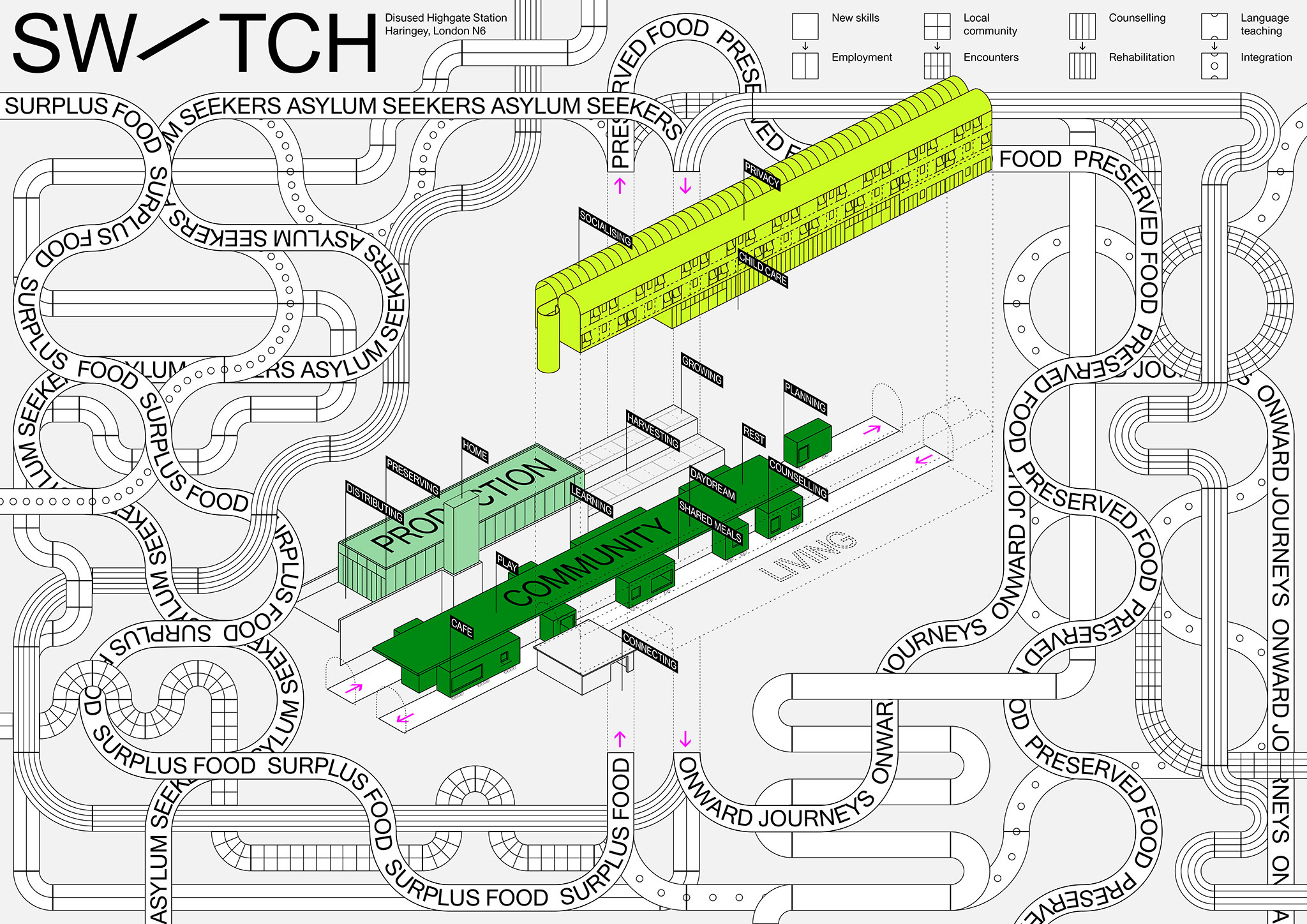
The winner of the People’s Choice Prize was also announced at the event, which went to Rifugio for his Switch project. The team proposed to convert a disused station in Highgate, London, into a place where asylum seekers could find refuge to overcome the trauma of their previous journey.
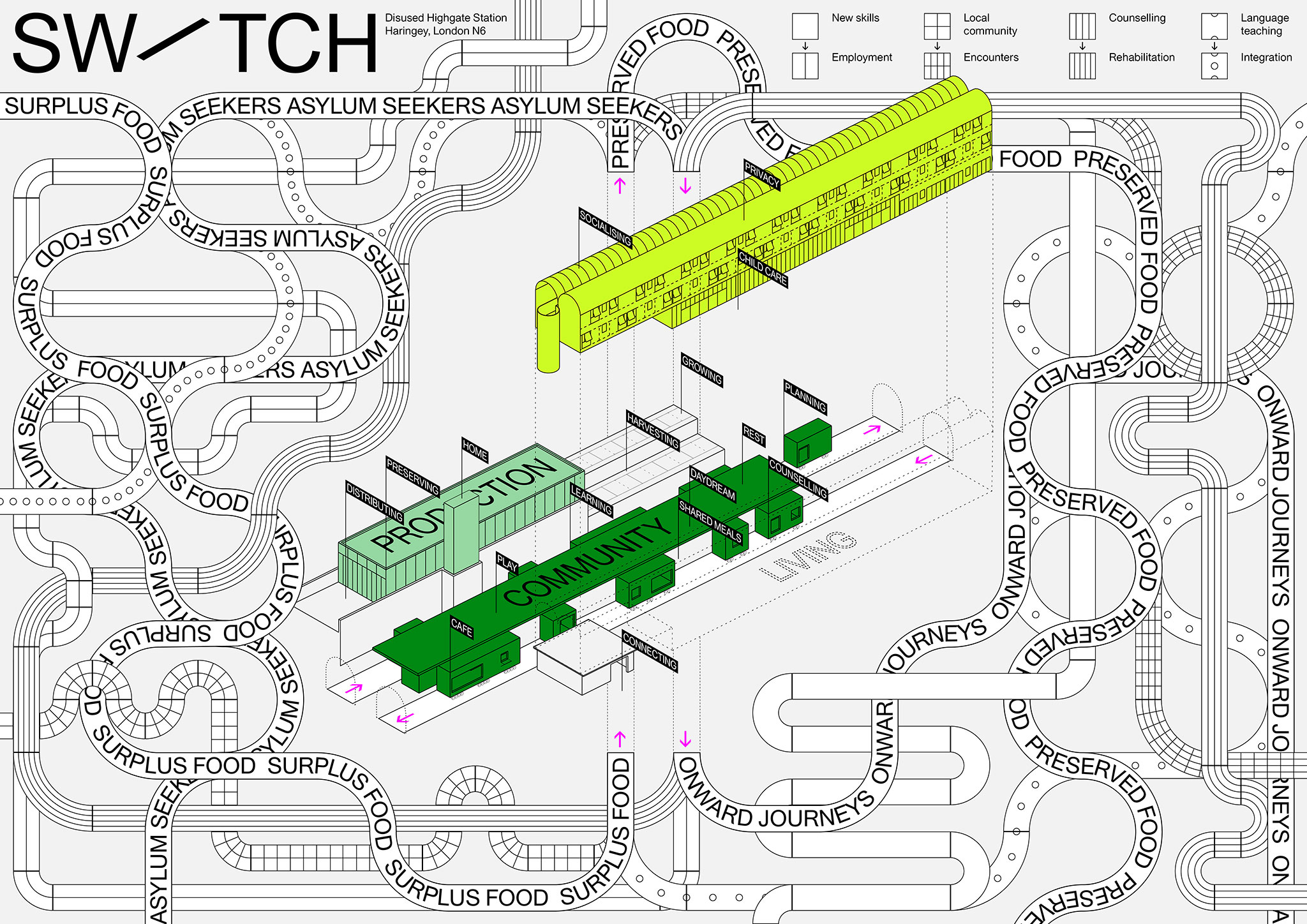
The 2023 Davidson Prize People's Choice Winner. "Switch" by Rifugio.
“Once again the Alan Davidson Foundation has been amazed and delighted by the energy, ideas and design solutions generated through our annual competition. What united all the submissions was an overwhelming sense of care, with the entries demonstrating that there could – and should – be far better solutions to the growing crisis of temporary homelessness in our cities, towns and countryside. The longlist is captured on our website, and I would like to thank everyone who contributed their valuable ideas to this important subject. See you next year!”
THE WINNER
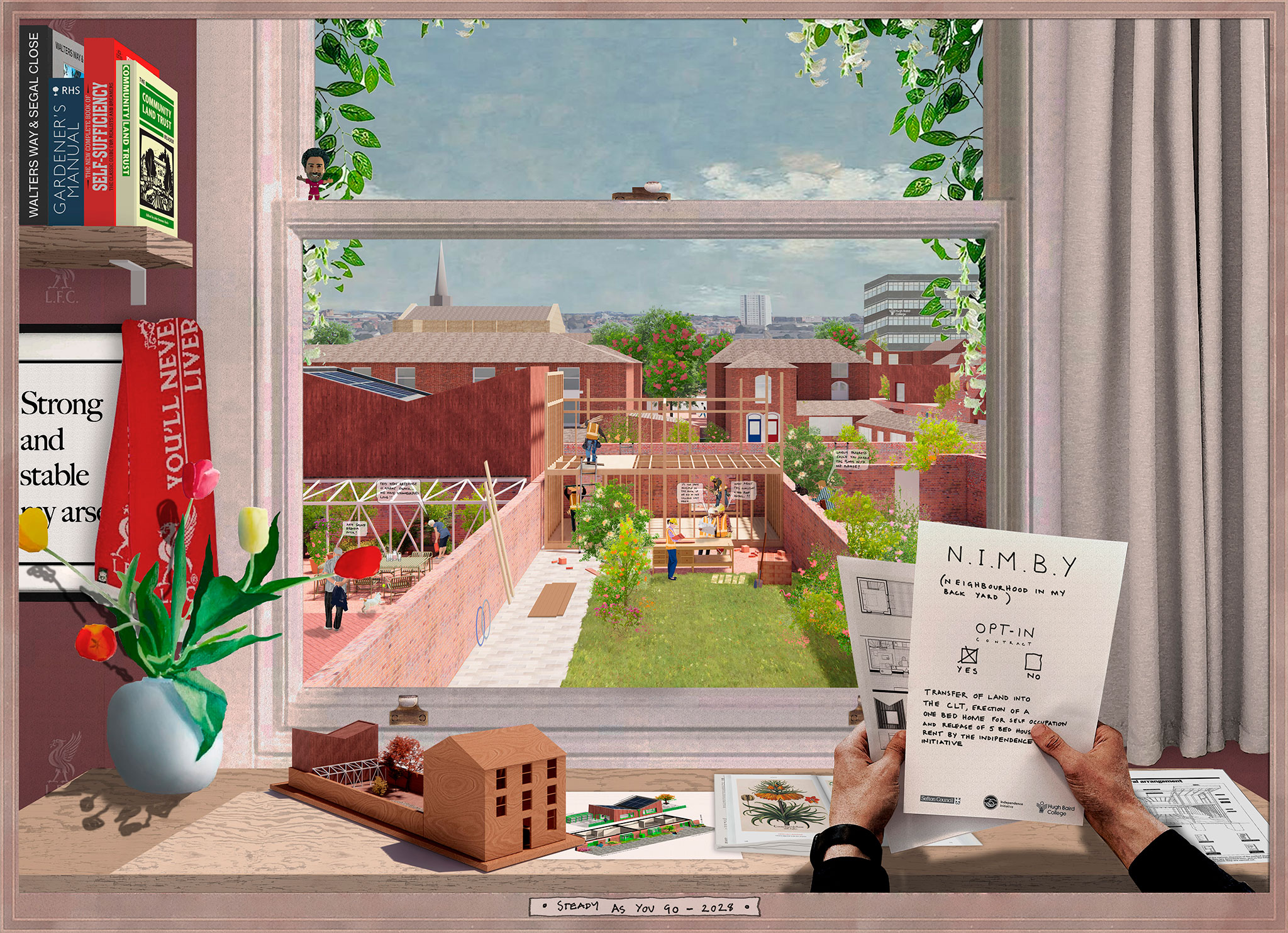
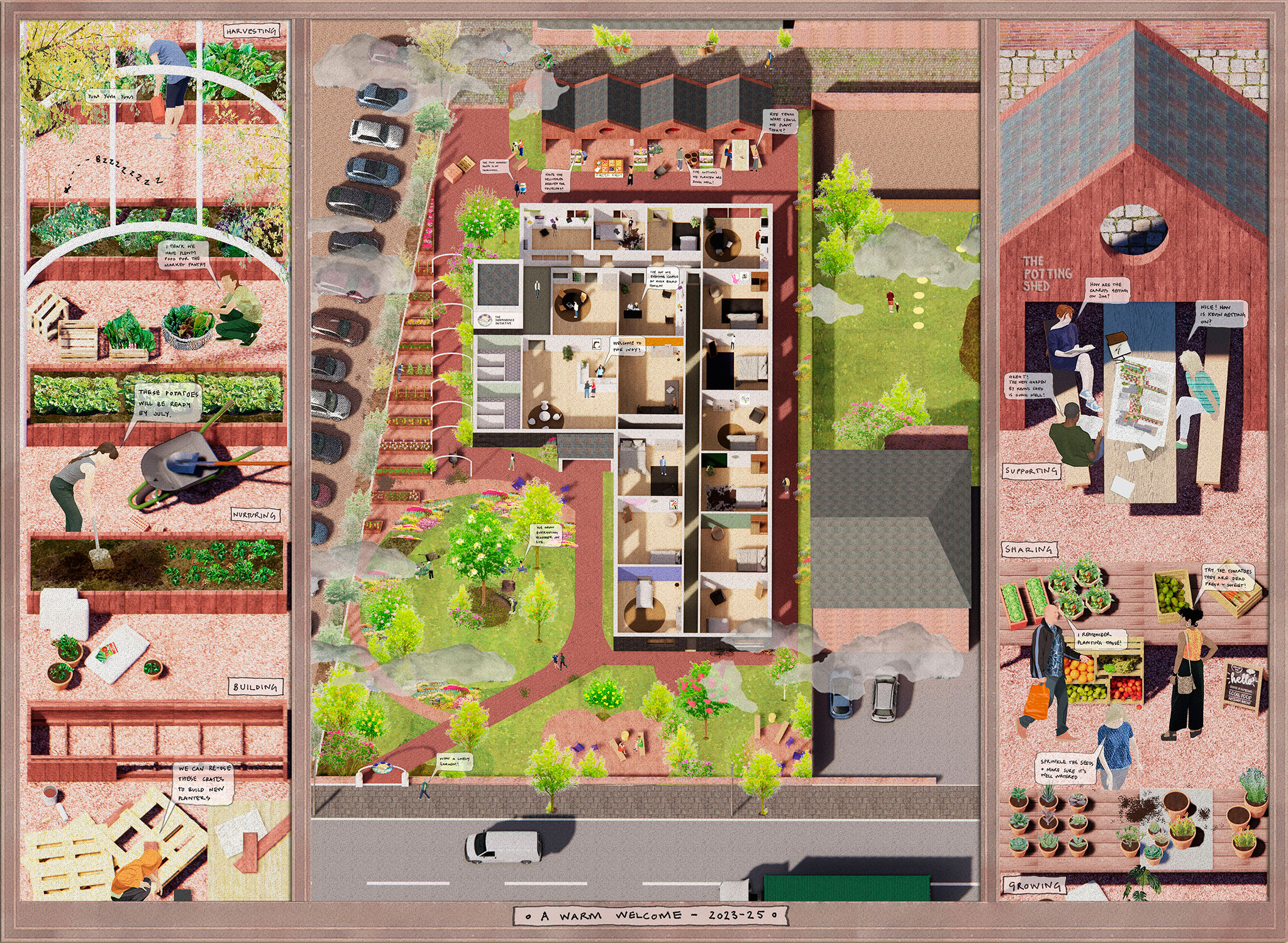
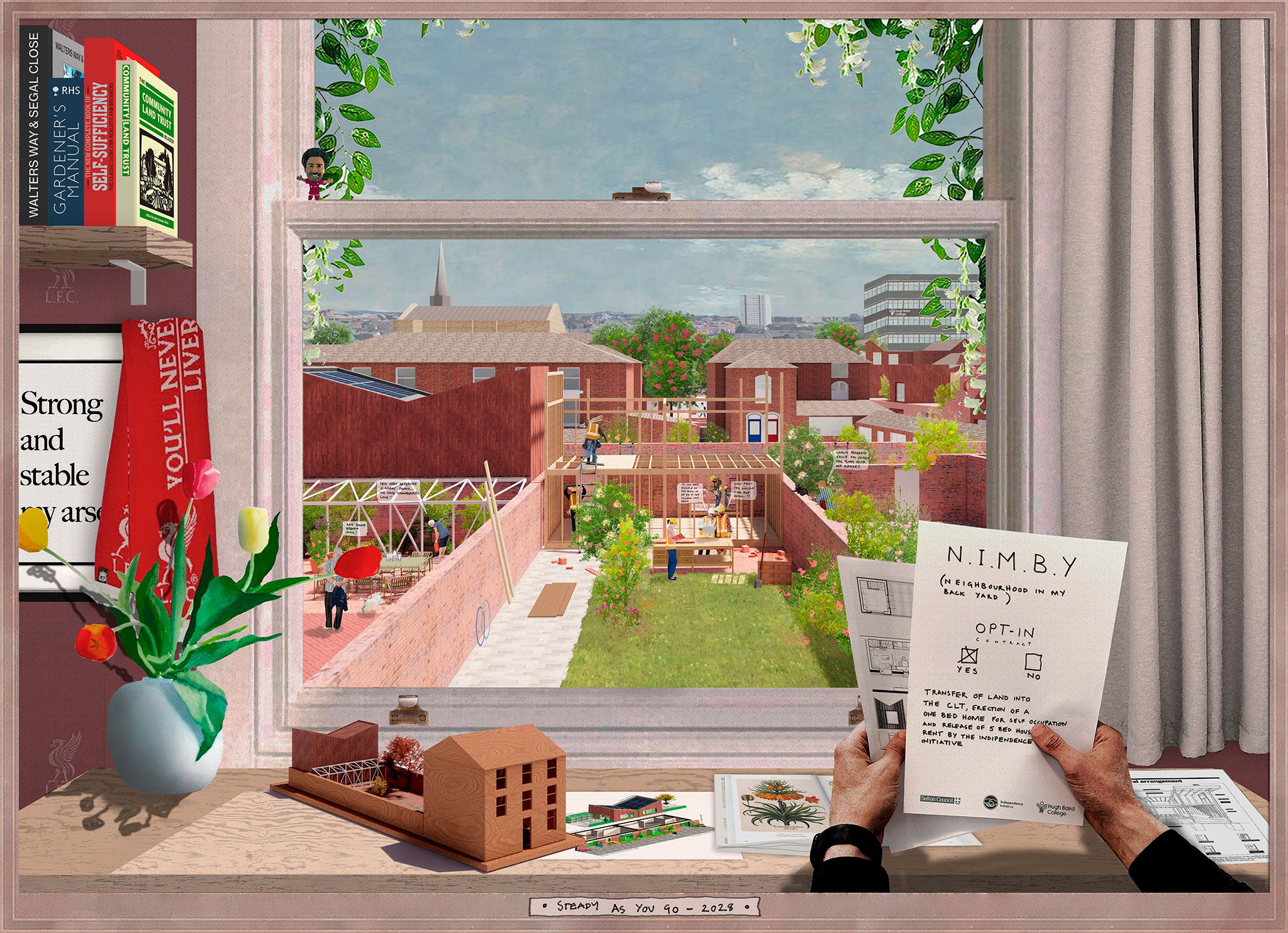
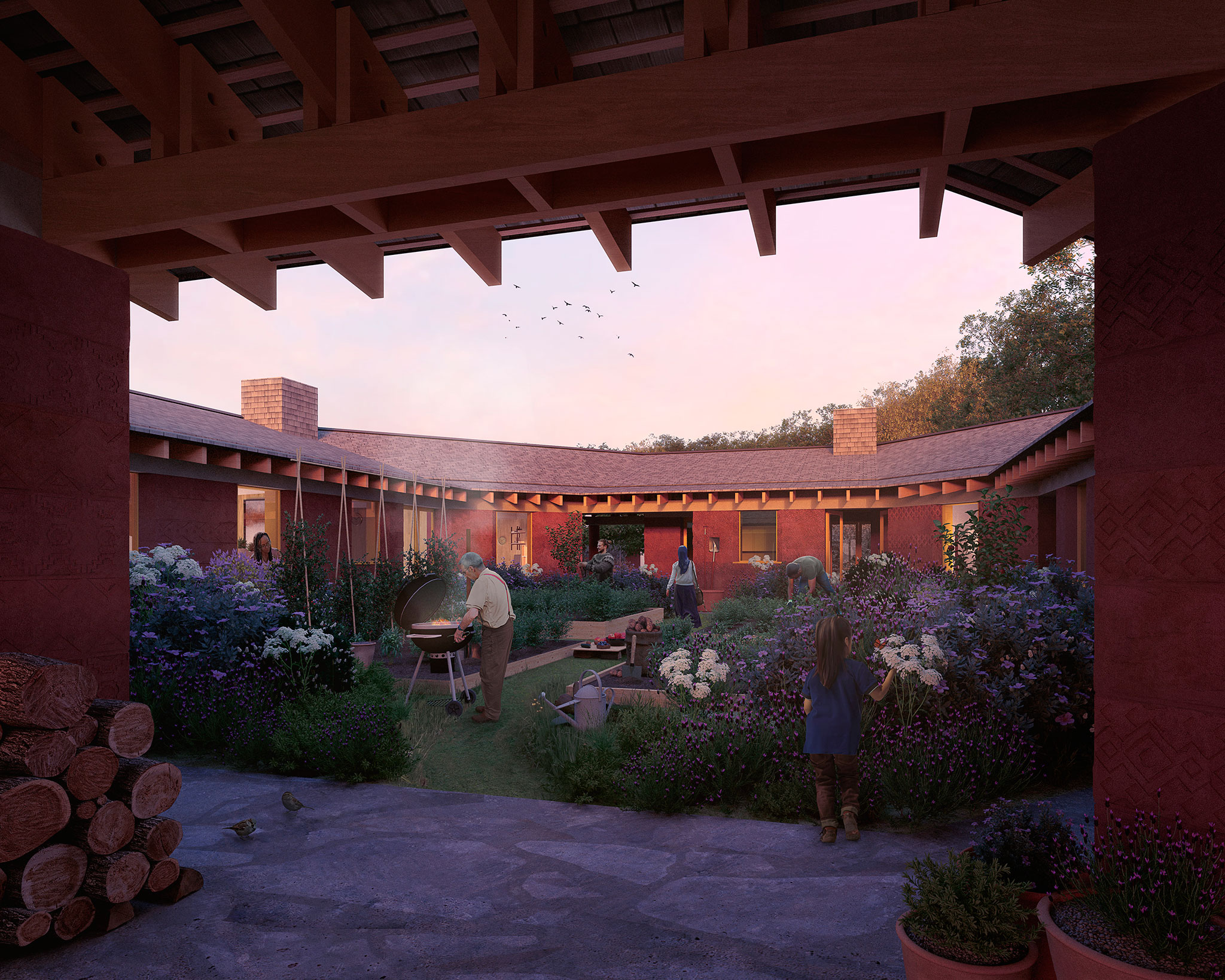
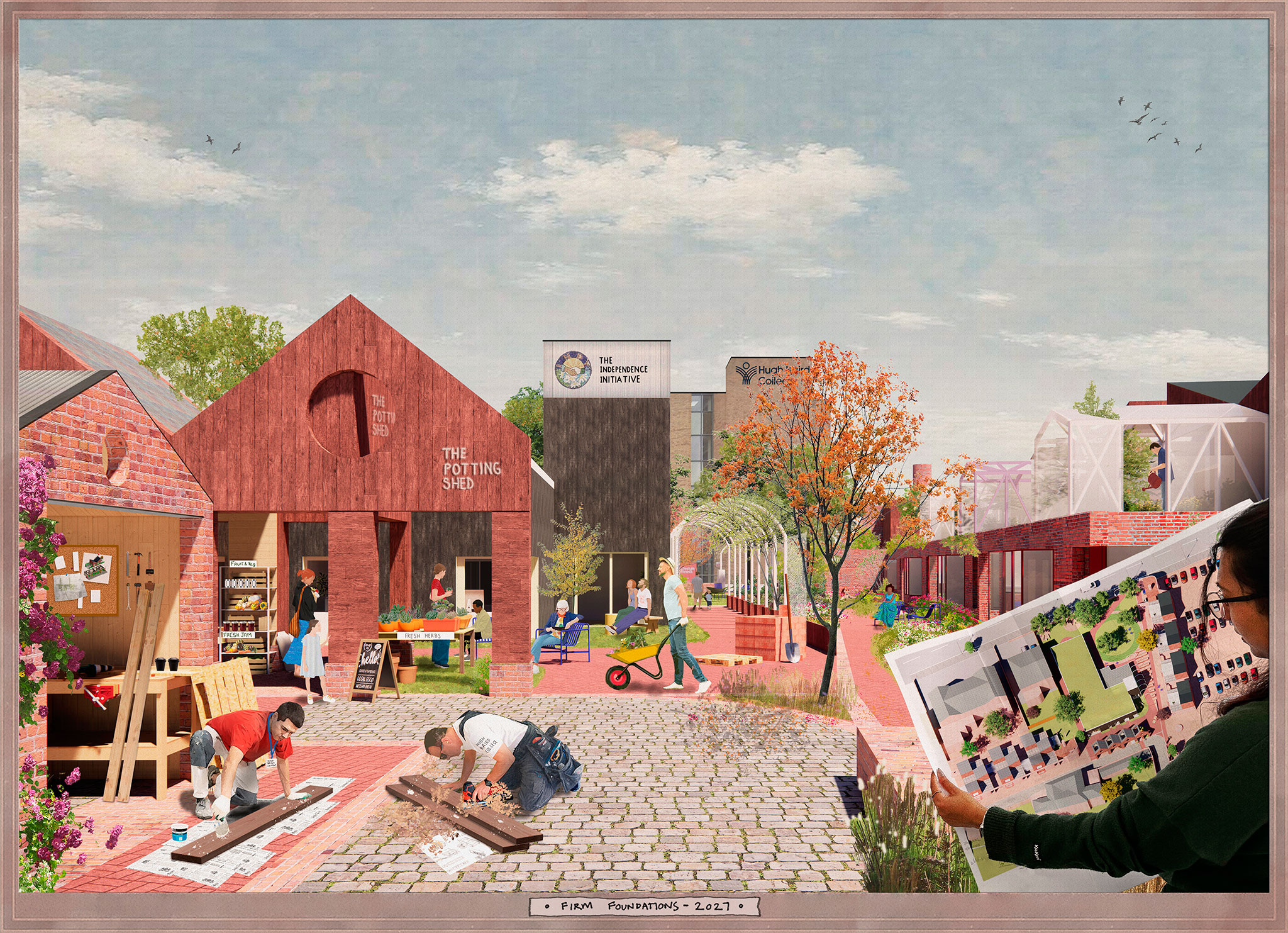
The 2023 Davidson Prize Winner. "Helping Hands - A Warm Welcome" by Studio MUTT and Neighbourhood with The Independence Initiative, Hugh Baird College, Islington Hostel Outreach, Amber Akaunu, Peter O’Neil and Dead Good Poets Society.
Helping Hands by Studio Mutt and Neighbourhood and with The Independence Initiative, Hugh Baird College, Islington Hostel Outreach, Amber Akaunu, Peter O’Neil and Dead Good Poets Society.
Neighbourhood (John Nordon, Duncan Blackmore – development strategy and architecture).
The Independence Initiative (residents, team and CEO Jim Brett – service provision advisors).
Hugh Baird College and apprentices (education and training advisors).
Islington Hostel Outreach (Dr Polly Wootton – healthcare advisor).
Amber Akaunu (filmmaker).
Peter O’Neill (poet and accessibility consultant).
Dead Good Poets Society (poetry society and event organisers).
A nurturing communal landscape in Liverpool is co-created by residents, neighbours and specialist support organisations.
The National Audit Office suggests that a third of young people leaving care experience homelessness within two years, and that a quarter of homeless people previously lived in care. Recent studies also found that 41% of care leavers were not in education, employment or training, compared to 15% of all 19-year-olds. Helping Hands seeks to connect these issues and facilitate an infrastructure to help care, and leavers, transition to independent living and meaningful employment.
The site is taken from leftover spaces of a typical urban block adjacent to Hugh Baird College in Liverpool, which already hosts several expert organisations offering support to homeless and vulnerable people. The proposal opens and connects the "backs" of these organisations and reorients them within a nurturing communal landscape.
Shared accommodation for care leavers occupies one corner of the backlands while individual homes are arranged across the site reflecting greater degrees of independence. The repeated garden wall is a reassuring and recognisable presence, creating spaces of varied character and incorporating small-scale social and civic areas.
The Helping Hands team includes designers with experience in transitioning from care, experts already offering support and housing to homeless and vulnerable people on the site, medical professionals practising in homeless hostels and a local college where residents can learn the skills required to construct the housing our society needs.
The Helping Hands team developed their proposal at the Finalist stage through further research with local stakeholders. Extending the proposal beyond the boundaries of the initial site, they have created a design solution that reflects The Independence Initiative’s three stages of ongoing care: Warm Welcome; Firm Foundations; and Steady As You Go.
THE RUNNERS UP
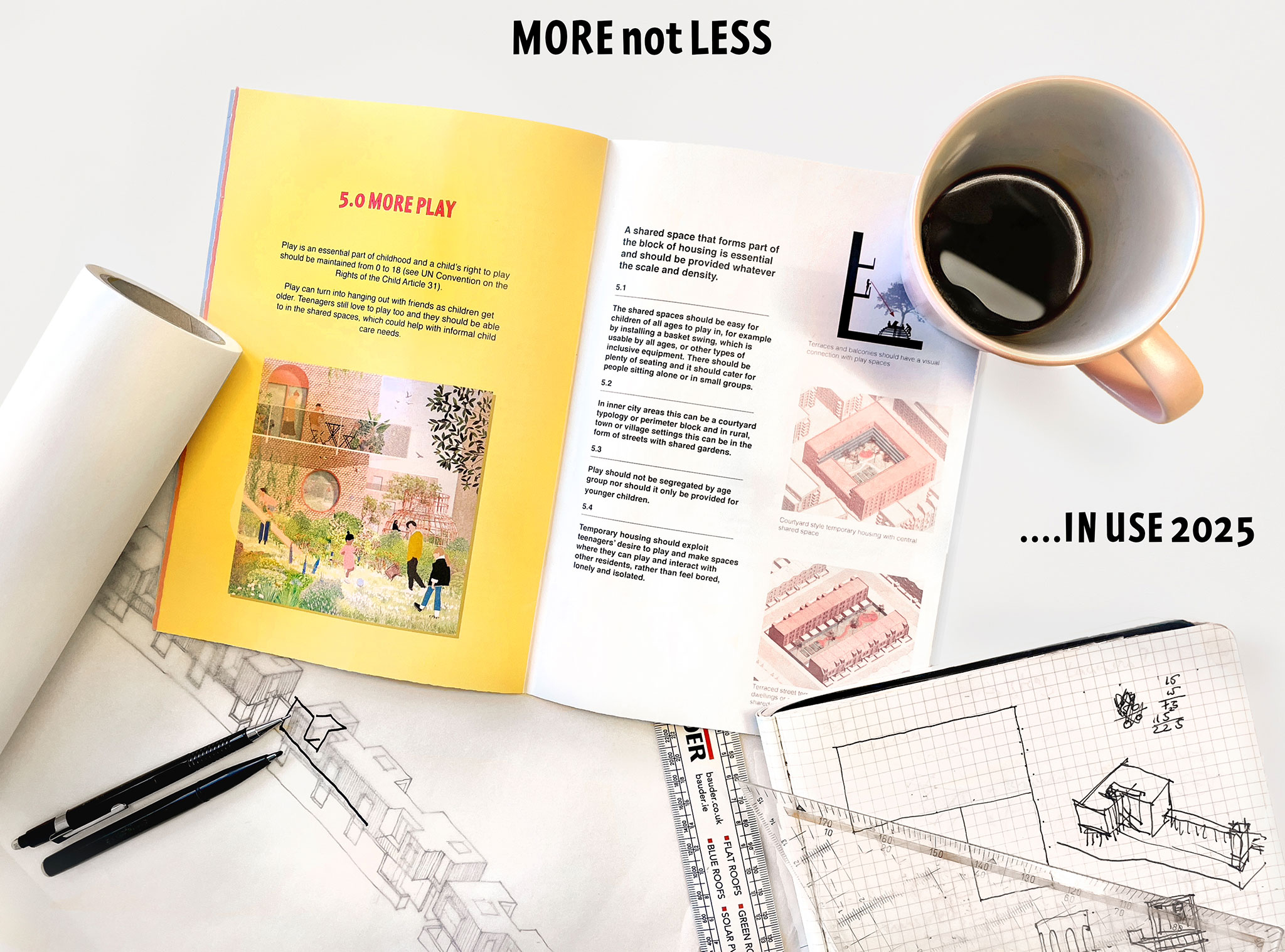
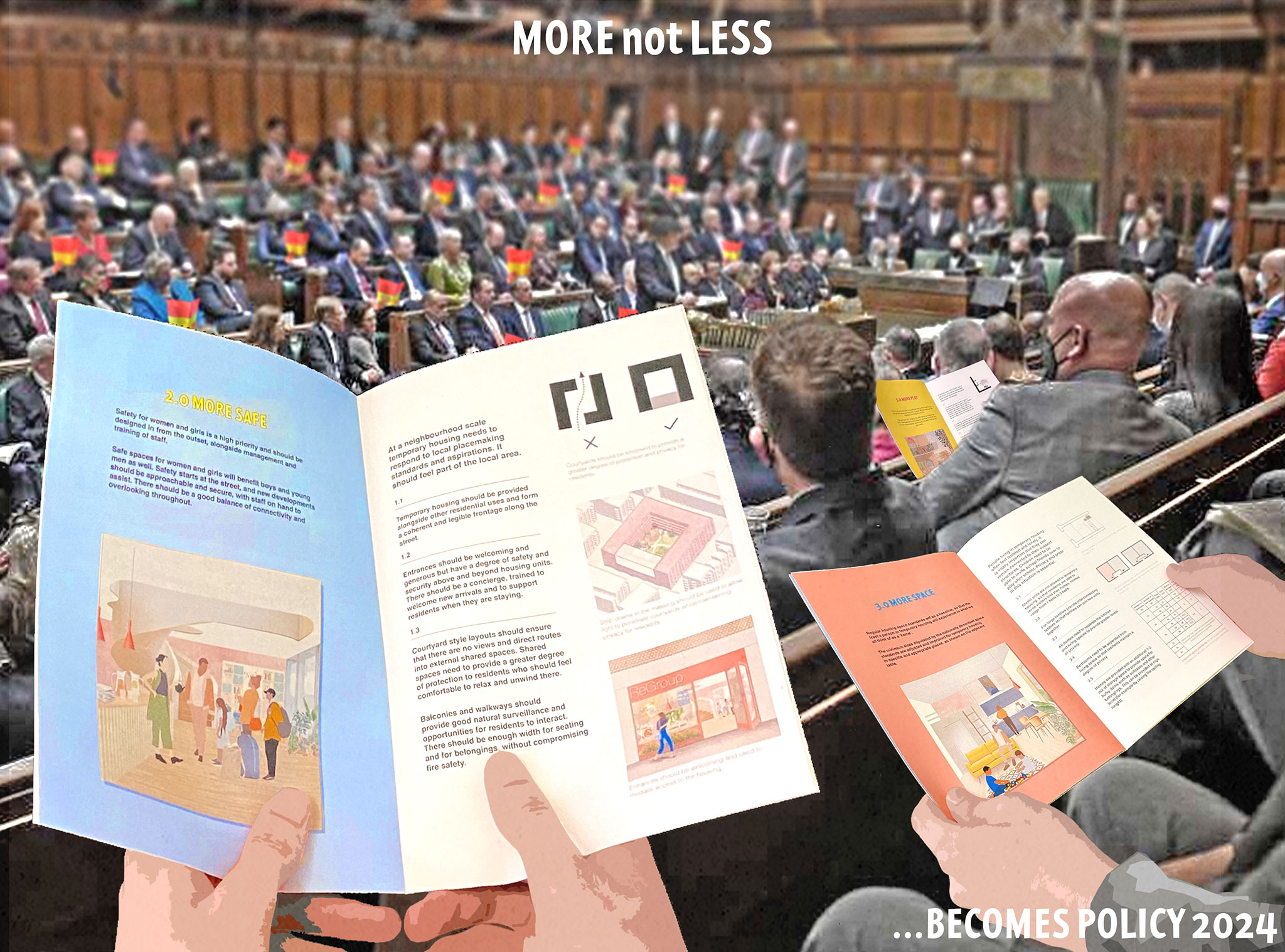
The 2023 Davidson Prize Runner-Up. "More Not Less" by ZCD Architects and Madeleine Kessler Architecture with Datshiane Navanayagam, Gene Limbrick, Charles Jegar, Architecture Doing Place, Poppie Skold, JCLA, Webb Yates Engineers.
More Not Less by Re-Group
Madeleine Kessler Architecture (Madeleine Kessler).
Datshiane Navanayagam (journalist, reporter and producer).
Architecture Doing Place (David Ogunmuyiwa – policy, ex-housing officer, architect).
JCLA (Natalie Simmons, landscape and biodiversity).
Webb Yates Engineers (Steve Webb – structure / natural timber and stone).
Charles Jegar (trauma SFBT therapist in training – advisor).
Gene Limbrick (film director).
Poppie Skold (film editor).
Design codes reinvent temporary accommodation for positive futures.
“Having a home is the one thing you take for granted. And when you lose that – especially as a child – it really knocks the core out of you. And you carry that insecurity with you for the rest of your life.”
Homelessness is either preceded by trauma or causes trauma. This is often exacerbated by "temporary accommodation" – often not short-term – before rehousing. The devastating failings of unregulated triage housing – which cannot be called "homes" – significantly add to the trauma of those most in need. There is frequently a lack of space, privacy, safety, ownership, agency, a sense of community and attention to well-being. There are no regulatory standards for temporary housing, with new-build schemes approved on a sui generis basis.
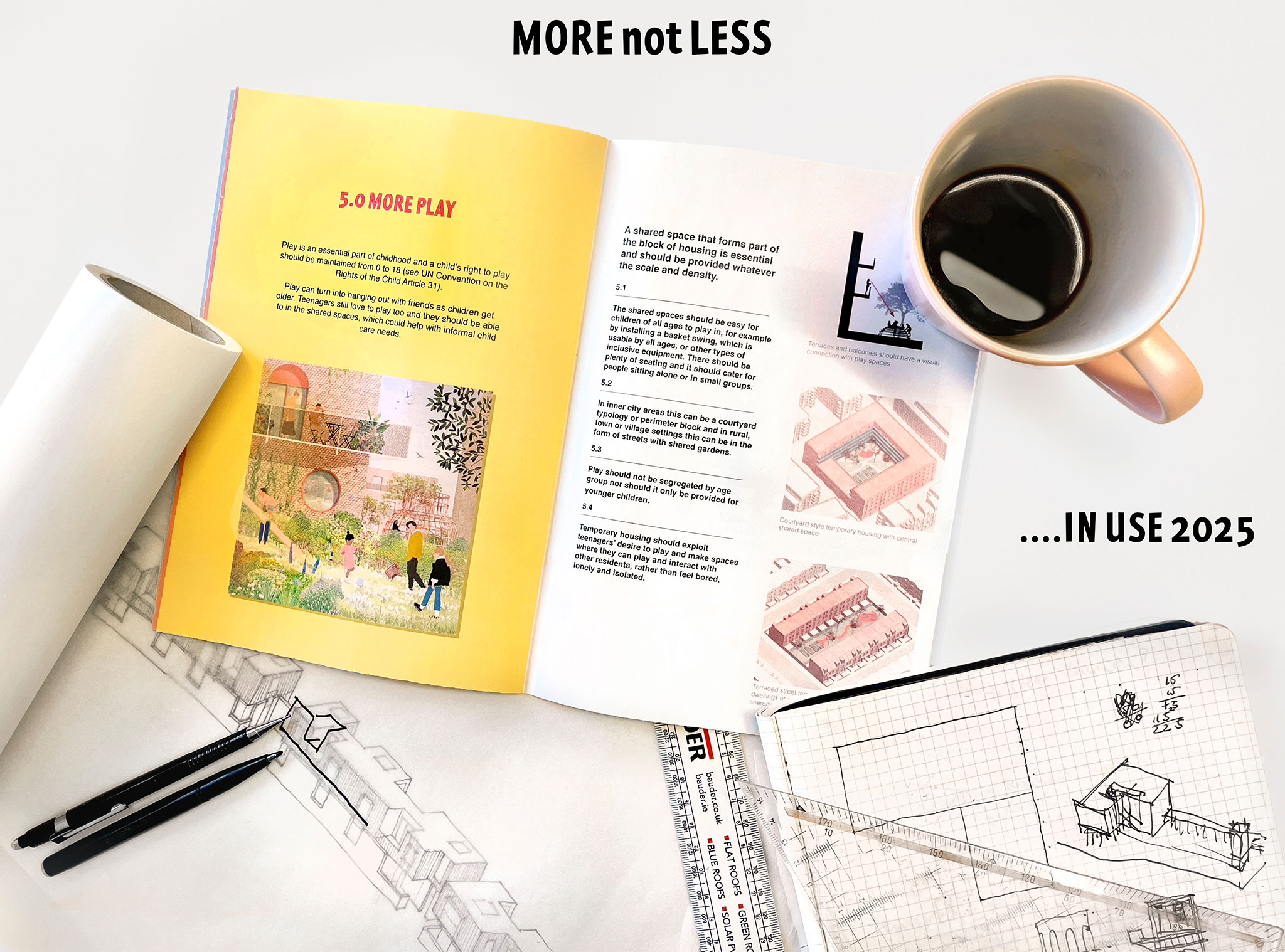
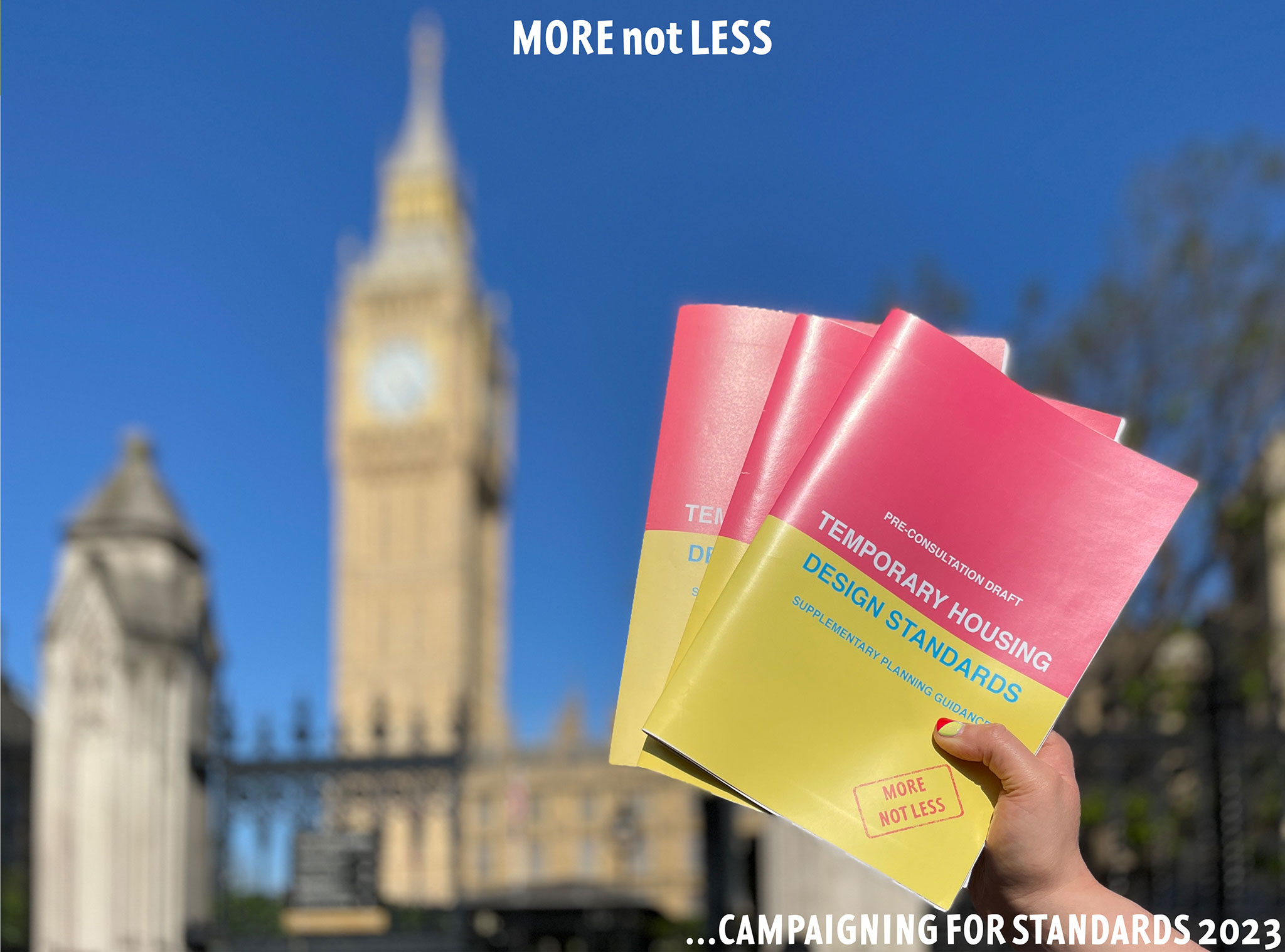
More Not Less responds with a design code to encourage aspiration rather than a race to the bottom. The proposal tests its principles on a design for an intergenerational living place, mainly for families with children. The site on Kingsland Road in Hackney, London, currently has planning approval for a temporary accommodation scheme that Re-Group believe is not fit for purpose.
Just as those in intensive care receive more care, Re-Group believes that those who need temporary accommodation deserve more not less – and that design must go beyond the standards set in The London Plan to consider ancillary spaces and homes. Is it welcoming? Is there space for wraparound care? Are there shared facilities, including workspaces, storage, a youth club, a shop and a communal kitchen? Is there room to play, learn and be close to nature? Through design, More Not Less aims to support the ‘un-othering’ of people who find themselves homeless.
The More Not Less team developed their proposal at the Finalist stage by drafting a media campaign and detailed design guidance setting out and illustrating eight principles to be applied to temporary accommodation across the UK: Welcome; Safety, Support; Play; Nature; Space; Learning; and Connection.
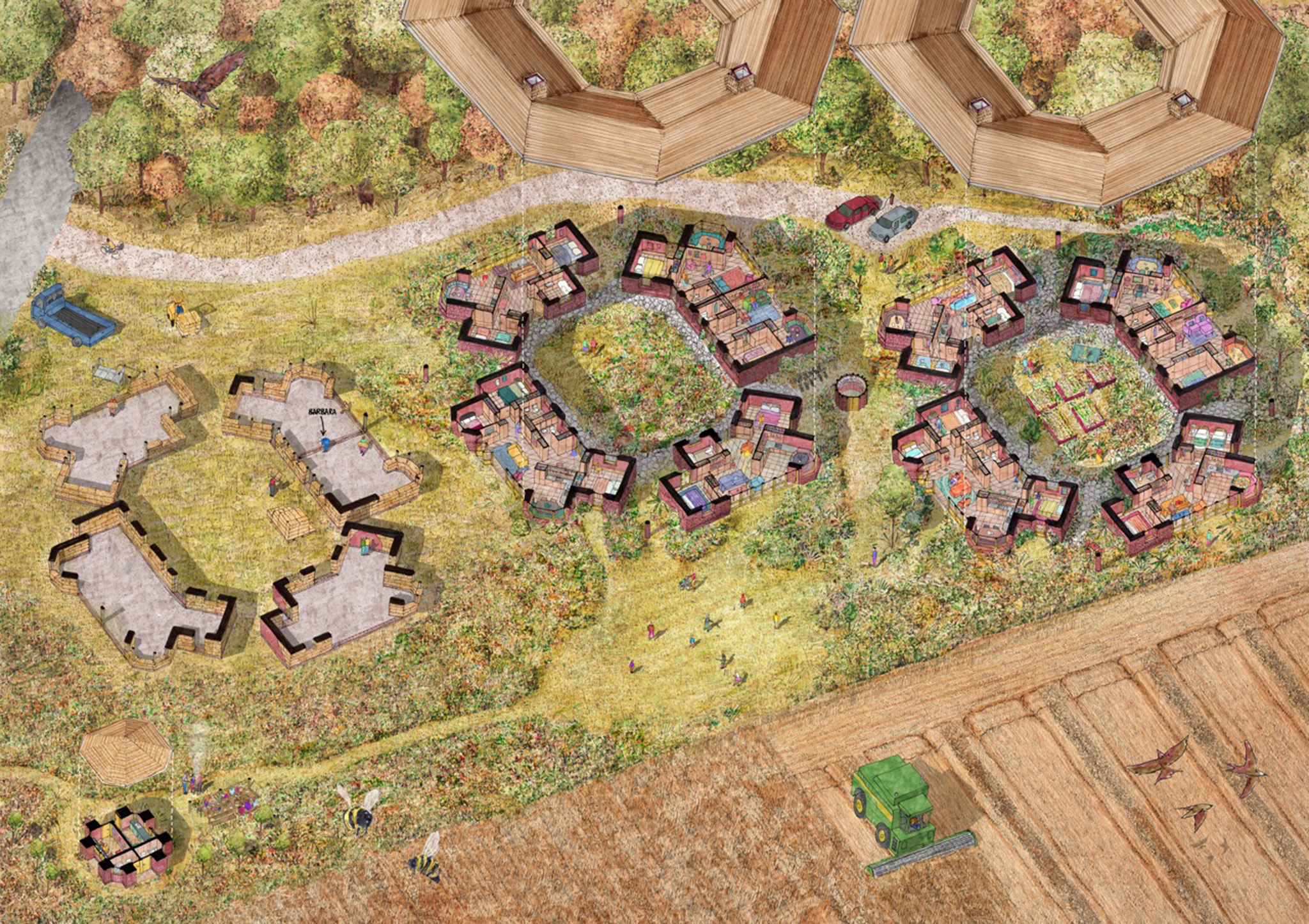
The 2023 Davidson Prize Runner-Up. "Home Building" by Wild & SNaB.
Home Building by Wild & SNaB
Barbara Jones, School of Natural Building (straw bale builder, instructor, advisor).
Robert Magowan (policy advisor).
Louise Houston (development manager).
Millie Walton (writer).
Christian Cargill (filmmaker).
Emiliano Zavala (architect).
Harnessing learning, collaboration and sustainable production to generate a sense of belonging.
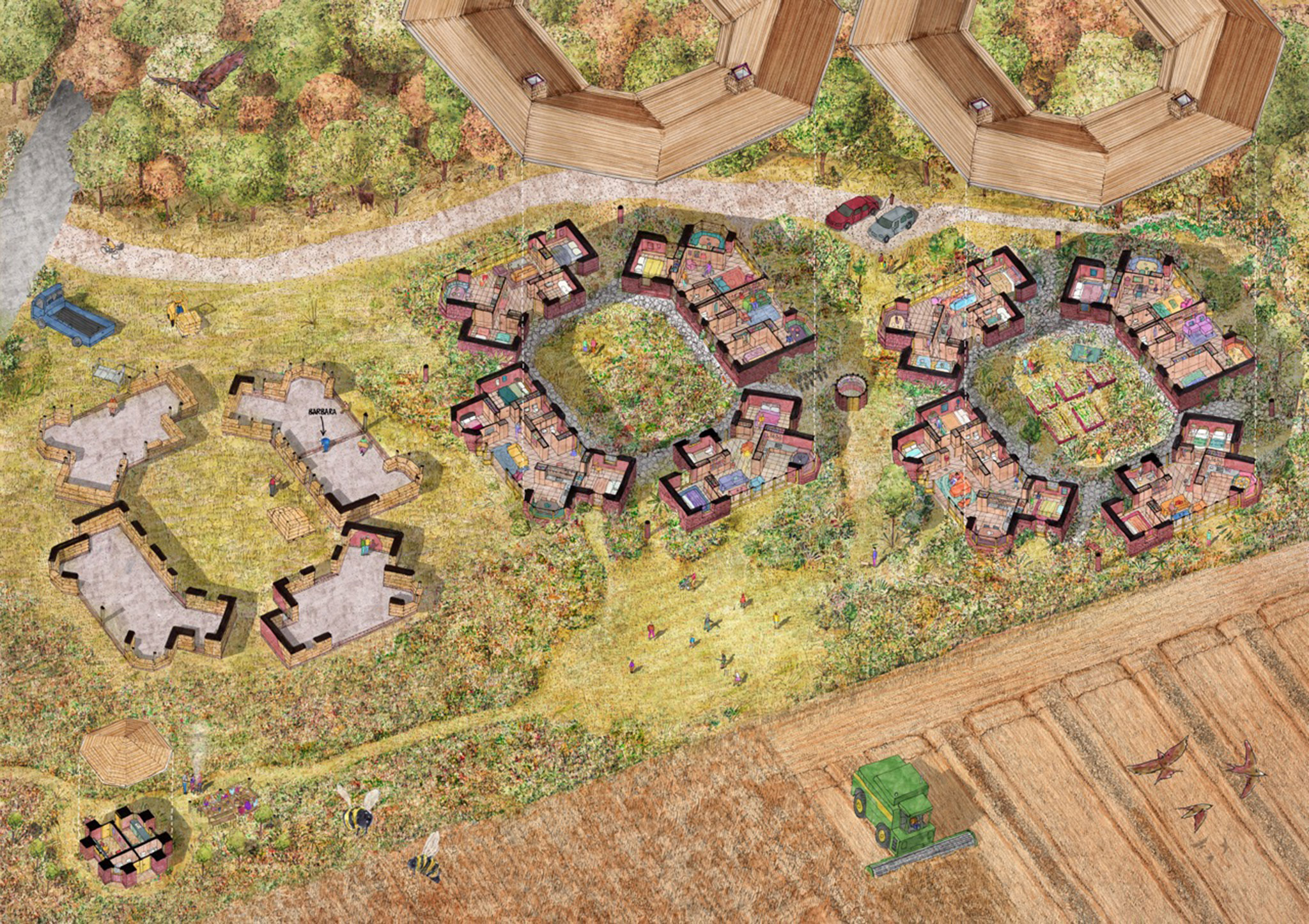
Drawing on the experience of team member Barbara Jones who co-founded The School of Natural Building (SNaB), Home Building is a 12-month design and construction course offered to teenagers leaving care, people leaving the armed forces, ex-prisoners, and asylum seekers over the age of 16, with the intention of assembling a group from diverse backgrounds.
Twelve homes of varying sizes and a multifunctional live / workspace for a community of 50 will be constructed using locally sourced natural materials– with a particular focus on straw as a by-product of agricultural activity.
Learning, collaboration and sustainable production generate a sense of belonging, offering participants a real stake in the places they live. Throughout construction, 12 trainees would live on-site in a live / work building, providing participants with the opportunity to develop meaningful relationships with each other and the wider community.
The community land trust will maintain the homes at affordable rents in perpetuity, with the newly qualified natural builders being offered permanent residence and the opportunity to participate in future schemes or seek construction employment in the area. The remaining housing would be allocated to vulnerable people, who would join a community invested in its homes and countryside.
Over time, once monocultural edge land will develop into a rich tapestry of people and wildlife. Shared community buildings will host group dinners, yoga classes, childcare and homeworking. As the project is repeated, linear corridors of communality will spread throughout the UK.
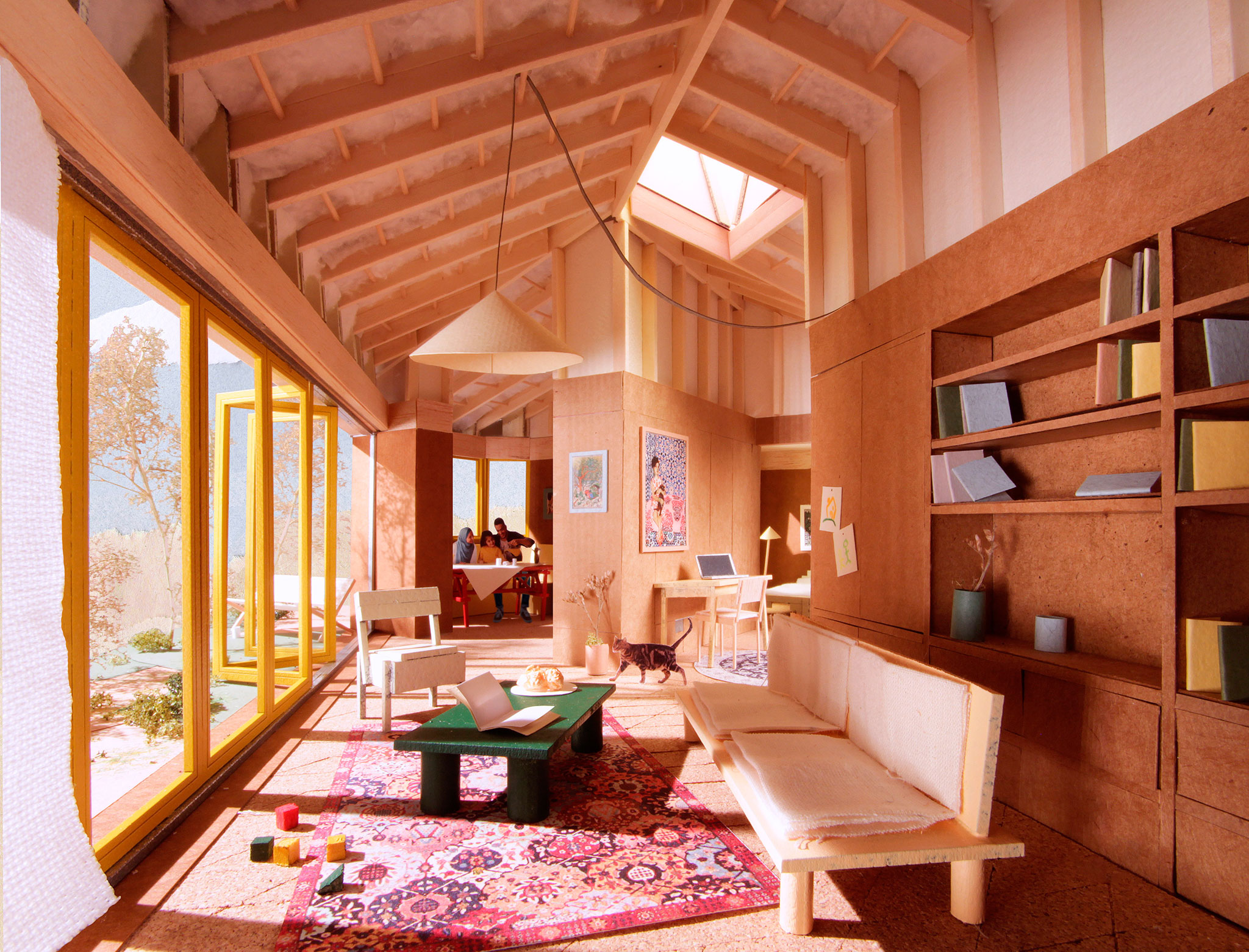
The Home Building team developed their proposal at the Finalist stage by working up the design of housing clusters in detail – exploring form and massing, construction and materiality, interior and exterior spaces and a programme of activities designed to promote interaction with the wider community.