The complex designed by SANAA is composed of eight translucent volumes connected by a system of elevated walkways, creating a continuous route along which visitors move between reading rooms, galleries, and landscaped terraces. The exterior features a double-layered façade, comprising an inner layer of high-performance, low-emissivity glass with metal cladding, and an outer layer of expanded aluminum mesh. This white veil gives the building a sense of lightness and transparency.
SANAA further develops its exploration of fluid atmospheres and the studio’s characteristic notion of permeability, where movement becomes the defining and energizing factor of these spaces.
Director Yi-Hsin Lai describes the new museum as follows: “Visitors do not come only to see an exhibition. They read, wander, rest, linger, and explore. We aim to create spaces where people can let themselves drift and discover things on their own, shaping their own experience.”

Taichung Green Museumbrary by SANAA. Photograph by YHLAA.
The building’s volume is lifted to allow breezes and natural light from the surrounding park to filter into the enclosed spaces. The building is accessible from all directions through shaded plazas at ground level. The project also includes an outdoor rooftop garden, offering visitors views of the surrounding park and the city skyline.
“We have always hoped to create an open building that many people can easily participate in. Whether it is the museum providing visual learning through art or the library offering education through literature, combining the two to create a new multi-faceted learning space is what we believe to be one of the main characteristics of this building. We have carefully considered how to gently link the two entities together to create a place that connects learning and communication for people.”
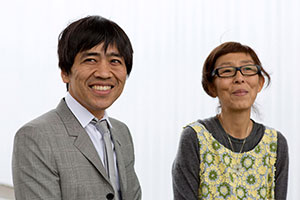
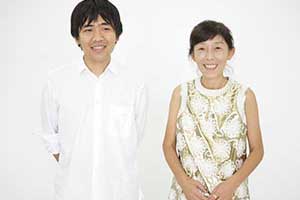
Kazuyo Sejima and Ryue Nishizawa.

Taichung Green Museumbrary by SANAA. Photograph by YHLAA.
Project description by SANAA
Transparent Cultural Forest of Freedom, Aesthetics, Knowledge Flow, and Exploration.
Taichung Green Museumbrary is Taiwan’s first venue combining a municipal art museum and public library. Opening at the end of 2025, it sits on the northern edge of Taichung Central Park, with a floor area of about 58,000 square metres. The architecture features eight interconnected yet independently articulated volumes, forming an integrated space for both museum and library. It expresses a new cultural identity through openness, transparency, and fluidity.
In harmony with its environment, the large volumes are divided into smaller, human-scale cubes and wrapped in a silver-white façade that reflects and softly echoes the surrounding park and cityscape, blending into the context. Elevated structures create shaded, multi-layered plazas beneath, inviting greenery, breeze, and sunlight. With entrances from all directions—city or park—the building welcomes visitors into an open, inclusive cultural space, offering a new architectural landscape inspired by nature.
Learning here goes beyond the written word; it includes appreciating art. By merging the distinct qualities of knowledge and art with accessible information, the building supports varied experiences. Inside, spaces of different scales— exhibition rooms, reading areas, public zones—rise and fall, converge and disperse. This rhythm enriches the interplay between knowledge and art. Visitors of all ages and backgrounds find their own ways to engage, forming personal links between learning and daily life. Here, people encounter knowledge, art, and nature in spontaneous ways and experience culture with comfort, ease, and elegance amid the rhythms of contemporary life.

Location
Taichung Green Museumbrary is located in Central Park of Taichung City, Taiwan. This plan is based on the integrated redevelopment of the former airport and its surrounding areas, with major adjacent projects including the Shui-Nan Transit Center and the Convention Center. Taichung Green Museumbrary sits at the northern edge of Central Park, which serves as a key link connecting Greater Taichung’s network of urban green corridors and natural open spaces.
Central Park functions as an ecological node and corridor, designed through an interconnected network of terrain, water features, and greenery within the site. By leveraging its inherent ecological landscape character and its role as a large- scale regional ecological corridor, Central Park is envisioned to act as both a connector and a stitching element in the city’s ecological environment.