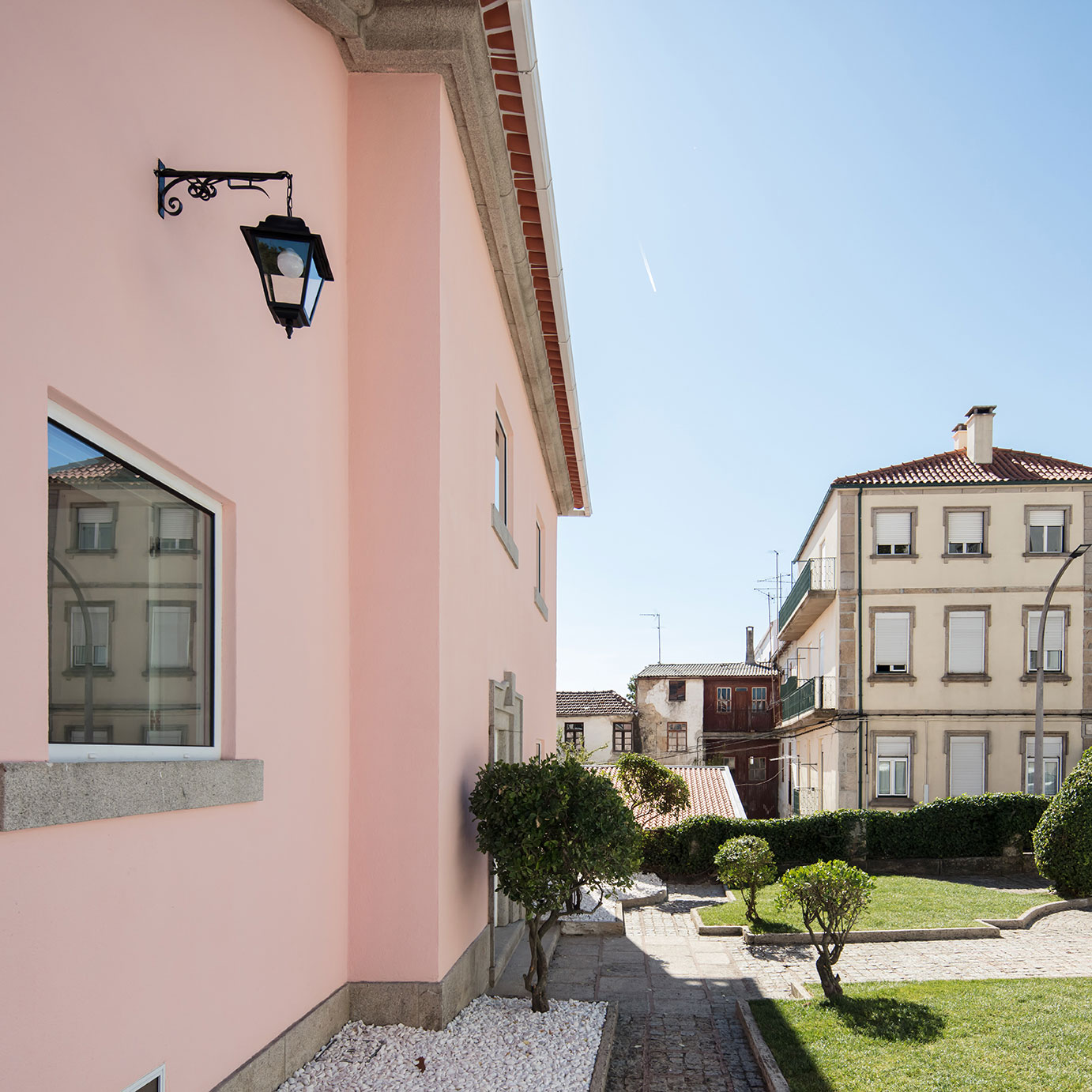
Minimalist remodeling of a detached house in the city of Guarda, located in a neighborhood with a very different urban typology.
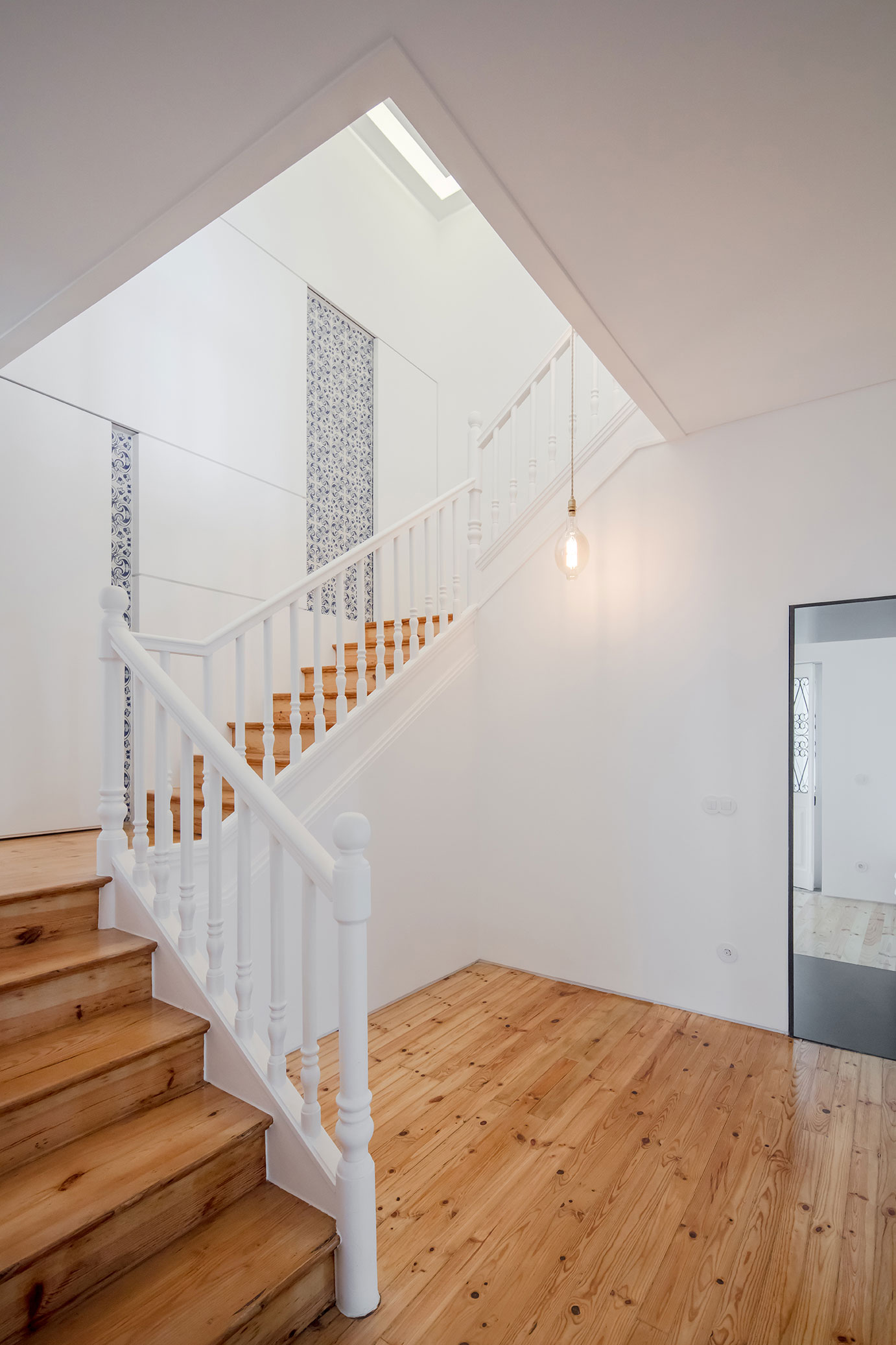
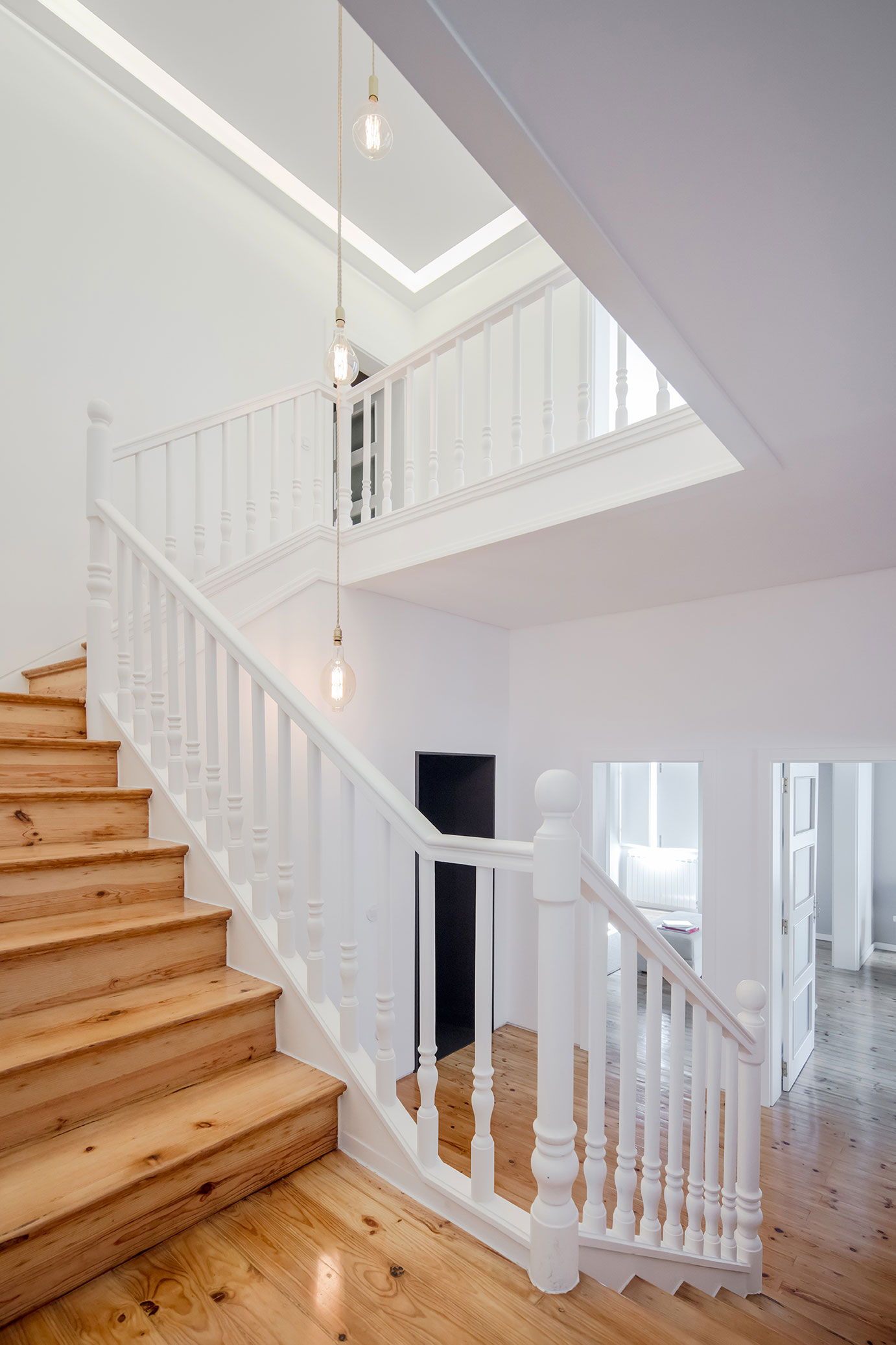
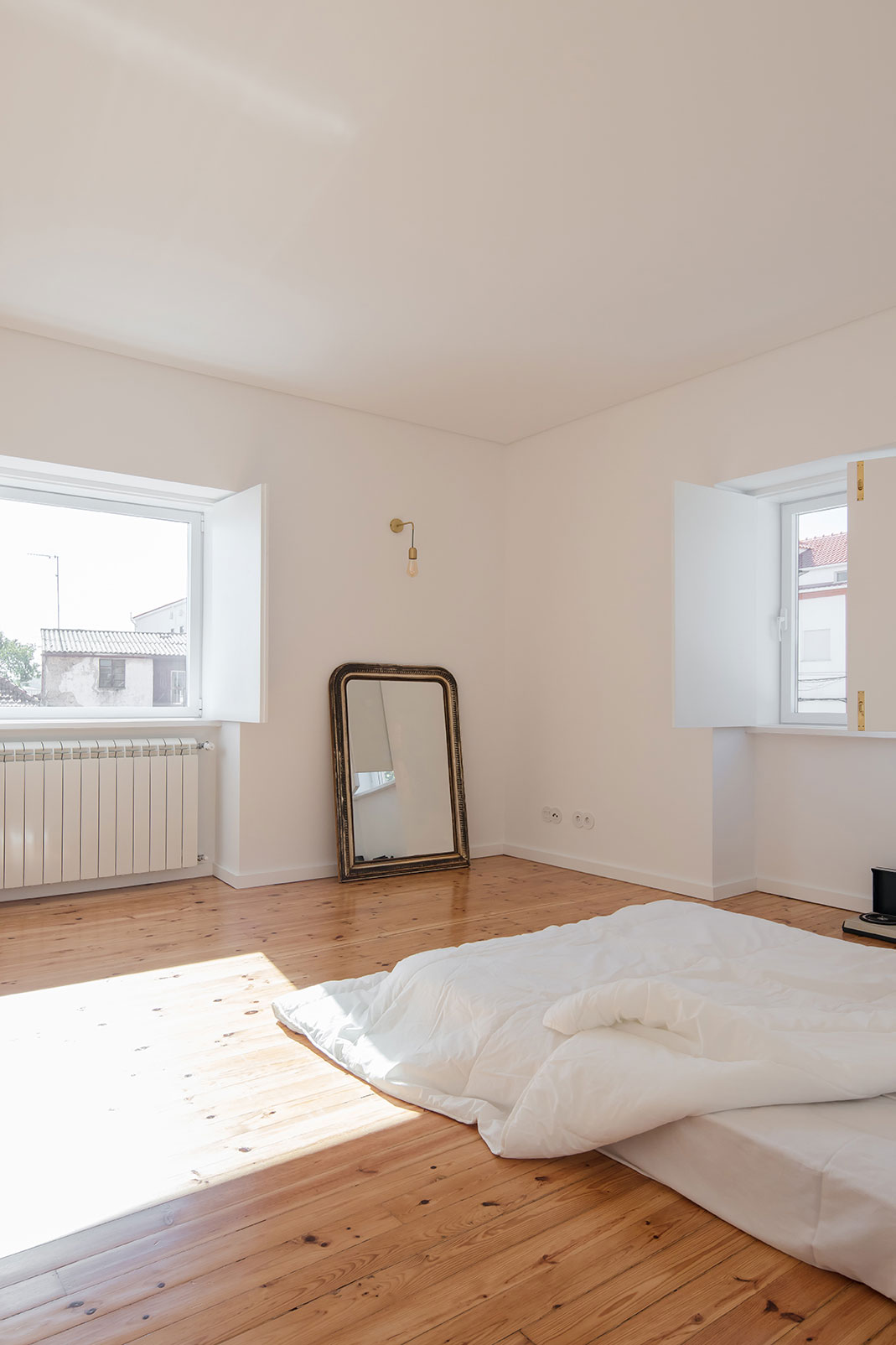
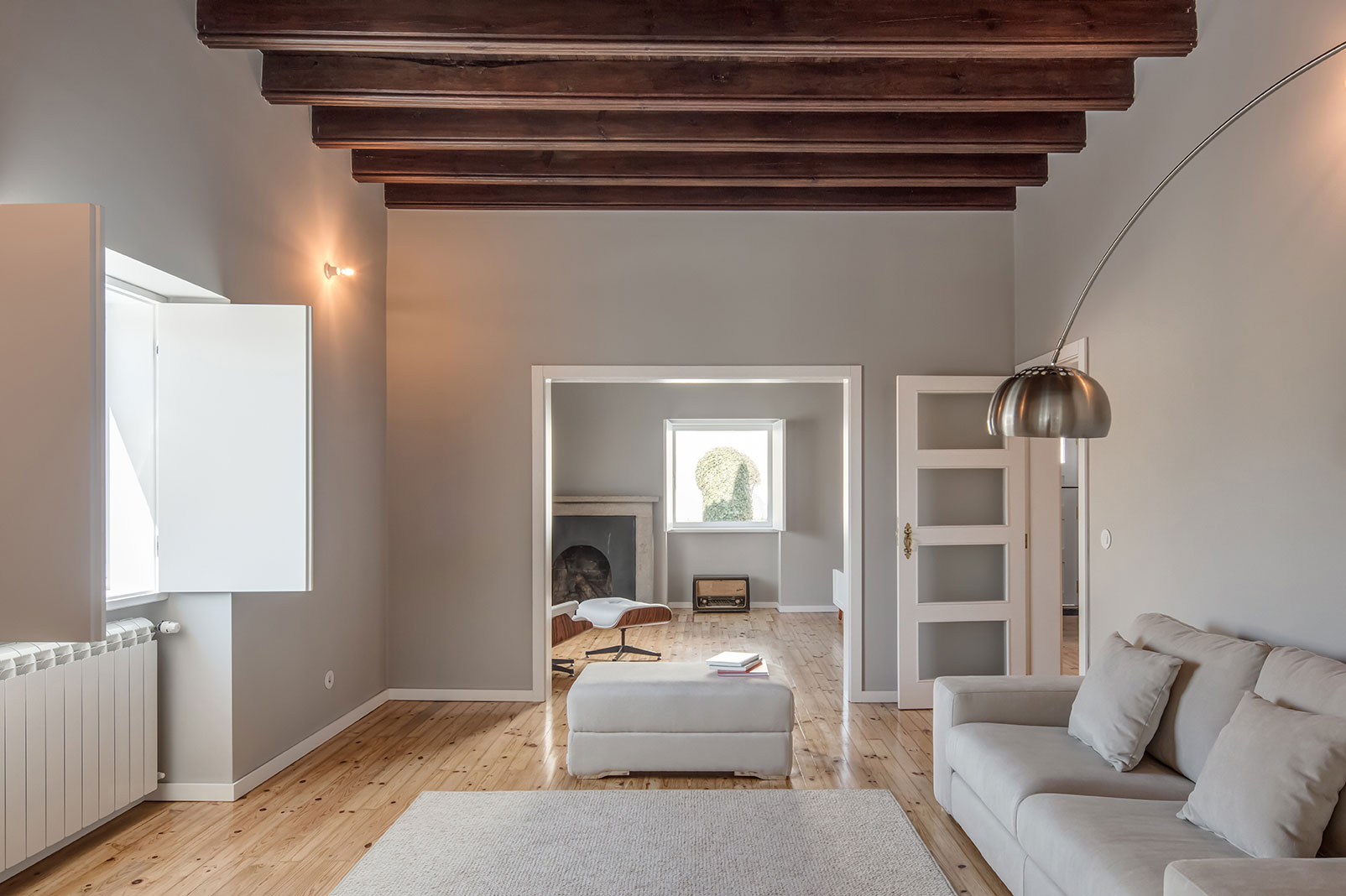
Due to this variety in the surrounding houses, the architect, Filipe Pina, has made an economic intervention and with a minimum demolition, since the previous conditions of the house were optimal. The interior of the house presented remains of the previous owners throughout its history, which led to design minimalist interiors, and make the decision to maintain the existing coatings and wooden structures.
 

Description of project by Filipe Pina

Located in the city centre of Guarda, this is an urban typical house of the first half of the 20th century, presenting 3 sides and a garden.

The surrounding buildings are characterised by several types of construction, a consequence of the successive city urbanisticgrowth stages.

The clients (and also friends) wanted a pragmatic solution to the project,"willing to renew and rehabilitate the house with minimum demolition and in the most economicalway". 

The optimal conditions and building characteristics of the house allowed for a good project development. 

Soon we understood that the living spaces of the house needed to be simplified, as it did show some old-fashioned elements added over time by the different owners, with external parts losing their coherence and some gloomy interiors agglomerated in quite messy, obsolete and isolated rooms. 

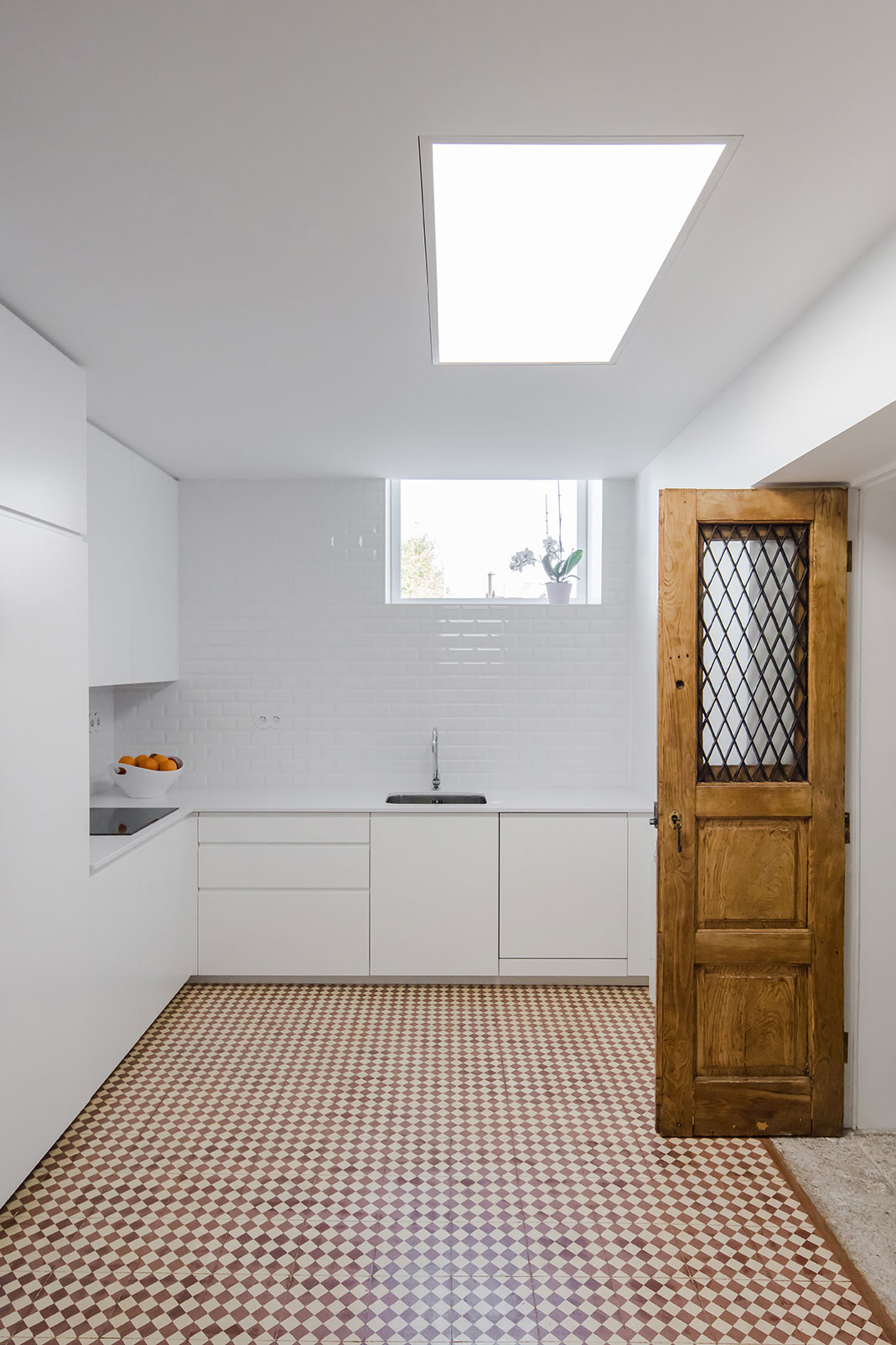
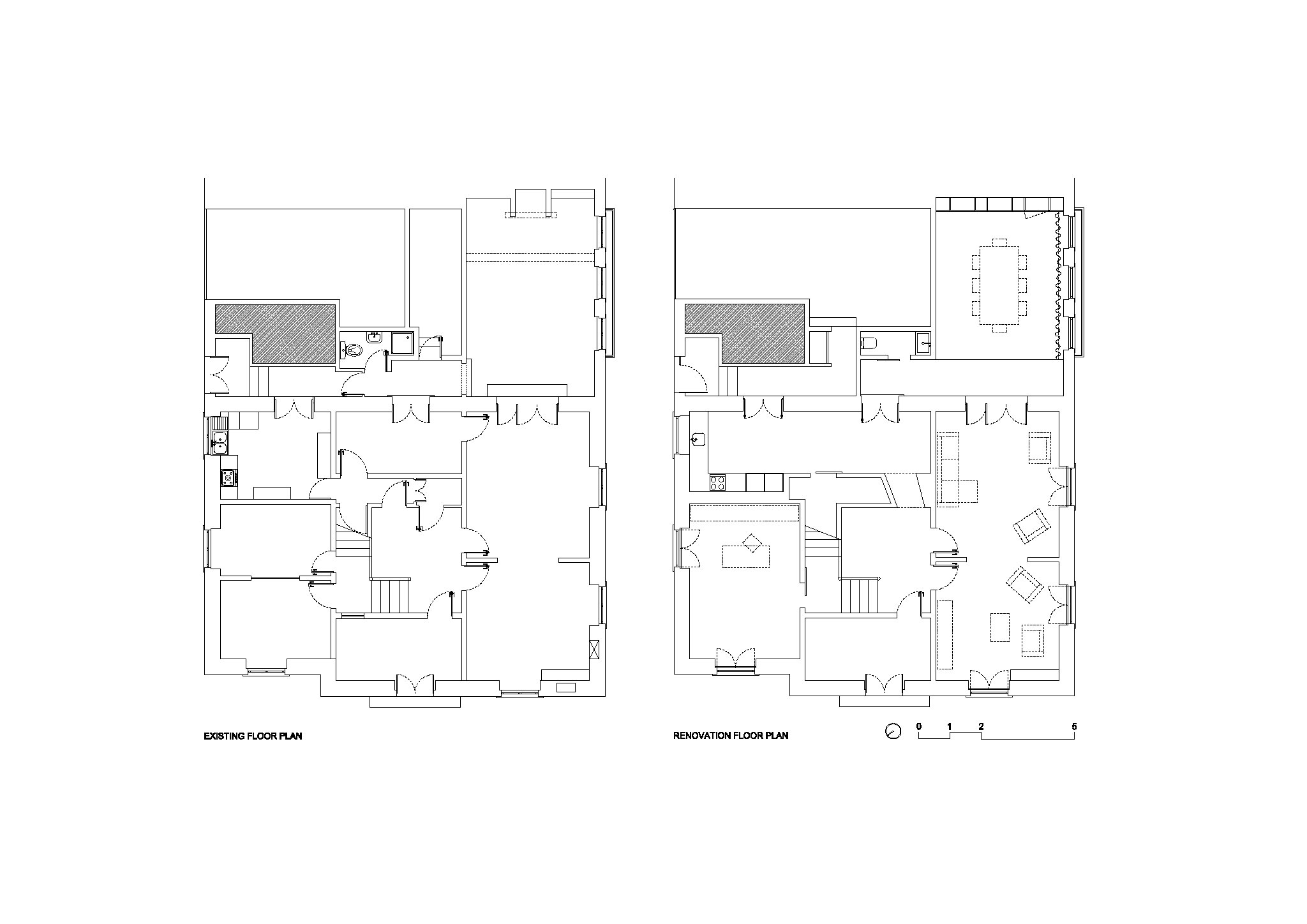
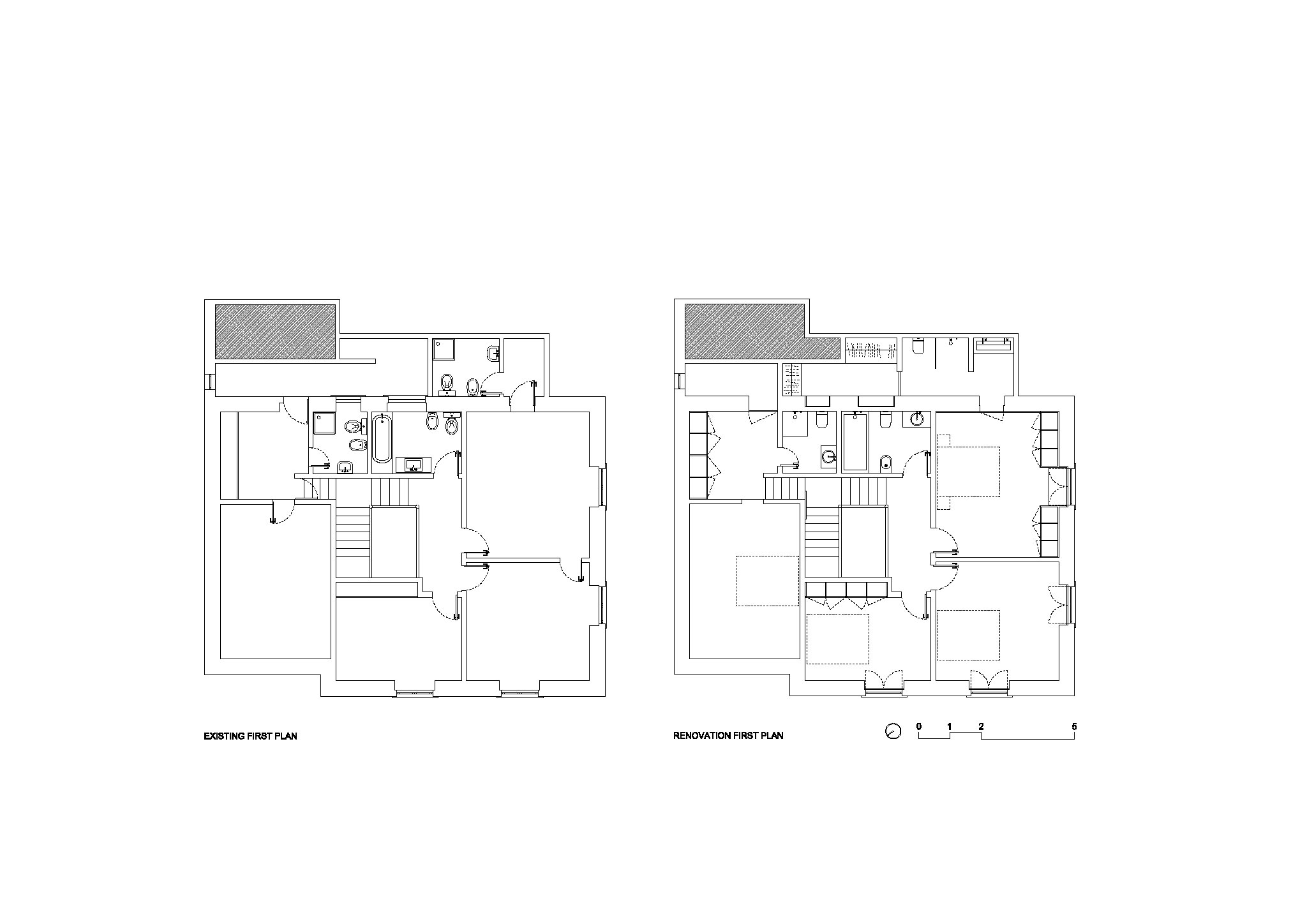
We kept the original functional layout of the house, where we only inserted few changes in view of adapting it to actual modern requirements, namely for the kitchen, toilets and bathrooms, and very seldom demolitions which allowed new internal paths. 

It was also decided to keep the original floors, wooden structures,some the roof and surfaces. 

Now the house lives from its inside where all spaces merge into one unique light and bright room. 

Therefore, the initial goal was achieved, with São Francisco being a clear and objective solution to the clients' needs and requirements, on top of an enhanced friendship, with costs in line with the initial estimates of approximatively 280€/m². 

Read more
Read less

More information

Label
Architect
+ + copy Created with Sketch.
- + copy Created with Sketch.
Label
Team
Text
Filipe Pina, Romeu Dinis.
+ + copy Created with Sketch.
- + copy Created with Sketch.
Label
Dates
Text
2017.
+ + copy Created with Sketch.
- + copy Created with Sketch.
Label
Area
Text
275 sqm.
+ + copy Created with Sketch.
- + copy Created with Sketch.
Label
Location
Text
Guarda, Portugal.
+ + copy Created with Sketch.
- + copy Created with Sketch.
Label
Photography
+ + copy Created with Sketch.
- + copy Created with Sketch.
Filipe Pina Arquitectura is an architecture studio founded in 2015 by Filipe Pina (b. 1983, Paris, France), located in Guarda, in the interior of Portugal.

Filipe Pina is a Portuguese architect trained at the University of Beira Interior in Covilhã, Portugal, where he earned a Master's degree in Architecture between 2003 and 2008. During his studies, he participated in an Erasmus exchange program at the Prima Facoltà di Architettura Ludovico Quaroni of Sapienza University of Rome (Italy) from 2006 to 2007, expanding his training in international academic environments.

After graduating, Pina gained professional experience in various contexts, including internships in Paris: at the Médiathèque de l’Architecture et du Patrimoine through the Inov-Art program, and at the Service Départemental de l’Architecture et du Patrimoine through a Leonardo da Vinci grant, both in 2009.

His professional career also included work in the Urban Planning Department of the Celorico da Beira City Council (2011–2012) and a stint as an architect at Modular-System in Porto (2013–2015). Before establishing his own studio, he developed individual projects and collaborations from 2011 onward, and formed professional partnerships, including with Maria Inês Costa and with the architect David Bilo.

In 2014, Filipe Pina founded his own studio in the city of Guarda, Portugal: Filipe Pina Arquitectura. Since then, he has led a workshop that tackles projects of varying scales, with an approach that explores the relationship between contemporary architecture and the local roots and materials of the Portuguese context. The studio works on both renovations and new constructions, where an interest in vernacular architecture is evident, reinterpreted through contemporary, sustainable, and site-sensitive solutions.

Among his most representative works are renovations and extensions of traditional Portuguese houses, such as Casa Caldeira and Casa NaMora, where he combines traditional materials—like granite, slate, and wood—with contemporary design and construction strategies, always in dialogue with the landscape and the memory of the place.

Read more
Published on: November 10, 2018
Cite:
metalocus, INÉS OÑATE
"São Francisco house by Filipe Pina" METALOCUS. Accessed
<https://www.metalocus.es/en/news/sao-francisco-house-filipe-pina> ISSN 1139-6415
Loading content ...
Loading content ...
Loading content ...
Loading content ...
Loading content ...
Loading content ...
Loading content ...
Loading content ...
Loading content ...
Loading content ...
Loading content ...
Loading content ...
Loading content ...
Loading content ...
Loading content ...
Loading content ...
Loading content ...
Loading content ...
Loading content ...
Loading content ...
Loading content ...
Loading content ...
Loading content ...
Loading content ...
Loading content ...
Loading content ...
Loading content ...
Loading content ...
Loading content ...
Loading content ...
Loading content ...
Loading content ...
Loading content ...
Loading content ...
Loading content ...
Loading content ...
Loading content ...
Loading content ...
Loading content ...
Loading content ...
Loading content ...
Loading content ...
Loading content ...
Loading content ...
Loading content ...
Loading content ...
Loading content ...
Loading content ...
Loading content ...
Loading content ...
Loading content ...
Loading content ...
Loading content ...
Loading content ...