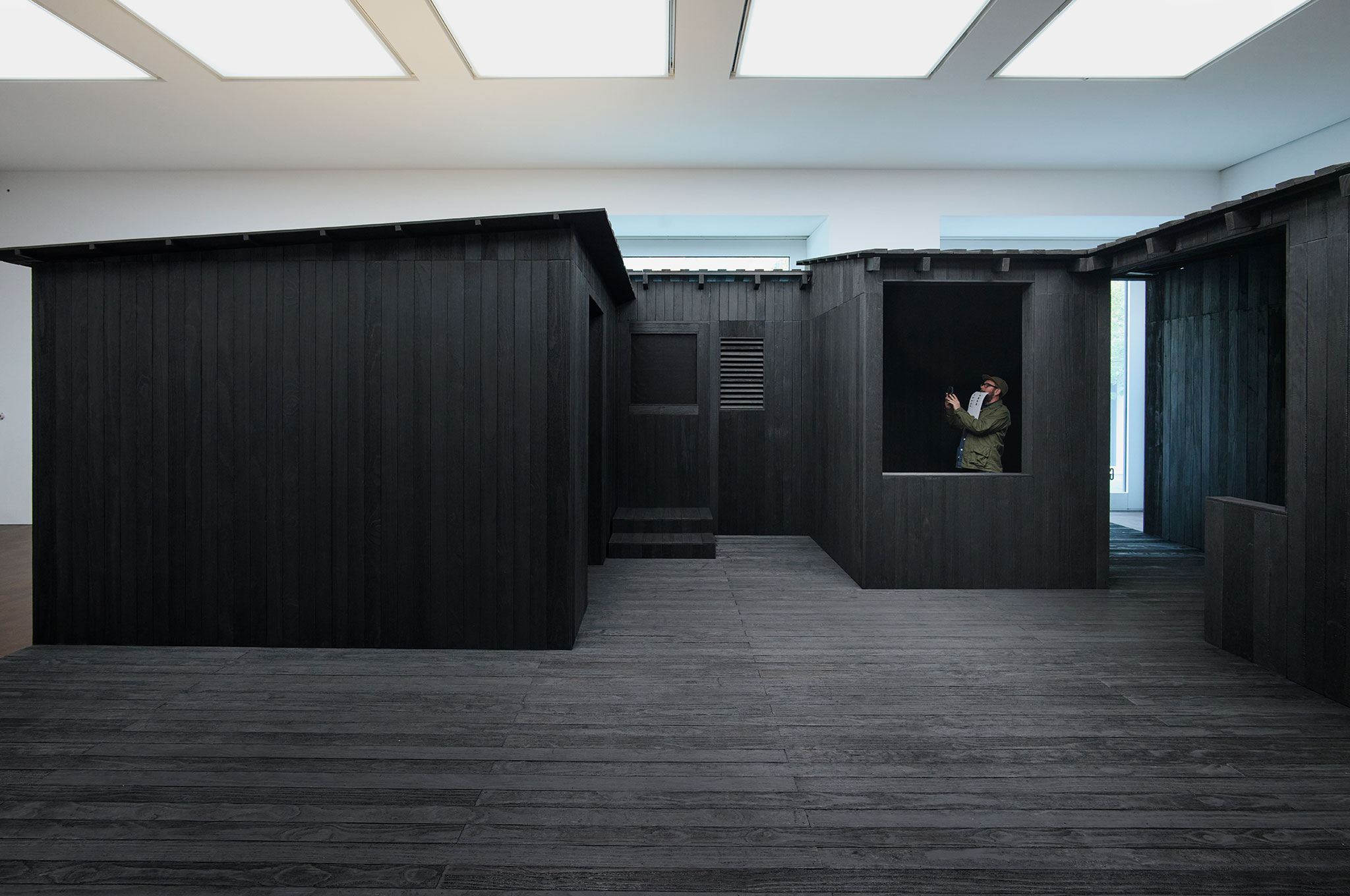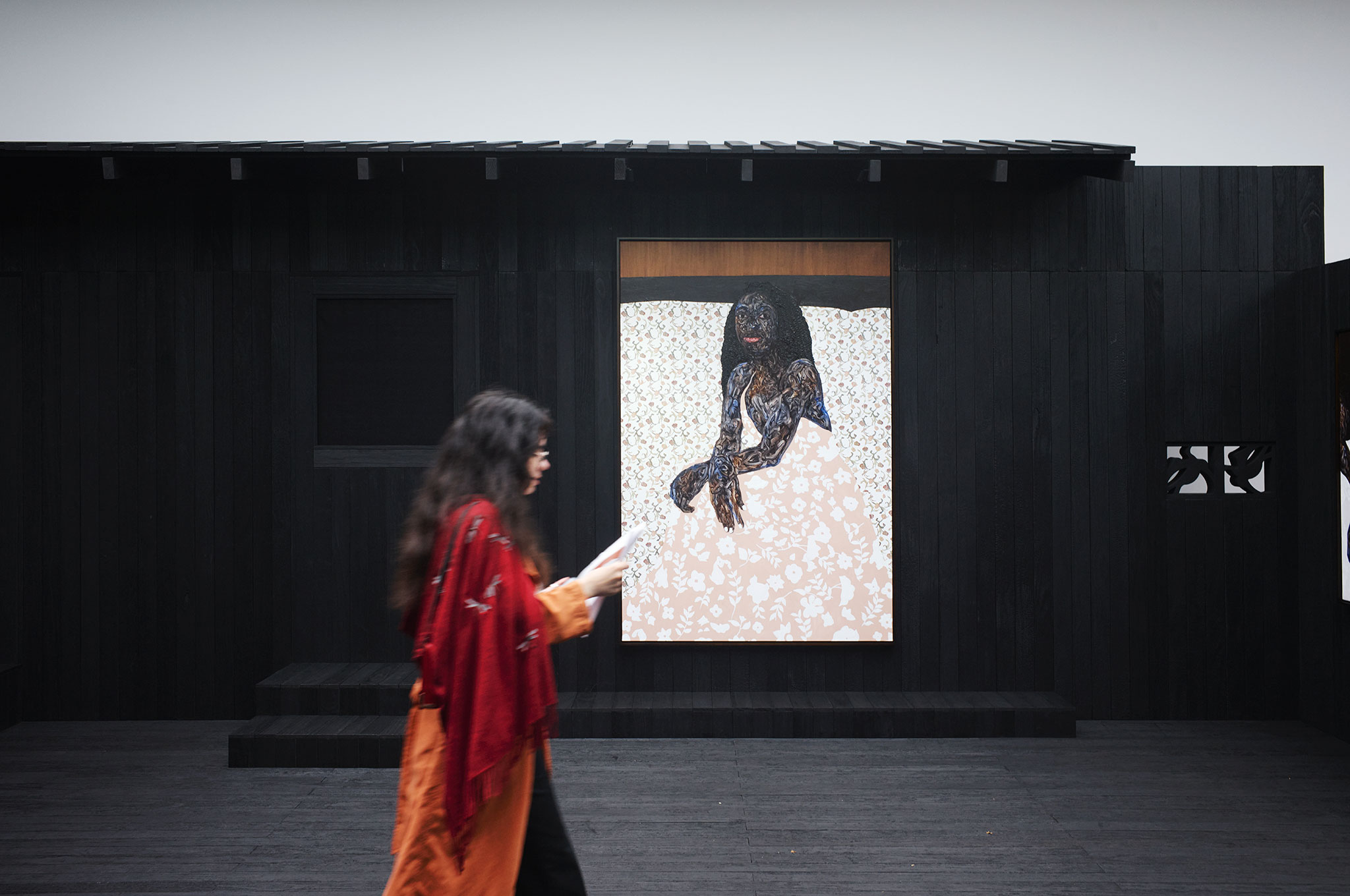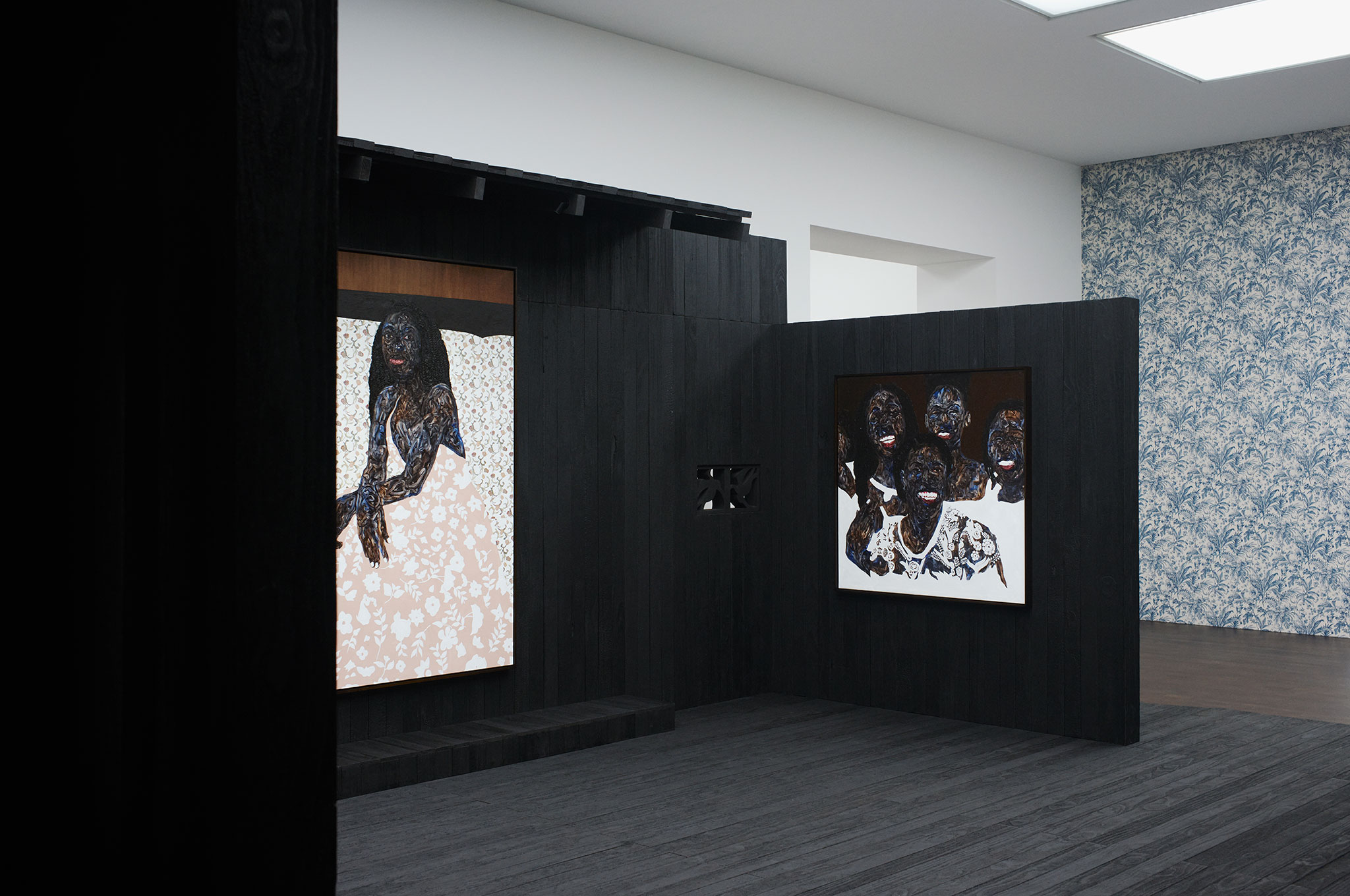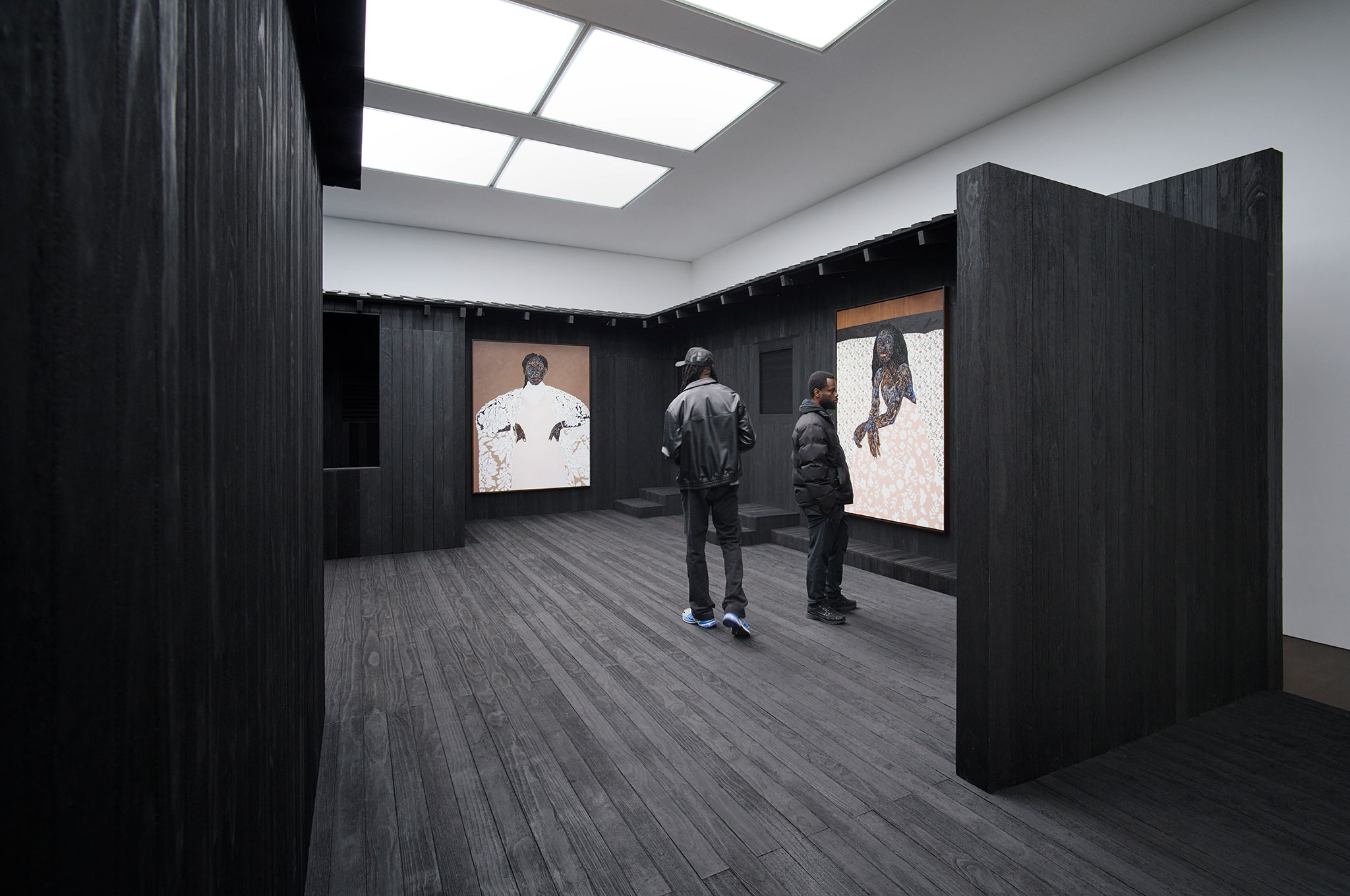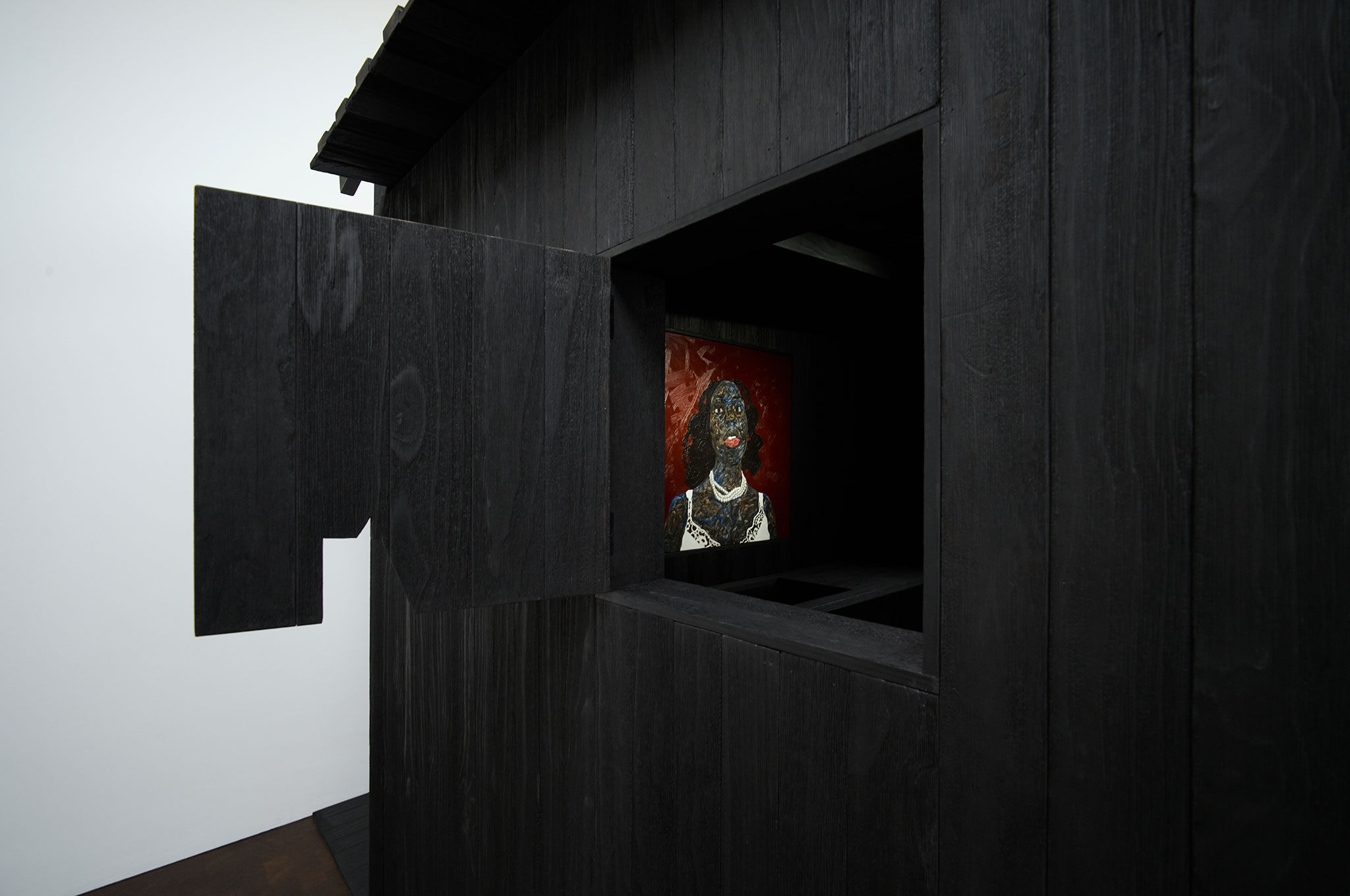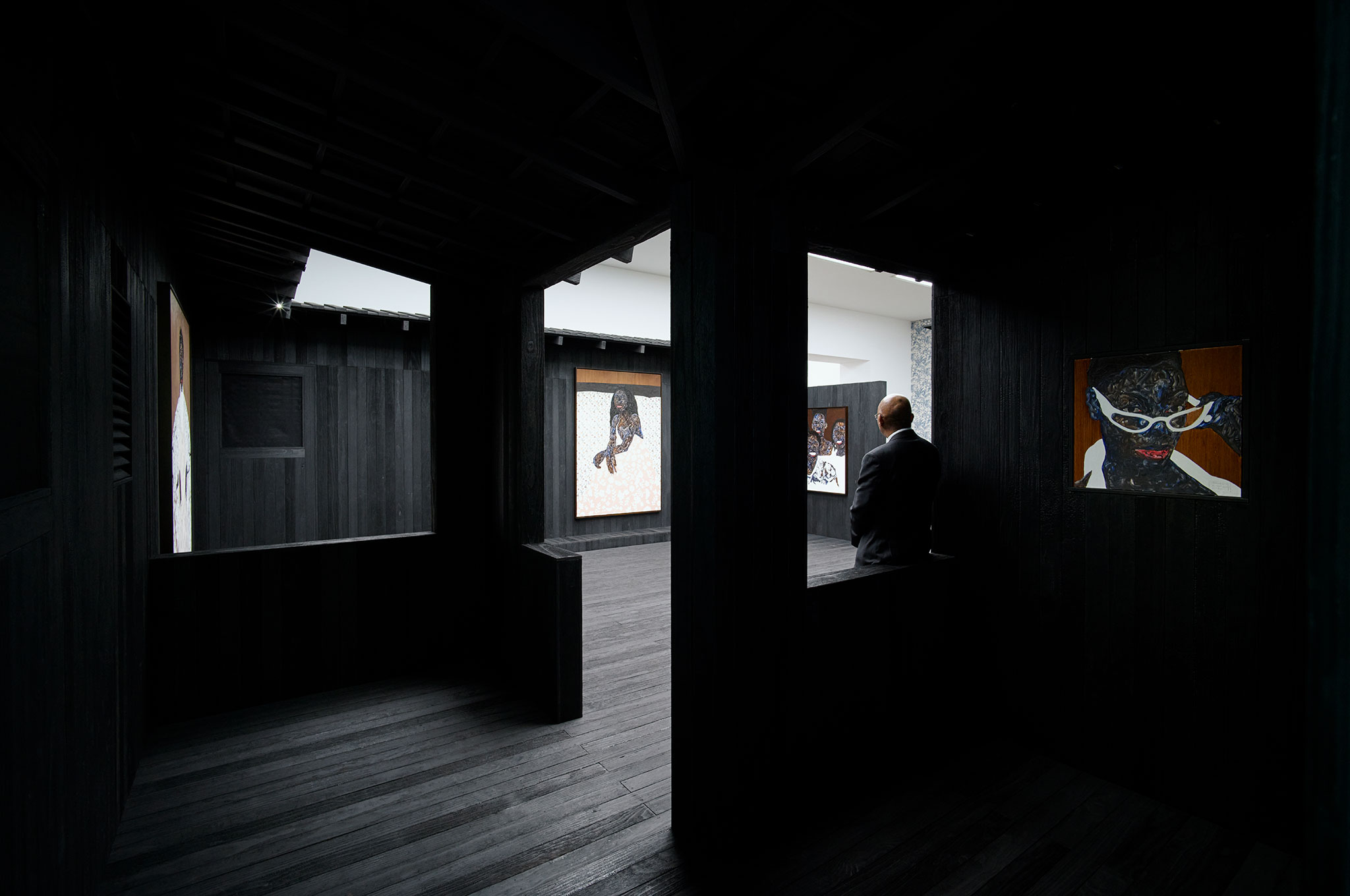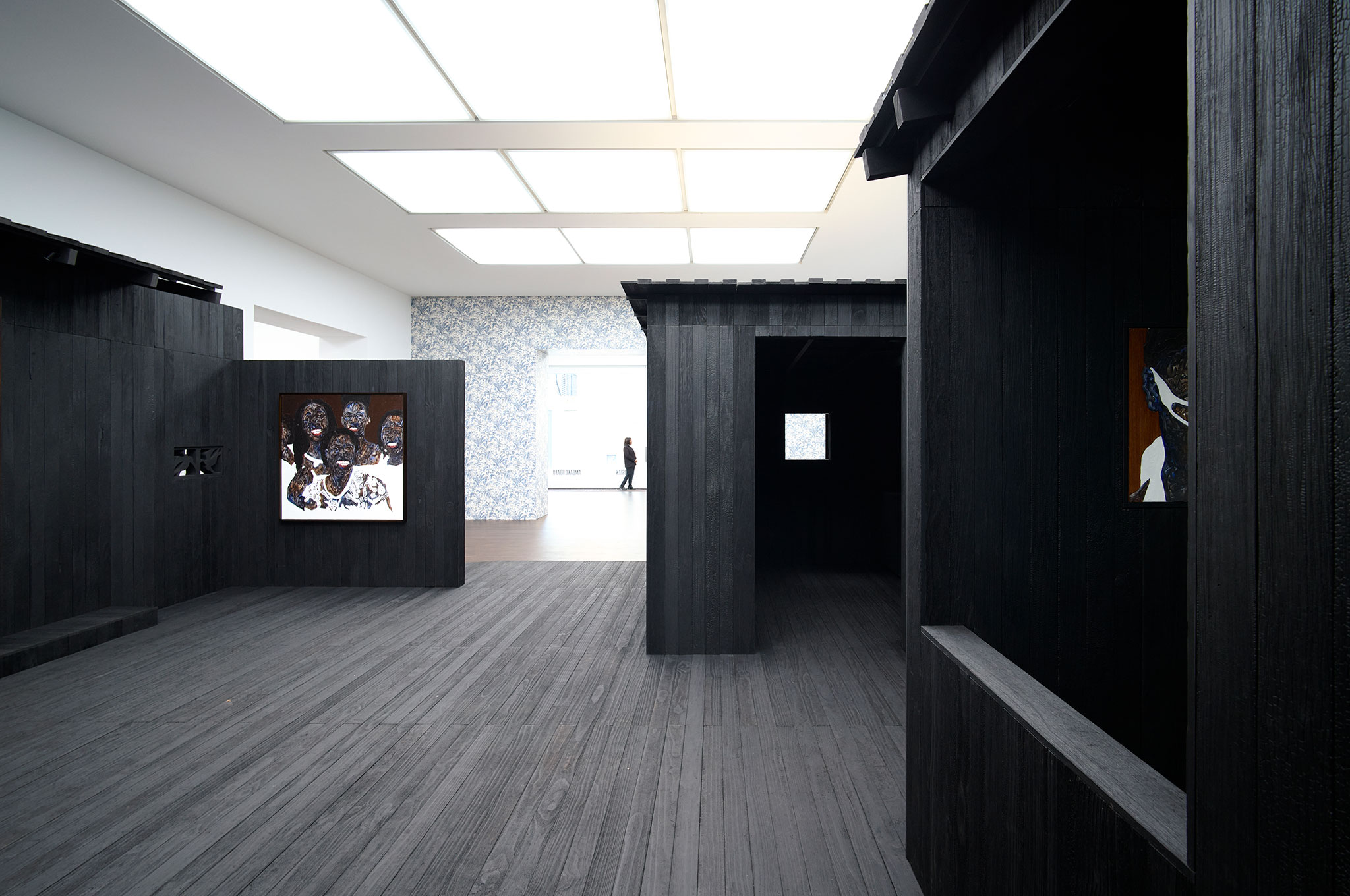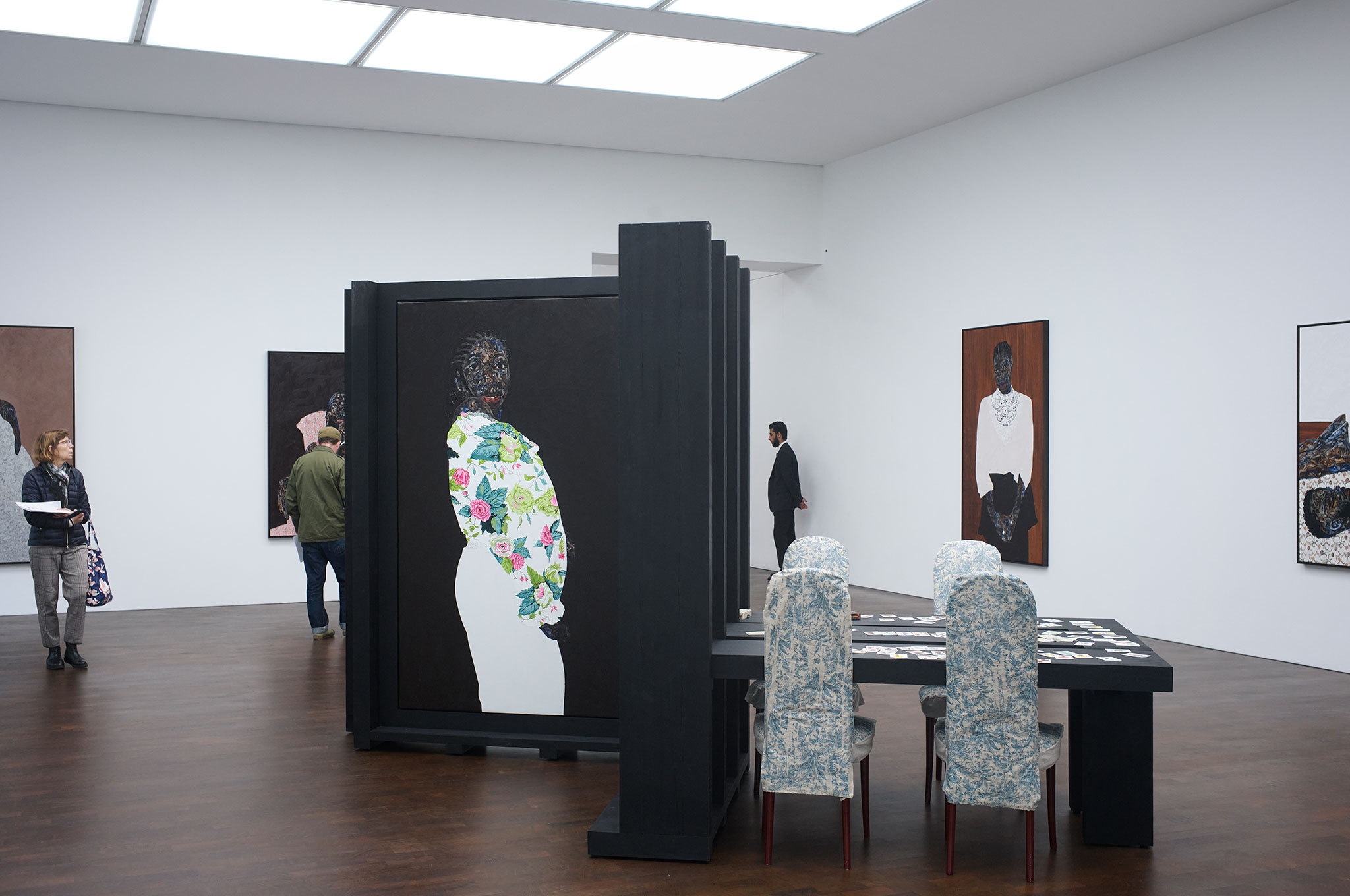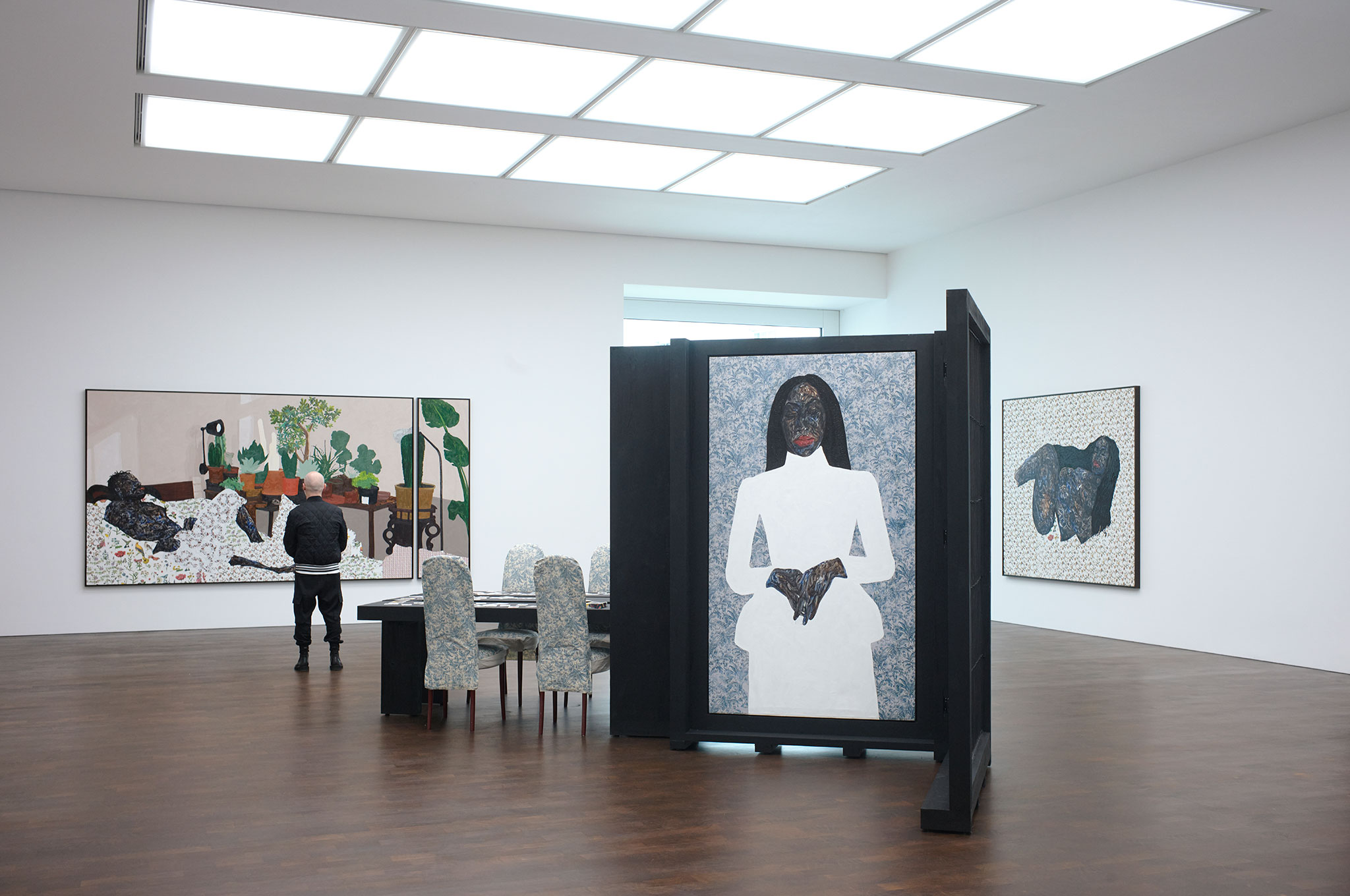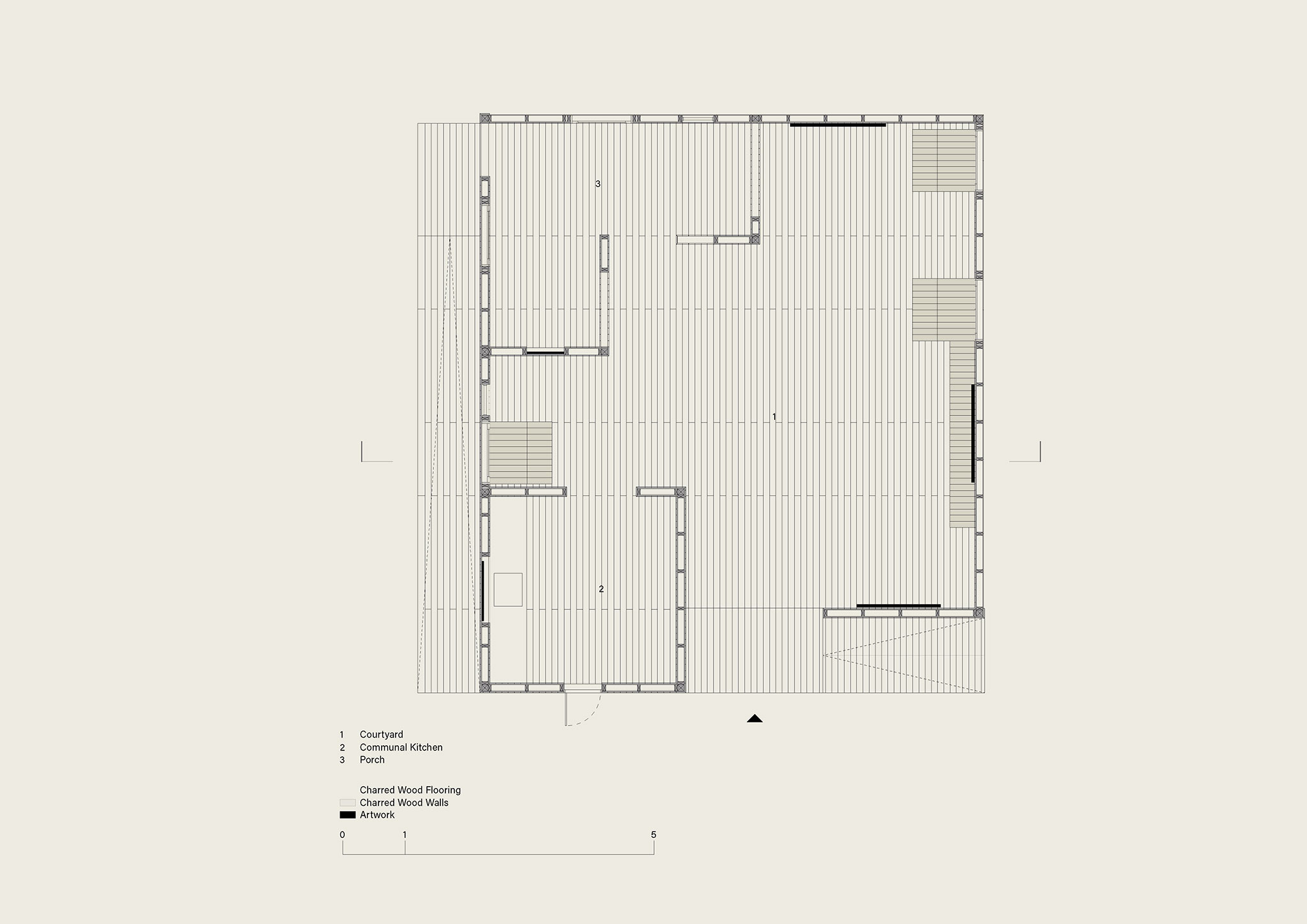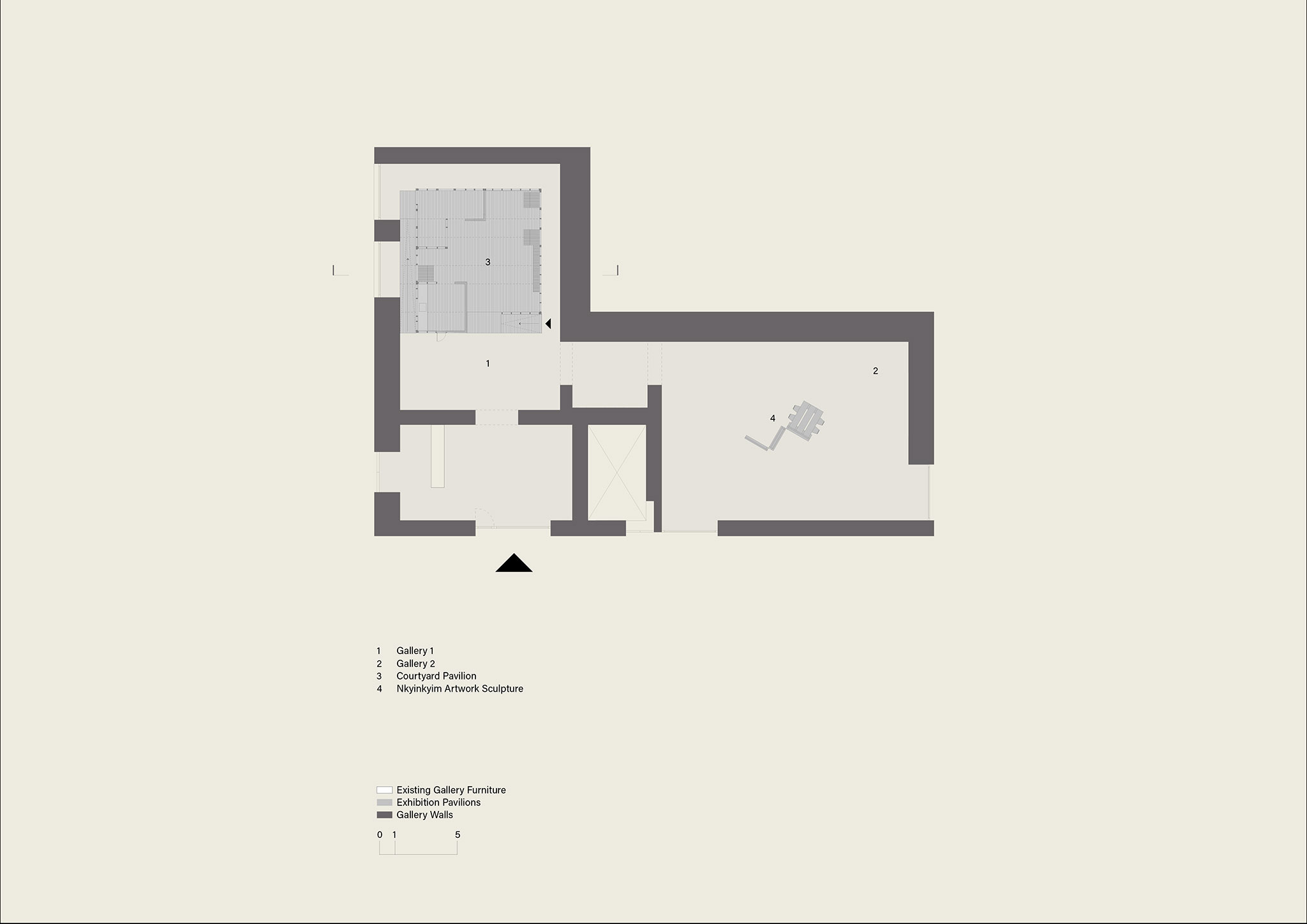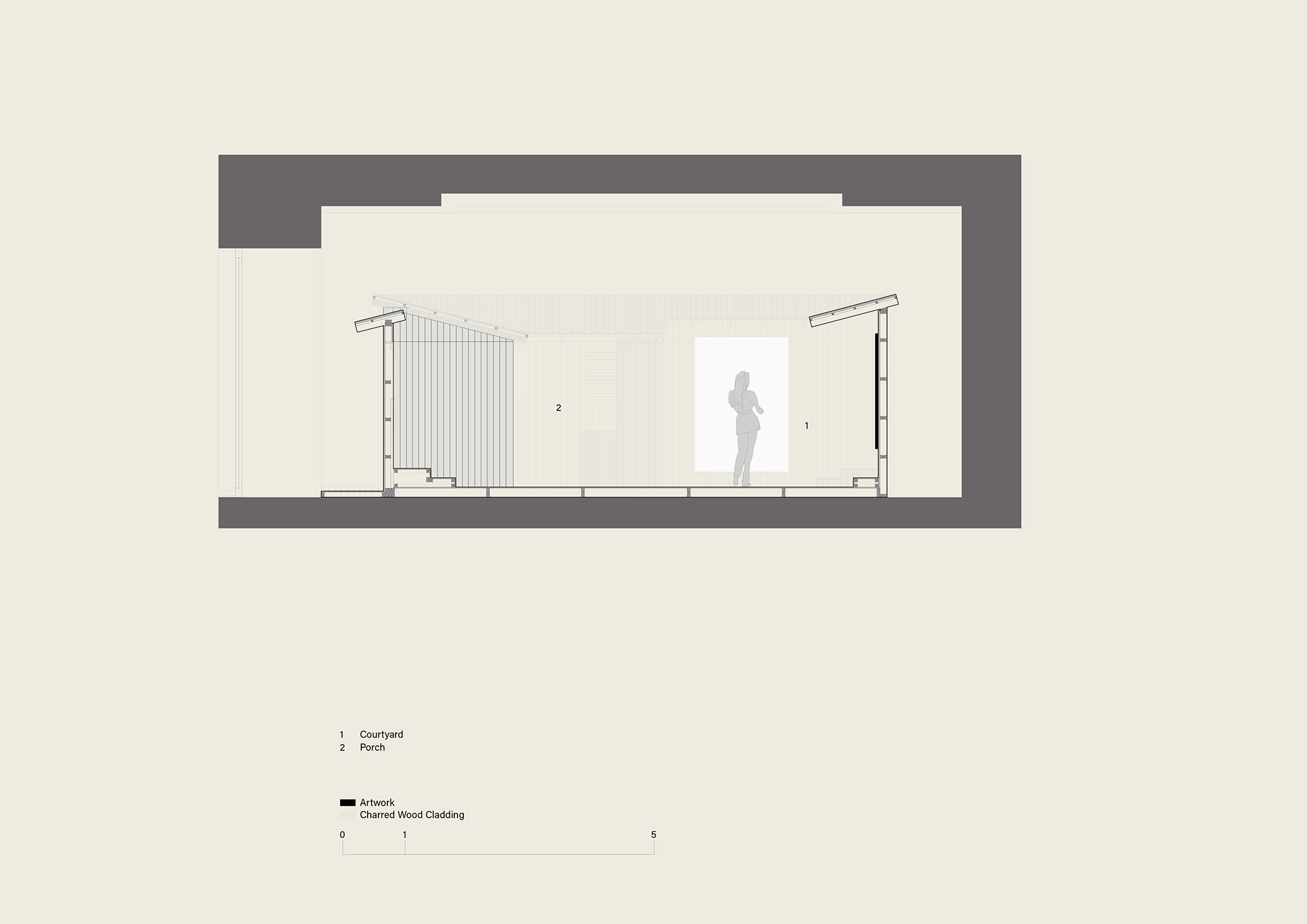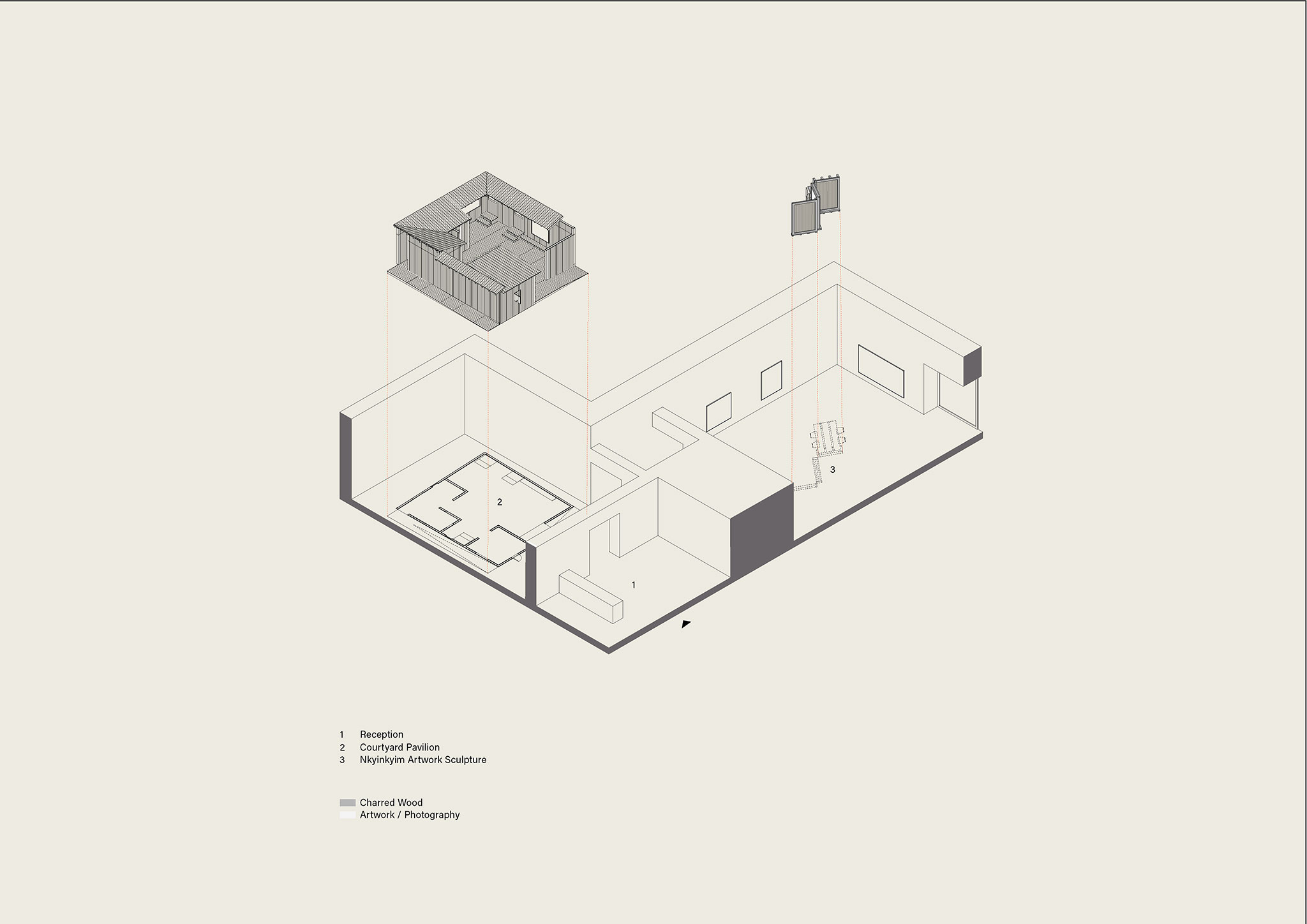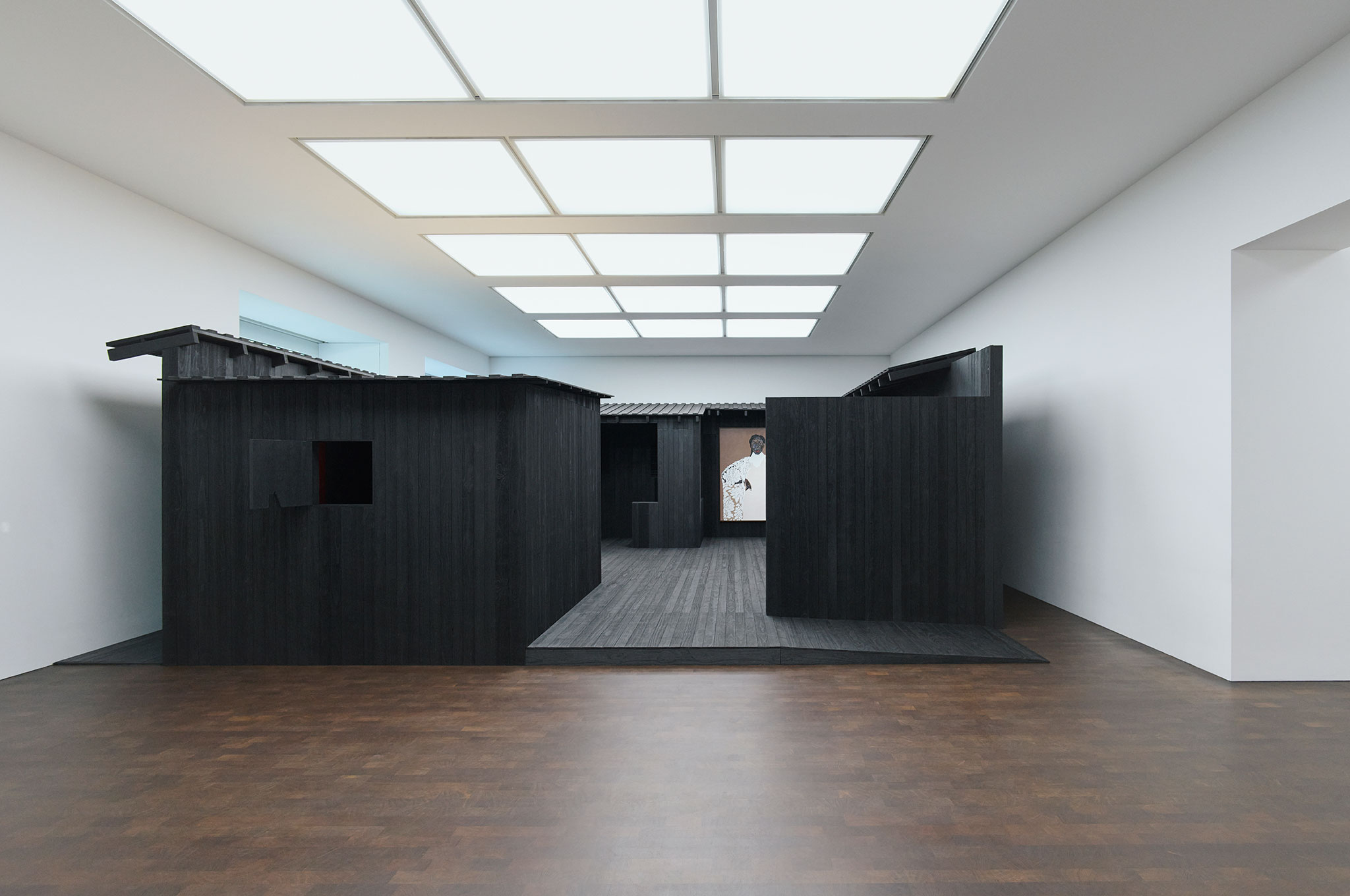
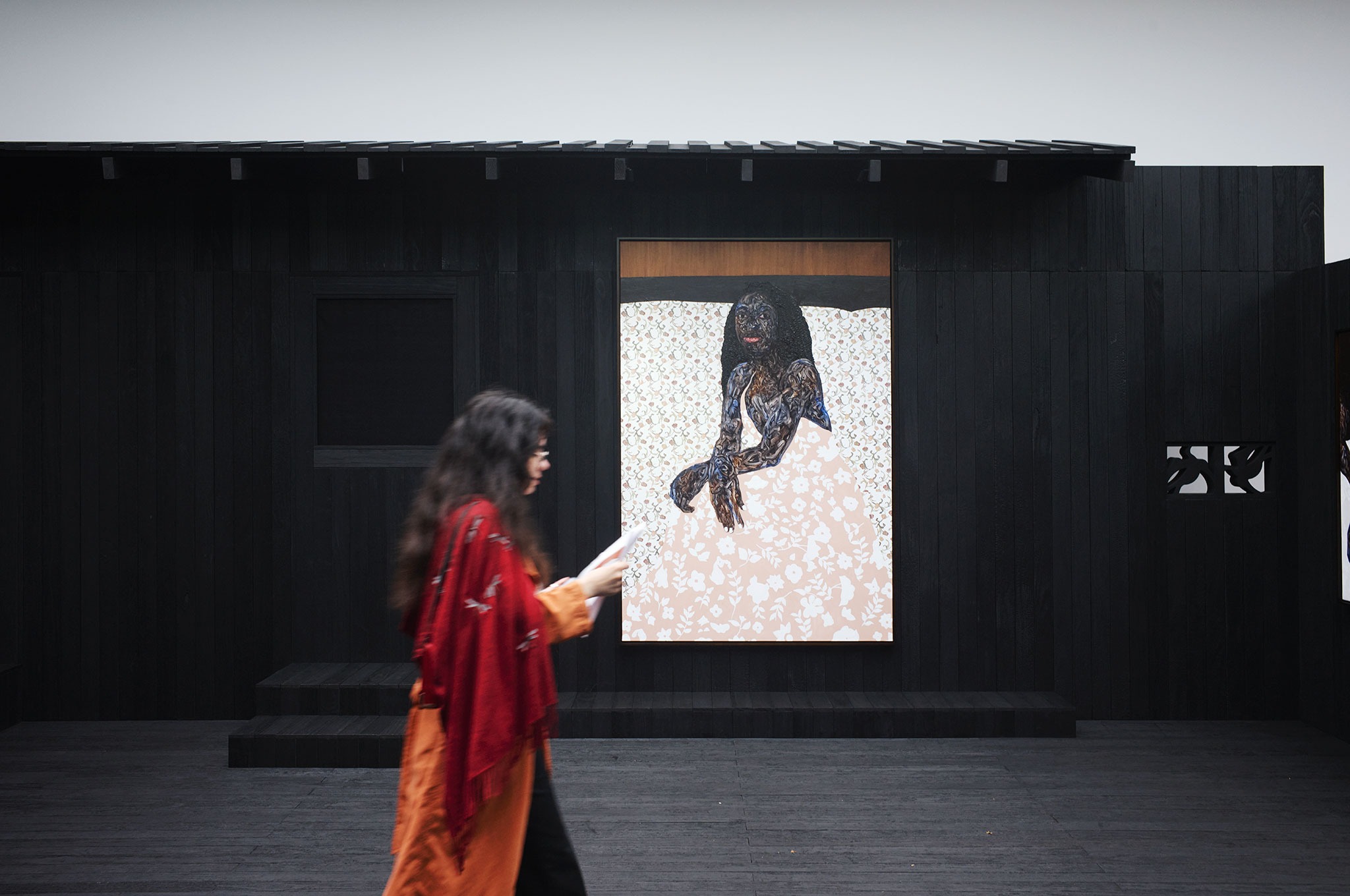
To create the space where the works are located, DeRoche Projects created two galleries, each with a different purpose. Gallery 1 represents Boafo's childhood playground in Accra as an emotional and atmospheric evocation. The opening of the gallery windows brings the spirit of the courtyard to the city, blurring the boundaries between interior and exterior, art and life. In Gallery 2, the centerpiece is Nkyinkyim, a social sculpture composed of Boafo's first double-sided painting and an enveloping structure inspired by the Adinkra symbol, which represents the twists and turns of life and the resilience required to confront them, transforming the space into a place of encounter and dialogue.
Built from charred Accoya wood, the pavilion generates a multisensory atmosphere in which the scent of a controlled fire acts as a vehicle for memory, reminiscent of Ghanaian fishing culture. This symbolic gesture not only alludes to ancestral West African practices but also reconfigures the logic of the white cube and slows the gaze, fostering a more intimate experience with the paintings.
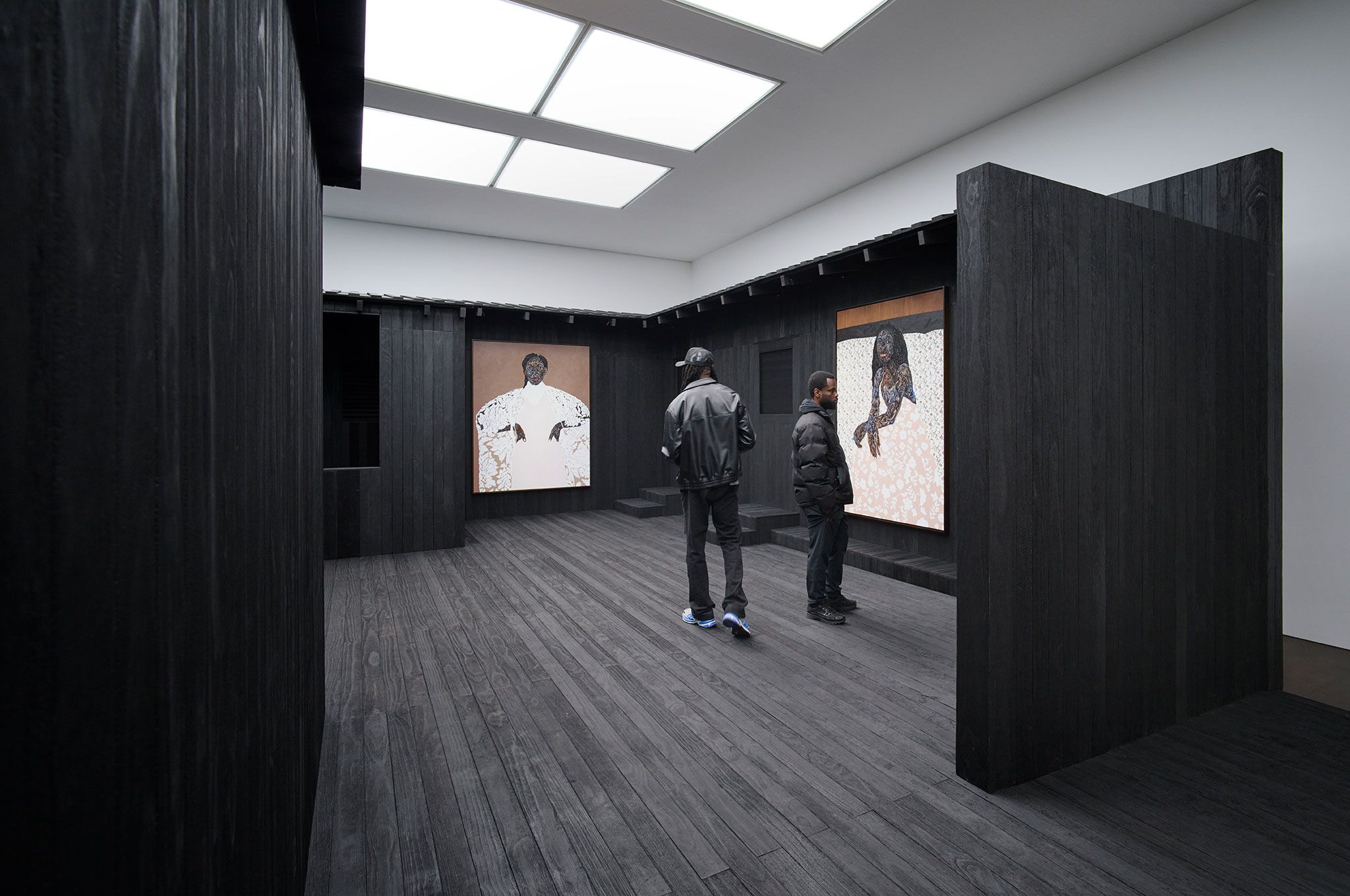
"I Do Not Come to You By Chance" by DeRoche Projects. Photograph by Julien Lanoo.
Description of project by DeRoche Projects
DeRoche Projects was invited to design I Do Not Come to You By Chance, Amoako Boafo’s first London exhibition at Gagosian Mayfair. The project extends an evolving creative exchange between the artist and architect, following past collaborations including dot.ateliers|Ogbojo—a writers’ and curators’ residency founded by Boafo in Accra—and the Volta Pavilion, a viewing structure crafted from reclaimed timber sourced from Ghana’s Volta Region to house Boafo’s Proper Love, Papillon Hug (2024).
For this exhibition, Glenn DeRoche approaches exhibition making as a mode of translation, rendering visible the communal influences and social contexts that shape Boafo’s practice. The spatial strategy is anchored by a Courtyard Pavilion in Gallery 1 and the social sculpture Nkyinkyim in Gallery 2. Both interventions treat architecture not as backdrop, but as an active medium: one that reflects the cultural foundations of Boafo’s work while amplifying and extending the portraits’ focus on strength, resilience, and shared identity into spatial form.
Awulai Ashia - Gallery 1:
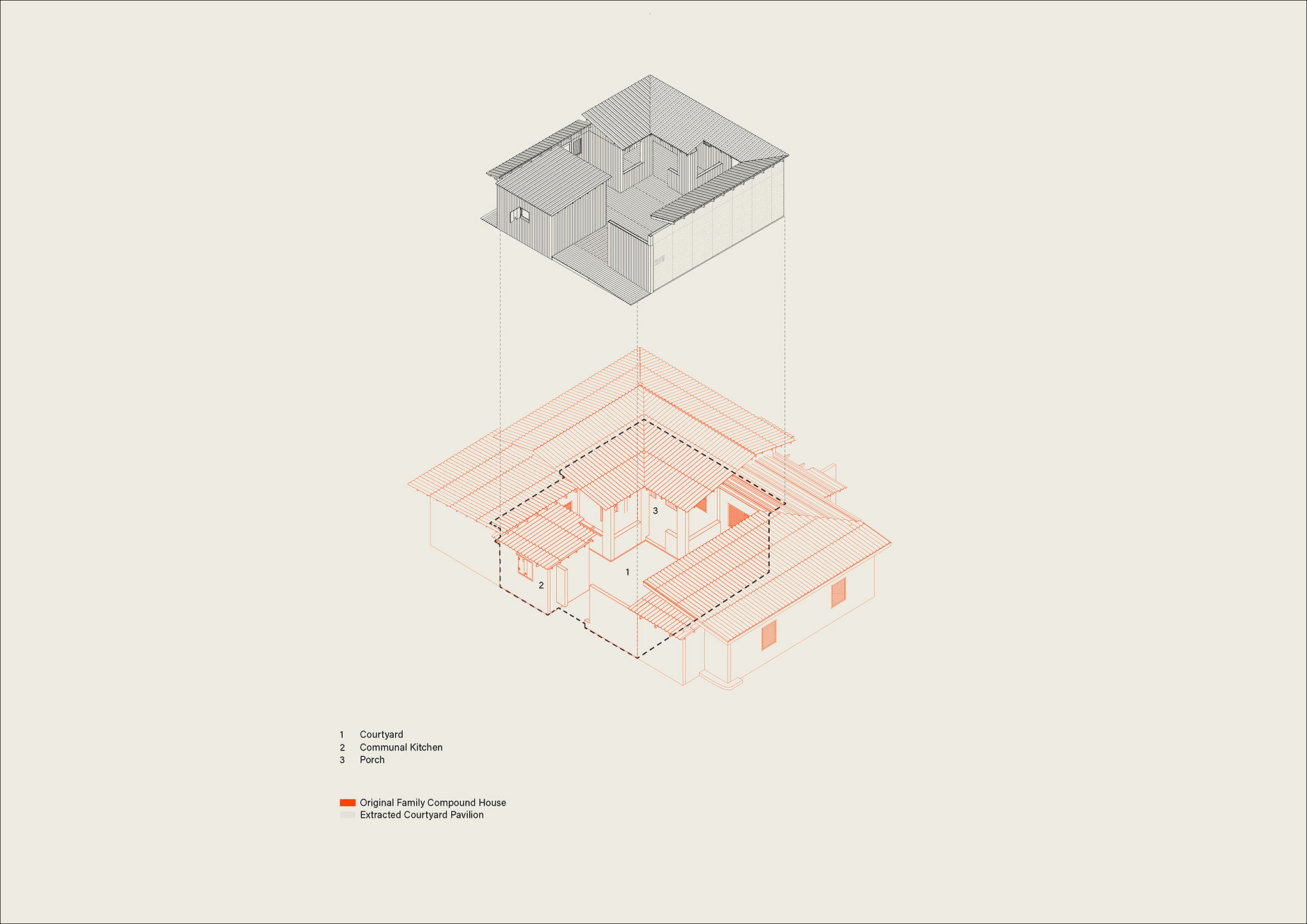
DeRoche abstracted the courtyard from Boafo’s childhood home in Accra, Ghana—not as a literal reconstruction, but as a distilled memory of a space deeply rooted in the architectural and ancestral traditions of West Africa. In Ghanaian culture, courtyards are central to the spatial organization of domestic life—sites of gathering, exchange, and intergenerational care. For Boafo, this courtyard was his first experience of communal belonging, a formative space where bonds were forged with creative peers like Kwesi Botchway, Aplerh-Doku Borlabi, Eric Adjei Tawiah, and Otis Kwame Kye Quaicoe.
To honor this origin without overpowering the paintings, DeRoche rendered the courtyard as a monochromatic abstraction: a structure built from charred Accoya timber. The material, both architectural and symbolic, releases the scent of controlled fire into the room—a multisensory gesture that carries memory through material. This atmospheric register becomes part of the installation’s logic: storytelling through ritual, touch, and scent. Paintings are recessed into niches within the frame, creating a “gallery within a gallery” that slows the pace of looking and gently unsettles the conventions of the white cube. As a further gesture of openness, DeRoche worked with Gagosian to open all windows within the gallery—a first time move for its Mayfair location. This physical invitation extends the spirit of the courtyard to the street, dissolving barriers, drawing the public in, and echoing the ethos of shared access and communal life that animates Boafo’s work.
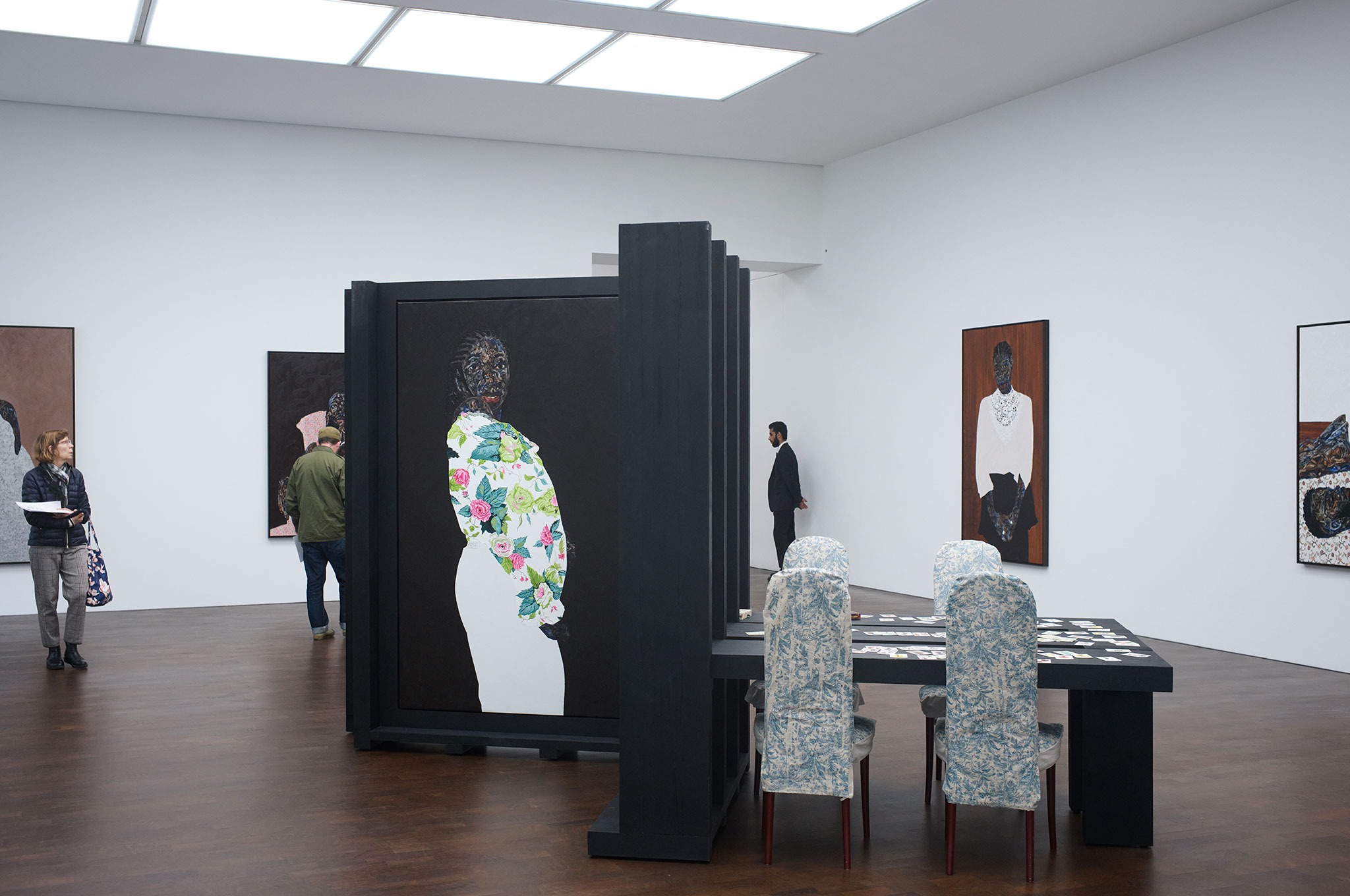
Nkyinkyim - Social Sculpture – Gallery 2:
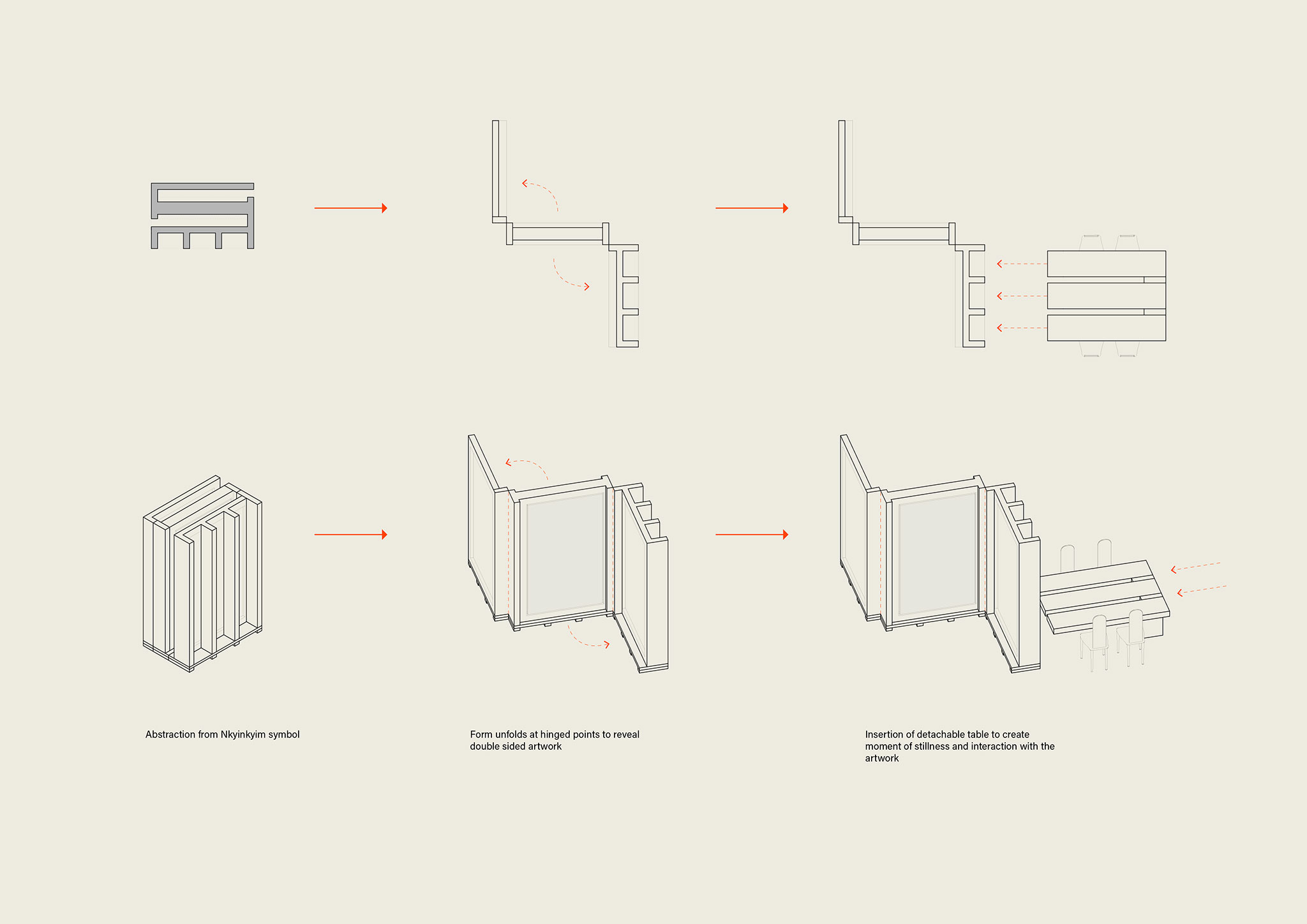
Nkyinkyim is Boafo’s first freestanding, double-sided painting, presented within a sculptural structure designed by DeRoche. Together, they form a social sculpture—one that not only holds and frames the portraits, but also serves as a space for gathering, sitting, and reflection. The piece abstracts the Adinkra symbol Nkyinkyim, which in Ghanaian culture conveys the twists and turns of life and the resilience needed to navigate them—wisdom passed down through symbolic form and ancestral proverb.
Each life-sized portrait is mounted to a central spine of charred timber—the same material used in the courtyard pavilion. Stepped panels extend outward in a staggered rhythm, echoing the twists of the Nkyinkyim symbol and creating spatial frames that focus attention on each figure. At either end, naturally dyed woven rattan panels reference traditional fishing baskets from Ghana’s coast, a direct nod to Boafo’s upbringing in a coastal fishing community.
At the base of the piece, an interlocking table and four chairs—covered in a custom fabric made using Boafo’s paper transfer technique—complete the composition. These elements are not accessories, but part of the work’s core proposition: that community is a structure that supports, holds, and animates the individual. Nkyinkyim, the centerpiece of the exhibition, fuses art and architecture into a single expression of shared space—an idea central to both Boafo’s painting and DeRoche’s architectural practice. Here, the resilient and vibrant women depicted in Boafo’s paintings are not only pictured but contextualized and held within a space that mirrors the networks that sustain them.
I Do Not Come to You By Chance marks the first in a three-part series realized through an integrated art-architectural language, with upcoming exhibitions in the United States and then Ghana.