Junya Ishigami, was born in Kanagawa Prefecture, Japan, in 1974. He studied at the Musashi Institute of Technology from 1994 to 1998 and subsequently completed his education at the Tokyo National University of Fine Arts and Music, where he studied between 1998 and 2000. After graduating, he worked for Kazuyo Sejima + Associates (SANAA) from 2000 to 2004. That same year, he founded his own architectural practice, Junya Ishigami + Associates.
Throughout his career, Ishigami has questioned conventional understandings of architecture. His approach allows him to work beyond prevailing trends, established principles and traditional definitions, creating new structures and spaces and proposing alternative ways of organizing the environment. Through his projects, he seeks to radically transform the lifestyles associated with modern architecture and enrich them with new values.
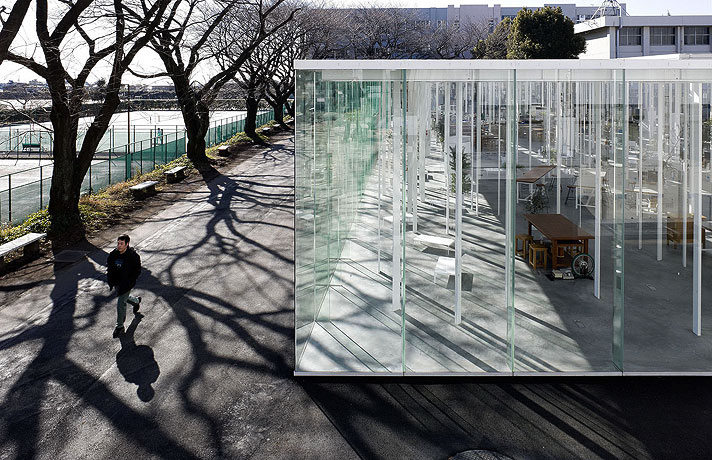
His early projects include Table, created in Tokyo in 2005, and T Project, which received first prize in a residential architecture competition sponsored by the Tokyo Electric Power Company that same year. These were followed by Balloon in Tokyo in 2007, the Kanagawa Institute of Technology KAIT Workshop in Kanagawa in 2008, and the Yohji Yamamoto Gansevoort Street Store in New York in 2008. Other significant works include the Japanese Pavilion for the 11th Venice Architecture Biennale in 2008, Art Biotop Water Garden in Tochigi in 2018, the Serpentine Pavilion in London in 2019, KAIT Plaza in Kanagawa in 2020, House & Restaurant in Ube in 2022 and the Zaishui Art Museum in Rizhao, China, completed in 2023.
Ishigami’s work has received considerable international recognition. In 2004, Low Chair and Round Table were acquired by the Centre Pompidou. In 2005, he received the SD Prize for Small Garden of a Row House, the Kirin Prize for Table and first prize in the residential architecture competition for T Project. In 2006, Table was presented by Gallery Koyanagi at Art Basel and was later acquired by the Israel Museum. He subsequently received the Architectural Institute of Japan Prize for KAIT Workshop in 2009, the Golden Lion for Best Project at the 12th Venice Architecture Biennale in 2010, the OBEL Award for Art Biotop Water Garden in 2019 and the Frederick Kiesler Prize for Architecture and the Arts in 2024.