
Snøhetta’s design for the public garden and revitalization of The Olayan Group’s 550 Madison received final and unanimous approval from the City Planning Commission this week, following the approval from Manhattan Community Board 5 in December.
The design re-envisions the building’s public space as a generously expanded, densely vegetated garden. As a vibrant sensory retreat, its transformation draws upon the architectural heritage, the activity of the neighborhood, and the natural history of the region.
The design re-envisions the building’s public space as a generously expanded, densely vegetated garden. As a vibrant sensory retreat, its transformation draws upon the architectural heritage, the activity of the neighborhood, and the natural history of the region.
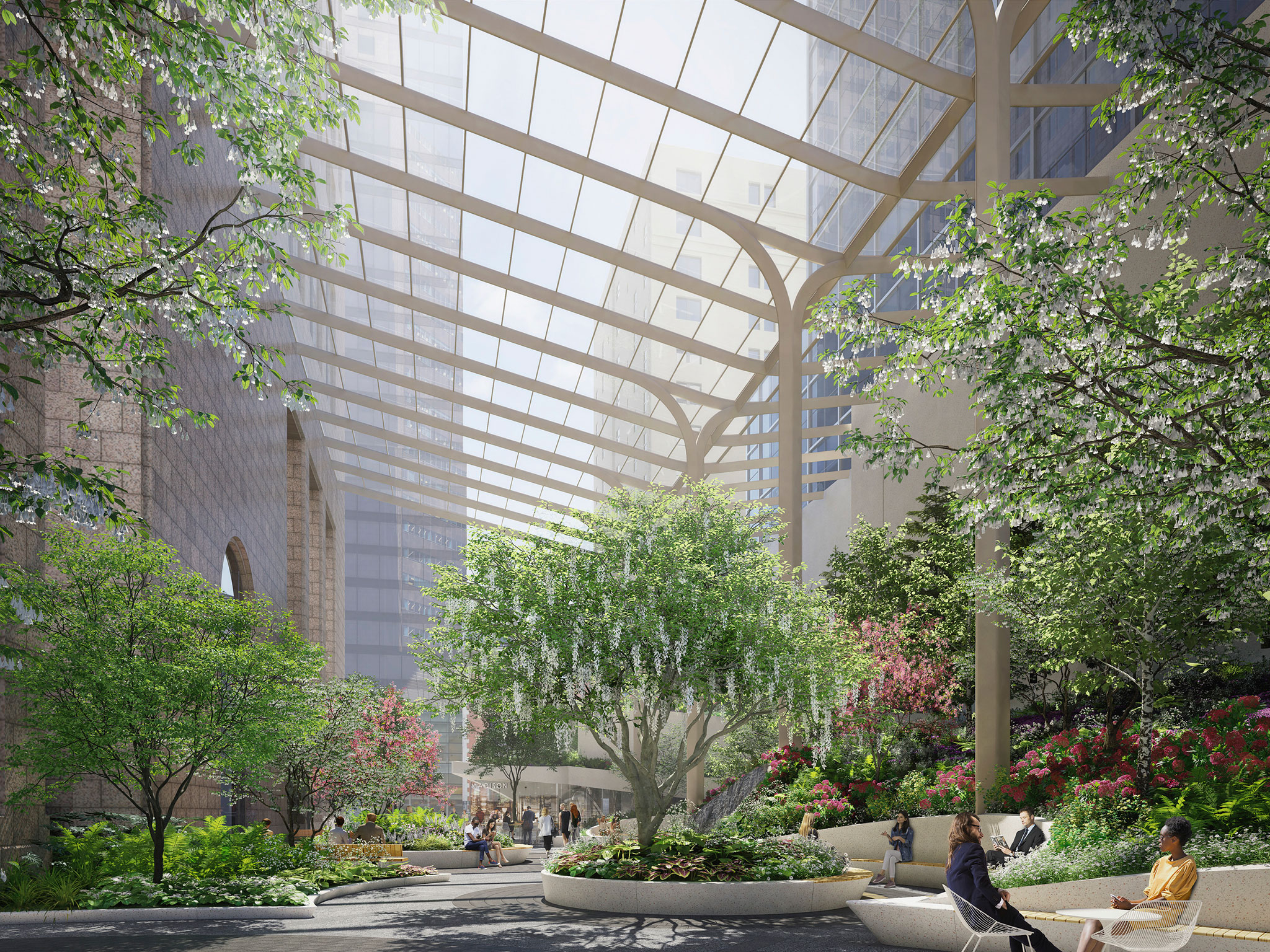
Image result for pocket park
A pocket park (also known as a parkette, mini-park, vest-pocket park or vesty park)
Inviting people to slow down, linger, and connect to one another and their surroundings, 550 Madison’s new garden embraces the powerful contemporary role POPS can play within the context of New York’s ever-changing urban fabric.
According Snøhetta' statement, "The new garden reconnects the building into the street life of East Midtown, while offering an immersive, verdant respite in the city."
Project description by Snøhetta
“Privately-owned public spaces are a critical part of New York City’s public realm. Urban life thrives in and around spaces that allow us to connect with one another and to nature,” said Michelle Delk, Partner and Director of Landscape Architecture at Snøhetta. “Moreover, we need to make the most of the spaces we already have and recognize that they are part of a network that contribute to the livelihood of the city. We’re thrilled to be a part of renewing the future of this historic site.”
“Philip Johnson and John Burgee’s vision for 550 Madison was to create not only a unique office building, but a dignified and attractive community amenity with public open space. Snøhetta is restoring their intention for the open space with a reimagined new public garden that will further improve the vitality of East Midtown,” said Erik Horvat, Managing Director of Real Estate at Olayan America. “As the largest outdoor space of its kind in this district, the garden at 550 Madison will be a new anchor point in the heart of Midtown Manhattan, and a huge amenity to the local community and our world-class office tenants.”
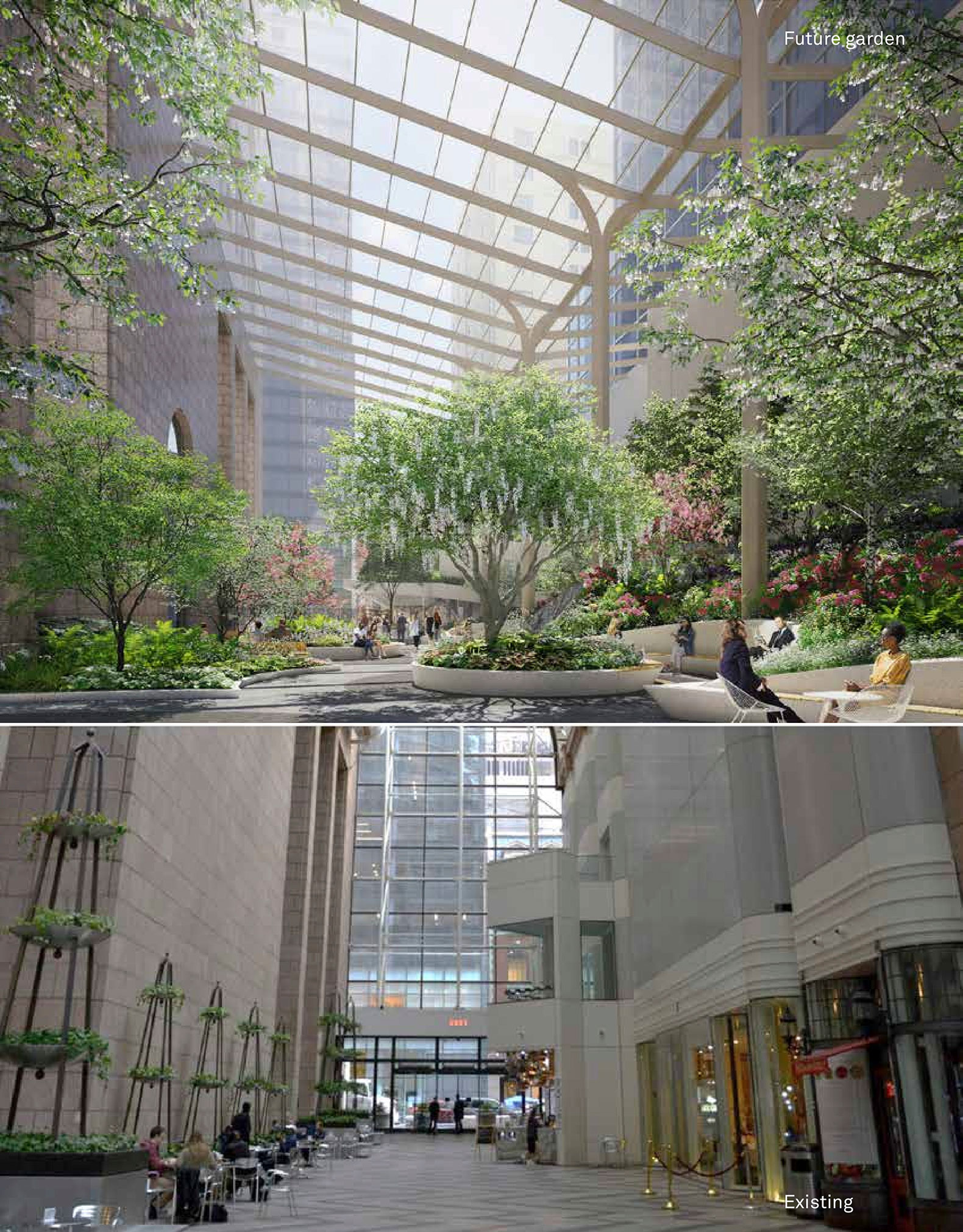
East Midtown is characterized by a density of commercial buildings and retail storefronts, and the neighborhood of Community Board 5 has the least amount of open and recreation space in the entire borough. At 50% larger than the existing exterior public space, the new garden is designed as a complement to neighboring POPS and reconnects the building into the street life of East Midtown, while offering an immersive, verdant respite in the city.
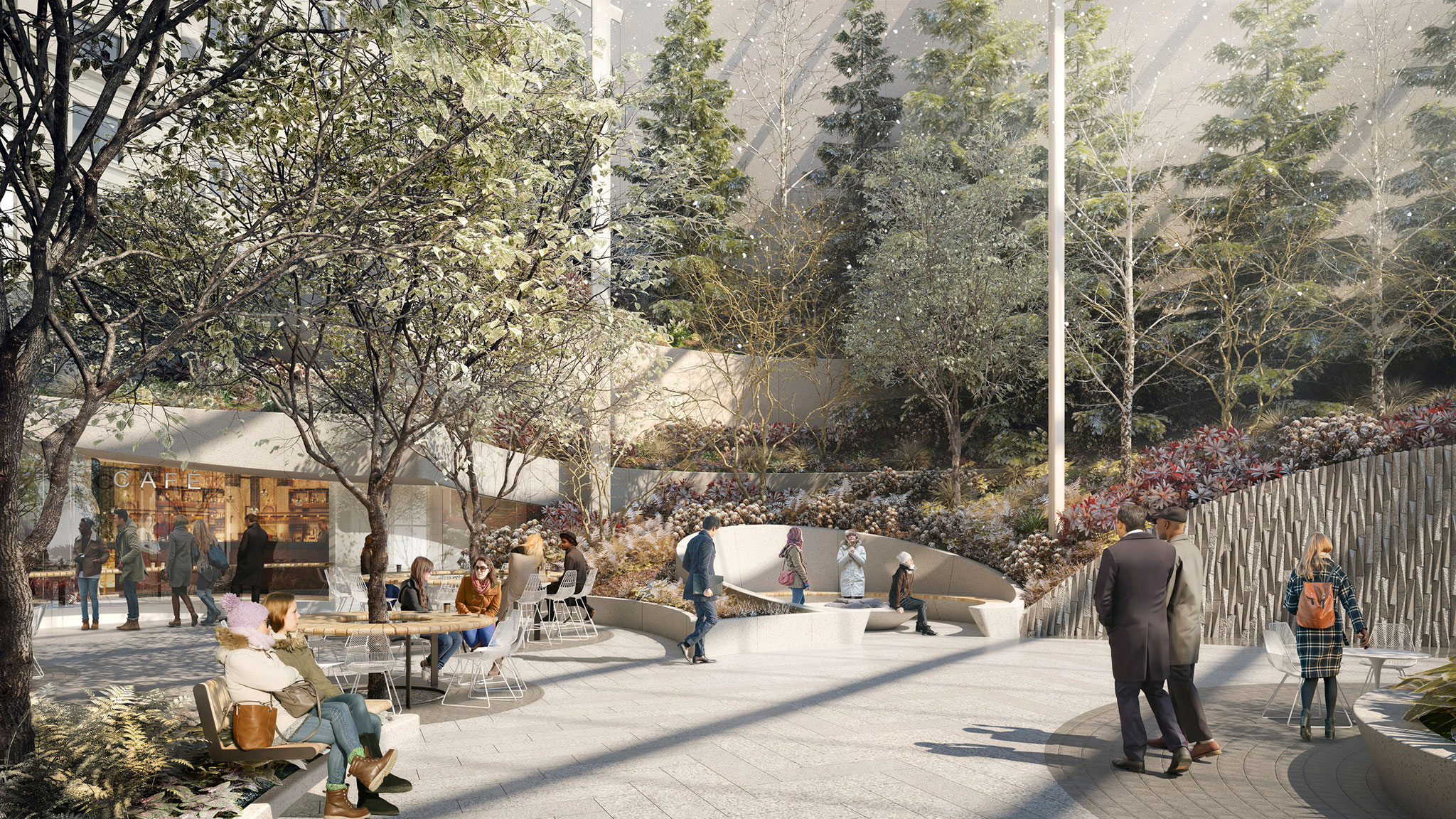
The new garden will open up the public space along the west end of the tower, transforming it into a series of interconnected outdoor ‘rooms’ that provide both quiet spaces and larger, more open areas. Partially covered by a new glass canopy and formed by a series of intersecting circles in plan, the geometry of these rooms takes cues from Philip Johnson’s playful use of circular motifs both at 550 Madison and in his larger body of work. These circular rooms invite passersby to linger as they meander through, allowing the garden to accommodate a variety of experiences for its visitors: to meet over lunch and socialize, to find respite beside the water feature, or to experience a tactile connection to nature. Conceptually, the landscape responds to the canyon-like verticality of Midtown Manhattan, with a verdant, layered topography that lifts up along the west side of the garden, both minimizing the impact of existing tower service infrastructure while providing a sense of being immersed in the garden.
Most importantly, the presence of vegetation along both street edges will announce the entries, creating inviting front doors to the garden.
Carefully selected plantings—including evergreens, perennials, and flowering shrubs— celebrate the dynamic seasonality of the Northeastern climate, creating a garden that is responsive to changing seasons and natural light conditions. Over 40 trees will be planted where today there are none. These, along with other plantings, will encourage a variety of birds, butterflies, and other pollinators to flourish in this shared urban habitat. A central water wall, accessible from the garden and visible from the renovated interior lobby, will provide auditory relief from the commotion of the neighborhood by attenuating sounds of the city. Details embedded in the materiality of the garden tell the many cultural and environmental histories of the site, creating a sense of discovery and intrigue. Information about the site’s environmental history and seasonality will be embedded within the proposed seating and walking surfaces.
In the tradition of the great pocket parks of New York City like Paley Park or the MoMA Sculpture Garden, the garden at 550 Madison seeks to re-shape how we occupy the city by heightening our attention to our surroundings, encouraging people to stay and take pleasure in a part of the city that is typically rushed through. Together with the revitalized tower, the project better connects the building back into the activity of the street. 550 Madison will lead the transformation of East Midtown as it evolves for the needs of a contemporary workforce and a diversity of tenants, while ensuring it remains a world-class business district.




More information

Snøhetta is an architecture, landscape, and interior design studio with offices in Oslo, Norway, and New York City, USA. Founded in 1989, it is led by Craig Dykers and Kjetil Thorsen. The studio, named in honour of Mount Snøhetta, the highest peak in the Dovrefjell mountains of Norway, has approximately 100 collaborators working on large-scale international projects across a wide range of typologies. Their approach is deeply collaborative and transdisciplinary, bringing together architects, designers, engineers, and landscape professionals to explore multiple perspectives depending on the nature of each project.
Snøhetta has completed a series of world-renowned cultural and landmark projects, including the Bibliotheca Alexandrina in Egypt, the Oslo Opera House and Ballet, and the Lillehammer Art Museum in Norway. Current projects include the National Pavilion of the September 11 Memorial Museum at the World Trade Center site in New York, as well as urban and landscape developments that aim to merge local identity, sustainability, and public experience.
In 2004, Snøhetta was awarded the Aga Khan Award for Architecture, and in 2009, the Mies van der Rohe Award. The studio is the only practice to have won the World Architecture Award for Best Cultural Building twice in consecutive years: in 2002 for the Bibliotheca Alexandrina and in 2008 for the Oslo Opera House and Ballet, consolidating its international prestige.
Kjetil Trædal Thorsen (born 1958 on the coastal island of Karmøy, Norway) is a co-founder of the studio and a multiple award-winning architect. He is a visionary and humanist designer who has redefined the boundaries of contemporary practice. Under his leadership, Snøhetta has produced iconic, sustainable structures that are highly sensitive to their cultural context, combining technological innovation with a profound environmental awareness. Thorsen’s work is recognized for its focus on social interaction, sustainability, and the creation of spaces that foster human connection and sensory experience, establishing a benchmark in contemporary global architecture.
Craig Dykers (born 1961 in Frankfurt, Germany) is also a co-founder of the studio and director of its New York office. Snøhetta has earned a reputation for maintaining a deep integration of landscape, architecture, and urban experience across all its projects. Key works include the Bibliotheca Alexandrina in Egypt, the Oslo Opera House and Ballet, the National Pavilion of the September 11 Memorial Museum in New York, and the redesign of Times Square. Professionally and academically active, Dykers has been a member of the Norwegian Association of Architects (NAL), the American Institute of Architects (AIA), and the Royal Society of Arts in England. He has served as a diploma juror at the Architectural College in Oslo and as a distinguished professor at City College, New York. He has delivered numerous lectures across Europe, Asia, and the Americas, and has undertaken public art installation projects, many of which explore the interplay between context, landscape, and human experience.
Published on:
January 10, 2020
Cite:
"Snøhetta’s Design for 550 Madison Garden Moves Forward with Official Approval from New York City Planning Commission" METALOCUS.
Accessed
<https://www.metalocus.es/en/news/snohettas-design-550-madison-garden-moves-forward-official-approval-new-york-city-planning-commission>
ISSN 1139-6415


