It is usual to be able to criticize in a generic way any profession with the same stereotypes, and not for that reason, the practitioners of this activity have to be offended if the language and context are properly carried out. Respecting the majority, who practice their profession with professionalism and allowing our society to achieve a high level of well-being.
However, sometimes it does not happen like that, the idea does not get to the gag, does not get to the joke and some prefer to use aggressiveness and insulting attitudes, with a language that can only be described as crude and vulgar. As happened last Thursday, with an article signed by Stephen Bayley.
I remember that a couple of years ago, from overseas, they brought a lecturer to close one of the most interesting exhibitions on Constant at the Reina Sofía Museum. With conference underway, and after 15 minutes of unconnected drifts, the lecturer stammered and acknowledged that he had made a mistake and that the papers he was reading, were not the ones he had supposedly prepared to talk about the figure of Constant. Far from stopping that embarrassing spectacle, he continued undaunted until his surreal talk ended.
In that case he was an Englishman, although he lives in the United States, in the article of last Thursday also an Englishman, a sad coincidence. In a society like British, dominated by the Brexit and post-brexit thinking, a situation that according to many of its citizens was reached by a huge artillery of lies, or "fake news", we should not surprise the appearance of typical characters of tabloid press. To the very morbid, I suggest a visit to his website to see the egomaniacal presentation of Stephen Bayley as "second most intelligent man in Britain", or as "design guru".
In this surprising cultural foolishness of idolatry to the colonizing Anglo-Saxon culture, at least in our cultural scope, expects a minimum rigor in language, culture and discourse.
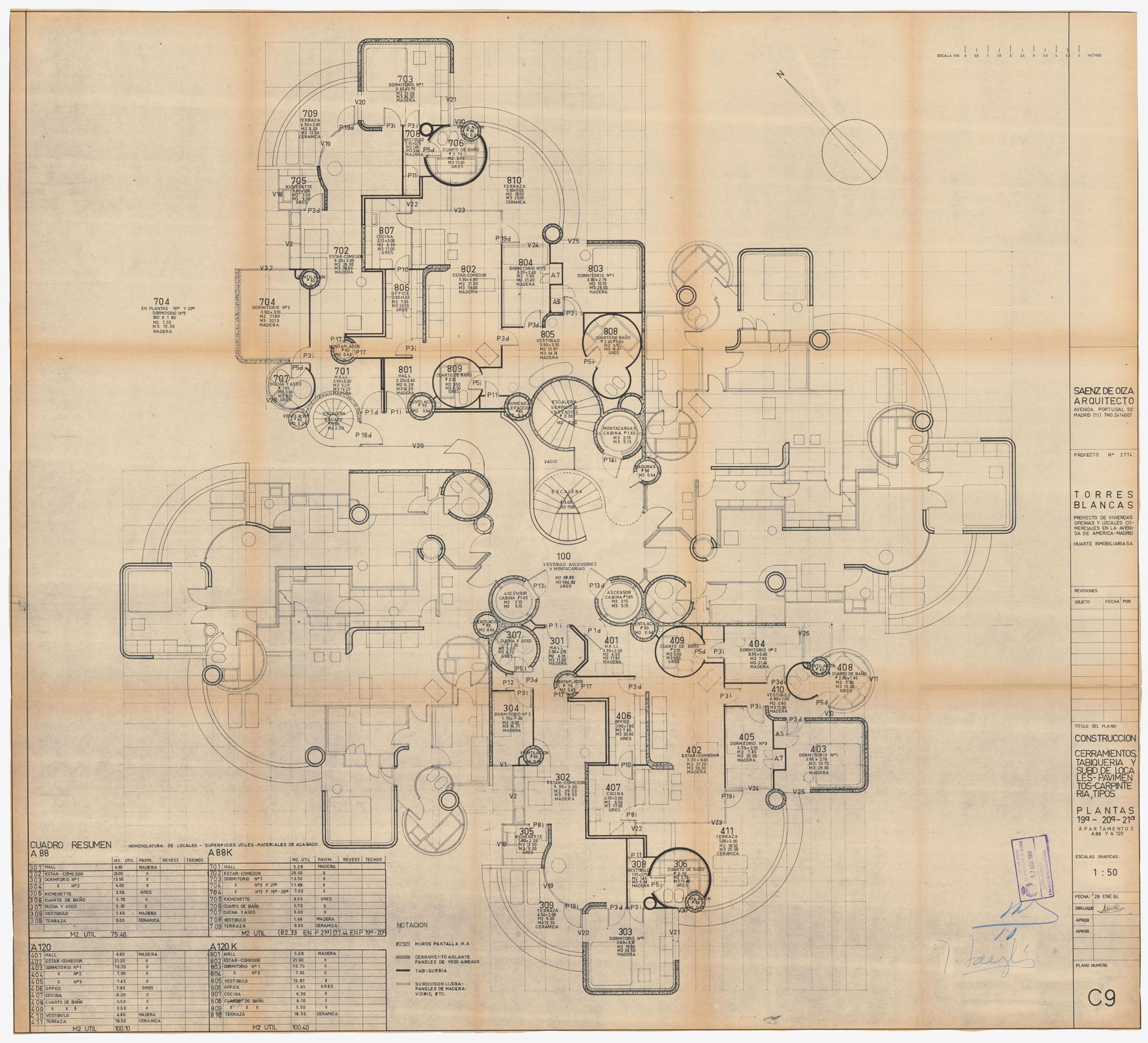
I will not go into the absurd comparisons or the stereotyped examples used by him to make such an unintelligent criticism. The ignorance shown by him, judging Torres Blancas, by Sáenz de Oiza, as an impossible place to furnish, is as absurd as easily rebuttable and some readers have brilliantly done it with tools as simple as a "Twitter thread".
The fact that Stephen Bayley uses a medium of great diffusion as El País, which many of us have read for years, to enlarge his own ego to the detriment of a large group of good professionals, is really surprising and absurd at the same time. I believe that all media should take care of their credibility.
I agree with the Superior Council of Architects of Spain when coming out in defense of the profession, but asking for a rectification of the aforementioned article would perhaps increase the repercussion of it.
Many years ago, a radio host challenged his audience that if they did not like what he said, they would stop hearing his program. The radio host and the program disappeared from the radio waves many years ago. So I always consider the same thing, the best thing is to be critical and in your case to stop reading the media that is expressed with so little rigor.
However, sometimes it does not happen like that, the idea does not get to the gag, does not get to the joke and some prefer to use aggressiveness and insulting attitudes, with a language that can only be described as crude and vulgar. As happened last Thursday, with an article signed by Stephen Bayley.
I remember that a couple of years ago, from overseas, they brought a lecturer to close one of the most interesting exhibitions on Constant at the Reina Sofía Museum. With conference underway, and after 15 minutes of unconnected drifts, the lecturer stammered and acknowledged that he had made a mistake and that the papers he was reading, were not the ones he had supposedly prepared to talk about the figure of Constant. Far from stopping that embarrassing spectacle, he continued undaunted until his surreal talk ended.
In that case he was an Englishman, although he lives in the United States, in the article of last Thursday also an Englishman, a sad coincidence. In a society like British, dominated by the Brexit and post-brexit thinking, a situation that according to many of its citizens was reached by a huge artillery of lies, or "fake news", we should not surprise the appearance of typical characters of tabloid press. To the very morbid, I suggest a visit to his website to see the egomaniacal presentation of Stephen Bayley as "second most intelligent man in Britain", or as "design guru".
In this surprising cultural foolishness of idolatry to the colonizing Anglo-Saxon culture, at least in our cultural scope, expects a minimum rigor in language, culture and discourse.
I will not go into the absurd comparisons or the stereotyped examples used by him to make such an unintelligent criticism. The ignorance shown by him, judging Torres Blancas, by Sáenz de Oiza, as an impossible place to furnish, is as absurd as easily rebuttable and some readers have brilliantly done it with tools as simple as a "Twitter thread".
The fact that Stephen Bayley uses a medium of great diffusion as El País, which many of us have read for years, to enlarge his own ego to the detriment of a large group of good professionals, is really surprising and absurd at the same time. I believe that all media should take care of their credibility.
I agree with the Superior Council of Architects of Spain when coming out in defense of the profession, but asking for a rectification of the aforementioned article would perhaps increase the repercussion of it.
Many years ago, a radio host challenged his audience that if they did not like what he said, they would stop hearing his program. The radio host and the program disappeared from the radio waves many years ago. So I always consider the same thing, the best thing is to be critical and in your case to stop reading the media that is expressed with so little rigor.