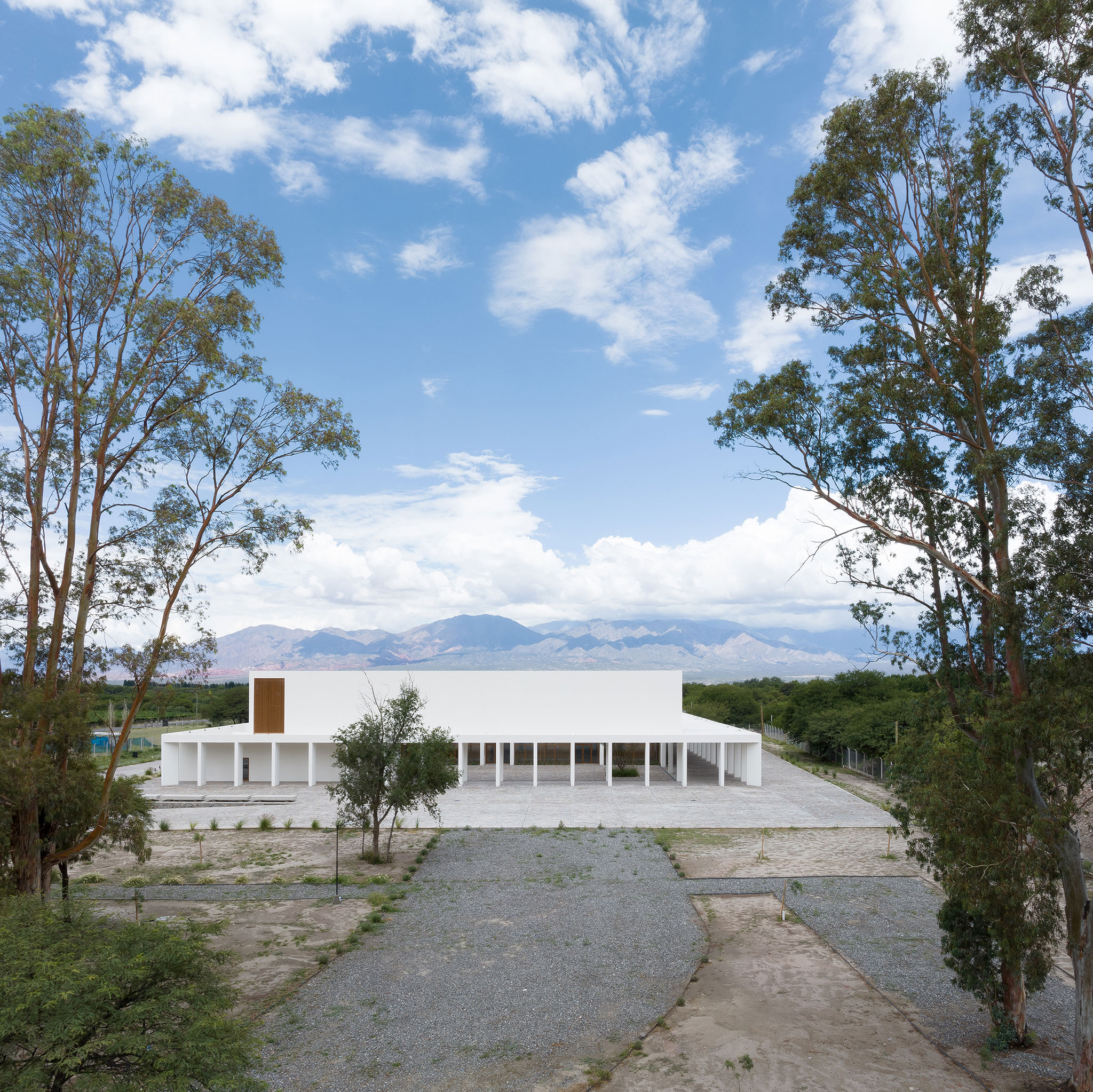
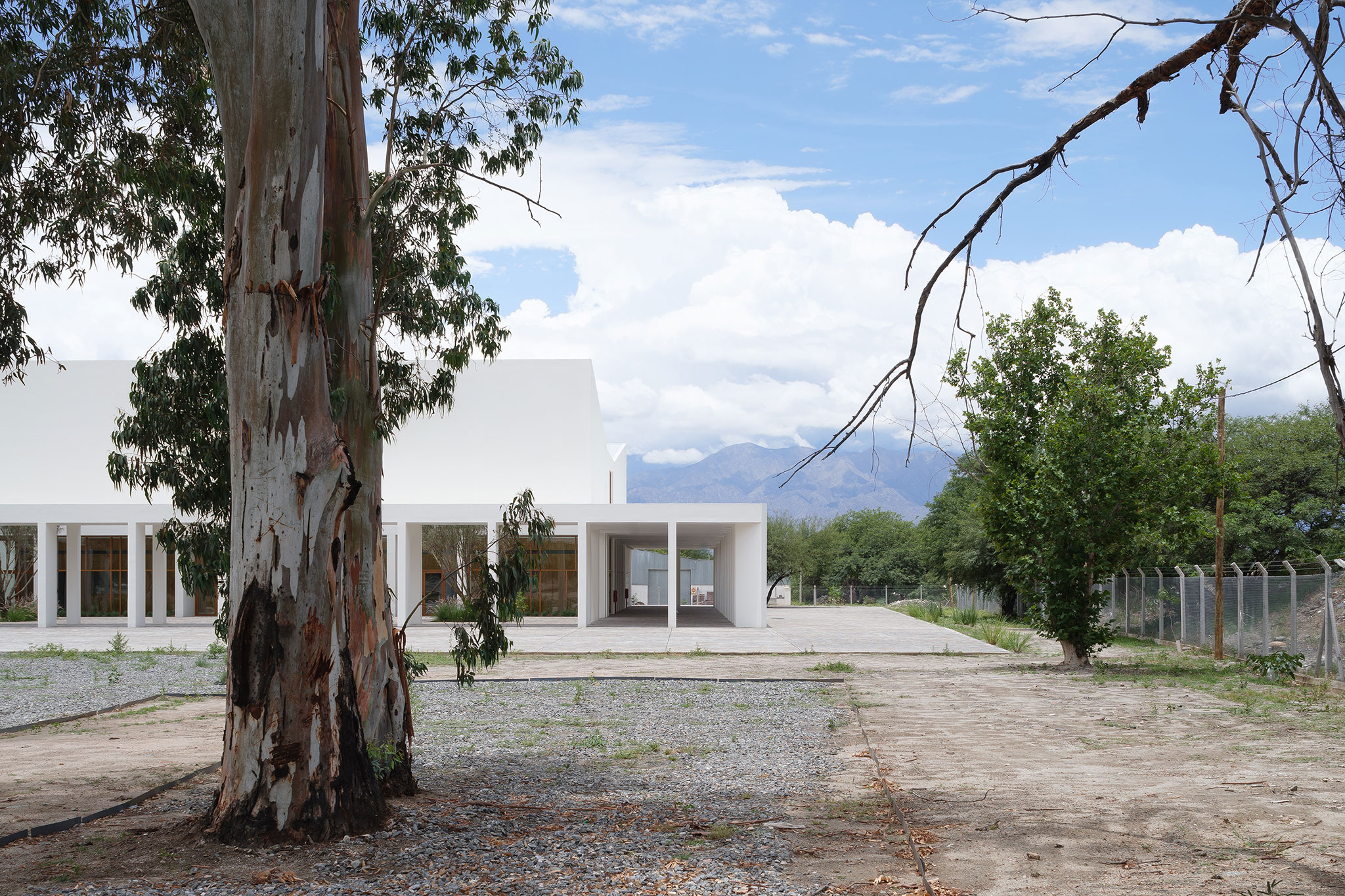
Architects Ignacio Carón, Fabio Estremera, Andres Francesconi, and Ezequiel Spinelli collaborated to design the Cafayate Convention Center, a city in the province of Salta, in northwestern Argentina. It is located in the Calchaquí Valleys, an area known for its reddish rock formations and a land dotted with numerous vineyards.

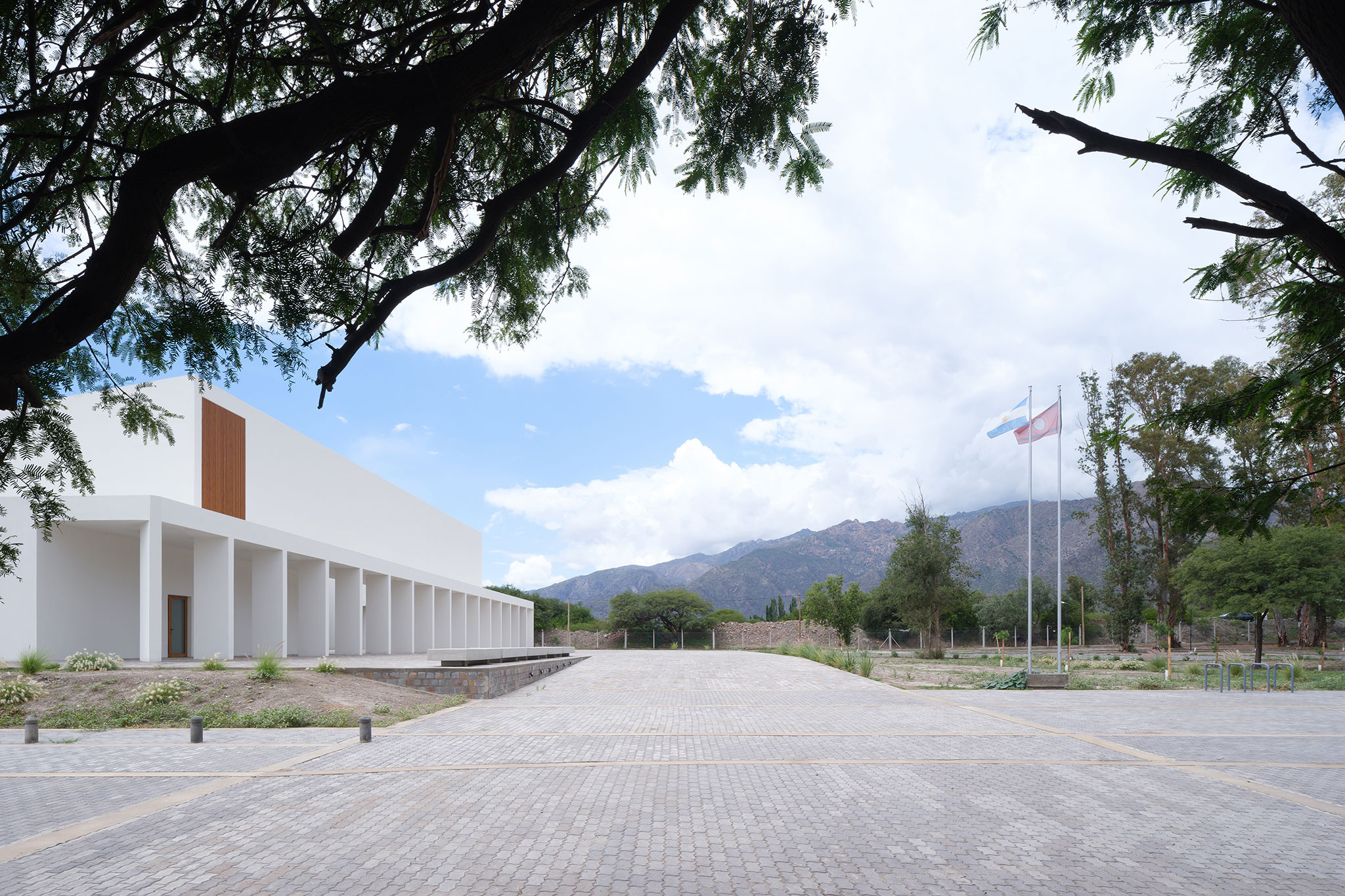
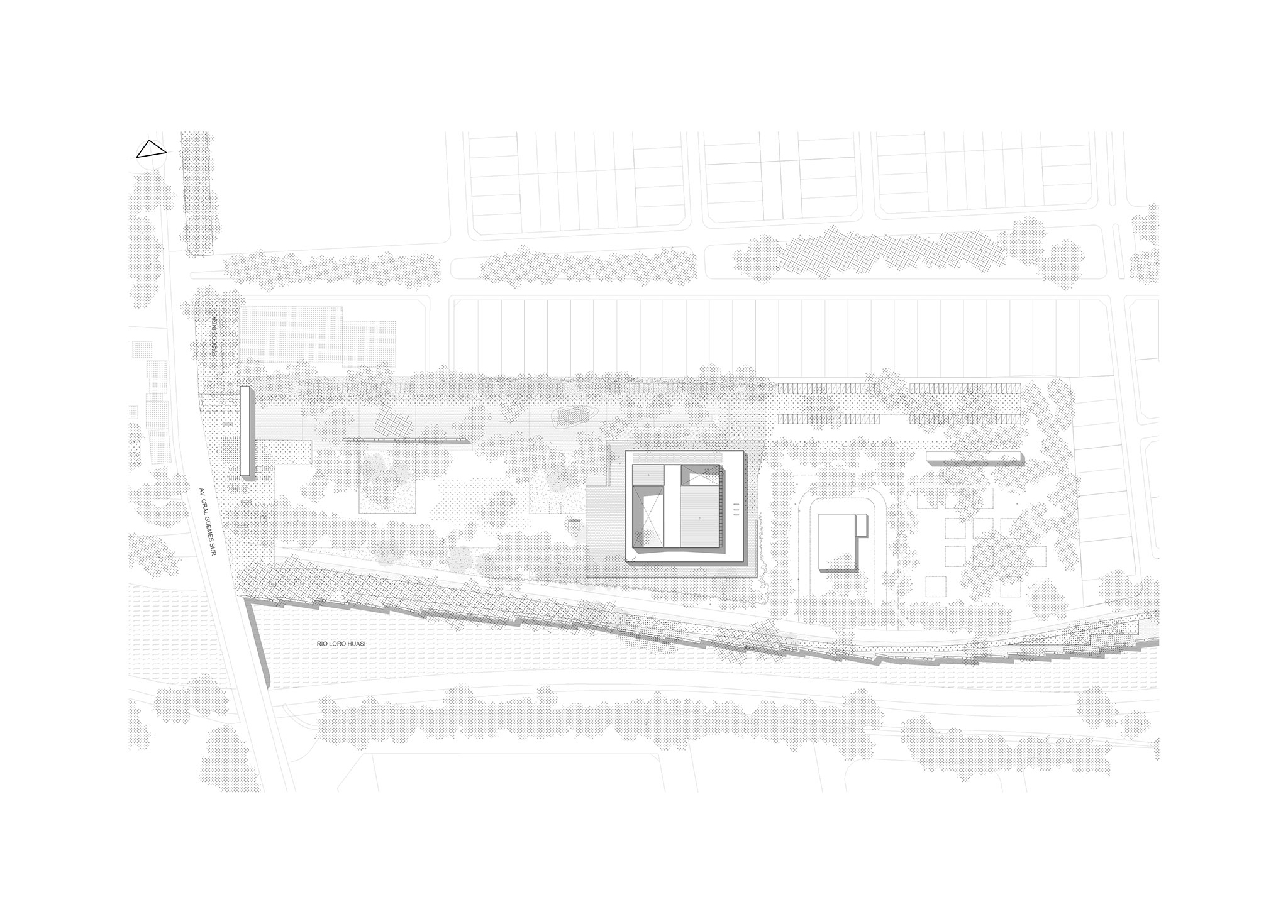
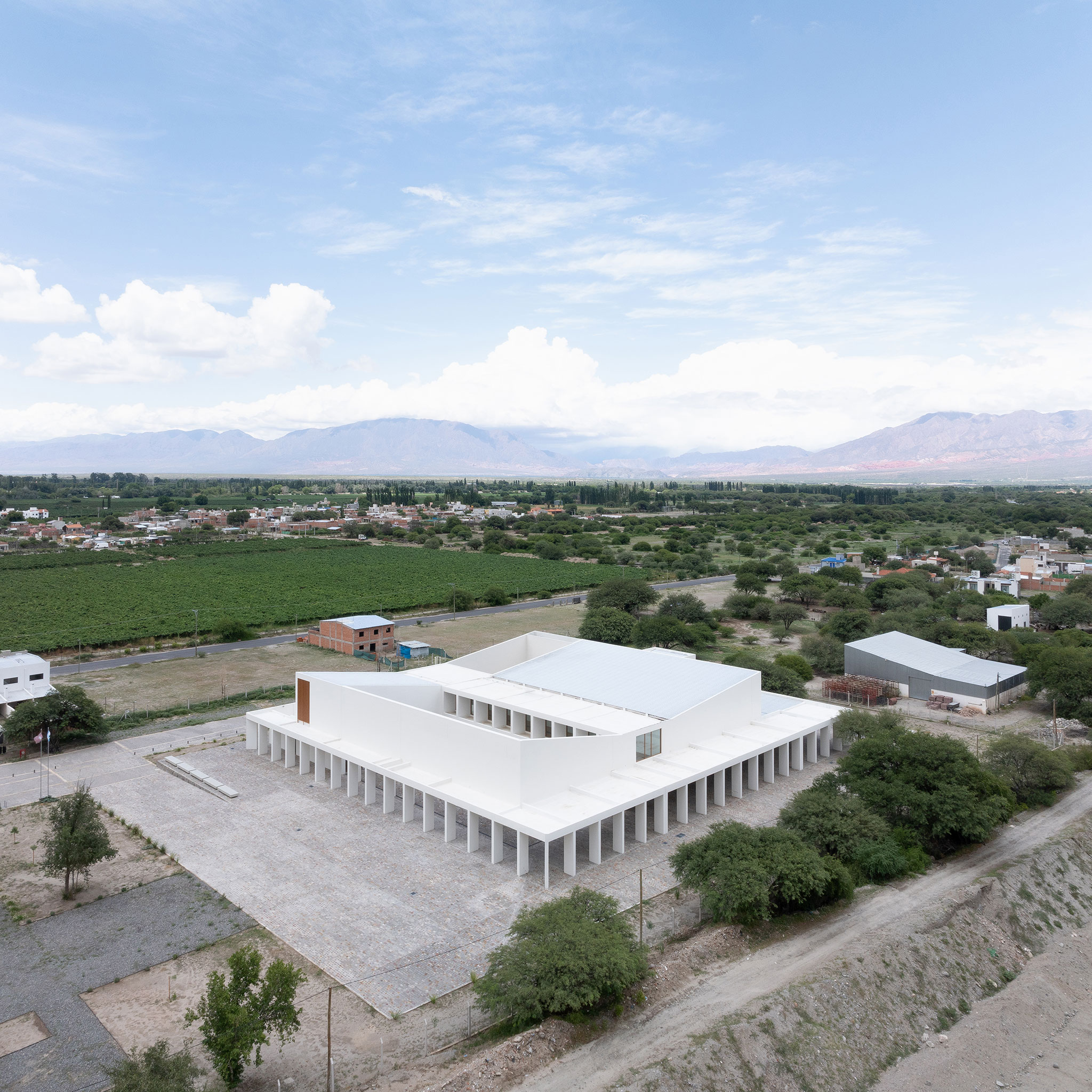
The project, winner of first prize in Argentina's National Architecture Competition, is intended to connect the future Loro Huasi River Coastal Walkway with the city center. The public plaza on National Route 40 also serves as a connection and entrance to the Convention Center.

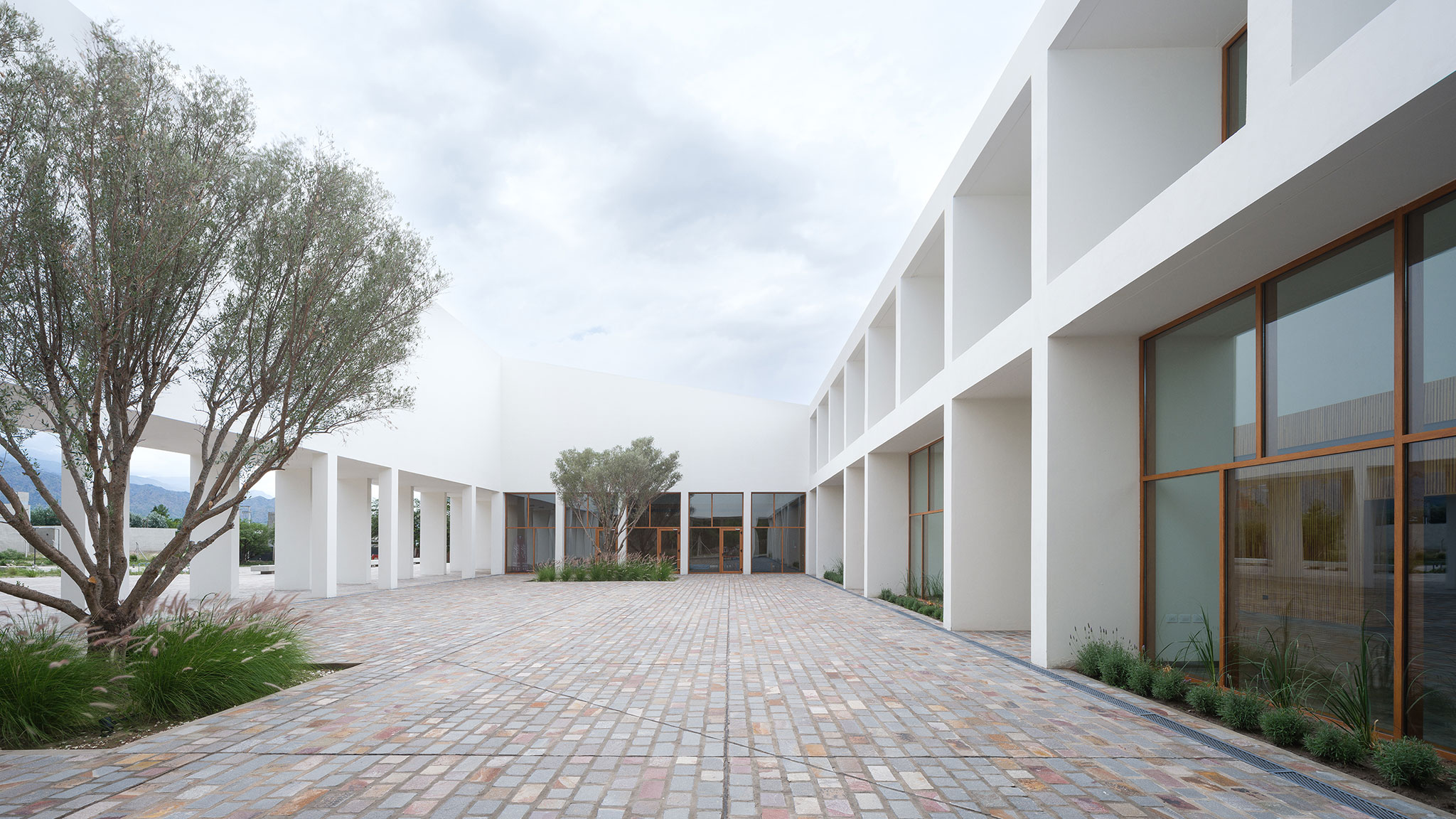
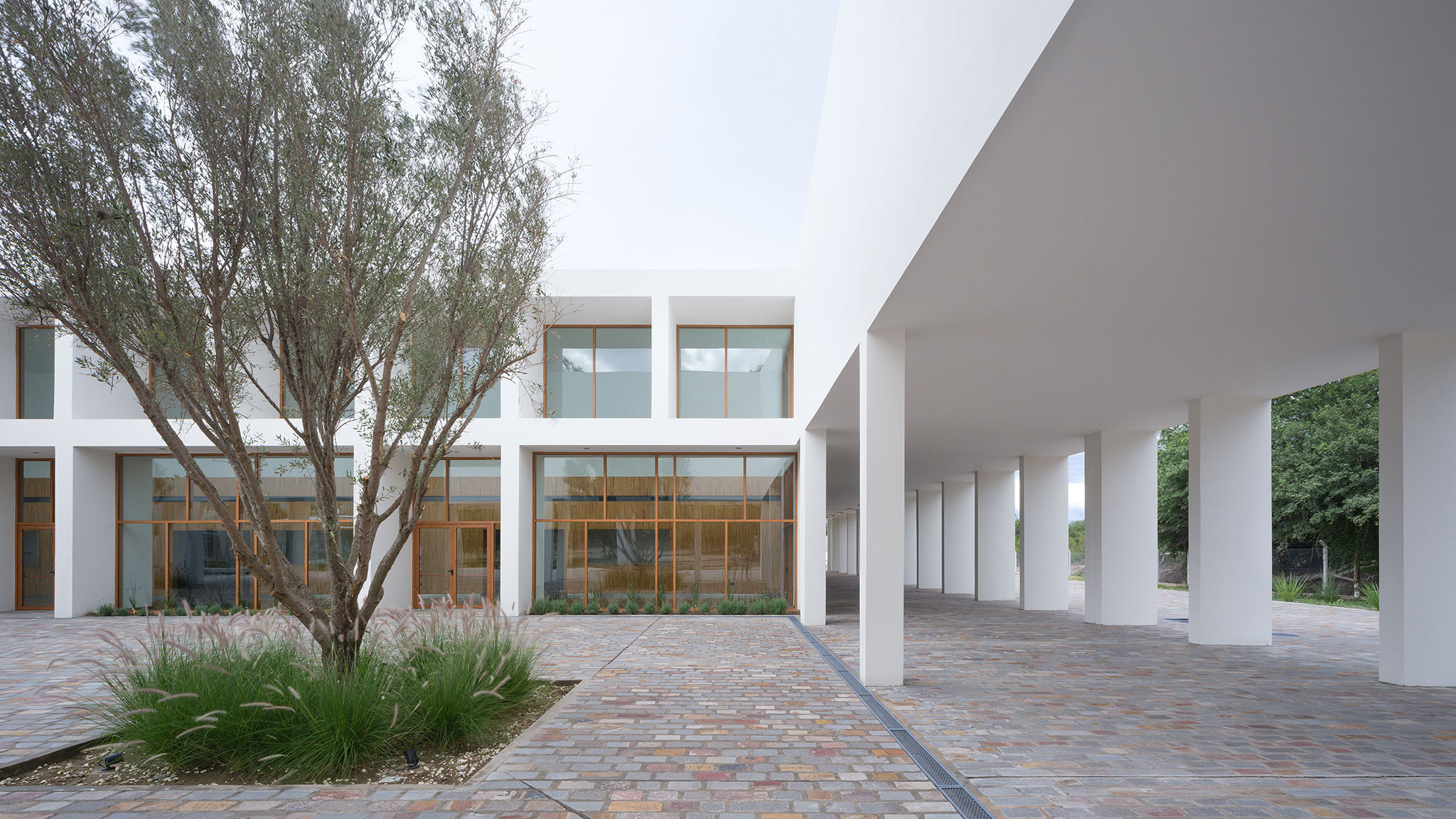
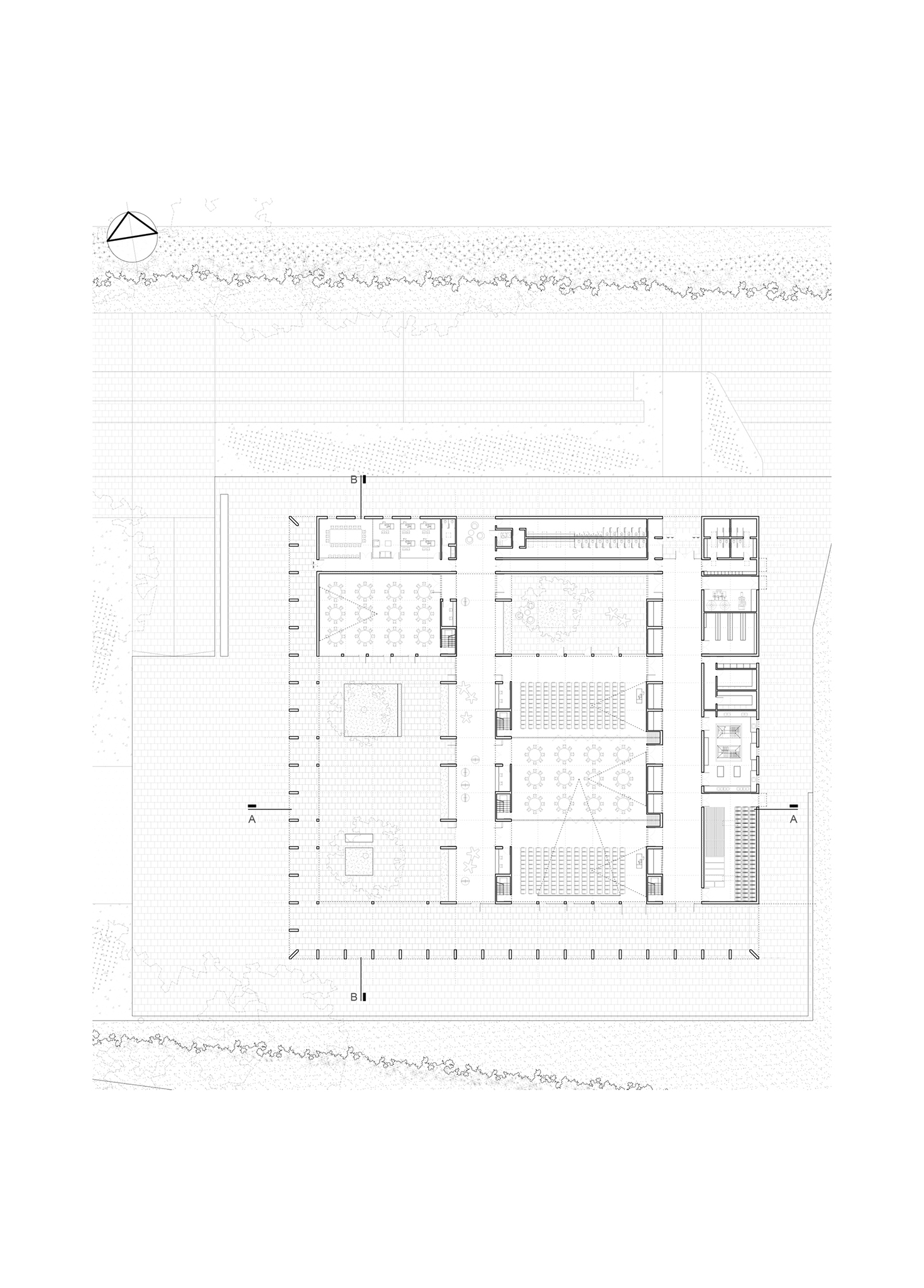
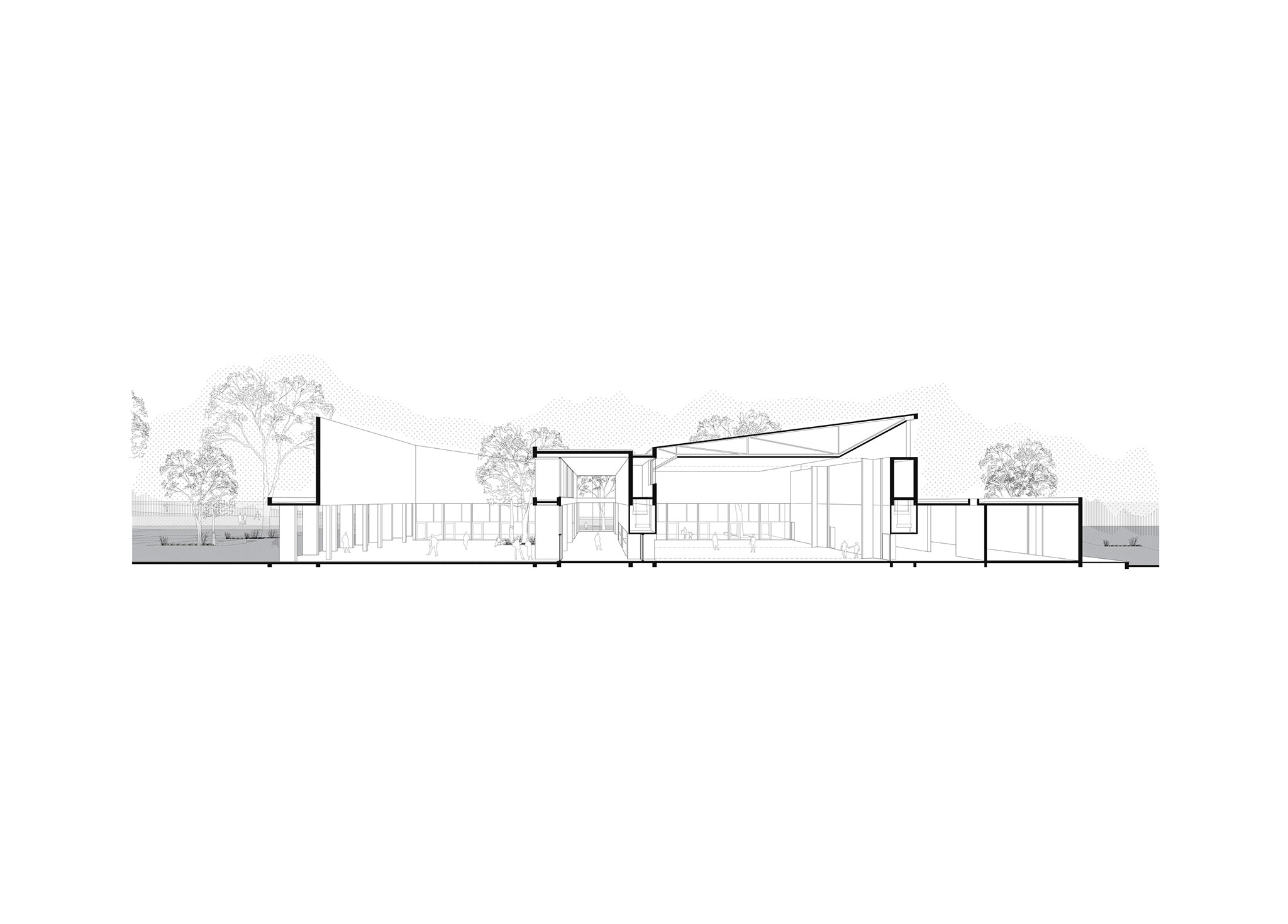
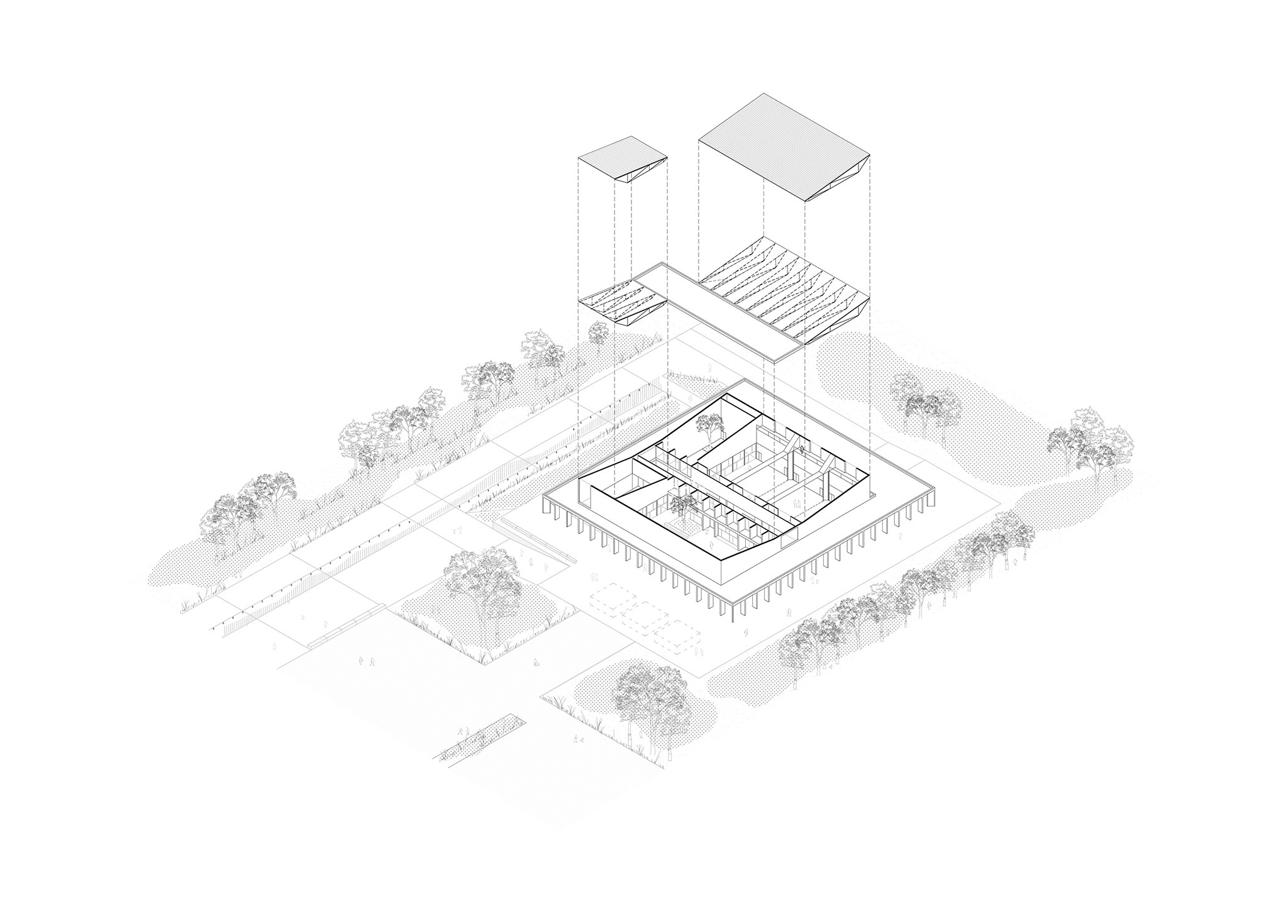
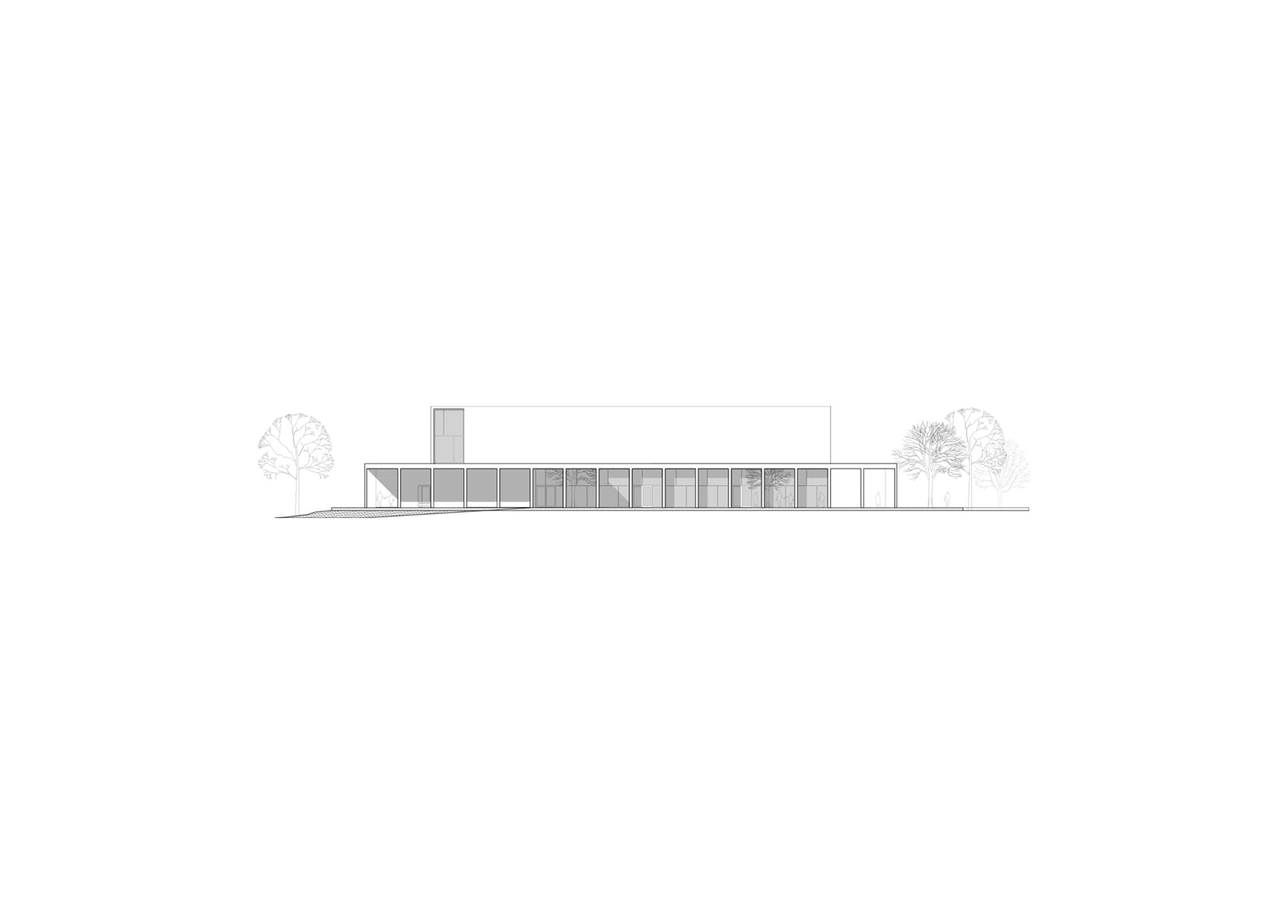
The project by Ignacio Carón, Fabio Estremera, Andres Francesconi, and Ezequiel Spinelli organizes the center along an east-west axis across the entire site, functioning as a corridor linking the different functions, both indoors and outdoors. The center is conceived as a single space with distinct areas but common characteristics. The Main Patio, the Foyer, the Lounge, the Secondary Patio, and the Meeting Rooms create a spatial and functional ensemble that allows for infinite scenarios.

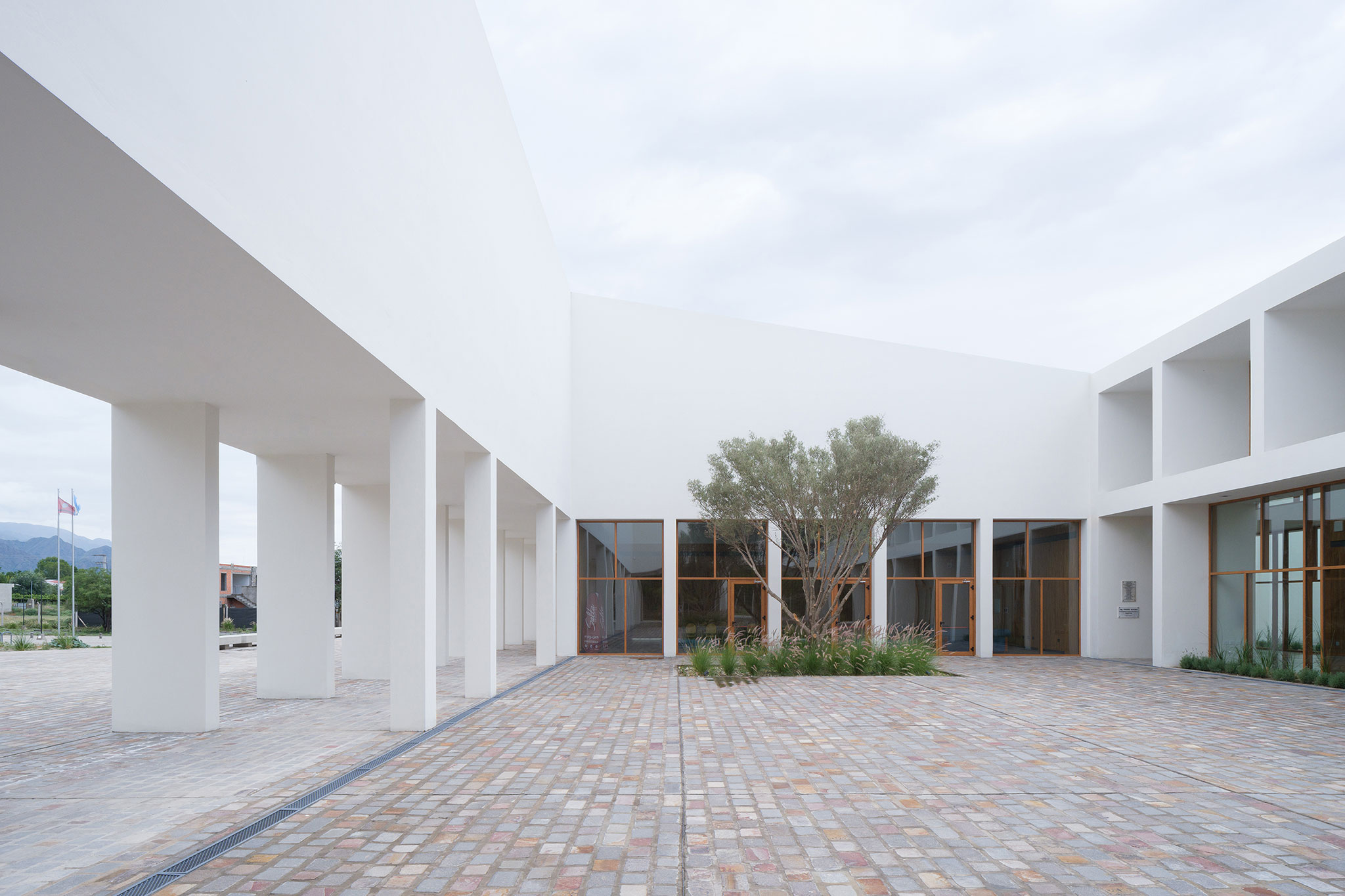
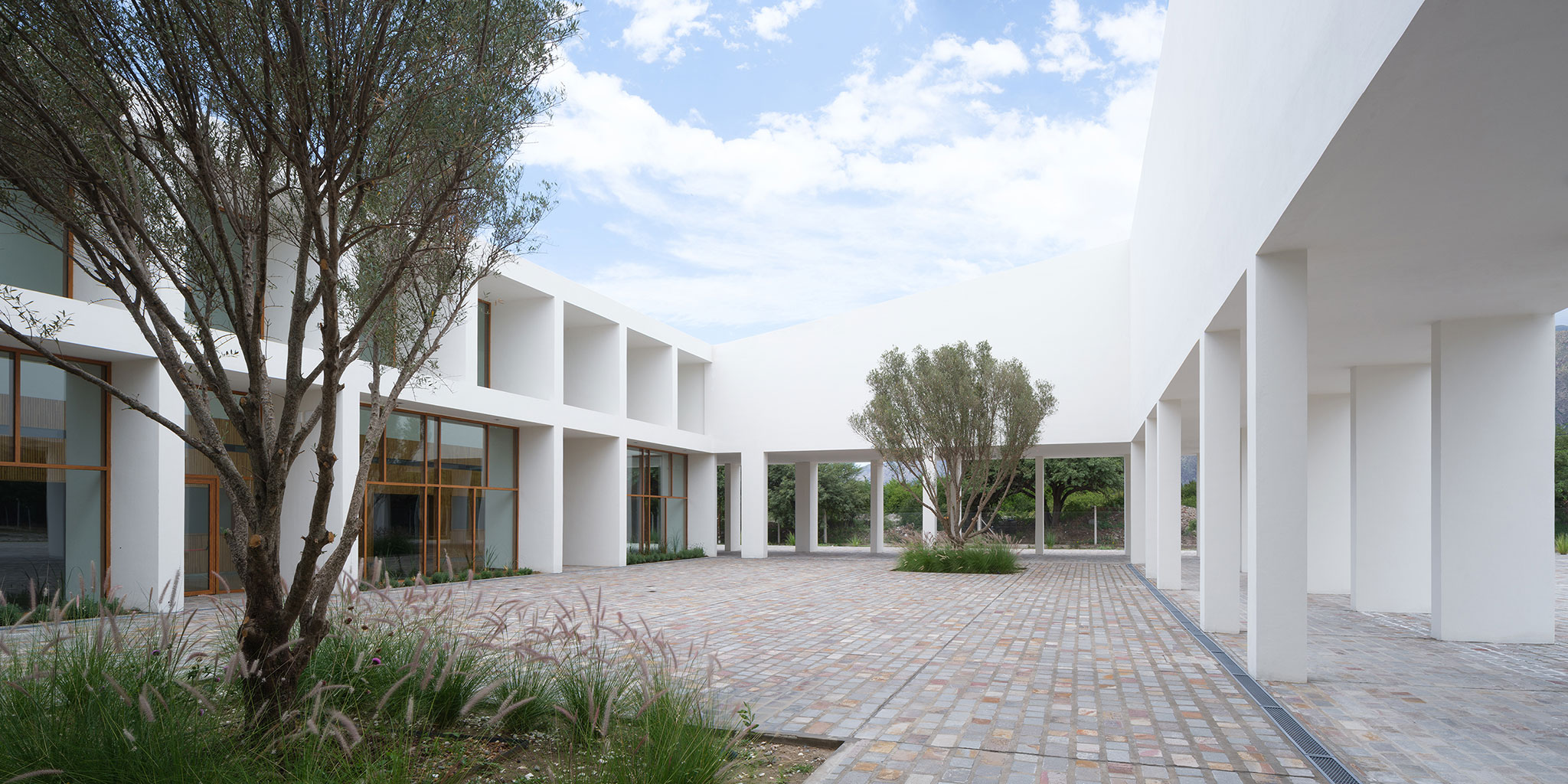
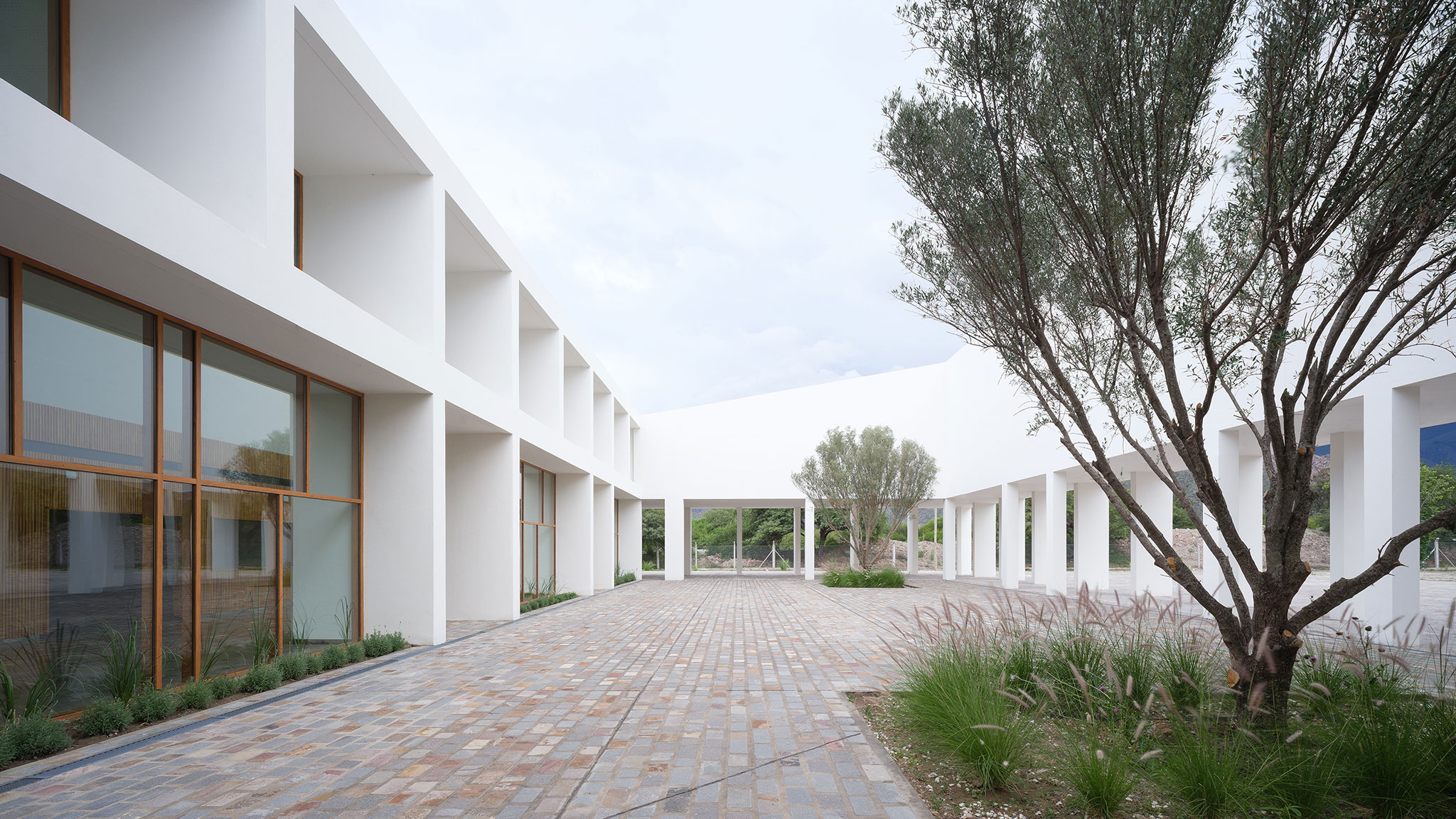
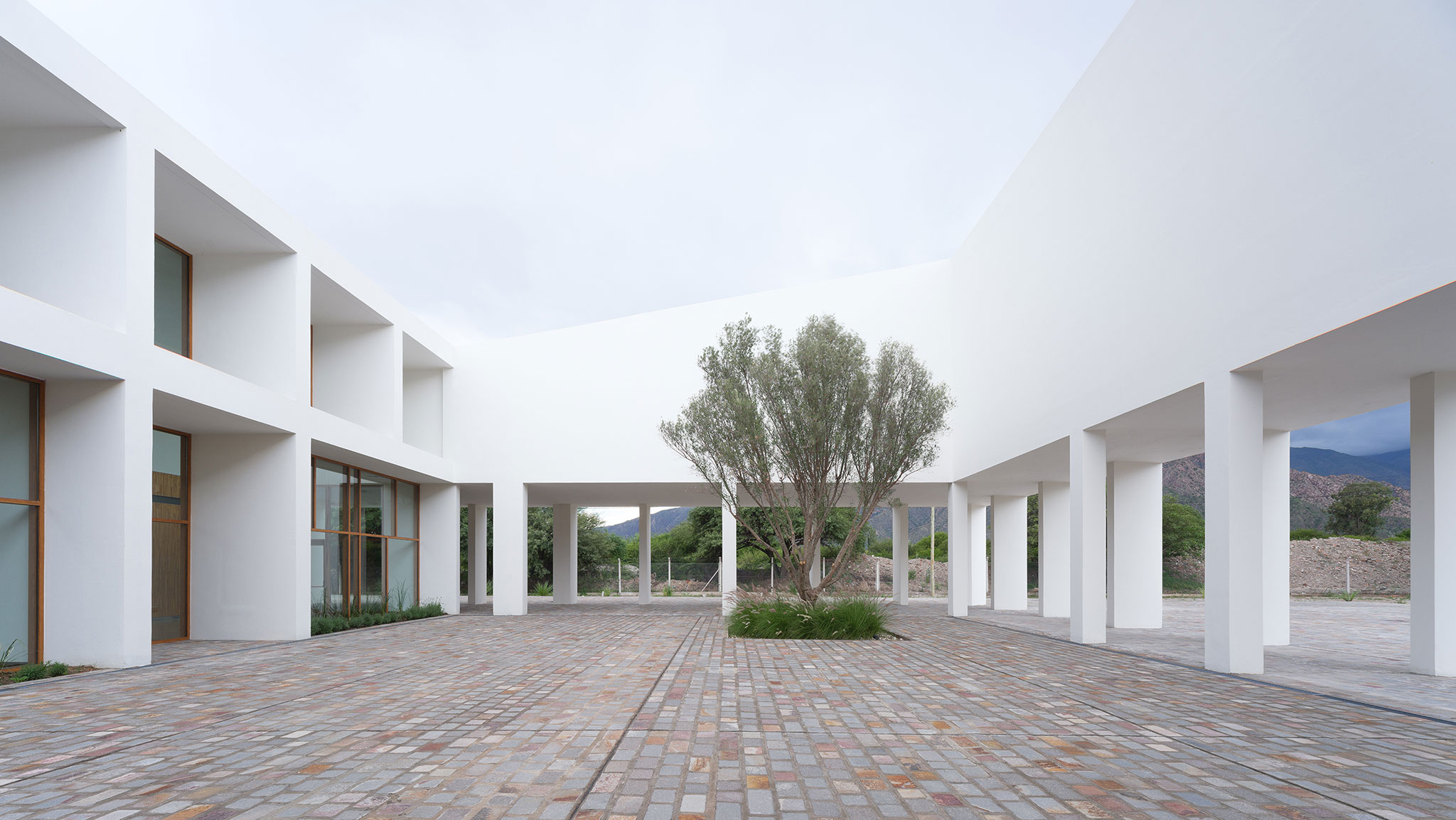
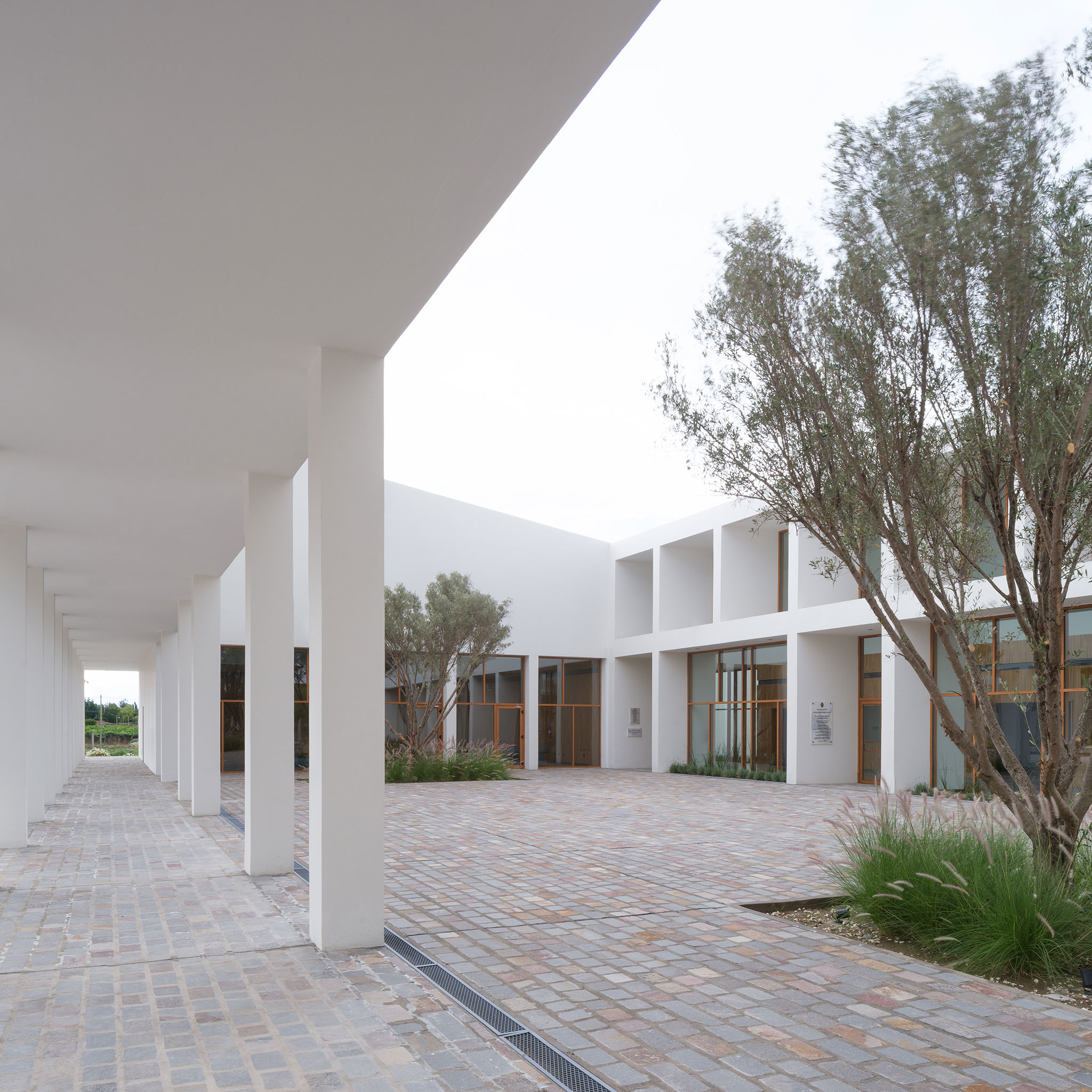
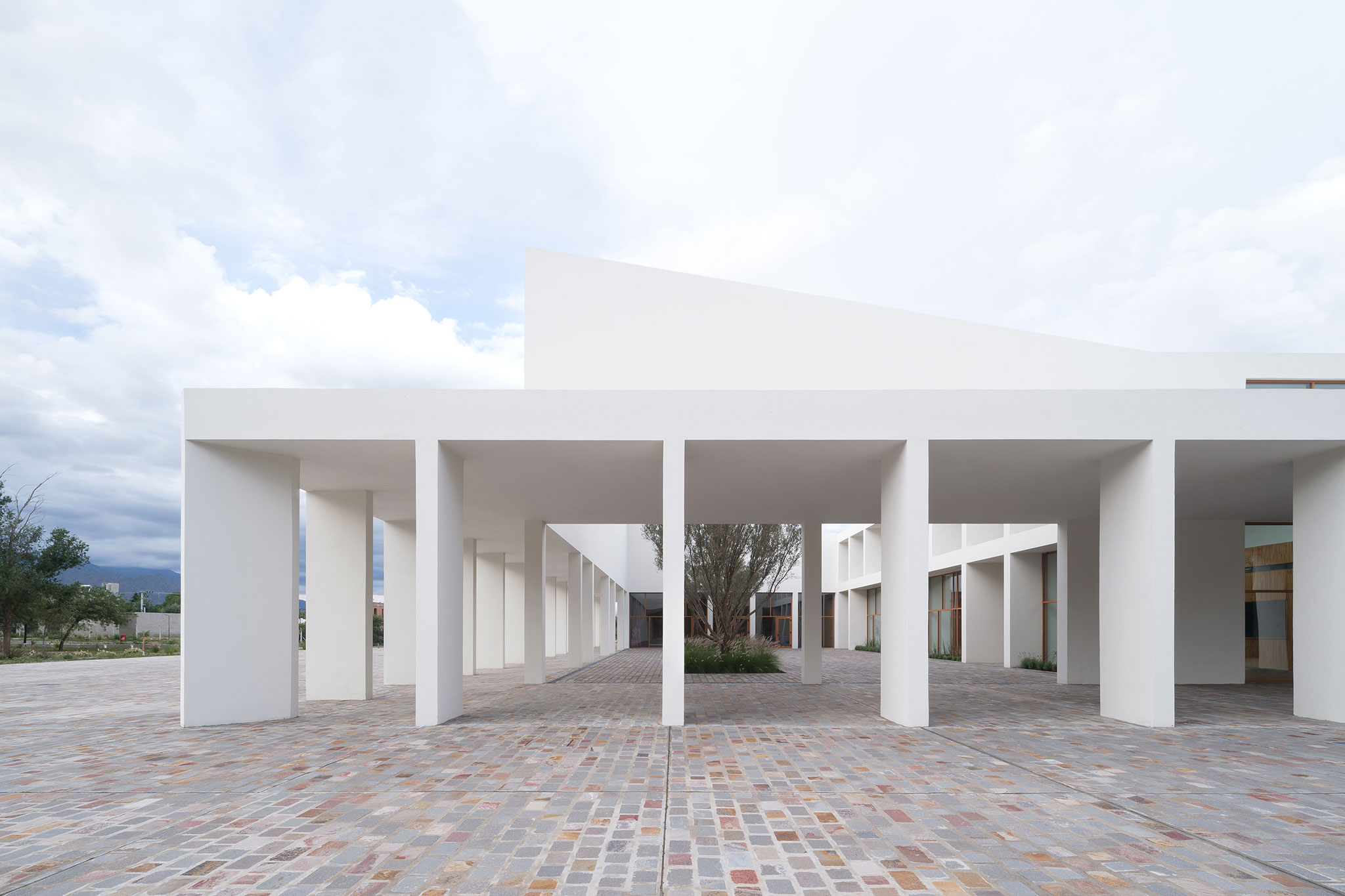
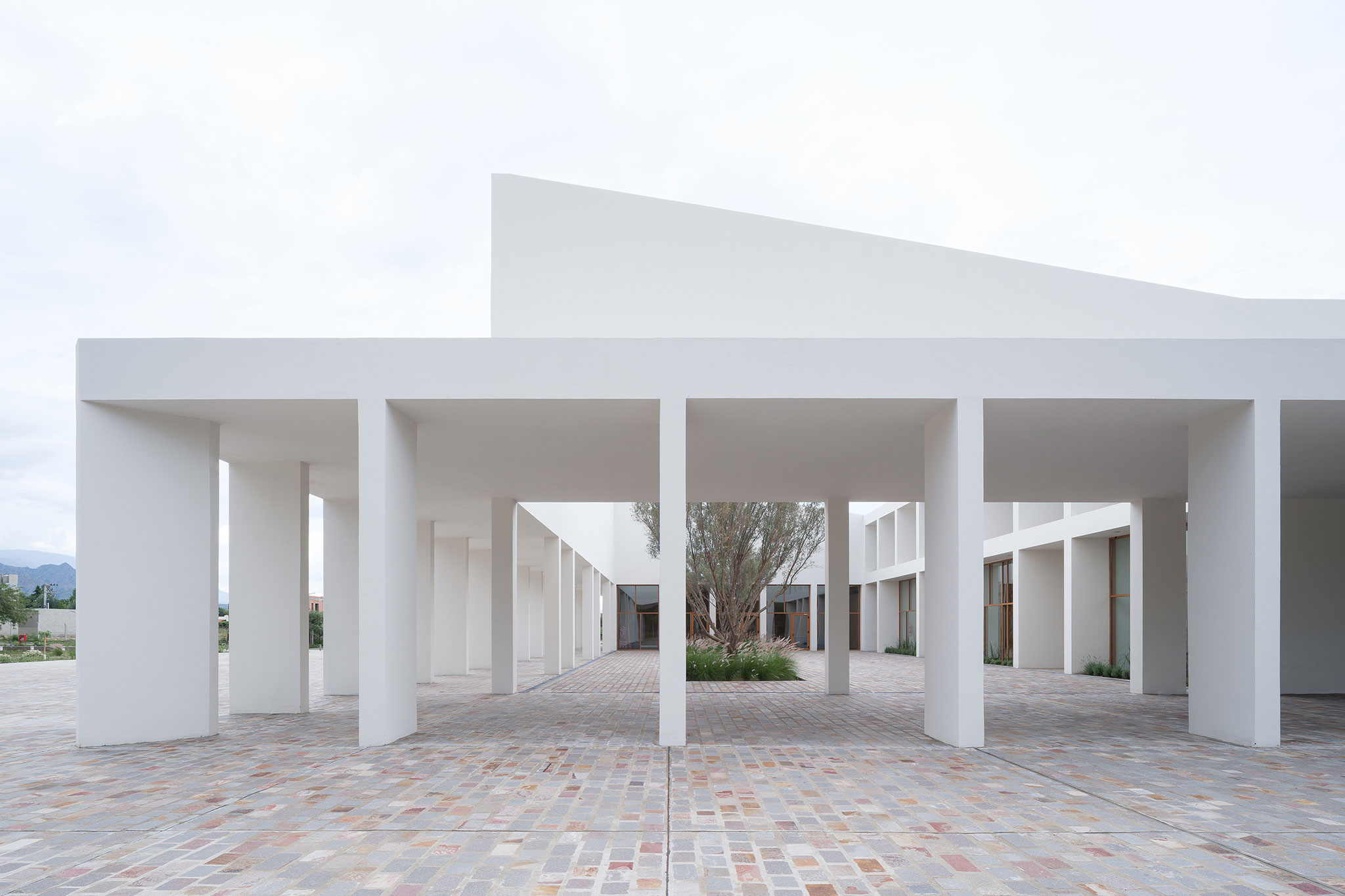
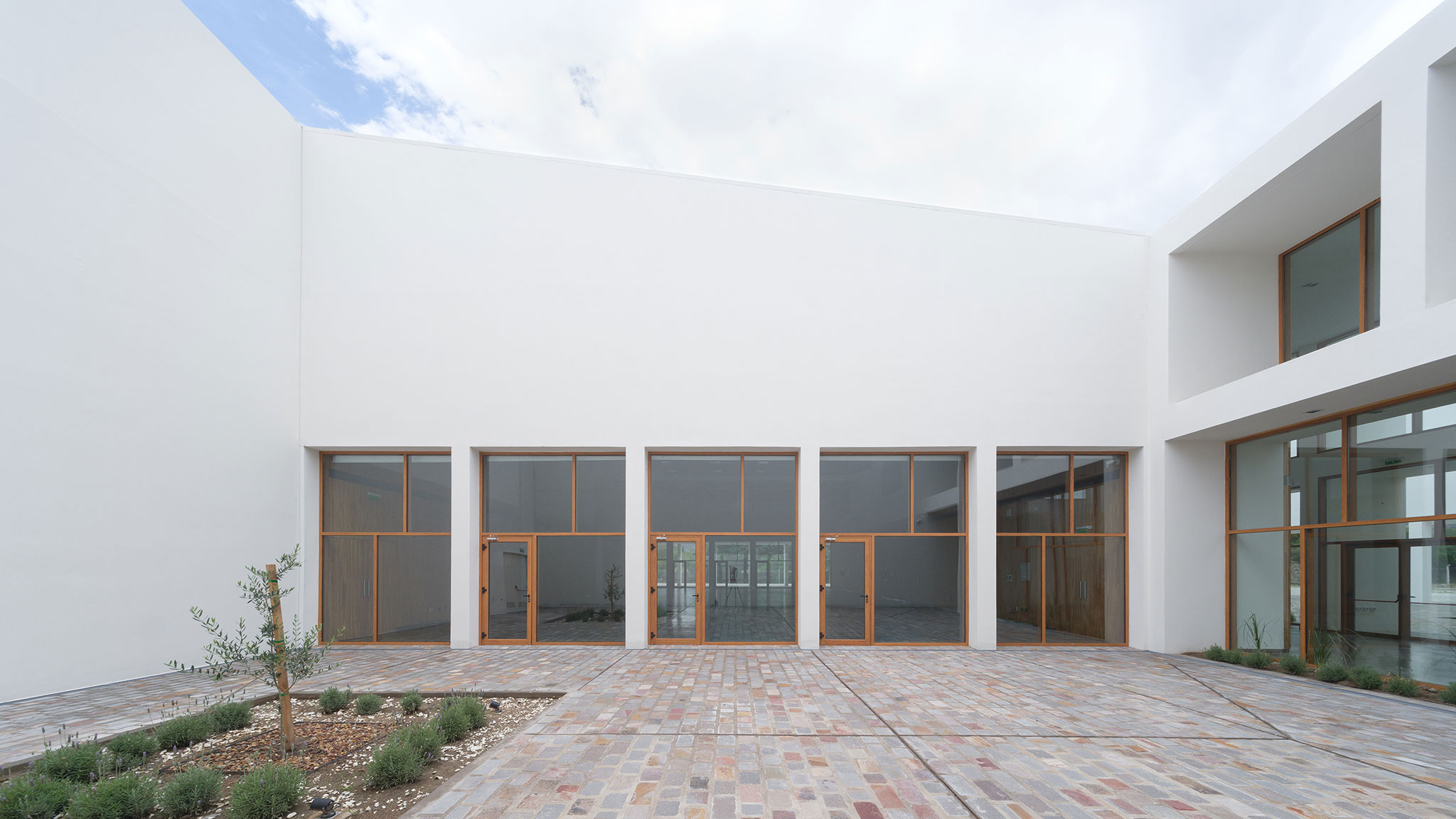
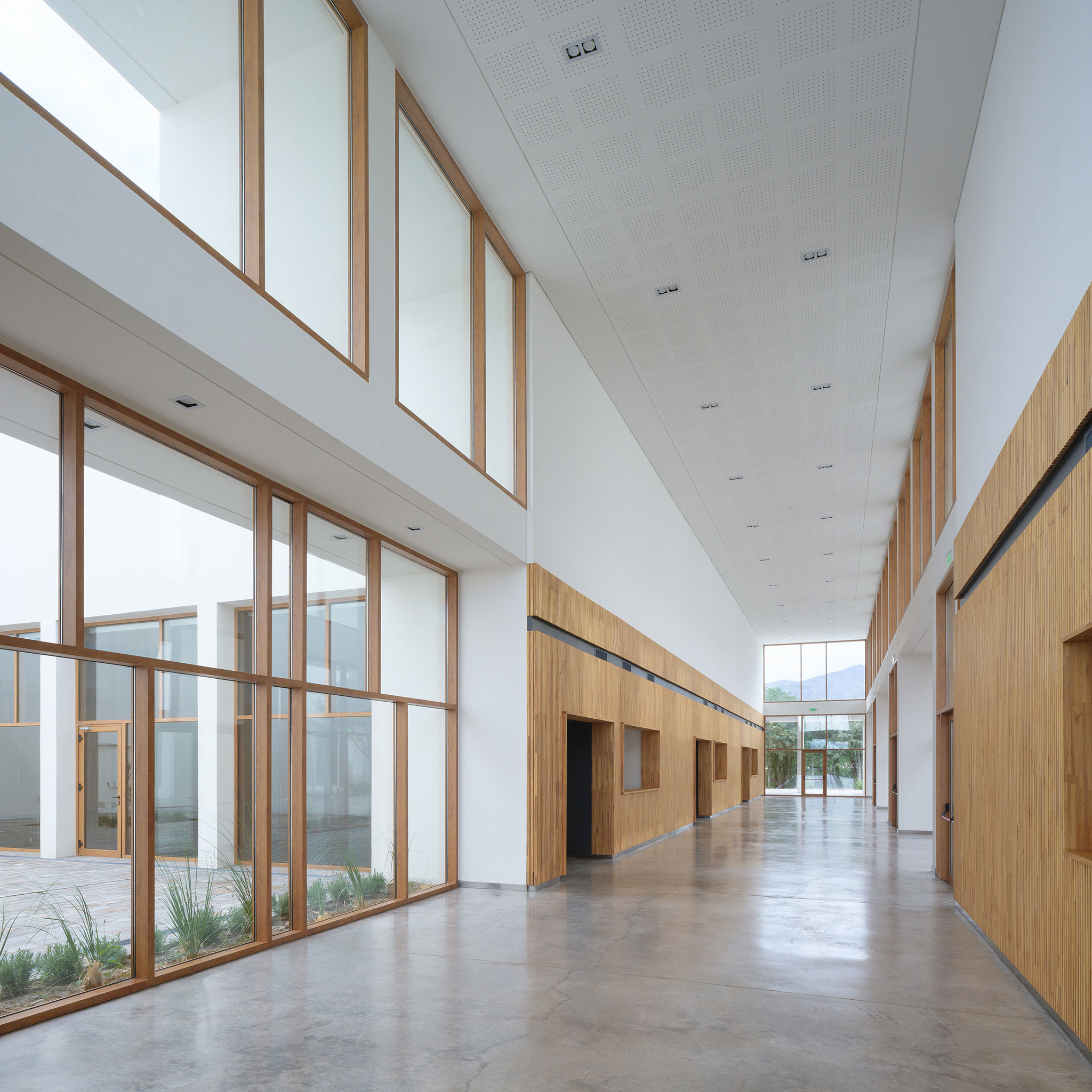
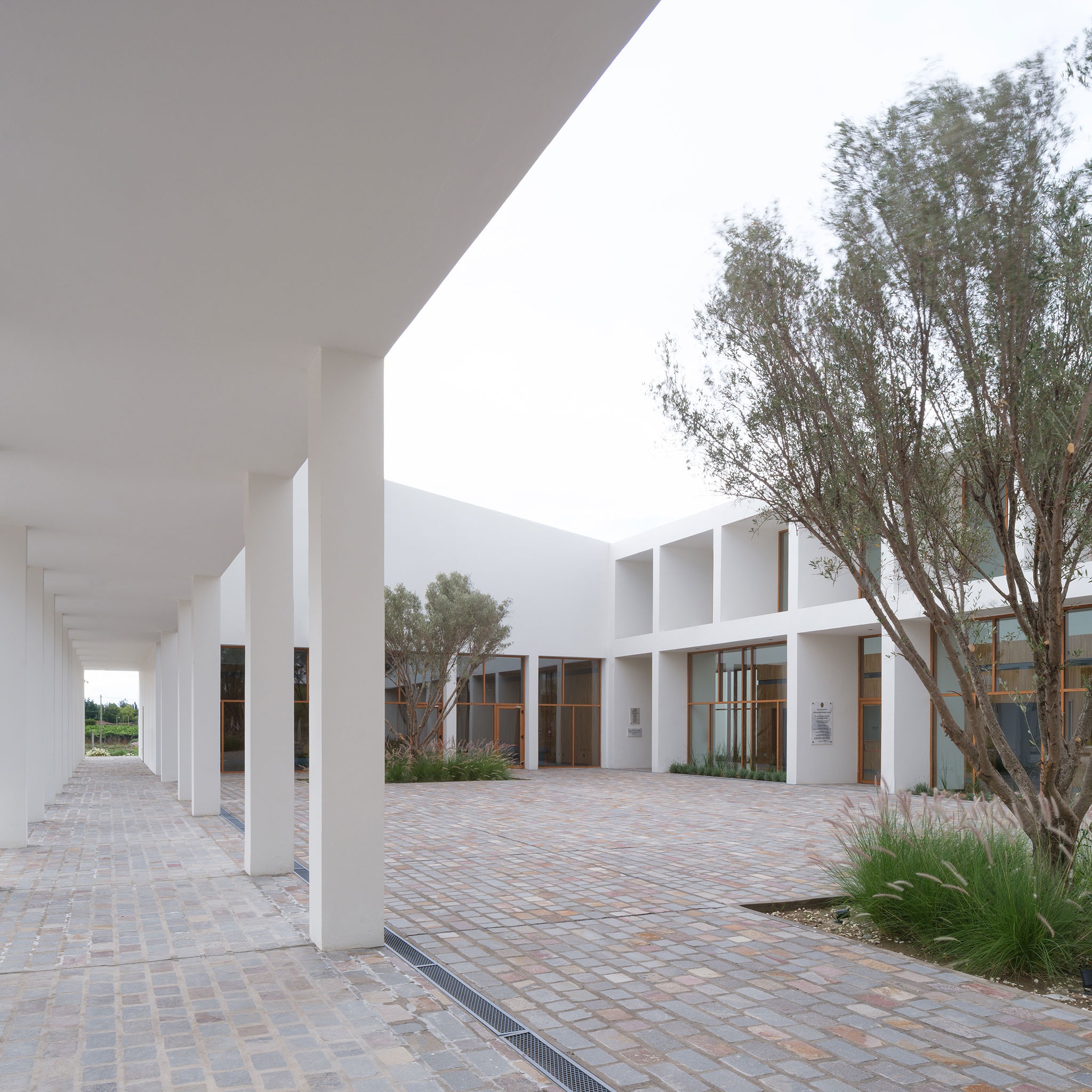
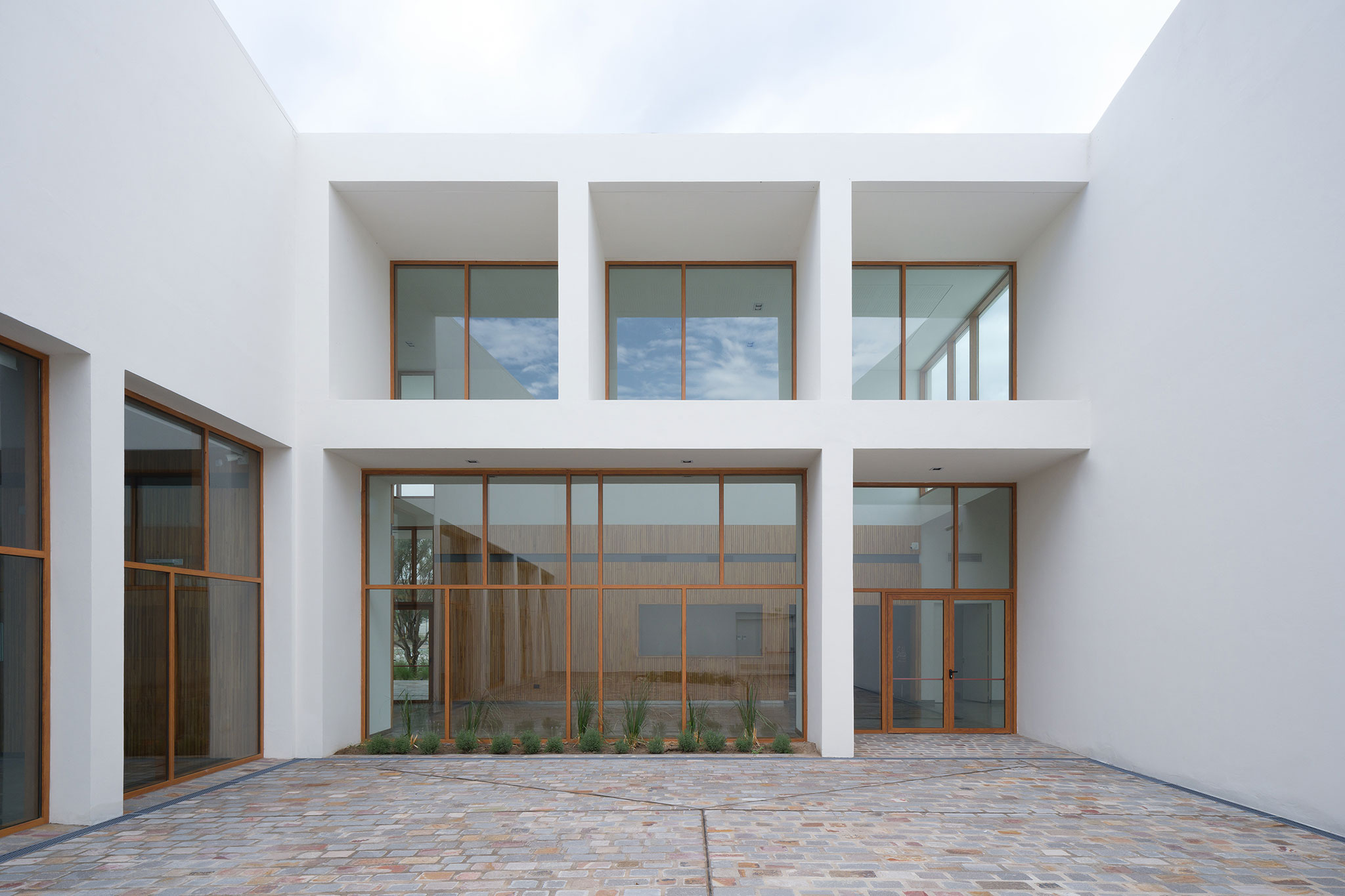
In this approach, the Main Patio functions as an open-air hall, from which one accesses the Foyer, which also serves as the Multipurpose Room. The gallery serves as a circulation and flexible space, while simultaneously containing and framing the landscape. Support services for its operation are located on the east and north sides, connected to each other and to the other spaces to create a precise and clear technical circulation.

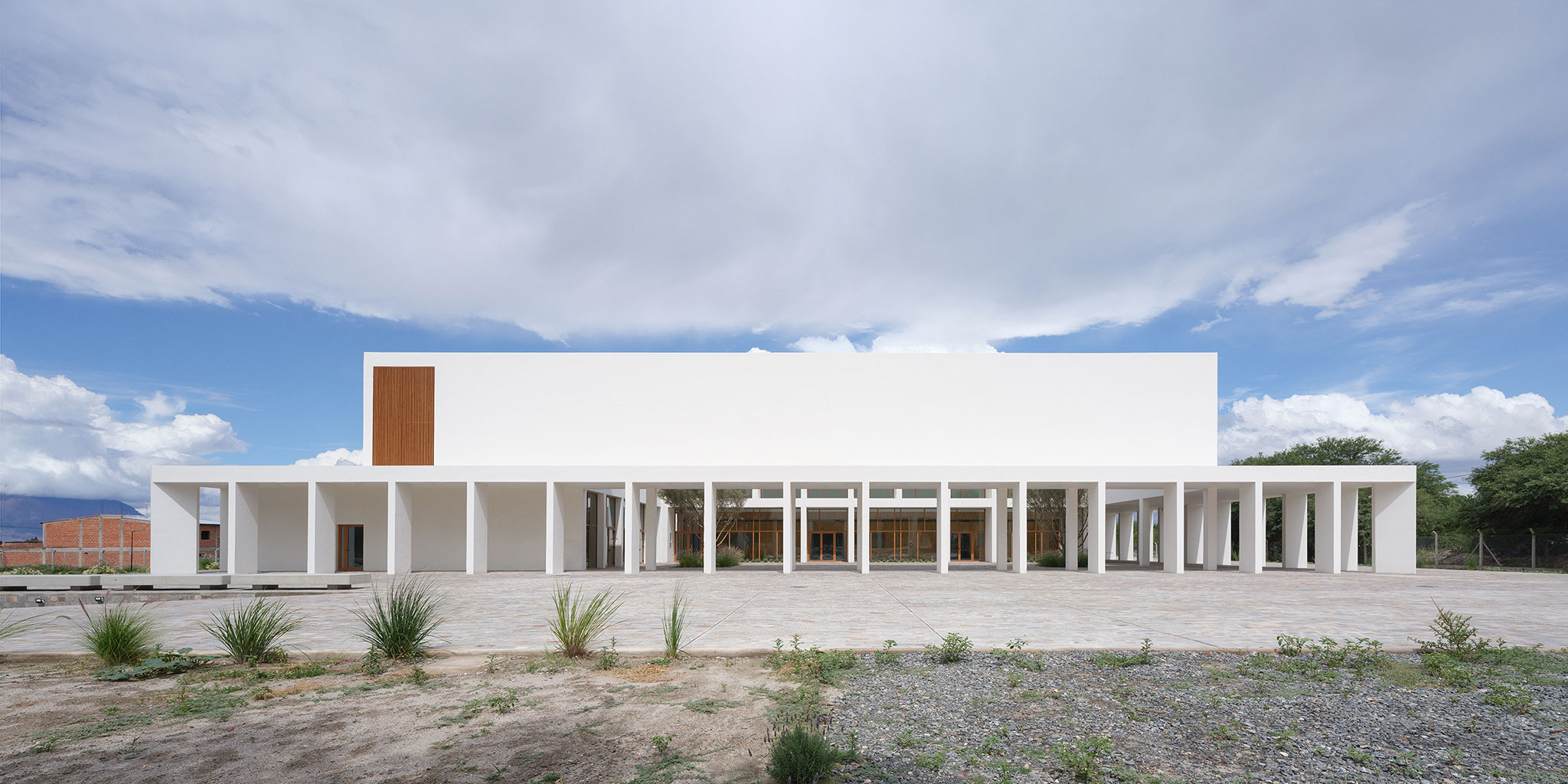
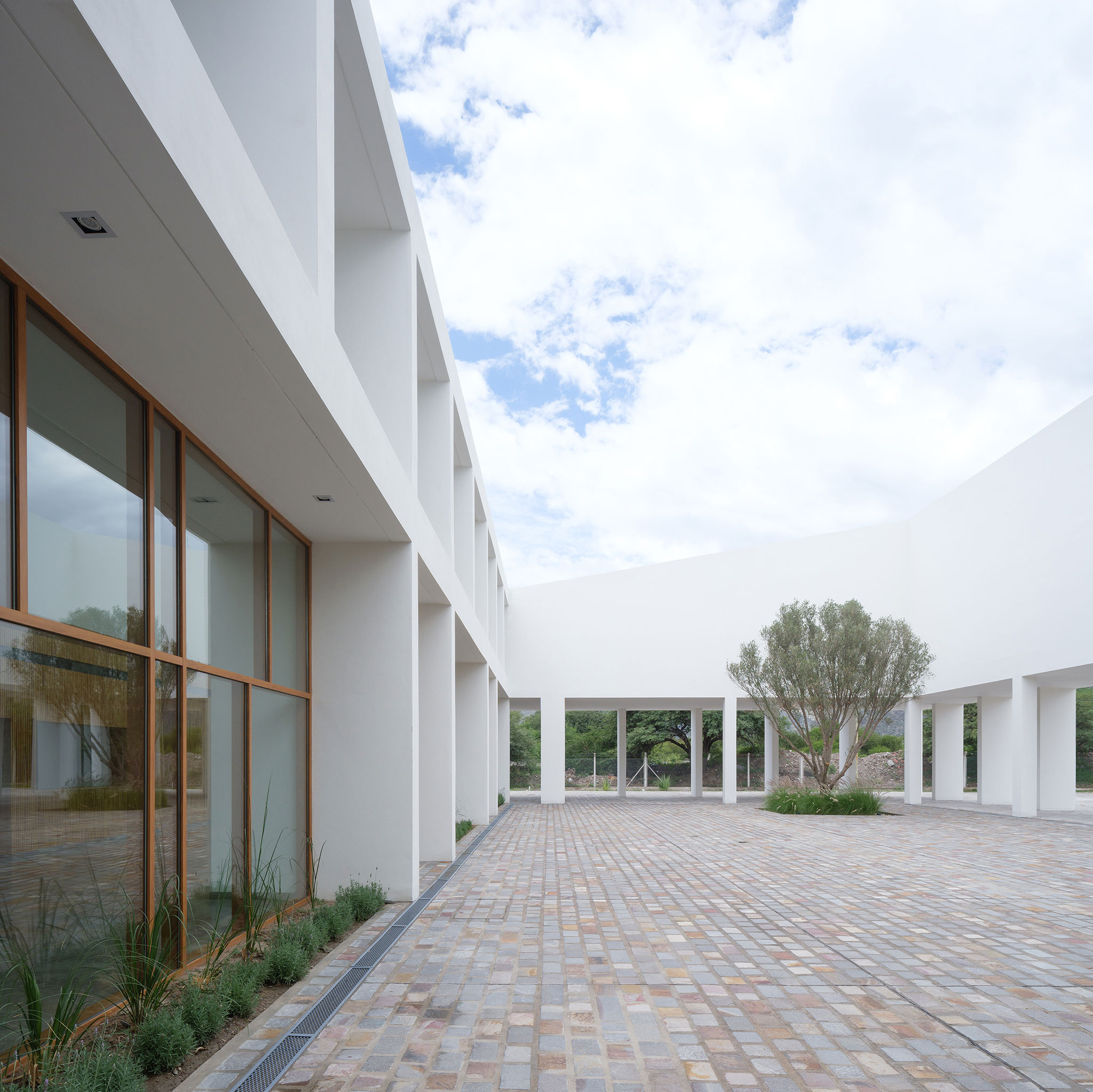
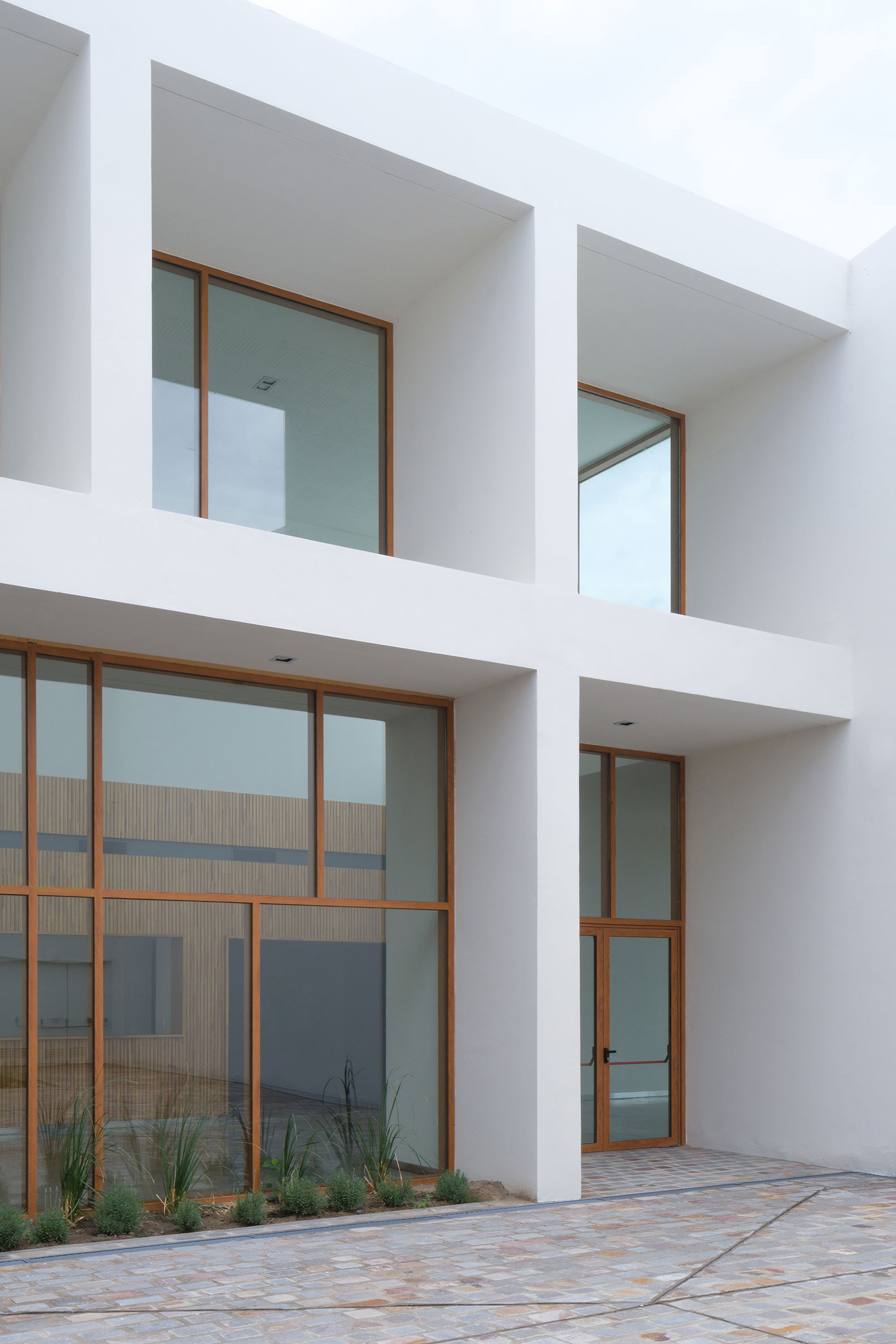
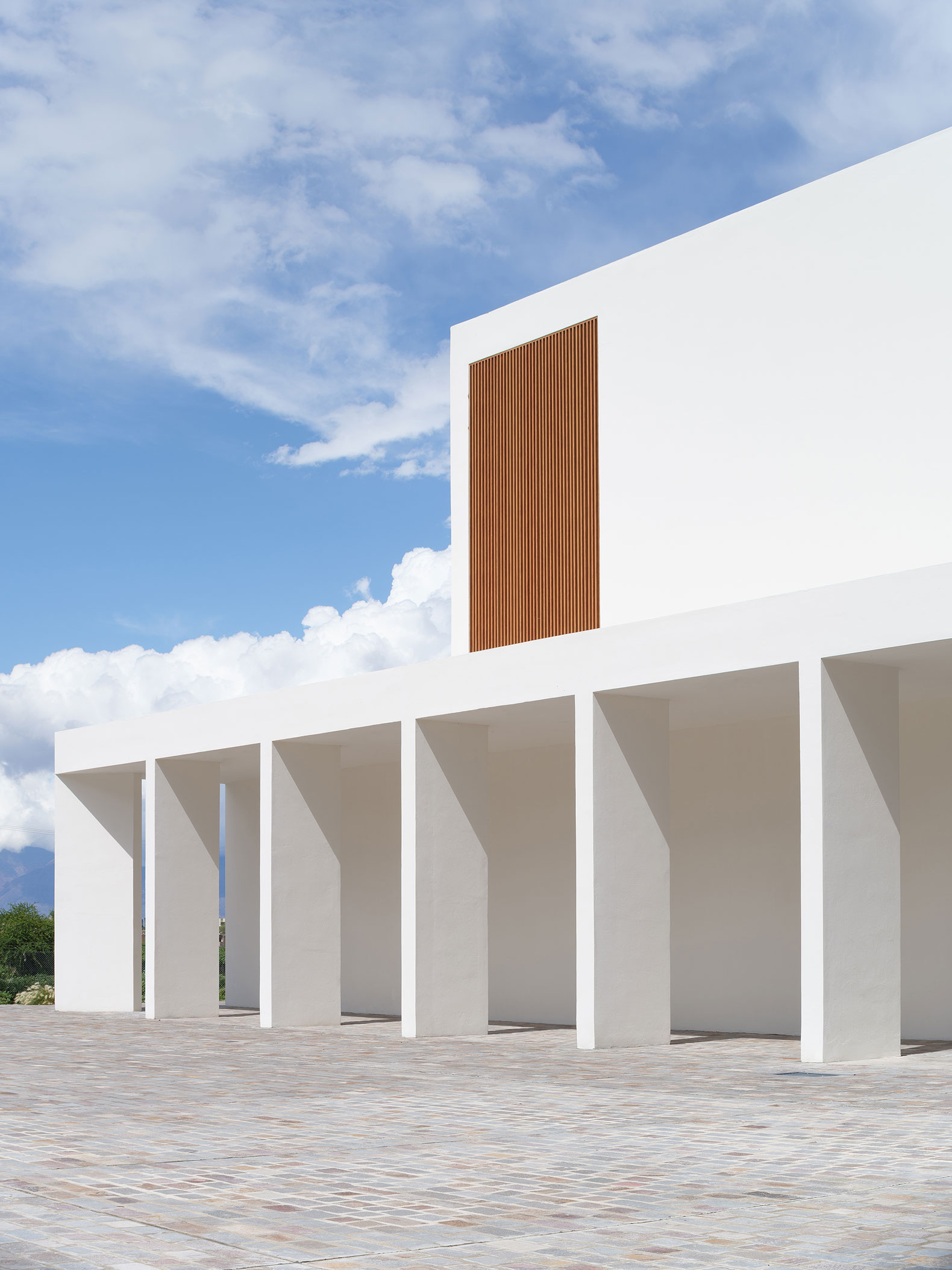
The Cafayate Convention Center is an efficient building in economic, environmental, and functional terms. This is achieved through aspects such as the use of wide walls and small openings, achieving maximum thermal comfort. The layout of the spaces and volumes allows for cross ventilation, while the galleries and sunshade system regulate the entry of light and sunlight.
Cafayate Convention Centre by Ignacio Carón, Fabio Estremera, Andres Francesconi, Ezequiel Spinelli. Photography by Javier Agustin RojasCafayate Convention Centre by Ignacio Carón, Fabio Estremera, Andres Francesconi, Ezequiel Spinelli. Photography by Javier Agustin Rojas.

Project description by Ignacio Carón, Fabio Estremera, Andres Francesconi, Ezequiel Spinelli

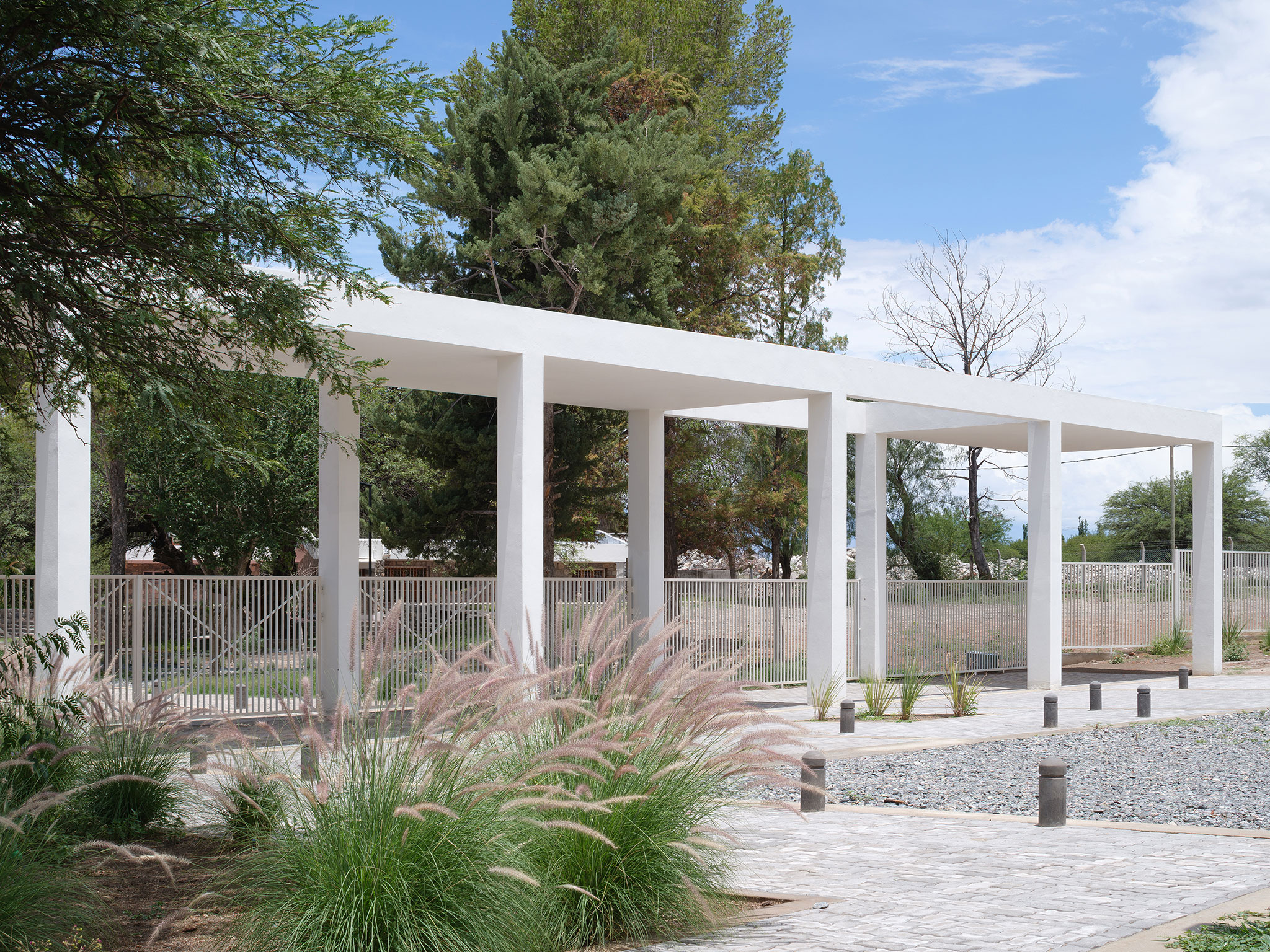
The project is proposed as a connector for the future Coastal Promenade over the Loro Huasi River, linking it to the city center through a public square on National Route No. 40, which also serves as the access vestibule to the Convention Center.

On a broader scale, the intervention is articulated through an East-West axis (pedestrian and vehicular), which takes up the entire site and serves as a connector for the different internal and external functions. In this sense, the project aims for a functional unity composed of various elements that interact with each other.

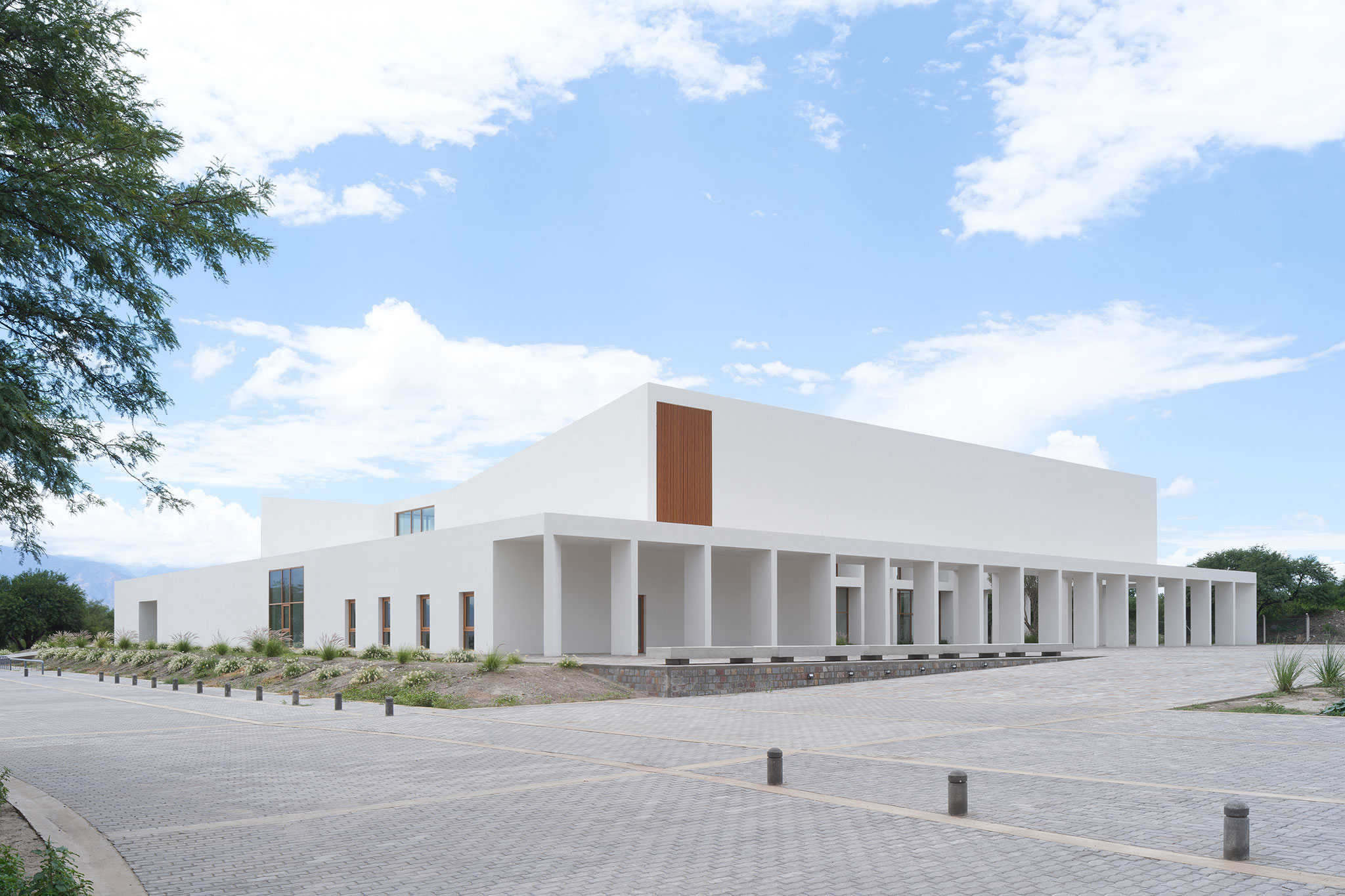
The Convention Center is designed as an efficient building, both economically (construction and maintenance costs), environmentally (carbon footprint, energy performance), and functionally (spacious areas with good lighting, ventilation, and views). For this purpose, a compact, simple, and clear geometric square-based parallelepiped is proposed.

Cafayate Convention Centre by Ignacio Carón, Fabio Estremera, Andres Francesconi, Ezequiel Spinelli. Photography by Javier Agustin Rojas.

The project is conceived as one large, unified space that also contains different areas of similar characteristics. In this sense, the Main Patio, Foyer, Multipurpose Room (SUM), Secondary Patio, and Main Halls form a spatial and functional ensemble of great integration and flexibility, allowing for countless situations both in operation and in spatial characteristics.

Surrounding this large space, on the East and North sides, the support services for its operation (administration, restrooms, changing rooms, kitchen, and storage) are arranged, connected to each other and to the different served areas through a precise and clear technical circulation system.
Cafayate Convention Centre by Ignacio Carón, Fabio Estremera, Andres Francesconi, Ezequiel Spinelli. Photography by Javier Agustin Rojas.

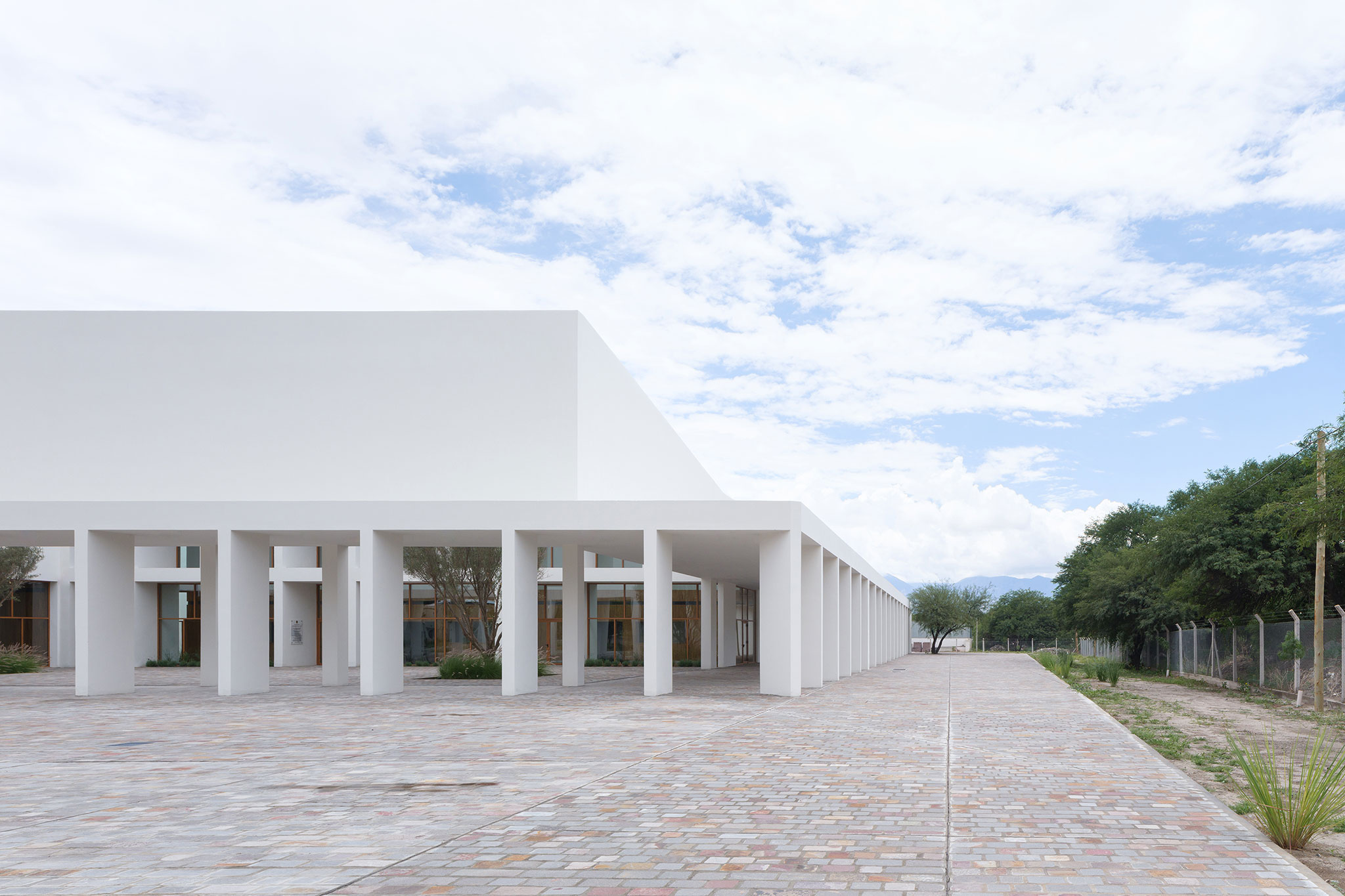
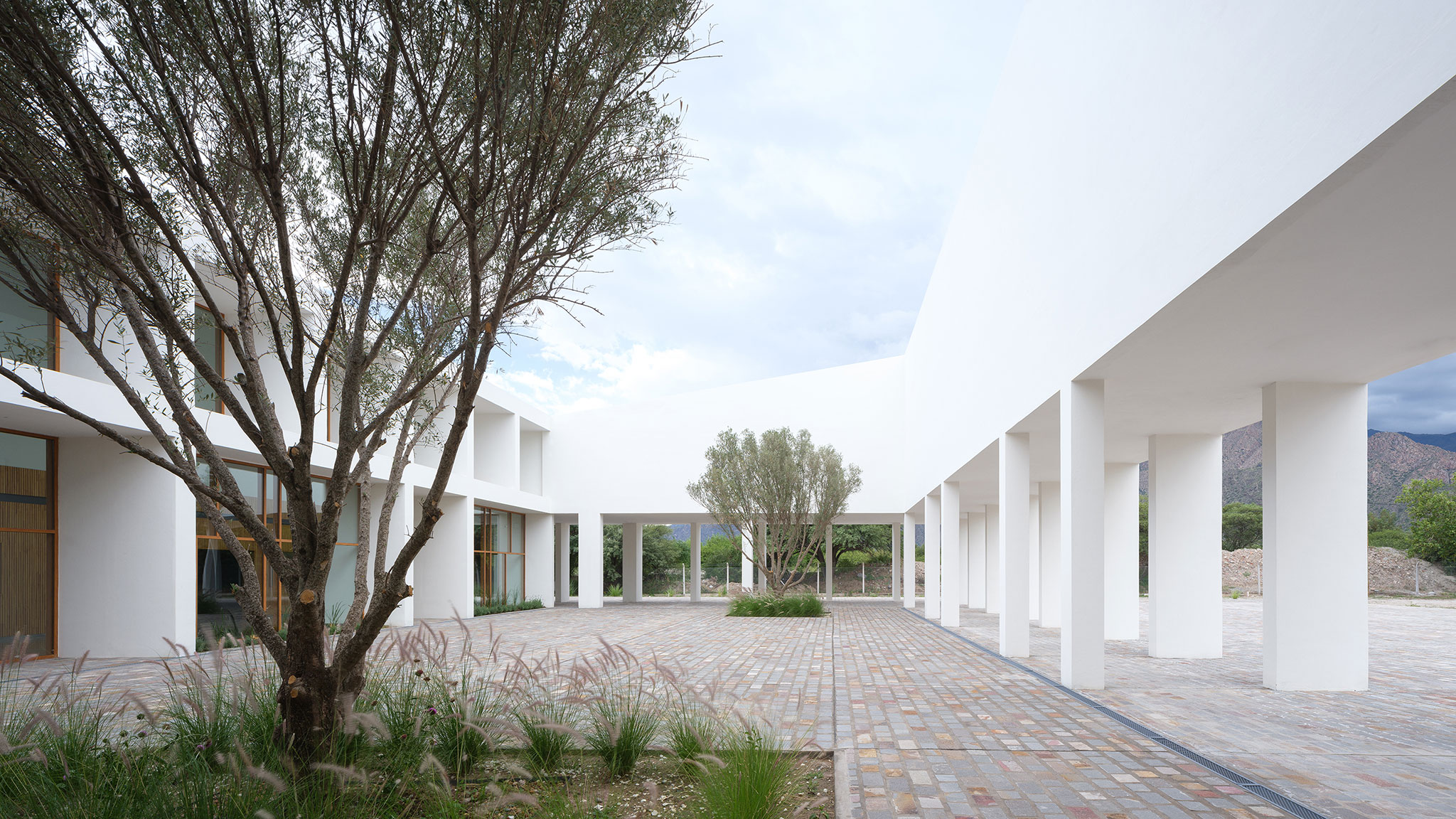
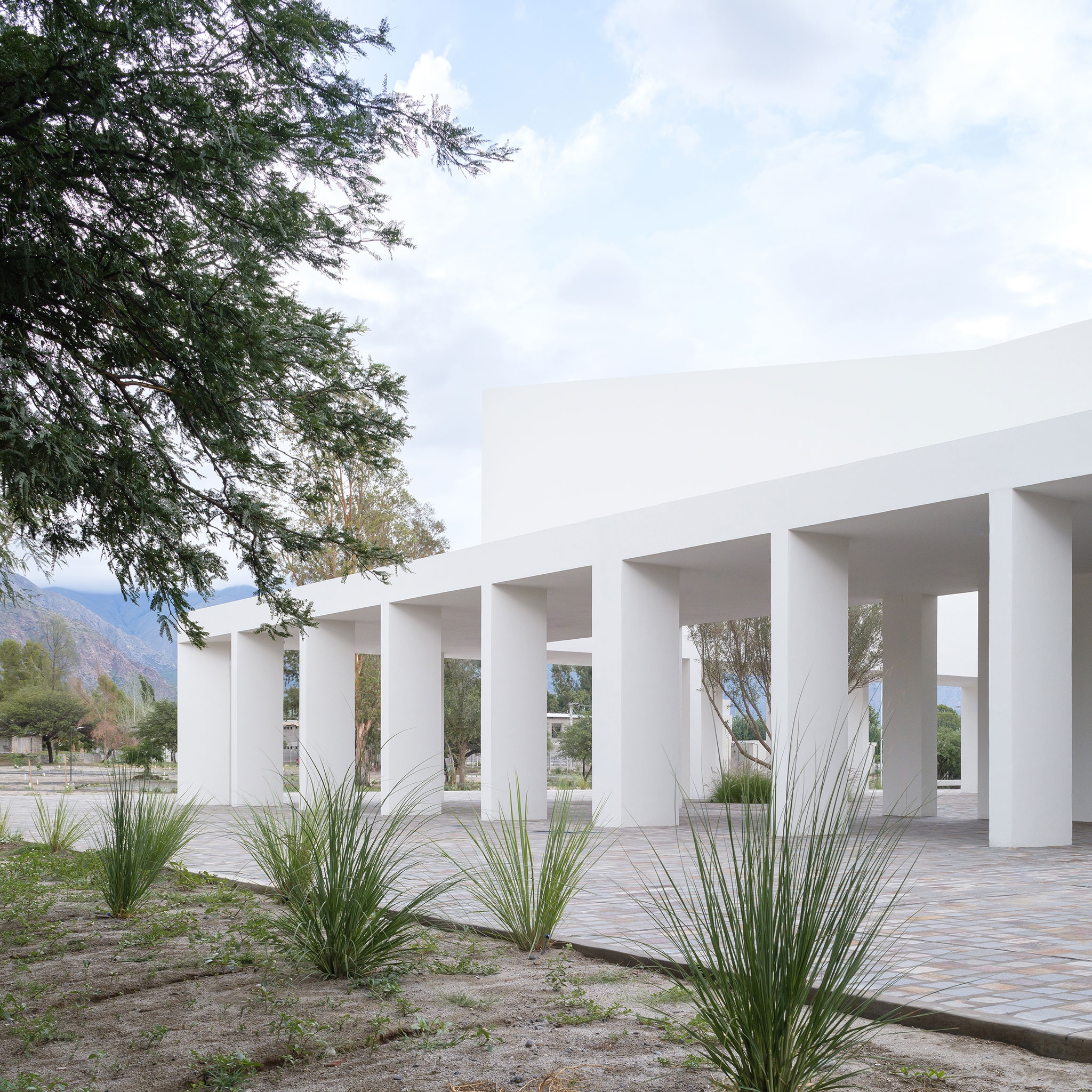
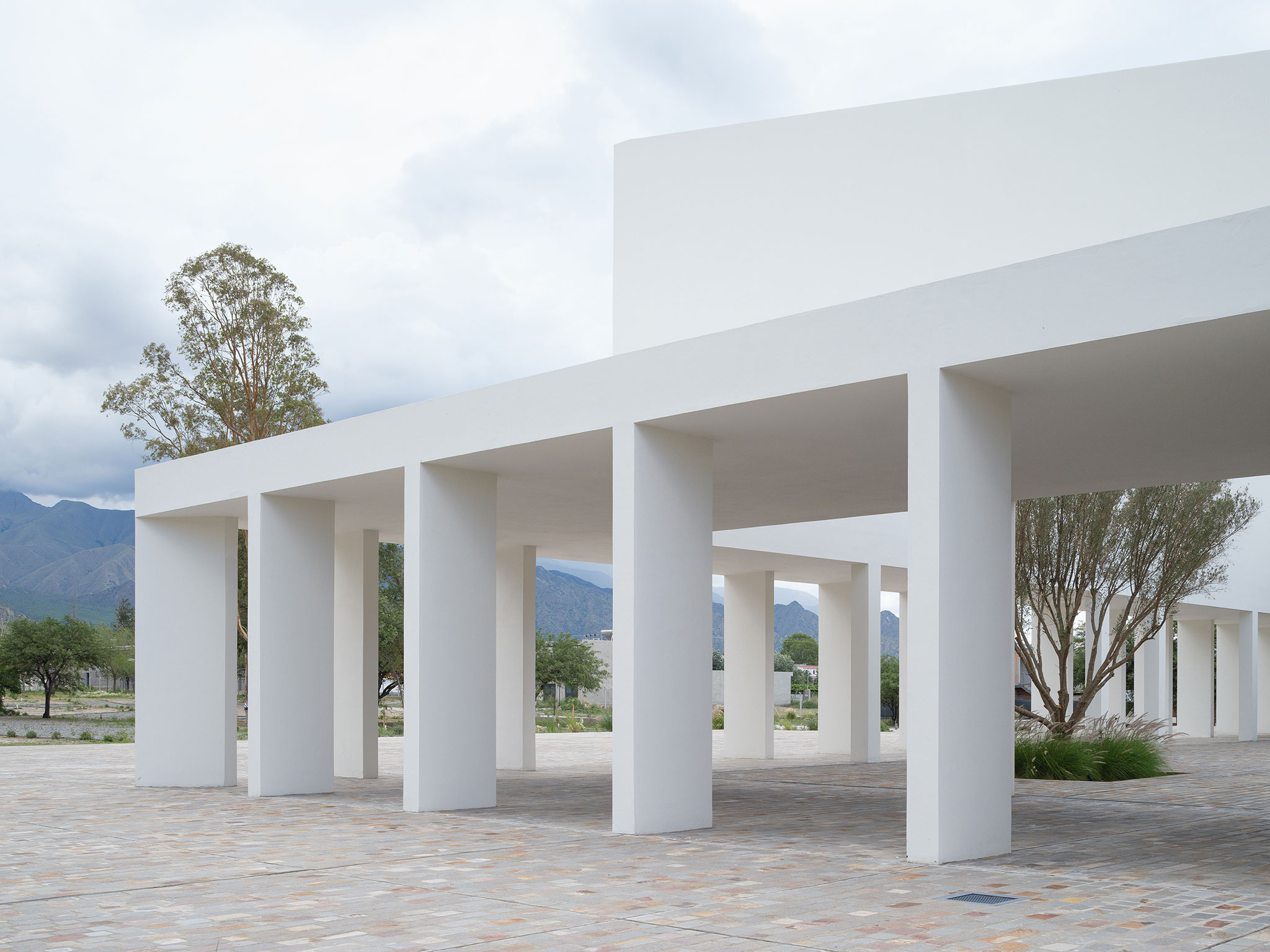
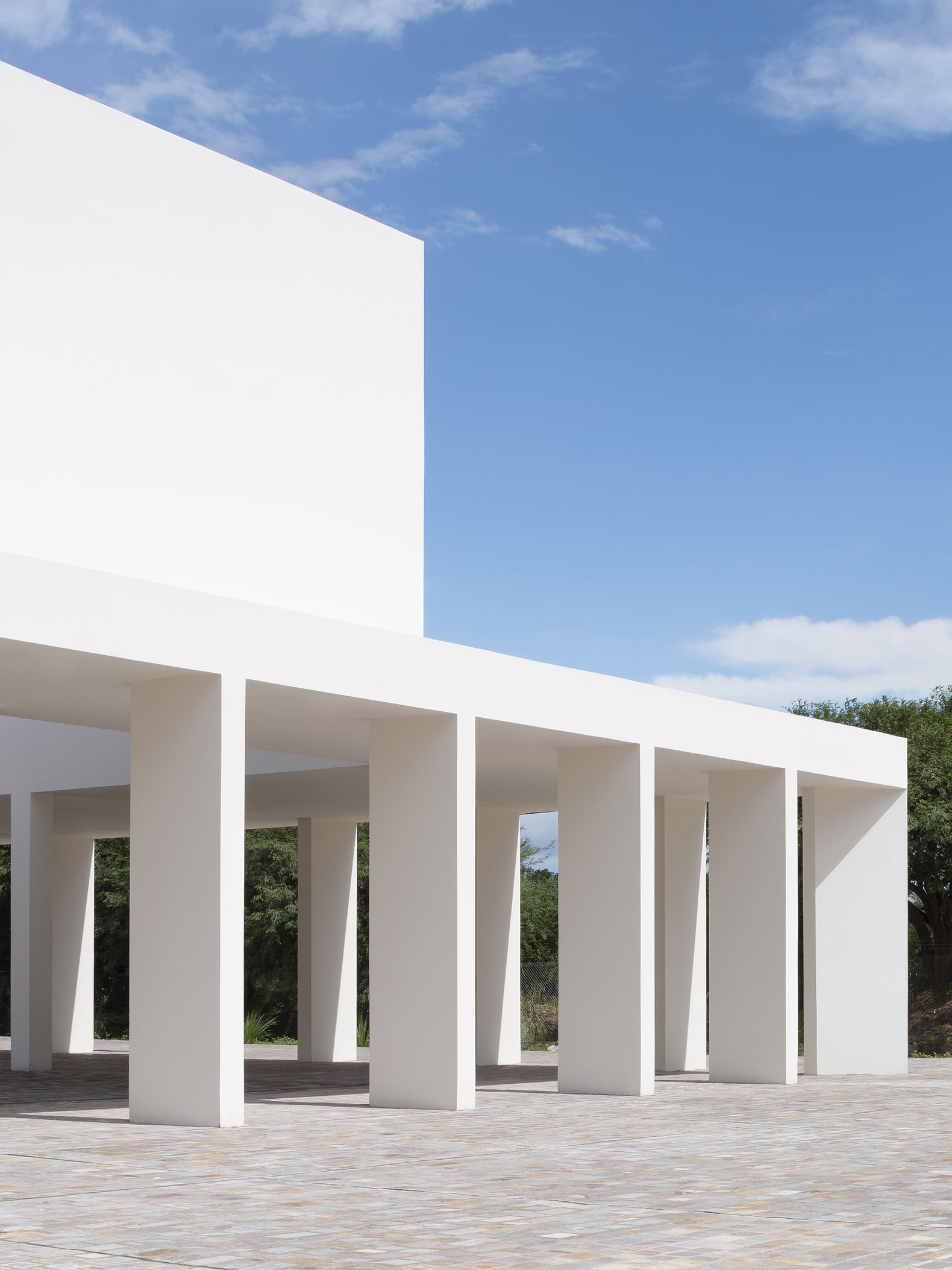
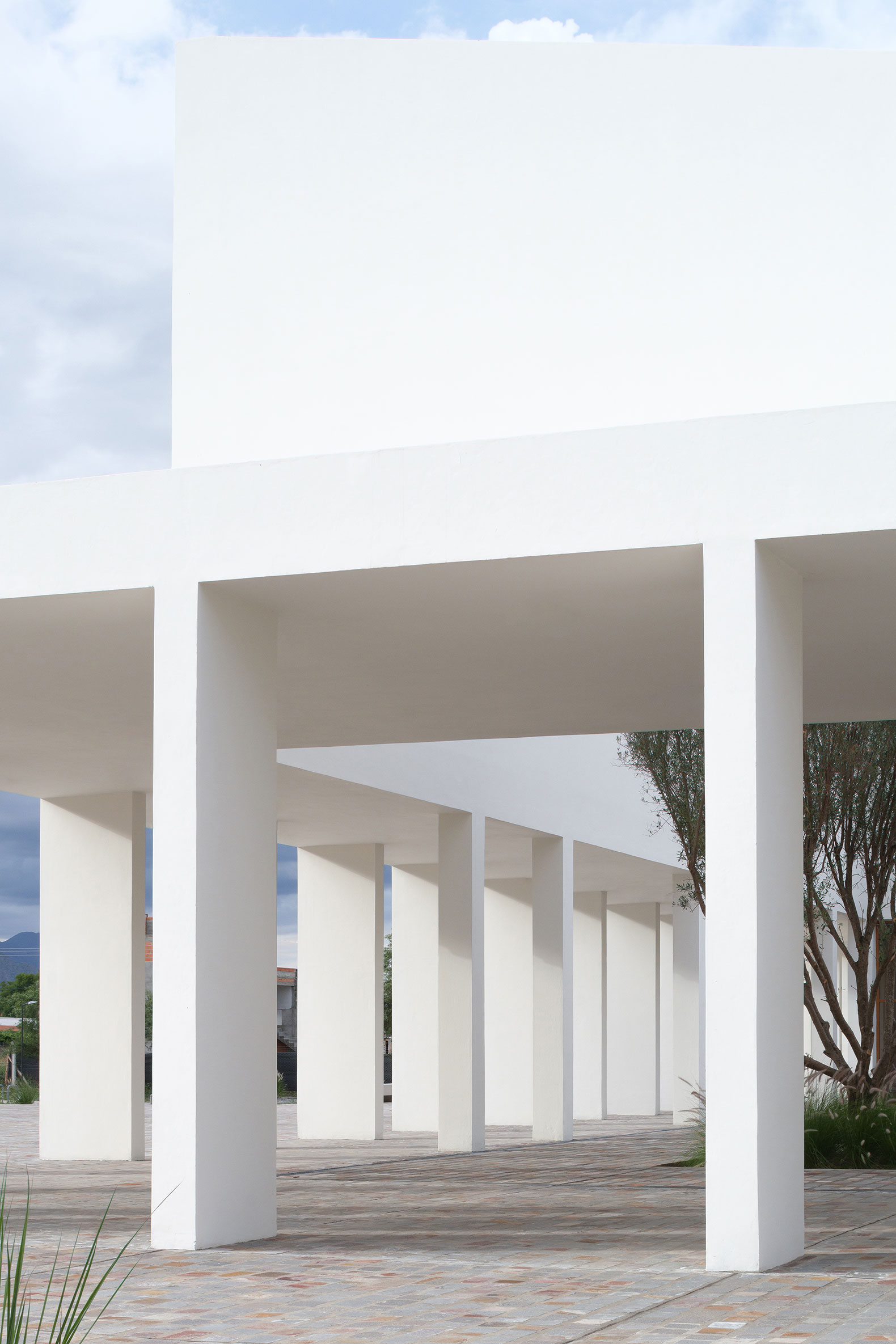
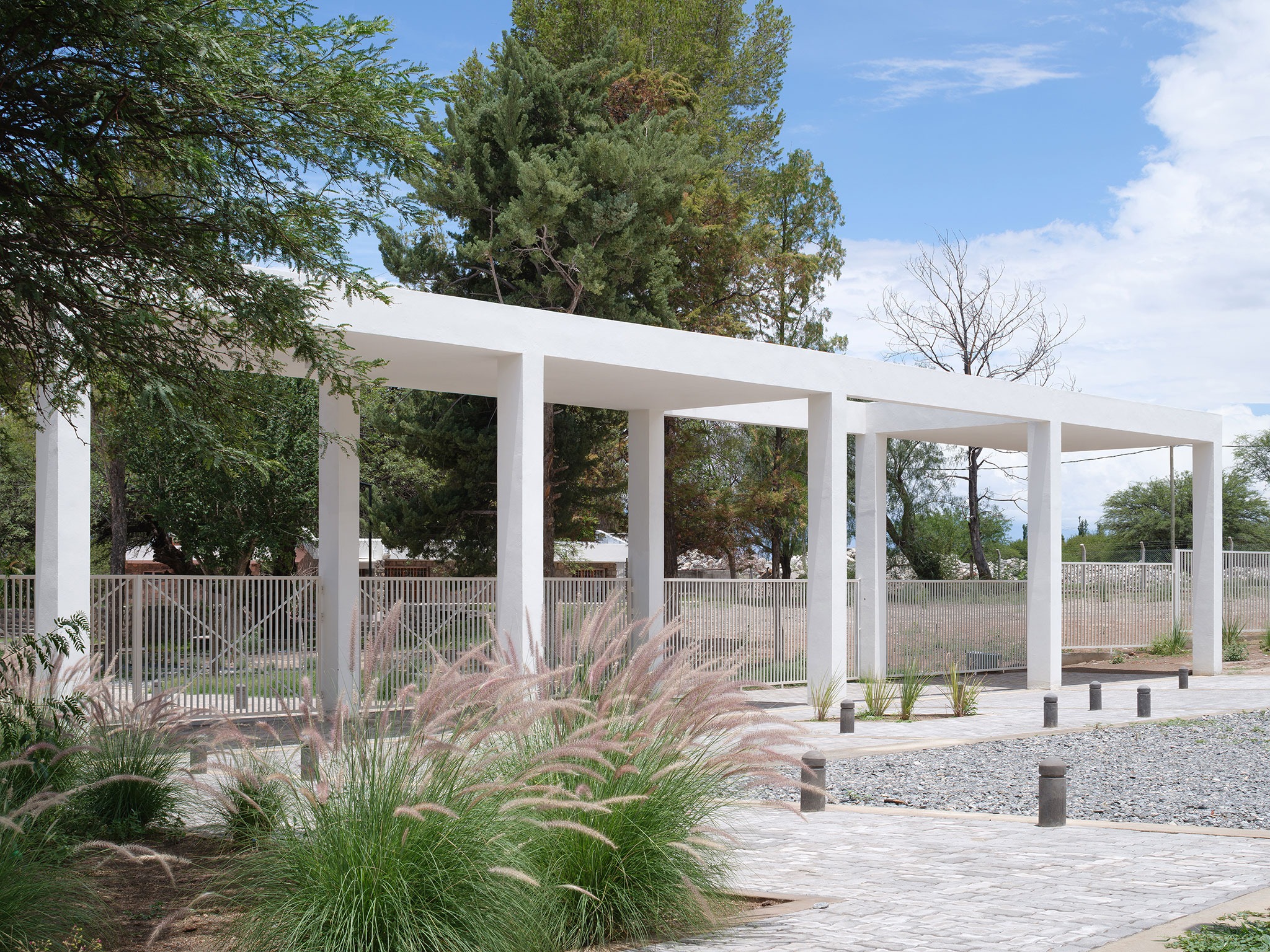
The building draws on two characteristic elements of traditional regional architecture: the courtyard and the gallery, reinterpreting them as active components of the proposal.

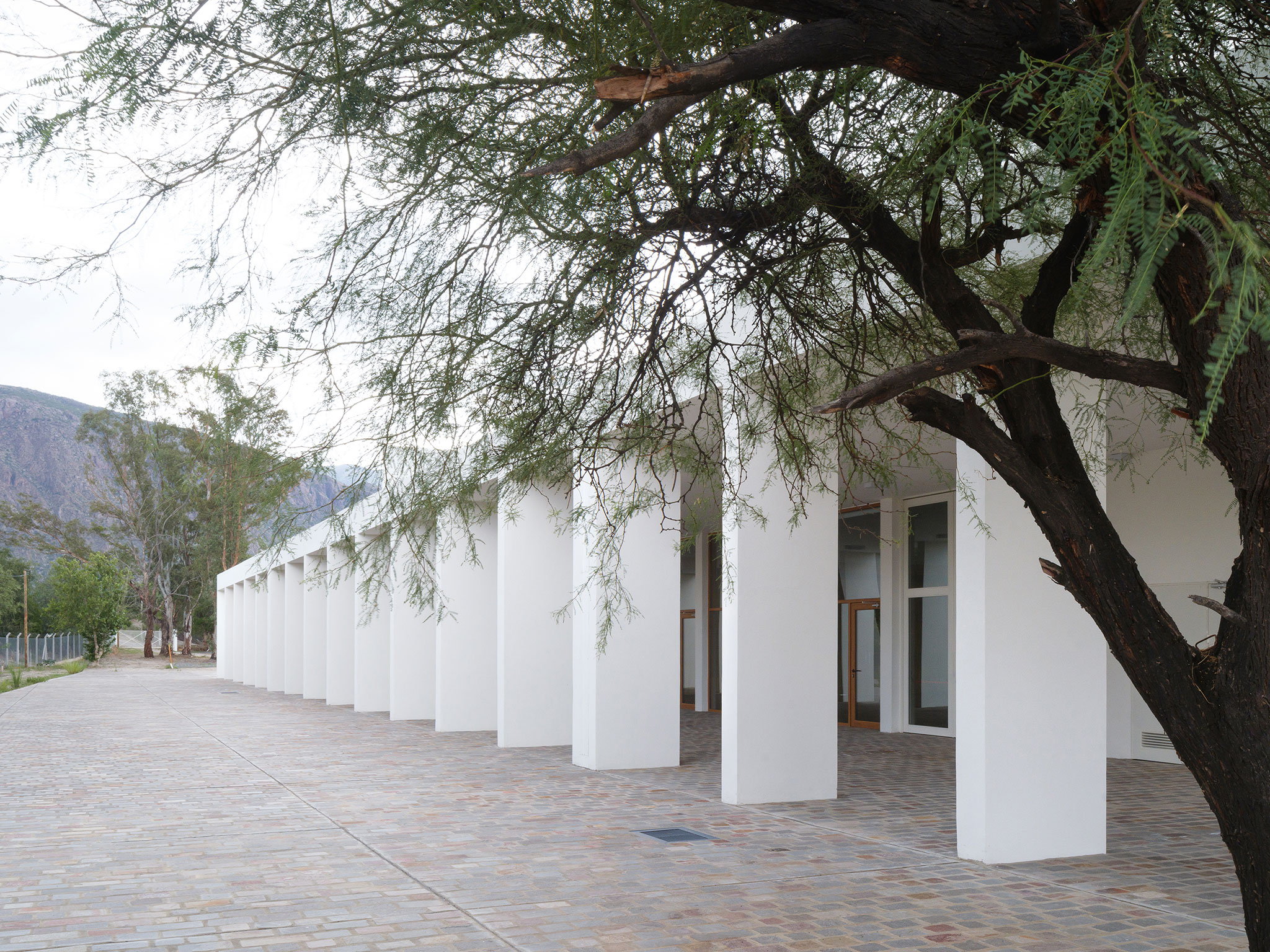
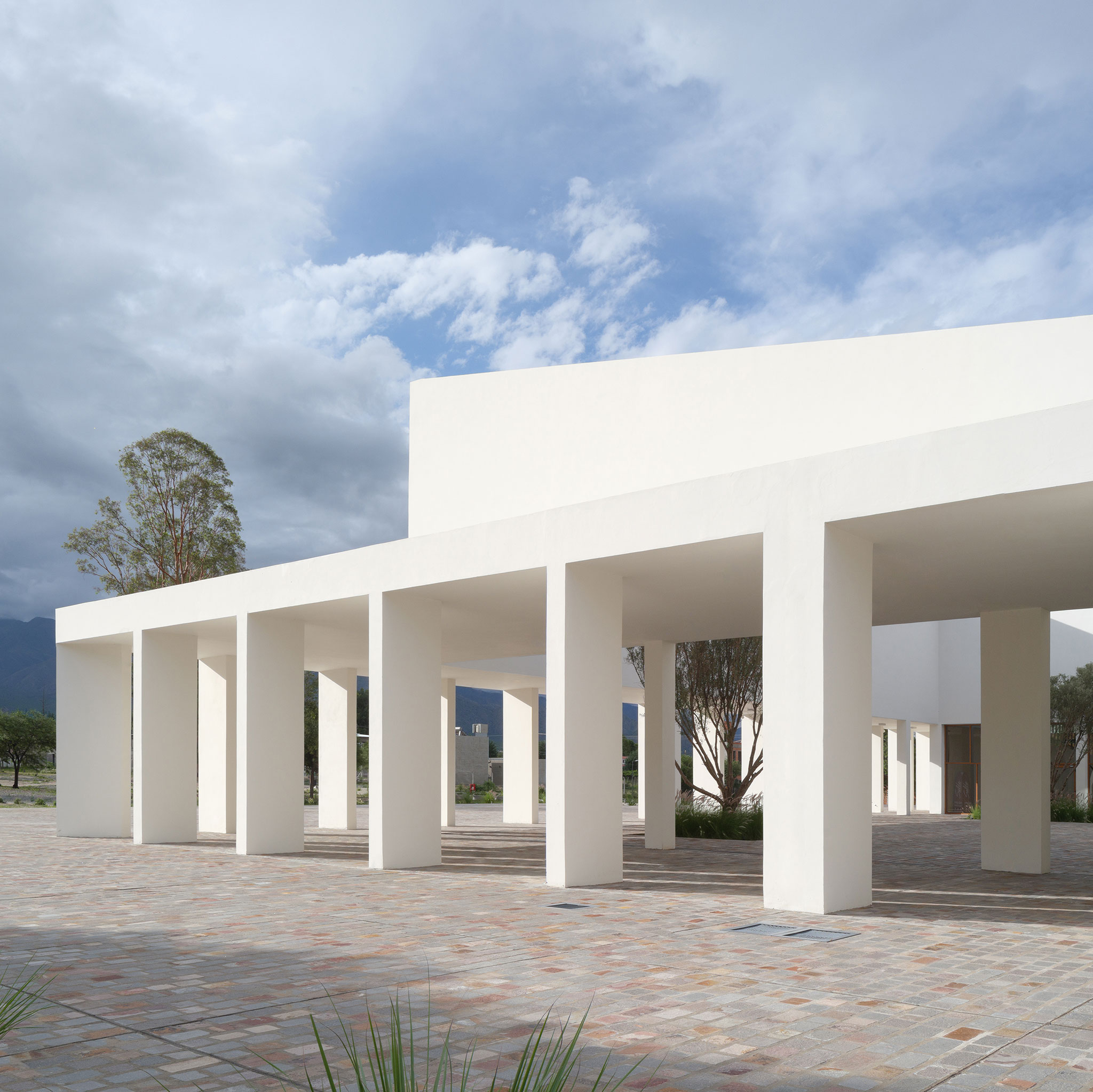
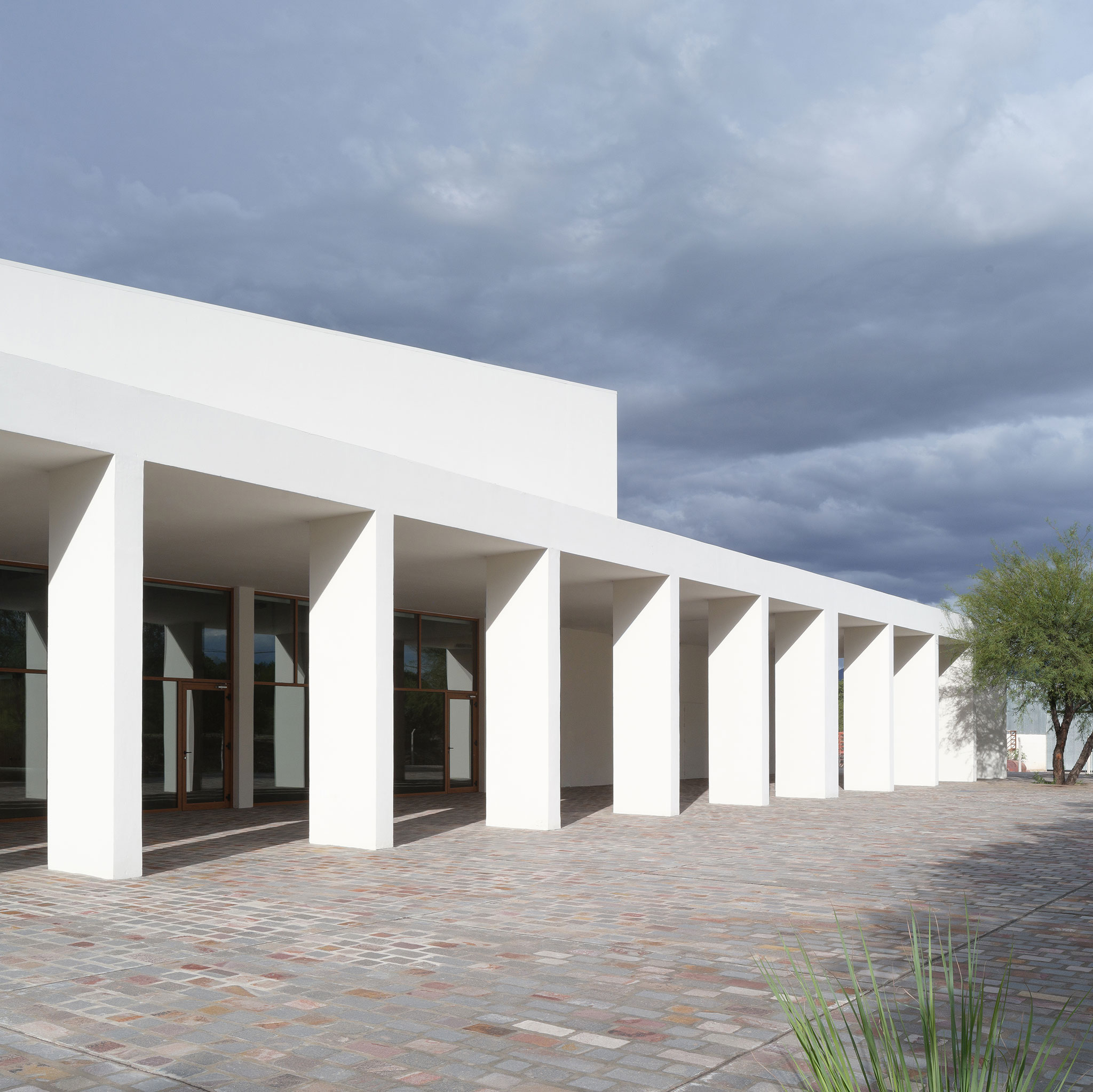
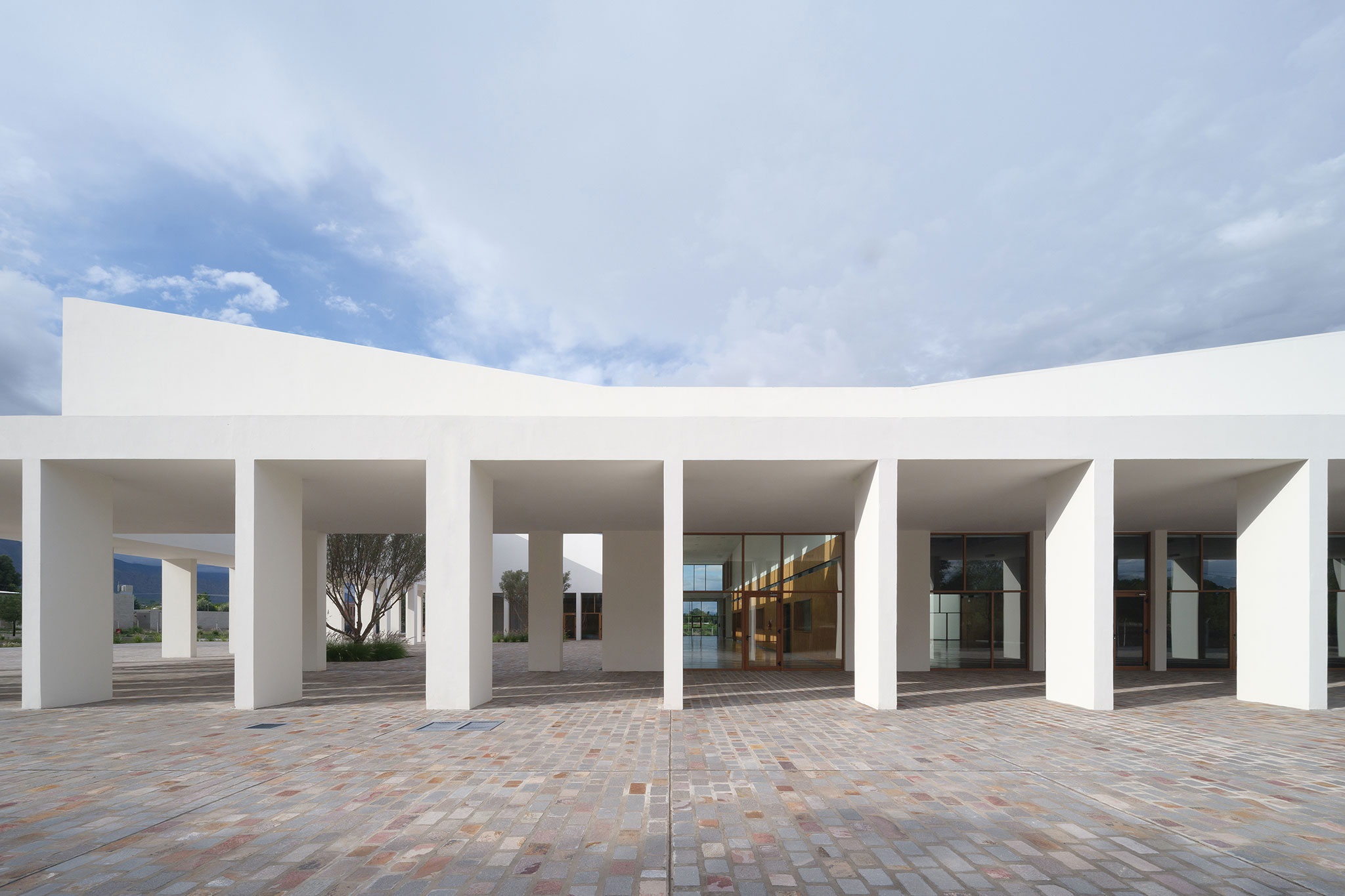
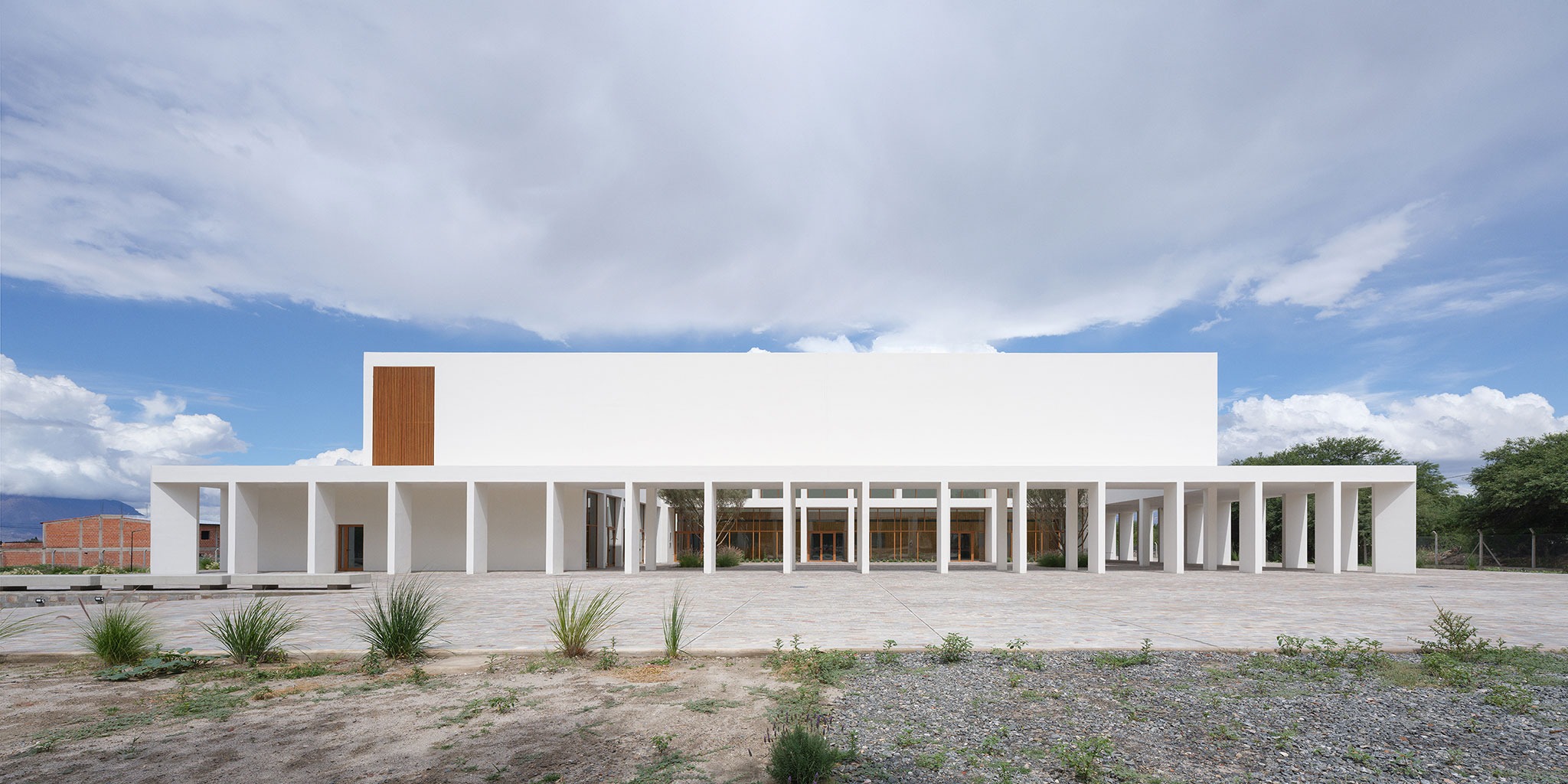
In this scheme, the Main Patio is designed as an open-air hall, providing access to the Foyer and also acting as an overflow area for the Multipurpose Room. Meanwhile, the gallery on the South and West edges of the building is rethought not only as a circulation space but also as a flexible area capable of accommodating various functions and integrating spatially and functionally with the building, while framing and containing the landscape.
Cafayate Convention Centre by Ignacio Carón, Fabio Estremera, Andres Francesconi, Ezequiel Spinelli. Photography by Javier Agustin Rojas.

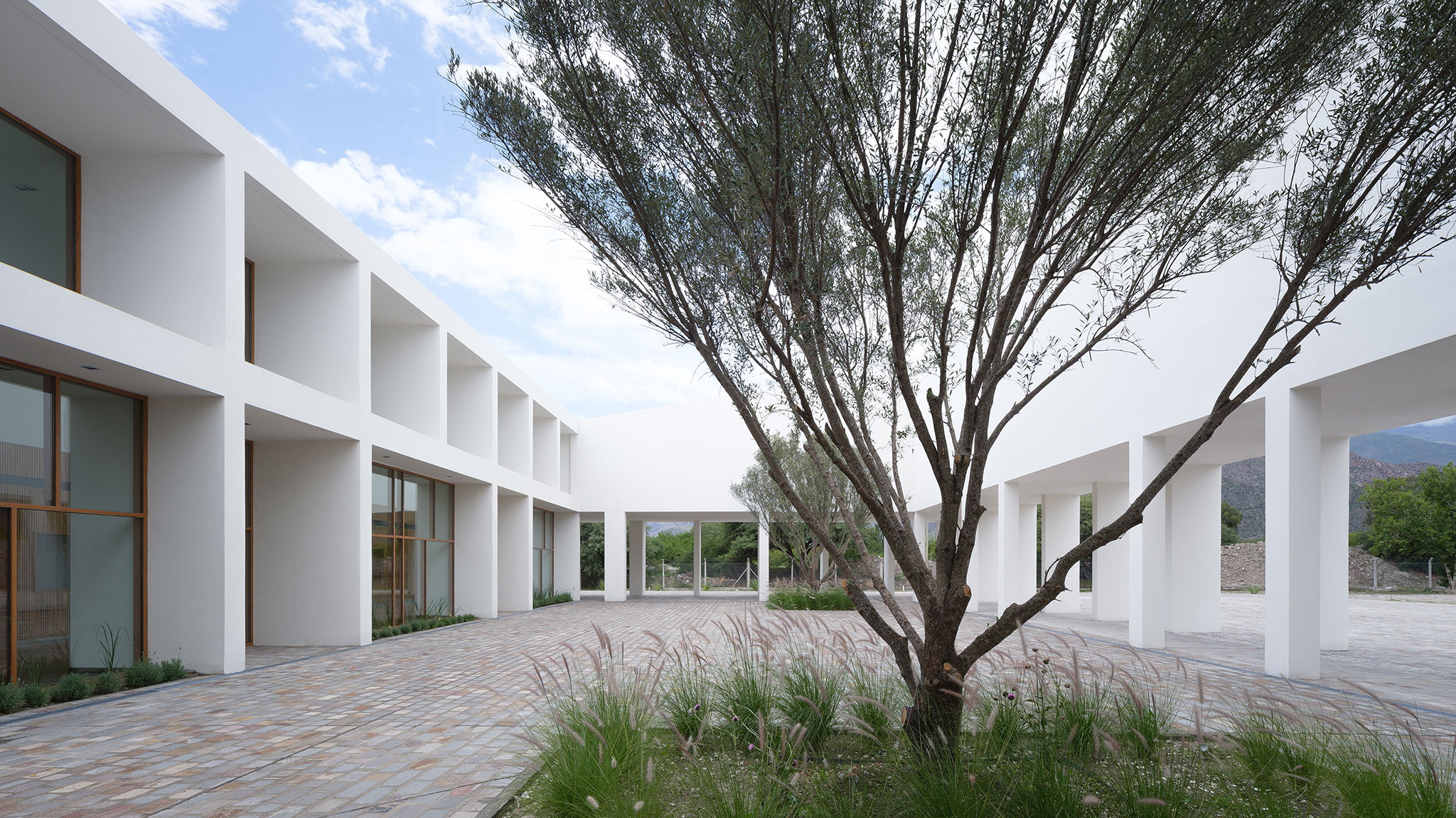
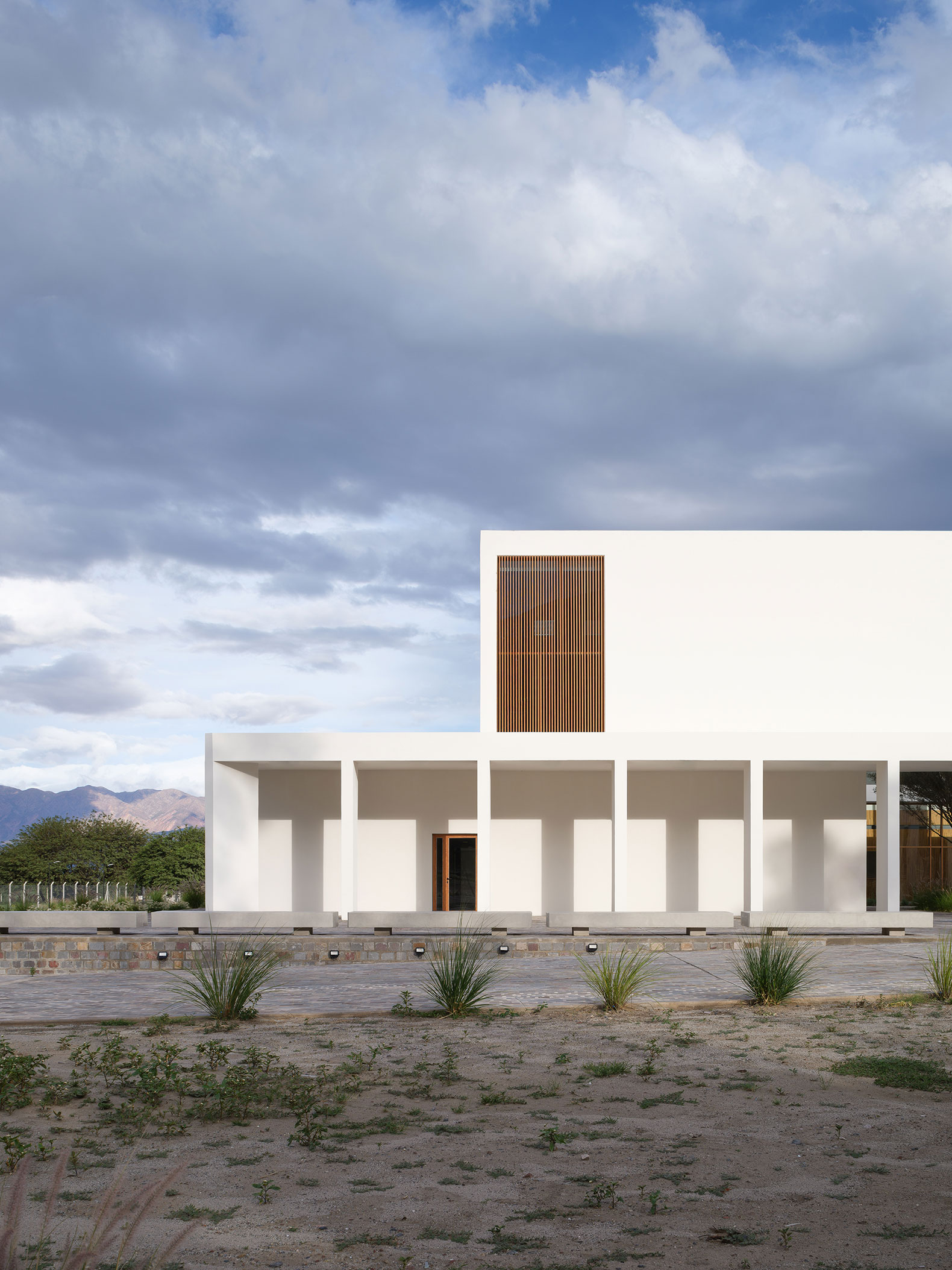
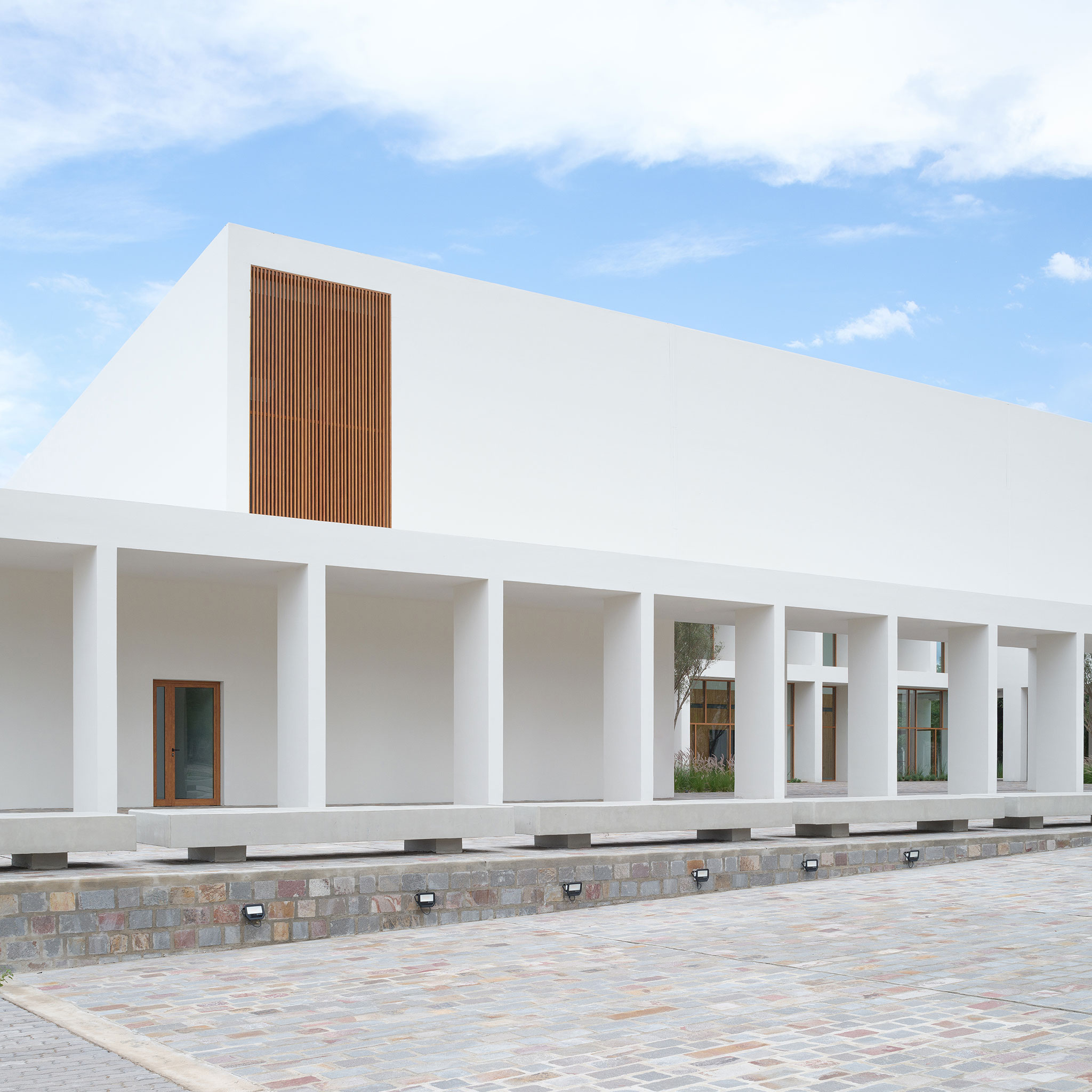
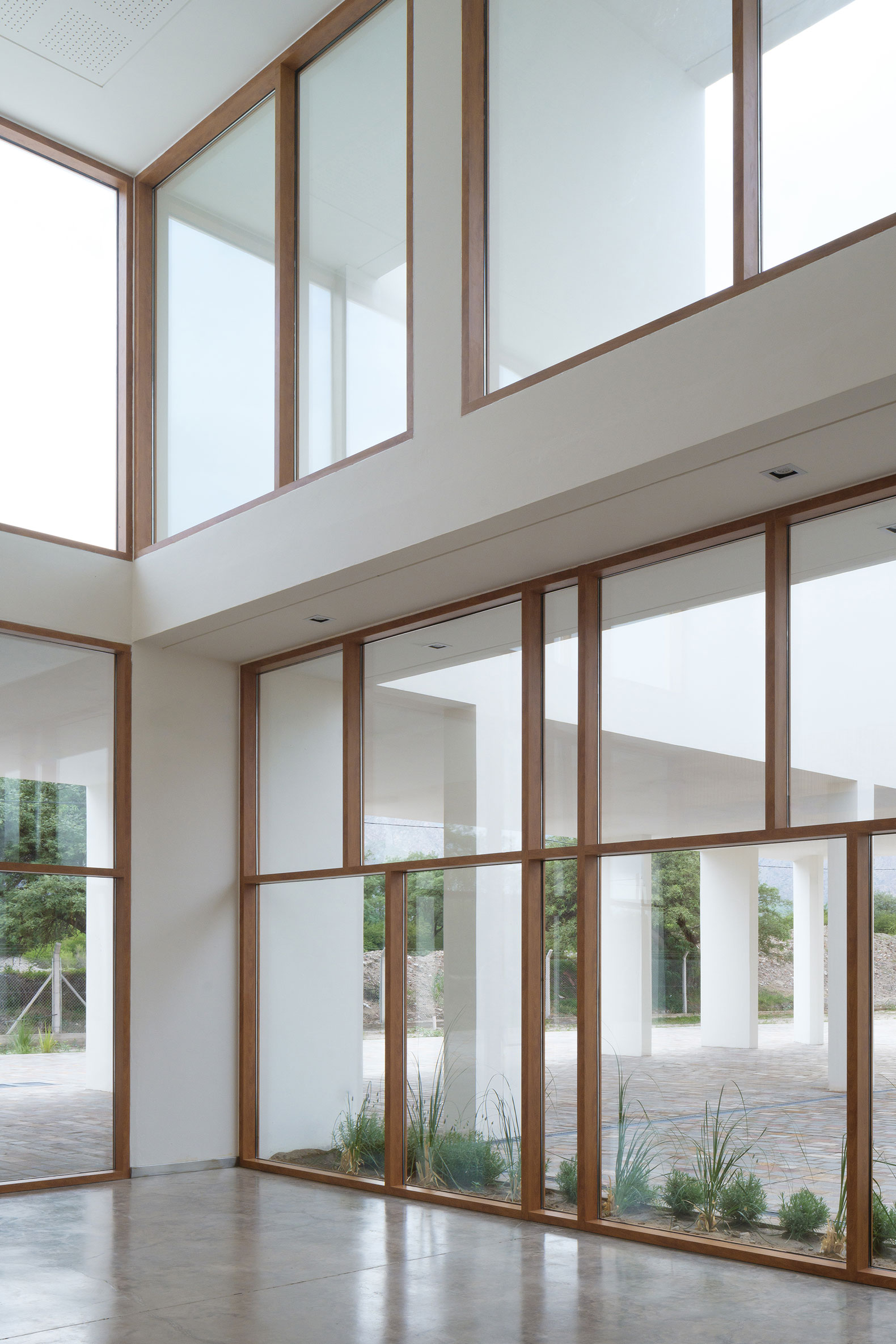
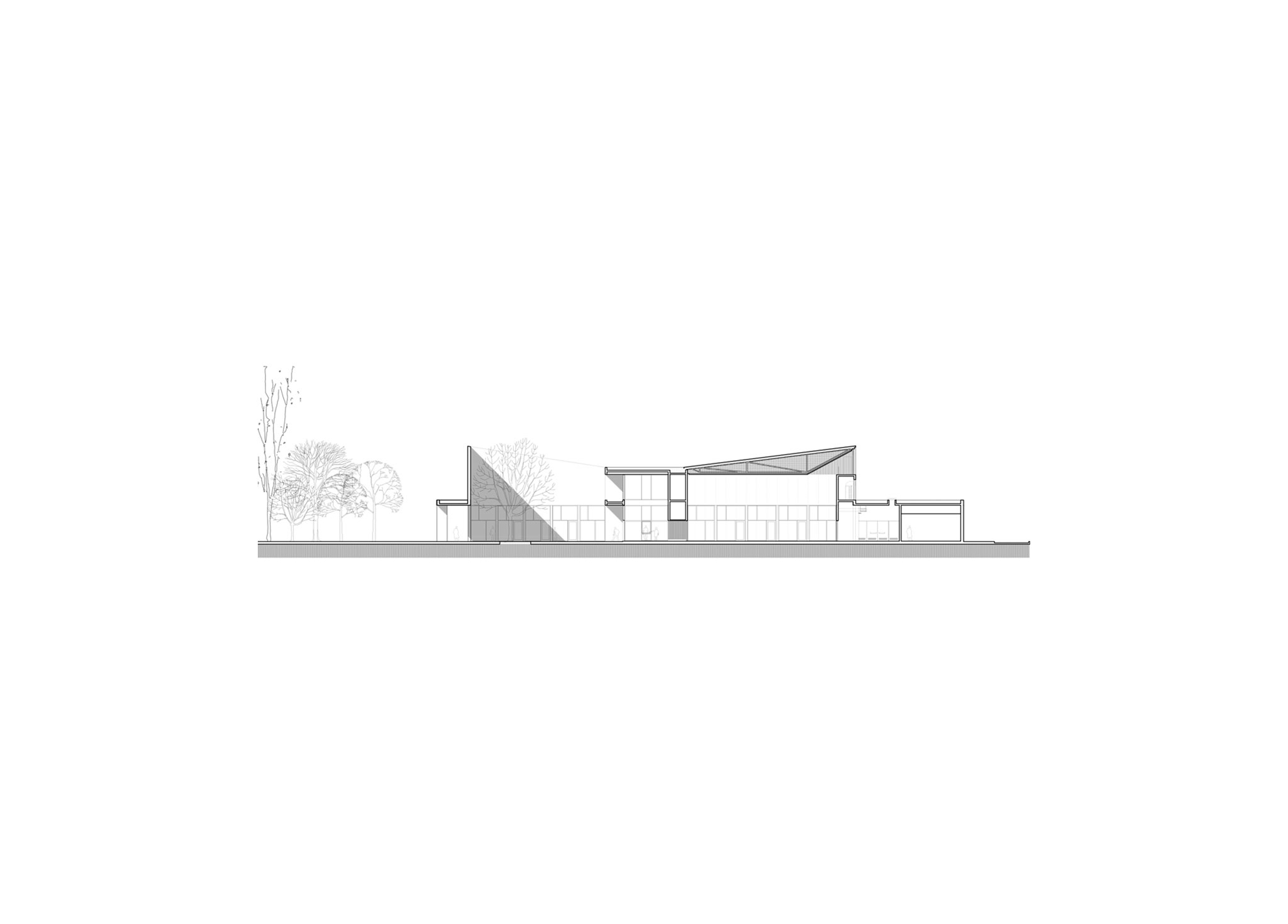
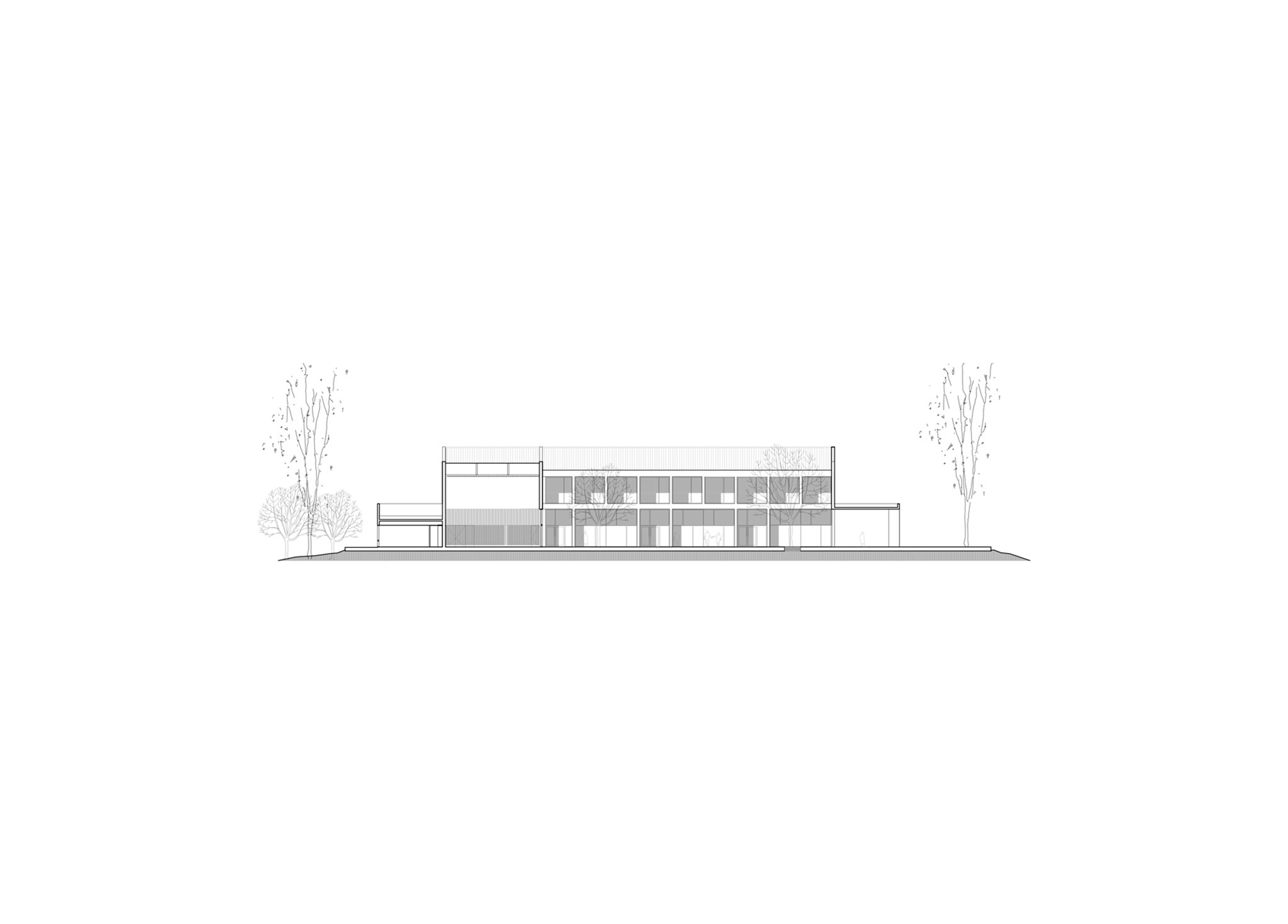
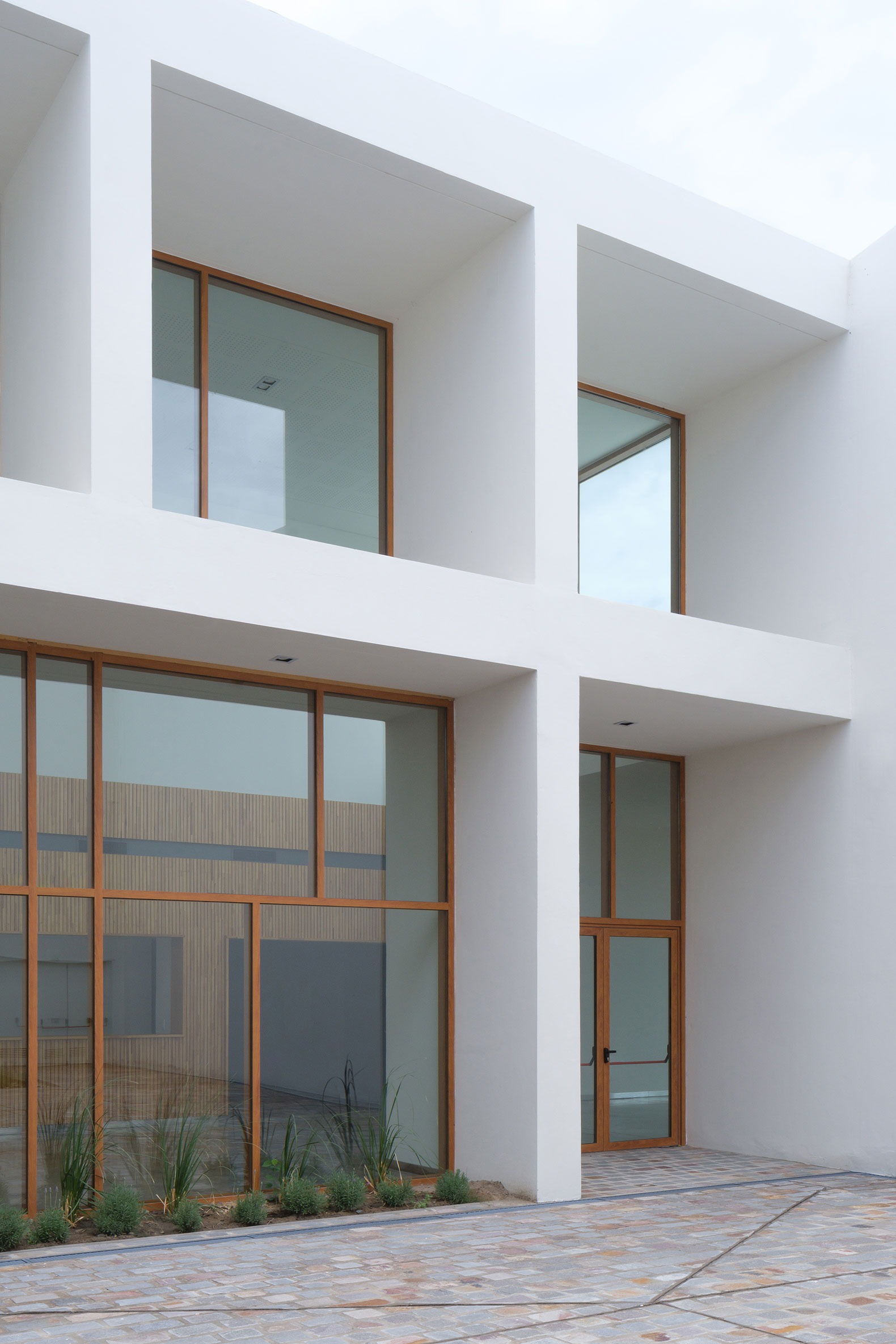
As in the architecture of Argentina's northwest, the project seeks to achieve optimal thermal comfort through the design of solid volumes, thick walls, and narrow openings to the exterior, while having larger openings toward the interior courtyard.

Simultaneously, the arrangement and continuity of the courtyards and volumes allow for cross-ventilation of the spaces they serve, acting as a means of passive thermal conditioning.

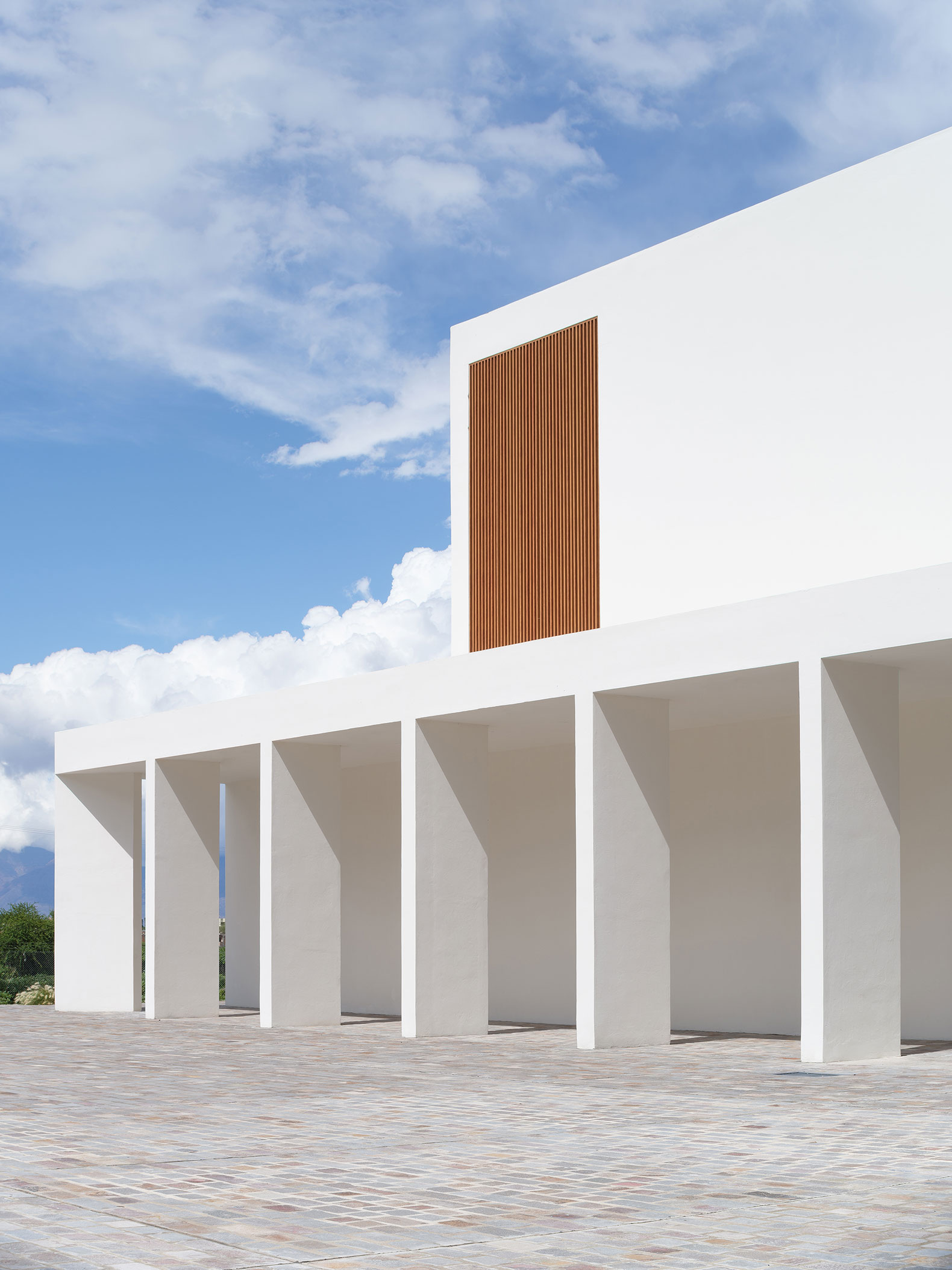
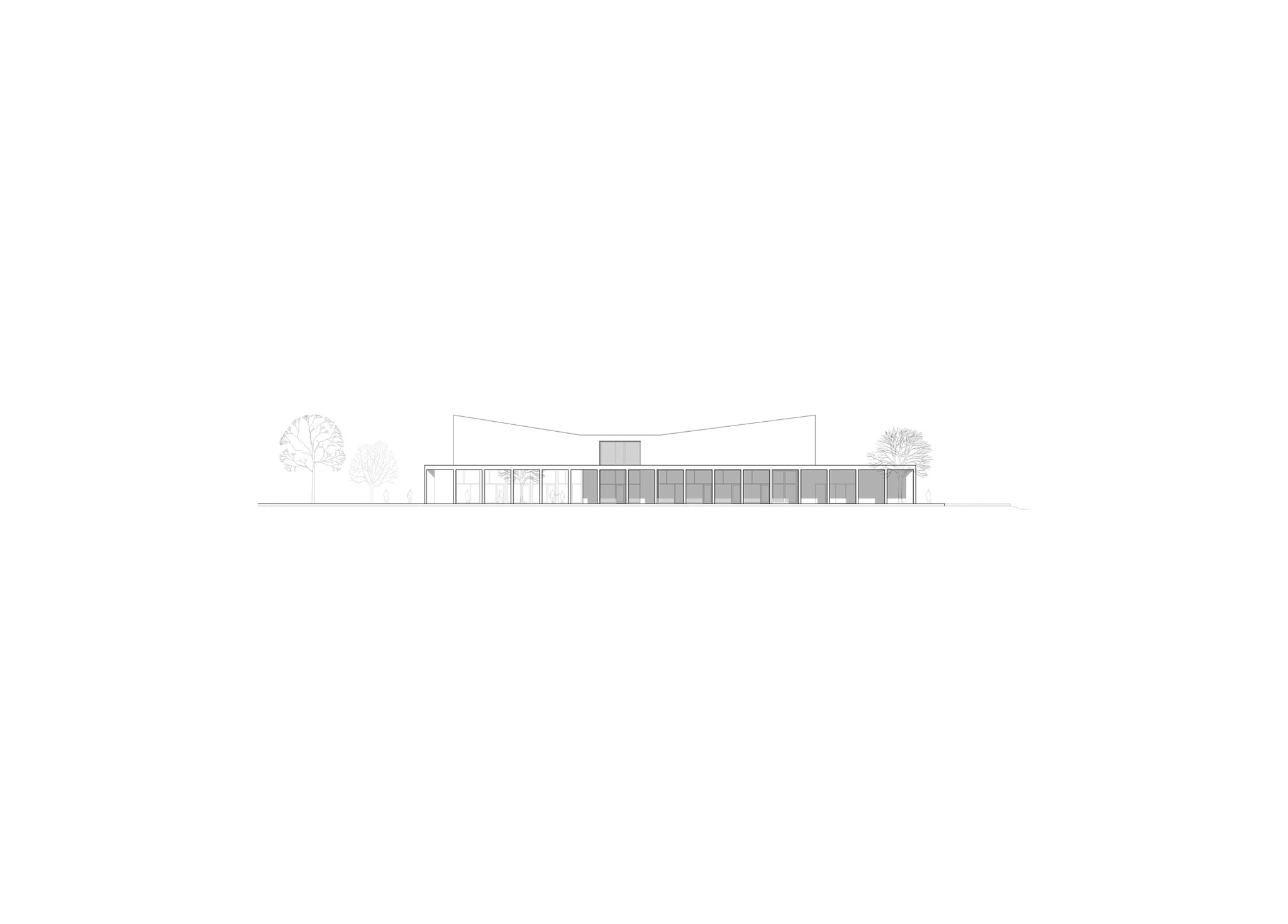
The galleries and the sunshade system in the windowed areas function as elements that regulate light and sun exposure.
Cafayate Convention Centre by Ignacio Carón, Fabio Estremera, Andres Francesconi, Ezequiel Spinelli. Photography by Javier Agustin Rojas.

The image of the building arises from the compositional relationship between the solid volumes and the galleries, seeking simplicity and visual clarity, in accordance with the play of full and empty spaces of the traditional architecture of northwestern Argentina.
More information

+ + copy Created with Sketch.
- + copy Created with Sketch.
Label
Project team
Text

Julian Morales Sorarrain, Soledad Arias, Giovanni Mario Pemintel.

+ + copy Created with Sketch.
- + copy Created with Sketch.
Label
Collaborators
Text

Sanitary installation.- Luis Gaetano, Carlos Díaz.
Electrical installation.- Gustavo López.
Thermo-mechanical installation.- Soraya Rial.
Structure.- Héctor Casado.
Lighting.- Josefina Almada (Erco).
Carpentry.- Santiago Herrera Gallo.

+ + copy Created with Sketch.
- + copy Created with Sketch.
Label
Client
Text

Gobierno de la Provincia de Salta / BID.

+ + copy Created with Sketch.
- + copy Created with Sketch.
Label
Builder
Text

Daniel Madeo Construcciones.

+ + copy Created with Sketch.
- + copy Created with Sketch.
Label
Area
Text

2,780.00 sqm.

+ + copy Created with Sketch.
- + copy Created with Sketch.
Label
Dates
Text

Executive project.- 2022.
Construction.- 2023-2024.

+ + copy Created with Sketch.
- + copy Created with Sketch.
Label
Location
Text

National Route N°40 - Cafayate - Salta - Argentina.
+ + copy Created with Sketch.
- + copy Created with Sketch.
Label
Photography
+ + copy Created with Sketch.
- + copy Created with Sketch.

CCFGM is a team made up of Ignacio Carón, Santiago Castorina, Andres Francesconi, Humberto Guel and Marco Macrelli that began in 2005 and is focused on the development of architecture and urban planning projects.

He has received several awards and recognitions, as well as exhibitions and publications, including the First National Architecture Prize of the National Fund for the Arts for the work Parque El Socorro, the CICA Prize for Argentine Architecture awarded at the XVII International Biennial of Architecture of Buenos Aires and the prizes awarded by the Central Society of Architects (SCA) and the Argentine Federation of Architecture Entities (FADEA) for the works of the Multipurpose Hall of the Municipal Spa and the Bus Terminal in Cafayate.

Likewise, the work developed has had the opportunity to represent Argentina in different events such as the IX Ibero-American Biennial of Architecture and Urbanism, in 2014, and in the 16th International Architecture Exhibition of the Venice Biennale in 2018, as part of the selection of works that the Chancellery of the Nation sent for exhibition in the Argentine Pavilion.

Read more

Estudio DE Arquitectura was founded by Fabio Estremera and Juliana Deschamps in 2000 in the city of La Plata, Province of Buenos Aires. Both graduated from the Faculty of Architecture and Urban Planning at the National University of La Plata. The office develops a professional practice intertwined with teaching and competition production. This interaction results in the synergy necessary for a reflective and constantly revised practice, leading to a diverse output in terms of themes, scales, and contexts; and collaboration with other studios and professions.
The office positions the project as the preliminary stage that gives way to architecture, thus establishing the concrete and immanent aspects of the program theme, the user, and the site as categories. From there, the design process unfolds, understood as a critically based theoretical reflection, where the final expression concludes when the interaction of space, construction, and form finds its synthesis and visual eloquence. It opens the way to an architecture whose discourse is the potential to be inhabited and reinterpreted by the user over time.

Fabio Estremera was born in Bahía Blanca in 1971. He graduated from the Faculty of Architecture of the National University of La Plata (FAU-UNLP). He was awarded the Joaquín V. González Prize for the highest GPA at the UNLP. He is Head of Practical Work in Architecture, Co-holder of the A.E.O. (Academic Design Update Techniques) and A.C.D.O. (Academic Development and Development) in History of Architecture, all at FAU-UNLP. He is a Full Professor of the Urban Project Workshop in the Architecture Program at the National University of Avellaneda. He is a Master's student in Architectural and Urban Project Management at the Faculty of Architecture and Urban Planning of the National University of La Plata. He has been a member of the Jury and Advisory Board of the College of Architects of the Province of Buenos Aires since 2013 and has been a member of advisory and jury boards in various district, provincial, national, and international competitions. She has participated as a speaker in numerous conferences, debates, and exhibitions.

Juliana Deschamps was born in La Plata in 1975. She graduated from the Faculty of Architecture of the National University of La Plata (FAU-UNLP). She was awarded the Joaquín V. González Prize for the highest GPA at the UNLP. She is a Course Assistant in Architecture and the Chair of Practical Work for Introduction to Materiality at both FAU and UNLP. She is currently pursuing a Specialization in University Teaching at the National University of La Plata. She served on the Jury and Advisory Board of the College of Architects of the Province of Buenos Aires from 2013 to 2016, serving on judging teams in various district and provincial competitions. She has participated as a speaker in numerous conferences, debates, and exhibitions.

Read more

Grupo abierto de arquitectura (GAA) was founded by Ezequiel Spinelli, Mirella Villanueva, and Julian Kelis.

Ezequiel Spinelli graduated in architecture from the National University of La Plata in 2007. He teaches at the Bares Casas Schnack vertical architecture studio at the National University of La Plata. He practices independently in the city of La Plata and surrounding areas, completing private commissions for single-family and multi-family housing, as well as competitions. He has received numerous awards and mentions in national and international competitions, and his work has been published in various print and digital media. In the public sector, he works as an inspector of school infrastructure works for the province of Buenos Aires. He currently lives and works in the city of La Plata (Buenos Aires, Argentina).

Mirella Villanueva graduated in architecture from the National University of La Plata in 2011 and teaches at the Posik-Reynoso Architecture Studio at the National University of La Plata. She practices independently in the city of La Plata and surrounding areas, carrying out private commissions for single-family and multi-family housing, as well as competitions. She has won awards and mentions in various international and national competitions. In the public sector, she is a team coordinator in the technical area of ​​the Housing Institute of the Province of Buenos Aires.

Julian Kelis is an architect who graduated from the National University of La Plata in 2021. He has taught as a co-teaching assistant at the Posik-Reynoso Vertical Architecture Workshop at the National University of La Plata and at the Architectural Project Workshop III at the National University of Avellaneda. She practices independently in the city of La Plata and surrounding areas, carrying out private commissions for single-family and multi-family housing, as well as competitions. She has won awards and mentions in various international and national competitions. In the public sector, she works in the technical area of ​​the Housing Institute of the Province of Buenos Aires.

Read more
Published on: May 30, 2025
Cite:
metalocus, NOELIA YUAN GONZÁLEZ-SIMANCAS, IRENE ÁLAMO MARTÍN, CARLOS GARCÍA BAENA
"Cafayate Convention Center by Ignacio Carón, Fabio Estremera, Andres Francesconi, Ezequiel Spinelli" METALOCUS. Accessed
<https://www.metalocus.es/en/news/cafayate-convention-center-ignacio-caron-fabio-estremera-andres-francesconi-ezequiel-spinelli> ISSN 1139-6415
Loading content ...
Loading content ...
Loading content ...
Loading content ...
Loading content ...
Loading content ...
Loading content ...
Loading content ...
Loading content ...
Loading content ...
Loading content ...
Loading content ...
Loading content ...
Loading content ...
Loading content ...
Loading content ...
Loading content ...
Loading content ...
Loading content ...
Loading content ...
Loading content ...
Loading content ...
Loading content ...
Loading content ...
Loading content ...
Loading content ...
Loading content ...
Loading content ...
Loading content ...
Loading content ...
Loading content ...
Loading content ...
Loading content ...
Loading content ...
Loading content ...
Loading content ...
Loading content ...
Loading content ...
Loading content ...
Loading content ...
Loading content ...
Loading content ...
Loading content ...
Loading content ...
Loading content ...
Loading content ...
Loading content ...
Loading content ...
Loading content ...
Loading content ...
Loading content ...
Loading content ...
Loading content ...
Loading content ...