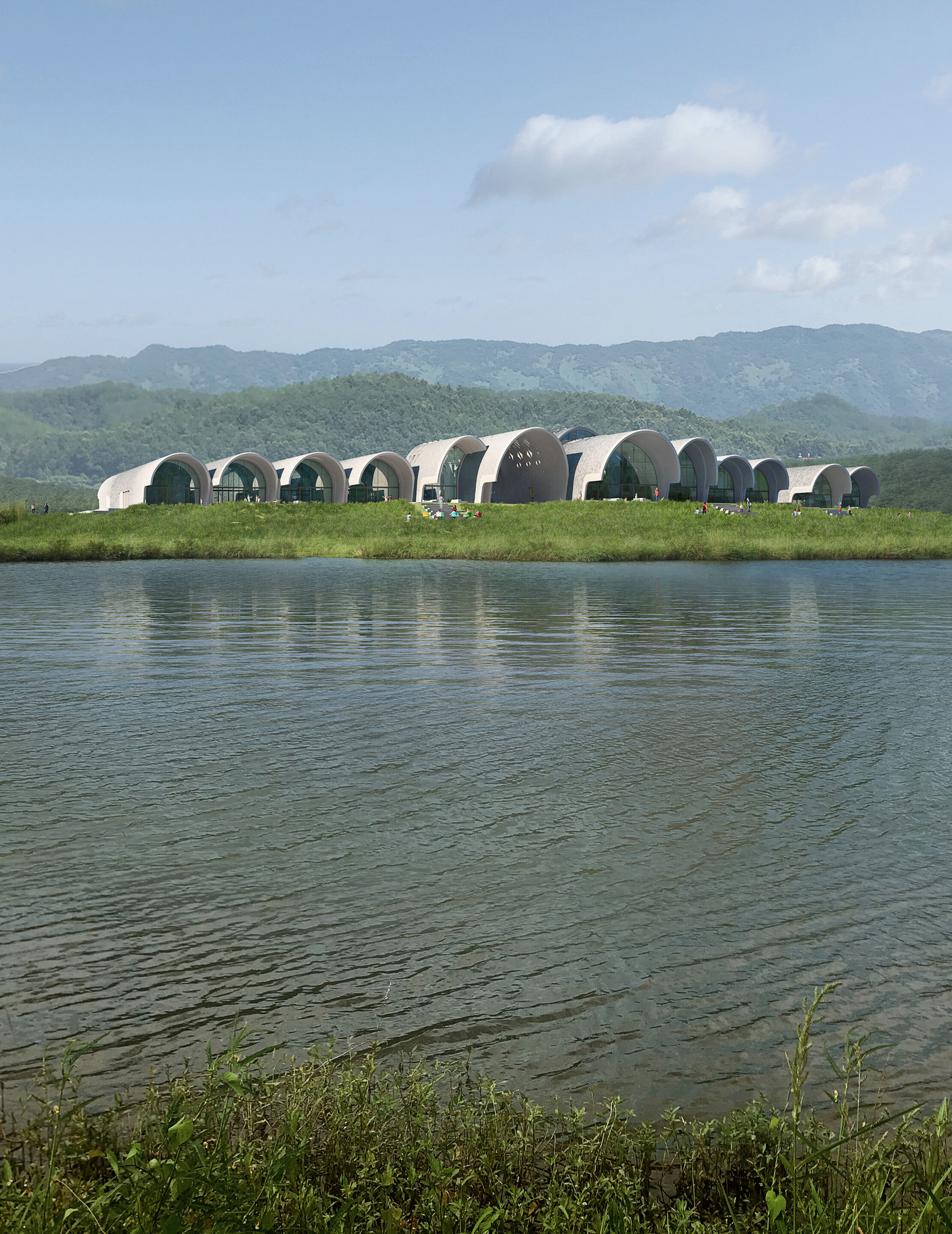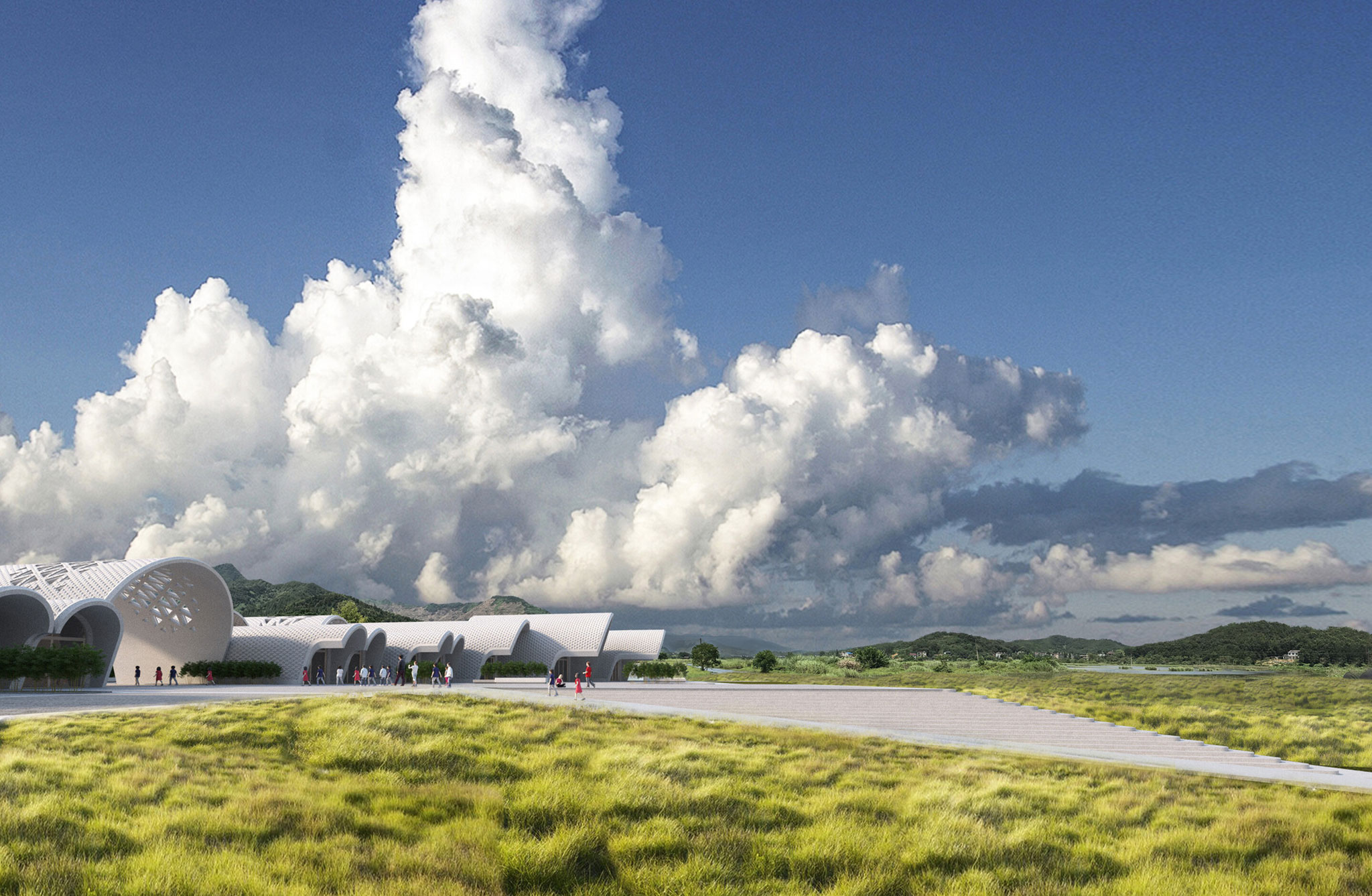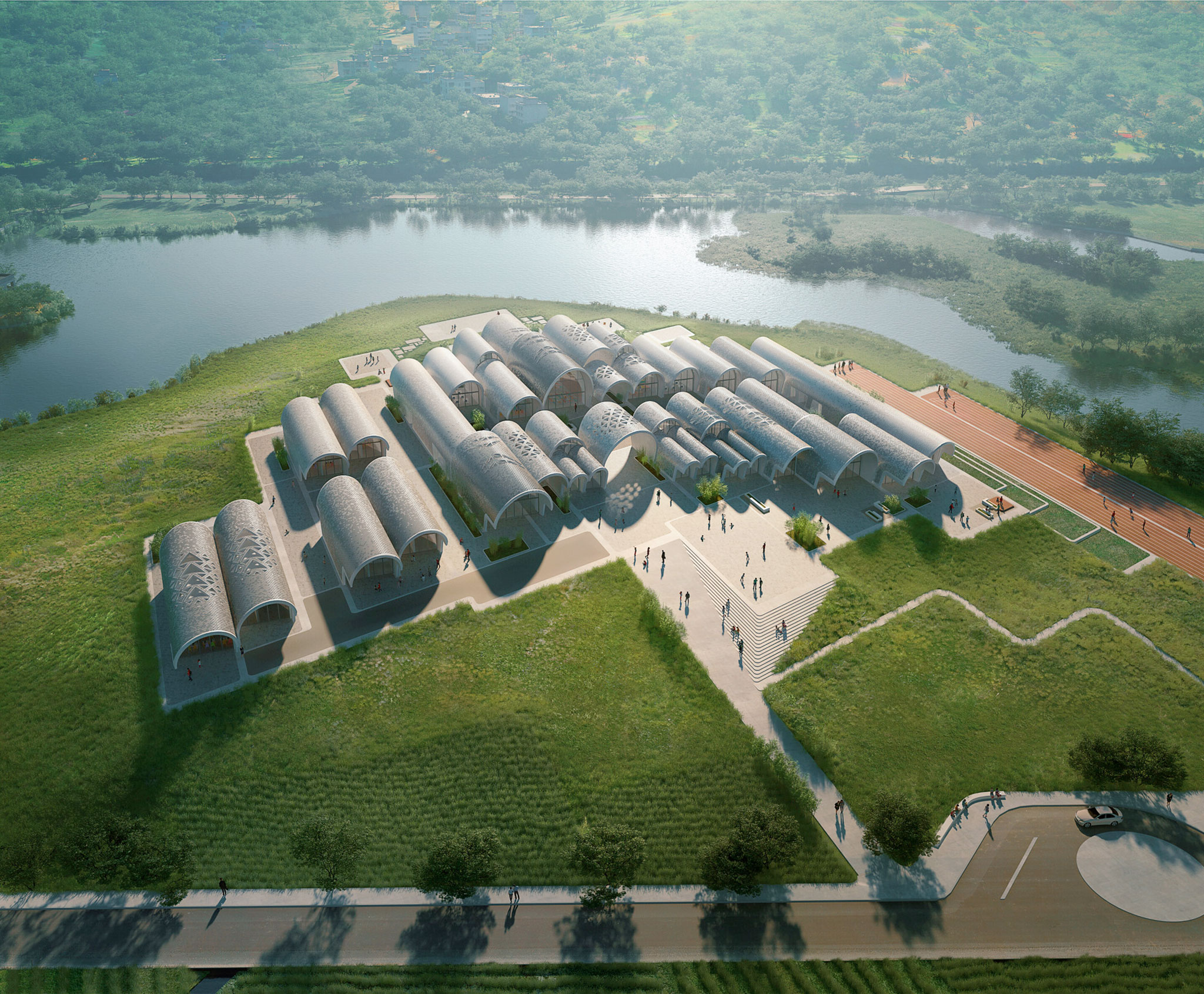
The design is carried out by Zaha Hadid Architects. Surrounded by mountains as well as the rivers and lakes fed by the Zhelin Reservoir, the school is within an agricultural region that also has a rich tradition in the production of ceramics.
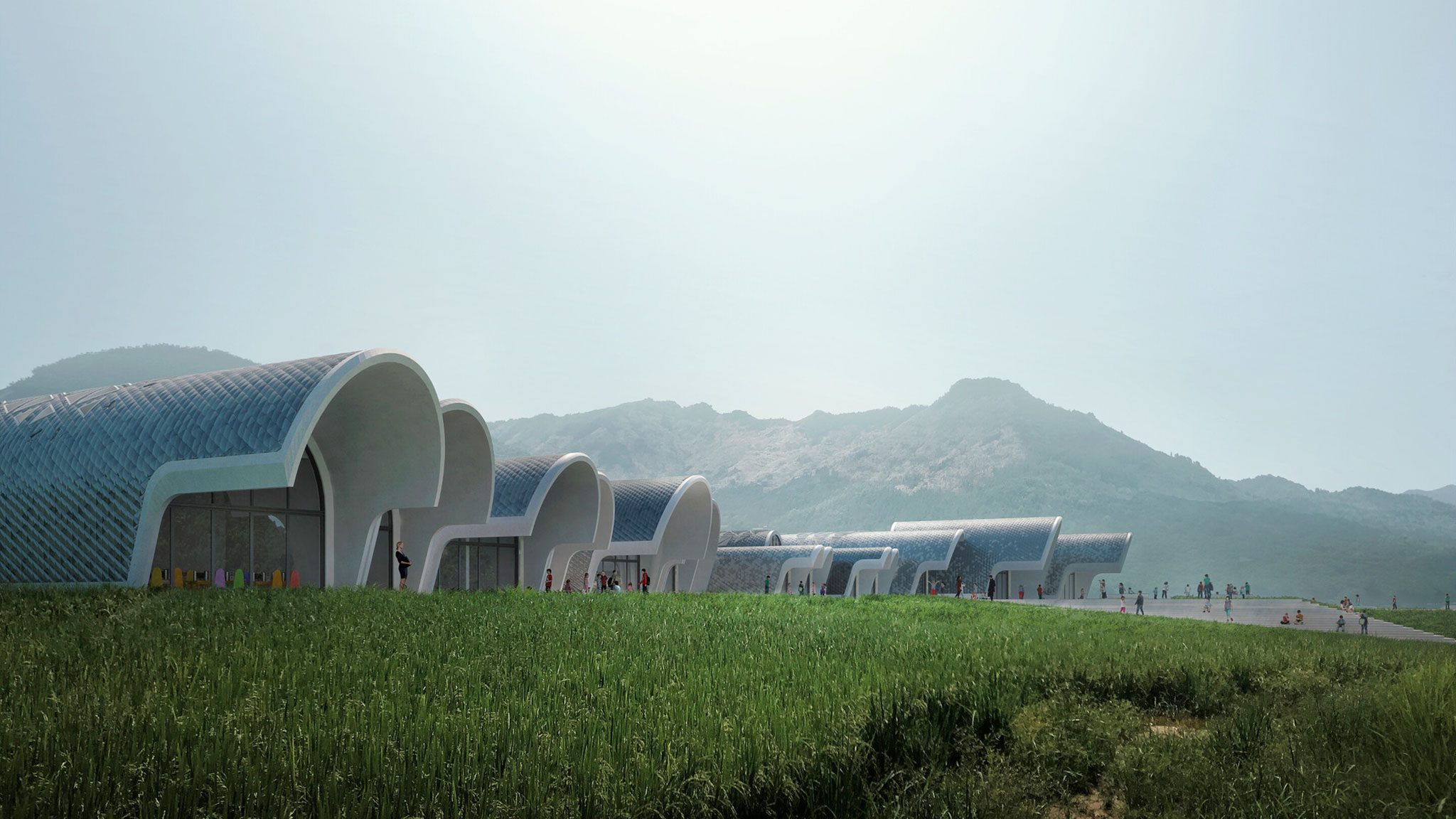
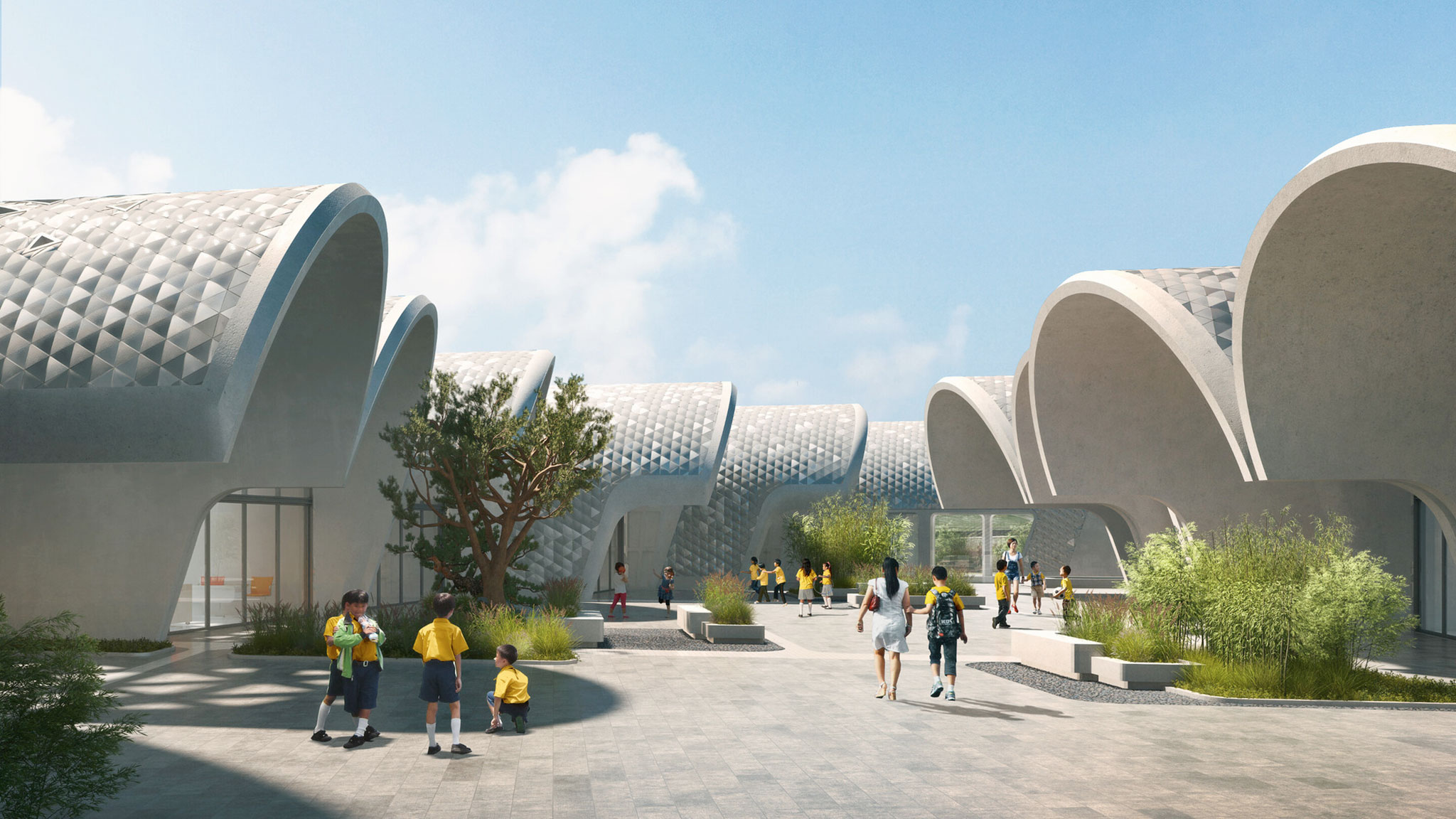
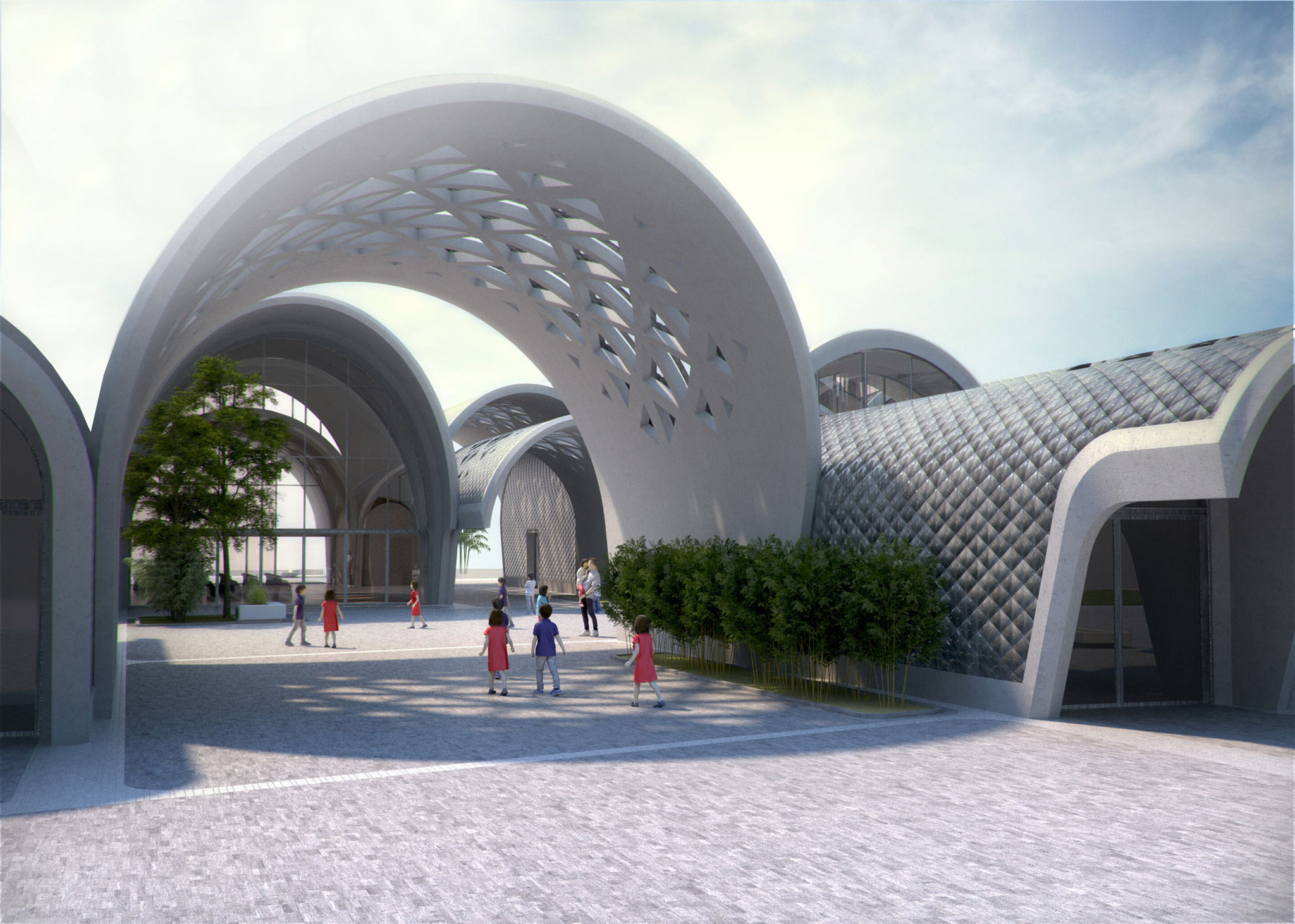
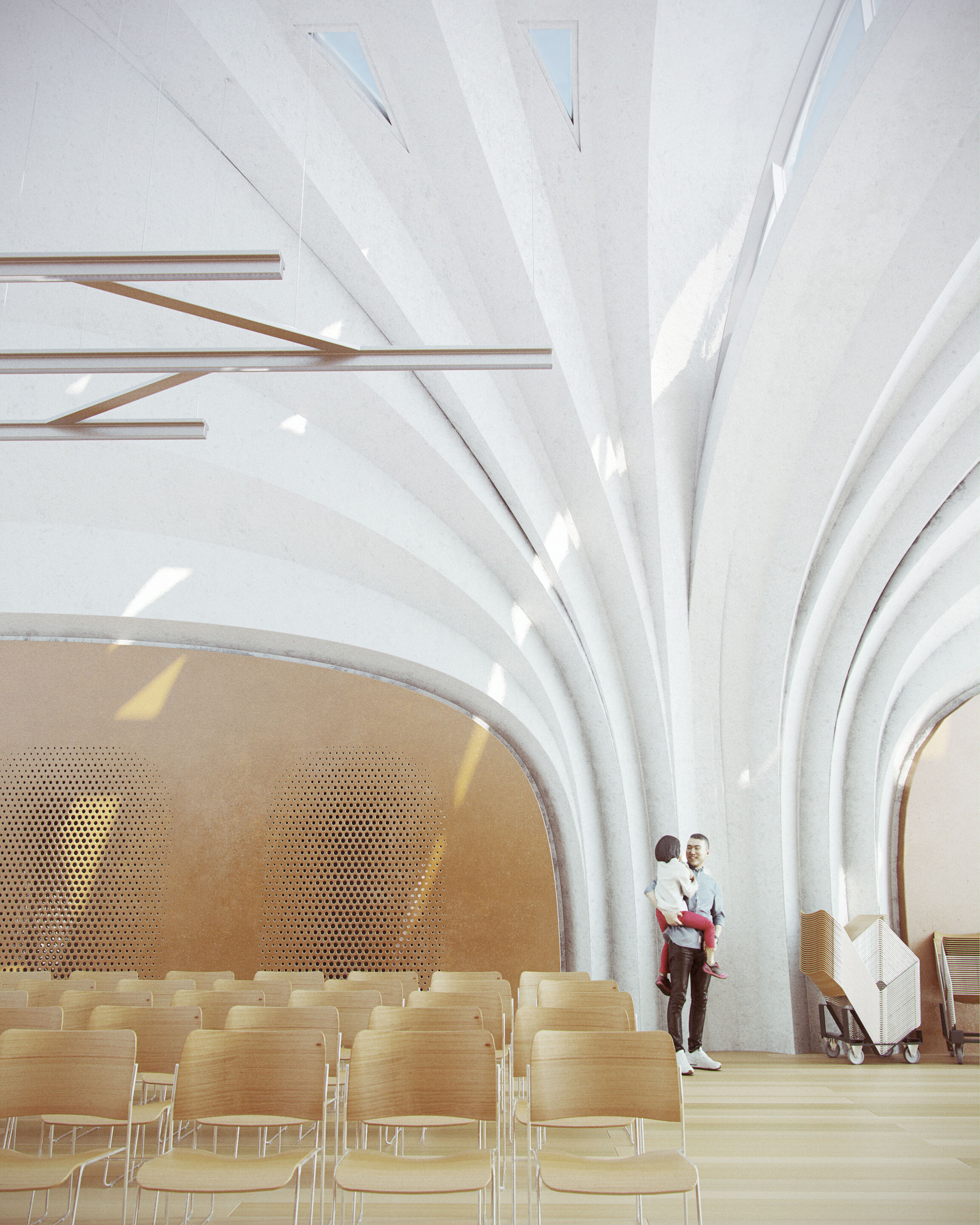
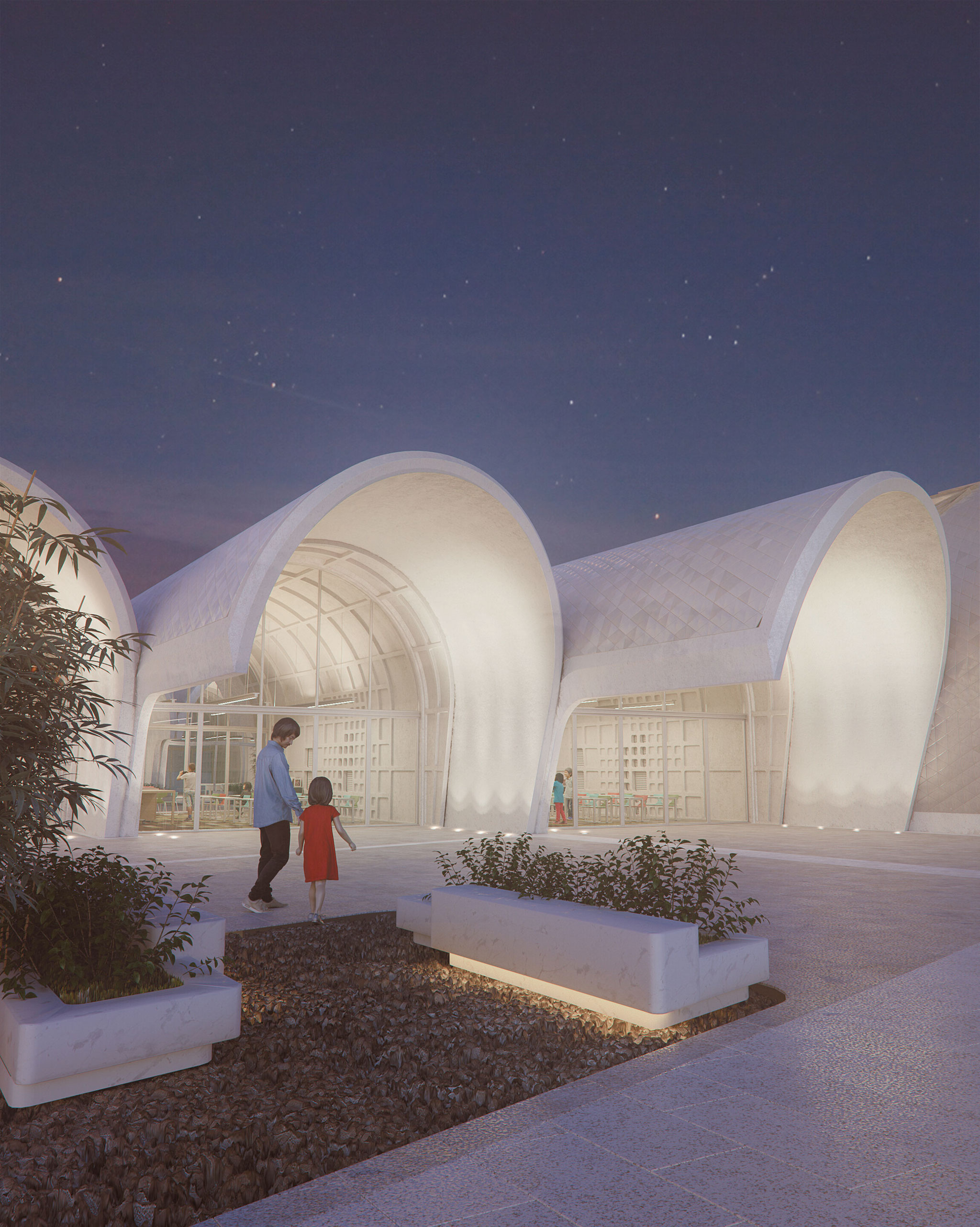
Comprising the school, dormitory and utility buildings, the length of each vault is adapted to accommodate the school's program. At the center of the largest cluster of vaults, a courtyard provides a circulation space and play area. The ends of the vaults cantilever beyond the building envelope to extend the teaching environment outdoors and to protect the interior from solar gain.
Due to the remote location of the school, Zaha Hadid Architects has proposed a novel method of construction in which the complex formwork for the concrete vaults will be manufactured on site. A robot arm with a hot wire cutter will be delivered to site and shape foam pieces to create the concrete molds. Since the vaults are modular, these formwork pieces will also be reusable.
The building will be finished with ceramic external surfaces, referencing the region's history of producing high-quality ceramics which dates back to the Ming Dynasty. These external finishes will include a gradient of tones that delineate the programs within each building.
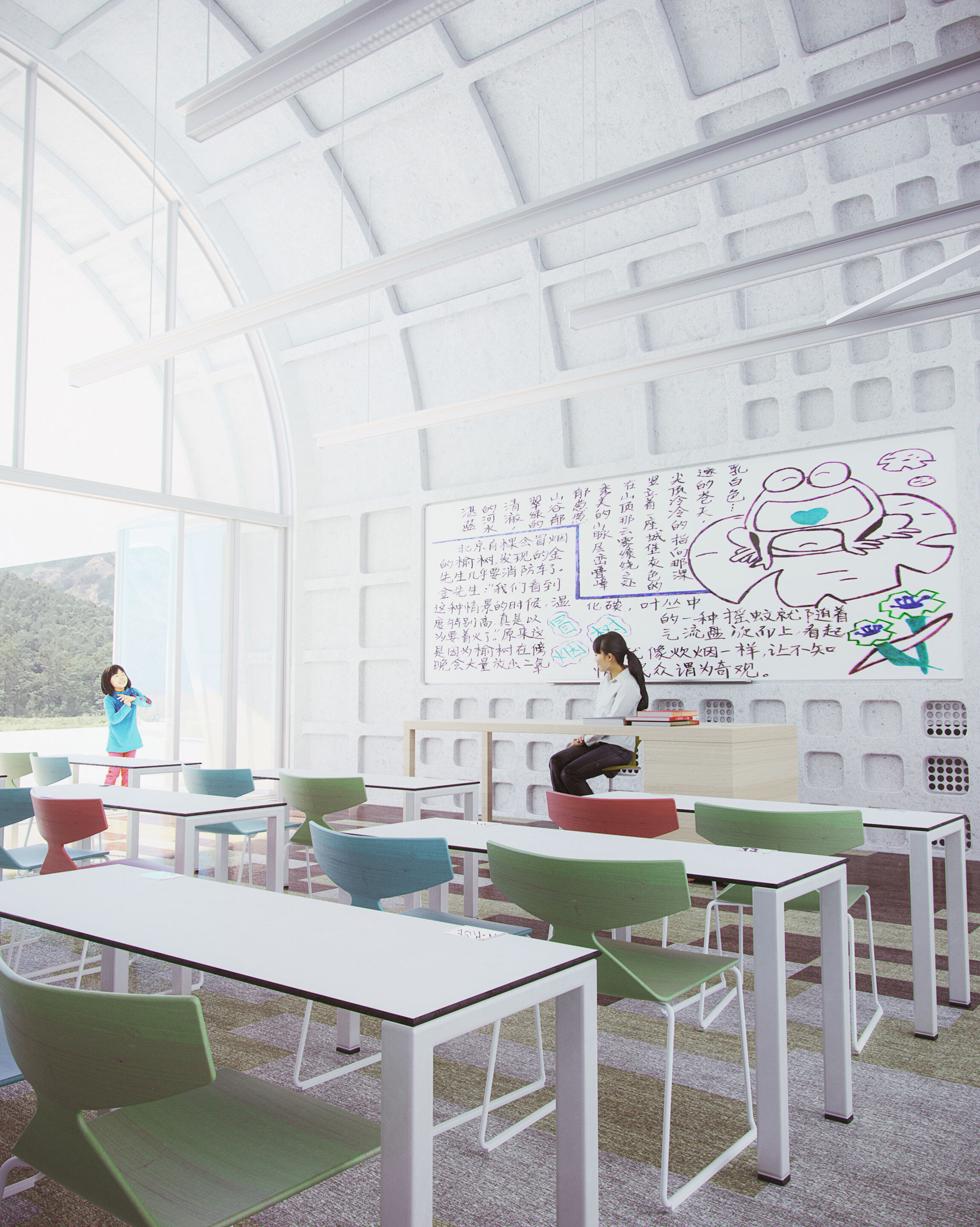
The school’s curriculum is a synthesis of Chinese and international academic systems; combining an education in the creative arts with a comprehensive syllabus of STEM subjects that also includes advanced internet-based learning technologies. Visiting teachers and artists will make the school a focus for the community it serves.
Comprising the school, dormitory and utility buildings, the length of each vault is adapted to accommodate the school's program. At the center of the largest cluster of vaults, a courtyard provides a circulation space and play area. The ends of the vaults cantilever beyond the building envelope to extend the teaching environment outdoors and to protect the interior from solar gain.
Due to the remote location of the school, Zaha Hadid Architects has proposed a novel method of construction in which the complex formwork for the concrete vaults will be manufactured on site. A robot arm with a hot wire cutter will be delivered to site and shape foam pieces to create the concrete molds. Since the vaults are modular, these formwork pieces will also be reusable.
The building will be finished with ceramic external surfaces, referencing the region's history of producing high-quality ceramics which dates back to the Ming Dynasty. These external finishes will include a gradient of tones that delineate the programs within each building.
The school’s curriculum is a synthesis of Chinese and international academic systems; combining an education in the creative arts with a comprehensive syllabus of STEM subjects that also includes advanced internet-based learning technologies. Visiting teachers and artists will make the school a focus for the community it serves.