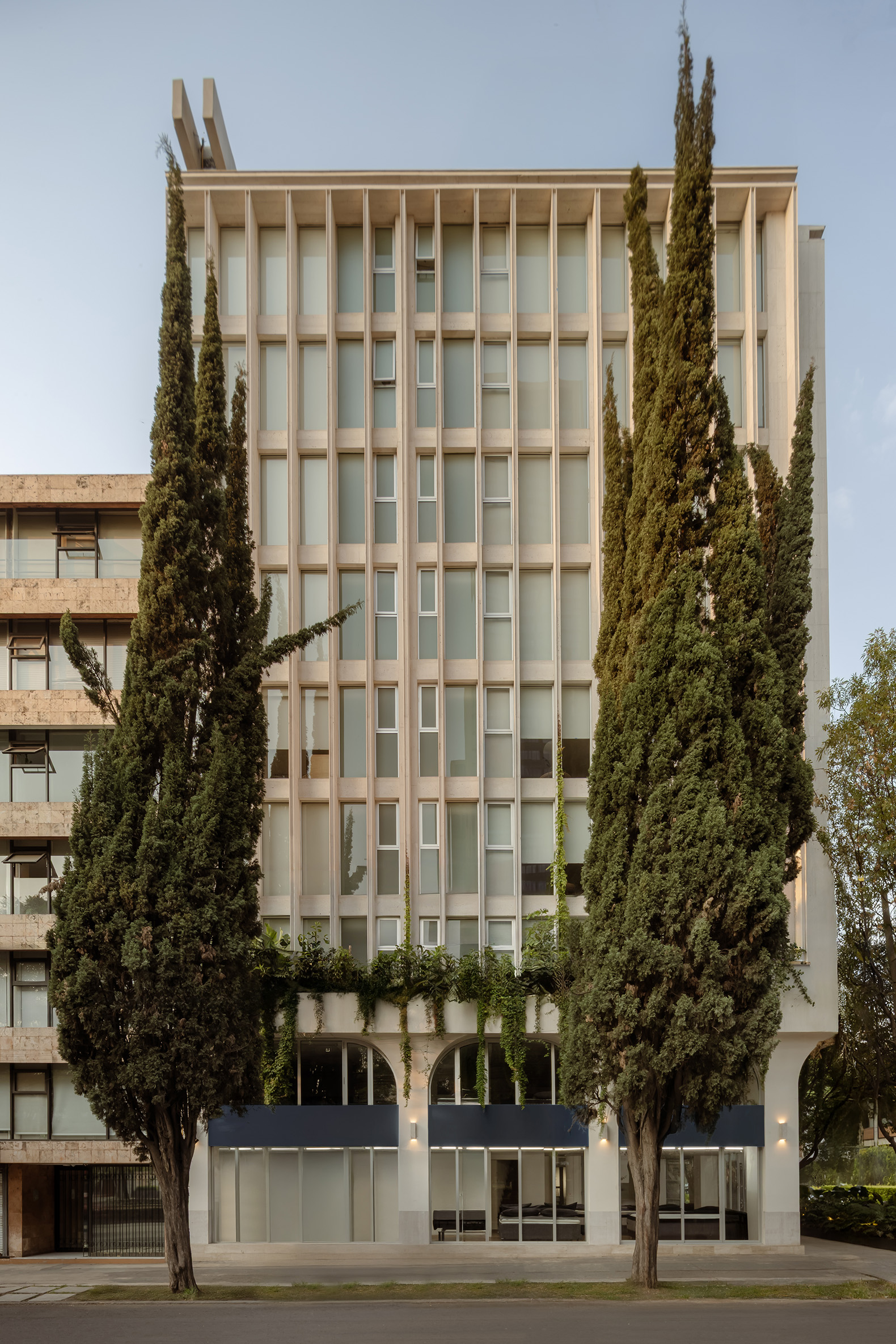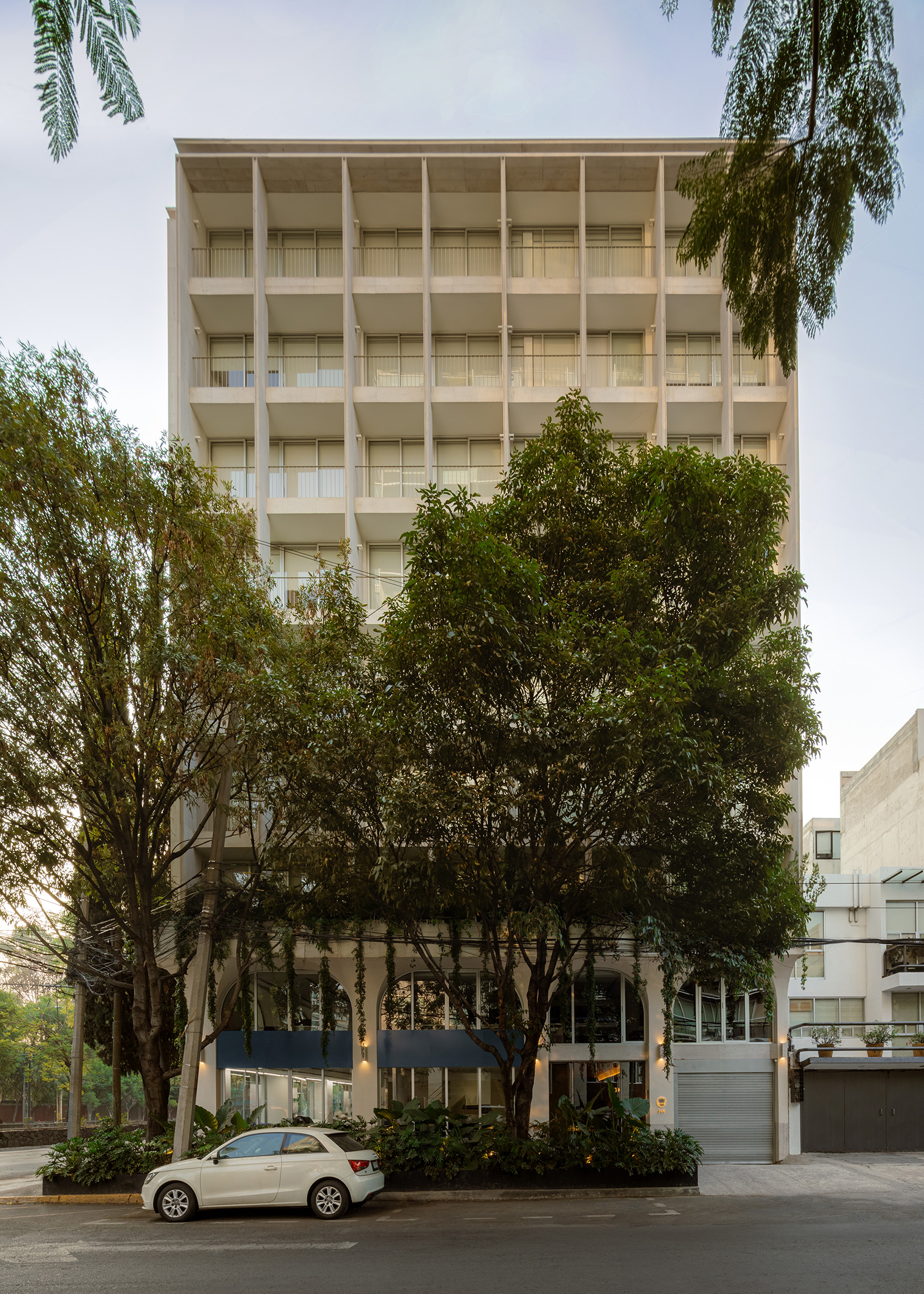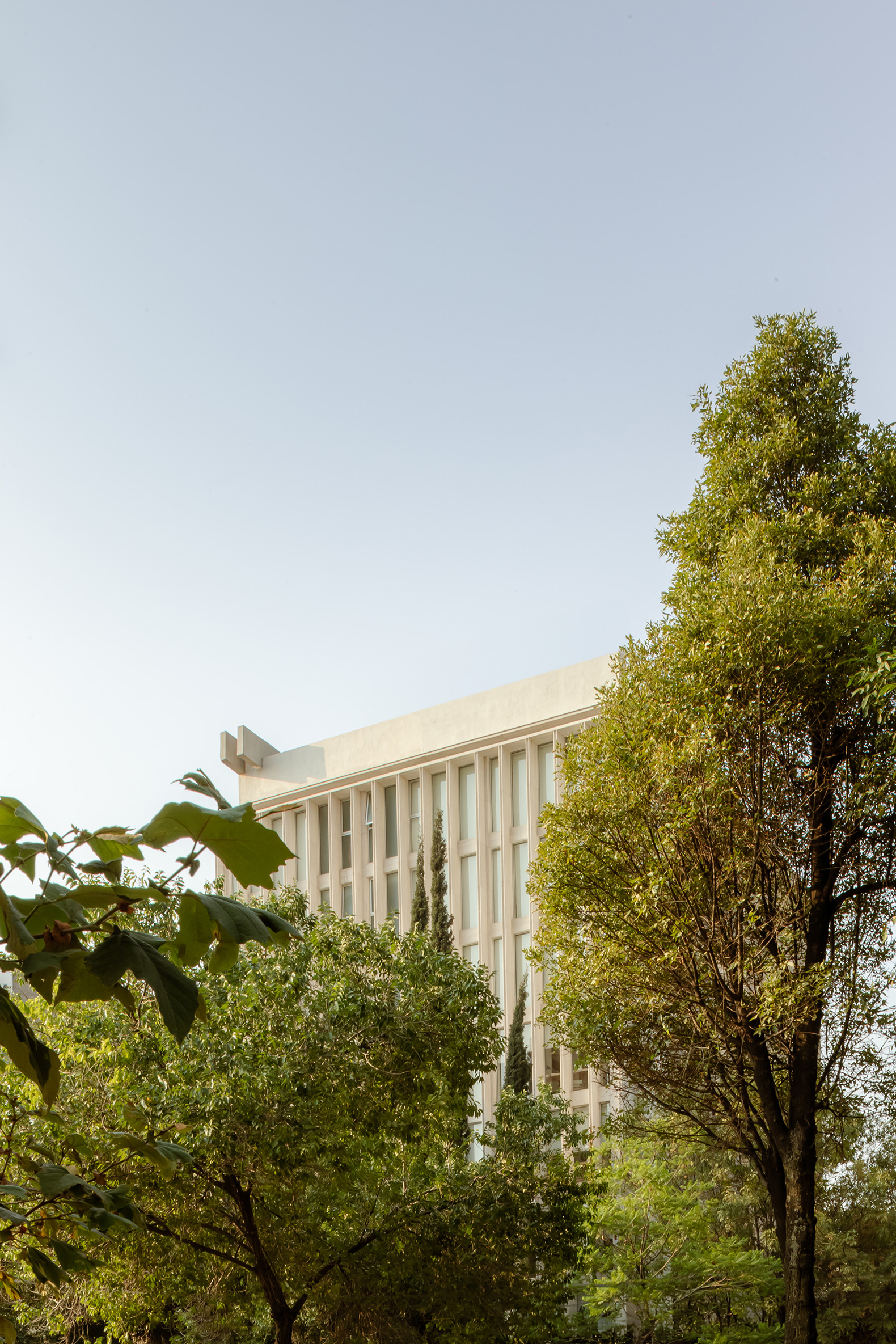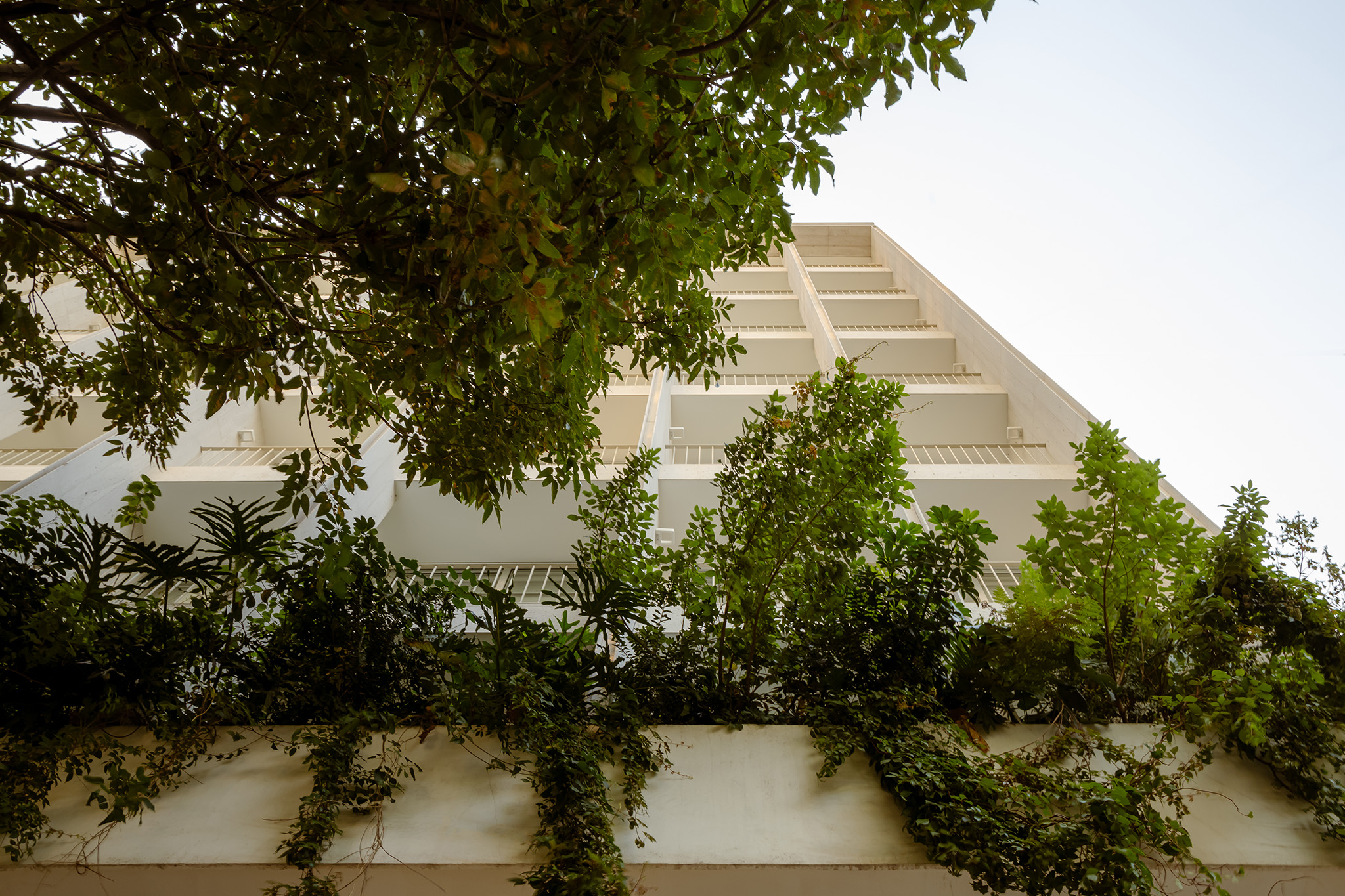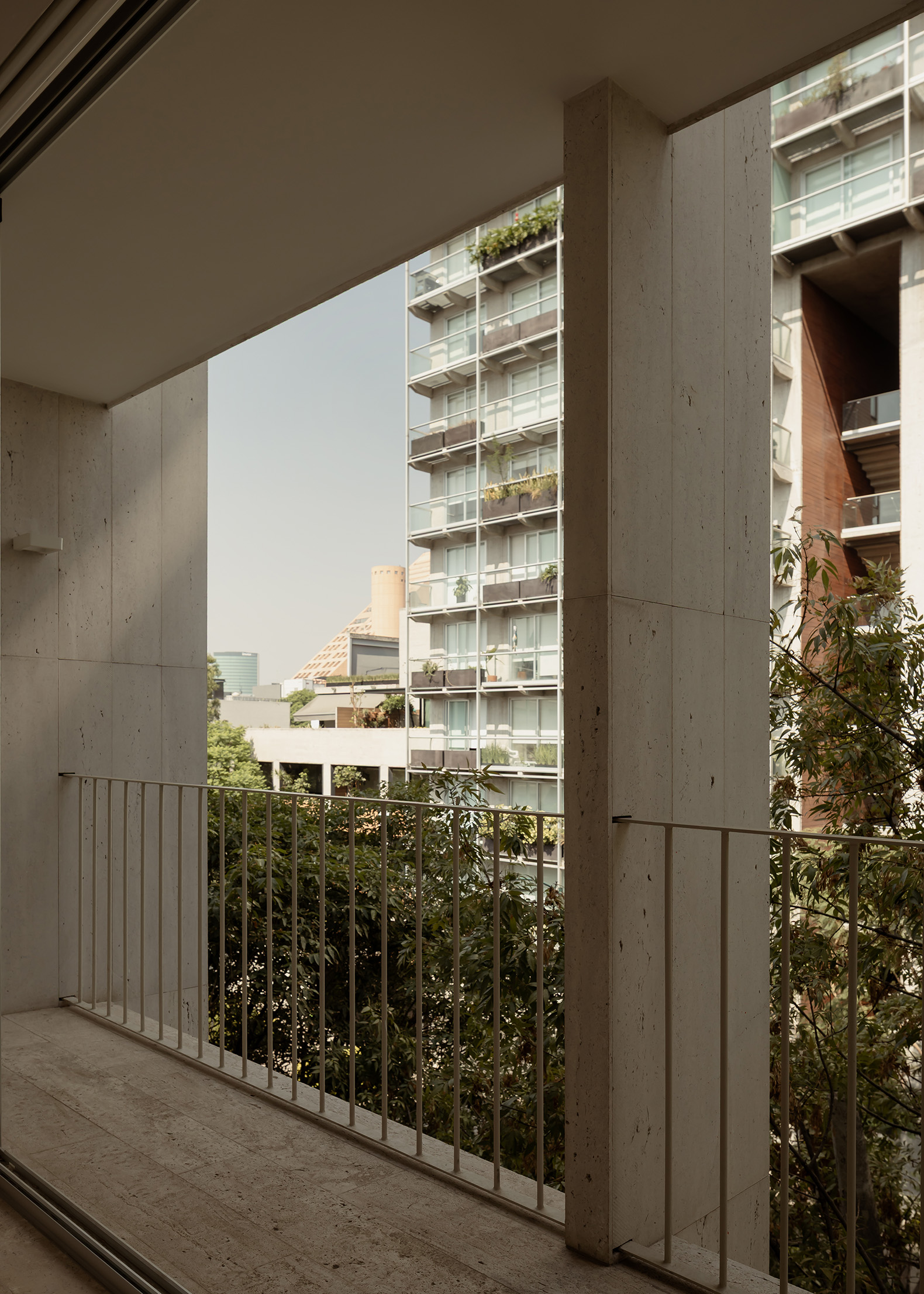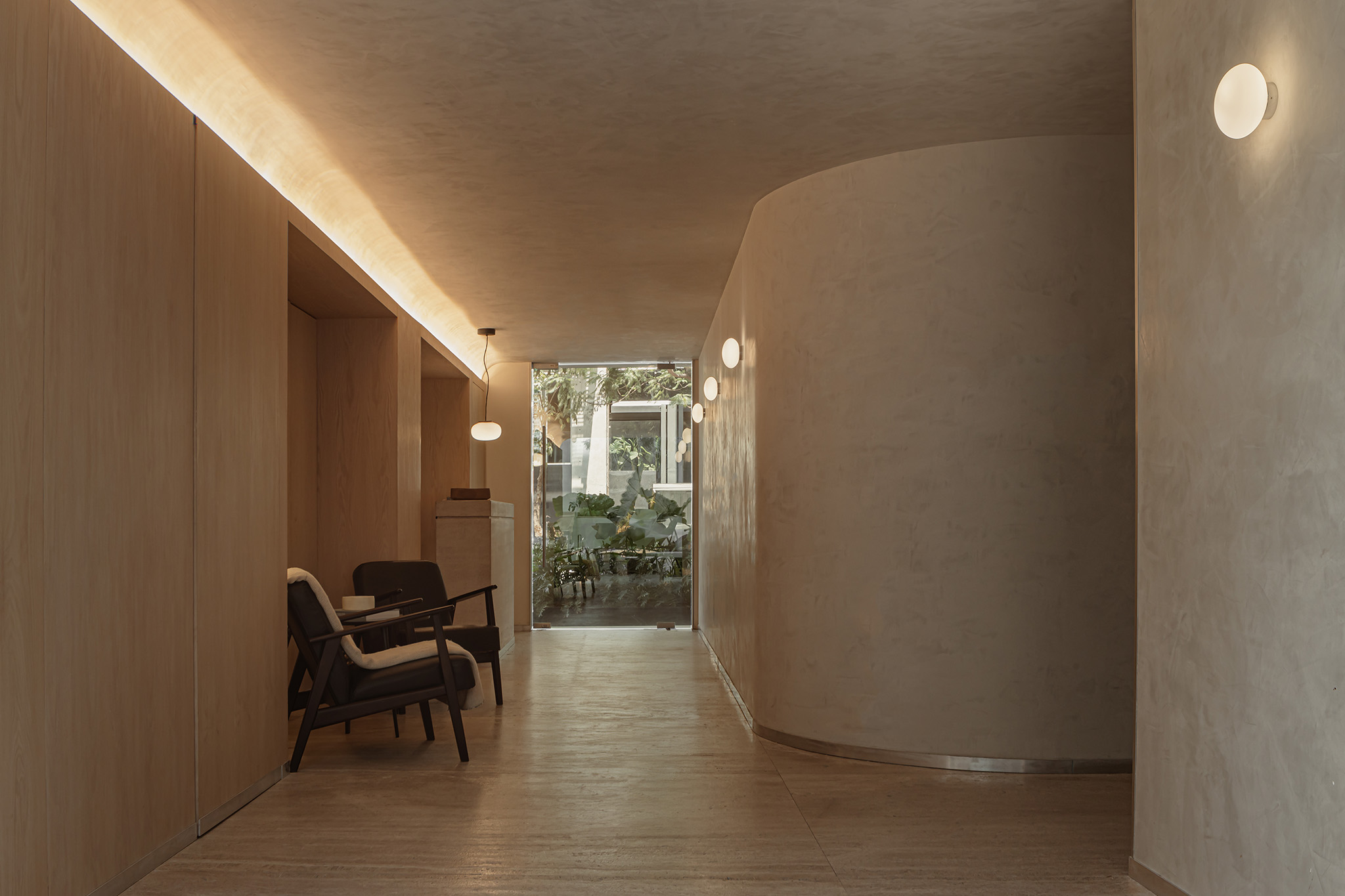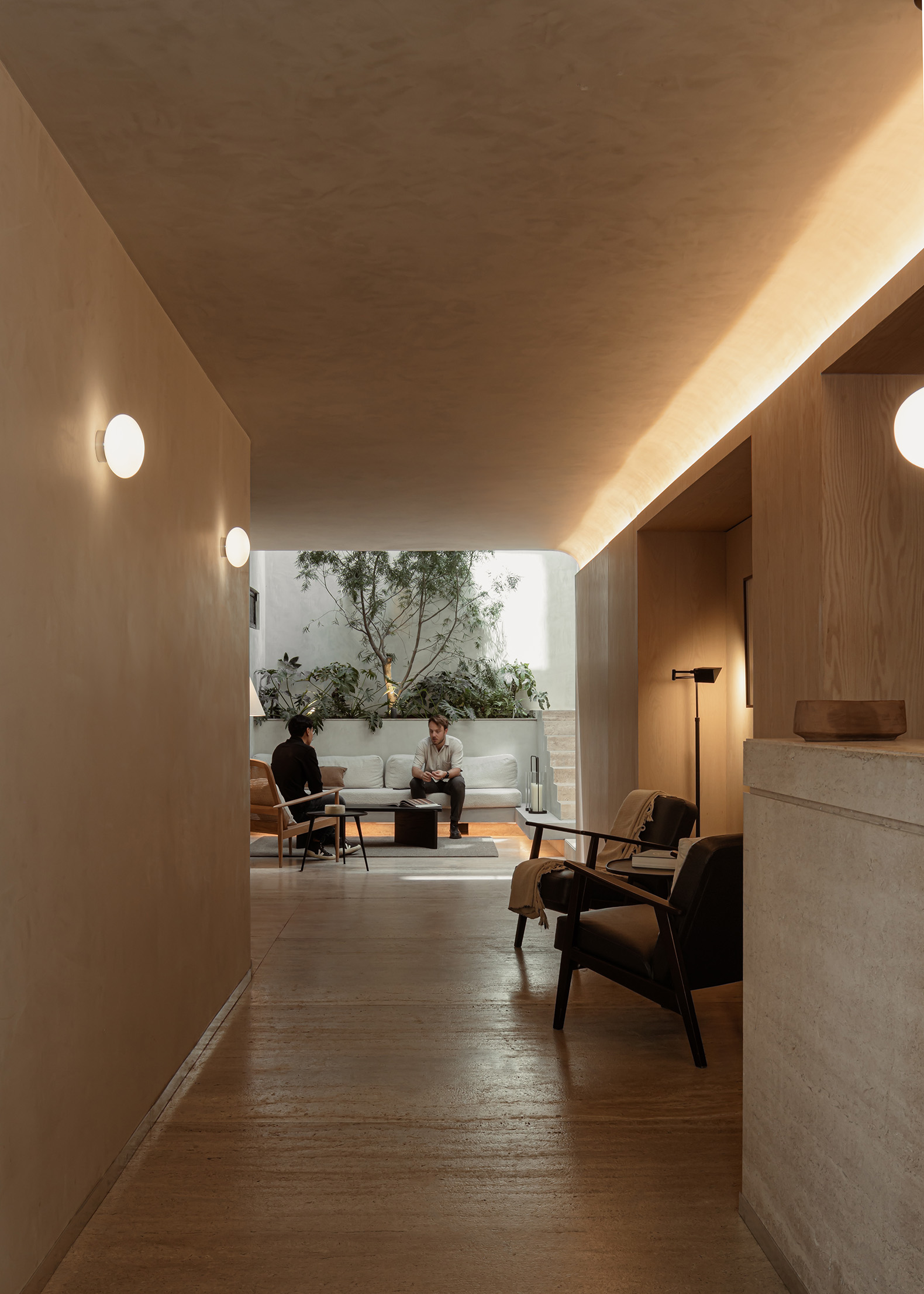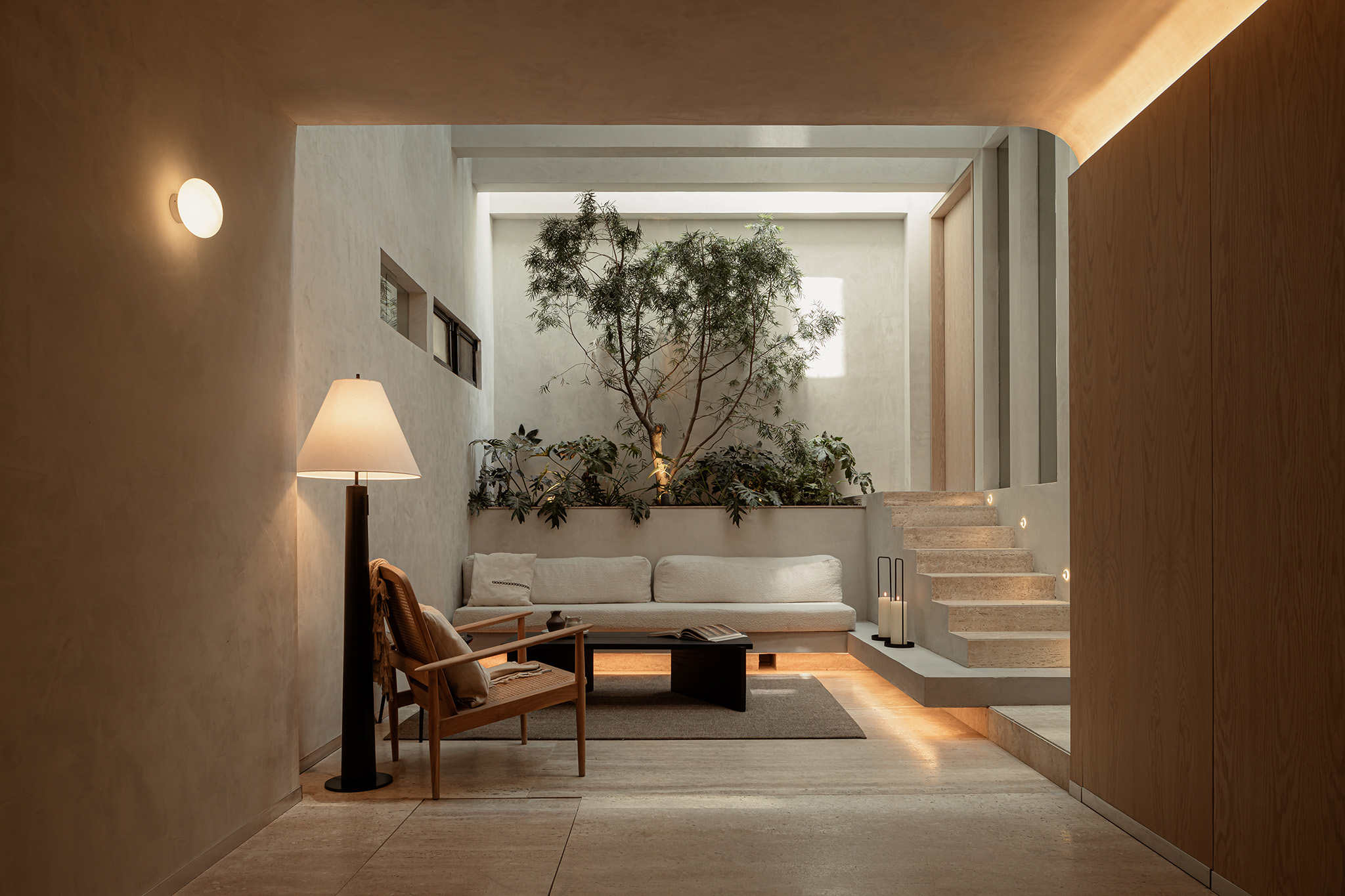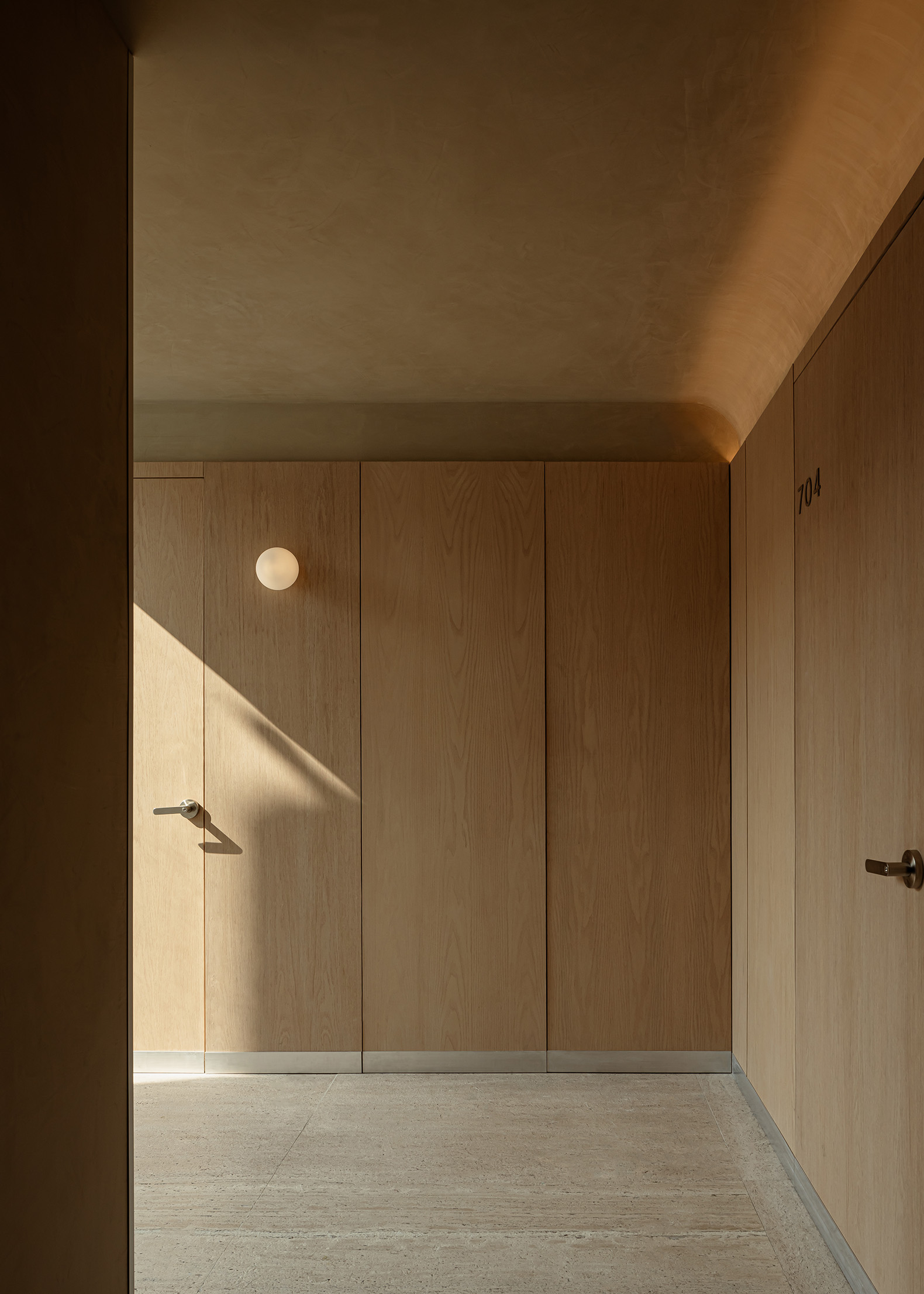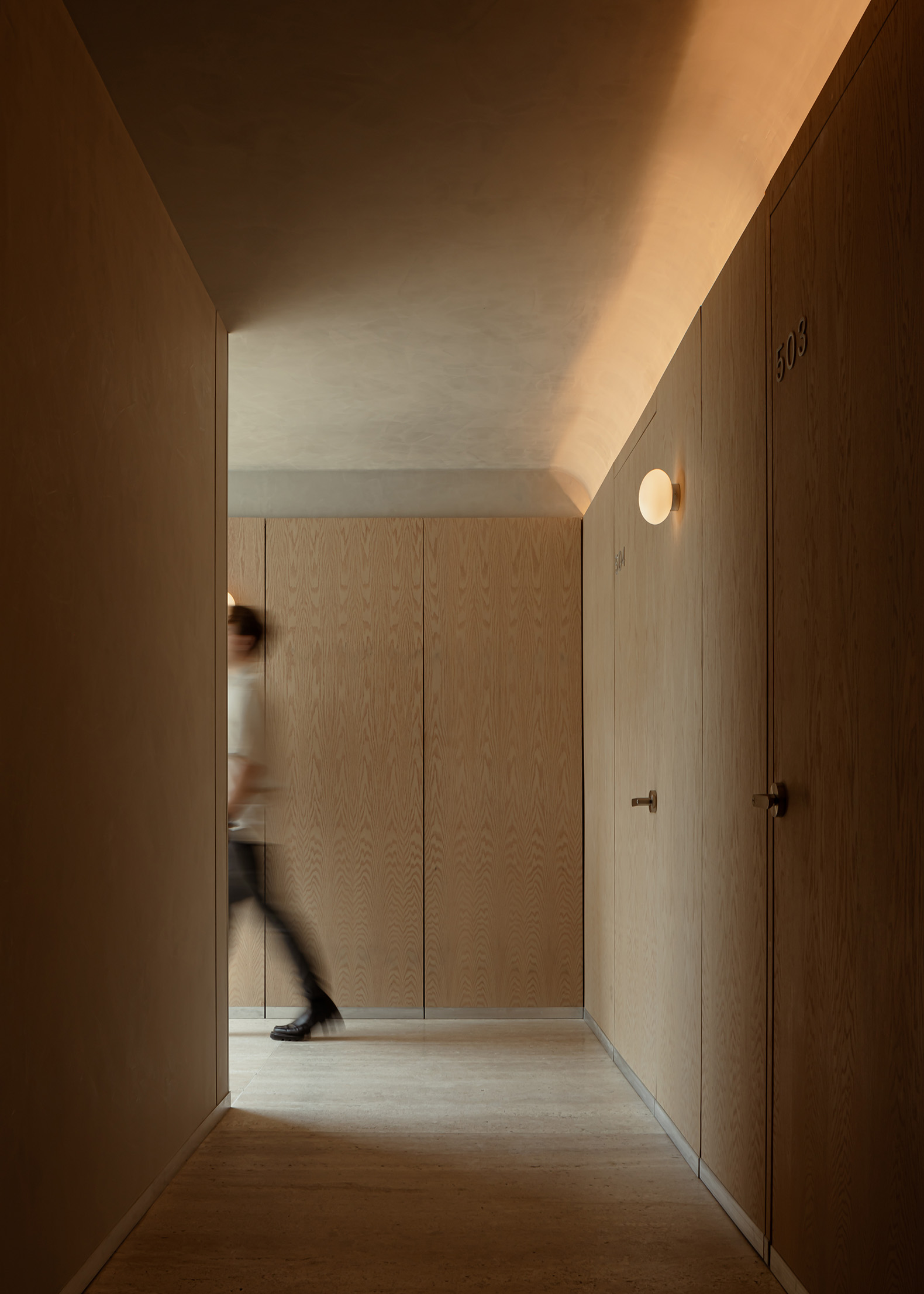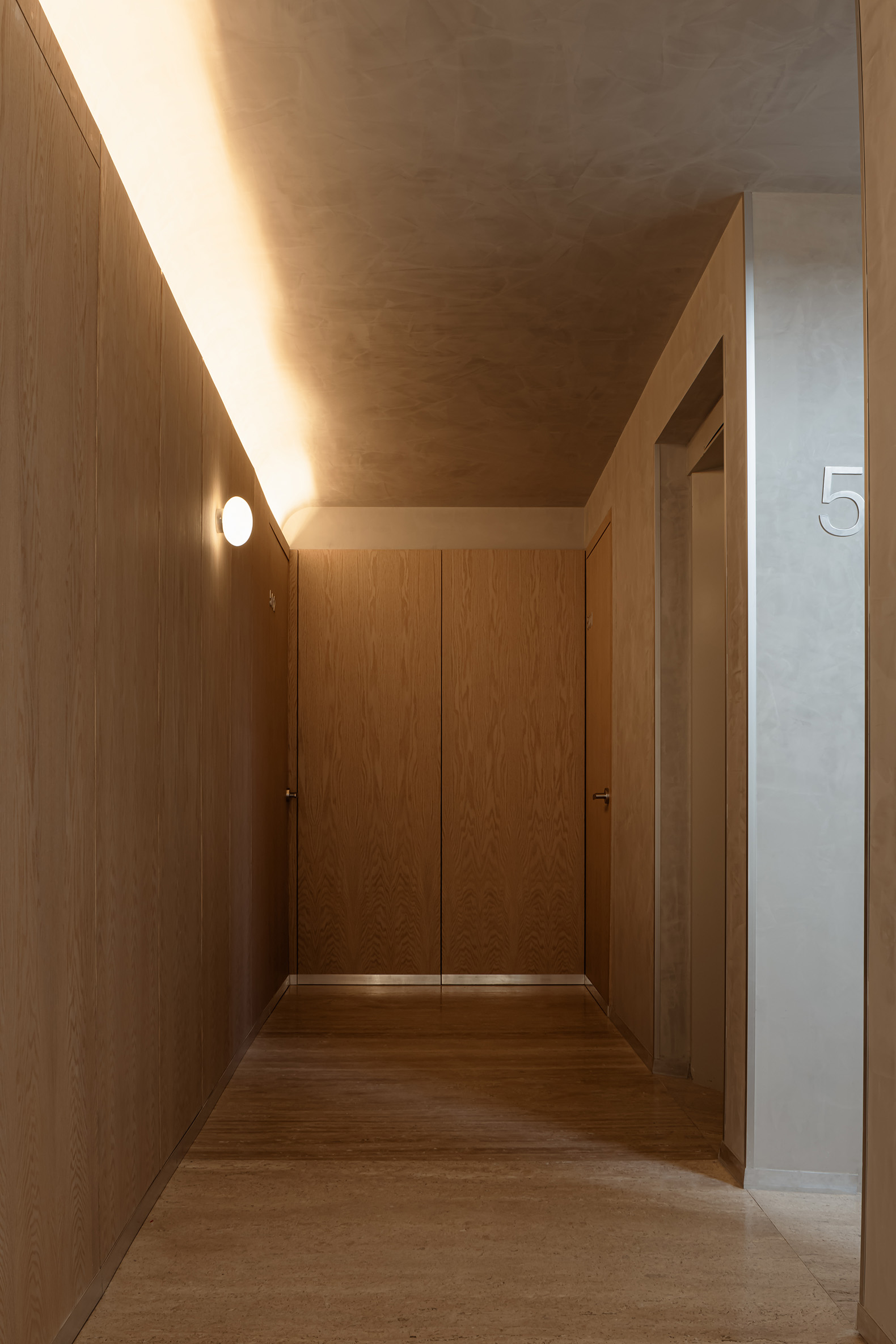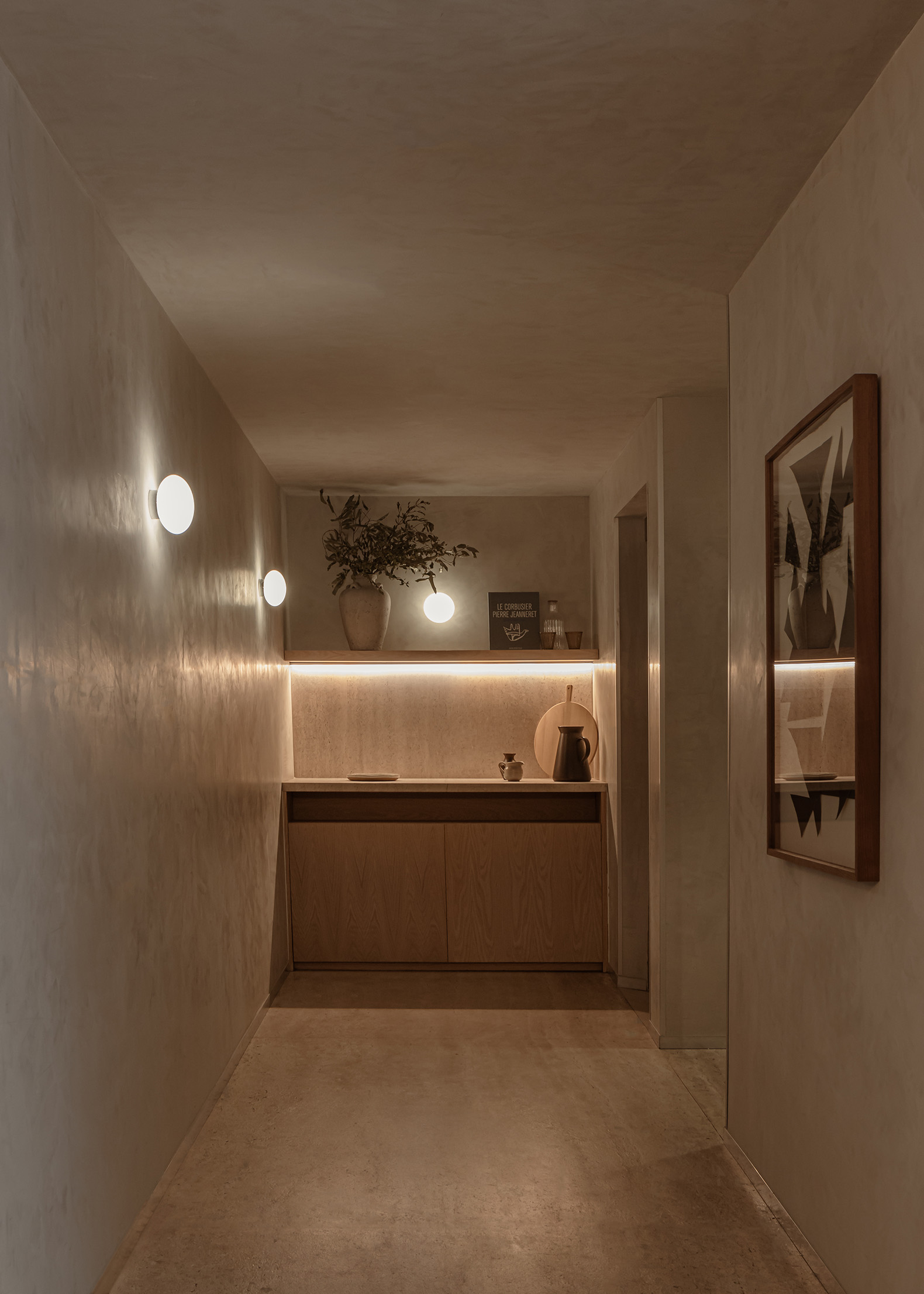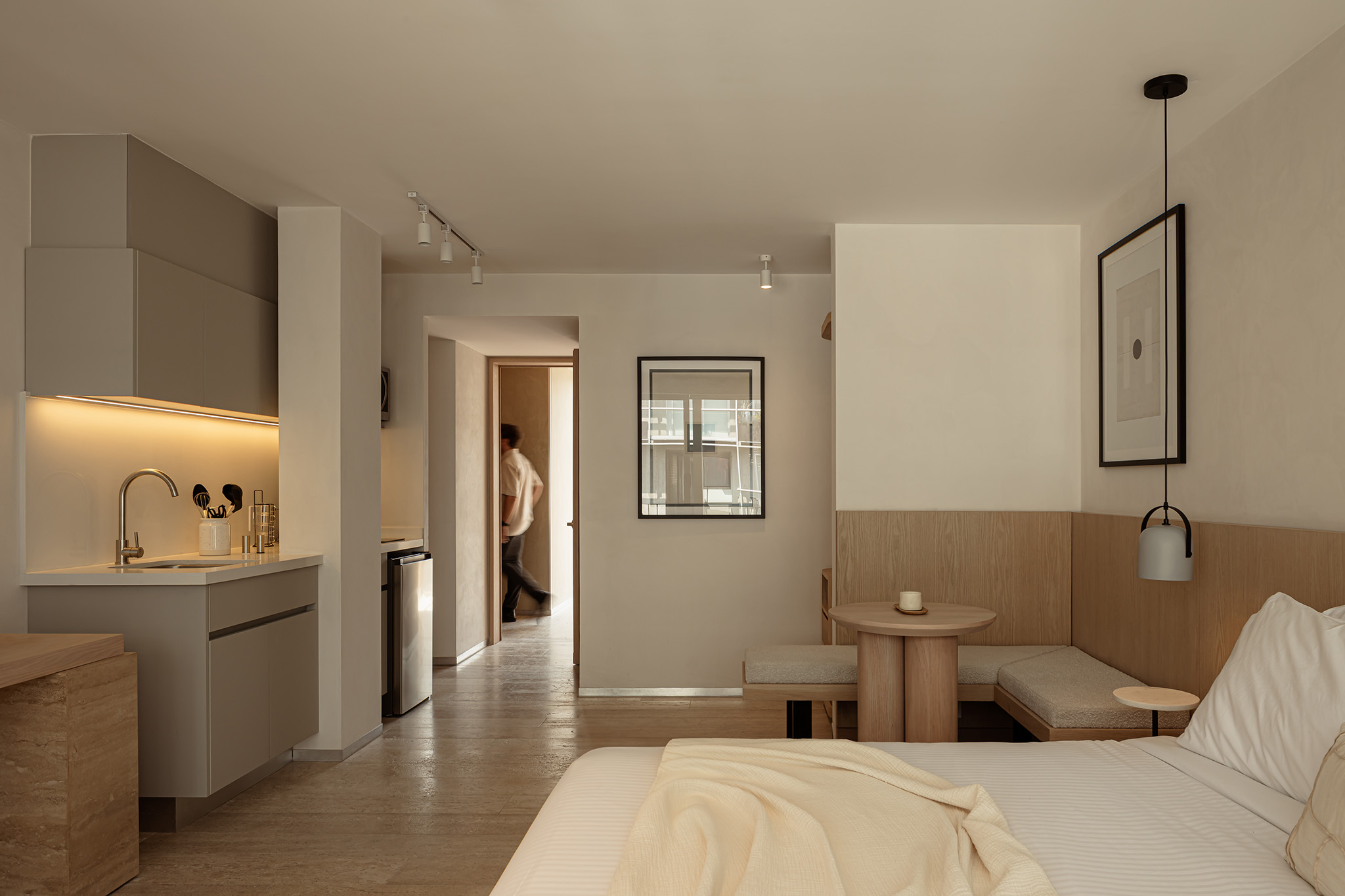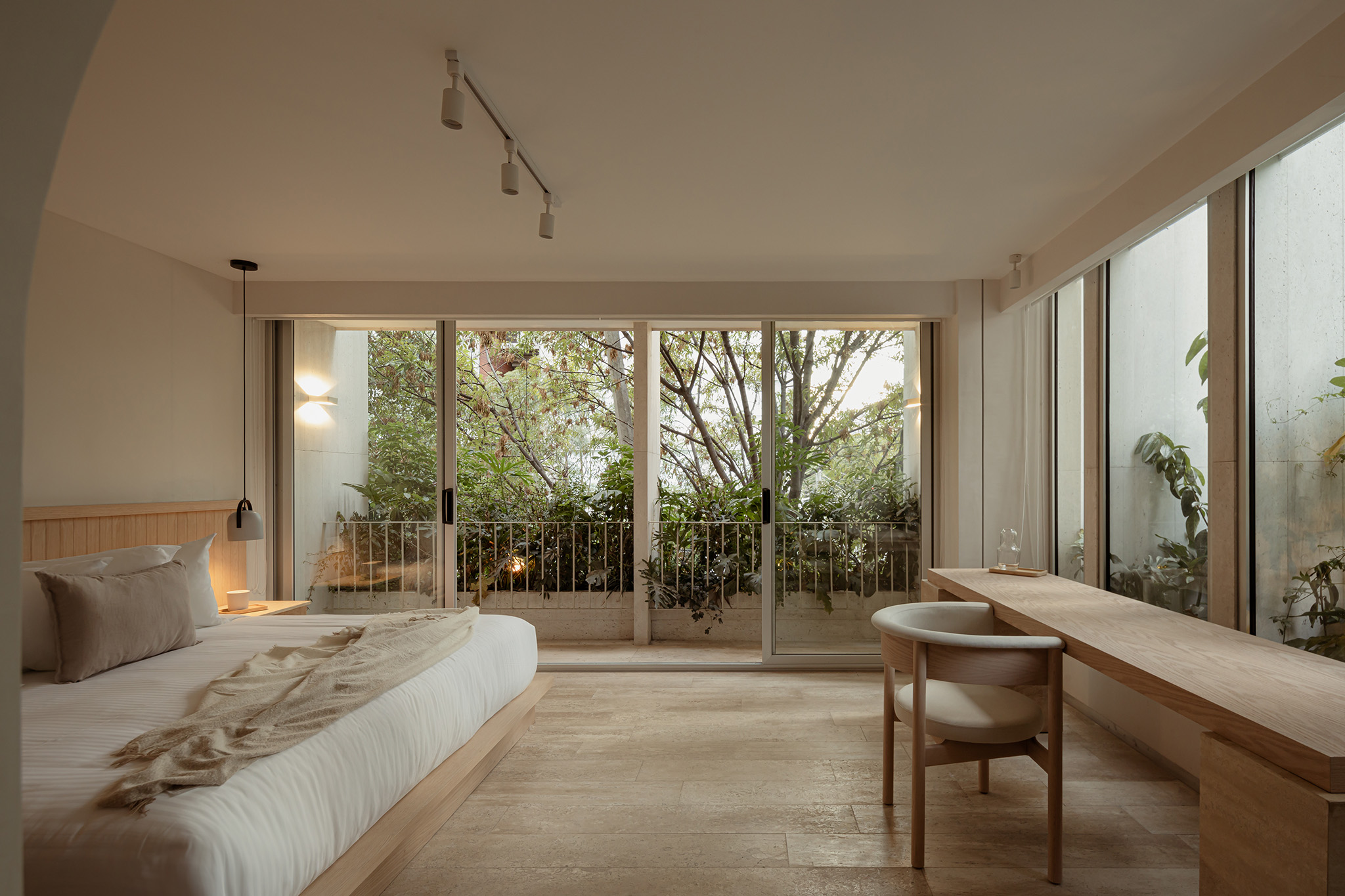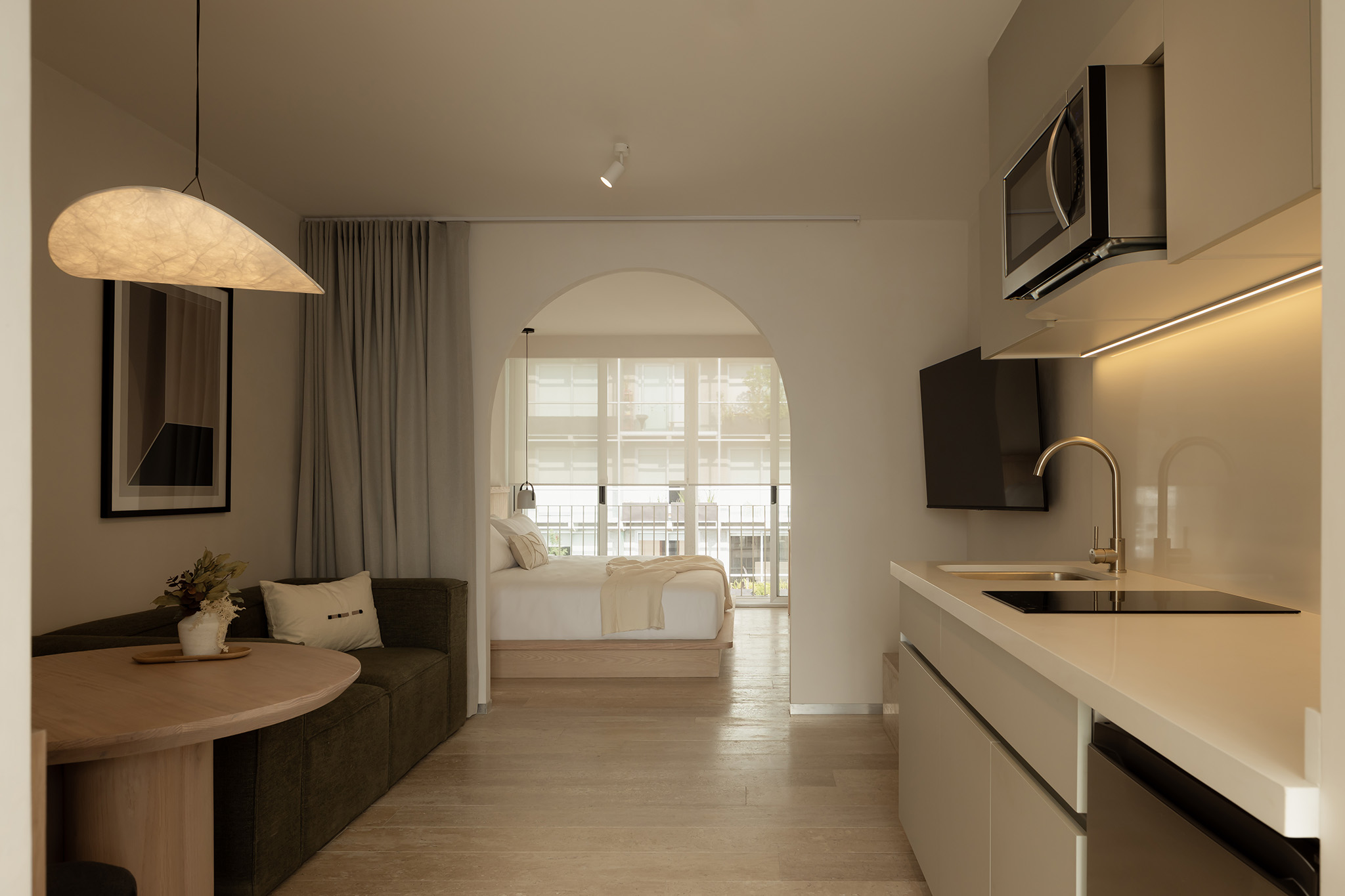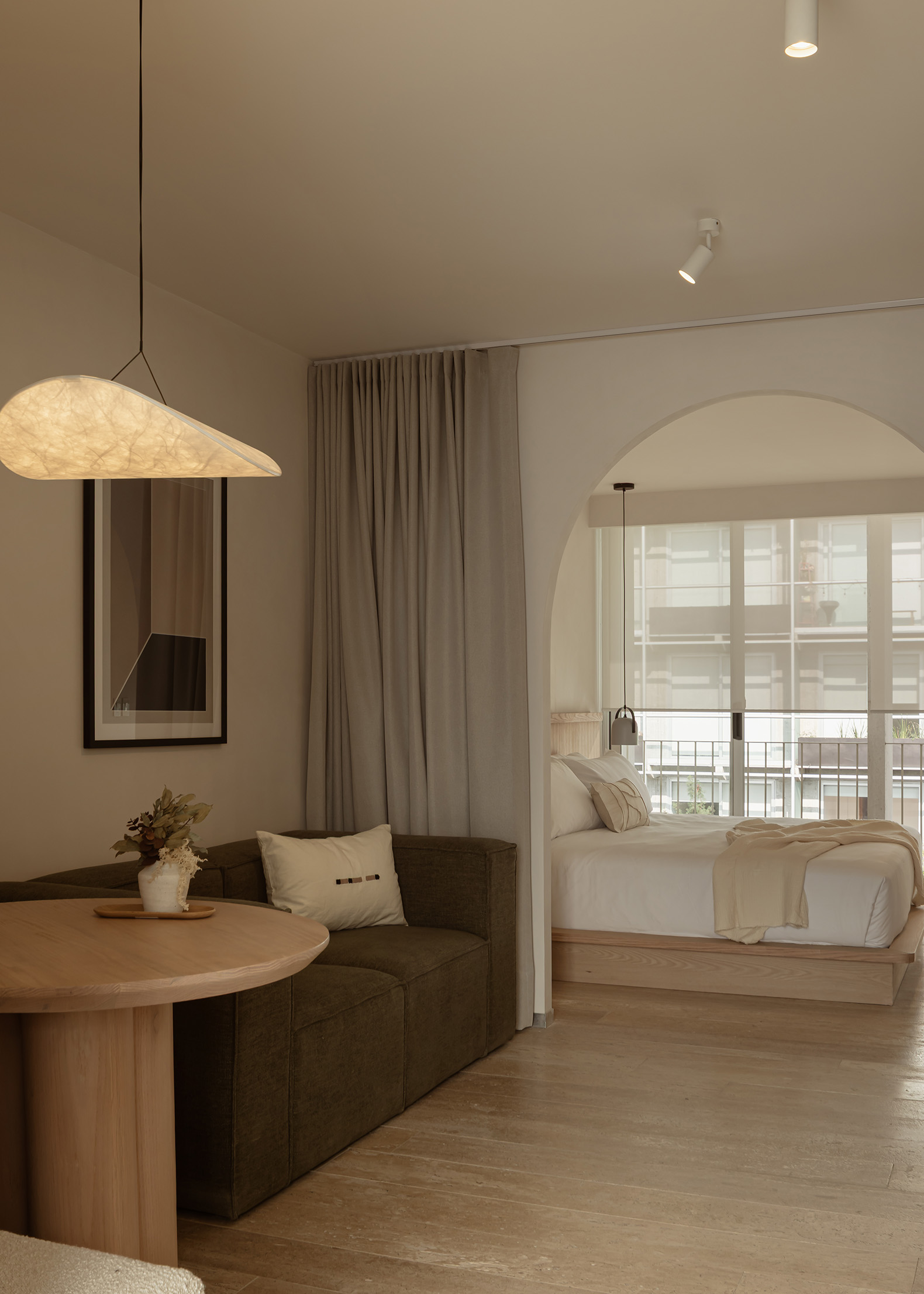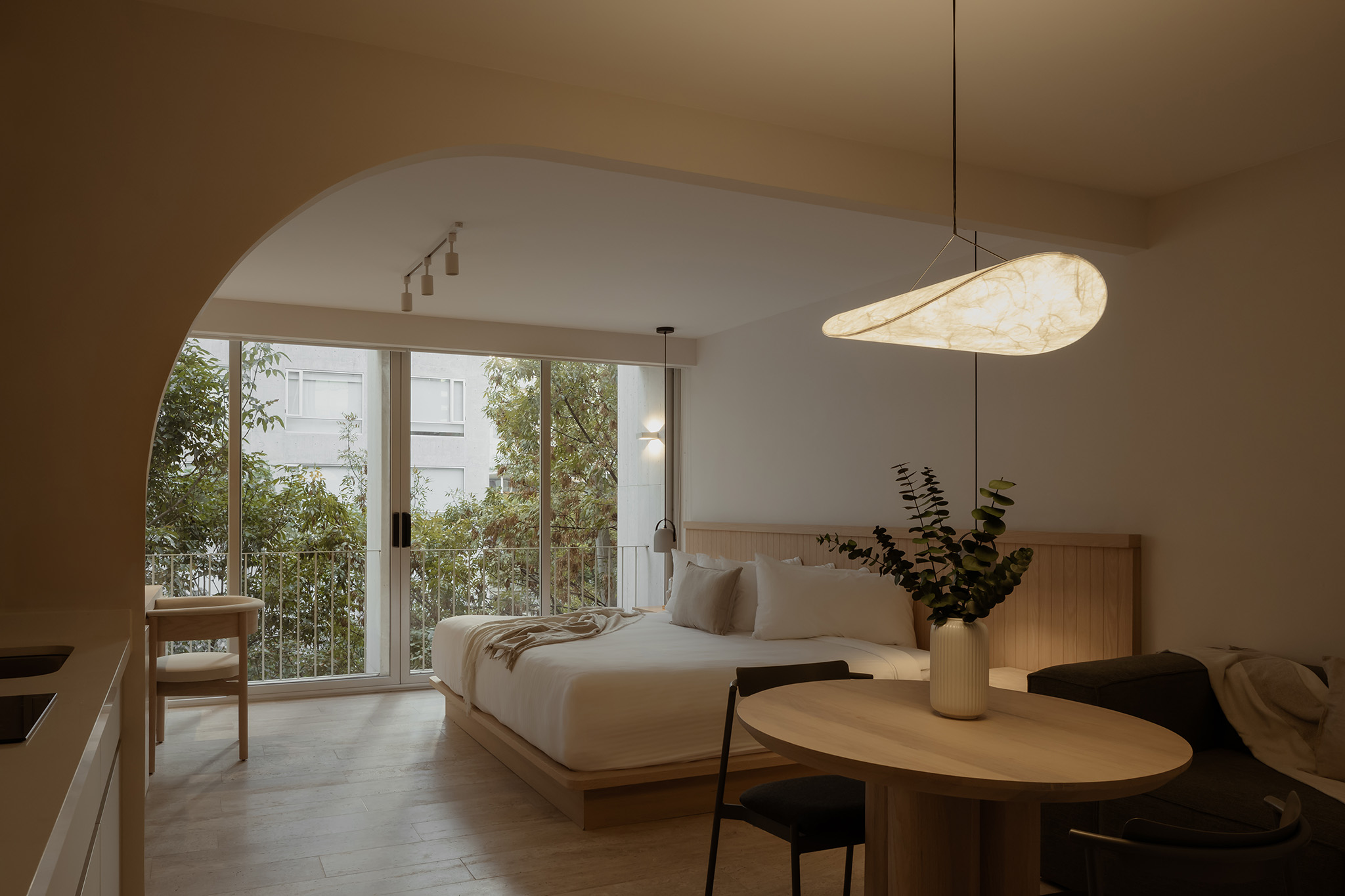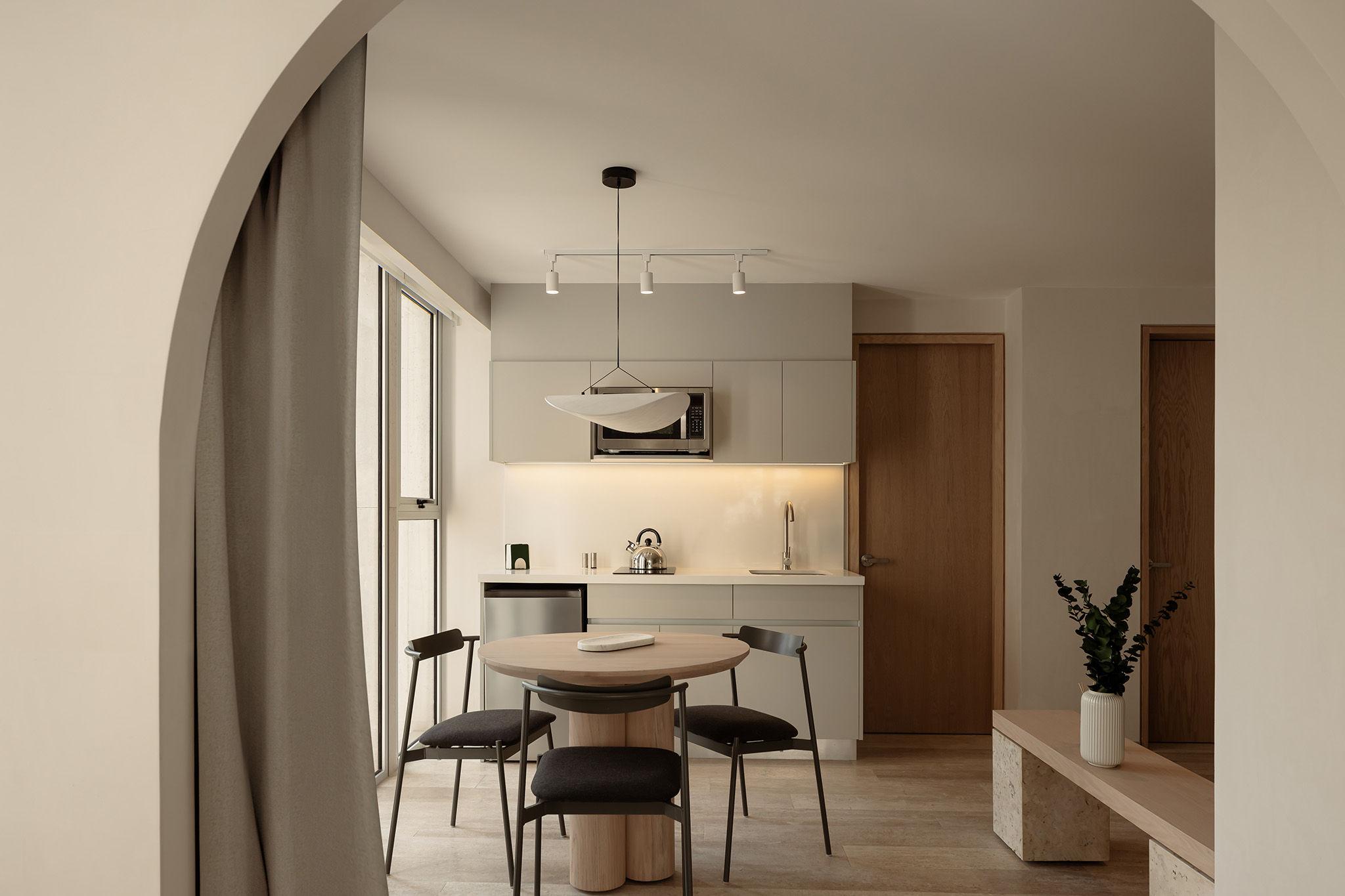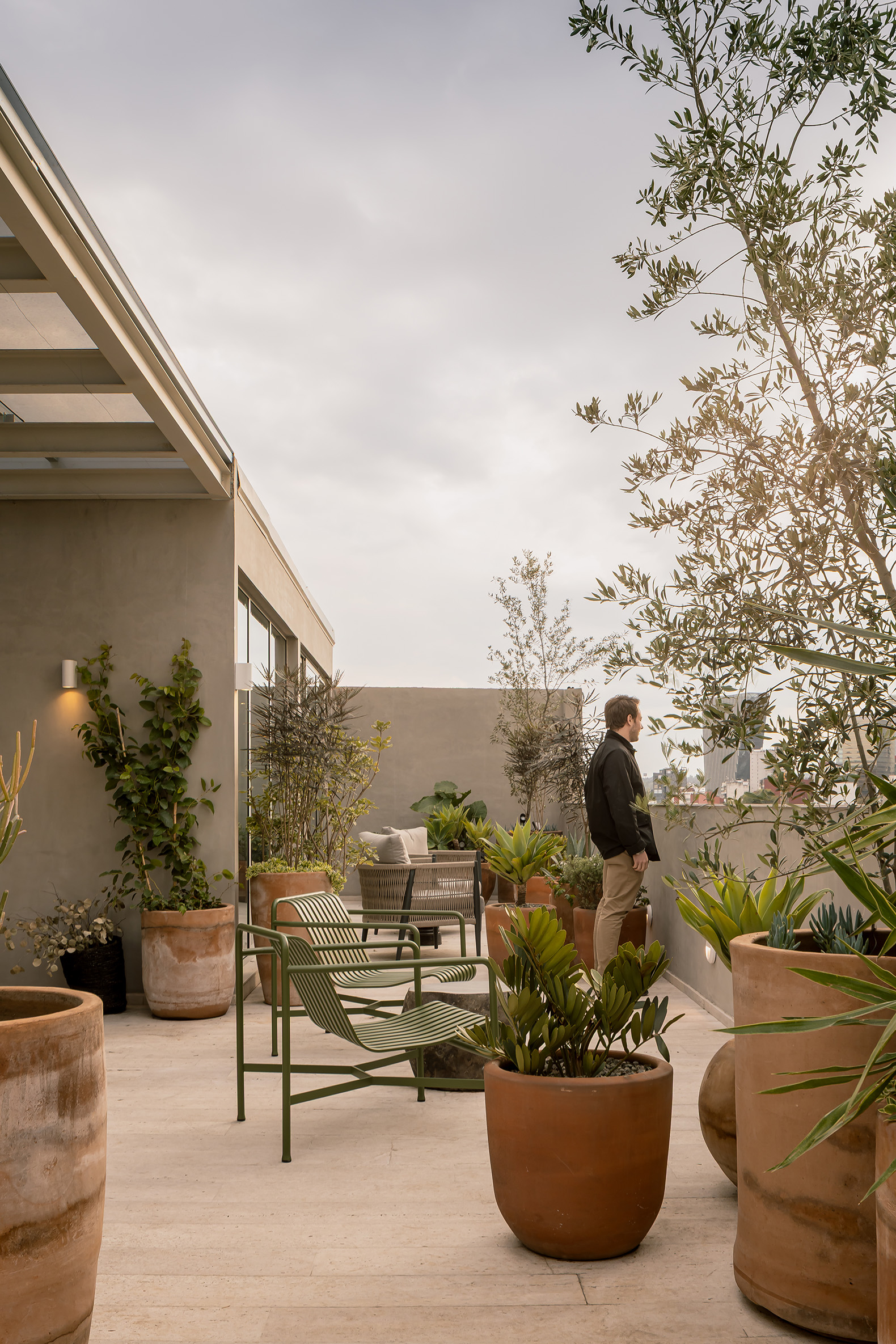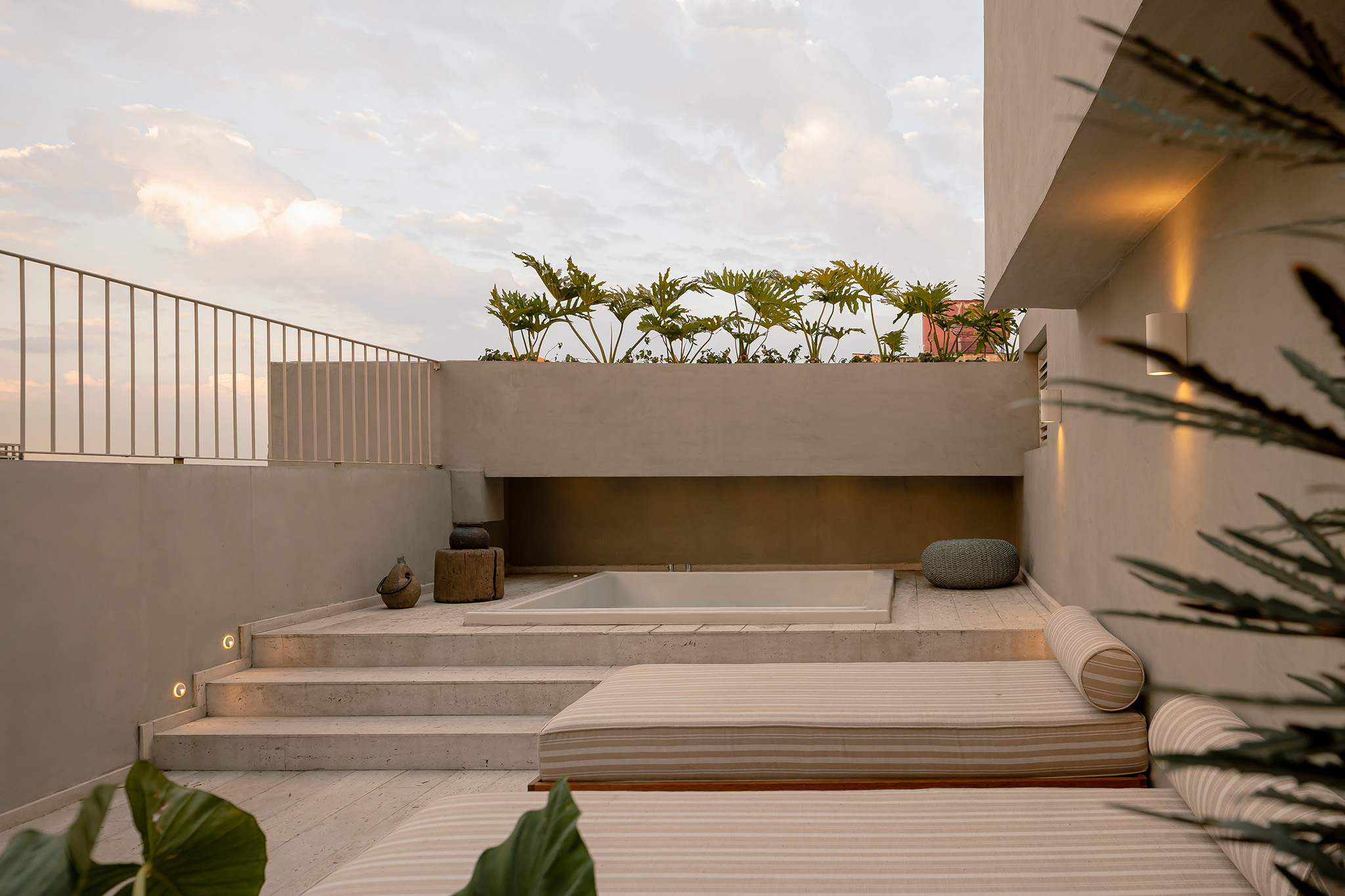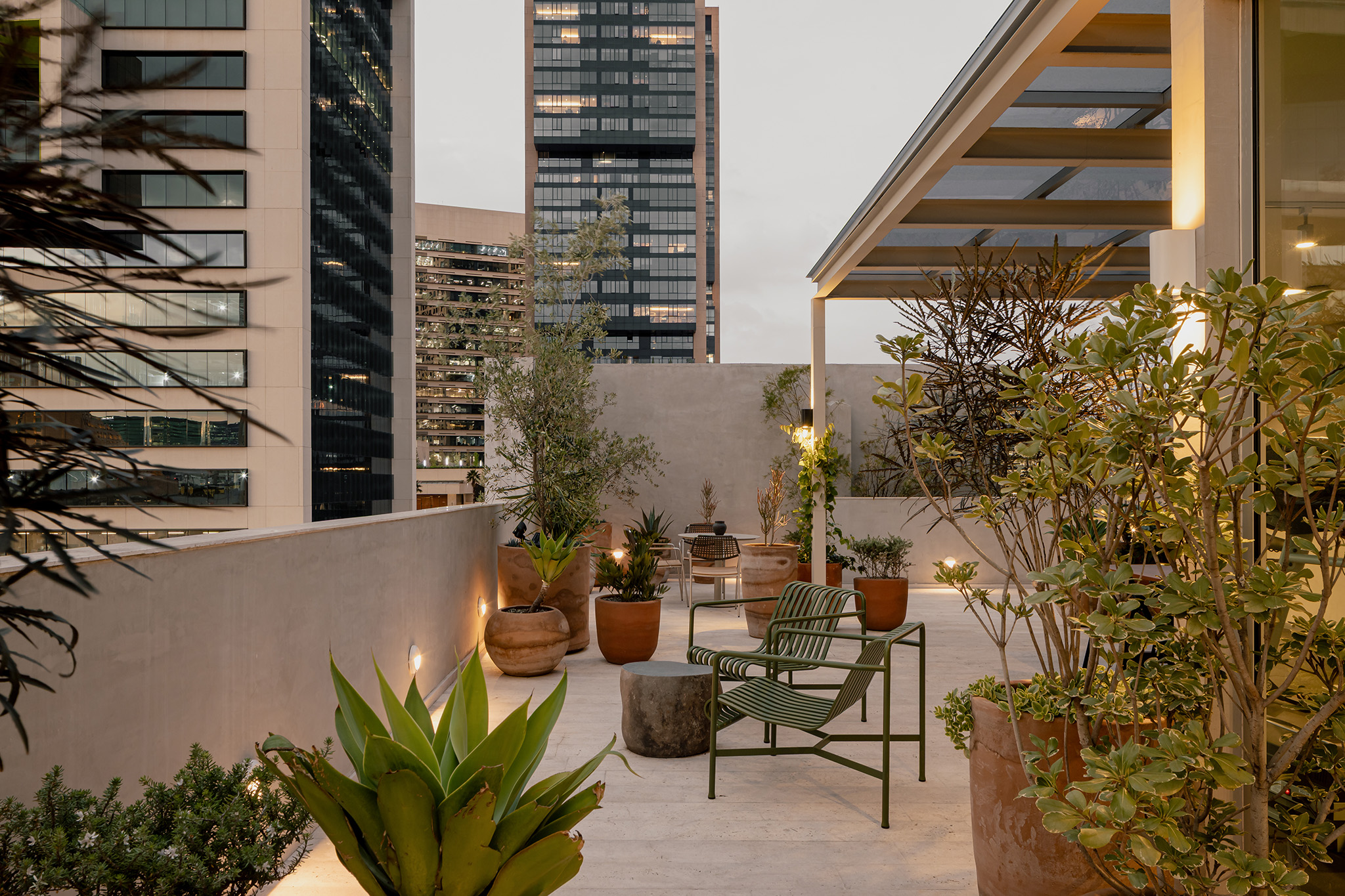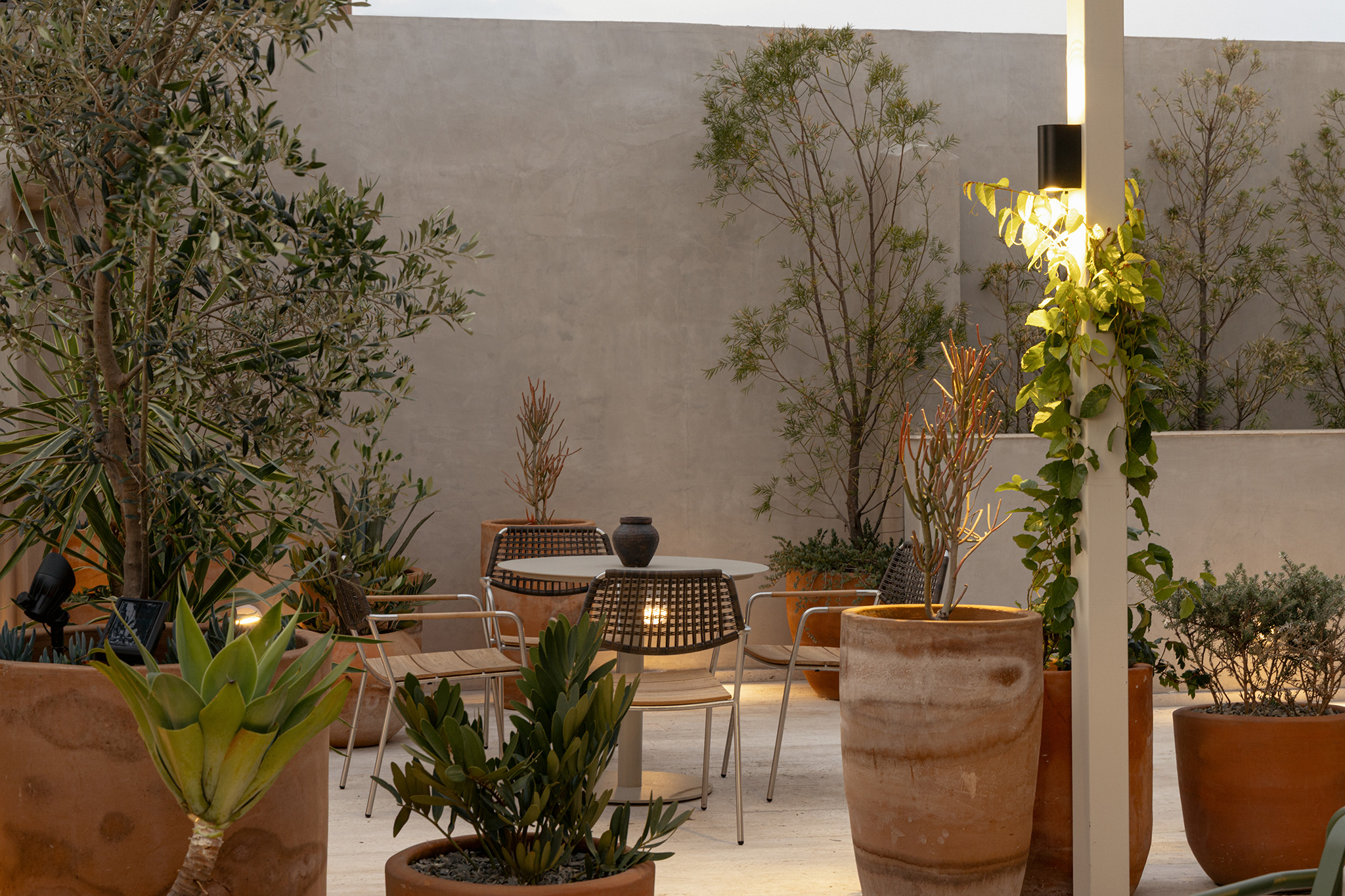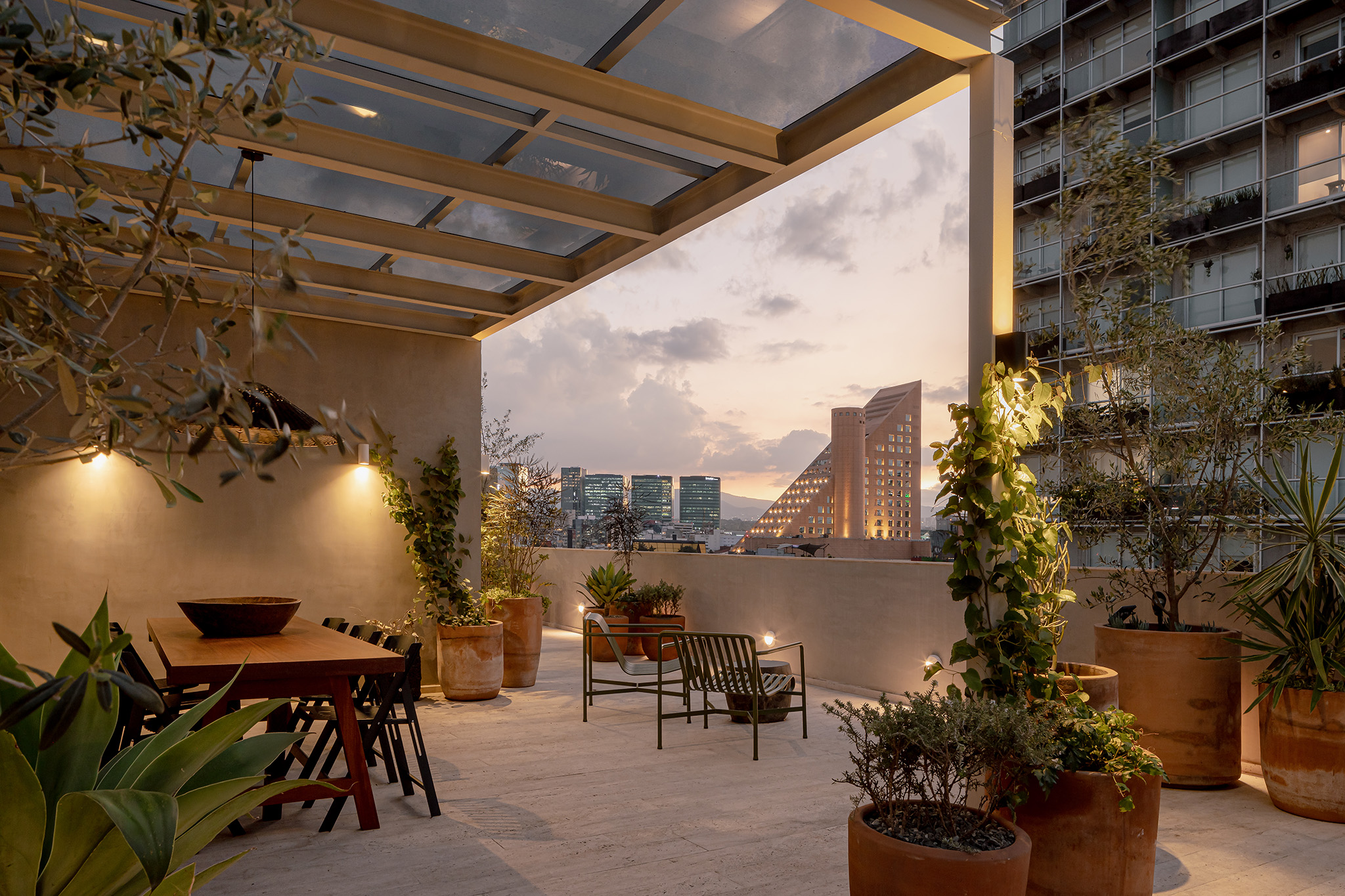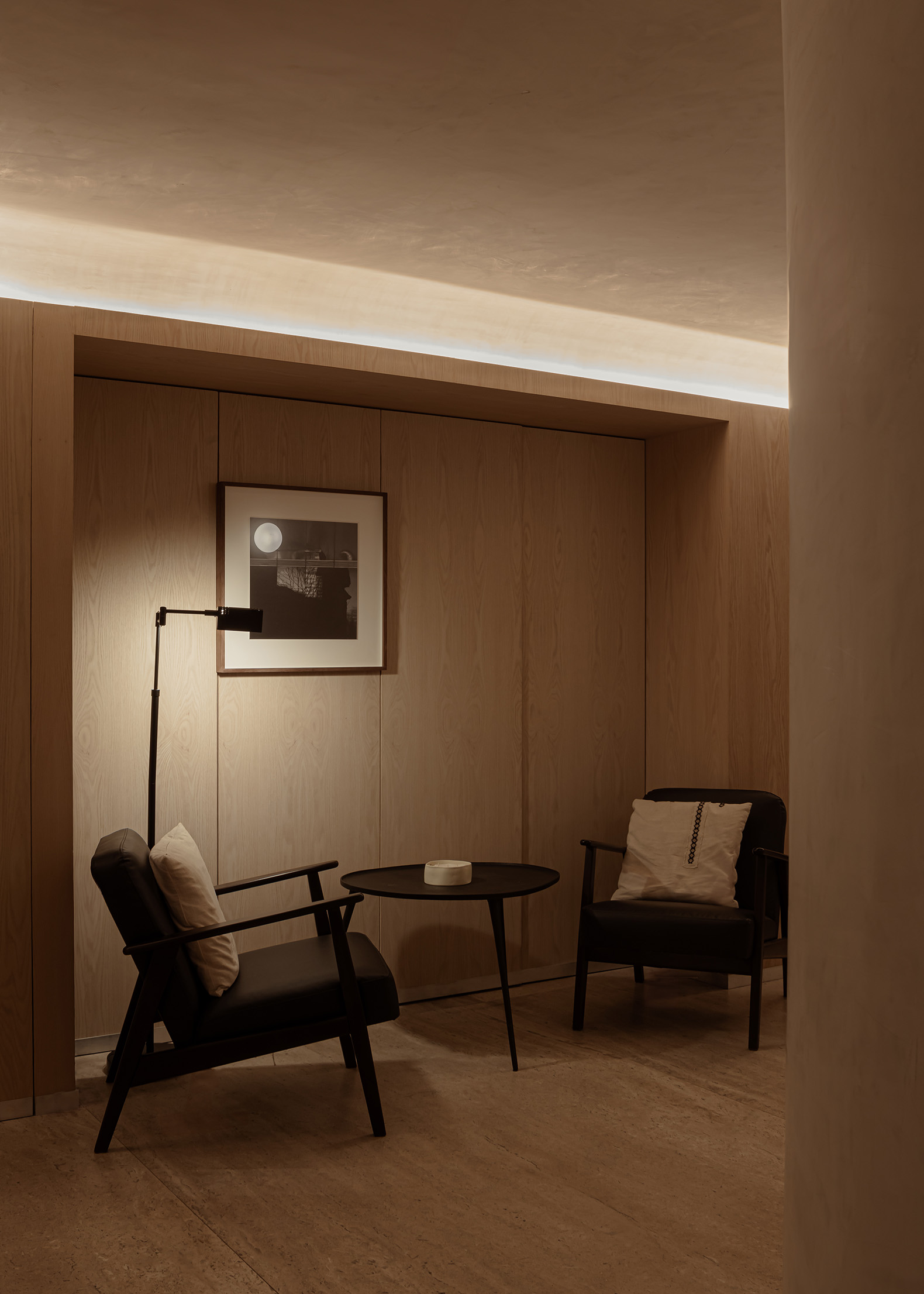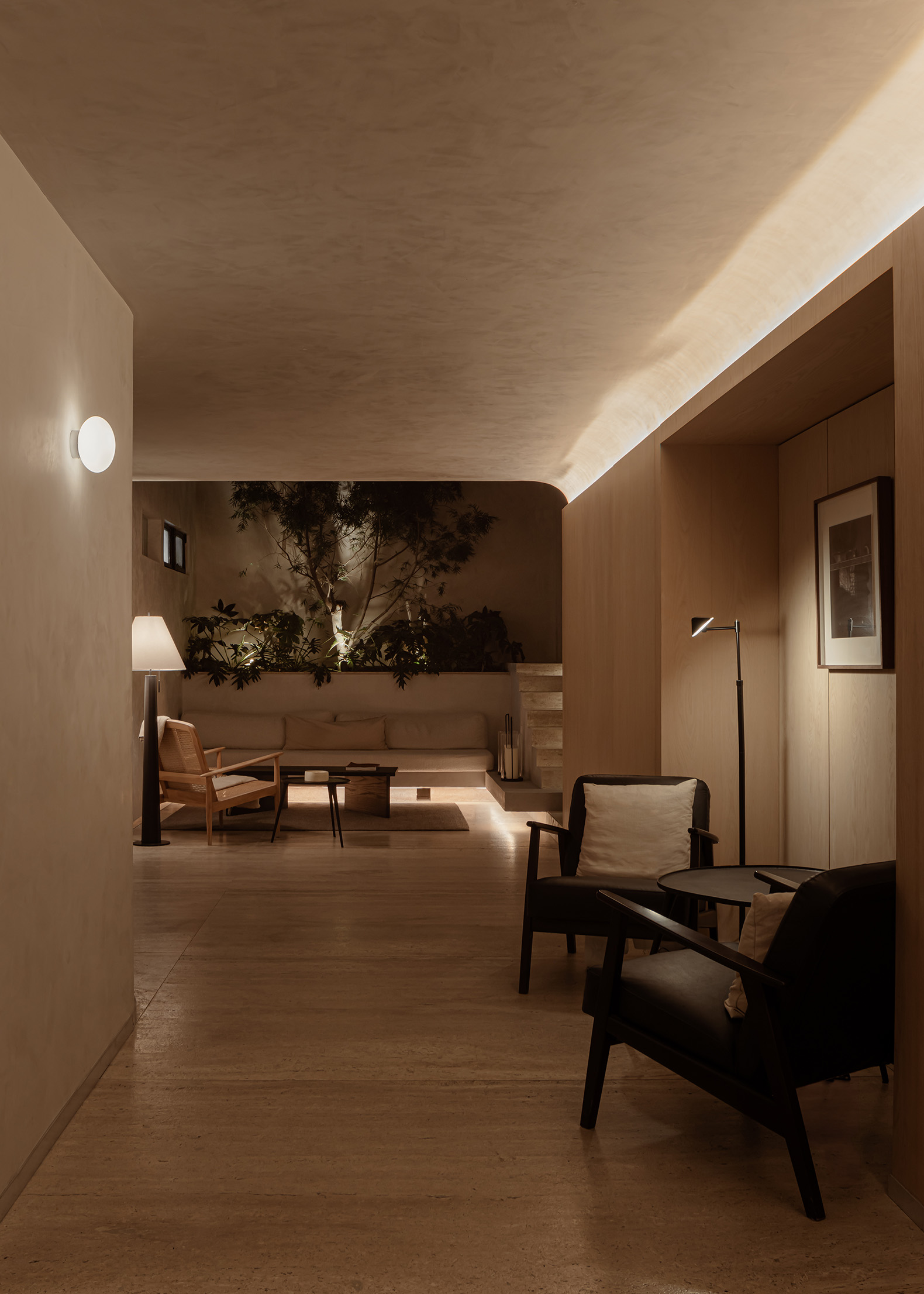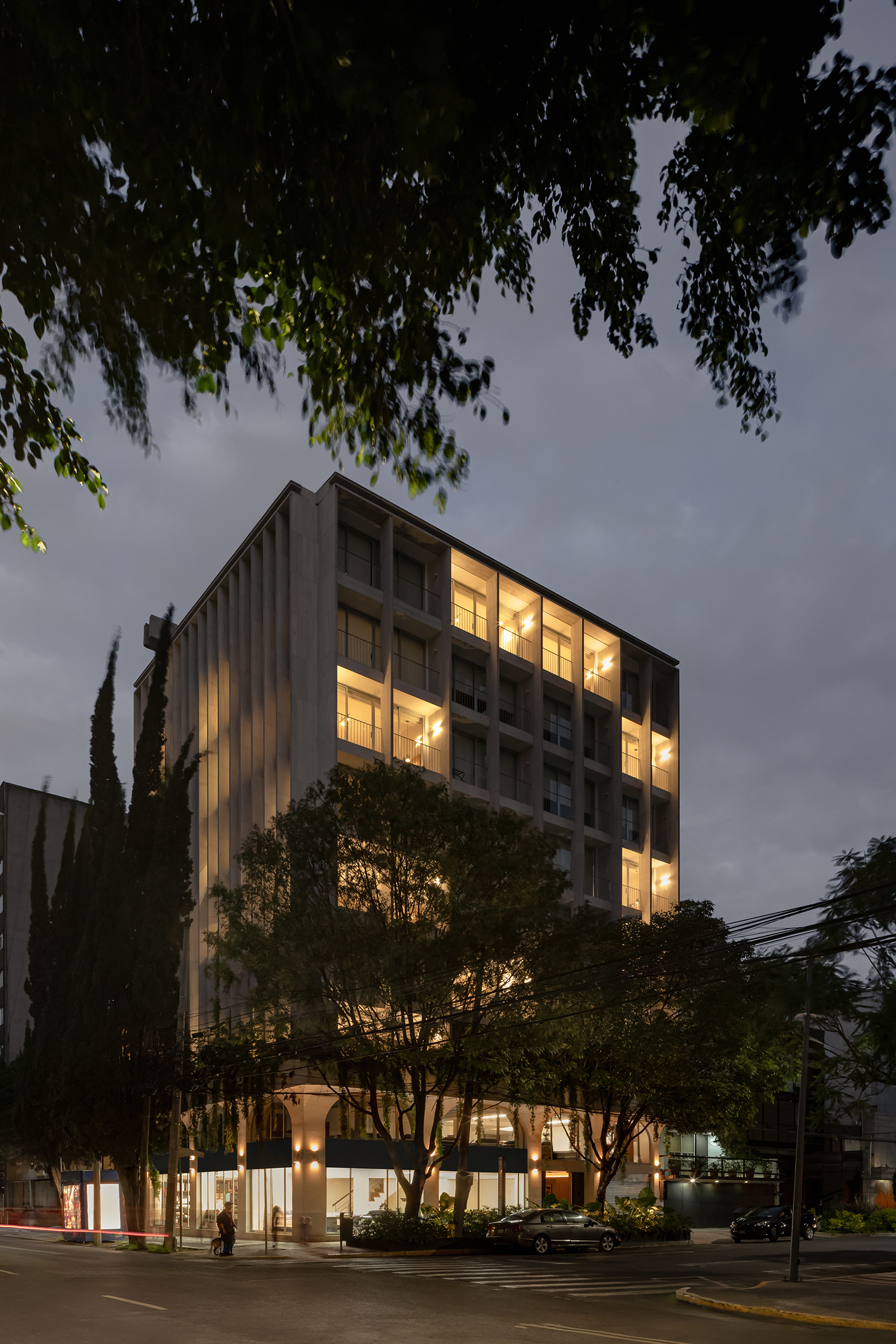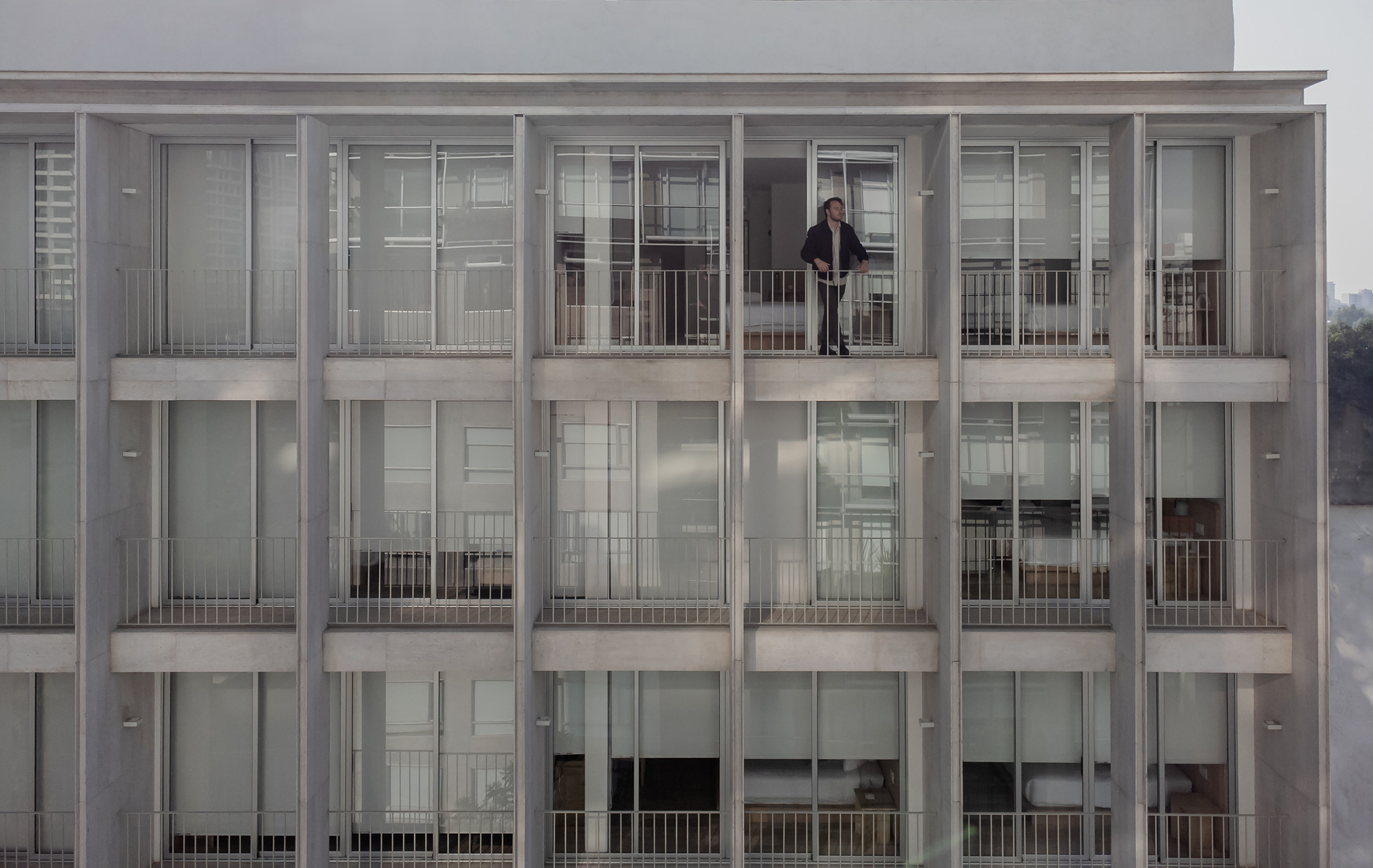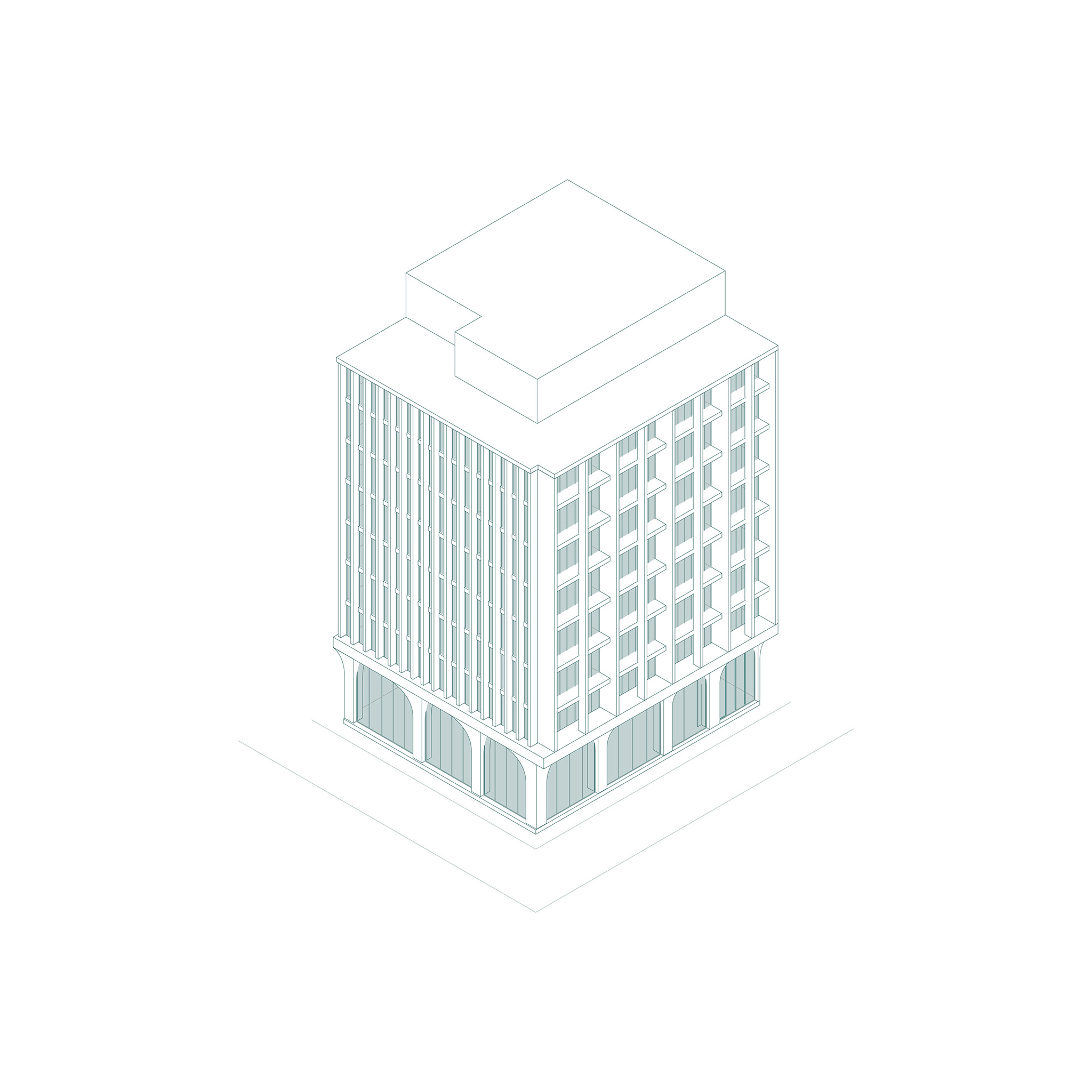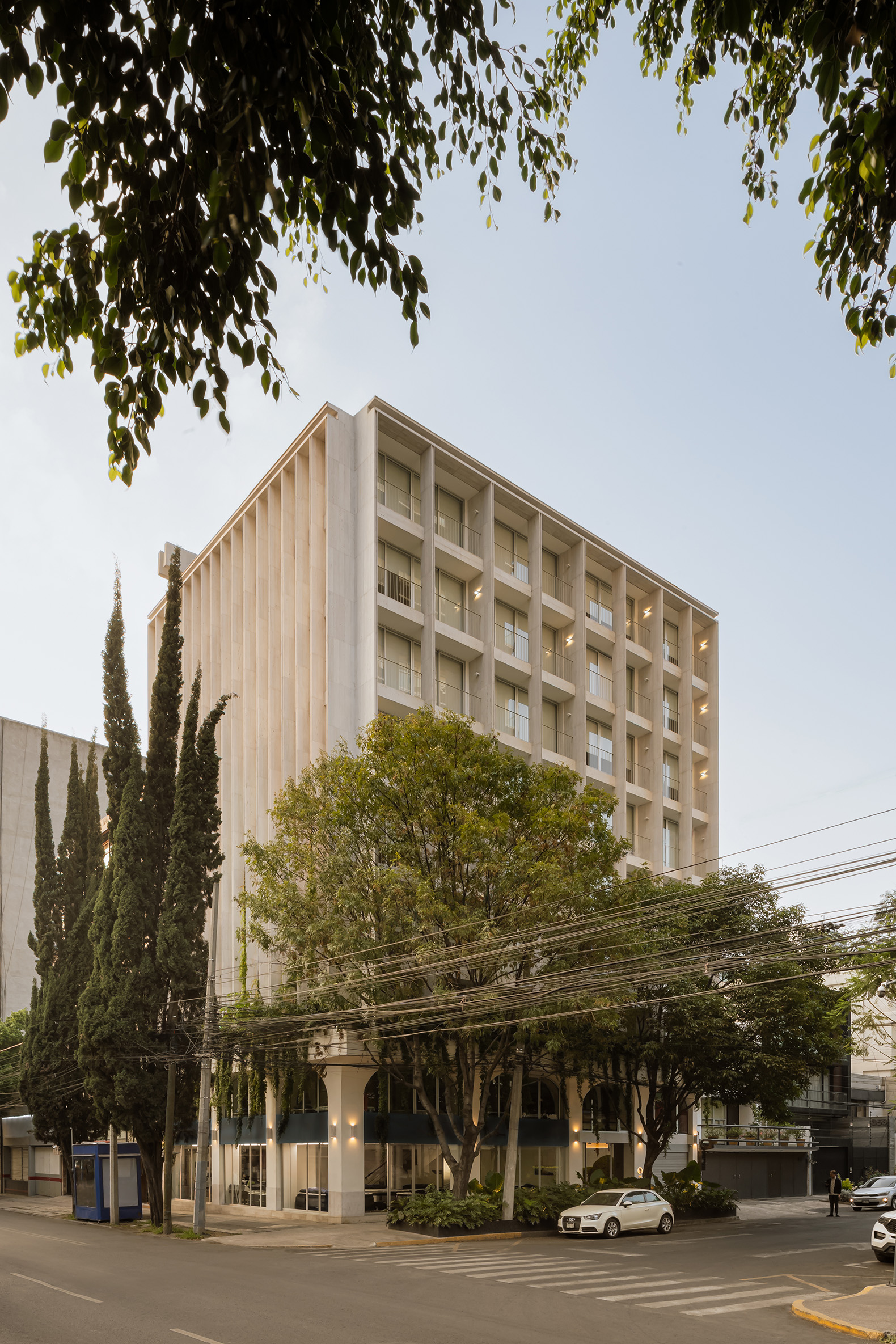
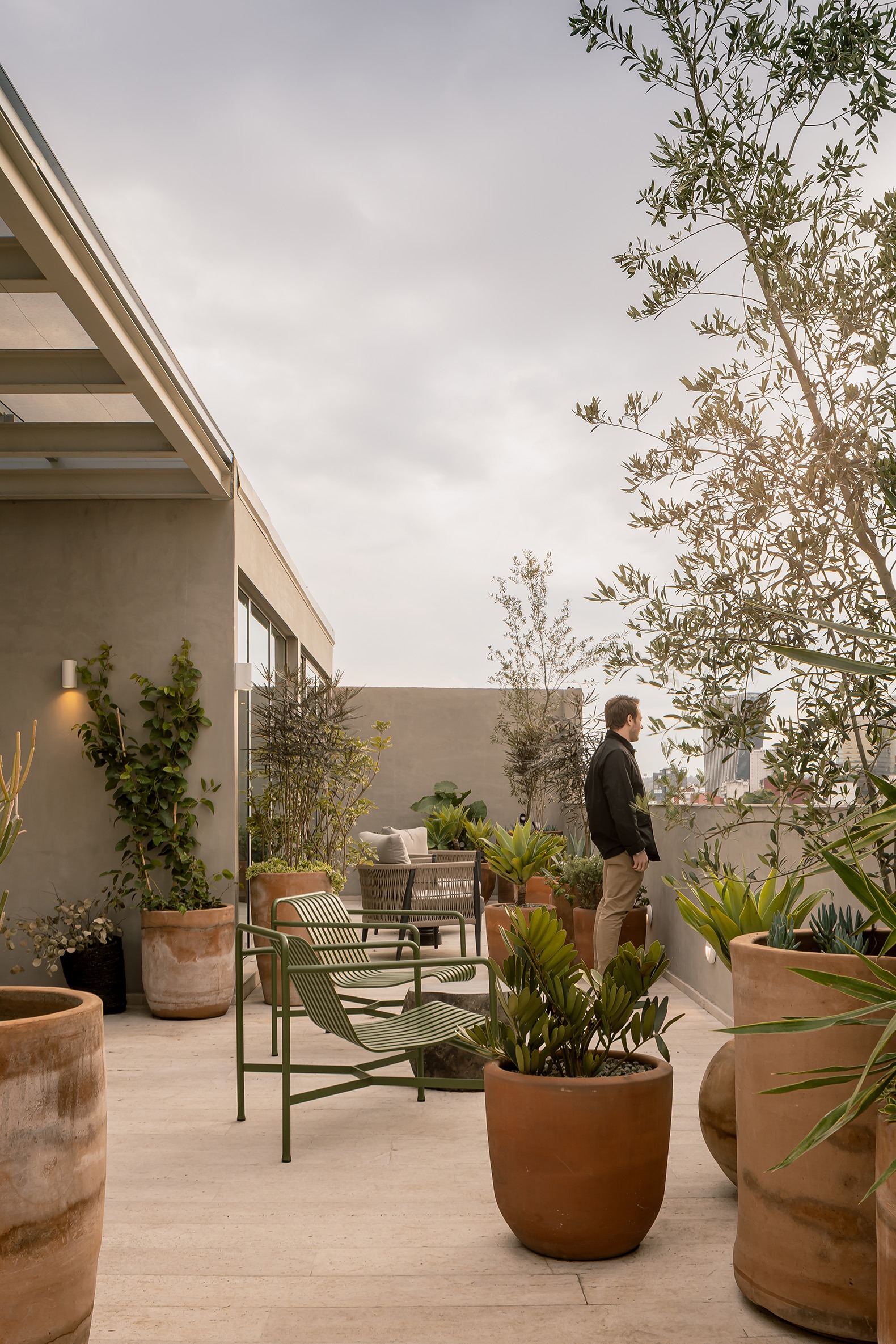
Organized across seven levels, the project undertaken by De Rungs Arquitectos and Firmaafeatures apartments ranging from 30 to 45 square meters, designed for short-term stays. These functional and adaptable units are built with warm-toned materials, resulting in a serene and welcoming atmosphere.
Instead of starting from scratch, the renovation proposal chooses to preserve a part of the site's architectural history, reinterpreting and repurposing elements of the existing structure. The intervention in the Edgar Allan Poe building is geared towards a sustainable vision, demonstrating how reuse, as opposed to demolition, significantly reduces the environmental impact of construction.

Edgar Allan Poe by De Rungs Arquitectos + Firmaa. Photograph by Ariadna Polo.
Project description by De Rungs Arquitectos y Firmaa
"The challenge was not only to restore the building, but also to understand how it could be useful again in its surroundings. We decided to preserve it because it still has something valuable to offer the city”.
Alexandre de Rungs.
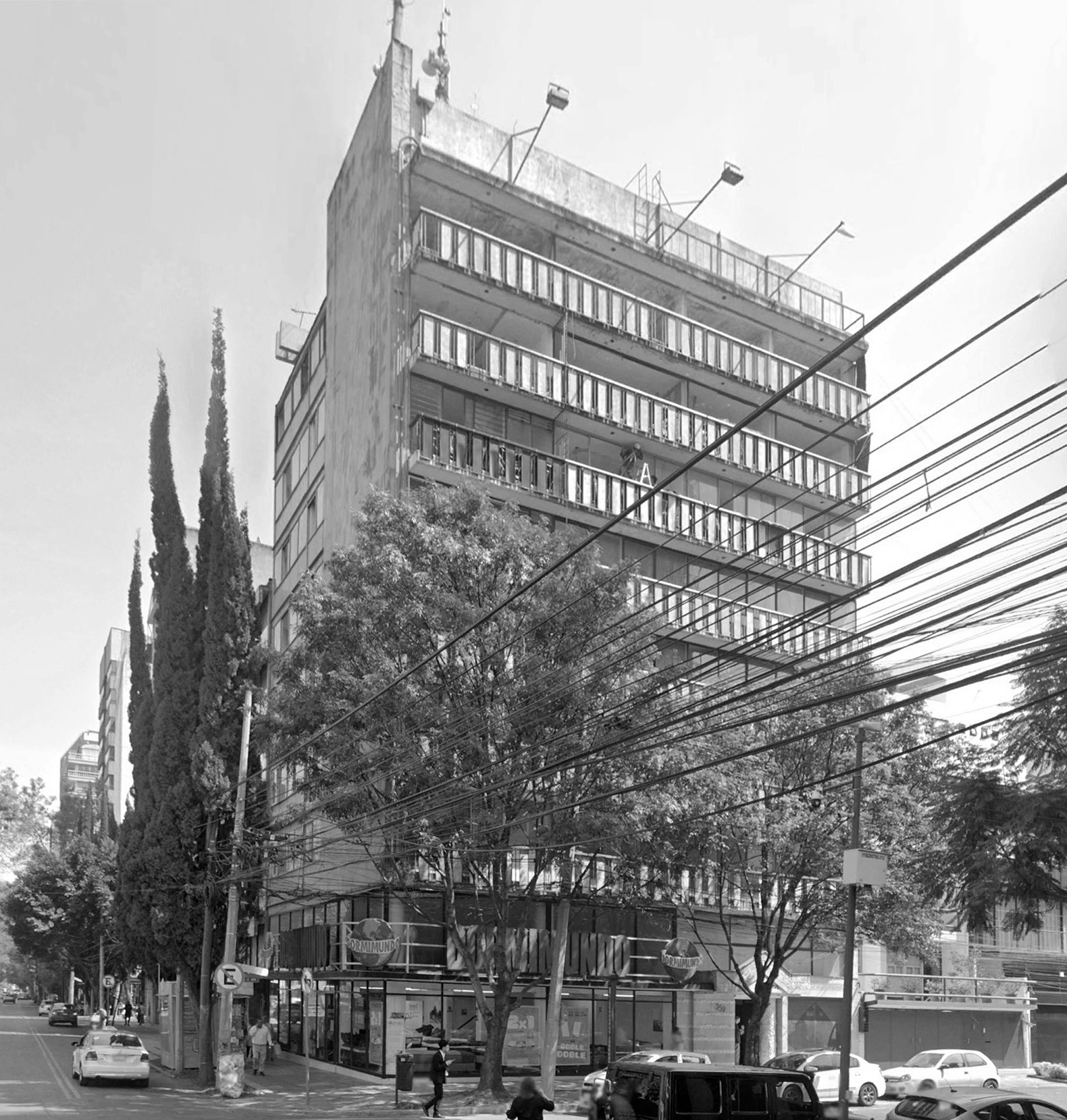
Located in the Polanco neighborhood of Mexico City, Edgar Allan Poe building was originally constructed in 1957 as office space. Over time, the property fell into disuse and disrepair, though the structure remained sound. This presented an opportunity to transform the building into a residential complex designed primarily for short-term stays.
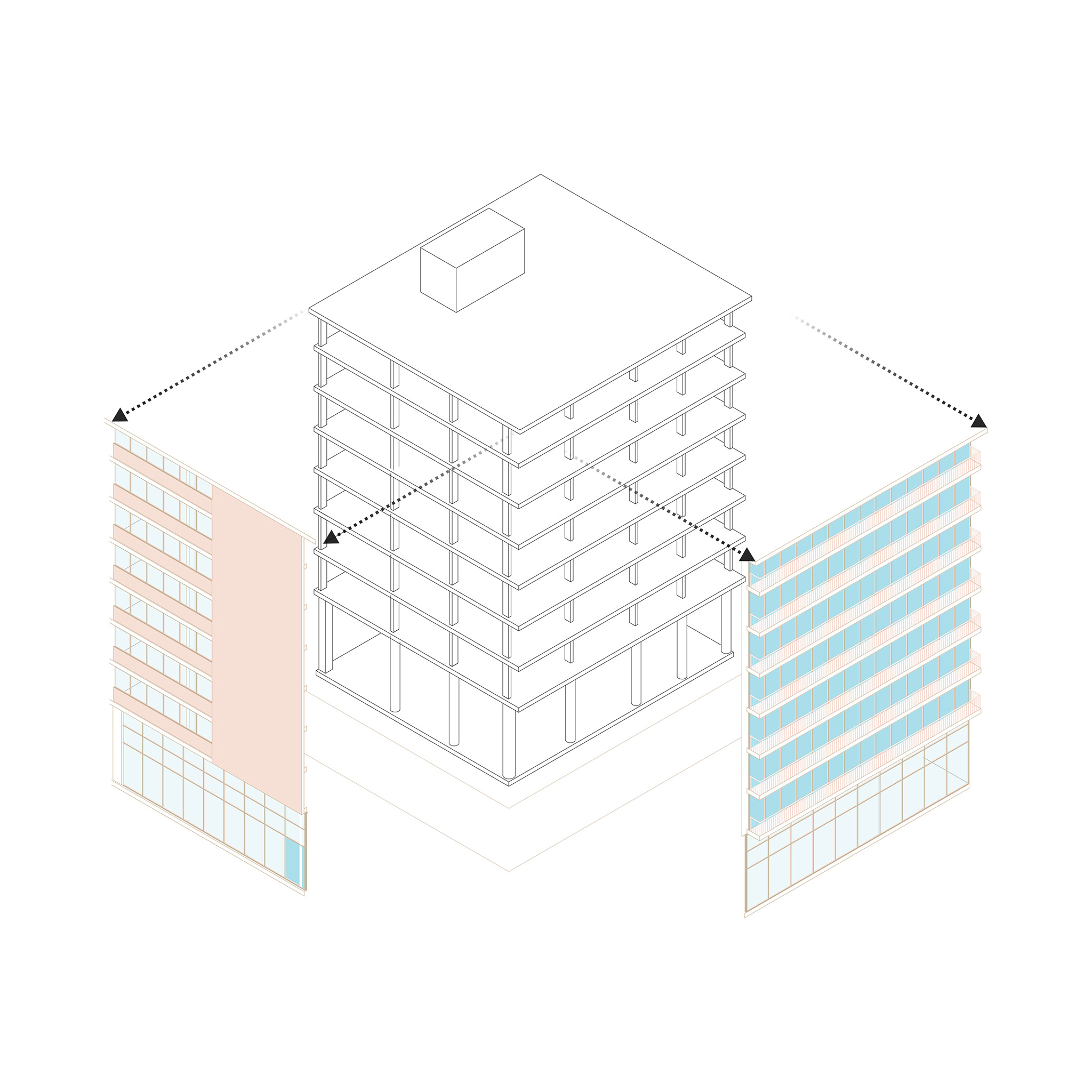
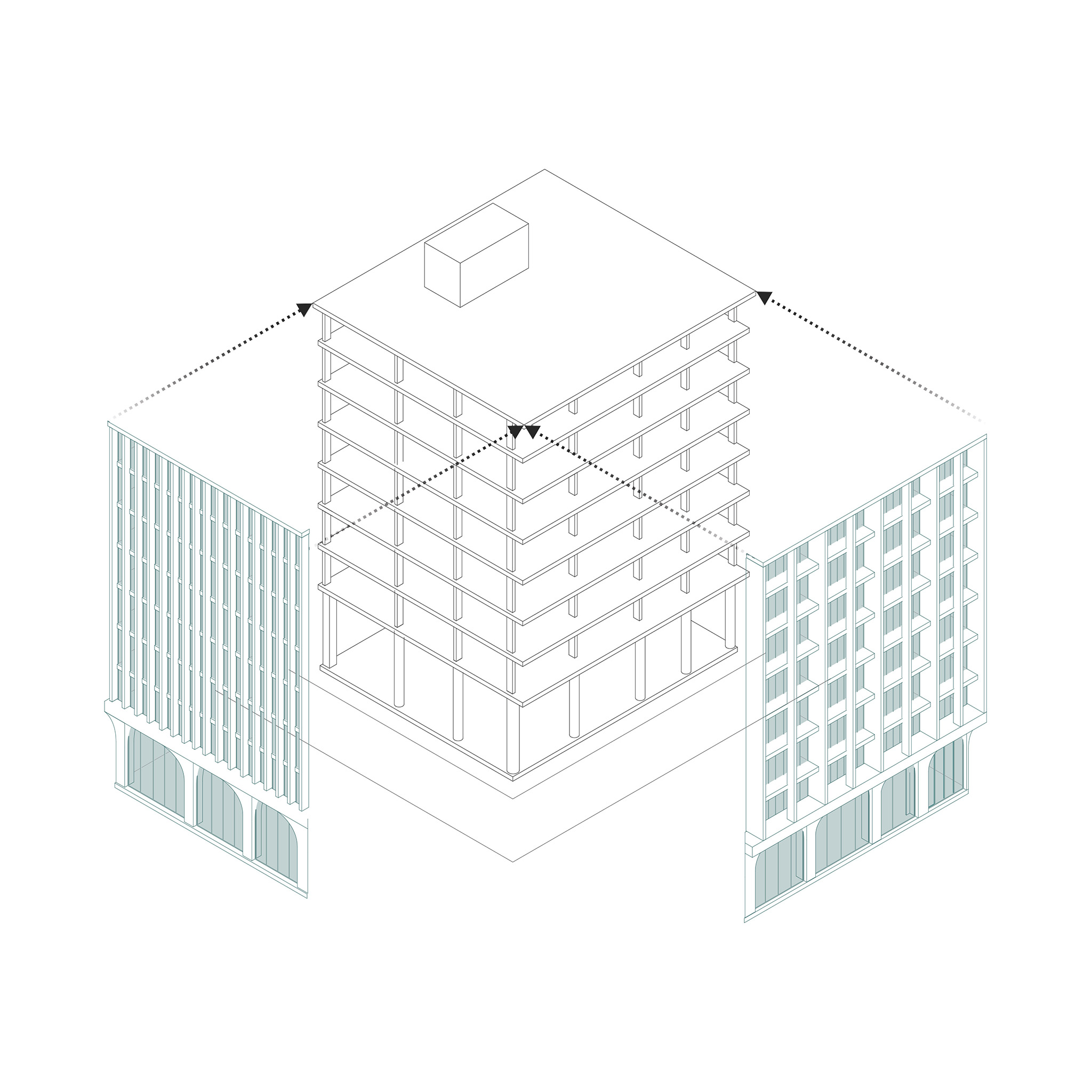
The goal was not just to renovate the building, but also to expand its potential. While preserving its columns, vertical core, and service ducts, the interior layout, façades, and material palette were completely redefined. This approach reduced the environmental impact significantly compared to new construction while preserving an important chapter of the site’s architectural history.
New urban living
The renovated building now contains residential units, ranging from 30 to 45 square meters, distributed across seven floors plus a ground floor. Each unit is compact yet functional, designed for contemporary urban living. They are efficiently connected, highly practical, and sensitive to the rhythm of the city.
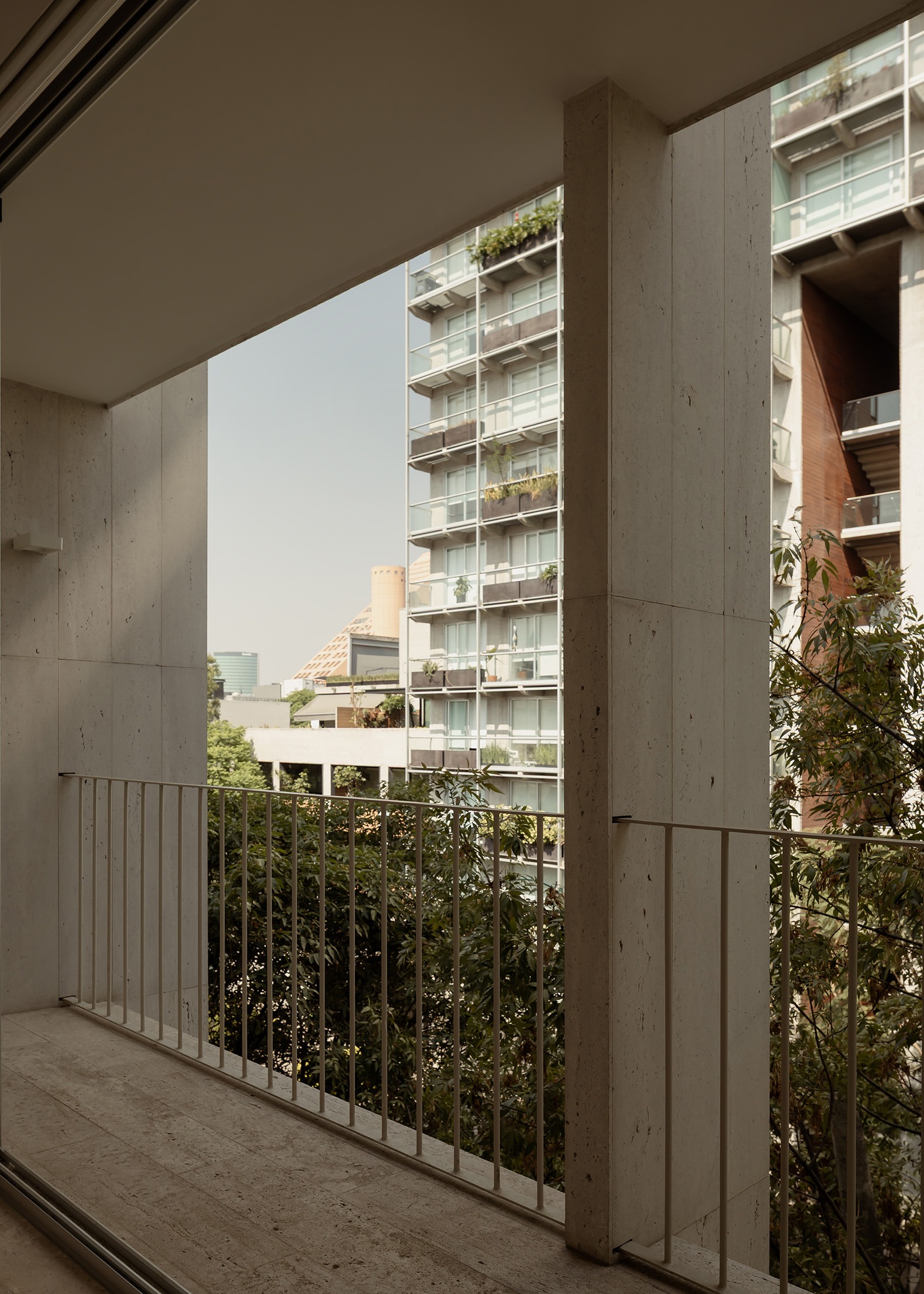
Inside, locally sourced materials, warm tones, and natural textures foster a sensory atmosphere where comfort meets practicality.
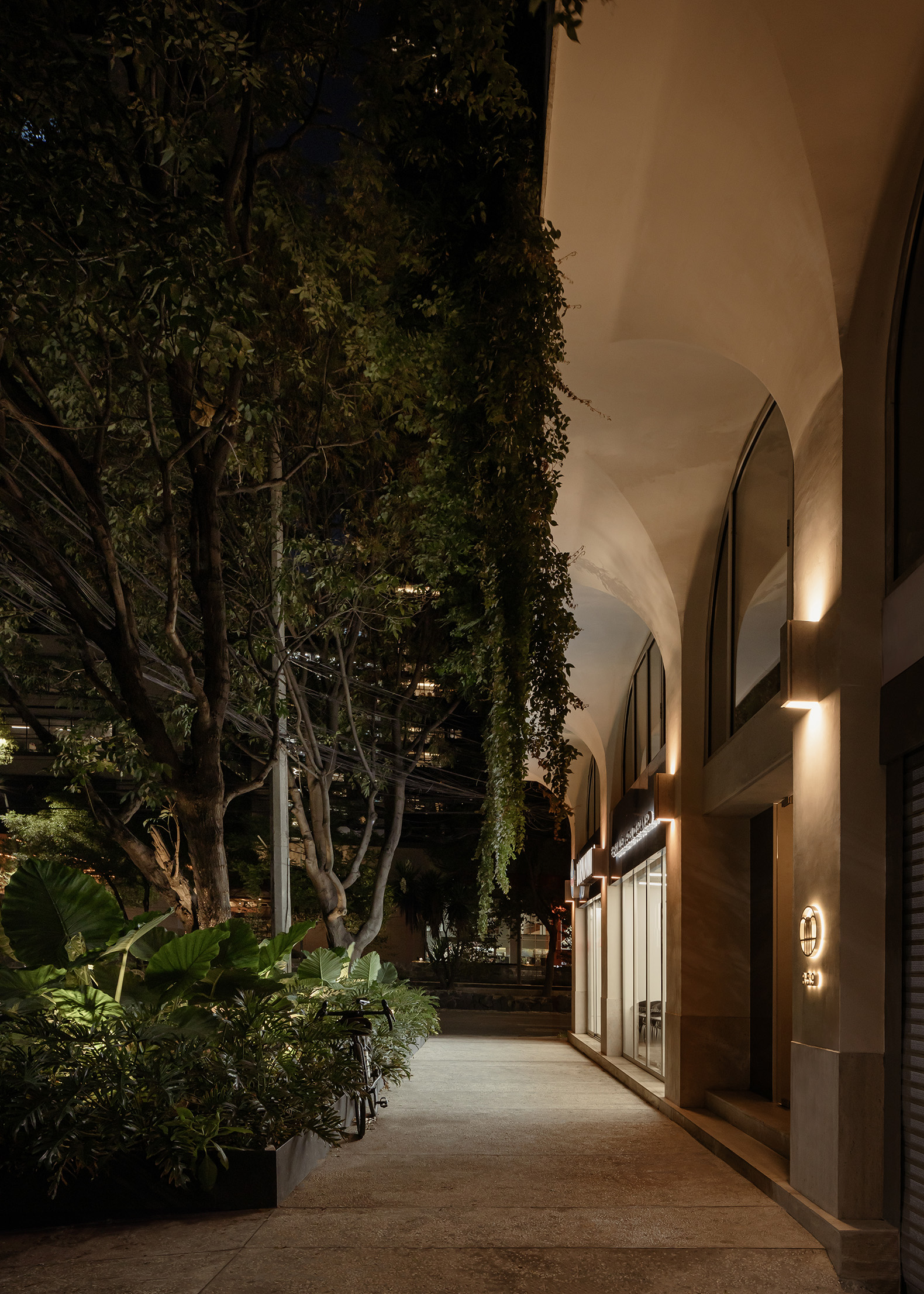
A façade that mediates with the city
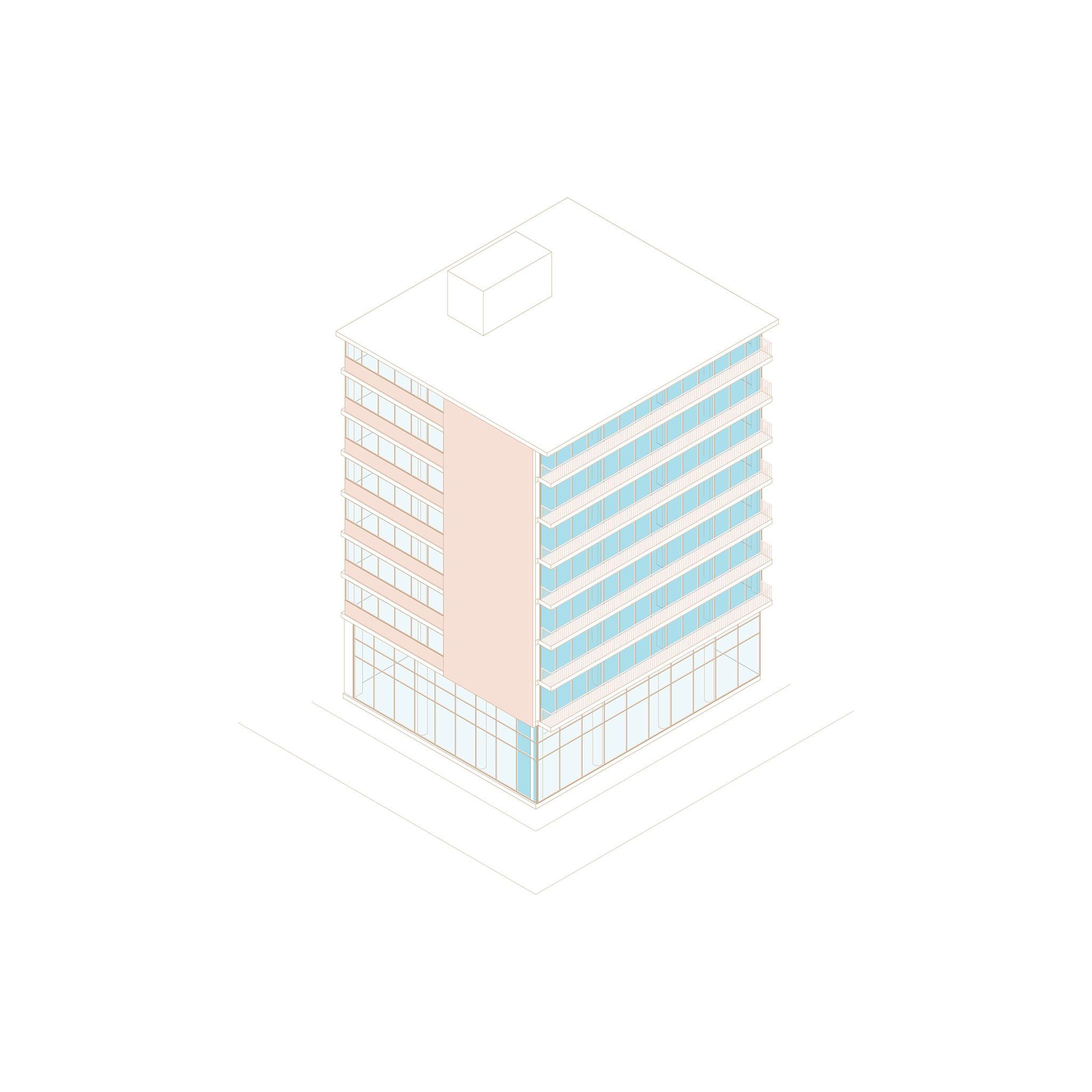
One of the key design challenges was the building’s position between two contrasting contexts: the calm, residential character of Edgar Allan Poe Street and the high traffic volume of Ejército Nacional Avenue.
To address this dual condition and factors such as sunlight, ventilation, noise, and views, the architects developed an envelope that filters and regulates the relationship between the interior and exterior, protecting and connecting the building to its surroundings simultaneously.
“The building sits between two very different streets: one quiet and the other a busy avenue. This inspired us to design an envelope that could respond to both. The façade filters light, noise, and views, creating an interior space that is connected to its surroundings without being overwhelmed by them.”
Alexandre de Rungs.

Rather than erasing what already existed, the project embraces adaptation as a sustainable approach to producing housing. This strategy extends the life of the city’s built environment and honors the passage of time.