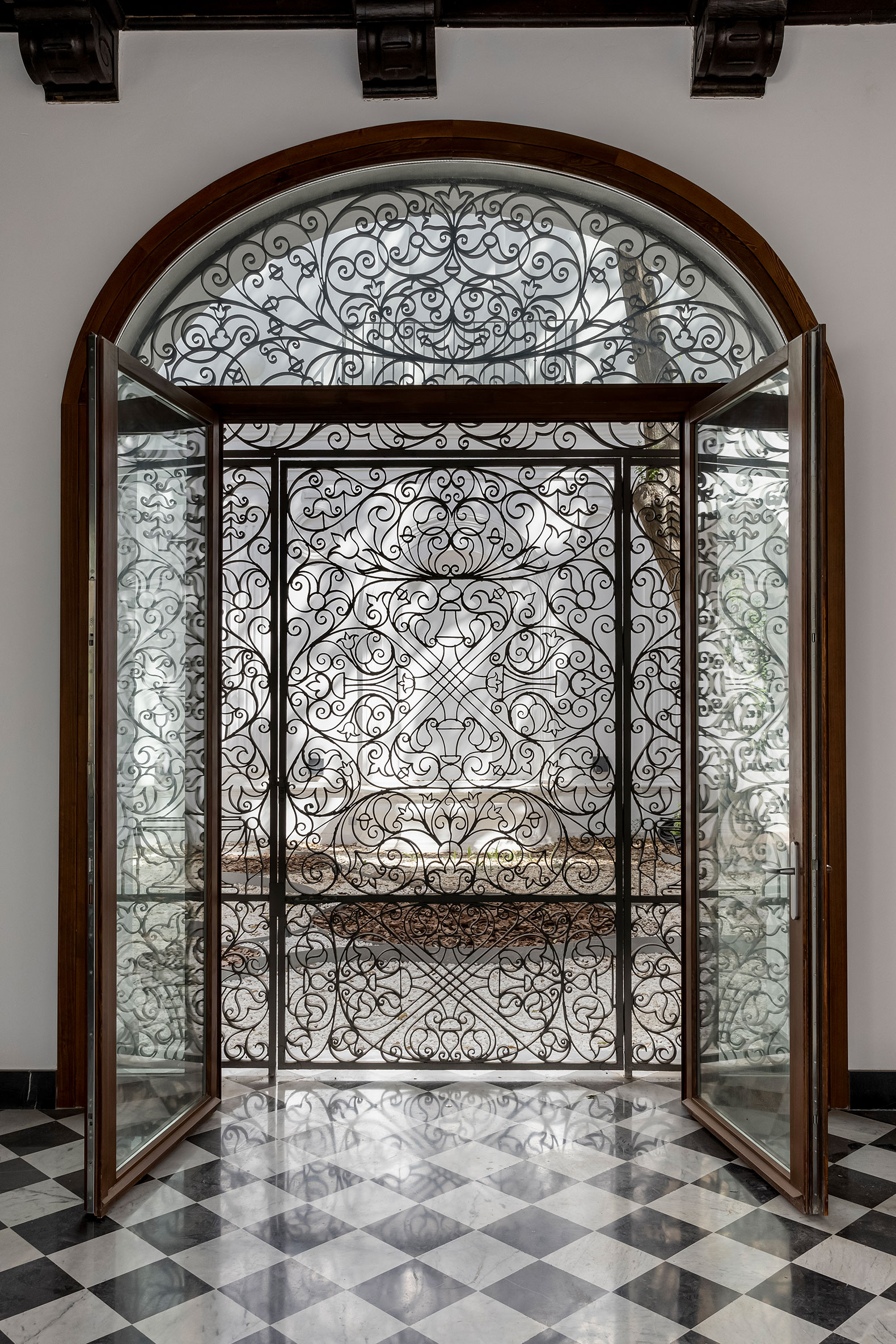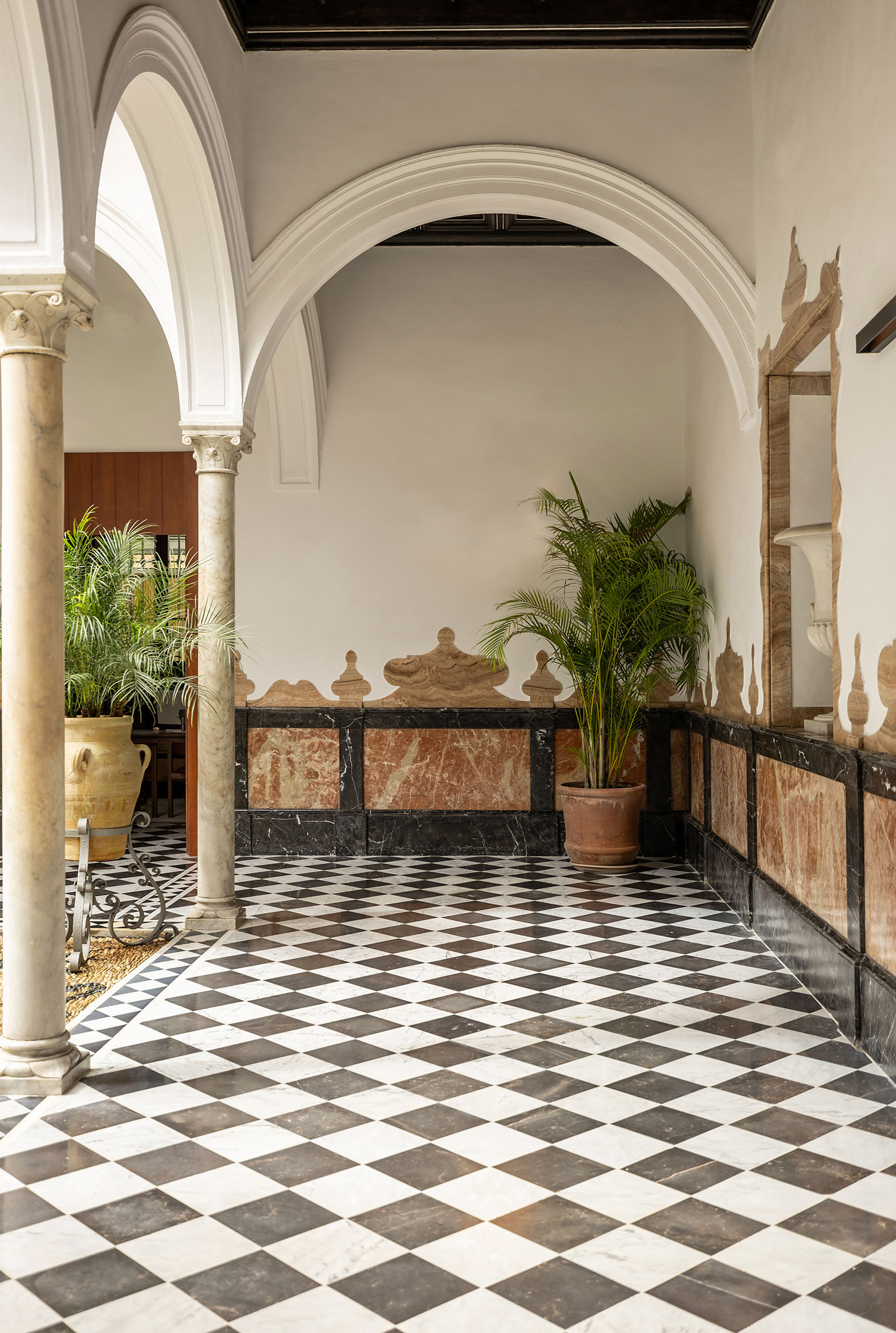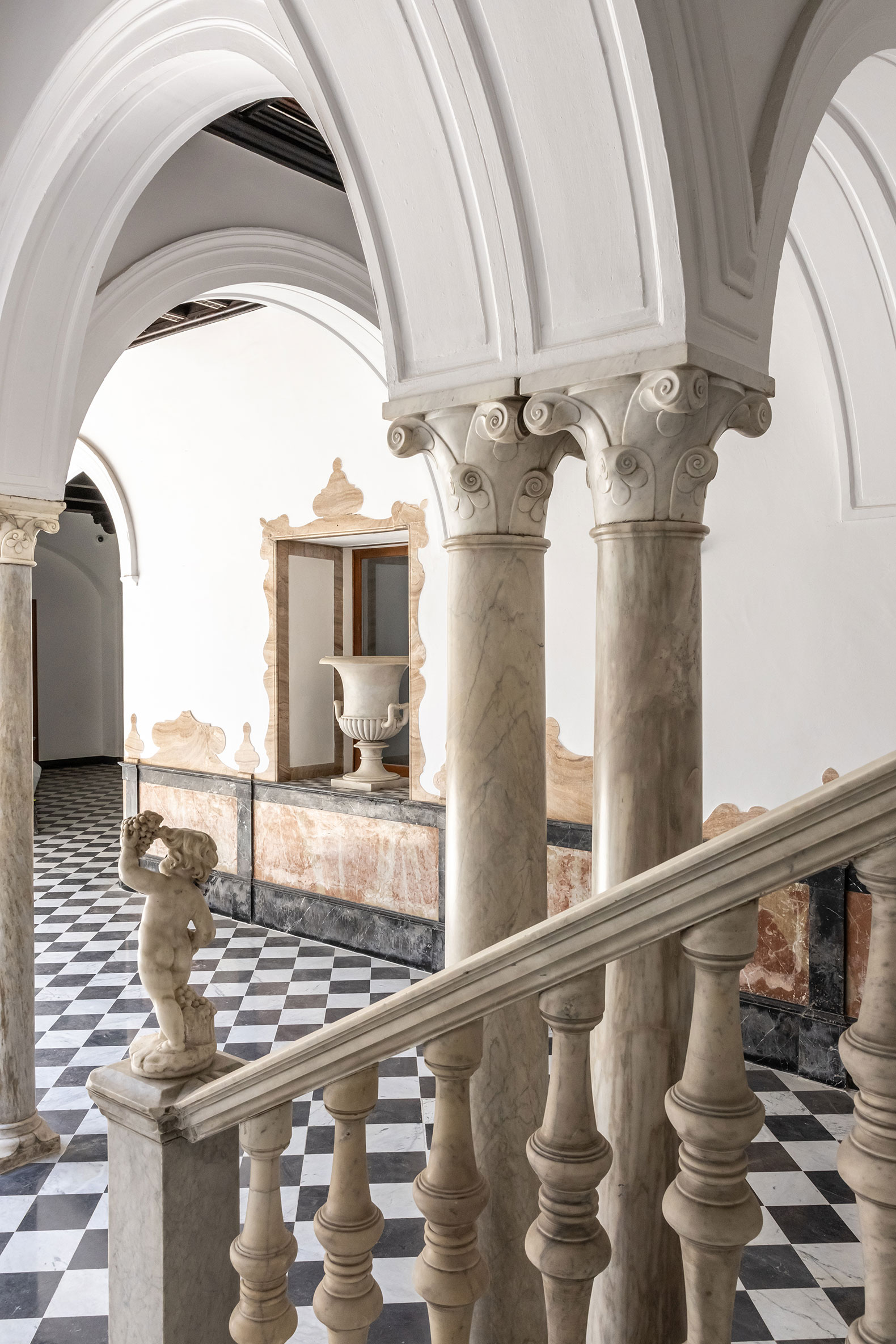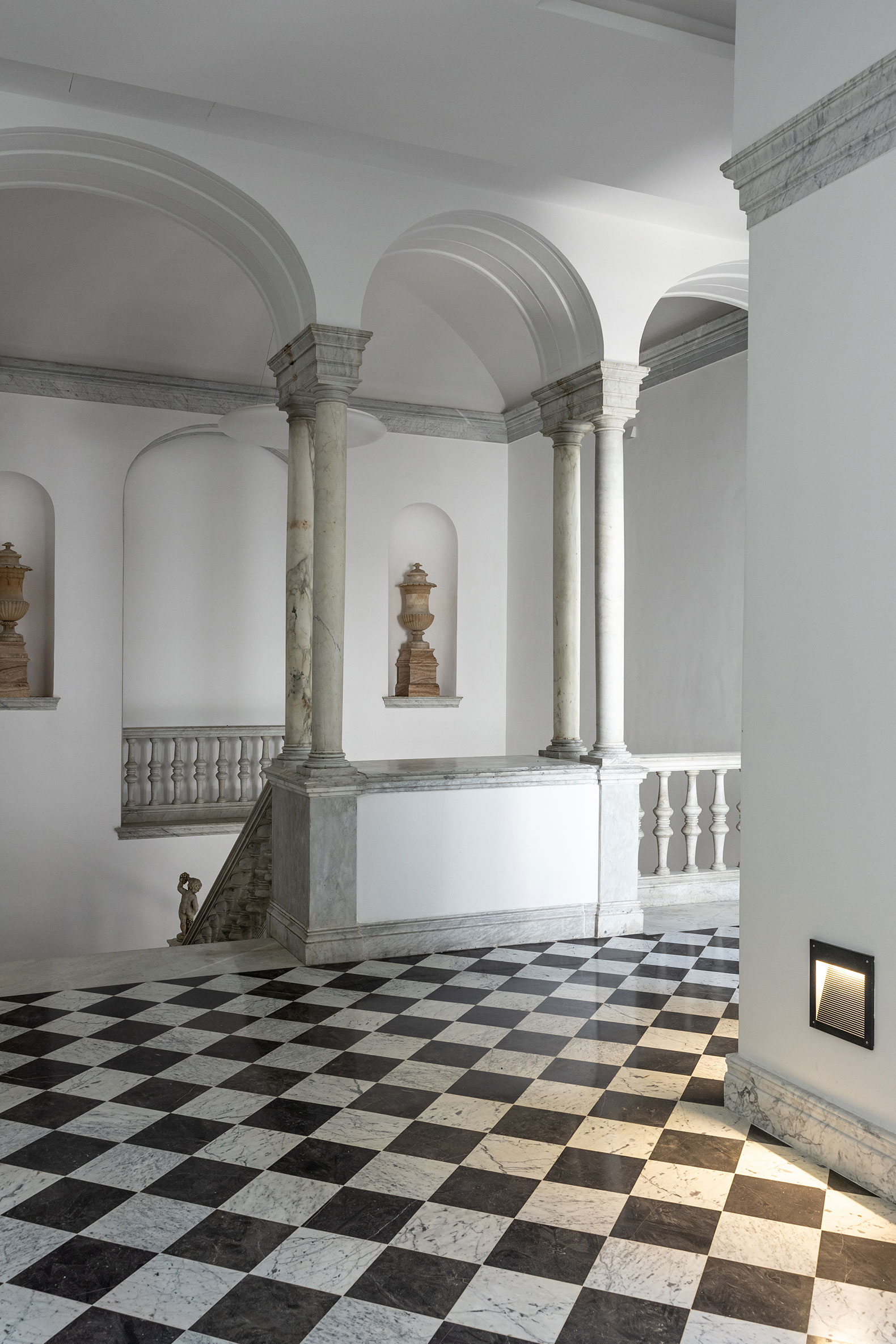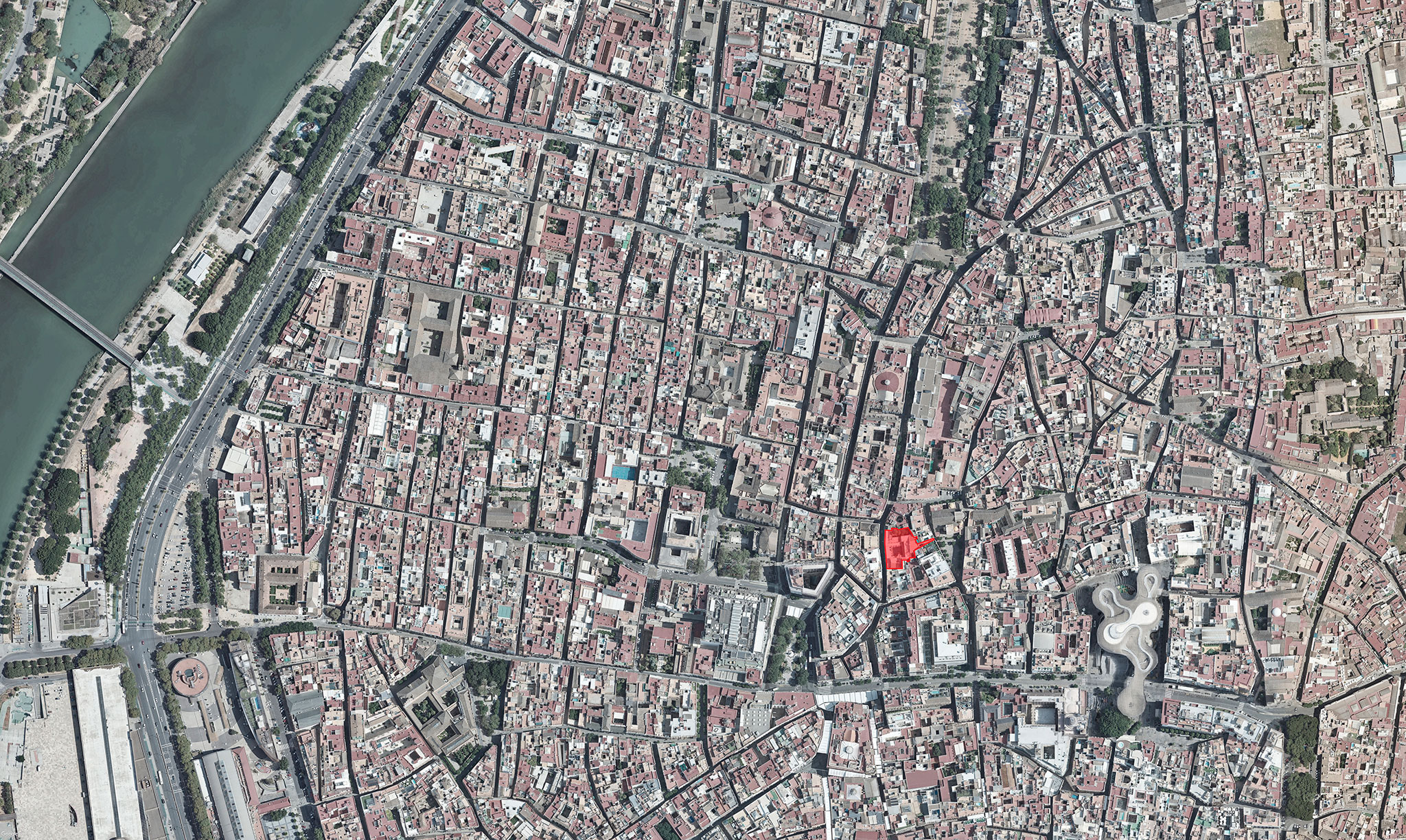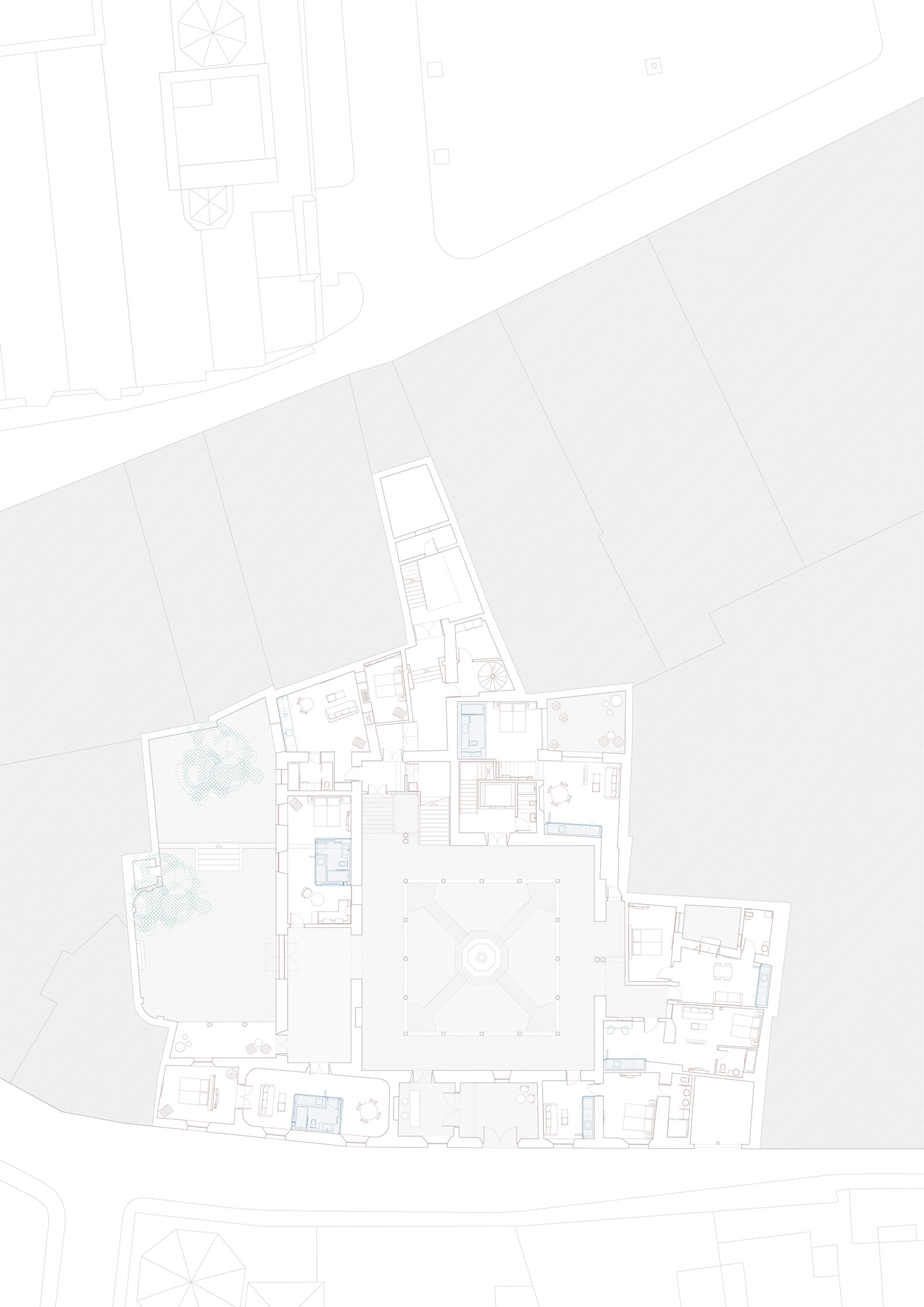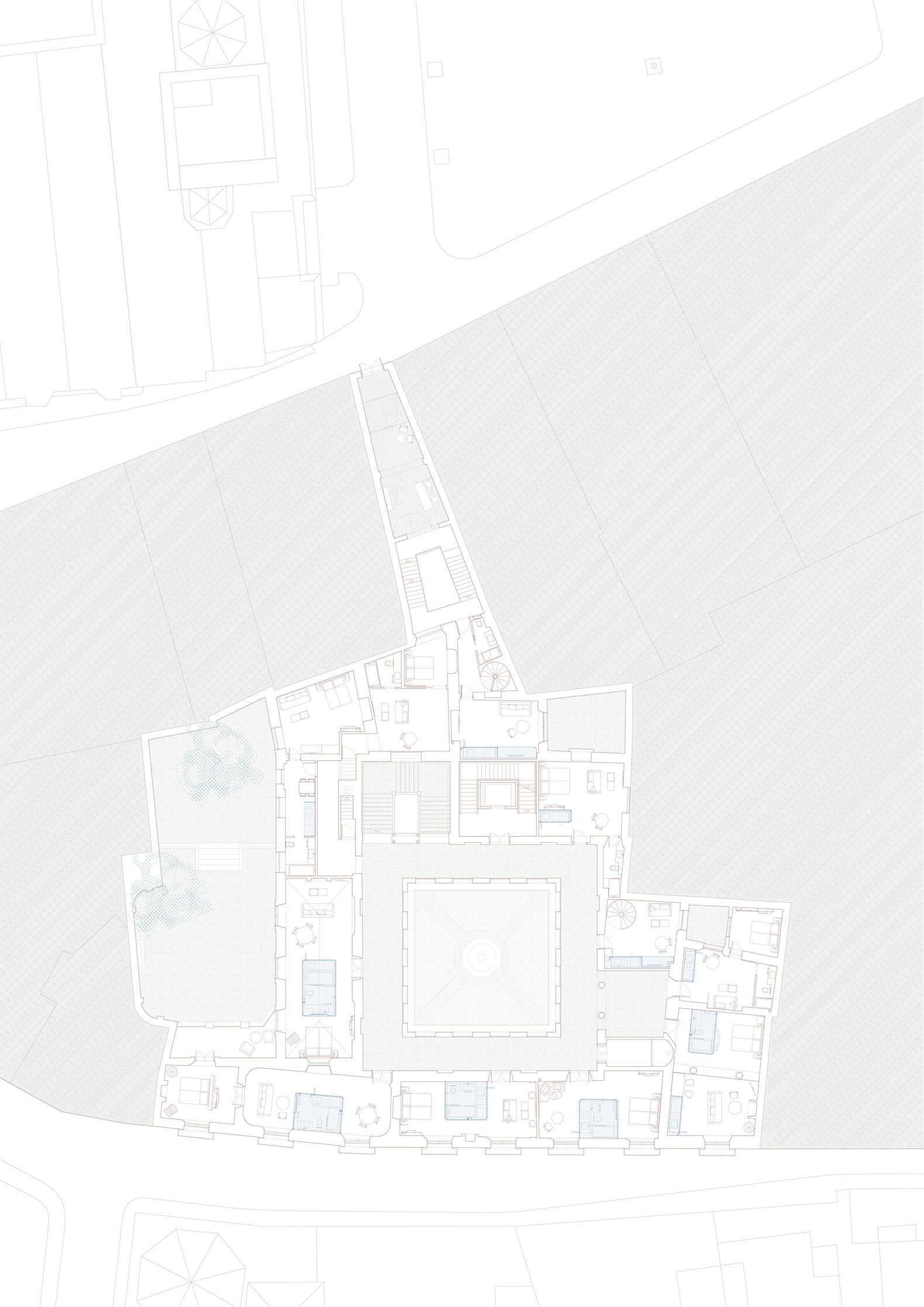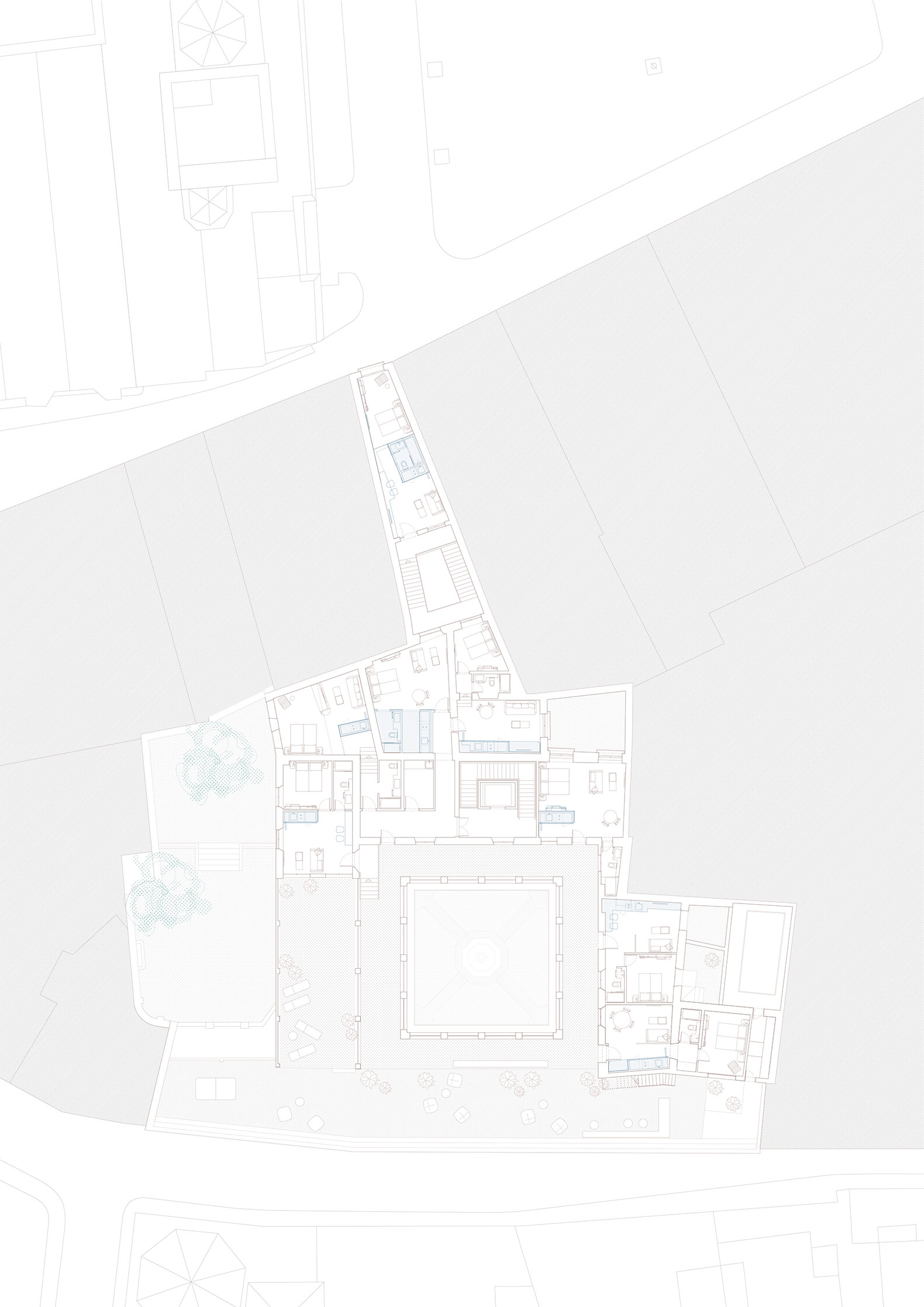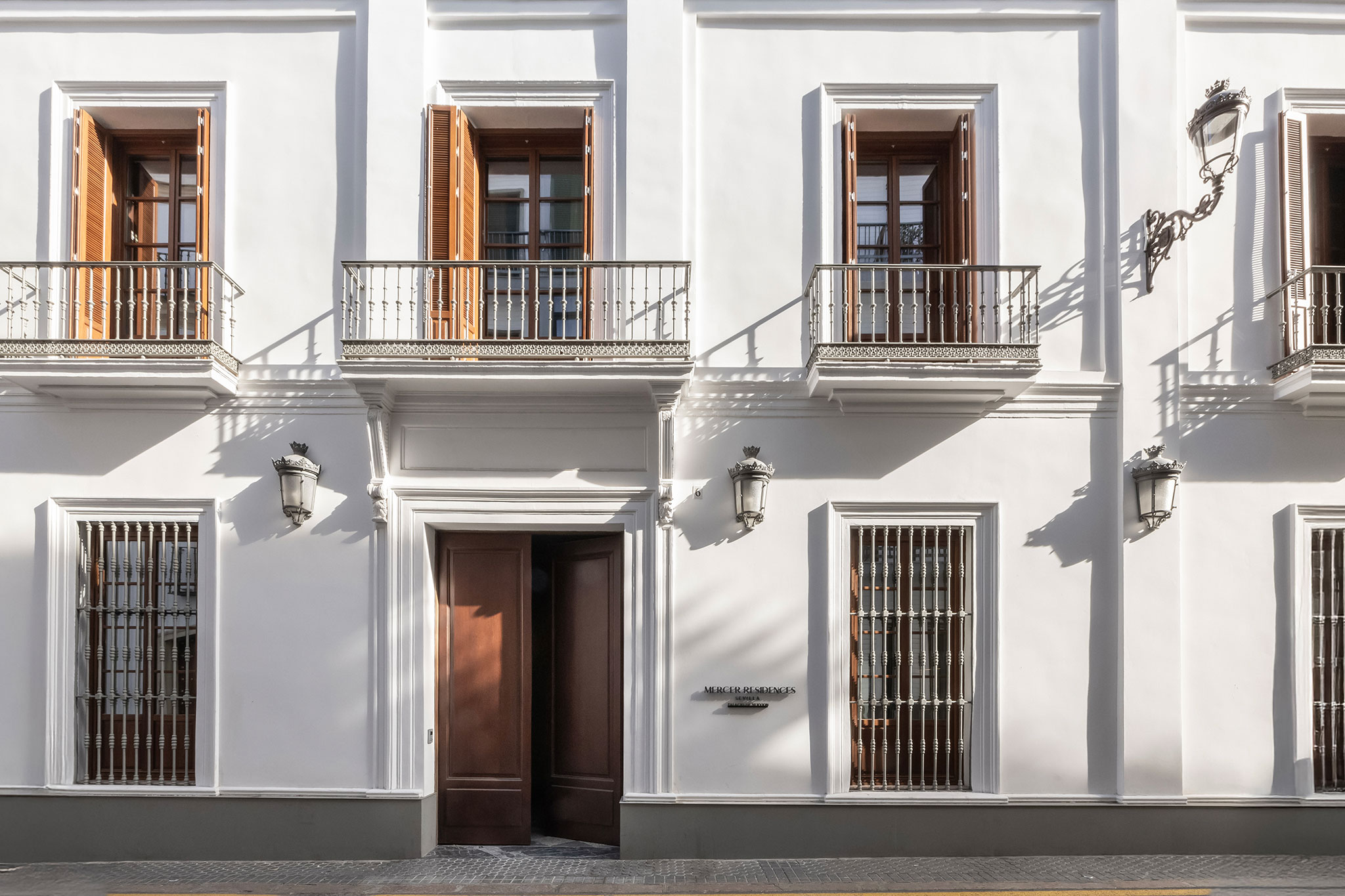
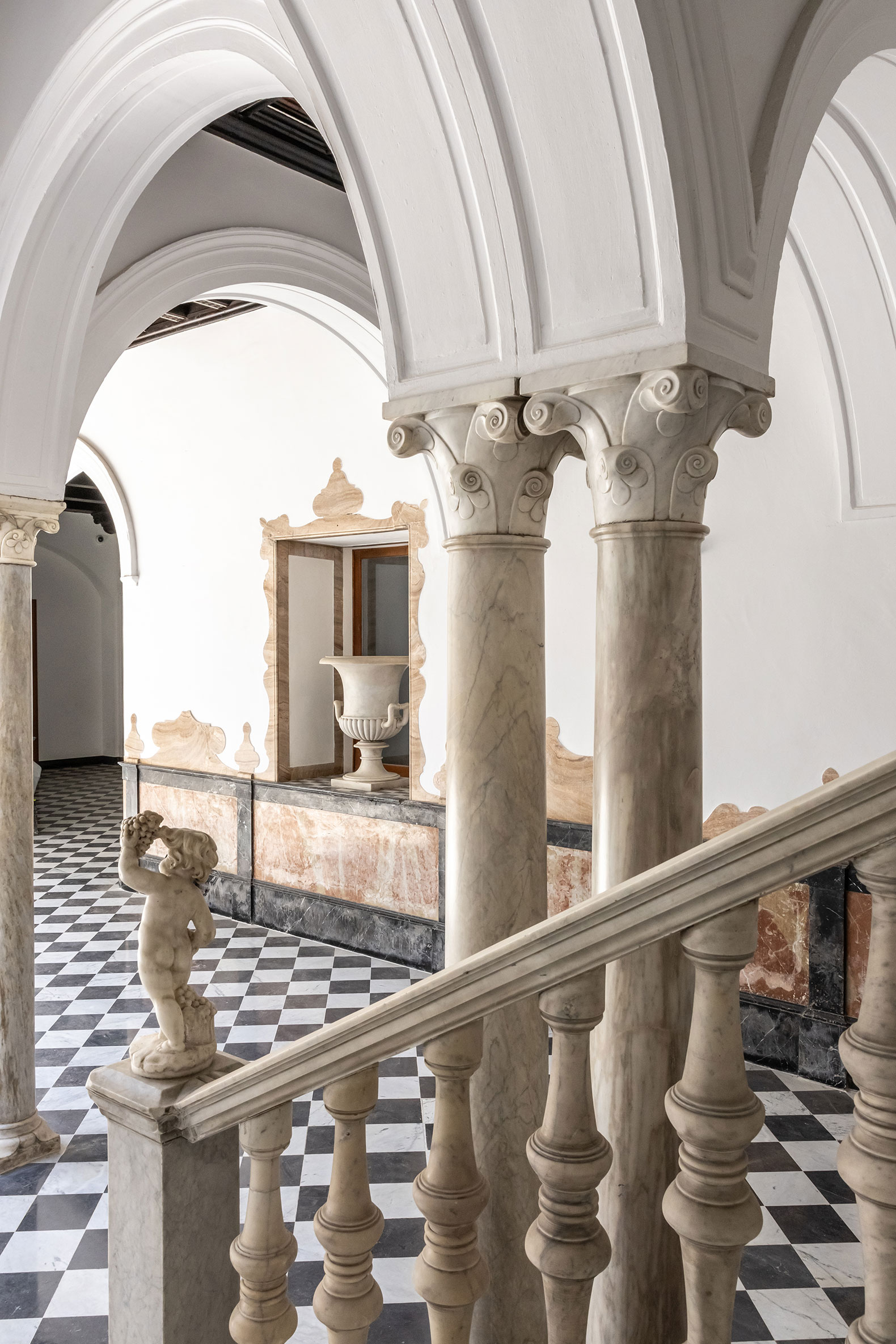
Access to the Casa Palacio, renovated by Sánchez Ramos Arquitectos and Padilla Nicás Arquitectos, is available from two streets at different levels, creating an interesting interior complexity. The main entrance is on the ground floor, located on Calle Amor de Dios, while the secondary entrance from Calle Daoiz is on the first floor.
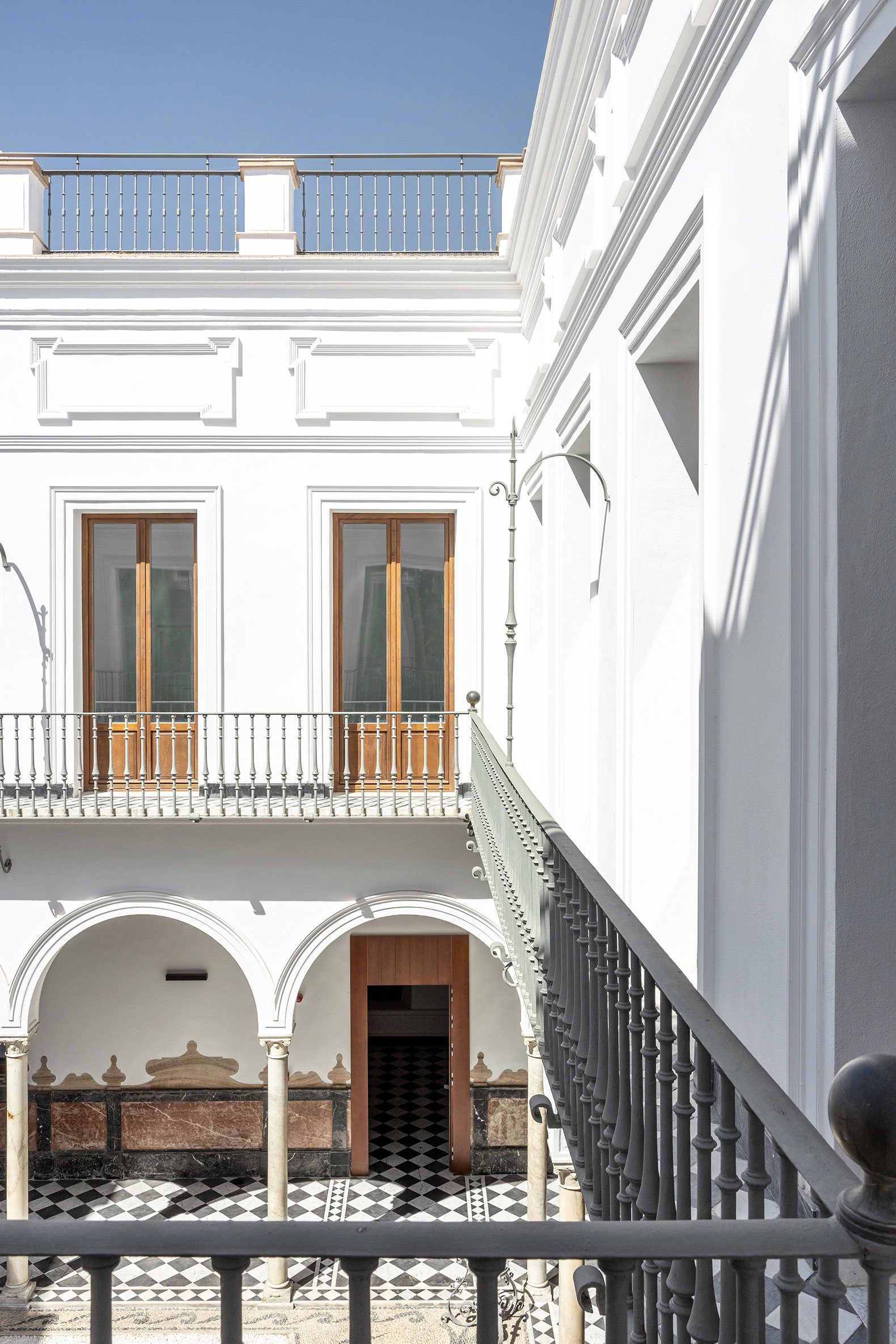
The program of rooms and suites, with integrated modules serving as kitchens and bathrooms, unfolds across three floors, each with its own distinct identity and independent character, a hallmark of palatial homes. The ground floor is organized around a main courtyard featuring an arched gallery with columns and marble plinths, a fountain, planters, and Cordoban cobblestones. The building also boasts several smaller courtyards and the renowned Romantic Courtyard, the largest of its kind in the entire historic center of Seville.
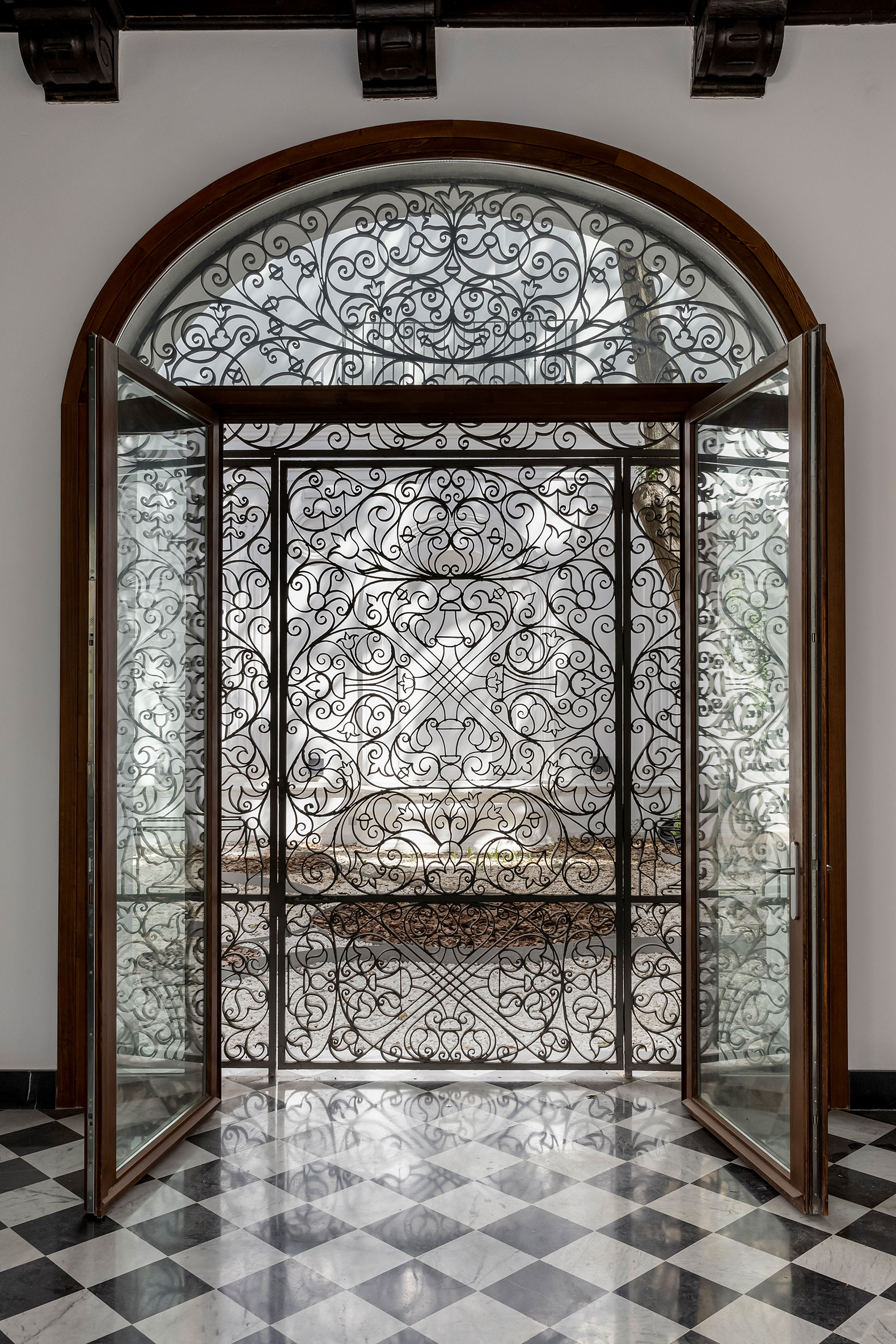
Intervention in "Casa Palacio de la Marquesa de Nervión" by Sánchez Ramos Arquitectos and padilla nicás arquitectos. Photograph by Adrián Ibáñez.
Project description by Sánchez Ramos Arquitectos and padilla nicás arquitectos
The project consists of renovating the formidable "Casa Palacio de la Marquesa de Nervión", a stately home in the Sevillian Baroque style (17th century), to develop a new concept in hotel accommodation, comprising rooms and suites that offer the comfort of a home but with the attention and services of a hotel, such as reception and concierge, among others.
The project is located in one of the 25 palaces still standing in Seville, stately residences built by prosperous families during the Spanish Golden Age and prime examples of Sevillian civil architecture. This unique mansion was owned by the Dowager Marquise of Nervión, María Mónica de Arteche y González-Careaga, Dowager Viscountess of Bernuy, Grandee of Spain and lady-in-waiting to Queen Victoria Eugenia.
The result is the fruit of collaboration between Sánchez Ramos Arquitectos and the team composed of Padilla Nicás Arquitectos and Amanda Molina, from Mercer Hotels. From the outset, they were aware of the enormous historical and architectural value of the original building and had the clear intention of providing each space with the functionality and comfort of our time.
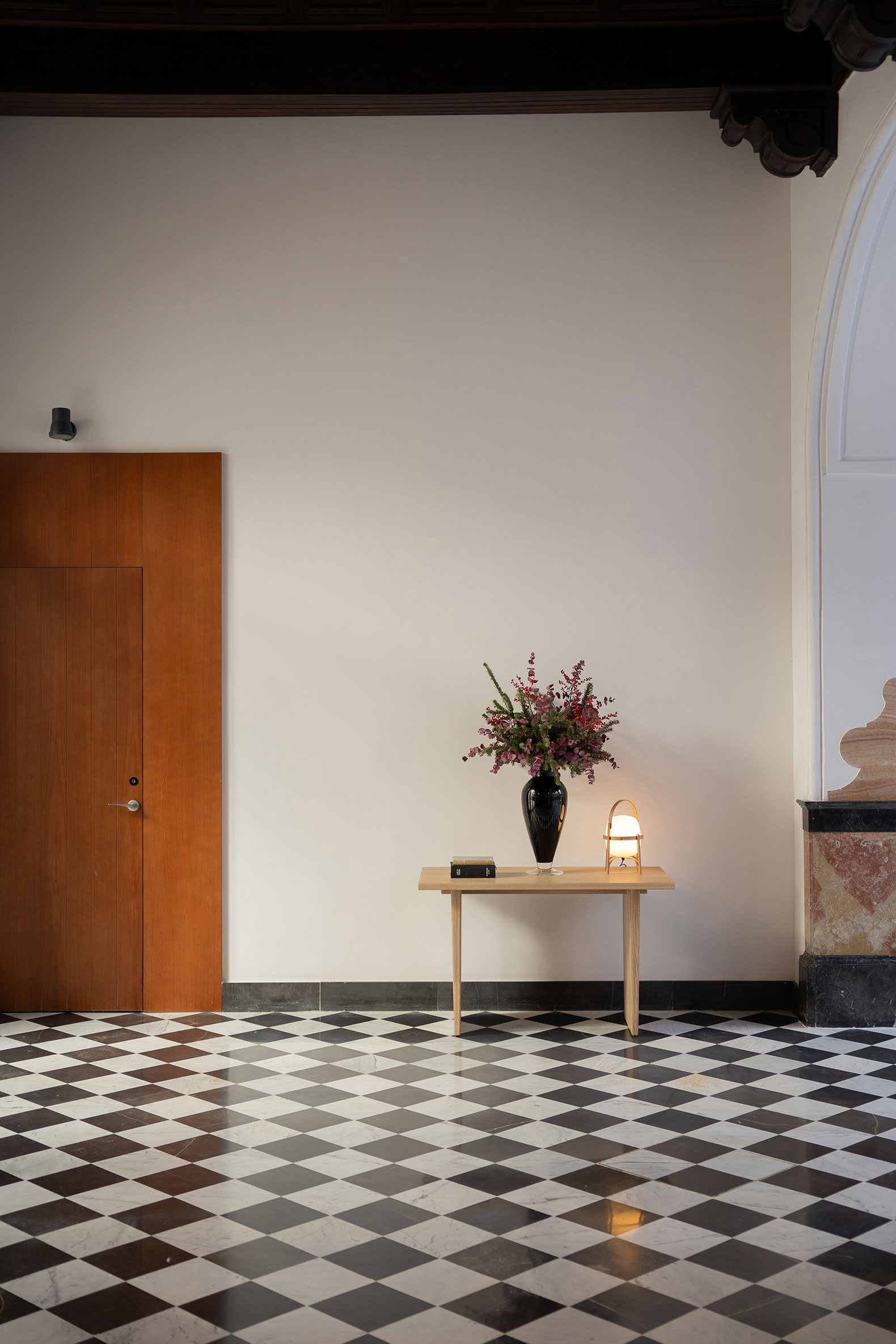
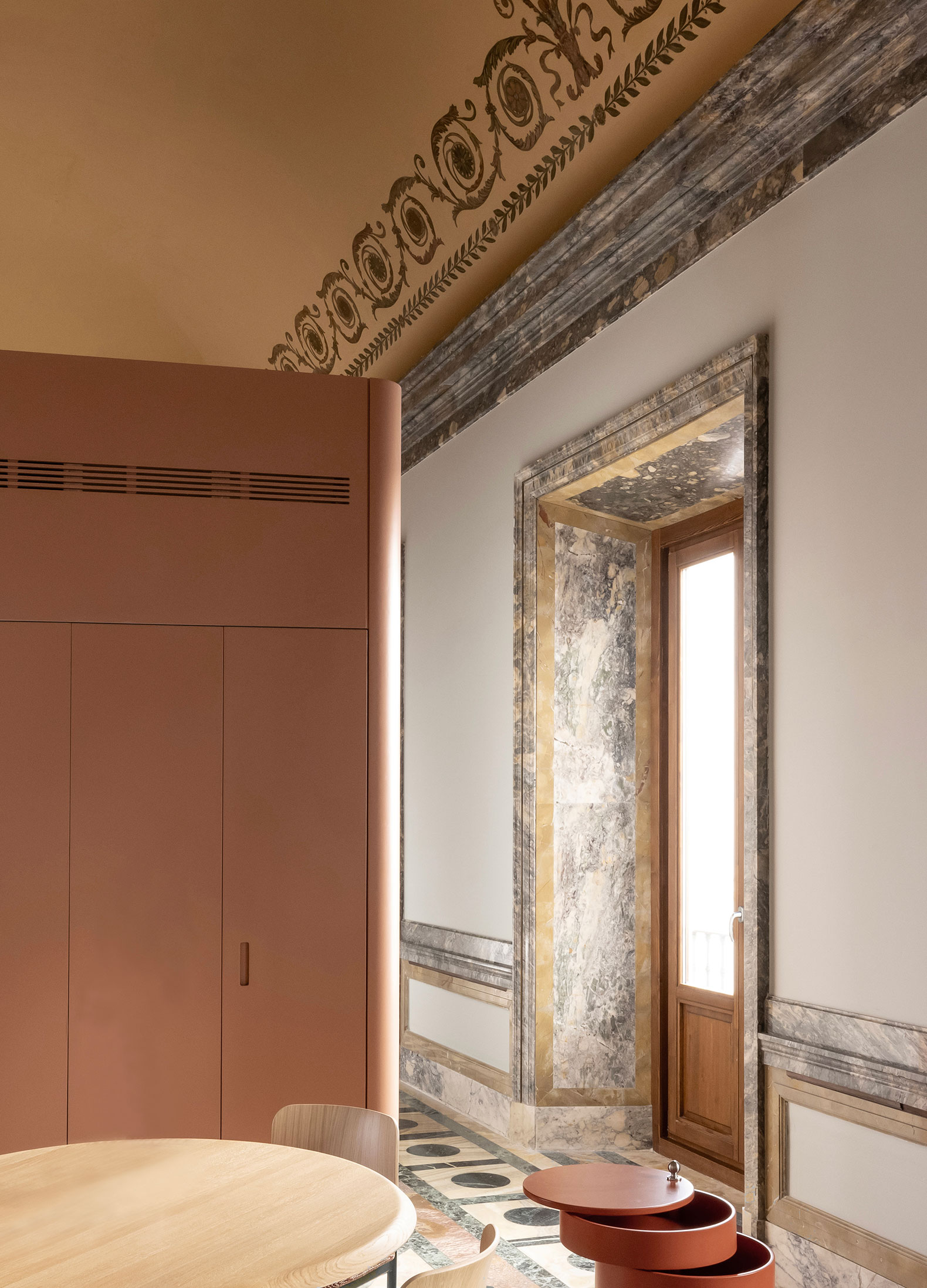
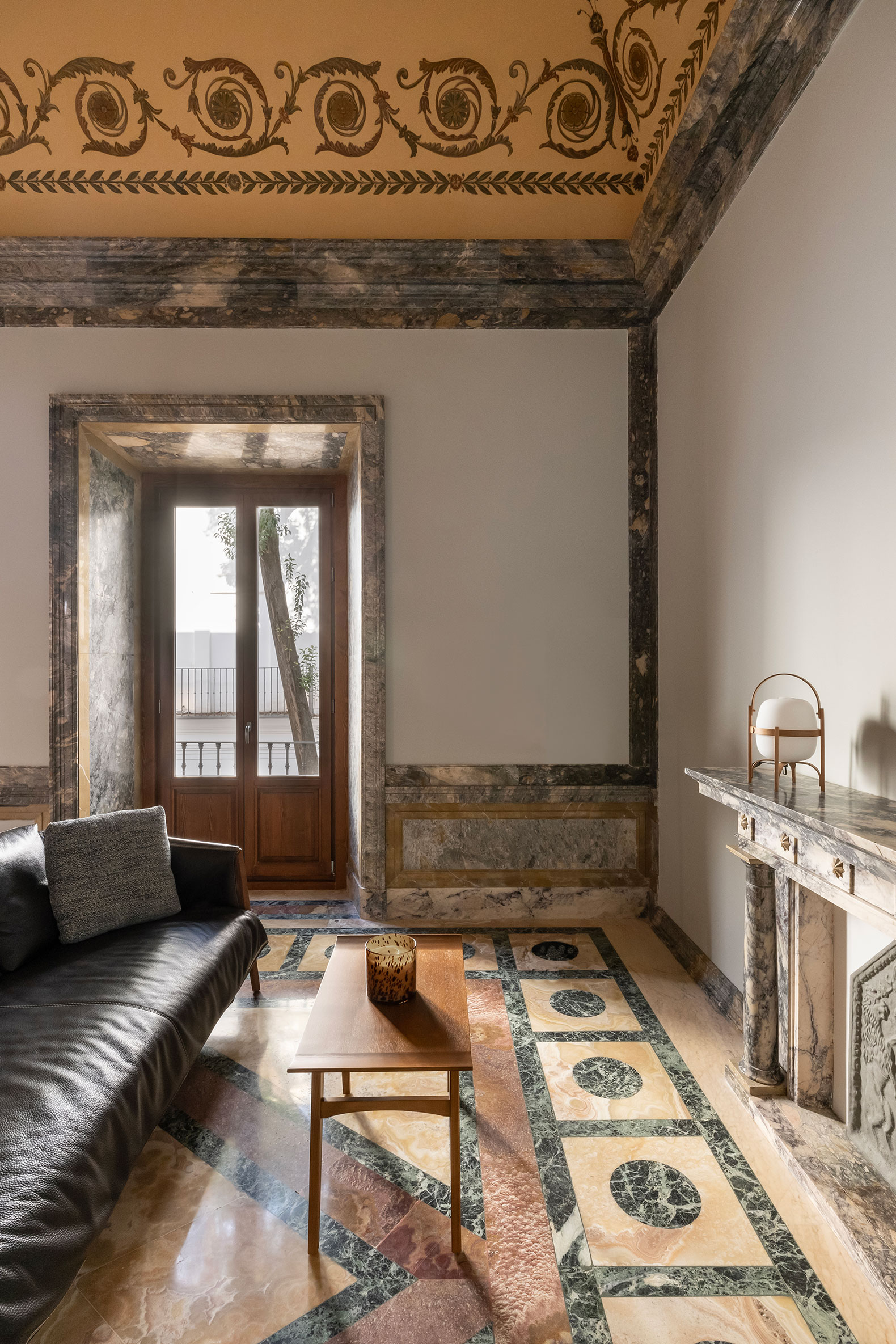
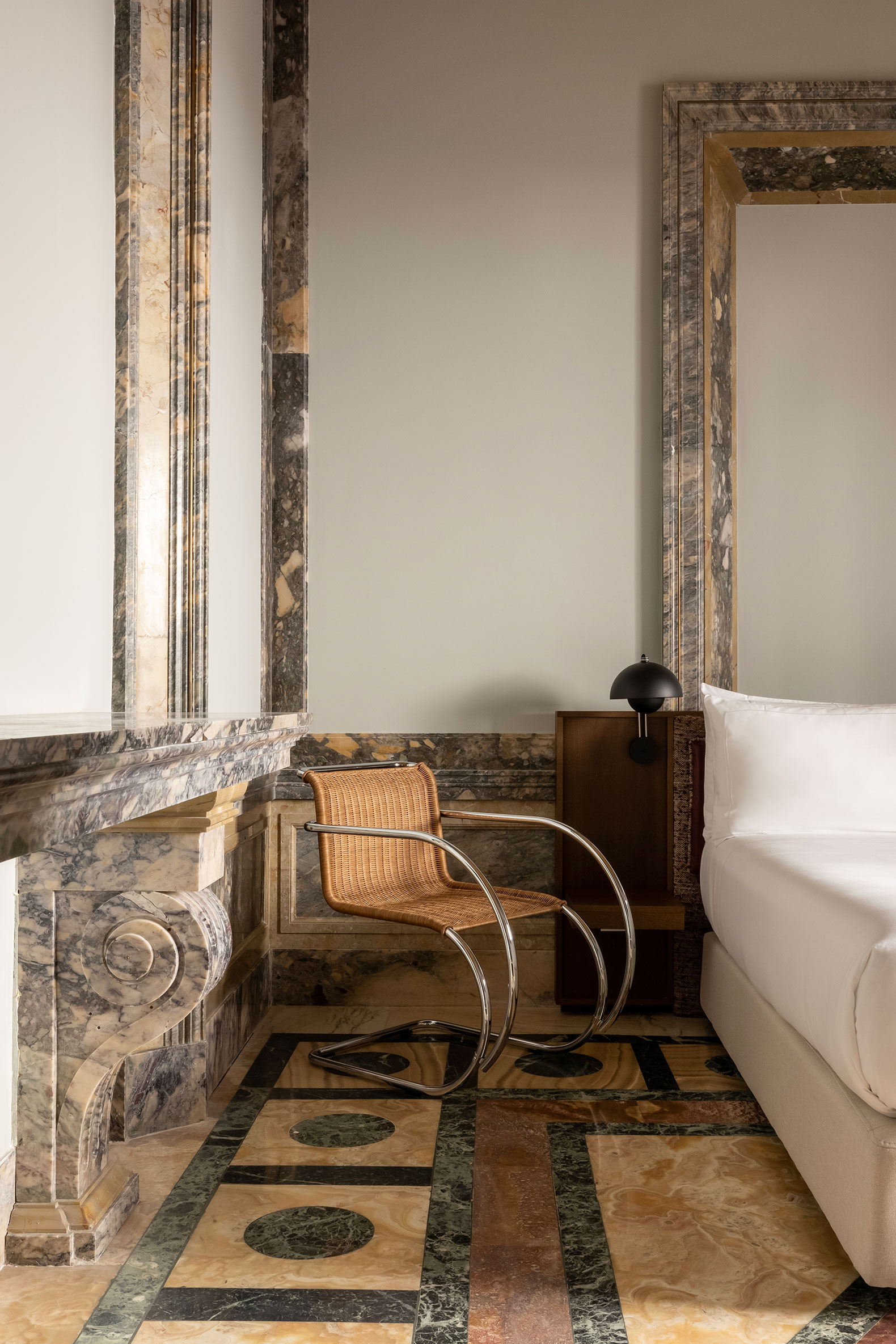
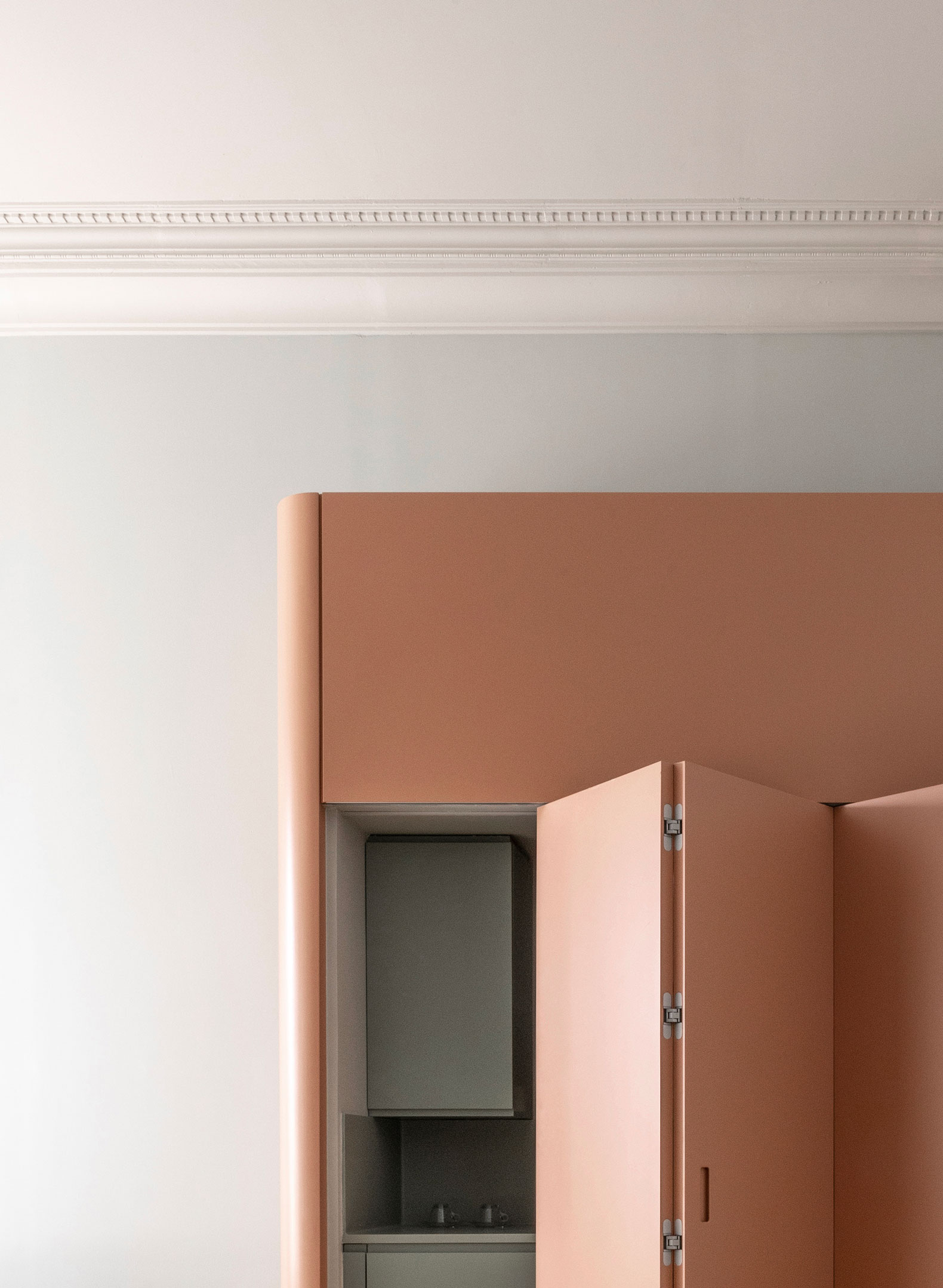
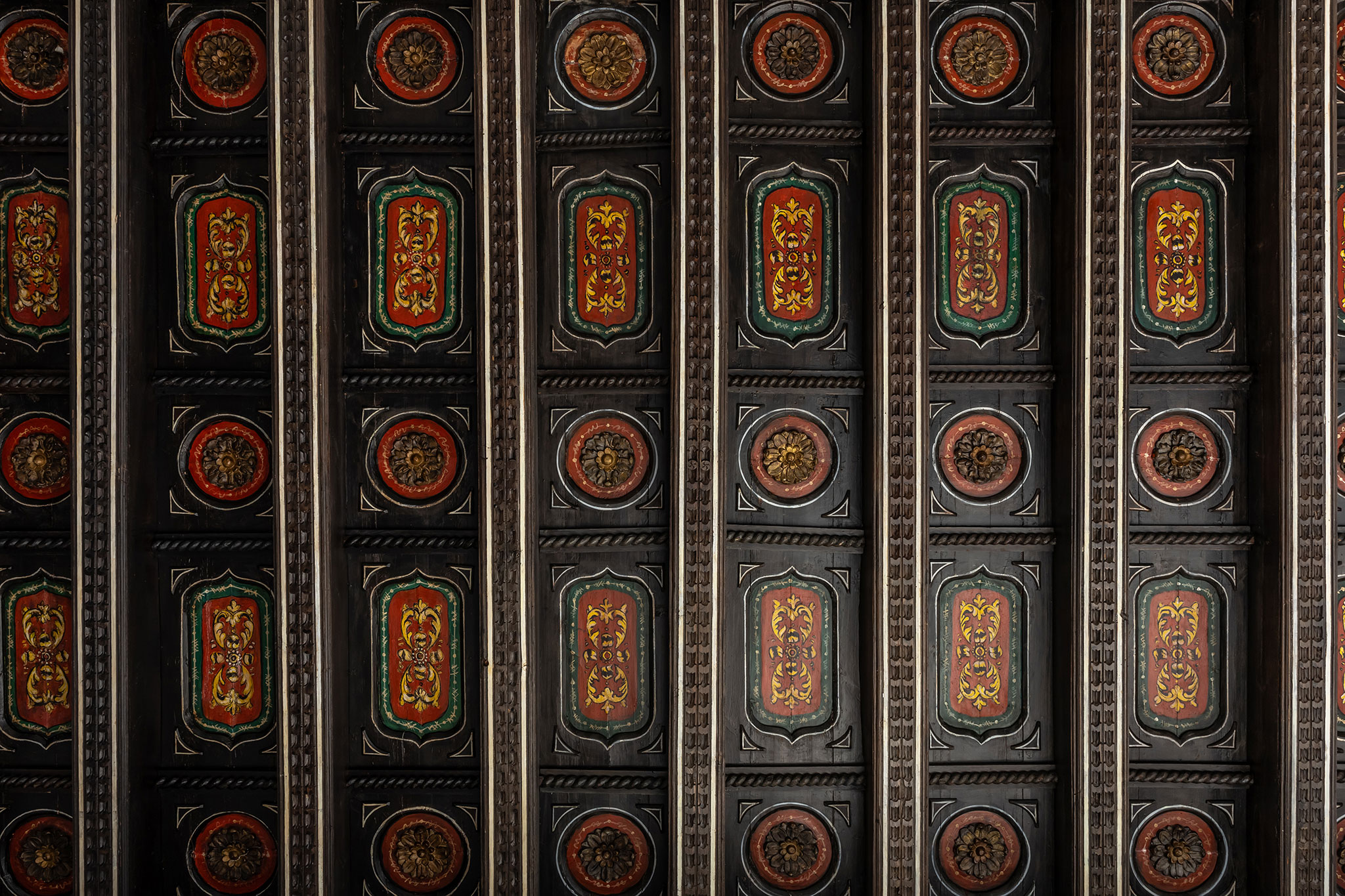
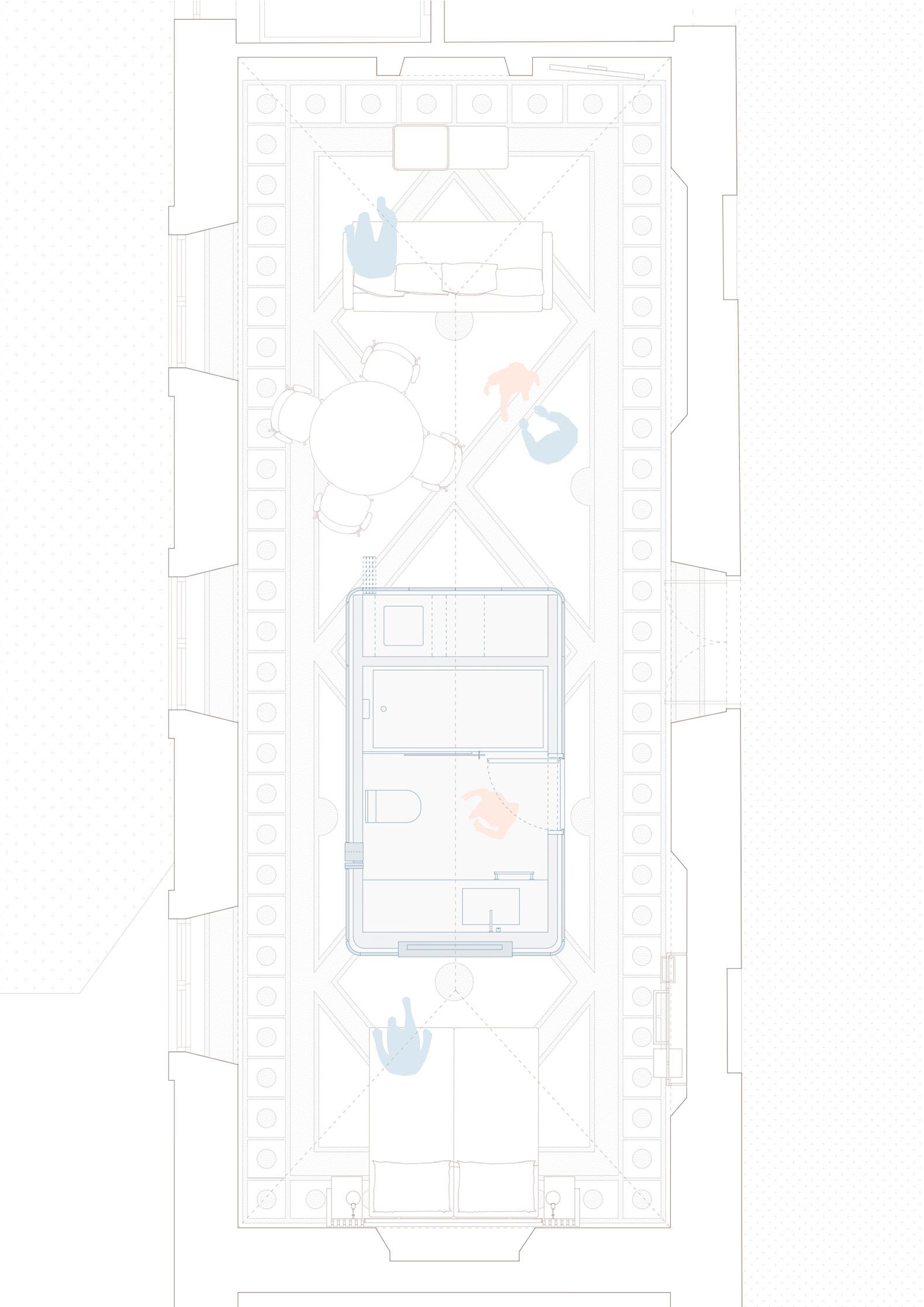
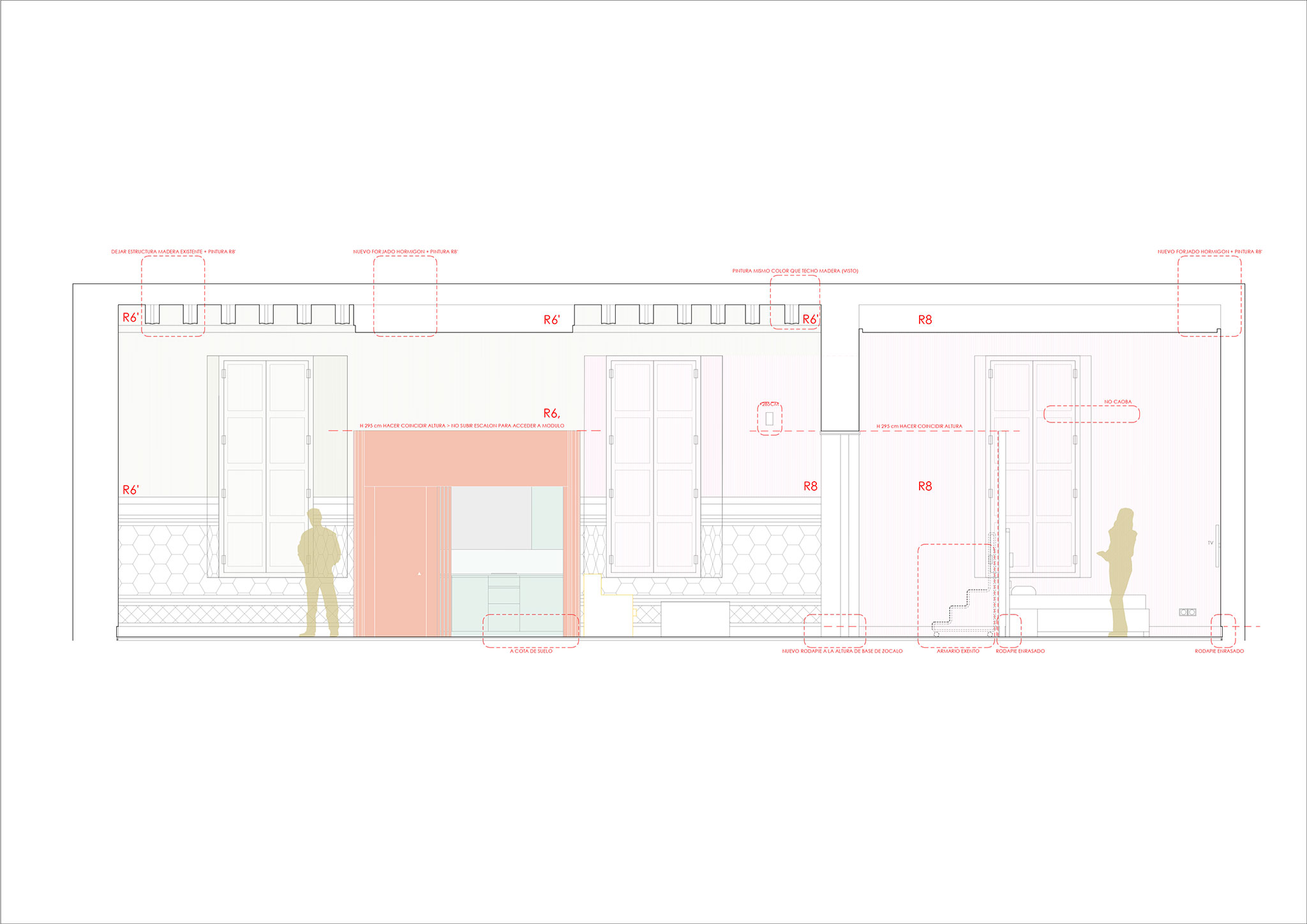
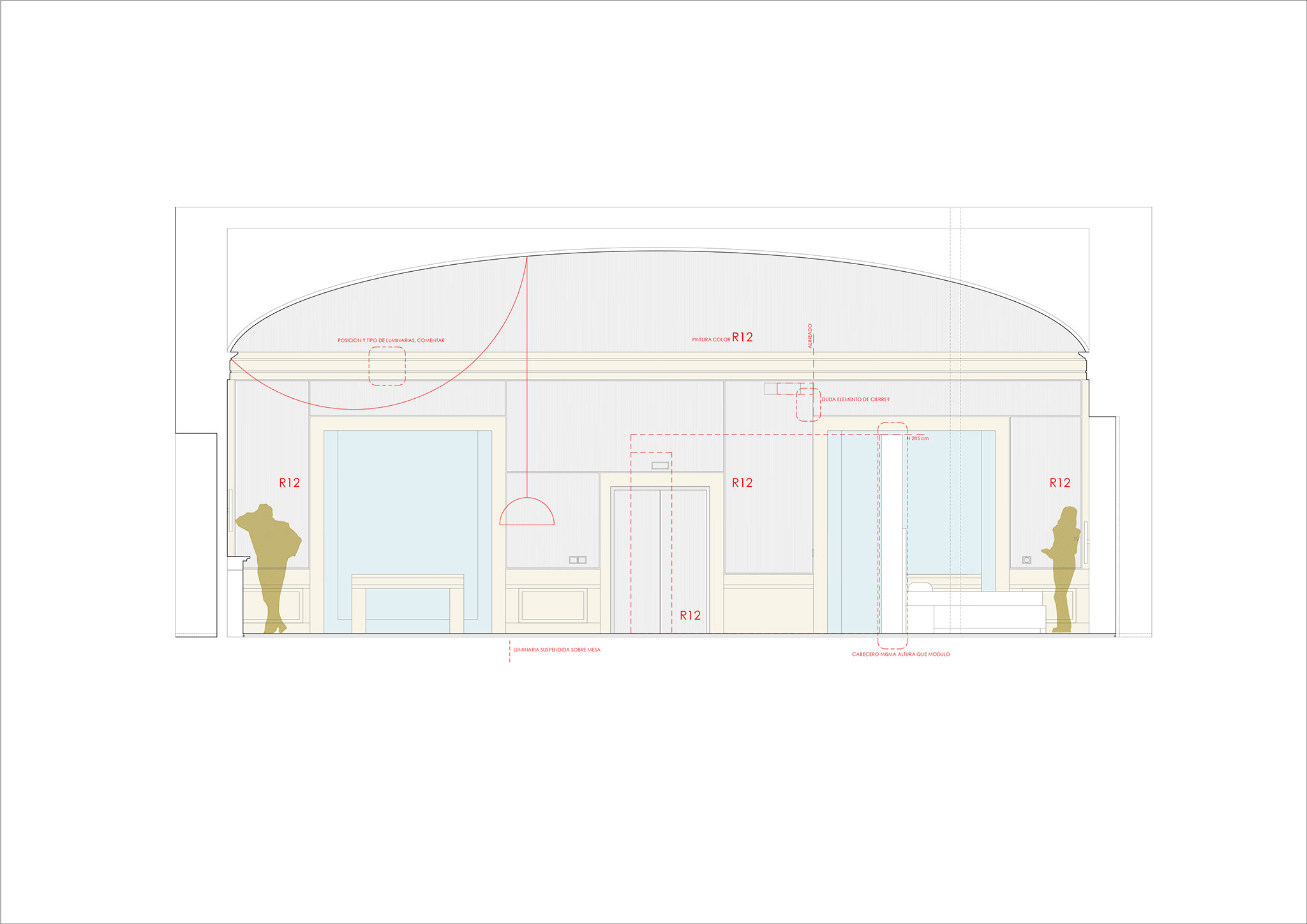
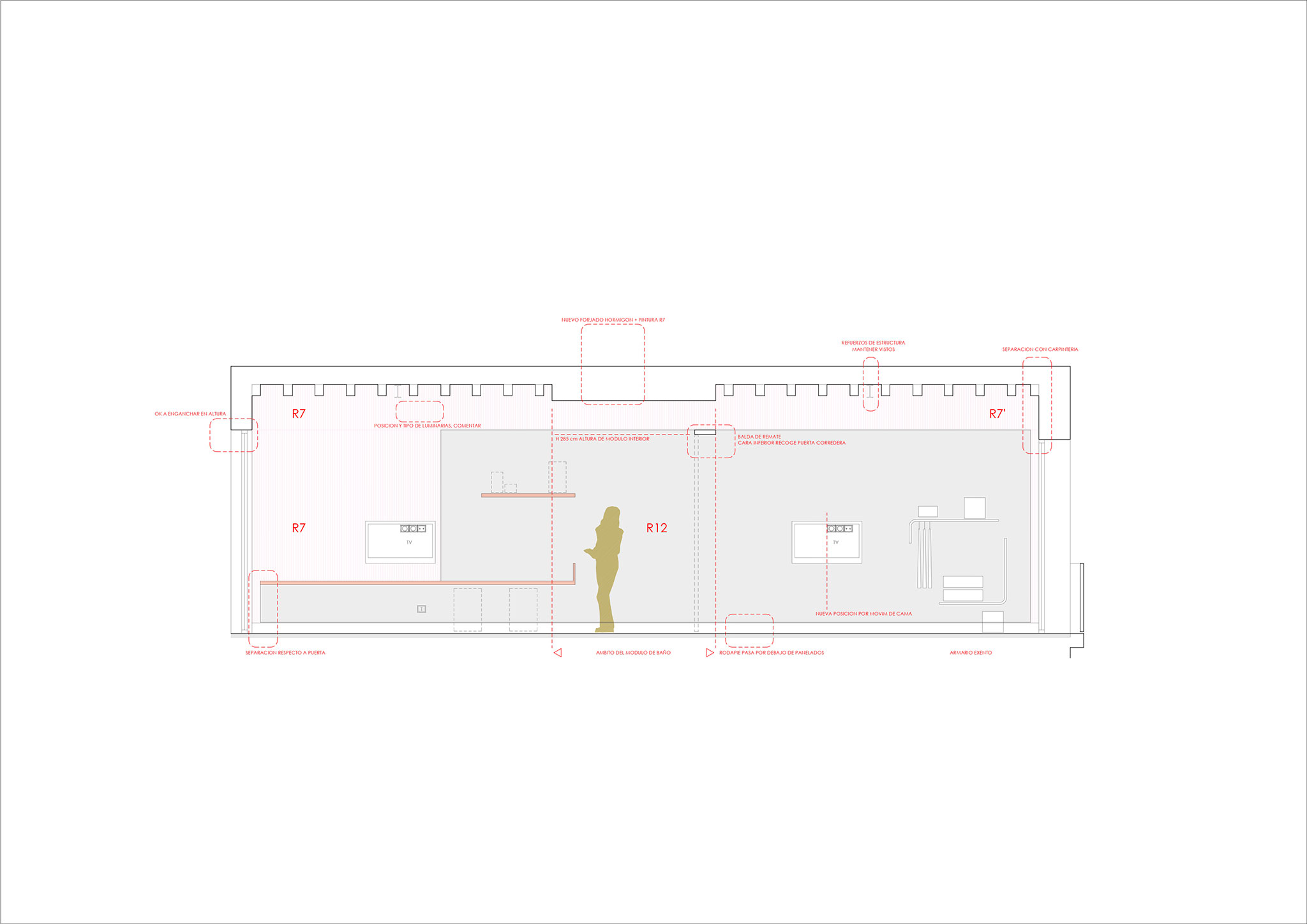
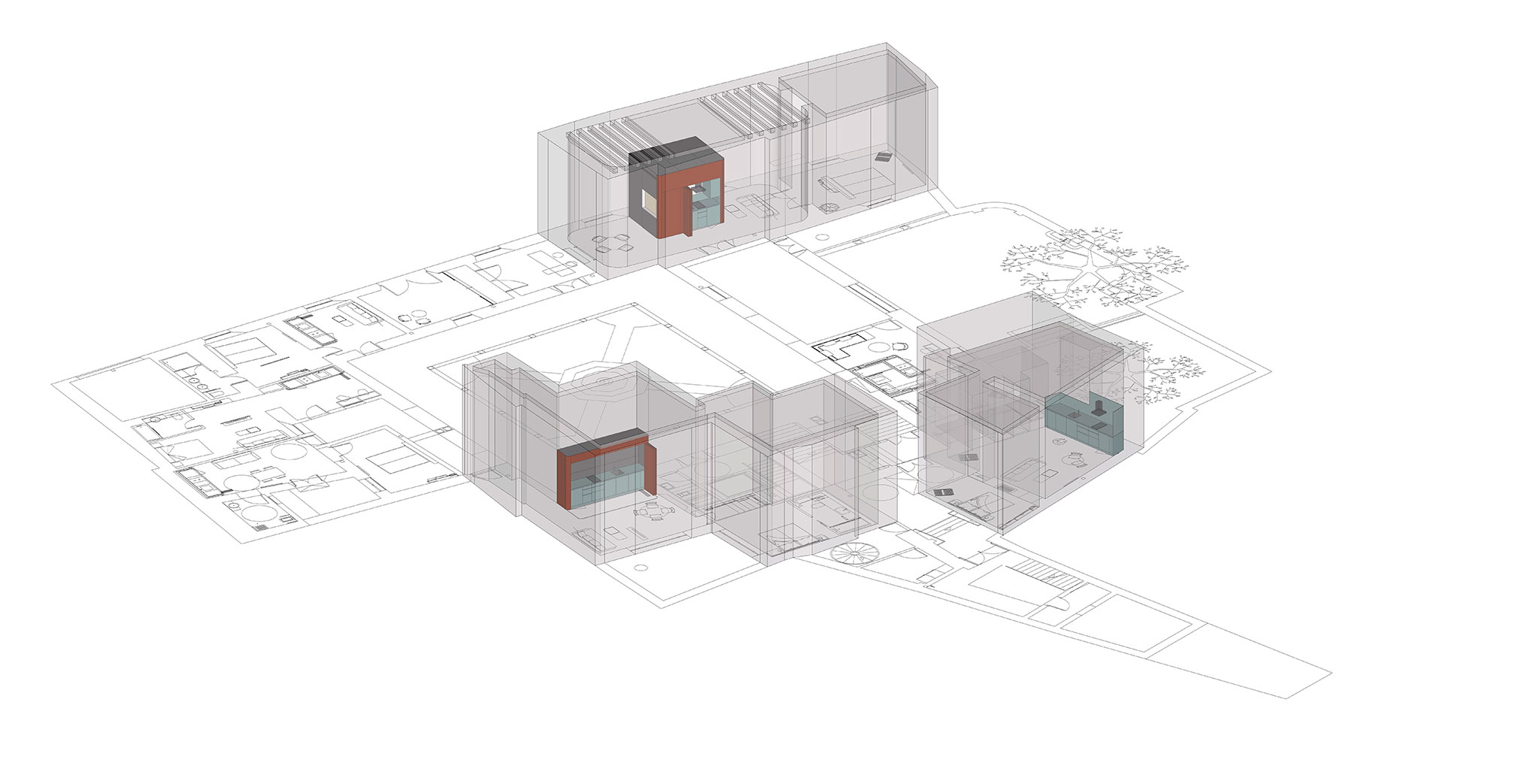
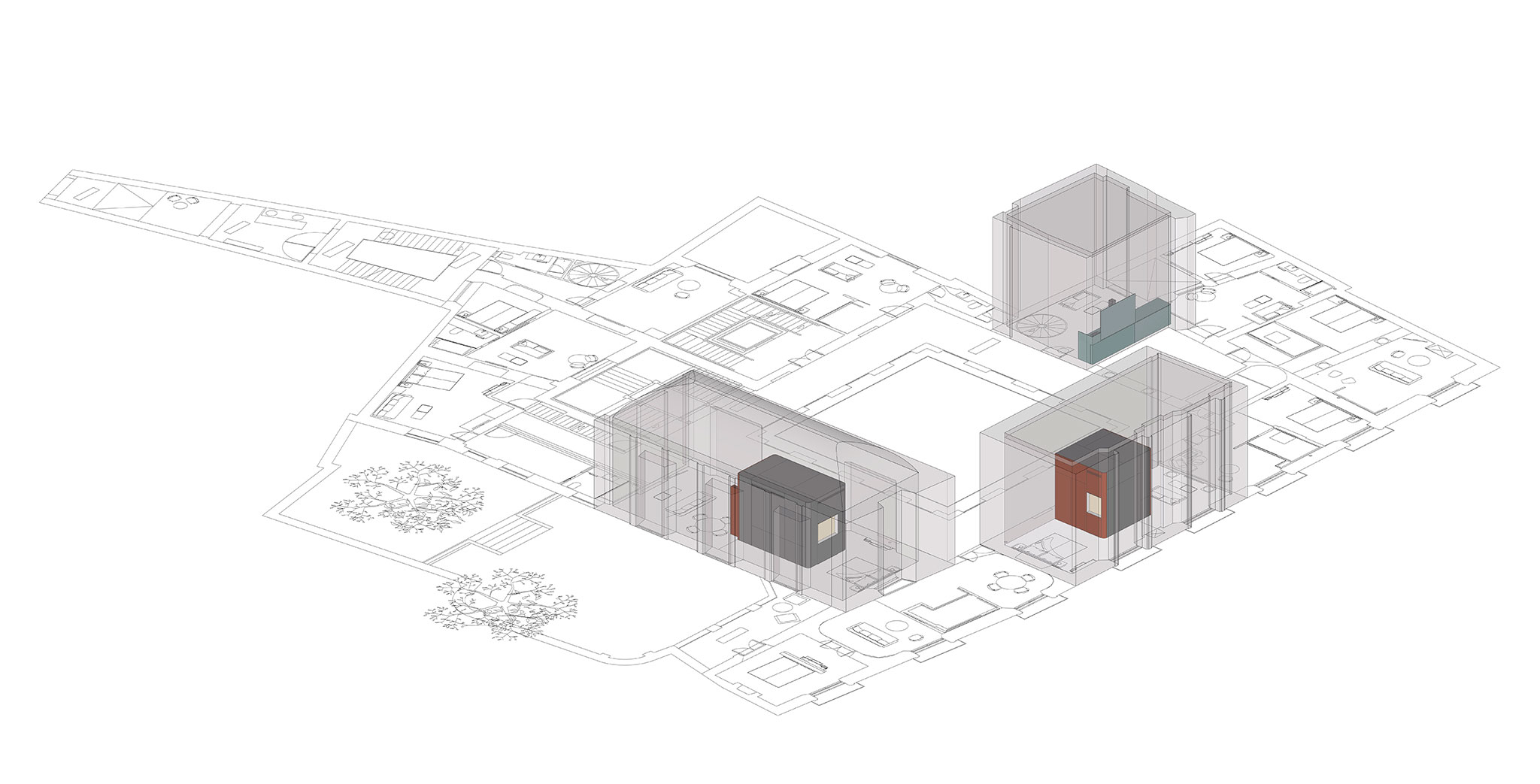
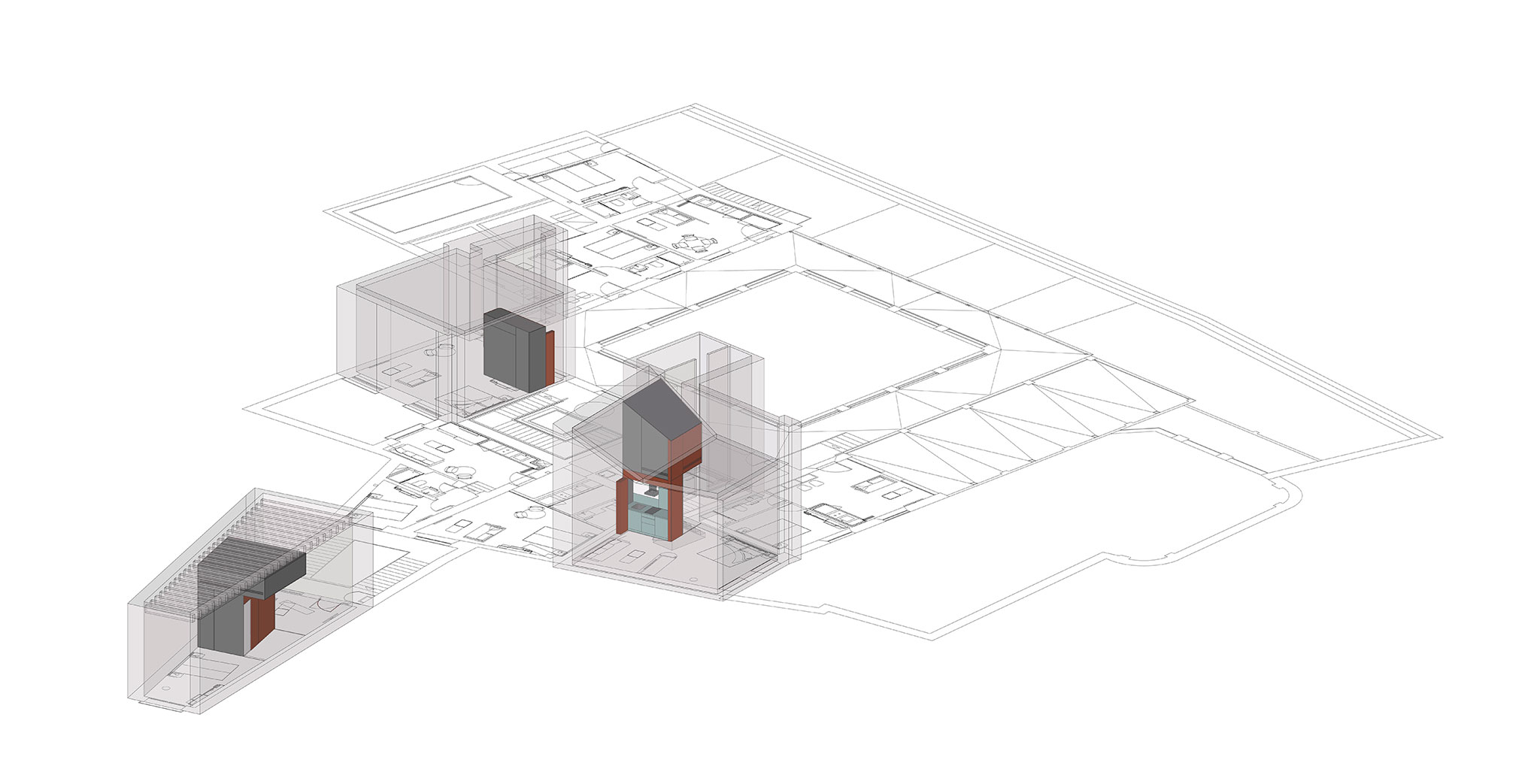
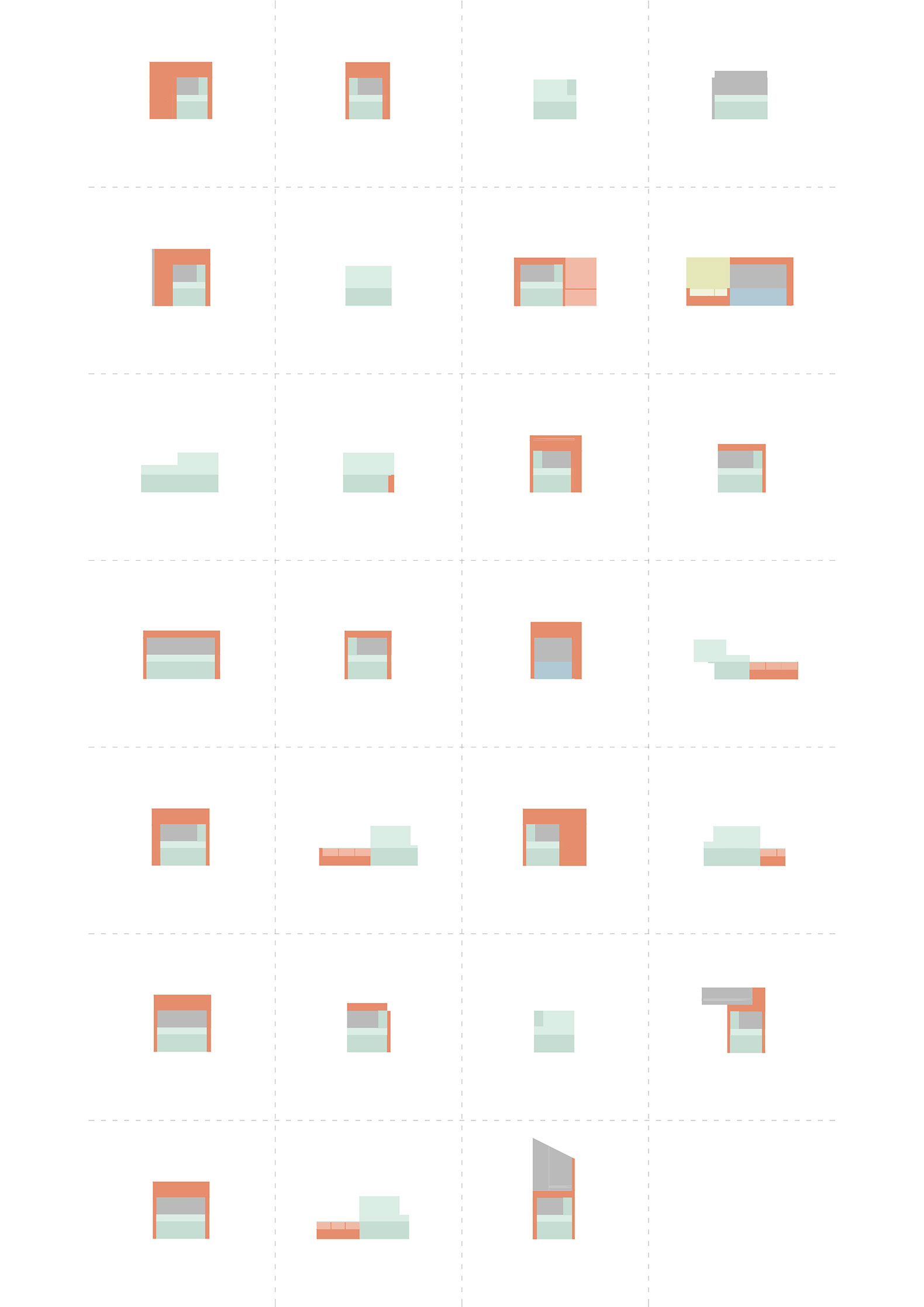
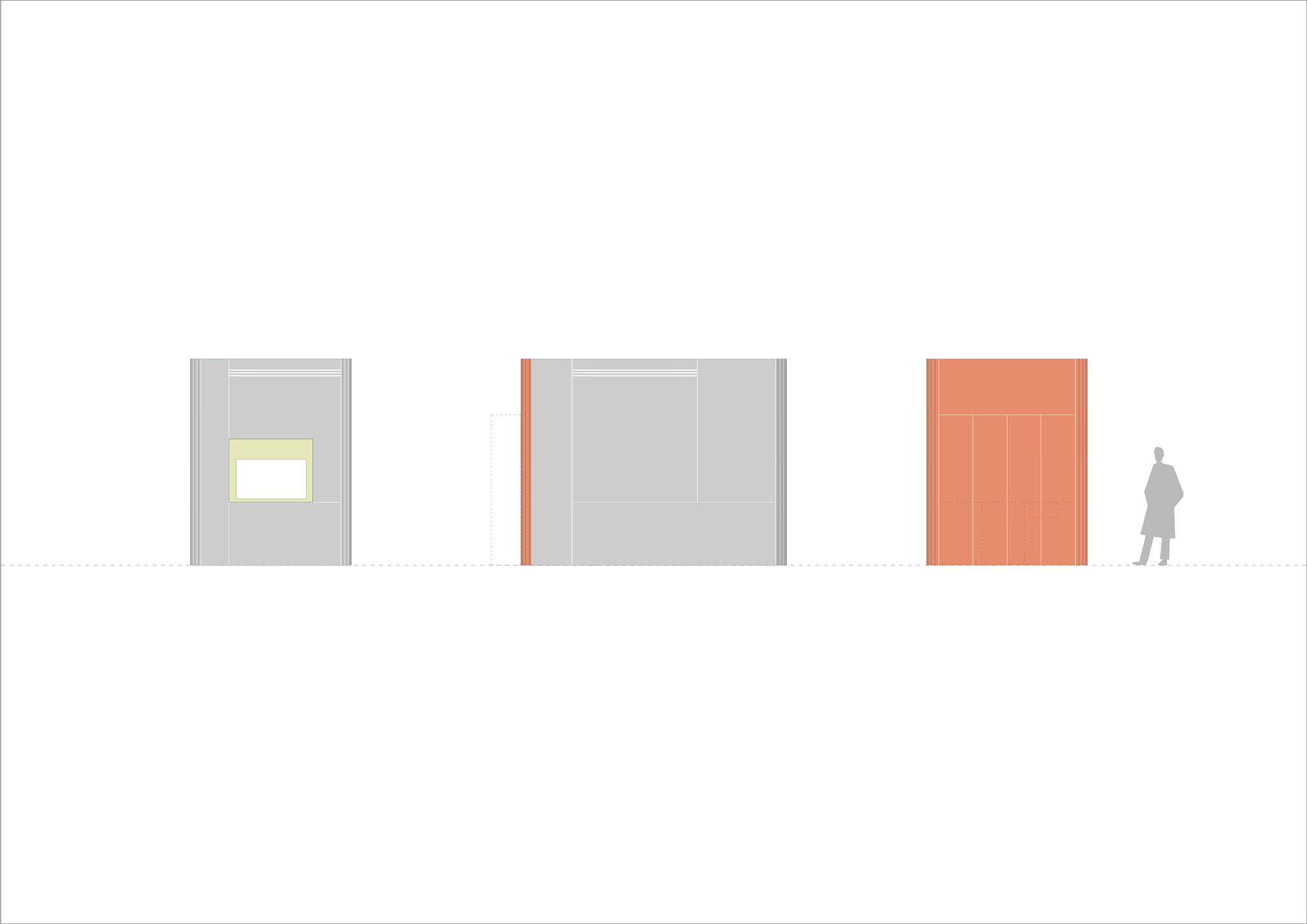
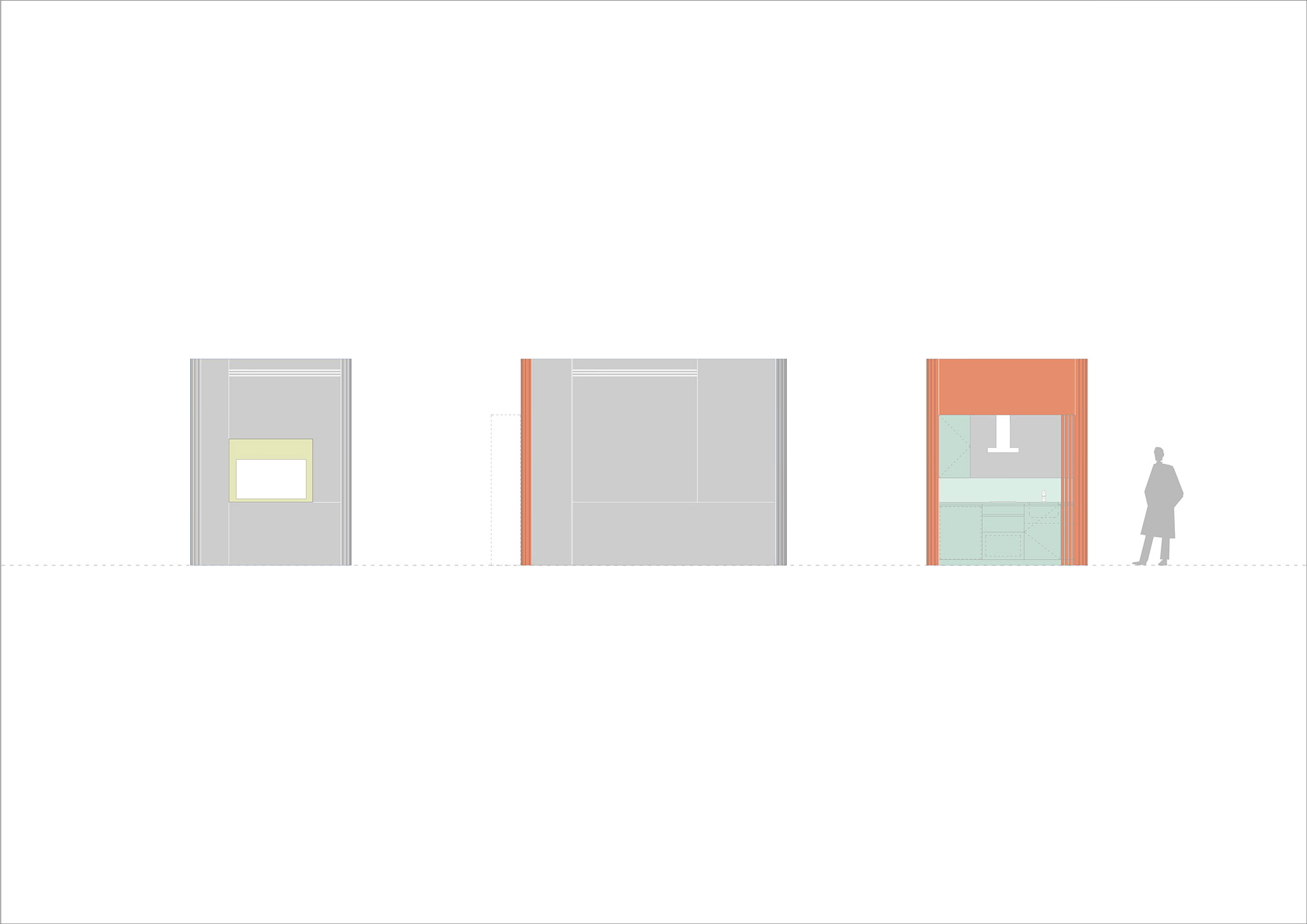
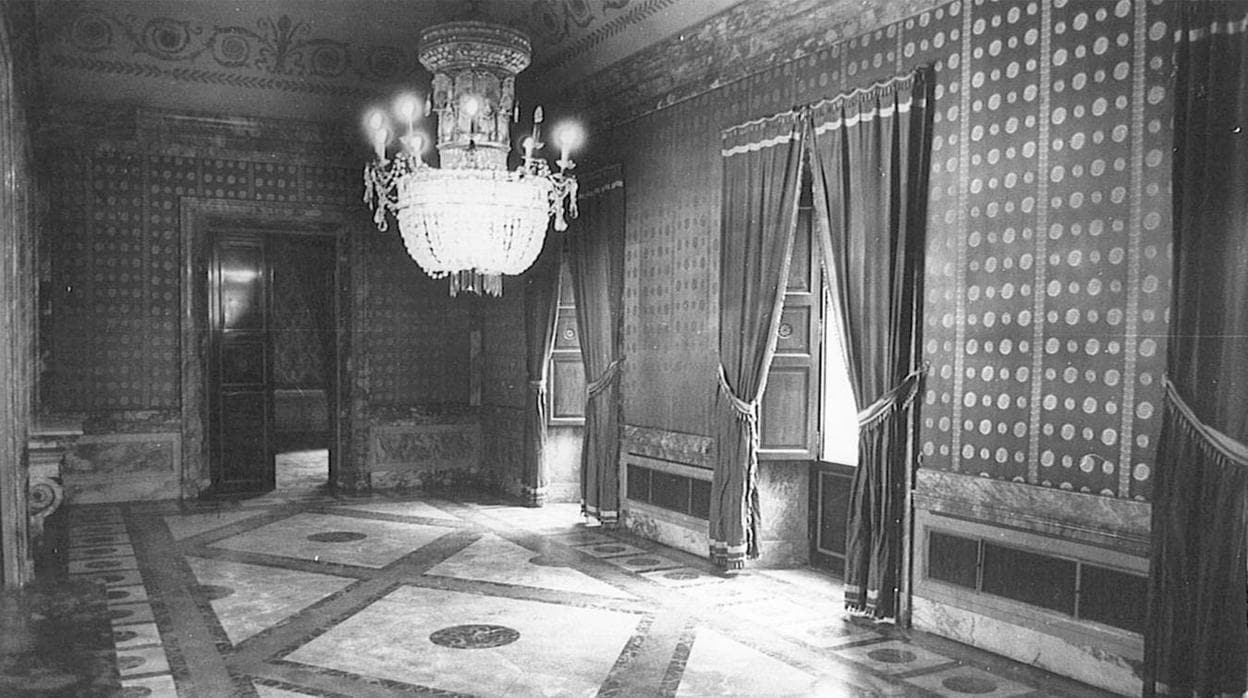
The proposal consists of 26 refurbished rooms and suites, maintaining the original architectural details of the Casa Palacio, such as its mozarabic mosaic walls, high coffered ceilings and marble floors. In order to meet functional requirements with the least possible impact on the existing architecture, pieces called ‘modules’ are located in the different rooms, varying according to the conditions of each space, which serve as kitchens and bathrooms, while also housing the climate control system for each space.
If we were to give a brief description of the building, we would say that it has access from two different streets at different levels. The main entrance is located at number 6 Amor de Dios Street, on the ground floor, while the secondary entrance is located at number 9 Daoiz Street, on the first floor.
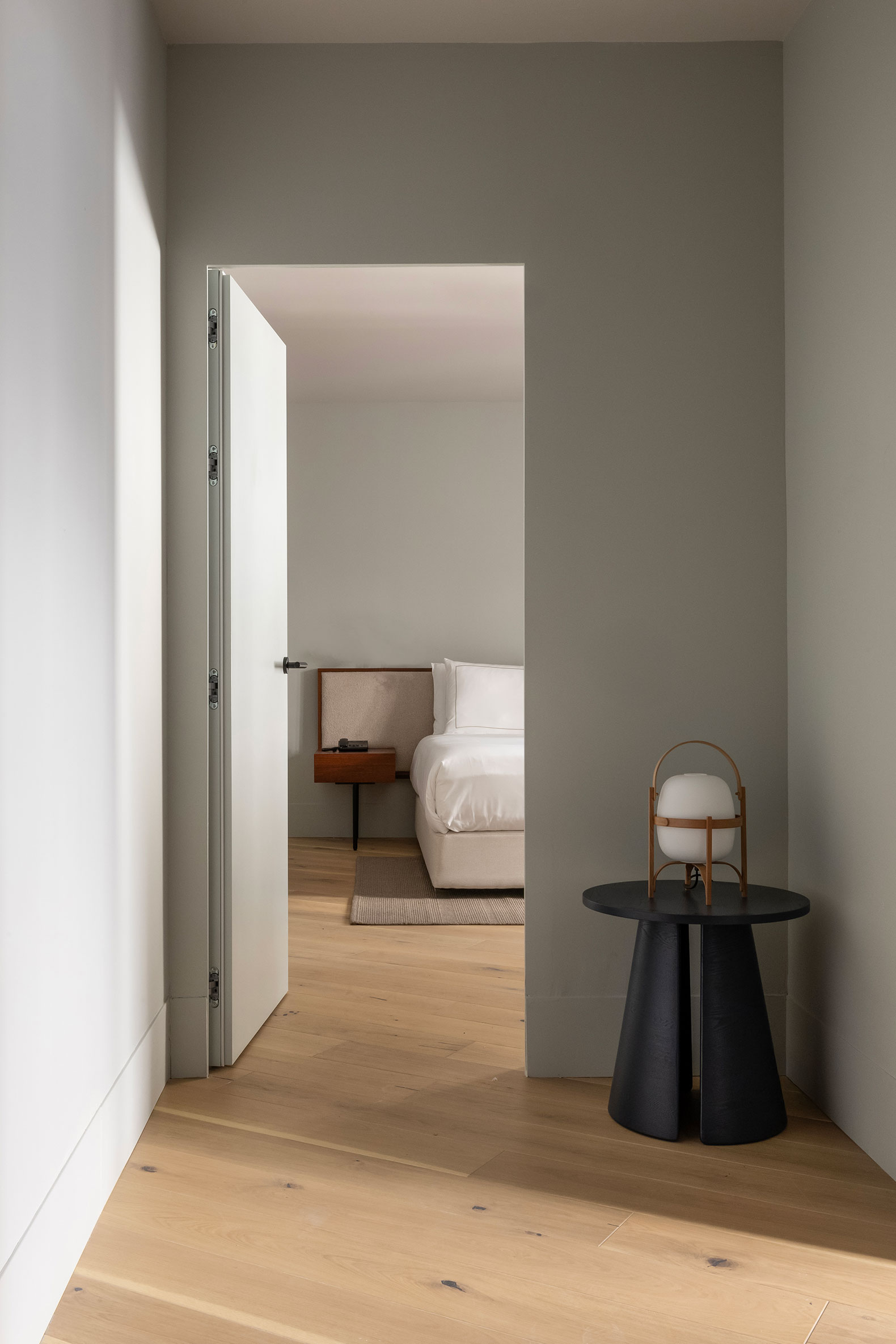
As for the rooms and suites, they are located on the three floors that make up the building, each with its own special personality that sets it apart from the others. If there is one thing that characterises these palace houses, it is their ability to create a world of their own, full of nuances.
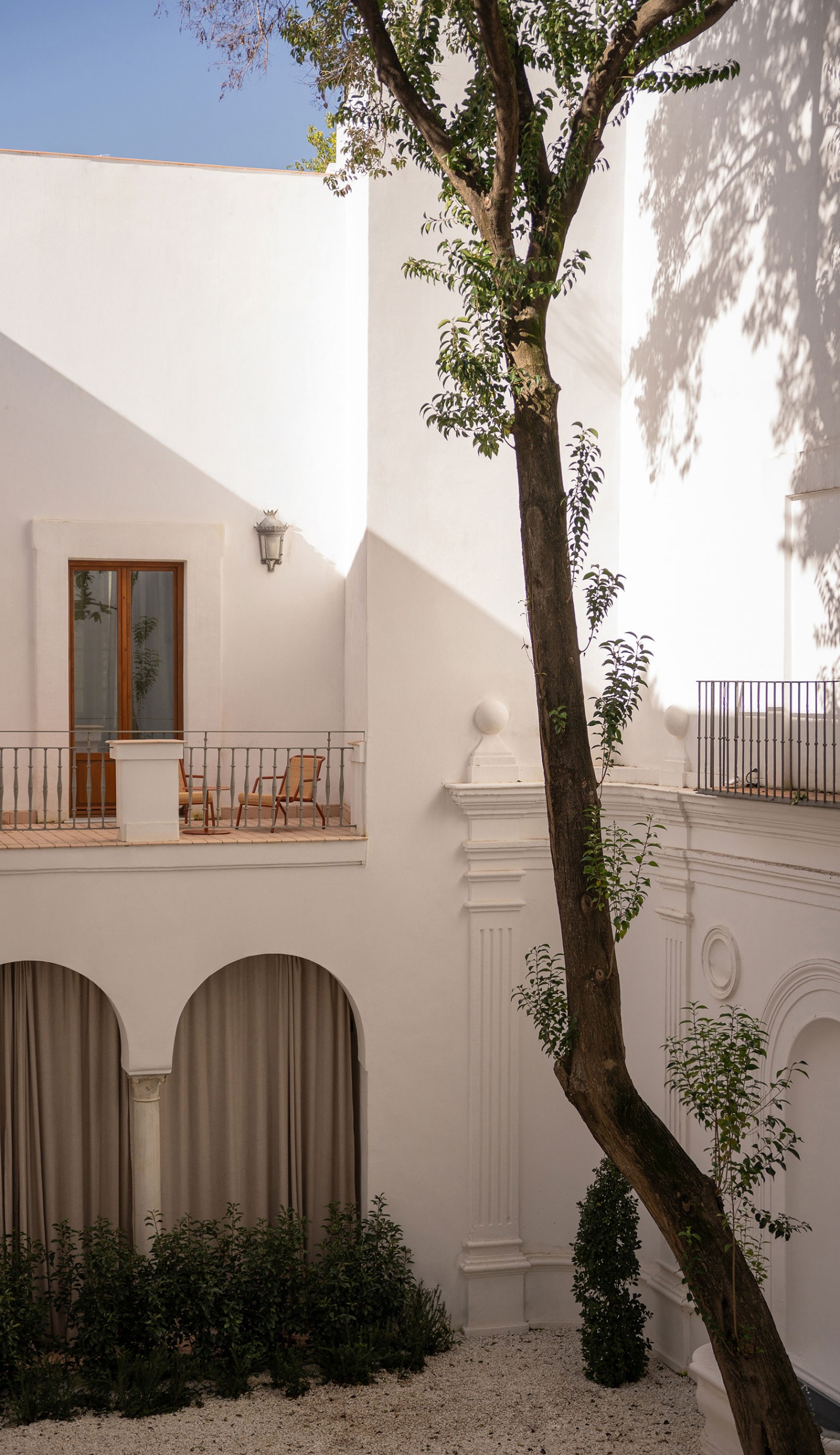
The ground floor is built around a magnificent Main Courtyard of noble character, consisting of an arched gallery with marble columns and plinths. This courtyard features a fountain, planters and Cordoba-style paving.
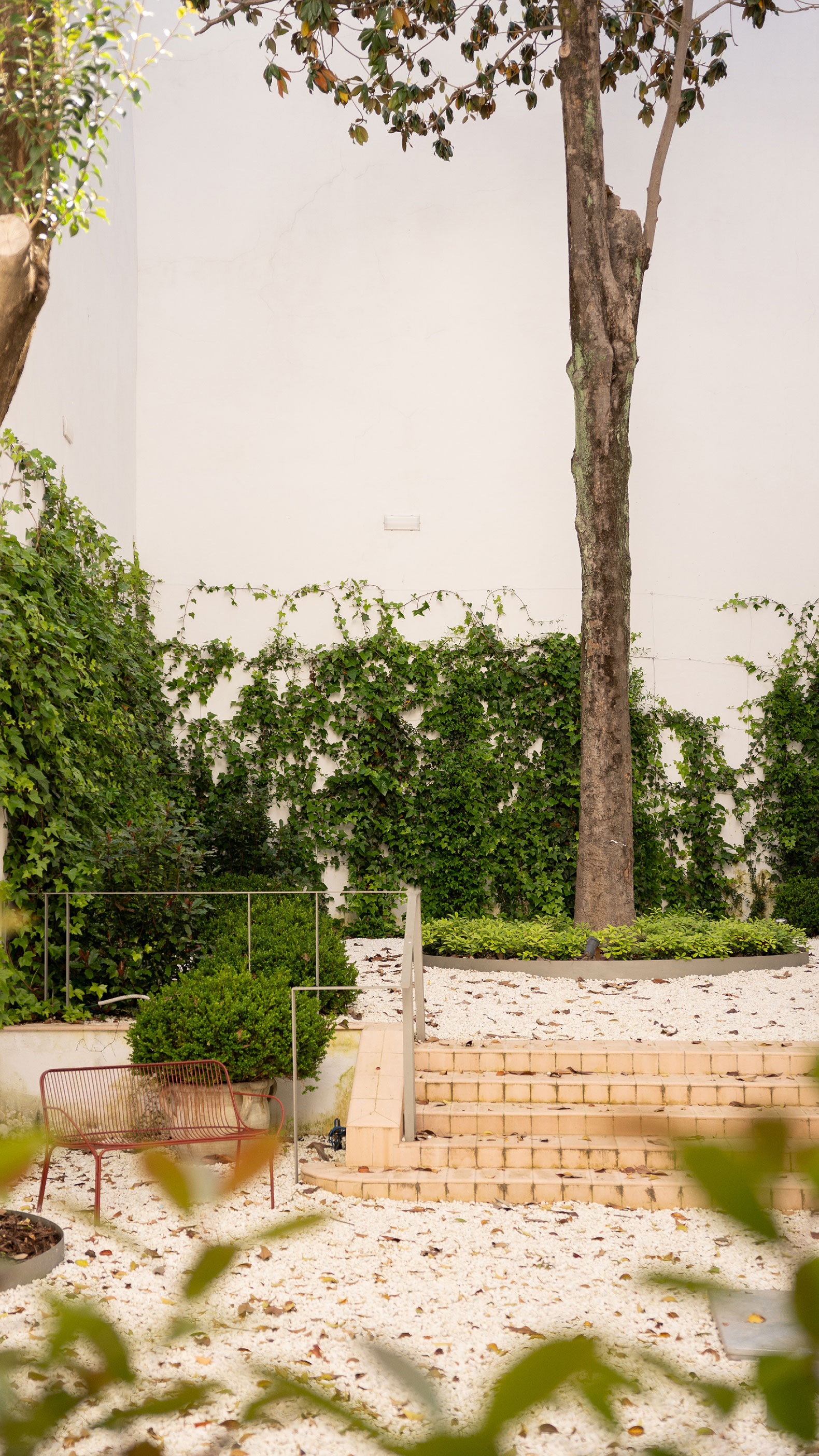
The building has other smaller courtyards, necessary in constructions located in dense historic centres, as well as a beautiful and abstract interior garden, known as the Romantic Courtyard, the largest of its kind in the entire Historic Centre of Seville.
The guest reception area is located on the ground floor next to the main entrance, along with support areas and facilities, with the remaining rooms reserved for residential hotel use in accordance with the aforementioned concept.
The first floor is structured around the main gallery, which is covered and has windows around its entire perimeter, overlooking the central courtyard. Access to this floor is via an beautifully designed staircase, as well as via the new lift and protected staircase that connects all levels of the building. This floor houses rooms intended for accommodation.
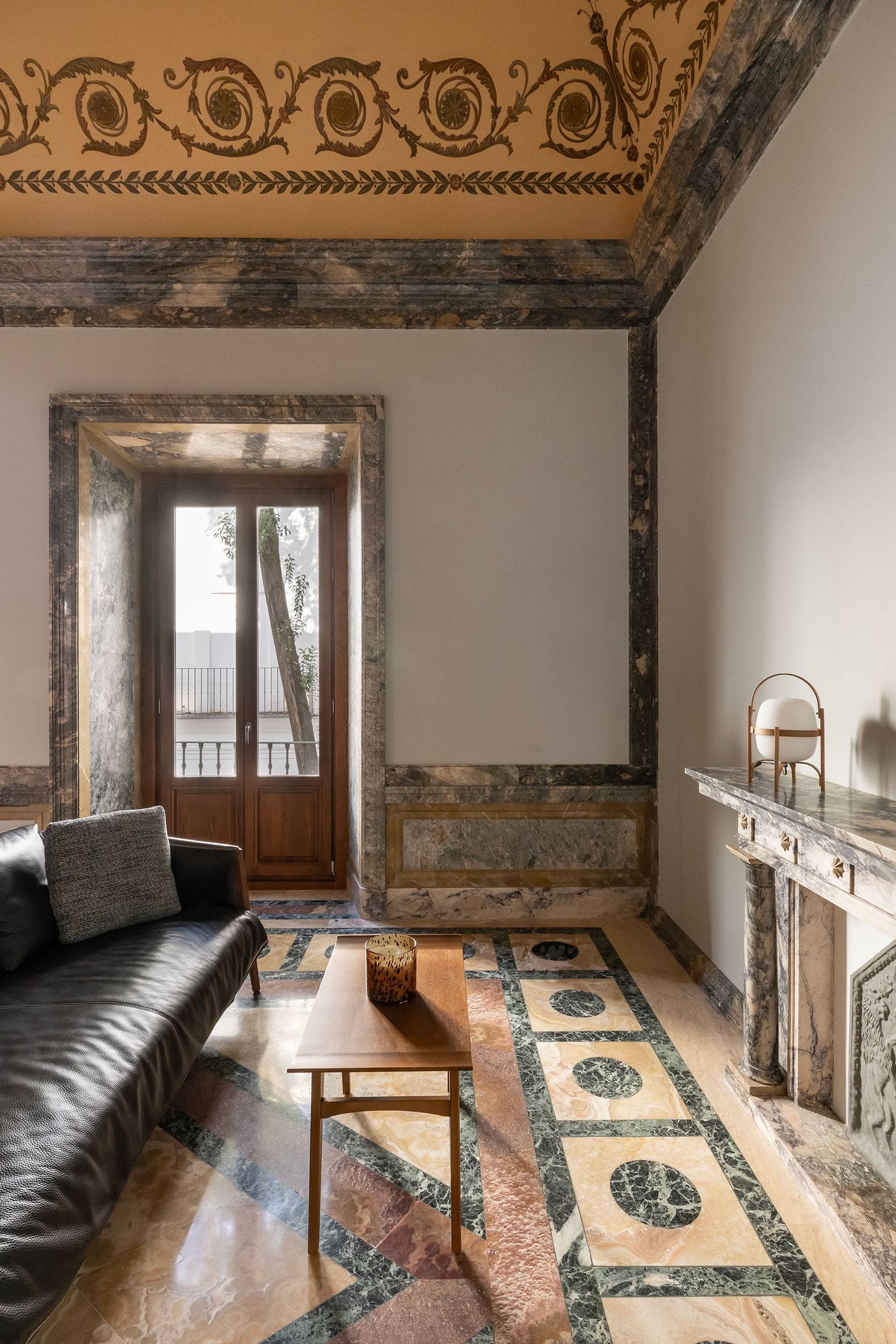
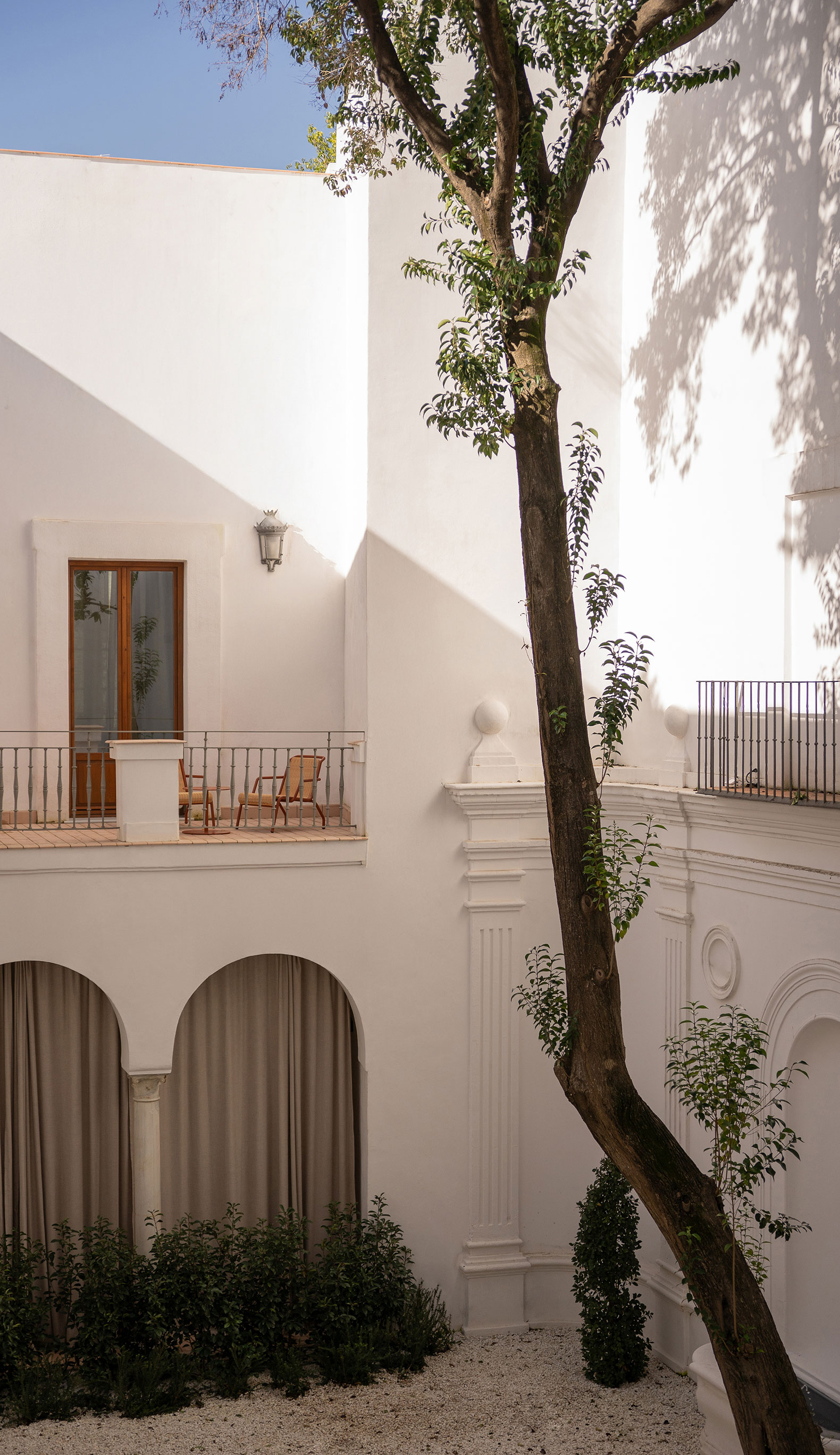
Finally, we find the second floor, which does not occupy the entire plot but is set back from Amor de Dios Street, probably because it was built somewhat later than the original building. This floor contains rooms, terraces and outdoor spaces for general use by residents.
In short, every effort has been made to preserve and enhance the character of this magnificent building, allowing contemporary travellers to enjoy an atmosphere of peaceful comfort in a city as special as Seville.