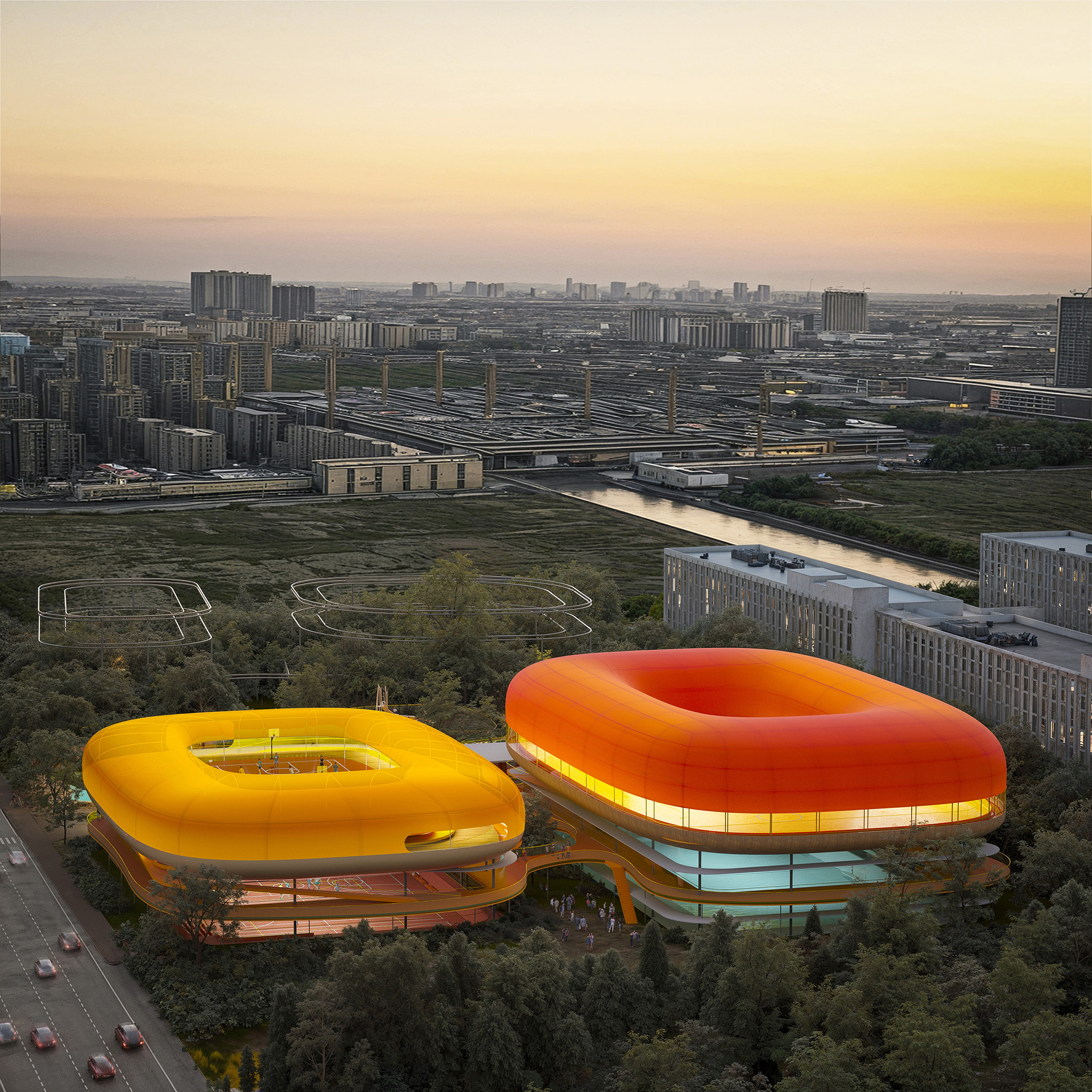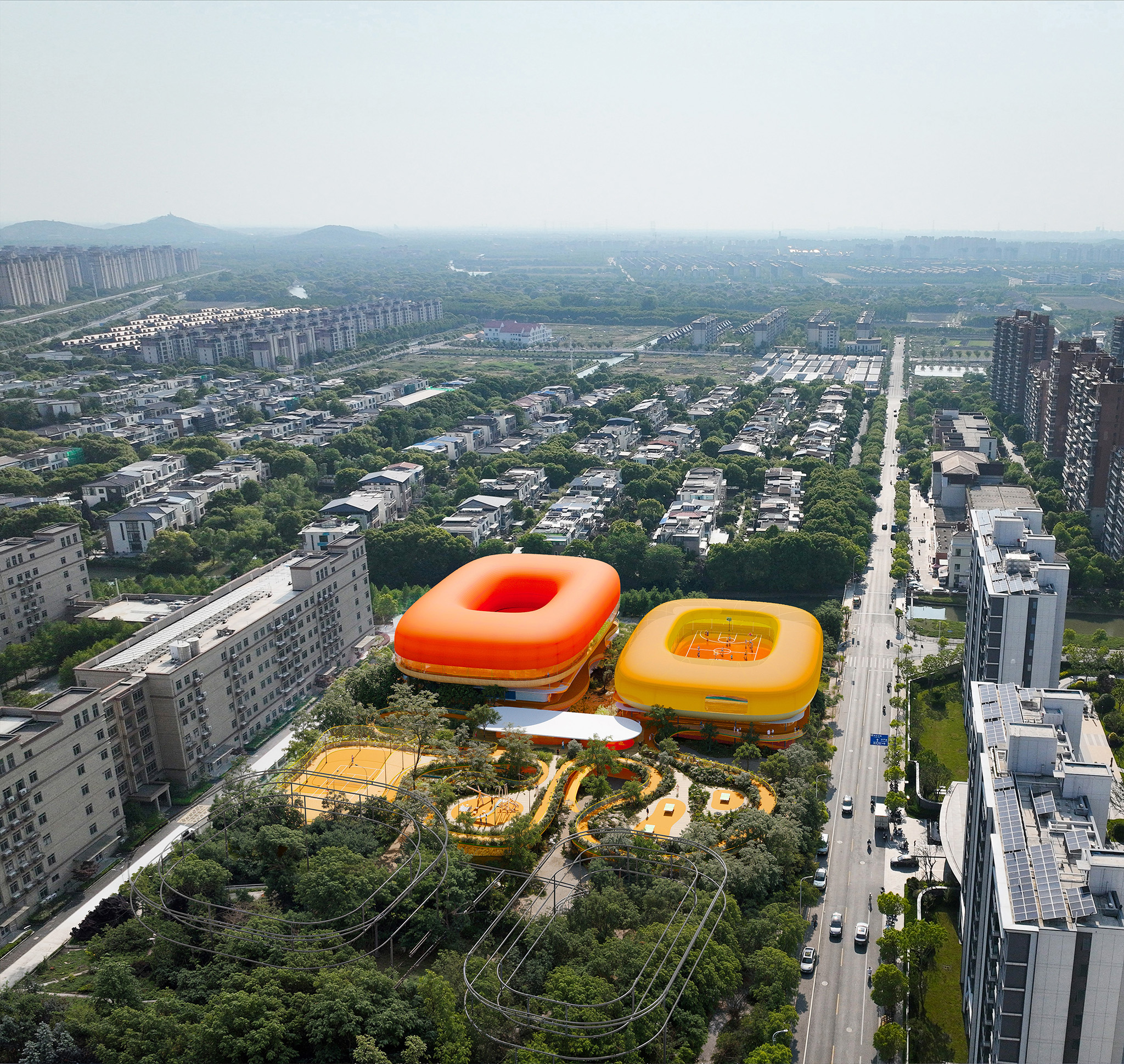
SelgasCano, the architectural team led by José Selgas and Lucía Cano, has been selected second in a restricted international competition for a sports center located in the Songjiang District of Shanghai, China. Strategically located next to major transportation routes, the project is conceived as a cultural and natural landmark on the outskirts of the city.

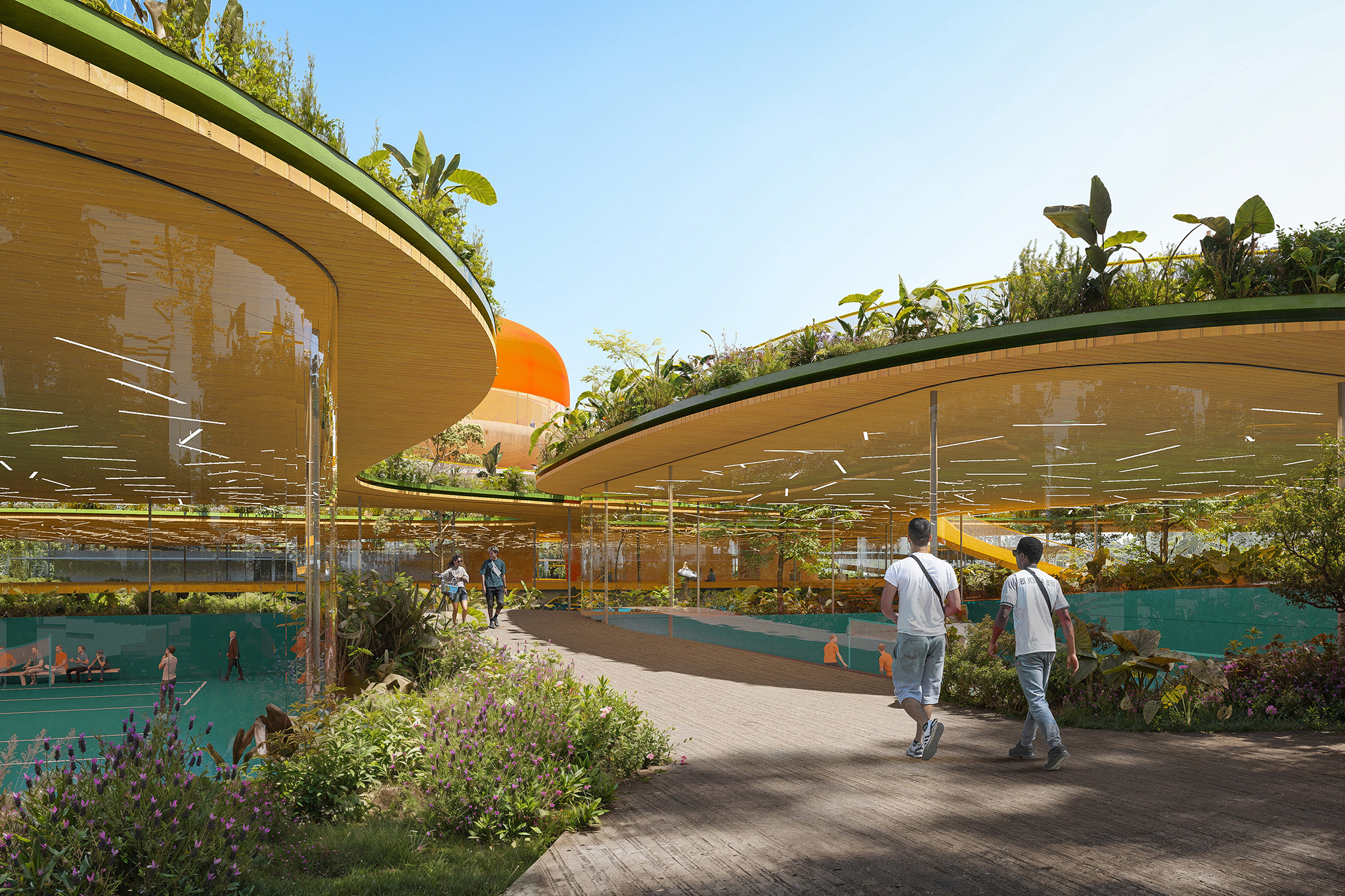
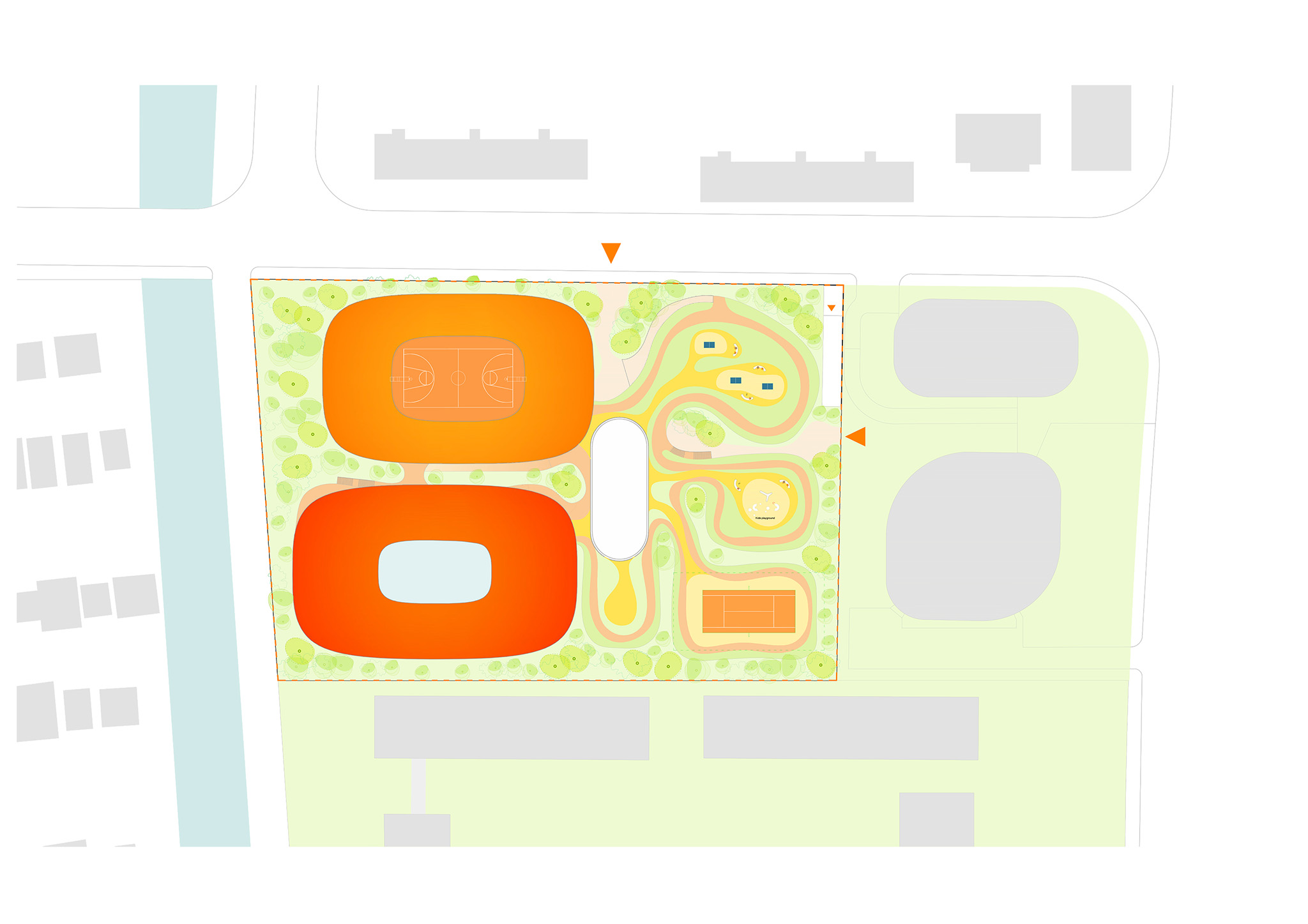
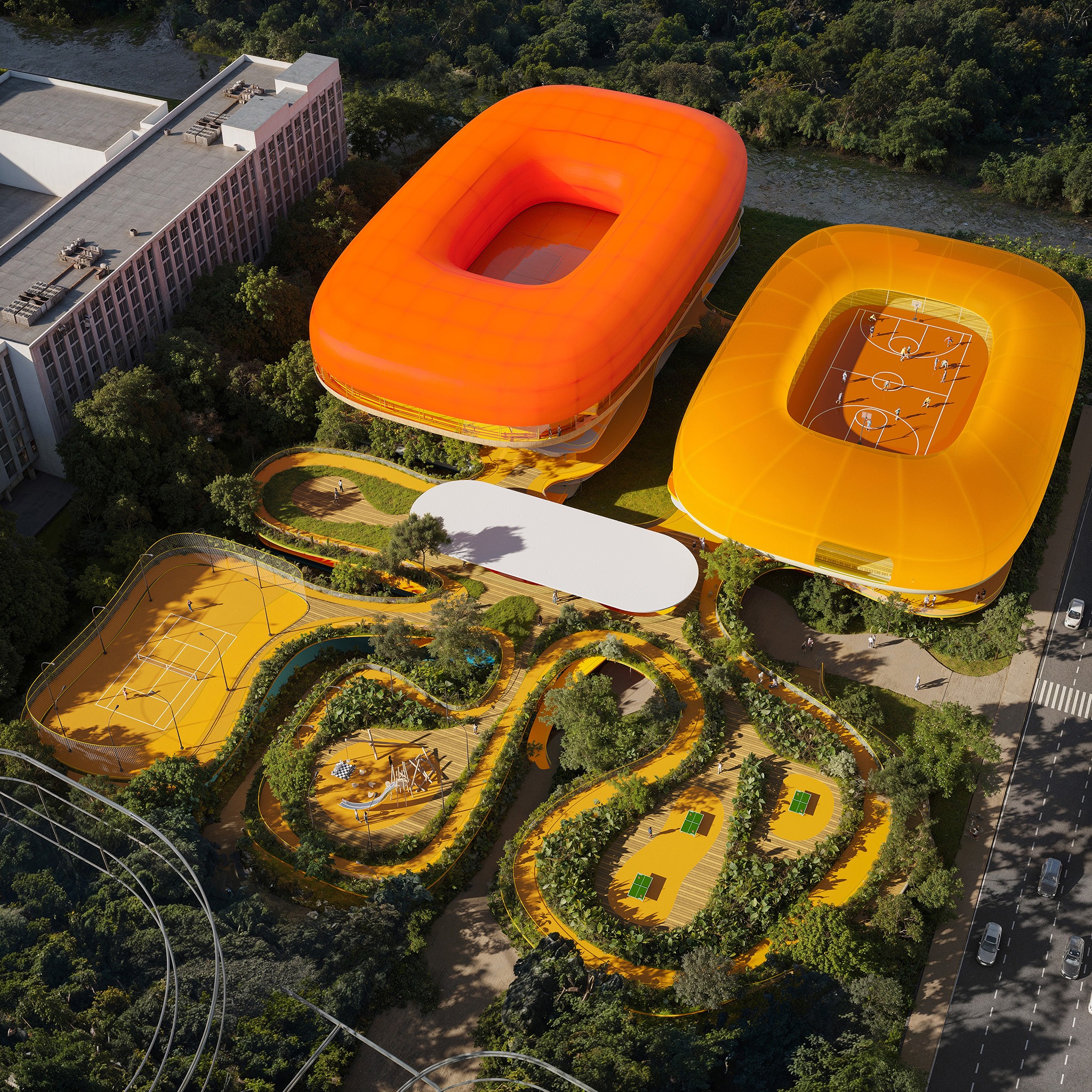
To enhance integration with the green corridors that frame the building, the proposal incorporates a series of walkways that allow for physical activities, such as running or cycling, positively stimulating an active mobility network that promotes and stimulates the well-being of citizens.

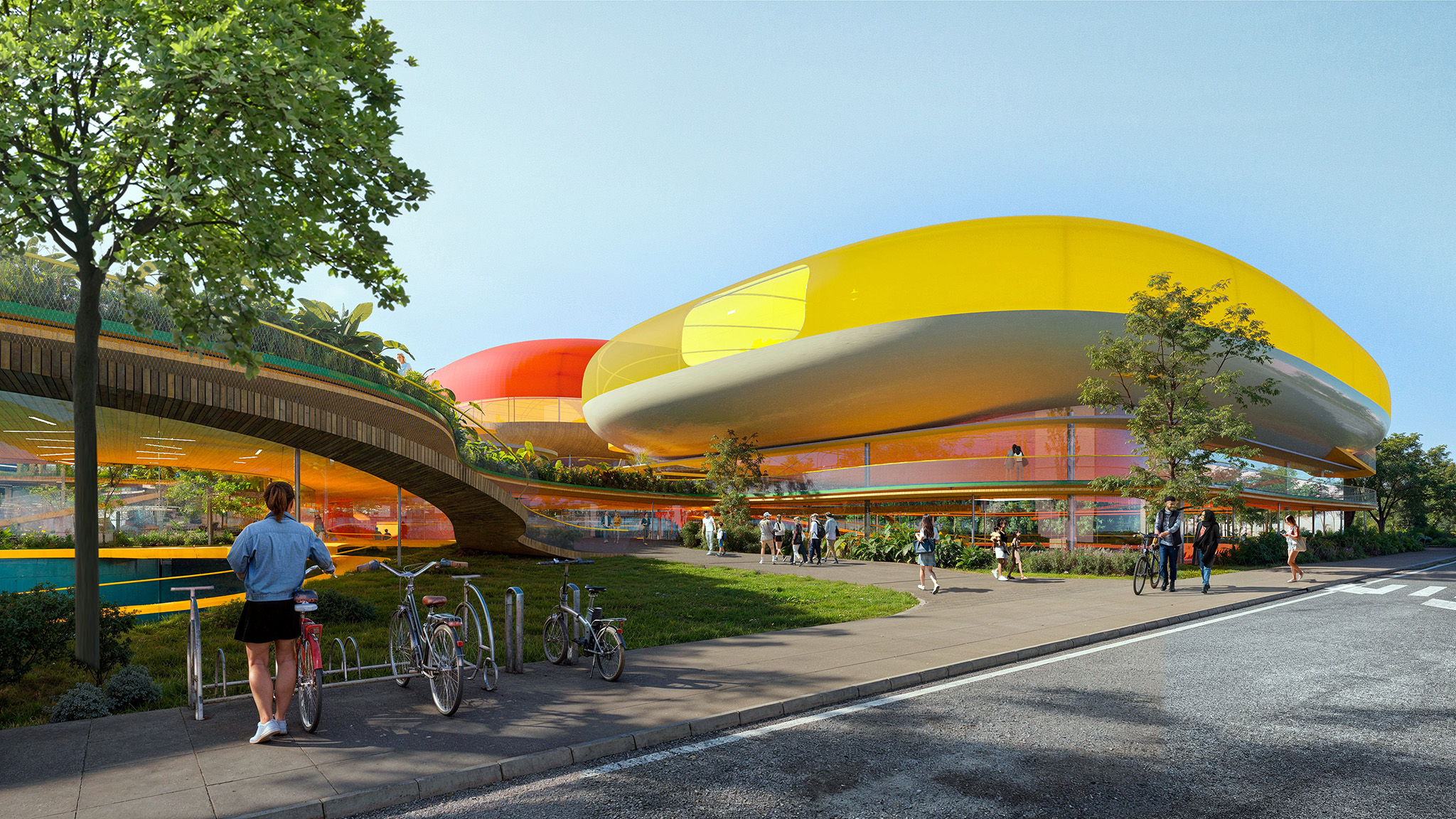
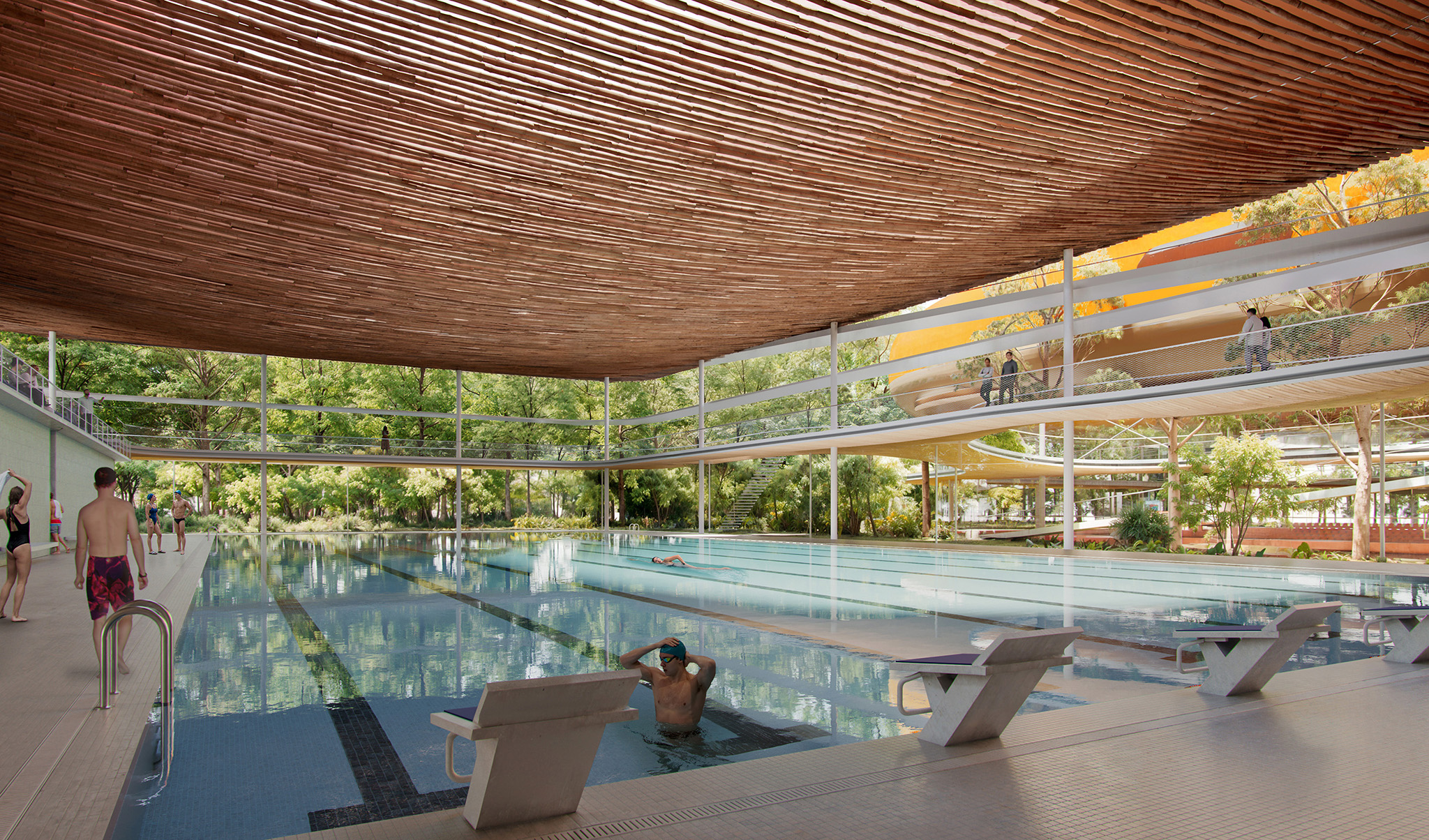
In an urban context dominated by large-scale developments, the project made by SelgasCano is summarized in a sequence of low-rise, organic volumes that blend into the landscape. Inspired by traditional Chinese water villages, the different pavilions are immersed in vegetation, emphasizing transparency, openness, and connection with the natural environment.

Bridges, courtyards, and walkways connect the project with local heritage. This architecture does not impose itself as a massive structure, but rather presents itself as a reference point that reclaims space for the human body. Rather than competing with noise (visual, spatial, and symbolic), the proposal for the sports center emerges organically as a sculptural volume, which grants the project memory and identity.
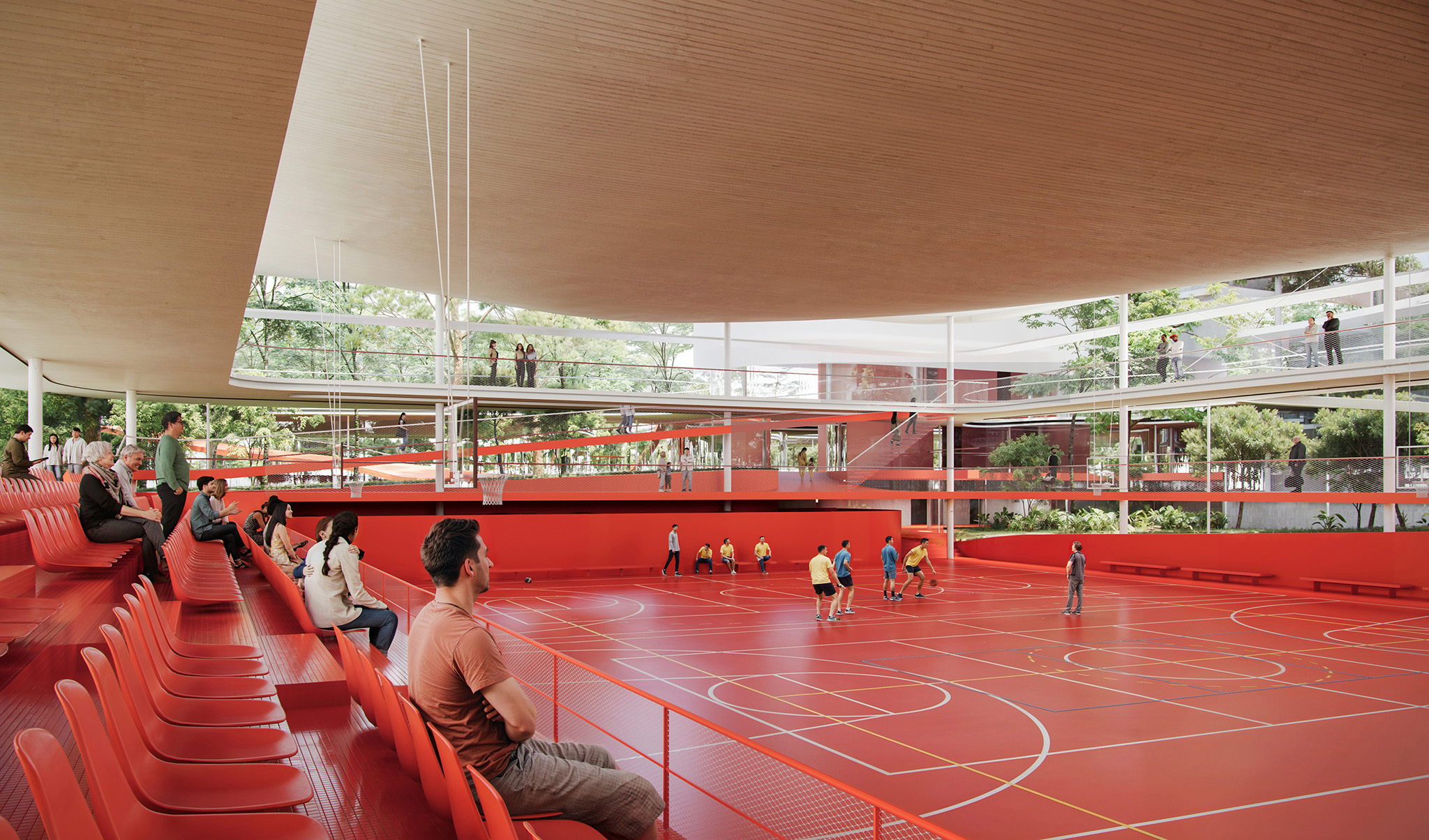
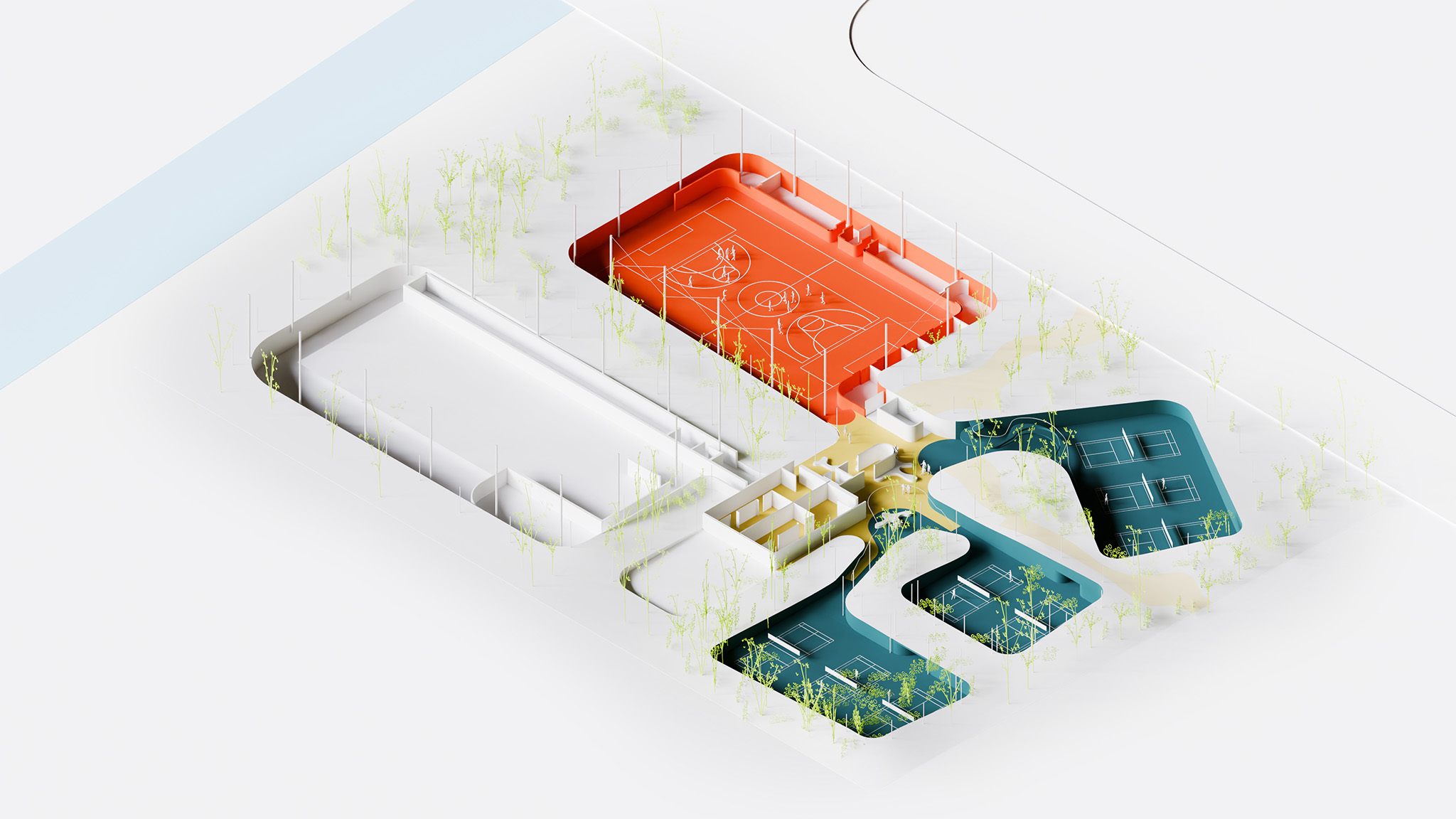
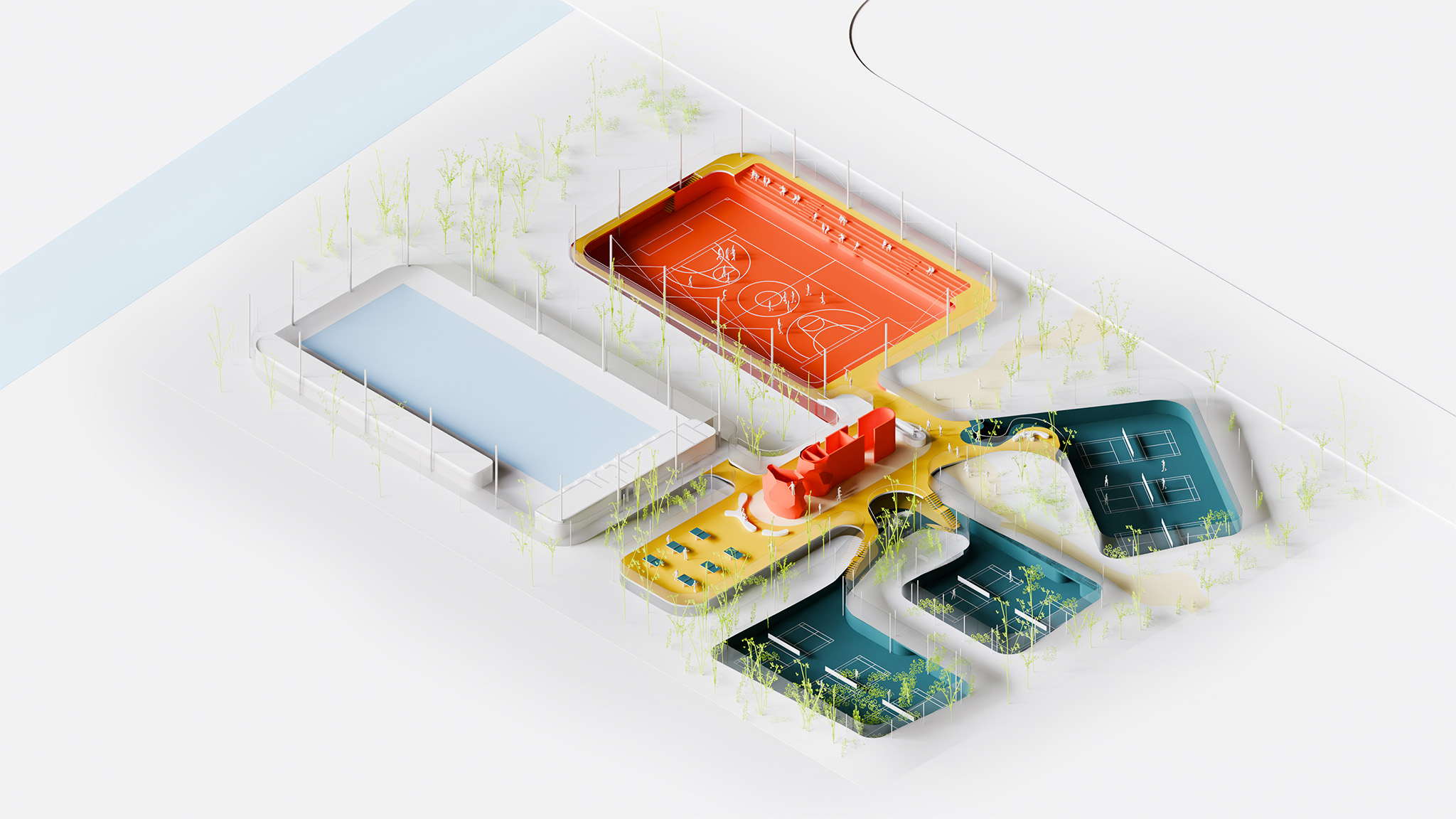
Sports Center for the Songjiang District in Shanghai by SelgasCano. Rendering by Playtime

Project description by SelgasCano

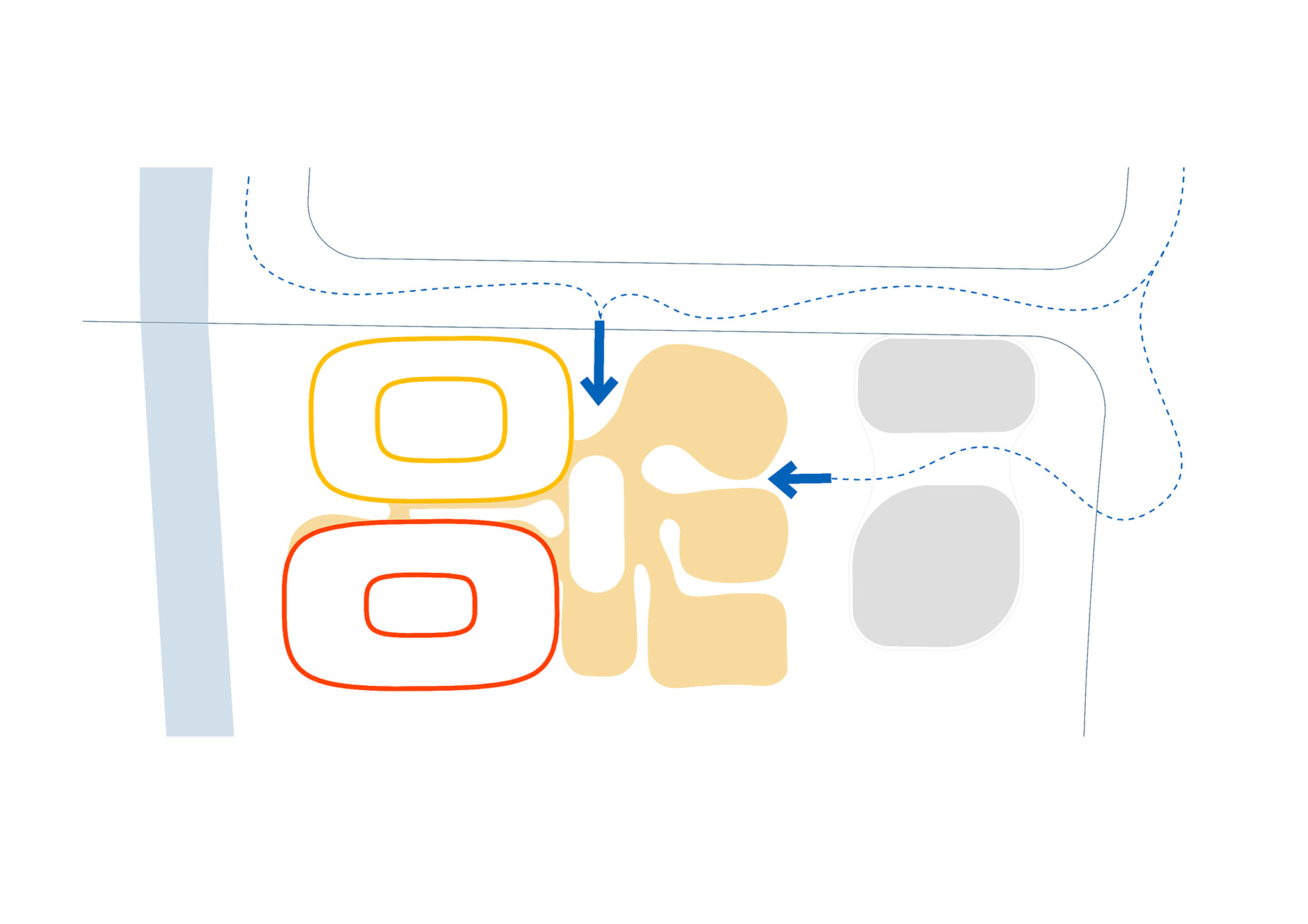
The proposed sports centre in Sijing Town, on the outskirts of Shanghai, is envisioned as a sustainable, humanscale landmark deeply integrated with its natural and cultural context. Positioned near major transport routes and green corridors, the site offers excellent accessibility and opportunities for promoting active mobility. The project emphasizes connection with nature, incorporating jogging paths, bike trails, and links to nearby parks to create a wellness-focused network.

Surrounded by oversized developments, the urban landscape of Sonjing is defined by height, density, and speed. In this context, our proposal is envisioned not as another massive structure, but as a counterbalance, a green landmark that reclaims space for the body, the senses, and the soul.

Polideportivo para el distrito de Songjiang en Shanghái por SelgasCano. Visualización por Playtime.
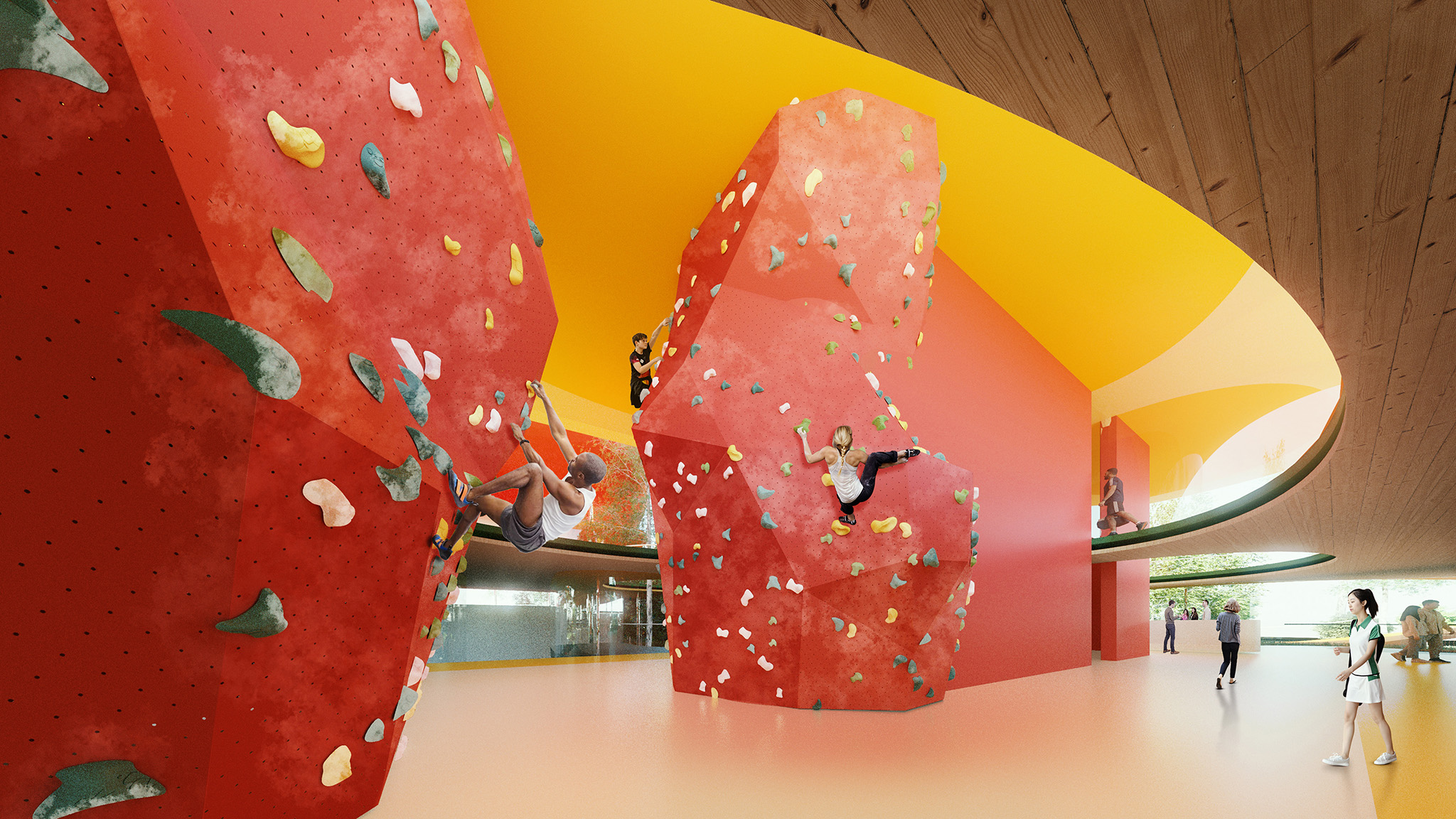
Sports Center for the Songjiang District in Shanghai by SelgasCano. Rendering by Playtime.

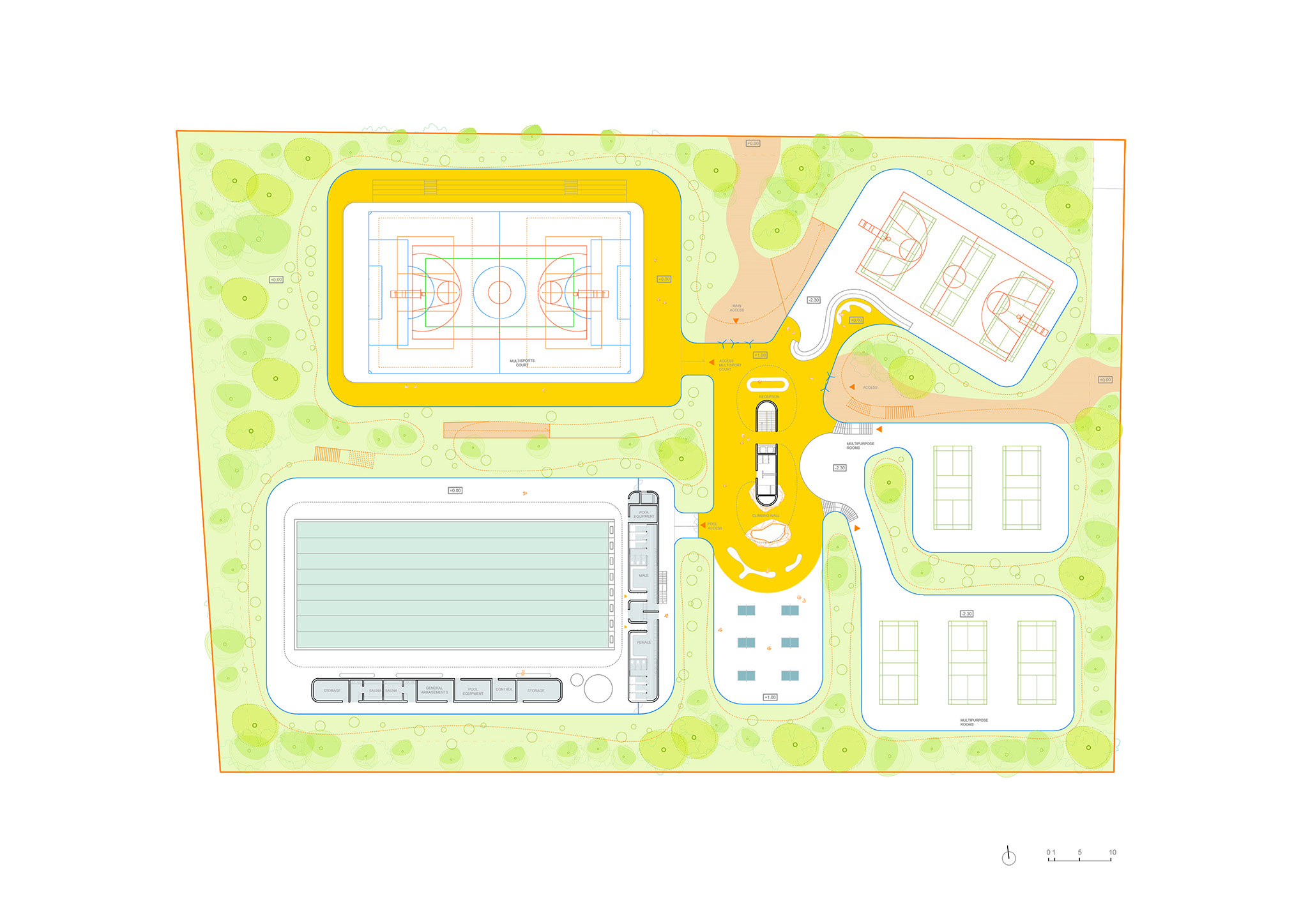
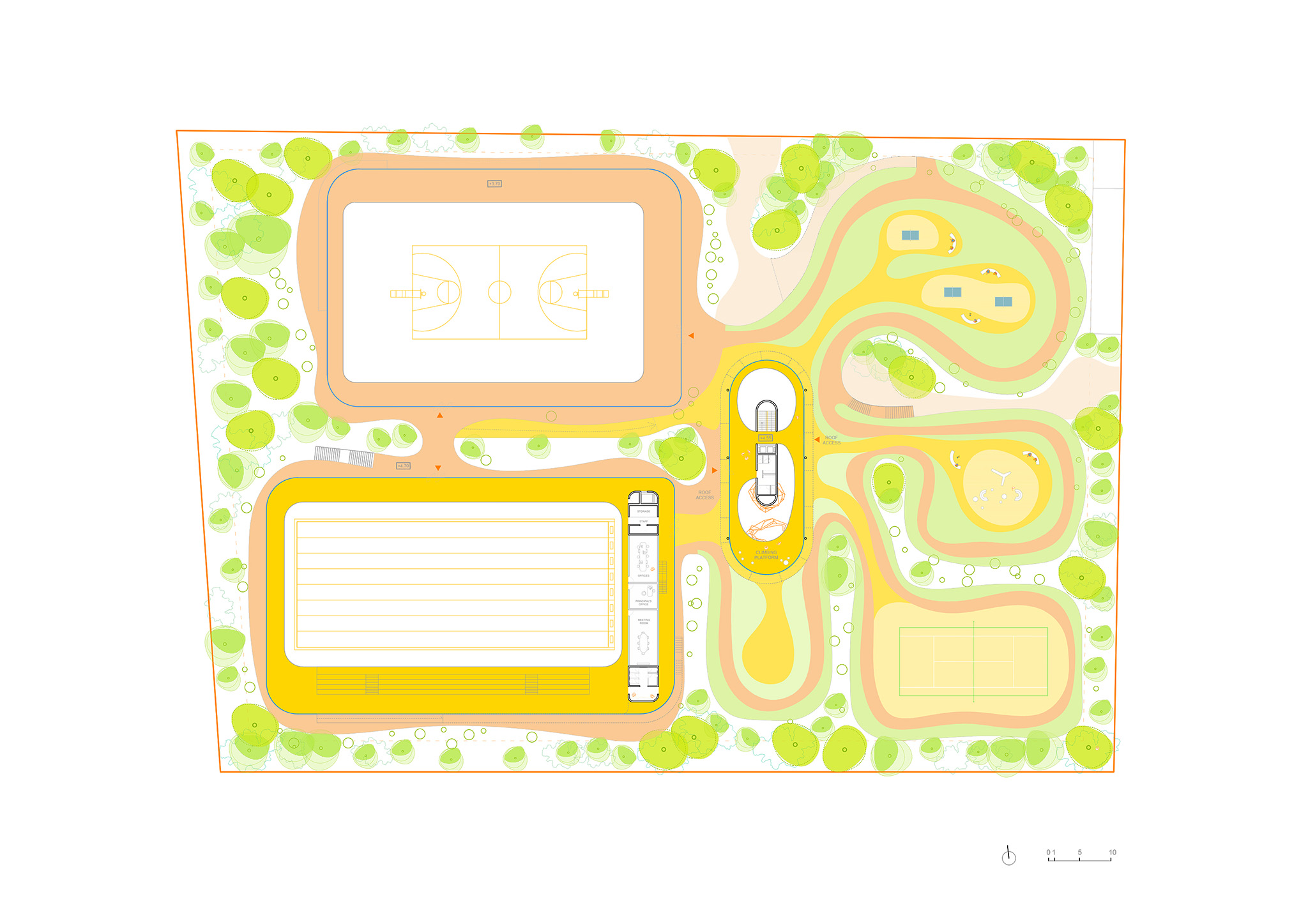
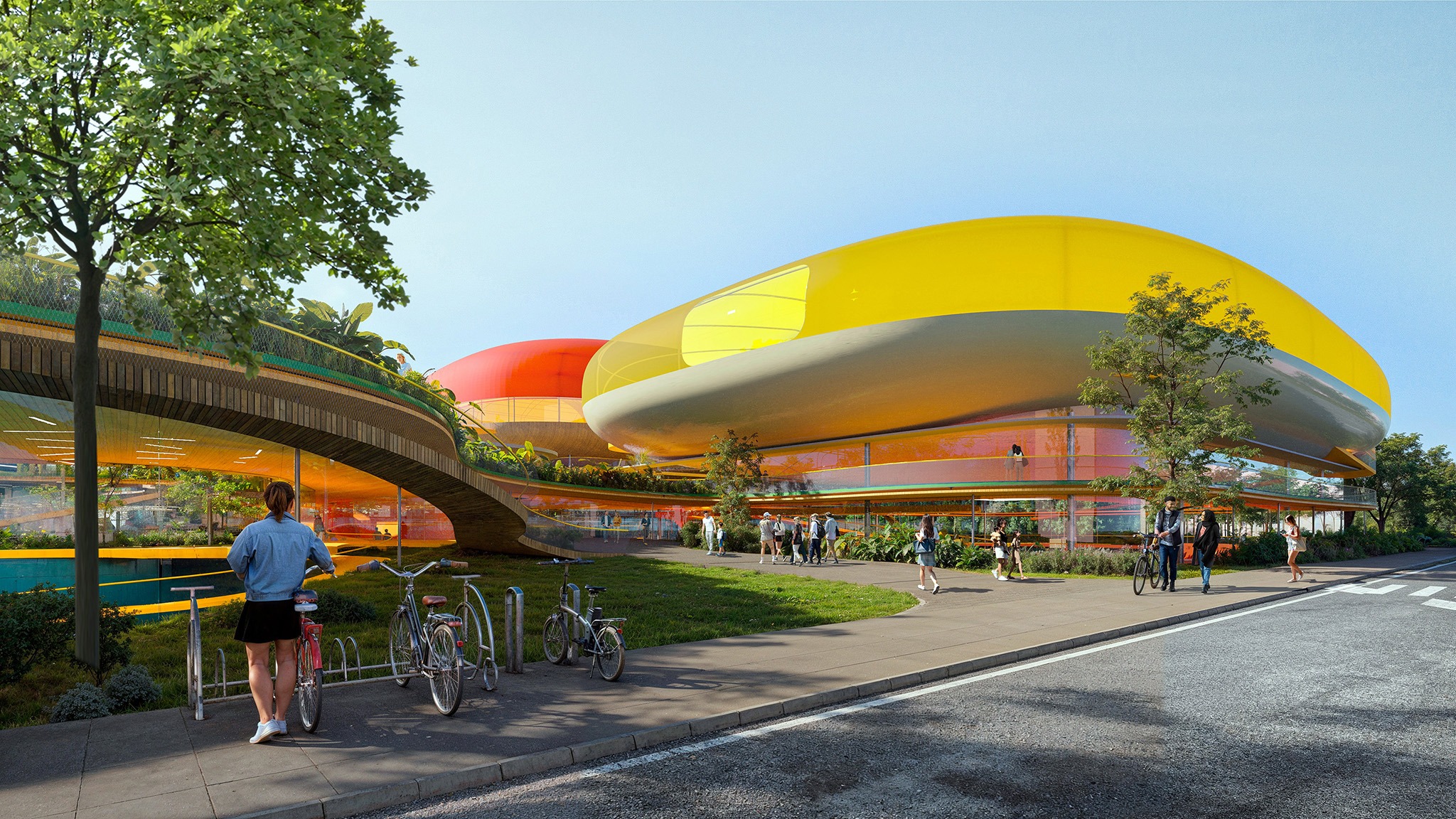
Rather than a single massive structure, the design consists of multiple low, transparent volumes nestled into the landscape. These pavilions are surrounded by greenery, emphasizing openness, human scale, and harmony with the environment. Inspired by traditional Chinese water towns, the architecture uses spatial rhythms of bridges, courtyards, and walkways, connecting the design to local heritage.

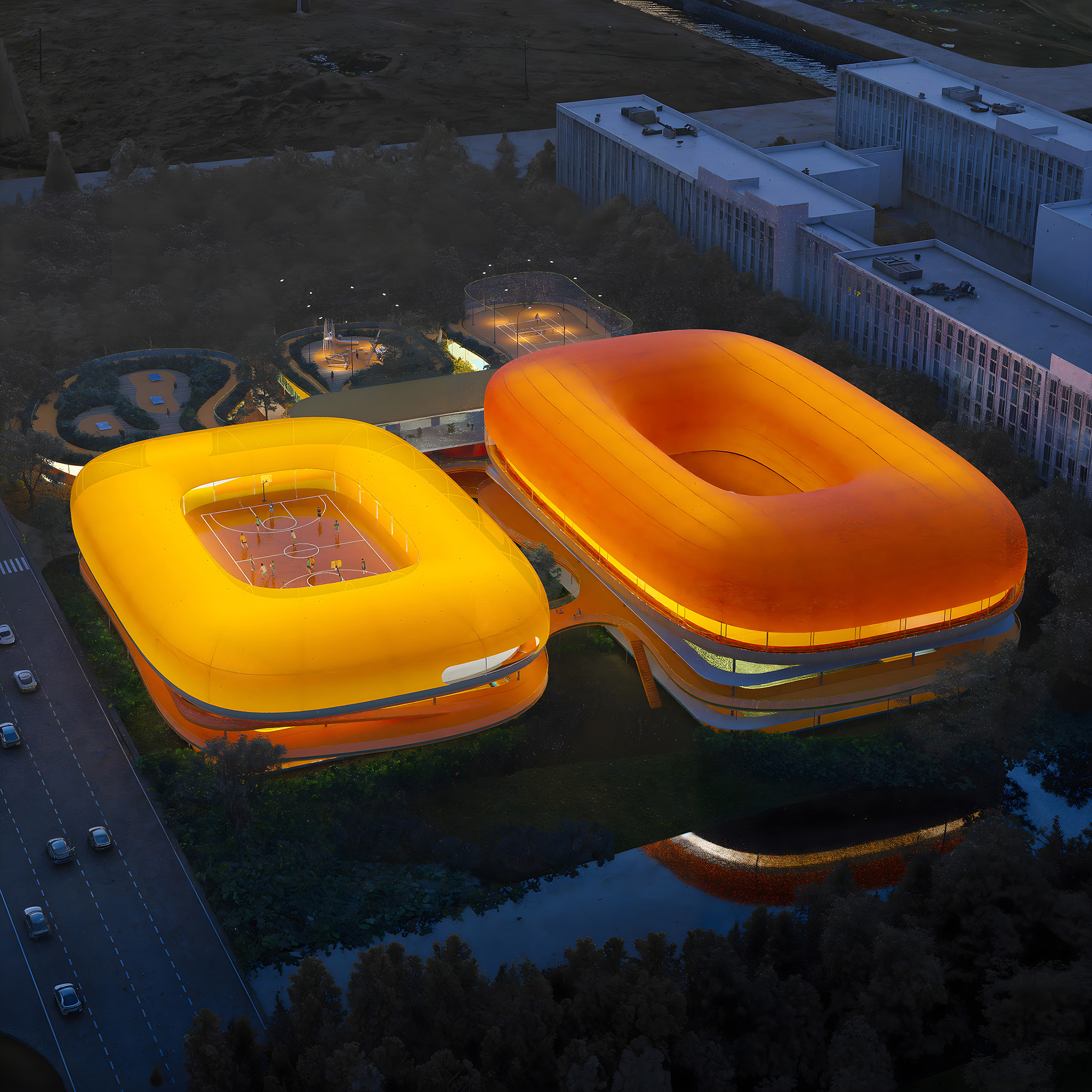
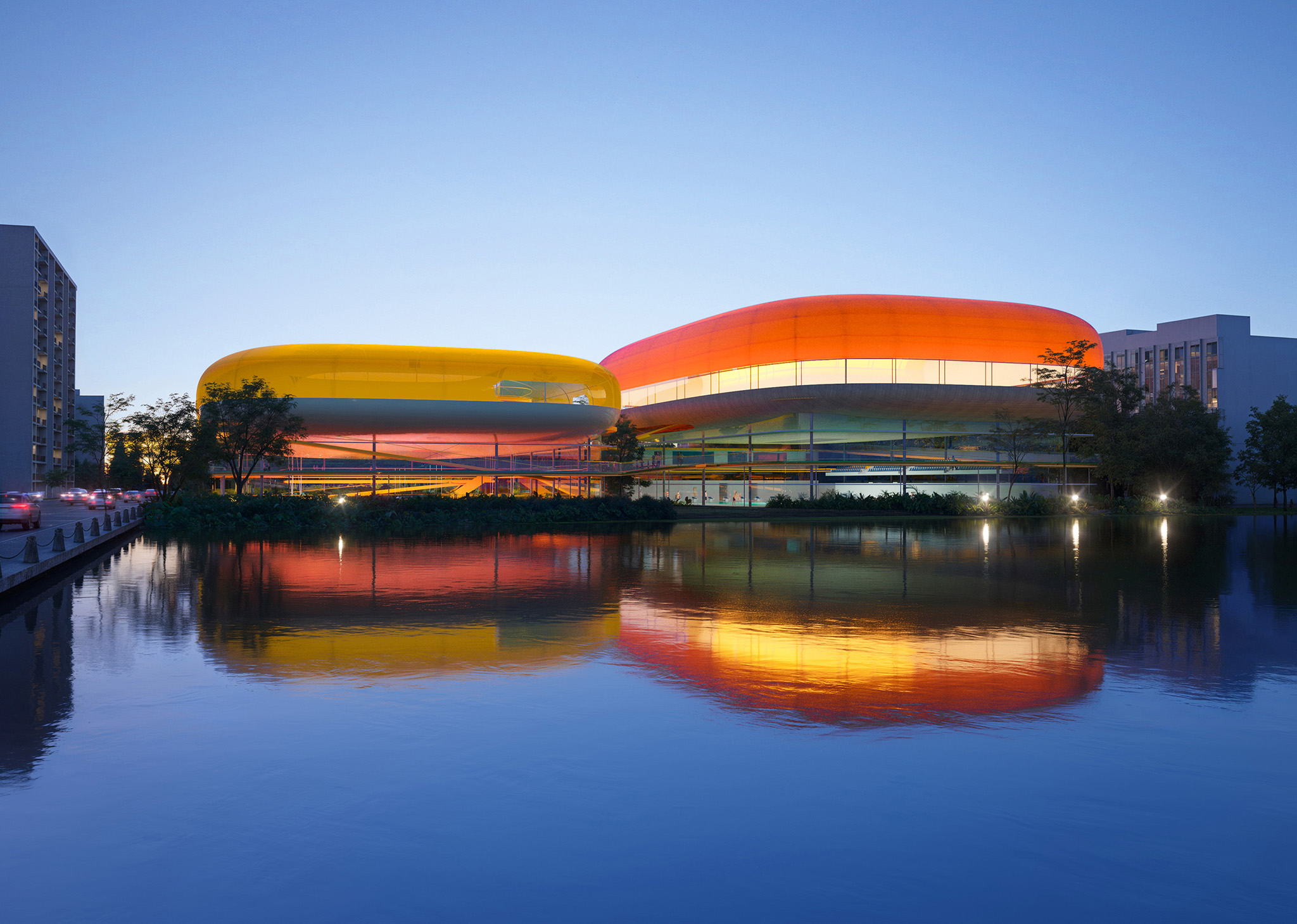
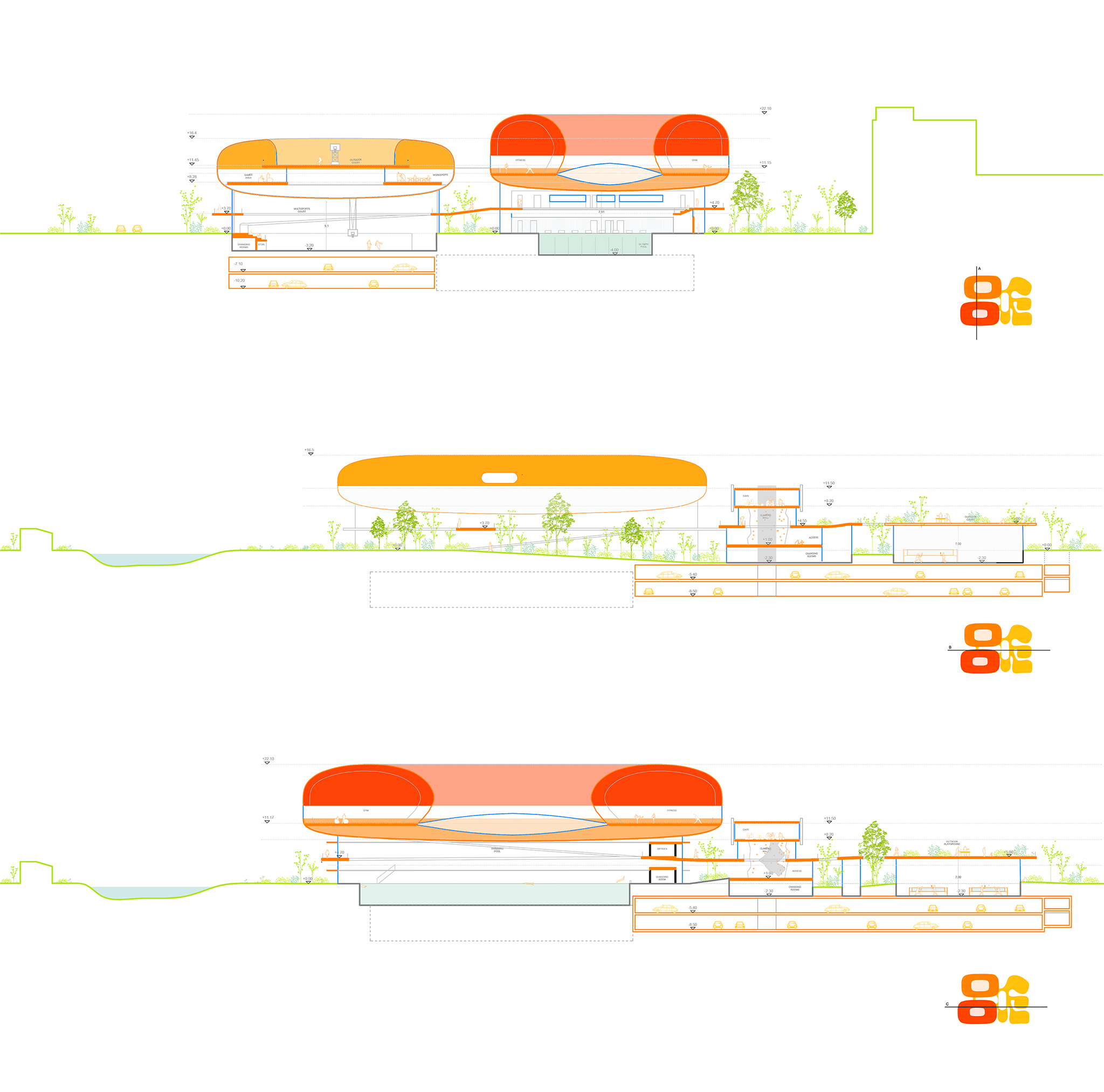
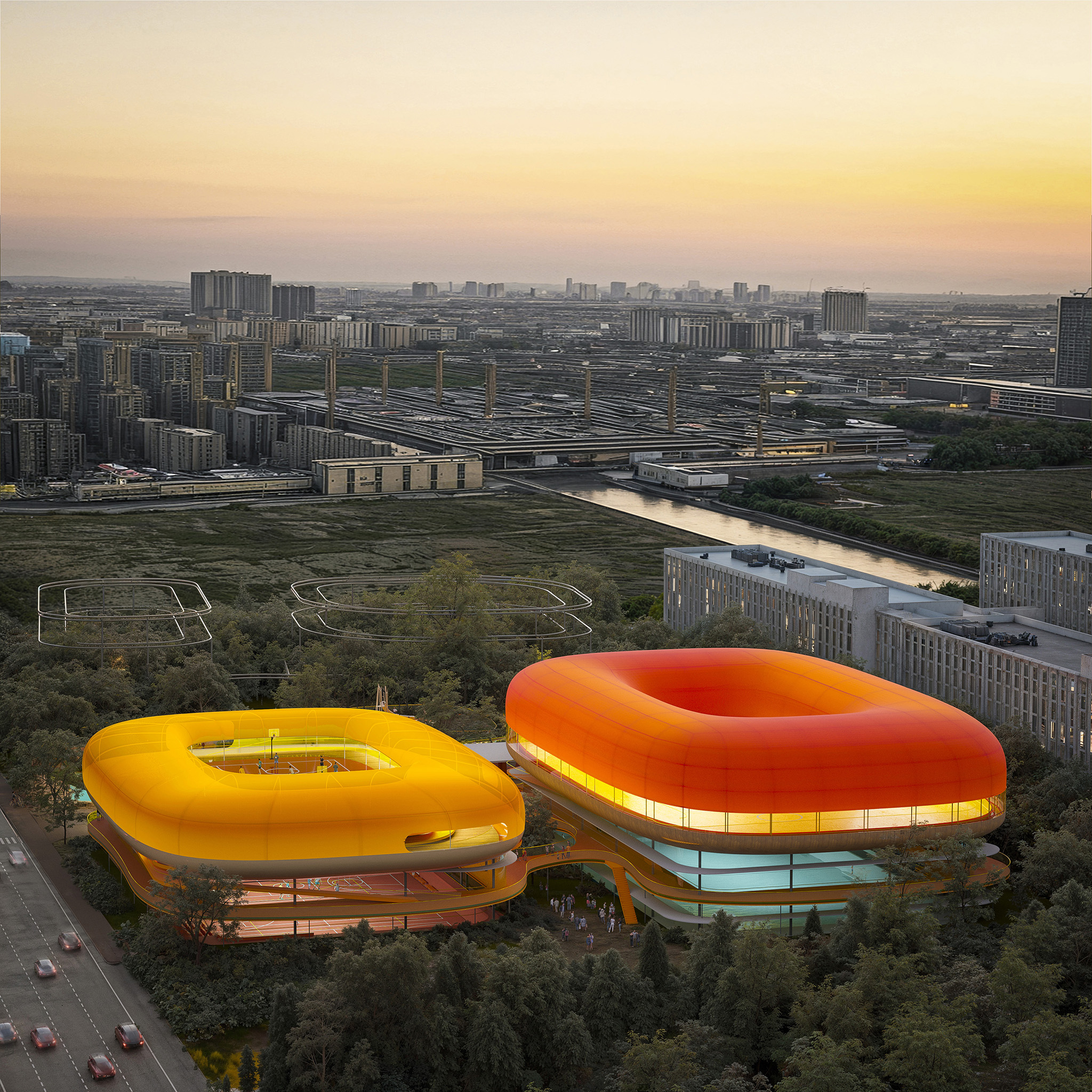
By embracing the land rather than dominating it, we offer something the surrounding skyline cannot: harmony, openness, and a deep sense of connection to nature. As part of this vision, two organic volumes emerge as keyprotagonists, two bold yet fluid forms that predominate the composition and immediately capture attention. Their sculptural character gives the project a strong visual identity, while maintaining harmony with the overall horizontal layout and reinforcing the commitment to human scale and sensorial experience.
Polideportivo para el distrito de Songjiang en Shanghái por SelgasCano. Visualización por Playtime.
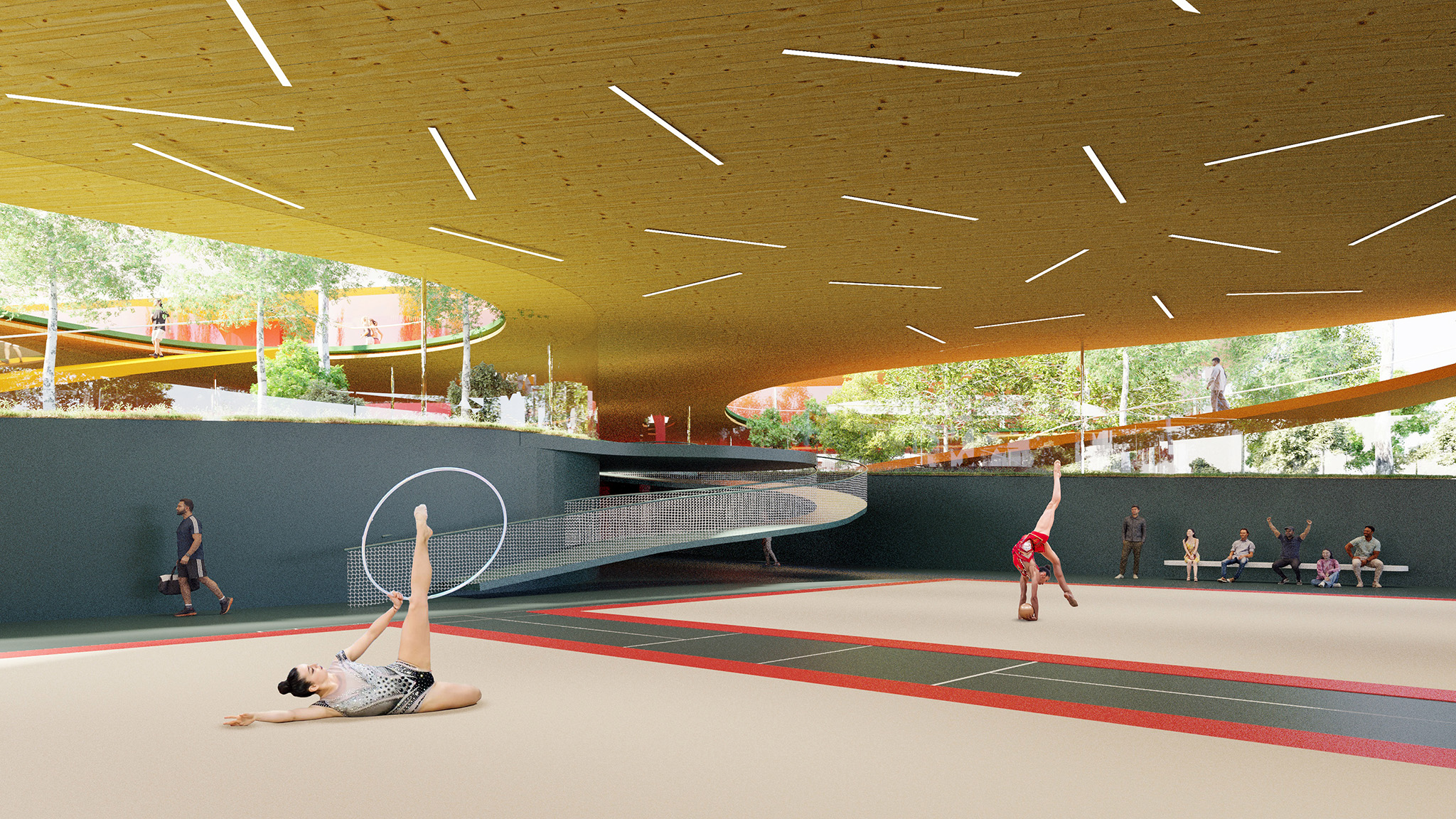
Sports Center for the Songjiang District in Shanghai by SelgasCano. Rendering by Playtime.

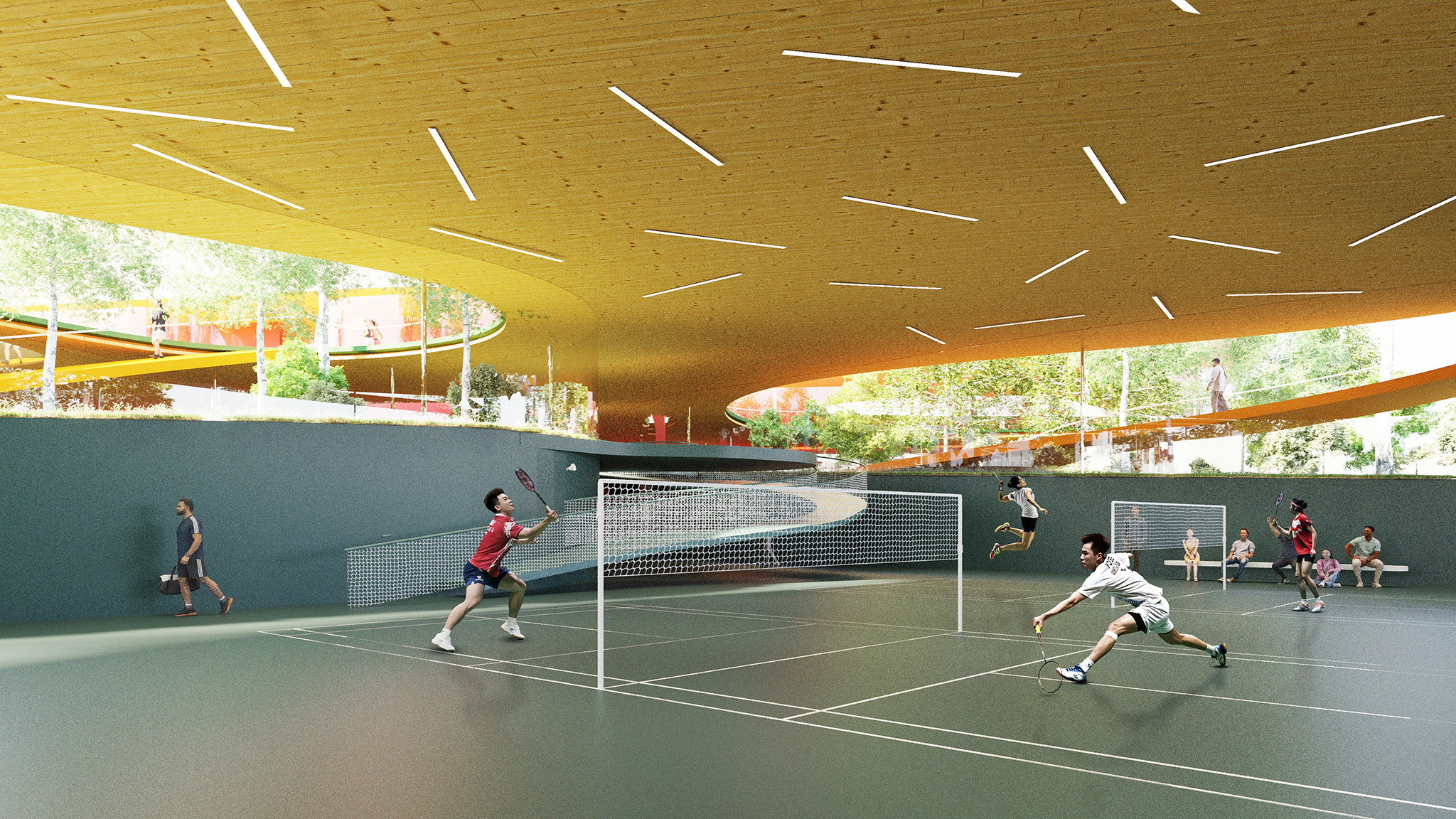
Functionally, the centre is organized into distinct zones for swimming, multisport courts, and badminton, with strong indoor-outdoor connections. Smart technologies and passive strategies optimize climate control and sustainability. Materials are chosen for environmental performance, including ETFE, recycled tartan, wood, and low-VOC finishes.

In contemporary urban contexts, architecture often competes with noise (visual, spatial, and symbolic). Creating a landmark is not about scale alone, but about resonance. A landmark captures attention, yes, but more importantly, it creates memory. It becomes a point of orientation, a reference within the city’s emotional and visual landscape.
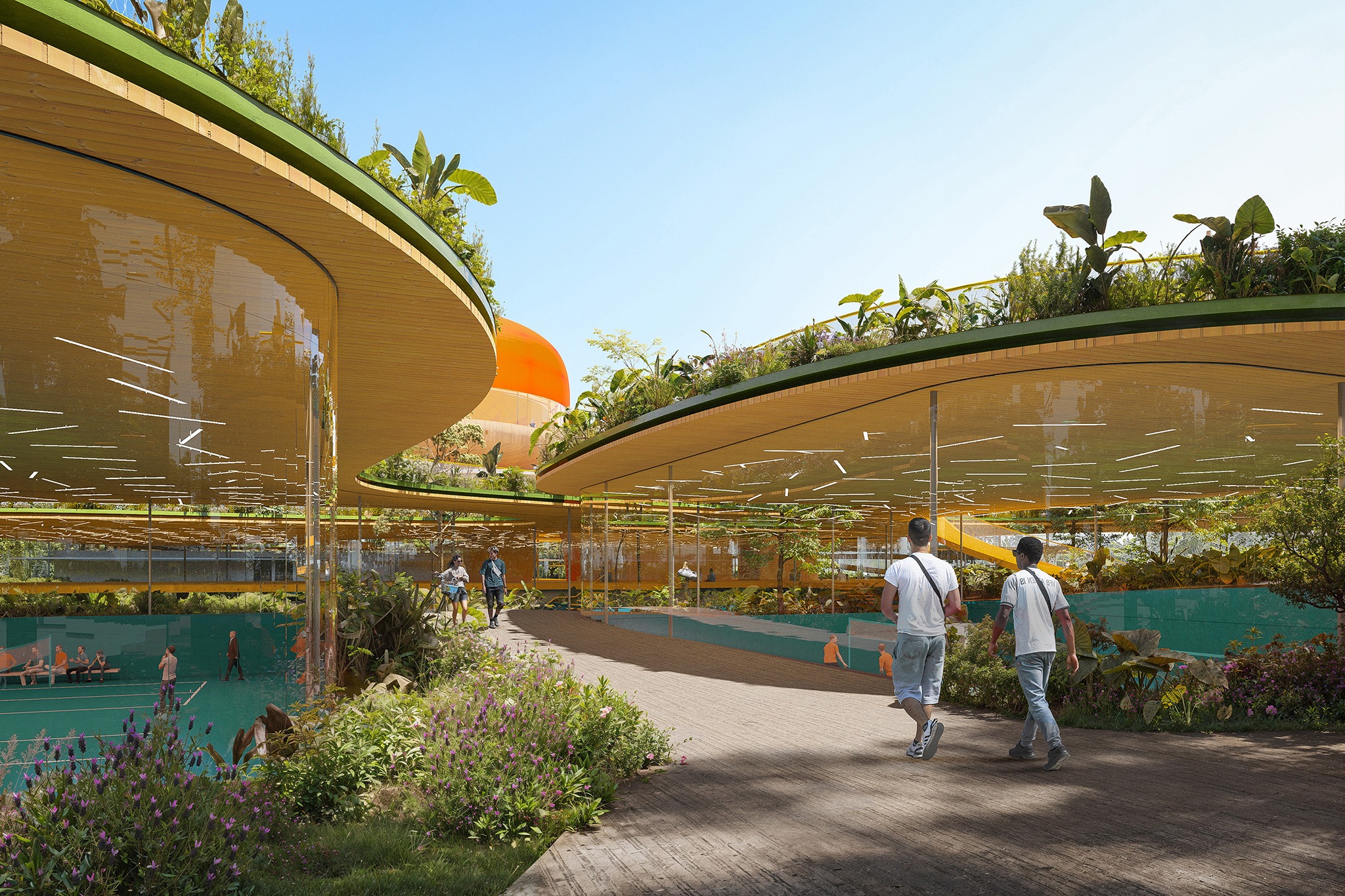
Polideportivo para el distrito de Songjiang en Shanghái por SelgasCano. Visualización por Playtime.
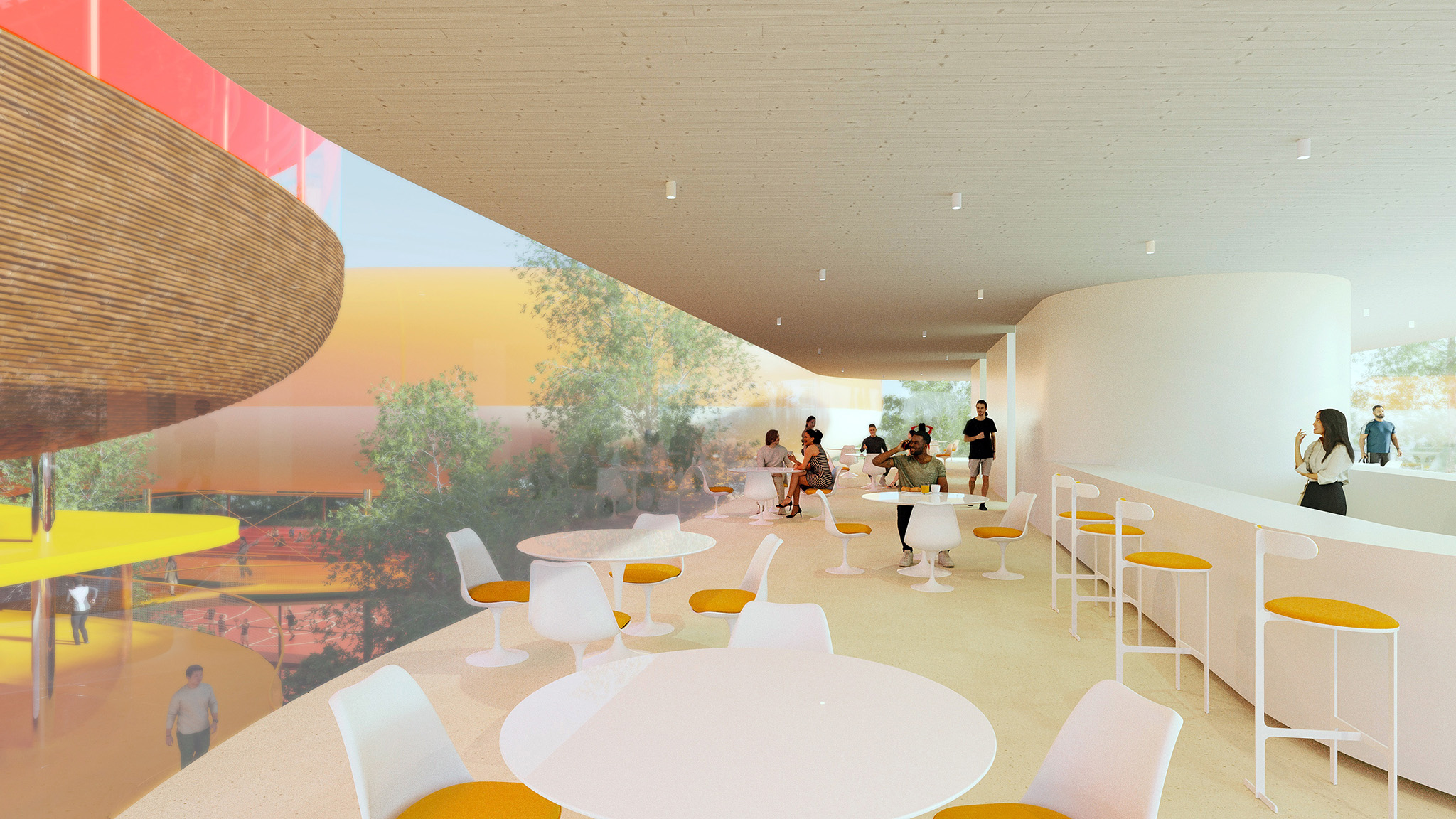
Sports Center for the Songjiang District in Shanghai by SelgasCano. Rendering by Playtime.

In our proposal, the dominant organic forms serve precisely this purpose: to act as a magnetic presence within the environment. Their unique geometry and vibrant materiality make them instantly recognizable, sparking curiosity and inviting approach. As landmarks, they offer identity not only to the building, but to the wider neighborhood, anchoring it with meaning, character, and a sense of place.

Lighting plays a vital role: natural daylight animates interiors, while nighttime illumination turns the building into a sculptural beacon. Altogether, the sports centre acts as a community hub, a space where architecture, culture, and nature converge to support health, connection, and identity.
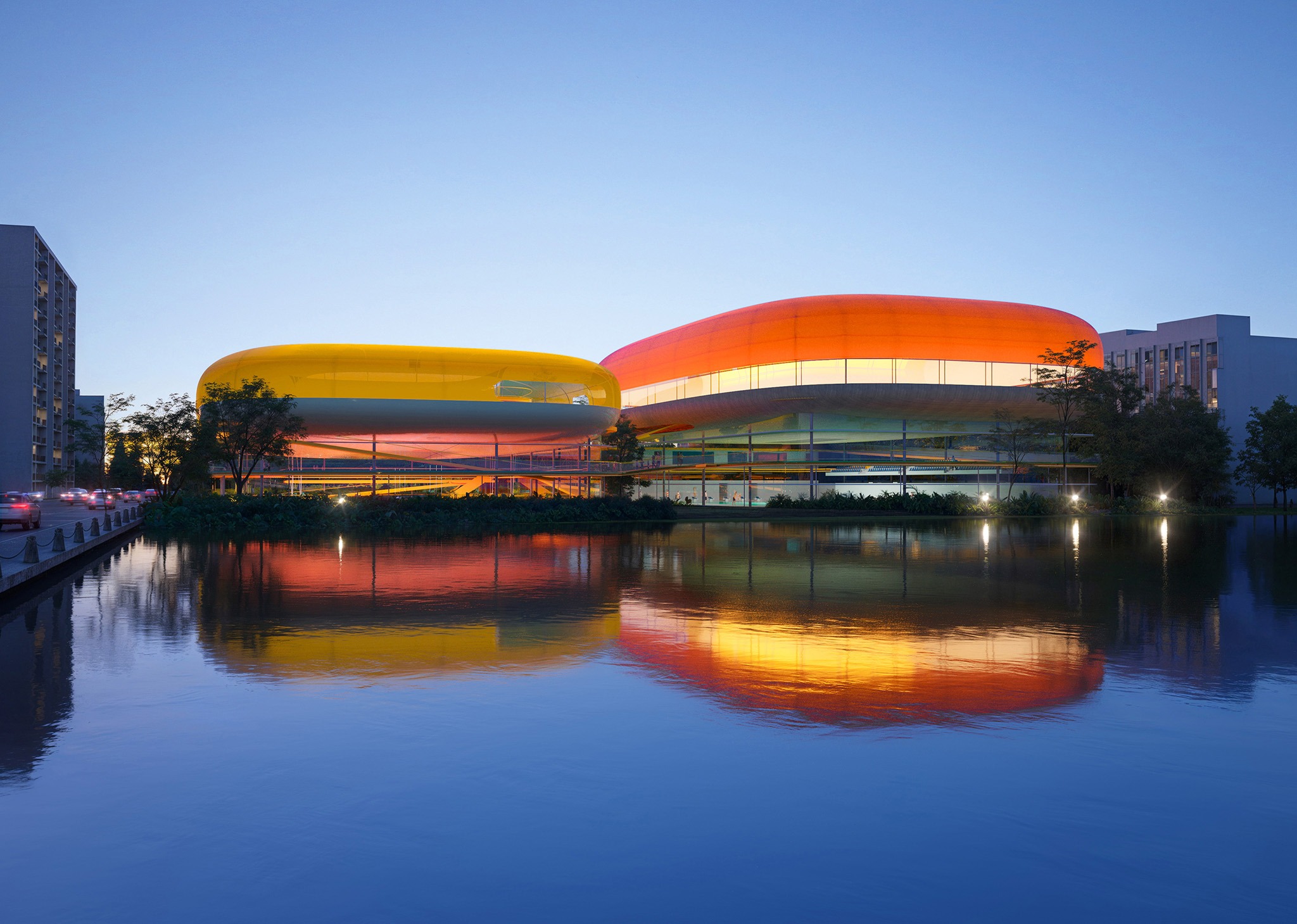
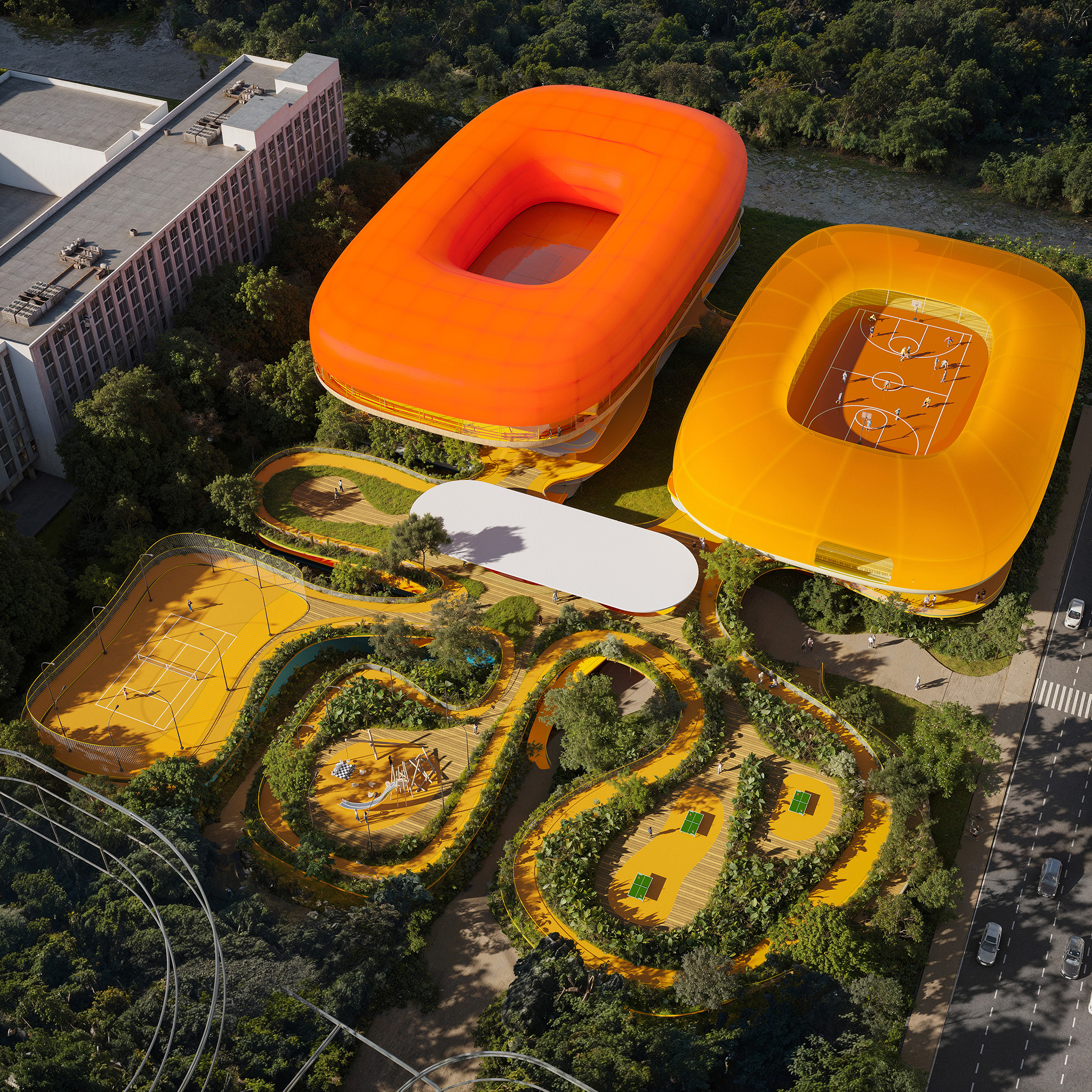
Polideportivo para el distrito de Songjiang en Shanghái por SelgasCano. Visualización por Playtime.
Sports Center for the Songjiang District in Shanghai by SelgasCano. Rendering by Playtime.

More information

Label
Architects
Text

SelgasCano. Lead Architects.- José Selgas, Lucía Cano. 

+ + copy Created with Sketch.
- + copy Created with Sketch.
Label
Project team
Text

Leandra Matas, María Andrés, Fabiana Perrogón, Juan Múzquiz, Iñigo Riveira, Paolo
Tringali, Inés Olavarrieta.

+ + copy Created with Sketch.
- + copy Created with Sketch.
Label
Area
Text

14,500 sqm.

+ + copy Created with Sketch.
- + copy Created with Sketch.
Label
Dates
Text

June 2025.

+ + copy Created with Sketch.
- + copy Created with Sketch.
Label
Location
Text

Songjiang District, Shanghai, China.

+ + copy Created with Sketch.
- + copy Created with Sketch.
Label
Rendering
+ + copy Created with Sketch.
- + copy Created with Sketch.

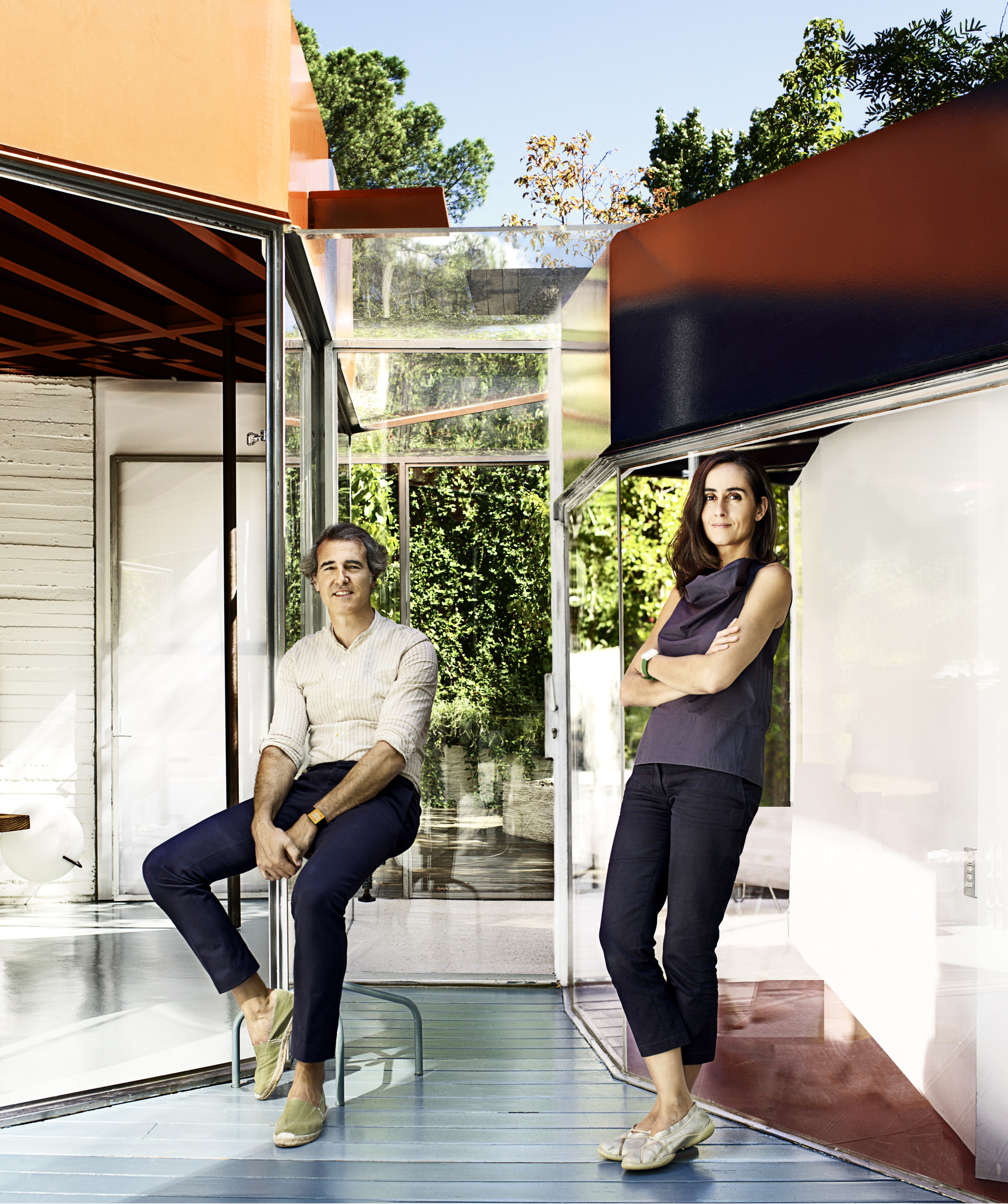
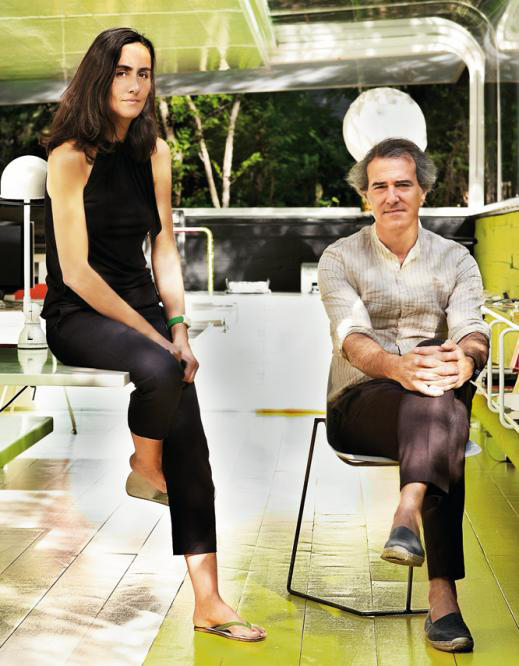
SelgasCano is a Madrid-based practice led by Jose Selgas (Madrid, 1965) and Lucia Cano (Madrid, 1965). José Selgas. Graduated Architect from ETSA Madrid 1992. Worked with Francesco Venecia on Naples in 1994-95. Rome Prize at the Spanish Academy of Fine Arts in Rome 1997-98. Lucía Cano. Graduated Architect from ETSA Madrid 1992. Worked with Julio Cano Lasso until 1996. Member of Cano Lasso Studio from 1997 until 2003.

Since 2006, the studio has been operating independently, with a clearly international profile, in its new headquarters, dubbed "Office in the Woods." A small, semi-buried studio that aims to maintain its size in the future.

Prizes.
 1st Prize in Competition of Alternative on Social Housing, Madrid, 1993.
1st Prize in Competition. 67 Social Dwellings in Las Rosas, Madrid, 1996. 
1st Prize in Competition, Congress Center and Auditorium, Badajoz, 1999-2006. 
1st Prize on Competition, Auditorium and Congress Center, Cartagena, 2001-2011. 1st Prize on Competition, Congress Center and Auditorium, Plasencia, 2005 (on construction)
. Prize VII BIAU Bienal Iberoamericana de Arquitectura y Urbanismo, 2010. Prize AD Architectural Digest 2011. Selected Mies Van Der Rohe Award, 2011. Madrid City Architecture Award, 2002 + 2007. Madrid Region Architecture Award, 2003. 2nd Prize in Competition, Madrid Main Court. Madrid, 2008.

Exhibitions: Exhibition at MoMA New York: On-Site: New Architecture in Spain, 2006. Biennale di Venezia, 2006. Shortlisted Saloni Prize 2007 - 2009. Shortlisted IX Spanish Architecture Biennial Exhibition, 2007. Exhibition GA International, 2008-2009-2010 (GA Gallery), Tokyo 2008-2009-2010. Exhibition Guggenheim New York, Contemplating The Void, 2010. Biennale di Venezia, 2010: People meet in Architecture International Pavilion + What architects desire, German Pavilion. Tokyo Art Meeting (II). A new relationship between architecture, art and people, Museum of Contemporary Art Tokyo, 2011.

In 2012, the architects exhibited in the Spanish Pavilion at the 13th International Architecture Biennale, Venice, as part of SPAINLab. In 2013, they won the Kunstpreis (Art prize) awarded by the Akademie der Kunste, Berlin and were pronounced 'Architects of the Year' by the German Design Council in Munich.


Read more
Published on: October 17, 2025
Cite:
metalocus, AGUSTINA BERTA
"Sports Center for the Songjiang District proposal by SelgasCano" METALOCUS. Accessed
<https://www.metalocus.es/en/news/sports-center-songjiang-district-proposal-selgascano> ISSN 1139-6415
Loading content ...
Loading content ...
Loading content ...
Loading content ...
Loading content ...
Loading content ...
Loading content ...
Loading content ...
Loading content ...
Loading content ...
Loading content ...
Loading content ...
Loading content ...
Loading content ...
Loading content ...
Loading content ...
Loading content ...
Loading content ...
Loading content ...
Loading content ...
Loading content ...
Loading content ...
Loading content ...
Loading content ...
Loading content ...
Loading content ...
Loading content ...
Loading content ...
Loading content ...
Loading content ...
Loading content ...
Loading content ...
Loading content ...
Loading content ...
Loading content ...
Loading content ...
Loading content ...
Loading content ...
Loading content ...
Loading content ...
Loading content ...
Loading content ...
Loading content ...
Loading content ...
Loading content ...
Loading content ...
Loading content ...
Loading content ...
Loading content ...
Loading content ...
Loading content ...
Loading content ...
Loading content ...
Loading content ...