

Ara González y Noa González undertakes the intervention to maintain the essence of the house with various strategies such as the elimination of elements that distanced the house from its original character, the repair of elements in poor condition, or the reconsideration and modification that complies with the program and the needs of the new user.
The house has three floors with different programs. A basement with a storage and leisure space, given that its underground structure and arrangement reduces the temperature on the hottest days, maintaining the "freshness". On the first floor, we find a kitchen in the center of the floor that is accessed from the patio, this creates continuity with the gallery and the central patio. Continuing on the same floor we find a living room (connected to the kitchen) and two rooms with their toilets. The second floor is intended for leisure and rest, three bedrooms and a living room complement the last area of the house.
Ara González y Noa González designed the house giving greater importance to local materials, which reduces the ecological footprint and represents an important support for the trades in the area and maintaining the essence of the old house. To complete this, tiles from old buildings are used, giving a new life to the materials. The tiles, the carpentry, the painting, and the stone of the house are also made by local artists, as are many of the details of the interior, which have been carried out by a blacksmith.
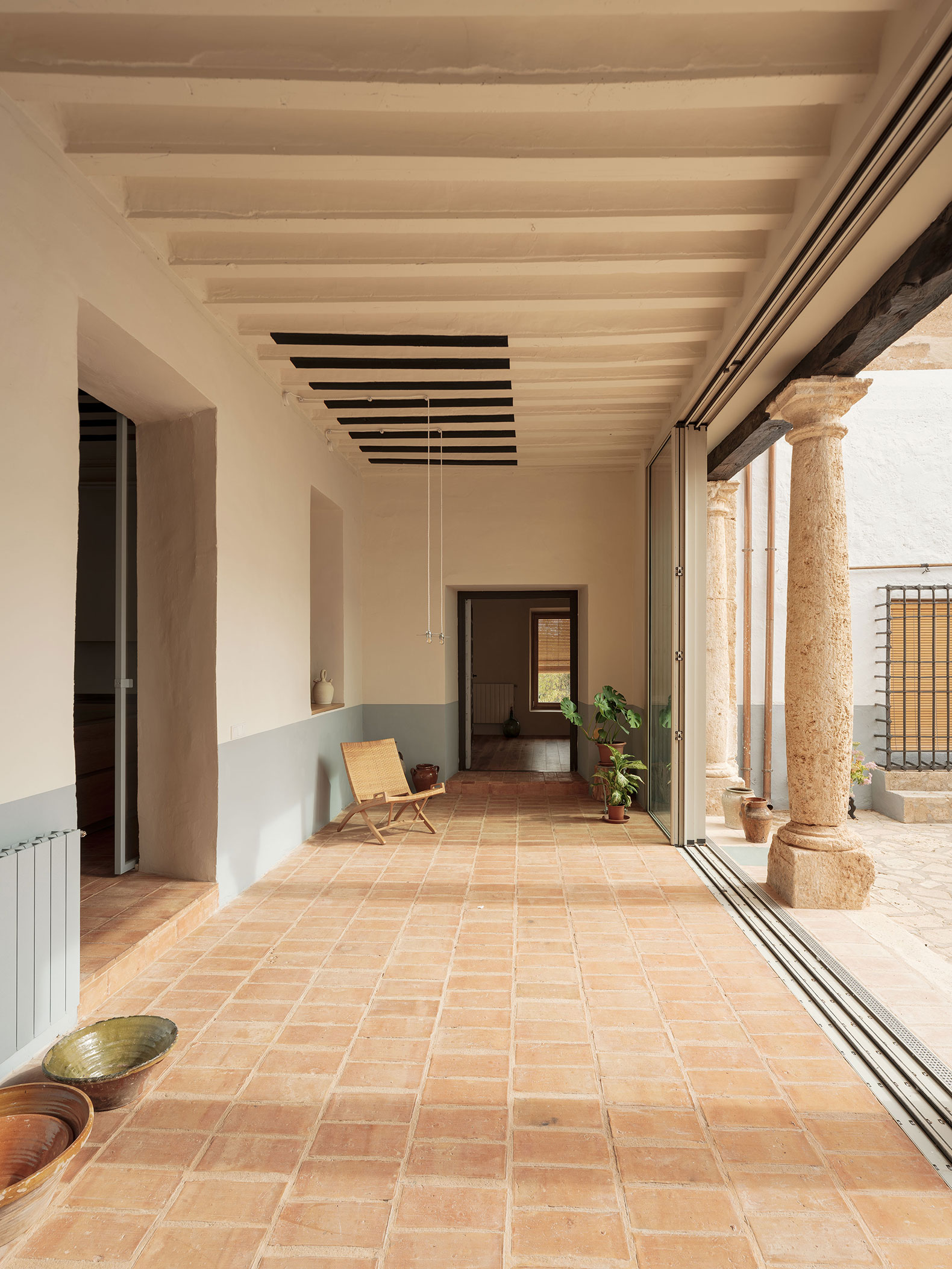
Casa de la Sevillana by estudio Primitivo González / e.G.a. Photograph by Luis Díaz Díaz.The house has three floors with different programs. A basement with a storage and leisure space, given that its underground structure and arrangement reduces the temperature on the hottest days, maintaining the "freshness". On the first floor, we find a kitchen in the center of the floor that is accessed from the patio, this creates continuity with the gallery and the central patio. Continuing on the same floor we find a living room (connected to the kitchen) and two rooms with their toilets. The second floor is intended for leisure and rest, three bedrooms and a living room complement the last area of the house.
Ara González y Noa González designed the house giving greater importance to local materials, which reduces the ecological footprint and represents an important support for the trades in the area and maintaining the essence of the old house. To complete this, tiles from old buildings are used, giving a new life to the materials. The tiles, the carpentry, the painting, and the stone of the house are also made by local artists, as are many of the details of the interior, which have been carried out by a blacksmith.
Project description by Ara González y Noa González
La Casa de la Sevillana, as called in the Heritage catalog of this small municipality in the middle of Spain, is an impressive traditional courtyard house from the 17th Century. Once the house of the priest is currently inhabited by a young and dynamic entrepreneur committed to rural development who has promoted its rehabilitation for housing.
The project favors subtraction over addition, removing the unfortunate changes that modified the original in previous interventions, and trying to respect the essence of the original house.
The main façade is striking as one walks through the narrow neighboring streets. It is left untouched, as it is in a good state, therefore making the intervention unseen by the neighbors. The impressive façade leads into three two heighted longitudinal volumes, with thick load-bearing walls. These chambers are organized around a patio. The gallery which this layout forms is held up by the original stone columns, and sustains a timber galley above it. The project aim is to enhance these traditional elements, which is achieved by leaving them to stand on their own, and installing a modern glazed galley behind them, thus creating a distinct separation between the interior and exterior, while maintaining a visual connection.

Casa de la Sevillana by estudio Primitivo González / e.G.a. Photograph by Luis Díaz Díaz.
The interior is restructured for its new user. The kitchen is placed in the center of the house (previously a bedroom without windows), connecting it with the adjacent rooms, the gallery, and the central patio. The kitchen becomes the heart of the home. A skylight is opened above, crossing through the first floor, allowing light to softly illuminate the ground floor.
A new connection is created between the kitchen and the cellar, previously with deficient accessibility. In the cellar, the original floor is recovered. A simple treatment of the space highlights the beautiful barrel vault.
All the rooms have a similar, whilst individual, treatment. Neutral flooring and wall painting give a homogenous appearance to the whole house, but small details differentiate each room. The library and playroom acquire a distinctive treatment as a result of the use of blue flooring and details in a relocated existing bookshelf.

Casa de la Sevillana by estudio Primitivo González / e.G.a. Photograph by Luis Díaz Díaz.
Four strategies are applied in the rehabilitation process:
Subtraction. Elimination of all those elements that distorted the original character (false ceilings, closing holes, interior bars, etc.).
Repair. Repair of elements in poor condition (stitching of cracks, removal of non-original corbels, removal of non-original and unsafe balconies).
Energy improvement. Roof insulation; standardization of carpentry to improve energy behavior, with the simplest possible quartering in wood; incorporation of traditional solar protections according to orientation; efficient facilities; vectorization of the house, to heat rooms according to eventual or continued use.
Update. The pre-existing spaces are reconsidered and modified to meet current needs and an updated relationship between leisure spaces and the rural environment.
Contemporary additions. Various contemporary elements are incorporated. This does not try to emulate the past, but to live with it.
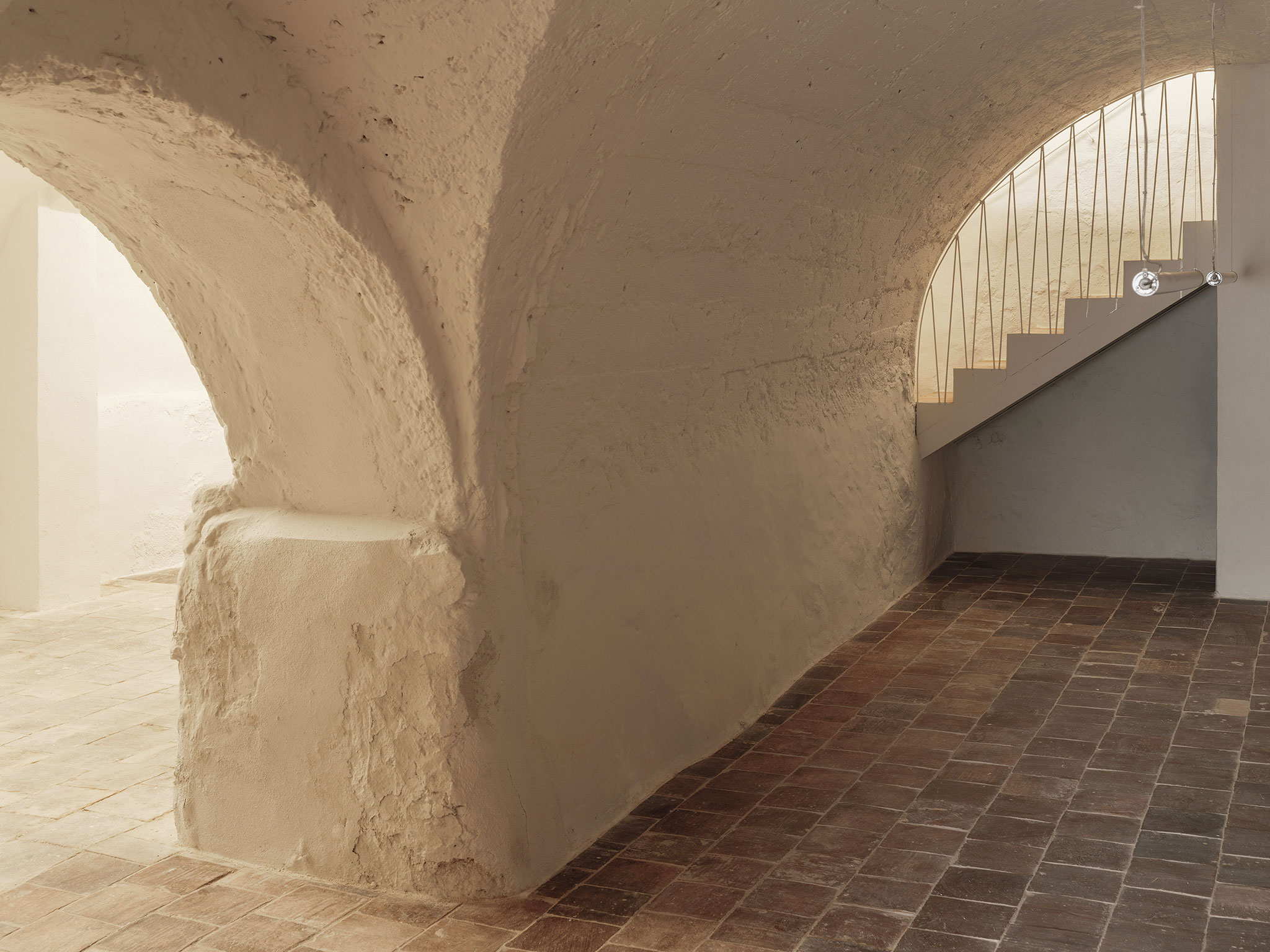
Casa de la Sevillana by estudio Primitivo González / e.G.a. Photograph by Luis Díaz Díaz.
Local construction. The work has been executed by local trades, giving priority to materials from the immediate environment. For example, to complete the missing tiles, old tiles from local demolitions are used; ceramic tiles come from a local artisan; the joinery, the paint, the stone or the solar protections are carefully chosen from nearby manufacturers. Most of the interior details of the house have been made by the blacksmith who fixes the agricultural machines.
Selective framing. A careful selection is made of which old elements are seen and which are painted. This selection and selective framing generates a unified image, and a low-budget interior design, giving value to pre-existing traditional elements.


