

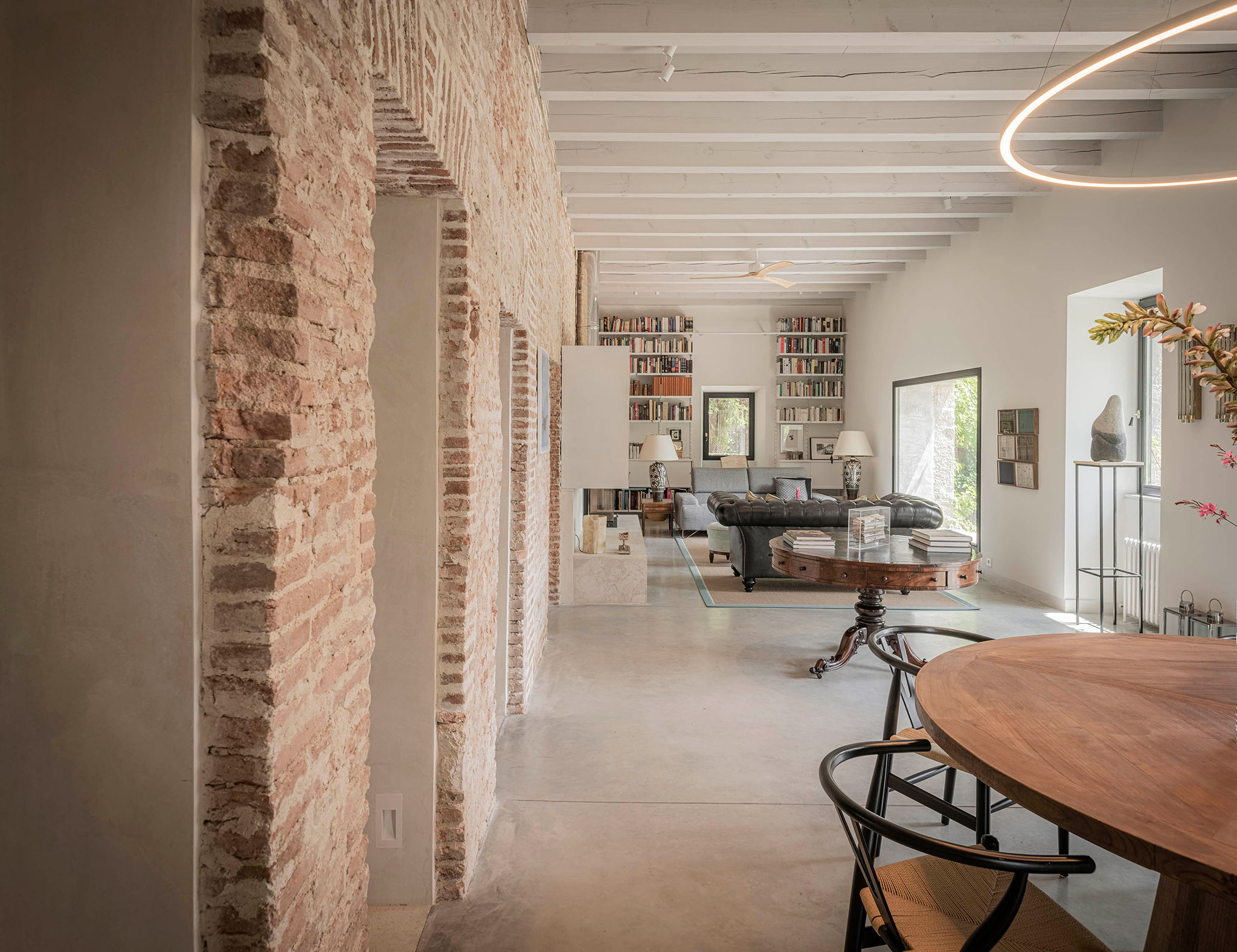
The home renovation in Los Molinos, designed by the Adam Bresnick studio, carries out a differentiated treatment between the original elements and the new ones, among which the relocation of the staircase stands out, creating a double height at the main entrance, which contrasts with the original interior brick wall as a historical element and articulator of the space. The wall divides the ground floor into two bays, generating an open floor plan that unites the different rooms.
The careful execution of the concrete staircase connects with the first floor, where a steel sheet walkway gives access to the 3 bedrooms with their respective individual bathrooms. The difference between the new and the old is accentuated in the articulation of the carpentry of the two large windows that opened in the middle of the last century, which are located on the interior beams.

Housing in Los Molinos by Adam Bresnick. Photograph by Amores pictures.
Project description by Adam Bresnick
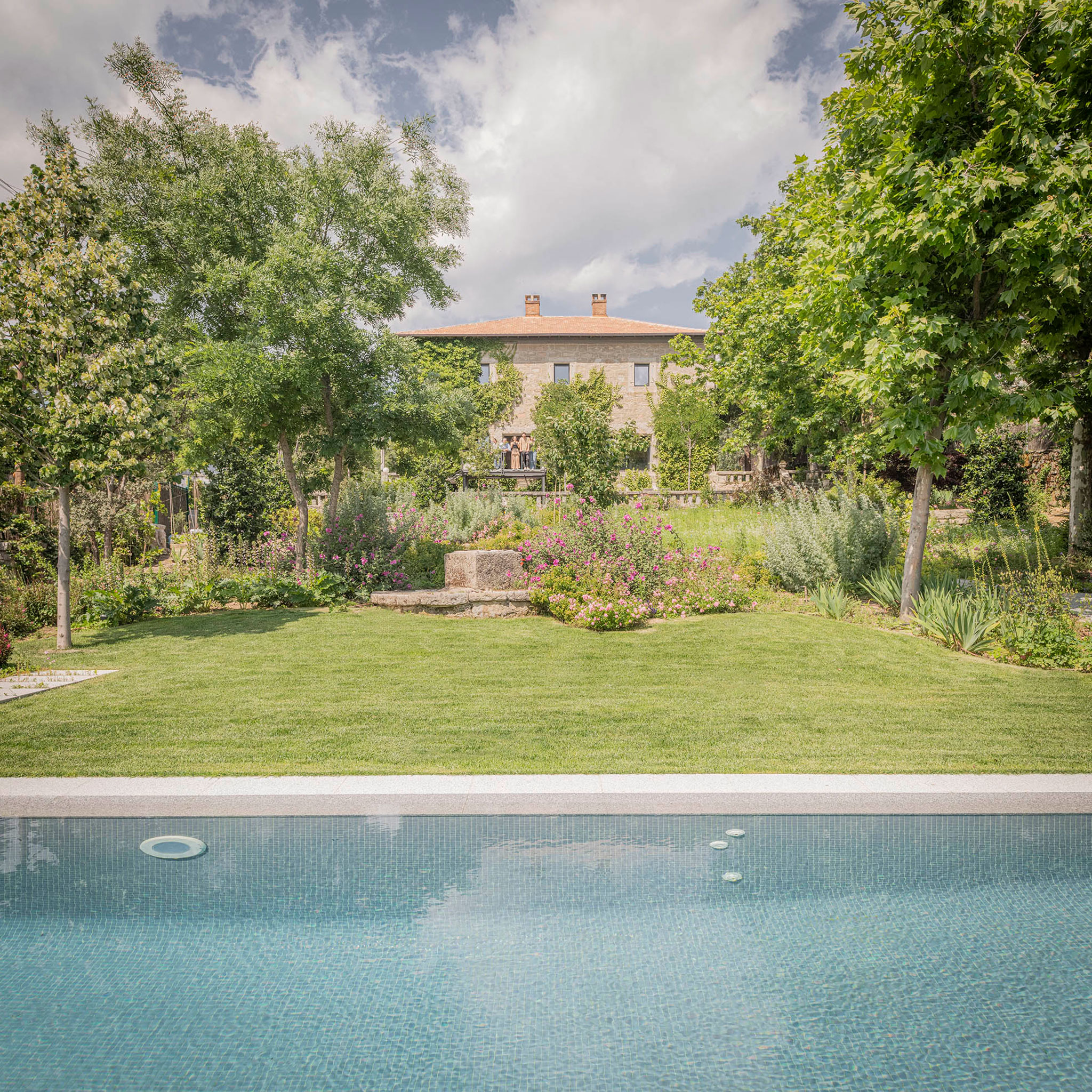
The house was built at the end of the 19th century as one of six hotels for the daughters of a Baron. Almost a Herrerian toy, it is a 26 x 11.5m rectangle of granite masonry, topped by a four-sided tile roof. The entrance door is framed by two Tuscan pilasters crowned with two obelisks. The house is linked to the sloping plot by two terraces enclosed by granite walls, stairs, and balusters, leaving the rest of the plot gently sloping to the south.
Abandoned and occupied, the house had undergone many modifications over the years. The intervention has been careful in material and conceptual terms, relying on the existing stock to adapt the house to the 21st century. To this end the staircase was relocated, creating a triple height with zenithal light at the entrance, a vertical dilation that organizes circulations while marrying the geometries and axes of the primary house. This gesture of verticality allows natural ventilation as a chimney.
Housing in Los Molinos by Adam Bresnick. Photograph by Amores pictures.
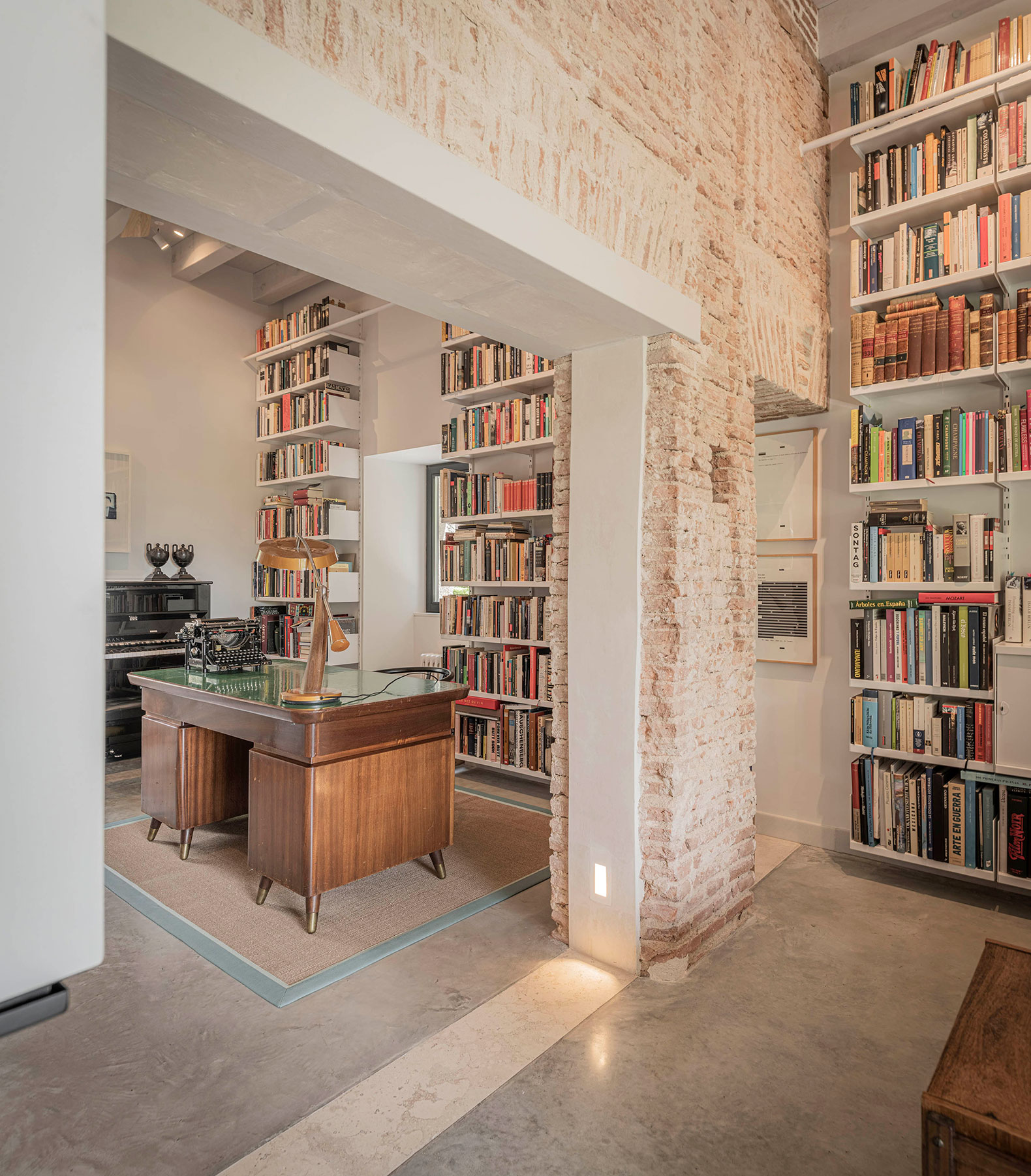
The granite box is cleaned and insulated, and the central brick wall is left exposed, a witness to the passage of time. The first floor is sole in polished concrete, only the thresholds of passage in the brick wall are marked with limestone slabs of campaspero, while black plaster walls allow the passage of the facilities. The monolithic staircase of the same concrete emerges from the floor, connecting the first floor with the second floor where a steel sheet walkway gives access to the 3 bedrooms in suite with their bathrooms. Inside the rooms, saw-cut oak flooring dialogues with the materiality of the brick wall and the white stained pine floor slab.
The first floor is a single space, a living room occupies the entire garden bay, a kitchen on one side of the entrance hall, music room on the other. Two large windows were opened in the middle of the last century, and are articulated with their joinery to interior beams to emphasize the fact that they are later interventions. They are two modern eyes, view and access. The second of these openings, a large pivoting window connects through a terrace of metal profiles and tramex directly with the garden.

Housing in Los Molinos by Adam Bresnick. Photograph by Amores pictures.
Housing in Los Molinos by Adam Bresnick. Photograph by Amores pictures.
The fate of a historic garden was treated with care and an integrative project, using a palette of soapstone, granite, and native plants. The two terraces above are almost a reconstruction of the original, while in the garden below a meander is traced incorporating trees, well, and existing views to create a new route that moves away from the austerity and geometry of the house to enter a dreamlike world, ending in a pool and pavilion.





![Bois de Cergy Leisure Centre by PLURIEL[LES] ARCHITECTES. Photograph by Charly Broyez](/sites/default/files/styles/mopis_home_news_category_slider_desktop/public/2026-10/metalocus_PLURIEL-LES_Bois-de-Cergy-Leisure-Centre_14_2p.webp?h=3b4e7bc7&itok=DISDLRbJ "Bois de Cergy Leisure Centre by PLURIEL[LES] ARCHITECTES. Photograph by Charly Broyez")


