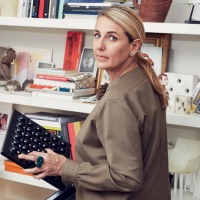
In its third edition Madrid Design Festival recognizes one of the most outstanding designers of the international scene: Patricia Urquiola (Oviedo, 1961) with the first major exhibition held in Madrid around its production.
Nature Morte Vivante, curated by Ana Dominguez Siemens, focuses on her work as a designer, displaying her products for industrial production, sometimes for artisanal production and very often combining both.
The exhibition is organized in a non-chronological way, grouping the pieces around five “still lifes”, still lifes, that explore a series of recurring themes in their line of work and thought. These still lifes are inspired by paintings such as Nature Morte Vivante ”by Salvador Dalí or Resuscitated Still Life, by Remedios Varo, in which objects are depicted, insufflated with life.
From these five areas the different axes of the exhibition are formulated: Transparent things brings together a collection of objects that have been important throughout his career, a connection between the past and the future; the so-called empathic journeys in which inspiration arises from the idea of both real and imaginary trips, that is, travel as a mental state; The concept of Resistances is shown in projects that invite thinking; gender issues and all their declines, on a topic called Gender? What gender? and the positive pollinations in the creative process are reflected in the "Pollution" section.
The exhibition exhibits products from different stages of Patricia Urquiola's career, which she founded her own studio in 2001, from furniture to carpets, lamps, table objects, vases, fabrics, bathtubs, ceramics and tiles, etc. The selected pieces show their way of dealing with different materials and techniques, with ingenuity, creativity and a fresh look that helps them break the established canons and often give new answers to old problems.
His interest in color is reflected as a guiding thread throughout the exhibition, expressing himself through moments of rigor or exuberance, while the concern for sustainability is observed in the recurrent use of Upcycling, through pieces in which recycled materials are reused to produce new objects.
The exhibition closes with a virtual reality project - an exploration around the emotions of objects - which in itself is an open question for reflection.
Nature Morte Vivante, curated by Ana Dominguez Siemens, focuses on her work as a designer, displaying her products for industrial production, sometimes for artisanal production and very often combining both.
The exhibition is organized in a non-chronological way, grouping the pieces around five “still lifes”, still lifes, that explore a series of recurring themes in their line of work and thought. These still lifes are inspired by paintings such as Nature Morte Vivante ”by Salvador Dalí or Resuscitated Still Life, by Remedios Varo, in which objects are depicted, insufflated with life.
From these five areas the different axes of the exhibition are formulated: Transparent things brings together a collection of objects that have been important throughout his career, a connection between the past and the future; the so-called empathic journeys in which inspiration arises from the idea of both real and imaginary trips, that is, travel as a mental state; The concept of Resistances is shown in projects that invite thinking; gender issues and all their declines, on a topic called Gender? What gender? and the positive pollinations in the creative process are reflected in the "Pollution" section.
The exhibition exhibits products from different stages of Patricia Urquiola's career, which she founded her own studio in 2001, from furniture to carpets, lamps, table objects, vases, fabrics, bathtubs, ceramics and tiles, etc. The selected pieces show their way of dealing with different materials and techniques, with ingenuity, creativity and a fresh look that helps them break the established canons and often give new answers to old problems.
His interest in color is reflected as a guiding thread throughout the exhibition, expressing himself through moments of rigor or exuberance, while the concern for sustainability is observed in the recurrent use of Upcycling, through pieces in which recycled materials are reused to produce new objects.
The exhibition closes with a virtual reality project - an exploration around the emotions of objects - which in itself is an open question for reflection.