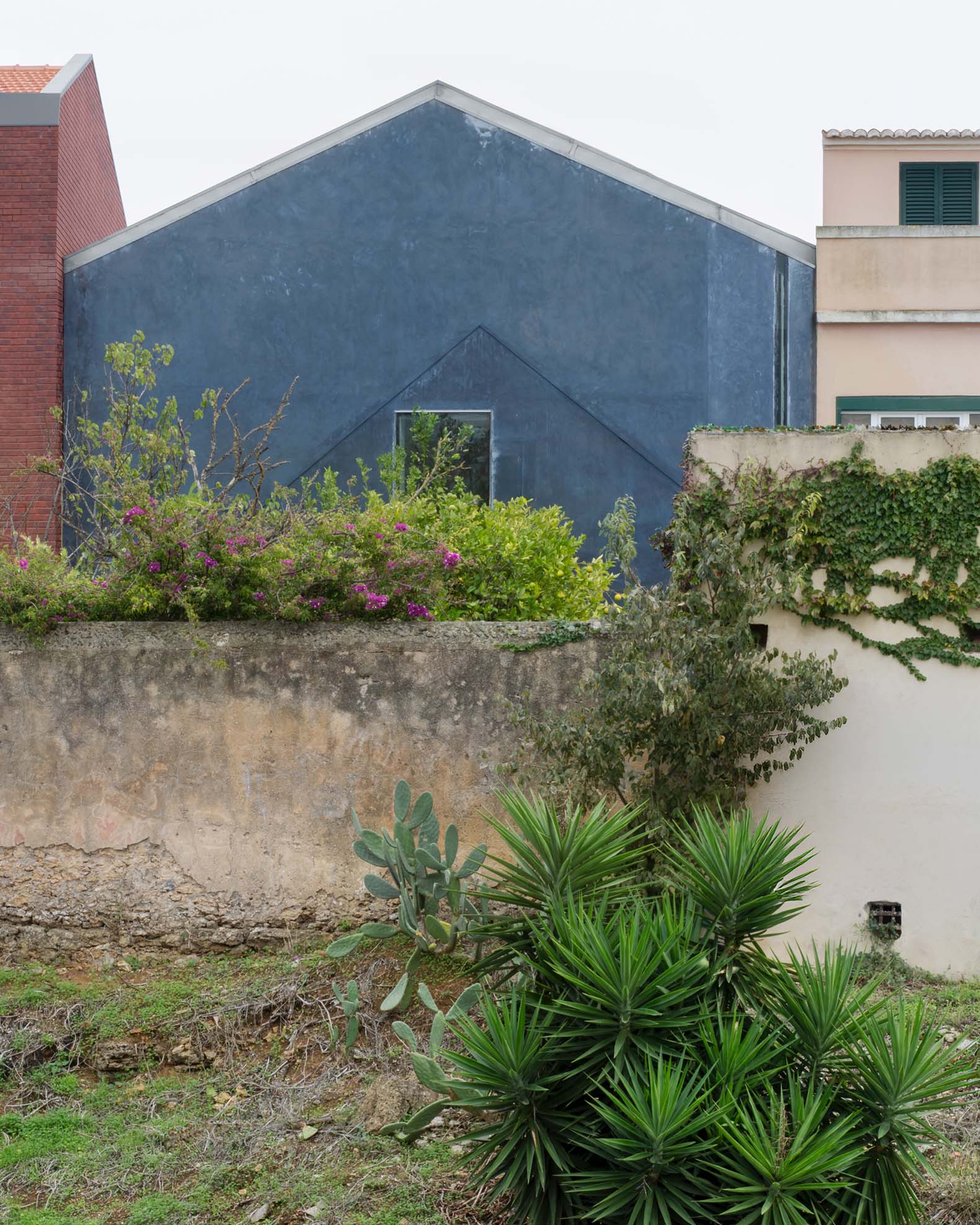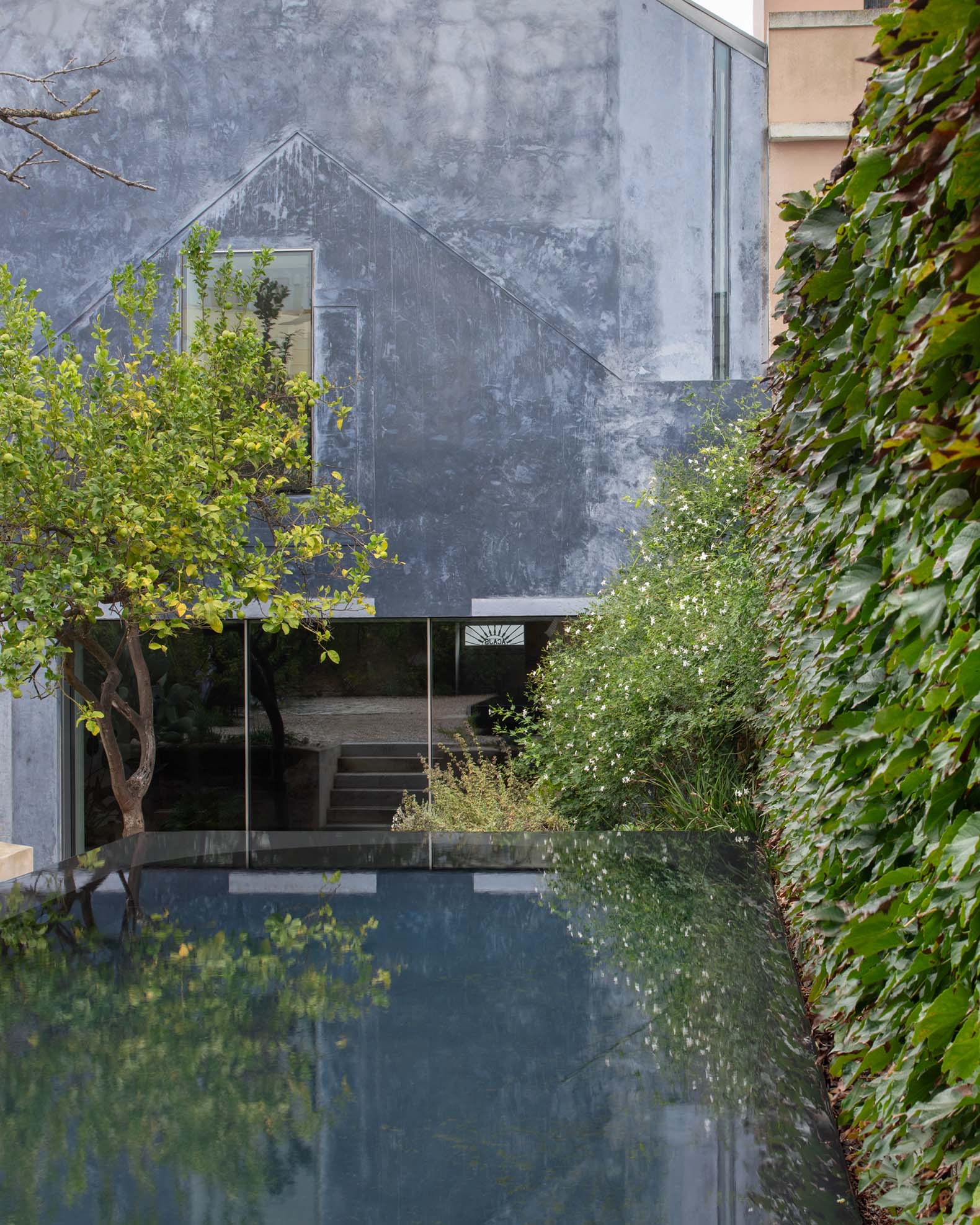
Architecture practice extrastudio was commissioned to design "Blue House", a single-family home located in the Marvila neighbourhood, Lisbon, Portugal. 

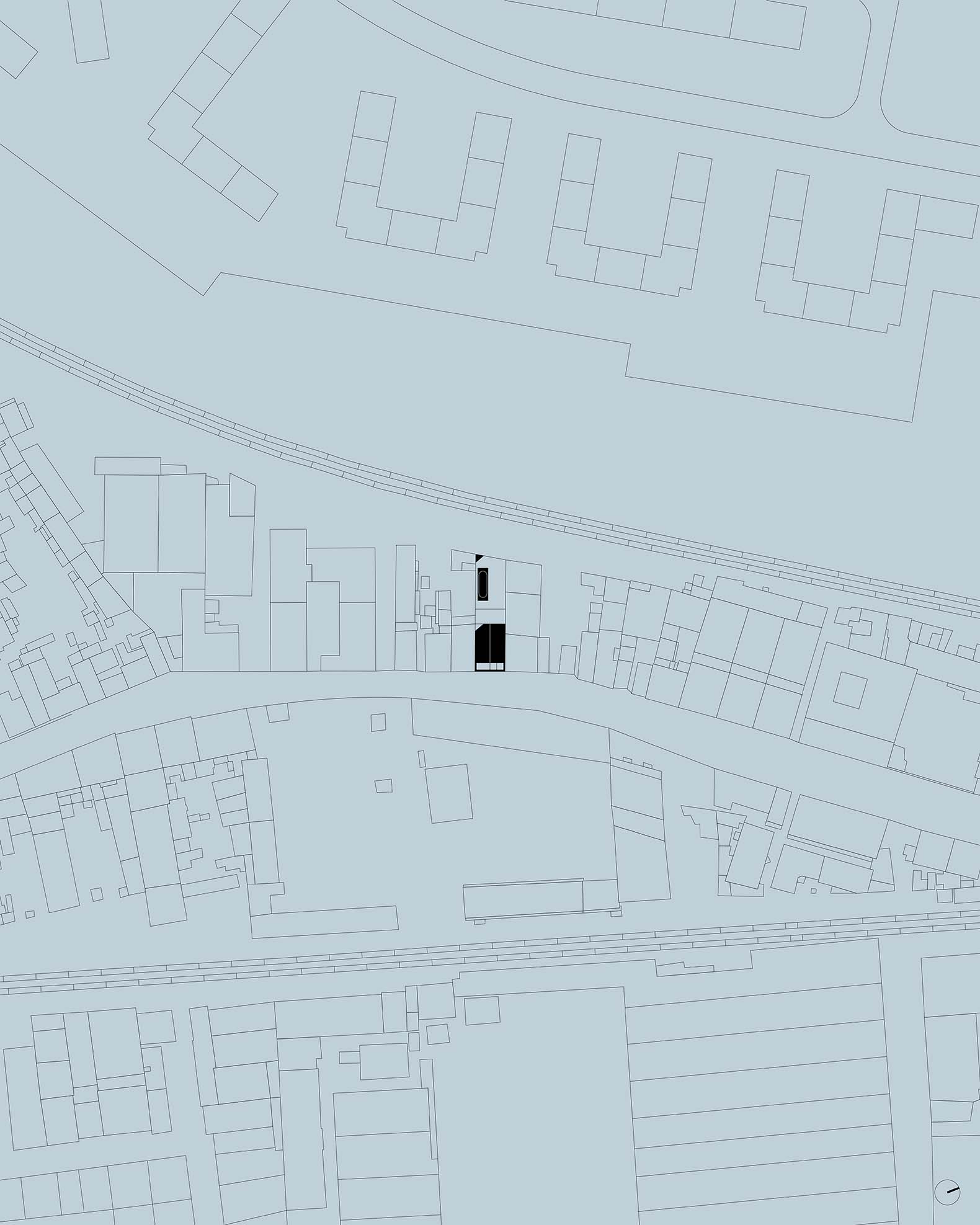
It was conceived as the first in a series of three residences called "Casas Poveras" (Poor Houses), transforming and expanding a modest 1893 building. The project explores an architectural approach that establishes a dialogue between the district's industrial past and a contemporary way of living.

In turn, the house reflects the transformation of Marvila, a former industrial enclave now one of Lisbon's most dynamic creative hubs. The attention to light, materiality, and craftsmanship gives the house a raw yet refined atmosphere, where every decision seeks to reinforce the authenticity of the place.

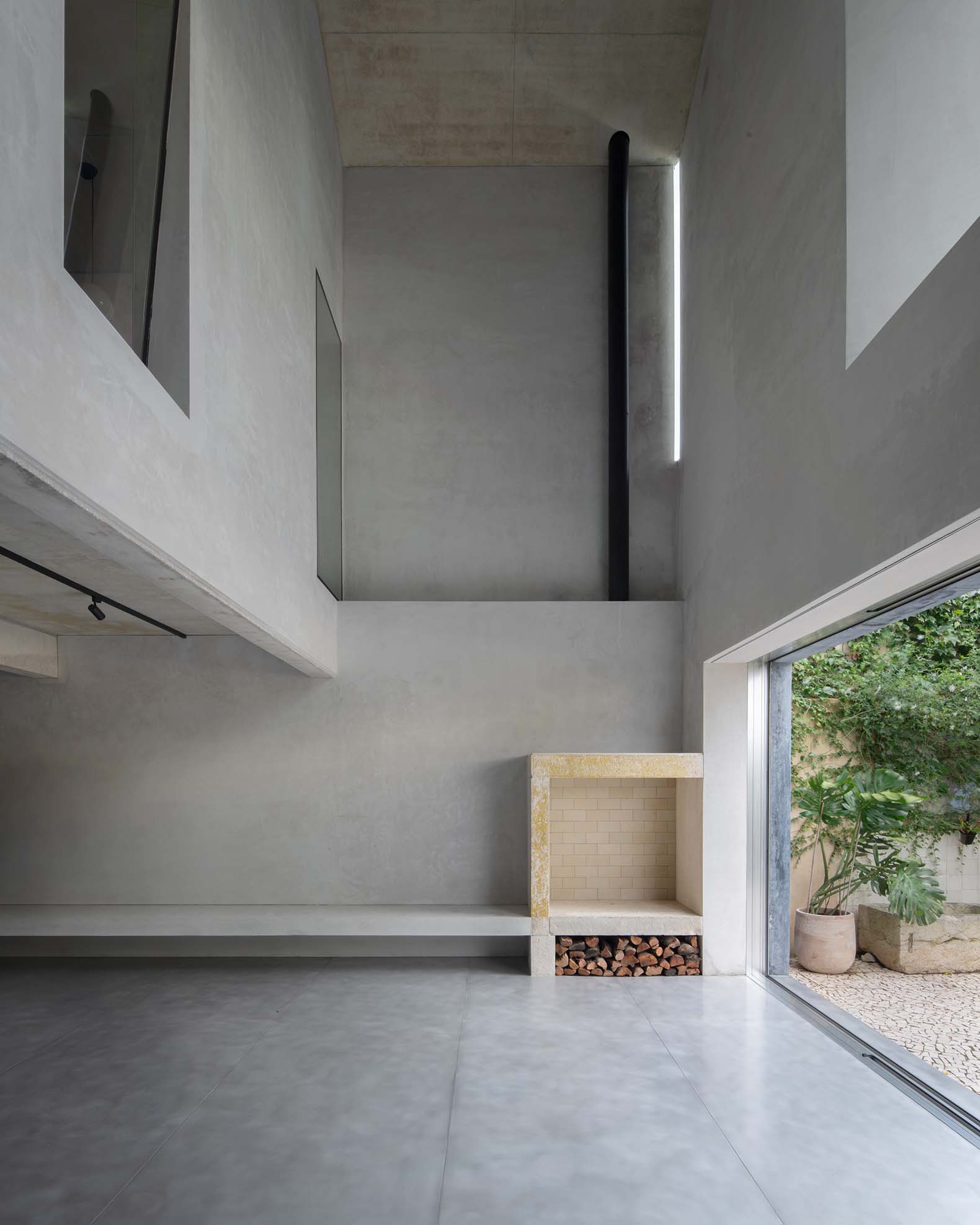
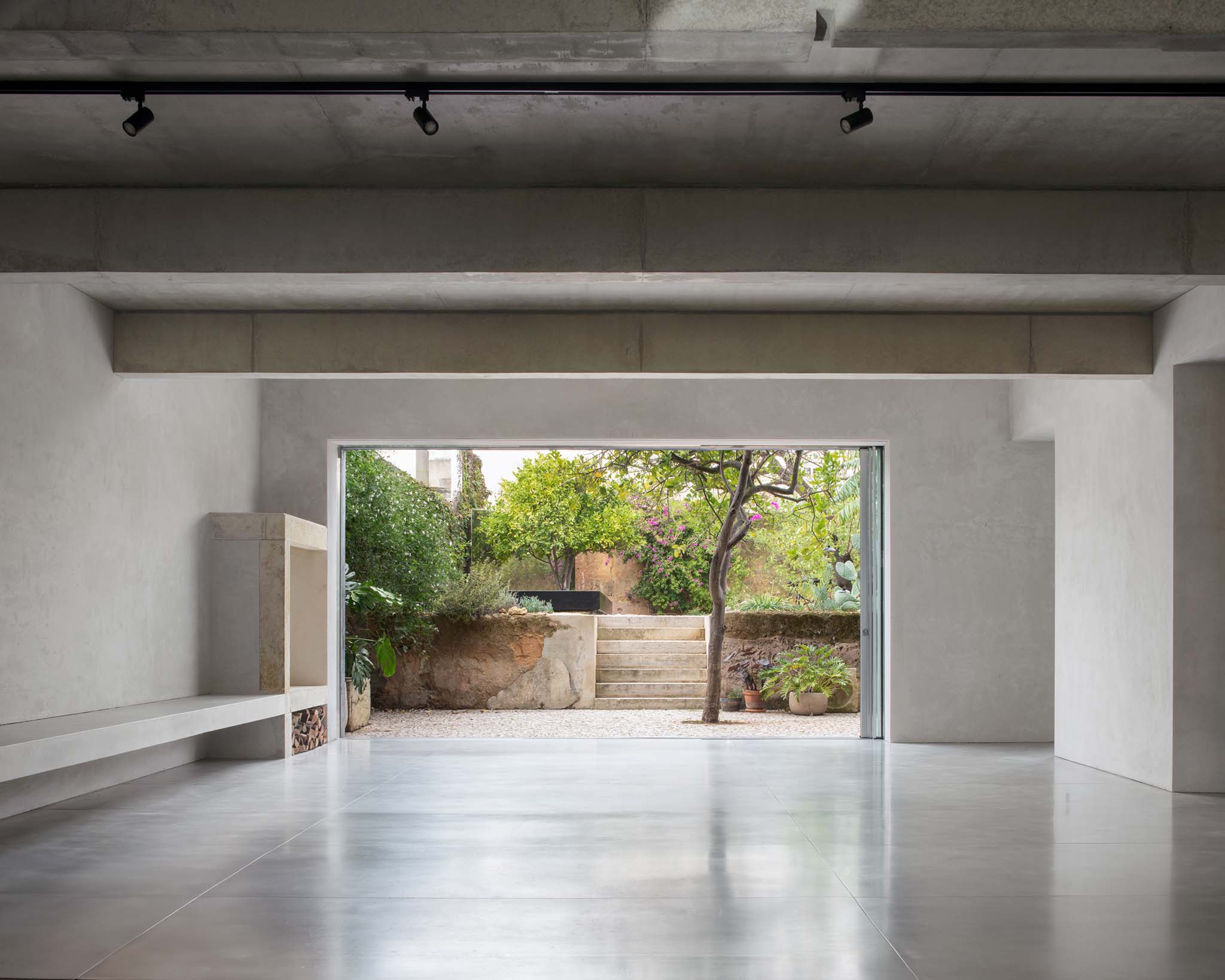
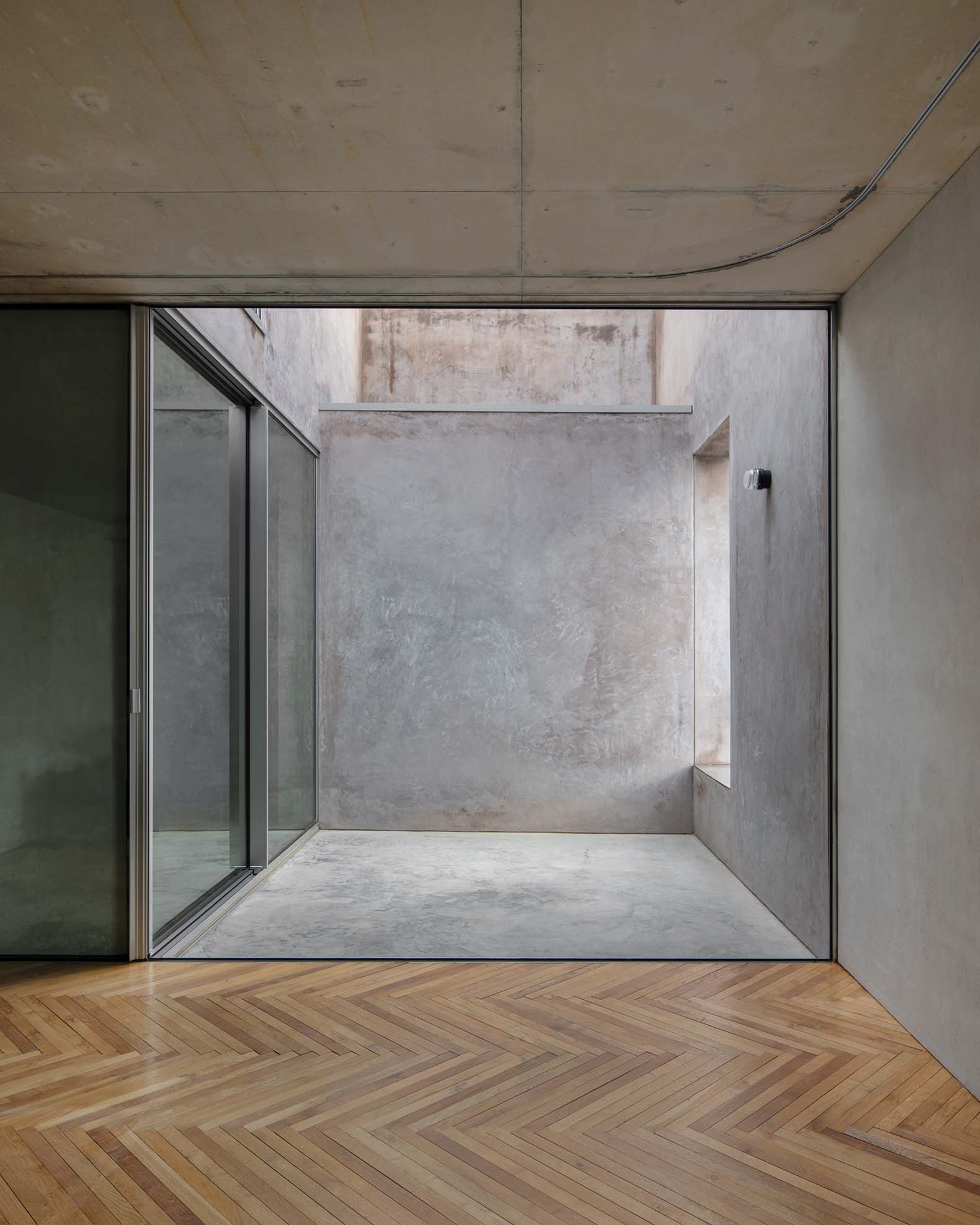
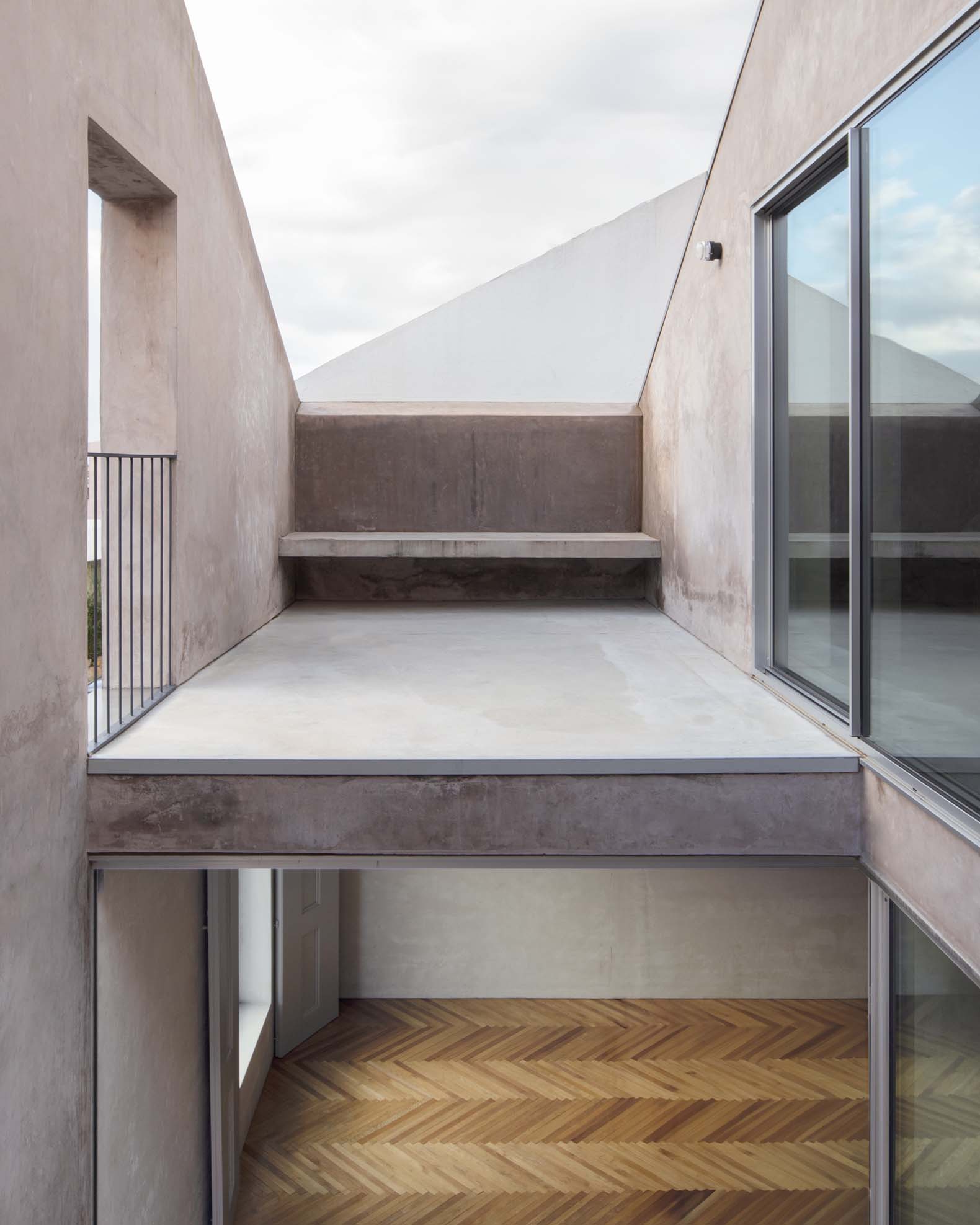
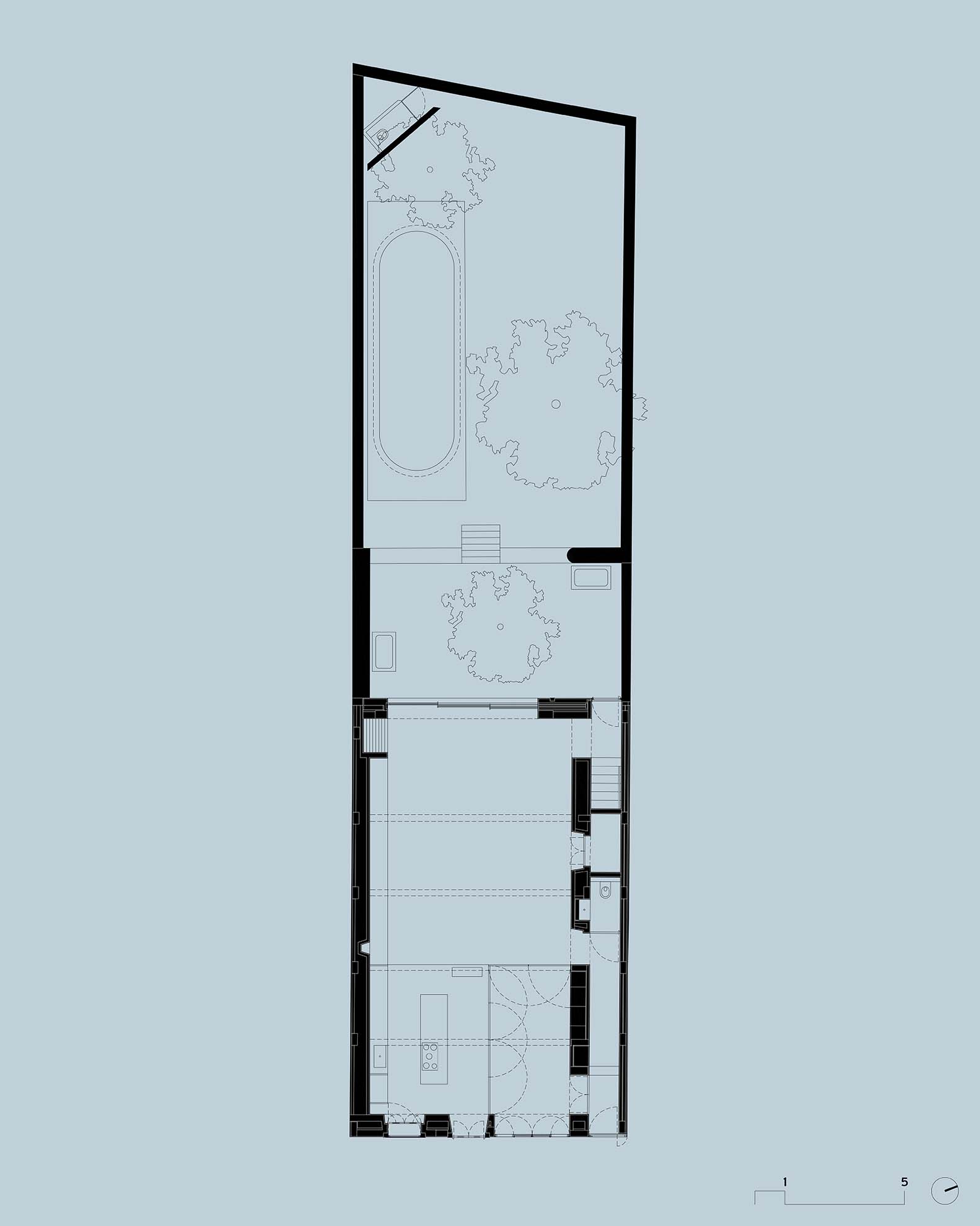
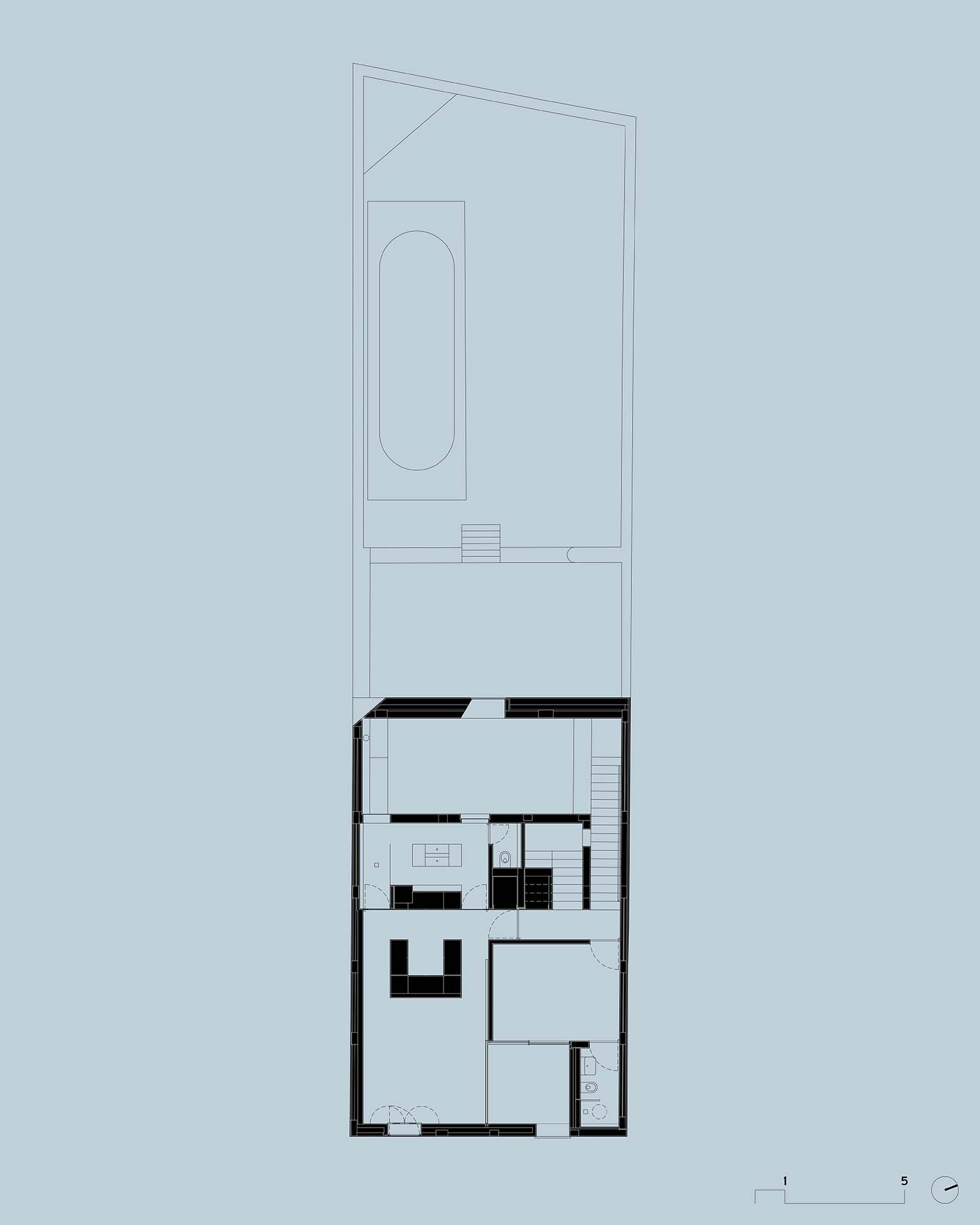
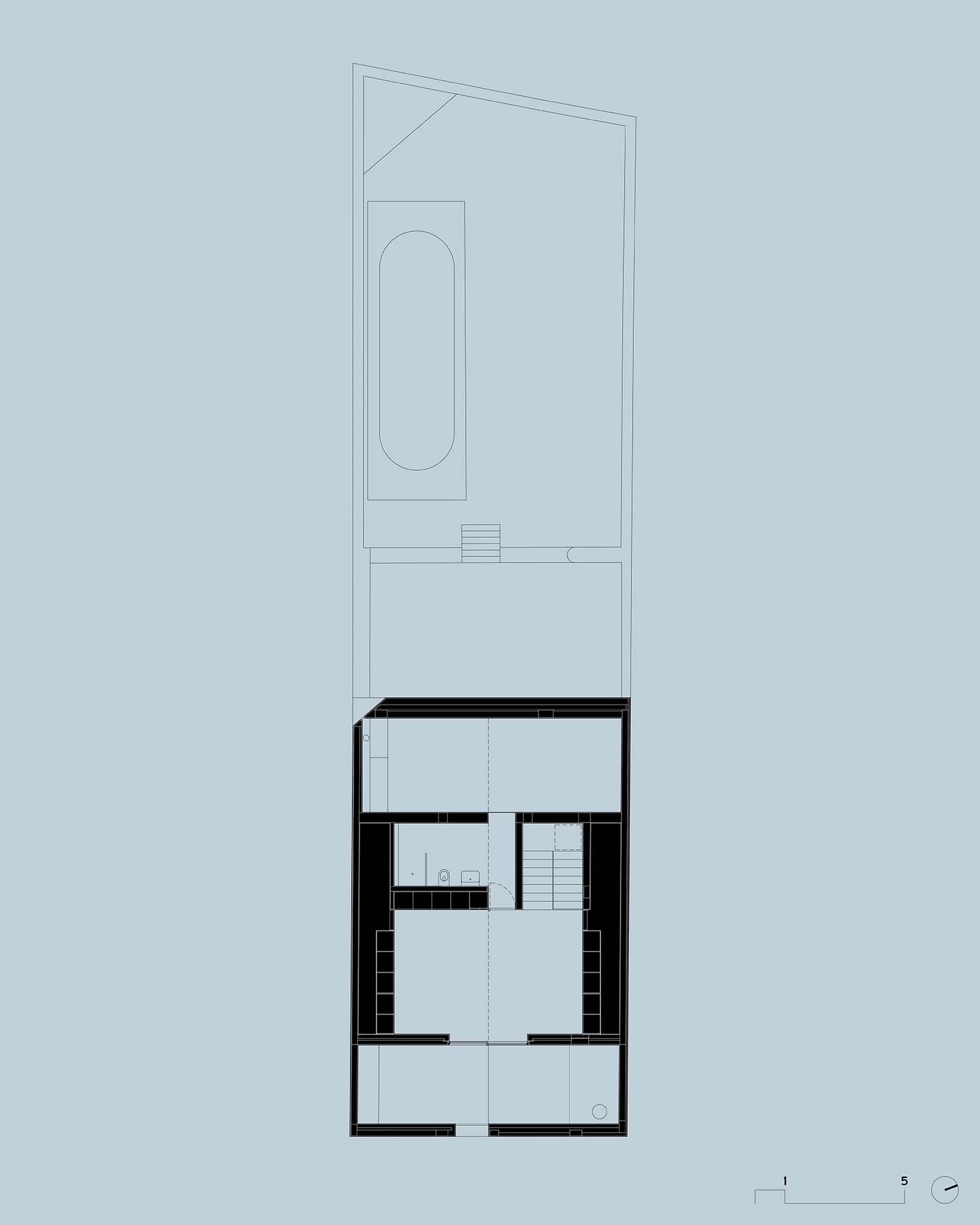
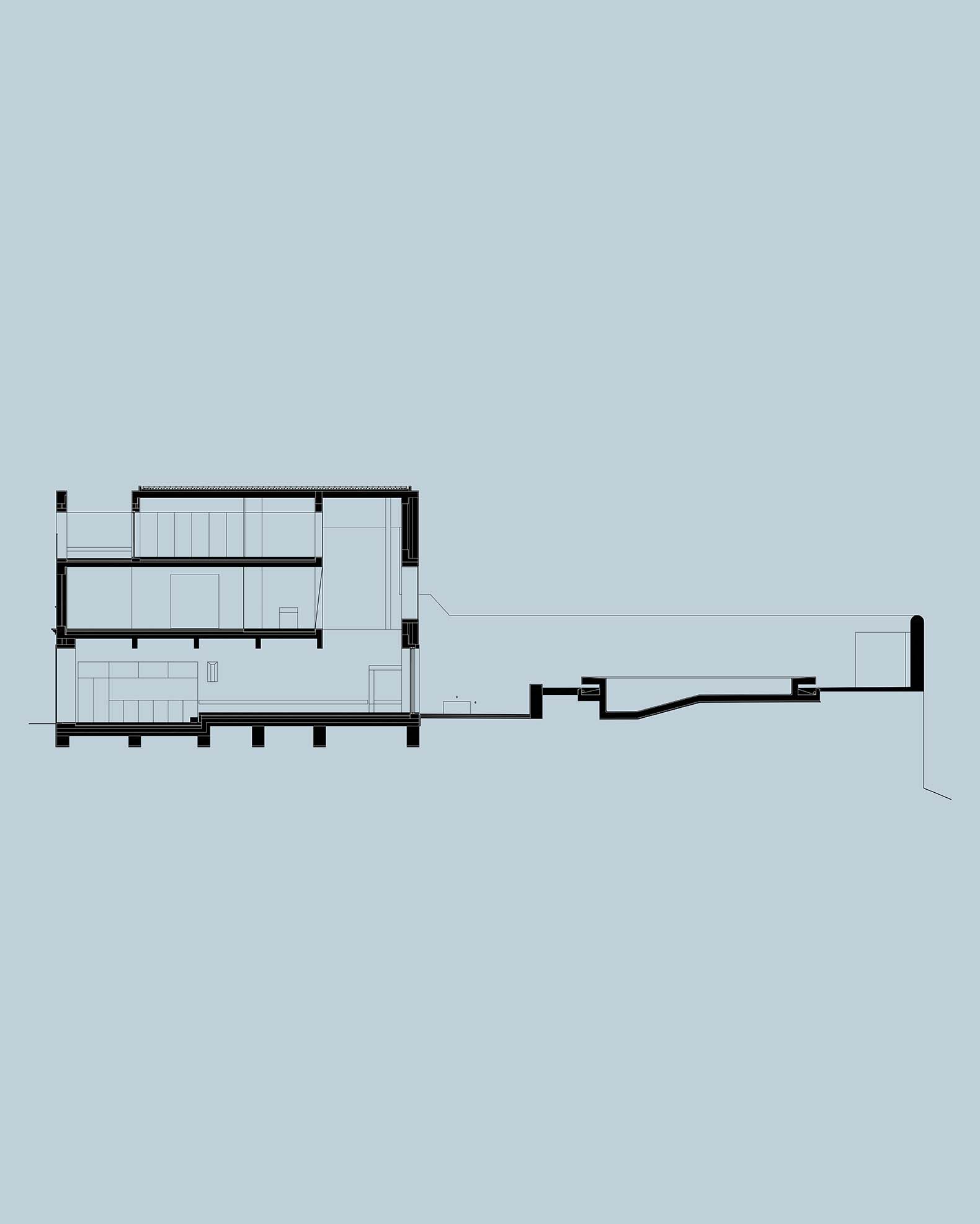
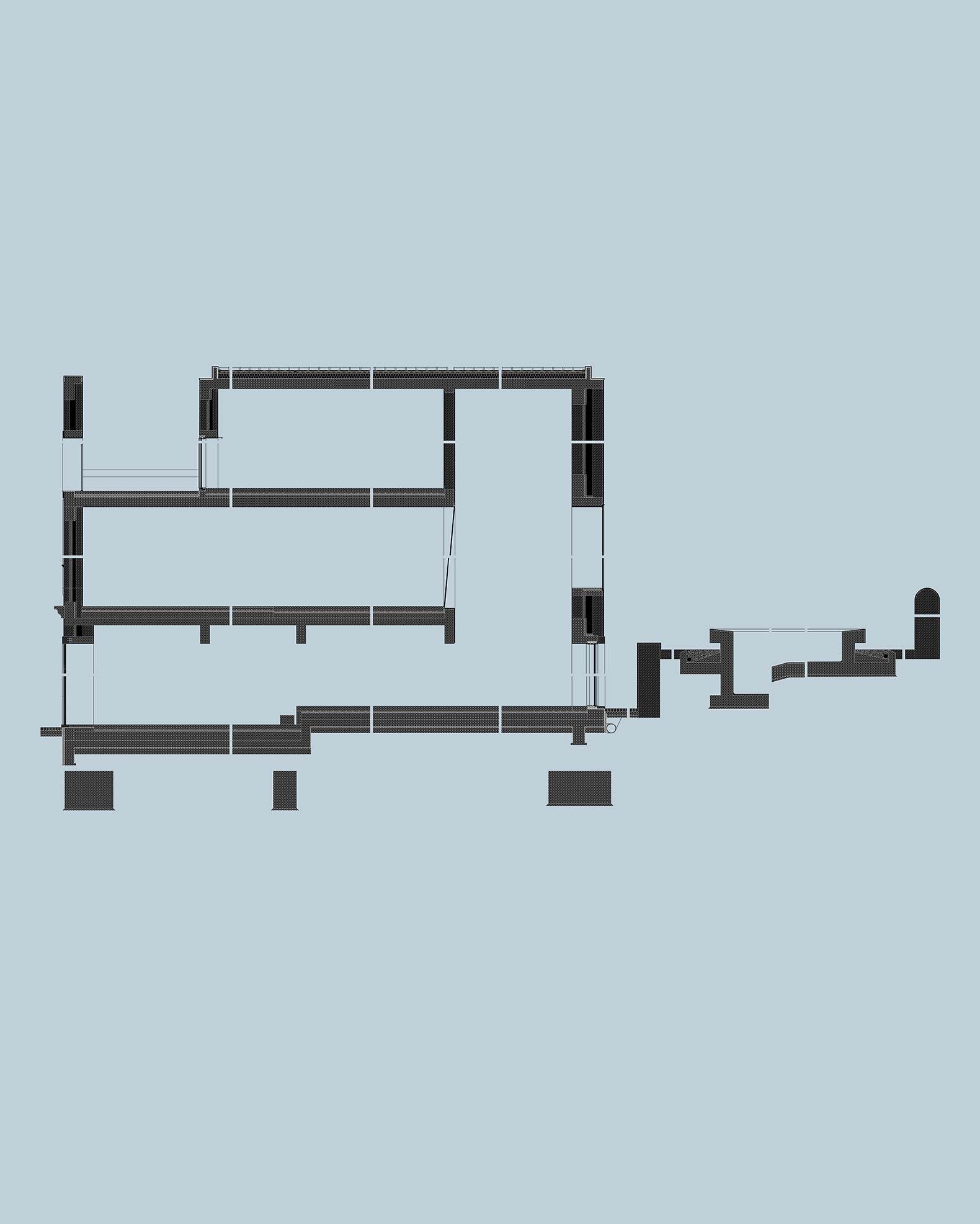
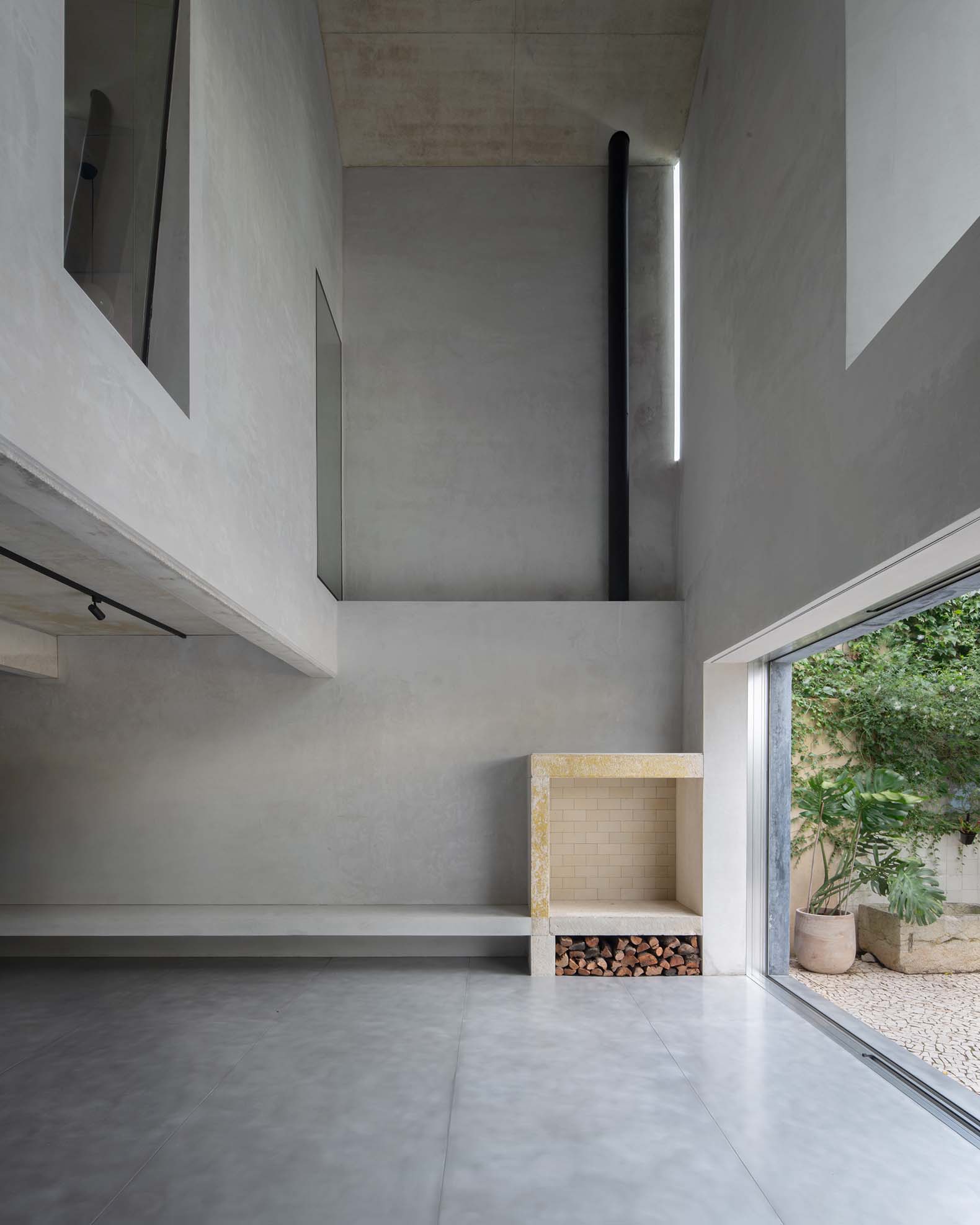
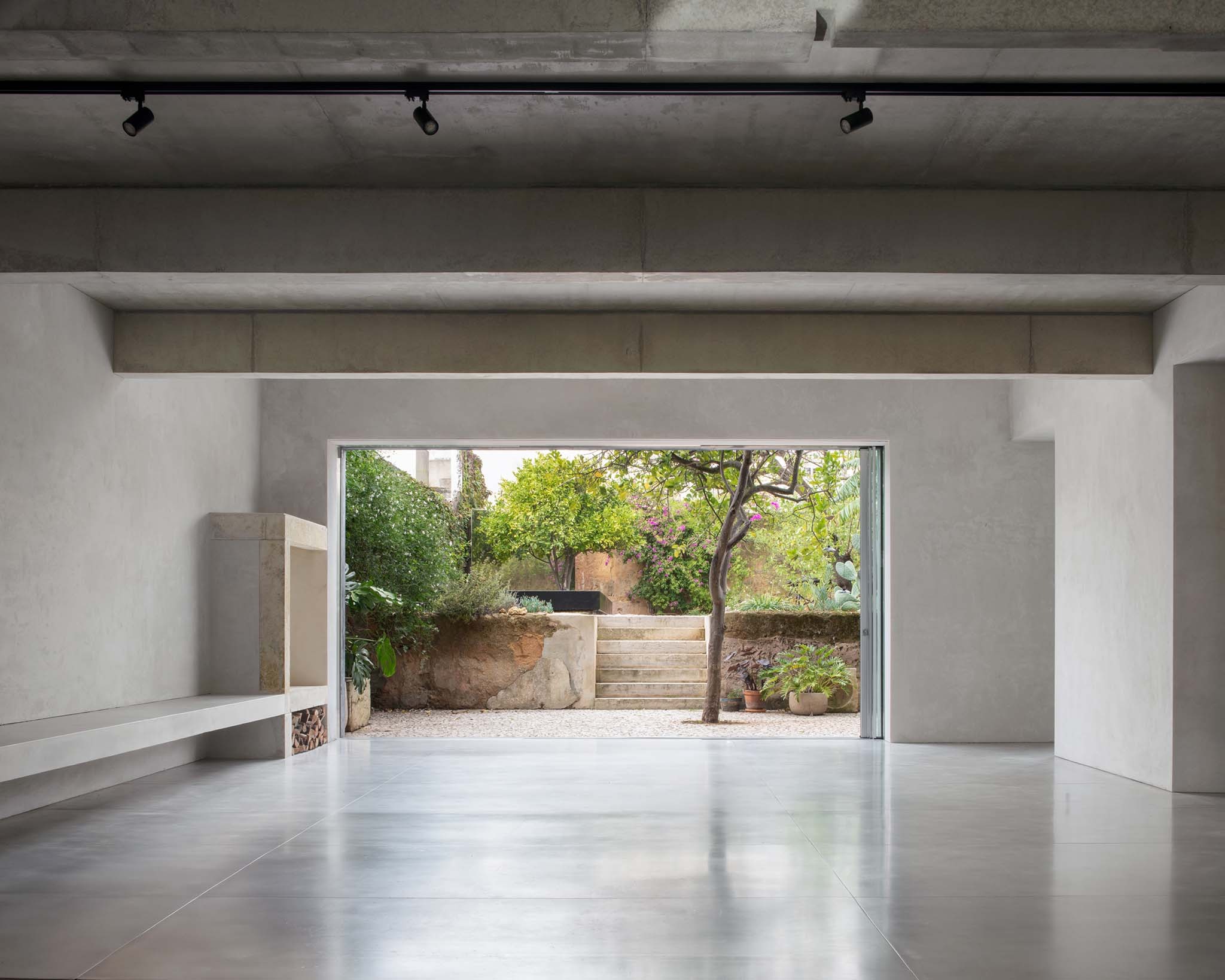
The design developed by extrastudio features two spatial operations that articulate the house: a large void opening onto the street creates a double-height patio, while a triple-height interior space, facing the garden, reveals the full vertical dimension of the extension. The layout responds to the owners' desire for an open, loft-style living space, also incorporating a garage fully integrated into the social area.

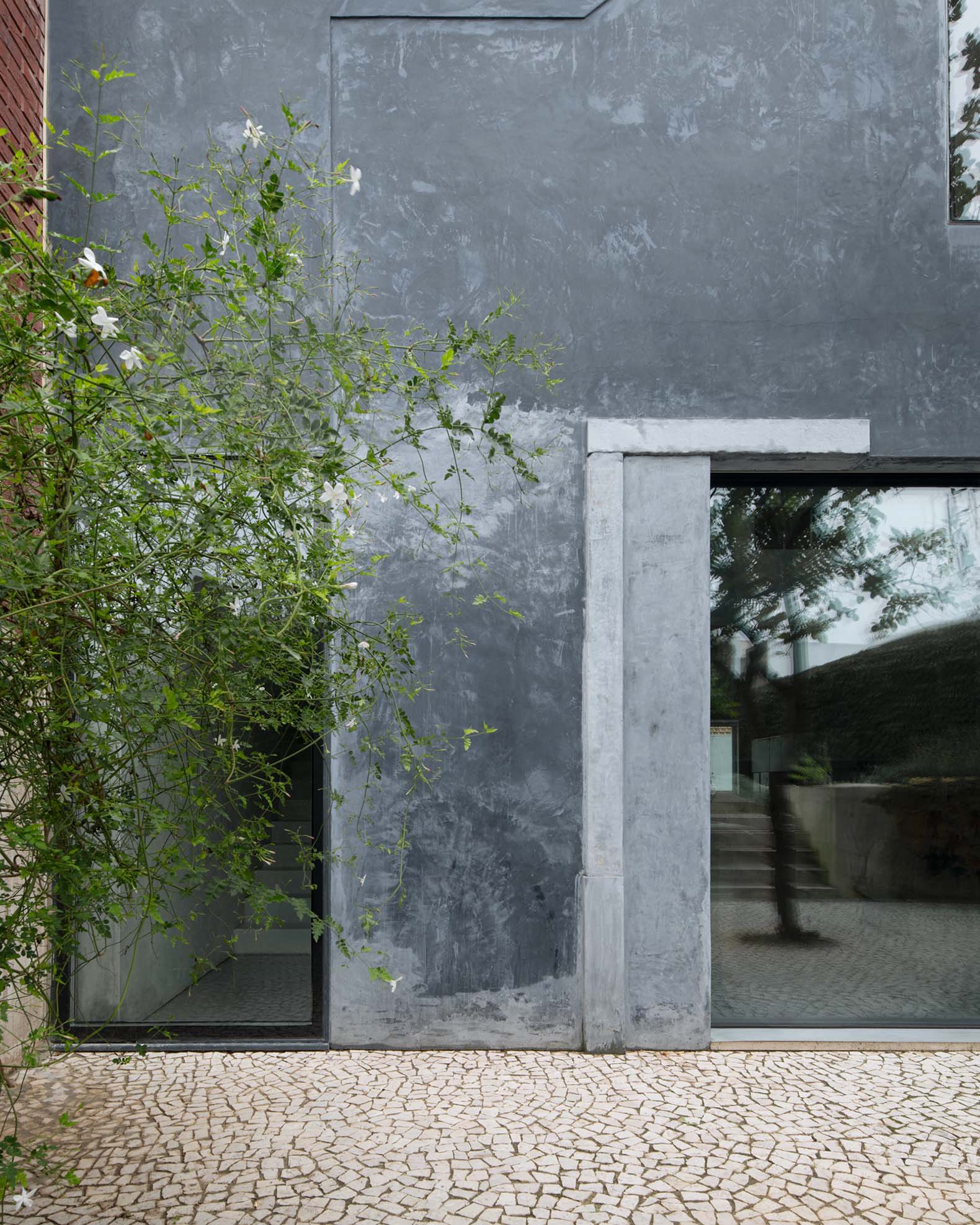
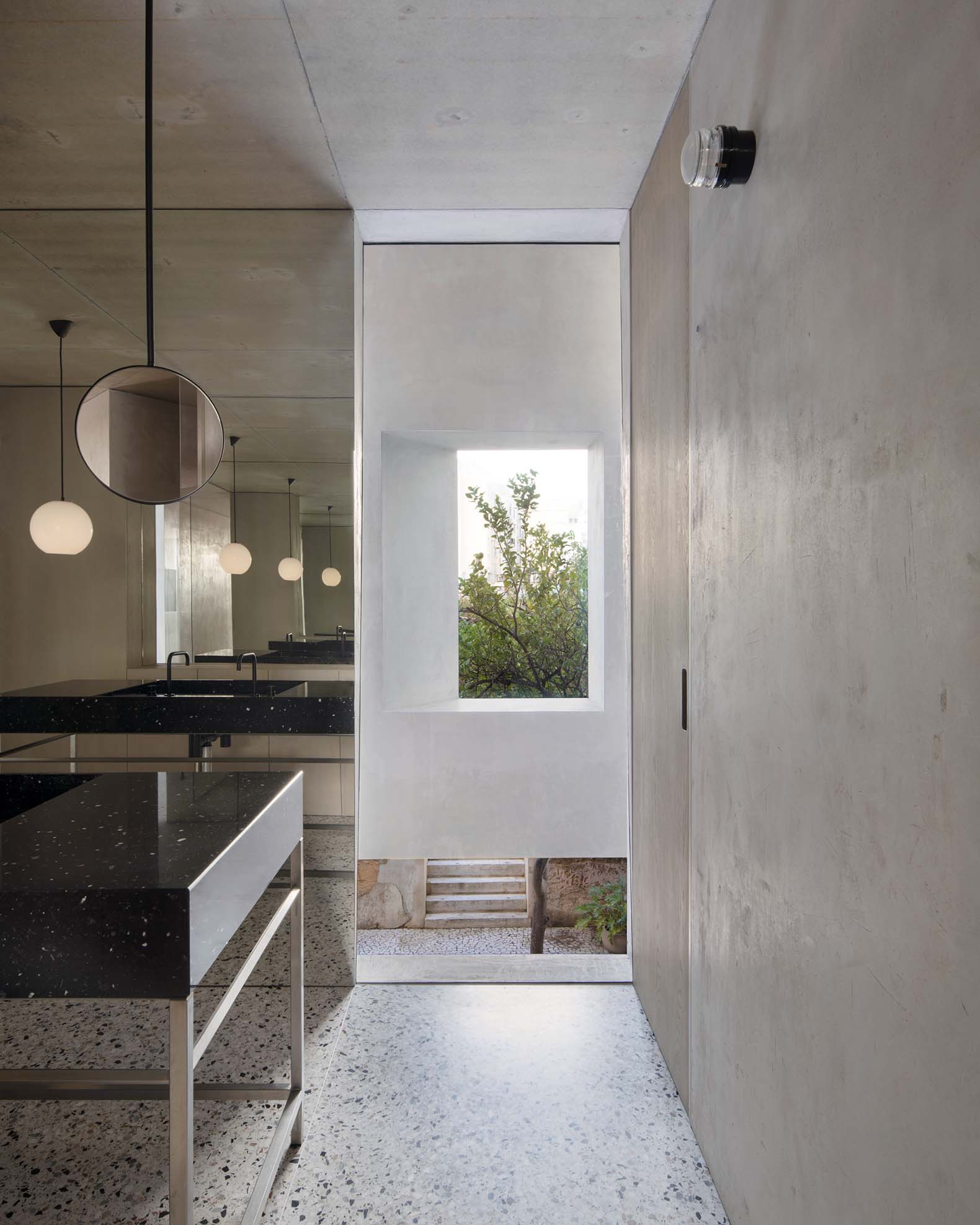
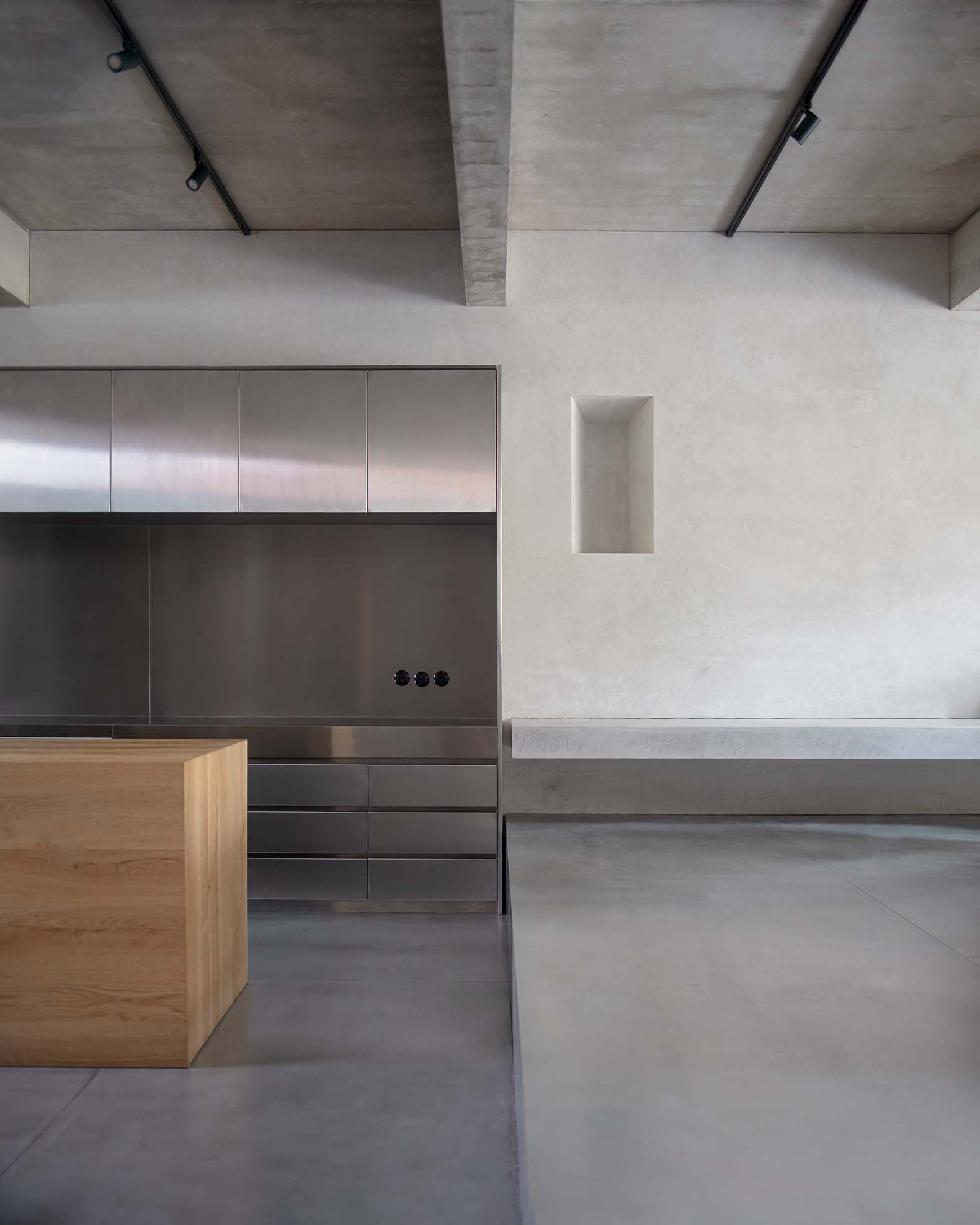
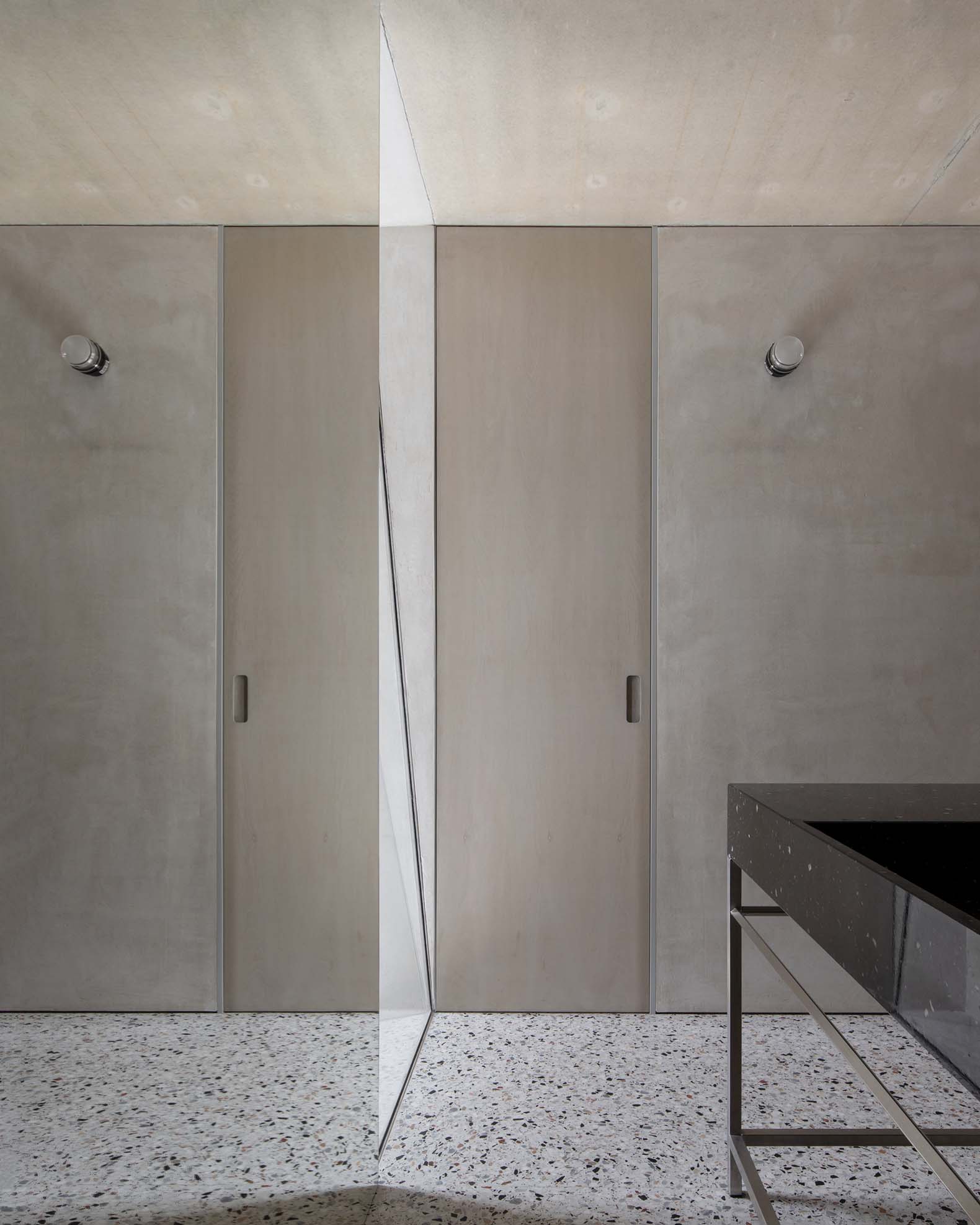
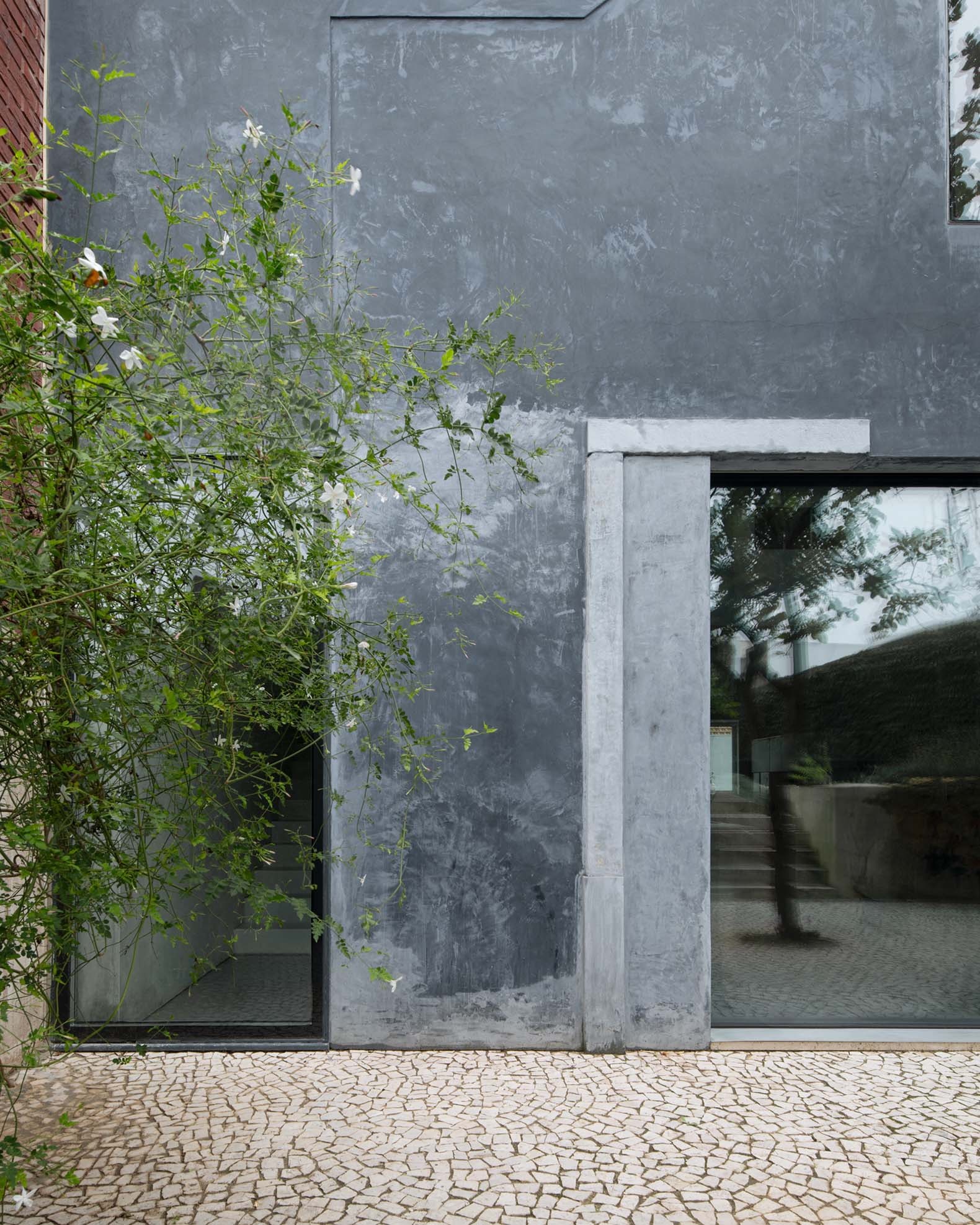
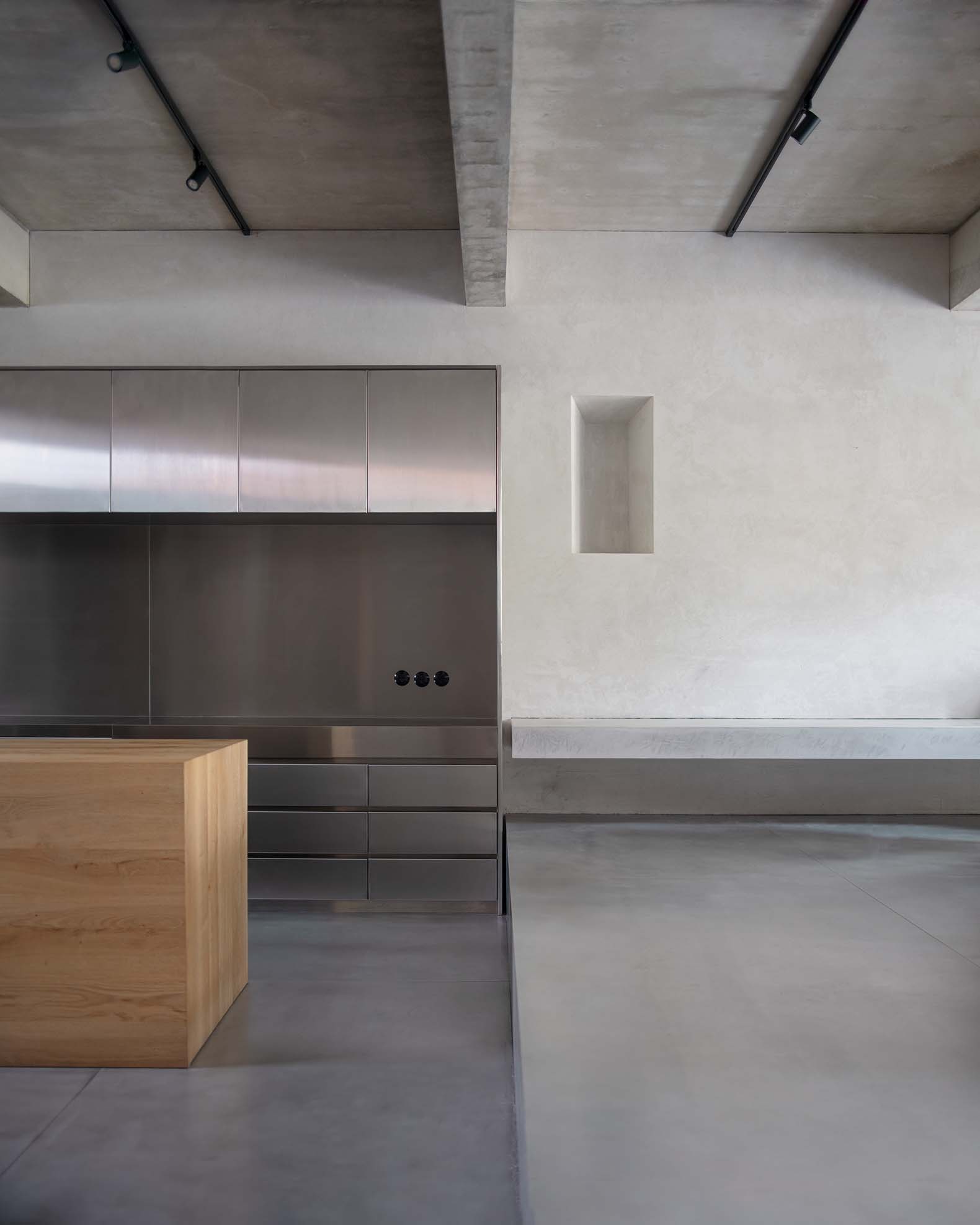
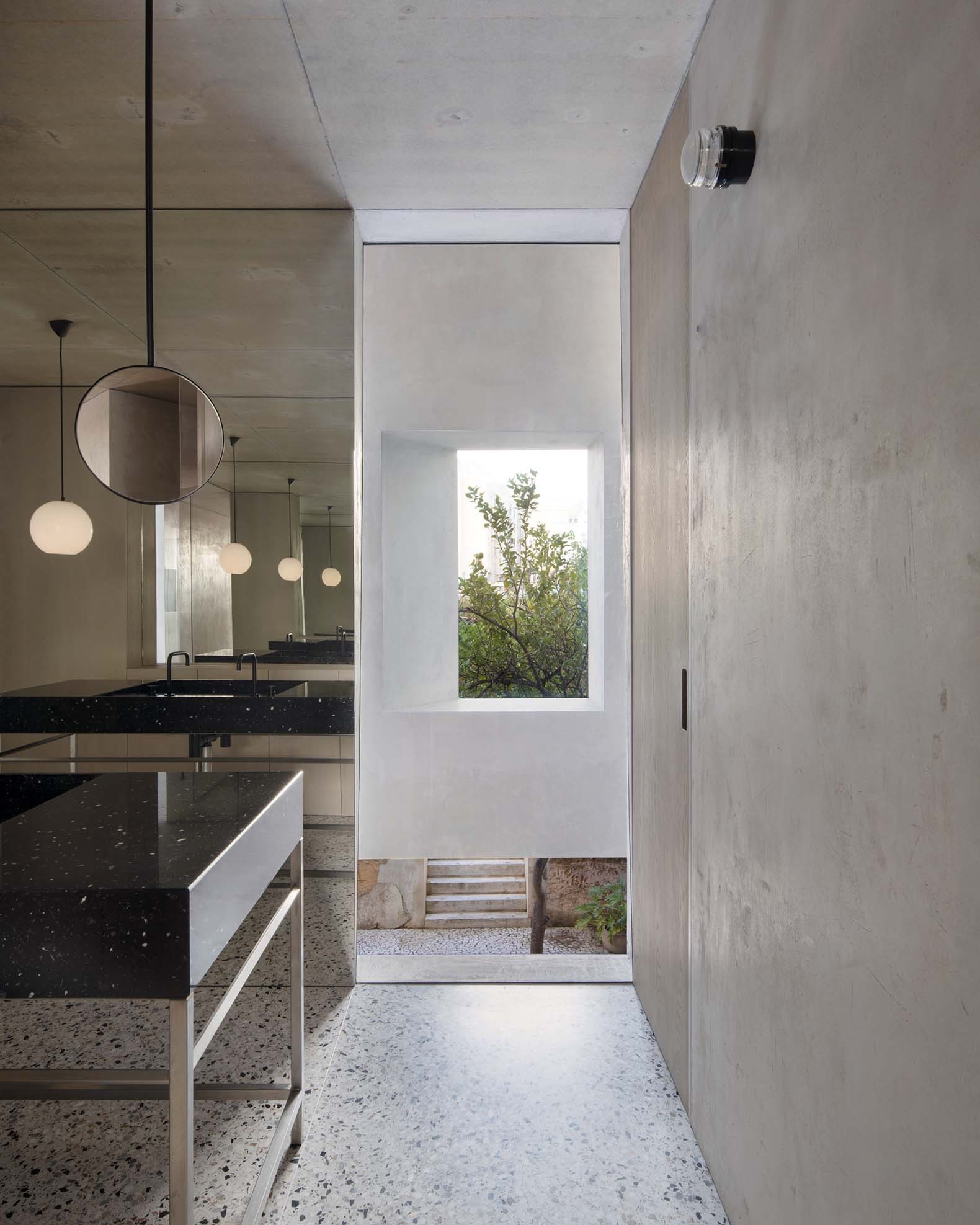
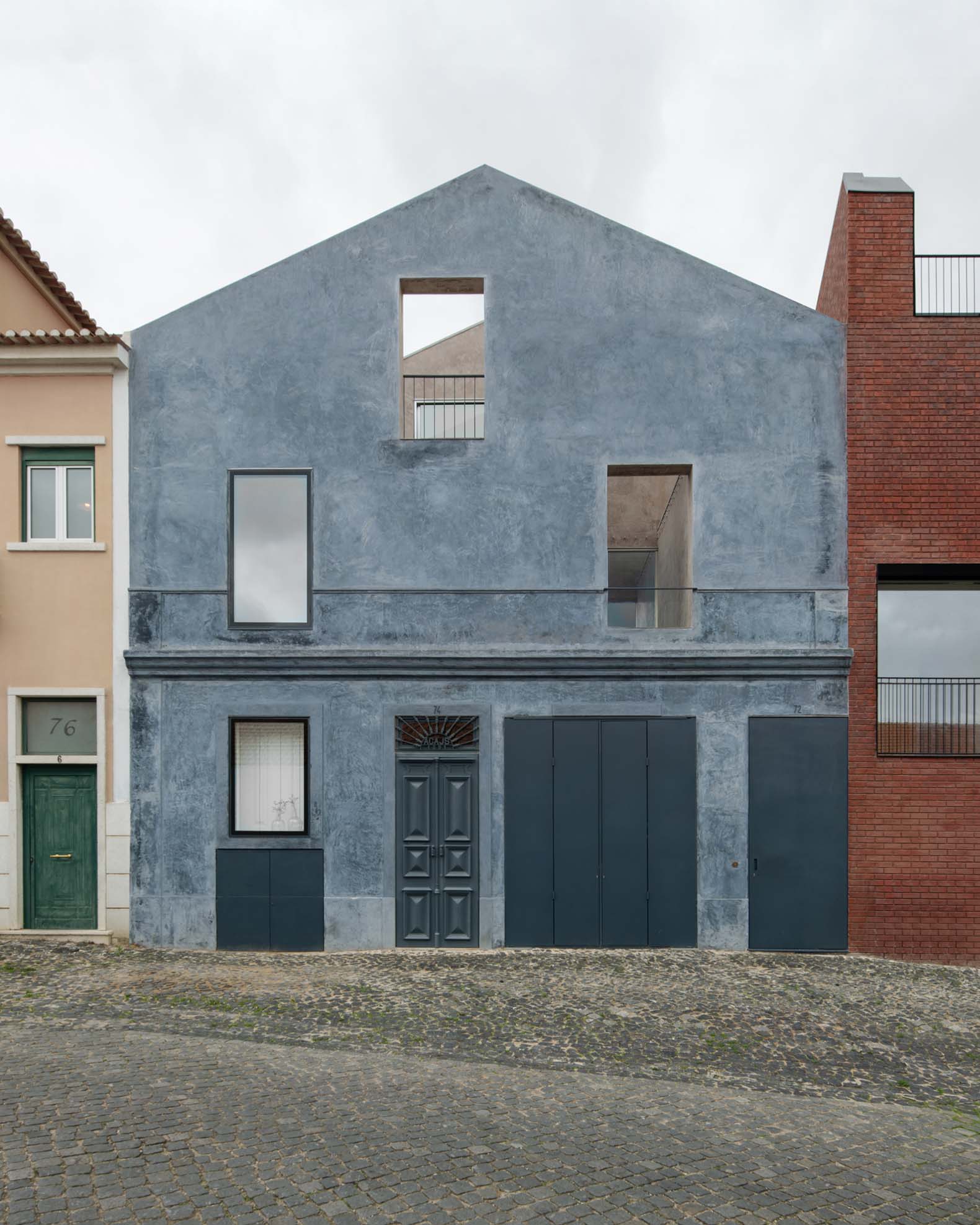
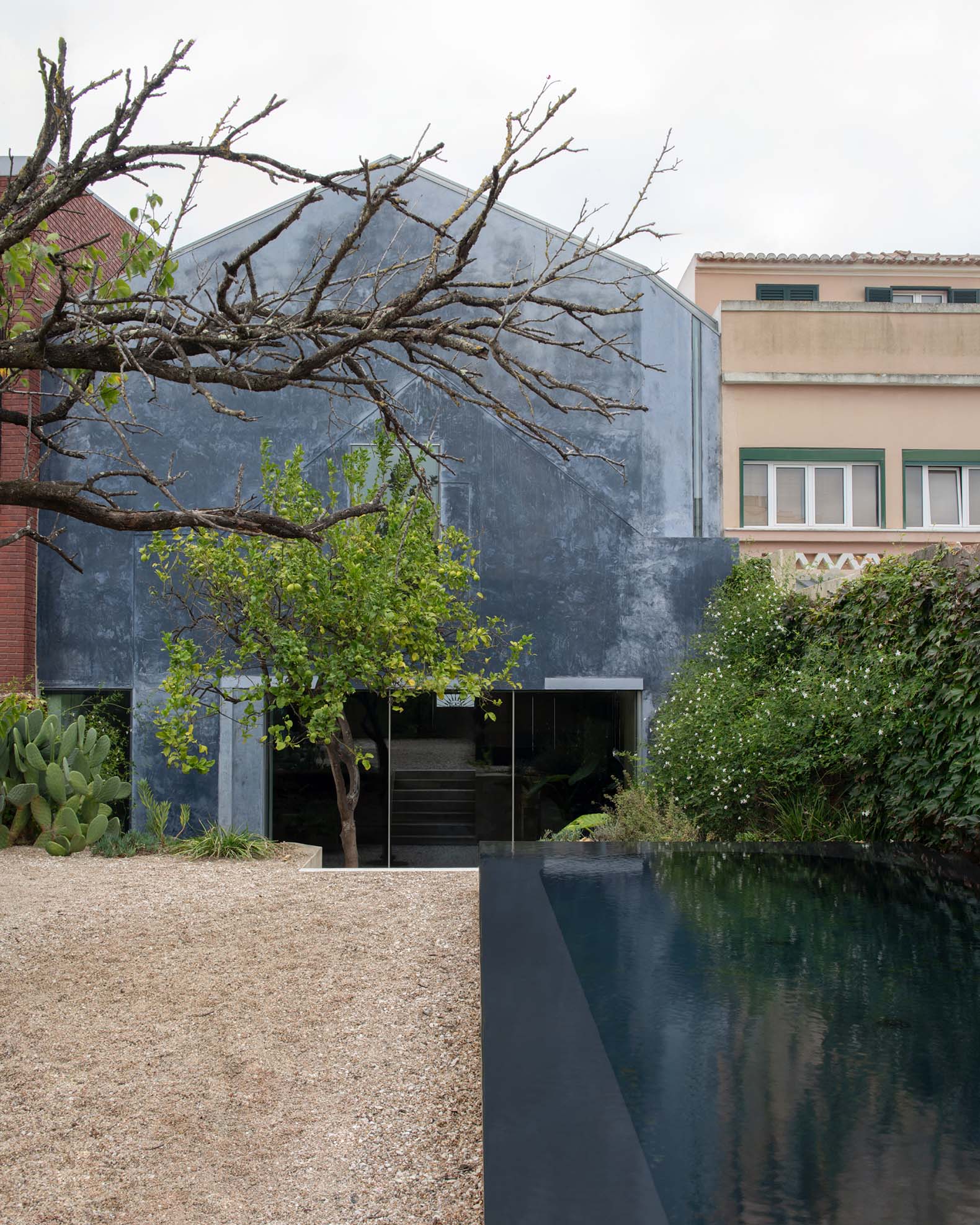
For its construction, architectural elements recovered from the original facades were restored and incorporated into the new intervention, while all surfaces were unified through continuous finishes. Inside, the walls were left exposed with a grey plaster that provides visual cohesion and alludes to the neighbourhood's industrial past. The ground floor was clad with hand-brushed aluminium sheets, whose texture evokes the softness of leather. Outside, a continuous coating of ultramarine-pigmented lime wraps the building.
Blue house by extrastudio. Photograph by Mikael Olsson

Blue house by extrastudio. Photograph by Mikael Olsson.

Project description by extrastudio

This project is the first in a series of three residences we named casas poveras. Shaped in a time of uncertainty, yet refusing to compromise on scale, these houses were stripped down to the essentials, acquiring an unexpected, raw, and intense character.

Once a landscape of estates and farmland, Marvila became Lisbon's main industrial district in the 20th century. Bounded by the Tagus River and its railway lines, the area is defined by a distinct typology of warehouses that once housed industries, reflected in street names like Rua do Açúcar and Rua da Fábrica do Material de Guerra. After decades of neglect, these same warehouses are now repopulated with studios and galleries, making Marvila the city's most vibrant creative district today.

Blue house by extrastudio. Photograph by Mikael Olsson
Blue house by extrastudio. Photograph by Mikael Olsson.

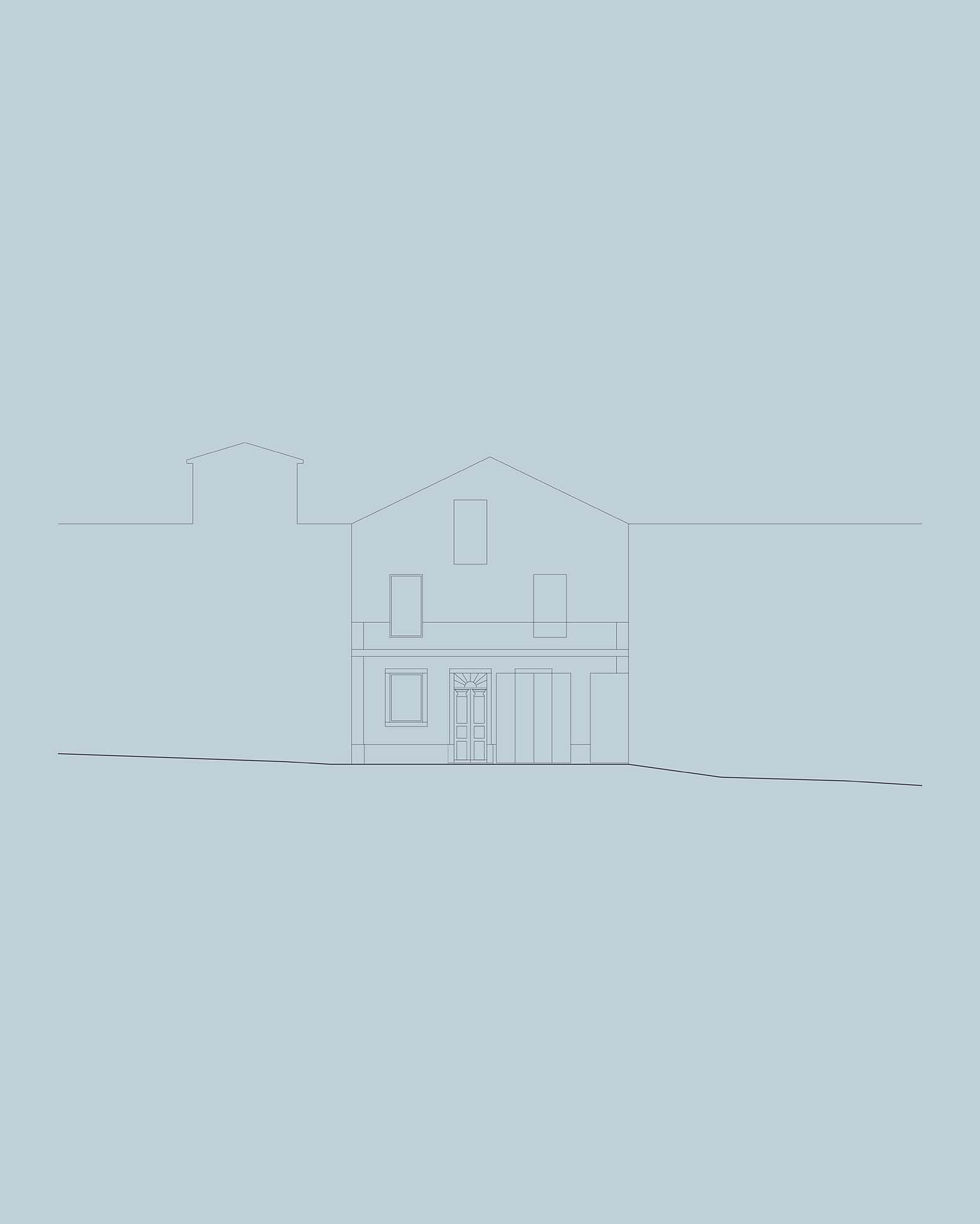
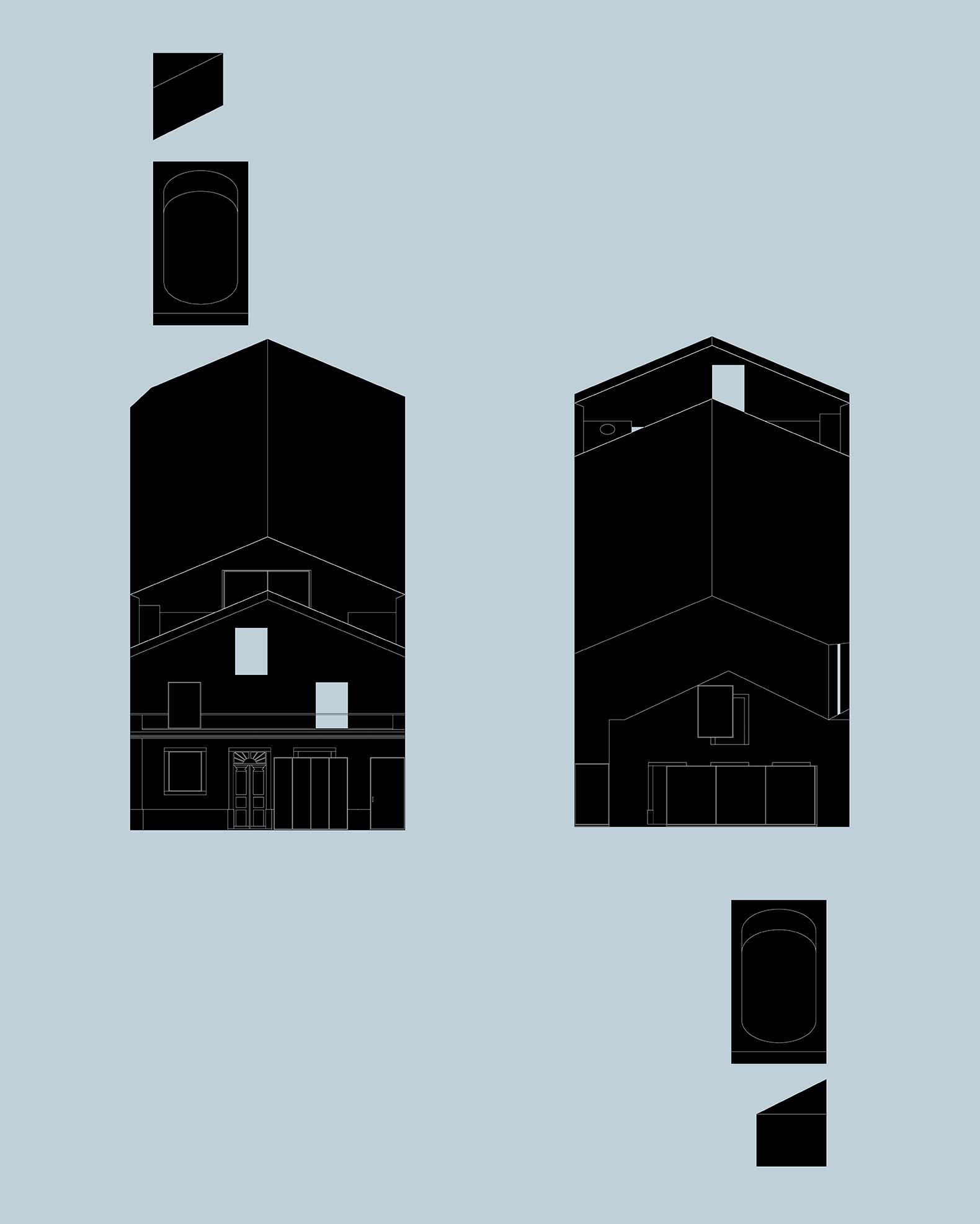
The project renovates and extends a single-story house built in 1893, fully preserving the existing structure. The existing house was treated as an artefact, its features carefully retained. The new extension alters only the exterior form and a side passage that provides access to the garden.

Likewise, architectural elements from the existing façades were removed, restored, and incorporated into the new façades. Old and new were finished in the same way. The different time periods are legible only in the building’s silhouette and the texture of materials.

Despite the lack of grandeur of the existing house, the project embraces its modesty and imperfections as a register of the past—a trace of real, daily life—that might otherwise have been lost.
Blue house by extrastudio. Photograph by Mikael Olsson.

Our clients had two requests for the house: a generous, open, loft-like character and a garage to be seamlessly integrated into the living room, so that it would be possible to work on cars or motorbikes without being separated from the family's daily life.

Two gestures define the house. A full-width cut to the front, facing the street, creates a two-storey high courtyard, providing shade and privacy for the bedrooms, and, as a counterpart, a triple-height interior space faces the garden, revealing the building's full vertical scale.  

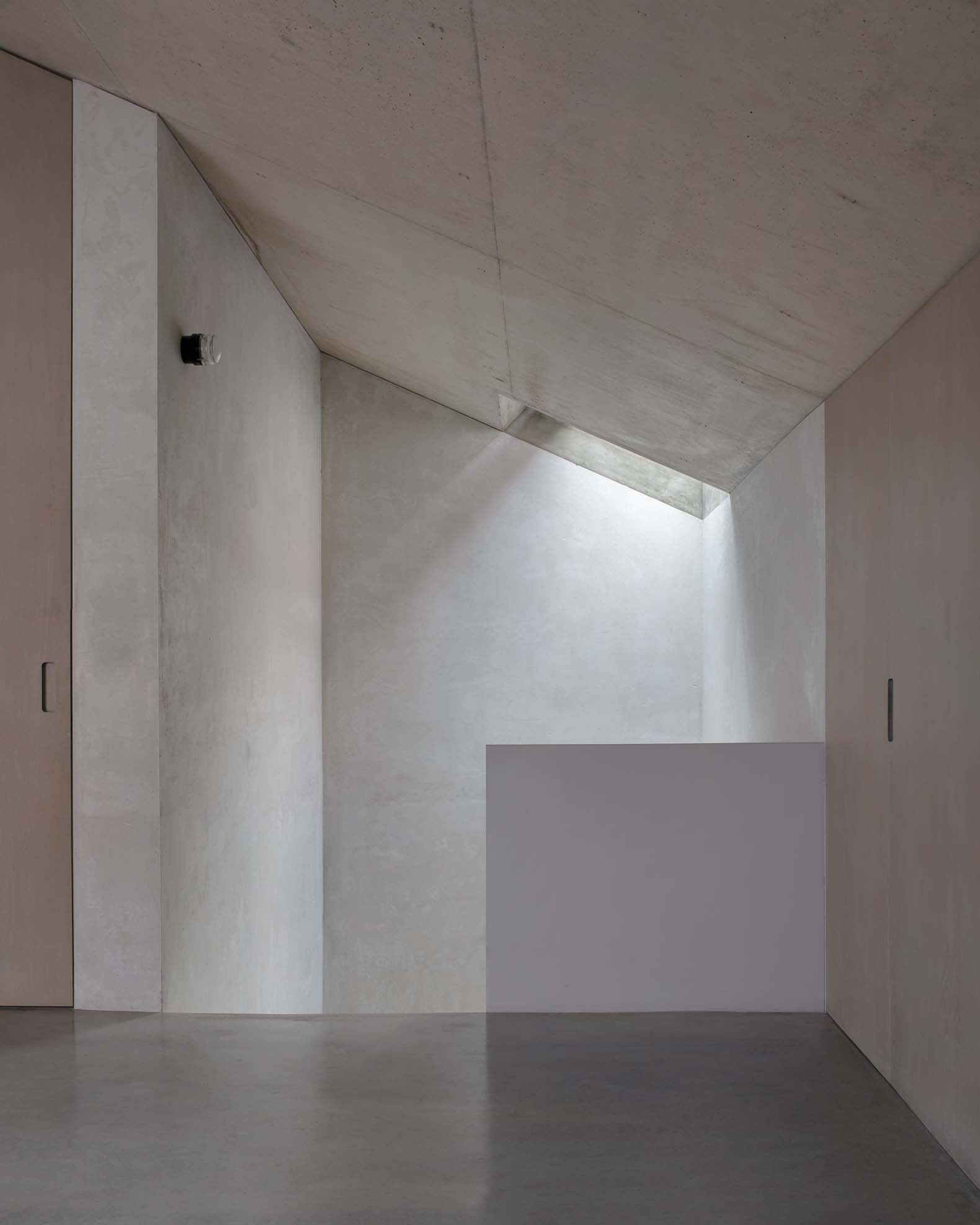
Punctuated by windows, the back façade is cut at one corner by a vertical strip of light, the result of a legal constraint we chose to embrace, which slices the back façade diagonally. As in Utzon’s Can Lis, for a few minutes at the end of the day, a ray of light slowly enters the space and revolves around enigmatically.
Blue house by extrastudio. Photograph by Mikael Olsson.

Once the design concept was defined, all decisions concerning finishes, textures, and colours were intentionally left open to be made on site with the craftsmen and clients. Their knowledge and decisions were made visible, giving the building a handmade and tactile expression—both rough and refined.

Serendipity allowed us to cover the entire ground floor with aluminium sheeting, which was hand-brushed to perfection by one of the craftsmen. Its surface resembles leather: natural, soft and luminous.

The inside walls were left bare, covered only with a grey plaster scratch coat, Jannis Kounelli’s colour of our time. We discovered this grey plaster on site, an economical solution that unified all the elements, while also discreetly linking the house to Marvila’s past.  
Blue house by extrastudio. Photograph by Mikael Olsson.

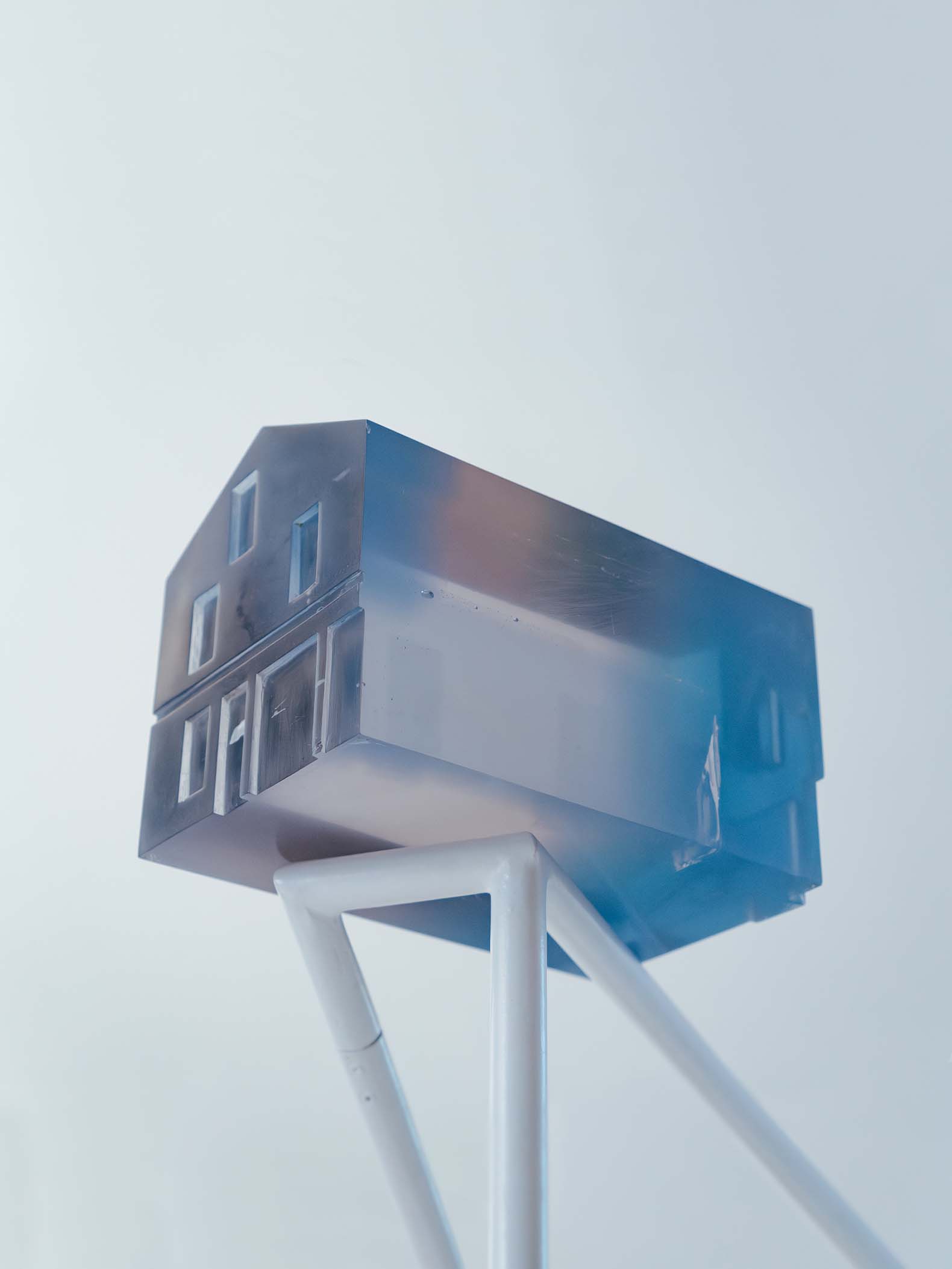
Ultramarine blue, a historical, artificial colour that defines the house, was found in the existing building.  A pigmented lime plaster unifies the entire volume. Blue being an unstable pigment, each façade had to be finished in a single day, without seams or repairs, a Sisyphean act. This blue layer gives the house an ambiguous appearance, more old than new, yet used in a way that anchors it to the present.

As the musician Hermeto Pascoal once observed: "We did it on the spot, right there on the site. We arrived, and they were playing."
More information

Label
Architects
+ + copy Created with Sketch.
- + copy Created with Sketch.
Label
Project team
Text

João Caldeira Ferrão, João Costa Ribeiro, Sónia Oliveira, Rita Rodrigues, Marta Oliveira, Martim Mota.

+ + copy Created with Sketch.
- + copy Created with Sketch.
Label
Collaborators
Text

Landscape architecture.- Oficina dos Jardins.
Consultants.- Pedro Viegas (structural design), Sandra Mota (hydraulics), Blueorizon (gas, building physics, acoustics, electrical, security).

+ + copy Created with Sketch.
- + copy Created with Sketch.
Label
Client
Text

Patrícia Dias, Artur Portugal.

+ + copy Created with Sketch.
- + copy Created with Sketch.
Label
Builder
Text

Vassalo & Sousa.

+ + copy Created with Sketch.
- + copy Created with Sketch.
Label
Area
Text

251 sqm. 

+ + copy Created with Sketch.
- + copy Created with Sketch.
Label
Dates
Text

2021.

+ + copy Created with Sketch.
- + copy Created with Sketch.
Label
Location
Text

Rua de Marvila, 74. Lisbon, Portugal.

+ + copy Created with Sketch.
- + copy Created with Sketch.
Label
Photography
+ + copy Created with Sketch.
- + copy Created with Sketch.

Extrastudio is a Lisbon-based architecture practice established in 2003. The office develops small and large projects, with programs ranging from housing to retail and public space. In recent years, they have received public commissions for the design of waterfront and urban parks, and have also worked with private clients on the design of mixed-use buildings and houses. They focus on master planning, architecture and interior design projects.

João Caldeira Ferrão. Degree in Architecture, Lisbon Technical University School of Architecture, 2000.  Fakultät Für Architektur RWTH Aachen, 1999. Office for Metropolitan Architecture (OMA-AMO: Rem Koolhaas) in Rotterdam, Netherlands, 2000.  Herzog & de Meuron in Basel, Switzerland, from 2000 to 2003. Teacher at Universidade Independente in Lisboa from 2004 to 2006.

João Costa Ribeiro. Degree in Architecture, Lisbon Technical University School of Architecture, 2000. Escuela Técnica Superior de Arquitectura de Madrid, 1999. Post-graduate studies in Architecture and History of Architecture, Coimbra University, 2003. In Lisbon worked at Atelier do Chiado Arquitectos, Contemporânea Arquitectos e Atelier Central. Office for Metropolitan Architecture (OMA-AMO: Rem Koolhaas) in Rotterdam, Netherlands, 2000. Board member of the South Section of the Portuguese Architects Association in 2016/2013, 2009/2007 and 2006/2004

Sónia Oliveira. Degree in Architecture, Lisbon Technical University School of Architecture, 2003. PMP Architecture in Glasgow from 2007 to 2008.

Rita Rodrigues. MA in Architecture, ISCTE - Lisbon University Institute, 2014.

Bruna Couto. MA in Architecture, Lisbon University School of Architecture, 2024.

Marta Nogueira. MA in Architecture, Instituto Superior Técnico, 2025.

Ana Teixeira. MA in Architecture, ISCTE - Lisbon University Institute, 2025.

Tiago Mota. Degree in Architecture, Universidade Moderna de Lisboa, 2004. Master's in housing, Escuela Técnica Superior de Arquitectura de Madrid, 2010. José Adrião Arquitetos, from 2003 to 2009 and from 2015 to 2017. Board member of the South Section of the Portuguese Architects Association from 2010/2012 and 2013/2016.

Awards

EUMiesAward 22 (Selected), Barcelona, Spain.
FAD prizes 2017 (Finalist), Barcelona, Spain.
ENOR prizes 2017 (Selected), Vigo, Spain.
BigMat International Architecture Award 2017 (Selected), Luxembourg.
Horta's Waterfront (1st prize), Faial, Azores, 2013.
Contractworld Awards 2010 (Mention), Hannover, Germany, 2010.
Contractworld Awards 2010 (Selected for Next Generation Award), Hannover, Germany, 2010.
Can Escandell Park (Mention), Ibiza, Spain, 2010.
La Hoya Park (Finalist), Almería, Spain, 2010.
São Jacinto Dunes Natural Park Headquarters (2nd Prize), Aveiro, Portugal, 2009.
Tavira Island Masterplan (1st Prize), Tavira, Portugal 2009.
Garrão Beach Masterplan (2nd Prize), Faro, Portugal, 2009.
Fuseta Beach and Fuzeta Island Masterplan (3rd Prize), Fuseta, Portugal, 2009.
Valdebebas Urban Park (Mention), Madrid, Spain, 2009.
Green Project Awards (Mention), Lisbon, Portugal, 2008.
Légua Beach Masterplan (1st Prize), Alcobaça, Portugal, 2007.
Organic Award, San Francisco, USA, 2007.
Pinhal Novo Elementary School (2nd Prize), Palmela, Portugal, 2007.
Cenário Urbano (1st Prize) Lisbon, Portugal, 2007.
Galé/Salgados Beachfront (2nd Prize), Albufeira, Portugal, 2007.
Hidrographic Institute Building (2nd Prize), Lisboa, 2006.
Headquarters for the Montesinho Natural Park (2nd Prize), Bragança, Portugal, 2005.
Headquarters for the North Section of the Portuguese Architects Association (Mention), Oporto, Portugal, 2005.

Read more
Published on: June 23, 2026
Cite:
metalocus, CAMILA DOYLET
"Industrial footprint. Blue house by extrastudio" METALOCUS. Accessed
<https://www.metalocus.es/en/news/industrial-footprint-blue-house-extrastudio> ISSN 1139-6415
Loading content ...
Loading content ...
Loading content ...
Loading content ...
Loading content ...
Loading content ...
Loading content ...
Loading content ...
Loading content ...
Loading content ...
Loading content ...
Loading content ...
Loading content ...
Loading content ...
Loading content ...
Loading content ...
Loading content ...
Loading content ...
Loading content ...
Loading content ...
Loading content ...
Loading content ...
Loading content ...
Loading content ...
Loading content ...
Loading content ...
Loading content ...
Loading content ...
Loading content ...
Loading content ...
Loading content ...
Loading content ...
Loading content ...
Loading content ...
Loading content ...
Loading content ...
Loading content ...
Loading content ...
Loading content ...
Loading content ...
Loading content ...
Loading content ...
Loading content ...
Loading content ...
Loading content ...
Loading content ...
Loading content ...
Loading content ...
Loading content ...
Loading content ...
Loading content ...
Loading content ...
Loading content ...
Loading content ...