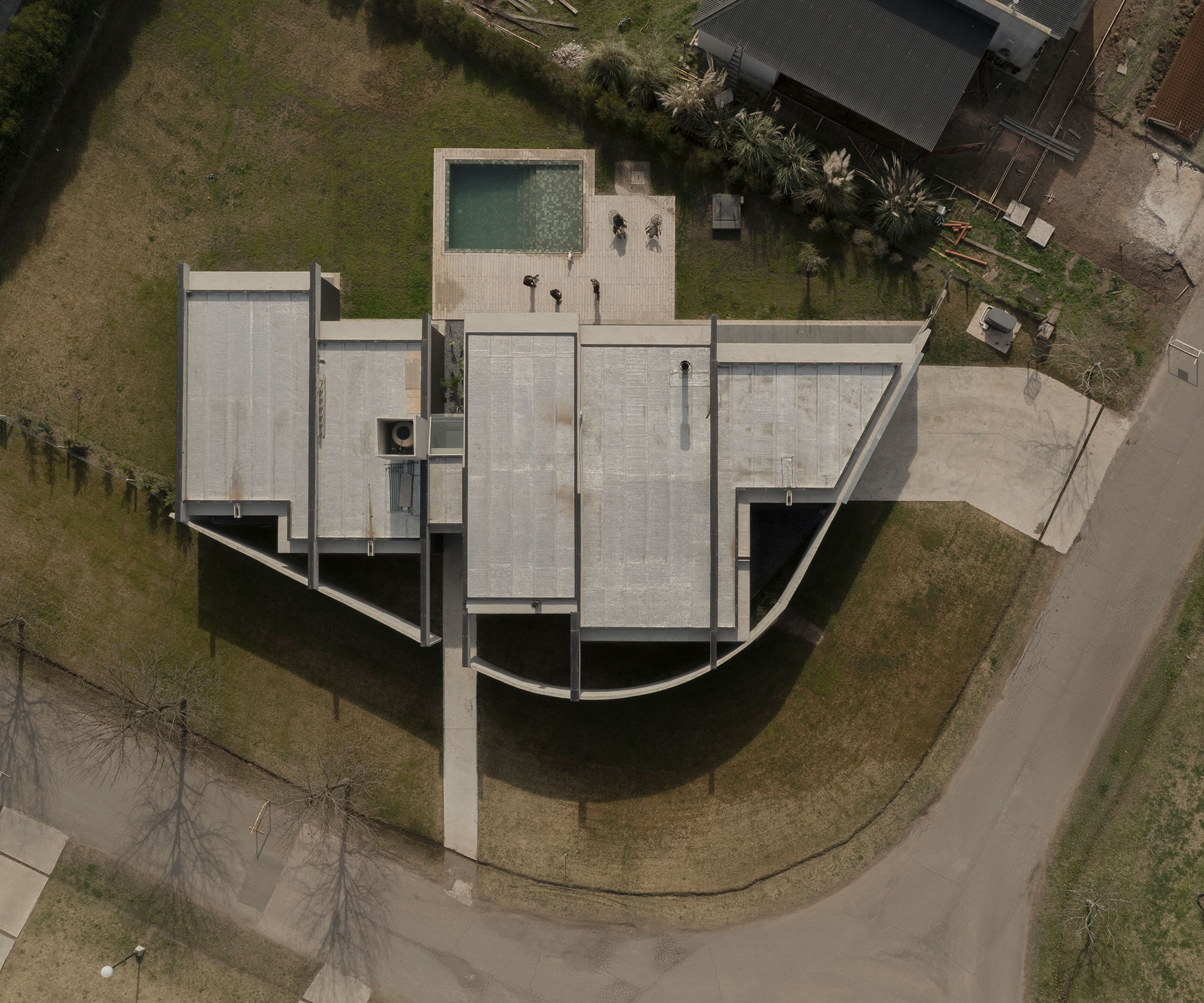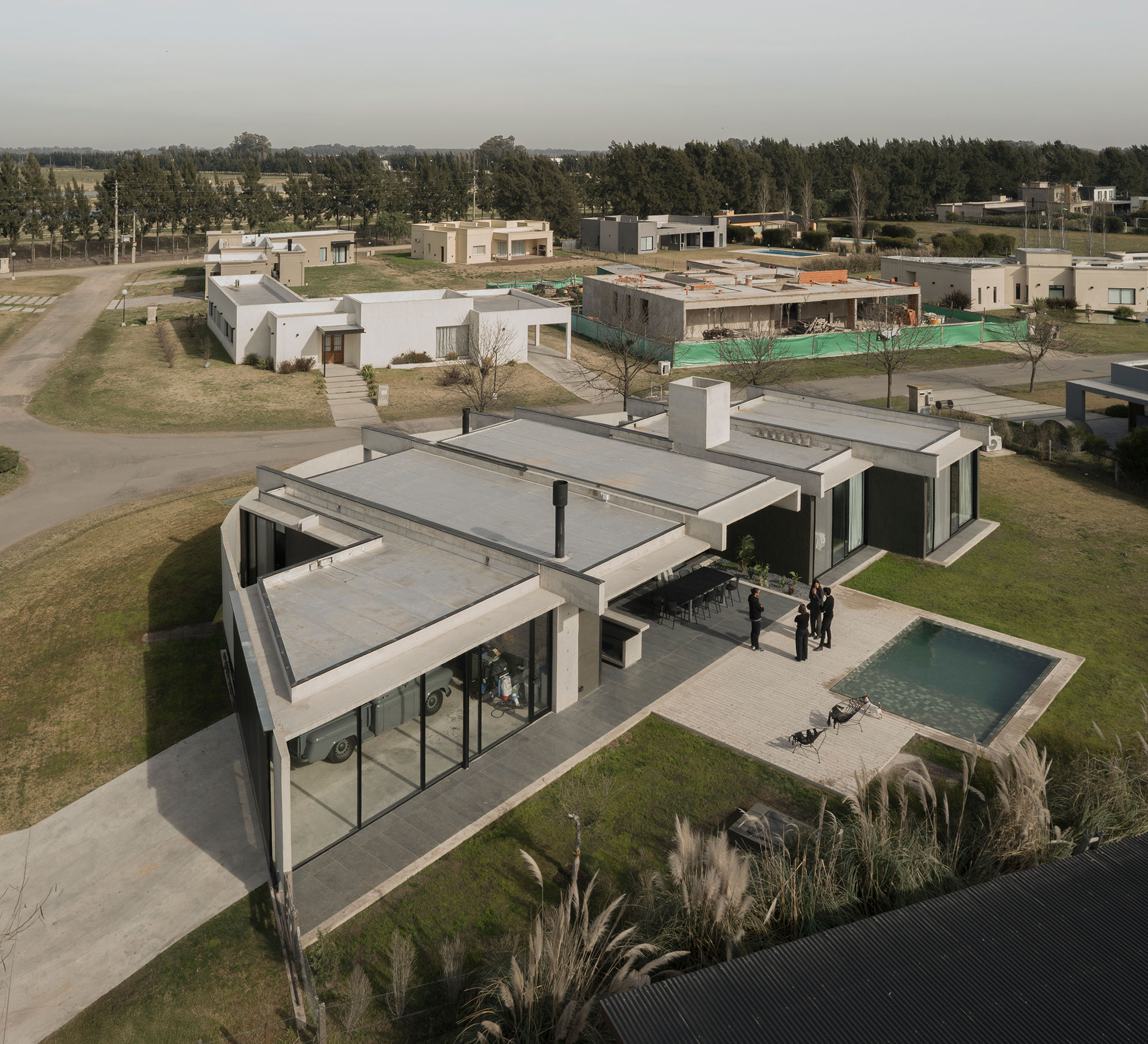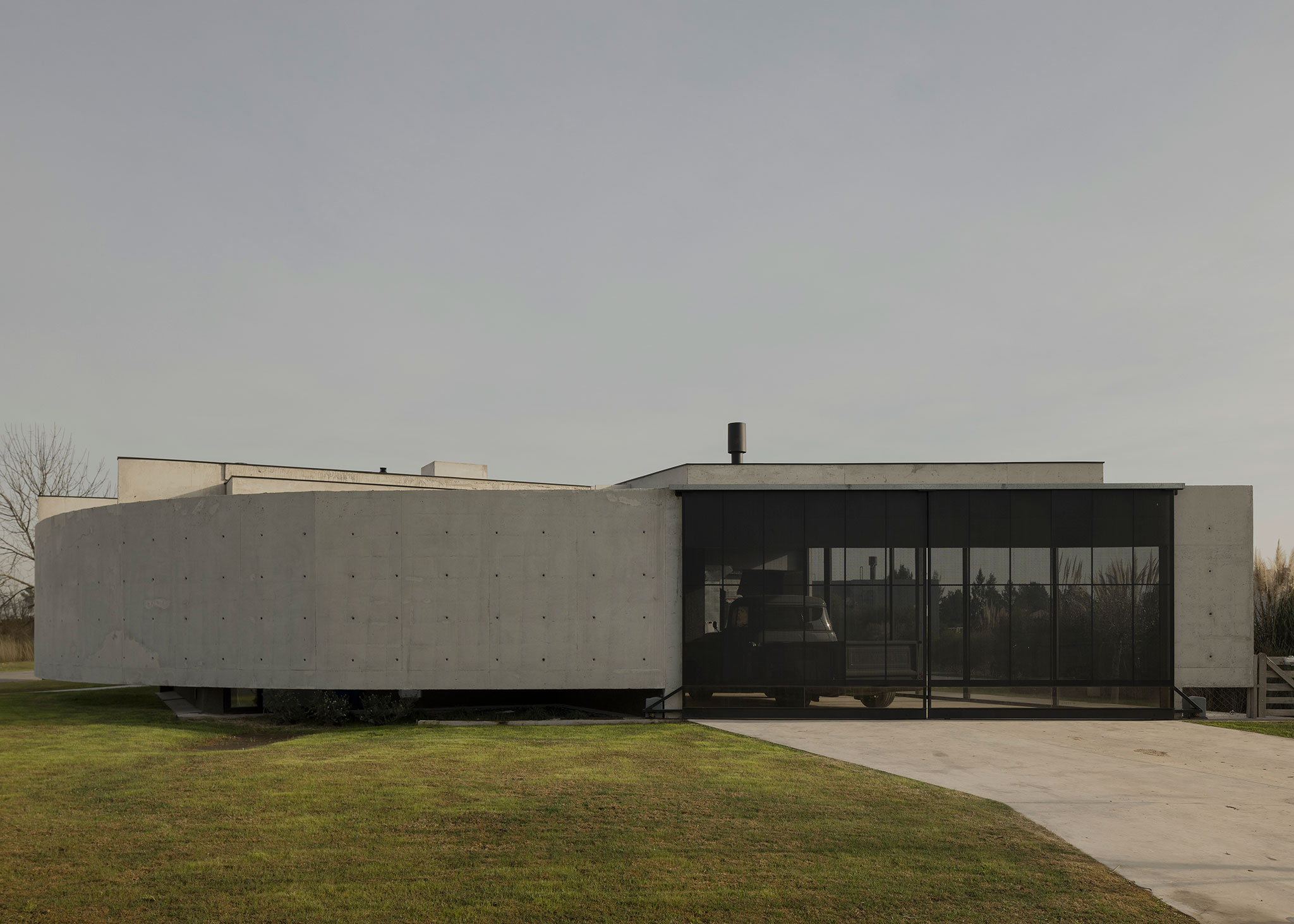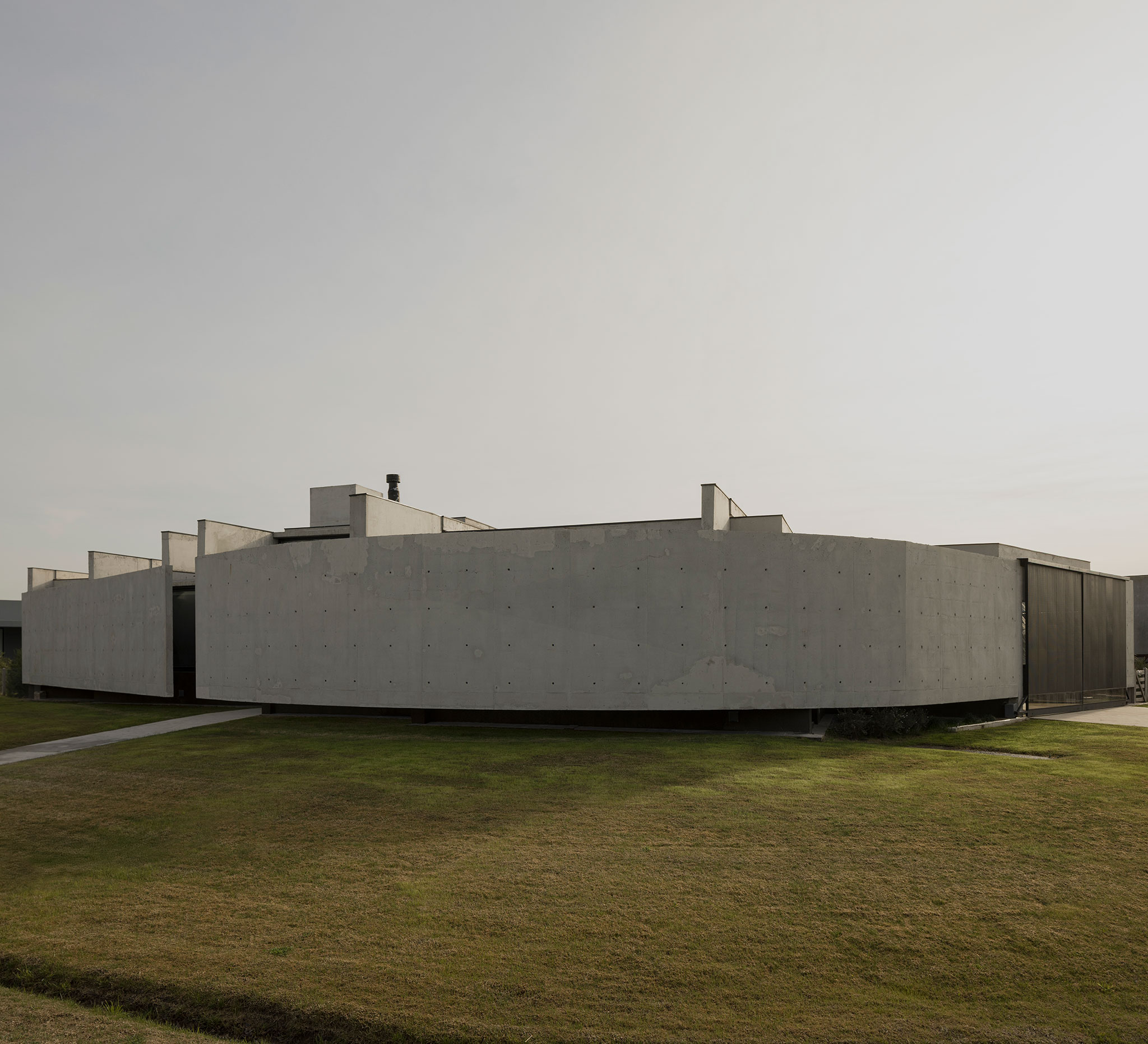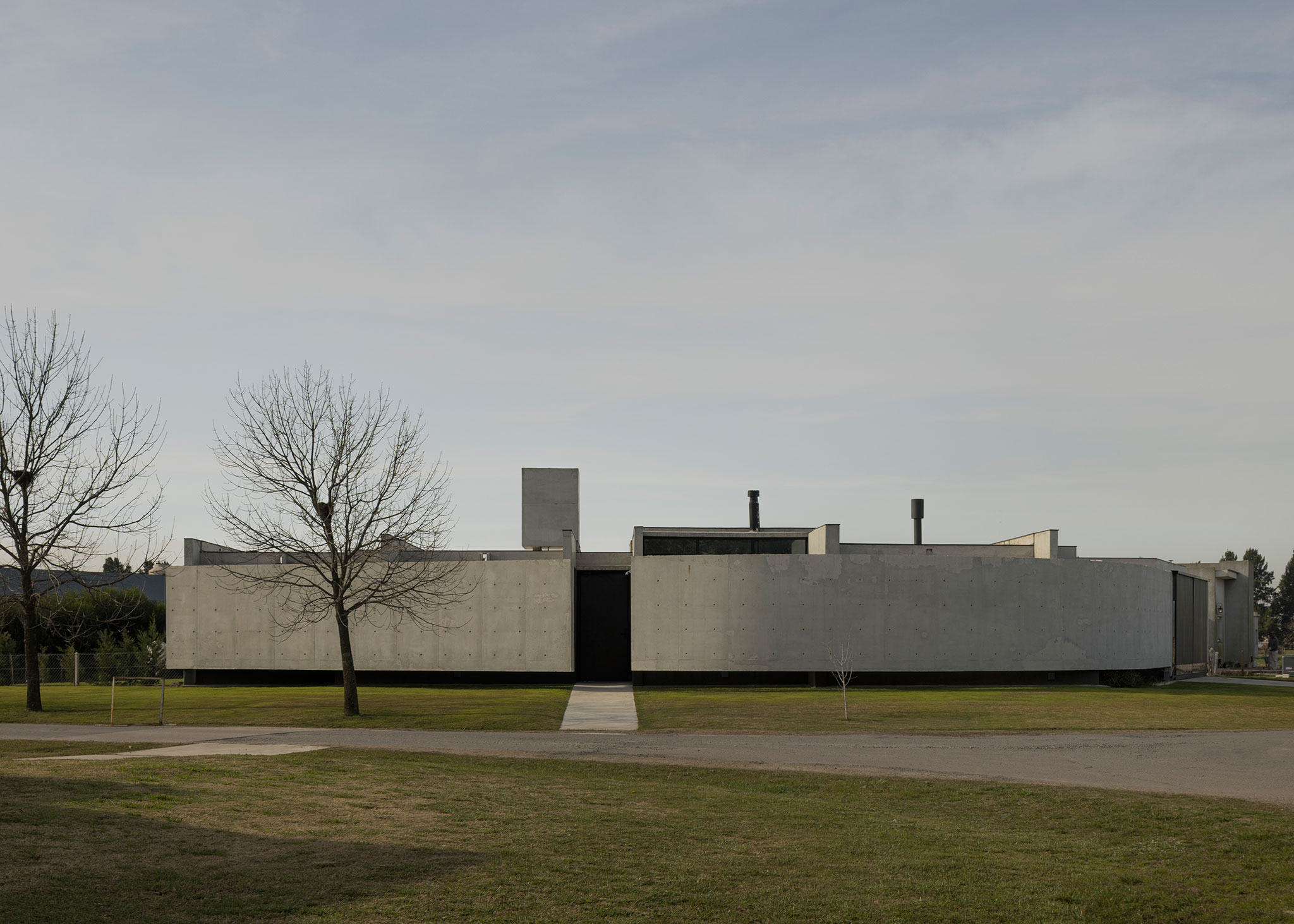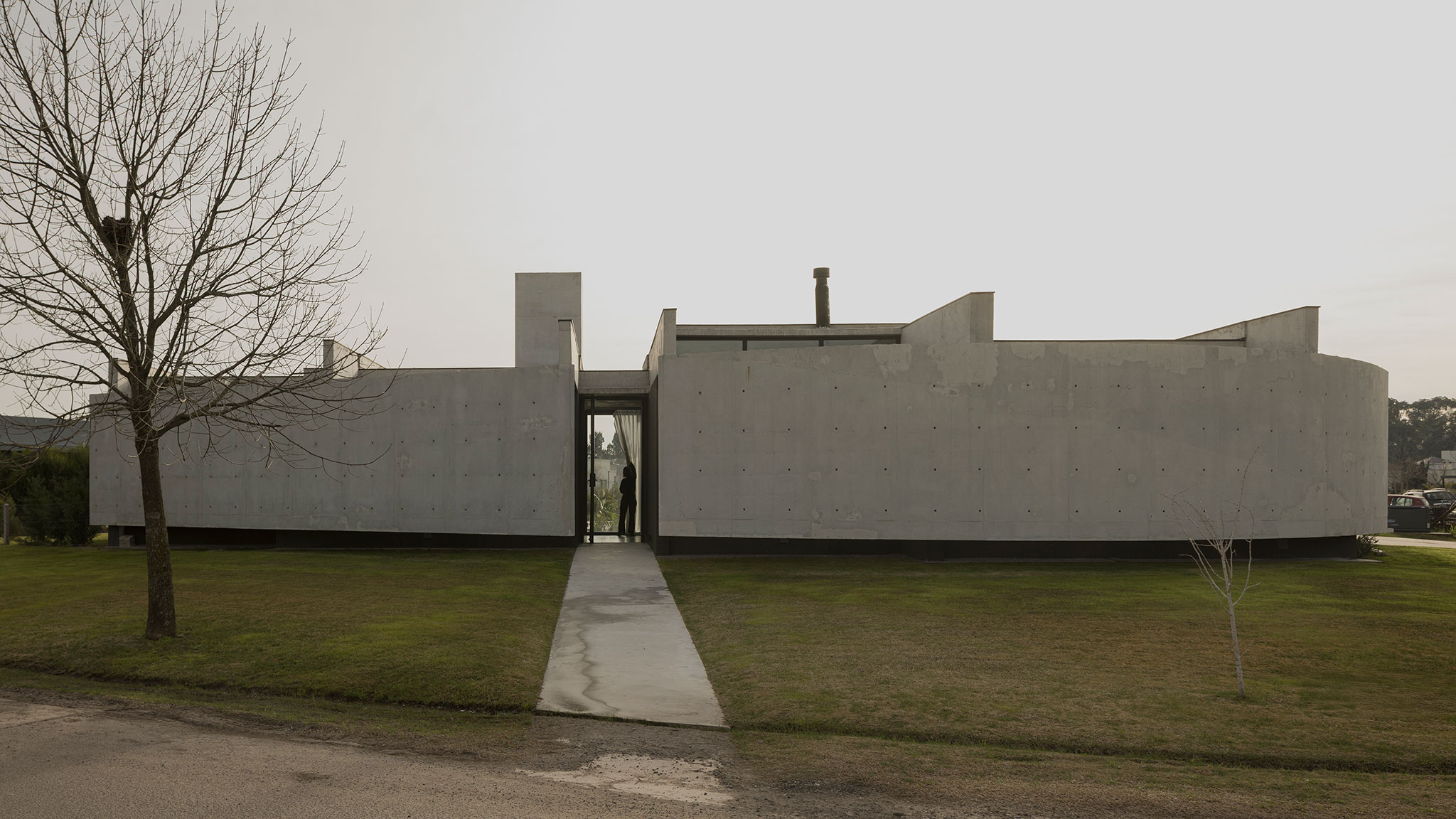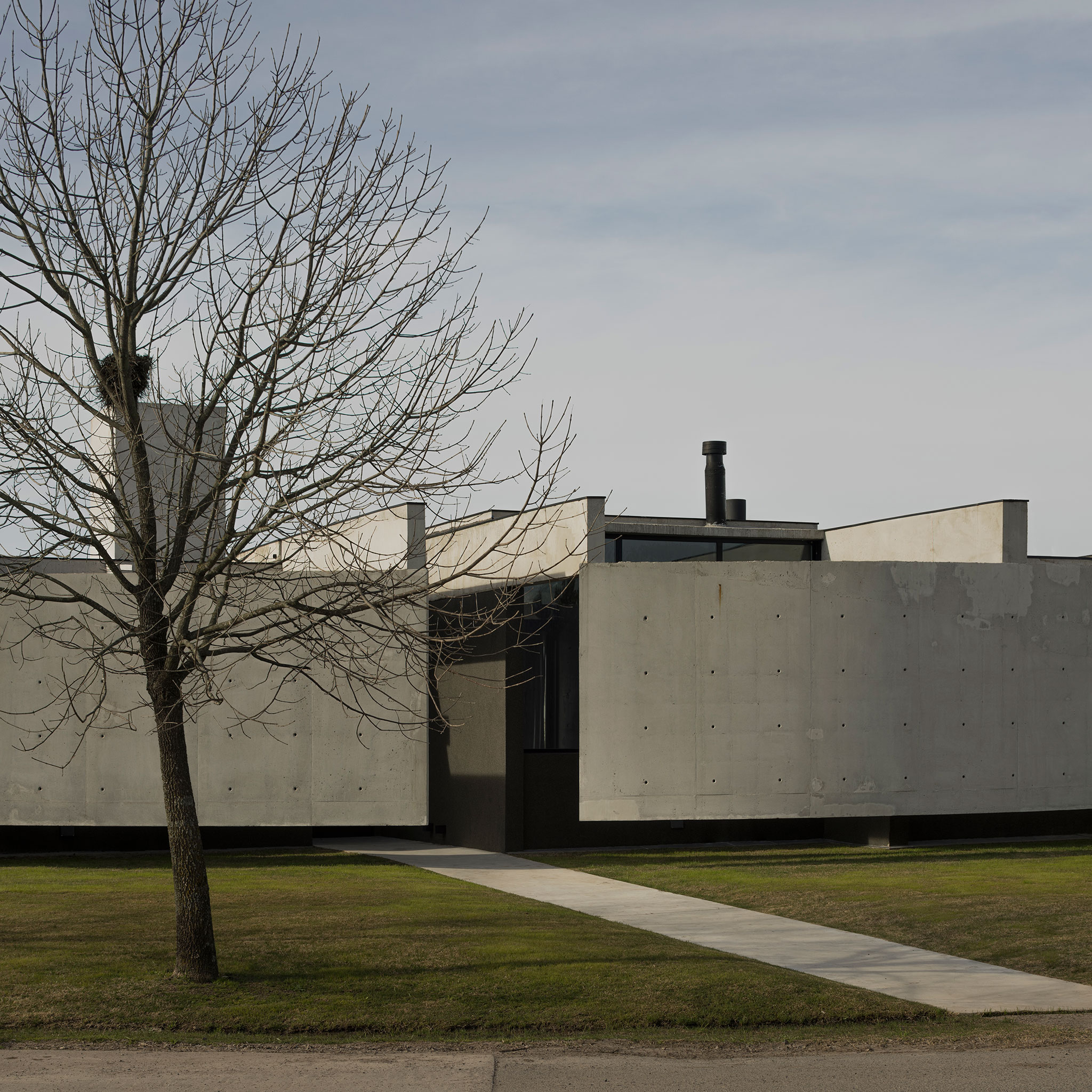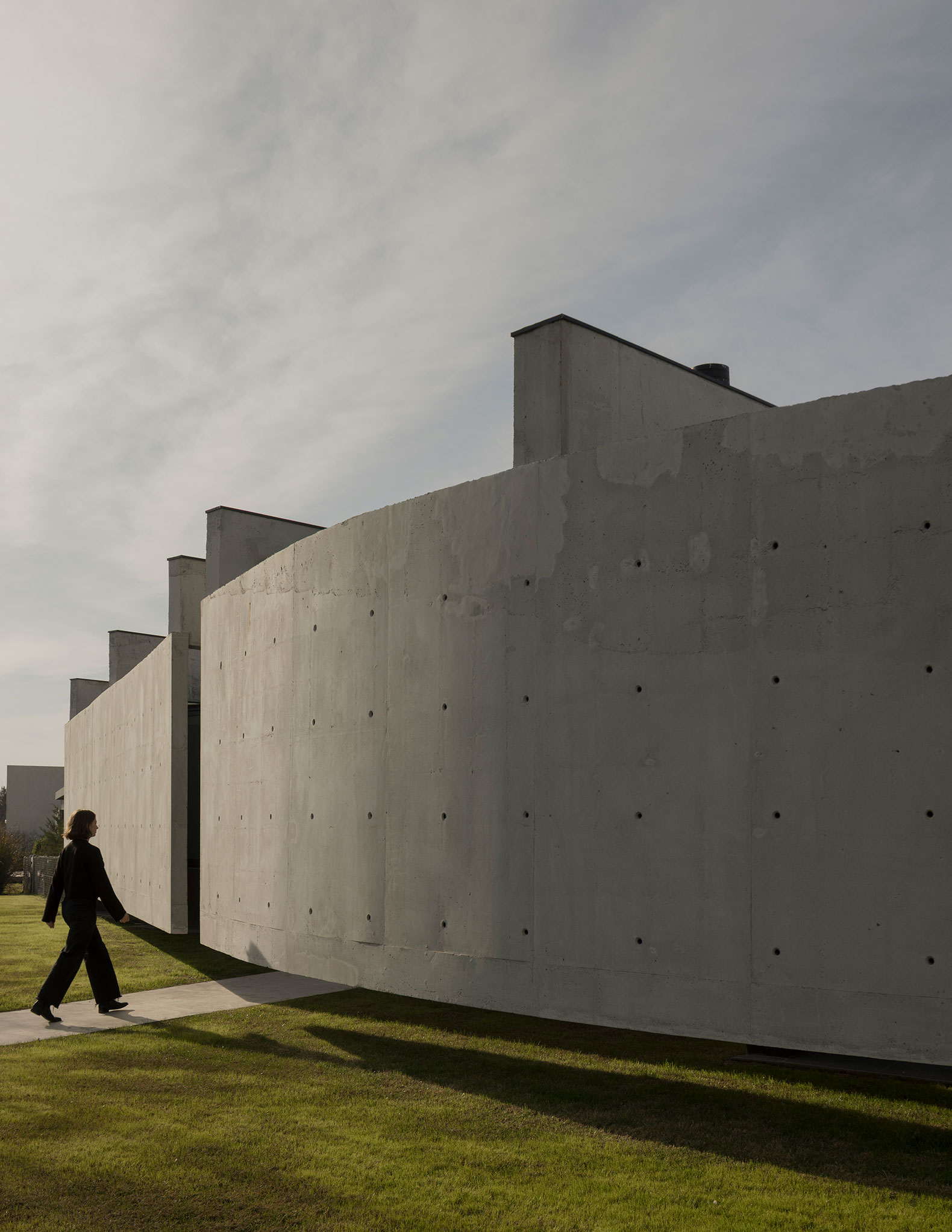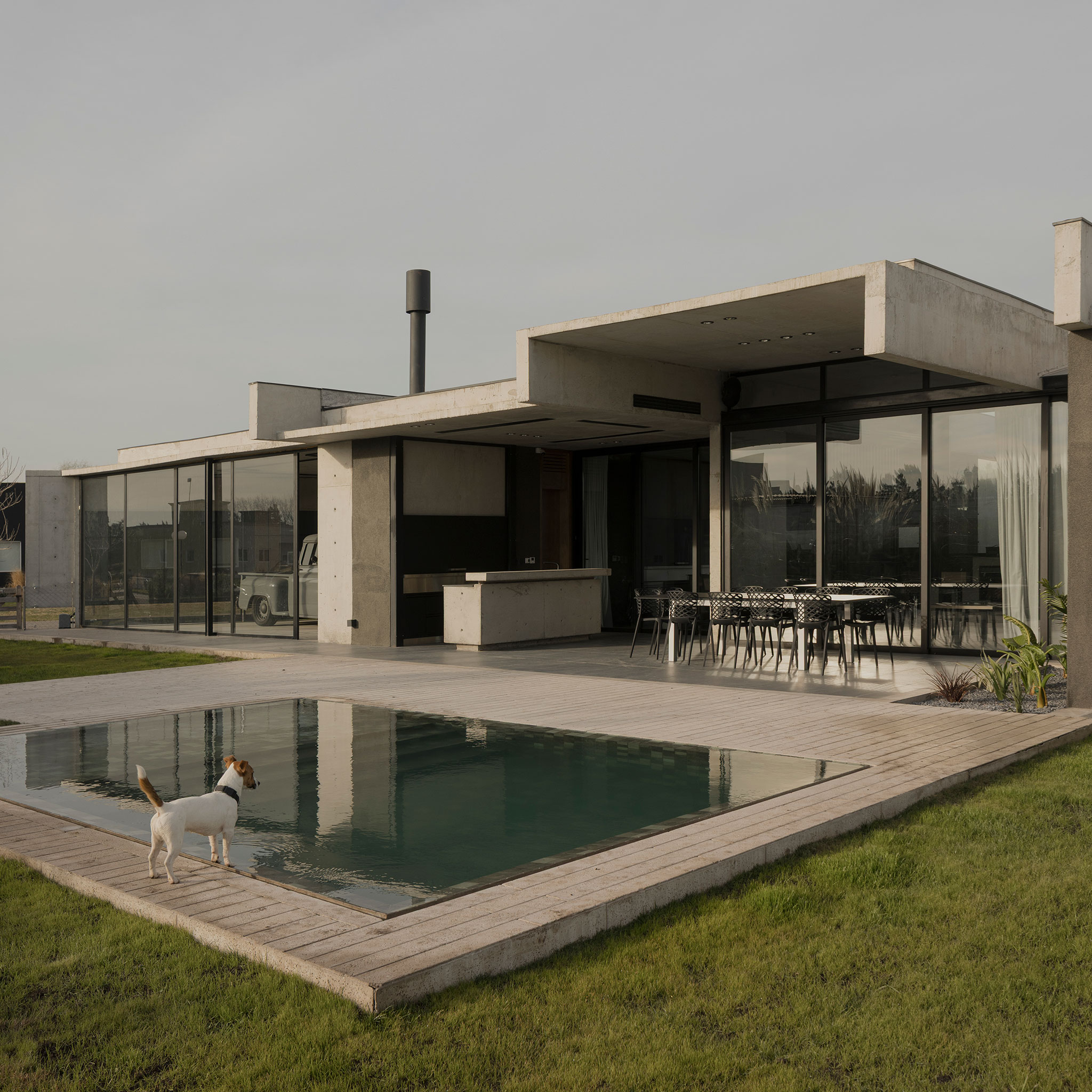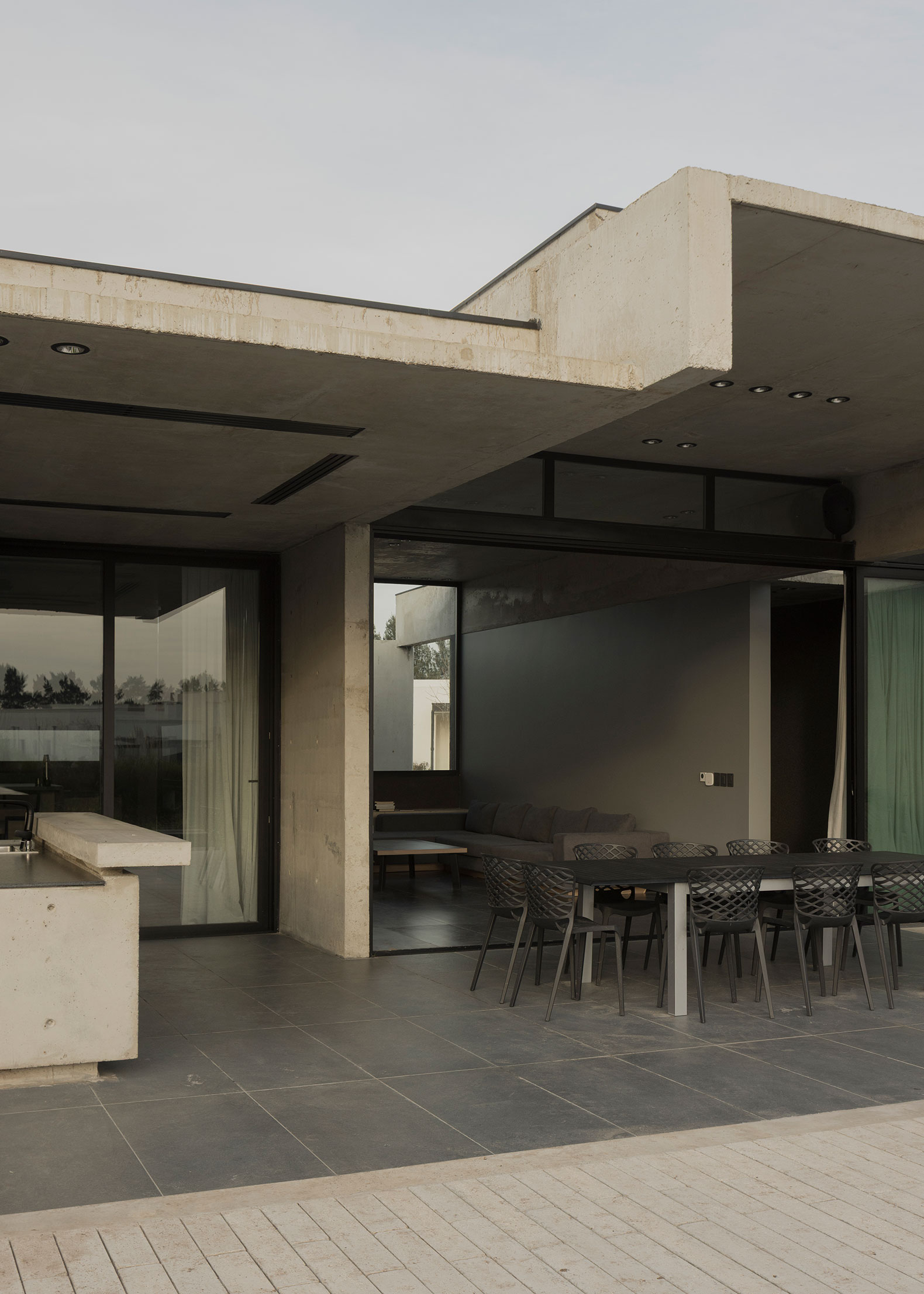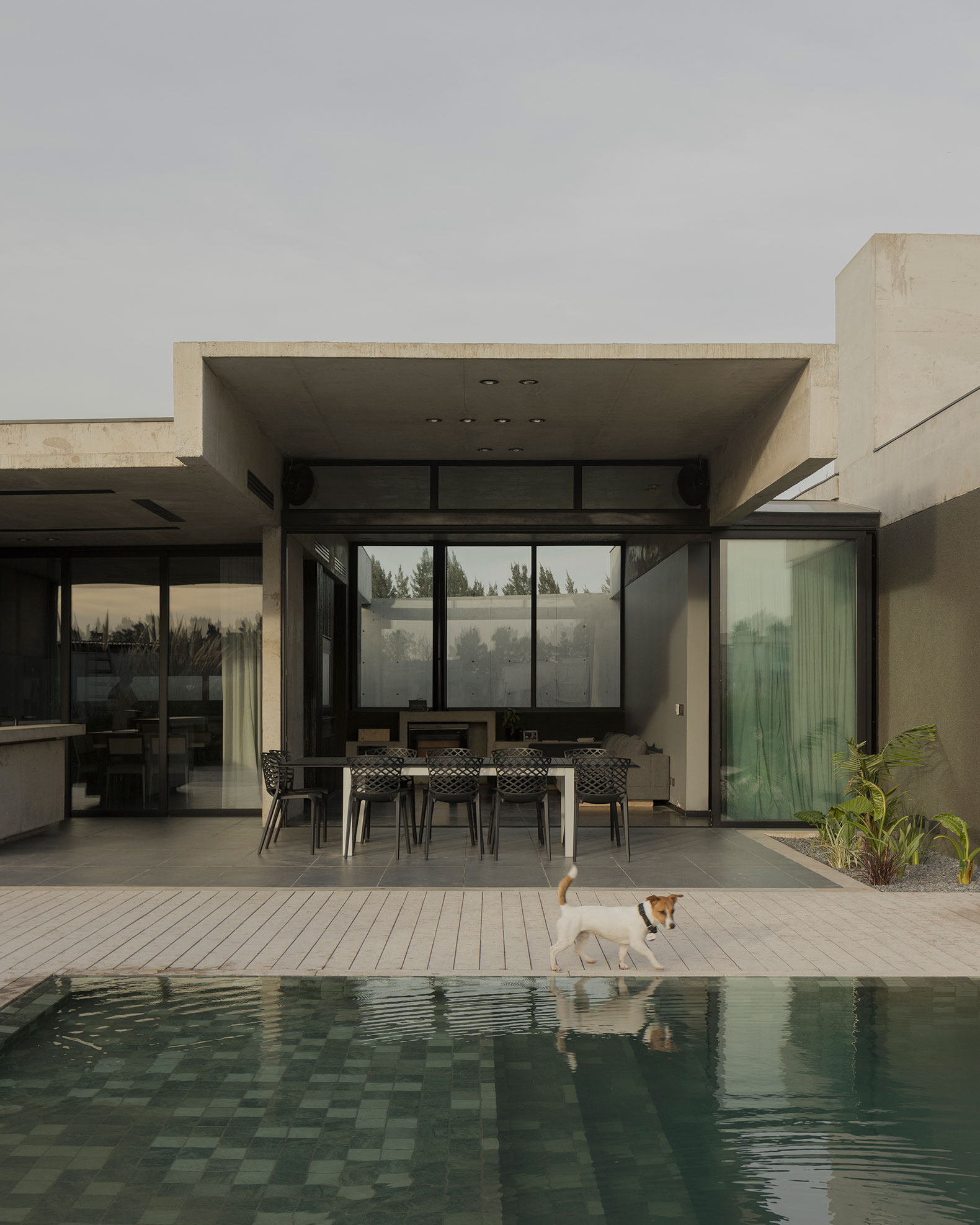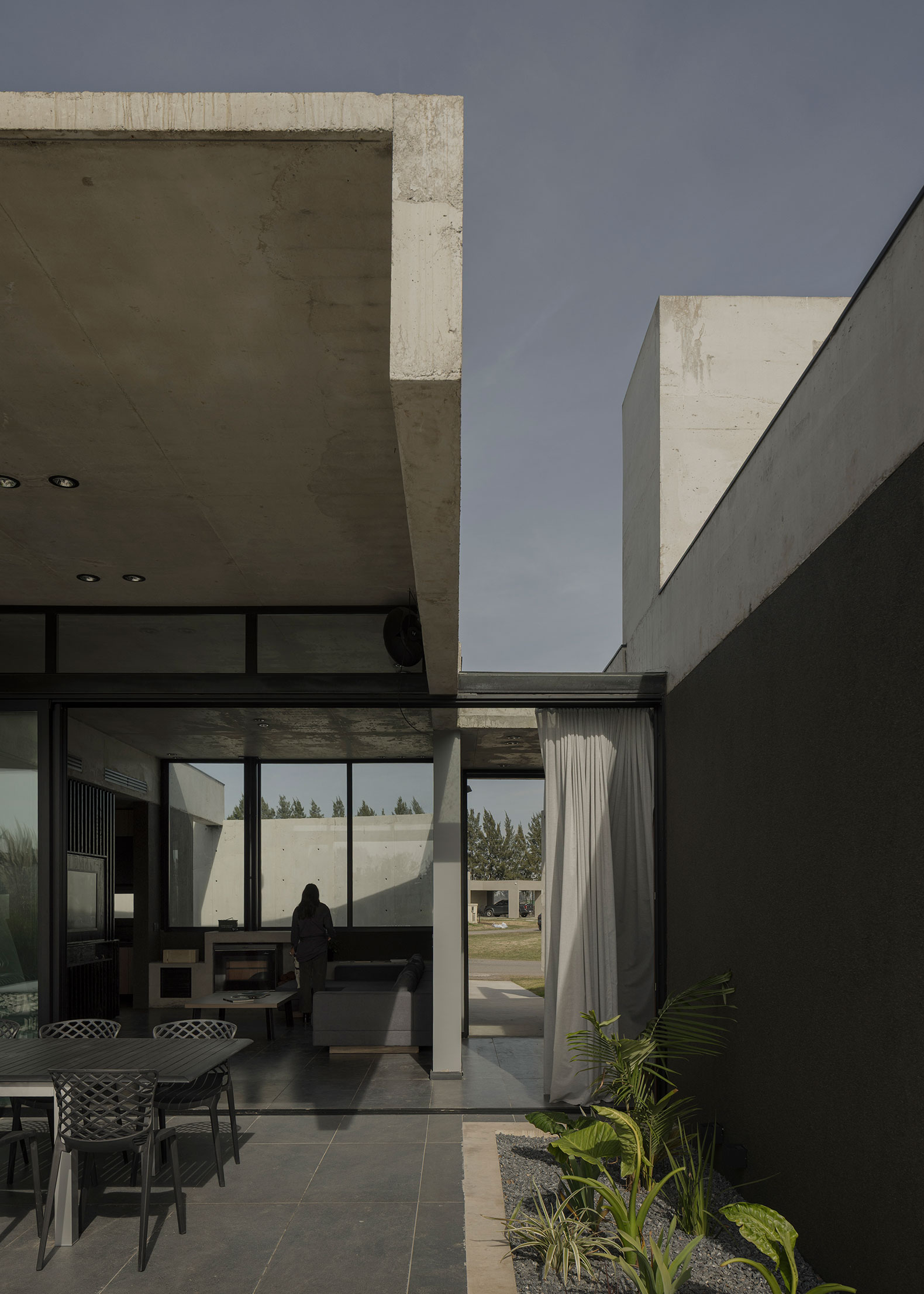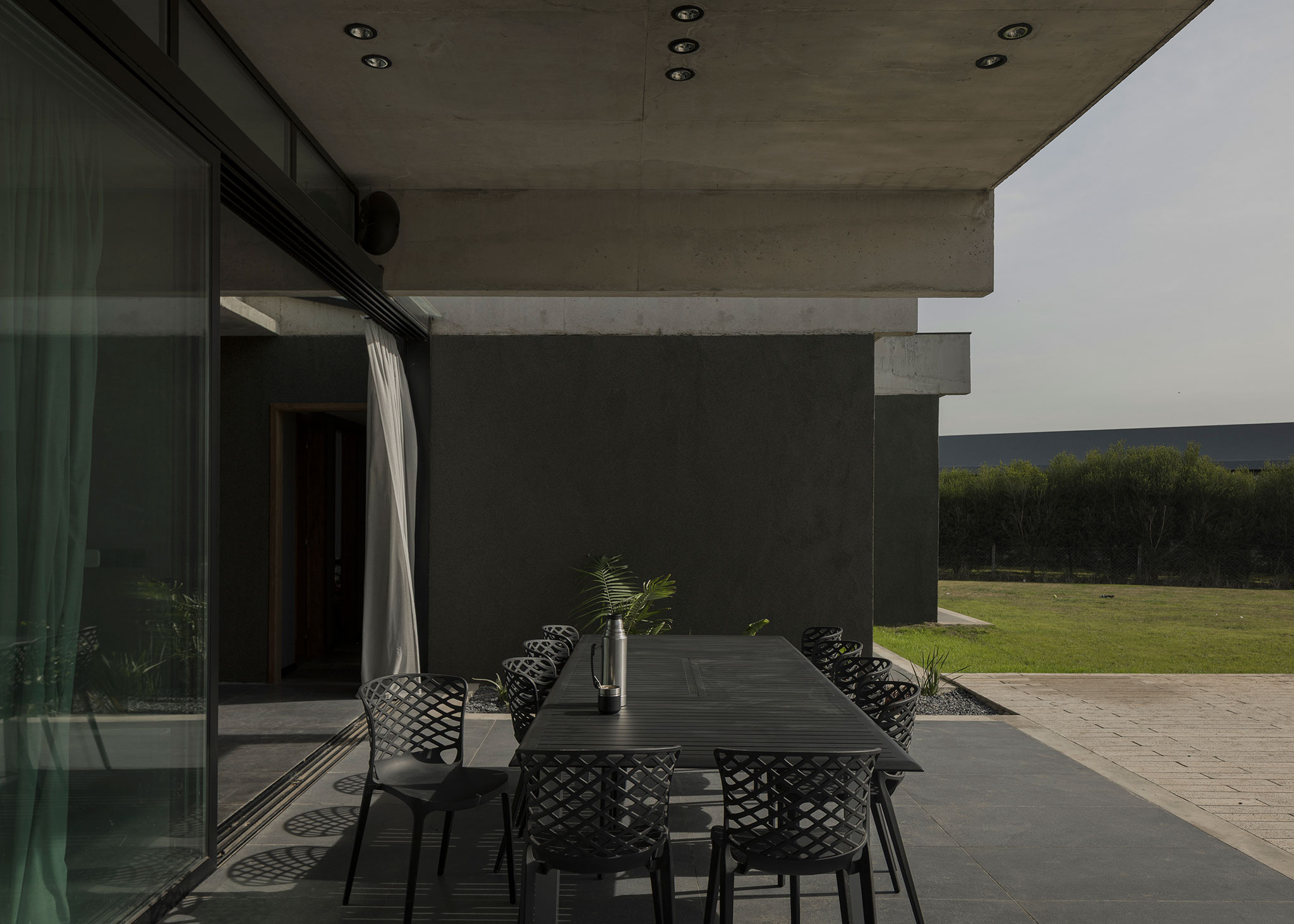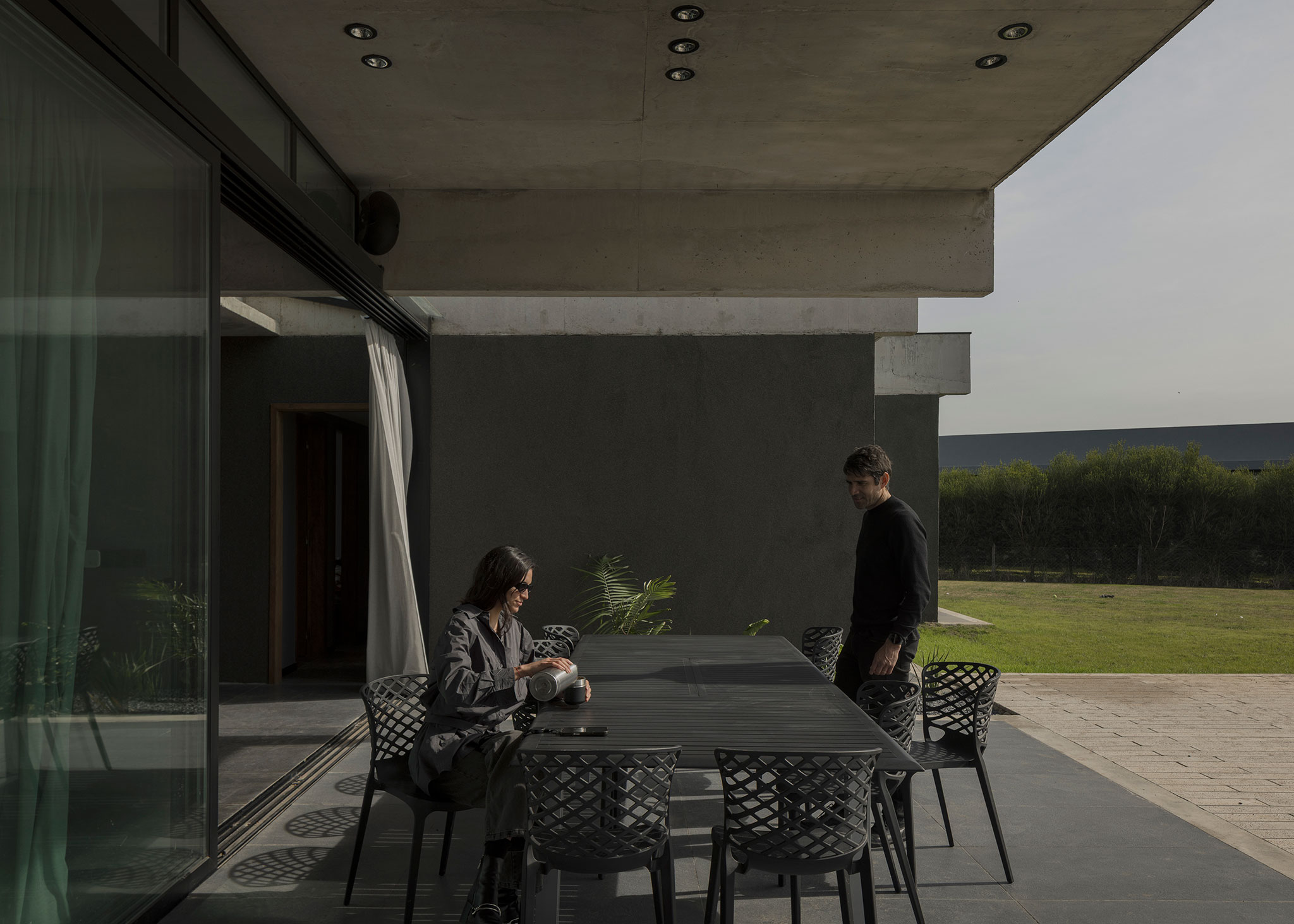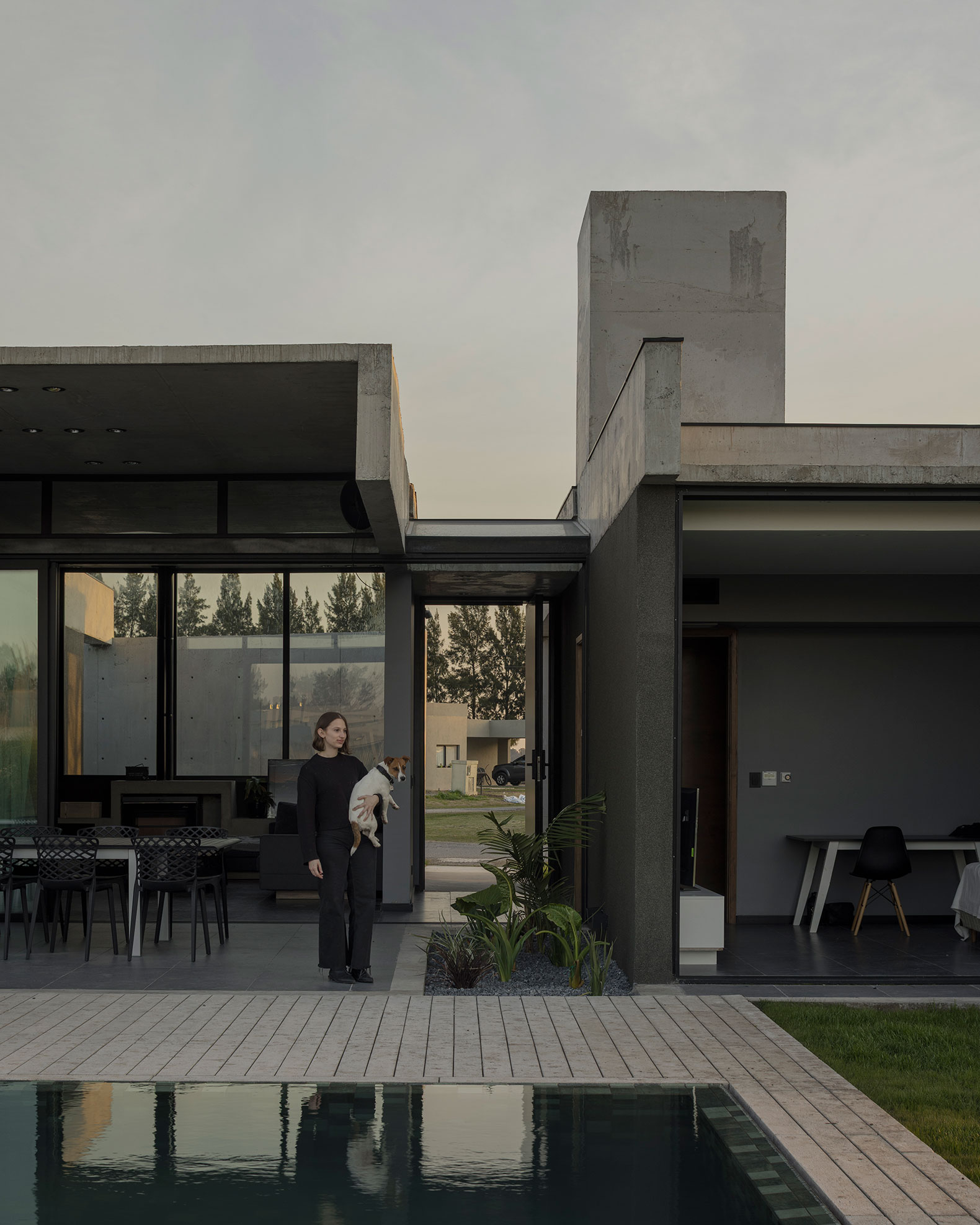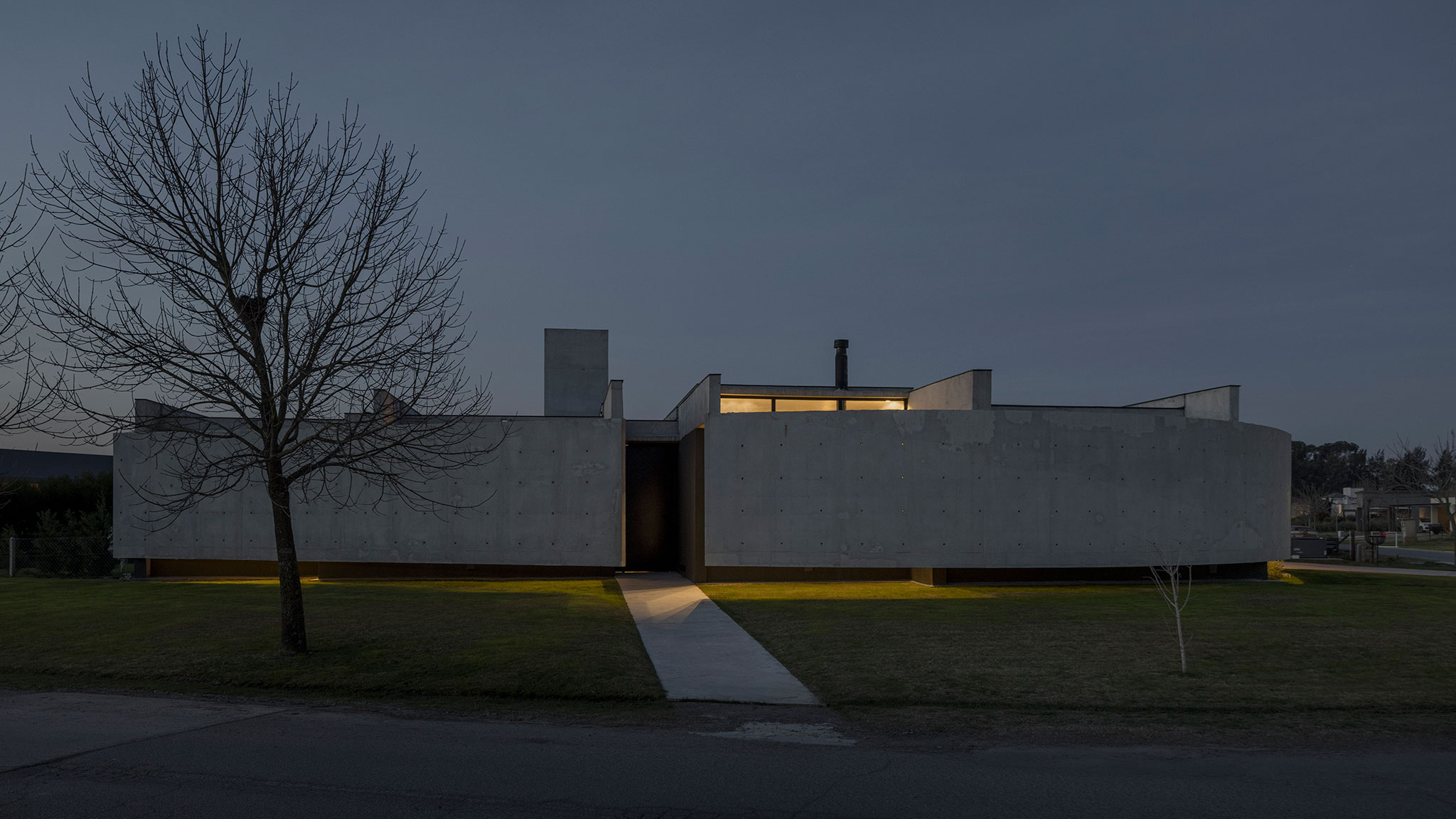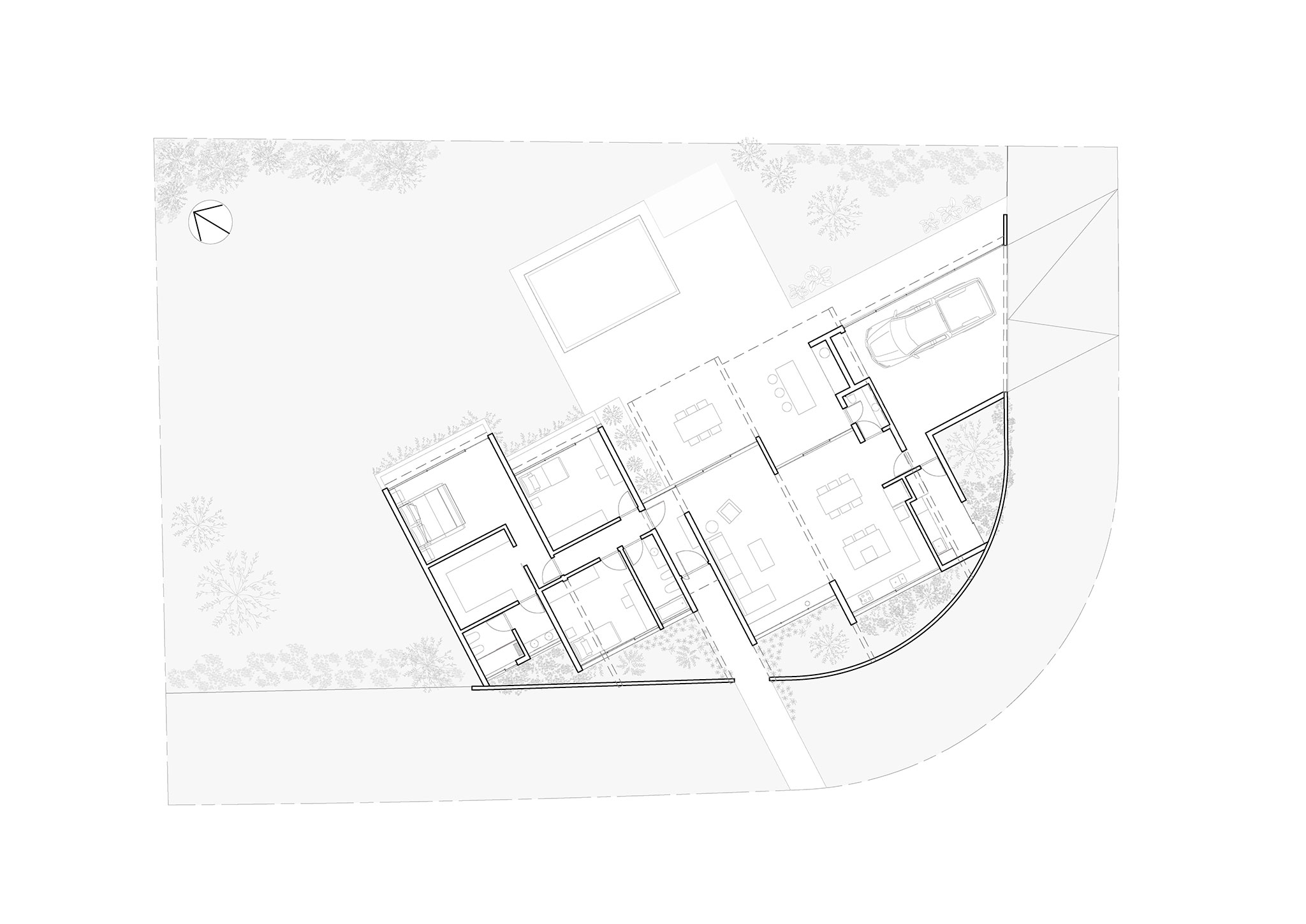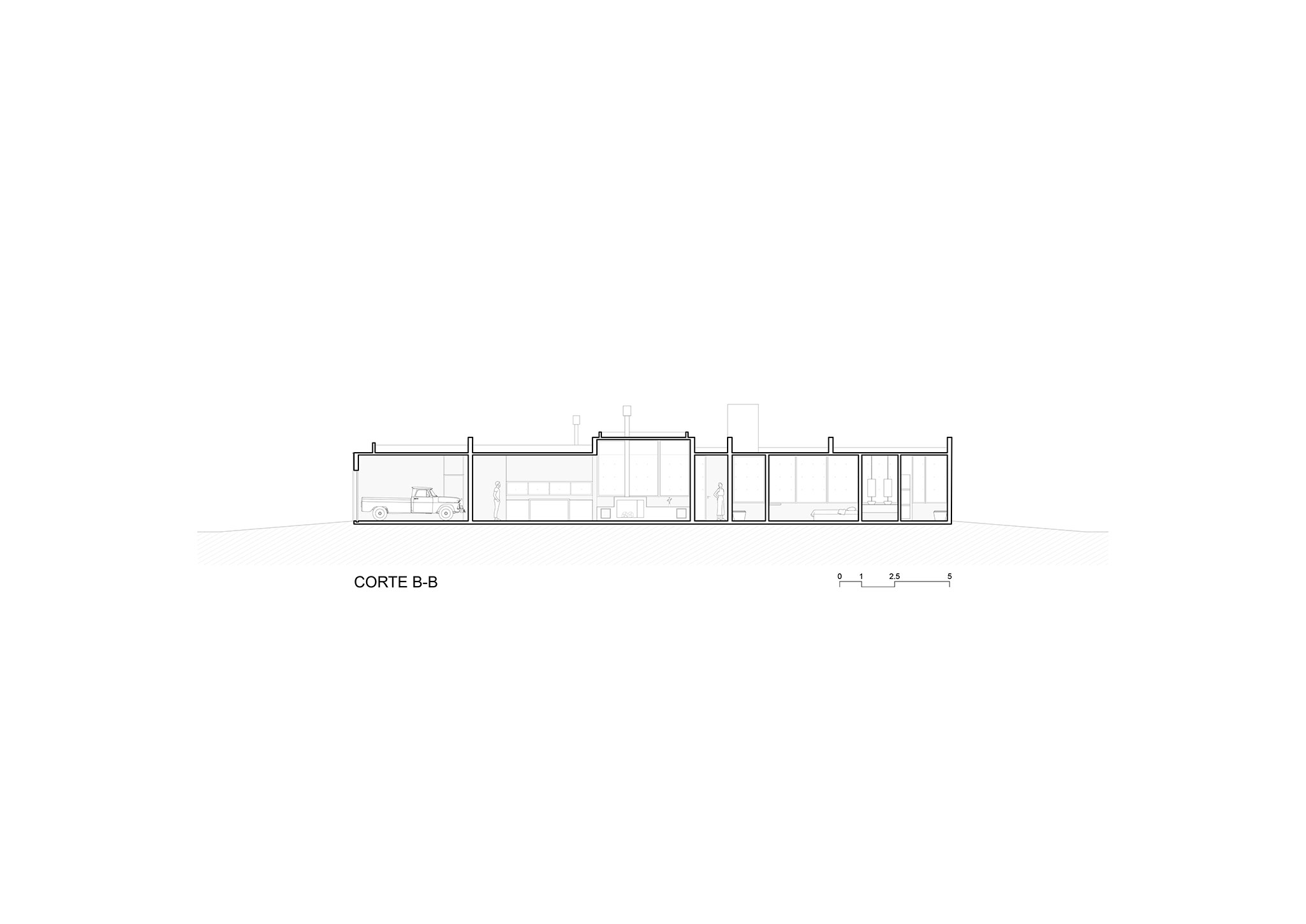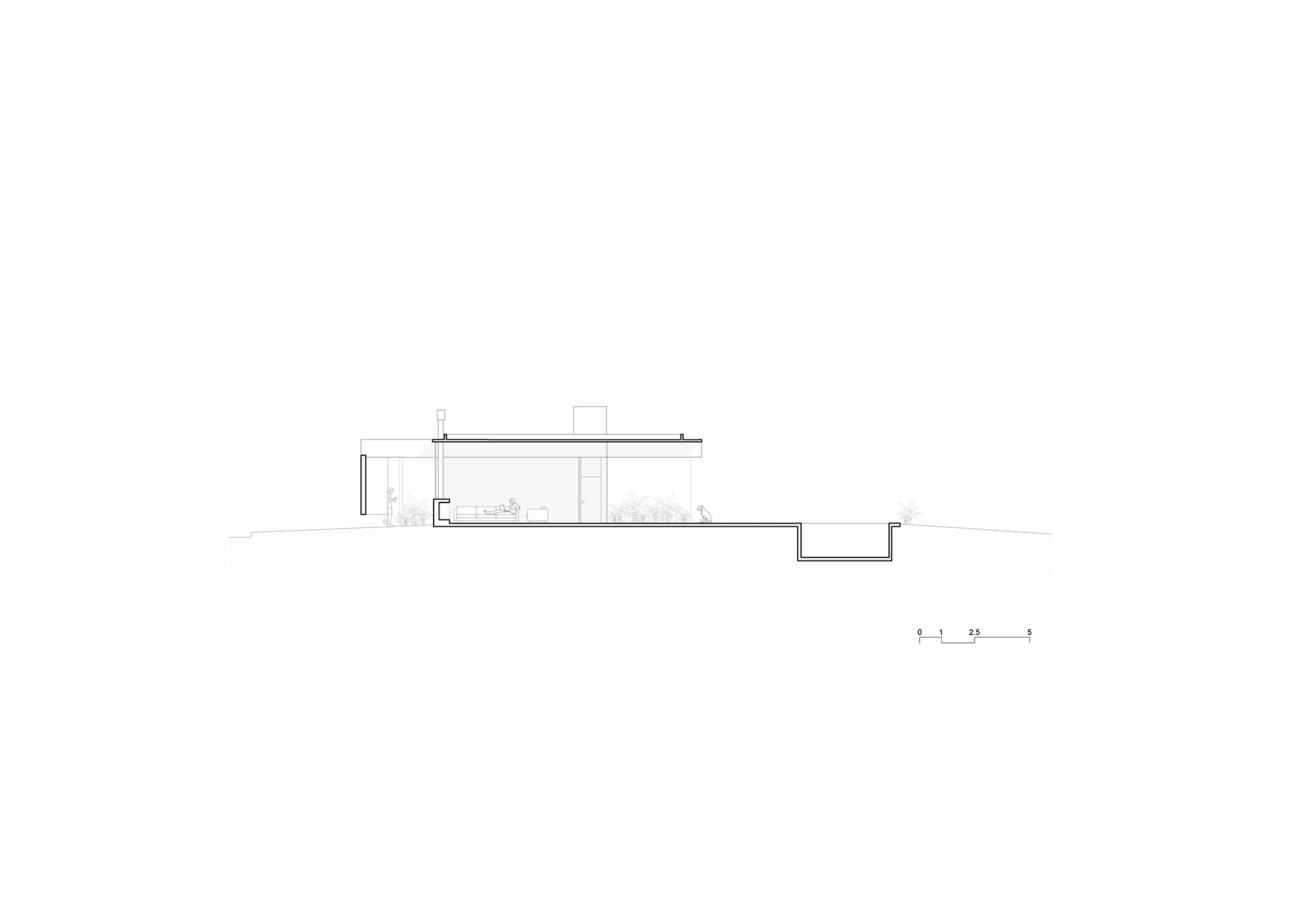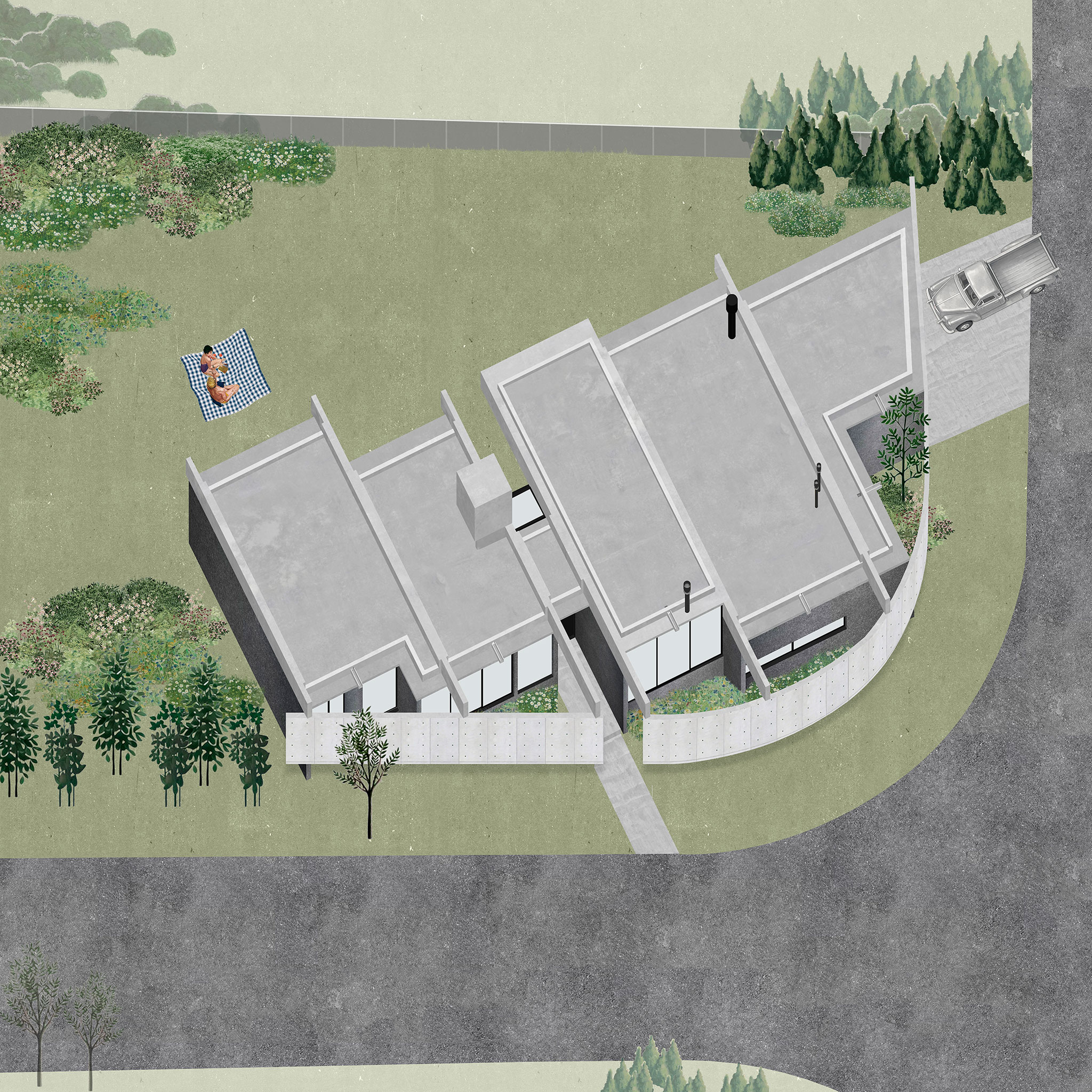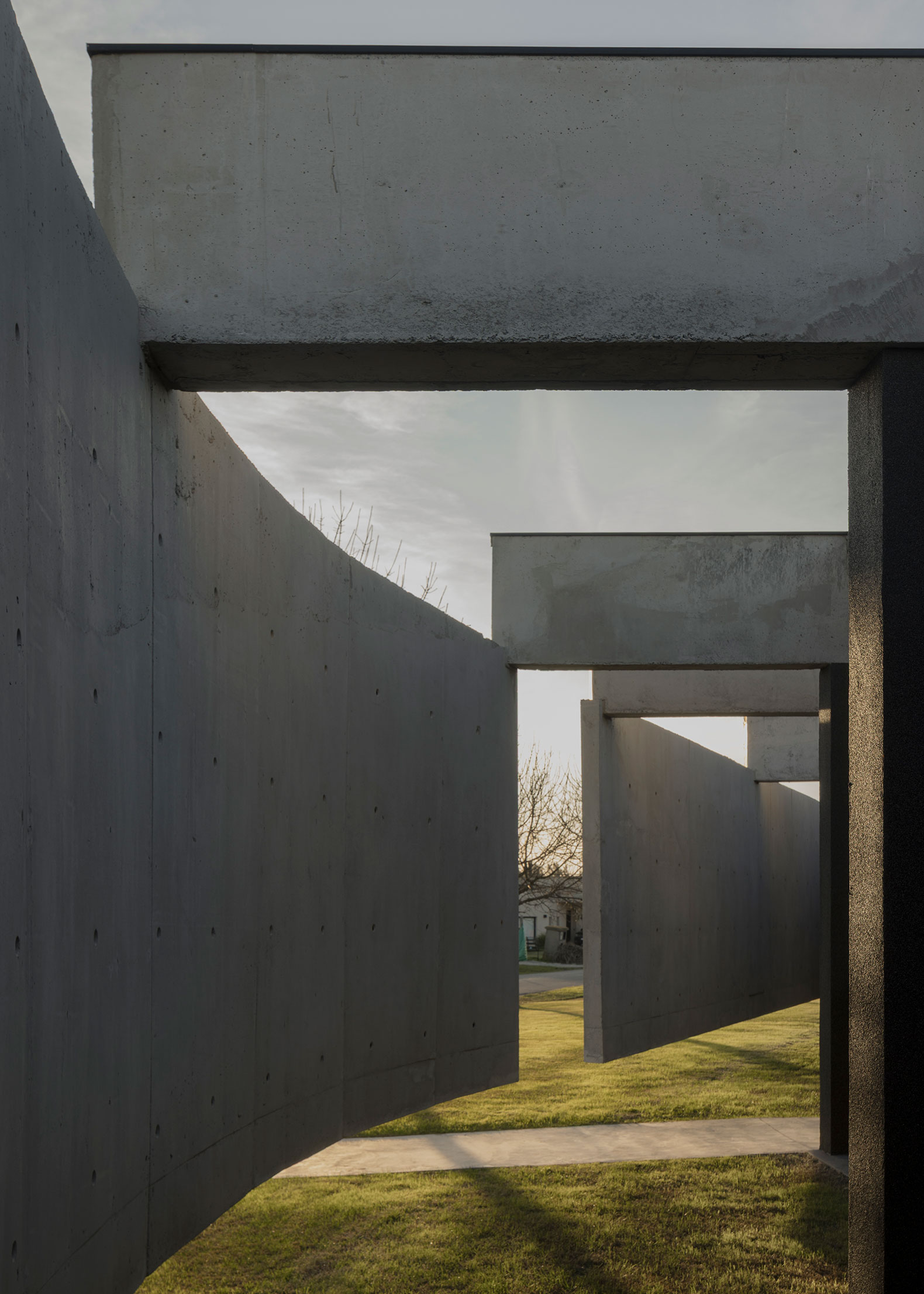
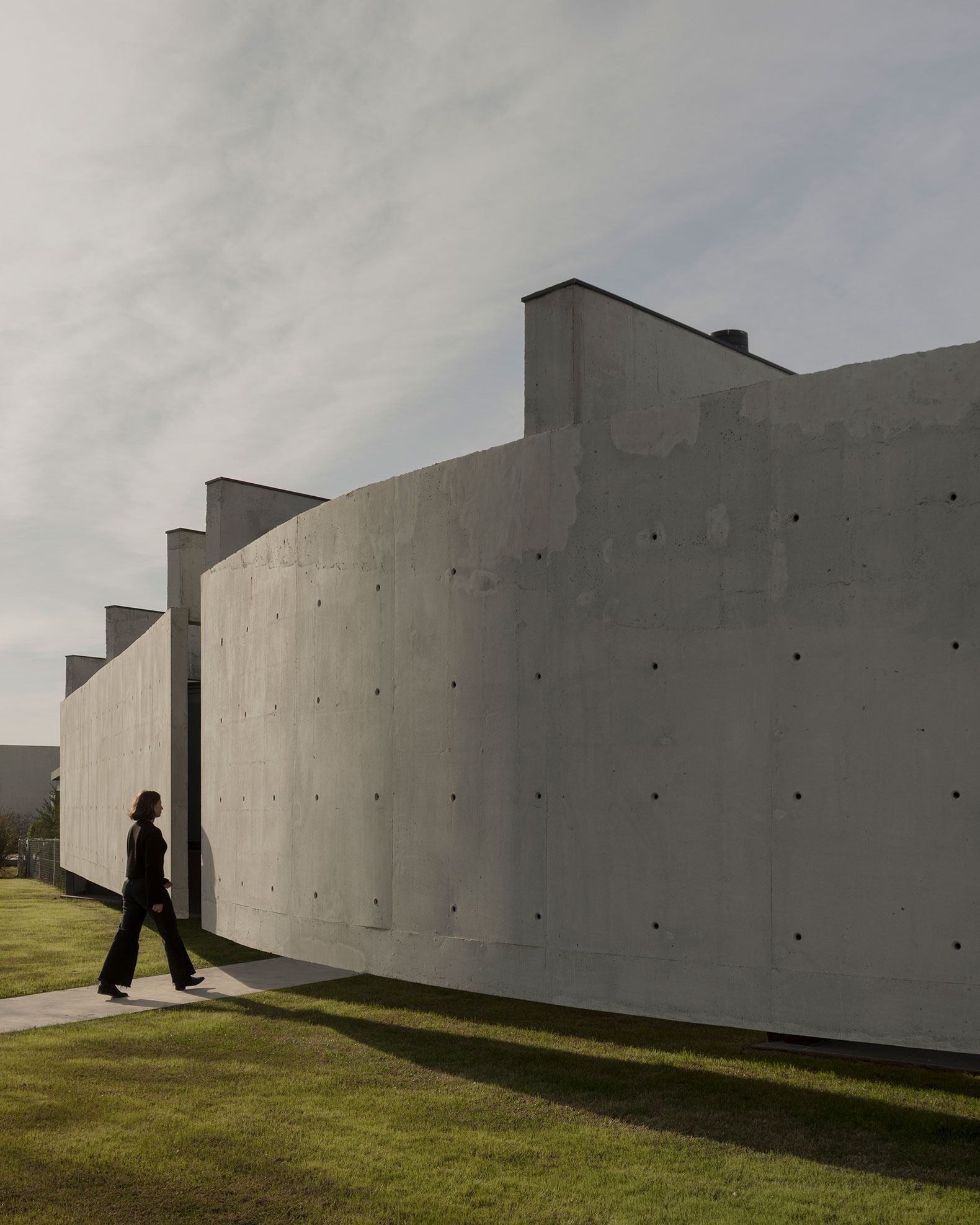
Organized on a single floor, the design by the practice ADEMÁS Arquitectura arranges the different living spaces around a central axis that distinguishes the public from the private areas. Making the most of the plot's layout, "Casa Alba II" opens onto a rear patio: a gallery provides shade during the summer months while establishing a dialogue between the interior and the landscape.
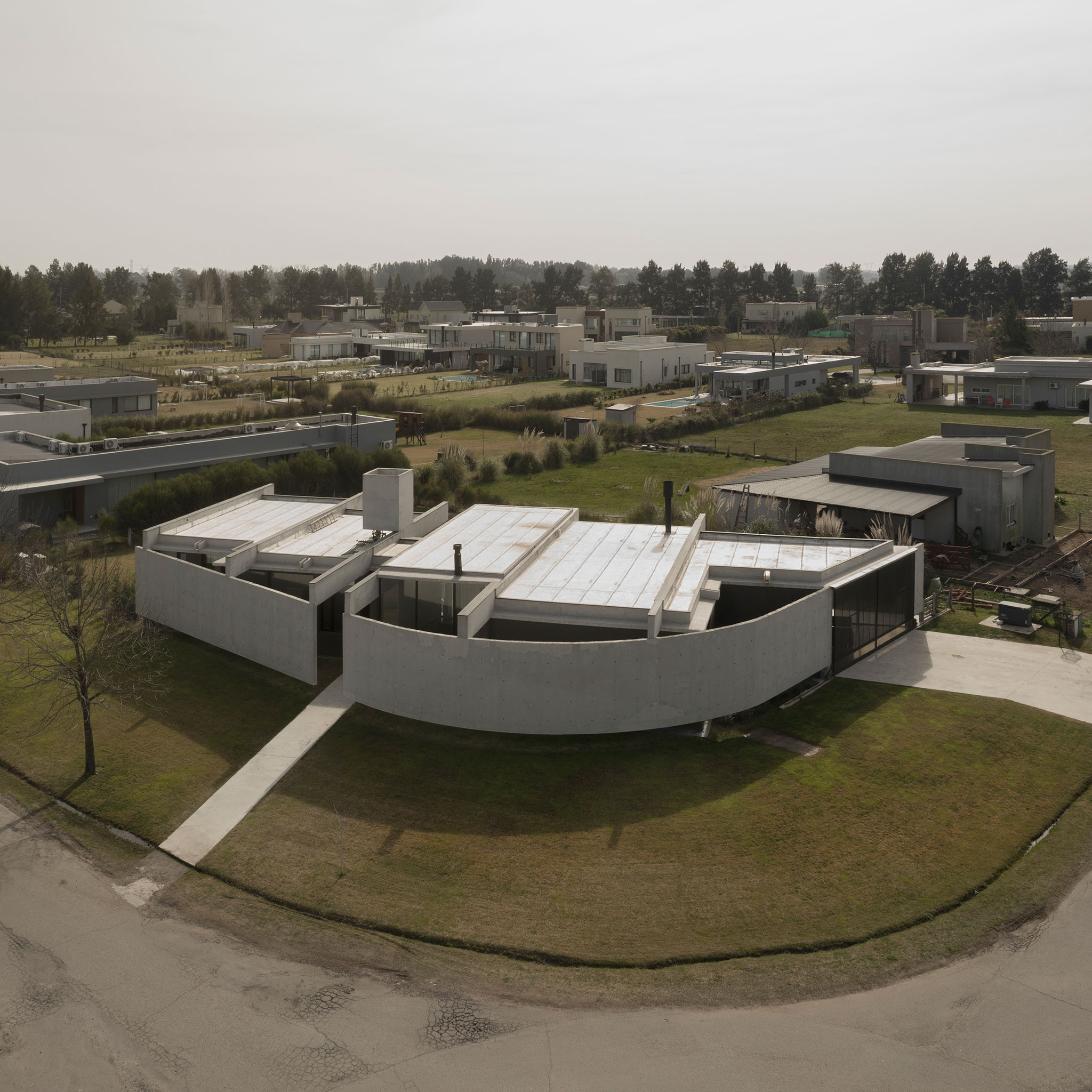
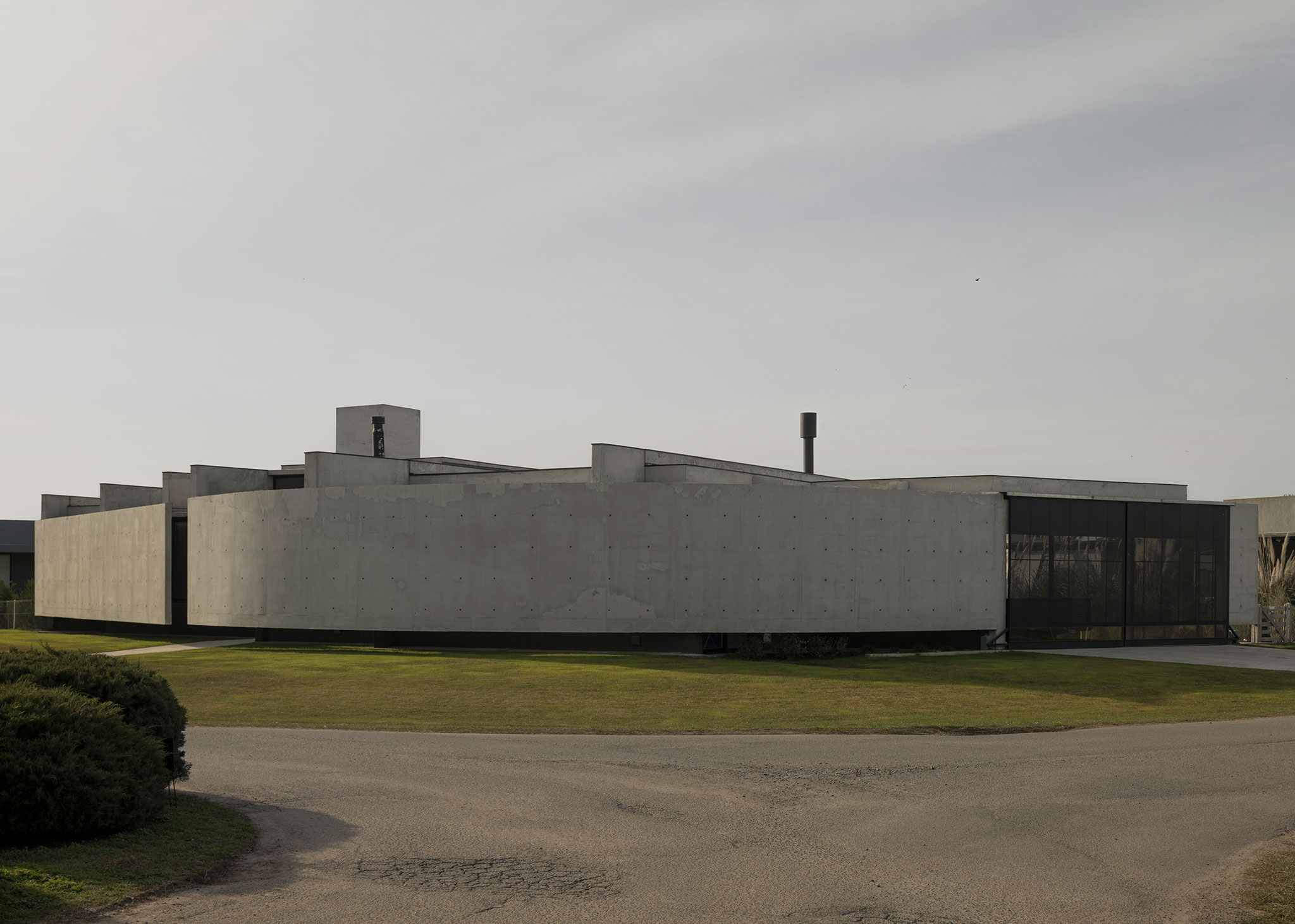
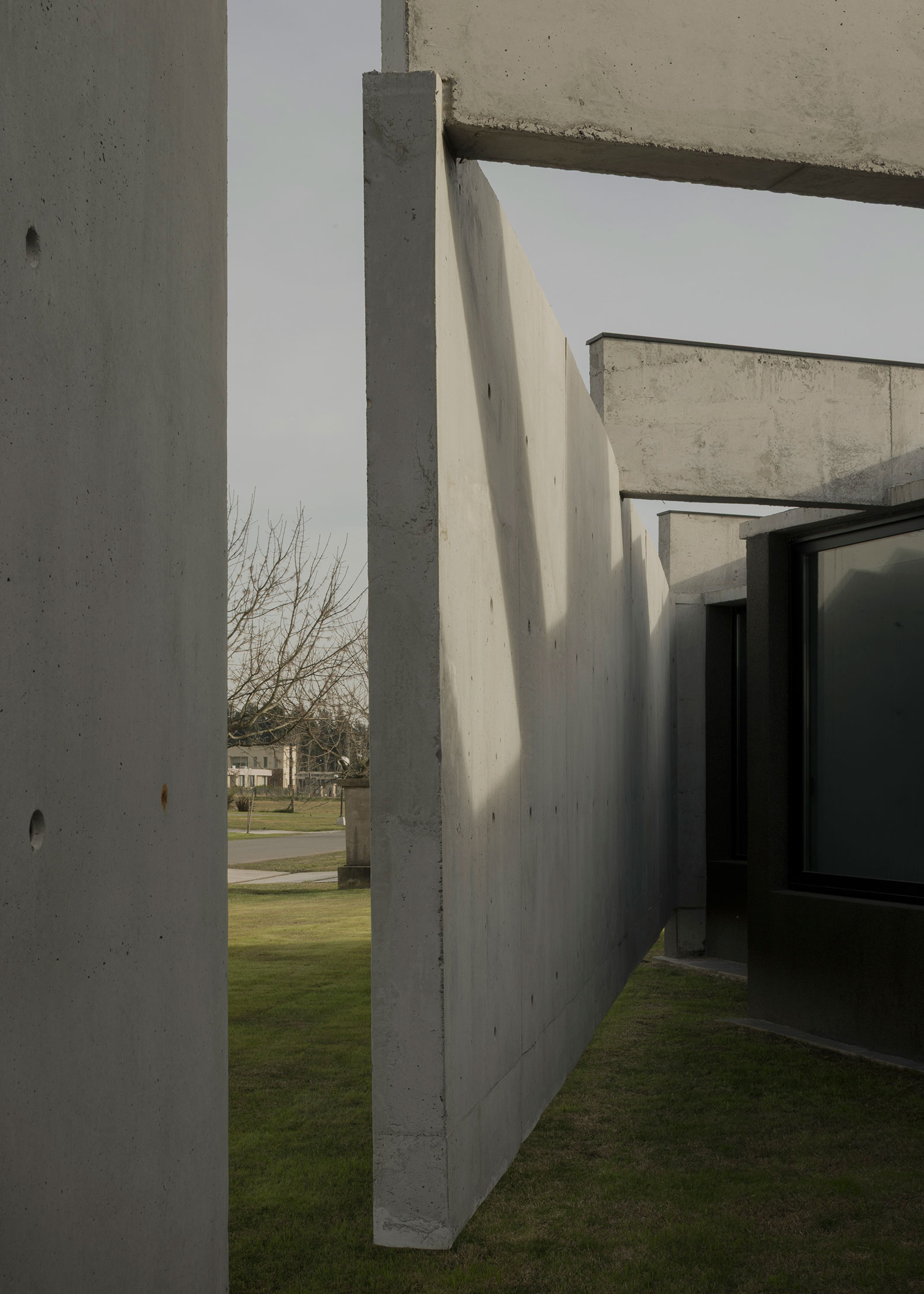
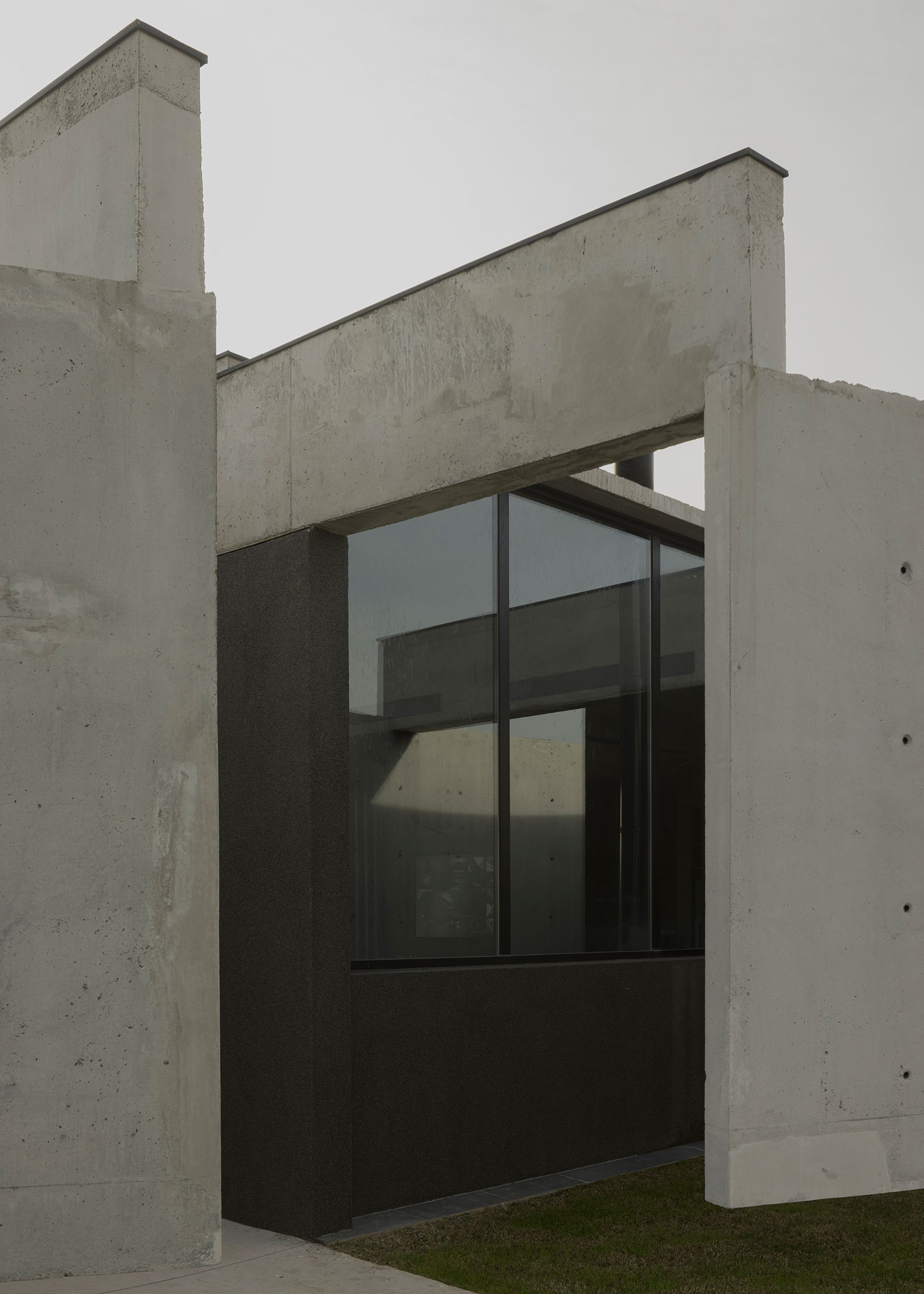
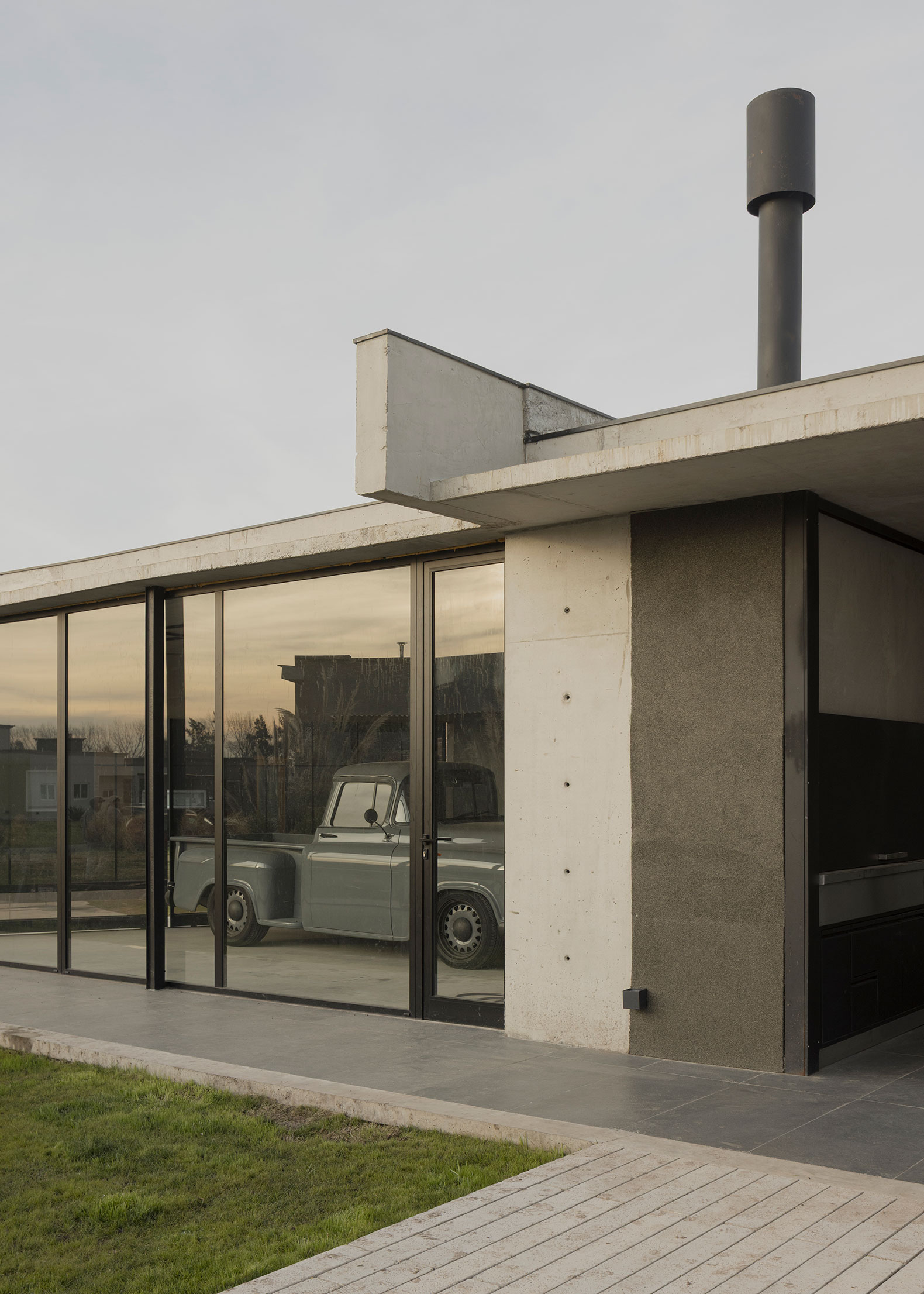
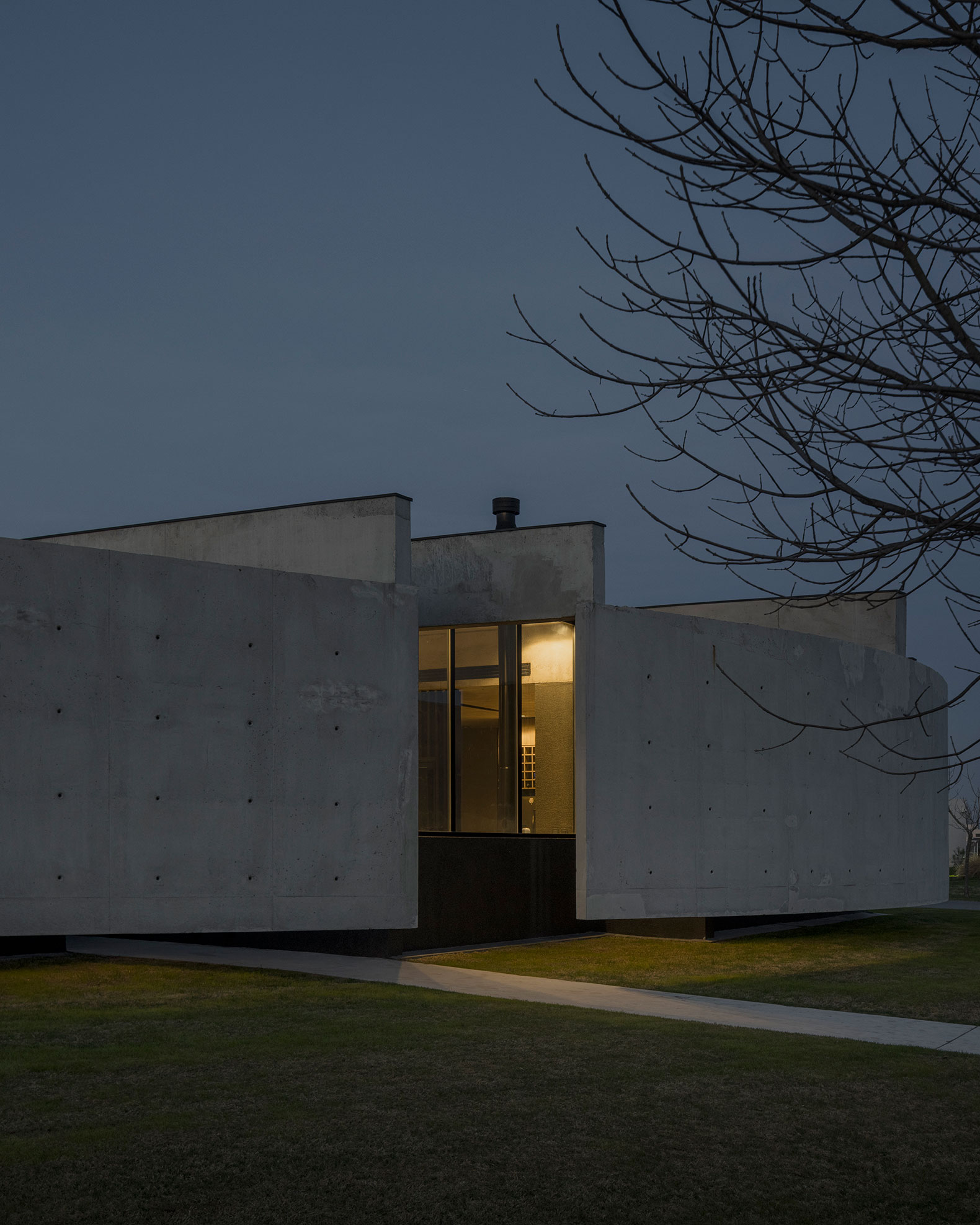
For its construction, the project employs a system of beams that structure the space, resulting in a clear and precise structural organization. The exposed concrete perimeter, along with the dark-finished furniture and flooring, unifies the design, creating a floating volume that appears both abrupt and ethereal.
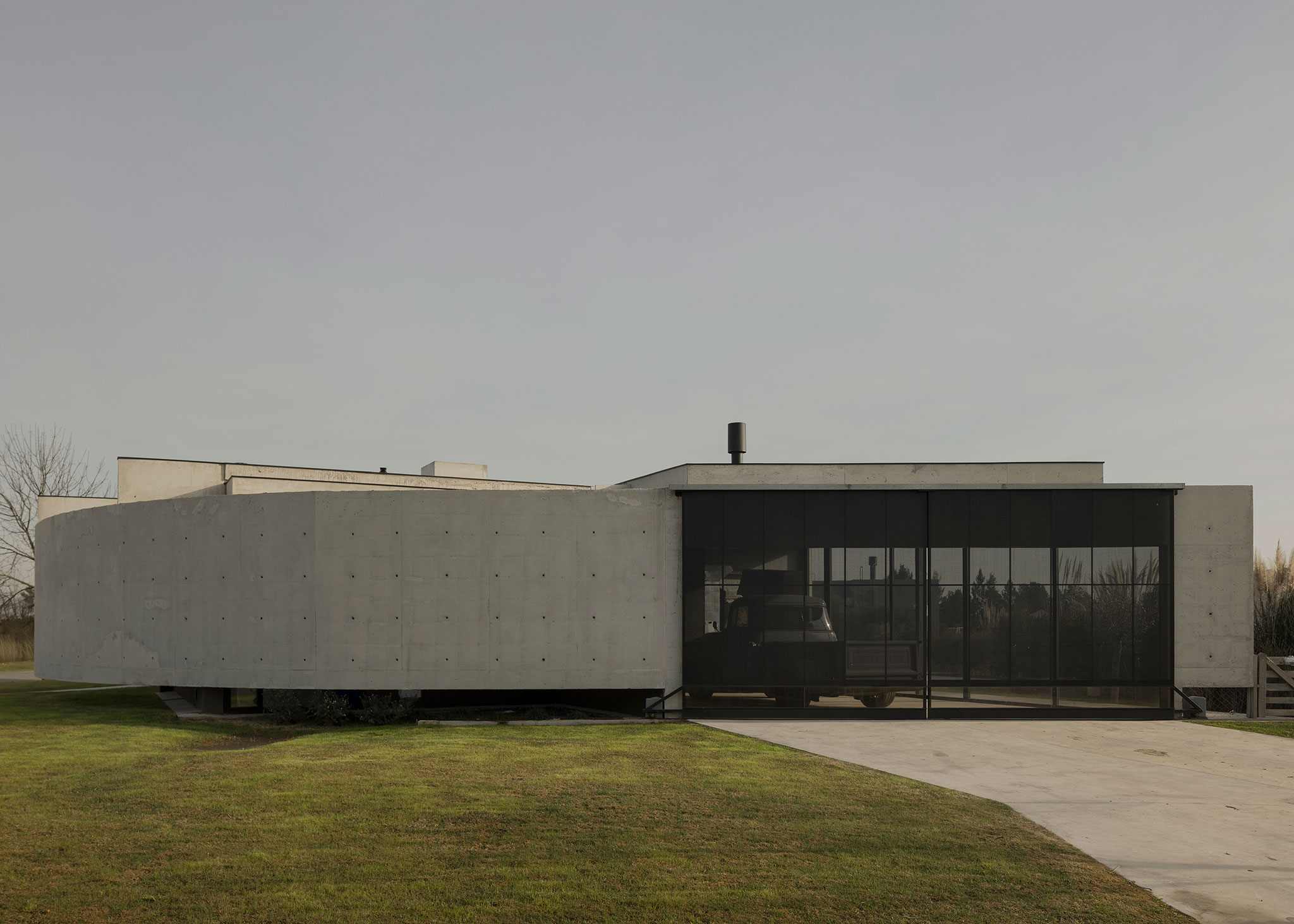
Alba II by ADEMÁS Arquitectura. Photograph by Federico Cairoli.
Project description by ADEMÁS Arquitectura
"The walls are there to grant privacy, to conceal the inhabitants, to allow a profoundly free life to unfold within the house, outside of all morality or tradition, outside of all social or police surveillance—outside, ultimately, of that unbearable visibility that Calvinist morality imposed on its modern counterparts and its positivist architecture."
Iñaki Abalos, "The Good Life," "The House of Zarathustra."
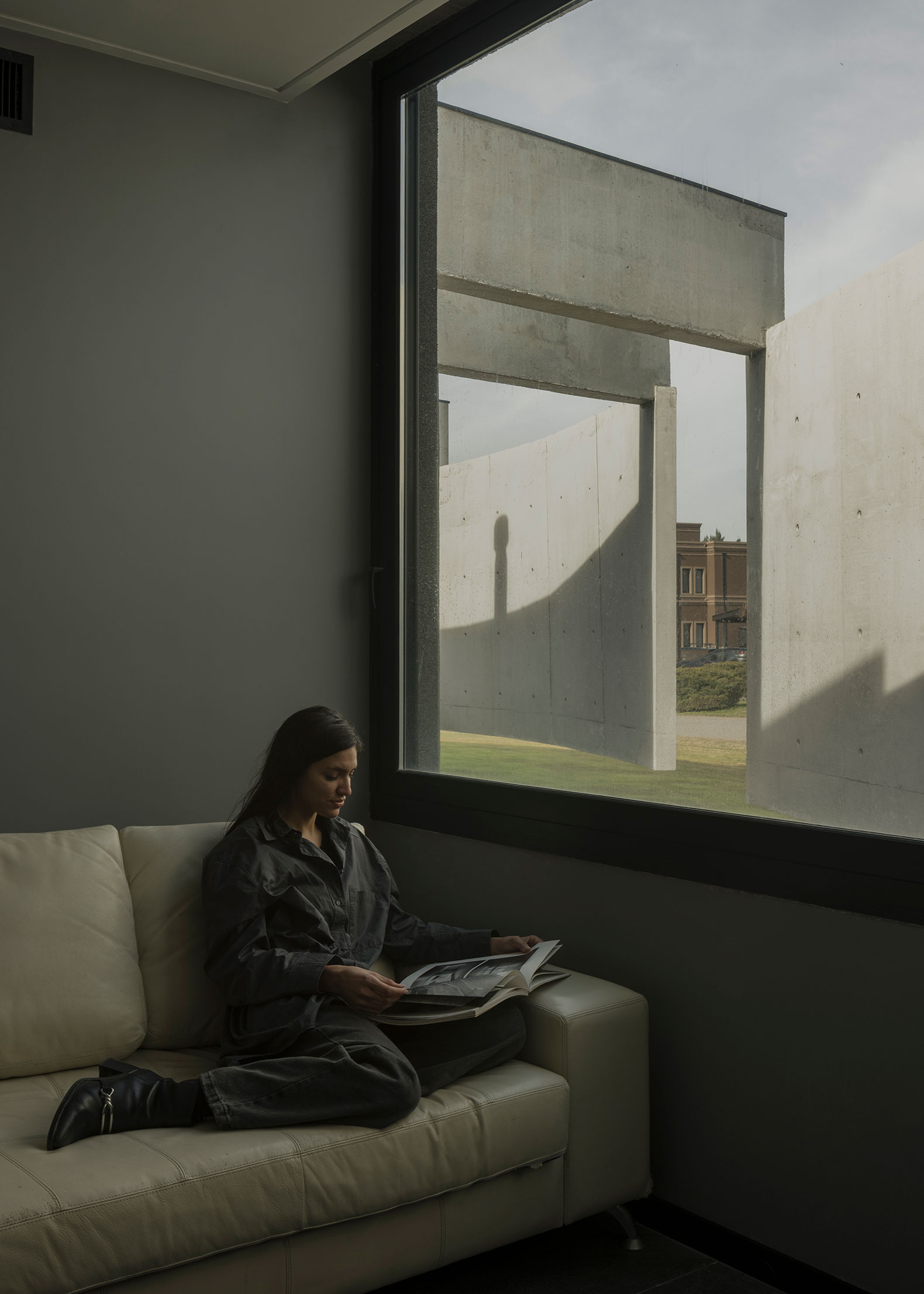
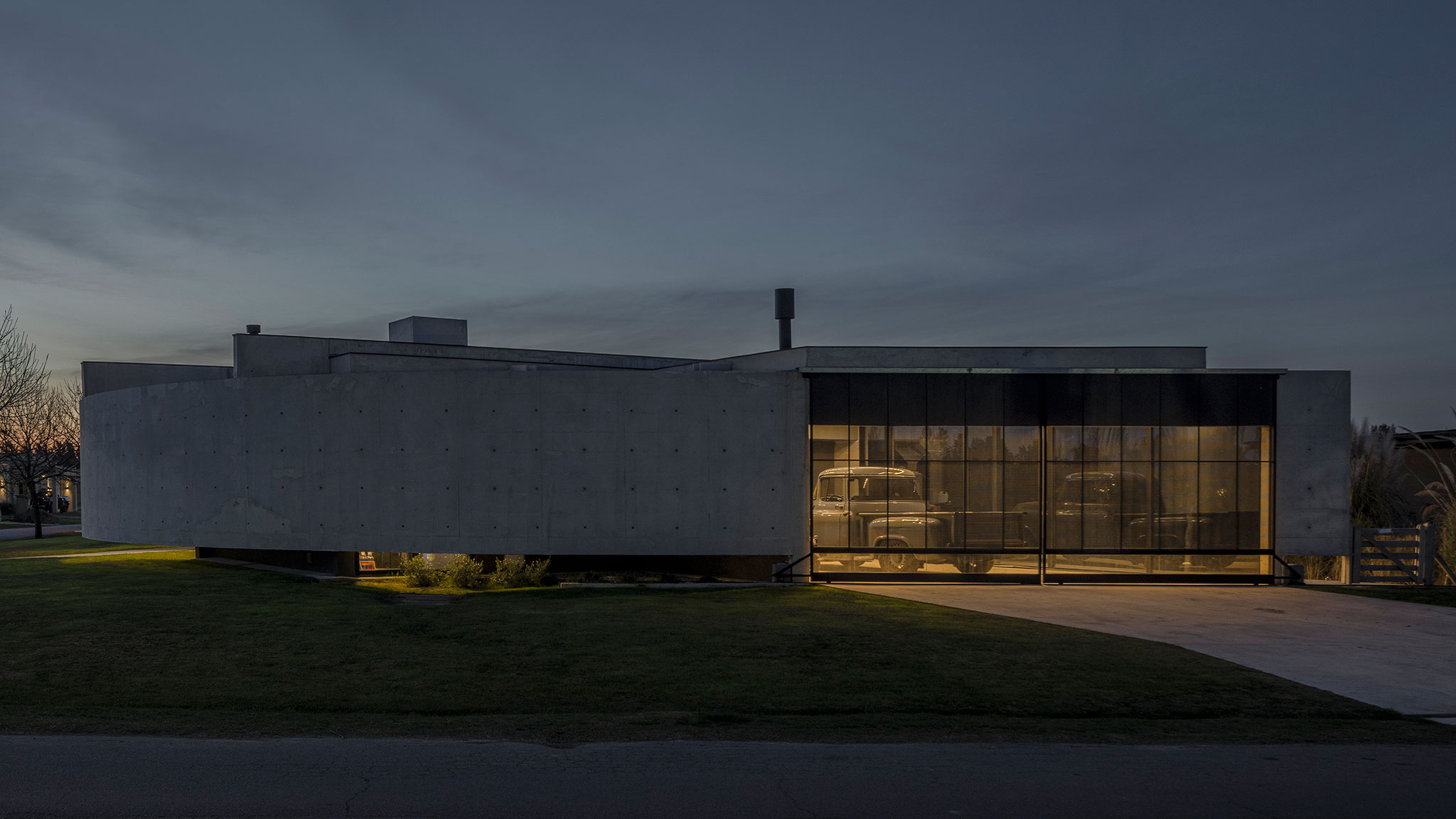
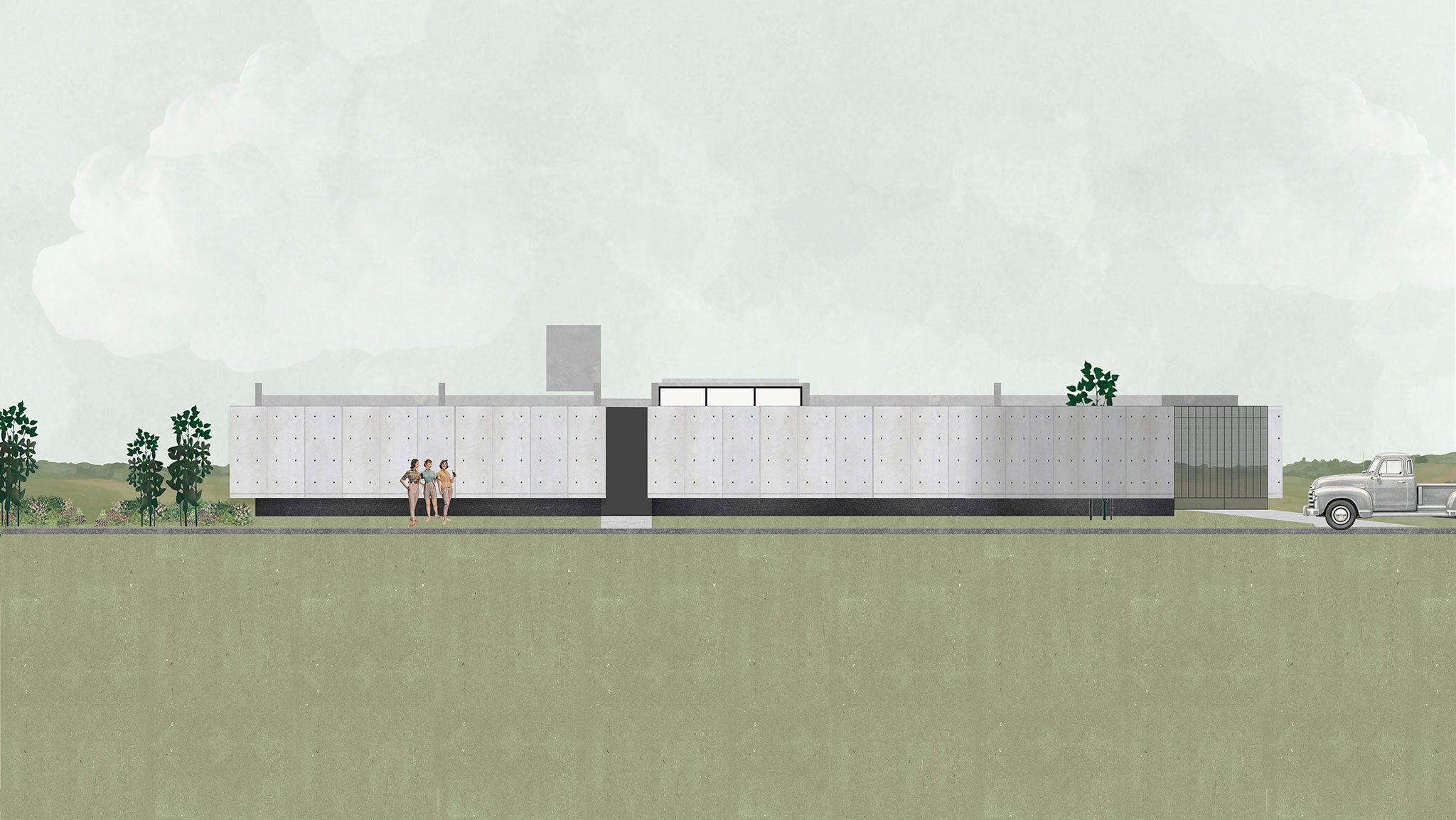
Casa Alba II explores the wall as an architectural device that constructs privacy while defining the relationship between domestic life and the city. Drawing on a long-standing interest in the work of Luis Barragán, the house adopts an inward-looking approach, turning away from its surroundings to create a controlled and introspective interior environment.
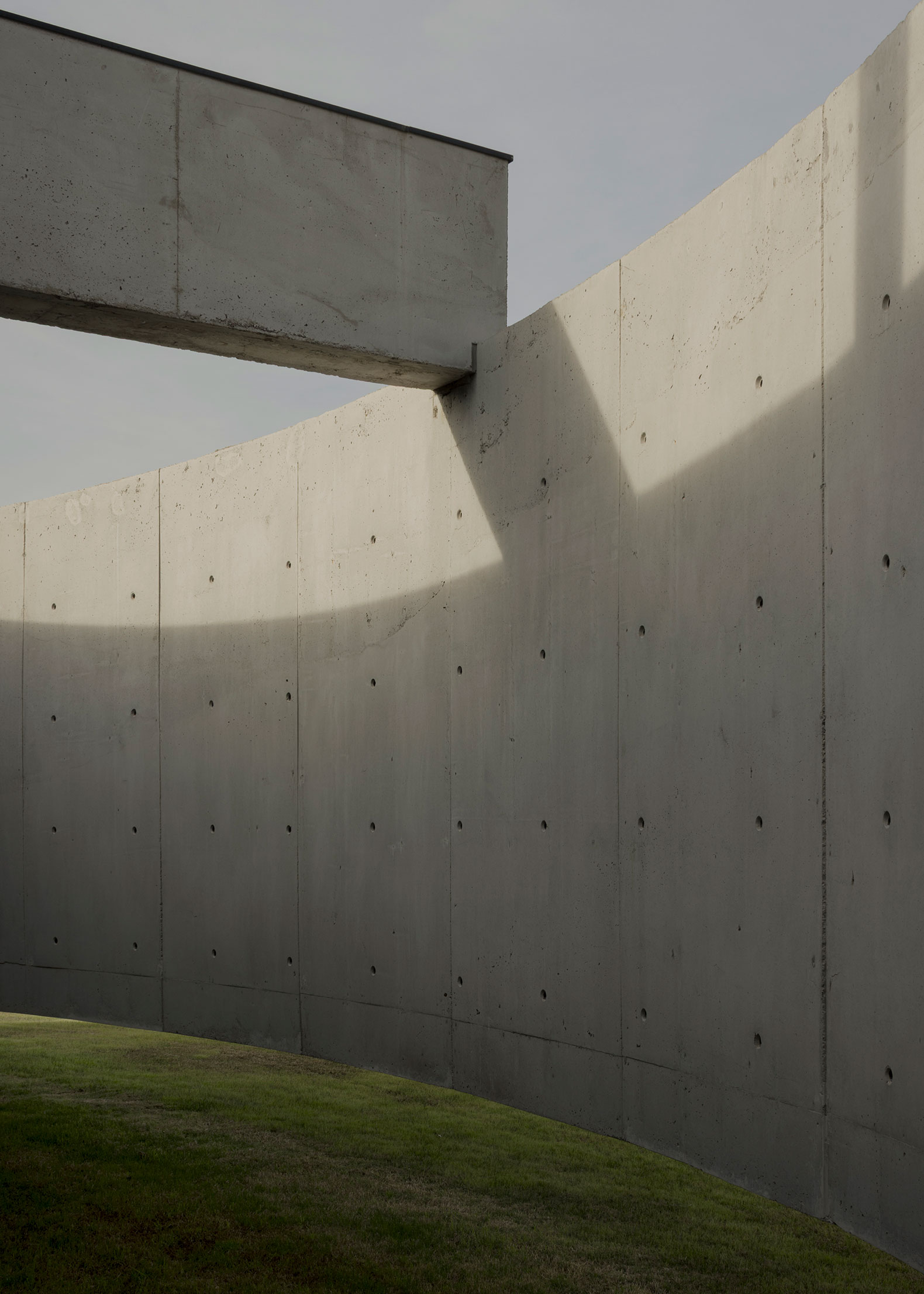
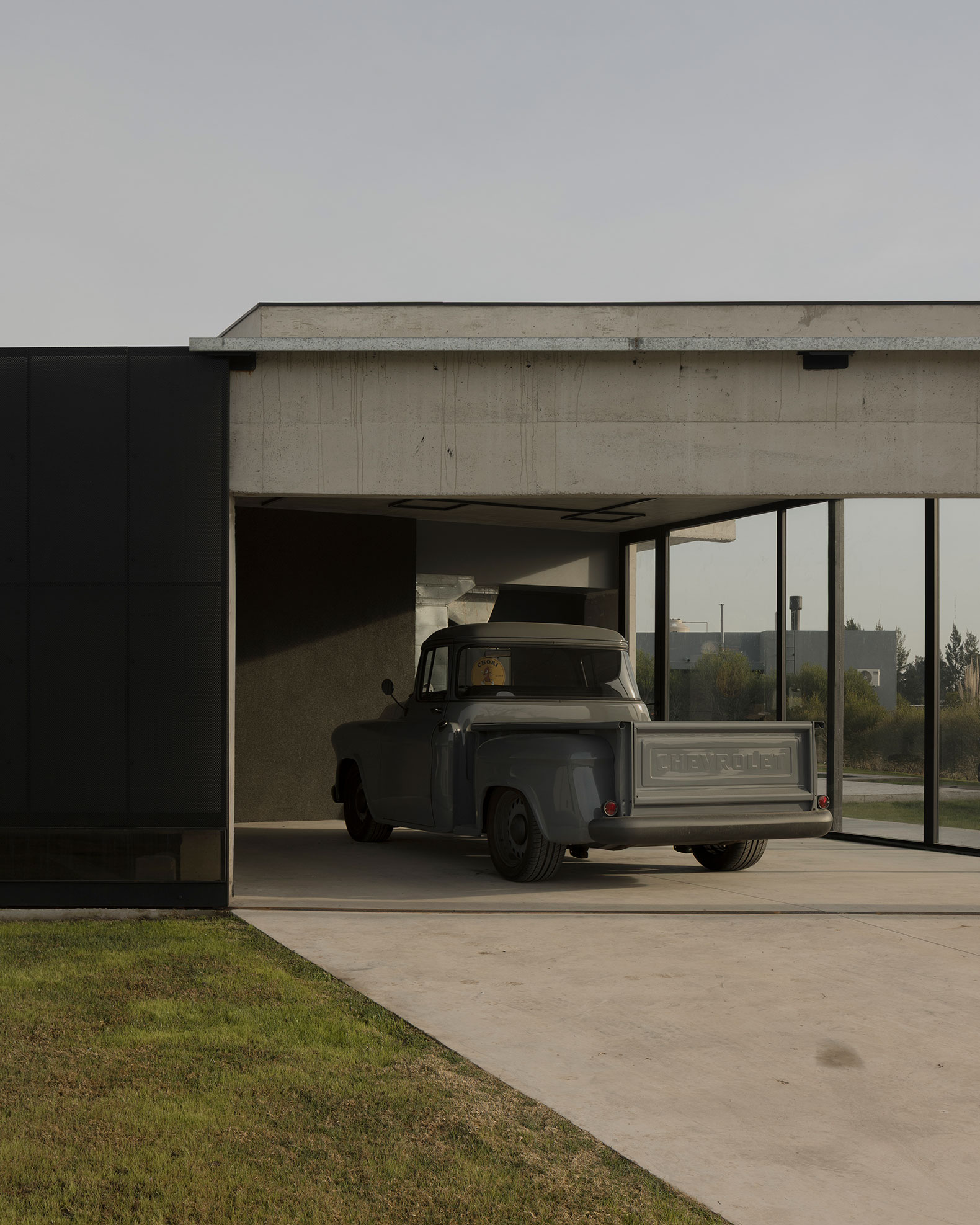
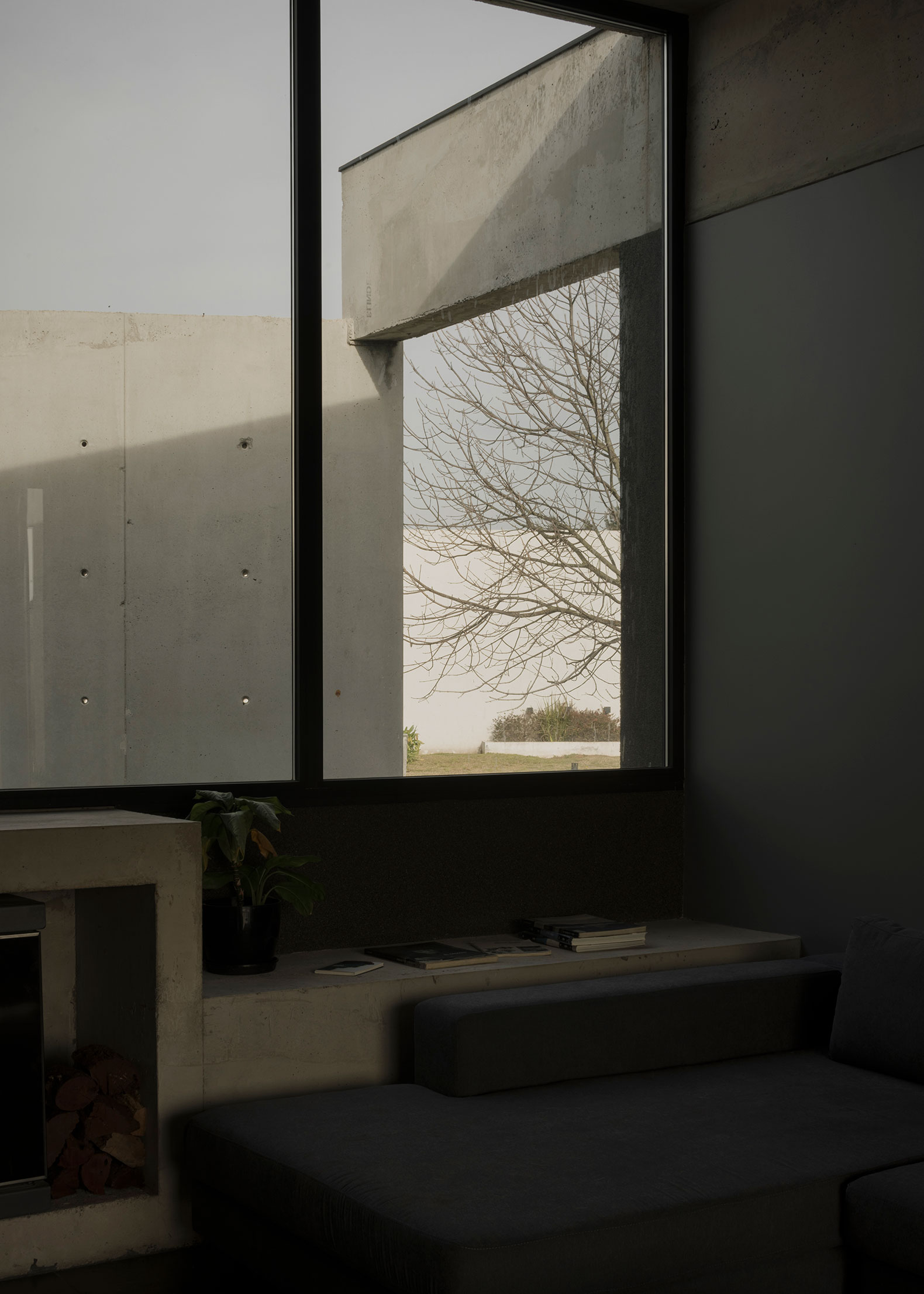
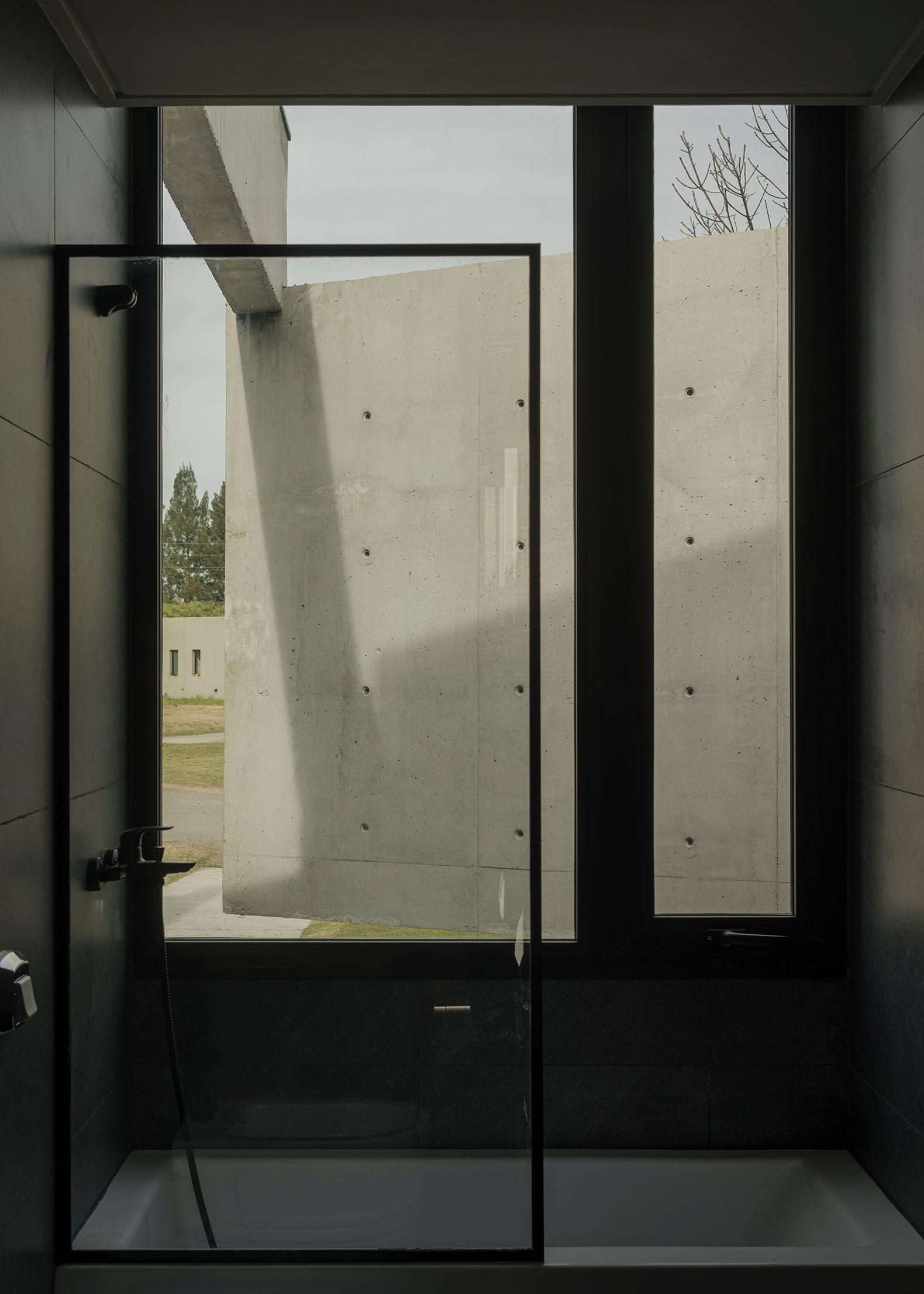
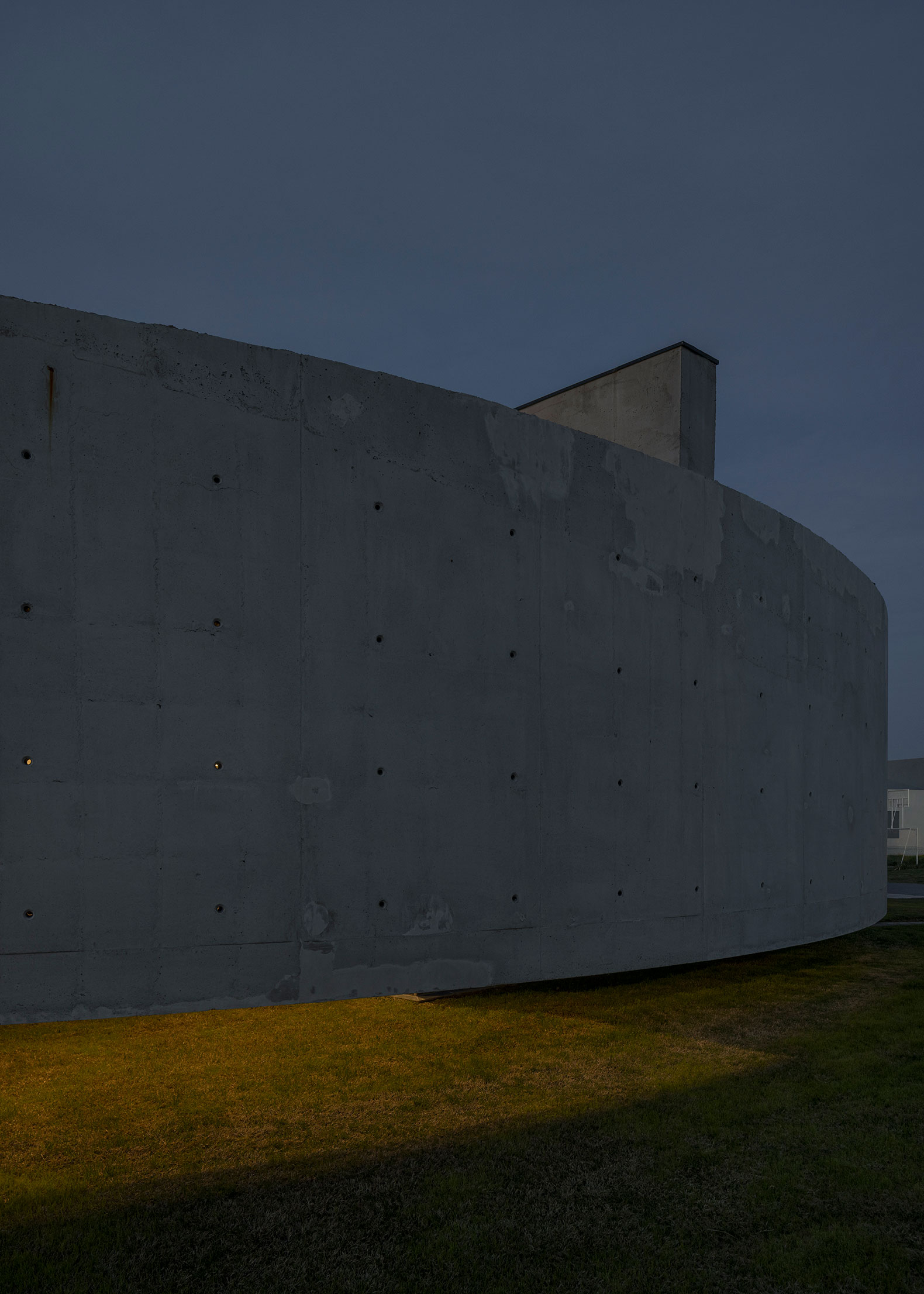
A continuous wall defines and encloses the house, establishing both privacy and a restrained presence within its context. Slightly lifted from the ground, it reads as a floating, precise volume—at once abrupt and ethereal. Its curved geometry follows the edge of a corner plot, and as the southern boundary, it allows indirect natural light to enter the interior by reflection.
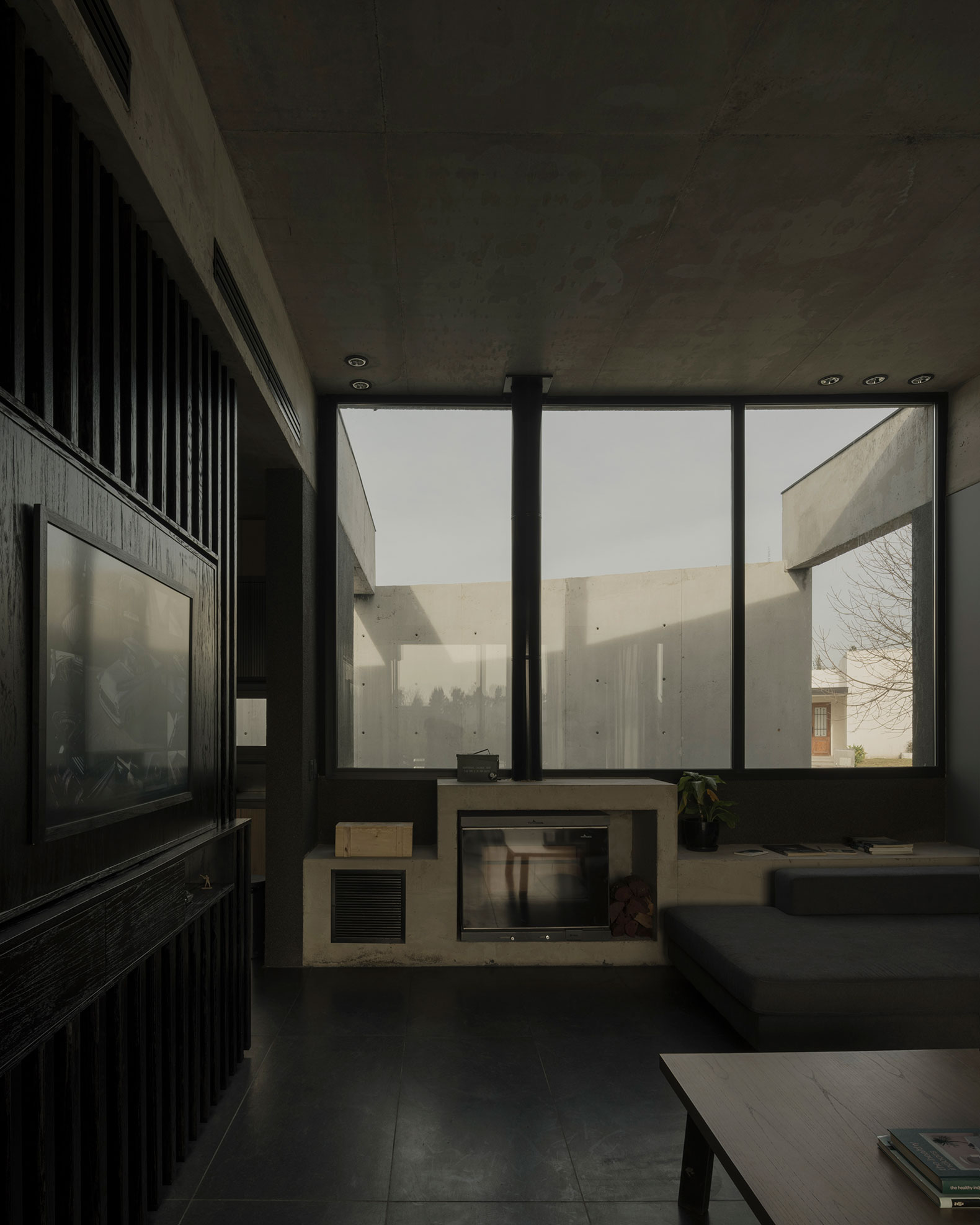
The house opens towards the inner block courtyard and optimal solar orientation. The entire program is arranged on a single level, organized along a central axis that separates public and private areas. Living, dining, and kitchen spaces are conceived as a continuous environment. To the north, a gallery mediates between the interior and the landscape, providing shade during the summer months. To the south, the wall gives way to a contemplative patio that also enables cross ventilation.
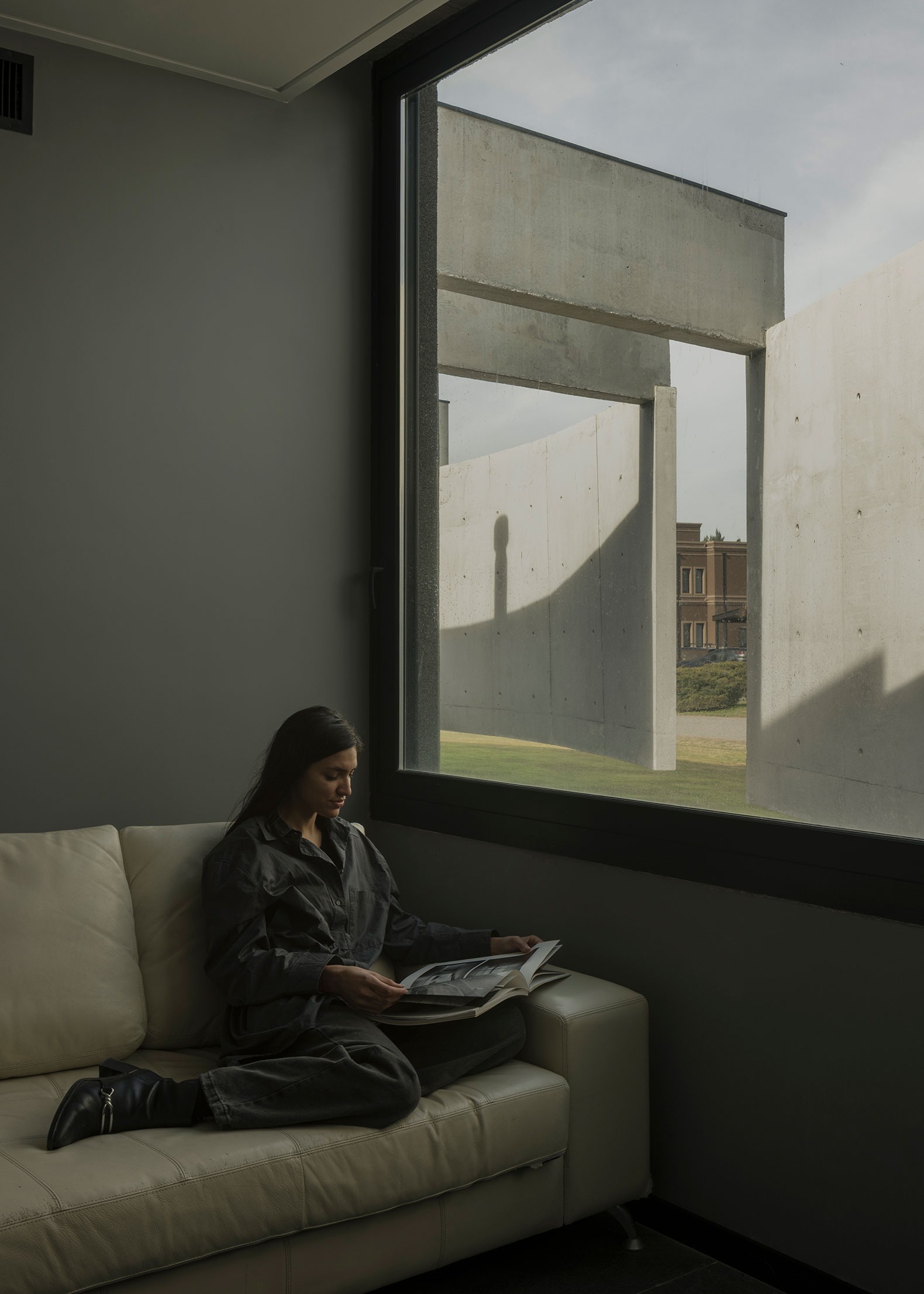
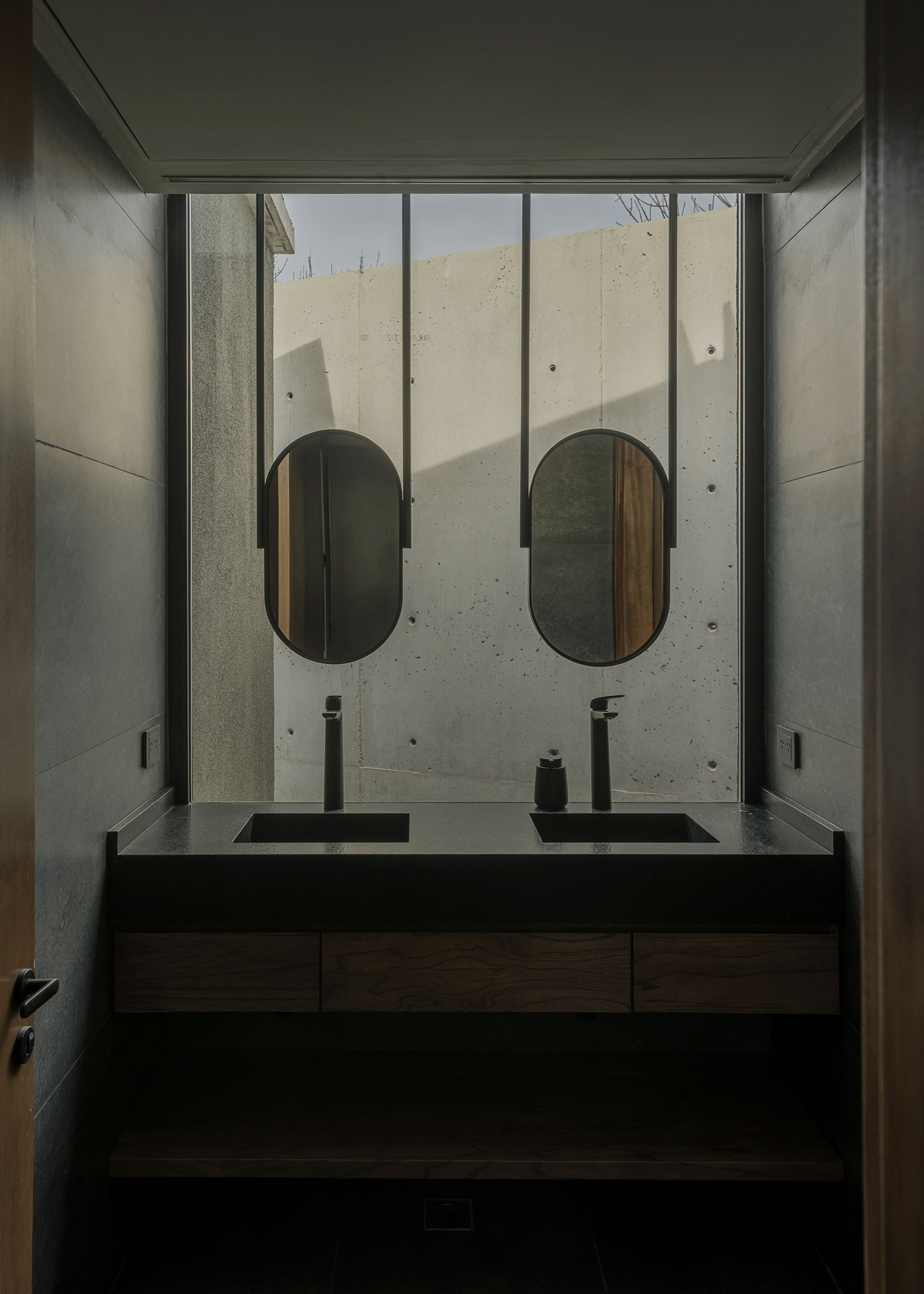
Built almost entirely in exposed concrete, the house embraces material and technical simplicity. A system of beams structures the space, establishing a clear north–south rhythm that organizes the plan, while the enclosing wall unifies it. Dark flooring and furniture accentuate the presence of concrete, highlighting the interplay between material, light, and landscape.