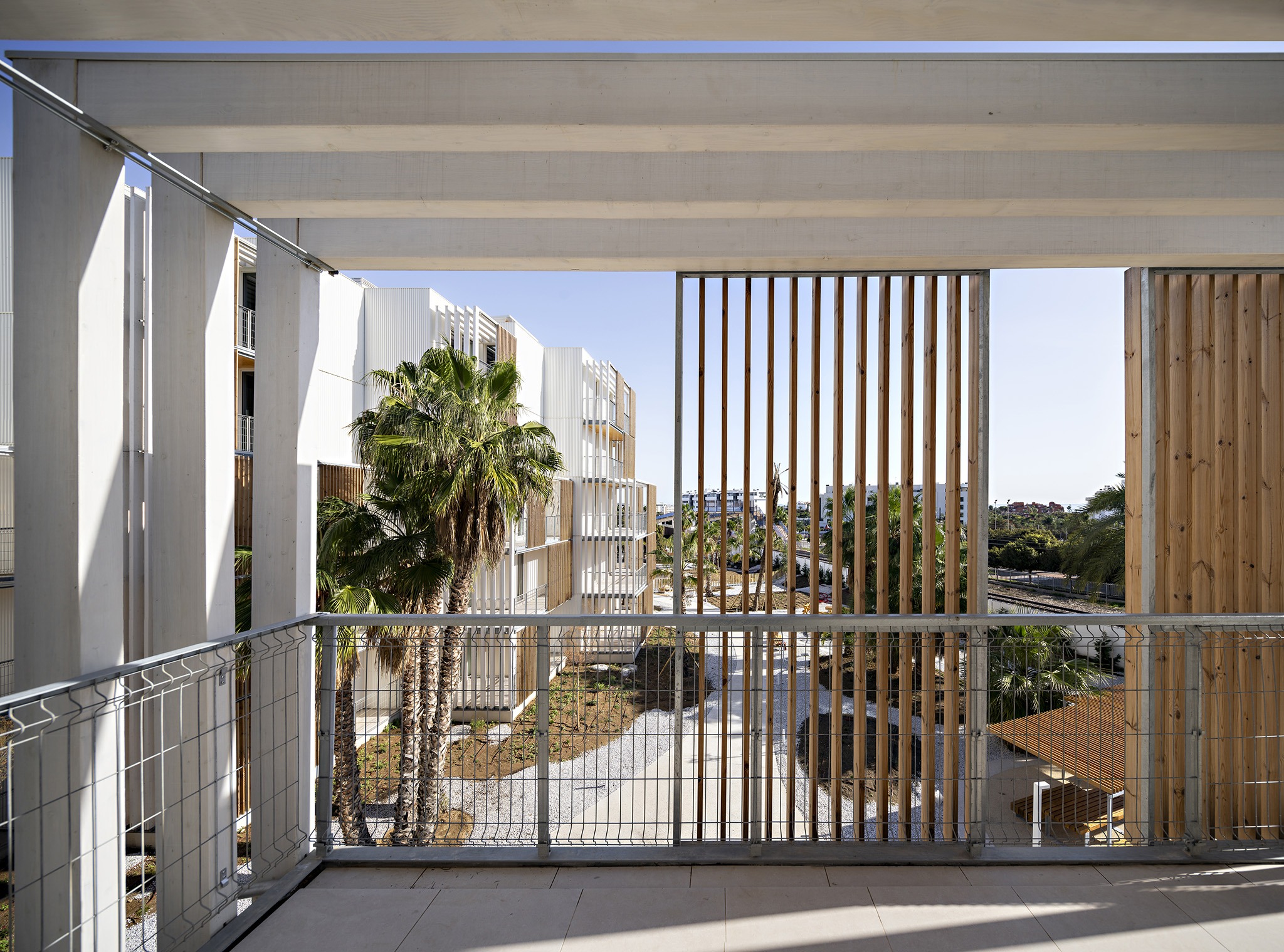
“Oceanika” is a residential building with 180 apartments and communal spaces, developed by baKpak in collaboration with EOVASTUDIO in the coastal town of Torremolinos, Málaga, Spain. The project is located on a plot in a fragmented urban environment and originated from a competition initiated by a private developer.

The site, the program, the construction system, and the execution timeline all depart from conventional processes: from its inception, the proposal was conceived as a fully modular and industrialized construction. Adding to this challenge was the need to construct over 15,000 m² in just 15 months, guaranteeing near-zero energy consumption and a minimal carbon footprint for a project of this scale.

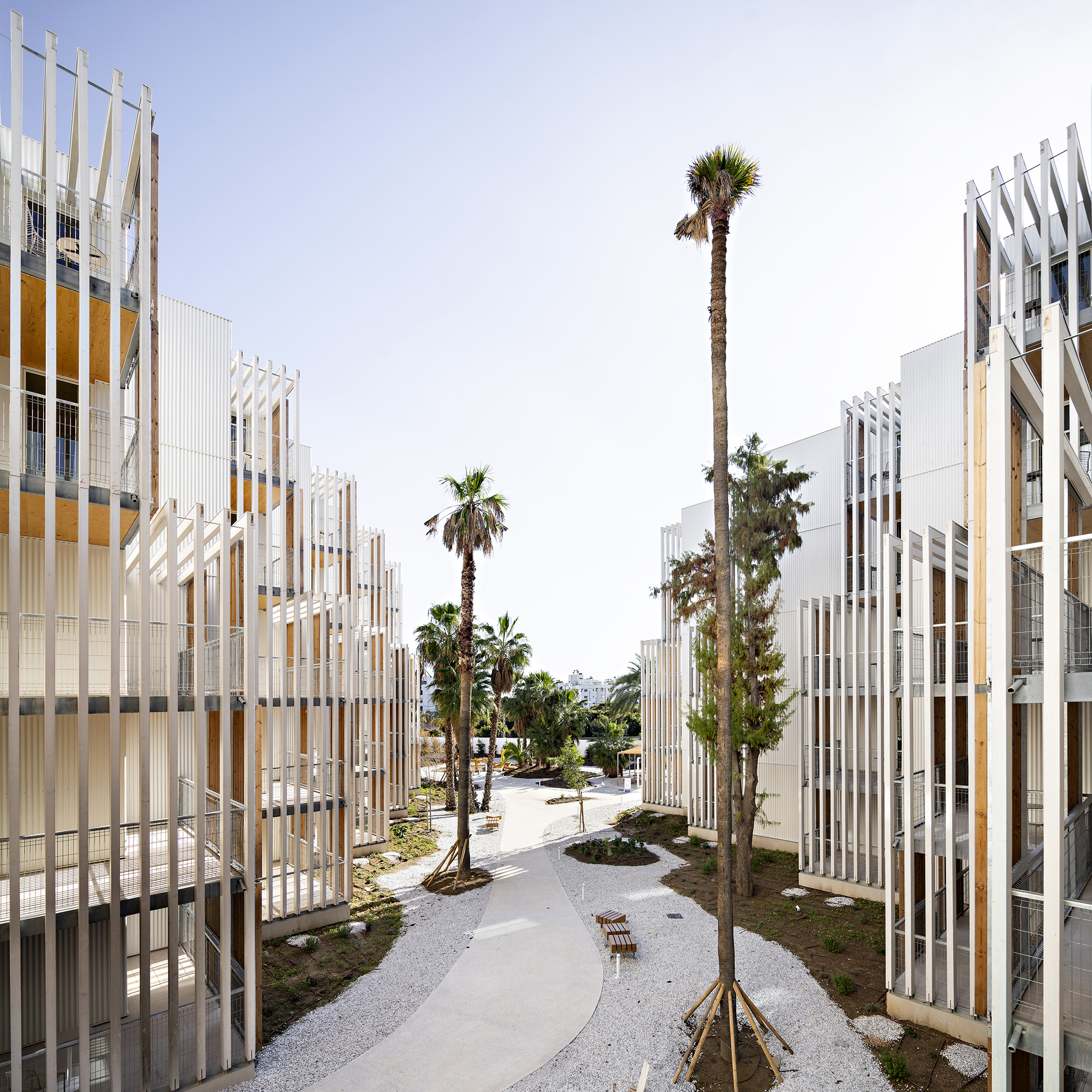
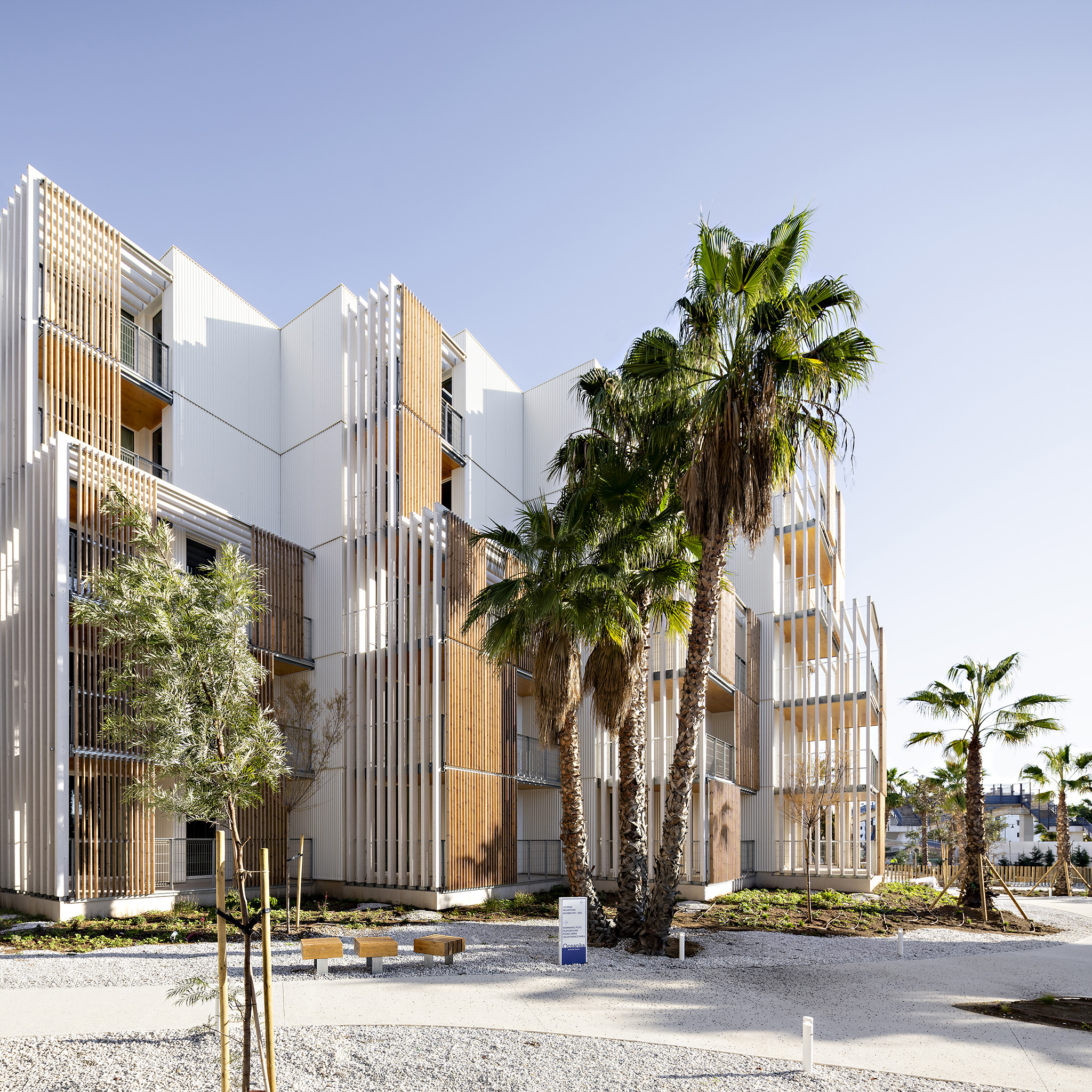
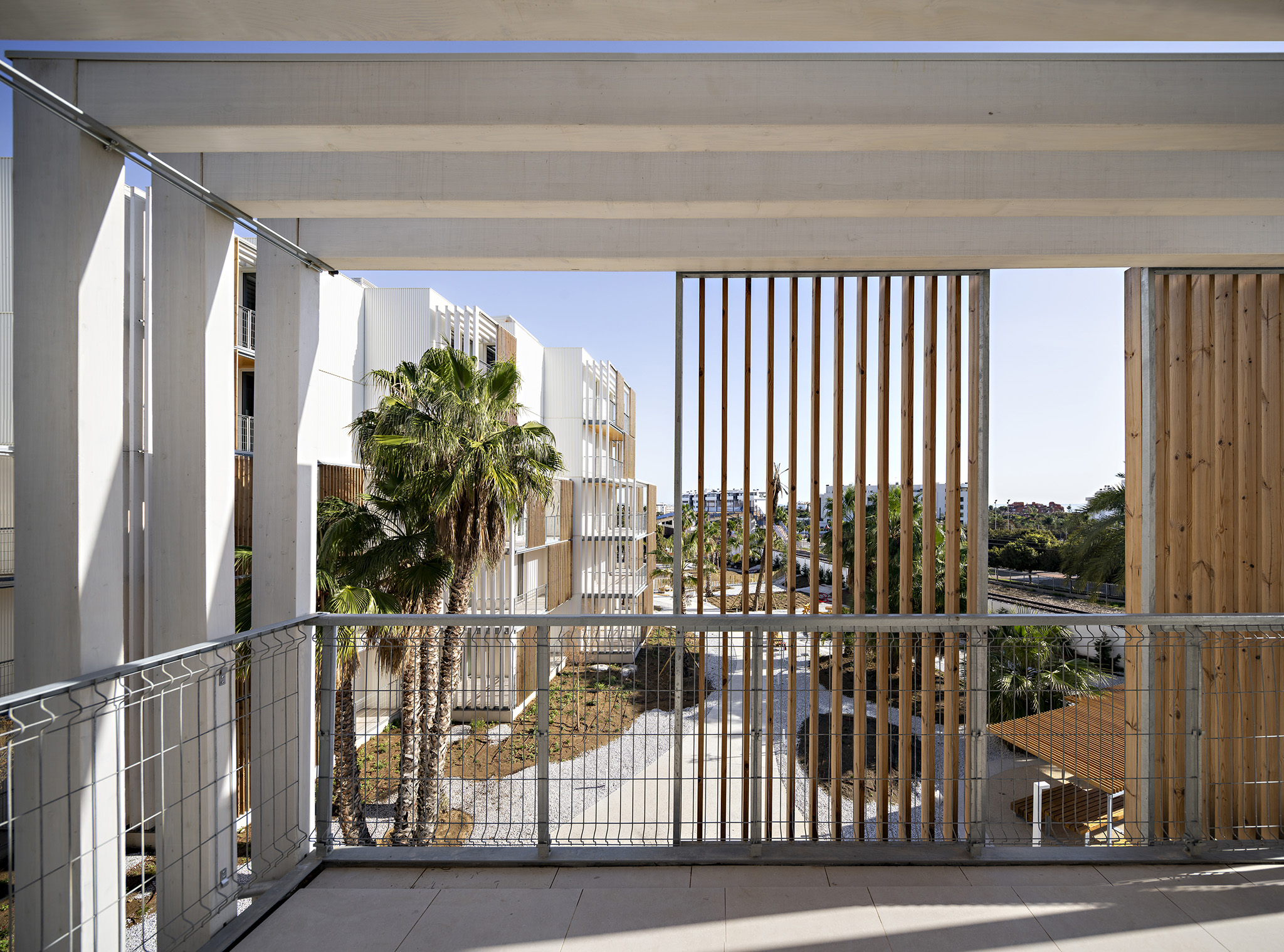
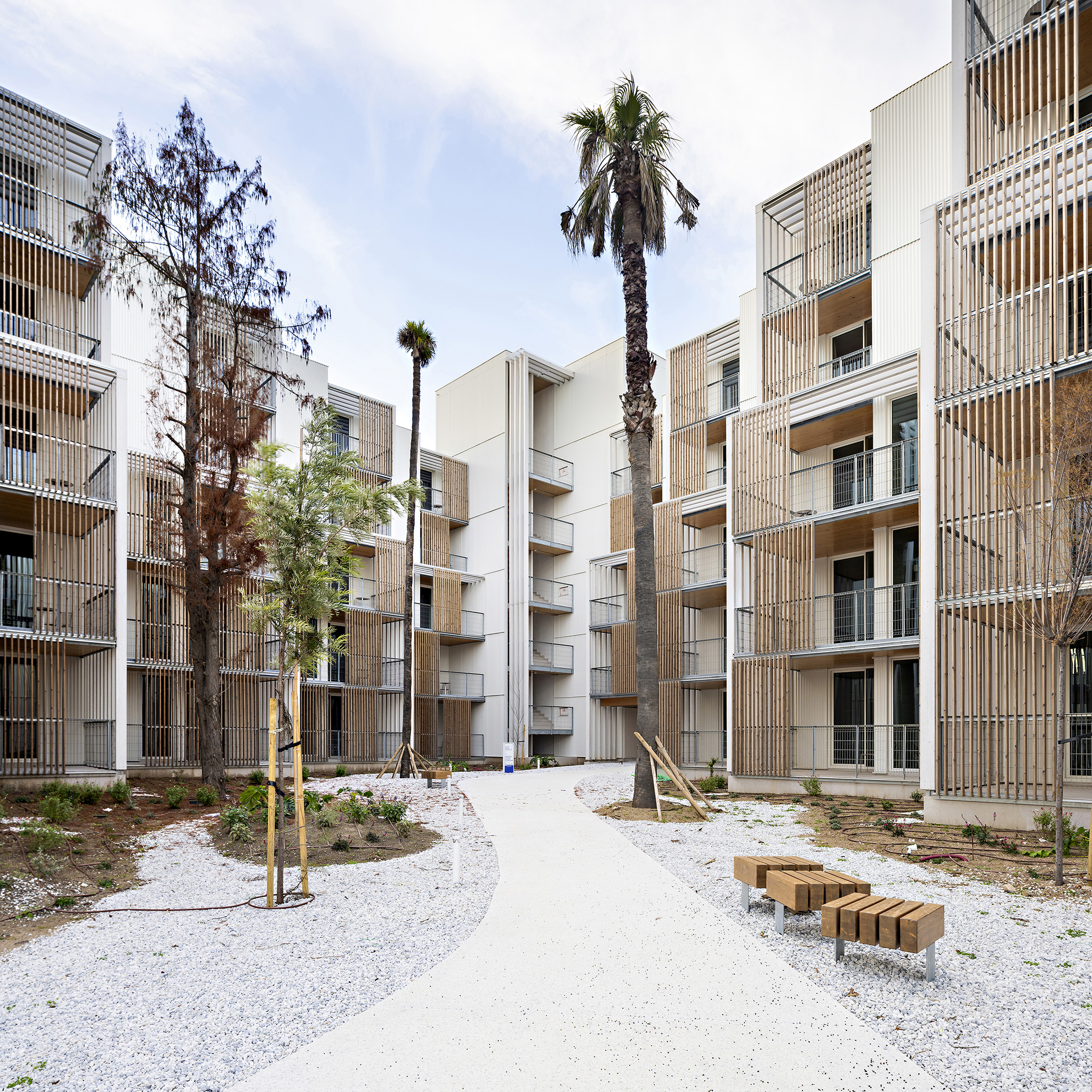
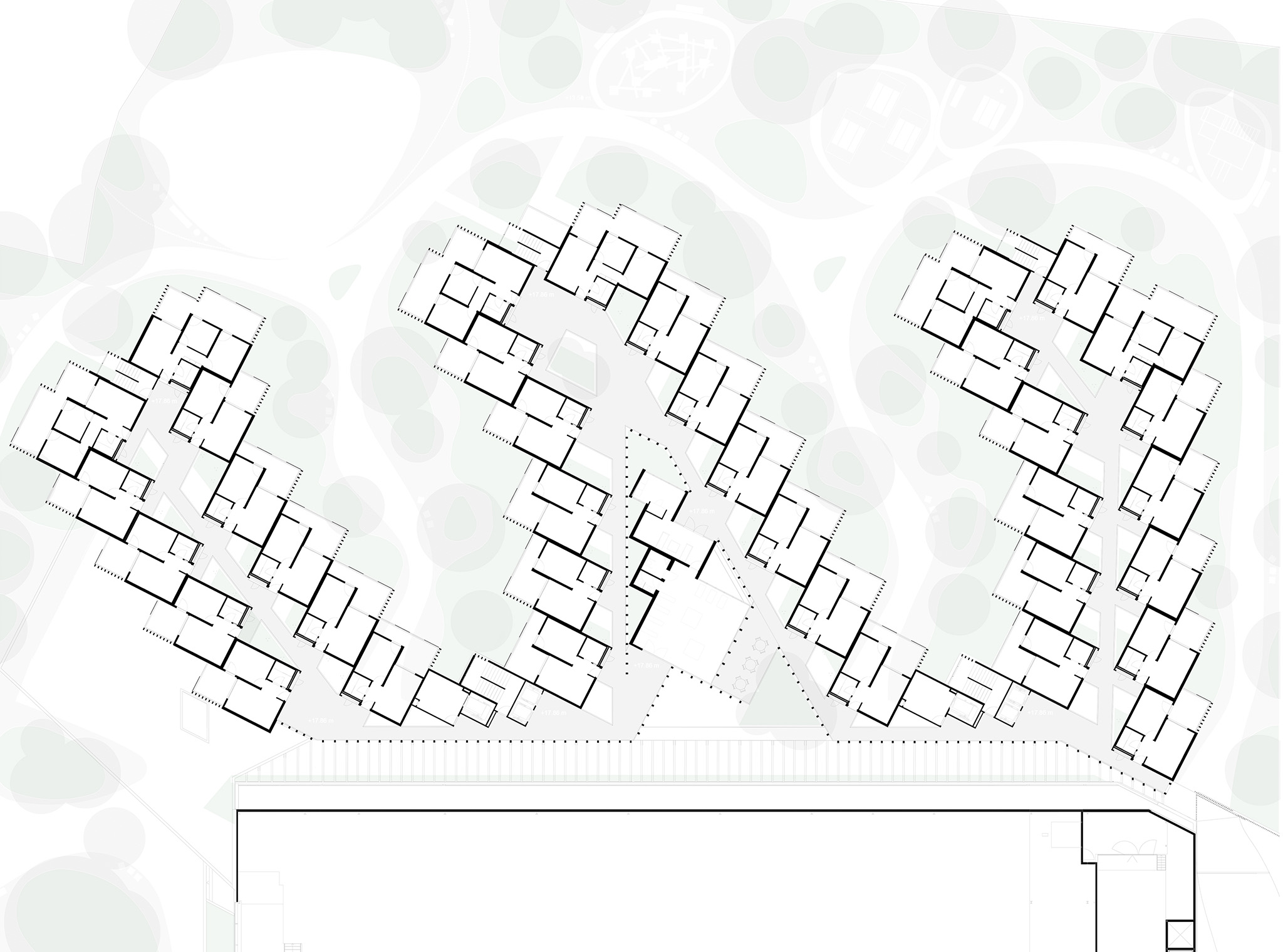
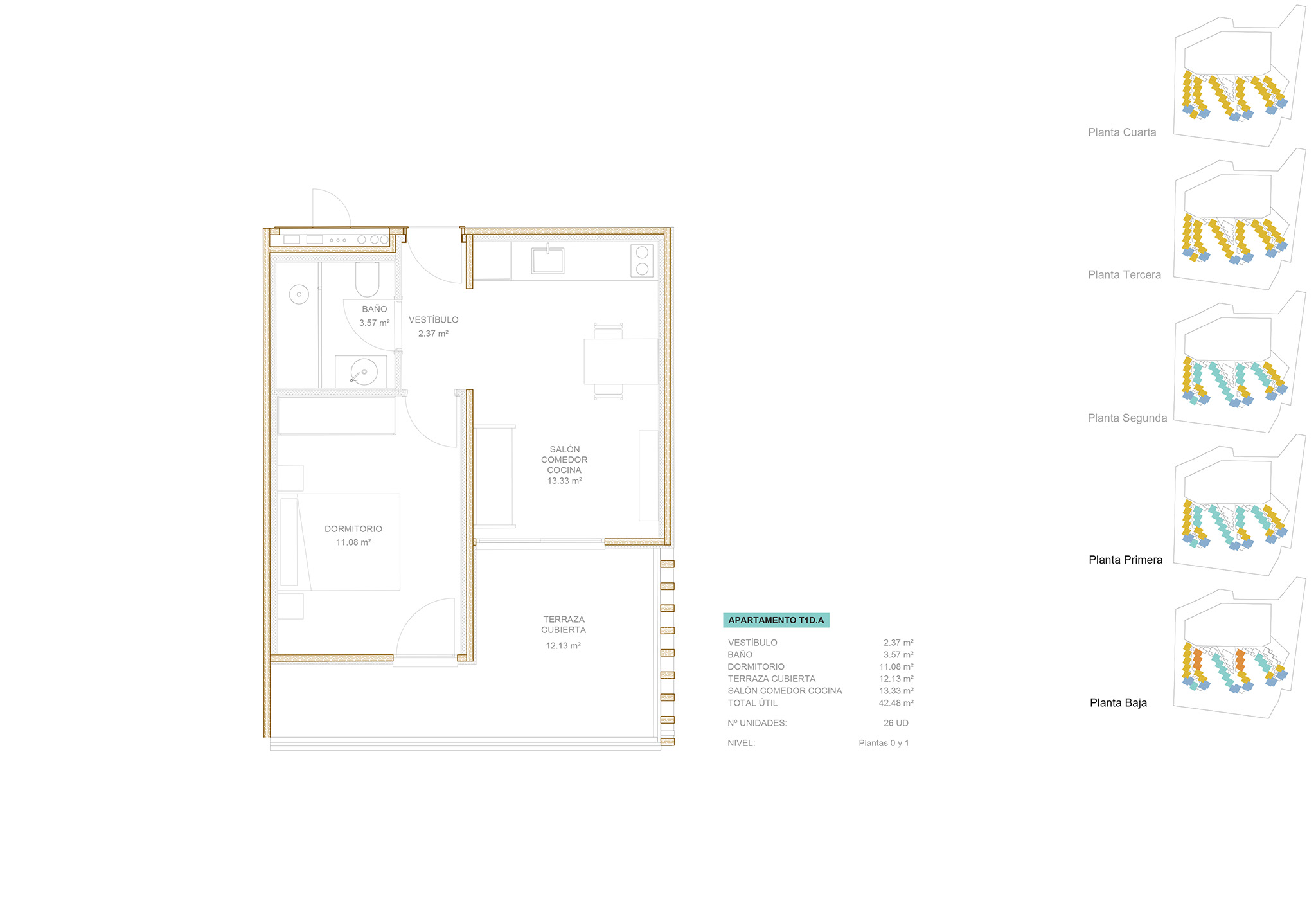
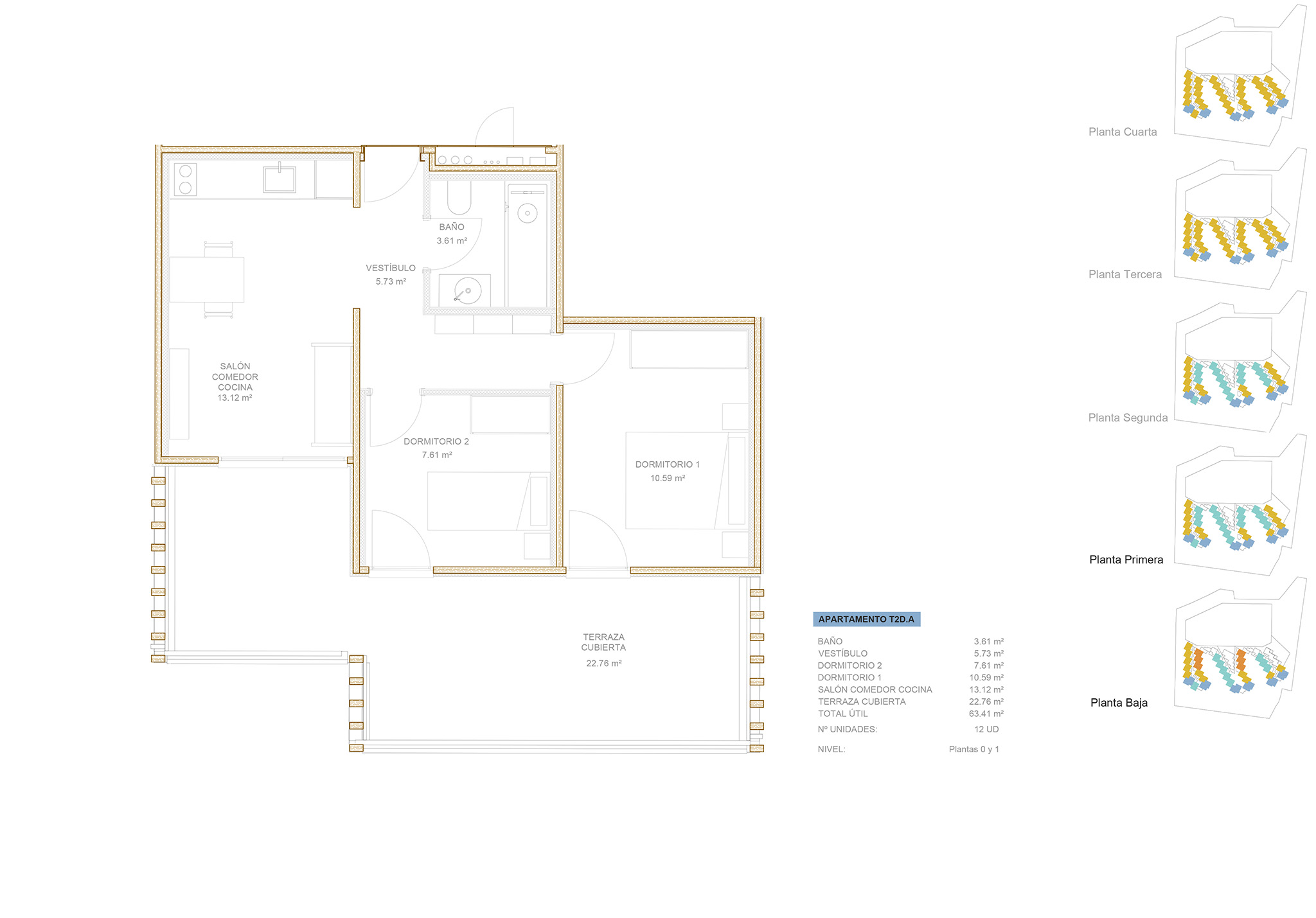
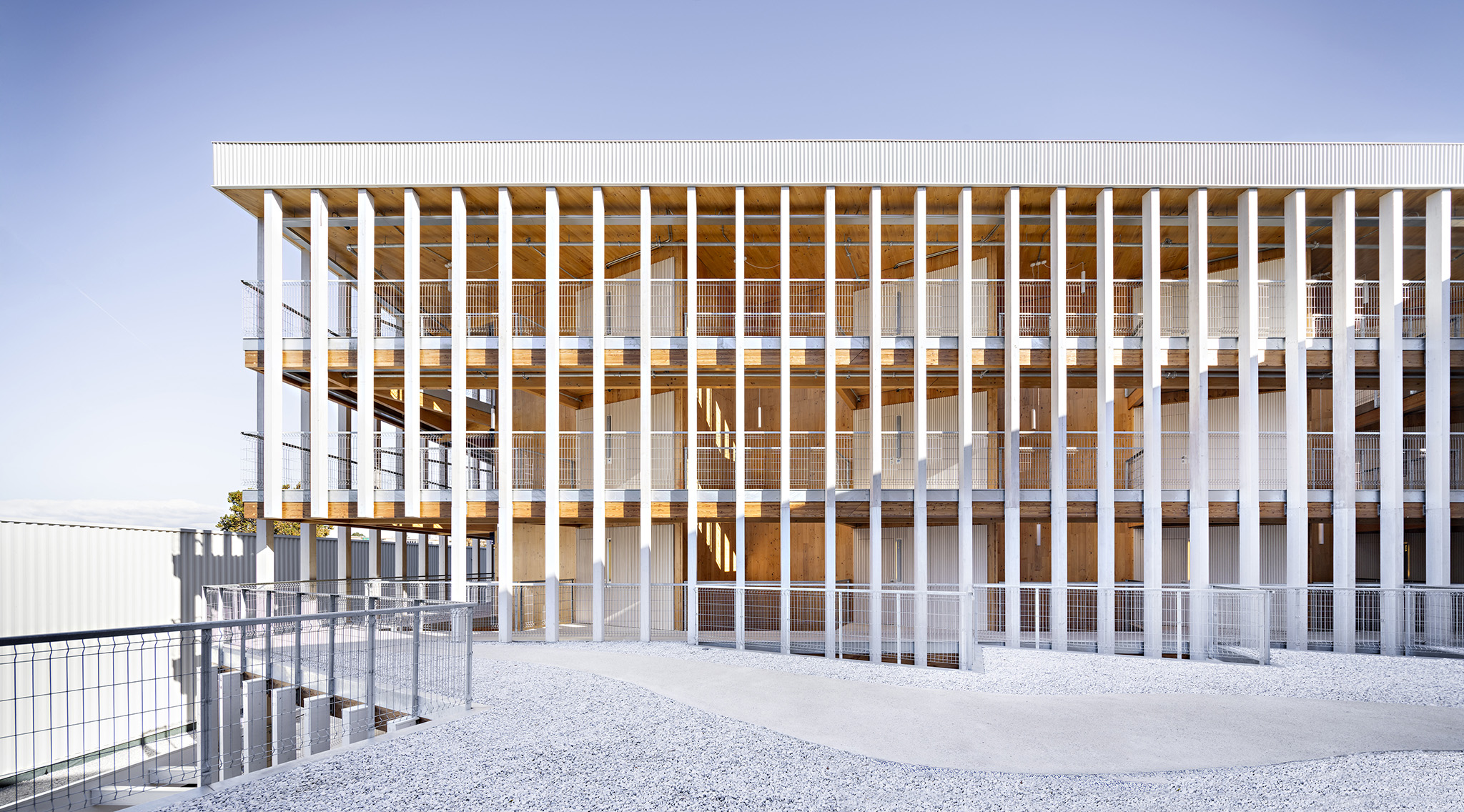
The project by baKpak in colaboration with EOVASTUDIO is an aggregation of residential units based on a single 6 x 8 meter module. All apartments feature spacious corner terraces, diagonal views, and sun protection systems using fixed and sliding filters. The design is complemented by a network of common areas comprising a reception area, coworking spaces, meeting rooms, and flexible workspaces; and a two-story central volume that houses a shared kitchen and dining area, a gym, a social lounge, and a laundry room.

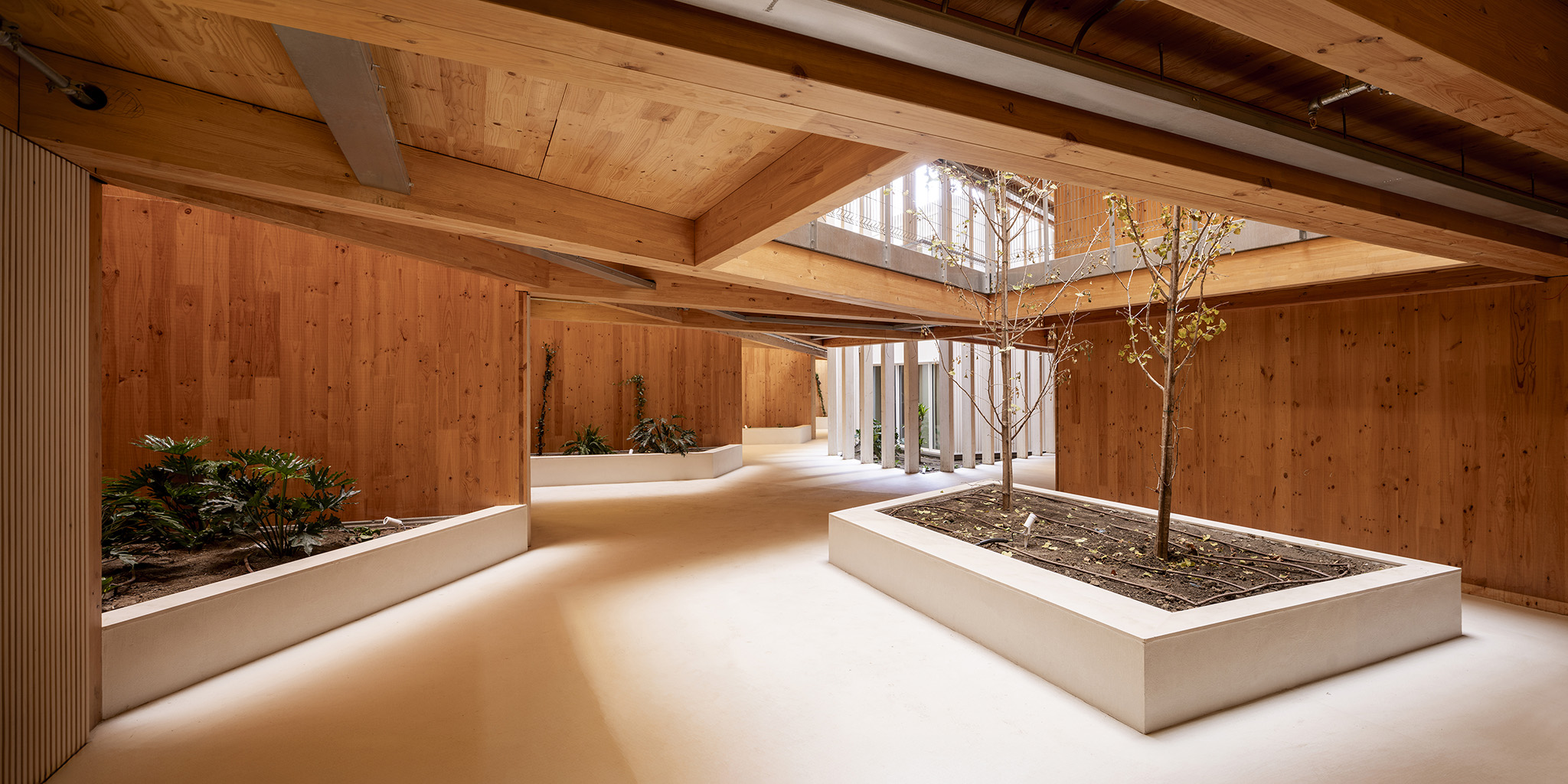
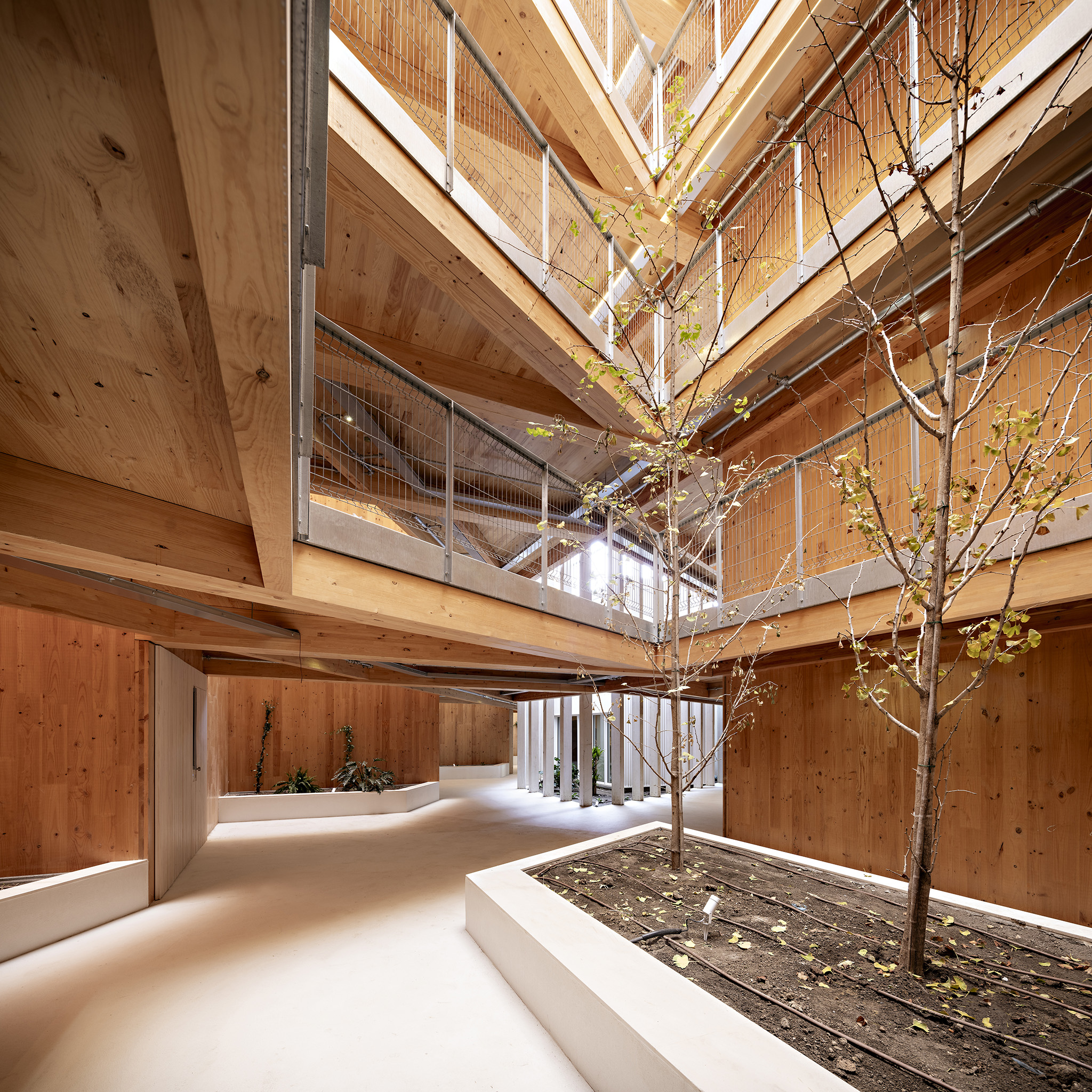
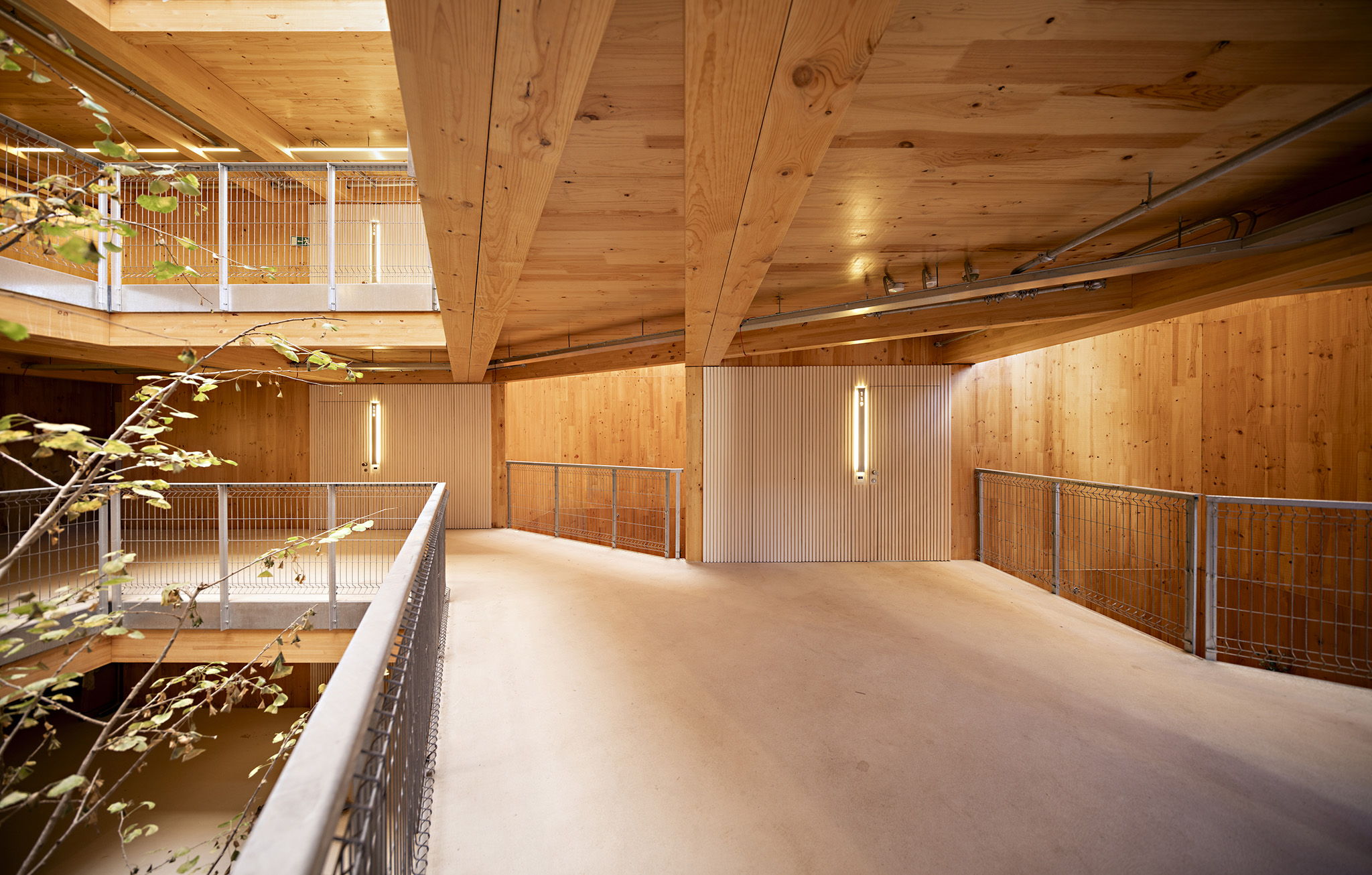
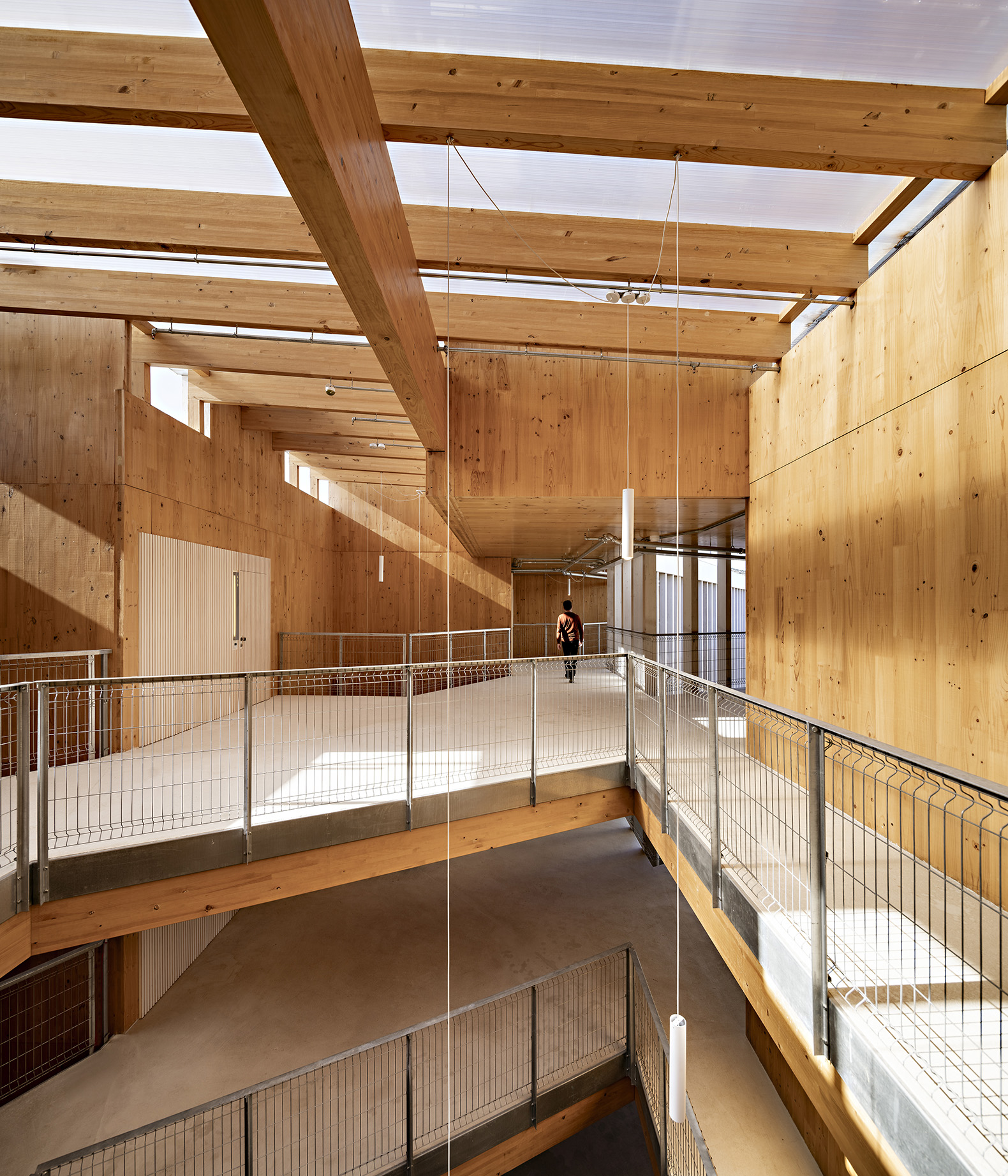
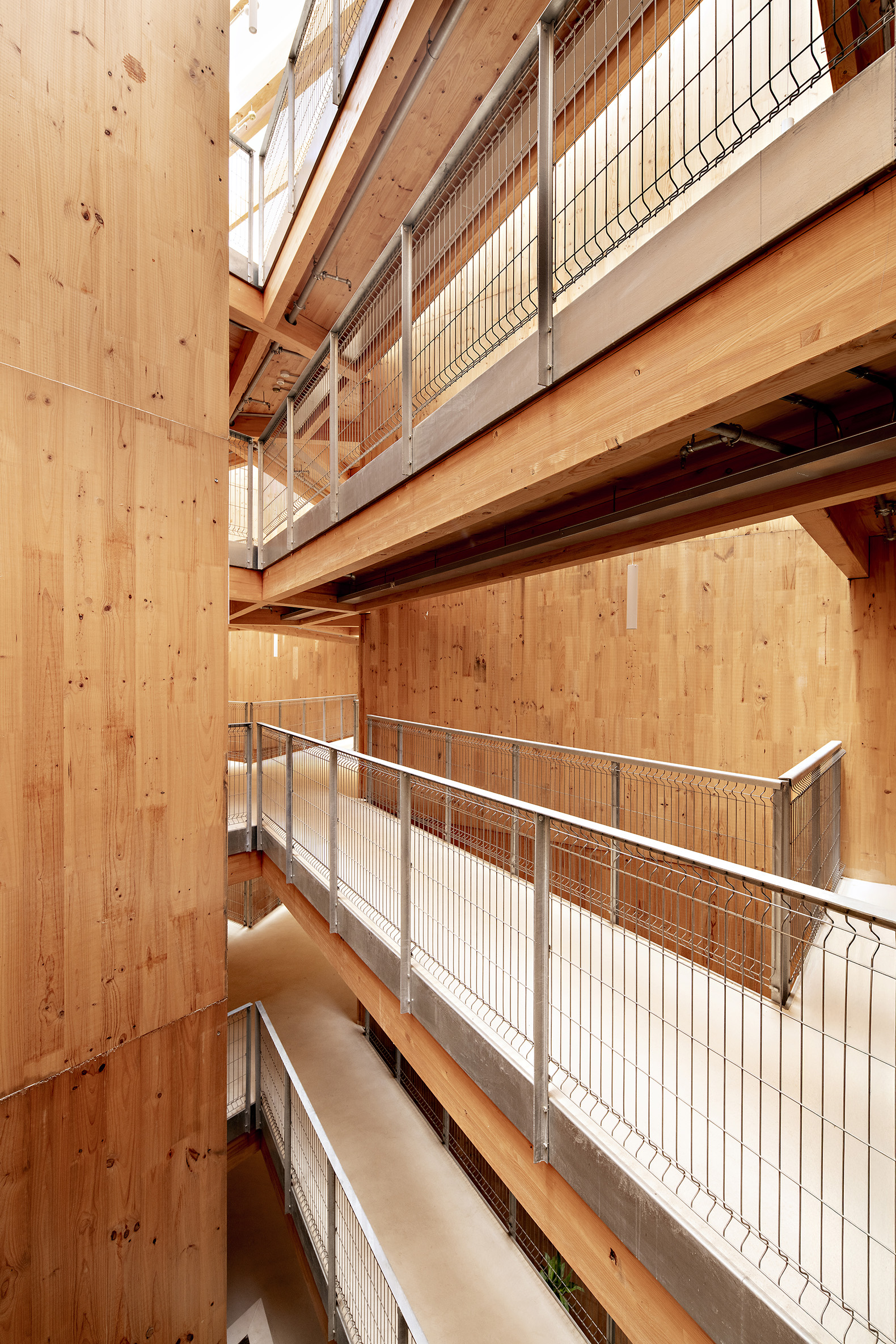
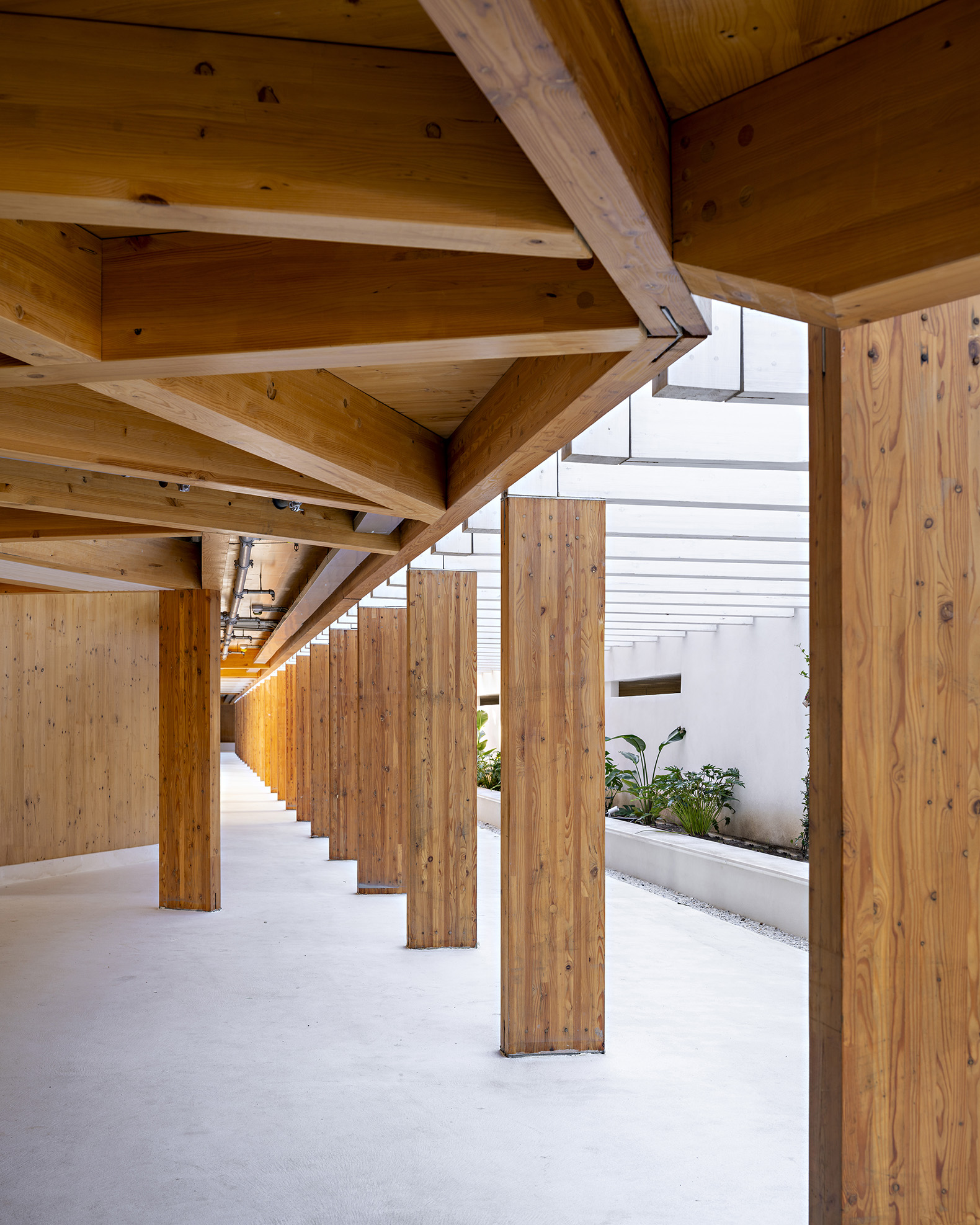
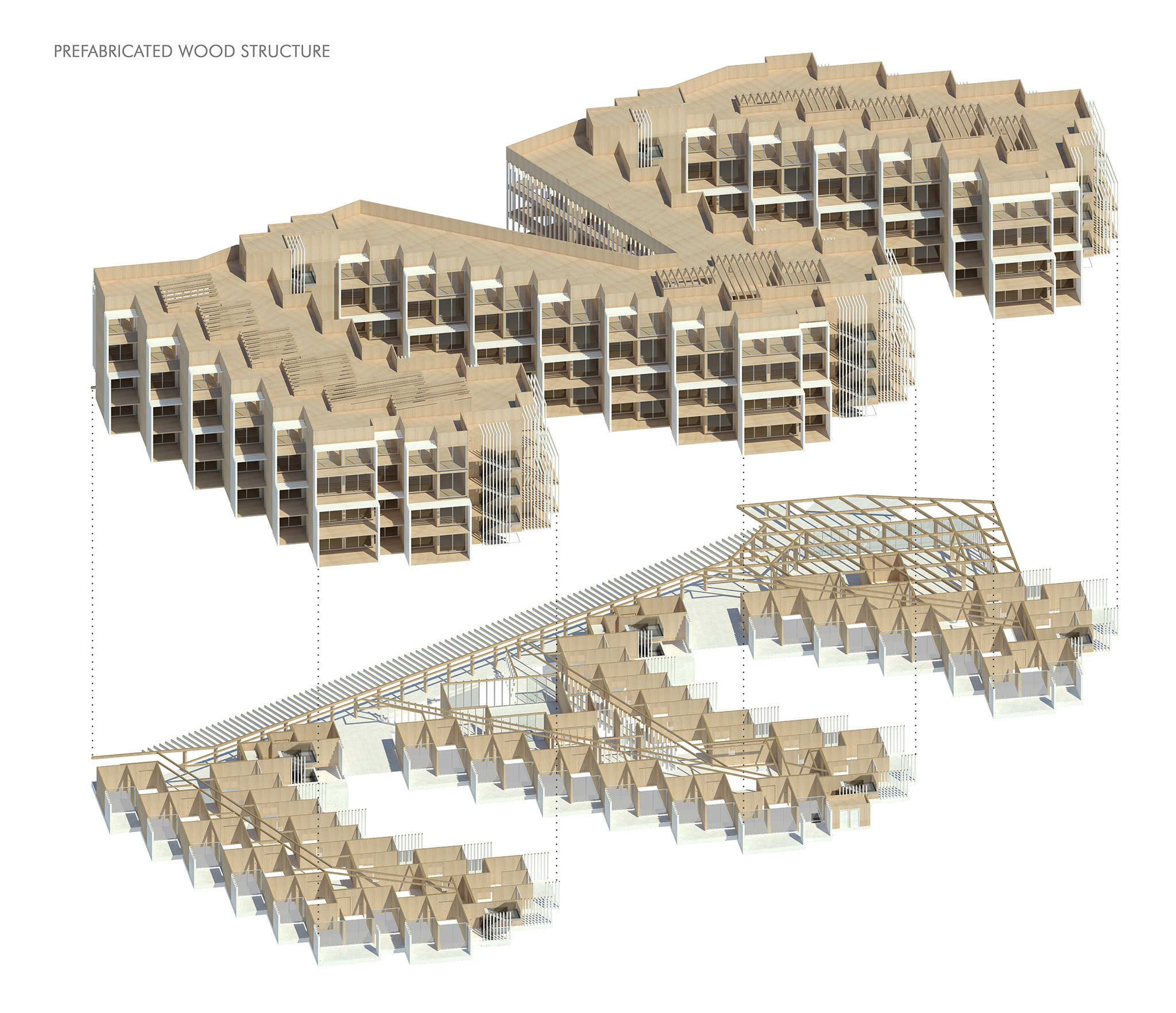
The building is constructed using a cross-laminated timber (CLT) system of radiata pine walls and floors, with thicknesses between 10 and 12 cm. This allows for the construction of the five-story building while minimizing the use of reinforced concrete, which is practically limited to foundation requirements.

Recognized among the selected works of the 68th edition of the FAD Architecture and Interior Design Awards, «Oceanika» has made it possible to transform an apparently hostile urban void into a high-quality environment for those who will inhabit the complex.
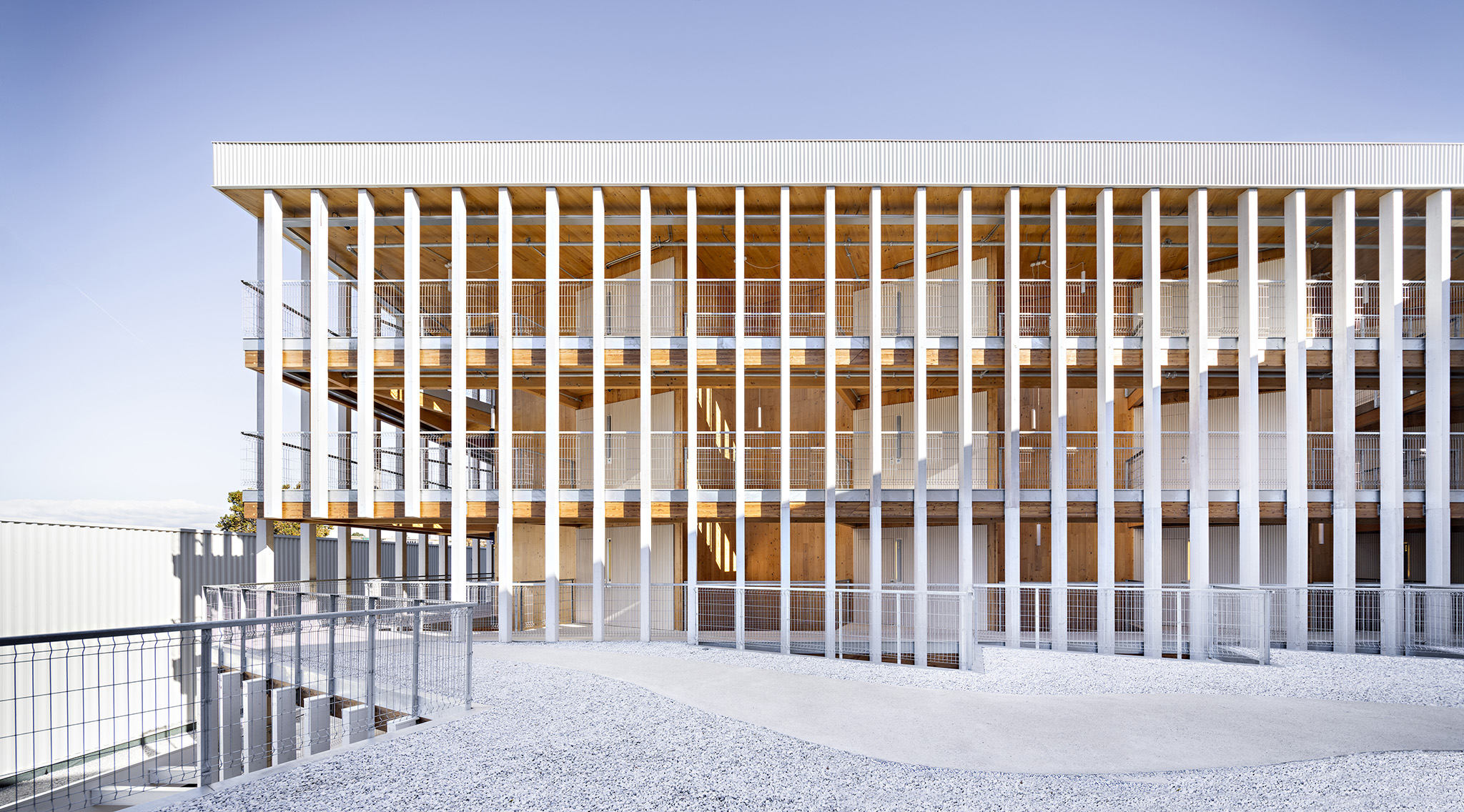
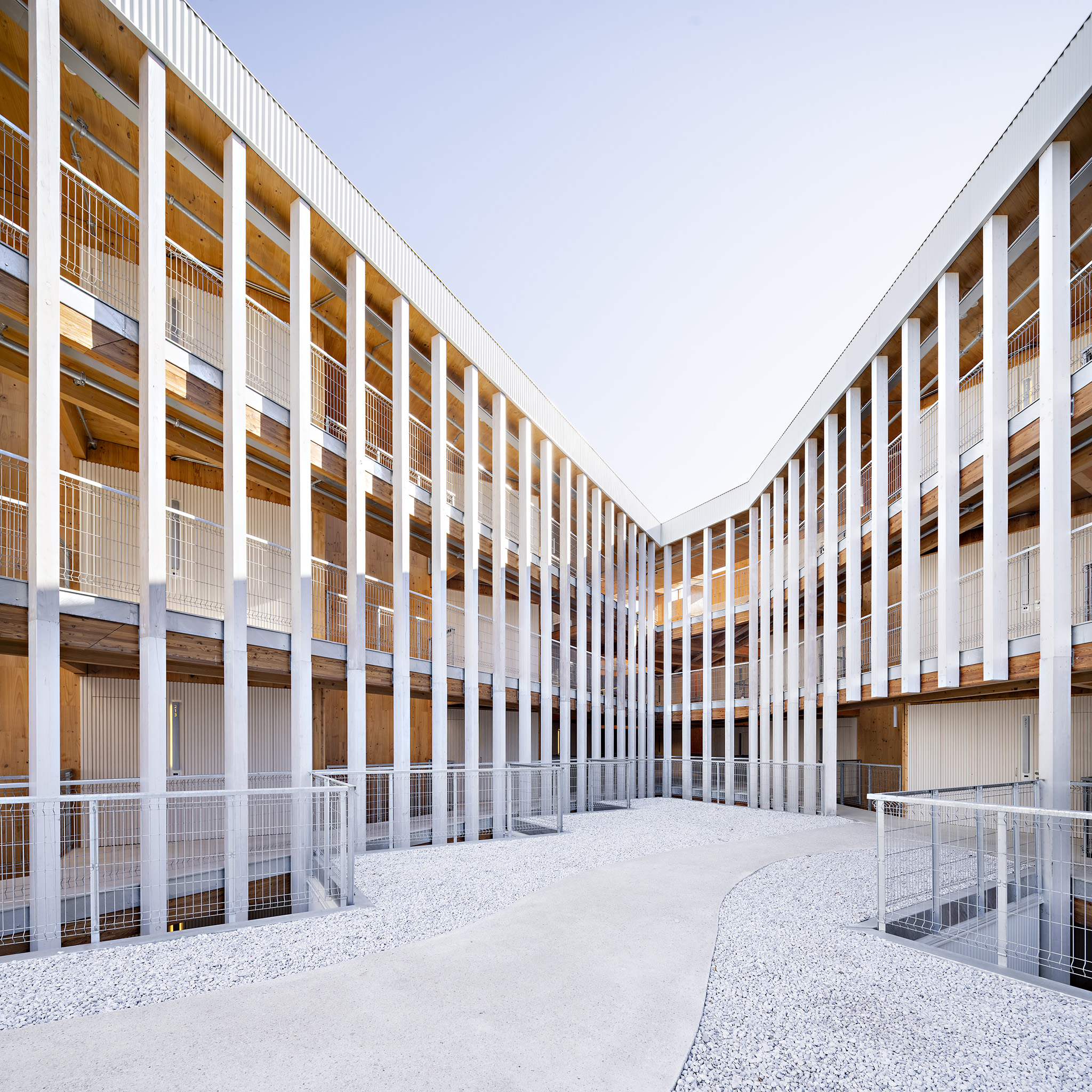
Oceanika Coliving by baKpak + EOVASTUDIO. Photograph by Javier Callejas.

Oceanika Coliving by baKpak + EOVASTUDIO. Photograph by Javier Callejas.

Project description by baKpak + EOVASTUDIO

Born from a competition organized by a private developer, owner of the site of the former "Los Álamos" hotel in Torremolinos, Málaga, the project known to the investors as "Oceanika" is an apartment building with communal spaces (coliving) and complex initial premises that have shaped all project decisions. Neither the location, the program, the construction system, nor the execution timeframe adhere to conventional building criteria or processes, but rather to the contemporary environmental and social awareness that should guide the future of architecture.

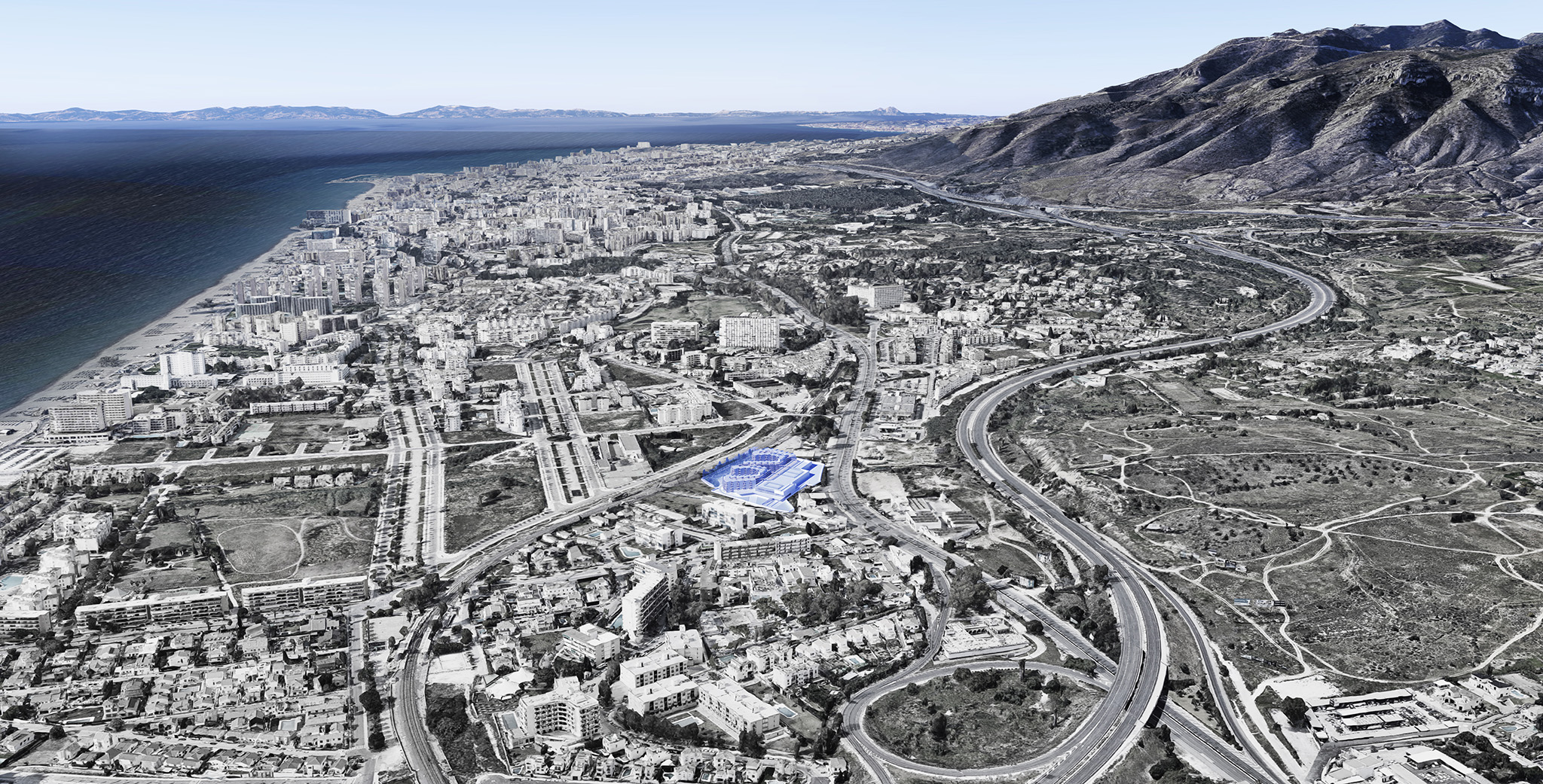
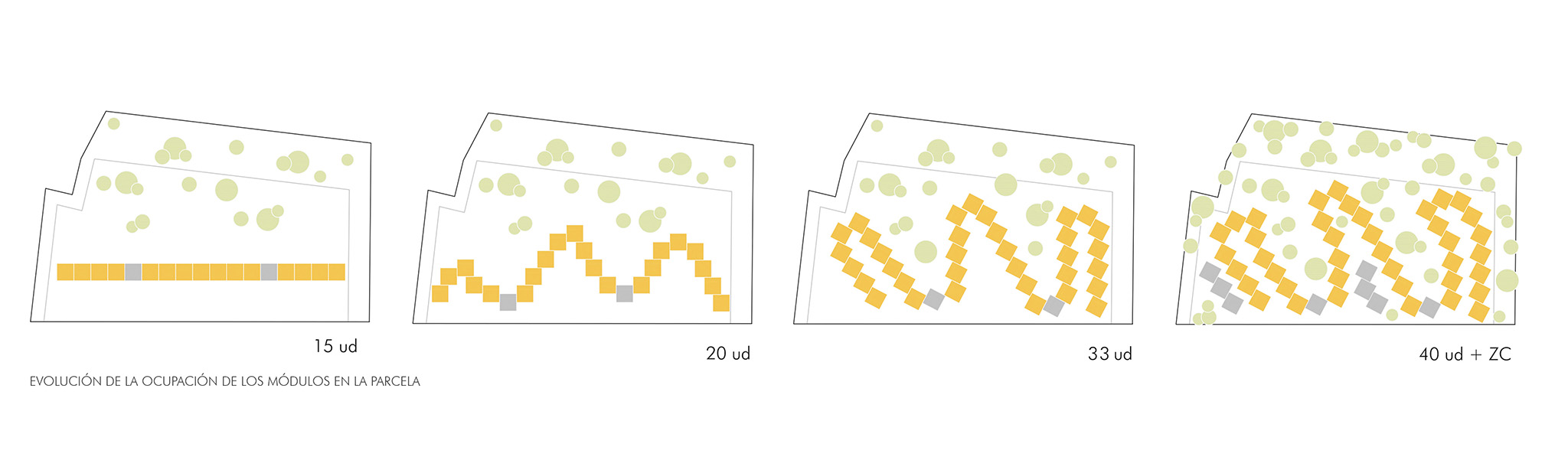
The project site is essentially an urban void in a poorly planned area with no direct frontage onto public spaces, bordered by a national highway, a commuter rail line, a gas station, and a small access area to a commercial building. All these limitations, far from posing a problem during the design process, have allowed the building's organizational structure to develop freely, seeking the best possible conditions for each space. This has resulted in a complex that is more of a juxtaposition of residential units than a single, rigid, and schematic building.

Oceanika Coliving por baKpak + EOVASTUDIO. Fotografía por Javier Callejas.
Oceanika Coliving by baKpak + EOVASTUDIO. Photograph by Javier Callejas.

Furthermore, by expanding the field of vision, the Sierra de Mijas mountains and the Mediterranean Sea, as well as the sunlight, sea breezes, and mild temperatures of southern Spain, have provided the opportunity to transform a seemingly inhospitable location into a privileged environment for the building's future residents.

The construction was conceived from the outset as entirely modular and industrialized. All of this, combined with the requirements to construct over 15,000 sqm in approximately 15 months, with near-zero energy consumption and the smallest possible carbon footprint for a building of this type, irrevocably focused the structural design on a system of cross-laminated timber (CLT) walls and floors (made of radiata pine) between 10 and 12 cm thick. This system was used to construct the complex's five floors, requiring no reinforced concrete structures beyond those strictly necessary for the foundation.

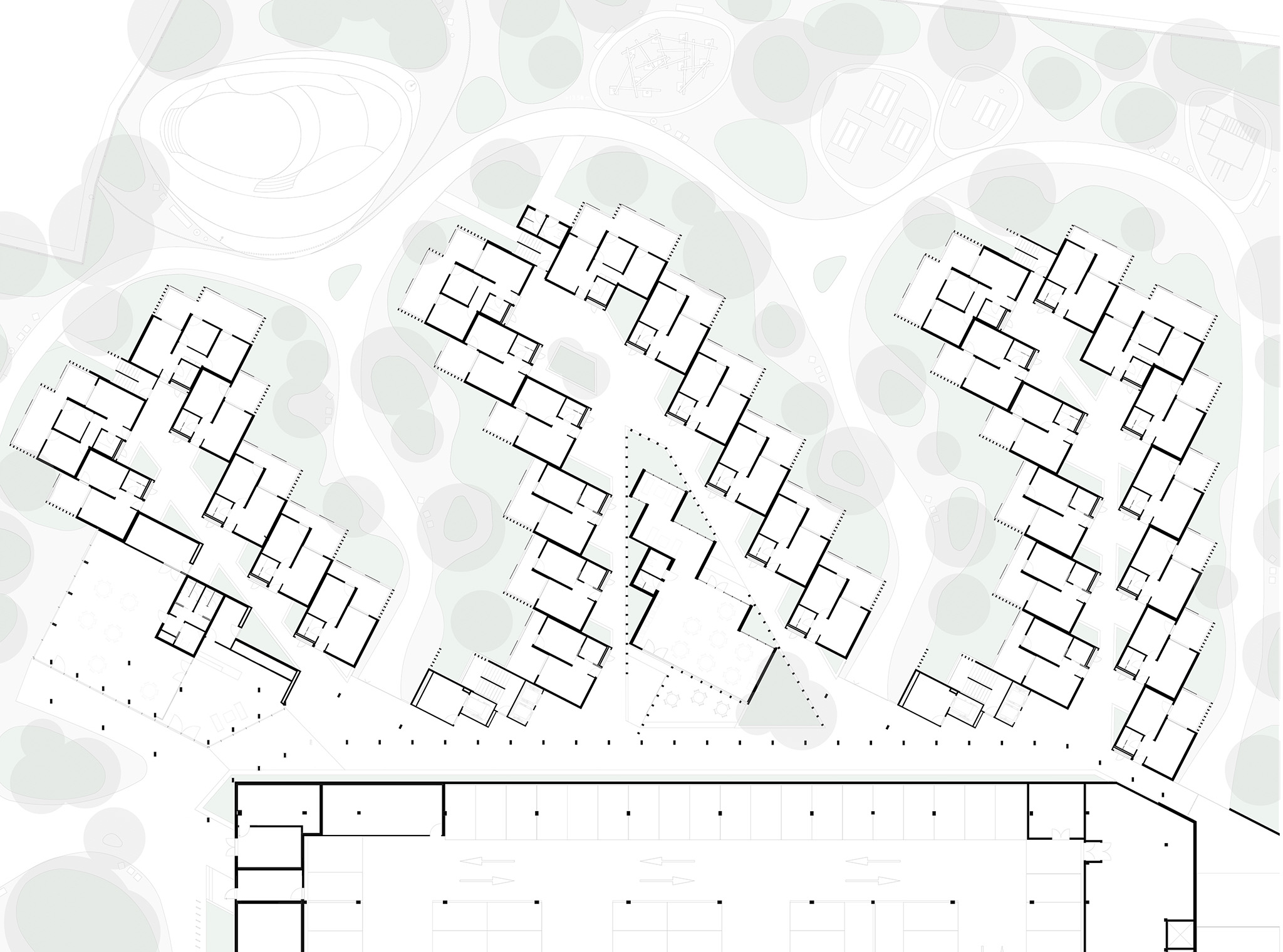
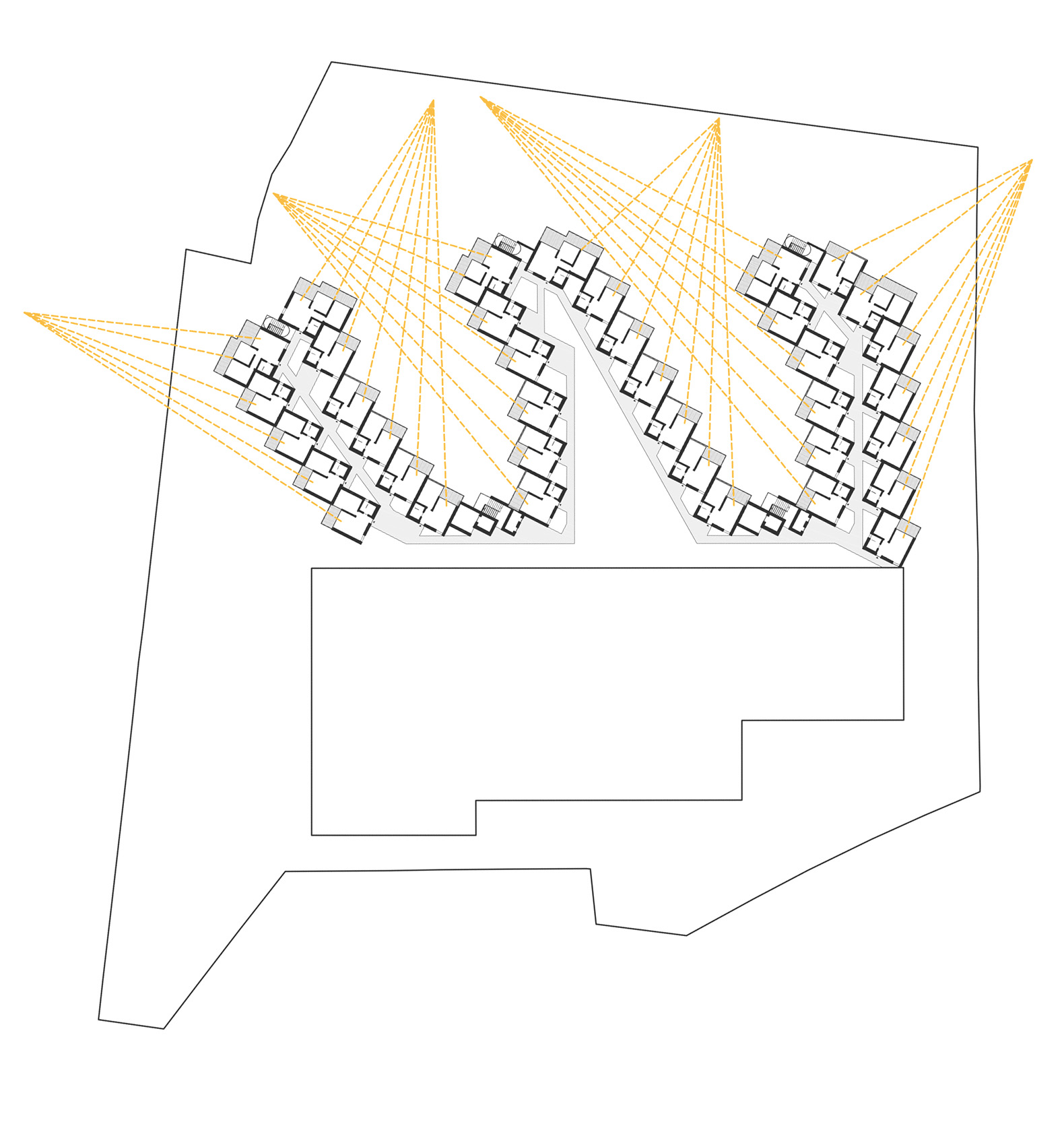
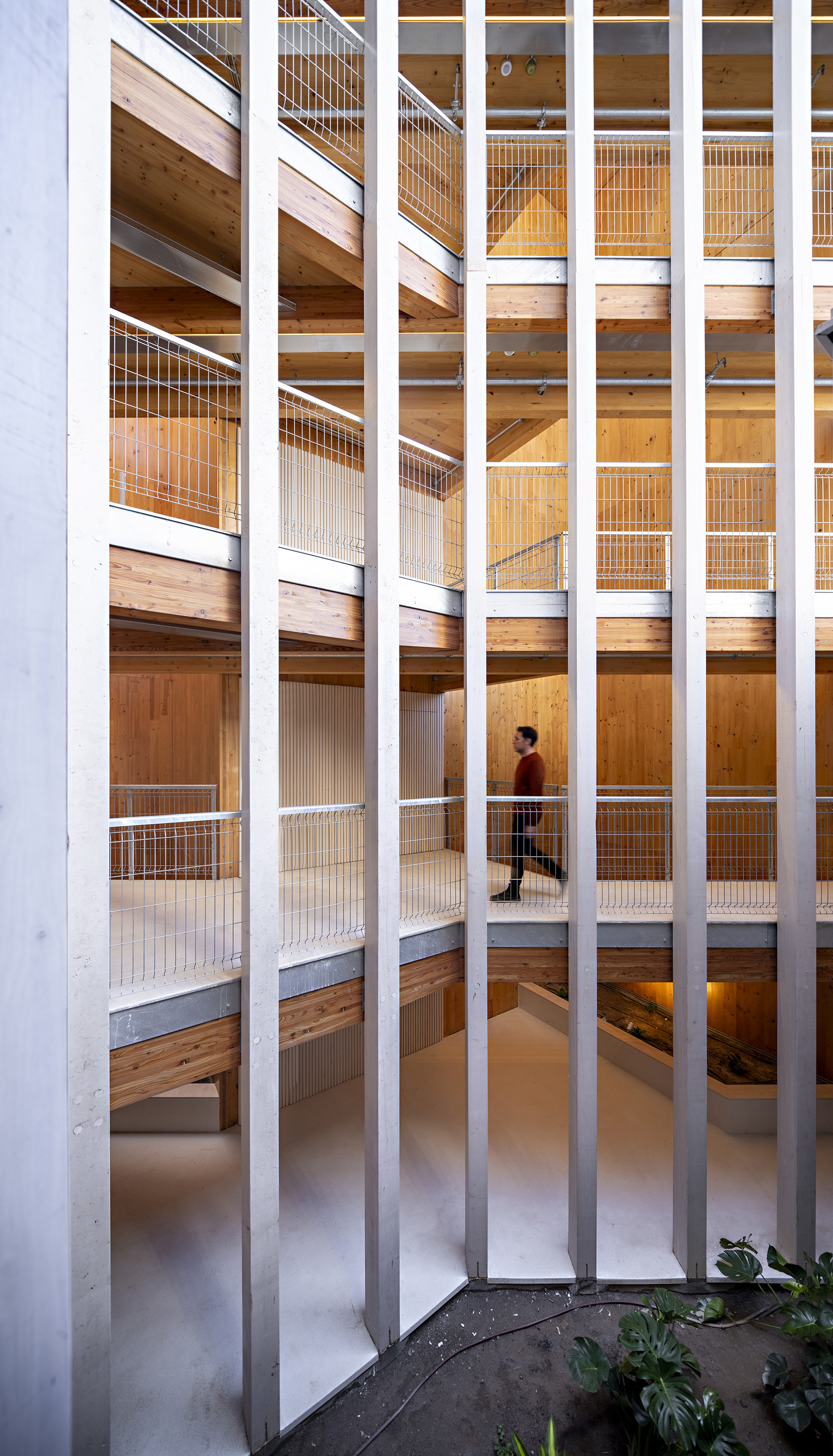
In this way, the project is conceived as an organic aggregation of the same matrix module, a cluster of units linked by a continuous linear element. This element, connected by a system of walkways of varying widths that link each of these units and traverse a series of landscaped courtyards, allows the end user to journey metaphorically and figuratively along a path suspended among leafy trees until reaching the door that leads to their private destination.
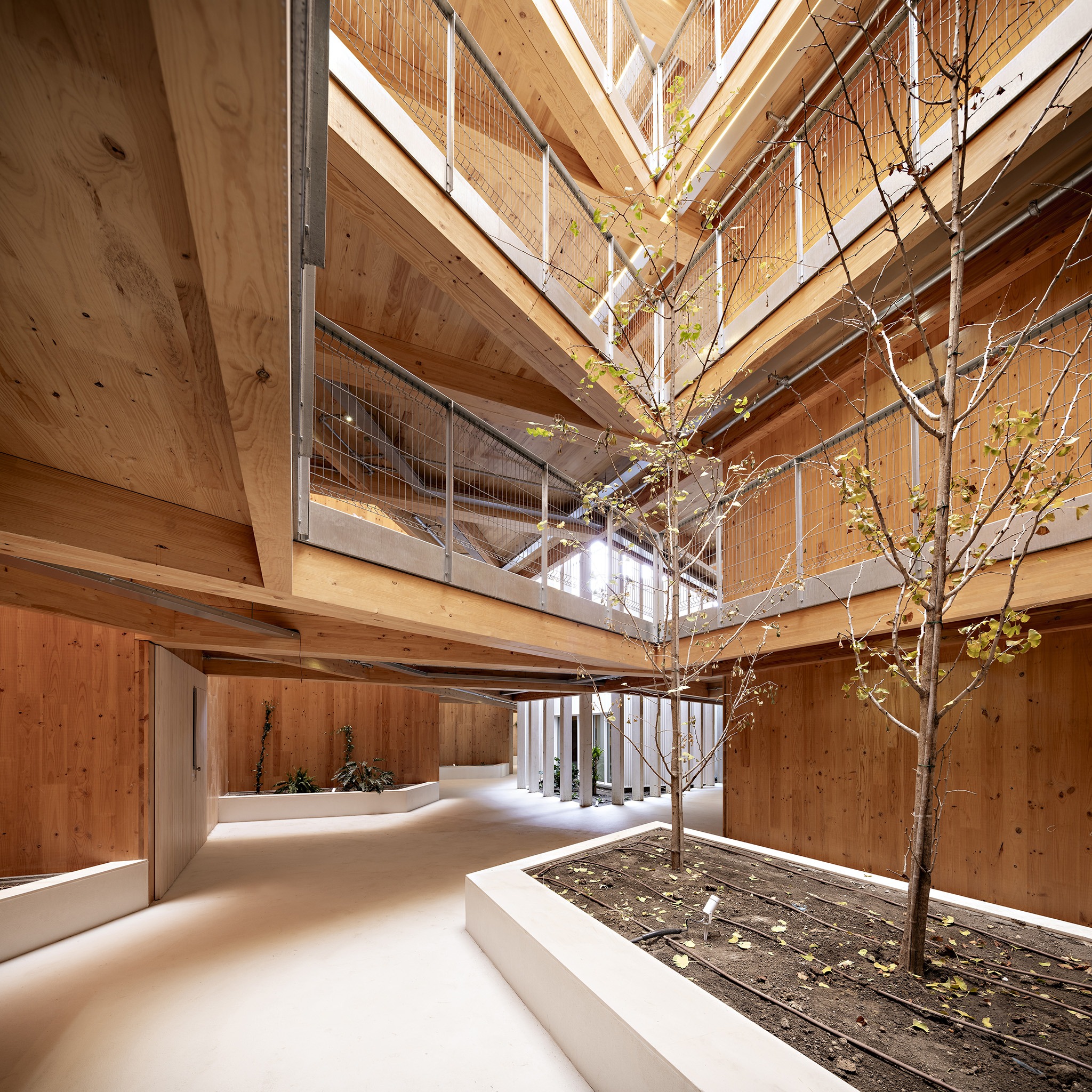
Oceanika Coliving por baKpak + EOVASTUDIO. Fotografía por Javier Callejas.
Oceanika Coliving by baKpak + EOVASTUDIO. Photograph by Javier Callejas.

All the apartments are the same, yet different. They all originate from the same 6x8 meter matrix module. Each features spacious corner terraces, diagonal views, and fixed and sliding screens to provide sun protection while ensuring privacy. Furthermore, each level varies the configuration of these outdoor terraces through a staggered section, reducing the building's vertical presence while simultaneously improving sunlight exposure in the exterior spaces.

In addition to the 180 apartments that comprise the project, a series of common areas are concentrated primarily in two parts of the building: the main entrance to the complex, which houses the reception and a coworking space with meeting rooms and multipurpose work areas, and the central two-story module that contains the communal kitchen and dining area, a gym, a social lounge, and a laundry room.
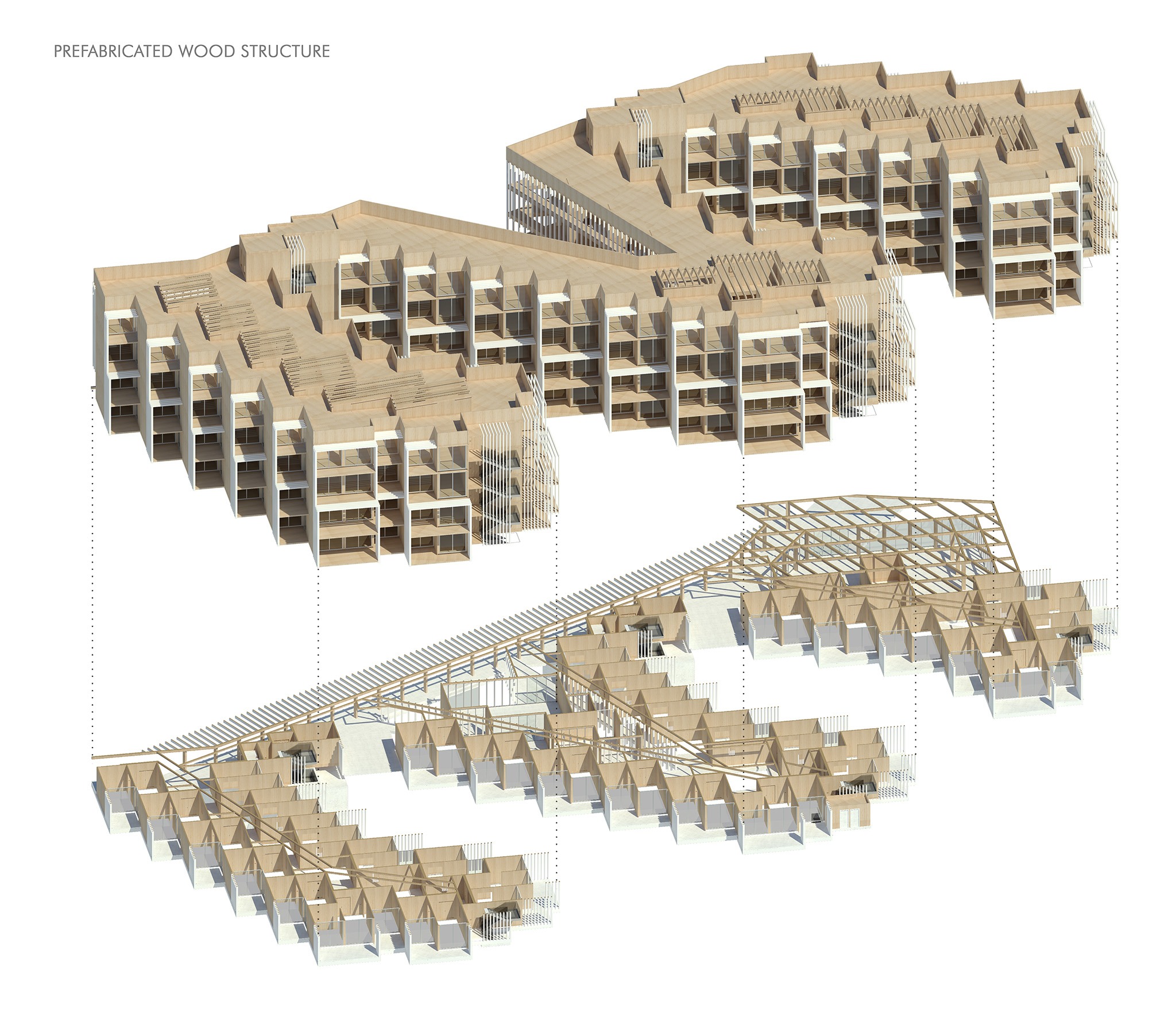
Estructura. Oceanika Coliving por baKpak + EOVASTUDIO.
Structure. Oceanika Coliving by baKpak + EOVASTUDIO.

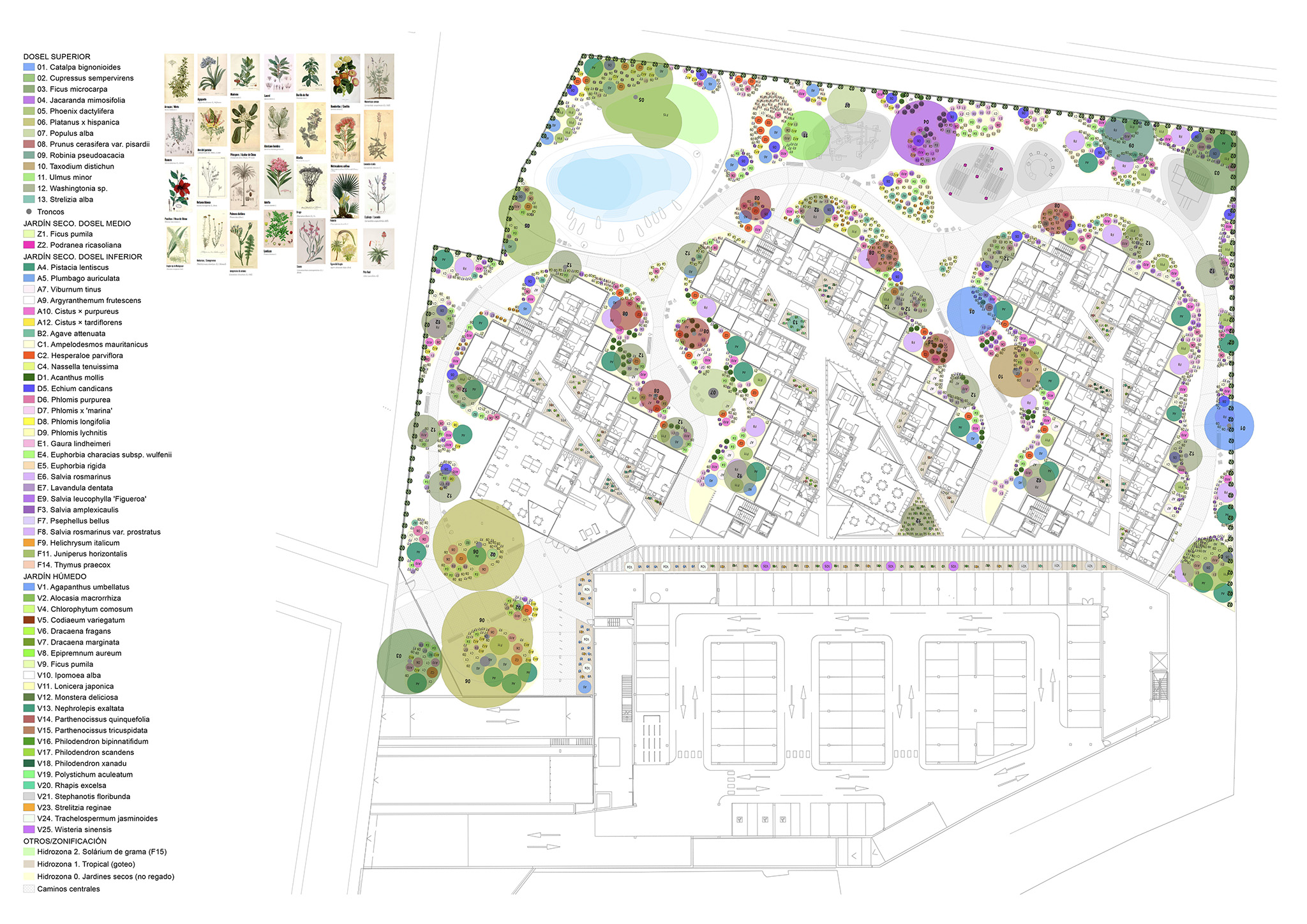
The building is positioned as close as possible to the northern boundary of the plot, leaving the southern side with a more visually rich and complex open and landscaped space, almost like an oasis for the senses where one can enjoy the coolness of the water, the vegetation, and the maximum use of sunlight. To enhance this effect, tall, dense vegetation is planted around the perimeter of the plot, visually isolating the open spaces from the more problematic areas of the surrounding environment. The exterior areas will feature Mediterranean scrubland, an organic swimming pool, a children's playground, and pergolas to create shaded outdoor spaces.
More information

Label
Architects
Text

baKpak + EOVASTUDIO (Project and Technical Management).

+ + copy Created with Sketch.
- + copy Created with Sketch.
Label
Collaborators
Text

Executive Director.- Luis Miguel Carranza Yánez.
Structural Engineering.- Egoin (Timber), Paco Duarte (Foundation).
Installations.- Arpe Ingenieros.
Environmental/Ecological Consulting.- Nomad Garden.
Acoustics.- AA Smart Acústica.

+ + copy Created with Sketch.
- + copy Created with Sketch.
Label
Builder
Text

Egoin (Wood), Herysan.

+ + copy Created with Sketch.
- + copy Created with Sketch.
Label
Developer
Text

Nuovit.

+ + copy Created with Sketch.
- + copy Created with Sketch.
Label
Area
Text

15,000 sqm + 6,000 sqm outdoor spaces.

+ + copy Created with Sketch.
- + copy Created with Sketch.
Label
Dates
Text

Project and construction - 2021-2025.

+ + copy Created with Sketch.
- + copy Created with Sketch.
Label
Location
Text

Torremolinos, Málaga, Spain.

+ + copy Created with Sketch.
- + copy Created with Sketch.
Label
Budget
Text

€18,750,000 (building without outdoor areas).
1.250€/sqm.

+ + copy Created with Sketch.
- + copy Created with Sketch.
Label
Manufacturers
Text

Structural timber manufacturer.- Egoin.
Structural timber supplier.- Egoin.

+ + copy Created with Sketch.
- + copy Created with Sketch.
Label
Photography
+ + copy Created with Sketch.
- + copy Created with Sketch.

baKpak is a team of architects founded in 2013 by José de la Peña Gómez Millán, José M González Chamorro, Borja Navarro Ibáñez de Aldecoa, José A Pavón González, and Myriam Rego Gómez, with the objective of converting itself into an international firm of reference in architecture. It is a Spanish architectural firm headquartered in Seville with an international network that permits its to work on an international level with collaborating firms located in different countries.

Read more
EOVASTUDIO is a Seville-based studio founded by Juan José Baena, Marta Gómez, Joanna Jedrus in 2010.

Juan José Baena Martínez.- Born in Valencia (Spain), 1981. Studied Architecture at the University of Valencia (Spain, 1999). Collaborated with Carlos Meri, Valencia (Spain) in 2003. Collaborated with Ladaa, Valencia (Spain) in 2004. Collaborated with Jorge Torres, Valencia (Spain) in 2005. Received the Fundación Caja de Arquitectos Scholarship for best academic results in 2006.

Graduated with degree in Architecture in 2006. Collaborated with Guillermo Vázquez Consuegra, Seville (Spain) between 2007-2009. Project Coordinator at Guillermo Vázquez Consuegra, Seville (Spain) between 2009-2015. Assistant Professor for the International Workshop “Arquitectura Blanca” at the University of Seville (Spain) in 2009. Co-founded EOVASTUDIO, Seville (Spain) in 2010.

Marta Gómez Martínez. Born in Seville (Spain) in 1974. Studied Architecture at the University of Seville (Spain, 1992). Collaborated with Andrés López Fernández, Seville (Spain) in 1996. Studied Architecture at the Università degli Studi di Roma “La Sapienza”, Rome (Italy) between 2000-2001 (Erasmus Scholarship). Collaborated with Massimiliano Coccia, Rome (Italy) in 2001. Collaborated with City Council of Carmona, Seville (Spain) between 2001-2002.

Graduated with degree in Architecture in 2002. Collaborated with Glenn Howells Architects, Birmingham (United Kingdom) between 2002-2004. Collaborated with Associated Architects, Birmingham (United Kingdom) between 2004-2005. Collaborated with Cruz y Ortiz Architects, Seville (Spain) between 2005-2006. Founded MGM Architects, Seville (Spain) Worked on a number of projects in the United Kingdom, Germany and Spain, 2007-2010. Co-founded EOVASTUDIO, Seville (Spain) in 2010. Project Manager Professional PMP© by the PMI in 2011.

Joanna Jedrus. Born in Katowice (Poland) in 1979. Studied Architecture at the Silesian University of Technology of Gliwice (Poland, 1998). Collaborated with PORT, Tadeusz Kmiec, Katowice (Poland) in 2001. Studied Architecture at the Università di Bologna (Italy) between 2002-2003 (Erasmus Scholarship). Collaborated with Romano Botti-Kalina Eibl, Modena (Italy) in 2003. Collaborated with Guillermo Vázquez Consuegra, Seville (Spain). Leonardo da Vinci Scholarship, 2003-2004.

Graduated with degree in Architecture in 2004. Collaborated with Guillermo Vázquez Consuegra, Seville (Spain) between 2004-2009. Project Coordinator at Guillermo Vázquez Consuegra, Seville (Spain), 2009-2012. Architectural and Construction Professional Qualification by the Chamber of Architects(Poland), 2008. Assistant Professor for the International Workshop “Arquitectura Blanca” at the University of Seville (Spain), 2009. Co-founded EOVASTUDIO, Seville (Spain), 2010. 
Read more
Published on: June 23, 2026
Cite:
metalocus, AGUSTINA BERTA
"A juxtaposition of residential units. Oceanika Coliving by baKpak + EOVASTUDIO " METALOCUS. Accessed
<https://www.metalocus.es/en/news/juxtaposition-residential-units-oceanika-coliving-bakpak-eovastudio> ISSN 1139-6415
Loading content ...
Loading content ...
Loading content ...
Loading content ...
Loading content ...
Loading content ...
Loading content ...
Loading content ...
Loading content ...
Loading content ...
Loading content ...
Loading content ...
Loading content ...
Loading content ...
Loading content ...
Loading content ...
Loading content ...
Loading content ...
Loading content ...
Loading content ...
Loading content ...
Loading content ...
Loading content ...
Loading content ...
Loading content ...
Loading content ...
Loading content ...
Loading content ...
Loading content ...
Loading content ...
Loading content ...
Loading content ...
Loading content ...
Loading content ...
Loading content ...
Loading content ...
Loading content ...
Loading content ...
Loading content ...
Loading content ...
Loading content ...
Loading content ...
Loading content ...
Loading content ...
Loading content ...
Loading content ...
Loading content ...
Loading content ...
Loading content ...
Loading content ...
Loading content ...
Loading content ...
Loading content ...
Loading content ...