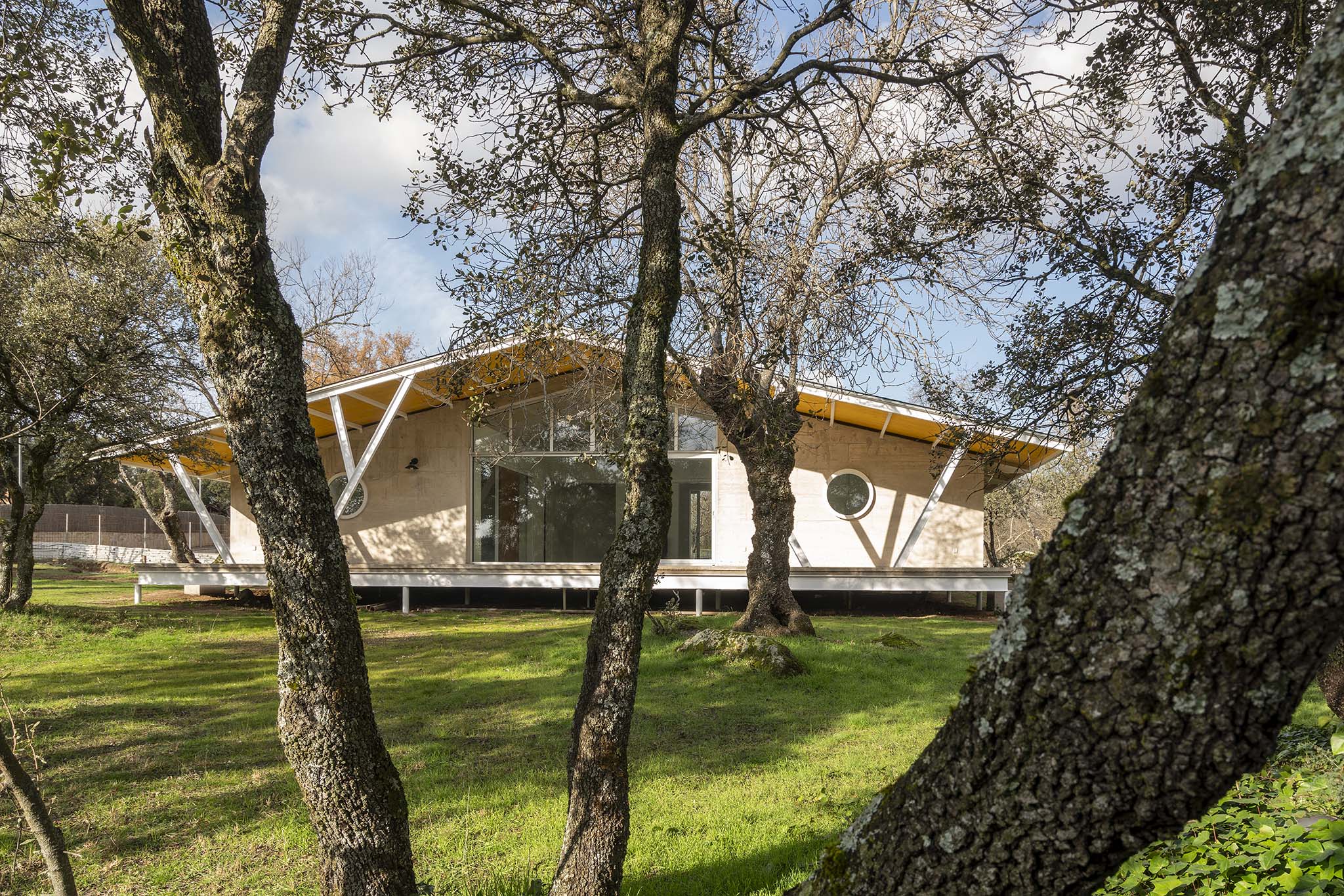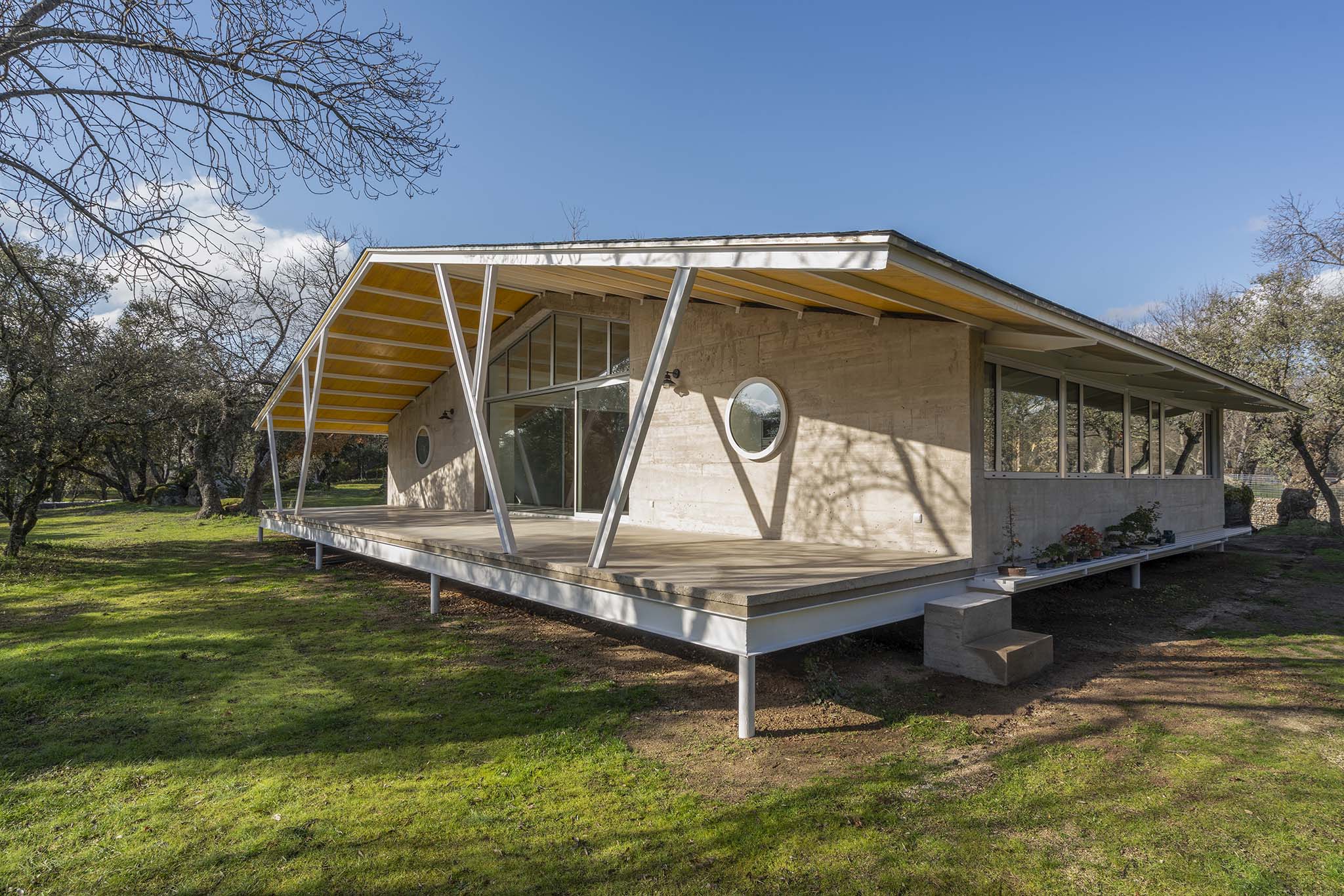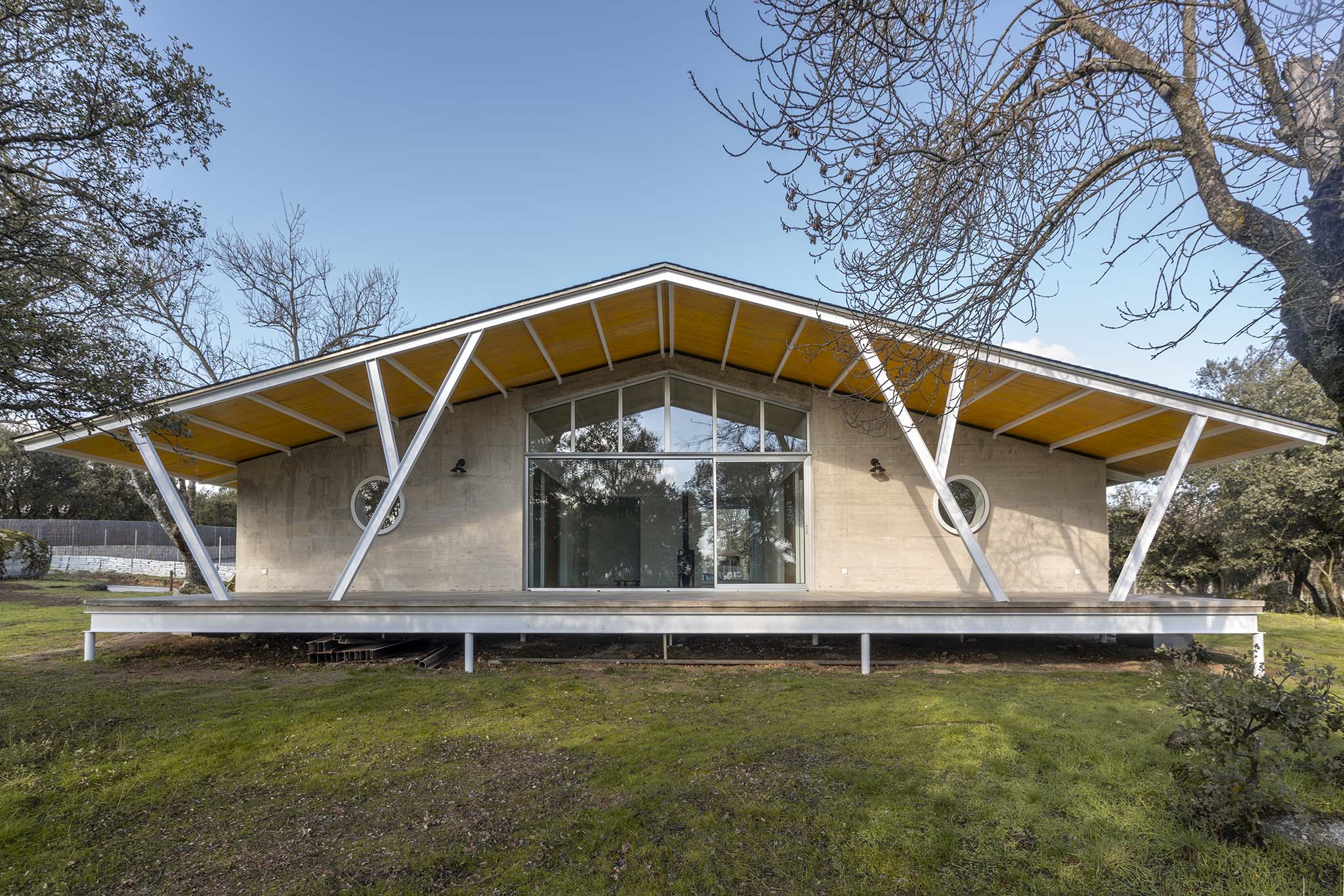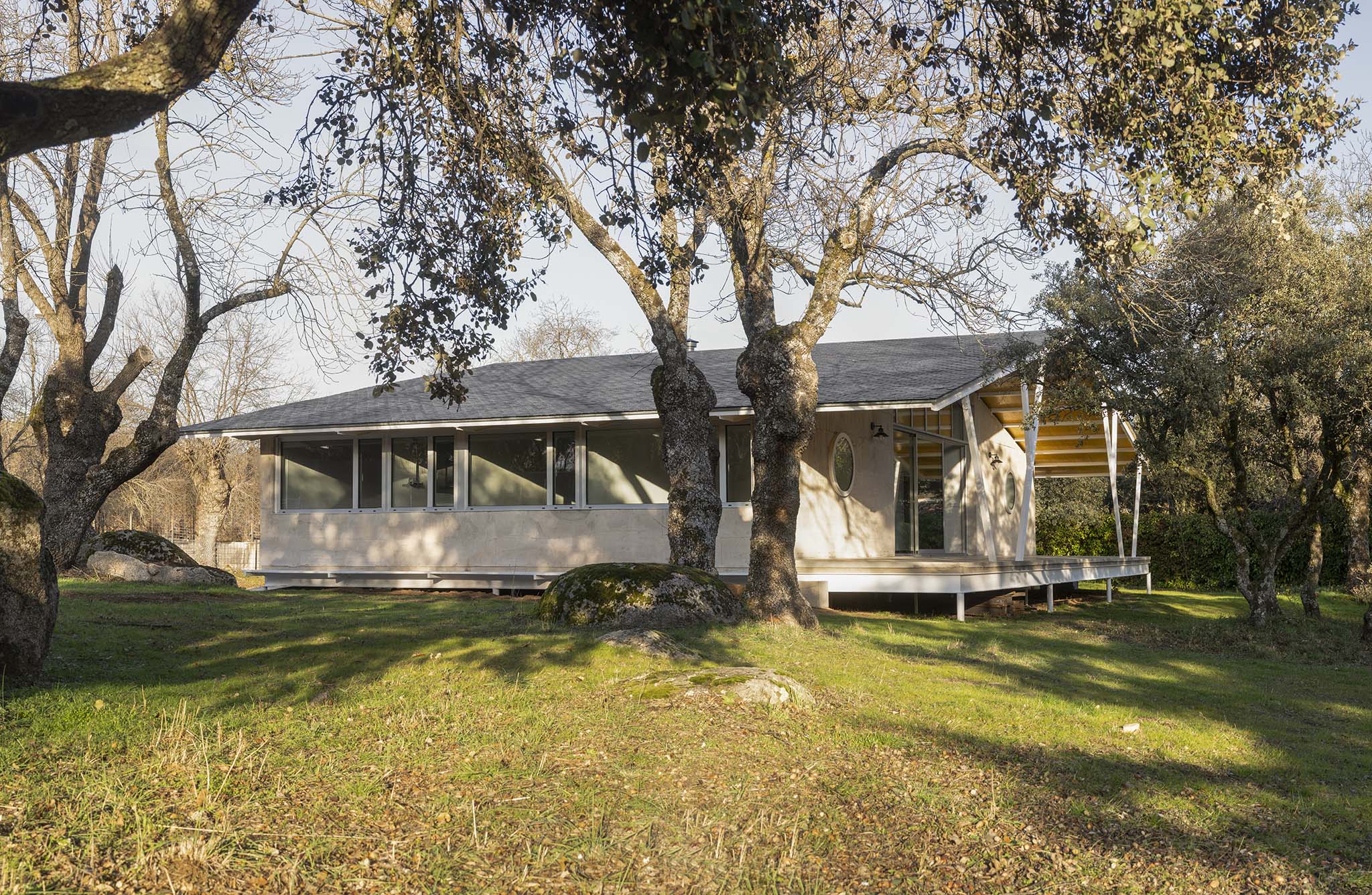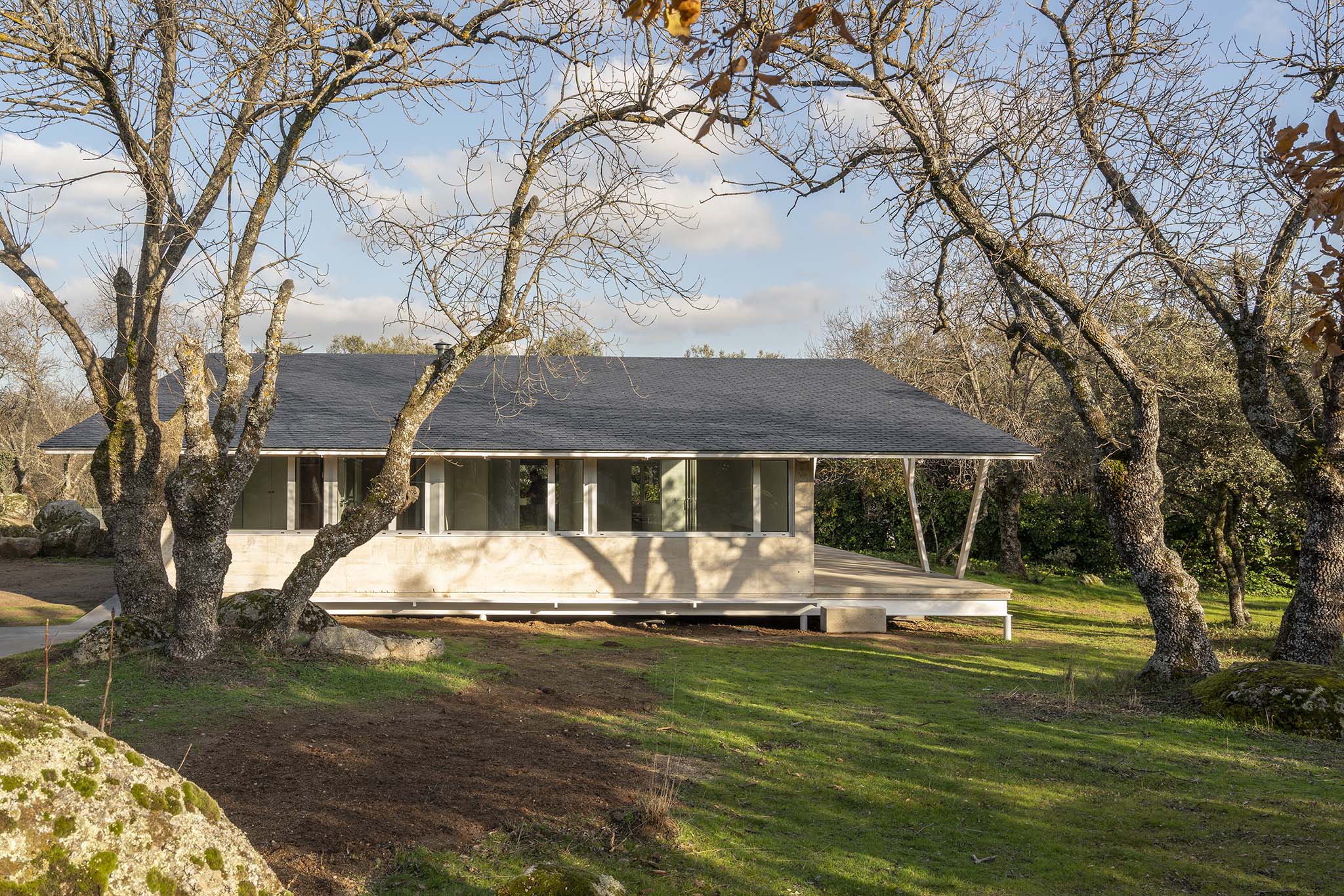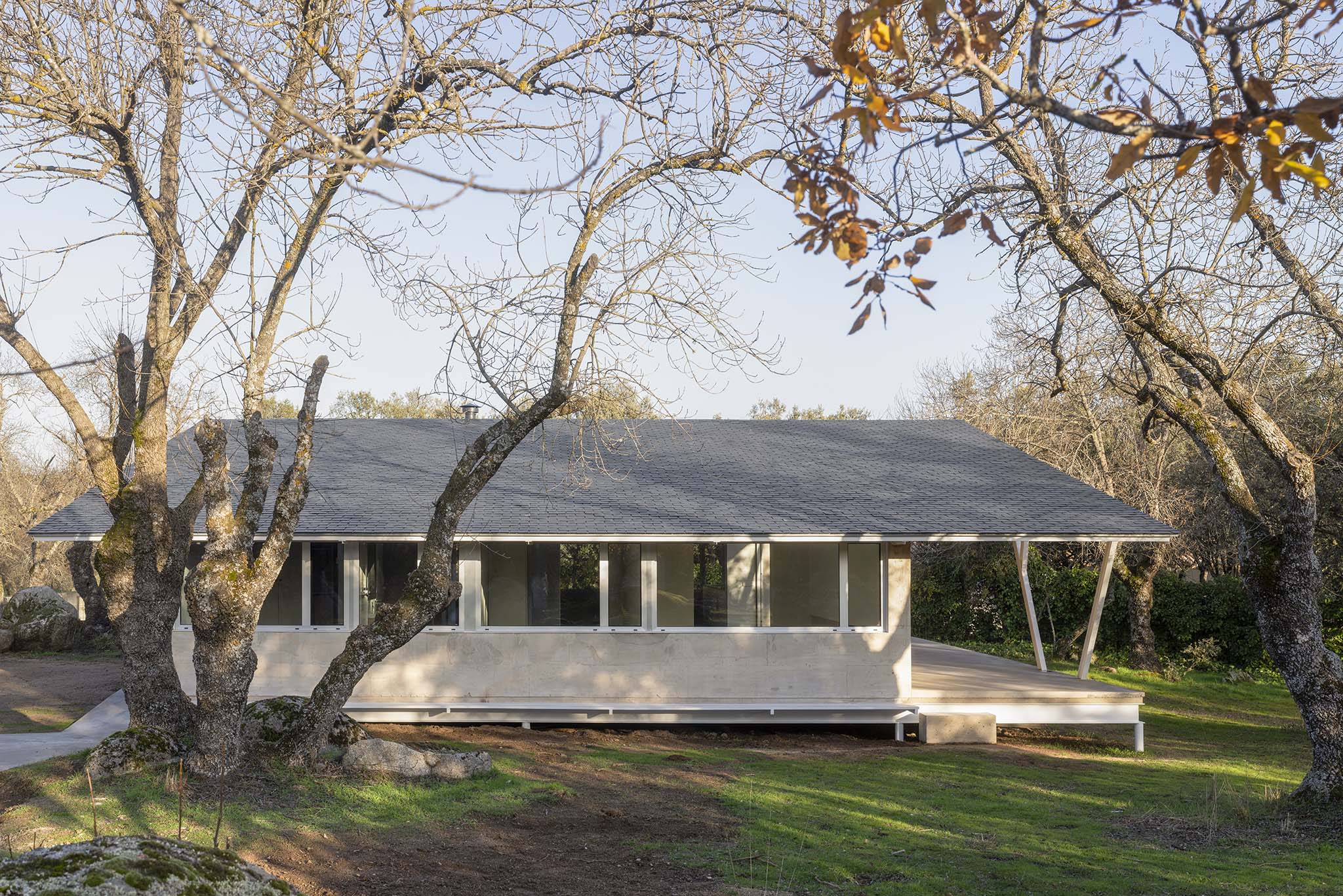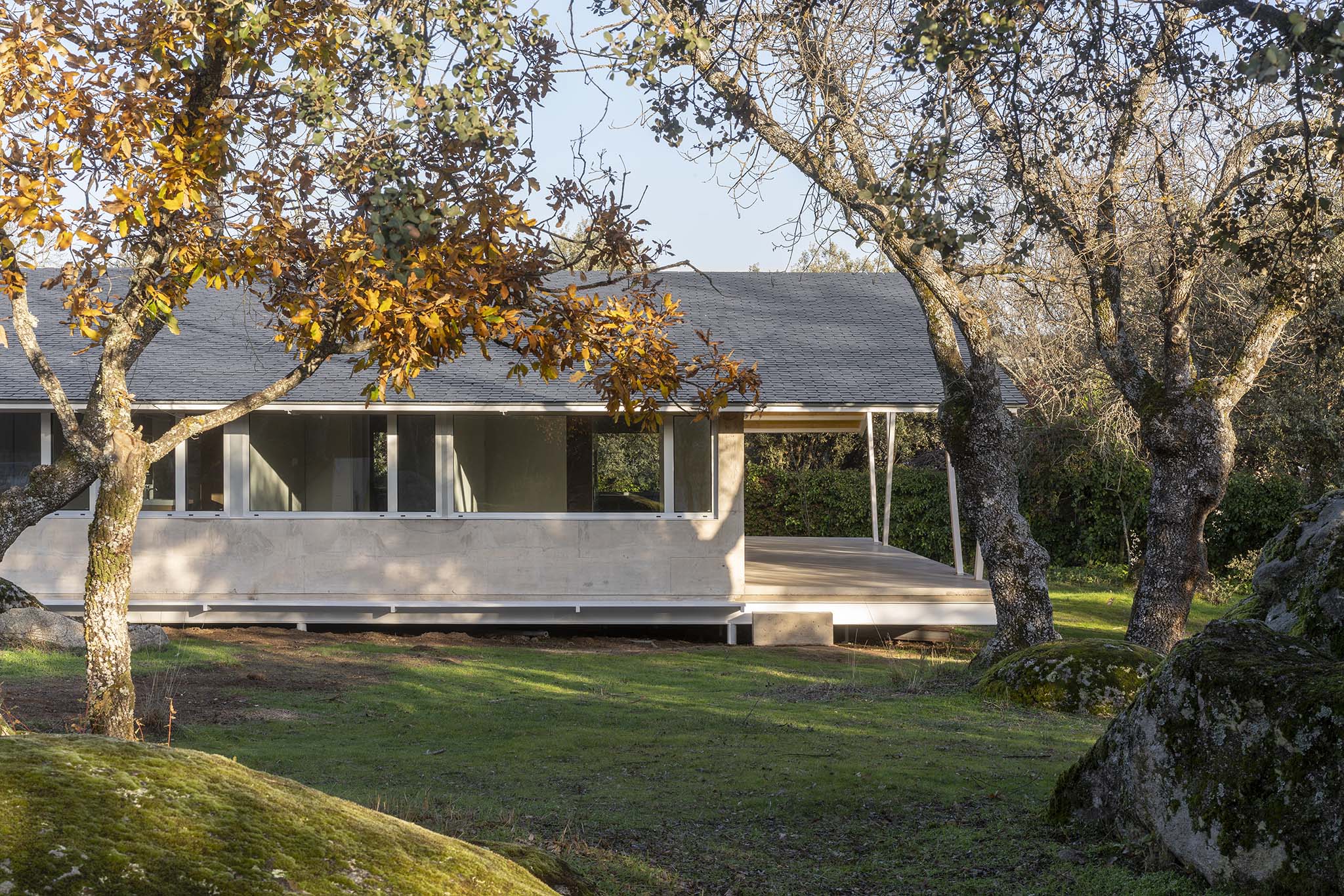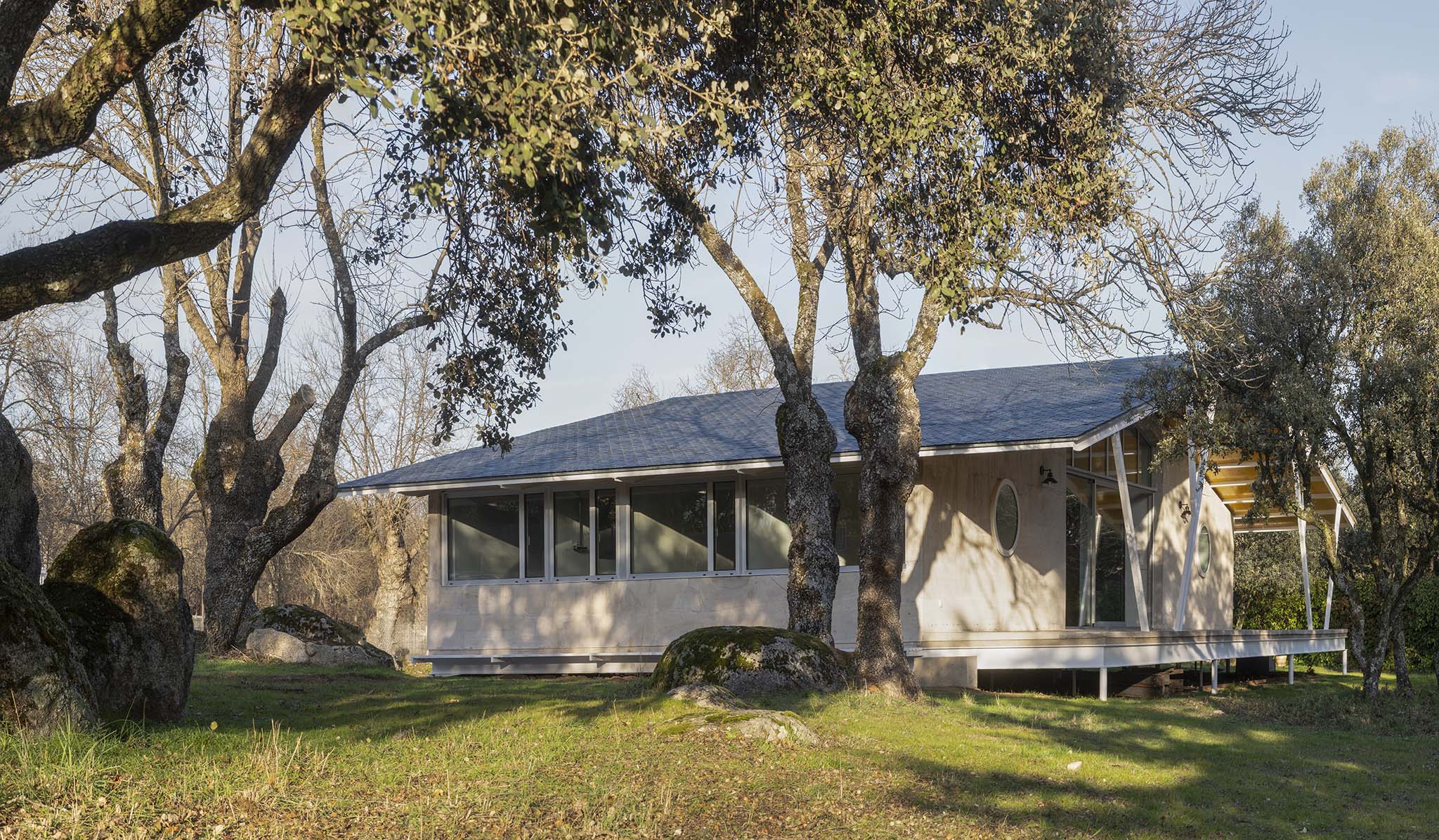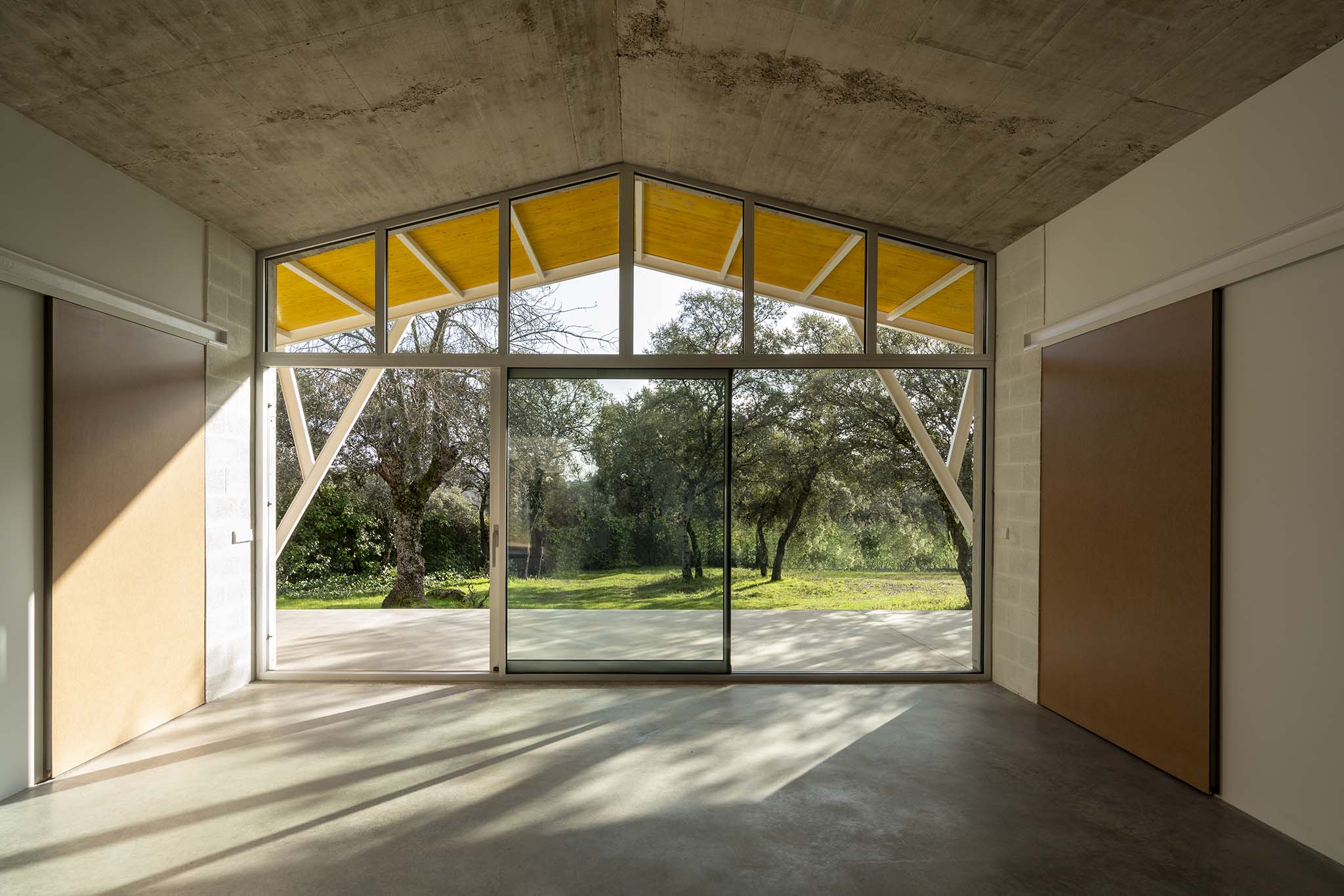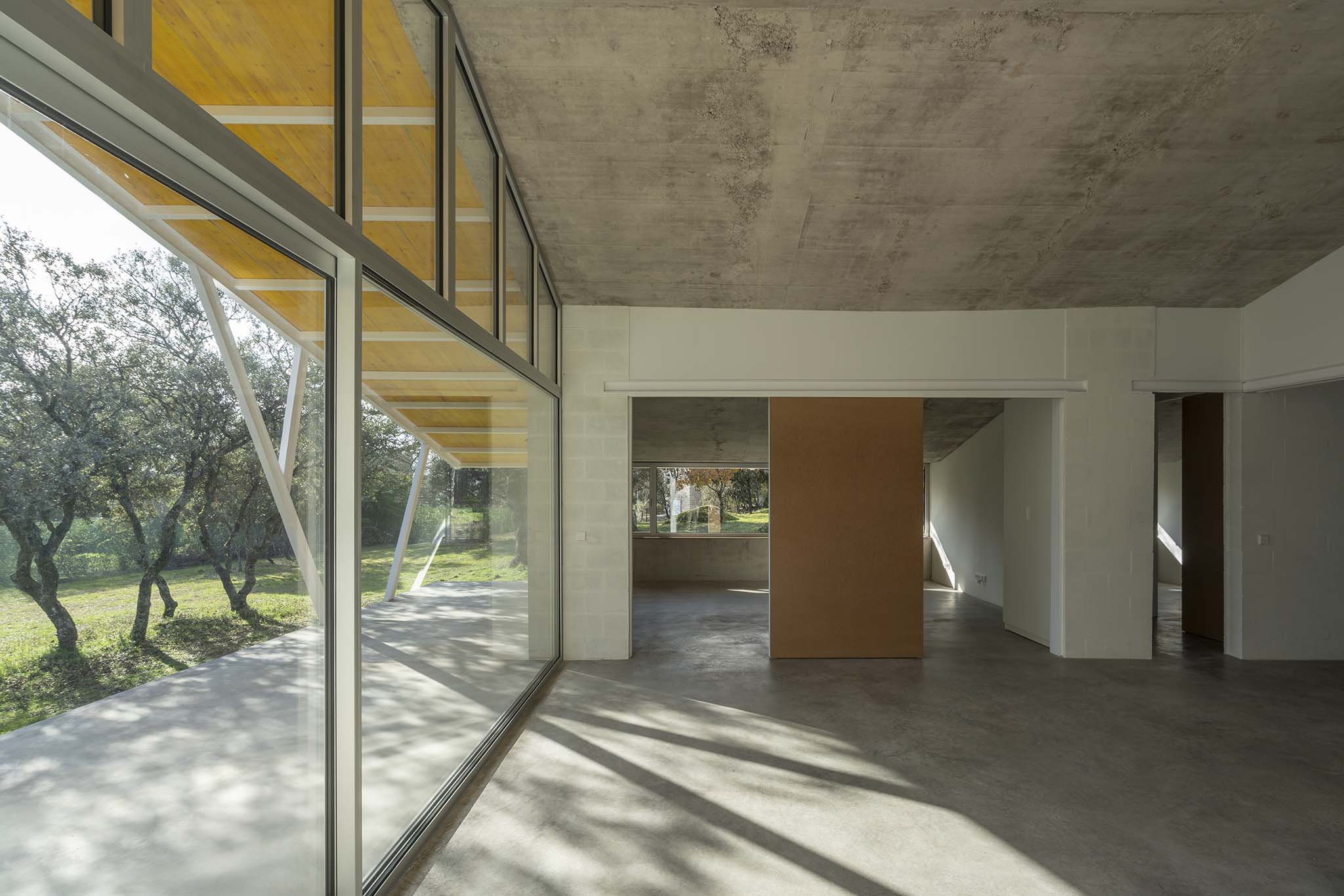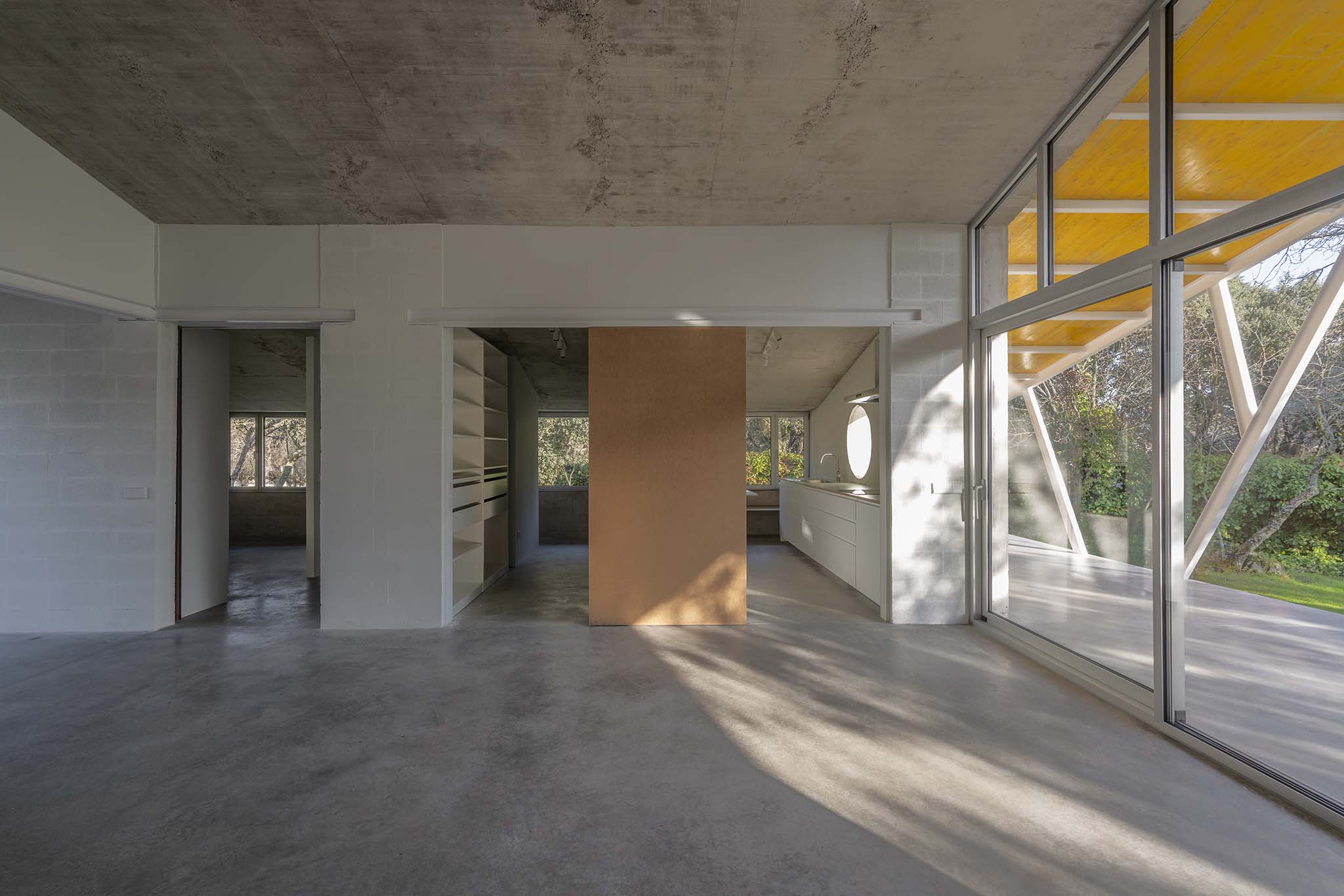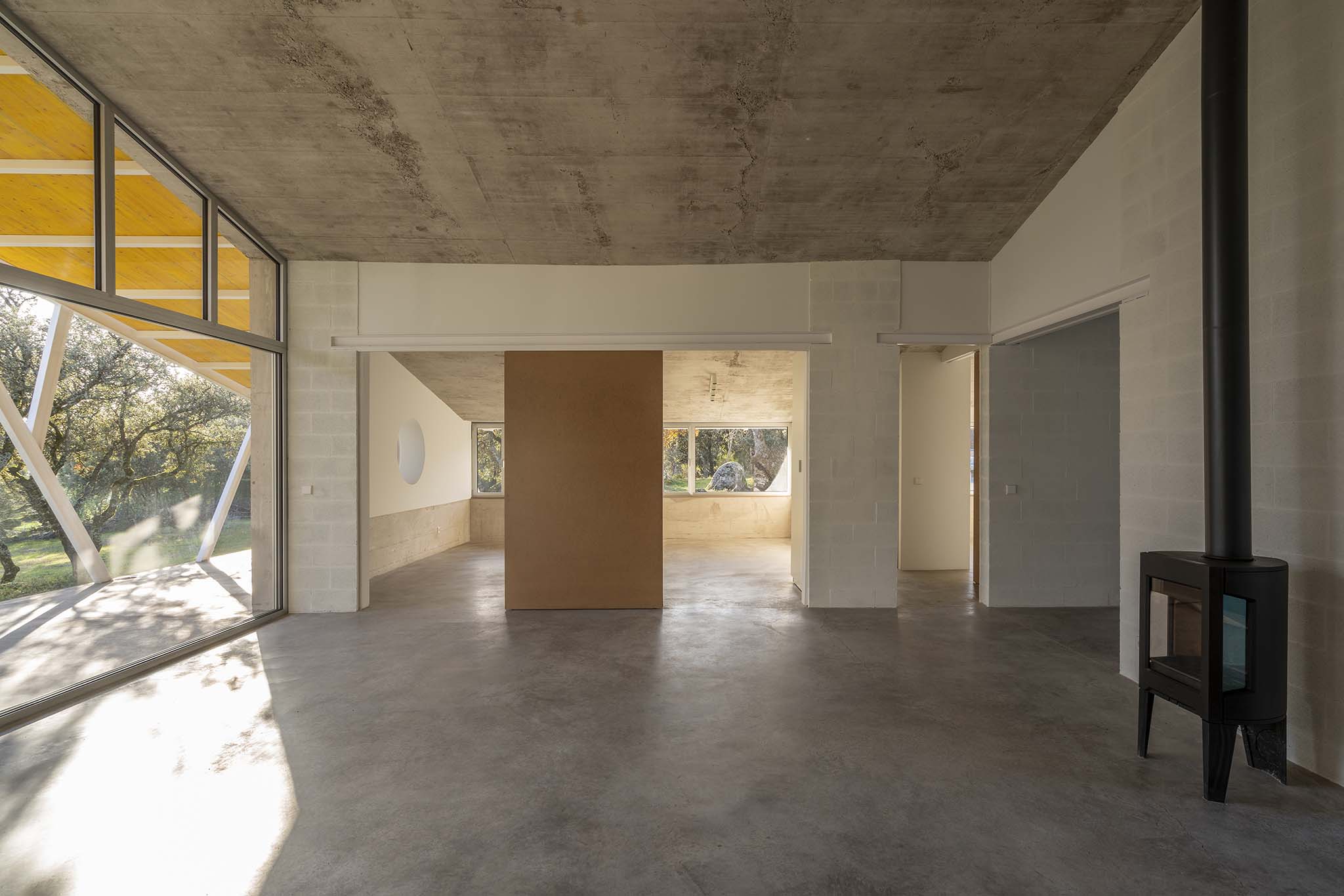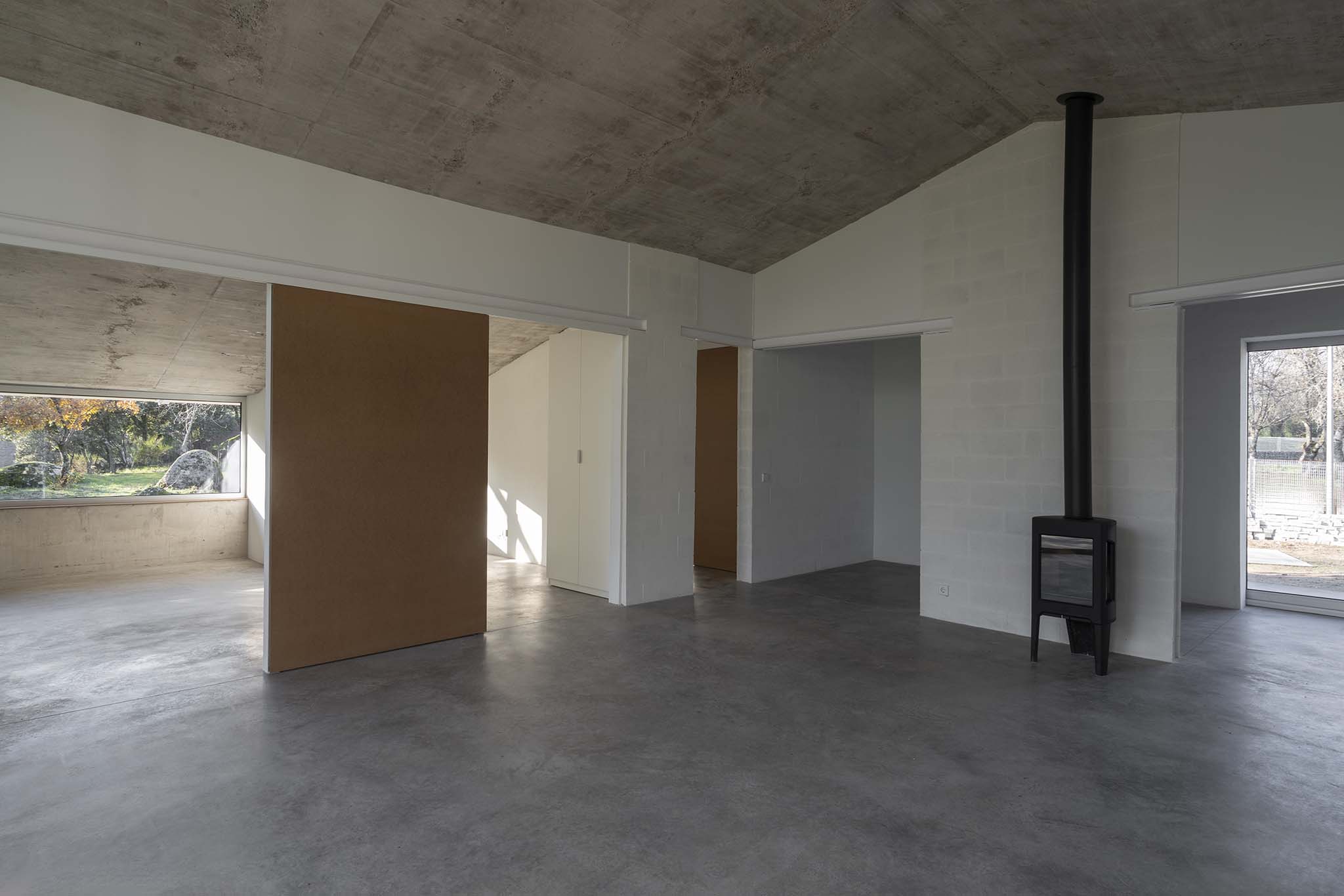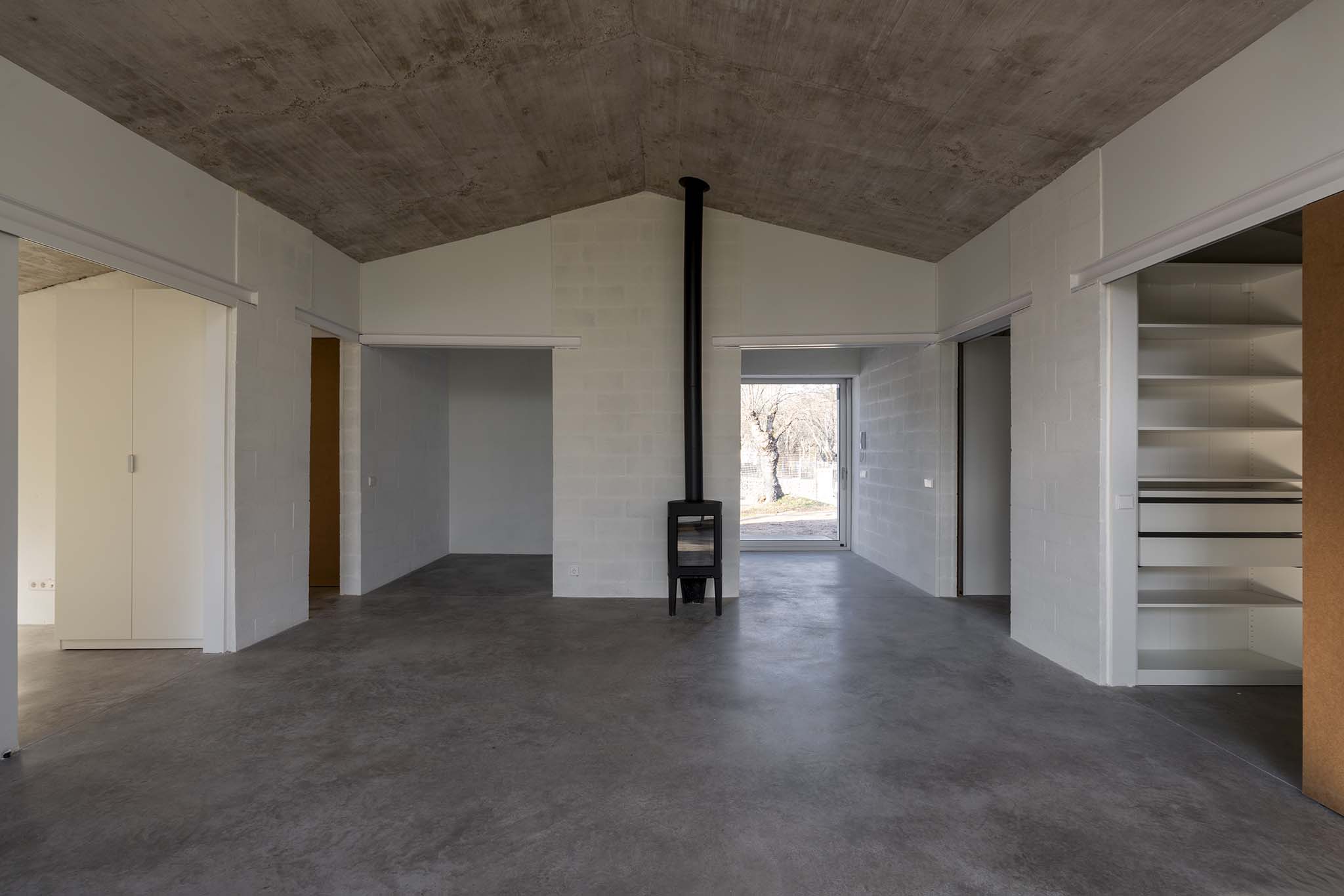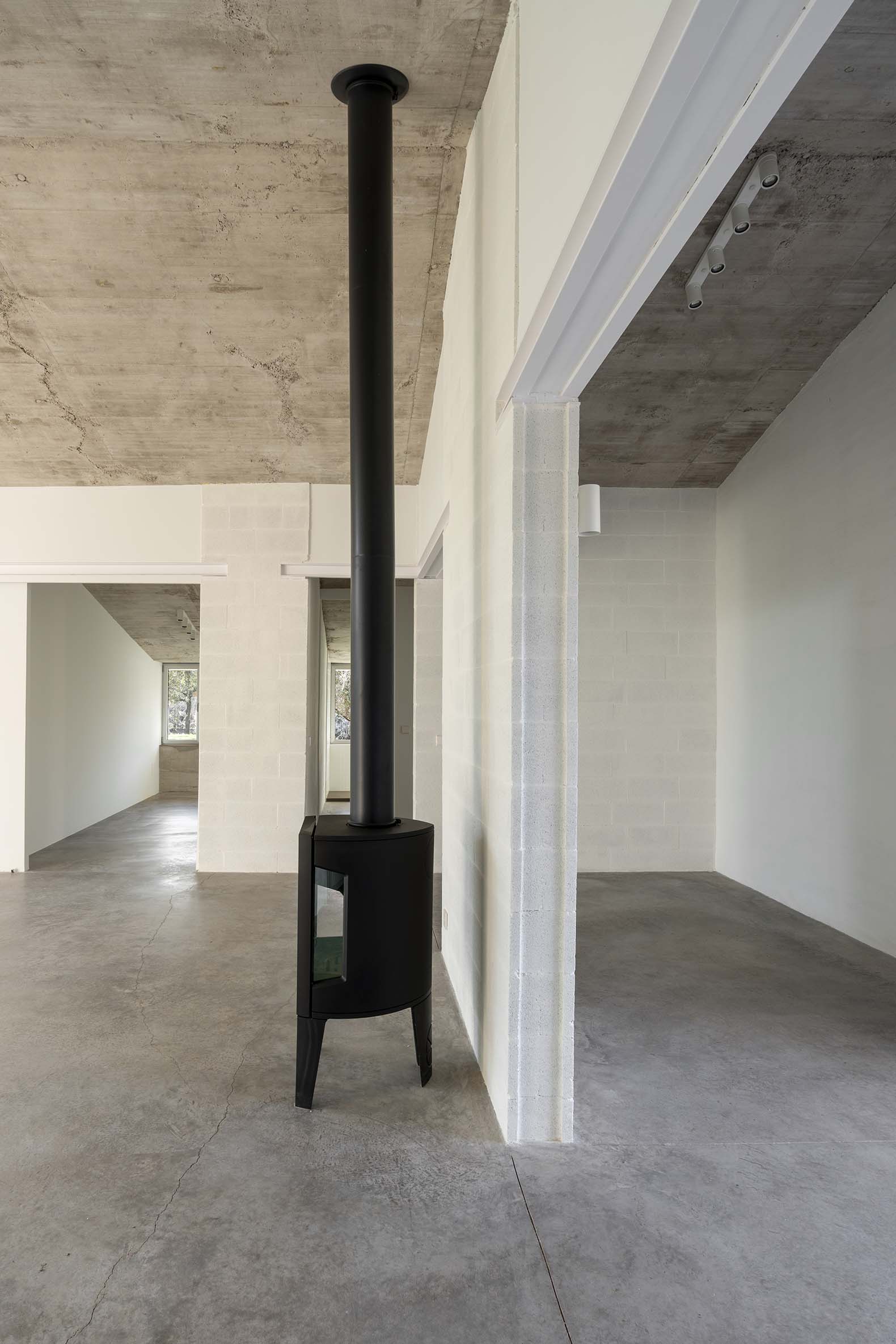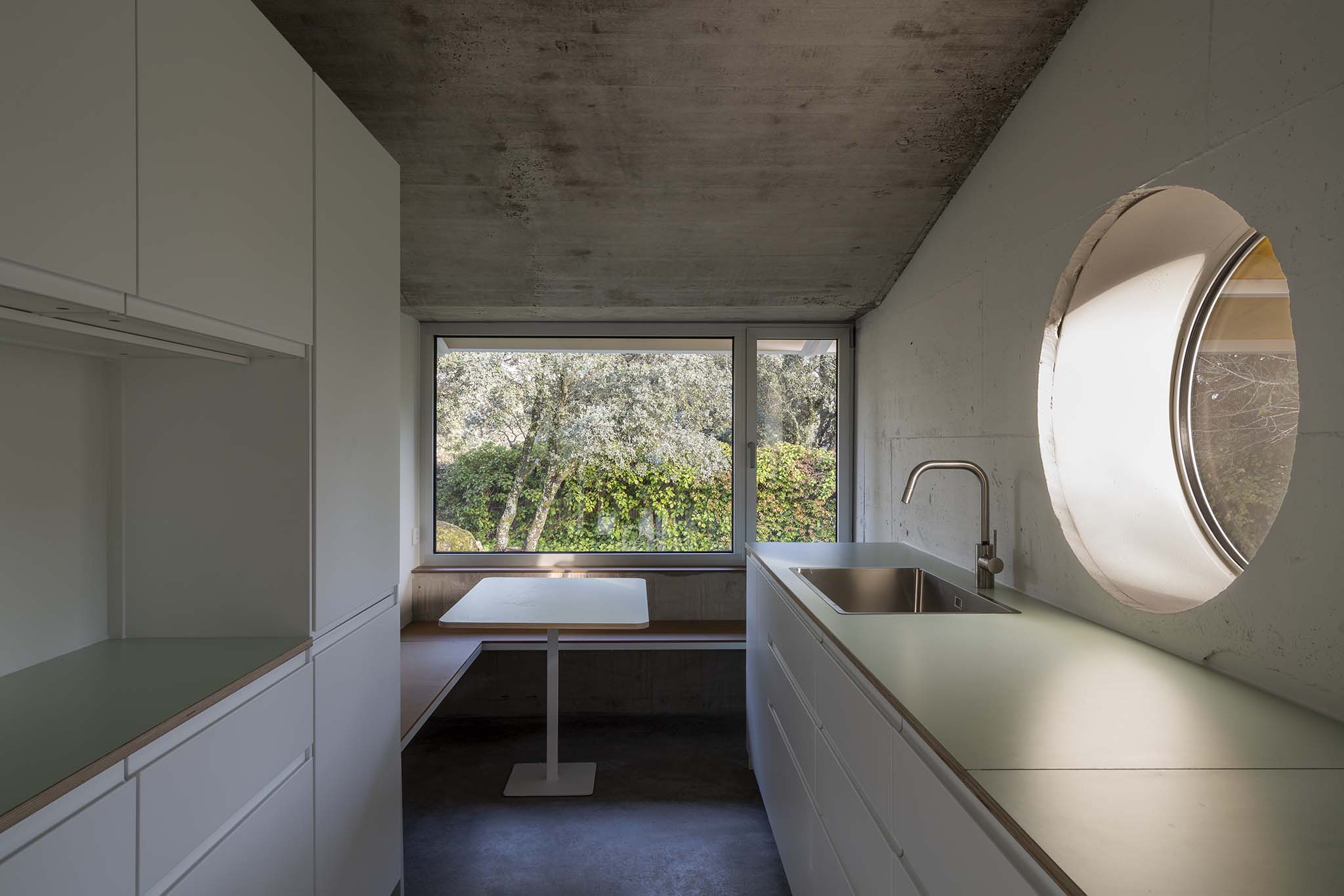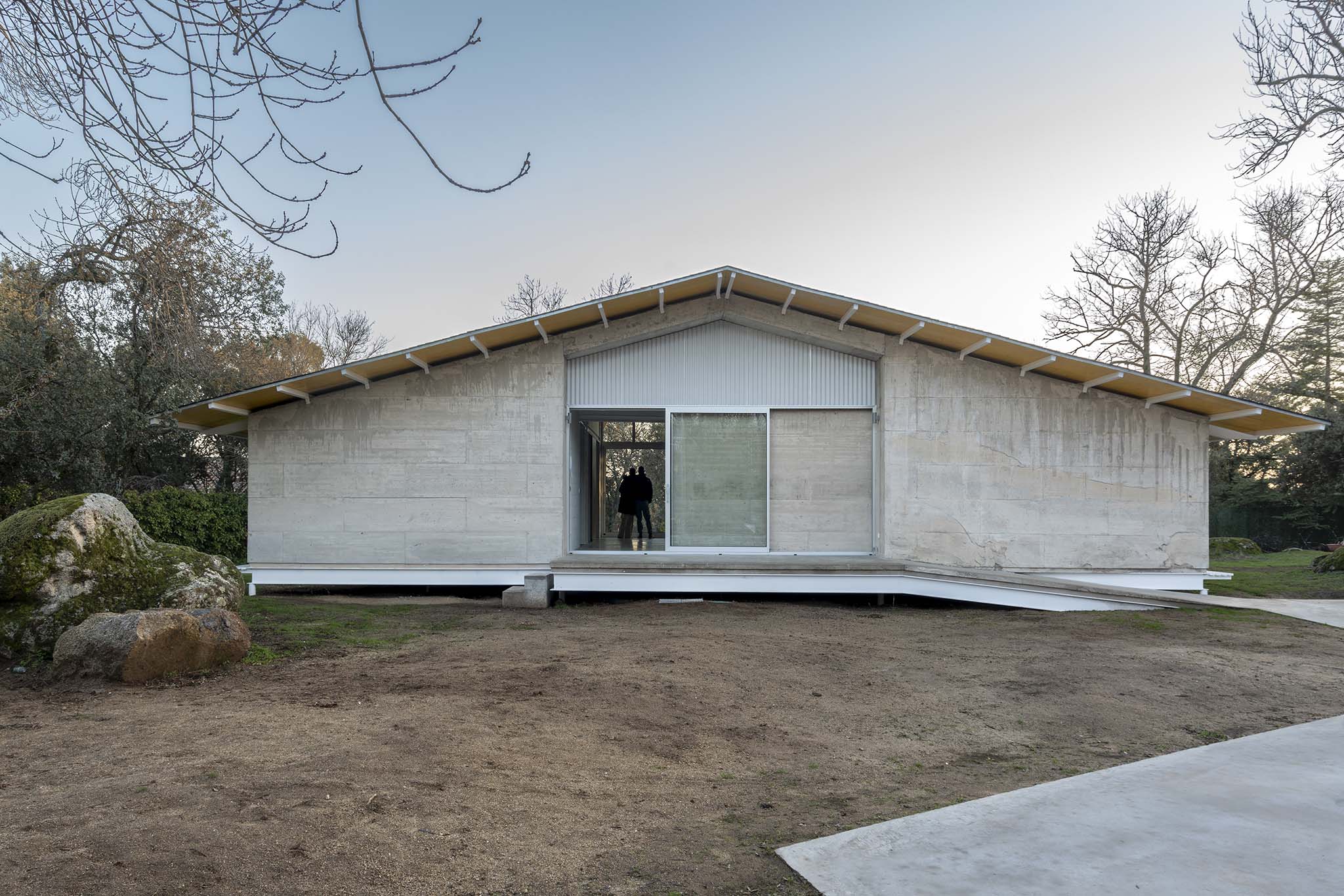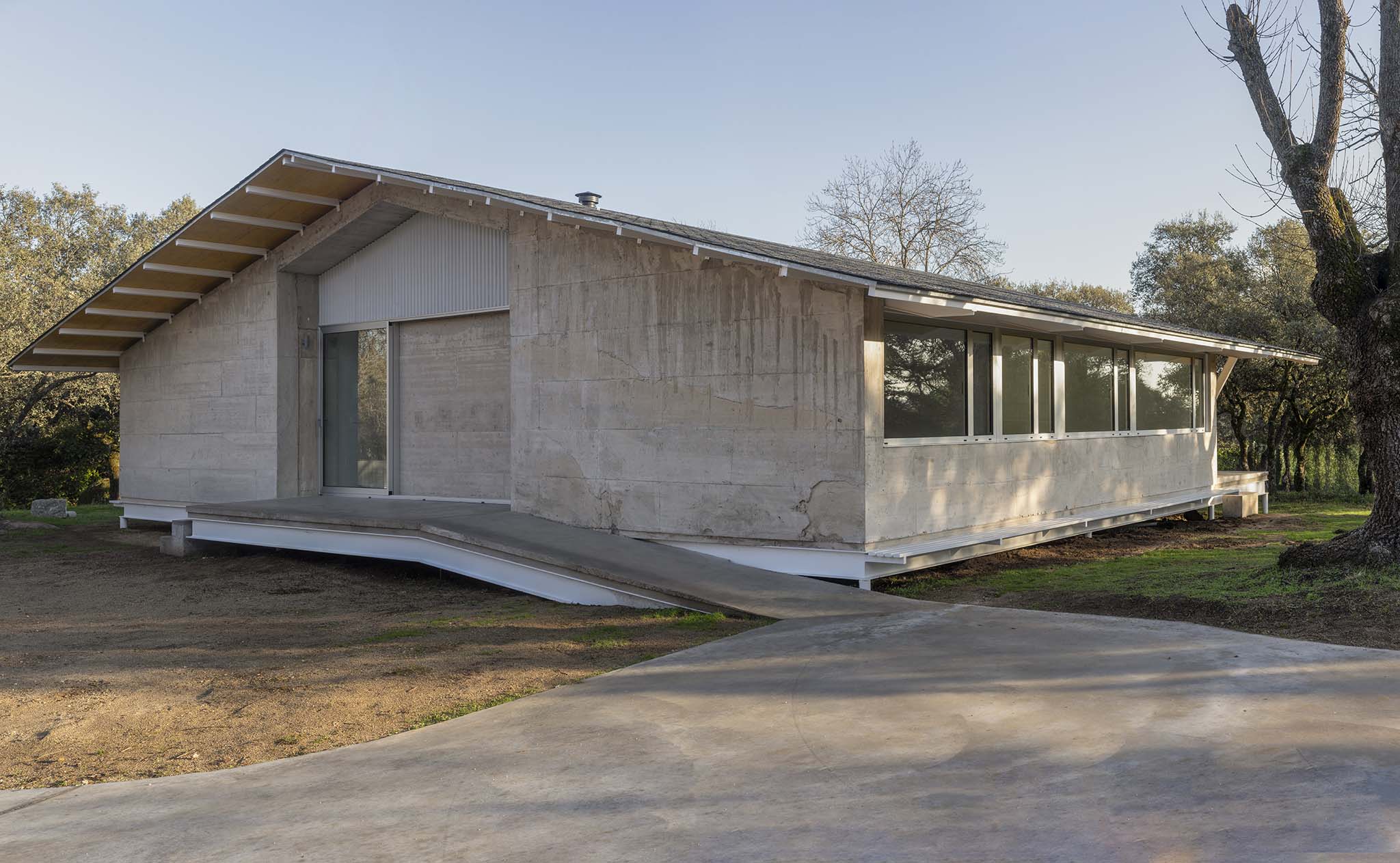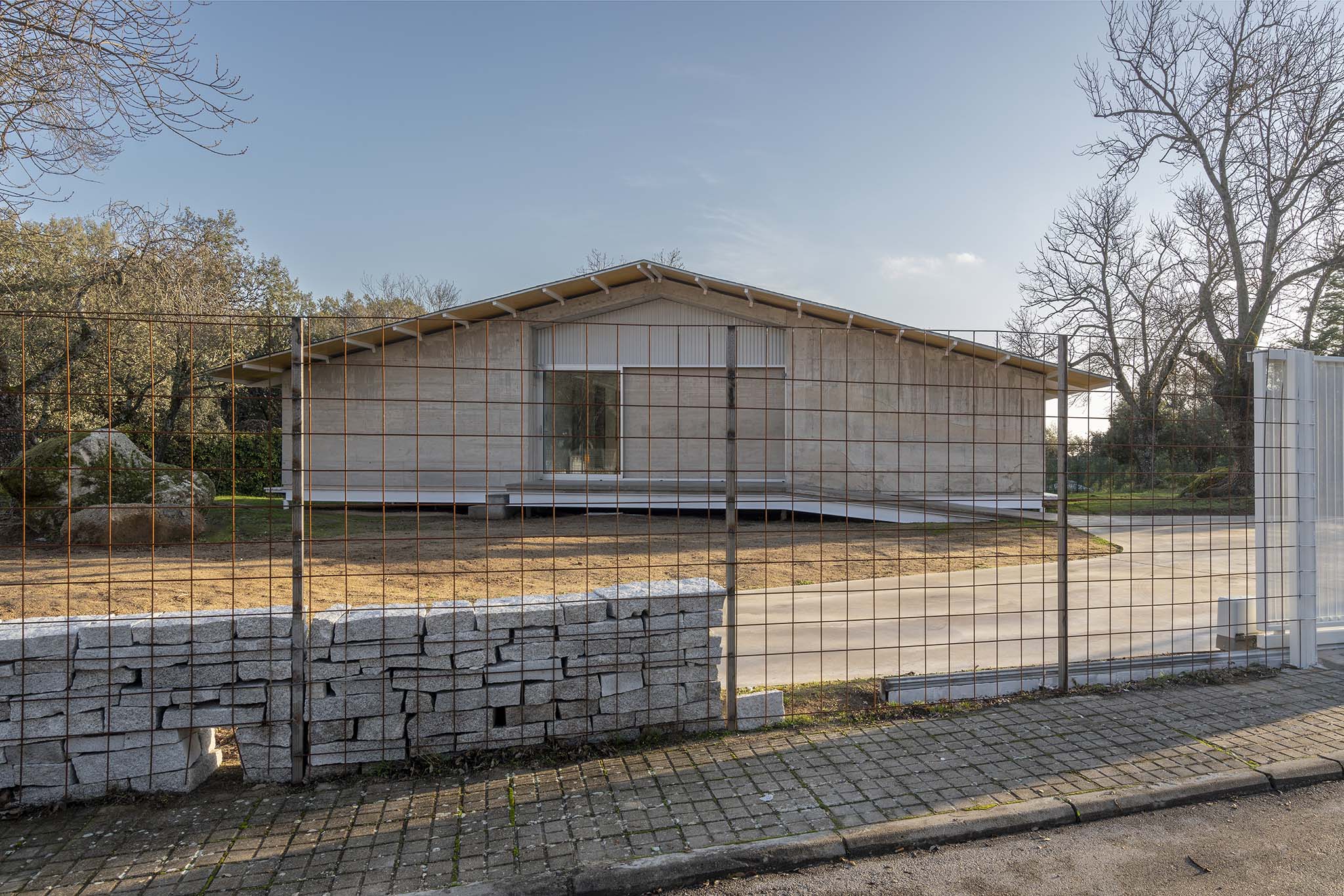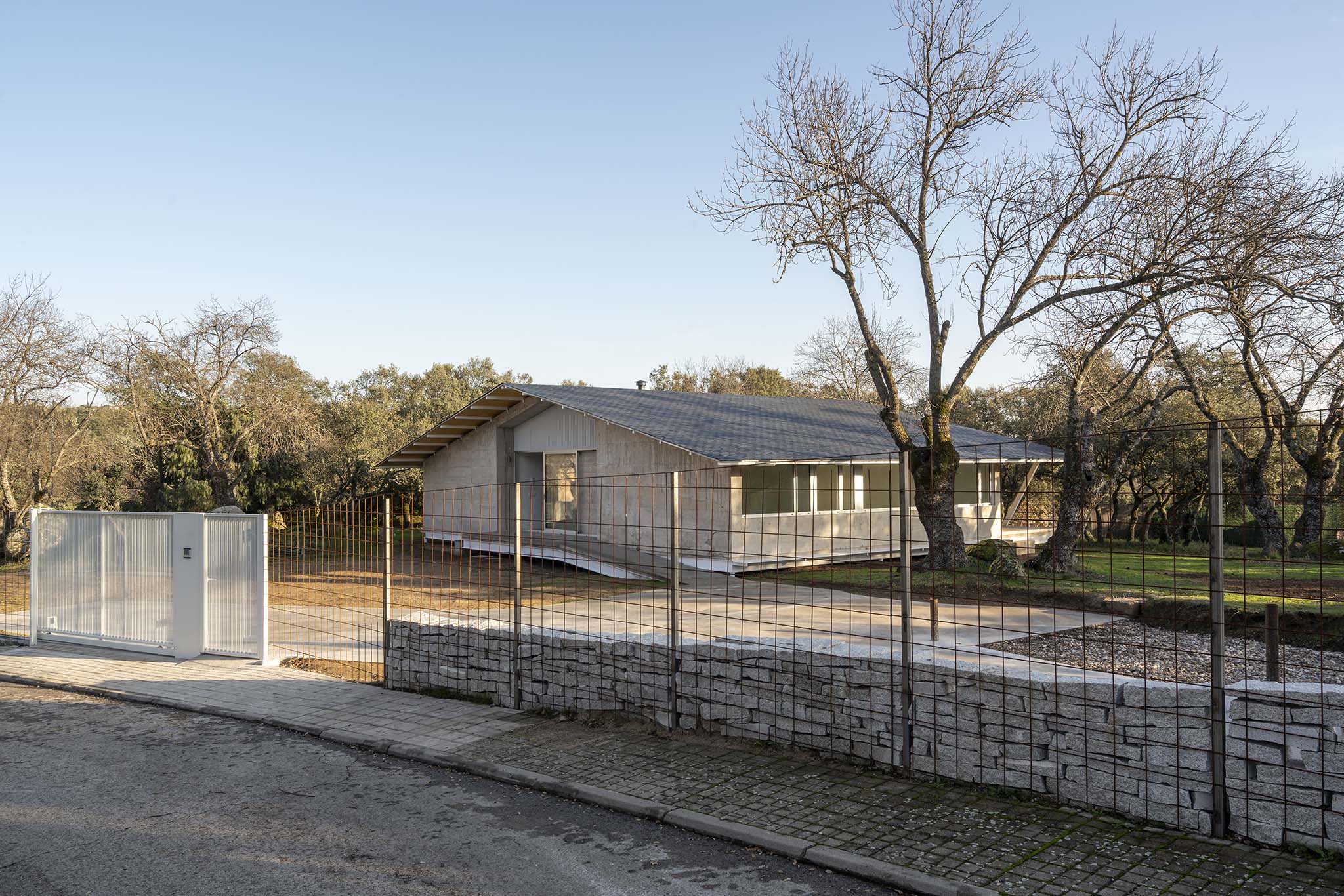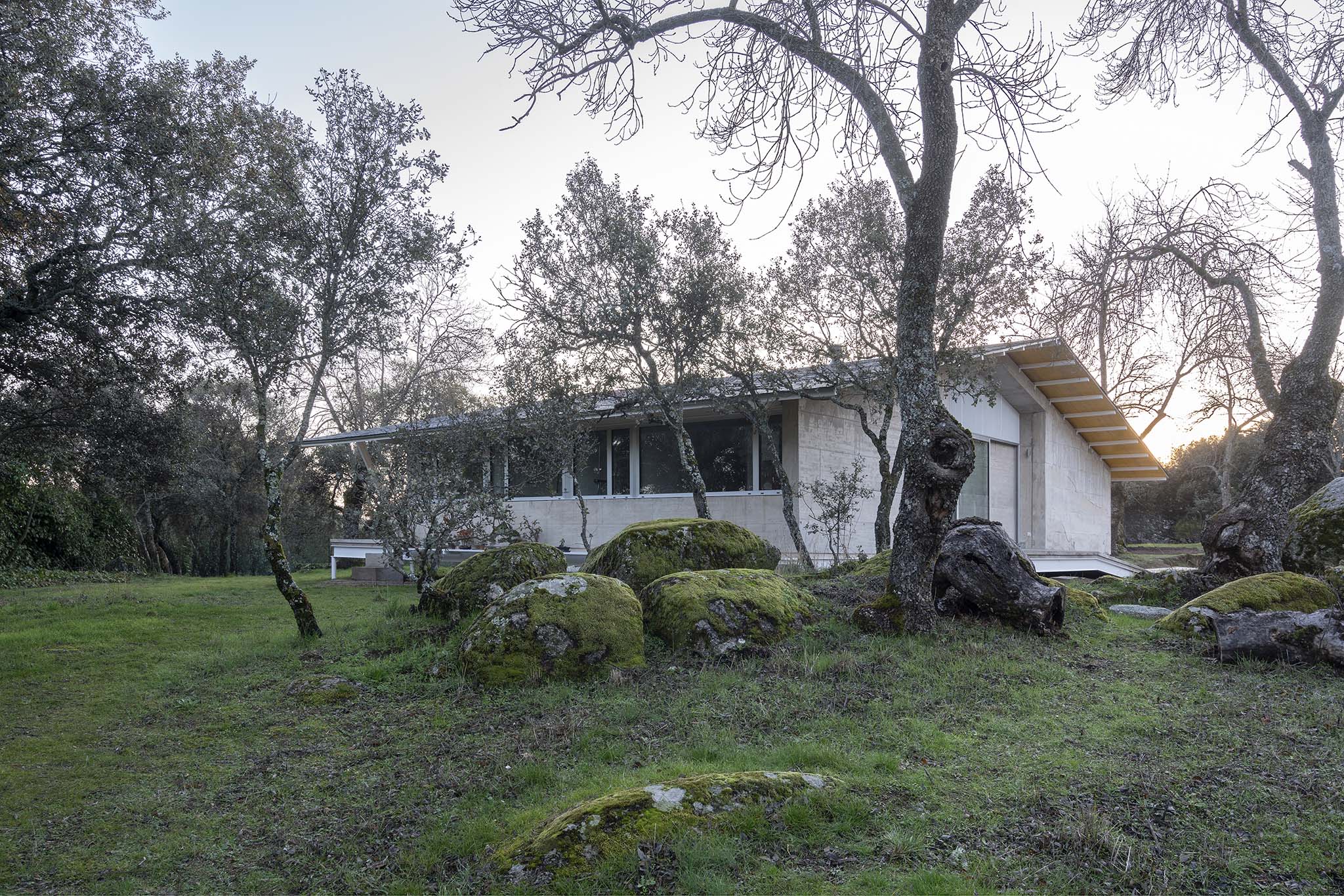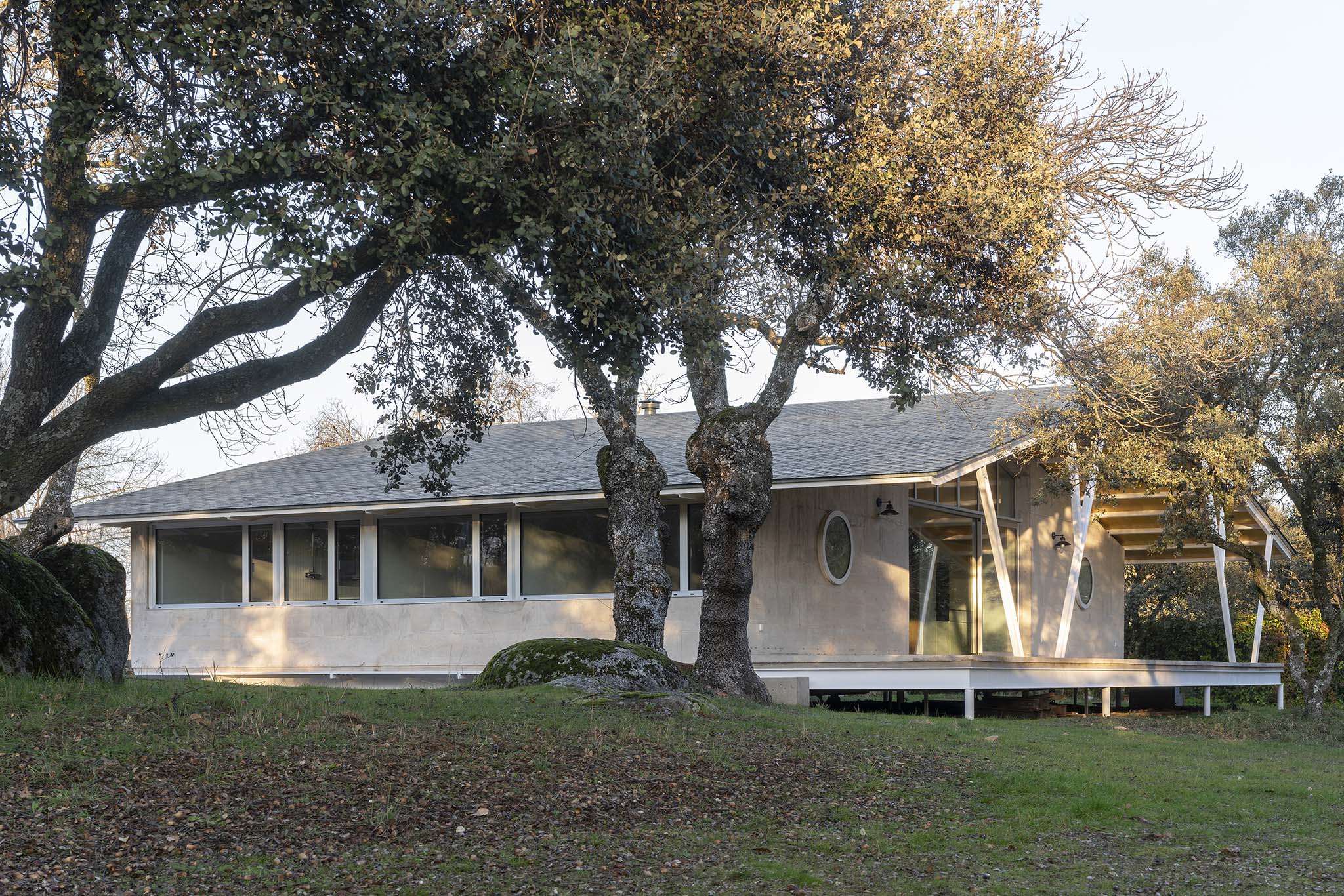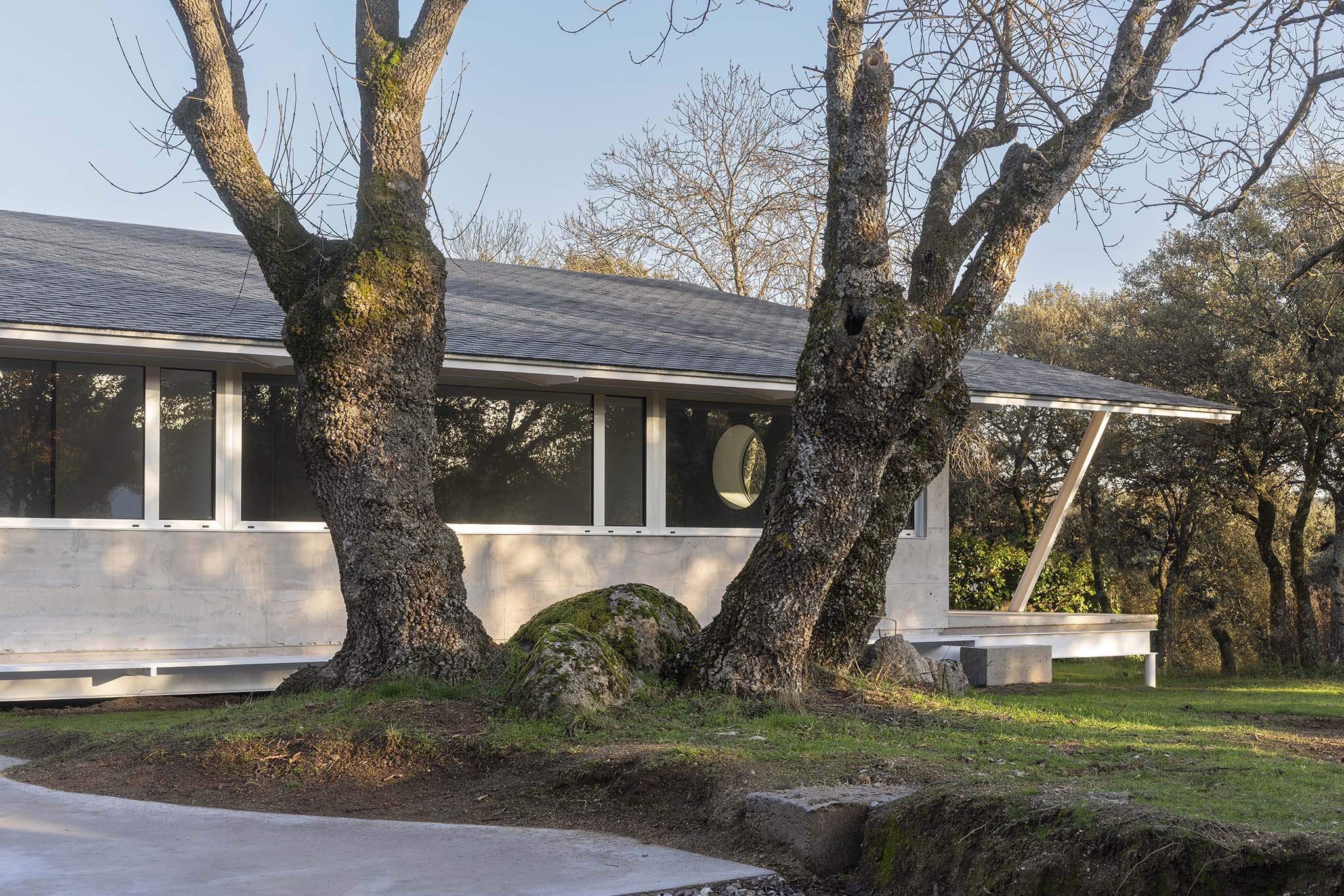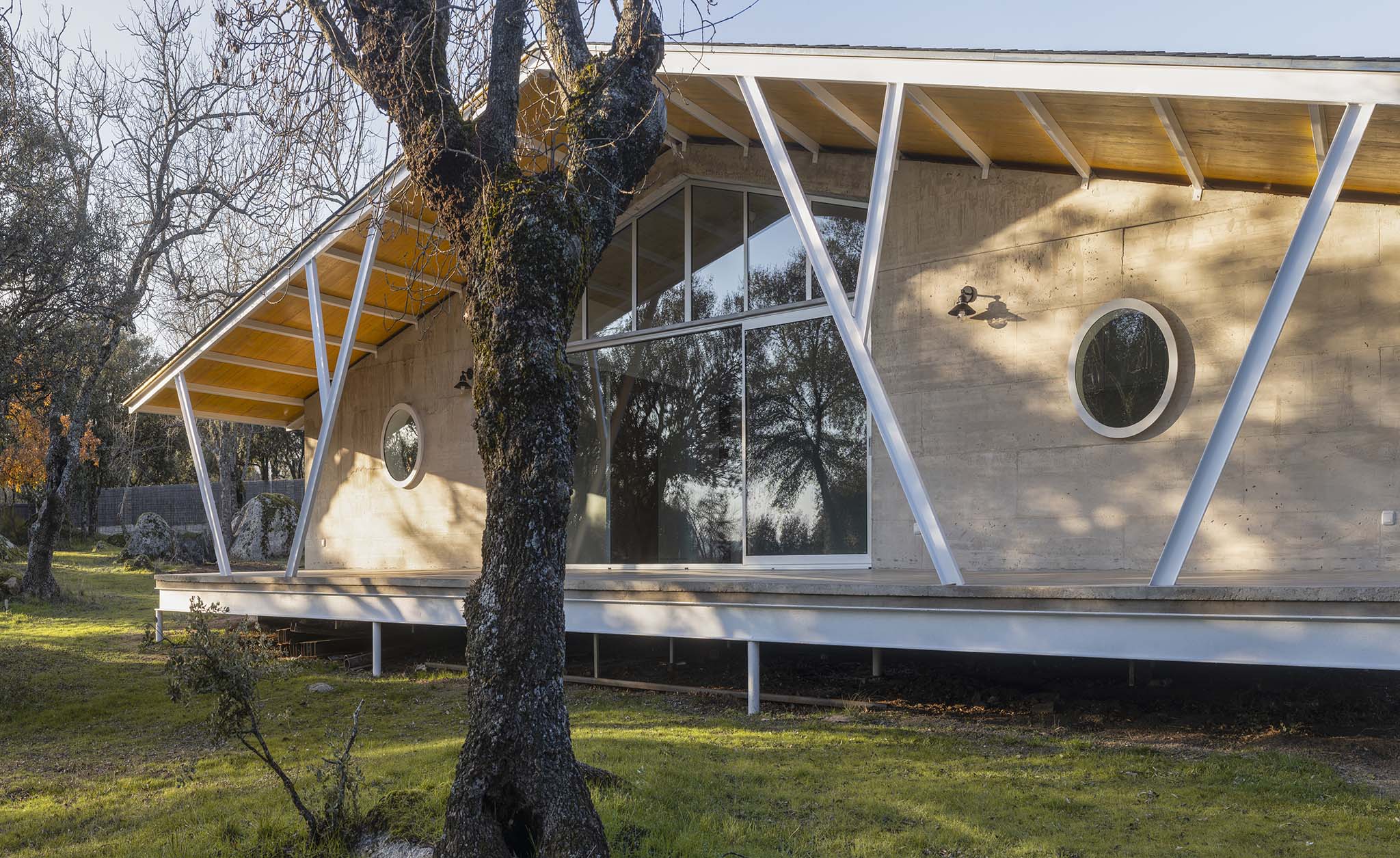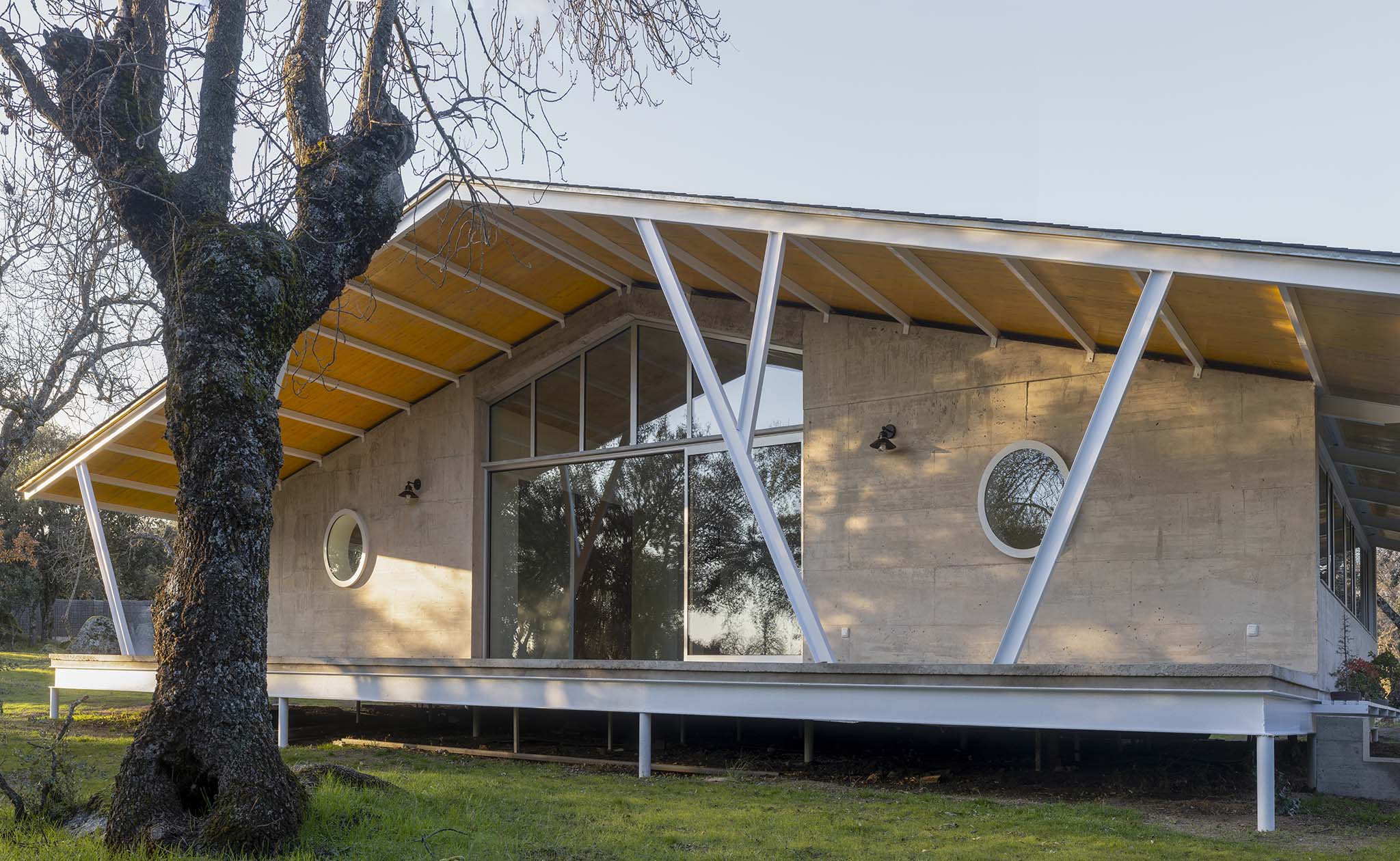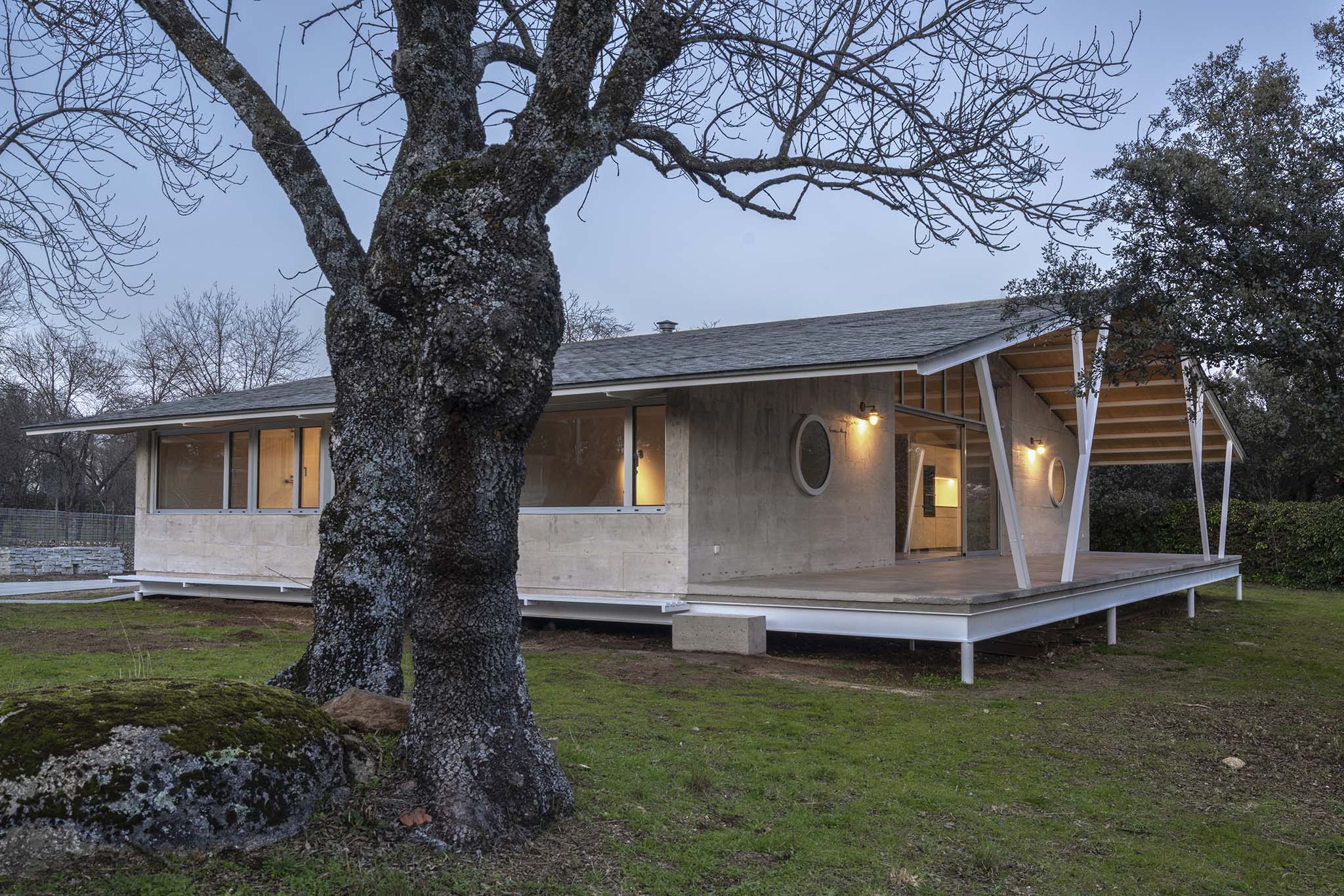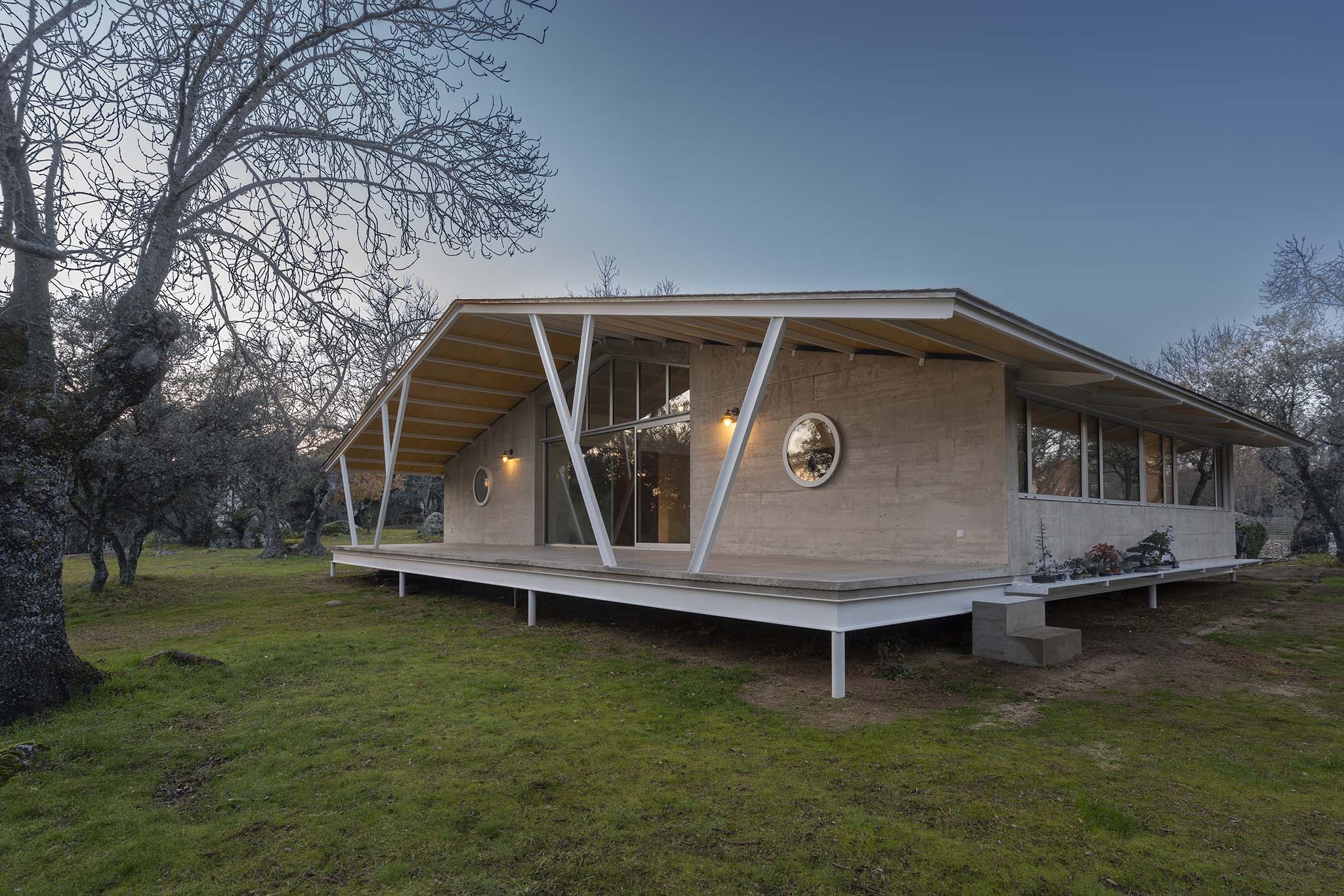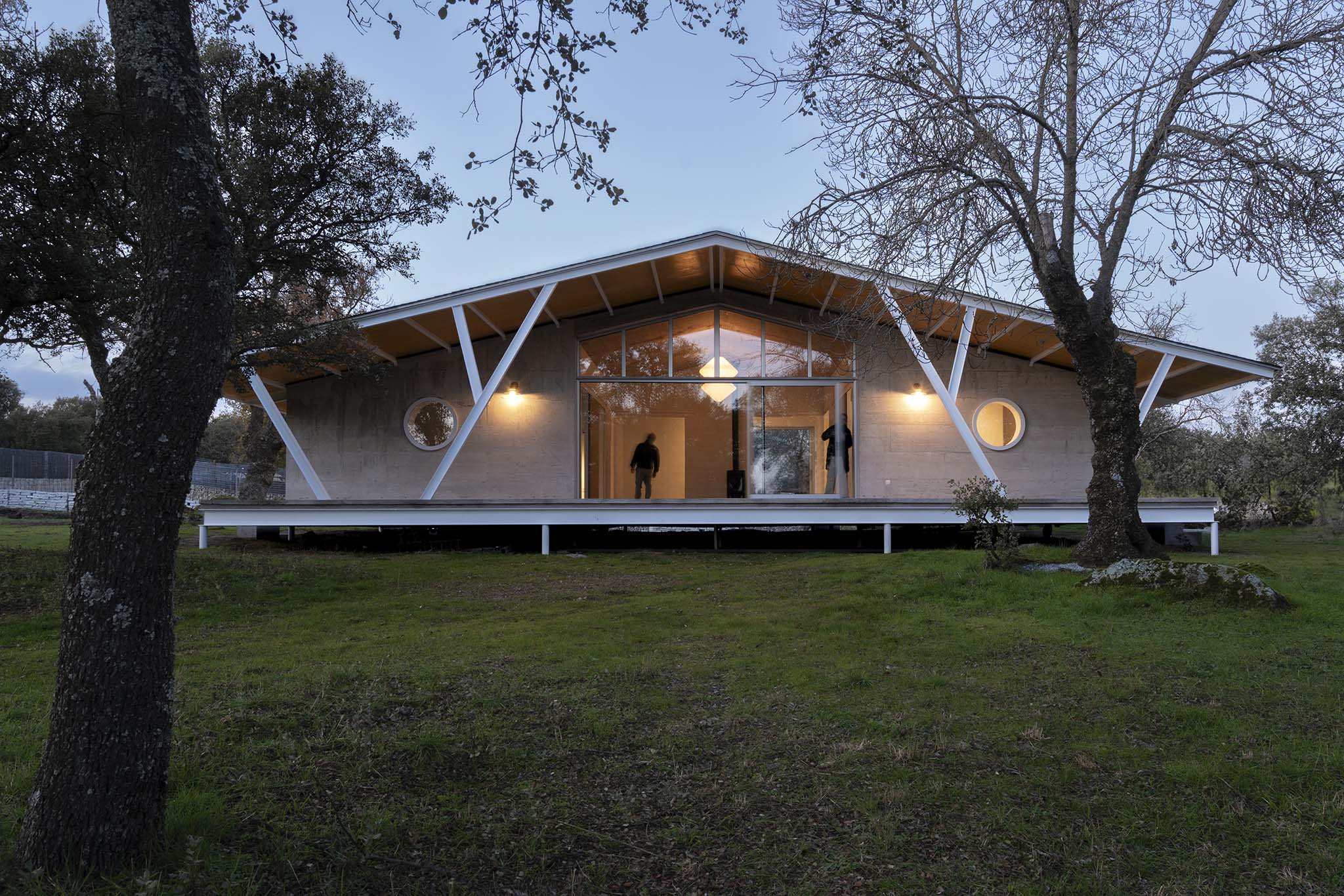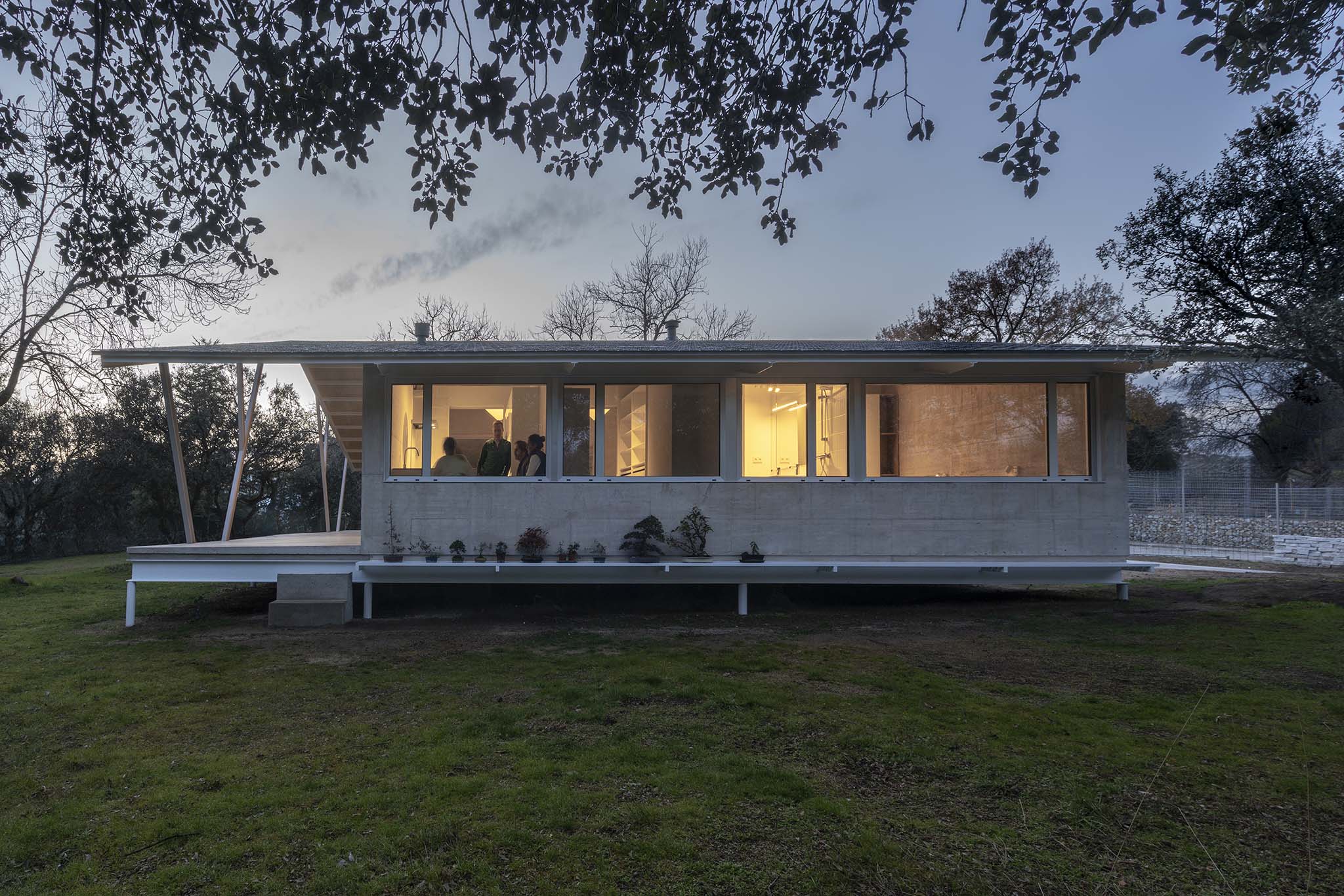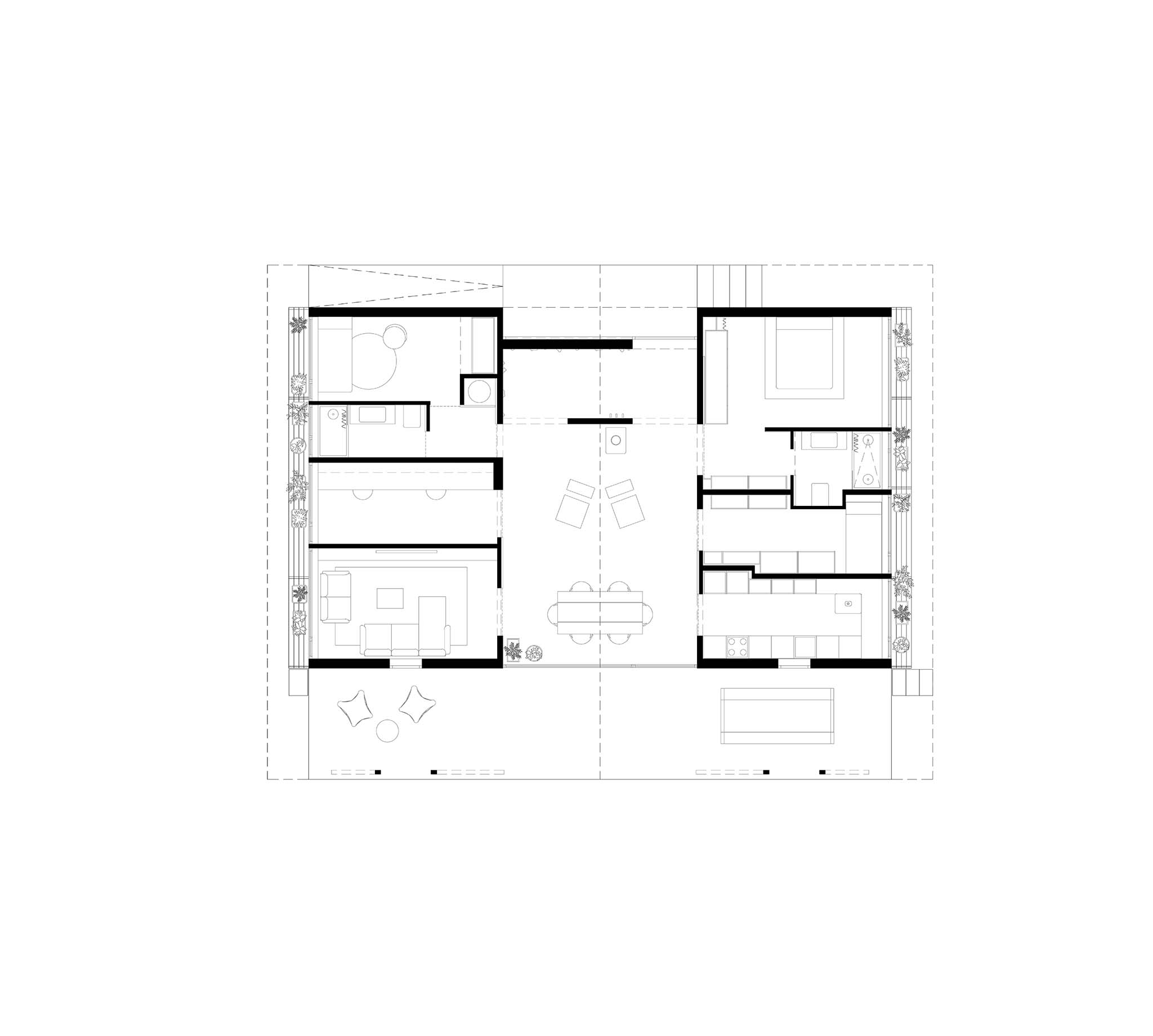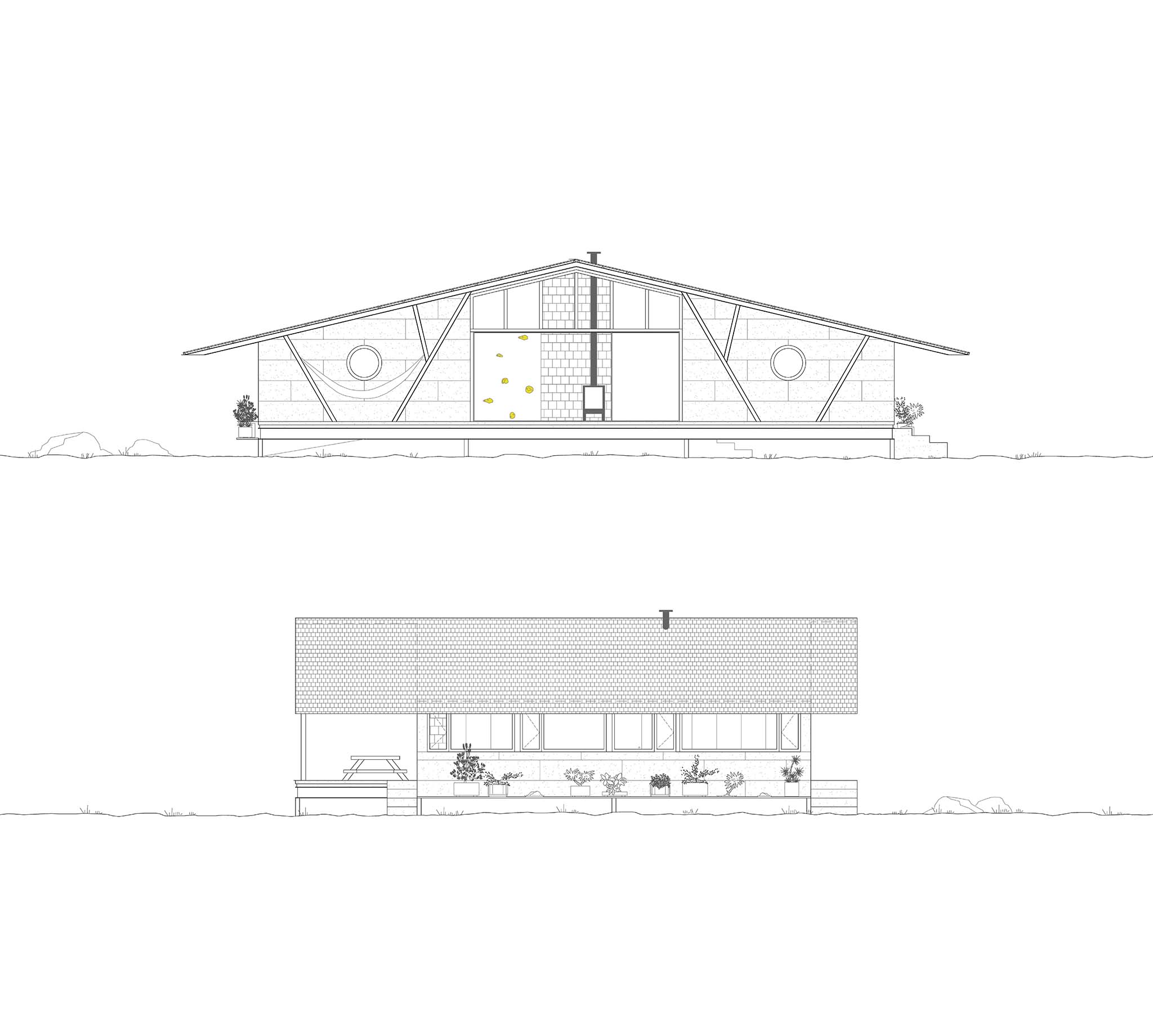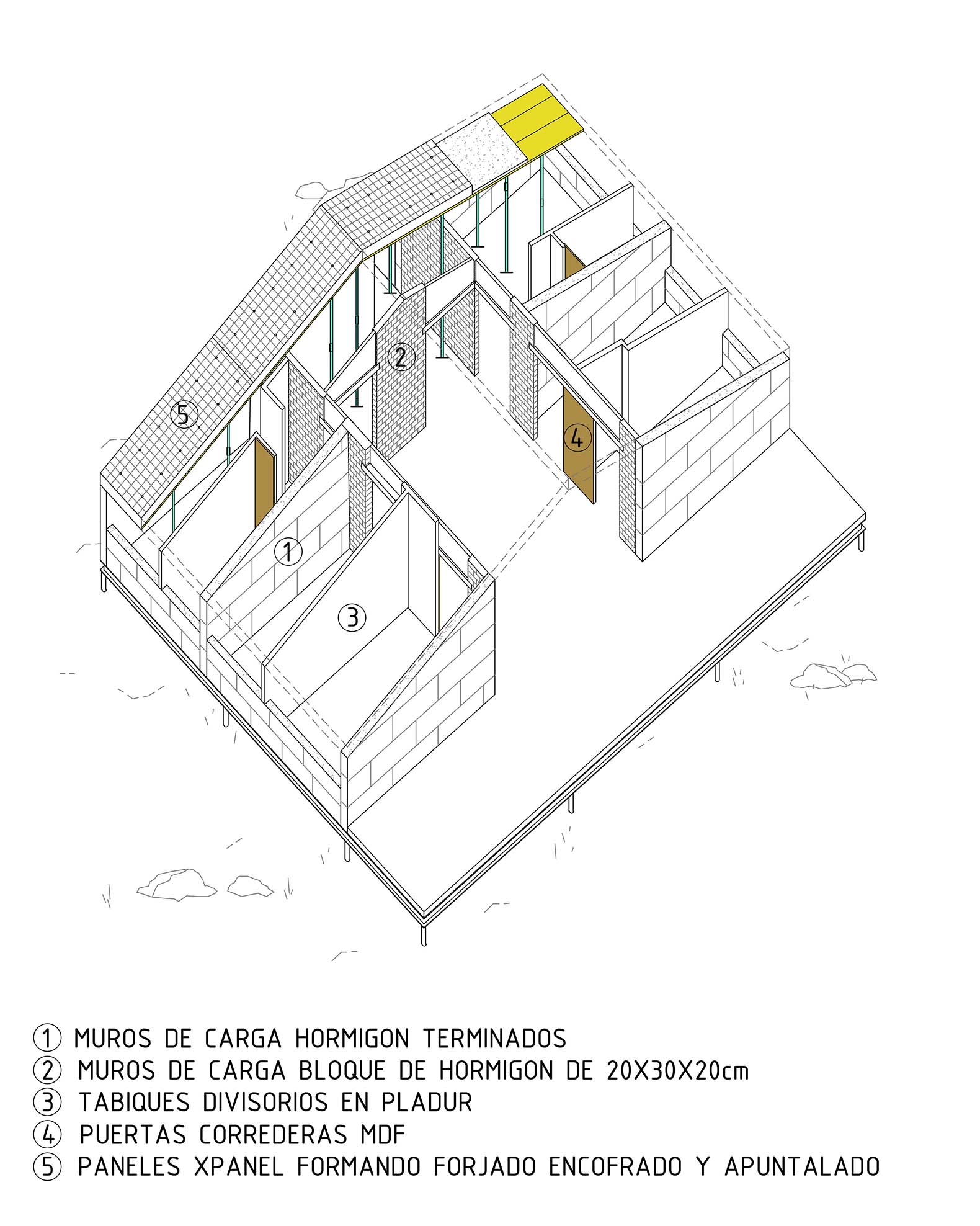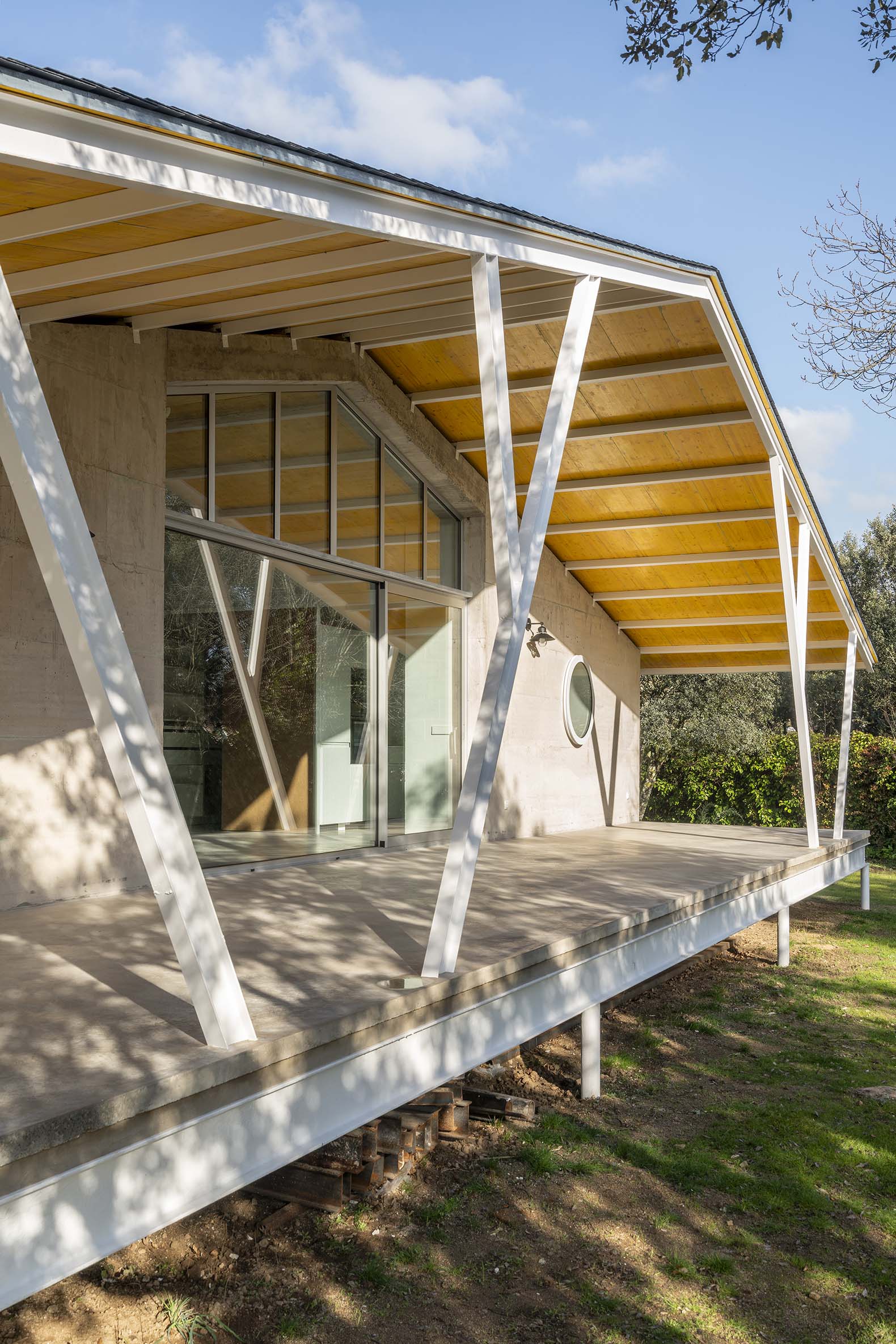
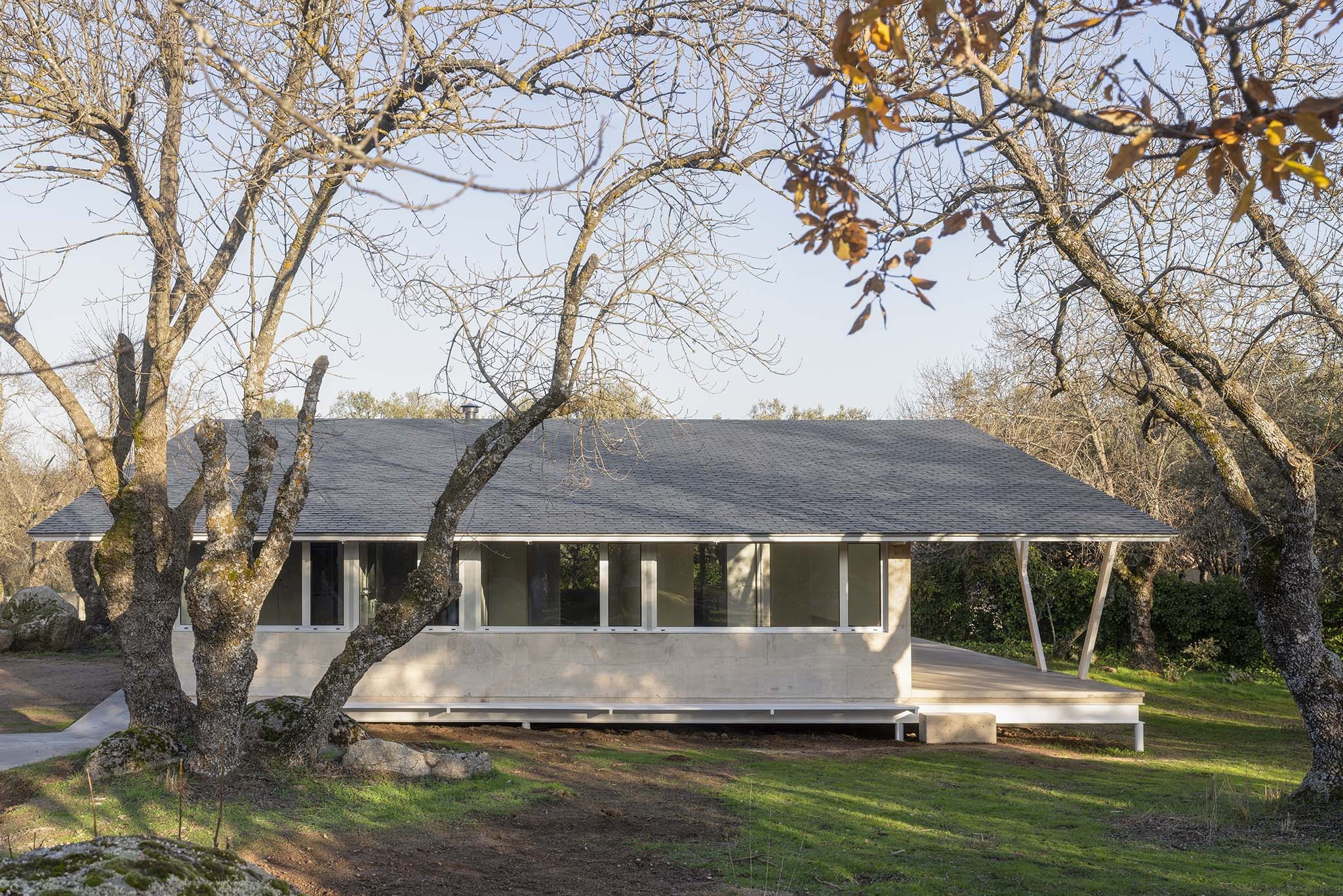
The house designed by EME157 is a single-story rectangular volume covered by a gabled roof. The layout is organized around a large, double-height central space that serves as the heart of the living area. Two wings extend from this core: one containing the master bedroom, kitchen, and storage room, and the other housing the guest bedroom, an office, and a living room.
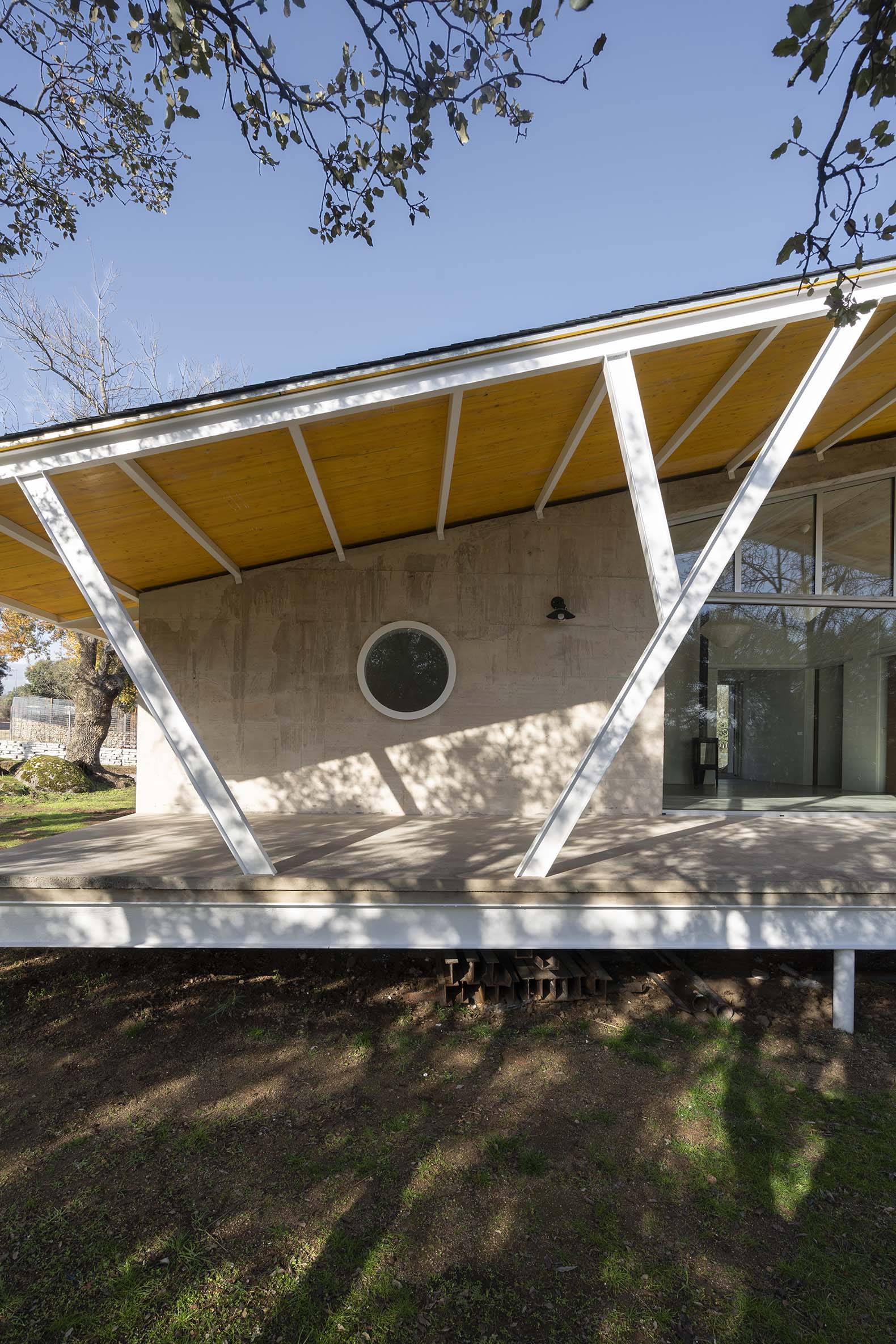
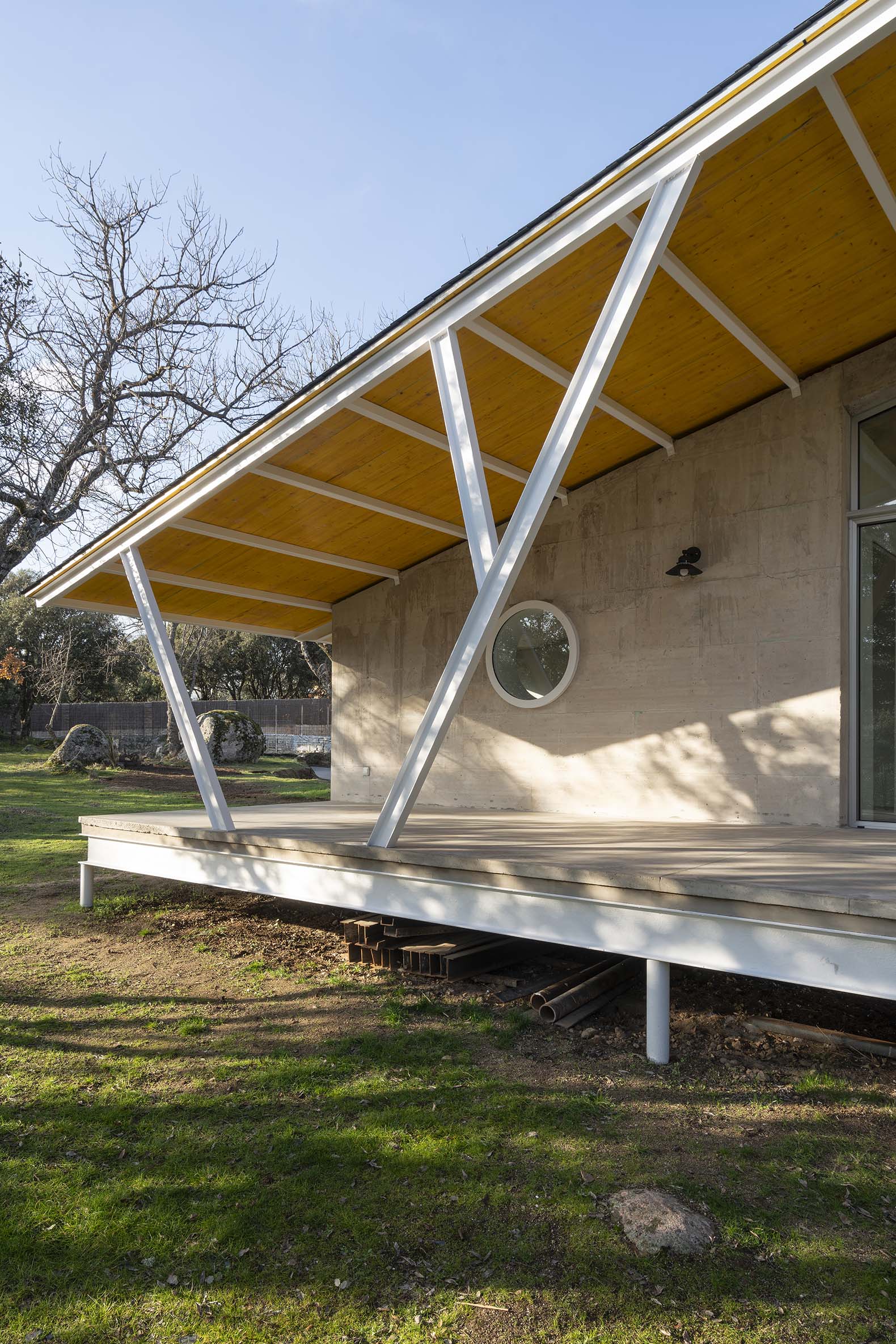
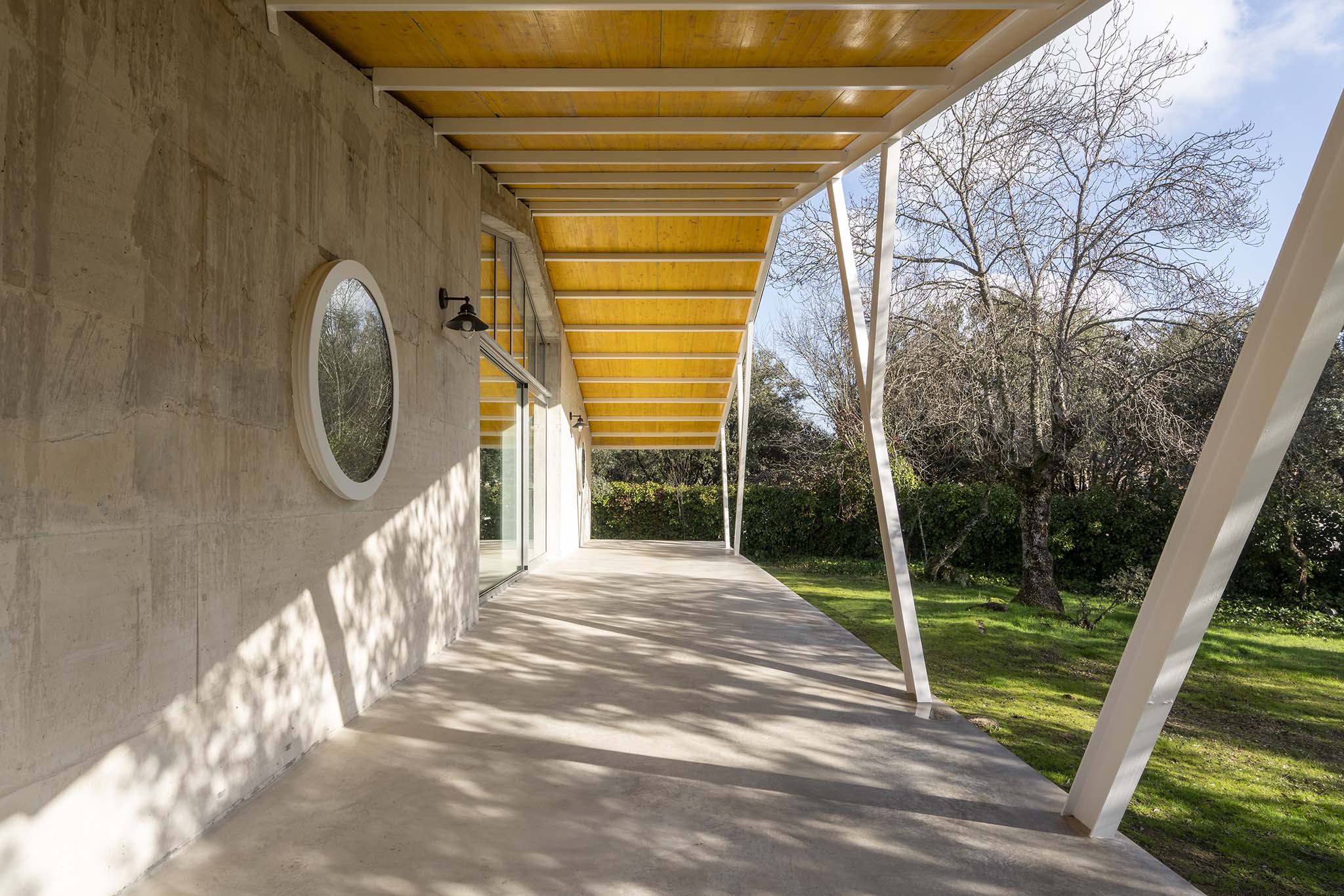
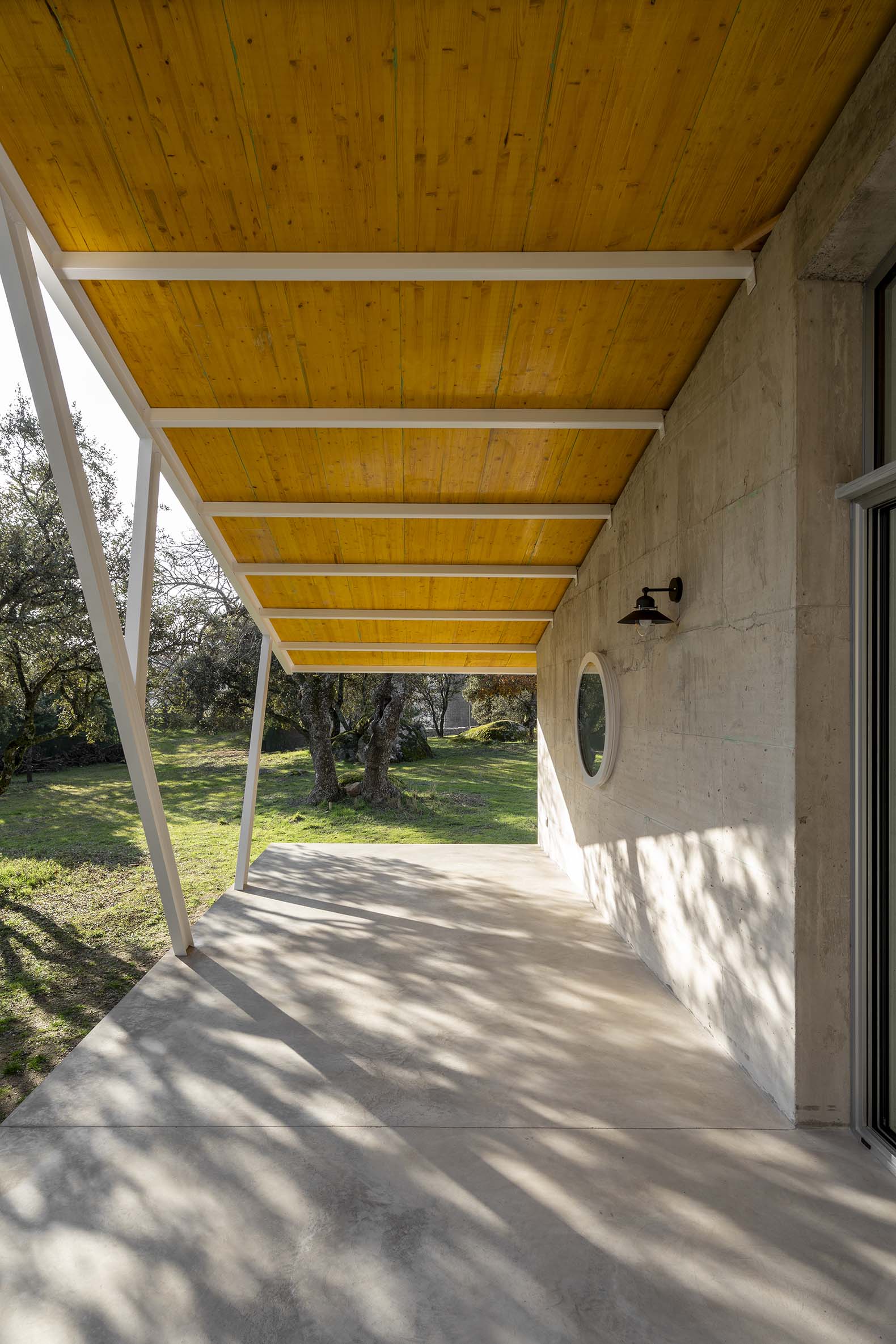
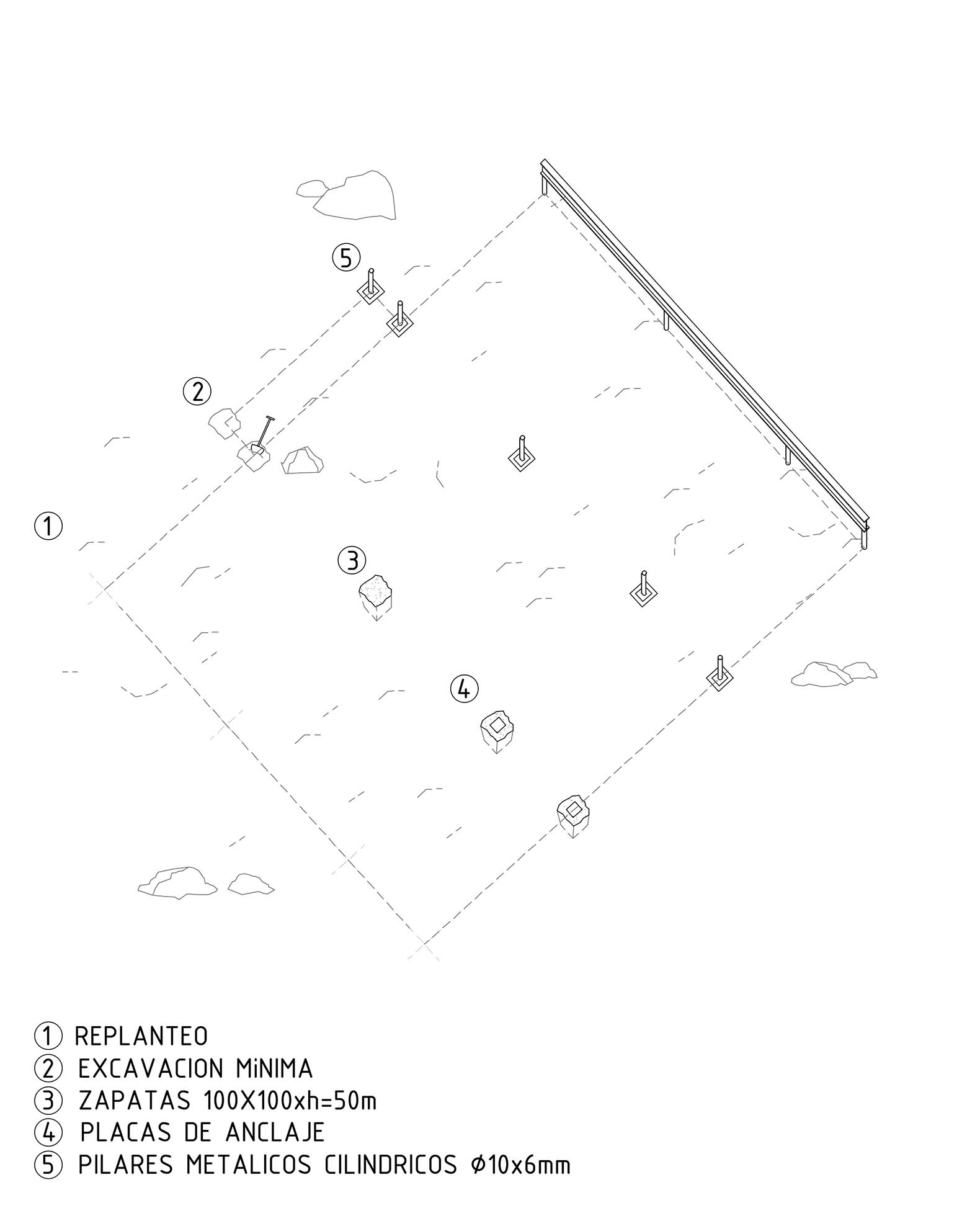
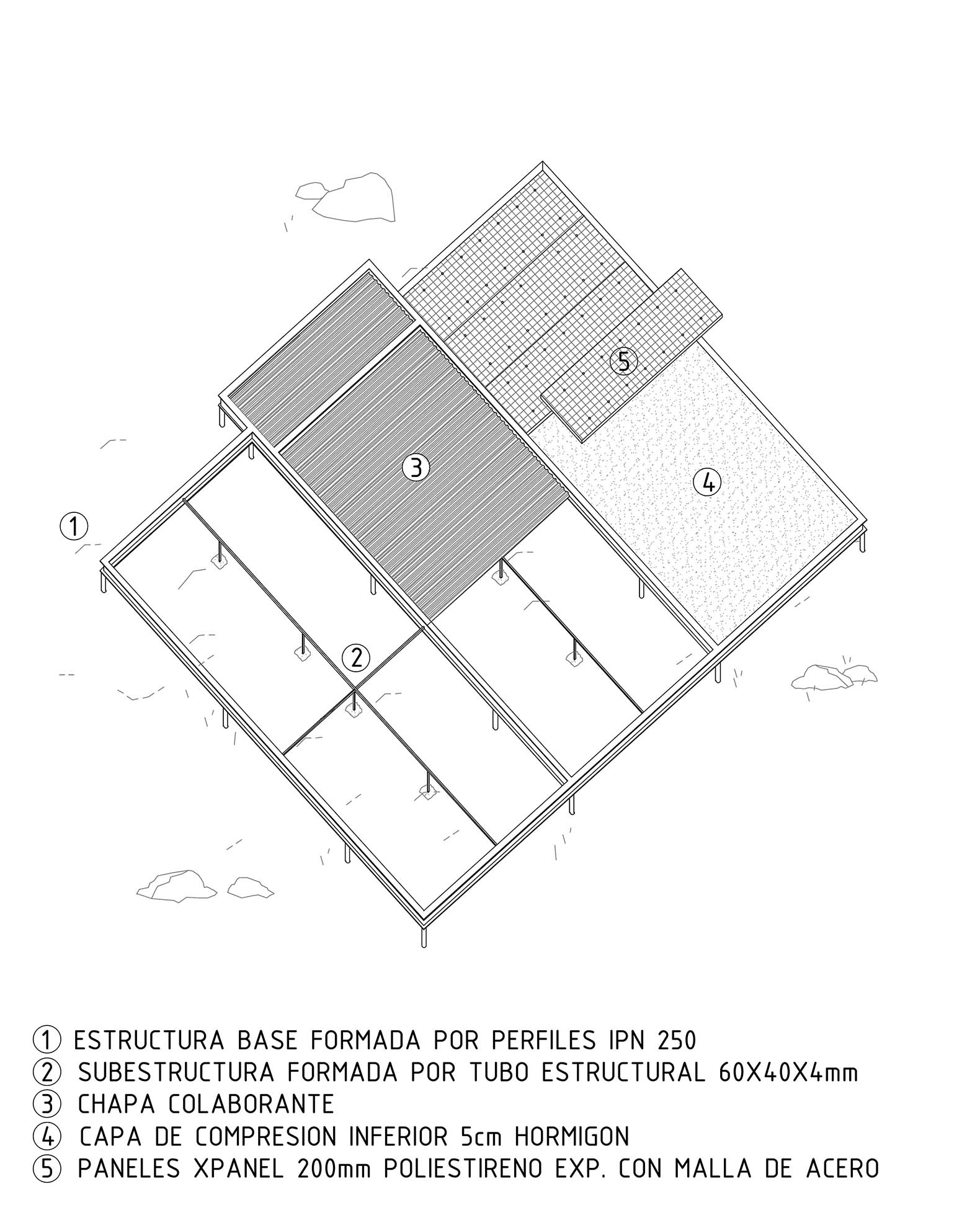
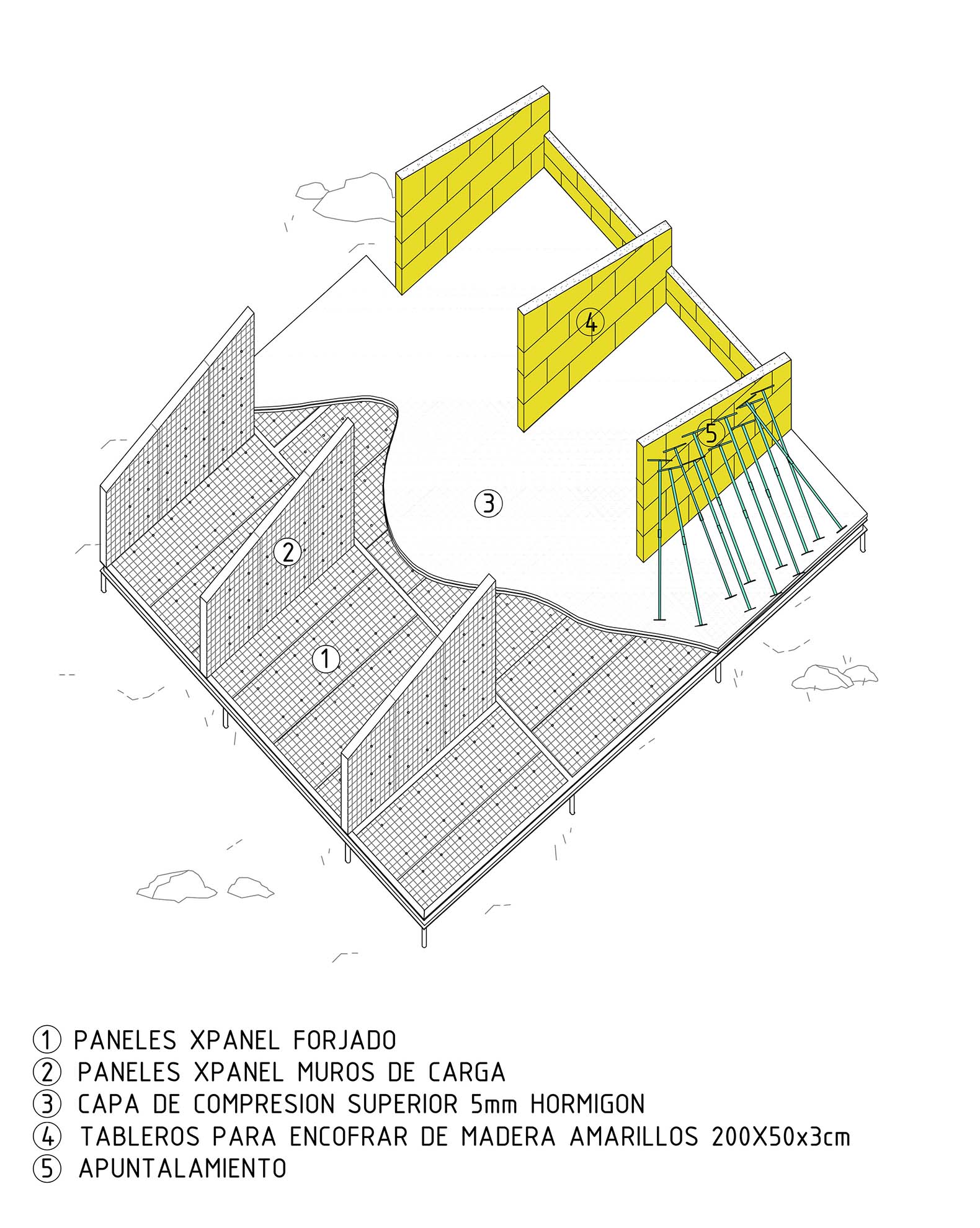
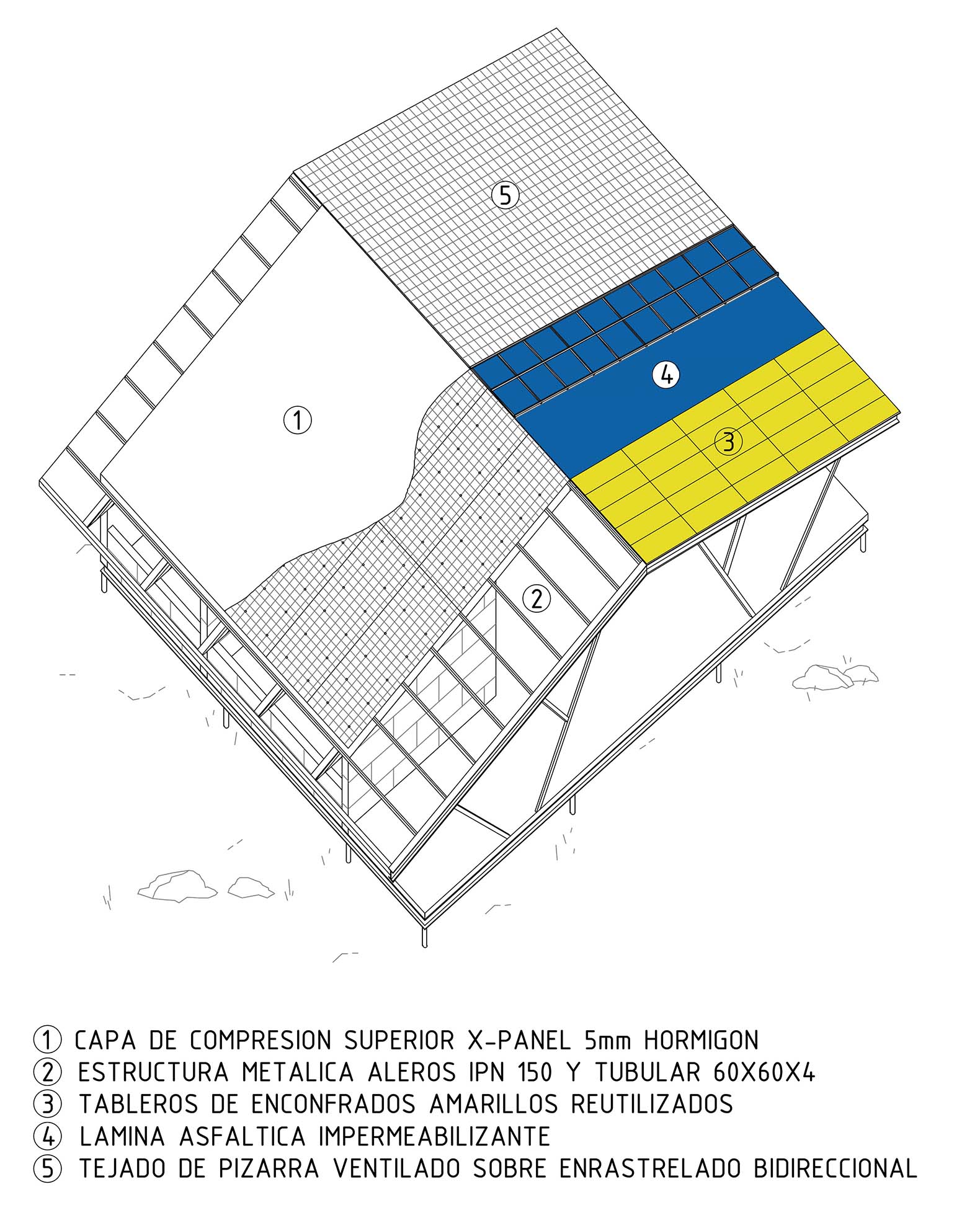
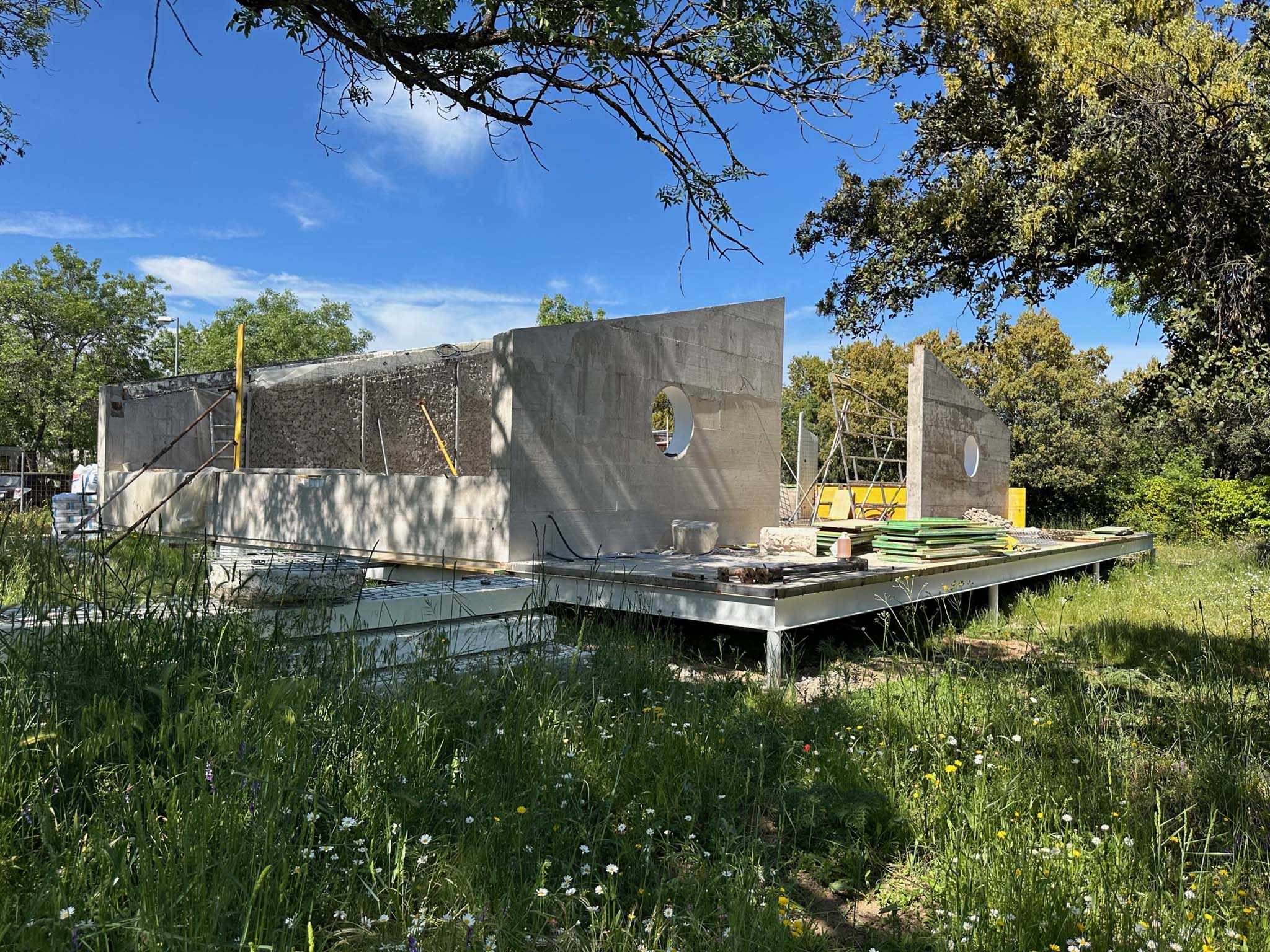
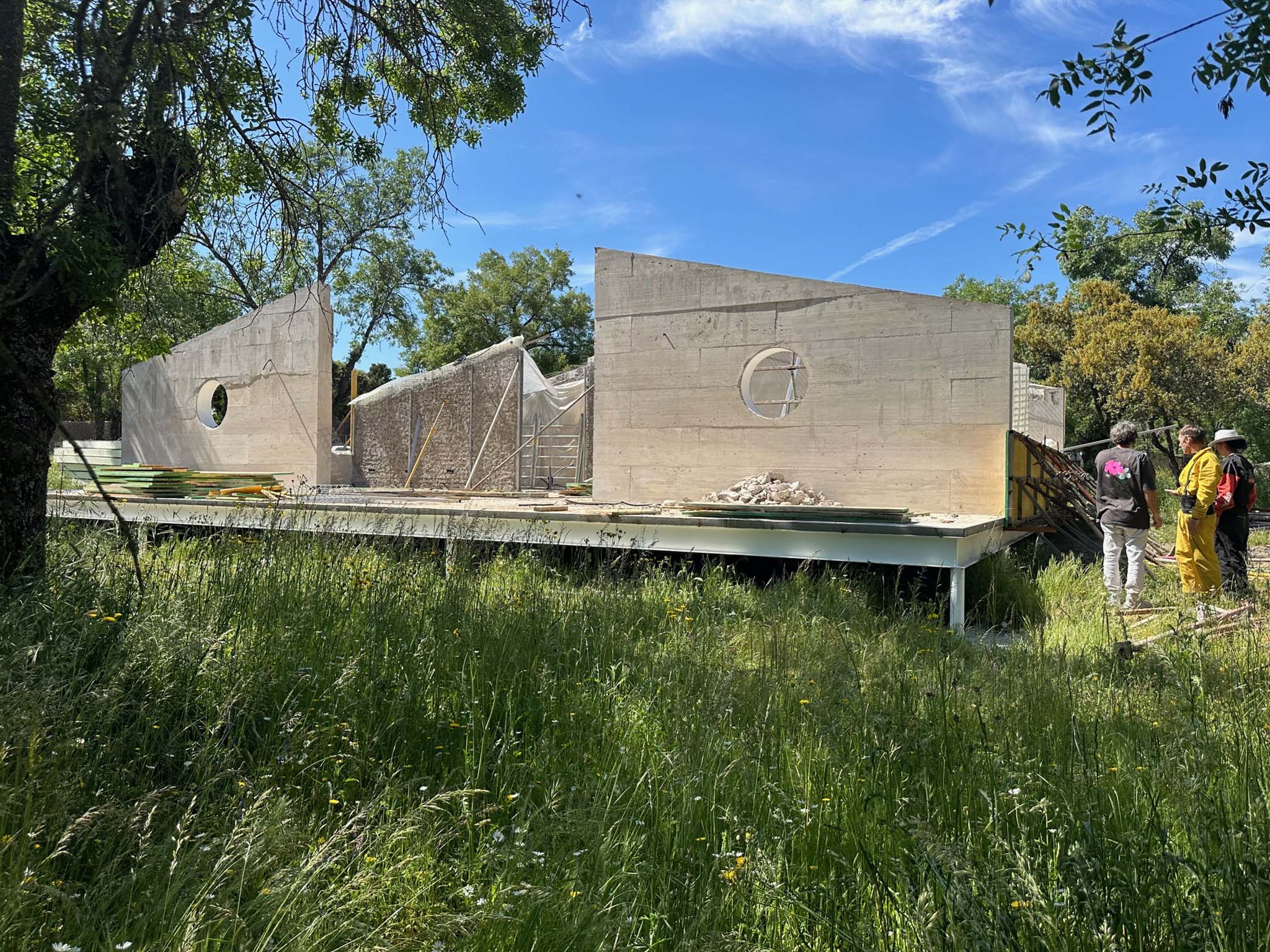
Structurally, the house is raised 50 centimeters above ground level by a metal frame and a composite steel deck. The load-bearing walls are constructed using the X-Panel system, which consists of a reinforced polystyrene insulation core encased in concrete. Interior partitions are completed with concrete blocks and lightweight plasterboard systems. The roof is covered with ventilated slate tiles on wooden battens, and the formwork panels used for the walls are reused in the porch eaves.
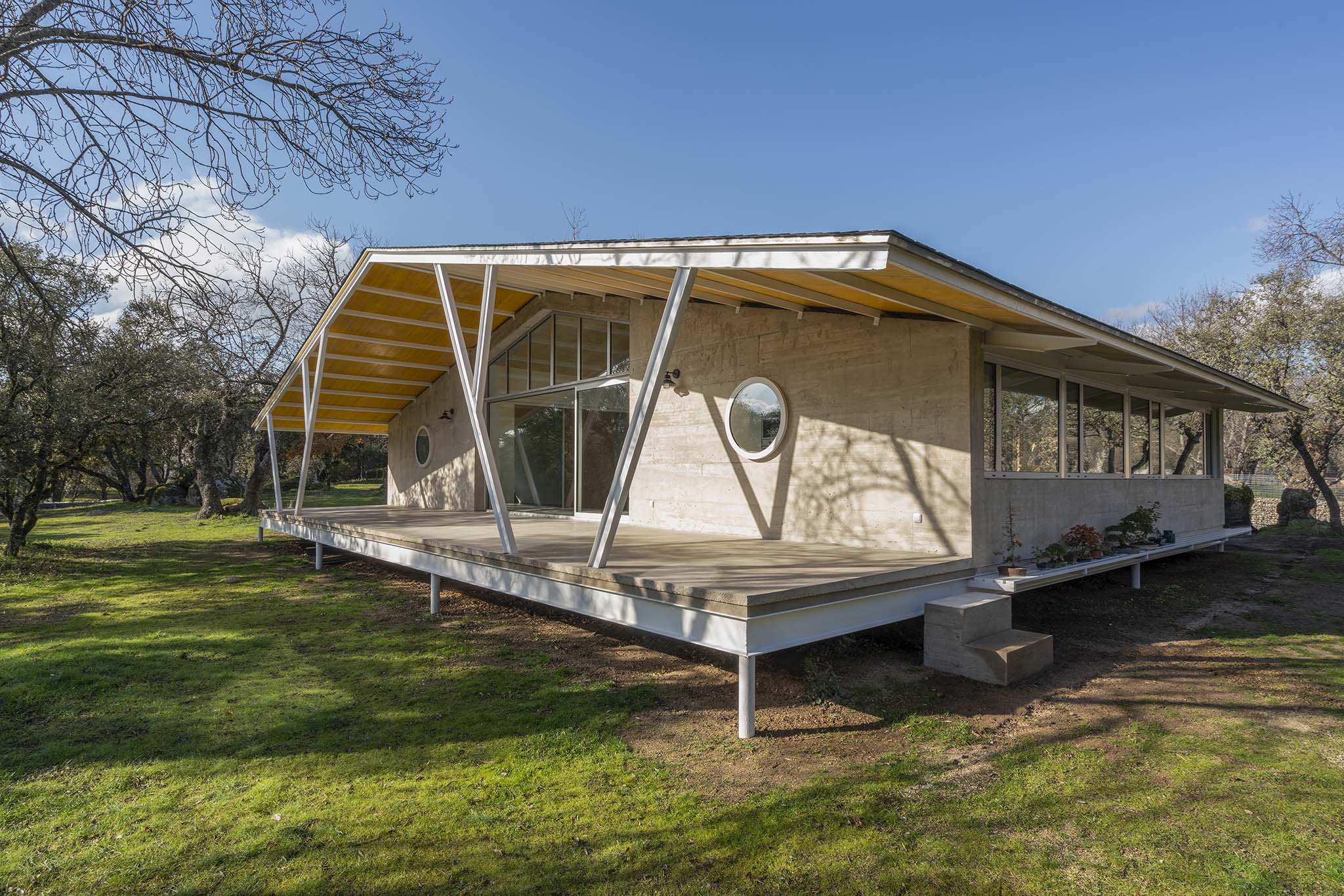
Wasabi Project by EME157. Photograph by Luis Asín.
Project description by EME157
The commission presented a very specific program: a house for a childless couple with a strong connection to mountain activities—especially climbing—skateboarding, and Japanese culture. From the outset, the owners were clear that they wanted an orthogonal floor plan, organized around a high-ceilinged central space, with more intimate areas on either side. Building regulations, meanwhile, required a pitched roof with a stone finish.
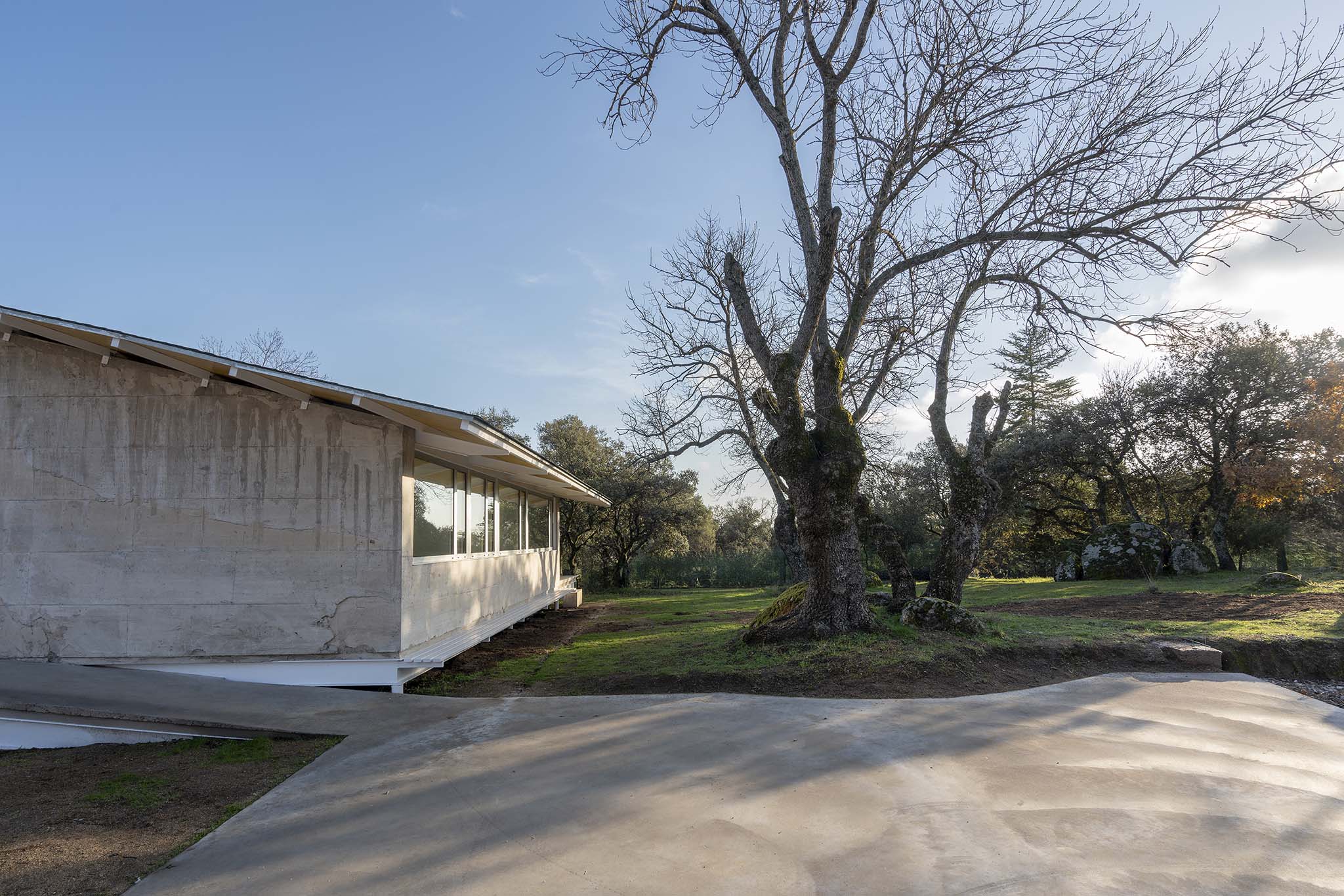
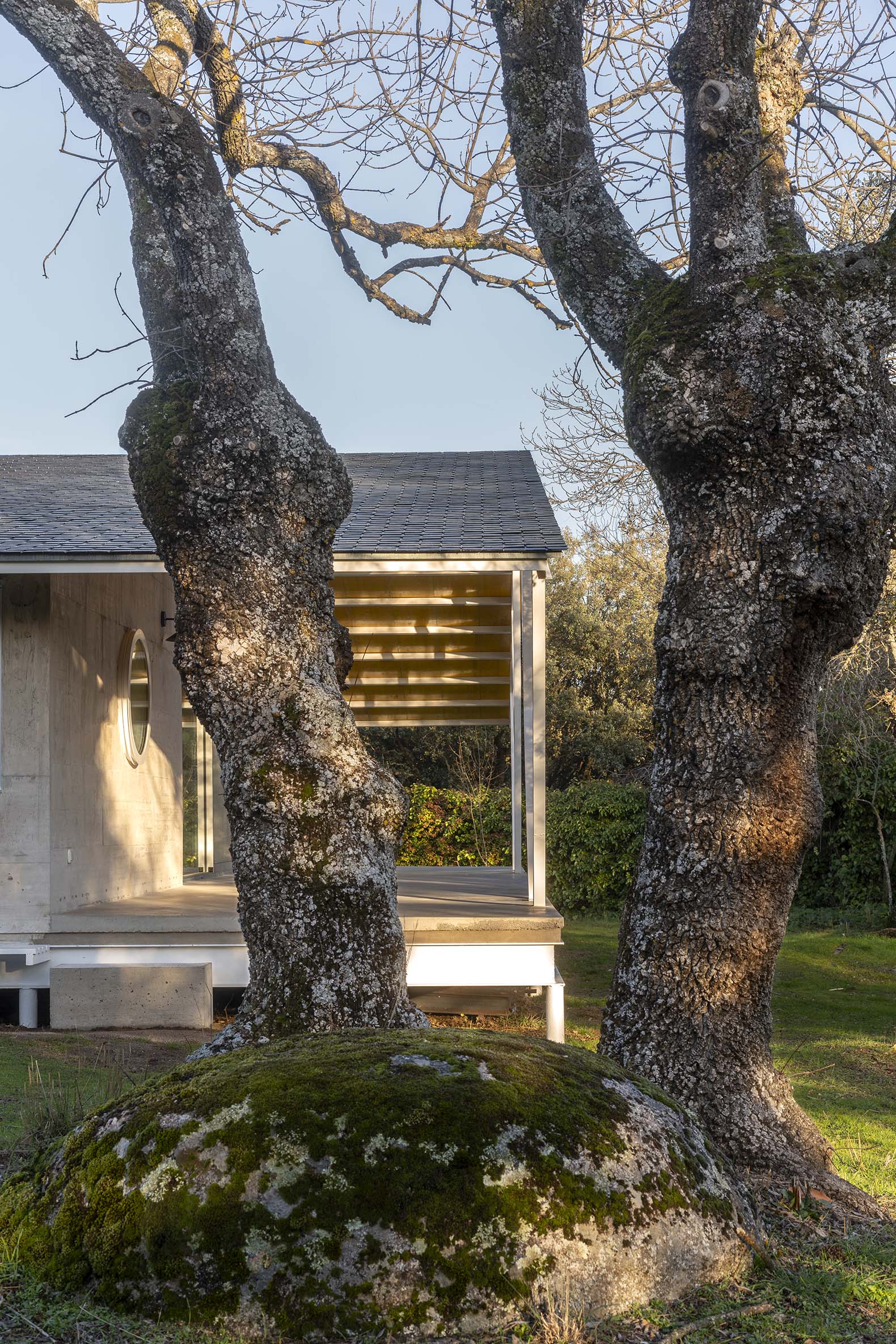
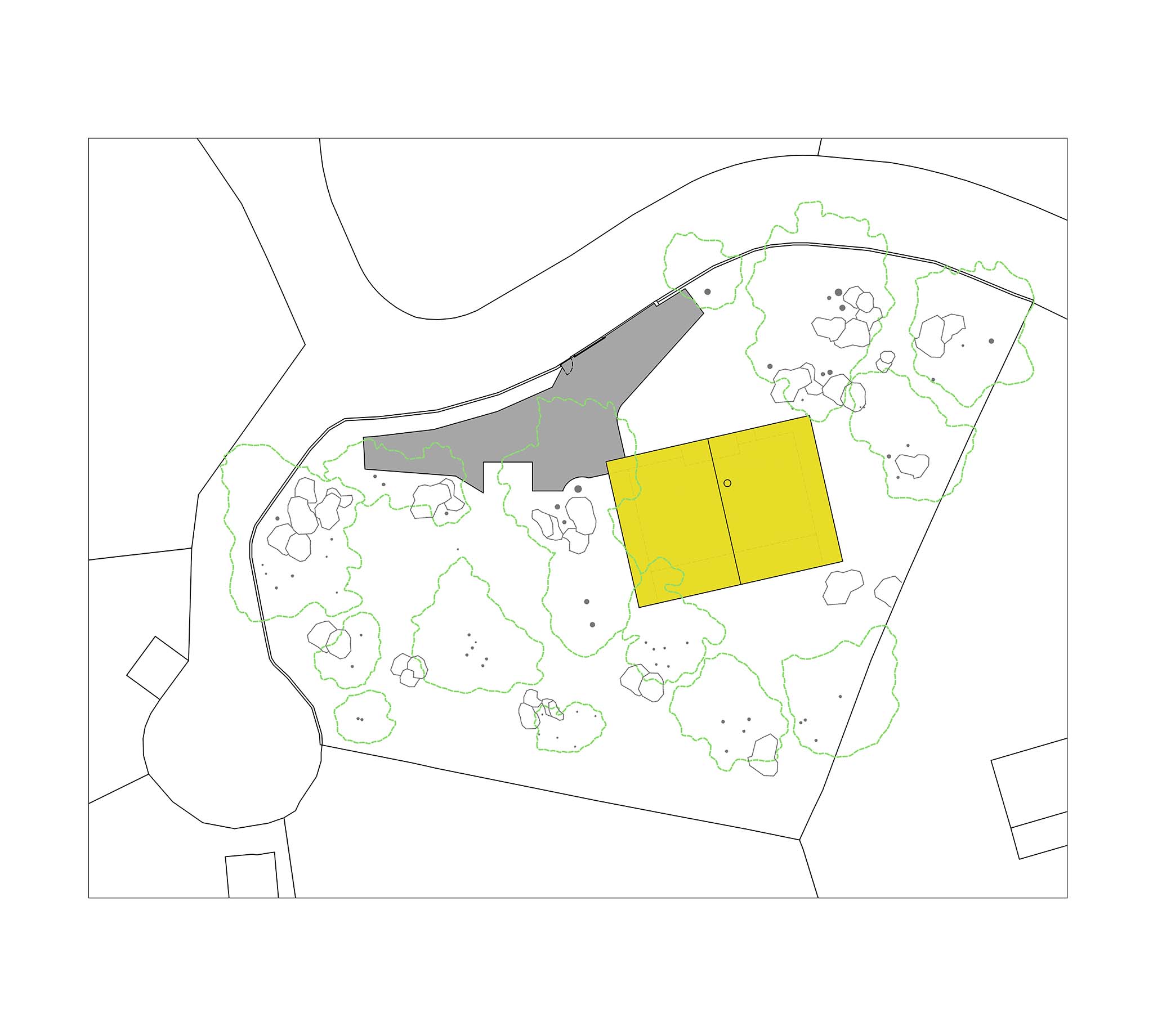
The plot, with its unique heart-shaped geometry, is characterized by the presence of holm oaks and large moss-covered stones, creating a valuable natural environment. Added to this was a very tight budget, which led us to design a single-family home reduced to its essentials, where every spatial and construction decision responded to criteria of economy of means, functionality, and respect for the site.
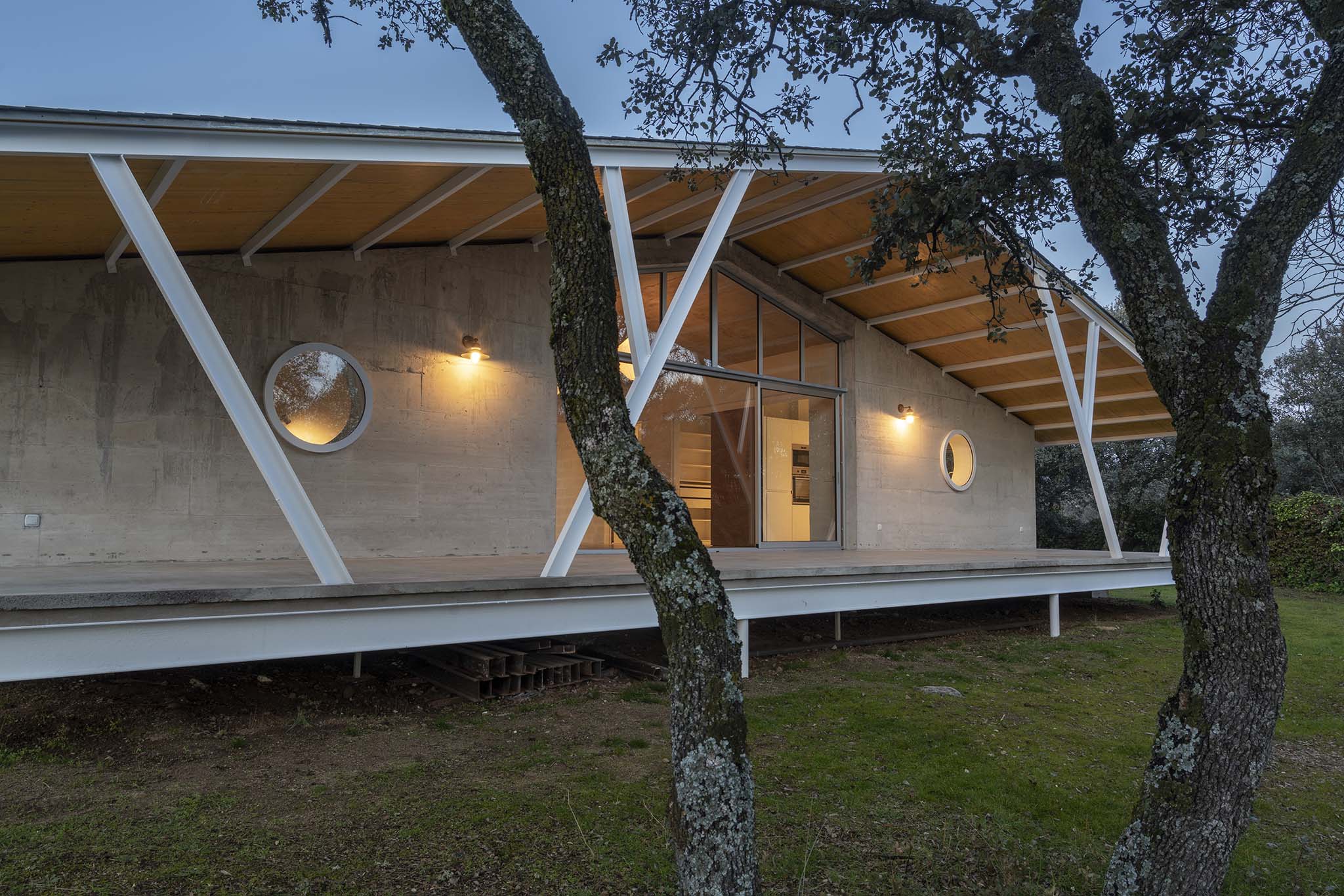
The choice of a rectangular shape and a single story allowed us to simplify the construction system, reduce costs, and eliminate the need for stairs. The house is raised 50 cm above ground level to avoid damp and radon problems, while minimizing excavation and disturbance to the site. The gabled roof efficiently addresses both regulatory requirements and the spatial needs of the project.
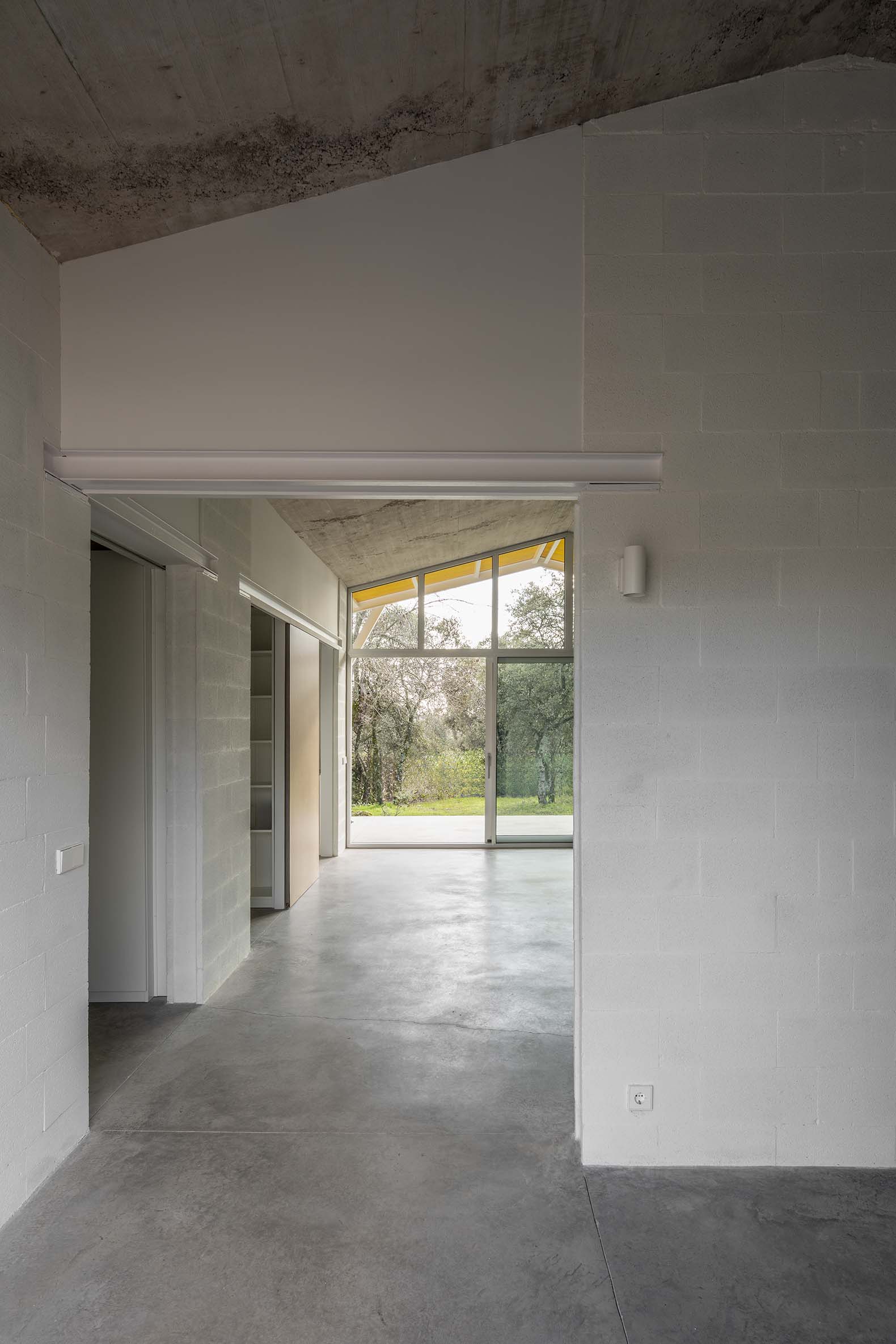
The interior layout is organized around a large central common area, which acts as the heart of the home and connects all the rooms, completely eliminating hallways. Two wings extend from this space: to the right are the master bedroom with its en-suite bathroom, the mountain room, and the kitchen; to the left, the guest bedroom with en-suite bathroom, an office, and a living room. The rooms can be closed off using Japanese-inspired sliding panels, allowing for a flexible and adaptable configuration of the domestic space.
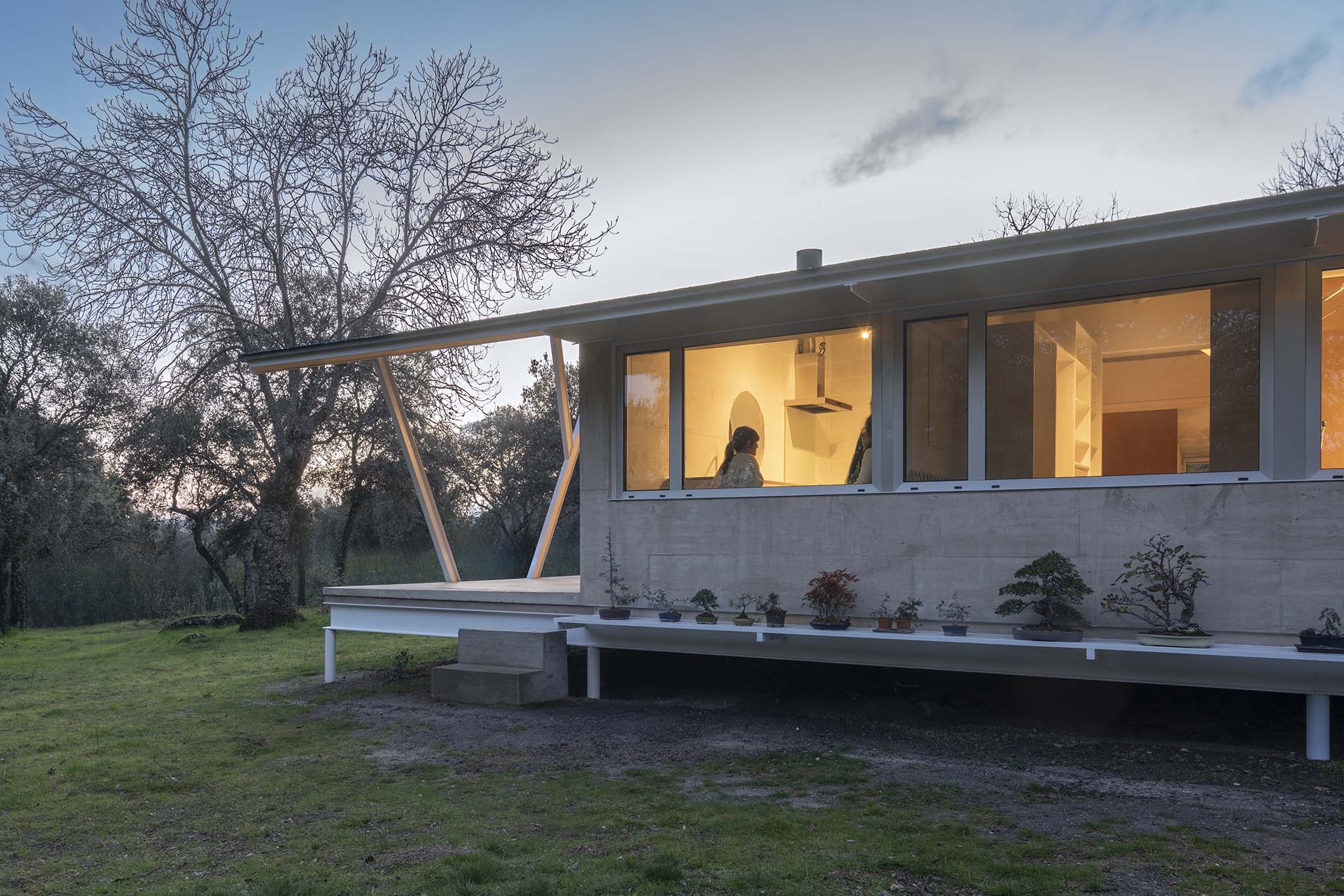
The scale of the rooms and their relationship to the central space deliberately evoke Japanese architecture, where proportion, restraint, and versatility of space play a fundamental role. As collectors of bonsai and suiseki, the owners requested a space where they could display and care for their collection; from this need arose the exterior benches, conceived as hybrid elements of architecture, landscape, and furniture, allowing for a leisurely and contemplative experience of the outdoors.
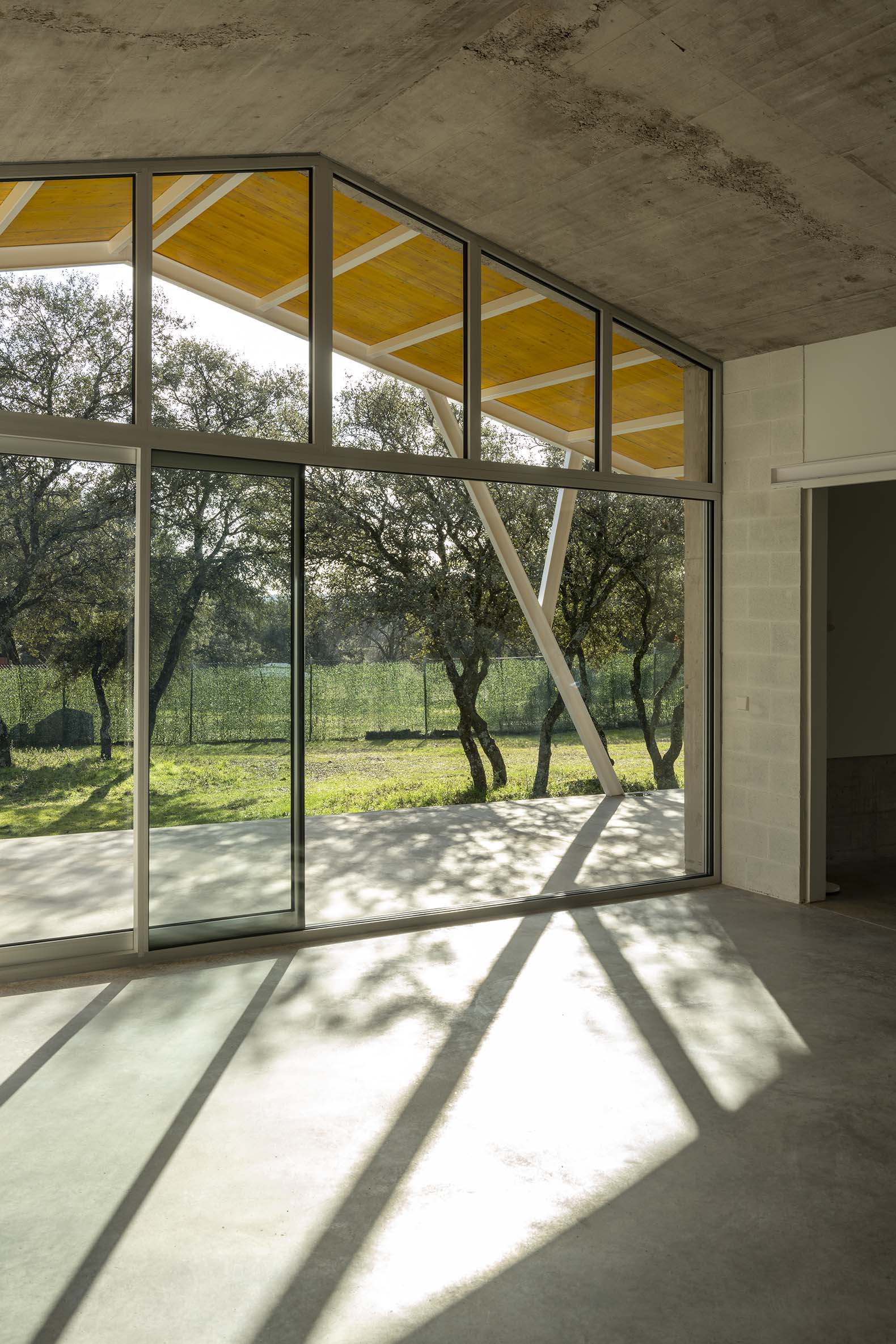
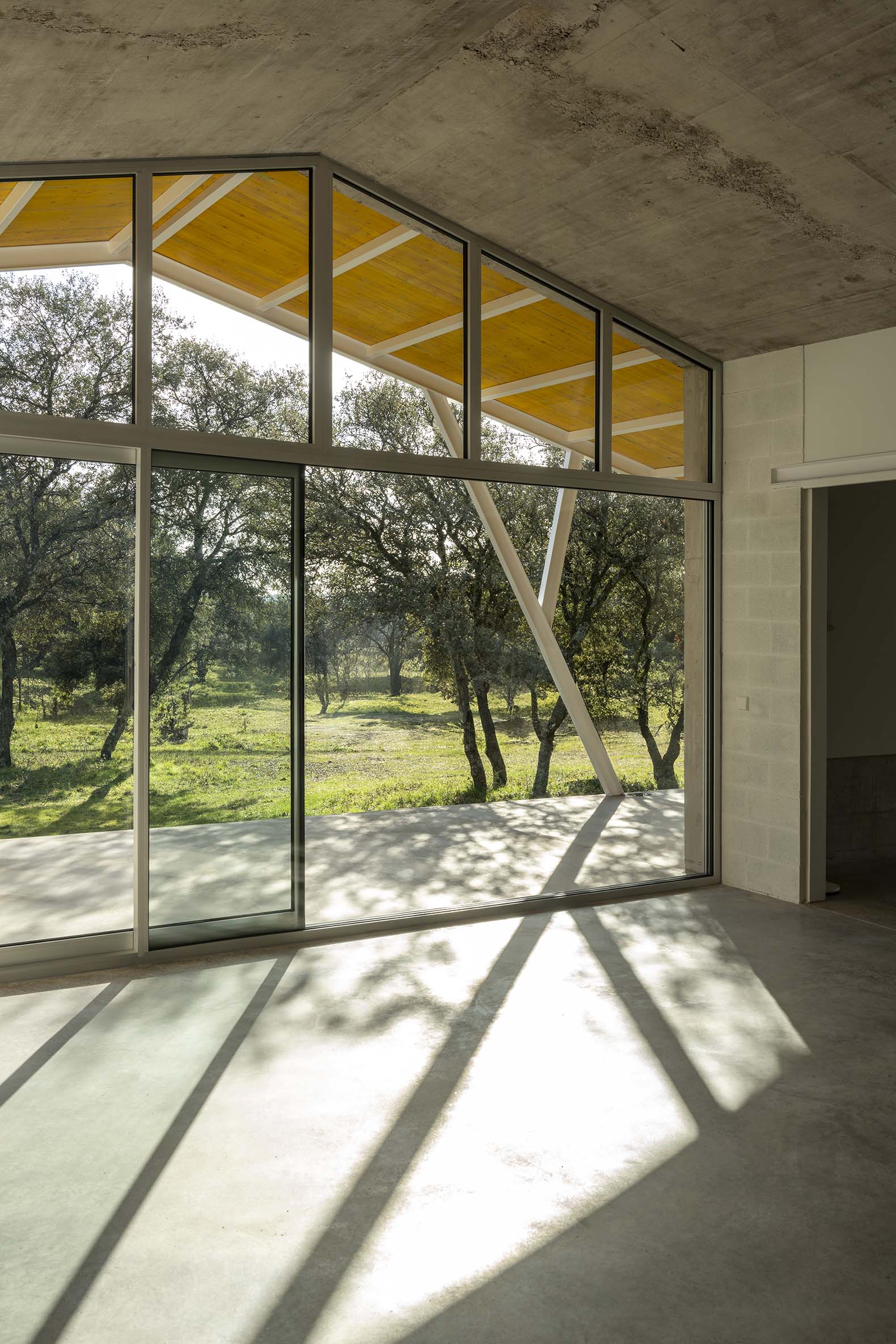
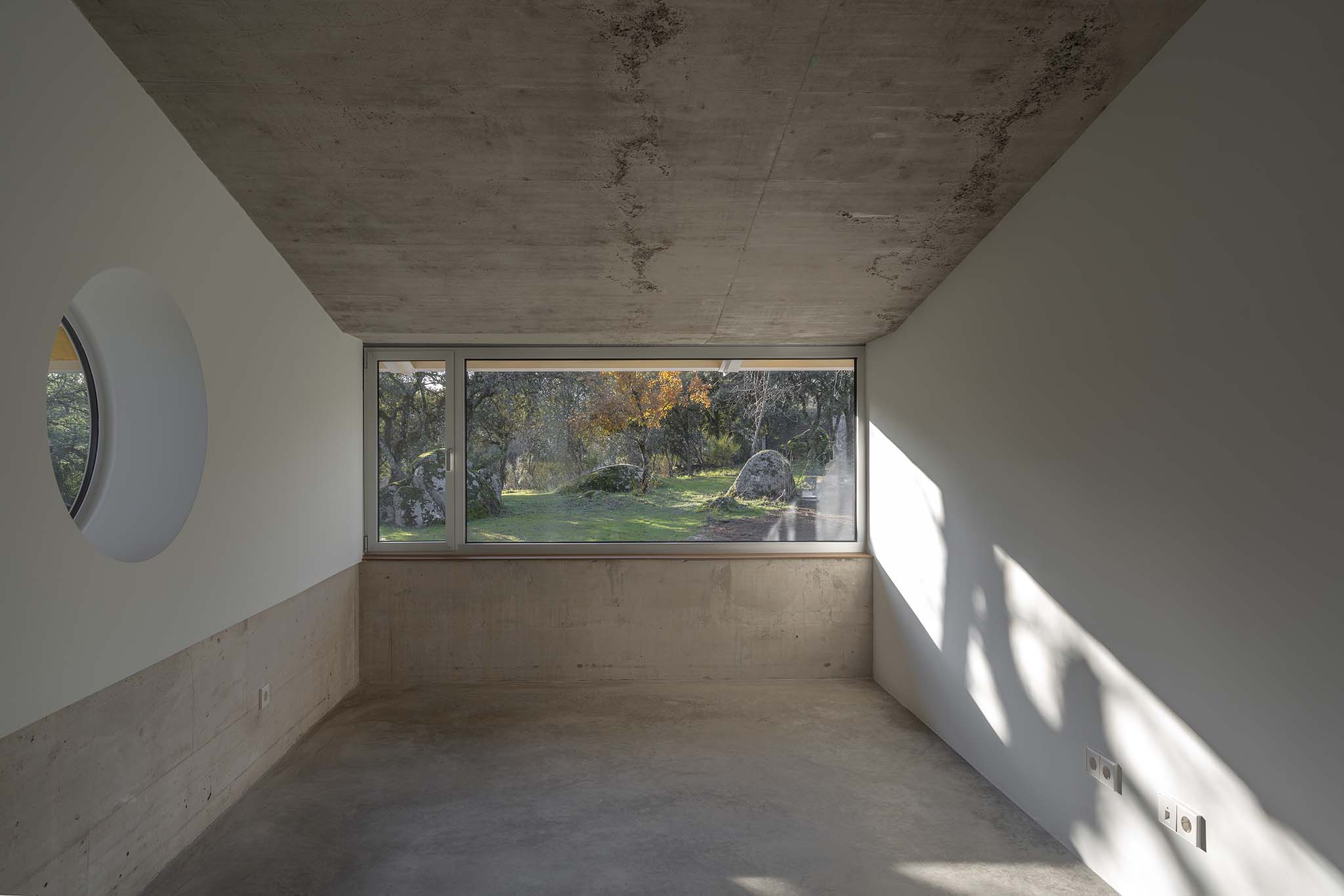
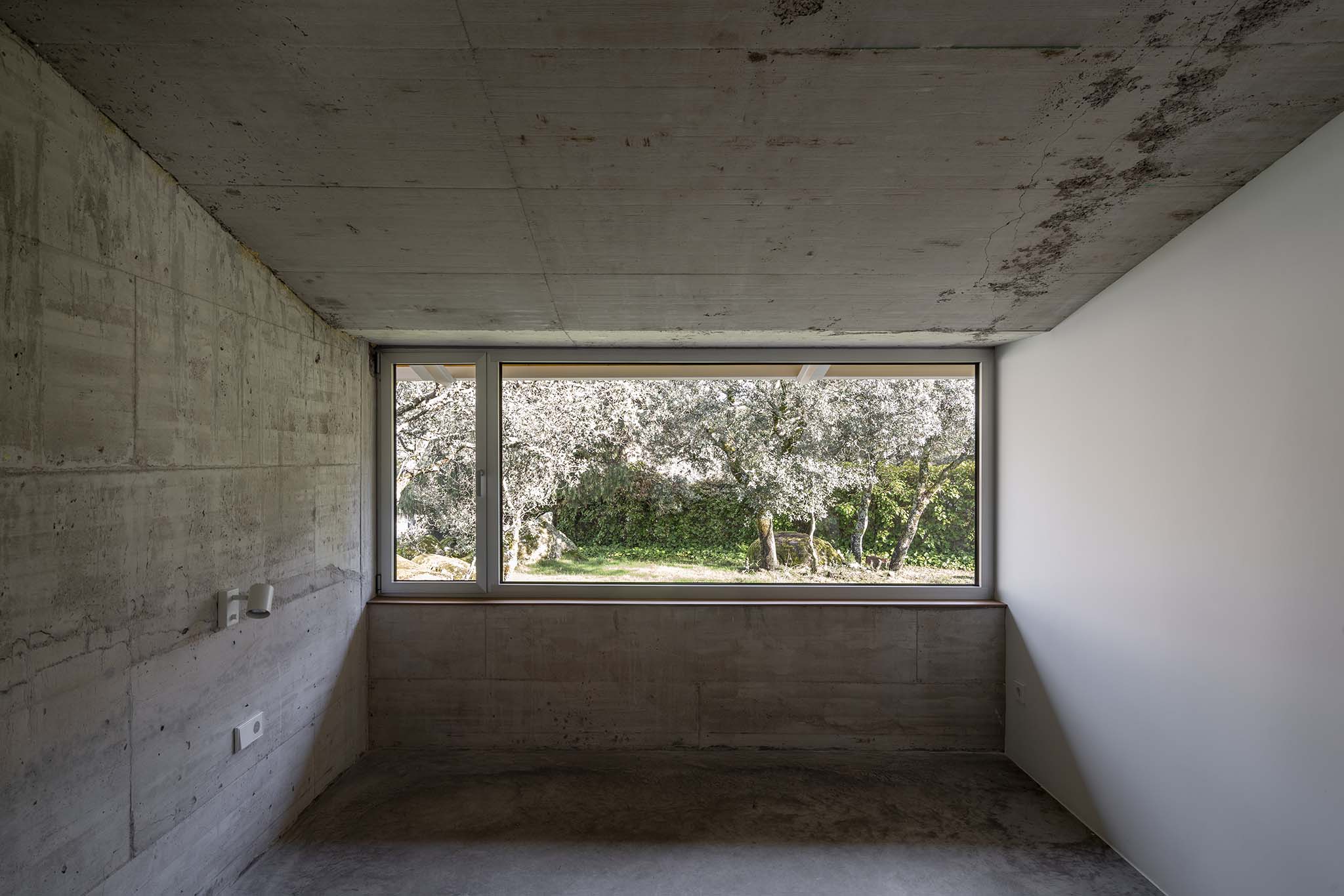
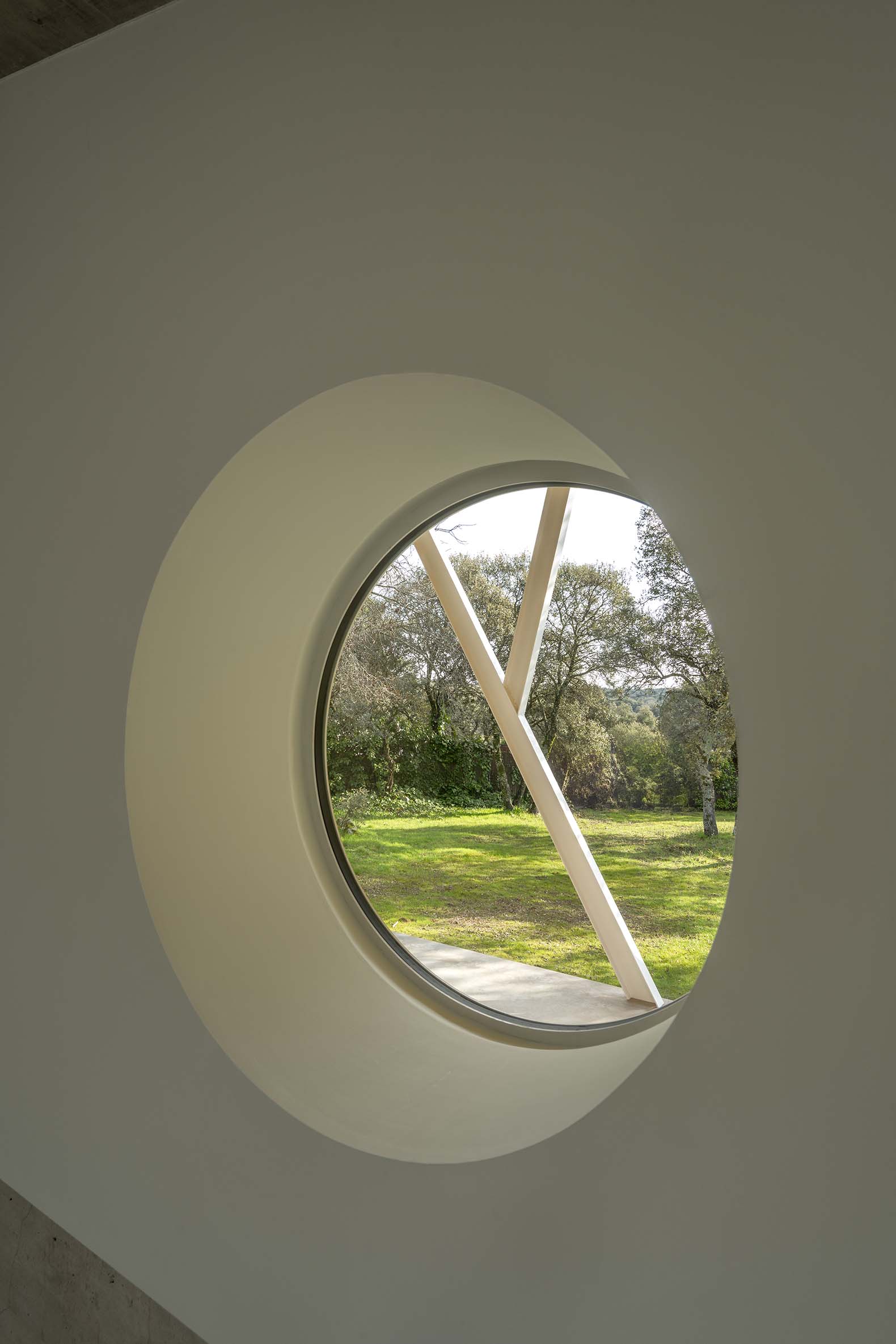
Access is from the north. A continuous window runs along the east and west facades, while a large window opens to the south, following bioclimatic principles of solar gain and cross ventilation. The access ramp, which connects the parking area to the elevated level of the house, is also designed as a recreational space, allowing skateboarding as a natural part of daily life and blurring the boundaries between circulation and living space.
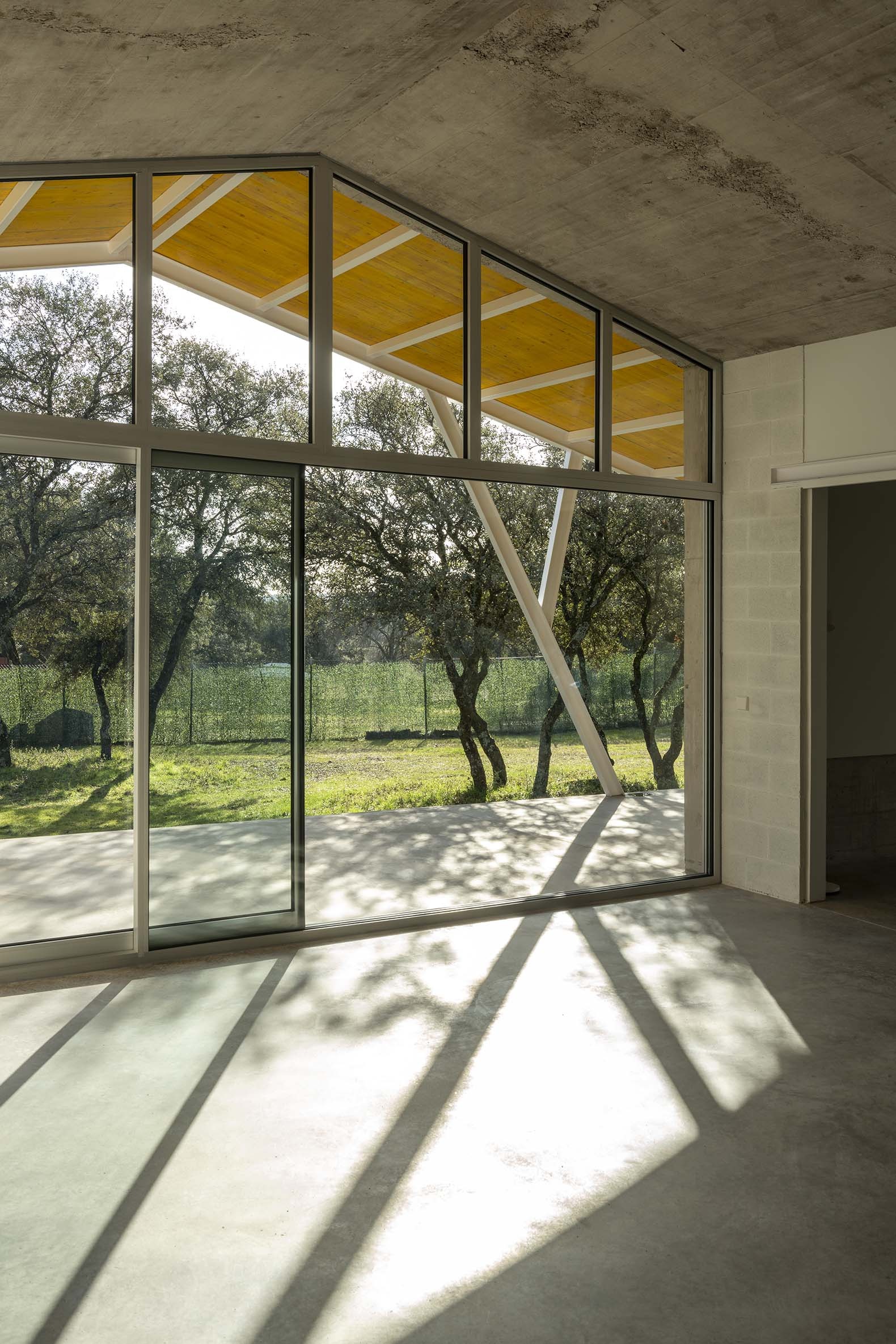
Inside, the inclusion of a climbing wall was an essential requirement of the program; ultimately, due to budget constraints, its size had to be reduced, though it remains a defining element of the project, located in the entrance hall.
Structurally, the house is built upon an elevated platform consisting of a metal structure and a composite steel deck. The load-bearing walls, constructed using the X-Panel system, rest on this base. This system comprises 20 cm of expanded polystyrene with reinforcing mesh on both sides, covered by a 5 cm layer of concrete cast with wooden planks, simultaneously fulfilling the structural function and providing thermal insulation.
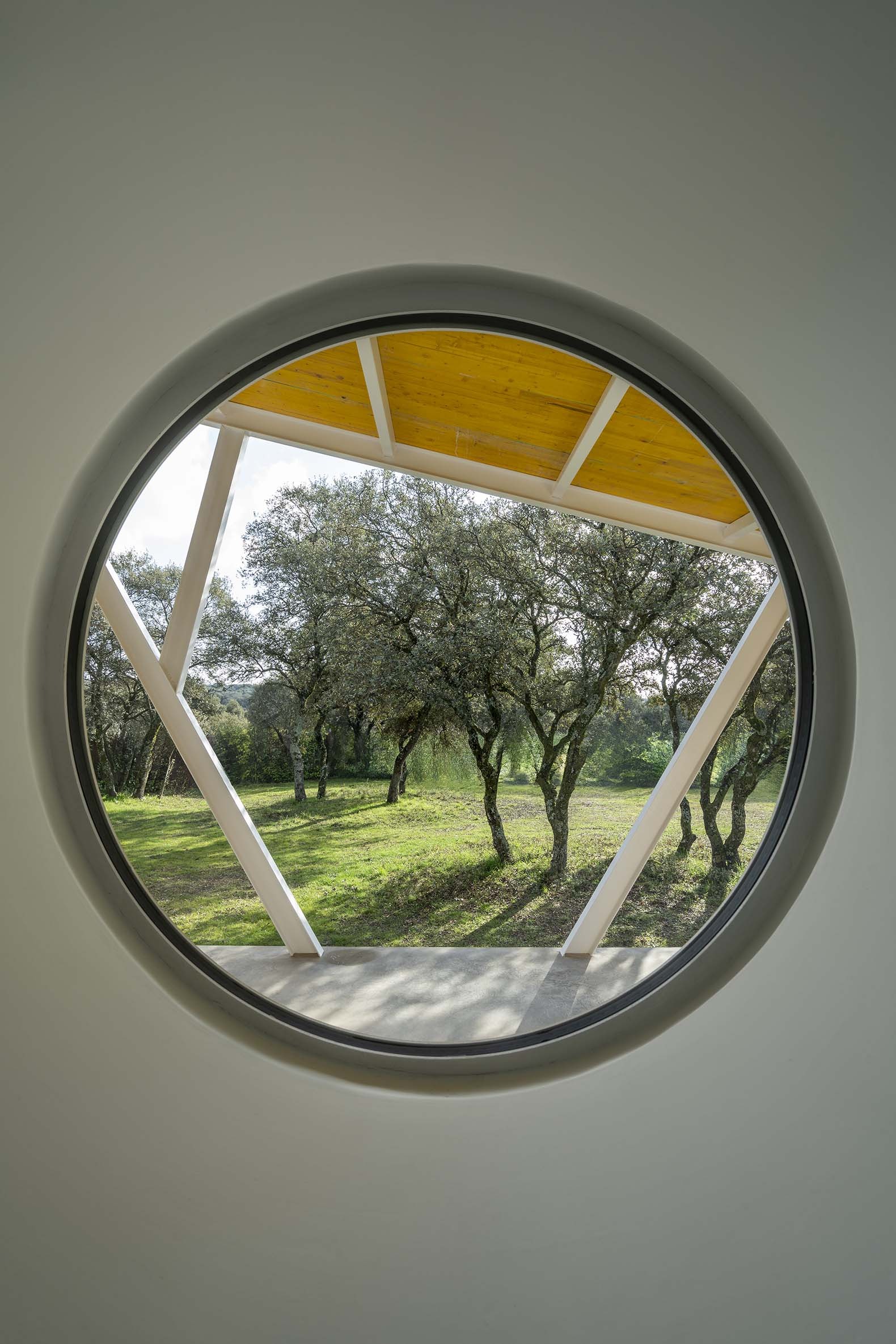
This system creates three ribs on each side of the house, supporting the sloping X-Panel floor that forms the side rooms. The remaining interior partitions are constructed using concrete blocks and lightweight plasterboard systems.
The roof is finished with slate tiles laid over a two-way system of wooden battens, allowing for proper ventilation.
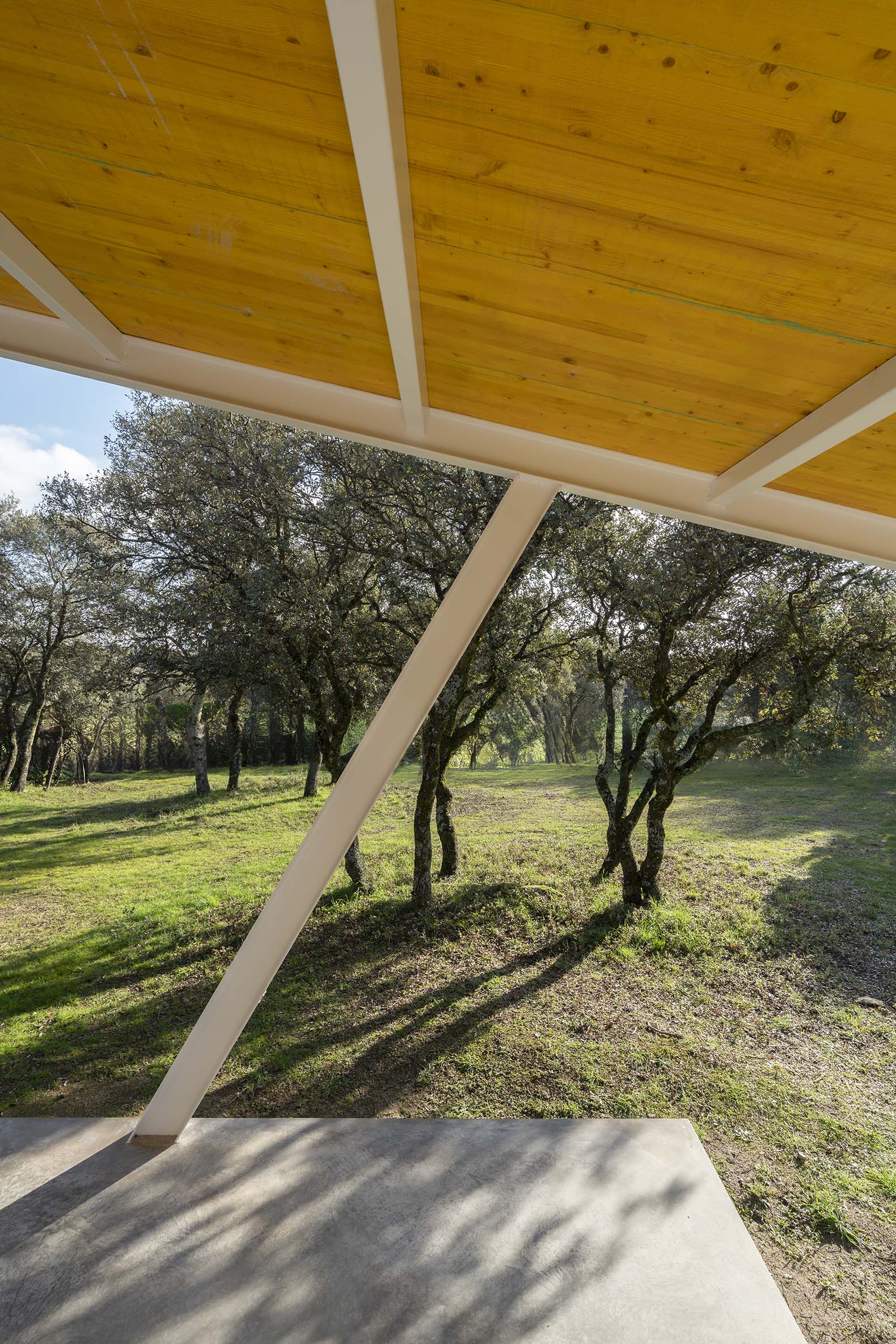
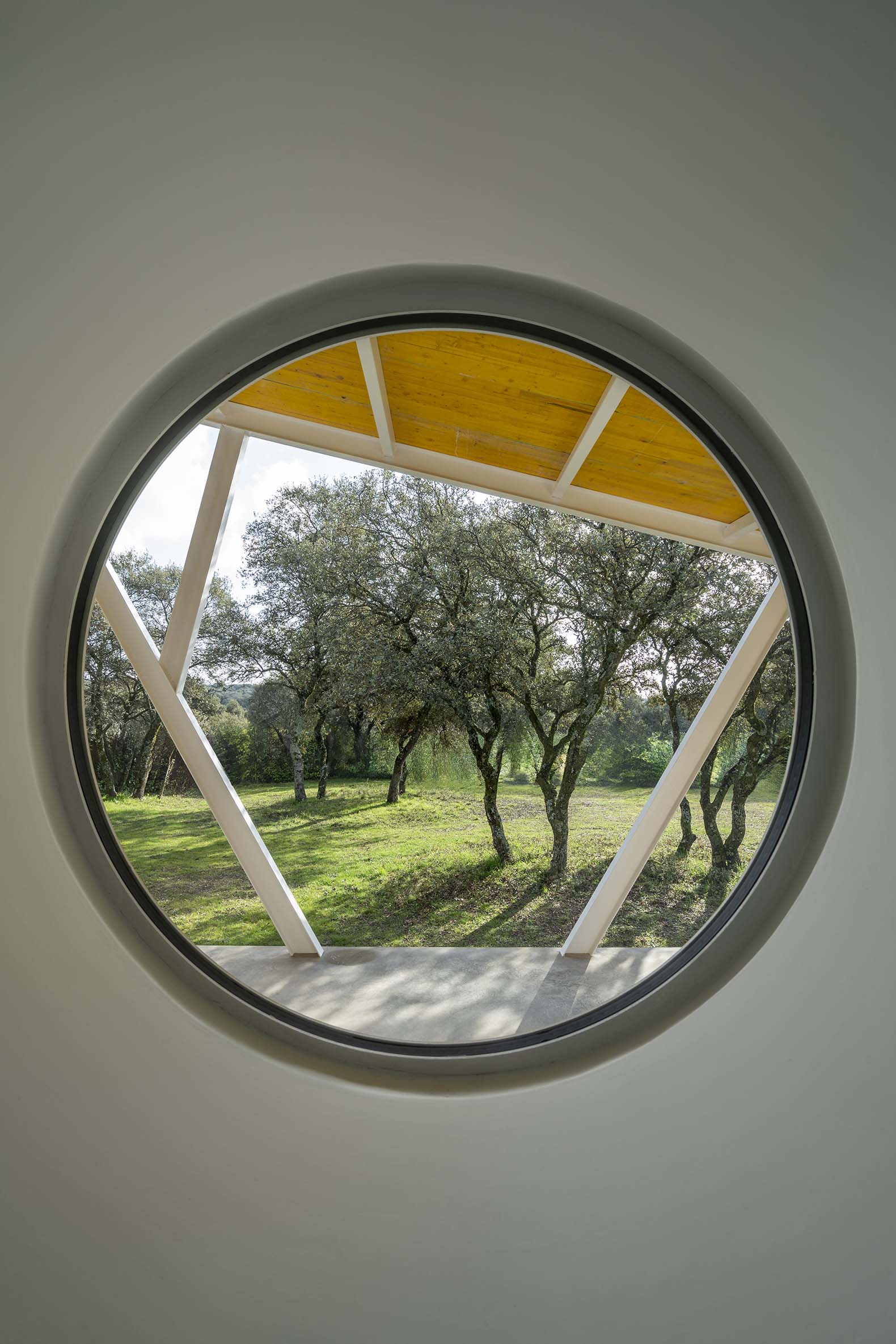
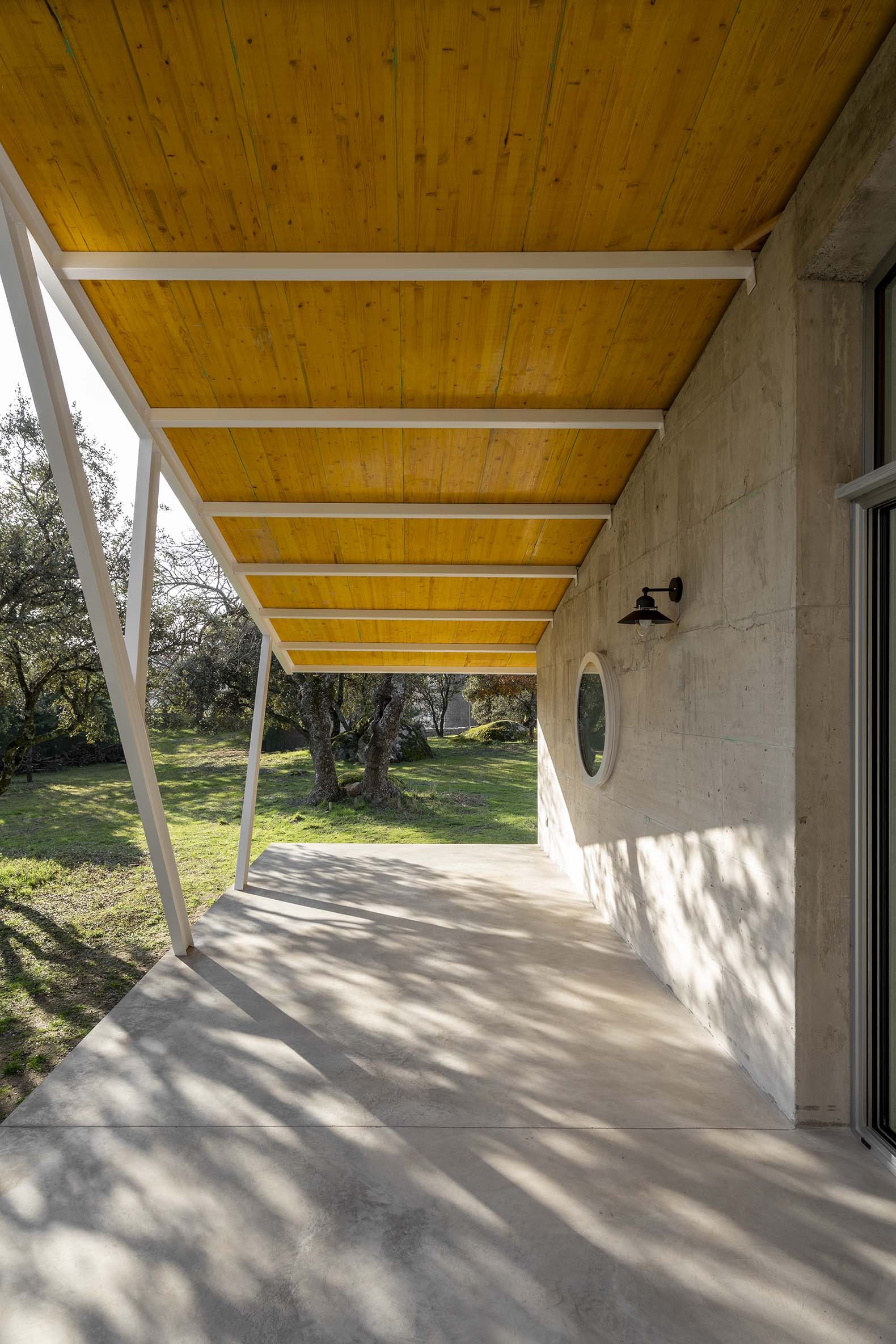
Finally, the yellow boards used as formwork for the concrete walls are reused in the eaves of the north and south porches. The south porch features a large covered outdoor space that acts as a natural extension of the house into the landscape.