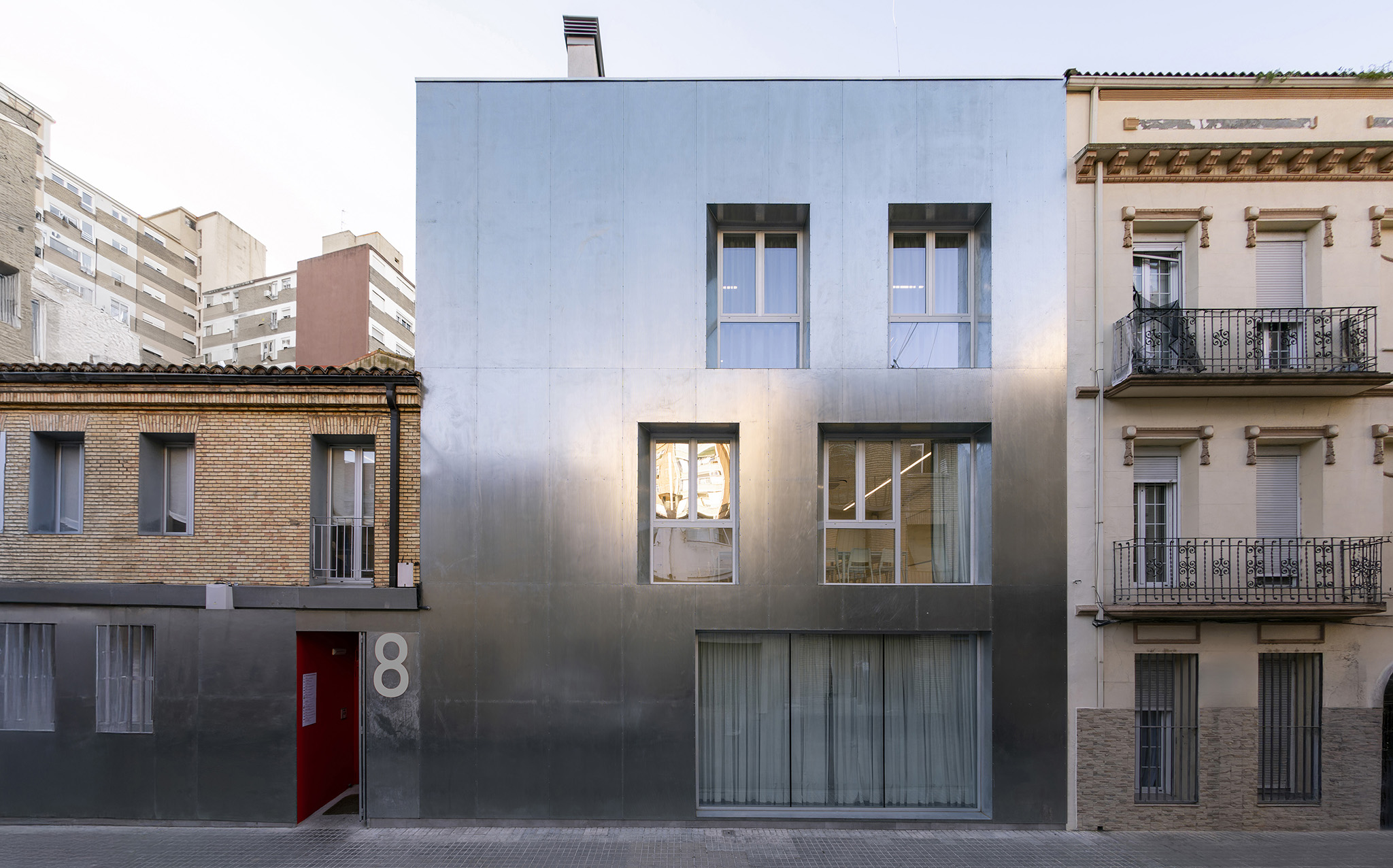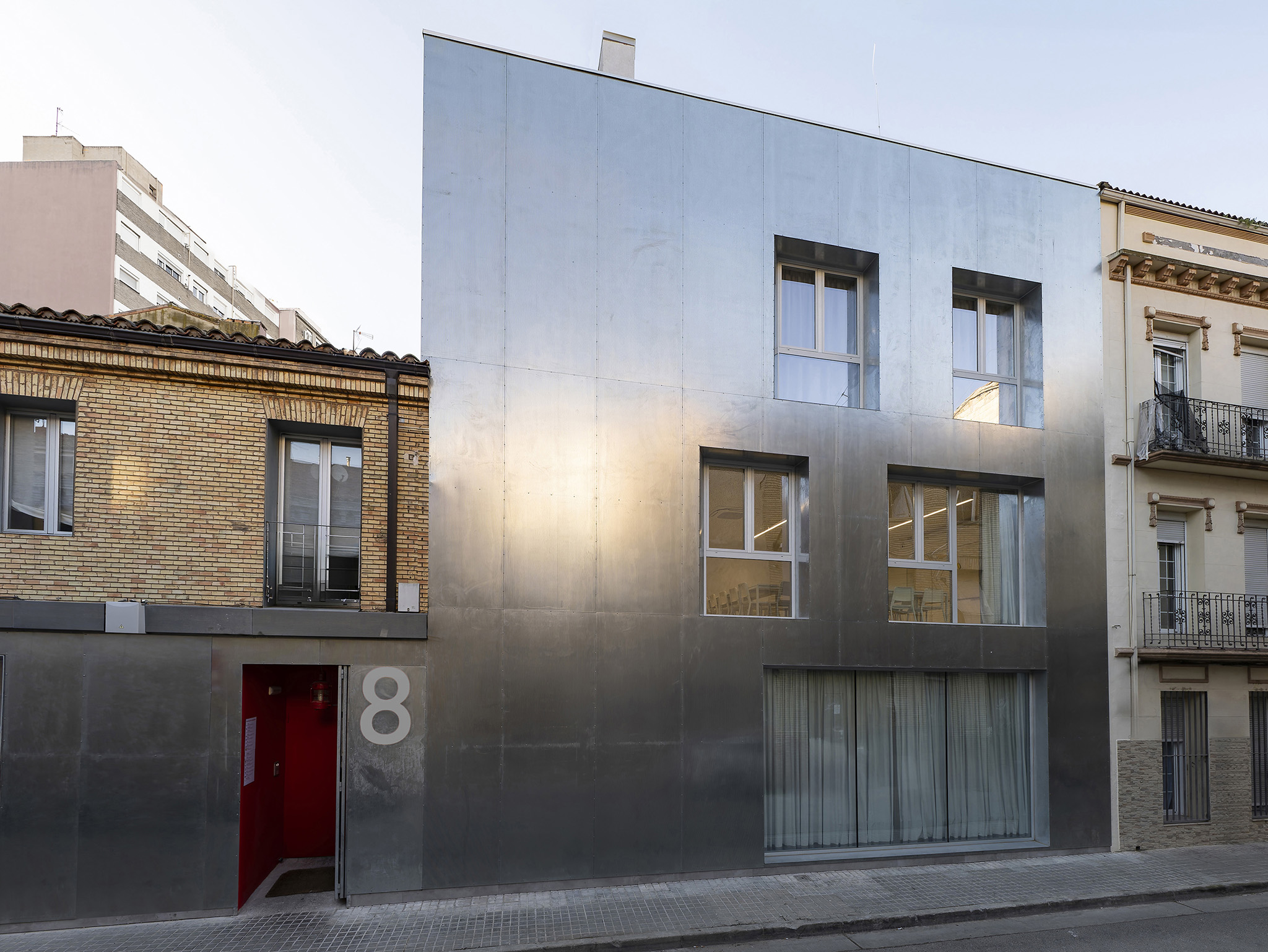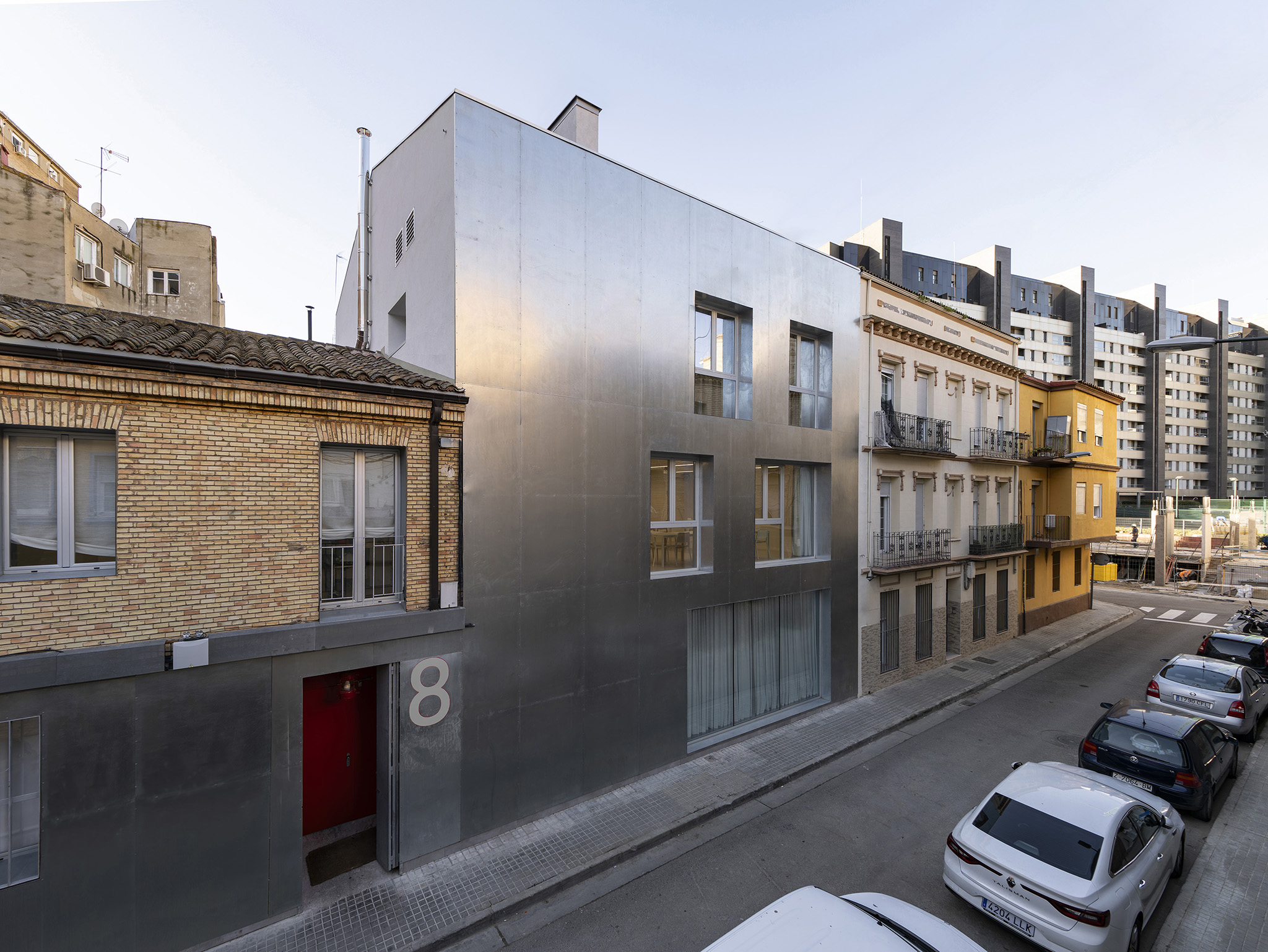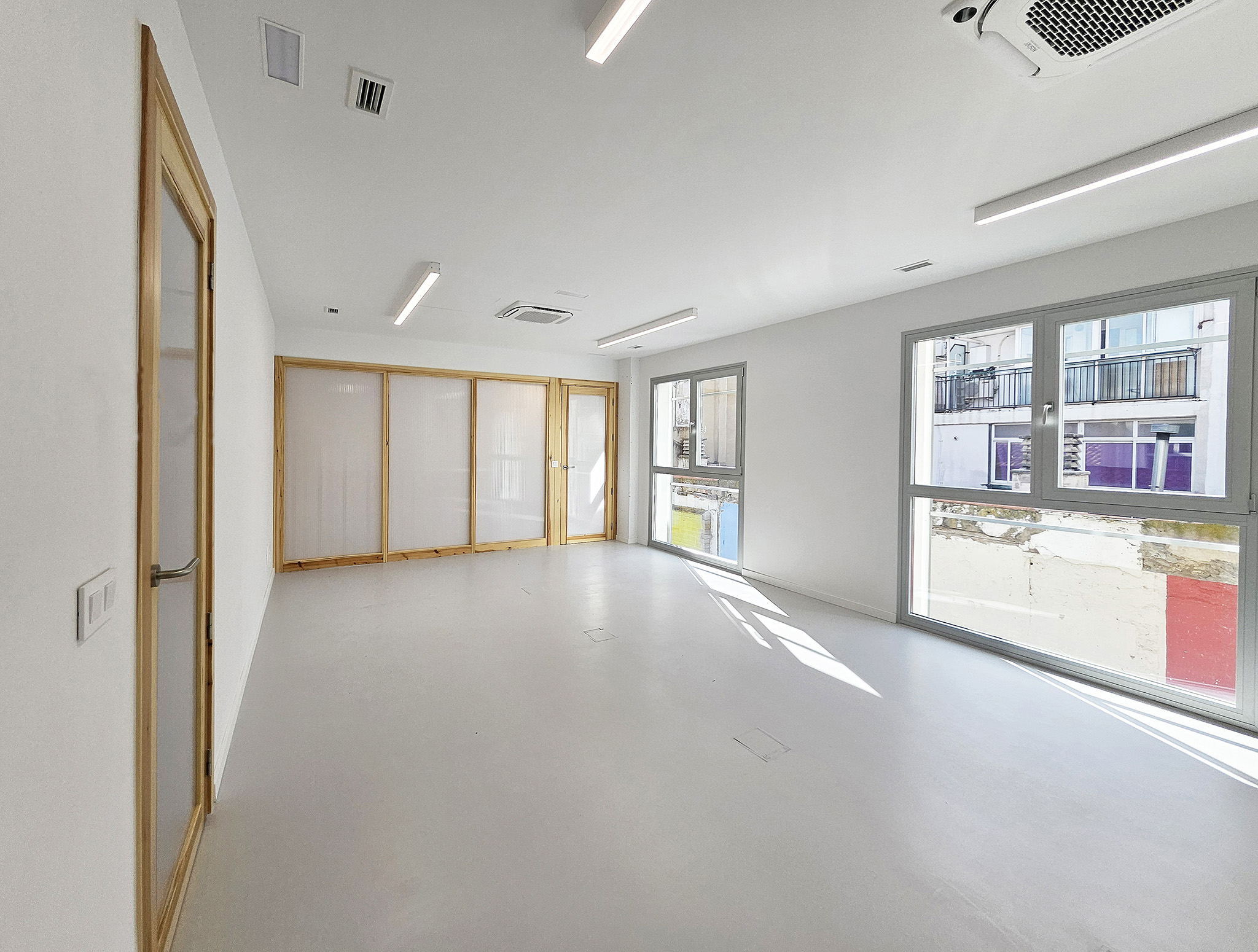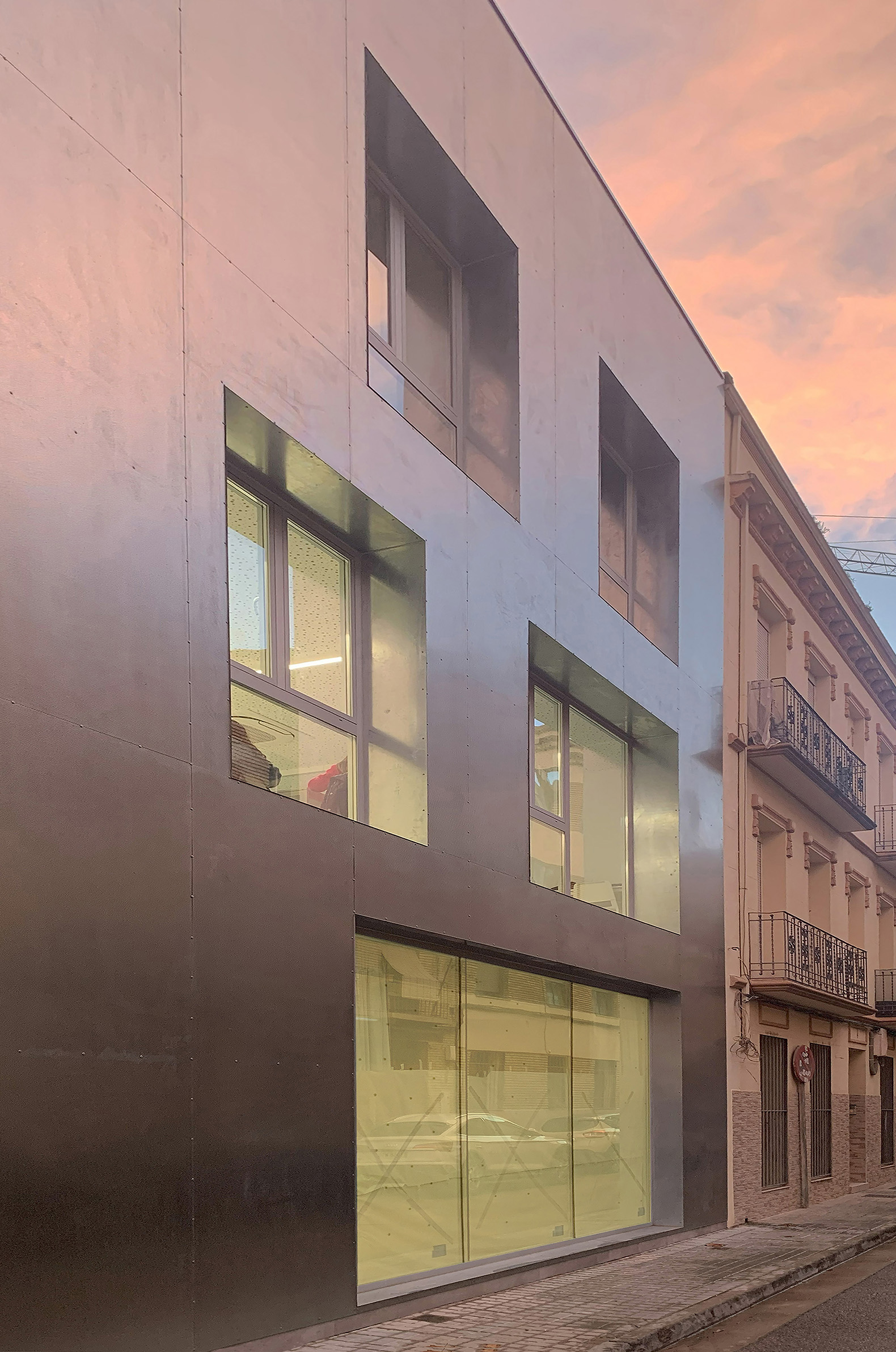
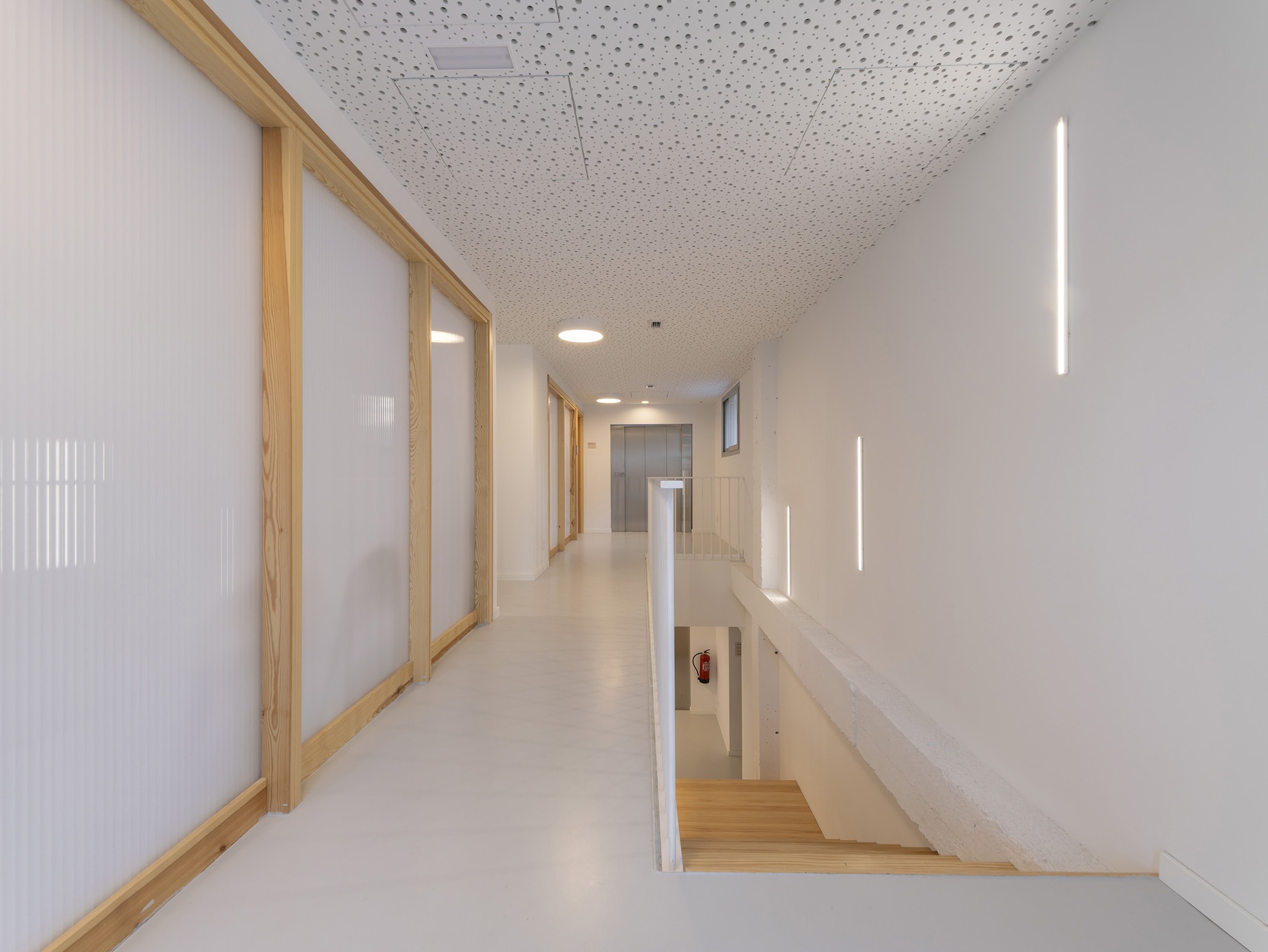
Inspired by both the industrial character of the neighborhood and the memory of an emblematic ship associated with the Spanish Civil War, the building designed by Grávalosdimonte Arquitectos presents itself in the urban space with a highly expressive, perforated metal envelope. This façade evokes the image of a vessel beached in the urban fabric, while the interior, constructed from wooden frames and polycarbonate panels, offers a luminous, flexible, and transparent atmosphere, reflecting the values that characterize the associations occupying the building.
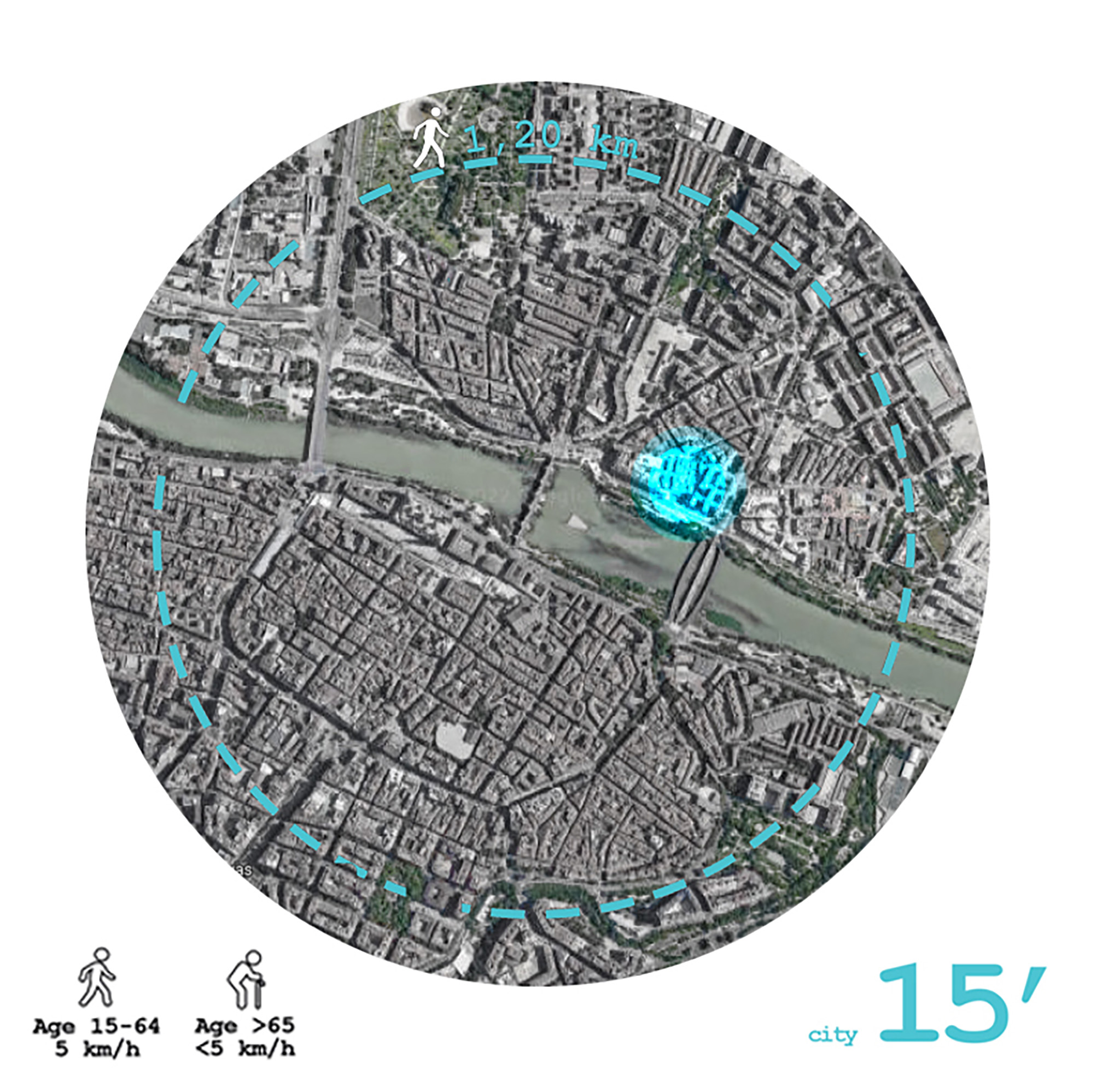
The project establishes a direct relationship with the social, associative, and community fabric of the surrounding area: the proposal becomes a stage for the collective development of initiatives. Both for the activities it houses and for its symbolic significance, the building is configured as an infrastructure capable of revitalizing neighborhood life, offering a space open to citizen participation.
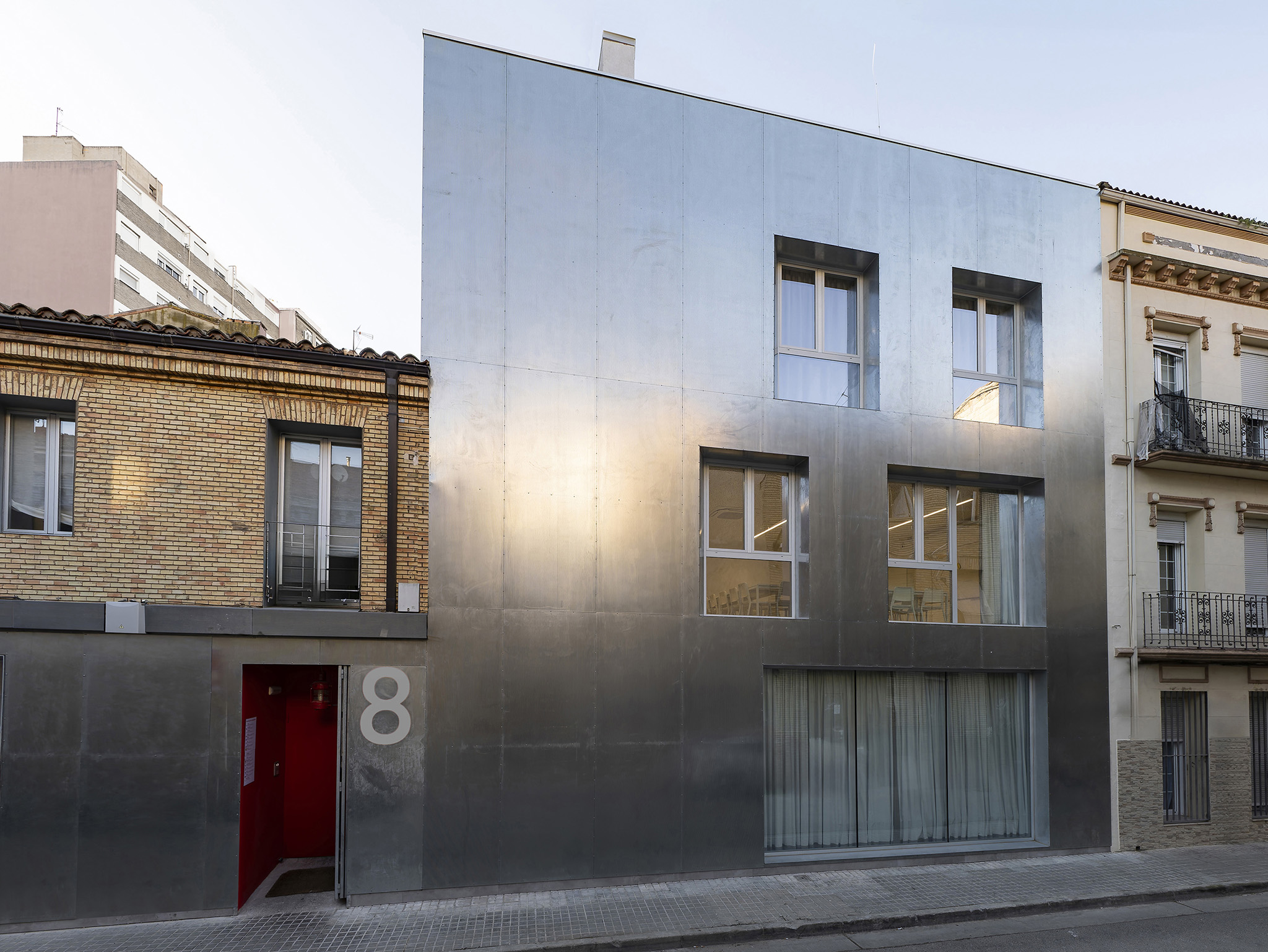
Stanbrook Training Centre Expansion by GRÁVALOSDIMONTE Arquitectos. Photograph by Alex Sahún, Alberto Casas.
Project description by Grávalosdimonte Arquitectos
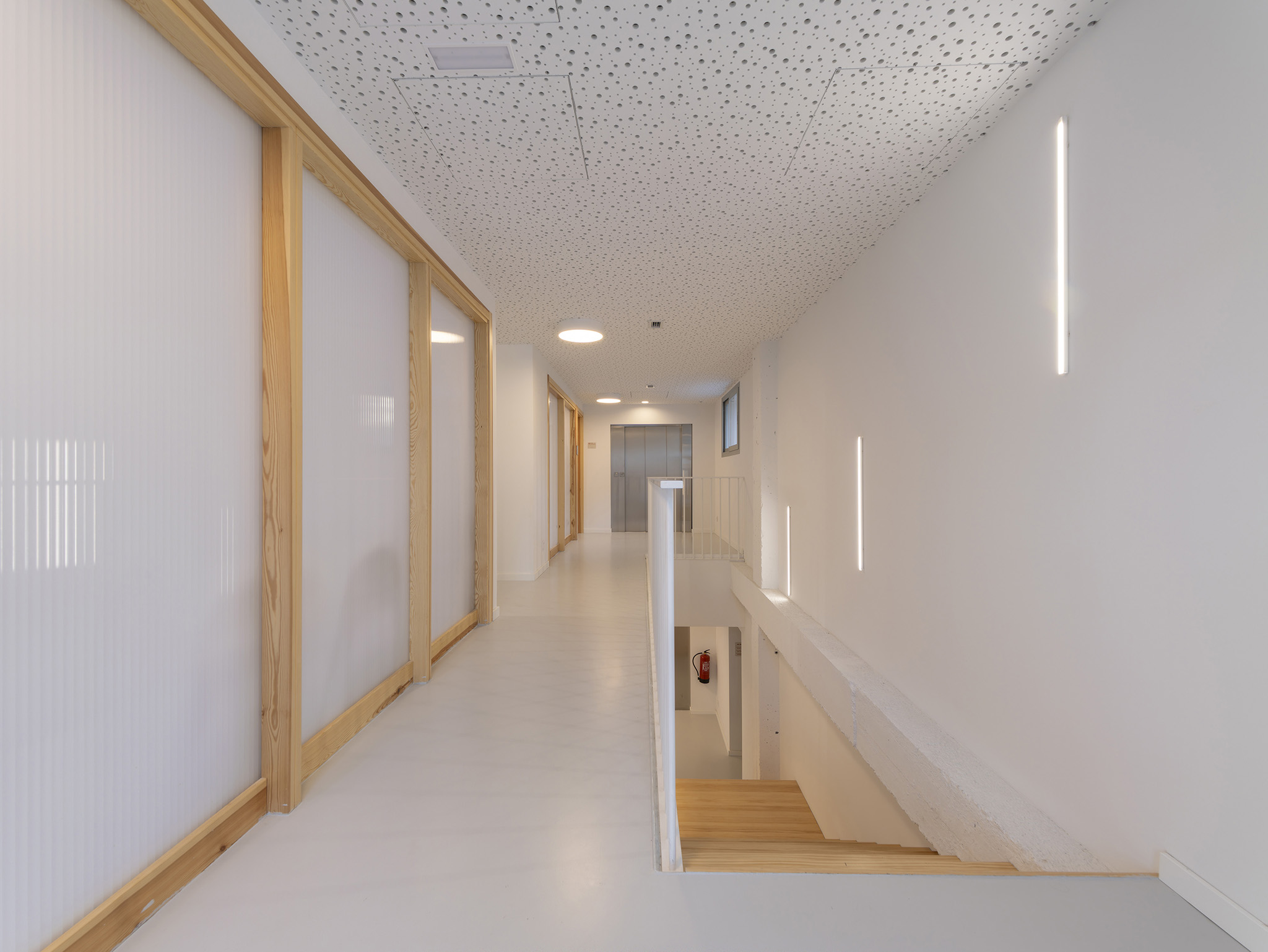
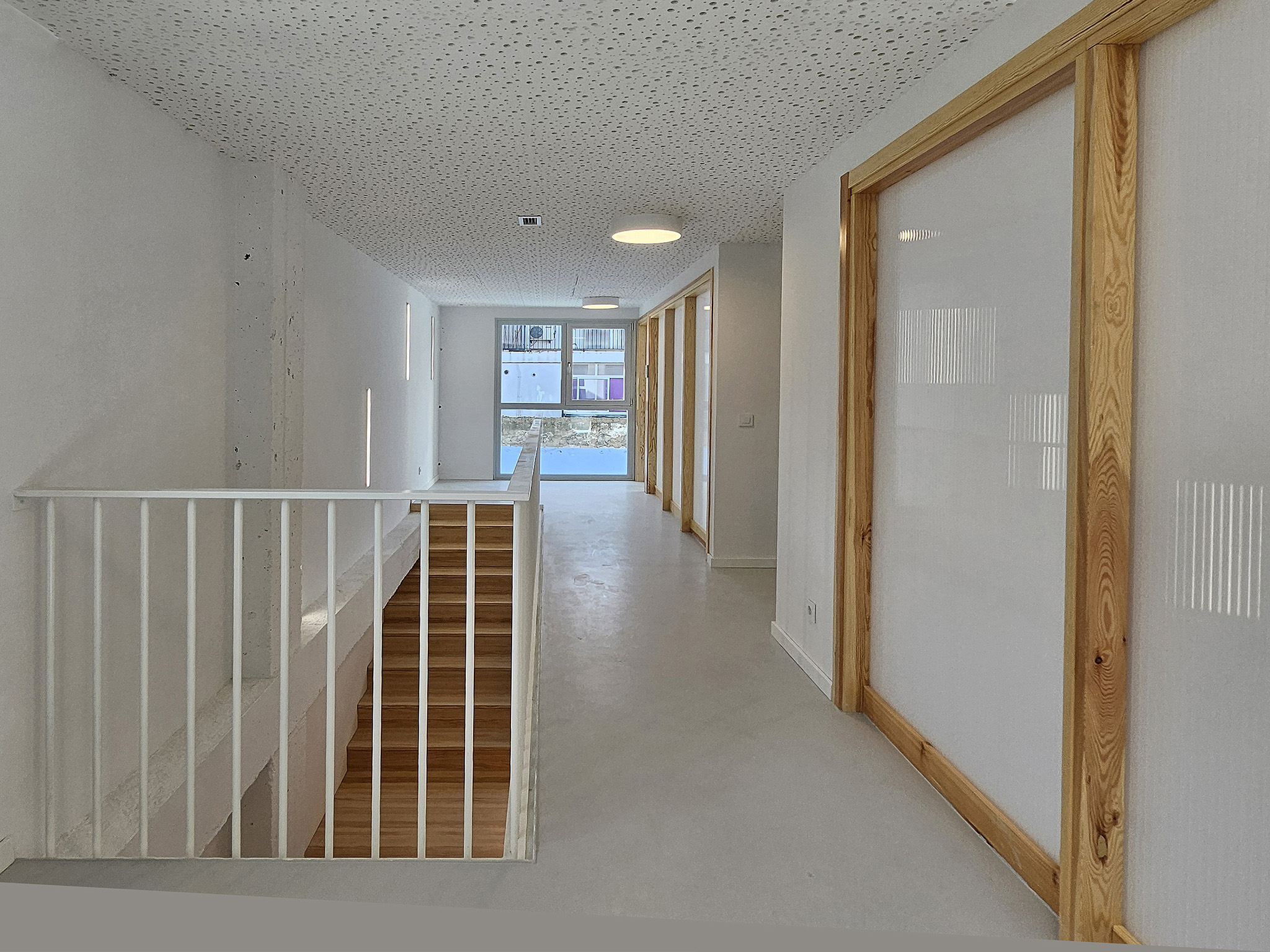
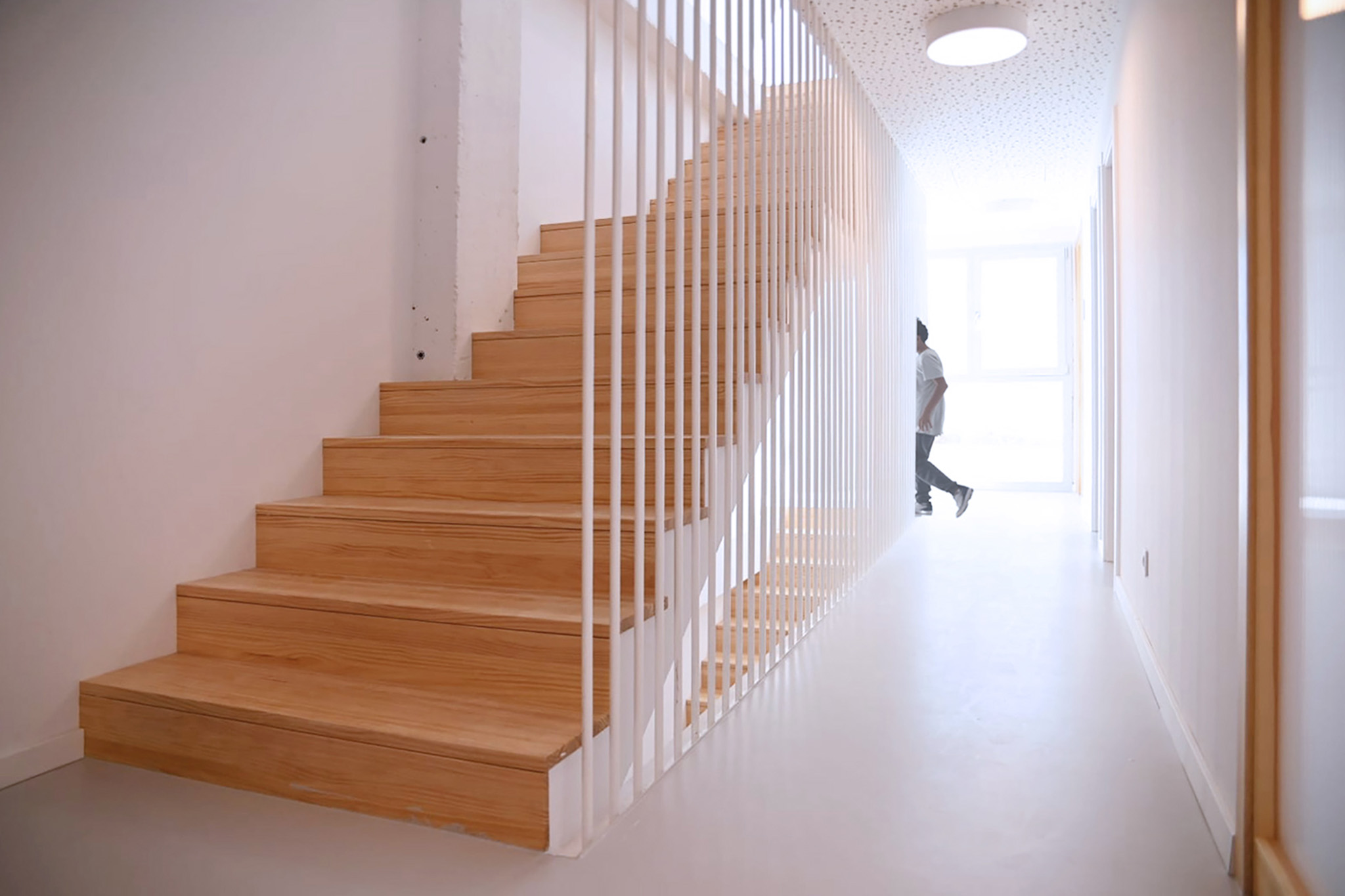
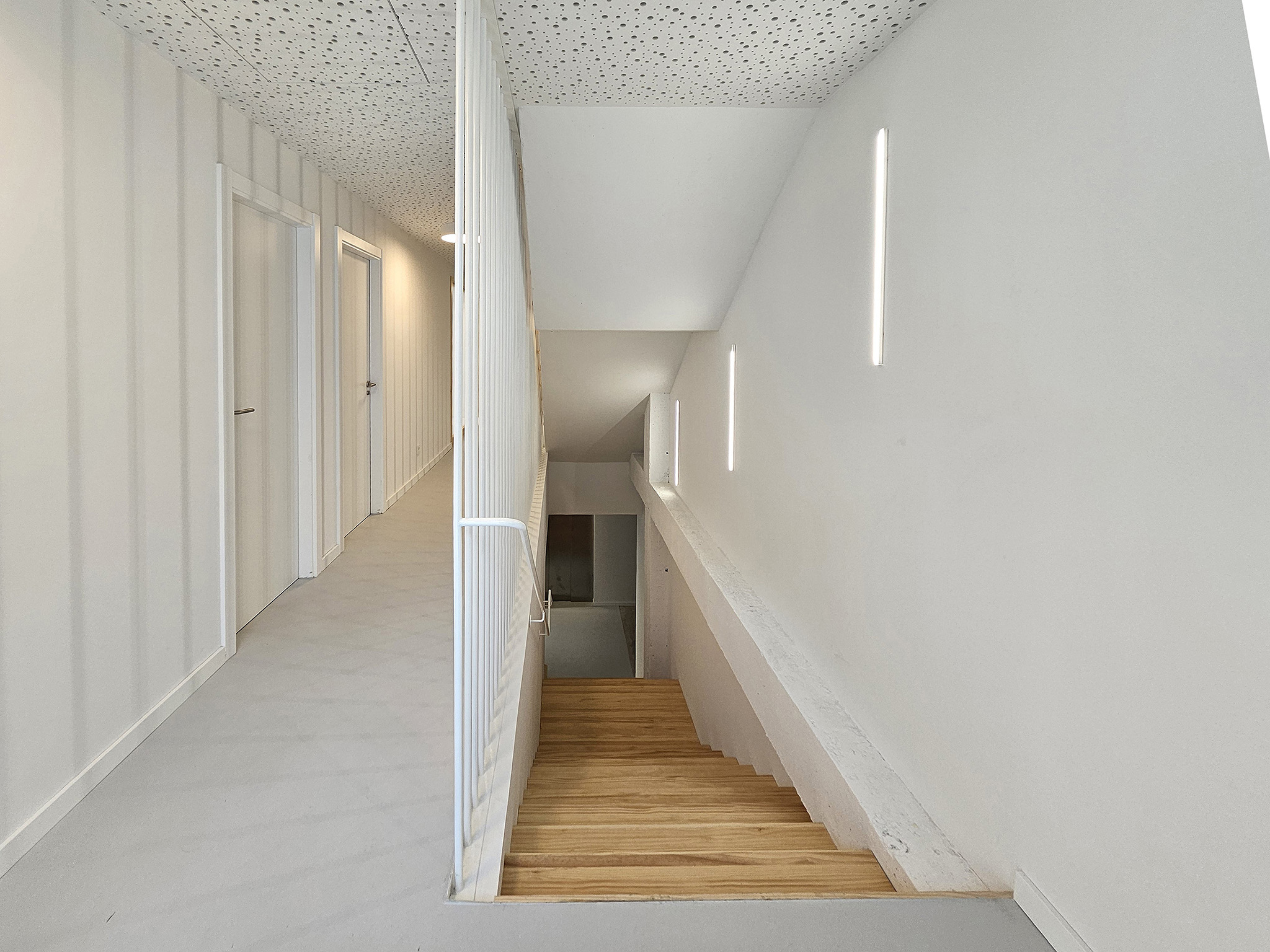
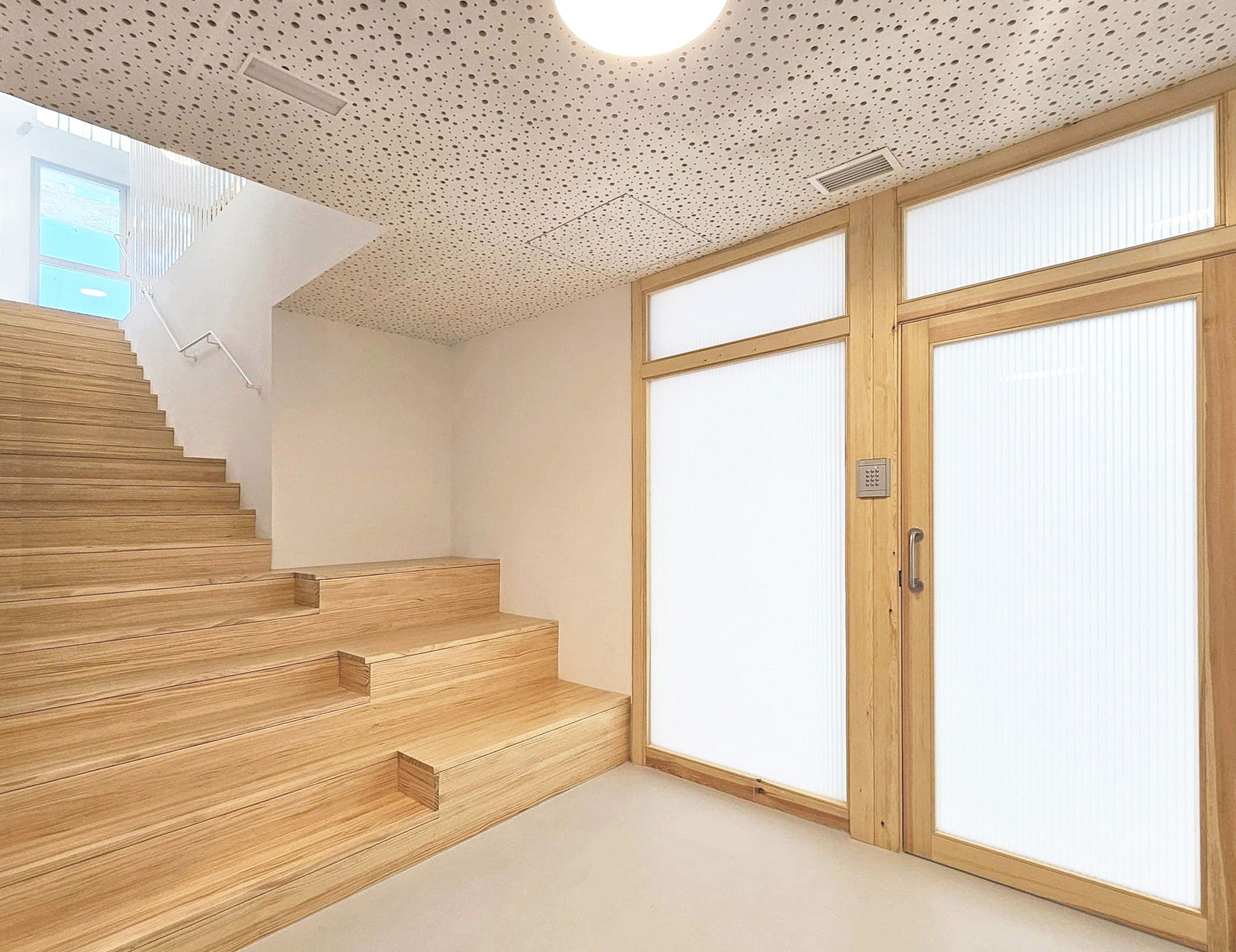
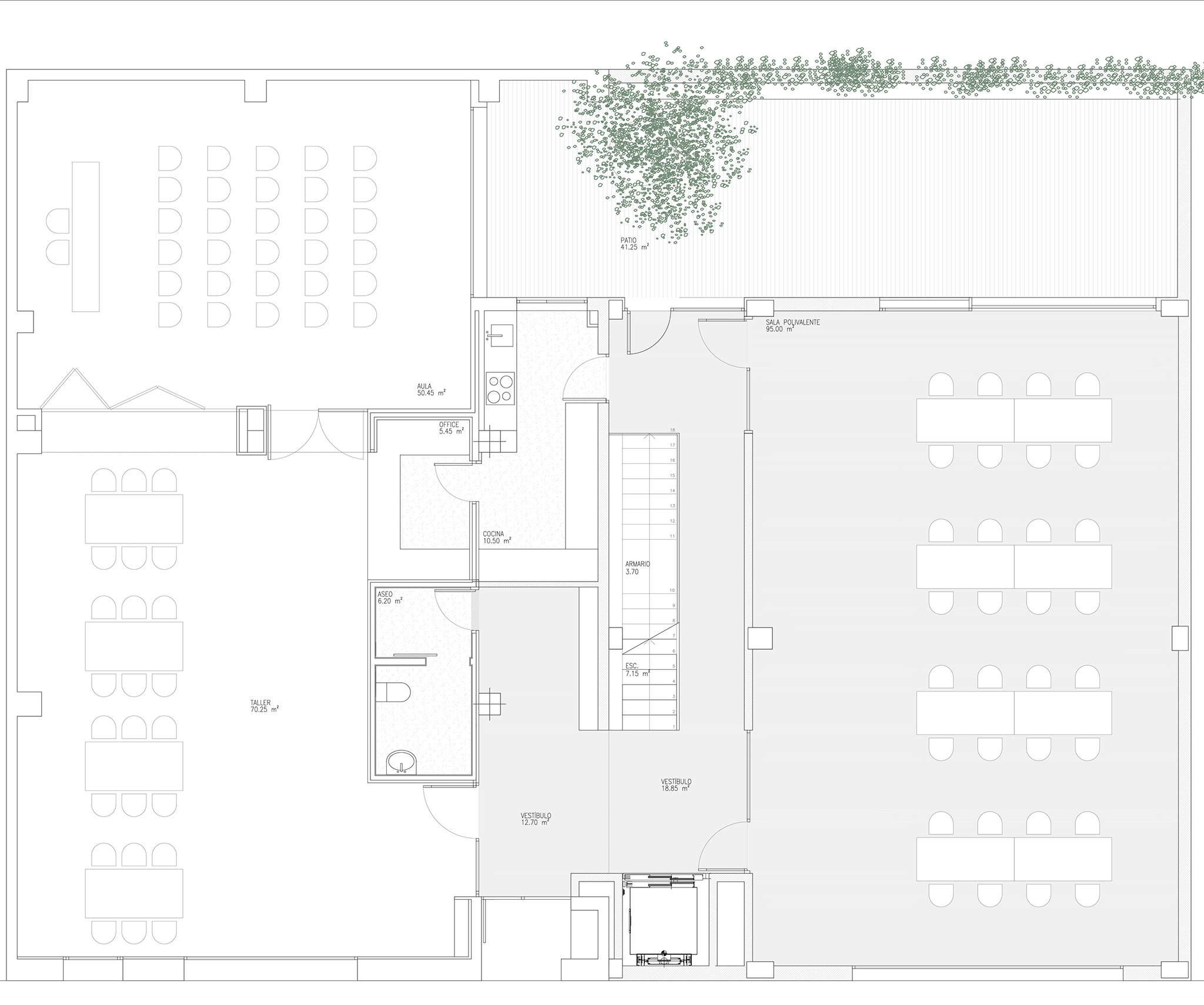
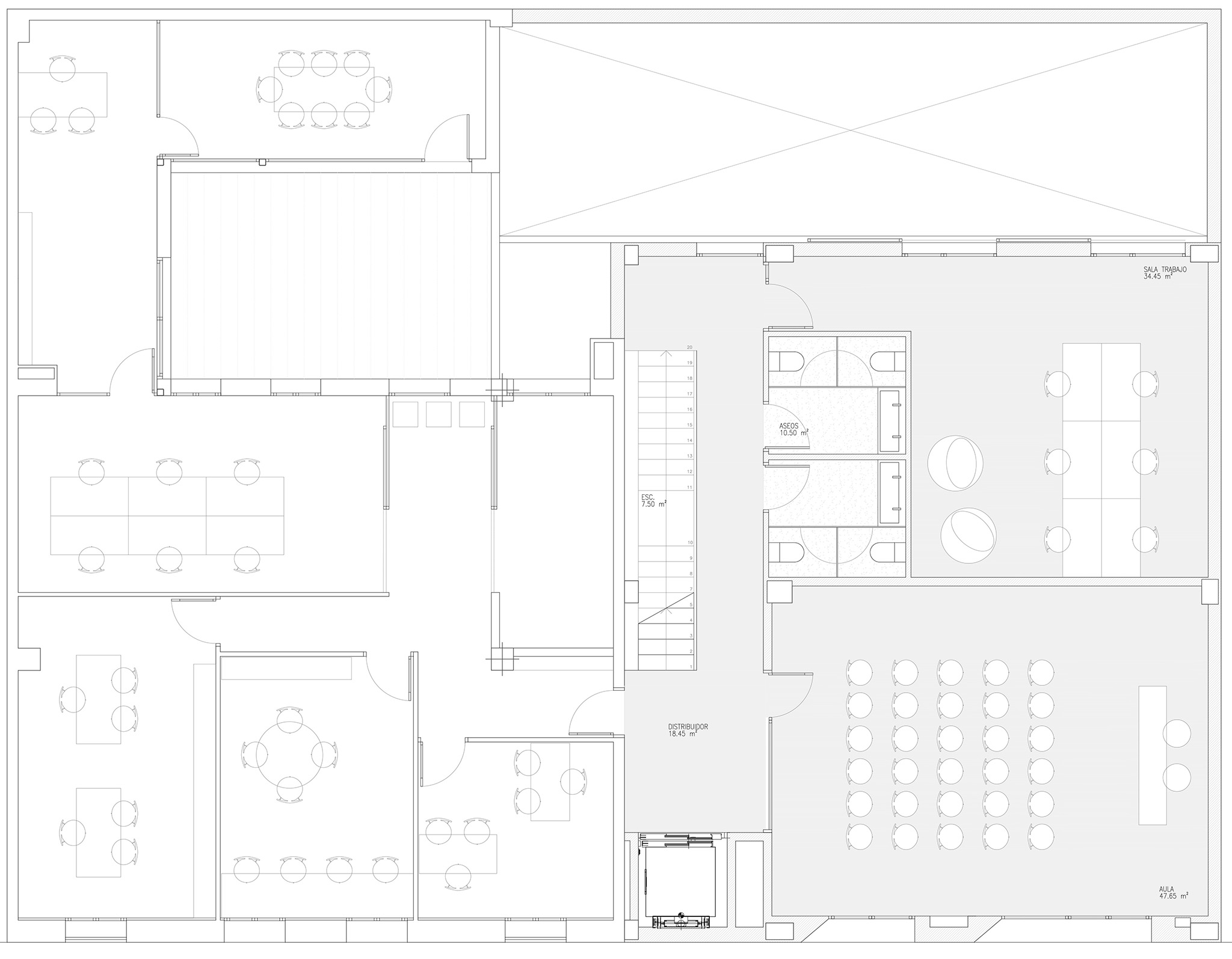
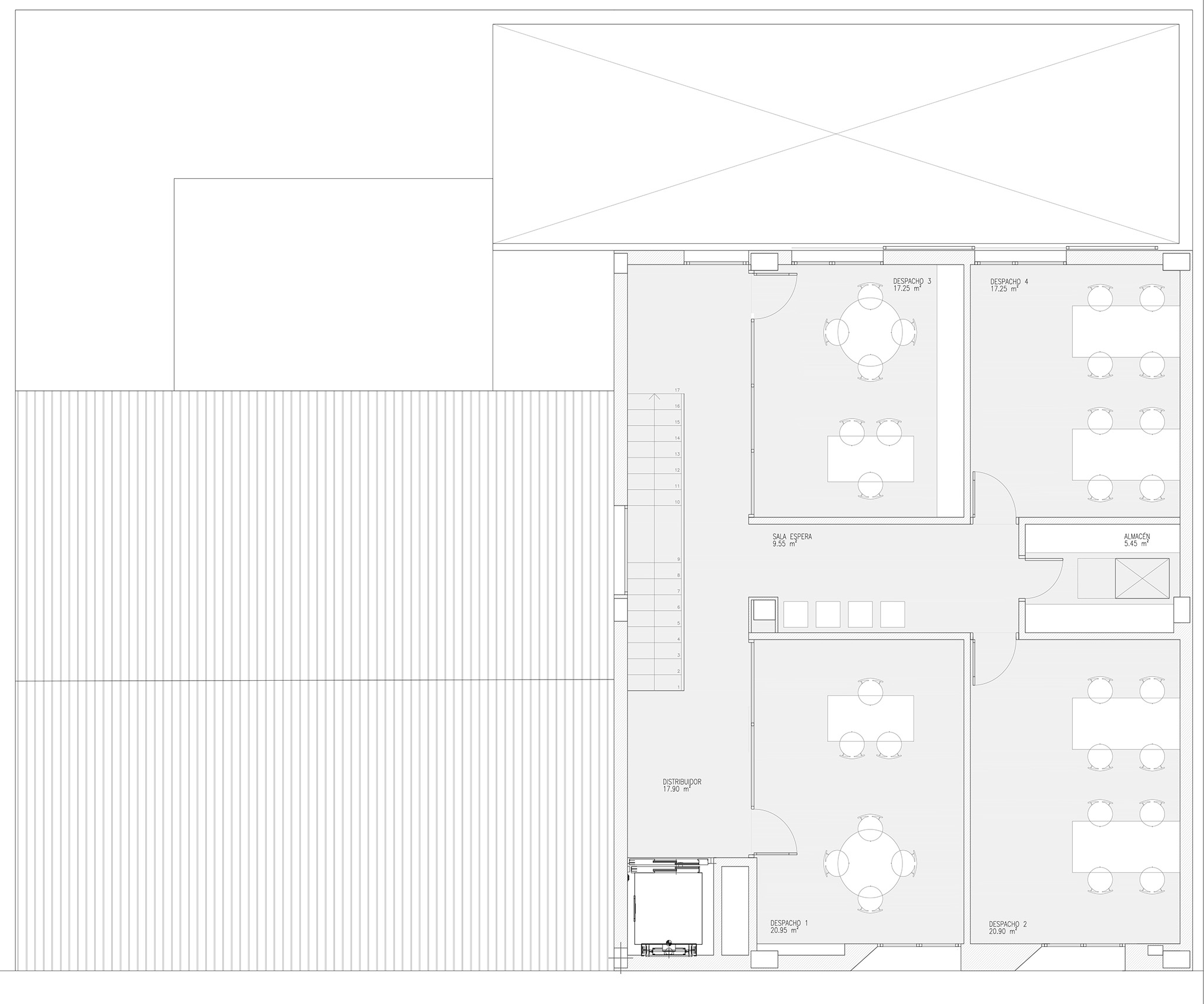
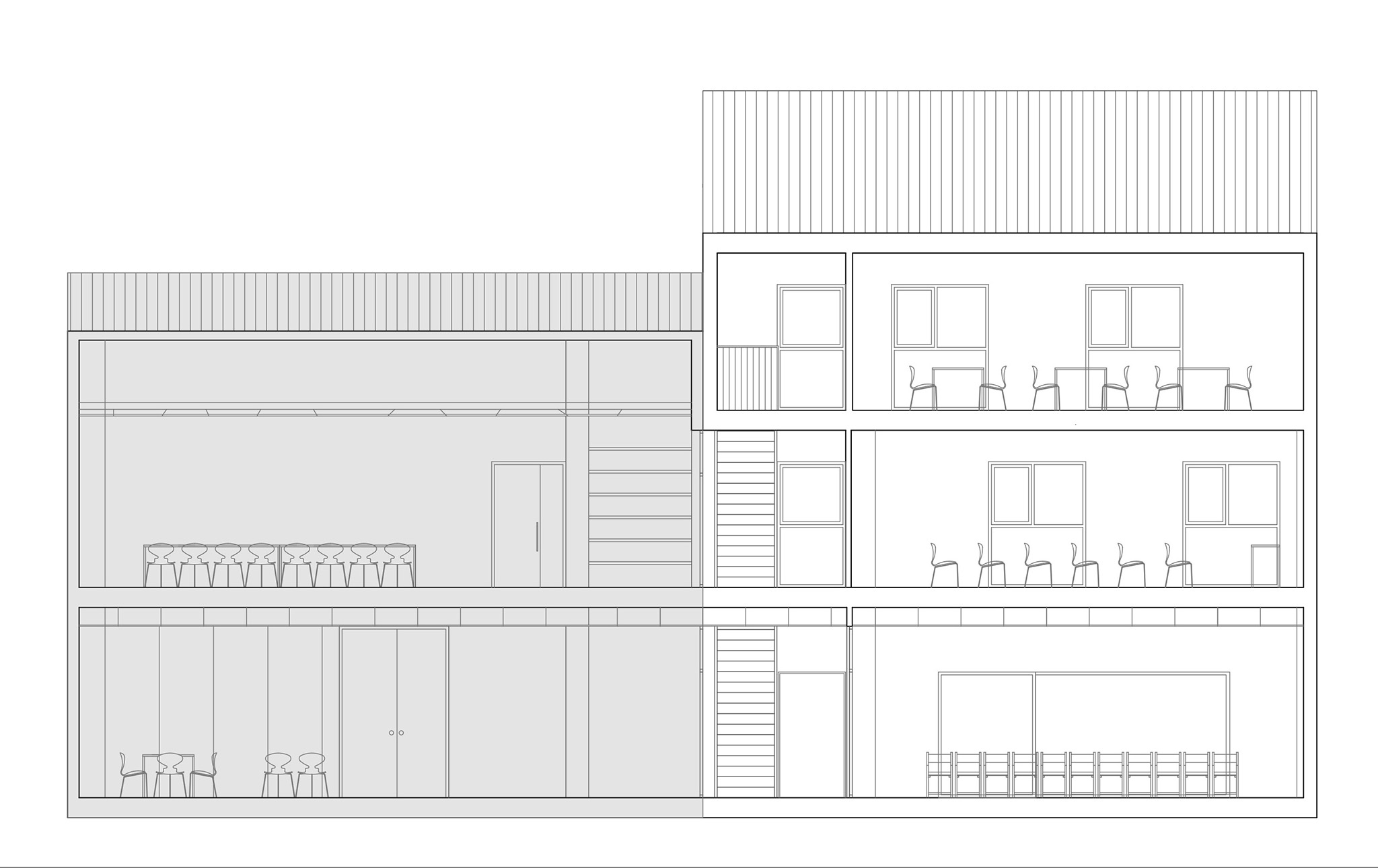
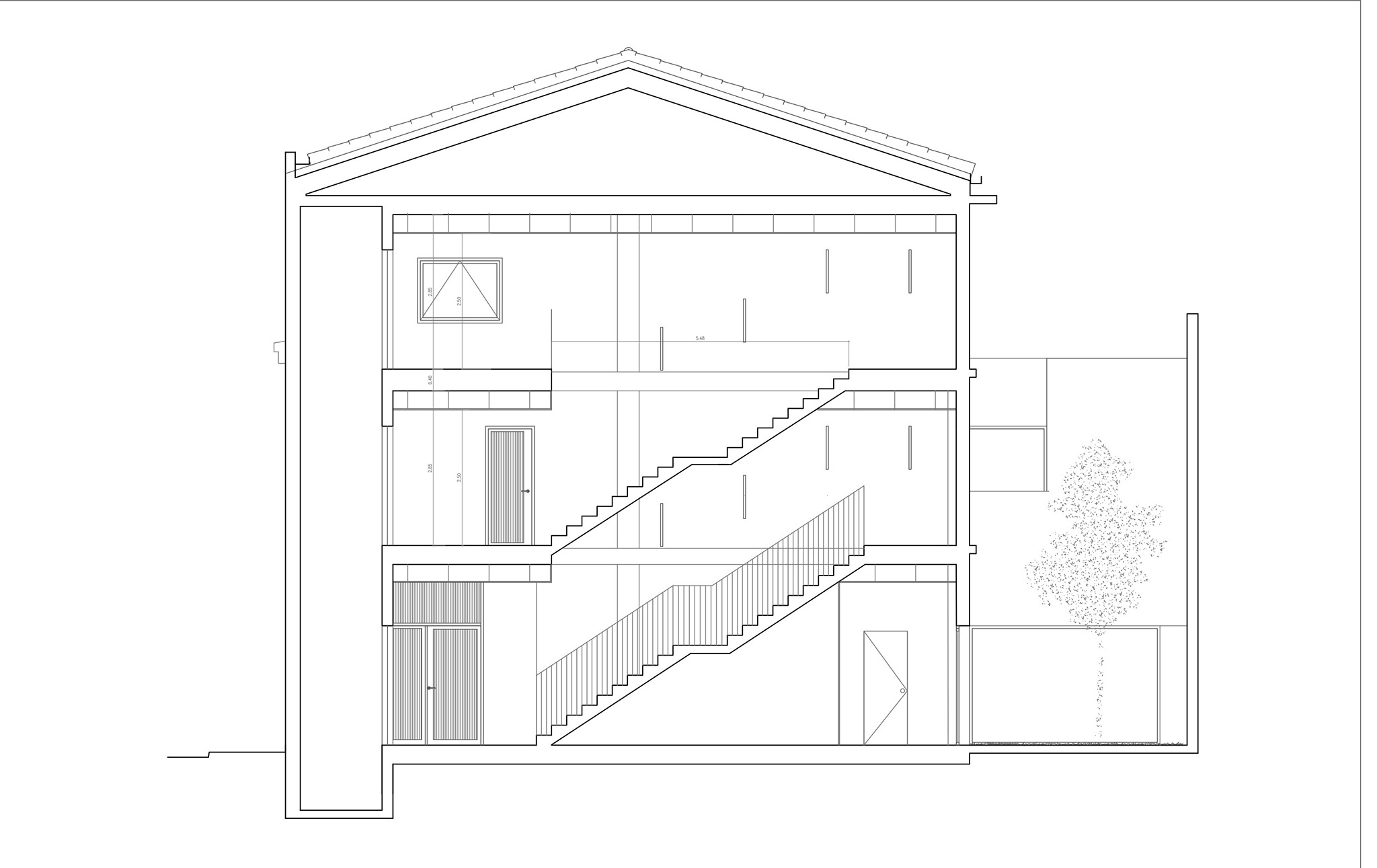
The project involves the expansion of a training center managed by several associations. The new intervention proposes a general reorganization of the existing building, allowing it to grow organically. A lobby has been designed to reorganize circulation via a new staircase, creating a central communication element that transforms into a small amphitheater at its landing.
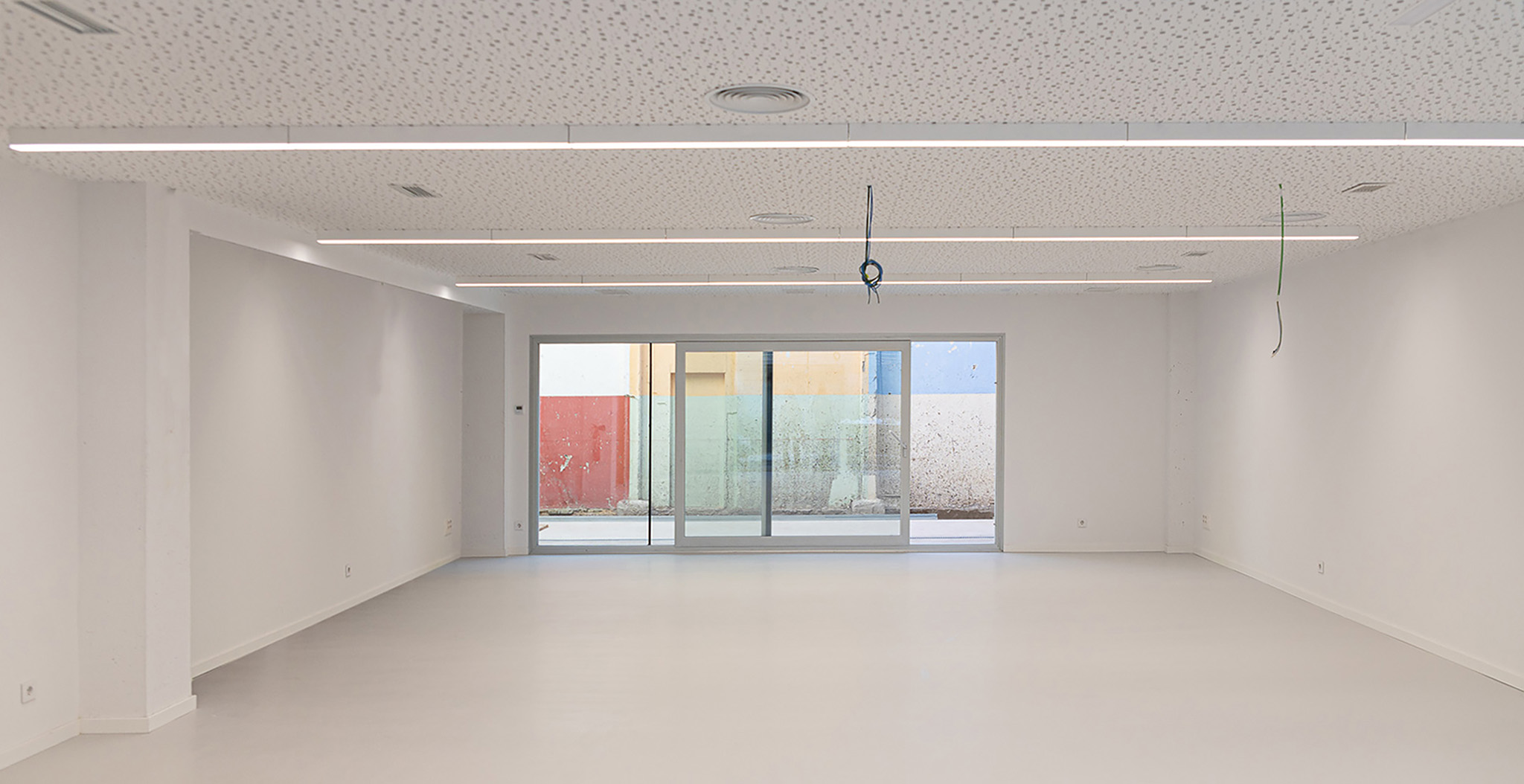
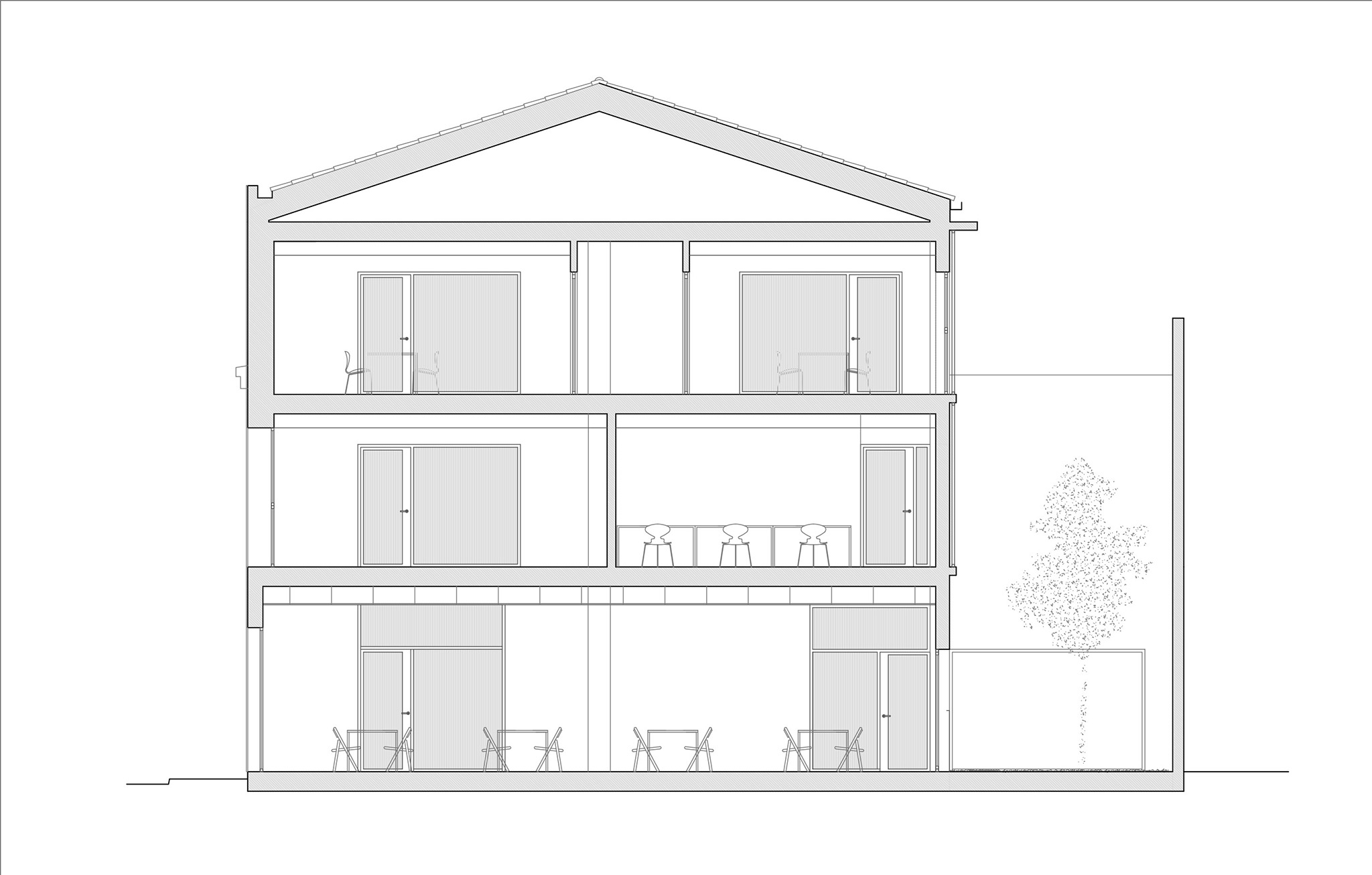
The new building comprises an open-plan ground floor and two upper floors housing classrooms, coworking spaces, and offices. A courtyard at the rear of the site provides light and ventilation to all the rooms facing that area. On the ground floor, this feature allows for a complete understanding of the space, from the street to the landscaped courtyard, expanding and connecting the various activities carried out by the associations to the exterior and fostering ties with the local community.
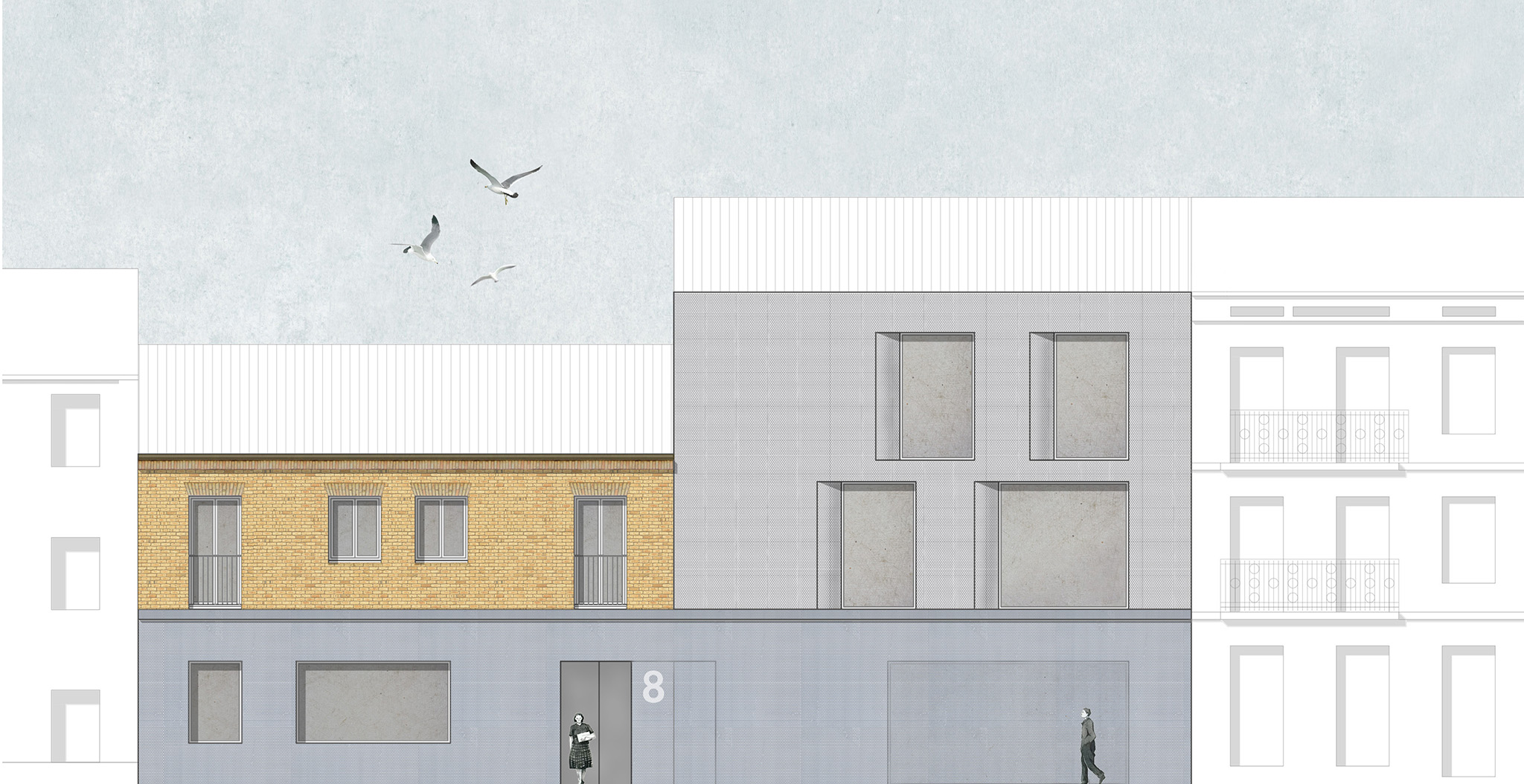
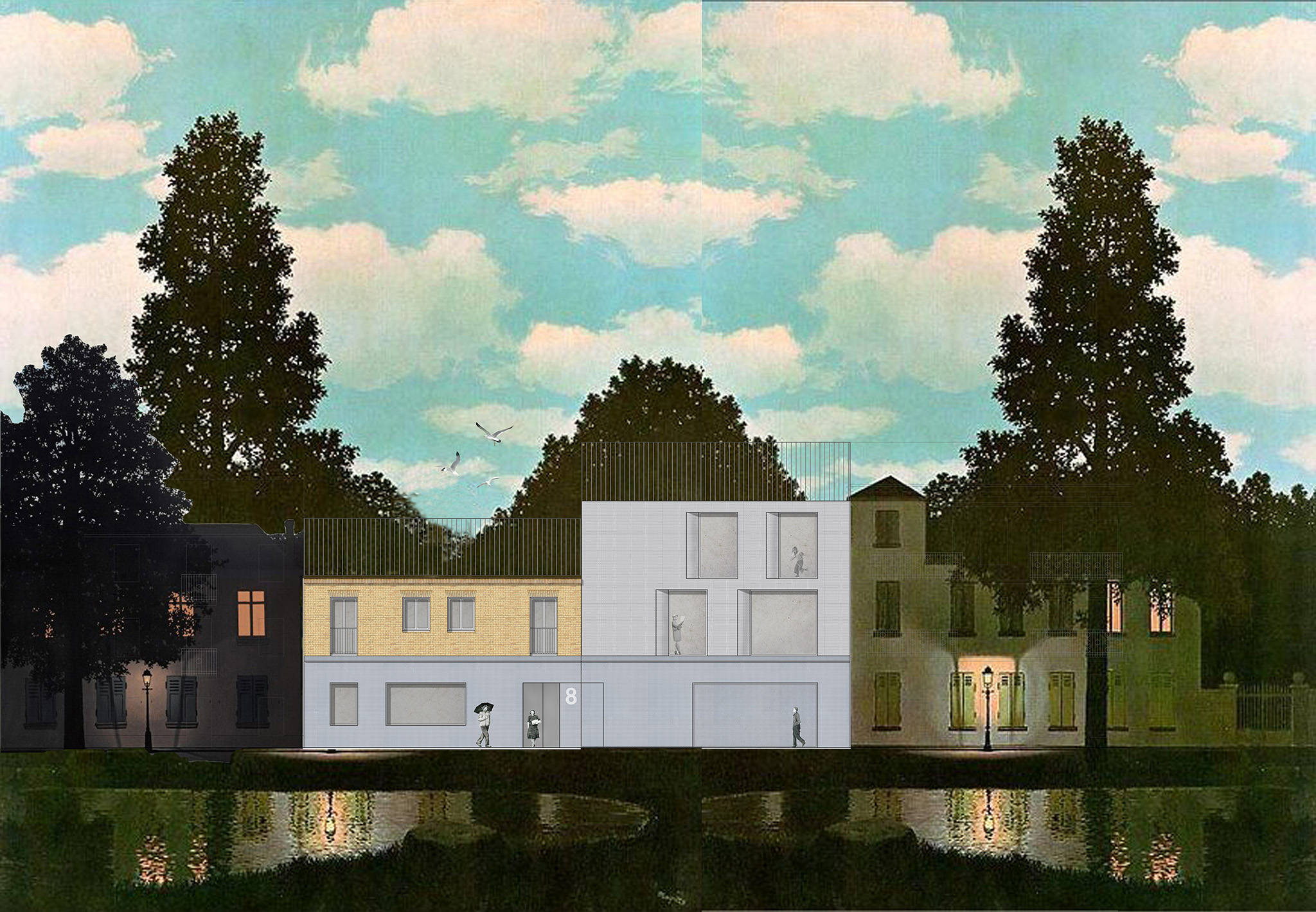
Due to the industrial character of the neighborhood and the founding inspiration of the associations from the Stanbrook, a symbolic ship from the Civil War, the building manifests itself in the urban space through a metal facade, evoking the emotional imagery of a ship stranded in the urban ocean. An abstract composition has been conceived that sets it apart from the adjacent residential scale. Large openings with slight inclines are designed to capture the morning light. The changing character produced by the various reflections, especially at sunset, gives the building a protean quality in which the metal skin takes on different tones. This intervention has triggered a revitalization process in the neighborhood through small-scale facilities that implement new dialogues between life, culture, and space.
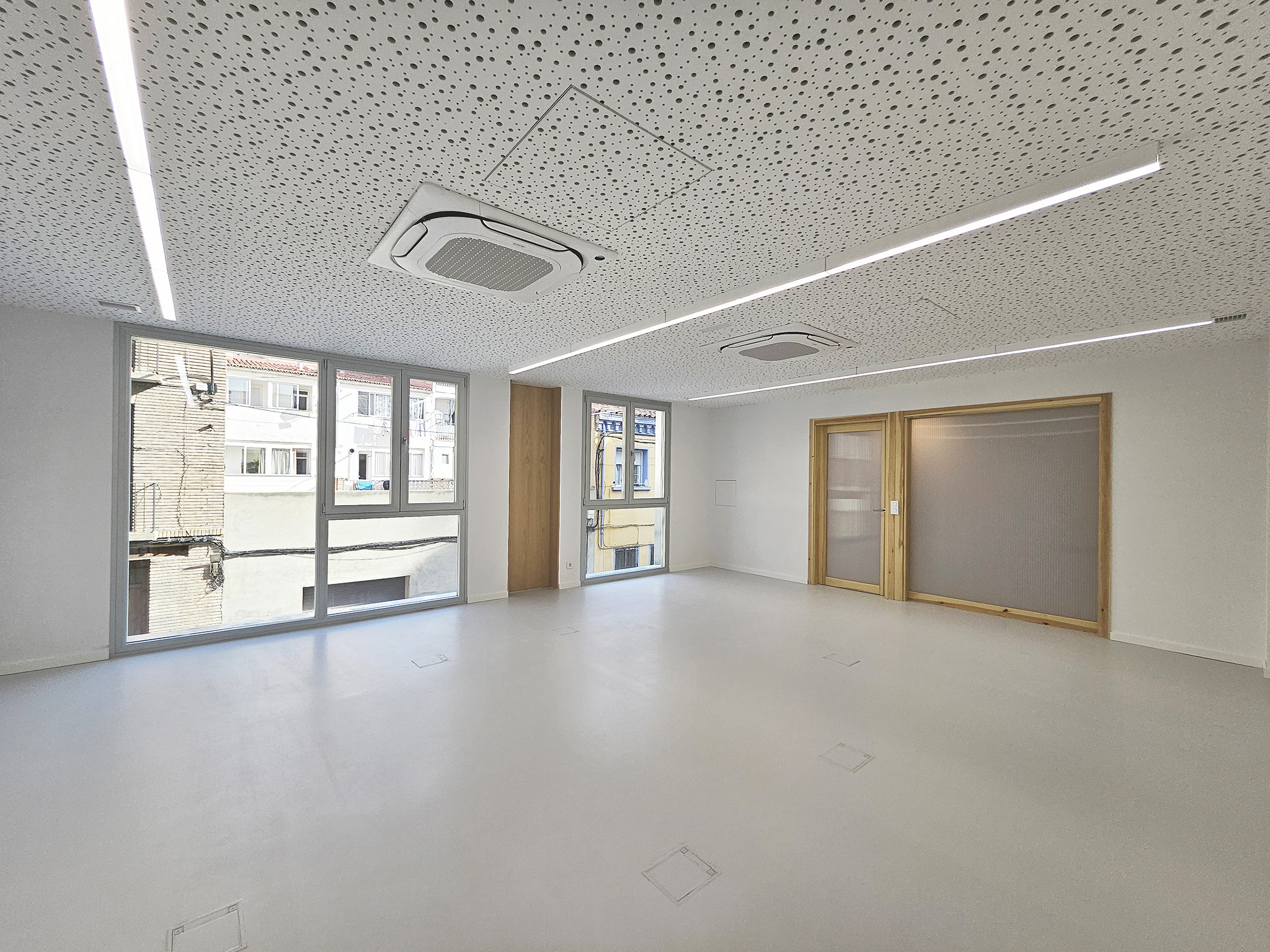
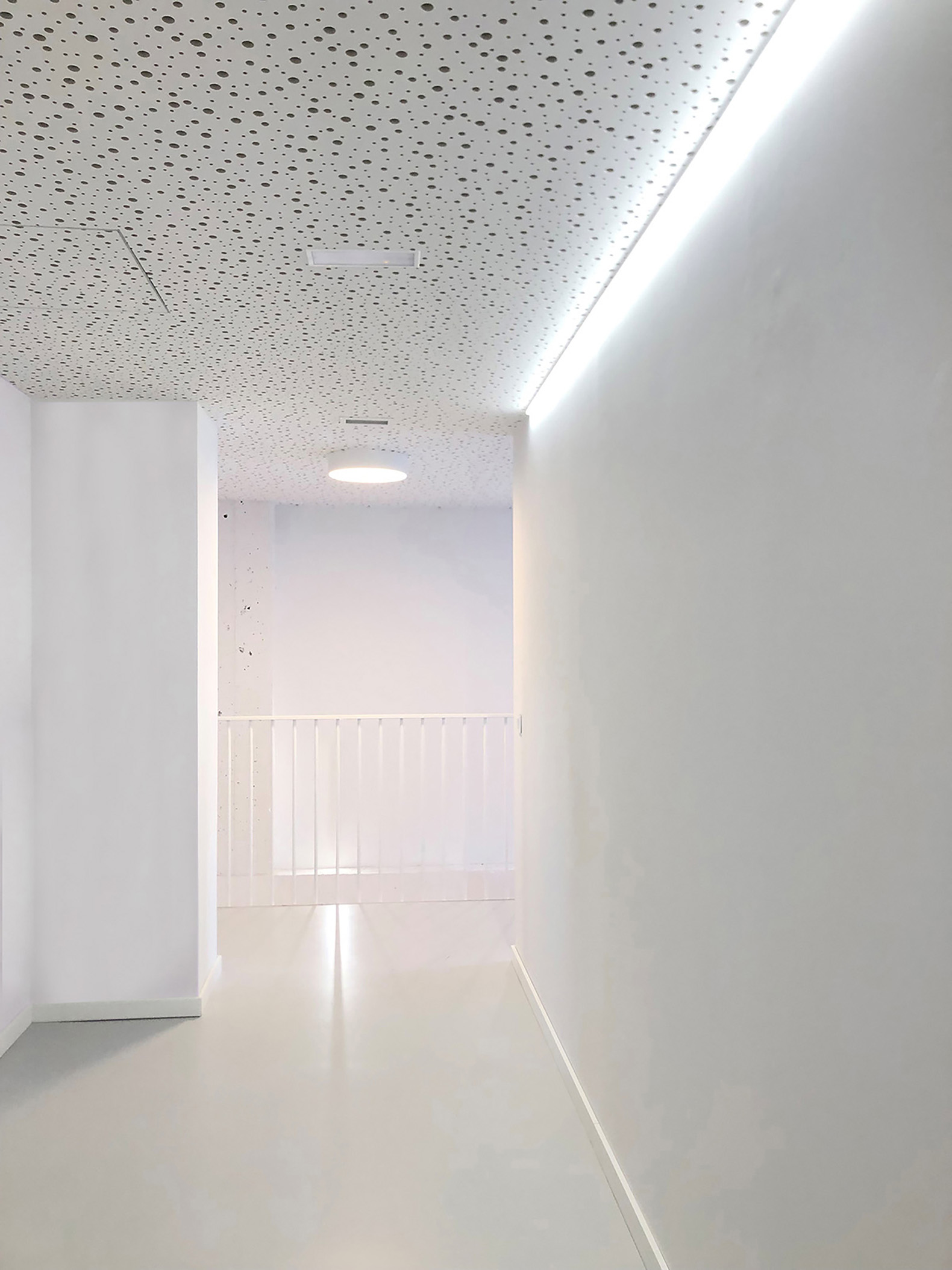
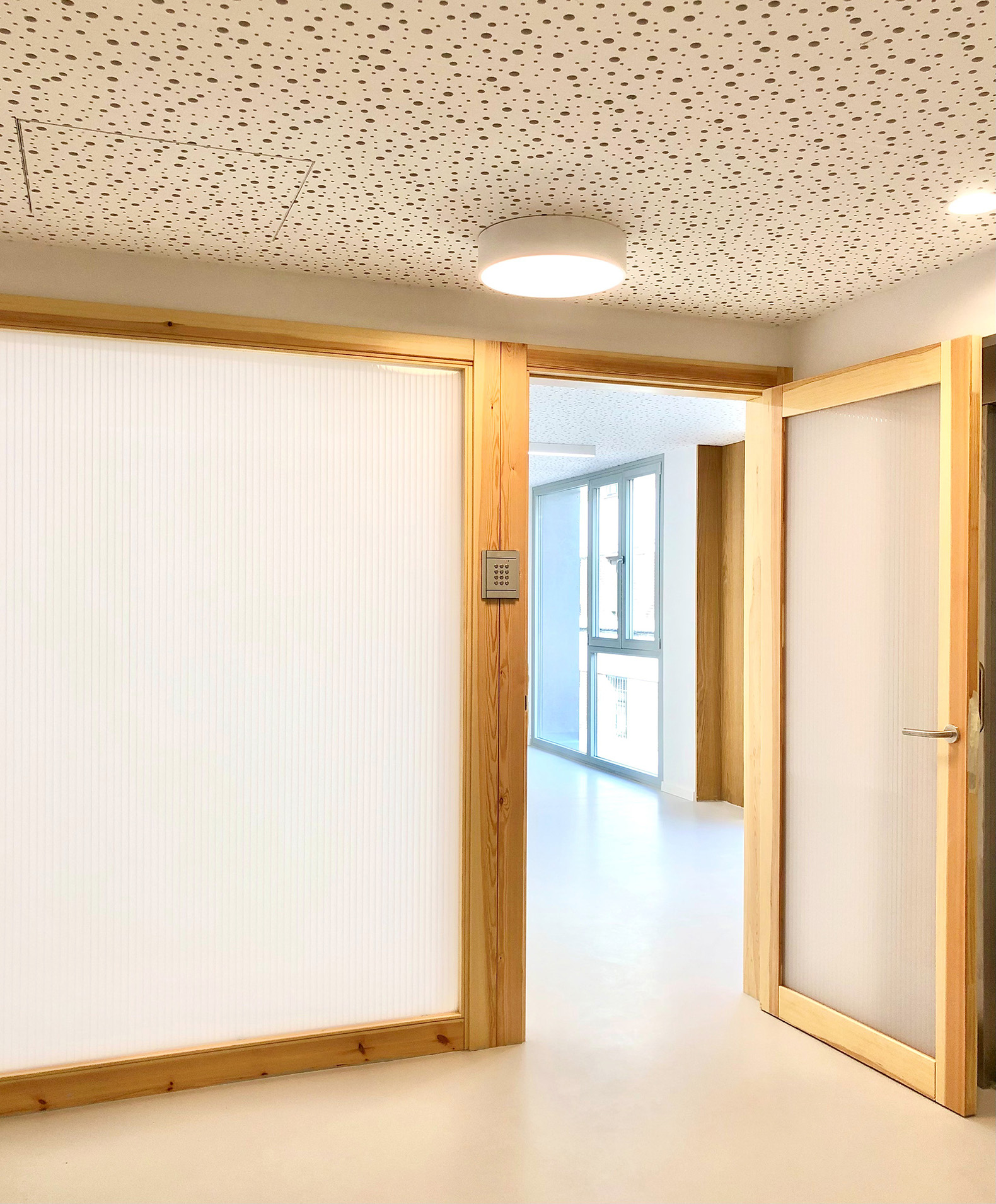
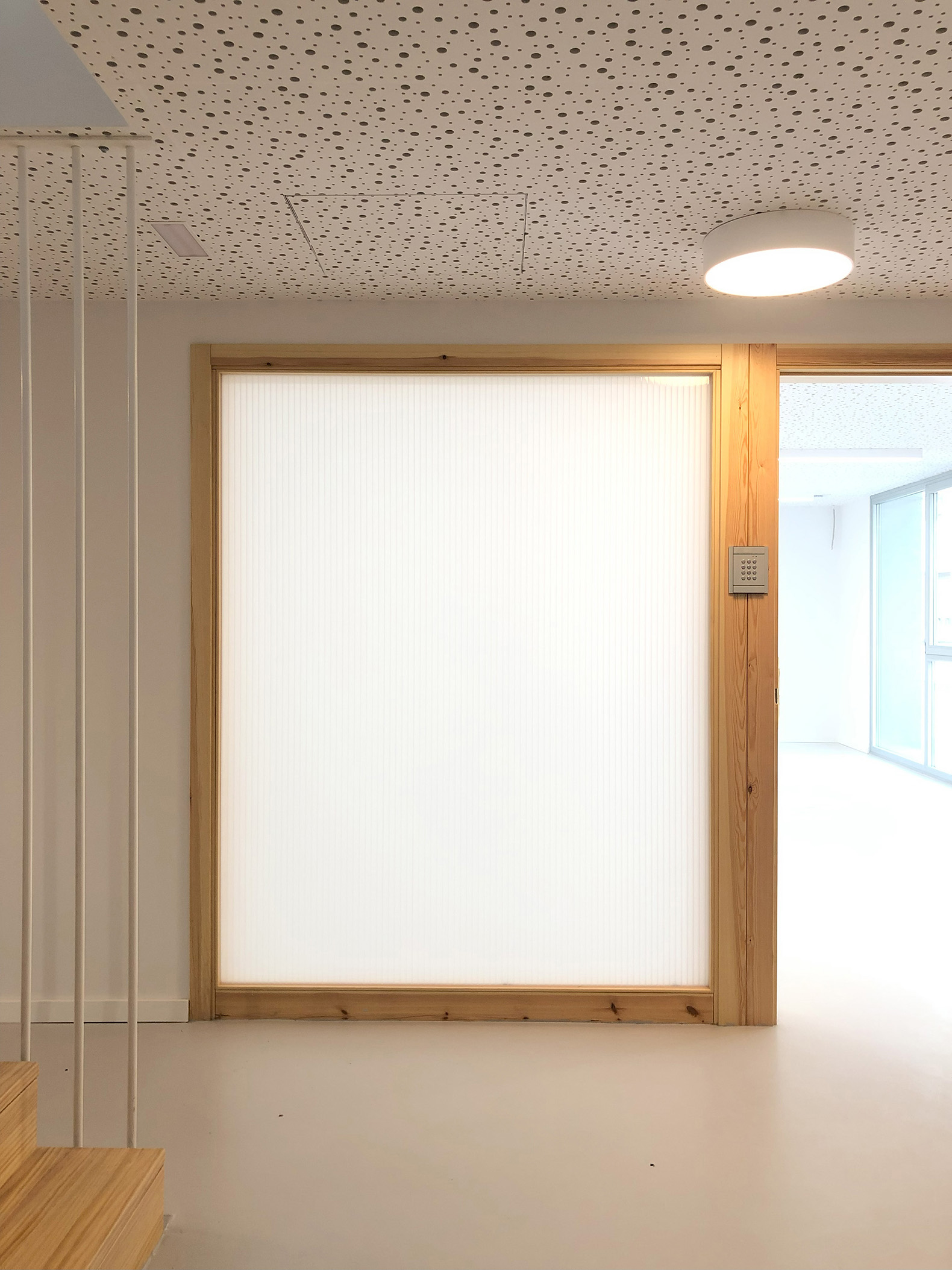
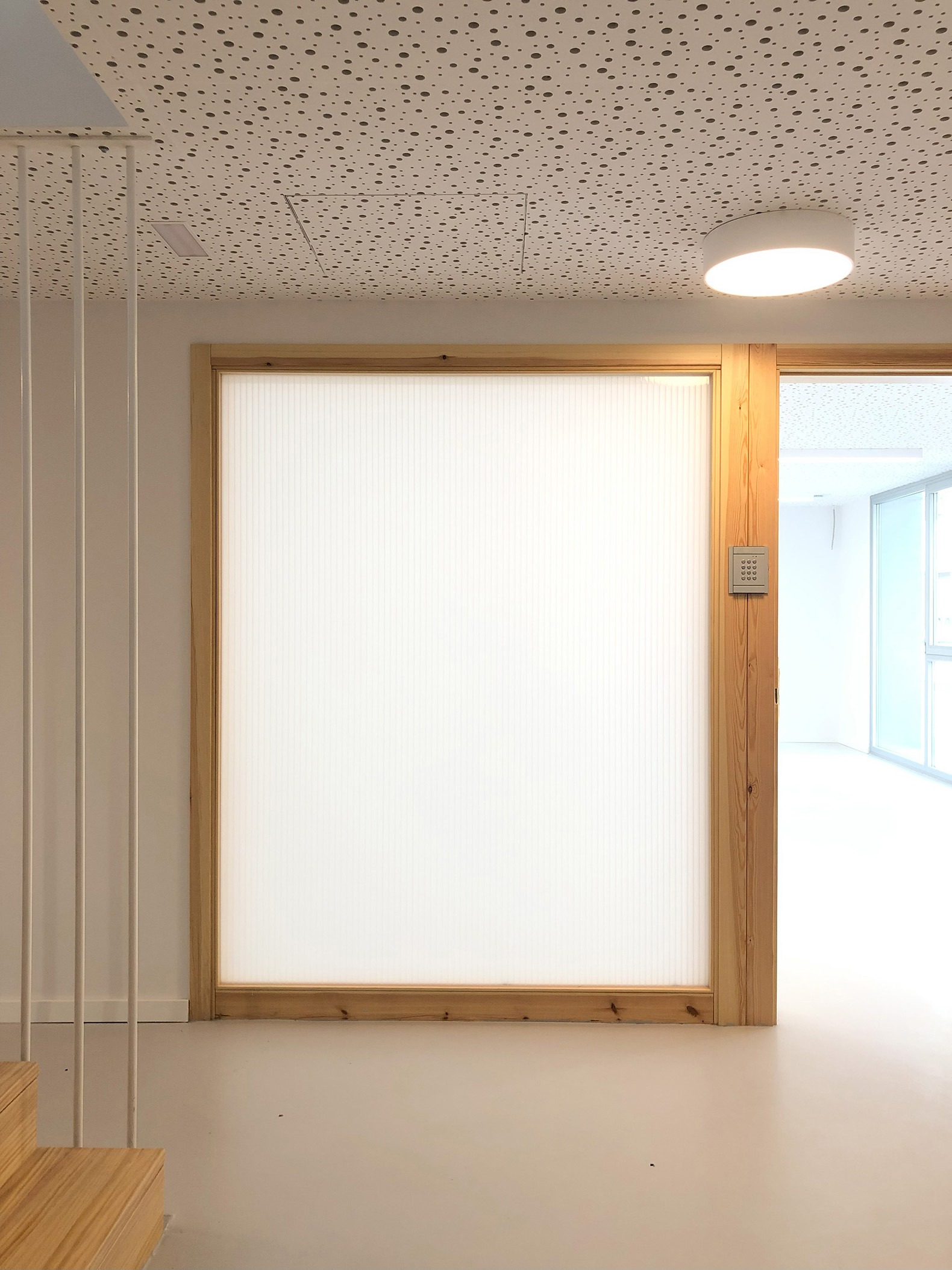
Inside, in contrast to the starkness of the exterior, a certain lightness in the materiality has been maintained through continuous flooring, wooden frames, and polycarbonate panels. The building's tectonic character reflects the flexible and transparent nature of the associations that manage it, whose members coexist within the space, woven together by light.
This proposal aims to elevate the architecture of small facilities that have the capacity to transform and activate the social fabric. It seeks to establish a direct correlation between action and its spatial representation, primarily within the urban landscape. It also aims to incorporate a contemporary vision capable of establishing an effective dialogue with the existing environment and, therefore, to establish itself as an honest expression of its time.
The intervention directly impacts the local, associative, and community fabric. The building, both through its activity and its symbolism, acquires great potential for revitalizing neighborhood life, presenting itself as an open and participatory space where residents and members have a place to express their civic aspirations. It represents the possibility and the opportunity to participate in public life through the community network.