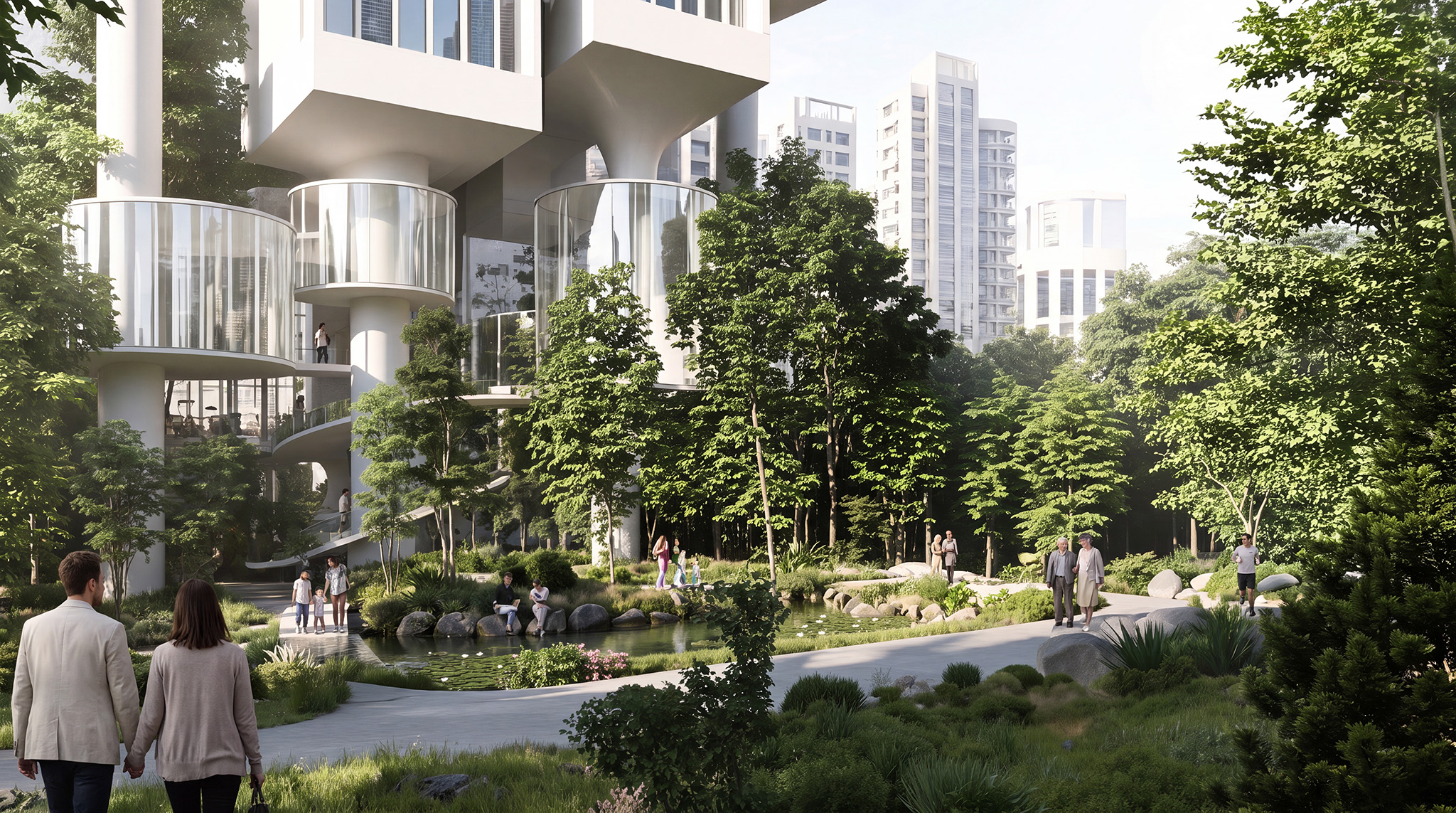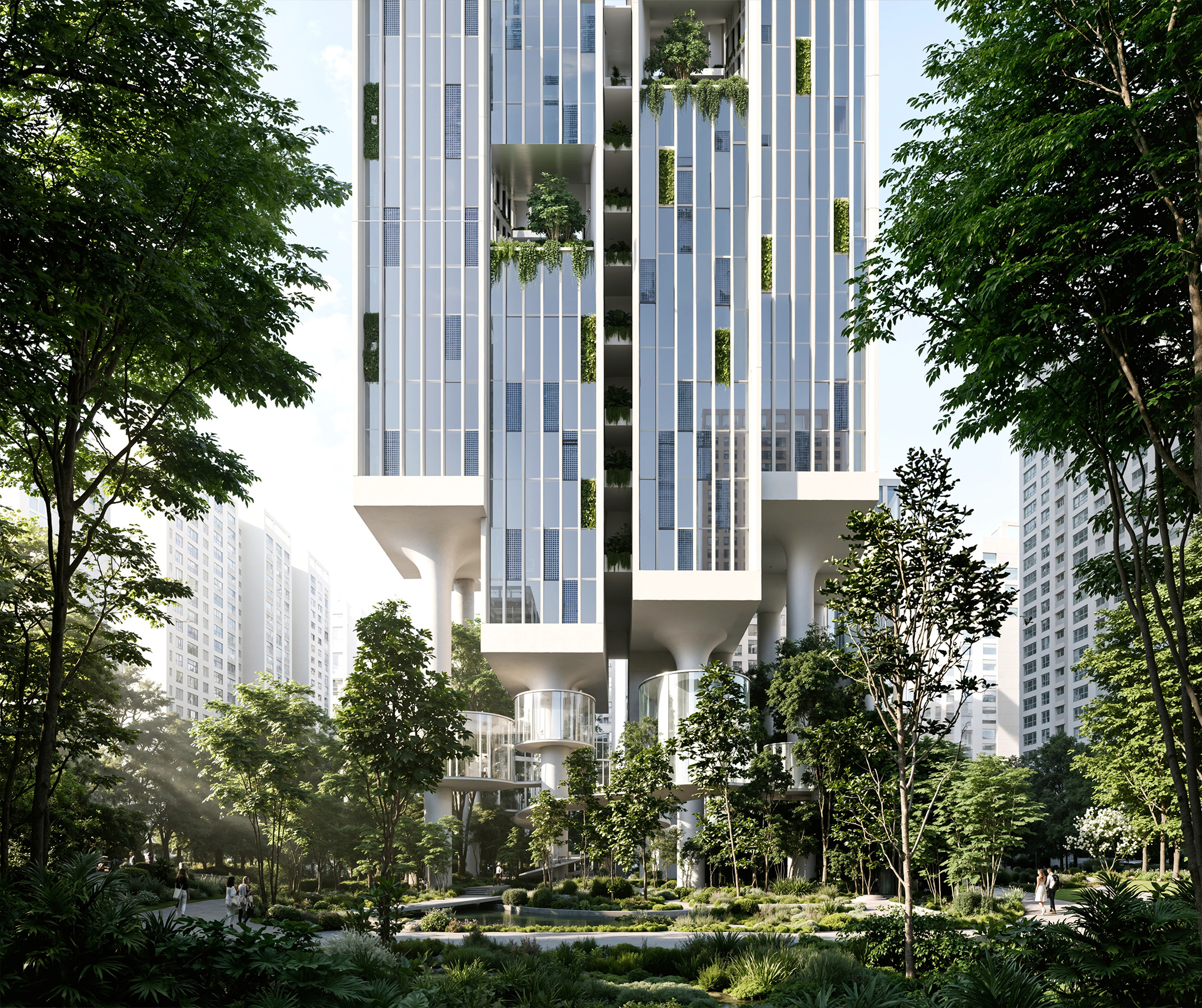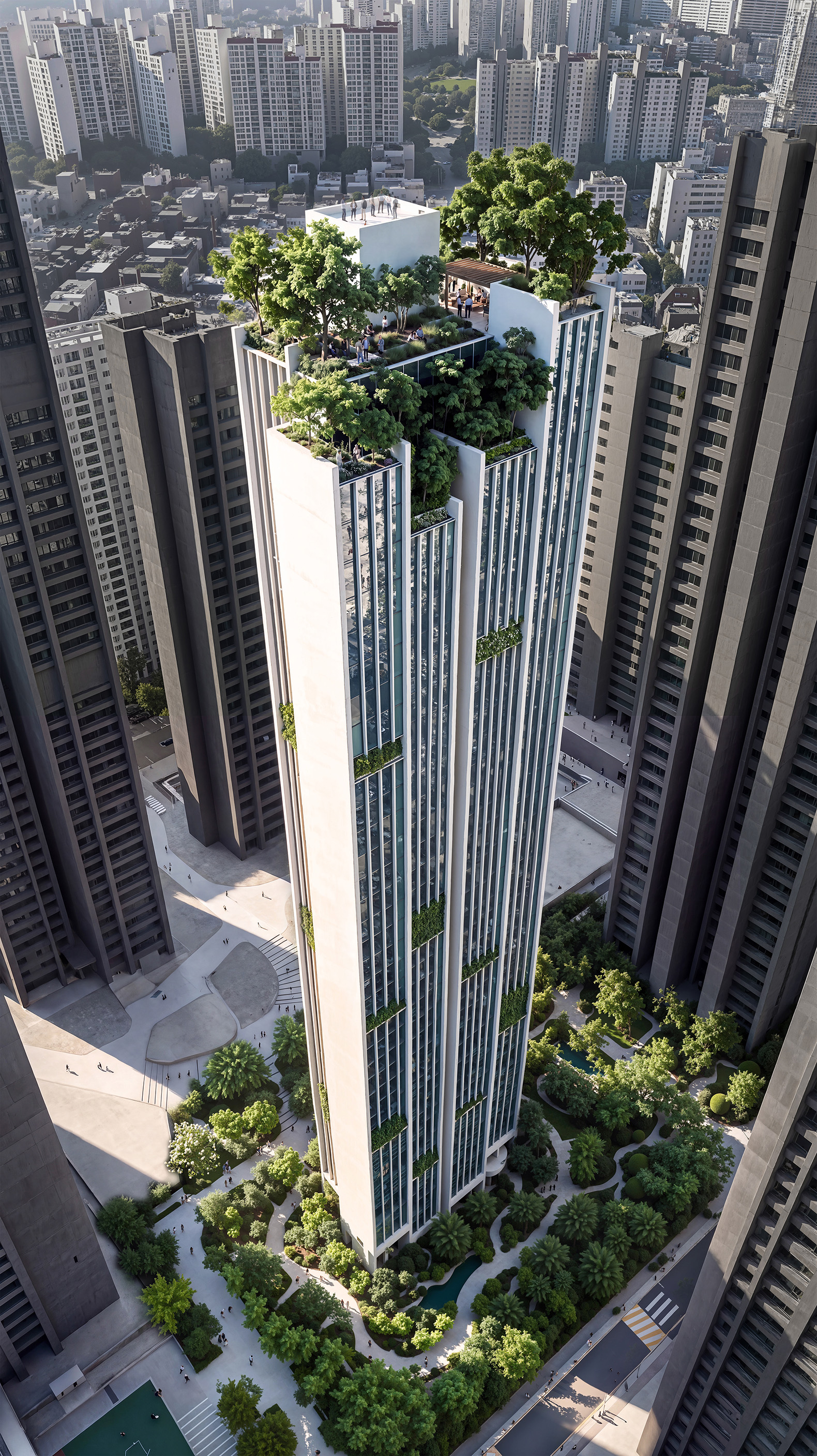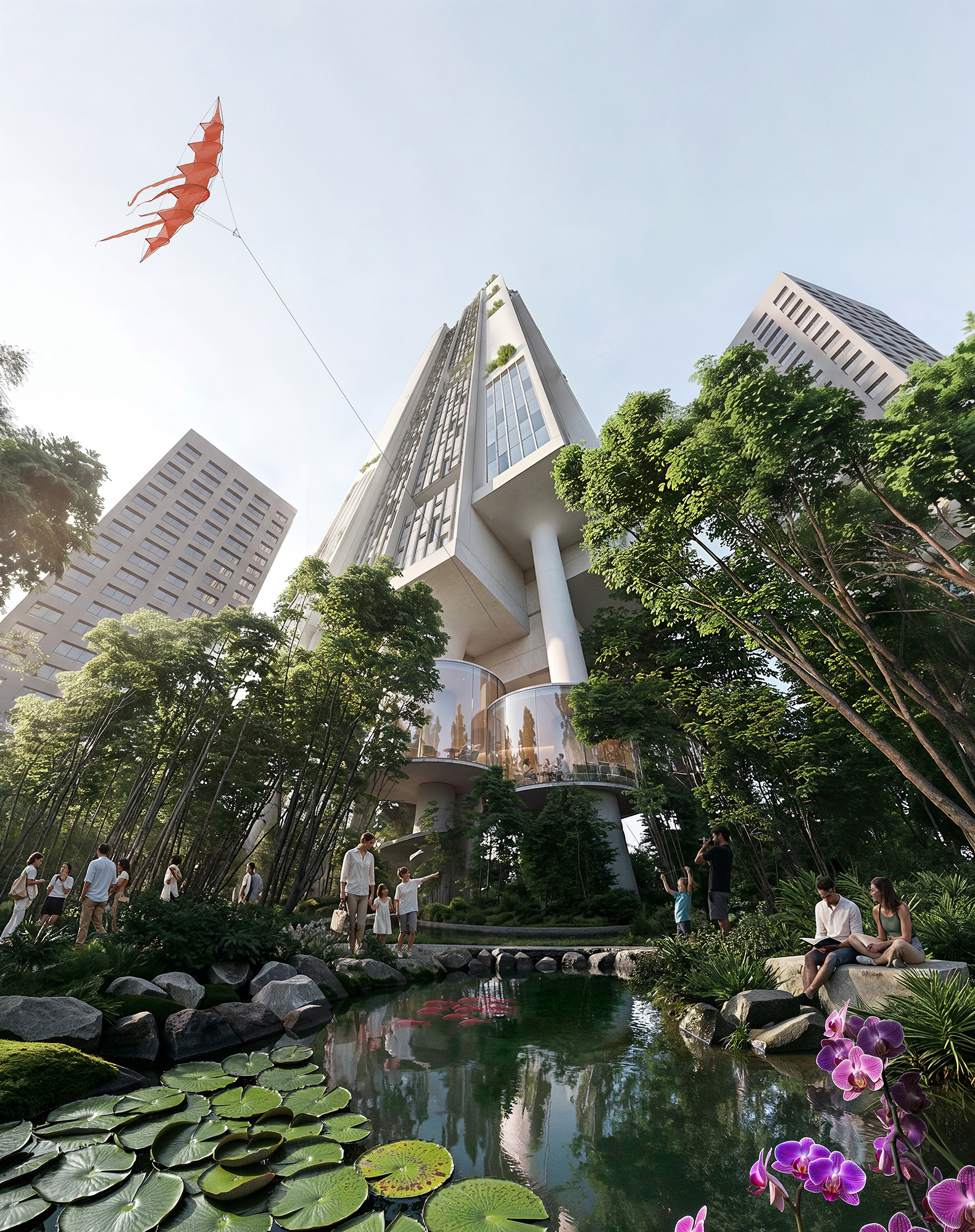
For "A High Rise on High Heels," CRA-Carlo Ratti Associati proposes a 140-metre-high tower featuring adaptive façades that respond to solar orientation while integrating spaces for cultivation and social gathering. Reimagining the relationship between the high-rise and the city below, the tower is elevated on slender stilts, allowing the ground plane to remain open and permeable.
During periods of heavy rainfall, stormwater is collected and slowed within the site, moving through the landscape before entering Seoul's drainage network. Following the principles of the "sponge city," the project treats water as a resource to be managed within the urban ecosystem rather than a problem to be removed.
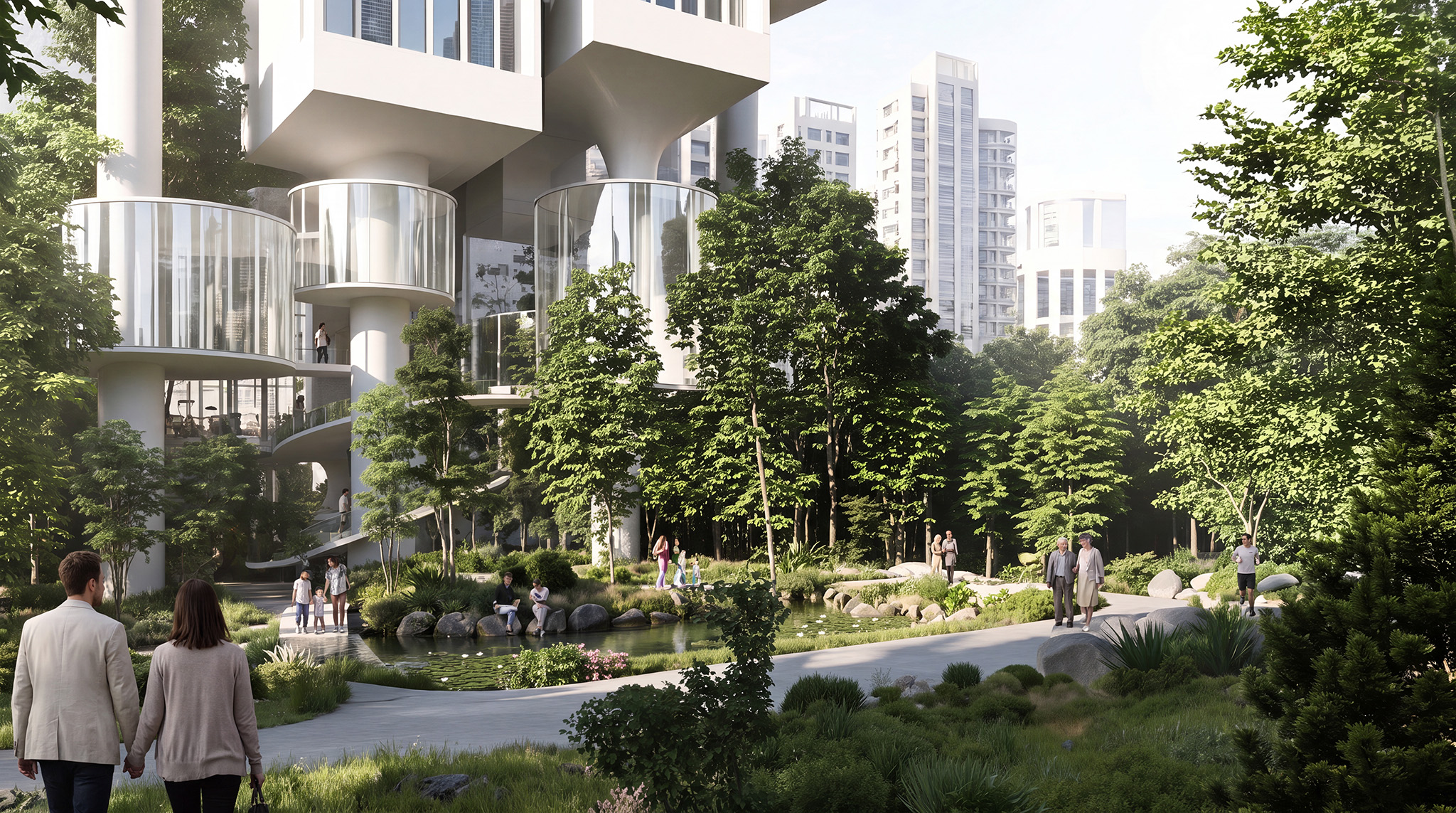
Rendering. "A High Rise on High Heels" by CRA-Carlo Ratti Associati.
By reducing its footprint, the tower preserves the site's existing trees while creating new public space at ground level, transforming the open terrain into an extension of everyday life. Gardens and communal spaces connect the tower with its surroundings, forming an open courtyard at the scale of the urban block. The elevated structure allows daylight to reach the levels beneath the building, making shared facilities such as a community farm, dining lounges and tea houses possible. Food production thus becomes part of daily life, encouraging social interaction.
At height, the tower transforms a regulatory requirement into a shared amenity. South Korean building regulations require a refuge floor every thirty storeys; in this project, these mandatory safety levels become elevated communal gardens. Distributed throughout the building, these green refuge floors provide protected areas during emergencies while also functioning as spaces for everyday social interaction.
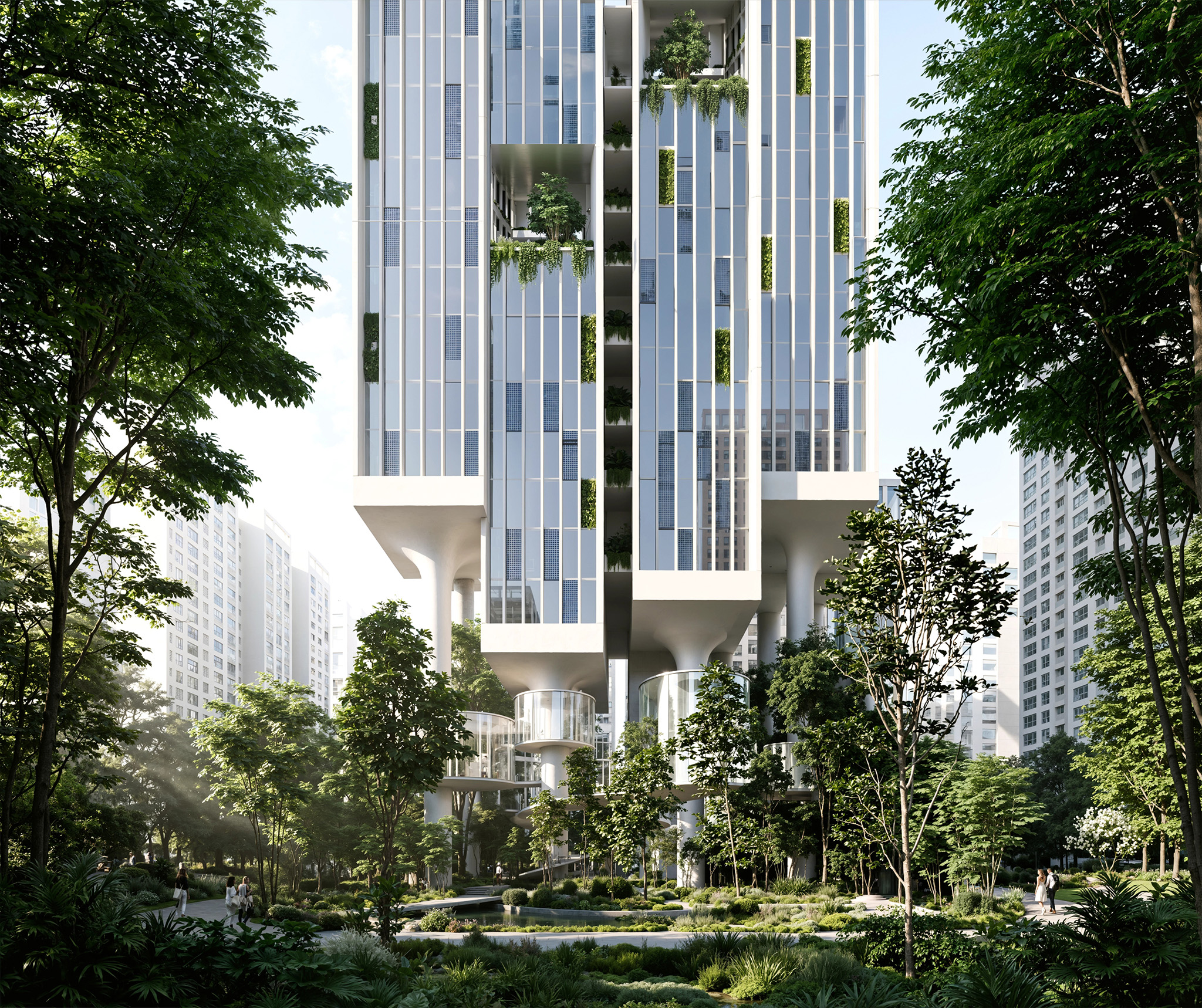
Rendering. "A High Rise on High Heels" by CRA-Carlo Ratti Associati.
The façades are specifically designed according to their orientation. The south-facing façade incorporates photovoltaic panels to generate solar energy, while the east and west façades use vertical louvers to reduce low-angle sunlight and prevent overheating. Rather than relying on a uniform envelope, the building adapts its performance to local environmental conditions. From within, residents experience an architecture shaped by the movement of the sun throughout the day.
"Cities have spent much of the last century trying to make water disappear as quickly as possible. In Seoul, facing a changing climate, we ask how a tower can give water more time and space. By lifting the building on 'high heels,' we allow the ground to retain its trees, absorb stormwater, and function as part of the city's climate adaptation system."
Carlo Ratti, founding partner of CRA and professor at MIT and the Politecnico di Milano.