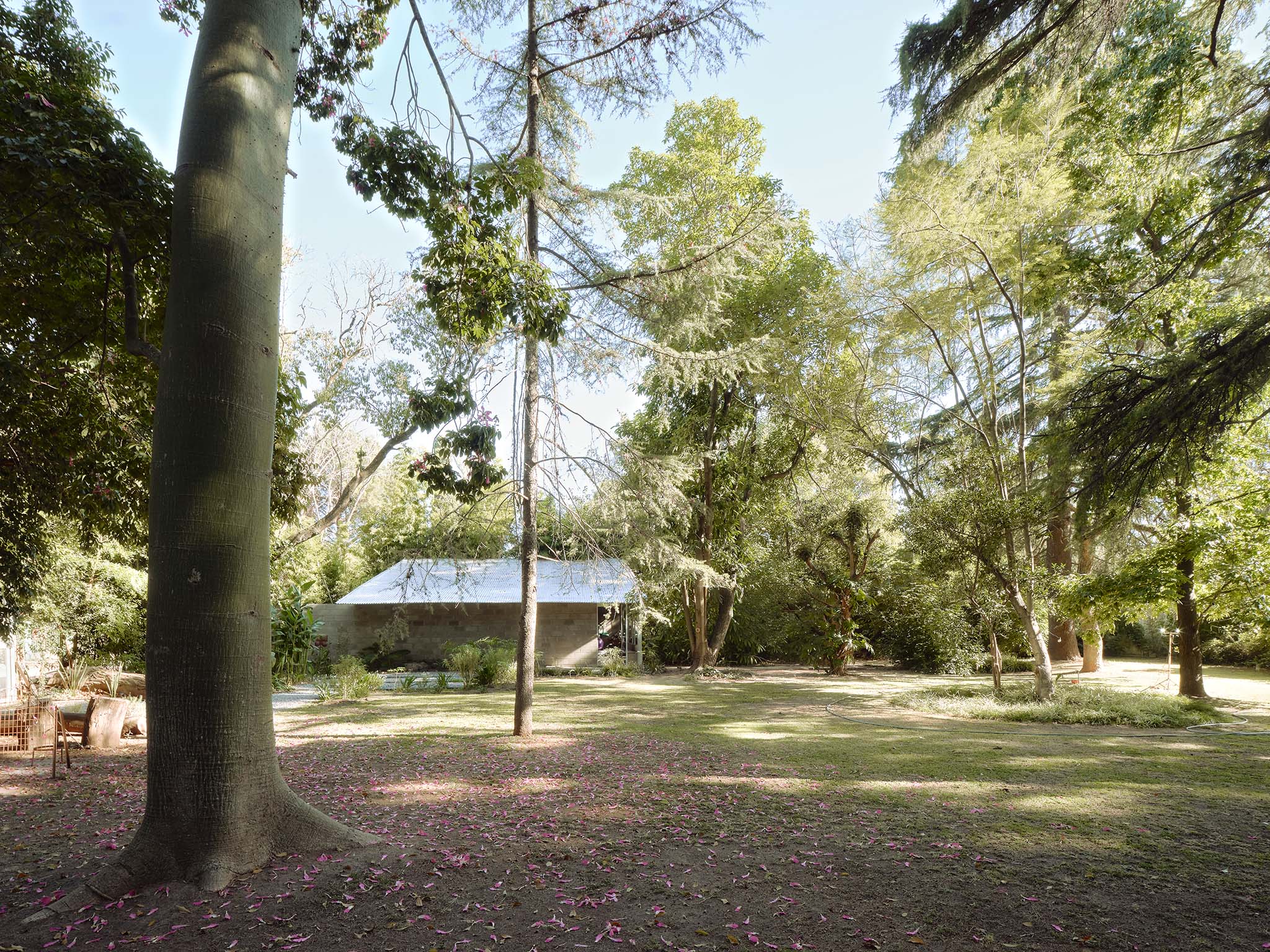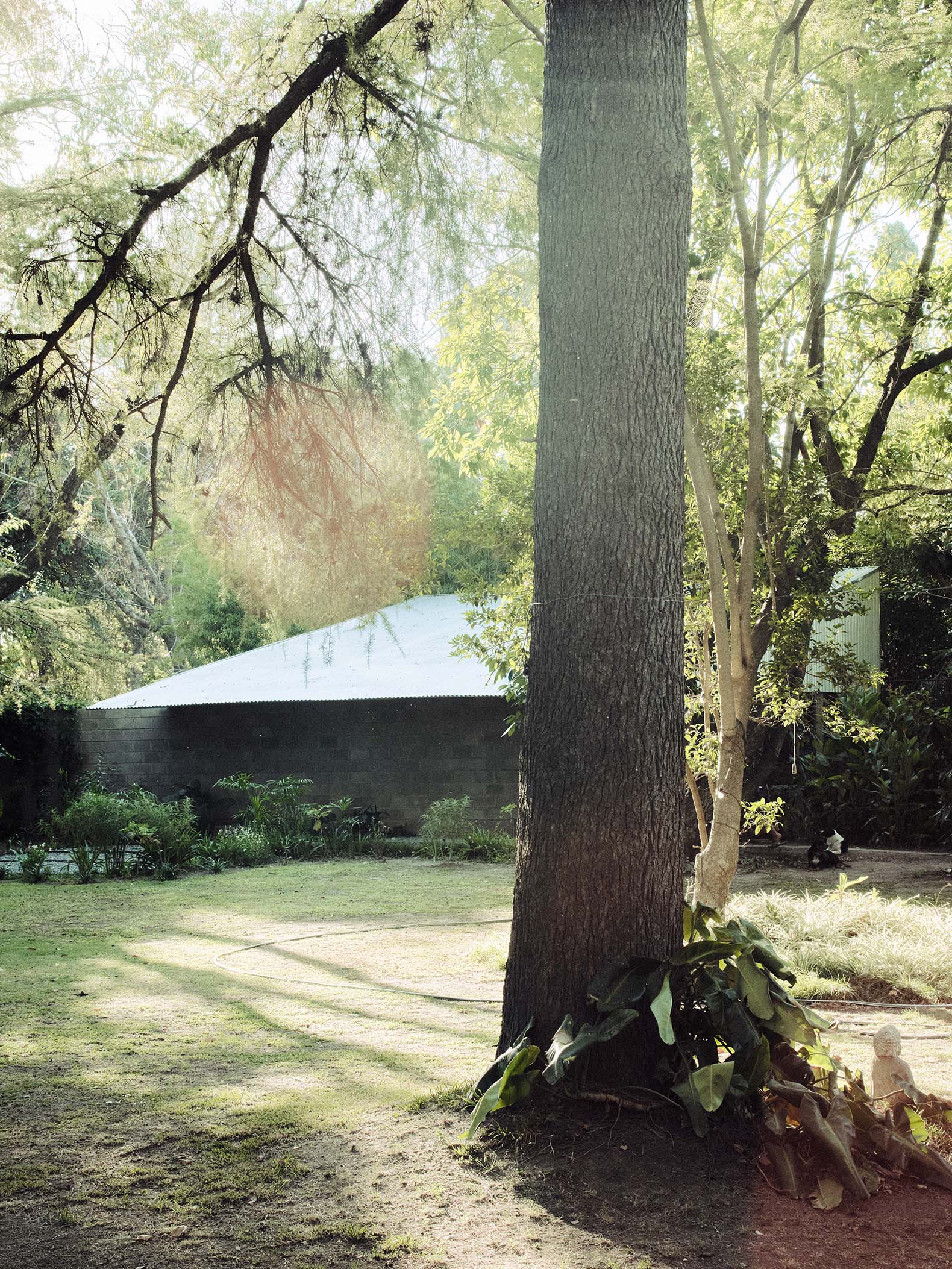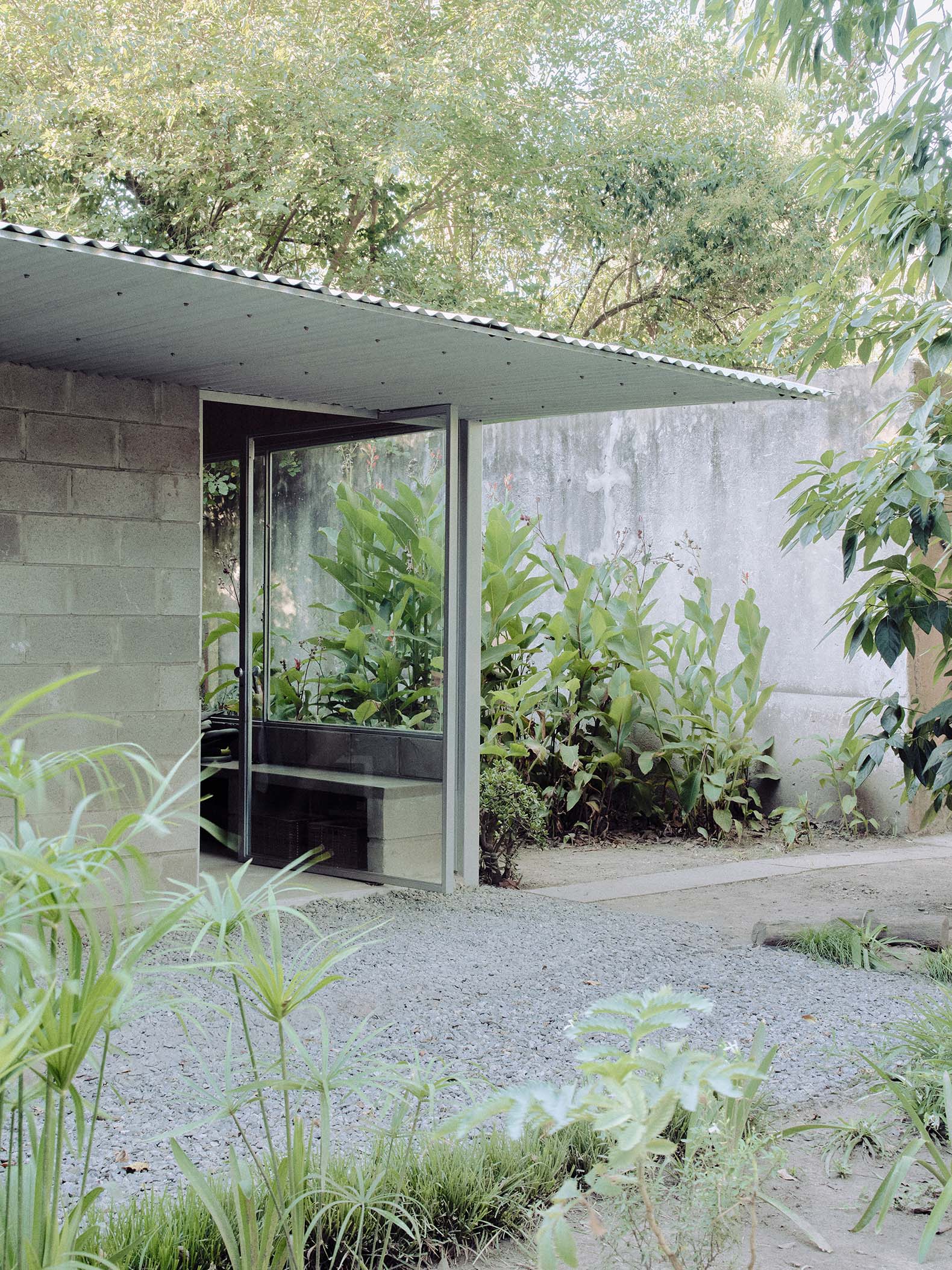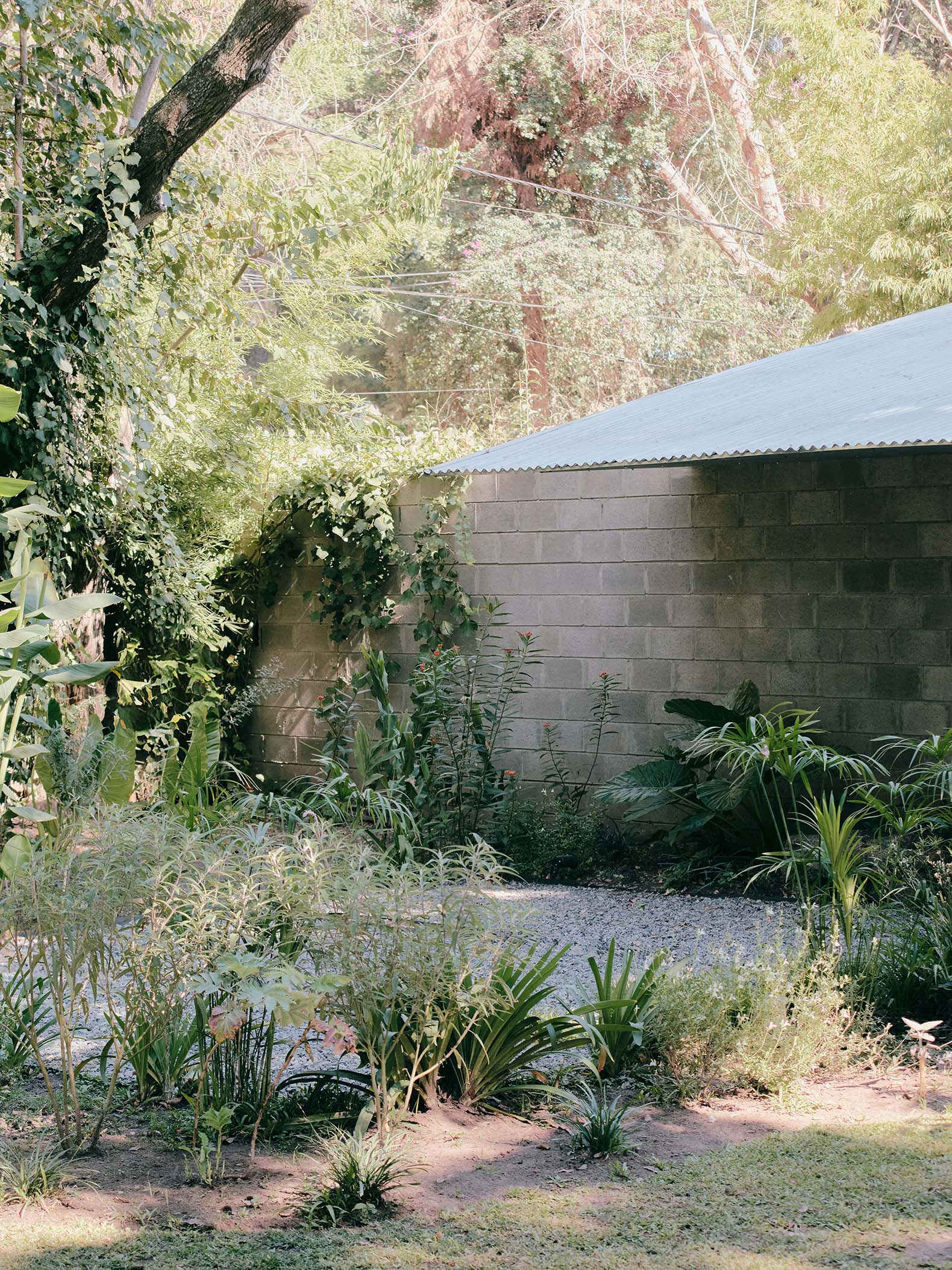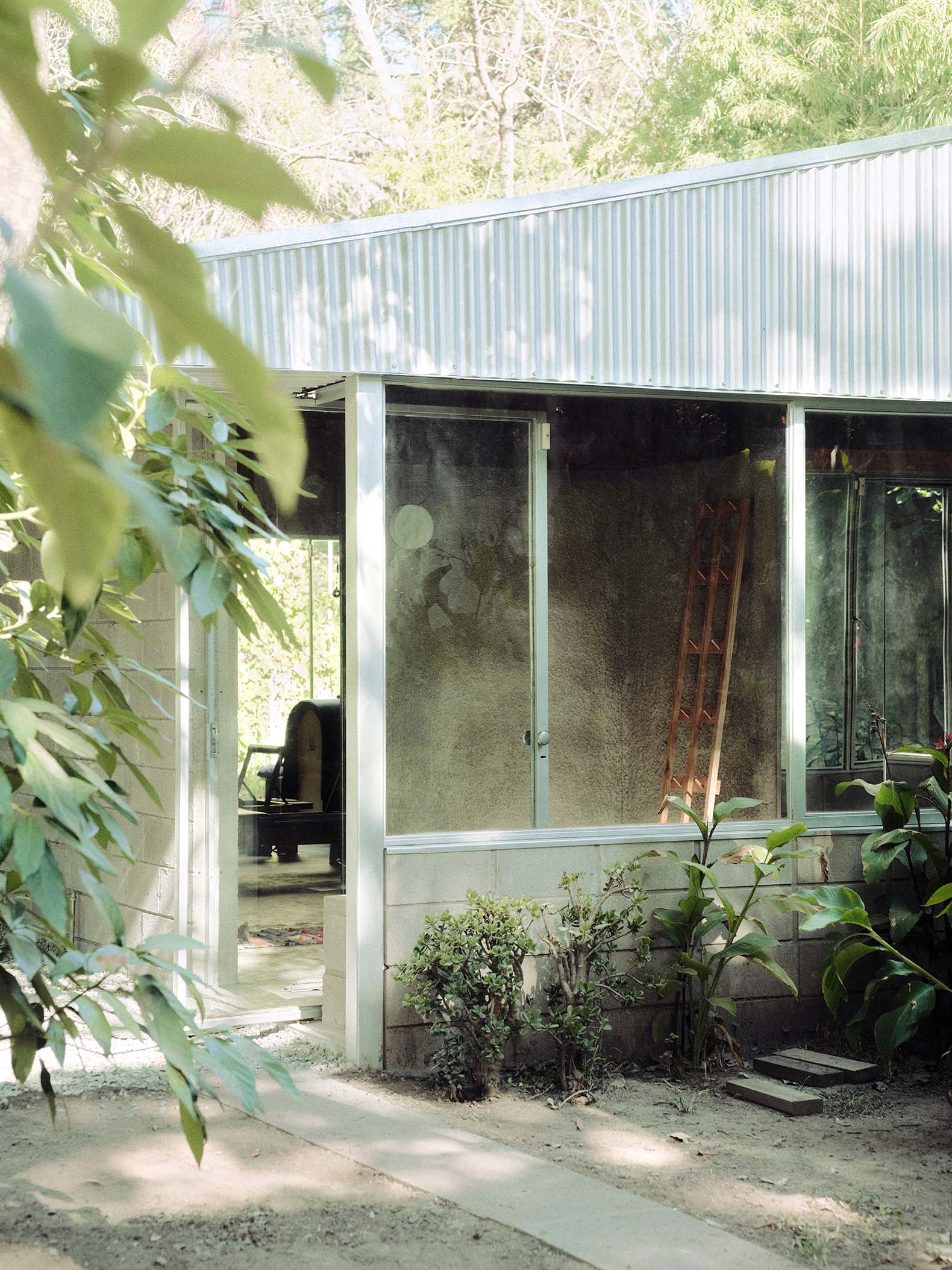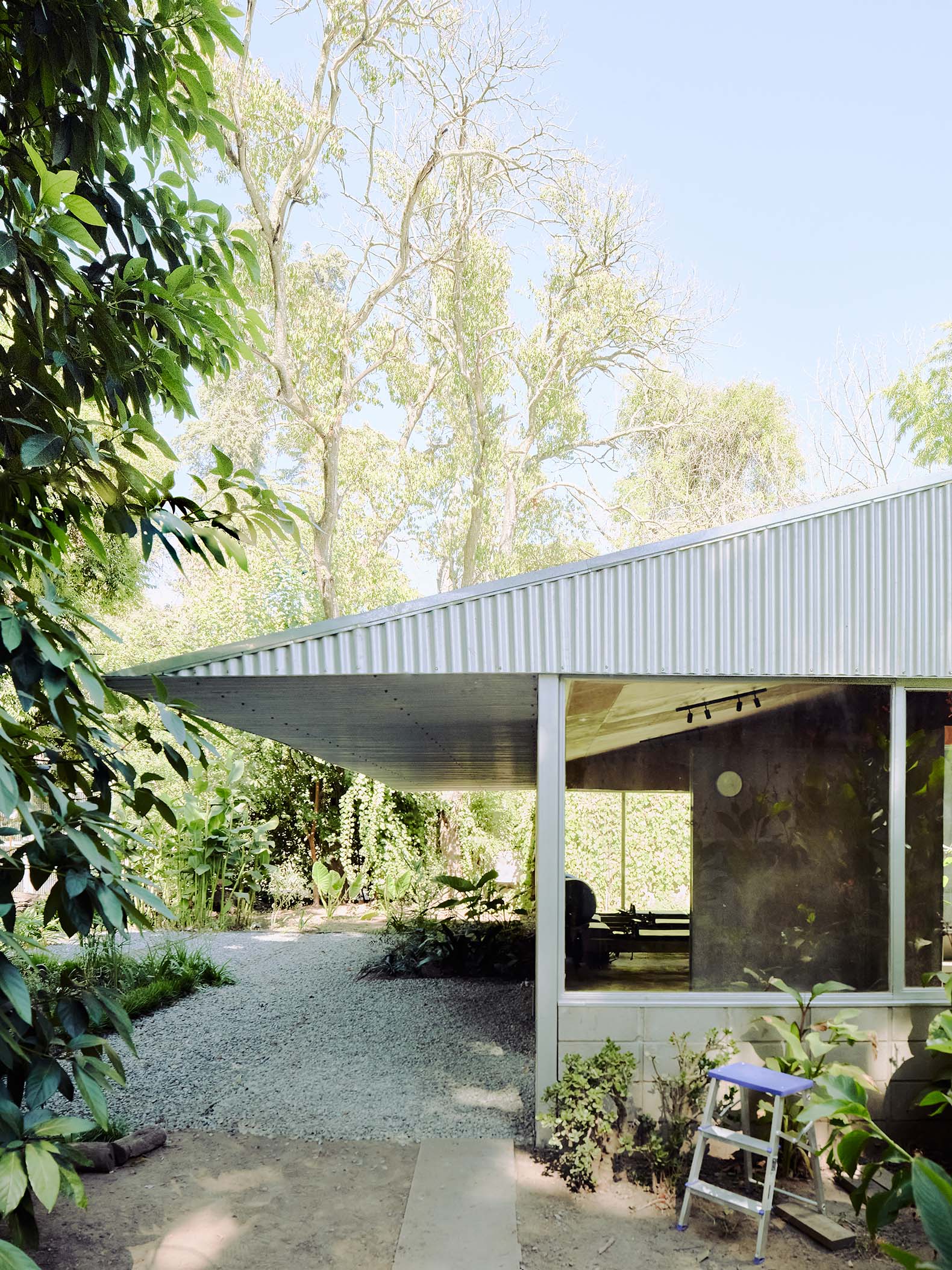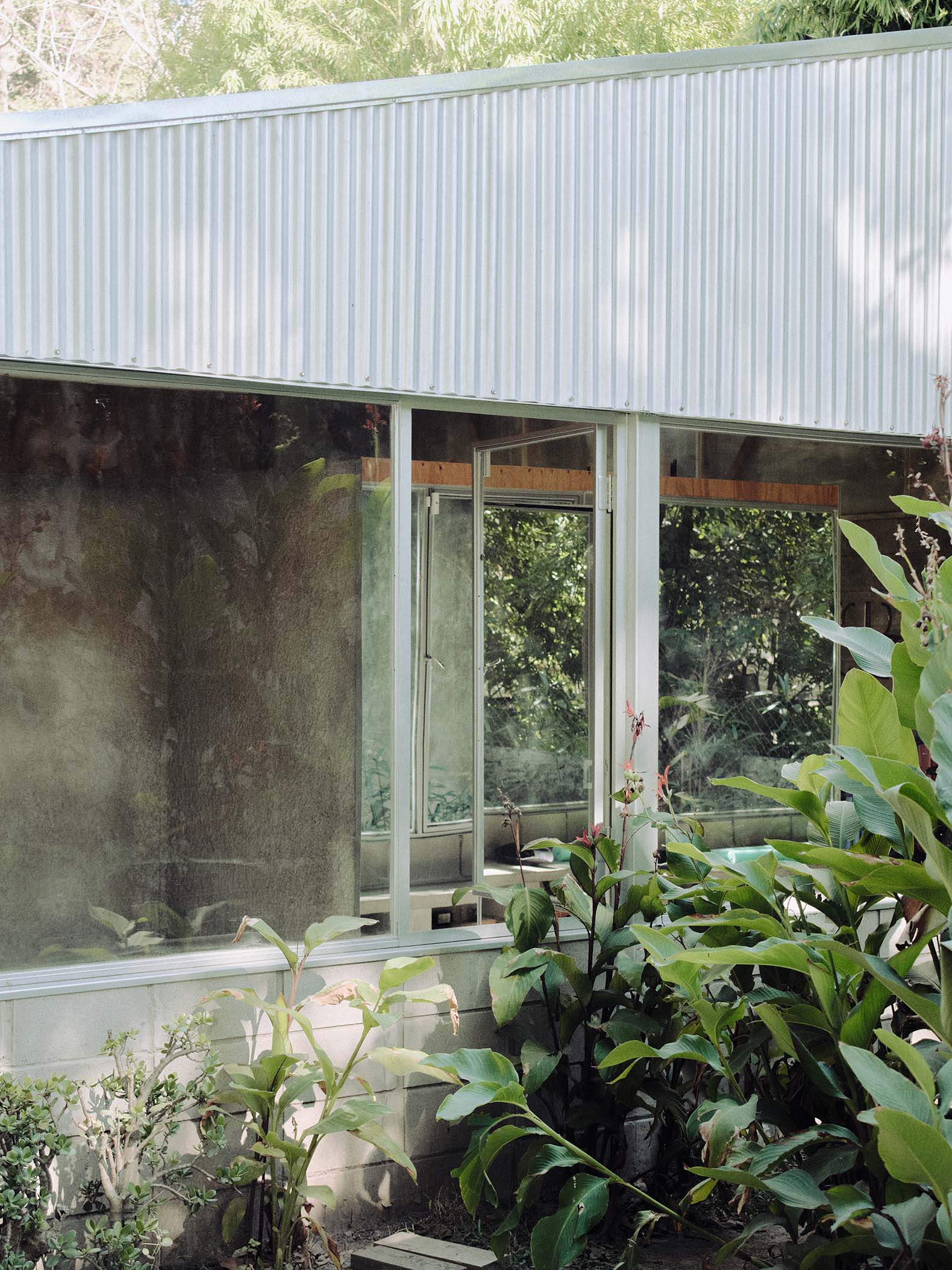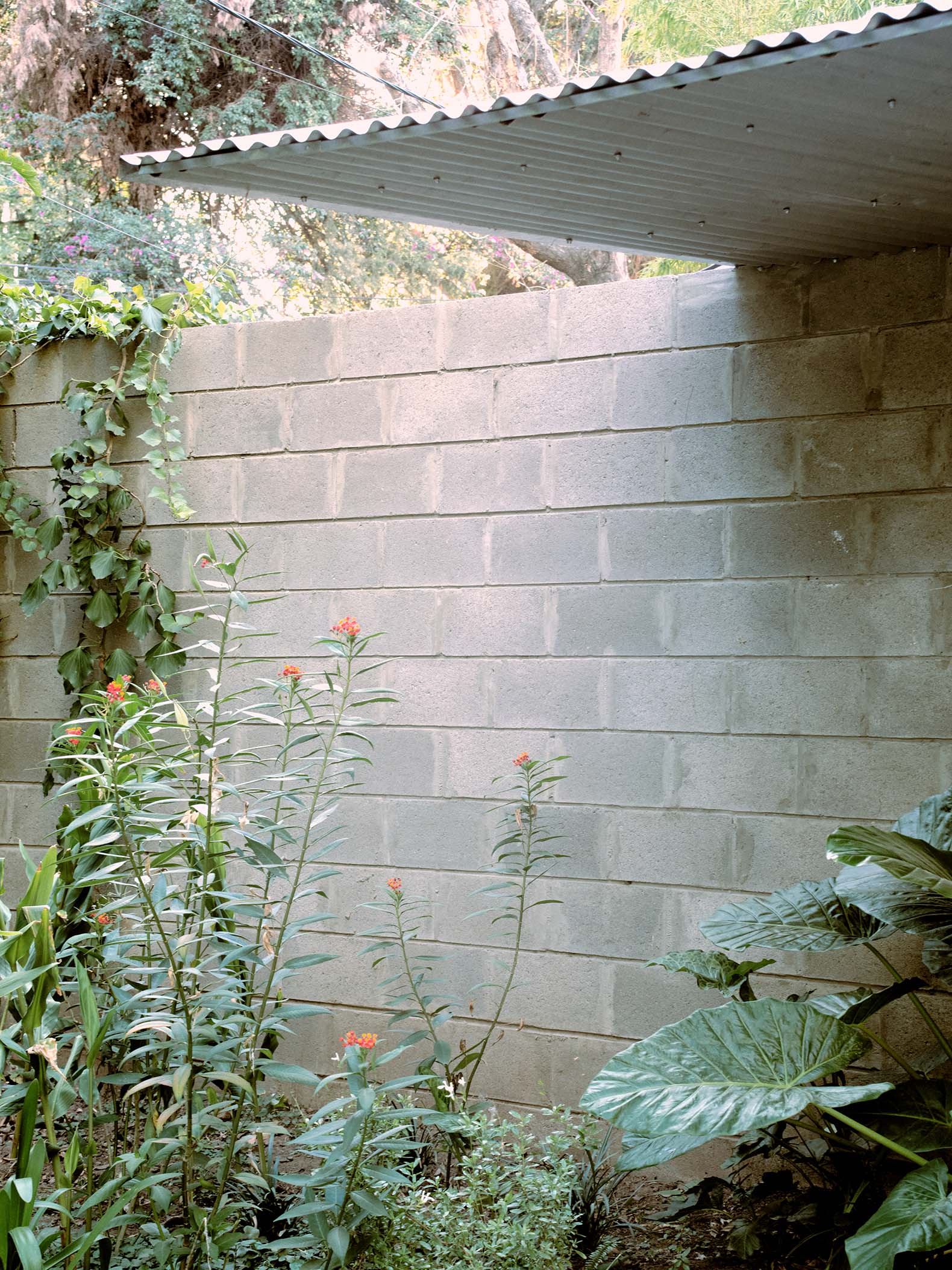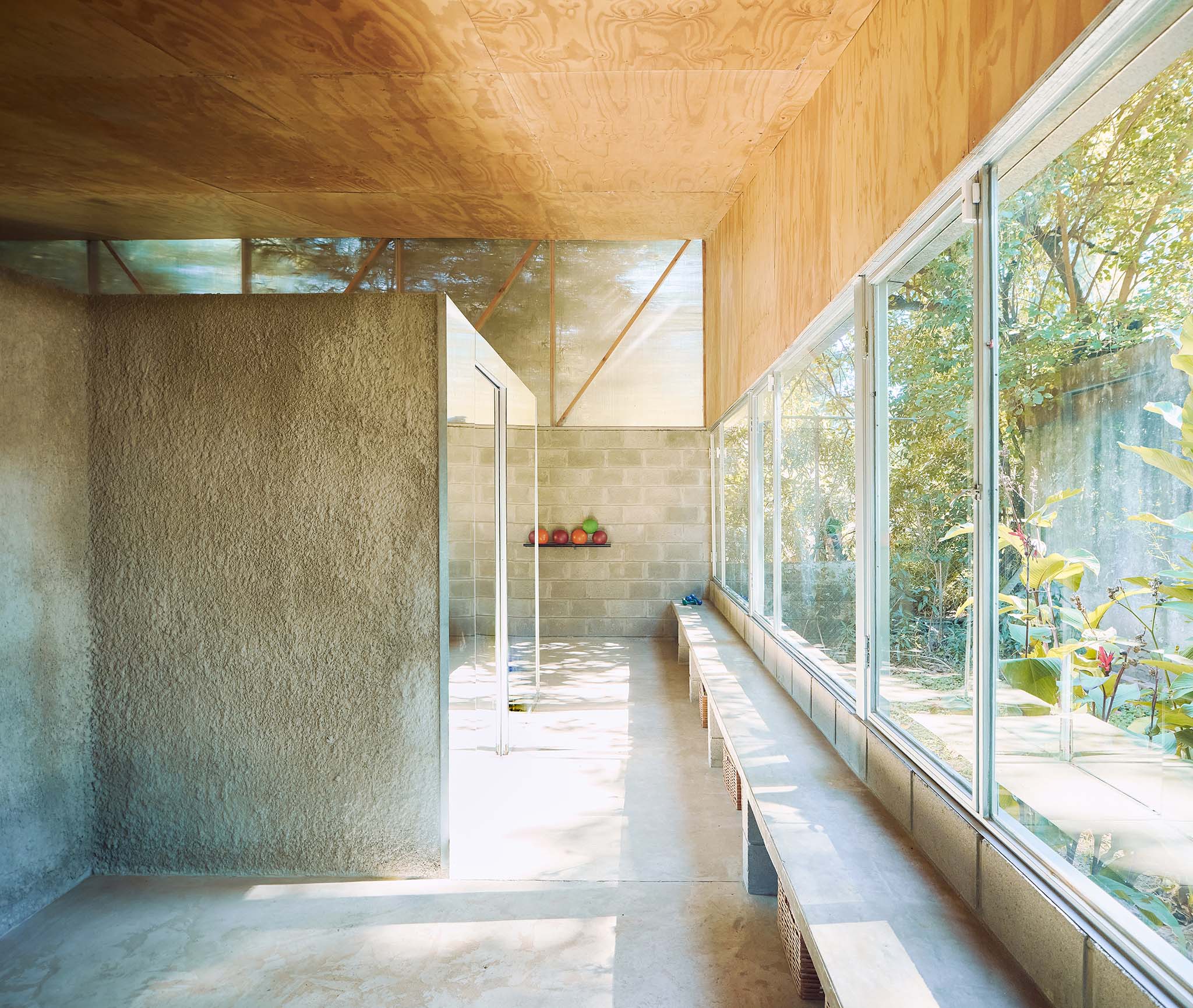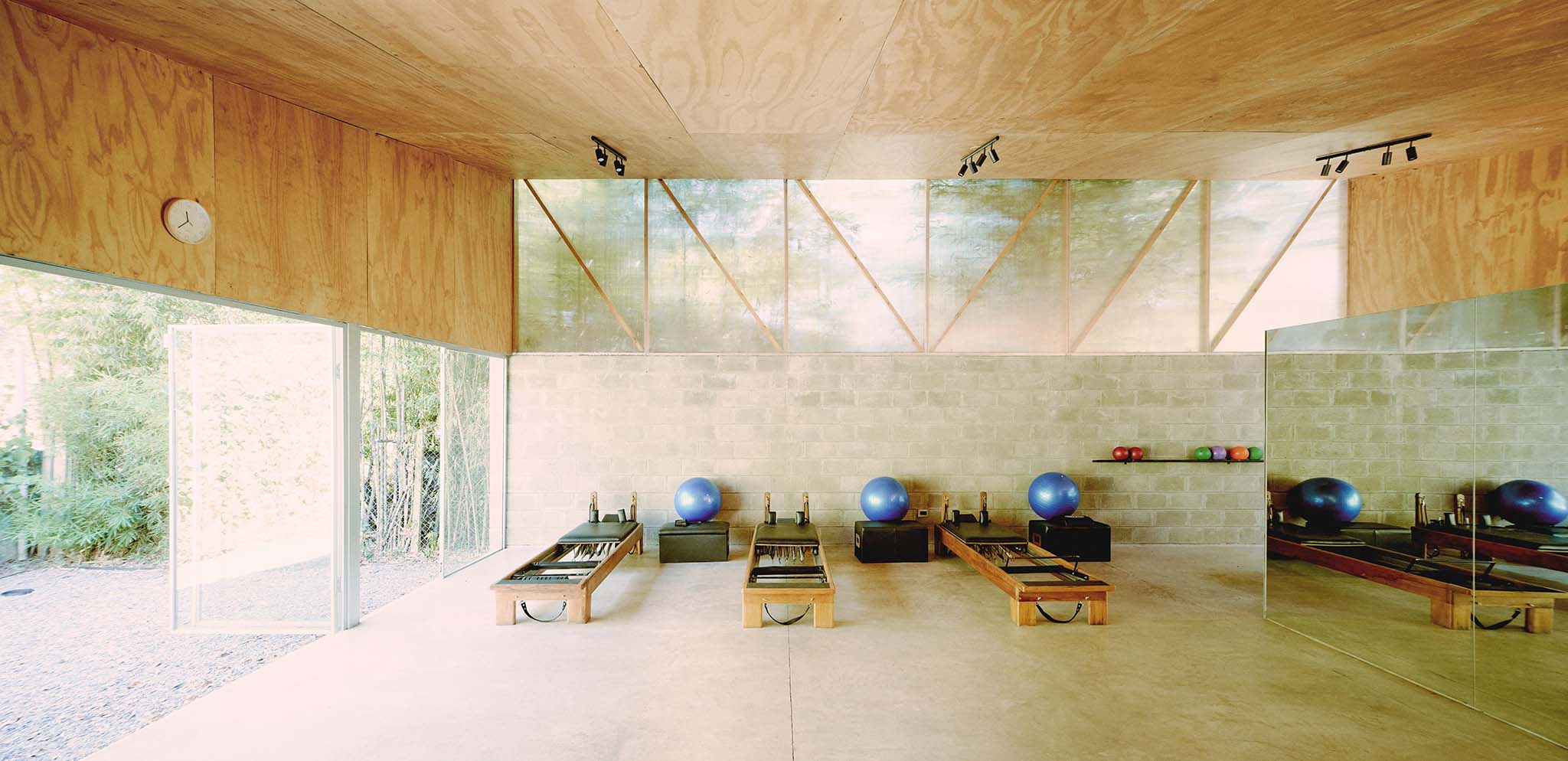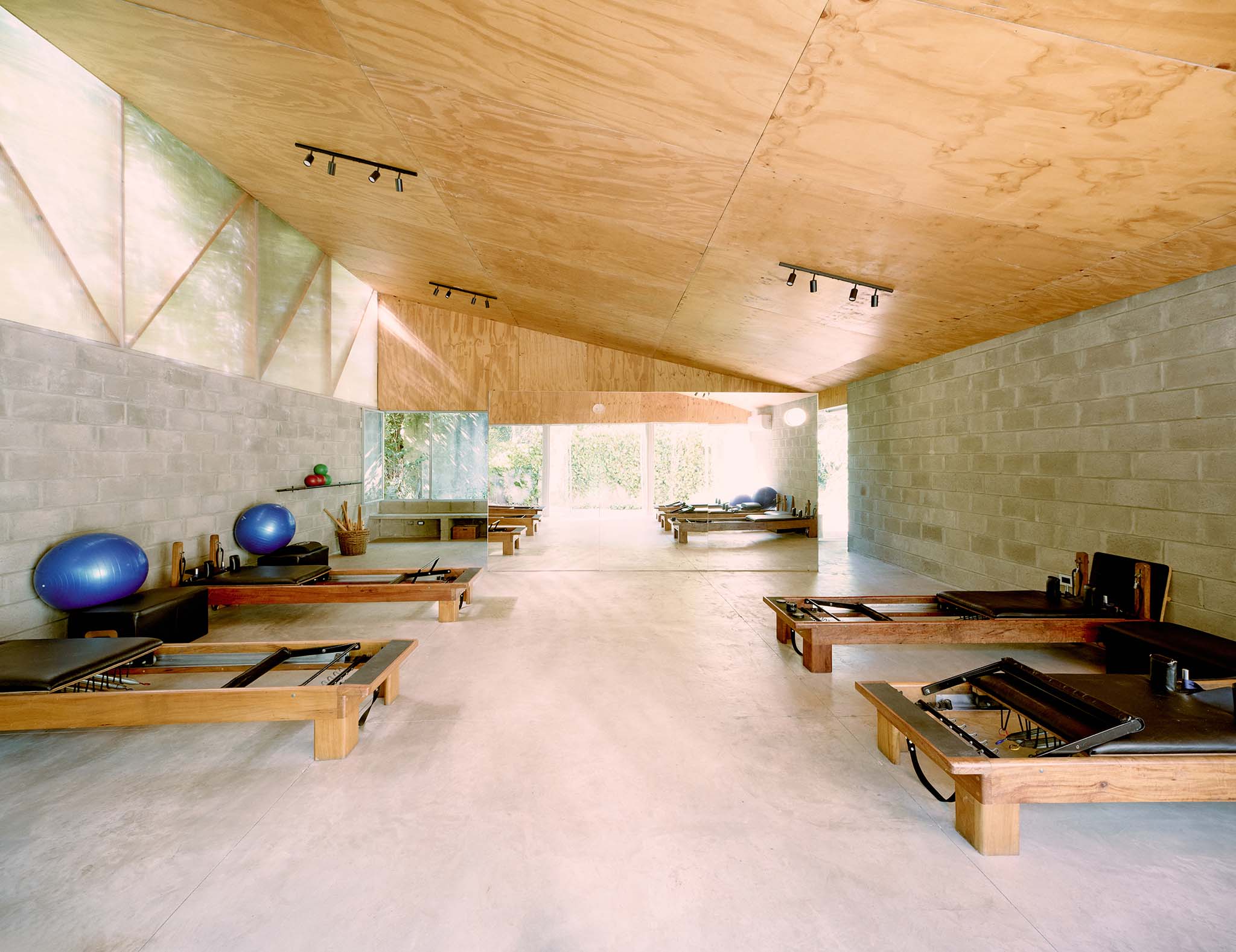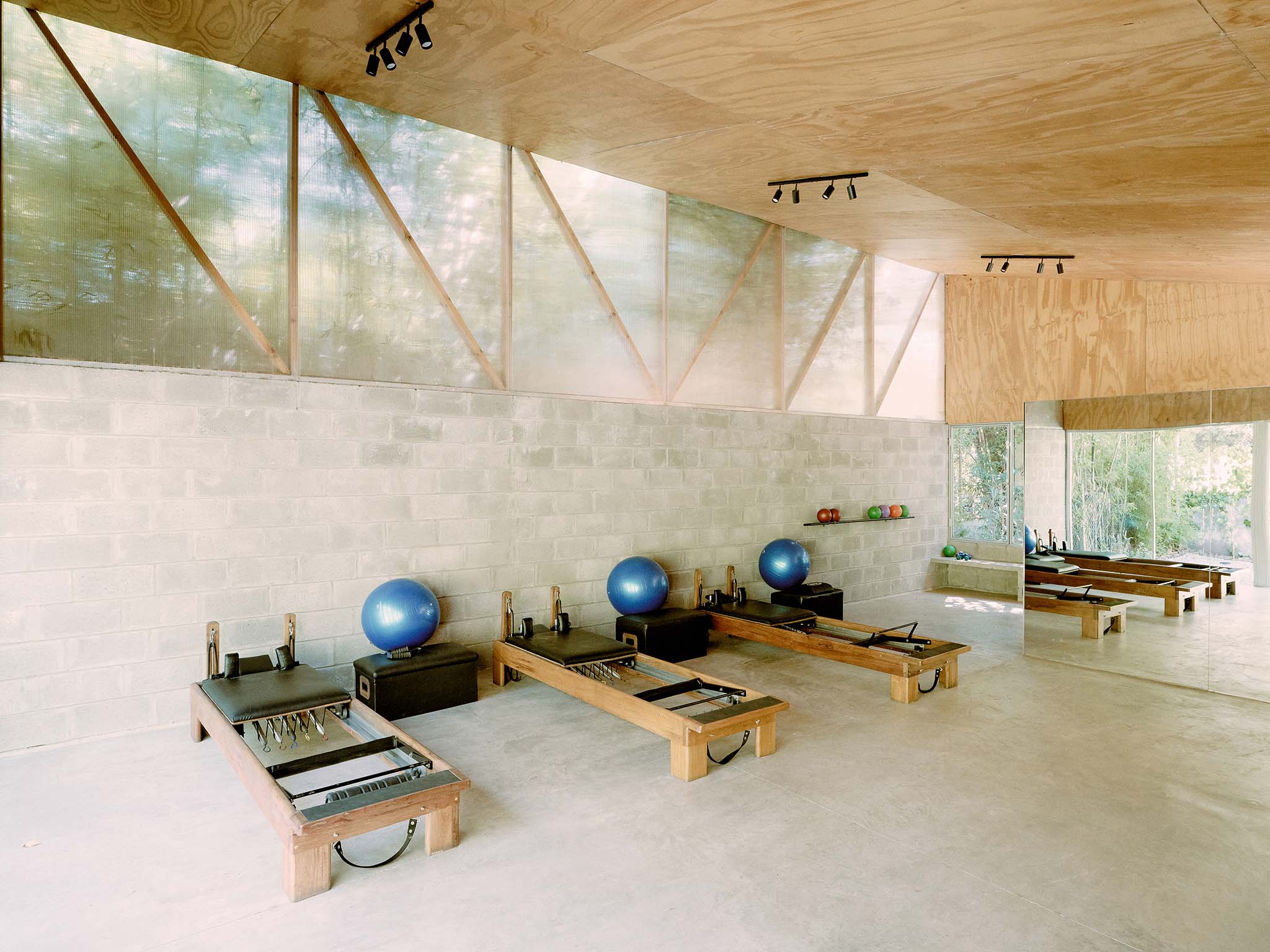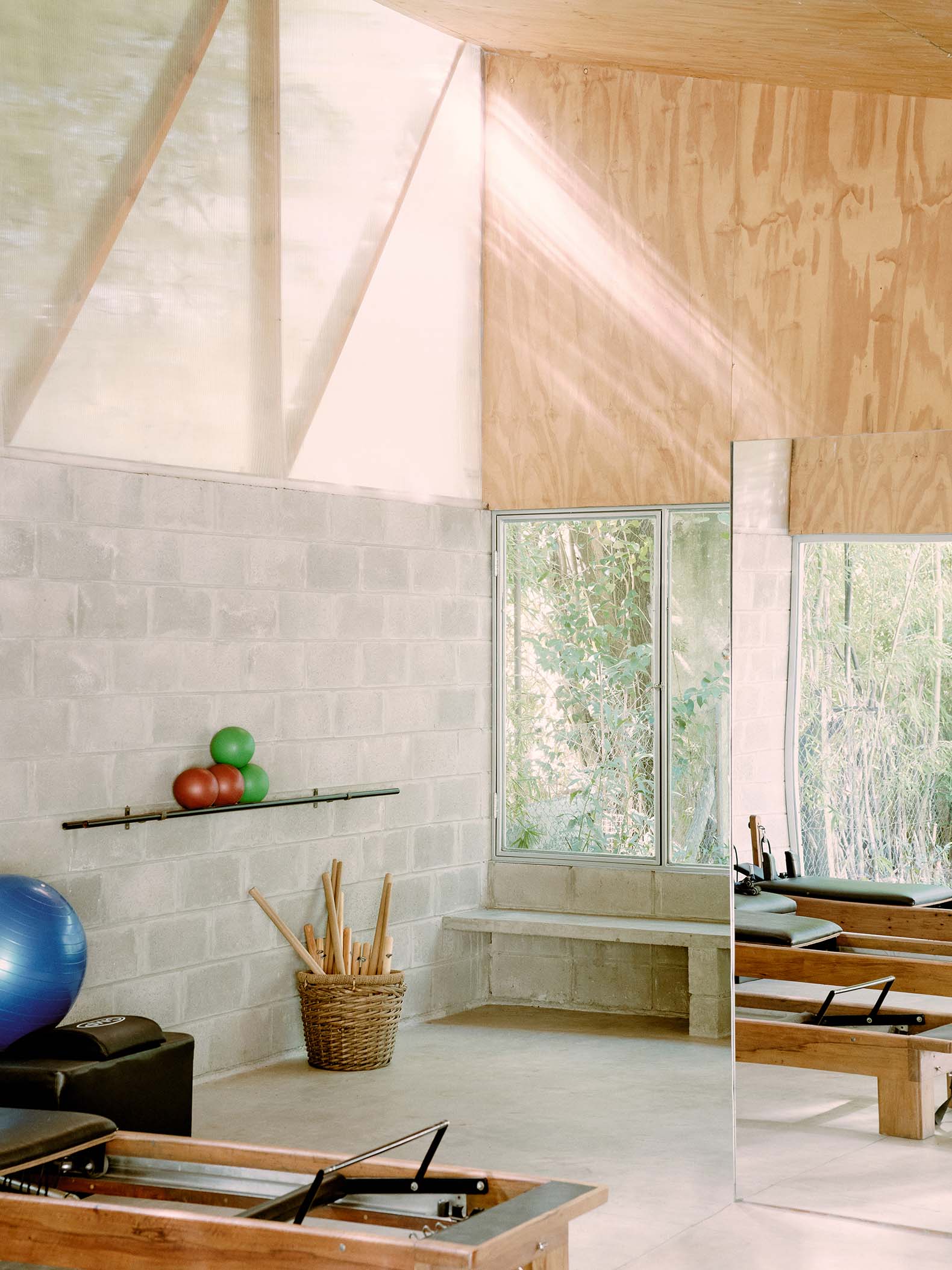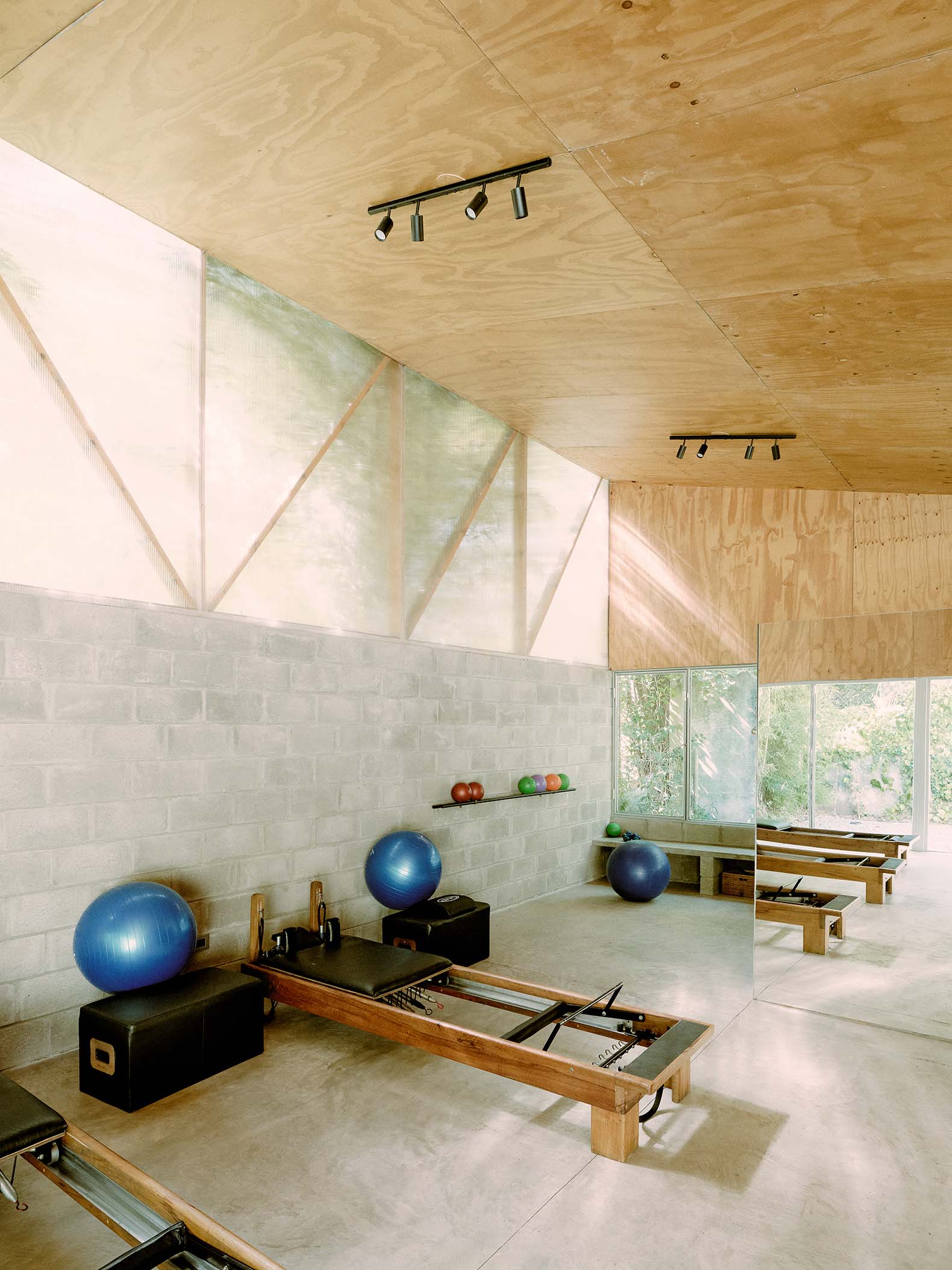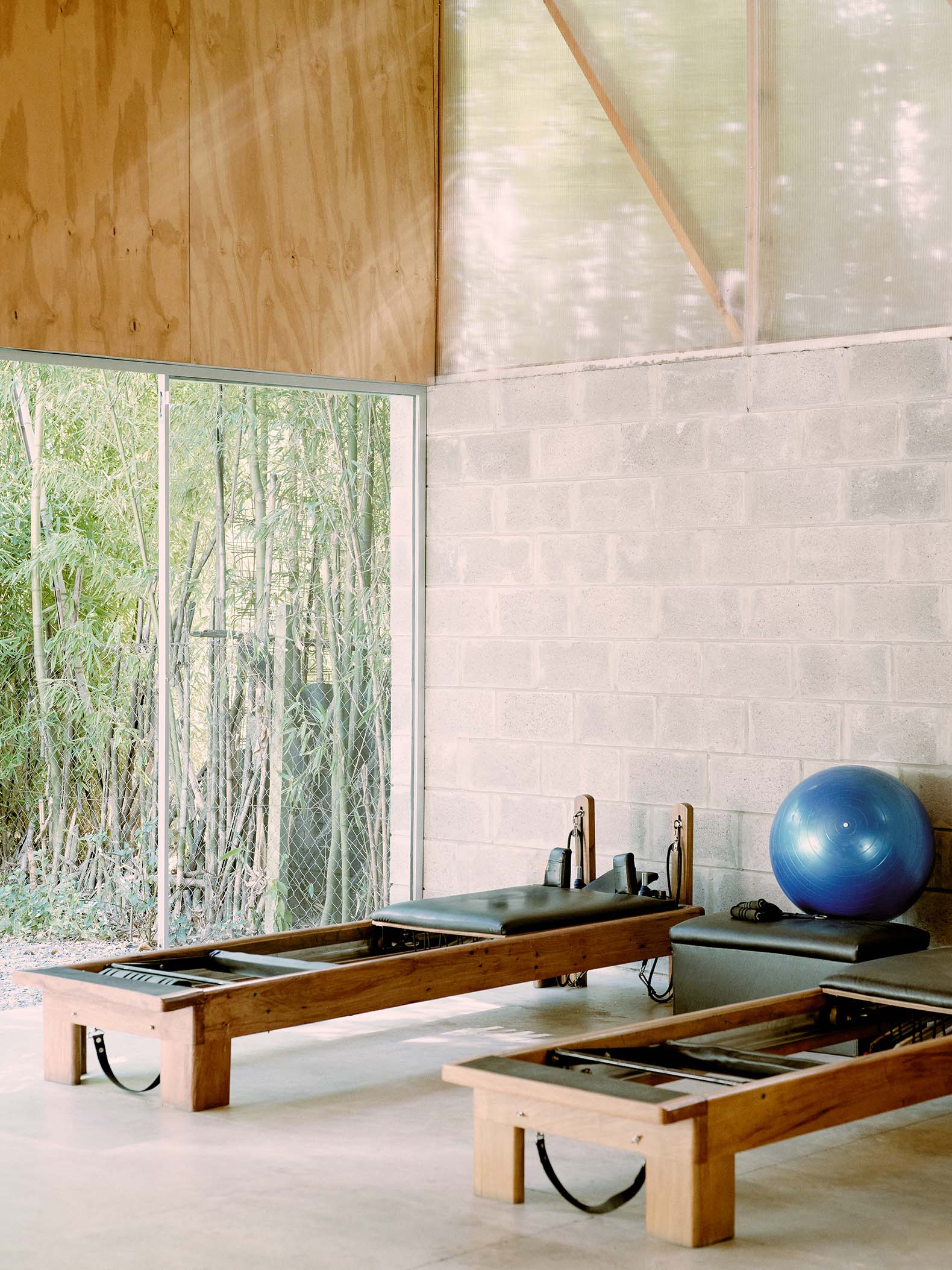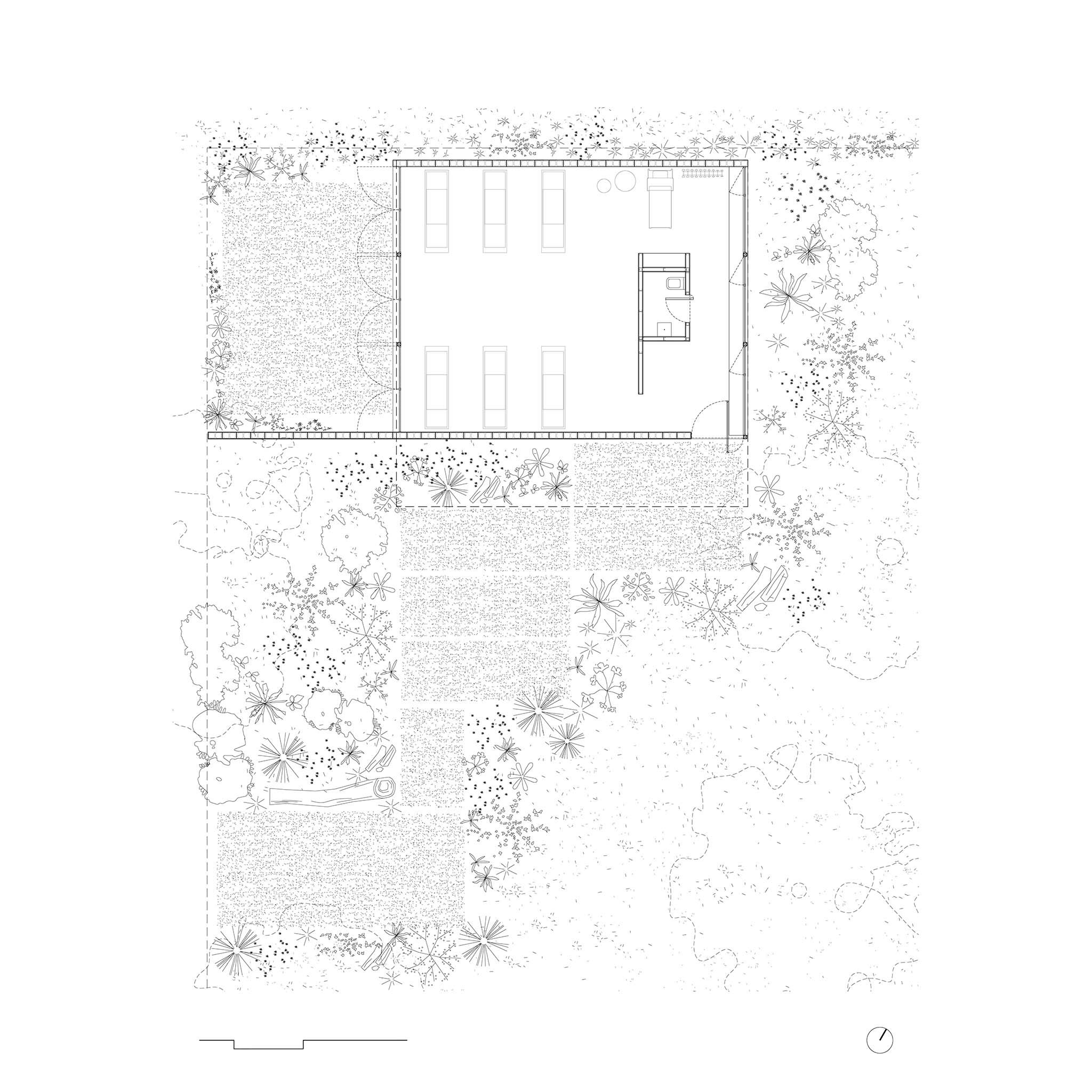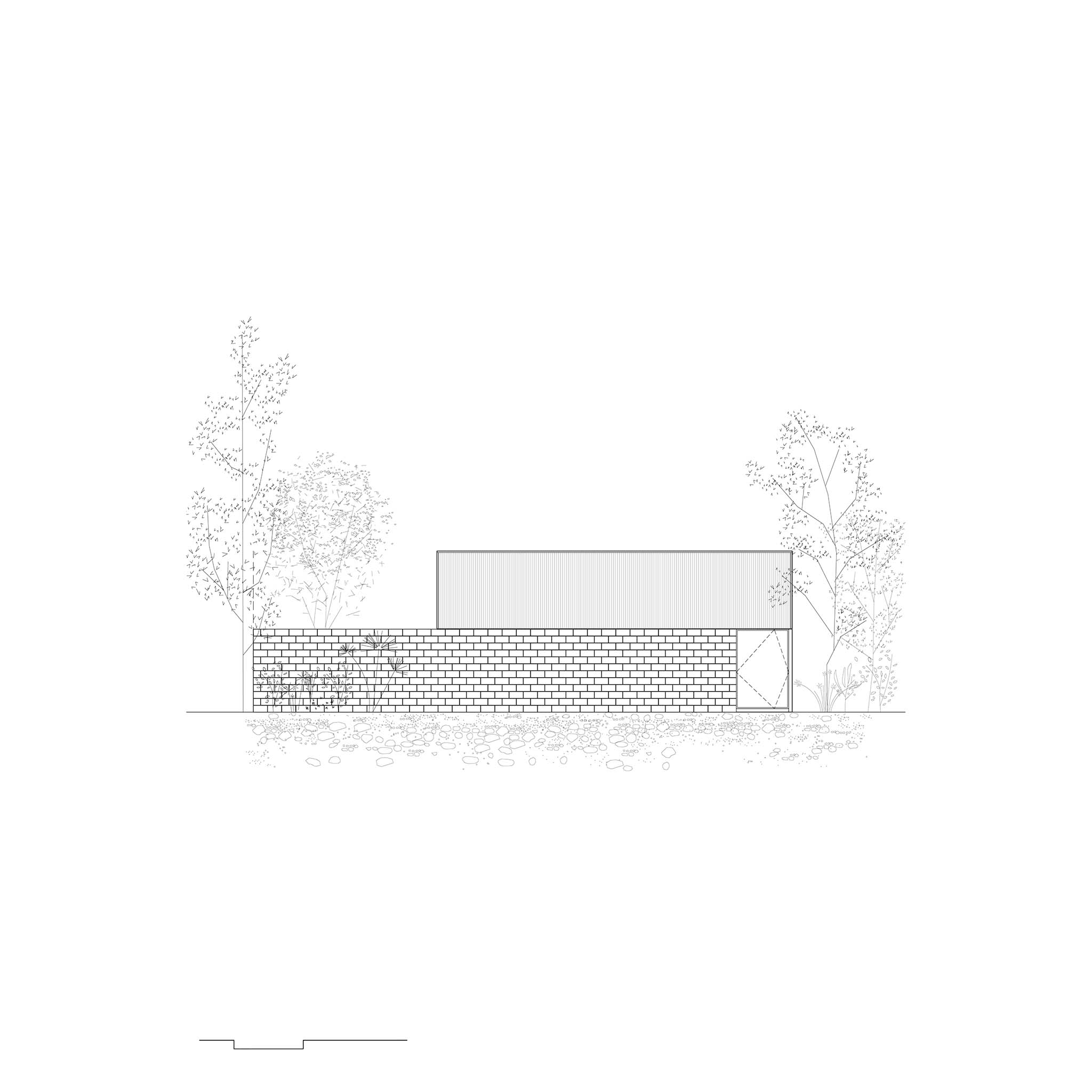
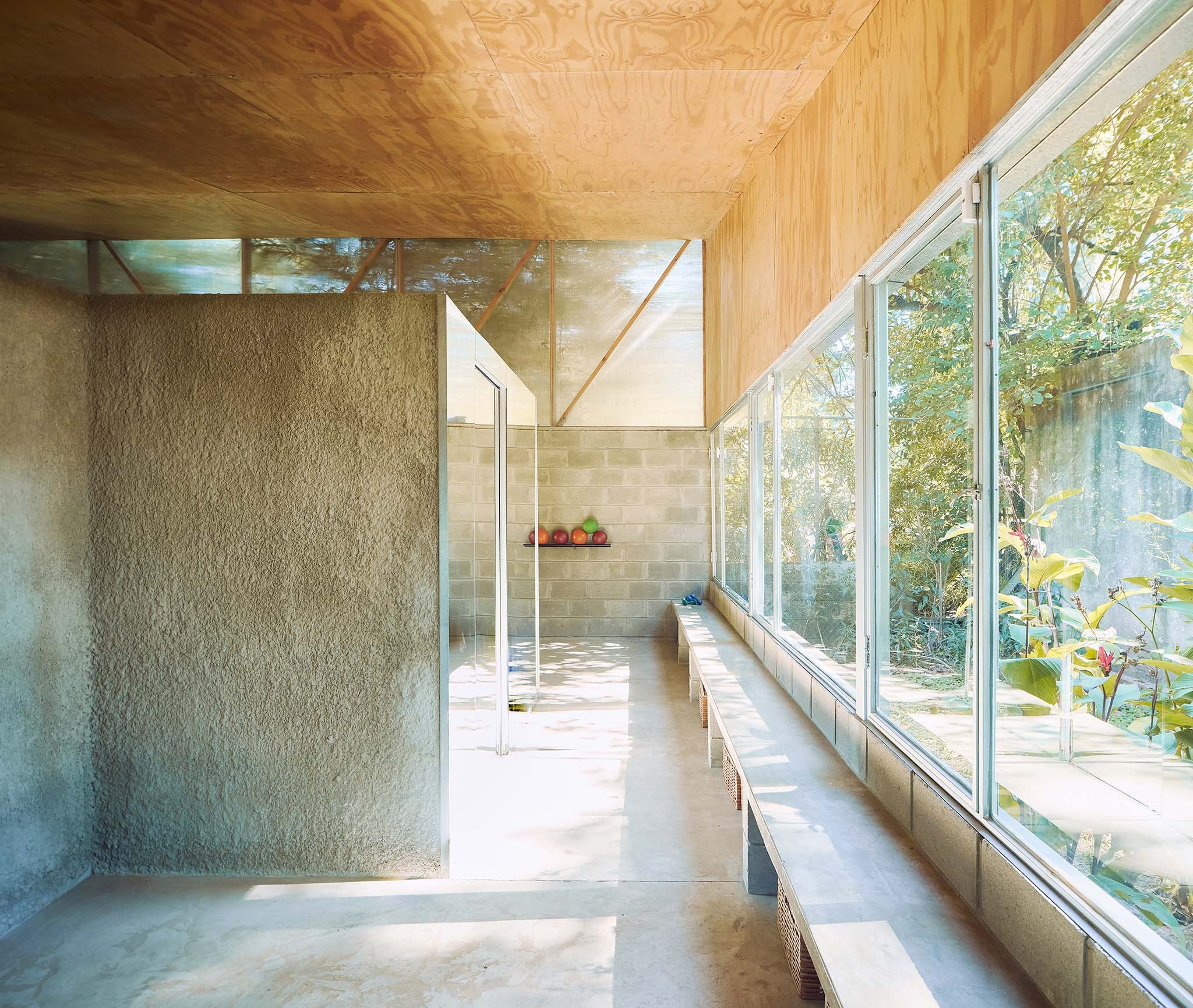
The pavilion designed by Juan Bechini is organized around a 10 x 10 meter square floor plan, structured by a series of walls that define the program and circulation. Access is through the garden, and a front overhang leads to a waiting area open to the exterior and to the Pilates studio. Simultaneously, the design incorporates a 5 x 10 meter interior courtyard facing the street, creating a continuous sequence of transitions and pathways.
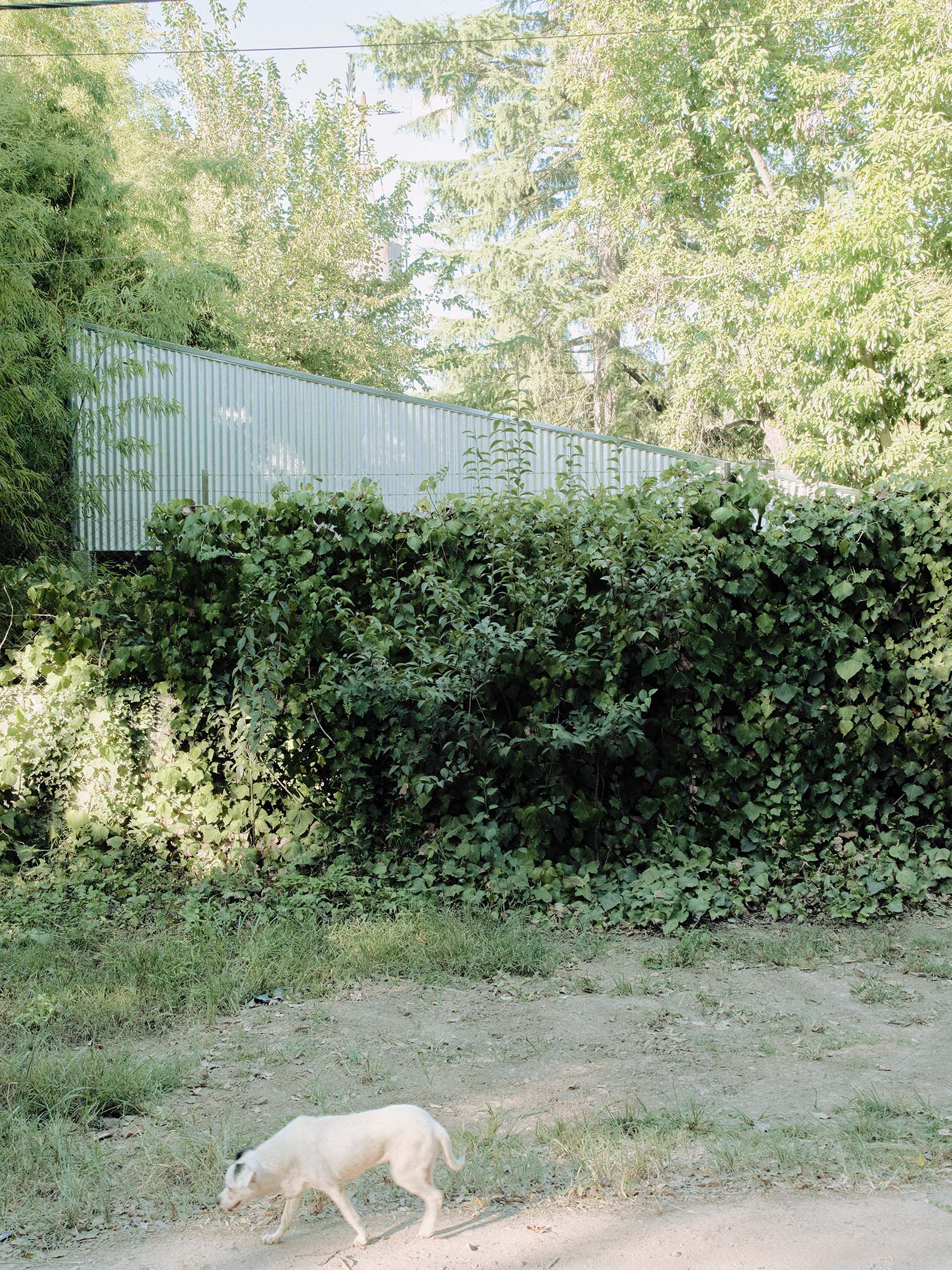
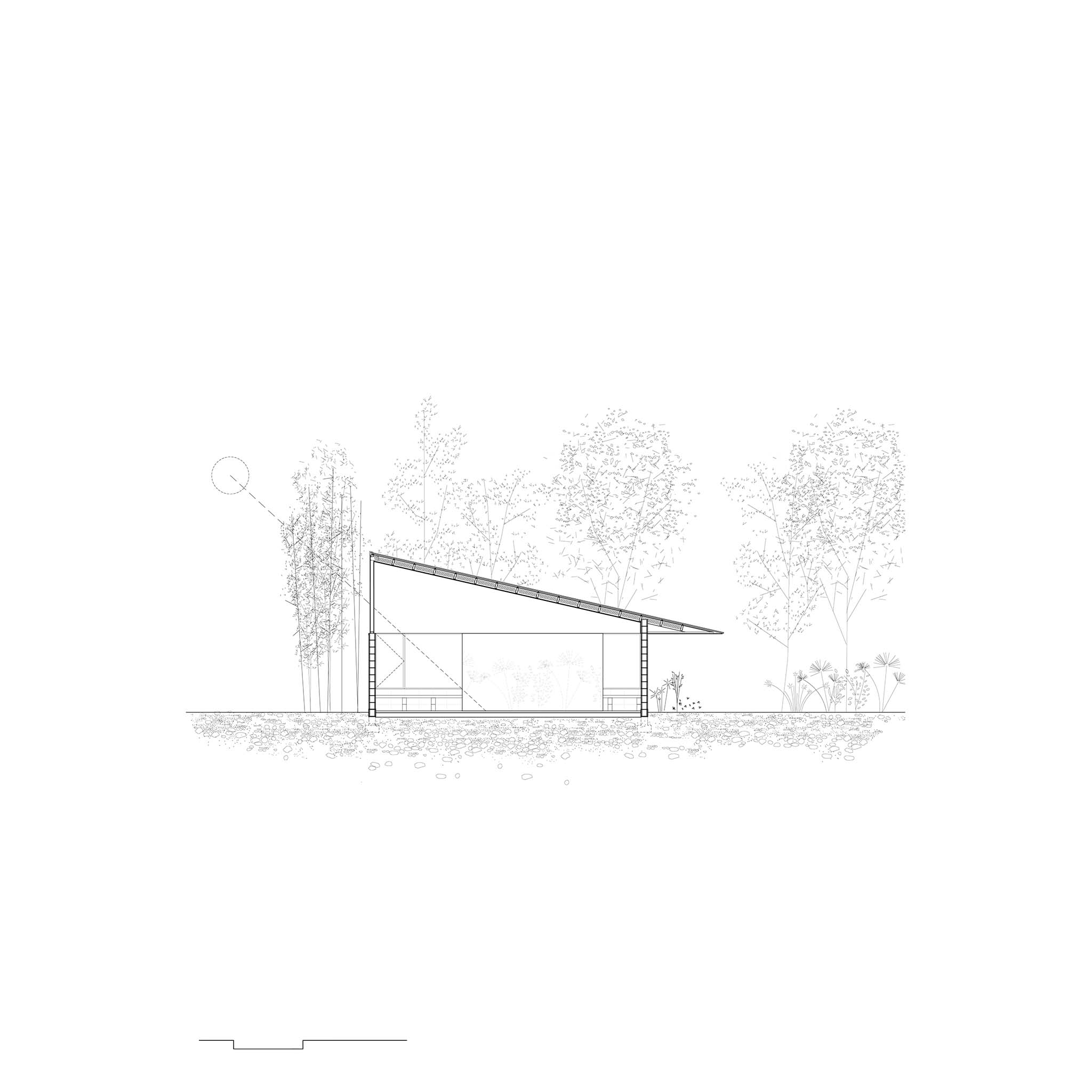
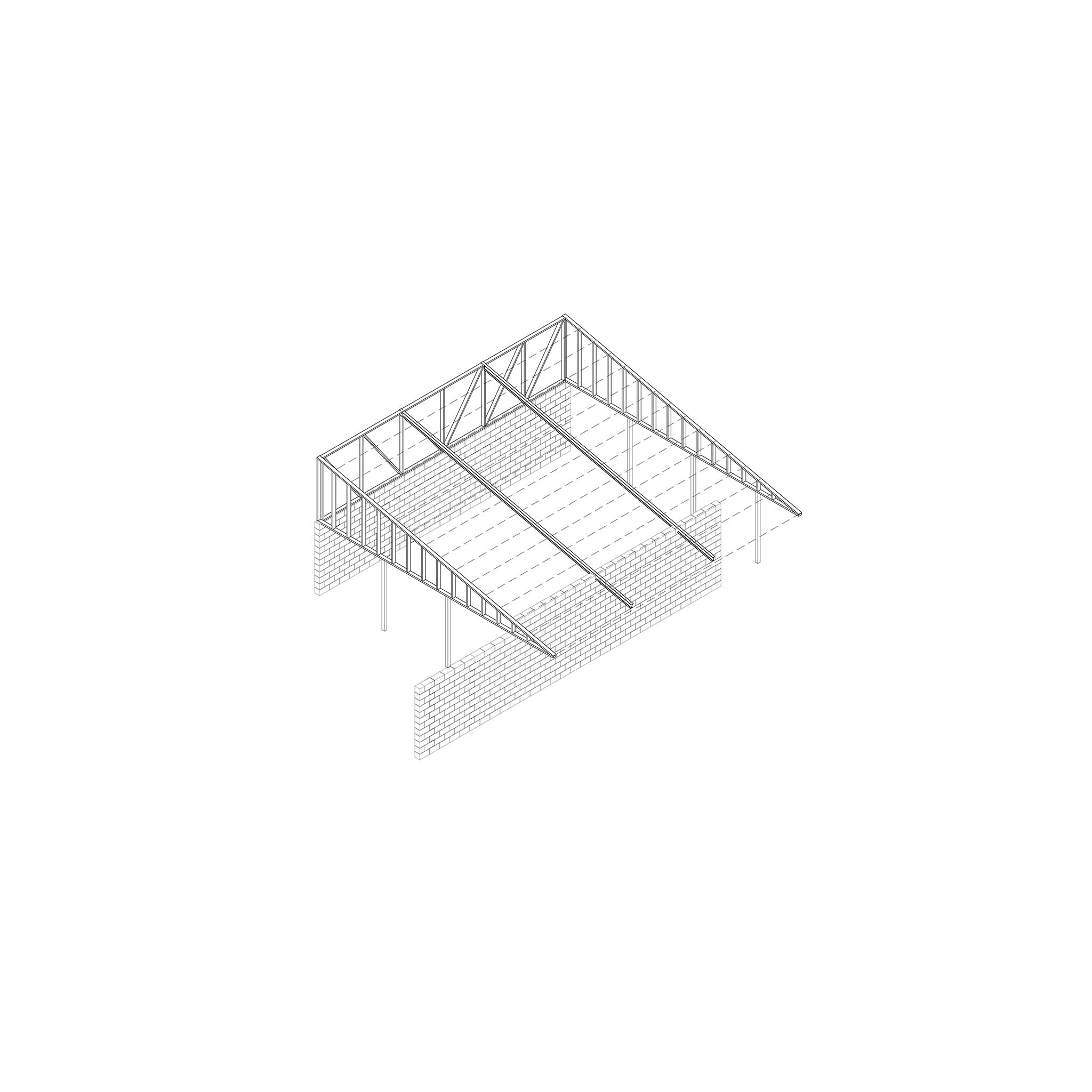
Structurally, the project is defined by a system of load-bearing walls supporting a continuous roof. The rear wall, facing north, is separated from the roof at its highest point, creating an upper opening enclosed by a semi-transparent surface that allows filtered natural light to enter. The horizontal elements organize movement and use, while the combination of courtyards, walls, and roof shapes an open and permeable spatial structure.
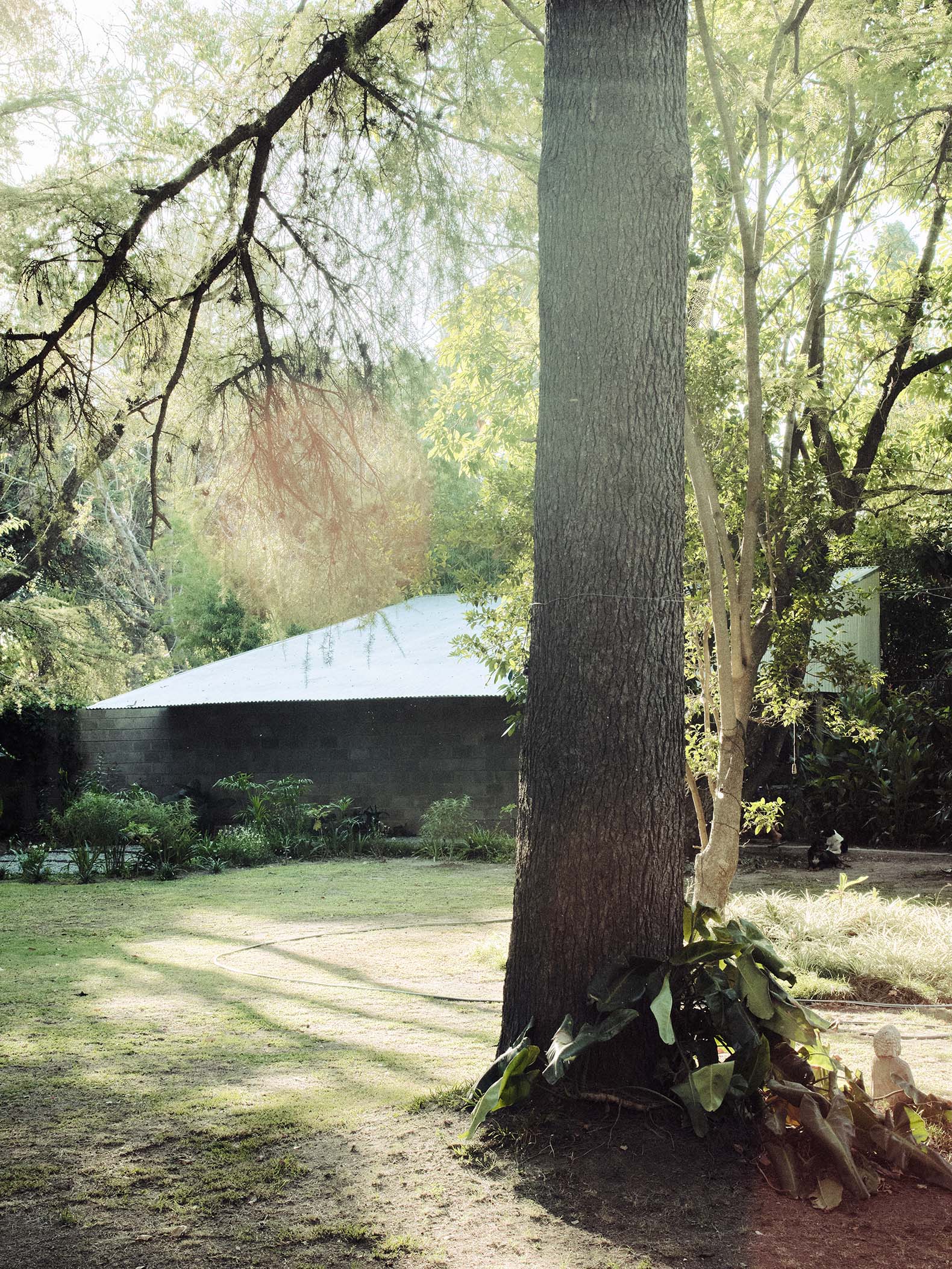
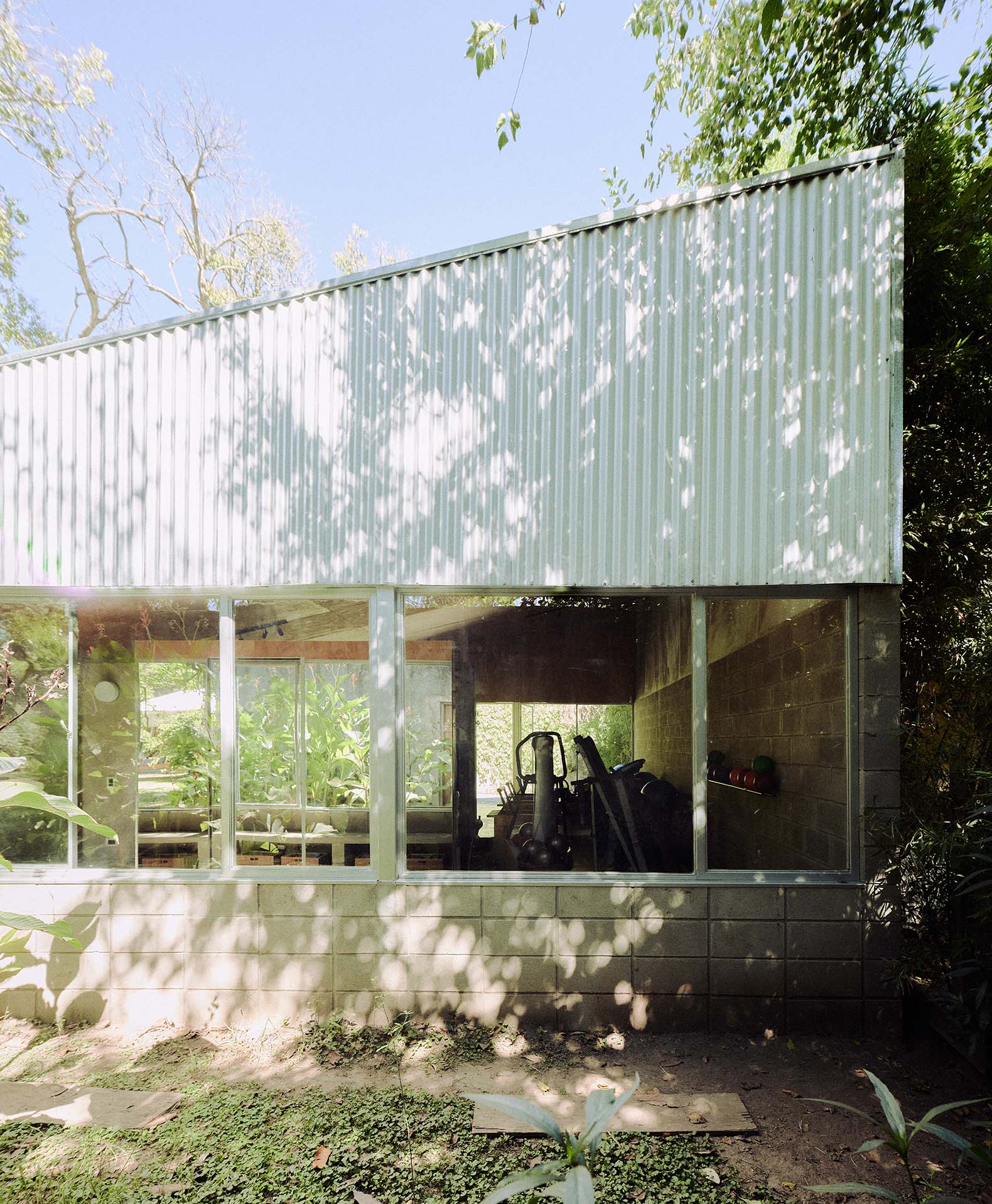
Pilates Pavilion by Juan Bechini. Photograph by Agustin Calvetti.
Project description by Juan Bechini
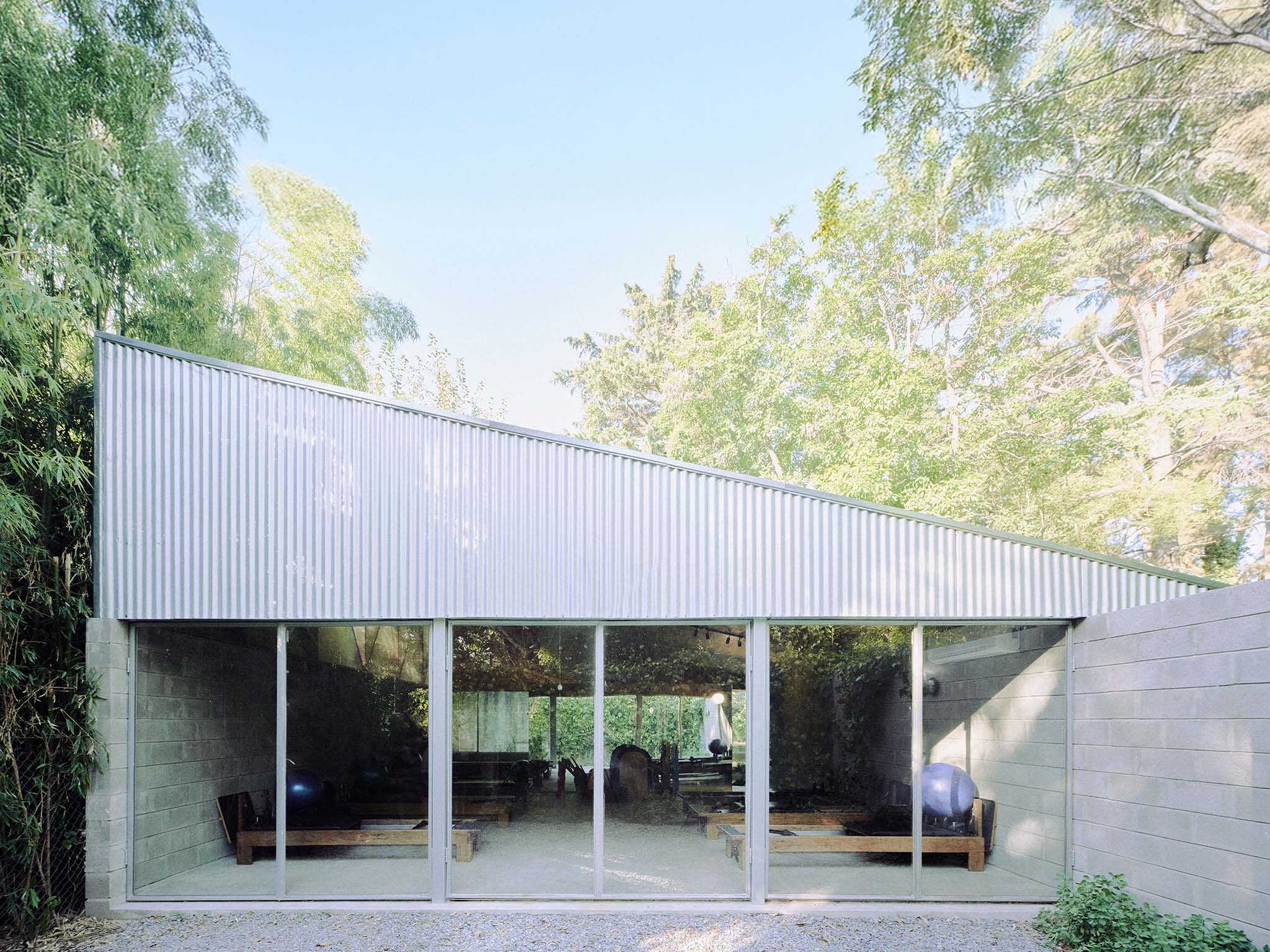
Located in the garden of a house, the pilates studio introduces a semi-public program within a private residential setting. The intervention is constructed through a series of walls that fragment and structure the space, over which a continuous roof is placed to define the interior.
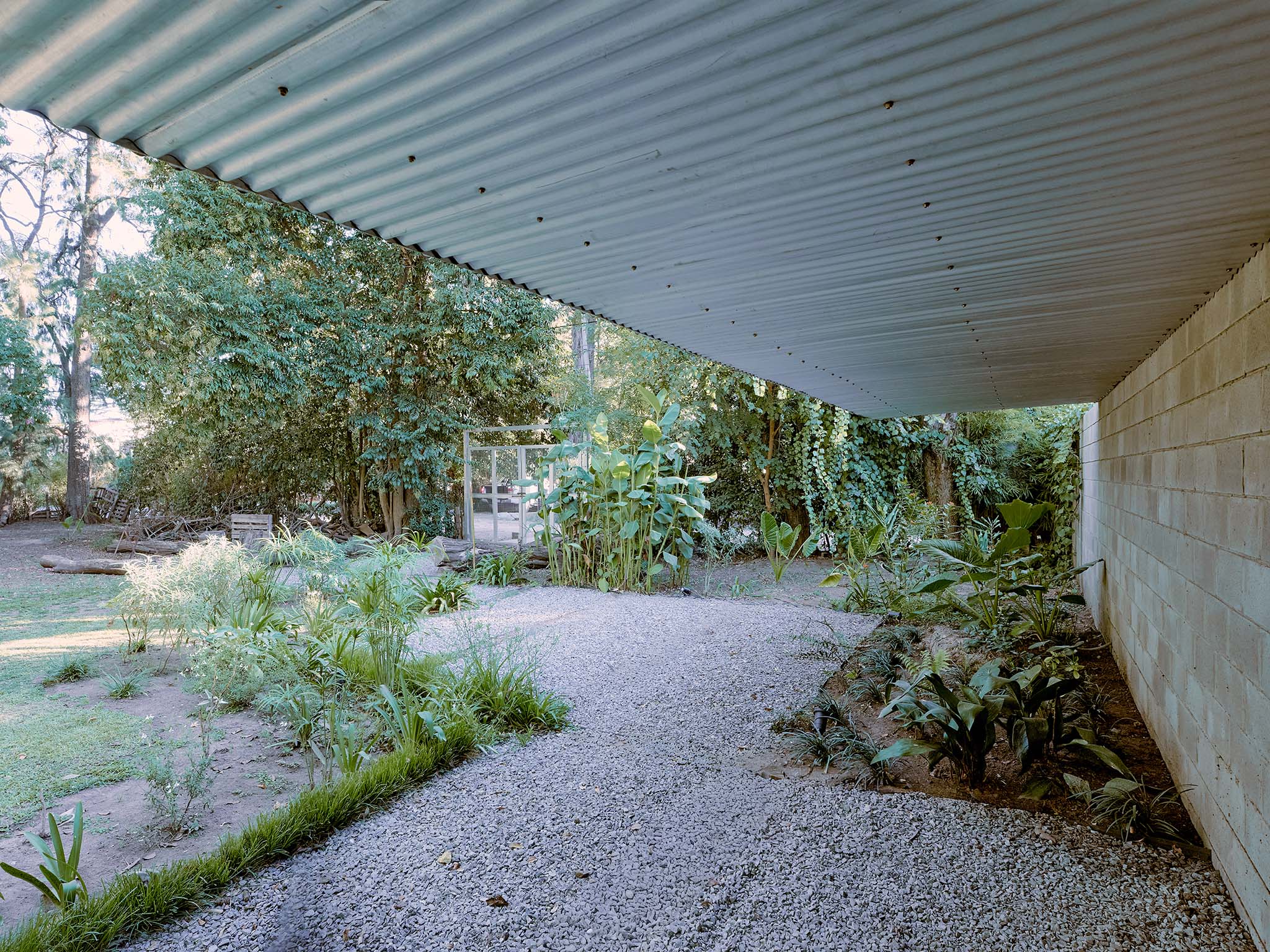
Access occurs through the garden. A band of tall vegetation establishes the first separation from the domestic domain. A front overhang marks the threshold and leads to a waiting area open to the exterior, from which the pilates room is accessed. The sequence of entry is always constructed in relation to long views towards outdoor spaces.
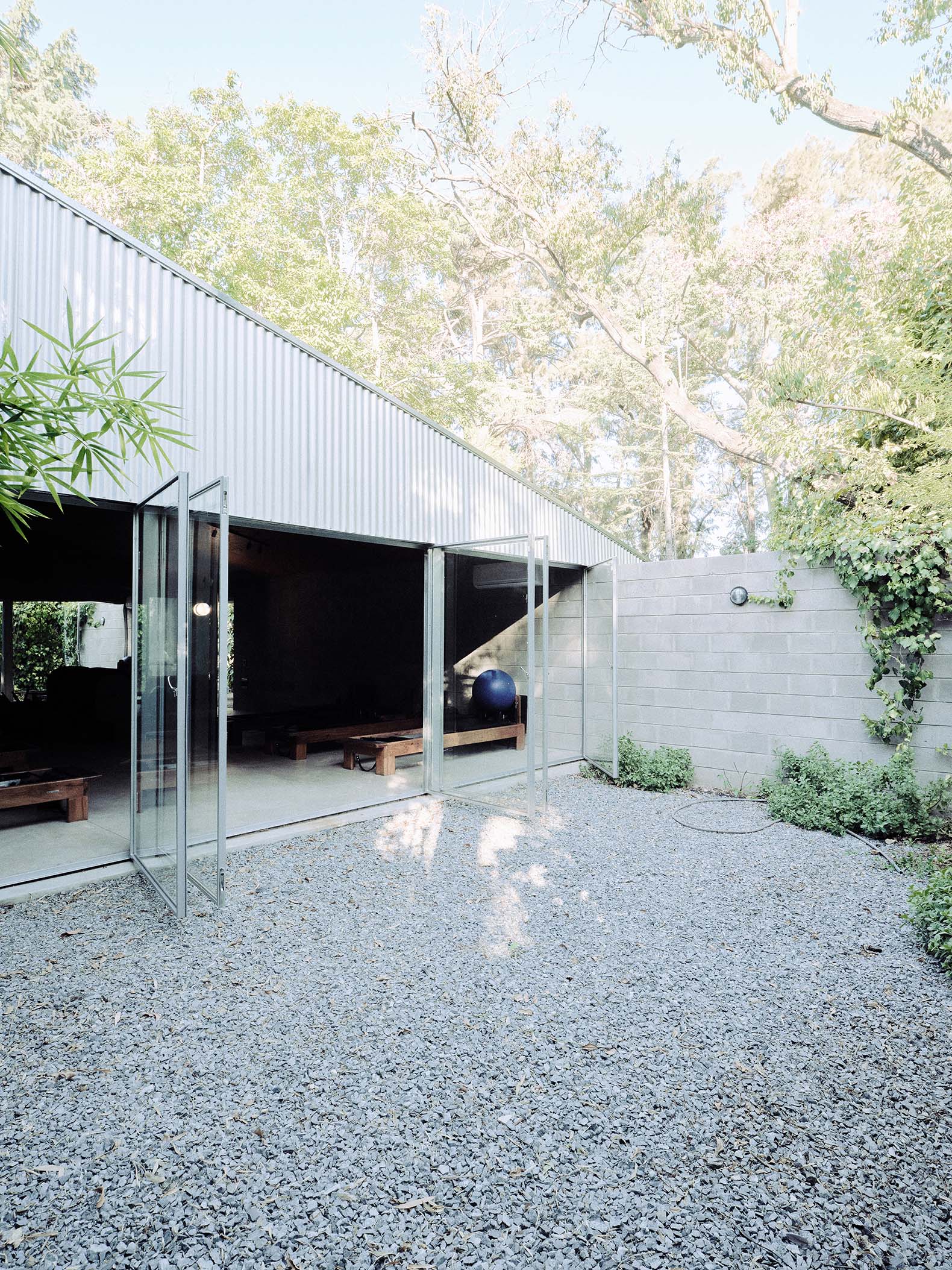
The pavilion is organized around a square plan of 10 × 10 m. Towards the street, an internal courtyard of 5 × 10 m establishes distance from the public realm. Each interior space is paired with an equivalent exterior void. The interior is tensioned by a core that organizes circulation and that, along its longitudinal side, reflects the lateral courtyards: in the pilates room, the internal courtyard; in the waiting area, a second courtyard that establishes distance from the domestic garden. The pavilion thus blurs the condition of a closed enclosure. The courtyards operate as transitional spaces between programs, surrounding the user with a continuous sequence of exterior spaces.
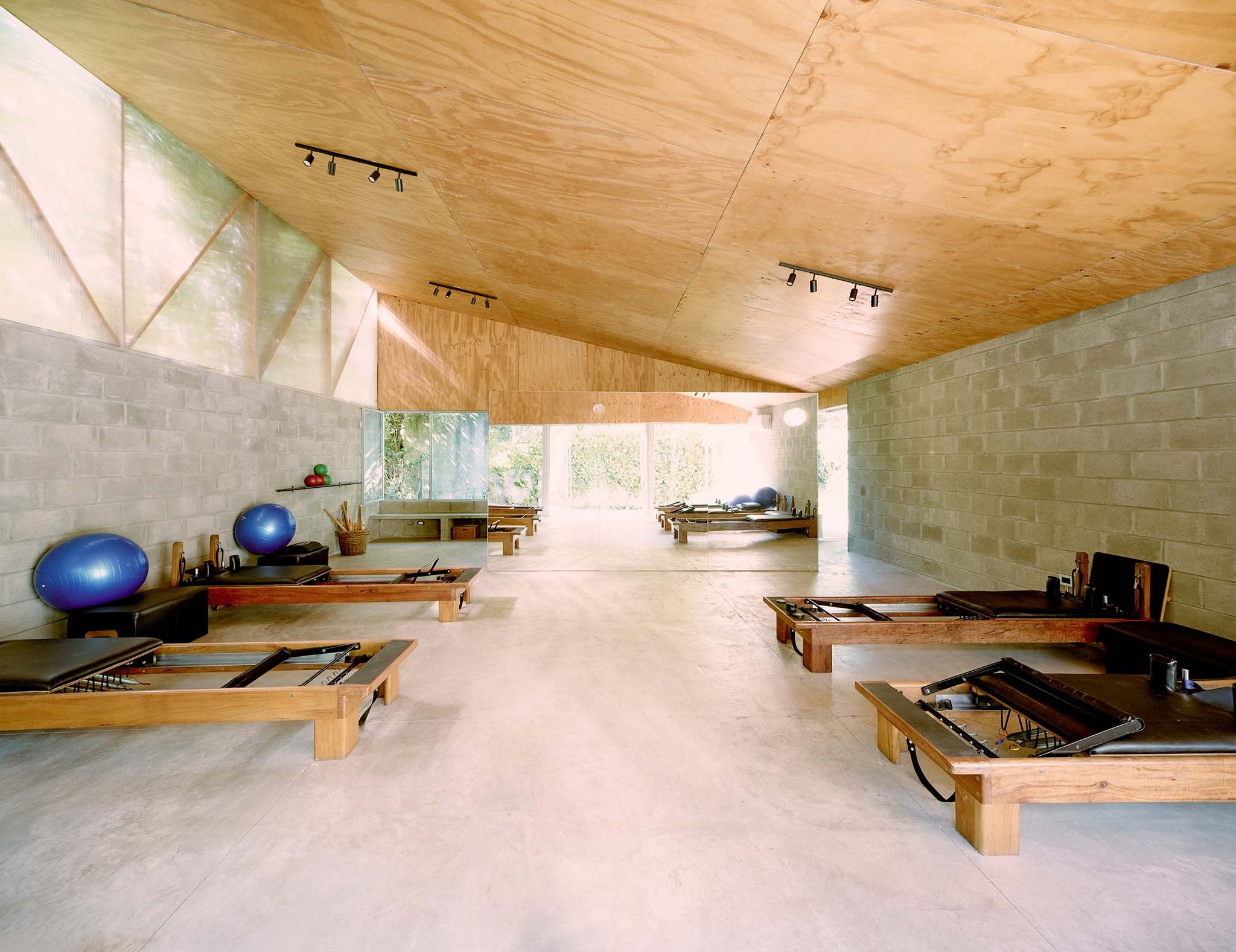
Oriented with its back to the north, the rear wall dematerializes in the gap between it and the highest point of the roof. A semi-translucent surface allows filtered light to enter through the adjacent vegetation, which acts as a natural sunshade.
Horizontal elements organize circulation and use. The intervention defines boundaries without enclosing, fragmenting the garden to introduce a new program without altering its original logic.