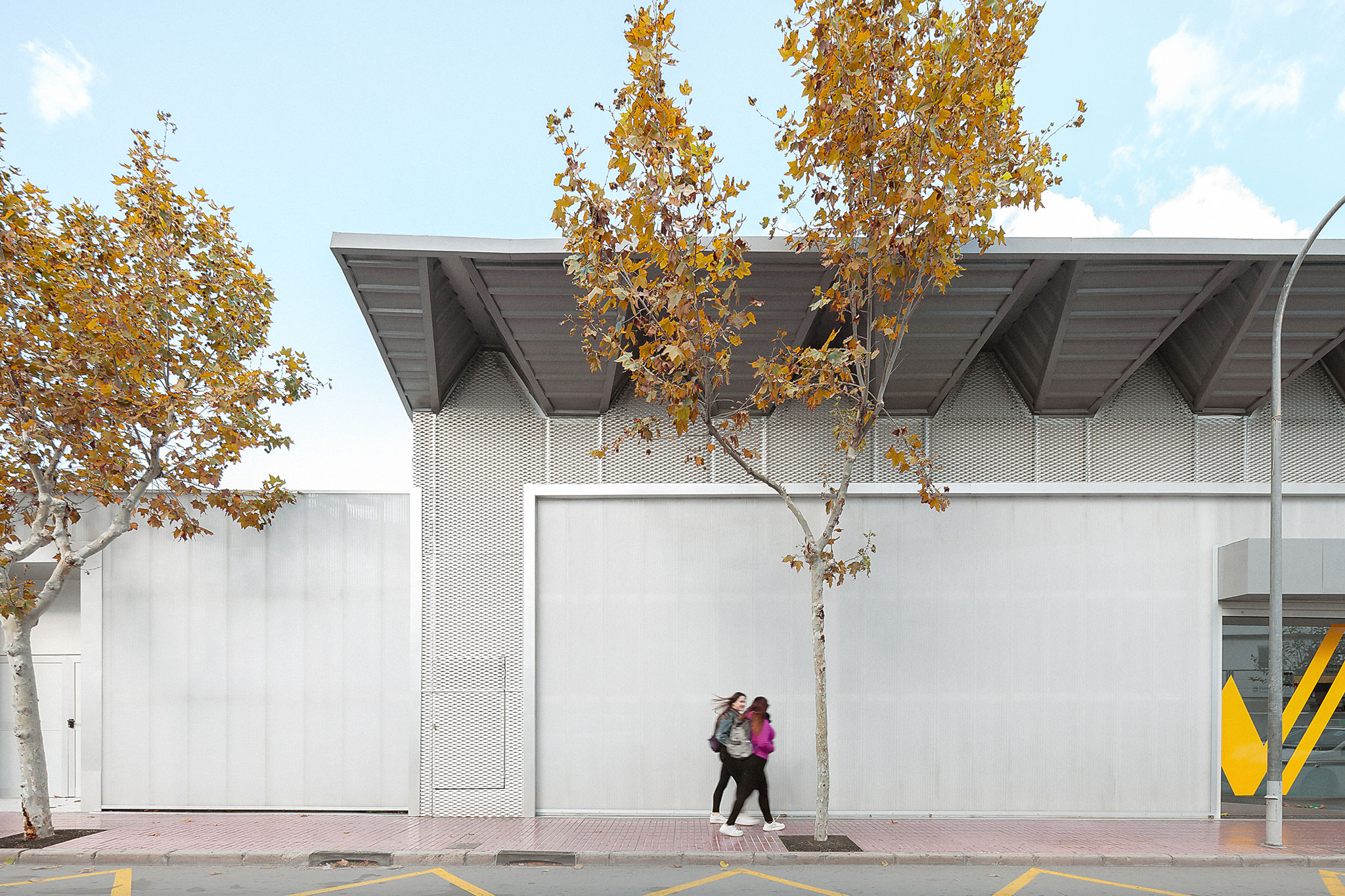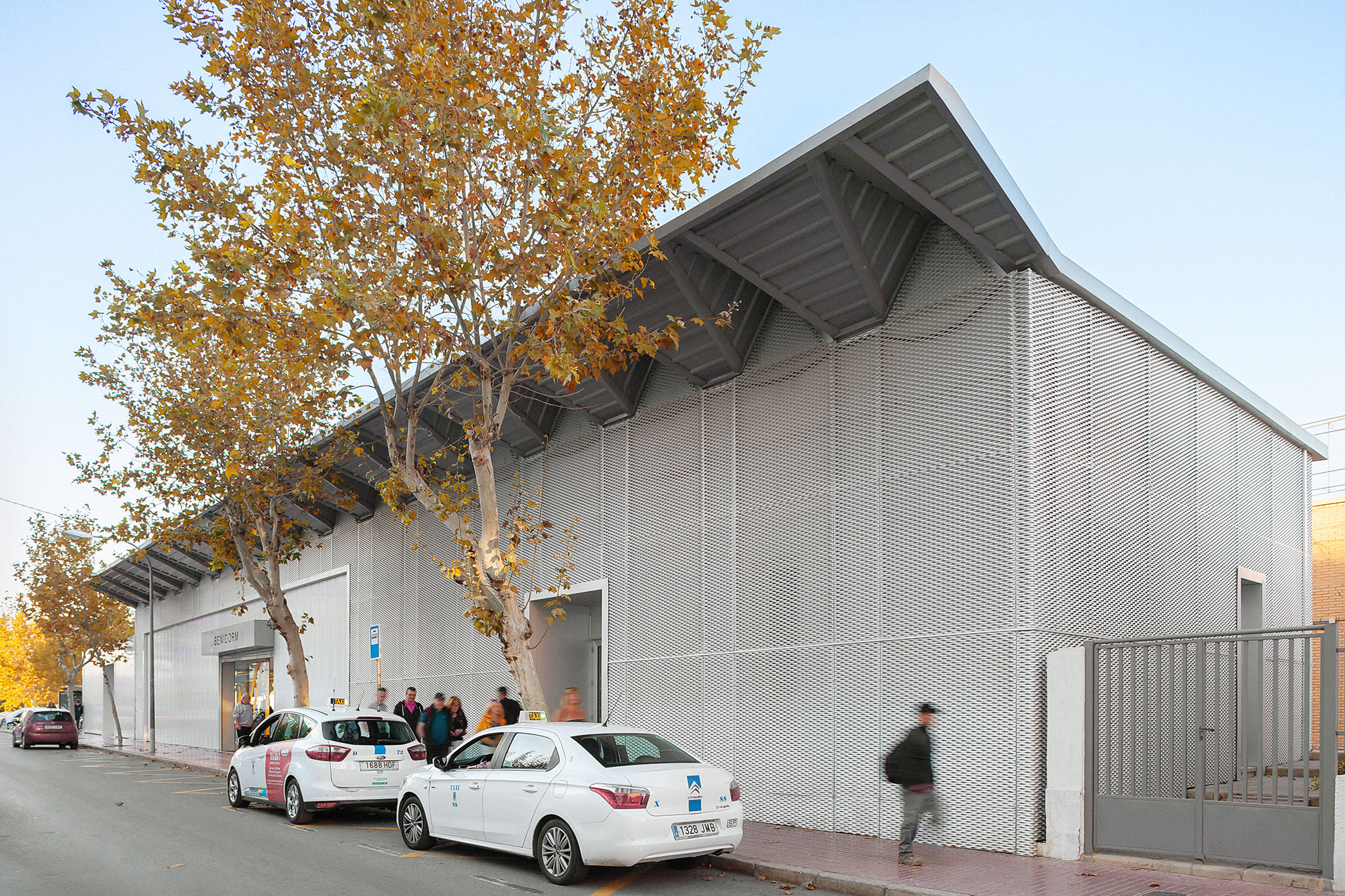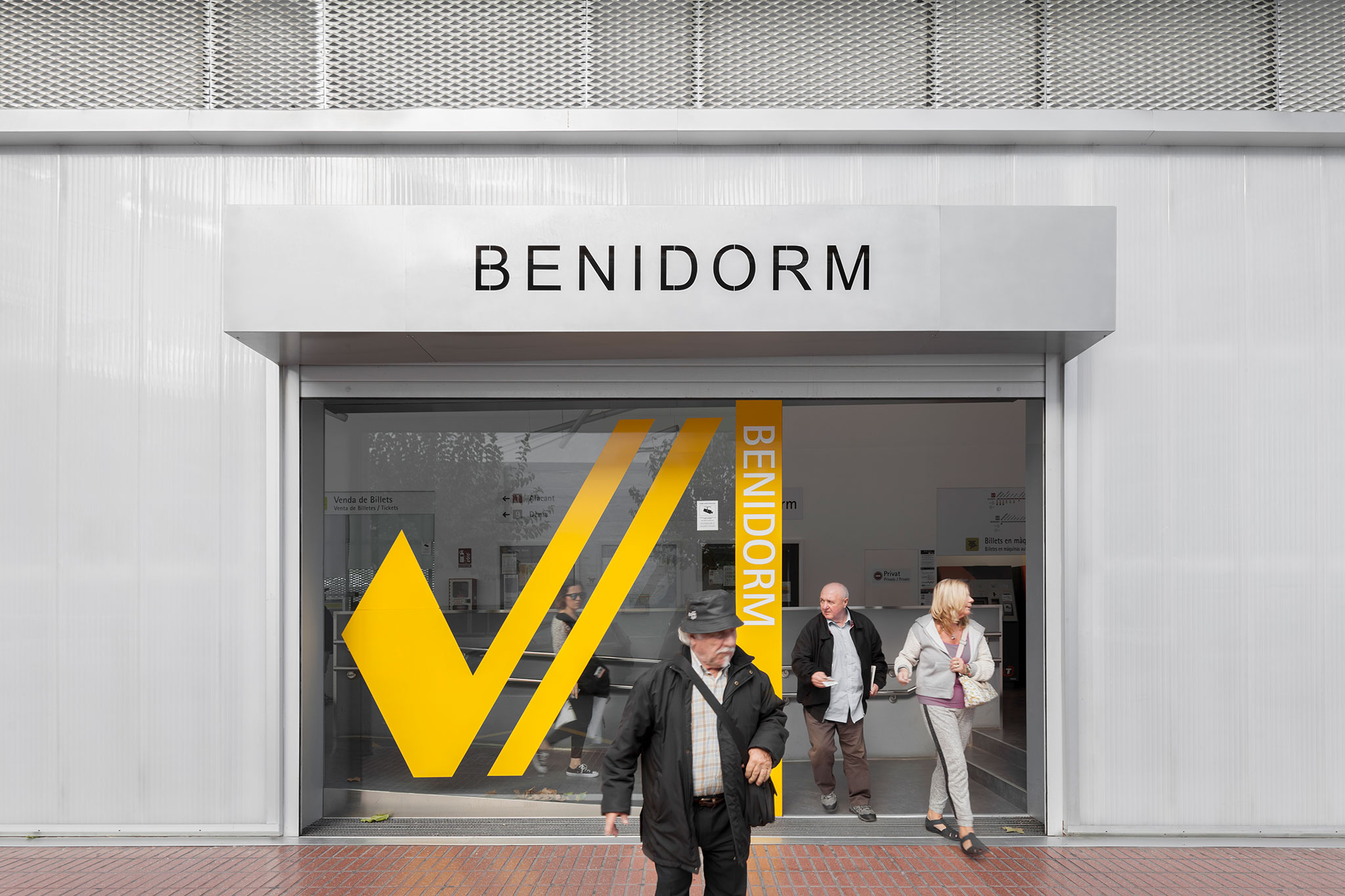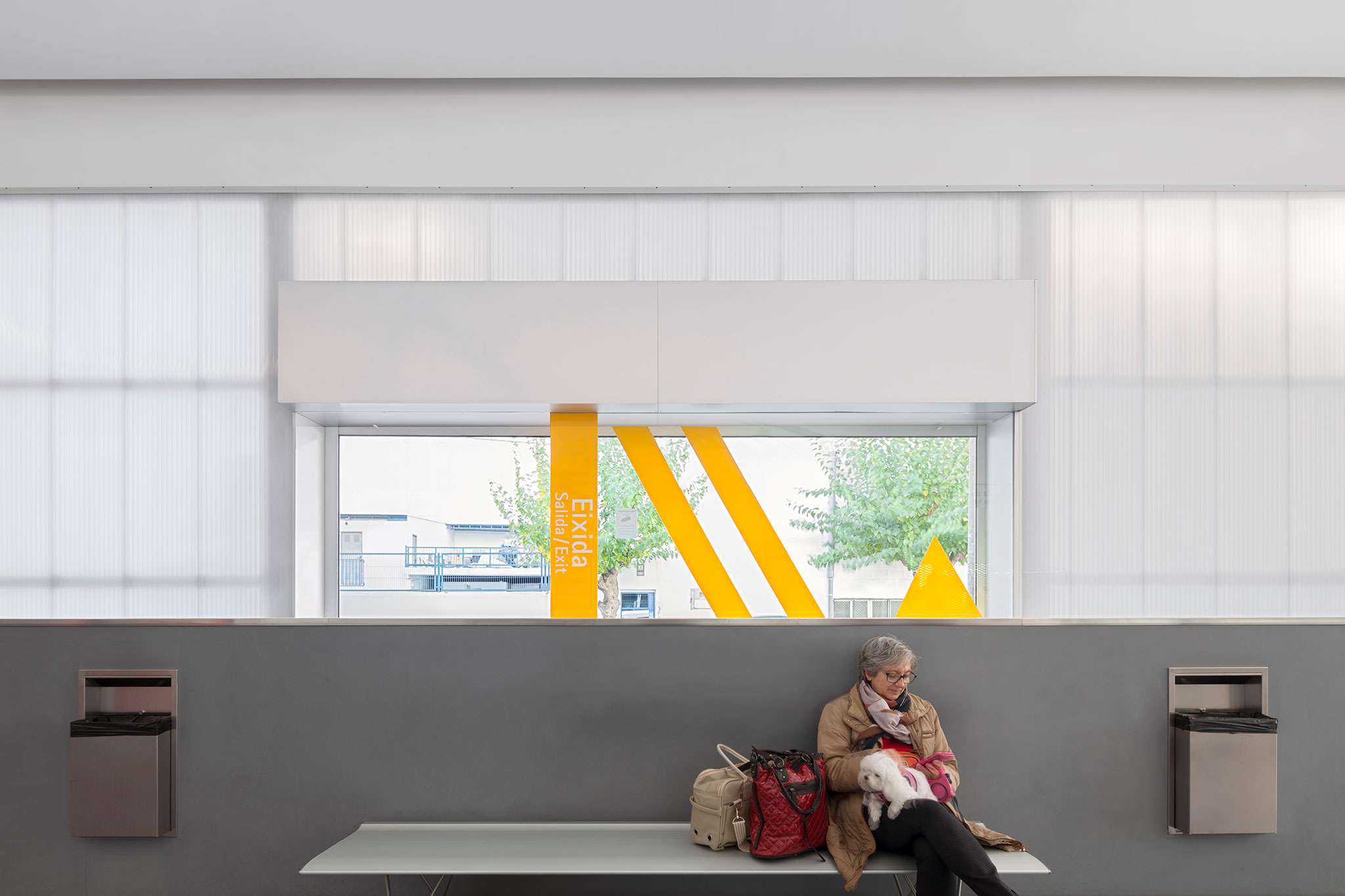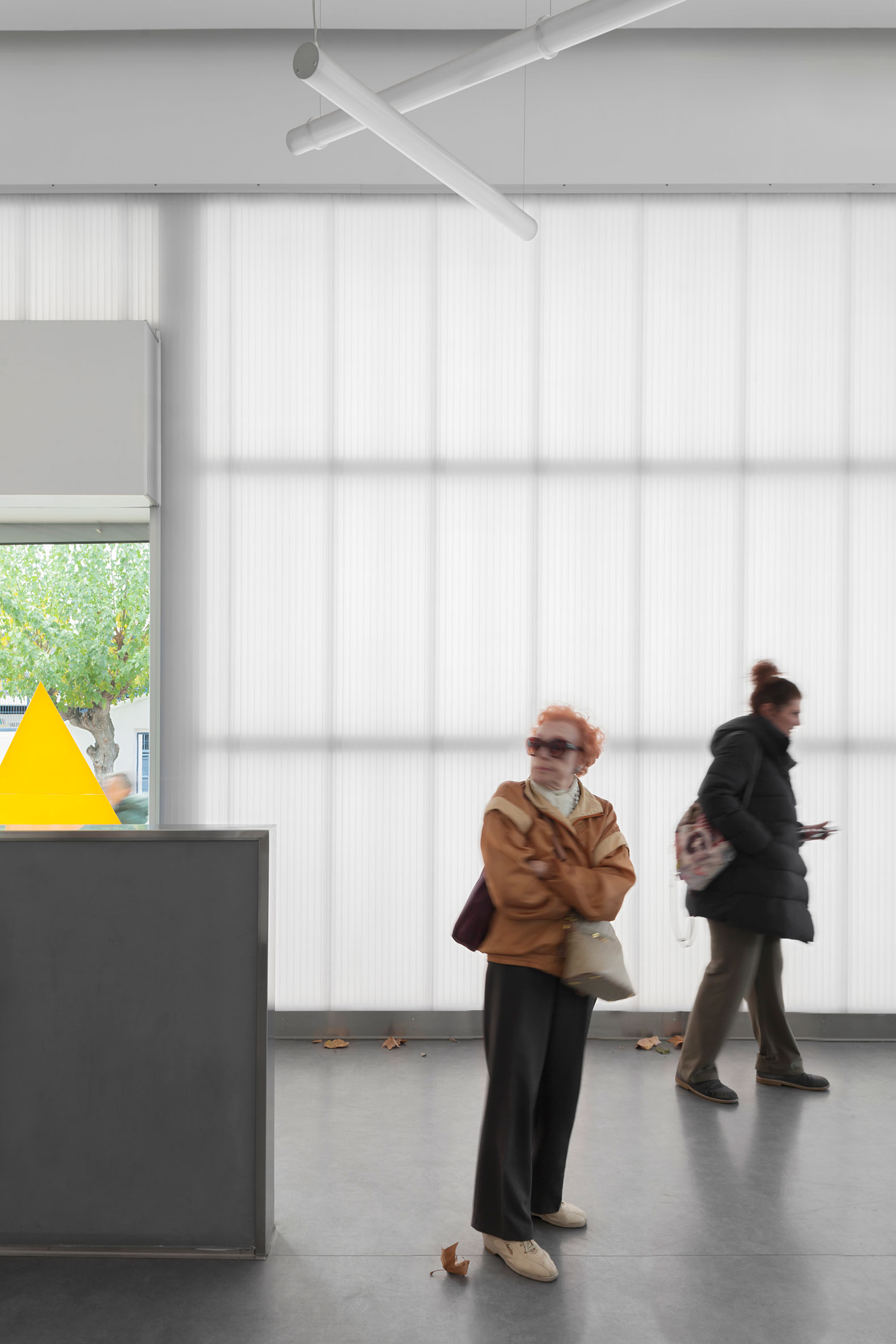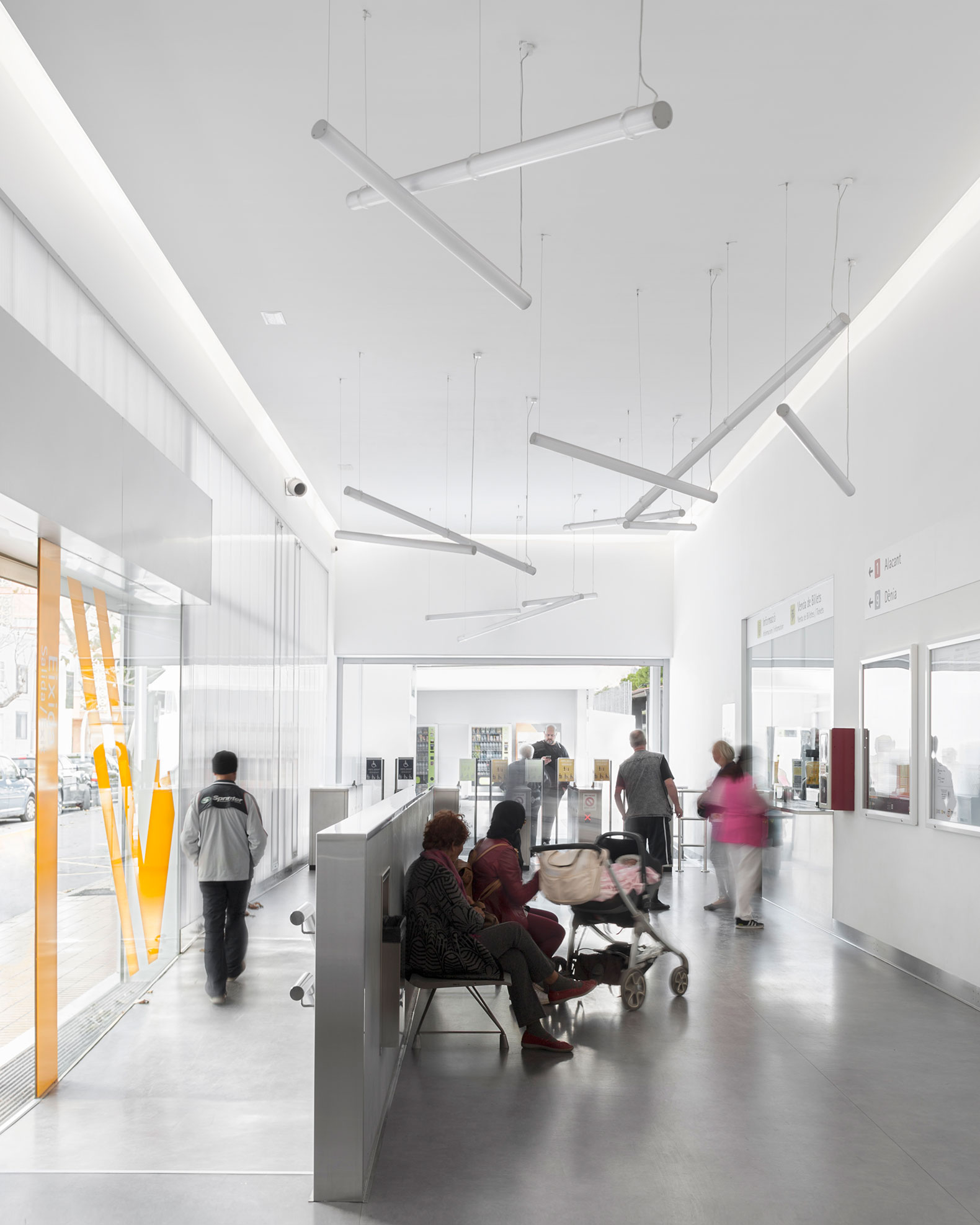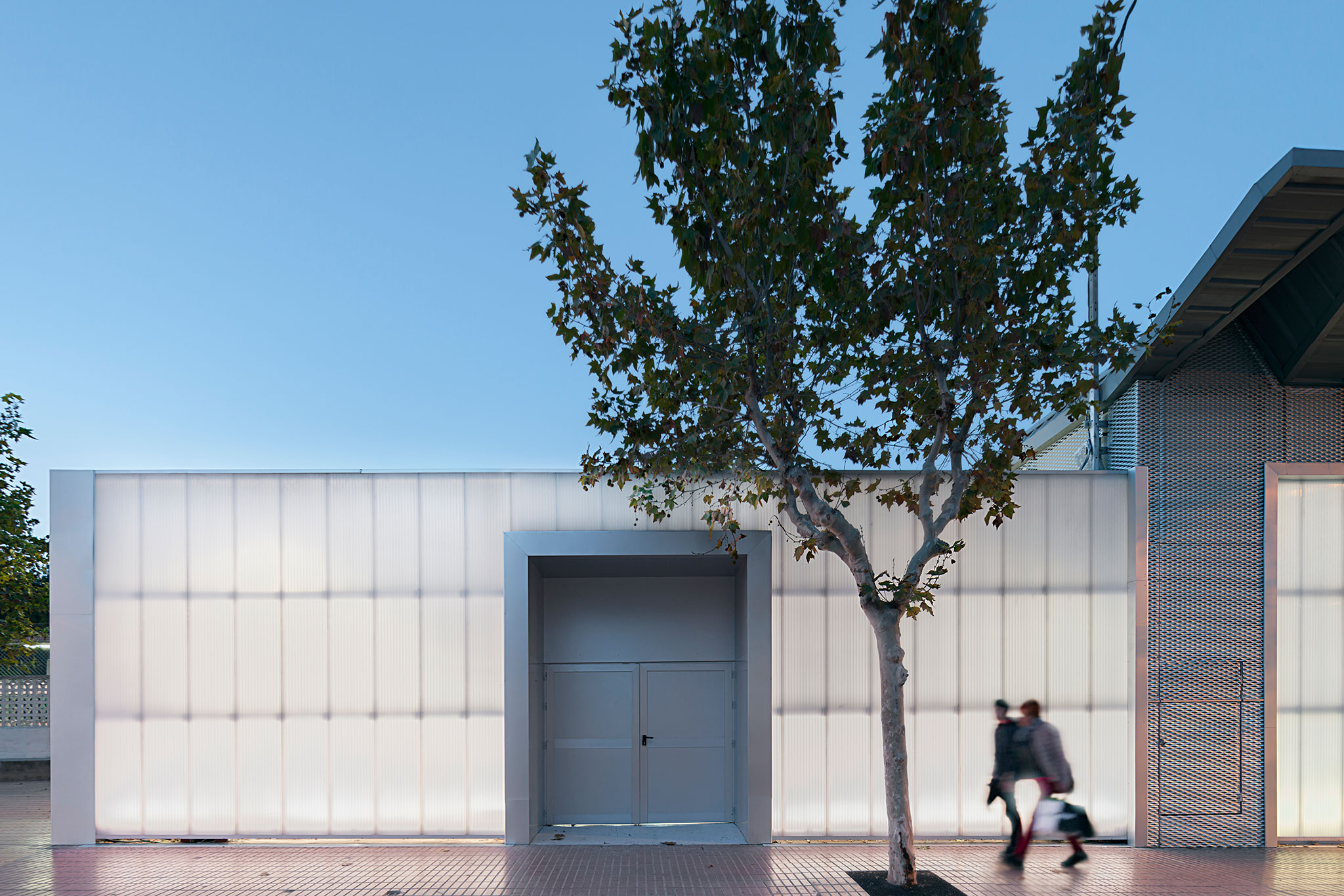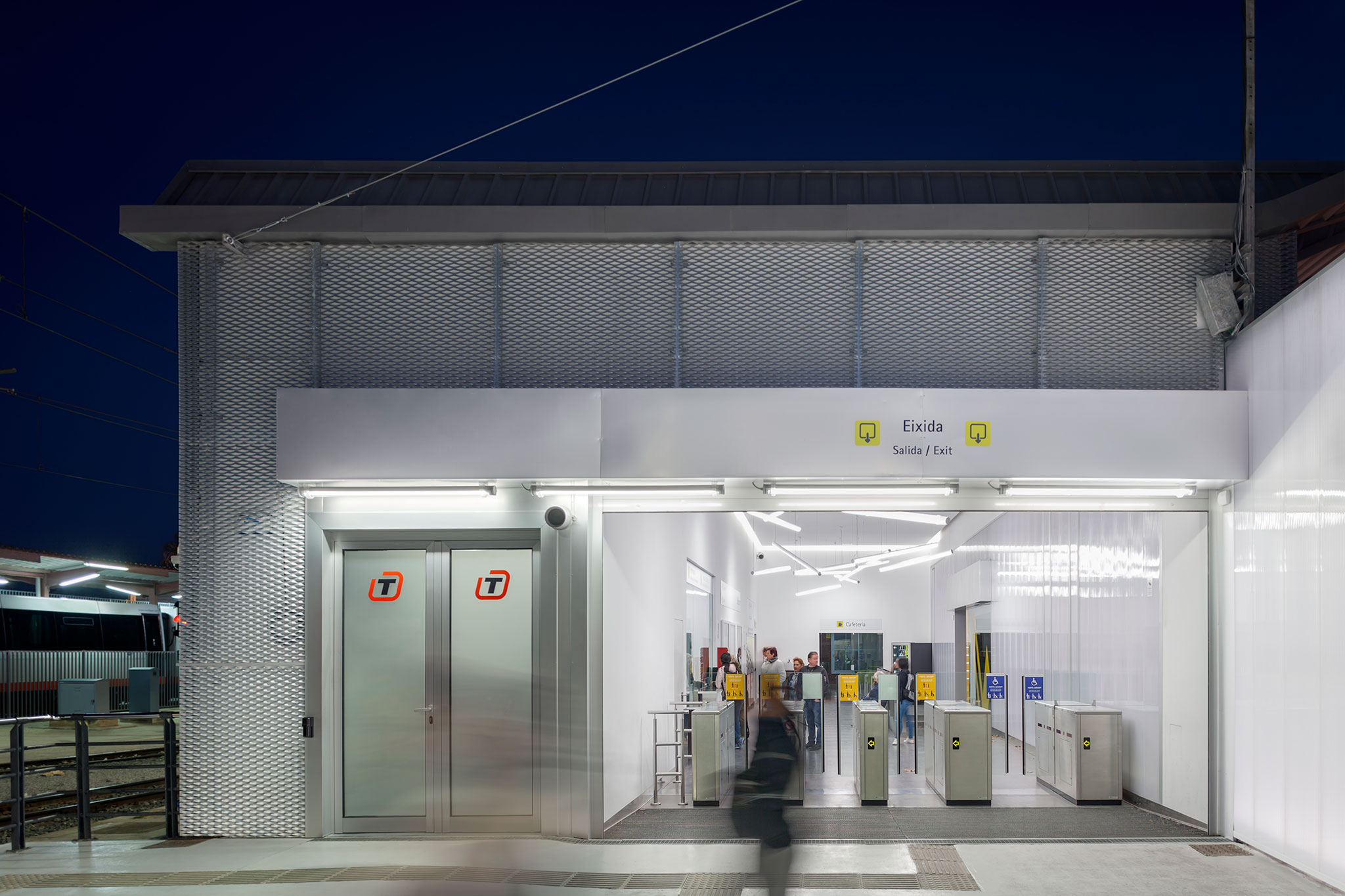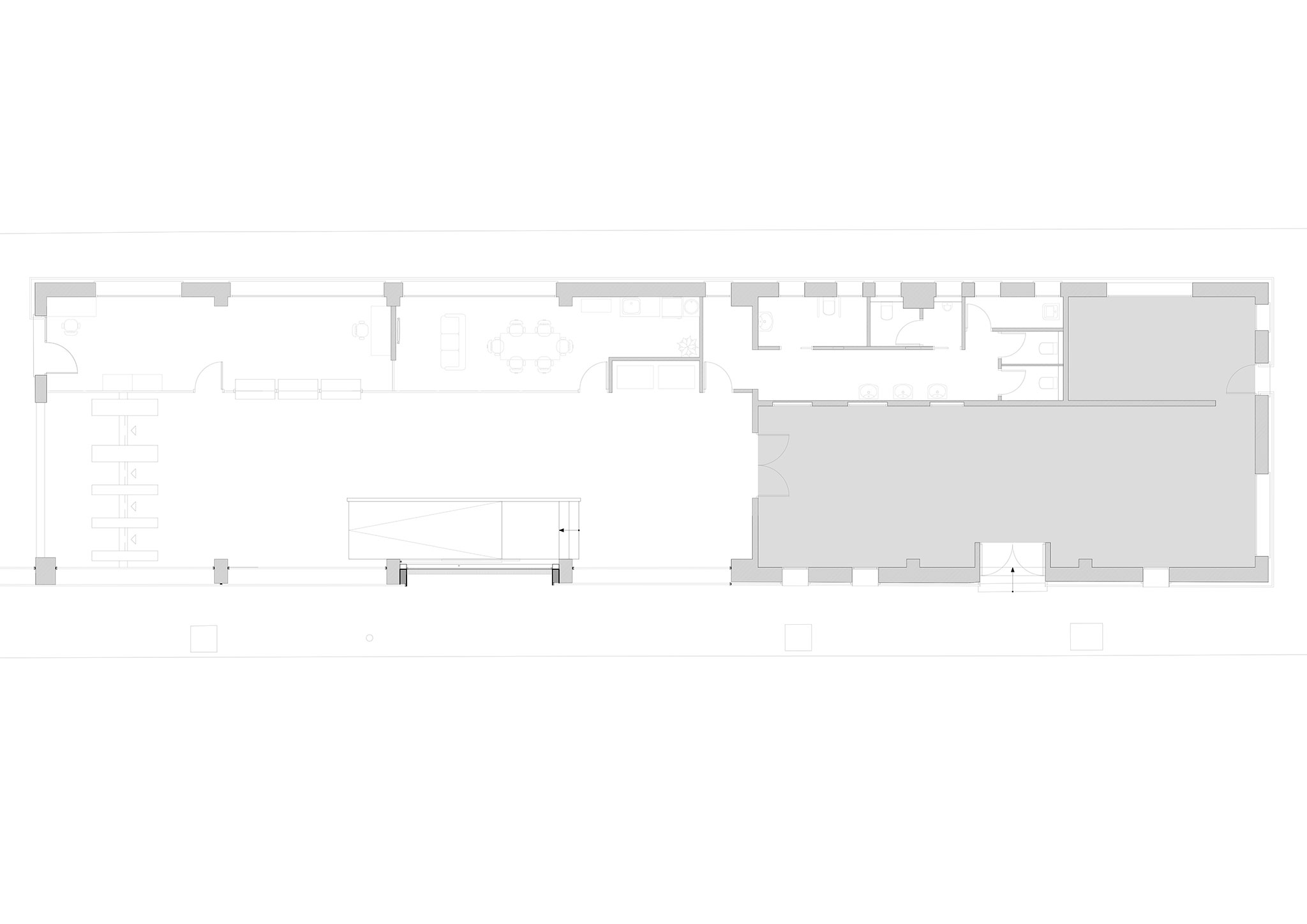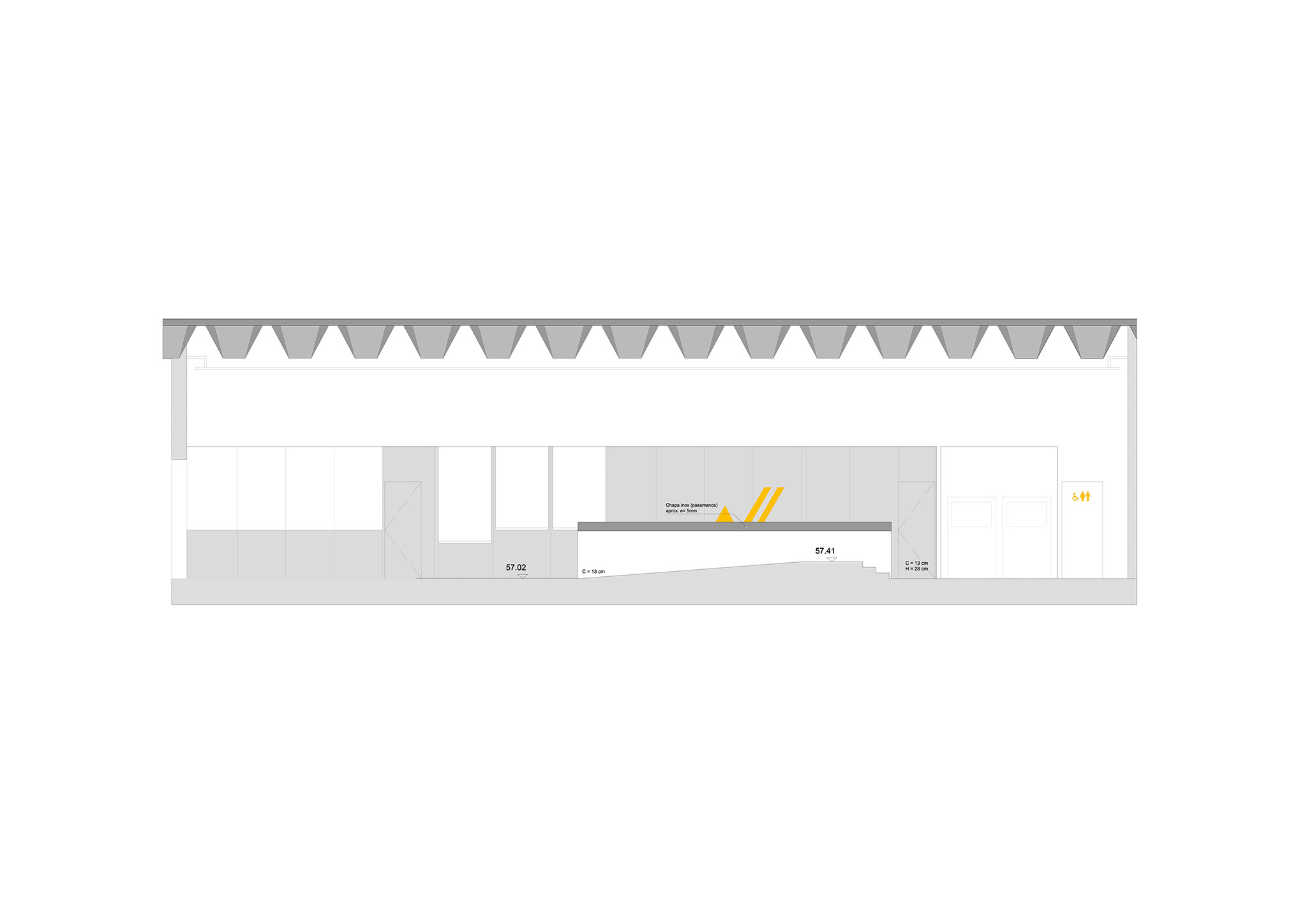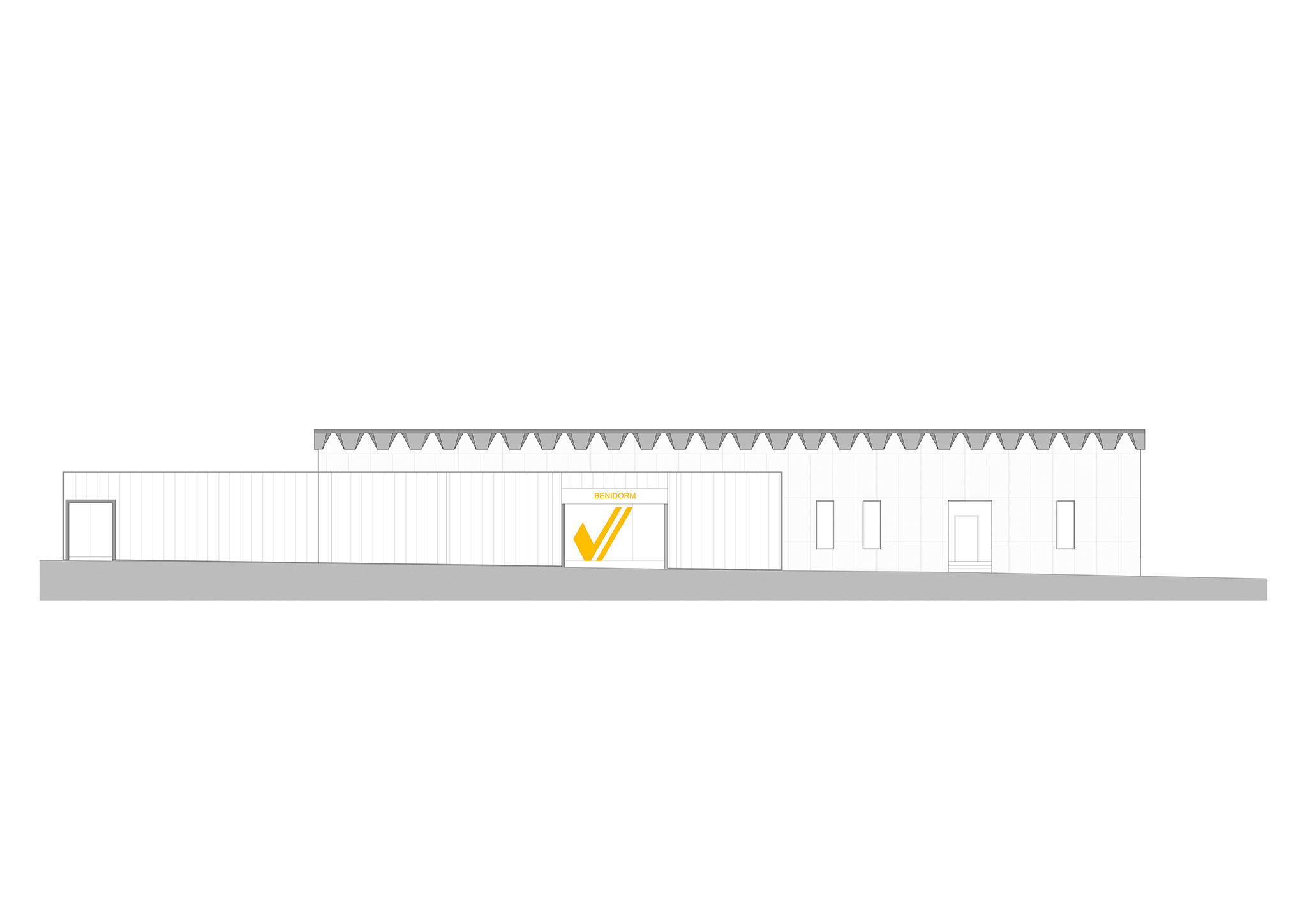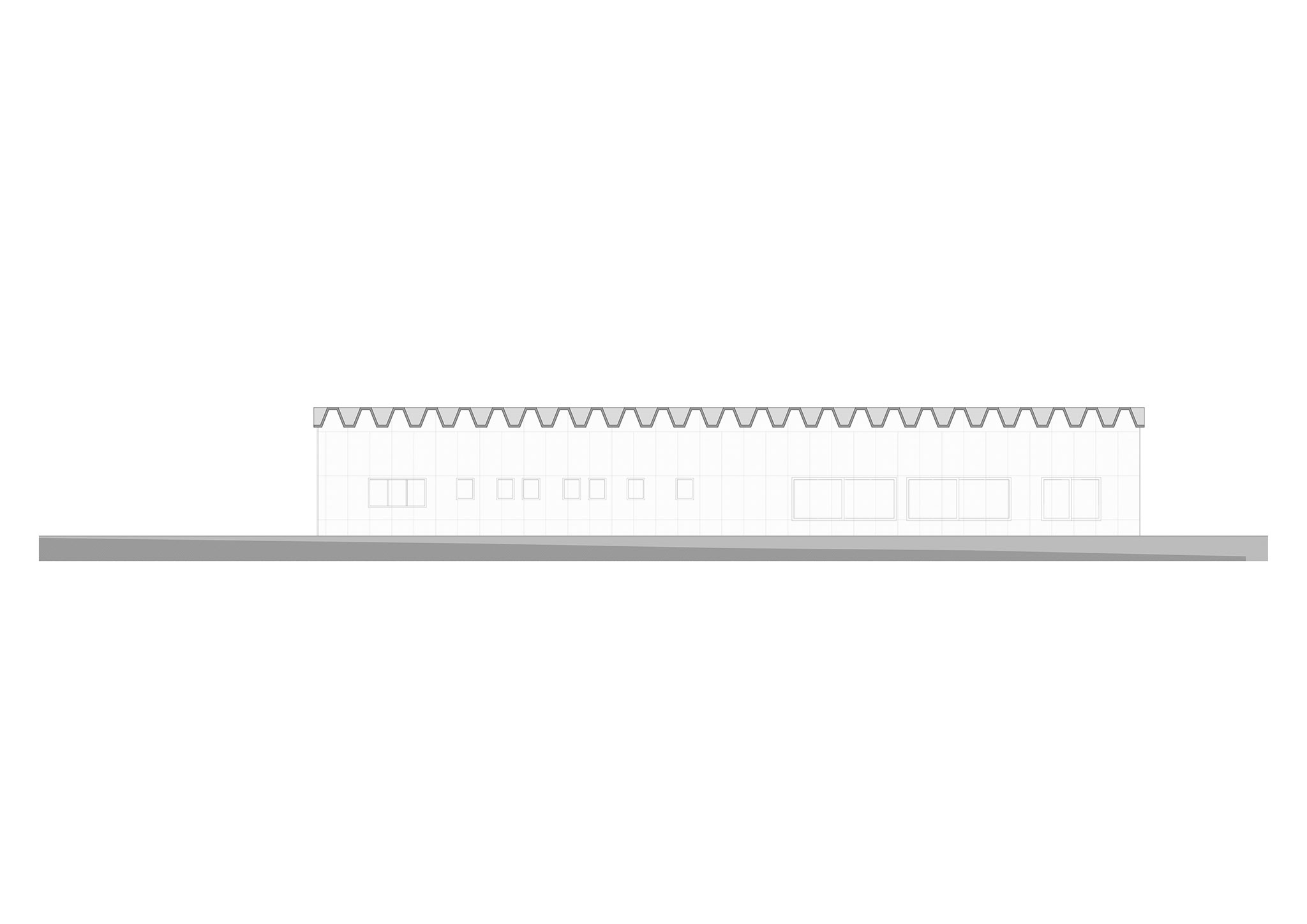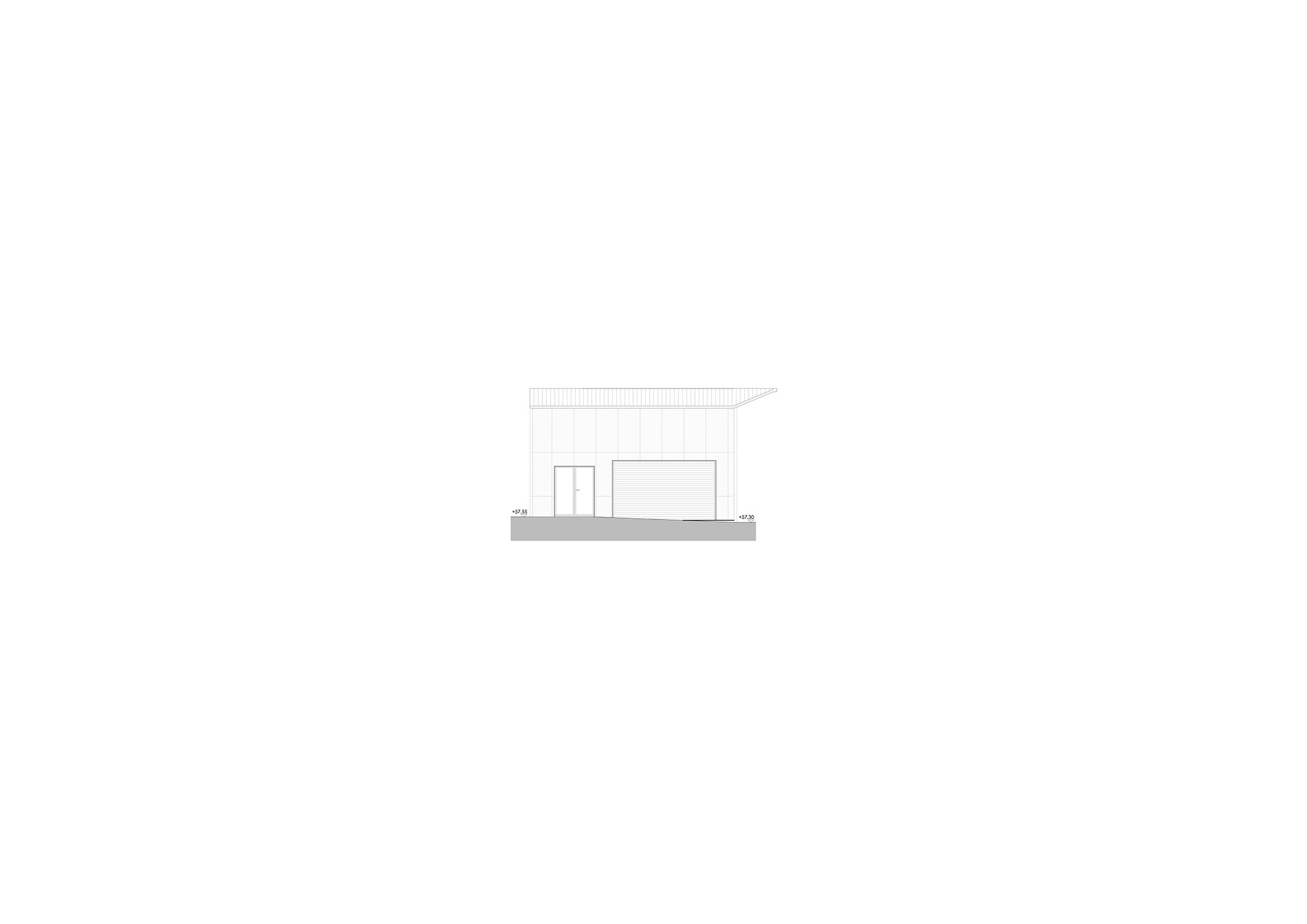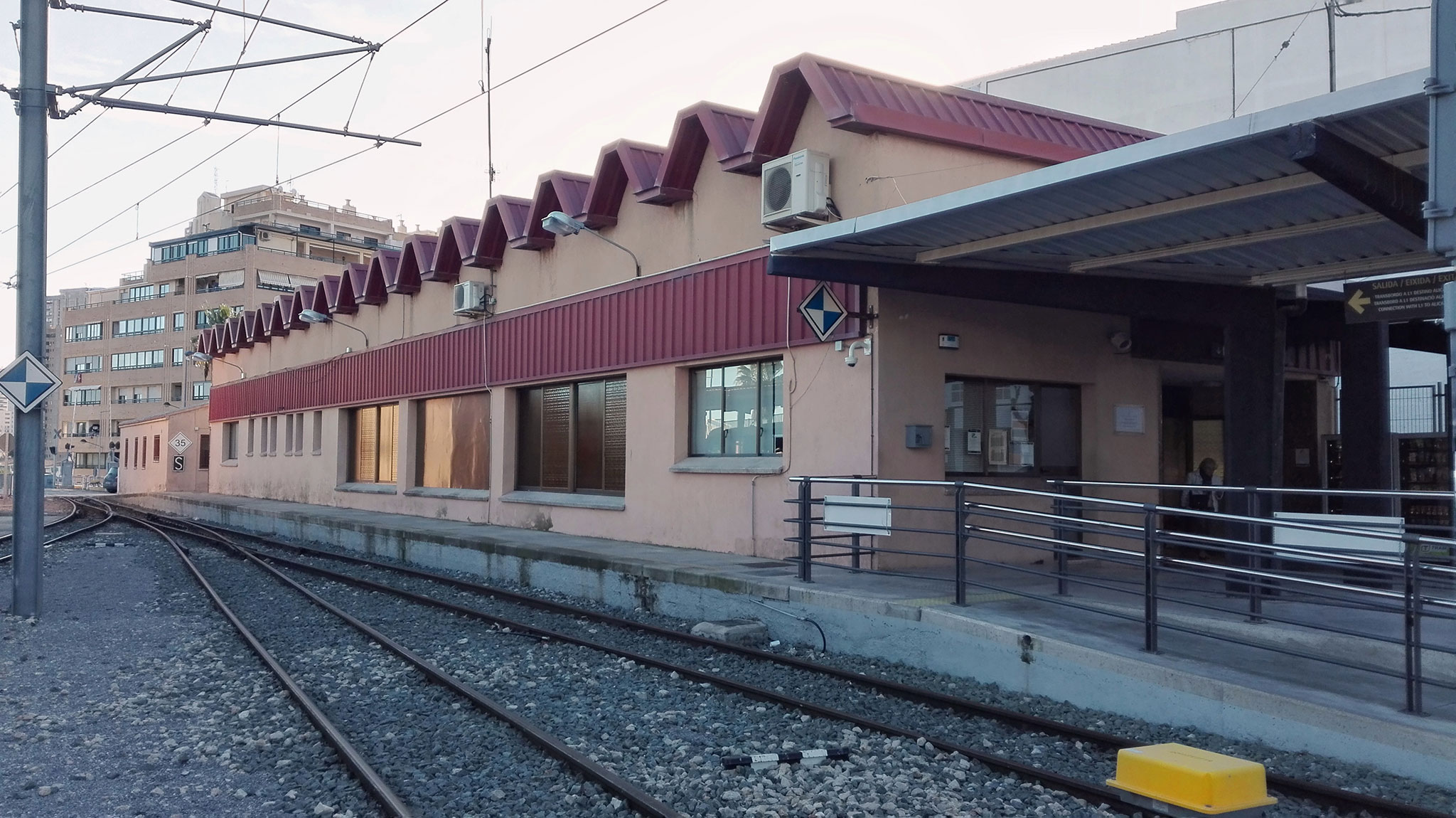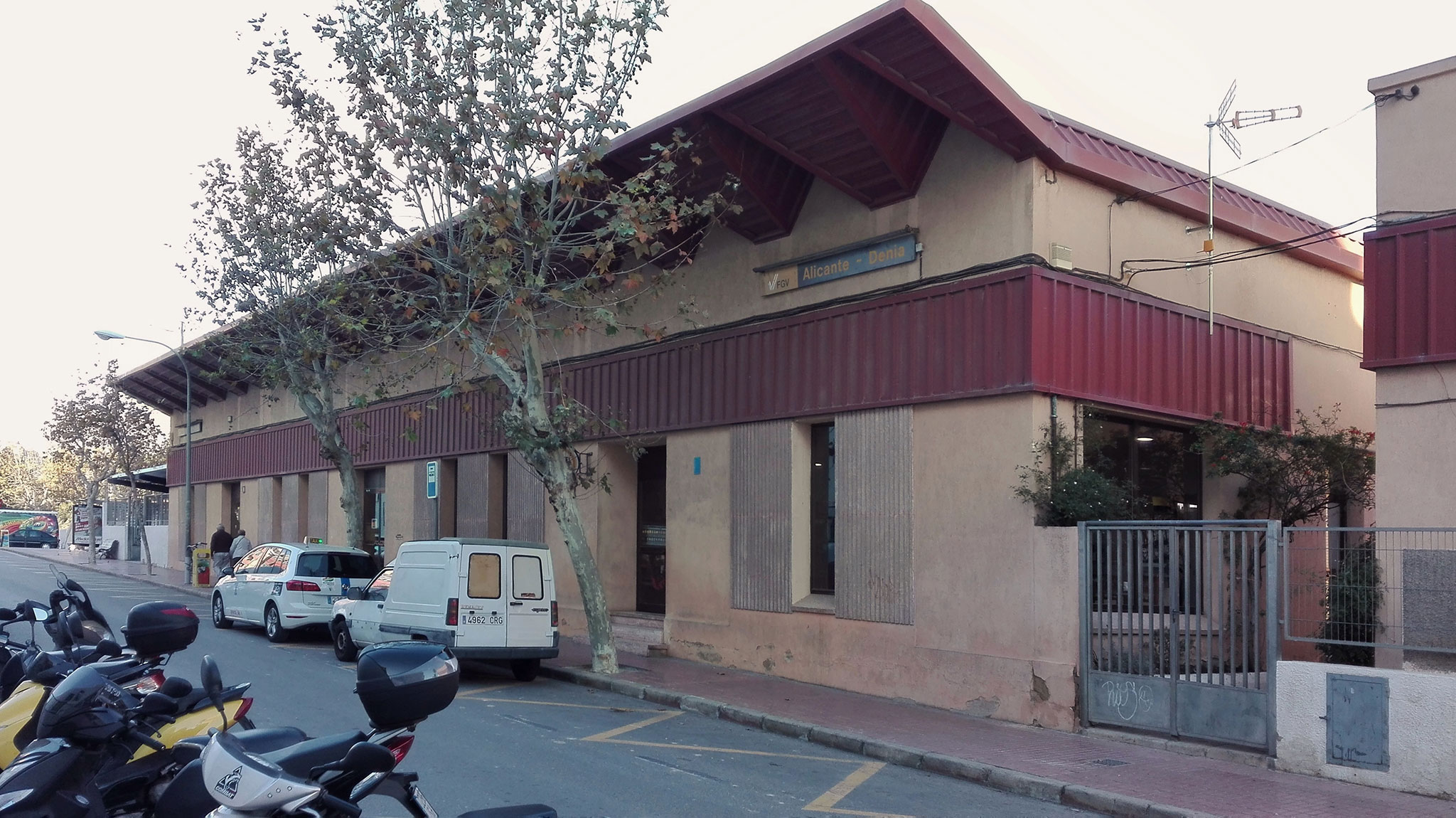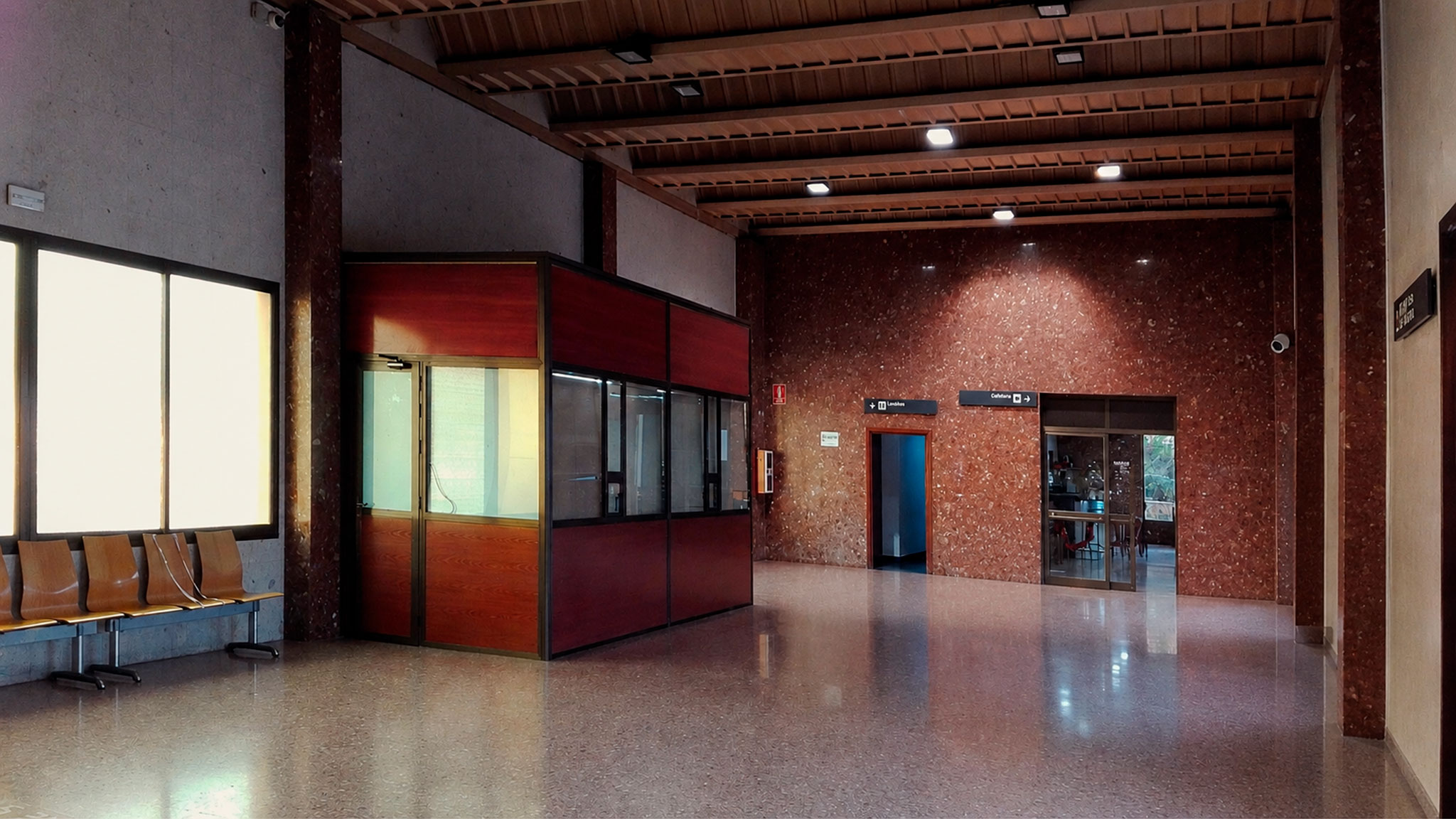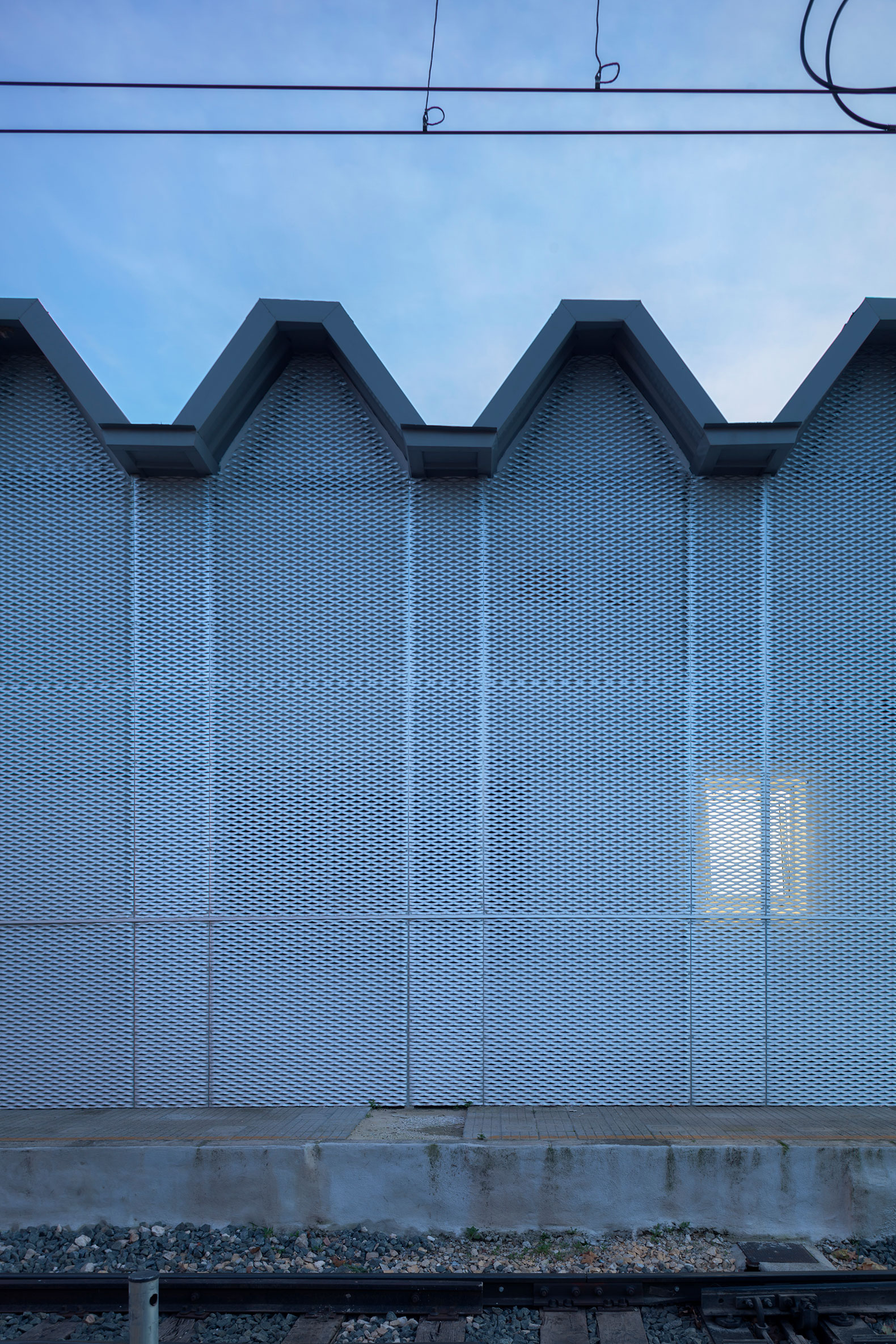
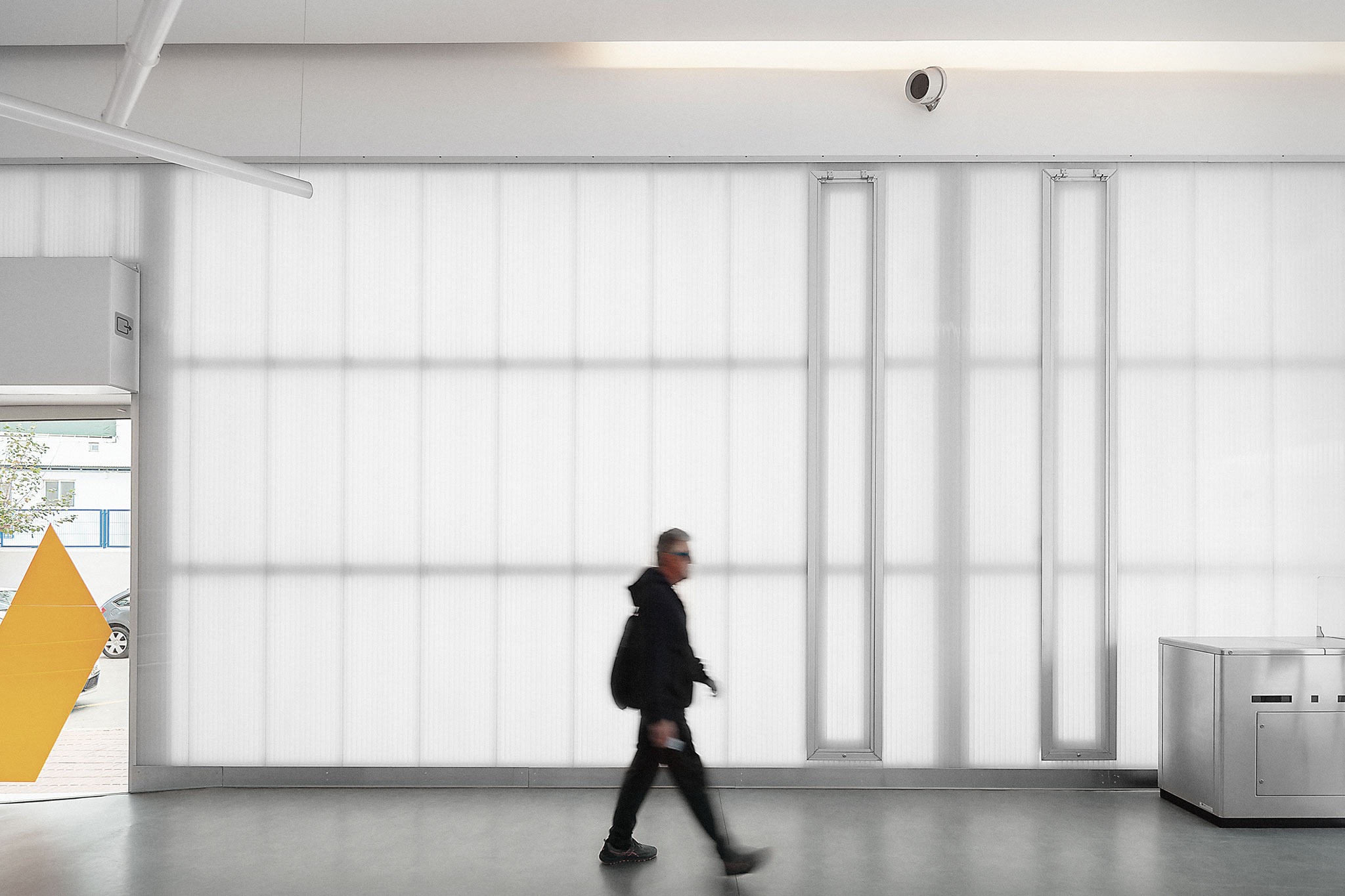
The new Benidorm station designed by Hulot resizes the facade openings to give prominence to the main entrance while preserving the existing roof. The interior layout features a hall that acts as a threshold between the platforms, the street, the cafeteria, and the waiting area.
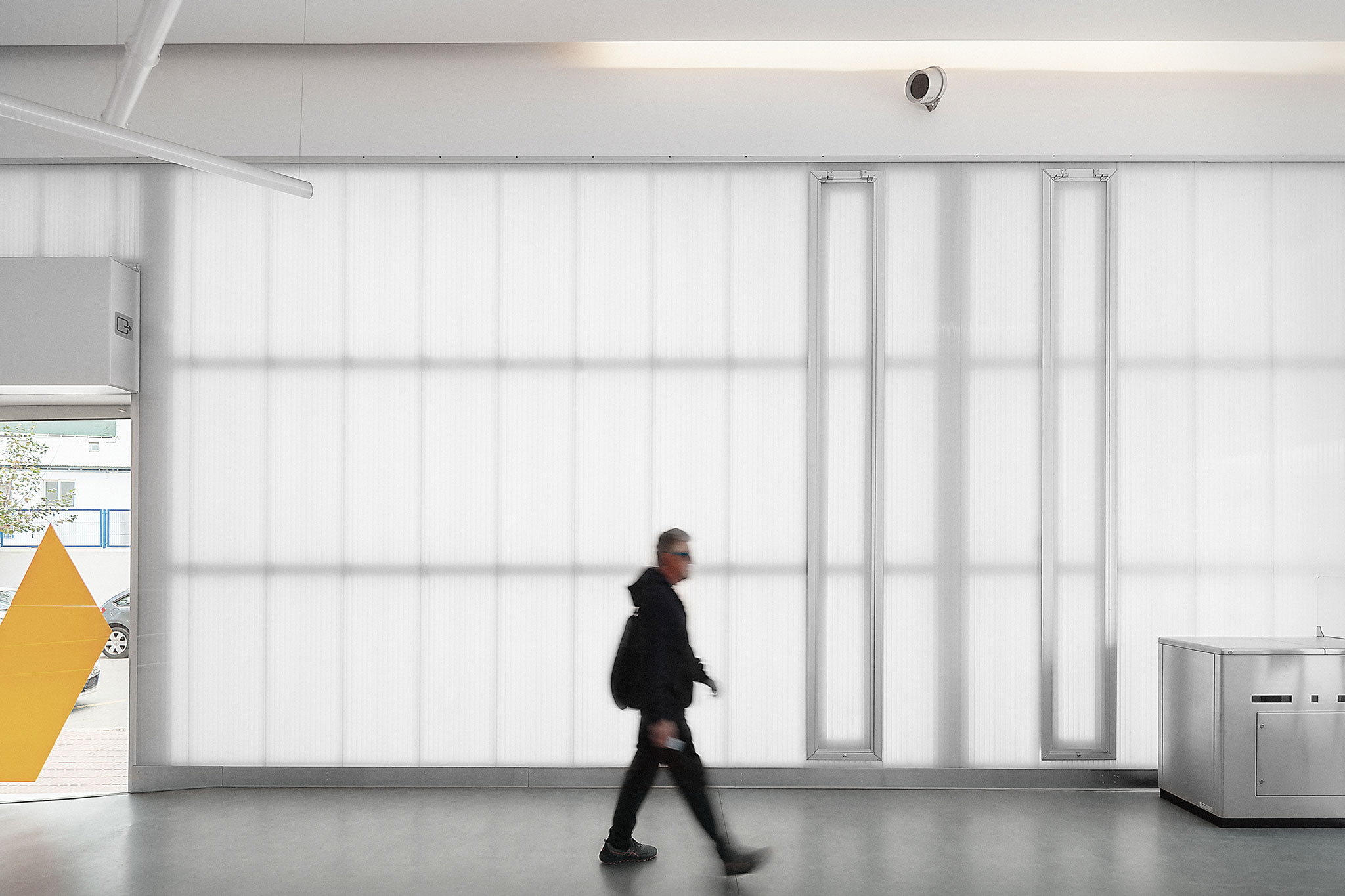
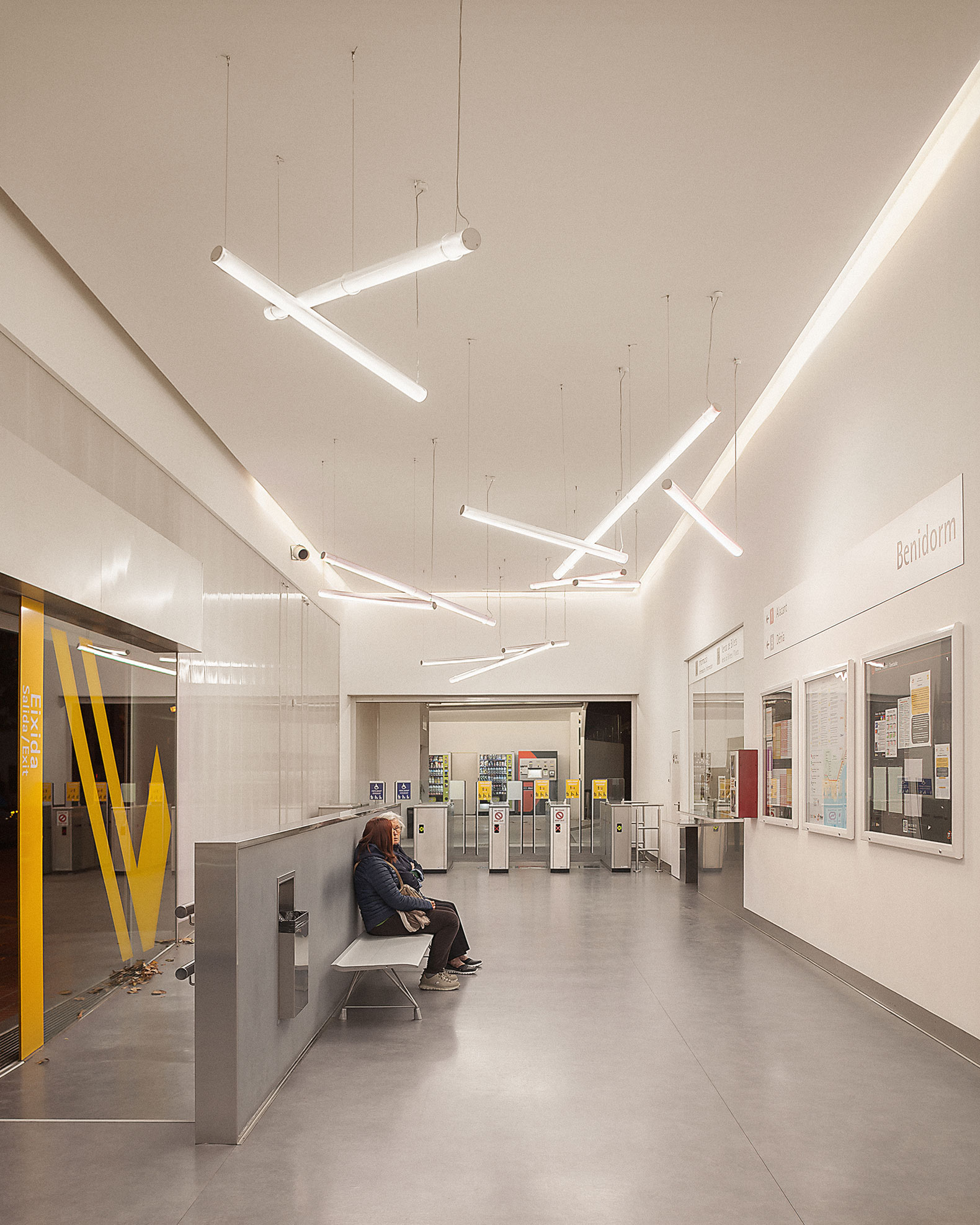
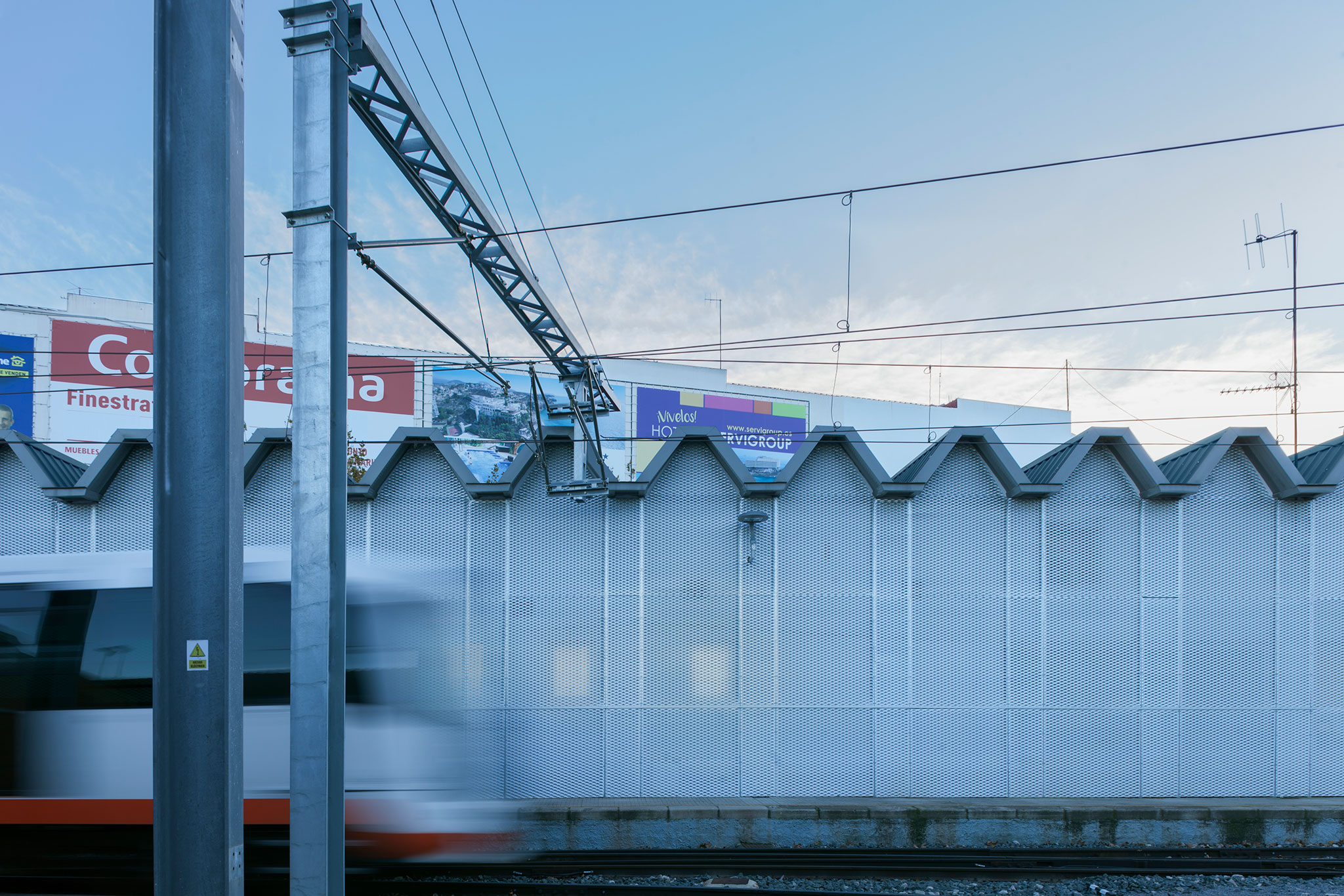
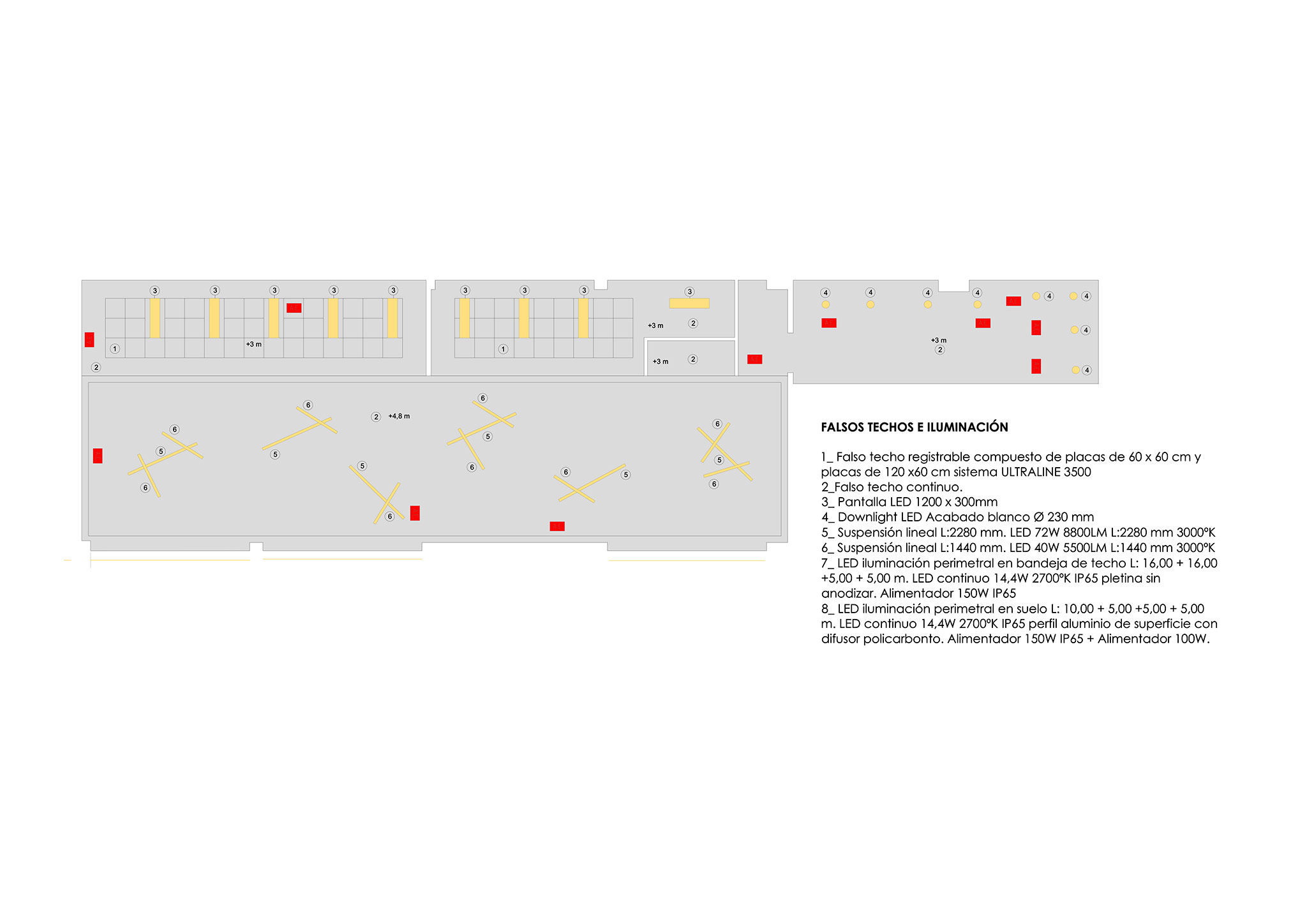
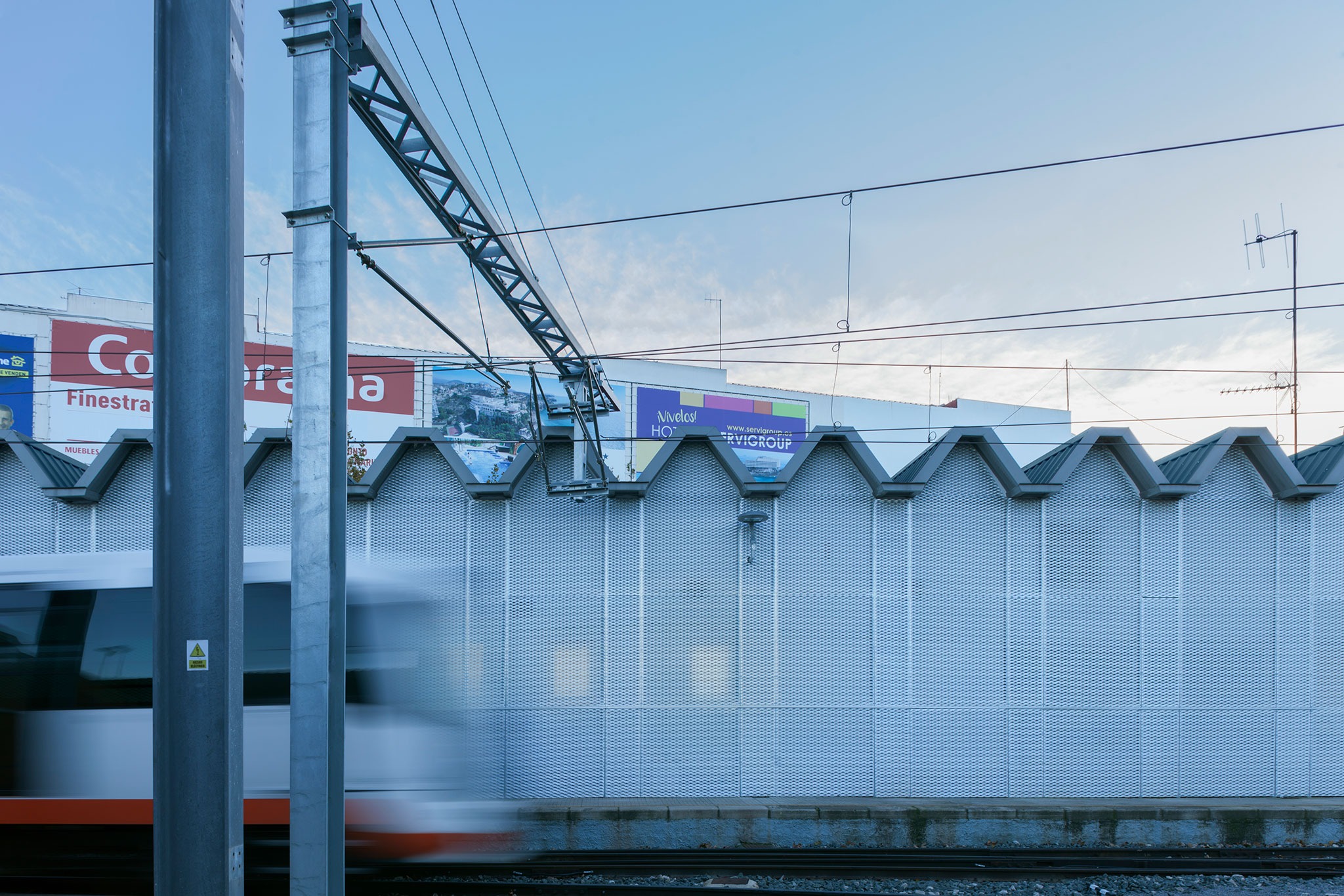
In terms of construction, brick was replaced with translucent polycarbonate panels, and the building is clad in perforated extruded aluminum sheeting. Furthermore, a grid of intersecting linear light fixtures defines the ceiling of the hall as a distinctive element of the space.
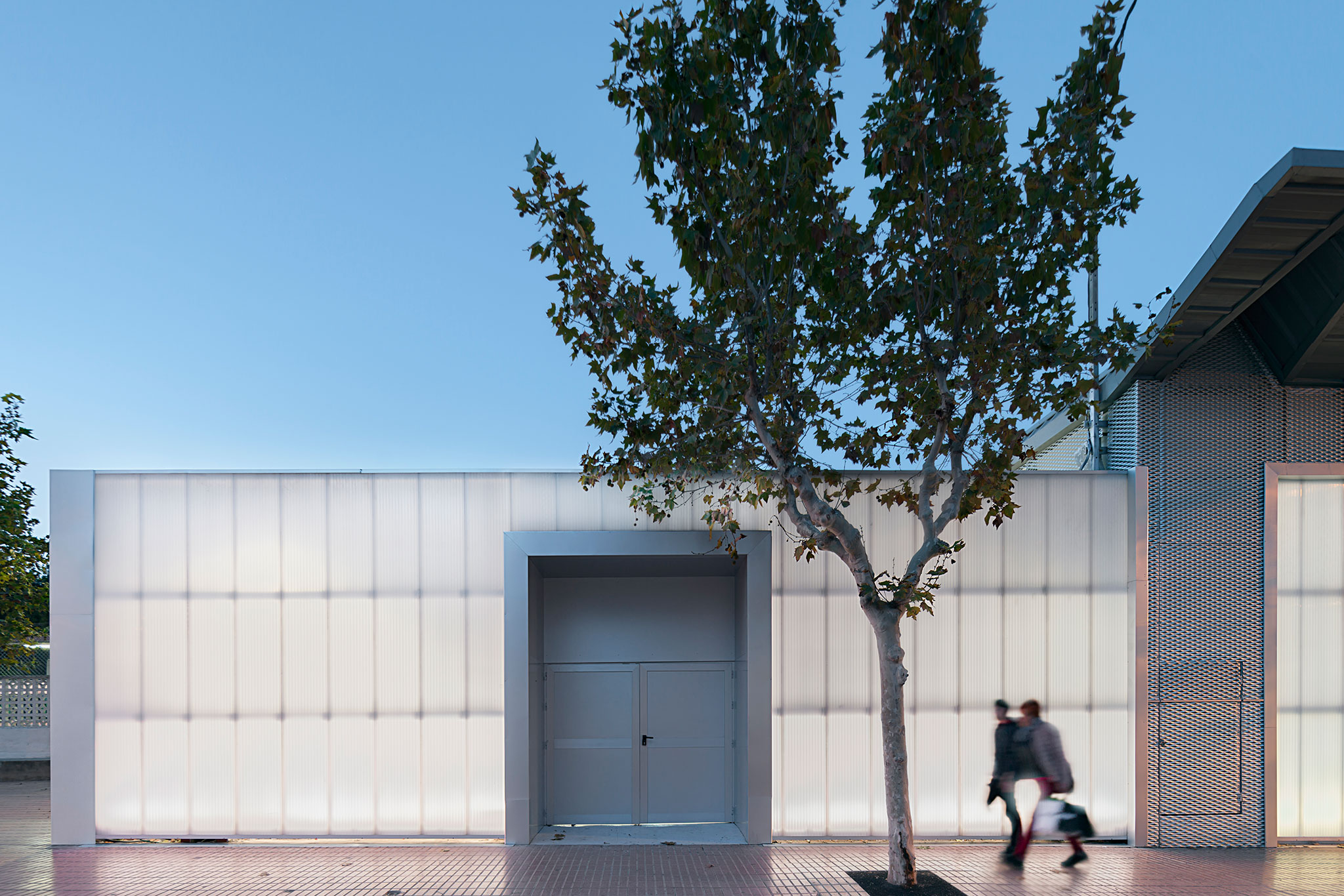
Benidorm Station by Hulot. Photograph by Milena Villalba.
Project description by Hulot
Some buildings exist to be passed through. Benidorm’s train station is one of them: a place of transit that nonetheless leaves an impression. Not that of a monument, but of a space made well — one that works, and that feels calm.
The original building, constructed in the 1960s, had the logic of an industrial shed: rectangular plan, metal frame, a presence that was functional but opaque in the city. The intervention by Hulot arch. studio did not aim to erase that condition, but to understand it. What is essential here? What can stay? What must change?
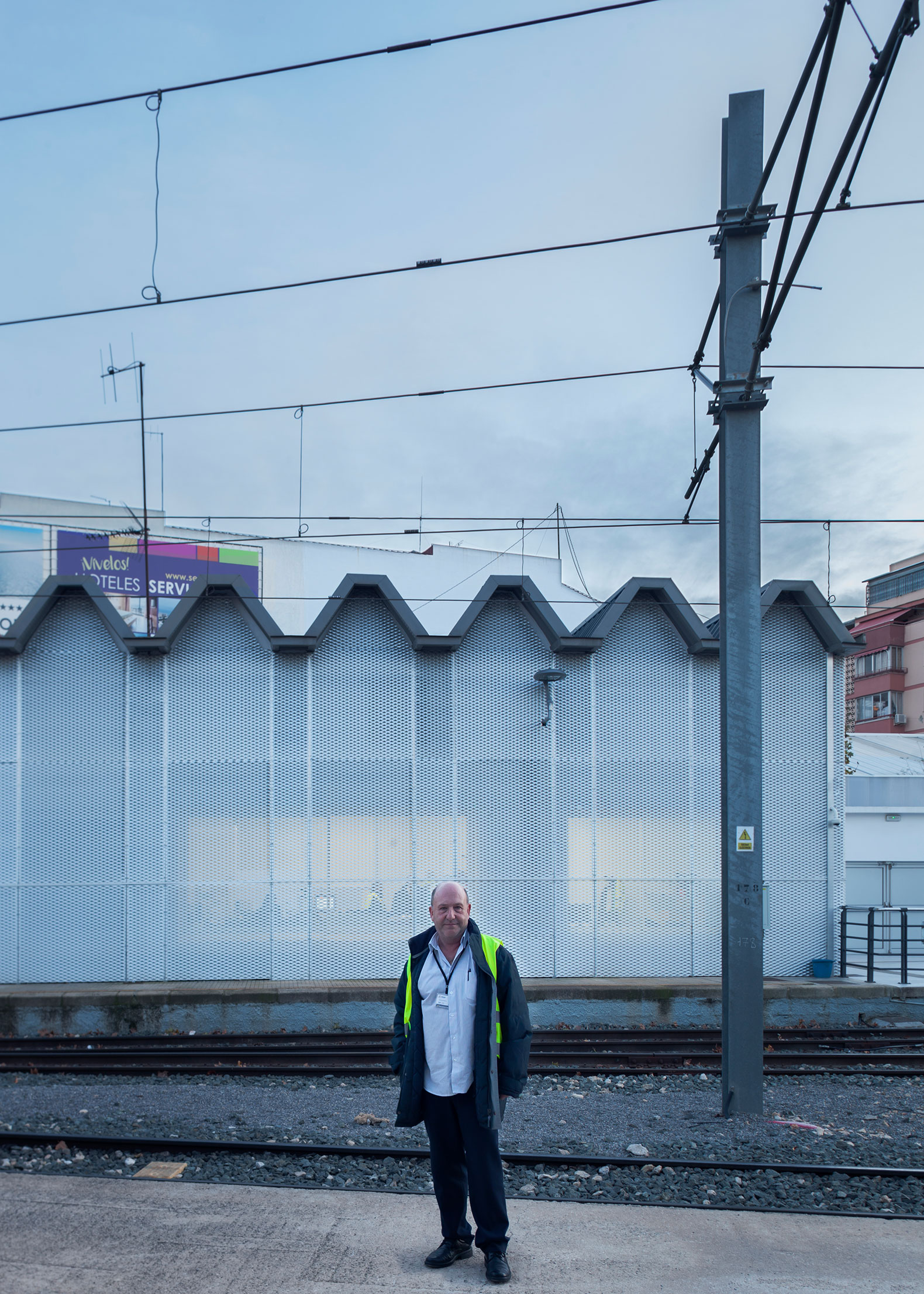
The roofline was kept. The façade openings were resized to give real prominence to the main entrance, which until then had dissolved into the rhythm of the enclosure. The brick was replaced with translucent polycarbonate panels that extend through to the platform canopy, unifying the reading of the building from street to track. The remaining volume is wrapped in perforated extruded aluminium sheeting, establishing a deliberate dialogue between opacity and lightness.
Inside, the hall operates as a threshold space connecting the platforms, the street, the café, and the waiting area. A grid of crossed linear luminaires defines the ceiling of this room, making the space as legible by night as by day.
The programme is organised with clarity between public and private. Everything is in its place. The station works, and you can feel it.
The project poses a simple question: can infrastructure architecture be, at the same time, rigorous and human? The answer, here, is yes.