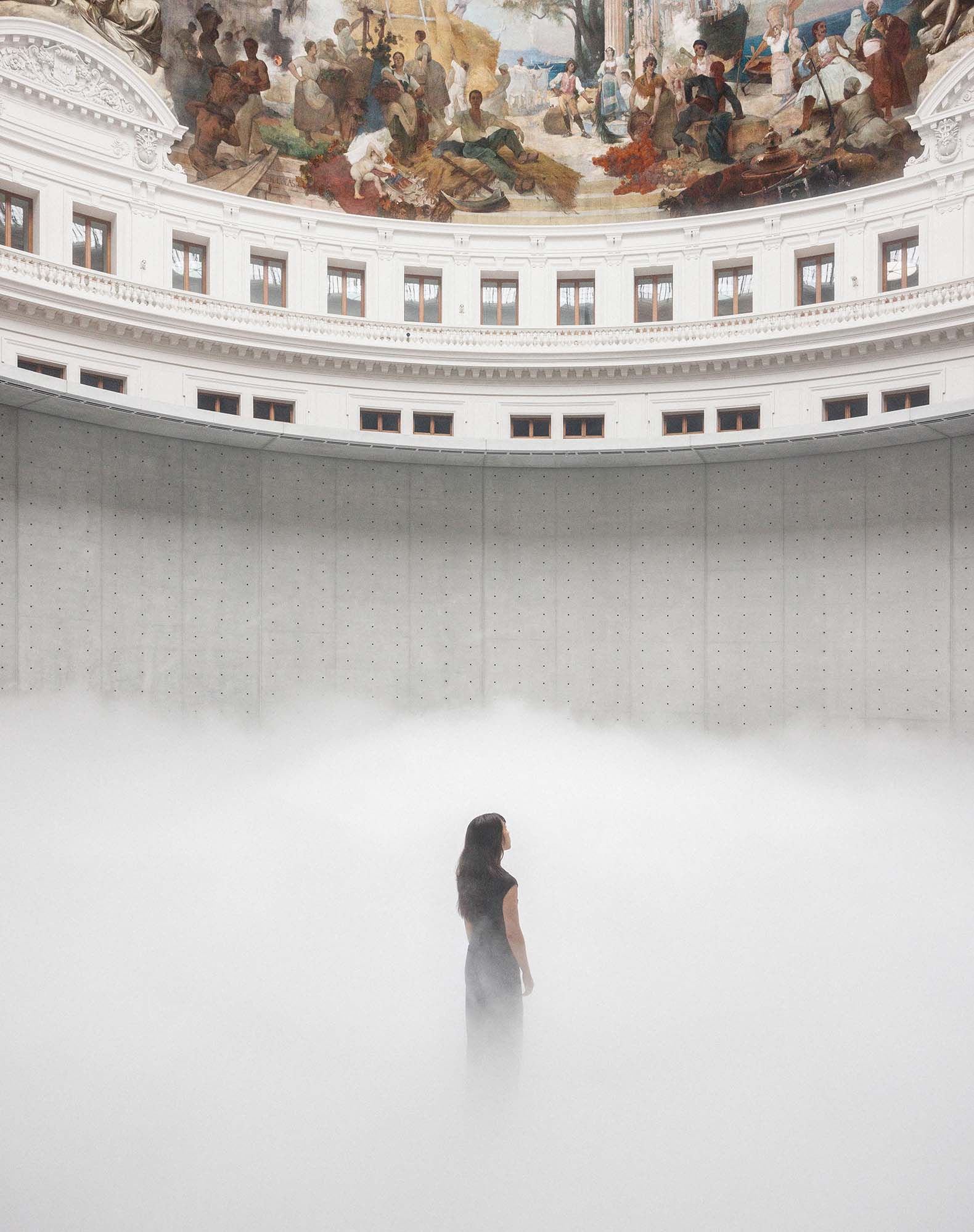
From June 4 to September 14, 2026, under the curatorship of Emma Lavigne, general curator and director of the Pinault Collection, and with the participation of Anne-Marie Duguet, art and media historian, Japanese artist Fujiko Nakaya takes over the Rotunda of the Bourse de Commerce to create a new work, specially designed for the exhibition "Clair-obscur." 

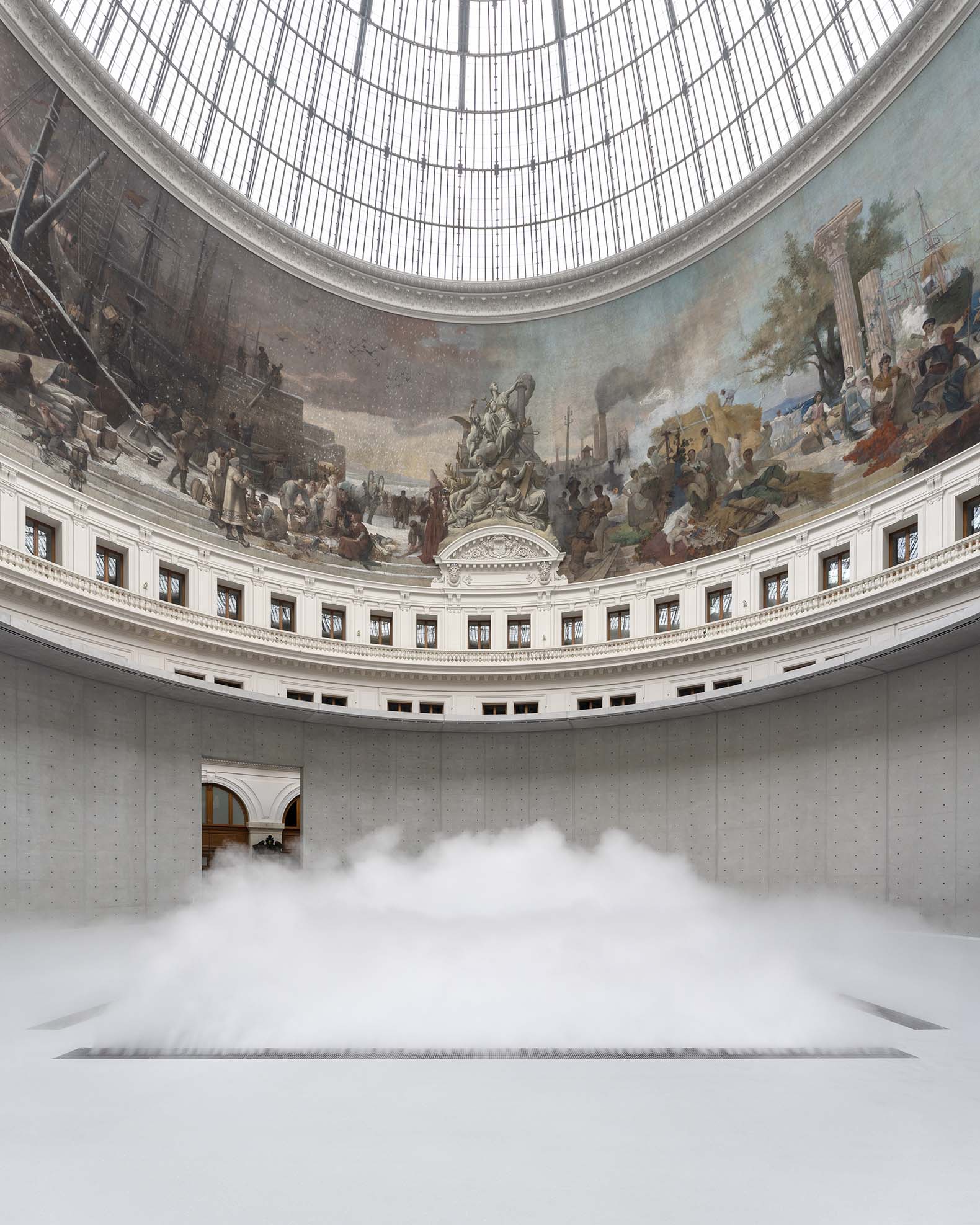
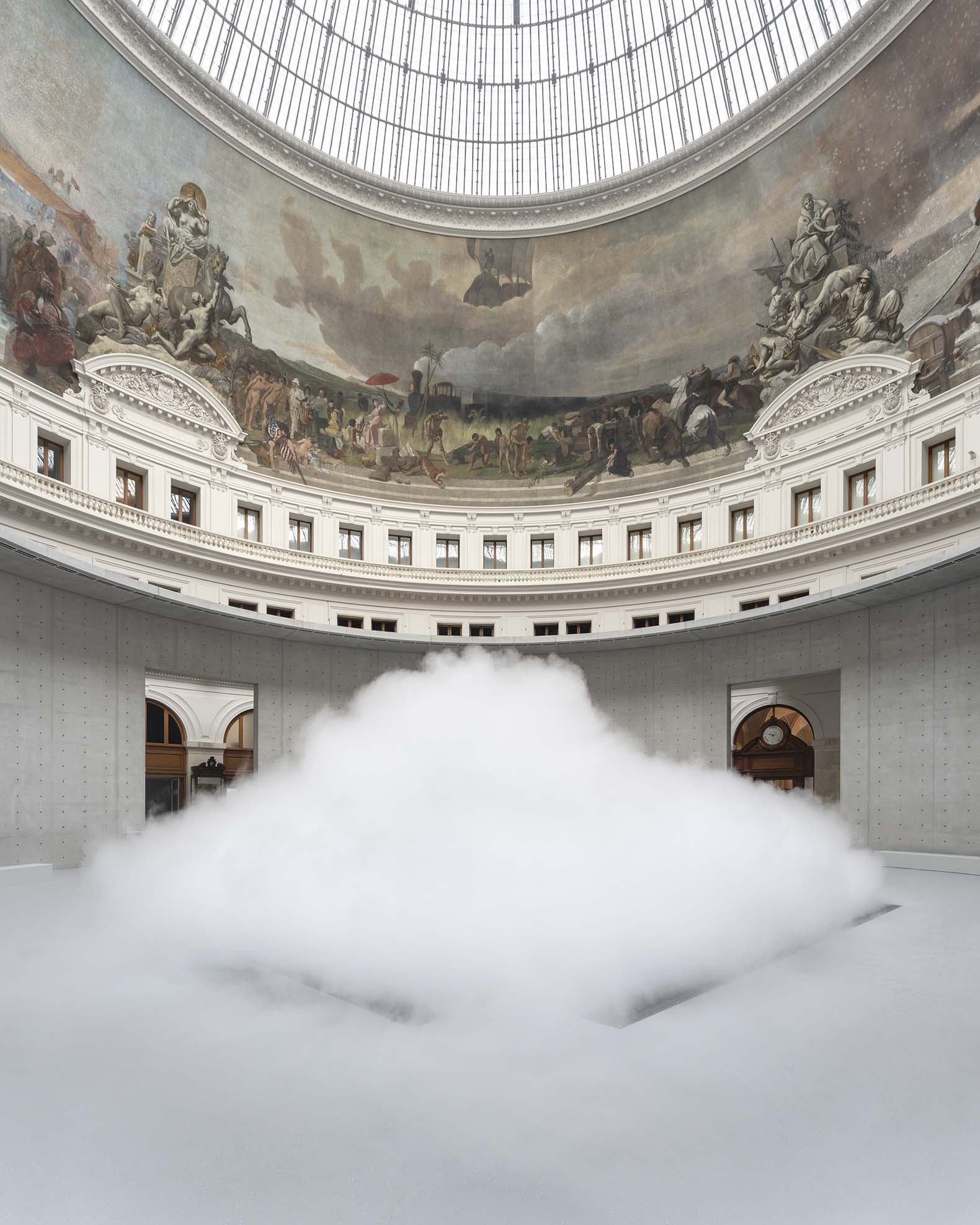
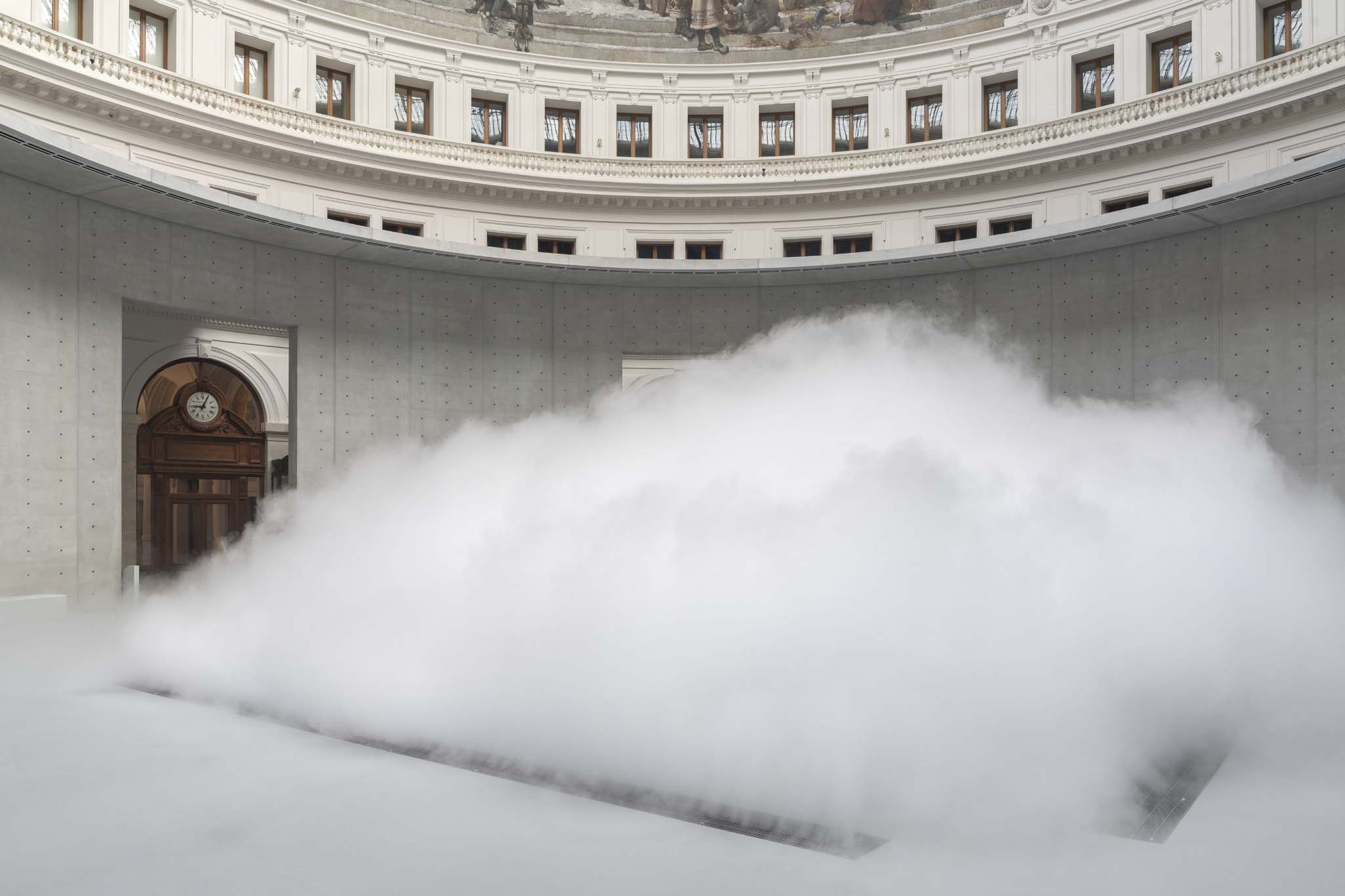
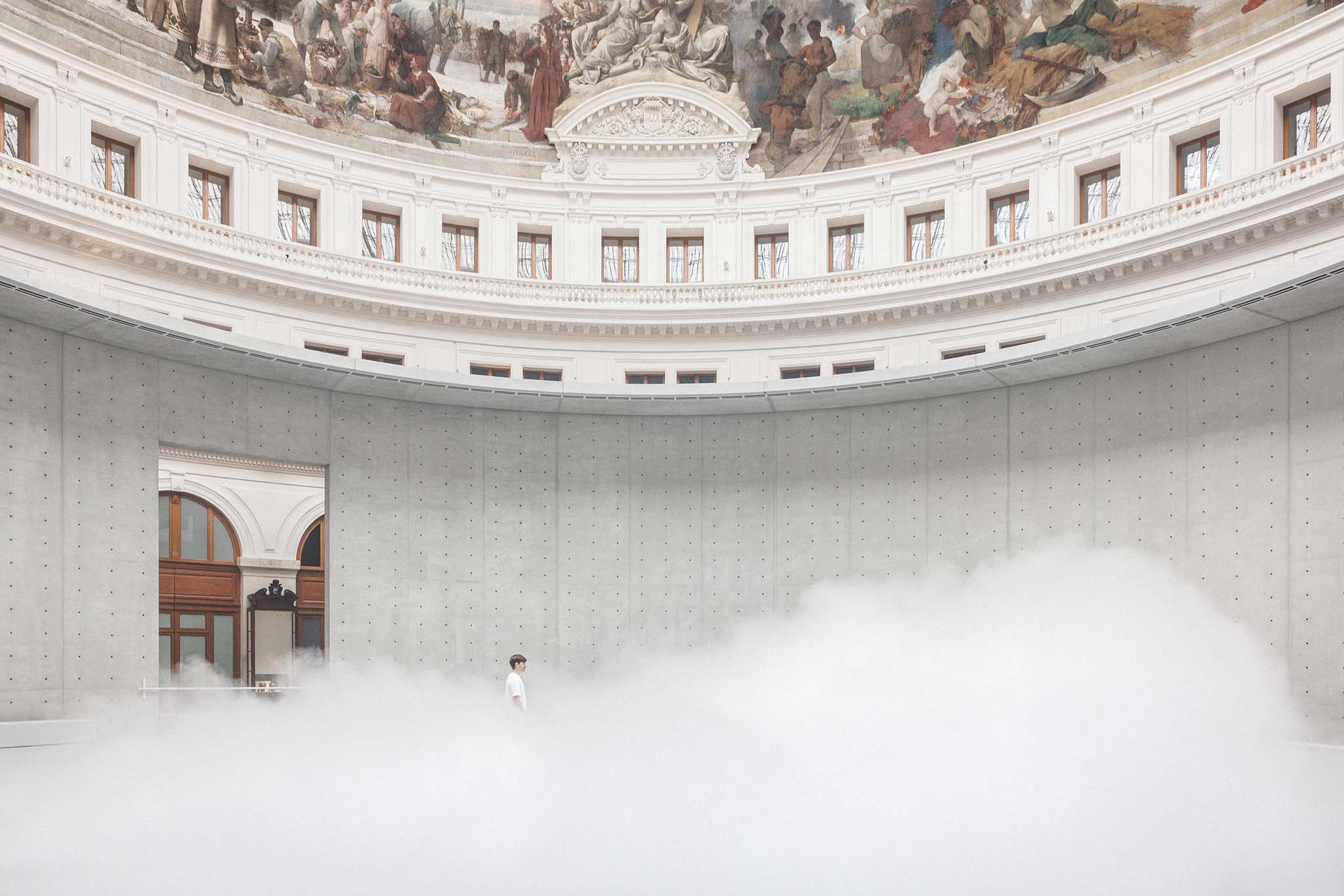
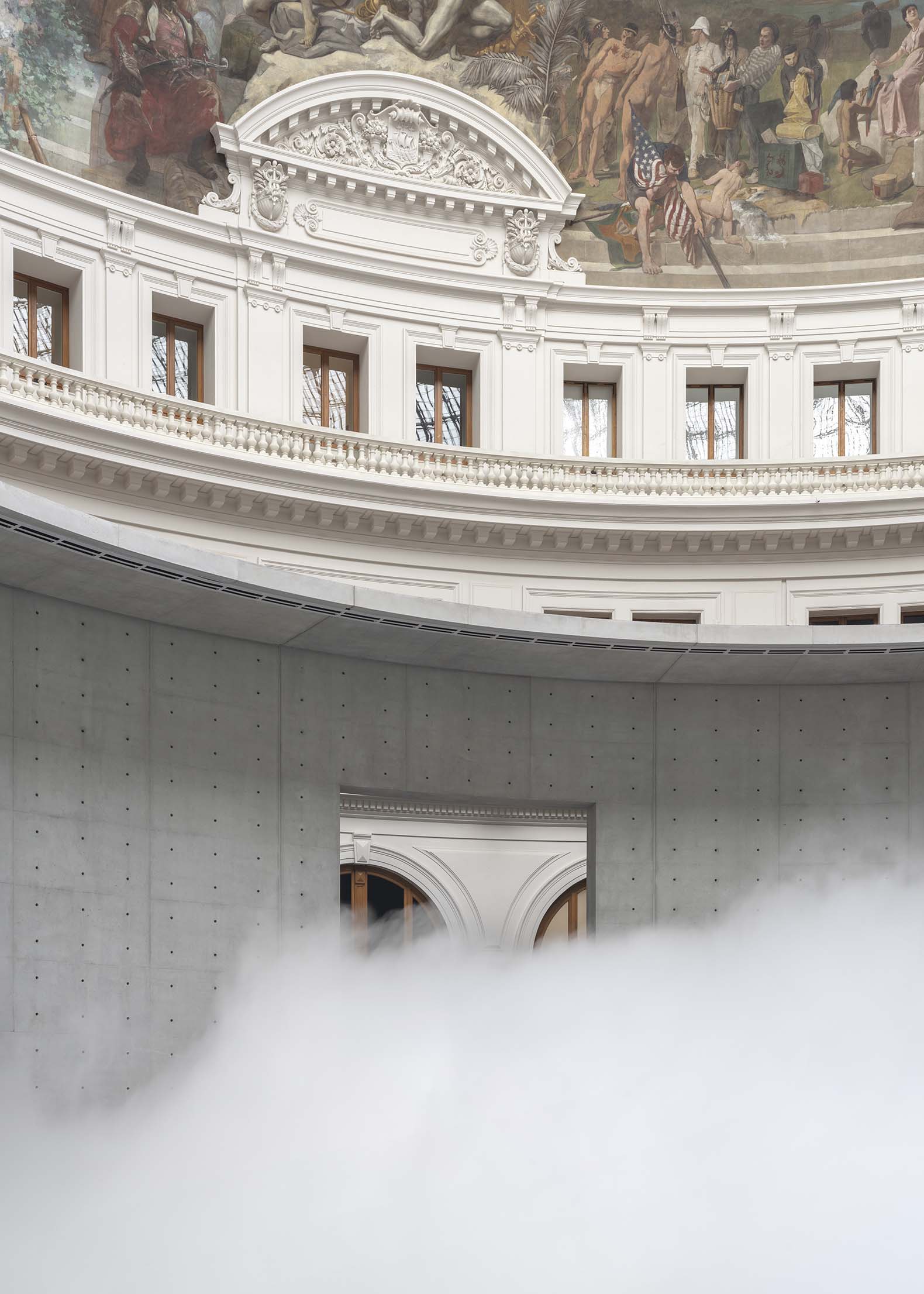
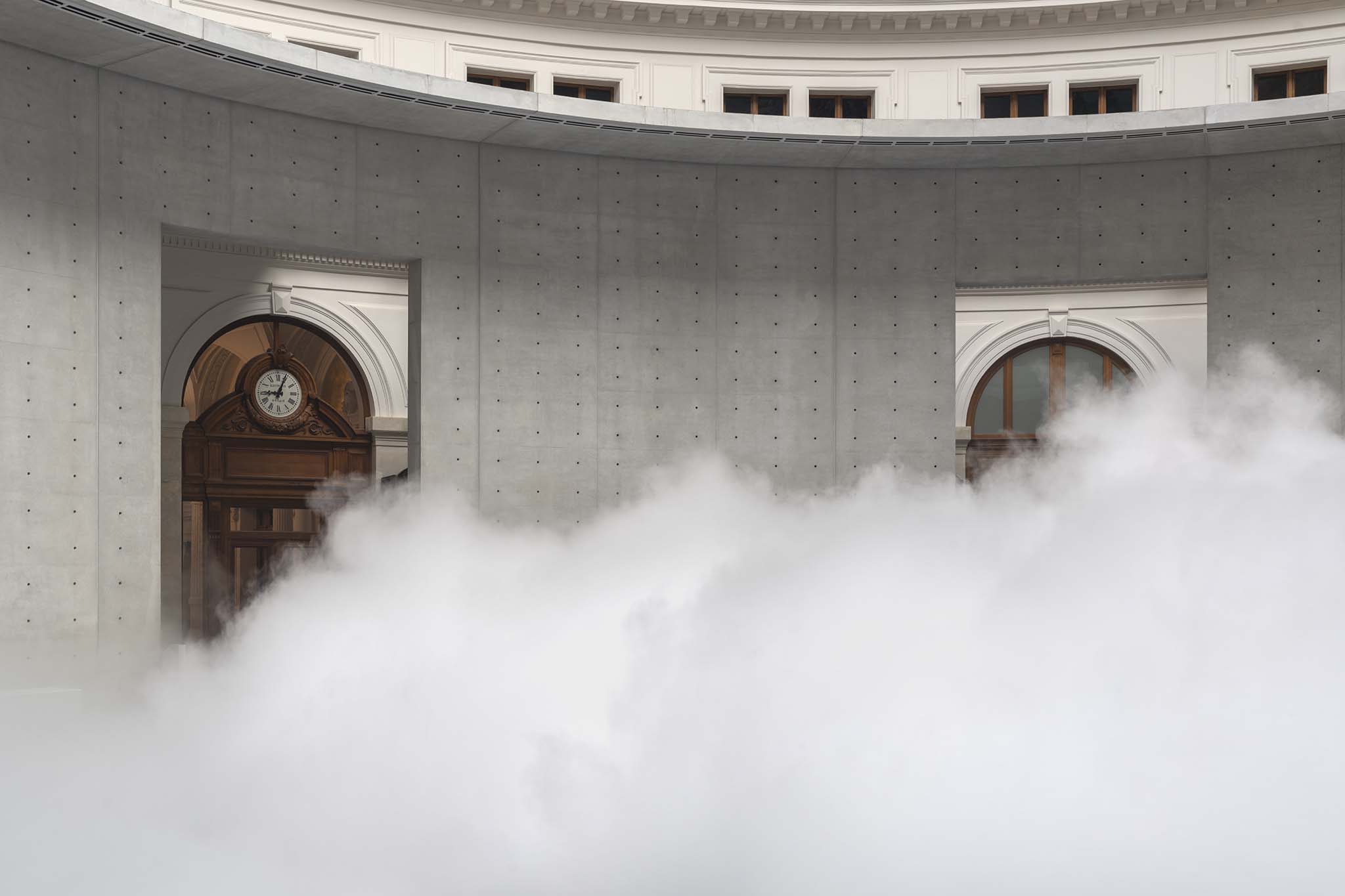
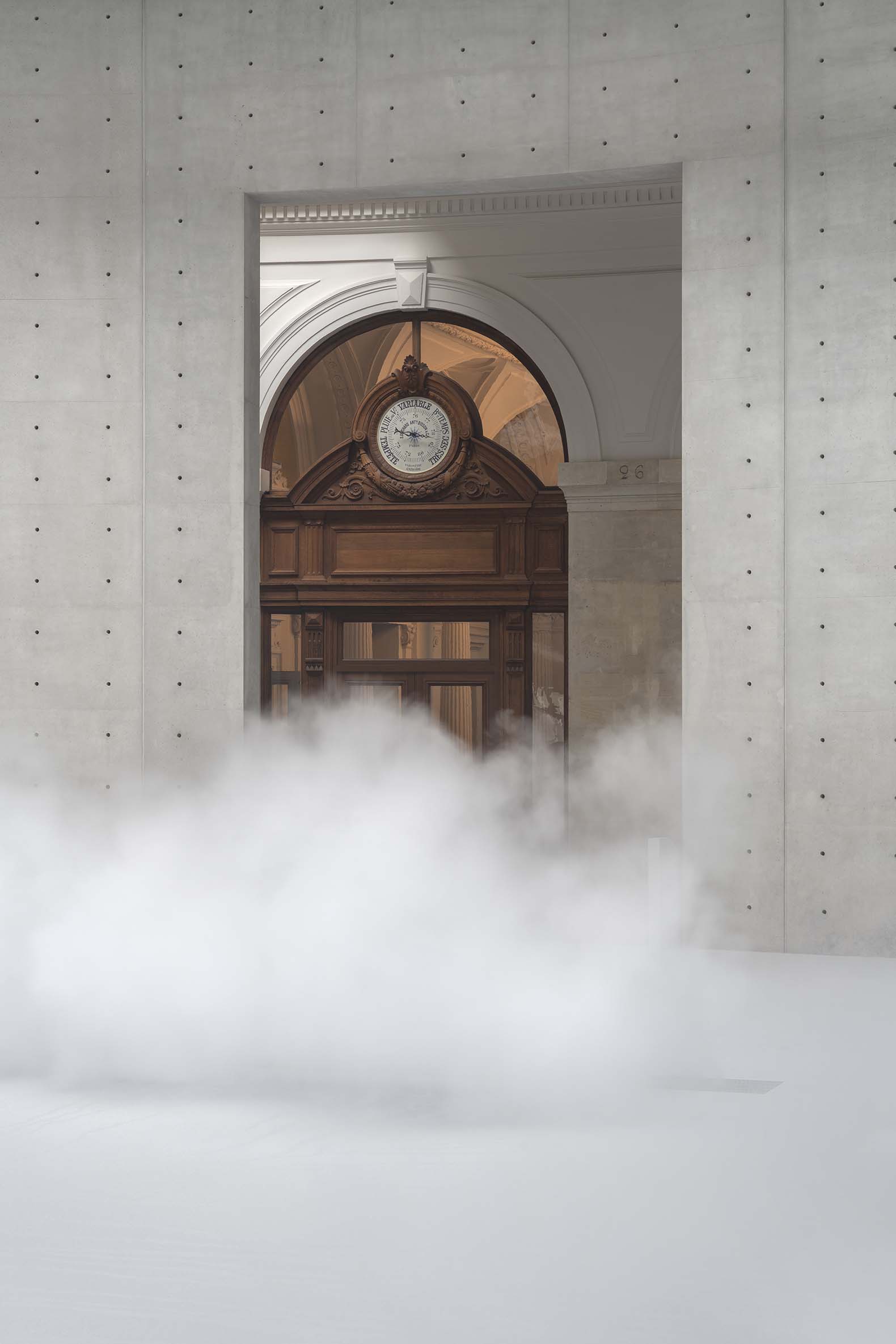
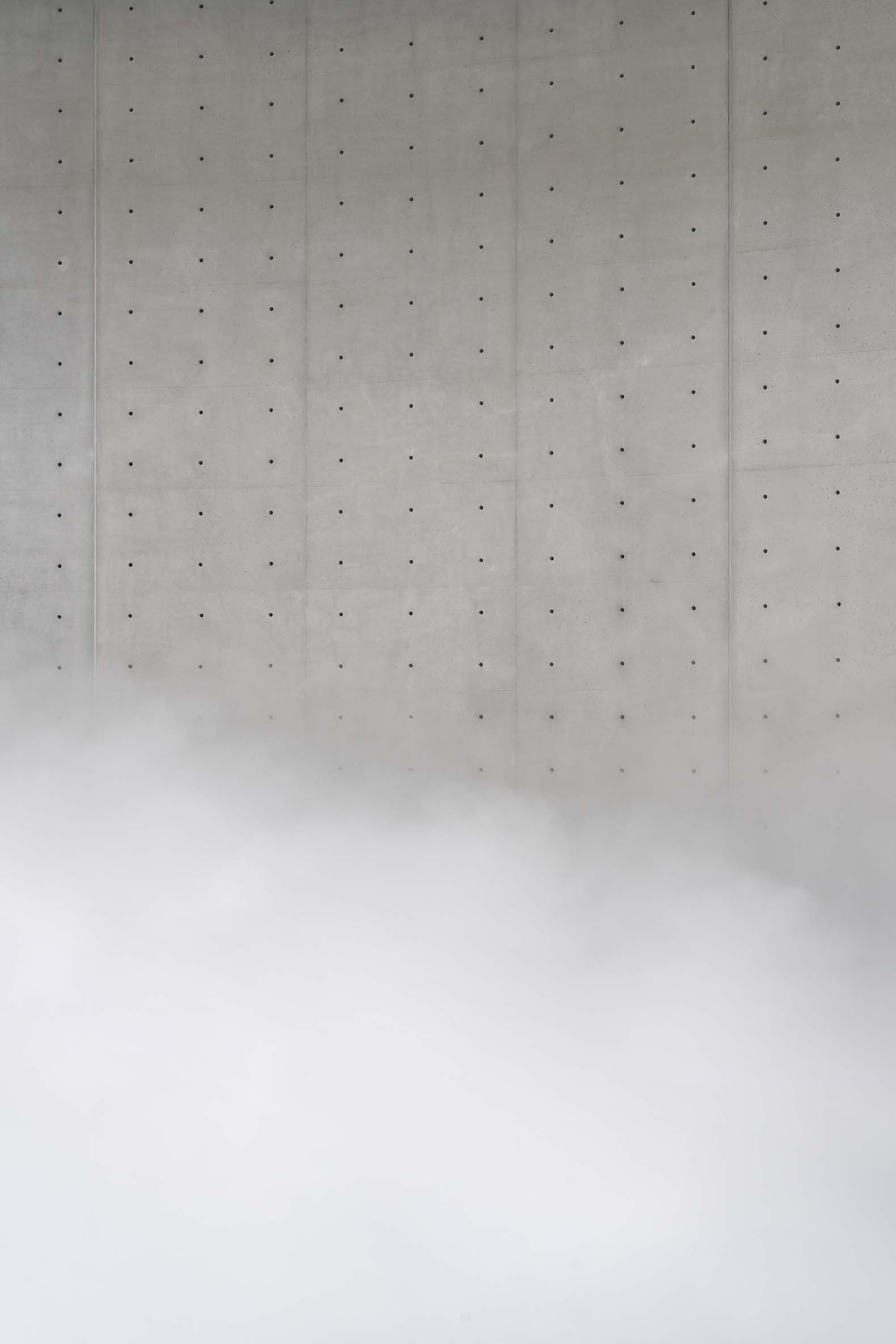
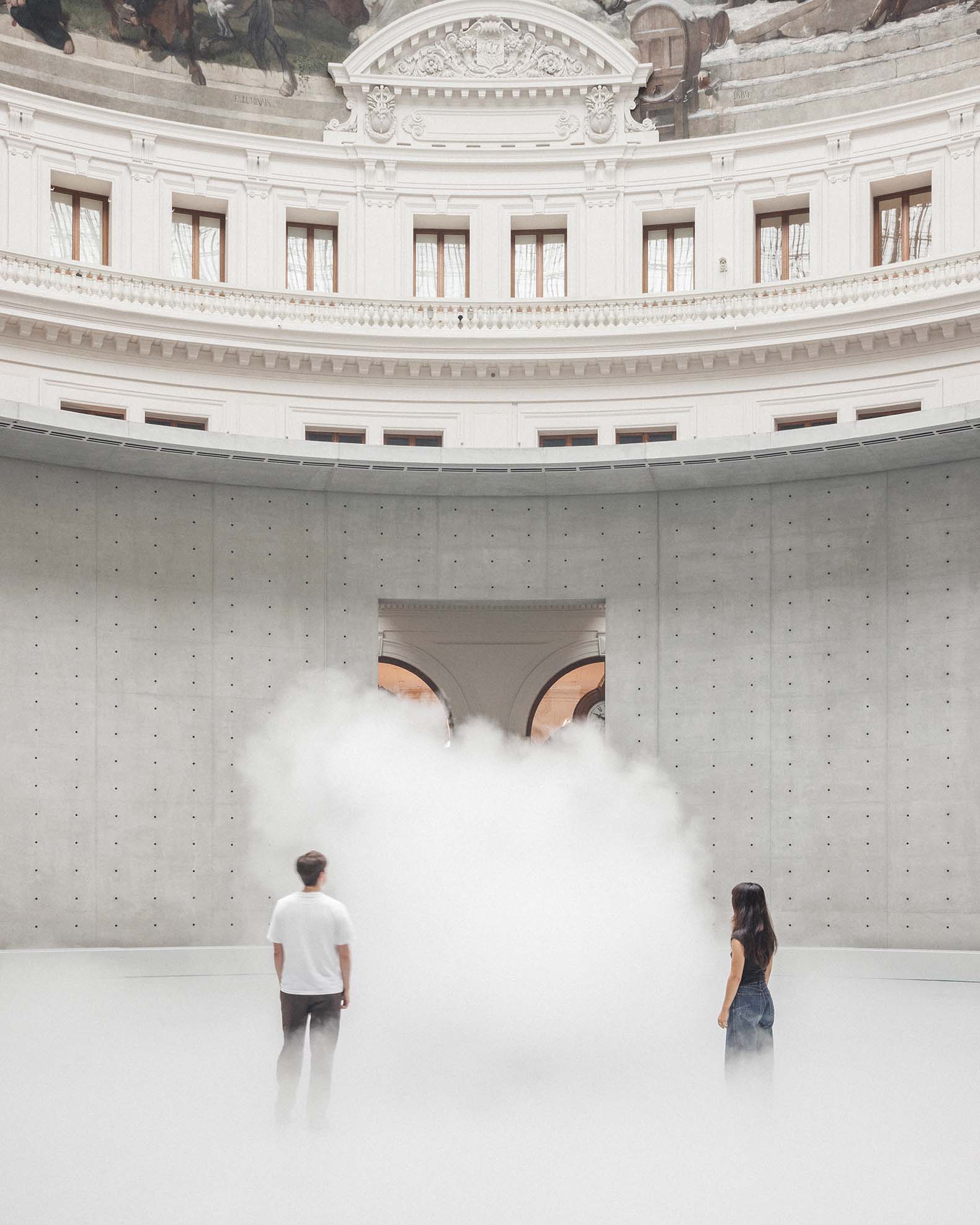
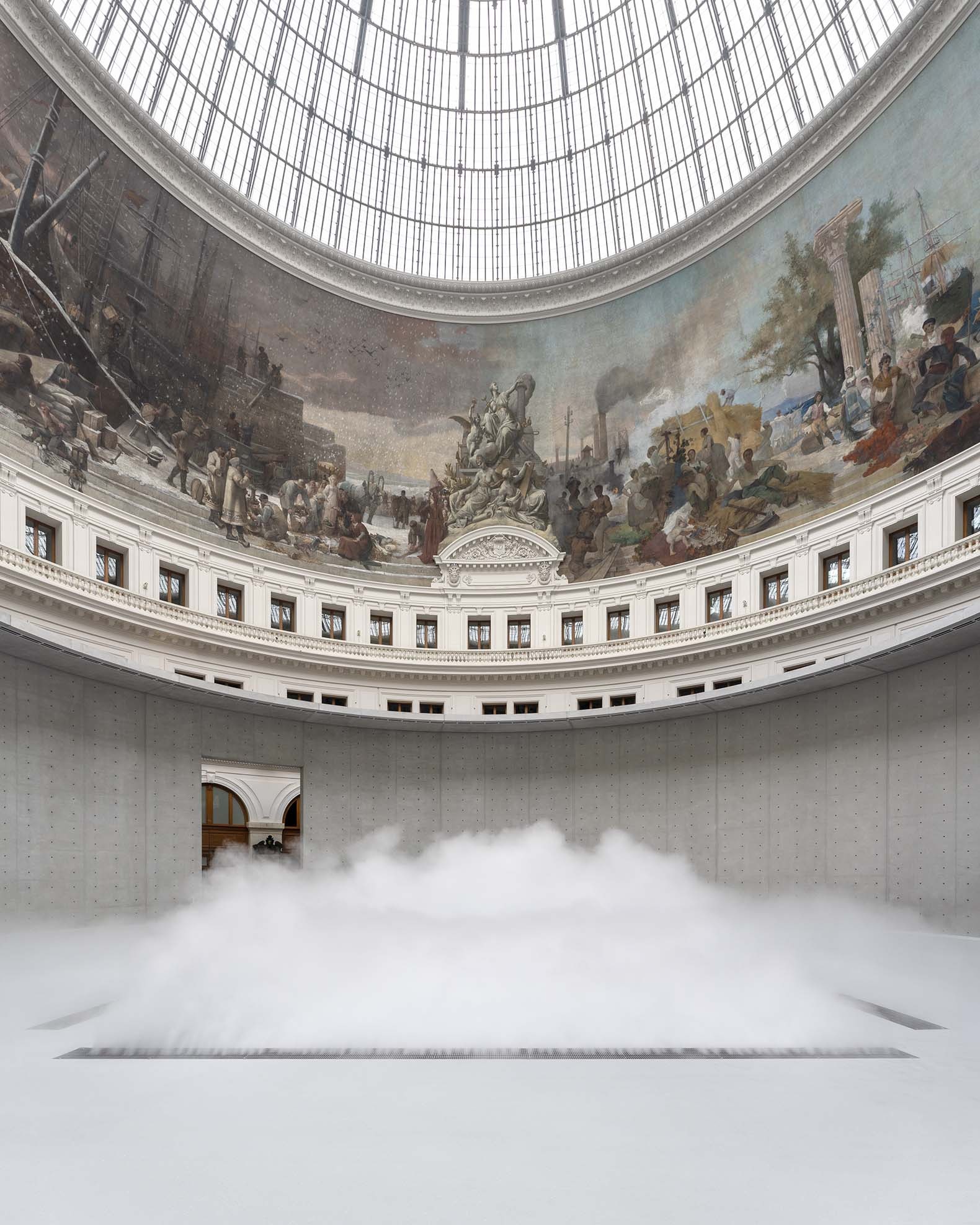
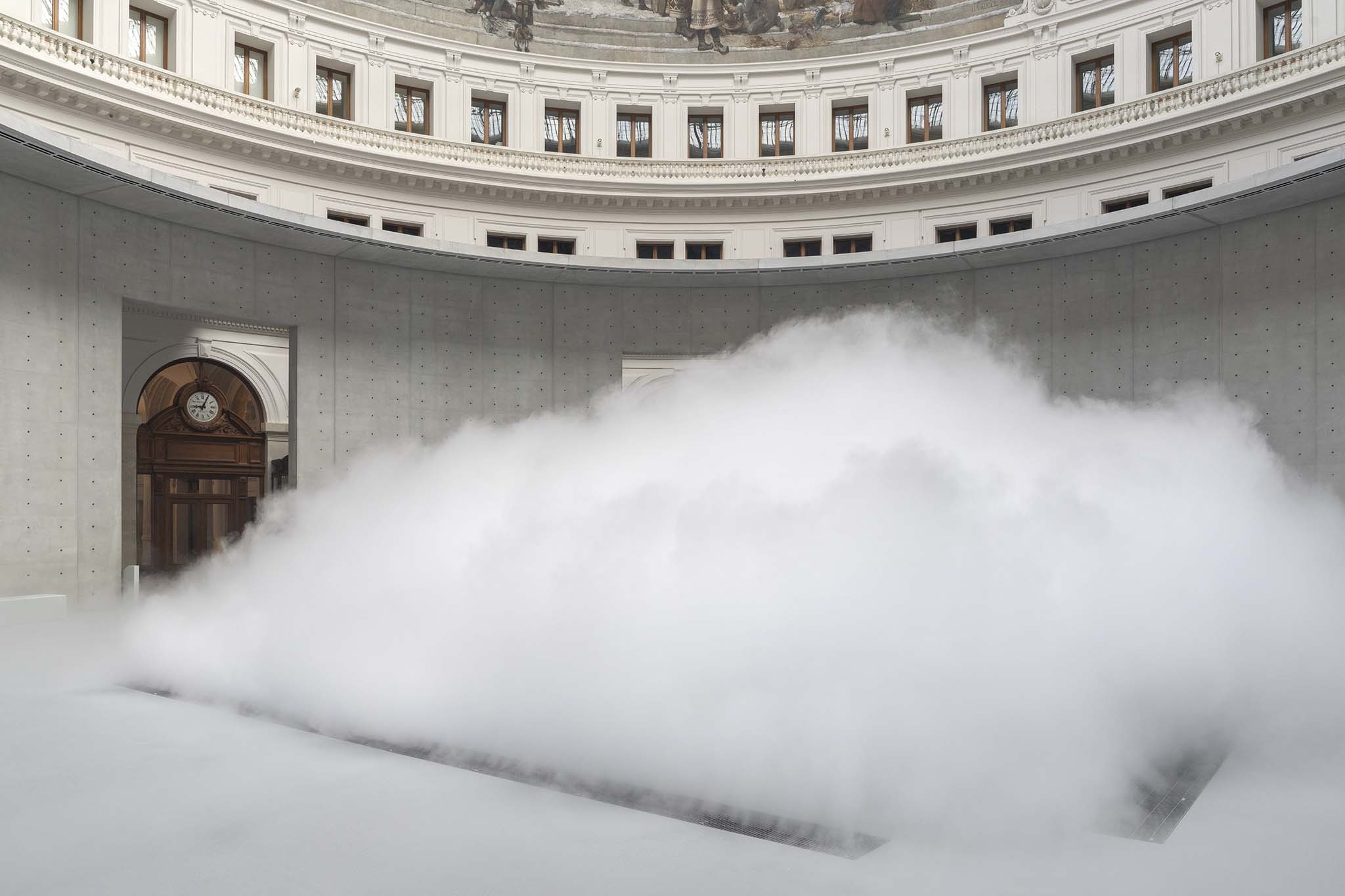
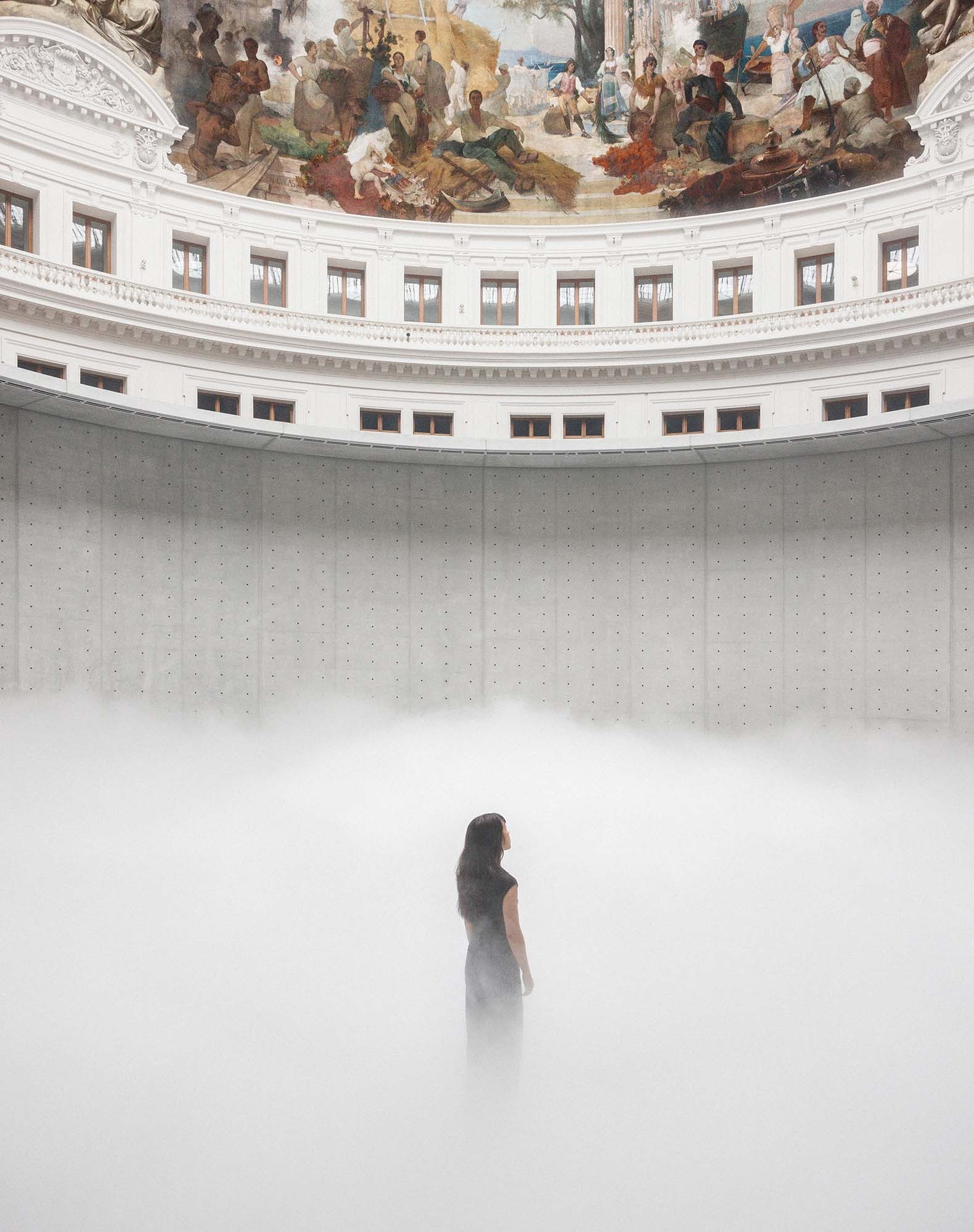
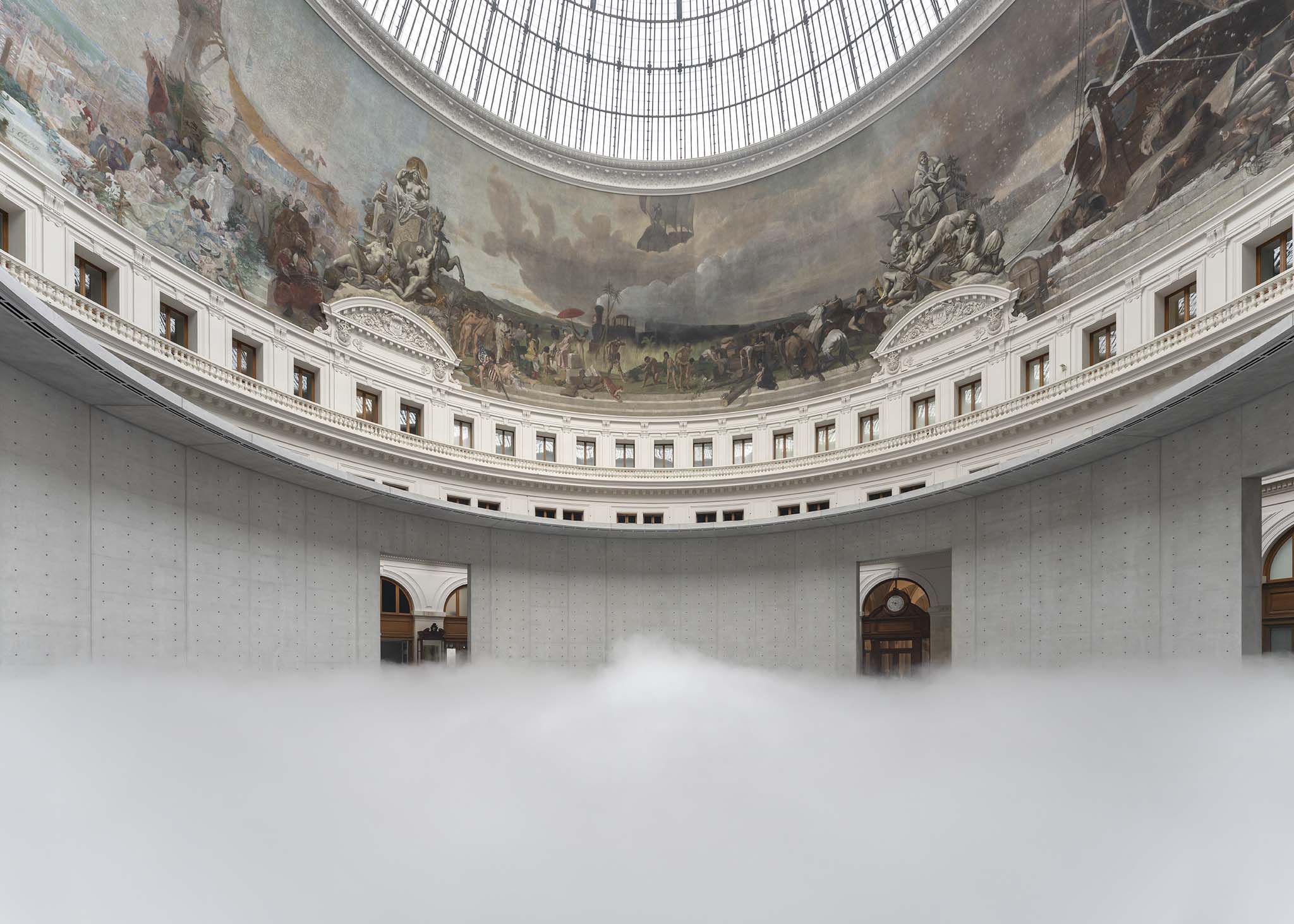
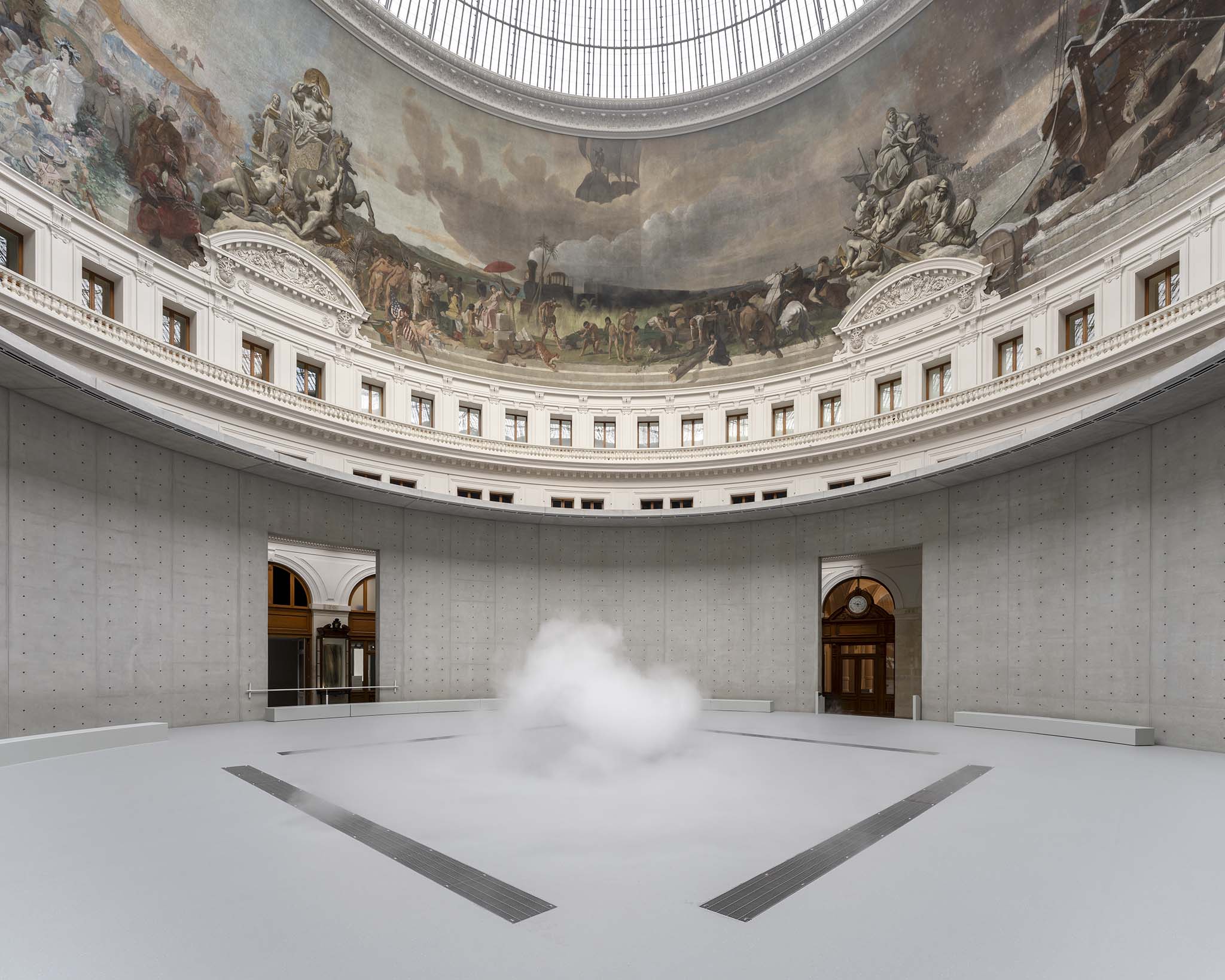
Titled Cloud #07156, this fog sculpture takes the form of a dense white cloud of water vapor that engages in dialogue with the architecture of Tadao Ando. Under the dome of the Rotunda's skylight, the artist presents one of her fog sculptures, shaped by changes in the air and the movement of visitors. 

The installation, with its uncertain contours and perpetual movement, resonates with the leitmotif of the "Fog" section presented in Gallery 6, which represents a deserted landscape, inhabited only by mists and mirages, where a form of the sublime endures: the abstract oscillations of Trisha Donnelly, the clouds of nuclear explosions of Bruce Conner, the hazy and evanescent map of Frank Bowling and the landscapes of Wolfgang Tillmans, suspended between shadow and light.

For Fujiko Nakaya, fog possesses the unique quality of rendering invisible what is normally visible—in this case, space itself—while simultaneously revealing what usually escapes our perception, such as the movement of air. Fog materializes space, affirming that it is not empty. The work also highlights architecture as an interval—the Japanese concept of ma—a space of relationship between beings and things where the question of emptiness is never raised, but rather space is designated as the zone of connection between the beings that inhabit the world.

Conceiving her work as a “conversation” with natural elements over which she has no control, particularly the wind, Nakaya artificially recreates the natural composition of fog using a system of pumps and nozzles that spray water in the form of microparticles. Thus, “Cloud #07156,” created specifically for the Rotunda, forms part of the legacy of this project. To create the fog, Nakaya employs high-pressure pumps and diffusers. Pressurized water is released through a small hole in the nozzle and strikes a needle positioned above it. The water fragments into droplets twenty to thirty microns in diameter, the same size as those that make up natural fog.

Nube #07156 por Fujiko Nakaya. Fotografía por 11h45.
Cloud #07156 by Fujiko Nakaya. Photograph by 11h45.

Fujiko Nakaya states that her fog sculptures could also be described as "atmospheric sculptures." Comparing her works to "conversations with the wind," the artist conceives of her work as a dialogue between the fog she creates and the conditions of its exhibition: the wind outside, the air circulation, and the movement of the public inside. She conceives of the work not as an object, but as a changing experience that reflects the impact of time and space on the sculpture.

Generally installed outdoors, these "fog sculptures" have been adapted by the artist for museum spaces on several occasions. This precise anchoring in space is evident in the title of the work, Cloud No. 07156.

Fujiko Nakaya's work also engages in dialogue with Tadao Ando's concrete cylinder. Ando, ​​too, considers his work as "the search for a state in which architecture and nature coexist, while simultaneously clashing violently." By conceiving of architecture as the creation of place, Tadao Ando seeks "to create structures where the transience of nature and the passage of time are transformed into a personal experience of space." The wall he has erected within becomes a stage for the sun's passage through the Rotunda, its changing light bearing witness to the arrival of summer in the building. His cylinder, which in a way forms an oculus, both conceals and reveals the architecture that precedes it. By allowing a natural phenomenon to erupt within a man-made structure, Nakaya's mist sculpture highlights the fundamental qualities of Tadao Ando's design.
Nube #07156 por Fujiko Nakaya. Fotografía por 11h45.
Cloud #07156 by Fujiko Nakaya. Photograph by 11h45.

“Always starting from an existing context, the artist has created an exceptional encounter between fog and Tadao Ando’s Rotunda, in an interior space. Fujiko Nakaya doesn’t represent fog, she sculpts it. This surprising material is a natural phenomenon that she produces with the help of a complex system of high-pressure pumps and rows of pipes that emit microdroplets of water identical to those of fog. Natural in composition and development, it is artificially produced by the artist. When she abandoned painting in the mid-1960s, it was to embark, years later, on a series of ambitious experiments: the large-scale production of fog, now in a space other than her studio.

The Rotunda of the Stock Exchange is a dizzying space whose two upper levels are occupied by a panoramic brown period canvas, crowned by a dome.” On the ground, at the center, the concrete cylinder by Japanese architect Tadao Ando doubles the circularity of the building, remaining open to all possible viewpoints, both around and within the work. The fog, the primary object of the gaze, can thus serve to block the view, albeit temporarily, acting as a kind of anti-panopticon capable of obscuring observation, permanently challenging it through ephemeral and partial transparencies. The question is no longer that of the viewpoint—whether single or multiple—but that of visibility. From a first-floor balcony, an elevated panoramic view allows visitors to contemplate a sea of ​​fog. Sculpting within the museum also allows for an inner journey.”

Anne-Marie Duguet, Arts and Media Historian.
Nube #07156 por Fujiko Nakaya. Fotografía por 11h45.
Cloud #07156 by Fujiko Nakaya. Photograph by 11h45.

“Fujiko Nakaya's sculptures invade clearings, public spaces, riverbeds, forests, valleys, museums, and art centers with their shifting mass. They overflow, flooding and absorbing these spaces in a mist carefully arranged by the artist and heavily reinforced with automated and digitized pipes, pumps, and valves. 

Each appearance of the artwork involves detailed observation of the site's weather conditions: humidity levels, wind direction and strength (or air currents), atmospheric temperature, and the density of human presence all influence the behavior of the propelled water particles (each artwork is titled with the code of the nearest weather station). 

Each appearance of the Mist Sculptures offers anyone who "visits the exhibition" more than a (constantly deceived) glance, but rather an experience: losing oneself in an incessant generation of forms that cancel one another out, moving blindly within an unpredictable sequence of varying degrees of opacity. 

When she presented her first fog sculptures in Osaka in 1970, Nakaya was not alone in exploring the indeterminate and unstable nature of forms. But there was nothing obvious about her radical take on an excursion beyond the frame. For the most demanding of modern artists, being modern was not simply about emancipating oneself from representation, but about confining oneself to the dimensions of the painting or the wall, limiting to its surface the interaction of the processes that constitute the work.”

Patricia Falguières, Professor of Art History and Theory at the School for Advanced Studies in the Social Sciences (EHESS), Paris.
More information

Label
Exhibition
Text

Cloud #07156 / Clair-obscur.

+ + copy Created with Sketch.
- + copy Created with Sketch.
Label
Artist
+ + copy Created with Sketch.
- + copy Created with Sketch.
Label
Curator
Text

Emma Lavigne.

+ + copy Created with Sketch.
- + copy Created with Sketch.
Label
Organization
Text

Bourse de Commerce - Pinault Collection.

+ + copy Created with Sketch.
- + copy Created with Sketch.
Label
Dates
Text

June 4 - September 14, 2026.

+ + copy Created with Sketch.
- + copy Created with Sketch.
Label
Schedules
Text

Open Monday to Sunday from 11 a.m. to 7 p.m.
Late opening on Fridays until 9 p.m.
Closed on Tuesdays and on May 1st.
Free late opening on the first Saturday of every month, from 5 p.m. to 9 p.m.

+ + copy Created with Sketch.
- + copy Created with Sketch.
Label
Location
Text

2, rue de Viarmes, 75001 Paris, France.

+ + copy Created with Sketch.
- + copy Created with Sketch.
Label
Photography
Text

Fujiko Nakaya - 11h45.

+ + copy Created with Sketch.
- + copy Created with Sketch.

Fujiko Nakaya was born in Sapporo, Japan, in 1933. Her father, Ukichiro Nakaya, a physicist credited with creating the first artificial snowflakes, influenced her work, and as a young art student she became interested in working with cloud-like forms. Although her work has been primarily based in Japan, Nakaya studied at Northwestern University in Evanston, Illinois, from 1954 to 1957, and later became an instrumental figure in the rise of video art in Japan.

In the late 1960s, Nakaya became involved with the activities of Experiments in Art and Technology (E.A.T.), the organization founded by Robert Rauschenberg and Billy Klüver. She participated unofficially as a performer in Deborah Hay’s Solo in 1966, and officially joined E.A.T. in 1969 as the Japanese coordinator for the Pepsi Pavilion project at Osaka’s EXPO ’70. As part of the pavilion’s multisensory expanded art experiments, Nakaya created the world’s first fog sculpture, enveloping the exterior of the Pepsi Pavilion in a vaporous mist composed of extremely fine water droplets that interacted with local atmospheric conditions.

Nakaya has since created fog installations all over the world, including projects for the Guggenheim Museum Bilbao, the Grand Palais in Paris, the National Gallery of Australia in Canberra, and the Exploratorium in San Francisco, among others. She was also a consultant to the architects Diller Scofidio + Renfro on the Blur Building for the 2002 Swiss Expo, and has worked with numerous artists, including Trisha Brown, David Tudor, and Bill Viola, in music and performance settings.

Alongside her pioneering work with fog, Nakaya played a central role in the development of video art in Japan. She was a co-founder and key organizer of Video Hiroba, coordinating equipment access for the group’s first exhibition at the Sony Building in 1972. Fluent in English and closely connected to E.A.T., she became an important point of contact between the US and Japanese art scenes. She also produced the first Japanese translation of Michael Shamberg’s alternative media manual Guerrilla Television, and founded Video Gallery SCAN in Harajuku, which from 1980 to 1992 exhibited works by both Japanese and international artists, including Bill Viola, New York’s DCTV, founded by Keiko Tsuno, and Nam June Paik. Nakaya also participated in various video art exhibitions in New York and elsewhere, including the seminal Video from Tokyo to Fukui and Kyoto at MoMA in 1979, curated by Barbara London.

As an active video artist herself, Nakaya’s work has often addressed both natural and social ecologies. In her representative early work Friends of Minamata Victims — Video Diary (1972), she filmed a sit-in in front of the Chisso Corporation headquarters, where demonstrators were protesting the company’s mercury pollution of local waters. By playing the video back immediately to the protesters, Nakaya used the medium to heighten their awareness of the impact of their own actions.

A leading figure in contemporary Japanese art for the past fifty years, Fujiko Nakaya has built a reputation for her fog sculptures: works composed of clouds of extremely fine droplets that significantly, but ephemerally, transform the spaces through which the public moves.

Read more
Published on: June 14, 2026
Cite:
metalocus, SARA GENT, CAMILA DOYLET
""Cloud #07156" by Fujiko Nakaya at Bourse de Commerce - Pinault Collection " METALOCUS. Accessed
<https://www.metalocus.es/en/news/cloud-07156-fujiko-nakaya-bourse-de-commerce-pinault-collection> ISSN 1139-6415
Loading content ...
Loading content ...
Loading content ...
Loading content ...
Loading content ...
Loading content ...
Loading content ...
Loading content ...
Loading content ...
Loading content ...
Loading content ...
Loading content ...
Loading content ...
Loading content ...
Loading content ...
Loading content ...
Loading content ...
Loading content ...
Loading content ...
Loading content ...
Loading content ...
Loading content ...
Loading content ...
Loading content ...
Loading content ...
Loading content ...
Loading content ...
Loading content ...
Loading content ...
Loading content ...
Loading content ...
Loading content ...
Loading content ...
Loading content ...
Loading content ...
Loading content ...
Loading content ...
Loading content ...
Loading content ...
Loading content ...
Loading content ...
Loading content ...
Loading content ...
Loading content ...
Loading content ...
Loading content ...
Loading content ...
Loading content ...
Loading content ...
Loading content ...
Loading content ...
Loading content ...
Loading content ...
Loading content ...